SB 1236: Local government.
- Session Year: 2015-2016
- House: Senate
- Latest Version Date: 2016-03-28
Existing law The California Constitution authorizes any city or city and county to enact, amend, or repeal a charter for its own government, as specified. A charter adopted pursuant to these provisions supersedes general laws of the state in regard to a municipal affair, and a city charter may specify various matters including, but not limited to, compensation of city employees.
This bill would, until January 1, 2028, require a city that is incorporated to promote commerce and industry, is located wholly within the County of Los Angeles, and had no residentially zoned land within its boundaries as of January 1, 1992, to conduct audits pursuant to a specified procedure and provide annual disclosures of property owned by the city, as specified. By increasing the duties of local officials, this bill would impose a state-mandated local program. The bill would, until January 1, 2028, additionally prohibit a city meeting this description from permitting more than 5% of any cityowned housing to be occupied by a city employee or officer, or person who contracts with the city, or their family. The bill would provide that until January 1, 2028, the compensation for service on the city council of a city meeting this description may not exceed $1,000 per month.
Existing law states that the Public Contract Code is the basis of all contracts between most public entities and their contractors and subcontractors. Existing law further states that, with regard to charter cities, the code applies unless there is an express exemption or a charter city ordinance or regulation that is in direct conflict with the code.
This bill would provide that until January 1, 2028, the Public Contract Code applies to a city that is incorporated to promote commerce and industry, is located wholly within the County of Los Angeles, and had no residentially zoned land within its boundaries as of January 1, 1992, as specified.
This bill would declare that its provisions are a matter of statewide concern, and not a municipal affair.
This bill would make legislative findings and declarations as to the necessity of a special statute for a city that is incorporated to promote commerce and industry, is located wholly within the County of Los Angeles, and had no residentially zoned land within its boundaries as of January 1, 1992.
The California Constitution requires the state to reimburse local agencies and school districts for certain costs mandated by the state. Statutory provisions establish procedures for making that reimbursement.
This bill would provide that, if the Commission on State Mandates determines that the bill contains costs mandated by the state, reimbursement for those costs shall be made pursuant to these statutory provisions.
This bill would make a nonsubstantive change to this provision.
Existing law authorizes any city or city and county to enact, amend, or repeal a charter for its own government, as specified.
This bill would make a nonsubstantive change to this provision.
The Legislature finds and declares all of the following:
(a)The issue of corruption in small charter cities across the state is an increasing and alarming trend, with no signs of slowing or stopping.
(b)Small charter cities such as the City of Vernon, the City of Bell, and the City of Industry have long histories of abuses of power within city limits, going back decades. Those abuses include inflated salaries for city officials, failing to establish minimum qualifications for key positions, fiscally risky bond issuances, misappropriation of public funds, city officials issuing loans to themselves, failure to plan basic municipal responsibilities such as energy purchases according to best practices, incorrectly classifying employees to obtain higher, unearned retirement benefits, forcing employees to work at will for the city council, buying residential properties and renting them at below-market rents to city workers, inadequate and self-serving contracting policies, routine violations of conflict-of-interest policies, and little or no restrictions on city-issued credit cards.
(c)The voter base in small charter cities is tightly managed by city officials. The housing units within these cities are controlled by city leaders and rented out to handpicked tenants at below-market cost, thus keeping the voter base indebted to those in power. Efforts to broaden the homeowning population have met with resistance from city leaders, with officials in one city cutting power to new residents in an effort to force them from their homes.
(d)Criminal charges have also been filed in some instances, furthering the notion that these cities should not govern themselves. Voter fraud, conspiracy, and misappropriation of public funds are some of the charges that have been investigated, and are still being investigated, in some cases.
(e)This corruption has taken a toll on voter trust, citizen confidence, and taxpayer funds.
(f)In January 2016, an audit was released by the Controller highlighting the lack of administrative and internal accounting controls. Out of the 79 control elements evaluated by the Controller, 85 percent was found to be inadequate. Of the ethical components evaluated, none were found to be adequate.
(g)Historically, cities with small population size were not authorized to adopt a charter for local governance. However, in 1970, the Constitution was amended to authorize any city to adopt a charter. Since then, Californias citizens have seen one after another small charter city become mired in corruption and the leaders of these cities enrich themselves at the expense of the California taxpayer. Ensuring that our citizens, no matter where they live, have an open, honest, and transparent government is a matter of statewide concern, and not a municipal affair, and as a result the Legislature has the authority and the responsibility to impose heightened governing requirements. Therefore, the Legislature finds and declares that the provisions of this act are not a municipal affair, as that term is used in Section 5 of Article XI of the California Constitution, but are instead a matter of statewide concern.
SEC. 2.Section 34096 is added to the Government Code, to read:34096.Notwithstanding any other law, all of the following shall apply to a city that is incorporated to promote commerce and industry, is located wholly within the County of Los Angeles, and had no residentially zoned land within its boundaries as of January 1, 1992:
(a)No more than 5 percent of the citys total city-owned housing may be occupied by any of the following persons:
(1)Employees or officers of the city, including the family of employees or officers of the city.
(2)Persons that contract with the city, including employees of persons or companies that contract with the city, and including the family of persons who contract with the city and the family of employees of persons or companies that contract with the city.
(b)The city shall make an annual disclosure of all property owned by the city, wherever that property is situated.
(c)The city shall conduct an annual audit that utilizes internal control components and elements based on the guidelines established by the Government Accountability Offices Internal Control Management and Evaluation Tool. The city shall substantially comply with those guidelines.
(d)This section shall remain in effect only until January 1, 2028, and as of that date is repealed.
SEC. 3.Section 36516.7 is added to the Government Code, to read:36516.7.(a)Notwithstanding any other law, the compensation for service on the city council of a city that is incorporated to promote commerce and industry, is located wholly within the County of Los Angeles, and had no residentially zoned land within its boundaries as of January 1, 1992, shall not exceed $1,000 per month.
(b)This section shall remain in effect only until January 1, 2028, and as of that date is repealed.
SEC. 4.Section 1100.8 is added to the Public Contract Code, to read:1100.8.(a)Notwithstanding Section 1100.7, this code shall apply to contracts entered into by a city that is incorporated to promote commerce and industry, is located wholly within the County of Los Angeles, and had no residentially zoned land within its boundaries as of January 1, 1992, including, but not limited to, contracts for the provision of waste collection and management services.
(b)This section shall remain in effect only until January 1, 2028, and as of that date is repealed.
SEC. 5.The Legislature finds and declares that a special law is necessary and that a general law cannot be made applicable within the meaning of Section 16 of Article IV of the California Constitution because of the concerns related to the governance of a city that is incorporated to promote commerce and industry, is located wholly within the County of Los Angeles, and had no residentially zoned land within its boundaries as of January 1, 1992.
SEC. 6.If the Commission on State Mandates determines that this act contains costs mandated by the state, reimbursement to local agencies and school districts for those costs shall be made pursuant to Part 7 (commencing with Section 17500) of Division 4 of Title 2 of the Government Code.
SECTION 1.Section 34450 of the Government Code is amended to read:34450.Any city or city and county may enact, amend, or repeal a charter for its own government pursuant to this article or Article 3 (commencing with Section 9255) of Chapter 3 of Division 9 of the Elections Code.
Any city or city and county may enact, amend, or repeal a charter for its own government according pursuant to this article or Article 3 (commencing with Section 9255) of Chapter 3 of Division 9 of the Elections Code.
|
Date
|
Status
|
|---|---|
| Feb 18, 2016 | Introduced. Read first time. To Com. on RLS. for assignment. To print. |
| Feb 19, 2016 | From printer. May be acted upon on or after March 20. |
| Mar 3, 2016 | Referred to Com. on RLS. |
| Mar 28, 2016 | From committee with author's amendments. Read second time and amended. Re-referred to Com. on RLS. |
| Mar 31, 2016 | Re-referred to Com. on GOV. & F. |
| Apr 5, 2016 | Set for hearing April 13. |
| Apr 13, 2016 | From committee: Do pass and re-refer to Com. on APPR. (Ayes 5. Noes 0. Page 3517.) (April 13). Re-referred to Com. on APPR. |
| Apr 13, 2016 | From committee: Do pass and re-refer to Com. on APPR. (Ayes 5. Noes 0.) (April 13). Re-referred to Com. on APPR. |
| Apr 22, 2016 | Set for hearing May 2. |
| May 2, 2016 | May 2 hearing: Placed on APPR. suspense file. |
| May 20, 2016 | Set for hearing May 27. |
| May 27, 2016 | From committee: Do pass. (Ayes 5. Noes 1. Page 4007.) (May 27). |
| May 27, 2016 | From committee: Do pass. (Ayes 5. Noes 1.) (May 27). |
| May 27, 2016 | Read second time. Ordered to third reading. |
| Jun 1, 2016 | Ordered to inactive file on request of Senator Hernandez. |
|
Date
|
Description
|
Location
|
Votes
|
|
|---|---|---|---|---|
| May 27, 2016 | Do pass | Senate Standing Committee on Appropriations |
Passed |
|
| May 2, 2016 | Placed on suspense file | Senate Standing Committee on Appropriations |
Passed |
|
| Apr 13, 2016 | Do pass, but first be re-referred to the Committee on [Appropriations] | Senate Standing Committee on Governance and Finance |
Passed |
This list shows positions taken on this bill by organizations on the date displayed, which is linked to the original source.
Positions by individuals are not included.
|
Organization
|
Position
|
Date
|
|---|---|---|
| Amalgamated Transit Union | * Support | Jun 25, 2018 |
| Auto Club of Southern California | * Support | Jun 25, 2018 |
| California Farm Bureau Federation | * Neutral | Jun 25, 2018 |
| Owner Operator Independent Driver's Association | * Support | Jun 25, 2018 |
Office of Senate Floor Analyses (916) 651-1520 Fax: (916) 327-4478 | SB |
THIRD READING
Bill No: SB 1236
:
SENATE GOVERNANCE & FIN. COMMITTEE: 5-0, 4/13/16
AYES: Hertzberg, Beall, Hernandez, Lara, Pavley
NO VOTE RECORDED: Nguyen, Moorlach
SENATE APPROPRIATIONS COMMITTEE: 5-1, 5/27/16
AYES: Lara, Beall, Hill, McGuire, Mendoza
NOES: Bates
NO VOTE RECORDED: Nielsen
DIGEST: This bill enacts statutes governing the City of Industry’s city-owned housing occupancy, annual audits, city councilmembers’ compensation, and contracting practices.
Existing law:
- Allows cities that adopt charters to control their own “municipal affairs.” In all other matters, charter cities must follow the general, statewide laws.
- Imposes requirements, pursuant to the Public Contract Code, on contracts between cities and their contractors or subcontractors.
- Specifies that the Public Contract Code’s provisions apply to charter cities unless there is an express exemption or a charter city ordinance or regulation that is in direct conflict with the code.
This bill:
- Imposes the following requirements on a city that is incorporated to promote commerce and industry, is located wholly within the County of Los Angeles, and had no residentially zoned land within its boundaries as of January 1, 1992:
- No more than 5 percent of the city’s total city-owned housing may be occupied by:
- Employees or officers of the city, including the family of employees or officers of the city.
- Persons that contract with the city, including employees of persons or companies that contract with the city, and including the family of persons who contract with the city and the family of employees of persons or companies that contract with the city.
- The city must make an annual disclosure of all property owned by the city, wherever that property is situated.
- The city must conduct an annual audit that utilizes internal control components and elements based on the guidelines established by the Government Accountability Office’s Internal Control Management and Evaluation Tool. The city must substantially comply with those guidelines.
- Compensation for service on the city council must not exceed $1,000 per month.
- The California Public Contract Code must apply to contracts entered into by the city, including contracts for the provision of waste collection and management services, notwithstanding existing law that applies the Public Contract Code’s provisions to charter cities only in the absence of an express exemption or a city charter provision or ordinance that conflicts with the relevant provision of the Public Contract Code.
- No more than 5 percent of the city’s total city-owned housing may be occupied by:
- Specifies that the above requirements remain in effect only until January 1, 2028.
- Contains legislative findings and declarations relating to concerns about corruption in small charter cities.
Background
Encompassing an area of nearly 12 square miles in southeastern Los Angeles County, the City of Industry is a charter city which incorporated in 1957 for the purpose of promoting commerce and industry. The City is governed by a city council comprised of five members who serve four year terms. Councilmembers are subject to at-large elections, although the City has rarely had to hold competitive elections. With approximately 440 residents, the City accommodates very little residential housing within its boundaries.
For many years, the City of Industry’s government has attracted attention over allegations of corruption, misspending, and mismanagement. Just last year, an internal city audit reportedly found that the city had paid more than $300 million to companies owned by the city’s former mayor and his relatives and that the payments were often not supported by accurate invoices or other documentation. In response, the Los Angeles County Board of Supervisors unanimously approved a resolution calling upon for the District Attorney to investigate possible fraud, corruption and illegal activity by Industry’s former Mayor and City Council. The Board’s resolution also requested the State Controller to conduct an audit of the city’s government transactions and contracts. In January, 2016, after conducting a review in the City of Industry, the Controller’s Office released a report on its findings, which included widespread deficiencies in the city’s internal controls, questionable expenditures, inadequate oversight of financial and operational activities, and irregular compensation and personnel practices.
These reports raise concerns about a lack of honesty, fairness, and accountability in how the City of Industry is governed. In response, some state elected officials want to impose limits on city officials’ discretion over matters that include city council compensation, city contracting procedures, and the use of city owned housing by city officials and their relatives.
Comments
Purpose of the bill. After auditing the City of Industry’s administrative and internal controls last year, the State Controller reported finding pervasive deficiencies in the City’s accounting practices. The Controller’s staff found that 67 the 79 control elements evaluated pertaining to the City of Industry’s internal controls were considered inadequate. None of the City’s 16 evaluated control elements relating to integrity and ethical value, commitment to competence, and management oversight and control were found to be adequate. The Controller’s review “identified numerous contracts and transactions that, at least in appearance, raised questions about City Council’s lack of due diligence, including potential conflicts of interest and favoritism.” Although City officials are working to correct many of the problems identified in the Controller’s report, other concerns about the City’s governance remain unresolved. The District Attorney’s office is reportedly investigating the City’s contracting practices. A June 2, 2015 city council election also generated controversy by placing three new members on the council who immediately replaced the city manager and city attorney who had worked for the previous council. Ongoing uncertainty about the integrity, stability, and honesty of the City of Industry’s government is not good for city residents or for the businesses located within the City. The questions raised about the City’s government also cast a broader shadow of mistrust over municipal government in general. This bill is a reasonable and targeted response to these problems. This bill imposes a few common-sense restrictions on City of Industry practices that are raising concerns among auditors, law enforcement professionals, and members of the general public.
Charter city. The California Constitution allows cities that adopt charters to control their own "municipal affairs." In all other matters, charter cities must follow the general, statewide laws. Because the Constitution doesn't define "municipal affairs," the courts determine whether a topic is a municipal affair or whether it's an issue of statewide concern. Despite the fact that the City of Industry is a charter city, this bill says that its statutory provisions apply to the City. To support this assertion, this bill includes a legislative finding and declaration that having an open, honest, and transparent government is a matter of statewide concern, and not a municipal affair. Ultimately, the courts may decide whether this bill’s provisions can apply to a charter city. To avoid any uncertainty about whether City of Industry can be subject to general law restrictions, it would be necessary to amend the California Constitution. For example, until voters approved a 1970 constitutional amendment proposed by the California Constitution Revision Commission (Proposition 2), the Constitution did not allow cities with a population of less than 3,500 residents to become charter cities. Restoring this population threshold in the Constitution would guarantee that the City of Industry could be subjected to greater regulation under state law.
Impairment of contract. This bill caps, at five percent, the share of City owned housing that can be occupied by city employees, city officers, or their relatives. It is unclear whether, if the bill becomes law, the City would be required to evict current occupants of city owned housing in order to comply with the new cap. Article I, Section 9 of the California Constitution prohibits the Legislature from passing laws that impair obligation of contracts. To the extent that current occupants of city-owned housing entered into lease agreements with the City, state law may not be able to force the city to break the terms of those leases. To clarify the intended effect of the 5% cap, the Legislature could consider specifying that the cap will apply to city owned housing only after current leases on those houses expire.
Mandate. The California Constitution requires the state to reimburse local governments for the costs of new or expanded state mandated local programs. Because SB 1236 imposes new duties on City of Industry officials, Legislative Counsel says that it imposes a new state mandate. SB 1236 requires the state to reimburse local agencies if the Commission on State Mandates determines that the bill imposes a reimbursable mandate.
Special legislation. The California Constitution prohibits special legislation when a general law can apply (Article IV, §16). SB 1236 contains findings and declarations explaining the need for legislation that applies only to the City of Industry.
FISCAL EFFECT: Appropriation: Fiscal Com.: Local:
According to the Senate Appropriations Committee, unknown mandate costs, potentially in the range of $50,000 to $150,000 annually until 2028, related to requirements to conduct annual audits and provide annual disclosures of city-owned property (General Fund). Actual state-reimbursable costs would be contingent upon the filing of a successful mandate claim with the Commission on State Mandates, and a determination by the Commission that specific duties constitute a new program or higher level of service that warrants state reimbursement.
None received
OPPOSITION: (Verified 5/26/16)
City of Industry
ARGUMENTS IN SUPPORT: This bill’s proponents argue that a pattern of mismanagement, ethically questionable decision-making, and possible corruption in the City of Industry violates the trust residents place in city officials, leads to wasteful misuse of public funds, and generally undermines public confidence in government. Proponents argue that protecting open, honest, and transparent government is a matter of statewide concern which justifies placing statutory restrictions on the City of Industry’s housing, compensation, and contracting practices.
ARGUMENTS IN OPPOSITION: Opponents of this bill argue that the issues addressed by the bill are municipal affairs which cannot be regulated through state statutes because the City of Industry is governed by a voter-approved charter. Opponents argue that correcting problems related to management of public funds, city-owned housing, and city council compensation is the responsibility of local elected officials who can be held directly accountable by city voters.
5/28/16 17:15:10
**** END ****
SENATE COMMITTEE ON
Senator Ricardo Lara, Chair
2015 - 2016 Regular Session
SB 1236 (Hernandez) - Local government
Version: | Policy Vote: |
Urgency: | Mandate: |
Hearing Date: | Consultant: |
This bill meets the criteria for referral to the Suspense File.
Bill Summary:
SB 1236 would require the City of Industry to do the following until January 1, 2028: (1) conduct annual audits; (2) limit compensation to city council members to $1,000 per month; (3) comply with the Public Contract Code for city contracts; (4) make an annual disclosure of city-owned property; and (5) cap occupancy in city-owned housing by city employees and their families, as well as persons who contract with the city and their families, at five percent.
Fiscal Impact:
- Unknown mandate costs, potentially in the range of $50,000 to $150,000 annually until 2028, related to requirements to conduct annual audits and provide annual disclosures of city-owned property (General Fund). Actual state-reimbursable costs would be contingent upon the filing of a successful mandate claim with the Commission on State Mandates, and a determination by the Commission that specific duties constitute a new program or higher level of service that warrants state reimbursement.
Background:
The California Constitution authorizes cities and counties to adopt a charter governing its own “municipal affairs,” upon approval by a majority of voters. A charter adopted pursuant to these provisions supersedes other provisions of state law when there are inconsistencies, but only with respect to these municipal affairs that are not of statewide concern.
Encompassing an area of nearly 12 square miles in southeastern Los Angeles County, the City of Industry is a charter city which incorporated in 1957 for the purpose of promoting commerce and industry. The City is governed by a city council comprised of five members who serve four year terms. Councilmembers are subject to at-large elections, although the City has rarely had to hold competitive elections. With approximately 440 residents, the City accommodates very little residential housing within its boundaries.
For many years, the City of Industry’s government has attracted attention over allegations of corruption, misspending, and mismanagement. Just last year, an internal city audit reportedly found that the city had paid more than $300 million to companies owned by the city’s former mayor and his relatives and that the payments were often not supported by accurate invoices or other documentation, which resulted in a district attorney investigation of Industry’s former Mayor and City Council. The State Controller also conducted an audit of the City of Industry’s government transactions and contracts, reporting widespread deficiencies in the City’s internal controls, questionable expenditures, inadequate oversight of financial and operational activities, and irregular compensation and personnel practices.
Proposed Law:
SB 1236 would, until January 1, 2018, place the following requirements on a city that is incorporated to promote commerce and industry, is located wholly within Los Angeles County, and had no residentially zoned land within its boundaries as of January 1, 1992:
- Specify that no more than five percent of city-owned housing may be occupied by employees or officers of the city or their families, or persons that contract with the city, including employees of that person or families of that person or employees.
- Require the city to make an annual disclosure of all property owned by the city, regardless of the location of the property.
- Require the city to conduct annual audits utilizing internal control components and elements based on specified audit guidelines, and require the city to substantially comply with those guidelines.
- Limit compensation for service on the city council to $1,000 per month.
- Require the Public Contract Code to apply to contracts entered into by the city, including those providing for waste collection and management services.
Staff Comments:
SB 1236 would impose a state-mandated local program by requiring the City of Industry to annually conduct audits and make a disclosure of all city-owned property. Costs to compile information on city-owned property and make an annual disclosure are likely to be minor. However, costs to conduct annual audits are more significant. City of Industry audit costs are unknown, and likely dependent upon a contract with an outside firm to conduct the audits. State reimbursement of local costs would be contingent upon a finding by the Commission on State Mandates that the bill constitutes a new program or higher level of service, and a finding that specific costs incurred by the City are reimbursable.
-- END --
SENATE COMMITTEE ON GOVERNANCE AND FINANCE
Senator Robert M. Hertzberg, Chair
2015 - 2016 Regular
Bill No: | SB 1236 | Hearing Date: | 4/13/16 |
Author: | Hernandez | Tax Levy: | No |
Version: | 3/28/16 | Fiscal: | Yes |
Consultant: | Weinberger | ||
Local government
Enacts statutes governing the City of Industry’s city-owned housing occupancy, annual audits, city councilmembers’ compensation, and contracting practices
Background
Encompassing an area of nearly 12 square miles in southeastern Los Angeles County, the City of Industry is a charter city which incorporated in 1957 for the purpose of promoting commerce and industry. The City is governed by a city council comprised of five members who serve four year terms. Councilmembers are subject to at-large elections, although the City has rarely had to hold competitive elections. With approximately 440 residents, the City accommodates very little residential housing within its boundaries.
For many years, the City of Industry’s government has attracted attention over allegations of corruption, misspending, and mismanagement. Just last year, an internal city audit reportedly found that the city had paid more than $300 million to companies owned by the city’s former mayor and his relatives and that the payments were often not supported by accurate invoices or other documentation. In response, the Los Angeles County Board of Supervisors unanimously approved a resolution calling upon for the District Attorney to investigate possible fraud, corruption and illegal activity by Industry’s former Mayor and City Council. The board’s resolution also requested the State Controller to conduct an audit of the city’s government transactions and contracts. In January, 2016, after conducting a review in the City of Industry, the Controller’s Office released a report on its findings, which included widespread deficiencies in the city’s internal controls, questionable expenditures, inadequate oversight of financial and operational activities, and irregular compensation and personnel practices.
These reports raise concerns about a lack of honesty, fairness, and accountability in how the City of Industry is governed. In response, some state elected officials want to impose limits on city officials’ discretion over matters that include city council compensation, city contracting procedures, and the use of city owned housing by city officials and their relatives.
Proposed Law
Senate Bill 1236 imposes the following requirements on a city that is incorporated to promote commerce and industry, is located wholly within the County of Los Angeles, and had no residentially zoned land within its boundaries as of January 1, 1992:
- No more than 5 percent of the city’s total city-owned housing may be occupied by:
- Employees or officers of the city, including the family of employees or officers of the city.
- Persons that contract with the city, including employees of persons or companies that contract with the city, and including the family of persons who contract with the city and the family of employees of persons or companies that contract with the city.
- The city must make an annual disclosure of all property owned by the city, wherever that property is situated.
- The city must conduct an annual audit that utilizes internal control components and elements based on the guidelines established by the Government Accountability Office’s Internal Control Management and Evaluation Tool. The city must substantially comply with those guidelines.
- Compensation for service on the city council must not exceed $1,000 per month.
- The California Public Contract Code must apply to contracts entered into by the city, including contracts for the provision of waste collection and management services, notwithstanding existing law that applies the Public Contract Code’s provisions to charter cities only in the absence of an express exemption or a city charter provision or ordinance that conflicts with the relevant provision of the Public Contract Code.
SB 1236 specifies that the above requirements remain in effect only until January 1, 2028.
The bill contains extensive legislative findings and declarations relating to concerns about corruption in small charter cities.
State Revenue Impact
No estimate.
Comments
1. Purpose of the bill. After auditing the City of Industry’s administrative and internal controls last year, the State Controller reported finding pervasive deficiencies in the city’s accounting practices. The Controller’s staff found that 67 the 79 control elements evaluated pertaining to the City of Industry’s internal controls were considered inadequate. None of the City’s 16 evaluated control elements relating to integrity and ethical value, commitment to competence, and management oversight and control were found to be adequate. The Controller’s review “identified numerous contracts and transactions that, at least in appearance, raised questions about City Council’s lack of due diligence, including potential conflicts of interest and favoritism.” Although city officials are working to correct many of the problems identified in the Controller’s report, other concerns about the city’s governance remain unresolved. The district attorney’s office is reportedly investigating the city’s contracting practices. A June 2, 2015 city council election also generated controversy by placing three new members on the council who immediately replaced the city manager and city attorney who had worked for the previous council. Ongoing uncertainty about the integrity, stability, and honesty of the City of Industry’s government is not good for city residents or for the businesses located within the City. The questions raised about the City’s government also cast a broader shadow of mistrust over municipal government in general. SB 1236 is a reasonable and targeted response to these problems. The bill imposes a few common-sense restrictions on City of Industry practices that are raising concerns among auditors, law enforcement professionals, and members of the general public.
2. Charter city. The California Constitution allows cities that adopt charters to control their own "municipal affairs." In all other matters, charter cities must follow the general, statewide laws. Because the Constitution doesn't define "municipal affairs," the courts determine whether a topic is a municipal affair or whether it's an issue of statewide concern. Despite the fact that the City of Industry is a charter city, SB 1236 says that its statutory provisions apply to the city. To support this assertion, the bill includes a legislative finding and declaration that having an open, honest, and transparent government is a matter of statewide concern, and not a municipal affair. Ultimately, the courts may decide whether SB 1236’s provisions can apply to a charter city. To avoid any uncertainty about whether City of Industry can be subject to general law restrictions, it would be necessary to amend the California Constitution. For example, until voters approved a 1970 constitutional amendment proposed by the California Constitution Revision Commission (Proposition 2), the Constitution did not allow cities with a population of less than 3,500 residents to become charter cities. Restoring this population threshold in the Constitution would guarantee that the City of Industry could be subjected to greater regulation under state law.
3. Impairment of contract. SB 1236 caps, at five percent, the share of city owned housing that can be occupied by city employees, city officers, or their relatives. It is unclear whether, if the bill becomes law, the City would be required to evict current occupants of city owned housing in order to comply with the new cap. Article I, Section 9 of the California Constitution prohibits the Legislature from passing laws that impair obligation of contracts. To the extent that current occupants of city-owned housing entered into lease agreements with the city, state law may not be able to force the city to break the terms of those leases. The Committee may wish to consider clarifying the intended effect of the 5% cap by specifying that it will apply to city owned housing only after current leases on those houses expire.
4. Will it work? Responsive local democracy depends on aware and attentive residents’ holding public officials accountable for their actions. Maintaining the integrity of the relationship between the governed and those who govern is hard in the dozen California cities that have fewer than 1,000 residents. In cities in which the population is very small, familial and business relationships often connect most of the cities’ residents. As a result, it becomes difficult for city voters to act as a truly independent check on the municipal powers exercised by elected officials who are also, in many cases, their relatives, employers, landlords, or business partners. SB 1236 seeks to regulate some aspects of city administration that appear to have been mismanaged by City of Industry officials, but the bill does not address the fundamental structural problems that may allow the City of Industry’s government to be operated for the benefit of individuals at the expense of the greater good. To address this underlying structural problem, the Legislature could consider ways to impose independent checks and balances on the City of Industry’s government. For example, establishing an independently appointed and funded ombudsman’s office within the city government could provide some ongoing monitoring and accountability that cannot be provided by the city’s small pool of registered voters.
5. Mandate. The California Constitution requires the state to reimburse local governments for the costs of new or expanded state mandated local programs. Because SB 1236 imposes new duties on City of Industry officials, Legislative Counsel says that it imposes a new state mandate. SB 1236 requires the state to reimburse local agencies if the Commission on State Mandates determines that the bill imposes a reimbursable mandate.
6. Special legislation. The California Constitution prohibits special legislation when a general law can apply (Article IV, §16). SB 1236 contains findings and declarations explaining the need for legislation that applies only to the City of Industry.
Support and Opposition
(4/7/16)
Support: Unknown.
Opposition: City of Industry.
-- END --
Discussed in Hearing
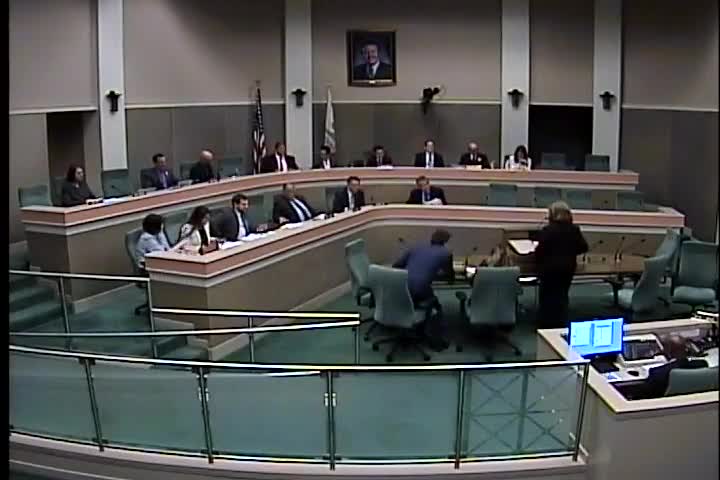 7MIN
Assembly Standing Committee on Transportation
Bill Author

Bill Co-Author(s):