SB 1242: Sentencing: misdemeanors.
- Session Year: 2015-2016
- House: Senate
- Latest Version Date: 2016-09-28
Existing law provides that every offense punishable by imprisonment in a county jail up to or not exceeding one year is punishable by imprisonment in the county jail for a period not to exceed 364 days.
This bill would make that provision retroactive, whether or not the case was final on January 1, 2015. The bill would also authorize a person who was sentenced to a term of one year prior to January 1, 2015, to submit an application before the trial court that entered the judgment of conviction in the case to have the term of the sentence modified to the maximum term of 364 days.
Existing law provides that every offense punishable by imprisonment in a county jail up to or not exceeding one year is punishable by imprisonment in the county jail for a period not to exceed 364 days.
This bill would make that provision retroactive, whether or not the case was final on the effective date of that provision. January 1, 2015. The bill would also authorize a person who was sentenced to a term of one year prior to the effective date of that provision January 1, 2015, to file a motion submit an application before the trial court that entered the judgment of conviction in the case to have the term of the sentence modified to the maximum term of 364 days.
Existing law provides that every offense punishable by imprisonment in a county jail up to or not exceeding one year is punishable by imprisonment in the county jail for a period not to exceed 364 days.
This bill would provide that a person who was convicted of an offense punishable by imprisonment in a county jail for up to or not exceeding one year prior to the enactment of that provision, and who was sentenced to county jail for one year, is deemed, for all purposes, to have been sentenced to county jail for 364 days. make that provision retroactive, whether or not the case was final on the effective date of that provision. The bill would also authorize a person who was sentenced to a term of one year prior to the effective date of that provision to file a motion before the trial court that entered the judgment of conviction in the case to have the term of the sentence modified to the maximum term of 364 days.
Existing law provides that every offense punishable by imprisonment in a county jail up to or not exceeding one year is punishable by imprisonment in the county jail for a period not to exceed 364 days.
This bill would provide that a person who was convicted of an offense punishable by imprisonment in a county jail for up to or not exceeding one year prior to the enactment of that provision, and who was sentenced to county jail for one year, is deemed, for all purposes, to have been sentenced to county jail for 364 days.
Existing law authorizes, in certain circumstances, the court, within 120 days of the defendants commitment to the custody of the Secretary of the Department of Corrections and Rehabilitation or the county correctional administrator on its own motion, or at any time upon the recommendation of the secretary or the Board of Parole Hearings or the county correctional administrator, as applicable, recall the sentence and commitment previously ordered and resentence the defendant in the same manner as if he or she had not previously been sentenced, provided the new sentence, if any, is no greater than the initial sentence.
This bill would, grant the court jurisdiction to reduce a county jail term that is part of an otherwise final judgment if the defendant establishes by a preponderance of the evidence that certain conditions are satisfied, including, among others, that the defendant is not a United States citizen and may be subject to adverse immigration consequences because of a plea of guilty or nolo contendere to, or conviction for, the offense for which the county jail term was served and reducing the county jail term would ameliorate those consequences, and that, if the county jail was a material term of a plea agreement, the prosecution consents to the reduction. The bill would authorize the court to reduce the county jail term to any lower term allowed by law for the offense. The bill would provide that a grant or denial of relief under these provisions is not appealable, but may be challenged by a petition for a writ of mandate or prohibition filed within 60 days of the grant or denial. By imposing new duties on local prosecutors, this bill would impose a state-mandated local program.
The California Constitution requires the state to reimburse local agencies and school districts for certain costs mandated by the state. Statutory provisions establish procedures for making that reimbursement.
This bill would provide that, if the Commission on State Mandates determines that the bill contains costs mandated by the state, reimbursement for those costs shall be made pursuant to these statutory provisions.
(a)Every offense which is prescribed by any law of the state to be punishable by imprisonment in a county jail up to or not exceeding one year shall be punishable by imprisonment in a county jail for a period not to exceed 364 days. This section shall apply retroactively, whether or not the case was final as of January 1, 2015.
(b)A person who was sentenced to a term of one year in county jail prior to January 1, 2015, may submit an application before the trial court that entered the judgment of conviction in the case to have the term of the sentence modified to the maximum term specified in subdivision (a).
(a)Every offense which is prescribed by any law of the state to be punishable by imprisonment in a county jail up to or not exceeding one year shall be punishable by imprisonment in a county jail for a period not to exceed 364 days. This section shall apply retroactively, whether or not the case was final as of the date this section became effective. January 1, 2015.
(b)A person who was sentenced to a term of one year in county jail prior to the effective date of this section January 1, 2015, may file a motion submit an application before the trial court that entered the judgment of conviction in the case to have the term of the sentence modified to the maximum term specified in subdivision (a).
(a)Every offense which is prescribed by any law of the state to be punishable by imprisonment in a county jail up to or not exceeding one year shall be punishable by imprisonment in a county jail for a period not to exceed 364 days. A person who was convicted of an offense punishable by imprisonment in a county jail for up to or not exceeding one year prior to the effective date of Chapter 174 of the Statutes of 2014 and who was sentenced to county jail for one year is deemed, for all purposes, to have been sentenced to county jail for 364 days. This section shall apply retroactively, whether or not the case was final as of the date this section became effective.
(b)A person who was sentenced to a term of one year in county jail prior to the effective date of this section may file a motion before the trial court that entered the judgment of conviction in the case to have the term of the sentence modified to the maximum term specified in subdivision (a).
Every offense which is prescribed by any law of the state to be punishable by imprisonment in a county jail up to or not exceeding one year shall be punishable by imprisonment in a county jail for a period not to exceed 364 days. A person who was convicted of an offense punishable by imprisonment in a county jail for up to or not exceeding one year prior to the effective date of Chapter 174 of the Statutes of 2014 and who was sentenced to county jail for one year is deemed, for all purposes, to have been sentenced to county jail for 364 days.
SECTION 1.Section 1210.6 is added to the Penal Code, immediately following Section 1210.5, to read:1210.6.(a)The court shall at any time have jurisdiction to reduce a county jail term that is part of an otherwise final judgment if the defendant establishes by a preponderance of the evidence that all of the following conditions are satisfied:
(1)The county jail term was served as a result of a plea of guilty or nolo contendere to, or conviction for, a misdemeanor offense or as a condition of probation imposed as a result of a plea of guilty or nolo contendere to, or a conviction for, a felony offense in which the court never imposed sentence.
(2)The defendant is not a United States citizen and may be subject to adverse immigration consequences because of the plea of guilty or nolo contendere to, or conviction for, the offense for which the county jail term was served and reducing the county jail term would ameliorate those adverse immigration consequences.
(3)In the discretion of the court, reducing the county jail term would be in furtherance of justice.
(4)If the county jail term was a material term of a plea agreement, the prosecution consents to a reduction pursuant to this section.
(b)The defendant shall bring a motion to reduce a county jail term in the same court in which the defendant entered his or her plea of guilty or nolo contendere or in which he or she was convicted. The court may reduce the county jail term to any lower term allowed by law for the offense. However, the court shall not modify any other terms of the conviction.
(c)If the defendant has previously been granted relief under this section, the court may deny a subsequent request without considering the merits. Notwithstanding any other provision of law, the grant or denial of relief under this section shall not be appealable, but may be challenged by a petition for a writ of mandate or prohibition filed within 60 days of the grant or denial.
SEC. 2.The Legislature finds that there is no mandate contained in this act that will result in costs incurred by a local agency or school district for a new program or higher level of service which require reimbursement pursuant to Section 6 of Article XIIIB of the California Constitution and Part 7 (commencing with Section 17500) of Division 4 of Title 2 of the Government Code.
(a)The court shall at any time have jurisdiction to reduce a county jail term that is part of an otherwise final judgment if the defendant establishes by a preponderance of the evidence that all of the following conditions are satisfied:
(1)The county jail term was served as a result of a plea of guilty or nolo contendere to, or conviction for, a misdemeanor offense or as a condition of probation imposed as a result of a plea of guilty or nolo contendere to, or a conviction for, a felony offense in which the court never imposed sentence.
(2)The defendant is not a United States citizen and may be subject to adverse immigration consequences because of the plea of guilty or nolo contendere to, or conviction for, the offense for which the county jail term was served and reducing the county jail term would ameliorate those adverse immigration consequences.
(3)In the discretion of the court, reducing the county jail term would be in furtherance of justice.
(4)If the county jail term was a material term of a plea agreement, the prosecution consents to a reduction pursuant to this section.
(b)The defendant shall bring a motion to reduce a county jail term in the same court in which the defendant entered his or her plea of guilty or nolo contendere or in which he or she was convicted. The court may reduce the county jail term to any lower term allowed by law for the offense. However, the court shall not modify any other terms of the conviction.
(c)If the defendant has previously been granted relief under this section, the court may deny a subsequent request without considering the merits. Notwithstanding any other provision of law, the grant or denial of relief under this section shall not be appealable, but may be challenged by a petition for a writ of mandate or prohibition filed within 60 days of the grant or denial.
SEC. 2.The Legislature finds that there is no mandate contained in this act that will result in costs incurred by a local agency or school district for a new program or higher level of service which require reimbursement pursuant to Section 6 of Article XIIIB of the California Constitution and Part 7 (commencing with Section 17500) of Division 4 of Title 2 of the Government Code.
|
Date
|
Status
|
|---|---|
| May 5, 2016 | Referred to Com. on PUB. S. |
| Aug 30, 2016 | Enrolled and presented to the Governor at 1:30 p.m. |
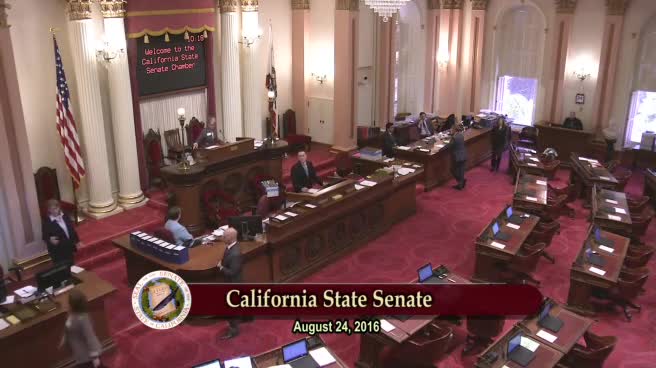
| Aug 24, 2016 | Assembly amendments concurred in. (Ayes 31. Noes 8.) Ordered to engrossing and enrolling. |
| Aug 19, 2016 | In Senate. Concurrence in Assembly amendments pending. |
| Aug 15, 2016 | Read third time. Passed. (Ayes 52. Noes 21. Page 5826.) Ordered to the Senate. |
| Aug 15, 2016 | Read third time. Passed. Ordered to the Senate. |
| Aug 11, 2016 | Read third time and amended. |
| Aug 11, 2016 | Ordered to third reading. |
| Jun 21, 2016 | Read second time. Ordered to third reading. |
| Jun 16, 2016 | Read second time and amended. Ordered to second reading. |
| Jun 15, 2016 | From committee: Do pass as amended. (Ayes 5. Noes 0.) (June 14). |
| Feb 18, 2016 | Introduced. Read first time. To Com. on RLS. for assignment. To print. |
| Apr 21, 2016 | Read third time. Passed. (Ayes 31. Noes 8.) Ordered to the Assembly. |
| Apr 21, 2016 | Read third time. Passed. (Ayes 31. Noes 8. Page 3626.) Ordered to the Assembly. |
| Apr 21, 2016 | In Assembly. Read first time. Held at Desk. |
| Apr 14, 2016 | Read second time. Ordered to third reading. |
| Apr 13, 2016 | From committee: Do pass. (Ayes 5. Noes 1.) (April 12). |
| Apr 13, 2016 | From committee: Do pass. (Ayes 5. Noes 1. Page 3522.) (April 12). |
| Mar 28, 2016 | From committee with author's amendments. Read second time and amended. Re-referred to Com. on PUB. S. |
| Mar 15, 2016 | Set for hearing April 12. |
| Mar 3, 2016 | Referred to Com. on PUB. S. |
| Feb 19, 2016 | From printer. May be acted upon on or after March 20. |
|
Date
|
Description
|
Location
|
Votes
|
|
|---|---|---|---|---|
| Aug 24, 2016 | Unfinished Business SB1242 Lara Concurrence | Senate Floor |
Passed |
|
| Aug 15, 2016 | SB 1242 Lara Senate Third Reading By THURMOND | Assembly Floor |
Passed |
|
| Jun 14, 2016 | Do pass as amended. | Assembly Standing Committee on Public Safety |
Passed |
|
| Apr 21, 2016 | Senate 3rd Reading SB1242 Lara | Senate Floor |
Passed |
|
| Apr 12, 2016 | Do pass | Senate Standing Committee on Public Safety |
Passed |
This list shows positions taken on this bill by organizations on the date displayed, which is linked to the original source.
Positions by individuals are not included.
|
Organization
|
Position
|
Date
|
|---|---|---|
| A New PATH | ** Support | Aug 24, 2016 |
| ACLU of California | * Indeterminate | Jun 14, 2016 |
| All of Us or None | ** Support | Aug 24, 2016 |
| American Friends Service Committee | ** Support | Aug 24, 2016 |
| American Immigration Lawyers Association | ** Support | Aug 24, 2016 |
| Asian Americans Advancing Justice | ** Support | Aug 24, 2016 |
| Asian Law Alliance | ** Support | Jun 14, 2016 |
| Association of Los Angeles Deputy Sheriffs | * Support | Jun 14, 2016 |
| California Association Of Code Enforcement Officers | * Support | Jun 14, 2016 |
| California Attorneys For Criminal Justice | ** Support | Aug 24, 2016 |
| California Civil Liberties Advocacy | ** Support | Aug 24, 2016 |
| California College And University Police Chiefs Association | * Support | Jun 14, 2016 |
| California Immigrant Policy Center | ** Support | Aug 24, 2016 |
| California Public Defenders Association | ** Support | Aug 24, 2016 |
| California Rural Legal Assistance Foundation, Inc. | ** Support | Aug 24, 2016 |
| Californians for Safety and Justice | ** Support | Jun 14, 2016 |
| Californians United for a Responsible Budget | ** Support | Aug 24, 2016 |
| Canal Alliance | ** Support | Aug 24, 2016 |
| Center of Juvenile and Criminal Justice | ** Support | Aug 24, 2016 |
| Central American Resource Center | ** Support | Aug 24, 2016 |
| Centro Laboral de Graton | ** Support | Aug 24, 2016 |
| Coalition for Humane Immigrant Rights LA | ** Support | Aug 24, 2016 |
| Community Legal Services in East Palo Alto | ** Support | Aug 24, 2016 |
| Courage Campaign | ** Support | Jun 14, 2016 |
| Courage Campaign; Day Labor Center - Hayward | ** Support | Aug 24, 2016 |
| Day Labor Center - Hayward | ** Support | Jun 14, 2016 |
| Drug Policy Alliance | ** Support | Jun 14, 2016 |
| Friends Committee On Legislation Of California | ** Support | Aug 24, 2016 |
| Human Rights Watch | ** Support | Aug 24, 2016 |
| Immigrant Legal Resource Center | ** Support | Aug 24, 2016 |
| Latino Coalition for a Healthy California | ** Support | Aug 24, 2016 |
| Latino Coalition for Healthy Communities | ** Support | Aug 24, 2016 |
| Legal Services for Prisoners with Children | ** Support | Aug 24, 2016 |
| Los Angeles County District Attorney'S Office | * Support | Jun 14, 2016 |
| Los Angeles District Attorney's Office | ** Support | Aug 24, 2016 |
| Mexican American Legal Defense Fund | ** Support | Aug 24, 2016 |
| National Center for Youth Law | ** Support | Jun 14, 2016 |
| National Day Laborer Organizing Network | ** Support | Aug 24, 2016 |
| National Immigration Law Center | ** Support | Aug 24, 2016 |
| Oakland | ** Support | Aug 24, 2016 |
| Pangea Legal Services | ** Support | Aug 24, 2016 |
| Prison Law Office | ** Support | Jun 14, 2016 |
| Project ALOFA | ** Support | Aug 24, 2016 |
| San Quentin Restorative Justice Program | ** Support | Aug 24, 2016 |
| Santa Ana Boys and Men of Color | ** Support | Aug 24, 2016 |
| Santa Clara County Public Defender's Office | ** Support | Aug 24, 2016 |
| Services, Immigrant Rights & Education Network | ** Support | Aug 24, 2016 |
| Silicon Valley De-Bug | ** Support | Aug 24, 2016 |
| Southeast Asia Resource Action Center | ** Support | Aug 24, 2016 |
| United Farm Workers | ** Support | Aug 24, 2016 |
Office of Senate Floor Analyses (916) 651-1520 Fax: (916) 327-4478 | SB |
UNFINISHED BUSINESS
Bill No: SB 1242
:
SENATE PUBLIC SAFETY COMMITTEE: 5-1, 4/12/16
AYES: Hancock, Glazer, Leno, Liu, Monning
NOES: Stone
NO VOTE RECORDED: Anderson
SENATE FLOOR: 31-8, 4/21/16
AYES: Allen, Anderson, Bates, Beall, Block, Cannella, De León, Galgiani, Glazer, Hall, Hancock, Hernandez, Hertzberg, Hill, Hueso, Huff, Jackson, Lara, Leno, Leyva, Liu, McGuire, Mendoza, Mitchell, Monning, Nguyen, Pan, Pavley, Roth, Wieckowski, Wolk
NOES: Berryhill, Fuller, Gaines, Moorlach, Morrell, Nielsen, Stone, Vidak
NO VOTE RECORDED: Runner
ASSEMBLY FLOOR: 52-21, 8/15/16 - See last page for vote
SOURCE: California Attorneys for Criminal Justice
Coalition for Humane Immigrant Rights LA
Immigrant Legal Resource Center
Latino Coalition for Healthy Communities
Los Angeles District Attorney’s Office
Mexican American Legal Defense Fund
DIGEST: This bill retroactively applies the provision of law defining one year as 364 days for the purposes of sentencing.
Assembly Amendments make technical changes and clarify that a person sentenced prior to the effective date of Penal Code Section 18.5 may file a motion with the trial court to have the term of sentenced modified.
ANALYSIS: Existing law provides that every offense which is prescribed by any law of the state to be punishable by imprisonment in a county jail up to or not exceeding one year shall be punishable by imprisonment in a county jail for period not to exceed 364 days. (Penal Code § 18.5)
This bill:
- States that the reduced sentence applies to all convictions entered before January 1, 2015, even final judgments.
- Provides that a person previously sentenced to one year in county jail may submit an application in the trial court requesting to be resentenced to a period not to exceed 364 days.
Background
According to the author:
Two years ago SB 1310 (Lara, 2014) aligned the definition of misdemeanor between state and federal law. Federal law defines a misdemeanor crime as punishable for up to 364 days and anything longer is considered a felony. Previously, California defined a misdemeanor as a crime punishable for up to 365 days. The federal government did not recognize California’s definition due to this minor and technical difference, thousands legal residents, who committed low level and non-violent crimes were subject to deportation, needlessly ripping apart families.
While SB 1310 aligned state and federal law on a prospective basis, it did not help those who were convicted of a misdemeanor prior to 2015. Thousands of legal residents are currently living in California with the threat of deportation looming for minor crimes. Many of those people have families and businesses in the state and a few ties to their country of origin.
SB 1242 will provide on a retroactive basis that all misdemeanors are punishable for no more than 364 days and ensure that legal residents are not deported due to previous discrepancies between state and federal law.
FISCAL EFFECT: Appropriation: Fiscal Com.: Local:
California Attorneys for Criminal Justice (co-source)
Coalition for Humane Immigrant Rights LA (co-source)
Immigrant Legal Resource Center (co-source)
Latino Coalition for Healthy Communities (co-source)
Los Angeles District Attorney’s Office (co-source)
Mexican American Legal Defense Fund (co-source)
A New PATH
All of us or None
American Civil Liberties Union
American Friends Service Committee
American Immigration Lawyers Association
Asian Americans Advancing Justice
California Civil Liberties Advocacy
California Immigrant Policy Center
California Public Defenders Association
California Rural Legal Assistance Foundation
Californians United for a Responsible Budget
Canal Alliance
Center of Juvenile and Criminal Justice
Central American Resource Center
Centro Laboral de Graton
Community Legal Services in East Palo Alto
Courage Campaign; Day Labor Center – Hayward/Oakland
Friends Committee on Legislation of California
Human Rights Watch
Latino Coalition for a Healthy California
Lawyers’ Committee for Civil Rights of the San Francisco Bay Area
Legal Services for Prisoners with Children
National Day Laborer Organizing Network
National Immigration Law Center
Pangea Legal Services
Project ALOFA
San Quentin Restorative Justice Program
Santa Ana Boys and Men of Color
Santa Clara County Public Defender’s Office
Services, Immigrant Rights & Education Network
Silicon Valley De-Bug
Southeast Asia Resource Action Center
United Farm Workers
OPPOSITION: (Verified 8/15/16)
None received
ASSEMBLY FLOOR: 52-21, 8/15/16
AYES: Alejo, Arambula, Atkins, Baker, Bloom, Bonilla, Bonta, Brown, Burke, Calderon, Campos, Chang, Chau, Chiu, Chu, Cooley, Dababneh, Daly, Dodd, Eggman, Frazier, Cristina Garcia, Eduardo Garcia, Gipson, Gomez, Gonzalez, Gordon, Gray, Hadley, Holden, Jones-Sawyer, Kim, Lackey, Levine, Lopez, Low, McCarty, Medina, Mullin, Nazarian, O'Donnell, Quirk, Ridley-Thomas, Rodriguez, Santiago, Mark Stone, Thurmond, Ting, Weber, Williams, Wood, Rendon
NOES: Achadjian, Travis Allen, Bigelow, Brough, Chávez, Beth Gaines, Gatto, Grove, Harper, Irwin, Jones, Mathis, Mayes, Melendez, Obernolte, Patterson, Salas, Steinorth, Wagner, Waldron, Wilk
NO VOTE RECORDED: Cooper, Dahle, Gallagher, Roger Hernández, Linder, Maienschein, Olsen
Prepared by: Mary Kennedy / PUB. S. /
8/19/16 20:05:00
**** END ****
SENATE THIRD READING
STR Bill Id:SB 1242
Author:(Lara)
As Amended Ver:August 11, 2016
Majority vote
SENATE VOTE: 31-8
Committee | Votes | Ayes | Noes |
Public Safety | 5-0 | Jones-Sawyer, Lopez, Low, Quirk, Santiago |
SUMMARY: Retroactively applies the provision of law defining one year as 364 days for the purposes of sentencing. Specifically, this bill:
- States that the reduced sentence applies to all convictions entered before January 1, 2015, even final judgments.
- Provides that a person previously sentenced to one year in county jail may submit an application in the trial court requesting to be resentenced to a period not to exceed 364 days.
EXISTING STATE LAW:
- Defines a felony as a crime that is punishable with death, by imprisonment in the state prison, or notwithstanding any other provision of law, by imprisonment in a county jail under Penal Code section 1170(h), (realignment).
- States that every other crime or public offense is a misdemeanor except those offenses classified as infractions.
- States that every offense which is prescribed by any law of the state to be punishable by imprisonment in the county jail up to or not exceeding one year shall be punishable by imprisonment in the county jail for a period not to exceed 364 days.
- Provides that, except where a different punishment is prescribed, every offense declared to be a misdemeanor is punishable by imprisonment in the county jail not exceeding six months or by a fine not exceeding $1,000 or by both.
- Provides that no part of the Penal Code is retroactive, unless expressly so declared.
EXISTING FEDERAL LAW:
- Lists several categories of crimes which render a non-citizen removable from the United States, including: crimes of moral turpitude; aggravated felony convictions; domestic violence convictions; firearm convictions, and drug convictions.
- Lists several categories of crimes which will render a non-citizen inadmissible to the United States, including: crimes of moral turpitude; drug convictions; and prostitution convictions.
- Provides for enhanced penalties for a non-citizen who reenters the country illegally after being removed due to a conviction for an aggravated felony.
- Renders an asylum applicant statutorily ineligible for political asylum if convicted of an aggravated felony.
- Defines an "aggravated felony" as specified.
FISCAL EFFECT: None.
COMMENTS: According to the author, "Two years ago SB 1310 [(Lara), Chapter 174, Statutes of 2014] (Lara, 2014) aligned the definition of a misdemeanor between state and federal law. While SB 1310 aligned state and federal law on a prospective basis, it did not help those who were convicted of a misdemeanor prior to 2015. Thousands of legal residents are currently living in California with the threat of deportation looming for minor crimes. Many of those people have families and businesses in the state and few ties to their country of origin. SB 1242 will provide on a retroactive basis that all misdemeanors are punishable for no more than 364 days and ensure that legal residents are not deported due to previous discrepancies between state and federal law."
Please see the policy committee analysis for a full discussion of this bill.
Analysis Prepared by: Sandy Uribe / PUB. S. / (916) 319-3744 FN: 0003871
SENATE THIRD READING
STR Bill Id:SB 1242
Author:(Lara)
As Amended Ver:June 16, 2016
Majority vote
SENATE VOTE: 31-8
Committee | Votes | Ayes | Noes |
Public Safety | 5-0 | Jones-Sawyer, Lopez, Low, Quirk, Santiago |
SUMMARY: Retroactively applies the provision of law defining one year as 364 days for the purposes of sentencing. Specifically, this bill:
- States that the reduced sentence applies to all convictions entered before the effective date, even final judgments.
- Provides that a person previously sentenced to one year in county jail may file a motion in the trial court requesting to be resentenced to a period not to exceed 364 days.
EXISTING STATE LAW:
- Defines a felony as a crime that is punishable with death, by imprisonment in the state prison, or notwithstanding any other provision of law, by imprisonment in a county jail under Penal Code section 1170(h), (realignment).
- States that every other crime or public offense is a misdemeanor except those offenses classified as infractions.
- States that every offense which is prescribed by any law of the state to be punishable by imprisonment in the county jail up to or not exceeding one year shall be punishable by imprisonment in the county jail for a period not to exceed 364 days.
- Provides that, except where a different punishment is prescribed, every offense declared to be a misdemeanor is punishable by imprisonment in the county jail not exceeding six months or by a fine not exceeding $1,000 or by both.
- Provides that no part of the Penal Code is retroactive, unless expressly so declared.
EXISTING FEDERAL LAW:
- Lists several categories of crimes which render a non-citizen removable from the United States, including: crimes of moral turpitude; aggravated felony convictions; domestic violence convictions; firearm convictions, and drug convictions.
- Lists several categories of crimes which will render a non-citizen inadmissible to the United States, including: crimes of moral turpitude; drug convictions; and prostitution convictions.
- Provides for enhanced penalties for a non-citizen who reenters the country illegally after being removed due to a conviction for an aggravated felony.
- Renders an asylum applicant statutorily ineligible for political asylum if convicted of an aggravated felony.
- Defines an "aggravated felony" as specified.
FISCAL EFFECT: Unknown. This bill is keyed non-fiscal by the Legislative Counsel.
COMMENTS: According to the author, "Two years ago SB 1310 [(Lara), Chapter 174, Statutes of 2014] (Lara, 2014) aligned the definition of a misdemeanor between state and federal law. While SB 1310 aligned state and federal law on a prospective basis, it did not help those who were convicted of a misdemeanor prior to 2015. Thousands of legal residents are currently living in California with the threat of deportation looming for minor crimes. Many of those people have families and businesses in the state and few ties to their country of origin. SB 1242 will provide on a retroactive basis that all misdemeanors are punishable for no more than 364 days and ensure that legal residents are not deported due to previous discrepancies between state and federal law."
Analysis Prepared by: Sandy Uribe / PUB. S. / (916) 319-3744 FN: 0003461
Date of Hearing: June 14, 2016
Counsel: Sandy Uribe
ASSEMBLY COMMITTEE ON PUBLIC SAFETY
Reginald Byron Jones-Sawyer, Sr., Chair
SBPCA Bill Id:SB 1242
Author:(Lara) – As Amended Ver:March 28, 2016
As Proposed to be Amended in Committee
SUMMARY: Retroactively applies the provision of law defining one year as 364 days for the purposes of sentencing. Specifically, this bill:
- States that the reduced sentence applies to all convictions entered before the effective date, even final judgments.
- Provides that a person previously sentenced to one year in county jail may file a motion in the trial court requesting to be resentenced to a period not to exceed 364 days.
EXISTING STATE LAW:
- Defines a felony as a crime that is punishable with death, by imprisonment in the state prison, or notwithstanding any other provision of law, by imprisonment in a county jail under Penal Code section 1170, subdivision (h), (realignment). (Pen. Code, § 17, subd. (a).)
- States that every other crime or public offense is a misdemeanor except those offenses classified as infractions. (Pen. Code, § 17, subd. (a).)
- States that every offense which is prescribed by any law of the state to be punishable by imprisonment in the county jail up to or not exceeding one year shall be punishable by imprisonment in the county jail for a period not to exceed 364 days. (Penal Code § 18.5)
- Provides that, except where a different punishment is prescribed, every offense declared to be a misdemeanor is punishable by imprisonment in the county jail not exceeding six months or by a fine not exceeding $1,000 or by both. (Pen. Code, § 19.)
- Provides that no part of the Penal Code is retroactive, unless expressly so declared. (Pen. Code, § 3.)
EXISTING FEDERAL LAW:
- Lists several categories of crimes which render a non-citizen removable from the United States, including: crimes of moral turpitude; aggravated felony convictions; domestic violence convictions; firearm convictions, and drug convictions. (INA § 237(a)(2), see also 8 U.S.C. § 1227(a)(2).)
- Lists several categories of crimes which will render a non-citizen inadmissible to the United States, including: crimes of moral turpitude; drug convictions; and prostitution convictions. (INA § 212(a)(2), see also 8 U.S.C. § 1182(a)(2).)
- Provides for enhanced penalties for a non-citizen who reenters the country illegally after being removed due to a conviction for an aggravated felony. (INA § 276(b)(2); see also 8 U.S.C § 1326(b)(2).)
- Renders an asylum applicant statutorily ineligible for political asylum if convicted of an aggravated felony. (INA §§ 208(b)(2); see also 8 U.S.C. § 1158(b)(2).)
- Defines an "aggravated felony" as specified. (INA § 101(a)(43), see also 8 U.S.C. § 1101(a)(43)(F).)
FISCAL EFFECT:
COMMENTS:
- Author's Statement: According to the author, "Two years ago SB 1310 (Lara, 2014) aligned the definition of a misdemeanor between state and federal law. While SB 1310 aligned state and federal law on a prospective basis, it did not help those who were convicted of a misdemeanor prior to 2015. Thousands of legal residents are currently living in California with the threat of deportation looming for minor crimes. Many of those people have families and businesses in the state and few ties to their country of origin. SB 1242 will provide on a retroactive basis that all misdemeanors are punishable for no more than 364 days and ensure that legal residents are not deported due to previous discrepancies between state and federal law."
- Retroactive Application of New Statutes: Penal Code section 3 provides: "No part of [the Penal Code] is retroactive, unless expressly so declared." This means that "[a] new statute is generally presumed to operate prospectively absent an express declaration of retroactivity or a clear and compelling implication that the Legislature intended otherwise." (People v. Hayes (1989) 49 Cal.3d 1260, 1274.)
In In re Estrada (1965) 63 Cal.2d 740, 744, the California Supreme Court recognized an exception to the general rule of prospective application of statutes and found that an intent for retroactive application is inherent where the Legislature changes the law to mitigate the penalty for a crime. When the Legislature amends a statute to reduce punishment, and does not include a savings clause, courts should apply the amendment retroactively so that the lighter punishment is imposed as to all cases not yet final on the effective date of the statute. (Id. at pp. 744-745, 748 .)
"[F]or the purpose of determining retroactive application of an amendment to a criminal statute, a judgment is not final until the time for petitioning for a writ of certiorari in the United States Supreme Court has passed." (People v. Vieira (2005) 35 Cal.4th 264, 306 [citations and internal quotation marks omitted].)
In 2014, SB 1310 (Lara) reduced the maximum misdemeanor sentence to 364 days. Under the principles discussed above, a defendant who was sentenced before the effective date of the new law, but whose appeal was pending was entitled to the benefit of the new law. However, as drafted, all cases which were final on appeal were not entitled to a modification in sentence. This bill specifies that change applies retroactively to all cases. - Legislative Authority to Make an Amendment Fully Retroactive: While Estrada, supra, 63 Cal.2d 740 requires retroactive application to judgments not yet final, nowhere does it prohibit retroactive application to judgments that are final if that is what the Legislature intended or what the Constitution requires. (In re Chavez (2004) 114 Cal.App.4th 989, 1000.)
The Legislature has full authority to make a law fully retroactive. "A final judgment is not immune from the Legislature's power to adjust prison sentences for a legitimate public purpose. (Chavez, supra, 114 Cal.App.4th 1000, citing In re Kapperman (1974) 11 Cal.3d 542, 547; People v. Community Release Bd. (1979) 96 Cal.App.3d 792, 800; and Way v. Superior Court (1977) 74 Cal.App.3d 165, 181 (conc. opn. of Friedman, J.).)
This bill provides that change applies retroactively to cases that were final. - Immigration Consequences of Criminal Convictions: In addition to criminal punishment, non-citizens can face immigration consequences as a result of a criminal conviction. Certain criminal convictions will make a non-citizen removable (formerly known as deportation), inadmissible (formerly known as exclusion), or both.
Of significance for purposes of this bill, are "aggravated felonies." (8 U.S.C. § 1101(a)(43)(F), see also INA § 101(a)(43).) The term "aggravated felony" suggests a particularly serious offense. However, after the passage of the Illegal Immigration Reform and Immigrant Responsibility Act of 1996, there are hundreds of aggravated felonies. Many offenses are aggravated felonies regardless of the sentence imposed. However, some offenses will be classified as aggravated felonies if the defendant is sentenced to a term of one year or more. This is true even though under California law, the crime is characterized as a misdemeanor, and not a felony.
It should be noted that the federal immigration statute defines the term of imprisonment for a sentence as the "period of incarceration or confinement ordered by a court of law regardless of any suspension of the imposition or execution of that imprisonment in whole or in part." (8 U.S.C. § 1101(a)(48)(B).) Therefore, a person convicted of a misdemeanor who is sentenced to one year with part of, or even most of, the sentence suspended is still convicted of an aggravated felony for purposes of federal immigration law.
Aggravated felonies have the most severe immigration consequences for non-citizens. Conviction of an aggravated felony can result in removal without a hearing and with no appeal, inadmissibility following removal, increased criminal penalties for illegal re-entry after removal based on conviction of an aggravated felony, ineligibility for asylum, and ineligibility for citizenship.
As noted above, in 2014, SB 1310 (Lara) reduced the maximum misdemeanor sentence to 364 days to prevent misdemeanor offenses from being classed as aggravated felonies for purposes of immigration law. By making this law retroactive to cases that were final when SB 1310 was enacted, it will ensure that persons convicted of misdemeanors prior to 2015 will not face harsher immigration consequences than those receiving the benefit of the new law. - Argument in Support: According to the California Attorneys for Criminal Justice (CACJ), a co-sponsor of this bill, "In 2014, CACJ, along with many other co-sponsors, passed Senate Bill 1310. This bill reduced the maximum possible misdemeanor sentence by one day, from one year to 364 days. This one-day change corrected a glitch between California criminal and federal immigration laws, which had a catastrophic impact on California’s families. Immigration law will treat a state misdemeanor as a felony if the misdemeanor has a 365-day (as opposed to 364-day) potential sentence. Without §18.5, one misdemeanor, even with no jail time imposed, causes a lawful permanent resident to become automatically deportable.
"However, the language of SB 1310 did not explicitly state whether the statute applied retroactively. This ambiguity has led to unjust results. Hundreds, if not thousands, of Californians may not benefit from the 2014 change because the statute does not explicitly state its retroactivity. As a result, thousands of families may be torn apart every year due to minor crimes, such as writing a bad check. This is an extremely problematic issue that has negative consequences for families in California.
"By making this statute apply retroactively, this law will save the court time and money from families challenging removal proceedings based on old one-year misdemeanor sentences." - Prior Legislation: SB 1310 (Author:Lara), Chapter 174, Statutes of 2014, reduced the maximum sentence for a misdemeanor from 365 days to 364 days.
REGISTERED SUPPORT / OPPOSITION:
Support
California Attorneys for Criminal Justice (Co-Sponsor)
Coalition for Humane Immigrant Rights Los Angeles (Co-Sponsor)
Immigrant Legal Resource Center (Co- Sponsor)
Latino Coalition for Healthy Communities (Co-Sponsor)
Los Angeles District Attorney’s Office (Co-Sponsor)
Mexican American Legal Defense Fund (Co-Sponsor)
A New PATH
All of Us or None
American Civil Liberties Union
American Friends Service Committee
American Immigration Lawyers Association
Asian Americans Advancing Justice
Asian Law Alliance
California Civil Liberties Advocacy
California Immigrant Policy Center
California Labor Federation
California Public Defenders Association
California Rural Legal Assistance Foundation
Californians for Safety and Justice
Californians United for a Responsible Budget
Canal Alliance
Center on Juvenile and Criminal Justice
Central American Resource Center
Centro Laboral de Graton
Community Legal Services in East Palo Alto
Courage Campaign
Day Labor Center – Hayward/Oakland
Drug Policy Alliance
Friends Committee on Legislation of California
Human Rights Watch
Latino Coalition for a Healthy California
Lawyers’ Committee for Civil Rights of the San Francisco Bay Area
Legal Services for Prisoners with Children
National Center for Youth Law
National Day Laborer Organizing Network
National Immigration Law Center
Pangea Legal Services
Prison Law Office
Project ALOFA
San Quentin Restorative Justice Program
Santa Ana Boys and Men of Color
Santa Clara County Public Defender’s Office
Services, Immigrant Rights & Education Network
Service Employees International Union
Silicon Valley De-Bug
Southeast Asia Resource Action Center
United Farm Workers Foundation
Opposition
None
Analysis Prepared by: Sandy Uribe / PUB. S. / (916) 319-3744
Office of Senate Floor Analyses (916) 651-1520 Fax: (916) 327-4478 | SB |
THIRD READING
Bill No: SB 1242
:
SENATE PUBLIC SAFETY COMMITTEE: 5-1, 4/12/16
AYES: Hancock, Glazer, Leno, Liu, Monning
NOES: Stone
NO VOTE RECORDED: Anderson
SOURCE: California Attorneys for Criminal Justice
Coalition for Humane Immigrant Rights Los Angeles
Immigrant Legal Resource Center
Latino Coalition for Healthy Communities
Los Angeles District Attorney’s Office
Mexican American Legal Defense Fund
DIGEST: This bill makes the law providing that one year is defined as 364 days for the purposes of sentencing a misdemeanor is retroactive.
ANALYSIS: Existing law provides that every offense which is prescribed by any law of the state to be punishable by imprisonment in a county jail up to or not exceeding one year shall be punishable by imprisonment in a county jail for period not to exceed 364 days. (Penal Code § 18.5)
This bill clarifies that the above provision retroactive.
Background
According to the author:
Two years ago SB 1310 (Lara, 2014) aligned the definition of misdemeanor between state and federal law. Federal law defines a misdemeanor crime as punishable for up to 364 days and anything longer is considered a felony. Previously, California defined a misdemeanor as a crime punishable for up to 365 days. The federal government did not recognize California’s definition due to this minor and technical difference, thousands legal residents, who committed low level and non-violent crimes were subject to deportation, needlessly ripping apart families.
While SB 1310 aligned state and federal law on a prospective basis, it did not help those who were convicted of a misdemeanor prior to 2015. Thousands of legal residents are currently living in California with the threat of deportation looming for minor crimes. Many of those people have families and businesses in the state and a few ties to their country of origin.
SB 1242 will provide on a retroactive basis that all misdemeanors are punishable for no more than 364 days and ensure that legal residents are not deported due to previous discrepancies between state and federal law.
FISCAL EFFECT: Appropriation: Fiscal Com.: Local:
California Attorneys for Criminal Justice (co-source)
Coalition for Humane Immigrant Rights Los Angeles (co-source)
Immigrant Legal Resource Center (co-source)
Latino Coalition for Healthy Communities (co-source)
Los Angeles District Attorney’s Office (co-source)
Mexican American Legal Defense Fund (co-source)
A New PATH
All of Us or None
American Civil Liberties Union
American Friends Service Committee
American Immigration Lawyers Association
Asian Americans Advancing Justice
California Civil Liberties Advocacy
California Immigrant Policy Center
California Labor Federation
California Public Defenders Association
California Rural Legal Assistance Foundation
Californians United for a Responsible Budget
Canal Alliance
Center of Juvenile and Criminal Justice
Central American Resource Center
Centro Laboral de Graton
Community Legal Services in East Palo Alto
Courage Campaign
Day Labor Center – Hayward/Oakland
Drug Policy Alliance
Friends Committee on Legislation of California
Human Rights Watch
Latino Coalition for a Healthy California
Lawyers’ Committee for Civil Rights of the San Francisco Bay Area
Legal Services for Prisoners with Children
National Day Laborer Organizing Network
National Immigration Law Center
Pangea Legal Services
Project ALOFA
San Quentin Restorative Justice Program
Santa Ana Boys and Men of Color
Santa Clara County Public Defender’s Office
Services, Immigrant Rights & Education Network
Silicon Valley De-Bug
Southeast Asia Resource Action Center
United Farm Workers
OPPOSITION: (Verified 4/14/16)
None received
Prepared by: Mary Kennedy / PUB. S. /
4/15/16 14:10:37
**** END ****
SENATE COMMITTEE ON PUBLIC SAFETY
Senator Loni Hancock, Chair
2015 - 2016 Regular
Bill No: SB 1242 Hearing Date: April 12, 2016
Author: | Lara | ||
Version: | March 28, 2016 | ||
Urgency: | No | Fiscal: | No |
Consultant: | MK | ||
Subject: Sentencing: Misdemeanors
HISTORY
Source: Los Angeles District Attorney’s Office
Immigrant Legal Resource Center
California Attorneys for Criminal Justice
Coalition for Humane Immigrant Rights LA
Mexican American Legal Defense Fund
Latino Coalition for Healthy Communities
Prior Legislation: SB 1310 (Lara) – Chapter 174, Stats. 2014
Support: All of us or None; American Civil Liberties Union; American Friends Service Committee; American Immigration Lawyers Association; Asian Americans Advancing Justice; California Public Defenders Association; California Immigrant Policy Center; California Rural Legal Assistance Foundation; California Civil Liberties Advocacy; Californians United for a Responsible Budget; Canal Alliance; Center of Juvenile and Criminal Justice; Central American Resource Center; Centro Laboral de Graton; Community Legal Services in East Palo Alto; Courage Campaign; Day Labor Center – Hayward/Oakland; Friends Committee on Legislation of California; Human Rights Watch; Latino Coalition for a Healthy California; Lawyers’ Committee for Civil Rights of the San Francisco Bay Area; Legal Services for Prisoners with Children; National Day Laborer Organizing Network; National Immigration Law Center; A New PATH; Pangea Legal Services; Project ALOFA; Santa Ana Boys and Men of Color; San Quentin Restorative Justice Program; Santa Clara County Public Defender’s Office; Services, Immigrant Rights & Education Network; Silicon Valley De-Bug; Southeast Asia Resource Action Center; United Farm Workers
Opposition: None known
PURPOSE
The purpose is to make the law providing that one year is defined as 364 days for the purposes of sentencing a misdemeanor is retroactive.
Existing law provides that every offense which is prescribed by any law of the state to be punishable by imprisonment in a county jail up to or not exceeding one year shall be punishable by imprisonment in a county jail for period not to exceed 364 days. (Penal Code § 18.5)
This bill would make the above provision retroactive.
RECEIVERSHIP/OVERCROWDING CRISIS AGGRAVATION
For the past several years this Committee has scrutinized legislation referred to its jurisdiction for any potential impact on prison overcrowding. Mindful of the United States Supreme Court ruling and federal court orders relating to the state’s ability to provide a constitutional level of health care to its inmate population and the related issue of prison overcrowding, this Committee has applied its “ROCA” policy as a content-neutral, provisional measure necessary to ensure that the Legislature does not erode progress in reducing prison overcrowding.
On February 10, 2014, the federal court ordered California to reduce its in-state adult institution population to 137.5% of design capacity by February 28, 2016, as follows:
- 143% of design bed capacity by June 30, 2014;
- 141.5% of design bed capacity by February 28, 2015; and,
- 137.5% of design bed capacity by February 28, 2016.
In December of 2015 the administration reported that as “of December 9, 2015, 112,510 inmates were housed in the State’s 34 adult institutions, which amounts to 136.0% of design bed capacity, and 5,264 inmates were housed in out-of-state facilities. The current population is 1,212 inmates below the final court-ordered population benchmark of 137.5% of design bed capacity, and has been under that benchmark since February 2015.” (Defendants’ December 2015 Status Report in Response to February 10, 2014 Order, 2:90-cv-00520 KJM DAD PC, 3-Judge Court, Coleman v. Brown, Plata v. Brown (fn. omitted).) One year ago, 115,826 inmates were housed in the State’s 34 adult institutions, which amounted to 140.0% of design bed capacity, and 8,864 inmates were housed in out-of-state facilities. (Defendants’ December 2014 Status Report in Response to February 10, 2014 Order, 2:90-cv-00520 KJM DAD PC, 3-Judge Court, Coleman v. Brown, Plata v. Brown (fn. omitted).)
While significant gains have been made in reducing the prison population, the state must stabilize these advances and demonstrate to the federal court that California has in place the “durable solution” to prison overcrowding “consistently demanded” by the court. (Opinion Re: Order Granting in Part and Denying in Part Defendants’ Request For Extension of December 31, 2013 Deadline, NO. 2:90-cv-0520 LKK DAD (PC), 3-Judge Court, Coleman v. Brown, Plata v. Brown (2-10-14). The Committee’s consideration of bills that may impact the prison population therefore will be informed by the following questions:
- Whether a proposal erodes a measure which has contributed to reducing the prison population;
- Whether a proposal addresses a major area of public safety or criminal activity for which there is no other reasonable, appropriate remedy;
- Whether a proposal addresses a crime which is directly dangerous to the physical safety of others for which there is no other reasonably appropriate sanction;
- Whether a proposal corrects a constitutional problem or legislative drafting error; and
- Whether a proposal proposes penalties which are proportionate, and cannot be achieved through any other reasonably appropriate remedy.
COMMENTS
1. Need for This Bill
According to the author:
Two years ago SB 1310 (Lara, 2014) aligned the definition of misdemeanor between state and federal law. Federal law defines a misdemeanor crime as punishable for up to 364 days and anything longer is considered a felony. Previously, California defined a misdemeanor as a crime punishable for up to 365 days. The federal government did not recognize California’s definition due to this minor and technical difference, thousands legal residents, who committed low level and non-violent crimes were subject to deportation, needlessly ripping apart families.
While SB 1310 aligned state and federal law on a prospective basis, it did not help those who were convicted of a misdemeanor prior to 2015. Thousands of legal residents are currently living in California with the threat of deportation looming for minor crimes. Many of those people have families and businesses in the state and a few ties to their country of origin.
SB 1242 will provide on a retroactive basis that all misdemeanors are punishable for no more than 364 days and ensure that legal residents are not deported due to previous discrepancies between state and federal law.
2. Clarifies that This Bill is Retroactive
This bill merely clarifies that the provision defining a year for the purposes of as misdemeanor as 364 days is retroactive.
-- END –
Bill Author

Bill Co-Author(s):