SB 1336: Dependent children: investigation: relatives.
- Session Year: 2015-2016
- House: Senate
- Latest Version Date: 2016-09-30
Existing law requires a county social worker to investigate the circumstances of each child taken into temporary custody by a peace officer who has reasonable cause to believe the child is the victim of abuse or neglect. Existing law requires the social worker to conduct an investigation to identify and locate adult relatives of the child and to provide him or her with a specified relative information form. Existing law further requires the social worker to initiate an assessment of the suitability of a relative who requests that the child be placed with him or her.
Under existing law, the juvenile court is required to hold a hearing to determine the proper disposition to be made of a child adjudged a dependent of the juvenile court. Existing law requires the court to consider the social study of the child made by the social worker before the court arrives at its judgment.
This bill would require the juvenile court to make a finding as to whether the social worker exercised due diligence in conducting his or her investigation to identify, locate, and notify the childs relatives.
Existing law requires a county social worker to investigate the circumstances of each child taken into temporary custody by a peace officer who has reasonable cause to believe the child is the victim of abuse or neglect. Existing law requires the social worker to conduct an investigation to identify and locate adult relatives of the child and to provide him or her with a specified relative information form. Existing law further requires the social worker to initiate an assessment of the suitability of a relative who requests that the child be placed with him or her.
Under existing law, the juvenile court is required to hold a hearing to determine the proper disposition to be made of a child adjudged a dependent of the juvenile court. Existing law requires the court to consider the social study of the child made by the social worker before the court arrives at its judgment. Existing law requires that, subsequent to the hearing, consideration for placement again be given to relatives whenever a new placement of the child must be made. Existing case law generally provides that the relative placement preference applies throughout the reunification period, and that a social worker is required to make an assessment of a relative who requests to be considered for placement at any time during that period.
This bill would require the juvenile court to make a finding as to whether the social worker exercised due diligence in conducting his or her investigation to identify, locate, and notify the childs relatives. The bill would require the county, whenever a relative identifies himself or herself to the county, to inform the court and all parties to the case that the relative has come forward and requested placement of the child.
This bill would incorporate changes to Section 361.3 of the Welfare and Institutions Code proposed by both this bill and AB 1997, which would become operative only if both bills are enacted and become effective on or before January 1, 2017, and this bill is chaptered last.
Existing law requires a county social worker to investigate the circumstances of each child taken into temporary custody by a peace officer who has reasonable cause to believe the child is the victim of abuse or neglect. Existing law requires the social worker to conduct an investigation to identify and locate adult relatives of the child and to provide him or her with a specified relative information form. Existing law further requires the social worker to initiate an assessment of the suitability of a relative who requests that the child be placed with him or her.
Under existing law, the juvenile court is required to hold a hearing to determine the proper disposition to be made of a child adjudged a dependent of the juvenile court. Existing law requires the court to consider the social study of the child made by the social worker before the court arrives at its judgment. Existing law requires that, subsequent to the hearing, consideration for placement again be given to relatives whenever a new placement of the child must be made. Existing case law generally provides that the relative placement preference applies throughout the reunification period, and that a social worker is required to make an assessment of a relative who requests to be considered for placement at any time during that period.
This bill would require the juvenile court to make a finding as to whether the social worker exercised due diligence in conducting his or her investigation to identify, locate, and notify the childs relatives. The bill would codify procedures that apply under existing law, as interpreted by case law, require the county, whenever a relative identifies himself or herself to the county during the reunification period for purposes of placement with that relative and the making of the assessment by the county, as specified. county, to inform the court and all parties to the case that the relative has come forward and requested placement of the child.
This bill would incorporate changes to Section 361.3 of the Welfare and Institutions Code proposed by both this bill and AB 1997, which would become operative only if both bills are enacted and become effective on or before January 1, 2017, and this bill is chaptered last.
Existing law requires a county social worker to investigate the circumstances of each child taken into temporary custody by a peace officer who has reasonable cause to believe the child is the victim of abuse or neglect. Existing law requires the social worker to conduct an investigation to identify and locate adult relatives of the child and to provide him or her with a specified relative information form. Existing law further requires the social worker to initiate an assessment of the suitability of a relative who requests that the child be placed with him or her.
Under existing law, the juvenile court is required to hold a hearing to determine the proper disposition to be made of a child adjudged a dependent of the juvenile court. Existing law requires the court to consider the social study of the child made by the social worker before the court arrives at its judgment. Existing law requires that, subsequent to the hearing, consideration for placement again be given to relatives whenever a new placement of the child must be made. Existing case law generally provides that the relative placement preference applies throughout the reunification period, and that a social worker is required to make an assessment of a relative who requests to be considered for placement at any time during that period.
This bill would require the juvenile court to make a finding as to whether the social worker exercised due diligence in conducting his or her investigation to identify, locate, and notify the childs relatives. The bill would codify procedures that apply under existing law, as interpreted by case law, whenever a relative identifies himself or herself to the county during the reunification period for purposes of placement with that relative and the making of the assessment by the county, as specified.
This bill would incorporate changes to Section 361.3 of the Welfare and Institutions Code proposed by both this bill and AB 1997, which would become operative only if both bills are enacted and become effective on or before January 1, 2017, and this bill is chaptered last.
Existing law requires a county social worker to investigate the circumstances of each child taken into temporary custody by a peace officer who has reasonable cause to believe the child is the victim of abuse or neglect. Existing law requires the social worker to conduct an investigation to identify and locate adult relatives of the child and to provide him or her with a specified relative information form. Existing law further requires the social worker to initiate an assessment of the suitability of a relative who requests that the child be placed with him or her.
Under existing law, the juvenile court is required to hold a hearing to determine the proper disposition to be made of a child adjudged a dependent of the juvenile court. Existing law requires the court to consider the social study of the child made by the social worker before the court arrives at its judgment. Existing law requires that, subsequent to the hearing, consideration for placement again be given to relatives, as specified. relatives whenever a new placement of the child must be made. Existing case law generally provides that the relative placement preference applies throughout the reunification period, and that a social worker is required to make an assessment of a relative who requests to be considered for placement at any time during that period.
This bill would require the juvenile court to make a finding as to whether the social worker exercised due diligence in conducting his or her investigation to identify, locate, and notify the childs relatives. The bill would state the intent of the Legislature to clarify, if a child is receiving reunification services and a relative identifies himself or herself to a county child welfare agency, that the relative be evaluated by the county child welfare agency and a recommendation be made to the court as to whether the relative should or should not be considered for placement. The bill would codify procedures that apply under existing law, as interpreted by case law, whenever a relative identifies himself or herself to the county during the reunification period for purposes of placement with that relative and the making of the assessment by the county, as specified.
Existing law requires a county social worker to investigate the circumstances of each child taken into temporary custody by a peace officer who has reasonable cause to believe the child is the victim of abuse or neglect. Existing law requires the social worker to conduct an investigation to identify and locate adult relatives of the child and to provide him or her with a specified relative information form. Existing law further requires the social worker to initiate an assessment of the suitability of a relative who requests that the child be placed with him or her.
Under existing law, the juvenile court is required to hold a hearing to determine the proper disposition to be made of a child adjudged a dependent of the juvenile court. Existing law requires the court to consider the social study of the child made by the social worker before the court arrives at its judgment. Existing law requires that, subsequent to the hearing, consideration for placement be given to relatives, as specified.
This bill would require the juvenile court to consider make a finding as to whether the social worker exercised due diligence in conducting his or her investigation to identify, locate, and notify the childs relatives. The bill would require the court to continue the disposition hearing if the social worker did not exercise due diligence. The bill would state the intent of the Legislature to clarify, if a child is receiving reunification services and a relative identifies himself or herself to a county child welfare agency, that the relative be evaluated by the county child welfare agency and a recommendation be made to the court as to whether the relative should or should not be considered for placement.
Existing law requires a county social worker to investigate the circumstances of each child taken into temporary custody by a peace officer who has reasonable cause to believe the child is the victim of abuse or neglect. Existing law requires the social worker to conduct an investigation to identify and locate adult relatives of the child and to provide him or her with a specified relative information form. Existing law further requires the social worker to initiate an assessment of the suitability of a relative who requests that the child be placed with him or her.
Under existing law, the juvenile court is required to hold a hearing to determine the proper disposition to be made of a child adjudged a dependent of the juvenile court. Existing law requires the court to consider the social study of the child made by the social worker before the court arrives at its judgment. Existing law requires that, subsequent to the hearing, consideration for placement be given to relatives, as specified.
This bill would require the juvenile court to consider whether the social worker exercised due diligence in conducting his or her investigation to identify, locate, and notify the childs relatives. The bill would require the court to continue the disposition hearing if the social worker did not exercise due diligence. The bill would state the intent of the Legislature to clarify, if a child is receiving reunification services and a relative identifies himself or herself to a county child welfare agency, that the relative be evaluated by the county child welfare agency and a recommendation be made to the court as to whether the relative should or should not be considered for placement.
Existing law provides for the placement of certain children in foster care, relative placement, adoptive homes, or resource families under the supervision of the State Department of Social Services and county welfare departments. Existing law establishes rights for minors and nonminors in foster care, including the right to live in a safe, healthy, and comfortable home where he or she is treated with respect.
This bill would state the intent of the Legislature to enact legislation to improve the identification and recruitment of relatives for the placement of children in foster care.
(a)After finding that a child is a person described in Section 300, the court shall hear evidence on the question of the proper disposition to be made of the child. Prior to making a finding required by this section, the court may continue the hearing on its own motion, the motion of the parent or guardian, or the motion of the child, as follows:
(1)If the child is detained during the continuance, and the social worker is not alleging that subdivision (b) of Section 361.5 is applicable, the continuance shall not exceed 10 judicial days. The court may make an order for detention of the child or for the childs release from detention, during the period of continuance, as is appropriate.
(2)If the child is not detained during the continuance, the continuance shall not exceed 30 days after the date of the finding pursuant to Section 356. However, the court may, for cause, continue the hearing for an additional 15 days.
(3)If the social worker is alleging that subdivision (b) of Section 361.5 is applicable, the court shall continue the proceedings for a period not to exceed 30 days. The social worker shall notify each parent of the content of subdivision (b) of Section 361.5 and shall inform each parent that if the court does not order reunification a permanency planning hearing will be held, and that his or her parental rights may be terminated within the timeframes specified by law.
(b)(1)Before determining the appropriate disposition, the court shall receive in evidence the social study of the child made by the social worker, any study or evaluation made by a child advocate appointed by the court, and other relevant and material evidence as may be offered, including, but not limited to, the willingness of the caregiver to provide legal permanency for the child if reunification is unsuccessful. In any judgment and order of disposition, the court shall specifically state that the social study made by the social worker and the study or evaluation made by the child advocate appointed by the court, if there be any, has been read and considered by the court in arriving at its judgment and order of disposition. Any social study or report submitted to the court by the social worker shall include the individual childs case plan developed pursuant to Section 16501.1.
(2)Whenever a child is removed from a parents or guardians custody, the court shall make a finding as to whether the social worker has exercised due diligence in conducting the investigation, as required pursuant to paragraph (1) of subdivision (e) of Section 309, to identify, locate, and notify the childs relatives, including both maternal and paternal relatives.
(3)When making the determination required pursuant to paragraph (2), the court may consider, among other examples of due diligence, the extent to which the social worker has complied with paragraph (1) of subdivision (e) of Section 309, and has done any of the following:
(A)Asked the child, in an age-appropriate manner and consistent with the childs best interest, about his or her relatives.
(B)Obtained information regarding the location of the childs relatives.
(C)Reviewed the childs case file for any information regarding the childs relatives.
(D)Telephoned, emailed, or visited all identified relatives.
(E)Asked located relatives for the names and locations of other relatives.
(F)Used Internet search tools to locate relatives identified as supports.
(c)If the court finds that a child is described by subdivision (h) of Section 300 or that subdivision (b) of Section 361.5 may be applicable, the court shall conduct the dispositional proceeding pursuant to subdivision (c) of Section 361.5.
SEC. 2.Section 361.3 of the Welfare and Institutions Code is amended to read:361.3.(a)In any case in which a child is removed from the physical custody of his or her parents pursuant to Section 361, preferential consideration shall be given to a request by a relative of the child for placement of the child with the relative, regardless of the relatives immigration status. In determining whether placement with a relative is appropriate, the county social worker and court shall consider, but shall not be limited to, consideration of all the following factors:
(1)The best interest of the child, including special physical, psychological, educational, medical, or emotional needs.
(2)The wishes of the parent, the relative, and child, if appropriate.
(3)The provisions of Part 6 (commencing with Section 7950) of Division 12 of the Family Code regarding relative placement.
(4)Placement of siblings and half siblings in the same home, unless that placement is found to be contrary to the safety and well-being of any of the siblings, as provided in Section 16002.
(5)The good moral character of the relative and any other adult living in the home, including whether any individual residing in the home has a prior history of violent criminal acts or has been responsible for acts of child abuse or neglect.
(6)The nature and duration of the relationship between the child and the relative, and the relatives desire to care for, and to provide legal permanency for, the child if reunification is unsuccessful.
(7)The ability of the relative to do the following:
(A)Provide a safe, secure, and stable environment for the child.
(B)Exercise proper and effective care and control of the child.
(C)Provide a home and the necessities of life for the child.
(D)Protect the child from his or her parents.
(E)Facilitate court-ordered reunification efforts with the parents.
(F)Facilitate visitation with the childs other relatives.
(G)Facilitate implementation of all elements of the case plan.
(H)Provide legal permanence for the child if reunification fails.
However, any finding made with respect to the factor considered pursuant to this subparagraph and pursuant to subparagraph (G) shall not be the sole basis for precluding preferential placement with a relative.
(I)Arrange for appropriate and safe child care, as necessary.
(8)The safety of the relatives home. For a relative to be considered appropriate to receive placement of a child under this section, the relatives home shall first be approved pursuant to the process and standards described in subdivision (d) of Section 309.
In this regard, the Legislature declares that a physical disability, such as blindness or deafness, is no bar to the raising of children, and a county social workers determination as to the ability of a disabled relative to exercise care and control should center upon whether the relatives disability prevents him or her from exercising care and control. The court shall order the parent to disclose to the county social worker the names, residences, and any other known identifying information of any maternal or paternal relatives of the child. This inquiry shall not be construed, however, to guarantee that the child will be placed with any person so identified. The county social worker shall initially contact the relatives given preferential consideration for placement to determine if they desire the child to be placed with them. Those desiring placement shall be assessed according to the factors enumerated in this subdivision. The county social worker shall document these efforts in the social study prepared pursuant to Section 358.1. The court shall authorize the county social worker, while assessing these relatives for the possibility of placement, to disclose to the relative, as appropriate, the fact that the child is in custody, the alleged reasons for the custody, and the projected likely date for the childs return home or placement for adoption or legal guardianship. However, this investigation shall not be construed as good cause for continuance of the dispositional hearing conducted pursuant to Section 358.
(b)In any case in which more than one appropriate relative requests preferential consideration pursuant to this section, each relative shall be considered under the factors enumerated in subdivision (a). Consistent with the legislative intent for children to be placed immediately with a responsible relative, this section does not limit the county social workers ability to place a child in the home of an appropriate relative or a nonrelative extended family member pending the consideration of other relatives who have requested preferential consideration.
(c)For purposes of this section:
(1)Preferential consideration means that the relative seeking placement shall be the first placement to be considered and investigated.
(2)Relative means an adult who is related to the child by blood, adoption, or affinity within the fifth degree of kinship, including stepparents, stepsiblings, and all relatives whose status is preceded by the words great, great-great, or grand, or the spouse of any of these persons even if the marriage was terminated by death or dissolution. However, only the following relatives shall be given preferential consideration for the placement of the child: an adult who is a grandparent, aunt, uncle, or sibling.
(d)Subsequent to the hearing conducted pursuant to Section 358, whenever a new placement of the child must be made, consideration for placement shall again be given as described in this section to relatives who have not been found to be unsuitable and who will fulfill the childs reunification or permanent plan requirements. In addition to the factors described in subdivision (a), the county social worker shall consider whether the relative has established and maintained a relationship with the child.
(e)Whenever a relative identifies himself or herself to the county, the county, shall inform the court and all parties to the case that the relative has come forward and requested placement of the child.
(f)If the court does not place the child with a relative who has been considered for placement pursuant to this section, the court shall state for the record the reasons placement with that relative was denied.
(g)(1)With respect to a child who satisfies the criteria set forth in paragraph (2), the department and any licensed adoption agency may search for a relative and furnish identifying information relating to the child to that relative if it is believed the childs welfare will be promoted thereby.
(2)Paragraph (1) shall apply if both of the following conditions are satisfied:
(A)The child was previously a dependent of the court.
(B)The child was previously adopted and the adoption has been disrupted, set aside pursuant to Section 9100 or 9102 of the Family Code, or the child has been released into the custody of the department or a licensed adoption agency by the adoptive parent or parents.
(3)As used in this subdivision, relative includes a member of the childs birth family and nonrelated extended family members, regardless of whether the parental rights were terminated, provided that both of the following are true:
(A)No appropriate potential caretaker is known to exist from the childs adoptive family, including nonrelated extended family members of the adoptive family.
(B)The child was not the subject of a voluntary relinquishment by the birth parents pursuant to Section 8700 of the Family Code or Section 1255.7 of the Health and Safety Code.
SEC. 2.5.Section 361.3 of the Welfare and Institutions Code is amended to read:361.3.(a)In any case in which a child is removed from the physical custody of his or her parents pursuant to Section 361, preferential consideration shall be given to a request by a relative of the child for placement of the child with the relative, regardless of the relatives immigration status. In determining whether placement with a relative is appropriate, the county social worker and court shall consider, but shall not be limited to, consideration of all the following factors:
(1)The best interest of the child, including special physical, psychological, educational, medical, or emotional needs.
(2)The wishes of the parent, the relative, and child, if appropriate.
(3)The provisions of Part 6 (commencing with Section 7950) of Division 12 of the Family Code regarding relative placement.
(4)Placement of siblings and half siblings in the same home, unless that placement is found to be contrary to the safety and well-being of any of the siblings, as provided in Section 16002.
(5)The good moral character of the relative and any other adult living in the home, including whether any individual residing in the home has a prior history of violent criminal acts or has been responsible for acts of child abuse or neglect.
(6)The nature and duration of the relationship between the child and the relative, and the relatives desire to care for, and to provide legal permanency for, the child if reunification is unsuccessful.
(7)The ability of the relative to do the following:
(A)Provide a safe, secure, and stable environment for the child.
(B)Exercise proper and effective care and control of the child.
(C)Provide a home and the necessities of life for the child.
(D)Protect the child from his or her parents.
(E)Facilitate court-ordered reunification efforts with the parents.
(F)Facilitate visitation with the childs other relatives.
(G)Facilitate implementation of all elements of the case plan.
(H)(i)Provide legal permanence for the child if reunification fails.
(ii)However, any finding made with respect to the factor considered pursuant to this subparagraph and pursuant to subparagraph (G) shall not be the sole basis for precluding preferential placement with a relative.
(I)Arrange for appropriate and safe child care, as necessary.
(8)(A)The safety of the relatives home. For a relative to be considered appropriate to receive placement of a child under this section on an emergency basis, the relatives home shall first be assessed pursuant to the process and standards described in subdivision (d) of Section 309.
(B)In this regard, the Legislature declares that a physical disability, such as blindness or deafness, is no bar to the raising of children, and a county social workers determination as to the ability of a disabled relative to exercise care and control should center upon whether the relatives disability prevents him or her from exercising care and control. The court shall order the parent to disclose to the county social worker the names, residences, and any other known identifying information of any maternal or paternal relatives of the child. This inquiry shall not be construed, however, to guarantee that the child will be placed with any person so identified. The county social worker shall initially contact the relatives given preferential consideration for placement to determine if they desire the child to be placed with them. Those desiring placement shall be assessed according to the factors enumerated in this subdivision. The county social worker shall document these efforts in the social study prepared pursuant to Section 358.1. The court shall authorize the county social worker, while assessing these relatives for the possibility of placement, to disclose to the relative, as appropriate, the fact that the child is in custody, the alleged reasons for the custody, and the projected likely date for the childs return home or placement for adoption or legal guardianship. However, this investigation shall not be construed as good cause for continuance of the dispositional hearing conducted pursuant to Section 358.
(b)In any case in which more than one appropriate relative requests preferential consideration pursuant to this section, each relative shall be considered under the factors enumerated in subdivision (a). Consistent with the legislative intent for children to be placed immediately with a responsible relative, this section does not limit the county social workers ability to place a child in the home of an appropriate relative or a nonrelative extended family member pending the consideration of other relatives who have requested preferential consideration.
(c)For purposes of this section:
(1)Preferential consideration means that the relative seeking placement shall be the first placement to be considered and investigated.
(2)Relative means an adult who is related to the child by blood, adoption, or affinity within the fifth degree of kinship, including stepparents, stepsiblings, and all relatives whose status is preceded by the words great, great-great, or grand, or the spouse of any of these persons even if the marriage was terminated by death or dissolution. However, only the following relatives shall be given preferential consideration for the placement of the child: an adult who is a grandparent, aunt, uncle, or sibling.
(d)Subsequent to the hearing conducted pursuant to Section 358, whenever a new placement of the child must be made, consideration for placement shall again be given as described in this section to relatives who have not been found to be unsuitable and who will fulfill the childs reunification or permanent plan requirements. In addition to the factors described in subdivision (a), the county social worker shall consider whether the relative has established and maintained a relationship with the child.
(e)Whenever a relative identifies himself or herself to the county, the county shall inform the court and all parties to the case that the relative has come forward and requested placement of the child.
(f)If the court does not place the child with a relative who has been considered for placement pursuant to this section, the court shall state for the record the reasons placement with that relative was denied.
(g)(1)With respect to a child who satisfies the criteria set forth in paragraph (2), the department and any licensed adoption agency may search for a relative and furnish identifying information relating to the child to that relative if it is believed the childs welfare will be promoted thereby.
(2)Paragraph (1) shall apply if both of the following conditions are satisfied:
(A)The child was previously a dependent of the court.
(B)The child was previously adopted and the adoption has been disrupted, set aside pursuant to Section 9100 or 9102 of the Family Code, or the child has been released into the custody of the department or a licensed adoption agency by the adoptive parent or parents.
(3)As used in this subdivision, relative includes a member of the childs birth family and nonrelated extended family members, regardless of whether the parental rights were terminated, provided that both of the following are true:
(A)No appropriate potential caretaker is known to exist from the childs adoptive family, including nonrelated extended family members of the adoptive family.
(B)The child was not the subject of a voluntary relinquishment by the birth parents pursuant to Section 8700 of the Family Code or Section 1255.7 of the Health and Safety Code.
SEC. 3.Section 2.5 of this bill incorporates amendments to Section 361.3 of the Welfare and Institutions Code proposed by both this bill and Assembly Bill 1997. It shall only become operative if (1) both bills are enacted and become effective on or before January 1, 2017, (2) each bill amends Section 361.3 of the Welfare and Institutions Code, and (3) this bill is enacted after Assembly Bill 1997, in which case Section 2 of this bill shall not become operative.
(a)After finding that a child is a person described in Section 300, the court shall hear evidence on the question of the proper disposition to be made of the child. Prior to making a finding required by this section, the court may continue the hearing on its own motion, the motion of the parent or guardian, or the motion of the child, as follows:
(1)If the child is detained during the continuance, and the social worker is not alleging that subdivision (b) of Section 361.5 is applicable, the continuance shall not exceed 10 judicial days. The court may make an order for detention of the child or for the childs release from detention, during the period of continuance, as is appropriate.
(2)If the child is not detained during the continuance, the continuance shall not exceed 30 days after the date of the finding pursuant to Section 356. However, the court may, for cause, continue the hearing for an additional 15 days.
(3)If the social worker is alleging that subdivision (b) of Section 361.5 is applicable, the court shall continue the proceedings for a period not to exceed 30 days. The social worker shall notify each parent of the content of subdivision (b) of Section 361.5 and shall inform each parent that if the court does not order reunification a permanency planning hearing will be held, and that his or her parental rights may be terminated within the timeframes specified by law.
(b)(1)Before determining the appropriate disposition, the court shall receive in evidence the social study of the child made by the social worker, any study or evaluation made by a child advocate appointed by the court, and other relevant and material evidence as may be offered, including, but not limited to, the willingness of the caregiver to provide legal permanency for the child if reunification is unsuccessful. In any judgment and order of disposition, the court shall specifically state that the social study made by the social worker and the study or evaluation made by the child advocate appointed by the court, if there be any, has been read and considered by the court in arriving at its judgment and order of disposition. Any social study or report submitted to the court by the social worker shall include the individual childs case plan developed pursuant to Section 16501.1.
(2)Whenever a child is removed from a parents or guardians custody, the court shall make a finding as to whether the social worker has exercised due diligence in conducting the investigation, as required pursuant to paragraph (1) of subdivision (e) of Section 309, to identify, locate, and notify the childs relatives, including both maternal and paternal relatives.
(3)When making the determination required pursuant to paragraph (2), the court may consider, among other examples of due diligence, the extent to which the social worker has complied with paragraph (1) of subdivision (e) of Section 309, and has done any of the following:
(A)Asked the child, in an age-appropriate manner and consistent with the childs best interest, about his or her relatives.
(B)Obtained information regarding the location of the childs relatives.
(C)Reviewed the childs case file for any information regarding the childs relatives.
(D)Telephoned, emailed, or visited all identified relatives.
(E)Asked located relatives for the names and locations of other relatives.
(F)Used Internet search tools to locate relatives identified as supports.
(c)If the court finds that a child is described by subdivision (h) of Section 300 or that subdivision (b) of Section 361.5 may be applicable, the court shall conduct the dispositional proceeding pursuant to subdivision (c) of Section 361.5.
SEC. 2.Section 361.3 of the Welfare and Institutions Code is amended to read:361.3.(a)In any case in which a child is removed from the physical custody of his or her parents pursuant to Section 361, preferential consideration shall be given to a request by a relative of the child for placement of the child with the relative, regardless of the relatives immigration status. In determining whether placement with a relative is appropriate, the county social worker and court shall consider, but shall not be limited to, consideration of all the following factors:
(1)The best interest of the child, including special physical, psychological, educational, medical, or emotional needs.
(2)The wishes of the parent, the relative, and child, if appropriate.
(3)The provisions of Part 6 (commencing with Section 7950) of Division 12 of the Family Code regarding relative placement.
(4)Placement of siblings and half siblings in the same home, unless that placement is found to be contrary to the safety and well-being of any of the siblings, as provided in Section 16002.
(5)The good moral character of the relative and any other adult living in the home, including whether any individual residing in the home has a prior history of violent criminal acts or has been responsible for acts of child abuse or neglect.
(6)The nature and duration of the relationship between the child and the relative, and the relatives desire to care for, and to provide legal permanency for, the child if reunification is unsuccessful.
(7)The ability of the relative to do the following:
(A)Provide a safe, secure, and stable environment for the child.
(B)Exercise proper and effective care and control of the child.
(C)Provide a home and the necessities of life for the child.
(D)Protect the child from his or her parents.
(E)Facilitate court-ordered reunification efforts with the parents.
(F)Facilitate visitation with the childs other relatives.
(G)Facilitate implementation of all elements of the case plan.
(H)Provide legal permanence for the child if reunification fails.
However, any finding made with respect to the factor considered pursuant to this subparagraph and pursuant to subparagraph (G) shall not be the sole basis for precluding preferential placement with a relative.
(I)Arrange for appropriate and safe child care, as necessary.
(8)The safety of the relatives home. For a relative to be considered appropriate to receive placement of a child under this section, the relatives home shall first be approved pursuant to the process and standards described in subdivision (d) of Section 309.
In this regard, the Legislature declares that a physical disability, such as blindness or deafness, is no bar to the raising of children, and a county social workers determination as to the ability of a disabled relative to exercise care and control should center upon whether the relatives disability prevents him or her from exercising care and control. The court shall order the parent to disclose to the county social worker the names, residences, and any other known identifying information of any maternal or paternal relatives of the child. This inquiry shall not be construed, however, to guarantee that the child will be placed with any person so identified. The county social worker shall initially contact the relatives given preferential consideration for placement to determine if they desire the child to be placed with them. Those desiring placement shall be assessed according to the factors enumerated in this subdivision. The county social worker shall document these efforts in the social study prepared pursuant to Section 358.1. The court shall authorize the county social worker, while assessing these relatives for the possibility of placement, to disclose to the relative, as appropriate, the fact that the child is in custody, the alleged reasons for the custody, and the projected likely date for the childs return home or placement for adoption or legal guardianship. However, this investigation shall not be construed as good cause for continuance of the dispositional hearing conducted pursuant to Section 358.
(b)In any case in which more than one appropriate relative requests preferential consideration pursuant to this section, each relative shall be considered under the factors enumerated in subdivision (a). Consistent with the legislative intent for children to be placed immediately with a responsible relative, this section does not limit the county social workers ability to place a child in the home of an appropriate relative or a nonrelative extended family member pending the consideration of other relatives who have requested preferential consideration.
(c)For purposes of this section:
(1)Preferential consideration means that the relative seeking placement shall be the first placement to be considered and investigated.
(2)Relative means an adult who is related to the child by blood, adoption, or affinity within the fifth degree of kinship, including stepparents, stepsiblings, and all relatives whose status is preceded by the words great, great-great, or grand, or the spouse of any of these persons even if the marriage was terminated by death or dissolution. However, only the following relatives shall be given preferential consideration for the placement of the child: an adult who is a grandparent, aunt, uncle, or sibling.
(d)(1)Subsequent to the hearing conducted pursuant to Section 358, whenever a new placement of the child must be made, consideration for placement shall again be given as described in this section to relatives who have not been found to be unsuitable and who will fulfill the childs reunification or permanent plan requirements. In addition to the factors described in subdivision (a), the county social worker shall consider whether the relative has established and maintained a relationship with the child.
(2)(A)Whenever a relative identifies himself or herself to the county subsequent to the hearing conducted pursuant to Section 358 and during the provision of reunification services, and the county is not otherwise considering a change of placement, the county shall, within 14 calendar days, determine whether it is in the best interest of the child to assess and consider the relative for placement and shall inform the court, the relative, and all parties to the case of its decision, including the reasons for its decision. In its determination of whether it is in the best interest of the child to assess the relative, the county shall take into account all known relevant factors of the case. This initial determination shall not require an assessment of the relative.
(B)If the county does not assess the relative for placement, at the request of the child, the court shall set the matter for hearing and may order the agency to assess the relative for placement according to the factors described in subdivision (a) and recommend to the court whether the child should be placed with the relative. If the court does not order the county to assess the relative, it shall state the reasons for the decision in writing or on the record.
(C)If the county does not assess the relative for placement, at the request of a party to the case or on its own motion, the court may set the matter for hearing and may order the agency to assess the relative according to the factors described in subdivision (a) and recommend to the court whether the child should be placed with the relative. If the court does not order the county to assess the relative, it shall state the reasons for the decision in writing or on the record.
(D)Pursuant to Section 388, a relative may request the court to order the county to assess the relative for placement of the child. The court may set the matter for hearing and may order the agency to assess the relative for placement according to the factors described in subdivision (a) and recommend to the court whether the child should be placed with the relative. If the court does not set the matter for hearing, the court shall state its reasons for the denial in writing or on the record.
(e)Whenever a relative identifies himself or herself to the county, the county, shall inform the court and all parties to the case that the relative has come forward and requested placement of the child.
(e)
(f)If the court does not place the child with a relative who has been considered for placement pursuant to this section, the court shall state for the record the reasons placement with that relative was denied.
(f)
(g)(1)With respect to a child who satisfies the criteria set forth in paragraph (2), the department and any licensed adoption agency may search for a relative and furnish identifying information relating to the child to that relative if it is believed the childs welfare will be promoted thereby.
(2)Paragraph (1) shall apply if both of the following conditions are satisfied:
(A)The child was previously a dependent of the court.
(B)The child was previously adopted and the adoption has been disrupted, set aside pursuant to Section 9100 or 9102 of the Family Code, or the child has been released into the custody of the department or a licensed adoption agency by the adoptive parent or parents.
(3)As used in this subdivision, relative includes a member of the childs birth family and nonrelated extended family members, regardless of whether the parental rights were terminated, provided that both of the following are true:
(A)No appropriate potential caretaker is known to exist from the childs adoptive family, including nonrelated extended family members of the adoptive family.
(B)The child was not the subject of a voluntary relinquishment by the birth parents pursuant to Section 8700 of the Family Code or Section 1255.7 of the Health and Safety Code.
SEC. 2.5.Section 361.3 of the Welfare and Institutions Code is amended to read:361.3.(a)In any case in which a child is removed from the physical custody of his or her parents pursuant to Section 361, preferential consideration shall be given to a request by a relative of the child for placement of the child with the relative, regardless of the relatives immigration status. In determining whether placement with a relative is appropriate, the county social worker and court shall consider, but shall not be limited to, consideration of all the following factors:
(1)The best interest of the child, including special physical, psychological, educational, medical, or emotional needs.
(2)The wishes of the parent, the relative, and child, if appropriate.
(3)The provisions of Part 6 (commencing with Section 7950) of Division 12 of the Family Code regarding relative placement.
(4)Placement of siblings and half siblings in the same home, unless that placement is found to be contrary to the safety and well-being of any of the siblings, as provided in Section 16002.
(5)The good moral character of the relative and any other adult living in the home, including whether any individual residing in the home has a prior history of violent criminal acts or has been responsible for acts of child abuse or neglect.
(6)The nature and duration of the relationship between the child and the relative, and the relatives desire to care for, and to provide legal permanency for, the child if reunification is unsuccessful.
(7)The ability of the relative to do the following:
(A)Provide a safe, secure, and stable environment for the child.
(B)Exercise proper and effective care and control of the child.
(C)Provide a home and the necessities of life for the child.
(D)Protect the child from his or her parents.
(E)Facilitate court-ordered reunification efforts with the parents.
(F)Facilitate visitation with the childs other relatives.
(G)Facilitate implementation of all elements of the case plan.
(H)(i)Provide legal permanence for the child if reunification fails.
(ii)However, any finding made with respect to the factor considered pursuant to this subparagraph and pursuant to subparagraph (G) shall not be the sole basis for precluding preferential placement with a relative.
(I)Arrange for appropriate and safe child care, as necessary.
(8)(A)The safety of the relatives home. For a relative to be considered appropriate to receive placement of a child under this section on an emergency basis, the relatives home shall first be assessed pursuant to the process and standards described in subdivision (d) of Section 309.
(B)In this regard, the Legislature declares that a physical disability, such as blindness or deafness, is no bar to the raising of children, and a county social workers determination as to the ability of a disabled relative to exercise care and control should center upon whether the relatives disability prevents him or her from exercising care and control. The court shall order the parent to disclose to the county social worker the names, residences, and any other known identifying information of any maternal or paternal relatives of the child. This inquiry shall not be construed, however, to guarantee that the child will be placed with any person so identified. The county social worker shall initially contact the relatives given preferential consideration for placement to determine if they desire the child to be placed with them. Those desiring placement shall be assessed according to the factors enumerated in this subdivision. The county social worker shall document these efforts in the social study prepared pursuant to Section 358.1. The court shall authorize the county social worker, while assessing these relatives for the possibility of placement, to disclose to the relative, as appropriate, the fact that the child is in custody, the alleged reasons for the custody, and the projected likely date for the childs return home or placement for adoption or legal guardianship. However, this investigation shall not be construed as good cause for continuance of the dispositional hearing conducted pursuant to Section 358.
(b)In any case in which more than one appropriate relative requests preferential consideration pursuant to this section, each relative shall be considered under the factors enumerated in subdivision (a). Consistent with the legislative intent for children to be placed immediately with a responsible relative, this section does not limit the county social workers ability to place a child in the home of an appropriate relative or a nonrelative extended family member pending the consideration of other relatives who have requested preferential consideration.
(c)For purposes of this section:
(1)Preferential consideration means that the relative seeking placement shall be the first placement to be considered and investigated.
(2)Relative means an adult who is related to the child by blood, adoption, or affinity within the fifth degree of kinship, including stepparents, stepsiblings, and all relatives whose status is preceded by the words great, great-great, or grand, or the spouse of any of these persons even if the marriage was terminated by death or dissolution. However, only the following relatives shall be given preferential consideration for the placement of the child: an adult who is a grandparent, aunt, uncle, or sibling.
(d)(1)Subsequent to the hearing conducted pursuant to Section 358, whenever a new placement of the child must be made, consideration for placement shall again be given as described in this section to relatives who have not been found to be unsuitable and who will fulfill the childs reunification or permanent plan requirements. In addition to the factors described in subdivision (a), the county social worker shall consider whether the relative has established and maintained a relationship with the child.
(2)(A)Whenever a relative identifies himself or herself to the county subsequent to the hearing conducted pursuant to Section 358 and during the provision of reunification services, and the county is not otherwise considering a change of placement, the county shall, within 14 calendar days, determine whether it is in the best interest of the child to assess and consider the relative for placement and shall inform the court, the relative, and all parties to the case of its decision, including the reasons for its decision. In its determination of whether it is in the best interest of the child to assess the relative, the county shall take into account all known relevant factors of the case. This initial determination shall not require an assessment of the relative.
(B)If the county does not assess the relative for placement, at the request of the child, the court shall set the matter for hearing and may order the agency to assess the relative for placement according to the factors described in subdivision (a) and recommend to the court whether the child should be placed with the relative. If the court does not order the county to assess the relative, it shall state the reasons for the decision in writing or on the record.
(C)If the county does not assess the relative for placement, at the request of a party to the case or on its own motion, the court may set the matter for hearing and may order the agency to assess the relative according to the factors described in subdivision (a) and recommend to the court whether the child should be placed with the relative. If the court does not order the county to assess the relative, it shall state the reasons for the decision in writing or on the record.
(D)Pursuant to Section 388, a relative may request the court to order the county to assess the relative for placement of the child. The court may set the matter for hearing and may order the agency to assess the relative for placement according to the factors described in subdivision (a) and recommend to the court whether the child should be placed with the relative. If the court does not set the matter for hearing, the court shall state its reasons for the denial in writing or on the record.
(e)Whenever a relative identifies himself or herself to the county, the county shall inform the court and all parties to the case that the relative has come forward and requested placement of the child.
(e)
(f)If the court does not place the child with a relative who has been considered for placement pursuant to this section, the court shall state for the record the reasons placement with that relative was denied.
(f)
(g)(1)With respect to a child who satisfies the criteria set forth in paragraph (2), the department and any licensed adoption agency may search for a relative and furnish identifying information relating to the child to that relative if it is believed the childs welfare will be promoted thereby.
(2)Paragraph (1) shall apply if both of the following conditions are satisfied:
(A)The child was previously a dependent of the court.
(B)The child was previously adopted and the adoption has been disrupted, set aside pursuant to Section 9100 or 9102 of the Family Code, or the child has been released into the custody of the department or a licensed adoption agency by the adoptive parent or parents.
(3)As used in this subdivision, relative includes a member of the childs birth family and nonrelated extended family members, regardless of whether the parental rights were terminated, provided that both of the following are true:
(A)No appropriate potential caretaker is known to exist from the childs adoptive family, including nonrelated extended family members of the adoptive family.
(B)The child was not the subject of a voluntary relinquishment by the birth parents pursuant to Section 8700 of the Family Code or Section 1255.7 of the Health and Safety Code.
SEC. 3.Section 2.5 of this bill incorporates amendments to Section 361.3 of the Welfare and Institutions Code proposed by both this bill and Assembly Bill 1997. It shall only become operative if (1) both bills are enacted and become effective on or before January 1, 2017, (2) each bill amends Section 361.3 of the Welfare and Institutions Code, and (3) this bill is enacted after Assembly Bill 1997, in which case Section 2 of this bill shall not become operative.
It is the intent of the Legislature in amending Section 361.3 of the Welfare and Institutions Code to clarify, if a child is receiving reunification services and a relative identifies himself or herself to a county child welfare agency, that the relative be evaluated by the county child welfare agency and a recommendation be made to the court as to whether the relative should or should not be considered for placement.
SEC. 2.SECTION 1.Section 358 of the Welfare and Institutions Code is amended to read:358.(a)After finding that a child is a person described in Section 300, the court shall hear evidence on the question of the proper disposition to be made of the child. Prior to making a finding required by this section, the court may continue the hearing on its own motion, the motion of the parent or guardian, or the motion of the child, as follows:
(1)If the child is detained during the continuance, and the social worker is not alleging that subdivision (b) of Section 361.5 is applicable, the continuance shall not exceed 10 judicial days. The court may make an order for detention of the child or for the childs release from detention, during the period of continuance, as is appropriate.
(2)If the child is not detained during the continuance, the continuance shall not exceed 30 days after the date of the finding pursuant to Section 356. However, the court may, for cause, continue the hearing for an additional 15 days.
(3)If the social worker is alleging that subdivision (b) of Section 361.5 is applicable, the court shall continue the proceedings for a period not to exceed 30 days. The social worker shall notify each parent of the content of subdivision (b) of Section 361.5 and shall inform each parent that if the court does not order reunification a permanency planning hearing will be held, and that his or her parental rights may be terminated within the timeframes specified by law.
(b)(1)Before determining the appropriate disposition, the court shall receive in evidence the social study of the child made by the social worker, any study or evaluation made by a child advocate appointed by the court, and other relevant and material evidence as may be offered, including, but not limited to, the willingness of the caregiver to provide legal permanency for the child if reunification is unsuccessful. In any judgment and order of disposition, the court shall specifically state that the social study made by the social worker and the study or evaluation made by the child advocate appointed by the court, if there be any, has been read and considered by the court in arriving at its judgment and order of disposition. Any social study or report submitted to the court by the social worker shall include the individual childs case plan developed pursuant to Section 16501.1.
(2)Whenever a child is removed from a parents or guardians custody, the court shall make a finding as to whether the social worker has exercised due diligence in conducting the investigation, as required pursuant to paragraph (1) of subdivision (e) of Section 309, to identify, locate, and notify the childs relatives, including both maternal and paternal relatives.
(3)When making the determination required pursuant to paragraph (2), the court may consider, among other examples of due diligence, the extent to which the social worker has complied with paragraph (1) of subdivision (e) of Section 309, and has done any of the following:
(A)Asked the child, in an age-appropriate manner and consistent with the childs best interest, about his or her relatives.
(B)Obtained information regarding the location of the childs relatives.
(C)Reviewed the childs case file for any information regarding the childs relatives.
(D)Telephoned, emailed, or visited all identified relatives.
(E)Asked located relatives for the names and locations of other relatives.
(F)Used Internet search tools to locate relatives identified as supports.
(c)If the court finds that a child is described by subdivision (h) of Section 300 or that subdivision (b) of Section 361.5 may be applicable, the court shall conduct the dispositional proceeding pursuant to subdivision (c) of Section 361.5.
SEC. 3.SEC. 2.Section 361.3 of the Welfare and Institutions Code is amended to read:361.3.(a)In any case in which a child is removed from the physical custody of his or her parents pursuant to Section 361, preferential consideration shall be given to a request by a relative of the child for placement of the child with the relative, regardless of the relatives immigration status. In determining whether placement with a relative is appropriate, the county social worker and court shall consider, but shall not be limited to, consideration of all the following factors:
(1)The best interest of the child, including special physical, psychological, educational, medical, or emotional needs.
(2)The wishes of the parent, the relative, and child, if appropriate.
(3)The provisions of Part 6 (commencing with Section 7950) of Division 12 of the Family Code regarding relative placement.
(4)Placement of siblings and half siblings in the same home, unless that placement is found to be contrary to the safety and well-being of any of the siblings, as provided in Section 16002.
(5)The good moral character of the relative and any other adult living in the home, including whether any individual residing in the home has a prior history of violent criminal acts or has been responsible for acts of child abuse or neglect.
(6)The nature and duration of the relationship between the child and the relative, and the relatives desire to care for, and to provide legal permanency for, the child if reunification is unsuccessful.
(7)The ability of the relative to do the following:
(A)Provide a safe, secure, and stable environment for the child.
(B)Exercise proper and effective care and control of the child.
(C)Provide a home and the necessities of life for the child.
(D)Protect the child from his or her parents.
(E)Facilitate court-ordered reunification efforts with the parents.
(F)Facilitate visitation with the childs other relatives.
(G)Facilitate implementation of all elements of the case plan.
(H)Provide legal permanence for the child if reunification fails.
However, any finding made with respect to the factor considered pursuant to this subparagraph and pursuant to subparagraph (G) shall not be the sole basis for precluding preferential placement with a relative.
(I)Arrange for appropriate and safe child care, as necessary.
(8)The safety of the relatives home. For a relative to be considered appropriate to receive placement of a child under this section, the relatives home shall first be approved pursuant to the process and standards described in subdivision (d) of Section 309.
In this regard, the Legislature declares that a physical disability, such as blindness or deafness, is no bar to the raising of children, and a county social workers determination as to the ability of a disabled relative to exercise care and control should center upon whether the relatives disability prevents him or her from exercising care and control. The court shall order the parent to disclose to the county social worker the names, residences, and any other known identifying information of any maternal or paternal relatives of the child. This inquiry shall not be construed, however, to guarantee that the child will be placed with any person so identified. The county social worker shall initially contact the relatives given preferential consideration for placement to determine if they desire the child to be placed with them. Those desiring placement shall be assessed according to the factors enumerated in this subdivision. The county social worker shall document these efforts in the social study prepared pursuant to Section 358.1. The court shall authorize the county social worker, while assessing these relatives for the possibility of placement, to disclose to the relative, as appropriate, the fact that the child is in custody, the alleged reasons for the custody, and the projected likely date for the childs return home or placement for adoption or legal guardianship. However, this investigation shall not be construed as good cause for continuance of the dispositional hearing conducted pursuant to Section 358.
(b)In any case in which more than one appropriate relative requests preferential consideration pursuant to this section, each relative shall be considered under the factors enumerated in subdivision (a). Consistent with the legislative intent for children to be placed immediately with a responsible relative, this section does not limit the county social workers ability to place a child in the home of an appropriate relative or a nonrelative extended family member pending the consideration of other relatives who have requested preferential consideration.
(c)For purposes of this section:
(1)Preferential consideration means that the relative seeking placement shall be the first placement to be considered and investigated.
(2)Relative means an adult who is related to the child by blood, adoption, or affinity within the fifth degree of kinship, including stepparents, stepsiblings, and all relatives whose status is preceded by the words great, great-great, or grand, or the spouse of any of these persons even if the marriage was terminated by death or dissolution. However, only the following relatives shall be given preferential consideration for the placement of the child: an adult who is a grandparent, aunt, uncle, or sibling.
(d)(1)Subsequent to the hearing conducted pursuant to Section 358, whenever a new placement of the child must be made, consideration for placement shall again be given as described in this section to relatives who have not been found to be unsuitable and who will fulfill the childs reunification or permanent plan requirements. In addition to the factors described in subdivision (a), the county social worker shall consider whether the relative has established and maintained a relationship with the child.
(2)(A)Whenever a relative identifies himself or herself to the county subsequent to the hearing conducted pursuant to Section 358 and during the provision of reunification services, and the county is not otherwise considering a change of placement, the county shall, within 14 calendar days, determine whether the relative may meet the best interests of the child and should therefore be assessed and considered for placement according to the factors described in subdivision (a).
(B)Within three days of determining whether to assess and consider the relative for placement, the county shall inform the court, the relative, and the parties to the case of its decision, including the reasons for the decision.
(C)If the county does not assess the relative for placement, at the request of a party to the case or on its own motion, the court shall set the matter for hearing and may order the agency to assess the relative and recommend to the court whether the child should be placed with the relative.
(D)Notwithstanding Section 388, a relative may request a hearing before the court if the county decided not to assess the relative for placement. The court may set the matter for hearing and may order the agency to assess the relative and recommend to the court whether the child should be placed with the relative. If the court does not set the matter for hearing, the court shall state its reasons on the record.
(2)(A)Whenever a relative identifies himself or herself to the county subsequent to the hearing conducted pursuant to Section 358 and during the provision of reunification services, and the county is not otherwise considering a change of placement, the county shall, within 14 calendar days, determine whether it is in the best interest of the child to assess and consider the relative for placement and shall inform the court, the relative, and all parties to the case of its decision, including the reasons for its decision. In its determination of whether it is in the best interest of the child to assess the relative, the county shall take into account all known relevant factors of the case. This initial determination shall not require an assessment of the relative.
(B)If the county does not assess the relative for placement, at the request of the child, the court shall set the matter for hearing and may order the agency to assess the relative for placement according to the factors described in subdivision (a) and recommend to the court whether the child should be placed with the relative. If the court does not order the county to assess the relative, it shall state the reasons for the decision in writing or on the record.
(C)If the county does not assess the relative for placement, at the request of a party to the case or on its own motion, the court may set the matter for hearing and may order the agency to assess the relative according to the factors described in subdivision (a) and recommend to the court whether the child should be placed with the relative. If the court does not order the county to assess the relative, it shall state the reasons for the decision in writing or on the record.
(D)Pursuant to Section 388, a relative may request the court to order the county to assess the relative for placement of the child. The court may set the matter for hearing and may order the agency to assess the relative for placement according to the factors described in subdivision (a) and recommend to the court whether the child should be placed with the relative. If the court does not set the matter for hearing, the court shall state its reasons for the denial in writing or on the record.
(e)If the court does not place the child with a relative who has been considered for placement pursuant to this section, the court shall state for the record the reasons placement with that relative was denied.
(f)(1)With respect to a child who satisfies the criteria set forth in paragraph (2), the department and any licensed adoption agency may search for a relative and furnish identifying information relating to the child to that relative if it is believed the childs welfare will be promoted thereby.
(2)Paragraph (1) shall apply if both of the following conditions are satisfied:
(A)The child was previously a dependent of the court.
(B)The child was previously adopted and the adoption has been disrupted, set aside pursuant to Section 9100 or 9102 of the Family Code, or the child has been released into the custody of the department or a licensed adoption agency by the adoptive parent or parents.
(3)As used in this subdivision, relative includes a member of the childs birth family and nonrelated extended family members, regardless of whether the parental rights were terminated, provided that both of the following are true:
(A)No appropriate potential caretaker is known to exist from the childs adoptive family, including nonrelated extended family members of the adoptive family.
(B)The child was not the subject of a voluntary relinquishment by the birth parents pursuant to Section 8700 of the Family Code or Section 1255.7 of the Health and Safety Code.
SEC. 2.5.Section 361.3 of the Welfare and Institutions Code is amended to read:361.3.(a)In any case in which a child is removed from the physical custody of his or her parents pursuant to Section 361, preferential consideration shall be given to a request by a relative of the child for placement of the child with the relative, regardless of the relatives immigration status. In determining whether placement with a relative is appropriate, the county social worker and court shall consider, but shall not be limited to, consideration of all the following factors:
(1)The best interest of the child, including special physical, psychological, educational, medical, or emotional needs.
(2)The wishes of the parent, the relative, and child, if appropriate.
(3)The provisions of Part 6 (commencing with Section 7950) of Division 12 of the Family Code regarding relative placement.
(4)Placement of siblings and half siblings in the same home, unless that placement is found to be contrary to the safety and well-being of any of the siblings, as provided in Section 16002.
(5)The good moral character of the relative and any other adult living in the home, including whether any individual residing in the home has a prior history of violent criminal acts or has been responsible for acts of child abuse or neglect.
(6)The nature and duration of the relationship between the child and the relative, and the relatives desire to care for, and to provide legal permanency for, the child if reunification is unsuccessful.
(7)The ability of the relative to do the following:
(A)Provide a safe, secure, and stable environment for the child.
(B)Exercise proper and effective care and control of the child.
(C)Provide a home and the necessities of life for the child.
(D)Protect the child from his or her parents.
(E)Facilitate court-ordered reunification efforts with the parents.
(F)Facilitate visitation with the childs other relatives.
(G)Facilitate implementation of all elements of the case plan.
(H)(i)Provide legal permanence for the child if reunification fails.
However,
(ii)However, any finding made with respect to the factor considered pursuant to this subparagraph and pursuant to subparagraph (G) shall not be the sole basis for precluding preferential placement with a relative.
(I)Arrange for appropriate and safe child care, as necessary.
(8)(A)The safety of the relatives home. For a relative to be considered appropriate to receive placement of a child under this section, section on an emergency basis, the relatives home shall first be approved assessed pursuant to the process and standards described in subdivision (d) of Section 309.
In
(B)In this regard, the Legislature declares that a physical disability, such as blindness or deafness, is no bar to the raising of children, and a county social workers determination as to the ability of a disabled relative to exercise care and control should center upon whether the relatives disability prevents him or her from exercising care and control. The court shall order the parent to disclose to the county social worker the names, residences, and any other known identifying information of any maternal or paternal relatives of the child. This inquiry shall not be construed, however, to guarantee that the child will be placed with any person so identified. The county social worker shall initially contact the relatives given preferential consideration for placement to determine if they desire the child to be placed with them. Those desiring placement shall be assessed according to the factors enumerated in this subdivision. The county social worker shall document these efforts in the social study prepared pursuant to Section 358.1. The court shall authorize the county social worker, while assessing these relatives for the possibility of placement, to disclose to the relative, as appropriate, the fact that the child is in custody, the alleged reasons for the custody, and the projected likely date for the childs return home or placement for adoption or legal guardianship. However, this investigation shall not be construed as good cause for continuance of the dispositional hearing conducted pursuant to Section 358.
(b)In any case in which more than one appropriate relative requests preferential consideration pursuant to this section, each relative shall be considered under the factors enumerated in subdivision (a). Consistent with the legislative intent for children to be placed immediately with a responsible relative, this section does not limit the county social workers ability to place a child in the home of an appropriate relative or a nonrelative extended family member pending the consideration of other relatives who have requested preferential consideration.
(c)For purposes of this section:
(1)Preferential consideration means that the relative seeking placement shall be the first placement to be considered and investigated.
(2)Relative means an adult who is related to the child by blood, adoption, or affinity within the fifth degree of kinship, including stepparents, stepsiblings, and all relatives whose status is preceded by the words great, great-great, or grand, or the spouse of any of these persons even if the marriage was terminated by death or dissolution. However, only the following relatives shall be given preferential consideration for the placement of the child: an adult who is a grandparent, aunt, uncle, or sibling.
(d)(1)Subsequent to the hearing conducted pursuant to Section 358, whenever a new placement of the child must be made, consideration for placement shall again be given as described in this section to relatives who have not been found to be unsuitable and who will fulfill the childs reunification or permanent plan requirements. In addition to the factors described in subdivision (a), the county social worker shall consider whether the relative has established and maintained a relationship with the child.
(2)(A)Whenever a relative identifies himself or herself to the county subsequent to the hearing conducted pursuant to Section 358 and during the provision of reunification services, and the county is not otherwise considering a change of placement, the county shall, within 14 calendar days, determine whether it is in the best interest of the child to assess and consider the relative for placement and shall inform the court, the relative, and all parties to the case of its decision, including the reasons for its decision. In its determination of whether it is in the best interest of the child to assess the relative, the county shall take into account all known relevant factors of the case. This initial determination shall not require an assessment of the relative.
(B)If the county does not assess the relative for placement, at the request of the child, the court shall set the matter for hearing and may order the agency to assess the relative for placement according to the factors described in subdivision (a) and recommend to the court whether the child should be placed with the relative. If the court does not order the county to assess the relative, it shall state the reasons for the decision in writing or on the record.
(C)If the county does not assess the relative for placement, at the request of a party to the case or on its own motion, the court may set the matter for hearing and may order the agency to assess the relative according to the factors described in subdivision (a) and recommend to the court whether the child should be placed with the relative. If the court does not order the county to assess the relative, it shall state the reasons for the decision in writing or on the record.
(D)Pursuant to Section 388, a relative may request the court to order the county to assess the relative for placement of the child. The court may set the matter for hearing and may order the agency to assess the relative for placement according to the factors described in subdivision (a) and recommend to the court whether the child should be placed with the relative. If the court does not set the matter for hearing, the court shall state its reasons for the denial in writing or on the record.
(e)If the court does not place the child with a relative who has been considered for placement pursuant to this section, the court shall state for the record the reasons placement with that relative was denied.
(f)(1)With respect to a child who satisfies the criteria set forth in paragraph (2), the department and any licensed adoption agency may search for a relative and furnish identifying information relating to the child to that relative if it is believed the childs welfare will be promoted thereby.
(2)Paragraph (1) shall apply if both of the following conditions are satisfied:
(A)The child was previously a dependent of the court.
(B)The child was previously adopted and the adoption has been disrupted, set aside pursuant to Section 9100 or 9102 of the Family Code, or the child has been released into the custody of the department or a licensed adoption agency by the adoptive parent or parents.
(3)As used in this subdivision, relative includes a member of the childs birth family and nonrelated extended family members, regardless of whether the parental rights were terminated, provided that both of the following are true:
(A)No appropriate potential caretaker is known to exist from the childs adoptive family, including nonrelated extended family members of the adoptive family.
(B)The child was not the subject of a voluntary relinquishment by the birth parents pursuant to Section 8700 of the Family Code or Section 1255.7 of the Health and Safety Code.
SEC. 3.Section 2.5 of this bill incorporates amendments to Section 361.3 of the Welfare and Institutions Code proposed by both this bill and Assembly Bill 1997. It shall only become operative if (1) both bills are enacted and become effective on or before January 1, 2017, (2) each bill amends Section 361.3 of the Welfare and Institutions Code, and (3) this bill is enacted after Assembly Bill 1997, in which case Section 2 of this bill shall not become operative.
It is the intent of the Legislature in amending Section 361.3 of the Welfare and Institutions Code to clarify, if a child is receiving reunification services and a relative identifies himself or herself to a county child welfare agency, that the relative be evaluated by the county child welfare agency and a recommendation be made to the court as to whether the relative should or should not be considered for placement.
SEC. 2.Section 358 of the Welfare and Institutions Code is amended to read:358.(a)After finding that a child is a person described in Section 300, the court shall hear evidence on the question of the proper disposition to be made of the child. Prior to making a finding required by this section, the court may continue the hearing on its own motion, the motion of the parent or guardian, or the motion of the child, as follows:
(1)If the child is detained during the continuance, and the social worker is not alleging that subdivision (b) of Section 361.5 is applicable, the continuance shall not exceed 10 judicial days. The court may make an order for detention of the child or for the childs release from detention, during the period of continuance, as is appropriate.
(2)If the child is not detained during the continuance, the continuance shall not exceed 30 days after the date of the finding pursuant to Section 356. However, the court may, for cause, continue the hearing for an additional 15 days.
(3)If the social worker is alleging that subdivision (b) of Section 361.5 is applicable, the court shall continue the proceedings for a period not to exceed 30 days. The social worker shall notify each parent of the content of subdivision (b) of Section 361.5 and shall inform each parent that if the court does not order reunification a permanency planning hearing will be held, and that his or her parental rights may be terminated within the timeframes specified by law.
(b)(1)Before determining the appropriate disposition, the court shall receive in evidence the social study of the child made by the social worker, any study or evaluation made by a child advocate appointed by the court, and other relevant and material evidence as may be offered, including, but not limited to, the willingness of the caregiver to provide legal permanency for the child if reunification is unsuccessful. In any judgment and order of disposition, the court shall specifically state that the social study made by the social worker and the study or evaluation made by the child advocate appointed by the court, if there be any, has been read and considered by the court in arriving at its judgment and order of disposition. Any social study or report submitted to the court by the social worker shall include the individual childs case plan developed pursuant to Section 16501.1.
(1)
(2)Whenever a child is removed from a parents or guardians custody, the court shall make a finding as to whether the social worker has exercised due diligence in conducting the investigation, as required pursuant to paragraph (1) of subdivision (e) of Section 309, to identify, locate, and notify the childs relatives, including both maternal and paternal relatives.
(2)
(3)When making the determination required pursuant to paragraph (1), (2), the court may consider, among other examples of due diligence, the extent to which the social worker has complied with paragraph (1) of subdivision (e) of Section 309, and has done any of the following:
(A)Asked the child, in an age-appropriate manner and consistent with the childs best interest, about his or her relatives.
(B)Obtained information regarding the location of the childs relatives.
(C)Reviewed the childs case file for any information regarding the childs relatives.
(D)Telephoned, emailed, or visited all identified relatives.
(E)Asked located relatives for the names and locations of other relatives.
(F)Used Internet search tools to locate relatives identified as supports.
(c)If the court finds that a child is described by subdivision (h) of Section 300 or that subdivision (b) of Section 361.5 may be applicable, the court shall conduct the dispositional proceeding pursuant to subdivision (c) of Section 361.5.
SEC. 3.Section 361.3 of the Welfare and Institutions Code is amended to read:361.3.(a)In any case in which a child is removed from the physical custody of his or her parents pursuant to Section 361, preferential consideration shall be given to a request by a relative of the child for placement of the child with the relative, regardless of the relatives immigration status. In determining whether placement with a relative is appropriate, the county social worker and court shall consider, but shall not be limited to, consideration of all the following factors:
(1)The best interest of the child, including special physical, psychological, educational, medical, or emotional needs.
(2)The wishes of the parent, the relative, and child, if appropriate.
(3)The provisions of Part 6 (commencing with Section 7950) of Division 12 of the Family Code regarding relative placement.
(4)Placement of siblings and half siblings in the same home, unless that placement is found to be contrary to the safety and well-being of any of the siblings, as provided in Section 16002.
(5)The good moral character of the relative and any other adult living in the home, including whether any individual residing in the home has a prior history of violent criminal acts or has been responsible for acts of child abuse or neglect.
(6)The nature and duration of the relationship between the child and the relative, and the relatives desire to care for, and to provide legal permanency for, the child if reunification is unsuccessful.
(7)The ability of the relative to do the following:
(A)Provide a safe, secure, and stable environment for the child.
(B)Exercise proper and effective care and control of the child.
(C)Provide a home and the necessities of life for the child.
(D)Protect the child from his or her parents.
(E)Facilitate court-ordered reunification efforts with the parents.
(F)Facilitate visitation with the childs other relatives.
(G)Facilitate implementation of all elements of the case plan.
(H)Provide legal permanence for the child if reunification fails.
However, any finding made with respect to the factor considered pursuant to this subparagraph and pursuant to subparagraph (G) shall not be the sole basis for precluding preferential placement with a relative.
(I)Arrange for appropriate and safe child care, as necessary.
(8)The safety of the relatives home. For a relative to be considered appropriate to receive placement of a child under this section, the relatives home shall first be approved pursuant to the process and standards described in subdivision (d) of Section 309.
In this regard, the Legislature declares that a physical disability, such as blindness or deafness, is no bar to the raising of children, and a county social workers determination as to the ability of a disabled relative to exercise care and control should center upon whether the relatives disability prevents him or her from exercising care and control. The court shall order the parent to disclose to the county social worker the names, residences, and any other known identifying information of any maternal or paternal relatives of the child. This inquiry shall not be construed, however, to guarantee that the child will be placed with any person so identified. The county social worker shall initially contact the relatives given preferential consideration for placement to determine if they desire the child to be placed with them. Those desiring placement shall be assessed according to the factors enumerated in this subdivision. The county social worker shall document these efforts in the social study prepared pursuant to Section 358.1. The court shall authorize the county social worker, while assessing these relatives for the possibility of placement, to disclose to the relative, as appropriate, the fact that the child is in custody, the alleged reasons for the custody, and the projected likely date for the childs return home or placement for adoption or legal guardianship. However, this investigation shall not be construed as good cause for continuance of the dispositional hearing conducted pursuant to Section 358.
(b)In any case in which more than one appropriate relative requests preferential consideration pursuant to this section, each relative shall be considered under the factors enumerated in subdivision (a). Consistent with the legislative intent for children to be placed immediately with a responsible relative, this section does not limit the county social workers ability to place a child in the home of an appropriate relative or a nonrelative extended family member pending the consideration of other relatives who have requested preferential consideration.
(c)For purposes of this section:
(1)Preferential consideration means that the relative seeking placement shall be the first placement to be considered and investigated.
(2)Relative means an adult who is related to the child by blood, adoption, or affinity within the fifth degree of kinship, including stepparents, stepsiblings, and all relatives whose status is preceded by the words great, great-great, or grand, or the spouse of any of these persons even if the marriage was terminated by death or dissolution. However, only the following relatives shall be given preferential consideration for the placement of the child: an adult who is a grandparent, aunt, uncle, or sibling.
(d)(1)Subsequent to the hearing conducted pursuant to Section 358, whenever a new placement of the child must be made, consideration for placement shall again be given as described in this section to relatives who have not been found to be unsuitable and who will fulfill the childs reunification or permanent plan requirements. In addition to the factors described in subdivision (a), the county social worker shall consider whether the relative has established and maintained a relationship with the child.
(2)(A)Whenever a relative identifies himself or herself to the county subsequent to the hearing conducted pursuant to Section 358 and during the provision of reunification services, and the county is not otherwise considering a change of placement, the county shall, within 14 calendar days, determine whether the relative may meet the best interests of the child and should therefore be assessed and considered for placement according to the factors described in subdivision (a).
(B)Within three days of determining whether to assess and consider the relative for placement, the county shall inform the court, the relative, and the parties to the case of its decision, including the reasons for the decision.
(C)If the county does not assess the relative for placement, at the request of a party to the case or on its own motion, the court shall set the matter for hearing and may order the agency to assess the relative and recommend to the court whether the child should be placed with the relative.
(D)Notwithstanding Section 388, a relative may request a hearing before the court if the county decided not to assess the relative for placement. The court may set the matter for hearing and may order the agency to assess the relative and recommend to the court whether the child should be placed with the relative. If the court does not set the matter for hearing, the court shall state its reasons on the record.
(e)If the court does not place the child with a relative who has been considered for placement pursuant to this section, the court shall state for the record the reasons placement with that relative was denied.
(f)(1)With respect to a child who satisfies the criteria set forth in paragraph (2), the department and any licensed adoption agency may search for a relative and furnish identifying information relating to the child to that relative if it is believed the childs welfare will be promoted thereby.
(2)Paragraph (1) shall apply if both of the following conditions are satisfied:
(A)The child was previously a dependent of the court.
(B)The child was previously adopted and the adoption has been disrupted, set aside pursuant to Section 9100 or 9102 of the Family Code, or the child has been released into the custody of the department or a licensed adoption agency by the adoptive parent or parents.
(3)As used in this subdivision, relative includes a member of the childs birth family and nonrelated extended family members, regardless of whether the parental rights were terminated, provided that both of the following are true:
(A)No appropriate potential caretaker is known to exist from the childs adoptive family, including nonrelated extended family members of the adoptive family.
(B)The child was not the subject of a voluntary relinquishment by the birth parents pursuant to Section 8700 of the Family Code or Section 1255.7 of the Health and Safety Code.
TextPages 2 and 8.It is the intent of the Legislature in amending Section 361.3 of the Welfare and Institutions Code to clarify, if a child is receiving reunification services and a relative identifies himself or herself to a county child welfare agency, that the relative be evaluated by the county child welfare agency and a recommendation be made to the court as to whether the relative should or should not be considered for placement.
SEC. 2.Section 358 of the Welfare and Institutions Code is amended to read:358.(a)After finding that a child is a person described in Section 300, the court shall hear evidence on the question of the proper disposition to be made of the child. Prior to making a finding required by this section, the court may continue the hearing on its own motion, the motion of the parent or guardian, or the motion of the child, as follows:
(1)If the child is detained during the continuance, and the social worker is not alleging that subdivision (b) of Section 361.5 is applicable, the continuance shall not exceed 10 judicial days. The court may make an order for detention of the child or for the childs release from detention, during the period of continuance, as is appropriate.
(2)If the child is not detained during the continuance, the continuance shall not exceed 30 days after the date of the finding pursuant to Section 356. However, the court may, for cause, continue the hearing for an additional 15 days.
(3)If the social worker is alleging that subdivision (b) of Section 361.5 is applicable, the court shall continue the proceedings for a period not to exceed 30 days. The social worker shall notify each parent of the content of subdivision (b) of Section 361.5 and shall inform each parent that if the court does not order reunification a permanency planning hearing will be held, and that his or her parental rights may be terminated within the timeframes specified by law.
(b)Before determining the appropriate disposition, the court shall receive in evidence the social study of the child made by the social worker, any study or evaluation made by a child advocate appointed by the court, and other relevant and material evidence as may be offered, including, but not limited to, the willingness of the caregiver to provide legal permanency for the child if reunification is unsuccessful. In any judgment and order of disposition, the court shall specifically state that the social study made by the social worker and the study or evaluation made by the child advocate appointed by the court, if there be any, has been read and considered by the court in arriving at its judgment and order of disposition. Any social study or report submitted to the court by the social worker shall include the individual childs case plan developed pursuant to Section 16501.1.
(1)If the Whenever a child is removed from the a parents or guardians custody, the court shall consider whether make a finding as to whether the social worker has exercised due diligence in conducting the investigation investigation, as required pursuant to paragraph (1) of subdivision (e) of Section 309, to identify, locate, and notify the childs relatives. relatives, including both maternal and paternal relatives.
(2)When making the determination required pursuant to paragraph (1), the court may consider, among other examples of due diligence, whether the extent to which the social worker has complied with paragraph (1) of subdivision (e) of Section 309, and has done any of the following:
(A)Asked the child, in an age-appropriate manner and consistent with the childs best interest, about his or her relatives.
(B)Obtained information regarding the location of the childs relatives.
(C)Reviewed the childs case file for any information regarding the childs relatives.
(D)Telephoned, emailed, or visited all identified relatives.
(E)Asked located relatives for the names and locations of other relatives.
(F)Used Internet search tools to locate relatives identified as supports.
(3)The court shall continue the disposition hearing if the court finds that the social worker has failed to exercise due diligence in finding the childs relatives to allow time for due diligence to be exercised.
(c)If the court finds that a child is described by subdivision (h) of Section 300 or that subdivision (b) of Section 361.5 may be applicable, the court shall conduct the dispositional proceeding pursuant to subdivision (c) of Section 361.5.
SEC. 3.Section 361.3 of the Welfare and Institutions Code is amended to read:361.3.(a)In any case in which a child is removed from the physical custody of his or her parents pursuant to Section 361, preferential consideration shall be given to a request by a relative of the child for placement of the child with the relative, regardless of the relatives immigration status. In determining whether placement with a relative is appropriate, the county social worker and court shall consider, but shall not be limited to, consideration of all the following factors:
(1)The best interest of the child, including special physical, psychological, educational, medical, or emotional needs.
(2)The wishes of the parent, the relative, and child, if appropriate.
(3)The provisions of Part 6 (commencing with Section 7950) of Division 12 of the Family Code regarding relative placement.
(4)Placement of siblings and half siblings in the same home, unless that placement is found to be contrary to the safety and well-being of any of the siblings, as provided in Section 16002.
(5)The good moral character of the relative and any other adult living in the home, including whether any individual residing in the home has a prior history of violent criminal acts or has been responsible for acts of child abuse or neglect.
(6)The nature and duration of the relationship between the child and the relative, and the relatives desire to care for, and to provide legal permanency for, the child if reunification is unsuccessful.
(7)The ability of the relative to do the following:
(A)Provide a safe, secure, and stable environment for the child.
(B)Exercise proper and effective care and control of the child.
(C)Provide a home and the necessities of life for the child.
(D)Protect the child from his or her parents.
(E)Facilitate court-ordered reunification efforts with the parents.
(F)Facilitate visitation with the childs other relatives.
(G)Facilitate implementation of all elements of the case plan.
(H)Provide legal permanence for the child if reunification fails.
However, any finding made with respect to the factor considered pursuant to this subparagraph and pursuant to subparagraph (G) shall not be the sole basis for precluding preferential placement with a relative.
(I)Arrange for appropriate and safe child care, as necessary.
(8)The safety of the relatives home. For a relative to be considered appropriate to receive placement of a child under this section, the relatives home shall first be approved pursuant to the process and standards described in subdivision (d) of Section 309.
In this regard, the Legislature declares that a physical disability, such as blindness or deafness, is no bar to the raising of children, and a county social workers determination as to the ability of a disabled relative to exercise care and control should center upon whether the relatives disability prevents him or her from exercising care and control. The court shall order the parent to disclose to the county social worker the names, residences, and any other known identifying information of any maternal or paternal relatives of the child. This inquiry shall not be construed, however, to guarantee that the child will be placed with any person so identified. The county social worker shall initially contact the relatives given preferential consideration for placement to determine if they desire the child to be placed with them. Those desiring placement shall be assessed according to the factors enumerated in this subdivision. The county social worker shall document these efforts in the social study prepared pursuant to Section 358.1. The court shall authorize the county social worker, while assessing these relatives for the possibility of placement, to disclose to the relative, as appropriate, the fact that the child is in custody, the alleged reasons for the custody, and the projected likely date for the childs return home or placement for adoption or legal guardianship. However, this investigation shall not be construed as good cause for continuance of the dispositional hearing conducted pursuant to Section 358.
(b)In any case in which more than one appropriate relative requests preferential consideration pursuant to this section, each relative shall be considered under the factors enumerated in subdivision (a). Consistent with the legislative intent for children to be placed immediately with a responsible relative, this section does not limit the county social workers ability to place a child in the home of an appropriate relative or a nonrelative extended family member pending the consideration of other relatives who have requested preferential consideration.
(c)For purposes of this section:
(1)Preferential consideration means that the relative seeking placement shall be the first placement to be considered and investigated.
(2)Relative means an adult who is related to the child by blood, adoption, or affinity within the fifth degree of kinship, including stepparents, stepsiblings, and all relatives whose status is preceded by the words great, great-great, or grand, or the spouse of any of these persons even if the marriage was terminated by death or dissolution. However, only the following relatives shall be given preferential consideration for the placement of the child: an adult who is a grandparent, aunt, uncle, or sibling.
(d)Subsequent to the hearing conducted pursuant to Section 358, consideration for placement shall be given as described in this section to relatives who have not been found to be unsuitable and who will fulfill the childs reunification or permanent plan requirements. In addition to the factors described in subdivision (a), the county social worker shall consider whether the relative has established and maintained a relationship with the child.
(e)If the court does not place the child with a relative who has been considered for placement pursuant to this section, the court shall state for the record the reasons placement with that relative was denied.
(f)(1)With respect to a child who satisfies the criteria set forth in paragraph (2), the department and any licensed adoption agency may search for a relative and furnish identifying information relating to the child to that relative if it is believed the childs welfare will be promoted thereby.
(2)Paragraph (1) shall apply if both of the following conditions are satisfied:
(A)The child was previously a dependent of the court.
(B)The child was previously adopted and the adoption has been disrupted, set aside pursuant to Section 9100 or 9102 of the Family Code, or the child has been released into the custody of the department or a licensed adoption agency by the adoptive parent or parents.
(3)As used in this subdivision, relative includes a member of the childs birth family and nonrelated extended family members, regardless of whether the parental rights were terminated, provided that both of the following are true:
(A)No appropriate potential caretaker is known to exist from the childs adoptive family, including nonrelated extended family members of the adoptive family.
(B)The child was not the subject of a voluntary relinquishment by the birth parents pursuant to Section 8700 of the Family Code or Section 1255.7 of the Health and Safety Code.
It is the intent of the Legislature in amending Section 361.3 of the Welfare and Institutions Code to clarify, if a child is receiving reunification services and a relative identifies himself or herself to a county child welfare agency, that the relative be evaluated by the county child welfare agency and a recommendation be made to the court as to whether the relative should or should not be considered for placement.
SEC. 2.Section 358 of the Welfare and Institutions Code is amended to read:358.(a)After finding that a child is a person described in Section 300, the court shall hear evidence on the question of the proper disposition to be made of the child. Prior to making a finding required by this section, the court may continue the hearing on its own motion, the motion of the parent or guardian, or the motion of the child, as follows:
(1)If the child is detained during the continuance, and the social worker is not alleging that subdivision (b) of Section 361.5 is applicable, the continuance shall not exceed 10 judicial days. The court may make an order for detention of the child or for the childs release from detention, during the period of continuance, as is appropriate.
(2)If the child is not detained during the continuance, the continuance shall not exceed 30 days after the date of the finding pursuant to Section 356. However, the court may, for cause, continue the hearing for an additional 15 days.
(3)If the social worker is alleging that subdivision (b) of Section 361.5 is applicable, the court shall continue the proceedings for a period not to exceed 30 days. The social worker shall notify each parent of the content of subdivision (b) of Section 361.5 and shall inform each parent that if the court does not order reunification a permanency planning hearing will be held, and that his or her parental rights may be terminated within the timeframes specified by law.
(b)Before determining the appropriate disposition, the court shall receive in evidence the social study of the child made by the social worker, any study or evaluation made by a child advocate appointed by the court, and other relevant and material evidence as may be offered, including, but not limited to, the willingness of the caregiver to provide legal permanency for the child if reunification is unsuccessful. In any judgment and order of disposition, the court shall specifically state that the social study made by the social worker and the study or evaluation made by the child advocate appointed by the court, if there be any, has been read and considered by the court in arriving at its judgment and order of disposition. Any social study or report submitted to the court by the social worker shall include the individual childs case plan developed pursuant to Section 16501.1.
(1)If the child is removed from the parents or guardians custody, the court shall consider whether the social worker has exercised due diligence in conducting the investigation to identify, locate, and notify the childs relatives.
(2)When making the determination required pursuant to paragraph (1), the court may consider, among other examples of due diligence, whether the social worker has done any of the following:
(A)Asked the child, in an age-appropriate manner and consistent with the childs best interest, about his or her relatives.
(B)Obtained information regarding the location of the childs relatives.
(C)Reviewed the childs case file for any information regarding the childs relatives.
(D)Telephoned, emailed, or visited all identified relatives.
(E)Asked located relatives for the names and locations of other relatives.
(F)Used Internet search tools to locate relatives identified as supports.
(3)The court shall continue the disposition hearing if the court finds that the social worker has failed to exercise due diligence in finding the childs relatives to allow time for due diligence to be exercised.
(c)If the court finds that a child is described by subdivision (h) of Section 300 or that subdivision (b) of Section 361.5 may be applicable, the court shall conduct the dispositional proceeding pursuant to subdivision (c) of Section 361.5.
SEC. 3.Section 361.3 of the Welfare and Institutions Code is amended to read:361.3.(a)In any case in which a child is removed from the physical custody of his or her parents pursuant to Section 361, preferential consideration shall be given to a request by a relative of the child for placement of the child with the relative, regardless of the relatives immigration status. In determining whether placement with a relative is appropriate, the county social worker and court shall consider, but shall not be limited to, consideration of all the following factors:
(1)The best interest of the child, including special physical, psychological, educational, medical, or emotional needs.
(2)The wishes of the parent, the relative, and child, if appropriate.
(3)The provisions of Part 6 (commencing with Section 7950) of Division 12 of the Family Code regarding relative placement.
(4)Placement of siblings and half siblings in the same home, unless that placement is found to be contrary to the safety and well-being of any of the siblings, as provided in Section 16002.
(5)The good moral character of the relative and any other adult living in the home, including whether any individual residing in the home has a prior history of violent criminal acts or has been responsible for acts of child abuse or neglect.
(6)The nature and duration of the relationship between the child and the relative, and the relatives desire to care for, and to provide legal permanency for, the child if reunification is unsuccessful.
(7)The ability of the relative to do the following:
(A)Provide a safe, secure, and stable environment for the child.
(B)Exercise proper and effective care and control of the child.
(C)Provide a home and the necessities of life for the child.
(D)Protect the child from his or her parents.
(E)Facilitate court-ordered reunification efforts with the parents.
(F)Facilitate visitation with the childs other relatives.
(G)Facilitate implementation of all elements of the case plan.
(H)Provide legal permanence for the child if reunification fails.
However, any finding made with respect to the factor considered pursuant to this subparagraph and pursuant to subparagraph (G) shall not be the sole basis for precluding preferential placement with a relative.
(I)Arrange for appropriate and safe child care, as necessary.
(8)The safety of the relatives home. For a relative to be considered appropriate to receive placement of a child under this section, the relatives home shall first be approved pursuant to the process and standards described in subdivision (d) of Section 309.
In this regard, the Legislature declares that a physical disability, such as blindness or deafness, is no bar to the raising of children, and a county social workers determination as to the ability of a disabled relative to exercise care and control should center upon whether the relatives disability prevents him or her from exercising care and control. The court shall order the parent to disclose to the county social worker the names, residences, and any other known identifying information of any maternal or paternal relatives of the child. This inquiry shall not be construed, however, to guarantee that the child will be placed with any person so identified. The county social worker shall initially contact the relatives given preferential consideration for placement to determine if they desire the child to be placed with them. Those desiring placement shall be assessed according to the factors enumerated in this subdivision. The county social worker shall document these efforts in the social study prepared pursuant to Section 358.1. The court shall authorize the county social worker, while assessing these relatives for the possibility of placement, to disclose to the relative, as appropriate, the fact that the child is in custody, the alleged reasons for the custody, and the projected likely date for the childs return home or placement for adoption or legal guardianship. However, this investigation shall not be construed as good cause for continuance of the dispositional hearing conducted pursuant to Section 358.
(b)In any case in which more than one appropriate relative requests preferential consideration pursuant to this section, each relative shall be considered under the factors enumerated in subdivision (a). Consistent with the legislative intent for children to be placed immediately with a responsible relative, this section does not limit the county social workers ability to place a child in the home of an appropriate relative or a nonrelative extended family member pending the consideration of other relatives who have requested preferential consideration.
(c)For purposes of this section:
(1)Preferential consideration means that the relative seeking placement shall be the first placement to be considered and investigated.
(2)Relative means an adult who is related to the child by blood, adoption, or affinity within the fifth degree of kinship, including stepparents, stepsiblings, and all relatives whose status is preceded by the words great, great-great, or grand, or the spouse of any of these persons even if the marriage was terminated by death or dissolution. However, only the following relatives shall be given preferential consideration for the placement of the child: an adult who is a grandparent, aunt, uncle, or sibling.
(d)Subsequent to the hearing conducted pursuant to Section 358, whenever a new placement of the child must be made, consideration for placement shall again be given as described in this section to relatives who have not been found to be unsuitable and who will fulfill the childs reunification or permanent plan requirements. In addition to the factors described in subdivision (a), the county social worker shall consider whether the relative has established and maintained a relationship with the child.
(e)If the court does not place the child with a relative who has been considered for placement pursuant to this section, the court shall state for the record the reasons placement with that relative was denied.
(f)(1)With respect to a child who satisfies the criteria set forth in paragraph (2), the department and any licensed adoption agency may search for a relative and furnish identifying information relating to the child to that relative if it is believed the childs welfare will be promoted thereby.
(2)Paragraph (1) shall apply if both of the following conditions are satisfied:
(A)The child was previously a dependent of the court.
(B)The child was previously adopted and the adoption has been disrupted, set aside pursuant to Section 9100 or 9102 of the Family Code, or the child has been released into the custody of the department or a licensed adoption agency by the adoptive parent or parents.
(3)As used in this subdivision, relative includes a member of the childs birth family and nonrelated extended family members, regardless of whether the parental rights were terminated, provided that both of the following are true:
(A)No appropriate potential caretaker is known to exist from the childs adoptive family, including nonrelated extended family members of the adoptive family.
(B)The child was not the subject of a voluntary relinquishment by the birth parents pursuant to Section 8700 of the Family Code or Section 1255.7 of the Health and Safety Code.
SECTION 1.It is the intent of the Legislature to enact legislation to improve the identification and recruitment of relatives for the placement of children in foster care.
It is the intent of the Legislature to enact legislation to improve the identification and recruitment of relatives for the placement of children in foster care.
|
Date
|
Status
|
|---|---|
| Aug 19, 2016 | Read third time and amended. (Ayes 49. Noes 20. Page 5987.) |
| Jun 21, 2016 | From committee: Do pass and re-refer to Com. on HUM. S. (Ayes 8. Noes 0.) (June 21). Re-referred to Com. on HUM. S. |
| Jun 29, 2016 | From committee: Do pass as amended. (Ayes 5. Noes 0.) (June 28). |
| Jun 30, 2016 | (Corrected July 13). |
| Jun 30, 2016 | Read second time and amended. Ordered to second reading. |
| Aug 1, 2016 | Re-referred to Com. on APPR. pursuant to Assembly Rule 97. |
| Aug 1, 2016 | Read second time. Ordered to third reading. |
| Aug 4, 2016 | From committee with author's amendments. Read second time and amended. Re-referred to Com. on APPR. |
| Aug 10, 2016 | From committee: Do pass. (Ayes 19. Noes 0.) (August 10). |
| Aug 11, 2016 | Read second time. Ordered to third reading. |
| Aug 19, 2016 | Ordered to third reading. |
| Aug 19, 2016 | Read third time and amended. |
| Jun 9, 2016 | Referred to Coms. on JUD. and HUM. S. |
| Aug 22, 2016 | Joint Rule 62(a) suspended. |
| Aug 22, 2016 | Re-referred to Com. on HUMAN S. pursuant to Assembly Rule 77.2. |
| Aug 24, 2016 | From committee: Do pass as amended. (Ayes 5. Noes 0.) (August 24). |
| Aug 25, 2016 | Read second time and amended. Ordered to second reading. |
| Aug 29, 2016 | Read second time. Ordered to third reading. |
| Aug 30, 2016 | In Senate. Concurrence in Assembly amendments pending. |
| Aug 30, 2016 | Read third time. Passed. Ordered to the Senate. |
| Aug 30, 2016 | Read third time. Passed. (Ayes 76. Noes 0. Page 6475.) Ordered to the Senate. |
| Aug 31, 2016 | Assembly amendments concurred in. (Ayes 38. Noes 0.) Ordered to engrossing and enrolling. |
| Aug 31, 2016 | Assembly amendments concurred in. (Ayes 39. Noes 0. Page 5559.) Ordered to engrossing and enrolling. |
| Sep 9, 2016 | Enrolled and presented to the Governor at 3:30 p.m. |
| Apr 21, 2016 | Set for hearing May 3. |
| Feb 22, 2016 | From printer. May be acted upon on or after March 23. |
| Feb 22, 2016 | Read first time. |
| Mar 3, 2016 | Referred to Com. on RLS. |
| Mar 28, 2016 | From committee with author's amendments. Read second time and amended. Re-referred to Com. on RLS. |
| Mar 31, 2016 | Re-referred to Coms. on HUMAN S. and JUD. |
| Apr 5, 2016 | Set for hearing April 12. |
| Apr 13, 2016 | From committee: Do pass as amended and re-refer to Com. on JUD. (Ayes 4. Noes 0. Page 3519.) (April 12). |
| Apr 13, 2016 | From committee: Do pass as amended and re-refer to Com. on JUD. (Ayes 4. Noes 0.) (April 12). |
| Apr 14, 2016 | Read second time and amended. Re-referred to Com. on JUD. |
| Apr 19, 2016 | Set for hearing April 26. |
| Apr 20, 2016 | April 26 set for first hearing canceled at the request of author. |
| Feb 19, 2016 | Introduced. To Com. on RLS. for assignment. To print. |
| May 4, 2016 | From committee: Do pass and re-refer to Com. on RLS. (Ayes 6. Noes 0. Page 3767.) (May 3). Re-referred to Com. on RLS. |
| May 4, 2016 | From committee: Do pass and re-refer to Com. on RLS. (Ayes 6. Noes 0.) (May 3). Re-referred to Com. on RLS. |
| May 12, 2016 | Re-referred to Com. on APPR. |
| May 13, 2016 | Set for hearing May 23. |
| May 19, 2016 | Ordered to second reading. |
| May 19, 2016 | Withdrawn from committee. |
| May 23, 2016 | Read second time. Ordered to third reading. |
| May 31, 2016 | Read third time. Passed. (Ayes 38. Noes 1. Page 4063.) Ordered to the Assembly. |
| May 31, 2016 | Read third time. Passed. (Ayes 38. Noes 1.) Ordered to the Assembly. |
| Jun 1, 2016 | In Assembly. Read first time. Held at Desk. |
|
Date
|
Description
|
Location
|
Votes
|
|
|---|---|---|---|---|
| Sep 1, 2016 | Unfinished Business SB1336 Jackson Concurrence | Senate Floor |
Passed |
|
| Aug 31, 2016 | Unfinished Business SB1336 Jackson Concurrence | Senate Floor |
Passed |
|
| Aug 30, 2016 | SB 1336 Jackson Senate Third Reading By ARAMBULA | Assembly Floor |
Passed |
|
| Aug 24, 2016 | Do pass as amended. | Assembly Standing Committee on Human Services |
Passed |
|
| Aug 19, 2016 | SB 1336 Jackson Senate Third Reading Amend By ARAMBULA Set #2 | Assembly Floor |
Passed |
|
| Aug 10, 2016 | Do pass. | Assembly Standing Committee on Appropriations |
Passed |
|
| Jun 28, 2016 | Do pass as amended. | Assembly Standing Committee on Human Services |
Passed |
|
| Jun 21, 2016 | Do pass and be re-referred to the Committee on [Human Services] | Assembly Standing Committee on Judiciary |
Passed |
|
| May 31, 2016 | Senate 3rd Reading SB1336 Jackson | Senate Floor |
Passed |
|
| May 3, 2016 | Do pass, but first be re-referred to the Committee on [Rules] | Senate Standing Committee on Judiciary |
Passed |
|
| Apr 12, 2016 | Do pass as amended, but first amend, and re-refer to the Committee on [Judiciary] | Senate Standing Committee on Human Services |
Passed |
This list shows positions taken on this bill by organizations on the date displayed, which is linked to the original source.
Positions by individuals are not included.
|
Organization
|
Position
|
Date
|
|---|---|---|
| AdvoKids | ** Against | Jun 21, 2016 |
| Alliance for Children's Rights | ** Support | Aug 30, 2016 |
| California State Association Of Counties | * Neutral | Aug 10, 2016 |
| Children's Advocacy Institute | ** Support | Aug 30, 2016 |
| Children'S Law Center Of California | ** Support | Aug 30, 2016 |
| County Welfare Directors Association | * Support | Aug 10, 2016 |
| Dependency Legal Services | ** Support | Aug 30, 2016 |
| East Bay Children's Law Offices | ** Support | Aug 30, 2016 |
| Families Now | ** Support | Aug 30, 2016 |
| Human Service Agency | * Against Unless Amend | Jun 28, 2016 |
| Juvenile Court Judges of California | ** Support | Aug 30, 2016 |
| Laborers Local 777 | * Neutral | Aug 10, 2016 |
| Labors Local 777 and 792 | * Against | Jun 28, 2016 |
| National Association of Social Workers | ** Support | Aug 30, 2016 |
| Public Council Childrens Rights Project | * Support | Jun 21, 2016 |
| SEIU California State Council | * Support | Aug 10, 2016 |
| Urban Counties of California | * Against Unless Amend | Jun 28, 2016 |
Office of Senate Floor Analyses (916) 651-1520 Fax: (916) 327-4478 | SB |
UNFINISHED BUSINESS
Bill No: SB 1336
:
SENATE HUMAN SERVICES COMMITTEE: 4-0, 4/12/16
AYES: McGuire, Berryhill, Hancock, Liu
NO VOTE RECORDED: Nguyen
SENATE JUDICIARY COMMITTEE: 6-0, 5/3/16
AYES: Jackson, Moorlach, Anderson, Leno, Monning, Wieckowski
NO VOTE RECORDED: Hertzberg
SENATE FLOOR: 38-1, 5/31/16
AYES: Allen, Anderson, Bates, Beall, Berryhill, Block, Cannella, De León, Fuller, Gaines, Galgiani, Glazer, Hall, Hancock, Hernandez, Hertzberg, Hill, Hueso, Huff, Jackson, Lara, Leno, Leyva, Liu, McGuire, Mendoza, Mitchell, Monning, Moorlach, Morrell, Nguyen, Pan, Pavley, Roth, Stone, Vidak, Wieckowski, Wolk
NOES: Nielsen
NO VOTE RECORDED: Runner
ASSEMBLY FLOOR: 76-0, 8/30/16 - See last page for vote
DIGEST: This bill requires the juvenile court to make a finding as to whether the social worker exercised due diligence in conducting his or her investigation to identify, locate, and notify the child’s relatives, including whether specific actions were taken.
Assembly Amendments strike amendments to statute which would have removed the requirement to evaluate a relative for foster placement only when a child’s placement needed to be changed, this requiring an evaluation of relatives’ for placement at any time a relative came forward.
Existing law:
- Places the care of a child who has been removed from his or her parents or guardian under the jurisdiction of the juvenile court and defines abuse and neglect criteria for such removal. (WIC 300, et seq.)
- Requires a social worker to immediately release a child in temporary custody to the child's parent or guardian. Defines the steps and timelines a county must take after detaining a child, including specific steps and timelines to search for relatives. Requires assessment of relatives or nonrelated extended family members (NREFMs) who seek placement of the child. (WIC 309; Cal. Rule Ct. 5.695 (f), (g).)
- Defines the steps and timelines a county must take after detaining a child, including creating a preference for the child to be placed temporarily with a relative or NREFM. (WIC 309)
- Requires the court, at the detention hearing, to take certain steps to evaluate the case, determine whether the child can be returned home safely, and, if not, to ensure the child is placed in an appropriate placement, with priority consideration for relatives, as specified. (WIC 319)
- Requires the court to read and consider the social study of the child made by the social worker, and other relevant evidence, as specified, prior to deciding the disposition of the case. This may include the willingness of the caregiver to provide legal permanency if reunification is unsuccessful. (WIC 358 (b))
- Creates preferential consideration for a request by a relative of a child for placement, and requires, in determining whether the placement is appropriate, the county social worker and the court to consider a number of factors including the best interests of the child, the wishes of the parent, placement of siblings, and the nature of the relationship between the child and the relative. Requires that whenever a new placement of the child must be made, consideration shall again be to relatives who have not been found to be unsuitable and who will fulfill the child's reunification or permanent plan requirements. (WIC 361.3)
- Defines “relative” to mean an adult who is related to the child by blood, adoption, or affinity within the fifth degree of kinship, including stepparents, stepsiblings, and all relatives whose status is preceded by the words “great,” “great-great,” or “grand,” or the spouse of any of these persons even if the marriage was terminated by death or dissolution. Requires that the only relatives to be given preferential consideration for the placement of the child are an adult who is a grandparent, aunt, uncle, or sibling. (WIC 361.3 (c)(2))
- Requires that when the sudden availability of a foster caregiver requires a change in placement on an emergency basis for a foster child, if an able and willing relative or NREFM is available and requests temporary placement of the child pending resolution of the emergency situation, the county welfare department shall assess the suitability of the relative or NREFM. Upon completion of this assessment, the child may be placed in the home. (WIC 361.45)
This bill:
- Requires that whenever a child is removed from a parent’s or guardian’s custody, the court shall make a finding as to whether the social worker has exercised due diligence in conducting the investigation, as specified, to identify, locate, and notify the child’s relatives, including both maternal and paternal relatives.
- Permits the court, when making the determination, to consider, among other examples of due diligence, the extent to which the social worker has made an effort to locate the child’s relatives, as specified, and has done any of the following:
- Asked the child, in an age-appropriate manner and consistent with the child’s best interest, about his or her relatives.
- Obtained information regarding the location of the child’s relatives.
- Reviewed the child’s case file for any information regarding the child’s relatives.
- Telephoned, emailed, or visited all identified relatives.
- Asked located relatives for the names and locations of other relatives.
- Used Internet search tools to locate relatives identified as supports.
Background
California’s county-based child welfare system protects children at risk of child abuse and neglect or exploitation by providing intensive services to families to allow children to remain in their homes, or by arranging temporary or permanent placement of the child in the safest and least restrictive environment possible. It is the legal “parent” for children in the foster care system. As of October 1, 2015, approximately 62,600 children were in the child welfare system in California.
Court process. The process for determining the path through a child welfare case is prescribed by a series of dependency court hearings. When a child is first detained, the judge reviews the facts and decides whether to remove the child from his or her parents, or to return the child home, typically with instructions that parents participate in services. At this hearing, the court will also try to identify any suitable relatives who may be able to care for the child while the case is pending. The second hearing is a “jurisdictional hearing,” in which the merits of the case are decided, this may include a trial on the facts. If the court decides that the allegations are true, there will be a subsequent dispositional hearing, where the judge will decide whether to return the child home or to remove the child from parental custody. Subsequent hearings evaluate the status of the parents’ attempts to reunify with the child, as well as the child’s well-being.
Outcomes of children in foster care. Numerous national studies have documented the poor outcomes of children and youth who are removed from their homes into the child welfare system. Children have increased rates of chronic health problems, developmental delays and disabilities, mental health needs, and substance abuse problems. Many youth have experienced traumatic events that lead to symptoms such as depression, behavior problems, hypersensitivity, and emotional difficulties. Twenty-five percent of youth who age-out of care experience Post-Traumatic Stress Disorder—double the rate of U.S. war veterans. Studies have shown that being removed from one’s home is, in itself, a traumatic event, leading to the separation from family, friends, and neighbors.
Placement with relatives. State and federal statutes state a preference to place children in out-of-home care with relatives. State law provides an expedited approval process for family members and NREFMs who step forward when the child is detained in order to quickly place the child in a familiar home.
Studies have demonstrated significant benefit to children in the child welfare system who are placed with relatives rather than with strangers in foster homes or in group care. A 2008 study in the Archives of Pediatric and Adolescent Medicine found that children placed into kinship care had fewer behavioral problems three years after placement than children who were placed into foster care. Researchers also found that children placed with relatives were more likely to remain in their same neighborhood, be placed with siblings, and have consistent contact with their birth parents than children in foster care.
Recent efforts to encourage relatives to care for children in the foster care system have resulted in several initiatives. The Resource Family Approval Program (WIC 16519.5) was established in 2012 as a five-county pilot project and designed to be a unified, family friendly, child centered single process to approve foster family homes, relative homes for foster care and to approve families for legal guardianship or adoption. It replaces multiple processes for licensing and approving homes of relative and nonrelative caregivers. The 2015 passage of the Continuum of Care Reform package, AB 403 (Stone, Chapter 773, Statutes of 2015), made the pilot statewide.
The Approved Relative Caregiver funding program (SB 855, Senate Budget and Fiscal Review Committee, Chapter 29, Statutes of 2014) was established, initially as a county option, to provide funding to family caregivers in an amount equal to the basic foster care rate. The program, which was made mandatory by the passage of AB 403, remedies a rate inequity that left many low income relatives with support payments from the CalWORKs program only, which are significantly less than the basic foster care rate.
Continuum of Care Reform. The California Department of Social Services is in the midst of a significant reform effort focused on diminishing the number of foster children in long-term congregate care, such as group homes. A 2015 report, “California’s Child Welfare Continuum of Care Reform,” outlines a comprehensive reform of services including new models of care for foster youth, more intensive services, and providing needed treatment and services in homes rather than in group care. AB 403 began enacting these reforms.
Related/Prior Legislation
AB 381 (Calderon, 2015) would have deleted the provision that consideration for placement with a relative after a disposition hearing be triggered by a new placement for the foster child. The bill died in the Assembly Human Services Committee.
AB 2391 (Calderon, 2014) would have required that consideration for placement with a relative subsequent to the disposition hearing be given without regard to whether a new placement of a child must be made. The bill died in the Senate Judiciary Committee.
FISCAL EFFECT: Appropriation: Fiscal Com.: Local:
According to the Assembly Appropriations Committee, to the extent that some counties are not interpreting current law in the manner described in this bill, those counties may incur additional county social workers costs for the determinations and assessments that may result from this bill. The extent of these costs is unknown.
Alliance for Children’s Rights
Children’s Advocacy Institute
Children’s Law Center of California
Dependency Legal Services
East Bay Children’s Law Offices
Families NOW
Juvenile Court Judges of California
National Association of Social Workers
OPPOSITION: (Verified 8/29/16)
None received
ARGUMENTS IN SUPPORT: The Children’s Law Center of California writes that “research has regularly demonstrated – and we have seen firsthand in our practice – that when children are placed with relatives, it increases the chances of being reunified with parents, or for permanency with a relative if reunification is unsuccessful.
“In order to ensure that relatives are considered, current law requires a social worker to locate kin to determine whether they are willing to temporarily care for the child. However, this is not always done. Practice varies county to county and dependency court judges apply differing levels of scrutiny when determining whether the social worker exercised ‘due diligence’ in the search for relatives. Without some level of uniformity of what is considered ‘due diligence,’ the identification and recruitment of relatives will vary widely by county.”
ASSEMBLY FLOOR: 76-0, 8/30/16
AYES: Achadjian, Alejo, Travis Allen, Arambula, Atkins, Baker, Bigelow, Bloom, Bonilla, Bonta, Brough, Brown, Burke, Calderon, Campos, Chang, Chau, Chávez, Chiu, Chu, Cooley, Cooper, Dababneh, Dahle, Daly, Dodd, Eggman, Frazier, Gallagher, Cristina Garcia, Eduardo Garcia, Gatto, Gipson, Gomez, Gonzalez, Gordon, Gray, Grove, Hadley, Roger Hernández, Holden, Irwin, Jones, Jones-Sawyer, Kim, Lackey, Levine, Linder, Lopez, Low, Maienschein, Mathis, Mayes, McCarty, Medina, Melendez, Mullin, Nazarian, Obernolte, O'Donnell, Quirk, Ridley-Thomas, Rodriguez, Salas, Santiago, Steinorth, Mark Stone, Thurmond, Ting, Wagner, Waldron, Weber, Wilk, Williams, Wood, Rendon
NO VOTE RECORDED: Beth Gaines, Harper, Olsen, Patterson
8/30/16 20:00:19
**** END ****
SENATE THIRD READING
STR Bill Id:SB 1336
Author:(Jackson)
As Amended Ver:August 25, 2016
Majority vote
SENATE VOTE: 38-1
Committee | Votes | Ayes | Noes |
Judiciary | 8-0 | Mark Stone, Wagner, Chau, Chiu, Gallagher, Cristina Garcia, Holden, Ting | |
Human Services | 5-0 | Bonilla, Arambula, Lopez, Mark Stone, Thurmond | |
Appropriations | 19-0 | Gonzalez, Bigelow, Bloom, Bonilla, Bonta, Calderon, Daly, Eggman, Gallagher, Eduardo Garcia, Holden, Jones, Obernolte, Quirk, Santiago, Wagner, Weber, Wood, Chu | |
Human Services | 5-0 | Bonilla, Lopez, Maienschein, Mark Stone, Thurmond |
|
SUMMARY: Requires court review of county family finding activities for foster children. Specifically, this bill requires the court, whenever a child is removed from his or her parent's custody and made a dependent of the juvenile court, to make a specified finding as to whether the social worker exercised due diligence in conducting the required investigation to identify, locate and notify a child's relatives of the detention, and allows the court to consider specified factors in making this finding.
EXISTING LAW:
- Provides that a minor may be removed from the physical custody of his or her parents and become a dependent of the juvenile court as the result of abuse or neglect, as specified. (Welfare & Institutions Code (WIC) Section 300. Unless stated otherwise, all further statutory references are to that code.)
- Requires a social worker to immediately release a child in temporary custody to the child's parent or guardian. Defines the steps and timelines a county must take after detaining a child, including specific steps and timelines to search for relatives. Requires assessment of relatives or nonrelated extended family members (NREFMs) who seek placement of the child. (WIC Section 309; Cal. Rule Ct. 5.695 (f), (g).)
- Requires the court, at the detention hearing, to take certain steps to evaluate the case, determine whether the child can be returned home safely, and, if not, to ensure the child is placed in an appropriate placement, with priority consideration for relatives, as specified. (WIC Section 319.)
- Requires that prior to determining the appropriate disposition, the court shall receive in evidence the report of the child made by the social worker. (WIC Section 358.)
- Creates preferential consideration for a request by a relative of a child for placement, and requires, in determining whether the placement is appropriate, the county social worker and the court to consider a number of factors including the best interests of the child, the wishes of the parent, placement of siblings, and the nature of the relationship between the child and the relative. Requires that whenever a new placement of the child must be made, consideration for placement shall again be to relatives who have not been found to be unsuitable and who will fulfill the child's reunification or permanent plan requirements. (WIC Section 361.3.)
FISCAL EFFECT: Unknown. This bill is keyed non-fiscal by the Legislative Counsel.
COMMENTS: Abused and neglected children who have been removed from their homes fall under the jurisdiction of the child welfare system. This system seeks to ensure the safety and protection of these children, and where possible, preserve and strengthen families through services, visitation and family reunification. After a child is taken from the custody of his or her parents, social workers are required to release a child temporarily to a responsible parent, guardian, or relative, unless a specified condition exists. If that cannot be done, the social worker is required to seek out relatives and find another placement for the child, and throughout the child welfare process, there is a strong preference that the child be placed with relatives. This bill seeks to help children be placed with relatives by requiring the court, whenever a child is removed from his or her parent's custody and made a dependent of the juvenile court, to make a finding as to whether the social worker exercised due diligence in conducting the required investigation to identify, locate and notify a child's relatives of the detention.
Analysis Prepared by: Leora Gershenzon / JUD. / (916) 319-2334 FN: 0004914
SENATE THIRD READING
STR Bill Id:SB 1336
Author:(Jackson)
As Amended Ver:August 19, 2016
Majority vote
SENATE VOTE: 38-1
Committee | Votes | Ayes | Noes |
Judiciary | 8-0 | Mark Stone, Wagner, Chau, Chiu, Gallagher, Cristina Garcia, Holden, Ting | |
Human Services | 5-0 | Bonilla, Arambula, Lopez, Mark Stone, Thurmond | |
Appropriations | 19-0 | Gonzalez, Bigelow, Bloom, Bonilla, Bonta, Calderon, Daly, Eggman, Gallagher, Eduardo Garcia, Holden, Jones, Obernolte, Quirk, Santiago, Wagner, Weber, Wood, Chu |
SUMMARY: Clarifies when relatives must be considered for placement of foster children. Specifically, this bill:
- Requires the court, whenever a child is removed from his or her parent's custody and made a dependent of the juvenile court, to make a specified finding as to whether the social worker exercised due diligence in conducting the required investigation to identify, locate and notify a child's relatives of the detention, and allows the court to consider specified factors in making this finding.
- Requires that, when a relative identifies himself or herself to the county for possible placement of a foster child, the county must inform the court and all parties that the relative has come forward and requested placement of that child.
EXISTING LAW:
- Provides that a minor may be removed from the physical custody of his or her parents and become a dependent of the juvenile court as the result of abuse or neglect, as specified. (Welfare & Institutions Code (WIC) Section 300. Unless stated otherwise, all further statutory references are to that code.)
- Requires a social worker to immediately release a child in temporary custody to the child's parent or guardian. Defines the steps and timelines a county must take after detaining a child, including specific steps and timelines to search for relatives. Requires assessment of relatives or nonrelated extended family members (NREFMs) who seek placement of the child. (WIC Section 309; Cal. Rule Ct. 5.695 (f), (g).)
- Requires the court, at the detention hearing, to take certain steps to evaluate the case, determine whether the child can be returned home safely, and, if not, to ensure the child is placed in an appropriate placement, with priority consideration for relatives, as specified. (WIC Section 319.)
- Requires that prior to determining the appropriate disposition, the court shall receive in evidence the report of the child made by the social worker. (WIC Section 358.)
- Creates preferential consideration for a request by a relative of a child for placement, and requires, in determining whether the placement is appropriate, the county social worker and the court to consider a number of factors including the best interests of the child, the wishes of the parent, placement of siblings, and the nature of the relationship between the child and the relative. Requires that whenever a new placement of the child must be made, consideration for placement shall again be to relatives who have not been found to be unsuitable and who will fulfill the child's reunification or permanent plan requirements. (WIC Section 361.3.)
- Requires, when the sudden unavailability of a foster caregiver requires a change in placement, that the county welfare agency assess any able and willing relative or NREFM that requests temporary placement of the child, and allows the child to be placed in the home upon completion of the assessment. (WIC Section 361.45.)
FISCAL EFFECT: According to the Assembly Appropriations Committee, to the extent that some counties are not interpreting current law in the manner described in this bill, those counties may incur additional county social workers costs for the determinations and assessments that may result from this bill. The extent of these costs is unknown.
COMMENTS: Abused and neglected children who have been removed from their homes fall under the jurisdiction of the child welfare system. This system seeks to ensure the safety and protection of these children, and where possible, preserve and strengthen families through services, visitation and family reunification. After a child is taken from the custody of his or her parents, social workers are required to release a child temporarily to a responsible parent, guardian, or relative, unless a specified condition exists. If that cannot be done, the social worker is required to seek out relatives and find another placement for the child, and throughout the child welfare process, there is a strong preference that the child be placed with relatives. This bill seeks to help children be placed with relatives by requiring notice to the court and all parties when relatives request placement of a foster child.
Case law, recognizing the importance of relative placement, is consistent with this legislation. Precedential case law from the Second and Fourth Appellate Districts (which include Los Angeles, San Diego, Riverside and San Bernardino Counties) has been quite clear that the statutory relative placement priority applies at least through the reunification period (and even beyond) and regardless of whether a new placement is required: "[A]t least through the reunification period, when a relative voluntarily comes forward at a time when a new placement is not required, the relative is entitled to the preference and the court and the social worker are obligated to evaluate the relative. ...Appellate court decisions have consistently held that the relative placement preference applies at least through the family reunification period. During the reunification period, the preference applies regardless of whether a new placement is required or is otherwise being considered by the dependency court." (In re Joseph T. (2008) 163 Cal. App. 4th 787, 794-95 (citations omitted).)
Very recently, an appeals court in the Fourth Appellate District reiterated the relative placement preference in a case where the child welfare agency refused to consider properly a grandmother who had helped raise the foster child and had repeatedly asked for placement, placing the child instead with a nonrelative extended family member and refusing to move the child. In re Isabella G. (2016) 246 Cal. App. 4th 708. The grandmother finally had to bring her own motion for change of placement, which requires proof of a change of circumstances. The court first agreed with Joseph T., holding that the relative placement preference applies after the dispositional hearing even if no new placement is required. The appellate court went on to hold that a relative does not need to bring his or her own action for placement in order to get assessed for placement. Rather, the "obligation to assess a relative's home is triggered by the relative's request for placement of the child." (Id. at 722.) The court concluded that the relative placement preference applied even after the reunification period and even when no new placement is necessary. The court is still required "to give preferential consideration to a request by the child's relative for placement, including an assessment of whether placement with a relative is in the child's best interest." (Id. at 723 (emphasis in original).)
A Legislative Counsel opinion to this bill's author affirms that the relative placement preference applies even when no new placement is needed: "It is our opinion that under Welfare & Institutions Code section 361.3, a social worker is required to assess each relative who requests placement of a child in foster care after the dispositional hearing through the family reunification period, even if an new placement is not otherwise required..." (Legislative Counsel, Dependent Children: Placement with Relatives, No. 1613338 (May 20, 2016).)
Analysis Prepared by: Leora Gershenzon / JUD. / (916) 319-2334 FN: 0004654
SENATE THIRD READING
STR Bill Id:SB 1336
Author:(Jackson)
As Amended Ver:August 4, 2016
Majority vote
SENATE VOTE: 38-1
Committee | Votes | Ayes | Noes |
Judiciary | 8-0 | Mark Stone, Wagner, Chau, Chiu, Gallagher, Cristina Garcia, Holden, Ting |
|
Human Services | 5-0 | Bonilla, Arambula, Lopez, Mark Stone, Thurmond |
|
Appropriations | 19-0 | Gonzalez, Bigelow, Bloom, Bonilla, Bonta, Calderon, Daly, Eggman, Gallagher, Eduardo Garcia, Holden, Jones, Obernolte, Quirk, Santiago, Wagner, Weber, Wood, Chu |
SUMMARY: Clarifies when relatives must be considered for placement of foster children. Specifically, this bill:
- Requires the court, whenever a child is removed from his or her parent's custody and made a dependent of the juvenile court, to make a specified finding as to whether the social worker exercised due diligence in conducting the required investigation to identify, locate and notify a child's relatives of the detention, and allows the court to consider specified factors in making this finding.
- Provides that, when no new placement is being considered for a foster child but a relative identifies himself or herself subsequent to the disposition hearing and while reunification services are being provided, the county (the child welfare agency) must determine, within 14 days, whether it is in the child's best interest to assess and consider the relative for placement, and must inform the court, the relatives and all parties of its decision and the reason for that decision. In determining whether to assess the relative, the county must consider all known relevant factors, but this initial determination does not require an assessment of the relative. If the county chooses not to assess the relative for placement, the child can get court review of the decision, a party may seek court review or the court may do so on its own. Provides that a relative may also request a court hearing, as specified. If the court does not order that an assessment be done, it must state its reasons for the decision.
EXISTING LAW:
- Provides that a minor may be removed from the physical custody of his or her parents and become a dependent of the juvenile court as the result of abuse or neglect, as specified. (Welfare & Institutions Code (WIC) Section 300. Unless stated otherwise, all further statutory references are to that code.)
- Requires a social worker to immediately release a child in temporary custody to the child's parent or guardian. Defines the steps and timelines a county must take after detaining a child, including specific steps and timelines to search for relatives. Requires assessment of relatives or nonrelated extended family members (NREFMs) who seek placement of the child. (WIC Section 309; Cal. Rule Ct. 5.695 (f), (g).)
- Requires the court, at the detention hearing, to take certain steps to evaluate the case, determine whether the child can be returned home safely, and, if not, to ensure the child is placed in an appropriate placement, with priority consideration for relatives, as specified. (WIC Section 319.)
- Requires that prior to determining the appropriate disposition, the court shall receive in evidence the report of the child made by the social worker. (WIC Section 358.)
- Creates preferential consideration for a request by a relative of a child for placement, and requires, in determining whether the placement is appropriate, the county social worker and the court to consider a number of factors including the best interests of the child, the wishes of the parent, placement of siblings, and the nature of the relationship between the child and the relative. Requires that whenever a new placement of the child must be made, consideration for placement shall again be to relatives who have not been found to be unsuitable and who will fulfill the child's reunification or permanent plan requirements. (WIC Section 361.3.)
- Requires, when the sudden unavailability of a foster caregiver requires a change in placement, that the county welfare agency assess any able and willing relative or NREFM that requests temporary placement of the child, and allows the child to be placed in the home upon completion of the assessment. (WIC Section 361.45.)
FISCAL EFFECT: According to the Assembly Appropriations Committee, to the extent that some counties are not interpreting current law in the manner described in this bill, those counties may incur additional county social workers costs for the determinations and assessments that may result from this bill. The extent of these costs is unknown.
COMMENTS: Abused and neglected children who have been removed from their homes fall under the jurisdiction of the child welfare system. This system seeks to ensure the safety and protection of these children, and where possible, preserve and strengthen families through services, visitation and family reunification. After a child is taken from the custody of his or her parents, social workers are required to release a child temporarily to a responsible parent, guardian, or relative, unless a specified condition exists. If that cannot be done, the social worker is required to seek out relatives and find another placement for the child, and throughout the child welfare process, there is a strong preference that the child be placed with relatives. This bill seeks to help children, when appropriate and in their best interest, be placed with relatives by requiring court oversight of the relative finding process, so that relatives can be found early and children placed with them timely, and requiring that social workers and courts consider a later relative placement if it is in the best interest of the child, consistent with case law.
Case law, recognizing the importance of relative placement, is consistent with this legislation. Precedential case law from the Second and Fourth Appellate Districts (which include Los Angeles, San Diego, Riverside and San Bernardino Counties) has been quite clear that the statutory relative placement priority applies at least through the reunification period (and even beyond) and regardless of whether a new placement is required: "[A]t least through the reunification period, when a relative voluntarily comes forward at a time when a new placement is not required, the relative is entitled to the preference and the court and the social worker are obligated to evaluate the relative. ...Appellate court decisions have consistently held that the relative placement preference applies at least through the family reunification period. During the reunification period, the preference applies regardless of whether a new placement is required or is otherwise being considered by the dependency court." (In re Joseph T. (2008) 163 Cal. App. 4th 787, 794-95 (citations omitted).)
Very recently, an appeals court in the Fourth Appellate District reiterated the relative placement preference in a case where the child welfare agency refused to consider properly a grandmother who had helped raise the foster child and had repeatedly asked for placement, placing the child instead with a nonrelative extended family member and refusing to move the child. In re Isabella G. (2016) 246 Cal. App. 4th 708. The grandmother finally had to bring her own motion for change of placement, which requires proof of a change of circumstances. The court first agreed with Joseph T., holding that the relative placement preference applies after the dispositional hearing even if no new placement is required. The appellate court went on to hold that a relative does not need to bring his or her own action for placement in order to get assessed for placement. Rather, the "obligation to assess a relative's home is triggered by the relative's request for placement of the child." (Id. at 722.) The court concluded that the relative placement preference applied even after the reunification period and even when no new placement is necessary. The court is still required "to give preferential consideration to a request by the child's relative for placement, including an assessment of whether placement with a relative is in the child's best interest." (Id. at 723 (emphasis in original).)
A Legislative Counsel opinion to this bill's author affirms that the relative placement preference applies even when no new placement is needed: "It is our opinion that under Welfare & Institutions Code section 361.3, a social worker is required to assess each relative who requests placement of a child in foster care after the dispositional hearing through the family reunification period, even if an new placement is not otherwise required..." (Legislative Counsel, Dependent Children: Placement with Relatives, No. 1613338 (May 20, 2016).)
Analysis Prepared by: Leora Gershenzon / JUD. / (916) 319-2334 FN: 0003924
Date of Hearing: August 10, 2016
ASSEMBLY COMMITTEE ON APPROPRIATIONS
Lorena Gonzalez, Chair
SBPCA Bill Id:SB 1336
Author:(Jackson) – As Amended Ver:August 4, 2016
Policy Committee: | Judiciary | Vote: | 8 - 0 |
Human Services | 5 - 0 | ||
|
|
Urgency: No State Mandated Local Program: No Reimbursable: No
SUMMARY: This bill requires the juvenile court to make a determination as to whether or not a social worker exercised due diligence in conducting an investigation to identify, locate, and notify relatives of a child placed in the child welfare system, and requires a county welfare agency to evaluate relatives who come forward as a placement option for a child receiving reunification services. Specifically, this bill:
- Requires that, when a child is removed from his or her parent’s or guardian’s custody, the court make a finding as to whether or not the social worker has exercised due diligence in identifying, locating, and notifying the maternal and paternal relatives of the child, as specified.
- Authorizes the court to consider a number of actions as examples of due diligence on behalf of the social worker, as specified.
- Clarifies that whenever a relative identifies himself or herself to the county and is not found to be unsuitable and who will fulfill the child’s reunification or permanent plan requirements, a county welfare agency must determine within 14 calendar days whether it is in the best interest of the child to assess and consider a relative for placement, and inform the court, the relative, and all parties to the case of its decision, including the reason.
- Authorizes, when the county makes a determination to not assess a relative for placement, actions the court may take regarding ordering an assessment and setting a hearing, as specified.
- Resolves chaptering out conflicts with AB 1997 (M. Stone).
FISCAL EFFECT:
To the extent that some counties are not interpreting current law in the manner described in this bill, those counties may incur additional county social workers costs for the determinations and assessments that may result from this bill. The extent of these costs is unknown.
COMMENTS:
- Purpose. According to the Alliance for Children’s Rights, “By clarifying how and when preferential treatment of relatives is considered, this bill will help to ensure that a relative is considered for placement whenever he or she identifies him or herself to a county child welfare agency. It would also provide dependency court judges additional statutory tools to help ensure that appropriate and effective steps are being made to find and recruit relatives early in the dependency proceeding to improve reunification with the child’s parents and permanent ties to the child’s relatives.”
- Background. Historically, it has been the policy of California that when a child is removed from his or her parents’ custody, preserving familial ties is of the utmost importance. As such, social works and county welfare agencies are often tasked with finding appropriate placements with relative caregivers, including another parent, grandparents, siblings or non-relative extended family members (NREFM). Recent policy changes through Continuum of Care Reform (CCR) have recognized the importance of relative caregivers and placement with relatives when a child is placed in the child welfare system, and steps have been taken to ensure that the unique needs of relative caregivers are addressed.
Current law requires a social worker to, within 30 days of the child's removal from the home, locate any known adults who are related to the child and notify them that the child has been removed from his or her parent's custody, this is not always done. Practice varies county to county, and dependency court judges apply differing levels of scrutiny when determining whether the social worker exercised ‘due diligence’ in the search for relatives. Without some level of uniformity of what is considered ‘due diligence,’ the identification and recruitment of relatives varies widely by county.
Further, even when a relative comes forward, some counties are not considering his or her request for placement because of a clause in current law, which states that ‘whenever a new placement of the child must be made, consideration for placement shall again be given… to relatives who have not been found to be unsuitable...’.
Although contrary to case law, some counties have interpreted this clause to mean that a relative may not be considered until a new placement is made for the child. This has allowed some counties to deny children their right to have their relative considered as a placement solely because a particular hearing has passed and a ‘new’ placement is not being made.
- Precedential case law. Recent case law from the Second and Fourth Appellate Districts (which include Los Angeles, San Diego, Riverside and San Bernardino Counties) has stated that relative priority placement applies throughout the reunification period regardless of whether or not a new placement is required:
“At least through the reunification period, when a relative voluntarily comes forward at a time when a new placement is not required, the relative is entitled to the preference and the court and the social worker are obligated to evaluate the relative...Appellate court decisions have consistently held that the relative placement preference applies at least through the family reunification period. During the reunification period, the preference applies regardless of whether a new placement is required or is otherwise being considered by the dependency court.” (In re Joseph T. (2008) 163 Cal. App. 4th 787, 794-95 (citations omitted).)
- Legislative Counsel Opinion. In May 2016, this bill’s author received an opinion from Legislative Counsel in which was posed the question of whether or not a social worker is required to assess each relative who requests placement of a child in foster care after the dispositional hearing through the family reunification period, even if a new placement is not otherwise required, as is written in current law. In their opinion, Legislative Counsel stated that with regards to Welfare & Institutions Code 361.3, “…a social worker is required to assess each relative who requests placement of a child in foster care after the dispositional hearing through the family reunification period, even if a new placement is not otherwise required as described in subdivision (d) of that section.”
- Related Legislation.
- SB 316 (Mitchell), pending in the Assembly Rules Committee, clarifies and simplifies rules for criminal background checks for foster care placements and makes the rules consistent with federal law. That bill is similar to SB 1201 (Mitchell) which was held on the Senate Appropriation Committee's Suspense File earlier this year.
- SB 942 (Liu), 2016, pending in this Committee, establishes additional procedures for the temporary placement of a child with an able and willing relative, requires that a criminal records check be conducted within a specified timeframe, and authorizes the court to conduct a hearing if the assessment process is not complete, as specified.
- Prior Legislation.
- AB 1761 (Hall), Chapter 765, Statutes of 2014, clarified that the placement priority for relatives and NREFM applies both prior to the detention hearing and also after the detention hearing and prior to the dispositional hearing.
- AB 2391 (Calderon) 2014, would have required the county social worker and the court, when determining whether placement with a relative is appropriate, to consider specified factors, and would have required that consideration for placement with a relative subsequent to a disposition hearing be given again without regard to whether a new placement of a child must be made. This bill was held in the Senate Judiciary Committee.
Analysis Prepared by: Jennifer Swenson / APPR. / (916) 319-2081
Date of Hearing: June 28, 2016
ASSEMBLY COMMITTEE ON HUMAN SERVICES
Susan Bonilla, Chair
SBPCA Bill Id:SB 1336
Author:(Jackson) – As Amended Ver:April 14, 2016
SENATE VOTE: 38-1
SUBJECT: Dependent children: placement with relatives
SUMMARY: Requires the juvenile court to make a determination as to whether or not a social worker exercised due diligence in conducting an investigation to identify, locate, and notify relatives of a child placed in the child welfare system, and requires a county welfare agency to evaluate relatives who come forward as a placement option for a child receiving reunification services.
Specifically, this bill:
- States Legislative intent to clarify that, when a child is receiving reunification services and a relative identifies himself or herself to a county welfare agency, the relative be evaluated by the county, and the county make a recommendation to the court as to whether or not the relative should be considered as a placement option.
- Requires that, when a child is removed from his or her parent’s or guardian’s custody, the court make a finding as to whether or not the social worker has exercised due diligence in identifying, locating, and notifying the maternal and paternal relatives of the child, as specified.
- Authorizes the court to consider a number of actions as examples of due diligence on behalf of the social worker, including any of the following:
- Conducting a mandated investigation in order to locate relatives, as specified;
- Asking the child, in an age-appropriate manner and consistent with the child’s best interest, about his or her relatives;
- Obtaining information regarding the location of the child’s relatives;
- Reviewing the child’s case file for any information regarding the child’s relatives;
- Telephoning, emailing, or visiting all identified relatives;
- Asking located relatives for the names and locations of other relatives; and
- Using internet search tools to locate relatives identified as supports.
- Deletes the requirement that a county welfare agency consider a relative as a placement option whenever a new placement is made, and instead clarifies that a county welfare agency must give consideration for placement whenever a relative identifies himself or herself to the county and is not found to be unsuitable and who will fulfill the child’s reunification or permanent plan requirements.
EXISTING LAW:
- Establishes a state and local system of child welfare services, including foster care, for children who have been adjudged by the court to be at risk or have been abused or neglected, as specified. (WIC 202)
- States that the purpose of foster care law is to provide maximum safety and protection for children who are currently being physically, sexually, emotionally abused, neglected, or exploited, and to ensure the safety, protection, and physical and emotional well-being of children who are at risk of harm. (WIC 300.2)
- States the intent of the Legislature to preserve and strengthen a child’s family ties whenever possible and to reunify a foster youth with his or her biological family whenever possible, or to provide a permanent placement alternative, such as adoption or guardianship. (WIC 16000)
- Requires a county to file a petition to the court requesting a detention hearing within 48 hours of placing a child under temporary custody to determine whether a child should remain in custody and whether any specific court permissions are necessary to provide for the health and safety of the child. (WIC 313 and 319)
- Requires a "detention hearing" to be held within 24 hours of the next court day whenever a detention petition is filed with the court. (WIC 315)
- Requires a juvenile court to hold a "jurisdictional hearing" within 15 judicial days of the petition filed to take the child into temporary custody to determine whether the court has jurisdiction to adjudicate the child. (WIC 334)
- Requires a juvenile court to hold a "dispositional hearing" within 60 days of the detention hearing to determine the appropriate placement for the youth if he or she is adjudicated to be a dependent of the court. (WIC 352(b))
- Requires a social worker, within 30 days of taking a child into temporary custody or whenever appropriate to identify and locate all adults who are related to the child by blood, adoption, or affinity within the fifth degree of kinship and provide for the purposes of informing them of their right to participate in the care and placement of the child, as specified. (WIC 309(e))
- Requires preferential consideration be given to a request by a relative to have the child placed with the relative if the child has been removed from the physical custody of the child's parent(s). (WIC 361.3(a))
FISCAL EFFECT: As it is currently in print, this bill is keyed non-fiscal.
COMMENTS:
Child Welfare Services: The purpose of California’s Child Welfare Services (CWS) system is to protect children from abuse and neglect and provide for their health and safety. When children are identified as being at risk of abuse, neglect or abandonment, county juvenile courts hold legal jurisdiction and children are served by the CWS system through the appointment of a social worker. Through this system, there are multiple opportunities for the custody of the child, or his or her placement outside of the home, to be evaluated, reviewed and determined by the judicial system, in consultation with the child's social worker, to help provide the best possible services to the child. The CWS system seeks to help children who have been removed from their homes reunify with their parents or guardians, whenever appropriate, or unite them with other individuals they consider to be family. There are currently over 62,000 children and youth in California’s child welfare system.
Relative placement: Historically it has been the policy of California that when a child is removed from his or her parents’ custody, preserving familial ties is of the utmost importance. As such, social works and county welfare agencies are often tasked with finding appropriate placements with relative caregivers, including another parent, grandparents, siblings or non-relative extended family members (NREFM). Recent policy changes through Continuum of Care Reform (CCR) have recognized the importance of relative caregivers and placement with relatives when a child is placed in the child welfare system and steps have been taken to ensure that the unique needs of relative caregivers are addressed.
Reunification services: When a child is removed from his or her parents’ custody and it is determined by the courts and in speaking with the child’s social worker that the child would ultimately benefit from being returned to the family, the court may order reunification services in order to address the underlying issues or needs of the family that led to the child’s removal in the first place. Reunification services include but are not limited to: family therapy, parenting classes, drug and alcohol abuse treatment, respite care, parent support groups, home visiting programs, and services deemed necessary in order to foster a child’s reunification with his or her parents. Current law states that for children under three years of age, reunification services are offered for six months and for twelve months for children over the age of three. Extensions of services are available if the court determines that there is substantial probability that a child will return to his or her parents’ custody within the extended time period.
Dependency Court procedure: When a child is removed from the custody of his or her parent(s) they are temporarily placed within the jurisdiction of the child welfare system until a determination about the child’s welfare is made. Within 48 hours after a child is taken into temporary custody, the county social worker must file a petition with the court requesting that a detention hearing take place in order to determine that further detention of the child is necessary. If a petition to declare the child a dependent of the court is filed by the county social worker then the detention hearing must be held within 48 hours of the petition being filed. At the detention hearing, the social worker outlines the allegations of abuse or neglect made against the parent and why it is necessary to remove the child from the custody of his or her parent(s). If the court determines that removing the child from his or her parents’ custody is in the best interests of the child, the child is then removed from his or her parents’ custody. Permanent placement of the child is determined at a later date.
Once a child has been removed from the custody of his or her parents, a jurisdictional hearing must take place within 15 days. It is at the jurisdictional hearing that the court determines whether the allegations outlined in the social worker’s petition are true. If the allegations are deemed to be true, then the child is determined to be within the jurisdiction of the juvenile court and a dispositional hearing must be held within 60 days of the initial detention hearing in order to determine the permanent placement of the child. At the dispositional hearing the court determines the parameters of the family reunification plan, which includes where and with whom the child will live, be it with relatives or in a foster family home.
Precedential case law: Recent case law from the Second and Fourth Appellate Districts (which include Los Angeles, San Diego, Riverside and San Bernardino Counties) has stated that relative priority placement applies throughout the reunification period regardless of whether or not a new placement is required:
“At least through the reunification period, when a relative voluntarily comes forward at a time when a new placement is not required, the relative is entitled to the preference and the court and the social worker are obligated to evaluate the relative...Appellate court decisions have consistently held that the relative placement preference applies at least through the family reunification period. During the reunification period, the preference applies regardless of whether a new placement is required or is otherwise being considered by the dependency court.” (In re Joseph T. (2008) 163 Cal. App. 4th 787, 794-95 (citations omitted).)
Similarly, in early 2016, and in the case of Isabella G (In re Isabella G. ((2016) 246 Cal. App. 4th 708), the Fourth Appellate District once again reiterated the preferential consideration as a placement option for relatives. In the case of Isabella G., the county welfare agency refused to properly consider the grandmother of a child who had been instrumental in the child’s upbringing and with whom the child had previously lived while in her parents’ custody. The grandmother, after repeatedly asking for placement, finally had to bring her own motion before the court in order to obtain a change of placement. The court first agreed with the opinion in Joseph T. by holding that even if a no new placement is required, relative placement preference still applies after the dispositional hearing. The appellate court further held that a relative does not need to bring his or her own action for placement before the court in order to be assessed for placement by a county welfare agency. Rather, the court held that “the obligation to assess a relative’s home is triggered by the relative’s request for placement of the child.” The court concluded that the relative placement preference applied even after the reunification period and even when no new placement is necessary. The court is still required “to give preferential consideration to a request by the child’s relative for placement, including an assessment of whether placement with a relative is in the child’s best interest.”
Legislative Counsel opinion: In May 2016, this bill’s author received an opinion from Legislative Counsel in which was posed the question of whether or not a social worker is required to assess each relative who requests placement of a child in foster care after the dispositional hearing through the family reunification period, even if a new placement is not otherwise required, as is written in current law. In their opinion, Legislative Counsel stated that with regards to Welfare & Institutions Code 361.3, “…a social worker is required to assess each relative who requests placement of a child in foster care after the dispositional hearing through the family reunification period, even if a new placement is not otherwise required as described in subdivision (d) of that section.”
Need for this bill: According to the author’s office,
“It has long been the policy and practice of the State that when a child is removed from the custody of his or her parents due to neglect or abuse, placement with a relative is the preferred option. Research and practice has regularly demonstrated that when children in foster care are placed with relatives, it greatly increases a child’s chances of being reunified with his or her parents or remaining in a stable placement if reunification is unsuccessful.
In order to ensure that relatives are considered, current law requires a social worker to, within 30 days of the child's removal from the home, locate any known adults who are related to the child and notify them that the child has been removed from his or her parent's custody, this is not always done. Practice varies county to county and dependency court judges apply differing levels of scrutiny when determining whether the social worker exercised ‘due diligence’ in the search for relatives. Without some level of uniformity of what is considered ‘due diligence,’ the identification and recruitment of relatives will vary widely by county.
Further, even when a relative comes forward, some counties are not considering his or her request for placement because of a clause in current law, which states that ‘whenever a new placement of the child must be made, consideration for placement shall again be given… to relatives who have not been found to be unsuitable...’.
Although contrary to case law, some counties have interpreted this clause to mean that a relative may not be considered until a new placement is made for the child. This has allowed some counties to deny children their right to have their relative considered as a placement solely because a particular hearing has passed and a ‘new’ placement is not being made This decision could ultimately delay successful reunification with the child’s biological parents or permanent ties to the child’s relatives.
[This] is a bill with the goal of improving efforts to identify and prioritize relatives for placement of children in foster care; with the intent to reduce the time they spend in foster care and to help improve their chances of being reunified with their parents, or reach permanency with a relative. This bill does this in two important ways. First, it would codify the family finding rule of court, which requires a dependency court judge to make a ruling of whether a county child welfare agency has exercised its due diligence in searching for known relatives when a child is removed from the custody of his or her family due to abuse or neglect. Secondly, it would clarify how and when preferential consideration of relatives is considered by a dependency court in order to ensure that children in foster care are provided every opportunity of being placed with a relative caregiver when it is in their best interest.”
Arguments in support: According to the Alliance for Children’s Rights,
“By clarifying how and when preferential treatment of relatives is considered [this bill] will help to ensure that a relative is considered for placement whenever he or she identifies him or herself to a county child welfare agency. It would also provide dependency court judges additional statutory tools to help ensure that appropriate and effective steps are being made to find and recruit relatives early in the dependency proceeding to improve reunification with the child’s parents and permanent ties to the child’s relatives.”
Additional concerns: The County Welfare Directors Association, which has taken a position of opposed unless amended, contends that:
“This bill would strike references to the consideration occurring at the next placement change, thus requiring counties to assess and consider for placement any relative who comes forward during the tie a child is in family reunification, even if a placement change is not otherwise being considered. This new mandate raises both policy and workload concerns. From a policy perspective, it does not make sense to require an assessment and placement consideration for every relative who steps forward after the initial placement has been made, without considering whether it is in the best interest of the child to do so, or taking into account whether a placement change was being contemplated at that point.
We understand that the author believes that case law is settled on this issue and that the county practice should already be consistent with Isabella, thus the bill is (a) purely a clarification of current understanding, and (b) cost-free because counties should already be following this interpretation. We disagree. Both In Re Lauren R. (148 Cal.App. 4th) and in In Re Cesar V. (91 Cal.App.4th) are generally cited in cases that disagree with the interpretation in Isabella, and in In Re R.T. (232 Cal.App.4th) specifically addresses the differing interpretations of Welfare and Institutions Code 361.3 (d) in its discussions and findings.
Other published and unpublished cases including very recent cases (see for example In Re David F., Court of Appeals of California, Fifth District and In Re J.J., Court of Appeals of California, Second District, Division Two) cite the above and other cases as indicated that this question of law is not settled. Whle unpublished cases may not be used as precedent-setting from a court perspective, they do govern these individual cases and almost certainly influence local practice and interpretation of the Welfare and Institutions Code. We need not conclude which interpretation of the statute is correct; the important point here is that case law on WIC 361.3 is not settled.”
Also with a position of opposed unless amended, the Laborers’ International Union of North America (LIUNA) Locals 777 & 792 states:
“We request that the author amend [this bill] to require child welfare social workers to consider the best interest of the child when making a determination as to whether to assess and consider relative placement, when a relative comes forward after the initial placement and a new placement is not otherwise being considered. We believe this amendment strikes an appropriate balance between the desire to ensure that children may be placed with appropriate relative, and the need to ensure that the best interests of those children are adequately being taken into consideration.”
Recommended amendments: This bill attempts to strike a balance between having to fully assess every relative that comes forward, regardless of the best interests of the child, and determining whether to fully assess a particular relative based first on a review of the relative’s impact on the child’s best interest. In order to ensure that county welfare agencies have discretion in deciding which relatives are assessed while upholding current law and practice of relative preference, committee staff recommends the following amendments:
- Committee staff recommends the following amendments starting on page 6 of the bill:
22
(d) Subsequent to the hearing conducted pursuant to Section
23
358, whenever a new placement of the child must be made, consideration for placement shall again be given as described in
24
this section to relatives who have not been found to be unsuitable
25
and who will fulfill the child’s reunification or permanent plan
26
requirements. In addition to the factors described in subdivision
27
(a), the county social worker shall consider whether the relative
28
has established and maintained a relationship with the child.
(2) Whenever a relative identifies himself or herself to the county subsequent to the hearing conducted pursuant to Section 358 and during the provision of reunification services, and the county is not otherwise considering a change of placement, the county shall, within 14 calendar days, determine whether the relative may meet the best interests of the child and should therefore assess the relative and consider him or her for placement according to the factors described in subdivision (a) and paragraph (1) of subdivision (b).
(3) Within three days of determining whether or not to assess and consider the relative, the county shall inform the court, relative and parties to the case, that a relative has been identified and whether it has decided to assess and consider that relative for placement, including reasoning for its decision.
(4) If the county does not assess the relative for placement, at the request of a party to the case or on its own motion, the court shall set the matter for hearing and may order the agency to assess the relative and recommend to the court whether the child should be placed with the relative.
(5) If the county does not assess the relative for placement, notwithstanding Section 388, at the request of the relative, the court may set the matter for hearing and may order the agency to assess the relative and recommend to the court whether the child should be placed with the relative. If the court does not set the matter for hearing, the court shall state for the record the reasons the hearing was not set.
29
(e) If the court does not place the child with a relative who has
30
been considered for placement pursuant to this section, the court
31
shall state for the record the reasons placement with that relative
32
was denied.
33
(f) (1) With respect to a child who satisfies the criteria set forth
34
in paragraph (2), the department and any licensed adoption agency
35
may search for a relative and furnish identifying information
36
relating to the child to that relative if it is believed the child’s
37
welfare will be promoted thereby.
38
(2) Paragraph (1) shall apply if both of the following conditions
39
are satisfied:
40
(A) The child was previously a dependent of the court.
PRIOR AND RELATED LEGISLATION:
SB 316 (Mitchell), 2016, clarifies and simplifies rules for criminal background checks for foster care placements and makes the rules consistent with federal law. This bill has been referred to the Senate Rules Committee.
SB 942 (Liu), 2016, establishes additional procedures for the temporary placement of a child with an able and willing relative, requires that a criminal records check be conducted within a specified timeframe, and authorizes the court to conduct a hearing if the assessment process is not complete, as specified. This bill is currently in the Assembly Human Services Committee.
AB 1761 (Hall), Chapter 765, Statutes of 2014, clarified that the placement priority for relatives and NREFM applies both prior to the detention hearing and also after the detention hearing and prior to the dispositional hearing.
AB 2391 (Calderon) 2014, would have required the county social worker and the court, when determining whether placement with a relative is appropriate, to consider specified factors, and would have required that consideration for placement with a relative subsequent to a disposition hearing be given again without regard to whether a new placement of a child must be made. This bill was held in the Senate Judiciary Committee.
SECOND COMMITTEE OF REFERENCE. This bill was previously heard in the Assembly Judiciary Committee on June 21, 2016 and was approved on a 8-0 vote.
REGISTERED SUPPORT / OPPOSITION:
Support
Alliance for Children’s Rights
Opposition
None on file.
Analysis Prepared by: Kelsy Castillo / HUM. S. / (916) 319-2089
Date of Hearing: June 21, 2016
ASSEMBLY COMMITTEE ON JUDICIARY
Mark Stone, Chair
SBPCA Bill Id:SB 1336
Author:(Jackson) – As Amended Ver:April 14, 2016
SENATE VOTE: 38-1
SUBJECT: Dependent children: placement with relatives
KEY ISSUE: IN ORDER TO IMPROVE THE LIVES OF FOSTER CHILDREN AND ENHANCE FAMILY REUNIFICATION, SHOULD THE LAW BE CLARIFIED, CONSISTENT WITH RECENT CASE LAW, TO REQUIRE THAT RELATIVES BE CONSIDERED FOR PLACEMENT OF A FOSTER CHILD, regardless of whether a new placement is necessary?
SYNOPSIS
Abused and neglected children who have been removed from their homes fall under the jurisdiction of the child welfare system. If a child cannot be safely returned to his or her parents, there is a strong legislative preference that the child be placed with willing and able relatives, since there are significant benefits for the child and for the family if the child is placed with relatives. To help achieve that goal when possible, this bill does two things. First, it requires the juvenile court to make sure that social workers have exercised due diligence in conducting their investigation to identify, locate and notify a child’s relatives when the child is removed from his or her parents. Second it clarifies, consistent with recent case law (see In re Isabella G. (2016) 246 Cal. App. 4th 708), that a relative may be considered for placement even when the child is not in need of a new placement. This does not require that the child be moved. Obviously whether a child is moved or not will be based on a number of statutory factors, most important of which is the child's best interest. Rather, this bill just requires that the relative be adequately considered.
This bill is supported by children's advocates, including the Alliance for Children’s Rights, the Children’s Advocacy Institute and the Children’s Law Center of California, and the Juvenile Court Judges of California, who state that placement with relatives greatly increases a child's chance of reunification with his or her parents and increases chances of permanency even if the child cannot be reunified. They believe that this bill is good for children by helping ensure that relatives are appropriately considered for placement. This bill is opposed unless amended by the county welfare directors and labor organizations who are concerned that having to assess relatives when no new placement is required could result in a child being moved even when it is not in the child's best interest to do so and is a waste of scare resources. The bill is also opposed, for similar reasons, by particular counties and Advokids. The author is continuing to work with the opposition to see if a compromise is possible, but thus far no consensus has been reached.
SUMMARY: Clarifies when relatives must be considered for placement of foster children. Specifically, this bill:
- Requires the court, whenever a child is removed from his or her parent's custody and made a dependent of the juvenile court, to make a specified finding as to whether the social worker exercised due diligence in conducting the required investigation to identify, locate and notify a child’s relatives of the detention, and allows the court to consider specified factors in making this finding.
- Deletes the requirement that, subsequent to the disposition hearing, consideration for relative placement be given only when a new placement must be made, and instead clarifies that consideration for relative placement shall be given to relatives who have not been found to be unsuitable.
- States that the intent of the Legislature in amending Welfare & Institutions Code Section 361.3 is to clarify that if a child is receiving reunification services and a relative identifies himself or herself to a county child welfare agency, then that relative is to be evaluated by the county child welfare agency and a recommendation be made to the court as to whether the relative should or should not be considered for placement.
EXISTING LAW:
- Provides that a minor may be removed from the physical custody of his or her parents and become a dependent of the juvenile court as the result of abuse or neglect, as specified. (Welfare & Institutions Code Section 300. Unless stated otherwise, all further statutory references are to that code.)
- Requires a social worker to immediately release a child in temporary custody to the child’s parent or guardian. Defines the steps and timelines a county must take after detaining a child, including specific steps and timelines to search for relatives. Requires assessment of relatives or nonrelated extended family members (NREFMs) who seek placement of the child. (Section 309; Cal. Rule Ct. 5.695 (f), (g).)
- Requires the court, at the detention hearing, to take certain steps to evaluate the case, determine whether the child can be returned home safely, and, if not, to ensure the child is placed in an appropriate placement, with priority consideration for relatives, as specified. (Section 319.)
- Requires that prior to determining the appropriate disposition, the court shall receive in evidence the report of the child made by the social worker. (Section 358.)
- Creates preferential consideration for a request by a relative of a child for placement, and requires, in determining whether the placement is appropriate, the county social worker and the court to consider a number of factors including the best interests of the child, the wishes of the parent, placement of siblings, and the nature of the relationship between the child and the relative. Requires that whenever a new placement of the child must be made, consideration for placement shall again be to relatives who have not been found to be unsuitable and who will fulfill the child’s reunification or permanent plan requirements. (Section 361.3.)
- Requires, when the sudden unavailability of a foster caregiver requires a change in placement, that the county welfare agency assess any able and willing relative or NREFM that requests temporary placement of the child, and allows the child to be placed in the home upon completion of the assessment. (Section 361.45.)
FISCAL EFFECT: As currently in print this bill is keyed non-fiscal.
COMMENTS: Abused and neglected children who have been removed from their homes fall under the jurisdiction of the child welfare system. This system seeks to ensure the safety and protection of these children, and where possible, preserve and strengthen families through services, visitation and family reunification. After a child is taken from the custody of his or her parents, social workers are required to release a child temporarily to a responsible parent, guardian, or relative, unless a specified condition exists. If that cannot be done, the social worker is required to seek out relatives and find another placement for the child, and throughout the child welfare process, there is a strong preference that the child be placed with relatives. This bill seeks to clarify the child welfare agency's duty to find relatives willing to take a foster child in and assess, where appropriate, whether to place the child with loving relatives.
In support of the bill, the author writes:
It has long been the policy and practice of the state that when a child is removed from the custody of his or her parents due to neglect or abuse, placement with a relative is the preferred option. Research and practice has regularly demonstrated that when children in foster care are placed with relatives, it greatly increases a child’s chances of being reunified with his or her parents or remaining in a stable placement if reunification is unsuccessful.
In order to ensure that relatives are considered, current law requires a social worker to, within 30 days of the child's removal from the home, locate any known adults who are related to the child and notify them that the child has been removed from his or her parent's custody [but] this is not always done. Practice varies county to county and dependency court judges apply differing levels of scrutiny when determining whether the social worker exercised "due diligence" in the search for relatives. Without some level of uniformity of what is considered "due diligence," the identification and recruitment of relatives will vary widely by county.
Further, even when a relative comes forward, some counties are not considering his or her request for placement because of a clause in current law, which states that “whenever a new placement of the child must be made, consideration for placement shall again be given… to relatives who have not been found to be unsuitable...”.
Although contrary to case law, some counties have interpreted this clause to mean that a relative may not be considered until a new placement is made for the child. This has allowed some counties to deny children their right to have their relative considered as a placement solely because a particular hearing has passed and a "new" placement is not being made. This decision could ultimately delay successful reunification with the child’s biological parents or permanent ties to the child’s relatives.
Court Dependency Process. The process for determining the path through a child welfare case is prescribed by a series of dependency court hearings. When a child is first detained, the judge reviews the facts and decides whether to remove the child from his or her parents or to return the child home, typically with instructions that parents participate in services. At this hearing, the court will also try to identify any suitable relatives who may be able to care for the child while the case is pending. The second hearing is a jurisdictional hearing, in which the merits of the case are decided, this may include a trial on the facts. If the court finds the allegations are true, there will be a subsequent dispositional hearing, possibly the same day, in which the judge will decide whether to return the child home or to remove the child from parental custody. Subsequent six-month hearings evaluate the status of the parents’ attempts to reunify with the child and the child’s well-being. If the child cannot be reunited with his or her parents, the goal is to find a new, permanent family for the child.
Outcomes of Children in Foster Care and Preference for Placement with Relatives. Numerous national studies have documented the poor outcomes of children and youth who are removed from their homes into the child welfare system. Children have increased rates of chronic health problems, developmental delays and disabilities, mental health needs, and substance abuse problems. Many youth have experienced traumatic events that lead to symptoms such as depression, behavior problems, hypersensitivity, and emotional difficulties. Twenty-five percent of youth who age-out of care experience post-traumatic stress disorder—double the rate of U.S. war veterans. Studies have shown that being removed from one’s home is, in itself, a traumatic event, leading to the separation from family, friends, and neighbors.
Studies have demonstrated significant benefit to children in the child welfare system who are placed with relatives rather than with strangers in foster homes or in group care. Writing in the National Journal for the Court Appointed Special Advocates for Children (CASA), retired Santa Clara juvenile court Judge Len Edwards – now the judge in residence for the Center for Families, Children and the Courts at the California Administrative Office of the Courts -- underscored the benefits of placing children with relatives:
- Children in relative care tend to be just as safe as, or safer than, children placed in foster care.
- Relative placements provide more stability than placement with foster families, and if the child has to move, it is likely he or she will move from the home of one relative to another.
- Siblings more often remain together in relative care, and are more likely to visit one another even if they reside in separate relative homes.
- Relative caregivers are more likely to continue the ties with the child’s birth family.
- Children in relative care are more likely to remain connected to their community, including their school.
- Relative caretakers facilitate parent-child visitation more easily since the caregivers will likely favor reunification and will be less likely than foster parents to compete with the parents for permanent custody of the child.
- Relatives are more likely to invest time and care for a child who shares a blood tie. This includes a willingness to care for the child for as long as needed.
- Placement with relatives will generally be less traumatic than placement in an unfamiliar home because the children will be living with someone they know and trust, particularly if the non-relative differs racially or ethnically from the child.
- Placement with relatives supports the transmission of a child’s family identity, culture, and ethnicity.
- Placement with relatives eliminates the unfortunate stigma that many foster children experience.
- Children fare better in relative care than in foster care along numerous axes.
- The child placed with relatives knows his or her own family, sees family resemblances, and understands how he or she fits into it. (Judge Len Edwards, Examining the Benefits and Challenges of Placing Children with Relatives (CASA Nov. 2011).)
But, Judge Edwards noted, there are barriers to placing children with relatives:
Relative preference may be the law today, but significant challenges remain. . . .We must also identify, locate and engage relatives. Relative preference statutes mean little without rigorous social work immediately following removal of the child from parental care. The social worker must learn from the parents who the child’s relatives are, contact them, and encourage them to become involved in the child protection case. The sooner this is accomplished, the more likely that the relatives will become engaged. The law now gives relatives the right to appear before the court and speak on behalf of the child. Just as importantly, relatives have the ability to participate in group decision-making processes such as family group conferences, team decision making, family team meetings, and court-based mediation. All of these group decision-making processes have spread throughout the United States and have been recognized as best practices in the resolution of the difficult issues presented in child protection cases.
Delay in relative engagement often means that they will not be selected as placement for the child. The child protection system is notoriously slow. Fact finding hearings may take months to complete. Placement issues may take over a year. Yet in the meantime the child will be living with a family and will naturally become strongly connected to that family. The late-arriving relative often finds that the foster family will be preferred because of the connection between the child and that family.
Relative placement is good social and legal policy. However, effective implementation of relative preference requires early identification and engagement. It requires effective judicial oversight of social worker actions regarding locating and engaging fathers and relatives. It also requires opportunities for relatives to participate in decision making, preferably through group decision-making processes. Engaging relatives is a best practice, one that will serve the best interests of children separated from their parents. (Examining the Benefits and Challenges of Placing Children with Relatives, supra.)
This bill seeks to help children, when appropriate and in their best interest, be placed with relatives by requiring court oversight of the relative finding process, so that relatives can be found early and children placed with them timely, and requiring that social workers and courts consider a later relative placement if it is in the best interest of the child.
Ensuring that social workers look diligently for relatives. Given the significant benefits of relative placement for foster children, if a child is removed from his or her family, current state and federal law requires the child’s social worker, within 30 days, to conduct an investigation to identify and locate the child's adult relatives and to use due diligence in investigating the names and locations of the relatives, including asking the child. If a relative is located, the social worker is required to provide the relative with a notification explaining that the child has been removed from his or her parents and the various options available to participate in the care and placement of the child and support to the child’s family.
To ensure that the social worker diligently and timely seeks out relatives for possible placement, this bill requires the court to make a finding as to whether the social worker has exercised due diligence in conducting the required investigation to identify, locate and notify the child’s relatives, including both maternal and paternal relatives. This bill allows the court, in making its determination, to consider specified examples of due diligence, including whether the social worker asked the child about his or her relatives, reviewed the child's case file, telephoned, emailed or visited all identified relatives, and used Internet search tools to locate identified relatives. These requirements are identical to the requirements already set out in California Rules of Court, Rule 5.695 (f), (g). If these due diligence standards are properly complied with, barriers to placing children with relatives, as identified by Judge Edwards above, should be significantly reduced.
In support, the Juvenile Court Judges of California writes: "In order to ensure that relatives are considered, current law requires a social worker to locate any known adults who are related to the child to determine whether they are willing to temporarily care for the child. However, this is not always done. Practice varies county to county. Without some level of uniformity of what is considered ''due diligence', including actual engagement of relatives where possible, the identification and recruitment of relatives will vary widely by county." (Footnote omitted.) The juvenile court judges note that this bill provides them with "additional tools to help ensure that appropriate and effective steps are being made to both identify and engage relatives early in the dependency process."
Case law, recognizing the importance of relative placement, is consistent with this legislation. Precedential case law from the Second and Fourth Appellate Districts (which include Los Angeles, San Diego, Riverside and San Bernardino Counties) has been quite clear that the statutory relative placement priority applies at least through the reunification period (and even beyond) and regardless of whether a new placement is required: "[A]t least through the reunification period, when a relative voluntarily comes forward at a time when a new placement is not required, the relative is entitled to the preference and the court and the social worker are obligated to evaluate the relative. . . . Appellate court decisions have consistently held that the relative placement preference applies at least through the family reunification period. During the reunification period, the preference applies regardless of whether a new placement is required or is otherwise being considered by the dependency court." (In re Joseph T. (2008) 163 Cal. App. 4th 787, 794-95 (citations omitted).)
Very recently, an appeals court in the Fourth Appellate District reiterated the relative placement preference in a case where the child welfare agency refused to consider properly a grandmother who had helped raise the foster child and had repeatedly asked for placement, placing the child instead with a nonrelative extended family member and refusing to move the child. In re Isabella G. (2016) 246 Cal. App. 4th 708. The grandmother finally had to bring her own motion for change of placement, which requires proof of a change of circumstances. The court first agreed with Joseph T., holding that the relative placement preference applies after the dispositional hearing even if no new placement is required. The appellate court went on to hold that a relative does not need to bring his or her own action for placement in order to get assessed for placement. Rather, the "obligation to assess a relative's home is triggered by the relative's request for placement of the child." (Id. at 722.) The court concluded that the relative placement preference applied even after the reunification period and even when no new placement is necessary. The court is still required "to give preferential consideration to a request by the child's relative for placement, including an assessment of whether placement with a relative is in the child's best interest." (Id. at 723 (emphasis in original).)
A Legislative Counsel opinion to this bill's author affirms that the relative placement preference applies even when no new placement is needed: "It is our opinion that under Welfare & Institutions Code section 361.3, a social worker is required to assess each relative who requests placement of a child in foster care after the dispositional hearing through the family reunification period, even if an new placement is not otherwise required . . ." (Legislative Counsel, Dependent Children: Placement with Relatives, No. 1613338 (May 20, 2016).)
This bill clarifies state law, consistent with those court decisions and the Legislative Counsel opinion, by deleting the phrase "whenever a new placement of the child must be made," from the provision requiring assessment of willing relatives post the disposition hearing. The bill also states the intent of the Legislature that if a child is receiving reunification services and a relative identifies himself or herself to a county child welfare agency, that the relative be evaluated by the county child welfare agency and a recommendation be made to the court as to whether the relative should or should not be considered for placement.
Opponents argue that case law is not settled in this area, and that this bill creates a new mandate, as well as both policy and workload concerns. Opponents, the County Welfare Directors of California (CWDA), Urban Counties of California and LIUNA Locals & 792, argue, however, that the law with respect to relative consideration when a new placement is not required is not fully settled and that therefore this bill imposes new mandates on counties. In support of this contention, CWDA states that both "In re Lauren R. (148 Cal.App.4th) and In re Cesar V. (91 Cal.App.4th) are generally cited in cases that disagree with the interpretation in Isabella and In re R.T. (232 Cal.App.4th) specifically addresses the differing interpretations of [the relevant Welfare & Institutions Code section] in its discussion and findings."
However, none of these cases limit the requirement to assess relatives even when no new placement is needed. In re Lauren R. (2007) 148 Cal. App. 4th 841 involved whether the relative placement preference applies at the time of adoption proceedings (well after the time period addressed by this bill) when the child wanted to remain with her caregiver. (It does not.) Ceser V. v. Superior Court (2001) 91 Cal. App. 4th 1023 was based on a post-reunification case when a new placement was necessary. The court held that even post-reunification (but before parental rights are terminated) the relative preference applies when a new placement is necessary. That case did not address what is required if a new placement is not necessary. Finally, in In re R.T. (2015) 232 Cal. App. 4th 1284, 1300, the appellate court reversed a lower court for not requiring that a relative be considered for placement. While that court does state, in dicta, that it is "presently unsettled whether a relative is entitled to preference when requested late in the proceeding, when the child is in a stable placement following the dispositional hearing and termination of reunification services," (emphasis added) the cases the court cites to, including Lauren R., do not support the uncertainty in law that the statement suggests. Thus, the cases provided by CWDA do not provide precedential support for the contention that a relative is not entitled to preferential consideration even when a new placement is not necessary. In fact, the only precedential cases on point require that the relatives be assessed, even when no new placement is necessary. And the counties that are covered by those decisions – including Los Angeles, San Diego, Riverside and San Bernardino Counties – represent over 60 percent of the state's child welfare caseload.
Opponents argue that, regardless of case law, the bill raises workload and policy concerns. Regardless of whether case law mandates a relative review when requested, but when no new placement is required, opponents argue that if it is not in the best interest of the child to change placements, relatives should not have to be considered. Writes LIUNA Locals 777 & 792:
From a policy perspective, the state should prioritize the best interest of the child. While family placement preference is often in the child's best interest, continual disruption and upheaval is not. The requirements contemplated in this bill would render placement decisions precarious at best, and would no doubt have a deleterious effect on children in foster care. From a workload perspective, requiring child welfare staff to consider and assess family placement preference, each time a new family member comes forward, may result [in] child welfare staff expending limited time and resources on tasks which may result in no change, let alone no positive change, for the children in their charge.
CWDA and LIUNA Locals 777 & 792 oppose the bill unless amended to allow social workers to only have to do the assessment if they determine it is in the child's best interest. However, it is not clear how the social worker will be able to determine if it is in the child's best interest to assess the relative without at least doing a partial assessment of the relative. Otherwise, even if the child is in a stable placement, the child might lose the opportunity to be in a better placement, say with a loving and supportive grandmother who just moved to town in order to take custody of the child.
The Author's office is continuing to work with opponents to attempt to reach consensus. There are ongoing talks between some of the opponents and the author and supporters in an attempt to create, as a compromise, a pre-assessment review that social workers would be required to perform when a willing and able relative seeks placement, after the disposition hearing and before termination of reunification services, of a foster child in an existing placement. The pre-assessment review would consider the child's best interest and whether the relative could enhance the child's life. No agreement has yet been reached, and as of the writing of this analysis, it is not clear if the parties will be able to find consensus. If the bill passes out of this Committee, it will be sent to the Human Services Committee, giving the author and opponents some additional time in which to attempt to resolve concerns.
ARGUMENTS IN SUPPORT: Child advocate supporters, including the Children's Advocacy Institute, write:
It has long been the policy and practice of the state that when a child is removed from the custody of his or her parents due to neglect or abuse, placement with a relative is the preferred option. This policy and practice is based on sound research. The American Academy of Pediatrics Committee on Early Childhood, Adoption and Dependent Care has stated that placement with a relative has psychological advantages for a child because they become more intimately familiar with their biological roots and family identity. Further, a study has shown placement with relatives has a causal relationship with significantly reducing the time a child spends in foster care and providing a greater likelihood a child will remain in the same home for the entire time they are in foster care.
ARGUMENTS IN OPPOSITION: Opponents, including several counties, are concerned that having to assess a relative even when making a move may not be in a child's best interest "may not be the best use of resources for already overburdened social workers."
Advokids, writing in opposition, adds:
Currently 361.3 (d) limits consideration of relatives for placement post disposition hearing to when “a new placement must be made,” when a child must be moved because of a failed placement, a necessary move that cannot be prevented. SB 1336 opens up this option for a relative placement when the move is not necessary and fails to include any language that requires the county social worker and the court to consider the thoughtful and measured factors included in Welf. & Inst. Sec. 361.3 (a), factors required to be considered early on at the disposition hearing when a relative is considered. This bill needs further amendments and clarification to require the county and the social worker to consider all of the 361.3(a) factors when they seek to remove a child from a placement where a child has lived for many months and sometimes years in a home that has been identified as a concurrent home with caregivers willing to provide legal permanency. These delayed relative placements require as much judicial scrutiny if not more than the placements considered early on at disposition, 60 days into a child’s stay in foster care.
It is worth noting that this bill does not in any way limit judicial review of foster care placements and in fact the section that the bill is modifying – Welfare & Institutions Code Section 361.3 – requires the court to review certain factors in potential relative placement and to state its reasons if the relative placement is denied, thus presuming that the court must be involved in any move. Moreover, the existing statute does indeed specifically require that the factors set forth in Welfare & Institutions Code Section 361.3 (a) be considered as part of any consideration of relative placement.
Related Pending Legislation: This bill works in collaboration with two other bills being considered by this Committee today. SB 316 (Mitchell) clarifies and simplifies rules for criminal background checks for foster care placements and makes the rules consistent with federal law.
SB 942 (Liu) establishes additional procedures for the temporary placement of a child with an able and willing relative, requires that a criminal records check be conducted within a specified timeframe, and authorizes the court to conduct a hearing if the assessment process is not complete, as specified.
Prior Legislation: AB 1761 (Hall, Ch. 765, Stats. 2014) clarified that the placement priority for relatives and NREFM applies both prior to the detention hearing and also after the detention hearing and prior to the dispositional hearing.
AB 2391 (Calderon, 2014) would have required the county social worker and the court, when determining whether placement with a relative is appropriate, to consider specified factors, and would have required that consideration for placement with a relative subsequent to a disposition hearing be given again without regard to whether a new placement of a child must be made.
REGISTERED SUPPORT / OPPOSITION:
Support
Alliance for Children’s Rights
Children’s Advocacy Institute
Children’s Law Center of California
Dependency Legal Services
East Bay Children’s Law Offices
Families NOW
Juvenile Court Judges of California
National Association of Social Workers
Opposition
Advokids
County Welfare Directors Association of California (unless amended)
LUINA Locals 777 & 792 (unless amended)
Northern California Association of Counsel for Children
San Diego County
Urban Counties of California
Ventura County Board of Supervisors
Analysis Prepared by: Leora Gershenzon / JUD. / (916) 319-2334
Office of Senate Floor Analyses (916) 651-1520 Fax: (916) 327-4478 | SB 1336 |
THIRD READING
Bill No: SB 1336
Amended: 4/14/16
SENATE HUMAN SERVICES COMMITTEE: 4-0, 4/12/16
AYES: McGuire, Berryhill, Hancock, Liu
NO VOTE RECORDED: Nguyen
SENATE JUDICIARY COMMITTEE: 6-0, 5/3/16
AYES: Jackson, Moorlach, Anderson, Leno, Monning, Wieckowski
NO VOTE RECORDED: Hertzberg
SUBJECT: Dependent children: placement with relatives
DIGEST: This bill requires the juvenile court to make a finding as to whether the social worker exercised due diligence in conducting his or her investigation to identify, locate, and notify a dependent child’s relatives. It states legislative intent to clarify that, if a child is receiving reunification services and a relative identifies himself or herself to a county child welfare agency, that the relative be evaluated by the county child welfare agency and a recommendation be made to the court as to whether the relative should be considered for placement.
ANALYSIS: Existing federal law vests responsibility for caring for a child who has been removed from home and placed in foster care with the state and any public agency which is administering the foster care plan with the state. (42 U.S.C. 672 (a)(2)(B))
Existing state law:
- Places the care of a child who has been removed from his or her parents or guardian under the jurisdiction of the juvenile court and defines abuse and neglect criteria for such removal. (WIC 300 et seq.)
- Defines the steps and timelines a county must take after detaining a child, including creating a preference for the child to be placed temporarily with a relative or nonrelated extended family member (NREFM). (WIC 309)
- Requires at the initial detention hearing the court take certain steps to evaluate the case, determine whether the child can be returned home safely, and, if not, to ensure the child is placed in an appropriate placement, with priority consideration for family members and NREFMs. (WIC 319)
- Requires a juvenile court to hear evidence prior to making a finding on the disposition of a child’s case and permits the court to continue the hearing to a later date, as specified and according to statutory timelines. (WIC 358 (a))
- Requires the court to read and consider the social study of the child made by the social worker, any study or evaluation made by a child advocate appointed by the court, and other relevant and material evidence as may be offered, prior to deciding the disposition of the case. This may include the willingness of the caregiver to provide legal permanency for the child if reunification is unsuccessful. (WIC 358 (b))
- Requires that in any case in which a child is removed from the physical custody of his or her parents, preferential consideration must be given to a request by a relative of the child for placement of the child with the relative, regardless of the relative’s immigration status. In determining whether placement with a relative is appropriate, the county social worker and court must consider a variety of factors, as specified, including the ability of the relative to provide a safe, secure and stable environment for the child and protect the child from his or her parents. (WIC 361.3. (a))
- Requires that each relative be considered in any case in which more than one appropriate relative requests preferential consideration, as specified. States that, consistent with the legislative intent for children to be placed immediately with a responsible relative, this section does not limit the county social worker’s ability to place a child in the home of an appropriate relative or an NREFM pending the consideration of other relatives who have requested preferential consideration. (WIC 361.3(b))
- Defines “relative” to mean an adult who is related to the child by blood, adoption, or affinity within the fifth degree of kinship, including stepparents, stepsiblings, and all relatives whose status is preceded by the words “great,” “great-great,” or “grand,” or the spouse of any of these persons even if the marriage was terminated by death or dissolution. Requires that the only relatives to be given preferential consideration for the placement of the child are an adult who is a grandparent, aunt, uncle, or sibling. (WIC 361.3 (c)(2))
- Requires that prior to placing a child in the home of a relative, or the home of any prospective guardian or other person who is not a licensed or certified foster parent, the county social worker shall visit the home to ascertain the appropriateness of the placement, as specified. (WIC 361.4)
- Requires that when the sudden availability of a foster caregiver requires a change in placement on an emergency basis for a foster child, if an able and willing relative or NREFM is available and requests temporary placement of the child pending resolution of the emergency situation, the county welfare department shall initiate an assessment of the relative’s or NREFM’s suitability. Upon completion of this assessment, the child may be placed in the home. (WIC 361.45.)
This bill:
- States uncodified legislative intent that if a child is receiving reunification services and a relative identifies himself or herself to a county child welfare agency, that the relative be evaluated and a recommendation be made to the court as to whether the relative should be considered for placement.
- Requires that, in making a decision in a dispositional hearing, the court must consider whether the social worker has exercised due diligence in conducting the investigation to identify, locate, and notify the child’s maternal and paternal relatives.
- Permits the court to consider whether the social worker took the following actions in in determining whether due diligence was used:
- Asked the child, in an age-appropriate manner and consistent with the child’s best interest, about his or her relatives.
- Obtained information regarding the location of the child’s relatives.
- Reviewed the child’s case file for any information regarding the child’s relatives.
- Telephoned, emailed, or visited all identified relatives.
- Asked located relatives for the names and locations of other relatives.
- Used Internet search tools to locate relatives identified as supports.
- Removes the requirement that a county consider placing the child with suitable relatives only at the time that a new placement of the child must be made, so that a county is required to consider placement with suitable relatives before or at any point after the child’s dispositional hearing.
Background
Child Welfare System. California’s county-based child welfare system protects children at risk of child abuse and neglect or exploitation by providing intensive services to families to allow children to remain in their homes, or by arranging temporary or permanent placement of the child in the safest and least restrictive environment possible. It is the legal “parent” for children in the foster care system. As of October 1, 2015, approximately 62,600 children were in the custody of the child welfare system in California. [http://cssr.berkeley.edu/ucb_childwelfare]
Court process. The process for determining the path through a child welfare case is prescribed by a series of dependency court hearings. When a child is first detained, the judge reviews the facts and decides whether to remove the child from his or her parents or to return the child home, typically with instructions that parents participate in services. At this hearing, the court will also try to identify any suitable relatives who may be able to care for the child while the case is pending. The second hearing is a “jurisdictional hearing,” in which the merits of the case are decided, this may include a trial on the facts. If the court decides that the allegations are true, there will be a subsequent dispositional hearing, where the judge will decide whether to return the child home or to remove the child from parental custody. Subsequent hearings evaluate the status of the parents’ attempts to reunify with the child and the child’s well-being.
Outcomes of Children in Foster Care. Numerous national studies have documented the poor outcomes of children and youth who are removed from their homes into the child welfare system. Children have increased rates of chronic health problems, developmental delays and disabilities, mental health needs, and substance abuse problems. [http://www.childrensaidsociety.org/files/upload-docs/report_final_ April_2.pdf] Many youth have experienced traumatic events that lead to symptoms such as depression, behavior problems, hypersensitivity, and emotional difficulties. Twenty-five percent of youth who age-out of care experience Post-Traumatic Stress Disorder—double the rate of U.S. war veterans. Studies have shown that being removed from one’s home is, in itself, a traumatic event, leading to the separation from family, friends, and neighbors.
Placement with relatives. State and federal statutes state a preference to place children in out-of-home care with relatives. State law provides an expedited approval process for family members and NREFMs who step forward when the child is detained in order to quickly place the child in a familiar home.
Studies have demonstrated significant benefit to children in the child welfare system who are placed with relatives rather than with strangers in foster homes or in group care. A 2008 study in the Archives of Pediatric and Adolescent Medicine found that children placed into kinship care had fewer behavioral problems three years after placement than children who were placed into foster care. Researchers also found that children placed with relatives were more likely to remain in their same neighborhood, be placed with siblings, and have consistent contact with their birth parents than children in foster care.
Recent efforts to encourage relatives to care for children in the foster care system have resulted in several initiatives. The Resource Family Approval Program (WIC 16519.5) was established in 2012 as a five-county pilot project and designed to be a unified, family friendly, child centered single process to approve foster family homes, relative homes for foster care and to approve families for legal guardianship or adoption. It replaces multiple processes for licensing and approving homes of relative and nonrelative caregivers. The 2015 passage of the Continuum of Care Reform package, AB 403 (Stone, Chapter 773, Statutes of 2015), made the pilot statewide.
The Approved Relative Caregiver funding program (SB 855, Chapter 29, Statutes of 2014) was established, initially as a county option, to provide funding to family caregivers in an amount equal to the basic foster care rate. The program, which was made mandatory by the passage of AB 403, remedies a rate inequity that left many low income relatives with support payments from the CalWORKs program only, which are significantly less than the basic foster care rate.
Continuum of Care Reform. The California Department of Social Services (CDSS) is in the midst of a significant reform effort focused on diminishing the number of foster children in long-term congregate care, such as group homes. A 2015 report, “California’s Child Welfare Continuum of Care Reform,” outlines a comprehensive reform of services including new models of care for foster youth, more intensive services, and providing needed treatment and services in homes rather than in group care. AB 403 began enacting these reforms.
Related Legislation
AB 381 (Calderon, 2015) would have deleted the provision that consideration for placement with a relative after the disposition hearing be triggered by a new placement for the foster child, similar to the current bill. It additionally would have required the social worker to consider the length of time a child was in placement and relationship with the non-relative caregiver in deciding whether to move the child to a relative’s home. The bill died in the Assembly Human Services Committee.
AB 2391 (Calderon, 2014), in an identical deletion to SB 1336, would have required that consideration for placement with a relative subsequent to the disposition hearing be given without regard to whether a new placement of a child must be made. The bill died in the Senate Judiciary Committee.
FISCAL EFFECT: Appropriation: No Fiscal Com.: No Local: No
Alliance for Children’s Rights
Children’s Advocacy Institute
Children’s Law Center of California
Dependency Legal Services
East Bay Children’s Law Offices
Families NOW
Juvenile Court Judges of California
National Association of Social Workers
OPPOSITION: (Verified 5/24/16)
Advokids
California State Association of Counties
County Welfare Directors Association of California
Urban Counties of California
ARGUMENTS IN SUPPORT: The Children’s Law Center of California writes that current law requires a social worker to locate kin to determine whether they are willing to temporarily care for the child, however practice varies from county to county and dependency court judges apply differing levels of scrutiny in determining “due diligence” in the search for relatives. “By clarifying how and when preferential treatment of relatives is considered SB 1336 will help to ensure that a relative is considered for placement whenever he or she identifies him or herself to a county child welfare agency,” according to the organization.
The author states that a relative who comes forward after the child’s dispositional hearing may be considered for placement whenever a new placement of the child must be made. The author notes that some counties have interpreted this clause to mean that a relative may not be considered until a new placement is needed for the child, and that some counties have denied children their right to have their relative considered as a placement solely because a particular hearing has passed and a ‘new’ placement is not being made.
ARGUMENTS IN OPPOSITION: The County Welfare Directors Association of California states this bill creates unnecessary work in an already overburdened system by requiring the assessment of every new relative and consideration of their suitability, even if the child is in a stable environment and no other placement change is being contemplated. “There already are many, at times competing, legal requirements that child welfare staff must follow, and more work in a day than most can contemplate. Adding this new requirement, to little end, would redirect staff time away from these other efforts.”
Prepared by: Mareva Brown / HUMAN S. / (916) 651-1524
5/25/16 13:50:28
**** END ****
Senator Hannah-Beth Jackson, Chair
2015-2016 Regular Session
Bill No: SB 1336 (Author:Jackson)
Version: April 14, 2016
Hearing Date: May 3, 2016
Fiscal: No
Urgency: No
Consultant: NR
SUBJECT
Dependent children: placement with relatives
DESCRIPTION
This bill would require that consideration be granted to a relative who has not been found to be unsuitable and who will fulfill the child’s reunification or permanent plan requirements, and would require the court to make a finding as to whether the social worker exercised due diligence in conducting his or her investigation to identify, locate, and notify the child’s relatives.
BACKGROUND
Abused and neglected children who have been removed from their homes fall under the jurisdiction of the child welfare system. This system seeks to ensure the safety and protection of these children, and where possible, preserve and strengthen families through visitation and family reunification. After a child is taken from the custody of his or her parents, social workers are required to release a child temporarily to a responsible parent, guardian, or relative, unless a specified condition exists. (Welf. & Inst. Code Sec. 309(a).) Social workers may also release a child into the custody of a nonrelative extended family member (NREFM), defined as an “adult caregiver who has an established familial relationship with a relative of the child, or a familial or mentoring relationship with the child,” or place the child in a licensed foster or group home. (Welf. & Inst. Code Secs. 362.7, 361.2(e).) A social worker must then petition the court to declare the child a dependent of the court, and within a relatively short period of time, the court determines whether it needs to assert jurisdiction over the child, and limit or deny parental rights.
These placements, at least initially, are temporary while the social worker develops a case plan to present to the court according to the following priorities: (1) maintain the child within his or her home; (2) remove the child but with the goal of reuniting the parent and child; or (3) find a permanent placement for the child. Following the initial placement of a child in a temporary home, a child is not eligible for adoption until the court has formally terminated parental rights and ended family reunification services. Thus, it is imperative that the temporary placement, whether with a foster home, relative, or NREFM, assist in the facilitation of court-ordered family reunification services. This bill seeks to clarify how a social worker exercises due diligence in locating family to release a child to, and would also clarify how relatives who come forward later in the process are evaluated for placement.
CHANGES TO EXISTING LAW
- Existing law provides that a minor may be removed from the physical custody of his or her parents and become a dependent of the juvenile court for serious abuse or neglect, or risk of serious abuse or neglect, as specified. (Welf. & Inst. Code Sec. 300.)
Existing law requires the social worker to immediately release a child in temporary custody to the child’s parent, guardian, responsible relative, unless specified conditions exist. (Welf. & Inst. Code Sec. 309.)
Existing law requires at the detention hearing, that the court take certain steps to evaluate the case, determine whether the child can be returned home safely, and, if not, to ensure the child is placed in an appropriate placement, with priority consideration for family members and nonrelative extended family members (NREFM). (Welf. & Inst. Code Sec. 319.)
- Existing law requires that prior to determining the appropriate disposition, the court shall receive in evidence the social study of the child made by the social worker. (Welf. & Inst. Code Sec. 358.)
Existing law creates preferential consideration for a request by a relative of a child for placement, and requires, in determining whether the placement is appropriate, the county social worker and the court to consider a number of factors including the best interests of the child, the wishes of the parent, placement of siblings, and the nature of the relationship between the child and the relative. (Welf. & Inst. Code Sec. 361.3.)
Existing law requires that whenever a new placement of the child must be made, consideration for placement shall again be to relatives who have not been found to be unsuitable and who will fulfill the child’s reunification or permanent plan requirements.
This bill would delete the requirement for relative consideration when a new placement is being made, and would instead require that consideration for relatives shall be given to relatives who have not been found to be unsuitable.
- Existing law requires, when the sudden unavailability of a foster caregiver requires a change in placement, that the county welfare department assess any able and willing relative or NREFM that requests temporary placement of the child, and allows the child to be placed in the home upon completion of the assessment. (Welf. & Inst. Code Sec. 361.45.)
Existing law, the California Rules of Court, provides examples for judges to consider in determining if the social worker has exercised due diligence in family finding, including whether the social worker:
- asked the child, in an age-appropriate manner and consistent with the child's best interest, about his or her relatives;
- obtained information regarding the location of the child's relatives;
- reviewed the child's case file for any information regarding relatives;
- telephoned, emailed, or visited all identified relatives;
- asked known relatives for the names and locations of other relatives; or
- used Internet search tools to locate relatives identified as supports. (Cal. Rule Ct. 5.695 (g))
This bill would require the court to make a finding as to whether the social worker exercised due diligence in conducting the required investigation to identify, locate, and notify a child’s relatives, and would allow the court to consider the factors above in making this finding.
COMMENT
- Stated need for the bill
According to the author:
It has long been the policy and practice of the state that when a child is removed from the custody of his or her parents due to neglect or abuse, placement with a relative is the preferred option. Research and practice has regularly demonstrated that when children in foster care are placed with relatives, it greatly increases a child’s chances of being reunified with his or her parents or remaining in a stable placement if reunification is unsuccessful.
In order to ensure that relatives are considered, current law requires a social worker to, within 30 days of the child’s removal from the home, locate any known adults who are related to the child and notify them that the child has been removed from his or her parent’s custody, this is not always done. Practice varies county to county and dependency court judges apply differing levels of scrutiny when determining whether the social worker exercised ‘due diligence’ in the search for relatives. Without some level of uniformity of what is considered ‘due diligence,’ the identification and recruitment of relatives will vary widely by county.
Further, even when a relative comes forward, some counties are not considering his or her request for placement because of a clause in current law, which states that “whenever a new placement of the child must be made, consideration for placement shall again be given… to relatives who have not been found to be unsuitable...”.
- Requiring the court to make a finding as to whether the social worker exercised due diligence in locating relatives
Existing law requires that a social worker immediately release a child in temporary custody to the child’s parent, guardian, or a responsible relative, and creates a preference for relative placement. Existing law also requires that the court take a social worker’s report into evidence when determining the appropriate disposition (i.e., placement) of a child. This bill would additionally require that the court make a finding as to whether the social worker has exercised due diligence in conducting the required investigation to identify, locate, and notify relatives. When making this finding, this bill would import examples of what constitutes “due diligence” from the California Rules of Court including: asking the child about his or her relatives; reviewing the child’s case file for any information regarding relatives; contacting identified relatives; and asking known relatives for the names and locations of other relatives.
The Children’s Advocacy Institute explains that “it has long been the policy and practice of the state that when a child is removed from the custody of his or her parents due to neglect or abuse, placement with a relative is the preferred option. This policy and practice is based on sound research. The American Academy of Pediatrics Committee on Early Childhood, Adoption and Dependent Care has stated that placement with a relative has psychological advantages for a child because they become more intimately familiar with their biological roots and family identity. Further, a study has shown placement with relatives has a causal relationship with significantly reducing the time a child spends in foster care and providing a greater likelihood a child will remain in the same home for the entire time they are in foster care.”
In support, the Juvenile Court Judges of California write, “in order to ensure that relatives are considered, current law requires a social worker to locate any known adults who are related to the child to determine whether they are willing to temporarily care for the child. However, this is not always done. Practice varies county to county. Without some level of uniformity of what is considered “due diligence”,’ including actual engagement of relatives where possible, the identification and recruitment of relatives will vary widely by county.
Staff notes that this bill is silent on what additional action the court may take, if any, if it finds that the social worker did not exercise due diligence in identifying, locating, and notifying relatives of a child in the dependency system.
- Consistent with case law
Existing law provides that whenever a new placement for a child must be made, consideration for placement shall again be given relatives who have not been found to be unsuitable. This bill would strike “whenever a new placement of the child must be made,” thereby requiring that relatives who seek placement after the dispositional hearing must be assessed by the county and considered by the court for placement. Dependency Legal Services, in support, writes “it has long been the policy and practice of the state that when a child is removed from the custody of his or her parents due to neglect or abuse, placement with a relative is the preferred option. Research and practice has regularly demonstrated that when children in foster care are placed with relatives, it greatly increases a child’s chances of being reunified with his or her parents, or increases his or her chances for permanency with a relative if reunification is unsuccessful.”
The County Welfare Directors Association of California (CWDA) notes that this bill raises both workload and policy concerns. “From a policy perspective, it does not make sense to require an assessment and placement consideration for any relative who steps forward after the initial placement has been made, regardless of whether it is in the best interest of the child to do so, and whether any placement change was being contemplated at that point in time. This would appear to render placement decisions into a constant state of flux. […] Even if it is contemplated that placement changes would rarely occur under the bill, it would seem to require a significant degree of work on the part of county child welfare workers. There are many, at time competing, requirements that child welfare staff must follow to the best of their ability, and more work in a day that the majority of staff have time to complete. Adding this new workload, to little end, raises the question of whether the funds for this are best used to serve foster children in different ways.”
Advokids, in opposition, writes:
Currently [Welf. & Inst. Sec.] 361.3 (d) limits consideration of relatives for placement post disposition hearing to when “a new placement must be made,” when a child must be moved because of a failed placement, a necessary move that cannot be prevented. SB 1336 opens up this option for a relative placement when the move is not necessary and fails to include any language that requires the county social worker and the court to consider the thoughtful and measured factors included in Welf. & Inst. Sec. 361.3 (a), factors required to be considered early on at the disposition hearing when a relative is considered. This bill needs further amendments and clarification to require the county and the social worker to consider all of the 361.3(a) factors when they seek to remove a child from a placement where a child has lived for many months and sometimes years in a home that has been identified as a concurrent home with caregivers willing to provide legal permanency. These delayed relative placements require as much judicial scrutiny if not more than the placements considered early on at disposition, 6o days into a child’s stay in foster care.
On this point, a recent appellate case clarified the preference for relative placement within the foster system. “At least through the reunification period, when a relative voluntarily comes forward at the time with a new placement is not required, the relative is entitled to the preference and the court and the social worker are obligated to evaluate that relative.” The court further held that Welfare and Institutions Code “section 361.3 requires the court to give preferential consideration to a request by the child’s relative for placement, including an assessment of whether placement with a relative is in the child’s best interest.” (In re Isabella G. D068718 (2016).) Accordingly, this bill which strikes the statutory language that implied relative consideration need only happen when a new placement is being made, arguably codifies case law.
Support: Alliance for Children’s Rights; Children’s Advocacy Institute; Children’s Law Center of California; Dependency Legal Services; East Bay Children’s Law Offices; Families NOW; Juvenile Court Judges of California; National Association of Social Workers
Opposition: Advokids
HISTORY
Source: Author
Related Pending Legislation:
SB 942 (Liu) would establish additional procedures for the temporary placement of a child with an able and willing relative, would also require that a criminal records check be conducted within a specified timeframe, and would authorize the court to conduct a hearing if the assessment process is not complete, as specified.
SB 1201 (Mitchell, 2016) moves consideration of an exemption for specified crimes into the resource family approval process in the context of other elements, such as the psychosocial assessment, among other changes.
Prior Legislation:
AB 403 (Stone, Ch. 773, Stats. 2015) enacted the continuum of care reform.
AB 1761 (Hall, Ch. 765, Stats. 2014) expanded the placement preference language for relatives and NREFM from being a priority prior to the detention hearing to also being a priority after the detention hearing and prior to the dispositional hearing.
AB 2391 (Calderon, 2014) would have required the county social worker and the court, when determining whether placement with a relative is appropriate, to consider specified factors, and would have required that consideration for placement with a relative subsequent to a disposition hearing be given again without regard to whether a new placement of a child must be made.
AB 545 (Mitchell, Chapter 294, Statutes of 2013) expanded the definition of a nonrelative extended family member to include an adult caregiver who has an established familial relationship with a relative of the child.
AB 914 (Saldaña, 2007) would have extended the evaluation and approval requirements for nonrelative extended family caregivers to nonrelative community support system caregivers, as defined. This bill died in the Assembly Human Services Committee.
AB 1695 (Aroner, Chapter 653, Statutes of 2001) conformed state law with recent federal law relating to the placement of foster children in licensed or approved homes of non-relatives and relatives. Created a new category of “nonrelative, extended family members,” who are subject to the same approval process as relatives and licensed caregivers.
Prior Vote: Senate Human Services Committee (Ayes 4, Noes 0)
**************
SENATE COMMITTEE ON HUMAN SERVICES
Senator McGuire, Chair
2015 - 2016 Regular
Bill No: SB 1336
Author: | Jackson | ||
Version: | March 28, 2016 | Hearing Date: |
|
Urgency: | No | Fiscal: | No |
Consultant: | Mareva Brown | ||
Subject: Foster care placement
SUMMARY
This bill requires the juvenile court to consider whether the social worker exercised due diligence in conducting his or her investigation to identify, locate, and notify a dependent child’s relatives. It requires the court to continue the dispositional hearing if the social worker did not exercise due diligence, and states Legislative intent to clarify that, if a child is receiving reunification services and a relative identifies himself or herself to a county child welfare agency, that the relative be evaluated by the county child welfare agency and a recommendation be made to the court as to whether the relative should be considered for placement.
ABSTRACT
Existing law:
- Under federal statute, vests responsibility for caring for a child who has been removed from home and placed in foster care with the state and any public agency which is administering the foster care plan with the state. (42 U.S.C. 672 (a)(2)(B))
- Under state statute, places the care of a child who has been removed from his or her parents or guardian under the jurisdiction of the juvenile court and defines abuse and neglect criteria for such removal. (WIC 300 et seq)
- Defines the steps and timelines the county must take after detaining a child, including creating a preference for the child to be placed temporarily with an able and willing relative or nonrelated extended family member (NREFM), as defined. (WIC 309)
- Requires at the initial detention hearing the court to take certain steps to evaluate the case, determine whether the child can be returned home safely, and, if not, to ensure the child is placed in an appropriate placement, with priority consideration for family members and NREFM. (WIC 319)
- Requires a juvenile court to hear evidence prior to making a finding on the disposition of a child’s case and permits the court to continue the hearing to a later date, as specified, and according to statutory timelines, as defined. (WIC 358 (a))
- Requires the court to read and consider the social study of the child made by the social worker, any study or evaluation made by a child advocate appointed by the court, and other relevant and material evidence as may be offered, prior to deciding the disposition of the case. This may include the willingness of the caregiver to provide legal permanency for the child if reunification is unsuccessful. (WIC 358 (b))
- Requires that in any case in which a child is removed from the physical custody of his or her parents, preferential consideration must be given to a request by a relative of the child for placement of the child with the relative, regardless of the relative’s immigration status. In determining whether placement with a relative is appropriate, the county social worker and court must consider a variety of factors, as specified, including the ability of the relative to provide a safe, secure and stable environment for the child and protect the child from his or her parents. (WIC 361.3. (a))
- Requires that each relative be considered in any case in which more than one appropriate relative requests preferential consideration, as specified. States that, consistent with the legislative intent for children to be placed immediately with a responsible relative, this section does not limit the county social worker’s ability to place a child in the home of an appropriate relative or a nonrelative extended family member pending the consideration of other relatives who have requested preferential consideration. (WIC 361.3(b))
- Defines “relative” to mean an adult who is related to the child by blood, adoption, or affinity within the fifth degree of kinship, including stepparents, stepsiblings, and all relatives whose status is preceded by the words “great,” “great-great,” or “grand,” or the spouse of any of these persons even if the marriage was terminated by death or dissolution. Establishes that the only relatives who shall be given preferential consideration for the placement of the child are an adult who is a grandparent, aunt, uncle, or sibling. (WIC 361.3 (c)(2))
- Requires that prior to placing a child in the home of a relative, or the home of any prospective guardian or other person who is not a licensed or certified foster parent, the county social worker shall visit the home to ascertain the appropriateness of the placement, as specified. (WIC 361.4)
- Requires that when the sudden unavailability of a foster caregiver requires a change in placement on an emergency basis for a foster child, if an able and willing relative or NREFM is available and requests temporary placement of the child pending resolution of the emergency situation, the county welfare department shall initiate an assessment of the relative’s or nonrelative extended family member’s suitability, as defined. Upon completion of this assessment, the child may be placed in the home. (WIC 361.45.)
- Establishes in California Rules of Court the examples of due diligence for judges to consider in determining if the social worker has exercised due diligence in family finding. These include:
- Asked the child, in an age-appropriate manner and consistent with the child's best interest, about his or her relatives;
- Obtained information regarding the location of the child's relatives;
- Reviewed the child's case file for any information regarding relatives;
- Telephoned, e-mailed, or visited all identified relatives;
- Asked located relatives for the names and locations of other relatives;
- Used Internet search tools to locate relatives identified as supports; or
- Developed tools, including a genogram, family tree, family map, or other diagram of family relationships, to help the child or parents to identify relatives. (Rule 5.695 (g))
This bill:
- States uncodified Legislative intent to clarify that if a child is receiving reunification services and a relative identifies himself or herself to a county child welfare agency, that the relative be evaluated and a recommendation be made to the court as to whether the relative should be considered for placement.
- Requires that, in making a decision in a dispositional hearing, the court must consider whether the social worker has exercised due diligence in conducting the investigation to identify, locate, and notify the child’s relatives.
- Permits the court to consider whether the social worker took the following actions in determining whether due diligence was used:
- Asked the child, in an age-appropriate manner and consistent with the child’s best interest, about his or her relatives.
- Obtained information regarding the location of the child’s relatives.
- Reviewed the child’s case file for any information regarding the child’s relatives.
- Telephoned, emailed, or visited all identified relatives.
- Asked located relatives for the names and locations of other relatives.
- Used Internet search tools to locate relatives identified as supports.
- Requires the court to continue the disposition hearing if the court finds that the social worker has failed to exercise due diligence in finding the child’s relatives to allow time for due diligence to be exercised.
- Removes the requirement that a county consider placing the child with suitable relatives, as specified, only at the time that a new placement of the child must be made, so that a county is required to consider placement with suitable relatives before or at any point after the child’s dispositional hearing.
FISCAL IMPACT
This bill has not been analyzed by a fiscal committee.
BACKGROUND AND DISCUSSION
Purpose of the bill:
According to the author, despite state preference to place foster children with relatives or nonrelative extended family members and research that demonstrates improved outcomes for foster children who are placed with relatives, there remain hurdles to relative placement for some foster children, even if a relative is identified. In order to ensure that relatives are considered, current law requires a social worker to, within 30 days of the child's removal from the home, locate any known adults who are related to the child and notify them that the child has been removed from his or her parent's custody. Practice varies county to county, the author states, and dependency court judges apply differing levels of scrutiny when determining whether the social worker exercised “due diligence” in the search for relatives. Without some level of uniformity of what is considered due diligence, the author argues identification and recruitment of relatives will vary widely by county.
The author states that one particular provision of law is especially problematic: Statute requires that a relative who comes forward after the child’s dispositional hearing be considered for placement whenever a new placement of the child must be made and that the judge consider whether the relative has established and maintained a relationship with the child. The language “whenever a new placement of the child must be made,” has been interpreted by some counties to mean that a relative may not be considered until a new placement is made for the child, according to the author. The author states that this has allowed some counties to deny children their right to have their relative considered as a placement solely because a particular hearing has passed and a ‘new’ placement is not being made. This bill strikes that language.
Child Welfare System
California’s county-based child welfare system protects children at risk of child abuse and neglect or exploitation by providing intensive services to families to allow children to remain in their homes, or by arranging temporary or permanent placement of the child in the safest and least restrictive environment possible. It is the legal “parent” for children in the foster care system. As of October 1, 2015, Approximately 62,600 children were in the custody of the child welfare system in California.[1]
Court process
The process for determining the path through a child welfare case is prescribed by a series of dependency court hearings. When a child is first detained, the judge reviews the facts and decides whether to remove the child from his or her parents or to return the child home, typically with instructions that parents participate in services. At this hearing, the court will also try to identify any suitable relatives who may be able to care for the child while the case is pending. The second hearing is a “jurisdictional hearing,” in which the merits of the case are decided, this may include a trial on the facts. If the court finds the allegations are true, there will be a subsequent dispositional hearing, possibly the same day, in which the judge will decide whether to return the child home or to remove the child from parental custody. Subsequent hearings evaluate the status of the parents’ attempts to reunify with the child and the child’s well-being.
Outcomes of Children in Foster Care
Numerous national studies have documented the poor outcomes of children and youth who are removed from their homes into the child welfare system. Children have increased rates of chronic health problems, developmental delays and disabilities, mental health needs, and substance abuse problems.[2] Many youth have experienced traumatic events that lead to symptoms such as depression, behavior problems, hypersensitivity, and emotional difficulties. Twenty-five percent of youth who age-out of care experience Post-Traumatic Stress Disorder—double the rate of U.S. war veterans. Studies have shown that being removed from one’s home is, in itself, a traumatic event, leading to the separation from family, friends, and neighbors.
Placement with relatives
State and federal statutes include a preference to place children in out-of-home care with relatives. State law provides an expedited approval process for family members and nonrelative extended family members (NREFM) who step forward when the child is detained in order to quickly place the child in a familiar home.
Studies have demonstrated significant benefit to children in the child welfare system that are placed with relatives rather than with strangers in foster homes or in group care. A 2008 study in the Archives of Pediatric and Adolescent Medicine found that children placed into kinship care had fewer behavioral problems three years after placement than children who were placed into foster care. The same study noted that a large body of research acknowledges the evidence that children in kinship care are less likely to change placements, benefiting from increased placement stability and better outcomes. Researchers also found that children placed with relatives were more likely to remain in their same neighborhood, be placed with siblings, and have consistent contact with their birth parents than children in foster care.[3]
Writing in the national journal for the Court Appointed Special Advocates for Children (CASA), retired Santa Clara juvenile court Judge Len Edwards – now the judge in residence for the Center for Families, Children and the Courts at the California Administrative Office of the Courts -- underscored the benefits of placing children with other relatives. But, he noted, there are barriers to placing children with relatives:
“Relative preference statutes mean little without rigorous social work immediately following removal of the child from parental care. The social worker must learn from the parents who the child’s relatives are, contact them, and encourage them to become involved in the child protection case. The sooner this is accomplished, the more likely that the relatives will become engaged. The law now gives relatives the right to appear before the court and speak on behalf of the child. Just as importantly, relatives have the ability to participate in group decision-making processes such as family group conferences, team decision making, family team meetings, and court-based mediation. ... Delay in relative engagement often means that they will not be selected as placement for the child. The child protection system is notoriously slow. Fact finding hearings may take months to complete. Placement issues may take over a year. Yet in the meantime the child will be living with a family and will naturally become strongly connected to that family. The late-arriving relative often finds that the foster family will be preferred because of the connection between the child and that family.”[4]
Recent efforts to encourage relatives to care for children in the foster care system have resulted in several initiatives. The Resource Family Approval Program (WIC 16519.5) was established in 2012 as a five-county pilot project and designed to be a unified, family friendly, child centered single process to approve foster family homes, relative homes for foster care and to approve families for legal guardianship or adoption. It replaces multiple processes for licensing and approving homes of relative and nonrelative caregivers. The 2015 passage of the Continuum of Care Reform package, AB 403 (Stone, Chapter 773, Statutes of 2015), made the pilot statewide.
The Approved Relative Caregiver funding program (SB 855, chapter 29, statutes of 2014) was established, initially as a county option, to provide funding to family caregivers in an amount equal to the basic foster care rate. The program, which was made mandatory by the passage of AB 403, remedies a rate inequity that left many low income relatives with support payments from the CalWORKs program only, which are significant less than the basic foster care rate.
Continuum of Care Reform
The California Department of Social Services (CDSS) is in the midst of a significant reform effort focused on diminishing the number of foster children in long-term congregate care, such as group homes. A 2015 report, “California’s Child Welfare Continuum of Care Reform,” outlines a comprehensive reform of services including new models of care for foster youth, more intensive services, and providing needed treatment and services in homes rather than in group care. AB 403 began enacting these reforms. As a result, CDSS, as well as the county welfare directors and advocates say there is a significantly increased need for family members and foster families to care for children in the child welfare system.
Related legislation:
AB 2391 (Calderon, 2014) included an identical deletion to SB 1336, and would have required that consideration for placement with a relative subsequent to the disposition hearing be given again without regard to whether a new placement of a child must be made. It also would have required the county social worker and the court, when determining whether placement with a relative is appropriate, to consider various factors on a case-by-case basis. The bill was held in the Senate Judiciary Committee.
AB 381 (Calderon, 2015) also deleted the provision that consideration for placement with a relative after the disposition hearing be triggered by a new placement for the foster child, similar to this current bill. It additionally required the social worker to consider the length of time a child was in placement and relationship with the non-relative caregiver in deciding whether to move the child to a relative’s home. This bill was held in the Assembly Human Services Committee.
COMMENTS
- The author may want to work with stakeholders to align the language of this bill, which includes examples of family finding activities from the California Rules of Court, with the language in WIC 309 (e), which is the statute that defines family finding.
- Language in the bill requires a judge to postpone a dispositional hearing for a child in response to a social worker’s failure to exercise due diligence in finding the child’s relatives. This results in a delay of the case and potentially longer time in out-of-home care for the child. Staff recommends deleting that language and making the following clarifying amendments:
WIC 358 (b) Before determining the appropriate disposition, the court shall receive in evidence the social study of the child made by the social worker, any study or evaluation made by a child advocate appointed by the court, and other relevant and material evidence as may be offered, including, but not limited to, the willingness of the caregiver to provide legal permanency for the child if reunification is unsuccessful. In any judgment and order of disposition, the court shall specifically state that the social study made by the social worker and the study or evaluation made by the child advocate appointed by the court, if there be any, has been read and considered by the court in arriving at its judgment and order of disposition. Any social study or report submitted to the court by the social worker shall include the individual child’s case plan developed pursuant to Section 16501.1.
If theWhenever a child is removed fromthea parent’s or guardian’s custody, the court shallconsider whethermake a finding as to whether the social worker has exercised due diligence in conducting the investigation, as required in WIC 309 (e)(1), to identify, locate, and notify the child’s relatives, including both maternal and paternal relatives.
(2) When making the determination required pursuant to paragraph (1), the court may consider, among other examples of due diligence, whether the extent to which the social worker has complied with WIC 309 (e)(1), and has done any of the following:
(A) Asked the child, in an age-appropriate manner and consistent with the child’s best interest, about his or her relatives.
(B) Obtained information regarding the location of the child’s relatives.
(C) Reviewed the child’s case files for any information regarding the child’s relatives.
(D) Telephoned, emailed, or visited all identified relatives.
(E) Asked located relatives for the names and locations of other relatives.
(F) Used Internet search tools to locate relatives identified as supports.
(3) The court shall continue the disposition hearing if the court finds that the social worker has failed to exercise due diligence in finding the child’s relatives to allow time for due diligence to be exercised.
POSITIONS
Support:
Alliance for Children’s Rights
Children’s Law Center of California
Dependency Legal Services
East Bay Children’s Law Offices
Families NOW
Oppose:
Advokids.
-- END --
Discussed in Hearing
 2MIN
Senate Floor
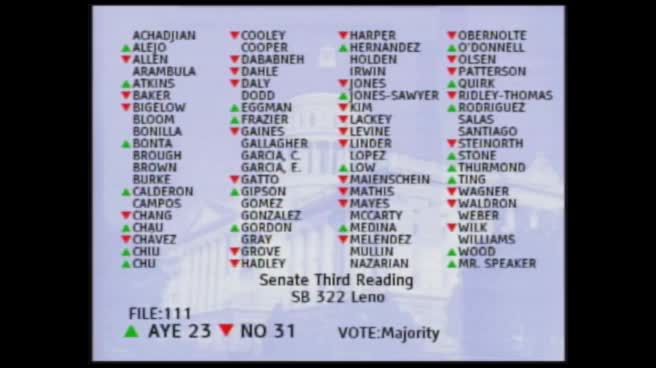 2MIN
Assembly Floor
 1MIN
Assembly Floor
 3MIN
Assembly Standing Committee on Appropriations
 32MIN
Assembly Standing Committee on Human Services
 27MIN
Assembly Standing Committee on Judiciary
 2MIN
Senate Floor
 16MIN
Senate Standing Committee on Judiciary
Bill Author

Bill Co-Author(s):