SB 1343: Pupils: intradistrict transfer of pupil convicted of violent felony or misdemeanor.
- Session Year: 2015-2016
- House: Senate
- Latest Version Date: 2016-08-19
Existing law establishes a system of public elementary and secondary education in this state. Existing law establishes school districts throughout the state and authorizes these school districts to provide instruction at the elementary and secondary schools they operate and maintain. Existing law provides for the governance of these school districts through elected school district governing boards.
This bill would authorize school district governing boards to transfer to another school in that school district pupils enrolled in that school district who have been convicted of violent felonies, as defined, or designated misdemeanors if the pupil to be transferred and the victim of the crime for which the pupil was convicted are enrolled at the same school, if certain requirements are satisfied, including, but not limited to, that the governing board of the school district adopts a policy and notifies parents or guardians of the policy as part of its annual notification to parents and guardians, as specified.
Existing law establishes a system of public elementary and secondary education in this state. Existing law establishes school districts throughout the state and authorizes these districts to provide instruction at the elementary and secondary schools they operate and maintain. Existing law provides for the governance of these school districts through elected school district governing boards.
This bill would authorize school district governing boards to transfer to another school in that school district pupils enrolled in that school district who have been convicted of violent felonies, as defined, or designated misdemeanors if the pupil to be transferred and the victim of the crime for which the pupil was convicted are enrolled at the same school. school, if certain requirements are satisfied, including, but not limited to, that the governing board of the school district adopts a policy and notifies parents or guardians of the policy as part of its annual notification to parents and guardians, as specified.
Existing law establishes a system of public elementary and secondary education in this state. Existing law establishes school districts throughout the state and authorizes these districts to provide instruction at the elementary and secondary schools they operate and maintain. Existing law provides for the governance of these school districts through elected school district governing boards.
This bill would authorize school district governing boards to transfer to another school in that school district pupils of enrolled in that school district who have been convicted of violent felonies, as defined, or designated misdemeanors. misdemeanors if the pupil to be transferred and the victim of the crime for which the pupil was convicted are enrolled at the same school.
Existing law establishes a system of public elementary and secondary education in this state. Existing law establishes school districts throughout the state and authorizes these districts to provide instruction at the elementary and secondary schools they operate and maintain. Existing law provides for the governance of these school districts through elected school district governing boards.
This bill would authorize school district governing boards to transfer to another school in that district pupils of that district who have been convicted of violent felonies, as defined, or designated misdemeanors.
Notwithstanding any other law, the governing board of a school district may transfer to another school in that school district a pupil enrolled in that school district who has been convicted of a violent felony, as defined in subdivision (c) of Section 667.5 of the Penal Code, or convicted of a misdemeanor listed in Section 29805 of the Penal Code if the pupil to be transferred and the victim of the crime for which the pupil was convicted are enrolled at the same school, subject to satisfaction of both of the following conditions:
(a)The governing board of the school district has adopted a policy at a regularly scheduled meeting that contains all of the following provisions:
(1)A requirement that the pupil and pupils parent or guardian be notified of the right to request a meeting with the school principal or designee of the school or school district.
(2)A requirement that the school first attempt to resolve the conflict before transferring a pupil, including, but not limited to, using restorative justice, counseling, or other services.
(3)Whether the decision to transfer a pupil is subject to periodic review and the procedure for conducting the review.
(4)The process to be used by the governing board of the school district to consider and approve or disapprove of the recommendation of the school principal or other school or school district designee to transfer the pupil.
(b)The governing board of the school district has provided notice of the policy to parents or guardians as part of the annual notification required pursuant to Section 48980.
SEC. 2.Section 48980 of the Education Code is amended to read:48980.(a)At the beginning of the first semester or quarter of the regular school term, the governing board of each school district shall notify the parent or guardian of a minor pupil regarding the right or responsibility of the parent or guardian under Sections 35291, 46014, 48205, 48207, 48208, 49403, 49423, 49451, 49472, and 51938 and Chapter 2.3 (commencing with Section 32255) of Part 19 of Division 1 of Title 1.
(b)The notification also shall advise the parent or guardian of the availability of individualized instruction as prescribed by Section 48206.3, and of the program prescribed by Article 9 (commencing with Section 49510) of Chapter 9.
(c)The notification also shall advise the parents and guardians of all pupils attending a school within the school district of the schedule of minimum days and pupil-free staff development days, and if minimum or pupil-free staff development days are scheduled thereafter, the governing board of the school district shall notify parents and guardians of the affected pupils as early as possible, but not later than one month before the scheduled minimum or pupil-free day.
(d)The notification also may advise the parent or guardian of the importance of investing for future college or university education for their children and of considering appropriate investment options, including, but not limited to, United States savings bonds.
(e)The notification shall advise the parent or guardian of the pupil that each pupil completing grade 12 is required to successfully pass the high school exit examination administered pursuant to Chapter 9 (commencing with Section 60850) of Part 33. The notification shall include, at a minimum, the date of the examination and the requirements for passing the examination, and shall inform the parents and guardians regarding the consequences of not passing the examination and shall inform parents and guardians that passing the examination is a condition of graduation.
(f)Each school district that elects to provide a fingerprinting program pursuant to Article 10 (commencing with Section 32390) of Chapter 3 of Part 19 of Division 1 of Title 1 shall inform parents or guardians of the program as specified in Section 32390.
(g)The notification also shall include a copy of the written policy of the school district on sexual harassment established pursuant to Section 231.5, as it relates to pupils.
(h)The notification shall advise the parent or guardian of all existing statutory attendance options and local attendance options available in the school district. This notification component shall include all options for meeting residency requirements for school attendance, programmatic options offered within the local attendance areas, and any special programmatic options available on both an interdistrict and intradistrict basis. This notification component also shall include a description of all options, a description of the procedure for application for alternative attendance areas or programs, an application form from the school district for requesting a change of attendance, and a description of the appeals process available, if any, for a parent or guardian denied a change of attendance. The notification component also shall include an explanation of the existing statutory attendance options, including, but not limited to, those available under Section 35160.5, Chapter 5 (commencing with Section 46600) of Part 26, and subdivision (b) of Section 48204. The department shall produce this portion of the notification and shall distribute it to all school districts.
(i)It is the intent of the Legislature that the governing board of each school district annually review the enrollment options available to the pupils within its district and that the school districts strive to make available enrollment options that meet the diverse needs, potential, and interests of the pupils of California.
(j)The notification shall advise the parent or guardian that a pupil shall not have his or her grade reduced or lose academic credit for any absence or absences excused pursuant to Section 48205 if missed assignments and tests that can reasonably be provided are satisfactorily completed within a reasonable period of time, and shall include the full text of Section 48205.
(k)The notification shall advise the parent or guardian of the availability of state funds to cover the costs of advanced placement examination fees pursuant to Section 52242.
(l)The notification to the parent or guardian of a minor pupil enrolled in any of grades 9 to 12, inclusive, also shall include the information required pursuant to Section 51229.
(m)If a school district elects to allow a career technical education course to satisfy the requirement imposed by subparagraph (E) of paragraph (1) of subdivision (a) of Section 51225.3, the school district shall include, in the notification required pursuant to this section, both of the following:
(1)Information about the high school graduation requirements of the school district and how each requirement satisfies or does not satisfy the subject matter requirements for admission to the California State University and the University of California.
(2)A complete list of career technical education courses offered by the school district that satisfy the subject matter requirements for admission to the California State University and the University of California, and which of the specific college admission requirements these courses satisfy.
(n)A school district that elects to adopt a policy regarding the transfer of pupils pursuant to Article 1.5 (commencing with Section 48929) shall inform parents or guardians of the policy in the notification required pursuant to this section.
Notwithstanding any other law, the governing board of a school district may transfer to another school in that school district a pupil enrolled in that school district who has been convicted of a violent felony, as defined in subdivision (c) of Section 667.5 of the Penal Code, or convicted of a misdemeanor listed in Section 29805 of the Penal Code if the pupil to be transferred and the victim of the crime for which the pupil was convicted are enrolled at the same school. school, subject to satisfaction of both of the following conditions:
(a)The governing board of the school district has adopted a policy at a regularly scheduled meeting that contains all of the following provisions:
(1)A requirement that the pupil and pupils parent or guardian be notified of the right to request a meeting with the school principal or designee of the school or school district.
(2)A requirement that the school first attempt to resolve the conflict before transferring a pupil, including, but not limited to, using restorative justice, counseling, or other services.
(3)Whether the decision to transfer a pupil is subject to periodic review and the procedure for conducting the review.
(4)The process to be used by the governing board of the school district to consider and approve or disapprove of the recommendation of the school principal or other school or school district designee to transfer the pupil.
(b)The governing board of the school district has provided notice of the policy to parents or guardians as part of the annual notification required pursuant to Section 48980.
SEC. 2.Section 48980 of the Education Code is amended to read:48980.(a)At the beginning of the first semester or quarter of the regular school term, the governing board of each school district shall notify the parent or guardian of a minor pupil regarding the right or responsibility of the parent or guardian under Sections 35291, 46014, 48205, 48207, 48208, 49403, 49423, 49451, 49472, and 51938 and Chapter 2.3 (commencing with Section 32255) of Part 19 of Division 1 of Title 1.
(b)The notification also shall advise the parent or guardian of the availability of individualized instruction as prescribed by Section 48206.3, and of the program prescribed by Article 9 (commencing with Section 49510) of Chapter 9.
(c)The notification also shall advise the parents and guardians of all pupils attending a school within the school district of the schedule of minimum days and pupil-free staff development days, and if minimum or pupil-free staff development days are scheduled thereafter, the governing board of the school district shall notify parents and guardians of the affected pupils as early as possible, but not later than one month before the scheduled minimum or pupil-free day.
(d)The notification also may advise the parent or guardian of the importance of investing for future college or university education for their children and of considering appropriate investment options, including, but not limited to, United States savings bonds.
(e)The notification shall advise the parent or guardian of the pupil that each pupil completing grade 12 is required to successfully pass the high school exit examination administered pursuant to Chapter 9 (commencing with Section 60850) of Part 33. The notification shall include, at a minimum, the date of the examination and the requirements for passing the examination, and shall inform the parents and guardians regarding the consequences of not passing the examination and shall inform parents and guardians that passing the examination is a condition of graduation.
(f)Each school district that elects to provide a fingerprinting program pursuant to Article 10 (commencing with Section 32390) of Chapter 3 of Part 19 of Division 1 of Title 1 shall inform parents or guardians of the program as specified in Section 32390.
(g)The notification also shall include a copy of the written policy of the school district on sexual harassment established pursuant to Section 231.5, as it relates to pupils.
(h)The notification shall advise the parent or guardian of all existing statutory attendance options and local attendance options available in the school district. This notification component shall include all options for meeting residency requirements for school attendance, programmatic options offered within the local attendance areas, and any special programmatic options available on both an interdistrict and intradistrict basis. This notification component also shall include a description of all options, a description of the procedure for application for alternative attendance areas or programs, an application form from the school district for requesting a change of attendance, and a description of the appeals process available, if any, for a parent or guardian denied a change of attendance. The notification component also shall include an explanation of the existing statutory attendance options, including, but not limited to, those available under Section 35160.5, Chapter 5 (commencing with Section 46600) of Part 26, and subdivision (b) of Section 48204. The department shall produce this portion of the notification and shall distribute it to all school districts.
(i)It is the intent of the Legislature that the governing board of each school district annually review the enrollment options available to the pupils within its district and that the school districts strive to make available enrollment options that meet the diverse needs, potential, and interests of the pupils of California.
(j)The notification shall advise the parent or guardian that a pupil shall not have his or her grade reduced or lose academic credit for any absence or absences excused pursuant to Section 48205 if missed assignments and tests that can reasonably be provided are satisfactorily completed within a reasonable period of time, and shall include the full text of Section 48205.
(k)The notification shall advise the parent or guardian of the availability of state funds to cover the costs of advanced placement examination fees pursuant to Section 52244. 52242.
(l)The notification to the parent or guardian of a minor pupil enrolled in any of grades 9 to 12, inclusive, also shall include the information required pursuant to Section 51229.
(m)If a school district elects to allow a career technical education course to satisfy the requirement imposed by subparagraph (E) of paragraph (1) of subdivision (a) of Section 51225.3, the school district shall include, in the notification required pursuant to this section, both of the following:
(1)Information about the high school graduation requirements of the school district and how each requirement satisfies or does not satisfy the subject matter requirements for admission to the California State University and the University of California.
(2)A complete list of career technical education courses offered by the school district that satisfy the subject matter requirements for admission to the California State University and the University of California, and which of the specific college admission requirements these courses satisfy.
(n)A school district that elects to adopt a policy regarding the transfer of pupils pursuant to Article 1.5 (commencing with Section 48929) shall inform parents or guardians of the policy in the notification required pursuant to this section.
Notwithstanding any other law, the governing board of a school district may transfer to another school in that school district a pupil of enrolled in that school district who has been convicted of a violent felony, as defined in subdivision (c) of Section 667.5 of the Penal Code, or convicted of a misdemeanor listed in Section 29805 of the Penal Code. Code if the pupil to be transferred and the victim of the crime for which the pupil was convicted are enrolled at the same school.
Notwithstanding any other law, the governing board of a school district may transfer to another school in that district a pupil of that district who has been convicted of a violent felony, as defined in subdivision (c) of Section 667.5 of the Penal Code, or convicted of a misdemeanor listed in Section 29805 of the Penal Code.
|
Date
|
Status
|
|---|---|
| May 16, 2016 | In Assembly. Read first time. Held at Desk. |
| Aug 19, 2016 | Chaptered by Secretary of State. Chapter 154, Statutes of 2016. |
| Aug 19, 2016 | Approved by the Governor. |
| Aug 10, 2016 | Enrolled and presented to the Governor at 10 a.m. |
| Aug 4, 2016 | Read third time. Passed. (Ayes 77. Noes 0. Page 5707.) Ordered to the Senate. |
| Aug 4, 2016 | Read third time. Passed. Ordered to the Senate. |
| Aug 4, 2016 | In Senate. Ordered to engrossing and enrolling. |
| Jun 27, 2016 | Read second time. Ordered to third reading. |
| Jun 23, 2016 | From committee: Do pass. (Ayes 7. Noes 0.) (June 22). |
| Jun 9, 2016 | Referred to Com. on ED. |
| May 16, 2016 | Read third time. Passed. (Ayes 35. Noes 0.) Ordered to the Assembly. |
| May 16, 2016 | Read third time. Passed. (Ayes 35. Noes 0. Page 3872.) Ordered to the Assembly. |
| Feb 19, 2016 | Introduced. To Com. on RLS. for assignment. To print. |
| May 5, 2016 | Read second time. Ordered to third reading. |
| May 4, 2016 | Read third time and amended. |
| May 4, 2016 | Ordered to second reading. |
| Apr 21, 2016 | Read second time. Ordered to third reading. |
| Apr 20, 2016 | From committee: Do pass. (Ayes 9. Noes 0.) (April 20). |
| Apr 20, 2016 | From committee: Do pass. (Ayes 9. Noes 0. Page 3608.) (April 20). |
| Apr 12, 2016 | From committee with author's amendments. Read second time and amended. Re-referred to Com. on ED. |
| Apr 8, 2016 | Set for hearing April 20. |
| Mar 3, 2016 | Referred to Com. on ED. |
| Feb 22, 2016 | Read first time. |
| Feb 22, 2016 | From printer. May be acted upon on or after March 23. |
|
Date
|
Description
|
Location
|
Votes
|
|
|---|---|---|---|---|
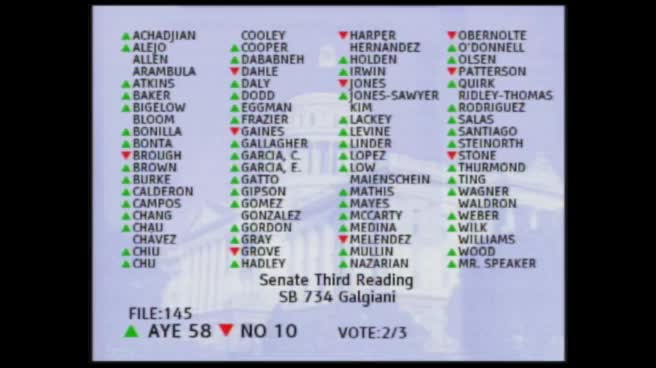
| Aug 4, 2016 | SB 1343 Wolk Senate Third Reading By OLSEN | Assembly Floor |
Passed |
|
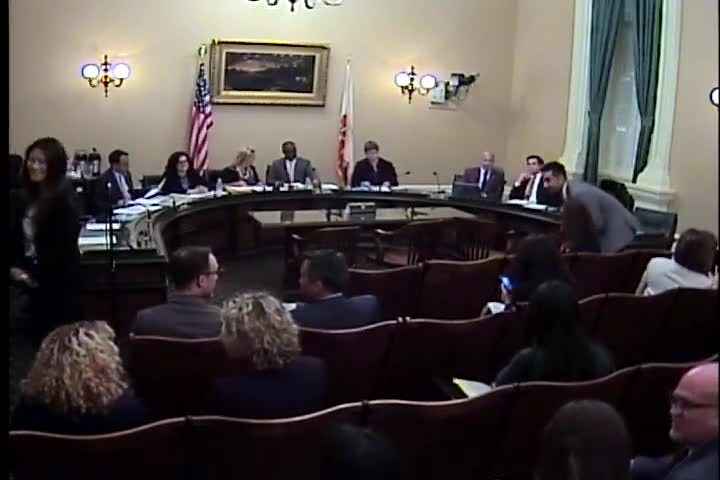
| Jun 22, 2016 | Do pass. | Assembly Standing Committee on Education |
Passed |
|
| May 16, 2016 | Senate 3rd Reading SB1343 Wolk | Senate Floor |
Passed |
|
| Apr 20, 2016 | Do pass | Senate Standing Committee on Education |
Passed |
This list shows positions taken on this bill by organizations on the date displayed, which is linked to the original source.
Positions by individuals are not included.
|
Organization
|
Position
|
Date
|
|---|---|---|
| ACLU of California | * Against | Jun 22, 2016 |
| American Association of University Women in California | * Support | Jun 27, 2018 |
| Association Of California School Administrators | * Indeterminate | Jun 22, 2016 |
| California Association of Wine Grape Growers | * Neutral | Jun 27, 2018 |
| California Labor Federation | * Support | Jun 27, 2018 |
| California Manufacturers And Technology Association | * Neutral | Jun 27, 2018 |
| California School Boards Association | * Indeterminate | Jun 22, 2016 |
| California Special Districts Association | * For If Amend | Jun 27, 2018 |
| California State Association Of Counties | * For If Amend | Jun 27, 2018 |
| California Teamsters | * Support | Jun 27, 2018 |
| Children Rights Project of Public Council in LA | * Against | Jun 22, 2016 |
| Dixion High School | * Support | Apr 20, 2016 |
| Dixon Unified School District | * Support | Jun 22, 2016 |
| Dixon Unified School District Governing Board | * Against | Apr 20, 2016 |
| East Bay Community Law Center | ** Against | May 16, 2016 |
| Equal Justice Society | ** Against | May 16, 2016 |
| Legal Services for Children | ** Against | May 16, 2016 |
| National Association of Social Workers | * Support | Jun 27, 2018 |
| Public Advocates | * Against | Jun 22, 2016 |
| Youth Law Center | ** Against | May 16, 2016 |
SENATE THIRD READING
STR Bill Id:SB 1343
Author:(Wolk)
As Amended Ver:May 4, 2016
Majority vote
SENATE VOTE: 35-0
Committee | Votes | Ayes | Noes |
Education | 7-0 | O'Donnell, Olsen, Kim, McCarty, Santiago, Thurmond, Weber |
SUMMARY: Authorizes a school district to transfer a pupil convicted of a violent felony or a specified misdemeanor to another school in the school district if the pupil and the victim of the crime are enrolled at the same school. Specifically, this bill:
- Requires the governing board of a school district to do the following prior to transferring a pupil:
- Adopt a policy at a regularly scheduled meeting that contains all of the following provisions:
- A requirement that the pupil and pupil's parent or guardian be notified of the right to request a meeting with the school principal or designee of the school or school district.
- A requirement that the school first attempt to resolve the conflict before transferring a pupil, including, but not limited to, using restorative justice, counseling, or other services.
- Whether the decision to transfer a pupil is subject to periodic review and the procedure for conducting the review.
- The process to be used by the governing board of the school district to consider and approve or disapprove of the recommendation of the school principal or other school or school district designee to transfer the pupil.
- Provide notice of the policy to parents or guardians as part of the annual parent notification.
- Adopt a policy at a regularly scheduled meeting that contains all of the following provisions:
FISCAL EFFECT: Unknown. This bill is keyed non-fiscal by the Legislative Counsel.
COMMENTS: Purpose of the bill. The author states, "Recently a student was convicted of an off-campus violent felony against another student and the local school board was advised not to transfer the perpetrator to a different high school because the incident occurred off-campus and the district had only one comprehensive high school. The victim obtained a temporary restraining order but schools aren't enforcement agencies. As a result, the victim had to change his classes to avoid direct daily contact with his attacker. Because they were students at the same school the perpetrator wasn't restricted in his access to the victim or to school activities thus violating the victim's constitutional right to attend a safe school."
This bill authorizes a school district to transfer a pupil who has been convicted of a specified violent felony, including murder, rape, great bodily injury, threats to a victim or witness, robbery, and burglary, or a misdemeanor associated with possession of a fire arm, if the pupil and the victim are enrolled at the same school. The bill requires the governing board of a school district that chooses to exercise this authority to first adopt a policy with specified requirements, including the process that will be used to determine whether to approve or disapprove a transfer and the requirement to first attempt to resolve the conflict, such as through counseling or restorative justice. The bill also requires the school district to include notification of the policy in the annual parent notification.
Transfers to alternative programs. Existing law allows a school district to transfer a pupil involuntarily to a continuation high school if a pupil has committed an act that may lead to a suspension or expulsion and the principal determines that the pupil's presence causes a danger to persons or property or threatens to disrupt the instructional process.
Existing law prohibits a student from being assigned to a community day school unless the student has been expelled or referred by probation, a school attendance review board, or other district level referral process. Any route of referral to a community day school requires a process to determine if the student should be transferred. Existing law requires school districts to adopt procedures for the involuntary transfer of students to continuation schools, including a determination based on specific findings.
Existing law prohibits a school district from preventing enrollment or readmission to a public school solely because the pupil was involved in the juvenile justice system. Is the involuntary transfer of a pupil who was convicted of a crime inconsistent with this law? The Senate Floor analysis cites the following related case law:
- In Danielle S. v. Ezra C. (Westlaw 2840340, 2005), the Court ruled that "Appellant's right to attend school is neither absolute nor unilateral. He is not constitutionally entitled to attend a specific school, particularly where his presence on school grounds may interfere with the peaceful conduct of the activities of the school or disrupt the school, its students, its teachers or its other employees. …Schools have the obligation to protect pupils from violence and mistreatment by other children. Only a total deprivation of a state-given right to education would violate the United States Constitution."
- In Nathan G. v. Clovis Unified School District (224 Cal.App.4th 1393 (2014), the Court held that "a school or district is not required to exhaust all other means prior to involuntary transfer to a continuation school, and involuntary transfer to a continuation school did not substantially affect the student's fundamental interest in access to public education."
Public Advocates, writing in opposition of the bill, states, "Codifying the district's ability to transfer a student who has been convicted of an offense, even after the student has served a sentence for the offense, is not necessary. The criminal and justice court systems already provide existing legal tools every day to protect student victims, including for example restraining orders and 'stay away' orders. These orders can be and are utilized to prevent a student from attending a certain school in a situation in which a judge – who has the benefit of a full understanding of all of the facts at play – determines that is necessary to separate students in this way, whether from the person of a victim or from an entire school site. Judicial oversight of this type is critical because every interaction between a victim and perpetrator is different, and careful consideration of the facts underlying an offense is necessary before a determination is made to remove a student from his or her school."
Analysis Prepared by: Sophia Kwong Kim / ED. / (916) 319-2087 FN: 0003533
Date of Hearing: June 22, 2016
ASSEMBLY COMMITTEE ON EDUCATION
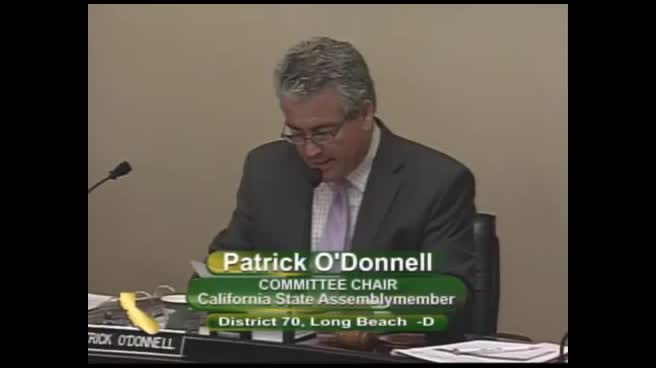
Patrick O'Donnell, Chair
SBPCA Bill Id:SB 1343
Author:(Wolk) – As Amended Ver:May 4, 2016
SENATE VOTE: 35-0
SUBJECT: Pupils: intradistrict transfer of pupil convicted of violent felony or misdemeanor
SUMMARY: Authorizes a school district to transfer a pupil convicted of a violent felony or a specified misdemeanor to another school in the school district if the pupil and the victim of the crime are enrolled at the same school. Specifically, this bill:
- Requires the governing board of a school district to do the following prior to transferring a pupil:
- Adopt a policy at a regularly scheduled meeting that contains all of the following provisions:
- A requirement that the pupil and pupil’s parent or guardian be notified of the right to request a meeting with the school principal or designee of the school or school district.
- A requirement that the school first attempt to resolve the conflict before transferring a pupil, including, but not limited to, using restorative justice, counseling, or other services.
- Whether the decision to transfer a pupil is subject to periodic review and the procedure for conducting the review.
- The process to be used by the governing board of the school district to consider and approve or disapprove of the recommendation of the school principal or other school or school district designee to transfer the pupil.
- Provide notice of the policy to parents or guardians as part of the annual parent notification.
- Adopt a policy at a regularly scheduled meeting that contains all of the following provisions:
EXISTING LAW:
- Requires that each person between the ages of 6 and 18 years, not otherwise exempted, be subject to compulsory full-time education and attend the public full-time day school or continuation school or classes in which their parent or guardian resides, and that each parent, guardian or other person having control or charge of the pupil ensure that pupil's enrollment and attendance. (EC Section 48200)
- Authorizes or requires a principal or a superintendent of schools to suspend or expel a student committing any of a number of specified acts. (EC Sections 48900, 48900.2, 48900.3, 48900.4, 48900.7, 48915)
- Specifies the process for expulsion, the requirement for the governing board to recommend a plan of rehabilitation for the pupil at the time of the expulsion order, the process for readmission, the requirement for the governing board to establish rules and regulations for expulsions, the right of a pupil to have a hearing, the timeline for the hearing, and the process for appealing an expulsion. (EC Sections 48916, 48916.1, 48918, 48918.5, 48919, 48919.5, 48920, 48921, 48922, 48923, and 48924)
- Prohibits a pupil from being denied enrollment or readmission to a public school solely on the basis that he or she has had contact with the juvenile justice system, including, but not limited to: 1) arrest; 2) adjudication by a juvenile court; 3) formal or informal supervision by a probation officer; and 4) detention for any length of time in a juvenile facility or enrollment in a juvenile court school. (EC Section 48645.5)
- Requires the governing board of each high school or unified school district which assigns pupils to continuation schools to adopt rules and regulations governing procedures for the involuntary transfer of pupils to continuation schools. Specifies that a decision to transfer a pupil involuntarily shall be based on a finding that the pupil committed one of the acts that may result in suspension or expulsion or if the pupil has been habitually truant. (EC Section 48432.5)
- Specifies that a pupil who commits one of the acts that may result in suspension or expulsion may be involuntarily transferred to a continuation school if the principal determines that the pupil's presence causes a danger to persons or property or threatens to disrupt the instructional process. (EC Section 48432.5)
- Specifies that a pupil who has been determined by personnel of either the district of residence or the district of proposed enrollment to have been the victim of an act of bullying committed by a pupil of the district of residence shall, at the request of the person having legal custody of the pupil, be given priority for interdistrict attendance under any existing interdistrict attendance agreement or, in the absence of an agreement, be given additional consideration for the creation of an interdistrict attendance agreement. (EC Section 46600)
- Defines “violent felony” to include 23 acts, such as murder, rape, great bodily injury, threats to a victim or witness, robbery, and burglary. (Penal Code Section 667.5)
- Sets forth misdemeanor penalties for offenses related to possession of a firearm. (Penal Code Section 29805)
FISCAL EFFECT: Unknown. This bill is keyed non-fiscal by the Legislative Counsel.
COMMENTS: Purpose of the bill. The author states, "Recently a student was convicted of an off-campus violent felony against another student and the local school board was advised not to transfer the perpetrator to a different high school because the incident occurred off-campus and the district had only one comprehensive high school. The victim obtained a temporary restraining order but schools aren't enforcement agencies. As a result, the victim had to change his classes to avoid direct daily contact with his attacker. Because they were students at the same school the perpetrator wasn't restricted in his access to the victim or to school activities thus violating the victim's constitutional right to attend a safe school."
This bill authorizes a school district to transfer a pupil who has been convicted of a specified violent felony, including murder, rape, great bodily injury, threats to a victim or witness, robbery, and burglary, or a misdemeanor associated with possession of a fire arm, if the pupil and the victim are enrolled in the same school. The bill requires the governing board of a school district that chooses to exercise this authority to first adopt a policy with specified requirements, including the process that will be used to determine whether to approve or disapprove a transfer and the requirement to first attempt to resolve the conflict, such as through counseling or restorative justice. The bill also requires the school district to include notification of the policy in the annual parent notification.
Transfers to alternative programs. Existing law allows a school district to transfer a pupil involuntarily to a continuation high school if a pupil has committed an act that may lead to a suspension or expulsion and the principal determines that the pupil's presence causes a danger to persons or property or threatens to disrupt the instructional process.
Existing law prohibits a student from being assigned to a community day school unless the student has been expelled or referred by probation, a school attendance review board, or other district level referral process. Any route of referral to a community day school requires a process to determine if the student should be transferred. Existing law requires school districts to adopt procedures for the involuntary transfer of students to continuation schools, including a determination based on specific findings.
Existing law prohibits a school district from preventing enrollment or readmission to a public school solely because the pupil was involved in the juvenile justice system. Is the involuntary transfer of a pupil who was convicted of a crime inconsistent with this law? The Senate Floor analysis cites the following related case law:
- In Danielle S. v. Ezra C. (Westlaw 2840340, 2005), the Court ruled that “Appellant’s right to attend school is neither absolute nor unilateral. He is not constitutionally entitled to attend a specific school, particularly where his presence on school grounds may interfere with the peaceful conduct of the activities of the school or disrupt the school, its students, its teachers or its other employees. … Schools have the obligation to protect pupils from violence and mistreatment by other children. Only a total deprivation of a state-given right to education would violate the United States Constitution.”
- In Nathan G. v. Clovis Unified School District (224 Cal.App.4th 1393 (2014), the Court held that “a school or district is not required to exhaust all other means prior to involuntary transfer to a continuation school, and involuntary transfer to a continuation school did not substantially affect the student’s fundamental interest in access to public education.”
REGISTERED SUPPORT / OPPOSITION:
Support
None on file
Opposition
None on file
Analysis Prepared by: Sophia Kwong Kim / ED. / (916) 319-2087
Office of Senate Floor Analyses (916) 651-1520 Fax: (916) 327-4478 | SB |
THIRD READING
Bill No: SB 1343
:
SENATE EDUCATION COMMITTEE: 9-0, 4/20/16
AYES: Liu, Block, Hancock, Huff, Leyva, Mendoza, Monning, Pan, Vidak
DIGEST: This bill authorizes the governing board of a school district, if certain conditions are met, to transfer to another school in that district a student who has been convicted of a violent felony or specified misdemeanor if the student to be transferred and the victim of the crime for which the student was convicted attend the same school.
Senate Floor Amendments of 5/4/16 place the following conditions on the authority of a school district to transfer a student who has been convicted of certain crimes against another student:
- The governing board of the school district has adopted a policy at a regularly scheduled meeting that contains all of the following provisions:
- A requirement that the student and student’s parent be notified of the right to request a meeting with the school principal or designee of the school or school district.
- A requirement that the school first attempt to resolve the conflict before transferring a student, including, but not limited to, using restorative justice, counseling, or other services.
- Whether the decision to transfer a student is subject to periodic review and the procedure for conducting the review.
- The process to be used by the governing board of the school district to consider and approve or disapprove of the recommendation of the school principal or other school or school district designee to transfer the student.
- A requirement that the student and student’s parent be notified of the right to request a meeting with the school principal or designee of the school or school district.
- The governing board of the school district has provided notice of the policy to parents as part of the annual notification required by existing law.
The amendments also make conforming changes to existing provisions relative to the annual notification of parents.
Existing law:
- Prohibits a student from being denied enrollment or readmission to a public school solely on the basis that he or she has had contact with the juvenile justice system, including arrest, adjudication by a juvenile court, formal or informal supervision by a probation officer, or detention in a juvenile facility or enrollment in a juvenile court school. (Education Code § 48645.5)
- Authorizes the involuntary transfer of a student to a continuation school and requires the governing board of a school district that assigns students to continuation schools to adopt rules and regulations governing procedures for the involuntary transfer of students. (EC § 48432.5)
- Prohibits the assignment of a student to a community day school (operated by a school district) only if the student meets one or more of the following conditions:
- The student is expelled for any reason.
- The student is referred by a probation department.
- The student is referred by a school attendance review board or other district level referral process. (EC § 48662)
- The student is expelled for any reason.
- Prohibits a student from being suspended or recommended for expulsion unless the principal of the school determines that the pupil has committed certain acts, and gives schools the discretion to take action for most offenses. Existing law authorizes a student to be suspended or expelled for certain acts that are related to a school activity or school attendance that occur at any time. (EC § 48900)
- Defines “violent felony” to include 23 acts, such as murder, rape, great bodily injury, threats to a victim or witness, robbery, and burglary. (Penal Code § 667.5)
- Sets forth misdemeanor penalties for offenses related to possession of a firearm. (PC § 29805)
- Provides, under the California Constitution, that all students and staff of public schools, colleges and universities have the inalienable right to attend campuses which are safe, secure, and peaceful. (California Constitution, Article I, § 28)
Existing case law:
- In Danielle S. v. Ezra C. (Westlaw 2840340, 2005), the Court ruled that “Appellant’s right to attend school is neither absolute nor unilateral. He is not constitutionally entitled to attend a specific school, particularly where his presence on school grounds may interfere with the peaceful conduct of the activities of the school or disrupt the school, its students, its teachers or its other employees. … Schools have the obligation to protect pupils from violence and mistreatment by other children. Only a total deprivation of a state-given right to education would violate the United States Constitution.”
- In Nathan G. v. Clovis Unified School District (224 Cal.App.4th 1393 (2014), the Court held that “a school or district is not required to exhaust all other means prior to involuntary transfer to a continuation school, and involuntary transfer to a continuation school did not substantially affect the student’s fundamental interest in access to public education.”
This bill:
- Authorizes the governing board of a school district, if certain conditions are met, to transfer to another school in that district a student who has been convicted of a violent felony or specified misdemeanor if the student to be transferred and the victim of the crime for which the student was convicted are enrolled in the same school.
- Places the following conditions on the authority of a school district to transfer a student who has been convicted of certain crimes against another student:
- The governing board of the school district has adopted a policy at a regularly scheduled meeting that contains all of the following provisions:
- A requirement that the student and student’s parent be notified of the right to request a meeting with the school principal or designee of the school or school district.
- A requirement that the school first attempt to resolve the conflict before transferring a student, including, but not limited to, using restorative justice, counseling, or other services.
- Whether the decision to transfer a student is subject to periodic review and the procedure for conducting the review.
- The process to be used by the governing board of the school district to consider and approve or disapprove of the recommendation of the school principal or other school or school district designee to transfer the student.
- A requirement that the student and student’s parent be notified of the right to request a meeting with the school principal or designee of the school or school district.
- The governing board of the school district has provided notice of the policy to parents as part of the annual notification required by existing law.
- The governing board of the school district has adopted a policy at a regularly scheduled meeting that contains all of the following provisions:
Comments
Why transfer? According to the author, the rationale for transferring a student who has been convicted of a violent felony for an offense that was unrelated to school is because the presence of the student who was convicted is intimidating for the student who was the victim of the offense, and schools fear they cannot ensure the safety of students. Schools are currently authorized to take a number of disciplinary actions against a student who commits any number of acts that are related to a school activity or school attendance that occur at any time, such as bullying, threatening, intimidating or harassing the victim of an assault.
Temporary Restraining Order vs compulsory education. According to the author, this bill addresses a specific situation in which a student was convicted of an off-campus violent felony against another student, and the victim obtained a temporary restraining order. Both students attend the same high school, and there is only one traditional high school in the school district. Counsel for the school district advised that the school cannot enforce the restraining order because the district does not operate another traditional high school in which to transfer the student who is the subject of the restraining order, and that student has a right to an education. Case law provides that a student’s right to attend school is neither absolute nor unilateral, students are not entitled to attend a specific school particularly where his presence at school may interfere with peaceful conduct, only a total deprivation of a state-given right to education would violate a student’s right to an education, and an involuntary transfer to a continuation school did not substantially affect the student’s fundamental interest in access to public education. It appears that schools currently have the ability to enforce a restraining order that precludes a student from attending a traditional school, and to transfer such student to a non-traditional school. This bill has the practical effect of codifying case law.
This bill authorizes a school district to transfer a student to another school in that district. It appears that many school districts with several schools currently transfer students to another traditional school within the district. According to the author, this bill addresses a situation related to a school district with a single high school. This bill enables a school district with one elementary, middle, or high school, or one school all together, to transfer a student to an alternative education setting, such as a continuation school (for students age 16-18) or community day school (for K-12 students).
FISCAL EFFECT: Appropriation: Fiscal Com.: Local:
None received
Equal Justice Society
Public Advocates
Public Counsel
5/6/16 14:26:33
**** END ****
Office of Senate Floor Analyses (916) 651-1520 Fax: (916) 327-4478 | SB |
THIRD READING
Bill No: SB 1343
:
SENATE EDUCATION COMMITTEE: 9-0, 4/20/16
AYES: Liu, Block, Hancock, Huff, Leyva, Mendoza, Monning, Pan, Vidak
DIGEST: This bill authorizes the governing board of a school district to transfer to another school in that district a student who has been convicted of a violent felony or specified misdemeanor if the student to be transferred and the victim of the crime for which the student was convicted attend the same school.
Existing law:
- Prohibits a student from being denied enrollment or readmission to a public school solely on the basis that he or she has had contact with the juvenile justice system, including arrest, adjudication by a juvenile court, formal or informal supervision by a probation officer, or detention in a juvenile facility or enrollment in a juvenile court school. (Education Code § 48645.5)
- Authorizes the involuntary transfer of a student to a continuation school and requires the governing board of a school district that assigns students to continuation schools to adopt rules and regulations governing procedures for the involuntary transfer of students. (EC § 48432.5)
- Prohibits the assignment of a student to a community day school (operated by a school district) only if the student meets one or more of the following conditions:
- The student is expelled for any reason.
- The student is referred by a probation department.
- The student is referred by a school attendance review board or other district level referral process. (EC § 48662)
- The student is expelled for any reason.
- Prohibits a student from being suspended or recommended for expulsion unless the principal of the school determines that the pupil has committed certain acts, and gives schools the discretion to take action for most offenses. Existing law authorizes a student to be suspended or expelled for certain acts that are related to a school activity or school attendance that occur at any time. (EC § 48900)
- Defines “violent felony” to include 23 acts, such as murder, rape, great bodily injury, threats to a victim or witness, robbery, and burglary. (Penal Code § 667.5)
- Sets forth misdemeanor penalties for offenses related to possession of a firearm. (PC § 29805)
- Provides, under the California Constitution, that all students and staff of public schools, colleges and universities have the inalienable right to attend campuses which are safe, secure, and peaceful. (California Constitution, Article I, § 28)
Existing case law:
- In Danielle S. v. Ezra C. (Westlaw 2840340, 2005), the Court ruled that “Appellant’s right to attend school is neither absolute nor unilateral. He is not constitutionally entitled to attend a specific school, particularly where his presence on school grounds may interfere with the peaceful conduct of the activities of the school or disrupt the school, its students, its teachers or its other employees. … Schools have the obligation to protect pupils from violence and mistreatment by other children. Only a total deprivation of a state-given right to education would violate the United States Constitution.”
- In Nathan G. v. Clovis Unified School District (224 Cal.App.4th 1393 (2014), the Court held that “a school or district is not required to exhaust all other means prior to involuntary transfer to a continuation school, and involuntary transfer to a continuation school did not substantially affect the student’s fundamental interest in access to public education.”
This bill authorizes the governing board of a school district to transfer to another school in that district a student who has been convicted of a violent felony or specified misdemeanor if the student to be transferred and the victim of the crime for which the student was convicted are enrolled in the same school.
Comments
Why transfer? According to the author, the rationale for transferring a student who has been convicted of a violent felony for an offense that was unrelated to school is because the presence of the student who was convicted is intimidating for the student who was the victim of the offense, and schools fear they cannot ensure the safety of students. Schools are currently authorized to take a number of disciplinary actions against a student who commits any number of acts that are related to a school activity or school attendance that occur at any time, such as bullying, threatening, intimidating or harassing the victim of an assault.
Temporary Restraining Order vs compulsory education. According to the author, this bill addresses a specific situation in which a student was convicted of an off-campus violent felony against another student, and the victim obtained a temporary restraining order. Both students attend the same high school, and there is only one traditional high school in the school district. Counsel for the school district advised that the school cannot enforce the restraining order because the district does not operate another traditional high school in which to transfer the student who is the subject of the restraining order, and that student has a right to an education. Case law provides that a student’s right to attend school is neither absolute nor unilateral, students are not entitled to attend a specific school particularly where his presence at school may interfere with peaceful conduct, only a total deprivation of a state-given right to education would violate a student’s right to an education, and an involuntary transfer to a continuation school did not substantially affect the student’s fundamental interest in access to public education. It appears that schools currently have the ability to enforce a restraining order that precludes a student from attending a traditional school, and to transfer such student to a non-traditional school. This bill has the practical effect of codifying case law.
This bill authorizes a school district to transfer a student to another school in that district. It appears that many school districts with several schools currently transfer students to another traditional school within the district. According to the author, this bill addresses a situation related to a school district with a single high school. This bill enables a school district with one elementary, middle, or high school, or one school all together, to transfer a student to an alternative education setting, such as a continuation school (for students age 16-18) or community day school (for K-12 students).
Author has committed to amendments. At the April 20 hearing of this bill in the Senate Education Committee, the author committed to amending this bill as follows:
- Require, if a school district chooses to transfer a student pursuant to this bill, the school district to provide notice to students and parents of this policy at the beginning of the school year.
- Create a process whereby the student and parent are notified and provided an opportunity to meet with the school principal prior to transfer.
- Require the school district to attempt to resolve the conflict prior to transferring a student, such as through restorative justice, counseling or other services.
- Require a determination to be made if and when the student may return to the school of origin.
FISCAL EFFECT: Appropriation: Fiscal Com.: Local:
None received
OPPOSITION: (Verified 4/21/16)
American Civil Liberties Union of California
Legal Services for Children
Public Advocates
Public Counsel
Youth Law Center
4/22/16 12:32:10
**** END ****
SENATE COMMITTEE ON EDUCATION
Senator Carol Liu, Chair
2015 - 2016 Regular
Bill No:
Author: | Wolk | ||
Version: | Hearing Date: April 20, 2016 | ||
Urgency: | Fiscal: | ||
Consultant: | |||
Subject:
SUMMARY
This bill authorizes the governing board of a school district to transfer to another school in that district a student who has been convicted of a violent felony or specified misdemeanor if the student to be transferred and the victim of the crime for which the student was convicted attend the same school.
BACKGROUND
Existing law:
- Prohibits a student from being denied enrollment or readmission to a public school solely on the basis that he or she has had contact with the juvenile justice system, including arrest, adjudication by a juvenile court, formal or informal supervision by a probation officer, or detention in a juvenile facility or enrollment in a juvenile court school. (Education Code § 48645.5)
- Authorizes the involuntary transfer of a student to a continuation school and requires the governing board of a school district that assigns students to continuation schools to adopt rules and regulations governing procedures for the involuntary transfer of students. (EC § 48432.5)
- Prohibits the assignment of a student to a community day school (operated by a school district) only if the student meets one or more of the following conditions:
- The student is expelled for any reason.
- The student is referred by a probation department.
- The student is referred by a school attendance review board or other district level referral process. (EC § 48662)
- The student is expelled for any reason.
- Prohibits a student from being suspended or recommended for expulsion unless the principal of the school determines that the pupil has committed certain acts, and gives schools the discretion to take action for most offenses. Existing law authorizes a student to be suspended or expelled for certain acts that are related to a school activity or school attendance that occur at any time. (EC § 48900)
- Defines “violent felony” to include 23 acts, such as murder, rape, great bodily injury, threats to a victim or witness, robbery, and burglary. (Penal Code § 667.5)
- Sets forth misdemeanor penalties for offenses related to possession of a firearm. (PC § 29805)
ANALYSIS
This bill authorizes the governing board of a school district to transfer to another school in that district a student who has been convicted of a violent felony or specified misdemeanor if the student to be transferred and the victim of the crime for which the student was convicted are enrolled in the same school.
STAFF COMMENTS
- Need for the bill. According to the author, “Recently, a student was convicted of an off-campus violent felony against another student and the local school board was unable to transfer the perpetrator to a different high school simply because the incident occurred off-campus. The victim obtained a temporary restraining order but by law it wasn’t in effect on campus. As a result, the victim had to change his classes to avoid direct daily contact with his attacker.
“Trustees of single high school districts are currently prohibited from involuntarily transferring students to another educational placement, even if the student has been convicted of a violent felony against a fellow student. In larger school districts (those with more than one traditional high school), trustees may involuntarily transfer a student under certain circumstances. This measure ensures that the local autonomy statutorily granted school boards, applies to all school boards regardless of size.” - Why transfer? According to the author, the rationale for transferring a student who has been convicted of a violent felony for an offense that was unrelated to school is because the presence of the student who was convicted is intimidating for the student who was the victim of the offense, and schools fear they cannot ensure the safety of students. Schools are well-equipped to take a number of disciplinary actions against a student who commits any number of acts that are related to a school activity or school attendance that occur at any time, such as bullying, threatening, or harassing the victim of an assault.
Existing law requires the decision to involuntary transfer a student to a continuation school or community day school to be based upon disciplinary factors. Students may be transferred to a community day school only if the student was expelled, or referred by probation, a school attendance review board or other district level referral process. The decision to involuntarily transfer a student to a community day school must be based on a finding that the student committed an act for which the student may be suspended or expelled, or has been habitually truant or irregular in attendance.
Existing law specifically prohibits a student from being denied enrollment or readmission to a public school solely on the basis that he or she has had contact with the juvenile justice system, including arrest, adjudication by a juvenile court, formal or informal supervision by a probation officer, or detention in a juvenile facility or enrollment in a juvenile court school. This bill appears to be in direct conflict with this provision.
Should a student be involuntarily transferred unless the student has been found to have committed an act that is related to school? Does this bill create a double-jeopardy situation for a student who has already been adjudicated and has not reoffended? - Temporary Restraining Order vs compulsory education. According to the author, this bill addresses a specific situation in which a student was convicted of an off-campus violent felony against another student, and the victim obtained a temporary restraining order. Counsel for the school district advised that the school cannot enforce the restraining order because the student who is the subject of the restraining order has a right to an education. Should this Committee pass legislation that could jeopardize a student’s right to an education?
- School options. This bill authorizes a school district to transfer a student to another school in that district. It appears that many school districts with several schools currently transfer students to another traditional school within the district. According to the author, this bill addresses a situation related to a school district with a single high school. This bill would enable a school district with one elementary, middle, or high school, or one school all together, to transfer a student to an alternative education setting, such as a continuation school (for students age 16-18) or community day school (for K-12 students).
Existing law requires each school district to operate continuation classes for students’ age 16-18 who have not yet graduated from high school. Students may be voluntarily or involuntarily transferred to a continuation school. Existing law authorizes school districts to operate a community day school for K-12 students who have been expelled, or referred by a probation department, school attendance review board, or other district level referral process. It appears that school districts that operate a continuation school but not a community day school, and have no other schools in which to transfer a student, would have no options pursuant to this bill to transfer a student who is younger than age 16.
Should students be involuntarily transferred out of a traditional school and into an alternative school, arguably a less rigorous and less comprehensive education opportunity? - Transfers to alternative schools. Existing law prohibits a student from being assigned to a community day school unless the student has been expelled or referred by probation, a school attendance review board, or other district level referral process. Any route of referral to a community day school requires a process to determine if the student should be transferred. Existing law requires school districts to adopt procedures for the involuntary transfer of students to
continuation schools, including a determination based on specific findings. This bill does not provide for a hearing or process to determine the basis for the transfer.
Existing law requires school districts, relative to an involuntary transfer to a continuation school, to provide written notice to the student and parent, and authorizes the parent to request a meeting. Existing law provides that parents are to be included in the hearings or referral processes (expulsion or attendance review board hearing), relating to the involuntary transfer of a student to a community day school. This bill does not require parental notification or participation in the determination prior to transferring a student to an alternative school.
Existing law requires the decision to involuntarily transfer a student to a continuation school to indicate whether the decision is subject to periodic review and the procedure therefor. This bill does not provide for an opportunity for a student who is involuntarily transferred to return to the school of origin. - Restorative justice and multi-tiered systems of support. The Legislature has recently passed several measures relating to out-of-school discipline and support for the establishment of restorative justice practices, whereby schools address the root causes of behavior rather than imposing out-of-school suspension or expulsion.
AB 104 (Committee on Budget, Ch. 13, 2015) among other things, appropriated $10 million to the Superintendent of Public Instruction to be apportioned to a designated county office of education to provide technical assistance and develop statewide resources to assist local educational agencies to establish and align systems of learning and behavioral supports. The Governor’s proposed budget includes an additional $30 million for these purposes. - Matriculation. This bill applies to schools serving any and all grade levels. This bill makes no provision for students who are transferred while in elementary or middle school to matriculate to the next school that the student would have attended. If a student is transferred while in middle school, for example, will that student be allowed to attend the high school in which he or she would have attended if not transferred?
- Related legislation. AB 2489 (McCarty) requires the California Department of Education (CDE) to develop a standard model to implement restorative justice practices on a school campus and make the standard model available on the CDE's Internet Web site for use by any school district that chooses to implement restorative justice practices as part of its campus culture. AB 2489 is pending in the Assembly Appropriations Committee.
- Prior legislation. AB 1025 (Thurmond, 2015) required the CDE to establish a three-year pilot program in school districts to encourage inclusive practices that integrate mental health, special education, and school climate interventions following a multi-tiered framework. AB 1025 was held in the Senate Appropriations Committee.
SB 1396 (Hancock, 2014) would have provided funding to a designated county office of education for the purposes of establishing a multi-tiered intervention and support program that includes, but is not limited, the Schoolwide Positive Behavior Intervention and Support program. SB 1396 was held in the Assembly Appropriations Committee.
SUPPORT
None received.
OPPOSITION
American Civil Liberties Union
Legal Services for Children
Public Advocates
Public Counsel
Youth Law Center
-- END --
Bill Author

Bill Co-Author(s):