SB 1354: Agricultural pest control: Asian citrus psyllid: Huanglongbing.
- Session Year: 2015-2016
- House: Senate
- Latest Version Date: 2016-08-01
Under existing law, the Department of Food and Agriculture has various duties relating to the prevention and control of damage caused by citrus pests and diseases. The Legislature has expressed a finding and declaration that the citrus killing diseases, Huanglongbing, citrus leprosis, citrus variegated chlorosis, and citrus canker, and the associated vectors present a clear and present danger to Californias citrus industry, as well as to other commodities and plant life.
This bill would require the department, upon the appropriation of funds for that purpose, to support specified research activities relating to the Asian citrus psyllid and Huanglongbing. The bill would also require the department, upon the appropriation of funds for that purpose, to work with county agricultural commissioners, pest control advisors, researchers, the Citrus Research Board, or any or all of them, to establish a process for voluntary tracking of best practices for managing Asian citrus psyllid-infested and Huanglongbing-infected groves, as specified.
This bill would declare that it is to take effect immediately as an urgency statute.
The Alcoholic Beverage Control Act contains various provisions regulating the application for, the issuance of, the suspension of, and the conditions imposed upon, alcoholic beverage licenses by the Department of Alcoholic Beverage Control. Existing law restricts the exercise of privileges or performance of acts under a license to those persons authorized to do so by a license issued under the act.
This bill would make a nonsubstantive change to this provision.
(a)The department shall, upon the appropriation of funds for that purpose, support research activities relating to the Asian citrus psyllid and Huanglongbing. These activities shall may include, but are not necessarily be limited to, all of the following:
(1)Finding a cure, suppression tactic, or both, for the bacterium that causes Huanglongbing.
(2)Development of early detection techniques to identify diseased trees, trees to determine if they are treatable, and treatable and, if they are not treatable, to eliminate them to protect neighboring trees from the disease.
(3)Development of resistant rootstocks, scions, or psyllids.
(4)Improved psyllid trapping and control methods.
(5)Expanded biological control availability for the Asian citrus psyllid in priority areas where there is a reasonable expectation of success.
(6)New horticultural methods to maximize crop production in the presence of Huanglongbing.
(7)Support for new and existing containment research facilities for projects investigating Huanglongbing.
(b)The department shall also, upon the appropriation of funds for that purpose, work with county agricultural commissioners, pest control advisors, researchers, the Citrus Research Board, or any or all of them, to establish a process for voluntary tracking of best practices for managing Asian citrus psyllid-infested and Huanglongbing-infected groves. The information collected shall be used to establish recommended management protocols based on best available science and treatment outcomes.
SEC. 2.This act is an urgency statute necessary for the immediate preservation of the public peace, health, or safety within the meaning of Article IV of the Constitution and shall go into immediate effect. The facts constituting the necessity are:
Due to the rapid infestation of the Asian citrus psyllid and increasing Huanglongbing detections, this act is needed to provide immediate help to prevent this invasive pest and disease from destroying residential and commercial California citrus trees, and it is therefore necessary that this act take effect immediately.
(a)The department shall, upon the appropriation of funds for that purpose, support research activities relating to the Asian citrus psyllid and Huanglongbing. These activities shall include, but not necessarily be limited to, all of the following:
(1)Finding a cure, suppression tactic, or both, for the bacterium that causes Huanglongbing.
(2)Development of early detection techniques to identify diseased trees, to determine if they are treatable, and if they are not treatable, to eliminate them to protect neighboring trees from the disease.
(3)Development of resistant rootstocks, scions, or psyllids.
(4)Improved psyllid trapping and control methods.
(5)Expanded biological control availability for the Asian citrus psyllid in priority areas where there is a reasonable expectation of success.
(6)New horticultural methods to maximize crop production in the presence of Huanglongbing.
(7)Support for new and existing containment research facilities for projects investigating Huanglongbing.
(b)The department shall also, upon the appropriation of funds for that purpose, work with county agricultural commissioners, pest control advisors, researchers, the Citrus Research Board, or any or all of them, to establish a process for voluntary tracking of best practices for managing Asian citrus psyllid-infested and Huanglongbing-infected groves. The information collected shall be used to establish recommended management protocols based on best available science and treatment outcomes.
SEC. 2.This act is an urgency statute necessary for the immediate preservation of the public peace, health, or safety within the meaning of Article IV of the Constitution and shall go into immediate effect. The facts constituting the necessity are:
Due to the rapid infestation of the Asian citrus psyllid and increasing Huanglongbing detections, this act is needed to provide immediate help to prevent this invasive pest and disease from destroying residential and commercial California citrus trees, and it is therefore necessary that this act take effect immediately.
SECTION 1.Section 23300 of the Business and Professions Code is amended to read:23300.No person shall exercise the privilege or perform any act which a licensee may exercise or perform under the authority of a license unless the person is authorized to do so by a license issued under this division.
No person shall exercise the privilege or perform any act which a licensee may exercise or perform under the authority of a license unless the person is authorized to do so by a license issued pursuant to under this division.
|
Date
|
Status
|
|---|---|
| May 27, 2016 | From committee: Do pass. (Ayes 7. Noes 0. Page 4008.) (May 27). |
| Aug 11, 2016 | August 11 hearing. Held in committee and under submission. |
| Aug 3, 2016 | August 3 set for first hearing. Placed on APPR. suspense file. |
| Aug 1, 2016 | From committee with author's amendments. Read second time and amended. Re-referred to Com. on APPR. |
| Jun 29, 2016 | From committee: Do pass and re-refer to Com. on APPR. with recommendation: To consent calendar. (Ayes 9. Noes 0.) (June 29). Re-referred to Com. on APPR. |
| Jun 6, 2016 | Referred to Com. on AGRI. |
| Jun 1, 2016 | In Assembly. Read first time. Held at Desk. |
| May 31, 2016 | Read third time. Urgency clause adopted. Passed. (Ayes 38. Noes 0.) Ordered to the Assembly. |
| May 31, 2016 | Read third time. Urgency clause adopted. Passed. (Ayes 38. Noes 0. Page 4055.) Ordered to the Assembly. |
| May 27, 2016 | Read second time. Ordered to third reading. |
| May 27, 2016 | May 27 hearing: Placed on APPR. suspense file. (Ayes 7. Noes 0.) |
| May 27, 2016 | From committee: Do pass. (Ayes 7. Noes 0.) (May 27). |
| Feb 19, 2016 | Introduced. To Com. on RLS. for assignment. To print. |
| May 25, 2016 | Set for hearing May 27. |
| May 24, 2016 | From committee: Do pass and re-refer to Com. on APPR. (Ayes 5. Noes 0.) (May 24). Re-referred to Com. on APPR. |
| May 24, 2016 | From committee: Do pass and re-refer to Com. on APPR. (Ayes 5. Noes 0. Page 3942.) (May 24). Re-referred to Com. on APPR. |
| May 23, 2016 | Re-referred to Com. on AGRI. |
| May 23, 2016 | Joint Rule 61(a) suspended. |
| May 20, 2016 | Set for hearing May 24 in AGRI. pending receipt and suspension of rules. |
| May 19, 2016 | From committee with author's amendments. Read second time and amended. Re-referred to Com. on RLS. |
| Mar 3, 2016 | Referred to Com. on RLS. |
| Feb 22, 2016 | Read first time. |
| Feb 22, 2016 | From printer. May be acted upon on or after March 23. |
|
Date
|
Description
|
Location
|
Votes
|
|
|---|---|---|---|---|
| Jun 29, 2016 | Do pass and be re-referred to the Committee on [Appropriations] with recommendation: To Consent Calendar | Assembly Standing Committee on Agriculture |
Passed |
|
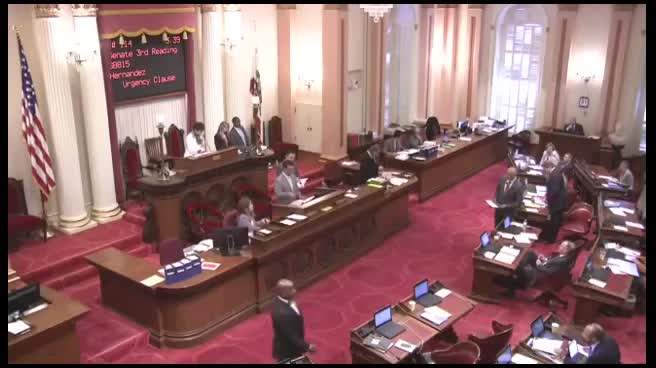
| May 31, 2016 | Senate 3rd Reading SB1354 Galgiani Urgency Clause | Senate Floor |
Passed |
|
| May 27, 2016 | Do pass | Senate Standing Committee on Appropriations |
Passed |
|
| May 27, 2016 | Placed on suspense file | Senate Standing Committee on Appropriations |
Passed |
|
| May 24, 2016 | Do pass, but first be re-referred to the Committee on [Appropriations] | Senate Standing Committee on Agriculture |
Passed |
This list shows positions taken on this bill by organizations on the date displayed, which is linked to the original source.
Positions by individuals are not included.
|
Organization
|
Position
|
Date
|
|---|---|---|
| California Citrus Mutual | * Indeterminate | May 24, 2016 |
Date of Hearing: August 3, 2016
ASSEMBLY COMMITTEE ON APPROPRIATIONS
Lorena Gonzalez, Chair
SBPCA Bill Id:SB 1354
Author:(Galgiani) – As Amended Ver:August 1, 2016
Policy Committee: | Agriculture | Vote: | 9 - 0 |
Urgency: Yes State Mandated Local Program: No Reimbursable: No
SUMMARY:
This bill requires the California Department of Food and Agriculture (CDFA) to: 1) support research activities relating to the Asian citrus psyllid (ACP) and Huanglongbing (HLB), and 2) work with specified stakeholders to establish a process for voluntary tracking of best practices to manage ACP-infested and HLB-infected groves. CDFA will engage in these activities upon appropriation of funds.
FISCAL EFFECT:
Unknown cost pressures, of at least in the hundreds of thousands of dollars annually, for CDFA (General Fund).
COMMENTS:
- Purpose. According to the author, SB 1354 will help increase the tools available to combat ACP-infested and HLB-infected trees and groves. In doing so, the author contends that California might be able to avoid massive devastation to valuable crops.
- HLB and ACP. Huanglongbing, also known as citrus greening disease, is a bacterial plant disease that, while not harmful to humans or animals, is fatal for citrus trees. The disease destroys citrus trees’ production, appearance and economic value. Diseased trees produce hard, bitter, misshapen fruit, and the trees typically die within 3-5 years of being infected. HLB is considered to be one of the most serious plant diseases in the world and currently there is no cure. Infected plants must be removed and destroyed in order to prevent further spread of HLB.
HLB is spread by the Asian citrus psyllid, a tiny, invasive insect that feeds on the leaves and stems of citrus trees and causes shoot deformation and plant stunting. When an ACP feeds on an HLB-infected tree, it can pick up the bacteria that cause the disease. Once infected, ACP carries the disease-causing bacteria for life and can transfer the disease when feeding on other citrus trees.
In 2008, ACP was first identified in Southern California and has since spread rapidly such that quarantine boundaries now comprise one-third of the State. In March 2012, HLB was detected in a multi-grafted citrus tree in a residential portion of Los Angeles County. The tree was destroyed; however, the disease was detected again in 2015 in 22 trees located in the surrounding areas. The new finds and the rapid migration of the disease-carrying insect have increased CDFA’s surveillance, trapping, and analytical workloads.
Analysis Prepared by: Luke Reidenbach / APPR. / (916) 319-2081
Date of Hearing: June 29, 2016
ASSEMBLY COMMITTEE ON AGRICULTURE
Bill Dodd, Chair
SBPCA Bill Id:SB 1354
Author:(Galgiani) – As Amended Ver:May 19, 2016
SENATE VOTE: 38-0
SUBJECT: Agricultural pest control: Asian citrus psyllid: Huanglongbing.
SUMMARY: This bill requires the California Department of Food and Agriculture (CDFA), upon appropriation specific for this purpose, to support research activities relating to Asian citrus psyllid (ACP) and Huanglongbing (HLB) and to work with specified stakeholders to establish a process for voluntary tracking of best practices to manage ACP-infested and HLB-infected groves. The information collected shall be used to establish recommended management protocols based on best available science and treatment outcomes. This bill contains an urgency clause. Specifically, this bill:
- Requires CDFA, upon appropriation of funds for that purpose, to support research activities relating to the ACP and HLB. These activities shall include, but not be limited to, all of the following:
- Finding a cure and/or suppression tactic for HLB;
- Development of early detection techniques to identify diseased trees;
- Development of resistant rootstocks, scions, or psyllids;
- Improved psyllid trapping and control methods;
- Expanded biological control availability for ACP in priority areas where there is a reasonable expectation of success;
- New horticultural methods to maximize crop production in the presence of HLB; and,
- Support for new and existing containment research facilities for projects investigating HLB.
- Requires CDFA to, upon appropriation of funds for that purpose, work with county agricultural commissioners, pest control advisors, researchers, and/or the Citrus Research Board to establish a process for voluntary tracking of best practices to manage ACP-infested and HLB-infected groves. The information collected shall be used to establish recommended management protocols based on best available science and treatment outcomes.
EXISTING LAW: Existing law establishes the California Citrus Pest and Disease Prevention Committee (CCPDPC) within CDFA to advise the Secretary of CDFA on efforts to prevent and manage citrus pests and diseases. An assessment is levied on citrus producers and deposited into the Citrus Disease Management Account (account) for the sole purpose of combating citrus-specific pests and diseases.
FISCAL EFFECT: According to the Senate Appropriations Committee, this bill does not make an appropriation. If the legislature does fund this program, then it may result in cost pressures of unknown magnitude, minimally in the hundreds of thousands of dollars annually from the General Fund (GF).
COMMENTS: Citrus is a $2 billion industry in California. California produces 82% of United States' fresh citrus and directly employs more than 14,000 people. It contributes an additional $1.2 billion in economic value to California and supports another 10,000 jobs.
In March of 2012, HLB was found in a Los Angeles-area backyard. HLB is a bacterial plant disease that destroys the production, appearance and value of citrus trees, ruining the citrus. HLB is spread mainly by ACP. To date there is no known controls for HLB other than removing and destroying infected groves. After a 2005 discovery in Florida, it took only two years for HLB to transmit to all 32 Florida citrus producing counties and infect over half of the citrus tree in that state.
Citrus producers have contributed $15 million per year since 2009 and the United States Department of Agriculture (USDA) spent at least $10 million per year in the last three years to research, detect and eradicate HLB and ACP in California.
The citrus industry, the University of California, and both the state and federal governments are working to eliminate and prevent the establishment of ACP and HLB in California. Much of the research is conducted with funding from the citrus industry, CDFA Specialty Crops Block Grants, and USDA - National Institute of Food and Agriculture.
In a recent California Senate informational hearing, testimony stated additional funding is needed to support critical research projects. For example, California would benefit from the development of early detection techniques of infected trees. Florida and Texas did not have this technology available, and unidentified HLB-infected trees remained in groves and spread the disease to neighboring trees. Current technology requires sufficient time, roughly one year, for the disease to build up in the tree to a detectable concentration. However, California is in a position where, if early detection techniques are developed, infected trees (both commercial and residential) could be identified and removed, or treated, immediately.
Other critical research needs include finding a cure for HLB, increasing the availability of biological control (release of non-stinging parasitic wasps), developing resistant trees and psyllids, and improving psyllid trapping and control, among others. Current research projects are funded through USDA and citrus industry grants; however, no GF monies are appropriated for this purpose. This bill hopes to address these issues, if funding should be made available.
RELATED LEGISLATION
:
SB 822 (Roth), of 2016, will increase the monthly citrus assessment fee from $0.09 to $0.12 per 40 pound carton. This bill is currently in the Assembly Agriculture Committee.
AB 571 (Gatto) of 2013, would have appropriated $5 million from the GF to the Account within the CDFA Fund for the purposes of combating citrus disease or its vectors. This bill was vetoed by the Governor.
AB 604 (De León and Fuller), Chapter 17, Statutes of 2010, authorized CDFA to spend any monies it had collected in the Account on citrus specific pest and disease programs through June 30, 2010.
AB 281 (De León), Chapter 426, Statutes of 2009, established CCPDPC and the Account within CDFA to prevent and manage citrus pests and diseases. The Account shall consist of money from industry assessment fees but may include federal and other non-GF sources.
REGISTERED SUPPORT / OPPOSITION:
Support
California Citrus Mutual
Opposition
None on file.
Analysis Prepared by: Victor Francovich / AGRI. / (916) 319-2084
Office of Senate Floor Analyses (916) 651-1520 Fax: (916) 327-4478 | SB 1354 |
THIRD READING
Bill No: SB 1354
Amended: 5/19/16
SENATE AGRICULTURE COMMITTEE: 5-0, 5/24/16
AYES: Galgiani, Cannella, Berryhill, Pan, Wolk
SENATE APPROPRIATIONS COMMITTEE: 7-0, 5/27/16
AYES: Lara, Bates, Beall, Hill, McGuire, Mendoza, Nielsen
SUBJECT: Agricultural pest control: Asian citrus psyllid: Huanglongbing
DIGEST: This bill requires the California Department of Food and Agriculture (CDFA), upon appropriation specific for this purpose, to support research activities relating to Asian citrus psyllid (ACP) and Huanglongbing (HLB) and to work with specified stakeholders to establish a process for voluntary tracking of best practices to manage ACP-infested and HLB-infected groves. The information collected shall be used to establish recommended management protocols based on best available science and treatment outcomes. This bill contains an urgency clause.
ANALYSIS: Existing law establishes the California Citrus Pest and Disease Prevention Committee (CCPDPC) within the CDFA to advise the Secretary of CDFA on efforts to prevent and manage citrus pests and diseases. An assessment is levied on citrus producers and deposited into the Citrus Disease Management Account for the sole purpose of combating citrus-specific pests and diseases. This account may also contain funds from federal and other non-General Fund sources. (AB 281, De Leon, Chapter 426, Statutes of 2009; Food and Agricultural Code §5911 et seq.).
This bill:
- Requires CDFA, upon appropriation of funds for that purpose, to support research activities relating to the ACP and HLB. These activities shall include, but not be limited to, all of the following:
- Finding a cure and/or suppression tactic for HLB.
- Development of early detection techniques to identify diseased trees.
- Development of resistant rootstocks, scions, or psyllids.
- Improved psyllid trapping and control methods.
- Expanded biological control availability for the ACP in priority areas where there is a reasonable expectation of success.
- New horticultural methods to maximize crop production in the presence of HLB.
- Support for new and existing containment research facilities for projects investigating HLB.
- Requires CDFA to, upon appropriation of funds for that purpose, work with county agricultural commissioners, pest control advisors, researchers, and/or the Citrus Research Board to establish a process for voluntary tracking of best practices to manage ACP-infested and HLB-infected groves. The information collected shall be used to establish recommended management protocols based on best available science and treatment outcomes.
Background
California is the top-producing agricultural state in the nation with $54 billion in agricultural commodity value in 2014. California is also a top producer of citrus fruits and is ranked second only to Florida in citrus production but first in citrus product sold fresh to market. According to the most recent census, in 2012, the $2.1 billion California citrus industry grew nearly four million tons of citrus on 270,000 acres and provided more than 14,000 jobs.
ACP is an invasive pest that feeds on citrus plants’ leaves and stems and causes shoot deformation and plant stunting. More importantly, ACP may transmit HLB, a bacterial disease that causes the plant to produce unpalatable fruit before ultimately killing the tree. According to CDFA, HLB is the most devastating disease of citrus in the world. There is no cure and infected plants must be destroyed.
The first discovery of ACP and HLB in the United States was in Florida in 1998 and early September 2005, respectively. Within two years, the disease HLB spread to all citrus-producing counties and infected over half of all citrus trees in the state. Studies have shown that the economic damage due to HLB in Florida alone has resulted in a loss of $7.8 billion and 7,513 jobs since 2007, reducing the industry to nearly a quarter of the size it once was. The disease HLB has also been detected in Georgia, Louisiana, South Carolina, Texas, and most recently, California.
In 2008, the pest ACP was first identified in Southern California. In in the last two years, ACP has rapidly spread north into commercial citrus groves and residential trees, and quarantine boundaries have expanded to encompass one-third of the state. Meanwhile, in March 2012, HLB was detected in a residential, multi-grafted citrus tree in Los Angeles County. The tree was destroyed, however the disease was detected again in 2015 and now 22 trees located in the surrounding areas have tested positive for HLB. The new finds and the rapid northern migration is a cause of great concern.
The citrus industry, the University of California, and both the state and federal governments are working to eliminate and prevent the establishment of ACP and HLB in California. Much of the research is conducted with funding from the citrus industry, CDFA Specialty Crops Block Grants, and the United States Department of Agriculture - National Institute of Food and Agriculture (USDA-NIFA).
The Agricultural Act of 2014 (H.R. 2642) was signed into law on February 7, 2014, and directs $125 million of the USDA Specialty Crop Research Initiative funding toward citrus disease research over the next five years. In Fiscal Year (FY) 2015, the federal government awarded $20 million in grants nationwide to university researchers and extension projects to aid in the fight against HLB.
Comments
Residential citrus. Over half of all citrus trees in California are located in residential backyards. Currently, $12 million of the industry-assessed fees are being used to detect and trap ACP and remove HLB-infected citrus trees in the Los Angeles Basin, the area of greatest infestation.
Funding sources. The CCPDPC is funded by the California citrus industry and federal grants. Of the $25 million annual budget, roughly $15 million is funded through the $0.09 per carton assessment fee and $10 million through the USDA. However, this year, the federal government approved an additional $2 million in funding that will be used to increase psyllid detection and trapping in the San Joaquin Valley. The CCPDPC received a one-time $1 million appropriation from the General Fund in FY 2013-14 (AB 110, Blumenfield, Chapter 20, Statutes of 2013), however no other monies from California’s General Fund have been appropriated.
Budget request. The Senate Budget Subcommittee No. 2 approved a General Fund allocation of $5 million to CDFA for ACP control, where $4.25 million is dedicated for residential application and $750,000 for an interagency agreement with the Department of Pesticide Regulation to provide a consumer product database for a residential level study of the impacts of neonicotinoid-treated seed and plants sold at the retail level. None of these funds are directed for use towards advancing research to find new tools for ACP or HLB control.
Informational Hearing. The Senate Committee on Agriculture held an informational hearing on May 17, 2016, titled “Crisis in the Golden State: Asian Citrus Psyllid’s Threat to Destroy California Citrus.” The hearing highlighted the urgent need for additional support to not only mitigate the spread of ACP but to find a cure for HLB, develop critical research and technology, and improve enforcement and compliance with citrus treatment and transportation regulations.
Research and Technology. According to expert witnesses at the informational hearing, additional funding is needed to support critical research projects. For example, California would benefit from the development of early detection techniques of infected trees. Florida and Texas did not have this technology available, and unidentified HLB-infected trees remained in groves and spread the disease to neighboring trees. Current technology requires sufficient time (roughly one year) for the disease to build up in the tree to a detectable concentration. However, California is in a position where, if early detection techniques are developed, infected trees (both commercial and residential) could be identified and removed, or treated, immediately.
Other critical research needs include finding a cure for HLB, increasing the availability of biological control (release of non-stinging parasitic wasps), developing resistant trees and psyllids, and improving psyllid trapping and control, among others. Current research projects are funded through USDA and citrus industry grants; however, no General Fund monies are appropriated for this purpose.
Urgency. This bill contains an urgency clause given that, due to the rapid infestation of ACP and increasing HLB detections, this bill is needed to provide immediate help to prevent this invasive pest and disease from destroying residential and commercial California citrus trees.
FISCAL EFFECT: Appropriation: No Fiscal Com.: Yes Local: No
According to the Senate Appropriations Committee, as currently written, this bill requires CDFA to support specified research if funding is appropriated, but does not make an appropriation. Consequently, this bill will result in cost pressures of unknown magnitude, minimally in the hundreds of thousands of dollars annually (General Fund).
None received
OPPOSITION: (Verified 5/27/16)
None received
ARGUMENTS IN SUPPORT: According to the author, “California is facing a serious infestation of Asian citrus psyllid, an invasive pest that threatens to kill every California citrus tree. As already seen in Florida, this tiny pest and the disease it carries, Huanglongbing, has the ability to destroy both the citrus industry as well as residential citrus trees. SB 1354 seeks to provide solutions to manage ACP and HLB in California by increasing the tools available to combat ACP-infested and HLB-infected trees and groves. In doing so, California might be able to avoid massive devastation and stop ACP and HLB from killing California’s valuable crops and cherished residential citrus trees. The reality of HLB taking hold in California is chilling, and the state must do what it can to support critical activities that aim to not only mitigate the spread of ACP but to find a cure for HLB.”
Prepared by: Anne Megaro / AGRI. / (916) 651-1508
5/28/16 16:46:08
SENATE COMMITTEE ON
Senator Ricardo Lara, Chair
2015 - 2016 Regular Session
SB 1354 (Galgiani) - Agricultural pest control: Asian citrus psyllid: Huanglongbing
Version: | Policy Vote: |
Urgency: | Mandate: |
Hearing Date: | Consultant: |
This bill meets the criteria for referral to the Suspense File.
Bill Summary: SB 1354, an urgency measure, would require the California Department of Food and Agriculture (CDFA) to, upon appropriation specific for this purpose, (1) support research activities relating to the Asian citrus psyllid (ACP) and Huanglongbing (HLB), and (2) work with specified stakeholders to establish a process for voluntary tracking of best practices to manage ACP-infested and HLB-infected groves.
Fiscal Impact: As currently written, the bill would require CDFA to support specified research if funding is appropriated, but does not make an appropriation. Consequently, the bill would result in cost pressures of unknown magnitude, minimally in the hundreds of thousands of dollars annually (General Fund).
Background: Citrus is a $2 billion industry in California. The State produces roughly one-third of the nation’s fresh citrus on roughly 270,000 acres, and directly employs in excess of than 14,000 people.
Huanglongbing, also known as citrus greening disease, is a bacterial plant disease that, while not harmful to humans or animals, is fatal for citrus trees. The disease destroys citrus trees’ production, appearance and economic value. Diseased trees produce hard, bitter, misshapen fruit, and the trees typically die within 3-5 years of being infected. HLB is considered to be one of the most serious plant diseases in the world and currently there is no cure. According to CDFA, HLB is the most devastating disease of citrus in the world, affecting citrus in Asia, Africa, Brazil, Central America, as well as the United States. Infected plants must be removed and destroyed in order to prevent further spread of HLB.
HLB is spread by the Asian citrus psyllid, a tiny, invasive insect that feeds on the leaves and stems of citrus trees and causes shoot deformation and plant stunting. When an ACP feeds on an HLB-infected tree, it can pick up the bacteria that causes the disease. Once infected, ACP carries the disease-causing bacteria for life and can transfer the disease when feeding on other citrus trees.
After a 2005 discovery in Florida, it took only two years for HLB to transmit to all 32 Florida citrus-producing counties and infect over half of the citrus tree in that state. Studies conclude that HLB-related economic damage in Florida has resulted in a loss of roughly $8 billion and 8,000 jobs over the last five years. Additionally, HLB has since been detected in Georgia, Louisiana, South Carolina, and Texas.
In 2008, ACP was first identified in Southern California and has since spread rapidly such that quarantine boundaries now comprise one-third of the State. In March 2012, HLB was detected in a multi-grafted citrus tree in a residential portion of Los Angeles County. The tree was destroyed; however, the disease was detected again in 2015 in 22 trees located in the surrounding areas. The new finds and the rapid migration of the disease-carrying insect have increased CDFA’s surveillance, trapping, and analytical workloads.
The citrus industry, the University of California, and both the state and federal governments are working to eliminate and prevent the establishment of ACP and HLB in California. Much of the research is conducted with funding from the citrus industry, CDFA Specialty Crops Block Grants, and the United States Department of Agriculture - National Institute of Food and Agriculture (USDA-NIFA).
The Agricultural Act of 2014 (H.R. 2642) was signed into law on February 7, 2014, and directs $125 million of the USDA Specialty Crop Research Initiative funding toward citrus disease research over the next 5 years. In FY 2015, the federal government awarded $20 million in grants nationwide to university researchers and extension projects to aid in the fight against HLB.
Proposed Law: This bill would require CDFA to, upon appropriation of funds for that purpose, (1) support specified research activities relating to ACP and HLB, and (2) work with county agricultural commissioners, pest control advisors, researchers, and/or the Citrus Research Board to establish a process for voluntary tracking of best practices to manage ACP-infested and HLB-infected groves. The information collected shall be used to establish recommended management protocols based on best available science and treatment outcomes.
Related Legislation:
- SB 822 (Roth, 2016), would appropriate $5 million from the General Fund to the Citrus Disease Management Account within the California Department of Food and Agriculture Fund for the purpose of combating citrus disease or its vectors. This bill also would increase the monthly citrus assessment fee from $0.09 to $0.12 per 40 pound carton. The bill is currently on the Suspense File of this Committee.
- SB 1282 (Leno and Allen, 2016 would require the California Department of Pesticide Regulation to, by July 1, 2017, require labeling of all commercially available seeds and plants sold at retail establishments that have been treated with a neonicotinoid pesticide to include a warning statement and logo regarding the potential for the product to harm bees. This bill would also, by January 1, 2018, designate neonicotinoid pesticides as restricted materials with the exception for products sold or applied by veterinarians. The bill is currently on the Suspense File of this Committee.
- AB 571 (Gatto, 2013) This bill would have appropriated $5 million from the General Fund to the Citrus Disease Management Account within the California Department of Food and Agriculture Fund for the purposes of combating citrus disease or its vectors. The bill was vetoed by the Governor.
Staff Comments: Current law establishes the California Citrus Pest and Disease Prevention Committee (CCPDPC) within CDFA to advise on efforts to prevent and manage citrus pests and diseases. CCPDPC is generally funded by (1) the California citrus industry, and (2) federal grants. An assessment is levied on citrus producers and deposited into the Citrus Disease Management Account for the sole purpose of combating citrus-specific pests and diseases. The current assessment rate is the statutory maximum of $0.09 per carton. Assessment revenues have averaged $15 million over the last five years, and represent more than half of the total budget for program. As noted above, SB 822 would raise the assessment to $0.12 per 40-pound carton; fee revenues would increase by roughly $5 million annually, based on 2014-15 production levels.
Funding (including federal, special funds and state funds) related to ACP and HLB totaled $23.7 million in 2014-15. Funding for 2015-16 is currently estimated to be $26.6 million in 2015-16. The budget projects spending of $27.7 in 2016-17. A Senate budget subcommittee recently adopted a proposal to augment CDFA’s 2016-17 budget by $5 million for activities related to ACP and HLB, none of which would be available for the purposes of this bill.
As noted above, this bill would require CDFA, upon the appropriation of funds for that purpose, to support specified research activities relating to ACP and HLB. The bill would also require the department, upon the appropriation of funds for that purpose, to work with county agricultural commissioners, pest control advisors, researchers, and/or the Citrus Research Board, to establish a process for voluntary tracking of best practices for managing ACP and HLB -infected groves, as specified. Funding for such activities has not been appropriated, but would likely cost, at a minimum, hundreds of thousands of dollars annually.
-- END --
SENATE COMMITTEE ON AGRICULTURE
Senator Cathleen Galgiani, Chair
2015 - 2016 Regular
Bill No: SB 1354 Hearing Date: 5/24/16
Author: | Galgiani | ||
Version: | 5/19/16 | ||
Urgency: | Yes | Fiscal: | Yes |
Consultant: | Anne Megaro | ||
Subject: Agricultural pest control: Asian citrus psyllid: Huanglongbing
SUMMARY
:
This bill would require the California Department of Food and Agriculture to, upon appropriation specific for this purpose, support research activities relating to Asian citrus psyllid (ACP) and Huanglongbing (HLB) and to work with specified stakeholders to establish a process for voluntary tracking of best practices to manage ACP-infested and HLB-infected groves. The information collected shall be used to establish recommended management protocols based on best available science and treatment outcomes. This bill contains an urgency clause.
BACKGROUND AND EXISTING LAW
:
California is the top-producing agricultural state in the nation with $54 billion in agricultural commodity value in 2014. California is also a top producer of citrus fruits and is ranked second only to Florida in citrus production but first in citrus product sold fresh to market. According to the most recent census, in 2012, the $2.1 billion California citrus industry grew nearly 4 million tons of citrus on 270,000 acres and provided more than 14,000 jobs.
Existing law establishes the California Citrus Pest and Disease Prevention Committee (CCPDPC) within the California Department of Food and Agriculture (CDFA) to advise the secretary of CDFA on efforts to prevent and manage citrus pests and diseases. An assessment is levied on citrus producers and deposited into the Citrus Disease Management Account for the sole purpose of combating citrus-specific pests and diseases. This account may also contain funds from federal and other non-General Fund sources. (AB 281, Statutes of 2009; Food and Agricultural Code §5911 et seq.).
Asian citrus psyllid (ACP) is an invasive pest that feeds on citrus plants’ leaves and stems and causes shoot deformation and plant stunting. More importantly, ACP may transmit Huanglongbing (HLB), a bacterial disease that causes the plant to produce unpalatable fruit before ultimately killing the tree. According to CDFA, HLB is the most devastating disease of citrus in the world. There is no cure and infected plants must be destroyed.
The first discovery of ACP and HLB in the United States was in Florida in 1998 and early September 2005, respectively. Within 2 years, the disease HLB spread to all citrus-producing counties and infected over half of all citrus trees in the state. Studies have shown that the economic damage due to HLB in Florida alone has resulted in a loss of $7.8 billion and 7,513 jobs since 2007, reducing the industry to nearly a quarter of the size it once was. The disease HLB has also been detected in Georgia, Louisiana, South Carolina, Texas, and most recently, California.
In 2008, the pest ACP was first identified in Southern California. In in the last two years, ACP has rapidly spread north into commercial citrus groves and residential trees, and quarantine boundaries have expanded to encompass one-third of the state. Meanwhile, in March 2012, HLB was detected in a residential, multi-grafted citrus tree in Los Angeles County. The tree was destroyed, however the disease was detected again in 2015 and now 22 trees located in the surrounding areas have tested positive for HLB. The new finds and the rapid northern migration is a cause of great concern.
The citrus industry, the University of California, and both the state and federal governments are working to eliminate and prevent the establishment of ACP and HLB in California. Much of the research is conducted with funding from the citrus industry, CDFA Specialty Crops Block Grants, and the United States Department of Agriculture - National Institute of Food and Agriculture (USDA-NIFA).
The Agricultural Act of 2014 (H.R. 2642) was signed into law on February 7, 2014, and directs $125 million of the USDA Specialty Crop Research Initiative funding toward citrus disease research over the next 5 years. In FY 2015, the federal government awarded $20 million in grants nationwide to university researchers and extension projects to aid in the fight against HLB.
PROPOSED LAW
:
This bill:
- Requires CDFA to, upon appropriation of funds for that purpose, support research activities relating to the Asian citrus psyllid and Huanglongbing. These activities shall include, but not be limited to, all of the following:
- Finding a cure and/or suppression tactic for Huanglongbing
- Development of early detection techniques to identify diseased trees
- Development of resistant rootstocks, scions, or psyllids
- Improved psyllid trapping and control methods
- Expanded biological control availability for the Asian citrus psyllid in priority areas where there is a reasonable expectation of success
- New horticultural methods to maximize crop production in the presence of Huanglongbing
- Support for new and existing containment research facilities for projects investigating Huanglongbing
- Requires CDFA to, upon appropriation of funds for that purpose, work with county agricultural commissioners, pest control advisors, researchers, and/or the Citrus Research Board to establish a process for voluntary tracking of best practices to manage ACP-infested and HLB-infected groves. The information collected shall be used to establish recommended management protocols based on best available science and treatment outcomes.
ARGUMENTS IN SUPPORT:
According to the author, “California is facing a serious infestation of Asian citrus psyllid, an invasive pest that threatens to kill every California citrus tree. As already seen in Florida, this tiny pest and the disease it carries, Huanglongbing, has the ability to destroy both the citrus industry as well as residential citrus trees. SB 1354 seeks to provide solutions to manage ACP and HLB in California by increasing the tools available to combat ACP-infested and HLB-infected trees and groves. In doing so, California might be able to avoid massive devastation and stop ACP and HLB from killing California’s valuable crops and cherished residential citrus trees. The reality of HLB taking hold in California is chilling, and the state must do what it can to support critical activities that aim to not only mitigate the spread of ACP but to find a cure for HLB.”
COMMENTS
:
Residential citrus: Over half of all citrus trees in California are located in residential backyards. Currently, $12 million of the industry-assessed fees are being used to detect and trap ACP and remove HLB-infected citrus trees in the Los Angeles Basin, the area of greatest infestation.
Funding sources: The CCPDPC is funded by the California citrus industry and federal grants. Of the $25 million annual budget, roughly $15 million is funded through the $0.09 per carton assessment fee and $10 million through the United States Department of Agriculture. However, this year, the federal government approved an additional $2 million in funding that will be used to increase psyllid detection and trapping in the San Joaquin Valley. The CCPDPC received a one-time $1 million appropriation from the General Fund in FY 2013-14 (AB 110, Statutes of 2013), however no other monies from California’s General Fund have been appropriated.
Budget request: The Senate Budget Subcommittee No. 2 approved a General Fund allocation of $5 million to CDFA for Asian citrus psyllid control, where $4.25 million is dedicated for residential application and $750,000 for an interagency agreement with the Department of Pesticide Regulation to provide a consumer product database for a residential level study of the impacts of neonicotinoid-treated seed and plants sold at the retail level. None of these funds are directed for use towards advancing research to find new tools for ACP or HLB control.
Informational Hearing: The Senate Committee on Agriculture held an informational hearing on May 17, 2016, titled “Crisis in the Golden State: Asian Citrus Psyllid’s Threat to Destroy California Citrus.” The hearing highlighted the urgent need for additional support to not only mitigate the spread of ACP but to find a cure for HLB, develop critical research and technology, and improve enforcement and compliance with citrus treatment and transportation regulations.
Research and Technology: According to expert witnesses at the informational hearing, additional funding is needed to support critical research projects. For example, California would benefit from the development of early detection techniques of infected trees. Florida and Texas did not have this technology available, and unidentified HLB-infected trees remained in groves and spread the disease to neighboring trees. Current technology requires sufficient time (roughly one year) for the disease to build up in the tree to a detectable concentration. However, California is in a position where, if early detection techniques are developed, infected trees (both commercial and residential) could be identified and removed, or treated, immediately.
Other critical research needs include finding a cure for HLB, increasing the availability of biological control (release of non-stinging parasitic wasps), developing resistant trees and psyllids, and improving psyllid trapping and control, among others. Current research projects are funded through USDA and citrus industry grants; however, no General Fund monies are appropriated for this purpose.
Urgency: This bill contains an urgency clause given that, due to the rapid infestation of ACP and increasing HLB detections, this bill is needed to provide immediate help to prevent this invasive pest and disease from destroying residential and commercial California citrus trees.
RELATED LEGISLATION
:
SB 822 (Roth), of 2016. Currently in the Senate Appropriations Committee. This bill would appropriate $5 million from the General Fund to the Citrus Disease Management Account within the California Department of Food and Agriculture Fund for the purpose of combating citrus disease or its vectors. This bill would also increase the monthly citrus assessment fee from $0.09 to $0.12 per 40 pound carton.
SB 1282 (Leno and Allen). Currently in the Senate Appropriations Committee. This bill would require the California Department of Pesticide Regulation to, by July 1, 2017, require labeling of all commercially available seeds and plants sold at retail establishments that have been treated with a neonicotinoid pesticide to include a warning statement and logo regarding the potential for the product to harm bees. This bill would also, by January 1, 2018, designate neonicotinoid pesticides as restricted materials with the exception for products sold or applied by veterinarians.
AB 571 (Gatto). Vetoed, 2013. This bill would have appropriated $5 million from the General Fund to the Citrus Disease Management Account within the California Department of Food and Agriculture Fund for the purposes of combating citrus disease or its vectors.
AB 604 (De León and Fuller) Chapter 17, Statutes of 2010. Authorizes CDFA to spend any monies it had collected in the Citrus Disease Management Account on citrus specific pest and disease programs through June 30, 2010.
AB 281 (De León) Chapter 426, Statutes of 2009. Establishes the California Citrus Pest and Disease Prevention Committee and the Citrus Disease Management Account within CDFA to prevent and manage citrus pests and diseases. The Account shall consist of money from industry assessment fees but may also include federal and other non-General Fund sources.
SUPPORT
:
California Citrus Mutual
OPPOSITION
:
None received
-- END --
Discussed in Hearing
View Older Hearings