SB 1384: California Partnership for Long-Term Care Program.
- Session Year: 2015-2016
- House: Senate
- Latest Version Date: 2016-09-22
Existing law establishes the California Partnership for Long-Term Care Program administered by the State Department of Health Care Services. The purpose of the program is to link private long-term care insurance and health care service plan contracts that cover long-term care with the In-Home Supportive Services program and the Medi-Cal program and to provide Medi-Cal program benefits to certain individuals who have income and resources above the eligibility levels for receipt of medical assistance, but who have purchased certified private long-term care insurance policies. Existing law provides criteria for certification of a long-term care insurance policy, including a requirement that it provide protection against loss of benefits due to inflation. Existing law requires each organization issuing certified policies to contribute a specified amount to a fund to be used for common educational and marketing expenses, as specified.
This bill would require the department to adopt regulations requiring that a long-term care insurance policy or health care service plan contract that includes long-term care services include nursing and residential care facility coverage only, home care and community-based care coverage only, or comprehensive coverage. The bill would also require that a health care service plan contract or long-term care insurance policy, as a condition of certification, include specified protections against loss of benefits due to inflation. The bill would also, until January 1, 2019, require the formation of an executive and legislative task force to provide advice and assistance in implementing reforms to the California Partnership for Long-Term Care Program and to consider other means to assist consumers in paying for long-term care services and supports, as specified. The task force would be composed of representatives of various state agencies and departments, including the State Department of Health Care Services, the State Department of Social Services, and the California Department of Aging. The bill would, until January 1, 2019, authorize the department, under specified conditions, to use moneys in the fund described above to administer the task force, implement recommendations made by the task force, and facilitate review of policy forms for certification by the program and the Department of Insurance.
Existing law requires long-term care insurance policies or certificates to provide certain coverage and to make certain disclosures, as specified.
This bill would require an insurance policy, certificate, or rider that is offered under the California Partnership for Long-Term Care Program to be called a home and community-based services policy, certificate, or rider and for it to prominently display that it is for home and community-based services only, as specified. The bill would require those policies, certificates, or riders to provide specified coverage.
Existing law establishes the California Partnership for Long-Term Care Program administered by the State Department of Health Care Services. The purpose of the program is to link private long-term care insurance and health care service plan contracts that cover long-term care with the In-Home Supportive Services program and the Medi-Cal program and to provide Medi-Cal program benefits to certain individuals who have income and resources above the eligibility levels for receipt of medical assistance, but who have purchased certified private long-term care insurance policies. Existing law provides criteria for certification of a long-term care insurance policy, including a requirement that it provide protection against loss of benefits due to inflation. Existing law requires each organization issuing certified policies to contribute a specified amount to a fund to be used for common educational and marketing expenses, as specified.
This bill would require the department to adopt regulations requiring that a long-term care insurance policy or health care service plan contract that includes long-term care services include nursing and residential care facility coverage only, home care and community-based care coverage only, or comprehensive coverage. The bill would also require that a health care service plan contract or long-term care insurance policy, as a condition of certification, include specified protections against loss of benefits due to inflation. The bill would also, until January 1, 2019, require the formation of an executive and legislative task force to provide advice and assistance in implementing reforms to the California Partnership for Long-Term Care Program and to consider other means to assist consumers in paying for long-term care services and supports, as specified. The task force would be composed of representatives of various state agencies and departments, including the State Department of Health Care Services, the State Department of Social Services, and the California Department of Aging. The bill would, until January 1, 2019, authorize the department, under specified conditions, to use moneys in the fund described above to administer the task force, implement recommendations made by the task force, and facilitate review of policy forms for certification by the program and the Department of Insurance.
Existing law requires long-term care insurance policies or certificates to provide certain coverage and to make certain disclosures, as specified.
This bill would require an insurance policy, certificate, or rider that is offered under the California Partnership for Long-Term Care Program to be called a home and community-based services policy, certificate, or rider and for it to prominently display that it is for home and community-based services only, as specified. The bill would require those policies, certificates, or riders to provide specified coverage.
Existing law establishes the California Partnership for Long-Term Care Program administered by the State Department of Health Care Services. The purpose of the program is to link private long-term care insurance and health care service plan contracts that cover long-term care with the In-Home Supportive Services program and Medi-Cal and to provide Medi-Cal benefits to certain individuals who have income and resources above the eligibility levels for receipt of medical assistance, but who have purchased certified private long-term care insurance policies. Existing law provides criteria for certification of a long-term care insurance policy, including a requirement that it provide protection against loss of benefits due to inflation. Existing law requires each organization issuing certified policies to contribute a specified amount to a fund to be used for common educational and marketing expenses, as specified.
This bill would require the department to adopt regulations requiring that a long-term care insurance policy or health care service plan contract that includes long-term care services include nursing and residential care facility coverage only, home care and community-based care coverage only, or comprehensive coverage. The bill would also require that a health care service plan contract or long-term care insurance policy, as a condition of certification, include specified protections against loss of benefits due to inflation. The bill would also, until January 1, 2019, require the formation of an executive and legislative task force to provide advice and assistance in implementing reforms to the California Partnership for Long-Term Care Program and to consider other means to assist consumers in paying for long-term care services and supports, as specified. The task force would be composed of representatives of various state agencies and departments, including the State Department of Health Care Services, the State Department of Social Services, and the California Department of Aging. The bill would, until January 1, 2019, authorize the department department, under specified conditions, to use moneys in the fund described above to administer the task force, implement recommendations made by the task force, and facilitate review of policy forms for certification by the program and the Department of Insurance.
Existing law requires long-term care insurance policies or certificates to provide certain coverage and to make certain disclosures, as specified.
This bill would require an insurance policy, certificate, or rider that is offered under the California Partnership for Long-Term Care Program to be called a home and community-based services policy and policy, certificate, or rider and for it to prominently display that it is for home and community-based services only, as specified. The bill would require those policies, certificates, or riders to provide specified coverage.
Existing law establishes the California Partnership for Long-Term Care Program administered by the State Department of Health Care Services. The purpose of the program is to link private long-term care insurance and health care service plan contracts that cover long-term care with the In-Home Supportive Services program and Medi-Cal and to provide Medi-Cal benefits to certain individuals who have income and resources above the eligibility levels for receipt of medical assistance, but who have purchased certified private long-term care insurance policies. Existing law provides criteria for certification of a long-term care insurance policy, including a requirement that it provide protection against loss of benefits due to inflation. Existing law requires each organization issuing certified policies to contribute a specified amount to a fund to be used for common educational and marketing expenses, as specified.
This bill would require the department to adopt regulations requiring that a long-term care insurance policy or health care service plan contract that includes long-term care services include nursing and residential care facility coverage only, home care and community-based care coverage only, or comprehensive coverage. The bill would also require that a health care service plan contract or long-term care insurance policy, as a condition of certification, include specified protections against loss of benefits due to inflation. The bill would also also, until January 1, 2019, require the formation of an executive and legislative task force to provide advice and assistance in implementing reforms to the California Partnership for Long-Term Care Program and to consider other means to assist consumers in paying for long-term care services and supports, as specified. The task force would be composed of representatives of various state agencies and departments, including the State Department of Health Care Services, the State Department of Social Services, and the California Department of Aging. The bill would, until January 1, 2019, authorize the department to use moneys in the fund described above to administer the task force, implement recommendations made by the task force, and facilitate review of policy forms for certification by the program and the Department of Insurance.
Existing law requires long-term care insurance policies or certificates to provide certain coverage and to make certain disclosures, as specified.
This bill would require an insurance policy, certificate, or rider that is offered under the California Partnership for Long-Term Care Program to be called a home and community-based services policy and to prominently display that it is for home and community-based services only, as specified. The bill would require those policies, certificates, or riders to provide specified coverage.
Existing law establishes the California Partnership for Long-Term Care Program administered by the State Department of Health Care Services. The purpose of the program is to link private long-term care insurance and health care service plan contracts that cover long-term care with the In-Home Supportive Services program and Medi-Cal and to provide Medi-Cal benefits to certain individuals who have income and resources above the eligibility levels for receipt of medical assistance, but who have purchased certified private long-term care insurance policies. Existing law provides criteria for certification of a long-term care insurance policy, including a requirement that it provide protection against loss of benefits due to inflation.
This bill would shift administrative responsibilities for the program to the California Department of Aging, and would require the department to adopt regulations requiring that a long-term care insurance policy or health care service plan contract that includes long-term care services include nursing and residential care facility coverage only, home care and community-based care coverage only, or comprehensive coverage. The bill would also require that a health care service plan contract or long-term care insurance policy, as a condition of certification, include specified protections against loss of benefits due to inflation. The bill would also require the formation of an executive and legislative task force to provide advice and assistance in implementing reforms to the California Partnership for Long-Term Care Program and to consider other means to assist consumers in paying for long-term care services and supports, as specified. The task force would be composed of representatives of various state agencies and departments, including the State Department of Health Care Services, the State Department of Social Services, and the California Department of Aging.
Existing law establishes the California Partnership for Long-Term Care Program administered by the State Department of Health Care Services. The purpose of the program is to link private long-term care insurance and health care service plan contracts that cover long-term care with the In-Home Supportive Services program and Medi-Cal and to provide Medi-Cal benefits to certain individuals who have income and resources above the eligibility levels for receipt of medical assistance, but who have purchased certified private long-term care insurance policies. Existing law provides criteria for certification of a long-term care insurance policy, including a requirement that it provide protection against loss of benefits due to inflation.
This bill would shift administrative responsibilities for the program to the California Department of Aging, and would require the department to adopt regulations requiring that a long-term care insurance policy or health care service plan contract that includes long-term care services include nursing and residential care facility coverage only, home care and community-based care coverage only, or comprehensive coverage. The bill would also require that a health care service plan contract or long-term care insurance policy, as a condition of certification, include specified protections against loss of benefits due to inflation.
Existing law establishes the California Partnership for Long-Term Care Program administered by the State Department of Health Care Services. The purpose of the program is to link private long-term care insurance and health care service plan contracts that cover long-term care with the In-Home Supportive Services program and Medi-Cal and to provide Medi-Cal benefits to certain individuals who have income and resources above the eligibility levels for receipt of medical assistance, but who have purchased certified private long-term care insurance policies. Existing law provides criteria for certification of a long-term care insurance policy, including a requirement that it provide protection against loss of benefits due to inflation.
This bill would shift administrative responsibilities for the program to the California Department of Aging, and would require the department to adopt regulations requiring that a long-term care insurance policy or health care service plan contract that includes long-term care services include nursing and residential care facility coverage only, home care and community-based care coverage only, or comprehensive coverage. The bill would also require that a long-term care insurance policy, as a condition of certification, include specified protections against loss of benefits due to inflation.
Existing law, for purposes of migrant child care and development programs, defines a migrant agricultural worker family as a family that has earned at least 50 percent of its total gross income from employment in fishing, agriculture, or agriculturally related work during the 12-month period immediately preceding the date of application for child care and development services. Existing law requires the children of these families to be enrolled in child development programs on the basis of specified priorities, including priority to children whose family moves from place to place.
This bill, beginning July 1, 2017, would instead define migrant agricultural worker family as a family with at least one parent who has earned at least 50 percent of his or her income from employment in fishing, agriculture, or agriculturally related work during the 12-month period immediately preceding the date of application for child care and development services. The bill would require the children of these families to be given priority for enrollment in migrant child care and development programs a specified priority order, with first priority going to those children in families that move from place to place.
Existing law, for purposes of migrant child care and development programs, defines a migrant agricultural worker family as a family that has earned at least 50 percent of its total gross income from employment in fishing, agriculture, or agriculturally related work during the 12-month period immediately preceding the date of application for child care and development services. Existing law requires the children of these families to be enrolled in child development programs on the basis of specified priorities, including priority to children whose family moves from place to place.
This bill, beginning July 1, 2017, would instead define migrant agricultural worker family as a family with at least one parent who has earned at least 50 percent of his or her income from employment in fishing, agriculture, or agriculturally related work during the 12-month period immediately preceding the date of application for child care and development services. The bill would require the children of these families to be given priority for enrollment in migrant child care and development programs a specified priority order, with first priority going to those children in families that move from place to place.
(a)Every policy that is intended to be a qualified long-term care insurance contract as provided by Public Law 104-191 shall be identified as such by prominently displaying and printing on page one of the policy form and the outline of coverage and in the application the following words: This contract for long-term care insurance is intended to be a federally qualified long-term care insurance contract and may qualify you for federal and state tax benefits. Every policy that is not intended to be a qualified long-term care insurance contract as provided by Public Law 104-191 shall be identified as such by prominently displaying and printing on page one of the policy form and the outline of coverage and in the application the following words: This contract for long-term care insurance is not intended to be a federally qualified long-term care insurance contract.
(b)Any policy or certificate in which benefits are limited to the provision of institutional care shall be called a nursing facility and residential care facility only policy or certificate and the words Nursing Facility and Residential Care Facility Only shall be prominently displayed on page one of the form and the outline of coverage. The commissioner may approve alternative wording if it is more descriptive of the benefits.
(c)Any policy or certificate in which benefits are limited to the provision of home care services, including community-based services, shall be called a home care only policy or certificate and the words Home Care Only shall be prominently displayed on page one of the form and the outline of coverage. The commissioner may approve alternative wording if it is more descriptive of the benefits.
(d)Any policy, certificate, or rider in which benefits are limited to the provision of all care settings, except nursing facility care, and that is offered under the California Partnership for Long-Term Care Program established by Section 22000 of the Welfare and Institutions Code shall be called a home and community-based services policy, certificate, or rider and the words Home and Community-Based Services Only shall be prominently displayed on the first page of the form and the outline of coverage. The commissioner may approve an alternative version of those words if the alternative version is more descriptive of the benefits provided.
(e)Only those policies or certificates providing benefits for both institutional care and home care may be called comprehensive long-term care insurance.
SEC. 2.Section 10232.81 is added to the Insurance Code, to read:10232.81.(a)Every long-term care policy, certificate, or rider that purports to provide benefits of home and community-based services under the California Partnership for Long-Term Care Program established by Section 22000 of the Welfare and Institutions Code shall provide at least the following:
(1)Residential care facility.
(2)Assisted living facility.
(3)Home health care.
(4)Adult day care.
(5)Personal care.
(6)Homemaker services.
(7)Hospice services.
(8)Respite care.
(b)For purposes of this section, policy definitions of the benefits described in subdivision (a) may be no more restrictive than the following:
(1)Residential care facility means a facility that is licensed as a residential care facility for the elderly or a residential care facility as defined in the Health and Safety Code. Outside California, an eligible provider is a facility that meets licensure standards applicable to the facility, if any, and is engaged primarily in providing ongoing care and related services sufficient to support needs resulting from impairment in activities of daily living or impairment in cognitive ability and which also provides care and services on a 24-hour basis, has a trained and ready-to-respond employee on duty in the facility at all times to provide care and services, provides three meals per day and accommodates special dietary needs, has agreements to ensure that residents receive the medical care services of a physician or nurse in case of emergency, and has appropriate methods and procedures to provide necessary assistance to residents in the management of prescribed medications.
(2)Assisted living facility means a facility licensed as an assisted living facility as defined in the Health and Safety Code. Outside California, an eligible provider is a facility that meets licensure standards applicable to the facility, if any, and is engaged primarily in providing food and shelter and providing personal care services, or in administering medication by a person licensed or otherwise authorized to administer the medication.
SEC. 3.Section 22002 of the Welfare and Institutions Code is amended to read:22002.The State Department of Health Care Services shall seek any federal waivers and approvals necessary to accomplish the purposes of this division.
SEC. 4.Section 22003 of the Welfare and Institutions Code is amended to read:22003.(a)Individuals who participate in the program and have resources above the eligibility levels for receipt of medical assistance under Title XIX of the Social Security Act (Subchapter XIX (commencing with Section 1396) of Chapter 7 of Title 42 of the United States Code) shall be eligible to receive those in-home supportive services benefits specified by the State Department of Social Services, and those Medi-Cal benefits specified by the State Department of Health Care Services, for which they would otherwise be eligible, if, prior to becoming eligible for benefits, they have purchased a long-term care insurance policy or a health care service plan contract covering long-term care that has been certified by the State Department of Health Care Services pursuant to this division.
(b)Individuals may purchase approved and certified long-term care insurance policies or health care service plan contracts which cover long-term care services in amounts equal to the resources they wish to protect, so long as the amount of insurance purchased exceeds the minimum level set by the State Department of Health Care Services pursuant to Section 22009.
(c)The resource protection provided by this division shall be effective only for long-term care policies, and health care service plan contracts that cover long-term care services, when the policy or contract is delivered, issued for delivery, or renewed on July 1, 1993, and thereafter.
SEC. 5.Section 22004 of the Welfare and Institutions Code is amended to read:22004.Notwithstanding other provisions of law, the resources, to the extent described in subdivision (c), of an individual who purchases an approved and certified long-term care insurance policy or health care service plan contract which covers long-term care services shall not be considered by:
(a)The State Department of Health Care Services in determining:
(1)Medi-Cal eligibility.
(2)The amount of any Medi-Cal payment.
(3)The amount of any subsequent recovery by the state of payments made for medical services.
(b)The State Department of Social Services in determining:
(1)Eligibility for in-home supportive services provided pursuant to Article 7 (commencing with Section 12300) of Chapter 3 of Division 9.
(2)The amount of any payment for in-home supportive services.
(c)The resources not to be considered as provided by this section shall be equal to, or in some proportion set by the State Department of Health Care Services or State Department of Social Services that is less than equal to, the amount of long-term care insurance payments or benefits made as described in Section 22006.
SEC. 6.Section 22005 of the Welfare and Institutions Code is amended to read:22005.The State Department of Health Care Services shall only certify a long-term care insurance policy or a health care service plan contract that meets the Medi-Cal asset protection requirements.
SEC. 7.Section 22005.1 of the Welfare and Institutions Code is amended to read:22005.1.(a)The State Department of Health Care Services shall only certify a long-term care insurance policy that substantially meets the requirements of Chapter 2.6 (commencing with Section 10230) of Part 2 of Division 2 of the Insurance Code, except the requirements of Sections 10232.1, 10232.2, 10232.8, 10232.9, and 10232.92 of the Insurance Code, and that provides all of the items specified in subdivision (b). The State Department of Health Care Services shall only certify a health care service plan contract that has been approved by the Department of Managed Health Care pursuant to Chapter 2.2 (commencing with Section 1340) of Division 2 of the Health and Safety Code as providing substantially equivalent coverage to that required by Chapter 2.6 (commencing with Section 10230) of Part 2 of Division 2 of the Insurance Code, and that provides all of the items specified in subdivision (b). Policies issued by organizations subject to the Insurance Code and regulated by the Department of Insurance shall also be approved by the Department of Insurance.
(b)Only policies and contracts that provide all of the following items shall be certified by the department:
(1)Individual assessment and case management by a coordinating entity designated and approved by the department.
(2)Levels and durations of benefits that meet minimum standards set by the State Department of Health Care Services pursuant to Section 22009.
(3)Protection against loss of benefits due to inflation. An applicant shall be offered, at the time of purchase, the following options:
(A)One option that provides, at a minimum, protection against inflation that automatically increases benefit levels by 5 percent each year over the previous year, up to an age specified by the program.
(B)At least one lower cost option.
(4)A periodic record issued to the insured including an explanation of insurance payments or benefits paid that count toward Medi-Cal asset protection under this division.
(5)Compliance with any other requirements imposed by regulations adopted by the State Department of Health Care Services or the State Department of Social Services and consistent with the purposes of this division.
SEC. 8.Section 22005.2 of the Welfare and Institutions Code is amended to read:22005.2.(a)Each organization issuing policies certified by the State Department of Health Care Services under this division shall each year contribute to a fund to be used for common educational and marketing expenses for reaching the target population designated by the California Partnership for Long-Term Care Program. The amount of each participating issuers required annual contribution shall be determined by the department and shall not be less than twenty thousand dollars ($20,000).
(b)Only to the extent that all activities identified in subdivision (a) and additional activities identified in Section 58051 of Title 22 of the California Code of Regulations have been fully funded for the fiscal year in which contributions are received, the fund may also be used to administer the task force established by Section 22011, implement recommendations made by the task force, and facilitate review of policy forms for certification by the program and approval by the Department of Insurance. Use of these funds shall be consistent with the purpose of the program as established by Section 22001.
(c)This section shall remain in effect only until January 1, 2019, and as of that date is repealed, unless a later enacted statute, that is enacted before January 1, 2019, deletes or extends that date.
SEC. 9.Section 22005.2 is added to the Welfare and Institutions Code, to read:22005.2.(a)Each organization issuing policies certified by the State Department of Health Care Services under this division shall each year contribute to a fund to be used for common educational and marketing expenses for reaching the target population designated by the California Partnership for Long-Term Care Program. The amount of each participating issuers required annual contribution shall be determined by the department and shall not be less than twenty thousand dollars ($20,000).
(b)This section shall become operative on January 1, 2019.
SEC. 10.Section 22005.3 is added to the Welfare and Institutions Code, to read:22005.3.The insurer or producer shall, at the time of application, provide to the individual a graph that illustrates the difference in premium rates and policy benefits payable in accordance with the inflation protection provisions described in Section 22005.1.
SEC. 11.Section 22006 of the Welfare and Institutions Code is amended to read:22006.The State Department of Health Care Services, in determining eligibility for Medi-Cal, and the State Department of Social Services, in determining eligibility for in-home supportive services, shall exclude resources up to, or equal to, the amount of insurance payments or benefits paid by approved and certified long-term care insurance policies or health care service plan contracts which cover long-term care services to the extent that the benefits paid are for all of the following:
(a)In-home supportive services benefits specified in regulations adopted by the State Department of Social Services pursuant to Section 22009, or those services that Medi-Cal approves or benefits that Medi-Cal provides as specified in regulations adopted by the State Department of Health Care Services pursuant to Section 22009.
(b)Services delivered to insured individuals at home or in a community setting as part of an individual assessment and case management program provided by coordinating entities designated and approved by the State Department of Health Care Services.
(c)Services the insured individual receives after meeting the disability criteria for eligibility for long-term care benefits established by the State Department of Health Care Services.
SEC. 12.Section 22009 of the Welfare and Institutions Code is amended to read:22009.(a)The State Department of Health Care Services shall adopt regulations to implement this division, including, but not limited to, regulations that establish:
(1)The population and age groups that are eligible to participate in the program.
(2)The minimum level of long-term care insurance or long-term care coverage included in health care service plan contracts that must be purchased to meet the requirement of subdivision (b) of Section 22003.
(3)(A)The amount and types of services that a long-term care insurance policy or health care service plan contract that includes long-term care services must cover to meet the requirements of this division. The types of policies or plans shall include nursing and residential care facility coverage only, home care and community-based care coverage only, and comprehensive coverage.
(B)Policies that provide only home care benefits shall include coverage for electronic or other devices intended to assist in monitoring the health and safety of an insured.
(4)Which coordinating entities are designated and approved to deliver individual assessment and case management services to individuals at home or in a community setting, as required by subdivision (b) of Section 22006.
(b)The State Department of Health Care Services shall also adopt regulations to implement this division, including, but not limited to, regulations that establish:
(1)The disability criteria for eligibility for long-term care benefits as required by subdivision (c) of Section 22006.
(2)The specific eligibility requirements for receipt of the Medi-Cal benefits provided for by the program, and those Medi-Cal benefits for which participants in the program shall be eligible.
(c)The State Department of Social Services shall also adopt regulations to implement this division, including, but not limited to, regulations that establish:
(1)The specific eligibility requirements for in-home supportive services benefits.
(2)Those in-home supportive services benefits for which participants in the program shall be eligible.
(d)The State Department of Health Care Services and the State Department of Social Services shall also jointly adopt regulations that provide for the following:
(1)Continuation of benefits pursuant to Section 22008.5.
(2)The protection of a participants resources pursuant to Section 22004, and the ratio of resources to long-term care benefit payments as described in subdivision (c) of Section 22004.
(e)(1)The departments shall adopt emergency regulations pursuant to Chapter 3.5 (commencing with Section 11340) of Part 1 of Division 3 of Title 2 of the Government Code to implement this division. The adoption of regulations pursuant to this section in order to implement this division shall be deemed to be an emergency and necessary for the immediate preservation of the public peace, health, or safety.
(2)Notwithstanding Chapter 3.5 (commencing with Section 11340) of Part 1 of Division 3 of Title 2 of the Government Code, emergency regulations adopted pursuant to this section shall not be subject to the review and approval of the Office of Administrative Law. The regulations shall become effective immediately upon filing with the Secretary of State. The regulations shall not remain in effect more than 120 days unless the adopting agency complies with all of the provisions of Chapter 3.5 (commencing with Section 11340) as required by subdivision (c) of Section 11346.1 of the Government Code.
SEC. 13.Section 22010 of the Welfare and Institutions Code is amended to read:22010.(a)In implementing this division, the State Department of Health Care Services may contract, on a bid or nonbid basis, with any qualified individual, organization, or entity for services needed to implement the project, and may negotiate contracts, on a nonbid basis, with long-term care insurers, health care service plans, or both, for the provision of coverage for long-term care services that will meet the certification requirements set forth in Section 22005.1 and the other requirements of this division.
(b)In order to achieve maximum cost savings, the Legislature declares that an expedited process for issuing contracts pursuant to this division is necessary. Therefore, contracts entered into on a nonbid basis pursuant to this section shall be exempt from the requirements of Chapter 1 (commencing with Section 10100) and Chapter 2 (commencing with Section 10290) of Part 2 of Division 2 of the Public Contract Code.
SEC. 14.Section 22011 is added to the Welfare and Institutions Code, to read:22011.(a)An executive and legislative task force shall be formed to provide advice and assistance in implementing reforms to the California Partnership for Long-Term Care Program and to consider other means to assist consumers in paying for long-term care services and supports.
(b)The task force formed pursuant to subdivision (a) shall be composed of representatives designated by each of the following:
(1)The State Department of Health Care Services.
(2)The State Department of Social Services.
(3)The California Department of Aging.
(4)The Department of Insurance.
(5)The Department of Managed Health Care.
(6)The Senate Committee on Rules.
(7)The Speaker of the Assembly.
(c)The task force shall consult with persons knowledgeable of and concerned with long-term care, including, but not limited to, the following:
(1)Consumer representatives.
(2)Long-term care providers.
(3)Representatives of long-term care insurance companies and administrators of health care service plans which cover long-term care.
(4)Private employers.
(5)Academic specialists in long-term care and aging.
(6)Representatives of the Public Employees Retirement System and the State Teachers Retirement System.
(d)This section shall remain in effect only until January 1, 2019, and as of that date is repealed, unless a later enacted statute, that is enacted before January 1, 2019, deletes or extends that date.
(a)Every policy that is intended to be a qualified long-term care insurance contract as provided by Public Law 104-191 shall be identified as such by prominently displaying and printing on page one of the policy form and the outline of coverage and in the application the following words: This contract for long-term care insurance is intended to be a federally qualified long-term care insurance contract and may qualify you for federal and state tax benefits. Every policy that is not intended to be a qualified long-term care insurance contract as provided by Public Law 104-191 shall be identified as such by prominently displaying and printing on page one of the policy form and the outline of coverage and in the application the following words: This contract for long-term care insurance is not intended to be a federally qualified long-term care insurance contract.
(b)Any policy or certificate in which benefits are limited to the provision of institutional care shall be called a nursing facility and residential care facility only policy or certificate and the words Nursing Facility and Residential Care Facility Only shall be prominently displayed on page one of the form and the outline of coverage. The commissioner may approve alternative wording if it is more descriptive of the benefits.
(c)Any policy or certificate in which benefits are limited to the provision of home care services, including community-based services, shall be called a home care only policy or certificate and the words Home Care Only shall be prominently displayed on page one of the form and the outline of coverage. The commissioner may approve alternative wording if it is more descriptive of the benefits.
(d)Any policy, certificate, or rider in which benefits are limited to the provision of all care settings, except nursing facility care, and that is offered under the California Partnership for Long-Term Care Program established by Section 22000 of the Welfare and Institutions Code shall be called a home and community-based services policy, certificate, or rider and the words Home and Community-Based Services Only shall be prominently displayed on the first page of the form and the outline of coverage. The commissioner may approve an alternative version of those words if the alternative version is more descriptive of the benefits provided.
(e)Only those policies or certificates providing benefits for both institutional care and home care may be called comprehensive long-term care insurance.
SEC. 2.Section 10232.81 is added to the Insurance Code, to read:10232.81.(a)Every long-term care policy, certificate, or rider that purports to provide benefits of home and community-based services under the California Partnership for Long-Term Care Program established by Section 22000 of the Welfare and Institutions Code shall provide at least the following:
(1)Residential care facility.
(2)Assisted living facility.
(3)Home health care.
(4)Adult day care.
(5)Personal care.
(6)Homemaker services.
(7)Hospice services.
(8)Respite care.
(b)For purposes of this section, policy definitions of the benefits described in subdivision (a) may be no more restrictive than the following:
(1)Residential care facility means a facility that is licensed as a residential care facility for the elderly or a residential care facility as defined in the Health and Safety Code. Outside California, an eligible provider is a facility that meets licensure standards applicable to the facility, if any, and is engaged primarily in providing ongoing care and related services sufficient to support needs resulting from impairment in activities of daily living or impairment in cognitive ability and which also provides care and services on a 24-hour basis, has a trained and ready-to-respond employee on duty in the facility at all times to provide care and services, provides three meals per day and accommodates special dietary needs, has agreements to ensure that residents receive the medical care services of a physician or nurse in case of emergency, and has appropriate methods and procedures to provide necessary assistance to residents in the management of prescribed medications.
(2)Assisted living facility means a facility licensed as an assisted living facility as defined in the Health and Safety Code. Outside California, an eligible provider is a facility that meets licensure standards applicable to the facility, if any, and is engaged primarily in providing food and shelter and providing personal care services, or in administering medication by a person licensed or otherwise authorized to administer the medication.
SEC. 3.Section 22002 of the Welfare and Institutions Code is amended to read:22002.The State Department of Health Care Services shall seek any federal waivers and approvals necessary to accomplish the purposes of this division.
SEC. 4.Section 22003 of the Welfare and Institutions Code is amended to read:22003.(a)Individuals who participate in the program and have resources above the eligibility levels for receipt of medical assistance under Title XIX of the Social Security Act (Subchapter XIX (commencing with Section 1396) of Chapter 7 of Title 42 of the United States Code) shall be eligible to receive those in-home supportive services benefits specified by the State Department of Social Services, and those Medi-Cal benefits specified by the State Department of Health Care Services, for which they would otherwise be eligible, if, prior to becoming eligible for benefits, they have purchased a long-term care insurance policy or a health care service plan contract covering long-term care that has been certified by the State Department of Health Care Services pursuant to this division.
(b)Individuals may purchase approved and certified long-term care insurance policies or health care service plan contracts which cover long-term care services in amounts equal to the resources they wish to protect, so long as the amount of insurance purchased exceeds the minimum level set by the State Department of Health Care Services pursuant to Section 22009.
(c)The resource protection provided by this division shall be effective only for long-term care policies, and health care service plan contracts that cover long-term care services, when the policy or contract is delivered, issued for delivery, or renewed on July 1, 1993, and thereafter.
SEC. 5.Section 22004 of the Welfare and Institutions Code is amended to read:22004.Notwithstanding other provisions of law, the resources, to the extent described in subdivision (c), of an individual who purchases an approved and certified long-term care insurance policy or health care service plan contract which covers long-term care services shall not be considered by:
(a)The State Department of Health Care Services in determining:
(1)Medi-Cal eligibility.
(2)The amount of any Medi-Cal payment.
(3)The amount of any subsequent recovery by the state of payments made for medical services.
(b)The State Department of Social Services in determining:
(1)Eligibility for in-home supportive services provided pursuant to Article 7 (commencing with Section 12300) of Chapter 3 of Division 9.
(2)The amount of any payment for in-home supportive services.
(c)The resources not to be considered as provided by this section shall be equal to, or in some proportion set by the State Department of Health Care Services or State Department of Social Services that is less than equal to, the amount of long-term care insurance payments or benefits made as described in Section 22006.
SEC. 6.Section 22005 of the Welfare and Institutions Code is amended to read:22005.The State Department of Health Care Services shall only certify a long-term care insurance policy or a health care service plan contract that meets the Medi-Cal asset protection requirements.
SEC. 7.Section 22005.1 of the Welfare and Institutions Code is amended to read:22005.1.(a)The State Department of Health Care Services shall only certify a long-term care insurance policy that substantially meets the requirements of Chapter 2.6 (commencing with Section 10230) of Part 2 of Division 2 of the Insurance Code, except the requirements of Sections 10232.1, 10232.2, 10232.8, 10232.9, and 10232.92 of the Insurance Code, and that provides all of the items specified in subdivision (b). The State Department of Health Care Services shall only certify a health care service plan contract that has been approved by the Department of Managed Health Care pursuant to Chapter 2.2 (commencing with Section 1340) of Division 2 of the Health and Safety Code as providing substantially equivalent coverage to that required by Chapter 2.6 (commencing with Section 10230) of Part 2 of Division 2 of the Insurance Code, and that provides all of the items specified in subdivision (b). Policies issued by organizations subject to the Insurance Code and regulated by the Department of Insurance shall also be approved by the Department of Insurance.
(b)Only policies and contracts that provide all of the following items shall be certified by the department:
(1)Individual assessment and case management by a coordinating entity designated and approved by the department.
(2)Levels and durations of benefits that meet minimum standards set by the State Department of Health Care Services pursuant to Section 22009.
(3)Protection against loss of benefits due to inflation. An applicant shall be offered, at the time of purchase, the following options:
(A)One option that provides, at a minimum, protection against inflation that automatically increases benefit levels by 5 percent each year over the previous year, up to an age specified by the program.
(B)At least one lower cost option.
(4)A periodic record issued to the insured including an explanation of insurance payments or benefits paid that count toward Medi-Cal asset protection under this division.
(5)Compliance with any other requirements imposed by regulations adopted by the State Department of Health Care Services or the State Department of Social Services and consistent with the purposes of this division.
SEC. 8.Section 22005.2 of the Welfare and Institutions Code is amended to read:22005.2.(a)Each organization issuing policies certified by the State Department of Health Care Services under this division shall each year contribute to a fund to be used for common educational and marketing expenses for reaching the target population designated by the California Partnership for Long-Term Care Program. The amount of each participating issuers required annual contribution shall be determined by the department and shall not be less than twenty thousand dollars ($20,000).
(b)Only to the extent that all activities identified in subdivision (a) and additional activities identified in Section 58051 of Title 22 of the California Code of Regulations have been fully funded for the fiscal year in which contributions are received, the fund may also be used to administer the task force established by Section 22011, implement recommendations made by the task force, and facilitate review of policy forms for certification by the program and approval by the Department of Insurance. Use of these funds shall be consistent with the purpose of the program as established by Section 22001.
(c)This section shall remain in effect only until January 1, 2019, and as of that date is repealed, unless a later enacted statute, that is enacted before January 1, 2019, deletes or extends that date.
SEC. 9.Section 22005.2 is added to the Welfare and Institutions Code, to read:22005.2.(a)Each organization issuing policies certified by the State Department of Health Care Services under this division shall each year contribute to a fund to be used for common educational and marketing expenses for reaching the target population designated by the California Partnership for Long-Term Care Program. The amount of each participating issuers required annual contribution shall be determined by the department and shall not be less than twenty thousand dollars ($20,000).
(b)This section shall become operative on January 1, 2019.
SEC. 10.Section 22005.3 is added to the Welfare and Institutions Code, to read:22005.3.The insurer or producer shall, at the time of application, provide to the individual a graph that illustrates the difference in premium rates and policy benefits payable in accordance with the inflation protection provisions described in Section 22005.1.
SEC. 11.Section 22006 of the Welfare and Institutions Code is amended to read:22006.The State Department of Health Care Services, in determining eligibility for Medi-Cal, and the State Department of Social Services, in determining eligibility for in-home supportive services, shall exclude resources up to, or equal to, the amount of insurance payments or benefits paid by approved and certified long-term care insurance policies or health care service plan contracts which cover long-term care services to the extent that the benefits paid are for all of the following:
(a)In-home supportive services benefits specified in regulations adopted by the State Department of Social Services pursuant to Section 22009, or those services that Medi-Cal approves or benefits that Medi-Cal provides as specified in regulations adopted by the State Department of Health Care Services pursuant to Section 22009.
(b)Services delivered to insured individuals at home or in a community setting as part of an individual assessment and case management program provided by coordinating entities designated and approved by the State Department of Health Care Services.
(c)Services the insured individual receives after meeting the disability criteria for eligibility for long-term care benefits established by the State Department of Health Care Services.
SEC. 12.Section 22009 of the Welfare and Institutions Code is amended to read:22009.(a)The State Department of Health Care Services shall adopt regulations to implement this division, including, but not limited to, regulations that establish:
(1)The population and age groups that are eligible to participate in the program.
(2)The minimum level of long-term care insurance or long-term care coverage included in health care service plan contracts that must be purchased to meet the requirement of subdivision (b) of Section 22003.
(3)(A)The amount and types of services that a long-term care insurance policy or health care service plan contract that includes long-term care services must cover to meet the requirements of this division. The types of policies or plans shall include nursing and residential care facility coverage only, home care and community-based care coverage only, and comprehensive coverage.
(B)Policies that provide only home care benefits shall include coverage for electronic or other devices intended to assist in monitoring the health and safety of an insured.
(4)Which coordinating entities are designated and approved to deliver individual assessment and case management services to individuals at home or in a community setting, as required by subdivision (b) of Section 22006.
(b)The State Department of Health Care Services shall also adopt regulations to implement this division, including, but not limited to, regulations that establish:
(1)The disability criteria for eligibility for long-term care benefits as required by subdivision (c) of Section 22006.
(2)The specific eligibility requirements for receipt of the Medi-Cal benefits provided for by the program, and those Medi-Cal benefits for which participants in the program shall be eligible.
(c)The State Department of Social Services shall also adopt regulations to implement this division, including, but not limited to, regulations that establish:
(1)The specific eligibility requirements for in-home supportive services benefits.
(2)Those in-home supportive services benefits for which participants in the program shall be eligible.
(d)The State Department of Health Care Services and the State Department of Social Services shall also jointly adopt regulations that provide for the following:
(1)Continuation of benefits pursuant to Section 22008.5.
(2)The protection of a participants resources pursuant to Section 22004, and the ratio of resources to long-term care benefit payments as described in subdivision (c) of Section 22004.
(e)(1)The departments shall adopt emergency regulations pursuant to Chapter 3.5 (commencing with Section 11340) of Part 1 of Division 3 of Title 2 of the Government Code to implement this division. The adoption of regulations pursuant to this section in order to implement this division shall be deemed to be an emergency and necessary for the immediate preservation of the public peace, health, or safety.
(2)Notwithstanding Chapter 3.5 (commencing with Section 11340) of Part 1 of Division 3 of Title 2 of the Government Code, emergency regulations adopted pursuant to this section shall not be subject to the review and approval of the Office of Administrative Law. The regulations shall become effective immediately upon filing with the Secretary of State. The regulations shall not remain in effect more than 120 days unless the adopting agency complies with all of the provisions of Chapter 3.5 (commencing with Section 11340) as required by subdivision (c) of Section 11346.1 of the Government Code.
SEC. 13.Section 22010 of the Welfare and Institutions Code is amended to read:22010.(a)In implementing this division, the State Department of Health Care Services may contract, on a bid or nonbid basis, with any qualified individual, organization, or entity for services needed to implement the project, and may negotiate contracts, on a nonbid basis, with long-term care insurers, health care service plans, or both, for the provision of coverage for long-term care services that will meet the certification requirements set forth in Section 22005.1 and the other requirements of this division.
(b)In order to achieve maximum cost savings, the Legislature declares that an expedited process for issuing contracts pursuant to this division is necessary. Therefore, contracts entered into on a nonbid basis pursuant to this section shall be exempt from the requirements of Chapter 1 (commencing with Section 10100) and Chapter 2 (commencing with Section 10290) of Part 2 of Division 2 of the Public Contract Code.
SEC. 14.Section 22011 is added to the Welfare and Institutions Code, to read:22011.(a)An executive and legislative task force shall be formed to provide advice and assistance in implementing reforms to the California Partnership for Long-Term Care Program and to consider other means to assist consumers in paying for long-term care services and supports.
(b)The task force formed pursuant to subdivision (a) shall be composed of representatives designated by each of the following:
(1)The State Department of Health Care Services.
(2)The State Department of Social Services.
(3)The California Department of Aging.
(4)The Department of Insurance.
(5)The Department of Managed Health Care.
(6)The Senate Committee on Rules.
(7)The Speaker of the Assembly.
(c)The task force shall consult with persons knowledgeable of and concerned with long-term care, including, but not limited to, the following:
(1)Consumer representatives.
(2)Long-term care providers.
(3)Representatives of long-term care insurance companies and administrators of health care service plans which cover long-term care.
(4)Private employers.
(5)Academic specialists in long-term care and aging.
(6)Representatives of the Public Employees Retirement System and the State Teachers Retirement System.
(d)This section shall remain in effect only until January 1, 2019, and as of that date is repealed, unless a later enacted statute, that is enacted before January 1, 2019, deletes or extends that date.
(a)Every policy that is intended to be a qualified long-term care insurance contract as provided by Public Law 104-191 shall be identified as such by prominently displaying and printing on page one of the policy form and the outline of coverage and in the application the following words: This contract for long-term care insurance is intended to be a federally qualified long-term care insurance contract and may qualify you for federal and state tax benefits. Every policy that is not intended to be a qualified long-term care insurance contract as provided by Public Law 104-191 shall be identified as such by prominently displaying and printing on page one of the policy form and the outline of coverage and in the application the following words: This contract for long-term care insurance is not intended to be a federally qualified long-term care insurance contract.
(b)Any policy or certificate in which benefits are limited to the provision of institutional care shall be called a nursing facility and residential care facility only policy or certificate and the words Nursing Facility and Residential Care Facility Only shall be prominently displayed on page one of the form and the outline of coverage. The commissioner may approve alternative wording if it is more descriptive of the benefits.
(c)Any policy or certificate in which benefits are limited to the provision of home care services, including community-based services, shall be called a home care only policy or certificate and the words Home Care Only shall be prominently displayed on page one of the form and the outline of coverage. The commissioner may approve alternative wording if it is more descriptive of the benefits.
(d)Any policy, certificate, or rider in which benefits are limited to the provision of all care settings, except nursing facility care, and that is offered under the California Partnership for Long-Term Care Program established by Section 22000 of the Welfare and Institutions Code shall be called a home and community-based services policy, certificate, or rider and the words Home and Community-Based Services Only shall be prominently displayed on the first page of the form and the outline of coverage. The commissioner may approve an alternative version of those words if the alternative version is more descriptive of the benefits provided.
(e)Only those policies or certificates providing benefits for both institutional care and home care may be called comprehensive long-term care insurance.
SEC. 2.Section 10232.81 is added to the Insurance Code, to read:10232.81.(a)Every long-term care policy, certificate, or rider that purports to provide benefits of home and community-based services under the California Partnership for Long-Term Care Program established by Section 22000 of the Welfare and Institutions Code shall provide at least the following:
(1)Residential care facility.
(2)Assisted living facility.
(3)Home health care.
(4)Adult day care.
(5)Personal care.
(6)Homemaker services.
(7)Hospice services.
(8)Respite care.
(b)For purposes of this section, policy definitions of the benefits described in subdivision (a) may be no more restrictive than the following:
(1)Residential care facility means a facility that is licensed as a residential care facility for the elderly or a residential care facility as defined in the Health and Safety Code. Outside California, an eligible provider is a facility that meets licensure standards applicable to the facility, if any, and is engaged primarily in providing ongoing care and related services sufficient to support needs resulting from impairment in activities of daily living or impairment in cognitive ability and which also provides care and services on a 24-hour basis, has a trained and ready-to-respond employee on duty in the facility at all times to provide care and services, provides three meals per day and accommodates special dietary needs, has agreements to ensure that residents receive the medical care services of a physician or nurse in case of emergency, and has appropriate methods and procedures to provide necessary assistance to residents in the management of prescribed medications.
(2)Assisted living facility means a facility licensed as an assisted living facility as defined in the Health and Safety Code. Outside California, an eligible provider is a facility that meets licensure standards applicable to the facility, if any, and is engaged primarily in providing food and shelter and providing personal care services, or in administering medication by a person licensed or otherwise authorized to administer the medication.
SEC. 3.Section 22002 of the Welfare and Institutions Code is amended to read:22002.The State Department of Health Care Services shall seek any federal waivers and approvals necessary to accomplish the purposes of this division.
SEC. 4.Section 22003 of the Welfare and Institutions Code is amended to read:22003.(a)Individuals who participate in the program and have resources above the eligibility levels for receipt of medical assistance under Title XIX of the Social Security Act (Subchapter XIX (commencing with Section 1396) of Chapter 7 of Title 42 of the United States Code) shall be eligible to receive those in-home supportive services benefits specified by the State Department of Social Services, and those Medi-Cal benefits specified by the State Department of Health Care Services, for which they would otherwise be eligible, if, prior to becoming eligible for benefits, they have purchased a long-term care insurance policy or a health care service plan contract covering long-term care that has been certified by the State Department of Health Care Services pursuant to this division.
(b)Individuals may purchase approved and certified long-term care insurance policies or health care service plan contracts which cover long-term care services in amounts equal to the resources they wish to protect, so long as the amount of insurance purchased exceeds the minimum level set by the State Department of Health Care Services pursuant to Section 22009.
(c)The resource protection provided by this division shall be effective only for long-term care policies, and health care service plan contracts that cover long-term care services, when the policy or contract is delivered, issued for delivery, or renewed on July 1, 1993, and thereafter.
SEC. 5.Section 22004 of the Welfare and Institutions Code is amended to read:22004.Notwithstanding other provisions of law, the resources, to the extent described in subdivision (c), of an individual who purchases an approved and certified long-term care insurance policy or health care service plan contract which covers long-term care services shall not be considered by:
(a)The State Department of Health Care Services in determining:
(1)Medi-Cal eligibility.
(2)The amount of any Medi-Cal payment.
(3)The amount of any subsequent recovery by the state of payments made for medical services.
(b)The State Department of Social Services in determining:
(1)Eligibility for in-home supportive services provided pursuant to Article 7 (commencing with Section 12300) of Chapter 3 of Division 9.
(2)The amount of any payment for in-home supportive services.
(c)The resources not to be considered as provided by this section shall be equal to, or in some proportion set by the State Department of Health Care Services or State Department of Social Services that is less than equal to, the amount of long-term care insurance payments or benefits made as described in Section 22006.
SEC. 6.Section 22005 of the Welfare and Institutions Code is amended to read:22005.The State Department of Health Care Services shall only certify a long-term care insurance policy or a health care service plan contract that meets the Medi-Cal asset protection requirements.
SEC. 7.Section 22005.1 of the Welfare and Institutions Code is amended to read:22005.1.(a)The State Department of Health Care Services shall only certify a long-term care insurance policy that substantially meets the requirements of Chapter 2.6 (commencing with Section 10230) of Part 2 of Division 2 of the Insurance Code, except the requirements of Sections 10232.1, 10232.2, 10232.8, 10232.9, and 10232.92 of the Insurance Code, and that provides all of the items specified in subdivision (b). The State Department of Health Care Services shall only certify a health care service plan contract that has been approved by the Department of Managed Health Care pursuant to Chapter 2.2 (commencing with Section 1340) of Division 2 of the Health and Safety Code as providing substantially equivalent coverage to that required by Chapter 2.6 (commencing with Section 10230) of Part 2 of Division 2 of the Insurance Code, and that provides all of the items specified in subdivision (b). Policies issued by organizations subject to the Insurance Code and regulated by the Department of Insurance shall also be approved by the Department of Insurance.
(b)Only policies and contracts that provide all of the following items shall be certified by the department:
(1)Individual assessment and case management by a coordinating entity designated and approved by the department.
(2)Levels and durations of benefits that meet minimum standards set by the State Department of Health Care Services pursuant to Section 22009.
(3)Protection against loss of benefits due to inflation. An applicant shall be offered, at the time of purchase, the following options:
(A)One option that provides, at a minimum, protection against an inflation rate of 5 percent or more, inflation that automatically increases benefit levels by 5 percent each year over the previous year, up to an age specified by the program.
(B)At least one lower cost option.
(4)A periodic record issued to the insured including an explanation of insurance payments or benefits paid that count toward Medi-Cal asset protection under this division.
(5)Compliance with any other requirements imposed by regulations adopted by the State Department of Health Care Services or the State Department of Social Services and consistent with the purposes of this division.
SEC. 8.Section 22005.2 of the Welfare and Institutions Code is amended to read:22005.2.(a)Each organization issuing policies certified by the State Department of Health Care Services under this division shall each year contribute to a fund to be used for common educational and marketing expenses for reaching the target population designated by the California Partnership for Long-Term Care Program. The amount of each participating issuers required annual contribution shall be determined by the department and shall not be less than twenty thousand dollars ($20,000).
(b)The Only to the extent that all activities identified in subdivision (a) and additional activities identified in Section 58051 of Title 22 of the California Code of Regulations have been fully funded for the fiscal year in which contributions are received, the fund may also be used to administer the task force established by Section 22011, implement recommendations made by the task force, and facilitate review of policy forms for certification by the program and approval by the Department of Insurance. Use of these funds shall be consistent with the purpose of the program as established by Section 22011. 22001.
(c)This section shall remain in effect only until January 1, 2019, and as of that date is repealed, unless a later enacted statute, that is enacted before January 1, 2019, deletes or extends that date.
SEC. 9.Section 22005.2 is added to the Welfare and Institutions Code, to read:22005.2.(a)Each organization issuing policies certified by the State Department of Health Care Services under this division shall each year contribute to a fund to be used for common educational and marketing expenses for reaching the target population designated by the California Partnership for Long-Term Care Program. The amount of each participating issuers required annual contribution shall be determined by the department and shall not be less than twenty thousand dollars ($20,000).
(b)This section shall become operative on January 1, 2019.
SEC. 10.Section 22005.3 is added to the Welfare and Institutions Code, to read:22005.3.The insurer or producer shall, at the time of application, provide to the individual a graph that illustrates the difference in premium rates and policy benefits payable in accordance with the inflation protection provisions described in Section 22005.1.
SEC. 11.Section 22006 of the Welfare and Institutions Code is amended to read:22006.The State Department of Health Care Services, in determining eligibility for Medi-Cal, and the State Department of Social Services, in determining eligibility for in-home supportive services, shall exclude resources up to, or equal to, the amount of insurance payments or benefits paid by approved and certified long-term care insurance policies or health care service plan contracts which cover long-term care services to the extent that the benefits paid are for all of the following:
(a)In-home supportive services benefits specified in regulations adopted by the State Department of Social Services pursuant to Section 22009, or those services that Medi-Cal approves or benefits that Medi-Cal provides as specified in regulations adopted by the State Department of Health Care Services pursuant to Section 22009.
(b)Services delivered to insured individuals at home or in a community setting as part of an individual assessment and case management program provided by coordinating entities designated and approved by the State Department of Health Care Services.
(c)Services the insured individual receives after meeting the disability criteria for eligibility for long-term care benefits established by the State Department of Health Care Services.
SEC. 12.Section 22009 of the Welfare and Institutions Code is amended to read:22009.(a)The State Department of Health Care Services shall adopt regulations to implement this division, including, but not limited to, regulations that establish:
(1)The population and age groups that are eligible to participate in the program.
(2)The minimum level of long-term care insurance or long-term care coverage included in health care service plan contracts that must be purchased to meet the requirement of subdivision (b) of Section 22003.
(3)(A)The amount and types of services that a long-term care insurance policy or health care service plan contract that includes long-term care services must cover to meet the requirements of this division. The types of policies or plans shall include nursing and residential care facility coverage only, home care and community-based care coverage only, and comprehensive coverage.
(B)Policies that provide only home care benefits shall include coverage for electronic or other devices intended to assist in monitoring the health and safety of an insured.
(4)Which coordinating entities are designated and approved to deliver individual assessment and case management services to individuals at home or in a community setting, as required by subdivision (b) of Section 22006.
(b)The State Department of Health Care Services shall also adopt regulations to implement this division, including, but not limited to, regulations that establish:
(1)The disability criteria for eligibility for long-term care benefits as required by subdivision (c) of Section 22006.
(2)The specific eligibility requirements for receipt of the Medi-Cal benefits provided for by the program, and those Medi-Cal benefits for which participants in the program shall be eligible.
(c)The State Department of Social Services shall also adopt regulations to implement this division, including, but not limited to, regulations that establish:
(1)The specific eligibility requirements for in-home supportive services benefits.
(2)Those in-home supportive services benefits for which participants in the program shall be eligible.
(d)The State Department of Health Care Services and the State Department of Social Services shall also jointly adopt regulations that provide for the following:
(1)Continuation of benefits pursuant to Section 22008.5.
(2)The protection of a participants resources pursuant to Section 22004, and the ratio of resources to long-term care benefit payments as described in subdivision (c) of Section 22004.
(e)(1)The departments shall adopt emergency regulations pursuant to Chapter 3.5 (commencing with Section 11340) of Part 1 of Division 3 of Title 2 of the Government Code to implement this division. The adoption of regulations pursuant to this section in order to implement this division shall be deemed to be an emergency and necessary for the immediate preservation of the public peace, health, or safety.
(2)Notwithstanding Chapter 3.5 (commencing with Section 11340) of Part 1 of Division 3 of Title 2 of the Government Code, emergency regulations adopted pursuant to this section shall not be subject to the review and approval of the Office of Administrative Law. The regulations shall become effective immediately upon filing with the Secretary of State. The regulations shall not remain in effect more than 120 days unless the adopting agency complies with all of the provisions of Chapter 3.5 (commencing with Section 11340) as required by subdivision (c) of Section 11346.1 of the Government Code.
SEC. 13.Section 22010 of the Welfare and Institutions Code is amended to read:22010.(a)In implementing this division, the State Department of Health Care Services may contract, on a bid or nonbid basis, with any qualified individual, organization, or entity for services needed to implement the project, and may negotiate contracts, on a nonbid basis, with long-term care insurers, health care service plans, or both, for the provision of coverage for long-term care services that will meet the certification requirements set forth in Section 22005.1 and the other requirements of this division.
(b)In order to achieve maximum cost savings, the Legislature declares that an expedited process for issuing contracts pursuant to this division is necessary. Therefore, contracts entered into on a nonbid basis pursuant to this section shall be exempt from the requirements of Chapter 1 (commencing with Section 10100) and Chapter 2 (commencing with Section 10290) of Part 2 of Division 2 of the Public Contract Code.
SEC. 14.Section 22011 is added to the Welfare and Institutions Code, to read:22011.(a)An executive and legislative task force shall be formed to provide advice and assistance in implementing reforms to the California Partnership for Long-Term Care Program and to consider other means to assist consumers in paying for long-term care services and supports.
(b)The task force formed pursuant to subdivision (a) shall be composed of representatives designated by each of the following:
(1)The State Department of Health Care Services.
(2)The State Department of Social Services.
(3)The California Department of Aging.
(4)The Department of Insurance.
(5)The Department of Managed Health Care.
(6)The Senate Committee on Rules.
(7)The Speaker of the Assembly.
(c)The task force shall consult with persons knowledgeable of and concerned with long-term care, including, but not limited to, the following:
(1)Consumer representatives.
(2)Long-term care providers.
(3)Representatives of long-term care insurance companies and administrators of health care service plans which cover long-term care.
(4)Private employers.
(5)Academic specialists in long-term care and aging.
(6)Representatives of the Public Employees Retirement System and the State Teachers Retirement System.
(d)This section shall remain in effect only until January 1, 2019, and as of that date is repealed, unless a later enacted statute, that is enacted before January 1, 2019, deletes or extends that date.
(a)Every policy that is intended to be a qualified long-term care insurance contract as provided by Public Law 104-191 shall be identified as such by prominently displaying and printing on page one of the policy form and the outline of coverage and in the application the following words: This contract for long-term care insurance is intended to be a federally qualified long-term care insurance contract and may qualify you for federal and state tax benefits. Every policy that is not intended to be a qualified long-term care insurance contract as provided by Public Law 104-191 shall be identified as such by prominently displaying and printing on page one of the policy form and the outline of coverage and in the application the following words: This contract for long-term care insurance is not intended to be a federally qualified long-term care insurance contract.
(b)Any policy or certificate in which benefits are limited to the provision of institutional care shall be called a nursing facility and residential care facility only policy or certificate and the words Nursing Facility and Residential Care Facility Only shall be prominently displayed on page one of the form and the outline of coverage. The commissioner may approve alternative wording if it is more descriptive of the benefits.
(c)Any policy or certificate in which benefits are limited to the provision of home care services, including community-based services, shall be called a home care only policy or certificate and the words Home Care Only shall be prominently displayed on page one of the form and the outline of coverage. The commissioner may approve alternative wording if it is more descriptive of the benefits.
(d)Any policy, certificate, or rider in which benefits are limited to the provision of all care settings, except nursing facility care, and that is offered under the California Partnership for Long-Term Care Program established by Section 22000 of the Welfare and Institutions Code shall be called a home and community-based services policy, certificate, or rider and the words Home and Community-Based Services Only shall be prominently displayed on the first page of the form and the outline of coverage. The commissioner may approve an alternative version of those words if the alternative version is more descriptive of the benefits provided.
(d)
(e)Only those policies or certificates providing benefits for both institutional care and home care may be called comprehensive long-term care insurance.
SEC. 2.Section 10232.81 is added to the Insurance Code, to read:10232.81.(a)Every long-term care policy, certificate, or rider that purports to provide benefits of home and community-based services under the California Partnership for Long-Term Care Program established by Section 22000 of the Welfare and Institutions Code shall provide at least the following:
(1)Residential care facility.
(2)Assisted living facility.
(3)Home health care.
(4)Adult day care.
(5)Personal care.
(6)Homemaker services.
(7)Hospice services.
(8)Respite care.
(b)For purposes of this section, policy definitions of the benefits described in subdivision (a) may be no more restrictive than the following:
(1)Residential care facility means a facility that is licensed as a residential care facility for the elderly or a residential care facility as defined in the Health and Safety Code. Outside California, an eligible provider is a facility that meets licensure standards applicable to the facility, if any, and is engaged primarily in providing ongoing care and related services sufficient to support needs resulting from impairment in activities of daily living or impairment in cognitive ability and which also provides care and services on a 24-hour basis, has a trained and ready-to-respond employee on duty in the facility at all times to provide care and services, provides three meals per day and accommodates special dietary needs, has agreements to ensure that residents receive the medical care services of a physician or nurse in case of emergency, and has appropriate methods and procedures to provide necessary assistance to residents in the management of prescribed medications.
(2)Assisted living facility means a facility licensed as an assisted living facility as defined in the Health and Safety Code. Outside California, an eligible provider is a facility that meets licensure standards applicable to the facility, if any, and is engaged primarily in providing food and shelter and providing personal care services, or in administering medication by a person licensed or otherwise authorized to administer the medication.
SECTION 1.SEC. 3.Section 22002 of the Welfare and Institutions Code is amended to read:22002.The State Department of Health Care Services shall seek any federal waivers and approvals necessary to accomplish the purposes of this division.
SEC. 2.SEC. 4.Section 22003 of the Welfare and Institutions Code is amended to read:22003.(a)Individuals who participate in the program and have resources above the eligibility levels for receipt of medical assistance under Title XIX of the Social Security Act (Subchapter XIX (commencing with Section 1396) of Chapter 7 of Title 42 of the United States Code) shall be eligible to receive those in-home supportive services benefits specified by the State Department of Social Services, and those Medi-Cal benefits specified by the State Department of Health Care Services, for which they would otherwise be eligible, if, prior to becoming eligible for benefits, they have purchased a long-term care insurance policy or a health care service plan contract covering long-term care that has been certified by the State Department of Health Care Services pursuant to this division.
(b)Individuals may purchase approved and certified long-term care insurance policies or health care service plan contracts which cover long-term care services in amounts equal to the resources they wish to protect, so long as the amount of insurance purchased exceeds the minimum level set by the State Department of Health Care Services pursuant to Section 22009.
(c)The resource protection provided by this division shall be effective only for long-term care policies, and health care service plan contracts that cover long-term care services, when the policy or contract is delivered, issued for delivery, or renewed on July 1, 1993, and thereafter.
SEC. 3.SEC. 5.Section 22004 of the Welfare and Institutions Code is amended to read:22004.Notwithstanding other provisions of law, the resources, to the extent described in subdivision (c), of an individual who purchases an approved and certified long-term care insurance policy or health care service plan contract which covers long-term care services shall not be considered by:
(a)The State Department of Health Care Services in determining:
(1)Medi-Cal eligibility.
(2)The amount of any Medi-Cal payment.
(3)The amount of any subsequent recovery by the state of payments made for medical services.
(b)The State Department of Social Services in determining:
(1)Eligibility for in-home supportive services provided pursuant to Article 7 (commencing with Section 12300) of Chapter 3 of Division 9.
(2)The amount of any payment for in-home supportive services.
(c)The resources not to be considered as provided by this section shall be equal to, or in some proportion set by the State Department of Health Care Services or State Department of Social Services that is less than equal to, the amount of long-term care insurance payments or benefits made as described in Section 22006.
SEC. 4.SEC. 6.Section 22005 of the Welfare and Institutions Code is amended to read:22005.The State Department of Health Care Services shall only certify a long-term care insurance policy or a health care service plan contract that meets the Medi-Cal asset protection requirements.
SEC. 5.SEC. 7.Section 22005.1 of the Welfare and Institutions Code is amended to read:22005.1.(a)The State Department of Health Care Services shall only certify a long-term care insurance policy that substantially meets the requirements of Chapter 2.6 (commencing with Section 10230) of Part 2 of Division 2 of the Insurance Code, except the requirements of Sections 10232.1, 10232.2, 10232.8, 10232.9, and 10232.92 of the Insurance Code, and that provides all of the items specified in subdivision (b). The State Department of Health Care Services shall only certify a health care service plan contract that has been approved by the Department of Managed Health Care pursuant to Chapter 2.2 (commencing with Section 1340) of Division 2 of the Health and Safety Code as providing substantially equivalent coverage to that required by Chapter 2.6 (commencing with Section 10230) of Part 2 of Division 2 of the Insurance Code, and that provides all of the items specified in subdivision (b). Policies issued by organizations subject to the Insurance Code and regulated by the Department of Insurance shall also be approved by the Department of Insurance.
(b)Only policies and contracts that provide all of the following items shall be certified by the department:
(1)Individual assessment and case management by a coordinating entity designated and approved by the department.
(2)Levels and durations of benefits that meet minimum standards set by the State Department of Health Care Services pursuant to Section 22009.
(3)Protection against loss of benefits due to inflation. An applicant shall be offered, at the time of purchase, the following options:
(A)One option that provides, at a minimum, protection against an inflation rate of 5 percent or more, up to an age specified by the program.
(B)At least one lower cost option.
(4)A periodic record issued to the insured including an explanation of insurance payments or benefits paid that count toward Medi-Cal asset protection under this division.
(5)Compliance with any other requirements imposed by regulations adopted by the State Department of Health Care Services or the State Department of Social Services and consistent with the purposes of this division.
SEC. 6.SEC. 8.Section 22005.2 of the Welfare and Institutions Code is amended to read:22005.2.(a)Each organization issuing policies certified by the State Department of Health Care Services under this division shall each year contribute to a fund to be used for common educational and marketing expenses for reaching the target population designated by the California Partnership for Long-Term Care Program. The amount of each participating issuers required annual contribution shall be determined by the department and shall not be less than twenty thousand dollars ($20,000).
(b)The fund may also be used to administer the task force established by Section 22011, implement recommendations made by the task force, and facilitate review of policy forms for certification by the program and approval by the Department of Insurance. Use of these funds shall be consistent with the purpose of the program as established by Section 22011.
(c)This section shall remain in effect only until January 1, 2019, and as of that date is repealed, unless a later enacted statute, that is enacted before January 1, 2019, deletes or extends that date.
SEC. 9.Section 22005.2 is added to the Welfare and Institutions Code, to read:22005.2.(a)Each organization issuing policies certified by the State Department of Health Care Services under this division shall each year contribute to a fund to be used for common educational and marketing expenses for reaching the target population designated by the California Partnership for Long-Term Care Program. The amount of each participating issuers required annual contribution shall be determined by the department and shall not be less than twenty thousand dollars ($20,000).
(b)This section shall become operative on January 1, 2019.
SEC. 7.SEC. 10.Section 22005.3 is added to the Welfare and Institutions Code, to read:22005.3.The insurer or producer shall, at the time of application, provide to the individual a graph that illustrates the difference in premium rates and policy benefits payable in accordance with the inflation protection provisions described in Section 22005.1.
SEC. 8.SEC. 11.Section 22006 of the Welfare and Institutions Code is amended to read:22006.The State Department of Health Care Services, in determining eligibility for Medi-Cal, and the State Department of Social Services, in determining eligibility for in-home supportive services, shall exclude resources up to, or equal to, the amount of insurance payments or benefits paid by approved and certified long-term care insurance policies or health care service plan contracts which cover long-term care services to the extent that the benefits paid are for all of the following:
(a)In-home supportive services benefits specified in regulations adopted by the State Department of Social Services pursuant to Section 22009, or those services that Medi-Cal approves or benefits that Medi-Cal provides as specified in regulations adopted by the State Department of Health Care Services pursuant to Section 22009.
(b)Services delivered to insured individuals at home or in a community setting as part of an individual assessment and case management program provided by coordinating entities designated and approved by the State Department of Health Care Services.
(c)Services the insured individual receives after meeting the disability criteria for eligibility for long-term care benefits established by the State Department of Health Care Services.
SEC. 9.SEC. 12.Section 22009 of the Welfare and Institutions Code is amended to read:22009.(a)The State Department of Health Care Services shall adopt regulations to implement this division, including, but not limited to, regulations that establish:
(1)The population and age groups that are eligible to participate in the program.
(2)The minimum level of long-term care insurance or long-term care coverage included in health care service plan contracts that must be purchased to meet the requirement of subdivision (b) of Section 22003.
(3)(A)The amount and types of services that a long-term care insurance policy or health care service plan contract that includes long-term care services must cover to meet the requirements of this division. The types of policies or plans shall include nursing and residential care facility coverage only, home care and community-based care coverage only, and comprehensive coverage.
(B)Policies that provide only home care benefits shall include coverage for electronic or other devices intended to assist in monitoring the health and safety of an insured.
(4)Which coordinating entities are designated and approved to deliver individual assessment and case management services to individuals at home or in a community setting, as required by subdivision (b) of Section 22006.
(b)The State Department of Health Care Services shall also adopt regulations to implement this division, including, but not limited to, regulations that establish:
(1)The disability criteria for eligibility for long-term care benefits as required by subdivision (c) of Section 22006.
(2)The specific eligibility requirements for receipt of the Medi-Cal benefits provided for by the program, and those Medi-Cal benefits for which participants in the program shall be eligible.
(c)The State Department of Social Services shall also adopt regulations to implement this division, including, but not limited to, regulations that establish:
(1)The specific eligibility requirements for in-home supportive services benefits.
(2)Those in-home supportive services benefits for which participants in the program shall be eligible.
(d)The State Department of Health Care Services and the State Department of Social Services shall also jointly adopt regulations that provide for the following:
(1)Continuation of benefits pursuant to Section 22008.5.
(2)The protection of a participants resources pursuant to Section 22004, and the ratio of resources to long-term care benefit payments as described in subdivision (c) of Section 22004.
(e)(1)The departments shall adopt emergency regulations pursuant to Chapter 3.5 (commencing with Section 11340) of Part 1 of Division 3 of Title 2 of the Government Code to implement this division. The adoption of regulations pursuant to this section in order to implement this division shall be deemed to be an emergency and necessary for the immediate preservation of the public peace, health, or safety.
(2)Notwithstanding Chapter 3.5 (commencing with Section 11340) of Part 1 of Division 3 of Title 2 of the Government Code, emergency regulations adopted pursuant to this section shall not be subject to the review and approval of the Office of Administrative Law. The regulations shall become effective immediately upon filing with the Secretary of State. The regulations shall not remain in effect more than 120 days unless the adopting agency complies with all of the provisions of Chapter 3.5 (commencing with Section 11340) as required by subdivision (c) of Section 11346.1 of the Government Code.
SEC. 10.SEC. 13.Section 22010 of the Welfare and Institutions Code is amended to read:22010.(a)In implementing this division, the State Department of Health Care Services may contract, on a bid or nonbid basis, with any qualified individual, organization, or entity for services needed to implement the project, and may negotiate contracts, on a nonbid basis, with long-term care insurers, health care service plans, or both, for the provision of coverage for long-term care services that will meet the certification requirements set forth in Section 22005.1 and the other requirements of this division.
(b)In order to achieve maximum cost savings, the Legislature declares that an expedited process for issuing contracts pursuant to this division is necessary. Therefore, contracts entered into on a nonbid basis pursuant to this section shall be exempt from the requirements of Chapter 1 (commencing with Section 10100) and Chapter 2 (commencing with Section 10290) of Part 2 of Division 2 of the Public Contract Code.
SEC. 11.SEC. 14.Section 22011 is added to the Welfare and Institutions Code, to read:22011.(a)An executive and legislative task force shall be formed to provide advice and assistance in implementing reforms to the California Partnership for Long-Term Care Program and to consider other means to assist consumers in paying for long-term care services and supports.
(b)The task force formed pursuant to subdivision (a) shall be composed of representatives designated by each of the following:
(1)The State Department of Health Care Services.
(2)The State Department of Social Services.
(3)The California Department of Aging.
(4)The Department of Insurance.
(5)The Department of Managed Health Care.
(6)The Senate Committee on Rules.
(7)The Speaker of the Assembly.
(c)The task force shall consult with persons knowledgeable of and concerned with long-term care, including, but not limited to, the following:
(1)Consumers. Consumer representatives.
(2)Health Long-term care providers.
(3)Representatives of long-term care insurance companies and administrators of health care service plans which cover long-term care.
(4)Private employers.
(5)Academic specialists in long-term care and aging.
(6)Representatives of the Public Employees Retirement System and the State Teachers Retirement System.
(d)This section shall remain in effect only until January 1, 2019, and as of that date is repealed, unless a later enacted statute, that is enacted before January 1, 2019, deletes or extends that date.
The State Department of Health Care Services shall seek any federal waivers and approvals necessary to accomplish the purposes of this division.
SEC. 2.Section 22003 of the Welfare and Institutions Code is amended to read:22003.(a)Individuals who participate in the program and have resources above the eligibility levels for receipt of medical assistance under Title XIX of the Social Security Act (Subchapter XIX (commencing with Section 1396) of Chapter 7 of Title 42 of the United States Code) shall be eligible to receive those in-home supportive services benefits specified by the State Department of Social Services, and those Medi-Cal benefits specified by the State Department of Health Care Services, for which they would otherwise be eligible, if, prior to becoming eligible for benefits, they have purchased a long-term care insurance policy or a health care service plan contract covering long-term care that has been certified by the California Department of Aging State Department of Health Care Services pursuant to this division.
(b)Individuals may purchase approved and certified long-term care insurance policies or health care service plan contracts which cover long-term care services in amounts equal to the resources they wish to protect, so long as the amount of insurance purchased exceeds the minimum level set by the California Department of Aging State Department of Health Care Services pursuant to Section 22009.
(c)The resource protection provided by this division shall be effective only for long-term care policies, and health care service plan contracts that cover long-term care services, when the policy or contract is delivered, issued for delivery, or renewed on July 1, 1993, and thereafter.
SEC. 3.Section 22004 of the Welfare and Institutions Code is amended to read:22004.Notwithstanding other provisions of law, the resources, to the extent described in subdivision (c), of an individual who purchases an approved and certified long-term care insurance policy or health care service plan contract which covers long-term care services shall not be considered by:
(a)The State Department of Health Care Services in determining:
(1)Medi-Cal eligibility.
(2)The amount of any Medi-Cal payment.
(3)The amount of any subsequent recovery by the state of payments made for medical services.
(b)The State Department of Social Services in determining:
(1)Eligibility for in-home supportive services provided pursuant to Article 7 (commencing with Section 12300) of Chapter 3 of Division 9.
(2)The amount of any payment for in-home supportive services.
(c)The resources not to be considered as provided by this section shall be equal to, or in some proportion set by the State Department of Health Care Services or State Department of Social Services that is less than equal to, the amount of long-term care insurance payments or benefits made as described in Section 22006.
SEC. 4.Section 22005 of the Welfare and Institutions Code is amended to read:22005.The California Department of Aging State Department of Health Care Services shall only certify a long-term care insurance policy or a health care service plan contract that meets the Medi-Cal asset protection requirements.
SEC. 5.Section 22005.1 of the Welfare and Institutions Code is amended to read:22005.1.(a)The California Department of Aging State Department of Health Care Services shall only certify a long-term care insurance policy that substantially meets the requirements of Chapter 2.6 (commencing with Section 10230) of Part 2 of Division 2 of the Insurance Code, except the requirements of Sections 10232.1, 10232.2, 10232.8, 10232.9, and 10232.92 of the Insurance Code, and that provides all of the items specified in subdivision (b). The California Department of Aging State Department of Health Care Services shall only certify a health care service plan contract that has been approved by the Department of Managed Health Care pursuant to Chapter 2.2 (commencing with Section 1340) of Division 2 of the Health and Safety Code as providing substantially equivalent coverage to that required by Chapter 2.6 (commencing with Section 10230) of Part 2 of Division 2 of the Insurance Code, and that provides all of the items specified in subdivision (b). Policies issued by organizations subject to the Insurance Code and regulated by the Department of Insurance shall also be approved by the Department of Insurance.
(b)Only policies and contracts that provide all of the following items shall be certified by the department:
(1)Individual assessment and case management by a coordinating entity designated and approved by the department.
(2)Levels and durations of benefits that meet minimum standards set by the California Department of Aging State Department of Health Care Services pursuant to Section 22009.
(3)Protection against loss of benefits due to inflation. An applicant shall be offered, at the time of purchase, the following options:
(A)One option no less favorable than that required by Sections 58050 and 58059 of Title 22 of the California Code of Regulations, as those sections existed on January 1, 2015.
(B)One lower cost option, consistent with the requirements of the federal Deficit Reduction Act of 2005 (Public Law 109-171).
(A)One option that provides, at a minimum, protection against an inflation rate of 5 percent or more, up to an age specified by the program.
(B)At least one lower cost option.
(4)A periodic record issued to the insured including an explanation of insurance payments or benefits paid that count toward Medi-Cal asset protection under this division.
(5)Compliance with any other requirements imposed by regulations adopted by the State Department of Health Care Services, the California Department of Aging, Services or the State Department of Social Services and consistent with the purposes of this division.
SEC. 6.Section 22005.2 of the Welfare and Institutions Code is amended to read:22005.2.Each organization issuing policies certified by the California Department of Aging State Department of Health Care Services under this division shall each year contribute to a fund to be used for common educational and marketing expenses for reaching the target population designated by the California Partnership for Long-Term Care. Care Program. The amount of each participating issuers required annual contribution shall be determined by the department and shall not be less than twenty thousand dollars ($20,000).
SEC. 7.Section 22005.3 is added to the Welfare and Institutions Code, to read:22005.3.The insurer or producer shall, at the time of application, provide to the individual a graph that illustrates the difference in premium rates and policy benefits payable in accordance with the inflation protection provisions described in Section 22005.1.
SEC. 8.Section 22006 of the Welfare and Institutions Code is amended to read:22006.The State Department of Health Care Services, in determining eligibility for Medi-Cal, and the State Department of Social Services, in determining eligibility for in-home supportive services, shall exclude resources up to, or equal to, the amount of insurance payments or benefits paid by approved and certified long-term care insurance policies or health care service plan contracts which cover long-term care services to the extent that the benefits paid are for all of the following:
(a)In-home supportive services benefits specified in regulations adopted by the State Department of Social Services pursuant to Section 22009, or those services that Medi-Cal approves or benefits that Medi-Cal provides as specified in regulations adopted by the State Department of Health Care Services pursuant to Section 22009.
(b)Services delivered to insured individuals at home or in a community setting as part of an individual assessment and case management program provided by coordinating entities designated and approved by the California Department of Aging. State Department of Health Care Services.
(c)Services the insured individual receives after meeting the disability criteria for eligibility for long-term care benefits established by the State Department of Health Care Services.
SEC. 9.Section 22009 of the Welfare and Institutions Code is amended to read:22009.(a)The California Department of Aging State Department of Health Care Services shall adopt regulations to implement this division, including, but not limited to, regulations that establish:
(1)The population and age groups that are eligible to participate in the program.
(2)The minimum level of long-term care insurance or long-term care coverage included in health care service plan contracts that must be purchased to meet the requirement of subdivision (b) of Section 22003.
(3)(A)The amount and types of services that a long-term care insurance policy or health care service plan contract that includes long-term care services must cover to meet the requirements of this division. The types of policies or plans shall include nursing and residential care facility coverage only, home care and community-based care coverage only, and comprehensive coverage.
(B)Policies that provide only home care benefits shall include coverage for electronic or other devices intended to assist in monitoring the health and safety of an insured.
(4)Which coordinating entities are designated and approved to deliver individual assessment and case management services to individuals at home or in a community setting, as required by subdivision (b) of Section 22006.
(b)The State Department of Health Care Services shall also adopt regulations to implement this division, including, but not limited to, regulations that establish:
(1)The disability criteria for eligibility for long-term care benefits as required by subdivision (c) of Section 22006.
(2)The specific eligibility requirements for receipt of the Medi-Cal benefits provided for by the program, and those Medi-Cal benefits for which participants in the program shall be eligible.
(c)The State Department of Social Services shall also adopt regulations to implement this division, including, but not limited to, regulations that establish:
(1)The specific eligibility requirements for in-home supportive services benefits.
(2)Those in-home supportive services benefits for which participants in the program shall be eligible.
(d)The State Department of Health Care Services and the State Department of Social Services shall also jointly adopt regulations that provide for the following:
(1)Continuation of benefits pursuant to Section 22008.5.
(2)The protection of a participants resources pursuant to Section 22004, and the ratio of resources to long-term care benefit payments as described in subdivision (c) of Section 22004.
(e)(1)The departments shall adopt emergency regulations pursuant to Chapter 3.5 (commencing with Section 11340) of Part 1 of Division 3 of Title 2 of the Government Code to implement this division. The adoption of regulations pursuant to this section in order to implement this division shall be deemed to be an emergency and necessary for the immediate preservation of the public peace, health, or safety.
(2)Notwithstanding Chapter 3.5 (commencing with Section 11340) of Part 1 of Division 3 of Title 2 of the Government Code, emergency regulations adopted pursuant to this section shall not be subject to the review and approval of the Office of Administrative Law. The regulations shall become effective immediately upon filing with the Secretary of State. The regulations shall not remain in effect more than 120 days unless the adopting agency complies with all of the provisions of Chapter 3.5 (commencing with Section 11340) as required by subdivision (c) of Section 11346.1 of the Government Code.
SEC. 10.Section 22010 of the Welfare and Institutions Code is amended to read:22010.(a)In implementing this division, the California Department of Aging State Department of Health Care Services may contract, on a bid or nonbid basis, with any qualified individual, organization, or entity for services needed to implement the project, and may negotiate contracts, on a nonbid basis, with long-term care insurers, health care service plans, or both, for the provision of coverage for long-term care services that will meet the certification requirements set forth in Section 22005.1 and the other requirements of this division.
(b)In order to achieve maximum cost savings, the Legislature declares that an expedited process for issuing contracts pursuant to this division is necessary. Therefore, contracts entered into on a nonbid basis pursuant to this section shall be exempt from the requirements of Chapter 1 (commencing with Section 10100) and Chapter 2 (commencing with Section 10290) of Part 2 of Division 2 of the Public Contract Code.
SEC. 11.Section 22011 is added to the Welfare and Institutions Code, to read:22011.(a)An executive and legislative task force shall be formed to provide advice and assistance in implementing reforms to the California Partnership for Long-Term Care Program and to consider other means to assist consumers in paying for long-term care services and supports.
(b)The task force formed pursuant to subdivision (a) shall be composed of representatives designated by each of the following:
(1)The State Department of Health Care Services.
(2)The State Department of Social Services.
(3)The California Department of Aging.
(4)The Department of Insurance.
(5)The Department of Managed Health Care.
(6)The Senate Committee on Rules.
(7)The Speaker of the Assembly.
(c)The task force shall consult with persons knowledgeable of and concerned with long-term care, including, but not limited to, the following:
(1)Consumers.
(2)Health care providers.
(3)Representatives of long-term care insurance companies and administrators of health care service plans which cover long-term care.
(4)Private employers.
(5)Academic specialists in long-term care and aging.
(6)Representatives of the Public Employees Retirement System and the State Teachers Retirement System.
The State Department of Health Care Services shall seek any federal waivers and approvals necessary to accomplish the purposes of this division.
SEC. 2.Section 22003 of the Welfare and Institutions Code is amended to read:22003.(a)Individuals who participate in the program and have resources above the eligibility levels for receipt of medical assistance under Title XIX of the Social Security Act (Subchapter XIX (commencing with Section 1396) of Chapter 7 of Title 42 of the United States Code) shall be eligible to receive those in-home supportive services benefits specified by the State Department of Social Services, and those Medi-Cal benefits specified by the State Department of Health Care Services, for which they would otherwise be eligible, if, prior to becoming eligible for benefits, they have purchased a long-term care insurance policy or a health care service plan contract covering long-term care that has been certified by the California Department of Aging pursuant to this division.
(b)Individuals may purchase approved and certified long-term care insurance policies or health care service plan contracts which cover long-term care services in amounts equal to the resources they wish to protect, so long as the amount of insurance purchased exceeds the minimum level set by the California Department of Aging pursuant to Section 22009.
(c)The resource protection provided by this division shall be effective only for long-term care policies, and health care service plan contracts that cover long-term care services, when the policy or contract is delivered, issued for delivery, or renewed on July 1, 1993, and thereafter.
SEC. 3.Section 22004 of the Welfare and Institutions Code is amended to read:22004.Notwithstanding other provisions of law, the resources, to the extent described in subdivision (c), of an individual who purchases an approved and certified long-term care insurance policy or health care service plan contract which covers long-term care services shall not be considered by:
(a)The State Department of Health Care Services in determining:
(1)Medi-Cal eligibility.
(2)The amount of any Medi-Cal payment.
(3)The amount of any subsequent recovery by the state of payments made for medical services.
(b)The State Department of Social Services in determining:
(1)Eligibility for in-home supportive services provided pursuant to Article 7 (commencing with Section 12300) of Chapter 3 of Division 9.
(2)The amount of any payment for in-home supportive services.
(c)The resources not to be considered as provided by this section shall be equal to, or in some proportion set by the State Department of Health Care Services or State Department of Social Services that is less than equal to, the amount of long-term care insurance payments or benefits made as described in Section 22006.
SEC. 4.Section 22005 of the Welfare and Institutions Code is amended to read:22005.The California Department of Aging shall only certify a long-term care insurance policy or a health care service plan contract that meets the Medi-Cal asset protection requirements.
SEC. 5.Section 22005.1 of the Welfare and Institutions Code is amended to read:22005.1.(a)The California Department of Aging shall only certify a long-term care insurance policy that substantially meets the requirements of Chapter 2.6 (commencing with Section 10230) of Part 2 of Division 2 of the Insurance Code, except the requirements of Sections 10232.1, 10232.2, 10232.8, 10232.9, and 10232.92 of the Insurance Code, and that provides all of the items specified in subdivision (b). The California Department of Aging shall only certify a health care service plan contract that has been approved by the Department of Managed Health Care pursuant to Chapter 2.2 (commencing with Section 1340) of Division 2 of the Health and Safety Code as providing substantially equivalent coverage to that required by Chapter 2.6 (commencing with Section 10230) of Part 2 of Division 2 of the Insurance Code, and that provides all of the items specified in subdivision (b). Policies issued by organizations subject to the Insurance Code and regulated by the Department of Insurance shall also be approved by the Department of Insurance.
(b)Only policies and contracts that provide all of the following items shall be certified by the department:
(1)Individual assessment and case management by a coordinating entity designated and approved by the department.
(2)Levels and durations of benefits that meet minimum standards set by the California Department of Aging pursuant to Section 22009.
(3)(A)Protection against loss of benefits due to inflation, which shall include both of the following: inflation. An applicant shall be offered, at the time of purchase, the following options:
(i)One option no less favorable than that required by Section 10237.1 of the Insurance Code.
(A)One option no less favorable than that required by Sections 58050 and 58059 of Title 22 of the California Code of Regulations, as those sections existed on January 1, 2015.
(ii)
(B)One lower cost option, consistent with the requirements of the federal Deficit Reduction Act of 2005 (Public Law 109-171).
(B)The insurer or producer shall, at the time of application, provide to the consumer an illustration comparing the premium rate and benefits of each option over time.
(4)A periodic record issued to the insured including an explanation of insurance payments or benefits paid that count toward Medi-Cal asset protection under this division.
(5)Compliance with any other requirements imposed by regulations adopted by the State Department of Health Care Services, the California Department of Aging, or the State Department of Social Services and consistent with the purposes of this division.
SEC. 6.Section 22005.2 of the Welfare and Institutions Code is amended to read:22005.2.Each organization issuing policies certified by the California Department of Aging under this division shall each year contribute to a fund to be used for common educational and marketing expenses for reaching the target population designated by the California Partnership for Long-Term Care. The amount of each participating issuers required annual contribution shall be determined by the department and shall not be less than twenty thousand dollars ($20,000).
SEC. 7.Section 22005.3 is added to the Welfare and Institutions Code, to read:22005.3.The insurer or producer shall, at the time of application, provide to the individual a graph that illustrates the difference in premium rates and policy benefits payable in accordance with the inflation protection provisions described in Section 22005.1.
SEC. 7.SEC. 8.Section 22006 of the Welfare and Institutions Code is amended to read:22006.The State Department of Health Care Services, in determining eligibility for Medi-Cal, and the State Department of Social Services, in determining eligibility for in-home supportive services, shall exclude resources up to, or equal to, the amount of insurance payments or benefits paid by approved and certified long-term care insurance policies or health care service plan contracts which cover long-term care services to the extent that the benefits paid are for all of the following:
(a)In-home supportive services benefits specified in regulations adopted by the State Department of Social Services pursuant to Section 22009, or those services that Medi-Cal approves or benefits that Medi-Cal provides as specified in regulations adopted by the State Department of Health Care Services pursuant to Section 22009.
(b)Services delivered to insured individuals at home or in a community setting as part of an individual assessment and case management program provided by coordinating entities designated and approved by the California Department of Aging.
(c)Services the insured individual receives after meeting the disability criteria for eligibility for long-term care benefits established by the State Department of Health Care Services.
SEC. 8.SEC. 9.Section 22009 of the Welfare and Institutions Code is amended to read:22009.(a)The California Department of Aging shall adopt regulations to implement this division, including, but not limited to, regulations that establish:
(1)The population and age groups that are eligible to participate in the program.
(2)The minimum level of long-term care insurance or long-term care coverage included in health care service plan contracts that must be purchased to meet the requirement of subdivision (b) of Section 22003.
(3)(A)The amount and types of services that a long-term care insurance policy or health care service plan contract that includes long-term care services must cover to meet the requirements of this division. The types of policies or plans shall include nursing and residential care facility coverage only, home care and community-based care coverage only, and comprehensive coverage.
(B)Policies that provide only home care benefits shall include coverage for electronic or other devices intended to assist in monitoring the health and safety of an insured.
(4)Which coordinating entities are designated and approved to deliver individual assessment and case management services to individuals at home or in a community setting, as required by subdivision (b) of Section 22006.
(b)The State Department of Health Care Services shall also adopt regulations to implement this division, including, but not limited to, regulations that establish:
(1)The disability criteria for eligibility for long-term care benefits as required by subdivision (c) of Section 22006.
(2)The specific eligibility requirements for receipt of the Medi-Cal benefits provided for by the program, and those Medi-Cal benefits for which participants in the program shall be eligible.
(c)The State Department of Social Services shall also adopt regulations to implement this division, including, but not limited to, regulations that establish:
(1)The specific eligibility requirements for in-home supportive services benefits.
(2)Those in-home supportive services benefits for which participants in the program shall be eligible.
(d)The State Department of Health Care Services and the State Department of Social Services shall also jointly adopt regulations that provide for the following:
(1)Continuation of benefits pursuant to Section 22008.5.
(2)The protection of a participants resources pursuant to Section 22004, and the ratio of resources to long-term care benefit payments as described in subdivision (c) of Section 22004.
(e)(1)The departments shall adopt emergency regulations pursuant to Chapter 3.5 (commencing with Section 11340) of Part 1 of Division 3 of Title 2 of the Government Code to implement this division. The adoption of regulations pursuant to this section in order to implement this division shall be deemed to be an emergency and necessary for the immediate preservation of the public peace, health, or safety.
(2)Notwithstanding Chapter 3.5 (commencing with Section 11340) of Part 1 of Division 3 of Title 2 of the Government Code, emergency regulations adopted pursuant to this section shall not be subject to the review and approval of the Office of Administrative Law. The regulations shall become effective immediately upon filing with the Secretary of State. The regulations shall not remain in effect more than 120 days unless the adopting agency complies with all of the provisions of Chapter 3.5 (commencing with Section 11340) as required by subdivision (c) of Section 11346.1 of the Government Code.
SEC. 9.SEC. 10.Section 22010 of the Welfare and Institutions Code is amended to read:22010.(a)In implementing this division, the California Department of Aging may contract, on a bid or nonbid basis, with any qualified individual, organization, or entity for services needed to implement the project, and may negotiate contracts, on a nonbid basis, with long-term care insurers, health care service plans, or both, for the provision of coverage for long-term care services that will meet the certification requirements set forth in Section 22005.1 and the other requirements of this division.
(b)In order to achieve maximum cost savings, the Legislature declares that an expedited process for issuing contracts pursuant to this division is necessary. Therefore, contracts entered into on a nonbid basis pursuant to this section shall be exempt from the requirements of Chapter 1 (commencing with Section 10100) and Chapter 2 (commencing with Section 10290) of Part 2 of Division 2 of the Public Contract Code.
The State Department of Health Care Services shall seek any federal waivers and approvals necessary to accomplish the purposes of this division.
SEC. 2.Section 22003 of the Welfare and Institutions Code is amended to read:22003.(a)Individuals who participate in the program and have resources above the eligibility levels for receipt of medical assistance under Title XIX of the Social Security Act (Subchapter XIX (commencing with Section 1396) of Chapter 7 of Title 42 of the United States Code) shall be eligible to receive those in-home supportive services benefits specified by the State Department of Social Services, and those Medi-Cal benefits specified by the State Department of Health Care Services, for which they would otherwise be eligible, if, prior to becoming eligible for benefits, they have purchased a long-term care insurance policy or a health care service plan contract covering long-term care that has been certified by the State Department of Health Services California Department of Aging pursuant to this division.
(b)Individuals may purchase approved and certified long-term care insurance policies or health care service plan contracts which cover long-term care services in amounts equal to the resources they wish to protect, so long as the amount of insurance purchased exceeds the minimum level set by the State Department of Health Services California Department of Aging pursuant to Section 22009.
(c)The resource protection provided by this division shall be effective only for long-term care policies, and health care service plan contracts that cover long-term care services, when the policy or contract is delivered, issued for delivery, or renewed on July 1, 1993 and thereafter.
SEC. 3.Section 22004 of the Welfare and Institutions Code is amended to read:22004.Notwithstanding other provisions of law, the resources, to the extent described in subdivision (c), of an individual who purchases an approved and certified long-term care insurance policy or health care service plan contract which covers long-term care services shall not be considered by:
(a)The State Department of Health Care Services in determining:
(1)Medi-Cal eligibility.
(2)The amount of any Medi-Cal payment.
(3)The amount of any subsequent recovery by the state of payments made for medical services.
(b)The State Department of Social Services in determining:
(1)Eligibility for in-home supportive services provided pursuant to Article 7 (commencing with Section 12300) of Chapter 3 of Division 9.
(2)The amount of any payment for in-home supportive services.
(c)The resources not to be considered as provided by this section shall be equal to, or in some proportion set by the State Department of Health Care Services or State Department of Social Services that is less than equal to, the amount of long-term care insurance payments or benefits made as described in Section 22006.
SEC. 4.Section 22005 of the Welfare and Institutions Code is amended to read:22005.The State Department of Health Services California Department of Aging shall only certify a long-term care insurance policy or a health care service plan contract that meets the Medi-Cal asset protection requirements.
SEC. 5.Section 22005.1 of the Welfare and Institutions Code is amended to read:22005.1.(a)The State Department of Health Care Services California Department of Aging shall only certify a long-term care insurance policy that substantially meets the requirements of Chapter 2.6 (commencing with Section 10230) of Part 2 of Division 2 of the Insurance Code, except the requirements of Sections 10232.1, 10232.2, 10232.8, 10232.9, and 10232.92 of the Insurance Code, and that provides all of the items specified in subdivision (b). The State Department of Health Care Services California Department of Aging shall only certify a health care service plan contract that has been approved by the Department of Managed Health Care pursuant to Chapter 2.2 (commencing with Section 1340) of Division 2 of the Health and Safety Code as providing substantially equivalent coverage to that required by Chapter 2.6 (commencing with Section 10230) of Part 2 of Division 2 of the Insurance Code, and that provides all of the items specified in subdivision (b). Policies issued by organizations subject to the Insurance Code and regulated by the Department of Insurance shall also be approved by the Department of Insurance.
(b)Only policies and contracts that provide all of the following items shall be certified by the department:
(1)Individual assessment and case management by a coordinating entity designated and approved by the department.
(2)Levels and durations of benefits that meet minimum standards set by the State Department of Health Care Services California Department of Aging pursuant to Section 22009.
(3)(A)Protection against loss of benefits due to inflation. inflation, which shall include both of the following:
(i)One option no less favorable than that required by Section 10237.1 of the Insurance Code.
(ii)One lower cost option, consistent with the requirements of the federal Deficit Reduction Act of 2005 (Public Law 109-171).
(B)The insurer or producer shall, at the time of application, provide to the consumer an illustration comparing the premium rate and benefits of each option over time.
(4)A periodic record issued to the insured including an explanation of insurance payments or benefits paid that count toward Medi-Cal asset protection under this division.
(5)Compliance with any other requirements imposed by regulations adopted by the State Department of Health Care Services or Services, the California Department of Aging, or the State Department of Social Services and consistent with the purposes of this division.
SEC. 6.Section 22005.2 of the Welfare and Institutions Code is amended to read:22005.2.Each organization issuing policies certified by the State Department of Health Services California Department of Aging under this division shall each year contribute to a fund to be used for common educational and marketing expenses for reaching the target population designated by the California Partnership for Long-Term Care. The amount of each participating issuers required annual contribution shall be determined by the department and shall not be less than twenty thousand dollars ($20,000).
SEC. 7.Section 22006 of the Welfare and Institutions Code is amended to read:22006.The State Department of Health Care Services, in determining eligibility for Medi-Cal, and the State Department of Social Services, in determining eligibility for in-home supportive services, shall exclude resources up to, or equal to, the amount of insurance payments or benefits paid by approved and certified long-term care insurance policies or health care service plan contracts which cover long-term care services to the extent that the benefits paid are for all of the following:
(a)In-home supportive services benefits specified in regulations adopted by the State Department of Social Services pursuant to Section 22009, or those services that Medi-Cal approves or benefits that Medi-Cal provides as specified in regulations adopted by the State Department of Health Care Services pursuant to Section 22009.
(b)Services delivered to insured individuals at home or in a community setting as part of an individual assessment and case management program provided by coordinating entities designated and approved by the State Department of Health Services. California Department of Aging.
(c)Services the insured individual receives after meeting the disability criteria for eligibility for long-term care benefits established by the State Department of Health Care Services.
SEC. 8.Section 22009 of the Welfare and Institutions Code is amended to read:22009.(a)The State Department of Health Services California Department of Aging shall adopt regulations to implement this division, including, but not limited to, regulations which that establish:
(1)The population and age groups that are eligible to participate in the program.
(2)The minimum level of long-term care insurance or long-term care coverage included in health care service plan contracts that must be purchased to meet the requirement of subdivision (b) of Section 22003.
(3)(A)The amount and types of services that a long-term care insurance policy or health care service plan contract which that includes long-term care services must cover to meet the requirements of this division. The types of policies or plans shall include nursing and residential care facility coverage only, home care and community-based care coverage only, and comprehensive coverage.
(B)Policies that provide only home care benefits shall include coverage for electronic or other devices intended to assist in monitoring the health and safety of an insured.
(4)Which coordinating entities are designated and approved to deliver individual assessment and case management services to individuals at home or in a community setting, as required by subdivision (b) of Section 22006.
(b)The State Department of Health Care Services shall also adopt regulations to implement this division, including, but not limited to, regulations that establish:
(5)
(1)The disability criteria for eligibility for long-term care benefits as required by subdivision (c) of Section 22006.
(6)
(2)The specific eligibility requirements for receipt of the Medi-Cal benefits provided for by the program, and those Medi-Cal benefits for which participants in the program shall be eligible.
(b)
(c)The State Department of Social Services shall also adopt regulations to implement this division, including, but not limited to, regulations that establish:
(1)The specific eligibility requirements for in-home supportive services benefits.
(2)Those in-home supportive services benefits for which participants in the program shall be eligible.
(c)
(d)The State Department of Health Care Services and the State Department of Social Services shall also jointly adopt regulations that provide for the following:
(1)Continuation of benefits pursuant to Section 22008.5.
(2)The protection of a participants resources pursuant to Section 22004, and the ratio of resources to long-term care benefit payments as described in subdivision (c) of Section 22004.
(d)
(e)(1)The departments shall adopt emergency regulations pursuant to Chapter 3.5 (commencing with Section 11340) of Part 1 of Division 3 of Title 2 of the Government Code to implement this division. The adoption of regulations pursuant to this section in order to implement this division shall be deemed to be an emergency and necessary for the immediate preservation of the public peace, health, or safety.
Notwithstanding
(2)Notwithstanding Chapter 3.5 (commencing with Section 11340) of Part 1 of Division 3 of Title 2 of the Government Code, emergency regulations adopted pursuant to this section shall not be subject to the review and approval of the Office of Administrative Law. The regulations shall become effective immediately upon filing with the Secretary of State. The regulations shall not remain in effect more than 120 days unless the adopting agency complies with all of the provisions of Chapter 3.5 (commencing with Section 11340) as required by subdivision (c) of Section 11346.1 of the Government Code.
SEC. 9.Section 22010 of the Welfare and Institutions Code is amended to read:22010.(a)In implementing this division, the State Department of Health Services California Department of Aging may contract, on a bid or nonbid basis, with any qualified individual, organization, or entity for services needed to implement the project, and may negotiate contracts, on a nonbid basis, with long-term care insurers, health care service plans, or both, for the provision of coverage for long-term care services that will meet the certification requirements set forth in Section 22005.1 and the other requirements of this division.
(b)In order to achieve maximum cost savings, the Legislature declares that an expedited process for issuing contracts pursuant to this division is necessary. Therefore, contracts entered into on a nonbid basis pursuant to this section shall be exempt from the requirements of Chapter 1 (commencing with Section 10100) and Chapter 2 (commencing with Section 10290) of Part 2 of Division 2 of the Public Contract Code.
SECTION 1.Section 8231 of the Education Code is amended to read:8231.(a)For the purpose of this article, a migrant agricultural worker family means a family that has earned at least 50 percent of its total gross income from employment in fishing, agriculture, or agriculturally related work during the 12-month period immediately preceding the date of application for child care and development services.
(b)(1)Children of migrant agricultural worker families shall be enrolled in child development programs on the basis of the following priorities:
(A)The family moves from place to place.
(B)The family has qualified under subparagraph (A) within the past five years and is currently dependent for its income on agricultural employment, but is currently settled near agricultural areas.
(C)The family resides in a rural agricultural area and is dependent upon seasonal agricultural work.
(2)Eligibility and priority for services for the federally funded Migrant Child Development Program shall be in accordance with the applicable federal regulations.
(c)This section shall remain in effect only until July 1, 2017, and as of that date is repealed, unless a later enacted statute, that is enacted before July 1, 2017, deletes or extends that date.
SEC. 2.Section 8231 is added to the Education Code, to read:8231.(a)For the purpose of this chapter, a migrant agricultural worker family means a family with at least one parent who has earned at least 50 percent of his or her income from employment in fishing, agriculture, or agriculturally related work during the 12-month period immediately preceding the date of application for child care and development services.
(b)(1)For purposes of this article, priority for enrollment shall be given to children of migrant agricultural worker families in the following priority order:
(A)The family moves from place to place.
(B)The family has qualified under subparagraph (A) within the past five years and is currently dependent for its income on agricultural employment, but is currently settled near agricultural areas.
(C)The family resides in a rural agricultural area and is dependent upon seasonal agricultural work.
(2)Eligibility and priority for services for the federally funded migrant child care and development program shall be in accordance with the applicable federal regulations.
(c)This section is operative on July 1, 2017.
(a)For the purpose of this article, a migrant agricultural worker family means a family that has earned at least 50 percent of its total gross income from employment in fishing, agriculture, or agriculturally related work during the 12-month period immediately preceding the date of application for child care and development services.
(b)(1)Children of migrant agricultural worker families shall be enrolled in child development programs on the basis of the following priorities:
(1)
(A)The family moves from place to place.
(2)
(B)The family has qualified under paragraph (1) subparagraph (A) within the past five years and is currently dependent for its income on agricultural employment, but is currently settled near agricultural areas.
(3)
(C)The family resides in a rural agricultural area and is dependent upon seasonal agricultural work.
(4)
(2)Eligibility and priority for services for the federally funded Migrant Child Development Program shall be in accordance with the applicable federal regulations.
(c)This section shall remain in effect only until July 1, 2017, and as of that date is repealed, unless a later enacted statute, that is enacted before July 1, 2017, deletes or extends that date.
SEC. 2.Section 8231 is added to the Education Code, to read:8231.(a)For the purpose of this chapter, a migrant agricultural worker family means a family with at least one parent who has earned at least 50 percent of his or her income from employment in fishing, agriculture, or agriculturally related work during the 12-month period immediately preceding the date of application for child care and development services.
(b)(1)For purposes of this article, priority for enrollment shall be given to children of migrant agricultural worker families in the following priority order:
(A)The family moves from place to place.
(B)The family has qualified under subparagraph (A) within the past five years and is currently dependent for its income on agricultural employment, but is currently settled near agricultural areas.
(C)The family resides in a rural agricultural area and is dependent upon seasonal agricultural work.
(2)Eligibility and priority for services for the federally funded migrant child care and development program shall be in accordance with the applicable federal regulations.
(c)This section is operative on July 1, 2017.
|
Date
|
Status
|
|---|---|
| Aug 1, 2016 | From committee with author's amendments. Read second time and amended. Re-referred to Com. on APPR. |
| May 27, 2016 | From committee: Do pass. (Ayes 7. Noes 0.) (May 27). |
| May 27, 2016 | Read second time. Ordered to third reading. |
| May 31, 2016 | Read third time. Passed. (Ayes 39. Noes 0. Page 4056.) Ordered to the Assembly. |
| May 31, 2016 | Read third time. Passed. (Ayes 39. Noes 0.) Ordered to the Assembly. |
| Jun 1, 2016 | In Assembly. Read first time. Held at Desk. |
| Jun 9, 2016 | Referred to Coms. on AGING & L.T.C. and INS. |
| Jun 13, 2016 | Assembly Rule 56 suspended. |
| Jun 14, 2016 | From committee with author's amendments. Read second time and amended. Re-referred to Com. on AGING & L.T.C. |
| Jun 21, 2016 | From committee: Do pass and re-refer to Com. on INS. (Ayes 6. Noes 0.) (June 21). Re-referred to Com. on INS. |
| Jun 22, 2016 | From committee: Do pass and re-refer to Com. on APPR. with recommendation: To consent calendar. (Ayes 13. Noes 0.) (June 22). Re-referred to Com. on APPR. |
| May 27, 2016 | From committee: Do pass. (Ayes 7. Noes 0. Page 4009.) (May 27). |
| Aug 3, 2016 | From committee: Do pass. (Ayes 20. Noes 0.) (August 3). |
| Aug 4, 2016 | Read second time. Ordered to third reading. |
| Aug 18, 2016 | Ordered to third reading. |
| Aug 18, 2016 | Read third time and amended. |
| Aug 24, 2016 | Read third time. Passed. Ordered to the Senate. |
| Aug 25, 2016 | In Senate. Concurrence in Assembly amendments pending. |
| Aug 29, 2016 | Assembly amendments concurred in. (Ayes 39. Noes 0. Page 5490.) Ordered to engrossing and enrolling. |
| Aug 29, 2016 | Assembly amendments concurred in. (Ayes 39. Noes 0.) Ordered to engrossing and enrolling. |
| Sep 8, 2016 | Enrolled and presented to the Governor at 5 p.m. |
| Apr 6, 2016 | Set for hearing April 13. |
| Feb 22, 2016 | From printer. May be acted upon on or after March 23. |
| Feb 22, 2016 | Read first time. |
| Mar 10, 2016 | Referred to Coms. on ED. and AGRI. |
| Mar 11, 2016 | Set for hearing March 30. |
| Mar 14, 2016 | March 30 set for first hearing canceled at the request of author. |
| Mar 29, 2016 | From committee with author's amendments. Read second time and amended. Re-referred to Com. on ED. |
| Mar 30, 2016 | Re-referred to Com. on RLS. |
| Mar 30, 2016 | Withdrawn from committee. |
| Apr 4, 2016 | Re-referred to Coms. on INS. and HEALTH. |
| Feb 19, 2016 | Introduced. To Com. on RLS. for assignment. To print. |
| Apr 14, 2016 | From committee: Do pass and re-refer to Com. on HEALTH. (Ayes 8. Noes 0. Page 3560.) (April 13). Re-referred to Com. on HEALTH. |
| Apr 14, 2016 | From committee: Do pass and re-refer to Com. on HEALTH. (Ayes 8. Noes 0.) (April 13). Re-referred to Com. on HEALTH. |
| Apr 15, 2016 | Set for hearing April 20. |
| Apr 25, 2016 | From committee: Do pass as amended and re-refer to Com. on APPR. (Ayes 8. Noes 0. Page 3646.) (April 20). |
| Apr 25, 2016 | From committee: Do pass as amended and re-refer to Com. on APPR. (Ayes 8. Noes 0.) (April 20). |
| Apr 26, 2016 | Read second time and amended. Re-referred to Com. on APPR. |
| May 6, 2016 | Set for hearing May 16. |
| May 16, 2016 | May 16 hearing: Placed on APPR. suspense file. (Ayes 7. Noes 0.) |
| May 20, 2016 | Set for hearing May 27. |
|
Date
|
Description
|
Location
|
Votes
|
|
|---|---|---|---|---|
| Aug 29, 2016 | Unfinished Business SB1384 Liu Concurrence | Senate Floor |
Passed |
|
| Aug 24, 2016 | SB 1384 Liu Senate Third Reading By ALLEN | Assembly Floor |
Passed |
|
| Aug 3, 2016 | Do pass. | Assembly Standing Committee on Appropriations |
Passed |
|
| Jun 22, 2016 | Do pass and be re-referred to the Committee on [Appropriations] with recommendation: To Consent Calendar | Assembly Standing Committee on Insurance |
Passed |
|
| Jun 21, 2016 | Do pass and be re-referred to the Committee on [Insurance] | Assembly Standing Committee on Aging and Long-Term Care |
Passed |
|
| May 31, 2016 | Senate 3rd Reading SB1384 Liu | Senate Floor |
Passed |
|
| May 27, 2016 | Do pass | Senate Standing Committee on Appropriations |
Passed |
|
| May 16, 2016 | Placed on suspense file | Senate Standing Committee on Appropriations |
Passed |
|
| Apr 20, 2016 | Do pass as amended, but first amend, and re-refer to the Committee on [Appropriations] | Senate Standing Committee on Health |
Passed |
|
| Apr 13, 2016 | Do pass, but first be re-referred to the Committee on [Health] | Senate Standing Committee on Insurance |
Passed |
This list shows positions taken on this bill by organizations on the date displayed, which is linked to the original source.
Positions by individuals are not included.
|
Organization
|
Position
|
Date
|
|---|---|---|
| American Association for Long-term Care Insurance | ** Support | Aug 29, 2016 |
| American Council Of Life Insurers | ** Support | Aug 29, 2016 |
| Association Of California Life & Health Insurance Companies | * Support | Jun 22, 2016 |
| California Advocates for Nursing Home Reform | ** Against | Aug 29, 2016 |
| California Association For Health Services At Home | ** Support | Jun 21, 2016 |
| California Collaborative and Long Term | * Indeterminate | Aug 3, 2016 |
| California Commission on Aging | * Support | Jun 21, 2016 |
| California Department of Longterm Care Insurance | * Support | Apr 20, 2016 |
| California Disability Rights | * Indeterminate | Aug 3, 2016 |
| California Health Advocates | ** Support | Aug 29, 2016 |
| California Health Advocates - Support with Amendments | ** Support | Jun 21, 2016 |
| California Life and Health Insurance Companies | ** Support | Aug 29, 2016 |
| California Long Term Care Insurance Services, Inc. | ** Support | Jun 21, 2016 |
| California Long-Term Care Insurance Services | ** Support | Aug 29, 2016 |
| California State Retirees | ** Support | Aug 29, 2016 |
| Insurance Agency | ** Support | Apr 20, 2016 |
| National Association Of Insurance And Financial Advisors | ** Support | Aug 29, 2016 |
| NorthStar Network | ** Support | Apr 20, 2016 |
Office of Senate Floor Analyses (916) 651-1520 Fax: (916) 327-4478 | SB |
UNFINISHED BUSINESS
Bill No: SB 1384
:
SENATE INSURANCE COMMITTEE: 8-0, 4/13/16
AYES: Roth, Gaines, Berryhill, Glazer, Hall, Liu, Mitchell, Wieckowski
NO VOTE RECORDED: Hernandez
SENATE HEALTH COMMITTEE: 8-0, 4/20/16
AYES: Hernandez, Nguyen, Hall, Mitchell, Monning, Pan, Roth, Wolk
NO VOTE RECORDED: Nielsen
SENATE APPROPRIATIONS COMMITTEE: 7-0, 5/27/16
AYES: Lara, Bates, Beall, Hill, McGuire, Mendoza, Nielsen
SENATE FLOOR: 39-0, 5/31/16
AYES: Allen, Anderson, Bates, Beall, Berryhill, Block, Cannella, De León, Fuller, Gaines, Galgiani, Glazer, Hall, Hancock, Hernandez, Hertzberg, Hill, Hueso, Huff, Jackson, Lara, Leno, Leyva, Liu, McGuire, Mendoza, Mitchell, Monning, Moorlach, Morrell, Nguyen, Nielsen, Pan, Pavley, Roth, Stone, Vidak, Wieckowski, Wolk
NO VOTE RECORDED: Runner
ASSEMBLY FLOOR: 80-0, 8/24/16 - See last page for vote
DIGEST: This bill makes changes to the certification standards and policy design options for long-term care insurance (LTCI) policies certified by the California Partnership for Long-term Care Program (“Partnership”) and establishes a task force to consider further reforms.
Assembly Amendments (1) eliminate the provisions that would have moved program to the Department of Aging; (2) add provisions establishing a task force, until January 1, 2019, and authorizing the program to use an existing assessment to administer the task force, implement task force recommendations, and facilitate policy certification and approval; (3) explicitly authorize policies covering home and community-based services only that would be available through the Partnership; and (4) recast the provisions requiring inflation protection.
Existing law:
- Provides for the regulation of LTCI by the California Department of Insurance (CDI) and prescribes various requirements and conditions governing the delivery of individual or group LTCI in the state.
- Establishes the Medi-Cal program, administered by the Department of Health Care Services (DHCS), under which low income individuals are eligible for long-term care services.
- Requires the DHCS to claim against the estate of a deceased Medi-Cal beneficiary an amount equal to the payments for medical and long-term care services received up to the value of the estate (“estate recovery”).
- Establishes the Partnership within DHCS to link private LTCI with Medi-Cal and In-Home Supportive Services (IHSS) program eligibility requirements and Medi-Cal estate recovery.
- Disregards an equivalent value of qualified benefits received under a certified Partnership policy for the purposes of determining eligibility in the Medi-Cal or IHSS programs and in determining the amount subject estate recovery (the benefit is referred to as “asset protection”).
- Authorizes DHCS to establish, by adopting emergency regulations, the minimum level of coverage required for certification including the amount and types of services that a policy must cover. Existing regulations require all policies to include nursing home coverage and a minimum 5% annual compound inflation escalator.
- Establishes an annual assessment administered by the Partnership of a minimum of $20,000 per year paid by organizations that issue Partnership-certified policies to be used for common education and marketing expenses for reaching the target population.
This bill:
- Requires Partnership policies to offer a lower-cost inflation protection at the time of application in addition to a minimum 5% compound inflation escalator currently required and requires that applicants be provided a graph that illustrates the impact on premium and benefits for each option.
- Requires the Partnership to certify home-care only policies and requires those policies to cover electronic or other devices used for remote monitoring of the insured.
- Establishes a new category of LTCI that may be offered through the Partnership called “Home and Community-Based Services Only” polies that cover home care and residential care, but not nursing home care.
- Establishes, until January 1, 2019, a task force to provide advice and assistance in implementing reforms to the Partnership.
- Authorizes, but does not require, the Partnership to use the funds, until January 1, 2019, to administer the task force, implement task force recommendations, and facilitate policy certification and approval.
Background
According to the author, almost 20% of California’s population will be age 65 and older by 2030. Of those, 70% will require some form of long term care services and supports. Only 8% of seniors have purchased LTCI. Without private pay options, an increasing number of individuals will rely on public options and may be forced to spend down their assets in order to qualify for nursing home coverage provided by Medi-Cal.
The Partnership is the state program designed to help middle-income consumers purchase meaningful private long-term care coverage. The Partnership certifies LTCI policies that provide special eligibility criteria and asset protection if policyholders must enroll in Medi-Cal for nursing home care. But the Partnership only offers policies with very rich benefits that are unaffordable to the target market. This bill requires the Partnership to offer a lower-cost inflation protection option and new policy design options.
Industry experts and consumer advocates question whether long-term care insurance, including policies offered through the Partnership, need more fundamental reform in addition to the options offered in this bill. Several public policy think tanks, consumer groups, and other industry-related interest organizations have offered a variety of proposals to reform LTCI policy designs and the market generally. In order to establish a single, authoritative forum to consider these and other proposals, this bill also establishes a task force until 2019.
Existing law creates an annual assessment for participating issuers in an amount of $20,000 or more per year for educational and marketing expenses. SB 1384 authorizes, but not require, the program to also use those funds, for administration of the task force and implementation of task force recommendations until January 2019. Repurposed funds under this provision would be limited to uses consistent with the statutory purpose of the program and only after satisfying existing legal obligations established by applicable regulations.
To take advantage of the new standards and options, insurers will have to file new applications for certification by the Partnership and approval by CDI. The bill permits, but not require, the Partnership to also use the educational/marketing fund to facilitate applications in order to expedite the availability of new products.
FISCAL EFFECT: Appropriation: Fiscal Com.: Local:
According to the Assembly Appropriations Committee, this bill results in costs to the DHCS of $110,000 annually for calendar years 2017 and 2018 to staff the task force and coordinate efforts to reform the program and further its goals. This bill repurposes revenues earmarked from outreach activities for the bill's purposes, and thus the net cost increase is expected to be $50,000. The bill also results in costs to the CDI of about $40,000 for the first two years, and $10,000 annually ongoing (Insurance Fund).
American Association for Long-term Care Insurance
American Council of Life Insurers
California Health Advocates
California Life and Health Insurance Companies
California Long-Term Care Insurance Services
California State Retirees
National Association of Insurance and Financial Advisors
OPPOSITION: (Verified 8/24/16)
California Advocates for Nursing Home Reform
ARGUMENTS IN SUPPORT: California State Retirees support the bill because it will protect against loss of benefits due to inflation and provide lower-priced policy options for seniors.
ARGUMENTS IN OPPOSITION: California Advocates for Nursing Home Reform opposes the bill because it has concerns about the marketing practices of the Partnership program as administered by DHCS.
ASSEMBLY FLOOR: 80-0, 8/24/16
AYES: Achadjian, Alejo, Travis Allen, Arambula, Atkins, Baker, Bigelow, Bloom, Bonilla, Bonta, Brough, Brown, Burke, Calderon, Campos, Chang, Chau, Chávez, Chiu, Chu, Cooley, Cooper, Dababneh, Dahle, Daly, Dodd, Eggman, Frazier, Beth Gaines, Gallagher, Cristina Garcia, Eduardo Garcia, Gatto, Gipson, Gomez, Gonzalez, Gordon, Gray, Grove, Hadley, Harper, Roger Hernández, Holden, Irwin, Jones, Jones-Sawyer, Kim, Lackey, Levine, Linder, Lopez, Low, Maienschein, Mathis, Mayes, McCarty, Medina, Melendez, Mullin, Nazarian, Obernolte, O'Donnell, Olsen, Patterson, Quirk, Ridley-Thomas, Rodriguez, Salas, Santiago, Steinorth, Mark Stone, Thurmond, Ting, Wagner, Waldron, Weber, Wilk, Williams, Wood, Rendon
8/26/16 16:04:36
**** END ****
SENATE THIRD READING
STR Bill Id:SB 1384
Author:(Liu)
As Amended Ver:August 18, 2016
Majority vote
SENATE VOTE: 39-0
Committee | Votes | Ayes | Noes |
Aging | 6-0 | Brown, Hadley, Dahle, Gray, Levine, Lopez | |
Insurance | 13-0 | Daly, Melendez, Travis Allen, Bigelow, Calderon, Chu, Cooley, Cooper, Dababneh, Dahle, Frazier, Gatto, Rodriguez | |
Appropriations | 20-0 | Gonzalez, Bigelow, Bloom, Bonilla, Bonta, Calderon, Chang, Daly, Eggman, Gallagher, Eduardo Garcia, Holden, Jones, Obernolte, Quirk, Santiago, Wagner, Weber, Wood, Chau |
SUMMARY: This bill requires the California Partnership for Long-Term Care to allow insurers to offer long-term care policies at a lower-priced option in addition to the 5% inflation escalator policy currently issued, permits participating insurers to offer home care coverage only policies, and creates a task force to provide advice and assistance in implementing reforms to the California Partnership for Long-Term Care. Specifically, this bill:
- Requires the California Partnership for Long-Term Care (Partnership) to allow insures to offer long-term care insurance (LTCI) policies at a lower-priced option in addition to the 5% inflation escalator policy currently required to be issued.
- Requires the insurer, at the time a person is applying for a policy, to provide a graph that illustrates the difference in premium rates and policy benefits payable in accordance with the inflation protection provisions.
- Requires the Partnership to certify home-care only policies, without nursing home coverage, but requires those policies to cover electronic or other devices used for remote monitoring of the insured and specifies the type of coverage included in the home care policy.
- Creates an executive and legislative task force to provide advice and assistance in implementing reforms to the California Partnership for Long-Term Care Program and repurposes, on a temporary basis until January 1, 2019, revenues from participating Partnership plans in order to provide resources to staff the task force.
- Requires the task force to consist of representatives designated by the Department of Health Care Services (DHCS), State Department of Social Services, California Department of Aging, Department of Insurance (CDI), Department of Managed Health Care, Senate Committee on Rules and Speaker of the Assembly.
- Requires the task force to consult with persons knowledgeable with long-term care issues, including, but not limited to, consumers, health care providers, representatives of long-term care insurance companies and administrators of health care service plans which cover long-term care, private employers, academic specialists in long-term care and aging, and representatives of the Public Employees' Retirement System and the State Teachers' Retirement System.
FISCAL EFFECT: According to the Assembly Appropriations Committee:
1) Costs to the Department of Health Care Services (DHCS) of $110,000 annually for calendar years 2017 and 2018 to staff the task force and coordinate efforts to reform the program and further its goals (Partnership plan revenues as allowed through this bill/ potentially General Fund (GF) if resources are insufficient). This bill repurposes revenues earmarked from outreach activities for the bill's purposes, and thus the net cost increase is expected to be $50,000.
2) Costs to the CDI of about $40,000 for the first two years, and $10,000 annually ongoing (Insurance Fund).
COMMENTS:
Author's Statement: According to the author:
California created the Long Term Care Partnership as allowed and in accordance with federal law to fill the LTCI gap, but by all accounts this program has failed. Of the three remaining participating insurers, one no longer issues new policies and CalPERS may only offer coverage to active CalPERS members, retirees, and their eligible family members. In comparison, Washington advertises 12 participating issuers of Partnership policies; Oregon, 19; New York, 3, and North Dakota, 21.
"Although sales of regular individual LTCI and Partnership policies have declined nationally, California has been hit particularly hard. The sale of Partnership policies has slowed to a trickle. In 2004, 13,369 consumers applied for Partnership policies (8,425 were approved), but only 858 applied in 2014 (of those, only 611 were approved).
"SB 1384 addresses the major concerns with the California Partnership that are repeatedly articulated by LTCI stakeholders and policy providers:
- It takes too long for policies to be approved.
- The requirements for designing a product are not flexible enough to meet consumer needs.
- The requirements for what benefits policies must provide make the policies too expensive for the target market they are intended to serve."
Background: Early in the 1990s, four states joined with the federal government to establish a program called the Partnership for Long-Term Care ("Partnership") that would make LTCI coverage more attractive and affordable to the middle class consumers. The Partnership brings together private insurers and state government to offer Californians a product with benefits that coordinate with Medi-Cal's long-term care eligibility and asset recovery program.
The California Partnership for Long-Term Care is overseen by the Department of Health Care Services. Through the Partnership, individuals can purchase long-term care insurance that provides certain benefits with respect to the state's Medi-Cal program. Insurance policies are issued by participating private insurance companies, not the state.
Partnership policies provide two kinds of protection for policy holders that subsequently require Medi-Cal coverage for long-term care services. First, Partnership beneficiaries are allowed to withhold assets from Medi-Cal's asset tests equal to the benefits paid from their policy. (For example, if a Partnership policy holder has a policy that pays out $100,000 in benefits and is then exhausted, that individual could qualify for Medi-Cal even if he or she had up to $102,000 in assets.) Second, the amount of asset recovery sought by the state upon a Medi-Cal beneficiary's death is reduced by the amount of benefits paid from their policy. (For example, if a beneficiary incurred Medi-Cal expenses over $200,000, the beneficiary has a home worth $200,000, and his or her Partnership policy paid out $100,000 in benefits, the state would only seek to recover $100,000 from his or her estate.)
In principle, Partnership long-term care insurance policies provide useful financial protections for individuals who may eventually need Medi-Cal long-term care services. In practice, however, premium rates for Partnership policies are generally too high for most people who will ever qualify for Medi-Cal to afford. Few consumers purchase adequate long-term care insurance, and those who do are likely to need substantial services at some point. This creates a poor risk pool for insurers, which leads to high premiums, and a disincentive for healthy individuals to purchase coverage.
Because LTCI is a long-term planning product, inflation protection is critical to maintaining the value of the benefit. The Partnership requires that all certified policies include a 5% compound inflation escalator. (An inflation escalator automatically increases the policy's daily and lifetime maximum benefit limit.) In contrast the inflation rate for home and community based care has been at 2% and nursing home care at 4% over the last 5 years. (Some experts estimate that the required inflation protection feature can more than double the premium when compared to an equivalent 3% option.)
Coverage for Nursing Home Care: Nursing home care is the most expensive form of long-term care coverage. The Partnership requires that all certified policies include nursing home coverage even though of the people age 65 or older receiving chronic illness care, 80% live in private homes. Many people simply prefer to be at home when they are not well. For those who require nursing home services, it is unknown whether there will be enough beds to satisfy demand. Fortunately, new technology is making home care far more viable for many types of serious and expensive illnesses. For example, the availability of sensors and tracking devices are enabling people with severe cognitive impairments, such as Alzheimer's disease and dementia, to stay at home longer. Providing home care coverage only policies will help make long term care policies more affordable.
Under California law, the DHCS has the authority to adopt emergency regulations to make Partnership policies more affordable. DHCS is currently in the process of adopting emergency regulations that should make the policies more affordable, but it has not released the details.
Support: In support, the California Health Advocates recognize that long-term care insurance alone cannot address the needs of every Californian. But for those moderate income people who are most likely to spend all their assets if they need long-term care, the Partnership can offer them some limited protection against the depletion of all of their assets.
Opposition: The California Advocates for Nursing Home Reform oppose the bill because it has concerns about the marketing practices of the Partnership program as administered by DHCS and believes that the California Department of Insurance (CDI) is the most suitable candidate to take over administration of the Partnership because of CDI's expertise in LTCI and its understanding of insurance marketing scams.
Analysis Prepared by: Barry Brewer / AGING & L.T.C. / (916) 319-3990 FN: 0004476
SENATE THIRD READING
STR Bill Id:SB 1384
Author:(Liu)
As Amended Ver:August 1, 2016
Majority vote
SENATE VOTE: 39-0
Committee | Votes | Ayes | Noes |
Aging | 6-0 | Brown, Hadley, Dahle, Gray, Levine, Lopez | |
Insurance | 13-0 | Daly, Melendez, Travis Allen, Bigelow, Calderon, Chu, Cooley, Cooper, Dababneh, Dahle, Frazier, Gatto, Rodriguez | |
Appropriations | 20-0 | Gonzalez, Bigelow, Bloom, Bonilla, Bonta, Calderon, Chang, Daly, Eggman, Gallagher, Eduardo Garcia, Holden, Jones, Obernolte, Quirk, Santiago, Wagner, Weber, Wood, Chau |
|
SUMMARY: This bill requires the California Partnership for Long-Term Care to allow insurers to offer long-term care policies at a lower-priced option in addition to the 5% inflation escalator policy currently issued, permits participating insurers to offer home care coverage only policies, and creates a task force to provide advice and assistance in implementing reforms to the California Partnership for Long-Term Care. Specifically, this bill:
- Requires the California Partnership for Long-Term Care (Partnership) to allow insures to offer long-term care insurance (LTCI) policies at a lower-priced option in addition to the 5% inflation escalator policy currently required to be issued.
- Requires the insurer, at the time a person is applying for a policy, to provide a graph that illustrates the difference in premium rates and policy benefits payable in accordance with the inflation protection provisions.
- Requires the Partnership to certify home-care only policies, without nursing home coverage, but requires those policies to cover electronic or other devices used for remote monitoring of the insured and specifies the type of coverage included in the home care policy.
- Creates an executive and legislative task force to provide advice and assistance in implementing reforms to the California Partnership for Long-Term Care Program and repurposes, on a temporary basis until January 1, 2019, revenues from participating Partnership plans in order to provide resources to staff the task force.
- Requires the task force to consist of representatives designated by the Department of Health Care Services (DHCS), State Department of Social Services, California Department of Aging, Department of Insurance (CDI), Department of Managed Health Care, Senate Committee on Rules and Speaker of the Assembly.
- Requires the task force to consult with persons knowledgeable with long-term care issues, including, but not limited to, consumers, health care providers, representatives of long-term care insurance companies and administrators of health care service plans which cover long-term care, private employers, academic specialists in long-term care and aging, and representatives of the Public Employees' Retirement System and the State Teachers' Retirement System.
FISCAL EFFECT: According to the Assembly Appropriations Committee:
1) Costs to the Department of Health Care Services (DHCS) of $110,000 annually for calendar years 2017 and 2018 to staff the task force and coordinate efforts to reform the program and further its goals (Partnership plan revenues as allowed through this bill/ potentially GF if resources are insufficient). This bill repurposes revenues earmarked from outreach activities for the bill's purposes, and thus the net cost increase is expected to be $50,000.
2) Costs to the CDI of about $40,000 for the first two years, and $10,000 annually ongoing (Insurance Fund).
COMMENTS:
Author's Statement: According to the author:
California created the Long Term Care Partnership as allowed and in accordance with federal law to fill the LTCI gap, but by all accounts this program has failed. Of the three remaining participating insurers, one no longer issues new policies and CalPERS may only offer coverage to active CalPERS members, retirees, and their eligible family members. In comparison, Washington advertises 12 participating issuers of Partnership policies; Oregon, 19; New York, 3, and North Dakota, 21.
Although sales of regular individual LTCI and Partnership policies have declined nationally, California has been hit particularly hard. The sale of Partnership policies has slowed to a trickle. In 2004, 13,369 consumers applied for Partnership policies (8,425 were approved), but only 858 applied in 2014 (of those, only 611 were approved).
SB 1384 addresses the major concerns with the California Partnership that are repeatedly articulated by LTCI stakeholders and policy providers:
It takes too long for policies to be approved
The requirements for designing a product are not flexible enough to meet consumer needs.
The requirements for what benefits policies must provide make the policies too expensive for the target market they are intended to serve.
Background: Early in the 1990s, four states joined with the federal government to establish a program called the Partnership for Long-Term Care ("Partnership") that would make LTCI coverage more attractive and affordable to the middle class consumers. The Partnership brings together private insurers and state government to offer Californians a product with benefits that coordinate with Medi-Cal's long-term care eligibility and asset recovery program.
The California Partnership for Long-Term Care is overseen by the Department of Health Care Services. Through the Partnership, individuals can purchase long-term care insurance that provides certain benefits with respect to the state's Medi-Cal program. Insurance policies are issued by participating private insurance companies, not the state.
Partnership policies provide two kinds of protection for policy holders that subsequently require Medi-Cal coverage for long-term care services. First, Partnership beneficiaries are allowed to withhold assets from Medi-Cal's asset tests equal to the benefits paid from their policy. (For example, if a Partnership policy holder has a policy that pays out $100,000 in benefits and is then exhausted, that individual could qualify for Medi-Cal even if he or she had up to $102,000 in assets.) Second, the amount of asset recovery sought by the state upon a Medi-Cal beneficiary's death is reduced by the amount of benefits paid from their policy. (For example, if a beneficiary incurred Medi-Cal expenses over $200,000, the beneficiary has a home worth $200,000, and his or her Partnership policy paid out $100,000 in benefits, the state would only seek to recover $100,000 from his or her estate.)
In principle, Partnership long-term care insurance policies provide useful financial protections for individuals who may eventually need Medi-Cal long-term care services. In practice, however, premium rates for Partnership policies are generally too high for most people who will ever qualify for Medi-Cal to afford. Few consumers purchase adequate long-term care insurance, and those who do are likely to need substantial services at some point. This creates a poor risk pool for insurers, which leads to high premiums, and a disincentive for healthy individuals to purchase coverage.
Because LTCI is a long-term planning product, inflation protection is critical to maintaining the value of the benefit. The Partnership requires that all certified policies include a 5% compound inflation escalator. (An inflation escalator automatically increases the policy's daily and lifetime maximum benefit limit.) In contrast the inflation rate for home and community based care has been at 2% and nursing home care at 4% over the last 5 years. (Some experts estimate that the required inflation protection feature can more than double the premium when compared to an equivalent 3% option.)
Coverage for Nursing Home Care: Nursing home care is the most expensive form of long-term care coverage. The Partnership requires that all certified policies include nursing home coverage even though of the people age 65 or older receiving chronic illness care, 80% live in private homes. Many people simply prefer to be at home when they are not well. For those who require nursing home services, it is unknown whether there will be enough beds to satisfy demand. Fortunately, new technology is making home care far more viable for many types of serious and expensive illnesses. For example, the availability of sensors and tracking devices are enabling people with severe cognitive impairments, such as Alzheimer's disease and dementia, to stay at home longer. Providing home care coverage only policies will help make long term care policies more affordable.
Under California law, the DHCS has the authority to adopt emergency regulations to make Partnership policies more affordable. DHCS is currently in the process of adopting emergency regulations that should make the policies more affordable, but it has not released the details.
Support: In support, the California Health Advocates recognize that long-term care insurance alone cannot address the needs of every Californian. But for those moderate income people who are most likely to spend all their assets if they need long-term care, the Partnership can offer them some limited protection against the depletion of all of their assets.
Opposition: The California Advocates for Nursing Home Reform oppose the bill because it has concerns about the marketing practices of the Partnership program as administered by DHCS and believes that the California Department of Insurance (CDI) is the most suitable candidate to take over administration of the Partnership because of CDI's expertise in LTCI and its understanding of insurance marketing scams.
Analysis Prepared by: Barry Brewer / AGING & L.T.C. / (916) 319-3990 FN: 0003823
Date of Hearing: August 3, 2016
ASSEMBLY COMMITTEE ON APPROPRIATIONS
Lorena Gonzalez, Chair
SBPCA Bill Id:SB 1384
Author:(Liu) – As Amended Ver:August 1, 2016
Policy Committee: | Aging and Long Term Care | Vote: | 6 - 0 |
Insurance | 13 - 0 |
Urgency: No State Mandated Local Program: No Reimbursable: No
SUMMARY:
This bill revises the requirements for insurance policies available through the California Partnership for Long-Term Care (Partnership), establishes a temporary task force to implement reforms, and allows for a new home- and community-based services-only policy type to be sold through the Partnership.
It also repurposes, on a temporary basis until January 1, 2019, revenues from participating Partnership plans in order to provide resources to staff the task force and facilitate review of policies by the California Department of Insurance (CDI).
FISCAL EFFECT:
- Costs to the Department of Health Care Services (DHCS) of $110,000 annually for calendar years 2017 and 2018 to staff the task force and coordinate efforts to reform the program and further its goals (Partnership plan revenues as allowed through this bill/ potentially GF if resources are insufficient). This bill repurposes revenues earmarked from outreach activities for the bill's purposes, and thus the net cost increase is expected to be $50,000.
- Costs to the CDI of about $40,000 for the first two years, and $10,000 annually ongoing (Insurance Fund).
COMMENTS:
- Purpose. This bill intends to reform the long-term care (LTC) insurance offerings available through the Partnership, with an eye toward making the policies affordable for middle-income Californians. Availability of affordable options for LTC insurance benefits both consumers, who can access coverage for their LTC needs without spending down their assets until they are impoverished and qualify for Medi-Cal, and the state, which is protected against paying for LTC needs of the insured.
- Background. In order to access LTC through Medi-Cal, people generally must have very few assets. Since LTC is quite expensive, a person without LTC insurance who has significant LTC needs may spend down their assets until they are Medi-Cal eligible. Federally required "estate recovery" rules also make a person's estate subject to recovery after death—essentially, the estate will be indebted to the state for LTC spending on behalf of the decedent.
Partnership policies offer middle-income consumers an alternative to the Medi-Cal spend-down requirements, and enable them to preserve a substantial portion of their assets if their LTC insurance coverage runs out and they end up on Medi-Cal. For every dollar of benefit received under a Partnership policy, a dollar is disregarded for the purposes of determining Medi-Cal eligibility, and an equivalent value in assets is protected from Medi-Cal’s estate recovery program. This means that an insured would be able to enroll in Medi-Cal and keep some assets that he or she would normally either have had to “spend down” or would be seized by Medi-Cal upon death. This Partnership benefit rewards middle-income consumers who prepare for a catastrophic disability by preserving a portion of their estate and provides for a higher quality of life while they or their spouses are on Medi-Cal.
The Partnership is jointly administered by the California Department of Insurance (CDI) and the Department of Health Care Services (DHCS). CDI reviews and approves policies in accordance with the Insurance Code. DHCS promulgates minimum standards for policies and certifies that the policies meet program requirements pursuant to the Welfare and Institutions Code.
This bill addresses complaints that requirements for Partnership policies discourage the offering of new, more affordable products, by providing additional flexibility to offer home and community-based services coverage, as well as requiring plans with a lower inflation adjustment to be offered (which improves affordability).
Analysis Prepared by: Lisa Murawski / APPR. / (916) 319-2081
Date of Hearing: June 22, 2016
ASSEMBLY COMMITTEE ON INSURANCE
Tom Daly, Chair
SBPCA Bill Id:SB 1384
Author:(Liu) – As Amended Ver:June 14, 2016
SENATE VOTE: 39-0
SUBJECT: California Partnership for Long-Term Care Program
SUMMARY: Establishes a task force to advise the Department of Health Care Services (DHCS) on the operation of the California Partnership for Long-Term Care (partnership) and revises the requirements for partnership policies. Specifically, this bill:
- Requires that partnership policies provide the consumer with at least two inflation protection options (5% annual compound inflation protection or a less expensive inflation protection option).
- Requires insurers offering partnership policies to provide the consumer with a graph illustrating the difference in premium expense and benefit levels associated with each inflation protection option.
- Requires DHCS to adopt regulations allowing the partnership to certify policies covering:
- Only nursing and residential care facility benefits
- Only home based and community care benefits
- Comprehensive long-term care (LTC) benefits
- Establishes a task force to advise DHCS on the partnership that is composed of the following (or their designated representative):
- Director of DHCS
- Director of the Department of Social Services (DSS)
- Director of the Department of Aging
- Director of the Department of Managed Health Care
- Department of Insurance (DOI)
- Senate Rules Committee
- Speaker of the State Assembly
- Requires the task force to consult with experts in long-term care representing the following groups:
- Consumers
- Health care providers
- Insurers and health care service plans
- Private employers
- Academics
- CalPERS
- CalSTRS
EXISTING LAW:
- Provides for the regulation of LTC insurance by the DOI and prescribes various requirements and conditions governing the delivery of individual or group LTC insurance in the state.
- Establishes the Medi-Cal program, administered by the DHCS, under which low income individuals are eligible for long-term care services.
- Requires DHCS to claim against the estate of a deceased Medi-Cal beneficiary an amount equal to the payments for medical and LTC services received up to the value of the estate (estate recovery).
- Establishes the partnership within the DHCS to link private LTC insurance with Medi-Cal and In-Home Supportive Services (IHSS) program eligibility requirements and Medi-Cal estate recovery.
- Requires that policies certified by the Partnership program be approved by DOI as compliant with most, but not all, provisions the Insurance Code applicable to LTC insurance.
- Requires that policies and plans certified by the partnership also contain the following benefits or features:
- Individual assessment and case management by a coordinating entity designated and approved by DHCS.
- Inflation protection (existing regulations require a minimum 5% annual compound inflation escalator).
- A periodic explanation of insurance payments or benefits paid that count toward Medi-Cal asset protection.
- Compliance with applicable regulations adopted by DHCS or DSS.
- Disregards an equivalent value of qualified benefits received under a certified Partnership policy for the purposes of determining eligibility in the Medi-Cal or IHSS programs and in determining the amount subject to estate recovery (the benefit is referred to as “asset protection”).
FISCAL EFFECT: Undetermined.
COMMENTS:
- Purpose. According to the author, almost 20% of California’s population will be age 65+ by 2030. Seventy percent of those will require some form of LTC services, yet 67% underestimate their future needs. Only 8% of seniors have purchased LTC insurance. The partnership was created to provide LTC insurance options for middle class consumers who cannot afford to pay directly for LTC that allow them to age in their homes. Without affordable LTC insurance, these consumers’ 1) impoverish themselves to qualify for Medi-Cal services, 2) rely on family members for care, or 3) go without. Of the three insurers remaining in the partnership, one no longer issues new policies, another’s credit worthiness has been downgraded, and CalPERS can only offer coverage to CalPERS members and their eligible family members. In comparison, Washington advertises 12 participating issuers of partnership policies; Oregon, 19; New York, 2; and North Dakota, 21. Partnership policy sales have declined nationally, but most significantly in California. In 2004, 13,369 consumers applied for partnership policies (8,425 were granted), but only 858 applied in 2014 (611 were granted). SB 1384 will enable the California partnership to make affordable, practical LTC insurance available for middle-class consumers.
- Partnership. Early in the 1990s, four states joined with the federal government to establish the four original Partnership programs. The federal Deficit Reduction Act of 2005 (DRA) opened the door for more states to establish their own programs and some 40 states operate partnership programs. In California, the program is jointly administered by DOI and DHCS. DOI reviews and approves policies in accordance with the Insurance Code, and DHCS establishes minimum standards and certifies that the policies meet program requirements in the Welfare and Institutions Code.
Partnership policies were intended to target middle-class consumers whose pension and savings are adequate for retirement so long as they do not experience a serious chronic disability. This approach was intended to encourage financial planning and gave consumers a way to preserve some assets if their LTC insurance coverage runs out and the consumer becomes impoverished and qualifies for Medi-Cal. Unfortunately, the middle class consumers that the program was intended to help can’t afford the policies. The inflation protection standards required by DHCS regulations make partnership policies unaffordable to all but the most affluent retirees. In 2007, the US Government Accountability Office released a study of the original partnership states and concluded that many of the consumers who could afford to purchase a partnership policy would never qualify for or use Medi-Cal, which undermines the purpose of the partnership.
- Pricing. California Long Term Care Insurance Service (CLTCI), an LTC insurance brokerage firm, has provided examples to illustrate the impact different inflation escalator options have on premium. The following example is based on a policy issued by major carrier with a 3-year benefit limit, a 90-day elimination period, and $190 day benefit purchased at age 57:
Annual Premium: Female
No Inflation Protection: $2,897
3% Compound Inflation Protection: $4,549
5% Compound Inflation Protection: $11,135
Annual Premium: Male
No Inflation Protection: $2,106
3% Compound Inflation Protection: $3,053
5% Compound Inflation Protection: $7,187
Originally, the first four partnership states required 5% compound escalator, but now there are a variety of options in other states. For example, the New York State partnership program, one of the original partnership states, offers a 3.5% inflation escalator. In 2014, New York consumers purchased 2,184 partnership policies; over 72% of those chose the 3.5% inflation option instead of the 5%.
- Coverage Choices. Most consumers prefer to be at home, rather than in an institution, when they suffer from a disability. Eighty percent of those age 65 or older receiving chronic illness care, receive that care in their home. New techniques and technology are making it easier to keep people with severe disabilities at home longer. SB 1384 would permit insurers to offer partnership policies that provide home care-only policies (a lower cost option).
REGISTERED SUPPORT / OPPOSITION:
Support
Association of California Health and Life Insurance Companies
California Health Advocates
National Association of Insurance and Financial Advisors, California
Opposition
California Advocates for Nursing Home Reform
Analysis Prepared by: Paul Riches / INS. / (916) 319-2086
Date of Hearing: June 21, 2016
ASSEMBLY COMMITTEE ON AGING AND LONG-TERM CARE
Cheryl Brown, Chair
SBPCA Bill Id:SB 1384
Author:(Liu) – As Amended Ver:June 14, 2016
SENATE VOTE: 39-0
SUBJECT: California Partnership for Long-Term Care Program.
SUMMARY: This bill requires the California Partnership for Long-Term Care to allow insurers to offer long-term care policies at a lower-priced option in addition to the 5% inflation escalator policy currently issued, permits participating insurers to offer home care coverage only policies, and creates a task force to provide advice and assistance in implementing reforms to the California Partnership for Long-Term Care. Specifically, this bill:
- Requires the California Partnership for Long-Term Care (Partnership) to allow insures to offer long-term care insurance policies at a lower-priced option in addition to the 5% inflation escalator policy currently required to be issued.
- Requires the insurer, at the time a person is applying for a policy, to provide a graph that illustrates the difference in premium rates and policy benefits payable in accordance with the inflation protection provisions.
- Requires the Partnership to certify home-care only policies, without nursing home coverage, but requires those policies to cover electronic or other devices used for remote monitoring of the insured.
- Creates an executive and legislative task force to provide advice and assistance in implementing reforms to the California Partnership for Long-Term Care Program and to consider other means to assist consumers in paying for long-term care services and supports.
- Requires the task force to consist of representatives designated by the Department of Health Care Services (DHCS), The State Department of Social Services, The California Department of Aging, The Department of Insurance, The Department of Managed Health Care, The Senate Committee on Rules and The Speaker of the Assembly.
- Requires the task force to consult with persons knowledgeable with long-term care issues, including, but not limited to, consumers, health care providers, representatives of long-term care insurance companies and administrators of health care service plans which cover long-term care, private employers, academic specialists in long-term care and aging, and representatives of the Public Employees’ Retirement System and the State Teachers’ Retirement System.
EXISTING LAW:
- Provides for the regulation of Long Term Care Insurance (LTCI) by the California Department of Insurance and prescribes various requirements and conditions governing the delivery of individual or group LTCI in the state.
- Establishes the Partnership within DHCS to link private LTCI with Medi-Cal and In-Home Supportive Services (IHSS) program eligibility requirements and Medi-Cal estate recovery.
- Establishes the Medi-Cal program, administered by the Department of Health Care Services, under which low income individuals are eligible for long-term care services.
- Requires DHCS to claim against the estate of a deceased Medi-Cal beneficiary an amount equal to the payments for medical and long-term care services received up to the value of the estate (“estate recovery”).
FISCAL EFFECT: The Senate Appropriations analysis no longer applies.
COMMENTS:
Author’s Statement: According to the author “California created the Long Term Care Partnership as allowed and in accordance with federal law to fill the LTCI gap, but by all accounts this program has failed. Of the three remaining participating insurers, one no longer issues new policies and CalPERS may only offer coverage to active CalPERS members, retirees, and their eligible family members. In comparison, Washington advertises 12 participating issuers of Partnership policies; Oregon, 19; New York, 3, and North Dakota, 21.
“Although sales of regular individual LTCI and Partnership policies have declined nationally, California has been hit particularly hard. The sale of Partnership policies has slowed to a trickle. In 2004, 13,369 consumers applied for Partnership policies (8,425 were approved), but only 858 applied in 2014 (of those, only 611 were approved).
“SB 1384 addresses the major concerns with the California Partnership that are repeatedly articulated by LTC stakeholders and policy providers:
• It takes too long for policies to be approved
• The requirements for designing a product are not flexible enough to meet consumer needs.
• The requirements for what benefits policies must provide make the policies too expensive for the target market they are intended to serve.”
Background: Early in the 1990s, four states joined with the federal government to establish a program called the Partnership for Long-Term Care (“Partnership”) that would make LTCI coverage more attractive and affordable to the middle class consumers. The Partnership brings together private insurers and state government to offer Californians a product with benefits that coordinate with Medi-Cal’s long-term care eligibility and asset recovery program.
The California Partnership for Long-Term Care is overseen by the Department of Health Care Services. Through the Partnership, individuals can purchase long-term care insurance that provides certain benefits with respect to the state’s Medi-Cal program. Insurance policies are issued by participating private insurance companies, not the state.
Partnership policies provide two kinds of protection for policy holders that subsequently require Medi-Cal coverage for long-term care services. First, Partnership beneficiaries are allowed to withhold assets from Medi-Cal’s asset tests equal to the benefits paid from their policy. (For example, if a Partnership policy holder has a policy that pays out $100,000 in benefits and is then exhausted, that individual could qualify for Medi-Cal even if he or she had up to $102,000 in assets.) Second, the amount of asset recovery sought by the state upon a Medi-Cal beneficiary’s death is reduced by the amount of benefits paid from their policy. (For example, if a beneficiary incurred Medi-Cal expenses over $200,000, the beneficiary has a home worth $200,000, and his or her Partnership policy paid out $100,000 in benefits, the state would only seek to recover $100,000 from his or her estate.)
In principle, Partnership long-term care insurance policies provide useful financial protections for individuals who may eventually need Medi-Cal long-term care services. In practice, however, premium rates for Partnership policies are generally too high for most people who will ever qualify for Medi-Cal to afford. Few consumers purchase adequate long-term care insurance, and those who do are likely to need substantial services at some point. This creates a poor risk pool for insurers, which leads to high premiums, and a disincentive for healthy individuals to purchase coverage.
Because LTCI is a long-term planning product, inflation protection is critical to maintaining the value of the benefit. The Partnership requires that all certified policies include a 5% compound inflation escalator. (An inflation escalator automatically increases the policy’s daily and lifetime maximum benefit limit.) In contrast the inflation rate for home and community based care has been at 2% and nursing home care at 4% over the last 5 years. (Some experts estimate that the required inflation protection feature can more than double the premium when compared to an equivalent 3% option.)
Coverage for Nursing Home Care: Nursing home care is the most expensive form of long-term care coverage. The Partnership requires that all certified policies include nursing home coverage even though of the people age 65 or older receiving chronic illness care, 80% live in private homes. Many people simply prefer to be at home when they are not well. For those who require nursing home services, it is unknown whether there will be enough beds to satisfy demand. Fortunately, new technology is making home care far more viable for many types of serious and expensive illnesses. For example, the availability of sensors and tracking devices are enabling people with severe cognitive impairments, such as Alzheimer’s disease and dementia, to stay at home longer. Providing home care coverage only policies will help make long term care policies more affordable.
Under California law, the DHCS has the authority to adopt emergency regulations to make Partnership policies more affordable. DHCS is currently in the process of adopting emergency regulations that should make the policies more affordable, but it has not released the details.
Support: In support, the California Health Advocates recognize that long-term care insurance alone cannot address the needs of every Californian. But for those moderate income people who are most likely to spend all their assets if they need long-term care, the Partnership can offer them some limited protection against the depletion of all of their assets.
Opposition: The California Advocates for Nursing Home Reform oppose the bill because it has concerns about the marketing practices of the Partnership program as administered by DHCS and believes that the California Department of Insurance (CDI) is the most suitable candidate to take over administration of the Partnership because of CDI’s expertise in LTCI and its understanding of insurance marketing scams.
REGISTERED SUPPORT / OPPOSITION:
Support
Association of California Life and Health Insurance Companies
California Association for Health Services at Home (CAHSAH)
California Health Advocates – Support with Amendments
California Long Term Care Insurance Services, Inc.
Opposition
California Advocates for Nursing Home Reform (CANHR)
Analysis Prepared by: Barry Brewer / AGING & L.T.C. / (916) 319-3990
Office of Senate Floor Analyses (916) 651-1520 Fax: (916) 327-4478 | SB |
THIRD READING
Bill No: SB 1384
:
SENATE INSURANCE COMMITTEE: 8-0, 4/13/16
AYES: Roth, Gaines, Berryhill, Glazer, Hall, Liu, Mitchell, Wieckowski
NO VOTE RECORDED: Hernandez
SENATE HEALTH COMMITTEE: 8-0, 4/20/16
AYES: Hernandez, Nguyen, Hall, Mitchell, Monning, Pan, Roth, Wolk
NO VOTE RECORDED: Nielsen
SENATE APPROPRIATIONS COMMITTEE: 7-0, 5/27/16
AYES: Lara, Bates, Beall, Hill, McGuire, Mendoza, Nielsen
DIGEST: This bill moves the California Partnership for Long-term Care Program (Partnership) from the Department of Health Care Services (DHCS) to the Department of Aging, requires long-term care insurance (LTCI) policies certified by the Partnership to offer a lower-priced inflation protection option at the time of application, and requires the Partnership to permit participating insurers to offer home care-only policies through the Partnership.
Existing law:
- Provides for the regulation of LTCI by the California Department of Insurance (CDI) and prescribes various requirements and conditions governing the delivery of individual or group LTCI in the state.
- Establishes the Medi-Cal program, administered by the DHCS, under which low income individuals are eligible for long-term care services.
- Requires DHCS to claim against the estate of a deceased Medi-Cal beneficiary an amount equal to the payments for medical and long-term care services received up to the value of the estate (“estate recovery”).
- Establishes the Partnership within DHCS to link private LTCI with Medi-Cal and In-Home Supportive Services (IHSS) program eligibility requirements and Medi-Cal estate recovery.
- Disregards an equivalent value of qualified benefits received under a certified Partnership policy for the purposes of determining eligibility in the Medi-Cal or IHSS programs and in determining the amount subject estate recovery (the benefit is referred to as “asset protection”).
- Requires that policies and plans certified by the Partnership contain several benefits and features in addition to those provided in standard long-term care policies including individual assessment and case management by a coordinating entity designated and approved by DHCS.
- Authorizes DHCS to establish, by adopting emergency regulations, the minimum level of coverage required for certification including the amount and types of services that a policy must cover. Existing regulations require all policies to include nursing home coverage and a minimum 5% annual compound inflation escalator.
This bill:
- Moves the Partnership program from DHCS to the Department of Aging.
- Requires Partnership policies to offer a lower-cost inflation protection at the time of application in addition to the 5% inflation escalator currently required and requires that applicants be provided a graph that illustrates the impact on premium and benefits for each option.
- Requires the Partnership to certify home-care only policies, without nursing home coverage, but requires those policies to cover electronic or other devices used for remote monitoring of the insured.
Background
According to the author, almost 20% of California’s population will be age 65 and older by 2030. 70% of those will require some form of long term care services and supports, yet 67% underestimate their future needs. Only 8% of seniors have purchased LTCI.
An aging population and along with increasing rates of disability may drive up the costs and availability of care. These trends will have a severe impact on consumers who lack the assets to pay for their own care and the Medi-Cal program that will likely pick up those costs.
In order to qualify for Medi-Cal, individuals must meet strict income thresholds and an asset test (individuals must have assets less than $2,000 in non-exempt assets). Also, with some exceptions, federal law requires the Medi-Cal program to recover funds from the estate of a deceased Medi-Cal beneficiary for medical and long-term care services received after age 55 or for the costs of institutional care provided at any age). These assets were likely exempted from the asset test, such as the family home. Without additional options, many middle-class consumers may be forced “spend down” their assets to qualify for Medi-Cal. The Partnership was intended to offer those consumers a high-quality private LTCI option that would also protect some of their assets should they exhaust policy benefits and enroll in Medi-Cal.
LTCI policies, certified by the Partnership and issued by participating insurers, provide two kinds of protection related to Medi-Cal. First, Partnership beneficiaries are allowed to withhold assets from Medi-Cal asset tests equal to the benefits paid from their policy. (For example, if a Partnership policy holder has a policy that pays out $100,000 in benefits and is then exhausted, that individual could qualify for Medi-Cal even if he or she had up to $102,000 in assets.) Second, the amount of asset recovery sought by the state upon a Medi-Cal beneficiary’s death is reduced by the amount of benefits paid from their policy. (For example, if a beneficiary incurred Medi-Cal expenses over $200,000, the beneficiary has a home worth $200,000, and his or her Partnership policy paid out $100,000 in benefits, the state would only seek to recover $100,000 from his or her estate.)
In practice, however, premium rates for Partnership policies are generally unaffordable for most people in the target market. This trend is reflected in the LTCI market generally, but hits Partnership policies particularly hard because of the additional benefits and high standards required by the program. The number of Partnership policies sold declined from 8,425 in 2004 to 611 in 2014. This bill partially addresses the affordability problem by requiring the Partnership to offer more affordable options in two ways.
Existing regulations require Partnership policies to include a 5% inflation escalator that is compounded annually for most applicants. (An inflation escalator automatically increases the policy’s daily and lifetime maximum benefit limit.) Inflation protection is critical to maintaining the value of the benefit over the long-term, but the actual inflation rate for home and community based care has been at 2% and nursing home care at 4% over the last 5 years. Some experts estimate that the required inflation protection feature can more than double the premium when compared to an equivalent 3% option. This bill requires the California Partnership to offer a lower-cost inflation protection option.
Existing regulations also require policies to cover nursing home care. Institutional care represents only a fraction of long-term care services and most consumers prefer to stay at home. Moreover, new techniques and technology are making it possible to keep more people with severe disabilities at home. SB 1384 permits insurers to offer Partnership policies that provide home care-only policies, but also requires those policies to cover electronic and other monitoring devices that enable family members and caregivers to monitor the insured remotely. Cameras, sensors, and other monitoring devices may be particularly important when caring for people who suffer from a severe cognitive impairment such as Alzheimer’s disease and dementia.
Additionally, the bill moves the Partnership from DHCS to the Department of Aging which provides counseling to seniors and other consumers on the purchase of Medicare and LTCI through the Health Insurance Counseling and Advocacy Program and assists in the identification of available services for seniors and caregivers through the Family Caregiver Support Program, Multipurpose Senior Service Program, Senior Information and Assistance Program, and other programs.
FISCAL EFFECT: Appropriation: Fiscal Com.: Local:
According to the Senate Appropriations Committee, this bill shifts $360,000 per year in staff costs to manage the Partnership from DHCS to the Department of Aging (General Fund) and imposes additional one-time costs of about $120,000 for the adoption of regulations, review of contracts with insurers, and program support by the Department of Aging (General Fund).
American Association for Long-term Care Insurance
California Long-Term Care Insurance Services
OPPOSITION: (Verified 5/27/16)
California Advocates for Nursing Home Reform
ARGUMENTS IN SUPPORT: CLTCI supports this bill because the 5% compound inflation escalator has become impractical for existing rates and makes these policies completely unaffordable to the middle class.
ARGUMENTS IN OPPOSITION: California Advocates for Nursing Home Reform opposes the bill because it has concerns about the marketing practices of the Partnership program as administered by DHCS and believes that CDI is the most suitable candidate to take over administration of the Partnership because of CDI’s expertise in LTCI and its understanding of insurance marketing scams.
5/28/16 17:12:01
**** END ****
SENATE COMMITTEE ON APPROPRIATIONS
Senator Ricardo Lara, Chair
2015 - 2016 Regular Session
SB 1384 (Liu) - California Partnership for Long-Term Care Program
Version: April 26, 2016 | Policy Vote: INS. 8 - 0, HEALTH 8 - 0 |
Urgency: No | Mandate: No |
Hearing Date: May 16, 2016 | Consultant: Brendan McCarthy |
This bill meets the criteria for referral to the Suspense File.
Bill Summary:
SB 1384 would shift the administration of the California Partnership for Long-Term Care from the Department of Health Care Services to the Department of Aging. The bill would require the Department of Aging to adopt regulations allowing additional types of long-term care insurance to be offered through the Partnership.
Fiscal Impact:
- Shift of $360,000 per year in staff costs to manage the Partnership for Long-Term Care from the Department of Health Care Services to the Department of Aging (General Fund).
- Additional one-time costs of about $120,000 for the development and adoption of regulations, review of contracts with insurers, and program support by the Department of Aging (General Fund).
Background:
The state’s Medi-Cal program provides health care and long-term care services to low income, elderly, and disabled individuals. In order to qualify for Medi-Cal health care services, individuals must meet specified income thresholds. Generally, the income limit for a single adult is about $16,000 per year and the limit for a couple is about $22,000 per year. In addition, to qualify for Medi-Cal long-term care services, individuals must have assets less than $2,000 and couples must have assets less than $3,000. Individuals can “spend down” their assets (i.e. spend their accumulated savings) until their assets are exhausted, at which time they can qualify for Medi-Cal coverage.
As required by federal law, the state also undertakes “asset recovery” from deceased Medi-Cal beneficiaries. Under this program, the state will seek to recover funds from the estate of a deceased Medi-Cal beneficiary for services received after age 55 (or for the costs of institutional care provided at any age). Under current law, some assets can be transferred to a surviving spouse or child and the state will not seek asset recovery until the receiver dies.
Under current law, the Department of Health Care Services oversees the California Partnership for Long-Term Care. Under the Partnership, individuals can purchase long-term care insurance that provides certain benefits with respect to the state’s Medi-Cal program. Insurance policies are issued by participating private insurance companies, not the state. Partnership policies provide two kinds of protection for policy holders that subsequently require Medi-Cal coverage for long-term care services. First, Partnership beneficiaries are allowed to withhold assets from Medi-Cal asset tests equal to the benefits paid from their policy. (For example, if a Partnership policy holder has a policy that pays out $100,000 in benefits and is then exhausted, that individual could qualify for Medi-Cal even if he or she had up to $102,000 in assets.) Second, the amount of asset recovery sought by the state upon a Medi-Cal beneficiary’s death is reduced by the amount of benefits paid from their policy. (For example, if a beneficiary incurred Medi-Cal expenses over $200,000, the beneficiary has a home worth $200,000, and his or her Partnership policy paid out $100,000 in benefits, the state would only seek to recover $100,000 from his or her estate.)
In principle, Partnership long-term care insurance policies provide useful financial protections for individuals who may eventually need Medi-Cal long-term care services. In practice, however, premium rates for Partnership policies are generally too high for most people who will ever qualify for Medi-Cal to afford. The number of Partnership policies issued in 2004 was 8,425 which declined to 611 by 2014. In part, this reflects a larger trend in long-term care insurance. Few consumers purchase adequate long-term care insurance, and those who do are likely to need substantial services at some point. This creates a poor risk pool for insurers, which leads to high premiums, which disincentives health individuals to purchase coverage. It also reflects the mismatch between the high premiums for long-term care insurance and the low incomes of potential Medi-Cal beneficiaries.
The intention of this bill is to increase the options for coverage available under the Partnership program, to encourage more individuals to purchase coverage.
Proposed Law:
SB 1384 would shift the administration of the California Partnership for Long-Term Care from the Department of Health Care Services to the Department of Aging.
The bill would require the Department of Aging to adopt regulations allowing additional types of long-term care insurance to be offered through the Partnership, including options with lower inflation protection and home-care only policies.
Staff Comments:
As noted above, there are there are significant shortfalls between people’s future needs for long-term care services and their ability to pay for them. In addition, the rules surrounding the Medi-Cal program impose serious financial consequences on those who need long-term care services. Given the low income thresholds for eligibility for Medi-Cal and the high premium costs for long-term care insurance, it is not clear whether the changes in the bill will be sufficient to make long-term care insurance affordable for individuals who are likely to become Medi-Cal eligible in the future.
-- END --
SENATE COMMITTEE ON HEALTH
Senator Ed Hernandez, O.D., Chair
BILL NO: SB 1384
AUTHOR: | Liu | ||
VERSION: | March 29, 2016 | ||
HEARING DATE: | April 20, 2016 | ||
CONSULTANT: | Scott Bain | ||
SUBJECT: California Partnership for Long-Term Care Program
SUMMARY:
Shifts administration of the California Partnership for Long-Term Care from the Department of Health Care Services (DHCS) to the Department of Aging (CDA). Requires CDA to adopt regulations requiring that a Partnership long-term care insurance policy or health care service plan offer a policy or contract that includes home care and community-based care coverage only. Requires that DHCS certify a Partnership long-term care insurance policy authorized under federal law that has a lower inflation protection requirement than existing Partnership policies.
Existing law:
- Establishes the California Partnership for Long-Term Care Program (Partnership), administered by DHCS.
- Establishes, as the purpose of the Partnership program, is to link private long-term care (LTC) insurance and health care service plan contracts that cover LTC with the In-Home Supportive Services (IHSS) program and Medi-Cal, and to provide specified IHSS benefits and specified Medi-Cal benefits to the purchasers of Partnership-approved and certified insurance policies and health care service plan contracts.
- Requires DHCS, through the Partnership, to only certify a LTC insurance policy or a health care service plan contract that meets the Medi-Cal asset protection requirements. Requires only policies and contracts that provide all of the following items to be certified by DHCS:
- Individual assessment and case management by a coordinating entity designated and approved by DHCS;
- Levels and durations of benefits that meet minimum standards set by the DHCS through regulation; and,
- Protection against loss of benefits due to inflation.
- Requires DHCS to adopt regulations to implement the Partnership body of law, including, but not limited to, regulations that establish:
- The population and age groups who are eligible to participate in the Partnership;
- The minimum level of LTC insurance or LTC care coverage included in health care service plan contracts that must be purchased to meet Partnership requirements; and,
- The amount and types of services that a LTC insurance policy or health care service plan contract that includes LTC services must cover to meet Partnership requirements.
- Establishes, pursuant to Partnership regulation, inflation protection for Partnership Comprehensive and Nursing Facility and Residential Care Facility Only policies.
- Requires DHCS, in determining eligibility for Medi-Cal and IHSS, resources to be excluded up to, or equal to, the amount of insurance payments or benefits paid by Partnership-approved and certified LTC insurance policies or health care service plan contracts which cover LTC services to the extent that the benefits paid are for all of the following:
- IHSS benefits specified in regulations, or those services that Medi-Cal approves or benefits that Medi-Cal provides as specified in regulations adopted by DHCS;
- Services delivered to insured individuals in a community setting as part of an individual assessment and case management program provided by coordinating entities designated and approved by DHCS; and,
- Services the insured individual receives after meeting the disability criteria for eligibility for long-term care benefits established by DHCS.
- Requires DHCS to claim against the estate of a deceased Medi-Cal beneficiary, or against any recipient of the property of that beneficiary by distribution or survival, by an amount equal to the payments for the health care services received or the value of the property received by any recipient from the deceased Medi-Cal beneficiary by distribution or survival, whichever is less. This is referred to as "Medi-Cal estate recovery." Medi-Cal estate recovery applies to individuals receiving services from Medi-Cal who are age 55 and over or who are permanently institutionalized (of any age).
- Provides, through regulation, an exemption from Medi-Cal estate recovery up to the amount of benefits that have been paid for LTC services under a Partnership-certified LTC care insurance policy.
This bill:
- Changes program administration of the Partnership from DHCS to the California Department of Aging (CDA).
- Requires the Partnership, as part of its existing requirement to offer inflation protection, to offer the following policies:
- One option no less favorable than that required under a specified provision of the Insurance Code which mandates an offer of inflation protection; and,
- One lower cost option, consistent with the requirements of the federal Deficit Reduction Act (DRA) of 2005 (Public Law 109-171). The DRA permits lower inflation protection options than current California regulations for individuals age 61 and over.
- Requires a Partnership insurer or producer, at the time of application, to provide to the consumer an illustration comparing the premium rate and benefits of each policy option over time.
- Requires the adoption of a regulation to establish which coordinating entities are designated and approved to deliver individual assessment and case management services to individuals at home (current law requires the adoption of regulations to establish which coordinating entities are designated and approved to deliver individual assessment and case management services to individuals in a community setting).
- Requires the adoption of regulations for a Partnership LTC insurance policy or health care service plan contract that includes the LTC services must cover to include:
- Nursing and residential care facility coverage only;
- Home care and community-based care coverage only; and
- Comprehensive coverage. Because the Partnership currently requires insurers to provide a comprehensive policy and allows insurers to offer policies that include nursing and residential care facility coverage only, the requirement in this bill effectively requires an additional home and community-based care coverage policy must be offered.
- Requires policies that provide only home care benefits to include coverage for electronic or other devices intended to assist in monitoring the health and safety of an insured.
FISCAL EFFECT:
This bill has not been analyzed by a fiscal committee.
COMMENTS:
- Author’s statement. According to the author, almost 20% of California’s population will be age 65+ by 2030. Seventy percent of those will require some form of LTC services and supports, yet 67% underestimate their future needs. Only 8% of seniors have purchased LTC insurance. The Partnership was created to provide LTC insurance options for middle class consumers who cannot afford LTCI or to pay directly for LTC services that allow them to age in their homes. Without affordable LTC insurance, these consumers’ a) impoverish themselves to qualify for Medi-Cal services, b) rely on family members for care, or c) go without. Of the three remaining participating insurers, one no longer issues new policies, another’s credit worthiness has been downgraded, and CalPERS can only offer coverage to CalPERS members and their eligible family members. In comparison, Washington advertises 12 participating issuers of Partnership policies; Oregon, 19; New York, 3, and North Dakota, 21. Partnership policy sales have declined nationally, but most significantly in California. In 2004, 13,369 consumers applied for Partnership policies (8,425 were granted), but only 858 applied in 2014 (611 were granted). This bill will enable the Partnership to make affordable, practical LTC insurance available for middle-class consumers.
- LTC insurance, the Partnership and Medi-Cal. LTC insurance primarily pays for supervision or assistance with activities of daily living (ADLs are such as bathing, dressing, transferring, eating, toileting and continence) whether at home, in a community program, in an assisted living facility or in a nursing home. LTC policies require that a person’s physical or mental condition meet certain standards before benefits will be paid. These standards are often called “benefit triggers.” For example, a person must have either an impairment in cognitive ability or an impairment in two of six ADLs before nursing home, residential care for the facility or home care will be paid. Most LTC services do not require a licensed health care professional to provide care. Some LTC policies only pay benefits for care in institutional settings such as nursing homes and assisted living facilities, while others only pay for home and community-based care such as adult day care facilities. Comprehensive policies include benefits for all of the places listed above.
The Partnership is administered by DHCS and is a partnership between consumers, the state, and participating insurance companies. Since the Partnership began in 1994, 159,000 policies have been purchased. Partnership policies have two unique Medi-Cal asset protection and Medi-Cal estate recovery protection features.
The Partnership policy asset protection feature allows a policyholder to keep a dollar’s worth of assets for each dollar the Partnership insurance policy pays out for LTC services. If an individual with a Partnership policy exhausts his or her LTC insurance coverage and still needs LTC, he or she can apply for Medi-Cal. When qualifying for Medi-Cal, he or she is entitled to keep assets above the limits Medi-Cal normally disallows for an individual age 65 and over (the asset test limit is $2,000 for an individual, $3,000 for a couple). An individual with a Partnership policy can retain the regular Medi-Cal asset limit amounts, plus any assets equal to the amount the Partnership policy has paid out in benefits.
To illustrate how asset protection feature works, a person who buys a Partnership policy with $100,000 in benefits can apply to Medi-Cal after his or her Partnership LTC benefit is exhausted. When the individual applies for Medi-Cal, he or she can keep the $100,000 in assets (the amount the Partnership policy paid out), plus the regular asset exemption amount ($2,000 for a single person). A person over age 65 with identical assets without a Partnership policy would have to “spend down” $98,000 in assets to quality for Medi-Cal ($100,000 minus the existing asset cap of $2,000).
An additional benefit provided to Partnership policyholders deals with an exemption from Medi-Cal estate recovery for amounts paid by the Partnership policy. In the example above, a person with $200,000 in assets upon his or her death would have $100,000 exempt (the amount paid out by the Partnership policy) from recovery by DHCS when it makes a claim through Medi-Cal Estate Recovery. Under Medi-Cal estate recovery, DHCS recovers for medical expenses paid by Medi-Cal for services received on and after the age of 55 upon the death of the policyholder.
- Additional Partnership policy option required by bill. Insurers participating in the Partnership policies must offer Comprehensive coverage and have the option of offering Nursing Home and Residential Care Facility Only policies. In addition to these policies, this bill would require the Partnership to offer a blended Home and Community-Based Care option. Under existing law, LTC policies that provide home care or community-based services benefits have to include the following benefits: home care, adult day care, personal care, homemaker services, hospice services, respite care.
- Inflation protection and the 2005 Deficit Reduction Act. The Partnership inflation protection provisions are in regulation. Partnership regulations inflation protection provisions vary depending upon whether the policy is an expense reimbursable policy or an expense incurred policy. Policies issued on an expense reimbursable basis must have automatic increases of 5% each year over the previous year (compound inflation) for all covered benefits and for the lifetime maximum benefit. Policies issued on an expense incurred basis must have a maximum lifetime benefit that increases by 5% each year over the previous year (simple inflation) for each year the contract is in force.
Compound inflation protection provides greater protection over time than simple inflation. For example, a person who chooses a policy with a $160 daily maximum with inflation protection of 5% simple, the daily maximum will be $240 after 10 years ($160 x 5% = $8 increase year). By contrast, a policy with the same daily maximum but with compound inflation protection of 5% yearly would increase to $260 after 10 years.
The 2005 federal Deficit Reduction Act (DRA) allows Partnership policies with lower inflation protection that varies by age of purchase as compared to current California Partnership regulations. To be a federal Partnership-qualified policy, the DRA includes the following age-specific inflation protection requirements:
- Individuals age 60 or younger must have “annual compound inflation protection;”
- Individuals at least 61 but younger than 76 must have some type of inflation protection; and,
- Individuals age 76 or older are not required to purchase any inflation protection option.
- Double referral. This bill was heard in the Senate Insurance Committee on April 13, 2016 and passed on an 8-0 vote.
- Support. This bill is supported by California Long Term Care Insurances Services, Inc. (CLTCI). CLTCI argues the Partnership needs to be revived by changing existing regulations to make Partnership policies more affordable to the middle class, including by allowing lower inflation rates, and by increasing public education. CLTCI also argues for moving the Partnership out of the gigantic DHCS to increase oversight. CLTCI submitted examples of the potential impact that different inflation escalator options may have on premium. The following example is based on a policy issued by major carrier with a three year benefit limit, a 90-day elimination period, and $190 day benefit.
Annual Premium: Female
Inflation Escalator | Age 57 | Age 67 |
None | $2,897 | $5,383 |
3% Compound | $4,549 | $8,153 |
5% Compound | $11,135 | $16,428 |
Annual Premium: Male
Inflation Escalator | Age 57 | Age 67 |
None | $2,106 | $3,892 |
3% Compound | $3,053 | $5,607 |
5% Compound | $7,187 | $11,304 |
- Request for amendment. California Health Advocates (CHA), which represents Health Insurance Counseling and Advocacy Program (HICAP) counselors, writes that it is not taking a position on this bill but it is has long been concerned that the Partnership program has not had the administrative attention to allow it to adapt its products to the changing environment for LTC services and benefits. CHA recommends that the advisory committee that designed the original Partnership program be reconstituted to consider changes to existing policies that may result in benefits more attuned to the current use of LTC services and result in more affordable coverage to consumers.
- Policy issues.
- Inflation protection v. premium price trade-off. According to an 2009 issue brief by the Center for Health Care Strategies, inflation protection is one of the most significant and controversial features in Partnership insurance. The four original Partnership states (California, Connecticut, Indiana, and New York) all required compound 5% inflation protection and viewed that requirement as the single most important feature that distinguished Partnership from non-Partnership insurance. Without this feature they felt that both the consumer and the state were at much greater risk of not having adequate protection when long-term care was eventually needed. However, inflation protection adds significantly to the cost of the premium, and insurers and agents have argued that the resulting higher cost reduces consumer demand for Partnership insurance.
- Should Partnership program administration shift from DHCS to CDA? This bill moves the administration of the Partnership from DHCS to CDA. DHCS currently has one manager and three analyst staff who work on the Partnership. The author states this provision was included in the interest of consolidating programs of particular concern to the aging population within a department that has a particular focus on and gives priority to their needs.
- Partnership LTC insurance and benefit to Medi-Cal beneficiaries. This bill would require a lower inflation protection option to be offered by the Partnership, which would be a lower-cost option for consumers. However, the Medi-Cal estate recovery and asset protection benefit of purchasing a Partnership LTC insurance policy seems unlikely to be attractive to the population who would be potentially eligible for Medi-Cal because of their low income. The primary Medi-Cal program income eligibility threshold is people with incomes at or below 138% of the federal poverty level (monthly income of $1,366 for a single person or $1,842 for a couple in 2016), and people with income at this level are unlikely to be able to afford LTC insurance. A 2007 Governmental Accounting Office review of the Partnership programs found that in two of the four states (California and Connecticut), more than half of Partnership policyholders over 55 had a monthly income of at least $5,000 and more than half of households have assets of at least $350,000 at the time they purchased a Partnership policy.
- Amendments. This bill is intended to continue to offer the existing Partnership policy with the current inflation protection, but the provision cross references a mandate to offer inflation protection and not a requirement that the inflation protection actually be included in the policy. Amendments are needed to clarify the intent to continue to require the current LTC insurance with the currently required inflation protection provisions. In addition, a technical amendment is needed to shift the disclosure requirement comparing the current inflation protection policies against the new DRA option policies to a stand-alone subdivision.
SUPPORT AND OPPOSITION:
Support: American Association for Long-Term Care Insurance
California Long Term Care Insurances Services, Inc.
Oppose: None received
-- END --
SENATE COMMITTEE ON INSURANCE
Senator Richard Roth, Chair
2015 - 2016 Regular
Bill No: SB 1384 Hearing Date: April 13, 2016
Author: | Liu | ||
Version: | March 29, 2016 Amended | ||
Urgency: | No | Fiscal: | Yes |
Consultant: | Hugh Slayden | ||
Subject: California Partnership for Long-Term Care Program
SUMMARY
Moves the California Partnership for Long-term Care Program (“Partnership”) from the Department of Health Care Services (DHCS) to the Department of Aging, requires the program to offer a lower-priced inflation protection option, and requires the program to permit insurers to offer home care-only policies.
DIGEST
Existing law
- Provides for the regulation of long-term care insurance (LTCI) by the California Department of Insurance (CDI) and prescribes various requirements and conditions governing the delivery of individual or group LTCI in the state.
- Establishes the Medi-Cal program, administered by the DHCS, under which low income individuals are eligible for long-term care services.
- Requires DHCS to claim against the estate of a deceased Medi-Cal beneficiary an amount equal to the payments for medical and long-term care services received up to the value of the estate (“estate recovery”).
- Establishes the Partnership within the DHCS to link private LTCI with Medi-Cal and In-Home Supportive Services (IHSS) program eligibility requirements and Medi-Cal estate recovery.
- Requires that policies certified by the Partnership program be approved by CDI as compliant with most, but not all, provisions the Insurance Code applicable to LTCI.
- Requires that policies and plans certified by the Partnership also contain the following benefits or features:
- Individual assessment and case management by a coordinating entity designated and approved by DHCS.
- Inflation protection (existing regulations require a minimum 5% annual compound inflation escalator).
- A periodic explanation of insurance payments or benefits paid that count toward Medi-Cal asset protection.
- Compliance with applicable regulations adopted by DHCS or the Department of Social Services (DSS).
- Authorizes DHCS to establish, by adopting emergency regulations, the minimum level of coverage required for certification including the amount and types of services that a policy must cover. Existing regulations require all policies to include nursing home coverage.
- Disregards an equivalent value of qualified benefits received under a certified Partnership policy for the purposes of determining eligibility in the Medi-Cal or IHSS programs and in determining the amount subject estate recovery (the benefit is referred to as “asset protection”).
This bill
- Updates references from the “Department of Health Services” to the “Department of Health Care Services.”
- Moves the Partnership program from DHCS to the Department of Aging.
- Requires Partnership policies to offer lower-cost inflation protection, as permitted under federal law, in addition to the 5% annually compounded currently required.
- Requires the Partnership to certify home-care only policies, without nursing home coverage, but requires those policies to cover electronic or other devices used for remote monitoring of the insured.
COMMENTS
- Purpose of the bill According to the author, almost 20% of California’s population will be age 65+ by 2030. Seventy percent of those will require some form of long term care services and supports (LTSS), yet 67% underestimate their future needs. Only 8% of seniors have purchased LTCI.
The California Long Term Care Partnership was created to provide LTCI options for middle class consumers who cannot afford to pay directly for LTSS that allow them to age in their homes. Without affordable LTCI, these consumers’ 1) impoverish themselves to qualify for MediCal services, 2) rely on family members for care, or 3) go without. Of the three remaining participating insurers, one no longer issues new policies, another’s credit worthiness has been downgraded, and CalPERS can only offer coverage to CalPERS members and their eligible family members. In comparison, Washington advertises 12 participating issuers of Partnership policies; Oregon, 19; New York, 3, and North Dakota, 21.
Partnership policy sales have declined nationally, but most significantly in California. In 2004, 13,369 consumers applied for Partnership policies (8,425 were granted), but only 858 applied in 2014 (611 were granted).
SB 1384 will enable the California Partnership to make affordable, practical LTCI available for middle-class consumers.
- Background Early in the 1990s, four states joined with the federal government to establish the four original Partnership programs. However, subsequent changes in federal law discouraged new states from establishing their own programs. The federal Deficit Reduction Act of 2005 (DRA) opened the door for more states to establish their own programs. About 40 states now operate Partnership programs.
In California, the program is jointly administered by CDI and DHCS. CDI reviews and approves policies in accordance with the Insurance Code and DHCS establishes minimum standards and certifies that the policies meet program requirements pursuant to the Welfare and Institutions Code.
Partnership policies were intended to target middle-class consumers whose pension and savings are adequate for retirement so long as they do not experience a serious chronic disability. This approach encouraged responsible financial planning and gave those consumers a way to preserve some of assets if their LTCI coverage runs out. For every dollar of benefit received under a Partnership policy, a dollar is disregarded for the purposes of determining Medi-Cal eligibility (for applicants subject to an asset test) and Medi-Cal’s estate recovery action.
Additionally, DHCS regulations require other features and consumer protections including the following:
- Agents that sell Partnership policies must receive 8 hours of special training every two years in addition to the normal 8 hours of LTCI training.
- Premiums are waived when the insured is receiving qualified institutional care.
- Insurers are subject to additional limitations on rate increases.
Care Coordination and Management. Partnership policies also provide another consumer-friendly feature, care coordination and management by an agency that is independent of the insurer. According to the Partnership program, care coordinators assess the needs of the insured and recommend alternatives for meeting those needs. Care coordinators must consider how the policy benefits can help meet the insured’s needs, and how the needs might also be met through other sources, such as community services, or the insured’s health coverage, etc. These other sources can help reduce the out-of-pocket expenses and make the policy benefits last as long as possible. Care coordinators live in and must be familiar with the community in which the insured resides so that he or she can locate quality providers. Care coordinators also implement and monitor care by contacting caregivers and arranging for them to be in the home to provide care at the required times, negotiate rates of payment, and monitor the quality of the services.
Affordability Problems. Unfortunately, the consumers that the program is intended to help can’t afford the policies. Some of the standards required by DHCS regulations make the costs of these policies unaffordable or unattractive to the target market. In 2007, the US Government Accountability Office released a study of the original Partnership states and concluded that many of the consumers who could afford to purchase a Partnership policy would never use the asset protection benefit or qualify for Medicaid/Medi-Cal.
The problem is that consumers with some assets that might enroll in Medi-Cal would not likely be able to afford the policy. Because LTCI is a long-term planning product, inflation protection is critical to maintaining the value of the benefit. However, the Partnership requires that all certified policies include a 5% inflation escalator that is compounded annually. (An inflation escalator automatically increases the policy’s daily and lifetime maximum benefit limit.) In contrast, the inflation rate for home and community based care has been at 2% and nursing home care at 4% over the last 5 years.
California Long Term Care Insurance Service (CLTCI), an LTCI brokerage firm, submitted examples of the potential impact that different inflation escalator options may have on premium. The following example is based on a policy issued by major carrier with a 3-year benefit limit, a 90-day elimination period, and $190 day benefit.
Annual Premium: Female
Inflation Escalator | Age 57 | Age 67 |
None | $2,897 | $5,383 |
3% Compound | $4,549 | $8,153 |
5% Compound | $11,135 | $16,428 |
Annual Premium: Male
Inflation Escalator | Age 57 | Age 67 |
None | $2,106 | $3,892 |
3% Compound | $3,053 | $5,607 |
5% Compound | $7,187 | $11,304 |
Notably, the impact becomes more pronounced as the insured ages, especially for females, but the need for inflation protection also decreases. Originally, the first four Partnership states required 5% compound escalator, but now there are a variety of options in other states. The DRA only requires inflation protection based on the consumers age at date of purchase:
- Age 60 or younger must have annual compound inflation protection;
- Age 61 but younger than 76 must have some type of inflation protection; and
- Age 76 or older are not required to purchase any inflation protection option.
Other states offer more affordable options based on the DRA. For example, the New York State Partnership program, one of the original Partnership states, offers a 3.5% inflation escalator. In 2014, New York consumers purchased 2,184 Partnership policies; over 72% of those chose the 3.5% inflation option instead of the 5%.
This bill would require the California Partnership to also offer a lower-cost inflation protection option, along with the 5% compound escalator. But since inflation protection is so important, the bill would also require that consumers be presented with an illustration of the potential impact for each option at the point of sale.
Coverage Choices. Most consumers prefer to be at home, rather than in an institution, when they suffer from a disability. Of those age 65 or older receiving chronic illness care, 80% live in private homes. New techniques and technology are making it easier to keep people with severe disabilities at home longer.
SB 1384 would permit insurers to offer Partnership policies that provide home care-only policies, but would also require those policies to cover electronic and other monitoring devices that would enable family members and caregivers to monitor the insured remotely.
Double-referral. This bill is double-referred and will be heard in Health Committee next week.
- Support CLTCI supports the bill because the 5% compound inflation escalator has become impractical for existing rates and makes these policies completely unaffordable to the middle class.
- Opposition None received
- Questions California Health Advocates (CHA) recommends reconstituting the advisory committee that designed the original Partnership program. Would an ongoing advisory committee be more responsive to current market trends then the task force proposed in AB 332 (Calderon, 2015) last year? The Partnership already has an advisory committee for agents and brokers that meets periodically. Could that infrastructure be modified to accommodate the CHA proposal without significant additional cost?
- Prior and Related Legislation
- SB 1091 (Liu, 2016) would establish definitions and standards for new forms of LTCI.
- AB 4212 (Connelly), Chapter 1290, Statutes of 1990, established the Partnership as pilot program; set a period in which qualified policies may be issued between July 1, 1991, and June 30, 1996, and created a task force to provide advice and assistance in designing and implementing the program. The task force consisted of several administrative agencies and legislative staff and consulted with consumer advocates, insurers, providers, employers, academic specialists in long-term care and aging, and others.
- AB 2039 (Connelly) Chapter 1147, Statutes of 1991, revised the criteria for qualified policies and extended the period in which qualified policies may be issued to June 30, 2000.
- SB 738 (Senate Insurance Committee), Chapter 802, Statutes of 1999, extended the period in which qualified policies may be issued to January 1, 2005, and required CDI approval of policies prior to certification by the program.
- SB 1103 (Senate Budget and Fiscal Review Committee), Chapter 228, Statutes of 2004, required Partnership-certified insurance issuers to reimburse the state $20,000 annually to the state for common educational and outreach activities and eliminated the closing date for the period in which qualified policies may be issued.
POSITIONS
Support
American Association for Long-term Care Insurance
California Long-Term Care Insurance Services/NorthStar Network Insurance Agency
Oppose
None received
-- END --
Discussed in Hearing
 1MIN
Senate Floor
 1MIN
Assembly Floor
 1MIN
Assembly Floor
 1MIN
Assembly Standing Committee on Appropriations
 14MIN
Assembly Standing Committee on Insurance
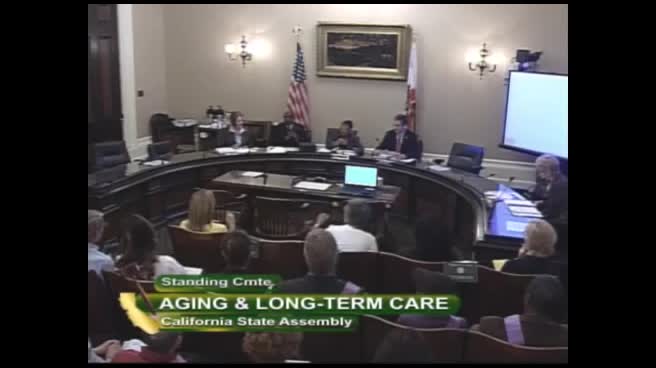 8MIN
Assembly Standing Committee on Aging and Long-Term Care
 2MIN
Senate Floor
 8MIN
Senate Standing Committee on Health
Bill Author

Bill Co-Author(s):