SB 1386: Resource conservation: working and natural lands.
- Session Year: 2015-2016
- House: Senate
- Latest Version Date: 2016-09-23
The California Global Warming Solutions Act of 2006 designates the State Air Resources Board as the state agency charged with monitoring and regulating sources of emissions of greenhouse gases. The act requires all state agencies to consider and implement strategies to reduce their greenhouse gas emissions.
This bill would declare it to be the policy of the state that the protection and management of natural and working lands, as defined, is an important strategy in meeting the states greenhouse gas reduction goals, and would require all state agencies, departments, boards, and commissions to consider this policy when revising, adopting, or establishing policies, regulations, expenditures, or grant criteria relating to the protection and management of natural and working lands.
The California Global Warming Solutions Act of 2006 designates the State Air Resources Board as the state agency charged with monitoring and regulating sources of emissions of greenhouse gases. The act requires all state agencies to consider and implement strategies to reduce their greenhouse gas emissions.
This bill would declare it to be the policy of the state that the protection and management of natural and working lands, as defined, is a key an important strategy in meeting the states greenhouse gas reduction goals, and would require all state agencies, departments, boards, and commissions to consider this policy when revising, adopting, or establishing policies, regulations, expenditures, or grant criteria relating to the protection and management of natural and working lands.
The California Global Warming Solutions Act of 2006 designates the State Air Resources Board as the state agency charged with monitoring and regulating sources of emissions of greenhouse gases. The act requires all state agencies to consider and implement strategies to reduce their greenhouse gas emissions.
This bill would declare it to be the policy of the state that the protection and management of natural and working lands, as defined, is a key strategy in meeting the states greenhouse gas reduction goals, and would require all relevant state agencies, departments, boards, and commissions to consider this policy when revising, adopting, or establishing policies, regulations, expenditures, or grant criteria relating to the protection and management of natural and working lands.
The California Global Warming Solutions Act of 2006 designates the State Air Resources Board as the state agency charged with monitoring and regulating sources of emissions of greenhouse gases. The act requires all state agencies to consider and implement strategies to reduce their greenhouse gas emissions.
This bill would declare it to be the policy of the state that the protection and management of natural and working lands, as defined, are is a key strategy in meeting the states greenhouse gas reduction goals, and would require all relevant state agencies, departments, boards, and commissions to consider this policy when revising, adopting, or establishing policies, regulations, expenditures, and or grant criteria relating to the protection and management of natural and working lands.
The California Global Warming Solutions Act of 2006 designates the State Air Resources Board as the state agency charged with monitoring and regulating sources of emissions of greenhouse gases. The act requires all state agencies to consider and implement strategies to reduce their greenhouse gas emissions.
This bill would declare it to be the policy of the state that the protection and management of natural and working lands, as defined, are a key strategy in meeting the states greenhouse gas reduction goals, and would require all relevant state agencies, departments, boards, and commissions to consider this policy when revising, adopting, or establishing policies, regulations, expenditures, and grant criteria relating to the protection and management of natural and working lands.
The Legislature finds and declares all of the following:
(a)To address the critical issue of global warming, California is working to reduce greenhouse gas emissions. The conservation and management of natural and working lands has been identified as a key strategy to meet greenhouse gas emissions reduction goals.
(b)Natural and working lands store considerable amounts of carbon. Terrestrial ecosystems store 2,100 gigatons of carbon. Natural and working lands are unique in that they can actively remove carbon from the atmosphere and store or sequester that carbon in, above, and below the ground.
(c)Promoting the conservation and management of natural and working lands will result in a variety of outcomes that contribute to carbon sequestration, including, but not limited to, conservation and agricultural easements on natural and working lands, no- or low-till agriculture, cover cropping on agricultural lands, the restoration of degraded lands, including the restoration of vegetation, and agency decisions that avoid the loss of natural and working lands.
(d)The conservation and management of natural and working lands to promote carbon sequestration will also deliver important additional public benefits, including, but not limited to, the protection and enhancement of wildlife habitat, parks and open spaces, and recreational and economic opportunities, the production of food and fiber, the improvement of air and water quality, and flood protection.
SEC. 2.Section 9001.5 is added to the Public Resources Code, to read:9001.5.(a)It is the policy of the state that the protection and management of natural and working lands is an important strategy in meeting the states greenhouse gas emissions reduction goals. The protection and management of those lands can result in the removal of carbon from the atmosphere and the sequestration of carbon in, above, and below the ground.
(b)The protection and management of natural and working lands provides multiple public benefits, including, but not limited to, assisting with adaptation to the impacts of climate change, improving water quality and quantity, flood protection, ensuring healthy fish and wildlife populations, and providing recreational and economic benefits.
(c)All state agencies, including, but not limited to, the Natural Resources Agency, the Department of Food and Agriculture, and the California Environmental Protection Agency, and their respective departments, boards, and commissions, shall consider the policy set forth in this section when revising, adopting, or establishing policies, regulations, expenditures, or grant criteria relating to the protection and management of natural and working lands. State agencies shall implement this requirement in conjunction with the states other strategies to meet its greenhouse gas emissions reduction goals and with the intent to, among other things, promote the cooperation of owners of natural and working lands.
(d)For purposes of this section, the following terms have the following meanings:
(1)Working lands means lands used for farming, grazing, or the production of forest products.
(2)Natural lands means lands consisting of forests, grasslands, deserts, freshwater and riparian systems, wetlands, coastal and estuarine areas, watersheds, wildlands, or wildlife habitat, or lands used for recreational purposes such as parks, urban and community forests, trails, greenbelts, and other similar open-space land. For purposes of this paragraph, parks includes, but is not limited to, areas that provide public green space.
(e)Nothing in this section shall affect the existing authority of a city, county, city and county, state agency, department, commission, or board relating to natural and working lands.
The Legislature finds and declares all of the following:
(a)To address the critical issue of global warming, California is working to reduce greenhouse gas emissions. The conservation and management of natural and working lands has been identified as a key strategy to meet greenhouse gas emissions reduction goals.
(b)Natural and working lands store considerable amounts of carbon. Terrestrial ecosystems store 2,100 gigatons of carbon. Natural and working lands are unique in that they can actively remove carbon from the atmosphere and store or sequester that carbon in, above, and below the ground.
(c)Promoting the conservation and management of natural and working lands will result in a variety of outcomes that contribute to carbon sequestration, including, but not limited to, conservation and agricultural easements on natural and working lands, no- or low-till agriculture, cover cropping on agricultural lands, the restoration of degraded lands, including the restoration of vegetation, and agency decisions that avoid the loss of natural and working lands.
(d)The conservation and management of natural and working lands to promote carbon sequestration will also deliver important additional public benefits, including, but not limited to, the protection and enhancement of wildlife habitat, parks and open spaces, and recreational and economic opportunities, the production of food and fiber, the improvement of air and water quality, and flood protection.
SEC. 2.Section 9001.5 is added to the Public Resources Code, to read:9001.5.(a)It is the policy of the state that the protection and management of natural and working lands is a key an important strategy in meeting the states greenhouse gas emissions reduction goals. The protection and management of those lands can result in the removal of carbon from the atmosphere and the sequestration of carbon in, above, and below the ground.
(b)The protection and management of natural and working lands provides multiple public benefits, including, but not limited to, assisting with adaptation to the impacts of climate change, improving water quality and quantity, flood protection, ensuring healthy fish and wildlife populations, and providing recreational and economic benefits.
(c)All state agencies, including, but not limited to, the Natural Resources Agency, the Department of Food and Agriculture, and the California Environmental Protection Agency, and their respective departments, boards, and commissions, shall consider the policy set forth in this section when revising, adopting, or establishing policies, regulations, expenditures, or grant criteria relating to the protection and management of natural and working lands. State agencies shall implement this requirement in conjunction with the states other strategies to meet its greenhouse gas emissions reduction goals and with the intent to, among other things, promote the cooperation of owners of natural and working lands.
(d)For purposes of this section, the following terms have the following meanings:
(1)Working lands means lands used for farming, grazing, or the production of forest products.
(2)Natural lands means lands consisting of forests, grasslands, deserts, freshwater and riparian systems, wetlands, coastal and estuarine areas, watersheds, wildlands, or wildlife habitat, or lands used for recreational purposes such as parks, urban and community forests, trails, greenbelts, and other similar open-space land. For purposes of this paragraph, parks includes, but is not limited to, areas that provide public green space.
(e)Nothing in this section shall affect the existing authority of a city, county, city and county, state agency, department, commission, or board relating to natural and working lands.
The Legislature finds and declares all of the following:
(a)To address the critical issue of global warming, California is working to reduce greenhouse gas emissions. The conservation and management of natural and working lands has been identified as a key strategy to meet greenhouse gas emissions reduction goals.
(b)Natural and working lands store considerable amounts of carbon. Terrestrial ecosystems store 2,100 gigatons of carbon. Natural and working lands are unique in that they can actively remove carbon from the atmosphere and store or sequester that carbon in, above, and below the ground.
(c)Promoting the conservation and management of natural and working lands will result in a variety of outcomes that contribute to carbon sequestration, including, but not limited to, conservation and agricultural easements on natural and working lands, no- or low-till agriculture, cover cropping on agricultural lands, the restoration of degraded lands, including the restoration of vegetation, and agency decisions that avoid the loss of natural and working lands.
(d)The conservation and management of natural and working lands to promote carbon sequestration will also deliver important additional public benefits, including, but not limited to, the protection and enhancement of wildlife habitat, parks and open spaces, and recreational and economic opportunities, the production of food and fiber, the improvement of air and water quality, and flood protection.
SEC. 2.Section 9001.5 is added to the Public Resources Code, to read:9001.5.(a)It is the policy of the state that the protection and management of natural and working lands is a key strategy in meeting the states greenhouse gas emissions reduction goals. The protection and management of those lands can result in the removal of carbon from the atmosphere and the sequestration of carbon in, above, and below the ground.
(b)The protection and management of natural and working lands provides multiple public benefits, including, but not limited to, assisting with adaptation to the impacts of climate change, improving water quality and quantity, flood protection, ensuring healthy fish and wildlife populations, and providing recreational and economic benefits.
(c)All relevant state agencies, including including, but not limited to, the Natural Resources Agency, the Department of Food and Agriculture, and the California Environmental Protection Agency, and their respective departments, boards, and commissions, shall consider the policy set forth in subdivision (a) this section when revising, adopting, or establishing policies, regulations, expenditures, or grant criteria relating to the protection and management of natural and working lands.
(d)For purposes of this section, the following terms have the following meanings:
(1)Working lands means lands used for farming, grazing, or forest production purposes. the production of forest products.
(2)Natural lands means lands consisting of wetlands, forests, grasslands, deserts, freshwater and riparian systems, wetlands, coastal and estuarine areas, watersheds, wildlands, or wildlife habitat, or lands used for recreational purposes such as parks, urban and community forests, trails, greenbelts, and other open-space land. For purposes of this paragraph, parks includes, but is not limited to, areas that provide public green space.
The Legislature finds and declares all of the following:
(a)To address the critical issue of global warming, California is working to reduce greenhouse gas emissions. The conservation and management of natural and working lands has been identified as a key strategy to meet greenhouse gas emissions reduction goals.
(b)Natural and working lands store considerable amounts of carbon. Terrestrial ecosystems store 2,100 gigatons of carbon. Natural and working lands are unique in that they can actively remove carbon from the atmosphere and store or sequester that carbon in, above, and below the ground.
(c)Promoting the conservation and management of natural and working lands will result in a variety of outcomes that contribute to carbon sequestration, including, but not limited to, conservation and agricultural easements on natural and working lands, no- or low-till agriculture, cover cropping on agricultural lands, the restoration of degraded lands, including the restoration of vegetation, and agency decisions that avoid the loss of natural and working lands.
(d)The conservation and management of natural and working lands to promote carbon sequestration will also deliver important additional public benefits, including, but not limited to, the protection and enhancement of wildlife habitat, parks and open spaces, and recreational and economic opportunities, the production of food and fiber, the improvement of air and water quality, and flood protection.
SECTION 1.SEC. 2.Section 9001.5 is added to the Public Resources Code, to read:9001.5.(a)It is the policy of the state that the protection and management of natural and working lands is a key strategy in meeting the states greenhouse gas emissions reduction goals. The protection and management of those lands can result in the removal of carbon from the atmosphere and the sequestration of carbon in, above, and below the ground.
(b)The protection and management of natural and working lands provides multiple public benefits, including, but not limited to, assisting with adaptation to the impacts of climate change, improving water quality and quantity, flood protection, ensuring healthy fish and wildlife populations, and providing recreational and economic benefits.
(c)All relevant state agencies, including the Natural Resources Agency, the Department of Food and Agriculture, and the California Environmental Protection Agency, and their respective departments, boards, and commissions, shall consider the policy set forth in subdivision (a) when revising, adopting, or establishing policies, regulations, expenditures, or grant criteria relating to the protection and management of natural and working lands.
(d)For purposes of this section, the following terms have the following meanings:
(1)Working lands means lands used for farming, grazing, or forest production purposes.
(2)Natural lands means lands consisting of wetlands, watersheds, wildlands, or wildlife habitat, or used for recreational purposes such as parks, urban and community forests, trails, greenbelts, and other open-space land. For purposes of this paragraph, parks includes, but is not limited to, areas that provide public green space.
(a)It is the policy of the state that the protection and management of natural and working lands are is a key strategy in meeting the states greenhouse gas emissions reduction goals. The protection and management of those lands can result in the removal of carbon from the atmosphere and the sequestration of carbon in, above, and below the ground.
(b)The protection and management of natural and working lands provides multiple public benefits, including, but not limited to, assisting with adaptation to the impacts of climate change, improving water quality and quantity, flood protection, ensuring healthy fish and wildlife populations, and providing recreational and economic benefits.
(c)All relevant state agencies, including the Natural Resources Agency, the Department of Food and Agriculture, and the California Environmental Protection Agency, and their respective departments, boards, and commissions, shall consider the policy set forth in subdivision (a) when revising, adopting, or establishing policies, regulations, expenditures, and or grant criteria relating to the protection and management of natural and working lands.
(d)For purposes of this section, the following terms have the following meanings:
(1)Working lands means lands used for farming, grazing, or, or forest production purposes.
(2)Natural lands means lands consisting of wetlands, watersheds, wildlands, or wildlife habitat, or used for recreational purposes such as parks, urban and community forests, trails, greenbelts, and other open-space land. For purposes of this paragraph, parks includes, but is not limited to, areas that provide public green space.
(a)It is the policy of the state that the protection and management of natural and working lands are a key strategy in meeting the states greenhouse gas emissions reduction goals. The protection and management of those lands can result in the removal of carbon from the atmosphere and the sequestration of carbon in, above, and below the ground.
(b)The protection and management of natural and working lands provides multiple public benefits, including, but not limited to, assisting with adaptation to the impacts of climate change, improving water quality and quantity, flood protection, ensuring healthy fish and wildlife populations, and providing recreational and economic benefits.
(c)All relevant state agencies, including the Natural Resources Agency, the Department of Food and Agriculture, and the California Environmental Protection Agency, and their respective departments, boards, and commissions, shall consider the policy set forth in subdivision (a) when revising, adopting, or establishing policies, regulations, expenditures, and grant criteria relating to the protection and management of natural and working lands.
(d)For purposes of this section, the following terms have the following meanings:
(1)Working lands means lands used for farming, grazing, or, forest production purposes.
(2)Natural lands means lands consisting of wetlands, watersheds, wildlands, or wildlife habitat, or used for recreational purposes such as parks, trails, greenbelts, and other open-space land.
|
Date
|
Status
|
|---|---|
| May 3, 2016 | Read second time. Ordered to third reading. |
| Aug 30, 2016 | Enrolled and presented to the Governor at 1:30 p.m. |
| Aug 24, 2016 | Assembly amendments concurred in. (Ayes 26. Noes 12.) Ordered to engrossing and enrolling. |
| Aug 19, 2016 | In Senate. Concurrence in Assembly amendments pending. |
| Aug 18, 2016 | Read third time. Passed. (Ayes 45. Noes 26. Page 5912.) Ordered to the Senate. |
| Aug 18, 2016 | Read third time. Passed. Ordered to the Senate. |
| Aug 4, 2016 | Read second time. Ordered to third reading. |
| Aug 3, 2016 | From committee: Do pass. (Ayes 14. Noes 5.) (August 3). |
| Aug 1, 2016 | From committee with author's amendments. Read second time and amended. Re-referred to Com. on APPR. |
| Jun 29, 2016 | Read second time and amended. Re-referred to Com. on APPR. |
| Jun 28, 2016 | From committee: Do pass as amended and re-refer to Com. on APPR. (Ayes 7. Noes 1.) (June 27). |
| May 19, 2016 | Referred to Com. on NAT. RES. |
| May 10, 2016 | In Assembly. Read first time. Held at Desk. |
| May 9, 2016 | Read third time. Passed. (Ayes 26. Noes 7.) Ordered to the Assembly. |
| May 9, 2016 | Read third time. Passed. (Ayes 26. Noes 7. Page 3808.) Ordered to the Assembly. |
| Feb 19, 2016 | Introduced. To Com. on RLS. for assignment. To print. |
| May 2, 2016 | Read third time and amended. |
| May 2, 2016 | Ordered to second reading. |
| Apr 26, 2016 | Read second time. Ordered to third reading. |
| Apr 25, 2016 | From committee: Do pass. (Ayes 5. Noes 0.) (April 25). |
| Apr 25, 2016 | From committee: Do pass. (Ayes 5. Noes 0. Page 3670.) (April 25). |
| Apr 19, 2016 | Set for hearing April 25. |
| Apr 6, 2016 | From committee: Do pass and re-refer to Com. on APPR. (Ayes 6. Noes 0.) (April 6). Re-referred to Com. on APPR. |
| Apr 6, 2016 | From committee: Do pass and re-refer to Com. on APPR. (Ayes 6. Noes 0. Page 3419.) (April 6). Re-referred to Com. on APPR. |
| Mar 28, 2016 | From committee with author's amendments. Read second time and amended. Re-referred to Com. on E.Q. |
| Mar 15, 2016 | Set for hearing April 6. |
| Mar 10, 2016 | Referred to Com. on E.Q. |
| Feb 22, 2016 | Read first time. |
| Feb 22, 2016 | From printer. May be acted upon on or after March 23. |
|
Date
|
Description
|
Location
|
Votes
|
|
|---|---|---|---|---|
| Aug 24, 2016 | Unfinished Business SB1386 Wolk Concurrence | Senate Floor |
Passed |
|
| Aug 18, 2016 | SB 1386 Wolk Senate Third Reading By MCCARTY | Assembly Floor |
Passed |
|
| Aug 3, 2016 | Do pass. | Assembly Standing Committee on Appropriations |
Passed |
|
| Jun 27, 2016 | Do pass as amended and be re-referred to the Committee on [Appropriations] | Assembly Standing Committee on Natural Resources |
Passed |
|
| May 9, 2016 | Senate 3rd Reading SB1386 Wolk | Senate Floor |
Passed |
|
| Apr 25, 2016 | Do pass | Senate Standing Committee on Appropriations |
Passed |
|
| Apr 6, 2016 | Do pass, but first be re-referred to the Committee on [Appropriations] | Senate Standing Committee on Environmental Quality |
Passed |
This list shows positions taken on this bill by organizations on the date displayed, which is linked to the original source.
Positions by individuals are not included.
|
Organization
|
Position
|
Date
|
|---|---|---|
| Association Of California Water Agencies | ** Support | Aug 24, 2016 |
| Audubon California | ** Support | Aug 24, 2016 |
| California Apartment Association | ** Against | Jun 27, 2016 |
| California Association Of Resource Conservation Districts | * Support | Jun 27, 2016 |
| California Building Industry Association | * Against | Jun 27, 2016 |
| California Central Valley Flood Control Association | ** Support | Aug 24, 2016 |
| California Climate & Agriculture Network | ** Support | Aug 24, 2016 |
| California Releaf | ** Support | Aug 24, 2016 |
| California State Parks Foundation | ** Support | Aug 24, 2016 |
| California Tahoe Alliance | ** Support | Aug 24, 2016 |
| California Trout Carbon Cycle Institute and Land Trust | * Indeterminate | Aug 3, 2016 |
| Californians Against Waste | ** Support | Aug 24, 2016 |
| Calkain | * Support | Jun 27, 2016 |
| Carbon Cycle Institute | ** Support | Aug 24, 2016 |
| Central Coast Forest Association | ** Support | Aug 24, 2016 |
| City of Gilroy | ** Support | Aug 24, 2016 |
| City Of Portola | ** Support | Aug 24, 2016 |
| Community Alliance With Family Farmers | ** Support | Aug 24, 2016 |
| Contra Costa County Board of Supervisors | ** Support | Aug 24, 2016 |
| Defenders Of Wildlife | ** Support | Aug 24, 2016 |
| East Bay Regional Park District | ** Support | Aug 24, 2016 |
| Endangered Habitats League | ** Support | Aug 24, 2016 |
| Environment California | ** Support | Aug 24, 2016 |
| Greenbelt Alliance | ** Support | Aug 24, 2016 |
| Institute for Ecological Health | ** Support | Aug 24, 2016 |
| John Wick | * Support | Apr 6, 2016 |
| Large Scale Solar Associaiton | * Indeterminate | Aug 3, 2016 |
| Lutheran Office Of Public Policy - California | ** Support | Aug 24, 2016 |
| Mono Lake Committee | ** Support | Aug 24, 2016 |
| Mountains Recreation & Conservation Authority | ** Support | Aug 24, 2016 |
| National Parks Conservation Association | ** Support | Aug 24, 2016 |
| Pacific Forest Trust | ** Support | Aug 24, 2016 |
| Placer County | ** Support | Aug 24, 2016 |
| Placer Land Trust | ** Support | Aug 24, 2016 |
| Rosemarie Smallcombe, Mariposa County Supervisor | ** Support | Aug 24, 2016 |
| San Bernardino Valley Water Conservation District | ** Support | Aug 24, 2016 |
| Santa Clara Valley Open Space Authority | ** Support | Aug 24, 2016 |
| Santa Cruz County Land Trust | * Support | Apr 6, 2016 |
| Save the Redwoods League | ** Support | Aug 24, 2016 |
| Sequoia Riverlands Trust | ** Support | Aug 24, 2016 |
| Sierra Business Council | ** Support | Aug 24, 2016 |
| Sierra Cascade Land Trust Council | ** Support | Aug 24, 2016 |
| Sierra Climate Adaptation and Mitigation Partnership | ** Support | Aug 24, 2016 |
| Sierra Club California | ** Support | Aug 24, 2016 |
| Sierra Foothill Conservancy | ** Support | Aug 24, 2016 |
| Sierra Institute for Community and Environment | ** Support | Aug 24, 2016 |
| Sierra Nevada Alliance | ** Support | Aug 24, 2016 |
| Sierra Water Workgroup | ** Support | Aug 24, 2016 |
| Southern Sierra Partnership | ** Support | Aug 24, 2016 |
| Tahoe Mountain Sports | ** Support | Aug 24, 2016 |
| Tejon Ranch Conservancy | ** Support | Aug 24, 2016 |
| The Nature Conservancy | ** Support | Aug 24, 2016 |
| The Ocean Conservancy | ** Support | Aug 24, 2016 |
| Town Of Mammoth Lakes | ** Support | Aug 24, 2016 |
| Truckee Donner Land Trust | ** Support | Aug 24, 2016 |
| Trust For Public Land, The | ** Support | Aug 24, 2016 |
| UC Davis Policy Institute for Energy, Environment, and the Economy | * Support | Apr 6, 2016 |
| Yolo County Board of Supervisors | ** Support | Aug 24, 2016 |
| Yolo Habitat Conservancy | ** Support | Aug 24, 2016 |
Office of Senate Floor Analyses (916) 651-1520 Fax: (916) 327-4478 | SB |
UNFINISHED BUSINESS
Bill No: SB 1386
:
SENATE ENVIRONMENTAL QUALITY COMMITTEE: 6-0, 4/6/16
AYES: Wieckowski, Gaines, Bates, Hill, Leno, Pavley
NO VOTE RECORDED: Jackson
SENATE APPROPRIATIONS COMMITTEE: 5-0, 4/25/16
AYES: Lara, Beall, Hill, McGuire, Mendoza
NO VOTE RECORDED: Bates, Nielsen
SENATE FLOOR: 26-7, 5/9/16
AYES: Allen, Berryhill, Block, De León, Galgiani, Glazer, Hall, Hancock, Hernandez, Hertzberg, Hill, Hueso, Jackson, Lara, Leno, Leyva, Liu, McGuire, Mendoza, Mitchell, Monning, Pan, Pavley, Roth, Wieckowski, Wolk
NOES: Anderson, Huff, Moorlach, Morrell, Nguyen, Stone, Vidak
NO VOTE RECORDED: Bates, Beall, Cannella, Fuller, Gaines, Nielsen, Runner
ASSEMBLY FLOOR: 45-26, 8/18/16 - See last page for vote
DIGEST: This bill declares it to be the policy of the state that the protection and management of natural and working lands is an important strategy in meeting the state's greenhouse gas (GHG) reduction goals. The bill requires all state agencies, departments, boards, and commissions to consider this policy when revising, adopting, or establishing policies, regulations, expenditures, or grant criteria relating to the protection and management of natural and working lands.
Assembly Amendments include technical amendments with minor language revisions, further listings of types of natural and working lands, and statements that the bill’s actions would be implemented in conjunction with the state’s other strategies to meet its greenhouse gas emission goals, the intent is to promote the cooperation of owners of natural and working lands, and that nothing in the bill affects existing local and state agency, department, commission, or board authorities.
Existing law:
- Requires the Air Resources Board (ARB), under the California Global Warming Solutions Act of 2006 (also known as AB 32), to (a) inventory greenhouse gases (GHGs), (b) determine the 1990 statewide GHG emissions level, (c) approve a statewide GHG emissions limit equivalent to that level to be achieved by 2020, (d) implement regulations that achieve the maximum technologically feasible and cost-effective reduction of GHG emissions, and (e) authorize ARB to include market-based compliance mechanisms, including a cap-and-trade program, in the AB 32 regulations after considering the potential for direct, indirect, and cumulative emission impacts from these mechanisms. (Health and Safety Code §38500 et seq.)
- Establishes the Greenhouse Gas Reduction Fund (GGRF), under the Greenhouse Gas Reduction Fund Investment Plan and Communities Revitalization Act, for proceeds from the cap-and-trade program and authorizes moneys from the GGRF for, among several explicit investment options, “funding to reduce greenhouse gas emissions associated with water use and supply, land and natural resource conservation and management, forestry, and sustainable agriculture.” (HSC §39712 (c)(3)).
This bill:
- Declares it to be the policy of the state that the protection and management of natural and working lands, as defined, is a key strategy in meeting the state’s GHG reduction goals.
- Requires all relevant state agencies, departments, boards, and commissions to consider this policy, in conjunction with other relevant state strategies, when revising, adopting, or establishing policies, regulations, expenditures, or grant criteria relating to the protection and management of natural and working lands.
Background
- Emissions reductions. Over the last decade, California has built on its history of policies to conserve energy and reduce air pollution to initiate an effort to reduce its GHG emissions to lessen the negative impacts of climate change.
Governor Schwarzenegger’s Executive Order S-3-05 specified GHG emissions reduction targets of 2000 levels by 2010, 1990 levels by 2020, and 80 percent below 1990 levels by 2050. In 2015, Governor Brown issued Executive Order B-30-15 that established an additional intermediate emissions reduction target of 40 percent below 1990 levels by 2030.
Because natural and working lands store (“sequester”) carbon from the atmosphere in above- and below-ground plant matter, this sequestration contributes to net reductions of carbon emissions. In addition, active sequestration via the biosphere and through various technological means will ultimately be necessary to go beyond reducing the addition of GHGs to actually eliminating carbon dioxide already in the atmosphere.
The protection and management of natural and working lands has been recognized as an important part of California’s climate initiative in reports by both the current and past administrations. An example of official recognition of the importance of natural carbon sequestration includes the state’s 2008 Climate Change Scoping Plan: A Framework for Change.
Although the carbon sequestration function of natural and working lands is prone to be variable across geographies and time, a growing body of scientific research is quantifying the range of carbon sequestration values across natural and working lands in California and elsewhere.
- Investment of cap-and-trade proceeds. Proceeds from the cap-and-trade program are available for appropriations from the GGRF, with legislative direction for those appropriations provided by AB 1532 (J. Pérez, Chapter 807, Statutes of 2012), SB 535 (de León, Chapter 830, Statutes of 2012), and SB 1018 (Senate Budget & Fiscal Review Committee, Chapter 39, Statutes of 2012). SB 1018 requires the Department of Finance to regularly update a three-year investment plan that identifies feasible and cost-effective GHG emission reduction investments to be funded from the cap-and-trade auction proceeds. SB 535 requires minimum percentages of spending for emissions-reducing projects that are specifically located in and otherwise benefit disadvantaged communities.
Based on the Governor’s proposals, the Legislature has authorized continuous appropriations from the GGRF for a number of larger infrastructure and smart growth initiatives. Other proposed appropriations from the GGRF have been decided within the annual budget setting process. Approximately 11 percent (or $345 million out of $3,090 million) of the Governor’s total proposed GGRF expenditures for 2016-17 were directed towards managing natural and working lands, as defined in this bill.
FISCAL EFFECT: Appropriation: Fiscal Com.: Local:
According to the Assembly Appropriations Committee, the bill has minor, absorbable costs.
Defenders of Wildlife (source)
Association of California Water Agencies
Audubon California
California Central Valley Flood Control Association
California Climate & Agriculture Network
California Releaf
California State Parks Foundation
California Tahoe Alliance
Californians Against Waste
Carbon Cycle Institute
Central Coast Forest Association
City of Gilroy
City of Portola
Community Alliance with Family Farmers
Contra Costa County Board of Supervisors
East Bay Regional Park District
Endangered Habitats League
Environment California
Greenbelt Alliance
Institute for Ecological Health
Lutheran Office of Public Policy – California
Mono Lake Committee
Mountains Recreation & Conservation Authority
National Parks Conservation Association
Ocean Conservancy
Pacific Forest Trust
Placer County
Placer Land Trust
San Bernardino Valley Water Conservation District
Santa Clara Valley Open Space Authority
Save the Redwoods League
Sequoia Riverlands Trust
Sierra Business Council
Sierra Cascade Land Trust Council
Sierra Climate Adaptation and Mitigation Partnership
Sierra Club California
Sierra Foothill Conservancy
Sierra Institute for Community and Environment
Sierra Nevada Alliance
Sierra Water Workgroup
Southern Sierra Partnership
Tahoe Mountain Sports
Tejon Ranch Conservancy
The Nature Conservancy
The Trust for Public Land
Town of Mammoth Lakes
Town of Truckee
Truckee Donner Land Trust
Rosemarie Smallcombe, Mariposa County Supervisor
Yolo County Board of Supervisors
Yolo Habitat Conservancy
OPPOSITION: (Verified 8/19/16)
The Large-Scale Solar Association
ARGUMENTS IN SUPPORT: According to the author, “The Governor identified protection and management of natural and working lands as a significant part of his strategy to reach the state’s 2030 emissions target, as these lands can sequester significant amounts of carbon.
“The California Department of Forestry and Fire Protection, California Department of Fish and Wildlife, California Department of Food and Agriculture, California Strategic Growth Council, and other state bodies have programs in place to reduce GHG emissions and undertake carbon sequestration on natural and working lands using GGRF dollars.
“SB 1386 codifies as state policy the Governor’s strategy to protect and manage natural and working lands as a key part of the efforts to achieve our climate change goals. The bill also requires that all relevant state agencies consider this policy when revising, adopting, or establishing policies, regulations, expenditures, and grant criteria relating to the protection and management of natural and working lands.
“Not only will SB 1386 support future investment in carbon sequestration projects on California’s natural and working lands, it will, at the same time, provide other important public benefits for all communities including the protection and enhancement of wildlife habitat, parks, greenways, and open space; recreational and economic opportunities; production of food and fiber; improvement of air and water quality; and flood protection.”
ARGUMENTS IN OPPOSITION: The Large-Scale Solar Association “is concerned that the bill [will] have the unintentionally [sic] impact of elevating the value of natural and working lands above other GHG-reduction land uses, such as renewable energy production.” They request new language making it clear that “nothing in the bill is intended to preclude renewable energy development.”
ASSEMBLY FLOOR: 45-26, 8/18/16
AYES: Arambula, Atkins, Baker, Bloom, Bonilla, Bonta, Brown, Burke, Calderon, Campos, Chau, Chiu, Chu, Cooley, Cooper, Dodd, Eggman, Cristina Garcia, Eduardo Garcia, Gipson, Gomez, Gonzalez, Gordon, Hadley, Holden, Irwin, Jones-Sawyer, Levine, Lopez, Low, Maienschein, McCarty, Medina, Mullin, Nazarian, Quirk, Ridley-Thomas, Rodriguez, Mark Stone, Thurmond, Ting, Weber, Williams, Wood, Rendon
NOES: Achadjian, Travis Allen, Bigelow, Brough, Chang, Chávez, Dahle, Beth Gaines, Gallagher, Gatto, Grove, Harper, Jones, Lackey, Linder, Mathis, Mayes, Melendez, Obernolte, Olsen, Patterson, Salas, Steinorth, Wagner, Waldron, Wilk
NO VOTE RECORDED: Alejo, Dababneh, Daly, Frazier, Gray, Roger Hernández, Kim, O'Donnell, Santiago
8/19/16 19:37:22
**** END ****
SENATE THIRD READING
STR Bill Id:SB 1386
Author:(Wolk)
As Amended Ver:August 1, 2016
Majority vote
SENATE VOTE: 26-7
Committee | Votes | Ayes | Noes |
Natural Resources | 7-1 | Williams, Cristina Garcia, Gomez, Hadley, McCarty, Mark Stone, Wood | Harper |
Appropriations | 14-5 | Gonzalez, Bloom, Bonilla, Bonta, Calderon, Daly, Eggman, Eduardo Garcia, Holden, Quirk, Santiago, Weber, Wood, Chau | Bigelow, Chang, Jones, Obernolte, Wagner |
SUMMARY: Declares it to be the policy of the state that the protection and management of natural and working lands is an important strategy in meeting the state's greenhouse gas (GHG) reduction goals. Requires all state agencies, departments, boards, and commissions to consider this policy when revising, adopting, or establishing policies, regulations, expenditures, or grant criteria relating to the protection and management of natural and working lands.
EXISTING LAW:
- Requires, pursuant to the California Global Warming Solutions Act [AB 32 (Núñez), Chapter 488, Statutes of 2006], the Air Resources Board (ARB) to adopt a statewide GHG emissions limit equivalent to 1990 levels by 2020 and to adopt rules and regulations to achieve maximum technologically feasible and cost-effective GHG emission reductions.
- Pursuant to Executive Order B-30-15 (Brown), in addition to establishing a 40% GHG emission reduction goal by 2030, requires several actions on adaptation including:
- Requires Natural Resources Agency (NRA) to update the state's climate adaptation strategy every three years and ensure that its provisions are fully implemented. Requires the state's climate adaptation strategy to:
- Identify vulnerabilities to climate change by sector and regions, including, at a minimum, the following sectors: water, energy, transportation, public health, agriculture, emergency services, forestry, biodiversity and habitat, and ocean and coastal resources;
- Outline primary risks to residents, property, communities, and natural systems from these vulnerabilities, and identify priority actions needed to reduce these risks; and,
- Identify a lead agency or group of agencies to lead adaptation efforts in each sector.
- Requires each sector lead to prepare an implementation plan by September 2015 to outline the actions that will be taken as identified in state's climate adaptation strategy, and report back on those actions to the NRA.
- Requires state agencies to take climate change into account in their planning and investment decisions, and employ full life-cycle cost accounting to evaluate and compare infrastructure investments and alternatives.
- Requires state agencies' planning and investment to be guided by the principles of climate preparedness, flexibility and adaptive approaches for uncertain climate impacts, protective of vulnerable populations, and prioritization of natural infrastructure solutions.
- Requires the state's Five-Year Infrastructure Plan to take current and future climate change impacts into account in all infrastructure projects.
- Requires Office of Planning and Research to establish a technical, advisory group to help state agencies incorporate climate change impacts into planning and investment decisions.
- Requires the state to continue its rigorous climate change research program focused on understanding the impacts of climate change and how best to prepare and adapt to such impacts.
- Requires Natural Resources Agency (NRA) to update the state's climate adaptation strategy every three years and ensure that its provisions are fully implemented. Requires the state's climate adaptation strategy to:
- Requires the NRA to update its climate adaptation strategy, the Safeguarding California Plan (Plan), by July 1, 2017, and every three years thereafter, by coordinating adaption activities among lead state agencies in each sector.
FISCAL EFFECT: According to the Assembly Appropriations Committee the bill has minor, absorbable costs.
COMMENTS: Three-quarters of California's landmass is comprised of biologically diverse landscapes such as forests, woodlands, shrublands, grasslands and wetlands. These lands can be a major source of sequestration through capturing carbon in soils, plants, and trees. They can also be a source of GHG emissions when drought, disease, wildfires, soil disturbances, conversion, and harvests occur. Through preservation and management, natural and working lands can provide significant GHG reductions. Natural and working lands are also susceptible to climate change impacts of sea level rise, drought, and increased temperatures.
ARB has recognized the importance of natural and working lands in meeting the state's GHG reduction targets. In the 2013 Scoping Plan update, ARB included a sector on natural and working lands and a sector on agriculture. These sectors lay out opportunities and challenges for reducing GHG emissions in those sectors. The Scoping Plan also put forth recommended actions including the development of the Forest Climate Plan. The Scoping Plan update identifies funding as critical to address the needs in the natural and working lands sector.
AB 1482 (Gordon), Chapter 603, Statutes of 2015, requires state agencies to maximize, where applicable and feasible, objectives that included promoting the use of natural systems, natural infrastructure, flood plain and wetlands restoration or preservation, urban greening, wildlife corridors, and healthy soils and sustainable agriculture to deal with climate change impacts and adaptation. However, much needs to be done to properly manage our natural and working lands to meet our GHG goals and adapt to climate impacts.
In Governor Brown's 2015 inaugural address, he noted that the management of natural and working land was one of his key strategies to reduce GHG emissions to meet the state's GHG reduction goals.
Analysis Prepared by: Michael Jarred / NAT. RES. / (916) 319-2092 FN: 0003795
Date of Hearing: August 3, 2016
ASSEMBLY COMMITTEE ON APPROPRIATIONS
Lorena Gonzalez, Chair
SBPCA Bill Id:SB 1386
Author:(Wolk) – As Amended Ver:August 1, 2016
Policy Committee: | Natural Resources | Vote: | 7 - 1 |
Urgency: No State Mandated Local Program: No Reimbursable: No
SUMMARY:
This bill declares it is the policy of the state that the protection and management of natural and working lands is an important strategy in meeting the state’s greenhouse gas (GHG) emissions reduction goals. Additionally, this bill:
- Requires all state agencies, departments, boards, and commissions to consider this policy when revising, adopting, or establishing policies, regulations, expenditures, or grant criteria relating to the protection and management of natural and working lands. Requires agencies to implement this policy in conjunction with its strategies to meet GHG reduction goals and promote cooperation with owners of natural and working lands.
- Defines “working lands” to mean lands used for farming, grazing, or the production of forest products.
- Defines “natural lands” to means lands consisting of forests, grasslands, deserts, freshwater and riparian systems, wetlands, coastal and estuarine areas, watersheds, wildlands, wildlife habitat, or lands used for recreational purposes as specified.
- Provides nothing in this bill affects the existing authority of a local government, state agency, department, commission, or board relating to natural and working lands.
FISCAL EFFECT:
Minor, absorbable costs.
COMMENTS:
- Purpose. According to the author, the conservation and management of natural and working lands is a key strategy in California’s ongoing efforts to meet its climate change goals given these sectors’ significant potential for removing carbon from the air and storing or sequestering it in, above, and below ground.
The author contends that despite the enormous sequestration potential, the protection and management of natural and working lands is not codified as a state policy that would last beyond this Administration. This bill codifies as state policy California’s strategy to protect and manage natural and working lands as a key part of the effort to achieve our climate change goals.
- Natural and Working Lands. Three-quarters of California’s landmass is comprised of biologically diverse landscapes such as forests, woodlands, shrublands, grasslands and wetlands. These lands can be a major source of sequestration through capturing carbon in soils, plants, and trees. They can also be a source of GHG emissions when drought, disease, wildfires, soil disturbances, conversion, and harvests occur. Through preservation and management, natural and working lands can provide significant GHG reductions. Natural and working lands are also susceptible to climate change impacts of sea level rise, drought, and increased temperatures.
Analysis Prepared by: Jennifer Galehouse / APPR. / (916) 319-2081
Date of Hearing: June 27, 2016
ASSEMBLY COMMITTEE ON NATURAL RESOURCES
Das Williams, Chair
SBPCA Bill Id:SB 1386
Author:(Wolk) – As Amended Ver:May 2, 2016
SENATE VOTE: 26-7
SUBJECT: Resource conservation: working and natural lands
SUMMARY: Declares it to be the policy of the state that the protection and management of natural and working lands is a key strategy in meeting the state’s greenhouse gas (GHG) reduction goals.
EXISTING LAW:
- Requires, pursuant to the California Global Warming Solutions Act [AB 32 (Núñez), Chapter 488, Statutes of 2006], the Air Resources Board (ARB) to adopt a statewide GHG emissions limit equivalent to 1990 levels by 2020 and to adopt rules and regulations to achieve maximum technologically feasible and cost-effective GHG emission reductions.
- Pursuant to Executive Order S-13-08 (Schwarzenegger), requires Natural Resources Agency (NRA), through the Climate Action Team, to coordinate with local, regional, state, federal, and private entities to develop, by 2009, a state Climate Adaptation Strategy. Requires the strategy to summarize the best known science on climate change impacts to California, assess California's vulnerability to the identified impacts, and outline solutions that can be implemented within and across state agencies to promote resiliency.
- Pursuant to Executive Order B-30-15 (Brown), in addition to establishing a 40% GHG emission reduction goal by 2030, requires several actions on adaptation including:
- Requires NRA to update the state's climate adaptation strategy every three years and ensure that its provisions are fully implemented. Requires the state's climate adaptation strategy to:
- Identify vulnerabilities to climate change by sector and regions, including, at a minimum, the following sectors: water, energy, transportation, public health, agriculture, emergency services, forestry, biodiversity and habitat, and ocean and coastal resources;
- Outline primary risks to residents, property, communities, and natural systems from these vulnerabilities, and identify priority actions needed to reduce these risks; and,
- Identify a lead agency or group of agencies to lead adaptation efforts in each sector.
- Identify vulnerabilities to climate change by sector and regions, including, at a minimum, the following sectors: water, energy, transportation, public health, agriculture, emergency services, forestry, biodiversity and habitat, and ocean and coastal resources;
- Requires each sector lead to prepare an implementation plan by September 2015 to outline the actions that will be taken as identified in state's climate adaptation strategy, and report back on those actions to the NRA.
- Requires state agencies to take climate change into account in their planning and investment decisions, and employ full life-cycle cost accounting to evaluate and compare infrastructure investments and alternatives.
- Requires state agencies' planning and investment to be guided by the principles of climate preparedness, flexibility and adaptive approaches for uncertain climate impacts, protective of vulnerable populations, and prioritization of natural infrastructure solutions.
- Requires the state's Five-Year Infrastructure Plan to take current and future climate change impacts into account in all infrastructure projects.
- Requires Office of Planning and Research (OPR) to establish a technical, advisory group to help state agencies incorporate climate change impacts into planning and investment decisions.
- Requires the state to continue its rigorous climate change research program focused on understanding the impacts of climate change and how best to prepare and adapt to such impacts.
- Requires NRA to update the state's climate adaptation strategy every three years and ensure that its provisions are fully implemented. Requires the state's climate adaptation strategy to:
- Requires the NRA to update its climate adaptation strategy, the Safeguarding California Plan (Plan), by July 1, 2017, and every three years thereafter, by coordinating adaption activities among lead state agencies in each sector.
THIS BILL:
- Declares it to be the policy of the state that the protection and management of natural and working lands, as defined, is a key strategy in meeting the state’s GHG reduction goals.
- Requires all relevant state agencies, departments, boards, and commissions to consider this policy when revising, adopting, or establishing policies, regulations, expenditures, or grant criteria relating to the protection and management of natural and working lands.
- Defines “working lands” to mean lands used for farming, grazing, or forest production purposes.
- Defines “natural lands” to means lands consisting of wetlands, watersheds, wildlands, wildlife habitat, or used for recreational purposes.
FISCAL EFFECT: According to the Senate Appropriations Committee, minor and absorbable costs to impacted state entities.
COMMENTS:
- Author’s statement:
The conservation and management of natural and working lands is a key strategy in California’s ongoing efforts to meet its climate change goals given these sectors’ significant potential for removing carbon from the air and storing—or sequestering—that carbon in above and below-ground matter. Other strategies include reducing petroleum use in cars and trucks by up to 50 percent and reducing short-lived climate pollutants. The California Department of Forestry and Fire Protection, California Department of Fish and Wildlife, California Department of Food and Agriculture, California Strategic Growth Council, and other state bodies have programs in place to undertake carbon sequestration on natural and working lands using GGRF dollars.
However, despite the enormous sequestration potential, the protection and management of natural and working lands is not codified as a state policy that would last beyond this Administration. Moreover, programs that oversee projects involving the management of natural and working lands to reduce carbon emissions struggle to receive appropriations and attention.
This bill would codify as state policy California’s strategy to protect and manage natural and working lands as a key part of the effort to achieve our climate change goals.
In doing so, SB 1386 will better enable agencies to prioritize the conservation and management of natural and working lands to maximize their carbon sequestration value, including promoting carbon sequestration projects, furthering California’s efforts to reduce greenhouse gas emissions and providing important additional public benefits such as the protection and enhancement of wildlife habitat, parks and open space; recreational and economic opportunities; production of food and fiber; improvement of air and water quality; and flood protection.
- Natural and Working Lands. Three-quarters of California’s landmass is comprised of biologically diverse landscapes such as forests, woodlands, shrublands, grasslands and wetlands. These lands can be a major source of sequestration through capturing carbon in soils, plants, and trees. They can also be a source of GHG emissions when drought, disease, wildfires, soil disturbances, conversion, and harvests occur. Through preservation and management, natural and working lands can provide significant GHG reductions. Natural and working lands are also susceptible to climate change impacts of sea level rise, drought, and increased temperatures.
ARB has recognized the importance of natural and working lands in meeting the state’s GHG reduction targets. In the 2013 Scoping Plan update, ARB included a sector on natural and working lands and a sector on agriculture. These sectors lay out opportunities and challenges for reducing GHG emissions in those sectors. The Scoping Plan also put forth recommended actions including the development of the Forest Climate Plan. The Scoping Plan update identifies funding as critical to address the needs in the natural and working lands sector.
Listed below are the GGRF funding that these sectors have received to date:
- Agricultural Energy and Operational Efficiency, Department of Food and Agriculture (CDFA), $75 million;
- Water-Energy Efficiency, Department of Water Resources (DWR), $75 million;
- Wetlands and Watershed Restoration, Department of Fish and Wildlife (DFW), $27 million;
- Urban Forestry, Forest Health Restoration, and Reforestation, Department of Forestry and Fire Protection (CAL FIRE), $42 million; and,
- Waste Diversion, Department of Resources Recycling and Recovery (CalRecycle), $31 million.
AB 1482 (Gordon), Chapter 603, Statutes of 2015, requires state agencies to maximize, where applicable and feasible, objectives that included promoting the use of natural systems, natural infrastructure, flood plain and wetlands restoration or preservation, urban greening, wildlife corridors, and healthy soils and sustainable agriculture to deal with climate change impacts and adaptation. However, much needs to be done to properly manage our natural and working lands to meet our GHG goals and adapt to climate impacts.
- This bill. In Governor Brown’s 2015 inaugural address, he noted that the management of natural and working land was one of his key strategies to reduce GHG emissions to meet the state’s GHG reduction goals. This bill puts that policy into statute and directs all relevant state agencies to consider that policy when doing regulations, policy, or funding projects. By doing this, the author and sponsor hope to increase the priority and funding of this policy at the relevant state agencies. The author and committee may wish to consider amending the bill to require all state agencies not just the relevant one to consider these polices and to also consider the co-benefit the protection and management of natural and working lands provide. The author and committee may also wish to consider amending the bill further defining natural lands and add coauthors.
REGISTERED SUPPORT / OPPOSITION:
Support
Defenders of Wildlife (sponsor)
Audubon California
California Central Valley Flood Control Association
California Climate & Agriculture Network
California ReLeaf
California State Parks Foundation
California Tahoe Alliance
Carbon Cycle Institute
Community Alliance with Family Farmers
Contra Costa County Board of Supervisors
East Bay Regional Park District
Endangered Habitats League
Environment California
Greenbelt Alliance
Institute for Ecological Health
Lutheran Office of Public Policy - California
Mono Lake Committee
Mountain Recreation & Conservation Authority
Ocean Conservancy
Pacific Forest Trust
San Bernardino Valley Water Conservation District
Santa Clara Valley Open Space Authority
Save the Redwoods League
Sierra Business Council
Sierra Climate Adaptation and Mitigation Partnership
Sierra Club California
Sierra Foothill Conservancy
The Nature Conservancy
The Trust for Public Land
Yolo County Board of Supervisors
Opposition
California Apartment Association
California Building Industry Association
California Business Properties Association
Analysis Prepared by: Michael Jarred / NAT. RES. / (916) 319-2092
Office of Senate Floor Analyses (916) 651-1520 Fax: (916) 327-4478 | SB |
THIRD READING
Bill No: SB 1386
:
SENATE ENVIRONMENTAL QUALITY COMMITTEE: 6-0, 4/6/16
AYES: Wieckowski, Gaines, Bates, Hill, Leno, Pavley
NO VOTE RECORDED: Jackson
SENATE APPROPRIATIONS COMMITTEE: 5-0, 4/25/16
AYES: Lara, Beall, Hill, McGuire, Mendoza
NO VOTE RECORDED: Bates, Nielsen
DIGEST: This bill requires all relevant state agencies, departments, boards, and commissions to consider the protection and management of natural and working lands when revising, adopting, or establishing policies, regulations, expenditures, or grant criteria relating to the protection and management of natural and working lands.
Senate Floor Amendments of 5/2/16 add a findings and declarations section that provides intent language for this bill. The new section discusses the value and role of natural and working lands in storing carbon and producing other public benefits within the context of the state’s overall efforts to address climate change.
Existing law:
- Requires the Air Resources Board (ARB), under the California Global Warming Solutions Act of 2006 (also known as AB 32), to (a) inventory greenhouse gases (GHGs), (b) determine the 1990 statewide GHG emissions level, (c) approve a statewide GHG emissions limit equivalent to that level to be achieved by 2020, (d) implement regulations that achieve the maximum technologically feasible and cost-effective reduction of GHG emissions, and (e) authorize ARB to include market-based compliance mechanisms, including a cap-and-trade program, in the AB 32 regulations after considering the potential for direct, indirect, and cumulative emission impacts from these mechanisms. (Health and Safety Code §38500 et seq.)
- Establishes the Greenhouse Gas Reduction Fund (GGRF), under the Greenhouse Gas Reduction Fund Investment Plan and Communities Revitalization Act, for proceeds from the cap-and-trade program and authorizes moneys from the GGRF for, among several explicit investment options, “funding to reduce greenhouse gas emissions associated with water use and supply, land and natural resource conservation and management, forestry, and sustainable agriculture.” (HSC §39712 (c)(3)).
This bill:
- Declares it to be the policy of the state that the protection and management of natural and working lands, as defined, is a key strategy in meeting the state’s GHG reduction goals.
- Requires all relevant state agencies, departments, boards, and commissions to consider this policy when revising, adopting, or establishing policies, regulations, expenditures, or grant criteria relating to the protection and management of natural and working lands.
Background
- Emissions reductions. Over the last decade, California has built on its history of policies to conserve energy and reduce air pollution to initiate an effort to reduce its GHG emissions to lessen the negative impacts of climate change.
Governor Schwarzenegger’s Executive Order S-3-05 specified GHG emissions reduction targets of 2000 levels by 2010, 1990 levels by 2020, and 80 percent below 1990 levels by 2050. In 2015, Governor Brown issued Executive Order B-30-15 that established an additional intermediate emissions reduction target of 40 percent below 1990 levels by 2030.
Because natural and working lands store (“sequester”) carbon from the atmosphere in above- and below-ground plant matter, this sequestration contributes to net reductions of carbon emissions. In addition, active sequestration via the biosphere and through various technological means will ultimately be necessary to go beyond reducing the addition of GHGs to actually eliminating carbon dioxide already in the atmosphere.
The protection and management of natural and working lands has been recognized as an important part of California’s climate initiative in reports by both the current and past administrations. An example of official recognition of the importance of natural carbon sequestration includes the state’s 2008 Climate Change Scoping Plan: A Framework for Change.
Although the carbon sequestration function of natural and working lands is prone to be variable across geographies and time, a growing body of scientific research is quantifying the range of carbon sequestration values across natural and working lands in California and elsewhere.
- Investment of cap-and-trade proceeds. Proceeds from the cap-and-trade program are available for appropriations from the GGRF, with legislative direction for those appropriations provided by AB 1532 (J. Pérez, Chapter 807, Statutes of 2012), SB 535 (de León, Chapter 830, Statutes of 2012), and SB 1018 (Senate Budget & Fiscal Review Committee, Chapter 39, Statutes of 2012). SB 1018 requires the Department of Finance to regularly update a three-year investment plan that identifies feasible and cost-effective GHG emission reduction investments to be funded from the cap-and-trade auction proceeds. SB 535 requires minimum percentages of spending for emissions-reducing projects that are specifically located in and otherwise benefit disadvantaged communities.
Based on the Governor’s proposals, the Legislature has authorized continuous appropriations from the GGRF for a number of larger infrastructure and smart growth initiatives. Other proposed appropriations from the GGRF have been decided within the annual budget setting process. Approximately 11 percent (or $345 million out of $3,090 million) of the Governor’s total proposed GGRF expenditures for 2016-17 appear to be directed towards managing natural and working lands, as defined in this bill.
Comments
- Purpose of Bill. According to the author, “The Governor identified protection and management of natural and working lands as a significant part of his strategy to reach the state’s 2030 emissions target, as these lands can sequester significant amounts of carbon.
“The California Department of Forestry and Fire Protection, California Department of Fish and Wildlife, California Department of Food and Agriculture, California Strategic Growth Council, and other state bodies have programs in place to reduce GHG emissions and undertake carbon sequestration on natural and working lands using GGRF dollars.
“SB 1386 codifies as state policy the Governor’s strategy to protect and manage natural and working lands as a key part of the efforts to achieve our climate change goals. The bill also requires that all relevant state agencies consider this policy when revising, adopting, or establishing policies, regulations, expenditures, and grant criteria relating to the protection and management of natural and working lands.
“Not only will SB 1386 support future investment in carbon sequestration projects on California’s natural and working lands, it will, at the same time, provide other important public benefits for all communities including the protection and enhancement of wildlife habitat, parks, greenways, and open space; recreational and economic opportunities; production of food and fiber; improvement of air and water quality; and flood protection.”
FISCAL EFFECT: Appropriation: Fiscal Com.: Local:
According to the Senate Appropriations Committee, minor and absorbable costs to impacted state entities.
Defenders of Wildlife (source)
Audubon California
California Central Valley Flood Control Association
California Climate & Agriculture Network
California ReLeaf
California State Parks Foundation
California Tahoe Alliance
Carbon Cycle Institute
Community Alliance with Family Farmers
Environment California
Greenbelt Alliance
Lutheran Office of Public Policy - California
Mono Lake Committee
Mountain Recreation & Conservation Authority
Ocean Conservancy
Pacific Forest Trust
Santa Clara Valley Open Space Authority
Save the Redwoods League
Sierra Business Council
Sierra Club California
The Nature Conservancy
The Trust for Public Land
OPPOSITION: (Verified 4/25/16)
None received
5/4/16 15:04:19
**** END ****
Office of Senate Floor Analyses (916) 651-1520 Fax: (916) 327-4478 | SB |
THIRD READING
Bill No: SB 1386
:
SENATE ENVIRONMENTAL QUALITY COMMITTEE: 6-0, 4/6/16
AYES: Wieckowski, Gaines, Bates, Hill, Leno, Pavley
NO VOTE RECORDED: Jackson
SENATE APPROPRIATIONS COMMITTEE: 5-0, 4/25/16
AYES: Lara, Beall, Hill, McGuire, Mendoza
NO VOTE RECORDED: Bates, Nielsen
DIGEST: This bill requires all relevant state agencies, departments, boards, and commissions to consider the protection and management of natural and working lands when revising, adopting, or establishing policies, regulations, expenditures, or grant criteria relating to the protection and management of natural and working lands.
Existing law:
- Requires the Air Resources Board (ARB), under the California Global Warming Solutions Act of 2006 (also known as AB 32), to (a) inventory greenhouse gases (GHGs), (b) determine the 1990 statewide GHG emissions level, (c) approve a statewide GHG emissions limit equivalent to that level to be achieved by 2020, (d) implement regulations that achieve the maximum technologically feasible and cost-effective reduction of GHG emissions, and (e) authorize ARB to include market-based compliance mechanisms, including a cap-and-trade program, in the AB 32 regulations after considering the potential for direct, indirect, and cumulative emission impacts from these mechanisms. (Health and Safety Code, §38500 et seq.)
- Establishes the Greenhouse Gas Reduction Fund (GGRF), under the Greenhouse Gas Reduction Fund Investment Plan and Communities Revitalization Act, for proceeds from the cap-and-trade program and authorizes moneys from the GGRF for, among several explicit investment options, “funding to reduce greenhouse gas emissions associated with water use and supply, land and natural resource conservation and management, forestry, and sustainable agriculture.” (HSC §39712 (c)(3)).
This bill:
- Declares it to be the policy of the state that the protection and management of natural and working lands, as defined, is a key strategy in meeting the state’s GHG reduction goals.
- Requires all relevant state agencies, departments, boards, and commissions to consider this policy when revising, adopting, or establishing policies, regulations, expenditures, or grant criteria relating to the protection and management of natural and working lands.
Background
- Emissions reductions. Over the last decade, California has built on its history of policies to conserve energy and reduce air pollution to initiate an effort to reduce its GHG emissions to lessen the negative impacts of climate change.
Governor Schwarzenegger’s Executive Order S-3-05 specified GHG emissions reduction targets of 2000 levels by 2010, 1990 levels by 2020, and 80 percent below 1990 levels by 2050. In 2015, Governor Brown issued Executive Order B-30-15 that established an additional intermediate emissions reduction target of 40 percent below 1990 levels by 2030.
Because natural and working lands store (“sequester”) carbon from the atmosphere in above- and below-ground plant matter, this sequestration contributes to net reductions of carbon emissions. In addition, active sequestration via the biosphere and through various technological means will ultimately be necessary to go beyond reducing the addition of GHGs to actually eliminating carbon dioxide already in the atmosphere.
The protection and management of natural and working lands has been recognized as an important part of California’s climate initiative in reports by both the current and past administrations. An example of official recognition of the importance of natural carbon sequestration includes the state’s 2008 Climate Change Scoping Plan: A Framework for Change.
Although the carbon sequestration function of natural and working lands is prone to be variable across geographies and time, a growing body of scientific research is quantifying the range of carbon sequestration values across natural and working lands in California and elsewhere.
- Investment of cap-and-trade proceeds. Proceeds from the cap-and-trade program are available for appropriations from the GGRF, with legislative direction for those appropriations provided by AB 1532 (J. Pérez, Chapter 807, Statutes of 2012), SB 535 (de León, Chapter 830, Statutes of 2012), and SB 1018 (Senate Budget & Fiscal Review Committee, Chapter 39, Statutes of 2012). SB 1018 requires the Department of Finance to regularly update a three-year investment plan that identifies feasible and cost-effective GHG emission reduction investments to be funded from the cap-and-trade auction proceeds. SB 535 requires minimum percentages of spending for emissions-reducing projects that are specifically located in and otherwise benefit disadvantaged communities.
Based on the Governor’s proposals, the Legislature has authorized continuous appropriations from the GGRF for a number of larger infrastructure and smart growth initiatives. Other proposed appropriations from the GGRF have been decided within the annual budget setting process. Approximately 11 percent (or $345 million out of $3,090 million) of the Governor’s total proposed GGRF expenditures for 2016-17 appear to be directed towards managing natural and working lands, as defined in this bill.
Comments
- Purpose of Bill. According to the author, “The Governor identified protection and management of natural and working lands as a significant part of his strategy to reach the state’s 2030 emissions target, as these lands can sequester significant amounts of carbon.
“The California Department of Forestry and Fire Protection, California Department of Fish and Wildlife, California Department of Food and Agriculture, California Strategic Growth Council, and other state bodies have programs in place to reduce GHG emissions and undertake carbon sequestration on natural and working lands using GGRF dollars.
“SB 1386 codifies as state policy the Governor’s strategy to protect and manage natural and working lands as a key part of the efforts to achieve our climate change goals. The bill also requires that all relevant state agencies consider this policy when revising, adopting, or establishing policies, regulations, expenditures, and grant criteria relating to the protection and management of natural and working lands.
“Not only will SB 1386 support future investment in carbon sequestration projects on California’s natural and working lands, it will, at the same time, provide other important public benefits for all communities including the protection and enhancement of wildlife habitat, parks, greenways, and open space; recreational and economic opportunities; production of food and fiber; improvement of air and water quality; and flood protection.”
FISCAL EFFECT: Appropriation: Fiscal Com.: Local:
According to the Senate Appropriations Committee, minor and absorbable costs to impacted state entities.
Defenders of Wildlife (source)
Audubon California
California Central Valley Flood Control Association
California Climate & Agriculture Network
California ReLeaf
California State Parks Foundation
California Tahoe Alliance
Carbon Cycle Institute
Community Alliance with Family Farmers
Environment California
Greenbelt Alliance
Lutheran Office of Public Policy - California
Mono Lake Committee
Mountain Recreation & Conservation Authority
Ocean Conservancy
Pacific Forest Trust
Santa Clara Valley Open Space Authority
Save the Redwoods League
Sierra Business Council
Sierra Club California
The Nature Conservancy
The Trust for Public Land
OPPOSITION: (Verified 4/25/16)
None received
4/27/16 15:57:31
SENATE COMMITTEE ON APPROPRIATIONS
Senator Ricardo Lara, Chair
2015 - 2016 Regular Session
SB 1386 (Wolk) - Resource conservation: working and natural lands
Version: March 28, 2016 | Policy Vote: E.Q. 6 - 0 |
Urgency: No | Mandate: No |
Hearing Date: April 25, 2016 | Consultant: Narisha Bonakdar |
This bill does not meet the criteria for referral to the Suspense File.
Bill Summary:
- SB 1386 requires all relevant state agencies, departments, boards, and commissions to consider the protection and management of natural and working lands when revising, adopting, or establishing policies, regulations, expenditures, or grant criteria relating to the protection and management of natural and working lands.
Fiscal Impact:
Minor and absorbable costs to impacted state entities.
Background:
- Proceeds from the cap-and-trade program are available for appropriations from the Greenhouse Gas Reduction Fund (GGRF). Based on the Governor’s proposals, the Legislature has authorized continuous appropriations from the GGRF for a number of larger infrastructure and smart growth initiatives. Other proposed appropriations from the GGRF have been decided within the annual budget setting process. Approximately 11 percent (or $345 million out of $3,090 million) of the Governor’s total proposed GGRF expenditures for 2016-17 appear to be directed towards managing natural and working lands, as defined in this bill.
Investment Category | Department | Program | Amount* |
Short-lived Climate Pollutants | Department of Food and Agriculture | Climate Smart Agriculture - Healthy Soils and Dairy Digesters | 55 |
Safeguarding California / Water Action Plan | Departments of Food and Agriculture & Water Resources | Water & Energy Efficiency | 30 |
Department of Fish and Wildlife | Wetlands and Watershed Restoration / CalEcoRestore | 60 | |
Safeguarding California / Carbon Sequestration | Cal Fire | Healthy Forests | 150 |
Urban Forestry | 30 | ||
Natural Resources Agency | Urban Greening | 20 | |
TOTAL (* in millions of dollars) | 345 | ||
Proposed Law:
- SB 1386 requires all relevant state agencies, departments, boards, and commissions to consider the protection and management of natural and working lands when revising, adopting, or establishing policies, regulations, expenditures, or grant criteria relating to the protection and management of natural and working lands.
Staff Comments:
- According to the author, “The California Department of Forestry and Fire Protection, California Department of Fish and Wildlife, California Department of Food and Agriculture, California Strategic Growth Council, and other state bodies have programs in place to reduce GHG emissions and undertake carbon sequestration on natural and working lands using GGRF dollars.”
Staff notes that costs to implement the bill will likely be minimal; however, this bill may impact GGRF expenditures. Also, to the extent that the bill establishes special consideration of the natural and working land sectors for GGRF moneys, the bill may become a precedent for other emissions-reducing sectors to similarly seek general statutory recognition of their importance.
-- END --
SENATE COMMITTEE ON ENVIRONMENTAL QUALITY
Senator Wieckowski, Chair
2015 - 2016 Regular
Bill No: SB 1386
Author: | Wolk | ||
Version: | 3/28/2016 | Hearing Date: | 4/6/2016 |
Urgency: | No | Fiscal: | Yes |
Consultant: | Dan Brumbaugh | ||
SUBJECT: Resource conservation: working and natural lands
ANALYSIS:
Existing law:
- Under the California Global Warming Solutions Act of 2006 (also known as AB 32), requires the Air Resources Board (ARB) to (a) inventory greenhouse gases (GHGs), (b) determine the 1990 statewide GHG emissions level, (c) approve a statewide GHG emissions limit equivalent to that level to be achieved by 2020, (d) implement regulations that achieve the maximum technologically feasible and cost-effective reduction of GHG emissions, and (e) authorizes ARB to include market-based compliance mechanisms, including a cap-and-trade program, in the AB 32 regulations after considering the potential for direct, indirect, and cumulative emission impacts from these mechanisms. (Health and Safety Code, §38500 et seq.)
- Under the Greenhouse Gas Reduction Fund Investment Plan and Communities Revitalization Act, establishes the Greenhouse Gas Reduction Fund (GGRF) for proceeds from the cap-and-trade program and authorizes moneys from the GGRF for, among several explicit investment options, “funding to reduce greenhouse gas emissions associated with water use and supply, land and natural resource conservation and management, forestry, and sustainable agriculture.” (HSC §39712 (c)(3)).
This bill:
- Declares it to be the policy of the state that the protection and management of natural and working lands, as defined, is a key strategy in meeting the state’s greenhouse gas reduction goals;
- Would require all relevant state agencies, departments, boards, and commissions to consider this policy when revising, adopting, or establishing policies, regulations, expenditures, or grant criteria relating to the protection and management of natural and working lands.
Background
- Emissions reductions. Over the last decade, California has built on its history of policies to conserve energy and reduce air pollution to initiate an effort to reduce its greenhouse gas emissions to lessen the negative impacts of climate change.
Governor Schwarzenegger’s Executive Order S-3-05 specified GHG emissions reduction targets of 2000 levels by 2010, 1990 levels by 2020, and 80 percent below 1990 levels by 2050. In 2015, Governor Brown issued Executive Order B-30-15 that established an additional intermediate emissions reduction target of 40 percent below 1990 levels by 2030.
Because natural and working lands store (“sequester”) carbon from the atmosphere in above- and below-ground plant matter, this sequestration contributes to net reductions of carbon emissions. In addition, active sequestration via the biosphere and through various technological means will ultimately be necessary to go beyond reducing the addition of GHGs to actually eliminating carbon dioxide already in the atmosphere.
The protection and management of natural and working lands has been recognized as an important part of California’s climate initiative in reports by both the current and past administrations. An example of official recognition of the importance of natural carbon sequestration includes the state’s 2008 Climate Change Scoping Plan: A Framework for Change:
California’s forests will play an even greater role in reducing carbon emissions for the 2050 greenhouse gas emissions reduction goals. Forests are unique in that planting trees today will maximize their sequestration capacity in 20 to 50 years. As a result, near-term investments in activities such as planting trees will help us reach our 2020 target, but will also play a greater role in reaching our 2050 goals. (p 64)
Future land use decisions will play a role in reaching our greenhouse gas emissions reduction goals for all sectors. Loss of forest land to development increases greenhouse gas emissions levels because less carbon is sequestered. Avoiding or mitigating such conversions will support efforts to meet the 2020 goal. (p 65)
Increasing carbon sequestration, including on working rangelands, hardwood and riparian woodland reforestation, also hold potential as a greenhouse gas strategies. As we evaluate the role that this sector can play in California’s emissions reduction efforts, we will explore the feasibility of developing sound quantification protocols so that these and other related strategies may be employed in the future. (p 67)
Although the carbon sequestration function of natural and working lands is prone to be variable across geographies and time, a growing body of scientific research is quantifying the range of carbon sequestration values across natural and working lands in California and elsewhere.
- Investment of cap-and-trade proceeds. Proceeds from the cap-and-trade program are available for appropriations from the GGRF, with legislative direction for those appropriations provided by AB 1532 (J. Pérez, Chapter 807, Statutes of 2012), SB 535 (de León, Chapter 830, Statutes of 2012, and SB 1018 (Budget & Fiscal Review, Chapter 39, Statutes of 2012). SB 1018 requires the Department of Finance to regularly update a three-year investment plan that identifies feasible and cost-effective GHG emission reduction investments to be funded from the cap-and-trade auction proceeds. SB 535 requires minimum percentages of spending for emissions-reducing projects that are specifically located in and otherwise benefit disadvantaged communities.
Based on the Governor’s proposals, the Legislature has authorized continuous appropriations from the GGRF for a number of larger infrastructure and smart growth initiatives. Other proposed appropriations from the GGRF have been decided within the annual budget setting process. Approximately 11 percent (or $345 million out of $3,090 million) of the Governor’s total proposed GGRF expenditures for 2016-17 appear to be directed towards managing natural and working lands, as defined in this bill.
Investment Category | Department | Program | Amount* |
Short-lived Climate Pollutants | Departments of Food and Agriculture | Climate Smart Agriculture - Healthy Soils and Dairy Digesters | 55 |
Safeguarding California / Water Action Plan | Departments of Food and Agriculture & Water Resources | Water & Energy Efficiency | 30 |
Department of Fish and Wildlife | Wetlands and Watershed Restoration / CalEcoRestore | 60 | |
Safeguarding California / Carbon Sequestration | Cal Fire | Healthy Forests | 150 |
Urban Forestry | 30 | ||
Natural Resources Agency | Urban Greening | 20 | |
TOTAL (* in millions of dollars) | 345 | ||
Comments
- Purpose of Bill. According to the author, “The Governor identified protection and management of natural and working lands as a significant part of his strategy to reach the state’s 2030 emissions target, as these lands can sequester significant amounts of carbon.
“The California Department of Forestry and Fire Protection, California Department of Fish and Wildlife, California Department of Food and Agriculture, California Strategic Growth Council, and other state bodies have programs in place to reduce GHG emissions and undertake carbon sequestration on natural and working lands using GGRF dollars.
“SB 1386 codifies as state policy the Governor’s strategy to protect and manage natural and working lands as a key part of the efforts to achieve our climate change goals. The bill also requires that all relevant state agencies consider this policy when revising, adopting, or establishing policies, regulations, expenditures, and grant criteria relating to the protection and management of natural and working lands.
“Not only will SB 1386 support future investment in carbon sequestration projects on California’s natural and working lands, it will, at the same time, provide other important public benefits for all communities including the protection and enhancement of wildlife habitat, parks, greenways, and open space; recreational and economic opportunities; production of food and fiber; improvement of air and water quality; and flood protection.”
- Is the bill needed? As mentioned above, some explicit statutory recognition of the value of natural and working lands for GHG reductions already exists within AB 1532. In addition, both Executive Orders S-03-05 and B-30-15 direct the major relevant agencies to meet the state’s GHG emission reduction targets, and the latter Executive Order also states that “natural infrastructure solutions should be prioritized.” SB 1386 would therefore follow these policy precedents to strengthen the statutory basis for attention to the role of protecting and managing natural and working lands in reducing GHG emissions.
Practically, to the extent that the relevant agencies involved in the protection and management of natural and working lands are already interested in being considered for funding through GGRF, they are already thinking of the ways that their programs support the state’s GHG reduction goals. This raises the question of what the bill, in its current form, is likely to achieve that is not already occurring.
To the extent that the bill establishes special consideration of the natural and working land sectors for GGRF moneys, the bill may become a precedent for other emissions-reducing sectors to similarly seek general statutory recognition for their importance. Rather than prioritizing funding across sectors in such a generic way, however, the Legislature may find that prioritization is more effective after actual evaluation of specific detailed project proposals for their effectiveness in reducing GHG emissions and achieving other benefits.
- Suggested amendments.
- The first two provisions of SB 1386 state the importance of natural and working lands in meeting the state’s emission goals through the sequestration of atmospheric carbon, and note the significant non-emissions reduction benefits (often referred to as “co-benefits”) potentially achievable via the protection and management of natural and working lands.
As both §9001.5 (a) and (b) are intended to provide justification for the actionable provisions of the bill, amendments are needed to move those provisions into an uncodified section of the bill as findings and declarations, and clarify the rationale for the bill’s requirements.
- Section 9001.5 (c) requires relevant state agencies to consider natural and working lands as a key strategy in meeting the state’s GHG emission reduction goals when revising, adopting, or establishing policies, regulations, expenditures, and grant criteria relating to the protection and management of natural and working lands.
Although various practices can have significant benefits in terms of GHG emissions reductions, the ability of natural and working lands to contribute to GHG emissions goals will depend on the specific details and characteristics of individual projects. Additionally, although not called out for consideration by relevant agencies in SB 1386, protection and management of natural and working lands can have significant benefits in terms of adaptation and resiliency to climate change impacts. In fact, as increased GHG emissions reductions and resiliency to climate change impacts are both essential to an effective climate change strategy, agencies should take a holistic approach to the evaluation of mitigation and adaptation benefits for proposed actions.
In practice, the reach of the bill will likely depend on how the “relevant” agencies, departments, boards, and commissions are identified, and how they choose to “consider the policy” in developing their regulations, budgeting, defining of grant criteria, and other decision making. Additionally, the word consider is vague, and the requirement in SB 1386 would not necessarily require agencies to provide a more thorough evaluation or analysis.
Instead of simply considering natural and working lands as a key strategy in meeting the state’s GHG emissions, an amendment is needed to specify that relevant agencies, departments, boards, and commissions must analyze the effects on climate change mitigation and adaptation, when revising, adopting, or establishing polices, regulation, expenditures, or grant criteria relating to the protection and management of natural and working lands.
SOURCE:
Defenders of Wildlife
SUPPORT:
Audubon California
California Climate & Agriculture Network
California ReLeaf
California State Parks Foundation
California Tahoe Alliance
Environment California
Lutheran Office of Public Policy - California
Mono Lake Committee
Pacific Forest Trust
Save the Redwoods League
Sierra Club California
The Nature Conservancy
The Trust for Public Land
OPPOSITION:
None received
ARGUMENTS IN SUPPORT:
Supporters note how Governor Brown highlighted in his 2015 inaugural address the management of natural and working lands as a key strategy to reduce GHG emissions, but would like to better codify recognition of this sector’s importance within the larger climate change mitigation enterprise. Despite the existence within many departments and other state entities of many carbon sequestration programs using natural and working lands and funded by GGRF, supporters worry that such policies may not last beyond the current Administration.
Statutory codification will also make it easier to achieve future investments in the protection and management of natural and working lands, which in turn will deliver both GHG reductions as well as multiple other benefits.
ARGUMENTS IN OPPOSITION:
None
-- END –
Discussed in Hearing
 2MIN
Senate Floor
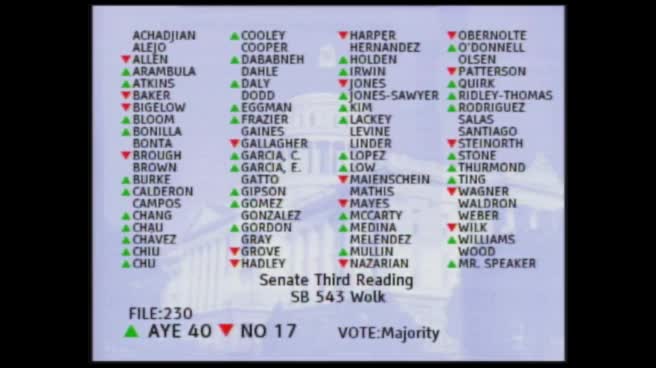 2MIN
Assembly Floor
 5MIN
Assembly Standing Committee on Appropriations
 8MIN
Assembly Standing Committee on Natural Resources
 3MIN
Senate Floor
 6MIN
Senate Standing Committee on Appropriations
 15MIN
Senate Standing Committee on Environmental Quality
Bill Author
Bill Co-Author(s):
