SB 1414: Energy.
- Session Year: 2015-2016
- House: Senate
- Latest Version Date: 2016-09-26
Existing law requires the State Energy Resources Conservation and Development Commission (Energy Commission) to prescribe, by regulation, building design and construction standards and energy and water conservation design standards for new residential and nonresidential buildings. Existing law requires the Energy Commission to prescribe, by regulation, standards for minimum levels of operating efficiency to promote the use of energy-efficient and water-efficient appliances whose use requires a significant amount of energy or water on a statewide basis. Existing law requires that the minimum levels of operating efficiency be based on feasible and attainable efficiencies or feasible improved efficiencies that will reduce the energy or water consumption growth rates. Existing law prohibits a new appliance manufactured on or after the effective date of the operating efficiency standards to be sold or offered for sale in the state unless it is certified by the manufacturer to be in compliance with those standards.
This bill would require the Energy Commission, by January 1, 2019, to approve a plan that will promote compliance with specified regulations in the installation of central air conditioning and heat pumps. The bill would authorize the Energy Commission to adopt regulations to increase compliance with permitting and inspection requirements for central air conditioning and heat pumps, and associated sales and installations, consistent with that plan.
Under existing law, the Public Utilities Commission has regulatory authority over public utilities, including electrical corporations. The Reliable Electric Service Investments Act states the intent of the Legislature that the Public Utilities Commission continue to administer cost-effective energy efficiency programs that produce cost-effective energy savings, reduce customer demand, and contribute to the safe and reliable operation of the electrical distribution grid. Under the act, in order to receive a rebate or incentive offered by a public utility for an energy efficiency improvement or for the installation of energy efficient components, equipment, or appliances in buildings, the recipient is required to certify that the improvement or installation complied with any applicable permitting requirements and, if a contractor performed the installation or improvement, that the contractor holds the appropriate license for the work performed.
This bill would limit the application of the above energy efficiency rebate and incentive provisions to customer or contractor recipients. The bill would require a customer or contractor to certify that an energy efficiency improvement or installation complies with any applicable specifications or requirements set forth in the California Building Standards Code in order to receive a rebate or incentive. The bill would require a customer or contractor receiving a rebate or incentive offered by a public utility for purchasing or installing central air conditioning or a heat pump, and their related fans, to additionally provide a proof of permit closure. The bill would also more specifically identify the Public Utility Commissions statutory authority for supervising cost-effective energy efficiency programs.
Existing law requires the State Energy Resources Conservation and Development Commission (Energy Commission) to prescribe, by regulation, building design and construction standards and energy and water conservation design standards for new residential and nonresidential buildings. Existing law requires the Energy Commission to prescribe, by regulation, standards for minimum levels of operating efficiency to promote the use of energy-efficient and water-efficient appliances whose use requires a significant amount of energy or water on a statewide basis. Existing law requires that the minimum levels of operating efficiency be based on feasible and attainable efficiencies or feasible improved efficiencies that will reduce the energy or water consumption growth rates. Existing law prohibits a new appliance manufactured on or after the effective date of the operating efficiency standards to be sold or offered for sale in the state unless it is certified by the manufacturer to be in compliance with those standards.
This bill would require the Energy Commission, by January 1, 2019, to approve a plan that will promote compliance with specified regulations in the installation of central air conditioning and heat pumps. The bill would authorize the Energy Commission to adopt regulations to increase compliance with permitting and inspection requirements for central air conditioning and heat pumps, and associated sales and installations, consistent with that plan.
Under existing law, the Public Utilities Commission has regulatory authority over public utilities, including electrical corporations. The Reliable Electric Service Investments Act states the intent of the Legislature that the Public Utilities Commission continue to administer cost-effective energy efficiency programs that produce cost-effective energy savings, reduce customer demand, and contribute to the safe and reliable operation of the electrical distribution grid. Under the act, in order to receive a rebate or incentive offered by a public utility for an energy efficiency improvement or for the installation of energy efficient components, equipment, or appliances in buildings, the recipient is required to certify that the improvement or installation complied with any applicable permitting requirements and, if a contractor performed the installation or improvement, that the contractor holds the appropriate license for the work performed.
This bill would additionally limit the application of the above energy efficiency rebate and incentive provisions to customer or contractor recipients. The bill would require the recipient of an energy efficiency rebate or incentive to certify a customer or contractor to certify that the an energy efficiency improvement or installation complied complies with any applicable specifications or requirements set forth in the California Building Standards Code and, if a contractor performed the installation or improvement, that the contractor holds the appropriate license for the work performed. Code in order to receive a rebate or incentive. The bill would require the recipient of a a customer or contractor receiving a rebate or incentive offered by a public utility for purchasing or installing central air conditioning or a heat pump rebate or incentive pump, and their related fans, to additionally provide a proof of permit closure. The bill would also more specifically identify the Public Utility Commissions statutory authority for supervising cost-effective energy efficiency programs.
Existing law requires the State Energy Resources Conservation and Development Commission (Energy Commission) to prescribe, by regulation, building design and construction standards and energy and water conservation design standards for new residential and nonresidential buildings. Existing law requires the Energy Commission to prescribe, by regulation, standards for minimum levels of operating efficiency to promote the use of energy-efficient and water-efficient appliances whose use requires a significant amount of energy or water on a statewide basis. Existing law requires that the minimum levels of operating efficiency be based on feasible and attainable efficiencies or feasible improved efficiencies that will reduce the energy or water consumption growth rates. Existing law prohibits a new appliance manufactured on or after the effective date of the operating efficiency standards to be sold or offered for sale in the state unless it is certified by the manufacturer to be in compliance with those standards.
This bill would require the Energy Commission, by January 1, 2019, to approve a plan that will promote compliance with specified regulations in the installation of central air conditioning and heat pumps. The bill would authorize the Energy Commission to adopt regulations to increase compliance with permitting and inspection requirements for central air conditioning and heat pumps, and associated sales and installations, consistent with that plan.
Under existing law, the Public Utilities Commission has regulatory authority over public utilities, including electrical corporations. The Reliable Electric Service Investments Act states the intent of the Legislature that the Public Utilities Commission continue to administer cost-effective energy efficiency programs that produce cost-effective energy savings, reduce customer demand, and contribute to the safe and reliable operation of the electrical distribution grid. Under the act, in order to receive a rebate or incentive offered by a public utility for an energy efficiency improvement or for the installation of energy efficient components, equipment, or appliances in buildings, the recipient is required to certify that the improvement or installation complied with any applicable permitting requirements and, if a contractor performed the installation or improvement, that the contractor holds the appropriate license for the work performed.
This bill would additionally require the recipient of an energy efficiency rebate or incentive to provide proof of permit closure and certify that the improvement or installation complied with any specifications or requirements set forth in the California Building Standards Code. Code and, if a contractor performed the installation or improvement, that the contractor holds the appropriate license for the work performed. The bill would require the recipient of a central air conditioning or heat pump rebate or incentive to additionally provide a proof of permit closure. The bill would also more specifically identify the Public Utility Commissions statutory authority for supervising cost-effective energy efficiency programs.
Existing law requires the State Energy Resources Conservation and Development Commission (Energy Commission) to prescribe, by regulation, building design and construction standards and energy and water conservation design standards for new residential and nonresidential buildings. Existing law requires the Energy Commission to prescribe, by regulation, standards for minimum levels of operating efficiency to promote the use of energy-efficient and water-efficient appliances whose use requires a significant amount of energy or water on a statewide basis. Existing law requires that the minimum levels of operating efficiency be based on feasible and attainable efficiencies or feasible improved efficiencies that will reduce the energy or water consumption growth rates. Existing law prohibits a new appliance manufactured on or after the effective date of the operating efficiency standards to be sold or offered for sale in the state unless it is certified by the manufacturer to be in compliance with those standards.
This bill would require the Energy Commission, by January 1, 2019, to approve a plan that will promote the installation of central air conditioning and heat pumps in compliance with specified regulations. regulations in the installation of central air conditioning and heat pumps. The bill would authorize the Energy Commission to adopt regulations to increase compliance with permitting and inspection requirements for central air conditioning and heat pumps pumps, and associated sales and installations, consistent with that plan.
Under existing law, the Public Utilities Commission has regulatory authority over public utilities, including electrical corporations. The Reliable Electric Service Investments Act states the intent of the Legislature that the Public Utilities Commission continue to administer cost-effective energy efficiency programs that produce cost-effective energy savings, reduce customer demand, and contribute to the safe and reliable operation of the electrical distribution grid. Under the act, in order to receive a rebate or incentive offered by a public utility for an energy efficiency improvement or for the installation of energy efficient components, equipment, or appliances in buildings, the recipient is required to certify that the improvement or installation complied with any applicable permitting requirements and, if a contractor performed the installation or improvement, that the contractor holds the appropriate license for the work performed.
This bill would additionally require the recipient of an energy efficiency rebate or incentive to provide proof of permit closure and certify that the improvement or installation complied with any specifications or requirements set forth in the California Building Standards Code. The bill would also more specifically identify the Public Utility Commissions statutory authority for supervising cost-effective energy efficiency programs.
Existing law requires the State Energy Resources Conservation and Development Commission (Energy Commission) to prescribe, by regulation, building design and construction standards and energy and water conservation design standards for new residential and nonresidential buildings. Existing law requires the State Energy Resources Conservation and Development Commission to prescribe, by regulation, standards for minimum levels of operating efficiency to promote the use of energy-efficient and water-efficient appliances whose use requires a significant amount of energy or water on a statewide basis. Existing law requires that the minimum levels of operating efficiency be based on feasible and attainable efficiencies or feasible improved efficiencies that will reduce the energy or water consumption growth rates. Existing law prohibits a new appliance manufactured on or after the effective date of the operating efficiency standards to be sold or offered for sale in the state unless it is certified by the manufacturer to be in compliance with the those standards.
This bill would require the State Energy Resources Conservation and Development Commission to develop a system to track central heating and air cooling equipment sales and installations in the state to verify compliance with permitting, inspection, and equipment testing requirements. Commission, by January 1, 2019, to approve a plan that will promote the installation of central air conditioning and heat pumps in compliance with specified regulations. The bill would authorize the Energy Commission to adopt regulations to increase compliance with permitting and inspection requirements for central air conditioning and heat pumps and associated sales and installations, consistent with that plan.
Under existing law, the Public Utilities Commission has regulatory authority over public utilities, including electrical corporations. The Reliable Electric Service Investments Act states the intent of the Legislature that the Public Utilities Commission continue to administer cost-effective energy efficiency programs that produce cost-effective energy savings, reduce customer demand, and contribute to the safe and reliable operation of the electrical distribution grid. Under the act, in order to receive a rebate or incentive offered by a public utility for an energy efficiency improvement or for the installation of energy efficient components, equipment, or appliances in buildings, the recipient is required to certify that the improvement or installation complied with any applicable permitting requirements and, if a contractor performed the installation or improvement, that the contractor holds the appropriate license for the work performed.
This bill would additionally require the recipient of an energy efficiency rebate or incentive to provide proof of permit closure and certify that the improvement or installation complied with any specifications or requirements set forth in the California Building Standards Code. The bill would also more specifically identify the Public Utility Commissions statutory authority for supervising cost-effective energy efficiency programs.
Existing law requires the State Energy Resources Conservation and Development Commission to prescribe, by regulation, building design and construction standards and energy and water conservation design standards for new residential and nonresidential buildings. Existing law requires the State Energy Resources Conservation and Development Commission to prescribe, by regulation, standards for minimum levels of operating efficiency to promote the use of energy-efficient and water-efficient appliances whose use requires a significant amount of energy or water on a statewide basis. Existing law requires that the minimum levels of operating efficiency be based on feasible and attainable efficiencies or feasible improved efficiencies that will reduce the energy or water consumption growth rates. Existing law prohibits a new appliance manufactured on or after the effective date of the standards to be sold or offered for sale in the state unless it is certified by the manufacturer to be in compliance with the standards.
This bill would require the State Energy Resources Conservation and Development Commission to develop a system to track central heating and air cooling equipment sales and installations in the state to verify compliance with permitting, inspection, and equipment testing requirements.
Under existing law, the Public Utilities Commission has regulatory authority over public utilities, including electrical corporations. The Reliable Electric Service Investments Act states the intent of the Legislature that the commission Public Utilities Commission continue to administer cost-effective energy efficiency programs that produce cost-effective energy savings, reduce customer demand, and contribute to the safe and reliable operation of the electrical distribution grid. Under the act, in order to receive a rebate or incentive offered by a public utility for an energy efficiency improvement or for the installation of energy efficient components, equipment, or appliances in buildings, the recipient is required to certify that the improvement or installation complied with any applicable permitting requirements and, if a contractor performed the installation or improvement, that the contractor holds the appropriate license for the work performed.
This bill would additionally require the recipient of an energy efficiency rebate or incentive to provide proof of permit closure and certify that the improvement or installation complied with any specifications or requirements set forth in the California Building Standards Code. The bill would also more specifically identify the commissions Public Utility Commissions statutory authority for supervising cost-effective energy efficiency programs.
Under existing law, the Public Utilities Commission has regulatory authority over public utilities, including electrical corporations. The Reliable Electric Service Investments Act states the intent of the Legislature that the commission continue to administer cost-effective energy efficiency programs that produce cost-effective energy savings, reduce customer demand, and contribute to the safe and reliable operation of the electrical distribution grid. Under the act, in order to receive a rebate or incentive offered by a public utility for an energy efficiency improvement or for the installation of energy efficient components, equipment, or appliances in buildings, the recipient is required to certify that the improvement or installation complied with any applicable permitting requirements and, if a contractor performed the installation or improvement, that the contractor holds the appropriate license for the work performed.
This bill would additionally require the recipient of an energy efficiency rebate or incentive to provide proof of permit closure and certify that the improvement or installation complied with any specifications or requirements set forth in the California Building Standards Code. The bill would also more specifically identify the commissions statutory authority for supervising cost-effective energy efficiency programs.
(a)On or before January 1, 2019, the commission, in consultation with the Contractors State License Board, local building officials, and other stakeholders, shall approve a plan that will promote compliance with Part 6 of Title 24 of the California Code of Regulations in the installation of central air-conditioning and heat pumps.
(b)Prior to approving the plan described in subdivision (a), the commission shall do all of the following:
(1)Evaluate the best available technological and economic information to ensure that data collection and its use is feasible and achievable at a reasonable cost to government, industry, and homeowners.
(2)Consider the impact of the plan on all of the following:
(A)Property owners.
(B)The heating, ventilation, and air-conditioning industry, including manufacturers, distributors, and contractors.
(C)Local governments.
(D)Building officials.
(E)The Contractors State License Board.
(3)Provide the public with the opportunity to review and comment on the proposed plan.
(c)The commission may adopt regulations to increase compliance with permitting and inspection requirements for central air-conditioning and heat pumps, and associated sales and installations, consistent with the plan approved pursuant to subdivision (a).
SEC. 2.Section 399.4 of the Public Utilities Code is amended to read:399.4.(a)(1)In order to ensure that prudent investments in energy efficiency continue to be made that produce cost-effective energy savings, reduce customer demand, and contribute to the safe and reliable operation of the electrical distribution grid, it is the policy of this state and the intent of the Legislature that the commission shall supervise the administration of cost-effective energy efficiency programs authorized pursuant to its statutory authority, including Sections 381, 381.1, 381.2, 381.5, 382, 384.5, 400, 454.5, 454.55, 454.56, 589, 701.1, 749, and 769, Article 10 (commencing with Section 890) of Chapter 4, and Chapter 6 (commencing with Section 2781) of Part 2.
(2)As used in this section, the term energy efficiency includes, but is not limited to, cost-effective activities to achieve peak load reduction that improve end-use efficiency, lower customers bills, and reduce system needs.
(b)(1)If a customer or contractor is the recipient of a rebate or incentive offered by a public utility for an energy efficiency improvement or installation of energy efficient components, equipment, or appliances in a building, the public utility shall provide the rebate or incentive only if the customer or contractor certifies that the improvement or installation has complied with any applicable permitting requirements, including any applicable specifications or requirements set forth in the California Building Standards Code (Title 24 of the California Code of Regulations), and, if a contractor performed the installation or improvement, that the contractor holds the appropriate license for the work performed.
(2)In addition to the requirements of paragraph (1), if a customer or contractor is the recipient of a rebate or incentive offered by a public utility for the purchase or installation of central air-conditioning or a heat pump, and their related fans, the public utility shall provide the rebate or incentive only if the customer or contractor provides proof of permit closure. The public utility is not responsible for verifying the proof of permit closure documentation provided by the customer or contractor.
(3)This subdivision does not imply or create authority or responsibility, or expand existing authority or responsibility, of a public utility for the enforcement of the building energy and water efficiency standards adopted pursuant to subdivision (a) or (b) of Section 25402 of the Public Resources Code, or appliance efficiency standards and certification requirements adopted pursuant to subdivision (c) of Section 25402 of the Public Resources Code.
(4)Nothing in this subdivision shall limit the authority of the commission to impose any additional requirements on a recipient of any rebate or incentive.
(c)The commission, in evaluating energy efficiency investments under its statutory authority, shall also ensure that local and regional interests, multifamily dwellings, and energy service industry capabilities are incorporated into program portfolio design and that local governments, community-based organizations, and energy efficiency service providers are encouraged to participate in program implementation where appropriate.
(d)The commission, in a new or existing proceeding, shall review and update its policies governing energy efficiency programs funded by utility customers to facilitate achieving the targets established pursuant to subdivision (c) of Section 25310 of the Public Resources Code. In updating its policies, the commission shall, at a minimum, do all of the following:
(1)Authorize market transformation programs with appropriate levels of funding to achieve deeper energy efficiency savings.
(2)Authorize pay for performance programs that link incentives directly to measured energy savings. As part of pay for performance programs authorized by the commission, customers should be reasonably compensated for developing and implementing an energy efficiency plan, with a portion of their incentive reserved pending post project measurement results.
(3)Authorize programs to achieve deeper savings through operational, behavioral, and retrocommissioning activities.
(4)Ensure that customers have certainty in the values and methodology used to determine energy efficiency incentives by basing the amount of any incentives provided by gas and electrical corporations on the values and methodology contained in the executed customer agreement. Incentive payments shall be based on measured results.
(a)On or before January 1, 2019, the commission, in consultation with the Contractors State License Board, local building officials, and other stakeholders, shall approve a plan that will promote compliance with Part 6 of Title 24 of the California Code of Regulations in the installation of central air-conditioning and heat pumps.
(b)Prior to approving the plan described in subdivision (a), the commission shall do all of the following:
(1)Evaluate the best available technological and economic information to ensure that data collection and its use is feasible and achievable at a reasonable cost to government, industry, and homeowners.
(2)Consider the impact of the plan on all of the following:
(A)Property owners.
(B)The heating, ventilation, and air-conditioning industry, including manufacturers, distributors, and contractors.
(C)Local governments.
(D)Building officials.
(E)The Contractors State License Board.
(3)Provide the public with the opportunity to review and comment on the proposed plan.
(c)The commission may adopt regulations to increase compliance with permitting and inspection requirements for central air-conditioning and heat pumps, and associated sales and installations, consistent with the plan approved pursuant to subdivision (a).
SEC. 2.Section 399.4 of the Public Utilities Code is amended to read:399.4.(a)(1)In order to ensure that prudent investments in energy efficiency continue to be made that produce cost-effective energy savings, reduce customer demand, and contribute to the safe and reliable operation of the electrical distribution grid, it is the policy of this state and the intent of the Legislature that the commission shall supervise the administration of cost-effective energy efficiency programs authorized pursuant to its statutory authority, including Sections 381, 381.1, 381.2, 381.5, 382, 384.5, 400, 454.5, 454.55, 454.56, 589, 701.1, 749, and 769, Article 10 (commencing with Section 890) of Chapter 4, and Chapter 6 (commencing with Section 2781) of Part 2.
(2)As used in this section, the term energy efficiency includes, but is not limited to, cost-effective activities to achieve peak load reduction that improve end-use efficiency, lower customers bills, and reduce system needs.
(b)(1)Any rebates or incentives If a customer or contractor is the recipient of a rebate or incentive offered by a public utility for an energy efficiency improvement or installation of energy efficient components, equipment, or appliances in buildings shall be provided a building, the public utility shall provide the rebate or incentive only if the recipient of the rebate or incentive customer or contractor certifies that the improvement or installation has complied with any applicable permitting requirements and requirements, including any applicable specifications or requirements set forth in the California Building Standards Code (Title 24 of the California Code of Regulations), and, if a contractor performed the installation or improvement, that the contractor holds the appropriate license for the work performed.
(2)In addition to the requirements of paragraph (1), any rebates or incentives if a customer or contractor is the recipient of a rebate or incentive offered by a public utility for the purchase or installation of central air-conditioning or heat pumps, or related equipment, shall be provided a heat pump, and their related fans, the public utility shall provide the rebate or incentive only if the recipient of the rebate or incentive customer or contractor provides proof of permit closure. The public utility is not responsible for verifying the proof of permit closure documentation provided by the recipient. customer or contractor.
(3)This subdivision does not imply or create authority or responsibility, or expand existing authority or responsibility, of a public utility for the enforcement of the building energy and water efficiency standards adopted pursuant to subdivision (a) or (b) of Section 25402 of the Public Resources Code, or appliance efficiency standards and certification requirements adopted pursuant to subdivision (c) of Section 25402 of the Public Resources Code.
(4)Nothing in this subdivision shall limit the authority of the commission to impose any additional requirements on a recipient of any rebate or incentive.
(c)The commission, in evaluating energy efficiency investments under its statutory authority, shall also ensure that local and regional interests, multifamily dwellings, and energy service industry capabilities are incorporated into program portfolio design and that local governments, community-based organizations, and energy efficiency service providers are encouraged to participate in program implementation where appropriate.
(d)The commission, in a new or existing proceeding, shall review and update its policies governing energy efficiency programs funded by utility customers to facilitate achieving the targets established pursuant to subdivision (c) of Section 25310 of the Public Resources Code. In updating its policies, the commission shall, at a minimum, do all of the following:
(1)Authorize market transformation programs with appropriate levels of funding to achieve deeper energy efficiency savings.
(2)Authorize pay for performance programs that link incentives directly to measured energy savings. As part of pay for performance programs authorized by the commission, customers should be reasonably compensated for developing and implementing an energy efficiency plan, with a portion of their incentive reserved pending post project measurement results.
(3)Authorize programs to achieve deeper savings through operational, behavioral, and retrocommissioning activities.
(4)Ensure that customers have certainty in the values and methodology used to determine energy efficiency incentives by basing the amount of any incentives provided by gas and electrical corporations on the values and methodology contained in the executed customer agreement. Incentive payments shall be based on measured results.
(a)On or before January 1, 2019, the commission, in consultation with the Contractors State License Board, local building officials, and other stakeholders, shall approve a plan that will promote compliance with Part 6 of Title 24 of the California Code of Regulations in the installation of central air conditioning and heat pumps.
(b)Prior to approving the plan described in subdivision (a), the commission shall do all of the following:
(1)Evaluate the best available technological and economic information to ensure that data collection and its use is feasible and achievable at a reasonable cost to government, industry, and homeowners.
(2)Consider the impact of the plan on all of the following:
(A)Property owners.
(B)The HVAC heating, ventilation, and air conditioning industry, including manufacturers, distributors, and contractors.
(C)Local governments.
(D)Building officials.
(E)The Contractors State License Board.
(3)Provide the public with the opportunity to review and comment on the proposed plan.
(c)The commission may adopt regulations to increase compliance with permitting and inspection requirements for central air conditioning and heat pumps, and associated sales and installations, consistent with the plan approved pursuant to subdivision (a).
SEC. 2.Section 399.4 of the Public Utilities Code is amended to read:399.4.(a)(1)In order to ensure that prudent investments in energy efficiency continue to be made that produce cost-effective energy savings, reduce customer demand, and contribute to the safe and reliable operation of the electrical distribution grid, it is the policy of this state and the intent of the Legislature that the commission shall supervise the administration of cost-effective energy efficiency programs authorized pursuant to its statutory authority, including Sections 381, 381.1, 381.2, 381.5, 382, 384.5, 400, 454.5, 454.55, 454.56, 589, 701.1, 749, and 769, Article 10 (commencing with Section 890) of Chapter 4, and Chapter 6 (commencing with Section 2781) of Part 2.
(2)As used in this section, the term energy efficiency includes, but is not limited to, cost-effective activities to achieve peak load reduction that improve end-use efficiency, lower customers bills, and reduce system needs.
(b)(1)Any rebates or incentives offered by a public utility for an energy efficiency improvement or installation of energy efficient components, equipment, or appliances in buildings shall be provided only if the recipient of the rebate or incentive provides proof of permit closure and certifies that the improvement or installation has complied with any applicable permitting requirements and any specifications or requirements set forth in the California Building Standards Code (Title 24 of the California Code of Regulations), and, if a contractor performed the installation or improvement, that the contractor holds the appropriate license for the work performed.
(2)In addition to the requirements of paragraph (1), any rebates or incentives offered by a public utility for the purchase or installation of central air conditioning or heat pumps, or related equipment, shall be provided only if the recipient of the rebate or incentive provides proof of permit closure. The public utility is not responsible for verifying the proof of permit closure documentation provided by the recipient.
(2)
(3)This subdivision does not imply or create authority or responsibility, or expand existing authority or responsibility, of a public utility for the enforcement of the building energy and water efficiency standards adopted pursuant to subdivision (a) or (b) of Section 25402 of the Public Resources Code, or appliance efficiency standards and certification requirements adopted pursuant to subdivision (c) of Section 25402 of the Public Resources Code.
(4)Nothing in this subdivision shall limit the authority of the commission to impose any additional requirements on a recipient of any rebate or incentive.
(c)The commission, in evaluating energy efficiency investments under its statutory authority, shall also ensure that local and regional interests, multifamily dwellings, and energy service industry capabilities are incorporated into program portfolio design and that local governments, community-based organizations, and energy efficiency service providers are encouraged to participate in program implementation where appropriate.
(d)The commission, in a new or existing proceeding, shall review and update its policies governing energy efficiency programs funded by utility customers to facilitate achieving the targets established pursuant to subdivision (c) of Section 25310 of the Public Resources Code. In updating its policies, the commission shall, at a minimum, do all of the following:
(1)Authorize market transformation programs with appropriate levels of funding to achieve deeper energy efficiency savings.
(2)Authorize pay for performance programs that link incentives directly to measured energy savings. As part of pay for performance programs authorized by the commission, customers should be reasonably compensated for developing and implementing an energy efficiency plan, with a portion of their incentive reserved pending post project measurement results.
(3)Authorize programs to achieve deeper savings through operational, behavioral, and retrocommissioning activities.
(4)Ensure that customers have certainty in the values and methodology used to determine energy efficiency incentives by basing the amount of any incentives provided by gas and electrical corporations on the values and methodology contained in the executed customer agreement. Incentive payments shall be based on measured results.
(a)On or before January 1, 2019, the commission, in consultation with the Contractors State License Board, local building officials, and other stakeholders, shall approve a plan that will promote the installation of central air conditioning and heat pumps in compliance with Part 6 of Title 24 of the California Code of Regulations. Regulations in the installation of central air conditioning and heat pumps.
(b)Prior to approving the plan described in subdivision (a), the commission shall do all of the following:
(1)Evaluate the best available technological and economic information to ensure that data collection and its use is feasible and achievable at a reasonable cost to government, industry, and homeowners.
(2)Consider the impact of the plan on all of the following:
(A)Property owners.
(B)The HVAC industry, including manufacturers, distributors, and contractors.
(C)Local governments.
(D)Building officials.
(E)The Contractors State License Board.
(3)Provide the public with the opportunity to review and comment on the proposed plan.
(c)The commission may adopt regulations to increase compliance with permitting and inspection requirements for central air conditioning and heat pumps pumps, and associated sales and installations, consistent with the plan approved pursuant to subdivision (a).
SEC. 2.Section 399.4 of the Public Utilities Code is amended to read:399.4.(a)(1)In order to ensure that prudent investments in energy efficiency continue to be made that produce cost-effective energy savings, reduce customer demand, and contribute to the safe and reliable operation of the electrical distribution grid, it is the policy of this state and the intent of the Legislature that the commission shall supervise the administration of cost-effective energy efficiency programs authorized pursuant to its statutory authority, including Sections 381, 381.1, 381.2, 381.5, 382, 384.5, 400, 454.5, 454.55, 454.56, 589, 701.1, 749, and 769, Article 10 (commencing with Section 890) of Chapter 4, and Chapter 6 (commencing with Section 2781) of Part 2.
(2)As used in this section, the term energy efficiency includes, but is not limited to, cost-effective activities to achieve peak load reduction that improve end-use efficiency, lower customers bills, and reduce system needs.
(b)(1)Any rebates or incentives offered by a public utility for an energy efficiency improvement or installation of energy efficient components, equipment, or appliances in buildings shall be provided only if the recipient of the rebate or incentive provides proof of permit closure and certifies that the improvement or installation has complied with any applicable permitting requirements and any specifications or requirements set forth in the California Building Standards Code (Title 24 of the California Code of Regulations), and, if a contractor performed the installation or improvement, that the contractor holds the appropriate license for the work performed.
(2)This subdivision does not imply or create authority or responsibility, or expand existing authority or responsibility, of a public utility for the enforcement of the building energy and water efficiency standards adopted pursuant to subdivision (a) or (b) of Section 25402 of the Public Resources Code, or appliance efficiency standards and certification requirements adopted pursuant to subdivision (c) of Section 25402 of the Public Resources Code.
(c)The commission, in evaluating energy efficiency investments under its statutory authority, shall also ensure that local and regional interests, multifamily dwellings, and energy service industry capabilities are incorporated into program portfolio design and that local governments, community-based organizations, and energy efficiency service providers are encouraged to participate in program implementation where appropriate.
(d)The commission, in a new or existing proceeding, shall review and update its policies governing energy efficiency programs funded by utility customers to facilitate achieving the targets established pursuant to subdivision (c) of Section 25310 of the Public Resources Code. In updating its policies, the commission shall, at a minimum, do all of the following:
(1)Authorize market transformation programs with appropriate levels of funding to achieve deeper energy efficiency savings.
(2)Authorize pay for performance programs that link incentives directly to measured energy savings. As part of pay for performance programs authorized by the commission, customers should be reasonably compensated for developing and implementing an energy efficiency plan, with a portion of their incentive reserved pending post project measurement results.
(3)Authorize programs to achieve deeper savings through operational, behavioral, and retrocommissioning activities.
(4)Ensure that customers have certainty in the values and methodology used to determine energy efficiency incentives by basing the amount of any incentives provided by gas and electrical corporations on the values and methodology contained in the executed customer agreement. Incentive payments shall be based on measured results.
The commission, in consultation with the Contractors State License Board, local building officials, and other stakeholders, shall develop a system to track central heating and air cooling equipment sales and installations in the state to verify compliance with permitting, inspection, and equipment testing requirements. Any system developed by the commission shall be adopted by regulation following one or more public hearings.
SECTION 1.Section 25402.12 is added to the Public Resources Code, to read:25402.12.(a)On or before January 1, 2019, the commission, in consultation with the Contractors State License Board, local building officials, and other stakeholders, shall approve a plan that will promote the installation of central air conditioning and heat pumps in compliance with Part 6 of Title 24 of the California Code of Regulations.
(b)Prior to approving the plan described in subdivision (a), the commission shall do all of the following:
(1)Evaluate the best available technological and economic information to ensure that data collection and its use is feasible and achievable at a reasonable cost to government, industry, and homeowners.
(2)Consider the impact of the plan on all of the following:
(A)Property owners.
(B)The HVAC industry, including manufacturers, distributors, and contractors.
(C)Local governments.
(D)Building officials.
(E)The Contractors State License Board.
(3)Provide the public with the opportunity to review and comment on the proposed plan.
(c)The commission may adopt regulations to increase compliance with permitting and inspection requirements for central air conditioning and heat pumps and associated sales and installations, consistent with the plan approved pursuant to subdivision (a).
SEC. 2.Section 399.4 of the Public Utilities Code is amended to read:399.4.(a)(1)In order to ensure that prudent investments in energy efficiency continue to be made that produce cost-effective energy savings, reduce customer demand, and contribute to the safe and reliable operation of the electrical distribution grid, it is the policy of this state and the intent of the Legislature that the commission shall supervise the administration of cost-effective energy efficiency programs authorized pursuant to its statutory authority, including Sections 381, 381.1, 381.2, 381.5, 382, 384.5, 400, 454.5, 454.55, 454.56, 589, 701.1, 749, and 769, Article 10 (commencing with Section 890) of Chapter 4, and Chapter 6 (commencing with Section 2781) of Part 2.
(2)As used in this section, the term energy efficiency includes, but is not limited to, cost-effective activities to achieve peak load reduction that improve end-use efficiency, lower customers bills, and reduce system needs.
(b)(1)Any rebates or incentives offered by a public utility for an energy efficiency improvement or installation of energy efficient components, equipment, or appliances in buildings shall be provided only if the recipient of the rebate or incentive provides proof of permit closure and certifies that the improvement or installation has complied with any applicable permitting requirements and any specifications or requirements set forth in the California Building Standards Code (Title 24 of the California Code of Regulations), and, if a contractor performed the installation or improvement, that the contractor holds the appropriate license for the work performed.
(2)This subdivision does not imply or create authority or responsibility, or expand existing authority or responsibility, of a public utility for the enforcement of the building energy and water efficiency standards adopted pursuant to subdivision (a) or (b) of Section 25402 of the Public Resources Code, or appliance efficiency standards and certification requirements adopted pursuant to subdivision (c) of Section 25402 of the Public Resources Code.
(c)The commission, in evaluating energy efficiency investments under its statutory authority, shall also ensure that local and regional interests, multifamily dwellings, and energy service industry capabilities are incorporated into program portfolio design and that local governments, community-based organizations, and energy efficiency service providers are encouraged to participate in program implementation where appropriate.
(d)The commission, in a new or existing proceeding, shall review and update its policies governing energy efficiency programs funded by utility customers to facilitate achieving the targets established pursuant to subdivision (c) of Section 25310 of the Public Resources Code. In updating its policies, the commission shall, at a minimum, do all of the following:
(1)Authorize market transformation programs with appropriate levels of funding to achieve deeper energy efficiency savings.
(2)Authorize pay for performance programs that link incentives directly to measured energy savings. As part of pay for performance programs authorized by the commission, customers should be reasonably compensated for developing and implementing an energy efficiency plan, with a portion of their incentive reserved pending post project measurement results.
(3)Authorize programs to achieve deeper savings through operational, behavioral, and retrocommissioning activities.
(4)Ensure that customers have certainty in the values and methodology used to determine energy efficiency incentives by basing the amount of any incentives provided by gas and electrical corporations on the values and methodology contained in the executed customer agreement. Incentive payments shall be based on measured results.
The commission, in consultation with the Contractors State License Board, local building officials, and other stakeholders, shall develop a system to track central heating and air cooling equipment sales and installations in the state to verify compliance with permitting, inspection, and equipment testing requirements. Any system developed by the commission shall be adopted by regulation following one or more public hearings.
SECTION 1.SEC. 2.Section 399.4 of the Public Utilities Code is amended to read:399.4.(a)(1)In order to ensure that prudent investments in energy efficiency continue to be made that produce cost-effective energy savings, reduce customer demand, and contribute to the safe and reliable operation of the electrical distribution grid, it is the policy of this state and the intent of the Legislature that the commission shall supervise the administration of cost-effective energy efficiency programs authorized pursuant to its statutory authority, including Sections 381, 381.1, 381.2, 381.5, 382, 384.5, 400, 454.5, 454.55, 454.56, 589, 701.1, 749, and 769, Article 10 (commencing with Section 890) of Chapter 4, and Chapter 6 (commencing with Section 2781) of Part 2.
(2)As used in this section, the term energy efficiency includes, but is not limited to, cost-effective activities to achieve peak load reduction that improve end-use efficiency, lower customers bills, and reduce system needs.
(b)(1)Any rebates or incentives offered by a public utility for an energy efficiency improvement or installation of energy efficient components, equipment, or appliances in buildings shall be provided only if the recipient of the rebate or incentive provides proof of permit closure and certifies that the improvement or installation has complied with any applicable permitting requirements and any specifications or requirements set forth in the California Building Standards Code (Title 24 of the California Code of Regulations), and, if a contractor performed the installation or improvement, that the contractor holds the appropriate license for the work performed.
(2)This subdivision does not imply or create authority or responsibility, or expand existing authority or responsibility, of a public utility for the enforcement of the building energy and water efficiency standards adopted pursuant to subdivision (a) or (b) of Section 25402 of the Public Resources Code, or appliance efficiency standards and certification requirements adopted pursuant to subdivision (c) of Section 25402 of the Public Resources Code.
(c)The commission, in evaluating energy efficiency investments under its statutory authority, shall also ensure that local and regional interests, multifamily dwellings, and energy service industry capabilities are incorporated into program portfolio design and that local governments, community-based organizations, and energy efficiency service providers are encouraged to participate in program implementation where appropriate.
(d)The commission, in a new or existing proceeding, shall review and update its policies governing energy efficiency programs funded by utility customers to facilitate achieving the targets established pursuant to subdivision (c) of Section 25310 of the Public Resources Code. In updating its policies, the commission shall, at a minimum, do all of the following:
(1)Authorize market transformation programs with appropriate levels of funding to achieve deeper energy efficiency savings.
(2)Authorize pay for performance programs that link incentives directly to measured energy savings. As part of pay for performance programs authorized by the commission, customers should be reasonably compensated for developing and implementing an energy efficiency plan, with a portion of their incentive reserved pending post project measurement results.
(3)Authorize programs to achieve deeper savings through operational, behavioral, and retrocommissioning activities.
(4)Ensure that customers have certainty in the values and methodology used to determine energy efficiency incentives by basing the amount of any incentives provided by gas and electrical corporations on the values and methodology contained in the executed customer agreement. Incentive payments shall be based on measured results.
(a)(1)In order to ensure that prudent investments in energy efficiency continue to be made that produce cost-effective energy savings, reduce customer demand, and contribute to the safe and reliable operation of the electric electrical distribution grid, it is the policy of this state and the intent of the Legislature that the commission shall continue to administer supervise the administration of cost-effective energy efficiency programs authorized pursuant to existing its statutory authority. authority, including Sections 381, 381.1, 381.2, 381.5, 382, 384.5, 400, 454.5, 454.55, 454.56, 589, 701.1, 749, and 769, Article 10 (commencing with Section 890) of Chapter 4, and Chapter 6 (commencing with Section 2781) of Part 2.
(2)As used in this section, the term energy efficiency includes, but is not limited to, cost-effective activities to achieve peak load reduction that improve end-use efficiency, lower customers bills, and reduce system needs.
(b)(1)Any rebates or incentives offered by a public utility for an energy efficiency improvement or installation of energy efficient components, equipment, or appliances in buildings shall be provided only if the recipient of the rebate or incentive provides proof of permit closure and certifies that the improvement or installation has complied with any applicable permitting requirements and any specifications or requirements set forth in the California Building Standards Code (Title 24 of the California Code of Regulations), and, if a contractor performed the installation or improvement, that the contractor holds the appropriate license for the work performed.
(2)This subdivision does not imply or create authority or responsibility, or expand existing authority or responsibility, of a public utility for the enforcement of the building energy and water efficiency standards adopted pursuant to subdivision (a) or (b) of Section 25402 of the Public Resources Code, or appliance efficiency standards and certification requirements adopted pursuant to subdivision (c) of Section 25402 of the Public Resources Code.
(c)The commission, in evaluating energy efficiency investments under its existing statutory authority, shall also ensure that local and regional interests, multifamily dwellings, and energy service industry capabilities are incorporated into program portfolio design and that local governments, community-based organizations, and energy efficiency service providers are encouraged to participate in program implementation where appropriate.
(d)The commission, in a new or existing proceeding, shall review and update its policies governing energy efficiency programs funded by utility customers to facilitate achieving the targets established pursuant to subdivision (c) of Section 25310 of the Public Resources Code. In updating its policies, the commission shall, at a minimum, do all of the following:
(1)Authorize market transformation programs with appropriate levels of funding to achieve deeper energy efficiency savings.
(2)Authorize pay for performance programs that link incentives directly to measured energy savings. As part of pay for performance programs authorized by the commission, customers should be reasonably compensated for developing and implementing an energy efficiency plan, with a portion of their incentive reserved pending post project measurement results.
(3)Authorize programs to achieve deeper savings through operational, behavioral, and retrocommissioning activities.
(4)Ensure that customers have certainty in the values and methodology used to determine energy efficiency incentives by basing the amount of any incentives provided by gas and electrical corporations on the values and methodology contained in the executed customer agreement. Incentive payments shall be based on measured results.
|
Date
|
Status
|
|---|---|
| Aug 19, 2016 | Ordered to third reading. |
| Jun 14, 2016 | From committee with author's amendments. Read second time and amended. Re-referred to Com. on U. & C. |
| Jun 21, 2016 | June 22 hearing postponed by committee. |
| Jun 30, 2016 | From committee: Do pass as amended and re-refer to Com. on APPR. (Ayes 10. Noes 4.) (June 29). |
| Aug 1, 2016 | Read second time and amended. Re-referred to Com. on APPR. |
| Aug 3, 2016 | From committee with author's amendments. Read second time and amended. Re-referred to Com. on APPR. |
| Aug 10, 2016 | August 10 set for first hearing. Placed on APPR. suspense file. |
| Aug 11, 2016 | Joint Rule 62(a) suspended. |
| Aug 12, 2016 | From committee: Do pass. (Ayes 12. Noes 3.) (August 11). |
| Aug 15, 2016 | Read second time. Ordered to third reading. |
| Jun 6, 2016 | Referred to Com. on U. & C. |
| Aug 19, 2016 | Read third time and amended. |
| Aug 19, 2016 | Read third time and amended. (Ayes 73. Noes 0. Page 5961.) |
| Aug 23, 2016 | In Senate. Concurrence in Assembly amendments pending. |
| Aug 23, 2016 | Read third time. Passed. Ordered to the Senate. |
| Aug 23, 2016 | Read third time. Passed. (Ayes 79. Noes 1. Page 6088.) Ordered to the Senate. |
| Aug 25, 2016 | Assembly amendments concurred in. (Ayes 39. Noes 0. Page 5410.) Ordered to engrossing and enrolling. |
| Aug 25, 2016 | Assembly amendments concurred in. (Ayes 39. Noes 0.) Ordered to engrossing and enrolling. |
| Aug 31, 2016 | Enrolled and presented to the Governor at 6 p.m. |
| Apr 22, 2016 | Set for hearing May 2. |
| Feb 22, 2016 | From printer. May be acted upon on or after March 23. |
| Feb 22, 2016 | Read first time. |
| Mar 10, 2016 | Referred to Com. on E., U., & C. |
| Mar 17, 2016 | Set for hearing April 5. |
| Mar 23, 2016 | April 5 set for first hearing canceled at the request of author. |
| Mar 30, 2016 | Set for hearing April 19. |
| Apr 12, 2016 | From committee with author's amendments. Read second time and amended. Re-referred to Com. on E., U., & C. |
| Apr 19, 2016 | From committee: Do pass and re-refer to Com. on APPR. (Ayes 9. Noes 1. Page 3594.) (April 19). Re-referred to Com. on APPR. |
| Apr 19, 2016 | From committee: Do pass and re-refer to Com. on APPR. (Ayes 9. Noes 1.) (April 19). Re-referred to Com. on APPR. |
| Feb 19, 2016 | Introduced. To Com. on RLS. for assignment. To print. |
| May 2, 2016 | May 2 hearing: Placed on APPR. suspense file. |
| May 20, 2016 | Set for hearing May 27. |
| May 27, 2016 | From committee: Do pass. (Ayes 5. Noes 1. Page 4010.) (May 27). |
| May 27, 2016 | From committee: Do pass. (Ayes 5. Noes 1.) (May 27). |
| May 27, 2016 | Read second time. Ordered to third reading. |
| May 31, 2016 | Read third time. Passed. (Ayes 30. Noes 9. Page 4057.) Ordered to the Assembly. |
| May 31, 2016 | Read third time. Passed. (Ayes 30. Noes 9.) Ordered to the Assembly. |
| Jun 1, 2016 | In Assembly. Read first time. Held at Desk. |
|
Date
|
Description
|
Location
|
Votes
|
|
|---|---|---|---|---|
| Aug 25, 2016 | Unfinished Business SB1414 Wolk Concurrence | Senate Floor |
Passed |
|
| Aug 23, 2016 | SB 1414 Wolk Senate Third Reading By WILLIAMS | Assembly Floor |
Passed |
|
| Aug 19, 2016 | SB 1414 Wolk Senate Third Reading By A.,E.,S.,T., & I.M. Amendment Set #1 | Assembly Floor |
Passed |
|
| Aug 11, 2016 | Do pass. | Assembly Standing Committee on Appropriations |
Passed |
|
| Jun 29, 2016 | Do pass as amended and be re-referred to the Committee on [Appropriations] | Assembly Standing Committee on Utilities and Commerce |
Passed |
|
| May 31, 2016 | Senate 3rd Reading SB1414 Wolk | Senate Floor |
Passed |
|
| May 27, 2016 | Do pass | Senate Standing Committee on Appropriations |
Passed |
|
| May 2, 2016 | Placed on suspense file | Senate Standing Committee on Appropriations |
Passed |
|
| Apr 19, 2016 | Do pass, but first be re-referred to the Committee on [Appropriations] | Senate Standing Committee on Energy, Utilities and Communications |
Passed |
This list shows positions taken on this bill by organizations on the date displayed, which is linked to the original source.
Positions by individuals are not included.
|
Organization
|
Position
|
Date
|
|---|---|---|
| Air-Conditioning and Refrigeration Contractors | ** Support | Aug 23, 2016 |
| Air-conditioning and Refrigeration Contractors Association | ** Support | Aug 23, 2016 |
| Air-conditioning Sheet Metal Association | ** Support | Aug 23, 2016 |
| Building Owners & Managers Association of California | ** Support | Aug 23, 2016 |
| California Apartment Association | ** Support | Aug 23, 2016 |
| California Building Industry Association | ** Support | Aug 23, 2016 |
| California Building Officials | ** Support | Aug 23, 2016 |
| California Business Properties Association | ** Support | Aug 23, 2016 |
| California Chapters of the National Electrical Contractors Association | ** Support | Aug 23, 2016 |
| California Retailers Association | ** Support | Aug 23, 2016 |
| California State Pipe Trades Council | ** Support | Aug 23, 2016 |
| Center for Sustainable Energy | ** Support | Aug 23, 2016 |
| Environmental Defense Fund | ** Support | Aug 23, 2016 |
| International Council of Shopping Centers | ** Support | Aug 23, 2016 |
| NAIOP of California, the Commercial Real Estate Association | ** Support | Aug 23, 2016 |
| Pacific Gas and Electric Company, unless amended | ** Against | Apr 19, 2016 |
| Retail Industry Leaders Association | ** Support | Aug 23, 2016 |
| Sempra Energy Utilities | ** Against | Aug 23, 2016 |
| Sierra Club California | ** Support | Aug 23, 2016 |
| Silver Shield Heating & Air Conditioning | ** Against | May 31, 2016 |
| The Utility Reform Network | ** Support | Aug 23, 2016 |
| U.S. Green Building Council, California | ** Support | Aug 23, 2016 |
| Western States Council Of Sheet Metal Workers | ** Support | Aug 23, 2016 |
Office of Senate Floor Analyses (916) 651-1520 Fax: (916) 327-4478 | SB |
UNFINISHED BUSINESS
Bill No: SB 1414
:
SENATE ENERGY, U. & C. COMMITTEE: 9-1, 4/19/16
AYES: Hueso, Cannella, Hertzberg, Hill, Lara, Leyva, McGuire, Pavley, Wolk
NOES: Gaines
NO VOTE RECORDED: Morrell
SENATE APPROPRIATIONS COMMITTEE: 5-1, 5/27/16
AYES: Lara, Beall, Hill, McGuire, Mendoza
NOES: Nielsen
NO VOTE RECORDED: Bates
SENATE FLOOR: 30-9, 5/31/16
AYES: Allen, Anderson, Beall, Block, Cannella, De León, Galgiani, Glazer, Hall, Hancock, Hernandez, Hertzberg, Hill, Hueso, Jackson, Lara, Leno, Leyva, Liu, McGuire, Mendoza, Mitchell, Monning, Moorlach, Nguyen, Pan, Pavley, Roth, Wieckowski, Wolk
NOES: Bates, Berryhill, Fuller, Gaines, Huff, Morrell, Nielsen, Stone, Vidak
NO VOTE RECORDED: Runner
ASSEMBLY FLOOR: 79-1, 8/23/16 - See last page for vote
DIGEST: This bill directs the California Energy Commission (CEC) to approve a plan that will promote the installation of central air conditioning and heat pumps in compliance with Part 6 of Title 24 of the California Code of Regulations, and authorizes the CEC to adopt regulations consistent with the approved plan. This bill also prohibits an investor-owned utility (IOU) from paying out a rebate or incentive for energy efficiency upgrades unless the recipient proves closure of regulatory permitting and compliance with any requirements of the state’s building standards for energy efficiency.
Assembly Amendments delete the requirement that CEC develop a system to track central heating and air cooling equipment sales and installations to verify compliance with permitting and other requirements and instead require CEC to approve a plan and authorize CEC to adopt regulations, as described above.
Existing law:
- Authorizes the State Building Standards Commission to review and approve building construction standards proposed by state agencies, resolve conflict, duplication, and overlap in construction standards, and ensure highly consistent construction standards among state and local jurisdictions. (Health and Safety Code §18930)
- Requires the CEC to adopt energy efficiency regulations applicable to new construction and remodeling of residential and commercial buildings. (Public Resources Code §25402(b)(1))
- Establishes within the Department of Consumer Affairs the Contractors State License Board (CSLB) and requires the CSLB to license and regulate California's construction contractors, investigate complaints against licensed and unlicensed contractors, issue citations, suspend or revoke licenses, and seek administrative, criminal, and civil sanctions against violators. (Business and Professions Code §7000)
- Specifies construction work for which a contractor or building owner is required to obtain a permit from local building officials and requires inspections to ensure that the work complies with regulations, including energy efficiency regulations. (Business and Professions Code §7030)
- Requires any rebates or incentives offered by an IOU for an energy efficiency improvement or installation of energy efficient components, equipment, or appliances in buildings be provided only if the recipient of the rebate or incentive certifies that the improvement or installation has complied with any applicable permitting requirements and, if a contractor performed the installation or improvement, that the contractor holds the appropriate license for the work performed. (Public Resources Code §399.4(b)(1))
This bill:
- Directs CEC, in consultation with CSLB, local building officials, and other stakeholders, to approve a plan that will promote the installation of central air conditioning and heat pumps in compliance with Part 6 of Title 24 of the California Code of Regulations, and authorizes the CEC to adopt regulations consistent with the approved plan.
- Conditions the provision of any rebate or incentive offered by an IOU for energy efficiency upgrades upon the recipient providing proof of permit closure and certification of compliance with California’s energy efficiency building standards.
Background
California’s air conditioners use a lot of energy; unpermitted installations might be rampant. Air conditioning use is common in California. Today, 95 percent of new homes built in California include central air conditioning. Our homes are bigger than they once were, too. As a result, it took seven times as much energy to power California’s air conditioners in 2008 as it did in 1970. Much of the need to power our air conditioners came at times of peak system demand, traditionally the most costly, most polluting times to supply electric power. Yet, according to a document jointly issued by the CEC and the California Public Utilities Commission, as of 2008, fewer than 10 percent of HVAC [heating, ventilation, and air conditioning] systems obtained legally required pre-installation local building permits; 30-50 percent of new central air conditioning systems were not being properly installed, leading to a 20-30 percent increase in peak energy needed cool the state’s buildings. [California Energy Efficiency Strategic Plan January 2011 Update (http://www.energy.ca.gov/ab758/documents /CAEnergyEfficiency StrategicPlan_Jan2011.pdf).] The state energy agencies conclude the installation of cooling systems without proper permitting “represents a huge lost opportunity for energy savings.”
This bill attempts to provide a method to capitalize on this opportunity for energy savings. This bill directs CEC, in consultation with CSLB, local building officials, and other stakeholders, to approve a plan to promote the installation of central air conditioning and heat pumps in compliance with Part 6 of Title 24 of the California Code of Regulations. The bill also authorizes CEC to adopt regulations in keeping with the approved plan.
Rebates for bad actors? Current law makes certain requirements of any rebate or incentive offered by an IOU for energy efficiency upgrades. One common type of project for which IOUs offer rebates or incentives is HVAC installation. Relevant to this bill, current law requires that, before an IOU may provide a recipient with the rebate or incentive, the recipient must certify (a) the improvement or installation complies with any applicable permitting requirements and (b) if a contractor performed the installation or improvement, that the contractor holds the appropriate license for the work performed. This bill modifies this process in that it newly requires an applicant for an IOU rebate or incentive, in addition to the certification described above, (a) to provide proof of closure of the permit for the project and (b) to certify that the project or installation complies with any specifications or requirements in Title 24 of the California building code (the code section that includes the CEC’s building energy efficiency standards).
A project or upgrade that receives incentives from an IOU because of energy efficient characteristics of the project or upgrade should comply with the CEC’s building energy efficiency standards: energy efficiency is the rationale for the incentive. And it is not burdensome for an applicant to self-certify that the project or upgrade complies with CEC’s standards: this mirrors the exiting process for self-certifying that a qualified contractor performed the work. This bill, however, introduces a new aspect to the rebate or incentive procedure – proof that the permit for a project has been closed.
HVAC installation requires a permit by a local building permit agency. Upon approval, an HVAC installation receives a permit from the local agency. That permit remains “open” until the completed project is inspected by a certified technician, who confirms the HVAC system is installed properly, at which point the permit is said to be closed.
As noted above, the author’s office has provided evidence that many HVAC systems are installed without a permit. According to the author’s evidence, many permits for HVAC installations remain “open,” meaning the local building permit agency has no confirmation the installation underwent final inspection to ensure performance. This bill seeks to better ensure that entities seeking IOU energy efficiency rebates or incentives for HVAC installations undergo final inspection for performance, as reflected in proof of a permit’s closure.
Requiring proof of permit closure makes sense. It is inappropriate for the IOUs to provide energy efficiency rebates – paid for by IOU ratepayers – for improperly permitted energy efficiency projects. The requirement is also consistent with a recent recommendation by the Little Hoover Commission (LHC), that administrators of tax-payer-funded rebate programs require applicants provide proof that legal requirements have been met before awarding rebates. [Level the Playing Field: Put California’s Underground Economy Out of Business, LHC, March 2015.] The rationale behind the LHC recommendation applies just as well to ratepayer-funded rebate programs.
Related/Prior Legislation
AB 1918 (Williams, 2014) would have required the CEC, along with stakeholders, to identify and implement methods to simplify processes and procedures related to compliance with Title 24 energy efficiency building standards. It also would have required the California Public Utilities Commission (CPUC) to design an enforcement program to provide technical and financial assistance to local governments to improve HVAC compliance with the permitting process. The bill died in the Senate Committee on Appropriations.
FISCAL EFFECT: Appropriation: Fiscal Com.: Local:
According to the Assembly Committee on Appropriations:
- Increases CEC costs of approximately $650,000 for the first two years, then annual costs of approximately $400,000 per year to prepare and implement the plan (special fund).
- Increases CPUC costs of approximately $150,000 per year (special fund).
Air-conditioning and Refrigeration Contractors Association
Air-conditioning Sheet Metal Association
Building Owners & Managers Association of California
California Apartment Association
California Building Industry Association
California Building Officials
California Business Properties Association
California Chapters of the National Electrical Contractors Association
California Legislative Council of the Plumbing, Heating & Piping Industry
California Retailers Association
California State Pipe Trades Council
Center for Sustainable Energy
Environmental Defense Fund
International Council of Shopping Centers
NAIOP of California, the Commercial Real Estate Association
Retail Industry Leaders Association
Sierra Club California
The Utility Reform Network
U.S. Green Building Council, California
Western States Council of Sheet Metal Workers
OPPOSITION: (Verified 8/23/16)
None received
ARGUMENTS IN SUPPORT: According to the author, “Program Administrators (PAs) of energy efficiency programs funded by the ratepayers of California’s three IOUs do not currently require program participants to demonstrate proof of code compliance to be eligible for ratepayer incentives. PAs also claim a large portion of their energy efficiency savings from code compliance. Research shows that code compliance is low and that the full energy efficiency savings from code are not being captured. This requirement would close this loop and ensure that ratepayer funds are spent on code-compliant projects.”
ASSEMBLY FLOOR: 79-1, 8/23/16
AYES: Achadjian, Alejo, Travis Allen, Arambula, Atkins, Baker, Bigelow, Bloom, Bonilla, Bonta, Brough, Brown, Burke, Calderon, Campos, Chang, Chau, Chávez, Chiu, Chu, Cooley, Cooper, Dababneh, Dahle, Daly, Dodd, Eggman, Frazier, Beth Gaines, Cristina Garcia, Eduardo Garcia, Gatto, Gipson, Gomez, Gonzalez, Gordon, Gray, Grove, Hadley, Harper, Roger Hernández, Holden, Irwin, Jones, Jones-Sawyer, Kim, Lackey, Levine, Linder, Lopez, Low, Maienschein, Mathis, Mayes, McCarty, Medina, Melendez, Mullin, Nazarian, Obernolte, O'Donnell, Olsen, Patterson, Quirk, Ridley-Thomas, Rodriguez, Salas, Santiago, Steinorth, Mark Stone, Thurmond, Ting, Wagner, Waldron, Weber, Wilk, Williams, Wood, Rendon
NOES: Gallagher
8/23/16 20:03:03
SENATE THIRD READING
STR Bill Id:SB 1414
Author:(Wolk)
As Amended Ver:August 19, 2016
Majority vote
SENATE VOTE: 30-9
Committee | Votes | Ayes | Noes |
Utilities | 10-4 | Gatto, Burke, Eggman, Cristina Garcia, Eduardo Garcia, Roger Hernández, Quirk, Santiago, Ting, Williams | Patterson, Chávez, Dahle, Obernolte |
Appropriations | 12-3 | Gonzalez, Bloom, Bonilla, Bonta, Chang, Eggman, Eduardo Garcia, Quirk, Santiago, Weber, Wood, McCarty | Bigelow, Jones, Obernolte |
SUMMARY: Directs the California Energy Commission (CEC), in consultation with the Contractors' State License Board (CSLB), local building officials and other stakeholders to devise a plan to promote compliance with energy efficient building standards for the installation of central air conditioning and heat pumps (HVAC) by January 1, 2019. Specifically, this bill:
- Allows the CEC to adopt regulations to increase compliance with permitting and inspection of HVAC installations and associated activities.
- Requires energy efficient rebates or incentives from a public utility for HVAC projects be provided only if a recipient provides proof of permit closure for the project and complied with the California Building Standards Code.
- Clarifies the California Public Utilities Commission's (CPUC) statutory authority to supervise cost-effective energy efficiency programs and impose additional requirements on a recipient of any rebate or incentive.
- Clarifies that heat pumps and their related fans are subject to permit closure requirements created under this bill.
- Specifies that a "customer or contractor" is the recipient of a rebate or incentive.
- Specifies a utility shall provide rebates or incentives to a customer or contractor only if the customer or contractor has complied with permitting requirements, including any applicable specifications in Title 24 of the California Building Standards Code.
FISCAL EFFECT: According to the Assembly Appropriations Committee:
- Increases CEC costs of approximately $650,000 for the first two years, then annual costs of approximately $400,000 per year to prepare and implement the plan (special fund).
- Increases CPUC costs of approximately $150,000 per year (special fund).
COMMENTS:
- Purpose: According to the author, this bill supports statewide energy efficiency goals to increase compliance with state building energy efficiency standards to 90% by 2020 and ensures that ratepayer dollars are spent on projects that meet required local government health and safety permitting requirements.
- Background: According to the California Energy Efficiency Strategic Plan, jointly prepared by CEC and the CPUC, as of 2008, fewer than 10% of HVAC systems obtained legally required pre-installation local building permits. Between 30% to 50% of new central air conditioning systems were not being properly installed, leading to a 20% to 30% increase in the peak energy needed to provide consumers with cooling on hot summer days.
Currently, the CPUC is conducting an HVAC Market Assessment to determine compliance with building standard and permitting requirements. According to preliminary findings provided in a staff white paper released in April 2016, 35% of HVAC replacements were permitted. Additionally, code requirements were met 79% of the time for permitted installations and 60% of the time for unpermitted installations. These preliminary findings suggest that although more HVAC systems are permitted than were in 2008, unpermitted HVAC systems are installed incorrectly at a higher rate than those with proper permitting.
This bill is intended to increase compliance and ensure that publicly funded incentives for HVAC installations are properly permitted.
Analysis Prepared by: Darion Johnston / U. & C. / (916) 319-2083 FN: 0004714
SENATE THIRD READING
STR Bill Id:SB 1414
Author:(Wolk)
As Amended Ver:August 3, 2016
Majority vote
SENATE VOTE: 30-9
Committee | Votes | Ayes | Noes |
Utilities | 10-4 | Gatto, Burke, Eggman, Cristina Garcia, Eduardo Garcia, Roger Hernández, Quirk, Santiago, Ting, Williams | Patterson, Chávez, Dahle, Obernolte |
Appropriations | 12-3 | Gonzalez, Bloom, Bonilla, Bonta, Chang, Eggman, Eduardo Garcia, Quirk, Santiago, Weber, Wood, McCarty | Bigelow, Jones, Obernolte |
SUMMARY: Directs the California Energy Commission (CEC), in consultation with the Contractors' State License Board (CSLB), local building officials and other stakeholders to devise a plan to promote compliance with energy efficient building standards for the installation of central air conditioning and heat pumps (HVAC) by January 1, 2019. Specifically, this bill:
- Allows the CEC to adopt regulations to increase compliance with permitting and inspection of HVAC installations and associated activities.
- Requires energy efficient rebates or incentives from a public utility for HVAC projects be provided only if a recipient provides proof of permit closure for the project and complied with the California Building Standards Code.
- Clarifies the California Public Utilities Commission's (CPUC) statutory authority to supervise cost-effective energy efficiency programs and impose additional requirements on a recipient of any rebate or incentive.
FISCAL EFFECT: According to the Assembly Appropriations Committee:
- Increases CEC costs of approximately $650,000 for the first two years, then annual costs of approximately $400,000 per year to prepare and implement the plan (special fund).
- Increases CPUC costs of approximately $150,000 per year (special fund).
COMMENTS:
- Purpose: According to the author, this bill supports statewide energy efficiency goals to increase compliance with state building energy efficiency standards to 90% by 2020 and ensures that ratepayer dollars are spent on projects that meet required local government health and safety permitting requirements.
- Background: According to the California Energy Efficiency Strategic Plan, jointly prepared by CEC and the CPUC, as of 2008, fewer than 10% of HVAC systems obtained legally required pre-installation local building permits. Between 30% to 50% of new central air conditioning systems were not being properly installed, leading to a 20% to 30% increase in the peak energy needed to provide consumers with cooling on hot summer days.
Currently, the CPUC is conducting an HVAC Market Assessment to determine compliance with building standard and permitting requirements. According to preliminary findings provided in a staff white paper released in April 2016, 35% of HVAC replacements were permitted. Additionally, code requirements were met 79% of the time for permitted installations and 60% of the time for unpermitted installations. These preliminary findings suggest that although more HVAC systems are permitted than were in 2008, unpermitted HVAC systems are installed incorrectly at a higher rate than those with proper permitting.
This bill is intended to increase compliance and ensure that publicly funded incentives for HVAC installations are properly permitted.
Analysis Prepared by: Darion Johnston / U. & C. / (916) 319-2083 FN: 0004089
Date of Hearing: August 10, 2016
ASSEMBLY COMMITTEE ON APPROPRIATIONS
Lorena Gonzalez, Chair
SBPCA Bill Id:SB 1414
Author:(Wolk) – As Amended Ver:August 3, 2016
Policy Committee: | Utilities and Commerce | Vote: | 10 - 4 |
Urgency: No State Mandated Local Program: No Reimbursable: No
SUMMARY:
This bill directs the California Energy Commission (CEC), in consultation with the Contractors' State License Board CSLB), local building officials and other stakeholders to approve a plan to promote compliance with energy efficient building standards for the installation of central air conditioning and heat pumps by January 1, 2019. Prior to approving the plan, this bill requires CEC to:
- Evaluate the best available technological and economic information to ensure its use is feasible and cost-effective as specified.
- Consider the impact of the plan on property owners, the heating, ventilation, and air conditioning industry (HVAC), local governments, building officials, and the CSLB.
- Provide the opportunity for public review and comment.
This bill also allows CEC to adopt regulations to increase compliance with permitting and inspection for central air conditioning and heat pumps and associated activities, consistent with the plan.
Additionally, this bill:
- Requires energy efficient rebate or incentives from a public utility to be provided only if a recipient certifies the improvement complied with the California Building Standards Code, the contractor (if applicable) held the appropriate license, and the recipient provides proof of permit closure.
- Clarifies the California Public Utilities Commission's (PUC) statutory authority for supervising cost-effective energy efficiency programs.
FISCAL EFFECT:
- Increased CEC costs of approximately $650,000 for the first two years, then annual costs of approximately $400,000 per year to prepare and implement the plan (special fund).
- Increased PUC costs of approximately $150,000 per year (special fund).
COMMENTS:
- Purpose. According to the author, this bill supports statewide energy efficiency goals to increase compliance to 90% by 2020 and ensures that ratepayer dollars are spent on projects that meet required local government permitting requirements.
- Background. According to the he California Energy Efficient Strategic Plan, jointly prepared by CEC and the PUC, as of 2008, fewer than 10% of HVAC systems obtained legally required pre-installation local building permits. Between 30-50% of new central air conditioning systems were not being properly installed, leading to a 20-30% increase in the peak energy needed to provide consumers with cooling on hot summer days and an estimated 30% increase in carbon emissions.
Currently, the PUC is conducting a HVAC Market Assessment to determine compliance with building standard and permitting requirements. According to preliminary findings provided in a staff white paper released in April 2016, 35% of HVAC replacements were permitted. Additionally, code requirements were met 79% of the time for permitted installations and 60% of the time for unpermitted installations. These preliminary findings suggest that although more HVAC systems are permitted than were in 2008, unpermitted HVAC systems are installed incorrectly at a higher rate than those with proper permitting.
This bill is intended to increase compliance and ensure publicly funded incentives for HVAC installations are properly permitted.
- Prior Legislation. AB 802 (Williams), Chapter 590, Statutes of 2015, allows the Energy Efficiency Program Administrators, as specified by the PUC, to provide incentives and receive credit for projects to bring existing buildings up to the CEC’s energy efficiency standards, including credit for energy savings associated with code compliance.
AB 1918 (Williams) of 2014 would have required the CEC, along with stakeholders, to identify and implement methods to simplify processes and procedures related to compliance with Title 24 energy efficiency building standards. It also would have required PUC to design an enforcement program to provide technical and financial assistance to local governments to improve HVAC compliance with the permitting process. This bill was held in the Senate Appropriations Committee.
Analysis Prepared by: Jennifer Galehouse / APPR. / (916) 319-2081
Date of Hearing: June 29, 2016
ASSEMBLY COMMITTEE ON UTILITIES AND COMMERCE
Mike Gatto, Chair
SBPCA Bill Id:SB 1414
Author:(Wolk) – As Amended Ver:June 14, 2016
SENATE VOTE: 30-9
SUBJECT: Energy
SUMMARY: Directs the California Energy Commission (CEC) to develop a plan by 2019, in consultation with the Contractors State License Board (CSLB), local building officials, and other stakeholders, to promote the installation of central air conditioning and heat pumps in compliance with Part 6 of Title 24 of the California Code of Regulations. Prohibits an investor-owned utility (IOU) from paying out a rebate or incentive for energy efficiency upgrades unless the recipient proves closure of regulatory permitting and compliance with any requirements of the state's building standards for energy efficiency.
EXISTING LAW:
- Authorizes the State Building Standards Commission to review and approve building construction standards proposed by state agencies, resolve conflict, duplication, and overlap in construction standards, and ensure highly consistent construction standards among state and local jurisdictions. (Health and Safety Code Section 18930)
- Requires the CEC to adopt energy efficiency regulations applicable to new construction and remodeling of residential and commercial buildings. (Public Resources Code Section 25402(b)(1))
- Establishes within the Department of Consumer Affairs, the CSLB and requires the CSLB to license and regulate California's construction contractors, investigate complaints against licensed and unlicensed contractors, issue citations, suspend or revoke licenses, and seek administrative, criminal, and civil sanctions against violators. (Business and Professions Code Section 7000)
- Specifies construction work for which a contractor or building owner is required to obtain a permit from local building officials requires inspections to ensure that the work complies with regulations, including energy efficiency regulations. (Business and Professions Code Section 7030)
- Requires any rebates or incentives offered by an IOU for an energy efficiency improvement or installation of energy efficient components, equipment, or appliances in buildings be provided only if the recipient of the rebate or incentive certifies that the improvement or installation has complied with any applicable permitting requirements and, if a contractor performed the installation or improvement, that the contractor holds the appropriate license for the work performed. (Public Resources Code Section 399.4(b)(1))
FISCAL EFFECT: Unknown.
COMMENTS:
- Author’s Statement: "SB 1414 supports statewide energy efficiency goals to increase compliance to 90 percent by 2020 (as established in the California Energy Efficiency Strategic Plan) and ensures that ratepayer dollars are spent on projects that meet required local government permitting requirements."
- Rate of Unpermitted Heating, Ventilation and Air Conditioning (HVAC) Installations: Air conditioning use is common in California. Today, 95% of new homes built in California include central air conditioning. Much of the need to power air conditioners coincide with times of peak electric system demand, traditionally the most costly, most polluting times to supply electric power. Yet, according to a document jointly issued by the CEC and California Public Utilities Commission (CPUC), as of 2008, fewer than 10% of HVAC systems obtained legally required pre-installation local building permits; 30% to 50% of new central air conditioning systems were not being properly installed, leading to a 20% to 30% increase in peak energy needed to cool the state's buildings.[1]
The situation described above is problematic, for a number of reasons. First, local permitting exists to protect health and safety. To the extent that air cooling systems are installed without the proper permits, local agencies cannot ensure such systems are installed in ways that best protect the public. Second, it robs local agencies of permit revenues that allow them to inspect installations for, as stated, health and safety. Finally, it undercuts installers who do receive permits for air cooling system installations, who must compete against the likely lower cost of unpermitted air system installations.
- Impact on Statewide Energy Savings: The state energy agencies conclude the installation of cooling systems without proper permitting "represents a huge lost opportunity for energy savings." To get to this conclusion, the energy agencies make a couple of key assumptions. The first assumption is that a large number of air cooling systems are installed in California without proper permitting. As noted above, the agencies own documents indicate that fewer than 10% of HVAC systems obtained legally required building permits. However, in making this claim, the agencies rely on industry estimates. The author has provided evidence – a 2011 consultant memo to the CEC and CPUC – that many HVAC projects are unpermitted.[2]
Second, energy agencies assume the air cooling systems installed without the necessary permits are oftentimes improperly installed, and the improper installations cause energy inefficient operation. This is not an unreasonable assumption. However, it is not necessarily true: in some instances, or even in every instance, an air cooling system installed without proper permits may nonetheless be operating at maximum practical energy efficiency. However, it is very difficult to determine the number of air cooling systems installed without a permit or the operating efficiency of any such system because their existence is largely unknown.
Currently, the CPUC is conducting a HVAC Market Assessment to determine compliance with Title 24 requirements. This study is ongoing. However, preliminary findings provided in a staff white paper released in April 2016 shed additional light on this issue. According to the paper, preliminary findings show only 35% of HVAC replacements were permitted. In addition, the results found that code requirements were met 79% of the time for permitted installations and 60% of the time for unpermitted installations.[3] Although these findings suggest that more HVAC systems are permitted than was thought in 2011, they also suggest that permitting rates remain unacceptably low. Further, they bring evidence to the claim that unpermitted HVAC systems are installed incorrectly at a higher rate than those with proper permitting.
- Rebates for Bad Actors? Current law makes certain requirements of any rebate or incentive offered by an IOU for energy efficiency upgrades. One common type of project for which IOUs offer rebates or incentives is HVAC installation. Current law requires that, before an IOU may provide a recipient with the rebate or incentive, the recipient must certify: a) the improvement or installation complies with any applicable permitting requirements; and b) if a contractor performed the installation or improvement, that the contractor holds the appropriate license for the work performed. This bill modifies this process in that it newly requires an applicant for an IOU rebate or incentive, in addition to the certification described above: a) to provide proof of closure of the permit for the project; and b) to certify that the project or installation complies with any specifications or requirements in Title 24 of the California building code (the code section that includes the CEC's building energy efficiency standards).
A project or upgrade that receives incentives from an IOU because of energy efficient characteristics of the project or upgrade should comply with the CEC's building energy efficiency standards. Energy efficiency is the rationale for the incentive. It is not burdensome for an applicant to self-certify that the project or upgrade complies with CEC's standards. This mirrors the exiting process for self-certifying that a qualified contractor performed the work. This bill, however, introduces a new aspect to the rebate or incentive procedure – proof that the permit for a project has been closed.
HVAC installation requires a permit by a local building permit agency. Upon approval, an HVAC installation receives a permit from the local agency. That permit remains "open" until the completed project is inspected by a certified technician, who confirms the HVAC system is installed properly, at which point the permit is said to be closed.
As noted above, the author's office has provided evidence that many HVAC systems are installed without a permit. According to the author's evidence, many permits for HVAC installations remain "open," meaning the local building permit agency has no confirmation the installation underwent final inspection to ensure performance. This bill seeks to better ensure that entities seeking IOU energy efficiency rebates or incentives for HVAC installations undergo final inspection for performance, as reflected in proof of a permit's closure.
Representatives of the IOUs object. They contend that requiring an applicant for an IOU energy efficiency rebate to provide proof of permit closure would prove burdensome, to both to the program administrator and to the applicant. The IOUs accurately note that local building permitting processes and requirements vary among California's many local jurisdictions. The IOUs contend this bill will add administrative cost and confusion, delay payments, and potentially discourage program participation, which would counter California's energy efficiency goals.
However, this bill would only discourage unpermitted and unsafe program participation. Further, IOUs are already required to certify the improvement or installation has complied with any applicable permitting requirements. This bill modifies existing law to ensure Title 24 regulations are complied with throughout the installation process as prevailing evidence strongly suggests many projects are completed without proper permitting despite current regulations.
It is inappropriate for the IOUs to provide energy efficiency rebates – paid for by IOU ratepayers – for improperly permitted energy efficiency projects. The requirement is also consistent with a recent recommendation by the Little Hoover Commission (LHC), that administrators of tax-payer-funded rebate programs require applicants provide proof that legal requirements have been met before awarding rebates.[4] The rationale behind the LHC recommendation applies just as well to ratepayer-funded rebate programs.
- Arguments in Support: According to The Utility Reform Network (TURN), "Last year the Legislature enacted AB 802 (Williams), which will allow the Energy Efficiency Program Administrators, as specified by the CPUC, to provide incentives and receive credit for projects to bring existing buildings up to the CEC's energy efficiency standards for existing buildings, including credit for energy savings associated with code compliance. With this policy change, it is even more important than ever before to ensure that projects receiving ratepayer incentives comply with the requirements of California's building code, including the requirement to close a permit, where a permit is required. The process of closing a permit includes an inspection by the local building department, which serves a critical verification role in assuring that projects meet the health, safety, and energy efficiency-related specifications of code. By requiring Program Administrators to require proof of permit closure for customers receiving ratepayer-funded rebates or incentives, SB 1414 would promote code compliance and help to ensure that customers – including those whose contractors would otherwise pull permits but not close them – receive the full benefits of the energy efficiency upgrade they have purchased."
- Arguments in Opposition: According to Sempra Energy Utilities, "The [IOUs] currently engage with local governments through our existing coordination/partnership programs for energy efficiency, including HVAC efforts. We work closely with the State to help ensure the appropriate permits are obtained prior to installation of energy efficiency measures that use ratepayer funds. To the end, customers and/or the recipient of an HVAC rebate or incentive must certify that they have used a licensed contractor, and have followed permitting requirements for the installation. This certification applies to all work or installation that requires a building permit. The IOU's rebate and incentive applications contain language and required fields for name, company name, signature, permit number, and a check box indicating compliance with the requirement(s). The contractor must fill in these required fields for the rebate or incentive to be valid and processed. If the State wants to increase compliance with the local and state building permit process, the compliance monitoring process implemented by local governments should be enhanced. It should not be the responsibility of the electrical and gas corporations to police building permit compliance."
- Suggested Amendments:
The author may wish to consider technical amendments to (1) change references to the "Contractors' State License Board" to read: Contractors State License Board; and (2) adjust wording in 25402.12(a) to more clearly reflect the intention of the author to increase code compliance in HVAC installation.
SECTION 1. Section 25402.12 is added to the Public Resources Code, to read:
25402.12. (a) On or before January 1, 2019, the commission, in consultation with the Contractors’ Contractors State License Board, local building officials, and other stakeholders, shall approve a plan that will promote the installation of central air conditioning and heat pumps in compliance with Part 6 of Title 24 of the California Code of Regulations in the installation of central air conditioning and heat pumps.
(b) Prior to approving the plan described in subdivision (a), the commission shall do all of the following:
(1) Evaluate the best available technological and economic information to ensure that data collection and its use is feasible and achievable at a reasonable cost to government, industry, and homeowners.
(2) Consider the impact of the plan on all of the following:
(A) Property owners.
(B) The HVAC industry, including manufacturers, distributors, and contractors.
(C) Local governments.
(D) Building officials.
(E) The Contractors’ State License Board.
(3) Provide the public with the opportunity to review and comment on the proposed plan.
(c) The commission may adopt regulations to increase compliance with permitting and inspection requirements for central air conditioning and heat pumps and associated sales and installations, consistent with the plan approved pursuant to subdivision (a).
- Prior Legislation:
AB 802 (Williams), Chapter 590, Statutes of 2015: Allows the Energy Efficiency Program Administrators, as specified by the CPUC, to provide incentives and receive credit for projects to bring existing buildings up to the CEC’s energy efficiency standards, including credit for energy savings associated with code compliance.
AB 1918 (Williams) of 2014: Required the CEC, along with stakeholders, to identify and implement methods to simplify processes and procedures related to compliance with Title 24 energy efficiency building standards. It also would have required CPUC to design an enforcement program to provide technical and financial assistance to local governments to improve HVAC compliance with the permitting process. Held in the Senate Appropriations Committee.
REGISTERED SUPPORT / OPPOSITION:
Support
Air-Conditioning Sheet Metal Association
Air-Conditioning and Refrigeration Contractors
Building Owners & Managers Association of California
California Apartment Association
California Building Officials
California Building Industry Association
California Business Properties Association
California Legislative Council of the Plumbing, Heating, and Piping Industry
California State Pipe Trades Council
Center for Sustainable Energy
International Council of Shopping Centers
NAIOP - Commercial Real Estate Development Association of California
National Electrical Contractors Association, California Chapters
Retail Industry Leaders Association
Sierra Club California
The Utility Reform Network
U.S. Green Building Council, California
Western States Council of Sheet Metal Workers
Opposition
Pacific Gas and Electric Company
Sempra Energy Utilities (San Diego Gas and Electric; Southern California Gas Company)
Analysis Prepared by: Darion Johnston / U. & C. / (916) 319-2083
California Energy Efficiency Strategic Plan January 2011 Update (http://www.energy.ca.gov/ab758/documents/CAEnergyEfficiencyStrategicPlan_Jan2011.pdf). ↑
http://www.energydataweb.com/cpucFiles/pdaDocs/1514/HVAC6%20Residential%20Partial%20Compliance%20Results%20Phase%20One_11APR2016.pdf ↑
Staff White Paper on Energy Efficiency Baselines, California Public Utilities Commission, corrected version April 27, 2016. ↑
Level the Playing Field: Put California’s Underground Economy Out of Business, Little Hoover Commission, March 2015. ↑
Office of Senate Floor Analyses (916) 651-1520 Fax: (916) 327-4478 | SB |
THIRD READING
Bill No: SB 1414
:
SENATE ENERGY, U. & C. COMMITTEE: 9-1, 4/19/16
AYES: Hueso, Cannella, Hertzberg, Hill, Lara, Leyva, McGuire, Pavley, Wolk
NOES: Gaines
NO VOTE RECORDED: Morrell
SENATE APPROPRIATIONS COMMITTEE: 5-1, 5/27/16
AYES: Lara, Beall, Hill, McGuire, Mendoza
NOES: Nielsen
NO VOTE RECORDED: Bates
DIGEST: This bill directs the California Energy Commission (CEC) to develop a system to track central heating and air cooling equipment sales and installations to verify compliance with permitting and other requirements. This bill also prohibits an investor-owned utility (IOU) from paying out a rebate or incentive for energy efficiency upgrades unless the recipient proves closure of regulatory permitting and compliance with any requirements of the state’s building standards for energy efficiency.
Existing law:
- Authorizes the State Building Standards Commission to review and approve building construction standards proposed by state agencies, resolve conflict, duplication, and overlap in construction standards, and ensure highly consistent construction standards among state and local jurisdictions. (Health and Safety Code §18930)
- Requires the CEC to adopt energy efficiency regulations applicable to new construction and remodeling of residential and commercial buildings. (Public Resources Code §25402(b)(1))
- Establishes within the Department of Consumer Affairs the Contractors State License Board (CSLB) and requires the CSLB to license and regulate California's construction contractors, investigate complaints against licensed and unlicensed contractors, issue citations, suspend or revoke licenses, and seek administrative, criminal, and civil sanctions against violators. (Business and Professions Code §7000)
- Specifies construction work for which a contractor or building owner is required to obtain a permit from local building officials and requires inspections to ensure that the work complies with regulations, including energy efficiency regulations. (Business and Professions Code §7030)
- Requires any rebates or incentives offered by an IOU for an energy efficiency improvement or installation of energy efficient components, equipment, or appliances in buildings be provided only if the recipient of the rebate or incentive certifies that the improvement or installation has complied with any applicable permitting requirements and, if a contractor performed the installation or improvement, that the contractor holds the appropriate license for the work performed. (Public Resources Code §399.4(b)(1))
This bill:
- Requires CEC, in consultation with CSLB, local building officials, and other stakeholders, to develop a system to track central heating and air cooling equipment sales and installations, statewide, to verify compliance with permitting, inspection, and equipment testing requirements.
- Conditions the provision of any rebate or incentive offered by an IOU for energy efficiency upgrades upon the recipient providing proof of permit closure and certification of compliance with California’s energy efficiency building standards.
Background
California’s air conditioners use a lot of energy; unpermitted installations might be rampant. Air conditioning use is common in California. Today, 95 percent of new homes built in California include central air conditioning. Our homes are bigger than they once were, too. As a result, it took seven times as much energy to power California’s air conditioners in 2008 as it did in 1970. Much of the need to power our air conditioners came at times of peak system demand, traditionally the most costly, most polluting times to supply electric power. Yet, according to a document jointly issued by the CEC and the California Public Utilities Commission, as of 2008, fewer than 10 percent of HVAC [heating, ventilation, and air conditioning] systems obtained legally required pre-installation local building permits; 30-50 percent of new central air conditioning systems were not being properly installed, leading to a 20-30 percent increase in peak energy needed cool the state’s buildings. [California Energy Efficiency Strategic Plan January 2011 Update (http://www.energy.ca.gov/ab758/documents /CAEnergyEfficiency StrategicPlan_Jan2011.pdf).] The state energy agencies conclude the installation of cooling systems without proper permitting “represents a huge lost opportunity for energy savings.”
This bill attempts to provide a method for filling this information gap. This bill requires CEC, in consultation with CSLB, local building officials, and other stakeholders, to develop a system to track central heating and air cooling equipment sales and installations, statewide. This bill explicitly state’s the purpose of the system to be developed by CEC: to verify compliance with permitting, inspection, and equipment testing requirements.
Rebates for bad actors? Current law makes certain requirements of any rebate or incentive offered by an IOU for energy efficiency upgrades. One common type of project for which IOUs offer rebates or incentives is HVAC installation. Relevant to this bill, current law requires that, before an IOU provide a recipient with the rebate or incentive, the recipient certify (1) the improvement or installation complies with any applicable permitting requirements and (2) if a contractor performed the installation or improvement, that the contractor holds the appropriate license for the work performed. This bill modifies this process in that it newly requires an applicant for an IOU rebate or incentive, in addition to the certification described above, (1) to provide proof of closure of the permit for the project and (2) to certify that the project or installation complies with any specifications or requirements in Title 24 of the California building code (the code section that includes the CEC’s building energy efficiency standards).
Related/Prior Legislation
AB 1918 (Williams, 2014) would have required the CEC, along with stakeholders, to identify and implement methods to simplify processes and procedures related to compliance with Title 24 energy efficiency building standards. It also would have required CPUC to design an enforcement program to provide technical and financial assistance to local governments to improve HVAC compliance with the permitting process. The bill died in the Senate Appropriations Committee.
FISCAL EFFECT: Appropriation: Fiscal Com.: Local:
According to the Senate Appropriations Committee:
- Unknown, but significant, one-time costs (Energy Resources Programs Account) to the CEC develop the tracking system.
- Ongoing costs of $1.3 million (Energy Resources Programs Account) to the CEC for staff and system maintenance.
Building Owners & Managers Association of California
California Apartment Association
California Building Industry Association
California Building Officials
California Business Properties Association
California Retailers Association
California State Pipe Trades Council
Center for Sustainable Energy
International Council of Shopping Centers
NAIOP of California, the Commercial Real Estate Association
Sierra Club California
The Utility Reform Network
U.S. Green Building Council, California
Western States Council of Sheet Metal Workers
OPPOSITION: (Verified 5/27/16)
Pacific Gas and Electric Company
San Diego Gas & Electric Company
Silver Shield Heating & Air Conditioning
Southern California Gas Company
ARGUMENTS IN SUPPORT: According to the author, “Program Administrators (PAs) of energy efficiency programs funded by the ratepayers of California’s three IOUs do not currently require program participants to demonstrate proof of code compliance to be eligible for ratepayer incentives. PAs also claim a large portion of their energy efficiency savings from code compliance. Research shows that code compliance is low and that the full energy efficiency savings from code are not being captured. This requirement would close this loop and ensure that ratepayer funds are spent on code-compliant projects.”
ARGUMENTS IN OPPOSITION: Representatives of the IOUs contend this bill adds unknown, but potentially significant, administrative complexity and cost to the energy efficiency rebate programs.
5/28/16 16:46:12
**** END ****
SENATE COMMITTEE ON
Senator Ricardo Lara, Chair
2015 - 2016 Regular Session
SB 1414 (Wolk) - Energy
Version: | Policy Vote: |
Urgency: | Mandate: |
Hearing Date: | Consultant: |
This bill meets the criteria for referral to the Suspense File.
Bill Summary:
SB 1414 directs the California Energy Commission (CEC) to develop a system to track central heating and air cooling equipment sales and installations to verify compliance with permitting and other requirements. This bill also prohibits an investor-owned utility (IOU) from paying out a rebate or incentive for energy efficiency upgrades unless the recipient proves closure of regulatory permitting and compliance with any requirements of the state’s building standards for energy efficiency.
Fiscal Impact:
- Unknown, but significant, one-time costs (Energy Resources Programs Account) to the CEC develop the tracking system.
- Ongoing costs of $1.3 million (Energy Resources Programs Account) to the CEC for staff and system maintenance.
Background:
According to a document jointly issued by the CEC and California Public Utilities Commission, as of 2008, fewer than 10 percent of HVAC systems obtained legally required pre-installation local building permits; 30-50 percent of new central air conditioning systems were not being properly installed, leading to a 20-30 percent
Current law makes certain requirements of any rebate or incentive offered by an IOU for energy efficiency upgrades. One common type of project for which IOUs offer rebates or incentives is HVAC installation. Relevant to this bill, current law requires that, before an IOU may provide a recipient with the rebate or incentive, the recipient must certify (a) the improvement or installation complies with any applicable permitting requirements and (b) if a contractor performed the installation or improvement, that the contractor holds the appropriate license for the work performed.
This bill modifies this process in that it newly requires an applicant for an IOU rebate or incentive, in addition to the certification described above, (a) to provide proof of closure of the permit for the project and (b) to certify that the project or installation complies with any specifications or requirements in Title 24 of the California building code (the code section that includes the CEC’s building energy efficiency standards).
Proposed Law:
This bill:
- Requires the CEC, in consultation with the Contractors’ State License Board, local building officials, and other stakeholders, to develop a system to track central heating and air cooling equipment sales and installations, statewide, to verify compliance with permitting, inspection, and equipment testing requirements.
- Conditions the provision of any rebate or incentive offered by an IOU for energy efficiency upgrades upon the recipient providing proof of permit closure and certification of compliance with California’s energy efficiency building standards.
Related Legislation:
AB 1918 (Williams, 2014) would have required the CEC, along with stakeholders, to identify and implement methods to simplify processes and procedures related to compliance with Title 24 energy efficiency building standards. It also would have required CPUC to design an enforcement program to provide technical and financial assistance to local governments to improve HVAC compliance with the permitting process. The bill was held in Senate Committee on Appropriations.
Staff Comments:
According to the CEC, the development and implementation of this database is not an appropriate use of the Energy Resources Programs Account. However, given that the account is funded through a tax, these funds may be used, upon appropriation by the Legislature, for the specified purpose.
-- END --
SENATE COMMITTEE ON ENERGY, UTILITIES AND COMMUNICATIONS
Senator Ben Hueso, Chair
2015 - 2016 Regular
Bill No: Hearing Date: 4/19/2016
Author: | |||
Version: | As Amended | ||
Urgency: | Fiscal: | ||
Consultant: | |||
SUBJECT:
DIGEST: This bill directs the California Energy Commission (CEC) to develop a system to track central heating and air cooling equipment sales and installations to verify compliance with permitting and other requirements. This bill also prohibits an investor-owned utility (IOU) from paying out a rebate or incentive for energy efficiency upgrades unless the recipient proves closure of regulatory permitting and compliance with any requirements of the state’s building standards for energy efficiency.
ANALYSIS:
Existing law:
- Authorizes the State Building Standards Commission to review and approve building construction standards proposed by state agencies, resolve conflict, duplication, and overlap in construction standards, and ensure highly consistent construction standards among state and local jurisdictions. (Health and Safety Code §18930)
- Requires the CEC to adopt energy efficiency regulations applicable to new construction and remodeling of residential and commercial buildings. (Public Resources Code §25402(b)(1))
- Establishes within the Department of Consumer Affairs the Contractors State License Board (CSLB) and requires the CSLB to license and regulate California's construction contractors, investigate complaints against licensed and unlicensed contractors, issue citations, suspend or revoke licenses, and seek administrative, criminal, and civil sanctions against violators. (Business and Professions Code §7000)
- Specifies construction work for which a contractor or building owner is required to obtain a permit from local building officials requires inspections to ensure that the work complies with regulations, including energy efficiency regulations. (Business and Professions Code §7030)
- Requires any rebates or incentives offered by an IOU for an energy efficiency improvement or installation of energy efficient components, equipment, or appliances in buildings be provided only if the recipient of the rebate or incentive certifies that the improvement or installation has complied with any applicable permitting requirements and, if a contractor performed the installation or improvement, that the contractor holds the appropriate license for the work performed. (Public Resources Code §399.4(b)(1))
This bill:
- Requires CEC, in consultation with CSLB, local building officials, and other stakeholders, to develop a system to track central heating and air cooling equipment sales and installations, statewide, to verify compliance with permitting, inspection, and equipment testing requirements.
- Conditions the provision of any rebate or incentive offered by an IOU for energy efficiency upgrades upon the recipient providing proof of permit closure and certification of compliance with California’s energy efficiency building standards.
Background
California’s air conditioners use a lot of energy; unpermitted installations might be rampant. Air conditioning use is common in California. Today, 95 percent of new homes built in California include central air conditioning. Our homes are bigger than they once were, too. As a result, it took seven times as much energy to power California’s air conditioners in 2008 as it did in 1970. Much of the need to power our air conditioners came at times of peak system demand, traditionally the most costly, most polluting times to supply electric power. Yet, according to a document jointly issued by the CEC and CPUC, as of 2008, fewer than 10 percent of HVAC systems obtained legally required pre-installation local building permits; 30-50 percent of new central air conditioning systems were not being properly installed, leading to a 20-30 percent increase in peak energy needed cool the state’s buildings.[1]
The situation described above is problematic, for a number of reasons. First, local permitting exists to protect health and safety. To the extent that air cooling systems are installed without the proper permits, local agencies cannot ensure such systems are installed in ways that best protect the public. Second, it robs local agencies of permit revenues that allow them to inspect installations for, as stated, health and safety. Finally, it undercuts installers who do receive permits for air cooling system installations, who must compete against the likely lower cost of unpermitted air system installations. None of this is right. Yet, none of this directly affects achievement of the state’s energy or environmental goals, either.
The state energy agencies conclude the installation of cooling systems without proper permitting “represents a huge lost opportunity for energy savings.” To get to this conclusion, the energy agencies make a couple of key assumptions. The first assumption is that a large number of air cooling systems are installed in California without proper permitting. As noted above, the agencies own documents indicate that fewer than 10 percent of HVAC systems obtained legally required building permits. However, in making this claim, the agencies rely on industry estimates. The author has provided evidence – a consultant memo to the CEC and CPUC – that many HVAC projects are unpermitted.[2] Despite the memo, the energy agencies have not provided this committee reference to any thorough accounting of the number of unpermitted air cooling installations that occur in California.
The second assumption the energy agencies make is the air cooling systems installed without the necessary permits are oftentimes improperly installed, and the improper installations cause energy inefficient operation. This is not an unreasonable assumption. However, it is not necessarily true: in some instances, or even in every instance, an air cooling system installed without proper permits may nonetheless be operating at maximum practical energy efficiency. Of course, it is very difficult for the state energy agencies, or anyone else, for that matter, to determine the number of air cooling systems installed without a permit or the operating efficiency of any such system because their existence is largely unknown.
This bill attempts to provide a method for filling this information gap. This bill requires CEC, in consultation with CSLB, local building officials, and other stakeholders, to develop a system to track central heating and air cooling equipment sales and installations, statewide. This bill explicitly state’s the purpose of the system to be developed by CEC: to verify compliance with permitting, inspection, and equipment testing requirements.
The details of the system that would be developed by CEC to track HVAC sales are as yet unknown. HVAC sales are disperse; so are installations. Sales and installations do not always geographically coincide. A contractor may purchase an HVAC system in a store, then drive it across city, county, state or even national boundaries. The sale may occur at a brick-and-mortar store, or it may occur online. It is hard to image a system that will effectively track HVAC sales and installations in a way that enables verification of compliance with permitting, inspection, and equipment testing requirements, many of which vary by local jurisdiction. It is even harder to image such a system that is not cumbersome and costly.
Rebates for bad actors? Current law makes certain requirements of any rebate or incentive offered by an IOU for energy efficiency upgrades. One common type of project for which IOUs offer rebates or incentives is HVAC installation. Relevant to this bill, current law requires that, before an IOU may provide a recipient with the rebate or incentive, the recipient must certify (a) the improvement or installation complies with any applicable permitting requirements and (b) if a contractor performed the installation or improvement, that the contractor holds the appropriate license for the work performed. This bill modifies this process in that it newly requires an applicant for an IOU rebate or incentive, in addition to the certification described above, (a) to provide proof of closure of the permit for the project and (b) to certify that the project or installation complies with any specifications or requirements in Title 24 of the California building code (the code section that includes the CEC’s building energy efficiency standards).
A project or upgrade that receives incentives from an IOU because of energy efficient characteristics of the project or upgrade should comply with the CEC’s building energy efficiency standards: energy efficiency is the rationale for the incentive. And it is not burdensome for an applicant to self-certify that the project or upgrade complies with CEC’s standards: this mirrors the exiting process for self-certifying that a qualified contractor performed the work. This bill, however, introduces a new aspect to the rebate or incentive procedure – proof that the permit for a project has been closed.
HVAC installation requires a permit by a local building permit agency. Upon approval, an HVAC installation receives a permit from the local agency. That permit remains “open” until the completed project is inspected by a certified technician, who confirms the HVAC system is installed properly, at which point the permit is said to be closed.
As noted above, the author’s office has provided evidence that many HVAC systems are installed without a permit. According to the author’s evidence, many permits for HVAC installations remain “open,” meaning the local building permit agency has no confirmation the installation underwent final inspection to ensure performance. This bill seeks to better ensure that entities seeking IOU energy efficiency rebates or incentives for HVAC installations undergo final inspection for performance, as reflected in proof of a permit’s closure.
Representatives of the IOUs object. They contend that requiring an applicant for an IOU energy efficiency rebate to provide proof of permit closure would prove burdensome, to both to the program administrator and to the applicant. The IOUs accurately note that local building permitting processes and requirements vary among California’s many local jurisdictions. The IOUs contend this bill will add administrative cost and confusion, delay payments, and potentially discourage program participation, which would counter California’s energy efficiency goals. They may be right.
Nonetheless, the requirement makes sense. It is inappropriate for the IOUs to provide energy efficiency rebates – paid for by IOU ratepayers – for improperly permitted energy efficiency projects. The requirement is also consistent with a recent recommendation by the Little Hoover Commission (LHC), that administrators of tax-payer-funded rebate programs require applicants provide proof that legal requirements have been met before awarding rebates.[3] The rationale behind the LHC recommendation applies just as well to ratepayer-funded rebate programs.
Prior/Related Legislation
AB 1918 (Williams, 2014) would have required the CEC, along with stakeholders, to identify and implement methods to simplify processes and procedures related to compliance with Title 24 energy efficiency building standards. It also would have required CPUC to design an enforcement program to provide technical and financial assistance to local governments to improve HVAC compliance with the permitting process. The bill was held in Senate Committee on Appropriations.
FISCAL EFFECT: Appropriation: Fiscal Com.: Local:
SUPPORT:
Building Owners & Managers Association of California
California Apartment Association
California Building Industry Association
California Building Officials
California Business Properties Association
California Retailers Association
Center for Sustainable Energy
International Council of Shopping Centers
NAIOP of California, the Commercial Real Estate Association
Sierra Club California
The Utility Reform Network
U.S. Green Building Council, California
OPPOSITION:
Pacific Gas and Electric Company, unless amended
ARGUMENTS IN SUPPORT: According to the author:
Program Administrators (PAs) of energy efficiency programs funded by the ratepayers of California’s three IOUs do not currently require program participants to demonstrate proof of code compliance to be eligible for ratepayer incentives. PAs also claim a large portion of their energy efficiency savings from code compliance. Research shows that code compliance is low and that the full energy efficiency savings from code are not being captured. This requirement would close this loop and ensure that ratepayer funds are spent on code-compliant projects.
ARGUMENTS IN OPPOSITION: Representatives of the IOUs contend this bill adds unknown, but potentially significant, administrative complexity and cost to the energy efficiency rebate programs.
-- END --
California Energy Efficiency Strategic Plan January 2011 Update (http://www.energy.ca.gov/ab758/documents/CAEnergyEfficiencyStrategicPlan_Jan2011.pdf). ↑
http://www.energydataweb.com/cpucFiles/pdaDocs/1514/HVAC6%20Residential%20Partial%20Compliance%20Results%20Phase%20One_11APR2016.pdf ↑
Level the Playing Field: Put California’s Underground Economy Out of Business, Little Hoover Commission, March 2015. ↑
Discussed in Hearing
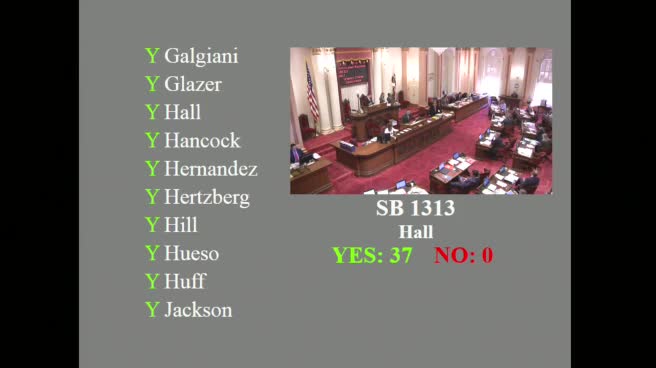 2MIN
Senate Floor
 1MIN
Assembly Floor
 3MIN
Senate Floor
 13MIN
Senate Standing Committee on Energy, Utilities and Communications
Bill Author

Bill Co-Author(s):