SB 1446: Firearms: magazine capacity.
- Session Year: 2015-2016
- House: Senate
- Latest Version Date: 2016-07-01
(1)Existing law prohibits the sale, gift, and loan of a large-capacity magazine. A violation of this prohibition is punishable as a misdemeanor with specified penalties or as a felony.
This bill would, commencing July 1, 2017, make it an infraction punishable by a fine not to exceed $100 for the first offense, by a fine not to exceed $250 for the 2nd offense, and by a fine not to exceed $500 for the 3rd or subsequent offense, for a person to possess any large-capacity magazine, regardless of the date the magazine was acquired. The bill would require a person in lawful possession of a large-capacity magazine prior to July 1, 2017, to dispose of the magazine, as provided.
By creating a new crime, this bill would impose a state-mandated local program.
(2)Existing law creates various exceptions to the crime described in paragraph (1) above, which include, but are not limited to, the sale of, giving of, lending of, importation into this state of, or purchase of, any large-capacity magazine to or by the holder of a special weapons permit for use as a prop for a motion picture, or any federal, state, county, city and county, or city agency that is charged with the enforcement of any law, for use by agency employees in the discharge of their official duties, whether on or off duty, and where the use is authorized by the agency and is within the course and scope of their duties.
This bill would make conforming changes to those exceptions by including possession of a large-capacity magazine in those provisions and would establish additional exceptions to the crime described in paragraph (1) above, including exceptions to allow licensed gunsmiths and honorably retired sworn peace officers to possess a large-capacity magazine.
The California Constitution requires the state to reimburse local agencies and school districts for certain costs mandated by the state. Statutory provisions establish procedures for making that reimbursement.
This bill would provide that no reimbursement is required by this act for a specified reason.
(1)Existing law, for purposes pertaining to the ammunition capacity of certain assault weapons, defines capacity to accept more than 10 rounds to mean capable of accommodating more than 10 rounds, but specifies that this term does not apply to a feeding device that has been permanently altered so that it cannot accommodate more than 10 rounds.
This bill would revise that definition to mean capable of holding more than 10 rounds of ammunition, but not applying to a feeding device that has been permanently altered so that it cannot hold more than 10 rounds of ammunition.
(2)
(1)Existing law prohibits the sale, gift, and loan of a large-capacity magazine. A violation of this prohibition is punishable as a misdemeanor with specified penalties or as a felony. Existing law defines large-capacity magazine to mean any ammunition feeding device with the capacity to accept more than 10 rounds, but provides that the definition may not be construed to include a feeding device that has been permanently altered so that it cannot accommodate more than 10 rounds.
This bill would include within that definition of large-capacity magazine a feeding device that had a capacity of more than 10 rounds of ammunition but has been permanently modified to hold no more than 10 rounds of ammunition, and would exclude from that definition a magazine that is only of sufficient size to hold no more than 10 rounds of ammunition. The bill would, commencing July 1, 2017, make it an infraction punishable by a fine not to exceed $100 for the first offense, by a fine not to exceed $250 for the second 2nd offense, or and by a fine not to exceed $1,000 $500 for the third 3rd or subsequent offense, or a misdemeanor punishable by a fine not to exceed $100 for the first offense, by a fine not to exceed $250 for the second offense, or by a fine not to exceed $1,000 for the third or subsequent offense, for a person to possess any large-capacity magazine, regardless of the date the magazine was acquired. The bill would require a person in lawful possession of a large-capacity magazine prior to July 1, 2017, to dispose of the magazine, as provided.
By creating a new crime, this bill would impose a state-mandated local program.
(3)
(2)Existing law creates various exceptions to the crime described in paragraph (2) (1) above, which include, but are not limited to, the sale of, giving of, lending of, importation into this state of, or purchase of, any large-capacity magazine to or by the holder of a special weapons permit for use as a prop for a motion picture, or any federal, state, county, city and county, or city agency that is charged with the enforcement of any law, for use by agency employees in the discharge of their official duties, whether on or off duty, and where the use is authorized by the agency and is within the course and scope of their duties.
This bill would make conforming changes to those exceptions by including possession of a large-capacity magazine in those provisions. provisions and would establish additional exceptions to the crime described in paragraph (1) above, including exceptions to allow licensed gunsmiths and honorably retired sworn peace officers to possess a large-capacity magazine.
The California Constitution requires the state to reimburse local agencies and school districts for certain costs mandated by the state. Statutory provisions establish procedures for making that reimbursement.
This bill would provide that no reimbursement is required by this act for a specified reason.
(1)Existing law, for purposes pertaining to the ammunition capacity of certain assault weapons, defines capacity to accept more than 10 rounds to mean capable of accommodating more than 10 rounds, but specifies that this term does not apply to a feeding device that has been permanently altered so that it cannot accommodate more than 10 rounds.
This bill would revise that definition to mean capable of holding more than 10 rounds of ammunition, but not applying to a feeding device that has been permanently altered so that it cannot hold more than 10 rounds of ammunition.
(2)Existing law prohibits the sale, gift, and loan of a large-capacity magazine. A violation of this prohibition is punishable as a misdemeanor with specified penalties or as a felony. Existing law defines large-capacity magazine to mean any ammunition feeding device with the capacity to accept more than 10 rounds, but provides that the definition may not be construed to include a feeding device that has been permanently altered so that it cannot accommodate more than 10 rounds.
This bill would include within that definition of large-capacity magazine a feeding device that had a capacity of more than 10 rounds of ammunition but has been permanently modified to hold no more than 10 rounds of ammunition, and would exclude from that definition a magazine that is only of sufficient size to hold no more than 10 rounds of ammunition. The bill would, commencing July 1, 2017, make it an infraction punishable by a fine not to exceed $100 for the first offense, by a fine not to exceed $250 for the second offense, or by a fine not to exceed $1,000 for the third or subsequent offense, or a misdemeanor punishable by a fine not to exceed $100 for the first offense, by a fine not to exceed $250 for the second offense, or by a fine not to exceed $1,000 for the third or subsequent offense, for a person to possess any large-capacity magazine, regardless of the date the magazine was acquired. The bill would require a person in lawful possession of a large-capacity magazine prior to July 1, 2017, to dispose of the magazine, as provided.
By creating a new crime, this bill would impose a state-mandated local program.
(3)Existing law creates various exceptions to the crime described in paragraph (2) above, which include, but are not limited to, the sale of, giving of, lending of, importation into this state of, or purchase of, any large-capacity magazine to or by the holder of a special weapons permit for use as a prop for a motion picture, or any federal, state, county, city and county, or city agency that is charged with the enforcement of any law, for use by agency employees in the discharge of their official duties, whether on or off duty, and where the use is authorized by the agency and is within the course and scope of their duties.
This bill would make conforming changes to those exceptions by including possession of a large-capacity magazine in those provisions.
The California Constitution requires the state to reimburse local agencies and school districts for certain costs mandated by the state. Statutory provisions establish procedures for making that reimbursement.
This bill would provide that no reimbursement is required by this act for a specified reason.
(a)Except as provided in Article 2 (commencing with Section 32400) of this chapter and in Chapter 1 (commencing with Section 17700) of Division 2 of Title 2, any person in this state who manufactures or causes to be manufactured, imports into the state, keeps for sale, or offers or exposes for sale, or who gives, lends, buys, or receives any large-capacity magazine is punishable by imprisonment in a county jail not exceeding one year or imprisonment pursuant to subdivision (h) of Section 1170.
(b)Except as provided in Article 2 (commencing with Section 32400) of this chapter and in Chapter 1 (commencing with Section 17700) of Division 2 of Title 2, commencing July 1, 2017, any person in this state who possesses any large-capacity magazine, regardless of the date the magazine was acquired, is guilty of an infraction punishable by a fine not to exceed one hundred dollars ($100) upon the first offense, by a fine not to exceed two hundred fifty dollars ($250) upon the second offense, and by a fine not to exceed five hundred dollars ($500) upon the third or subsequent offense.
(c)A person who, prior to July 1, 2017, legally possesses a large-capacity magazine shall dispose of that magazine by any of the following means:
(1)Remove the large-capacity magazine from the state.
(2)Prior to July 1, 2017, sell the large-capacity magazine to a licensed firearms dealer.
(3)Destroy the large-capacity magazine.
(4)Surrender the large-capacity magazine to a law enforcement agency for destruction.
(d)For purposes of this section, manufacturing includes both fabricating a magazine and assembling a magazine from a combination of parts, including, but not limited to, the body, spring, follower, and floor plate or end plate, to be a fully functioning large-capacity magazine.
(e)The provisions of this section are cumulative and shall not be construed as restricting the application of any other law. However, an act or omission punishable in different ways by different provisions of this code shall not be punished under more than one provision.
SEC. 2.Section 32400 of the Penal Code is amended to read:32400.Section 32310 does not apply to the sale of, giving of, lending of, possession of, importation into this state of, or purchase of, any large-capacity magazine to or by any federal, state, county, city and county, or city agency that is charged with the enforcement of any law, for use by agency employees in the discharge of their official duties, whether on or off duty, and where the use is authorized by the agency and is within the course and scope of their duties.
SEC. 3.Section 32405 of the Penal Code is amended to read:32405.Section 32310 does not apply to the sale to, lending to, transfer to, purchase by, receipt of, possession of, or importation into this state of, a large-capacity magazine by a sworn peace officer, as defined in Chapter 4.5 (commencing with Section 830) of Title 3 of Part 2, or a sworn federal law enforcement officer who is authorized to carry a firearm in the course and scope of that officers duties.
SEC. 4.Section 32406 is added to the Penal Code, to read:32406.Subdivisions (b) and (c) of Section 32310 do not apply to the following:
(a)An individual who honorably retired from being a sworn peace officer, as defined in Chapter 4.5 (commencing with Section 830) of Title 3 of Part 2, or an individual who honorably retired from being a sworn federal law enforcement officer, who was authorized to carry a firearm in the course and scope of that officers duties. For purposes of this section, honorably retired has the same meaning as provided in Section 16690.
(b)A federal, state, or local historical society, museum or institutional society, or museum or institutional collection, that is open to the public, provided that the large-capacity magazine is unloaded, properly housed within secured premises, and secured from unauthorized handling.
(c)A person who finds a large-capacity magazine, if the person is not prohibited from possessing firearms or ammunition, and possessed it no longer than necessary to deliver or transport it to the nearest law enforcement agency.
(d)A forensic laboratory, or an authorized agent or employee thereof in the course and scope of his or her authorized activities.
(e)The receipt or disposition of a large-capacity magazine by a trustee of a trust, or an executor or administrator of an estate, including an estate that is subject to probate, that includes a large-capacity magazine.
(f)A person lawfully in possession of a firearm that the person obtained prior to January 1, 2000, if no magazine that holds 10 or fewer rounds of ammunition is compatible with that firearm and the person possesses the large-capacity magazine solely for use with that firearm.
SEC. 5.Section 32410 of the Penal Code is amended to read:32410.Section 32310 does not apply to the possession, sale, or purchase of any large-capacity magazine to or by a person licensed pursuant to Sections 26700 to 26915, inclusive.
SEC. 6.Section 32420 of the Penal Code is repealed.SEC. 7.Section 32425 of the Penal Code is amended to read:32425.Section 32310 does not apply to either of the following:
(a)The lending or giving of any large-capacity magazine to, or possession of that magazine by, a person licensed pursuant to Sections 26700 to 26915, inclusive, or to a gunsmith, for the purposes of maintenance, repair, or modification of that large-capacity magazine.
(b)The return to its owner of any large-capacity magazine by a person specified in subdivision (a).
SEC. 8.Section 32430 of the Penal Code is amended to read:32430.Section 32310 does not apply to the possession of, importation into this state of, or sale of, any large-capacity magazine by a person who has been issued a permit to engage in those activities pursuant to Section 32315, when those activities are in accordance with the terms and conditions of that permit.
SEC. 9.Section 32435 of the Penal Code is amended to read:32435.Section 32310 does not apply to any of the following:
(a)The sale of, giving of, lending of, possession of, importation into this state of, or purchase of, any large-capacity magazine, to or by any entity that operates an armored vehicle business pursuant to the laws of this state.
(b)The lending of large-capacity magazines by an entity specified in subdivision (a) to its authorized employees, and the possession of those large-capacity magazines by those authorized employees, while in the course and scope of employment for purposes that pertain to the entitys armored vehicle business.
(c)The return of those large-capacity magazines to the entity specified in subdivision (a) by those employees specified in subdivision (b).
SEC. 10.Section 32450 of the Penal Code is amended to read:32450.Section 32310 does not apply to the purchase or possession of a large-capacity magazine by the holder of a special weapons permit issued pursuant to Section 31000, 32650, or 33300, or pursuant to Article 3 (commencing with Section 18900) of Chapter 1 of Division 5 of Title 2, or pursuant to Article 4 (commencing with Section 32700) of Chapter 6 of this division, for any of the following purposes:
(a)For use solely as a prop for a motion picture, television, or video production.
(b)For export pursuant to federal regulations.
(c)For resale to law enforcement agencies, government agencies, or the military, pursuant to applicable federal regulations.
SEC. 11.No reimbursement is required by this act pursuant to Section 6 of Article XIIIB of the California Constitution because the only costs that may be incurred by a local agency or school district will be incurred because this act creates a new crime or infraction, eliminates a crime or infraction, or changes the penalty for a crime or infraction, within the meaning of Section 17556 of the Government Code, or changes the definition of a crime within the meaning of Section 6 of Article XIIIB of the California Constitution.
As used in Section 30515, capacity to accept more than 10 rounds means capable of holding more than 10 rounds of ammunition. The phrase does not apply to a feeding device that has been permanently altered so that it cannot hold more than 10 rounds of ammunition.
SEC. 2.Section 16740 of the Penal Code is amended to read:16740.(a)As used in this part, large-capacity magazine means any ammunition feeding device with the capacity to accept more than 10 rounds. As used in this part, large-capacity magazine also includes a feeding device that had a capacity of more than 10 rounds of ammunition but has been permanently altered to hold no more than 10 rounds of ammunition.
(b)As used in this part, large-capacity magazine does not include any of the following:
(1)A magazine that is only of sufficient size to hold no more than 10 rounds of ammunition.
(2)A .22 caliber tube ammunition feeding device.
(3)A tubular magazine that is contained in a lever-action firearm.
SEC. 3.SECTION 1.Section 32310 of the Penal Code is amended to read:32310.(a)Except as provided in Article 2 (commencing with Section 32400) of this chapter and in Chapter 1 (commencing with Section 17700) of Division 2 of Title 2, any person in this state who manufactures or causes to be manufactured, imports into the state, keeps for sale, or offers or exposes for sale, or who gives, or lends, buys, or receives any large-capacity magazine is punishable by imprisonment in a county jail not exceeding one year or imprisonment pursuant to subdivision (h) of Section 1170.
(b)Except as provided in Article 2 (commencing with Section 32400) of this chapter and in Chapter 1 (commencing with Section 17700) of Division 2 of Title 2, commencing July 1, 2017, any person in this state who possesses any large-capacity magazine, regardless of the date the magazine was acquired, is guilty of an infraction punishable by a fine not to exceed one hundred dollars ($100) upon the first offense, by a fine not to exceed two hundred fifty dollars ($250) upon the second offense, and by a fine not to exceed one thousand dollars ($1,000) upon the third or any subsequent offense, or is guilty of a misdemeanor punishable by a fine not to exceed one hundred dollars ($100) upon the first offense, by a fine not to exceed two hundred fifty dollars ($250) upon the second offense, and by a fine not to exceed one thousand dollars ($1,000) five hundred dollars ($500) upon the third or subsequent offense.
(c)A person who, prior to July 1, 2017, legally possesses a large-capacity magazine shall dispose of that magazine by any of the following means:
(1)Remove the large-capacity magazine from the state.
(2)Prior to July 1, 2017, sell the large-capacity magazine to a licensed firearms dealer.
(3)Destroy the large-capacity magazine.
(4)Surrender the large-capacity magazine to a law enforcement agency for destruction.
(d)For purposes of this section, manufacturing includes both fabricating a magazine and assembling a magazine from a combination of parts, including, but not limited to, the body, spring, follower, and floor plate or end plate, to be a fully functioning large-capacity magazine.
(e)The provisions of this section are cumulative and shall not be construed as restricting the application of any other law. However, an act or omission punishable in different ways by different provisions of this code shall not be punished under more than one provision.
SEC. 4.SEC. 2.Section 32400 of the Penal Code is amended to read:32400.Section 32310 does not apply to the sale of, giving of, lending of, possession of, importation into this state of, or purchase of, any large-capacity magazine to or by any federal, state, county, city and county, or city agency that is charged with the enforcement of any law, for use by agency employees in the discharge of their official duties, whether on or off duty, and where the use is authorized by the agency and is within the course and scope of their duties.
SEC. 5.SEC. 3.Section 32405 of the Penal Code is amended to read:32405.Section 32310 does not apply to the sale to, lending to, transfer to, purchase by, receipt of, possession of, or importation into this state of, a large-capacity magazine by a sworn peace officer, as defined in Chapter 4.5 (commencing with Section 830) of Title 3 of Part 2, or a sworn federal law enforcement officer who is authorized to carry a firearm in the course and scope of that officers duties.
SEC. 6.SEC. 4.Section 32406 is added to the Penal Code, to read:32406.Subdivisions (b) and (c) of Section 32310 do not apply to an the following:
(a)An individual who honorably retired from being a sworn peace officer, as defined in Chapter 4.5 (commencing with Section 830) of Title 3 of Part 2, or an individual who honorably retired from being a sworn federal law enforcement officer, who was authorized to carry a firearm in the course and scope of that officers duties. For purposes of this section, honorably retired has the same meaning as provided in Section 16690.
(b)A federal, state, or local historical society, museum or institutional society, or museum or institutional collection, that is open to the public, provided that the large-capacity magazine is unloaded, properly housed within secured premises, and secured from unauthorized handling.
(c)A person who finds a large-capacity magazine, if the person is not prohibited from possessing firearms or ammunition, and possessed it no longer than necessary to deliver or transport it to the nearest law enforcement agency.
(d)A forensic laboratory, or an authorized agent or employee thereof in the course and scope of his or her authorized activities.
(e)The receipt or disposition of a large-capacity magazine by a trustee of a trust, or an executor or administrator of an estate, including an estate that is subject to probate, that includes a large-capacity magazine.
(f)A person lawfully in possession of a firearm that the person obtained prior to January 1, 2000, if no magazine that holds 10 or fewer rounds of ammunition is compatible with that firearm and the person possesses the large-capacity magazine solely for use with that firearm.
SEC. 5.Section 32410 of the Penal Code is amended to read:32410.Section 32310 does not apply to the sale possession, sale, or purchase of any large-capacity magazine to or by a person licensed pursuant to Sections 26700 to 26915, inclusive.
SEC. 6.Section 32420 of the Penal Code is repealed.32420.Section 32310 does not apply to the importation of a large-capacity magazine by a person who lawfully possessed the large-capacity magazine in the state prior to January 1, 2000, lawfully took it out of the state, and is returning to the state with the same large-capacity magazine.
SEC. 7.Section 32425 of the Penal Code is amended to read:32425.Section 32310 does not apply to either of the following:
(a)The lending or giving of any large-capacity magazine to to, or possession of that magazine by, a person licensed pursuant to Sections 26700 to 26915, inclusive, or to a gunsmith, for the purposes of maintenance, repair, or modification of that large-capacity magazine.
(b)The return to its owner of any large-capacity magazine by a person specified in subdivision (a).
SEC. 8.Section 32430 of the Penal Code is amended to read:32430.Section 32310 does not apply to the possession of, importation into this state of, or sale of, any large-capacity magazine by a person who has been issued a permit to engage in those activities pursuant to Section 32315, when those activities are in accordance with the terms and conditions of that permit.
SEC. 7.SEC. 9.Section 32435 of the Penal Code is amended to read:32435.Section 32310 does not apply to any of the following:
(a)The sale of, giving of, lending of, possession of, importation into this state of, or purchase of, any large-capacity magazine, to or by any entity that operates an armored vehicle business pursuant to the laws of this state.
(b)The lending of large-capacity magazines by an entity specified in subdivision (a) to its authorized employees, and the possession of those large-capacity magazines by those authorized employees, while in the course and scope of employment for purposes that pertain to the entitys armored vehicle business.
(c)The return of those large-capacity magazines to the entity specified in subdivision (a) by those employees specified in subdivision (b).
SEC. 8.SEC. 10.Section 32450 of the Penal Code is amended to read:32450.Section 32310 does not apply to the purchase or possession of a large-capacity magazine by the holder of a special weapons permit issued pursuant to Section 31000, 32650, or 33300, or pursuant to Article 3 (commencing with Section 18900) of Chapter 1 of Division 5 of Title 2, or pursuant to Article 4 (commencing with Section 32700) of Chapter 6 of this division, for any of the following purposes:
(a)For use solely as a prop for a motion picture, television, or video production.
(b)For export pursuant to federal regulations.
(c)For resale to law enforcement agencies, government agencies, or the military, pursuant to applicable federal regulations.
SEC. 9.SEC. 11.No reimbursement is required by this act pursuant to Section 6 of Article XIIIB of the California Constitution because the only costs that may be incurred by a local agency or school district will be incurred because this act creates a new crime or infraction, eliminates a crime or infraction, or changes the penalty for a crime or infraction, within the meaning of Section 17556 of the Government Code, or changes the definition of a crime within the meaning of Section 6 of Article XIIIB of the California Constitution.
As used in Section 30515, capacity to accept more than 10 rounds means capable of accommodating holding more than 10 rounds of ammunition. The term phrase does not apply to a feeding device that has been permanently altered so that it cannot accommodate hold more than 10 rounds of ammunition.
SEC. 2.Section 16740 of the Penal Code is amended to read:16740.(a)As used in this part, large-capacity magazine means any ammunition feeding device with the capacity to accept more than 10 rounds, but shall not be construed to include any of the following: rounds. As used in this part, large-capacity magazine also includes a feeding device that had a capacity of more than 10 rounds of ammunition but has been permanently altered to hold no more than 10 rounds of ammunition.
(b)As used in this part, large-capacity magazine does not include any of the following:
(a)
(1)A feeding device that has been permanently altered so that it cannot accommodate magazine that is only of sufficient size to hold no more than 10 rounds. rounds of ammunition.
(b)
(2)A .22 caliber tube ammunition feeding device.
(c)
(3)A tubular magazine that is contained in a lever-action firearm.
SEC. 3.Section 32310 of the Penal Code is amended to read:32310.(a)Except as provided in Article 2 (commencing with Section 32400) of this chapter and in Chapter 1 (commencing with Section 17700) of Division 2 of Title 2, commencing January 1, 2000, any person in this state who manufactures or causes to be manufactured, imports into the state, keeps for sale, or offers or exposes for sale, or who gives, lends, buys, or receives or lends, any large-capacity magazine is punishable by imprisonment in a county jail not exceeding one year or imprisonment pursuant to subdivision (h) of Section 1170.
(b)Except as provided in Article 2 (commencing with Section 32400) of this chapter and in Chapter 1 (commencing with Section 17700) of Division 2 of Title 2, commencing July 1, 2017, any person in this state who possesses any large-capacity magazine, regardless of the date the magazine was acquired, is guilty of an infraction punishable by a fine not to exceed one hundred dollars ($100) upon the first offense, by a fine not to exceed two hundred fifty dollars ($250) upon the second offense, and by a fine not to exceed one thousand dollars ($1,000) upon the third or any subsequent offense, or is guilty of a misdemeanor punishable by a fine not to exceed one hundred dollars ($100) upon the first offense, by a fine not to exceed two hundred fifty dollars ($250) upon the second offense, and by a fine not to exceed one thousand dollars ($1,000) upon the third or subsequent offense.
(c)A person who, prior to July 1, 2017, legally possesses a large-capacity magazine shall dispose of that magazine by any of the following means:
(1)Remove the large-capacity magazine from the state.
(2)Prior to July 1, 2017, sell the large-capacity magazine to a licensed firearms dealer.
(3)Destroy the large-capacity magazine.
(4)Surrender the large-capacity magazine to a law enforcement agency for destruction.
(b)
(d)For purposes of this section, manufacturing includes both fabricating a magazine and assembling a magazine from a combination of parts, including, but not limited to, the body, spring, follower, and floor plate or end plate, to be a fully functioning large-capacity magazine.
SEC. 4.Section 32400 of the Penal Code is amended to read:32400.Section 32310 does not apply to the sale of, giving of, lending of, possession of, importation into this state of, or purchase of, any large-capacity magazine to or by any federal, state, county, city and county, or city agency that is charged with the enforcement of any law, for use by agency employees in the discharge of their official duties, whether on or off duty, and where the use is authorized by the agency and is within the course and scope of their duties.
SEC. 5.Section 32405 of the Penal Code is amended to read:32405.Section 32310 does not apply to the sale to, lending to, transfer to, purchase by, receipt of, possession of, or importation into this state of, a large-capacity magazine by a sworn peace officer, as defined in Chapter 4.5 (commencing with Section 830) of Title 3 of Part 2, or sworn federal law enforcement officer who is authorized to carry a firearm in the course and scope of that officers duties.
SEC. 6.Section 32406 is added to the Penal Code, to read:32406.Subdivisions (b) and (c) of Section 32310 do not apply to an individual who honorably retired from being a sworn peace officer, as defined in Chapter 4.5 (commencing with Section 830) of Title 3 of Part 2, or an individual who honorably retired from being a sworn federal law enforcement officer, who was authorized to carry a firearm in the course and scope of that officers duties. For purposes of this section, honorably retired has the same meaning as provided in Section 16690.
SEC. 7.Section 32435 of the Penal Code is amended to read:32435.Section 32310 does not apply to any of the following:
(a)The sale of, giving of, lending of, possession of, importation into this state of, or purchase of, any large-capacity magazine, to or by any entity that operates an armored vehicle business pursuant to the laws of this state.
(b)The lending of large-capacity magazines by an entity specified in subdivision (a) to its authorized employees, and the possession of those large-capacity magazines by those authorized employees, while in the course and scope of employment for purposes that pertain to the entitys armored vehicle business.
(c)The return of those large-capacity magazines to the entity specified in subdivision (a) by those employees specified in subdivision (b).
SEC. 8.Section 32450 of the Penal Code is amended to read:32450.Section 32310 does not apply to the purchase or possession of a large-capacity magazine by the holder of a special weapons permit issued pursuant to Section 31000, 32650, or 33300, or pursuant to Article 3 (commencing with Section 18900) of Chapter 1 of Division 5 of Title 2, or pursuant to Article 4 (commencing with Section 32700) of Chapter 6 of this division, for any of the following purposes:
(a)For use solely as a prop for a motion picture, television, or video production.
(b)For export pursuant to federal regulations.
(c)For resale to law enforcement agencies, government agencies, or the military, pursuant to applicable federal regulations.
SEC. 9.No reimbursement is required by this act pursuant to Section 6 of Article XIIIB of the California Constitution because the only costs that may be incurred by a local agency or school district will be incurred because this act creates a new crime or infraction, eliminates a crime or infraction, or changes the penalty for a crime or infraction, within the meaning of Section 17556 of the Government Code, or changes the definition of a crime within the meaning of Section 6 of Article XIIIB of the California Constitution.
|
Date
|
Status
|
|---|---|
| May 19, 2016 | In Assembly. Read first time. Held at Desk. |
| Jul 1, 2016 | Chaptered by Secretary of State. Chapter 58, Statutes of 2016. |
| Jul 1, 2016 | Approved by the Governor. |
| Jun 30, 2016 | Read third time. Passed. (Ayes 44. Noes 31. Page 5575.) Ordered to the Senate. |
| Jun 30, 2016 | Read third time. Passed. Ordered to the Senate. |
| Jun 30, 2016 | In Senate. Ordered to engrossing and enrolling. |
| Jun 30, 2016 | Enrolled and presented to the Governor at 1:30 p.m. |
| Jun 23, 2016 | Withdrawn from committee. |
| Jun 23, 2016 | Ordered to third reading. |
| Jun 23, 2016 | Assembly Rule 96 suspended. (Ayes 50. Noes 27. Page 5473.) |
| Jun 23, 2016 | Assembly Rule 96 suspended. (Ayes 43. Noes 24.) |
| Jun 15, 2016 | From committee: Do pass and re-refer to Com. on APPR. (Ayes 5. Noes 2.) (June 14). Re-referred to Com. on APPR. |
| Jun 1, 2016 | Referred to Com. on PUB. S. |
| May 19, 2016 | Read third time. Passed. (Ayes 22. Noes 15.) Ordered to the Assembly. |
| May 19, 2016 | Read third time. Passed. (Ayes 22. Noes 15. Page 3901.) Ordered to the Assembly. |
| Feb 19, 2016 | Introduced. To Com. on RLS. for assignment. To print. |
| May 17, 2016 | Read second time. Ordered to third reading. |
| May 16, 2016 | From committee: Be ordered to second reading pursuant to Senate Rule 28.8. |
| May 11, 2016 | Set for hearing May 16. |
| Apr 28, 2016 | May 2 hearing postponed by committee. |
| Apr 22, 2016 | Set for hearing May 2. |
| Apr 20, 2016 | From committee: Do pass and re-refer to Com. on APPR. (Ayes 4. Noes 3.) (April 19). Re-referred to Com. on APPR. |
| Apr 20, 2016 | From committee: Do pass and re-refer to Com. on APPR. (Ayes 4. Noes 3. Page 3615.) (April 19). Re-referred to Com. on APPR. |
| Apr 1, 2016 | Set for hearing April 19. |
| Mar 30, 2016 | April 5 hearing postponed by committee. |
| Mar 28, 2016 | From committee with author's amendments. Read second time and amended. Re-referred to Com. on PUB. S. |
| Mar 15, 2016 | Set for hearing April 5. |
| Mar 10, 2016 | Referred to Com. on PUB. S. |
| Feb 22, 2016 | Read first time. |
| Feb 22, 2016 | From printer. May be acted upon on or after March 23. |
|
Date
|
Description
|
Location
|
Votes
|
|
|---|---|---|---|---|
| Jun 30, 2016 | SB 1446 Hancock Senate Third Reading By LOW | Assembly Floor |
Passed |
|
| Jun 14, 2016 | Do pass and be re-referred to the Committee on [Appropriations] | Assembly Standing Committee on Public Safety |
Passed |
|
| May 19, 2016 | Senate 3rd Reading SB1446 Hancock | Senate Floor |
Passed |
|
| Apr 19, 2016 | Do pass, but first be re-referred to the Committee on [Appropriations] | Senate Standing Committee on Public Safety |
Passed |
This list shows positions taken on this bill by organizations on the date displayed, which is linked to the original source.
Positions by individuals are not included.
|
Organization
|
Position
|
Date
|
|---|---|---|
| 27 California Chapters of the Brady Campaign to Prevent Gun Violence | * Support | Jun 14, 2016 |
| American Academy Of Pediatrics, California | ** Support | May 19, 2016 |
| American College of Emergency Physicians, California Chapter | ** Support | Jun 14, 2016 |
| California Academy Of Family Physicians | ** Support | Jun 14, 2016 |
| California Chapters of the Brady Campaign | * Support | Jun 14, 2016 |
| California Church Impact | ** Support | Jun 14, 2016 |
| California District Attorneys Association | * Support | Jun 14, 2016 |
| California Public Defender Association | * Support | Jun 14, 2016 |
| California Rifle And Pistol Association, Inc. | * Against | Jun 14, 2016 |
| California Sportsman's Lobby, Inc. | ** Against | Jun 14, 2016 |
| California State PTA | * Support | Jun 14, 2016 |
| California State Sheriffs' Association | ** Against | May 19, 2016 |
| City of Long Beach | ** Support | Jun 14, 2016 |
| City Of Oakland | ** Support | Jun 14, 2016 |
| Cleveland School Remembers | ** Support | Jun 14, 2016 |
| Coalition Against Gun Violence | ** Support | May 19, 2016 |
| Courage Campaign | ** Support | May 19, 2016 |
| David Alvarez, Councilmember, City of San Diego | ** Support | May 19, 2016 |
| Firearms Policy Coalition | ** Against | May 19, 2016 |
| Gun Owners of California | * Against | Jun 14, 2016 |
| Law Center to Prevent Gun Violence | * Support | Jun 14, 2016 |
| Los Angeles, City Of | ** Support | Jun 14, 2016 |
| Outdoor Sportsman's Coalition of California | ** Against | May 19, 2016 |
| Physicians for Social Responsibility, Sacramento Chapter | ** Support | Jun 14, 2016 |
| Rabbis Against Gun Violence | ** Support | Jun 14, 2016 |
| Safari Club International Foundation | ** Against | May 19, 2016 |
| Santa Monica, City Of | * Support | Jun 14, 2016 |
| Sutter Medical Center | * Support | Apr 19, 2016 |
| Violence Prevention Coalition of Greater Los Angeles | ** Support | Jun 14, 2016 |
| Youth ALIVE! | ** Support | Jun 14, 2016 |
SENATE THIRD READING
STR Bill Id:SB 1446
Author:(Hancock)
As Amended Ver:March 28, 2016
Majority vote
SENATE VOTE: 22-15
Committee | Votes | Ayes | Noes |
Public Safety | 5-2 | Jones-Sawyer, Lopez, Low, Quirk, Santiago | Melendez, Lackey |
SUMMARY: Prohibits the possession of large-capacity magazines, with specified exceptions. Specifically, this bill:
- Makes it an infraction, commencing July 1, 2017, for any person who possesses a large-capacity magazine punishable as follows:
- A fine not to exceed $100 for the first offense;
- A fine not to exceed $250 for the second offense; and,
- A fine not to exceed $500 for the third or subsequent offense.
- Requires a person who, prior to July 1, 2017, legally possesses a large-capacity magazine to dispose of that magazine by any of the following means:
- Remove the large-capacity magazine from the state;
- Prior to July 1, 2017, sell the large-capacity magazine to a licensed firearms dealer;
- Destroy the large-capacity magazine; or,
- Surrender the large-capacity magazine to a law enforcement agency for destruction.
- Specifies the following exceptions:
- An individual who honorably retired from being a sworn peace officer, or an individual who honorably retired from being a sworn federal law enforcement officer, who was authorized to carry a firearm in the course and scope of that officer's duties;
- A federal, state, or local historical society, museum or institutional society, or museum or institutional collection, that is open to the public, provided that the large-capacity magazine is unloaded, properly housed within secured premises, and secured from unauthorized handling;
- A person who finds a large-capacity magazine, if the person is not prohibited from possessing firearms or ammunition, and possessed it no longer than necessary to deliver or transport it to the nearest law enforcement agency;
- A forensic laboratory, or an authorized agent or employee thereof in the course and scope of his or her authorized activities;
- The receipt or disposition of a large-capacity magazine by a trustee of a trust, or an executor or administrator of an estate, including an estate that is subject to probate, that includes a large-capacity magazine; or,
- A person lawfully in possession of a firearm that the person obtained prior to January 1, 2000, if no magazine that holds 10 or fewer rounds of ammunition is compatible with that firearm and the person possesses the large-capacity magazine solely for use with that firearm.
EXISTING LAW:
- Defines a "large-capacity magazine" as any ammunition feeding device with the capacity to accept more than 10 rounds, but shall not be construed to include any of the following:
- A feeding device that has been permanently altered so that it cannot accommodate more than 10 rounds;
- A .22 caliber tube ammunition feeding device; or,
- A tubular magazine that is contained in a lever-action firearm.
- States, except as provided, commencing January 1, 2000, any person in California who manufactures or causes to be manufactured, imports into the state, keeps for sale, or offers or exposes for sale, or who gives, or lends, any large-capacity magazine is punishable by imprisonment in the county jail for either a misdemeanor or a felony.
- Provides the following exceptions to the prohibition against manufacturing or causing to be manufactured, importing into the state, keeping for sale, or offering or exposing for sale, or giving, or lending, any large-capacity magazine:
- Government agency charged with law enforcement;
- Sworn peace officer who is authorized to carry a firearm in the course and scope of that officer's duties ;
- Sale or purchase by a licensed person;
- Loan under specified circumstances;
- Importation by a person in legal possession prior to January 1, 2000;
- Delivery to a gun smith;
- Person with permit to sell to an out-of-state client;
- Entity that operates armored vehicle business;
- Manufacture for government agency or military;
- Use as a prop; or,
- Holder of a special weapons permit for specified purposes.
- Declares large-capacity magazines to be a nuisance.
- Provides that the Attorney General, district attorney, or city attorney may bring an action to enjoin the manufacture of, importation of, keeping for sale of, offering or exposing for sale, giving, lending, or possession of, any item that constitutes a nuisance under any of the specified code sections, including the code section relating to large-capacity magazines.
- States that the weapons listed in the specified code sections constituting a nuisance shall be subject to confiscation and summary destruction whenever found within California.
FISCAL EFFECT: Unknown. This bill is keyed non-fiscal by the Legislative Counsel.
COMMENTS: According to the author, "In 1999, the Legislature passed SB 23 (Perata) [Chapter 129, Statutes of 1999] which prohibited the possession of assault weapons, such as the AK-47 and created a generic definition of an assault weapon. As part of that legislation, the importation, manufacture and sale of large capacity ammunition magazines was strictly prohibited. However, the possession of high capacity magazines was not prohibited.
"Federal law also outlawed possession of high capacity magazines as part of the 1994 federal assault weapons ban but allowed current owners to keep them under a 'grandfathering' provision. The federal assault weapons ban was allowed to expire in 2004. Research has shown that, prior to the implementation of the federal assault weapons ban, these high capacity magazines were used in between 14 and 26% of guns used in crime.
"High capacity ammunition magazines are ammunition feeding devices that hold more than ten rounds of ammunition. These mega-magazines can hold upwards of 100 rounds of ammunition and allow a shooter to rapidly fire without reloading.
"High capacity magazines are not designed for hunting or target shooting. High capacity magazines are military designed devices. They are designed for one purpose only – to allow a shooter to fire a large number of bullets in a short period of time.
"This bill will make clear that possession of these 'mega-magazines' is also prohibited. Law enforcement officers have told us that, because the Penal Code currently fails to specifically prohibit possession, the law is very difficult to enforce. This needs to be fixed and this measure addresses that by prohibiting the possession."
Analysis Prepared by: Stella Choe / PUB. S. / (916) 319-3744 FN: 0003530
Date of Hearing: June 14, 2016
Counsel: Stella Choe
ASSEMBLY COMMITTEE ON PUBLIC SAFETY
Reginald Byron Jones-Sawyer, Sr., Chair
SBPCA Bill Id:SB 1446
Author:(Hancock) – As Amended Ver:March 28, 2016
SUMMARY: Prohibits the possession of large-capacity magazines, with specified exceptions. Specifically, this bill:
- Makes it an infraction, commencing July 1, 2017, for any person who possesses a large-capacity magazine punishable as follows:
- A fine not to exceed $100 for the first offense;
- A fine not to exceed $250 for the second offense; and,
- A fine not to exceed $500 for the third or subsequent offense.
- A fine not to exceed $100 for the first offense;
- Requires a person who, prior to July 1, 2017, legally possesses a large-capacity magazine to dispose of that magazine by any of the following means:
- Remove the large-capacity magazine from the state;
- Prior to July 1, 2017, sell the large-capacity magazine to a licensed firearms dealer;
- Destroy the large-capacity magazine; or,
- Surrender the large-capacity magazine to a law enforcement agency for destruction.
- Specifies the following exceptions:
- An individual who honorably retired from being a sworn peace officer, or an individual who honorably retired from being a sworn federal law enforcement officer, who was authorized to carry a firearm in the course and scope of that officer’s duties;
- A federal, state, or local historical society, museum or institutional society, or museum or institutional collection, that is open to the public, provided that the large-capacity magazine is unloaded, properly housed within secured premises, and secured from unauthorized handling;
- A person who finds a large-capacity magazine, if the person is not prohibited from possessing firearms or ammunition, and possessed it no longer than necessary to deliver or transport it to the nearest law enforcement agency;
- A forensic laboratory, or an authorized agent or employee thereof in the course and scope of his or her authorized activities;
- The receipt or disposition of a large-capacity magazine by a trustee of a trust, or an executor or administrator of an estate, including an estate that is subject to probate, that includes a large-capacity magazine; or,
- A person lawfully in possession of a firearm that the person obtained prior to January 1, 2000, if no magazine that holds 10 or fewer rounds of ammunition is compatible with that firearm and the person possesses the large-capacity magazine solely for use with that firearm.
- An individual who honorably retired from being a sworn peace officer, or an individual who honorably retired from being a sworn federal law enforcement officer, who was authorized to carry a firearm in the course and scope of that officer’s duties;
EXISTING LAW:
- Defines a "large-capacity magazine" as any ammunition feeding device with the capacity to accept more than 10 rounds, but shall not be construed to include any of the following:
- A feeding device that has been permanently altered so that it cannot accommodate more than 10 rounds;
- A .22 caliber tube ammunition feeding device; or,
- A tubular magazine that is contained in a lever-action firearm. (Pen. Code, § 16740.)
- A feeding device that has been permanently altered so that it cannot accommodate more than 10 rounds;
- States, except as provided, commencing January 1, 2000, any person in California who manufactures or causes to be manufactured, imports into the state, keeps for sale, or offers or exposes for sale, or who gives, or lends, any large-capacity magazine is punishable by imprisonment in the county jail for either a misdemeanor or a felony. (Pen. Code, § 32310.)
- Provides the following exceptions to the prohibition against manufacturing or causing to be manufactured, importing into the state, keeping for sale, or offering or exposing for sale, or giving, or lending, any large-capacity magazine:
- Government agency charged with law enforcement (Pen. Code, § 32400);
- Sworn peace officer who is authorized to carry a firearm in the course and scope of that officer's duties (Pen. Code, § 32405);
- Sale or purchase by a licensed person (Pen. Code, § 32410);
- Loan under specified circumstances (Pen. Code, § 32415);
- Importation by a person in legal possession prior to January 1, 2000 (Pen. Code, § 32420);
- Delivery to a gun smith (Pen. Code, § 32425);
- Person with permit to sell to an out-of-state client (Pen. Code, § 32430);
- Entity that operates armored vehicle business (Pen. Code, § 32435);
- Manufacture for government agency or military (Pen. Code, § 32440);
- Use as a prop (Pen. Code, § 32445); or,
- Holder of a special weapons permit for specified purposes (Pen. Code, § 32450).
- Government agency charged with law enforcement (Pen. Code, § 32400);
- Declares large-capacity magazines to be a nuisance. (Pen. Code, § 32390.)
- Provides that the Attorney General, district attorney, or city attorney may bring an action to enjoin the manufacture of, importation of, keeping for sale of, offering or exposing for sale, giving, lending, or possession of, any item that constitutes a nuisance under any of the specified code sections, including the code section relating to large-capacity magazines. (Pen. Code, § 18010, subd. (a).)
- States that the weapons listed in the specified code sections constituting a nuisance shall be subject to confiscation and summary destruction whenever found within California. (Pen. Code, § 18010, subd. (b).)
FISCAL EFFECT: Unknown
COMMENTS:
- Author's Statement: According to the author, "In 1999, the Legislature passed SB 23 (Perata) which prohibited the possession of assault weapons, such as the AK-47 and created a generic definition of an assault weapon. As part of that legislation, the importation, manufacture and sale of large capacity ammunition magazines was strictly prohibited. However, the possession of high capacity magazines was not prohibited.
"Federal law also outlawed possession of high capacity magazines as part of the 1994 federal assault weapons ban but allowed current owners to keep them under a 'grandfathering' provision. The federal assault weapons ban was allowed to expire in 2004. Research has shown that, prior to the implementation of the federal assault weapons ban, these high capacity magazines were used in between 14 and 26% of guns used in crime.
"High capacity ammunition magazines are ammunition feeding devices that hold more than ten rounds of ammunition. These mega-magazines can hold upwards of 100 rounds of ammunition and allow a shooter to rapidly fire without reloading.
"High capacity magazines are not designed for hunting or target shooting. High capacity magazines are military designed devices. They are designed for one purpose only – to allow a shooter to fire a large number of bullets in a short period of time.
"This bill will make clear that possession of these 'mega-magazines' is also prohibited. Law enforcement officers have told us that, because the Penal Code currently fails to specifically prohibit possession, the law is very difficult to enforce. This needs to be fixed and this measure addresses that by prohibiting the possession."
- Background: Since January 1, 2000, California has banned the importation, manufacture and sale of high capacity magazines. (Pen. Code, §§ 32310 and 32390.) Possession was not banned but because all other means of obtaining large-capacity magazines has been prohibited since January 1, 2000, large-capacity magazines should have phased out naturally over time, however there continues to be a proliferation of these magazines 16 years after the law went into effect.
- Federal Assault Weapons Ban: The federal assault weapons law (Violent Crime Control and Law Enforcement Act, H.R. 3355, Pub.L. 103-322), became effective on September 13, 1994, and banned the possession of "assault weapons" and "large-capacity ammunition feeding devices," defined as a magazine capable of holding more than 10 rounds of ammunition, manufactured after that date. The federal assault ban contained a grandfather clause which stated that the ban shall not apply to the possession of a large-capacity ammunition feeding device otherwise lawfully possessed within the United States on or before the date of the enactment of the law. The federal assault weapons law expired in 2004 and has not been reenacted.
- Existing Law on Large-Capacity Magazines: Existing law prohibits the manufacture, importation, keeping for sale, offering or exposing for sale, giving or lending any ammunition magazine with a capacity greater than 10 rounds. (Pen. Code, § 32310.) The criminal penalty for violating these prohibitions is an alternate misdemeanor/felony. Possession is not expressly prohibited and continued possession of a large-capacity magazine if owned prior to January 1, 2010 is allowed. (See <https://oag.ca.gov/firearms/pubfaqs#9> [as of June 8, 2016].) Exceptions are also allowed for law enforcement agencies, permit holders, peace officers, and other specified persons or entities from the purchase prohibitions on large-capacity magazines. (Penal Code §§ 32315, 32400-32450.)
This bill expands the large-capacity magazine prohibitions to include possession of large-capacity magazines, with specified exceptions, and requires a person who is in lawful possession of the magazine prior to the bill's enactment to dispose of it. A violation of these provisions would be punishable as an infraction with graduated fines. - Second Amendment: The Second Amendment to the federal Constitution provides, "A well regulated militia being necessary to the security of a free state, the right of the people to keep and bear arms shall not be infringed." In District of Columbia v. Heller (2008) 554 U.S. 570, the United States Supreme Court held that the Second Amendment protects an individual's right to possess and carry weapons in case of confrontation. The Court struck down a law banning possession of handguns in the home.
Subsequently, in McDonald v. City of Chicago (2010) 561 U.S. 3025, 130 S.Ct. 3020, the Court held that Second Amendment rights are applicable to the states. The majority found the individual right to bear arms, particularly for self-defense was fundamental.
However, the Second Amendment does not afford an unlimited right to own a weapon. "It is not a right to keep and carry any weapon whatsoever in any manner whatsoever and for whatever purpose. . . ." (Heller, supra, 554 U.S. at p. 646.) As the Court explained in Heller, the right "to keep and carry arms" is limited to weapons "in common use." (Id. at p. 627.) Moreover, in Heller, the United States Supreme Court did not strike down neutral licensing and registration as a condition of possession and the Court also enumerated examples of presumptively valid government regulation of firearms.
While it can be argued that a ban on large-capacity magazines could infringe on a person's right to bear arms as protected by the Second Amendment, this argument would likely be unsuccessful because the ban, unlike the one challenged in Heller, does not ban handgun possession outright. Rather, a ban on large-capacity magazines is analogous to regulating the type of firearm that can be possessed, which under Heller, is constitutionally permissible.
- Local Bans on Large-Capacity Magazines: San Francisco, Sunnyvale, Los Angeles and Oakland have enacted laws banning the possession of large-capacity magazines. These local laws make it a misdemeanor to possess large-capacity magazines within those jurisdictions. This bill would create a statewide ban but make a violation of its provisions an infraction, with graduated fines for repeat offenders. This bill also provides exceptions that are not found in the local laws. Should this bill become law, would the local bans that conflict with the new state law be preempted?
Generally, preemption occurs in two ways: through express preemption and implied preemption. Express preemption occurs when a state provides explicitly, in the language of a statute or constitutional provision, that it intends to remove a lower government’s regulatory authority. Absent an express statement, courts may infer an intent to take over a field of regulation, even though there is no express legislative statement to that effect. This is referred to as implied preemption. In general, courts may find that a local law is preempted, and thereby void, if it conflicts directly with state law by requiring what the state law prohibits, or prohibiting what the state law requires. (Sherwin-Williams Co. v. City of Los Angeles (1993) 4 Cal. 4th 893, 897.) In addition, when a comprehensive scheme of state regulation exists on a particular subject matter, many state courts find that the state legislature thereby indicated an implied intent to assert exclusive authority over that subject matter.
The San Francisco and Sunnyvale laws have been upheld at the district court level. (San Francisco Veteran Police Officers Association v. City and County of San Francisco, 18 F.Supp. 3d 997, 999-1002 (ND Cal. 2014); Fyock v. City of Sunnyvale, 25 F.Supp.3d 1267, 1281 (ND Cal. 2014).) Upon appeal Sunnyvale's ban has been upheld. (Fyock v. City of Sunnyvale, (9th Cir. 2015) 779 F.3d 991, 999-1001.) The appeal in the San Francisco case is pending. However, those challenges were based on the Second Amendment, not preemption, because currently state law does not prohibit possession of large capacity magazines. This bill does not provide an express preemption and it appears that the Legislature only intended to preempt certain areas of firearms control, not the entire field. (Suter v. City of Lafayette (1st Cir. 1997) 57 Cal. App. 4th 1109, 1119.) So whether these local laws are preempted will depend upon whether their provisions are in direct conflict with the provisions in this bill. - Equal Protection Concerns: This bill contains several exceptions including possession of a large-capacity magazine by a retired peace officer. This type of exception has previously been found to violate the Equal Protection Clause of the Fourteenth Amendment to the United States Constitution.
In Silveira v. Lockyer (9th Cir. 2002), 312 F.3d 1052, plaintiffs challenged the constitutionality of the California Assault Weapons Control Act (AWCA). The AWCA banned the possession of assault weapons by individuals but contained a grandfather clause allowing the retention of previously owned assault weapons by the owners, provided that the owners register them with the state. The act provided an exception for off-duty officers and retired officers. Plaintiffs claimed that this exception provided a benefit to off-duty and retired officers that are unavailable to the plaintiffs, and that there is no rational reason that law-abiding citizens should be treated differently than off-duty and retired peace officers.
In evaluating the plaintiffs' Equal Protection claim, the Ninth Circuit Court of Appeal used the rational basis test as its standard of review, rather than strict scrutiny, because the court determined that the right to own assault weapons is not a fundamental right, nor are the plaintiffs part of a protected class. (Silveira, supra, 315 F.3d at 1087-1088.) The standard requires the statute to be upheld "if the classification drawn by the statute is rationally related to a legitimate state interest." (Id. at 1088.)
As to the off-duty officer provision, the court held that there is a rational basis for the classification because "off-duty officers may find themselves compelled to perform law enforcement functions in various circumstances, and that in addition it may be necessary that they have their weapons readily available. Thus, the provision is designed to further the very objective of preserving the public safety that underlies the AWCA." (Silveira, supra, 315 F.3d at 1089.)
The retired officer exception, in contrast, was found to be an arbitrary classification, and therefore unconstitutional. The court held that this provision was not only unrelated to a legitimate state interest, it was contrary to the "act's basic purpose of eliminating the availability of high-powered, military-style weapons and thereby protecting the people of California from the scourge of gun violence." (Silveira, supra, 315 F.3d at 1090.)
After the Silveira ruling, the United States Supreme Court in District of Columbia v. Heller (2008) 554 U.S. 570 held that the Second Amendment protects individuals' right to own and possess firearms, although this does not afford an unlimited right to "keep and carry any weapon whatsoever in any manner whatsoever and for whatever purpose. . . ." (Heller, supra, 554 U.S. at p. 646.) Because this right is protected under the Second Amendment, strict scrutiny should have been applied in the Silveira case. However, the result in Silveira would have been the same, at least in regards to the retired peace officer exception, because this provision was struck down as being unconstitutional using a lower standard. Thus, the provision in the AWCA would not pass constitutional muster under a heightened standard of scrutiny.
Similar to the rationale in Silveira, if the purpose of this bill is to eliminate the proliferation of large-capacity magazines, the exception for retired peace officers is contrary to the bill's purpose and as evidenced by the arguments considered and rejected by the court, there is no legitimate state interest in creating this classification. The higher standard of strict scrutiny required under Heller makes it even more likely that the exception provided in this bill for retired officers violates the Equal Protection clause. - Argument in Support: The California Chapters of the Brady Campaign states "California had a number of mass shootings involving large capacity ammunition magazines before the ban on their sale and transfer in the year 2000 (San Ysidro, Stockton, San Francisco, and Orange). Other rampage shootings involving large capacity magazines have happened since then – and will happen again – because of the prevalence of large capacity magazines and the difficulty of enforcing existing law. It is nearly impossible to prove when a large capacity magazine was acquired or whether the magazine was illegally purchased after the 2000 ban. Furthermore, until 2014, magazine conversion kits were being sold in California. These kits, containing parts to repair large capacity magazines, were legally purchased and later assembled into new large capacity magazines. Since the possession of large capacity magazines is permissible, this practice, which clearly evaded the intent of the law, was able to increase the proliferation of large capacity magazines in the state. SB 1446 would enable the enforcement of existing law regarding large capacity magazines.
"With average use, magazines typically last about twelve years. It is now time to end the grandfathering of large capacity magazines and exploitation of the law by prohibiting their possession. Serious hunters do not use large capacity magazines. A prohibition on the sale, transfer and possession of large capacity magazines clearly furthers public safety." - Argument in Opposition: Gun Owners of California argues "[t]o unequivocally state that 'high-capacity' magazines are not designed for hunting or target shooting and that such magazines are 'military designed devices designed for one purpose only – to allow a shooter to fire a large number of bullets in a short period of time' is factually inaccurate. In fact, Modern Sporting Rifles (MSR) are the single largest selling firearms platforms for competition and hunting purposes in California, selling well over a million in the recent past. And, although these firearms may appear to have the functionality of a military weapon they do not: rather, they have the capacity to fire only a single round with a single pull of a trigger.
"Further, it's important to acknowledge the Roberti-Roos Assault Weapons Control Act of 1989 states 'It is not, however, the intent of the Legislature by this chapter to place restrictions on the use of those weapons which are primarily designed and intended for hunting, target practice, or other legitimate sports or recreational activities.' (Penal Code section 12275.5). By focusing on the weapon – rather than those eager to commit heinous acts, nothing will be achieved in the pursuit of public safety." - Related Legislation:
- SB 1235 (de León) creates a new regulatory framework for the purchase and sale of ammunition in California. SB 1235 will be heard by this Committee today.
- AB 1663 (Chiu) amends the definition of an assault weapon as it pertains to rifles and defines "detachable magazines" and "fixed magazines". AB 1663 was held on the Committee on Appropriations' Suspense File.
- AB 1664 (Levine) redefines what constitutes an assault weapon in order to close the bullet button loophole. AB 1664 is pending referral from the Senate Committee on Rules.
- SB 880 (Hall), among other provisions, amends the definition of "assault weapon" and defines "fixed magazine" as "an ammunition feeding device contained in, or permanently attached to, a firearm in such a manner that the device cannot be removed without disassembly of the firearm action." SB 880 is pending hearing by this Committee.
- SB 1235 (de León) creates a new regulatory framework for the purchase and sale of ammunition in California. SB 1235 will be heard by this Committee today.
- Prior Legislation:
- SB 396 (Hancock), Chapter 318, Statutes of 2014, would have prohibited the possession of large-capacity magazines, regardless of the date that the magazine was acquired. SB 396 failed passage on the Assembly Floor and was subsequently amended to a different subject matter with a new author and signed into law.
- SB 776 (Hancock), of the 2009-2010 Legislative Session, among other provisions, would have prohibited the possession of large-capacity magazines commencing January 1, 2011, with specified exceptions, and would have required registration for large-capacity magazines that are subject to those exceptions. SB 776 died in the Senate Committee on Public Safety.
- SB 626 (Perata), Chapter 937, Statutes of 2001, exempts the manufacture of a large-capacity magazine for certain law enforcement agents, peace officers, government agencies, the military, or for export, and specifies additional magazines that are not included within the definition of "large-capacity magazine."
- SB 23 (Perata), Chapter 129, Statutes of 1999, made it an alternate felony/misdemeanor, commencing January 1, 2000, for any person to manufacture or cause to be manufactured, import into California, keep for sale, offer or expose for sale, give away, or lend any large-capacity magazine with specified exceptions.
- SB 1483 (Perata), of the 1999-2000 Legislative Session, would have exempted tubular magazines contained in lever-action firearms from the "large-capacity magazine" restrictions, and exempts the manufacture of "large-capacity magazines" for use by specific law enforcement agencies, peace officers, and firearm licensees. SB 1483 passed this Committee, but was later amended and became a vehicle for an unrelated matter.
- AB 357 (Roos), Chapter 19, Statutes of 1989, established the Roberti-Roos Assault Weapons Control Act of 1989 which prohibited the manufacture in California of any of the semi-automatic weapons specified in the statute, or the possession, sale, transfer, or importation into the state of such weapons without a permit. AB 357 contained a grandfather clause that permits the ownership of assault weapons by individuals who lawfully purchased them before its enactment, so long as the owners register the weapons with the Department of Justice.
- SB 396 (Hancock), Chapter 318, Statutes of 2014, would have prohibited the possession of large-capacity magazines, regardless of the date that the magazine was acquired. SB 396 failed passage on the Assembly Floor and was subsequently amended to a different subject matter with a new author and signed into law.
REGISTERED SUPPORT / OPPOSITION:
Support
American College of Emergency Physicians, California Chapter
California Academy of Family Physicians
California Chapters of the Brady Campaign
California Church IMPACT
California State PTA
City of Long Beach
City of Los Angeles
City of Oakland
City of Santa Monica
Cleveland School Remembers
Coalition Against Gun Violence, a Santa Barbara County Coalition
Courage Campaign
David Alvarez, Councilmember for the City of San Diego
Law Center to Prevent Gun Violence
Physicians for Social Responsibility, Sacramento Chapter
Physicians for Social Responsibility, San Francisco Bay Area Chapter
Rabbis Against Gun Violence
Violence Prevention Coalition of Greater Los Angeles
Youth ALIVE!
Opposition
California Rifle and Pistol Association
California Sportsman's Lobby
California State Sheriffs' Association
Firearms Policy Coalition
Gun Owners of California
National Rifle Association of America
Outdoor Sportsmen's Coalition of California
Rick Farinelli, County of Madera Supervisor
Safari Club International Foundation
San Bernardino County Sheriff
Analysis Prepared by: Stella Choe / PUB. S. / (916) 319-3744
Office of Senate Floor Analyses (916) 651-1520 Fax: (916) 327-4478 | SB |
THIRD READING
Bill No: SB 1446
:
SENATE PUBLIC SAFETY COMMITTEE: 4-3, 4/19/16
AYES: Hancock, Leno, Liu, Monning
NOES: Anderson, Glazer, Stone
SENATE APPROPRIATIONS COMMITTEE: Senate Rule 28.8
DIGEST: This bill, commencing July 1, 2017, prohibits the possession of large-capacity magazines, as specified.
Existing law:
- Banned the possession of “assault weapons” and “large capacity ammunition feeding devices,” defined as a magazine capable of holding more than 10 rounds of ammunition, manufactured after that date. That law, the federal assault weapons law (the Violent Crime Control and Law Enforcement Act, H.R. 3355, Pub.L. 103-322,) became effective on September 13, 1994, expired in 2004 and has not been reenacted.
- Defines a “large-capacity magazine” as any ammunition feeding device with the capacity to accept more than 10 rounds, but shall not be construed to include any of the following:
- A feeding device that has been permanently altered so that it cannot accommodate more than 10 rounds.
- A .22 caliber tube ammunition feeding device.
- A tubular magazine that is contained in a lever-action firearm. (Penal Code § 16740.)
- Provides that, except as specified, commencing January 1, 2000, any person in this state who manufactures or causes to be manufactured, imports into the state, keeps for sale, or offers or exposes for sale, or who gives, or lends, any large-capacity magazine is punishable by imprisonment in a county jail not exceeding one year or imprisonment for 16 months, two or three years pursuant to Penal Code Section 1170(h). “Manufacturing” includes both fabricating a magazine and assembling a magazine from a combination of parts, including, but not limited to, the body, spring, follower, and floor plate or end plate, to be a fully functioning large-capacity magazine. (Penal Code § 32310.)
- Provides that, commencing January 1, 2014, any person in this state who knowingly manufactures or causes to be manufactured, imports into the state, keeps for sale, or offers or exposes for sale, or who gives, lends, buys, or receives any large capacity magazine conversion kit is punishable by a fine of not more than $1,000 or imprisonment in a county jail not to exceed six months, or by both that fine and imprisonment. This section does not apply to a fully assembled large-capacity magazine. A “large capacity magazine conversion kit” is a device or combination of parts of a fully functioning large-capacity magazine, including, but not limited to, the body, spring, follower, and floor plate or end plate, capable of converting an ammunition feeding device into a large-capacity magazine. (Penal Code § 32311.)
- Provides that, upon a showing that good cause exists, the Department of Justice may issue permits for the possession, transportation, or sale between a licensed firearms dealer and an out-of-state client, of large-capacity magazines. (Penal Code § 32315.)
- Provides that, except as specified, any large-capacity magazine is a nuisance and is subject to an injunction against its possession, manufacture or sale, and is subject to confiscation and summary destruction. (Penal Code § 32390.)
This bill:
- Provides that, except as specified, commencing July 1, 2017, any person in this state who possesses any large-capacity magazine, regardless of the date the magazine was acquired, is guilty of an infraction punishable by a fine not to exceed $100 upon the first offense, by a fine not to exceed $500 upon the third or subsequent offense.
- Requires that a person who, prior to July 1, 2017, legally possesses a large-capacity magazine dispose of that magazine by any of the following means:
- Remove the large-capacity magazine from the state.
- Prior to July 1, 2017, sell the large-capacity magazine to a licensed firearms dealer.
- Destroy the large-capacity magazine.
- Surrender the large-capacity magazine to a law enforcement agency for destruction.
- Exempts the following:
- An individual who honorably retired from being a sworn peace officer, as specified or an individual who honorably retired from being a sworn federal law enforcement officer, who was authorized to carry a firearm in the course of scope of that officer’s duties, as specified.
- A licensed gunsmith for the purpose of maintenance, repair or modification of the large-capacity magazine, as specified.
- Any federal, state or local historical society, museum or institutional society, museum or institutional collection which is open to the public, provided that the large-capacity magazine is property housed, secured from unauthorized handling and unloaded.
- Any person who finds the large-capacity magazine, if the person is not prohibited from possessing firearms or ammunition pursuant to federal or state law, and the person possessed the large-capacity magazine no longer than necessary to deliver or transport the same to a law enforcement agency for that agency’s disposition according to the law.
- A forensic laboratory or any authorized agent or employee thereof in the course and scope of his or her authorized activities.
- The receipt or disposition of a large-capacity magazine by a trustee of a trust, or an executor or administrator of an estate, including an estate that is subject to probate, that includes a large-capacity magazine.
- Any person lawfully in possession of a firearm that the person obtained prior to January 1, 2000 if no magazine that holds 10 or less rounds of ammunition is compatible with that firearm and that person possesses the large-capacity magazine solely for use with that firearm.
- Makes a number of conforming changes to the Penal Code.
Background
Since January 1, 2000, California has banned the importation, manufacture or sale of high capacity magazines. (Penal Code §§ 32310, 32390.) These magazines have also been deemed a public nuisance and are, therefore, subject to confiscation and destruction, although this requires a prosecutor to obtain a civil injunction, which is costly and time-consuming. (Penal Code § 18010.) This bill imposes criminal penalties for possession of high capacity magazines in California.
According to a report released by the Violence Policy Center in December of 2015:
Since 1980, there have been at least 50 mass shootings (3 or more fatalities) where the shooter used high-capacity ammunition magazines. A total of 436 people were killed in these shootings and 425 were wounded. This number is likely a significant undercount of actual incidents since there is no consistent collection or reporting of this data. Even in many high-profile shootings information on magazine capacity is not released or reported.
(http://www.vpc.org/fact_sht/VPCshootinglist.pdf.)
There were at least three mass shootings involving large-capacity magazines in 2015. On December 2, 2015, 14 people were killed and 21 were seriously injured in a mass shooting at the Inland Regional Center in San Bernardino, California. The perpetrators of this mass shooting used four high capacity magazines. In July of 2015, six people were killed (including the shooter) and two were wounded in a shooting at the Navy Operational Support Center and Marine Corps Reserve Center, in Chattanooga, Tennessee. The perpetrator used multiple 30-round magazines. On June 17, 2015, a shooting at the Emanuel African Methodist Episcopal Church, in Charleston, South Carolina, left nine people dead. The perpetrator used 13-round magazines. (Id.)
Comments
The Fifth Amendment “Takings” Clause
The “takings clause” of the Fifth Amendment to the United States Constitution states: “nor shall private property be taken for public use without just compensation.” California law already bans the import, manufacture and sale of high capacity ammunition magazines, and has declared them a nuisance and subject to confiscation and destruction. (Penal Code §§ 32310, 32390, 18010.) Nonetheless, the question has been raised whether adding criminal penalties for possession of these ammunition magazines would constitute a “taking of private property for public use without just compensation,” in violation of the Fifth Amendment.
The U.S. Supreme Court has recognized for well over a century a difference between legislative action that results in a taking of private property for public use through a process of eminent domain and a legitimate use of the police power of the state to protect the public health and welfare. In upholding a statute prohibiting the sale of alcohol, the Court stated:
The exercise of the police power by the destruction of property which is itself a public nuisance, or the prohibition of its use in a particular way, whereby its value becomes depreciated, is very different from taking property for public use, or from depriving a person of his property without due process of law. In the one case, a nuisance only is abated; in the other, unoffending property is taken away from an innocent owner.
(Mugler v. Kansas, 123 U.S. 623, 668-669 (1887).)
Specifically in the context of the regulation of firearms, courts have held that prohibiting possession of dangerous weapons is a valid exercise of the government’s police power not to be confused with the power of imminent domain. In 1978, Washington, D.C. passed a law prohibiting the ownership of certain types of weapons, including those that could fire more than 13 rounds without reloading. The law was quickly challenged by a several gun owners who had legally purchased such weapons before the law went into effect and were thus required to dispose of them or be in violation of the law. They claimed this amounted to a taking by the government, without just compensation, in violation of the Fifth Amendment. The Court of Appeals for the District of Columbia held:
Petitioners’ third constitutional challenge alleges that D.C. Code 1978 Supp., § 6-1820(c) provides for a taking of their property without just compensation in violation of the Fifth Amendment. That section of the Code provides three alternatives for disposition within seven days of a firearm denied registration. The unsuccessful applicant may (1) “peaceably surrender” the firearm to the chief of police, (2) “lawfully remove” the firearm from the District for as long as he retains an interest in the firearm, or (3) “lawfully dispose” of his interest in the firearm. Petitioners' argument is that the second and third alternatives require, under the terms imposed by the Federal Gun Control Act of 1968, 18 U.S.C. § 922 (1970), a quick “forced sale” of the firearms at less than fair market value to a dealer in firearms, while the first alternative would provide not even a salvage value return.
Assuming, arguendo, that the statute authorized a “taking,” we note that the Fifth Amendment prohibits taking of “private property . . . for public use, without just compensation.” Such a taking for the public benefit under a power of eminent domain is, however, to be distinguished from a proper exercise of police power to prevent a perceived public harm, which does not require compensation. Lamm v. Volpe, 449 F.2d 1202, 1203 (10th Cir. 1971). That the statute in question is an exercise of legislative police power and not of eminent domain is beyond dispute. The argument of petitioner, therefore, lacks merit.
(Fesjian v. Jefferson, 399 A.2d 861, 865-866 (1979).)
Exception for Retired Peace Officers
The assault weapons ban in California (AWCA) allowed law enforcement agencies to sell or transfer assault weapons to a sworn peace officer upon that officer’s retirement. This provision was challenged in Silveira v. Lockyer, 312 F.3d 1052 (9th Cir. 2002). The Ninth Circuit held:
We thus can discern no legitimate state interest in permitting retired peace officers to possess and use for their personal pleasure military-style weapons. Rather, the retired officers exception arbitrarily and unreasonably affords a privilege to one group of individuals that is denied to others, including plaintiffs.
In sum, not only is the retired officers’ exception contrary to the legislative goals of the AWCA, it is wholly unconnected to any legitimate state interest. A statutory exemption that bears no logical relationship to a valid state interest fails constitutional scrutiny. The 1999 AWCA amendments include, however, a severability provision providing that should any portion of the statute be found invalid, the balance of the provisions shall remain in force. Accordingly, because the retired officers’ exception is an arbitrary classification in violation of the Fourteenth Amendment, we sever that provision, § 12280(h)-(i), from the AWCA.
(Id. at 1091-92.)
Like the AWCA, this bill exempts retired sworn peace officers from the ban on the possession of large-capacity magazines.
FISCAL EFFECT: Appropriation: Fiscal Com.: Local:
American Academy of Pediatrics, California
California Academy of Family Physicians
California Chapter of the American College of Emergency Physicians
California Chapters of the Brady Campaign to Prevent Gun Violence
California Church IMPACT
City of Long Beach
City of Oakland
City of Santa Monica
Cleveland School Remembers
Coalition Against Gun Violence
Courage Campaign
David Alvarez, Councilmember, City of San Diego
Eric Garcetti, Mayor of the City of Los Angeles
Law Center to Prevent Gun Violence
Physicians for Social Responsibility
Rabbis Against Gun Violence
Violence Prevention Coalition of Greater Los Angeles
Youth ALIVE!
OPPOSITION: (Verified 5/17/16)
California State Sheriffs’ Association
Firearms Policy Coalition
Gun Owners of California
National Rifle Association
Outdoor Sportsman’s Coalition of California
Safari Club International Foundation
The California Sportsman’s Lobby
ARGUMENTS IN SUPPORT: According to the California Chapters of the Brady Campaign to Prevent Gun Violence:
Since January 2000, California law has prohibited the manufacture, importation, sale, gift, or loan of any large capacity ammunition magazine capable of holding more than ten rounds. SB 1446 is a narrow bill that would add a prohibition on possessing large capacity magazines, as defined in the bill, regardless of the date the magazine was acquired. Current and retired police officers would be exempt from the prohibition.
Mass shootings involving large capacity magazines have demonstrated the tragic carnage caused by these magazines. The shooters in the recent San Bernardino tragedy as well as the gunmen in Santa Monica (2013), Fort Hood, Tucson, Aurora, and Newtown were able to injure or kill large numbers of people very quickly because of their ability to shoot a large number of bullets in a very short period of time. Jared Loughner, who was able to rapidly fire 31 bullets in 15 seconds without reloading, killed six people and wounded thirteen others in Tucson. The shooting ended when bystanders tackled the gunman while he was reloading. Nine year old Christina-Taylor Green was shot by the thirteenth bullet – had there been a magazine limit of ten rounds, she might be alive today.
California had a number of mass shootings involving large capacity ammunition magazines before the ban on their sale and transfer in year 2000 (in San Ysidro, Stockton, San Francisco and Orange). Other rampage shootings involving large capacity magazines have happened since then - and will happen again - because of the prevalence of large capacity magazines and the difficulty of enforcing existing law. It is nearly impossible to prove when a large capacity magazine was acquired or whether the magazine was illegally purchased after the 2000 ban. Furthermore, until 2014, magazine conversion kits were being sold in California. These kits, containing parts to repair large capacity magazines, were legally purchased and later assembled into new large capacity magazines. Since the possession of large capacity magazines is permissible, this practice, which clearly evaded the intent of the law, was able to increase the proliferation of large capacity magazines in the state. SB 1446 would enable the enforcement of existing law regarding large capacity magazines.
With average use, magazines typically last about twelve years. It is now time to end the grandfathering of large capacity magazines and exploitation of the law by prohibiting their possession. Serious hunters do not use large capacity magazines. A prohibition on the sale, transfer, and possession of large capacity magazines clearly furthers public safety. The California Brady Campaign Chapters appreciate your introduction of SB 1446 and are in full support.
ARGUMENTS IN OPPOSITION: The Firearms Policy Coalition states in opposition to this bill:
Most firearms sold in America today, and certainly the highest by volume sold, such as AR-15s and semi-automatic handguns, come standard from the factory with magazines that hold more than ten rounds. Law enforcement agencies and peace officers purchase those same firearms with those same magazines because they are standard kit -- and, most importantly, because no one wants to be under-armed in a self-defense situation.
Furthermore, many magazines are altered and made “California Legal” at some point of manufacture. Given this, SB 1446 would immediately make most full size handguns inoperable as it bans any magazine that has been permanently altered to only accept 10 rounds or less, creating a taking of constitutionally protected property.
Many people have purchased permanently altered magazines to be compliant with California’s ever growing body of law surrounding firearms and have based their consumer choices on this being the law of the land. Now the goal posts would appear to be moving yet again.
SB 1446 is simply an unconstitutional taking of personal property and an express infringement on the fundamental civil rights of all Californians. The measure creates significant criminal liability for items currently -- and lawfully -- possessed by hundreds of thousands, if not millions, of Californians. Depriving people of Constitutionally-protected civil rights by criminalizing the possession of items commonplace to gun owners is poor policy and invites litigation.
Even more disturbing, SB 1446 invites a deepening wedge between the police and non-police as it protects “honorably retired peace officers” from the dispossession of their personal property. This wanton violation of the 14th amendment to the United States Constitution creates a caste system of civilians- those who used to be police officers and those who weren't.
According to the federal civil rights case Silveira v. Lockyer (9th Cir. 2002), 312 F.3d 1052, retired peace officers are not allowed to maintain the “assault weapons” they acquired through exemptions they held as active duty peace officers. When they became non-peace officers through separation from their employer, they became civilians.
The State will need to track all of the magazines purchased by peace officers, should they become former, retired or “honorably retired” to ensure the state’s expressed interest in controlling these firearms parts is met and can confiscate magazines from peace officers who retire early, resign, are fired or are otherwise not deemed “honorably retired”.
With no appropriation for outreach in SB 1446, and the untold millions of magazines in circulation, we fear widespread, inadvertent non-compliance and a revolving door of lives upended by the deluge of criminal prosecutions in every courthouse in the state as everyday people become overnight criminals. An appropriation today may save millions of dollars later as the inventory of these parts is significant and the outreach is non-existent, creating a potential wave of prosecutions of otherwise law abiding person whose only “crime” was possession of ammunition feeding devices (including those of 10 rounds or less) that were lawfully acquired.
Without pre-emption, firearms parts owners may be subject to a withering hail of statutes and ordinances aimed at them with different penalties depending on which jurisdiction prosecutes first. Ironically, some local laws are more severe than the proposed state statute.
Prepared by: Jessica Devencenzi / PUB. S. /
5/19/16 10:37:24
**** END ****
SENATE COMMITTEE ON PUBLIC SAFETY
Senator Loni Hancock, Chair
2015 - 2016 Regular
Bill No: SB 1446 Hearing Date: April 19, 2016
Author: | Hancock | ||
Version: | March 28, 2016 | ||
Urgency: | No | Fiscal: | Yes |
Consultant: | JRD | ||
Subject: Firearms: Magazine Capacity
HISTORY
Source: Author
Prior Legislation: SB 396 (Hancock) – failed on the Assembly Floor, subsequently
amended, 2013
SB 776 (Hancock) – died in this Committee, 2009
SB 23 (Perata) - Chap. 129, Statutes of 1999
Roberti-Roos Assault Weapons Control Act of 1989 (Chapter 19, § 3, Stats. of 1989.)
Support: American Academy of Pediatrics; California Academy of Family Physicians; California Chapter of the American College of Emergency Physicians; California Chapters of the Brady Campaign to Prevent Gun Violence; California Church IMPACT; City of Long Beach; Courage Campaign; City of Oakland; Mayor of the City of Los Angeles; City of Santa Monica; David Alvarez, Councilmember, City of San Diego; Cleveland School Remembers; Coalition Against Gun Violence; Law Center to Prevent Gun Violence; Physicians for Social Responsibility; Rabbis Against Gun Violence; Youth ALIVE!; Violence Prevention Coalition of Greater Los Angeles
Opposition: The California Sportsman’s Lobby; Firearms Policy Coalition; Gun Owners of California; Outdoor Sportsman’s Coalition of California; Safari Club International Foundation; California State Sheriffs’ Association; National Rifle Association
PURPOSE
The purpose of this bill is to, commencing July 1, 2017, prohibit the possession of large-capacity magazines, as specified.
Current federal law, the federal assault weapons law (the Violent Crime Control and Law Enforcement Act, H.R. 3355, Pub.L. 103-322,) became effective on September 13, 1994, and banned the possession of “assault weapons” and “large capacity ammunition feeding devices,” defined as a magazine capable of holding more than ten rounds of ammunition, manufactured after that date. That law expired in 2004 and has not been reenacted.
Existing law defines a “large-capacity magazine” as any ammunition feeding device with the capacity to accept more than 10 rounds, but shall not be construed to include any of the following:
- A feeding device that has been permanently altered so that it cannot accommodate more than 10 rounds.
- A .22 caliber tube ammunition feeding device.
- A tubular magazine that is contained in a lever-action firearm.
(Penal Code § 16740.)
Existing law provides that, except as specified, commencing January 1, 2000, any person in this state who manufactures or causes to be manufactured, imports into the state, keeps for sale, or offers or exposes for sale, or who gives, or lends, any large-capacity magazine is punishable by imprisonment in a county jail not exceeding one year or imprisonment for 16 months, two or three years pursuant to penal code section 1170(h). “Manufacturing" includes both fabricating a magazine and assembling a magazine from a combination of parts, including, but not limited to, the body, spring, follower, and floor plate or end plate, to be a fully functioning large-capacity magazine. (Penal Code § 32310.)
Existing law provides that, commencing January 1, 2014, any person in this state who knowingly manufactures or causes to be manufactured, imports into the state, keeps for sale, or offers or exposes for sale, or who gives, lends, buys, or receives any large capacity magazine conversion kit is punishable by a fine of not more than one thousand dollars ($1,000) or imprisonment in a county jail not to exceed six months, or by both that fine and imprisonment. This section does not apply to a fully assembled large-capacity magazine. A “large capacity magazine conversion kit” is a device or combination of parts of a fully functioning large-capacity magazine, including, but not limited to, the body, spring, follower, and floor plate or end plate, capable of converting an ammunition feeding device into a large-capacity magazine. (Penal Code § 32311.)
Existing law provides that, upon a showing that good cause exists, the Department of Justice may issue permits for the possession, transportation, or sale between a licensed firearms dealer and an out-of-state client, of large-capacity magazines. (Penal Code § 32315.)
Existing law provides that, except as specified, any large-capacity magazine is a nuisance and is subject to an injunction against its possession, manufacture or sale, and is subject to confiscation and summary destruction. (Penal Code § 32390.)
This bill provides that, except as specified, commencing July 1, 2017, any person in this state who possesses any large-capacity magazine, regardless of the date the magazine was acquired, is guilty of an infraction punishable by a fine not to exceed one hundred dollars ($100) upon the first offense, by a fine not to exceed five hundred dollars ($500) upon the third or subsequent offense.
This bill requires that a person who, prior to July 1, 2017, legally possesses a large-capacity magazine dispose of that magazine by any of the following means:
- Remove the large-capacity magazine from the state.
- Prior to July 1, 2017, sell the large-capacity magazine to a licensed firearms dealer.
- Destroy the large-capacity magazine.
- Surrender the large-capacity magazine to a law enforcement agency for destruction.
This bill exempts the following:
- An individual who honorably retired from being a sworn peace officer, as specified or an individual who honorably retired from being a sworn federal law enforcement officer, who was authorized to carry a firearm in the course of scope of that officer’s duties, as specified.
- A licensed gunsmith for the purpose of maintenance, repair or modification of the large-capacity magazine, as specified.
- Any federal, state or local historical society, museum or institutional society, museum or institutional collection which is open to the public, provided that the large-capacity magazine is property housed, secured from unauthorized handling and unloaded.
- Any person who finds the large-capacity magazine, if the person is not prohibited from possessing firearms or ammunition pursuant to federal or state law, and the person possessed the large-capacity magazine no longer than necessary to deliver or transport the same to a law enforcement agency for that agency’s disposition according to the law.
- A forensic laboratory or any authorized agent or employee thereof in the course and scope of his or her authorized activities.
- The receipt or disposition of a large-capacity magazine by a trustee of a trust, or an executor or administrator of an estate, including an estate that is subject to probate, that includes a large-capacity magazine.
- Any person lawfully in possession of a firearm that the person obtained prior to January 1, 2000 if no magazine that holds ten (10) or less rounds of ammunition is compatible with that firearm and that person possesses the large-capacity magazine solely for use with that firearm.
This bill makes a number of conforming changes to the Penal Code.
RECEIVERSHIP/OVERCROWDING CRISIS AGGRAVATION
For the past several years this Committee has scrutinized legislation referred to its jurisdiction for any potential impact on prison overcrowding. Mindful of the United States Supreme Court ruling and federal court orders relating to the state’s ability to provide a constitutional level of health care to its inmate population and the related issue of prison overcrowding, this Committee has applied its “ROCA” policy as a content-neutral, provisional measure necessary to ensure that the Legislature does not erode progress in reducing prison overcrowding.
On February 10, 2014, the federal court ordered California to reduce its in-state adult institution population to 137.5% of design capacity by February 28, 2016, as follows:
- 143% of design bed capacity by June 30, 2014;
- 141.5% of design bed capacity by February 28, 2015; and,
- 137.5% of design bed capacity by February 28, 2016.
In December of 2015 the administration reported that as “of December 9, 2015, 112,510 inmates were housed in the State’s 34 adult institutions, which amounts to 136.0% of design bed capacity, and 5,264 inmates were housed in out-of-state facilities. The current population is 1,212 inmates below the final court-ordered population benchmark of 137.5% of design bed capacity, and has been under that benchmark since February 2015.” (Defendants’ December 2015 Status Report in Response to February 10, 2014 Order, 2:90-cv-00520 KJM DAD PC, 3-Judge Court, Coleman v. Brown, Plata v. Brown (fn. omitted).) One year ago, 115,826 inmates were housed in the State’s 34 adult institutions, which amounted to 140.0% of design bed capacity, and 8,864 inmates were housed in out-of-state facilities. (Defendants’ December 2014 Status Report in Response to February 10, 2014 Order, 2:90-cv-00520 KJM DAD PC, 3-Judge Court, Coleman v. Brown, Plata v. Brown (fn. omitted).)
While significant gains have been made in reducing the prison population, the state must stabilize these advances and demonstrate to the federal court that California has in place the “durable solution” to prison overcrowding “consistently demanded” by the court. (Opinion Re: Order Granting in Part and Denying in Part Defendants’ Request For Extension of December 31, 2013 Deadline, NO. 2:90-cv-0520 LKK DAD (PC), 3-Judge Court, Coleman v. Brown, Plata v. Brown (2-10-14). The Committee’s consideration of bills that may impact the prison population therefore will be informed by the following questions:
- Whether a proposal erodes a measure which has contributed to reducing the prison population;
- Whether a proposal addresses a major area of public safety or criminal activity for which there is no other reasonable, appropriate remedy;
- Whether a proposal addresses a crime which is directly dangerous to the physical safety of others for which there is no other reasonably appropriate sanction;
- Whether a proposal corrects a constitutional problem or legislative drafting error; and
- Whether a proposal proposes penalties which are proportionate, and cannot be achieved through any other reasonably appropriate remedy.
COMMENTS
- Need for This Bill
According to the author:
In 1999, the Legislature passed SB 23 (Perata) which prohibited the possession of assault weapons, such as the AK-47 and created a generic definition of an assault weapon. As part of that legislation, the importation, manufacture and sale of large capacity ammunition magazines was strictly prohibited. However, the possession of high capacity magazines was not prohibited.
Federal law also outlawed possession of high capacity magazines as part of the 1994 federal assault weapons ban but allowed current owners to keep them under a “grandfathering” provision. The federal assault weapons ban was allowed to expire in 2004. Research has shown that, prior to the implementation of the federal assault weapons ban, these high capacity magazines were used in between 14 and 26% of guns used in crime.
High capacity ammunition magazines are ammunition feeding devices that hold more than ten rounds of ammunition. These mega-magazines can hold upwards of 100 rounds of ammunition and allow a shooter to rapidly fire without reloading.
High capacity magazines are not designed for hunting or target shooting. High capacity magazines are military designed devices. They are designed for one purpose only -- to allow a shooter to fire a large number of bullets in a short period of time.
This bill will make clear that possession of these “mega-magazines” is also prohibited. Law enforcement officers have told us that, because the Penal Code currently fails to specifically prohibit possession, the law is very difficult to enforce. This needs to be fixed and this measure addresses that by prohibiting the possession.
- High Capacity Magazines in Both Long Guns and Handguns
Since January 1, 2000, California has banned the importation, manufacture or sale of high capacity magazines. (Penal Code §§ 32310, 32390.) These magazines have also been deemed a public nuisance and are, therefore, subject to confiscation and destruction, although this requires a prosecutor to obtain a civil injunction, which is costly and time-consuming. (Penal Code § 18010.) This bill would impose criminal penalties for possession of high capacity magazines in California.
According to a report released by the Violence Policy Center in December of 2015,
Since 1980, there have been at least 50 mass shootings (3 or more fatalities) where the shooter used high-capacity ammunition magazines. A total of 436 people were killed in these shootings and 425 were wounded. This number is likely a significant undercount of actual incidents since there is no consistent collection or reporting of this data. Even in many high-profile shootings information on magazine capacity is not released or reported.
(http://www.vpc.org/fact_sht/VPCshootinglist.pdf.)
There were at least three mass shootings involving large-capacity magazines in 2015. On December 2, 2015, 14 people were killed and 21 were seriously injured in a mass shooting at the Inland Regional Center in San Bernardino, California. The perpetrators of this mass shooting used four high capacity magazines. In July of 2015, six people were killed (including the shooter) and two were wounded in a shooting at the Navy Operational Support Center and Marine Corps Reserve Center, in Chattanooga, Tennessee. The perpetrator used multiple 30-round magazines. On June 17, 2015, a shooting at the Emanuel African Methodist Episcopal Church, in Charleston, South Carolina, left nine people dead. The perpetrator used 13-round magazines. (Id.)
- California: Local Ordinances Banning the Possession of Large-Capacity Magazines
San Francisco, Sunnyvale and, most recently, Los Angeles have enacted ordinances that prohibit the possession of large-capacity magazines. These ordinances are consistent with the provisions of this legislation.[1] Each of these ordinances has been challenged and litigation is on-going.
San Francisco’s ordinance was challenged on Second Amendment grounds. San Francisco Veteran Police Officers Association v. the City and County of San Francisco, 18 F.Supp. 3d 997, 999-1002 (ND Cal. 2014.) The district court denied the plaintiff’s motion for a preliminary injunction:
Here, the balance of the equities lies in favor of San Francisco. If a preliminary injunction is denied, then plaintiffs will have to resort to using magazines that can accept ten rounds or fewer. Moreover, San Francisco will return plaintiffs' surrendered magazines back to them if the ordinance is ultimately found unconstitutional. These considerations are vastly outweighed by the demonstrated need to remove magazines from circulation that are capable of accepting more than ten rounds. Such magazines allow mass killers to shoot more victims before reloading, multiplying the number of deaths (Zimring Decl. ¶¶ 16-19). If a mass murderer has to reload because he or she does not have a magazine with the capacity to accept more than ten rounds, there is a better chance that someone present will subdue him or her sooner (Van Aken Decl., Exhs. 18, 22-23).
Although there will be some occasions when a law-abiding citizen needs more than ten rounds to defend himself or his family, the record shows that such occasions are rare. This will be even rarer in a dense urban area like San Francisco where police will likely be alerted at the outset of gunfire and come to the aid of the victim. Nonetheless, in those rare cases, to deprive the citizen of more than ten shots may lead to his or her own death. Let this point be conceded. In assessing the balance of equities, those rare occasions must be weighed against the more frequent and documented occasions when a mass murderer with a gun holding eleven or more rounds empties the magazine and slaughters innocents. One critical difference is that whereas the civilian defender rarely will exhaust the up-to-ten magazine, the mass murderer has every intention of firing every round possible and will exhaust the largest magazine available to him. On balance, more innocent lives will be saved by limiting the capacity of magazines than by allowing the previous regime of no limitation to continue.
(Id. at 1005.)
Similarly, Sunnyvale’s ordinance was challenged on Second Amendment grounds. The district could denied the plaintiff’s preliminary injunction motion, holding that the plaintiffs were unlikely to succeed on the merits given Sunnyvale’s “compelling government interest of public safety.” (Fyock v. the City of Sunnyvale, 25 F.Supp.3d 1267, 1281 (ND Cal. 2014.).) The court stated:
[P]revention of gun violence lies at the heart of the Sunnyvale ordinance. See Spitaleri Decl. Exh. A at 1 (“the People of Sunnyvale find that the violence and harm caused by and resulting from both the intentional and accidental misuse of guns constitutes a clear and present danger to the populace, and find that sensible gun safety measures provide some relief from that danger and are of benefit to the entire community”). Sunnyvale submits substantial evidence that a ban on the possession of magazines having a capacity to accept more than ten rounds may reduce the threat of gun violence. For example, Professor Koper opines in his declaration that the Sunnyvale law “has the potential to (1) reduce the number of crimes committed with [large capacity magazines]; (2) reduce the number of shots fired in gun crimes; (3) reduce the number of gunshot victims in such crimes; (4) reduce the number of wounds per gunshot victim; (5) reduce the lethality of gunshot injuries when they do occur; and (6) reduce the substantial societal costs that flow from shootings.” Koper Decl. ¶ 57. Professor Koper, relying on a study assessing the 1994 federal assault weapons ban, also states that magazines having a capacity to accept more than ten rounds “are particularly dangerous because they facilitate the rapid firing of high numbers of rounds. This increased firing capacity thereby potentially increases injuries and deaths from gun violence.” Id. ¶ 7. Studies also show that the banned magazines are used in 31% to 41% of gun murders of police. Id. ¶ 18.
Plaintiffs respond that Sunnyvale's ordinance will have little effect because criminal users of firearms will not comply with the law. Kleck Decl. ¶¶ 28-29. However, Sunnyvale provides data showing that, among 69 mass shootings, 115 of 153—or 75%—of the guns used were obtained legally. Allen Decl. ¶ 18. Professor Koper refutes this argument with evidence that prohibitions on magazines having a capacity to accept more than ten rounds reduce the availability of such magazines to criminals. Id. ¶ 47-52. In that sense, even if the Sunnyvale law has minimal compliance among potential criminal firearm users and is difficult to enforce by police, it may still reduce gun crime by restricting the banned magazines’ availability.
Plaintiffs also argue that Sunnyvale’s ban will have a negative impact on public safety because it imposes magazine size limits on those acting in self-defense. This evidence is relatively unpersuasive for three reasons. First, studies of the NRA Institute for Legislative Action database demonstrates that individuals acting in self-defense fire 2.1-2.2 shots on average. Allen Decl. ¶¶ 6-9. It is rare that anyone will need to fire more than ten rounds in self-defense. Id. Second, although Plaintiffs provide several anecdotes of instances when having a magazine with the capacity to accept more than ten rounds was necessary for self-defense, Plaintiffs do not supply any quantitative data showing that banning such magazines would negatively impact public safety. See Ayoob Decl. ¶¶ 5-16. The fact that Plaintiffs only present anecdotal examples rather than quantitative studies suggests that in only very rare circumstances is it necessary to possess a larger magazine in self-defense.
Finally, Plaintiffs’ evidence does little to show that the Sunnyvale ordinance is not substantially related to the achievement of an important government interest. Means-end scrutiny is meant, inter alia, to subject laws to additional examination when there is a fear that they may trample on individual rights. See Heller, 554 U.S. at 634-35. Here, Plaintiffs are concerned that the Sunnyvale law infringes their Second Amendment rights, and Sunnyvale argues that its citizens voted for the law out of concern for public safety. Whether or not the law is ultimately effective is yet to be seen. But for now, Sunnyvale has submitted pages of credible evidence, from study data to expert testimony to the opinions of Sunnyvale public officials, indicating that the Sunnyvale ordinance is substantially related to the compelling government interest in public safety. While Plaintiffs present evidence that the law will not be successful, the court cannot properly resolve that question. The court is persuaded that Sunnyvale residents enacted Measure C out of a genuine concern for public safety, and that the law, with its many exceptions and narrow focus on just those magazines having a capacity to accept more than ten rounds, is reasonably tailored to the asserted objective of protecting the public from gun violence. (Id. at 1280-81.)
The Court goes on to state:
The court concludes that Plaintiffs are not likely to succeed on the merits. Although Plaintiffs demonstrate that the Sunnyvale ordinance imposes some burden on Second Amendment rights, that burden is relatively light. The Sunnyvale law passes intermediate scrutiny, as the court—without making a determination as to the law's likely efficacy—credits Sunnyvale’ s voluminous evidence that the ordinance is substantially tailored to the compelling government interest of public safety. This determination is based on the record as it stands at this early preliminary injunction stage of the case. At this time, the court only holds that, upon this surely incomplete record, Plaintiffs have failed to prove that they are likely to succeed on the merits. (Id. at 1281.)
Plaintiff’s appealed this ruling to the Ninth Circuit Court of Appeals. The Ninth Circuit affirmed the ruling and upheld the Sunnyvale ordinance. (Fyock v. City of Sunnyvale, 799 F. 3d 991, 999-1001.)
4. The Fifth Amendment “Takings” Clause
The “takings clause” of the Fifth Amendment to the United States Constitution states: “nor shall private property be taken for public use without just compensation.” California law already bans the import, manufacture and sale of high capacity ammunition magazines, and has declared them a nuisance and subject to confiscation and destruction. (Penal Code §§ 32310, 32390, 18010.) Nonetheless, the question has been raised whether adding criminal penalties for possession of these ammunition magazines would constitute a ‘taking of private property for public use without just compensation,’ in violation of the 5th Amendment.
The U.S. Supreme Court has recognized for well over a century a difference between legislative action that results in a taking of private property for public use through a process of eminent domain and a legitimate use of the police power of the state to protect the public health and welfare. In upholding a statute prohibiting the sale of alcohol, the Court stated:
The exercise of the police power by the destruction of property which is itself a public nuisance, or the prohibition of its use in a particular way, whereby its value becomes depreciated, is very different from taking property for public use, or from depriving a person of his property without due process of law. In the one case, a nuisance only is abated; in the other, unoffending property is taken away from an innocent owner.
(Mugler v. Kansas, 123 U.S. 623, 668-669 (1887).)
Specifically in the context of the regulation of firearms, courts have held that prohibiting possession of dangerous weapons is a valid exercise of the government’s police power not to be confused with the power of imminent domain. In 1978, Washington, D.C. passed a law prohibiting the ownership of certain types of weapons, including those that could fire more than 13 rounds without reloading. The law was quickly challenged by a several gun owners who had legally purchased such weapons before the law went into effect and were thus required to dispose of them or be in violation of the law. They claimed this amounted to a taking by the government, without just compensation, in violation of the Fifth Amendment. The Court of Appeals for the District of Columbia held:
Petitioners’ third constitutional challenge alleges that D.C. Code 1978 Supp., § 6-1820(c) provides for a taking of their property without just compensation in violation of the Fifth Amendment. That section of the Code provides three alternatives for disposition within seven days of a firearm denied registration. The unsuccessful applicant may (1) “peaceably surrender” the firearm to the chief of police, (2) “lawfully remove” the firearm from the District for as long as he retains an interest in the firearm, or (3) “lawfully dispose” of his interest in the firearm. Petitioners' argument is that the second and third alternatives require, under the terms imposed by the Federal Gun Control Act of 1968, 18 U.S.C. § 922 (1970), a quick “forced sale” of the firearms at less than fair market value to a dealer in firearms, while the first alternative would provide not even a salvage value return.
Assuming, arguendo, that the statute authorized a “taking,” we note that the Fifth Amendment prohibits taking of “private property . . . for public use, without just compensation.” Such a taking for the public benefit under a power of eminent domain is, however, to be distinguished from a proper exercise of police power to prevent a perceived public harm, which does not require compensation. Lamm v. Volpe, 449 F.2d 1202, 1203 (10th Cir. 1971). That the statute in question is an exercise of legislative police power and not of eminent domain is beyond dispute. The argument of petitioner, therefore, lacks merit.
(Fesjian v. Jefferson, 399 A.2d 861, 865-866 (1979).)
If banning possession of high capacity magazines, as this bill proposes, required that the state compensate all current owners of these items, the same requirement would be applicable to legislation that bans any dangerous weapon or substance. This would lead to absurd results. For example, in 2009 the Legislature approved a ban on importation, manufacture, sale or possession of hard plastic knuckles, a weapon that had often had a sharp edge and could pass undetected through a magnetometer. (AB 714 (Feuer) Chap. 121, Stats. of 2009, Penal Code § 21710.) The Legislature did not deem it necessary or appropriate to provide compensation to the owners of these weapons. Similarly, in 2008, legislation outlawed possession of a plant known as Khat, and its synthetic equivalent due to fears of abuse due to its psychoactive properties. (AB 1141 (Anderson) Chap. 292, Stats. of 2008, Health and Safety Code § 11055.) Again, no compensation was offered to current owners of the plant or drug. Prohibiting possession of these dangerous weapons and substances was undertaken pursuant to the government’s police power ‘to prevent a perceived public harm,’ and, accordingly, the Legislature did not deem it necessary to compensate current owners of these weapons or substances. As the Supreme Court has stated, “Government hardly could go on if to some extent values incident to property could not be diminished without paying for every such change in the general law.” (Pennsylvania Coal Co. v. Mahon, 260 U.S. 393, 413 (1922).)
5. Exception for Retired Peace Officers
The assault weapons ban in California (AWCA) allowed law enforcement agencies to sell or transfer assault weapons to a sworn peace officer upon that officer’s retirement. This provision was challenged in Silveira v. Lockyer, 312 F.3d 1052 (9th Cir. 2002). The Ninth Circuit held:
We thus can discern no legitimate state interest in permitting retired peace officers to possess and use for their personal pleasure military-style weapons. Rather, the retired officers exception arbitrarily and unreasonably affords a privilege to one group of individuals that is denied to others, including plaintiffs.
In sum, not only is the retired officers’ exception contrary to the legislative goals of the AWCA, it is wholly unconnected to any legitimate state interest. A statutory exemption that bears no logical relationship to a valid state interest fails constitutional scrutiny. The 1999 AWCA amendments include, however, a severability provision providing that should any portion of the statute be found invalid, the balance of the provisions shall remain in force. Accordingly, because the retired officers’ exception is an arbitrary classification in violation of the Fourteenth Amendment, we sever that provision, § 12280(h)-(i), from the AWCA.
(Id. at 1091-92.)
Like the AWCA, this legislation exempts retired sworn peace officers from the ban on the possession of large-capacity magazines.
DOES THIS LEGISLATION RAISE FOURTEENTH AMENDMENT CONCERNS?
SHOULD THIS LEGISLATION CONTAIN A SEVERABILITY PROVISION SIMILAR TO THE AMENDMENTS TO THE AWCA?
6. Argument in Support
According to the California Chapters of the Brady Campaign to Prevent Gun Violence:
Since January 2000, California law has prohibited the manufacture, importation, sale, gift, or loan of any large capacity ammunition magazine capable of holding more than ten rounds. SB 1446 is a narrow bill that would add a prohibition on possessing large capacity magazines, as defined in the bill, regardless of the date the magazine was acquired. Current and retired police officers would be exempt from the prohibition.
Mass shootings involving large capacity magazines have demonstrated the tragic carnage caused by these magazines. The shooters in the recent San Bernardino tragedy as well as the gunmen in Santa Monica (2013), Fort Hood, Tucson, Aurora, and Newtown were able to injure or kill large numbers of people very quickly because of their ability to shoot a large number of bullets in a very short period of time. Jared Loughner, who was able to rapidly fire 31 bullets in 15 seconds without reloading, killed six people and wounded thirteen others in Tucson. The shooting ended when bystanders tackled the gunman while he was reloading. Nine year old Christina-Taylor Green was shot by the thirteenth bullet – had there been a magazine limit of ten rounds, she might be alive today.
California had a number of mass shootings involving large capacity ammunition magazines before the ban on their sale and transfer in year 2000 (in San Ysidro, Stockton, San Francisco and Orange). Other rampage shootings involving large capacity magazines have happened since then - and will happen again - because of the prevalence of large capacity magazines and the difficulty of enforcing existing law. It is nearly impossible to prove when a large capacity magazine was acquired or whether the magazine was illegally purchased after the 2000 ban. Furthermore, until 2014, magazine conversion kits were being sold in California. These kits, containing parts to repair large capacity magazines, were legally purchased and later assembled into new large capacity magazines. Since the possession of large capacity magazines is permissible, this practice, which clearly evaded the intent of the law, was able to increase the proliferation of large capacity magazines in the state. SB 1446 would enable the enforcement of existing law regarding large capacity magazines.
With average use, magazines typically last about twelve years. It is now time to end the grandfathering of large capacity magazines and exploitation of the law by prohibiting their possession. Serious hunters do not use large capacity magazines. A prohibition on the sale, transfer, and possession of large capacity magazines clearly furthers public safety. The California Brady Campaign Chapters appreciate your introduction of SB 1446 and are in full support.
7. Argument in Opposition
The Firearms Policy Coalition states in opposition to this bill:
Most firearms sold in America today, and certainly the highest by volume sold, such as AR-15s and semi-automatic handguns, come standard from the factory with magazines that hold more than ten rounds. Law enforcement agencies and peace officers purchase those same firearms with those same magazines because they are standard kit -- and, most importantly, because no one wants to be under-armed in a self-defense situation.
Furthermore, many magazines are altered and made “California Legal” at some point of manufacture. Given this, SB 1446 would immediately make most full size handguns inoperable as it bans any magazine that has been permanently altered to only accept 10 rounds or less, creating a taking of constitutionally protected property.
Many people have purchased permanently altered magazines to be compliant with California’s ever growing body of law surrounding firearms and have based their consumer choices on this being the law of the land. Now the goal posts would appear to be moving yet again.
SB 1446 is simply an unconstitutional taking of personal property and an express infringement on the fundamental civil rights of all Californians. The measure creates significant criminal liability for items currently -- and lawfully -- possessed by hundreds of thousands, if not millions, of Californians. Depriving people of Constitutionally-protected civil rights by criminalizing the possession of items commonplace to gun owners is poor policy and invites litigation.
Even more disturbing, SB 1446 invites a deepening wedge between the police and non-police as it protects “honorably retired peace officers” from the dispossession of their personal property. This wanton violation of the 14th amendment to the United States Constitution creates a caste system of civilians- those who used to be police officers and those who weren't.
According to the federal civil rights case Silveira v. Lockyer (9th Cir. 2002), 312 F.3d 1052, retired peace officers are not allowed to maintain the “assault weapons” they acquired through exemptions they held as active duty peace officers. When they became non-peace officers through separation from their employer, they became civilians.
The State will need to track all of the magazines purchased by peace officers, should they become former, retired or “ honorably retired” to ensure the state’s expressed interest in controlling these firearms parts is met and can confiscate magazines from peace officers who retire early, resign, are fired or are otherwise not deemed “ honorably retired”.
With no appropriation for outreach in SB 1446, and the untold millions of magazines in circulation, we fear widespread, inadvertent non-compliance and a revolving door of lives upended by the deluge of criminal prosecutions in every courthouse in the state as everyday people become overnight criminals. An appropriation today may save millions of dollars later as the inventory of these parts is significant and the outreach is non-existent, creating a potential wave of prosecutions of otherwise law abiding person whose only “crime” was possession of ammunition feeding devices (including those of 10 rounds or less) that were lawfully acquired.
Without pre-emption, firearms parts owners may be subject to a withering hail of statutes and ordinances aimed at them with different penalties depending on which jurisdiction prosecutes first. Ironically, some local laws are more severe than the proposed state statute.
-- END –
This legislation differs from the ordinances insofar as it makes possession of a large-capacity magazine an infraction, rather than a misdemeanor. ↑
Discussed in Hearing
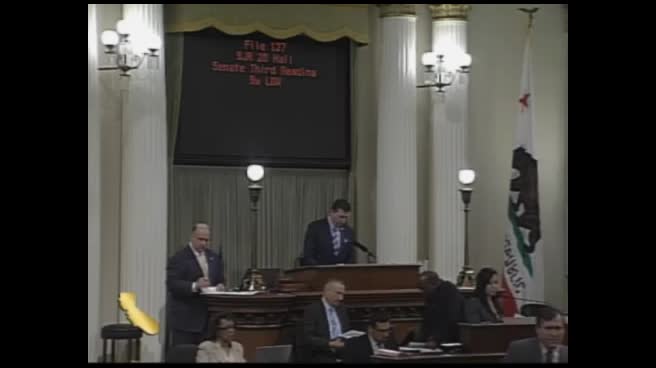 7MIN
Assembly Floor
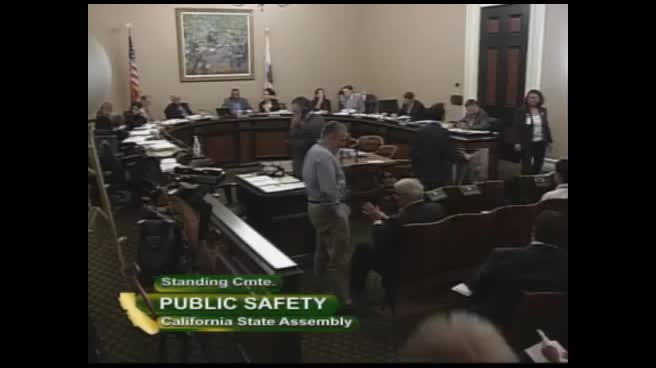 28MIN
Assembly Standing Committee on Public Safety
 25MIN
Senate Floor
 46MIN
Senate Standing Committee on Public Safety
Bill Author