SB 172: Pupil testing: high school exit examination: suspension.
- Session Year: 2015-2016
- House: Senate
- Latest Version Date: 2015-10-07
Existing law requires the Superintendent of Public Instruction, with the approval of the State Board of Education, to develop a high school exit examination in English language arts and mathematics in accordance with state academic content standards. Existing law requires, commencing with the 200304 school year and each school year thereafter, each pupil completing grade 12 to successfully pass the high school exit examination as a condition of receiving a diploma of graduation or a condition of graduation from high school.
This bill would suspend the administration of the high school exit examination and would remove the high school exit examination as a condition of receiving a diploma of graduation or a condition of graduation from high school for each pupil completing grade 12, for the 201516, 201617, and 201718 school years. The bill would, until July 31, 2018, require the governing board or body of a local educational agency, as defined, and the State Department of Education on behalf of state special schools, to grant a diploma of graduation from high school to any pupil who completed grade 12 in the 200304 school year or a subsequent school year and has met all applicable graduation requirements other than the passage of the high school exit examination.
Existing law establishes the California Assessment of Student Performance and Progress as the statewide system of pupil assessments, under which various assessments are required or authorized to be administered in public schools, as specified. Existing law requires the Superintendent, on or before March 1, 2016, to submit to the state board recommendations on expanding the California Assessment of Student Performance and Progress to include additional assessments, for consideration at a regularly scheduled public meeting, and to also submit those recommendations to the appropriate policy and fiscal committees of the Legislature and to the Director of Finance in accordance with specified requirements.
This bill would add a new requirement, that the Superintendent convene an advisory panel consisting of specified individuals to provide recommendations to the Superintendent on the continuation of the high school exit examination and on alternative pathways to satisfy specified high school graduation requirements, to those recommendations to be submitted by the Superintendent.
Existing law requires the Superintendent of Public Instruction, with the approval of the State Board of Education, to develop a high school exit examination in English language arts and mathematics in accordance with state academic content standards. Existing law requires, commencing with the 200304 school year and each school year thereafter, each pupil completing grade 12 to successfully pass the high school exit examination as a condition of receiving a diploma of graduation or a condition of graduation from high school.
This bill would suspend the administration of the high school exit examination and would remove the high school exit examination as a condition of receiving a diploma of graduation or a condition of graduation from high school for each pupil completing grade 12, for the 201516, 201617, and 201718 school years. The bill would, until July 31, 2018, require the governing board or body of a local educational agency, as defined, and the State Department of Education on behalf of state special schools, to grant a diploma of graduation from high school to a any pupil who completed grade 12 in the 200304 school year or a subsequent school year and has met all applicable graduation requirements other than the passage of the high school exit examination.
Existing law establishes the California Assessment of Student Performance and Progress as the statewide system of pupil assessments, under which various assessments are required or authorized to be administered in public schools, as specified. Existing law requires the Superintendent, on or before March 1, 2016, to submit to the state board recommendations on expanding the California Assessment of Student Performance and Progress to include additional assessments, for consideration at a regularly scheduled public meeting, and to also submit those recommendations to the appropriate policy and fiscal committees of the Legislature and to the Director of Finance in accordance with specified requirements.
This bill would add a new requirement, that the Superintendent convene an advisory panel consisting of specified individuals to provide recommendations to the Superintendent on the continuation of the high school exit examination and on alternative pathways to satisfy specified high school graduation requirements, to those recommendations to be submitted by the Superintendent.
Existing law requires the Superintendent of Public Instruction, with the approval of the State Board of Education, to develop a high school exit examination in English language arts and mathematics in accordance with state academic content standards. Existing law requires, commencing with the 200304 school year and each school year thereafter, each pupil completing grade 12 to successfully pass the high school exit examination as a condition of receiving a diploma of graduation or a condition of graduation from high school.
This bill would suspend the administration of the high school exit examination and would remove the high school exit examination as a condition of receiving a diploma of graduation or a condition of graduation from high school for each pupil completing grade 12, for the 201415, 201516, 201617, and 201718 school years. The bill would, until July 31, 2018, require the governing board or body of a local educational agency, as defined, and the State Department of Education on behalf of state special schools, to grant a diploma of graduation from high school to a pupil who has met all applicable graduation requirements other than the passage of the high school exit examination.
Existing law establishes the California Assessment of Student Performance and Progress as the statewide system of pupil assessments, under which various assessments are required or authorized to be administered in public schools, as specified. Existing law requires the Superintendent, on or before March 1, 2016, to submit to the state board recommendations on expanding the California Assessment of Student Performance and Progress to include additional assessments, for consideration at a regularly scheduled public meeting, and to also submit those recommendations to the appropriate policy and fiscal committees of the Legislature and to the Director of Finance in accordance with specified requirements.
This bill would add a new requirement, that the Superintendent convene an advisory panel consisting of specified individuals to provide recommendations to the Superintendent on the continuation of the high school exit examination and on alternative pathways to satisfy specified high school graduation requirements, to those recommendations to be submitted by the Superintendent.
Existing law requires the Superintendent of Public Instruction, with the approval of the State Board of Education, to develop a high school exit examination in English language arts and mathematics in accordance with state academic content standards. Existing law requires, commencing with the 200304 school year and each school year thereafter, each pupil completing grade 12 to successfully pass the high school exit examination as a condition of receiving a diploma of graduation or a condition of graduation from high school.
This bill would suspend the administration of the high school exit examination and would remove the high school exit examination as a condition of receiving a diploma of graduation or a condition of graduation from high school for each pupil completing grade 12, for the 201617, 201718, and 201819 school years, or when the approved high school exit examination is no longer available. 201415, 201516, 201617, and 201718 school years.
Existing law establishes the California Assessment of Student Performance and Progress as the statewide system of pupil assessments, under which various assessments are required or authorized to be administered in public schools, as specified. Existing law requires the Superintendent, on or before March 1, 2016, to submit to the state board recommendations on expanding the California Assessment of Student Performance and Progress to include additional assessments, for consideration at a regularly scheduled public meeting, and to also submit those recommendations to the appropriate policy and fiscal committees of the Legislature and to the Director of Finance in accordance with specified requirements.
This bill would add a new requirement, that the Superintendent convene an advisory panel consisting of specified individuals to provide recommendations to the Superintendent on the continuation of the high school exit examination and on alternative pathways to satisfy specified high school graduation requirements, to those recommendations to be submitted by the Superintendent.
Existing law requires the Superintendent of Public Instruction, with the approval of the State Board of Education, to develop a high school exit examination in English language arts and mathematics in accordance with state academic content standards. Existing law requires, commencing with the 200304 school year and each school year thereafter, each pupil completing grade 12 to successfully pass the high school exit examination as a condition of receiving a diploma of graduation or a condition of graduation from high school.
This bill would suspend the administration of the high school exit examination and would remove the high school exit examination as a condition of receiving a diploma of graduation or a condition of graduation from high school for each pupil completing grade 12, for the 201617, 201718, and 201819 school years, or when the approved high school exit examination is no longer available.
Existing law establishes the California Assessment of Student Performance and Progress as the statewide system of pupil assessments, under which various assessments are required or authorized to be administered in public schools, as specified. Existing law requires the Superintendent, on or before March 1, 2016, to submit to the state board recommendations on expanding the California Assessment of Student Performance and Progress to include additional assessments, for consideration at a regularly scheduled public meeting, and to also submit those recommendations to the appropriate policy and fiscal committees of the Legislature and to the Director of Finance in accordance with specified requirements.
This bill would add a new requirement, that the Superintendent convene an advisory panel consisting of specified individuals to provide recommendations to the Superintendent on the continuation of the high school exit examination and on alternative pathways to satisfy specified high school graduation requirements, to those recommendations to be submitted by the Superintendent.
Existing law requires the Superintendent of Public Instruction, with the approval of the State Board of Education, to develop a high school exit examination in English language arts and mathematics in accordance with state academic content standards. Existing law requires, commencing with the 200304 school year and each school year thereafter, each pupil completing grade 12 to successfully pass the high school exit examination as a condition of receiving a diploma of graduation or a condition of graduation from high school.
This bill would suspend the administration of the high school exit examination and would remove the high school exit examination as a condition of receiving a diploma of graduation or a condition of graduation from high school for each pupil completing grade 12, for the 201617, 201718, and 201819 school years. years, or when the approved high school exit examination is no longer available.
Existing law establishes the California Assessment of Student Performance and Progress as the statewide system of pupil assessments, under which various assessments are required or authorized to be administered in public schools, as specified. Existing law requires the Superintendent, on or before March 1, 2016, to submit to the state board recommendations on expanding the California Assessment of Student Performance and Progress to include additional assessments, for consideration at a regularly scheduled public meeting, and to also submit those recommendations to the appropriate policy and fiscal committees of the Legislature and to the Director of Finance in accordance with specified requirements.
This bill would add a new requirement, that the Superintendent convene an advisory panel consisting of specified individuals to provide recommendations to the Superintendent on the continuation of the high school exit examination and on alternative pathways to satisfy specified high school graduation requirements, to those recommendations to be submitted by the Superintendent.
Existing law requires the Superintendent of Public Instruction, with the approval of the State Board of Education, to develop a high school exit examination in English language arts and mathematics in accordance with state academic content standards. Existing law requires, commencing with the 200304 school year and each school year thereafter, each pupil completing grade 12 to successfully pass the high school exit examination as a condition of receiving a diploma of graduation or a condition of graduation from high school.
This bill would suspend the administration of the high school exit examination and would remove the high school exit examination as a condition of receiving a diploma of graduation or a condition of graduation from high school for each pupil completing grade 12, for the 201617, 201718, and 201819 school years.
Existing law establishes the California Assessment of Student Performance and Progress as the statewide system of pupil assessments, under which various assessments are required or authorized to be administered in public schools, as specified. Existing law requires the Superintendent, on or before March 1, 2016, to submit to the state board recommendations on expanding the California Assessment of Student Performance and Progress to include additional assessments, for consideration at a regularly scheduled public meeting, and to also submit those recommendations to the appropriate policy and fiscal committees of the Legislature and to the Director of Finance in accordance with specified requirements.
This bill would add a new requirement, that the Superintendent convene an advisory panel consisting of specified individuals to provide recommendations to the Superintendent on the continuation of the high school exit examination and on alternative pathways to satisfy specified high school graduation requirements, to those recommendations to be submitted by the Superintendent.
(a)There is hereby established the California Assessment of Student Performance and Progress, to be known as the CAASPP.
(b)Commencing with the 201314 school year, the CAASPP shall be composed of all of the following:
(1)(A)A consortium summative assessment in English language arts and mathematics for grades 3 to 8, inclusive, and grade 11 that measures content standards adopted by the state board.
(B)In the 201314 school year, the consortium summative assessment in English language arts and mathematics shall be a field test only, to enable the consortium to gauge the validity and reliability of these assessments and to conduct all necessary psychometric procedures and studies, including, but not necessarily limited to, achievement standard setting, and to allow the department to conduct studies regarding full implementation of the assessment system. These field tests and results shall not be used for any other purpose, including the calculation of any accountability measure.
(2)(A)Science grade level assessments in grades 5, 8, and 10 that measure content standards adopted pursuant to Section 60605, until a successor assessment is implemented pursuant to subparagraph (B).
(B)For science assessments, the Superintendent shall make a recommendation to the state board as soon as is feasible after the adoption of science content standards pursuant to Section 60605.85 regarding the assessment of the newly adopted standards. Before making recommendations, the Superintendent shall consult with stakeholders, including, but not necessarily limited to, California science teachers, individuals with expertise in assessing English learners and pupils with disabilities, parents, and measurement experts, regarding the grade level and type of assessment. The recommendations shall include cost estimates and a plan for implementation of at least one assessment in each of the following grade spans:
(i)Grades 3 to 5, inclusive.
(ii)Grades 6 to 9, inclusive.
(iii)Grades 10 to 12, inclusive.
(3)The California Alternate Performance Assessment in grades 2 to 11, inclusive, in English language arts and mathematics and science in grades 5, 8, and 10, which measures content standards adopted pursuant to Section 60605 until a successor assessment is implemented. The successor assessment shall be limited to the grades and subject areas assessed pursuant to paragraph (1) and subparagraph (B) of paragraph (2).
(4)The Early Assessment Program established by Chapter 6 (commencing with Section 99300) of Part 65 of Division 14 of Title 3.
(5)(A)A local educational agency may administer a primary language assessment aligned to the English language arts standards adopted pursuant to Section 60605, as it read on January 1, 2013, to pupils who are identified as limited English proficient and enrolled in any of grades 2 to 11, inclusive, until a subsequent primary language assessment aligned to the common core standards in English language arts adopted pursuant to Section 60605.8 is developed pursuant to subparagraph (E).
(B)If a local educational agency chooses to administer a primary language assessment to pupils identified as limited English proficient and enrolled in any of grades 2 to 11, inclusive, pursuant to subparagraph (A), it shall notify the department in a manner to be determined by the department and the costs shall be paid by the state and included as part of the testing contract, and the department shall provide the local educational agency a per pupil apportionment for administering the assessment pursuant to subdivision (l).
(C)The Superintendent shall consult with stakeholders, including assessment and English learner experts, to determine the content and purpose of a stand-alone language arts summative assessment in primary languages other than English that aligns with the English language arts content standards. The Superintendent shall consider the appropriate purpose for this assessment, including, but not necessarily limited to, support for the State Seal of Biliteracy and accountability. It is the intent of the Legislature that an assessment developed pursuant to this section be included in the state accountability system.
(D)The Superintendent shall report and make recommendations to the state board at a regularly scheduled public meeting no sooner than one year after the first full administration of the consortium computer-adaptive assessments in English language arts and mathematics summative assessments in grades 3 to 8, inclusive, and grade 11, regarding an implementation timeline and estimated costs of a stand-alone language arts summative assessment in primary languages other than English.
(E)The Superintendent shall develop, and the state board shall adopt, a primary language assessment. The Superintendent shall administer this assessment no later than the 201617 school year.
(F)This paragraph shall be operative only to the extent that funding is provided in the annual Budget Act or another statute for the purpose of this section.
(c)No later than March 1, 2016, the Superintendent shall submit to the state board recommendations on expanding the CAASPP to include additional assessments, for consideration at a regularly scheduled public meeting. The Superintendent shall also submit these recommendations to the appropriate policy and fiscal committees of the Legislature and to the Director of Finance in accordance with all of the following:
(1)In consultation with stakeholders, including, but not necessarily limited to, California teachers, individuals with expertise in assessing English learners and pupils with disabilities, parents, and measurement experts, the Superintendent shall make recommendations regarding assessments, including the grade level, content, and type of assessment. These recommendations shall take into consideration the assessments already administered or planned pursuant to subdivision (b). The Superintendent shall consider the use of consortium-developed assessments, various item types, computer-based testing, and a timeline for implementation.
(2)The recommendations shall consider assessments in subjects, including, but not necessarily limited to, history-social science, technology, visual and performing arts, and other subjects as appropriate, as well as English language arts, mathematics, and science assessments to augment the assessments required under subdivision (b), and the use of various assessment options, including, but not necessarily limited to, computer-based tests, locally scored performance tasks, and portfolios.
(3)The recommendations shall include the use of an assessment calendar that would schedule the assessments identified pursuant to paragraph (2) over several years, the use of matrix sampling, if appropriate, and the use of population sampling.
(4)The recommendations shall include a timeline for test development, and shall include cost estimates for subject areas, as appropriate.
(5)Upon approval by the state board and the appropriation of funding for this purpose, the Superintendent shall develop and administer approved assessments. The state board shall approve test blueprints, achievement level descriptors, testing periods, performance standards, and a reporting plan for each approved assessment.
(6)The Superintendent shall convene an advisory panel, consisting of, but not necessarily limited to, secondary teachers, school administrators, school board members, parents, a student chosen from among the two finalists who were not appointed by the Governor to serve as the student member on the state board pursuant to Section 33000.5, representatives of a dropout recovery charter school operating pursuant to subdivision (g) of Section 47605.1, measurement experts, and individuals with expertise in assessing English learners and pupils with disabilities, to provide recommendations to the Superintendent on the continuation of the high school exit examination, described in Chapter 9 (commencing with Section 60850), and on alternative pathways to satisfy the high school graduation requirements pursuant to Sections 51224.5 and 51225.3.
(d)For the 201314 and 201415 school years, the department shall make available to local educational agencies Standardized Testing and Reporting Program test forms no longer required by the CAASPP. The cost of implementing this subdivision, including, but not necessarily limited to, shipping, printing, scoring, and reporting per pupil shall be the same for all local educational agencies, and shall not exceed the marginal cost of the assessment, including any cost the department incurs to implement this section. A local educational agency that chooses to administer an assessment pursuant to this subdivision shall do so at its own expense, and shall enter into an agreement for that purpose with a contractor, subject to the approval of the department.
(e)The Superintendent shall make available a paper and pencil version of any computer-based CAASPP assessment for use by pupils who are unable to access the computer-based version of the assessment for a maximum of three years after a new operational test is first administered.
(f)(1)From the funds available for that purpose, each local educational agency shall administer assessments to each of its pupils pursuant to subdivision (b). As allowable by federal statute, recently arrived English learner pupils are exempted from taking the assessment in English language arts. The state board shall establish a testing period to provide that all schools administer these tests to pupils at approximately the same time during the instructional year. The testing period established by the state board shall take into consideration the need of local educational agencies to provide makeup days for pupils who were absent during testing, as well as the need to schedule testing on electronic computing devices.
(2)For the 201314 school year, each local educational agency shall administer the field tests in a manner described by the department in consultation with the president or executive director of the state board. Additional participants in the field test beyond the representative sample may be approved by the department, and the department shall use existing contract savings to fund local educational agency participation in one or more tests per participant. Funds for this purpose shall be used to allow for maximum participation in the field tests across the state. To the extent savings in the current contract are not available to fully fund this participation, the department shall prorate available funds by test. Local educational agencies shall bear any additional costs to administer these assessments that are in excess of the contracted amount. With the approval of the state board and the Director of Finance, the department shall amend the existing assessment contract to accommodate field testing beyond the representative sample, and to allow for special studies using information collected from the field tests.
(g)From the funds available for that purpose, each local educational agency shall administer assessments as determined by the state board pursuant to paragraph (5) of subdivision (c).
(h)As feasible, the CAASPP field tests shall be conducted in a manner that will minimize the testing burden on individual schools. The CAASPP field tests shall not produce individual pupil scores unless it is determined that these scores are valid and reliable.
(i)The governing board of a school district may administer achievement tests in grades other than those required by this section as it deems appropriate.
(j)Subject to the approval of the state board, the department may make available to local educational agencies a primary language assessment aligned to the English language arts standards adopted pursuant to Section 60605, as it read on January 1, 2013, for assessing pupils who are enrolled in a dual language immersion program that includes the primary language of the assessment and who are either nonlimited English proficient or redesignated fluent English proficient until a subsequent primary language assessment aligned to the common core standards in English language arts adopted pursuant to Section 60605.8 is developed pursuant to paragraph (5) of subdivision (b). The cost for the assessment shall be the same for all local educational agencies and shall not exceed the marginal cost of the assessment, including any cost the department incurs to implement this section. A local educational agency that elects to administer a primary language assessment pursuant to this subdivision shall do so at its own expense and shall enter into an agreement for that purpose with the state testing contractor, subject to the approval of the department.
(k)Pursuant to Section 1412(a)(16) of Title 20 of the United States Code, individuals with exceptional needs, as defined in Section 56026, shall be included in the testing requirement of subdivision (b) with appropriate accommodations in administration, where necessary, and the individuals with exceptional needs who are unable to participate in the testing, even with accommodations, shall be given an alternate assessment.
(l)(1)The Superintendent shall apportion funds appropriated for these purposes to local educational agencies to enable them to meet the requirements of subdivisions (b) and (c).
(A)For the CAASPP field tests administered in the 201314 school year or later school years, the Superintendent shall apportion funds to local educational agencies if funds are specifically provided for this purpose in the annual Budget Act.
(B)The Superintendent shall apportion funds to local educational agencies to enable them to administer assessments used to satisfy the voluntary Early Assessment Program in the 201314 school year pursuant to paragraph (4) of subdivision (b).
(2)The state board annually shall establish the amount of funding to be apportioned to local educational agencies for each test administered and annually shall establish the amount that each contractor shall be paid for each test administered under the contracts required pursuant to Section 60643. The amounts to be paid to the contractors shall be determined by considering the cost estimates submitted by each contractor each September and the amount included in the annual Budget Act, and by making allowance for the estimated costs to local educational agencies for compliance with the requirements of subdivisions (b) and (c). The state board shall take into account changes to local educational agency test administration activities under the CAASPP, including, but not limited to, the number and type of tests administered and changes in computerized test registration and administration procedures, when establishing the amount of funding to be apportioned to local educational agencies for each test administered.
(3)An adjustment to the amount of funding to be apportioned per test shall not be valid without the approval of the Director of Finance. A request for approval of an adjustment to the amount of funding to be apportioned per test shall be submitted in writing to the Director of Finance and the chairpersons of the fiscal committees of both houses of the Legislature with accompanying material justifying the proposed adjustment. The Director of Finance is authorized to approve only those adjustments related to activities required by statute. The Director of Finance shall approve or disapprove the amount within 30 days of receipt of the request and shall notify the chairpersons of the fiscal committees of both houses of the Legislature of the decision.
(m)For purposes of making the computations required by Section 8 of Article XVI of the California Constitution, the appropriation for the apportionments made pursuant to paragraph (1) of subdivision (l), and the payments made to the contractors under the contracts required pursuant to Section 60643 or subparagraph (C) of paragraph (1) of subdivision (a) of Section 60605 between the department and the contractor, are General Fund revenues appropriated for school districts, as defined in subdivision (c) of Section 41202, for the applicable fiscal year, and included within the total allocations to school districts and community college districts from General Fund proceeds of taxes appropriated pursuant to Article XIIIB, as defined in subdivision (e) of Section 41202, for that fiscal year.
(n)As a condition to receiving an apportionment pursuant to subdivision (l), a local educational agency shall report to the Superintendent all of the following:
(1)The pupils enrolled in the local educational agency in the grades in which assessments were administered pursuant to subdivisions (b) and (c).
(2)The pupils to whom an achievement test was administered pursuant to subdivisions (b) and (c) in the local educational agency.
(3)The pupils in paragraph (1) who were exempted from the test pursuant to this section.
(o)The Superintendent and the state board are authorized and encouraged to assist postsecondary educational institutions to use the assessment results of the CAASPP, including, but not necessarily limited to, the grade 11 consortium summative assessments in English language arts and mathematics, for academic credit, placement, or admissions processes.
(p)Subject to the availability of funds in the annual Budget Act for this purpose, and exclusive of the consortium assessments, the Superintendent, with the approval of the state board, annually shall release to the public test items from the achievement tests pursuant to Section 60642.5 administered in previous years. Where feasible and practicable, the minimum number of test items released per year shall be equal to 25 percent of the total number of test items on the test administered in the previous year.
(q)On or before July 1, 2014, Sections 850 to 868, inclusive, of Title 5 of the California Code of Regulations shall be revised by the state board to conform to the changes made to this section in the first year of the 201314 Regular Session. The state board shall adopt initial regulations as emergency regulations to immediately implement the CAASPP assessments, including, but not necessarily limited to, the administration, scoring, and reporting of the tests, as the adoption of emergency regulations is necessary for the immediate preservation of the public peace, health, safety, or general welfare within the meaning of Section 11346.1 of the Government Code. The emergency regulations shall be followed by the adoption of permanent regulations, in accordance with the Administrative Procedure Act (Chapter 3.5 (commencing with Section 11340) of Part 1 of Division 3 of Title 2 of the Government Code).
SEC. 2.Section 60851.5 is added to the Education Code, to read:60851.5.Notwithstanding Section 60851, the administration of the high school exit examination, and the requirement that each pupil completing grade 12 successfully pass the high school exit examination as a condition of receiving a diploma of graduation or a condition of graduation from high school, shall be suspended for the 201516, 201617, and 201718 school years.
SEC. 3.Section 60851.6 is added to the Education Code, to read:60851.6.(a)Notwithstanding Section 60851 or any other law, the governing board or body of a local educational agency, and the department on behalf of state special schools, shall grant a diploma of graduation from high school to any pupil who completed grade 12 in the 200304 school year or a subsequent school year and has met all applicable graduation requirements other than the passage of the high school exit examination.
(b)For purposes of this section, local educational agency means a school district, county office of education, or charter school.
(c)This section shall remain in effect only until July 31, 2018, and as of that date is repealed, unless a later enacted statute, that is enacted before July 31, 2018, deletes or extends that date.
(a)There is hereby established the California Assessment of Student Performance and Progress, to be known as the CAASPP.
(b)Commencing with the 201314 school year, the CAASPP shall be composed of all of the following:
(1)(A)A consortium summative assessment in English language arts and mathematics for grades 3 to 8, inclusive, and grade 11 that measures content standards adopted by the state board.
(B)In the 201314 school year, the consortium summative assessment in English language arts and mathematics shall be a field test only, to enable the consortium to gauge the validity and reliability of these assessments and to conduct all necessary psychometric procedures and studies, including, but not necessarily limited to, achievement standard setting, and to allow the department to conduct studies regarding full implementation of the assessment system. These field tests and results shall not be used for any other purpose, including the calculation of any accountability measure.
(2)(A)Science grade level assessments in grades 5, 8, and 10 that measure content standards adopted pursuant to Section 60605, until a successor assessment is implemented pursuant to subparagraph (B).
(B)For science assessments, the Superintendent shall make a recommendation to the state board as soon as is feasible after the adoption of science content standards pursuant to Section 60605.85 regarding the assessment of the newly adopted standards. Before making recommendations, the Superintendent shall consult with stakeholders, including, but not necessarily limited to, California science teachers, individuals with expertise in assessing English learners and pupils with disabilities, parents, and measurement experts, regarding the grade level and type of assessment. The recommendations shall include cost estimates and a plan for implementation of at least one assessment in each of the following grade spans:
(i)Grades 3 to 5, inclusive.
(ii)Grades 6 to 9, inclusive.
(iii)Grades 10 to 12, inclusive.
(3)The California Alternate Performance Assessment in grades 2 to 11, inclusive, in English language arts and mathematics and science in grades 5, 8, and 10, which measures content standards adopted pursuant to Section 60605 until a successor assessment is implemented. The successor assessment shall be limited to the grades and subject areas assessed pursuant to paragraph (1) and subparagraph (B) of paragraph (2).
(4)The Early Assessment Program established by Chapter 6 (commencing with Section 99300) of Part 65 of Division 14 of Title 3.
(5)(A)A local educational agency may administer a primary language assessment aligned to the English language arts standards adopted pursuant to Section 60605, as it read on January 1, 2013, to pupils who are identified as limited English proficient and enrolled in any of grades 2 to 11, inclusive, until a subsequent primary language assessment aligned to the common core standards in English language arts adopted pursuant to Section 60605.8 is developed pursuant to subparagraph (E).
(B)If a local educational agency chooses to administer a primary language assessment to pupils identified as limited English proficient and enrolled in any of grades 2 to 11, inclusive, pursuant to subparagraph (A), it shall notify the department in a manner to be determined by the department and the costs shall be paid by the state and included as part of the testing contract, and the department shall provide the local educational agency a per pupil apportionment for administering the assessment pursuant to subdivision (l).
(C)The Superintendent shall consult with stakeholders, including assessment and English learner experts, to determine the content and purpose of a stand-alone language arts summative assessment in primary languages other than English that aligns with the English language arts content standards. The Superintendent shall consider the appropriate purpose for this assessment, including, but not necessarily limited to, support for the State Seal of Biliteracy and accountability. It is the intent of the Legislature that an assessment developed pursuant to this section be included in the state accountability system.
(D)The Superintendent shall report and make recommendations to the state board at a regularly scheduled public meeting no sooner than one year after the first full administration of the consortium computer-adaptive assessments in English language arts and mathematics summative assessments in grades 3 to 8, inclusive, and grade 11, regarding an implementation timeline and estimated costs of a stand-alone language arts summative assessment in primary languages other than English.
(E)The Superintendent shall develop, and the state board shall adopt, a primary language assessment. The Superintendent shall administer this assessment no later than the 201617 school year.
(F)This paragraph shall be operative only to the extent that funding is provided in the annual Budget Act or another statute for the purpose of this section.
(c)No later than March 1, 2016, the Superintendent shall submit to the state board recommendations on expanding the CAASPP to include additional assessments, for consideration at a regularly scheduled public meeting. The Superintendent shall also submit these recommendations to the appropriate policy and fiscal committees of the Legislature and to the Director of Finance in accordance with all of the following:
(1)In consultation with stakeholders, including, but not necessarily limited to, California teachers, individuals with expertise in assessing English learners and pupils with disabilities, parents, and measurement experts, the Superintendent shall make recommendations regarding assessments, including the grade level, content, and type of assessment. These recommendations shall take into consideration the assessments already administered or planned pursuant to subdivision (b). The Superintendent shall consider the use of consortium-developed assessments, various item types, computer-based testing, and a timeline for implementation.
(2)The recommendations shall consider assessments in subjects, including, but not necessarily limited to, history-social science, technology, visual and performing arts, and other subjects as appropriate, as well as English language arts, mathematics, and science assessments to augment the assessments required under subdivision (b), and the use of various assessment options, including, but not necessarily limited to, computer-based tests, locally scored performance tasks, and portfolios.
(3)The recommendations shall include the use of an assessment calendar that would schedule the assessments identified pursuant to paragraph (2) over several years, the use of matrix sampling, if appropriate, and the use of population sampling.
(4)The recommendations shall include a timeline for test development, and shall include cost estimates for subject areas, as appropriate.
(5)Upon approval by the state board and the appropriation of funding for this purpose, the Superintendent shall develop and administer approved assessments. The state board shall approve test blueprints, achievement level descriptors, testing periods, performance standards, and a reporting plan for each approved assessment.
(6)The Superintendent shall convene an advisory panel, consisting of, but not necessarily limited to, secondary teachers, school administrators, school board members, parents, a student chosen from among the two finalists who were not appointed by the Governor to serve as the student member on the state board pursuant to Section 33000.5, representatives of a dropout recovery charter school operating pursuant to subdivision (g) of Section 47605.1, measurement experts, and individuals with expertise in assessing English learners and pupils with disabilities, to provide recommendations to the Superintendent on the continuation of the high school exit examination, described in Chapter 9 (commencing with Section 60850), and on alternative pathways to satisfy the high school graduation requirements pursuant to Sections 51224.5 and 51225.3.
(d)For the 201314 and 201415 school years, the department shall make available to local educational agencies Standardized Testing and Reporting Program test forms no longer required by the CAASPP. The cost of implementing this subdivision, including, but not necessarily limited to, shipping, printing, scoring, and reporting per pupil shall be the same for all local educational agencies, and shall not exceed the marginal cost of the assessment, including any cost the department incurs to implement this section. A local educational agency that chooses to administer an assessment pursuant to this subdivision shall do so at its own expense, and shall enter into an agreement for that purpose with a contractor, subject to the approval of the department.
(e)The Superintendent shall make available a paper and pencil version of any computer-based CAASPP assessment for use by pupils who are unable to access the computer-based version of the assessment for a maximum of three years after a new operational test is first administered.
(f)(1)From the funds available for that purpose, each local educational agency shall administer assessments to each of its pupils pursuant to subdivision (b). As allowable by federal statute, recently arrived English learner pupils are exempted from taking the assessment in English language arts. The state board shall establish a testing period to provide that all schools administer these tests to pupils at approximately the same time during the instructional year. The testing period established by the state board shall take into consideration the need of local educational agencies to provide makeup days for pupils who were absent during testing, as well as the need to schedule testing on electronic computing devices.
(2)For the 201314 school year, each local educational agency shall administer the field tests in a manner described by the department in consultation with the president or executive director of the state board. Additional participants in the field test beyond the representative sample may be approved by the department, and the department shall use existing contract savings to fund local educational agency participation in one or more tests per participant. Funds for this purpose shall be used to allow for maximum participation in the field tests across the state. To the extent savings in the current contract are not available to fully fund this participation, the department shall prorate available funds by test. Local educational agencies shall bear any additional costs to administer these assessments that are in excess of the contracted amount. With the approval of the state board and the Director of Finance, the department shall amend the existing assessment contract to accommodate field testing beyond the representative sample, and to allow for special studies using information collected from the field tests.
(g)From the funds available for that purpose, each local educational agency shall administer assessments as determined by the state board pursuant to paragraph (5) of subdivision (c).
(h)As feasible, the CAASPP field tests shall be conducted in a manner that will minimize the testing burden on individual schools. The CAASPP field tests shall not produce individual pupil scores unless it is determined that these scores are valid and reliable.
(i)The governing board of a school district may administer achievement tests in grades other than those required by this section as it deems appropriate.
(j)Subject to the approval of the state board, the department may make available to local educational agencies a primary language assessment aligned to the English language arts standards adopted pursuant to Section 60605, as it read on January 1, 2013, for assessing pupils who are enrolled in a dual language immersion program that includes the primary language of the assessment and who are either nonlimited English proficient or redesignated fluent English proficient until a subsequent primary language assessment aligned to the common core standards in English language arts adopted pursuant to Section 60605.8 is developed pursuant to paragraph (5) of subdivision (b). The cost for the assessment shall be the same for all local educational agencies and shall not exceed the marginal cost of the assessment, including any cost the department incurs to implement this section. A local educational agency that elects to administer a primary language assessment pursuant to this subdivision shall do so at its own expense and shall enter into an agreement for that purpose with the state testing contractor, subject to the approval of the department.
(k)Pursuant to Section 1412(a)(16) of Title 20 of the United States Code, individuals with exceptional needs, as defined in Section 56026, shall be included in the testing requirement of subdivision (b) with appropriate accommodations in administration, where necessary, and the individuals with exceptional needs who are unable to participate in the testing, even with accommodations, shall be given an alternate assessment.
(l)(1)The Superintendent shall apportion funds appropriated for these purposes to local educational agencies to enable them to meet the requirements of subdivisions (b) and (c).
(A)For the CAASPP field tests administered in the 201314 school year or later school years, the Superintendent shall apportion funds to local educational agencies if funds are specifically provided for this purpose in the annual Budget Act.
(B)The Superintendent shall apportion funds to local educational agencies to enable them to administer assessments used to satisfy the voluntary Early Assessment Program in the 201314 school year pursuant to paragraph (4) of subdivision (b).
(2)The state board annually shall establish the amount of funding to be apportioned to local educational agencies for each test administered and annually shall establish the amount that each contractor shall be paid for each test administered under the contracts required pursuant to Section 60643. The amounts to be paid to the contractors shall be determined by considering the cost estimates submitted by each contractor each September and the amount included in the annual Budget Act, and by making allowance for the estimated costs to local educational agencies for compliance with the requirements of subdivisions (b) and (c). The state board shall take into account changes to local educational agency test administration activities under the CAASPP, including, but not limited to, the number and type of tests administered and changes in computerized test registration and administration procedures, when establishing the amount of funding to be apportioned to local educational agencies for each test administered.
(3)An adjustment to the amount of funding to be apportioned per test shall not be valid without the approval of the Director of Finance. A request for approval of an adjustment to the amount of funding to be apportioned per test shall be submitted in writing to the Director of Finance and the chairpersons of the fiscal committees of both houses of the Legislature with accompanying material justifying the proposed adjustment. The Director of Finance is authorized to approve only those adjustments related to activities required by statute. The Director of Finance shall approve or disapprove the amount within 30 days of receipt of the request and shall notify the chairpersons of the fiscal committees of both houses of the Legislature of the decision.
(m)For purposes of making the computations required by Section 8 of Article XVI of the California Constitution, the appropriation for the apportionments made pursuant to paragraph (1) of subdivision (l), and the payments made to the contractors under the contracts required pursuant to Section 60643 or subparagraph (C) of paragraph (1) of subdivision (a) of Section 60605 between the department and the contractor, are General Fund revenues appropriated for school districts, as defined in subdivision (c) of Section 41202, for the applicable fiscal year, and included within the total allocations to school districts and community college districts from General Fund proceeds of taxes appropriated pursuant to Article XIIIB, as defined in subdivision (e) of Section 41202, for that fiscal year.
(n)As a condition to receiving an apportionment pursuant to subdivision (l), a local educational agency shall report to the Superintendent all of the following:
(1)The pupils enrolled in the local educational agency in the grades in which assessments were administered pursuant to subdivisions (b) and (c).
(2)The pupils to whom an achievement test was administered pursuant to subdivisions (b) and (c) in the local educational agency.
(3)The pupils in paragraph (1) who were exempted from the test pursuant to this section.
(o)The Superintendent and the state board are authorized and encouraged to assist postsecondary educational institutions to use the assessment results of the CAASPP, including, but not necessarily limited to, the grade 11 consortium summative assessments in English language arts and mathematics, for academic credit, placement, or admissions processes.
(p)Subject to the availability of funds in the annual Budget Act for this purpose, and exclusive of the consortium assessments, the Superintendent, with the approval of the state board, annually shall release to the public test items from the achievement tests pursuant to Section 60642.5 administered in previous years. Where feasible and practicable, the minimum number of test items released per year shall be equal to 25 percent of the total number of test items on the test administered in the previous year.
(q)On or before July 1, 2014, Sections 850 to 868, inclusive, of Title 5 of the California Code of Regulations shall be revised by the state board to conform to the changes made to this section in the first year of the 201314 Regular Session. The state board shall adopt initial regulations as emergency regulations to immediately implement the CAASPP assessments, including, but not necessarily limited to, the administration, scoring, and reporting of the tests, as the adoption of emergency regulations is necessary for the immediate preservation of the public peace, health, safety, or general welfare within the meaning of Section 11346.1 of the Government Code. The emergency regulations shall be followed by the adoption of permanent regulations, in accordance with the Administrative Procedure Act (Chapter 3.5 (commencing with Section 11340) of Part 1 of Division 3 of Title 2 of the Government Code).
SEC. 2.Section 60851.5 is added to the Education Code, to read:60851.5.Notwithstanding Section 60851, the administration of the high school exit examination, and the requirement that each pupil completing grade 12 successfully pass the high school exit examination as a condition of receiving a diploma of graduation or a condition of graduation from high school, shall be suspended for the 201516, 201617, and 201718 school years.
SEC. 3.Section 60851.6 is added to the Education Code, to read:60851.6.(a)Notwithstanding Section 60851 or any other law, the governing board or body of a local educational agency, and the department on behalf of state special schools, shall grant a diploma of graduation from high school to a any pupil who completed grade 12 in the 200304 school year or a subsequent school year and has met all applicable graduation requirements other than the passage of the high school exit examination.
(b)For purposes of this section, local educational agency means a school district, county office of education, or charter school.
(c)This section shall remain in effect only until July 31, 2018, and as of that date is repealed, unless a later enacted statute, that is enacted before July 31, 2018, deletes or extends that date.
(a)There is hereby established the California Assessment of Student Performance and Progress, to be known as the CAASPP.
(b)Commencing with the 201314 school year, the CAASPP shall be composed of all of the following:
(1)(A)A consortium summative assessment in English language arts and mathematics for grades 3 to 8, inclusive, and grade 11 that measures content standards adopted by the state board.
(B)In the 201314 school year, the consortium summative assessment in English language arts and mathematics shall be a field test only, to enable the consortium to gauge the validity and reliability of these assessments and to conduct all necessary psychometric procedures and studies, including, but not necessarily limited to, achievement standard setting, and to allow the department to conduct studies regarding full implementation of the assessment system. These field tests and results shall not be used for any other purpose, including the calculation of any accountability measure.
(2)(A)Science grade level assessments in grades 5, 8, and 10 that measure content standards adopted pursuant to Section 60605, until a successor assessment is implemented pursuant to subparagraph (B).
(B)For science assessments, the Superintendent shall make a recommendation to the state board as soon as is feasible after the adoption of science content standards pursuant to Section 60605.85 regarding the assessment of the newly adopted standards. Before making recommendations, the Superintendent shall consult with stakeholders, including, but not necessarily limited to, California science teachers, individuals with expertise in assessing English learners and pupils with disabilities, parents, and measurement experts, regarding the grade level and type of assessment. The recommendations shall include cost estimates and a plan for implementation of at least one assessment in each of the following grade spans:
(i)Grades 3 to 5, inclusive.
(ii)Grades 6 to 9, inclusive.
(iii)Grades 10 to 12, inclusive.
(3)The California Alternate Performance Assessment in grades 2 to 11, inclusive, in English language arts and mathematics and science in grades 5, 8, and 10, which measures content standards adopted pursuant to Section 60605 until a successor assessment is implemented. The successor assessment shall be limited to the grades and subject areas assessed pursuant to paragraph (1) and subparagraph (B) of paragraph (2).
(4)The Early Assessment Program established by Chapter 6 (commencing with Section 99300) of Part 65 of Division 14 of Title 3.
(5)(A)A local educational agency may administer a primary language assessment aligned to the English language arts standards adopted pursuant to Section 60605, as it read on January 1, 2013, to pupils who are identified as limited English proficient and enrolled in any of grades 2 to 11, inclusive, until a subsequent primary language assessment aligned to the common core standards in English language arts adopted pursuant to Section 60605.8 is developed pursuant to subparagraph (E).
(B)If a local educational agency chooses to administer a primary language assessment to pupils identified as limited English proficient and enrolled in any of grades 2 to 11, inclusive, pursuant to subparagraph (A), it shall notify the department in a manner to be determined by the department and the costs shall be paid by the state and included as part of the testing contract, and the department shall provide the local educational agency a per pupil apportionment for administering the assessment pursuant to subdivision (l).
(C)The Superintendent shall consult with stakeholders, including assessment and English learner experts, to determine the content and purpose of a stand-alone language arts summative assessment in primary languages other than English that aligns with the English language arts content standards. The Superintendent shall consider the appropriate purpose for this assessment, including, but not necessarily limited to, support for the State Seal of Biliteracy and accountability. It is the intent of the Legislature that an assessment developed pursuant to this section be included in the state accountability system.
(D)The Superintendent shall report and make recommendations to the state board at a regularly scheduled public meeting no sooner than one year after the first full administration of the consortium computer-adaptive assessments in English language arts and mathematics summative assessments in grades 3 to 8, inclusive, and grade 11, regarding an implementation timeline and estimated costs of a stand-alone language arts summative assessment in primary languages other than English.
(E)The Superintendent shall develop, and the state board shall adopt, a primary language assessment. The Superintendent shall administer this assessment no later than the 201617 school year.
(F)This paragraph shall be operative only to the extent that funding is provided in the annual Budget Act or another statute for the purpose of this section.
(c)No later than March 1, 2016, the Superintendent shall submit to the state board recommendations on expanding the CAASPP to include additional assessments, for consideration at a regularly scheduled public meeting. The Superintendent shall also submit these recommendations to the appropriate policy and fiscal committees of the Legislature and to the Director of Finance in accordance with all of the following:
(1)In consultation with stakeholders, including, but not necessarily limited to, California teachers, individuals with expertise in assessing English learners and pupils with disabilities, parents, and measurement experts, the Superintendent shall make recommendations regarding assessments, including the grade level, content, and type of assessment. These recommendations shall take into consideration the assessments already administered or planned pursuant to subdivision (b). The Superintendent shall consider the use of consortium-developed assessments, various item types, computer-based testing, and a timeline for implementation.
(2)The recommendations shall consider assessments in subjects, including, but not necessarily limited to, history-social science, technology, visual and performing arts, and other subjects as appropriate, as well as English language arts, mathematics, and science assessments to augment the assessments required under subdivision (b), and the use of various assessment options, including, but not necessarily limited to, computer-based tests, locally scored performance tasks, and portfolios.
(3)The recommendations shall include the use of an assessment calendar that would schedule the assessments identified pursuant to paragraph (2) over several years, the use of matrix sampling, if appropriate, and the use of population sampling.
(4)The recommendations shall include a timeline for test development, and shall include cost estimates for subject areas, as appropriate.
(5)Upon approval by the state board and the appropriation of funding for this purpose, the Superintendent shall develop and administer approved assessments. The state board shall approve test blueprints, achievement level descriptors, testing periods, performance standards, and a reporting plan for each approved assessment.
(6)The Superintendent shall convene an advisory panel, consisting of, but not necessarily limited to, secondary teachers, school administrators, school board members, parents, the student member of the state board, a student chosen from among the two finalists who were not appointed by the Governor to serve as the student member on the state board pursuant to Section 33000.5, representatives of a dropout recovery charter school operating pursuant to subdivision (g) of Section 47605.1, measurement experts, and individuals with expertise in assessing English learners and pupils with disabilities, to provide recommendations to the Superintendent on the continuation of the high school exit examination, described in Chapter 9 (commencing with Section 60850), and on alternative pathways to satisfy the high school graduation requirements pursuant to Sections 51224.5 and 51225.3.
(d)For the 201314 and 201415 school years, the department shall make available to local educational agencies Standardized Testing and Reporting Program test forms no longer required by the CAASPP. The cost of implementing this subdivision, including, but not necessarily limited to, shipping, printing, scoring, and reporting per pupil shall be the same for all local educational agencies, and shall not exceed the marginal cost of the assessment, including any cost the department incurs to implement this section. A local educational agency that chooses to administer an assessment pursuant to this subdivision shall do so at its own expense, and shall enter into an agreement for that purpose with a contractor, subject to the approval of the department.
(e)The Superintendent shall make available a paper and pencil version of any computer-based CAASPP assessment for use by pupils who are unable to access the computer-based version of the assessment for a maximum of three years after a new operational test is first administered.
(f)(1)From the funds available for that purpose, each local educational agency shall administer assessments to each of its pupils pursuant to subdivision (b). As allowable by federal statute, recently arrived English learner pupils are exempted from taking the assessment in English language arts. The state board shall establish a testing period to provide that all schools administer these tests to pupils at approximately the same time during the instructional year. The testing period established by the state board shall take into consideration the need of local educational agencies to provide makeup days for pupils who were absent during testing, as well as the need to schedule testing on electronic computing devices.
(2)For the 201314 school year, each local educational agency shall administer the field tests in a manner described by the department in consultation with the president or executive director of the state board. Additional participants in the field test beyond the representative sample may be approved by the department, and the department shall use existing contract savings to fund local educational agency participation in one or more tests per participant. Funds for this purpose shall be used to allow for maximum participation in the field tests across the state. To the extent savings in the current contract are not available to fully fund this participation, the department shall prorate available funds by test. Local educational agencies shall bear any additional costs to administer these assessments that are in excess of the contracted amount. With the approval of the state board and the Director of Finance, the department shall amend the existing assessment contract to accommodate field testing beyond the representative sample, and to allow for special studies using information collected from the field tests.
(g)From the funds available for that purpose, each local educational agency shall administer assessments as determined by the state board pursuant to paragraph (5) of subdivision (c).
(h)As feasible, the CAASPP field tests shall be conducted in a manner that will minimize the testing burden on individual schools. The CAASPP field tests shall not produce individual pupil scores unless it is determined that these scores are valid and reliable.
(i)The governing board of a school district may administer achievement tests in grades other than those required by this section as it deems appropriate.
(j)Subject to the approval of the state board, the department may make available to local educational agencies a primary language assessment aligned to the English language arts standards adopted pursuant to Section 60605, as it read on January 1, 2013, for assessing pupils who are enrolled in a dual language immersion program that includes the primary language of the assessment and who are either nonlimited English proficient or redesignated fluent English proficient until a subsequent primary language assessment aligned to the common core standards in English language arts adopted pursuant to Section 60605.8 is developed pursuant to paragraph (5) of subdivision (b). The cost for the assessment shall be the same for all local educational agencies and shall not exceed the marginal cost of the assessment, including any cost the department incurs to implement this section. A local educational agency that elects to administer a primary language assessment pursuant to this subdivision shall do so at its own expense and shall enter into an agreement for that purpose with the state testing contractor, subject to the approval of the department.
(k)Pursuant to Section 1412(a)(16) of Title 20 of the United States Code, individuals with exceptional needs, as defined in Section 56026, shall be included in the testing requirement of subdivision (b) with appropriate accommodations in administration, where necessary, and the individuals with exceptional needs who are unable to participate in the testing, even with accommodations, shall be given an alternate assessment.
(l)(1)The Superintendent shall apportion funds appropriated for these purposes to local educational agencies to enable them to meet the requirements of subdivisions (b) and (c).
(A)For the CAASPP field tests administered in the 201314 school year or later school years, the Superintendent shall apportion funds to local educational agencies if funds are specifically provided for this purpose in the annual Budget Act.
(B)The Superintendent shall apportion funds to local educational agencies to enable them to administer assessments used to satisfy the voluntary Early Assessment Program in the 201314 school year pursuant to paragraph (4) of subdivision (b).
(2)The state board annually shall establish the amount of funding to be apportioned to local educational agencies for each test administered and annually shall establish the amount that each contractor shall be paid for each test administered under the contracts required pursuant to Section 60643. The amounts to be paid to the contractors shall be determined by considering the cost estimates submitted by each contractor each September and the amount included in the annual Budget Act, and by making allowance for the estimated costs to local educational agencies for compliance with the requirements of subdivisions (b) and (c). The state board shall take into account changes to local educational agency test administration activities under the CAASPP, including, but not limited to, the number and type of tests administered and changes in computerized test registration and administration procedures, when establishing the amount of funding to be apportioned to local educational agencies for each test administered.
(3)An adjustment to the amount of funding to be apportioned per test shall not be valid without the approval of the Director of Finance. A request for approval of an adjustment to the amount of funding to be apportioned per test shall be submitted in writing to the Director of Finance and the chairpersons of the fiscal committees of both houses of the Legislature with accompanying material justifying the proposed adjustment. The Director of Finance is authorized to approve only those adjustments related to activities required by statute. The Director of Finance shall approve or disapprove the amount within 30 days of receipt of the request and shall notify the chairpersons of the fiscal committees of both houses of the Legislature of the decision.
(m)For purposes of making the computations required by Section 8 of Article XVI of the California Constitution, the appropriation for the apportionments made pursuant to paragraph (1) of subdivision (l), and the payments made to the contractors under the contracts required pursuant to Section 60643 or subparagraph (C) of paragraph (1) of subdivision (a) of Section 60605 between the department and the contractor, are General Fund revenues appropriated for school districts, as defined in subdivision (c) of Section 41202, for the applicable fiscal year, and included within the total allocations to school districts and community college districts from General Fund proceeds of taxes appropriated pursuant to Article XIIIB, as defined in subdivision (e) of Section 41202, for that fiscal year.
(n)As a condition to receiving an apportionment pursuant to subdivision (l), a local educational agency shall report to the Superintendent all of the following:
(1)The pupils enrolled in the local educational agency in the grades in which assessments were administered pursuant to subdivisions (b) and (c).
(2)The pupils to whom an achievement test was administered pursuant to subdivisions (b) and (c) in the local educational agency.
(3)The pupils in paragraph (1) who were exempted from the test pursuant to this section.
(o)The Superintendent and the state board are authorized and encouraged to assist postsecondary educational institutions to use the assessment results of the CAASPP, including, but not necessarily limited to, the grade 11 consortium summative assessments in English language arts and mathematics, for academic credit, placement, or admissions processes.
(p)Subject to the availability of funds in the annual Budget Act for this purpose, and exclusive of the consortium assessments, the Superintendent, with the approval of the state board, annually shall release to the public test items from the achievement tests pursuant to Section 60642.5 administered in previous years. Where feasible and practicable, the minimum number of test items released per year shall be equal to 25 percent of the total number of test items on the test administered in the previous year.
(q)On or before July 1, 2014, Sections 850 to 868, inclusive, of Title 5 of the California Code of Regulations shall be revised by the state board to conform to the changes made to this section in the first year of the 201314 Regular Session. The state board shall adopt initial regulations as emergency regulations to immediately implement the CAASPP assessments, including, but not necessarily limited to, the administration, scoring, and reporting of the tests, as the adoption of emergency regulations is necessary for the immediate preservation of the public peace, health, safety, or general welfare within the meaning of Section 11346.1 of the Government Code. The emergency regulations shall be followed by the adoption of permanent regulations, in accordance with the Administrative Procedure Act (Chapter 3.5 (commencing with Section 11340) of Part 1 of Division 3 of Title 2 of the Government Code).
SEC. 2.Section 60851.5 is added to the Education Code, to read:60851.5.Notwithstanding Section 60851, the administration of the high school exit examination, and the requirement that each pupil completing grade 12 successfully pass the high school exit examination as a condition of receiving a diploma of graduation or a condition of graduation from high school, shall be suspended for the 201415, 201516, 201617, and 201718 school years.
SEC. 3.Section 60851.6 is added to the Education Code, to read:60851.6.(a)Notwithstanding any other law, the governing board or body of a local educational agency, and the department on behalf of state special schools, shall grant a diploma of graduation from high school to a pupil who has met all applicable graduation requirements other than the passage of the high school exit examination.
(b)For purposes of this section, local educational agency means a school district, county office of education, or charter school.
(c)This section shall remain in effect only until July 31, 2018, and as of that date is repealed, unless a later enacted statute, that is enacted before July 31, 2018, deletes or extends that date.
(a)There is hereby established the California Assessment of Student Performance and Progress, to be known as the CAASPP.
(b)Commencing with the 201314 school year, the CAASPP shall be composed of all of the following:
(1)(A)A consortium summative assessment in English language arts and mathematics for grades 3 to 8, inclusive, and grade 11 that measures content standards adopted by the state board.
(B)In the 201314 school year, the consortium summative assessment in English language arts and mathematics shall be a field test only, to enable the consortium to gauge the validity and reliability of these assessments and to conduct all necessary psychometric procedures and studies, including, but not necessarily limited to, achievement standard setting, and to allow the department to conduct studies regarding full implementation of the assessment system. These field tests and results shall not be used for any other purpose, including the calculation of any accountability measure.
(2)(A)Science grade level assessments in grades 5, 8, and 10 that measure content standards adopted pursuant to Section 60605, until a successor assessment is implemented pursuant to subparagraph (B).
(B)For science assessments, the Superintendent shall make a recommendation to the state board as soon as is feasible after the adoption of science content standards pursuant to Section 60605.85 regarding the assessment of the newly adopted standards. Before making recommendations, the Superintendent shall consult with stakeholders, including, but not necessarily limited to, California science teachers, individuals with expertise in assessing English learners and pupils with disabilities, parents, and measurement experts, regarding the grade level and type of assessment. The recommendations shall include cost estimates and a plan for implementation of at least one assessment in each of the following grade spans:
(i)Grades 3 to 5, inclusive.
(ii)Grades 6 to 9, inclusive.
(iii)Grades 10 to 12, inclusive.
(3)The California Alternate Performance Assessment in grades 2 to 11, inclusive, in English language arts and mathematics and science in grades 5, 8, and 10, which measures content standards adopted pursuant to Section 60605 until a successor assessment is implemented. The successor assessment shall be limited to the grades and subject areas assessed pursuant to paragraph (1) and subparagraph (B) of paragraph (2).
(4)The Early Assessment Program established by Chapter 6 (commencing with Section 99300) of Part 65 of Division 14 of Title 3.
(5)(A)A local educational agency may administer a primary language assessment aligned to the English language arts standards adopted pursuant to Section 60605, as it read on January 1, 2013, to pupils who are identified as limited English proficient and enrolled in any of grades 2 to 11, inclusive, until a subsequent primary language assessment aligned to the common core standards in English language arts adopted pursuant to Section 60605.8 is developed pursuant to subparagraph (E).
(B)If a local educational agency chooses to administer a primary language assessment to pupils identified as limited English proficient and enrolled in any of grades 2 to 11, inclusive, pursuant to subparagraph (A), it shall notify the department in a manner to be determined by the department and the costs shall be paid by the state and included as part of the testing contract, and the department shall provide the local educational agency a per pupil apportionment for administering the assessment pursuant to subdivision (l).
(C)The Superintendent shall consult with stakeholders, including assessment and English learner experts, to determine the content and purpose of a stand-alone language arts summative assessment in primary languages other than English that aligns with the English language arts content standards. The Superintendent shall consider the appropriate purpose for this assessment, including, but not necessarily limited to, support for the State Seal of Biliteracy and accountability. It is the intent of the Legislature that an assessment developed pursuant to this section be included in the state accountability system.
(D)The Superintendent shall report and make recommendations to the state board at a regularly scheduled public meeting no sooner than one year after the first full administration of the consortium computer-adaptive assessments in English language arts and mathematics summative assessments in grades 3 to 8, inclusive, and grade 11, regarding an implementation timeline and estimated costs of a stand-alone language arts summative assessment in primary languages other than English.
(E)The Superintendent shall develop, and the state board shall adopt, a primary language assessment. The Superintendent shall administer this assessment no later than the 201617 school year.
(F)This paragraph shall be operative only to the extent that funding is provided in the annual Budget Act or another statute for the purpose of this section.
(c)No later than March 1, 2016, the Superintendent shall submit to the state board recommendations on expanding the CAASPP to include additional assessments, for consideration at a regularly scheduled public meeting. The Superintendent shall also submit these recommendations to the appropriate policy and fiscal committees of the Legislature and to the Director of Finance in accordance with all of the following:
(1)In consultation with stakeholders, including, but not necessarily limited to, California teachers, individuals with expertise in assessing English learners and pupils with disabilities, parents, and measurement experts, the Superintendent shall make recommendations regarding assessments, including the grade level, content, and type of assessment. These recommendations shall take into consideration the assessments already administered or planned pursuant to subdivision (b). The Superintendent shall consider the use of consortium-developed assessments, various item types, computer-based testing, and a timeline for implementation.
(2)The recommendations shall consider assessments in subjects, including, but not necessarily limited to, history-social science, technology, visual and performing arts, and other subjects as appropriate, as well as English language arts, mathematics, and science assessments to augment the assessments required under subdivision (b), and the use of various assessment options, including, but not necessarily limited to, computer-based tests, locally scored performance tasks, and portfolios.
(3)The recommendations shall include the use of an assessment calendar that would schedule the assessments identified pursuant to paragraph (2) over several years, the use of matrix sampling, if appropriate, and the use of population sampling.
(4)The recommendations shall include a timeline for test development, and shall include cost estimates for subject areas, as appropriate.
(5)Upon approval by the state board and the appropriation of funding for this purpose, the Superintendent shall develop and administer approved assessments. The state board shall approve test blueprints, achievement level descriptors, testing periods, performance standards, and a reporting plan for each approved assessment.
(6)The Superintendent shall convene an advisory panel, consisting of, but not necessarily limited to, secondary teachers, school administrators, school board members, parents, the student member of the state board, representatives of a dropout recovery charter school operating pursuant to subdivision (g) of Section 47605.1, measurement experts, and individuals with expertise in assessing English learners and pupils with disabilities, to provide recommendations to the Superintendent on the continuation of the high school exit examination, described in Chapter 9 (commencing with Section 60850), and on alternative pathways to satisfy the high school graduation requirements pursuant to Sections 51224.5 and 51225.3.
(d)For the 201314 and 201415 school years, the department shall make available to local educational agencies Standardized Testing and Reporting Program test forms no longer required by the CAASPP. The cost of implementing this subdivision, including, but not necessarily limited to, shipping, printing, scoring, and reporting per pupil shall be the same for all local educational agencies, and shall not exceed the marginal cost of the assessment, including any cost the department incurs to implement this section. A local educational agency that chooses to administer an assessment pursuant to this subdivision shall do so at its own expense, and shall enter into an agreement for that purpose with a contractor, subject to the approval of the department.
(e)The Superintendent shall make available a paper and pencil version of any computer-based CAASPP assessment for use by pupils who are unable to access the computer-based version of the assessment for a maximum of three years after a new operational test is first administered.
(f)(1)From the funds available for that purpose, each local educational agency shall administer assessments to each of its pupils pursuant to subdivision (b). As allowable by federal statute, recently arrived English learner pupils are exempted from taking the assessment in English language arts. The state board shall establish a testing period to provide that all schools administer these tests to pupils at approximately the same time during the instructional year. The testing period established by the state board shall take into consideration the need of local educational agencies to provide makeup days for pupils who were absent during testing, as well as the need to schedule testing on electronic computing devices.
(2)For the 201314 school year, each local educational agency shall administer the field tests in a manner described by the department in consultation with the president or executive director of the state board. Additional participants in the field test beyond the representative sample may be approved by the department, and the department shall use existing contract savings to fund local educational agency participation in one or more tests per participant. Funds for this purpose shall be used to allow for maximum participation in the field tests across the state. To the extent savings in the current contract are not available to fully fund this participation, the department shall prorate available funds by test. Local educational agencies shall bear any additional costs to administer these assessments that are in excess of the contracted amount. With the approval of the state board and the Director of Finance, the department shall amend the existing assessment contract to accommodate field testing beyond the representative sample, and to allow for special studies using information collected from the field tests.
(g)From the funds available for that purpose, each local educational agency shall administer assessments as determined by the state board pursuant to paragraph (5) of subdivision (c).
(h)As feasible, the CAASPP field tests shall be conducted in a manner that will minimize the testing burden on individual schools. The CAASPP field tests shall not produce individual pupil scores unless it is determined that these scores are valid and reliable.
(i)The governing board of a school district may administer achievement tests in grades other than those required by this section as it deems appropriate.
(j)Subject to the approval of the state board, the department may make available to local educational agencies a primary language assessment aligned to the English language arts standards adopted pursuant to Section 60605, as it read on January 1, 2013, for assessing pupils who are enrolled in a dual language immersion program that includes the primary language of the assessment and who are either nonlimited English proficient or redesignated fluent English proficient until a subsequent primary language assessment aligned to the common core standards in English language arts adopted pursuant to Section 60605.8 is developed pursuant to paragraph (5) of subdivision (b). The cost for the assessment shall be the same for all local educational agencies and shall not exceed the marginal cost of the assessment, including any cost the department incurs to implement this section. A local educational agency that elects to administer a primary language assessment pursuant to this subdivision shall do so at its own expense and shall enter into an agreement for that purpose with the state testing contractor, subject to the approval of the department.
(k)Pursuant to Section 1412(a)(16) of Title 20 of the United States Code, individuals with exceptional needs, as defined in Section 56026, shall be included in the testing requirement of subdivision (b) with appropriate accommodations in administration, where necessary, and the individuals with exceptional needs who are unable to participate in the testing, even with accommodations, shall be given an alternate assessment.
(l)(1)The Superintendent shall apportion funds appropriated for these purposes to local educational agencies to enable them to meet the requirements of subdivisions (b) and (c).
(A)For the CAASPP field tests administered in the 201314 school year or later school years, the Superintendent shall apportion funds to local educational agencies if funds are specifically provided for this purpose in the annual Budget Act.
(B)The Superintendent shall apportion funds to local educational agencies to enable them to administer assessments used to satisfy the voluntary Early Assessment Program in the 201314 school year pursuant to paragraph (4) of subdivision (b).
(2)The state board annually shall establish the amount of funding to be apportioned to local educational agencies for each test administered and annually shall establish the amount that each contractor shall be paid for each test administered under the contracts required pursuant to Section 60643. The amounts to be paid to the contractors shall be determined by considering the cost estimates submitted by each contractor each September and the amount included in the annual Budget Act, and by making allowance for the estimated costs to local educational agencies for compliance with the requirements of subdivisions (b) and (c). The state board shall take into account changes to local educational agency test administration activities under the CAASPP, including, but not limited to, the number and type of tests administered and changes in computerized test registration and administration procedures, when establishing the amount of funding to be apportioned to local educational agencies for each test administered.
(3)An adjustment to the amount of funding to be apportioned per test shall not be valid without the approval of the Director of Finance. A request for approval of an adjustment to the amount of funding to be apportioned per test shall be submitted in writing to the Director of Finance and the chairpersons of the fiscal committees of both houses of the Legislature with accompanying material justifying the proposed adjustment. The Director of Finance is authorized to approve only those adjustments related to activities required by statute. The Director of Finance shall approve or disapprove the amount within 30 days of receipt of the request and shall notify the chairpersons of the fiscal committees of both houses of the Legislature of the decision.
(m)For purposes of making the computations required by Section 8 of Article XVI of the California Constitution, the appropriation for the apportionments made pursuant to paragraph (1) of subdivision (l), and the payments made to the contractors under the contracts required pursuant to Section 60643 or subparagraph (C) of paragraph (1) of subdivision (a) of Section 60605 between the department and the contractor, are General Fund revenues appropriated for school districts, as defined in subdivision (c) of Section 41202, for the applicable fiscal year, and included within the total allocations to school districts and community college districts from General Fund proceeds of taxes appropriated pursuant to Article XIIIB, as defined in subdivision (e) of Section 41202, for that fiscal year.
(n)As a condition to receiving an apportionment pursuant to subdivision (l), a local educational agency shall report to the Superintendent all of the following:
(1)The pupils enrolled in the local educational agency in the grades in which assessments were administered pursuant to subdivisions (b) and (c).
(2)The pupils to whom an achievement test was administered pursuant to subdivisions (b) and (c) in the local educational agency.
(3)The pupils in paragraph (1) who were exempted from the test pursuant to this section.
(o)The Superintendent and the state board are authorized and encouraged to assist postsecondary educational institutions to use the assessment results of the CAASPP, including, but not necessarily limited to, the grade 11 consortium summative assessments in English language arts and mathematics, for academic credit, placement, or admissions processes.
(p)Subject to the availability of funds in the annual Budget Act for this purpose, and exclusive of the consortium assessments, the Superintendent, with the approval of the state board, annually shall release to the public test items from the achievement tests pursuant to Section 60642.5 administered in previous years. Where feasible and practicable, the minimum number of test items released per year shall be equal to 25 percent of the total number of test items on the test administered in the previous year.
(q)On or before July 1, 2014, Sections 850 to 868, inclusive, of Title 5 of the California Code of Regulations shall be revised by the state board to conform to the changes made to this section in the first year of the 201314 Regular Session. The state board shall adopt initial regulations as emergency regulations to immediately implement the CAASPP assessments, including, but not necessarily limited to, the administration, scoring, and reporting of the tests, as the adoption of emergency regulations is necessary for the immediate preservation of the public peace, health, safety, or general welfare within the meaning of Section 11346.1 of the Government Code. The emergency regulations shall be followed by the adoption of permanent regulations, in accordance with the Administrative Procedure Act (Chapter 3.5 (commencing with Section 11340) of Part 1 of Division 3 of Title 2 of the Government Code).
SEC. 2.Section 60851.5 is added to the Education Code, to read:60851.5.Notwithstanding Section 60851, the administration of the high school exit examination, and the requirement that each pupil completing grade 12 successfully pass the high school exit examination as a condition of receiving a diploma of graduation or a condition of graduation from high school, shall be suspended for the 201617, 201718, and 201819 school years, or when the high school exit examination approved pursuant to Section 60850 is no longer available. 201415, 201516, 201617, and 201718 school years.
(a)There is hereby established the California Assessment of Student Performance and Progress, to be known as the CAASPP.
(b)Commencing with the 201314 school year, the CAASPP shall be composed of all of the following:
(1)(A)A consortium summative assessment in English language arts and mathematics for grades 3 to 8, inclusive, and grade 11 that measures content standards adopted by the state board.
(B)In the 201314 school year, the consortium summative assessment in English language arts and mathematics shall be a field test only, to enable the consortium to gauge the validity and reliability of these assessments and to conduct all necessary psychometric procedures and studies, including, but not necessarily limited to, achievement standard setting, and to allow the department to conduct studies regarding full implementation of the assessment system. These field tests and results shall not be used for any other purpose, including the calculation of any accountability measure.
(2)(A)Science grade level assessments in grades 5, 8, and 10 that measure content standards adopted pursuant to Section 60605, until a successor assessment is implemented pursuant to subparagraph (B).
(B)For science assessments, the Superintendent shall make a recommendation to the state board as soon as is feasible after the adoption of science content standards pursuant to Section 60605.85 regarding the assessment of the newly adopted standards. Before making recommendations, the Superintendent shall consult with stakeholders, including, but not necessarily limited to, California science teachers, individuals with expertise in assessing English learners and pupils with disabilities, parents, and measurement experts, regarding the grade level and type of assessment. The recommendations shall include cost estimates and a plan for implementation of at least one assessment in each of the following grade spans:
(i)Grades 3 to 5, inclusive.
(ii)Grades 6 to 9, inclusive.
(iii)Grades 10 to 12, inclusive.
(3)The California Alternate Performance Assessment in grades 2 to 11, inclusive, in English language arts and mathematics and science in grades 5, 8, and 10, which measures content standards adopted pursuant to Section 60605 until a successor assessment is implemented. The successor assessment shall be limited to the grades and subject areas assessed pursuant to paragraph (1) and subparagraph (B) of paragraph (2).
(4)The Early Assessment Program established by Chapter 6 (commencing with Section 99300) of Part 65 of Division 14 of Title 3.
(5)(A)A local educational agency may administer a primary language assessment aligned to the English language arts standards adopted pursuant to Section 60605, as it read on January 1, 2013, to pupils who are identified as limited English proficient and enrolled in any of grades 2 to 11, inclusive, until a subsequent primary language assessment aligned to the common core standards in English language arts adopted pursuant to Section 60605.8 is developed pursuant to subparagraph (E).
(B)If a local educational agency chooses to administer a primary language assessment to pupils identified as limited English proficient and enrolled in any of grades 2 to 11, inclusive, pursuant to subparagraph (A), it shall notify the department in a manner to be determined by the department and the costs shall be paid by the state and included as part of the testing contract, and the department shall provide the local educational agency a per pupil apportionment for administering the assessment pursuant to subdivision (l).
(C)The Superintendent shall consult with stakeholders, including assessment and English learner experts, to determine the content and purpose of a stand-alone language arts summative assessment in primary languages other than English that aligns with the English language arts content standards. The Superintendent shall consider the appropriate purpose for this assessment, including, but not necessarily limited to, support for the State Seal of Biliteracy and accountability. It is the intent of the Legislature that an assessment developed pursuant to this section be included in the state accountability system.
(D)The Superintendent shall report and make recommendations to the state board at a regularly scheduled public meeting no sooner than one year after the first full administration of the consortium computer-adaptive assessments in English language arts and mathematics summative assessments in grades 3 to 8, inclusive, and grade 11, regarding an implementation timeline and estimated costs of a stand-alone language arts summative assessment in primary languages other than English.
(E)The Superintendent shall develop, and the state board shall adopt, a primary language assessment. The Superintendent shall administer this assessment no later than the 201617 school year.
(F)This paragraph shall be operative only to the extent that funding is provided in the annual Budget Act or another statute for the purpose of this section.
(c)No later than March 1, 2016, the Superintendent shall submit to the state board recommendations on expanding the CAASPP to include additional assessments, for consideration at a regularly scheduled public meeting. The Superintendent shall also submit these recommendations to the appropriate policy and fiscal committees of the Legislature and to the Director of Finance in accordance with all of the following:
(1)In consultation with stakeholders, including, but not necessarily limited to, California teachers, individuals with expertise in assessing English learners and pupils with disabilities, parents, and measurement experts, the Superintendent shall make recommendations regarding assessments, including the grade level, content, and type of assessment. These recommendations shall take into consideration the assessments already administered or planned pursuant to subdivision (b). The Superintendent shall consider the use of consortium-developed assessments, various item types, computer-based testing, and a timeline for implementation.
(2)The recommendations shall consider assessments in subjects, including, but not necessarily limited to, history-social science, technology, visual and performing arts, and other subjects as appropriate, as well as English language arts, mathematics, and science assessments to augment the assessments required under subdivision (b), and the use of various assessment options, including, but not necessarily limited to, computer-based tests, locally scored performance tasks, and portfolios.
(3)The recommendations shall include the use of an assessment calendar that would schedule the assessments identified pursuant to paragraph (2) over several years, the use of matrix sampling, if appropriate, and the use of population sampling.
(4)The recommendations shall include a timeline for test development, and shall include cost estimates for subject areas, as appropriate.
(5)Upon approval by the state board and the appropriation of funding for this purpose, the Superintendent shall develop and administer approved assessments. The state board shall approve test blueprints, achievement level descriptors, testing periods, performance standards, and a reporting plan for each approved assessment.
(6)The Superintendent shall convene an advisory panel, consisting of, but not necessarily limited to, secondary teachers, school administrators, school board members, parents, the student member of the state board, representatives of a dropout recovery charter school operating pursuant to subdivision (g) of Section 47605.1, measurement experts, and individuals with expertise in assessing English learners and pupils with disabilities, to provide recommendations to the Superintendent on the continuation of the high school exit examination, described in Chapter 9 (commencing with Section 60850), and on alternative pathways to satisfy the high school graduation requirements pursuant to Sections 51224.5 and 51225.3.
(d)For the 201314 and 201415 school years, the department shall make available to local educational agencies Standardized Testing and Reporting Program test forms no longer required by the CAASPP. The cost of implementing this subdivision, including, but not necessarily limited to, shipping, printing, scoring, and reporting per pupil shall be the same for all local educational agencies, and shall not exceed the marginal cost of the assessment, including any cost the department incurs to implement this section. A local educational agency that chooses to administer an assessment pursuant to this subdivision shall do so at its own expense, and shall enter into an agreement for that purpose with a contractor, subject to the approval of the department.
(e)The Superintendent shall make available a paper and pencil version of any computer-based CAASPP assessment for use by pupils who are unable to access the computer-based version of the assessment for a maximum of three years after a new operational test is first administered.
(f)(1)From the funds available for that purpose, each local educational agency shall administer assessments to each of its pupils pursuant to subdivision (b). As allowable by federal statute, recently arrived English learner pupils are exempted from taking the assessment in English language arts. The state board shall establish a testing period to provide that all schools administer these tests to pupils at approximately the same time during the instructional year. The testing period established by the state board shall take into consideration the need of local educational agencies to provide makeup days for pupils who were absent during testing, as well as the need to schedule testing on electronic computing devices.
(2)For the 201314 school year, each local educational agency shall administer the field tests in a manner described by the department in consultation with the president or executive director of the state board. Additional participants in the field test beyond the representative sample may be approved by the department, and the department shall use existing contract savings to fund local educational agency participation in one or more tests per participant. Funds for this purpose shall be used to allow for maximum participation in the field tests across the state. To the extent savings in the current contract are not available to fully fund this participation, the department shall prorate available funds by test. Local educational agencies shall bear any additional costs to administer these assessments that are in excess of the contracted amount. With the approval of the state board and the Director of Finance, the department shall amend the existing assessment contract to accommodate field testing beyond the representative sample, and to allow for special studies using information collected from the field tests.
(g)From the funds available for that purpose, each local educational agency shall administer assessments as determined by the state board pursuant to paragraph (5) of subdivision (c).
(h)As feasible, the CAASPP field tests shall be conducted in a manner that will minimize the testing burden on individual schools. The CAASPP field tests shall not produce individual pupil scores unless it is determined that these scores are valid and reliable.
(i)The governing board of a school district may administer achievement tests in grades other than those required by this section as it deems appropriate.
(j)Subject to the approval of the state board, the department may make available to local educational agencies a primary language assessment aligned to the English language arts standards adopted pursuant to Section 60605, as it read on January 1, 2013, for assessing pupils who are enrolled in a dual language immersion program that includes the primary language of the assessment and who are either nonlimited English proficient or redesignated fluent English proficient until a subsequent primary language assessment aligned to the common core standards in English language arts adopted pursuant to Section 60605.8 is developed pursuant to paragraph (5) of subdivision (b). The cost for the assessment shall be the same for all local educational agencies and shall not exceed the marginal cost of the assessment, including any cost the department incurs to implement this section. A local educational agency that elects to administer a primary language assessment pursuant to this subdivision shall do so at its own expense and shall enter into an agreement for that purpose with the state testing contractor, subject to the approval of the department.
(k)Pursuant to Section 1412(a)(16) of Title 20 of the United States Code, individuals with exceptional needs, as defined in Section 56026, shall be included in the testing requirement of subdivision (b) with appropriate accommodations in administration, where necessary, and the individuals with exceptional needs who are unable to participate in the testing, even with accommodations, shall be given an alternate assessment.
(l)(1)The Superintendent shall apportion funds appropriated for these purposes to local educational agencies to enable them to meet the requirements of subdivisions (b) and (c).
(A)For the CAASPP field tests administered in the 201314 school year or later school years, the Superintendent shall apportion funds to local educational agencies if funds are specifically provided for this purpose in the annual Budget Act.
(B)The Superintendent shall apportion funds to local educational agencies to enable them to administer assessments used to satisfy the voluntary Early Assessment Program in the 201314 school year pursuant to paragraph (4) of subdivision (b).
(2)The state board annually shall establish the amount of funding to be apportioned to local educational agencies for each test administered and annually shall establish the amount that each contractor shall be paid for each test administered under the contracts required pursuant to Section 60643. The amounts to be paid to the contractors shall be determined by considering the cost estimates submitted by each contractor each September and the amount included in the annual Budget Act, and by making allowance for the estimated costs to local educational agencies for compliance with the requirements of subdivisions (b) and (c). The state board shall take into account changes to local educational agency test administration activities under the CAASPP, including, but not limited to, the number and type of tests administered and changes in computerized test registration and administration procedures, when establishing the amount of funding to be apportioned to local educational agencies for each test administered.
(3)An adjustment to the amount of funding to be apportioned per test shall not be valid without the approval of the Director of Finance. A request for approval of an adjustment to the amount of funding to be apportioned per test shall be submitted in writing to the Director of Finance and the chairpersons of the fiscal committees of both houses of the Legislature with accompanying material justifying the proposed adjustment. The Director of Finance is authorized to approve only those adjustments related to activities required by statute. The Director of Finance shall approve or disapprove the amount within 30 days of receipt of the request and shall notify the chairpersons of the fiscal committees of both houses of the Legislature of the decision.
(m)For purposes of making the computations required by Section 8 of Article XVI of the California Constitution, the appropriation for the apportionments made pursuant to paragraph (1) of subdivision (l), and the payments made to the contractors under the contracts required pursuant to Section 60643 or subparagraph (C) of paragraph (1) of subdivision (a) of Section 60605 between the department and the contractor, are General Fund revenues appropriated for school districts, as defined in subdivision (c) of Section 41202, for the applicable fiscal year, and included within the total allocations to school districts and community college districts from General Fund proceeds of taxes appropriated pursuant to Article XIII B, as defined in subdivision (e) of Section 41202, for that fiscal year.
(n)As a condition to receiving an apportionment pursuant to subdivision (l), a local educational agency shall report to the Superintendent all of the following:
(1)The pupils enrolled in the local educational agency in the grades in which assessments were administered pursuant to subdivisions (b) and (c).
(2)The pupils to whom an achievement test was administered pursuant to subdivisions (b) and (c) in the local educational agency.
(3)The pupils in paragraph (1) who were exempted from the test pursuant to this section.
(o)The Superintendent and the state board are authorized and encouraged to assist postsecondary educational institutions to use the assessment results of the CAASPP, including, but not necessarily limited to, the grade 11 consortium summative assessments in English language arts and mathematics, for academic credit, placement, or admissions processes.
(p)Subject to the availability of funds in the annual Budget Act for this purpose, and exclusive of the consortium assessments, the Superintendent, with the approval of the state board, annually shall release to the public test items from the achievement tests pursuant to Section 60642.5 administered in previous years. Where feasible and practicable, the minimum number of test items released per year shall be equal to 25 percent of the total number of test items on the test administered in the previous year.
(q)On or before July 1, 2014, Sections 850 to 868, inclusive, of Title 5 of the California Code of Regulations shall be revised by the state board to conform to the changes made to this section in the first year of the 201314 Regular Session. The state board shall adopt initial regulations as emergency regulations to immediately implement the CAASPP assessments, including, but not necessarily limited to, the administration, scoring, and reporting of the tests, as the adoption of emergency regulations is necessary for the immediate preservation of the public peace, health, safety, or general welfare within the meaning of Section 11346.1 of the Government Code. The emergency regulations shall be followed by the adoption of permanent regulations, in accordance with the Administrative Procedure Act (Chapter 3.5 (commencing with Section 11340) of Part 1 of Division 3 of Title 2 of the Government Code).
SEC. 2.Section 60851.5 is added to the Education Code, to read:60851.5.Notwithstanding Section 60851, the administration of the high school exit examination, and the requirement that each pupil completing grade 12 successfully pass the high school exit examination as a condition of receiving a diploma of graduation or a condition of graduation from high school, shall be suspended for the 201617, 201718, and 201819 school years, or when the high school exit examination approved pursuant to Section 60850 is no longer available.
(a)There is hereby established the California Assessment of Student Performance and Progress, to be known as the CAASPP.
(b)Commencing with the 201314 school year, the CAASPP shall be composed of all of the following:
(1)(A)A consortium summative assessment in English language arts and mathematics for grades 3 to 8, inclusive, and grade 11 that measures content standards adopted by the state board.
(B)In the 201314 school year, the consortium summative assessment in English language arts and mathematics shall be a field test only, to enable the consortium to gauge the validity and reliability of these assessments and to conduct all necessary psychometric procedures and studies, including, but not necessarily limited to, achievement standard setting, and to allow the department to conduct studies regarding full implementation of the assessment system. These field tests and results shall not be used for any other purpose, including the calculation of any accountability measure.
(2)(A)Science grade level assessments in grades 5, 8, and 10 that measure content standards adopted pursuant to Section 60605, until a successor assessment is implemented pursuant to subparagraph (B).
(B)For science assessments, the Superintendent shall make a recommendation to the state board as soon as is feasible after the adoption of science content standards pursuant to Section 60605.85 regarding the assessment of the newly adopted standards. Before making recommendations, the Superintendent shall consult with stakeholders, including, but not necessarily limited to, California science teachers, individuals with expertise in assessing English learners and pupils with disabilities, parents, and measurement experts, regarding the grade level and type of assessment. The recommendations shall include cost estimates and a plan for implementation of at least one assessment in each of the following grade spans:
(i)Grades 3 to 5, inclusive.
(ii)Grades 6 to 9, inclusive.
(iii)Grades 10 to 12, inclusive.
(3)The California Alternate Performance Assessment in grades 2 to 11, inclusive, in English language arts and mathematics and science in grades 5, 8, and 10, which measures content standards adopted pursuant to Section 60605 until a successor assessment is implemented. The successor assessment shall be limited to the grades and subject areas assessed pursuant to paragraph (1) and subparagraph (B) of paragraph (2).
(4)The Early Assessment Program established by Chapter 6 (commencing with Section 99300) of Part 65 of Division 14 of Title 3.
(5)(A)A local educational agency may administer a primary language assessment aligned to the English language arts standards adopted pursuant to Section 60605, as it read on January 1, 2013, to pupils who are identified as limited English proficient and enrolled in any of grades 2 to 11, inclusive, until a subsequent primary language assessment aligned to the common core standards in English language arts adopted pursuant to Section 60605.8 is developed pursuant to subparagraph (E).
(B)If a local educational agency chooses to administer a primary language assessment to pupils identified as limited English proficient and enrolled in any of grades 2 to 11, inclusive, pursuant to subparagraph (A), it shall notify the department in a manner to be determined by the department and the costs shall be paid by the state and included as part of the testing contract, and the department shall provide the local educational agency a per pupil apportionment for administering the assessment pursuant to subdivision (l).
(C)The Superintendent shall consult with stakeholders, including assessment and English learner experts, to determine the content and purpose of a stand-alone language arts summative assessment in primary languages other than English that aligns with the English language arts content standards. The Superintendent shall consider the appropriate purpose for this assessment, including, but not necessarily limited to, support for the State Seal of Biliteracy and accountability. It is the intent of the Legislature that an assessment developed pursuant to this section be included in the state accountability system.
(D)The Superintendent shall report and make recommendations to the state board at a regularly scheduled public meeting no sooner than one year after the first full administration of the consortium computer-adaptive assessments in English language arts and mathematics summative assessments in grades 3 to 8, inclusive, and grade 11, regarding an implementation timeline and estimated costs of a stand-alone language arts summative assessment in primary languages other than English.
(E)The Superintendent shall develop, and the state board shall adopt, a primary language assessment. The Superintendent shall administer this assessment no later than the 201617 school year.
(F)This paragraph shall be operative only to the extent that funding is provided in the annual Budget Act or another statute for the purpose of this section.
(c)No later than March 1, 2016, the Superintendent shall submit to the state board recommendations on expanding the CAASPP to include additional assessments, for consideration at a regularly scheduled public meeting. The Superintendent shall also submit these recommendations to the appropriate policy and fiscal committees of the Legislature and to the Director of Finance in accordance with all of the following:
(1)In consultation with stakeholders, including, but not necessarily limited to, California teachers, individuals with expertise in assessing English learners and pupils with disabilities, parents, and measurement experts, the Superintendent shall make recommendations regarding assessments, including the grade level, content, and type of assessment. These recommendations shall take into consideration the assessments already administered or planned pursuant to subdivision (b). The Superintendent shall consider the use of consortium-developed assessments, various item types, computer-based testing, and a timeline for implementation.
(2)The recommendations shall consider assessments in subjects, including, but not necessarily limited to, history-social science, technology, visual and performing arts, and other subjects as appropriate, as well as English language arts, mathematics, and science assessments to augment the assessments required under subdivision (b), and the use of various assessment options, including, but not necessarily limited to, computer-based tests, locally scored performance tasks, and portfolios.
(3)The recommendations shall include the use of an assessment calendar that would schedule the assessments identified pursuant to paragraph (2) over several years, the use of matrix sampling, if appropriate, and the use of population sampling.
(4)The recommendations shall include a timeline for test development, and shall include cost estimates for subject areas, as appropriate.
(5)Upon approval by the state board and the appropriation of funding for this purpose, the Superintendent shall develop and administer approved assessments. The state board shall approve test blueprints, achievement level descriptors, testing periods, performance standards, and a reporting plan for each approved assessment.
(6)The Superintendent shall convene an advisory panel, including, consisting of, but not necessarily limited to, secondary teachers, school administrators, school board members, parents, the student member of the state board, measurement experts, and individuals with expertise in assessing English learners and pupils with disabilities, to provide recommendations to the Superintendent on the continuation of the high school exit examination, described in Chapter 9 (commencing with Section 60850), and on alternative pathways to satisfy the high school graduation requirements pursuant to Sections 51224.5 and 51225.3.
(d)For the 201314 and 201415 school years, the department shall make available to local educational agencies Standardized Testing and Reporting Program test forms no longer required by the CAASPP. The cost of implementing this subdivision, including, but not necessarily limited to, shipping, printing, scoring, and reporting per pupil shall be the same for all local educational agencies, and shall not exceed the marginal cost of the assessment, including any cost the department incurs to implement this section. A local educational agency that chooses to administer an assessment pursuant to this subdivision shall do so at its own expense, and shall enter into an agreement for that purpose with a contractor, subject to the approval of the department.
(e)The Superintendent shall make available a paper and pencil version of any computer-based CAASPP assessment for use by pupils who are unable to access the computer-based version of the assessment for a maximum of three years after a new operational test is first administered.
(f)(1)From the funds available for that purpose, each local educational agency shall administer assessments to each of its pupils pursuant to subdivision (b). As allowable by federal statute, recently arrived English learner pupils are exempted from taking the assessment in English language arts. The state board shall establish a testing period to provide that all schools administer these tests to pupils at approximately the same time during the instructional year. The testing period established by the state board shall take into consideration the need of local educational agencies to provide makeup days for pupils who were absent during testing, as well as the need to schedule testing on electronic computing devices.
(2)For the 201314 school year, each local educational agency shall administer the field tests in a manner described by the department in consultation with the president or executive director of the state board. Additional participants in the field test beyond the representative sample may be approved by the department, and the department shall use existing contract savings to fund local educational agency participation in one or more tests per participant. Funds for this purpose shall be used to allow for maximum participation in the field tests across the state. To the extent savings in the current contract are not available to fully fund this participation, the department shall prorate available funds by test. Local educational agencies shall bear any additional costs to administer these assessments that are in excess of the contracted amount. With the approval of the state board and the Director of Finance, the department shall amend the existing assessment contract to accommodate field testing beyond the representative sample, and to allow for special studies using information collected from the field tests.
(g)From the funds available for that purpose, each local educational agency shall administer assessments as determined by the state board pursuant to paragraph (5) of subdivision (c).
(h)As feasible, the CAASPP field tests shall be conducted in a manner that will minimize the testing burden on individual schools. The CAASPP field tests shall not produce individual pupil scores unless it is determined that these scores are valid and reliable.
(i)The governing board of a school district may administer achievement tests in grades other than those required by this section as it deems appropriate.
(j)Subject to the approval of the state board, the department may make available to local educational agencies a primary language assessment aligned to the English language arts standards adopted pursuant to Section 60605, as it read on January 1, 2013, for assessing pupils who are enrolled in a dual language immersion program that includes the primary language of the assessment and who are either nonlimited English proficient or redesignated fluent English proficient until a subsequent primary language assessment aligned to the common core standards in English language arts adopted pursuant to Section 60605.8 is developed pursuant to paragraph (5) of subdivision (b). The cost for the assessment shall be the same for all local educational agencies and shall not exceed the marginal cost of the assessment, including any cost the department incurs to implement this section. A local educational agency that elects to administer a primary language assessment pursuant to this subdivision shall do so at its own expense and shall enter into an agreement for that purpose with the state testing contractor, subject to the approval of the department.
(k)Pursuant to Section 1412(a)(16) of Title 20 of the United States Code, individuals with exceptional needs, as defined in Section 56026, shall be included in the testing requirement of subdivision (b) with appropriate accommodations in administration, where necessary, and the individuals with exceptional needs who are unable to participate in the testing, even with accommodations, shall be given an alternate assessment.
(l)(1)The Superintendent shall apportion funds appropriated for these purposes to local educational agencies to enable them to meet the requirements of subdivisions (b) and (c).
(A)For the CAASPP field tests administered in the 201314 school year or later school years, the Superintendent shall apportion funds to local educational agencies if funds are specifically provided for this purpose in the annual Budget Act.
(B)The Superintendent shall apportion funds to local educational agencies to enable them to administer assessments used to satisfy the voluntary Early Assessment Program in the 201314 school year pursuant to paragraph (4) of subdivision (b).
(2)The state board annually shall establish the amount of funding to be apportioned to local educational agencies for each test administered and annually shall establish the amount that each contractor shall be paid for each test administered under the contracts required pursuant to Section 60643. The amounts to be paid to the contractors shall be determined by considering the cost estimates submitted by each contractor each September and the amount included in the annual Budget Act, and by making allowance for the estimated costs to local educational agencies for compliance with the requirements of subdivisions (b) and (c). The state board shall take into account changes to local educational agency test administration activities under the CAASPP, including, but not limited to, the number and type of tests administered and changes in computerized test registration and administration procedures, when establishing the amount of funding to be apportioned to local educational agencies for each test administered.
(3)An adjustment to the amount of funding to be apportioned per test shall not be valid without the approval of the Director of Finance. A request for approval of an adjustment to the amount of funding to be apportioned per test shall be submitted in writing to the Director of Finance and the chairpersons of the fiscal committees of both houses of the Legislature with accompanying material justifying the proposed adjustment. The Director of Finance is authorized to approve only those adjustments related to activities required by statute. The Director of Finance shall approve or disapprove the amount within 30 days of receipt of the request and shall notify the chairpersons of the fiscal committees of both houses of the Legislature of the decision.
(m)For purposes of making the computations required by Section 8 of Article XVI of the California Constitution, the appropriation for the apportionments made pursuant to paragraph (1) of subdivision (l), and the payments made to the contractors under the contracts required pursuant to Section 60643 or subparagraph (C) of paragraph (1) of subdivision (a) of Section 60605 between the department and the contractor, are General Fund revenues appropriated for school districts, as defined in subdivision (c) of Section 41202, for the applicable fiscal year, and included within the total allocations to school districts and community college districts from General Fund proceeds of taxes appropriated pursuant to Article XIII B, as defined in subdivision (e) of Section 41202, for that fiscal year.
(n)As a condition to receiving an apportionment pursuant to subdivision (l), a local educational agency shall report to the Superintendent all of the following:
(1)The pupils enrolled in the local educational agency in the grades in which assessments were administered pursuant to subdivisions (b) and (c).
(2)The pupils to whom an achievement test was administered pursuant to subdivisions (b) and (c) in the local educational agency.
(3)The pupils in paragraph (1) who were exempted from the test pursuant to this section.
(o)The Superintendent and the state board are authorized and encouraged to assist postsecondary educational institutions to use the assessment results of the CAASPP, including, but not necessarily limited to, the grade 11 consortium summative assessments in English language arts and mathematics, for academic credit, placement, or admissions processes.
(p)Subject to the availability of funds in the annual Budget Act for this purpose, and exclusive of the consortium assessments, the Superintendent, with the approval of the state board, annually shall release to the public test items from the achievement tests pursuant to Section 60642.5 administered in previous years. Where feasible and practicable, the minimum number of test items released per year shall be equal to 25 percent of the total number of test items on the test administered in the previous year.
(q)On or before July 1, 2014, Sections 850 to 868, inclusive, of Title 5 of the California Code of Regulations shall be revised by the state board to conform to the changes made to this section in the first year of the 201314 Regular Session. The state board shall adopt initial regulations as emergency regulations to immediately implement the CAASPP assessments, including, but not necessarily limited to, the administration, scoring, and reporting of the tests, as the adoption of emergency regulations is necessary for the immediate preservation of the public peace, health, safety, or general welfare within the meaning of Section 11346.1 of the Government Code. The emergency regulations shall be followed by the adoption of permanent regulations, in accordance with the Administrative Procedure Act (Chapter 3.5 (commencing with Section 11340) of Part 1 of Division 3 of Title 2 of the Government Code).
SEC. 2.Section 60851.5 is added to the Education Code, to read:60851.5.Notwithstanding Section 60851, the administration of the high school exit examination, and the requirement that each pupil completing grade 12 successfully pass the high school exit examination as a condition of receiving a diploma of graduation or a condition of graduation from high school, shall be suspended for the 201617, 201718, and 201819 school years. years, or when the high school exit examination approved pursuant to Section 60850 is no longer available.
(a)There is hereby established the California Assessment of Student Performance and Progress, to be known as the CAASPP.
(b)Commencing with the 201314 school year, the CAASPP shall be composed of all of the following:
(1)(A)A consortium summative assessment in English language arts and mathematics for grades 3 to 8, inclusive, and grade 11 that measures content standards adopted by the state board.
(B)In the 201314 school year, the consortium summative assessment in English language arts and mathematics shall be a field test only, to enable the consortium to gauge the validity and reliability of these assessments and to conduct all necessary psychometric procedures and studies, including, but not necessarily limited to, achievement standard setting, and to allow the department to conduct studies regarding full implementation of the assessment system. These field tests and results shall not be used for any other purpose, including the calculation of any accountability measure.
(2)(A)Science grade level assessments in grades 5, 8, and 10 that measure content standards adopted pursuant to Section 60605, until a successor assessment is implemented pursuant to subparagraph (B).
(B)For science assessments, the Superintendent shall make a recommendation to the state board as soon as is feasible after the adoption of science content standards pursuant to Section 60605.85 regarding the assessment of the newly adopted standards. Before making recommendations, the Superintendent shall consult with stakeholders, including, but not necessarily limited to, California science teachers, individuals with expertise in assessing English learners and pupils with disabilities, parents, and measurement experts, regarding the grade level and type of assessment. The recommendations shall include cost estimates and a plan for implementation of at least one assessment in each of the following grade spans:
(i)Grades 3 to 5, inclusive.
(ii)Grades 6 to 9, inclusive.
(iii)Grades 10 to 12, inclusive.
(3)The California Alternate Performance Assessment in grades 2 to 11, inclusive, in English language arts and mathematics and science in grades 5, 8, and 10, which measures content standards adopted pursuant to Section 60605 until a successor assessment is implemented. The successor assessment shall be limited to the grades and subject areas assessed pursuant to paragraph (1) and subparagraph (B) of paragraph (2).
(4)The Early Assessment Program established by Chapter 6 (commencing with Section 99300) of Part 65 of Division 14 of Title 3.
(5)(A)A local educational agency may administer a primary language assessment aligned to the English language arts standards adopted pursuant to Section 60605, as it read on January 1, 2013, to pupils who are identified as limited English proficient and enrolled in any of grades 2 to 11, inclusive, until a subsequent primary language assessment aligned to the common core standards in English language arts adopted pursuant to Section 60605.8 is developed pursuant to subparagraph (E).
(B)If a local educational agency chooses to administer a primary language assessment to pupils identified as limited English proficient and enrolled in any of grades 2 to 11, inclusive, pursuant to subparagraph (A), it shall notify the department in a manner to be determined by the department and the costs shall be paid by the state and included as part of the testing contract, and the department shall provide the local educational agency a per pupil apportionment for administering the assessment pursuant to subdivision (l).
(C)The Superintendent shall consult with stakeholders, including assessment and English learner experts, to determine the content and purpose of a stand-alone language arts summative assessment in primary languages other than English that aligns with the English language arts content standards. The Superintendent shall consider the appropriate purpose for this assessment, including, but not necessarily limited to, support for the State Seal of Biliteracy and accountability. It is the intent of the Legislature that an assessment developed pursuant to this section be included in the state accountability system.
(D)The Superintendent shall report and make recommendations to the state board at a regularly scheduled public meeting no sooner than one year after the first full administration of the consortium computer-adaptive assessments in English language arts and mathematics summative assessments in grades 3 to 8, inclusive, and grade 11, regarding an implementation timeline and estimated costs of a stand-alone language arts summative assessment in primary languages other than English.
(E)The Superintendent shall develop, and the state board shall adopt, a primary language assessment. The Superintendent shall administer this assessment no later than the 201617 school year.
(F)This paragraph shall be operative only to the extent that funding is provided in the annual Budget Act or another statute for the purpose of this section.
(c)No later than March 1, 2016, the Superintendent shall submit to the state board recommendations on expanding the CAASPP to include additional assessments, for consideration at a regularly scheduled public meeting. The Superintendent shall also submit these recommendations to the appropriate policy and fiscal committees of the Legislature and to the Director of Finance in accordance with all of the following:
(1)In consultation with stakeholders, including, but not necessarily limited to, California teachers, individuals with expertise in assessing English learners and pupils with disabilities, parents, and measurement experts, the Superintendent shall make recommendations regarding assessments, including the grade level, content, and type of assessment. These recommendations shall take into consideration the assessments already administered or planned pursuant to subdivision (b). The Superintendent shall consider the use of consortium-developed assessments, various item types, computer-based testing, and a timeline for implementation.
(2)The recommendations shall consider assessments in subjects, including, but not necessarily limited to, history-social science, technology, visual and performing arts, and other subjects as appropriate, as well as English language arts, mathematics, and science assessments to augment the assessments required under subdivision (b), and the use of various assessment options, including, but not necessarily limited to, computer-based tests, locally scored performance tasks, and portfolios.
(3)The recommendations shall include the use of an assessment calendar that would schedule the assessments identified pursuant to paragraph (2) over several years, the use of matrix sampling, if appropriate, and the use of population sampling.
(4)The recommendations shall include a timeline for test development, and shall include cost estimates for subject areas, as appropriate.
(5)Upon approval by the state board and the appropriation of funding for this purpose, the Superintendent shall develop and administer approved assessments. The state board shall approve test blueprints, achievement level descriptors, testing periods, performance standards, and a reporting plan for each approved assessment.
(6)The Superintendent shall convene an advisory panel, including, but not necessarily limited to, secondary teachers, school administrators, school board members, parents, measurement experts, and individuals with expertise in assessing English learners and pupils with disabilities, to provide recommendations to the Superintendent on the continuation of the high school exit examination, described in Chapter 9 (commencing with Section 60850), and on alternative pathways to satisfy the high school graduation requirements pursuant to Sections 51224.5 and 51225.3.
(d)For the 201314 and 201415 school years, the department shall make available to local educational agencies Standardized Testing and Reporting Program test forms no longer required by the CAASPP. The cost of implementing this subdivision, including, but not necessarily limited to, shipping, printing, scoring, and reporting per pupil shall be the same for all local educational agencies, and shall not exceed the marginal cost of the assessment, including any cost the department incurs to implement this section. A local educational agency that chooses to administer an assessment pursuant to this subdivision shall do so at its own expense, and shall enter into an agreement for that purpose with a contractor, subject to the approval of the department.
(e)The Superintendent shall make available a paper and pencil version of any computer-based CAASPP assessment for use by pupils who are unable to access the computer-based version of the assessment for a maximum of three years after a new operational test is first administered.
(f)(1)From the funds available for that purpose, each local educational agency shall administer assessments to each of its pupils pursuant to subdivision (b). As allowable by federal statute, recently arrived English learner pupils are exempted from taking the assessment in English language arts. The state board shall establish a testing period to provide that all schools administer these tests to pupils at approximately the same time during the instructional year. The testing period established by the state board shall take into consideration the need of local educational agencies to provide makeup days for pupils who were absent during testing, as well as the need to schedule testing on electronic computing devices.
(2)For the 201314 school year, each local educational agency shall administer the field tests in a manner described by the department in consultation with the president or executive director of the state board. Additional participants in the field test beyond the representative sample may be approved by the department, and the department shall use existing contract savings to fund local educational agency participation in one or more tests per participant. Funds for this purpose shall be used to allow for maximum participation in the field tests across the state. To the extent savings in the current contract are not available to fully fund this participation, the department shall prorate available funds by test. Local educational agencies shall bear any additional costs to administer these assessments that are in excess of the contracted amount. With the approval of the state board and the Director of Finance, the department shall amend the existing assessment contract to accommodate field testing beyond the representative sample, and to allow for special studies using information collected from the field tests.
(g)From the funds available for that purpose, each local educational agency shall administer assessments as determined by the state board pursuant to paragraph (5) of subdivision (c).
(h)As feasible, the CAASPP field tests shall be conducted in a manner that will minimize the testing burden on individual schools. The CAASPP field tests shall not produce individual pupil scores unless it is determined that these scores are valid and reliable.
(i)The governing board of a school district may administer achievement tests in grades other than those required by this section as it deems appropriate.
(j)Subject to the approval of the state board, the department may make available to local educational agencies a primary language assessment aligned to the English language arts standards adopted pursuant to Section 60605, as it read on January 1, 2013, for assessing pupils who are enrolled in a dual language immersion program that includes the primary language of the assessment and who are either nonlimited English proficient or redesignated fluent English proficient until a subsequent primary language assessment aligned to the common core standards in English language arts adopted pursuant to Section 60605.8 is developed pursuant to paragraph (5) of subdivision (b). The cost for the assessment shall be the same for all local educational agencies and shall not exceed the marginal cost of the assessment, including any cost the department incurs to implement this section. A local educational agency that elects to administer a primary language assessment pursuant to this subdivision shall do so at its own expense and shall enter into an agreement for that purpose with the state testing contractor, subject to the approval of the department.
(k)Pursuant to Section 1412(a)(16) of Title 20 of the United States Code, individuals with exceptional needs, as defined in Section 56026, shall be included in the testing requirement of subdivision (b) with appropriate accommodations in administration, where necessary, and the individuals with exceptional needs who are unable to participate in the testing, even with accommodations, shall be given an alternate assessment.
(l)(1)The Superintendent shall apportion funds appropriated for these purposes to local educational agencies to enable them to meet the requirements of subdivisions (b) and (c).
(A)For the CAASPP field tests administered in the 201314 school year or later school years, the Superintendent shall apportion funds to local educational agencies if funds are specifically provided for this purpose in the annual Budget Act.
(B)The Superintendent shall apportion funds to local educational agencies to enable them to administer assessments used to satisfy the voluntary Early Assessment Program in the 201314 school year pursuant to paragraph (4) of subdivision (b).
(2)The state board annually shall establish the amount of funding to be apportioned to local educational agencies for each test administered and annually shall establish the amount that each contractor shall be paid for each test administered under the contracts required pursuant to Section 60643. The amounts to be paid to the contractors shall be determined by considering the cost estimates submitted by each contractor each September and the amount included in the annual Budget Act, and by making allowance for the estimated costs to local educational agencies for compliance with the requirements of subdivisions (b) and (c). The state board shall take into account changes to local educational agency test administration activities under the CAASPP, including, but not limited to, the number and type of tests administered and changes in computerized test registration and administration procedures, when establishing the amount of funding to be apportioned to local educational agencies for each test administered.
(3)An adjustment to the amount of funding to be apportioned per test shall not be valid without the approval of the Director of Finance. A request for approval of an adjustment to the amount of funding to be apportioned per test shall be submitted in writing to the Director of Finance and the chairpersons of the fiscal committees of both houses of the Legislature with accompanying material justifying the proposed adjustment. The Director of Finance is authorized to approve only those adjustments related to activities required by statute. The Director of Finance shall approve or disapprove the amount within 30 days of receipt of the request and shall notify the chairpersons of the fiscal committees of both houses of the Legislature of the decision.
(m)For purposes of making the computations required by Section 8 of Article XVI of the California Constitution, the appropriation for the apportionments made pursuant to paragraph (1) of subdivision (l), and the payments made to the contractors under the contracts required pursuant to Section 60643 or subparagraph (C) of paragraph (1) of subdivision (a) of Section 60605 between the department and the contractor, are General Fund revenues appropriated for school districts, as defined in subdivision (c) of Section 41202, for the applicable fiscal year, and included within the total allocations to school districts and community college districts from General Fund proceeds of taxes appropriated pursuant to Article XIII B, as defined in subdivision (e) of Section 41202, for that fiscal year.
(n)As a condition to receiving an apportionment pursuant to subdivision (l), a local educational agency shall report to the Superintendent all of the following:
(1)The pupils enrolled in the local educational agency in the grades in which assessments were administered pursuant to subdivisions (b) and (c).
(2)The pupils to whom an achievement test was administered pursuant to subdivisions (b) and (c) in the local educational agency.
(3)The pupils in paragraph (1) who were exempted from the test pursuant to this section.
(o)The Superintendent and the state board are authorized and encouraged to assist postsecondary educational institutions to use the assessment results of the CAASPP, including, but not necessarily limited to, the grade 11 consortium summative assessments in English language arts and mathematics, for academic credit, placement, or admissions processes.
(p)Subject to the availability of funds in the annual Budget Act for this purpose, and exclusive of the consortium assessments, the Superintendent, with the approval of the state board, annually shall release to the public test items from the achievement tests pursuant to Section 60642.5 administered in previous years. Where feasible and practicable, the minimum number of test items released per year shall be equal to 25 percent of the total number of test items on the test administered in the previous year.
(q)On or before July 1, 2014, Sections 850 to 868, inclusive, of Title 5 of the California Code of Regulations shall be revised by the state board to conform to the changes made to this section in the first year of the 201314 Regular Session. The state board shall adopt initial regulations as emergency regulations to immediately implement the CAASPP assessments, including, but not necessarily limited to, the administration, scoring, and reporting of the tests, as the adoption of emergency regulations is necessary for the immediate preservation of the public peace, health, safety, or general welfare within the meaning of Section 11346.1 of the Government Code. The emergency regulations shall be followed by the adoption of permanent regulations, in accordance with the Administrative Procedure Act (Chapter 3.5 (commencing with Section 11340) of Part 1 of Division 3 of Title 2 of the Government Code).
SEC. 2.Section 60851.5 is added to the Education Code, to read:60851.5.Notwithstanding Section 60851, the administration of the high school exit examination, and the requirement that each pupil completing grade 12 successfully pass the high school exit examination as a condition of receiving a diploma of graduation or a condition of graduation from high school, shall be suspended for the 201617, 201718, and 201819 school years.
|
Date
|
Status
|
|---|---|
| Sep 8, 2015 | In Senate. Concurrence in Assembly amendments pending. |
| Jul 9, 2015 | Read second time and amended. Re-referred to Com. on APPR. |
| Jul 15, 2015 | July 15 set for first hearing. Placed on APPR. suspense file. |
| Aug 31, 2015 | From committee: Do pass as amended. (Ayes 12. Noes 5.) (August 27). |
| Sep 1, 2015 | Read second time and amended. Ordered to second reading. |
| Sep 2, 2015 | Read second time. Ordered to third reading. |
| Sep 4, 2015 | Ordered to third reading. |
| Sep 4, 2015 | Read third time and amended. |
| Sep 4, 2015 | Read third time and amended. (Ayes 51. Noes 27. Page 2898.) |
| Jul 8, 2015 | From committee: Do pass as amended and re-refer to Com. on APPR. (Ayes 5. Noes 0.) (July 1). |
| Sep 8, 2015 | Read third time. Passed. Ordered to the Senate. |
| Sep 8, 2015 | Read third time. Passed. (Ayes 49. Noes 25. Page 2967.) Ordered to the Senate. |
| Sep 10, 2015 | Assembly amendments concurred in. (Ayes 23. Noes 14.) Ordered to engrossing and enrolling. |
| Sep 10, 2015 | Assembly amendments concurred in. (Ayes 24. Noes 14. Page 2672.) Ordered to engrossing and enrolling. |
| Sep 10, 2015 | Assembly amendments concurred in. (Ayes 24. Noes 14.) Ordered to engrossing and enrolling. |
| Sep 11, 2015 | Enrolled and presented to the Governor at 10:45 p.m. |
| Oct 7, 2015 | Approved by the Governor. |
| Oct 7, 2015 | Chaptered by Secretary of State. Chapter 572, Statutes of 2015. |
| May 28, 2015 | From committee: Do pass. (Ayes 5. Noes 2. Page 1148.) (May 28). |
| Feb 6, 2015 | From printer. May be acted upon on or after March 8. |
| Feb 19, 2015 | Referred to Com. on ED. |
| Apr 2, 2015 | Set for hearing April 15. |
| Apr 6, 2015 | From committee with author's amendments. Read second time and amended. Re-referred to Com. on ED. |
| Apr 16, 2015 | From committee: Do pass and re-refer to Com. on APPR. (Ayes 6. Noes 2. Page 647.) (April 15). Re-referred to Com. on APPR. |
| Apr 24, 2015 | Set for hearing May 4. |
| May 4, 2015 | May 4 hearing: Placed on APPR. suspense file. |
| May 23, 2015 | Set for hearing May 28. |
| Feb 5, 2015 | Introduced. Read first time. To Com. on RLS. for assignment. To print. |
| May 28, 2015 | From committee: Do pass. (Ayes 5. Noes 2.) (May 28). |
| May 28, 2015 | Read second time. Ordered to third reading. |
| Jun 1, 2015 | Read third time. Passed. (Ayes 25. Noes 14. Page 1197.) Ordered to the Assembly. |
| Jun 1, 2015 | Read third time. Passed. (Ayes 25. Noes 14.) Ordered to the Assembly. |
| Jun 2, 2015 | In Assembly. Read first time. Held at Desk. |
| Jun 11, 2015 | Referred to Com. on ED. |
| Jun 23, 2015 | From committee with author's amendments. Read second time and amended. Re-referred to Com. on ED. |
|
Date
|
Description
|
Location
|
Votes
|
|
|---|---|---|---|---|
| Sep 10, 2015 | Unfinished Business SB172 Liu Concurrence | Senate Floor |
Passed |
|
| Sep 8, 2015 | SB 172 Liu Senate Third Reading By BONILLA | Assembly Floor |
Passed |
|
| Sep 4, 2015 | SB 172 Liu Senate Third Reading By BONILLA Amend By BONILLA Set #1 | Assembly Floor |
Passed |
|
| Aug 27, 2015 | Do pass as amended. | Assembly Standing Committee on Appropriations |
Passed |
|
| Jul 1, 2015 | Do pass as amended and be re-referred to the Committee on [Appropriations] | Assembly Standing Committee on Education |
Passed |
|
| Jun 1, 2015 | Senate 3rd Reading SB172 Liu | Senate Floor |
Passed |
|
| May 28, 2015 | Do pass | Senate Standing Committee on Appropriations |
Passed |
|
| May 4, 2015 | Placed on suspense file | Senate Standing Committee on Appropriations |
Passed |
|
| Apr 15, 2015 | Do pass, but first be re-referred to the Committee on [Appropriations] | Senate Standing Committee on Education |
Passed |
This list shows positions taken on this bill by organizations on the date displayed, which is linked to the original source.
Positions by individuals are not included.
|
Organization
|
Position
|
Date
|
|---|---|---|
| Bay Area Council | ** Support | Sep 4, 2015 |
| Business Council of San Joaquin County | ** Support | Sep 4, 2015 |
| California School Boards Association | ** Support | Sep 4, 2015 |
| California State PTA | ** Support | Sep 4, 2015 |
| California Teachers Association | ** Support | Sep 4, 2015 |
| East Bay Economic Development Agency | ** Support | Sep 4, 2015 |
| East Bay Leadership Council | ** Support | Sep 4, 2015 |
| Edvoice | ** Support | Sep 4, 2015 |
| Inland Empire Economic Partnership | ** Support | Sep 4, 2015 |
| Joint Venture Silicon Valley | ** Support | Sep 4, 2015 |
| Long Beach Area Chamber of Commerce | ** Support | Sep 4, 2015 |
| Los Angeles Area Chamber Of Commerce | ** Support | Sep 4, 2015 |
| Los Angeles County Economic Development Corporation | ** Support | Sep 4, 2015 |
| North Bay Leadership Council | ** Support | Sep 4, 2015 |
| Oakland Metropolitan Chamber of Commerce | ** Support | Sep 4, 2015 |
| One individual | ** Against | Sep 4, 2015 |
| Orange County Business Council | ** Support | Sep 4, 2015 |
| Public Advocates | ** Against | Sep 4, 2015 |
| Riverside County Superintendent of Schools | ** Support | Sep 4, 2015 |
| San Bernardino City Unified School District | ** Against | Sep 4, 2015 |
| San Diego Chamber of Commerce | ** Support | Sep 4, 2015 |
| San Diego Regional Economic Development Corporation | ** Support | Sep 4, 2015 |
| San Diego Unified School District | ** Support | Sep 4, 2015 |
| San Francisco Chamber of Commerce | ** Support | Sep 4, 2015 |
| San Francisco Unified School District | ** Support | Sep 4, 2015 |
| San Jose Silicon Valley Chamber of Commerce | ** Support | Sep 4, 2015 |
| Santa Clara County Office Of Education | ** Support | Sep 4, 2015 |
| School Employers Association Of California | ** Support | Sep 4, 2015 |
| Sci Tech Charter High School | * Support | Jul 1, 2015 |
| SIATech | ** Support | Sep 4, 2015 |
| Silicon Valley Leadership Group | ** Support | Sep 4, 2015 |
| Superintendent of Public Instruction Tom Torlakson | ** Support | Sep 4, 2015 |
| u None received. | ** Against | Jun 1, 2015 |
SB 172
Page 7
|
Office of Senate Floor Analyses (916) 651-1520 Fax: (916) 327-4478 |
UNFINISHED BUSINESS
Bill No: SB 172
Amended: 9/4/15
SENATE EDUCATION COMMITTEE: 6-2, 4/15/15
AYES: Liu, Block, Hancock, Leyva, Mendoza, Pan
NOES: Huff, Vidak
SENATE APPROPRIATIONS COMMITTEE: 5-2, 5/28/15
AYES: Lara, Beall, Hill, Leyva, Mendoza
NOES: Bates, Nielsen
SENATE FLOOR: 25-14, 6/1/15
AYES: Allen, Beall, Block, De León, Galgiani, Hall, Hancock, Hernandez, Hertzberg, Hill, Hueso, Jackson, Lara, Leno, Leyva, Liu, McGuire, Mendoza, Mitchell, Monning, Pan, Pavley, Roth, Wieckowski, Wolk
NOES: Anderson, Bates, Berryhill, Cannella, Fuller, Gaines, Huff, Moorlach, Morrell, Nguyen, Nielsen, Runner, Stone, Vidak
NO VOTE RECORDED: Glazer
ASSEMBLY FLOOR: 51-27, 9/04/15 - See last page for vote
SUBJECT: Pupil testing: high school exit examination: suspension
DIGEST: This bill suspends the administration of the high school exit examination (exit exam), and the requirement that students pass this exam as a condition of graduation from high school, during the 2015-16 through 2017-18 school years, and requires local educational agencies (LEAs) to grant a diploma to any student who completed grade 12 in the 2003-04 or subsequent school year and met all applicable graduation requirements other than passage of the exit exam.
Assembly Amendments add to the workgroup a representative of a dropout recovery charter school; modify the student member from being the student member on the State Board of Education (SBE) to one of the two finalists who were not appointed as the student member of the SBE; modify the school years of suspension, from the 2016-2019 school years to the 2015-2018 school years; and requires LEAs to grant a diploma to any student who completed grade 12 in the 2003-04 or subsequent school year and met all applicable graduation requirements other than passage of the exit exam.
Existing law:
Requires the Superintendent of Public Instruction (SPI) to develop, and the SBE to adopt, an exit exam in English language arts and mathematics in accordance with the academic content standards adopted by the SBE. (Education Code § 60850)
Requires pupils to successfully pass the exit exam as a condition of receiving a diploma of graduation, in addition to completing state and local graduation requirements. (EC § 60851, 51225.3 and 51224.5)
Specifies that the exit exam is not required as a condition of receiving a diploma of graduation or a condition of graduation from high school for a student completing grade 12 in 2015 and who has met all other high school graduation requirements. (EC § 60851.1)
Establishes the Academic Content Standards Commission for the purpose of developing the California Common Core Standards (CCCS) in English language arts and mathematics, and required the State Board of Education to reject or adopt those standards by August 2, 2010. (EC § 60605.8)
Revamps the State’s assessment system by eliminating several assessments that were aligned to prior academic content standards, transitioning to assessments that are aligned to the common core standards in English language arts and mathematics, and requiring existing assessments for English language development and primary language to be revised for alignment with the common core standards. (EC § 60640)
Requires the SPI, by March 1, 2016, to submit to the SBE, the appropriate legislative policy and fiscal committee and the Director of Finance, recommendations on expanding the California Assessment of Student Performance and Progress to include additional assessments. The SPI is required to consult with specified stakeholders, and make recommendations regarding assessments including the grade level, content, and type of assessment. (EC § 60640(c))
This bill:
Suspends the administration of, and requirement to pass, the exit exam as a condition of receiving a diploma of graduation or a condition of graduation from high school, for the 2015-16, 2016-17, and 2017-18 school years.
Requires the governing board or body of a LEA, and the California Department of Education on behalf of state special schools, to grant a diploma of graduation from high school to any student who completed grade 12 in the 2003-04 or subsequent school year and met all applicable graduation requirements other than passage of the exit exam. Sunsets this provision on July 31, 2018 (to coincide with the period of suspension).
Requires the SPI to convene an advisory panel to provide recommendations to the SPI on the continuation of the exit exam, and on alternative pathways to satisfy the high school graduation requirements.
Requires the recommendations of this advisory panel to be included in the currently-required report by the SPI on the expansion of the State’s assessment system, which is due to the SBE, appropriate legislative policy and fiscal committees, and the Director of Finance by March 1, 2016.
Requires the advisory panel to consist of, but not be limited to:
Secondary teachers.
School administrators.
School board members.
Parents.
A student chosen from among the two finalists who were not appointed by the Governor to serve as the student member on the SBE.
Representatives of a dropout recovery charter school.
Measurement experts.
Individuals with expertise in assessing English learners and students with disabilities.
Defines “local educational agency” as a school district, county office of education, or charter school.
Comments
Purpose
of the high school exit exam. According to
independent evaluations conducted by the Human Resources Research
Organization (HumRRO), California’s high school exit exam (CAHSEE)
has served a valuable purpose by ensuring students demonstrate
competency on standards, providing remediation opportunities prior to
grade 12, and helping to overall narrow the achievement gap between
subgroups. The findings of HumRRO’s 2014 Biennial Report include:
Performance on the CAHSEE continues to improve, but remains low for English learners and students with disabilities.
CAHSEE passage rates for students with disabilities have been mixed, and the availability of an exemption or waiver to the requirement appears to influence passing rates.
Graduation rates have continued to improve and dropout rates continue to decrease. Over time, more students persisted into grade 12 and beyond.
A very strong relationship was discovered between CAHSEE achievement and college enrollment.
Preliminary screening of the CAHSEE item bank indicated limited alignment to the Common Core Standards (CCSS) and, for mathematics, alignment of some items to CCSS at a lower grade level. http://www.cde.ca.gov/ta/tg/hs/documents/cahsee14biennlrpt.pdf#search=cahsee%20contract&view=FitH&pagemode=none
Alignment
with curricular standards. The State Board of Education adopted
the California Common Core Standards in English language arts and
mathematics in August 2010. The CAHSEE is aligned to English
language arts and mathematics standards that were adopted by the
State Board of Education in 1997. The CAHSEE has not been updated
for alignment with current academic content standards. AB 484
(Bonilla, Chapter 489, Statutes of 2013) revamped the State’s
assessment system to, among other things, transition to assessments
that are aligned to the common core standards, including
subject-matter exams, the English language development test and the
primary language assessment.
The 2014 Biennial Report
provided by HumRRO states that the evaluators observed review
meetings held by the exit exam contractor to evaluate the 16,000
items the contractor considered to be associated with the common core
standards. According to HumRRO, approximately half of those items
were judged not aligned when evaluated directly to common core
standards, and an additional number of mathematics items were judged
to align to common core standards at an earlier grade than the
California content standard did. HumRRO reports that these results
indicate that the exit exam item bank would need to be substantially
revised (e.g., replacing or modifying a significant number of items)
to align to the common core standards.
Contract
issues. According to the CDE, the contract for the CAHSEE will
expire on October 31, 2015. Pursuant to this contract, the last
administration of the CAHSEE was in May 2015. The CDE maintains that
the Department of General Services is prohibiting the CDE from
extending the contract for the CAHSEE, and instead is requiring the
CDE to issue a Request for Proposal. This process can be time
consuming; even if initiated immediately, a new contract will not be
in place to ensure administration of the CAHSEE in July and possibly
October and later in 2015.
The 2015 Budget Act includes
language to specifically authorize the CDE to extend the CAHSEE
contract for one year, contingent upon the continuation of the CAHSEE
requirement. This language is necessary in the event that this bill
fails passage or is amended to keep the CAHSEE requirement in place
for another school year.
Absent any action, the CAHSEE
will not be administered to students beginning July 2015, yet the
requirement to pass the exit exam remains.
Why
suspend? This bill suspends the administration of the high
school exit exam, and the requirement that students pass this exam as
a condition of graduation from high school. According to the author,
this bill does not eliminate the high school exit exam, specifically
requires the exit exam to be updated or replaced, or provide for a
replacement or alternative during the term of suspension because the
decisions of whether the exit exam should be updated, replaced with
other measurements, or eliminated should be carefully considered by
the workgroup established by this bill.
Used
for federal accountability. The federal Elementary and Secondary
Education Act requires States that participate in Title I (provides
funding to schools to educate low-income students) to meet Adequate
Yearly Progress (AYP) criteria.
The required AYP indicators (at the school, local educational
agency and State levels) for California’s 2014 AYP reports are all
of the following:
Participation rate - requires a 95% participation rate on the statewide assessments in order to make AYP.
Annual Measurable Objectives, also known as percent proficient - requires that 100% of students perform at the proficient or above level on statewide assessments in English language arts and mathematics by 2014.
Graduation rate - requires the State to use the graduation rate as an additional indicator for all schools and local educational agencies with grade 12 students.
California currently reports CAHSEE data as part of AYP for purposes of calculating participation rates and percent proficient. Four years of enrollment and exit data are used to calculate the graduation rate for schools and local educational agencies. Absent the availability of CAHSEE data, the State may report data from the State Board-adopted assessments that are aligned to the common core. The absence of CAHSEE data will not compromise the State’s ability to meet federal accountability requirements.
FISCAL EFFECT: Appropriation: No Fiscal Com.: Yes Local: No
According to the Assembly Appropriations Committee:
General Fund costs of approximately $200,000 for the CDE to convene an advisory panel to provide recommendations on the continuation of the CAHSEE and on alternative pathways to satisfy the high school graduation requirements. These recommendations could create significant cost pressures in the millions of dollars depending on the scope of the recommendations.
Proposition 98/GF savings in 2015-16 through 2017-18, potentially in the range of $10 million to $12 million, due to the suspension of the test. The 2015 Budget Act required the CDE to develop a plan to utilize any savings for other assessment needs.
None received
None received
ASSEMBLY FLOOR: 51-27, 9/04/15
AYES: Alejo, Bloom, Bonilla, Bonta, Brown, Burke, Calderon, Campos, Chau, Chiu, Chu, Cooley, Cooper, Dababneh, Daly, Dodd, Eggman, Frazier, Cristina Garcia, Eduardo Garcia, Gatto, Gipson, Gomez, Gonzalez, Gordon, Gray, Roger Hernández, Holden, Irwin, Jones-Sawyer, Levine, Lopez, Low, McCarty, Medina, Mullin, Nazarian, O'Donnell, Perea, Quirk, Rendon, Rodriguez, Salas, Santiago, Mark Stone, Thurmond, Ting, Weber, Williams, Wood, Atkins
NOES: Achadjian, Travis Allen, Baker, Bigelow, Brough, Chang, Chávez, Dahle, Beth Gaines, Gallagher, Grove, Hadley, Harper, Jones, Kim, Lackey, Linder, Maienschein, Mathis, Mayes, Melendez, Obernolte, Olsen, Patterson, Steinorth, Wagner, Waldron
NO VOTE RECORDED: Ridley-Thomas, Wilk
Prepared by: Lynn Lorber / ED. / (916) 651-4105
9/8/15 18:57:15
**** END ****
SB 172
Page 2
SENATE THIRD READING
SB 172
(Liu)
As Amended September 4, 2015
Majority vote
SENATE VOTE: 25-14
Committee |
Votes |
Ayes |
Noes |
Education |
5-0 |
O'Donnell, Chávez, McCarty, Santiago, Thurmond |
|
Appropriations |
12-5 |
Gomez, Bloom, Bonta, Calderon, Nazarian, Eggman, Eduardo Garcia, Holden, Quirk, Rendon, Weber, Wood |
Bigelow, Chang, Gallagher, Jones, Wagner |
SUMMARY: Suspends the requirement to pass the California High School Exit Exam (CAHSEE) as a condition of receiving a high school diploma from the 2003-04 school year through the 2017-18 school year, inclusive. Also requires the Superintendent of Public Instruction (SPI) to convene an advisory panel, as specified, to provide recommendations on the continuation of the CAHSEE and on alternative pathways to satisfy the high school graduation requirements. These recommendations will be added to recommendations the SPI is required to make to the State Board of Education (SBE) regarding the expansion of the California Assessment of Student Performance and Progress (CAASPP) by March 1, 2016.
FISCAL EFFECT: According to the Assembly Appropriations Committee:
1) General Fund costs of approximately $200,000 for the California Department of education (CDE) to convene an advisory panel to provide recommendations on the continuation of the CAHSEE and on alternative pathways to satisfy the high school graduation requirements. These recommendations could create significant cost pressures in the millions of dollars depending on the scope of the recommendations.
2) Proposition 98 (1988)/General Fund savings in 2015-16 through 2017-18, potentially in the range of $10 million to $12 million, due to the suspension of the test. The 2015 Budget Act required the CDE to develop a plan to utilize any savings for other assessment needs.
COMMENTS:
Background. The CAHSEE assesses pupils in the areas of English language arts and mathematics. It was established by SB 2 X1 (O'Connell), Chapter 1, Statutes of 1999, as part of a package of school reform bills that established new curriculum content standards, a new statewide assessment program, and related professional development and instructional programs.
The requirement to pass the exam as a condition of receiving a high school diploma became a requirement starting with the class of 2006. According to the most recent CAHSEE independent evaluation, the pass rate has increased from year to year, and in 2014 it was 97.2% among all pupils (this includes pupils who had to take the test more than once before they passed it).
Purpose. The CAHSEE is aligned to the content standards for English language arts and mathematics that were adopted pursuant to the 1999 education reform package of bills. In 2010 the SBE voted to adopt the Common Core State Standards (CCSS). The adoption of the CCSS led to the development of new statewide assessments that are aligned to the new standards. However, the CAHSEE is still aligned to the old standards. The author proposes to suspend the test due to this misalignment between the test and the new standards.
During the suspension of the CAHSEE, this bill also requires an advisory committee of academics and community stakeholders to meet and make recommendations regarding future administrations of a high school exit exam and alternative methods to meet high school graduation requirements.
Amendments adopted by the Assembly Appropriations Committee require school districts, county offices of education, and charter schools to grant diplomas to all students who have met all graduation requirements other than passing the exit exam and sunsets this requirement on July 31, 2018.
Budget language. The 2015 Budget Act requires the CDE to develop a plan for the use of any savings from the funds appropriated for the CAHSEE to be submitted to the Joint Legislative Budget Committee and the Department of Finance for approval. First priority for the use of any savings is required to be for the development of the English Language Proficiency Assessments for California and the development of a primary language assessment and the California Alternate Assessments as specified in law for the CAASPP System.
Analysis Prepared by: Rick Pratt / ED. / (916) 319-2087 FN: 0002075
SB 172
Page 2
SENATE THIRD READING
SB 172
(Liu)
As Amended September 1, 2015
Majority vote
SENATE VOTE: 25-14
Committee |
Votes |
Ayes |
Noes |
Education |
5-0 |
O'Donnell, Chávez, McCarty, Santiago, Thurmond |
|
Appropriations |
12-5 |
Gomez, Bloom, Bonta, Calderon, Nazarian, Eggman, Eduardo Garcia, Holden, Quirk, Rendon, Weber, Wood |
Bigelow, Chang, Gallagher, Jones, Wagner |
SUMMARY: Suspends the requirement to pass the California High School Exit Exam (CAHSEE) as a condition of receiving a high school diploma through the 2017-18 school years, inclusive. Also requires the Superintendent of Public Instruction (SPI) to convene an advisory panel, as specified, to provide recommendations on the continuation of the CAHSEE and on alternative pathways to satisfy the high school graduation requirements. These recommendations will be added to recommendations the SPI is required to make to the State Board of Education (SBE) regarding the expansion of the California Assessment of Student Performance and Progress (CAASPP) by March 1, 2016.
FISCAL EFFECT: According to the Assembly Appropriations Committee:
General Fund costs of approximately $200,000 for the California Department of education (CDE) to convene an advisory panel to provide recommendations on the continuation of the CAHSEE and on alternative pathways to satisfy the high school graduation requirements. These recommendations could create significant cost pressures in the millions of dollars depending on the scope of the recommendations.
Proposition 98/GF savings in 2015-16 through 2017-18, potentially in the range of $10 million to $12 million, due to the suspension of the test. The 2015 Budget Act required the CDE to develop a plan to utilize any savings for other assessment needs.
COMMENTS:
Background. The CAHSEE assesses pupils in the areas of English language arts and mathematics. It was established by SB 2 X1 (O'Connell), Chapter 1, Statutes of 1999-2000 First Extraordinary Session) as part of a package of school reform bills that established new curriculum content standards, a new statewide assessment program, and related professional development and instructional programs.
The requirement to pass the exam as a condition of receiving a high school diploma became a requirement starting with the class of 2006. According to the most recent CAHSEE independent evaluation, the pass rate has increased from year to year, and in 2014 it was 97.2% among all pupils (this includes pupils who had to take the test more than once before they passed it).
Purpose. The CAHSEE is aligned to the content standards for English language arts and mathematics that were adopted pursuant to the 1999 education reform package of bills. In 2010 the SBE voted to adopt the Common Core State Standards (CCSS). The adoption of the CCSS led to the development of new statewide assessments that are aligned to the new standards. However, the CAHSEE is still aligned to the old standards. The author proposes to suspend the test due to this misalignment between the test and the new standards.
During the suspension of the CAHSEE, this bill also requires an advisory committee of academics and community stakeholders to meet and make recommendations regarding future administrations of a high school exit exam and alternative methods to meet high school graduation requirements.
Amendments adopted by the Assembly Appropriations Committee require school districts, county offices of education, and charter schools to grant diplomas to all students who have met all graduation requirements other than passing the exit exam and sunsets this requirement on July 31, 2018.
Budget language. The 2015 Budget Act requires the CDE to develop a plan for the use of any savings from the funds appropriated for the California High School Exit Examination (CAHSEE) to be submitted to the Joint Legislative Budget Committee and the Department of Finance for approval. First priority for the use of any savings is required to be for the development of the English Language Proficiency Assessments for California (ELPAC) and the development of a primary language assessment and the California Alternate Assessments as specified in law for the California Assessment of Student Performance and Progress (CAASPP) System.
Analysis Prepared by: Rick Pratt / ED. / (916) 319-2087 FN: 0001792
Date of Hearing: July 15, 2015
ASSEMBLY COMMITTEE ON APPROPRIATIONS
Jimmy Gomez, Chair
SB 172
(Liu) – As Amended July 9, 2015
Policy Committee: |
Education |
Vote: |
5 - 0 |
|
|
|
|
|
|
|
|
Urgency: No State Mandated Local Program: No Reimbursable: No
SUMMARY:
This bill suspends the requirement to pass the California High School Exit Exam (CAHSEE) as a condition of receiving a high school diploma for the 2014-15 through the 2017-18 school years, inclusive. This bill also requires the Superintendent of Public Instruction (SPI) to convene an advisory panel to provide recommendations on the continuation of the CAHSEE and on alternative pathways to satisfy the high school graduation requirements. These recommendations will be added to recommendations the SPI is required to make to the State Board of Education (SBE) regarding the expansion of the California Assessment of Student Performance and Progress (CAASPP) by March 1, 2016.
FISCAL EFFECT:
General Fund costs of approximately $200,000 for CDE to convene an advisory panel to provide recommendations on the continuation of the CAHSEE and on alternative pathways to satisfy the high school graduation requirements. These recommendations could create significant cost pressures in the millions of dollars depending on the scope of the recommendations.
Proposition 98/GF savings in 2014-15 through 2017-18, potentially in the range of $10 million to $12 million, due to the suspension of the test. The 2015 Budget Act required the California Department of Education (CDE) to develop a plan to utilize any savings for other assessment needs.
COMMENTS:
Background. The CAHSEE assesses pupils in the areas of English language arts and mathematics. It was established by SB 2X (O'Connell, Chapter 1, Statutes of 1999) as part of a package of school reform bills that established new curriculum content standards, a new statewide assessment program, and related professional development and instructional programs.
The requirement to pass the exam as a condition of receiving a high school diploma became a requirement starting with the class of 2006. According to the most recent CAHSEE independent evaluation, the pass rate has increased from year to year, and in 2014 it was 97.2% among all pupils (this includes pupils who had to take the test more than once before they passed it).
Purpose. The CAHSEE is aligned to the content standards for English language arts and mathematics that were adopted pursuant to the 1999 education reform package of bills. In 2010 the SBE voted to adopt the Common Core State Standards (CCSS). The adoption of the CCSS led to the development of new statewide assessments that are aligned to the new standards. However, the CAHSEE is still aligned to the old standards. The author proposes to suspend the test due to this misalignment between the test and the new standards.
During the suspension of the CAHSEE, this bill also requires an advisory committee of academics and community stakeholders to meet and make recommendations regarding future administrations of a high school exit exam and alternative methods to meet high school graduation requirements.
Budget language. The 2015 Budget Act requires the CDE to develop a plan for the use of any savings from the funds appropriated for the California High School Exit Examination (CAHSEE) to be submitted to the Joint Legislative Budget Committee and the Department of Finance for approval. First priority for the use of any savings is required to be for the development of the English Language Proficiency Assessments for California (ELPAC) and the development of a primary language assessment and the California Alternate Assessments as specified in law for the California Assessment of Student Performance and Progress (CAASPP) System.
Analysis Prepared by: Misty Feusahrens / APPR. / (916) 319-2081
SB 172
Page 4
Date of Hearing: July 1, 2015
ASSEMBLY COMMITTEE ON EDUCATION
Patrick O'Donnell, Chair
SB 172
(Liu) – As Amended April 6, 2015
SENATE VOTE: 25-14
SUBJECT: Pupil testing: high school exit examination: suspension
SUMMARY: Suspends the requirement to pass the California High School Exit Exam (CAHSEE) as a condition of receiving a high school diploma and requires the Superintendent of Public Instruction (SPI) to make recommendations regarding the continuation of the CAHSEE and alternative pathways to satisfying high school graduation requirements. Specifically, this bill:
Suspends the CAHSEE as a condition of receiving a high school diploma for the 2016-17 through the 2018-19 school years, inclusive, or when it is no longer available.
Requires the SPI to convene an advisory panel consisting of, but not necessarily limited to, secondary teachers, school administrators, school board members, parents, the student member of the state board, measurement experts, and individuals with expertise in assessing English learners and pupils with disabilities to provide recommendations on the continuation of the CAHSEE and on alternative pathways to satisfy the high school graduation requirements.
Adds these recommendations to recommendations the SPI is required to make to the State Board of Education (SBE) regarding the expansion of the California Assessment of Student Performance and Progress (CAASPP) by March 1, 2016.
EXISTING LAW:
Establishes the CAHSEE, which assesses pupils in English language arts and mathematics and which pupils must pass as a condition of receiving a high school diploma.
Establishes the CAASPP, which replaced the Standardized Testing and Reporting Program (STAR) and which consists of the following components:
A consortium summative assessment in English language arts and mathematics for grades 3 to 8, inclusive, and grade 11 that measures content standards adopted by the state board;
Science grade level assessments in grades 5, 8, and 10;
The California Alternate Performance Assessment in grades 2 to 11, inclusive, in English language arts and mathematics and science in grades 5, 8, and 10;
The Early Assessment Program; and
A primary language assessment aligned to the English language arts standards, if a local educational agency chooses to administer one.
Requires the SPI to make recommendations to the SBE regarding expanding the CAASPP to include additional assessments.
FISCAL EFFECT: According to the Senate Appropriations Committee, "The suspension of the high school exit examination results in estimated savings of up to mid tens of millions in Proposition 98 General Fund and Federal fund savings over a multi-year period. CDE estimates that this bill will result in one-time costs between $123,000 and $200,000 to convene an advisory panel, depending on the number of panel members. The recommendations that derive from this panel could create a potentially significant cost pressure to implement them.
COMMENTS:
Background. The CAHSEE assesses pupils in the areas of English language arts and mathematics. It was established by SB 2X (O'Connell, Chapter 1, Statutes of 1999). SB 2X was part of a package of school reform bills that established new curriculum content standards, a new statewide assessment program, and related professional development and instructional programs. The requirement to pass the exam as a condition of receiving a high school diploma was originally to take effect with the class of 2004. However, the State Board of Education (SBE) determined that a high failure rate in the pilot year was due to the fact that the new, standards-based instruction had not been in place long enough to give pupils an adequate amount of time to prepare for the exam. Accordingly the SBE voted to defer the requirement to the class of 2006.
The CAHSEE is evaluated annually by the Human Resources Research Organization (HumRRO). The most recent annual report (November 24, 2014) covers the class of 2014. The report notes that the pass rate has increased from year to year, and in 2014 it was 97.2% among all pupils (this includes pupils who had to take the test more than once before they passed it). By ethnicity, the pass rate ranged from 96.1% for Latino/Hispanic pupils to 99.3% for while pupils. The pass rate for students with disabilities was 67.0%. The highest subgroup pass rate was 99.7% for English learners who had been reclassified as fluent English.
New standards. The CAHSEE is aligned to the content standards for English language arts and mathematics that were adopted pursuant to the 1999 education reform package of bills. In 2010 the SBE voted to adopt the Common Core State Standards (CCSS). The adoption of the CCSS led to the development of new statewide assessments that are aligned to the new standards. However, the CAHSEE is still aligned to the old standards. This misalignment is discussed in the 2014 HumRRO biennial report (January 31, 2014, pages 228-229):
Of the approximately 22,000 ELA and mathematics items in the entire CAHSEE item bank, only about 16,000 (73%) were initially considered to be associated with California content standards that could be cross-walked to CCSS, according to ETS. HumRRO observed review meetings ETS held to evaluate the 16,000 items for alignment at the item-to-CCSS level. Approximately half or more of the items were judged not aligned when evaluated directly to a CCSS standard, and an additional number of mathematics items were judged to align to a CCSS standard at an earlier grade than the California content standard did. These results indicate that the CAHSEE item bank would need to be substantially revised (e.g., replacing or modifying a significant number of items) to align the CAHSEE to the CCSS rather than to the previous California Content Standards.
Impact of the CAHSEE. HumRRO reports that the CAHSEE has resulted in "greater alignment of instruction to the state's content standards and improved student learning,...to a large extent." However, Policy Analysis for California Education (PACE) concluded that the CAHSEE "had no positive effects on students' academic skill," and has led to "a large negative impact on graduation rates for students in the bottom quartile of achievement, and that this impact was especially large for minority students and for girls" (Sean Reardon and Michal Kurlaender, "Effects of the California High School Exit Exam on Student Persistence, Achievement, and Graduation," August 2009). A more recent report from the National Bureau of Economic Research came to a similar conclusion: "We find relatively modest effects of high school exit exams except on incarceration. Exams assessing academic skills below the high school level have little effect. However, more challenging standards-based exams reduce graduation and increase incarceration rates" (Olesya Baker and Kevin Lang, "The Effect of High School Exit Exams on Graduation, Employment, Wages and Incarceration," June 2013).
This bill suspends the CAHSEE requirement for the three-year period beginning in 2016-17, or when the exam is no longer available. The exam was last administered in May 2015 and, because the contract with Educational Testing Service (ETS—the exam contractor) has expired, will not be administered again. Accordingly, the exam is no longer available for class of 2015 test takers who failed the May administration and cannot retake it. Then intent, then, is to suspend the CAHSEE requirement beginning with those members of the class of 2015 who have not passed it. However, the language may not be clear enough to achieve this goal. Accordingly, staff recommends that the bill be amended to explicitly begin the suspension with the 2014-15 school year (i.e., the class of 2015). In addition, staff recommends the bill be amended to correct references to the other school years, to provide that the suspension ends with the 2017-18 school year, and not the 2018-19 school year. With these amendments, the suspension will begin with the class of 2015 and end with the class of 2018.
In addition, this bill requires the SPI to convene an advisory panel to provide recommendations on the continuation of the high school exit exam and on alternative pathways to satisfy high school graduations requirements and to submit the recommendations to the SBE by March 1, 2016.
REGISTERED SUPPORT / OPPOSITION:
Support
California School Boards Association
Bay Area Council
Business Council of San Joaquin County
East Bay Economic Development Agency
California State PTA
California Teachers Association
East Bay Leadership Council
EdVoice
Inland Empire Economic Partnership
Joint Venture Silicon Valley
Long Beach Area Chamber of Commerce
Los Angeles Area Chamber of Commerce
Los Angeles County Economic Development Corporation
North Bay Leadership Council
Oakland Metropolitan Chamber of Commerce
Orange County Business Council
Riverside County Superintendent of Schools
San Diego Chamber of Commerce
San Diego Regional Economic Development Corporation
San Diego Unified School District
San Francisco Chamber of Commerce
San Francisco Unified School District
San Jose Silicon Valley Chamber of Commerce
Santa Clara County Office of Education
School Employers Association of California
SIATech
Silicon Valley Leadership Group
Small School Districts' Association
Superintendent of Public Instruction Tom Torlakson
Opposition
Public Advocates
San Bernardino City Unified School District
One individual
Analysis Prepared by: Rick Pratt / ED. / (916) 319-2087
SB 172
Page 7
|
Office of Senate Floor Analyses (916) 651-1520 Fax: (916) 327-4478 |
THIRD READING
Bill No: SB 172
Amended: 4/6/15
SENATE EDUCATION COMMITTEE: 6-2, 4/15/15
AYES: Liu, Block, Hancock, Leyva, Mendoza, Pan
NOES: Huff, Vidak
SENATE APPROPRIATIONS COMMITTEE: 5-2, 5/28/15
AYES: Lara, Beall, Hill, Leyva, Mendoza
NOES: Bates, Nielsen
SUBJECT: Pupil testing: high school exit examination: suspension
SOURCE: Superintendent of Public Instruction Tom Torlakson
Los Angeles Area Chamber of Commerce
DIGEST: This bill suspends the administration of the high school exit examination, and the requirement that students pass this exam as a condition of graduation from high school, during the 2016-17 through 2018-19 school years, or when the high school exit exam is no longer available.
Existing law:
Required the Superintendent of Public Instruction (SPI) to develop, and the State Board of Education (SBE) to adopt, a high school exit examination in English language arts and mathematics in accordance with the academic content standards adopted by the SBE. (Education Code § 60850)
Requires pupils to successfully pass the high school exit exam as a condition of receiving a diploma of graduation, in addition to completing state and local graduation requirements. (Education Code § 60851, 51225.3 and 51224.5)
Established the Academic Content Standards Commission for the purpose of developing the California Common Core Standards (CCCS) in English language arts and mathematics, and required the State Board of Education to reject or adopt those standards by August 2, 2010. (EC § 60605.8)
Revamped the State’s assessment system by eliminating several assessments that were aligned to prior academic content standards, transitioning to assessments that are aligned to the common core standards in English language arts and mathematics, and requiring existing assessments for English language development and primary language to be revised for alignment with the common core standards. (EC § 60640)
Requires the SPI, by March 1, 2016, to submit to the SBE, the appropriate legislative policy and fiscal committee and the Director of Finance, recommendations on expanding the California Assessment of Student Performance and Progress to include additional assessments. The SPI is required to consult with specified stakeholders, and make recommendations regarding assessments including the grade level, content, and type of assessment. (EC § 60640(c))
This bill:
Notwithstands the requirement that students pass the high school exit exam (exit exam) as a condition of receiving a diploma of graduation or a condition of graduation from high school, and suspends the administration of and requirement to pass the exit exam for the 2016-17, 2017-18, and 2018-19 school years, or when the exit exam is no longer available.
Requires the SPI to convene an advisory panel to provide recommendations to the SPI on the continuation of the high school exit exam, and on alternative pathways to satisfy the high school graduation requirements.
Requires the recommendations of this advisory panel to be included in the currently-required report by the SPI on the expansion of the State’s assessment system, which is due to the SBE, appropriate legislative policy and fiscal committees, and the Director of Finance by March 1, 2016.
Requires the advisory panel to consist of, but not be limited to:
Secondary teachers.
School administrators.
School board members.
Parents.
The student member of the State Board of Education.
Measurement experts.
Individuals with expertise in assessing English learners and students with disabilities.
Comments
Purpose
of the high school exit exam. According to
independent evaluations conducted by the Human Resources Research
Organization (HumRRO), California’s high school exit exam (CAHSEE)
has served a valuable purpose by ensuring students demonstrate
competency on standards, providing remediation opportunities prior to
grade 12, and helping to overall narrow the achievement gap between
subgroups. The findings of HumRRO’s 2014 Biennial Report include:
Performance on the CAHSEE continues to improve, but remains low for English learners and students with disabilities.
CAHSEE passage rates for students with disabilities have been mixed, and the availability of an exemption or waiver to the requirement appears to influence passing rates.
Graduation rates have continued to improve and dropout rates continue to decrease. Over time, more students persisted into grade 12 and beyond.
A very strong relationship was discovered between CAHSEE achievement and college enrollment.
Preliminary screening of the CAHSEE item bank indicated limited alignment to the Common Core Standards (CCSS) and, for mathematics, alignment of some items to CCSS at a lower grade level. http://www.cde.ca.gov/ta/tg/hs/documents/cahsee14biennlrpt.pdf#search=cahsee%20contract&view=FitH&pagemode=none
Alignment
with curricular standards. The State Board of Education adopted
the California Common Core Standards in English language arts and
mathematics in August 2010. The CAHSEE is aligned to English
language arts and mathematics standards that were adopted by the
State Board of Education in 1997. The CAHSEE has not been updated
for alignment with current academic content standards. AB 484
(Bonilla, Chapter 489, Statutes of 2013) revamped the State’s
assessment system to, among other things, transition to assessments
that are aligned to the common core standards, including
subject-matter exams, the English language development test and the
primary language assessment.
The 2014 Biennial Report
provided by HumRRO states that the evaluators observed review
meetings held by the exit exam contractor to evaluate the 16,000
items the contractor considered to be associated with the common core
standards. According to HumRRO, approximately half of those items
were judged not aligned when evaluated directly to common core
standards, and an additional number of mathematics items were judged
to align to common core standards at an earlier grade than the
California content standard did. HumRRO reports that these results
indicate that the exit exam item bank would need to be substantially
revised (e.g., replacing or modifying a significant number of items)
to align to the common core standards.
Contract
issues. According to the California Department of Education
(CDE), the contract for the CAHSEE will expire on October 31, 2015.
Pursuant to this contract, the last administration of the CAHSEE was
in May 2015. The CDE maintains that the Department of General
Services is prohibiting the CDE from extending the contract for the
CAHSEE, and instead is requiring the CDE to issue a Request for
Proposal. This process can be time consuming; even if initiated
immediately, a new contract will not be in place to ensure
administration of the CAHSEE in July and possibly October and later
in 2015.
The 2015 Budget Act includes language to
specifically authorize the CDE to extend the CAHSEE contract for one
year, contingent upon the continuation of the CAHSEE requirement.
This language is necessary in the event that this bill fails passage
or is amended to keep the CAHSEE requirement in place for another
school year.
Absent any action, the CAHSEE will not be
administered to students beginning July 2015, yet the requirement to
pass the exit exam remains. This bill suspends the requirement to
pass the exit exam during specified school years, or when the exit
exam is no longer available.
Why
suspend? This bill suspends the administration of the high
school exit exam, and the requirement that students pass this exam as
a condition of graduation from high school. According to the author,
this bill does not eliminate the high school exit exam, specifically
requires the exit exam to be updated or replaced, or provide for a
replacement or alternative during the term of suspension because the
decisions of whether the exit exam should be updated, replaced with
other measurements, or eliminated should be carefully considered by
the workgroup established by this bill.
Used
for federal accountability. The federal Elementary and Secondary
Education Act requires States that participate in Title I (provides
funding to schools to educate low-income students) to meet Adequate
Yearly Progress (AYP) criteria.
The required AYP indicators (at the school, local educational
agency and State levels) for California’s 2014 AYP reports are all
of the following:
Participation rate - requires a 95% participation rate on the statewide assessments in order to make AYP.
Annual Measurable Objectives, also known as percent proficient - requires that 100% of students perform at the proficient or above level on statewide assessments in English language arts and mathematics by 2014.
Graduation rate - requires the State to use the graduation rate as an additional indicator for all schools and local educational agencies with grade 12 students.
California currently reports CAHSEE data as part of AYP for purposes of calculating participation rates and percent proficient. Four years of enrollment and exit data are used to calculate the graduation rate for schools and local educational agencies. Absent the availability of CAHSEE data, the State may report data from the State Board-adopted assessments that are aligned to the common core. The absence of CAHSEE data will not compromise the State’s ability to meet federal accountability requirements.
FISCAL EFFECT: Appropriation: No Fiscal Com.: Yes Local: No
According to the Senate Appropriations Committee:
The suspension of the high school exit examination results in estimated savings of up to mid tens of millions in Proposition 98 General Fund and Federal fund savings over a multi-year period.
CDE estimates that this bill will result in one-time costs between $123,000 and $200,000 to convene an advisory panel, depending on the number of panel members. The recommendations that derive from this panel could create a potentially significant cost pressure to implement them.
Superintendent of Public Instruction Tom Torlakson (co-source)
Los Angeles Area Chamber of Commerce (co-source)
California School Boards Association
California State PTA
California Teachers Association
EdVoice
Riverside County Superintendent of Schools
San Diego Unified School District
San Francisco Unified School District
SIATech
OPPOSITION: (Verified 5/28/15)
None received
ARGUMENTS IN SUPPORT: According to EdVoice, the CAHSEE has no alignment to the current adopted state standards. In fact, it has never had a passage performance level set at the true level of preparedness necessary to demonstrate readiness for college or career. Furthermore, we understand the Department has been notified it is unable to extend the contract for the current exit examination, and has no plan to initiate a new competitive bidding process in a timely fashion to maintain continuity of opportunity in exam administrations. California cannot defend an inequitable policy of administering a high-stakes test to hold certain students in a specific graduating class accountable to a standards, while knowingly preventing other students of the same graduating class from logistically accessing the statutorily designated instrument to demonstrate their competence to meet the same requirement.
Prepared by: Lynn Lorber / ED. / (916) 651-4105
5/31/15 13:07:33
**** END ****
SB 172 (Liu) Page 2 of 2
SENATE COMMITTEE ON APPROPRIATIONS
Senator Ricardo Lara, Chair
2015 - 2016 Regular Session
SB 172 (Liu) - Pupil testing: high school exit examination: suspension
|
|
Version: April 6, 2015 |
Policy Vote: ED. 6 - 2 |
Urgency: No |
Mandate: No |
Hearing Date: May 4, 2015 |
Consultant: Jillian Kissee |
This bill meets the criteria for referral to the Suspense File.
Bill Summary:
This bill
suspends the administration of the high school exit examination, and
the requirement that students pass this exam as a condition of
graduation from high school, during the 2016-17 through 2018-19
school years, or when the high school exit exam is no longer
available.
This bill also requires the California
Department of Education (CDE) to convene an advisory panel to provide
recommendations on the continuation of high school exit exam and on
alternative pathways to satisfy the high school graduation
requirements.
Fiscal Impact:
The suspension of the high school exit examination results in estimated savings of up to mid tens of millions in Proposition 98 General Fund and Federal fund savings over a multi-year period.
CDE estimates that this bill will result in one-time costs between $123,000 and $200,000 to convene an advisory panel, depending on the number of panel members. The recommendations that derive from this panel could create a potentially significant cost pressure to implement them.
Background:
Academic content standards describe what students should know and be able to do in each subject and grade from kindergarten through high school. Current law established the Academic Content Standards Commission to develop the California Common Core Standards in English language arts and mathematics. The State Board of Education adopted these standards in 2010 and since then many other states across the nation have adopted them as well.
Statewide
student assessments measure student progress towards meeting academic
content standards. AB 484 (Bonilla, Ch. 489, 2013) revamped the
state’s assessment system by eliminating several assessments that
were aligned to prior academic content standards, transitioning to
assessments that are aligned to the common core standards in English
language arts and mathematics, and requiring existing assessments for
English language development and primary language to be revised for
alignment with the common core standards. AB 484 did not affect the
high school exit exam statutes and this exam remains aligned to the
state’s previous academic content standards.
Current law requires students, as a condition of graduating from high school, to successfully complete specified coursework, any locally-imposed graduation requirements, and pass the high school exit exam. This bill suspends the requirement to pass the exit exam. The high school graduation requirements would therefore be the coursework required by the state and any locally-imposed requirements.
According to CDE, the contract for the high school exit exam will expire on October 31, 2015. CDE maintains that the Department of General Services is prohibiting CDE from extending the contract for this exam, and is requiring CDE to issue a Request for Proposal. If initiated immediately, a new contract will not be in place to ensure administration of the exam in July. Absent any action, the high school exit exam will not be available and therefore not be administered to students beginning July 2015, yet the requirement to pass the exit exam remains. This bill suspends the requirement to pass the exit exam during specified school years, or when the exit exam is no longer available.
Proposed Law:
This bill suspends the administration of the high school exit examination, and the requirement that students pass this exam as a condition of graduation from high school, during the 2016-17 through 2018-19 school years, or when the high school exit exam is no longer available.
This bill also requires CDE to convene an advisory panel, with specified members, to provide recommendations on the continuation of high school exit exam and on alternative pathways to satisfy the high school graduation requirements.
Related Legislation:
AB 484 (Bonilla, 2013) among other things, eliminated the state’s previous assessment system, the Standardized Testing and Reporting Program, and instead established the California Assessment of Student Performance and Progress, which includes assessments that are aligned to the common core standards.
-- END --
SB 172 (Liu) Page 6 of 6
SENATE COMMITTEE ON EDUCATION
Senator Carol Liu, Chair
2015 - 2016 Regular
Bill No: SB 172
Author: |
Liu |
||
Version: |
April 6, 2015 Hearing Date: April 15, 2015 |
||
Urgency: |
No |
Fiscal: |
Yes |
Consultant: |
Lynn Lorber |
||
Subject: Pupil testing: high school exit examination: suspension
SUMMARY
This bill suspends the administration of the high school exit examination, and the requirement that students pass this exam as a condition of graduation from high school, during the 2016-17 through 2018-19 school years, or when the high school exit exam is no longer available.
BACKGROUND
Current law:
Required the Superintendent of Public Instruction to develop, and the State Board of Education (SBE) to adopt, a high school exit examination in English language arts and mathematics in accordance with the academic content standards adopted by the SBE. (Education Code § 60850)
Requires pupils to successfully pass the high school exit exam as a condition of receiving a diploma of graduation, in addition to completing state and local graduation requirements. (Education Code § 60851, 51225.3 and 51224.5)
Established the Academic Content Standards Commission for the purpose of developing the California Common Core Standards in English language arts and mathematics, and required the State Board of Education to reject or adopt those standards by August 2, 2010. (EC § 60605.8)
Revamped the State’s assessment system by eliminating several assessments that were aligned to prior academic content standards, transitioning to assessments that are aligned to the common core standards in English language arts and mathematics, and requiring existing assessments for English language development and primary language to be revised for alignment with the common core standards. (EC § 60640)
Requires the Superintendent of Public Instruction (SPI), by March 1, 2016, to submit to the State Board of Education, the appropriate legislative policy and fiscal committee and the Director of Finance, recommendations on expanding the California Assessment of Student Performance and Progress to include additional assessments. The SPI is required to consult with specified stakeholders, and make recommendations regarding assessments including the grade level, content, and type of assessment. (EC § 60640(c))
ANALYSIS
This bill suspends the administration of the high school exit exam, and the requirement that students pass this exam as a condition of graduation from high school, during the 2016-17 through 2018-19 school years, or when the high school exit exam is no longer available. Specifically, this bill:
Notwithstands the requirement that students pass the high school exit exam (exit exam) as a condition of receiving a diploma of graduation or a condition of graduation from high school, and suspends the administration of and requirement to pass the exit exam for the 2016-17, 2017-18, and 2018-19 school years, or when the exit exam is no longer available.
Requires the Superintendent of Public Instruction (SPI) to convene an advisory panel to provide recommendations to the SPI on the continuation of the high school exit exam, and on alternative pathways to satisfy the high school graduation requirements.
Requires the recommendations of this advisory panel to be included in the currently-required report by the SPI on the expansion of the State’s assessment system, which is due to the State Board of Education, appropriate legislative policy and fiscal committees, and the Director of Finance by March 1, 2016.
Requires the advisory panel to consist of, but not be limited to:
Secondary teachers.
School administrators.
School board members.
Parents.
The student member of the State Board of Education.
Measurement experts.
Individuals with expertise in assessing English learners and students with disabilities.
STAFF
COMMENTS
Need for the bill. According to the author, “Passing the California High School Exit Examination (CAHSEE) was added as a requirement for high school graduation beginning with the Class of 2006. California has revamped the State’s assessment system by transitioning to assessments that are aligned to the common core standards and eliminating outdated assessments. The
California High School Exit Examination (CAHSEE) has not been updated for alignment to the common core standards and is therefore outdated as the exam is aligned to standards that are no longer in place.”
Purpose of the high school exit exam. According to independent evaluations conducted by the Human Resources Research Organization (HumRRO), California’s high school exit exam has served a valuable purpose by ensuring students demonstrate competency on standards, providing remediation opportunities prior to grade 12, and helping to overall narrow the achievement gap between subgroups. The findings of HumRRO’s 2014 Biennial Report include:
Performance on the CAHSEE continues to improve, but remains low for English learners and students with disabilities.
CAHSEE passage rates for students with disabilities have been mixed, and the availability of an exemption or waiver to the requirement appears to influence passing rates.
Graduation rates have continued to improve and dropout rates continue to decrease. Over time, more students persisted into grade 12 and beyond.
A very strong relationship was discovered between CAHSEE achievement and college enrollment.
Preliminary screening of the CAHSEE item bank indicated limited alignment to the Common Core Standards (CCSS) and, for mathematics, alignment of some items to CCSS at a lower grade level.
http://www.cde.ca.gov/ta/tg/hs/documents/cahsee14biennlrpt.pdf#search=cahsee%20contract&view=FitH&pagemode=none
Current law requires students, as a condition of
graduating from high school, to successfully complete specified
coursework, any locally-imposed graduation requirements, and pass the
high school exit exam. This bill suspends the requirement to pass
the exit exam; the high school graduation requirements would
therefore be the coursework required by the State and any
locally-imposed requirements.
Alignment with curricular standards. The State Board of Education adopted the California Common Core Standards in English language arts and mathematics in August 2010. The California High School Exit Examination (CAHSEE) is aligned to English language arts and mathematics standards that were adopted by the State Board of Education in 1997. The CAHSEE has not been updated for alignment with current academic content standards. AB 484 (Bonilla, Ch. 489, 2013) revamped the State’s assessment system to, among other things, transition to assessments that are aligned to the common core standards, including subject-matter exams, the English language development test and the primary language assessment.
The 2014 Biennial Report provided by Human Resources Research Organization (HumRRO) states that the evaluators observed review meetings held by the exit exam contractor to evaluate the 16,000 items the contractor considered to be associated with the common core standards. According to HumRRO, approximately half of those items were judged not aligned when evaluated directly to common core standards, and an additional number of mathematics items were judged to align to common core standards at an earlier grade than the California content standard did. HumRRO reports that these results indicate that the exit exam item bank would need to be substantially revised (e.g., replacing or modifying a significant number of items) to align to the common core standards.
Contract issues. According to the California Department of Education (CDE), the contract for the California High School Exit Examination (CAHSEE) will expire on October 31, 2015. Pursuant to this contract, the last administration of the CAHSEE will be in July 2015. The CDE maintains that the Department of General Services is prohibiting the CDE from extending the contract for the CAHSEE, and instead is requiring the CDE to issue a Request for Proposal. This process can be time consuming; even if initiated immediately, a new contract will not be in place to ensure administration of the CAHSEE in July and possibly October and later in 2015.
Absent any action, the CAHSEE will not be administered to students beginning July 2015, yet the requirement to pass the exit exam remains. This bill suspends the requirement to pass the exit exam during specified school years, or when the exit exam is no longer available.
Why suspend? This bill suspends the administration of the high school exit exam, and the requirement that students pass this exam as a condition of graduation from high school. According to the author, this bill does not eliminate the high school exit exam, specifically requires the exit exam to be updated or replaced, or provide for a replacement or alternative during the term of suspension because the decisions of whether the exit exam should be updated, replaced with other measurements, or eliminated should be carefully considered by the workgroup established by this bill.
Used for federal accountability. The federal Elementary and Secondary Education Act requires States that participate in Title I (provides funding to schools to educate low-income students) to meet Adequate Yearly Progress (AYP) criteria. The required AYP indicators (at the school, local educational agency and State levels) for California’s 2014 AYP reports are all of the following:
Participation rate - requires a 95% participation rate on the statewide assessments in order to make Adequate Yearly Progress (AYP).
Annual Measurable Objectives, also known as percent proficient - requires that 100% of students perform at the proficient or above level on statewide assessments in English language arts and mathematics by 2014.
Graduation rate - requires the State to use the graduation rate as an additional indicator for all schools and local educational agencies with grade 12 students.
California
currently reports California High School Exit Examination (CAHSEE)
data as part of AYP for purposes of calculating participation rates
and percent proficient. Four years of enrollment and exit data are
used to calculate the graduation rate for schools and local
educational agencies. Absent the availability of CAHSEE data, the
State may report data from the State Board-adopted assessments that
are aligned to the common core. The absence of CAHSEE data will not
compromise the State’s ability to meet federal accountability
requirements.
Related and Prior legislation.
RELATED LEGISLATION
AB 812 (Weber, 2015) requires the California Department of Education, by September 1, 2017, to develop an assessment tool to determine the proficiency level of pupils of limited English proficiency identified through a survey process. AB 812 requires, beginning with the 2018–19 school year, the assessment to be conducted upon initial enrollment, in order to provide information to determine if the pupil is a pupil of limited English proficiency, and annually thereafter. AB 812 is pending in the Assembly Education Committee.
PRIOR LEGISLATION
AB 484 (Bonilla, Ch. 489, 2013) among other things, eliminated the Standardized Testing and Reporting Program, and instead established the California Assessment of Student Performance and Progress, which includes assessments that are aligned to the common core standards. AB 484 did not affect the high school exit exam statutes.
SB 267 (Pavley, Ch. 479, 2014) extended the implementation date on the use of alternative means for an eligible pupil with a disability to demonstrate academic achievement rather than passing the high school exit exam, thereby extending the exemption from the requirement to pass the exit exam.
SUPPORT
EdVoice
Riverside County Superintendent of Schools
San Diego Unified School District
San Francisco Unified School District
SIATech
State Superintendent of Public Instruction, Tom Torlakson
OPPOSITION
None received.
-- END --
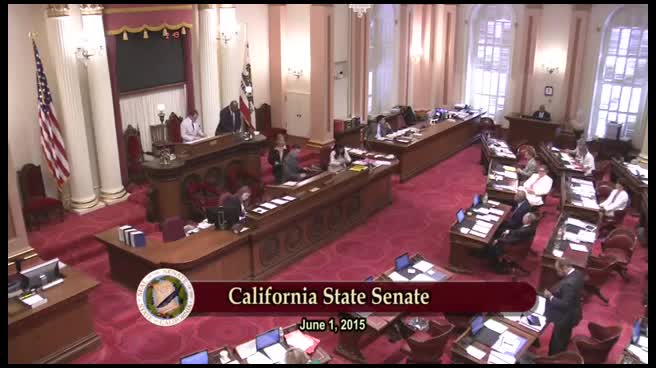
Bill Author

Bill Co-Author(s):