SB 173: Groundwater: de minimis extractors.
- Session Year: 2015-2016
- House: Senate
- Latest Version Date: 2015-02-05
Existing law, the Sustainable Groundwater Management Act, requires all groundwater basins designated as high- or medium-priority basins by the Department of Water Resources that are designated as basins subject to critical conditions of overdraft to be managed under a groundwater sustainability plan or coordinated groundwater sustainability plans by January 31, 2020, and requires all other groundwater basins designated as high- or medium-priority basins to be managed under a groundwater sustainability plan or coordinated groundwater sustainability plans by January 31, 2022, except as specified. Existing law authorizes a groundwater sustainability agency to require through its groundwater sustainability plan that the use of every groundwater extraction facility within the management area of the groundwater sustainablity agency be measured by a water-measuring device, but provides that these provisions do not apply to de minimis extractors. Existing law authorizes a groundwater sustainability agency to impose fees but prohibits a groundwater sustainability agency from imposing a fee to fund the costs of a groundwater sustainability program on a de minimis extractor unless the agency has regulated the users pursuant to the act. Existing law generally excepts a de minimis extractor from the requirement that a person who extracts groundwater from a probationary basin, as prescribed, or extracts groundwater on or after July 1, 2017, in an area within a basin that is not within the management area of a groundwater sustainability agency and where the county does not assume responsibility to be the groundwater sustainability agency has to file a report of groundwater extraction by December 15 of each year for extractions made in the preceding water year with the State Water Resources Control Board. Existing law defines a de minimis extractor for these purposes as a person who extracts, for domestic purposes, 2 acre-feet or less per year.
This bill would define a de minimis extractor for the purposes of these provisions as a person who extracts, for domestic purposes, 10 acre-feet or less per year.
Unless the context otherwise requires, the following definitions govern the construction of this part:
(a)Adjudication action means an action filed in the superior or federal district court to determine the rights to extract groundwater from a basin or store water within a basin, including, but not limited to, actions to quiet title respecting rights to extract or store groundwater or an action brought to impose a physical solution on a basin.
(b)Basin means a groundwater basin or subbasin identified and defined in Bulletin 118 or as modified pursuant to Chapter 3 (commencing with Section 10722).
(c)Bulletin 118 means the departments report entitled Californias Groundwater: Bulletin 118 updated in 2003, as it may be subsequently updated or revised in accordance with Section 12924.
(d)Coordination agreement means a legal agreement adopted between two or more groundwater sustainability agencies that provides the basis for coordinating multiple agencies or groundwater sustainability plans within a basin pursuant to this part.
(e)De minimis extractor means a person who extracts, for domestic purposes, two 10 acre-feet or less per year.
(f)Governing body means the legislative body of a groundwater sustainability agency.
(g)Groundwater means water beneath the surface of the earth within the zone below the water table in which the soil is completely saturated with water, but does not include water that flows in known and definite channels.
(h)Groundwater extraction facility means a device or method for extracting groundwater from within a basin.
(i)Groundwater recharge means the augmentation of groundwater, by natural or artificial means.
(j)Groundwater sustainability agency means one or more local agencies that implement the provisions of this part. For purposes of imposing fees pursuant to Chapter 8 (commencing with Section 10730) or taking action to enforce a groundwater sustainability plan, groundwater sustainability agency also means each local agency comprising the groundwater sustainability agency if the plan authorizes separate agency action.
(k)Groundwater sustainability plan or plan means a plan of a groundwater sustainability agency proposed or adopted pursuant to this part.
(l)Groundwater sustainability program means a coordinated and ongoing activity undertaken to benefit a basin, pursuant to a groundwater sustainability plan.
(m)Local agency means a local public agency that has water supply, water management, or land use responsibilities within a groundwater basin.
(n)Operator means a person operating a groundwater extraction facility. The owner of a groundwater extraction facility shall be conclusively presumed to be the operator unless a satisfactory showing is made to the governing body of the groundwater sustainability agency that the groundwater extraction facility actually is operated by some other person.
(o)Owner means a person owning a groundwater extraction facility or an interest in a groundwater extraction facility other than a lien to secure the payment of a debt or other obligation.
(p)Personal information has the same meaning as defined in Section 1798.3 of the Civil Code.
(q)Planning and implementation horizon means a 50-year time period over which a groundwater sustainability agency determines that plans and measures will be implemented in a basin to ensure that the basin is operated within its sustainable yield.
(r)Public water system has the same meaning as defined in Section 116275 of the Health and Safety Code.
(s)Recharge area means the area that supplies water to an aquifer in a groundwater basin.
(t)Sustainability goal means the existence and implementation of one or more groundwater sustainability plans that achieve sustainable groundwater management by identifying and causing the implementation of measures targeted to ensure that the applicable basin is operated within its sustainable yield.
(u)Sustainable groundwater management means the management and use of groundwater in a manner that can be maintained during the planning and implementation horizon without causing undesirable results.
(v)Sustainable yield means the maximum quantity of water, calculated over a base period representative of long-term conditions in the basin and including any temporary surplus, that can be withdrawn annually from a groundwater supply without causing an undesirable result.
(w)Undesirable result means one or more of the following effects caused by groundwater conditions occurring throughout the basin:
(1)Chronic lowering of groundwater levels indicating a significant and unreasonable depletion of supply if continued over the planning and implementation horizon. Overdraft during a period of drought is not sufficient to establish a chronic lowering of groundwater levels if extractions and recharge are managed as necessary to ensure that reductions in groundwater levels or storage during a period of drought are offset by increases in groundwater levels or storage during other periods.
(2)Significant and unreasonable reduction of groundwater storage.
(3)Significant and unreasonable seawater intrusion.
(4)Significant and unreasonable degraded water quality, including the migration of contaminant plumes that impair water supplies.
(5)Significant and unreasonable land subsidence that substantially interferes with surface land uses.
(6)Depletions of interconnected surface water that have significant and unreasonable adverse impacts on beneficial uses of the surface water.
(x)Water budget means an accounting of the total groundwater and surface water entering and leaving a basin including the changes in the amount of water stored.
(y)Watermaster means a watermaster appointed by a court or pursuant to other law.
(z)Water year means the period from October 1 through the following September 30, inclusive.
(aa)Wellhead protection area means the surface and subsurface area surrounding a water well or well field that supplies a public water system through which contaminants are reasonably likely to migrate toward the water well or well field.
|
Date
|
Status
|
|---|---|
| Feb 5, 2015 | Introduced. Read first time. To Com. on RLS. for assignment. To print. |
| Feb 6, 2015 | From printer. May be acted upon on or after March 8. |
| Feb 19, 2015 | Referred to Com. on N.R. & W. |
| Mar 17, 2015 | Set for hearing March 24. |
| Mar 24, 2015 | March 24 set for first hearing. Failed passage in committee. (Ayes 2. Noes 7. Page 405.) Reconsideration granted. |
| Feb 1, 2016 | Returned to Secretary of Senate pursuant to Joint Rule 56. |
|
Date
|
Description
|
Location
|
Votes
|
|
|---|---|---|---|---|
| Mar 24, 2015 | [First] hearing set for [03-24-2015]: Failed passage in Committee. Reconsideration granted | Senate Standing Committee on Natural Resources and Water |
Passed |
|
| Mar 24, 2015 | Do pass, but first be re-referred to the Committee on [Appropriations] | Senate Standing Committee on Natural Resources and Water |
Failed |
This list shows positions taken on this bill by organizations on the date displayed, which is linked to the original source.
Positions by individuals are not included.
|
Organization
|
Position
|
Date
|
|---|---|---|
| Regional Water Authority, Sacramento Ground Water Authority | * Support | Mar 24, 2015 |
| Sierra Club | * Against | Mar 24, 2015 |
SB 173 (Nielsen) Page 3 of 3
SENATE COMMITTEE ON NATURAL RESOURCES AND WATER
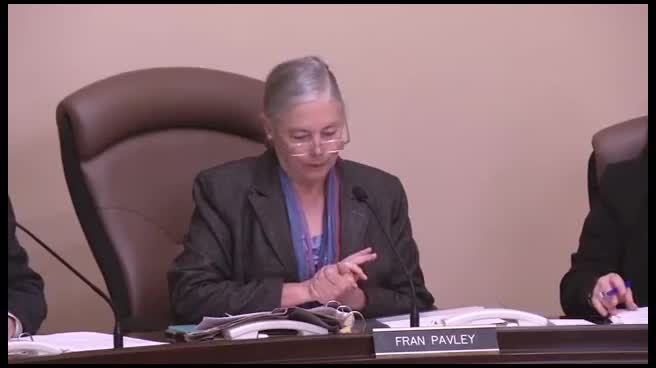
Senator Fran Pavley, Chair
2015 - 2016 Regular
Bill No: SB 173 Hearing Date: March 24, 2015
Author: |
Nielsen |
|
|
Version: |
February 5, 2015 |
||
Urgency: |
No |
Fiscal: |
Yes |
Consultant: |
Dennis O'Connor |
||
Subject: Groundwater: de minimis extractors
BACKGROUND AND EXISTING LAW
The Sustainable Groundwater Management Act (SGMA) requires that all high- and medium-priority groundwater basins be managed by a groundwater sustainability agency (agency) in accord with a groundwater sustainability plan (plan).
Among other things, SGMA authorizes agencies to require through its plan that all wells be metered and the reporting of annual water use to the agency. This authorization does not extend to “de minimis extractors.”
SGMA also authorizes agencies to impose fees, including permit fees and fees on groundwater extraction or other regulated activity, to fund the costs of a groundwater sustainability program. This authorization does not extend to imposing fees on a de minimis extractor unless the agency has regulated the users pursuant to SGMA.
SGMA defines “de minimis extractor” as a person who extracts, for domestic purposes, two acre-feet (af) or less per year.
PROPOSED LAW
This bill would change the definition of “de minimis extractor” from a person who extracts two af or less per year to a person who, for domestic purposes, extracts 10 af or less per year.
ARGUMENTS IN SUPPORT
The Author asserts, “‘de miminis’ extractors are defined as those who pump no more than 2 acre feet per year. While this is intended to include smaller domestic wells, the 2 acre feet per year limit draws a fine line between those that are truly the focus of the legislation, large agriculture, and those that should not be included in the onerous reporting requirements and fees that are part of the bill. Landowners who reside on smaller parcels and have minimal landscaping, gardens and orchards, swimming pools, or small livestock herds, would likely need to pump more than 2 acre feet per year. Clearly, these small parcels are not a cause of overdraft problems.”
ARGUMENTS IN OPPOSITION
None Received
COMMENTS
Black's Law Dictionary defines de minimis as “a Latin phrase that means of a trifling consequence and a matter that is so small that the court does not wish to even consider it.”
Are domestic wells of a trifling consequence? In many all high- and medium-priority groundwater basins, the answer appears to be no. The Department of Water Resources (DWR) has developed data for Northern California groundwater basins based on well logs. Those data show that domestic wells constitute a significant number of wells and/or extractions in many high- and medium-priority basins. For example, the table below summarizes well data for ten high- and medium-priority basins:
Basin/Subbasin |
# of Domestic Wells |
% of All Wells |
If All Domestic Wells Produce 2 Acre-Feet |
If All Domestic Wells Produce 10 Acre-Feet |
Difference |
Redding Area/Bowman |
1,328 |
92.5% |
2,656 af |
13,280 af |
10,624 af |
Sacramento Valley/Red Bluff |
4,481 |
80.7% |
8,962 af |
44,810 af |
35,848 af |
Redding Area/Enterprise |
2,077 |
75.3% |
4,154 af |
20,770 af |
16,616 af |
San Joaquin Valley/Cosumnes |
3,125 |
69.0% |
6,250 af |
31,250 af |
25,000 af |
Redding Area/Anderson |
2,580 |
68.2% |
5,160 af |
25,800 af |
20,640 af |
Sacramento Valley/Vina |
2,398 |
56.9% |
4,796 af |
23,980 af |
19,184 af |
Sacramento Valley/Corning |
2,415 |
56.6% |
4,830 af |
24,150 af |
19,320 af |
Sacramento Valley/Sutter |
2,870 |
51.2% |
5,740 af |
28,700 af |
22,960 af |
Sacramento Valley/Solano |
2,904 |
46.1% |
5,808 af |
29,040 af |
23,232 af |
San Joaquin Valley/Eastern San Joaquin |
6,402 |
46.1% |
12,804 af |
64,020 af |
51,216 af |
Note: These data reflect only those well for which DWR has a well log on file. To the extent there are missing records, these data would tend to undercount the number of wells.
The data show that in some high- and medium-priority basins, domestic wells dominate the basin. It may well be challenging for groundwater sustainability agencies to develop a sustainable groundwater management plan if over 75% - 93% of the wells are exempt from having to meter extractions or report annual use.
In other basins, the sheer number of domestic wells could lead to from nearly 13,000 af of exempt extractions per year under current law, to over 64,000 af per year under the proposed bill, a potential difference of over 51,000 af per year. 51,000 af is sufficient water to provide for the needs of about 102,000 families in urban California for a year.
SUGGESTED AMENDMENTS: None
SUPPORT
None Received
OPPOSITION
None Received
-- END --
Discussed in Hearing
 36MIN