SB 197: Finance lenders: commercial loan: referral.
- Session Year: 2015-2016
- House: Senate
- Latest Version Date: 2015-10-10
Existing law, the California Finance Lenders Law, provides for the licensure and regulation of finance lenders by the Commissioner of Business Oversight. Existing law makes a willful violation of the law by any person a crime. Existing law defines a finance lender as any person who is engaged in the business of making consumer loans or commercial loans. Existing law defines a commercial loan as a loan of a principal amount of $5,000 or more, or any loan under an open-end credit program, whether secured by either real or personal property, or both, or unsecured, the proceeds of which are intended by the borrower for use primarily for purposes other than personal, family, or household.
This bill would authorize a licensed finance lender to compensate an unlicensed person in connection with the referral, as defined, of one or more prospective borrowers to the licensee for a commercial loan if certain requirements are met. These requirements would include, among other things, that the referral leads to the consummation of a commercial loan, the loan contract provides for an annual percentage rate that does not exceed a certain percentage, the licensed finance lender obtains documentation from the prospective borrower documenting the borrowers commercial status, and that the licensee maintains records of compensation paid to an unlicensed person, as specified. The bill would make a licensee paying compensation to an unlicensed person in connection with a referral liable for any misrepresentation made to a borrower in connection with that loan made to that borrower by that licensee. The bill would authorize the commissioner to adopt regulations imposing conditions on this referral activity, as specified. The bill would also require a licensed finance lender who receives an application for a commercial loan from a prospective borrower who has been referred by an unlicensed person to provide a specified statement to the borrower regarding the referral arrangement. The bill would prohibit any person receiving compensation in connection with a referral that leads to the consummation of a commercial loan from engaging in specified acts and would authorize the commissioner to order this person to desist and refrain from engaging in the business or further violating those provisions governing such referral.
By creating new requirements, the willful violation of which would be a crime, the bill would impose a state-mandated local program.
The California Constitution requires the state to reimburse local agencies and school districts for certain costs mandated by the state. Statutory provisions establish procedures for making that reimbursement.
This bill would provide that no reimbursement is required by this act for a specified reason.
Existing law, the California Finance Lenders Law, provides for the licensure and regulation of finance lenders by the Commissioner of Business Oversight. Existing law makes a willful violation of the law by any person a crime. Existing law defines a finance lender as any person who is engaged in the business of making consumer loans or commercial loans. Existing law defines a commercial loan as a loan of a principal amount of $5,000 or more, or any loan under an open-end credit program, whether secured by either real or personal property, or both, or unsecured, the proceeds of which are intended by the borrower for use primarily for purposes other than personal, family, or household.
This bill would authorize a licensed finance lender to compensate an unlicensed person in connection with the referral, as defined, of one or more prospective borrowers to the licensee for a commercial loan if certain requirements are met. These requirements would include, among other things, that the referral leads to the consummation of a commercial loan, the loan contract provides for an annual percentage rate that does not exceed a certain percentage, the licensed finance lender obtains documentation from the prospective borrower documenting the borrowers commercial status, as specified, and that the licensee maintains records of compensation paid to an unlicensed person, as specified. The bill would make a licensee paying compensation to an unlicensed person in connection with a referral liable for any misrepresentation made to a borrower in connection with a that loan made to that borrower by that licensee. The bill would authorize the commissioner to adopt regulations imposing conditions on this referral activity, as specified. The bill would also require a licensed finance lender who receives an application for a commercial loan from a prospective borrower who has been referred by an unlicensed person to provide a specified statement to the borrower regarding the referral arrangement. The bill would prohibit any person receiving compensation in connection with a referral that leads to the consummation of a commercial loan from engaging in specified acts and would authorize the commissioner to order this person to desist and refrain from engaging in the business or further violating those provisions governing such referral.
By creating new requirements, the willful violation of which would be a crime, the bill would impose a state-mandated local program.
The California Constitution requires the state to reimburse local agencies and school districts for certain costs mandated by the state. Statutory provisions establish procedures for making that reimbursement.
This bill would provide that no reimbursement is required by this act for a specified reason.
Existing law, the California Finance Lenders Law, provides for the licensure and regulation of finance lenders and by the Commissioner of Business Oversight. Existing law makes a willful violation of the law by any person a crime. Existing law defines a finance lender as any person who is engaged in the business of making consumer loans or commercial loans. Existing law defines a commercial loan as a loan of a principal amount of $5,000 or more, or any loan under an open-end credit program, whether secured by either real or personal property, or both, or unsecured, the proceeds of which are intended by the borrower for use primarily for purposes other than personal, family, or household.
This bill would authorize a licensed finance lender to compensate an unlicensed person or company in connection with the referral referral, as defined, of one or more prospective borrowers to the licensee for a commercial loan if certain requirements are met. These requirements would include include, among other things, that the referral leads to the consummation of a commercial loan, the loan contract provides for an annual percentage rate that does not exceed a certain percentage, the licensed finance lender obtains documentation from the prospective borrower documenting the borrowers commercial status, as specified, and that the licensee maintains records of compensation paid to an unlicensed person or company, person, as specified. The bill would make a licensee liable for any misrepresentation made to a borrower in connection with a loan made to that borrower by that licensee. The bill would authorize the commissioner to adopt regulations imposing conditions on this referral activity, as specified. The bill would also require a licensed finance lender who receives an application for a commercial loan from a prospective borrower who has been referred by an unlicensed person or company to provide a specified statement to the borrower regarding the referral arrangement. The bill would prohibit any person receiving compensation in connection with a referral that leads to the consummation of a commercial loan from engaging in specified acts and would authorize the commissioner to order this person to desist and refrain from engaging in the business or further violating those provisions governing such referral.
By creating new requirements, the willful violation of which would be a crime, the bill would impose a state-mandated local program.
The California Constitution requires the state to reimburse local agencies and school districts for certain costs mandated by the state. Statutory provisions establish procedures for making that reimbursement.
This bill would provide that no reimbursement is required by this act for a specified reason.
Existing law, the California Finance Lenders Law, provides for the licensure and regulation of finance lenders and makes a willful violation of the law a crime. Existing law defines a finance lender as any person who is engaged in the business of making consumer loans or commercial loans. Existing law defines a commercial loan as a loan of a principal amount of $5,000 or more, or any loan under an open-end credit program, whether secured by either real or personal property, or both, or unsecured, the proceeds of which are intended by the borrower for use primarily for purposes other than personal, family, or household.
This bill would authorize a licensed finance lender to compensate an unlicensed person or company in connection with the referral of one or more prospective borrowers to the licensee for a commercial loan if certain requirements are met. These requirements would include that the referral leads to the consummation of a commercial loan, the loan contract provides for an annual percentage rate that does not exceed a certain percentage, the licensed finance lender obtains documentation from the prospective borrower documenting the borrowers commercial status, as specified, and that the licensee maintains records of compensation paid to an unlicensed person or company, as specified. The bill would also require a licensed finance lender who receives an application for a commercial loan from a prospective borrower who has been referred by an unlicensed person or company to provide a specified statement to the borrower regarding the referral arrangement.
By creating new requirements, the willful violation of which would be a crime, the bill would impose a state-mandated local program.
The California Constitution requires the state to reimburse local agencies and school districts for certain costs mandated by the state. Statutory provisions establish procedures for making that reimbursement.
This bill would provide that no reimbursement is required by this act for a specified reason.
Existing law, the California Finance Lenders Law, provides for the licensure and regulation of finance lenders and makes a willful violation of the law a crime. Existing law defines a finance lender as any person who is engaged in the business of making consumer loans or commercial loans. Existing law defines a commercial loan as a loan of a principal amount of $5,000 or more, or any loan under an open-end credit program, whether secured by either real or personal property, or both, or unsecured, the proceeds of which are intended by the borrower for use primarily for purposes other than personal, family, or household.
This bill would authorize a licensed finance lender to compensate an unlicensed person or company in connection with the referral of one or more prospective borrowers to the licensee for a commercial loan if certain requirements are met, including, but not limited to, met. These requirements would include that the referral leads to the consummation of a commercial loan, the loan contract provides for an annual percentage rate that does not exceed a specified certain percentage, and the licensed finance lender obtains documentation from the prospective borrower documenting the borrowers commercial status, as specified, and that the licensee maintains records of compensation paid to an unlicensed person or company, as specified. The bill would also require a licensed finance lender who receives an application for a commercial loan from a prospective borrower who has been referred by an unlicensed person or company to provide a specified statement to the borrower regarding the referral arrangement.
By creating new requirements, the willful violation of which would be a crime, the bill would impose a state-mandated local program.
The California Constitution requires the state to reimburse local agencies and school districts for certain costs mandated by the state. Statutory provisions establish procedures for making that reimbursement.
This bill would provide that no reimbursement is required by this act for a specified reason.
Existing law, the California Finance Lenders Law, provides for the licensure and regulation of finance lenders and makes a willful violation of the law a crime. Existing law defines a finance lender as any person who is engaged in the business of making consumer loans or commercial loans. Existing law defines a commercial loan as a loan of a principal amount of $5,000 or more, or any loan under an open-end credit program, whether secured by either real or personal property, or both, or unsecured, the proceeds of which are intended by the borrower for use primarily for purposes other than personal, family, or household.
This bill would authorize a licensed finance lender to compensate an unlicensed person or company in connection with the referral of one or more prospective borrowers to the licensee for a commercial loan if certain requirements are met, including, but not limited to, the referral leads to the consummation of a commercial loan, the annual percentage rate does not exceed a specified percentage, and the licensed finance lender obtains documentation from the prospective borrower documenting the borrowers commercial status, as specified. The bill would also require a licensed finance lender who receives an application for a commercial loan from a prospective borrower who has been referred by an unlicensed person or company to provide a specified statement to the borrower regarding the referral arrangement.
By creating new requirements, the willful violation of which would be a crime, the bill would impose a state-mandated local program.
The California Constitution requires the state to reimburse local agencies and school districts for certain costs mandated by the state. Statutory provisions establish procedures for making that reimbursement.
This bill would provide that no reimbursement is required by this act for a specified reason.
Existing law, the California Finance Lenders Law, provides for the licensure and regulation of finance lenders and makes a willful violation of the law a crime. Existing law defines a finance lender as any person who is engaged in the business of making consumer loans or commercial loans. Existing law defines a commercial loan as a loan of a principal amount of $5,000 or more, or any loan under an open-end credit program, whether secured by either real or personal property, or both, or unsecured, the proceeds of which are intended by the borrower for use primarily for purposes other than personal, family, or household.
This bill would authorize a licensed finance lender to compensate an unlicensed person or company in connection with the referral of one or more prospective borrowers to the licensee for a commercial loan if certain requirements are met, including, but not limited to, the referral leads to the consummation of a commercial loan, the annual percentage rate does not exceed a specified percentage, and the licensed finance lender obtains documentation from the prospective borrower documenting the borrowers commercial status, as specified. The bill would also require a licensed finance lender who receives an application for a commercial loan from a prospective borrower who has been referred by an unlicensed person to provide a specified statement to the borrower regarding the referral arrangement.
By creating new requirements, the willful violation of which would be a crime, the bill would impose a state-mandated local program.
The California Constitution requires the state to reimburse local agencies and school districts for certain costs mandated by the state. Statutory provisions establish procedures for making that reimbursement.
This bill would provide that no reimbursement is required by this act for a specified reason.
(a)A licensee that is a finance lender may pay compensation to a person that is not licensed pursuant to this division in connection with the referral of one or more prospective borrowers to the licensee, when all of the following conditions are met:
(1)The referral by the unlicensed person leads to the consummation of a commercial loan, as defined in Section 22502, between the licensee and the prospective borrower referred by the unlicensed person.
(2)The loan contract provides for an annual percentage rate that does not exceed 36 percent.
(3)Before approving the loan, the licensee does both of the following:
(A)Obtains documentation from the prospective borrower documenting the borrowers commercial status. Examples of acceptable forms of documentation include, but are not limited to, a sellers permit, business license, articles of incorporation, income tax returns showing business income, or bank account statements showing business income.
(B)Performs underwriting and obtains documentation to ensure that the prospective borrower will have sufficient monthly gross revenue with which to repay the loan pursuant to the loan terms, and does not make a loan if it determines through its underwriting that the prospective borrowers total monthly expenses, including debt service payments on the loan for which the prospective borrower is being considered, will exceed the prospective borrowers monthly gross revenue. Examples of acceptable forms of documentation for verifying current and projected gross monthly revenue and monthly expenses include, but are not limited to, tax returns, bank statements, merchant financial statements, business plans, business history, and industry-specific knowledge and experience. If the prospective borrower is a sole proprietor or a corporation and the loan will be secured by a personal guarantee provided by the owner of the corporation, a credit report from at least one consumer credit reporting agency that compiles and maintains files on consumers on a nationwide basis shall also be considered.
(4)The licensee maintains records of all compensation paid to unlicensed persons in connection with the referral of borrowers for a period of at least four years.
(5)The licensee annually submits information requested by the commissioner regarding the payment of compensation in the report required pursuant to Section 22159.
(b)A licensee that pays compensation to a person that is not licensed pursuant to this division in connection with a referral for a commercial loan made by that licensee to a borrower shall be liable for any misrepresentation made to that borrower in connection with that loan.
(c)The following activities by an unlicensed person are not authorized by this section:
(1)Participating in any loan negotiation.
(2)Counseling or advising the borrower about a loan.
(3)Participating in the preparation of any loan documents, including credit applications.
(4)Contacting the licensee on behalf of the borrower other than to refer the borrower.
(5)Gathering loan documentation from the borrower or delivering the documentation to the licensee.
(6)Communicating lending decisions or inquiries to the borrower.
(7)Participating in establishing any sales literature or marketing materials.
(8)Obtaining the borrowers signature on documents.
(d)The prohibitions in subdivision (c) do not apply if the unlicensed person meets one or more of the following criteria:
(1)Is exempt from licensure under this division.
(2)Is exempt from federal income taxes under Section 501(c)(3) of the Internal Revenue Code.
(3)Is a business assistance organization recognized by the United States Small Business Administration.
(4)Is engaged in one or more of the activities described in paragraphs (1) to (8), inclusive, of subdivision (c) in connection with five or fewer commercial loans in a 12-month period made by persons licensed under this division.
(e)The commissioner may adopt regulations under this section to impose conditions on the referral activity authorized under this section. The commissioner may classify persons, loans, loan terms, referral methods, and other matters within his or her jurisdiction, and may prescribe different requirements for different classes of loans.
(f)Nothing in this section shall authorize the payment of a referral fee to an unlicensed person for a residential mortgage loan, nor the payment of a referral fee to a person required to be licensed under Section 10131 or 10131.1 of the Business and Professions Code, unless such person is licensed by the Bureau of Real Estate pursuant to Division 4 (commencing with Section 10000) of the Business and Professions Code.
(g)For the purposes of this section, referral means either the introduction of the borrower and the finance lender or the delivery to the finance lender of the borrowers contact information.
SEC. 2.Section 22603 is added to the Financial Code, to read:22603.A licensee that is a finance lender shall provide a prospective borrower who has been referred by an unlicensed person the following written statement, in 10-point font or larger, at the time the licensee receives an application for a commercial loan, and shall require the prospective borrower to acknowledge receipt of the statement in writing:
You have been referred to us by [Name of Unlicensed Person]. If you are approved for the loan, we may pay a fee to [Name of Unlicensed Person] for the successful referral. [Licensee], and not [Name of Unlicensed Person] is the sole party authorized to offer a loan to you. You should ensure that you understand any loan offer we may extend to you before agreeing to the loan terms. If you wish to report a complaint about this loan transaction, you may contact the Department of Business Oversight at 1-866-ASK-CORP (1-866-275-2677), or file your complaint online at www.dbo.ca.gov.
SEC. 3.Section 22604 is added to the Financial Code, to read:22604.
(a)Any person that receives compensation in connection with a referral, as described in Section 22602, that leads to the consummation of a commercial loan under this division may not do any of the following:
(1)Make a materially false or misleading statement or representation to a prospective borrower about the terms or conditions of a prospective loan.
(2)Advertise, print, display, publish, distribute, or broadcast any statement or representation with regard to the conditions for making or negotiating a loan that is false, misleading, or deceptive, or that omits material information that is necessary to make the statements made not false, misleading, or deceptive.
(3)Engage in any act in violation of Section 17200 of the Business and Professions Code.
(4)Commit an act that constitutes fraud or dishonest dealings.
(5)Fail to safeguard a prospective borrowers personally identifiable information.
(b)For purposes of this section, personally identifiable information means information that is not publicly available, that a prospective borrower provides for the purpose of obtaining a loan or other financial product. Personally identifiable information includes information a prospective borrower provides on an application to obtain a loan, credit card, or other financial product or service.
(c)Whenever, in the opinion of the commissioner, any person is engaged in the business of soliciting borrowers for a loan to be made by a licensee under this division, and the person is not in compliance with this section, Section 22602, Section 22603, or any other provision of this division authorizing such activity or exempting the person from this division, the commissioner may order the person to desist and to refrain from engaging in the business or further violating this division.
SEC. 4.No reimbursement is required by this act pursuant to Section 6 of Article XIIIB of the California Constitution because the only costs that may be incurred by a local agency or school district will be incurred because this act creates a new crime or infraction, eliminates a crime or infraction, or changes the penalty for a crime or infraction, within the meaning of Section 17556 of the Government Code, or changes the definition of a crime within the meaning of Section 6 of Article XIIIB of the California Constitution.
(a)A licensee that is a finance lender may pay compensation to a person that is not licensed pursuant to this division in connection with the referral of one or more prospective borrowers to the licensee, when all of the following conditions are met:
(1)The referral by the unlicensed person leads to the consummation of a commercial loan, as defined in Section 22502, between the licensee and the prospective borrower referred by the unlicensed person.
(2)The loan contract provides for an annual percentage rate that does not exceed 36 percent.
(3)Before approving the loan, the licensee does both of the following:
(A)Obtains documentation from the prospective borrower documenting the borrowers commercial status. Examples of acceptable forms of documentation include, but are not limited to, a sellers permit, business license, articles of incorporation, income tax returns showing business income, or bank account statements showing business income.
(B)Performs underwriting and obtains documentation to ensure that the prospective borrower will have sufficient monthly gross revenue with which to repay the loan pursuant to the loan terms, and does not make a loan if it determines through its underwriting that the prospective borrowers total monthly expenses, including debt service payments on the loan for which the prospective borrower is being considered, will exceed the prospective borrowers monthly gross revenue. Examples of acceptable forms of documentation for verifying current and projected gross monthly revenue and monthly expenses include, but are not limited to, tax returns, bank statements, merchant financial statements, business plans, business history, and industry-specific knowledge and experience. If the prospective borrower is a sole proprietor or a corporation and the loan will be secured by a personal guarantee provided by the owner of the corporation, a credit report from at least one consumer credit reporting agency that compiles and maintains files on consumers on a nationwide basis shall also be considered.
(4)The licensee maintains records of all compensation paid to unlicensed persons in connection with the referral of borrowers for a period of at least four years.
(5)The licensee annually submits information requested by the commissioner regarding the payment of compensation in the report required pursuant to Section 22159.
(b)A licensee shall be liable for any misrepresentation made to a borrower in connection with a loan made to that borrower by that licensee.
(b)A licensee that pays compensation to a person that is not licensed pursuant to this division in connection with a referral for a commercial loan made by that licensee to a borrower shall be liable for any misrepresentation made to that borrower in connection with that loan.
(c)For purposes of this section, referral means either the introduction of the borrower and the finance lender or the delivery to the finance lender of the borrowers contact information. The following activities by an unlicensed person are not authorized by this section, unless the unlicensed person is exempt from licensure under this division, is exempt from federal income taxes under Section 501(c)(3) of the Internal Revenue Code, is a business assistance organization recognized by the United States Small Business Administration, or the person engages in one or more of the following activities in connection with five or fewer commercial loans in a 12-month period made by persons licensed under this division: section:
(1)Participating in any loan negotiation.
(2)Counseling or advising the borrower about a loan.
(3)Participating in the preparation of any loan documents, including credit applications.
(4)Contacting the licensee on behalf of the borrower other than to refer the borrower.
(5)Gathering loan documentation from the borrower or delivering the documentation to the licensee.
(6)Communicating lending decisions or inquiries to the borrower.
(7)Participating in establishing any sales literature or marketing materials.
(8)Obtaining the borrowers signature on documents.
(d)The prohibitions in subdivision (c) do not apply if the unlicensed person meets one or more of the following criteria:
(1)Is exempt from licensure under this division.
(2)Is exempt from federal income taxes under Section 501(c)(3) of the Internal Revenue Code.
(3)Is a business assistance organization recognized by the United States Small Business Administration.
(4)Is engaged in one or more of the activities described in paragraphs (1) to (8), inclusive, of subdivision (c) in connection with five or fewer commercial loans in a 12-month period made by persons licensed under this division.
(d)
(e)The commissioner may adopt regulations under this section to impose conditions on the referral activity authorized under this section. The commissioner may classify persons, loans, loan terms, referral methods, and other matters within his or her jurisdiction, and may prescribe different requirements for different classes of loans.
(e)
(f)Nothing in this section shall authorize the payment of a referral fee to an unlicensed person for a residential mortgage loan, nor the payment of a referral fee to a person required to be licensed under Section 10131 or 10131.1 of the Business and Professions Code, unless such person is licensed by the Bureau of Real Estate pursuant to Division 4 (commencing with Section 10000) of the Business and Professions Code.
(g)For the purposes of this section, referral means either the introduction of the borrower and the finance lender or the delivery to the finance lender of the borrowers contact information.
SEC. 2.Section 22603 is added to the Financial Code, to read:22603.A licensee that is a finance lender shall provide a prospective borrower who has been referred by an unlicensed person the following written statement, in 10-point font or larger, at the time the licensee receives an application for a commercial loan, and shall require the prospective borrower to acknowledge receipt of the statement in writing:
You have been referred to us by [Name of Unlicensed Person]. If you are approved for the loan, we may pay a fee to [Name of Unlicensed Person] for the successful referral. [Licensee], and not [Name of Unlicensed Person] is the sole party authorized to offer a loan to you. You should ensure that you understand any loan offer we may extend to you before agreeing to the loan terms. If you wish to report a complaint about this loan transaction, you may contact the Department of Business Oversight at 1-866-ASK-CORP (1-866-275-2677), or file your complaint online at www.dbo.ca.gov.
SEC. 3.Section 22604 is added to the Financial Code, to read:22604.
(a)Any person that receives compensation in connection with a referral, as described in Section 22602, that leads to the consummation of a commercial loan under this division may not do any of the following:
(1)Make a materially false or misleading statement or representation to a prospective borrower about the terms or conditions of a prospective loan.
(2)Advertise, print, display, publish, distribute, or broadcast any statement or representation with regard to the conditions for making or negotiating a loan that is false, misleading, or deceptive, or that omits material information that is necessary to make the statements made not false, misleading, or deceptive.
(3)Engage in any act in violation of Section 17200 of the Business and Professions Code.
(4)Commit an act that constitutes fraud or dishonest dealings.
(5)Fail to safeguard a prospective borrowers personally identifiable information.
(b)For purposes of this section, personally identifiable information means information that is not publicly available, that a prospective borrower provides for the purpose of obtaining a loan or other financial product. Personally identifiable information includes information a prospective borrower provides on an application to obtain a loan, credit card, or other financial product or service.
(c)Whenever, in the opinion of the commissioner, any person is engaged in the business of soliciting borrowers for a loan to be made by a licensee under this division, and the person is not in compliance with this section, Section 22602, Section 22603, or any other provision of this division authorizing such activity or exempting the person from this division, the commissioner may order the person to desist and to refrain from engaging in the business or further violating this division.
SEC. 4.No reimbursement is required by this act pursuant to Section 6 of Article XIIIB of the California Constitution because the only costs that may be incurred by a local agency or school district will be incurred because this act creates a new crime or infraction, eliminates a crime or infraction, or changes the penalty for a crime or infraction, within the meaning of Section 17556 of the Government Code, or changes the definition of a crime within the meaning of Section 6 of Article XIIIB of the California Constitution.
(a)A licensee that is a finance lender may pay compensation to an unlicensed person or company a person that is not licensed pursuant to this division in connection with the referral of one or more prospective borrowers to the licensee, when all of the following conditions are met:
(a)
(1)The referral by the unlicensed person or company leads to the consummation of a commercial loan, as defined in Section 22502, between the licensee and the prospective borrower referred by the unlicensed person or company.
(b)
(2)The loan contract provides for an annual percentage rate that does not exceed 36 percent.
(c)
(3)Before approving the loan, the licensee does both of the following:
(1)
(A)Obtains documentation from the prospective borrower documenting the borrowers commercial status. Examples of acceptable forms of documentation include, but are not limited to, a sellers permit, business license, articles of incorporation, income tax returns showing business income, or bank account statements showing business income.
(2)
(B)Performs underwriting and obtains documentation to ensure that the prospective borrower will have sufficient monthly gross revenue with which to repay the loan pursuant to the loan terms, and does not make a loan if it determines through its underwriting that the prospective borrowers total monthly expenses, including debt service payments on the loan for which the prospective borrower is being considered, will exceed the prospective borrowers monthly gross revenue. Examples of acceptable forms of documentation for verifying current and projected gross monthly revenue and monthly expenses include, but are not limited to, tax returns, bank statements, merchant financial statements, business plans, business history, and industry-specific knowledge and experience. If the prospective borrower is a sole proprietor or a corporation and the loan will be secured by a personal guarantee provided by the owner of the corporation, a credit report from at least one consumer credit reporting agency that compiles and maintains files on consumers on a nationwide basis may shall also be considered.
(d)
(4)The licensee maintains records of all compensation paid to unlicensed persons and companies in connection with the referral of borrowers for a period of at least four years.
(e)
(5)The licensee annually submits information requested by the commissioner regarding the payment of compensation in the report required pursuant to Section 22159.
(b)A licensee shall be liable for any misrepresentation made to a borrower in connection with a loan made to that borrower by that licensee.
(c)For purposes of this section, referral means either the introduction of the borrower and the finance lender or the delivery to the finance lender of the borrowers contact information. The following activities by an unlicensed person are not authorized by this section, unless the unlicensed person is exempt from licensure under this division, is exempt from federal income taxes under Section 501(c)(3) of the Internal Revenue Code, is a business assistance organization recognized by the United States Small Business Administration, or the person engages in one or more of the following activities in connection with five or fewer commercial loans in a 12-month period made by persons licensed under this division:
(1)Participating in any loan negotiation.
(2)Counseling or advising the borrower about a loan.
(3)Participating in the preparation of any loan documents, including credit applications.
(4)Contacting the licensee on behalf of the borrower other than to refer the borrower.
(5)Gathering loan documentation from the borrower or delivering the documentation to the licensee.
(6)Communicating lending decisions or inquiries to the borrower.
(7)Participating in establishing any sales literature or marketing materials.
(8)Obtaining the borrowers signature on documents.
(d)The commissioner may adopt regulations under this section to impose conditions on the referral activity authorized under this section. The commissioner may classify persons, loans, loan terms, referral methods, and other matters within his or her jurisdiction, and may prescribe different requirements for different classes of loans.
(e)Nothing in this section shall authorize the payment of a referral fee to an unlicensed person for a residential mortgage loan, nor the payment of a referral fee to a person required to be licensed under Section 10131 or 10131.1 of the Business and Professions Code, unless such person is licensed by the Bureau of Real Estate pursuant to Division 4 (commencing with Section 10000) of the Business and Professions Code.
SEC. 2.Section 22603 is added to the Financial Code, to read:22603.A licensee that is a finance lender shall provide a prospective borrower who has been referred by an unlicensed person or company the following written statement, in 10-point font or larger, at the time the licensee receives an application for a commercial loan, and shall request require the prospective borrower to acknowledge receipt of the statement in writing:
You have been referred to us by [Name of Unlicensed Person or Company]. Person]. If you are approved for the loan, we may pay a fee to [Name of Unlicensed Person or Company] Person] for the successful referral. [Licensee], and not [Name of Unlicensed Person] is the sole party authorized to offer a loan to you. You should ensure that you understand any loan offer we may extend to you before agreeing to the loan terms. If you wish to report a complaint about this loan transaction, you may contact the Department of Business Oversight, Division of Corporations Oversight at 1-866-ASK-CORP (1-866-275-2677), or file your complaint online at www.dbo.ca.gov.
SEC. 3.Section 22604 is added to the Financial Code, to read:22604.
(a)Any person that receives compensation in connection with a referral, as described in Section 22602, that leads to the consummation of a commercial loan under this division may not do any of the following:
(1)Make a materially false or misleading statement or representation to a prospective borrower about the terms or conditions of a prospective loan.
(2)Advertise, print, display, publish, distribute, or broadcast any statement or representation with regard to the conditions for making or negotiating a loan that is false, misleading, or deceptive, or that omits material information that is necessary to make the statements made not false, misleading, or deceptive.
(3)Engage in any act in violation of Section 17200 of the Business and Professions Code.
(4)Commit an act that constitutes fraud or dishonest dealings.
(5)Fail to safeguard a prospective borrowers personally identifiable information.
(b)For purposes of this section, personally identifiable information means information that is not publicly available, that a prospective borrower provides for the purpose of obtaining a loan or other financial product. Personally identifiable information includes information a prospective borrower provides on an application to obtain a loan, credit card, or other financial product or service.
(c)Whenever, in the opinion of the commissioner, any person is engaged in the business of soliciting borrowers for a loan to be made by a licensee under this division, and the person is not in compliance with this section, Section 22602, Section 22603, or any other provision of this division authorizing such activity or exempting the person from this division, the commissioner may order the person to desist and to refrain from engaging in the business or further violating this division.
SEC. 3.SEC. 4.No reimbursement is required by this act pursuant to Section 6 of Article XIIIB of the California Constitution because the only costs that may be incurred by a local agency or school district will be incurred because this act creates a new crime or infraction, eliminates a crime or infraction, or changes the penalty for a crime or infraction, within the meaning of Section 17556 of the Government Code, or changes the definition of a crime within the meaning of Section 6 of Article XIIIB of the California Constitution.
A licensee that is a finance lender may pay compensation to an unlicensed person or company in connection with the referral of one or more prospective borrowers to the licensee, when all of the following conditions are met:
(a)The referral by the unlicensed person or company leads to the consummation of a commercial loan, as defined in Section 22502, between the licensee and the prospective borrower referred by the unlicensed person or company.
(b)The loan contract provides for an annual percentage rate that does not exceed 36 percent.
(c)Before approving the loan, the licensee does both of the following:
(1)Obtains documentation from the prospective borrower documenting the borrowers commercial status. Examples of acceptable forms of documentation include, but are not limited to, a sellers permit, business license, articles of incorporation, income tax returns showing business income, or bank account statements showing business income.
(2)Performs underwriting and obtains documentation to ensure that the prospective borrower will have sufficient monthly gross revenue with which to repay the loan pursuant to the loan terms, and does not make a loan if it determines through its underwriting that the prospective borrowers total monthly expenses, including debt service payments on the loan for which the prospective borrower is being considered, will exceed the prospective borrowers monthly gross revenue. Examples of acceptable forms of documentation for verifying current and projected gross monthly revenue and monthly expenses include, but are not limited to, tax returns, bank statements, merchant financial statements, business plan plans, business history, and industry-specific knowledge and experience. If the prospective borrower is a sole proprietor or a corporation and the loan will be secured by a personal guarantee provided by the owner of the corporation, a credit report from at least one consumer credit reporting agency that compiles and maintains files on consumers on a nationwide basis may also be considered.
(d)The licensee maintains records of all compensation paid to unlicensed persons and companies in connection with the referral of prospective commercial borrowers for a period of at least four years.
(e)The licensee annually submits information requested by the commissioner regarding the payment of compensation in the report required pursuant to Section 22159.
SEC. 2.Section 22603 is added to the Financial Code, to read:22603.At the time a licensee that is a finance lender receives an application for a commercial loan from a prospective borrower who has been referred by an unlicensed person or company, it shall provide the following written statement to the prospective borrower, in no smaller than 10-point type, and shall ask the applicant A licensee that is a finance lender shall provide a prospective borrower who has been referred by an unlicensed person or company the following written statement, in 10-point font or larger, at the time the licensee receives an application for a commercial loan, and shall request the prospective borrower to acknowledge receipt of the statement in writing:
You have been referred to us by [Name of Unlicensed Person or Company]. If you are approved for the loan, we may pay a fee to [Name of Unlicensed Person or Company] for the successful referral. If you wish to report a complaint about this loan transaction, you may contact the Department of Business Oversight, Division of Corporations at 1-866-ASK-CORP (1-866-275-2677), or file your complaint online at www.dbo.ca.gov.
SEC. 3.
No reimbursement is required by this act pursuant to Section 6 of Article XIIIB of the California Constitution because the only costs that may be incurred by a local agency or school district will be incurred because this act creates a new crime or infraction, eliminates a crime or infraction, or changes the penalty for a crime or infraction, within the meaning of Section 17556 of the Government Code, or changes the definition of a crime within the meaning of Section 6 of Article XIIIB of the California Constitution.
A licensee that is a finance lender may pay compensation to an unlicensed person or company in connection with the referral of one or more prospective borrowers to the licensee, when all of the following conditions are met:
(a)The referral by the unlicensed person or company leads to the consummation of a commercial loan, as defined in Section 22502, between the licensee and the prospective borrower referred by the unlicensed person or company.
(b)The loan contract provides for an annual percentage rate of the loan extended to the prospective borrower that does not exceed 36 percent.
(c)Before approving the loan, the licensee does both of the following:
(1)Obtains documentation from the prospective borrower documenting the borrowers commercial status. Examples of acceptable forms of documentation include, but are not limited to, a sellers permit, business license, articles of incorporation, income tax returns showing business income, or bank account statements showing business income.
(2)Performs underwriting and obtains documentation to ensure that the prospective borrower will have sufficient monthly gross revenue with which to repay the loan pursuant to the loan terms, and does not make a loan if it determines through its underwriting that the prospective borrowers total monthly expenses, including debt service payments on the loan for which the prospective borrower is being considered, will exceed the prospective borrowers monthly gross revenue. Examples of acceptable forms of documentation for verifying current and projected gross monthly revenue and monthly expenses include, but are not limited to, tax returns, bank statements, merchant financial statements, business plan, business history, and industry-specific knowledge and experience. If the prospective borrower is a sole proprietor or a corporation and the loan will be secured by a personal guarantee provided by the owner of the corporation, a credit report from at least one consumer credit reporting agency that compiles and maintains files on consumers on a nationwide basis may also be considered.
(d)The licensee maintains records of all compensation paid to unlicensed persons and companies in connection with the referral of prospective commercial borrowers for a period of at least four years.
(d)
(e)The licensee annually submits information requested by the commissioner regarding the payment of referral fees compensation in the report required pursuant to Section 22159.
SEC. 2.Section 22603 is added to the Financial Code, to read:22603.At the time a licensee that is a finance lender receives an application for a commercial loan from a prospective borrower who has been referred by an unlicensed person or company, it shall provide the following written statement to the prospective borrower, in no smaller than 10-point type, and shall ask the applicant to acknowledge receipt of the statement in writing:
You have been referred to us by [Name of Unlicensed Person]. Person or Company]. If you are approved for the loan, we may pay a fee to [Name of Unlicensed Person or Company ] for the successful referral. If you wish to report a complaint about this loan transaction, you may contact the Department of Business Oversight, Division of Corporations at 1-866-ASK-CORP (1-866-275-2677), or file your complaint online at www.dbo.ca.gov.
SEC. 3.No reimbursement is required by this act pursuant to Section 6 of Article XIIIB of the California Constitution because the only costs that may be incurred by a local agency or school district will be incurred because this act creates a new crime or infraction, eliminates a crime or infraction, or changes the penalty for a crime or infraction, within the meaning of Section 17556 of the Government Code, or changes the definition of a crime within the meaning of Section 6 of Article XIIIB of the California Constitution.
A licensee that is a finance lender may pay compensation to an unlicensed person or company in connection with the referral of one or more prospective borrowers to the licensee, when all of the following conditions are met:
(a)The referral by the unlicensed person or company leads to the consummation of a commercial loan, as defined in Section 22502, between the licensee and the prospective borrower referred by the unlicensed person. person or company.
(b)The annual percentage rate of the loan extended to the prospective borrower does not exceed 36 percent.
(c)The term of the loan is 12 months or greater.
(d)
(c)Before approving the loan, the licensee does both of the following:
(1)Obtains documentation from the prospective borrower documenting the borrowers commercial status. Examples of acceptable forms of documentation include, but are not limited to, a sellers permit, business license, articles of incorporation, income tax returns showing business income, or bank account statements showing business income.
(2)Performs underwriting and obtains documentation to ensure that the prospective borrower has will have sufficient monthly gross revenue with which to repay the loan pursuant to the loan terms, and does not make a loan if it determines through its underwriting that the prospective borrowers total monthly expenses at the time of origination, expenses, including debt service payments on the loan for which the prospective borrower is being considered, will exceed the prospective borrowers monthly gross revenue at the time of origination. revenue. Examples of acceptable forms of documentation for verifying current and projected gross monthly revenue and monthly expenses include, but are not limited to, tax returns, bank statements, and merchant financial statements. statements, business plan, business history, and industry-specific knowledge and experience. If the prospective borrower is a sole proprietor or a corporation and the loan will be secured by a personal guarantee provided by the owner of the corporation, a credit report from at least one consumer credit reporting agency that compiles and maintains files on consumers on a nationwide basis may also be considered.
(e)
(d)The licensee annually submits information requested by the commissioner regarding the payment of referral fees in the report required pursuant to Section 22159.
SEC. 2.Section 22603 is added to the Financial Code, to read:22603.At the time a licensee that is a finance lender receives an application for a commercial loan from a prospective borrower who has been referred by an unlicensed person or company, it shall provide the following written statement to the prospective borrower, in no smaller than 10-point type, and shall ask the applicant to acknowledge receipt of the statement in writing:
Your loan application has You have been referred to us by [Name of Unlicensed Person]. If you are approved for the loan, we may pay a fee to [Name of Unlicensed Person or Company ] for the successful referral of your loan application. referral. If you wish to report a complaint about this loan transaction, you may contact the Department of Business Oversight, Division of Corporations at 1-866-ASK-CORP (1-866-275-2677), or file your complaint online at www.dbo.ca.gov.
SEC. 3.No reimbursement is required by this act pursuant to Section 6 of Article XIIIB of the California Constitution because the only costs that may be incurred by a local agency or school district will be incurred because this act creates a new crime or infraction, eliminates a crime or infraction, or changes the penalty for a crime or infraction, within the meaning of Section 17556 of the Government Code, or changes the definition of a crime within the meaning of Section 6 of Article XIIIB of the California Constitution.
A licensee that is a finance lender may pay compensation to an unlicensed person or company in connection with the referral of one or more prospective borrowers to the licensee, when all of the following conditions are met:
(a)The referral by the unlicensed person leads to the consummation of a commercial loan, as defined in Section 22502, between the licensee and the prospective borrower referred by the unlicensed person.
(b)The annual percentage rate of the loan extended to the prospective borrower does not exceed 36 percent.
(c)The term of the loan is 12 months or greater.
(d)Before approving the loan, the licensee does both of the following:
(1)Obtains documentation from the prospective borrower documenting the borrowers commercial status. Examples of acceptable forms of documentation include, but are not limited to, a sellers permit, business license, articles of incorporation, income tax returns showing business income, or bank account statements showing business income.
(2)Performs underwriting and obtains documentation to ensure that the prospective borrower has sufficient monthly gross revenue with which to repay the loan pursuant to the loan terms, and does not make a loan if it determines through its underwriting that the prospective borrowers total monthly expenses at the time of origination, including debt service payments on the loan for which the prospective borrower is being considered, exceed the prospective borrowers monthly gross revenue at the time of origination. Examples of acceptable forms of documentation for verifying gross monthly revenue and monthly expenses include, but are not limited to, tax returns, bank statements, and merchant financial statements. If the prospective borrower is a sole proprietor or a corporation and the loan will be secured by a personal guarantee provided by the owner of the corporation, a credit report from at least one consumer credit reporting agency that compiles and maintains files on consumers on a nationwide basis may also be considered.
(e)The licensee annually submits information requested by the commissioner regarding the payment of referral fees in the report required pursuant to Section 22159.
SEC. 2.Section 22603 is added to the Financial Code, to read:22603.At the time a licensee that is a finance lender receives an application for a commercial loan from a prospective borrower who has been referred by an unlicensed person, it shall provide the following written statement to the prospective borrower, in no smaller than 10-point type, and shall ask the applicant to acknowledge receipt of the statement in writing:
Your loan application has been referred to us by [Name of Unlicensed Person]. If you are approved for the loan, we may pay a fee to [Name of Unlicensed Person] for the successful referral of your loan application. If you wish to report a complaint about this loan transaction, you may contact the Department of Business Oversight, Division of Corporations at 1-866-ASK-CORP (1-866-275-2677), or file your complaint online at www.dbo.ca.gov.
SEC. 3.No reimbursement is required by this act pursuant to Section 6 of Article XIIIB of the California Constitution because the only costs that may be incurred by a local agency or school district will be incurred because this act creates a new crime or infraction, eliminates a crime or infraction, or changes the penalty for a crime or infraction, within the meaning of Section 17556 of the Government Code, or changes the definition of a crime within the meaning of Section 6 of Article XIIIB of the California Constitution.
|
Date
|
Status
|
|---|---|
| Sep 3, 2015 | Re-referred to Com. on B. & F.I. pursuant to Senate Rule 29.10(d). |
| Aug 20, 2015 | Ordered to third reading. |
| Aug 20, 2015 | Re-referred to Com. on B. & F. pursuant to Assembly Rule 77.2. |
| Aug 20, 2015 | Read third time and amended. |
| Aug 27, 2015 | From committee: Do pass as amended. (Ayes 10. Noes 0.) (August 27). |
| Aug 31, 2015 | Read second time and amended. Ordered to second reading. |
| Sep 1, 2015 | Read second time. Ordered to third reading. |
| Sep 2, 2015 | In Senate. Concurrence in Assembly amendments pending. |
| Sep 2, 2015 | Read third time. Passed. Ordered to the Senate. |
| Sep 2, 2015 | Read third time. Passed. (Ayes 78. Noes 0. Page 2786.) Ordered to the Senate. |
| Sep 3, 2015 | From committee: Be re-referred to Com. on B. & F.I. pursuant to Senate Rule 29.10(d). (Ayes 5. Noes 0. Page 2442.) Re-referred to Com. on B. & F.I. |
| Aug 17, 2015 | Ordered to third reading. |
| Sep 3, 2015 | Re-referred to Com. on RLS. pursuant to Senate Rule 29.10(d). |
| Sep 4, 2015 | Set for hearing September 8. |
| Sep 8, 2015 | From committee: That the Assembly amendments be concurred in. (Ayes 7. Noes 0.) |
| Sep 10, 2015 | Assembly amendments concurred in. (Ayes 38. Noes 0.) Ordered to engrossing and enrolling. |
| Sep 10, 2015 | Assembly amendments concurred in. (Ayes 39. Noes 0. Page 2659.) Ordered to engrossing and enrolling. |
| Sep 10, 2015 | Assembly amendments concurred in. (Ayes 39. Noes 0.) Ordered to engrossing and enrolling. |
| Sep 11, 2015 | Enrolled and presented to the Governor at 10:45 p.m. |
| Oct 10, 2015 | Approved by the Governor. |
| Oct 10, 2015 | Chaptered by Secretary of State. Chapter 761, Statutes of 2015. |
| May 18, 2015 | In Assembly. Read first time. Held at Desk. |
| Feb 11, 2015 | From printer. May be acted upon on or after March 13. |
| Feb 19, 2015 | Referred to Com. on B. & F.I. |
| Mar 10, 2015 | Set for hearing April 29. |
| Apr 15, 2015 | From committee with author's amendments. Read second time and amended. Re-referred to Com. on B. & F.I. |
| Apr 29, 2015 | From committee: Do pass and re-refer to Com. on APPR. (Ayes 6. Noes 0. Page 813.) (April 29). Re-referred to Com. on APPR. |
| Apr 29, 2015 | From committee: Do pass and re-refer to Com. on APPR. (Ayes 6. Noes 0.) (April 29). Re-referred to Com. on APPR. |
| May 1, 2015 | Set for hearing May 11. |
| May 11, 2015 | From committee: Be ordered to second reading pursuant to Senate Rule 28.8. |
| May 12, 2015 | Read second time. Ordered to third reading. |
| Feb 10, 2015 | Introduced. Read first time. To Com. on RLS. for assignment. To print. |
| May 18, 2015 | Read third time. Passed. (Ayes 36. Noes 0. Page 1020.) Ordered to the Assembly. |
| May 18, 2015 | Read third time. Passed. (Ayes 36. Noes 0.) Ordered to the Assembly. |
| May 28, 2015 | Referred to Com. on B. & F. |
| Jun 8, 2015 | From committee with author's amendments. Read second time and amended. Re-referred to Com. on B. & F. |
| Jun 24, 2015 | From committee: Do pass as amended and re-refer to Com. on APPR. (Ayes 12. Noes 0.) (June 22). |
| Jun 25, 2015 | Read second time and amended. Re-referred to Com. on APPR. |
| Jul 15, 2015 | From committee: Do pass. Ordered to consent calendar. (Ayes 16. Noes 0.) (July 15). |
| Jul 16, 2015 | Read second time. Ordered to consent calendar. |
| Aug 17, 2015 | From consent calendar on motion of Assembly Member Holden. |
|
Date
|
Description
|
Location
|
Votes
|
|
|---|---|---|---|---|
| Sep 10, 2015 | Unfinished Business SB197 Block Concurrence | Senate Floor |
Passed |
|
| Sep 2, 2015 | SB 197 Block Senate Third Reading By DABABNEH | Assembly Floor |
Passed |
|
| Aug 27, 2015 | Do pass as amended. | Assembly 1st Extraordinary Session on Finance |
Passed |
|
| Jul 15, 2015 | Do pass. To Consent Calendar. | Assembly Standing Committee on Appropriations |
Passed |
|
| Jun 22, 2015 | Do pass as amended and be re-referred to the Committee on [Appropriations] | Assembly 1st Extraordinary Session on Finance |
Passed |
|
| May 18, 2015 | Senate 3rd Reading SB197 Block | Senate Floor |
Passed |
|
| Apr 29, 2015 | Do pass, but first be re-referred to the Committee on [Appropriations] | Senate Standing Committee on Banking and Financial Institutions |
Passed |
This list shows positions taken on this bill by organizations on the date displayed, which is linked to the original source.
Positions by individuals are not included.
|
Organization
|
Position
|
Date
|
|---|---|---|
| 3CORE, Inc. | ** Support | Sep 10, 2015 |
| Academies for Social Entrepreneurship | ** Support | Sep 10, 2015 |
| Accion San Diego | ** Support | Sep 10, 2015 |
| California Asian Pacific Chamber Of Commerce | ** Support | Sep 10, 2015 |
| California Association for Micro Enterprise Opportunity | ** Support | Sep 10, 2015 |
| California Black Chamber of Commerce | ** Support | Sep 10, 2015 |
| California Disabled Veteran Business Alliance | ** Support | Sep 10, 2015 |
| California Metals Coalition | ** Support | Sep 10, 2015 |
| Capital Impact Partners | ** Support | Sep 10, 2015 |
| Capitol Impact Partners | ** Support | Jun 22, 2015 |
| CDC Small Business Finance | ** Support | Sep 10, 2015 |
| Community Advancement Initiatives, Inc. | ** Support | Sep 10, 2015 |
| El Pajaro Community Development Corporation | ** Support | Sep 10, 2015 |
| Genesis LA | ** Support | Sep 10, 2015 |
| Liberty Capital Group | ** Support | Jun 22, 2015 |
| MicroEnterprise Collaborative of Inland Southern California | ** Support | Sep 10, 2015 |
| Mission Asset Fund | ** Support | Sep 10, 2015 |
| National Federation Of Independent Business | ** Support | Sep 10, 2015 |
| Nehemia Community Reinvestment Fund | ** Support | Sep 10, 2015 |
| Nehemiah Community Reinvestment Fund | ** Support | Jun 22, 2015 |
| Northern California Community Loan Fund | ** Support | Sep 10, 2015 |
| Opening Doors | * Support | Sep 8, 2015 |
| Opportunity Fund | ** Support | Sep 10, 2015 |
| Opportunity Fund - Co-Sponsor | ** Support | Jun 22, 2015 |
| Pacific Community Ventures | ** Support | Sep 10, 2015 |
| Small Business California | ** Support | Sep 10, 2015 |
| Small Business Majority | ** Support | Sep 10, 2015 |
| TriTech Small Business Development Center | ** Support | Sep 10, 2015 |
| Valley Economic Development Center | ** Support | Sep 10, 2015 |
| West Company | ** Support | Sep 10, 2015 |
| Women's Economic Ventures | ** Support | Sep 10, 2015 |
SB 197
Page 8
|
Office of Senate Floor Analyses (916) 651-1520 Fax: (916) 327-4478 |
UNFINISHED BUSINESS
Bill No: SB 197
Amended: 8/31/15
SENATE BANKING & F.I. COMMITTEE: 6-0, 4/29/15
AYES: Block, Galgiani, Hall, Hueso, Lara, Morrell
NO VOTE RECORDED: Vidak
SENATE APPROPRIATIONS COMMITTEE: Senate Rule 28.8
SENATE FLOOR: 36-0, 5/18/15
AYES: Allen, Anderson, Bates, Beall, Block, Cannella, De León, Fuller, Gaines, Galgiani, Hancock, Hernandez, Hertzberg, Hill, Hueso, Huff, Jackson, Lara, Leno, Leyva, Liu, McGuire, Mendoza, Mitchell, Monning, Moorlach, Morrell, Nguyen, Nielsen, Pan, Roth, Runner, Stone, Vidak, Wieckowski, Wolk
NO VOTE RECORDED: Berryhill, Hall, Pavley
SENATE BANKING & F.I. COMMITTEE: 7-0, 9/8/15 (pursuant to Senate Rule 29.10)
AYES: Block, Galgiani, Hall, Hueso, Lara, Morrell, Vidak
ASSEMBLY FLOOR: 78-0, 9/2/15 - See last page for vote
SUBJECT: Finance lenders: commercial loan: referral
SOURCE: California Association for Micro Enterprise Opportunity
Opportunity Fund
DIGEST: This bill authorizes California Finance Lenders Law (CFLL) licensees making commercial loans to compensate unlicensed persons for borrower referrals, as specified.
Assembly Amendments define referral for purposes of this bill; list eight specific activities, generally associated with loan brokerage activity, which, if performed by an unlicensed person in connection with a commercial loan, render that person ineligible to be paid a referral fee in connection with that loan, as specified; list five activities, which are prohibited by any person who receives a referral fee pursuant to the provisions of this bill; impose liability on CFLL licensees who pay referral fees to unlicensed persons in connection with commercial loans for misrepresentations made to borrowers in connection with those loans; revise the disclosure that CFLL licensees are required to provide to prospective borrowers referred to them by a third party; require prospective borrowers to acknowledge receipt of the aforementioned disclosure in writing; require CFLL licensees to use a credit report to underwrite a commercial loan that will be secured by a personal guarantee; authorize the Commissioner of Business Oversight (commissioner) to adopt regulations imposing additional conditions on the referral activity authorized by this bill; authorize the commissioner to issue a desist and refrain order to any person who violates this bill; and clarify that this bill does not authorize the payment of a referral fee to an unlicensed person for a residential mortgage loan, nor to a person who requires licensure under the Real Estate Law.
Existing law:
Defines a commercial loan pursuant to the CFLL as a loan with a principal amount of $5,000 or more, or any loan under an open-end credit program, whether secured by either real or personal property, or both, or unsecured, the proceeds of which are intended by the borrower for use primarily for other than personal, family, or household purposes. For purposes of determining whether a loan is a commercial loan, the lender may rely on any written statement of intended purposes signed by the borrower. The lender is not required to ascertain that the proceeds of the loan are used in accordance with the statement of intended purposes (Financial Code Section 22502).
Prohibits a CFLL licensee from paying any compensation to an unlicensed person or company for soliciting or accepting applications for loans, except when the compensation is paid to an employee regularly employed at a licensed place of business of the licensee, or to a person or company exempt from the CFLL (California Code of Regulations Title 10, Chapter 3, Subchapter 6, Article 4, Section 1451).
This bill:
Provides that a CFLL licensee may pay compensation to an unlicensed person in connection with the referral of one or more prospective borrowers to that licensee, when all of the following conditions are met:
The referral by the unlicensed person leads to the consummation of a commercial loan between the licensee and the borrower.
The loan contract provides for an annual percentage rate that does not exceed 36%.
Before approving the loan, the licensee obtains documentation from the prospective borrower documenting the borrower’s commercial status, and performs underwriting and obtains documentation to ensure that the prospective borrower will have sufficient monthly gross revenue with which to repay the loan pursuant to the loan terms, as specified.
The licensee maintains records of all compensation paid to unlicensed persons in connection with the referral of borrowers for at least four years.
The licensee annually submits information requested by the commissioner regarding the payment of referral fees.
Defines referral for purposes of this bill as either the introduction of the borrower and the licensee or the delivery of the borrower’s contact information to the licensee.
Requires a CFLL licensee that receives an application for a commercial loan from a prospective borrower who has been referred to that licensee by an unlicensed person to provide the following written statement to the borrower, in no smaller than 10-point type, and requires the borrower to acknowledge receipt of the statement in writing: “You have been referred to us by [Name of Unlicensed Person]. If you are approved for the loan, we may pay a fee to [Name of Unlicensed Person] for the successful referral. [Licensee], and not [Name of Unlicensed Person] is the sole party authorized to offer a loan to you. You should ensure that you understand any loan offer we may extend to you before agreeing to the loan terms. If you wish to report a complaint about this loan transaction, you may contact the Department of Business Oversight, Division of Corporations at 1-866-ASK-CORP (1-866-275-2677), or file your complaint online at www.dbo.ca.gov.”
Provides that when a licensee pays a referral fee to an unlicensed person in connection with a loan, that licensee is liable for any misrepresentation made to the borrower in connection with that loan.
Lists eight activities which, if performed by an unlicensed person in connection with a commercial loan, render that unlicensed person ineligible to be paid a referral fee in connection with that loan. Those eight activities include:
Participating in any loan negotiation.
Counseling or advising the borrower about a loan.
Participating in the preparation of any loan documents, including credit applications.
Contacting the licensee on behalf of the borrower other than to refer the borrower.
Gathering loan documentation from the borrower or delivering the documentation to the licensee.
Communicating lending decisions or inquiries to the borrower.
Participating in establishing any sales literature or marketing materials.
Obtaining the borrower’s signature on documents.
Allows, notwithstanding the list of prohibitions listed immediately above, persons meeting any of the following criteria to engage in one or more of those eight activities, without rendering themselves ineligible to receive a referral fee:
Exempt from licensure under the CFLL.
Exempt from federal income taxes pursuant to Section 501(c)(3) of the Internal Revenue Code.
Is a business assistance organization recognized by the United States Small Business Administration.
Engages in any one or more of the eight activities listed immediately above in connection with five or fewer commercial loans made by CFLL licensees in a 12-month period.
Prohibits a person who receives compensation in connection with a referral pursuant to the provisions of this bill from doing any of the following:
Making a materially false or misleading statement or representation to a prospective borrower about the terms or conditions of a prospective loan.
Advertising, printing, displaying, publishing, distributing, or broadcasting any statement or representation with regard to the conditions for making or negotiating a loan that is false, misleading, or deceptive or that omits material information that is necessary to make the statements made not false, misleading, or deceptive.
Engaging in any act in violation of Business and Professions Code Section 17200.
Committing an act that constitutes fraud or dishonest dealings.
Failing to safeguard a prospective borrower’s personally identifiable information.
Authorizes the commissioner to adopt regulations to impose conditions on the referral activity authorized by this bill.
Authorizes the commissioner to issue a desist and refrain order to any person who, in the commissioner’s opinion, is engaged in the business of soliciting borrowers for a loan to be made by a CFLL licensee, and is not in compliance with the provisions of this bill or with any other provision of the CFLL.
Background
This bill is co-sponsored by Opportunity Fund and the California Association for Micro Enterprise Opportunity to remove a competitive disadvantage that applies to CFLL licensees making commercial loans. In doing so, this bill is intended to improve the ability of microlenders to identify underserved small businesses, and help them access credit.
Existing
CFLL regulations prohibit CFLL licensees from paying any compensation
to any person or company that is unlicensed, in exchange for the
referral of business. This places CFLL licensees who make commercial
loans at a competitive disadvantage relative to their direct
competitors, who are not required to hold CFLL licenses and are thus
not subject to this restriction. Two types of direct competitors
that are not required to hold CFLL licenses include merchant advance
companies (not required to be licensed under the CFLL, because they
are advancing, rather than lending money) and companies that partner
with banks (not required to be licensed under the CFLL, because the
loans are made under the banks’ charters).
According
to small business lending experts, referrals are the single most
efficient way for commercial lenders to acquire small business
customers. Because general purpose advertising is not targeted, it is
very inefficient at reaching customers. Word of mouth is by far the
most efficient use of marketing dollars, but is an avenue that is
closed off to CFLL licensees by California’s regulations.
Comments
SB
197 allows CFLL licensees making commercial loans to pay fees for the
successful referral of business, thus eliminating their competitive
disadvantage in customer acquisition relative to other entities that
extend credit to small businesses in California. According to this
bill’s co-sponsors, companies that are not subject to the CFLL
often offer less favorable terms to small businesses than CFLL
licensees, but small business borrowers never learn about these more
favorable loans, because the CFLL licensees cannot compensate
entities to refer business to them.
California’s
existing prohibition against payment of referral fees by CFLL
licensees is intended to protect borrowers, by ensuring that they are
not steered to loans with unfavorable terms by unlicensed individuals
whose referrals are based entirely on the compensation they generate,
and not on the extent to which the loan makes sense for the borrower
being referred. SB 197 is designed to eliminate the possibility that
referral fees paid to unlicensed individuals will result in predatory
lending. This bill allows the payment of referral fees only upon
consummation of a loan, and requires all loans for which referral
fees are paid to adhere to specified best practices for business
lending (verify the commercial status of the borrower, maximum APR of
36%, and rigorous underwriting).
FISCAL EFFECT: Appropriation: No Fiscal Com.: Yes Local: Yes
According to the Assembly Appropriations Committee, this bill will result in minor General Fund administrative costs to the Department of Business Oversight, in the range of $20,000-30,000 annually, to examine loans for compliance, and in minor and absorbable enforcement costs.
California Association for Micro Enterprise Opportunity (co-source)
Opportunity Fund (co-source)
3CORE, Inc.
Academies for Social Entrepreneurship
Accion San Diego
California Asian Pacific Chamber of Commerce
California Black Chamber of Commerce
California Disabled Veteran Business Alliance
California Metals Coalition
Capital Impact Partners
CDC Small Business Finance
Community Advancement Initiatives, Inc.
El Pajaro Community Development Corporation
Genesis LA
MicroEnterprise Collaborative of Inland Southern California
Mission Asset Fund
National Federation of Independent Business
Nehemia Community Reinvestment Fund
Northern California Community Loan Fund
Pacific Community Ventures
Small Business California
Small Business Majority
TriTech Small Business Development Center
Valley Economic Development Center
West Company
Women’s Economic Ventures
None received
ARGUMENTS IN SUPPORT: According to this bill’s co-sponsors, “This bill is crucial to California small and microbusinesses, especially underbanked ones, as they may not be learning about and receiving the most appropriate financing available. Word-of-mouth is a key marketing strategy for reaching underbanked immigrant and minority communities; referral fees for successful loans encourage work-of-mouth...Because of [the] uneven playing field, California businesses may not receive the best financing available. This bill will help responsible lending products be more competitive with other financing such as merchant cash advances.”
ASSEMBLY FLOOR: 78-0, 9/2/15
AYES: Achadjian, Alejo, Travis Allen, Baker, Bigelow, Bloom, Bonilla, Bonta, Brown, Burke, Calderon, Campos, Chang, Chau, Chávez, Chiu, Chu, Cooley, Cooper, Dababneh, Dahle, Daly, Dodd, Eggman, Frazier, Beth Gaines, Gallagher, Cristina Garcia, Eduardo Garcia, Gatto, Gipson, Gomez, Gonzalez, Gordon, Gray, Grove, Hadley, Roger Hernández, Holden, Irwin, Jones, Jones-Sawyer, Kim, Lackey, Levine, Linder, Lopez, Low, Maienschein, Mathis, Mayes, McCarty, Medina, Melendez, Mullin, Nazarian, Obernolte, O'Donnell, Olsen, Patterson, Perea, Quirk, Rendon, Ridley-Thomas, Rodriguez, Salas, Santiago, Steinorth, Mark Stone, Thurmond, Ting, Wagner, Waldron, Weber, Wilk, Williams, Wood, Atkins
NO VOTE RECORDED: Brough, Harper
Prepared by: Eileen Newhall / B. & F.I. / (916) 651-4102
9/9/15 10:32:23
**** END ****
SB 197 (Block) Page 7 of 7
SENATE COMMITTEE ON
BANKING AND FINANCIAL INSTITUTIONS
Senator Marty Block, Chair
2015 - 2016 Regular
Bill No: SB 197 Hearing Date: September 8, 2015
Author: |
Block |
||
Version: |
August 31, 2015 Amended |
||
Urgency: |
No |
Fiscal: |
Yes |
Consultant: |
Eileen Newhall |
||
Subject: Finance lenders: commercial loan: referral.
SB 197 is being re-heard by this Committee pursuant to Senate Rule 29.10. Substantive changes made to the bill since its last hearing by this Committee are shown in bold type.
SUMMARY
Authorizes California Finance Lenders Law (CFLL) licensees making commercial loans to compensate unlicensed persons for borrower referrals, as specified.
DESCRIPTION
Provides that a CFLL licensee may pay compensation to an unlicensed person in connection with the referral of one or more prospective borrowers to that licensee, when all of the following conditions are met:
The referral by the unlicensed person leads to the consummation of a commercial loan between the licensee and the borrower.
The loan contract provides for an annual percentage rate that does not exceed 36%.
Before approving the loan, the licensee obtains documentation from the prospective borrower documenting the borrower’s commercial status, and performs underwriting and obtains documentation to ensure that the prospective borrower will have sufficient monthly gross revenue with which to repay the loan pursuant to the loan terms, as specified.
The licensee maintains records of all compensation paid to unlicensed persons in connection with the referral of borrowers for at least four years.
The licensee annually submits information requested by the Commissioner of Business Oversight (commissioner) regarding the payment of referral fees.
Defines referral for purposes of the bill as either the introduction of the borrower and the licensee or the delivery of the borrower’s contact information to the licensee.
Requires a CFLL licensee that receives an application for a commercial loan from a prospective borrower who has been referred to that licensee by an unlicensed person to provide the following written statement to the borrower, in no smaller than 10-point type, and requires the borrower to acknowledge receipt of the statement in writing: “You have been referred to us by [Name of Unlicensed Person]. If you are approved for the loan, we may pay a fee to [Name of Unlicensed Person] for the successful referral. [Licensee], and not [Name of Unlicensed Person] is the sole party authorized to offer a loan to you. You should ensure that you understand any loan offer we may extend to you before agreeing to the loan terms. If you wish to report a complaint about this loan transaction, you may contact the Department of Business Oversight, Division of Corporations at 1-866-ASK-CORP (1-866-275-2677), or file your complaint online at www.dbo.ca.gov.”
Provides that when a licensee pays a referral fee to an unlicensed person in connection with a commercial loan, that licensee is liable for any misrepresentation made to the borrower in connection with that loan.
Provides that if one or more of the following eight activities is performed by an unlicensed person in connection with a commercial loan, that unlicensed person is ineligible to be paid a referral fee in connection with that loan:
Participating in any loan negotiation.
Counseling or advising the borrower about a loan.
Participating in the preparation of any loan documents, including credit applications.
Contacting the licensee on behalf of the borrower other than to refer the borrower.
Gathering loan documentation from the borrower or delivering the documentation to the licensee.
Communicating lending decisions or inquiries to the borrower.
Participating in establishing any sales literature or marketing materials.
Obtaining the borrower’s signature on documents.
Notwithstanding the list of prohibitions immediately above, allows persons meeting any of the following criteria to engage in one or more of those eight activities, without rendering themselves ineligible to receive a referral fee:
Exempt from licensure under the CFLL.
Exempt from federal income taxes pursuant to Section 501(c)(3) of the Internal Revenue Code.
Is a business assistance organization recognized by the United States Small Business Administration.
Engages in one or more of the eight activities listed immediately above in connection with five or fewer commercial loans made by CFLL licensees in a 12-month period.
Prohibits a person who receives compensation in connection with a referral pursuant to the provisions of the bill from doing any of the following:
Making a materially false or misleading statement or representation to a prospective borrower about the terms or conditions of a prospective loan.
Advertising, printing, displaying, publishing, distributing, or broadcasting any statement or representation with regard to the conditions for making or negotiating a loan that is false, misleading, or deceptive or that omits material information that is necessary to make the statements made not false, misleading, or deceptive.
Engaging in any act in violation of Business and Professions Code Section 17200.
Committing an act that constitutes fraud or dishonest dealings.
Failing to safeguard a prospective borrower’s personally identifiable information.
Authorizes the commissioner to adopt regulations to impose conditions on the referral activity authorized by the bill.
Authorizes the commissioner to issue a desist and refrain order to any person who, in the commissioner’s opinion, is engaged in the business of soliciting borrowers for a loan to be made by a CFLL licensee, and is not in compliance with the provisions of the bill or with any other provision of the CFLL.
EXISTING LAW
Pursuant to the CFLL, defines a commercial loan as a loan with a principal amount of $5,000 or more, or any loan under an open-end credit program, whether secured by either real or personal property, or both, or unsecured, the proceeds of which are intended by the borrower for use primarily for other than personal, family, or household purposes. For purposes of determining whether a loan is a commercial loan, the lender may rely on any written statement of intended purposes signed by the borrower. The lender is not required to ascertain that the proceeds of the loan are used in accordance with the statement of intended purposes (Financial Code Section 22502).
EXISTING
REGULATION
Prohibits a CFLL licensee from paying any compensation to an unlicensed person for soliciting or accepting applications for loans, except when the compensation is paid to an employee regularly employed at a licensed place of business of the licensee, or to a person or company that is exempt from the CFLL (California Code of Regulations Title 10, Chapter 3, Subchapter 6, Article 4, Section 1451)..
COMMENTS
Purpose: This bill is co-sponsored by Opportunity Fund and the California Association for Micro Enterprise Opportunity (CAMEO) to remove a competitive disadvantage that applies to CFLL licensees making commercial loans. In doing so, this bill is intended to improve the ability of microlenders to identify underserved small businesses, and help them access credit.
Amendments Leading To Senate Rule 29.10 Referral: In July, 2015, after SB 197 had passed both the Senate Banking and Financial Institutions Committee and the Assembly Banking and Finance Committee, the Department of Business Oversight (DBO) requested extensive amendments to the bill. DBO’s amendments are intended to minimize the likelihood that commercial loans on which referral fees are paid will be marketed in a misleading or unscrupulous manner and to expressly prohibit persons who are required to be licensed as loan brokers from using SB 197 to evade those licensing requirements. Because the bill, as amended per DBO’s request, contains a significant number of conditions that were not present when the bill passed either policy committee, SB 197 was re-referred to the Assembly Banking and Finance Committee pursuant to Assembly Rule 77.2 and, after passing that Committee and the Assembly Floor, has been re-referred to the Senate Banking and Financial Institutions Committee pursuant to Rule 29.10(d).
Background: Existing CFLL regulations prohibit CFLL licensees from paying any compensation to any person or company that is unlicensed, in exchange for the referral of business. This places CFLL licensees who make commercial loans at a competitive disadvantage relative to their direct competitors, who are not required to hold CFLL licenses and are thus not subject to the same restriction.
According to small business lending experts, referrals are the single most efficient way for commercial lenders to acquire small business customers. Because general purpose advertising is not targeted, it is very inefficient at reaching customers. Word of mouth is by far the most efficient use of marketing dollars, but is an avenue that is closed off to CFLL licensees by California’s regulations.
As described in more detail below, two types of direct competitors
who are not required to hold CFLL licenses include merchant advance
companies (not required to be licensed under the CFLL, because they
are advancing, rather than lending money) and companies that partner
with banks (not required to be licensed under the CFLL, because the
loans are made under the banks’ charters). CFLL licensees may
offer better loan terms to businesses than competitors who lack CFLL
licenses, but often lose customers to those competitors, because the
competitors can compensate those from whom they receive referrals,
while the CFLL licensees are prohibited from doing so.
What Are Merchant Advance Companies?: Merchant advance companies that serve small businesses represent the most common form of direct competition to commercial lenders licensed under the CFLL. Unlike commercial lenders, merchant advance companies do not offer loans. Instead, they offer a variety of non-loan financing options, which include cash advance, purchase order finance, accounts receivable finance, or a combination of these. Generally speaking, business arrangements between advance companies and the firms they fund involve the following: The advance company advances a certain amount of money to a business. In return, the business agrees to remit a certain percentage of its future revenue (typically sales receipts) to the advance company until the advance is paid back. Some merchant advance firms purchase future sales revenue at a discount; others purchase future sales revenue on a dollar for dollar basis, but charge the business a fee for the transaction. Some contracts require that money be repaid on a daily basis; others require different repayment schedules. There is considerable variety in the ways in which advance transactions are set up; the one thing that remains constant is their being structured in ways that do not require a California lending license.
How Does the Rent-A-Charter/ Bank Affiliate Model Work? Companies that offer loans in partnership with banks represent another type of competition to CFLL licensees. Companies that partner with banks to offer loans can often avoid having to become licensed in the states in which the companies operate, because the loans are technically being made by the bank. This so-called rent-a-charter or bank affiliate model has several different variations, but often involves a company that lacks a lending license acquiring customers and underwriting prospective borrowers, referring qualified borrowers to a bank, allowing the bank to lend to those qualified borrowers, then purchasing the consummated loans from the bank. Because the bank is technically the lender, the company which partners with it is not required to hold a lending license. As such, it is not restricted in its ability to compensate third parties for the referral of business.
Levelling the Playing Field: SB 197 would allow CFLL licensees making commercial loans to pay fees for the successful referral of business, thus eliminating their competitive disadvantage in customer acquisition relative to other entities that extend credit to small businesses in California. According to this bill’s co-sponsors, companies that are not subject to the CFLL often offer less favorable terms to small businesses than CFLL licensees, but small business borrowers never learn about these more favorable loans, because the CFLL lenders cannot compensate entities to refer business to them.
California’s existing prohibition against payment of referral fees
by licensed lenders is intended to protect borrowers, by ensuring
that they are not steered to loans with unfavorable terms by
unlicensed individuals whose referrals are based entirely on the
compensation they generate, and not on the extent to which the loan
makes sense for the borrower being referred. SB 197 is designed to
eliminate the possibility that referral fees paid to unlicensed
individuals will result in predatory lending. The bill allows the
payment of referral fees only upon consummation of a loan, and
requires all loans for which referral fees are paid to adhere to
specified best practices for business lending (verify the commercial
status of the borrower, maximum APR of 36%, and rigorous
underwriting).
Summary of Arguments in Support:
This bill is co-sponsored by the California Association for Micro Enterprise Opportunity (CAMEO), a network of 85 nonprofit micro-business development organizations that serve very small businesses with training, business technical assistance, and microloans, and Opportunity Fund, California’s largest non-profit microlender. These organizations write, “This bill is crucial to California small and microbusinesses, especially underbanked ones, as they may not be learning about and receiving the most appropriate financing available. Word-of-mouth is a key marketing strategy for reaching underbanked immigrant and minority communities; referral fees for successful loans encourage work-of-mouth...Because of [the] uneven playing field, California businesses may not receive the best financing available. This bill will help responsible lending products be more competitive with other financing such as merchant cash advances.”
Similar arguments in support were submitted by two dozen other organizations, including CDC Small Business Finance (the largest Small Business Association non-profit lender in the nation), Small Business California, the National Federation of Independent Business, Small Business Majority, Nehemiah Community Reinvestment Fund, California Black Chamber of Commerce, California Asian Pacific Chamber of Commerce, and others.
Summary of Arguments in Opposition: None received.
LIST OF REGISTERED SUPPORT/OPPOSITION
Support
California Association for Micro Enterprise Opportunity (co-sponsor)
Opportunity Fund (co-sponsor)
3CORE, Inc.
Academies for Social Entrepreneurship
Accion San Diego
California Asian Pacific Chamber of Commerce
California Black Chamber of Commerce
California Disabled Veteran Business Alliance
California Metals Coalition
Capital Impact Partners
CDC Small Business Finance
Community Advancement Initiatives, Inc.
El Pajaro Community Development Corporation
Genesis LA
MicroEnterprise Collaborative of Inland Southern California
Mission Asset Fund
National Federation of Independent Business
Nehemia Community Reinvestment Fund
Northern California Community Loan Fund
Pacific Community Ventures
Small Business California
Small Business Majority
TriTech Small Business Development Center
Valley Economic Development Center
West Company
Women’s Economic Ventures
Opposition
None received
-- END --
SB 197
Page 5
SENATE THIRD READING
SB 197
(Block)
As Amended August 31, 2015
Majority vote
SENATE VOTE: 36-0
Committee |
Votes |
Ayes |
Noes |
Banking |
12-0 |
Dababneh, Travis Allen, Achadjian, Brown, Chau, Gatto, Hadley, Kim, Low, Perea, Ridley-Thomas, Mark Stone |
|
Appropriations |
16-0 |
Gomez, Bigelow, Bloom, Bonta, Calderon, Chang, Daly, Eggman, Gallagher, Eduardo Garcia, Jones, Quirk, Rendon, Wagner, Weber, Wood |
|
Banking |
10-0 |
Dababneh, Achadjian, Brown, Chau, Gatto, Hadley, Kim, Perea, Ridley-Thomas, Mark Stone |
|
SUMMARY: Allows a licensee under the California Finance Lenders Law (CFLL) to pay compensation to an unlicensed person or company in connection with the referral of one or more prospective borrowers to the licensee. Specifically, this bill:
Permits compensation to be paid, when all of the following conditions are met:
The referral by the unlicensed person leads to the consummation of a commercial loan between the licensee and the borrower;
The loan contract provides for an annual percentage rate (APR) that does not exceed 36%; and,
Before approving the loan, the licensee does both of the following:
Obtains documentation from the prospective borrower documenting the borrower's commercial status. (Examples of acceptable forms of documentation include, but not limited to, a seller's permit, business license, articles of incorporation, income tax returns showing business income, or bank account statements showing business income); and,
Performs underwriting and obtains documentation to ensure that the prospective borrower will have sufficient monthly gross revenue with which to repay the loan pursuant to the loan terms, and does not make a loan if it determines through its underwriting that the prospective borrower's total monthly expenses, including debt service payments on the loan for which the prospective borrower is being considered, will exceed the prospective borrower's monthly gross revenue. (Examples of acceptable forms of documentation for verifying current and projected gross monthly revenue and monthly expenses include, but are not limited to, tax returns, bank statements, merchant financial statements, business plan, business history, and industry specific knowledge and experience. Permits a credit report if the prospective borrower is a sole proprietor or a corporation and the loan will be secured by a personal guarantee.
Requires the licensee to maintain records of all compensation for a period of at least four years.
Requires the licensee to annually submit information requested by the Commissioner of Business Oversight (Commissioner) in a report.
Provides that a licensee shall be liable for any misrepresentations made to a borrower in connection with a commercial loan made to that borrower by that licensee.
Defines "referral" as the introduction of the borrower and finance lender or the delivery to the finance lender of the borrower's contact information.
Provides that an unlicensed person may not engage in the following activities in performing commercial loan referral service:
Participate in loan negotiation;
Counseling or advising the borrower about a loan;
Participate in the preparation of any loan documents, including credit applications;
Contacting the licensee on behalf of the borrower other than to refer the borrower;
Gather loan documentation from the borrower or deliver the documentation to the license;
Communicate lending decisions or inquires to the borrower;
Participate in establishing any sales literature or marketing materials; or
Obtaining the borrower's signature on documents.
Exempts from the prohibitions above, an entity recognized as a 501(c)(3) by the Internal Revenue Code, a business assistance organization recognized by the Small Business Administration or a person that engages the activities above in connection with five or fewer commercial loans in a 12-month period.
Allows the commissioner to adopt regulations to impose conditions of referral activity.
Prohibits the payment of a referral fee to an unlicensed person for a residential mortgage loan or payment to a person required to be licensed under the Real Estate Law.
Provides that any person that receives compensation in connection with a referral that leads to a consummated commercial loan may not do the following:
Make a material false or misleading statement or representation to a prospective borrower about the terms and conditions of a prospective loan;
Engage in false, misleading or deceptive marketing;
Omit material information;
Engage in an act that constitutes fraud or dishonest dealings; or,
Fail to safeguard a prospective borrower's personally identifiable information.
Gives the commissioner authority to issue desist and refrain orders to persons engaged in the business of soliciting borrowers and not in compliance with sections authorizing referral activity.
Requires a licensee that receives an application for a commercial loan from a prospective borrower who has been referred to that licensee by an unlicensed person or company to provide the following written statement to the borrower, in no smaller than 10-point type, and ask the borrower to acknowledge receipt of the statement in writing: "You have been referred to us by [Name of Unlicensed Person]. If you are approved for the loan, we may pay a fee to [Name of Unlicensed Person] for the successful referral. [Licensee], and not [Name of Unlicensed Person] is the sole party authorized to offer a loan to you. You should ensure that you understand any loan offer we may extend to you before agreeing to the loan terms. If you wish to report a complaint about this loan transaction, you may contact the Department of Business Oversight (DBO), Division of Corporations at 1-866-ASK-CORP (1-866-275-2677), or file your complaint online at www.dbo.ca.gov."
EXISTING LAW:
Defines, pursuant to the CFLL, a commercial loan as a loan with a principal amount of $5,000 or more, or any loan under an open-end credit program, whether secured by either real or personal property, or both, or unsecured, the proceeds of which are intended by the borrower for use primarily for other than personal, family, or household purposes. For purposes of determining whether a loan is a commercial loan, the lender may rely on any written statement of intended purposes signed by the borrower. The lender is not required to ascertain that the proceeds of the loan are used in accordance with the statement of intended purposes. (Financial Code Section 22502)
Requires each finance lender and broker licensee to file an annual report with the commissioner, on or before the 15th day of March, giving the relevant information that the commissioner reasonably requires concerning the business and operations conducted by the licensee within the state during the preceding calendar year for each licensed place of business. The individual annual reports filed pursuant to this section shall be made available to the public for inspection except, upon request in the annual report to the commissioner, the balance sheet contained in the annual report of a sole proprietor or any other nonpublicly traded persons. A licensee shall make other special reports that may be required by the commissioner. (Financial Code Section 22159)
Existing Regulation prohibits a licensed finance lender from paying any compensation to an unlicensed person or company for soliciting or accepting applications for loans, except for an employee regularly employed at a licensed place of business of the finance lender, or if the payment is made to a person or company licensed as a real estate broker, a bank, savings and loan association, or any other financial institution exempted from the CFLL. (California Code of Regulations Title 10, Chapter 3, Subchapter 6, Article 4, Section 1451)
FISCAL EFFECT: Unknown. This bill is keyed non-fiscal by the Legislative Counsel.
COMMENTS:
Need for this bill:
This bill is co-sponsored by Opportunity Fund and the California Association for Micro Enterprise Opportunity (CAMEO) to remove a competitive disadvantage that applies to CFLL licensees making commercial loans. In doing so, the co-sponsors wish to improve the ability of microlenders to identify underserved small businesses, and help them access credit.
This bill would allow CFLL licensees making commercial loans to pay fees for the successful referral of business, thus eliminating their competitive disadvantage in customer acquisition relative to other entities that extend credit to small businesses in California. According to this bill’s co-sponsors, companies that are not subject to the CFLL often offer less favorable terms to small businesses than CFLL licensees, but small business borrowers never learn about these more favorable loans, because the CFLL lenders cannot compensate entities to refer business to them.
Background:
The existing CFLL prohibits CFLL licensees from paying any compensation to any person or company that is unlicensed, in exchange for the referral of business. This places CFLL licensees that make commercial loans at a competitive disadvantage relative to their direct competitors, whom are not required to hold CFLL licenses. As described in more detail below, two types of direct competitors that are not required to hold CFLL licenses include merchant advance companies (not required to be licensed under the CFLL, because they are advancing, rather than lending money) and companies that partner with banks (not required to be licensed under the CFLL, because the loans are made under the banks' charters). CFLL licensees may offer better loan terms to businesses than competitors that lack CFLL licenses, but often lose customers to those competitors, because the competitors can compensate those from whom they receive referrals, while the CFLL licensees are prohibited from doing so.
According to small business lending experts, referrals are the single most efficient way for commercial lenders to acquire small business customers. Because general purpose advertising is not targeted, it is very inefficient at reaching customers. Word of mouth is by far the most efficient use of marketing dollars, but is an avenue that is closed off to CFLL licensees by California's regulations.
Non-CFLL Entities:
Merchant Advance Companies: Merchant advance companies that serve small businesses represent the most common form of direct competition to commercial lenders licensed under the CFLL. Unlike commercial lenders, merchant advance companies do not offer loans. Instead, they offer a variety of non-loan financing options, which include cash advance, purchase order finance, accounts receivable finance, or a combination of these. Generally speaking, business arrangements between merchant advance companies and the firms they fund involve the following: The merchant advance company advances a certain amount of money to a business. In return, the business agrees to remit a certain percentage of its future revenue (typically sales receipts) to the merchant advance company until the advance is paid back. Some merchant advance firms purchase future revenue at a discount; others purchase future sales revenue on a dollar for dollar basis, but charge the business a fee for the transaction. Some contracts require that money be repaid on a daily basis; others require different repayment schedules. There is considerable variety in the ways in which advance transactions are set up; with most being structured in ways that do not require a California lending license.
Rent-A-Charter: Companies that offer loans in partnership with banks represent another type of competition to CFLL licensees. Companies that partner with banks to offer loans can often avoid having to become licensed in the states in which the companies operate, because the loans are technically being made by the bank. This so-called rent-a-charter model has several different variations, but often involves a company that lacks a lending license acquiring customers and underwriting prospective borrowers, referring qualified borrowers to a bank, allowing the bank to lend to those qualified borrowers, and then purchasing the consummated loans from the bank. Because the bank is technically the lender, the company which partners with it is not required to hold a lending license. As such, it is not restricted in its ability to compensate third parties for the referral of business.
Consumer Protections:
California's existing prohibition against payment of referral fees by licensed lenders is intended to protect borrowers, by ensuring that they are not steered to loans with unfavorable terms by unlicensed individuals whose referrals are based entirely on the compensation they generate, and not on the extent to which the loan makes sense for the borrower being referred. This bill is designed to eliminate the possibility that referral fees paid to unlicensed individuals will result in predatory lending. This bill allows the payment of referral fees only upon consummation of a loan, and requires all loans for which referral fees are paid to adhere to specified best practices for business lending (verify the commercial status of the borrower, maximum APR of 36%, and underwriting).
Analysis Prepared by: Mark Farouk / B. & F. / (916) 319-3081 FN: 0001604
SB 197
Page 8
|
Office of Senate Floor Analyses (916) 651-1520 Fax: (916) 327-4478 |
UNFINISHED BUSINESS
Bill No: SB 197
Amended: 8/31/15
SENATE BANKING & F.I. COMMITTEE: 6-0, 4/29/15
AYES: Block, Galgiani, Hall, Hueso, Lara, Morrell
NO VOTE RECORDED: Vidak
SENATE APPROPRIATIONS COMMITTEE: Senate Rule 28.8
SENATE FLOOR: 36-0, 5/18/15
AYES: Allen, Anderson, Bates, Beall, Block, Cannella, De León, Fuller, Gaines, Galgiani, Hancock, Hernandez, Hertzberg, Hill, Hueso, Huff, Jackson, Lara, Leno, Leyva, Liu, McGuire, Mendoza, Mitchell, Monning, Moorlach, Morrell, Nguyen, Nielsen, Pan, Roth, Runner, Stone, Vidak, Wieckowski, Wolk
NO VOTE RECORDED: Berryhill, Hall, Pavley
ASSEMBLY FLOOR: 78-0, 9/2/15 - See last page for vote
SUBJECT: Finance lenders: commercial loan: referral
SOURCE: California Association for Micro Enterprise Opportunity
Opportunity Fund
DIGEST: This bill authorizes California Finance Lenders Law (CFLL) licensees making commercial loans to compensate unlicensed persons for borrower referrals, as specified.
Assembly Amendments define referral for purposes of this bill; list eight specific activities, generally associated with loan brokerage activity, which, if performed by an unlicensed person in connection with a commercial loan, render that person ineligible to be paid a referral fee in connection with that loan, as specified; list five activities, which are prohibited by any person who receives a referral fee pursuant to the provisions of this bill; impose liability on CFLL licensees who pay referral fees to unlicensed persons in connection with commercial loans for misrepresentations made to borrowers in connection with those loans; revise the disclosure that CFLL licensees are required to provide to prospective borrowers referred to them by a third party; require prospective borrowers to acknowledge receipt of the aforementioned disclosure in writing; require CFLL licensees to use a credit report to underwrite a commercial loan that will be secured by a personal guarantee; authorize the Commissioner of Business Oversight (commissioner) to adopt regulations imposing additional conditions on the referral activity authorized by this bill; authorize the commissioner to issue a desist and refrain order to any person who violates this bill; and clarify that this bill does not authorize the payment of a referral fee to an unlicensed person for a residential mortgage loan, nor to a person who requires licensure under the Real Estate Law.
Existing law:
Defines a commercial loan pursuant to the CFLL as a loan with a principal amount of $5,000 or more, or any loan under an open-end credit program, whether secured by either real or personal property, or both, or unsecured, the proceeds of which are intended by the borrower for use primarily for other than personal, family, or household purposes. For purposes of determining whether a loan is a commercial loan, the lender may rely on any written statement of intended purposes signed by the borrower. The lender is not required to ascertain that the proceeds of the loan are used in accordance with the statement of intended purposes (Financial Code Section 22502).
Prohibits a CFLL licensee from paying any compensation to an unlicensed person or company for soliciting or accepting applications for loans, except when the compensation is paid to an employee regularly employed at a licensed place of business of the licensee, or to a person or company exempt from the CFLL (California Code of Regulations Title 10, Chapter 3, Subchapter 6, Article 4, Section 1451).
This bill:
Provides that a CFLL licensee may pay compensation to an unlicensed person in connection with the referral of one or more prospective borrowers to that licensee, when all of the following conditions are met:
The referral by the unlicensed person leads to the consummation of a commercial loan between the licensee and the borrower.
The loan contract provides for an annual percentage rate that does not exceed 36%.
Before approving the loan, the licensee obtains documentation from the prospective borrower documenting the borrower’s commercial status, and performs underwriting and obtains documentation to ensure that the prospective borrower will have sufficient monthly gross revenue with which to repay the loan pursuant to the loan terms, as specified.
The licensee maintains records of all compensation paid to unlicensed persons in connection with the referral of borrowers for at least four years.
The licensee annually submits information requested by the commissioner regarding the payment of referral fees.
Defines referral for purposes of this bill as either the introduction of the borrower and the licensee or the delivery of the borrower’s contact information to the licensee.
Requires a CFLL licensee that receives an application for a commercial loan from a prospective borrower who has been referred to that licensee by an unlicensed person to provide the following written statement to the borrower, in no smaller than 10-point type, and requires the borrower to acknowledge receipt of the statement in writing: “You have been referred to us by [Name of Unlicensed Person]. If you are approved for the loan, we may pay a fee to [Name of Unlicensed Person] for the successful referral. [Licensee], and not [Name of Unlicensed Person] is the sole party authorized to offer a loan to you. You should ensure that you understand any loan offer we may extend to you before agreeing to the loan terms. If you wish to report a complaint about this loan transaction, you may contact the Department of Business Oversight, Division of Corporations at 1-866-ASK-CORP (1-866-275-2677), or file your complaint online at www.dbo.ca.gov.”
Provides that when a licensee pays a referral fee to an unlicensed person in connection with a loan, that licensee is liable for any misrepresentation made to the borrower in connection with that loan.
Lists eight activities which, if performed by an unlicensed person in connection with a commercial loan, render that unlicensed person ineligible to be paid a referral fee in connection with that loan. Those eight activities include:
Participating in any loan negotiation.
Counseling or advising the borrower about a loan.
Participating in the preparation of any loan documents, including credit applications.
Contacting the licensee on behalf of the borrower other than to refer the borrower.
Gathering loan documentation from the borrower or delivering the documentation to the licensee.
Communicating lending decisions or inquiries to the borrower.
Participating in establishing any sales literature or marketing materials.
Obtaining the borrower’s signature on documents.
Allows, notwithstanding the list of prohibitions listed immediately above, persons meeting any of the following criteria to engage in one or more of those eight activities, without rendering themselves ineligible to receive a referral fee:
Exempt from licensure under the CFLL.
Exempt from federal income taxes pursuant to Section 501(c)(3) of the Internal Revenue Code.
Is a business assistance organization recognized by the United States Small Business Administration.
Engages in any one or more of the eight activities listed immediately above in connection with five or fewer commercial loans made by CFLL licensees in a 12-month period.
Prohibits a person who receives compensation in connection with a referral pursuant to the provisions of this bill from doing any of the following:
Making a materially false or misleading statement or representation to a prospective borrower about the terms or conditions of a prospective loan.
Advertising, printing, displaying, publishing, distributing, or broadcasting any statement or representation with regard to the conditions for making or negotiating a loan that is false, misleading, or deceptive or that omits material information that is necessary to make the statements made not false, misleading, or deceptive.
Engaging in any act in violation of Business and Professions Code Section 17200.
Committing an act that constitutes fraud or dishonest dealings.
Failing to safeguard a prospective borrower’s personally identifiable information.
Authorizes the commissioner to adopt regulations to impose conditions on the referral activity authorized by this bill.
Authorizes the commissioner to issue a desist and refrain order to any person who, in the commissioner’s opinion, is engaged in the business of soliciting borrowers for a loan to be made by a CFLL licensee, and is not in compliance with the provisions of this bill or with any other provision of the CFLL.
Background
This bill is co-sponsored by Opportunity Fund and the California Association for Micro Enterprise Opportunity to remove a competitive disadvantage that applies to CFLL licensees making commercial loans. In doing so, this bill is intended to improve the ability of microlenders to identify underserved small businesses, and help them access credit.
Existing
CFLL regulations prohibit CFLL licensees from paying any compensation
to any person or company that is unlicensed, in exchange for the
referral of business. This places CFLL licensees who make commercial
loans at a competitive disadvantage relative to their direct
competitors, who are not required to hold CFLL licenses and are thus
not subject to this restriction. Two types of direct competitors
that are not required to hold CFLL licenses include merchant advance
companies (not required to be licensed under the CFLL, because they
are advancing, rather than lending money) and companies that partner
with banks (not required to be licensed under the CFLL, because the
loans are made under the banks’ charters).
According
to small business lending experts, referrals are the single most
efficient way for commercial lenders to acquire small business
customers. Because general purpose advertising is not targeted, it is
very inefficient at reaching customers. Word of mouth is by far the
most efficient use of marketing dollars, but is an avenue that is
closed off to CFLL licensees by California’s regulations.
Comments
SB
197 allows CFLL licensees making commercial loans to pay fees for the
successful referral of business, thus eliminating their competitive
disadvantage in customer acquisition relative to other entities that
extend credit to small businesses in California. According to this
bill’s co-sponsors, companies that are not subject to the CFLL
often offer less favorable terms to small businesses than CFLL
licensees, but small business borrowers never learn about these more
favorable loans, because the CFLL licensees cannot compensate
entities to refer business to them.
California’s
existing prohibition against payment of referral fees by CFLL
licensees is intended to protect borrowers, by ensuring that they are
not steered to loans with unfavorable terms by unlicensed individuals
whose referrals are based entirely on the compensation they generate,
and not on the extent to which the loan makes sense for the borrower
being referred. SB 197 is designed to eliminate the possibility that
referral fees paid to unlicensed individuals will result in predatory
lending. This bill allows the payment of referral fees only upon
consummation of a loan, and requires all loans for which referral
fees are paid to adhere to specified best practices for business
lending (verify the commercial status of the borrower, maximum APR of
36%, and rigorous underwriting).
FISCAL EFFECT: Appropriation: No Fiscal Com.: Yes Local: Yes
According to the Assembly Appropriations Committee, this bill will result in minor General Fund administrative costs to the Department of Business Oversight, in the range of $20,000-30,000 annually, to examine loans for compliance, and in minor and absorbable enforcement costs.
California Association for Micro Enterprise Opportunity (co-source)
Opportunity Fund (co-source)
3CORE, Inc.
Academies for Social Entrepreneurship
Accion San Diego
California Asian Pacific Chamber of Commerce
California Black Chamber of Commerce
California Disabled Veteran Business Alliance
California Metals Coalition
Capital Impact Partners
CDC Small Business Finance
Community Advancement Initiatives, Inc.
El Pajaro Community Development Corporation
Genesis LA
MicroEnterprise Collaborative of Inland Southern California
Mission Asset Fund
National Federation of Independent Business
Nehemia Community Reinvestment Fund
Northern California Community Loan Fund
Pacific Community Ventures
Small Business California
Small Business Majority
TriTech Small Business Development Center
Valley Economic Development Center
West Company
Women’s Economic Ventures
None received
ARGUMENTS IN SUPPORT: According to this bill’s co-sponsors, “This bill is crucial to California small and microbusinesses, especially underbanked ones, as they may not be learning about and receiving the most appropriate financing available. Word-of-mouth is a key marketing strategy for reaching underbanked immigrant and minority communities; referral fees for successful loans encourage work-of-mouth...Because of [the] uneven playing field, California businesses may not receive the best financing available. This bill will help responsible lending products be more competitive with other financing such as merchant cash advances.”
ASSEMBLY FLOOR: 78-0, 9/2/15
AYES: Achadjian, Alejo, Travis Allen, Baker, Bigelow, Bloom, Bonilla, Bonta, Brown, Burke, Calderon, Campos, Chang, Chau, Chávez, Chiu, Chu, Cooley, Cooper, Dababneh, Dahle, Daly, Dodd, Eggman, Frazier, Beth Gaines, Gallagher, Cristina Garcia, Eduardo Garcia, Gatto, Gipson, Gomez, Gonzalez, Gordon, Gray, Grove, Hadley, Roger Hernández, Holden, Irwin, Jones, Jones-Sawyer, Kim, Lackey, Levine, Linder, Lopez, Low, Maienschein, Mathis, Mayes, McCarty, Medina, Melendez, Mullin, Nazarian, Obernolte, O'Donnell, Olsen, Patterson, Perea, Quirk, Rendon, Ridley-Thomas, Rodriguez, Salas, Santiago, Steinorth, Mark Stone, Thurmond, Ting, Wagner, Waldron, Weber, Wilk, Williams, Wood, Atkins
NO VOTE RECORDED: Brough, Harper
Prepared by: Eileen Newhall / B. & F.I. / (916) 651-4102
9/2/15 18:09:34
**** END ****
SB 197
Page 4
SENATE THIRD READING
SB 197
(Block)
As Amended June 25, 2015
Majority vote
SENATE VOTE: 36-0
Committee |
Votes |
Ayes |
Noes |
Banking |
12-0 |
Dababneh, Travis Allen, Achadjian, Brown, Chau, Gatto, Hadley, Kim, Low, Perea, Ridley-Thomas, Mark Stone |
|
Appropriations |
16-0 |
Gomez, Bigelow, Bloom, Bonta, Calderon, Chang, Daly, Eggman, Gallagher, Eduardo Garcia, Jones, Quirk, Rendon, Wagner, Weber, Wood |
|
SUMMARY: Allows a licensee under the California Finance Lenders Law (CFLL) to pay compensation to an unlicensed person or company in connection with the referral of one or more prospective borrowers to the licensee. Specifically, this bill:
Permits compensation to be paid, when all of the following conditions are met:
The referral by the unlicensed person leads to the consummation of a commercial loan between the licensee and the borrower;
The loan contract provides for an annual percentage rate (APR) that does not exceed 36%; and,
Before approving the loan, the licensee does both of the following:
Obtains documentation from the prospective borrower documenting the borrower's commercial status. (Examples of acceptable forms of documentation include, but not limited to, a seller's permit, business license, articles of incorporation, income tax returns showing business income, or bank account statements showing business income); and,
Performs underwriting and obtains documentation to ensure that the prospective borrower will have sufficient monthly gross revenue with which to repay the loan pursuant to the loan terms, and does not make a loan if it determines through its underwriting that the prospective borrower's total monthly expenses, including debt service payments on the loan for which the prospective borrower is being considered, will exceed the prospective borrower's monthly gross revenue. (Examples of acceptable forms of documentation for verifying current and projected gross monthly revenue and monthly expenses include, but are not limited to, tax returns, bank statements, merchant financial statements, business plan, business history, and industry specific knowledge and experience. Permits a credit report if the prospective borrower is a sole proprietor or a corporation and the loan will be secured by a personal guarantee.
Requires the licensee to maintain records of all compensation for a period of at least four years.
Requires the licensee to annually submit information requested by the Commissioner of Business Oversight (Commissioner) in a report.
Requires a licensee that receives an application for a commercial loan from a prospective borrower who has been referred to that licensee by an unlicensed person or company to provide the following written statement to the borrower, in no smaller than 10-point type, and ask the borrower to acknowledge receipt of the statement in writing: "You have been referred to us by [Name of Unlicensed Person]. If you are approved for the loan, we may pay a fee to [Name of Unlicensed Person or Company] for the successful referral. If you wish to report a complaint about this loan transaction, you may contact the Department of Business Oversight, Division of Corporations at 1-866-ASK-CORP (1-866-275-2677), or file your complaint online at www.dbo.ca.gov."
EXISTING LAW:
Defines, pursuant to the CFLL, a commercial loan as a loan with a principal amount of $5,000 or more, or any loan under an open-end credit program, whether secured by either real or personal property, or both, or unsecured, the proceeds of which are intended by the borrower for use primarily for other than personal, family, or household purposes. For purposes of determining whether a loan is a commercial loan, the lender may rely on any written statement of intended purposes signed by the borrower. The lender is not required to ascertain that the proceeds of the loan are used in accordance with the statement of intended purposes. (Financial Code Section 22502)
Requires each finance lender and broker licensee to file an annual report with the commissioner, on or before the 15th day of March, giving the relevant information that the commissioner reasonably requires concerning the business and operations conducted by the licensee within the state during the preceding calendar year for each licensed place of business. The individual annual reports filed pursuant to this section shall be made available to the public for inspection except, upon request in the annual report to the commissioner, the balance sheet contained in the annual report of a sole proprietor or any other nonpublicly traded persons. A licensee shall make other special reports that may be required by the commissioner. (Financial Code Section 22159)
Existing Regulation prohibits a licensed finance lender from paying any compensation to an unlicensed person or company for soliciting or accepting applications for loans, except for an employee regularly employed at a licensed place of business of the finance lender, or if the payment is made to a person or company licensed as a real estate broker, a bank, savings and loan association, or any other financial institution exempted from the CFLL. (California Code of Regulations Title 10, Chapter 3, Subchapter 6, Article 4, Section 1451)
FISCAL EFFECT: Unknown
COMMENTS:
Need for the bill:
This bill is co-sponsored by Opportunity Fund and the California Association for Micro Enterprise Opportunity (CAMEO) to remove a competitive disadvantage that applies to CFLL licensees making commercial loans. In doing so, the co-sponsors wish to improve the ability of microlenders to identify underserved small businesses, and help them access credit.
This bill would allow CFLL licensees making commercial loans to pay fees for the successful referral of business, thus eliminating their competitive disadvantage in customer acquisition relative to other entities that extend credit to small businesses in California. According to this bill’s co-sponsors, companies that are not subject to the CFLL often offer less favorable terms to small businesses than CFLL licensees, but small business borrowers never learn about these more favorable loans, because the CFLL lenders cannot compensate entities to refer business to them.
Background:
The existing CFLL prohibits CFLL licensees from paying any compensation to any person or company that is unlicensed, in exchange for the referral of business. This places CFLL licensees that make commercial loans at a competitive disadvantage relative to their direct competitors, whom are not required to hold CFLL licenses. As described in more detail below, two types of direct competitors that are not required to hold CFLL licenses include merchant advance companies (not required to be licensed under the CFLL, because they are advancing, rather than lending money) and companies that partner with banks (not required to be licensed under the CFLL, because the loans are made under the banks' charters). CFLL licensees may offer better loan terms to businesses than competitors that lack CFLL licenses, but often lose customers to those competitors, because the competitors can compensate those from whom they receive referrals, while the CFLL licensees are prohibited from doing so.
According to small business lending experts, referrals are the single most efficient way for commercial lenders to acquire small business customers. Because general purpose advertising is not targeted, it is very inefficient at reaching customers. Word of mouth is by far the most efficient use of marketing dollars, but is an avenue that is closed off to CFLL licensees by California's regulations.
Non-CFLL Entities:
Merchant Advance Companies: Merchant advance companies that serve small businesses represent the most common form of direct competition to commercial lenders licensed under the CFLL. Unlike commercial lenders, merchant advance companies do not offer loans. Instead, they offer a variety of non-loan financing options, which include cash advance, purchase order finance, accounts receivable finance, or a combination of these. Generally speaking, business arrangements between merchant advance companies and the firms they fund involve the following: The merchant advance company advances a certain amount of money to a business. In return, the business agrees to remit a certain percentage of its future revenue (typically sales receipts) to the merchant advance company until the advance is paid back. Some merchant advance firms purchase future revenue at a discount; others purchase future sales revenue on a dollar for dollar basis, but charge the business a fee for the transaction. Some contracts require that money be repaid on a daily basis; others require different repayment schedules. There is considerable variety in the ways in which advance transactions are set up; with most being structured in ways that do not require a California lending license.
Rent-A-Charter: Companies that offer loans in partnership with banks represent another type of competition to CFLL licensees. Companies that partner with banks to offer loans can often avoid having to become licensed in the states in which the companies operate, because the loans are technically being made by the bank. This so-called rent-a-charter model has several different variations, but often involves a company that lacks a lending license acquiring customers and underwriting prospective borrowers, referring qualified borrowers to a bank, allowing the bank to lend to those qualified borrowers, and then purchasing the consummated loans from the bank. Because the bank is technically the lender, the company which partners with it is not required to hold a lending license. As such, it is not restricted in its ability to compensate third parties for the referral of business.
Consumer Protections:
California's existing prohibition against payment of referral fees by licensed lenders is intended to protect borrowers, by ensuring that they are not steered to loans with unfavorable terms by unlicensed individuals whose referrals are based entirely on the compensation they generate, and not on the extent to which the loan makes sense for the borrower being referred. This bill is designed to eliminate the possibility that referral fees paid to unlicensed individuals will result in predatory lending. The bill allows the payment of referral fees only upon consummation of a loan, and requires all loans for which referral fees are paid to adhere to specified best practices for business lending (verify the commercial status of the borrower, maximum APR of 36%, and underwriting).
Analysis Prepared by: Mark Farouk / B. & F. / (916) 319-3081 FN: 0001332
Date of Hearing: July 15, 2015
ASSEMBLY COMMITTEE ON APPROPRIATIONS
Jimmy Gomez, Chair
SB 197
(Block) – As Amended June 25, 2015
Policy Committee: |
Banking and Finance |
Vote: |
12 - 0 |
Urgency: No State Mandated Local Program: Yes Reimbursable: No
SUMMARY:
This bill allows licensees under the California Finance Lenders Law (CFLL) to pay compensation to unlicensed persons or companies for the referral of one or more borrowers to the licensee so long as the referral results in the consummation of a commercial loan, the loan contract provides an annual percentage rate that does not exceed 36%, the licensee discloses the referral arrangement to the borrower, and the licensee obtains documentation from the prospective borrower confirming the borrower's commercial status and creditworthiness. The bill requires licensees to maintain records of all compensation paid for at least four years and to report annually information on referrals requested by the Commissioner of Business Oversight.
FISCAL EFFECT:
Likely minor GF annual administrative costs to the Department of Business Oversight, in the range of $20,000-30,000, to examine loans for compliance; minor and absorbable enforcement costs.
COMMENTS:
1) Purpose. According to the author, allowing CFLL-licensed commercial lenders to pay fees for the successful referral of business eliminates a competitive disadvantage in customer acquisition relative to other commercial lenders. The sponsors believe companies that are not subject to the CFLL often offer less favorable loan terms than CFLL licensees, but borrowers never learn about the availability of more favorable loans because CFLL lenders cannot compensate for referral of business. The author and supporters contend SB 197 will improve the ability of lenders to identify small businesses customers and help them access favorable credit.
2) License to Facilitate. Current law prohibits CFLL licensees from paying compensation to any person or company that is unlicensed in exchange for the referral of business. This places CFLL licensees at a disadvantage compared with merchant advance companies, who are not licensed because they are technically not making loans, and companies that partner with banks, who are not licensed because they offer loans under the partnering banks' charters. Supporters argue referrals remain the most efficient means of acquiring new small business customers as general advertising cannot be sufficiently targetted. The prohibition on referral fees is intended to protect borrowers from predatory lending. AB 197 seeks to protect customers by limiting fees paid to only those referrals that result in consummated loans that meet the bill's specified lending requirements.
Analysis Prepared by: Joel Tashjian / APPR. / (916) 319-2081
SB 197
Page 5
Date of Hearing: June 22, 2015
ASSEMBLY COMMITTEE ON BANKING AND FINANCE
Matthew Dababneh, Chair
SB 197
(Block) – As Amended June 8, 2015
SENATE VOTE: 36-0
SUBJECT: Finance lenders: commercial loan: referral.
SUMMARY: Allows a licensee under the California Finance Lenders Law (CFLL) to pay compensation to an unlicensed person or company in connection with the referral of one or more prospective borrowers to the licensee. Specifically, this bill:
Permits compensation to be paid, when all of the following conditions are met:
The referral by the unlicensed person leads to the consummation of a commercial loan between the licensee and the borrower;
The loan contract provides for an annual percentage rate (APR) that does not exceed 36%; and,
Before approving the loan, the licensee does both of the following:
Obtains documentation from the prospective borrower documenting the borrower's commercial status. (Examples of acceptable forms of documentation include, but not limited to, a seller's permit, business license, articles of incorporation, income tax returns showing business income, or bank account statements showing business income); and,
Performs underwriting and obtains documentation to ensure that the prospective borrower will have sufficient monthly gross revenue with which to repay the loan pursuant to the loan terms, and does not make a loan if it determines through its underwriting that the prospective borrower’s total monthly expenses, including debt service payments on the loan for which the prospective borrower is being considered, will exceed the prospective borrower’s monthly gross revenue. (Examples of acceptable forms of documentation for verifying current and projected gross monthly revenue and monthly expenses include, but are not limited to, tax returns, bank statements, merchant financial statements, business plan, business history, and industry specific knowledge and experience. Permits a credit report if the prospective borrower is a sole proprietor or a corporation and the loan will be secured by a personal guarantee.
Requires the licensee to maintain records of all compensation for a period of at least 4 years.
Requires the licensee to annually submit information requested by the Commissioner of Business Oversight (Commissioner) in a report.
Requires a licensee that receives an application for a commercial loan from a prospective borrower who has been referred to that licensee by an unlicensed person or company to provide the following written statement to the borrower, in no smaller than 10-point type, and ask the borrower to acknowledge receipt of the statement in writing: “You have been referred to us by [Name of Unlicensed Person]. If you are approved for the loan, we may pay a fee to [Name of Unlicensed Person or Company] for the successful referral. If you wish to report a complaint about this loan transaction, you may contact the Department of Business Oversight, Division of Corporations at 1-866-ASK-CORP (1-866-275-2677), or file your complaint online at www.dbo.ca.gov."
EXISTING LAW:
Defines, pursuant to the CFLL, a commercial loan as a loan with a principal amount of $5,000 or more, or any loan under an open-end credit program, whether secured by either real or personal property, or both, or unsecured, the proceeds of which are intended by the borrower for use primarily for other than personal, family, or household purposes. For purposes of determining whether a loan is a commercial loan, the lender may rely on any written statement of intended purposes signed by the borrower. The lender is not required to ascertain that the proceeds of the loan are used in accordance with the statement of intended purposes. (Financial Code, Section 22502)
Requires each finance lender and broker licensee to file an annual report with the commissioner, on or before the 15th day of March, giving the relevant information that the commissioner reasonably requires concerning the business and operations conducted by the licensee within the state during the preceding calendar year for each licensed place of business. The individual annual reports filed pursuant to this section shall be made available to the public for inspection except, upon request in the annual report to the commissioner, the balance sheet contained in the annual report of a sole proprietor or any other nonpublicly traded persons. A licensee shall make other special reports that may be required by the commissioner. (Financial Code, Section 22159)
EXISTING REGULATION prohibits a licensed finance lender from paying any compensation to an unlicensed person or company for soliciting or accepting applications for loans, except for an employee regularly employed at a licensed place of business of the finance lender, or if the payment is made to a person or company licensed as a real estate broker, a bank, savings and loan association, or any other financial institution exempted from the CFLL. (California Code of Regulations Title 10, Chapter 3, Subchapter 6, Article 4, Section 1451)
FISCAL EFFECT: Unknown
COMMENTS:
Need for the bill:
This bill is co-sponsored by Opportunity Fund and the California Association for Micro Enterprise Opportunity (CAMEO) to remove a competitive disadvantage that applies to CFLL licensees making commercial loans. In doing so, the co-sponsors wish to improve the ability of microlenders to identify underserved small businesses, and help them access credit.
SB 197 would allow CFLL licensees making commercial loans to pay fees for the successful referral of business, thus eliminating their competitive disadvantage in customer acquisition relative to other entities that extend credit to small businesses in California. According to this bill’s co-sponsors, companies that are not subject to the CFLL often offer less favorable terms to small businesses than CFLL licensees, but small business borrowers never learn about these more favorable loans, because the CFLL lenders cannot compensate entities to refer business to them.
Background:
The existing CFLL prohibits CFLL licensees from paying any compensation to any person or company that is unlicensed, in exchange for the referral of business. This places CFLL licensees that make commercial loans at a competitive disadvantage relative to their direct competitors, whom are not required to hold CFLL licenses. As described in more detail below, two types of direct competitors that are not required to hold CFLL licenses include merchant advance companies (not required to be licensed under the CFLL, because they are advancing, rather than lending money) and companies that partner with banks (not required to be licensed under the CFLL, because the loans are made under the banks’ charters). CFLL licensees may offer better loan terms to businesses than competitors that lack CFLL licenses, but often lose customers to those competitors, because the competitors can compensate those from whom they receive referrals, while the CFLL licensees are prohibited from doing so.
According to small business lending experts, referrals are the single most efficient way for commercial lenders to acquire small business customers. Because general purpose advertising is not targeted, it is very inefficient at reaching customers. Word of mouth is by far the most efficient use of marketing dollars, but is an avenue that is closed off to CFLL licensees by California’s regulations.
Non-CFLL Entities:
Merchant Advance Companies: Merchant advance companies that serve small businesses represent the most common form of direct competition to commercial lenders licensed under the CFLL. Unlike commercial lenders, merchant advance companies do not offer loans. Instead, they offer a variety of non-loan financing options, which include cash advance, purchase order finance, accounts receivable finance, or a combination of these. Generally speaking, business arrangements between merchant advance companies and the firms they fund involve the following: The merchant advance company advances a certain amount of money to a business. In return, the business agrees to remit a certain percentage of its future revenue (typically sales receipts) to the merchant advance company until the advance is paid back. Some merchant advance firms purchase future revenue at a discount; others purchase future sales revenue on a dollar for dollar basis, but charge the business a fee for the transaction. Some contracts require that money be repaid on a daily basis; others require different repayment schedules. There is considerable variety in the ways in which advance transactions are set up; with most being structured in ways that do not require a California lending license.
Rent-A-Charter: Companies that offer loans in partnership with banks represent another type of competition to CFLL licensees. Companies that partner with banks to offer loans can often avoid having to become licensed in the states in which the companies operate, because the loans are technically being made by the bank. This so-called rent-a-charter model has several different variations, but often involves a company that lacks a lending license acquiring customers and underwriting prospective borrowers, referring qualified borrowers to a bank, allowing the bank to lend to those qualified borrowers, and then purchasing the consummated loans from the bank. Because the bank is technically the lender, the company which partners with it is not required to hold a lending license. As such, it is not restricted in its ability to compensate third parties for the referral of business.
Consumer Protections:
California’s existing prohibition against payment of referral fees by licensed lenders is intended to protect borrowers, by ensuring that they are not steered to loans with unfavorable terms by unlicensed individuals whose referrals are based entirely on the compensation they generate, and not on the extent to which the loan makes sense for the borrower being referred. SB 197 is designed to eliminate the possibility that referral fees paid to unlicensed individuals will result in predatory lending. The bill allows the payment of referral fees only upon consummation of a loan, and requires all loans for which referral fees are paid to adhere to specified best practices for business lending (verify the commercial status of the borrower, maximum APR of 36%, and underwriting).
Recommended Amendments:
On page 3, line 12, delete, "plan" and insert "plans"
On page 3, line 21, delete " prospective commercial"
On page 3, delete lines 28-33 and insert:
"A licensee that is a finance lender shall provide a prospective borrower, who has been referred by an unlicensed person or company, the following written statement, in 10 point font or larger, at the time the licensee receives an application for a commercial loan, and shall request the prospective borrower to acknowledge receipt of the statement in writing:"
REGISTERED SUPPORT / OPPOSITION:
Support
California Association for Micro Enterprise Opportunity (CAMEO) – Co-Sponsor
Opportunity Fund – Co-Sponsor
3CORE, Inc.
Academies for Social Entrepreneurship
Accion San Diego
California Asian Pacific Chamber of Commerce
California Black Chamber of Commerce
California Disabled Veteran Business Alliance
California Metals Coalition (CMC)
Capitol Impact Partners
CDC Small Business Finance
El Pajaro Community Development Corporation
Genesis LA
Liberty Capital Group
Microenterprise Collaborative Inland Southern California
Mission Asset Fund
National Federation of Independent Business (NFIB)
Nehemiah Community Reinvestment Fund
Northern California Community Loan Fund
Pacific Community Ventures
Small Business California (SB-Cal)
Small Business Majority
TriTech Small Business Development Center
Valley Economic Development Center (VEDC)
West Company
Woman's Economic Ventures (WEV)
2 Individuals
Opposition
None on file.
Analysis Prepared by: Kathleen O'Malley / B. & F. / (916) 319-3081
SB 197
Page 5
|
Office of Senate Floor Analyses (916) 651-1520 Fax: (916) 327-4478 |
THIRD READING
Bill No: SB 197
Amended: 4/15/15
SENATE BANKING & F.I. COMMITTEE: 6-0, 4/29/15
AYES: Block, Galgiani, Hall, Hueso, Lara, Morrell
NO VOTE RECORDED: Vidak
SENATE APPROPRIATIONS COMMITTEE: Senate Rule 28.8
SUBJECT: Finance lenders: commercial loan: referral
SOURCE: California Association for Micro Enterprise Opportunity
Opportunity Fund
DIGEST: This bill authorizes California Finance Lenders Law (CFLL) licensees making commercial loans to compensate unlicensed persons and companies in connection with the referral borrowers to the licensees, as specified.
Existing law:
Defines a commercial loan, pursuant to the CFLL, as a loan with a principal amount of $5,000 or more, or any loan under an open-end credit program, whether secured by either real or personal property, or both, or unsecured, the proceeds of which are intended by the borrower for use primarily for other than personal, family, or household purposes. For purposes of determining whether a loan is a commercial loan, the lender may rely on any written statement of intended purposes signed by the borrower. The lender is not required to ascertain that the proceeds of the loan are used in accordance with the statement of intended purposes (Financial Code Section 22502).
Prohibits, through regulation, a licensed finance lender from paying any compensation to an unlicensed person or company for soliciting or accepting applications for loans, except for an employee regularly employed at a licensed place of business of the finance lender, or if the payment is made to a person or company licensed as a real estate broker, a bank, savings and loan association, or any other financial institution exempted from the California Finance Lenders Law (California Code of Regulations Title 10, Chapter 3, Subchapter 6, Article 4, Section 1451).
This bill:
Allows a CFLL licensee to pay compensation to an unlicensed person or company in connection with the referral of one or more prospective borrowers to the licensee, when all of the following conditions are met:
The referral by the unlicensed person leads to the consummation of a commercial loan between the licensee and the borrower;
The annual percentage rate of that loan does not exceed 36%;
Before approving the loan, the licensee obtains documentation from the prospective borrower documenting the borrower’s commercial status; and performs underwriting and obtains documentation to ensure that the prospective borrower will have sufficient monthly gross revenue with which to repay the loan pursuant to the loan terms.
Examples of documents acceptable for verifying a borrower’s commercial status include, but are not limited to, a seller’s permit, business license, articles of incorporation, income tax returns showing business income, or bank account statements showing business income.
Examples of documents acceptable for verifying a borrower’s current and projected gross monthly revenue and expenses include, but are not limited to, tax returns, bank statements, merchant financial statements, business plan, business history, industry-specific knowledge and experience, and (if the loan will be secured by a personal guarantee) a credit report.
The licensee annually submits information requested by the Commissioner of Business Oversight regarding the payment of referral fees.
Requires a CFLL licensee that receives an application for a commercial loan from a prospective borrower who has been referred to that licensee by an unlicensed person or company to provide the following written statement to the borrower, in no smaller than 10-point type, and ask the borrower to acknowledge receipt of the statement in writing: “You have been referred to us by [Name of Unlicensed Person]. If you are approved for the loan, we may pay a fee to [Name of Unlicensed Person or Company] for the successful referral. If you wish to report a complaint about this loan transaction, you may contact the Department of Business Oversight, Division of Corporations at 1-866-ASK-CORP (1-866-275-2677), or file your complaint online at www.dbo.ca.gov.
Background
Existing
CFLL regulations prohibit CFLL licensees from paying any compensation
to any person or company that is unlicensed, in exchange for the
referral of business. This places CFLL licensees that make
commercial loans at a competitive disadvantage relative to their
direct competitors, which are not required to hold CFLL licenses.
Two types of direct competitors that are not required to hold CFLL
licenses include merchant advance companies (not required to be
licensed under the CFLL, because they are advancing, rather than
lending money) and companies that partner with banks (not required to
be licensed under the CFLL, because the loans are made under the
banks’ charters). CFLL licensees may offer better loan terms to
businesses than competitors that lack CFLL licenses, but often lose
customers to those competitors, because the competitors can
compensate those from whom they receive referrals, while the CFLL
licensees are prohibited from doing so.
According to
small business lending experts, referrals are the single most
efficient way for commercial lenders to acquire small business
customers. Because general purpose advertising is not targeted, it
is very inefficient at reaching customers. Word of mouth is by far
the most efficient use of marketing dollars, but is an avenue that is
closed off to CFLL licensees by California’s regulations.
Comments
SB
197 allows CFLL licensees making commercial loans to pay fees for the
successful referral of business, thus eliminating their competitive
disadvantage in customer acquisition relative to other entities that
extend credit to small businesses in California. According to this
bill’s co-sponsors, companies that are not subject to the CFLL
often offer less favorable terms to small businesses than CFLL
licensees, but small business borrowers never learn about these more
favorable loans, because the CFLL lenders cannot compensate entities
to refer business to them.
California’s existing prohibition against payment of referral fees by licensed lenders is intended to protect borrowers, by ensuring that they are not steered to loans with unfavorable terms by unlicensed individuals whose referrals are based entirely on the compensation they generate, and not on the extent to which the loan makes sense for the borrower being referred. SB 197 is designed to eliminate the possibility that referral fees paid to unlicensed individuals will result in predatory lending. This bill allows the payment of referral fees only upon consummation of a loan, and requires all loans for which referral fees are paid to adhere to specified best practices for business lending (verify the commercial status of the borrower, maximum APR of 36%, and rigorous underwriting).
FISCAL EFFECT: Appropriation: No Fiscal Com.: Yes Local: Yes
California Association for Micro Enterprise Opportunity (co-source)
Opportunity Fund (co-source)
3CORE, Inc.
Academies for Social Entrepreneurship
Accion San Diego
California Asian Pacific Chamber of Commerce
California Black Chamber of Commerce
California Disabled Veteran Business Alliance
California Metals Coalition
Capital Impact Partners
CDC Small Business Finance
Community Advancement Initiatives, Inc.
El Pajaro Community Development Corporation
Genesis LA
Liberty Capital Group
MicroEnterprise Collaborative of Inland Southern California
Mission Asset Fund
National Federation of Independent Business
Nehemiah Community Reinvestment Fund
Northern California Community Loan Fund
Pacific Community Ventures
Small Business California
Small Business Majority
TriTech Small Business Development Center
Valley Economic Development Center
West Company
Women’s Economic Ventures
None received
ARGUMENTS IN SUPPORT: This bill is co-sponsored by the California Association for Micro Enterprise Opportunity, a network of 85 nonprofit micro-business development organizations that serve very small businesses with training, business technical assistance, and microloans, and Opportunity Fund, California’s largest non-profit microlender. These organizations and this bill’s other supporters write, “This bill is crucial to California small and microbusinesses, especially underbanked ones, as they may not be learning about and receiving the most appropriate financing available. Word-of-mouth is a key marketing strategy for reaching underbanked immigrant and minority communities; referral fees for successful loans encourage work-of-mouth...Because of [the] uneven playing field, California businesses may not receive the best financing available. This bill will help responsible lending products be more competitive with other financing such as merchant cash advances.”
Prepared by: Eileen Newhall / B. & F.I. / (916) 651-4102
5/13/15 16:55:56
**** END ****
SB 197 (Block) Page 5 of 5
SENATE COMMITTEE ON
BANKING AND FINANCIAL INSTITUTIONS
Senator Block, Chair
2015 - 2016 Regular
Bill No: SB 197 Hearing Date: April 29, 2015
Author: |
Block |
||
Version: |
April 15, 2015 |
|
|
Urgency: |
No |
Fiscal: |
Yes |
Consultant: |
Eileen Newhall |
||
Subject: Finance lenders: commercial loan: referral.
SUMMARY
Authorizes California Finance Lenders Law licensees making commercial loans to compensate unlicensed persons and companies in connection with the referral borrowers to the licensees, as specified.
DESCRIPTION
Provides that a licensee under the California Finance Lenders Law (CFLL) may pay compensation to an unlicensed person or company in connection with the referral of one or more prospective borrowers to the licensee, when all of the following conditions are met:
The referral by the unlicensed person leads to the consummation of a commercial loan between the licensee and the borrower;
The annual percentage rate of that loan does not exceed 36%;
Before approving the loan, the licensee obtains documentation from the prospective borrower documenting the borrower’s commercial status; and performs underwriting and obtains documentation to ensure that the prospective borrower will have sufficient monthly gross revenue with which to repay the loan pursuant to the loan terms.
Examples of documents acceptable for verifying a borrower’s commercial status include, but are not limited to, a seller’s permit, business license, articles of incorporation, income tax returns showing business income, or bank account statements showing business income.
Examples of documents acceptable for verifying a borrower’s current and projected gross monthly revenue and expenses include, but are not limited to, tax returns, bank statements, merchant financial statements, business plan, business history, industry-specific knowledge and experience, and (if the loan will be secured by a personal guarantee) a credit report.
The licensee annually submits information requested by the Commissioner of Business Oversight (commissioner) regarding the payment of referral fees.
Requires a CFLL licensee that receives an application for a commercial loan from a prospective borrower who has been referred to that licensee by an unlicensed person or company to provide the following written statement to the borrower, in no smaller than 10-point type, and ask the borrower to acknowledge receipt of the statement in writing: “You have been referred to us by [Name of Unlicensed Person]. If you are approved for the loan, we may pay a fee to [Name of Unlicensed Person or Company] for the successful referral. If you wish to report a complaint about this loan transaction, you may contact the Department of Business Oversight, Division of Corporations at 1-866-ASK-CORP (1-866-275-2677), or file your complaint online at www.dbo.ca.gov.
EXISTING LAW
Pursuant to the CFLL, defines a commercial loan as a loan with a principal amount of $5,000 or more, or any loan under an open-end credit program, whether secured by either real or personal property, or both, or unsecured, the proceeds of which are intended by the borrower for use primarily for other than personal, family, or household purposes. For purposes of determining whether a loan is a commercial loan, the lender may rely on any written statement of intended purposes signed by the borrower. The lender is not required to ascertain that the proceeds of the loan are used in accordance with the statement of intended purposes (Financial Code Section 22502).
EXISTING
REGULATION
Prohibits a licensed finance lender from paying any compensation to an unlicensed person or company for soliciting or accepting applications for loans, except for an employee regularly employed at a licensed place of business of the finance lender, or if the payment is made to a person or company licensed as a real estate broker, a bank, savings and loan association, or any other financial institution exempted from the California Finance Lenders Law (California Code of Regulations Title 10, Chapter 3, Subchapter 6, Article 4, Section 1451)..
COMMENTS
Purpose: This bill is co-sponsored by Opportunity Fund and the California Association for Micro Enterprise Opportunity (CAMEO) to remove a competitive disadvantage that applies to CFLL licensees making commercial loans. In doing so, the co-sponsors wish to improve the ability of microlenders to identify underserved small businesses, and help them access credit.
Background: Existing CFLL prohibit CFLL licensees from paying any compensation to any person or company that is unlicensed, in exchange for the referral of business. This places CFLL licensees that make commercial loans at a competitive disadvantage relative to their direct competitors, which are not required to hold CFLL licenses. As described in more detail below, two types of direct competitors that are not required to hold CFLL licenses include merchant advance companies (not required to be licensed under the CFLL, because they are advancing, rather than lending money) and companies that partner with banks (not required to be licensed under the CFLL, because the loans are made under the banks’ charters). CFLL licensees may offer better loan terms to businesses than competitors that lack CFLL licenses, but often lose customers to those competitors, because the competitors can compensate those from whom they receive referrals, while the CFLL licensees are prohibited from doing so.
According to small business lending experts, referrals are the single most efficient way for commercial lenders to acquire small business customers. Because general purpose advertising is not targeted, it is very inefficient at reaching customers. Word of mouth is by far the most efficient use of marketing dollars, but is an avenue that is closed off to CFLL licensees by California’s regulations.
What Are Merchant Advance Companies?: Merchant advance companies that serve small businesses represent the most common form of direct competition to commercial lenders licensed under the CFLL. Unlike commercial lenders, merchant advance companies do not offer loans. Instead, they offer a variety of non-loan financing options, which include cash advance, purchase order finance, accounts receivable finance, or a combination of these. Generally speaking, business arrangements between advance companies and the firms they fund involve the following: The advance company advances a certain amount of money to a business. In return, the business agrees to remit a certain percentage of its future revenue (typically sales receipts) to the advance company until the advance is paid back. Some merchant advance firms purchase future revenue at a discount; others purchase future sales revenue on a dollar for dollar basis, but charge the business a fee for the transaction. Some contracts require that money be repaid on a daily basis; others require different repayment schedules. There is considerable variety in the ways in which advance transactions are set up; the one thing that remains constant is their being structured in ways that do not require a California lending license.
How Does the Rent-A-Charter Model Work? Companies that offer loans in partnership with banks represent another type of competition to CFLL licensees. Companies that partner with banks to offer loans can often avoid having to become licensed in the states in which the companies operate, because the loans are technically being made by the bank. This so-called rent-a-charter model has several different variations, but often involves a company that lacks a lending license acquiring customers and underwriting prospective borrowers, referring qualified borrowers to a bank, allowing the bank to lend to those qualified borrowers, then purchasing the consummated loans from the bank. Because the bank is technically the lender, the company which partners with it is not required to hold a lending license. As such, it is not restricted in its ability to compensate third parties for the referral of business.
Levelling the Playing Field: SB 197 would allow CFLL licensees making commercial loans to pay fees for the successful referral of business, thus eliminating their competitive disadvantage in customer acquisition relative to other entities that extend credit to small businesses in California. According to this bill’s co-sponsors, companies that are not subject to the CFLL often offer less favorable terms to small businesses than CFLL licensees, but small business borrowers never learn about these more favorable loans, because the CFLL lenders cannot compensate entities to refer business to them.
California’s existing prohibition
against payment of referral fees by licensed lenders is intended to
protect borrowers, by ensuring that they are not steered to loans
with unfavorable terms by unlicensed individuals whose referrals are
based entirely on the compensation they generate, and not on the
extent to which the loan makes sense for the borrower being referred.
SB 197 is designed to eliminate the possibility that referral fees
paid to unlicensed individuals will result in predatory lending. The
bill allows the payment of referral fees only upon consummation of a
loan, and requires all loans for which referral fees are paid to
adhere to specified best practices for business lending (verify the
commercial status of the borrower, maximum APR of 36%, and rigorous
underwriting).
Summary of Arguments in Support:
This bill is co-sponsored by the California Association for Micro Enterprise Opportunity (CAMEO), a network of 85 nonprofit micro-business development organizations that serve very small businesses with training, business technical assistance, and microloans, and Opportunity Fund, California’s largest non-profit microlender. These organizations write, “This bill is crucial to California small and microbusinesses, especially underbanked ones, as they may not be learning about and receiving the most appropriate financing available. Word-of-mouth is a key marketing strategy for reaching underbanked immigrant and minority communities; referral fees for successful loans encourage work-of-mouth...Because of [the] uneven playing field, California businesses may not receive the best financing available. This bill will help responsible lending products be more competitive with other financing such as merchant cash advances.”
Similar arguments in support were submitted by two dozen other organizations, including CDC Small Business Finance (the largest Small Business Association non-profit lender in the nation), Small Business California, the National Federation of Independent Business, Small Business Majority, Nehemiah Community Reinvestment Fund, California Black Chamber of Commerce, California Asian Pacific Chamber of Commerce, and others.
Summary of Arguments in Opposition: None received.
LIST OF REGISTERED SUPPORT/OPPOSITION
Support
California Association for Micro Enterprise Opportunity (co-sponsor)
Opportunity Fund (co-sponsor)
3CORE, Inc.
Academies for Social Entrepreneurship
Accion San Diego
California Asian Pacific Chamber of Commerce
California Black Chamber of Commerce
California Disabled Veteran Business Alliance
California Metals Coalition
Capital Impact Partners
CDC Small Business Finance
Community Advancement Initiatives, Inc.
El Pajaro Community Development Corporation
Genesis LA
MicroEnterprise Collaborative of Inland Southern California
Mission Asset Fund
National Federation of Independent Business
Nehemia Community Reinvestment Fund
Northern California Community Loan Fund
Pacific Community Ventures
Small Business California
Small Business Majority
TriTech Small Business Development Center
Valley Economic Development Center
West Company
Women’s Economic Ventures
Opposition
None received
-- END --
Discussed in Hearing
 1MIN
Senate Floor
 10MIN
Senate Standing Committee on Banking and Financial Institutions
 1MIN
Assembly Floor
 1MIN
Assembly Floor
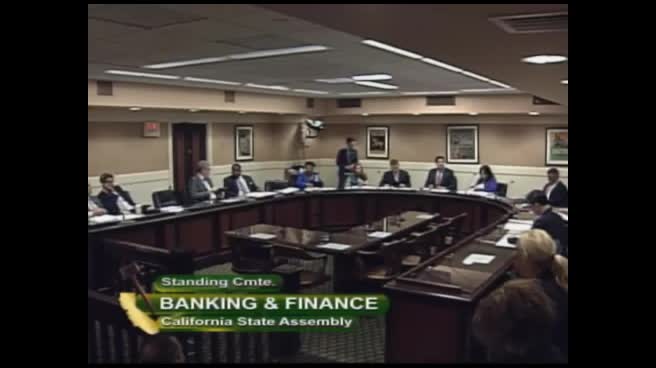 4MIN
Assembly Standing Committee on Banking and Finance
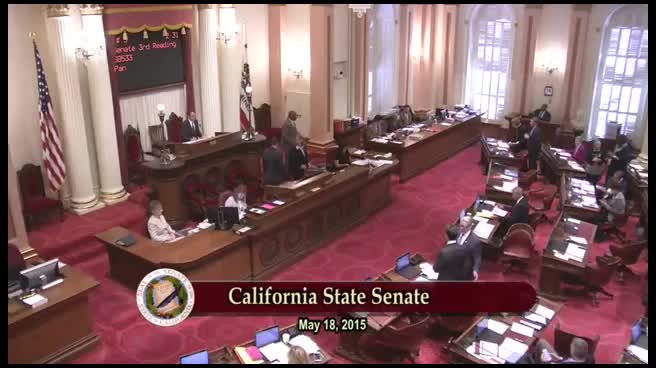 1MIN
Senate Floor
Bill Author
Bill Co-Author(s):