SB 213: Juries: criminal trials: peremptory challenges.
- Session Year: 2015-2016
- House: Senate
- Latest Version Date: 2015-04-28
Existing law provides that in a criminal case when the offense charged is punishable by a maximum term of imprisonment that is more than 90 days, but is not punishable by death or imprisonment in the state prison for life, the defendant and the state are each entitled to 10 peremptory challenges. Existing law also provides that in those circumstances, when 2 or more defendants are jointly tried, their challenges shall be exercised jointly, but each defendant is entitled to 5 additional peremptory challenges that may be exercised separately, and the state is entitled to additional challenges equal to the number of additional challenges allowed to the defendants.
Existing law provides that in a criminal case when the offense charged is punishable with a maximum term of imprisonment of 90 days or less, the defendant and the state are each entitled to 6 peremptory challenges. Existing law also provides that in those circumstances, when 2 or more defendants are jointly tried, their challenges shall be exercised jointly, but each defendant is entitled to 4 additional challenges that may be exercised separately, and the state is entitled to additional challenges equal to the number of additional challenges allowed to the defendants.
This bill would instead, until January 1, 2021, reduce the number of peremptory challenges for some criminal cases by providing that in a criminal case when the offense charged is punishable with a maximum term of imprisonment of one year or less, the defendant and the state would be entitled to 6 peremptory challenges. The bill would provide that in those circumstances, when 2 or more defendants are jointly tried, their challenges would be exercised jointly, but each defendant would be entitled to 2 additional challenges that may be exercised separately, and the state would be entitled to additional challenges equal to the number of additional challenges allowed to the defendants. The bill would require the Judicial Council to conduct a study, and on or before January 1, 2020, to submit a report to the public safety committees of both houses of the Legislature, on the reductions in peremptory challenges resulting from the enactment of the bill, as specified.
Existing law provides that in a criminal case when the offense charged is punishable by a maximum term of imprisonment that is more than 90 days, but is not punishable by death or imprisonment in the state prison for life, the defendant and the state are each entitled to 10 peremptory challenges. Existing law also provides that in those circumstances, when 2 or more defendants are jointly tried, their challenges shall be exercised jointly, but each defendant is entitled to 5 additional peremptory challenges that may be exercised separately, and the state is entitled to additional challenges equal to the number of additional challenges allowed to the defendants.
Existing law provides that in a criminal case when the offense charged is punishable with a maximum term of imprisonment of 90 days or less, the defendant and the state are each entitled to 6 peremptory challenges. Existing law also provides that in those circumstances, when 2 or more defendants are jointly tried, their challenges shall be exercised jointly, but each defendant is entitled to 4 additional challenges that may be exercised separately, and the state is entitled to additional challenges equal to the number of additional challenges allowed to the defendants.
This bill would instead, until January 1, 2021, reduce the number of peremptory challenges for some criminal cases by providing that in a criminal case when the offense charged is punishable with a maximum term of imprisonment of one year or less, the defendant and the state would be entitled to 6 peremptory challenges. The bill would provide that in those circumstances, when 2 or more defendants are jointly tried, their challenges would be exercised jointly, but each defendant would be entitled to 2 additional challenges that may be exercised separately, and the state would be entitled to additional challenges equal to the number of additional challenges allowed to the defendants.
(a)In criminal cases, if the offense charged is punishable with death, or with imprisonment in the state prison for life, the defendant is entitled to 20 and the people to 20 peremptory challenges. Except as provided in subdivision (b), in a trial for any other offense, the defendant is entitled to 10 and the state to 10 peremptory challenges. When two or more defendants are jointly tried, their challenges shall be exercised jointly, but each defendant shall also be entitled to five additional challenges which may be exercised separately, and the people shall also be entitled to additional challenges equal to the number of all the additional separate challenges allowed the defendants.
(b)If the offense charged is punishable with a maximum term of imprisonment of one year or less, the defendant is entitled to six and the state to six peremptory challenges. When two or more defendants are jointly tried, their challenges shall be exercised jointly, but each defendant shall also be entitled to two additional challenges which may be exercised separately, and the state shall also be entitled to additional challenges equal to the number of all the additional separate challenges allowed the defendants.
(c)In civil cases, each party shall be entitled to six peremptory challenges. If there are more than two parties, the court shall, for the purpose of allotting peremptory challenges, divide the parties into two or more sides according to their respective interests in the issues. Each side shall be entitled to eight peremptory challenges. If there are several parties on a side, the court shall divide the challenges among them as nearly equally as possible. If there are more than two sides, the court shall grant such additional peremptory challenges to a side as the interests of justice may require, provided that the peremptory challenges of one side shall not exceed the aggregate number of peremptory challenges of all other sides. If any party on a side does not use his or her full share of peremptory challenges, the unused challenges may be used by the other party or parties on the same side.
(d)Peremptory challenges shall be taken or passed by the sides alternately, commencing with the plaintiff or people, and each party shall be entitled to have the panel full before exercising any peremptory challenge. When each side passes consecutively, the jury shall then be sworn, unless the court, for good cause, shall otherwise order. The number of peremptory challenges remaining with a side shall not be diminished by any passing of a peremptory challenge.
(e)If all the parties on both sides pass consecutively, the jury shall then be sworn, unless the court, for good cause, shall otherwise order. The number of peremptory challenges remaining with a side shall not be diminished by any passing of a peremptory challenge.
(f)The Judicial Council shall conduct a study, and on or before January 1, 2020, shall submit a report to the public safety committees of both houses of the Legislature, on the reductions in peremptory challenges resulting from the enactment of the act adding this subdivision. The study shall include, but not be limited to, an examination of the number of peremptory challenges used by the defendant and the state in misdemeanor jury trials, a representative sample of the types of cases that go to jury trial, and the resulting cost savings to the courts. A report to be submitted pursuant to this subdivision shall be submitted in compliance with Section 9795 of the Government Code.
(f)
(g)This section shall remain in effect only until January 1, 2021, and as of that date is repealed, unless a later enacted statute, that is enacted before January 1, 2021, deletes or extends that date.
SEC. 2.Section 231 is added to the Code of Civil Procedure, to read:231.(a)In criminal cases, if the offense charged is punishable with death, or with imprisonment in the state prison for life, the defendant is entitled to 20 and the people to 20 peremptory challenges. Except as provided in subdivision (b), in a trial for any other offense, the defendant is entitled to 10 and the state to 10 peremptory challenges. When two or more defendants are jointly tried, their challenges shall be exercised jointly, but each defendant shall also be entitled to five additional challenges which may be exercised separately, and the people shall also be entitled to additional challenges equal to the number of all the additional separate challenges allowed the defendants.
(b)If the offense charged is punishable with a maximum term of imprisonment of 90 days or less, the defendant is entitled to six and the state to six peremptory challenges. When two or more defendants are jointly tried, their challenges shall be exercised jointly, but each defendant shall also be entitled to four additional challenges which may be exercised separately, and the state shall also be entitled to additional challenges equal to the number of all the additional separate challenges allowed the defendants.
(c)In civil cases, each party shall be entitled to six peremptory challenges. If there are more than two parties, the court shall, for the purpose of allotting peremptory challenges, divide the parties into two or more sides according to their respective interests in the issues. Each side shall be entitled to eight peremptory challenges. If there are several parties on a side, the court shall divide the challenges among them as nearly equally as possible. If there are more than two sides, the court shall grant such additional peremptory challenges to a side as the interests of justice may require, provided that the peremptory challenges of one side shall not exceed the aggregate number of peremptory challenges of all other sides. If any party on a side does not use his or her full share of peremptory challenges, the unused challenges may be used by the other party or parties on the same side.
(d)Peremptory challenges shall be taken or passed by the sides alternately, commencing with the plaintiff or people, and each party shall be entitled to have the panel full before exercising any peremptory challenge. When each side passes consecutively, the jury shall then be sworn, unless the court, for good cause, shall otherwise order. The number of peremptory challenges remaining with a side shall not be diminished by any passing of a peremptory challenge.
(e)If all the parties on both sides pass consecutively, the jury shall then be sworn, unless the court, for good cause, shall otherwise order. The number of peremptory challenges remaining with a side shall not be diminished by any passing of a peremptory challenge.
(f)This section shall become operative on January 1, 2021.
(a)In criminal cases, if the offense charged is punishable with death, or with imprisonment in the state prison for life, the defendant is entitled to 20 and the people to 20 peremptory challenges. Except as provided in subdivision (b), in a trial for any other offense, the defendant is entitled to 10 and the state to 10 peremptory challenges. When two or more defendants are jointly tried, their challenges shall be exercised jointly, but each defendant shall also be entitled to five additional challenges which may be exercised separately, and the people shall also be entitled to additional challenges equal to the number of all the additional separate challenges allowed the defendants.
(b)If the offense charged is punishable with a maximum term of imprisonment of 90 days one year or less, the defendant is entitled to six and the state to six peremptory challenges. When two or more defendants are jointly tried, their challenges shall be exercised jointly, but each defendant shall also be entitled to four two additional challenges which may be exercised separately, and the state shall also be entitled to additional challenges equal to the number of all the additional separate challenges allowed the defendants.
(c)In civil cases, each party shall be entitled to six peremptory challenges. If there are more than two parties, the court shall, for the purpose of allotting peremptory challenges, divide the parties into two or more sides according to their respective interests in the issues. Each side shall be entitled to eight peremptory challenges. If there are several parties on a side, the court shall divide the challenges among them as nearly equally as possible. If there are more than two sides, the court shall grant such additional peremptory challenges to a side as the interests of justice may require; require, provided that the peremptory challenges of one side shall not exceed the aggregate number of peremptory challenges of all other sides. If any party on a side does not use his or her full share of peremptory challenges, the unused challenges may be used by the other party or parties on the same side.
(d)Peremptory challenges shall be taken or passed by the sides alternately, commencing with the plaintiff or people; people, and each party shall be entitled to have the panel full before exercising any peremptory challenge. When each side passes consecutively, the jury shall then be sworn, unless the court, for good cause, shall otherwise order. The number of peremptory challenges remaining with a side shall not be diminished by any passing of a peremptory challenge.
(e)If all the parties on both sides pass consecutively, the jury shall then be sworn, unless the court, for good cause, shall otherwise order. The number of peremptory challenges remaining with a side shall not be diminished by any passing of a peremptory challenge.
(f)This section shall remain in effect only until January 1, 2021, and as of that date is repealed, unless a later enacted statute, that is enacted before January 1, 2021, deletes or extends that date.
SEC. 2.Section 231 is added to the Code of Civil Procedure, to read:231.(a)In criminal cases, if the offense charged is punishable with death, or with imprisonment in the state prison for life, the defendant is entitled to 20 and the people to 20 peremptory challenges. Except as provided in subdivision (b), in a trial for any other offense, the defendant is entitled to 10 and the state to 10 peremptory challenges. When two or more defendants are jointly tried, their challenges shall be exercised jointly, but each defendant shall also be entitled to five additional challenges which may be exercised separately, and the people shall also be entitled to additional challenges equal to the number of all the additional separate challenges allowed the defendants.
(b)If the offense charged is punishable with a maximum term of imprisonment of 90 days or less, the defendant is entitled to six and the state to six peremptory challenges. When two or more defendants are jointly tried, their challenges shall be exercised jointly, but each defendant shall also be entitled to four additional challenges which may be exercised separately, and the state shall also be entitled to additional challenges equal to the number of all the additional separate challenges allowed the defendants.
(c)In civil cases, each party shall be entitled to six peremptory challenges. If there are more than two parties, the court shall, for the purpose of allotting peremptory challenges, divide the parties into two or more sides according to their respective interests in the issues. Each side shall be entitled to eight peremptory challenges. If there are several parties on a side, the court shall divide the challenges among them as nearly equally as possible. If there are more than two sides, the court shall grant such additional peremptory challenges to a side as the interests of justice may require, provided that the peremptory challenges of one side shall not exceed the aggregate number of peremptory challenges of all other sides. If any party on a side does not use his or her full share of peremptory challenges, the unused challenges may be used by the other party or parties on the same side.
(d)Peremptory challenges shall be taken or passed by the sides alternately, commencing with the plaintiff or people, and each party shall be entitled to have the panel full before exercising any peremptory challenge. When each side passes consecutively, the jury shall then be sworn, unless the court, for good cause, shall otherwise order. The number of peremptory challenges remaining with a side shall not be diminished by any passing of a peremptory challenge.
(e)If all the parties on both sides pass consecutively, the jury shall then be sworn, unless the court, for good cause, shall otherwise order. The number of peremptory challenges remaining with a side shall not be diminished by any passing of a peremptory challenge.
(f)This section shall become operative on January 1, 2021.
|
Date
|
Status
|
|---|---|
| May 18, 2015 | In Assembly. Read first time. Held at Desk. |
| Jun 23, 2016 | From Assembly without further action. |
| Jun 22, 2016 | Returned to Secretary of Senate pursuant to Joint Rule 62(a). |
| Jun 22, 2016 | Returned to Chief Clerk pursuant to Joint Rule 62(a). |
| Jun 21, 2016 | June 21 set for final hearing canceled at the request of author. |
| Jul 14, 2015 | July 14 set for second hearing canceled at the request of author. |
| Jul 1, 2015 | June 30 set for first hearing canceled at the request of author. |
| Jun 30, 2015 | June 30 set for first hearing canceled at the request of author. |
| May 28, 2015 | Referred to Com. on PUB. S. |
| May 18, 2015 | Read third time. Passed. (Ayes 34. Noes 1.) Ordered to the Assembly. |
| May 18, 2015 | Read third time. Passed. (Ayes 34. Noes 1. Page 1020.) Ordered to the Assembly. |
| Feb 11, 2015 | Introduced. Read first time. To Com. on RLS. for assignment. To print. |
| May 12, 2015 | Read second time. Ordered to third reading. |
| May 11, 2015 | From committee: Be ordered to second reading pursuant to Senate Rule 28.8. |
| May 1, 2015 | Set for hearing May 11. |
| Apr 29, 2015 | Re-referred to Com. on APPR. pursuant to Joint Rule 10.5. |
| Apr 28, 2015 | Read second time and amended. Ordered to third reading. |
| Apr 27, 2015 | From committee: Do pass as amended. (Ayes 6. Noes 1. Page 729.) (April 21). |
| Mar 20, 2015 | Set for hearing April 21. |
| Feb 19, 2015 | Referred to Com. on PUB. S. |
| Feb 12, 2015 | From printer. May be acted upon on or after March 14. |
|
Date
|
Description
|
Location
|
Votes
|
|
|---|---|---|---|---|
| May 18, 2015 | Senate 3rd Reading SB213 Block | Senate Floor |
Passed |
|
| Apr 21, 2015 | Do pass as amended | Senate Standing Committee on Public Safety |
Passed |
This list shows positions taken on this bill by organizations on the date displayed, which is linked to the original source.
Positions by individuals are not included.
|
Organization
|
Position
|
Date
|
|---|---|---|
| California Appellate Court Justice Stewart | ** Support | May 18, 2015 |
| California Attorneys For Criminal Justice | * Against | Apr 22, 2015 |
| California Judges Association | ** Support | May 18, 2015 |
| California Public Defenders Association | ** Against | May 18, 2015 |
| Contra Costa Superior Court Judge Mockler | ** Support | May 18, 2015 |
| Legal Services for Prisoners with Children | ** Against | May 18, 2015 |
| Los Angeles Superior Court Judges: Sloan; and Stewart | ** Support | May 18, 2015 |
| Marin County Superior Court | ** Support | May 18, 2015 |
| Mendocino County Superior Court Judge Nelson | ** Support | May 18, 2015 |
| Monterey Superior Court Judge Panetta | ** Support | May 18, 2015 |
| Riverside County Superior Court Judges: Counelis; and Hopp | ** Support | May 18, 2015 |
| San Bernardino Superior Court Judge Pacheco | ** Support | May 18, 2015 |
| San Diego District Attorney Bonnie Dumanis | ** Support | May 18, 2015 |
| San Francisco Public Defenders Association | * Against | Apr 22, 2015 |
| San Luis Obispo Superior Court Judge Tangeman | ** Support | May 18, 2015 |
| Santa Clara Superior Court Judge Bernal | ** Support | May 18, 2015 |
SB 213
Page 16
Date of Hearing: July 14, 2015
Counsel: Gabriel Caswell
ASSEMBLY COMMITTEE ON PUBLIC SAFETY
Bill Quirk, Chair
SB 213
(Block) – As Amended April 28, 2015
SUMMARY:
Reduces the number of peremptory challenges from ten peremptory challenges to six peremptory challenges for both the prosecution and the defense in misdemeanor criminal trials. Specifically, this bill:
Provides that in any criminal case where the offense is punishable with a maximum term of imprisonment of one year or less, the defendant is entitled to six preemptory challenges. If two or more defendants are jointly tried their challenges shall be exercised jointly but each defendant shall also be entitled to two additional challenges which may be exercised separately, and the state shall also be entitled to additional challenges equal to the number of all the additional separate challenges allowed the defendants.
States that The Judicial Council shall conduct a study, and on or before January 1, 2020, shall submit a report to the public safety committees of both houses of the Legislature, on the reductions in peremptory challenges. The study shall include, but not be limited to, an examination of the number of peremptory challenges used by the defendant and the state in misdemeanor jury trials, a representative sample of the types of cases that go to jury trial, and the resulting cost savings to the courts.
Imposes a sunset date of January 1, 2021.
EXISTING LAW:
Permits each party (prosecution and defense) in criminal cases 10 peremptory challenges. Grants an additional five peremptory challenges in criminal matters to each defendant and five additional challenges, per defendant, to the prosecution when defendants are jointly charged. (Code Civ. Proc., § 231 subd. (a).)
Specifies 20 peremptory challenges per party in criminal matters when the offenses charged are punishable with death, or life in prison. Grants an additional five peremptory challenges in criminal matters to each defendant and five additional challenges, per defendant, to the prosecution when defendants are jointly charged. (Code Civ. Proc., § 231 subd. (a).)
Allows parties in criminal matters punishable with a maximum term of imprisonment of 90 days or less six peremptory challenges each. Grants an additional four peremptory challenges to defendants jointly charged, and four per defendant to the prosecution. (Code Civ. Proc., § 231 subd. (b).)
Permits challenges to jurors under the following provisions (Code Civ. Proc., § 225 subd. (b)):
Incompetency or incapacity to serve; (Code Civ. Proc., § 228.)
A challenge for cause, for disqualification from service, or a showing of bias against a party; and,
A peremptory challenge exercised by a party to the action.
Specifies a challenge for cause based upon bias may be taken for one or more of the following causes (Code Civ. Proc., § 229):
Consanguinity or affinity within the fourth degree to any party or to any alleged witness or victim in the case at bar;
Having the following relationships with a party: parent, spouse, child, guardian, ward, conservator, employer, employee, landlord, tenant, debtor, creditor, business partners, surety, attorney, and client;
Having served or participated as a juror, witness, or participant in previous litigation involving one of the parties;
Having an interest in the outcome of the event or action;
Having an unqualified opinion or belief as to the merits of the action founded on knowledge of its material facts or of some of them;
The existence of a state of mind in the juror evincing enmity against, or bias towards, either party;
That the juror is party to an action pending in the court for which he or she is drawn and which action is set for trial before the panel of which the juror is a member; and,
If the offense charged is punishable with death, the entertaining of such conscientious opinions as would preclude the juror finding the defendant guilty; in which case the juror may neither be permitted nor compelled to serve.
FISCAL EFFECT:
Unknown
COMMENTS:
Author's Statement: According to the author, "Due to the recent budget crisis, courts significantly cut their operational budgets, laid off key personnel, and closed entire courtrooms, resulting in a significant reduction in access to justice. As a result the legislature and Governor asked our judicial system to find efficiencies while preserving justice. SB 213 is a modest measure that reduces the number of peremptory challenges in misdemeanor cases from ten to sic and when multiple parties are jointly tried from five to two additional challenges per side. The measure will increase efficiencies for the courts, community, and local economy while ensuring that justice is not undermined.
"California currently ranks among the states with the highest number of peremptory challenges in misdemeanor trials. This costs more in terms of additional volumes of jury summons as well as the need for high-capacity jury rooms and infrastructure to support those jurors. And while peremptory challenges are an important aspect of our justice system, greater numbers of peremptory challenges have been correlated with large numbers of potential jurors being discriminated and dismissed for improper reasons. The current jury selection process has proven itself to be time consuming for potential jurors, burdensome and costly for employers, and inefficient to our justice system.
"By modestly reducing the number of peremptory challenges from
ten to six and additional challenges from five to two when there are
multiple parties, California would continue to rank above most states
while making a significant impact on reducing workload, increasing
juror satisfaction, and maximizing fairness. Reducing the number of
challenges will decrease the number of jurors who must maximizing
fairness. Reducing the number of challenges will decrease the number
of jurors who must be called for service. Fewer people appearing for
jury service will shorten trials as the jury selection process often
is the longest part of the misdemeanor trial. This will permit
judges and court personnel to be redeployed to areas where layoffs
and furloughs have severely hampered court operations. Furthermore,
a more efficient jury selection process results in jurors returning
to work faster, significantly increasing community cost savings and
juror satisfaction. Finally, modestly reducing peremptory challenges
will decrease the number of potential jurors dismissed for improper
reasons, thereby increasing fairness in the jury selection process,
all while preserving justice."
2014 Judicial Council Statistics on Misdemeanor Trials: According to the most recent report on Statewide Caseload Trends, published by the Judicial Council of California1, there were a total of 319,376 misdemeanor cases in California that were resolved prior to a trial. There were a total of 3,029 cases in the state of California that were resolved after a trial. That means that roughly 1% of misdemeanor cases in the State of California were resolved by a trial in 2014. Of that 1% of trials, only 56% of those cases (or 1,707 cases statewide) were resolved by a jury, the remaining 44% of trials were resolved by a judge. That means that nearly one-half of one percent of filed misdemeanor cases are resolved by a jury after a trial.
According to the report, the following counties had the following number of cases resolved by a jury trial2:
County Resolutions by Jury Trial in 2014
Alameda (no data provided)
Alpine 0
Amador 2
Butte 12
Calavares 2
Colusa 0
Contra Costa 122
Del Norte 2
El Dorado 14
Fresno 25
Glenn 0
Humbolt 10
Imperial 14
Inyo 1
Kern 43
Kings 6
Lake 5
Lassen 1
Los Angeles 449
Madera 3
Marin 7
Mariposa 0
Mendocino 4
Merced 7
Modoc 0
Mono 0
Monterey 45
Napa 9
Nevada 9
Orange (no data provided)
Placer 16
Plumas 0
Riverside 83
Sacramento 15
San Benito 1
San Bernardino 133
San Diego 146
San Francisco 82
San Joaquin 26
San Luis Obispo 15
San Mateo 22
Santa Barbara 15
Santa Clara 62
Santa Cruz 15
Shasta 9
Sierra 1
Siskiyou 5
Solano 48
Sonoma 23
Stanislaus 36
Sutter 1
Tehama 0
Trinity 3
Tulare 26
Toulumne 9
Ventura 92
Yolo 27
Yuba 4
Jury Selection Process: The current process permits the parties to remove jurors from the panel in a criminal case by exercising both challenges for "cause" and "peremptory" challenges. These challenges are made during the voir dire phase of the trial, during which the court, with the assistance of the attorneys, inquires of the prospective jurors to determine the suitability of individuals to render a fair judgment about the facts of the case. At the commencement of voir dire, the jurors are asked to reveal any facts which may show they have a disqualification (such as hearing loss) or a relationship with one of the parties or witnesses. Some of these facts (such as employment by one of the parties) may amount to an "implied" bias which causes the juror to be excused from service. Other facts (such as having read about the case in the newspapers) may lead to questioning of the juror to establish whether an actual bias exists. A party usually demonstrates that a juror has an actual bias by eliciting views which show the juror has prejudged some element of the case. After any jurors have been removed from the panel for disqualification and bias, the parties may remove jurors without giving any reason, by exercising peremptory challenges.
In general, the number of peremptory challenges3 available to each side is:
20 in capital and life imprisonment cases;
10 in criminal cases where the sentence may exceed 90 days in jail;
6 in criminal cases with sentences less than 90 days in jail; or,
6 in civil cases
History of Peremptory Challenges: Peremptory challenges to jurors have been part of the civil law of California since 1851, and were codified in the original Field Codes in 1872. Their previous history in England dates back to at least the Fifteenth Century when persons charged with felonies were entitled to 35 peremptory challenges to members of the jury panel. Peremptory challenges have permeated other nations which have based their systems of justice on English Common Law. Today, nations with roots in English law, such as Australia, New Zealand, and Northern Ireland, continue to utilize peremptory challenges in jury selection.
In 1986, the United States Supreme Court decided Batson v. Kentucky, recognizing that the peremptory challenge could be a vehicle for discrimination. Subsequent cases have sought, with some difficulty, to define the limits of inquiry into the motives of the parties in exercise of challenges which might be based on race or gender. In California, under Civil Code Section 231.5, a party may not excuse a juror with a peremptory challenge based on race, color, religion, sex, national origin, sexual orientation or similar grounds. If questioned, the attorney who exercised the potentially discriminatory challenge must provide the court with a lawful and neutral reason for the use of the challenge.
Proponent Arguments: Proponents make a number of arguments related to court efficiency for the need to cut the number of peremptory challenges. In addition, the proponents argue that peremptory challenges are often used in a discriminatory manner to remove juries of a particular class from service.
Cost savings: While savings are difficult to quantify precisely, reducing peremptory challenges by one-half will greatly reduce the number of jurors who must be called for service. This is because sufficient potential jurors must be present in case the full numbers of potential jurors are dismissed. Fewer juror summons’ result in less paper, less postage, fewer jurors to pursue for not appearing, less physical infrastructure to hold potential jurors, etc.
Personnel efficiencies: Fewer people appearing for jury service will permit personnel resources involved in calling jurors for service to be redeployed in areas where layoffs and furloughs have severely hampered court operations.
Shorter trials: Fewer peremptory challenges will mean shorter jury selection and thus shorter trials, allowing judges and overburdened staff to handle more matters.
Improved juror satisfaction: Judges report that potential jurors frequently express frustration when they watch otherwise eligible jurors be dismissed for no apparent reason. The willingness of potential jurors to serve is critical to the constitutional right to jury, and judges are convinced that this simple change will help improve juror attitudes.
More productive employees in the work force: Calling fewer potential jurors means that more people will be working productively in their jobs, benefitting private businesses which we ask to pay for jury service and public agencies as well. In the public sector, for example, having police officers in court for shorter periods of time while jury selection unfolds will permit officers to spend more productive time in police work.
Impact of Proposition 47: Unlike previous versions of this bill, the proponents are now arguing that the passage of Proposition 47 has further "complicated" the judicial process. However, the passage of Proposition 47 took cases that were previously felonies and reduced them to misdemeanors. In general, defendants are more likely to plead to a misdemeanor than a felony due to the nature of the consequences of a felony plea versus a misdemeanor plea. Additionally, in terms of pressure on the courts, the courts are facing far fewer potential felony trials as a result of the passage of Proposition 47 and therefore the need for this bill would be reduced.
Peremptory Challenges as the Only Method of Eliminating Suspected Bias, Suspected Incompetence, or Suspected Incapacity: Under the present system, a potential juror may be excused for cause under a number of specified circumstances (generally incompetence, incapacity, and apparent implied or actual bias). One common use of peremptory challenges is to remove potential jurors who meet the legal definition, but who the attorney suspects may be biased or incompetent.
Suspected Bias: In general, many jurors come into the jury selection process with certain biases. Studies have shown that jury bias is particularly prevalent in criminal cases. In fact, this is one of the reasons we have the presumption of innocence.
The jury process is set up to divulge and eliminate these biases through education in basic legal principles such as the presumption of innocence, right against self-incrimination and the burden of proof. Often, jurors begin their jury service with the belief that a defendant must prove his or her innocence. Other jurors may expressly state that they believe that it is incumbent upon the defendant to testify in order to obtain a not guilty verdict. Still others commonly state when questioned that they would vote guilty at the beginning of the case, despite the fact that the defendant is presumed innocent. Upon questioning, if the juror simply states that they can fairly apply the instructions of the judge they meet the legal standard of unbiased.
Suspected Incompetence: Jurors are expected to have basic competence in order to adequately judge the facts and circumstances of a case. For example, jurors are expected to have a basic understanding of the English language. Minimal ability to understand the language is generally accepted. One potential use of a peremptory challenge would be to remove a juror who can answer and communicate in yes and no responses, but who may not have the ability to read and comprehend the jury instructions. When a case depends on a complex understanding of the jury instructions, a juror who is less literate may not be sufficiently competent to decide the facts of the case. While this juror is not removable for cause, an attorney may choose to exercise a peremptory challenge.
Suspected Incapacity: Jurors are expected to be physically and mentally capable of service. For example, a juror who is so physically infirm that they are unable to sit and comprehend the testimony and courtroom presentation may not be capable of serving on a jury. In instances where the judge determines that the potential juror's health is legally sufficient, an attorney may choose to remove said juror through use of a peremptory challenge. The attorney may feel that the potential juror's infirmity may be so distracting that they could not devote sufficient attention to the determination of the facts of the case.
Misdemeanors can be Serious Offenses Imposing a Criminal Record: The types of cases included in this bill are comparatively serious in nature compared to most civil matters. First, unlike civil matters, the prosecution must convince a unanimous jury by the highest legal standard under the law. Second, these cases involve matters which can result in imprisonment for up to one year. If multiple offenses are charged, a defendant could potentially be sentenced to consecutive multi-year stints. In addition to their liberty interests, criminal defendants must also carry a criminal record. Misdemeanors such as vehicular manslaughter, assault, battery, molestation and domestic violence would be covered under this legislation.
Additional Cost and Strain upon the System/Danger of Retrials: Prosecuting attorneys have the daunting burden of proving to a unanimous jury that a defendant is guilty of the charges beyond a reasonable doubt.4 When a criminal jury cannot reach a unanimous verdict, the prosecution may retry the case and attempt to achieve a unanimous verdict with another trial. There is no limit to the number of trials the prosecution can bring. Every retrial strains the system and requires the cost of a trial. By reducing peremptory challenges available to the prosecution, the likelihood of a non-unanimous jury increases thereby increasing the chances of costly retrials.
Studies Conducted and Compiled by the "National Jury Project": The National Jury Project (NJP) is a non-profit corporation in Minnesota, with subsidiaries in California, Minnesota, and New York. The NJP has found that numerous institutional and societal norms make the selection of a fair, competent, and unbiased jury difficult. Specifically, the process fails to provide necessary safeguards or allow necessary inquiry into the jury selection process.
Jurors' Opinions and Attitudes: A juror's preconceptions can substantially impact his or her ability to be fair or impartial.
Bias Against Criminal Defendants: One important source of bias in any criminal case is the inability or unwillingness of some potential jurors to apply fundamental legal principles correctly. In every jurisdiction, a substantial proportion of persons eligible for jury service enters the courtroom predisposed against any criminal defendant. This predisposition is expressed in disagreement with legal principles designed to protect the presumption of innocence. Attitudinal surveys conducted by NJP in jurisdictions throughout the country reveal that a substantial proportion of persons eligible for jury service believe the following.
Persons eligible for jury service who agree that defendants in criminal trials should be required to testify despite the right against self-incrimination:
Jurisdiction % Who Agree
Northern District of California (1975) 66%
San Francisco County (1986) 64%
Persons eligible for jury service expecting defendants to prove their innocence despite judge's instructions to the contrary (burden of proof and presumption of innocence):
County % Who Agree
Alameda (1989) 54%
Lake (1993) 53%
Los Angeles (1995) 50%
Marin (1990) 51%
Napa (1999) 48%
Orange (1991) 46%
Sacramento (2002) 51%
San Diego (1989) 52%
San Francisco (1986) 51%
San Joaquin (1990) 62%
San Mateo (1990) 57%
Santa Clara (1989) 54%
Shasta (1992) 52%
Solano (2003) 54%
Sonoma (1992) 47%
Tulare (2003) 64%
Ventura (1990) 53%
Yolo (1991) 41%
Persons eligible for jury service agreeing that "If the government brings someone to trial, that person is probably guilty of some crime."
County % Who Agree
Contra Costa (1990) 27%
Marin (1990) 19%
Merced (1986) 35%
Orange (1984) 32%
Sacramento (1984) 32%
San Joaquin (1990) 21%
San Francisco (1986) 20%
San Mateo (1984) 37%
Solano (1985) 34%
Sonoma (1980) 40%
Yolo (1980) 33%
Prejudicial Attitudes: The ability to be fair and impartial may be precluded by an individual's general prejudicial attitudes or opinions. General attitudes may preclude impartiality. For example, among those who know or understand that under our system of jurisprudence a defendant is presumed innocent unless proven guilty, there are some who at the same time expect the defendant to prove his or her innocence. Since an excuse for cause requires a juror's explicit admission that she or he cannot be fair in the specific case, some judges resist inquiry into areas of general prejudice.
Prejudgment: Jurors who already have opinions about an individual in a case commonly form judgments about the case before hearing any evidence. The number of prospective jurors who will admit in the courtroom that they have formed opinions about a case is generally small. However, substantial evidence demonstrates that the likely presence of bias and prejudgment exists.
Instructions Cannot Cure Bias: Research regarding the effectiveness of judges' instructions strongly suggests that instructions alone cannot compensate for the prospective jurors' biases. Post-trial studies have concluded that as many as 50% of instructed jurors did not understand that the defendant did not have to present evidence of innocence.5 When asked whether "the fact that the state decided to bring charges against a criminal defendant" is no evidence, some evidence, or strong evidence "that the defendant committed the charged offense," 40% answered "some evidence" or "strong evidence."6
Psycho-Social Dynamics of the Courtroom: The impact of the courtroom environment strongly influences the answers jurors provide. The selection process is intended to determine individuals' qualifications for a very important job. Prospective jurors, like everyone else in the courtroom, are aware of this fact. As the questioning begins, jurors understand that they will be included on or excluded from a jury based on their responses to questions. The prospective jurors are aware they are being evaluated by the judge, attorneys, and the audience (including fellow potential jurors). As in any interview, a person's natural reactions to stress, embarrassment, group pressure, and public exposure will affect his or her responses to questions. Responses of a prospective juror, like those of the subject of any interview, are affected by these and other factors that lie outside of the person's control, and often, outside of his or her awareness.7 Awareness of the consequences of various responses can also affect the way attitudes and beliefs are expressed.8 People portray themselves in socially desirable and politically correct ways when publicly questioned (e.g., when questioned about racial attitudes).9
Most people naturally seek to present themselves in the most positive light. They portray themselves as fair rather than unfair, honest rather than dishonest, and so on.10 In the courtroom, the judge is the person of highest status and authority, thus the status difference between judge and potential jurors often inhibits juror candor. Features of the courtroom such as high ceilings, judicial robes, and a raised bench can be intimidating to lay people. In this environment jurors are more likely to conceal rather than reveal bias.
Lack of Candor during the Selection Process: The NJP has found that there is a lack of truthful answers by jurors in the selection process. As a result, the parties and the judge rarely obtain sufficient information from the voir dire process to intelligently exercise challenges for cause. For most prospective jurors, the courtroom is an unfamiliar and intimidating place. Potential jurors strive to present themselves in the most positive light. The message often communicated to prospective jurors during the voir dire process is that fairness and impartiality mean having no opinions. As a result, little is learned about prospective jurors' attitudes and opinions. Bias and prejudice are only infrequently revealed.
Judges Wield Great Authority in Limiting Inquiries of Jurors: The NJP found that judges have great discretion in limiting the questioning of jurors, and frequently do exercise their authority to strictly limit questioning of jurors. Judges' decisions concerning areas to include in jury questioning and latitude accorded counsel in conducting the questioning are rarely reversed. [Mu'Min v. Virginia (1991) 111 S. Ct. 1899, 1905; Patton v. Yount, (1984) 467 U.S. 1025.]
Argument in Support: According to the California Judges Association and the Judicial Council of California, "The California Judges Association (CJA) and the Judicial Council of California are writing in support and respectfully request your AYE vote.
"SB 213 proposes modest yet significant reductions in the number of peremptory challenges available in misdemeanor trials. Present law grants each side 10 peremptory challenges on misdemeanors with sentences of greater than three months up to one year, and 5 per side for additional parties. For misdemeanors with sentences of three months or less, present law grants 6 peremptory challenges, plus 4 per side for multiple parties.
"SB 213 standardizes and reduces the number for all misdemeanors to 6 per side, with 2 additional for multiple parties. SB 213 contains a five-year sunset provision.
"Please note that SB 213 proposes no changes in felony trials, in the size or majority required for conviction, and most importantly, no limitations on challenges for cause. The bill affects only peremptory challenges, which are available to counsel for any reason, or for no reason, as long as challenges are not being exercised for impermissible reasons, such as race.
"The need for economies and efficiencies in our court system has never been greater. Legislators have repeatedly asked the courts to identify measures which can save time and resources. Reducing peremptory challenges in misdemeanor is one commonsense proposal which can assist the courts. This is why all 58 presiding judges have voted to support the bill.
"Fewer peremptory challenges will reduce the time spent by law enforcement officers who remain on standby during jury selection, returning those officers to patrol duty sooner. Jurors likewise could return to productive work sooner. In addition to modest cost savings to the courts, savings to communities, particularly to both public and private employers, will be significant.
"Overall, a reduction in the number of misdemeanor peremptory challenges is expected to increase juror satisfaction, with no reduction in justice for anyone. In fact, greater numbers of peremptory challenges could carry the risk of dismissing more potential jurors dismissed for improper, discriminatory reasons, such as race.
"SB 213 offers the following benefits:
"An expedited jury selection phase will shorten misdemeanor trials resulting in more misdemeanor trials conducted within existing trial departments.
"Law enforcement officers will spend less non-productive time in the courtroom while jury selection is conducted.
"More jurors will be available for service on higher stakes felony cases.
"Juror satisfaction will increase as fewer jurors are called to misdemeanor courtrooms to sit through extended jury selection on lesser crimes.
"Millions of dollars annually will be saved by public and private employers alike with fewer people being called to jury duty.
"Personnel efficiencies: Fewer people appearing for jury service will permit personnel resources involved in calling jurors for service to be redeployed in areas where layoffs and furloughs have severely hampered court operations.
"California presently allows more peremptory challenges for misdemeanors than 47 other states. Only New Jersey and New York presently permit the same number as California, and even in those states, fewer challenges are permitted for additional parties. California also allows far more challenges than the federal system. A review of 50-state data reviews that even with the proposed reduction in peremptory challenges, 36 states would still offer fewer peremptory challenges than California. Even the federal system offers only 6 peremptory challenges (3 per side). We are aware of no allegation that the ability to effectively prosecute or defend criminal cases in those states or in the federal system are impaired by fewer available peremptory challenges.
"An excessive number of misdemeanor peremptory challenges unnecessarily extends the jury selection process often making jury selection the longest part of the misdemeanor trial and reducing the number of misdemeanor trials that can be heard with existing resources. Oversized misdemeanor panels also encumber large numbers of jurors rendering them unavailable for service on higher stakes felony cases. With the recent passage of Proposition 47, these problems will soon increase significantly.
"Finally, unused or poorly used jurors express that jury service is a waste of valuable time, souring their perception of the criminal justice system and reducing the likelihood of future jury service.
"With budget cutbacks forcing dramatic changes in many areas of civil law, it is time for California to adopt modest, commonsense changes in criminal misdemeanor jury selection. California’s judges make it their life-work to insure the fair administration of justice, and if there was any serious suggestion that reducing peremptory challenges would impair that critical objective, we would not be proposing the change."
Argument in Opposition: According to the Los Angeles District Attorney's Office, "SB 213 reduces the number of peremptory challenges in misdemeanor cases from 10 to 6 and reduces the number of additional peremptory challenges provided to each defendant from 5 to 2 when defendants are tried jointly thereby reducing the number of peremptory challenges available to the prosecution in multi-defendant cases. SB 213 also contains language that provides the reduced number of peremptory challenges shall sunset on 1/1/2021 unless subsequent legislation extends this date.
"Prior to the passage of Proposition 115 in 1990, both attorneys and judges conducted the questioning of jurors, commonly referred to as 'voir dire.' Proposition 115 eliminated attorney conducted voir dire excepted in limited circumstances. Ten years after the passage of Proposition 115, the Legislature recognized that the elimination of attorney conducted voir dire negatively impacted both the prosecutors and defense counsel’s ability to effectively assess a prospective jurors’ capacity for fairness and the absence of bias. In 2000, AB 2406 (Chapter 192, Statutes of 2000) was approved by the Legislature and signed into law. AB 2406 amended Proposition 115 to require courts conduct an initial examination of prospective jurors and thereafter give both the prosecution and defense counsel the right to examine, by oral and direct questioning, any or all of the prospective jurors. However AB 2406 did not specify the amount of time that attorneys for each side would have to conduct their examinations which has resulted in a very limited examination of jurors for bias and fairness in many misdemeanor cases.
"Even with this limited voir dire many judges believe that prosecutors and defense counsel spend too much time ensuring that a fair and unbiased jury panel is selected. According to the sponsor, SB 213 is supposed to result in both cost savings and reduce the length of misdemeanor trials. Neither of these goals will be achieved by SB 213.
"Simply reducing the number of peremptory challenges will have the unintended consequence of increasing both the defense attorney and prosecution request for challenges for cause. While the number of peremptory challenges is limited, both the defense and prosecution have an unlimited number of challenges for cause. Prosecutors and defense counsel use peremptory challenges more frequently in California because of the limited attorney conducted voir dire which forces each side to use their peremptory challenges in situations where a more thorough voir dire could have determined whether a juror was fit to serve or should be disqualified 'for cause.'
"The time and resources needed to challenge a prospective juror for cause greatly exceed the time and resources used when a prosecutor or defense counsel use a peremptory challenge. With the number of peremptory challenges reduced under SB 213, there will be demands for additional attorney conducted voir dire to ensure that both the People’s and defendant’s constitutional right to a fair and unbiased trial is protected.
"The sponsors of SB 213 argue that a blue ribbon report recommended that the number of peremptory challenges be reduced. However the sponsors have chosen to selectively pick and choose the recommendations from the report for inclusion in SB 213. The report did in fact recommend a reduction in the number of peremptory challenges in misdemeanor cases, but it linked the reduction in peremptory challenges to a reduction in the size of misdemeanor juries which is not contained in SB 213. The sponsors note that California is one of 3 states that allow for up to 10 peremptory challenges, however states like Indiana, Minnesota, New Mexico, and Texas which limit the number of peremptory challenges to 5 also have 6 person juries.
"Prosecuting attorneys have the burden of proving to a unanimous jury that a defendant is guilty of the charges beyond a reasonable doubt. When a criminal jury cannot reach a unanimous verdict, the prosecution may retry the case and attempt to achieve a unanimous verdict with another trial. There is no limit to the number of trials the prosecution can bring. Every retrial strains the system and requires the cost of a trial. By reducing peremptory challenges available to the prosecution, the likelihood of a non-unanimous jury increases because the prosecutor cannot use their instincts to remove a juror the prosecutor believes may prejudice the jury. Each non-unanimous verdict increases the chances of costly retrials.
"The inclusion of a sunset clause in SB 213 all but guarantees that there will be lengthy and costly appellate challenges to any and all guilty verdicts rendered by a jury with limited peremptory challenges if it’s provisions sunset. Defense counsel will challenge a guilty verdict reached by a jury on constitutional equal protection grounds that their client was not provided the same opportunity to eliminate potentially biased jurors as a similarly situated defendant tried before or after the provisions of SB 213 sunsetted.
"Jury selection is viewed as the most critical portion of the criminal trial process by a large majority of prosecutors and defense attorneys. Selecting a jury is a skill that must be learned by all new criminal attorneys at the beginning of their careers which is when most criminal attorneys conduct misdemeanor trials. SB 213 will interfere with a new attorney’s ability to learn this critical skill. If new criminal attorneys fail to properly learn this skill during their misdemeanor rotation it will result in unfair results for either the People or the defendant in felony trials which is an injustice to California’s criminal justice system which is viewed as a model by many criminal justice professionals.
"The notion that misdemeanors are less serious than felony crimes is well founded. However just because a misdemeanor is considered less serious than a felony does not mean that it is a trivial matter. Defendants convicted of misdemeanor crimes can be incarcerated for up to 1 year per offense in a county jail. There are also misdemeanor crimes that result in a defendant having to register for life as a sex offender under California law. Unlike civil matters, there are real liberty interests at stake in criminal cases. Shouldn’t California provide both the prosecution and defense counsel with every opportunity to ensure a fair and unbiased jury is selected to make such potentially life altering decisions?
"The purpose of peremptory challenges is to provide prosecutors and defense counsel the ability to select a fair and unbiased jury that provides each side with an opportunity to select a jury that represents the diversity of their community. The reduction of peremptory challenges will make it far more difficult to select a fair and unbiased jury that reflects a community’s diversity. By limiting the use of peremptory challenges, SB 213 has the real potential to result in less diverse and more biased juries because of the prosecutors or defense counsel’s inability to remove a juror they believe is biased and therefore unqualified to serve as a juror but cannot prove to the satisfaction of the judge that the potential juror should be removed 'for cause.'
"As prosecutors, it is both our goal and responsibility to ensure that justice prevails in every criminal case that is filed. Verdicts reached by juries that are biased or that are not selected from a proper cross-section of the community cannot be viewed as just.
"SB 213 will not result in the cost savings it claims will
result, nor will it improve the quality of California’s criminal
justice system. A fair and unbiased jury is the right of the People
and every defendant in our justice system. SB 213 will make ensuring
justice is carried out more difficult."
Prior Legislation:
SB 794 (Evans), of the 2013-2014 legislative session, provided in any criminal case where the offense is punishable with a maximum term of imprisonment of one year or less, the defendant is entitled to five preemptory challenges. If two or more defendants are jointly tried each defendant shall also be entitled to two additional challenges which may be exercised separately, and the state shall also be entitled to additional challenges equal to the number of all the additional separate challenges allowed the defendants. SB 794 failed passage in the Assembly Public Safety Committee.
AB 1557 (Feuer) of the 20017-2008 legislative session, reduced the number of peremptory challenges available to the prosecution and defense in all misdemeanor criminal matters punishable by up to one year in custody from ten to six challenges. AB 1557 failed passage on the Assembly Floor.
AB 886 (Morrow), of the 1997-98 Legislative Session, would have reduced the number of peremptory challenges in misdemeanor cases from 10 to 6 and made various changes to the jury system. AB 886 was never heard by the Assembly Judiciary Committee.
AB 2003 (Goldsmith), of the 1995-96 Legislative Session, would have reduced the number of "peremptory challenges" available to each side in criminal cases during the jury selection process. AB 2003 failed passage on Assembly Floor.
AB 2060 (Bowen), of the 1995-96 Legislative Session, would have eliminated peremptory challenges. AB 2060 was never heard by the Assembly Judiciary Committee.
REGISTERED SUPPORT / OPPOSITION:
Support
Alameda County District Attorney's Office
California Judges Association
Judicial Council of California
San Diego County District Attorney's Office
San Francisco County District Attorney's Office
San Mateo County District Attorney's Office
Santa Cruz Superior Court
28 private individuals
Opposition
California Attorneys for Criminal Justice
California Public Defenders Association
Criminal Defense Lawyers Club of San Diego
Legal Services for Prisoners with Children
Los Angeles County Public Defenders Association
Los Angeles District Attorney's Office
Riverside County Public Defender
6 private individuals
Analysis Prepared by: Gabriel Caswell / PUB. S. / (916) 319-3744
1 http://www.courts.ca.gov/documents/2014-Court-Statistics-Report.pdf
2 Alameda and Orange County failed to provide complete data and are not included.
3
Additional peremptory challenges are awarded to all parties when
multiple defendants are involved. The prosecution gains a
proportionate number to the defense in such cases.
4The highest standard of proof in the legal system.
5Strawn and Buchanan, Jury Confusion: A Threat to Justice, 59 Judicature 478, 481 (1976).
6
Saxton, How Well Do Jurors Understand Jury Instructions? A Field
Test Using Real Juries and Real Trials in Wyoming, 33 Land and Water
Review 59 (1988) at 96. Based on responses from 181 jurors who had
served on a criminal jury.
7Nisbett
& Wilson, "Telling More Than We Can Know: Verbal
Reports on Mental Processes", 84 Psychol. Rev. 231 (1977).
8Collins
and Hoyt, "Personal Responsibility for Consequences: An
Integration of the Forced Compliance Literature", 8 J.
Experimental Soc. Psychol. 558 (1972).
9Arkin,
"Social Anxiety, Self Presentation and the Self-Serving Bias in
Casual Attribution", 38 J. Personality & Soc. Psychol. 23
(1980).
10Marlow and Crown, Social Desirability and Responses to Perceived Situational Demands, 25 J. Consulting Psychol. 109 (1968).
SB 213
Page 16
Date of Hearing: June 30, 2015
Counsel: Gabriel Caswell
ASSEMBLY COMMITTEE ON PUBLIC SAFETY
Bill Quirk, Chair
SB 213
(Block) – As Amended April 28, 2015
SUMMARY:
Reduces the number of peremptory challenges from ten peremptory challenges to six peremptory challenges for both the prosecution and the defense in misdemeanor criminal trials. Specifically, this bill:
Provides that in any criminal case where the offense is punishable with a maximum term of imprisonment of one year or less, the defendant is entitled to six preemptory challenges. If two or more defendants are jointly tried their challenges shall be exercised jointly but each defendant shall also be entitled to two additional challenges which may be exercised separately, and the state shall also be entitled to additional challenges equal to the number of all the additional separate challenges allowed the defendants.
States that The Judicial Council shall conduct a study, and on or before January 1, 2020, shall submit a report to the public safety committees of both houses of the Legislature, on the reductions in peremptory challenges. The study shall include, but not be limited to, an examination of the number of peremptory challenges used by the defendant and the state in misdemeanor jury trials, a representative sample of the types of cases that go to jury trial, and the resulting cost savings to the courts.
Imposes a sunset date of January 1, 2021.
EXISTING LAW:
Permits each party (prosecution and defense) in criminal cases 10 peremptory challenges. Grants an additional five peremptory challenges in criminal matters to each defendant and five additional challenges, per defendant, to the prosecution when defendants are jointly charged. (Code Civ. Proc., § 231 subd. (a).)
Specifies 20 peremptory challenges per party in criminal matters when the offenses charged are punishable with death, or life in prison. Grants an additional five peremptory challenges in criminal matters to each defendant and five additional challenges, per defendant, to the prosecution when defendants are jointly charged. (Code Civ. Proc., § 231 subd. (a).)
Allows parties in criminal matters punishable with a maximum term of imprisonment of 90 days or less six peremptory challenges each. Grants an additional four peremptory challenges to defendants jointly charged, and four per defendant to the prosecution. (Code Civ. Proc., § 231 subd. (b).)
Permits challenges to jurors under the following provisions (Code Civ. Proc., § 225 subd. (b)):
Incompetency or incapacity to serve; (Code Civ. Proc., § 228.)
A challenge for cause, for disqualification from service, or a showing of bias against a party; and,
A peremptory challenge exercised by a party to the action.
Specifies a challenge for cause based upon bias may be taken for one or more of the following causes (Code Civ. Proc., § 229):
Consanguinity or affinity within the fourth degree to any party or to any alleged witness or victim in the case at bar;
Having the following relationships with a party: parent, spouse, child, guardian, ward, conservator, employer, employee, landlord, tenant, debtor, creditor, business partners, surety, attorney, and client;
Having served or participated as a juror, witness, or participant in previous litigation involving one of the parties;
Having an interest in the outcome of the event or action;
Having an unqualified opinion or belief as to the merits of the action founded on knowledge of its material facts or of some of them;
The existence of a state of mind in the juror evincing enmity against, or bias towards, either party;
That the juror is party to an action pending in the court for which he or she is drawn and which action is set for trial before the panel of which the juror is a member; and,
If the offense charged is punishable with death, the entertaining of such conscientious opinions as would preclude the juror finding the defendant guilty; in which case the juror may neither be permitted nor compelled to serve.
FISCAL EFFECT:
Unknown
COMMENTS:
Author's Statement: According to the author, "Due to the recent budget crisis, courts significantly cut their operational budgets, laid off key personnel, and closed entire courtrooms, resulting in a significant reduction in access to justice. As a result the legislature and Governor asked our judicial system to find efficiencies while preserving justice. SB 213 is a modest measure that reduces the number of peremptory challenges in misdemeanor cases from ten to sic and when multiple parties are jointly tried from five to two additional challenges per side. The measure will increase efficiencies for the courts, community, and local economy while ensuring that justice is not undermined.
"California currently ranks among the states with the highest number of peremptory challenges in misdemeanor trials. This costs more in terms of additional volumes of jury summons as well as the need for high-capacity jury rooms and infrastructure to support those jurors. And while peremptory challenges are an important aspect of our justice system, greater numbers of peremptory challenges have been correlated with large numbers of potential jurors being discriminated and dismissed for improper reasons. The current jury selection process has proven itself to be time consuming for potential jurors, burdensome and costly for employers, and inefficient to our justice system.
"By modestly reducing the number of peremptory challenges from
ten to six and additional challenges from five to two when there are
multiple parties, California would continue to rank above most states
while making a significant impact on reducing workload, increasing
juror satisfaction, and maximizing fairness. Reducing the number of
challenges will decrease the number of jurors who must maximizing
fairness. Reducing the number of challenges will decrease the number
of jurors who must be called for service. Fewer people appearing for
jury service will shorten trials as the jury selection process often
is the longest part of the misdemeanor trial. This will permit
judges and court personnel to be redeployed to areas where layoffs
and furloughs have severely hampered court operations. Furthermore,
a more efficient jury selection process results in jurors returning
to work faster, significantly increasing community cost savings and
juror satisfaction. Finally, modestly reducing peremptory challenges
will decrease the number of potential jurors dismissed for improper
reasons, thereby increasing fairness in the jury selection process,
all while preserving justice."
2014 Judicial Council Statistics on Misdemeanor Trials: According to the most recent report on Statewide Caseload Trends, published by the Judicial Council of California1, there were a total of 319,376 misdemeanor cases in California that were resolved prior to a trial. There were a total of 3,029 cases in the state of California that were resolved after a trial. That means that roughly 1% of misdemeanor cases in the State of California were resolved by a trial in 2014. Of that 1% of trials, only 56% of those cases (or 1,707 cases statewide) were resolved by a jury, the remaining 44% of trials were resolved by a judge. That means that nearly one-half of one percent of filed misdemeanor cases are resolved by a jury after a trial.
According to the report, the following counties had the following number of cases resolved by a jury trial2:
County Resolutions by Jury Trial in 2014
Alameda (no data provided)
Alpine 0
Amador 2
Butte 12
Calavares 2
Colusa 0
Contra Costa 122
Del Norte 2
El Dorado 14
Fresno 25
Glenn 0
Humbolt 10
Imperial 14
Inyo 1
Kern 43
Kings 6
Lake 5
Lassen 1
Los Angeles 449
Madera 3
Marin 7
Mariposa 0
Mendocino 4
Merced 7
Modoc 0
Mono 0
Monterey 45
Napa 9
Nevada 9
Orange (no data provided)
Placer 16
Plumas 0
Riverside 83
Sacramento 15
San Benito 1
San Bernardino 133
San Diego 146
San Francisco 82
San Joaquin 26
San Luis Obispo 15
San Mateo 22
Santa Barbara 15
Santa Clara 62
Santa Cruz 15
Shasta 9
Sierra 1
Siskiyou 5
Solano 48
Sonoma 23
Stanislaus 36
Sutter 1
Tehama 0
Trinity 3
Tulare 26
Toulumne 9
Ventura 92
Yolo 27
Yuba 4
Jury Selection Process: The current process permits the parties to remove jurors from the panel in a criminal case by exercising both challenges for "cause" and "peremptory" challenges. These challenges are made during the voir dire phase of the trial, during which the court, with the assistance of the attorneys, inquires of the prospective jurors to determine the suitability of individuals to render a fair judgment about the facts of the case. At the commencement of voir dire, the jurors are asked to reveal any facts which may show they have a disqualification (such as hearing loss) or a relationship with one of the parties or witnesses. Some of these facts (such as employment by one of the parties) may amount to an "implied" bias which causes the juror to be excused from service. Other facts (such as having read about the case in the newspapers) may lead to questioning of the juror to establish whether an actual bias exists. A party usually demonstrates that a juror has an actual bias by eliciting views which show the juror has prejudged some element of the case. After any jurors have been removed from the panel for disqualification and bias, the parties may remove jurors without giving any reason, by exercising peremptory challenges.
In general, the number of peremptory challenges3 available to each side is:
20 in capital and life imprisonment cases;
10 in criminal cases where the sentence may exceed 90 days in jail;
6 in criminal cases with sentences less than 90 days in jail; or,
6 in civil cases
History of Peremptory Challenges: Peremptory challenges to jurors have been part of the civil law of California since 1851, and were codified in the original Field Codes in 1872. Their previous history in England dates back to at least the Fifteenth Century when persons charged with felonies were entitled to 35 peremptory challenges to members of the jury panel. Peremptory challenges have permeated other nations which have based their systems of justice on English Common Law. Today, nations with roots in English law, such as Australia, New Zealand, and Northern Ireland, continue to utilize peremptory challenges in jury selection.
In 1986, the United States Supreme Court decided Batson v. Kentucky, recognizing that the peremptory challenge could be a vehicle for discrimination. Subsequent cases have sought, with some difficulty, to define the limits of inquiry into the motives of the parties in exercise of challenges which might be based on race or gender. In California, under Civil Code Section 231.5, a party may not excuse a juror with a peremptory challenge based on race, color, religion, sex, national origin, sexual orientation or similar grounds. If questioned, the attorney who exercised the potentially discriminatory challenge must provide the court with a lawful and neutral reason for the use of the challenge.
Proponent Arguments: Proponents make a number of arguments related to court efficiency for the need to cut the number of peremptory challenges. In addition, the proponents argue that peremptory challenges are often used in a discriminatory manner to remove juries of a particular class from service.
Cost savings: While savings are difficult to quantify precisely, reducing peremptory challenges by one-half will greatly reduce the number of jurors who must be called for service. This is because sufficient potential jurors must be present in case the full numbers of potential jurors are dismissed. Fewer juror summons’ result in less paper, less postage, fewer jurors to pursue for not appearing, less physical infrastructure to hold potential jurors, etc.
Personnel efficiencies: Fewer people appearing for jury service will permit personnel resources involved in calling jurors for service to be redeployed in areas where layoffs and furloughs have severely hampered court operations.
Shorter trials: Fewer peremptory challenges will mean shorter jury selection and thus shorter trials, allowing judges and overburdened staff to handle more matters.
Improved juror satisfaction: Judges report that potential jurors frequently express frustration when they watch otherwise eligible jurors be dismissed for no apparent reason. The willingness of potential jurors to serve is critical to the constitutional right to jury, and judges are convinced that this simple change will help improve juror attitudes.
More productive employees in the work force: Calling fewer potential jurors means that more people will be working productively in their jobs, benefitting private businesses which we ask to pay for jury service and public agencies as well. In the public sector, for example, having police officers in court for shorter periods of time while jury selection unfolds will permit officers to spend more productive time in police work.
Impact of Proposition 47: Unlike previous versions of this bill, the proponents are now arguing that the passage of Proposition 47 has further "complicated" the judicial process. However, the passage of Proposition 47 took cases that were previously felonies and reduced them to misdemeanors. In general, defendants are more likely to plead to a misdemeanor than a felony due to the nature of the consequences of a felony plea versus a misdemeanor plea. Additionally, in terms of pressure on the courts, the courts are facing far fewer potential felony trials as a result of the passage of Proposition 47 and therefore the need for this bill would be reduced.
Peremptory Challenges as the Only Method of Eliminating Suspected Bias, Suspected Incompetence, or Suspected Incapacity: Under the present system, a potential juror may be excused for cause under a number of specified circumstances (generally incompetence, incapacity, and apparent implied or actual bias). One common use of peremptory challenges is to remove potential jurors who meet the legal definition, but who the attorney suspects may be biased or incompetent.
Suspected Bias: In general, many jurors come into the jury selection process with certain biases. Studies have shown that jury bias is particularly prevalent in criminal cases. In fact, this is one of the reasons we have the presumption of innocence.
The jury process is set up to divulge and eliminate these biases through education in basic legal principles such as the presumption of innocence, right against self-incrimination and the burden of proof. Often, jurors begin their jury service with the belief that a defendant must prove his or her innocence. Other jurors may expressly state that they believe that it is incumbent upon the defendant to testify in order to obtain a not guilty verdict. Still others commonly state when questioned that they would vote guilty at the beginning of the case, despite the fact that the defendant is presumed innocent. Upon questioning, if the juror simply states that they can fairly apply the instructions of the judge they meet the legal standard of unbiased.
Suspected Incompetence: Jurors are expected to have basic competence in order to adequately judge the facts and circumstances of a case. For example, jurors are expected to have a basic understanding of the English language. Minimal ability to understand the language is generally accepted. One potential use of a peremptory challenge would be to remove a juror who can answer and communicate in yes and no responses, but who may not have the ability to read and comprehend the jury instructions. When a case depends on a complex understanding of the jury instructions, a juror who is less literate may not be sufficiently competent to decide the facts of the case. While this juror is not removable for cause, an attorney may choose to exercise a peremptory challenge.
Suspected Incapacity: Jurors are expected to be physically and mentally capable of service. For example, a juror who is so physically infirm that they are unable to sit and comprehend the testimony and courtroom presentation may not be capable of serving on a jury. In instances where the judge determines that the potential juror's health is legally sufficient, an attorney may choose to remove said juror through use of a peremptory challenge. The attorney may feel that the potential juror's infirmity may be so distracting that they could not devote sufficient attention to the determination of the facts of the case.
Misdemeanors can be Serious Offenses Imposing a Criminal Record: The types of cases included in this bill are comparatively serious in nature compared to most civil matters. First, unlike civil matters, the prosecution must convince a unanimous jury by the highest legal standard under the law. Second, these cases involve matters which can result in imprisonment for up to one year. If multiple offenses are charged, a defendant could potentially be sentenced to consecutive multi-year stints. In addition to their liberty interests, criminal defendants must also carry a criminal record. Misdemeanors such as vehicular manslaughter, assault, battery, molestation and domestic violence would be covered under this legislation.
Additional Cost and Strain upon the System/Danger of Retrials: Prosecuting attorneys have the daunting burden of proving to a unanimous jury that a defendant is guilty of the charges beyond a reasonable doubt.4 When a criminal jury cannot reach a unanimous verdict, the prosecution may retry the case and attempt to achieve a unanimous verdict with another trial. There is no limit to the number of trials the prosecution can bring. Every retrial strains the system and requires the cost of a trial. By reducing peremptory challenges available to the prosecution, the likelihood of a non-unanimous jury increases thereby increasing the chances of costly retrials.
Studies Conducted and Compiled by the "National Jury Project": The National Jury Project (NJP) is a non-profit corporation in Minnesota, with subsidiaries in California, Minnesota, and New York. The NJP has found that numerous institutional and societal norms make the selection of a fair, competent, and unbiased jury difficult. Specifically, the process fails to provide necessary safeguards or allow necessary inquiry into the jury selection process.
Jurors' Opinions and Attitudes: A juror's preconceptions can substantially impact his or her ability to be fair or impartial.
Bias Against Criminal Defendants: One important source of bias in any criminal case is the inability or unwillingness of some potential jurors to apply fundamental legal principles correctly. In every jurisdiction, a substantial proportion of persons eligible for jury service enters the courtroom predisposed against any criminal defendant. This predisposition is expressed in disagreement with legal principles designed to protect the presumption of innocence. Attitudinal surveys conducted by NJP in jurisdictions throughout the country reveal that a substantial proportion of persons eligible for jury service believe the following.
Persons eligible for jury service who agree that defendants in criminal trials should be required to testify despite the right against self-incrimination:
Jurisdiction % Who Agree
Northern District of California (1975) 66%
San Francisco County (1986) 64%
Persons eligible for jury service expecting defendants to prove their innocence despite judge's instructions to the contrary (burden of proof and presumption of innocence):
County % Who Agree
Alameda (1989) 54%
Lake (1993) 53%
Los Angeles (1995) 50%
Marin (1990) 51%
Napa (1999) 48%
Orange (1991) 46%
Sacramento (2002) 51%
San Diego (1989) 52%
San Francisco (1986) 51%
San Joaquin (1990) 62%
San Mateo (1990) 57%
Santa Clara (1989) 54%
Shasta (1992) 52%
Solano (2003) 54%
Sonoma (1992) 47%
Tulare (2003) 64%
Ventura (1990) 53%
Yolo (1991) 41%
Persons eligible for jury service agreeing that "If the government brings someone to trial, that person is probably guilty of some crime."
County % Who Agree
Contra Costa (1990) 27%
Marin (1990) 19%
Merced (1986) 35%
Orange (1984) 32%
Sacramento (1984) 32%
San Joaquin (1990) 21%
San Francisco (1986) 20%
San Mateo (1984) 37%
Solano (1985) 34%
Sonoma (1980) 40%
Yolo (1980) 33%
Prejudicial Attitudes: The ability to be fair and impartial may be precluded by an individual's general prejudicial attitudes or opinions. General attitudes may preclude impartiality. For example, among those who know or understand that under our system of jurisprudence a defendant is presumed innocent unless proven guilty, there are some who at the same time expect the defendant to prove his or her innocence. Since an excuse for cause requires a juror's explicit admission that she or he cannot be fair in the specific case, some judges resist inquiry into areas of general prejudice.
Prejudgment: Jurors who already have opinions about an individual in a case commonly form judgments about the case before hearing any evidence. The number of prospective jurors who will admit in the courtroom that they have formed opinions about a case is generally small. However, substantial evidence demonstrates that the likely presence of bias and prejudgment exists.
Instructions Cannot Cure Bias: Research regarding the effectiveness of judges' instructions strongly suggests that instructions alone cannot compensate for the prospective jurors' biases. Post-trial studies have concluded that as many as 50% of instructed jurors did not understand that the defendant did not have to present evidence of innocence.5 When asked whether "the fact that the state decided to bring charges against a criminal defendant" is no evidence, some evidence, or strong evidence "that the defendant committed the charged offense," 40% answered "some evidence" or "strong evidence."6
Psycho-Social Dynamics of the Courtroom: The impact of the courtroom environment strongly influences the answers jurors provide. The selection process is intended to determine individuals' qualifications for a very important job. Prospective jurors, like everyone else in the courtroom, are aware of this fact. As the questioning begins, jurors understand that they will be included on or excluded from a jury based on their responses to questions. The prospective jurors are aware they are being evaluated by the judge, attorneys, and the audience (including fellow potential jurors). As in any interview, a person's natural reactions to stress, embarrassment, group pressure, and public exposure will affect his or her responses to questions. Responses of a prospective juror, like those of the subject of any interview, are affected by these and other factors that lie outside of the person's control, and often, outside of his or her awareness.7 Awareness of the consequences of various responses can also affect the way attitudes and beliefs are expressed.8 People portray themselves in socially desirable and politically correct ways when publicly questioned (e.g., when questioned about racial attitudes).9
Most people naturally seek to present themselves in the most positive light. They portray themselves as fair rather than unfair, honest rather than dishonest, and so on.10 In the courtroom, the judge is the person of highest status and authority, thus the status difference between judge and potential jurors often inhibits juror candor. Features of the courtroom such as high ceilings, judicial robes, and a raised bench can be intimidating to lay people. In this environment jurors are more likely to conceal rather than reveal bias.
Lack of Candor during the Selection Process: The NJP has found that there is a lack of truthful answers by jurors in the selection process. As a result, the parties and the judge rarely obtain sufficient information from the voir dire process to intelligently exercise challenges for cause. For most prospective jurors, the courtroom is an unfamiliar and intimidating place. Potential jurors strive to present themselves in the most positive light. The message often communicated to prospective jurors during the voir dire process is that fairness and impartiality mean having no opinions. As a result, little is learned about prospective jurors' attitudes and opinions. Bias and prejudice are only infrequently revealed.
Judges Wield Great Authority in Limiting Inquiries of Jurors: The NJP found that judges have great discretion in limiting the questioning of jurors, and frequently do exercise their authority to strictly limit questioning of jurors. Judges' decisions concerning areas to include in jury questioning and latitude accorded counsel in conducting the questioning are rarely reversed. [Mu'Min v. Virginia (1991) 111 S. Ct. 1899, 1905; Patton v. Yount, (1984) 467 U.S. 1025.]
Argument in Support: According to the California Judges Association and the Judicial Council of California, "The California Judges Association (CJA) and the Judicial Council of California are writing in support and respectfully request your AYE vote.
"SB 213 proposes modest yet significant reductions in the number of peremptory challenges available in misdemeanor trials. Present law grants each side 10 peremptory challenges on misdemeanors with sentences of greater than three months up to one year, and 5 per side for additional parties. For misdemeanors with sentences of three months or less, present law grants 6 peremptory challenges, plus 4 per side for multiple parties.
"SB 213 standardizes and reduces the number for all misdemeanors to 6 per side, with 2 additional for multiple parties. SB 213 contains a five-year sunset provision.
"Please note that SB 213 proposes no changes in felony trials, in the size or majority required for conviction, and most importantly, no limitations on challenges for cause. The bill affects only peremptory challenges, which are available to counsel for any reason, or for no reason, as long as challenges are not being exercised for impermissible reasons, such as race.
"The need for economies and efficiencies in our court system has never been greater. Legislators have repeatedly asked the courts to identify measures which can save time and resources. Reducing peremptory challenges in misdemeanor is one commonsense proposal which can assist the courts. This is why all 58 presiding judges have voted to support the bill.
"Fewer peremptory challenges will reduce the time spent by law enforcement officers who remain on standby during jury selection, returning those officers to patrol duty sooner. Jurors likewise could return to productive work sooner. In addition to modest cost savings to the courts, savings to communities, particularly to both public and private employers, will be significant.
"Overall, a reduction in the number of misdemeanor peremptory challenges is expected to increase juror satisfaction, with no reduction in justice for anyone. In fact, greater numbers of peremptory challenges could carry the risk of dismissing more potential jurors dismissed for improper, discriminatory reasons, such as race.
"SB 213 offers the following benefits:
"An expedited jury selection phase will shorten misdemeanor trials resulting in more misdemeanor trials conducted within existing trial departments.
"Law enforcement officers will spend less non-productive time in the courtroom while jury selection is conducted.
"More jurors will be available for service on higher stakes felony cases.
"Juror satisfaction will increase as fewer jurors are called to misdemeanor courtrooms to sit through extended jury selection on lesser crimes.
"Millions of dollars annually will be saved by public and private employers alike with fewer people being called to jury duty.
"Personnel efficiencies: Fewer people appearing for jury service will permit personnel resources involved in calling jurors for service to be redeployed in areas where layoffs and furloughs have severely hampered court operations.
"California presently allows more peremptory challenges for misdemeanors than 47 other states. Only New Jersey and New York presently permit the same number as California, and even in those states, fewer challenges are permitted for additional parties. California also allows far more challenges than the federal system. A review of 50-state data reviews that even with the proposed reduction in peremptory challenges, 36 states would still offer fewer peremptory challenges than California. Even the federal system offers only 6 peremptory challenges (3 per side). We are aware of no allegation that the ability to effectively prosecute or defend criminal cases in those states or in the federal system are impaired by fewer available peremptory challenges.
"An excessive number of misdemeanor peremptory challenges unnecessarily extends the jury selection process often making jury selection the longest part of the misdemeanor trial and reducing the number of misdemeanor trials that can be heard with existing resources. Oversized misdemeanor panels also encumber large numbers of jurors rendering them unavailable for service on higher stakes felony cases. With the recent passage of Proposition 47, these problems will soon increase significantly.
"Finally, unused or poorly used jurors express that jury service is a waste of valuable time, souring their perception of the criminal justice system and reducing the likelihood of future jury service.
"With budget cutbacks forcing dramatic changes in many areas of civil law, it is time for California to adopt modest, commonsense changes in criminal misdemeanor jury selection. California’s judges make it their life-work to insure the fair administration of justice, and if there was any serious suggestion that reducing peremptory challenges would impair that critical objective, we would not be proposing the change."
Argument in Opposition: According to the Los Angeles District Attorney's Office, "SB 213 reduces the number of peremptory challenges in misdemeanor cases from 10 to 6 and reduces the number of additional peremptory challenges provided to each defendant from 5 to 2 when defendants are tried jointly thereby reducing the number of peremptory challenges available to the prosecution in multi-defendant cases. SB 213 also contains language that provides the reduced number of peremptory challenges shall sunset on 1/1/2021 unless subsequent legislation extends this date.
"Prior to the passage of Proposition 115 in 1990, both attorneys and judges conducted the questioning of jurors, commonly referred to as 'voir dire.' Proposition 115 eliminated attorney conducted voir dire excepted in limited circumstances. Ten years after the passage of Proposition 115, the Legislature recognized that the elimination of attorney conducted voir dire negatively impacted both the prosecutors and defense counsel’s ability to effectively assess a prospective jurors’ capacity for fairness and the absence of bias. In 2000, AB 2406 (Chapter 192, Statutes of 2000) was approved by the Legislature and signed into law. AB 2406 amended Proposition 115 to require courts conduct an initial examination of prospective jurors and thereafter give both the prosecution and defense counsel the right to examine, by oral and direct questioning, any or all of the prospective jurors. However AB 2406 did not specify the amount of time that attorneys for each side would have to conduct their examinations which has resulted in a very limited examination of jurors for bias and fairness in many misdemeanor cases.
"Even with this limited voir dire many judges believe that prosecutors and defense counsel spend too much time ensuring that a fair and unbiased jury panel is selected. According to the sponsor, SB 213 is supposed to result in both cost savings and reduce the length of misdemeanor trials. Neither of these goals will be achieved by SB 213.
"Simply reducing the number of peremptory challenges will have the unintended consequence of increasing both the defense attorney and prosecution request for challenges for cause. While the number of peremptory challenges is limited, both the defense and prosecution have an unlimited number of challenges for cause. Prosecutors and defense counsel use peremptory challenges more frequently in California because of the limited attorney conducted voir dire which forces each side to use their peremptory challenges in situations where a more thorough voir dire could have determined whether a juror was fit to serve or should be disqualified 'for cause.'
"The time and resources needed to challenge a prospective juror for cause greatly exceed the time and resources used when a prosecutor or defense counsel use a peremptory challenge. With the number of peremptory challenges reduced under SB 213, there will be demands for additional attorney conducted voir dire to ensure that both the People’s and defendant’s constitutional right to a fair and unbiased trial is protected.
"The sponsors of SB 213 argue that a blue ribbon report recommended that the number of peremptory challenges be reduced. However the sponsors have chosen to selectively pick and choose the recommendations from the report for inclusion in SB 213. The report did in fact recommend a reduction in the number of peremptory challenges in misdemeanor cases, but it linked the reduction in peremptory challenges to a reduction in the size of misdemeanor juries which is not contained in SB 213. The sponsors note that California is one of 3 states that allow for up to 10 peremptory challenges, however states like Indiana, Minnesota, New Mexico, and Texas which limit the number of peremptory challenges to 5 also have 6 person juries.
"Prosecuting attorneys have the burden of proving to a unanimous jury that a defendant is guilty of the charges beyond a reasonable doubt. When a criminal jury cannot reach a unanimous verdict, the prosecution may retry the case and attempt to achieve a unanimous verdict with another trial. There is no limit to the number of trials the prosecution can bring. Every retrial strains the system and requires the cost of a trial. By reducing peremptory challenges available to the prosecution, the likelihood of a non-unanimous jury increases because the prosecutor cannot use their instincts to remove a juror the prosecutor believes may prejudice the jury. Each non-unanimous verdict increases the chances of costly retrials.
"The inclusion of a sunset clause in SB 213 all but guarantees that there will be lengthy and costly appellate challenges to any and all guilty verdicts rendered by a jury with limited peremptory challenges if it’s provisions sunset. Defense counsel will challenge a guilty verdict reached by a jury on constitutional equal protection grounds that their client was not provided the same opportunity to eliminate potentially biased jurors as a similarly situated defendant tried before or after the provisions of SB 213 sunsetted.
"Jury selection is viewed as the most critical portion of the criminal trial process by a large majority of prosecutors and defense attorneys. Selecting a jury is a skill that must be learned by all new criminal attorneys at the beginning of their careers which is when most criminal attorneys conduct misdemeanor trials. SB 213 will interfere with a new attorney’s ability to learn this critical skill. If new criminal attorneys fail to properly learn this skill during their misdemeanor rotation it will result in unfair results for either the People or the defendant in felony trials which is an injustice to California’s criminal justice system which is viewed as a model by many criminal justice professionals.
"The notion that misdemeanors are less serious than felony crimes is well founded. However just because a misdemeanor is considered less serious than a felony does not mean that it is a trivial matter. Defendants convicted of misdemeanor crimes can be incarcerated for up to 1 year per offense in a county jail. There are also misdemeanor crimes that result in a defendant having to register for life as a sex offender under California law. Unlike civil matters, there are real liberty interests at stake in criminal cases. Shouldn’t California provide both the prosecution and defense counsel with every opportunity to ensure a fair and unbiased jury is selected to make such potentially life altering decisions?
"The purpose of peremptory challenges is to provide prosecutors and defense counsel the ability to select a fair and unbiased jury that provides each side with an opportunity to select a jury that represents the diversity of their community. The reduction of peremptory challenges will make it far more difficult to select a fair and unbiased jury that reflects a community’s diversity. By limiting the use of peremptory challenges, SB 213 has the real potential to result in less diverse and more biased juries because of the prosecutors or defense counsel’s inability to remove a juror they believe is biased and therefore unqualified to serve as a juror but cannot prove to the satisfaction of the judge that the potential juror should be removed 'for cause.'
"As prosecutors, it is both our goal and responsibility to ensure that justice prevails in every criminal case that is filed. Verdicts reached by juries that are biased or that are not selected from a proper cross-section of the community cannot be viewed as just.
"SB 213 will not result in the cost savings it claims will
result, nor will it improve the quality of California’s criminal
justice system. A fair and unbiased jury is the right of the People
and every defendant in our justice system. SB 213 will make ensuring
justice is carried out more difficult."
Prior Legislation:
SB 794 (Evans), of the 2013-2014 legislative session, provided in any criminal case where the offense is punishable with a maximum term of imprisonment of one year or less, the defendant is entitled to five preemptory challenges. If two or more defendants are jointly tried each defendant shall also be entitled to two additional challenges which may be exercised separately, and the state shall also be entitled to additional challenges equal to the number of all the additional separate challenges allowed the defendants. SB 794 failed passage in the Assembly Public Safety Committee.
AB 1557 (Feuer) of the 20017-2008 legislative session, reduced the number of peremptory challenges available to the prosecution and defense in all misdemeanor criminal matters punishable by up to one year in custody from ten to six challenges. AB 1557 failed passage on the Assembly Floor.
AB 886 (Morrow), of the 1997-98 Legislative Session, would have reduced the number of peremptory challenges in misdemeanor cases from 10 to 6 and made various changes to the jury system. AB 886 was never heard by the Assembly Judiciary Committee.
AB 2003 (Goldsmith), of the 1995-96 Legislative Session, would have reduced the number of "peremptory challenges" available to each side in criminal cases during the jury selection process. AB 2003 failed passage on Assembly Floor.
AB 2060 (Bowen), of the 1995-96 Legislative Session, would have eliminated peremptory challenges. AB 2060 was never heard by the Assembly Judiciary Committee.
REGISTERED SUPPORT / OPPOSITION:
Support
Alameda County District Attorney's Office
California Judges Association
Judicial Council of California
San Diego County District Attorney's Office
San Francisco County District Attorney's Office
San Mateo County District Attorney's Office
Santa Cruz Superior Court
28 private individuals
Opposition
California Attorneys for Criminal Justice
California Public Defenders Association
Legal Services for Prisoners with Children
Los Angeles County Public Defenders Association
Los Angeles District Attorney's Office
Riverside County Public Defender
1 private individual
Analysis Prepared by:
Gabriel Caswell / PUB. S. / (916) 319-3744
1 http://www.courts.ca.gov/documents/2014-Court-Statistics-Report.pdf
2 Alameda and Orange County failed to provide complete data and are not included.
3
Additional peremptory challenges are awarded to all parties when
multiple defendants are involved. The prosecution gains a
proportionate number to the defense in such cases.
4The highest standard of proof in the legal system.
5Strawn and Buchanan, Jury Confusion: A Threat to Justice, 59 Judicature 478, 481 (1976).
6
Saxton, How Well Do Jurors Understand Jury Instructions? A Field
Test Using Real Juries and Real Trials in Wyoming, 33 Land and Water
Review 59 (1988) at 96. Based on responses from 181 jurors who had
served on a criminal jury.
7Nisbett
& Wilson, "Telling More Than We Can Know: Verbal
Reports on Mental Processes", 84 Psychol. Rev. 231 (1977).
8Collins
and Hoyt, "Personal Responsibility for Consequences: An
Integration of the Forced Compliance Literature", 8 J.
Experimental Soc. Psychol. 558 (1972).
9Arkin,
"Social Anxiety, Self Presentation and the Self-Serving Bias in
Casual Attribution", 38 J. Personality & Soc. Psychol. 23
(1980).
10Marlow and Crown, Social Desirability and Responses to Perceived Situational Demands, 25 J. Consulting Psychol. 109 (1968).
SB 213
Page 8
|
Office of Senate Floor Analyses (916) 651-1520 Fax: (916) 327-4478 |
THIRD READING
Bill No: SB 213
Amended: 4/28/15
SENATE PUBLIC SAFETY COMMITTEE: 6-1, 4/21/15
AYES: Hancock, Anderson, Liu, McGuire, Monning, Stone
NOES: Leno
SENATE APPROPRIATIONS COMMITTEE: Senate Rule 28.8
SUBJECT: Juries: criminal trials: peremptory challenges
SOURCE: California Judges Association
DIGEST: This bill reduces the number of peremptory challenges the prosecution and defense get in misdemeanor trials.
Existing law:
Permits challenges to jurors under the following provisions:
A want of any of the qualifications prescribed by this code to render a person competent as a juror.
The existence of any incapacity which satisfies the court that the challenged person is incapable of performing the duties of a juror in the particular action without prejudice to the substantial rights of the challenging party. (Code of Civil Procedure § 228.)
A peremptory challenge exercised by a party to the action. (Code of Civil Procedure
§ 225(b).)
Specifies a challenge for cause based upon bias may be taken for one or more of the following causes:
Consanguinity or affinity within the fourth degree to any party or to any alleged witness or victim in the case at bar.
Having the following relationships with a party: parent, spouse, child, guardian, ward, conservator, employer, employee, landlord, tenant, debtor, creditor, business partners, surety, attorney, and client.
Having served or participated as a juror, witness, or participant in previous litigation involving one of the parties.
Having an interest in the outcome of the event or action.
Having an unqualified opinion or belief as to the merits of the action founded on knowledge of its material facts or of some of them.
The existence of a state of mind in the juror evincing enmity against, or bias towards, either party.
That the juror is party to an action pending in the court for which he or she is drawn and which action is set for trial before the panel of which the juror is a member.
If the offense charged is punishable with death, the entertaining of such conscientious opinions as would preclude the juror finding the defendant guilty, in which case the juror may neither be permitted nor compelled to serve. (Code of Civil Procedure § 229.)
Permits each party (prosecution and defense) in criminal cases 10 peremptory challenges. There are an additional five peremptory challenges in criminal matters to each defendant and five additional challenges, per defendant, to the prosecution when defendants are jointly charged. (Code of Civil Procedure § 231(a).)
Specifies 20 peremptory challenges per party in criminal matters when the offenses charged are punishable with death, or life in prison. There are an additional five peremptory challenges in criminal matters to each defendant and five additional challenges, per defendant, to the prosecution when defendants are jointly charged. (Code of Civil Procedure § 231(a).)
Allows parties in criminal matters punishable with a maximum term of imprisonment of 90 days or less six peremptory challenges each. When two or more defendants are jointly tried, their challenges shall be exercised jointly, but each defendant shall be also entitled to two additional challenges which may be exercised separately, and the state shall also be entitled to additional challenges equal to the number of all the additional separate challenges allowed to the defendants. (Code of Civil Procedure § 231(b).)
This bill:
Provides that in any criminal case where the offense is punishable with a maximum term of imprisonment of one year or less, the defendant is entitled to six preemptory challenges. If two or more defendants are jointly tried their challenges shall be exercised jointly but each defendant shall also be entitled to two additional challenges which may be exercised separately, and the state shall also be entitled to additional challenges equal to the number of all the additional separate challenges allowed the defendants.
Sunsets these changes on January 1, 2021.
Requires Judicial Council to submit a report to the Legislature on the reduction of peremptory challenges resulting from this bill by January 1, 2020.
Background
Peremptory challenges to jurors have been part of the civil law of California since 1851 and were codified in the original Field Codes in 1872. Their previous history in England dates back to at least the Fifteenth Century when persons charged with felonies were entitled to 35 peremptory challenges to members of the jury panel. Peremptory challenges have permeated other nations which have based their systems of justice on English Common Law. Today, nations with roots in English law, such as Australia, New Zealand, and Northern Ireland, continue to utilize peremptory challenges in jury selection. In 1986, the United States Supreme Court, in Batson v. Kentucky (1985) 471 U.S. 1052, 85 L. Ed. 2d 476, 105 S. Ct. 2111, recognized that the peremptory challenge could be a vehicle for discrimination. Subsequent cases have sought, with some difficulty, to define the limits of inquiry into the motives of the parties in the exercise of challenges which might be based on race or gender. In California, under Civil Code Section 231.5, a party may not excuse a juror with a peremptory challenge based on race, color, religion, sex, national origin, sexual orientation or similar grounds. If questioned, the attorney who exercised the potentially discriminatory challenge must provide the court with a lawful and neutral reason for the use of the challenge.
The current jury selection process permits the parties to remove jurors from the panel in a criminal case by exercising both challenges for “cause” and “peremptory” challenges. These challenges are made during the voir dire phase of the trial during which the court, with the assistance of the attorneys, inquires of the prospective jurors to determine the suitability of individuals to render a fair judgment about the facts of the case. At the commencement of voir dire, the jurors are asked to reveal any facts which may show they have a disqualification (such as hearing loss) or a relationship with one of the parties or witnesses. Some of these facts (such as employment by one of the parties) may amount to an “implied” bias which causes the juror to be excused from service. Other facts (such as having read about the case in the newspapers) may lead to questioning of the juror to establish whether an actual bias exists. A party usually demonstrates that a juror has an actual bias by eliciting views which show the juror has prejudged some element of the case.
After any jurors have been removed from the panel for disqualification and bias, the parties may remove jurors without giving any reason by exercising peremptory challenges. In general, the number of peremptory challenges available to each side is:
20 in capital and life imprisonment cases;
10 in criminal cases where the sentence may exceed 90 days in jail;
6 in criminal cases with sentences less than 90 days in jail; and
6 in civil cases.
In addition, if one or more defendant is tried, the peremptory challenges shall be exercised jointly but each individual defendant is given five additional challenges or four additional challenges if the maximum term is less than 90 days, and the prosecutor is entitled to a proportional number of challenges.
This bill changes the number of peremptory challenges in misdemeanors punishable by one year or less to six with an additional two per defendant in cases where two or more defendants are tried together. This bill also requires a report in January 1, 2020 and will sunset on January 1, 2021.
FISCAL EFFECT: Appropriation: No Fiscal Com.: Yes Local: No
California Judges Association (source)
Alameda County Superior Court Judges: Brick; Briggs; Desautels; Hora; Jacobson; and Keller
California Appellate Court Justice Stewart
Contra Costa Superior Court Judge Mockler
Los Angeles Superior Court Judges: Sloan; and Stewart
Marin County Superior Court
Mendocino County Superior Court Judge Nelson
Monterey Superior Court Judge Panetta
Riverside County Superior Court Judges: Counelis; and Hopp
San Bernardino Superior Court Judge Pacheco
San Diego District Attorney Bonnie Dumanis
San Diego Superior Court Judges: Dato; Elias; and Halgren
San Francisco Superior Court Judges: Bolanos; Haines; Humes; Kelly; and Stewart
San Luis Obispo Superior Court Judge Tangeman
Santa Clara Superior Court Judge Bernal
Santa Cruz Superior Court
Sonoma County Superior Court Judges: Chouteau; Gnoss; Guillen; Richey (retired); and Wick
OPPOSITION: (Verified 5/11/15)
California Public Defenders Association
Legal Services for Prisoners with Children
ARGUMENTS IN SUPPORT: The sponsor believes that reducing the number of peremptory challenges will save the courts money without reducing justice. Specifically, the California Judges Association states that this bill is important for the following reasons:
Cost savings: While savings are difficult to quantify precisely, reducing peremptory challenges by one-half will greatly reduce the number of jurors who must be called for service. This is because sufficient potential jurors must be present in case the full numbers of potential jurors are dismissed. Fewer juror summons’ result in less paper, less postage, fewer jurors to pursue for not appearing, less physical infrastructure to hold potential jurors, etc.
Personnel efficiencies: Fewer people appearing for jury service will permit personnel resources involved in calling jurors for service to be redeployed in areas where layoffs and furloughs have severely hampered court operations.
Shorter trials: Fewer peremptory challenges will mean shorter jury selection and thus shorter trials, allowing judges and overburdened staff to handle more matters.
Improved juror satisfaction: Judges report that potential jurors frequently express frustration when they watch otherwise eligible jurors be dismissed for no apparent reason. The willingness of potential jurors to serve is critical to the constitutional right to jury, and judges are convinced that this simple change will help improve juror attitudes.
More productive employees in work force: Calling fewer potential jurors means that more people will be working productively in their jobs, benefitting private businesses which we ask to pay for jury service and public agencies as well. In the public sector, for example, having police officers in court for shorter periods of time while jury selection unfolds will permit officers to spend more productive time in police work. The Judicial Council estimates that the one change proposed in SB 213 could result in community and employer savings of between $30 million and $60 million annually.
ARGUMENTS IN OPPOSITION: The California Public Defenders Association opposes this bill stating:
For one accused of a crime, the Sixth Amendment guarantees the right to a fair and impartial jury. This is a fundamental right not only for those facing serious charges, but those accused of misdemeanors as well. Peremptory challenges are a critical tool used by prosecutors and defense attorneys and give both the opportunity to weed out biased jurors and protect this constitutional guarantee.
The Supreme Court has often held that peremptory challenges are an essential means for ensuring fairness. The purpose of the peremptory challenge, the Court said, is “to assure the parties that the jurors before whom they try the case will decide on the basis of the evidence placed before them, and not otherwise.” In Holland v. Illinois, Justice Scalia wrote that “peremptory challenges, by enabling each side to exclude those jurors it believes will be most partial toward the other side, are a means of eliminating extremes of partiality on both sides, thereby assuring the selection of a qualified and unbiased jury.”
Prior to the passage of Proposition 115 in 1990, both attorneys and judges conducted the questioning of jurors, commonly referred to as “voir dire.”
Sections 6 and 7.5 of Proposition 115 repealed then existing code provisions governing the conduct of voir dire in criminal cases so that attorney-conducted voir dire was essentially eliminated unless there was a showing of good cause. What seemed to be a key rationale for the changes was that it would achieve some economy in time. While it is unclear whether this objective was achieved, what is clear is that the measure has affected trial counsel’s ability in criminal cases to effectively assess the prospective jurors’ capacity for fairness and the absence of bias.
In 2000, the Legislature realized the excesses of Proposition 115 and passed AB 2406 (Migden). AB 2406 amended the Proposition 115 to instead require the court to conduct an initial examination and thereafter give the counsel for each party the right to examine, by oral and direct questioning, any or all of the prospective jurors. But since AB 2406 did not specify any particular length of time to be accorded to counsel to conduct their examination, while some judges accord a reasonable length of time for the examination of jurors, empirical evidence suggests that the time accorded for the examination of jurors in many misdemeanor cases is still very brief.
SB 213 again attempts yet another assault on the effective selection of jurors by counsel. As noted in the Assembly Public Safety Committee analysis of AB 2406 for the hearing on that legislation on April 4, 2000, the authors of that bill noted, among other things, “Judges are not in a position to know the nuances of a case or case-specific issues related to juror bias. The attorneys are.” Yet, as noted, AB 2406 did not truly restore the right to attorney-conducted voir dire in a meaningful way, because time constraints often lead to the perfunctory acknowledgement of the right sought to be granted by that legislation.
The fact is, given the contraction of the voir dire process in California, attorneys in criminal cases are left with little recourse but to use peremptory challenges in doubtful situations where a fuller examination of a prospective juror might have unquestionably qualified the juror or disqualified the juror “for cause.” Thus a reduction in the number of peremptory challenges – as proposed by SB 213 – would work to further erode fairness in our jury system. Experienced criminal lawyers know that one result of truncating the juror selection process in the wake of Proposition 115 has been an increase in the number of mistrials occasioned by “hung juries,” which is really no time savings at all. As noted by Alexander Hamilton during the drafting of our fundamental charter, “The friends and adversaries of the plan of the convention . . . concur . . . in the value they set upon the trial by jury; the former regard it as a valuable safeguard to liberty; the latter represent it as the very palladium of free government.”
Prepared by: Mary Kennedy / PUB. S. /
5/15/15 10:36:51
**** END ****
SB 213 (Block ) Page 8 of 8
SENATE COMMITTEE ON PUBLIC SAFETY
Senator Loni Hancock, Chair
2015 - 2016 Regular
Bill No: SB 213 Hearing Date: April 21, 2015
Author: |
Block |
||
Version: |
February 11, 2015 |
||
Urgency: |
No |
Fiscal: |
No |
Consultant: |
MK |
||
Subject: Juries: Criminal Trials: Peremptory Challenges
HISTORY
Source: California Judges Association
Prior Legislation: SB 794 (Evans) not heard in Assembly Public Safety
AB 1557 (Feuer) – 2007, died on Assembly Floor Inactive File
AB 886 (Morrow) – 1997-98, never heard by Assembly Judiciary
AB 2003 (Goldsmith) – 1996, failed Assembly Floor
AB 2060 (Bowen) – 1996, never heard by Assembly Judiciary
Support: Unknown
Opposition: California Public Defenders Association; California Public Defenders Association; Legal Services for Prisoners with Children
PURPOSE
The purpose of this bill is to reduce the number of peremptory challenges the prosecution and defense get in misdemeanor trials.
Existing law permits challenges to jurors under the following provisions:
A want of any of the qualifications prescribed by this code to render a person competent as a juror.
The existence of any incapacity which satisfies the court that the challenged person is incapable of performing the duties of a juror in the particular action without prejudice to the substantial rights of the challenging party. (Code of Civil Procedure § 228.)
A peremptory challenge exercised by a party to the action. (Code of Civil Procedure
§ 225(b).)
Existing law specifies a challenge for cause based upon bias may be taken for one or more of the following causes:
Consanguinity or affinity within the fourth degree to any party or to any alleged witness or victim in the case at bar.
Having the following relationships with a party: parent, spouse, child, guardian, ward, conservator, employer, employee, landlord, tenant, debtor, creditor, business partners, surety, attorney, and client.
Having served or participated as a juror, witness, or participant in previous litigation involving one of the parties.
Having an interest in the outcome of the event or action.
Having an unqualified opinion or belief as to the merits of the action founded on knowledge of its material facts or of some of them.
The existence of a state of mind in the juror evincing enmity against, or bias towards, either party.
That the juror is party to an action pending in the court for which he or she is drawn and which action is set for trial before the panel of which the juror is a member.
If the offense charged is punishable with death, the entertaining of such conscientious opinions as would preclude the juror finding the defendant guilty, in which case the juror may neither be permitted nor compelled to serve. (Code of Civil Procedure § 229.)
Existing law permits each party (prosecution and defense) in criminal cases 10 peremptory challenges. There are an additional five peremptory challenges in criminal matters to each defendant and five additional challenges, per defendant, to the prosecution when defendants are jointly charged. (Code of Civil Procedure § 231(a).)
Existing law specifies 20 peremptory challenges per party in criminal matters when the offenses charged are punishable with death, or life in prison. There are an additional five peremptory challenges in criminal matters to each defendant and five additional challenges, per defendant, to the prosecution when defendants are jointly charged. (Code of Civil Procedure § 231(a).)
Existing law allows parties in criminal matters punishable with a maximum term of imprisonment of 90 days or less six peremptory challenges each. When two or more defendants are jointly tried, their challenges shall be exercised jointly, but each defendant shall be also entitled to two additional challenges which may be exercised separately, and the state shall also be entitled to additional challenges equal to the number of all the additional separate challenges allowed to the defendants. (Code of Civil Procedure § 231(b).)
This bill provides that in any criminal case where the offense is punishable with a maximum term of imprisonment of one year or less, the defendant is entitled to six preemptory challenges. If two or more defendants are jointly tried their challenges shall be exercised jointly but each defendant shall also be entitled to two additional challenges which may be exercised separately, and the state shall also be entitled to additional challenges equal to the number of all the additional separate challenges allowed the defendants.
This bill sunsets these changes on January 1, 2021.
RECEIVERSHIP/OVERCROWDING CRISIS AGGRAVATION
For the past eight years, this Committee has scrutinized legislation referred to its jurisdiction for any potential impact on prison overcrowding. Mindful of the United States Supreme Court ruling and federal court orders relating to the state’s ability to provide a constitutional level of health care to its inmate population and the related issue of prison overcrowding, this Committee has applied its “ROCA” policy as a content-neutral, provisional measure necessary to ensure that the Legislature does not erode progress in reducing prison overcrowding.
On February 10, 2014, the federal court ordered California to reduce its in-state adult institution population to 137.5% of design capacity by February 28, 2016, as follows:
143% of design bed capacity by June 30, 2014;
141.5% of design bed capacity by February 28, 2015; and,
137.5% of design bed capacity by February 28, 2016.
In February of this year the administration reported that as “of February 11, 2015, 112,993 inmates were housed in the State’s 34 adult institutions, which amounts to 136.6% of design bed capacity, and 8,828 inmates were housed in out-of-state facilities. This current population is now below the court-ordered reduction to 137.5% of design bed capacity.”( Defendants’ February 2015 Status Report In Response To February 10, 2014 Order, 2:90-cv-00520 KJM DAD PC, 3-Judge Court, Coleman v. Brown, Plata v. Brown (fn. omitted).
While significant gains have been made in reducing the prison population, the state now must stabilize these advances and demonstrate to the federal court that California has in place the “durable solution” to prison overcrowding “consistently demanded” by the court. (Opinion Re: Order Granting in Part and Denying in Part Defendants’ Request For Extension of December 31, 2013 Deadline, NO. 2:90-cv-0520 LKK DAD (PC), 3-Judge Court, Coleman v. Brown, Plata v. Brown (2-10-14). The Committee’s consideration of bills that may impact the prison population therefore will be informed by the following questions:
Whether a proposal erodes a measure which has contributed to reducing the prison population;
Whether a proposal addresses a major area of public safety or criminal activity for which there is no other reasonable, appropriate remedy;
Whether a proposal addresses a crime which is directly dangerous to the physical safety of others for which there is no other reasonably appropriate sanction;
Whether a proposal corrects a constitutional problem or legislative drafting error; and
Whether a proposal proposes penalties which are proportionate, and cannot be achieved through any other reasonably appropriate remedy.
COMMENTS
1. Need for the bill
According to the author:
California currently ranks among the states with one of the highest number of peremptory challenges in misdemeanor trials. High number of peremptory challenges cost more in terms of additional volumes of jury summons as well as the need for high-capacity jury rooms and infrastructure to support those jurors. And while peremptory challenges are an important aspect of our justice system, greater numbers of peremptory challenges have been correlated with large numbers of potential jurors being dismissed for improper reasons. The current jury selection process has proven itself to be time consuming for potential jurors, burdensome and costly for employers, and inefficient to our justice system.
By modestly reducing the number of peremptory challenges to six and additional challenges to two when there is multiple parties, California would continue to rank above most states while making a huge impact on reducing workload, increasing juror satisfaction, and maximizing fairness. Reducing the number of challenges will reduce the number of jurors who must be called for services. Fewer people appearing for jury service will shorten trial permitting judges and court personnel to be redeployed in areas where layoffs and furloughs have severely hampered court operations. Furthermore, a more efficient jury selection process results in people getting back to work faster, significantly increasing community cost savings and juror satisfaction. Finally, modestly reducing peremptory challenges will decrease the number of potential jurors being dismissed for improper reasons, increasing fairness in the jury selection process and preserving justice.
2. The Jury Selection Process
The current jury selection process permits the parties to remove jurors from the panel in a criminal case by exercising both challenges for “cause” and “peremptory” challenges. These challenges are made during the voir dire phase of the trial during which the court, with the assistance of the attorneys, inquires of the prospective jurors to determine the suitability of individuals to render a fair judgment about the facts of the case. At the commencement of voir dire, the jurors are asked to reveal any facts which may show they have a disqualification (such as hearing loss) or a relationship with one of the parties or witnesses. Some of these facts (such as employment by one of the parties) may amount to an “implied” bias which causes the juror to be excused from service. Other facts (such as having read about the case in the newspapers) may lead to questioning of the juror to establish whether an actual bias exists. A party usually demonstrates that a juror has an actual bias by eliciting views which show the juror has prejudged some element of the case.
After any jurors have been removed from the panel for disqualification and bias, the parties may remove jurors without giving any reason by exercising peremptory challenges. In general, the number of peremptory challenges available to each side is:
20 in capital and life imprisonment cases;
10 in criminal cases where the sentence may exceed 90 days in jail;
6 in criminal cases with sentences less than 90 days in jail; and
6 in civil cases.
In addition, if one or more defendant is tried, the peremptory challenges shall be exercised jointly but each individual defendant is given five additional challenges or four additional challenges if the maximum term is less than 90 days, and the prosecutor is entitled to a proportional number of challenges.
This bill would change the number of peremptory challenges in misdemeanors punishable by one year or less to six with an additional two per defendant in cases where two or more defendants are tried together.
3. History of Peremptory Challenges
Peremptory challenges to jurors have been part of the civil law of California since 1851 and were codified in the original Field Codes in 1872. Their previous history in England dates back to at least the Fifteenth Century when persons charged with felonies were entitled to 35 peremptory challenges to members of the jury panel. Peremptory challenges have permeated other nations which have based their systems of justice on English Common Law. Today, nations with roots in English law, such as Australia, New Zealand, and Northern Ireland, continue to utilize peremptory challenges in jury selection. In 1986, the United States Supreme Court, in Batson v. Kentucky (1985) 471 U.S. 1052, 85 L. Ed. 2d 476, 105 S. Ct. 2111, recognized that the peremptory challenge could be a vehicle for discrimination. Subsequent cases have sought, with some difficulty, to define the limits of inquiry into the motives of the parties in the exercise of challenges which might be based on race or gender. In California, under Civil Code Section 231.5, a party may not excuse a juror with a peremptory challenge based on race, color, religion, sex, national origin, sexual orientation or similar grounds. If questioned, the attorney who exercised the potentially discriminatory challenge must provide the court with a lawful and neutral reason for the use of the challenge.
4. Misdemeanors Included in This Bill
The types of cases included in this bill are comparatively serious in nature compared to most civil matters. First, unlike civil matters, the prosecution must convince a unanimous jury by the highest legal standard under the law. Second, these cases involve matters which can result in imprisonment for up to one year. If multiple offenses are charged, a defendant could potentially be sentenced to consecutive multi-year stints. In addition to their liberty interests, criminal defendants must also carry a criminal record. Misdemeanors, such as vehicular manslaughter, DUI, assault, battery, molestation and domestic violence would be covered under this legislation.
5. Additional Cost and Strain Upon the System/Danger of Retrials
Prosecuting attorneys have the burden of proving to a unanimous jury that a defendant is guilty of the charges beyond a reasonable doubt. When a criminal jury cannot reach a unanimous verdict, the prosecution may retry the case and attempt to achieve a unanimous verdict with another trial. There is no limit to the number of trials the prosecution can bring. Every retrial strains the system and requires the cost of a trial. By reducing peremptory challenges available to the prosecution, the likelihood of a non-unanimous jury increases because the prosecutor cannot use their instincts to remove a juror the prosecutor believes may prejudice the jury. Each non-unanimous verdict increases the chances of costly retrials.
6. Peremptory Challenges as the Only Method of Eliminating Suspected Bias, Suspected Incompetence, or Suspected Incapacity
Under the present system, a potential juror may be excused for cause under a number of specified circumstances (generally incompetence, incapacity, and apparent implied or actual bias). One common use of peremptory challenges is to remove potential jurors who meet the legal definition of unbiased, but who the attorney suspects may be biased or incompetent.
Suspected Bias
In general, many jurors come into the jury selection process with certain biases. Studies have shown that jury bias is particularly prevalent in criminal cases. In fact, this is one of the reasons we have the presumption of innocence. The jury process is set up to divulge and eliminate these biases through education in basic legal principles such as the presumption of innocence, right against self-incrimination and the burden or proof. Some jurors begin their jury service with the belief that a defendant must prove his or her innocence. Other jurors may expressly state that they believe that it is incumbent upon the defendant to testify in order to obtain a not guilty verdict. Still others commonly state when questioned that they would vote guilty at the beginning of the case, despite the fact that the defendant is presumed innocent. Upon questioning, if the juror simply states that they can fairly apply the instructions of the judge they meet the legal standard of unbiased and thus won’t be dismissed for cause although an attorney may wish to dismiss the juror with a peremptory challenge.
Suspected Incompetence
Jurors are expected to have basic competence in order to adequately judge the facts and circumstances of a case. For example, jurors are expected to have a basic understanding of the English language. Minimal ability to understand the language is generally accepted. One potential use of a peremptory challenge would be to remove a juror who can answer and communicate in yes and no responses, but who may not have the ability to read and comprehend the jury instructions. When a case depends on a complex understanding of the jury instructions, a juror who is less literate may not be sufficiently competent to decide the facts of the case. While this juror is not removable for cause, an attorney may choose to exercise a peremptory challenge.
Suspected Incapacity
Jurors are expected to be physically and mentally capable of service. For example, a juror who is so physically infirm that they are unable to sit and comprehend the testimony and courtroom presentation may not be capable of serving on a jury.
In instances where the judge determines that the potential juror’s health is legally sufficient, an attorney may choose to remove said juror through use of a peremptory challenge. The attorney may feel that the potential juror’s infirmity may be so distracting that they could not devote sufficient attention to the determination of the facts of the case.
7. Argument in Support
The sponsor believes that reducing the number of peremptory challenges will save the courts money without reducing justice. Specifically, the California Judges Association states that this bill is important for the following reasons:
Cost savings: While savings are difficult to quantify precisely, reducing peremptory challenges by one-half will greatly reduce the number of jurors who must be called for service. This is because sufficient potential jurors must be present in case the full numbers of potential jurors are dismissed. Fewer juror summons’ result in less paper, less postage, fewer jurors to pursue for not appearing, less physical infrastructure to hold potential jurors, etc.
Personnel efficiencies: Fewer people appearing for jury service will permit personnel resources involved in calling jurors for service to be redeployed in areas where layoffs and furloughs have severely hampered court operations.
Shorter trials: Fewer peremptory challenges will mean shorter jury selection and thus shorter trials, allowing judges and overburdened staff to handle more matters.
Improved juror satisfaction: Judges report that potential jurors frequently express frustration when they watch otherwise eligible jurors be dismissed for no apparent reason. The willingness of potential jurors to serve is critical to the constitutional right to jury, and judges are convinced that this simple change will help improve juror attitudes.
More productive employees in work force: Calling fewer potential jurors means that more people will be working productively in their jobs, benefitting private businesses which we ask to pay for jury service and public agencies as well. In the public sector, for example, having police officers in court for shorter periods of time while jury selection unfolds will permit officers to spend more productive time in police work. The Judicial Council estimates that the one change proposed in SB 794 could result in community and employer savings of between $30 million and $60 million annually.
8. Arguments in Opposition
The California Public Defenders Association opposes this bill stating:
For one accused of a crime, the Sixth Amendment guarantees the right to a fair and impartial jury. This is a fundamental right not only for those facing serious charges, but those accused of misdemeanors as well. Peremptory challenges are a critical tool used by prosecutors and defense attorneys and give both the opportunity to weed out biased jurors and protect this constitutional guarantee.
The Supreme Court has often held that peremptory challenges are an essential means for ensuring fairness. The purpose of the peremptory challenge, the Court said, is “to assure the parties that the jurors before whom they try the case will decide on the basis of the evidence placed before them, and not otherwise.” In Holland v. Illinois, Justice Scalia wrote that “peremptory challenges, by enabling each side to exclude those jurors it believes will be most partial toward the other side, are a means of eliminating extremes of partiality on both sides, thereby assuring the selection of a qualified and unbiased jury.”
Prior to the passage of Proposition 115 in 1990, both attorneys and judges conducted the questioning of jurors, commonly referred to as “voir dire.”
Sections 6 and 7.5 of Proposition 115 repealed then existing code provisions governing the conduct of voir dire in criminal cases so that attorney-conducted voir dire was essentially eliminated unless there was a showing of good cause. What seemed to be a key rationale for the changes was that it would achieve some economy in time. While it is unclear whether this objective was achieved, what is clear is that the measure has affected trial counsel’s ability in criminal cases to effectively assess the prospective jurors’ capacity for fairness and the absence of bias.
In 2000, the Legislature realized the excesses of Proposition 115 and passed
AB 2406 (Migden). AB 2406 amended the Proposition 115 to instead require the court to conduct an initial examination and thereafter give the counsel for each party the right to examine, by oral and direct questioning, any or all of the prospective jurors. But since AB 2406 did not specify any particular length of time to be accorded to counsel to conduct their examination, while some judges accord a reasonable length of time for the examination of jurors, empirical evidence suggests that the time accorded for the examination of jurors in many misdemeanor cases is still very brief.
SB 749 again attempts yet another assault on the effective selection of jurors by counsel. As noted in the Assembly Public Safety Committee analysis of AB 2406 for the hearing on that legislation on April 4, 2000, the authors of that bill noted, among other things, “Judges are not in a position to know the nuances of a case or case-specific issues related to juror bias. The attorneys are.” Yet, as noted, AB 2406 did not truly restore the right to attorney-conducted voir dire in a meaningful way, because time constraints often lead to the perfunctory acknowledgement of the right sought to be granted by that legislation.
The fact is, given the contraction of the voir dire process in California, attorneys in criminal cases are left with little recourse but to use peremptory challenges in doubtful situations where a fuller examination of a prospective juror might have unquestionably qualified the juror or disqualified the juror “for cause.” Thus a reduction in the number of peremptory challenges – as proposed by SB 749 – would work to further erode fairness in our jury system. Experienced criminal lawyers know that one result of truncating the juror selection process in the wake of Proposition 115 has been an increase in the number of mistrials occasioned by “hung juries,” which is really no time savings at all. As noted by Alexander Hamilton during the drafting of our fundamental charter, “The friends and adversaries of the plan of the convention . . . concur . . . in the value they set upon the trial by jury; the former regard it as a valuable safeguard to liberty; the latter represent it as the very palladium of free government.”
-- END –
Discussed in Hearing
View Older Hearings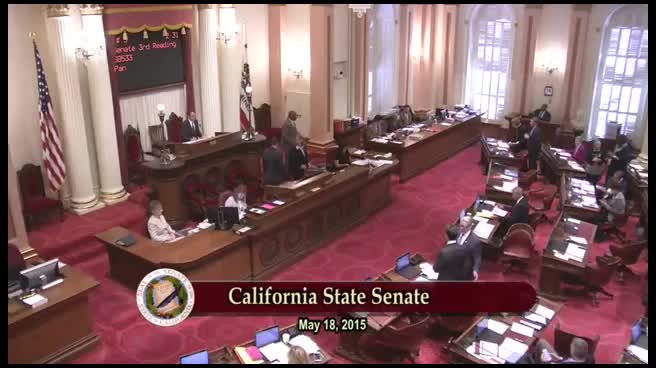
Bill Author

Bill Co-Author(s):