SB 24: California Public Employees' Pension Reform Act of 2013: joint powers authority: employees.
- Session Year: 2015-2016
- House: Senate
- Latest Version Date: 2016-09-23
The California Public Employees Pension Reform Act of 2013 (PEPRA) requires a public retirement system, as defined, to modify its plan or plans to comply with the act and, among other provisions, establishes new retirement formulas that may not be exceeded by a public employer offering a defined benefit pension plan for employees first hired on or after January 1, 2013. Existing law, the Joint Exercise of Powers Act, generally authorizes 2 or more public agencies, by agreement, to jointly exercise any common power, which may include hiring employees and establishing retirement systems. PEPRA authorizes a joint powers authority formed by the Cities of Brea and Fullerton on or after January 1, 2013, to provide its employees the defined benefit plan or formula that those employees received from their respective employers prior to the exercise of a common power, to which the employee is associated, by the joint powers authority to any employee of specified cities who is not a new member and subsequently is employed by the joint powers authority within 180 days of the city providing for the exercise of a common power, to which the employee was associated, by the joint powers authority.
This bill would authorize a joint powers authority formed by the Belmont Fire Protection District, the Estero Municipal Improvement District, and the City of San Mateo on or after January 1, 2013, to provide employees who are not new members under PEPRA with the defined benefit plan or formula that was received by those employees from their respective employers on December 31, 2012, if they are employed by the joint powers authority within 180 days of the agency providing for the exercise of a common power, to which the employee was associated, by the joint powers authority. The bill would prohibit the formation of a joint powers authority on or after January 1, 2013, in a manner that would exempt a new employee or a new member from the requirements of PEPRA.
This bill would make legislative findings and declarations as to the necessity of a special statute for the Belmont Fire Protection District, the Estero Municipal Improvement District, and the City of San Mateo.
The California Public Employees Pension Reform Act of 2013 (PEPRA) requires a public retirement system, as defined, to modify its plan or plans to comply with the act and, among other provisions, establishes new retirement formulas that may not be exceeded by a public employer offering a defined benefit pension plan for employees first hired on or after January 1, 2013. Existing law, the Joint Exercise of Powers Act, generally authorizes 2 or more public agencies, by agreement, to jointly exercise any common power, which may include hiring employees and establishing retirement systems. PEPRA authorizes a joint powers authority formed by the Cities of Brea and Fullerton on or after January 1, 2013, to provide its employees the defined benefit plan or formula that those employees received from their respective employers prior to the exercise of a common power, to which the employee is associated, by the joint powers authority to any employee of specified cities who is not a new member and subsequently is employed by the joint powers authority within 180 days of the city providing for the exercise of a common power, to which the employee was associated, by the joint powers authority.
This bill would authorize a joint powers authority formed by the Cities of Belmont, Foster City, and San Mateo Belmont Fire Protection District, the Estero Municipal Improvement District, and the City of San Mateo on or after January 1, 2013, to provide employees who are not new members under PEPRA with the defined benefit plan or formula that was received by those employees from their respective employers on December 31, 2012, if they are employed by the joint powers authority within 180 days of the city agency providing for the exercise of a common power, to which the employee was associated, by the joint powers authority. The bill would prohibit the formation of a joint powers authority on or after January 1, 2013, in a manner that would exempt a new employee or a new member from the requirements of PEPRA.
This bill would make legislative findings and declarations as to the necessity of a special statute for the Cities of Belmont, Foster City, and Belmont Fire Protection District, the Estero Municipal Improvement District, and the City of San Mateo.
The California Public Employees Pension Reform Act of 2013 (PEPRA) requires a public retirement system, as defined, to modify its plan or plans to comply with the act and, among other provisions, establishes new retirement formulas that may not be exceeded by a public employer offering a defined benefit pension plan for employees first hired on or after January 1, 2013. Existing law, the Joint Exercise of Powers Act, generally authorizes 2 or more public agencies, by agreement, to jointly exercise any common power, which may include hiring employees and establishing retirement systems. PEPRA authorizes a joint powers authority formed by the Cities of Brea and Fullerton on or after January 1, 2013, to provide its employees the defined benefit plan or formula that those employees received from their respective employers prior to the exercise of a common power, to which the employee is associated, by the joint powers authority to any employee of specified cities who is not a new member and subsequently is employed by the joint powers authority within 180 days of the city providing for the exercise of a common power, to which the employee was associated, by the joint powers authority.
This bill would authorize a joint powers authority formed by the Cities of Belmont, Foster City, and San Mateo on or after January 1, 2013, to provide employees who are not new members under PEPRA with the defined benefit plan or formula that was received by those employees from their respective employers on December 31, 2012, if they are employed by the joint powers authority within 180 days of the city providing for the exercise of a common power, to which the employee was associated, by the joint powers authority. The bill would prohibit the formation of a joint powers authority on or after January 1, 2013, in a manner that would exempt a new employee or a new member from the requirements of PEPRA.
This bill would make legislative findings and declarations as to the necessity of a special statute for the Cities of Belmont, Foster City, and San Mateo.
(1)Existing law, the Stop Tobacco Access to Kids Enforcement Act (STAKE Act), establishes various requirements for distributors and retailers relating to tobacco sales to persons under 18 years of age. Existing law makes it a crime, punishable by a fine not to exceed $500 or by imprisonment not exceeding 30 days in a county jail, to fail to post a notice, at each point of purchase, stating that the sale of tobacco products to persons under 18 years of age is illegal. Existing law also permits enforcing agencies to assess various civil penalties for violations of the STAKE Act.
This bill would extend the requirements of the STAKE Act to the sale of electronic cigarettes to persons under 18 years of age. The bill would also extend the requirements of the STAKE Act to the sale of electronic cigarettes to persons under 21 years of age if SB 151 of the 201516 Regular Session is enacted and takes effect. The bill would require the State Department of Public Health to enforce the STAKE Acts provisions with regard to sales of electronic cigarettes commencing July 1, 2016.
The bill would make the failure to post a notice, on and after July 1, 2016, at each point of purchase, stating that the sale of electronic cigarettes to persons under 18 years of age is illegal, a crime. The bill would impose the same notice requirements as applied to the sale of electronic cigarettes to persons under 21 years of age if SB 151 of the 201516 Regular Session is enacted and takes effect. By expanding the scope of existing crimes, the bill would impose a state-mandated local program.
The bill would provide that the STAKE Act does not invalidate existing local government ordinances regulating the distribution or sale of cigarettes, electronic cigarettes, or tobacco products, or prohibit local governments from adopting ordinances regulating the distribution or sale of cigarettes, electronic cigarettes, or tobacco products that are more restrictive than state law.
(2)Existing law prohibits a person from selling or otherwise furnishing an electronic cigarette to minors, and makes a violation punishable as an infraction.
The bill would prohibit a person from knowingly selling or otherwise furnishing an electronic cigarette to persons under 18 years of age, and makes a violation punishable as a misdemeanor or subject to a civil action, as specified. The bill would prohibit a person from selling or otherwise furnishing an electronic cigarette to persons under 21 years of age if SB 151 of the 201516 Regular Session is enacted and takes effect. By expanding the scope of an existing crime, the bill would impose a state-mandated local program.
The bill would require that cartridges for electronic cigarettes and solutions for filling electronic cigarettes be in child-proof packaging to protect children from opening and ingesting the contents.
(3)Existing law, the Cigarette and Tobacco Products Licensing Act, requires the State Board of Equalization to administer a statewide program to license manufacturers, importers, distributors, wholesalers, and retailers of cigarettes and tobacco products. Existing law makes a violation of the Cigarette and Tobacco Products Licensing Act a misdemeanor punishable by a fine not to exceed $5,000, by imprisonment not exceeding one year in a county jail, or by both the fine and imprisonment. Existing law also permits the State Board of Equalization to assess various civil penalties for violations of the Cigarette and Tobacco Products Licensing Act.
The bill would require the State Board of Equalization to administer a statewide program to license retailers of electronic cigarettes. The bill would require retailers to apply for a license to sell electronic cigarettes and pay a specified license fee, commencing July 1, 2016, and to display the license at each retail location commencing September 30, 2016. The bill would require the State Board of Equalization to use the revenue from this license fee only for purposes of administering the licensure program for retailers selling electronic cigarettes. The bill would also make retailers of electronic cigarettes subject to various civil and criminal penalties if they fail to comply with licensing requirements.
(4)Existing law prohibits the smoking of cigarettes and other tobacco products in a variety of specified areas. Under existing law, a violation of some of these provisions is punishable as a crime.
This bill would prohibit the use of electronic cigarettes in a variety of specified areas where the smoking of cigarettes and other tobacco products is prohibited. The bill would also make corresponding changes. The bill would make the use of electronic cigarettes in some of these restricted locations a violation punishable as a crime.
The California Constitution requires the state to reimburse local agencies and school districts for certain costs mandated by the state. Statutory provisions establish procedures for making that reimbursement.
This bill would provide that no reimbursement is required by this act for a specified reason.
(1)Existing law, the Stop Tobacco Access to Kids Enforcement Act (STAKE Act), establishes various requirements for distributors and retailers relating to tobacco sales to persons under 18 years of age. Existing law makes it a crime, punishable by a fine not to exceed $500 or by imprisonment not exceeding 30 days in a county jail, to fail to post a notice, at each point of purchase, stating that the sale of tobacco products to persons under 18 years of age is illegal. Existing law also permits enforcing agencies to assess various civil penalties for violations of the STAKE Act.
This bill would extend the applicability of the STAKE Acts provisions to persons under 21 years of age. The bill would extend the requirements of the STAKE Act to the sale of electronic cigarettes cigarettes to persons under 18 years of age. The bill would also extend the requirements of the STAKE Act to the sale of electronic cigarettes to persons under 21 years of age. age if SB 151 of the 201516 Regular Session is enacted and takes effect. The bill would require the State Department of Public Health to enforce the STAKE Acts provisions with regard to sales of electronic cigarettes commencing July 1, 2016.
The bill would make the failure to post a notice, on and after July 1, 2016, at each point of purchase, stating that the sale of electronic cigarettes to persons under 21 18 years of age is illegal, a crime. The bill would impose the same notice requirements as applied to the sale of electronic cigarettes to persons under 21 years of age if SB 151 of the 201516 Regular Session is enacted and takes effect. By expanding the scope of existing crimes, the bill would impose a state-mandated local program.
The bill would provide that the STAKE Act does not invalidate existing local government ordinances regulating the distribution or sale of cigarettes, electronic cigarettes, or tobacco products, or prohibit local governments from adopting ordinances regulating the distribution or sale of cigarettes, electronic cigarettes, or tobacco products that are more restrictive than state law.
(2)Existing law prohibits a person from selling or otherwise furnishing an electronic cigarette to minors, and makes a violation punishable as an infraction.
The bill would prohibit a person from knowingly selling or otherwise furnishing an electronic cigarette to persons under 21 18 years of age. age, and makes a violation punishable as a misdemeanor or subject to a civil action, as specified. The bill would prohibit a person from selling or otherwise furnishing an electronic cigarette to persons under 21 years of age if SB 151 of the 201516 Regular Session is enacted and takes effect. By expanding the scope of an existing crime, the bill would impose a state-mandated local program.
The bill would require that cartridges for electronic cigarettes and solutions for filling electronic cigarettes be in child-proof packaging to protect children from opening and ingesting the contents.
(3)Existing law, the Cigarette and Tobacco Products Licensing Act, requires the State Board of Equalization to administer a statewide program to license manufacturers, importers, distributors, wholesalers, and retailers of cigarettes and tobacco products. Existing law makes a violation of the Cigarette and Tobacco Products Licensing Act a misdemeanor punishable by a fine not to exceed $5,000, by imprisonment not exceeding one year in a county jail, or by both the fine and imprisonment. Existing law also permits the State Board of Equalization to assess various civil penalties for violations of the Cigarette and Tobacco Products Licensing Act.
The bill would require the State Board of Equalization to administer a statewide program to license retailers of electronic cigarettes. The bill would require retailers to apply for a license to sell electronic cigarettes and pay a specified license fee, commencing July 1, 2016, and to display the license at each retail location commencing September 30, 2016. The bill would require the State Board of Equalization to administer a statewide program to license retailers of electronic cigarettes. The bill would require the State Board of Equalization to use the revenue from this license fee only for purposes of administering the licensure program for retailers selling electronic cigarettes. The bill would also make retailers of electronic cigarettes subject to various civil and criminal penalties if they fail to comply with licensing requirements.
(4)Existing law prohibits the smoking of cigarettes and other tobacco products in a variety of specified areas. Under existing law, a violation of some of these provisions is punishable as a crime.
This bill would prohibit the use of electronic cigarettes in a variety of specified areas where the smoking of cigarettes and other tobacco products is prohibited. The bill would also make corresponding changes. The bill would make the use of electronic cigarettes in some of these restricted locations a violation punishable as a crime.
The California Constitution requires the state to reimburse local agencies and school districts for certain costs mandated by the state. Statutory provisions establish procedures for making that reimbursement.
This bill would provide that no reimbursement is required by this act for a specified reason.
(1)Existing law, the Stop Tobacco Access to Kids Enforcement Act (STAKE Act), establishes various requirements for distributors and retailers relating to tobacco sales to minors persons under 18 years of age. Existing law makes it a crime, punishable by a fine not to exceed $500 or by imprisonment not exceeding 30 days in a county jail, to fail to post a notice, at each point of purchase, stating that the sale of tobacco products to minors persons under 18 years of age is illegal. Existing law also permits enforcing agencies to assess various civil penalties for violations of the STAKE Act.
This bill would extend the applicability of the STAKE Acts provisions to persons under 21 years of age. The bill would extend the requirements of the STAKE Act to the sale of electronic cigarettes to minors persons under 21 years of age. The bill would require the State Department of Public Health to enforce the STAKE Acts provisions with regard to sales of electronic cigarettes commencing July 1, 2016.
The bill would make the failure to post a notice, on and after July 1, 2016, at each point of purchase, stating that the sale of electronic cigarettes to minors persons under 21 years of age is illegal, a crime. By expanding the scope of existing crimes, the bill would impose a state-mandated local program.
The bill would provide that the STAKE Act does not invalidate existing local government ordinances regulating the distribution or sale of cigarettes, electronic cigarettes, or tobacco products, or prohibit local governments from adopting ordinances regulating the distribution or sale of cigarettes, electronic cigarettes, or tobacco products that are more restrictive than state law.
(2)Existing law prohibits a person from selling or otherwise furnishing an electronic cigarette to minors, and makes a violation punishable as an infraction.
The bill would prohibit a person from selling or otherwise furnishing an electronic cigarette to persons under 21 years of age. By expanding the scope of an existing crime, the bill would impose a state-mandated local program.
The bill would require that cartridges for electronic cigarettes and solutions for filling electronic cigarettes be in child-proof packaging to protect children from opening and ingesting the contents.
(3)Existing law, the Cigarette and Tobacco Products Licensing Act, requires the State Board of Equalization to administer a statewide program to license manufacturers, importers, distributors, wholesalers, and retailers of cigarettes and tobacco products. Existing law makes a violation of the Cigarette and Tobacco Products Licensing Act a misdemeanor punishable by a fine not to exceed $5,000, by imprisonment not exceeding one year in a county jail, or by both the fine and imprisonment. Existing law also permits the State Board of Equalization to assess various civil penalties for violations of the Cigarette and Tobacco Products Licensing Act.
The bill would require retailers to apply for a license to sell electronic cigarettes commencing July 1, 2016, and to display the license at each retail location commencing September 30, 2016. The bill would require the State Board of Equalization to administer a statewide program to license retailers of electronic cigarettes. The bill would also make retailers of electronic cigarettes subject to various civil and criminal penalties if they fail to comply with licensing requirements.
(4)Existing law prohibits the smoking of cigarettes and other tobacco products in a variety of specified areas. Under existing law, a violation of some of these provisions is punishable as a crime.
This bill would prohibit the use of electronic cigarettes in a variety of specified areas where the smoking of cigarettes and other tobacco products is prohibited. The bill would also make corresponding changes. The bill would make the use of electronic cigarettes in some of these restricted locations a violation punishable as a crime.
The California Constitution requires the state to reimburse local agencies and school districts for certain costs mandated by the state. Statutory provisions establish procedures for making that reimbursement.
This bill would provide that no reimbursement is required by this act for a specified reason.
Existing
(1)Existing law, the Stop Tobacco Access to Kids Enforcement Act (STAKE Act), establishes various requirements for distributors and retailers relating to tobacco sales to minors. Existing law makes it a crime, punishable by a fine not to exceed $500 or by imprisonment not exceeding 30 days in a county jail, to fail to post a notice, at each point of purchase, stating that the sale of tobacco products to minors is illegal. Existing law also permits enforcing agencies to assess various civil penalties for violations of the STAKE Act.
This bill would extend the requirements of the STAKE Act to the sale of electronic cigarettes to minors. The bill would require the State Department of Public Health to enforce the STAKE Acts provisions with regard to sales of electronic cigarettes commencing July 1, 2016.
The bill would make the failure to post a notice, on and after July 1, 2016, at each point of purchase, stating that the sale of electronic cigarettes to minors is illegal, a crime. By expanding the scope of existing crimes, the bill would impose a state-mandated local program.
The bill would provide that the STAKE Act does not invalidate existing local government ordinances regulating the distribution or sale of cigarettes, electronic cigarettes, or tobacco products, or prohibit local governments from adopting ordinances regulating the distribution or sale of cigarettes, electronic cigarettes, or tobacco products that are more restrictive than state law.
Existing
(2)Existing law prohibits a person from selling or otherwise furnishing an electronic cigarette to minors, and makes a violation punishable as an infraction.
The bill would require that cartridges for electronic cigarettes and solutions for filling electronic cigarettes be in child-proof packaging to protect children from opening and ingesting the contents.
Existing
(3)Existing law, the Cigarette and Tobacco Products Licensing Act, requires the State Board of Equalization to administer a statewide program to license manufacturers, importers, distributors, wholesalers, and retailers of cigarettes and tobacco products. Existing law makes a violation of the Cigarette and Tobacco Products Licensing Act a misdemeanor punishable by a fine not to exceed $5,000, by imprisonment not exceeding one year in a county jail, or by both the fine and imprisonment. Existing law also permits the State Board of Equalization to assess various civil penalties for violations of the Cigarette and Tobacco Products Licensing Act.
The bill would require retailers to apply for a license to sell electronic cigarettes commencing July 1, 2016, and to display the license at each retail location commencing September 30, 2016. The bill would require the State Board of Equalization to administer a statewide program to license retailers of electronic cigarettes. The bill would also make retailers of electronic cigarettes subject to various civil and criminal penalties if they fail to comply with licensing requirements.
(4)Existing law prohibits the smoking of cigarettes and other tobacco products in a variety of specified areas. Under existing law, a violation of some of these provisions is punishable as a crime.
This bill would prohibit the use of electronic cigarettes in a variety of specified areas where the smoking of cigarettes and other tobacco products is prohibited. The bill would also make corresponding changes. The bill would make the use of electronic cigarettes in some of these restricted locations a violation punishable as a crime.
This bill would extend the STAKE Act to sales of electronic cigarettes to minors. The bill would require the State Department of Public Health to enforce the STAKE Acts provisions with regard to sales of electronic cigarettes commencing July 1, 2016.
The bill would provide that the STAKE Act does not invalidate existing local government ordinances regulating the distribution or sale of cigarettes, electronic cigarettes, or tobacco products, or prohibit local goverments from adopting ordinances regulating the distribution or sale of cigarettes, electronic cigarettes, or tobacco products that are more restrictive than state law.
The bill would require that retailers apply for a license to sell electronic cigarettes commencing April 15, 2016, and to display the license at each retail location commencing June 30, 2016. The bill would require the State Board of Equalization to administer a statewide program to license retailers of electronic cigarettes.
The bill would make the failure to post a notice, on and after July 1, 2016, at each point of purchase, stating that the sale of electronic cigarettes to minors is illegal, a crime. The bill would also make retailers of electronic cigarettes subject to various civil and criminal penalties if they fail to comply with licensing requirements. By expanding the scope of existing crimes, the bill would impose a state-mandated local program.
The bill would require that cartridges for electronic cigarettes and solutions for filling electronic cigarettes be in child-proof packaging to protect children from opening and ingesting the contents.
The California Constitution requires the state to reimburse local agencies and school districts for certain costs mandated by the state. Statutory provisions establish procedures for making that reimbursement.
This bill would provide that no reimbursement is required by this act for a specified reason.
Existing law, the Stop Tobacco Access to Kids Enforcement Act (STAKE Act), establishes various requirements for distributors and retailers relating to tobacco sales to minors. Existing law makes it a crime, punishable by a fine not to exceed $500 or by imprisonment not exceeding 30 days in a county jail, to fail to post a notice, at each point of purchase, stating that the sale of tobacco products to minors is illegal. Existing law also permits enforcing agencies to assess various civil penalties for violations of the STAKE Act.
Existing law prohibits a person from selling or otherwise furnishing an electronic cigarette to minors, and makes a violation punishable as an infraction.
Existing law, the Cigarette and Tobacco Products Licensing Act, requires the State Board of Equalization to administer a statewide program to license manufacturers, importers, distributors, wholesalers, and retailers of cigarettes and tobacco products. Existing law makes a violation of the Cigarette and Tobacco Products Licensing Act a misdemeanor punishable by a fine not to exceed $5,000, by imprisonment not exceeding one year in a county jail, or by both the fine and imprisonment. Existing law also permits the State Board of Equalization to assess various civil penalties for violations of the Cigarette and Tobacco Products Licensing Act.
This bill would extend the STAKE Act to sales of electronic cigarettes to minors. The bill would require the State Department of Public Health to enforce the STAKE Acts provisions with regard to sales of electronic cigarettes commencing July 1, 2016.
The bill would provide that the STAKE Act does not invalidate existing local government ordinances regulating the distribution or sale of cigarettes, electronic cigarettes, or tobacco products, or prohibit local goverments from adopting ordinances regulating the distribution or sale of cigarettes, electronic cigarettes, or tobacco products that are more restrictive than state law.
The bill would require that retailers apply for a license to sell electronic cigarettes commencing April 15, 2016, and to display the license at each retail location commencing June 30, 2016. The bill would require the State Board of Equalization to administer a statewide program to license retailers of electronic cigarettes.
The bill would make the failure to post a notice, on and after July 1, 2016, at each point of purchase, stating that the sale of electronic cigarettes to minors is illegal, a crime. The bill would also make retailers of electronic cigarettes subject to various civil and criminal penalties if they fail to comply with licensing requirements. By expanding the scope of existing crimes, the bill would impose a state-mandated local program.
The bill would require that cartridges for electronic cigarettes and solutions for filling electronic cigarettes be in child-proof packaging to protect children from opening and ingesting the contents.
The California Constitution requires the state to reimburse local agencies and school districts for certain costs mandated by the state. Statutory provisions establish procedures for making that reimbursement.
This bill would provide that no reimbursement is required by this act for a specified reason.
(a)(1)Notwithstanding any other law, except as provided in this article, on and after January 1, 2013, this article shall apply to all state and local public retirement systems and to their participating employers, including the Public Employees Retirement System, the State Teachers Retirement System, the Legislators Retirement System, the Judges Retirement System, the Judges Retirement System II, county and district retirement systems created pursuant to the County Employees Retirement Law of 1937 (Chapter 3 (commencing with Section 31450) of Part 3 of Division 4 of Title 3), independent public retirement systems, and to individual retirement plans offered by public employers. However, this article shall be subject to the Internal Revenue Code and Section 17 of Article XVI of the California Constitution. The administration of the requirements of this article shall comply with applicable provisions of the Internal Revenue Code and the Revenue and Taxation Code.
(2)Notwithstanding paragraph (1), this article shall not apply to the entities described in Section 9 of Article IX of, and Sections 4 and 5 of Article XI of, the California Constitution, except to the extent that these entities continue to be participating employers in any retirement system governed by state statute. Accordingly, any retirement plan approved before January 1, 2013, by the voters of any entity excluded from coverage by this section shall not be affected by this article.
(3)(A)Notwithstanding paragraph (1), this article shall not apply to a public employee whose interests are protected under Section 5333(b) of Title 49 of the United States Code until a federal district court rules that the United States Secretary of Labor, or his or her designee, erred in determining that the application of this article precludes certification under that section, or until January 1, 2016, whichever is sooner.
(B)If a federal district court upholds the determination of the United States Secretary of Labor, or his or her designee, that application of this article precludes him or her from providing a certification under Section 5333(b) of Title 49 of the United States Code, this article shall not apply to a public employee specified in subparagraph (A).
(4)Notwithstanding paragraph (1), this article shall not apply to a multiemployer plan authorized by Section 302(c)(5) of the federal Taft-Hartley Act (29 U.S.C. Sec. 186(c)(5)) if the public employer began participation in that plan prior to January 1, 2013, and the plan is regulated by the federal Employee Retirement Income Security Act of 1974 (29 U.S.C. Sec. 1001 et seq.).
(b)The benefit plan required by this article shall apply to public employees who are new members as defined in Section 7522.04.
(c)(1)Individuals who were employed by any public employer before January 1, 2013, and who became employed by a subsequent public employer for the first time on or after January 1, 2013, shall be subject to the retirement plan that would have been available to employees of the subsequent employer who were first employed by the subsequent employer on or before December 31, 2012, if the individual was subject to concurrent membership for which creditable service was performed in the previous six months or reciprocity established under any of the following provisions:
(A)Article 5 (commencing with Section 20350) of Chapter 3 of Part 3 of Division 5 of Title 2.
(B)Chapter 3 (commencing with Section 31450) of Part 3 of Division 4 of Title 3.
(C)Any agreement between public retirement systems to provide reciprocity to members of the systems.
(D)Section 22115.2 of the Education Code.
(2)An individual who was employed before January 1, 2013, and who, without a separation from employment, changed employment positions and became subject to a different defined benefit plan in a different public retirement system offered by his or her employer shall be subject to that defined benefit plan as it would have been available to employees who were first employed on or before December 31, 2012.
(d)If a public employer, before January 1, 2013, offers a defined benefit pension plan that provides a defined benefit formula with a lower benefit factor at normal retirement age and results in a lower normal cost than the defined benefit formula required by this article, that employer may continue to offer that defined benefit formula instead of the defined benefit formula required by this article, and shall not be subject to the requirements of Section 7522.10 for pensionable compensation subject to that formula. However, if the employer adopts a new defined benefit formula on or after January 1, 2013, that formula must conform to the requirements of this article or must be determined and certified by the retirement systems chief actuary and the retirement board to have no greater risk and no greater cost to the employer than the defined benefit formula required by this article and must be approved by the Legislature. New members of the defined benefit plan may only participate in the lower cost defined benefit formula that was in place before January 1, 2013, or a defined benefit formula that conforms to the requirements of this article or is approved by the Legislature as provided in this subdivision.
(e)If a public employer, before January 1, 2013, offers a retirement benefit plan that consists solely of a defined contribution plan, that employer may continue to offer that plan instead of the defined benefit pension plan required by this article. However, if the employer adopts a new defined benefit pension plan or defined benefit formula on or after January 1, 2013, that plan or formula must conform to the requirements of this article or must be determined and certified by the retirement systems chief actuary and the systems board to have no greater risk and no greater cost to the employer than the defined benefit formula required by this article and must be approved by the Legislature. New members of the employers plan may only participate in the defined contribution plan that was in place before January 1, 2013, or a defined contribution plan or defined benefit formula that conforms to the requirements of this article. This subdivision shall not be construed to prohibit an employer from offering a defined contribution plan on or after January 1, 2013, either with or without a defined benefit plan, whether or not the employer offered a defined contribution plan prior to that date.
(f)(1)If, on or after January 1, 2013, the Cities of Brea and Fullerton form a joint powers authority pursuant to the provisions of the Joint Exercise of Powers Act (Article 1 (commencing with Section 6500) of Chapter 5), that joint powers authority may provide employees the defined benefit plan or formula that those employees received from their respective employers prior to the exercise of a common power, to which the employee is associated, by the joint powers authority to any employee of the City of Brea, the City of Fullerton, or a city described in paragraph (2) who is not a new member and subsequently is employed by the joint powers authority within 180 days of the city providing for the exercise of a common power, to which the employee was associated, by the joint powers authority.
(2)On or before January 1, 2017, a city in Orange County that is contiguous to the City of Brea or the City of Fullerton may join the joint powers authority described in paragraph (1) but not more than three cities shall be permitted to join.
(3)The formation of a joint powers authority on or after January 1, 2013, shall not act in a manner as to exempt a new employee or a new member, as defined by Section 7522.04, from the requirements of this article. New members may only participate in a defined benefit plan or formula that conforms to the requirements of this article.
(g)(1)If, on or after January 1, 2013, the Belmont Fire Protection District, the Estero Municipal Improvement District, and the City of San Mateo form a joint powers authority pursuant to the provisions of the Joint Exercise of Powers Act (Article 1 (commencing with Section 6500) of Chapter 5), that joint powers authority may provide employees the defined benefit plan or formula that those employees received from their respective employers prior to the exercise of a common power, to which the employee is associated, by the joint powers authority to any employee of the Belmont Fire Protection District, the Estero Municipal Improvement District, and the City of San Mateo who is not a new member and subsequently is employed by the joint powers authority within 180 days of the agency providing for the exercise of a common power, to which the employee was associated, by the joint powers authority.
(2)The formation of a joint powers authority on or after January 1, 2013, shall not act in a manner as to exempt a new employee or a new member, as defined by Section 7522.04, from the requirements of this article. New members may only participate in a defined benefit plan or formula that conforms to the requirements of this article.
(h)The Judges Retirement System and the Judges Retirement System II shall not be required to adopt the defined benefit formula required by Section 7522.20 or 7522.25 or the compensation limitations defined in Section 7522.10.
(i)This article shall not be construed to provide membership in any public retirement system for an individual who would not otherwise be eligible for membership under that systems applicable rules or laws.
(j)On and after January 1, 2013, each public retirement system shall modify its plan or plans to comply with the requirements of this article and may adopt regulations or resolutions for this purpose.
SEC. 2.The Legislature finds and declares that a special law is necessary and that a general law cannot be made applicable within the meaning of Section 16 of Article IV of the California Constitution because of the need to clarify the benefit eligibility rules under the California Public Employees Pension Reform Act of 2013 and maintain the integrity of that act and further its purpose.
(a)(1)Notwithstanding any other law, except as provided in this article, on and after January 1, 2013, this article shall apply to all state and local public retirement systems and to their participating employers, including the Public Employees Retirement System, the State Teachers Retirement System, the Legislators Retirement System, the Judges Retirement System, the Judges Retirement System II, county and district retirement systems created pursuant to the County Employees Retirement Law of 1937 (Chapter 3 (commencing with Section 31450) of Part 3 of Division 4 of Title 3), independent public retirement systems, and to individual retirement plans offered by public employers. However, this article shall be subject to the Internal Revenue Code and Section 17 of Article XVI of the California Constitution. The administration of the requirements of this article shall comply with applicable provisions of the Internal Revenue Code and the Revenue and Taxation Code.
(2)Notwithstanding paragraph (1), this article shall not apply to the entities described in Section 9 of Article IX of, and Sections 4 and 5 of Article XI of, the California Constitution, except to the extent that these entities continue to be participating employers in any retirement system governed by state statute. Accordingly, any retirement plan approved before January 1, 2013, by the voters of any entity excluded from coverage by this section shall not be affected by this article.
(3)(A)Notwithstanding paragraph (1), this article shall not apply to a public employee whose interests are protected under Section 5333(b) of Title 49 of the United States Code until a federal district court rules that the United States Secretary of Labor, or his or her designee, erred in determining that the application of this article precludes certification under that section, or until January 1, 2016, whichever is sooner.
(B)If a federal district court upholds the determination of the United States Secretary of Labor, or his or her designee, that application of this article precludes him or her from providing a certification under Section 5333(b) of Title 49 of the United States Code, this article shall not apply to a public employee specified in subparagraph (A).
(4)Notwithstanding paragraph (1), this article shall not apply to a multiemployer plan authorized by Section 302(c)(5) of the federal Taft-Hartley Act (29 U.S.C. Sec. 186(c)(5)) if the public employer began participation in that plan prior to January 1, 2013, and the plan is regulated by the federal Employee Retirement Income Security Act of 1974 (29 U.S.C. Sec. 1001 et seq.).
(b)The benefit plan required by this article shall apply to public employees who are new members as defined in Section 7522.04.
(c)(1)Individuals who were employed by any public employer before January 1, 2013, and who became employed by a subsequent public employer for the first time on or after January 1, 2013, shall be subject to the retirement plan that would have been available to employees of the subsequent employer who were first employed by the subsequent employer on or before December 31, 2012, if the individual was subject to concurrent membership for which creditable service was performed in the previous six months or reciprocity established under any of the following provisions:
(A)Article 5 (commencing with Section 20350) of Chapter 3 of Part 3 of Division 5 of Title 2.
(B)Chapter 3 (commencing with Section 31450) of Part 3 of Division 4 of Title 3.
(C)Any agreement between public retirement systems to provide reciprocity to members of the systems.
(D)Section 22115.2 of the Education Code.
(2)An individual who was employed before January 1, 2013, and who, without a separation from employment, changed employment positions and became subject to a different defined benefit plan in a different public retirement system offered by his or her employer shall be subject to that defined benefit plan as it would have been available to employees who were first employed on or before December 31, 2012.
(d)If a public employer, before January 1, 2013, offers a defined benefit pension plan that provides a defined benefit formula with a lower benefit factor at normal retirement age and results in a lower normal cost than the defined benefit formula required by this article, that employer may continue to offer that defined benefit formula instead of the defined benefit formula required by this article, and shall not be subject to the requirements of Section 7522.10 for pensionable compensation subject to that formula. However, if the employer adopts a new defined benefit formula on or after January 1, 2013, that formula must conform to the requirements of this article or must be determined and certified by the retirement systems chief actuary and the retirement board to have no greater risk and no greater cost to the employer than the defined benefit formula required by this article and must be approved by the Legislature. New members of the defined benefit plan may only participate in the lower cost defined benefit formula that was in place before January 1, 2013, or a defined benefit formula that conforms to the requirements of this article or is approved by the Legislature as provided in this subdivision.
(e)If a public employer, before January 1, 2013, offers a retirement benefit plan that consists solely of a defined contribution plan, that employer may continue to offer that plan instead of the defined benefit pension plan required by this article. However, if the employer adopts a new defined benefit pension plan or defined benefit formula on or after January 1, 2013, that plan or formula must conform to the requirements of this article or must be determined and certified by the retirement systems chief actuary and the systems board to have no greater risk and no greater cost to the employer than the defined benefit formula required by this article and must be approved by the Legislature. New members of the employers plan may only participate in the defined contribution plan that was in place before January 1, 2013, or a defined contribution plan or defined benefit formula that conforms to the requirements of this article. This subdivision shall not be construed to prohibit an employer from offering a defined contribution plan on or after January 1, 2013, either with or without a defined benefit plan, whether or not the employer offered a defined contribution plan prior to that date.
(f)(1)If, on or after January 1, 2013, the Cities of Brea and Fullerton form a joint powers authority pursuant to the provisions of the Joint Exercise of Powers Act (Article 1 (commencing with Section 6500) of Chapter 5), that joint powers authority may provide employees the defined benefit plan or formula that those employees received from their respective employers prior to the exercise of a common power, to which the employee is associated, by the joint powers authority to any employee of the City of Brea, the City of Fullerton, or a city described in paragraph (2) who is not a new member and subsequently is employed by the joint powers authority within 180 days of the city providing for the exercise of a common power, to which the employee was associated, by the joint powers authority.
(2)On or before January 1, 2017, a city in Orange County that is contiguous to the City of Brea or the City of Fullerton may join the joint powers authority described in paragraph (1) but not more than three cities shall be permitted to join.
(3)The formation of a joint powers authority on or after January 1, 2013, shall not act in a manner as to exempt a new employee or a new member, as defined by Section 7522.04, from the requirements of this article. New members may only participate in a defined benefit plan or formula that conforms to the requirements of this article.
(g)(1)If, on or after January 1, 2013, the Cities of Belmont, Foster City, and San Mateo Belmont Fire Protection District, the Estero Municipal Improvement District, and the City of San Mateo form a joint powers authority pursuant to the provisions of the Joint Exercise of Powers Act (Article 1 (commencing with Section 6500) of Chapter 5), that joint powers authority may provide employees the defined benefit plan or formula that those employees received from their respective employers prior to the exercise of a common power, to which the employee is associated, by the joint powers authority to any employee of the City of Belmont, the City of Foster City, or the City of San Mateo Belmont Fire Protection District, the Estero Municipal Improvement District, and the City of San Mateo who is not a new member and subsequently is employed by the joint powers authority within 180 days of the city agency providing for the exercise of a common power, to which the employee was associated, by the joint powers authority.
(2)The formation of a joint powers authority on or after January 1, 2013, shall not act in a manner as to exempt a new employee or a new member, as defined by Section 7522.04, from the requirements of this article. New members may only participate in a defined benefit plan or formula that conforms to the requirements of this article.
(h)The Judges Retirement System and the Judges Retirement System II shall not be required to adopt the defined benefit formula required by Section 7522.20 or 7522.25 or the compensation limitations defined in Section 7522.10.
(i)This article shall not be construed to provide membership in any public retirement system for an individual who would not otherwise be eligible for membership under that systems applicable rules or laws.
(j)On and after January 1, 2013, each public retirement system shall modify its plan or plans to comply with the requirements of this article and may adopt regulations or resolutions for this purpose.
SEC. 2.The Legislature finds and declares that a special law is necessary and that a general law cannot be made applicable within the meaning of Section 16 of Article IV of the California Constitution because of the need to clarity clarify the benefit eligibility rules under the California Public Employees Pension Reform Act of 2013 and maintain the integrity of that act and further its purpose.
(a)(1)Notwithstanding any other law, except as provided in this article, on and after January 1, 2013, this article shall apply to all state and local public retirement systems and to their participating employers, including the Public Employees Retirement System, the State Teachers Retirement System, the Legislators Retirement System, the Judges Retirement System, the Judges Retirement System II, county and district retirement systems created pursuant to the County Employees Retirement Law of 1937 (Chapter 3 (commencing with Section 31450) of Part 3 of Division 4 of Title 3), independent public retirement systems, and to individual retirement plans offered by public employers. However, this article shall be subject to the Internal Revenue Code and Section 17 of Article XVI of the California Constitution. The administration of the requirements of this article shall comply with applicable provisions of the Internal Revenue Code and the Revenue and Taxation Code.
(2)Notwithstanding paragraph (1), this article shall not apply to the entities described in Section 9 of Article IX of, and Sections 4 and 5 of Article XI of, the California Constitution, except to the extent that these entities continue to be participating employers in any retirement system governed by state statute. Accordingly, any retirement plan approved before January 1, 2013, by the voters of any entity excluded from coverage by this section shall not be affected by this article.
(3)(A)Notwithstanding paragraph (1), this article shall not apply to a public employee whose interests are protected under Section 5333(b) of Title 49 of the United States Code until a federal district court rules that the United States Secretary of Labor, or his or her designee, erred in determining that the application of this article precludes certification under that section, or until January 1, 2016, whichever is sooner.
(B)If a federal district court upholds the determination of the United States Secretary of Labor, or his or her designee, that application of this article precludes him or her from providing a certification under Section 5333(b) of Title 49 of the United States Code, this article shall not apply to a public employee specified in subparagraph (A).
(4)Notwithstanding paragraph (1), this article shall not apply to a multiemployer plan authorized by Section 302(c)(5) of the federal Taft-Hartley Act (29 U.S.C. Sec. 186(c)(5)) if the public employer began participation in that plan prior to January 1, 2013, and the plan is regulated by the federal Employee Retirement Income Security Act of 1974 (29 U.S.C. Sec. 1001 et seq.).
(b)The benefit plan required by this article shall apply to public employees who are new members as defined in Section 7522.04.
(c)(1)Individuals who were employed by any public employer before January 1, 2013, and who became employed by a subsequent public employer for the first time on or after January 1, 2013, shall be subject to the retirement plan that would have been available to employees of the subsequent employer who were first employed by the subsequent employer on or before December 31, 2012, if the individual was subject to concurrent membership for which creditable service was performed in the previous six months or reciprocity established under any of the following provisions:
(A)Article 5 (commencing with Section 20350) of Chapter 3 of Part 3 of Division 5 of Title 2.
(B)Chapter 3 (commencing with Section 31450) of Part 3 of Division 4 of Title 3.
(C)Any agreement between public retirement systems to provide reciprocity to members of the systems.
(D)Section 22115.2 of the Education Code.
(2)An individual who was employed before January 1, 2013, and who, without a separation from employment, changed employment positions and became subject to a different defined benefit plan in a different public retirement system offered by his or her employer shall be subject to that defined benefit plan as it would have been available to employees who were first employed on or before December 31, 2012.
(d)If a public employer, before January 1, 2013, offers a defined benefit pension plan that provides a defined benefit formula with a lower benefit factor at normal retirement age and results in a lower normal cost than the defined benefit formula required by this article, that employer may continue to offer that defined benefit formula instead of the defined benefit formula required by this article, and shall not be subject to the requirements of Section 7522.10 for pensionable compensation subject to that formula. However, if the employer adopts a new defined benefit formula on or after January 1, 2013, that formula must conform to the requirements of this article or must be determined and certified by the retirement systems chief actuary and the retirement board to have no greater risk and no greater cost to the employer than the defined benefit formula required by this article and must be approved by the Legislature. New members of the defined benefit plan may only participate in the lower cost defined benefit formula that was in place before January 1, 2013, or a defined benefit formula that conforms to the requirements of this article or is approved by the Legislature as provided in this subdivision.
(e)If a public employer, before January 1, 2013, offers a retirement benefit plan that consists solely of a defined contribution plan, that employer may continue to offer that plan instead of the defined benefit pension plan required by this article. However, if the employer adopts a new defined benefit pension plan or defined benefit formula on or after January 1, 2013, that plan or formula must conform to the requirements of this article or must be determined and certified by the retirement systems chief actuary and the systems board to have no greater risk and no greater cost to the employer than the defined benefit formula required by this article and must be approved by the Legislature. New members of the employers plan may only participate in the defined contribution plan that was in place before January 1, 2013, or a defined contribution plan or defined benefit formula that conforms to the requirements of this article. This subdivision shall not be construed to prohibit an employer from offering a defined contribution plan on or after January 1, 2013, either with or without a defined benefit plan, whether or not the employer offered a defined contribution plan prior to that date.
(f)(1)If, on or after January 1, 2013, the Cities of Brea and Fullerton form a joint powers authority pursuant to the provisions of the Joint Exercise of Powers Act (Article 1 (commencing with Section 6500) of Chapter 5), that joint powers authority may provide employees the defined benefit plan or formula that those employees received from their respective employers prior to the exercise of a common power, to which the employee is associated, by the joint powers authority to any employee of the City of Brea, the City of Fullerton, or a city described in paragraph (2) who is not a new member and subsequently is employed by the joint powers authority within 180 days of the city providing for the exercise of a common power, to which the employee was associated, by the joint powers authority.
(2)On or before January 1, 2017, a city in Orange County that is contiguous to the City of Brea or the City of Fullerton may join the joint powers authority described in paragraph (1) but not more than three cities shall be permitted to join.
(3)The formation of a joint powers authority on or after January 1, 2013, shall not act in a manner as to exempt a new employee or a new member, as defined by Section 7522.04, from the requirements of this article. New members may only participate in a defined benefit plan or formula that conforms to the requirements of this article.
(g)(1)If, on or after January 1, 2013, the Cities of Belmont, Foster City, and San Mateo form a joint powers authority pursuant to the provisions of the Joint Exercise of Powers Act (Article 1 (commencing with Section 6500) of Chapter 5), that joint powers authority may provide employees the defined benefit plan or formula that those employees received from their respective employers prior to the exercise of a common power, to which the employee is associated, by the joint powers authority to any employee of the City of Belmont, the City of Foster City, or the City of San Mateo who is not a new member and subsequently is employed by the joint powers authority within 180 days of the city providing for the exercise of a common power, to which the employee was associated, by the joint powers authority.
(2)The formation of a joint powers authority on or after January 1, 2013, shall not act in a manner as to exempt a new employee or a new member, as defined by Section 7522.04, from the requirements of this article. New members may only participate in a defined benefit plan or formula that conforms to the requirements of this article.
(g)
(h)The Judges Retirement System and the Judges Retirement System II shall not be required to adopt the defined benefit formula required by Section 7522.20 or 7522.25 or the compensation limitations defined in Section 7522.10.
(h)
(i)This article shall not be construed to provide membership in any public retirement system for an individual who would not otherwise be eligible for membership under that systems applicable rules or laws.
(i)
(j)On and after January 1, 2013, each public retirement system shall modify its plan or plans to comply with the requirements of this article and may adopt regulations or resolutions for this purpose.
SEC. 2.The Legislature finds and declares that a special law is necessary and that a general law cannot be made applicable within the meaning of Section 16 of Article IV of the California Constitution because of the need to clarity the benefit eligibility rules under the California Public Employees Pension Reform Act of 2013 and maintain the integrity of that act and further its purpose.
All matter omitted in this version of the bill appears in the bill as amended in the Senate, June 1, 2015. (JR11)Nothing in this division nor any other law shall be construed to invalidate an existing ordinance of, or prohibit the adoption of an ordinance by, a city or county that regulates the distribution or sale of cigarettes, electronic cigarettes, or tobacco products in a manner that is more restrictive than this division, to the extent that the ordinance is not otherwise prohibited by federal law.
SEC. 2.Section 22950.5 of the Business and Professions Code is amended to read:22950.5.For purposes of this division, the following terms have the following meanings:
(a)Department means the State Department of Public Health.
(b)Enforcing agency means the State Department of Public Health, another state agency, including, but not limited to, the office of the Attorney General, or a local law enforcement agency, including, but not limited to, a city attorney, district attorney, or county counsel.
(c)Electronic cigarette has the same meaning as that term is defined in subdivision (b) of Section 119405 of the Health and Safety Code and shall also include any aerosol or vapor cartridge or other container of a solution, that may or may not contain nicotine, that is intended to be used with or in an electronic cigarette.
SEC. 3.Section 22951 of the Business and Professions Code is amended to read:22951.The Legislature finds and declares that reducing and eventually eliminating the illegal purchase and consumption of tobacco products and electronic cigarettes by minors is critical to ensuring the long-term health of our states citizens. Accordingly, California must fully comply with federal regulations, particularly the Synar Amendment, that restrict tobacco sales to minors and require states to vigorously enforce their laws prohibiting the sale and distribution of tobacco products to persons under 18 years of age. Full compliance and vigorous enforcement of the Synar Amendment requires the collaboration of multiple state and local agencies that license, inspect, or otherwise conduct business with retailers, distributors, or wholesalers that sell tobacco.
SEC. 4.Section 22952 of the Business and Professions Code is amended to read:22952.The State Department of Public Health shall do all of the following:
(a)Establish and develop a program to reduce the availability of tobacco products and electronic cigarettes to persons under 21 years of age through the enforcement activities authorized by this division.
(b)Establish requirements that retailers of tobacco products or electronic cigarettes post conspicuously, at each point of purchase, a notice stating that selling tobacco products or electronic cigarettes to anyone under 21 years of age is illegal and subject to penalties. The notice shall also state that the law requires that all persons selling tobacco products or electronic cigarettes check the identification of a purchaser of tobacco products or electronic cigarettes who reasonably appears to be under 21 years of age. The warning signs shall include a toll-free telephone number to the department for persons to report unlawful sales of tobacco products or electronic cigarettes to persons under 21 years of age.
(c)Provide that primary responsibility for enforcement of this division shall be with the department. In carrying out its enforcement responsibilities, the department shall conduct random, onsite sting inspections at retail sites and shall enlist the assistance of persons that are under 21 years of age in conducting these enforcement activities. The department may conduct onsite sting inspections in response to public complaints or at retail sites where violations have previously occurred, and investigate illegal sales of tobacco products or electronic cigarettes to persons under 21 years of age by telephone, mail, or the Internet. Participation in these enforcement activities by a person under 21 years of age does not constitute a violation of subdivision (b) of Section 308 of the Penal Code for the person under 21 years of age, and the person under 21 years of age is immune from prosecution thereunder, or under any other provision of law prohibiting the purchase of these products by a person under 21 years of age.
(d)In accordance with Chapter 3.5 (commencing with Section 11340) of Part 1 of Division 3 of Title 2 of the Government Code, the department shall adopt and publish guidelines for the use of persons under 21 years of age in inspections conducted pursuant to subdivision (c) that shall include, but not be limited to, all of the following:
(1)An enforcing agency may use persons under 21 years of age in random inspections to determine if sales of cigarettes, electronic cigarettes, or other tobacco products are being made to persons under 21 years of age.
(2)A photograph or video recording of the person under 21 years of age shall be taken prior to each inspection or shift of inspections and retained by the enforcing agency for purposes of verifying appearances.
(3)An enforcing agency may use video recording equipment when conducting the inspections to record and document illegal sales or attempted sales.
(4)The person under 21 years of age, if questioned about his or her age, need not state his or her actual age but shall present a true and correct identification if verbally asked to present it. Any failure on the part of the person under 21 years of age to provide true and correct identification, if verbally asked for it, shall be a defense to an action pursuant to this section.
(5)The person under 21 years of age shall be under the supervision of a regularly employed peace officer during the inspection.
(6)All persons under 21 years of age used in this manner by an enforcing agency shall display the appearance of a person under 21 years of age. It shall be a defense to an action under this division that the persons appearance was not that which could be generally expected of a person under 21 years of age, under the actual circumstances presented to the seller of the cigarettes, electronic cigarettes, or other tobacco products at the time of the alleged offense.
(7)Following the completion of the sale, the peace officer accompanying the person under 21 years of age shall reenter the retail establishment and shall inform the seller of the random inspection. Following an attempted sale, the enforcing agency shall notify the retail establishment of the inspection.
(8)Failure to comply with the procedures set forth in this subdivision shall be a defense to an action brought pursuant to this section.
(e)Be responsible for ensuring and reporting the states compliance with Section 1926 of Title XIX of the federal Public Health Service Act (42 U.S.C. Sec. 300x-26) and any implementing regulations adopted in relation thereto by the United States Department of Health and Human Services. A copy of this report shall be made available to the Governor and the Legislature.
(f)Provide that any civil penalties imposed pursuant to Section 22958 shall be enforced against the owner or owners of the retail business and not the employees of the business.
(g)The amendments made to this section by the act adding this subdivision shall become operative on July 1, 2016.
SEC. 4.Section 22952 of the Business and Professions Code is amended to read:22952.On or before July 1, 1995, the The State Department of Public Health shall do all of the following:
(a)Establish and develop a program to reduce the availability of tobacco products to persons under 18 years of age through the enforcement activities authorized by this division.
(b)Establish requirements that retailers of tobacco products post conspicuously, at each point of purchase, a notice stating that selling tobacco products to anyone under 18 years of age is illegal and subject to penalties. The notice shall also state that the law requires that all persons selling tobacco products check the identification of a purchaser of tobacco products who reasonably appears to be under 18 years of age. The warning signs shall include a toll-free telephone number to the department for persons to report unlawful sales of tobacco products to minors.
(c)Provide that primary responsibility for enforcement of this division shall be with the department. In carrying out its enforcement responsibilities, the department shall conduct random, onsite sting inspections at retail sites and shall enlist the assistance of persons that are 15 and 16 years of age in conducting these enforcement activities. The department may conduct onsite sting inspections in response to public complaints or at retail sites where violations have previously occurred, and investigate illegal sales of tobacco products to minors by telephone, mail, or the Internet. Participation in these enforcement activities by a person under 18 years of age does not constitute a violation of subdivision (b) of Section 308 of the Penal Code for the person under 18 years of age, and the person under 18 years of age is immune from prosecution thereunder, or under any other provision of law prohibiting the purchase of these products by a person under 18 years of age.
(d)In accordance with Chapter 3.5 (commencing with Section 11340) of Part 1 of Division 3 of Title 2 of the Government Code, the department shall adopt and publish guidelines for the use of persons under 18 years of age in inspections conducted pursuant to subdivision (c) that shall include, but not be limited to, all of the following:
(1)An enforcing agency may use persons under 18 years of age who are 15 or 16 years of age in random inspections to determine if sales of cigarettes or other tobacco products are being made to persons under 18 years of age.
(2)A photograph or video recording of the person under 18 years of age shall be taken prior to each inspection or shift of inspections and retained by the enforcing agency for purposes of verifying appearances.
(3)An enforcing agency may use video recording equipment when conducting the inspections to record and document illegal sales or attempted sales.
(4)The person under 18 years of age, if questioned about his or her age, need not state his or her actual age but shall present a true and correct identification if verbally asked to present it. Any failure on the part of the person under 18 years of age to provide true and correct identification, if verbally asked for it, shall be a defense to an action pursuant to this section.
(5)The person under 18 years of age shall be under the supervision of a regularly employed peace officer during the inspection.
(6)All persons under 18 years of age used in this manner by an enforcing agency shall display the appearance of a person under 18 years of age. It shall be a defense to an action under this division that the persons appearance was not that which could be generally expected of a person under 18 years of age, under the actual circumstances presented to the seller of the cigarettes or other tobacco products at the time of the alleged offense.
(7)Following the completion of the sale, the peace officer accompanying the person under 18 years of age shall reenter the retail establishment and shall inform the seller of the random inspection. Following an attempted sale, the enforcing agency shall notify the retail establishment of the inspection.
(8)Failure to comply with the procedures set forth in this subdivision shall be a defense to an action brought pursuant to this section.
(e)Be responsible for ensuring and reporting the states compliance with Section 1926 of Title XIX of the federal Public Health Service Act (42 U.S.C. Sec. 300x-26) and any implementing regulations adopted in relation thereto by the United States Department of Health and Human Services. A copy of this report shall be made available to the Governor and the Legislature.
(f)Provide that any civil penalties imposed pursuant to Section 22958 shall be enforced against the owner or owners of the retail business and not the employees of the business.
(g)This section shall become inoperative on July 1, 2016, and, as of January 1, 2017, is repealed, unless a later enacted statute, that becomes operative on or before January 1, 2017, deletes or extends the dates on which it becomes inoperative and is repealed.
SEC. 5.Section 22952 is added to the Business and Professions Code, to read:22952.The State Department of Public Health shall do all of the following:
(a)Establish and develop a program to reduce the availability of tobacco products and electronic cigarettes to persons under 21 years of age through the enforcement activities authorized by this division.
(b)Establish requirements that retailers of tobacco products or electronic cigarettes post conspicuously, at each point of purchase, a notice stating that selling tobacco products or electronic cigarettes to anyone under 21 years of age is illegal and subject to penalties. The notice shall also state that the law requires that all persons selling tobacco products or electronic cigarettes check the identification of a purchaser of tobacco products or electronic cigarettes who reasonably appears to be under 21 years of age. The warning signs shall include a toll-free telephone number to the department for persons to report unlawful sales of tobacco products or electronic cigarettes to persons under 21 years of age.
(c)Provide that primary responsibility for enforcement of this division shall be with the department. In carrying out its enforcement responsibilities, the department shall conduct random, onsite sting inspections at retail sites and shall enlist the assistance of persons that are under 21 years of age in conducting these enforcement activities. The department may conduct onsite sting inspections in response to public complaints or at retail sites where violations have previously occurred, and investigate illegal sales of tobacco products or electronic cigarettes to persons under 21 years of age by telephone, mail, or the Internet. Participation in these enforcement activities by a person under 21 years of age does not constitute a violation of subdivision (b) of Section 308 of the Penal Code for the person under 21 years of age, and the person under 21 years of age is immune from prosecution thereunder, or under any other provision of law prohibiting the purchase of these products by a person under 21 years of age.
(d)In accordance with Chapter 3.5 (commencing with Section 11340) of Part 1 of Division 3 of Title 2 of the Government Code, the department shall adopt and publish guidelines for the use of persons under 21 years of age in inspections conducted pursuant to subdivision (c) that shall include, but not be limited to, all of the following:
(1)An enforcing agency may use persons under 21 years of age in random inspections to determine if sales of cigarettes, electronic cigarettes, or other tobacco products are being made to persons under 21 years of age.
(2)A photograph or video recording of the person under 21 years of age shall be taken prior to each inspection or shift of inspections and retained by the enforcing agency for purposes of verifying appearances.
(3)An enforcing agency may use video recording equipment when conducting the inspections to record and document illegal sales or attempted sales.
(4)The person under 21 years of age, if questioned about his or her age, need not state his or her actual age but shall present a true and correct identification if verbally asked to present it. Any failure on the part of the person under 21 years of age to provide true and correct identification, if verbally asked for it, shall be a defense to an action pursuant to this section.
(5)The person under 21 years of age shall be under the supervision of a regularly employed peace officer during the inspection.
(6)All persons under 21 years of age used in this manner by an enforcing agency shall display the appearance of a person under 21 years of age. It shall be a defense to an action under this division that the persons appearance was not that which could be generally expected of a person under 21 years of age, under the actual circumstances presented to the seller of the cigarettes, electronic cigarettes, or other tobacco products at the time of the alleged offense.
(7)Following the completion of the sale, the peace officer accompanying the person under 21 years of age shall reenter the retail establishment and shall inform the seller of the random inspection. Following an attempted sale, the enforcing agency shall notify the retail establishment of the inspection.
(8)Failure to comply with the procedures set forth in this subdivision shall be a defense to an action brought pursuant to this section.
(e)Be responsible for ensuring and reporting the states compliance with Section 1926 of Title XIX of the federal Public Health Service Act (42 U.S.C. Sec. 300x-26) and any implementing regulations adopted in relation thereto by the United States Department of Health and Human Services. A copy of this report shall be made available to the Governor and the Legislature.
(f)Provide that any civil penalties imposed pursuant to Section 22958 shall be enforced against the owner or owners of the retail business and not the employees of the business.
(g)This section shall become operative on July 1, 2016.
SEC. 6.Section 22952 is added to the Business and Professions Code, to read:22952.The State Department of Public Health shall do all of the following:
(a)Establish and develop a program to reduce the availability of tobacco products and electronic cigarettes to persons under 18 years of age through the enforcement activities authorized by this division.
(b)Establish requirements that retailers of tobacco products or electronic cigarettes post conspicuously, at each point of purchase, a notice stating that selling tobacco products or electronic cigarettes to anyone under 18 years of age is illegal and subject to penalties. The notice shall also state that the law requires that all persons selling tobacco products or electronic cigarettes check the identification of a purchaser of tobacco products or electronic cigarettes who reasonably appears to be under 18 years of age. The warning signs shall include a toll-free telephone number to the department for persons to report unlawful sales of tobacco products or electronic cigarettes to minors.
(c)Provide that primary responsibility for enforcement of this division shall be with the department. In carrying out its enforcement responsibilities, the department shall conduct random, onsite sting inspections at retail sites and shall enlist the assistance of persons that are 15 and 16 years of age in conducting these enforcement activities. The department may conduct onsite sting inspections in response to public complaints or at retail sites where violations have previously occurred, and investigate illegal sales of tobacco products or electronic cigarettes to minors by telephone, mail, or the Internet. Participation in these enforcement activities by a person under 18 years of age does not constitute a violation of subdivision (b) of Section 308 of the Penal Code for the person under 18 years of age, and the person under 18 years of age is immune from prosecution thereunder, or under any other provision of law prohibiting the purchase of these products by a person under 18 years of age.
(d)In accordance with Chapter 3.5 (commencing with Section 11340) of Part 1 of Division 3 of Title 2 of the Government Code, the department shall adopt and publish guidelines for the use of persons under 18 years of age in inspections conducted pursuant to subdivision (c) that shall include, but not be limited to, all of the following:
(1)An enforcing agency may use persons under 18 years of age who are 15 or 16 years of age in random inspections to determine if sales of cigarettes, electronic cigarettes, or other tobacco products are being made to persons under 18 years of age.
(2)A photograph or video recording of the person under 18 years of age shall be taken prior to each inspection or shift of inspections and retained by the enforcing agency for purposes of verifying appearances.
(3)An enforcing agency may use video recording equipment when conducting the inspections to record and document illegal sales or attempted sales.
(4)The person under 18 years of age, if questioned about his or her age, need not state his or her actual age but shall present a true and correct identification if verbally asked to present it. Any failure on the part of the person under 18 years of age to provide true and correct identification, if verbally asked for it, shall be a defense to an action pursuant to this section.
(5)The person under 18 years of age shall be under the supervision of a regularly employed peace officer during the inspection.
(6)All persons under 18 years of age used in this manner by an enforcing agency shall display the appearance of a person under 18 years of age. It shall be a defense to an action under this division that the persons appearance was not that which could be generally expected of a person under 18 years of age, under the actual circumstances presented to the seller of the cigarettes, electronic cigarettes, or other tobacco products at the time of the alleged offense.
(7)Following the completion of the sale, the peace officer accompanying the person under 18 years of age shall reenter the retail establishment and shall inform the seller of the random inspection. Following an attempted sale, the enforcing agency shall notify the retail establishment of the inspection.
(8)Failure to comply with the procedures set forth in this subdivision shall be a defense to an action brought pursuant to this section.
(e)Be responsible for ensuring and reporting the states compliance with Section 1926 of Title XIX of the federal Public Health Service Act (42 U.S.C. Sec. 300x-26) and any implementing regulations adopted in relation thereto by the United States Department of Health and Human Services. A copy of this report shall be made available to the Governor and the Legislature.
(f)Provide that any civil penalties imposed pursuant to Section 22958 shall be enforced against the owner or owners of the retail business and not the employees of the business.
(g)This section shall become operative on July 1, 2016.
SEC. 5.SEC. 7.Section 22956 of the Business and Professions Code is amended to read:22956.All persons engaging in the retail sale of tobacco products or electronic cigarettes shall check the identification of purchasers of those items, to establish the age of the purchaser, if the purchaser reasonably appears to be under 21 years of age.
SEC. 8.Section 22956 of the Business and Professions Code is amended to read:22956.All persons engaging in the retail sale of tobacco products or electronic cigarettes shall check the identification of tobacco purchasers, purchasers of those items, to establish the age of the purchaser, if the purchaser reasonably appears to be under 18 years of age.
SEC. 6.SEC. 9.Section 22958 of the Business and Professions Code is amended to read:22958.(a)An enforcing agency may assess civil penalties against any person, firm, or corporation that sells, gives, or in any way furnishes to another person who is under 21 years of age, any tobacco, cigarette, electronic cigarette, cigarette papers, any other instrument or paraphernalia that is designed for the smoking or ingestion of tobacco, products prepared from tobacco, or any controlled substance, according to the following schedule: (1) a civil penalty of from four hundred dollars ($400) to six hundred dollars ($600) for the first violation, (2) a civil penalty of from nine hundred dollars ($900) to one thousand dollars ($1,000) for the second violation within a five-year period, (3) a civil penalty of from one thousand two hundred dollars ($1,200) to one thousand eight hundred dollars ($1,800) for a third violation within a five-year period, (4) a civil penalty of from three thousand dollars ($3,000) to four thousand dollars ($4,000) for a fourth violation within a five-year period, or (5) a civil penalty of from five thousand dollars ($5,000) to six thousand dollars ($6,000) for a fifth violation within a five-year period.
(b)(1)In addition to the civil penalties described in subdivision (a), upon the assessment of a civil penalty for the third, fourth, or fifth violation, the department, within 60 days of the date of service of the final administrative adjudication on the parties or payment of the civil penalty for an uncontested violation, shall notify the State Board of Equalization of the violation. The State Board of Equalization shall then assess a civil penalty of two hundred fifty dollars ($250) and suspend or revoke a license issued pursuant to Chapter 2 (commencing with Section 22972) of Division 8.6 in accordance with the following schedule:
(A)A 45-day suspension of the license for a third violation at the same location within a five-year period.
(B)A 90-day suspension of the license for a fourth violation at the same location within a five-year period.
(C)Revocation of the license for a fifth violation at the same location within a five-year period.
(2)The provisions of Chapter 4 (commencing with Section 55121) of Part 30 of Division 2 of the Revenue and Taxation Code apply with respect to the collection of the penalty imposed by the State Board of Equalization pursuant to paragraph (1).
(c)(1)For each suspension or revocation pursuant to subdivision (b), the civil penalty of two hundred fifty dollars ($250) assessed pursuant to that subdivision, notwithstanding Section 22953, shall be deposited into the Cigarette and Tobacco Products Compliance Fund established pursuant to Section 22990. Moneys from that civil penalty deposited into this fund shall be made available to the State Board of Equalization, upon appropriation by the Legislature, for the purposes of meeting its duties under subdivision (b).
(2)The department shall, upon request, provide to the State Board of Equalization information concerning any person, firm, or corporation that has been assessed a civil penalty for violation of the STAKE Act pursuant to this section when the department has notified the State Board of Equalization of the violation.
(d)The enforcing agency shall assess penalties pursuant to the schedule set forth in subdivision (a) against a person, firm, or corporation that sells, offers for sale, or distributes tobacco products or electronic cigarettes from a cigarette or tobacco products vending machine, or a person, firm, or corporation that leases, furnishes, or services these machines in violation of Section 22960.
(e)An enforcing agency may assess civil penalties against a person, firm, or corporation that sells or deals in tobacco or any preparation thereof, and fails to post conspicuously and keep posted in the place of business at each point of purchase the notice required pursuant to subdivision (b) of Section 22952. The civil penalty shall be in the amount of two hundred dollars ($200) for the first offense and five hundred dollars ($500) for each additional violation.
(f)An enforcing agency shall assess penalties in accordance with the schedule set forth in subdivision (a) against a person, firm, or corporation that advertises or causes to be advertised a tobacco product or electronic cigarette on an outdoor billboard in violation of Section 22961.
(g)If a civil penalty has been assessed pursuant to this section against a person, firm, or corporation for a single, specific violation of this division, the person, firm, or corporation shall not be prosecuted under Section 308 of the Penal Code for a violation based on the same facts or specific incident for which the civil penalty was assessed. If a person, firm, or corporation has been prosecuted for a single, specific violation of Section 308 of the Penal Code, the person, firm, or corporation shall not be assessed a civil penalty under this section based on the same facts or specific incident upon which the prosecution under Section 308 of the Penal Code was based.
(h)(1)In the case of a corporation or business with more than one retail location, to determine the number of accumulated violations for purposes of the penalty schedule set forth in subdivision (a), violations of this division by one retail location shall not be accumulated against other retail locations of that same corporation or business.
(2)In the case of a retail location that operates pursuant to a franchise as defined in Section 20001, violations of this division accumulated and assessed against a prior owner of a single franchise location shall not be accumulated against a new owner of the same single franchise location for purposes of the penalty schedule set forth in subdivision (a).
(i)Proceedings under this section shall be conducted pursuant to Section 131071 of the Health and Safety Code, except in cases where a civil penalty is assessed by an enforcing agency other than the department, in which case proceedings shall be conducted pursuant to the procedures of that agency that are consistent with Section 131071 of the Health and Safety Code.
SEC. 10.Section 22958 of the Business and Professions Code is amended to read:22958.(a)An enforcing agency may assess civil penalties against any person, firm, or corporation that sells, gives, or in any way furnishes to another person who is under the age of 18 years, any tobacco, cigarette, electronic cigarette, cigarette papers, any other instrument or paraphernalia that is designed for the smoking or ingestion of tobacco, products prepared from tobacco, or any controlled substance, according to the following schedule: (1) a civil penalty of from four hundred dollars ($400) to six hundred dollars ($600) for the first violation, (2) a civil penalty of from nine hundred dollars ($900) to one thousand dollars ($1,000) for the second violation within a five-year period, (3) a civil penalty of from one thousand two hundred dollars ($1,200) to one thousand eight hundred dollars ($1,800) for a third violation within a five-year period, (4) a civil penalty of from three thousand dollars ($3,000) to four thousand dollars ($4,000) for a fourth violation within a five-year period, or (5) a civil penalty of from five thousand dollars ($5,000) to six thousand dollars ($6,000) for a fifth violation within a five-year period.
(b)(1)In addition to the civil penalties described in subdivision (a), upon the assessment of a civil penalty for the third, fourth, or fifth violation, the department, within 60 days of the date of service of the final administrative adjudication on the parties or payment of the civil penalty for an uncontested violation, shall notify the State Board of Equalization of the violation. The State Board of Equalization shall then assess a civil penalty of two hundred fifty dollars ($250) and suspend or revoke a license issued pursuant to Chapter 2 (commencing with Section 22972) of Division 8.6 in accordance with the following schedule:
(A)A 45-day suspension of the license for a third violation at the same location within a five-year period.
(B)A 90-day suspension of the license for a fourth violation at the same location within a five-year period.
(C)Revocation of the license for a fifth violation at the same location within a five-year period.
(2)The provisions of Chapter 4 (commencing with Section 55121) of Part 30 of Division 2 of the Revenue and Taxation Code apply with respect to the collection of the penalty imposed by the State Board of Equalization pursuant to paragraph (1).
(c)(1)For each suspension or revocation pursuant to subdivision (b), the civil penalty of two hundred fifty dollars ($250) assessed pursuant to that subdivision, notwithstanding Section 22953, shall be deposited into the Cigarette and Tobacco Products Compliance Fund established pursuant to Section 22990. Moneys from that civil penalty deposited into this fund shall be made available to the State Board of Equalization, upon appropriation by the Legislature, for the purposes of meeting its duties under subdivision (b).
(2)The department shall, upon request, provide to the State Board of Equalization information concerning any person, firm, or corporation that has been assessed a civil penalty for violation of the STAKE Act pursuant to this section when the department has notified the State Board of Equalization of the violation.
(d)The enforcing agency shall assess penalties pursuant to the schedule set forth in subdivision (a) against a person, firm, or corporation that sells, offers for sale, or distributes tobacco products or electronic cigarettes from a cigarette or tobacco products vending machine, or a person, firm, or corporation that leases, furnishes, or services these machines in violation of Section 22960.
(e)An enforcing agency may assess civil penalties against a person, firm, or corporation that sells or deals in tobacco or any preparation thereof, and fails to post conspicuously and keep posted in the place of business at each point of purchase the notice required pursuant to subdivision (b) of Section 22952. The civil penalty shall be in the amount of two hundred dollars ($200) for the first offense and five hundred dollars ($500) for each additional violation.
(f)An enforcing agency shall assess penalties in accordance with the schedule set forth in subdivision (a) against a person, firm, or corporation that advertises or causes to be advertised a tobacco product or electronic cigarette on an outdoor billboard in violation of Section 22961.
(g)If a civil penalty has been assessed pursuant to this section against a person, firm, or corporation for a single, specific violation of this division, the person, firm, or corporation shall not be prosecuted under Section 308 of the Penal Code for a violation based on the same facts or specific incident for which the civil penalty was assessed. If a person, firm, or corporation has been prosecuted for a single, specific violation of Section 308 of the Penal Code, the person, firm, or corporation shall not be assessed a civil penalty under this section based on the same facts or specific incident upon which the prosecution under Section 308 of the Penal Code was based.
(h)(1)In the case of a corporation or business with more than one retail location, to determine the number of accumulated violations for purposes of the penalty schedule set forth in subdivision (a), violations of this division by one retail location shall not be accumulated against other retail locations of that same corporation or business.
(2)In the case of a retail location that operates pursuant to a franchise as defined in Section 20001, violations of this division accumulated and assessed against a prior owner of a single franchise location shall not be accumulated against a new owner of the same single franchise location for purposes of the penalty schedule set forth in subdivision (a).
(i)Proceedings under this section shall be conducted pursuant to Section 131071 of the Health and Safety Code, except in cases where a civil penalty is assessed by an enforcing agency other than the department, in which case proceedings shall be conducted pursuant to the procedures of that agency that are consistent with Section 131071 of the Health and Safety Code.
SEC. 7.Section 22960 of the Business and Professions Code is amended to read:22960.(a)Except as provided in subdivision (b), a cigarette, electronic cigarette, or tobacco product shall not be sold, offered for sale, or distributed from a vending machine or appliance, or any other coin or token operated mechanical device designed or used for vending purposes, including, but not limited to, machines or devices that use remote control locking mechanisms.
(b)(1)Cigarette, electronic cigarette, or tobacco product vending machines or appliances may be located at least 15 feet away from the entrance of a premise issued an on-sale public premises license as defined in Section 23039 by the Department of Alcoholic Beverage Control to sell alcoholic beverages.
(2)As used in this subdivision at least 15 feet away from the entrance means within the premises of the licensed establishment and not outside those premises.
(c)This section and subdivision (b) of Section 22958 set forth minimum state restrictions on the sale of cigarettes, electronic cigarettes, or tobacco products from vending machines or devices and do not preempt or otherwise prohibit the adoption of a local standard that further restricts access to and reduces the availability of cigarettes, electronic cigarettes, or tobacco products from vending machines or devices or that imposes a complete ban on the sale of cigarettes or tobacco products from vending machines or devices. A local standard that further restricts or imposes a complete ban on the sale of cigarettes, electronic cigarettes, or tobacco products from vending machines or devices shall control in the event of an inconsistency between this section and a local standard.
(d)The amendments made to this section by the act adding this subdivision shall become operative on July 1, 2016.
SEC. 11.Section 22960 of the Business and Professions Code is amended to read:22960.(a)Except as provided in subdivision (b), no cigarette or tobacco product shall be sold, offered for sale, or distributed from a vending machine or appliance, or any other coin or token operated mechanical device designed or used for vending purposes, including, but not limited to, machines or devices that use remote control locking mechanisms.
(b)(1)Commencing January 1, 1996, cigarette or tobacco product vending machines or appliances may be located at least 15 feet away from the entrance of a premise issued an on-sale public premises license as defined in Section 23039 by the Department of Alcoholic Beverage Control to sell alcoholic beverages.
(2)As used in this subdivision at least 15 feet away from the entrance means within the premises of the licensed establishment and not outside those premises.
(c)This section and subdivision (b) of Section 22958 set forth minimum state restrictions on the sale of cigarettes or tobacco products from vending machines or devices and do not preempt or otherwise prohibit the adoption of a local standard that further restricts access to and reduces the availability of cigarette or tobacco products from vending machines or devices or that imposes a complete ban on the sale of cigarettes or tobacco products from vending machines or devices. A local standard that further restricts or imposes a complete ban on the sale of cigarettes or tobacco products from vending machines or devices shall control in the event of an inconsistency between this section and a local standard.
(d)This section shall become inoperative on July 1, 2016, and, as of January 1, 2017, is repealed, unless a later enacted statute, that becomes operative on or before January 1, 2017, deletes or extends the dates on which it becomes inoperative and is repealed.
SEC. 12.Section 22960 is added to the Business and Professions Code, to read:22960.(a)Except as provided in subdivision (b), a cigarette, electronic cigarette, or tobacco product shall not be sold, offered for sale, or distributed from a vending machine or appliance, or any other coin or token operated mechanical device designed or used for vending purposes, including, but not limited to, machines or devices that use remote control locking mechanisms.
(b)(1)Cigarette, electronic cigarette, or tobacco product vending machines or appliances may be located at least 15 feet away from the entrance of a premise issued an on-sale public premises license as defined in Section 23039 by the Department of Alcoholic Beverage Control to sell alcoholic beverages.
(2)As used in this subdivision at least 15 feet away from the entrance means within the premises of the licensed establishment and not outside those premises.
(c)This section and subdivision (b) of Section 22958 set forth minimum state restrictions on the sale of cigarettes, electronic cigarettes, or tobacco products from vending machines or devices and do not preempt or otherwise prohibit the adoption of a local standard that further restricts access to and reduces the availability of cigarettes, electronic cigarettes, or tobacco products from vending machines or devices or that imposes a complete ban on the sale of cigarettes, electronic cigarettes, or tobacco products from vending machines or devices. A local standard that further restricts or imposes a complete ban on the sale of cigarettes, electronic cigarettes, or tobacco products from vending machines or devices shall control in the event of an inconsistency between this section and a local standard.
(d)This section shall become operative on July 1, 2016.
SEC. 8.SEC. 13.Section 22961 of the Business and Professions Code is amended to read:22961.(a)No person, firm, corporation, partnership, or other organization shall advertise or cause to be advertised any tobacco products or electronic cigarettes on any outdoor billboard located within 1,000 feet of any public or private elementary school, junior high school, or high school, or public playground.
(b)This section sets forth minimum state restrictions on the advertisement of any tobacco products or electronic cigarettes on outdoor billboards near schools and public playgrounds and does not preempt or otherwise prohibit the adoption of a local standard that imposes a more restrictive or complete ban on billboard advertising or on tobacco-related billboard advertising. A local standard that imposes a more restrictive or complete ban on billboard advertising or on tobacco-related billboard advertising shall control in the event of any inconsistency between this section and a local standard.
(c)This section shall not be construed to prohibit the display of a message or advertisement opposing the use of tobacco products or electronic cigarettes. However, this subdivision shall not be construed to permit an advertisement promoting the use of tobacco products or electronic cigarettes by including a message opposing the use of tobacco products or electronic cigarettes within that advertisement.
SEC. 9.SEC. 14.Section 22962 of the Business and Professions Code is amended to read:22962.(a)For purposes of this section, the following terms have the following meanings:
(1)Self-service display means the open display of electronic cigarettes, tobacco products, or tobacco paraphernalia in a manner that is accessible to the general public without the assistance of the retailer or employee of the retailer.
(2)Tobacco paraphernalia means cigarette papers or wrappers, blunt wraps as defined in Section 308 of the Penal Code, pipes, holders of smoking materials of all types, cigarette rolling machines, or other instruments or things designed for the smoking or ingestion of tobacco products.
(3)Tobacco product means any product containing tobacco leaf, including, but not limited to, cigarettes, cigars, pipe tobacco, snuff, chewing tobacco, dipping tobacco, bidis, or any other preparation of tobacco.
(4)Tobacco store means a retail business that meets all of the following requirements:
(A)Primarily sells tobacco products or electronic cigarettes.
(B)Generates more than 60 percent of its gross revenues annually from the sale of electronic cigarettes, tobacco products, and tobacco paraphernalia.
(C)Does not permit any person under 21 years of age to be present or enter the premises at any time, unless accompanied by the persons parent or legal guardian, as defined in Section 6903 of the Family Code.
(D)Does not sell alcoholic beverages or food for consumption on the premises.
(b)(1)(A)Except as permitted in subdivision (b) of Section 22960, it is unlawful for a person engaged in the retail sale of tobacco products or electronic cigarettes to sell, offer for sale, or display for sale any electronic cigarette, tobacco product, or tobacco paraphernalia by self-service display. A person who violates this section is subject to those civil penalties specified in the schedule in subdivision (a) of Section 22958.
(B)A person who violates this section is subject to those civil penalties specified in the schedule in subdivision (a) of Section 22958.
(2)It is unlawful for a person engaged in the retail sale of blunt wraps to place or maintain, or to cause to be placed or maintained, any blunt wraps advertising display within two feet of candy, snack, or nonalcoholic beverage displayed inside any store or business.
(3)It is unlawful for any person or business to place or maintain, or cause to be placed or maintained, any blunt wrap advertising display that is less than four feet above the floor.
(c)Subdivision (b) shall not apply to the display in a tobacco store of cigars, pipe tobacco, snuff, chewing tobacco, or dipping tobacco, provided that in the case of cigars they are generally not sold or offered for sale in a sealed package of the manufacturer or importer containing less than six cigars. In any enforcement action brought pursuant to this division, the retail business that displays any of the items described in this subdivision in a self-service display shall have the burden of proving that it qualifies for the exemption established in this subdivision.
(d)The Attorney General, a city attorney, a county counsel, or a district attorney may bring a civil action to enforce this section.
(e)This section does not preempt or otherwise prohibit the adoption of a local standard that imposes greater restrictions on the access to tobacco products or electronic cigarettes than the restrictions imposed by this section. To the extent that there is an inconsistency between this section and a local standard that imposes greater restrictions on the access to tobacco products or electronic cigarettes, the greater restriction on the access to tobacco products or electronic cigarettes in the local standard shall prevail.
SEC. 10.SEC. 15.Section 22963 of the Business and Professions Code is amended to read:22963.(a)The sale, distribution, or nonsale distribution of tobacco products or electronic cigarettes directly or indirectly to any person under 21 years of age through the United States Postal Service or through any other public or private postal or package delivery service at locations, including, but not limited to, public mailboxes and mailbox stores, is prohibited.
(b)Any person selling or distributing, or engaging in the nonsale distribution of, tobacco products or electronic cigarettes directly to a consumer in the state through the United States Postal Service or by any other public or private postal or package delivery service, including orders placed by mail, telephone, facsimile transmission, or the Internet, shall comply with the following provisions:
(1)(A)Before enrolling a person as a customer, or distributing or selling, or engaging in the nonsale distribution of, the tobacco product or electronic cigarette through any of these means, the distributor or seller shall verify that the purchaser or recipient of the product is 21 years of age or older. The distributor or seller shall attempt to match the name, address, and date of birth provided by the customer to information contained in records in a database of individuals whose age has been verified to be 21 years of age or older by reference to an appropriate database of government records kept by the distributor, a direct marketing firm, or any other entity. In the case of a sale, the distributor or seller shall also verify that the billing address on the check or credit card offered for payment by the purchaser matches the address listed in the database.
(B)If the seller, distributor, or nonsale distributor, is unable to verify that the purchaser or recipient is 21 years of age or older pursuant to subparagraph (A), he or she shall require the customer or recipient to submit an age-verification kit consisting of an attestation signed by the customer or recipient that he or she is 21 years of age or older and a copy of a valid form of government identification. For the purposes of this section, a valid form of government identification includes a drivers license, state identification card, passport, an official naturalization or immigration document, such as an alien registration receipt card (commonly known as a green card) or an immigrant visa, or military identification. In the case of a sale, the distributor or seller shall also verify that the billing address on the check or credit card provided by the consumer matches the address listed in the form of government identification.
(2)In the case of a sale, the distributor or seller shall impose a two-carton minimum on each order of cigarettes, and shall require payment for the purchase of any tobacco product or electronic cigarette to be made by personal check of the purchaser or the purchasers credit card. No money order or cash payment shall be received or permitted. The distributor or seller shall submit to each credit card acquiring company with which it has credit card sales identification information in an appropriate form and format so that the words tobacco product or electronic cigarette may be printed in the purchasers credit card statement when a purchase of a tobacco product or electronic cigarette is made by credit card payment.
(3)In the case of a sale, the distributor or seller shall make a telephone call after 5 p.m. to the purchaser confirming the order prior to shipping the tobacco products or electronic cigarettes. The telephone call may be a person-to-person call or a recorded message. The distributor or seller is not required to speak directly with a person and may leave a message on an answering machine or by voice mail.
(4)The nonsale distributor shall deliver the tobacco product or electronic cigarette to the recipients verified mailing address, or in the case of a sale, the seller or distributor shall deliver the tobacco product or electronic cigarette to the purchasers verified billing address on the check or credit card used for payment. No delivery described under this section shall be permitted to any post office box.
(c)Notwithstanding subdivisions (a) and (b), if a seller, distributor, or nonsale distributor, complies with all of the requirements of this section and a person under 21 years of age obtains a tobacco product or an electronic cigarette by any of the means described in subdivision (b), the seller, distributor, or nonsale distributor is not in violation of this section.
(d)For the purposes of the enforcement of this section pursuant to Section 22958, the acts of the United States Postal Service or other common carrier when engaged in the business of transporting and delivering packages for others, and the acts of a person, whether compensated or not, who transports or delivers a package for another person without any reason to know of the packages contents, are not unlawful and are not subject to civil penalties.
(e)(1)(A)For the purposes of this section, a distributor is any person or entity, within or outside the state, who agrees to distribute tobacco products or electronic cigarettes to a customer or recipient within the state. The United States Postal Service or any other public or private postal or package delivery service are not distributors within the meaning of this section.
(B)A nonsale distributor is any person inside or outside of this state who, directly or indirectly, knowingly provides tobacco products or electronic cigarettes to any person in this state as part of a nonsale transaction. Nonsale distributor includes the person or entity who provides the tobacco product or electronic cigarette for delivery and the person or entity who delivers the product to the recipient as part of a nonsale transaction.
(C)Nonsale distribution means to give electronic cigarettes, smokeless tobacco, or cigarettes to the general public at no cost, or at nominal cost, or to give coupons, coupon offers, gift certificates, gift cards, or other similar offers, or rebate offers for electronic cigarettes, smokeless tobacco, or cigarettes to the general public at no cost or at nominal cost. Distribution of electronic cigarettes, tobacco products, coupons, coupon offers, gift certificates, gift cards, or other similar offers, or rebate offers in connection with the sale of another item, including electronic cigarettes, tobacco products, cigarette lighters, magazines, or newspapers shall not constitute nonsale distribution.
(2)For the purpose of this section, a seller is any person or entity, within or outside the state, who agrees to sell tobacco products or electronic cigarettes to a customer within the state. The United States Postal Service or any other public or private postal or package delivery service are not sellers within the meaning of this section.
(3)For the purpose of this section, a carton is a package or container that contains 200 cigarettes.
(f)A district attorney, city attorney, or the Attorney General may assess civil penalties against any person, firm, corporation, or other entity that violates this section, according to the following schedule:
(1)A civil penalty of not less than one thousand dollars ($1,000) and not more than two thousand dollars ($2,000) for the first violation.
(2)A civil penalty of not less than two thousand five hundred dollars ($2,500) and not more than three thousand five hundred dollars ($3,500) for the second violation.
(3)A civil penalty of not less than four thousand dollars ($4,000) and not more than five thousand dollars ($5,000) for the third violation within a five-year period.
(4)A civil penalty of not less than five thousand five hundred dollars ($5,500) and not more than six thousand five hundred dollars ($6,500) for the fourth violation within a five-year period.
(5)A civil penalty of ten thousand dollars ($10,000) for a fifth or subsequent violation within a five-year period.
SEC. 16.Section 22963 of the Business and Professions Code is amended to read:22963.(a)The sale, distribution, or nonsale distribution of tobacco products or electronic cigarettes directly or indirectly to any person under the age of 18 years 18 years of age through the United States Postal Service or through any other public or private postal or package delivery service at locations, including, but not limited to, public mailboxes and mailbox stores, is prohibited.
(b)Any person selling or distributing, or engaging in the nonsale distribution of, tobacco products or electronic cigarettes directly to a consumer in the state through the United States Postal Service or by any other public or private postal or package delivery service, including orders placed by mail, telephone, facsimile transmission, or the Internet, shall comply with the following provisions:
(1)(A)Before enrolling a person as a customer, or distributing or selling, or engaging in the nonsale distribution of, the tobacco product or electronic cigarette through any of these means, the distributor or seller shall verify that the purchaser or recipient of the product is 18 years of age or older. The distributor or seller shall attempt to match the name, address, and date of birth provided by the customer to information contained in records in a database of individuals whose age has been verified to be 18 years of age or older by reference to an appropriate database of government records kept by the distributor, a direct marketing firm, or any other entity. In the case of a sale, the distributor or seller shall also verify that the billing address on the check or credit card offered for payment by the purchaser matches the address listed in the database.
(B)If the seller, distributor, or nonsale distributor, is unable to verify that the purchaser or recipient is 18 years of age or older pursuant to subparagraph (A), he or she shall require the customer or recipient to submit an age-verification kit consisting of an attestation signed by the customer or recipient that he or she is 18 years of age or older and a copy of a valid form of government identification. For the purposes of this section, a valid form of government identification includes a drivers license, state identification card, passport, an official naturalization or immigration document, such as an alien registration receipt card (commonly known as a green card) or an immigrant visa, or military identification. In the case of a sale, the distributor or seller shall also verify that the billing address on the check or credit card provided by the consumer matches the address listed in the form of government identification.
(2)In the case of a sale, the distributor or seller shall impose a two-carton minimum on each order of cigarettes, and shall require payment for the purchase of any tobacco product or electronic cigarette to be made by personal check of the purchaser or the purchasers credit card. No money order or cash payment shall be received or permitted. The distributor or seller shall submit to each credit card acquiring company with which it has credit card sales identification information in an appropriate form and format so that the words tobacco product or electronic cigarette may be printed in the purchasers credit card statement when a purchase of a tobacco product or electronic cigarette is made by credit card payment.
(3)In the case of a sale, the distributor or seller shall make a telephone call after 5 p.m. to the purchaser confirming the order prior to shipping the tobacco products. products or electronic cigarettes. The telephone call may be a person-to-person call or a recorded message. The distributor or seller is not required to speak directly with a person and may leave a message on an answering machine or by voice mail.
(4)The nonsale distributor shall deliver the tobacco product or electronic cigarette to the recipients verified mailing address, or in the case of a sale, the seller or distributor shall deliver the tobacco product or electronic cigarette to the purchasers verified billing address on the check or credit card used for payment. No delivery described under this section shall be permitted to any post office box.
(c)Notwithstanding subdivisions (a) and (b), if a seller, distributor, or nonsale distributor, complies with all of the requirements of this section and a minor obtains a tobacco product or an electronic cigarette by any of the means described in subdivision (b), the seller, distributor, or nonsale distributor is not in violation of this section.
(d)For the purposes of the enforcement of this section pursuant to Section 22958, the acts of the United States Postal Service or other common carrier when engaged in the business of transporting and delivering packages for others, and the acts of a person, whether compensated or not, who transports or delivers a package for another person without any reason to know of the packages contents, are not unlawful and are not subject to civil penalties.
(e)(1)(A)For the purposes of this section, a distributor is any person or entity, within or outside the state, who agrees to distribute tobacco products or electronic cigarettes to a customer or recipient within the state. The United States Postal Service or any other public or private postal or package delivery service are not distributors within the meaning of this section.
(B)A nonsale distributor is any person inside or outside of this state who, directly or indirectly, knowingly provides tobacco products or electronic cigarettes to any person in this state as part of a nonsale transaction. Nonsale distributor includes the person or entity who provides the tobacco product or electronic cigarette for delivery and the person or entity who delivers the product to the recipient as part of a nonsale transaction.
(C)Nonsale distribution means to give electronic cigarettes, smokeless tobacco tobacco, or cigarettes to the general public at no cost, or at nominal cost, or to give coupons, coupon offers, gift certificates, gift cards, or other similar offers, or rebate offers for electronic cigarettes, smokeless tobacco tobacco, or cigarettes to the general public at no cost or at nominal cost. Distribution of electronic cigarettes, tobacco products, coupons, coupon offers, gift certificates, gift cards, or other similar offers, or rebate offers in connection with the sale of another item, including electronic cigarettes, tobacco products, cigarette lighters, magazines, or newspapers shall not constitute nonsale distribution.
(2)For the purpose of this section, a seller is any person or entity, within or outside the state, who agrees to sell tobacco products or electronic cigarettes to a customer within the state. The United States Postal Service or any other public or private postal or package delivery service are not sellers within the meaning of this section.
(3)For the purpose of this section, a carton is a package or container that contains 200 cigarettes.
(f)A district attorney, city attorney, or the Attorney General may assess civil penalties against any person, firm, corporation, or other entity that violates this section, according to the following schedule:
(1)A civil penalty of not less than one thousand dollars ($1,000) and not more than two thousand dollars ($2,000) for the first violation.
(2)A civil penalty of not less than two thousand five hundred dollars ($2,500) and not more than three thousand five hundred dollars ($3,500) for the second violation.
(3)A civil penalty of not less than four thousand dollars ($4,000) and not more than five thousand dollars ($5,000) for the third violation within a five-year period.
(4)A civil penalty of not less than five thousand five hundred dollars ($5,500) and not more than six thousand five hundred dollars ($6,500) for the fourth violation within a five-year period.
(5)A civil penalty of ten thousand dollars ($10,000) for a fifth or subsequent violation within a five-year period.
SEC. 11.SEC. 17.Section 22970.2 of the Business and Professions Code is amended to read:22970.2.The board shall administer a statewide program to license manufacturers, importers, distributors, wholesalers, and retailers of cigarettes and tobacco products, and retailers of electronic cigarettes.
SEC. 12.SEC. 18.Section 22971 of the Business and Professions Code is amended to read:22971.For purposes of this division, the following terms shall have the following meanings:
(a)Board means the State Board of Equalization.
(b)Brand family has the same meaning as that term is defined in paragraph (2) of subdivision (a) of Section 30165.1 of the Revenue and Taxation Code.
(c)(1)Cigarette means a cigarette as defined in Section 30003 of the Revenue and Taxation Code.
(2)Electronic cigarette means a device as defined in subdivision (c) of Section 22950.5.
(d)(1)Control or controlling means possession, direct or indirect, of the power:
(A)To vote 25 percent or more of any class of the voting securities issued by a person.
(B)To direct or cause the direction of the management and policies of a person, whether through the ownership of voting securities, by contract, other than a commercial contract for goods or nonmanagement services, or as otherwise provided; however, no individual shall be deemed to control a person solely on account of being a director, officer, or employee of that person.
(2)For purposes of subparagraph (B) of paragraph (1), a person who, directly or indirectly, owns, controls, holds, with the power to vote, or holds proxies representing 10 percent or more of the then outstanding voting securities issued by another person, is presumed to control that other person.
(3)For purposes of this division, the board may determine whether a person in fact controls another person.
(e)Display for sale means the placement of cigarettes, electronic cigarettes, or tobacco products in a vending machine or in retail stock for the purpose of selling or gifting the cigarettes, electronic cigarettes, or tobacco products. For purposes of this definition, the clear and easily visible display of cigarettes, electronic cigarettes, or tobacco products shall create a rebuttable presumption that the products were displayed for sale.
(f)Distributor means a distributor as defined in Section 30011 of the Revenue and Taxation Code.
(g)Gifting means any transfer of title or possession without consideration, exchange, or barter, in any manner or by any means, of cigarettes, electronic cigarettes, or tobacco products that have been purchased for resale under a license issued pursuant to this division if the transfer occurs while the license is suspended or after the effective date of its revocation.
(h)Importer means an importer as defined in Section 30019 of the Revenue and Taxation Code.
(i)Law enforcement agency means a sheriff, a police department, or a city, county, or city and county agency or department designated by the governing body of that agency to enforce this chapter or to enforce local smoking and tobacco ordinances and regulations.
(j)License means a license issued by the board pursuant to this division.
(k)Licensee means any person holding a license issued by the board pursuant to this division.
(l)Manufacturer means a manufacturer of cigarettes or tobacco products sold in this state.
(m)Notice or notification means, unless as otherwise provided, the written notice or notification provided to a licensee by the board by either actual delivery to the licensee or by first-class mail addressed to the licensee at the address on the license.
(n)Package of cigarettes means a package as defined in Section 30015 of the Revenue and Taxation Code.
(o)Person means a person as defined in Section 30010 of the Revenue and Taxation Code.
(p)Retailer means a person who engages in this state in the sale of cigarettes, electronic cigarettes, or tobacco products directly to the public from a retail location. Retailer includes a person who operates vending machines from which cigarettes, electronic cigarettes, or tobacco products are sold in this state.
(q)Retail location means both of the following:
(1)Any building from which cigarettes, electronic cigarettes, or tobacco products are sold at retail.
(2)A vending machine.
(r)Sale or sold means a sale as defined in Section 30006 of the Revenue and Taxation Code.
(s)Tobacco products means tobacco products as defined in subdivision (b) of Section 30121 and subdivision (b) of Section 30131.1 of the Revenue and Taxation Code.
(t)Unstamped package of cigarettes means a package of cigarettes that does not bear a tax stamp as required under Part 13 (commencing with Section 30001) of Division 2 of the Revenue and Taxation Code, including a package of cigarettes that bears a tax stamp of another state or taxing jurisdiction, a package of cigarettes that bears a counterfeit tax stamp, or a stamped or unstamped package of cigarettes that is marked Not for sale in the United States.
(u)Wholesaler means a wholesaler as defined in Section 30016 of the Revenue and Taxation Code.
SEC. 13.Section 22972 of the Business and Professions Code is amended to read:22972.(a)A retailer shall have in place and maintain a license to engage in the sale of cigarettes, electronic cigarettes, or tobacco products. A retailer that owns or controls more than one retail location shall obtain a separate license for each retail location, but may submit a single application for those licenses.
(b)The retailer shall conspicuously display the license at each retail location in a manner visible to the public.
(c)A license is not assignable or transferable. A person who obtains a license as a retailer who ceases to do business as specified in the license, or who never commenced business, or whose license is suspended or revoked, shall immediately surrender the license to the board.
(d)A license shall be valid for a 12-month period, and shall be renewed annually.
(e)The amendments made to this section by the act adding this subdivision that require the licensure of a retail seller of electronic cigarettes shall become operative on September 30, 2016.
SEC. 14.Section 22973 of the Business and Professions Code is amended to read:22973.(a)An application for a license shall be filed on a form prescribed by the board and shall include the following:
(1)The name, address, and telephone number of the applicant.
(2)The business name, address, and telephone number of each retail location. For applicants who control more than one retail location, an address for receipt of correspondence or notices from the board, such as a headquarters or corporate office of the retailer, shall also be included on the application and listed on the license. Citations issued to licensees shall be forwarded to all addressees on the license.
(3)A statement by the applicant affirming that the applicant has not been convicted of a felony and has not violated and will not violate or cause or permit to be violated any of the provisions of this division or any rule of the board applicable to the applicant or pertaining to the manufacture, sale, or distribution of cigarettes or tobacco products, or manufacture or sale of electronic cigarettes. If the applicant is unable to affirm this statement, the application shall contain a statement by the applicant of the nature of any violation or the reasons that will prevent the applicant from complying with the requirements with respect to the statement.
(4)If any other licenses or permits have been issued by the board or the Department of Alcoholic Beverage Control to the applicant, the license or permit number of those licenses or permits then in effect.
(5)A statement by the applicant that the contents of the application are complete, true, and correct. Any person who signs a statement pursuant to this subdivision that asserts the truth of any material matter that he or she knows to be false is guilty of a misdemeanor punishable by imprisonment of up to one year in the county jail, or a fine of not more than one thousand dollars ($1,000), or both the imprisonment and the fine.
(6)The signature of the applicant.
(7)Any other information the board may require.
(b)The board may investigate to determine the truthfulness and completeness of the information provided in the application. The board may issue a license without further investigation to an applicant for a retail location if the applicant holds a valid license from the Department of Alcoholic Beverage Control for that same location.
(c)The board shall provide electronic means for applicants to download and submit applications.
(d)(1)A one-time license fee of one hundred dollars ($100) shall be submitted with each application. An applicant that owns or controls more than one retail location shall obtain a separate license for each retail location, but may submit a single application for those licenses with a one-time license fee of one hundred dollars ($100) per location.
(2)The one-time fee required by this subdivision does not apply to an application for renewal of a license for a retail location for which the one-time license fee has already been paid. If a license is reinstated after its expiration, the retailer, as a condition precedent to its reinstatement, shall pay a reinstatement fee of one hundred dollars ($100).
(e)The amendments made to this section by the act adding this subdivision shall become operative on July 1, 2016.
SEC. 15.Section 22974 of the Business and Professions Code is amended to read:22974.A retailer shall retain purchase invoices that meet the requirements set forth in Section 22978.4 for all cigarettes or tobacco products the retailer purchased for a period of four years. The records shall be kept at the retail location for at least one year after the purchase. Invoices shall be made available upon request during normal business hours for review inspection and copying by the board or by a law enforcement agency. Any retailer found in violation of these requirements or any person who fails, refuses, or neglects to retain or make available invoices for inspection and copying in accordance with this section shall be subject to penalties pursuant to Section 22981.
SEC. 19.Section 22972 of the Business and Professions Code is amended to read:22972.(a)Commencing June 30, 2004, a A retailer shall have in place and maintain a license to engage in the sale of cigarettes or tobacco products. A retailer that owns or controls more than one retail location shall obtain a separate license for each retail location, but may submit a single application for those licenses.
(b)The retailer shall conspicuously display the license at each retail location in a manner visible to the public.
(c)A license is not assignable or transferable. A person who obtains a license as a retailer who ceases to do business as specified in the license, or who never commenced business, or whose license is suspended or revoked, shall immediately surrender the license to the board.
(d)A license shall be valid for a 12-month period, and shall be renewed annually.
(e)This section shall become inoperative on September 30, 2016, and, as of January 1, 2017, is repealed, unless a later enacted statute, that becomes operative on or before January 1, 2017, deletes or extends the dates on which it becomes inoperative and is repealed.
SEC. 20.Section 22972 is added to the Business and Professions Code, to read:22972.(a)A retailer shall have in place and maintain a license to engage in the sale of cigarettes, electronic cigarettes, or tobacco products. A retailer that owns or controls more than one retail location shall obtain a separate license for each retail location, but may submit a single application for those licenses.
(b)The retailer shall conspicuously display the license at each retail location in a manner visible to the public.
(c)A license is not assignable or transferable. A person who obtains a license as a retailer who ceases to do business as specified in the license, or who never commenced business, or whose license is suspended or revoked, shall immediately surrender the license to the board.
(d)A license shall be valid for a 12-month period, and shall be renewed annually.
(e)This section shall become operative on September 30, 2016.
SEC. 21.Section 22973 of the Business and Professions Code is amended to read:22973.(a)An application for a license shall be filed on or before April 15, 2004, on a form prescribed by the board and shall include the following:
(1)The name, address, and telephone number of the applicant.
(2)The business name, address, and telephone number of each retail location. For applicants who control more than one retail location, an address for receipt of correspondence or notices from the board, such as a headquarters or corporate office of the retailer, shall also be included on the application and listed on the license. Citations issued to licensees shall be forwarded to all addressees on the license.
(3)A statement by the applicant affirming that the applicant has not been convicted of a felony and has not violated and will not violate or cause or permit to be violated any of the provisions of this division or any rule of the board applicable to the applicant or pertaining to the manufacture, sale, or distribution of cigarettes or tobacco products. If the applicant is unable to affirm this statement, the application shall contain a statement by the applicant of the nature of any violation or the reasons that will prevent the applicant from complying with the requirements with respect to the statement.
(4)If any other licenses or permits have been issued by the board or the Department of Alcoholic Beverage Control to the applicant, the license or permit number of those licenses or permits then in effect.
(5)A statement by the applicant that the contents of the application are complete, true, and correct. Any person who signs a statement pursuant to this subdivision that asserts the truth of any material matter that he or she knows to be false is guilty of a misdemeanor punishable by imprisonment of up to one year in the county jail, or a fine of not more than one thousand dollars ($1,000), or both the imprisonment and the fine.
(6)The signature of the applicant.
(7)Any other information the board may require.
(b)The board may investigate to determine the truthfulness and completeness of the information provided in the application. The board may issue a license without further investigation to an applicant for a retail location if the applicant holds a valid license from the Department of Alcoholic Beverage Control for that same location.
(c)The board shall provide electronic means for applicants to download and submit applications.
(d)(1)A one-time license fee of one hundred dollars ($100) shall be submitted with each application. An applicant that owns or controls more than one retail location shall obtain a separate license for each retail location, but may submit a single application for those licenses with a one-time license fee of one hundred dollars ($100) per location.
(2)The one-time fee required by this subdivision does not apply to an application for renewal of a license for a retail location for which the one-time license fee has already been paid. If a license is reinstated after its expiration, the retailer, as a condition precedent to its reinstatement, shall pay a reinstatement fee of one hundred dollars ($100).
(e)This section shall become inoperative on July 1, 2016, and, as of January 1, 2017, is repealed, unless a later enacted statute, that becomes operative on or before January 1, 2017, deletes or extends the dates on which it becomes inoperative and is repealed.
SEC. 22.Section 22973 is added to the Business and Professions Code, to read:22973.(a)An application for a license shall be filed on a form prescribed by the board and shall include the following:
(1)The name, address, and telephone number of the applicant.
(2)The business name, address, and telephone number of each retail location. For applicants who control more than one retail location, an address for receipt of correspondence or notices from the board, such as a headquarters or corporate office of the retailer, shall also be included on the application and listed on the license. Citations issued to licensees shall be forwarded to all addressees on the license.
(3)A statement by the applicant affirming that the applicant has not been convicted of a felony and has not violated and will not violate or cause or permit to be violated any of the provisions of this division or any rule of the board applicable to the applicant or pertaining to the manufacture, sale, or distribution of cigarettes or tobacco products, or manufacture or sale of electronic cigarettes. If the applicant is unable to affirm this statement, the application shall contain a statement by the applicant of the nature of any violation or the reasons that will prevent the applicant from complying with the requirements with respect to the statement.
(4)If any other licenses or permits have been issued by the board or the Department of Alcoholic Beverage Control to the applicant, the license or permit number of those licenses or permits then in effect.
(5)A statement by the applicant that the contents of the application are complete, true, and correct. Any person who signs a statement pursuant to this subdivision that asserts the truth of any material matter that he or she knows to be false is guilty of a misdemeanor punishable by imprisonment of up to one year in the county jail, or a fine of not more than one thousand dollars ($1,000), or both the imprisonment and the fine.
(6)The signature of the applicant.
(7)Any other information the board may require.
(b)The board may investigate to determine the truthfulness and completeness of the information provided in the application. The board may issue a license without further investigation to an applicant for a retail location if the applicant holds a valid license from the Department of Alcoholic Beverage Control for that same location.
(c)The board shall provide electronic means for applicants to download and submit applications.
(d)(1)A one-time license fee of one hundred dollars ($100) shall be submitted with each application for a retailer that sells cigarettes or tobacco products. An applicant that owns or controls more than one retail location shall obtain a separate license for each retail location, but may submit a single application for those licenses with a one-time license fee of one hundred dollars ($100) per location.
(2)(A)A one-time license fee in an amount not to exceed the reasonable cost of administering the licensure program for retailers selling electronic cigarettes and not to exceed two hundred eighty dollars ($280) shall be submitted with each application for a retailer that sells electronic cigarettes, or electronic cigarettes along with cigarettes or tobacco products.
(B)The revenue from this license fee shall be used only for purposes of administering the licensure program for retailers selling electronic cigarettes.
(3)(A)The one-time fee required by this subdivision does not apply to an application for renewal of a license for a retail location for which the one-time license fee has already been paid.
(B)If a license for a retailer that sells cigarettes or tobacco products is reinstated after its expiration, the retailer, as a condition precedent to its reinstatement, shall pay a reinstatement fee of one hundred dollars ($100).
(C)If a license for a retailer that sells electronic cigarettes, or electronic cigarettes along with cigarettes or tobacco products, is reinstated after its expiration, the retailer, as a condition precedent to its reinstatement, shall pay a reinstatement fee of two hundred eighty dollars ($280).
(e)This section shall become operative on July 1, 2016.
SEC. 16.SEC. 23.Section 22974.7 of the Business and Professions Code is amended to read:22974.7.In addition to any other civil or criminal penalty provided by law, upon a finding that a retailer has violated any provision of this division, the board may take the following actions:
(a)In the case of the first offense, the board may revoke or suspend the license or licenses of the retailer pursuant to the procedures applicable to the revocation of a license set forth in Section 30148 of the Revenue and Taxation Code.
(b)In the case of a second or any subsequent offense, in addition to the action authorized under subdivision (a), the board may impose a civil penalty in an amount not to exceed the greater of either of the following:
(1)Five times the retail value of the seized cigarettes, electronic cigarettes, or tobacco products.
(2)Five thousand dollars ($5,000).
SEC. 17.SEC. 24.Section 22980 of the Business and Professions Code is amended to read:22980.(a)(1)Any peace officer, or board employee granted limited peace officer status pursuant to paragraph (6) of subdivision (a) of Section 830.11 of the Penal Code, upon presenting appropriate credentials, is authorized to enter any place as described in paragraph (3) and to conduct inspections in accordance with the following paragraphs, inclusive.
(2)Inspections shall be performed in a reasonable manner and at times that are reasonable under the circumstances, taking into consideration the normal business hours of the place to be entered.
(3)Inspections may be at any place at which cigarettes, electronic cigarettes, or tobacco products are sold, produced, or stored or at any site where evidence of activities involving evasion of cigarette or tobacco products tax and violations of Section 30165.1 of the Revenue and Taxation Code may be discovered.
(4)Inspections shall be requested or conducted no more than once in a 24-hour period.
(b)Any person that refuses to allow an inspection shall be subject to the penalties imposed pursuant to Section 22981.
SEC. 18.SEC. 25.Section 22980.1 of the Business and Professions Code is amended to read:22980.1.(a)A manufacturer or importer shall not sell cigarettes or tobacco products to a distributor, wholesaler, retailer, or any other person who is not licensed pursuant to this division or whose license has been suspended or revoked.
(b)(1)Except as provided in paragraph (2), no distributor or wholesaler shall sell cigarettes or tobacco products to a retailer, wholesaler, distributor, or any other person who is not licensed pursuant to this division or whose license has been suspended or revoked.
(2)This subdivision does not apply to any sale of cigarettes or tobacco products by a distributor, wholesaler, or any other person to a retailer, wholesaler, distributor, or any other person that the state, pursuant to the United States Constitution, the laws of the United States, or the California Constitution, is prohibited from regulating.
(c)No retailer, distributor, or wholesaler shall purchase packages of cigarettes or tobacco products from a manufacturer or importer who is not licensed pursuant to this division or whose license has been suspended or revoked.
(d)(1)A retailer or wholesaler shall not purchase cigarettes or tobacco products from any person who is not licensed pursuant to this division or whose license has been suspended or revoked.
(2)Notwithstanding subdivision (c), a distributor shall not purchase cigarettes or tobacco products from any person who is required to be licensed pursuant to this division but who is not licensed or whose license has been suspended or revoked.
(e)Each separate sale to, or by, a retailer, wholesaler, distributor, importer, manufacturer, or any other person who is not licensed pursuant to this division shall constitute a separate violation.
(f)A manufacturer, distributor, wholesaler, or importer shall not sell cigarettes or tobacco products to any retailer or wholesaler whose license has been suspended or revoked unless all outstanding debts of that retailer or wholesaler that are owed to a wholesaler or distributor for cigarettes or tobacco products are paid and the license of that retailer or wholesaler has been reinstated by the board. Any payment received from a retailer or wholesaler shall be credited first to the outstanding debt for cigarettes or tobacco products and must be immediately reported to the board. The board shall determine the debt status of a suspended retailer or wholesaler licensee 25 days prior to the reinstatement of the license.
(g)An importer, distributor, or wholesaler, or distributor functioning as a wholesaler, or retailer, shall not purchase, obtain, or otherwise acquire any package of cigarettes to which a stamp or meter impression may not be affixed in accordance with subdivision (b) of Section 30163 or subdivision (e) of Section 30165.1 of the Revenue and Taxation Code, or any cigarettes obtained from a manufacturer or importer that cannot demonstrate full compliance with all requirements of the federal Cigarette Labeling and Advertising Act (15 U.S.C. Sec. 13335a et seq.) for the reporting of ingredients added to cigarettes.
(h) (1)Failure to comply with the provisions of this section shall be a misdemeanor subject to penalties pursuant to Section 22981.
(2)Notwithstanding paragraph (1), a manufacturer or importer who uses the most up-to-date licensing information provided by the board on the boards Internet Web site to determine a persons licensing status is presumed to be in compliance with this section.
SEC. 19.SEC. 26.Section 22980.2 of the Business and Professions Code is amended to read:22980.2.(a)A person or entity that engages in the business of selling cigarettes or tobacco products in this state, or a retailer that engages in the business of selling cigarettes, electronic cigarettes, or tobacco products in this state, either without a valid license or after a license has been suspended or revoked, and each officer of any corporation that so engages in this business, is guilty of a misdemeanor punishable as provided in Section 22981.
(b)(1)Each day after notification by the board or by a law enforcement agency that a manufacturer, wholesaler, distributor, importer, retailer, or any other person required to be licensed under this division offers cigarettes and tobacco products for sale or exchange without a valid license for the location from which they are offered for sale shall constitute a separate violation.
(2)Each day after notification by the board or by a law enforcement agency that a retailer offers electronic cigarettes for sale or exchange without a valid license for the location from which they are offered for sale shall constitute a separate violation.
(c)(1)Continued sales or gifting of cigarettes and tobacco products either without a valid license or after a notification of suspension or revocation shall constitute a violation punishable as provided in Section 22981, and shall result in the seizure of all cigarettes and tobacco products in the possession of the person by the board or a law enforcement agency. Any cigarettes and tobacco products seized by the board or by a law enforcement agency shall be deemed forfeited.
(2)Continued sale or gifting of electronic cigarettes by a retailer either without a valid license or after a notification of suspension or revocation shall constitute a violation punishable as provided in Section 22981, and shall result in the seizure of all electronic cigarettes in the possession of the person by the board or a law enforcement agency. Any electronic cigarettes seized by the board or by a law enforcement agency shall be forfeited.
SEC. 20.SEC. 27.Section 22980.3 of the Business and Professions Code is amended to read:22980.3.(a)Licenses issued pursuant to this division shall be subject to suspension or revocation for violations of this division or the Revenue and Taxation Code as provided in this section.
(1)In addition to any applicable fines or penalties for a violation, upon first conviction of a violation, a licensee shall receive a written notice from the board detailing the suspension and revocation provisions of this division. At its discretion, the board may also suspend a license for up to 30 days.
(2)In addition to any applicable fines or penalties for a violation, upon a second conviction of a violation within four years of a previous violation, the license shall be revoked.
(b)The date of the occurrence of a violation shall be used to calculate the duration between subsequent violations. A violation shall be noted in the license record at the board only after judicial conviction or final adjudication of a violation.
(c)Upon updating a record for a violation triggering a suspension, the board shall serve the licensee with a notice of suspension and shall order the licensee to cease the sale, gifting, or displaying for sale of cigarettes or tobacco products for the period of the suspension, and in the case of a licensee that is a retailer, shall also order the retailer to cease the sale, gifting, or displaying for sale of electronic cigarettes, for the period of the suspension. The notice of suspension shall inform the licensee of the effective dates of the suspension.
(d)Continued sales or gifting of cigarettes or tobacco products, or electronic cigarettes in the case of a retailer, after the effective date of the suspension shall constitute a violation of this division and result in the revocation of a license.
(e)Upon completion of a suspension period, a license shall be reinstated by the board upon certification that all outstanding debts of that retailer or wholesaler that are owed to a wholesaler or distributor for the purchase of cigarettes and tobacco products are paid.
(f)Upon updating a record for a violation triggering a revocation, the board shall serve the licensee with a notice of revocation and shall order the licensee to cease the sale, gifting, or displaying for sale of cigarettes or tobacco products, and in the case of a licensee that is a retailer, shall also order the retailer to cease the sale, gifting, or displaying for sale of electronic cigarettes, on and after the effective date of the revocation. The notice of revocation shall inform the licensee of the effective date of the revocation.
(g)After a revocation, a previously licensed applicant may apply for a new license after six months. The board may, at its discretion, issue a new license.
(h)Upon updating a license record for a violation, suspension, or revocation to a license of a person or entity that owns or controls more than one location, the board shall send notice in writing of the violations, suspensions, or revocations within 15 days of the boards action to the address included in the application and listed on the license for receipt of correspondence or notices from the board.
(i)Upon suspension or revocation of a license pursuant to this section, the board shall notify all licensed distributors and wholesalers by electronic mail within 48 hours of the suspension or revocation of that license. All licensed distributors and wholesalers shall provide the board and shall update, as necessary, an electronic mail address that the board can use for purposes of making the notifications required by this subdivision.
(j)Violations by a licensee at one location may not be accumulated against other locations of that same licensee. Violations accumulated against a prior owner at a licensed location may not be accumulated against a new owner at the same licensed location.
(k)For purposes of this section, a violation includes violations of the Revenue and Taxation Code relating to cigarettes and tobacco products, and violations of this division. Only one violation per discrete action shall be counted toward a suspension or revocation of a license.
SEC. 21.SEC. 28.Section 22980.4 of the Business and Professions Code is amended to read:22980.4.A person who, after receiving a notice of suspension or revocation, continues to display for sale cigarettes or tobacco products, or in the case of a retailer also continues to display for sale electronic cigarettes, shall be subject to a civil penalty of one thousand dollars ($1,000) for each offense, and shall not be subject to Section 22981.
SEC. 22.SEC. 29.Section 1947.5 of the Civil Code is amended to read:1947.5.(a)A landlord of a residential dwelling unit, as defined in Section 1940, or his or her agent, may prohibit the smoking of a cigarette, as defined in Section 104556 of the Health and Safety Code, or other tobacco product, or the using of an electronic cigarette, as defined in subdivision (c) of Section 22950.5 of the Business and Professions Code, on the property or in any building or portion of the building, including any dwelling unit, other interior or exterior area, or the premises on which it is located, in accordance with this article.
(b)(1)Every lease or rental agreement entered into on or after January 1, 2012, for a residential dwelling unit on property on any portion of which the landlord has prohibited the smoking of cigarettes or other tobacco products, or using an electronic cigarette, pursuant to this article shall include a provision that specifies the areas on the property where smoking is prohibited, or using an electronic cigarette is prohibited, if the lessee has not previously occupied the dwelling unit.
(2)For a lease or rental agreement entered into before January 1, 2012, a prohibition against the smoking of cigarettes or other tobacco products, or the using of an electronic cigarette, in any portion of the property in which smoking or using an electronic cigarette was previously permitted shall constitute a change of the terms of tenancy, requiring adequate notice in writing, to be provided in the manner prescribed in Section 827.
(c)A landlord who exercises the authority provided in subdivision (a) to prohibit smoking or using an electronic cigarette shall be subject to federal, state, and local requirements governing changes to the terms of a lease or rental agreement for tenants with leases or rental agreements that are in existence at the time that the policy limiting or prohibiting smoking or using an electronic cigarette is adopted.
(d)This section shall not be construed to preempt any local ordinance in effect on or before January 1, 2012, or any provision of a local ordinance in effect on or after January 1, 2012, that restricts the smoking of cigarettes or other tobacco products, or using an electronic cigarette.
(e)A limitation or prohibition of the use of any tobacco product or the use of an electronic cigarette shall not affect any other term or condition of the tenancy, nor shall this section be construed to require statutory authority to establish or enforce any other lawful term or condition of the tenancy.
SEC. 23.SEC. 30.Section 48901 of the Education Code is amended to read:48901.(a)A school shall not permit the smoking or use of tobacco, or any product containing tobacco or nicotine products, or using an electronic cigarette as defined in subdivision (c) of Section 22950.5 of the Business and Professions Code, by pupils of the school while the pupils are on campus, or while attending school-sponsored activities or while under the supervision and control of school district employees.
(b)The governing board of any school district maintaining a high school shall take all steps it deems practical to discourage high school students from smoking or from using an electronic cigarette.
SEC. 24.SEC. 31.Section 7597 of the Government Code is amended to read:7597.(a)A public employee or member of the public shall not smoke any tobacco product, or use an electronic cigarette as defined in subdivision (c) of Section 22950.5 of the Business and Professions Code, inside a public building, or in an outdoor area within 20 feet of a main exit, entrance, or operable window of a public building, or in a passenger vehicle, as defined by Section 465 of the Vehicle Code, owned by the state.
(b)This section does not preempt the authority of any county, city, city and county, California Community College campus, campus of the California State University, or campus of the University of California to adopt and enforce additional smoking and tobacco control, and electronic cigarette, ordinances, regulations, or policies that are more restrictive than the applicable standards required by this chapter.
SEC. 25.SEC. 32.Section 1234 of the Health and Safety Code is amended to read:1234.(a) Smoking, or using an electronic cigarette as defined in subdivision (c) of Section 22950.5 of the Business and Professions Code, is prohibited in patient areas of a clinic except those rooms designated for occupancy exclusively by smokers.
(b) Clearly legible signs shall either:
(1) State that smoking, or using an electronic cigarette, is unlawful and be conspicuously posted by, or on behalf of, the owner or manager of such clinic, in all areas of a clinic where smoking, or using an electronic cigarette, is unlawful.
(2) Identify smoking permitted areas, and be posted by, or on behalf of, the owner or manager of such clinic, only in areas of a clinic where smoking, or using an electronic cigarette, is lawfully permitted.
If smoking permitted signs are posted, there shall also be conspicuously posted, near all major entrances, clearly legible signs stating that smoking, or using an electronic cigarette, is unlawful except in areas designated smoking permitted.
(c) This section shall not apply to skilled nursing facilities, intermediate care facilities, and intermediate care facilities for the developmentally disabled.
SEC. 26.SEC. 33.Section 1286 of the Health and Safety Code is amended to read:1286.(a) Smoking, or using an electronic cigarette as defined in subdivision (c) of Section 22950.5 of the Business and Professions Code, is prohibited in patient care areas, waiting rooms, and visiting rooms of a health facility, except those areas specifically designated as smoking areas, and in patient rooms as specified in subdivision (b).
(b) Smoking, or using an electronic cigarette, shall not be permitted in a patient room unless all persons assigned to such room have requested a room where smoking, or using an electronic cigarette, is permitted. In the event that the health facility occupancy has reached capacity, the health facility shall have reasonable time to reassign patients to appropriate rooms.
(c) Clearly legible signs shall either:
(1) State that smoking, or using an electronic cigarette, is unlawful and be conspicuously posted by, or on behalf of, the owner or manager of such health facility, in all areas of a health facility where smoking, or using an electronic cigarette, is unlawful.
(2) Identify smoking permitted areas, and be posted by, or on behalf of, the owner or manager of such health facility, only in areas of the health facility where smoking, or using an electronic cigarette, is lawfully permitted.
If smoking permitted signs are posted, there shall also be conspicuously posted, near all major entrances, clearly legible signs stating that smoking, or using an electronic cigarette, is unlawful except in areas designated smoking permitted.
(d) No signs pertaining to smoking, or using an electronic cigarette, are required to be posted in patient rooms.
(e) This section shall not apply to skilled nursing facilities, intermediate care facilities, and intermediate care facilities for the developmentally disabled.
SEC. 27.SEC. 34.Section 1530.7 of the Health and Safety Code is amended to read:1530.7.(a)Group homes, foster family agencies, small family homes, transitional housing placement providers, and crisis nurseries licensed pursuant to this chapter shall maintain a smoke-free environment, and an environment free of electronic cigarettes as defined in subdivision (c) of Section 22950.5 of the Business and Professions Code, in the facility.
(b)A person who is licensed or certified pursuant to this chapter to provide residential care in a foster family home or certified family home shall not smoke, or use an electronic cigarette, or permit any other person to smoke, or use an electronic cigarette, inside the facility, and, when the child is present, on the outdoor grounds of the facility.
(c)A person who is licensed or certified pursuant to this chapter to provide residential foster care shall not smoke, or use an electronic cigarette, in any motor vehicle that is regularly used to transport the child.
SEC. 28.SEC. 35.Section 1596.795 of the Health and Safety Code is amended to read:1596.795.(a)The smoking of tobacco, or use of an electronic cigarette as defined in subdivision (c) of Section 22950.5 of the Business and Professions Code, in a private residence that is licensed as a family day care home is prohibited in the home and in those areas of the family day care home where children are present. Nothing in this section shall prohibit a city or county from enacting or enforcing an ordinance relating to smoking, or using an electronic cigarette, in a family day care home if the ordinance is more stringent than this section.
(b) The smoking of tobacco, or using an electronic cigarette, on the premises of a licensed day care center is prohibited.
SEC. 29.SEC. 36.Section 104495 of the Health and Safety Code is amended to read:104495.(a) For the purposes of this section, the following definitions shall govern:
(1) Playground means any park or recreational area specifically designed to be used by children that has play equipment installed, or any similar facility located on public or private school grounds, or on city, county, or state park grounds.
(2) Tot lot sandbox area means a designated play area within a public park for the use by children under five years of age. Where the area is not contained by a fence, the boundary of a tot lot sandbox area shall be defined by the edge of the resilient surface of safety material, such as concrete or wood, or any other material surrounding the tot lot sandbox area.
(3) Public park includes a park operated by a public agency.
(4) Smoke or smoking means the carrying of a lighted pipe, lighted cigar, or lighted cigarette of any kind, or the lighting of a pipe, cigar, or cigarette of any kind, including, but not limited to, tobacco, or any other weed or plant.
(5) Cigarette means the same as defined in Section 104556.
(6) Cigar means the same as defined in Section 104550.
(b) No person shall smoke a cigarette, cigar, or other tobacco-related product, or use an electronic cigarette as defined in subdivision (c) of Section 22950.5 of the Business and Professions Code, within 25 feet of any playground or tot lot sandbox area.
(c) No person shall dispose of cigarette butts, cigar butts, or any other tobacco-related waste, or an electronic cigarette or related waste, within 25 feet of a playground or a tot lot sandbox area.
(d) No person shall intimidate, threaten any reprisal, or effect any reprisal, for the purpose of retaliating against another person who seeks to attain compliance with this section.
(e) Any person who violates this section is guilty of an infraction and shall be punished by a fine of two hundred fifty dollars ($250) for each violation of this section. Punishment under this section shall not preclude punishment pursuant to Section 13002, Section 374.4 of the Penal Code, or any other provision of law proscribing the act of littering.
(f) The prohibitions contained in subdivisions (b), (c), and (d) shall not apply to private property.
(g) The prohibitions contained in subdivisions (b) and (c) shall not apply to a public sidewalk located within 25 feet of a playground or a tot lot sandbox area.
(h) This section does not preempt the authority of any county, city, or city and county to regulate smoking, or the use of an electronic cigarette, around playgrounds or tot lot sandbox areas. Any county, city, or city and county may enforce any ordinance adopted prior to January 1, 2002, or may adopt and enforce new regulations that are more restrictive than this section, on and after January 1, 2002.
SEC. 30.SEC. 37.Section 113953.3 of the Health and Safety Code is amended to read:113953.3.(a)Except as specified in subdivision (b), all employees shall thoroughly wash their hands and that portion, if any, of their arms exposed to direct food contact with cleanser and warm water by vigorously rubbing together the surfaces of their lathered hands and arms for at least 10 to 15 seconds and thoroughly rinsing with clean running water followed by drying of cleaned hands and that portion, if any, of their arms exposed. Employees shall pay particular attention to the areas underneath the fingernails and between the fingers. Employees shall wash their hands in all of the following instances:
(1)Immediately before engaging in food preparation, including working with nonprepackaged food, clean equipment and utensils, and unwrapped single-use food containers and utensils.
(2)After touching bare human body parts other than clean hands and clean, exposed portions of arms.
(3)After using the toilet room.
(4)After caring for or handling any animal allowed in a food facility pursuant to this part.
(5)After coughing, sneezing, using a handkerchief or disposable tissue, using tobacco, using an electronic cigarette as defined in subdivision (c) of Section 22950.5 of the Business and Professions Code, eating, or drinking.
(6)After handling soiled equipment or utensils.
(7)During food preparation, as often as necessary to remove soil and contamination and to prevent cross-contamination when changing tasks.
(8)When switching between working with raw food and working with ready-to-eat food.
(9)Before initially donning gloves for working with food.
(10)Before dispensing or serving food or handling clean tableware and serving utensils in the food service area.
(11)After engaging in other activities that contaminate the hands.
(b)If approved and capable of removing the types of soils encountered in the food operations involved, an automatic handwashing facility may be used by food employees to clean their hands.
SEC. 31.SEC. 38.Section 113977 of the Health and Safety Code is amended to read:113977.(a)Except as specified in subdivision (b), an employee shall eat, drink, use any form of tobacco, or use an electronic cigarette as defined in subdivision (c) of Section 22950.5 of the Business and Professions Code, only in designated areas where contamination of nonprepackaged food; clean equipment, utensils, and linens; unwrapped single-use articles; or other items needing protection cannot result.
(b)A food employee may drink from a closed beverage container if the container is handled to prevent contamination of the employees hands, the container, nonprepackaged food, and food-contact surfaces.
SEC. 32.Section 113978 of the Health and Safety Code is amended to read:113978.Food facilities shall have a sign that states both no smoking and no using electronic cigarettes posted in the food preparation, food storage, and warewashing areas.
SEC. 33.SEC. 39.Section 114332.3 of the Health and Safety Code is amended to read:114332.3.(a)A potentially hazardous food or beverage stored or prepared in a private home shall not be offered for sale, sold, or given away from a nonprofit charitable temporary food facility. Potentially hazardous food shall be prepared in a food establishment or on the premises of a nonprofit charitable temporary food facility.
(b)All food and beverage shall be protected at all times from unnecessary handling and shall be stored, displayed, and served so as to be protected from contamination.
(c)Potentially hazardous food and beverage shall be maintained at or below 7 degrees Celsius (45 degrees Fahrenheit) or at or above 57.2 degrees Celsius (135 degrees Fahrenheit) at all times.
(d)Ice used in beverages shall be protected from contamination and shall be maintained separate from ice used for refrigeration purposes.
(e)All food and food containers shall be stored off the floor on shelving or pallets located within the facility.
(f)Smoking, or using an electronic cigarette as defined in subdivision (c) of Section 22950.5 of the Business and Professions Code, is prohibited in nonprofit charitable temporary food facilities.
(g)(1)Except as provided in paragraph (2), live animals, birds, or fowl shall not be kept or allowed in nonprofit charitable temporary food facilities.
(2)Paragraph (1) does not prohibit the presence, in any room where food is served to the public, guests, or patrons, of a guide dog, signal dog, or service dog, as defined by Section 54.1 of the Civil Code, accompanied by a totally or partially blind person, deaf person, person whose hearing is impaired, or handicapped person, or dogs accompanied by persons licensed to train guide dogs for the blind pursuant to Chapter 9.5 (commencing with Section 7200) of Division 3 of the Business and Professions Code.
(3)Paragraph (1) does not apply to dogs under the control of uniformed law enforcement officers or of uniformed employees of private patrol operators and operators of a private patrol service who are licensed pursuant to Chapter 11.5 (commencing with Section 7580) of Division 3 of the Business and Professions Code, while these employees are acting within the course and scope of their employment as private patrol persons.
(4)The persons and operators described in paragraphs (2) and (3) are liable for any damage done to the premises or facilities by the dog.
(5)The dogs described in paragraphs (2) and (3) shall be excluded from food preparation and utensil wash areas. Aquariums and aviaries shall be allowed if enclosed so as not to create a public health problem.
(h)All garbage shall be disposed of in a sanitary manner.
(i)Employees preparing or handling food shall wear clean clothing and shall keep their hands clean at all times.
SEC. 34.SEC. 40.Section 114371 of the Health and Safety Code is amended to read:114371.Certified farmers markets shall meet all of the following requirements:
(a)All food shall be stored at least six inches off the floor or ground or under any other conditions that are approved. Tents, canopies, or other overhead coverings are not required for fresh whole produce sales displays or storage, except when specifically required pursuant to this chapter. Flavored nuts and dried fruits that are being sold on a bulk or nonprepackaged basis shall be displayed and dispensed by the producer from covered containers. All processed food products being sold shall be in compliance with Section 113735 and the applicable provisions of Section 110460, 114365, or 114365.2.
(b)Food preparation is prohibited at certified farmers markets with the exception of food samples. Trimming whole produce for sale shall not be considered food preparation. Distribution of food samples may occur provided that the following sanitary conditions exist:
(1)Samples shall be kept in clean, nonabsorbent, and covered containers intended by the manufacturer for use with foods. Any cutting or distribution of samples shall only occur under a tent, canopy, or other overhead covering.
(2)All food samples shall be distributed by the producer in a manner that is sanitary and in which each sample is distributed without the possibility of a consumer touching the remaining samples.
(3)Clean, disposable plastic gloves shall be used when cutting food samples.
(4)Fresh, whole produce intended for sampling shall be washed or cleaned in another manner of any soil or other material by potable water in order that it is wholesome and safe for consumption.
(5)Notwithstanding Section 114205, available potable water may be required for handwashing and sanitizing; the need determined and manner approved by the enforcement agency.
(6)Potentially hazardous food samples shall be maintained at or below 45 degrees Fahrenheit and shall be disposed of within two hours after cutting. A certified farmers market or an enforcement officer may cause immediate removal and disposal, or confiscate and destroy, any potentially hazardous food samples found not in compliance with this paragraph.
(7)Wastewater shall be disposed of in a facility connected to the public sewer system or in a manner approved by the enforcement agency.
(8)Utensils and cutting surfaces shall be smooth, nonabsorbent, and easily cleanable, or single-use articles shall be utilized. If the producer uses only single-use articles or maintains an adequate supply of clean replacement articles readily available at the site at the time of use, warewashing facilities shall not be required.
(c)Approved toilet and handwashing facilities shall be available within 200 feet travel distance of the premises of the certified farmers market or as approved by the enforcement officer.
(d)No live animals, birds, or fowl shall be kept or allowed, and no individual shall bring a live animal, bird, or fowl, within 20 feet of any area where food is stored or held for sale within a certified farmers market. This subdivision does not apply to guide dogs, signal dogs, or service dogs when used in accordance with the federal Americans with Disabilities Act of 1990 (42 U.S.C. Sec. 12101 et seq.), and as provided in Section 36.104 of Title 28 of the Code of Federal Regulations. All guide dogs, signal dogs, and service dogs shall be used and properly identified in accordance with Section 54.1 and subdivision (b) of Section 54.2 of the Civil Code, and Sections 30850, 30851, and 30852 of the Food and Agricultural Code.
(e)All garbage and refuse shall be stored and disposed of in a manner approved by the enforcement officer.
(f)Smoking of cigarettes, cigars, pipe tobacco, and other nicotine products, or using an electronic cigarette as defined in subdivision (c) of Section 22950.5 of the Business and Professions Code, shall not be permitted within 25 feet of the common commerce area comprised of sales personnel and shopping customers of the certified farmers market.
(g)Notwithstanding Chapter 10 (commencing with Section 114294) vendors selling food adjacent to, and under the jurisdiction and management of, a certified farmers market may store, display, and sell from a table or display fixture apart from the mobile facility in a manner approved by the enforcement agency.
(h)Temporary food facilities may be operated at a separate community event adjacent to, and in conjunction with, certified farmers markets. The organization in control of the community event at which these temporary food facilities operate shall comply with Section 114381.1.
(i)All harvested, cut, wrapped, or otherwise processed meat, poultry, and fish products shall be from approved sources as set forth in Section 113735, and shall be properly labeled or have documentation present at the point of sale that demonstrates compliance with this requirement. All harvested, cut, wrapped, or otherwise processed meat, poultry, and fish products offered for sale shall be transported, stored, displayed, and maintained at a temperature of 41 degrees Fahrenheit or colder. The temperature holding capabilities of the storage containers used shall be sufficient to maintain safe product temperatures. Storage containers for meat, poultry, and fish products shall be insulated and have interior surfaces that are smooth, nonabsorbent, and easily cleanable. All meat, poultry, and fish products shall be stored in a manner that reduces the risk of cross-contamination.
SEC. 35.SEC. 41.Section 118910 of the Health and Safety Code is amended to read:118910.The Legislature declares its intent not to preempt the field of regulation of the smoking of tobacco, or the use of an electronic cigarette as defined in subdivision (c) of Section 22950.5 of the Business and Professions Code. A local governing body may ban completely the smoking of tobacco or using an electronic cigarette, or may regulate smoking or the using of an electronic cigarette, in any manner not inconsistent with this article and Article 3 (commencing with Section 118920) or any other provision of state law.
SEC. 36.SEC. 42.Section 118925 of the Health and Safety Code is amended to read:118925.It is unlawful for any person to smoke tobacco or any other plant product, or use an electronic cigarette as defined in subdivision (c) of Section 22950.5 of the Business and Professions Code, in any vehicle of a passenger stage corporation, the National Railroad Passenger Corporation (Amtrak) except to the extent permitted by federal law, in any aircraft except to the extent permitted by federal law, on a public transportation system, as defined by Section 99211 of the Public Utilities Code, or in any vehicle of an entity receiving any transit assistance from the state.
SEC. 37.Section 118930 of the Health and Safety Code is amended to read:118930.A notice prohibiting both smoking and using an electronic cigarette as defined in subdivision (c) of Section 22950.5 of the Business and Professions Code, displayed as a symbol and in English, shall be posted in each vehicle or aircraft subject to this article.
SEC. 38.SEC. 43.Section 118935 of the Health and Safety Code is amended to read:118935.(a) Every person and public agency providing transportation services for compensation, including, but not limited to, the National Railroad Passenger Corporation (Amtrak) to the extent permitted by federal law, passenger stage corporations, and local agencies that own or operate airports, shall designate and post, by signs of sufficient number and posted in locations that may be readily seen by persons within the area, a contiguous area of not less than 75 percent of any area made available by the person or public agency as a waiting room for these passengers where the smoking of tobacco, or using an electronic cigarette as defined in subdivision (c) of Section 22950.5 of the Business and Professions Code, is prohibited. Not more than 25 percent of any given area may be set aside for smokers or users of electronic cigarettes.
(b) Every person or public agency subject to subdivision (a) shall also post, by sign of sufficient number and posted in locations as to be readily seen by persons within the area of any building where tickets, tokens, or other evidences that a fare has been paid for transportation services that are provided by the person or public agency, a notice that the smoking of tobacco, or use of an electronic cigarette, by persons waiting in line to purchase the tickets, tokens, or other evidences that a fare has been paid is prohibited.
(c) It is unlawful for any person to smoke, or use an electronic cigarette, in an area posted pursuant to this section.
SEC. 39.SEC. 44.Section 118948 of the Health and Safety Code is amended to read:118948.(a)It is unlawful for a person to smoke a pipe, cigar, or cigarette in a motor vehicle, or use an electronic cigarette as defined in subdivision (c) of Section 22950.5 of the Business and Professions Code, whether in motion or at rest, in which there is a minor.
(b)For the purposes of this section, to smoke means to have in ones immediate possession a lighted pipe, cigar, or cigarette containing tobacco or any other plant.
(c) A violation of this section is an infraction punishable by a fine not exceeding one hundred dollars ($100) for each violation.
SEC. 40.SEC. 45.Section 119405 of the Health and Safety Code is amended to read:119405.(a)To the extent not preempted by federal law, including, but not limited to, the regulation of electronic cigarettes by the United States Food and Drug Administration, it shall be unlawful for a person to sell or otherwise furnish an electronic cigarette, as defined in subdivision (b), to a person under 21 years of age.
(b)Electronic cigarette means a device that can provide an inhalable dose of nicotine by delivering a vaporized solution.
(c)A violation of this section shall be an infraction punishable by a fine not exceeding two hundred dollars ($200) for the first violation, by a fine not exceeding five hundred dollars ($500) for the second violation, or by a fine not exceeding one thousand dollars ($1,000) for a third or subsequent violation.
(d)Nothing in this section nor any other law shall be construed to invalidate an existing ordinance of, or prohibit the adoption of an ordinance by, a city or county that regulates the distribution of electronic cigarettes in a manner that is more restrictive than this section, to the extent that the ordinance is not otherwise prohibited by federal law.
SEC. 41.SEC. 46.Section 119406 is added to the Health and Safety Code, to read:119406.(a)All cartridges for electronic cigarettes and solutions for filling or refilling an electronic cigarette shall be in childproof packaging.
(b)Childproof packaging means packaging that contains elements, including, but not limited to, safety caps or blister packs, designed to protect children from being able to open and ingest the contents.
SEC. 42.SEC. 47.Section 6404.5 of the Labor Code is amended to read:6404.5.(a)The Legislature finds and declares that regulation of smoking in the workplace is a matter of statewide interest and concern. It is the intent of the Legislature in enacting this section to prohibit the smoking of tobacco products, and the use of electronic cigarettes as defined in subdivision (c) of Section 22950.5 of the Business and Professions Code, in all (100 percent of) enclosed places of employment in this state, as covered by this section, thereby eliminating the need of local governments to enact workplace smoking restrictions or electronic cigarette restrictions within their respective jurisdictions. It is further the intent of the Legislature to create a uniform statewide standard to restrict and prohibit the smoking of tobacco products, and the use of electronic cigarettes, in enclosed places of employment, as specified in this section, in order to reduce employee exposure to environmental tobacco smoke to a level that will prevent anything other than insignificantly harmful effects to exposed employees, and also to eliminate the confusion and hardship that can result from enactment or enforcement of disparate local workplace smoking restrictions. Notwithstanding any other provision of this section, it is the intent of the Legislature that any area not defined as a place of employment pursuant to subdivision (d) or in which the smoking of tobacco products or use of electronic cigarettes is not regulated pursuant to subdivision (e) shall be subject to local regulation of smoking of tobacco products or use of electronic cigarettes.
(b)No employer shall knowingly or intentionally permit, and no person shall engage in, the smoking of tobacco products or using an electronic cigarette in an enclosed space at a place of employment. Enclosed space includes lobbies, lounges, waiting areas, elevators, stairwells, and restrooms that are a structural part of the building and not specifically defined in subdivision (d).
(c)For purposes of this section, an employer who permits any nonemployee access to his or her place of employment on a regular basis has not acted knowingly or intentionally in violation of this section if he or she has taken the following reasonable steps to prevent smoking by a nonemployee:
(1)Posted clear and prominent signs, as follows:
(A)Where smoking or using an electronic cigarette is prohibited throughout the building or structure, a sign that states both no smoking and no using electronic cigarettes stating No smoking shall be posted at each entrance to the building or structure.
(B)Where smoking or using an electronic cigarette is permitted in designated areas of the building or structure, a sign stating Smoking or using an electronic cigarette, is prohibited except in designated areas shall be posted at each entrance to the building or structure.
(2)Has requested, when appropriate, that a nonemployee who is smoking or using an electronic cigarette refrain from smoking or using an electronic cigarette in the enclosed workplace.
For purposes of this subdivision, reasonable steps does not include (A) the physical ejection of a nonemployee from the place of employment or (B) any requirement for making a request to a nonemployee to refrain from smoking or using an electronic cigarette, under circumstances involving a risk of physical harm to the employer or any employee.
(d)For purposes of this section, place of employment does not include any of the following:
(1)Sixty-five percent of the guestroom accommodations in a hotel, motel, or similar transient lodging establishment.
(2)Areas of the lobby in a hotel, motel, or other similar transient lodging establishment designated for smoking or using an electronic cigarette by the establishment. An establishment may permit smoking or using an electronic cigarette in a designated lobby area that does not exceed 25 percent of the total floor area of the lobby or, if the total area of the lobby is 2,000 square feet or less, that does not exceed 50 percent of the total floor area of the lobby. For purposes of this paragraph, lobby means the common public area of an establishment in which registration and other similar or related transactions, or both, are conducted and in which the establishments guests and members of the public typically congregate.
(3)Meeting and banquet rooms in a hotel, motel, other transient lodging establishment similar to a hotel or motel, restaurant, or public convention center, except while food or beverage functions are taking place, including setup, service, and cleanup activities, or when the room is being used for exhibit purposes. At times when smoking or using an electronic cigarette is not permitted in a meeting or banquet room pursuant to this paragraph, the establishment may permit smoking or using an electronic cigarette in corridors and prefunction areas adjacent to and serving the meeting or banquet room if no employee is stationed in that corridor or area on other than a passing basis.
(4)Retail or wholesale tobacco shops, retail or wholesale electronic cigarette shops, and private smokers lounges. For purposes of this paragraph:
(A)Private smokers lounge means any enclosed area in or attached to a retail or wholesale tobacco shop that is dedicated to the use of tobacco products, including, but not limited to, cigars and pipes.
(B)Retail or wholesale tobacco shop means any business establishment the main purpose of which is the sale of tobacco products, including, but not limited to, cigars, pipe tobacco, and smoking accessories.
(C)Retail or wholesale electronic cigarette shop means any business establishment the main purpose of which is the sale of electronic cigarettes.
(5)Cabs of motortrucks, as defined in Section 410 of the Vehicle Code, or truck tractors, as defined in Section 655 of the Vehicle Code, if no nonsmoking employees, or employees who do not use electronic cigarettes, are present.
(6)Warehouse facilities. For purposes of this paragraph, warehouse facility means a warehouse facility with more than 100,000 square feet of total floorspace, and 20 or fewer full-time employees working at the facility, but does not include any area within a facility that is utilized as office space.
(7)Gaming clubs, in which smoking or using an electronic cigarette is permitted by subdivision (f). For purposes of this paragraph, gaming club means any gaming club, as defined in Section 19802 of the Business and Professions Code, or bingo facility, as defined in Section 326.5 of the Penal Code, that restricts access to minors under 18 years of age.
(8)Bars and taverns, in which smoking or using an electronic cigarette is permitted by subdivision (f). For purposes of this paragraph, bar or tavern means a facility primarily devoted to the serving of alcoholic beverages for consumption by guests on the premises, in which the serving of food is incidental. Bar or tavern includes those facilities located within a hotel, motel, or other similar transient occupancy establishment. However, when located within a building in conjunction with another use, including a restaurant, bar or tavern includes only those areas used primarily for the sale and service of alcoholic beverages. Bar or tavern does not include the dining areas of a restaurant, regardless of whether alcoholic beverages are served therein.
(9)Theatrical production sites, if smoking or using an electronic cigarette is an integral part of the story in the theatrical production.
(10)Medical research or treatment sites, if smoking or using an electronic cigarette is integral to the research and treatment being conducted.
(11)Private residences, except for private residences licensed as family day care homes, where smoking or using an electronic cigarette is prohibited pursuant to Section 1596.795 of the Health and Safety Code.
(12)Patient smoking areas in long-term health care facilities, as defined in Section 1418 of the Health and Safety Code.
(13)Breakrooms designated by employers for smoking or using an electronic cigarette, provided that all of the following conditions are met:
(A)Air from the room shall be exhausted directly to the outside by an exhaust fan. Air from the room shall not be recirculated to other parts of the building.
(B)The employer shall comply with any ventilation standard or other standard utilizing appropriate technology, including, but not limited to, mechanical, electronic, and biotechnical systems, adopted by the Occupational Safety and Health Standards Board or the federal Environmental Protection Agency. If both adopt inconsistent standards, the ventilation standards of the Occupational Safety and Health Standards Board shall be no less stringent than the standards adopted by the federal Environmental Protection Agency.
(C)The room shall be located in a nonwork area where no one, as part of his or her work responsibilities, is required to enter. For purposes of this subparagraph, work responsibilities does not include any custodial or maintenance work carried out in the breakroom when it is unoccupied.
(D)There are sufficient nonsmoking breakrooms to accommodate nonsmokers and individuals who do not use electronic cigarettes.
(14)Employers with a total of five or fewer employees, either full time or part time, may permit smoking or using an electronic cigarette where all of the following conditions are met:
(A)The area is not accessible to minors.
(B)All employees who enter the area consent to permit smoking or using an electronic cigarette. No one, as part of his or her work responsibilities, shall be required to work in an area where smoking or using an electronic cigarette is permitted. An employer who is determined by the division to have used coercion to obtain consent or who has required an employee to work in the area shall be subject to the penalty provisions of Section 6427.
(C)Air from the area shall be exhausted directly to the outside by an exhaust fan. Air from the area shall not be recirculated to other parts of the building.
(D)The employer shall comply with any ventilation standard or other standard utilizing appropriate technology, including, but not limited to, mechanical, electronic, and biotechnical systems, adopted by the Occupational Safety and Health Standards Board or the federal Environmental Protection Agency. If both adopt inconsistent standards, the ventilation standards of the Occupational Safety and Health Standards Board shall be no less stringent than the standards adopted by the federal Environmental Protection Agency.
This paragraph shall not be construed to (i) supersede or render inapplicable any condition or limitation on areas made applicable to specific types of business establishments by any other paragraph of this subdivision or (ii) apply in lieu of any otherwise applicable paragraph of this subdivision that has become inoperative.
(e)Paragraphs (13) and (14) of subdivision (d) shall not be construed to require employers to provide reasonable accommodation to smokers or individuals who use electronic cigarettes, or to provide breakrooms for smokers or nonsmokers.
(f)(1)Except as otherwise provided in this subdivision, smoking or using an electronic cigarette may be permitted in gaming clubs, as defined in paragraph (7) of subdivision (d), and in bars and taverns, as defined in paragraph (8) of subdivision (d), until the earlier of the following:
(A)January 1, 1998.
(B)The date of adoption of a regulation (i) by the Occupational Safety and Health Standards Board reducing the permissible employee exposure level to environmental tobacco smoke or electronic cigarette vapor to a level that will prevent anything other than insignificantly harmful effects to exposed employees or (ii) by the federal Environmental Protection Agency establishing a standard for reduction of permissible exposure to environmental tobacco smoke or electronic cigarette vapor to an exposure level that will prevent anything other than insignificantly harmful effects to exposed persons.
(2)If a regulation specified in subparagraph (B) of paragraph (1) is adopted on or before January 1, 1998, smoking or using an electronic cigarette may thereafter be permitted in gaming clubs and in bars and taverns, subject to full compliance with, or conformity to, the standard in the regulation within two years following the date of adoption of the regulation. An employer failing to achieve compliance with, or conformity to, the regulation within this two-year period shall prohibit smoking or using an electronic cigarette in the gaming club, bar, or tavern until compliance or conformity is achieved. If the Occupational Safety and Health Standards Board and the federal Environmental Protection Agency both adopt regulations specified in subparagraph (B) of paragraph (1) that are inconsistent, the regulations of the Occupational Safety and Health Standards Board shall be no less stringent than the regulations of the federal Environmental Protection Agency.
(3)If a regulation specified in subparagraph (B) of paragraph (1) is not adopted on or before January 1, 1998, the exemptions specified in paragraphs (7) and (8) of subdivision (d) shall become inoperative on and after January 1, 1998, until a regulation is adopted. Upon adoption of such a regulation on or after January 1, 1998, smoking or using an electronic cigarette may thereafter be permitted in gaming clubs and in bars and taverns, subject to full compliance with, or conformity to, the standard in the regulation within two years following the date of adoption of the regulation. An employer failing to achieve compliance with, or conformity to, the regulation within this two-year period shall prohibit smoking or using an electronic cigarette in the gaming club, bar, or tavern until compliance or conformity is achieved. If the Occupational Safety and Health Standards Board and the federal Environmental Protection Agency both adopt regulations specified in subparagraph (B) of paragraph (1) that are inconsistent, the regulations of the Occupational Safety and Health Standards Board shall be no less stringent than the regulations of the federal Environmental Protection Agency.
(4)From January 1, 1997, to December 31, 1997, inclusive, smoking may be permitted in gaming clubs, as defined in paragraph (7) of subdivision (d), and in bars and taverns, as defined in paragraph (8) of subdivision (d), subject to both of the following conditions:
(A)If practicable, the gaming club or bar or tavern shall establish a designated nonsmoking area.
(B)If feasible, no employee shall be required, in the performance of ordinary work responsibilities, to enter any area in which smoking is permitted.
(g)The smoking and electronic cigarette prohibition set forth in this section shall constitute a uniform statewide standard for regulating the smoking of tobacco products, or using an electronic cigarette, in enclosed places of employment and shall supersede and render unnecessary the local enactment or enforcement of local ordinances regulating the smoking of tobacco products, or using an electronic cigarette, in enclosed places of employment. Insofar as the smoking and electronic cigarette prohibition set forth in this section is applicable to all (100 percent) places of employment within this state and, therefore, provides the maximum degree of coverage, the practical effect of this section is to eliminate the need of local governments to enact enclosed workplace smoking restrictions or electronic cigarette restrictions within their respective jurisdictions.
(h)Nothing in this section shall prohibit an employer from prohibiting smoking or using an electronic cigarette in an enclosed place of employment for any reason.
(i)The enactment of local regulation of smoking of tobacco products, or using an electronic cigarette, in enclosed places of employment by local governments shall be suspended only for as long as, and to the extent that, the (100 percent) smoking and electronic cigarette prohibition provided for in this section remains in effect. In the event this section is repealed or modified by subsequent legislative or judicial action so that the (100 percent) smoking and electronic cigarette prohibition is no longer applicable to all enclosed places of employment in California, local governments shall have the full right and authority to enforce previously enacted, and to enact and enforce new, restrictions on the smoking of tobacco products, or using an electronic cigarette, in enclosed places of employment within their jurisdictions, including a complete prohibition of smoking or using an electronic cigarette. Notwithstanding any other provision of this section, any area not defined as a place of employment or in which smoking or using an electronic cigarette is not regulated pursuant to subdivision (d) or (e), shall be subject to local regulation of smoking of tobacco products or using an electronic cigarette.
(j)Any violation of the prohibition set forth in subdivision (b) is an infraction, punishable by a fine not to exceed one hundred dollars ($100) for a first violation, two hundred dollars ($200) for a second violation within one year, and five hundred dollars ($500) for a third and for each subsequent violation within one year. This subdivision shall be enforced by local law enforcement agencies, including, but not limited to, local health departments, as determined by the local governing body.
(k)Notwithstanding Section 6309, the division shall not be required to respond to any complaint regarding the smoking of tobacco products, or using an electronic cigarette, in an enclosed space at a place of employment, unless the employer has been found guilty pursuant to subdivision (j) of a third violation of subdivision (b) within the previous year.
(l)If any provision of this act or the application thereof to any person or circumstances is held invalid, that invalidity shall not affect other provisions or applications of the act that can be given effect without the invalid provision or application, and to this end the provisions of this act are severable.
SEC. 43.SEC. 48.Section 308 of the Penal Code is amended to read:308.(a)(1)Every person, firm, or corporation that knowingly or under circumstances in which it has knowledge, or should otherwise have grounds for knowledge, sells, gives, or in any way furnishes to another person who is under 21 years of age any tobacco, cigarette, electronic cigarette, or cigarette papers, or blunts wraps, or any other preparation of tobacco, or any other instrument or paraphernalia that is designed for the smoking or ingestion of tobacco, products prepared from tobacco, or any controlled substance, is subject to either a criminal action for a misdemeanor or to a civil action brought by a city attorney, a county counsel, or a district attorney, punishable by a fine of two hundred dollars ($200) for the first offense, five hundred dollars ($500) for the second offense, and one thousand dollars ($1,000) for the third offense.
Notwithstanding Section 1464 or any other law, 25 percent of each civil and criminal penalty collected pursuant to this subdivision shall be paid to the office of the city attorney, county counsel, or district attorney, whoever is responsible for bringing the successful action, and 25 percent of each civil and criminal penalty collected pursuant to this subdivision shall be paid to the city or county for the administration and cost of the community service work component provided in subdivision (b).
Proof that a defendant, or his or her employee or agent, demanded, was shown, and reasonably relied upon evidence of majority shall be defense to any action brought pursuant to this subdivision. Evidence of majority of a person is a facsimile of or a reasonable likeness of a document issued by a federal, state, county, or municipal government, or subdivision or agency thereof, including, but not limited to, a motor vehicle operators license, a registration certificate issued under the federal Selective Service Act, or an identification card issued to a member of the Armed Forces.
For purposes of this section, the person liable for selling or furnishing tobacco products to persons under 21 years of age by a tobacco vending machine shall be the person authorizing the installation or placement of the tobacco vending machine upon premises he or she manages or otherwise controls and under circumstances in which he or she has knowledge, or should otherwise have grounds for knowledge, that the tobacco vending machine will be utilized by persons under 21 years of age.
(2)For purposes of this section, blunt wraps means cigar papers or cigar wrappers of all types that are designed for smoking or ingestion of tobacco products and contain less than 50 percent tobacco.
(b)Every person under 21 years of age who purchases, receives, or possesses any tobacco, cigarette, electronic cigarette, or cigarette papers, or any other preparation of tobacco, or any other instrument or paraphernalia that is designed for the smoking of tobacco, products prepared from tobacco, or any controlled substance shall, upon conviction, be punished by a fine of seventy-five dollars ($75) or 30 hours of community service work.
(c)Every person, firm, or corporation that sells, or deals in tobacco or any preparation thereof, and, on and after July 1, 2016, every person, firm, or corporation that sells or deals in electronic cigarettes, shall post conspicuously and keep so posted in his, her, or their place of business at each point of purchase the notice required pursuant to subdivision (b) of Section 22952 of the Business and Professions Code, and any person failing to do so shall, upon conviction, be punished by a fine of fifty dollars ($50) for the first offense, one hundred dollars ($100) for the second offense, two hundred fifty dollars ($250) for the third offense, and five hundred dollars ($500) for the fourth offense and each subsequent violation of this provision, or by imprisonment in a county jail not exceeding 30 days.
(d)For purposes of determining the liability of persons, firms, or corporations controlling franchises or business operations in multiple locations for the second and subsequent violations of this section, each individual franchise or business location shall be deemed a separate entity.
(e)Notwithstanding subdivision (b), any person under 21 years of age who purchases, receives, or possesses any tobacco, cigarette, electronic cigarette, or cigarette papers, or any other preparation of tobacco, any other instrument or paraphernalia that is designed for the smoking of tobacco, or products prepared from tobacco is immune from prosecution for that purchase, receipt, or possession while participating in either of the following:
(1)An enforcement activity that complies with the guidelines adopted pursuant to subdivisions (c) and (d) of Section 22952 of the Business and Professions Code.
(2)An activity conducted by the State Department of Public Health, a local health department, or a law enforcement agency for the purpose of determining or evaluating youth tobacco purchase rates.
(f)It is the Legislatures intent to regulate the subject matter of this section. As a result, a city, county, or city and county shall not adopt any ordinance or regulation inconsistent with this section.
SEC. 49.Section 308 of the Penal Code is amended to read:308.(a)(1)Every person, firm, or corporation that knowingly or under circumstances in which it has knowledge, or should otherwise have grounds for knowledge, sells, gives, or in any way furnishes to another person who is under the age of 18 years any tobacco, cigarette, electronic cigarette, or cigarette papers, or blunts wraps, or any other preparation of tobacco, or any other instrument or paraphernalia that is designed for the smoking or ingestion of tobacco, products prepared from tobacco, or any controlled substance, is subject to either a criminal action for a misdemeanor or to a civil action brought by a city attorney, a county counsel, or a district attorney, punishable by a fine of two hundred dollars ($200) for the first offense, five hundred dollars ($500) for the second offense, and one thousand dollars ($1,000) for the third offense.
Notwithstanding Section 1464 or any other law, 25 percent of each civil and criminal penalty collected pursuant to this subdivision shall be paid to the office of the city attorney, county counsel, or district attorney, whoever is responsible for bringing the successful action, and 25 percent of each civil and criminal penalty collected pursuant to this subdivision shall be paid to the city or county for the administration and cost of the community service work component provided in subdivision (b).
Proof that a defendant, or his or her employee or agent, demanded, was shown, and reasonably relied upon evidence of majority shall be defense to any action brought pursuant to this subdivision. Evidence of majority of a person is a facsimile of or a reasonable likeness of a document issued by a federal, state, county, or municipal government, or subdivision or agency thereof, including, but not limited to, a motor vehicle operators license, a registration certificate issued under the federal Selective Service Act, or an identification card issued to a member of the Armed Forces.
For purposes of this section, the person liable for selling or furnishing tobacco products to minors by a tobacco vending machine shall be the person authorizing the installation or placement of the tobacco vending machine upon premises he or she manages or otherwise controls and under circumstances in which he or she has knowledge, or should otherwise have grounds for knowledge, that the tobacco vending machine will be utilized by minors.
(2)For purposes of this section, blunt wraps means cigar papers or cigar wrappers of all types that are designed for smoking or ingestion of tobacco products and contain less than 50 percent tobacco.
(b)Every person under the age of 18 years 18 years of age who purchases, receives, or possesses any tobacco, cigarette, electronic cigarette, or cigarette papers, or any other preparation of tobacco, or any other instrument or paraphernalia that is designed for the smoking of tobacco, products prepared from tobacco, or any controlled substance shall, upon conviction, be punished by a fine of seventy-five dollars ($75) or 30 hours of community service work.
(c)Every person, firm, or corporation that sells, or deals in tobacco or any preparation thereof, and, on and after July 1, 2016, every person, firm, or corporation that sells or deals in electronic cigarettes, shall post conspicuously and keep so posted in his, her, or their place of business at each point of purchase the notice required pursuant to subdivision (b) of Section 22952 of the Business and Professions Code, and any person failing to do so shall, upon conviction, be punished by a fine of fifty dollars ($50) for the first offense, one hundred dollars ($100) for the second offense, two hundred fifty dollars ($250) for the third offense, and five hundred dollars ($500) for the fourth offense and each subsequent violation of this provision, or by imprisonment in a county jail not exceeding 30 days.
(d)For purposes of determining the liability of persons, firms, or corporations controlling franchises or business operations in multiple locations for the second and subsequent violations of this section, each individual franchise or business location shall be deemed a separate entity.
(e)Notwithstanding subdivision (b), any person under 18 years of age who purchases, receives, or possesses any tobacco, cigarette, electronic cigarette, or cigarette papers, or any other preparation of tobacco, any other instrument or paraphernalia that is designed for the smoking of tobacco, or products prepared from tobacco is immune from prosecution for that purchase, receipt, or possession while participating in either of the following:
(1)An enforcement activity that complies with the guidelines adopted pursuant to subdivisions (c) and (d) of Section 22952 of the Business and Professions Code.
(2)An activity conducted by the State Department of Public Health, a local health department, or a law enforcement agency for the purpose of determining or evaluating youth tobacco purchase rates.
(f)It is the Legislatures intent to regulate the subject matter of this section. As a result, a city, county, or city and county shall not adopt any ordinance or regulation inconsistent with this section.
SEC. 44.SEC. 50.Section 640 of the Penal Code is amended to read:640.(a)(1)Any of the acts described in paragraphs (1) to (6), inclusive, of subdivision (b) is an infraction punishable by a fine not to exceed two hundred fifty dollars ($250) and by community service for a total time not to exceed 48 hours over a period not to exceed 30 days, during a time other than during the violators hours of school attendance or employment. Any of the acts described in paragraphs (1) to (3), inclusive, of subdivision (c), upon a first or second violation, is an infraction punishable by a fine not to exceed two hundred fifty dollars ($250) and by community service for a total time not to exceed 48 hours over a period not to exceed 30 days, during a time other than during the violators hours of school attendance or employment. A third or subsequent violation of any of the acts described in paragraphs (1) to (3), inclusive, of subdivision (c) is a misdemeanor punishable by a fine of not more than four hundred dollars ($400) or by imprisonment in a county jail for a period of not more than 90 days, or by both that fine and imprisonment. Any of the acts described in subdivision (d) shall be punishable by a fine of not more than four hundred dollars ($400), by imprisonment in a county jail for a period of not more than 90 days, or by both that fine and imprisonment.
(2)This section shall apply only to acts committed on or in a facility or vehicle of a public transportation system.
(b)(1)Eating or drinking in or on a system facility or vehicle in areas where those activities are prohibited by that system.
(2)Disturbing another person by loud or unreasonable noise.
(3)Smoking, or using an electronic cigarette as defined in subdivision (c) of Section 22950.5 of the Business and Professions Code, in or on a system facility or vehicle in areas where those activities are prohibited by that system.
(4)Expectorating upon a system facility or vehicle.
(5)Skateboarding, roller skating, bicycle riding, roller blading, or operating a motorized scooter or similar device, as defined in Section 407.5 of the Vehicle Code in a system facility, vehicle, or parking structure. This paragraph does not apply to an activity that is necessary for utilization of the transit facility by a bicyclist, including, but not limited to, an activity that is necessary for parking a bicycle or transporting a bicycle aboard a transit vehicle, if that activity is conducted with the permission of the transit agency in a manner that does not interfere with the safety of the bicyclist or other patrons of the transit facility.
(6)Sale or peddling of any goods, merchandise, property, or services of any kind whatsoever on the facilities, vehicles, or property of the public transportation system, if the public transportation system has prohibited those acts and neither the public transportation system nor its duly authorized representatives have granted written consent to engage in those acts.
(c)(1)Evasion of the payment of a fare of the system. For purposes of this section, fare evasion includes entering an enclosed area of a public transit facility beyond posted signs prohibiting entrance without obtaining valid fare, in addition to entering a transit vehicle without valid fare.
(2)Misuse of a transfer, pass, ticket, or token with the intent to evade the payment of a fare.
(3)(A)Unauthorized use of a discount ticket or failure to present, upon request from a transit system representative, acceptable proof of eligibility to use a discount ticket, in accordance with Section 99155 of the Public Utilities Code and posted system identification policies when entering or exiting a transit station or vehicle. Acceptable proof of eligibility must be clearly defined in the posting.
(B)In the event that an eligible discount ticket user is not in possession of acceptable proof at the time of request, any citation issued shall be held for a period of 72 hours to allow the user to produce acceptable proof. If the proof is provided, the citation shall be voided. If the proof is not produced within that time period, the citation shall be processed.
(d)(1)Willfully disturbing others on or in a system facility or vehicle by engaging in boisterous or unruly behavior.
(2)Carrying an explosive, acid, or flammable liquid in a public transit facility or vehicle.
(3)Urinating or defecating in a system facility or vehicle, except in a lavatory. However, this paragraph shall not apply to a person who cannot comply with this paragraph as a result of a disability, age, or a medical condition.
(4)Willfully blocking the free movement of another person in a system facility or vehicle. This paragraph shall not be interpreted to affect any lawful activities permitted or First Amendment rights protected under the laws of this state or applicable federal law, including, but not limited to, laws related to collective bargaining, labor relations, or labor disputes.
(5)Willfully tampering with, removing, displacing, injuring, or destroying any part of any facility or vehicle of a public transportation system.
(e)Notwithstanding subdivision (a), a public transportation agency, as defined in paragraph (4) of subdivision (c) of Section 99580 of the Public Utilities Code, may enact and enforce an ordinance providing that a person who is the subject of a citation for any of the acts described in subdivision (b) of Section 99580 of the Public Utilities Code on or in a facility or vehicle described in subdivision (a) for which the public transportation agency has jurisdiction shall, under the circumstances set forth by the ordinance, be afforded an opportunity to complete an administrative process that imposes only an administrative penalty enforced in a civil proceeding. The ordinance for imposing and enforcing the administrative penalty shall be governed by Chapter 8 (commencing with Section 99580) of Part 11 of Division 10 of the Public Utilities Code and shall not apply to minors.
(f)For purposes of this section, a facility or vehicle of a public transportation system means any of the following:
(1)A facility or vehicle of a public transportation system as defined by Section 99211 of the Public Utilities Code.
(2)A facility of, or vehicle operated by any entity subsidized by, the Department of Transportation.
(3)A facility or vehicle of the Southern California Regional Rail Authority, whether owned or leased.
(4)A leased or rented facility or vehicle for which any of the entities described in paragraph (1), (2), or (3) incurs costs of cleanup, repair, or replacement as a result of any of those acts.
SEC. 45.SEC. 51.Section 561 of the Public Utilities Code is amended to read:561.(a)Every railroad corporation, passenger stage corporation, passenger air carrier, and street railroad corporation providing departures originating in this state shall prohibit the smoking of any tobacco product, and using an electronic cigarette as defined in subdivision (c) of Section 22950.5 of the Business and Professions Code, in the passenger seating area of every passenger car, passenger stage, aircraft, or other vehicle.
(b)Every such corporation and carrier shall display in the passenger seating area of every passenger car, passenger stage, aircraft, or other vehicle, notices sufficient in number, posted in such locations as to be readily seen by boarding passengers, advising passengers of the no smoking requirements and no using electronic cigarette requirements pursuant to subdivision (a). Words on such notices which state both no smoking and no using electronic cigarettes or an equivalent phrase shall be at least three-quarters of one inch high, and any other explanatory words on the notices shall be at least one-quarter of an inch high.
(c)No person shall smoke any tobacco product, or use an electronic cigarette, in a space known by him or her to be designated for nonsmoking passengers. A violation of this subdivision is not a crime.
(d)As used in this section, passenger air carrier shall have the same meaning as provided in Sections 2741 and 2743.
SEC. 46.SEC. 52.Section 99580 of the Public Utilities Code is amended to read:99580.(a)Pursuant to subdivision (e) of Section 640 of the Penal Code, a public transportation agency may enact and enforce an ordinance to impose and enforce an administrative penalty for any of the acts described in subdivision (b). The ordinance shall include the provisions of this chapter and shall not apply to minors.
(b)(1)Evasion of the payment of a fare of the system.
(2)Misuse of a transfer, pass, ticket, or token with the intent to evade the payment of a fare.
(3)Playing sound equipment on or in a system facility or vehicle.
(4)Smoking, using an electronic cigarette as defined in subdivision (c) of Section 22950.5 of the Business and Professions Code, eating, or drinking in or on a system facility or vehicle in those areas where those activities are prohibited by that system.
(5)Expectorating upon a system facility or vehicle.
(6)Willfully disturbing others on or in a system facility or vehicle by engaging in boisterous or unruly behavior.
(7)Carrying an explosive or acid, flammable liquid, or toxic or hazardous material in a system facility or vehicle.
(8)Urinating or defecating in a system facility or vehicle, except in a lavatory. However, this paragraph shall not apply to a person who cannot comply with this paragraph as a result of a disability, age, or a medical condition.
(9)(A)Willfully blocking the free movement of another person in a system facility or vehicle.
(B)This paragraph shall not be interpreted to affect any lawful activities permitted or First Amendment rights protected under the laws of this state or applicable federal law, including, but not limited to, laws related to collective bargaining, labor relations, or labor disputes.
(10)Skateboarding, roller skating, bicycle riding, or roller blading in a system facility, including a parking structure, or in a system vehicle. This paragraph does not apply to an activity that is necessary for utilization of a system facility by a bicyclist, including, but not limited to, an activity that is necessary for parking a bicycle or transporting a bicycle aboard a system vehicle, if that activity is conducted with the permission of the agency of the system in a manner that does not interfere with the safety of the bicyclist or other patrons of the system facility.
(11)(A)Unauthorized use of a discount ticket or failure to present, upon request from a system representative, acceptable proof of eligibility to use a discount ticket, in accordance with Section 99155, and posted system identification policies when entering or exiting a system station or vehicle. Acceptable proof of eligibility must be clearly defined in the posting.
(B)In the event that an eligible discount ticket user is not in possession of acceptable proof at the time of request, an issued notice of fare evasion or passenger conduct violation shall be held for a period of 72 hours to allow the user to produce acceptable proof. If the proof is provided, that notice shall be voided. If the proof is not produced within that time period, that notice shall be processed.
(12)Sale or peddling of any goods, merchandise, property, or services of any kind whatsoever on the facilities, vehicles, or property of the public transportation system without the express written consent of the public transportation system or its duly authorized representatives.
(c)(1)The public transportation agency may contract with a private vendor or governmental agency for the processing of notices of fare evasion or passenger conduct violation, and notices of delinquent fare evasion or passenger conduct violation pursuant to Section 99581.
(2)For the purpose of this chapter, processing agency means either of the following:
(A)The agency issuing the notice of fare evasion or passenger conduct violation and the notice of delinquent fare evasion or passenger conduct violation.
(B)The party responsible for processing the notice of fare evasion or passenger conduct violation and the notice of delinquent violation, if a contract is entered into pursuant to paragraph (1).
(3)For the purpose of this chapter, fare evasion or passenger conduct violation penalty includes, but is not limited to, a late payment penalty, administrative fee, fine, assessment, and costs of collection as provided for in the ordinance.
(4)For the purpose of this chapter, public transportation agency shall mean a public agency that provides public transportation as defined in paragraph (1) of subdivision (f) of Section 1 of Article XIXA of the California Constitution.
(5)All fare evasion and passenger conduct violation penalties collected pursuant to this chapter shall be deposited in the general fund of the county in which the citation is administered.
(d)(1)If a fare evasion or passenger conduct violation is observed by a person authorized to enforce the ordinance, a notice of fare evasion or passenger conduct violation shall be issued. The notice shall set forth the violation, including reference to the ordinance setting forth the administrative penalty, the date of the violation, the approximate time, and the location where the violation occurred. The notice shall include a printed statement indicating the date payment is required to be made, and the procedure for contesting the notice. The notice shall be served by personal service upon the violator. The notice, or copy of the notice, shall be considered a record kept in the ordinary course of business of the issuing agency and the processing agency, and shall be prima facie evidence of the facts contained in the notice establishing a rebuttable presumption affecting the burden of producing evidence.
(2)When a notice of fare evasion or passenger conduct violation has been served, the person issuing the notice shall file the notice with the processing agency.
(3)If, after a notice of fare evasion or passenger conduct violation is issued pursuant to this section, the issuing officer determines that there is incorrect data on the notice, including, but not limited to, the date or time, the issuing officer may indicate in writing on a form attached to the original notice the necessary correction to allow for the timely entry of the corrected notice on the processing agencys data system. A copy of the correction shall be mailed to the address provided by the person cited at the time the original notice of fare evasion or passenger conduct violation was served.
(4)If a person contests a notice of fare evasion or passenger conduct violation, the issuing agency shall proceed in accordance with Section 99581.
(e)In setting the amounts of administrative penalties for the violations listed in subdivision (b), the public transportation agency shall not establish penalty amounts that exceed the maximum fine amount set forth in Section 640 of the Penal Code.
(f)A person who receives a notice of fare evasion or passenger conduct violation pursuant to this section shall not be subject to citation for a violation of Section 640 of the Penal Code.
(g)If an entity enacts an ordinance pursuant to this section it shall, both two years and five years after enactment of the ordinance, report all of the following information to the Senate Committee on Transportation and Housing and the Assembly Committee on Transportation:
(1)A description of the ordinance, including the circumstances under which an alleged violator is afforded the opportunity to complete the administrative process.
(2)The amount of the administrative penalties.
(3)The number and types of citations administered pursuant to the ordinance.
(4)To the extent available, a comparison of the number and types of citations administered pursuant to the ordinance with the number and types of citations issued for similar offenses and administered through the courts both in the two years prior to the ordinance and, if any, since enactment of the ordinance.
(5)A discussion of the effect of the ordinance on passenger behavior.
(6)A discussion of the effect of the ordinance on revenues to the entity described in subdivision (a) and, in consultation with the superior courts, the cost savings to the county courts. The superior courts are encouraged to collaborate on and provide data for this report.
SEC. 47.SEC. 53.Section 12523 of the Vehicle Code is amended to read:12523.(a)A person shall not operate a youth bus without having in possession a valid drivers license of the appropriate class, endorsed for passenger transportation and a certificate issued by the department to permit the operation of a youth bus.
(b)Applicants for a certificate to drive a youth bus shall present evidence that they have successfully completed a driver training course administered by or at the direction of their employer consisting of a minimum of 10 hours of classroom instruction covering applicable laws and regulations and defensive driving practices and a minimum of 10 hours of behind-the-wheel training in a vehicle to be used as a youth bus. Applicants seeking to renew a certificate to drive a youth bus shall present evidence that they have received two hours of refresher training during each 12 months of driver certificate validity.
(c)The driver certificate shall be issued only to applicants qualified by examinations prescribed by the Department of Motor Vehicles and the Department of the California Highway Patrol, and upon payment of a fee of twenty-five dollars ($25) for an original certificate and twelve dollars ($12) for the renewal of that certificate to the Department of the California Highway Patrol. The examinations shall be conducted by the Department of the California Highway Patrol. The Department of Motor Vehicles may deny, suspend, or revoke a certificate valid for driving a youth bus for the causes specified in this code or in regulations adopted pursuant to this code.
(d)An operator of a youth bus shall, at all times when operating a youth bus, do all of the following:
(1)Use seat belts.
(2)Refrain from smoking, or using an electronic cigarette as defined in subdivision (c) of Section 22950.5 of the Business and Professions Code.
(3)Report any accidents reportable under Section 16000 to the Department of the California Highway Patrol.
(e)A person holding a valid certificate to permit the operation of a youth bus, issued prior to January 1, 1991, shall not be required to reapply for a certificate to satisfy any additional requirements imposed by the act adding this subdivision until the certificate he or she holds expires or is canceled or revoked.
SEC. 48.SEC. 54.Section 12523.5 of the Vehicle Code is amended to read:12523.5.(a)A person shall not operate a general public paratransit vehicle unless he or she has in his or her possession a valid drivers license of the appropriate class endorsed for passenger transportation when operating a vehicle designed, used, or maintained for carrying more than 10 persons including the driver and either (1) a certificate issued by the department to permit the operation of a general public paratransit vehicle, or (2) a certificate issued by the department to drive a schoolbus or school pupil activity bus pursuant to Section 12517.
(b)Applicants for a certificate to drive a general public paratransit vehicle shall pay a fee to the Department of the California Highway Patrol of twenty-five dollars ($25) for an original certificate and twelve dollars ($12) for a renewal certificate. Applicants for an original certificate shall present evidence that they have successfully completed a driver training course consisting of a minimum of 40 hours of instruction within the previous two years. The instruction shall have covered applicable laws and regulations and defensive driving practices, a minimum of 8 hours of certified defensive driving, and a minimum of 20 hours of behind-the-wheel training in a vehicle to be used as a general public paratransit vehicle. Applicants seeking to renew a certificate valid for driving a general public paratransit vehicle shall present evidence that they have received two hours of refresher training during each 12 months of driver certificate validity.
(c)The driver certificate shall be issued only to applicants qualified by examinations prescribed by the Department of Motor Vehicles and the Department of the California Highway Patrol. The examinations shall be conducted by the Department of the California Highway Patrol. The Department of Motor Vehicles may deny, suspend, or revoke a certificate valid for driving a general public paratransit vehicle for the causes specified in this code or the Education Code or in regulations adopted pursuant to this code or the Education Code.
(d)An operator of a general public paratransit vehicle shall do all of the following:
(1)Use seatbelts.
(2)Refrain from smoking, or using an electronic cigarette as defined in subdivision (c) of Section 22950.5 of the Business and Professions Code.
(3)Report any accident reportable under Section 16000 to the Department of the California Highway Patrol.
(e)A person holding a valid certificate to permit the operation of a general public paratransit vehicle, issued prior to January 1, 1991, shall not be required to reapply for a certificate to satisfy any additional requirements imposed by the act adding this subdivision until the certificate he or she holds expires or is canceled or revoked.
SEC. 49.SEC. 55.No reimbursement is required by this act pursuant to Section 6 of Article XIIIB of the California Constitution because the only costs that may be incurred by a local agency or school district will be incurred because this act creates a new crime or infraction, eliminates a crime or infraction, or changes the penalty for a crime or infraction, within the meaning of Section 17556 of the Government Code, or changes the definition of a crime within the meaning of Section 6 of Article XIIIB of the California Constitution.
SEC. 56.(a)Sections 5, 7, 9, 15, 45, and 48 of this act shall become operative only if Senate Bill 151 of the 201516 Regular Session is enacted and becomes effective.
(b)Sections 6, 8, 10, 16, and 49 of this act shall become operative only if Senate Bill 151 of the 201516 Regular Session is not enacted.
Nothing in this division nor any other law shall be construed to invalidate an existing ordinance of, or prohibit the adoption of an ordinance by, a city or county that regulates the distribution or sale of cigarettes, electronic cigarettes, or tobacco products in a manner that is more restrictive than this division, to the extent that the ordinance is not otherwise prohibited by federal law.
SEC. 2.Section 22950.5 of the Business and Professions Code is amended to read:22950.5.For purposes of this division, the following terms have the following meanings:
(a)Department means the State Department of Public Health.
(b)Enforcing agency means the State Department of Public Health, another state agency, including, but not limited to, the office of the Attorney General, or a local law enforcement agency, including, but not limited to, a city attorney, district attorney, or county counsel.
(c)Electronic cigarette has the same meaning as that term is defined in subdivision (b) of Section 119405 of the Health and Safety Code and shall also include any aerosol or vapor cartridge or other container of a solution, that may or may not contain nicotine, that is intended to be used with or in an electronic cigarette.
SEC. 3.Section 22951 of the Business and Professions Code is amended to read:22951.The Legislature finds and declares that reducing and eventually eliminating the illegal purchase and consumption of tobacco products and electronic cigarettes by minors is critical to ensuring the long-term health of our states citizens. Accordingly, California must fully comply with federal regulations, particularly the Synar Amendment, that restrict tobacco sales to minors and require states to vigorously enforce their laws prohibiting the sale and distribution of tobacco products to persons under 18 years of age. Full compliance and vigorous enforcement of the Synar Amendment requires the collaboration of multiple state and local agencies that license, inspect, or otherwise conduct business with retailers, distributors, or wholesalers that sell tobacco.
SEC. 4.Section 22952 of the Business and Professions Code is amended to read:22952.The State Department of Public Health shall do all of the following:
(a)Establish and develop a program to reduce the availability of tobacco products and electronic cigarettes to persons under 18 21 years of age through the enforcement activities authorized by this division.
(b)Establish requirements that retailers of tobacco products or electronic cigarettes post conspicuously, at each point of purchase, a notice stating that selling tobacco products or electronic cigarettes to anyone under 18 21 years of age is illegal and subject to penalties. The notice shall also state that the law requires that all persons selling tobacco products or electronic cigarettes check the identification of a purchaser of tobacco products or electronic cigarettes who reasonably appears to be under 18 21 years of age. The warning signs shall include a toll-free telephone number to the department for persons to report unlawful sales of tobacco products or electronic cigarettes to minors persons under 21 years of age.
(c)Provide that primary responsibility for enforcement of this division shall be with the department. In carrying out its enforcement responsibilities, the department shall conduct random, onsite sting inspections at retail sites and shall enlist the assistance of persons that are 15 and 16 under 21 years of age in conducting these enforcement activities. The department may conduct onsite sting inspections in response to public complaints or at retail sites where violations have previously occurred, and investigate illegal sales of tobacco products or electronic cigarettes to minors persons under 21 years of age by telephone, mail, or the Internet. Participation in these enforcement activities by a person under 18 21 years of age does not constitute a violation of subdivision (b) of Section 308 of the Penal Code for the person under 18 21 years of age, and the person under 18 21 years of age is immune from prosecution thereunder, or under any other provision of law prohibiting the purchase of these products by a person under 18 21 years of age.
(d)In accordance with Chapter 3.5 (commencing with Section 11340) of Part 1 of Division 3 of Title 2 of the Government Code, the department shall adopt and publish guidelines for the use of persons under 18 21 years of age in inspections conducted pursuant to subdivision (c) that shall include, but not be limited to, all of the following:
(1)An enforcing agency may use persons under 18 21 years of age who are 15 or 16 years of age in random inspections to determine if sales of cigarettes, electronic cigarettes, or other tobacco products are being made to persons under 18 21 years of age.
(2)A photograph or video recording of the person under 18 21 years of age shall be taken prior to each inspection or shift of inspections and retained by the enforcing agency for purposes of verifying appearances.
(3)An enforcing agency may use video recording equipment when conducting the inspections to record and document illegal sales or attempted sales.
(4)The person under 18 21 years of age, if questioned about his or her age, need not state his or her actual age but shall present a true and correct identification if verbally asked to present it. Any failure on the part of the person under 18 21 years of age to provide true and correct identification, if verbally asked for it, shall be a defense to an action pursuant to this section.
(5)The person under 18 21 years of age shall be under the supervision of a regularly employed peace officer during the inspection.
(6)All persons under 18 21 years of age used in this manner by an enforcing agency shall display the appearance of a person under 18 21 years of age. It shall be a defense to an action under this division that the persons appearance was not that which could be generally expected of a person under 18 21 years of age, under the actual circumstances presented to the seller of the cigarettes, electronic cigarettes, or other tobacco products at the time of the alleged offense.
(7)Following the completion of the sale, the peace officer accompanying the person under 18 21 years of age shall reenter the retail establishment and shall inform the seller of the random inspection. Following an attempted sale, the enforcing agency shall notify the retail establishment of the inspection.
(8)Failure to comply with the procedures set forth in this subdivision shall be a defense to an action brought pursuant to this section.
(e)Be responsible for ensuring and reporting the states compliance with Section 1926 of Title XIX of the federal Public Health Service Act (42 U.S.C. Sec. 300x-26) and any implementing regulations adopted in relation thereto by the United States Department of Health and Human Services. A copy of this report shall be made available to the Governor and the Legislature.
(f)Provide that any civil penalties imposed pursuant to Section 22958 shall be enforced against the owner or owners of the retail business and not the employees of the business.
(g)The amendments made to this section by the act adding this subdivision shall become operative on July 1, 2016.
SEC. 5.Section 22956 of the Business and Professions Code is amended to read:22956.All persons engaging in the retail sale of tobacco products or electronic cigarettes shall check the identification of purchasers of those items, to establish the age of the purchaser, if the purchaser reasonably appears to be under 18 21 years of age.
SEC. 6.Section 22958 of the Business and Professions Code is amended to read:22958.(a)An enforcing agency may assess civil penalties against any person, firm, or corporation that sells, gives, or in any way furnishes to another person who is under the age of 18 21 years of age, any tobacco, cigarette, electronic cigarette, cigarette papers, any other instrument or paraphernalia that is designed for the smoking or ingestion of tobacco, products prepared from tobacco, or any controlled substance, according to the following schedule: (1) a civil penalty of from four hundred dollars ($400) to six hundred dollars ($600) for the first violation, (2) a civil penalty of from nine hundred dollars ($900) to one thousand dollars ($1,000) for the second violation within a five-year period, (3) a civil penalty of from one thousand two hundred dollars ($1,200) to one thousand eight hundred dollars ($1,800) for a third violation within a five-year period, (4) a civil penalty of from three thousand dollars ($3,000) to four thousand dollars ($4,000) for a fourth violation within a five-year period, or (5) a civil penalty of from five thousand dollars ($5,000) to six thousand dollars ($6,000) for a fifth violation within a five-year period.
(b)(1)In addition to the civil penalties described in subdivision (a), upon the assessment of a civil penalty for the third, fourth, or fifth violation, the department, within 60 days of the date of service of the final administrative adjudication on the parties or payment of the civil penalty for an uncontested violation, shall notify the State Board of Equalization of the violation. The State Board of Equalization shall then assess a civil penalty of two hundred fifty dollars ($250) and suspend or revoke a license issued pursuant to Chapter 2 (commencing with Section 22972) of Division 8.6 in accordance with the following schedule:
(A)A 45-day suspension of the license for a third violation at the same location within a five-year period.
(B)A 90-day suspension of the license for a fourth violation at the same location within a five-year period.
(C)Revocation of the license for a fifth violation at the same location within a five-year period.
(2)The provisions of Chapter 4 (commencing with Section 55121) of Part 30 of Division 2 of the Revenue and Taxation Code apply with respect to the collection of the penalty imposed by the State Board of Equalization pursuant to paragraph (1).
(c)(1)For each suspension or revocation pursuant to subdivision (b), the civil penalty of two hundred fifty dollars ($250) assessed pursuant to that subdivision, notwithstanding Section 22953, shall be deposited into the Cigarette and Tobacco Products Compliance Fund established pursuant to Section 22990. Moneys from that civil penalty deposited into this fund shall be made available to the State Board of Equalization, upon appropriation by the Legislature, for the purposes of meeting its duties under subdivision (b).
(2)The department shall, upon request, provide to the State Board of Equalization information concerning any person, firm, or corporation that has been assessed a civil penalty for violation of the STAKE Act pursuant to this section when the department has notified the State Board of Equalization of the violation.
(d)The enforcing agency shall assess penalties pursuant to the schedule set forth in subdivision (a) against a person, firm, or corporation that sells, offers for sale, or distributes tobacco products or electronic cigarettes from a cigarette or tobacco products vending machine, or a person, firm, or corporation that leases, furnishes, or services these machines in violation of Section 22960.
(e)An enforcing agency may assess civil penalties against a person, firm, or corporation that sells or deals in tobacco or any preparation thereof, and fails to post conspicuously and keep posted in the place of business at each point of purchase the notice required pursuant to subdivision (b) of Section 22952. The civil penalty shall be in the amount of two hundred dollars ($200) for the first offense and five hundred dollars ($500) for each additional violation.
(f)An enforcing agency shall assess penalties in accordance with the schedule set forth in subdivision (a) against a person, firm, or corporation that advertises or causes to be advertised a tobacco product or electronic cigarette on an outdoor billboard in violation of Section 22961.
(g)If a civil penalty has been assessed pursuant to this section against a person, firm, or corporation for a single, specific violation of this division, the person, firm, or corporation shall not be prosecuted under Section 308 of the Penal Code for a violation based on the same facts or specific incident for which the civil penalty was assessed. If a person, firm, or corporation has been prosecuted for a single, specific violation of Section 308 of the Penal Code, the person, firm, or corporation shall not be assessed a civil penalty under this section based on the same facts or specific incident upon which the prosecution under Section 308 of the Penal Code was based.
(h)(1)In the case of a corporation or business with more than one retail location, to determine the number of accumulated violations for purposes of the penalty schedule set forth in subdivision (a), violations of this division by one retail location shall not be accumulated against other retail locations of that same corporation or business.
(2)In the case of a retail location that operates pursuant to a franchise as defined in Section 20001, violations of this division accumulated and assessed against a prior owner of a single franchise location shall not be accumulated against a new owner of the same single franchise location for purposes of the penalty schedule set forth in subdivision (a).
(i)Proceedings under this section shall be conducted pursuant to Section 131071 of the Health and Safety Code, except in cases where a civil penalty is assessed by an enforcing agency other than the department, in which case proceedings shall be conducted pursuant to the procedures of that agency that are consistent with Section 131071 of the Health and Safety Code.
SEC. 7.Section 22960 of the Business and Professions Code is amended to read:22960.(a)Except as provided in subdivision (b), a cigarette, electronic cigarette, or tobacco product shall not be sold, offered for sale, or distributed from a vending machine or appliance, or any other coin or token operated mechanical device designed or used for vending purposes, including, but not limited to, machines or devices that use remote control locking mechanisms.
(b)(1)Cigarette, electronic cigarette, or tobacco product vending machines or appliances may be located at least 15 feet away from the entrance of a premise issued an on-sale public premises license as defined in Section 23039 by the Department of Alcoholic Beverage Control to sell alcoholic beverages.
(2)As used in this subdivision at least 15 feet away from the entrance means within the premises of the licensed establishment and not outside those premises.
(c)This section and subdivision (b) of Section 22958 set forth minimum state restrictions on the sale of cigarettes, electronic cigarettes, or tobacco products from vending machines or devices and do not preempt or otherwise prohibit the adoption of a local standard that further restricts access to and reduces the availability of cigarettes, electronic cigarettes, or tobacco products from vending machines or devices or that imposes a complete ban on the sale of cigarettes or tobacco products from vending machines or devices. A local standard that further restricts or imposes a complete ban on the sale of cigarettes, electronic cigarettes, or tobacco products from vending machines or devices shall control in the event of an inconsistency between this section and a local standard.
(d)The amendments made to this section by the act adding this subdivision shall become operative on July 1, 2016.
SEC. 8.Section 22961 of the Business and Professions Code is amended to read:22961.(a)No person, firm, corporation, partnership, or other organization shall advertise or cause to be advertised any tobacco products or electronic cigarettes on any outdoor billboard located within 1,000 feet of any public or private elementary school, junior high school, or high school, or public playground.
(b)This section sets forth minimum state restrictions on the advertisement of any tobacco products or electronic cigarettes on outdoor billboards near schools and public playgrounds and does not preempt or otherwise prohibit the adoption of a local standard that imposes a more restrictive or complete ban on billboard advertising or on tobacco-related billboard advertising. A local standard that imposes a more restrictive or complete ban on billboard advertising or on tobacco-related billboard advertising shall control in the event of any inconsistency between this section and a local standard.
(c)This section shall not be construed to prohibit the display of a message or advertisement opposing the use of tobacco products or electronic cigarettes. However, this subdivision shall not be construed to permit an advertisement promoting the use of tobacco products or electronic cigarettes by including a message opposing the use of tobacco products or electronic cigarettes within that advertisement.
SEC. 9.Section 22962 of the Business and Professions Code is amended to read:22962.(a)For purposes of this section, the following terms have the following meanings:
(1)Self-service display means the open display of electronic cigarettes, tobacco products, or tobacco paraphernalia in a manner that is accessible to the general public without the assistance of the retailer or employee of the retailer.
(2)Tobacco paraphernalia means cigarette papers or wrappers, blunt wraps as defined in Section 308 of the Penal Code, pipes, holders of smoking materials of all types, cigarette rolling machines, or other instruments or things designed for the smoking or ingestion of tobacco products.
(3)Tobacco product means any product containing tobacco leaf, including, but not limited to, cigarettes, cigars, pipe tobacco, snuff, chewing tobacco, dipping tobacco, bidis, or any other preparation of tobacco.
(4)Tobacco store means a retail business that meets all of the following requirements:
(A)Primarily sells tobacco products or electronic cigarettes.
(B)Generates more than 60 percent of its gross revenues annually from the sale of electronic cigarettes, tobacco products, and tobacco paraphernalia.
(C)Does not permit any person under 18 21 years of age to be present or enter the premises at any time, unless accompanied by the persons parent or legal guardian, as defined in Section 6903 of the Family Code.
(D)Does not sell alcoholic beverages or food for consumption on the premises.
(b)(1)(A)Except as permitted in subdivision (b) of Section 22960, it is unlawful for a person engaged in the retail sale of tobacco products or electronic cigarettes to sell, offer for sale, or display for sale any electronic cigarette, tobacco product, or tobacco paraphernalia by self-service display. A person who violates this section is subject to those civil penalties specified in the schedule in subdivision (a) of Section 22958.
(B)A person who violates this section is subject to those civil penalties specified in the schedule in subdivision (a) of Section 22958.
(2)It is unlawful for a person engaged in the retail sale of blunt wraps to place or maintain, or to cause to be placed or maintained, any blunt wraps advertising display within two feet of candy, snack, or nonalcoholic beverage displayed inside any store or business.
(3)It is unlawful for any person or business to place or maintain, or cause to be placed or maintained, any blunt wrap advertising display that is less than four feet above the floor.
(c)Subdivision (b) shall not apply to the display in a tobacco store of cigars, pipe tobacco, snuff, chewing tobacco, or dipping tobacco, provided that in the case of cigars they are generally not sold or offered for sale in a sealed package of the manufacturer or importer containing less than six cigars. In any enforcement action brought pursuant to this division, the retail business that displays any of the items described in this subdivision in a self-service display shall have the burden of proving that it qualifies for the exemption established in this subdivision.
(d)The Attorney General, a city attorney, a county counsel, or a district attorney may bring a civil action to enforce this section.
(e)This section does not preempt or otherwise prohibit the adoption of a local standard that imposes greater restrictions on the access to tobacco products or electronic cigarettes than the restrictions imposed by this section. To the extent that there is an inconsistency between this section and a local standard that imposes greater restrictions on the access to tobacco products or electronic cigarettes, the greater restriction on the access to tobacco products or electronic cigarettes in the local standard shall prevail.
SEC. 10.Section 22963 of the Business and Professions Code is amended to read:22963.(a)The sale, distribution, or nonsale distribution of tobacco products or electronic cigarettes directly or indirectly to any person under the age of 18 21 years of age through the United States Postal Service or through any other public or private postal or package delivery service at locations, including, but not limited to, public mailboxes and mailbox stores, is prohibited.
(b)Any person selling or distributing, or engaging in the nonsale distribution of, tobacco products or electronic cigarettes directly to a consumer in the state through the United States Postal Service or by any other public or private postal or package delivery service, including orders placed by mail, telephone, facsimile transmission, or the Internet, shall comply with the following provisions:
(1)(A)Before enrolling a person as a customer, or distributing or selling, or engaging in the nonsale distribution of, the tobacco product or electronic cigarette through any of these means, the distributor or seller shall verify that the purchaser or recipient of the product is 18 21 years of age or older. The distributor or seller shall attempt to match the name, address, and date of birth provided by the customer to information contained in records in a database of individuals whose age has been verified to be 18 21 years or older by reference to an appropriate database of government records kept by the distributor, a direct marketing firm, or any other entity. In the case of a sale, the distributor or seller shall also verify that the billing address on the check or credit card offered for payment by the purchaser matches the address listed in the database.
(B)If the seller, distributor, or nonsale distributor, is unable to verify that the purchaser or recipient is 18 21 years of age or older pursuant to subparagraph (A), he or she shall require the customer or recipient to submit an age-verification kit consisting of an attestation signed by the customer or recipient that he or she is 18 21 years of age or older and a copy of a valid form of government identification. For the purposes of this section, a valid form of government identification includes a drivers license, state identification card, passport, an official naturalization or immigration document, such as an alien registration receipt card (commonly known as a green card) or an immigrant visa, or military identification. In the case of a sale, the distributor or seller shall also verify that the billing address on the check or credit card provided by the consumer matches the address listed in the form of government identification.
(2)In the case of a sale, the distributor or seller shall impose a two-carton minimum on each order of cigarettes, and shall require payment for the purchase of any tobacco product or electronic cigarette to be made by personal check of the purchaser or the purchasers credit card. No money order or cash payment shall be received or permitted. The distributor or seller shall submit to each credit card acquiring company with which it has credit card sales identification information in an appropriate form and format so that the words tobacco product or electronic cigarette may be printed in the purchasers credit card statement when a purchase of a tobacco product or electronic cigarette is made by credit card payment.
(3)In the case of a sale, the distributor or seller shall make a telephone call after 5 p.m. to the purchaser confirming the order prior to shipping the tobacco products or electronic cigarettes. The telephone call may be a person-to-person call or a recorded message. The distributor or seller is not required to speak directly with a person and may leave a message on an answering machine or by voice mail.
(4)The nonsale distributor shall deliver the tobacco product or electronic cigarette to the recipients verified mailing address, or in the case of a sale, the seller or distributor shall deliver the tobacco product or electronic cigarette to the purchasers verified billing address on the check or credit card used for payment. No delivery described under this section shall be permitted to any post office box.
(c)Notwithstanding subdivisions (a) and (b), if a seller, distributor, or nonsale distributor, complies with all of the requirements of this section and a minor person under 21 years of age obtains a tobacco product or electronic cigarette by any of the means described in subdivision (b), the seller, distributor, or nonsale distributor is not in violation of this section.
(d)For the purposes of the enforcement of this section pursuant to Section 22958, the acts of the United States Postal Service or other common carrier when engaged in the business of transporting and delivering packages for others, and the acts of a person, whether compensated or not, who transports or delivers a package for another person without any reason to know of the packages contents, are not unlawful and are not subject to civil penalties.
(e)(1)(A)For the purposes of this section, a distributor is any person or entity, within or outside the state, who agrees to distribute tobacco products or electronic cigarettes to a customer or recipient within the state. The United States Postal Service or any other public or private postal or package delivery service are not distributors within the meaning of this section.
(B)A nonsale distributor is any person inside or outside of this state who, directly or indirectly, knowingly provides tobacco products or electronic cigarettes to any person in this state as part of a nonsale transaction. Nonsale distributor includes the person or entity who provides the tobacco product or electronic cigarette for delivery and the person or entity who delivers the product to the recipient as part of a nonsale transaction.
(C)Nonsale distribution means to give electronic cigarettes, smokeless tobacco, or cigarettes to the general public at no cost, or at nominal cost, or to give coupons, coupon offers, gift certificates, gift cards, or other similar offers, or rebate offers for electronic cigarettes, smokeless tobacco, or cigarettes to the general public at no cost or at nominal cost. Distribution of electronic cigarettes, tobacco products, coupons, coupon offers, gift certificates, gift cards, or other similar offers, or rebate offers in connection with the sale of another item, including electronic cigarettes, tobacco products, cigarette lighters, magazines, or newspapers shall not constitute nonsale distribution.
(2)For the purpose of this section, a seller is any person or entity, within or outside the state, who agrees to sell tobacco products or electronic cigarettes to a customer within the state. The United States Postal Service or any other public or private postal or package delivery service are not sellers within the meaning of this section.
(3)For the purpose of this section, a carton is a package or container that contains 200 cigarettes.
(f)A district attorney, city attorney, or the Attorney General may assess civil penalties against any person, firm, corporation, or other entity that violates this section, according to the following schedule:
(1)A civil penalty of not less than one thousand dollars ($1,000) and not more than two thousand dollars ($2,000) for the first violation.
(2)A civil penalty of not less than two thousand five hundred dollars ($2,500) and not more than three thousand five hundred dollars ($3,500) for the second violation.
(3)A civil penalty of not less than four thousand dollars ($4,000) and not more than five thousand dollars ($5,000) for the third violation within a five-year period.
(4)A civil penalty of not less than five thousand five hundred dollars ($5,500) and not more than six thousand five hundred dollars ($6,500) for the fourth violation within a five-year period.
(5)A civil penalty of ten thousand dollars ($10,000) for a fifth or subsequent violation within a five-year period.
SEC. 11.Section 22970.2 of the Business and Professions Code is amended to read:22970.2.The board shall administer a statewide program to license manufacturers, importers, distributors, wholesalers, and retailers of cigarettes and tobacco products, and retailers of electronic cigarettes.
SEC. 12.Section 22971 of the Business and Professions Code is amended to read:22971.For purposes of this division, the following terms shall have the following meanings:
(a)Board means the State Board of Equalization.
(b)Brand family has the same meaning as that term is defined in paragraph (2) of subdivision (a) of Section 30165.1 of the Revenue and Taxation Code.
(c)(1)Cigarette means a cigarette as defined in Section 30003 of the Revenue and Taxation Code.
(2)Electronic cigarette means a device as defined in subdivision (c) of Section 22950.5.
(d)(1)Control or controlling means possession, direct or indirect, of the power:
(A)To vote 25 percent or more of any class of the voting securities issued by a person.
(B)To direct or cause the direction of the management and policies of a person, whether through the ownership of voting securities, by contract, other than a commercial contract for goods or nonmanagement services, or as otherwise provided; however, no individual shall be deemed to control a person solely on account of being a director, officer, or employee of that person.
(2)For purposes of subparagraph (B) of paragraph (1), a person who, directly or indirectly, owns, controls, holds, with the power to vote, or holds proxies representing 10 percent or more of the then outstanding voting securities issued by another person, is presumed to control that other person.
(3)For purposes of this division, the board may determine whether a person in fact controls another person.
(e)Display for sale means the placement of cigarettes, electronic cigarettes, or tobacco products in a vending machine or in retail stock for the purpose of selling or gifting the cigarettes, electronic cigarettes, or tobacco products. For purposes of this definition, the clear and easily visible display of cigarettes, electronic cigarettes, or tobacco products shall create a rebuttable presumption that the products were displayed for sale.
(f)Distributor means a distributor as defined in Section 30011 of the Revenue and Taxation Code.
(g)Gifting means any transfer of title or possession without consideration, exchange, or barter, in any manner or by any means, of cigarettes, electronic cigarettes, or tobacco products that have been purchased for resale under a license issued pursuant to this division if the transfer occurs while the license is suspended or after the effective date of its revocation.
(h)Importer means an importer as defined in Section 30019 of the Revenue and Taxation Code.
(i)Law enforcement agency means a sheriff, a police department, or a city, county, or city and county agency or department designated by the governing body of that agency to enforce this chapter or to enforce local smoking and tobacco ordinances and regulations.
(j)License means a license issued by the board pursuant to this division.
(k)Licensee means any person holding a license issued by the board pursuant to this division.
(l)Manufacturer means a manufacturer of cigarettes or tobacco products sold in this state.
(m)Notice or notification means, unless as otherwise provided, the written notice or notification provided to a licensee by the board by either actual delivery to the licensee or by first-class mail addressed to the licensee at the address on the license.
(n)Package of cigarettes means a package as defined in Section 30015 of the Revenue and Taxation Code.
(o)Person means a person as defined in Section 30010 of the Revenue and Taxation Code.
(p)Retailer means a person who engages in this state in the sale of cigarettes, electronic cigarettes, or tobacco products directly to the public from a retail location. Retailer includes a person who operates vending machines from which cigarettes, electronic cigarettes, or tobacco products are sold in this state.
(q)Retail location means both of the following:
(1)Any building from which cigarettes, electronic cigarettes, or tobacco products are sold at retail.
(2)A vending machine.
(r)Sale or sold means a sale as defined in Section 30006 of the Revenue and Taxation Code.
(s)Tobacco products means tobacco products as defined in subdivision (b) of Section 30121 and subdivision (b) of Section 30131.1 of the Revenue and Taxation Code.
(t)Unstamped package of cigarettes means a package of cigarettes that does not bear a tax stamp as required under Part 13 (commencing with Section 30001) of Division 2 of the Revenue and Taxation Code, including a package of cigarettes that bears a tax stamp of another state or taxing jurisdiction, a package of cigarettes that bears a counterfeit tax stamp, or a stamped or unstamped package of cigarettes that is marked Not for sale in the United States.
(u)Wholesaler means a wholesaler as defined in Section 30016 of the Revenue and Taxation Code.
SEC. 13.Section 22972 of the Business and Professions Code is amended to read:22972.(a)A retailer shall have in place and maintain a license to engage in the sale of cigarettes, electronic cigarettes, or tobacco products. A retailer that owns or controls more than one retail location shall obtain a separate license for each retail location, but may submit a single application for those licenses.
(b)The retailer shall conspicuously display the license at each retail location in a manner visible to the public.
(c)A license is not assignable or transferable. A person who obtains a license as a retailer who ceases to do business as specified in the license, or who never commenced business, or whose license is suspended or revoked, shall immediately surrender the license to the board.
(d)A license shall be valid for a 12-month period, and shall be renewed annually.
(e)The amendments made to this section by the act adding this subdivision that require the licensure of a retail seller of electronic cigarettes shall become operative on September 30, 2016.
SEC. 14.Section 22973 of the Business and Professions Code is amended to read:22973.(a)An application for a license shall be filed on a form prescribed by the board and shall include the following:
(1)The name, address, and telephone number of the applicant.
(2)The business name, address, and telephone number of each retail location. For applicants who control more than one retail location, an address for receipt of correspondence or notices from the board, such as a headquarters or corporate office of the retailer, shall also be included on the application and listed on the license. Citations issued to licensees shall be forwarded to all addressees on the license.
(3)A statement by the applicant affirming that the applicant has not been convicted of a felony and has not violated and will not violate or cause or permit to be violated any of the provisions of this division or any rule of the board applicable to the applicant or pertaining to the manufacture, sale, or distribution of cigarettes or tobacco products, or manufacture or sale of electronic cigarettes. If the applicant is unable to affirm this statement, the application shall contain a statement by the applicant of the nature of any violation or the reasons that will prevent the applicant from complying with the requirements with respect to the statement.
(4)If any other licenses or permits have been issued by the board or the Department of Alcoholic Beverage Control to the applicant, the license or permit number of those licenses or permits then in effect.
(5)A statement by the applicant that the contents of the application are complete, true, and correct. Any person who signs a statement pursuant to this subdivision that asserts the truth of any material matter that he or she knows to be false is guilty of a misdemeanor punishable by imprisonment of up to one year in the county jail, or a fine of not more than one thousand dollars ($1,000), or both the imprisonment and the fine.
(6)The signature of the applicant.
(7)Any other information the board may require.
(b)The board may investigate to determine the truthfulness and completeness of the information provided in the application. The board may issue a license without further investigation to an applicant for a retail location if the applicant holds a valid license from the Department of Alcoholic Beverage Control for that same location.
(c)The board shall provide electronic means for applicants to download and submit applications.
(d)(1)A one-time license fee of one hundred dollars ($100) shall be submitted with each application. An applicant that owns or controls more than one retail location shall obtain a separate license for each retail location, but may submit a single application for those licenses with a one-time license fee of one hundred dollars ($100) per location.
(2)The one-time fee required by this subdivision does not apply to an application for renewal of a license for a retail location for which the one-time license fee has already been paid. If a license is reinstated after its expiration, the retailer, as a condition precedent to its reinstatement, shall pay a reinstatement fee of one hundred dollars ($100).
(e)The amendments made to this section by the act adding this subdivision shall become operative on July 1, 2016.
SEC. 15.Section 22974 of the Business and Professions Code is amended to read:22974.A retailer shall retain purchase invoices that meet the requirements set forth in Section 22978.4 for all cigarettes or tobacco products the retailer purchased for a period of four years. The records shall be kept at the retail location for at least one year after the purchase. Invoices shall be made available upon request during normal business hours for review inspection and copying by the board or by a law enforcement agency. Any retailer found in violation of these requirements or any person who fails, refuses, or neglects to retain or make available invoices for inspection and copying in accordance with this section shall be subject to penalties pursuant to Section 22981.
SEC. 16.Section 22974.7 of the Business and Professions Code is amended to read:22974.7.In addition to any other civil or criminal penalty provided by law, upon a finding that a retailer has violated any provision of this division, the board may take the following actions:
(a)In the case of the first offense, the board may revoke or suspend the license or licenses of the retailer pursuant to the procedures applicable to the revocation of a license set forth in Section 30148 of the Revenue and Taxation Code.
(b)In the case of a second or any subsequent offense, in addition to the action authorized under subdivision (a), the board may impose a civil penalty in an amount not to exceed the greater of either of the following:
(1)Five times the retail value of the seized cigarettes, electronic cigarettes, or tobacco products.
(2)Five thousand dollars ($5,000).
SEC. 17.Section 22980 of the Business and Professions Code is amended to read:22980.(a)(1)Any peace officer, or board employee granted limited peace officer status pursuant to paragraph (6) of subdivision (a) of Section 830.11 of the Penal Code, upon presenting appropriate credentials, is authorized to enter any place as described in paragraph (3) and to conduct inspections in accordance with the following paragraphs, inclusive.
(2)Inspections shall be performed in a reasonable manner and at times that are reasonable under the circumstances, taking into consideration the normal business hours of the place to be entered.
(3)Inspections may be at any place at which cigarettes, electronic cigarettes, or tobacco products are sold, produced, or stored or at any site where evidence of activities involving evasion of cigarette or tobacco products tax and violations of Section 30165.1 of the Revenue and Taxation Code may be discovered.
(4)Inspections shall be requested or conducted no more than once in a 24-hour period.
(b)Any person that refuses to allow an inspection shall be subject to the penalties imposed pursuant to Section 22981.
SEC. 18.Section 22980.1 of the Business and Professions Code is amended to read:22980.1.(a)A manufacturer or importer shall not sell cigarettes or tobacco products to a distributor, wholesaler, retailer, or any other person who is not licensed pursuant to this division or whose license has been suspended or revoked.
(b)(1)Except as provided in paragraph (2), no distributor or wholesaler shall sell cigarettes or tobacco products to a retailer, wholesaler, distributor, or any other person who is not licensed pursuant to this division or whose license has been suspended or revoked.
(2)This subdivision does not apply to any sale of cigarettes or tobacco products by a distributor, wholesaler, or any other person to a retailer, wholesaler, distributor, or any other person that the state, pursuant to the United States Constitution, the laws of the United States, or the California Constitution, is prohibited from regulating.
(c)No retailer, distributor, or wholesaler shall purchase packages of cigarettes or tobacco products from a manufacturer or importer who is not licensed pursuant to this division or whose license has been suspended or revoked.
(d)(1)No retailer, A retailer or wholesaler shall not purchase cigarettes, cigarettes or tobacco products from any person who is not licensed pursuant to this division or whose license has been suspended or revoked.
(2)Notwithstanding subdivision (c), no a distributor shall not purchase cigarettes or tobacco products from any person who is required to be licensed pursuant to this division but who is not licensed or whose license has been suspended or revoked.
(e)Each separate sale to, or by, a retailer, wholesaler, distributor, importer, manufacturer, or any other person who is not licensed pursuant to this division shall constitute a separate violation.
(f)A manufacturer, distributor, wholesaler, or importer shall not sell cigarettes or tobacco products to any retailer or wholesaler whose license has been suspended or revoked unless all outstanding debts of that retailer or wholesaler that are owed to a wholesaler or distributor for cigarettes or tobacco products are paid and the license of that retailer or wholesaler has been reinstated by the board. Any payment received from a retailer or wholesaler shall be credited first to the outstanding debt for cigarettes or tobacco products and must be immediately reported to the board. The board shall determine the debt status of a suspended retailer or wholesaler licensee 25 days prior to the reinstatement of the license.
(g)No An importer, distributor, or wholesaler, or distributor functioning as a wholesaler, or retailer, shall not purchase, obtain, or otherwise acquire any package of cigarettes to which a stamp or meter impression may not be affixed in accordance with subdivision (b) of Section 30163 or subdivision (e) of Section 30165.1 of the Revenue and Taxation Code, or any cigarettes obtained from a manufacturer or importer that cannot demonstrate full compliance with all requirements of the federal Cigarette Labeling and Advertising Act (15 U.S.C. Sec. 13335a et seq.) for the reporting of ingredients added to cigarettes.
(h) (1)Failure to comply with the provisions of this section shall be a misdemeanor subject to penalties pursuant to Section 22981.
(2)Notwithstanding paragraph (1), a manufacturer or importer who uses the most up-to-date licensing information provided by the board on the boards Internet Web site to determine a persons licensing status is presumed to be in compliance with this section.
SEC. 19.Section 22980.2 of the Business and Professions Code is amended to read:22980.2.(a)A person or entity that engages in the business of selling cigarettes or tobacco products in this state, or a retailer that engages in the business of selling cigarettes, electronic cigarettes, or tobacco products in this state, either without a valid license or after a license has been suspended or revoked, and each officer of any corporation that so engages in this business, is guilty of a misdemeanor punishable as provided in Section 22981.
(b)(1)Each day after notification by the board or by a law enforcement agency that a manufacturer, wholesaler, distributor, importer, retailer, or any other person required to be licensed under this division offers cigarettes and tobacco products for sale or exchange without a valid license for the location from which they are offered for sale shall constitute a separate violation.
(2)Each day after notification by the board or by a law enforcement agency that a retailer offers electronic cigarettes for sale or exchange without a valid license for the location from which they are offered for sale shall constitute a separate violation.
(c)(1)Continued sales or gifting of cigarettes and tobacco products either without a valid license or after a notification of suspension or revocation shall constitute a violation punishable as provided in Section 22981, and shall result in the seizure of all cigarettes and tobacco products in the possession of the person by the board or a law enforcement agency. Any cigarettes and tobacco products seized by the board or by a law enforcement agency shall be deemed forfeited.
(2)Continued sale or gifting of electronic cigarettes by a retailer either without a valid license or after a notification of suspension or revocation shall constitute a violation punishable as provided in Section 22981, and shall result in the seizure of all electronic cigarettes in the possession of the person by the board or a law enforcement agency. Any electronic cigarettes seized by the board or by a law enforcement agency shall be forfeited.
SEC. 20.Section 22980.3 of the Business and Professions Code is amended to read:22980.3.(a)Licenses issued pursuant to this division shall be subject to suspension or revocation for violations of this division or the Revenue and Taxation Code as provided in this section.
(1)In addition to any applicable fines or penalties for a violation, upon first conviction of a violation, a licensee shall receive a written notice from the board detailing the suspension and revocation provisions of this division. At its discretion, the board may also suspend a license for up to 30 days.
(2)In addition to any applicable fines or penalties for a violation, upon a second conviction of a violation within four years of a previous violation, the license shall be revoked.
(b)The date of the occurrence of a violation shall be used to calculate the duration between subsequent violations. A violation shall be noted in the license record at the board only after judicial conviction or final adjudication of a violation.
(c)Upon updating a record for a violation triggering a suspension, the board shall serve the licensee with a notice of suspension and shall order the licensee to cease the sale, gifting, or displaying for sale of cigarettes or tobacco products for the period of the suspension, and in the case of a licensee that is a retailer, shall also order the retailer to cease the sale, gifting, or displaying for sale of electronic cigarettes, for the period of the suspension. The notice of suspension shall inform the licensee of the effective dates of the suspension.
(d)Continued sales or gifting of cigarettes or tobacco products, or electronic cigarettes in the case of a retailer, after the effective date of the suspension shall constitute a violation of this division and result in the revocation of a license.
(e)Upon completion of a suspension period, a license shall be reinstated by the board upon certification that all outstanding debts of that retailer or wholesaler that are owed to a wholesaler or distributor for the purchase of cigarettes and tobacco products are paid.
(f)Upon updating a record for a violation triggering a revocation, the board shall serve the licensee with a notice of revocation and shall order the licensee to cease the sale, gifting, or displaying for sale of cigarettes or tobacco products, and in the case of a licensee that is a retailer, shall also order the retailer to cease the sale, gifting, or displaying for sale of electronic cigarettes, on and after the effective date of the revocation. The notice of revocation shall inform the licensee of the effective date of the revocation.
(g)After a revocation, a previously licensed applicant may apply for a new license after six months. The board may, at its discretion, issue a new license.
(h)Upon updating a license record for a violation, suspension, or revocation to a license of a person or entity that owns or controls more than one location, the board shall send notice in writing of the violations, suspensions, or revocations within 15 days of the boards action to the address included in the application and listed on the license for receipt of correspondence or notices from the board.
(i)Upon suspension or revocation of a license pursuant to this section, the board shall notify all licensed distributors and wholesalers by electronic mail within 48 hours of the suspension or revocation of that license. All licensed distributors and wholesalers shall provide the board and shall update, as necessary, an electronic mail address that the board can use for purposes of making the notifications required by this subdivision.
(j)Violations by a licensee at one location may not be accumulated against other locations of that same licensee. Violations accumulated against a prior owner at a licensed location may not be accumulated against a new owner at the same licensed location.
(k)For purposes of this section, a violation includes violations of the Revenue and Taxation Code relating to cigarettes and tobacco products, and violations of this division. Only one violation per discrete action shall be counted toward a suspension or revocation of a license.
SEC. 21.Section 22980.4 of the Business and Professions Code is amended to read:22980.4.A person who, after receiving a notice of suspension or revocation, continues to display for sale cigarettes or tobacco products, or in the case of a retailer also continues to display for sale electronic cigarettes, shall be subject to a civil penalty of one thousand dollars ($1,000) for each offense, and shall not be subject to Section 22981.
SEC. 22.Section 1947.5 of the Civil Code is amended to read:1947.5.(a)A landlord of a residential dwelling unit, as defined in Section 1940, or his or her agent, may prohibit the smoking of a cigarette, as defined in Section 104556 of the Health and Safety Code, or other tobacco product, or the using of an electronic cigarette, as defined in subdivision (c) of Section 22950.5 of the Business and Professions Code, on the property or in any building or portion of the building, including any dwelling unit, other interior or exterior area, or the premises on which it is located, in accordance with this article.
(b)(1)Every lease or rental agreement entered into on or after January 1, 2012, for a residential dwelling unit on property on any portion of which the landlord has prohibited the smoking of cigarettes or other tobacco products, or using an electronic cigarette, pursuant to this article shall include a provision that specifies the areas on the property where smoking is prohibited, or using an electronic cigarette is prohibited, if the lessee has not previously occupied the dwelling unit.
(2)For a lease or rental agreement entered into before January 1, 2012, a prohibition against the smoking of cigarettes or other tobacco products, or the using of an electronic cigarette, in any portion of the property in which smoking or using an electronic cigarette was previously permitted shall constitute a change of the terms of tenancy, requiring adequate notice in writing, to be provided in the manner prescribed in Section 827.
(c)A landlord who exercises the authority provided in subdivision (a) to prohibit smoking or using an electronic cigarette shall be subject to federal, state, and local requirements governing changes to the terms of a lease or rental agreement for tenants with leases or rental agreements that are in existence at the time that the policy limiting or prohibiting smoking or using an electronic cigarette is adopted.
(d)This section shall not be construed to preempt any local ordinance in effect on or before January 1, 2012, or any provision of a local ordinance in effect on or after January 1, 2012, that restricts the smoking of cigarettes or other tobacco products, or using an electronic cigarette.
(e)A limitation or prohibition of the use of any tobacco product or the use of an electronic cigarette shall not affect any other term or condition of the tenancy, nor shall this section be construed to require statutory authority to establish or enforce any other lawful term or condition of the tenancy.
SEC. 23.Section 48901 of the Education Code is amended to read:48901.(a)A school shall not permit the smoking or use of tobacco, or any product containing tobacco or nicotine products, or using an electronic cigarette as defined in subdivision (c) of Section 22950.5 of the Business and Professions Code, by pupils of the school while the pupils are on campus, or while attending school-sponsored activities or while under the supervision and control of school district employees.
(b)The governing board of any school district maintaining a high school shall take all steps it deems practical to discourage high school students from smoking or from using an electronic cigarette.
SEC. 24.Section 7597 of the Government Code is amended to read:7597.(a)A public employee or member of the public shall not smoke any tobacco product, or use an electronic cigarette as defined in subdivision (c) of Section 22950.5 of the Business and Professions Code, inside a public building, or in an outdoor area within 20 feet of a main exit, entrance, or operable window of a public building, or in a passenger vehicle, as defined by Section 465 of the Vehicle Code, owned by the state.
(b)This section does not preempt the authority of any county, city, city and county, California Community College campus, campus of the California State University, or campus of the University of California to adopt and enforce additional smoking and tobacco control, and electronic cigarette, ordinances, regulations, or policies that are more restrictive than the applicable standards required by this chapter.
SEC. 25.Section 1234 of the Health and Safety Code is amended to read:1234.(a) Smoking, or using an electronic cigarette as defined in subdivision (c) of Section 22950.5 of the Business and Professions Code, is prohibited in patient areas of a clinic except those rooms designated for occupancy exclusively by smokers.
(b) Clearly legible signs shall either:
(1) State that smoking, or using an electronic cigarette, is unlawful and be conspicuously posted by, or on behalf of, the owner or manager of such clinic, in all areas of a clinic where smoking, or using an electronic cigarette, is unlawful.
(2) Identify smoking permitted areas, and be posted by, or on behalf of, the owner or manager of such clinic, only in areas of a clinic where smoking, or using an electronic cigarette, is lawfully permitted.
If smoking permitted signs are posted, there shall also be conspicuously posted, near all major entrances, clearly legible signs stating that smoking, or using an electronic cigarette, is unlawful except in areas designated smoking permitted.
(c) This section shall not apply to skilled nursing facilities, intermediate care facilities, and intermediate care facilities for the developmentally disabled.
SEC. 26.Section 1286 of the Health and Safety Code is amended to read:1286.(a) Smoking, or using an electronic cigarette as defined in subdivision (c) of Section 22950.5 of the Business and Professions Code, is prohibited in patient care areas, waiting rooms, and visiting rooms of a health facility, except those areas specifically designated as smoking areas, and in patient rooms as specified in subdivision (b).
(b) Smoking, or using an electronic cigarette, shall not be permitted in a patient room unless all persons assigned to such room have requested a room where smoking, or using an electronic cigarette, is permitted. In the event that the health facility occupancy has reached capacity, the health facility shall have reasonable time to reassign patients to appropriate rooms.
(c) Clearly legible signs shall either:
(1) State that smoking, or using an electronic cigarette, is unlawful and be conspicuously posted by, or on behalf of, the owner or manager of such health facility, in all areas of a health facility where smoking, or using an electronic cigarette, is unlawful, or unlawful.
(2) Identify smoking permitted areas, and be posted by, or on behalf of, the owner or manager of such health facility, only in areas of the health facility where smoking, or using an electronic cigarette, is lawfully permitted.
If smoking permitted signs are posted, there shall also be conspicuously posted, near all major entrances, clearly legible signs stating that smoking, or using an electronic cigarette, is unlawful except in areas designated smoking permitted.
(d) No signs pertaining to smoking, or using an electronic cigarette, are required to be posted in patient rooms.
(e) This section shall not apply to skilled nursing facilities, intermediate care facilities, and intermediate care facilities for the developmentally disabled.
SEC. 27.Section 1530.7 of the Health and Safety Code is amended to read:1530.7.(a)Group homes, foster family agencies, small family homes, transitional housing placement providers, and crisis nurseries licensed pursuant to this chapter shall maintain a smoke-free environment, and an environment free of electronic cigarettes as defined in subdivision (c) of Section 22950.5 of the Business and Professions Code, in the facility.
(b)A person who is licensed or certified pursuant to this chapter to provide residential care in a foster family home or certified family home shall not smoke, or use an electronic cigarette, or permit any other person to smoke, or use an electronic cigarette, inside the facility, and, when the child is present, on the outdoor grounds of the facility.
(c)A person who is licensed or certified pursuant to this chapter to provide residential foster care shall not smoke, or use an electronic cigarette, in any motor vehicle that is regularly used to transport the child.
SEC. 28.Section 1596.795 of the Health and Safety Code is amended to read:1596.795.(a)The smoking of tobacco, or use of an electronic cigarette as defined in subdivision (c) of Section 22950.5 of the Business and Professions Code, in a private residence that is licensed as a family day care home is prohibited in the home and in those areas of the family day care home where children are present. Nothing in this section shall prohibit a city or county from enacting or enforcing an ordinance relating to smoking, or using an electronic cigarette, in a family day care home if the ordinance is more stringent than this section.
(b) The smoking of tobacco, or using an electronic cigarette, on the premises of a licensed day care center is prohibited.
SEC. 29.Section 104495 of the Health and Safety Code is amended to read:104495.(a) For the purposes of this section, the following definitions shall govern:
(1) Playground means any park or recreational area specifically designed to be used by children that has play equipment installed, or any similar facility located on public or private school grounds, or on city, county, or state park grounds.
(2) Tot lot sandbox area means a designated play area within a public park for the use by children under five years of age. Where the area is not contained by a fence, the boundary of a tot lot sandbox area shall be defined by the edge of the resilient surface of safety material, such as concrete or wood, or any other material surrounding the tot lot sandbox area.
(3) Public park includes a park operated by a public agency.
(4) Smoke or smoking means the carrying of a lighted pipe, lighted cigar, or lighted cigarette of any kind, or the lighting of a pipe, cigar, or cigarette of any kind, including, but not limited to, tobacco, or any other weed or plant.
(5) Cigarette means the same as defined in Section 104556.
(6) Cigar means the same as defined in Section 104550.
(b) No person shall smoke a cigarette, cigar, or other tobacco-related product, or use an electronic cigarette as defined in subdivision (c) of Section 22950.5 of the Business and Professions Code, within 25 feet of any playground or tot lot sandbox area.
(c) No person shall dispose of cigarette butts, cigar butts, or any other tobacco-related waste, or an electronic cigarette or related waste, within 25 feet of a playground or a tot lot sandbox area.
(d) No person shall intimidate, threaten any reprisal, or effect any reprisal, for the purpose of retaliating against another person who seeks to attain compliance with this section.
(e) Any person who violates this section is guilty of an infraction and shall be punished by a fine of two hundred fifty dollars ($250) for each violation of this section. Punishment under this section shall not preclude punishment pursuant to Section 13002, Section 374.4 of the Penal Code, or any other provision of law proscribing the act of littering.
(f) The prohibitions contained in subdivisions (b), (c), and (d) shall not apply to private property.
(g) The prohibitions contained in subdivisions (b) and (c) shall not apply to a public sidewalk located within 25 feet of a playground or a tot lot sandbox area.
(h) This section does not preempt the authority of any county, city, or city and county to regulate smoking, or the use of an electronic cigarette, around playgrounds or tot lot sandbox areas. Any county, city, or city and county may enforce any ordinance adopted prior to January 1, 2002, or may adopt and enforce new regulations that are more restrictive than this section, on and after January 1, 2002.
SEC. 30.Section 113953.3 of the Health and Safety Code is amended to read:113953.3.(a)Except as specified in subdivision (b), all employees shall thoroughly wash their hands and that portion, if any, of their arms exposed to direct food contact with cleanser and warm water by vigorously rubbing together the surfaces of their lathered hands and arms for at least 10 to 15 seconds and thoroughly rinsing with clean running water followed by drying of cleaned hands and that portion, if any, of their arms exposed. Employees shall pay particular attention to the areas underneath the fingernails and between the fingers. Employees shall wash their hands in all of the following instances:
(1)Immediately before engaging in food preparation, including working with nonprepackaged food, clean equipment and utensils, and unwrapped single-use food containers and utensils.
(2)After touching bare human body parts other than clean hands and clean, exposed portions of arms.
(3)After using the toilet room.
(4)After caring for or handling any animal allowed in a food facility pursuant to this part.
(5)After coughing, sneezing, using a handkerchief or disposable tissue, using tobacco, using an electronic cigarette as defined in subdivision (c) of Section 22950.5 of the Business and Professions Code, eating, or drinking.
(6)After handling soiled equipment or utensils.
(7)During food preparation, as often as necessary to remove soil and contamination and to prevent cross-contamination when changing tasks.
(8)When switching between working with raw food and working with ready-to-eat food.
(9)Before initially donning gloves for working with food.
(10)Before dispensing or serving food or handling clean tableware and serving utensils in the food service area.
(11)After engaging in other activities that contaminate the hands.
(b)If approved and capable of removing the types of soils encountered in the food operations involved, an automatic handwashing facility may be used by food employees to clean their hands.
SEC. 31.Section 113977 of the Health and Safety Code is amended to read:113977.(a)Except as specified in subdivision (b), an employee shall eat, drink, use any form of tobacco, or use an electronic cigarette as defined in subdivision (c) of Section 22950.5 of the Business and Professions Code, only in designated areas where contamination of nonprepackaged food; clean equipment, utensils, and linens; unwrapped single-use articles; or other items needing protection cannot result.
(b)A food employee may drink from a closed beverage container if the container is handled to prevent contamination of the employees hands, the container, nonprepackaged food, and food-contact surfaces.
SEC. 32.Section 113978 of the Health and Safety Code is amended to read:113978.Food facilities shall have a sign that states both no smoking and no using electronic cigarettes posted in the food preparation, food storage, and warewashing areas.
SEC. 33.Section 114332.3 of the Health and Safety Code is amended to read:114332.3.(a)A potentially hazardous food or beverage stored or prepared in a private home shall not be offered for sale, sold, or given away from a nonprofit charitable temporary food facility. Potentially hazardous food shall be prepared in a food establishment or on the premises of a nonprofit charitable temporary food facility.
(b)All food and beverage shall be protected at all times from unnecessary handling and shall be stored, displayed, and served so as to be protected from contamination.
(c)Potentially hazardous food and beverage shall be maintained at or below 7 degrees Celsius (45 degrees Fahrenheit) or at or above 57.2 degrees Celsius (135 degrees Fahrenheit) at all times.
(d)Ice used in beverages shall be protected from contamination and shall be maintained separate from ice used for refrigeration purposes.
(e)All food and food containers shall be stored off the floor on shelving or pallets located within the facility.
(f)Smoking, or using an electronic cigarette as defined in subdivision (c) of Section 22950.5 of the Business and Professions Code, is prohibited in nonprofit charitable temporary food facilities.
(g)(1)Except as provided in paragraph (2), live animals, birds, or fowl shall not be kept or allowed in nonprofit charitable temporary food facilities.
(2)Paragraph (1) does not prohibit the presence, in any room where food is served to the public, guests, or patrons, of a guide dog, signal dog, or service dog, as defined by Section 54.1 of the Civil Code, accompanied by a totally or partially blind person, deaf person, person whose hearing is impaired, or handicapped person, or dogs accompanied by persons licensed to train guide dogs for the blind pursuant to Chapter 9.5 (commencing with Section 7200) of Division 3 of the Business and Professions Code.
(3)Paragraph (1) does not apply to dogs under the control of uniformed law enforcement officers or of uniformed employees of private patrol operators and operators of a private patrol service who are licensed pursuant to Chapter 11.5 (commencing with Section 7580) of Division 3 of the Business and Professions Code, while these employees are acting within the course and scope of their employment as private patrol persons.
(4)The persons and operators described in paragraphs (2) and (3) are liable for any damage done to the premises or facilities by the dog.
(5)The dogs described in paragraphs (2) and (3) shall be excluded from food preparation and utensil wash areas. Aquariums and aviaries shall be allowed if enclosed so as not to create a public health problem.
(h)All garbage shall be disposed of in a sanitary manner.
(i)Employees preparing or handling food shall wear clean clothing and shall keep their hands clean at all times.
SEC. 34.Section 114371 of the Health and Safety Code is amended to read:114371.Certified farmers markets shall meet all of the following requirements:
(a)All food shall be stored at least six inches off the floor or ground or under any other conditions that are approved. Tents, canopies, or other overhead coverings are not required for fresh whole produce sales displays or storage, except when specifically required pursuant to this chapter. Flavored nuts and dried fruits that are being sold on a bulk or nonprepackaged basis shall be displayed and dispensed by the producer from covered containers. All processed food products being sold shall be in compliance with Section 113735 and the applicable provisions of Section 110460, 114365, or 114365.2.
(b)Food preparation is prohibited at certified farmers markets with the exception of food samples. Trimming whole produce for sale shall not be considered food preparation. Distribution of food samples may occur provided that the following sanitary conditions exist:
(1)Samples shall be kept in clean, nonabsorbent, and covered containers intended by the manufacturer for use with foods. Any cutting or distribution of samples shall only occur under a tent, canopy, or other overhead covering.
(2)All food samples shall be distributed by the producer in a manner that is sanitary and in which each sample is distributed without the possibility of a consumer touching the remaining samples.
(3)Clean, disposable plastic gloves shall be used when cutting food samples.
(4)Fresh, whole produce intended for sampling shall be washed or cleaned in another manner of any soil or other material by potable water in order that it is wholesome and safe for consumption.
(5)Notwithstanding Section 114205, available potable water may be required for handwashing and sanitizing; the need determined and manner approved by the enforcement agency.
(6)Potentially hazardous food samples shall be maintained at or below 45oF 45 degrees Fahrenheit and shall be disposed of within two hours after cutting. A certified farmers market or an enforcement officer may cause immediate removal and disposal, or confiscate and destroy, any potentially hazardous food samples found not in compliance with this paragraph.
(7)Wastewater shall be disposed of in a facility connected to the public sewer system or in a manner approved by the enforcement agency.
(8)Utensils and cutting surfaces shall be smooth, nonabsorbent, and easily cleanable, or single-use articles shall be utilized. If the producer uses only single-use articles or maintains an adequate supply of clean replacement articles readily available at the site at the time of use, warewashing facilities shall not be required.
(c)Approved toilet and handwashing facilities shall be available within 200 feet travel distance of the premises of the certified farmers market or as approved by the enforcement officer.
(d)No live animals, birds, or fowl shall be kept or allowed, and no individual shall bring a live animal, bird, or fowl, within 20 feet of any area where food is stored or held for sale within a certified farmers market. This subdivision does not apply to guide dogs, signal dogs, or service dogs when used in accordance with the federal Americans with Disabilities Act of 1990 (42 U.S.C. Sec. 12101 et seq.), and as provided in Section 36.104 of Title 28 of the Code of Federal Regulations. All guide dogs, signal dogs, and service dogs shall be used and properly identified in accordance with Section 54.1 and subdivision (b) of Section 54.2 of the Civil Code, and Sections 30850, 30851, and 30852 of the Food and Agricultural Code.
(e)All garbage and refuse shall be stored and disposed of in a manner approved by the enforcement officer.
(f)Smoking of cigarettes, cigars, pipe tobacco, and other nicotine products, or using an electronic cigarette as defined in subdivision (c) of Section 22950.5 of the Business and Professions Code, shall not be permitted within 25 feet of the common commerce area comprised of sales personnel and shopping customers of the certified farmers market.
(g)Notwithstanding Chapter 10 (commencing with Section 114294) vendors selling food adjacent to, and under the jurisdiction and management of, a certified farmers market may store, display, and sell from a table or display fixture apart from the mobile facility in a manner approved by the enforcement agency.
(h)Temporary food facilities may be operated at a separate community event adjacent to, and in conjunction with, certified farmers markets. The organization in control of the community event at which these temporary food facilities operate shall comply with Section 114381.1.
(i)All harvested, cut, wrapped, or otherwise processed meat, poultry, and fish products shall be from approved sources as set forth in Section 113735, and shall be properly labeled or have documentation present at the point of sale that demonstrates compliance with this requirement. All harvested, cut, wrapped, or otherwise processed meat, poultry, and fish products offered for sale shall be transported, stored, displayed, and maintained at a temperature of 41 F 41 degrees Fahrenheit or colder. The temperature holding capabilities of the storage containers used shall be sufficient to maintain safe product temperatures. Storage containers for meat, poultry, and fish products shall be insulated and have interior surfaces that are smooth, nonabsorbent, and easily cleanable. All meat, poultry, and fish products shall be stored in a manner that reduces the risk of cross-contamination.
SEC. 35.Section 118910 of the Health and Safety Code is amended to read:118910.The Legislature declares its intent not to preempt the field of regulation of the smoking of tobacco, or the use of an electronic cigarette as defined in subdivision (c) of Section 22950.5 of the Business and Professions Code. A local governing body may ban completely the smoking of tobacco or using an electronic cigarette, or may regulate smoking or the using of an electronic cigarette, in any manner not inconsistent with this article and Article 3 (commencing with Section 118920) or any other provision of state law.
SEC. 36.Section 118925 of the Health and Safety Code is amended to read:118925.It is unlawful for any person to smoke tobacco or any other plant product, or use an electronic cigarette as defined in subdivision (c) of Section 22950.5 of the Business and Professions Code, in any vehicle of a passenger stage corporation, the National Railroad Passenger Corporation (Amtrak) except to the extent permitted by federal law, in any aircraft except to the extent permitted by federal law, on a public transportation system, as defined by Section 99211 of the Public Utilities Code, or in any vehicle of an entity receiving any transit assistance from the state.
SEC. 37.Section 118930 of the Health and Safety Code is amended to read:118930.A notice prohibiting both smoking and using an electronic cigarette as defined in subdivision (c) of Section 22950.5 of the Business and Professions Code, displayed as a symbol and in English, shall be posted in each vehicle or aircraft subject to this article.
SEC. 38.Section 118935 of the Health and Safety Code is amended to read:118935.(a) Every person and public agency providing transportation services for compensation, including, but not limited to, the National Railroad Passenger Corporation (Amtrak) to the extent permitted by federal law, passenger stage corporations, and local agencies that own or operate airports, shall designate and post, by signs of sufficient number and posted in locations that may be readily seen by persons within the area, a contiguous area of not less than 75 percent of any area made available by the person or public agency as a waiting room for these passengers where the smoking of tobacco, or using an electronic cigarette as defined in subdivision (c) of Section 22950.5 of the Business and Professions Code, is prohibited. Not more than 25 percent of any given area may be set aside for smokers or users of electronic cigarettes.
(b) Every person or public agency subject to subdivision (a) shall also post, by sign of sufficient number and posted in locations as to be readily seen by persons within the area of any building where tickets, tokens, or other evidences that a fare has been paid for transportation services that are provided by the person or public agency, a notice that the smoking of tobacco, or use of an electronic cigarette, by persons waiting in line to purchase the tickets, tokens, or other evidences that a fare has been paid is prohibited.
(c) It is unlawful for any person to smoke, or use an electronic cigarette, in an area posted pursuant to this section.
SEC. 39.Section 118948 of the Health and Safety Code is amended to read:118948.(a)It is unlawful for a person to smoke a pipe, cigar, or cigarette in a motor vehicle, or use an electronic cigarette as defined in subdivision (c) of Section 22950.5 of the Business and Professions Code, whether in motion or at rest, in which there is a minor.
(b)For the purposes of this section, to smoke means to have in ones immediate possession a lighted pipe, cigar, or cigarette containing tobacco or any other plant.
(c) A violation of this section is an infraction punishable by a fine not exceeding one hundred dollars ($100) for each violation.
SEC. 40.Section 119405 of the Health and Safety Code is amended to read:119405.(a)To the extent not preempted by federal law, including, but not limited to, the regulation of electronic cigarettes by the United States Food and Drug Administration, it shall be unlawful for a person to sell or otherwise furnish an electronic cigarette, as defined in subdivision (b), to a person under 18 21 years of age.
(b)Electronic cigarette means a device that can provide an inhalable dose of nicotine by delivering a vaporized solution.
(c)A violation of this section shall be an infraction punishable by a fine not exceeding two hundred dollars ($200) for the first violation, by a fine not exceeding five hundred dollars ($500) for the second violation, or by a fine not exceeding one thousand dollars ($1,000) for a third or subsequent violation.
(d)Nothing in this section nor any other law shall be construed to invalidate an existing ordinance of, or prohibit the adoption of an ordinance by, a city or county that regulates the distribution of electronic cigarettes in a manner that is more restrictive than this section, to the extent that the ordinance is not otherwise prohibited by federal law.
SEC. 40.SEC. 41.Section 119406 is added to the Health and Safety Code, to read:119406.(a)All cartridges for electronic cigarettes and solutions for filling or refilling an electronic cigarette shall be in childproof packaging.
(b)Childproof packaging means packaging that contains elements, including, but not limited to, safety caps or blister packs, designed to protect children from being able to open and ingest the contents.
SEC. 41.SEC. 42.Section 6404.5 of the Labor Code is amended to read:6404.5.(a)The Legislature finds and declares that regulation of smoking in the workplace is a matter of statewide interest and concern. It is the intent of the Legislature in enacting this section to prohibit the smoking of tobacco products, and the use of electronic cigarettes as defined in subdivision (c) of Section 22950.5 of the Business and Professions Code, in all (100 percent of) enclosed places of employment in this state, as covered by this section, thereby eliminating the need of local governments to enact workplace smoking restrictions or electronic cigarette restrictions within their respective jurisdictions. It is further the intent of the Legislature to create a uniform statewide standard to restrict and prohibit the smoking of tobacco products, and the use of electronic cigarettes, in enclosed places of employment, as specified in this section, in order to reduce employee exposure to environmental tobacco smoke to a level that will prevent anything other than insignificantly harmful effects to exposed employees, and also to eliminate the confusion and hardship that can result from enactment or enforcement of disparate local workplace smoking restrictions. Notwithstanding any other provision of this section, it is the intent of the Legislature that any area not defined as a place of employment pursuant to subdivision (d) or in which the smoking of tobacco products or use of electronic cigarettes is not regulated pursuant to subdivision (e) shall be subject to local regulation of smoking of tobacco products or use of electronic cigarettes.
(b)No employer shall knowingly or intentionally permit, and no person shall engage in, the smoking of tobacco products or using an electronic cigarette in an enclosed space at a place of employment. Enclosed space includes lobbies, lounges, waiting areas, elevators, stairwells, and restrooms that are a structural part of the building and not specifically defined in subdivision (d).
(c)For purposes of this section, an employer who permits any nonemployee access to his or her place of employment on a regular basis has not acted knowingly or intentionally in violation of this section if he or she has taken the following reasonable steps to prevent smoking by a nonemployee:
(1)Posted clear and prominent signs, as follows:
(A)Where smoking or using an electronic cigarette is prohibited throughout the building or structure, a sign that states both no smoking and no using electronic cigarettes shall be posted at each entrance to the building or structure.
(B)Where smoking or using an electronic cigarette is permitted in designated areas of the building or structure, a sign stating Smoking or using an electronic cigarette, is prohibited except in designated areas shall be posted at each entrance to the building or structure.
(2)Has requested, when appropriate, that a nonemployee who is smoking or using an electronic cigarette refrain from smoking or using an electronic cigarette in the enclosed workplace.
For purposes of this subdivision, reasonable steps does not include (A) the physical ejection of a nonemployee from the place of employment or (B) any requirement for making a request to a nonemployee to refrain from smoking or using an electronic cigarette, under circumstances involving a risk of physical harm to the employer or any employee.
(d)For purposes of this section, place of employment does not include any of the following:
(1)Sixty-five percent of the guestroom accommodations in a hotel, motel, or similar transient lodging establishment.
(2)Areas of the lobby in a hotel, motel, or other similar transient lodging establishment designated for smoking or using an electronic cigarette by the establishment. An establishment may permit smoking or using an electronic cigarette in a designated lobby area that does not exceed 25 percent of the total floor area of the lobby or, if the total area of the lobby is 2,000 square feet or less, that does not exceed 50 percent of the total floor area of the lobby. For purposes of this paragraph, lobby means the common public area of an establishment in which registration and other similar or related transactions, or both, are conducted and in which the establishments guests and members of the public typically congregate.
(3)Meeting and banquet rooms in a hotel, motel, other transient lodging establishment similar to a hotel or motel, restaurant, or public convention center, except while food or beverage functions are taking place, including setup, service, and cleanup activities, or when the room is being used for exhibit purposes. At times when smoking or using an electronic cigarette is not permitted in a meeting or banquet room pursuant to this paragraph, the establishment may permit smoking or using an electronic cigarette in corridors and prefunction areas adjacent to and serving the meeting or banquet room if no employee is stationed in that corridor or area on other than a passing basis.
(4)Retail or wholesale tobacco shops, retail or wholesale electronic cigarette shops, and private smokers lounges. For purposes of this paragraph:
(A)Private smokers lounge means any enclosed area in or attached to a retail or wholesale tobacco shop that is dedicated to the use of tobacco products, including, but not limited to, cigars and pipes.
(B)Retail or wholesale tobacco shop means any business establishment the main purpose of which is the sale of tobacco products, including, but not limited to, cigars, pipe tobacco, and smoking accessories.
(C)Retail or wholesale electronic cigarette shop means any business establishment the main purpose of which is the sale of electronic cigarettes.
(5)Cabs of motortrucks, as defined in Section 410 of the Vehicle Code, or truck tractors, as defined in Section 655 of the Vehicle Code, if no nonsmoking employees, or employees who do not use electronic cigarettes, are present.
(6)Warehouse facilities. For purposes of this paragraph, warehouse facility means a warehouse facility with more than 100,000 square feet of total floorspace, and 20 or fewer full-time employees working at the facility, but does not include any area within a facility that is utilized as office space.
(7)Gaming clubs, in which smoking or using an electronic cigarette is permitted by subdivision (f). For purposes of this paragraph, gaming club means any gaming club, as defined in Section 19802 of the Business and Professions Code, or bingo facility, as defined in Section 326.5 of the Penal Code, that restricts access to minors under 18 years of age.
(8)Bars and taverns, in which smoking or using an electronic cigarette is permitted by subdivision (f). For purposes of this paragraph, bar or tavern means a facility primarily devoted to the serving of alcoholic beverages for consumption by guests on the premises, in which the serving of food is incidental. Bar or tavern includes those facilities located within a hotel, motel, or other similar transient occupancy establishment. However, when located within a building in conjunction with another use, including a restaurant, bar or tavern includes only those areas used primarily for the sale and service of alcoholic beverages. Bar or tavern does not include the dining areas of a restaurant, regardless of whether alcoholic beverages are served therein.
(9)Theatrical production sites, if smoking or using an electronic cigarette is an integral part of the story in the theatrical production.
(10)Medical research or treatment sites, if smoking or using an electronic cigarette is integral to the research and treatment being conducted.
(11)Private residences, except for private residences licensed as family day care homes, where smoking or using an electronic cigarette is prohibited pursuant to Section 1596.795 of the Health and Safety Code.
(12)Patient smoking areas in long-term health care facilities, as defined in Section 1418 of the Health and Safety Code.
(13)Breakrooms designated by employers for smoking or using an electronic cigarette, provided that all of the following conditions are met:
(A)Air from the room shall be exhausted directly to the outside by an exhaust fan. Air from the room shall not be recirculated to other parts of the building.
(B)The employer shall comply with any ventilation standard or other standard utilizing appropriate technology, including, but not limited to, mechanical, electronic, and biotechnical systems, adopted by the Occupational Safety and Health Standards Board or the federal Environmental Protection Agency. If both adopt inconsistent standards, the ventilation standards of the Occupational Safety and Health Standards Board shall be no less stringent than the standards adopted by the federal Environmental Protection Agency.
(C)The room shall be located in a nonwork area where no one, as part of his or her work responsibilities, is required to enter. For purposes of this subparagraph, work responsibilities does not include any custodial or maintenance work carried out in the breakroom when it is unoccupied.
(D)There are sufficient nonsmoking breakrooms to accommodate nonsmokers and individuals who do not use electronic cigarettes.
(14)Employers with a total of five or fewer employees, either full time or part time, may permit smoking or using an electronic cigarette where all of the following conditions are met:
(A)The area is not accessible to minors.
(B)All employees who enter the area consent to permit smoking or using an electronic cigarette. No one, as part of his or her work responsibilities, shall be required to work in an area where smoking or using an electronic cigarette is permitted. An employer who is determined by the division to have used coercion to obtain consent or who has required an employee to work in the area shall be subject to the penalty provisions of Section 6427.
(C)Air from the area shall be exhausted directly to the outside by an exhaust fan. Air from the area shall not be recirculated to other parts of the building.
(D)The employer shall comply with any ventilation standard or other standard utilizing appropriate technology, including, but not limited to, mechanical, electronic, and biotechnical systems, adopted by the Occupational Safety and Health Standards Board or the federal Environmental Protection Agency. If both adopt inconsistent standards, the ventilation standards of the Occupational Safety and Health Standards Board shall be no less stringent than the standards adopted by the federal Environmental Protection Agency.
This paragraph shall not be construed to (i) supersede or render inapplicable any condition or limitation on areas made applicable to specific types of business establishments by any other paragraph of this subdivision or (ii) apply in lieu of any otherwise applicable paragraph of this subdivision that has become inoperative.
(e)Paragraphs (13) and (14) of subdivision (d) shall not be construed to require employers to provide reasonable accommodation to smokers or individuals who use electronic cigarettes, or to provide breakrooms for smokers or nonsmokers.
(f)(1)Except as otherwise provided in this subdivision, smoking or using an electronic cigarette may be permitted in gaming clubs, as defined in paragraph (7) of subdivision (d), and in bars and taverns, as defined in paragraph (8) of subdivision (d), until the earlier of the following:
(A)January 1, 1998.
(B)The date of adoption of a regulation (i) by the Occupational Safety and Health Standards Board reducing the permissible employee exposure level to environmental tobacco smoke or electronic cigarette vapor to a level that will prevent anything other than insignificantly harmful effects to exposed employees or (ii) by the federal Environmental Protection Agency establishing a standard for reduction of permissible exposure to environmental tobacco smoke or electronic cigarette vapor to an exposure level that will prevent anything other than insignificantly harmful effects to exposed persons.
(2)If a regulation specified in subparagraph (B) of paragraph (1) is adopted on or before January 1, 1998, smoking or using an electronic cigarette may thereafter be permitted in gaming clubs and in bars and taverns, subject to full compliance with, or conformity to, the standard in the regulation within two years following the date of adoption of the regulation. An employer failing to achieve compliance with, or conformity to, the regulation within this two-year period shall prohibit smoking or using an electronic cigarette in the gaming club, bar, or tavern until compliance or conformity is achieved. If the Occupational Safety and Health Standards Board and the federal Environmental Protection Agency both adopt regulations specified in subparagraph (B) of paragraph (1) that are inconsistent, the regulations of the Occupational Safety and Health Standards Board shall be no less stringent than the regulations of the federal Environmental Protection Agency.
(3)If a regulation specified in subparagraph (B) of paragraph (1) is not adopted on or before January 1, 1998, the exemptions specified in paragraphs (7) and (8) of subdivision (d) shall become inoperative on and after January 1, 1998, until a regulation is adopted. Upon adoption of such a regulation on or after January 1, 1998, smoking or using an electronic cigarette may thereafter be permitted in gaming clubs and in bars and taverns, subject to full compliance with, or conformity to, the standard in the regulation within two years following the date of adoption of the regulation. An employer failing to achieve compliance with, or conformity to, the regulation within this two-year period shall prohibit smoking or using an electronic cigarette in the gaming club, bar, or tavern until compliance or conformity is achieved. If the Occupational Safety and Health Standards Board and the federal Environmental Protection Agency both adopt regulations specified in subparagraph (B) of paragraph (1) that are inconsistent, the regulations of the Occupational Safety and Health Standards Board shall be no less stringent than the regulations of the federal Environmental Protection Agency.
(4)From January 1, 1997, to December 31, 1997, inclusive, smoking may be permitted in gaming clubs, as defined in paragraph (7) of subdivision (d), and in bars and taverns, as defined in paragraph (8) of subdivision (d), subject to both of the following conditions:
(A)If practicable, the gaming club or bar or tavern shall establish a designated nonsmoking area.
(B)If feasible, no employee shall be required, in the performance of ordinary work responsibilities, to enter any area in which smoking is permitted.
(g)The smoking and electronic cigarette prohibition set forth in this section shall constitute a uniform statewide standard for regulating the smoking of tobacco products, or using an electronic cigarette, in enclosed places of employment and shall supersede and render unnecessary the local enactment or enforcement of local ordinances regulating the smoking of tobacco products, or using an electronic cigarette, in enclosed places of employment. Insofar as the smoking and electronic cigarette prohibition set forth in this section is applicable to all (100-percent) (100 percent) places of employment within this state and, therefore, provides the maximum degree of coverage, the practical effect of this section is to eliminate the need of local governments to enact enclosed workplace smoking restrictions or electronic cigarette restrictions within their respective jurisdictions.
(h)Nothing in this section shall prohibit an employer from prohibiting smoking or using an electronic cigarette in an enclosed place of employment for any reason.
(i)The enactment of local regulation of smoking of tobacco products, or using an electronic cigarette, in enclosed places of employment by local governments shall be suspended only for as long as, and to the extent that, the (100-percent) (100 percent) smoking and electronic cigarette prohibition provided for in this section remains in effect. In the event this section is repealed or modified by subsequent legislative or judicial action so that the (100-percent) (100 percent) smoking and electronic cigarette prohibition is no longer applicable to all enclosed places of employment in California, local governments shall have the full right and authority to enforce previously enacted, and to enact and enforce new, restrictions on the smoking of tobacco products, or using an electronic cigarette, in enclosed places of employment within their jurisdictions, including a complete prohibition of smoking or using an electronic cigarette. Notwithstanding any other provision of this section, any area not defined as a place of employment or in which smoking or using an electronic cigarette is not regulated pursuant to subdivision (d) or (e), shall be subject to local regulation of smoking of tobacco products or using an electronic cigarette.
(j)Any violation of the prohibition set forth in subdivision (b) is an infraction, punishable by a fine not to exceed one hundred dollars ($100) for a first violation, two hundred dollars ($200) for a second violation within one year, and five hundred dollars ($500) for a third and for each subsequent violation within one year. This subdivision shall be enforced by local law enforcement agencies, including, but not limited to, local health departments, as determined by the local governing body.
(k)Notwithstanding Section 6309, the division shall not be required to respond to any complaint regarding the smoking of tobacco products, or using an electronic cigarette, in an enclosed space at a place of employment, unless the employer has been found guilty pursuant to subdivision (j) of a third violation of subdivision (b) within the previous year.
(l)If any provision of this act or the application thereof to any person or circumstances is held invalid, that invalidity shall not affect other provisions or applications of the act that can be given effect without the invalid provision or application, and to this end the provisions of this act are severable.
SEC. 42.SEC. 43.Section 308 of the Penal Code is amended to read:308.(a)(1)Every person, firm, or corporation that knowingly or under circumstances in which it has knowledge, or should otherwise have grounds for knowledge, sells, gives, or in any way furnishes to another person who is under the age of 18 years 21 years of age any tobacco, cigarette, electronic cigarette, or cigarette papers, or blunts wraps, or any other preparation of tobacco, or any other instrument or paraphernalia that is designed for the smoking or ingestion of tobacco, products prepared from tobacco, or any controlled substance, is subject to either a criminal action for a misdemeanor or to a civil action brought by a city attorney, a county counsel, or a district attorney, punishable by a fine of two hundred dollars ($200) for the first offense, five hundred dollars ($500) for the second offense, and one thousand dollars ($1,000) for the third offense.
Notwithstanding Section 1464 or any other law, 25 percent of each civil and criminal penalty collected pursuant to this subdivision shall be paid to the office of the city attorney, county counsel, or district attorney, whoever is responsible for bringing the successful action, and 25 percent of each civil and criminal penalty collected pursuant to this subdivision shall be paid to the city or county for the administration and cost of the community service work component provided in subdivision (b).
Proof that a defendant, or his or her employee or agent, demanded, was shown, and reasonably relied upon evidence of majority shall be defense to any action brought pursuant to this subdivision. Evidence of majority of a person is a facsimile of or a reasonable likeness of a document issued by a federal, state, county, or municipal government, or subdivision or agency thereof, including, but not limited to, a motor vehicle operators license, a registration certificate issued under the federal Selective Service Act, or an identification card issued to a member of the Armed Forces.
For purposes of this section, the person liable for selling or furnishing tobacco products to minors persons under 21 years of age by a tobacco vending machine shall be the person authorizing the installation or placement of the tobacco vending machine upon premises he or she manages or otherwise controls and under circumstances in which he or she has knowledge, or should otherwise have grounds for knowledge, that the tobacco vending machine will be utilized by minors persons under 21 years of age.
(2)For purposes of this section, blunt wraps means cigar papers or cigar wrappers of all types that are designed for smoking or ingestion of tobacco products and contain less than 50 percent tobacco.
(b)Every person under the age of 18 21 years of age who purchases, receives, or possesses any tobacco, cigarette, electronic cigarette, or cigarette papers, or any other preparation of tobacco, or any other instrument or paraphernalia that is designed for the smoking of tobacco, products prepared from tobacco, or any controlled substance shall, upon conviction, be punished by a fine of seventy-five dollars ($75) or 30 hours of community service work.
(c)Every person, firm, or corporation that sells, or deals in tobacco or any preparation thereof, and, on and after July 1, 2016, every person, firm, or corporation that sells or deals in electronic cigarettes, shall post conspicuously and keep so posted in his, her, or their place of business at each point of purchase the notice required pursuant to subdivision (b) of Section 22952 of the Business and Professions Code, and any person failing to do so shall, upon conviction, be punished by a fine of fifty dollars ($50) for the first offense, one hundred dollars ($100) for the second offense, two hundred fifty dollars ($250) for the third offense, and five hundred dollars ($500) for the fourth offense and each subsequent violation of this provision, or by imprisonment in a county jail not exceeding 30 days.
(d)For purposes of determining the liability of persons, firms, or corporations controlling franchises or business operations in multiple locations for the second and subsequent violations of this section, each individual franchise or business location shall be deemed a separate entity.
(e)Notwithstanding subdivision (b), any person under 18 21 years of age who purchases, receives, or possesses any tobacco, cigarette, electronic cigarette, or cigarette papers, or any other preparation of tobacco, any other instrument or paraphernalia that is designed for the smoking of tobacco, or products prepared from tobacco is immune from prosecution for that purchase, receipt, or possession while participating in either of the following:
(1)An enforcement activity that complies with the guidelines adopted pursuant to subdivisions (c) and (d) of Section 22952 of the Business and Professions Code.
(2)An activity conducted by the State Department of Public Health, a local health department, or a law enforcement agency for the purpose of determining or evaluating youth tobacco purchase rates.
(f)It is the Legislatures intent to regulate the subject matter of this section. As a result, a city, county, or city and county shall not adopt any ordinance or regulation inconsistent with this section.
SEC. 43.SEC. 44.Section 640 of the Penal Code is amended to read:640.(a)(1)Any of the acts described in paragraphs (1) to (6), inclusive, of subdivision (b) is an infraction punishable by a fine not to exceed two hundred fifty dollars ($250) and by community service for a total time not to exceed 48 hours over a period not to exceed 30 days, during a time other than during the violators hours of school attendance or employment. Any of the acts described in paragraphs (1) to (3), inclusive, of subdivision (c), upon a first or second violation, is an infraction punishable by a fine not to exceed two hundred fifty dollars ($250) and by community service for a total time not to exceed 48 hours over a period not to exceed 30 days, during a time other than during the violators hours of school attendance or employment. A third or subsequent violation of any of the acts described in paragraphs (1) to (3), inclusive, of subdivision (c) is a misdemeanor punishable by a fine of not more than four hundred dollars ($400) or by imprisonment in a county jail for a period of not more than 90 days, or by both that fine and imprisonment. Any of the acts described in subdivision (d) shall be punishable by a fine of not more than four hundred dollars ($400), by imprisonment in a county jail for a period of not more than 90 days, or by both that fine and imprisonment.
(2)This section shall apply only to acts committed on or in a facility or vehicle of a public transportation system.
(b)(1)Eating or drinking in or on a system facility or vehicle in areas where those activities are prohibited by that system.
(2)Disturbing another person by loud or unreasonable noise.
(3)Smoking, or using an electronic cigarette as defined in subdivision (c) of Section 22950.5 of the Business and Professions Code, in or on a system facility or vehicle in areas where those activities are prohibited by that system.
(4)Expectorating upon a system facility or vehicle.
(5)Skateboarding, roller skating, bicycle riding, roller blading, or operating a motorized scooter or similar device, as defined in Section 407.5 of the Vehicle Code in a system facility, vehicle, or parking structure. This paragraph does not apply to an activity that is necessary for utilization of the transit facility by a bicyclist, including, but not limited to, an activity that is necessary for parking a bicycle or transporting a bicycle aboard a transit vehicle, if that activity is conducted with the permission of the transit agency in a manner that does not interfere with the safety of the bicyclist or other patrons of the transit facility.
(6)Sale or peddling of any goods, merchandise, property, or services of any kind whatsoever on the facilities, vehicles, or property of the public transportation system, if the public transportation system has prohibited those acts and neither the public transportation system nor its duly authorized representatives have granted written consent to engage in those acts.
(c)(1)Evasion of the payment of a fare of the system. For purposes of this section, fare evasion includes entering an enclosed area of a public transit facility beyond posted signs prohibiting entrance without obtaining valid fare, in addition to entering a transit vehicle without valid fare.
(2)Misuse of a transfer, pass, ticket, or token with the intent to evade the payment of a fare.
(3)(A)Unauthorized use of a discount ticket or failure to present, upon request from a transit system representative, acceptable proof of eligibility to use a discount ticket, in accordance with Section 99155 of the Public Utilities Code and posted system identification policies when entering or exiting a transit station or vehicle. Acceptable proof of eligibility must be clearly defined in the posting.
(B)In the event that an eligible discount ticket user is not in possession of acceptable proof at the time of request, any citation issued shall be held for a period of 72 hours to allow the user to produce acceptable proof. If the proof is provided, the citation shall be voided. If the proof is not produced within that time period, the citation shall be processed.
(d)(1)Willfully disturbing others on or in a system facility or vehicle by engaging in boisterous or unruly behavior.
(2)Carrying an explosive, acid, or flammable liquid in a public transit facility or vehicle.
(3)Urinating or defecating in a system facility or vehicle, except in a lavatory. However, this paragraph shall not apply to a person who cannot comply with this paragraph as a result of a disability, age, or a medical condition.
(4)Willfully blocking the free movement of another person in a system facility or vehicle. This paragraph shall not be interpreted to affect any lawful activities permitted or First Amendment rights protected under the laws of this state or applicable federal law, including, but not limited to, laws related to collective bargaining, labor relations, or labor disputes.
(5)Willfully tampering with, removing, displacing, injuring, or destroying any part of any facility or vehicle of a public transportation system.
(e)Notwithstanding subdivision (a), a public transportation agency, as defined in paragraph (4) of subdivision (c) of Section 99580 of the Public Utilities Code, may enact and enforce an ordinance providing that a person who is the subject of a citation for any of the acts described in subdivision (b) of Section 99580 of the Public Utilities Code on or in a facility or vehicle described in subdivision (a) for which the public transportation agency has jurisdiction shall, under the circumstances set forth by the ordinance, be afforded an opportunity to complete an administrative process that imposes only an administrative penalty enforced in a civil proceeding. The ordinance for imposing and enforcing the administrative penalty shall be governed by Chapter 8 (commencing with Section 99580) of Part 11 of Division 10 of the Public Utilities Code and shall not apply to minors.
(f)For purposes of this section, a facility or vehicle of a public transportation system means any of the following:
(1)A facility or vehicle of a public transportation system as defined by Section 99211 of the Public Utilities Code.
(2)A facility of, or vehicle operated by any entity subsidized by, the Department of Transportation.
(3)A facility or vehicle of the Southern California Regional Rail Authority, whether owned or leased.
(4)A leased or rented facility or vehicle for which any of the entities described in paragraph (1), (2), or (3) incurs costs of cleanup, repair, or replacement as a result of any of those acts.
SEC. 44.SEC. 45.Section 561 of the Public Utilities Code is amended to read:561.(a)Every railroad corporation, passenger stage corporation, passenger air carrier, and street railroad corporation providing departures originating in this state shall prohibit the smoking of any tobacco product, and using an electronic cigarette as defined in subdivision (c) of Section 22950.5 of the Business and Professions Code, in the passenger seating area of every passenger car, passenger stage, aircraft, or other vehicle.
(b)Every such corporation and carrier shall display in the passenger seating area of every passenger car, passenger stage, aircraft, or other vehicle, notices sufficient in number, posted in such locations as to be readily seen by boarding passengers, advising passengers of the no smoking requirements and no using electronic cigarette requirements pursuant to subdivision (a). Words on such notices which state both no smoking and no using electronic cigarettes or an equivalent phrase shall be at least three-quarters of one inch high, and any other explanatory words on the notices shall be at least one-quarter of an inch high.
(c)No person shall smoke any tobacco product, or use an electronic cigarette, in a space known by him or her to be designated for nonsmoking passengers. A violation of this subdivision is not a crime.
(d)As used in this section, passenger air carrier shall have the same meaning as provided in Sections 2741 and 2743.
SEC. 45.SEC. 46.Section 99580 of the Public Utilities Code is amended to read:99580.(a)Pursuant to subdivision (e) of Section 640 of the Penal Code, a public transportation agency may enact and enforce an ordinance to impose and enforce an administrative penalty for any of the acts described in subdivision (b). The ordinance shall include the provisions of this chapter and shall not apply to minors.
(b)(1)Evasion of the payment of a fare of the system.
(2)Misuse of a transfer, pass, ticket, or token with the intent to evade the payment of a fare.
(3)Playing sound equipment on or in a system facility or vehicle.
(4)Smoking, using an electronic cigarette as defined in subdivision (c) of Section 22950.5 of the Business and Professions Code, eating, or drinking in or on a system facility or vehicle in those areas where those activities are prohibited by that system.
(5)Expectorating upon a system facility or vehicle.
(6)Willfully disturbing others on or in a system facility or vehicle by engaging in boisterous or unruly behavior.
(7)Carrying an explosive or acid, flammable liquid, or toxic or hazardous material in a system facility or vehicle.
(8)Urinating or defecating in a system facility or vehicle, except in a lavatory. However, this paragraph shall not apply to a person who cannot comply with this paragraph as a result of a disability, age, or a medical condition.
(9)(A)Willfully blocking the free movement of another person in a system facility or vehicle.
(B)This paragraph shall not be interpreted to affect any lawful activities permitted or first amendment First Amendment rights protected under the laws of this state or applicable federal law, including, but not limited to, laws related to collective bargaining, labor relations, or labor disputes.
(10)Skateboarding, roller skating, bicycle riding, or roller blading in a system facility, including a parking structure, or in a system vehicle. This paragraph does not apply to an activity that is necessary for utilization of a system facility by a bicyclist, including, but not limited to, an activity that is necessary for parking a bicycle or transporting a bicycle aboard a system vehicle, if that activity is conducted with the permission of the agency of the system in a manner that does not interfere with the safety of the bicyclist or other patrons of the system facility.
(11)(A)Unauthorized use of a discount ticket or failure to present, upon request from a system representative, acceptable proof of eligibility to use a discount ticket, in accordance with Section 99155, and posted system identification policies when entering or exiting a system station or vehicle. Acceptable proof of eligibility must be clearly defined in the posting.
(B)In the event that an eligible discount ticket user is not in possession of acceptable proof at the time of request, an issued notice of fare evasion or passenger conduct violation shall be held for a period of 72 hours to allow the user to produce acceptable proof. If the proof is provided, that notice shall be voided. If the proof is not produced within that time period, that notice shall be processed.
(12)Sale or peddling of any goods, merchandise, property, or services of any kind whatsoever on the facilities, vehicles, or property of the public transportation system without the express written consent of the public transportation system or its duly authorized representatives.
(c)(1)The public transportation agency may contract with a private vendor or governmental agency for the processing of notices of fare evasion or passenger conduct violation, and notices of delinquent fare evasion or passenger conduct violation pursuant to Section 99581.
(2)For the purpose of this chapter, processing agency means either of the following:
(A)The agency issuing the notice of fare evasion or passenger conduct violation and the notice of delinquent fare evasion or passenger conduct violation.
(B)The party responsible for processing the notice of fare evasion or passenger conduct violation and the notice of delinquent violation, if a contract is entered into pursuant to paragraph (1).
(3)For the purpose of this chapter, fare evasion or passenger conduct violation penalty includes, but is not limited to, a late payment penalty, administrative fee, fine, assessment, and costs of collection as provided for in the ordinance.
(4)For the purpose of this chapter, public transportation agency shall mean a public agency that provides public transportation as defined in paragraph (1) of subdivision (f) of Section 1 of Article XIXA of the California Constitution.
(5)All fare evasion and passenger conduct violation penalties collected pursuant to this chapter shall be deposited in the general fund of the county in which the citation is administered.
(d)(1)If a fare evasion or passenger conduct violation is observed by a person authorized to enforce the ordinance, a notice of fare evasion or passenger conduct violation shall be issued. The notice shall set forth the violation, including reference to the ordinance setting forth the administrative penalty, the date of the violation, the approximate time, and the location where the violation occurred. The notice shall include a printed statement indicating the date payment is required to be made, and the procedure for contesting the notice. The notice shall be served by personal service upon the violator. The notice, or copy of the notice, shall be considered a record kept in the ordinary course of business of the issuing agency and the processing agency, and shall be prima facie evidence of the facts contained in the notice establishing a rebuttable presumption affecting the burden of producing evidence.
(2)When a notice of fare evasion or passenger conduct violation has been served, the person issuing the notice shall file the notice with the processing agency.
(3)If, after a notice of fare evasion or passenger conduct violation is issued pursuant to this section, the issuing officer determines that there is incorrect data on the notice, including, but not limited to, the date or time, the issuing officer may indicate in writing on a form attached to the original notice the necessary correction to allow for the timely entry of the corrected notice on the processing agencys data system. A copy of the correction shall be mailed to the address provided by the person cited at the time the original notice of fare evasion or passenger conduct violation was served.
(4)If a person contests a notice of fare evasion or passenger conduct violation, the issuing agency shall proceed in accordance with Section 99581.
(e)In setting the amounts of administrative penalties for the violations listed in subdivision (b), the public transportation agency shall not establish penalty amounts that exceed the maximum fine amount set forth in Section 640 of the Penal Code.
(f)A person who receives a notice of fare evasion or passenger conduct violation pursuant to this section shall not be subject to citation for a violation of Section 640 of the Penal Code.
(g)If an entity enacts an ordinance pursuant to this section it shall, both two years and five years after enactment of the ordinance, report all of the following information to the Senate Committee on Transportation and Housing and the Assembly Committee on Transportation:
(1)A description of the ordinance, including the circumstances under which an alleged violator is afforded the opportunity to complete the administrative process.
(2)The amount of the administrative penalties.
(3)The number and types of citations administered pursuant to the ordinance.
(4)To the extent available, a comparison of the number and types of citations administered pursuant to the ordinance with the number and types of citations issued for similar offenses and administered through the courts both in the two years prior to the ordinance and, if any, since enactment of the ordinance.
(5)A discussion of the effect of the ordinance on passenger behavior.
(6)A discussion of the effect of the ordinance on revenues to the entity described in subdivision (a) and, in consultation with the superior courts, the cost savings to the county courts. The superior courts are encouraged to collaborate on and provide data for this report.
SEC. 46.SEC. 47.Section 12523 of the Vehicle Code is amended to read:12523.(a)A person shall not operate a youth bus without having in possession a valid drivers license of the appropriate class, endorsed for passenger transportation and a certificate issued by the department to permit the operation of a youth bus.
(b)Applicants for a certificate to drive a youth bus shall present evidence that they have successfully completed a driver training course administered by or at the direction of their employer consisting of a minimum of 10 hours of classroom instruction covering applicable laws and regulations and defensive driving practices and a minimum of 10 hours of behind-the-wheel training in a vehicle to be used as a youth bus. Applicants seeking to renew a certificate to drive a youth bus shall present evidence that they have received two hours of refresher training during each 12 months of driver certificate validity.
(c)The driver certificate shall be issued only to applicants qualified by examinations prescribed by the Department of Motor Vehicles and the Department of the California Highway Patrol, and upon payment of a fee of twenty-five dollars ($25) for an original certificate and twelve dollars ($12) for the renewal of that certificate to the Department of the California Highway Patrol. The examinations shall be conducted by the Department of the California Highway Patrol. The Department of Motor Vehicles may deny, suspend, or revoke a certificate valid for driving a youth bus for the causes specified in this code or in regulations adopted pursuant to this code.
(d)An operator of a youth bus shall, at all times when operating a youth bus, do all of the following:
(1)Use seat belts.
(2)Refrain from smoking, or using an electronic cigarette as defined in subdivision (c) of Section 22950.5 of the Business and Professions Code.
(3)Report any accidents reportable under Section 16000 to the Department of the California Highway Patrol.
(e)A person holding a valid certificate to permit the operation of a youth bus, issued prior to January 1, 1991, shall not be required to reapply for a certificate to satisfy any additional requirements imposed by the act adding this subdivision until the certificate he or she holds expires or is canceled or revoked.
SEC. 47.SEC. 48.Section 12523.5 of the Vehicle Code is amended to read:12523.5.(a)A person shall not operate a general public paratransit vehicle unless he or she has in his or her possession a valid drivers license of the appropriate class endorsed for passenger transportation when operating a vehicle designed, used, or maintained for carrying more than 10 persons including the driver and either (1) a certificate issued by the department to permit the operation of a general public paratransit vehicle, or (2) a certificate issued by the department to drive a schoolbus or school pupil activity bus pursuant to Section 12517.
(b)Applicants for a certificate to drive a general public paratransit vehicle shall pay a fee to the Department of the California Highway Patrol of twenty-five dollars ($25) for an original certificate and twelve dollars ($12) for a renewal certificate. Applicants for an original certificate shall present evidence that they have successfully completed a driver training course consisting of a minimum of 40 hours of instruction within the previous two years. The instruction shall have covered applicable laws and regulations and defensive driving practices, a minimum of 8 hours of certified defensive driving, and a minimum of 20 hours of behind-the-wheel training in a vehicle to be used as a general public paratransit vehicle. Applicants seeking to renew a certificate valid for driving a general public paratransit vehicle shall present evidence that they have received two hours of refresher training during each 12 months of driver certificate validity.
(c)The driver certificate shall be issued only to applicants qualified by examinations prescribed by the Department of Motor Vehicles and the Department of the California Highway Patrol. The examinations shall be conducted by the Department of the California Highway Patrol. The Department of Motor Vehicles may deny, suspend, or revoke a certificate valid for driving a general public paratransit vehicle for the causes specified in this code or the Education Code or in regulations adopted pursuant to this code or the Education Code.
(d)An operator of a general public paratransit vehicle shall do all of the following:
(1)Use seatbelts.
(2)Refrain from smoking, or using an electronic cigarette as defined in subdivision (c) of Section 22950.5 of the Business and Professions Code.
(3)Report any accident reportable under Section 16000 to the Department of the California Highway Patrol.
(e)A person holding a valid certificate to permit the operation of a general public paratransit vehicle, issued prior to January 1, 1991, shall not be required to reapply for a certificate to satisfy any additional requirements imposed by the act adding this subdivision until the certificate he or she holds expires or is canceled or revoked.
SEC. 48.SEC. 49.No reimbursement is required by this act pursuant to Section 6 of Article XIIIB of the California Constitution because the only costs that may be incurred by a local agency or school district will be incurred because this act creates a new crime or infraction, eliminates a crime or infraction, or changes the penalty for a crime or infraction, within the meaning of Section 17556 of the Government Code, or changes the definition of a crime within the meaning of Section 6 of Article XIIIB of the California Constitution.
Nothing in this division nor any other law shall be construed to invalidate an existing ordinance of, or prohibit the adoption of an ordinance by, a city or county that regulates the distribution or sale of cigarettes, electronic cigarettes, or tobacco products in a manner that is more restrictive than this division, to the extent that the ordinance is not otherwise prohibited by federal law.
SEC. 2.Section 22950.5 of the Business and Professions Code is amended to read:22950.5.For purposes of this division, the following terms have the following meanings:
(a)Department means the State Department of Public Health.
(b)Enforcing agency means the State Department of Public Health, another state agency, including, but not limited to, the office of the Attorney General, or a local law enforcement agency, including, but not limited to, a city attorney, district attorney, or county counsel.
(c)Tobacco product means a product containing tobacco leaf, including, but not limited to, cigarettes, cigars, pipe tobacco, snuff, chewing tobacco, dipping tobacco, bidis, or other preparation of tobacco, or a tobacco substitute.
(d)Electronic cigarette means a device that can provide an inhalable dose of nicotine by delivering a vaporized solution.
(c)Electronic cigarette has the same meaning as that term is defined in subdivision (b) of Section 119405 of the Health and Safety Code and shall also include any aerosol or vapor cartridge or other container of a solution, that may or may not contain nicotine, that is intended to be used with or in an electronic cigarette.
SEC. 3.Section 22951 of the Business and Professions Code is amended to read:22951.The Legislature finds and declares that reducing and eventually eliminating the illegal purchase and consumption of tobacco products and electronic cigarettes by minors is critical to ensuring the long-term health of our states citizens. Accordingly, California must fully comply with federal regulations, particularly the Synar Amendment, that restrict tobacco sales to minors and require states to vigorously enforce their laws prohibiting the sale and distribution of tobacco products to persons under 18 years of age. Full compliance and vigorous enforcement of the Synar Amendment requires the collaboration of multiple state and local agencies that license, inspect, or otherwise conduct business with retailers, distributors, or wholesalers that sell tobacco.
SEC. 4.Section 22952 of the Business and Professions Code is amended to read:22952.The State Department of Public Health shall do all of the following:
(a)Establish and develop a program to reduce the availability of tobacco products and electronic cigarettes to persons under 18 years of age through the enforcement activities authorized by this division.
(b)Establish requirements that retailers of tobacco products or electronic cigarettes post conspicuously, at each point of purchase, a notice stating that selling tobacco products or electronic cigarettes to anyone under 18 years of age is illegal and subject to penalties. The notice shall also state that the law requires that all persons selling tobacco products or electronic cigarettes check the identification of a purchaser of tobacco products or electronic cigarettes who reasonably appears to be under 18 years of age. The warning signs shall include a toll-free telephone number to the department for persons to report unlawful sales of tobacco products or electronic cigarettes to minors.
(c)Provide that primary responsibility for enforcement of this division shall be with the department. In carrying out its enforcement responsibilities, the department shall conduct random, onsite sting inspections at retail sites and shall enlist the assistance of persons that are 15 and 16 years of age in conducting these enforcement activities. The department may conduct onsite sting inspections in response to public complaints or at retail sites where violations have previously occurred, and investigate illegal sales of tobacco products or electronic cigarettes to minors by telephone, mail, or the Internet. Participation in these enforcement activities by a person under 18 years of age does not constitute a violation of subdivision (b) of Section 308 of the Penal Code for the person under 18 years of age, and the person under 18 years of age is immune from prosecution thereunder, or under any other provision of law prohibiting the purchase of these products by a person under 18 years of age.
(d)In accordance with Chapter 3.5 (commencing with Section 11340) of Part 1 of Division 3 of Title 2 of the Government Code, the department shall adopt and publish guidelines for the use of persons under 18 years of age in inspections conducted pursuant to subdivision (c) that shall include, but not be limited to, all of the following:
(1)An enforcing agency may use persons under 18 years of age who are 15 or 16 years of age in random inspections to determine if sales of cigarettes, electronic cigarettes, or other tobacco products are being made to persons under 18 years of age.
(2)A photograph or video recording of the person under 18 years of age shall be taken prior to each inspection or shift of inspections and retained by the enforcing agency for purposes of verifying appearances.
(3)An enforcing agency may use video recording equipment when conducting the inspections to record and document illegal sales or attempted sales.
(4)The person under 18 years of age, if questioned about his or her age, need not state his or her actual age but shall present a true and correct identification if verbally asked to present it. Any failure on the part of the person under 18 years of age to provide true and correct identification, if verbally asked for it, shall be a defense to an action pursuant to this section.
(5)The person under 18 years of age shall be under the supervision of a regularly employed peace officer during the inspection.
(6)All persons under 18 years of age used in this manner by an enforcing agency shall display the appearance of a person under 18 years of age. It shall be a defense to an action under this division that the persons appearance was not that which could be generally expected of a person under 18 years of age, under the actual circumstances presented to the seller of the cigarettes, electronic cigarettes, or other tobacco products at the time of the alleged offense.
(7)Following the completion of the sale, the peace officer accompanying the person under 18 years of age shall reenter the retail establishment and shall inform the seller of the random inspection. Following an attempted sale, the enforcing agency shall notify the retail establishment of the inspection.
(8)Failure to comply with the procedures set forth in this subdivision shall be a defense to an action brought pursuant to this section.
(e)Be responsible for ensuring and reporting the states compliance with Section 1926 of Title XIX of the federal Public Health Service Act (42 U.S.C. Sec. 300x-26) and any implementing regulations adopted in relation thereto by the United States Department of Health and Human Services. A copy of this report shall be made available to the Governor and the Legislature.
(f)Provide that any civil penalties imposed pursuant to Section 22958 shall be enforced against the owner or owners of the retail business and not the employees of the business.
(g)The amendments made to this section by the act adding this subdivision shall become operative on July 1, 2016.
SEC. 5.Section 22956 of the Business and Professions Code is amended to read:22956.All persons engaging in the retail sale of tobacco products or electronic cigarettes shall check the identification of purchasers of those items, to establish the age of the purchaser, if the purchaser reasonably appears to be under 18 years of age.
SEC. 6.Section 22958 of the Business and Professions Code is amended to read:22958.(a)An enforcing agency may assess civil penalties against any person, firm, or corporation that sells, gives, or in any way furnishes to another person who is under the age of 18 years, any tobacco, cigarette, electronic cigarette, cigarette papers, any other instrument or paraphernalia that is designed for the smoking or ingestion of tobacco, products prepared from tobacco, or any controlled substance, according to the following schedule: (1) a civil penalty of from four hundred dollars ($400) to six hundred dollars ($600) for the first violation, (2) a civil penalty of from nine hundred dollars ($900) to one thousand dollars ($1,000) for the second violation within a five-year period, (3) a civil penalty of from one thousand two hundred dollars ($1,200) to one thousand eight hundred dollars ($1,800) for a third violation within a five-year period, (4) a civil penalty of from three thousand dollars ($3,000) to four thousand dollars ($4,000) for a fourth violation within a five-year period, or (5) a civil penalty of from five thousand dollars ($5,000) to six thousand dollars ($6,000) for a fifth violation within a five-year period.
(b)(1)In addition to the civil penalties described in subdivision (a), upon the assessment of a civil penalty for the third, fourth, or fifth violation, the department, within 60 days of the date of service of the final administrative adjudication on the parties or payment of the civil penalty for an uncontested violation, shall notify the State Board of Equalization of the violation. The State Board of Equalization shall then assess a civil penalty of two hundred fifty dollars ($250) and suspend or revoke a license issued pursuant to Chapter 2 (commencing with Section 22972) of Division 8.6 in accordance with the following schedule:
(A)A 45-day suspension of the license for a third violation at the same location within a five-year period.
(B)A 90-day suspension of the license for a fourth violation at the same location within a five-year period.
(C)Revocation of the license for a fifth violation at the same location within a five-year period.
(2)The provisions of Chapter 4 (commencing with Section 55121) of Part 30 of Division 2 of the Revenue and Taxation Code apply with respect to the collection of the penalty imposed by the State Board of Equalization pursuant to paragraph (1).
(c)(1)For each suspension or revocation pursuant to subdivision (b), the civil penalty of two hundred fifty dollars ($250) assessed pursuant to that subdivision, notwithstanding Section 22953, shall be deposited into the Cigarette and Tobacco Products Compliance Fund established pursuant to Section 22990. Moneys from that civil penalty deposited into this fund shall be made available to the State Board of Equalization, upon appropriation by the Legislature, for the purposes of meeting its duties under subdivision (b).
(2)The department shall, upon request, provide to the State Board of Equalization information concerning any person, firm, or corporation that has been assessed a civil penalty for violation of the STAKE Act pursuant to this section when the department has notified the State Board of Equalization of the violation.
(d)The enforcing agency shall assess penalties pursuant to the schedule set forth in subdivision (a) against a person, firm, or corporation that sells, offers for sale, or distributes tobacco products or electronic cigarettes from a cigarette or tobacco products vending machine, or a person, firm, or corporation that leases, furnishes, or services these machines in violation of Section 22960.
(e)An enforcing agency may assess civil penalties against a person, firm, or corporation that sells or deals in tobacco or any preparation thereof, and fails to post conspicuously and keep posted in the place of business at each point of purchase the notice required pursuant to subdivision (b) of Section 22952. The civil penalty shall be in the amount of two hundred dollars ($200) for the first offense and five hundred dollars ($500) for each additional violation.
(f)An enforcing agency shall assess penalties in accordance with the schedule set forth in subdivision (a) against a person, firm, or corporation that advertises or causes to be advertised a tobacco product or electronic cigarette on an outdoor billboard in violation of Section 22961.
(g)If a civil penalty has been assessed pursuant to this section against a person, firm, or corporation for a single, specific violation of this division, the person, firm, or corporation shall not be prosecuted under Section 308 of the Penal Code for a violation based on the same facts or specific incident for which the civil penalty was assessed. If a person, firm, or corporation has been prosecuted for a single, specific violation of Section 308 of the Penal Code, the person, firm, or corporation shall not be assessed a civil penalty under this section based on the same facts or specific incident upon which the prosecution under Section 308 of the Penal Code was based.
(h)(1)In the case of a corporation or business with more than one retail location, to determine the number of accumulated violations for purposes of the penalty schedule set forth in subdivision (a), violations of this division by one retail location shall not be accumulated against other retail locations of that same corporation or business.
(2)In the case of a retail location that operates pursuant to a franchise as defined in Section 20001, violations of this division accumulated and assessed against a prior owner of a single franchise location shall not be accumulated against a new owner of the same single franchise location for purposes of the penalty schedule set forth in subdivision (a).
(i)Proceedings under this section shall be conducted pursuant to Section 131071 of the Health and Safety Code, except in cases where a civil penalty is assessed by an enforcing agency other than the department, in which case proceedings shall be conducted pursuant to the procedures of that agency that are consistent with Section 131071 of the Health and Safety Code.
SEC. 7.Section 22960 of the Business and Professions Code is amended to read:22960.(a)Except as provided in subdivision (b), a cigarette, electronic cigarette, or tobacco product shall not be sold, offered for sale, or distributed from a vending machine or appliance, or any other coin or token operated mechanical device designed or used for vending purposes, including, but not limited to, machines or devices that use remote control locking mechanisms.
(b)(1)Cigarette, electronic cigarette, or tobacco product vending machines or appliances may be located at least 15 feet away from the entrance of a premise issued an on-sale public premises license as defined in Section 23039 by the Department of Alcoholic Beverage Control to sell alcoholic beverages.
(2)As used in this subdivision at least 15 feet away from the entrance means within the premises of the licensed establishment and not outside those premises.
(c)This section and subdivision (b) of Section 22958 set forth minimum state restrictions on the sale of cigarettes, electronic cigarettes, or tobacco products from vending machines or devices and do not preempt or otherwise prohibit the adoption of a local standard that further restricts access to and reduces the availability of cigarettes, electronic cigarettes, or tobacco products from vending machines or devices or that imposes a complete ban on the sale of cigarettes or tobacco products from vending machines or devices. A local standard that further restricts or imposes a complete ban on the sale of cigarettes, electronic cigarettes, or tobacco products from vending machines or devices shall control in the event of an inconsistency between this section and a local standard.
(d)The amendments made to this section by the act adding this subdivision shall become operative on July 1, 2016.
SEC. 8.Section 22961 of the Business and Professions Code is amended to read:22961.(a)No person, firm, corporation, partnership, or other organization shall advertise or cause to be advertised any tobacco products or electronic cigarettes on any outdoor billboard located within 1,000 feet of any public or private elementary school, junior high school, or high school, or public playground.
(b)This section sets forth minimum state restrictions on the advertisement of any tobacco products or electronic cigarettes on outdoor billboards near schools and public playgrounds and does not preempt or otherwise prohibit the adoption of a local standard that imposes a more restrictive or complete ban on billboard advertising or on tobacco-related billboard advertising. A local standard that imposes a more restrictive or complete ban on billboard advertising or on tobacco-related billboard advertising shall control in the event of any inconsistency between this section and a local standard.
(c)This section shall not be construed to prohibit the display of a message or advertisement opposing the use of tobacco products or electronic cigarettes. However, this subdivision shall not be construed to permit an advertisement promoting the use of tobacco products or electronic cigarettes by including a message opposing the use of tobacco products or electronic cigarettes within that advertisement.
SEC. 9.Section 22962 of the Business and Professions Code is amended to read:22962.(a)For purposes of this section, the following terms have the following meanings:
(1)Self-service display means the open display of electronic cigarettes, tobacco products, or tobacco paraphernalia in a manner that is accessible to the general public without the assistance of the retailer or employee of the retailer.
(2)Tobacco paraphernalia means cigarette papers or wrappers, blunt wraps as defined in Section 308 of the Penal Code, pipes, holders of smoking materials of all types, cigarette rolling machines, or other instruments or things designed for the smoking or ingestion of tobacco products.
(3)Tobacco product means any product containing tobacco leaf, including, but not limited to, cigarettes, cigars, pipe tobacco, snuff, chewing tobacco, dipping tobacco, bidis, or any other preparation of tobacco.
(3)
(4)Tobacco store means a retail business that meets all of the following requirements:
(A)Primarily sells tobacco products or electronic cigarettes.
(B)Generates more than 60 percent of its gross revenues annually from the sale of electronic cigarettes, tobacco products, and tobacco paraphernalia.
(C)Does not permit any person under 18 years of age to be present or enter the premises at any time, unless accompanied by the persons parent or legal guardian, as defined in Section 6903 of the Family Code.
(D)Does not sell alcoholic beverages or food for consumption on the premises.
(b)(1)(A)Except as permitted in subdivision (b) of Section 22960, it is unlawful for a person engaged in the retail sale of tobacco products or electronic cigarettes to sell, offer for sale, or display for sale any electronic cigarette, tobacco product, or tobacco paraphernalia by self-service display. A person who violates this section is subject to those civil penalties specified in the schedule in subdivision (a) of Section 22958.
(B)A person who violates this section is subject to those civil penalties specified in the schedule in subdivision (a) of Section 22958.
(2)It is unlawful for a person engaged in the retail sale of blunt wraps to place or maintain, or to cause to be placed or maintained, any blunt wraps advertising display within two feet of candy, snack, or nonalcoholic beverage displayed inside any store or business.
(3)It is unlawful for any person or business to place or maintain, or cause to be placed or maintained, any blunt wrap advertising display that is less than four feet above the floor.
(c)Subdivision (b) shall not apply to the display in a tobacco store of cigars, pipe tobacco, snuff, chewing tobacco, or dipping tobacco, provided that in the case of cigars they are generally not sold or offered for sale in a sealed package of the manufacturer or importer containing less than six cigars. In any enforcement action brought pursuant to this division, the retail business that displays any of the items described in this subdivision in a self-service display shall have the burden of proving that it qualifies for the exemption established in this subdivision.
(d)The Attorney General, a city attorney, a county counsel, or a district attorney may bring a civil action to enforce this section.
(e)This section does not preempt or otherwise prohibit the adoption of a local standard that imposes greater restrictions on the access to tobacco products or electronic cigarettes than the restrictions imposed by this section. To the extent that there is an inconsistency between this section and a local standard that imposes greater restrictions on the access to tobacco products or electronic cigarettes, the greater restriction on the access to tobacco products or electronic cigarettes in the local standard shall prevail.
SEC. 10.Section 22963 of the Business and Professions Code is amended to read:22963.(a)The sale, distribution, or nonsale distribution of tobacco products or electronic cigarettes directly or indirectly to any person under the age of 18 years through the United States Postal Service or through any other public or private postal or package delivery service at locations, including, but not limited to, public mailboxes and mailbox stores, is prohibited.
(b)Any person selling or distributing, or engaging in the nonsale distribution of, tobacco products or electronic cigarettes directly to a consumer in the state through the United States Postal Service or by any other public or private postal or package delivery service, including orders placed by mail, telephone, facsimile transmission, or the Internet, shall comply with the following provisions:
(1)(A)Before enrolling a person as a customer, or distributing or selling, or engaging in the nonsale distribution of, the tobacco product or electronic cigarette through any of these means, the distributor or seller shall verify that the purchaser or recipient of the product is 18 years of age or older. The distributor or seller shall attempt to match the name, address, and date of birth provided by the customer to information contained in records in a database of individuals whose age has been verified to be 18 years or older by reference to an appropriate database of government records kept by the distributor, a direct marketing firm, or any other entity. In the case of a sale, the distributor or seller shall also verify that the billing address on the check or credit card offered for payment by the purchaser matches the address listed in the database.
(B)If the seller, distributor, or nonsale distributor, is unable to verify that the purchaser or recipient is 18 years of age or older pursuant to subparagraph (A), he or she shall require the customer or recipient to submit an age-verification kit consisting of an attestation signed by the customer or recipient that he or she is 18 years of age or older and a copy of a valid form of government identification. For the purposes of this section, a valid form of government identification includes a drivers license, state identification card, passport, an official naturalization or immigration document, such as an alien registration receipt card (commonly known as a green card) or an immigrant visa, or military identification. In the case of a sale, the distributor or seller shall also verify that the billing address on the check or credit card provided by the consumer matches the address listed in the form of government identification.
(2)In the case of a sale, the distributor or seller shall impose a two-carton minimum on each order of cigarettes, and shall require payment for the purchase of any tobacco product or electronic cigarette to be made by personal check of the purchaser or the purchasers credit card. No money order or cash payment shall be received or permitted. The distributor or seller shall submit to each credit card acquiring company with which it has credit card sales identification information in an appropriate form and format so that the words tobacco product or electronic cigarette may be printed in the purchasers credit card statement when a purchase of a tobacco product or electronic cigarette is made by credit card payment.
(3)In the case of a sale, the distributor or seller shall make a telephone call after 5 p.m. to the purchaser confirming the order prior to shipping the tobacco products or electronic cigarettes. The telephone call may be a person-to-person call or a recorded message. The distributor or seller is not required to speak directly with a person and may leave a message on an answering machine or by voice mail.
(4)The nonsale distributor shall deliver the tobacco product or electronic cigarette to the recipients verified mailing address, or in the case of a sale, the seller or distributor shall deliver the tobacco product or electronic cigarette to the purchasers verified billing address on the check or credit card used for payment. No delivery described under this section shall be permitted to any post office box.
(c)Notwithstanding subdivisions (a) and (b), if a seller, distributor, or nonsale distributor, complies with all of the requirements of this section and a minor obtains a tobacco product or electronic cigarette by any of the means described in subdivision (b), the seller, distributor, or nonsale distributor is not in violation of this section.
(d)For the purposes of the enforcement of this section pursuant to Section 22958, the acts of the United States Postal Service or other common carrier when engaged in the business of transporting and delivering packages for others, and the acts of a person, whether compensated or not, who transports or delivers a package for another person without any reason to know of the packages contents, are not unlawful and are not subject to civil penalties.
(e)(1)(A)For the purposes of this section, a distributor is any person or entity, within or outside the state, who agrees to distribute tobacco products or electronic cigarettes to a customer or recipient within the state. The United States Postal Service or any other public or private postal or package delivery service are not distributors within the meaning of this section.
(B)A nonsale distributor is any person inside or outside of this state who, directly or indirectly, knowingly provides tobacco products or electronic cigarettes to any person in this state as part of a nonsale transaction. Nonsale distributor includes the person or entity who provides the tobacco product or electronic cigarette for delivery and the person or entity who delivers the product to the recipient as part of a nonsale transaction.
(C)Nonsale distribution means to give electronic cigarettes, smokeless tobacco, or cigarettes to the general public at no cost, or at nominal cost, or to give coupons, coupon offers, gift certificates, gift cards, or other similar offers, or rebate offers for electronic cigarettes, smokeless tobacco, or cigarettes to the general public at no cost or at nominal cost. Distribution of electronic cigarettes, tobacco products, coupons, coupon offers, gift certificates, gift cards, or other similar offers, or rebate offers in connection with the sale of another item, including electronic cigarettes, tobacco products, cigarette lighters, magazines, or newspapers shall not constitute nonsale distribution.
(2)For the purpose of this section, a seller is any person or entity, within or outside the state, who agrees to sell tobacco products or electronic cigarettes to a customer within the state. The United States Postal Service or any other public or private postal or package delivery service are not sellers within the meaning of this section.
(3)For the purpose of this section, a carton is a package or container that contains 200 cigarettes.
(f)A district attorney, city attorney, or the Attorney General may assess civil penalties against any person, firm, corporation, or other entity that violates this section, according to the following schedule:
(1)A civil penalty of not less than one thousand dollars ($1,000) and not more than two thousand dollars ($2,000) for the first violation.
(2)A civil penalty of not less than two thousand five hundred dollars ($2,500) and not more than three thousand five hundred dollars ($3,500) for the second violation.
(3)A civil penalty of not less than four thousand dollars ($4,000) and not more than five thousand dollars ($5,000) for the third violation within a five-year period.
(4)A civil penalty of not less than five thousand five hundred dollars ($5,500) and not more than six thousand five hundred dollars ($6,500) for the fourth violation within a five-year period.
(5)A civil penalty of ten thousand dollars ($10,000) for a fifth or subsequent violation within a five-year period.
SEC. 11.Section 22970.2 of the Business and Professions Code is amended to read:22970.2.The board shall administer a statewide program to license manufacturers, importers, distributors, wholesalers, and retailers of cigarettes and tobacco products, and retailers of electronic cigarettes.
SEC. 12.Section 22971 of the Business and Professions Code is amended to read:22971.For purposes of this division, the following terms shall have the following meanings:
(a)Board means the State Board of Equalization.
(b)Brand family has the same meaning as that term is defined in paragraph (2) of subdivision (a) of Section 30165.1 of the Revenue and Taxation Code.
(c)(1)Cigarette means a cigarette as defined in Section 30003 of the Revenue and Taxation Code.
(2)Electronic cigarette means a device as defined in subdivision (d) (c) of Section 22950.5.
(d)(1)Control or controlling means possession, direct or indirect, of the power:
(A)To vote 25 percent or more of any class of the voting securities issued by a person.
(B)To direct or cause the direction of the management and policies of a person, whether through the ownership of voting securities, by contract, other than a commercial contract for goods or nonmanagement services, or as otherwise provided; however, no individual shall be deemed to control a person solely on account of being a director, officer, or employee of that person.
(2)For purposes of subparagraph (B) of paragraph (1), a person who, directly or indirectly, owns, controls, holds, with the power to vote, or holds proxies representing 10 percent or more of the then outstanding voting securities issued by another person, is presumed to control that other person.
(3)For purposes of this division, the board may determine whether a person in fact controls another person.
(e)Display for sale means the placement of cigarettes, electronic cigarettes, or tobacco products in a vending machine or in retail stock for the purpose of selling or gifting the cigarettes, electronic cigarettes, or tobacco products. For purposes of this definition, the clear and easily visible display of cigarettes, electronic cigarettes, or tobacco products shall create a rebuttable presumption that the products were displayed for sale.
(f)Distributor means a distributor as defined in Section 30011 of the Revenue and Taxation Code.
(g)Gifting means any transfer of title or possession without consideration, exchange, or barter, in any manner or by any means, of cigarettes, electronic cigarettes, or tobacco products that have been purchased for resale under a license issued pursuant to this division if the transfer occurs while the license is suspended or after the effective date of its revocation.
(h)Importer means an importer as defined in Section 30019 of the Revenue and Taxation Code.
(i)Law enforcement agency means a sheriff, a police department, or a city, county, or city and county agency or department designated by the governing body of that agency to enforce this chapter or to enforce local smoking and tobacco ordinances and regulations.
(j)License means a license issued by the board pursuant to this division.
(k)Licensee means any person holding a license issued by the board pursuant to this division.
(l)Manufacturer means a manufacturer of cigarettes, electronic cigarettes, or tobacco products sold in this state.
(m)Notice or notification means, unless as otherwise provided, the written notice or notification provided to a licensee by the board by either actual delivery to the licensee or by first-class mail addressed to the licensee at the address on the license.
(n)Package of cigarettes means a package as defined in Section 30015 of the Revenue and Taxation Code.
(o)Person means a person as defined in Section 30010 of the Revenue and Taxation Code.
(p)Retailer means a person who engages in this state in the sale of cigarettes, electronic cigarettes, or tobacco products directly to the public from a retail location. Retailer includes a person who operates vending machines from which cigarettes, electronic cigarettes, or tobacco products are sold in this state.
(q)Retail location means both of the following:
(1)Any building from which cigarettes, electronic cigarettes, or tobacco products are sold at retail.
(2)A vending machine.
(r)Sale or sold means a sale as defined in Section 30006 of the Revenue and Taxation Code.
(s)Tobacco products means tobacco products as defined in subdivision (b) of Section 30121 and subdivision (b) of Section 30131.1 of the Revenue and Taxation Code.
(t)Unstamped package of cigarettes means a package of cigarettes that does not bear a tax stamp as required under Part 13 (commencing with Section 30001) of Division 2 of the Revenue and Taxation Code, including a package of cigarettes that bears a tax stamp of another state or taxing jurisdiction, a package of cigarettes that bears a counterfeit tax stamp, or a stamped or unstamped package of cigarettes that is marked Not for sale in the United States.
(u)Wholesaler means a wholesaler as defined in Section 30016 of the Revenue and Taxation Code.
SEC. 13.Section 22972 of the Business and Professions Code is amended to read:22972.(a)A retailer shall have in place and maintain a license to engage in the sale of cigarettes, electronic cigarettes, or tobacco products. A retailer that owns or controls more than one retail location shall obtain a separate license for each retail location, but may submit a single application for those licenses.
(b)The retailer shall conspicuously display the license at each retail location in a manner visible to the public.
(c)A license is not assignable or transferable. A person who obtains a license as a retailer who ceases to do business as specified in the license, or who never commenced business, or whose license is suspended or revoked, shall immediately surrender the license to the board.
(d)A license shall be valid for a 12-month period, and shall be renewed annually.
(e)The amendments made to this section by the act adding this subdivision that require the licensure of a retail seller of electronic cigarettes shall become operative on June 30, 2016. September 30, 2016.
SEC. 14.Section 22973 of the Business and Professions Code is amended to read:22973.(a)An application for a license shall be filed on a form prescribed by the board and shall include the following:
(1)The name, address, and telephone number of the applicant.
(2)The business name, address, and telephone number of each retail location. For applicants who control more than one retail location, an address for receipt of correspondence or notices from the board, such as a headquarters or corporate office of the retailer, shall also be included on the application and listed on the license. Citations issued to licensees shall be forwarded to all addressees on the license.
(3)A statement by the applicant affirming that the applicant has not been convicted of a felony and has not violated and will not violate or cause or permit to be violated any of the provisions of this division or any rule of the board applicable to the applicant or pertaining to the manufacture, sale, or distribution of cigarettes, electronic cigarettes, or tobacco products, or manufacture or sale of electronic cigarettes. If the applicant is unable to affirm this statement, the application shall contain a statement by the applicant of the nature of any violation or the reasons that will prevent the applicant from complying with the requirements with respect to the statement.
(4)If any other licenses or permits have been issued by the board or the Department of Alcoholic Beverage Control to the applicant, the license or permit number of those licenses or permits then in effect.
(5)A statement by the applicant that the contents of the application are complete, true, and correct. Any person who signs a statement pursuant to this subdivision that asserts the truth of any material matter that he or she knows to be false is guilty of a misdemeanor punishable by imprisonment of up to one year in the county jail, or a fine of not more than one thousand dollars ($1,000), or both the imprisonment and the fine.
(6)The signature of the applicant.
(7)Any other information the board may require.
(b)The board may investigate to determine the truthfulness and completeness of the information provided in the application. The board may issue a license without further investigation to an applicant for a retail location if the applicant holds a valid license from the Department of Alcoholic Beverage Control for that same location.
(c)The board shall provide electronic means for applicants to download and submit applications.
(d)(1)A one-time license fee of one hundred dollars ($100) shall be submitted with each application. An applicant that owns or controls more than one retail location shall obtain a separate license for each retail location, but may submit a single application for those licenses with a one-time license fee of one hundred dollars ($100) per location.
(2)The one-time fee required by this subdivision does not apply to an application for renewal of a license for a retail location for which the one-time license fee has already been paid. If a license is reinstated after its expiration, the retailer, as a condition precedent to its reinstatement, shall pay a reinstatement fee of one hundred dollars ($100).
(3)The one-time fee required by this subdivision does not apply to a retail location selling electronic cigarettes if the retail location has already obtained a license to sell cigarettes or tobacco products.
(e)The amendments made to this section by the act adding this subdivision shall become operative on April 15, 2016. July 1, 2016.
SEC. 15.Section 22974 of the Business and Professions Code is amended to read:22974.A retailer shall retain purchase invoices that meet the requirements set forth in Section 22978.4 for all cigarettes, electronic cigarettes, or tobacco products the retailer purchased for a period of four years. The records shall be kept at the retail location for at least one year after the purchase. Invoices shall be made available upon request during normal business hours for review inspection and copying by the board or by a law enforcement agency. Any retailer found in violation of these requirements or any person who fails, refuses, or neglects to retain or make available invoices for inspection and copying in accordance with this section shall be subject to penalties pursuant to Section 22981.
SEC. 16.Section 22974.7 of the Business and Professions Code is amended to read:22974.7.In addition to any other civil or criminal penalty provided by law, upon a finding that a retailer has violated any provision of this division, the board may take the following actions:
(a)In the case of the first offense, the board may revoke or suspend the license or licenses of the retailer pursuant to the procedures applicable to the revocation of a license set forth in Section 30148 of the Revenue and Taxation Code.
(b)In the case of a second or any subsequent offense, in addition to the action authorized under subdivision (a), the board may impose a civil penalty in an amount not to exceed the greater of either of the following:
(1)Five times the retail value of the seized cigarettes, electronic cigarettes, or tobacco products.
(2)Five thousand dollars ($5,000).
SEC. 17.Section 22980 of the Business and Professions Code is amended to read:22980.(a)(1)Any peace officer, or board employee granted limited peace officer status pursuant to paragraph (6) of subdivision (a) of Section 830.11 of the Penal Code, upon presenting appropriate credentials, is authorized to enter any place as described in paragraph (3) and to conduct inspections in accordance with the following paragraphs, inclusive.
(2)Inspections shall be performed in a reasonable manner and at times that are reasonable under the circumstances, taking into consideration the normal business hours of the place to be entered.
(3)Inspections may be at any place at which cigarettes, electronic cigarettes, or tobacco products are sold, produced, or stored or at any site where evidence of activities involving evasion of cigarette or tobacco products tax and violations of Section 30165.1 of the Revenue and Taxation Code may be discovered.
(4)Inspections shall be requested or conducted no more than once in a 24-hour period.
(b)Any person that refuses to allow an inspection shall be subject to the penalties imposed pursuant to Section 22981.
SEC. 18.Section 22980.1 of the Business and Professions Code is amended to read:22980.1.(a)No A manufacturer or importer shall not sell cigarettes, electronic cigarettes, or tobacco products to a distributor, wholesaler, retailer, or any other person who is not licensed pursuant to this division or whose license has been suspended or revoked.
(b)(1)Except as provided in paragraph (2), no distributor or wholesaler shall sell cigarettes, electronic cigarettes, or tobacco products to a retailer, wholesaler, distributor, or any other person who is not licensed pursuant to this division or whose license has been suspended or revoked.
(2)This subdivision does not apply to any sale of cigarettes, electronic cigarettes, or tobacco products by a distributor, wholesaler, or any other person to a retailer, wholesaler, distributor, or any other person that the state, pursuant to the United States Constitution, the laws of the United States, or the California Constitution, is prohibited from regulating.
(c)No retailer, distributor, or wholesaler shall purchase packages of cigarettes or tobacco products from a manufacturer or importer who is not licensed pursuant to this division or whose license has been suspended or revoked.
(d)(1)No retailer, or wholesaler shall purchase cigarettes, electronic cigarettes, or tobacco products from any person who is not licensed pursuant to this division or whose license has been suspended or revoked.
(2)Notwithstanding subdivision (c), no distributor shall purchase cigarettes, electronic cigarettes, or tobacco products from any person who is required to be licensed pursuant to this division but who is not licensed or whose license has been suspended or revoked.
(e)Each separate sale to, or by, a retailer, wholesaler, distributor, importer, manufacturer, or any other person who is not licensed pursuant to this division shall constitute a separate violation.
(f)No A manufacturer, distributor, wholesaler, or importer may shall not sell cigarettes, electronic cigarettes, or tobacco products to any retailer or wholesaler whose license has been suspended or revoked unless all outstanding debts of that retailer or wholesaler that are owed to a wholesaler or distributor for cigarettes, electronic cigarettes, or tobacco products are paid and the license of that retailer or wholesaler has been reinstated by the board. Any payment received from a retailer or wholesaler shall be credited first to the outstanding debt for cigarettes, electronic cigarettes, or tobacco products and must be immediately reported to the board. The board shall determine the debt status of a suspended retailer or wholesaler licensee 25 days prior to the reinstatement of the license.
(g)No importer, distributor, or wholesaler, or distributor functioning as a wholesaler, or retailer, shall purchase, obtain, or otherwise acquire any package of cigarettes to which a stamp or meter impression may not be affixed in accordance with subdivision (b) of Section 30163 or subdivision (e) of Section 30165.1 of the Revenue and Taxation Code, or any cigarettes obtained from a manufacturer or importer that cannot demonstrate full compliance with all requirements of the federal Cigarette Labeling and Advertising Act (15 U.S.C. Sec. 13335a et seq.) for the reporting of ingredients added to cigarettes.
(h) (1)Failure to comply with the provisions of this section shall be a misdemeanor subject to penalties pursuant to Section 22981.
(2)Notwithstanding paragraph (1), a manufacturer or importer who uses the most up-to-date licensing information provided by the board on the boards Internet Web site to determine a persons licensing status is presumed to be in compliance with this section.
(i)The amendments that are made to this section by the act adding this subdivision shall become operative May 1, 2007.
SEC. 19.Section 22980.2 of the Business and Professions Code is amended to read:22980.2.(a)A person or entity that engages in the business of selling cigarettes, electronic cigarettes, or tobacco products in this state, or a retailer that engages in the business of selling cigarettes, electronic cigarettes, or tobacco products in this state, either without a valid license or after a license has been suspended or revoked, and each officer of any corporation that so engages in this business, is guilty of a misdemeanor punishable as provided in Section 22981.
(b)(1)Each day after notification by the board or by a law enforcement agency that a manufacturer, wholesaler, distributor, importer, retailer, or any other person required to be licensed under this division offers cigarettes, electronic cigarettes, and tobacco products for sale or exchange without a valid license for the location from which they are offered for sale shall constitute a separate violation.
(2)Each day after notification by the board or by a law enforcement agency that a retailer offers electronic cigarettes for sale or exchange without a valid license for the location from which they are offered for sale shall constitute a separate violation.
(c)(1)Continued sales or gifting of cigarettes, electronic cigarettes, and tobacco products either without a valid license or after a notification of suspension or revocation shall constitute a violation punishable as provided in Section 22981, and shall result in the seizure of all cigarettes, electronic cigarettes, and tobacco products in the possession of the person by the board or a law enforcement agency. Any cigarettes, electronic cigarettes, and tobacco products seized by the board or by a law enforcement agency shall be deemed forfeited.
(2)Continued sale or gifting of electronic cigarettes by a retailer either without a valid license or after a notification of suspension or revocation shall constitute a violation punishable as provided in Section 22981, and shall result in the seizure of all electronic cigarettes in the possession of the person by the board or a law enforcement agency. Any electronic cigarettes seized by the board or by a law enforcement agency shall be forfeited.
SEC. 20.Section 22980.3 of the Business and Professions Code is amended to read:22980.3.(a)Licenses issued pursuant to this division shall be subject to suspension or revocation for violations of this division or the Revenue and Taxation Code as provided in this section.
(1)In addition to any applicable fines or penalties for a violation, upon first conviction of a violation, a licensee shall receive a written notice from the board detailing the suspension and revocation provisions of this division. At its discretion, the board may also suspend a license for up to 30 days.
(2)In addition to any applicable fines or penalties for a violation, upon a second conviction of a violation within four years of a previous violation, the license shall be revoked.
(b)The date of the occurrence of a violation shall be used to calculate the duration between subsequent violations. A violation shall be noted in the license record at the board only after judicial conviction or final adjudication of a violation.
(c)Upon updating a record for a violation triggering a suspension, the board shall serve the licensee with a notice of suspension and shall order the licensee to cease the sale, gifting, or displaying for sale of cigarettes, electronic cigarettes, or tobacco products for the period of the suspension, and in the case of a licensee that is a retailer, shall also order the retailer to cease the sale, gifting, or displaying for sale of electronic cigarettes, for the period of the suspension. The notice of suspension shall inform the licensee of the effective dates of the suspension.
(d)Continued sales or gifting of cigarettes, electronic cigarettes, or tobacco products, or electronic cigarettes in the case of a retailer, after the effective date of the suspension shall constitute a violation of this division and result in the revocation of a license.
(e)Upon completion of a suspension period, a license shall be reinstated by the board upon certification that all outstanding debts of that retailer or wholesaler that are owed to a wholesaler or distributor for the purchase of cigarettes, electronic cigarettes, and tobacco products are paid.
(f)Upon updating a record for a violation triggering a revocation, the board shall serve the licensee with a notice of revocation and shall order the licensee to cease the sale, gifting, or displaying for sale of cigarettes, electronic cigarettes, or tobacco products, and in the case of a licensee that is a retailer, shall also order the retailer to cease the sale, gifting, or displaying for sale of electronic cigarettes, on and after the effective date of the revocation. The notice of revocation shall inform the licensee of the effective date of the revocation.
(g)After a revocation, a previously licensed applicant may apply for a new license after six months. The board may, at its discretion, issue a new license.
(h)Upon updating a license record for a violation, suspension, or revocation to a license of a person or entity that owns or controls more than one location, the board shall send notice in writing of the violations, suspensions, or revocations within 15 days of the boards action to the address included in the application and listed on the license for receipt of correspondence or notices from the board.
(i)Upon suspension or revocation of a license pursuant to this section, the board shall notify all licensed distributors and wholesalers by electronic mail within 48 hours of the suspension or revocation of that license. All licensed distributors and wholesalers shall provide the board and shall update, as necessary, an electronic mail address that the board can use for purposes of making the notifications required by this subdivision.
(j)Violations by a licensee at one location may not be accumulated against other locations of that same licensee. Violations accumulated against a prior owner at a licensed location may not be accumulated against a new owner at the same licensed location.
(k)For purposes of this section, a violation includes violations of the Revenue and Taxation Code relating to cigarettes and tobacco products, and violations of this division. Only one violation per discrete action shall be counted toward a suspension or revocation of a license.
SEC. 21.Section 22980.4 of the Business and Professions Code is amended to read:22980.4.A person who, after receiving a notice of suspension or revocation, continues to display for sale cigarettes, electronic cigarettes, or tobacco products, or in the case of a retailer also continues to display for sale electronic cigarettes, shall be subject to a civil penalty of one thousand dollars ($1,000) for each offense, and shall not be subject to Section 22981.
SEC. 22.Section 1947.5 of the Civil Code is amended to read:1947.5.(a)A landlord of a residential dwelling unit, as defined in Section 1940, or his or her agent, may prohibit the smoking of a cigarette, as defined in Section 104556 of the Health and Safety Code, or other tobacco product, or using an electronic cigarette, as defined in subdivision (c) of Section 22950.5 of the Business and Professions Code, on the property or in any building or portion of the building, including any dwelling unit, other interior or exterior area, or the premises on which it is located, in accordance with this article.
(b)(1)Every lease or rental agreement entered into on or after January 1, 2012, for a residential dwelling unit on property on any portion of which the landlord has prohibited the smoking of cigarettes or other tobacco products, or using an electronic cigarette, pursuant to this article shall include a provision that specifies the areas on the property where smoking is prohibited, or using an electronic cigarette is prohibited, if the lessee has not previously occupied the dwelling unit.
(2)For a lease or rental agreement entered into before January 1, 2012, a prohibition against the smoking of cigarettes or other tobacco products, or using an electronic cigarette, in any portion of the property in which smoking or using an electronic cigarette was previously permitted shall constitute a change of the terms of tenancy, requiring adequate notice in writing, to be provided in the manner prescribed in Section 827.
(c)A landlord who exercises the authority provided in subdivision (a) to prohibit smoking or using an electronic cigarette shall be subject to federal, state, and local requirements governing changes to the terms of a lease or rental agreement for tenants with leases or rental agreements that are in existence at the time that the policy limiting or prohibiting smoking or using an electronic cigarette is adopted.
(d)This section shall not be construed to preempt any local ordinance in effect on or before January 1, 2012, or any provision of a local ordinance in effect on or after January 1, 2012, that restricts the smoking of cigarettes or other tobacco products, or using an electronic cigarette.
(e)A limitation or prohibition of the use of any tobacco product or the use of an electronic cigarette shall not affect any other term or condition of the tenancy, nor shall this section be construed to require statutory authority to establish or enforce any other lawful term or condition of the tenancy.
SEC. 23.Section 48901 of the Education Code is amended to read:48901.(a)No A school shall not permit the smoking or use of tobacco, or any product containing tobacco or nicotine products, or using an electronic cigarette as defined in subdivision (c) of Section 22950.5 of the Business and Professions Code, by pupils of the school while the pupils are on campus, or while attending school-sponsored activities or while under the supervision and control of school district employees.
(b)The governing board of any school district maintaining a high school shall take all steps it deems practical to discourage high school students from smoking or from using an electronic cigarette.
SEC. 24.Section 7597 of the Government Code is amended to read:7597.(a)No A public employee or member of the public shall not smoke any tobacco product, or use an electronic cigarette as defined in subdivision (c) of Section 22950.5 of the Business and Professions Code, inside a public building, or in an outdoor area within 20 feet of a main exit, entrance, or operable window of a public building, or in a passenger vehicle, as defined by Section 465 of the Vehicle Code, owned by the state.
(b)This section shall does not preempt the authority of any county, city, city and county, California Community College campus, campus of the California State University, or campus of the University of California to adopt and enforce additional smoking and tobacco control, and electronic cigarette, ordinances, regulations, or policies that are more restrictive than the applicable standards required by this chapter.
SEC. 25.Section 1234 of the Health and Safety Code is amended to read:1234.(a) Smoking shall not be permitted, or using an electronic cigarette as defined in subdivision (c) of Section 22950.5 of the Business and Professions Code, is prohibited in patient areas of a clinic except those rooms designated for occupancy exclusively by smokers.
(b) Clearly legible signs shall either:
(1) State that smoking, or using an electronic cigarette, is unlawful and be conspicuously posted by, or on behalf of, the owner or manager of such clinic, in all areas of a clinic where smoking, or using an electronic cigarette, is unlawful.
(2) Identify smoking permitted areas, and be posted by, or on behalf of, the owner or manager of such clinic, only in areas of a clinic where smoking, or using an electronic cigarette, is lawfully permitted.
If smoking permitted signs are posted, there shall also be conspicuously posted, near all major entrances, clearly legible signs stating that smoking, or using an electronic cigarette, is unlawful except in areas designated smoking permitted.
(c) This section shall not apply to skilled nursing facilities, intermediate care facilities, and intermediate care facilities for the developmentally disabled.
SEC. 26.Section 1286 of the Health and Safety Code is amended to read:1286.(a) Smoking shall be, or using an electronic cigarette as defined in subdivision (c) of Section 22950.5 of the Business and Professions Code, is prohibited in patient care areas, waiting rooms, and visiting rooms of a health facility, except those areas specifically designated as smoking areas, and in patient rooms as specified in subdivision (b).
(b) Smoking, or using an electronic cigarette, shall not be permitted in a patient room unless all persons assigned to such room have requested a room where smoking, or using an electronic cigarette, is permitted. In the event that the health facility occupancy has reached capacity, the health facility shall have reasonable time to reassign patients to appropriate rooms.
(c) Clearly legible signs shall either:
(1) State that smoking, or using an electronic cigarette, is unlawful and be conspicuously posted by, or on behalf of, the owner or manager of such health facility, in all areas of a health facility where smoking, or using an electronic cigarette, is unlawful, or
(2) Identify smoking permitted areas, and be posted by, or on behalf of, the owner or manager of such health facility, only in areas of the health facility where smoking, or using an electronic cigarette, is lawfully permitted.
If smoking permitted signs are posted, there shall also be conspicuously posted, near all major entrances, clearly legible signs stating that smoking, or using an electronic cigarette, is unlawful except in areas designated smoking permitted.
(d) No signs pertaining to smoking, or using an electronic cigarette, are required to be posted in patient rooms.
(e) This section shall not apply to skilled nursing facilities, intermediate care facilities, and intermediate care facilities for the developmentally disabled.
SEC. 27.Section 1530.7 of the Health and Safety Code is amended to read:1530.7.(a)Group homes, foster family agencies, small family homes, transitional housing placement providers, and crisis nurseries licensed pursuant to this chapter shall maintain a smoke-free environment, and an environment free of electronic cigarettes as defined in subdivision (c) of Section 22950.5 of the Business and Professions Code, in the facility.
(b)A person who is licensed or certified pursuant to this chapter to provide residential care in a foster family home or certified family home shall not smoke, or use an electronic cigarette, or permit any other person to smoke, or use an electronic cigarette, inside the facility, and, when the child is present, on the outdoor grounds of the facility.
(c)A person who is licensed or certified pursuant to this chapter to provide residential foster care shall not smoke, or use an electronic cigarette, in any motor vehicle that is regularly used to transport the child.
SEC. 28.Section 1596.795 of the Health and Safety Code is amended to read:1596.795.(a)The smoking of tobacco, or use of an electronic cigarette as defined in subdivision (c) of Section 22950.5 of the Business and Professions Code, in a private residence that is licensed as a family day care home shall be is prohibited in the home and in those areas of the family day care home where children are present. Nothing in this section shall prohibit a city or county from enacting or enforcing an ordinance relating to smoking, or using an electronic cigarette, in a family day care home if the ordinance is more stringent than this section.
(b) The smoking of tobacco, or using an electronic cigarette, on the premises of a licensed day care center shall be is prohibited.
SEC. 29.Section 104495 of the Health and Safety Code is amended to read:104495.(a) For the purposes of this section, the following definitions shall govern:
(1) Playground means any park or recreational area specifically designed to be used by children that has play equipment installed, or any similar facility located on public or private school grounds, or on city, county, or state park grounds.
(2) Tot lot sandbox area means a designated play area within a public park for the use by children under five years of age. Where the area is not contained by a fence, the boundary of a tot lot sandbox area shall be defined by the edge of the resilient surface of safety material, such as concrete or wood, or any other material surrounding the tot lot sandbox area.
(3) Public park includes a park operated by a public agency.
(4) Smoke or smoking means the carrying of a lighted pipe, lighted cigar, or lighted cigarette of any kind, or the lighting of a pipe, cigar, or cigarette of any kind, including, but not limited to, tobacco, or any other weed or plant.
(5) Cigarette means the same as defined in Section 104556.
(6) Cigar means the same as defined in Section 104550.
(b) No person shall smoke a cigarette, cigar, or other tobacco-related product, or use an electronic cigarette as defined in subdivision (c) of Section 22950.5 of the Business and Professions Code, within 25 feet of any playground or tot lot sandbox area.
(c) No person shall dispose of cigarette butts, cigar butts, or any other tobacco-related waste, or an electronic cigarette or related waste, within 25 feet of a playground or a tot lot sandbox area.
(d) No person shall intimidate, threaten any reprisal, or effect any reprisal, for the purpose of retaliating against another person who seeks to attain compliance with this section.
(e) Any person who violates this section is guilty of an infraction and shall be punished by a fine of two hundred fifty dollars ($250) for each violation of this section. Punishment under this section shall not preclude punishment pursuant to Section 13002, Section 374.4 of the Penal Code, or any other provision of law proscribing the act of littering.
(f) The prohibitions contained in subdivisions (b), (c), and (d) shall not apply to private property.
(g) The prohibitions contained in subdivisions (b) and (c) shall not apply to a public sidewalk located within 25 feet of a playground or a tot lot sandbox area.
(h) This section shall does not preempt the authority of any county, city, or city and county to regulate smoking, or the use of an electronic cigarette, around playgrounds or tot lot sandbox areas. Any county, city, or city and county may enforce any ordinance adopted prior to January 1, 2002, or may adopt and enforce new regulations that are more restrictive than this section, on and after January 1, 2002.
SEC. 30.Section 113953.3 of the Health and Safety Code is amended to read:113953.3.(a)Except as specified in subdivision (b), all employees shall thoroughly wash their hands and that portion, if any, of their arms exposed to direct food contact with cleanser and warm water by vigorously rubbing together the surfaces of their lathered hands and arms for at least 10 to 15 seconds and thoroughly rinsing with clean running water followed by drying of cleaned hands and that portion, if any, of their arms exposed. Employees shall pay particular attention to the areas underneath the fingernails and between the fingers. Employees shall wash their hands in all of the following instances:
(1)Immediately before engaging in food preparation, including working with nonprepackaged food, clean equipment and utensils, and unwrapped single-use food containers and utensils.
(2)After touching bare human body parts other than clean hands and clean, exposed portions of arms.
(3)After using the toilet room.
(4)After caring for or handling any animal allowed in a food facility pursuant to this part.
(5)After coughing, sneezing, using a handkerchief or disposable tissue, using tobacco, using an electronic cigarette as defined in subdivision (c) of Section 22950.5 of the Business and Professions Code, eating, or drinking.
(6)After handling soiled equipment or utensils.
(7)During food preparation, as often as necessary to remove soil and contamination and to prevent cross-contamination when changing tasks.
(8)When switching between working with raw food and working with ready-to-eat food.
(9)Before initially donning gloves for working with food.
(10)Before dispensing or serving food or handling clean tableware and serving utensils in the food service area.
(11)After engaging in other activities that contaminate the hands.
(b)If approved and capable of removing the types of soils encountered in the food operations involved, an automatic handwashing facility may be used by food employees to clean their hands.
SEC. 31.Section 113977 of the Health and Safety Code is amended to read:113977.(a)Except as specified in subdivision (b), an employee shall eat, drink, or use any form of tobacco, or use an electronic cigarette as defined in subdivision (c) of Section 22950.5 of the Business and Professions Code, only in designated areas where contamination of nonprepackaged food; clean equipment, utensils, and linens; unwrapped single-use articles; or other items needing protection cannot result.
(b)A food employee may drink from a closed beverage container if the container is handled to prevent contamination of the employees hands, the container, nonprepackaged food, and food-contact surfaces.
SEC. 32.Section 113978 of the Health and Safety Code is amended to read:113978.Food facilities shall have a no smoking sign sign that states both no smoking and no using electronic cigarettes posted in the food preparation, food storage, and warewashing areas.
SEC. 33.Section 114332.3 of the Health and Safety Code is amended to read:114332.3.(a)No A potentially hazardous food or beverage stored or prepared in a private home may shall not be offered for sale, sold, or given away from a nonprofit charitable temporary food facility. Potentially hazardous food shall be prepared in a food establishment or on the premises of a nonprofit charitable temporary food facility.
(b)All food and beverage shall be protected at all times from unnecessary handling and shall be stored, displayed, and served so as to be protected from contamination.
(c)Potentially hazardous food and beverage shall be maintained at or below 7 degrees Celsius (45 degrees Fahrenheit) or at or above 57.2 degrees Celsius (135 degrees Fahrenheit) at all times.
(d)Ice used in beverages shall be protected from contamination and shall be maintained separate from ice used for refrigeration purposes.
(e)All food and food containers shall be stored off the floor on shelving or pallets located within the facility.
(f)Smoking, or using an electronic cigarette as defined in subdivision (c) of Section 22950.5 of the Business and Professions Code, is prohibited in nonprofit charitable temporary food facilities.
(g)(1)Except as provided in paragraph (2), live animals, birds, or fowl shall not be kept or allowed in nonprofit charitable temporary food facilities.
(2)Paragraph (1) does not prohibit the presence, in any room where food is served to the public, guests, or patrons, of a guide dog, signal dog, or service dog, as defined by Section 54.1 of the Civil Code, accompanied by a totally or partially blind person, deaf person, person whose hearing is impaired, or handicapped person, or dogs accompanied by persons licensed to train guide dogs for the blind pursuant to Chapter 9.5 (commencing with Section 7200) of Division 3 of the Business and Professions Code.
(3)Paragraph (1) does not apply to dogs under the control of uniformed law enforcement officers or of uniformed employees of private patrol operators and operators of a private patrol service who are licensed pursuant to Chapter 11.5 (commencing with Section 7580) of Division 3 of the Business and Professions Code, while these employees are acting within the course and scope of their employment as private patrol persons.
(4)The persons and operators described in paragraphs (2) and (3) are liable for any damage done to the premises or facilities by the dog.
(5)The dogs described in paragraphs (2) and (3) shall be excluded from food preparation and utensil wash areas. Aquariums and aviaries shall be allowed if enclosed so as not to create a public health problem.
(h)All garbage shall be disposed of in a sanitary manner.
(i)Employees preparing or handling food shall wear clean clothing and shall keep their hands clean at all times.
SEC. 34.Section 114371 of the Health and Safety Code is amended to read:114371.Certified farmers markets shall meet all of the following requirements:
(a)All food shall be stored at least six inches off the floor or ground or under any other conditions that are approved. Tents, canopies, or other overhead coverings are not required for fresh whole produce sales displays or storage, except when specifically required pursuant to this chapter. Flavored nuts and dried fruits that are being sold on a bulk or nonprepackaged basis shall be displayed and dispensed by the producer from covered containers. All processed food products being sold shall be in compliance with Section 113735 and the applicable provisions of Section 110460, 114365, or 114365.2.
(b)Food preparation is prohibited at certified farmers markets with the exception of food samples. Trimming whole produce for sale shall not be considered food preparation. Distribution of food samples may occur provided that the following sanitary conditions exist:
(1)Samples shall be kept in clean, nonabsorbent, and covered containers intended by the manufacturer for use with foods. Any cutting or distribution of samples shall only occur under a tent, canopy, or other overhead covering.
(2)All food samples shall be distributed by the producer in a manner that is sanitary and in which each sample is distributed without the possibility of a consumer touching the remaining samples.
(3)Clean, disposable plastic gloves shall be used when cutting food samples.
(4)Fresh, whole produce intended for sampling shall be washed or cleaned in another manner of any soil or other material by potable water in order that it is wholesome and safe for consumption.
(5)Notwithstanding Section 114205, available potable water may be required for handwashing and sanitizing; the need determined and manner approved by the enforcement agency.
(6)Potentially hazardous food samples shall be maintained at or below 45oF and shall be disposed of within two hours after cutting. A certified farmers market or an enforcement officer may cause immediate removal and disposal, or confiscate and destroy, any potentially hazardous food samples found not in compliance with this paragraph.
(7)Wastewater shall be disposed of in a facility connected to the public sewer system or in a manner approved by the enforcement agency.
(8)Utensils and cutting surfaces shall be smooth, nonabsorbent, and easily cleanable, or single-use articles shall be utilized. If the producer uses only single-use articles or maintains an adequate supply of clean replacement articles readily available at the site at the time of use, warewashing facilities shall not be required.
(c)Approved toilet and handwashing facilities shall be available within 200 feet travel distance of the premises of the certified farmers market or as approved by the enforcement officer.
(d)No live animals, birds, or fowl shall be kept or allowed, and no individual shall bring a live animal, bird, or fowl, within 20 feet of any area where food is stored or held for sale within a certified farmers market. This subdivision does not apply to guide dogs, signal dogs, or service dogs when used in accordance with the federal Americans with Disabilities Act of 1990 (42 U.S.C. Sec. 12101 et seq.), and as provided in Section 36.104 of Title 28 of the Code of Federal Regulations. All guide dogs, signal dogs, and service dogs shall be used and properly identified in accordance with Section 54.1 and subdivision (b) of Section 54.2 of the Civil Code, and Sections 30850, 30851, and 30852 of the Food and Agricultural Code.
(e)All garbage and refuse shall be stored and disposed of in a manner approved by the enforcement officer.
(f)Smoking of cigarettes, cigars, pipe tobacco, and other nicotine products, or using an electronic cigarette as defined in subdivision (c) of Section 22950.5 of the Business and Professions Code, shall not be permitted within 25 feet of the common commerce area comprised of sales personnel and shopping customers of the certified farmers market.
(g)Notwithstanding Chapter 10 (commencing with Section 114294) vendors selling food adjacent to, and under the jurisdiction and management of, a certified farmers market may store, display, and sell from a table or display fixture apart from the mobile facility in a manner approved by the enforcement agency.
(h)Temporary food facilities may be operated at a separate community event adjacent to, and in conjunction with, certified farmers markets. The organization in control of the community event at which these temporary food facilities operate shall comply with Section 114381.1.
(i)All harvested, cut, wrapped, or otherwise processed meat, poultry, and fish products shall be from approved sources as set forth in Section 113735, and shall be properly labeled or have documentation present at the point of sale that demonstrates compliance with this requirement. All harvested, cut, wrapped, or otherwise processed meat, poultry, and fish products offered for sale shall be transported, stored, displayed, and maintained at a temperature of 41 F or colder. The temperature holding capabilities of the storage containers used shall be sufficient to maintain safe product temperatures. Storage containers for meat, poultry, and fish products shall be insulated and have interior surfaces that are smooth, nonabsorbent, and easily cleanable. All meat, poultry, and fish products shall be stored in a manner that reduces the risk of cross-contamination.
SEC. 35.Section 118910 of the Health and Safety Code is amended to read:118910.The Legislature declares its intent not to preempt the field of regulation of the smoking of tobacco, or the use of an electronic cigarette as defined in subdivision (c) of Section 22950.5 of the Business and Professions Code. A local governing body may ban completely the smoking of tobacco or using an electronic cigarette, or may regulate smoking or the using an electronic cigarette, in any manner not inconsistent with this article and Article 3 (commencing with Section 118920) or any other provision of state law.
SEC. 36.Section 118925 of the Health and Safety Code is amended to read:118925.It is unlawful for any person to smoke tobacco or any other plant product, or use an electronic cigarette as defined in subdivision (c) of Section 22950.5 of the Business and Professions Code, in any vehicle of a passenger stage corporation, the National Railroad Passenger Corporation (Amtrak) except to the extent permitted by federal law, in any aircraft except to the extent permitted by federal law, on a public transportation system, as defined by Section 99211 of the Public Utilities Code, or in any vehicle of an entity receiving any transit assistance from the state.
SEC. 37.Section 118930 of the Health and Safety Code is amended to read:118930.A notice prohibiting both smoking and using an electronic cigarette as defined in subdivision (c) of Section 22950.5 of the Business and Professions Code, displayed as a symbol and in English, shall be posted in each vehicle or aircraft subject to this article.
SEC. 38.Section 118935 of the Health and Safety Code is amended to read:118935.(a) Every person and public agency providing transportation services for compensation, including, but not limited to, the National Railroad Passenger Corporation (Amtrak) to the extent permitted by federal law, passenger stage corporations, and local agencies that own or operate airports, shall designate and post, by signs of sufficient number and posted in locations that may be readily seen by persons within the area, a contiguous area of not less than 75 percent of any area made available by the person or public agency as a waiting room for these passengers where the smoking of tobacco, or using an electronic cigarette as defined in subdivision (c) of Section 22950.5 of the Business and Professions Code, is prohibited. Not more than 25 percent of any given area may be set aside for smokers or users of electronic cigarettes.
(b) Every person or public agency subject to subdivision (a) shall also post, by sign of sufficient number and posted in locations as to be readily seen by persons within the area of any building where tickets, tokens, or other evidences that a fare has been paid for transportation services that are provided by the person or public agency, a notice that the smoking of tobacco, or use of an electronic cigarette, by persons waiting in line to purchase the tickets, tokens, or other evidences that a fare has been paid is prohibited.
(c) It is unlawful for any person to smoke, or use an electronic cigarette, in an area posted pursuant to this section.
SEC. 39.Section 118948 of the Health and Safety Code is amended to read:118948.(a)It is unlawful for a person to smoke a pipe, cigar, or cigarette in a motor vehicle, or use an electronic cigarette as defined in subdivision (c) of Section 22950.5 of the Business and Professions Code, whether in motion or at rest, in which there is a minor.
(b)For the purposes of this section, to smoke means to have in ones immediate possession a lighted pipe, cigar, or cigarette containing tobacco or any other plant.
(c) A violation of this section is an infraction punishable by a fine not exceeding one hundred dollars ($100) for each violation.
SEC. 22.SEC. 40.Section 119406 is added to the Health and Safety Code, to read:119406.(a)All cartridges for electronic cigarettes and solutions for filling or refilling an electronic cigarette shall be in childproof packaging.
(b)Child-proof packaging means packaging that contains elements, including, but not limited to, safety caps or blister packs, designed to protect children from being able to open and ingest the contents.
SEC. 41.Section 6404.5 of the Labor Code is amended to read:6404.5.(a)The Legislature finds and declares that regulation of smoking in the workplace is a matter of statewide interest and concern. It is the intent of the Legislature in enacting this section to prohibit the smoking of tobacco products, and the use of electronic cigarettes as defined in subdivision (c) of Section 22950.5 of the Business and Professions Code, in all (100 percent of) enclosed places of employment in this state, as covered by this section, thereby eliminating the need of local governments to enact workplace smoking restrictions or electronic cigarette restrictions within their respective jurisdictions. It is further the intent of the Legislature to create a uniform statewide standard to restrict and prohibit the smoking of tobacco products, and the use of electronic cigarettes, in enclosed places of employment, as specified in this section, in order to reduce employee exposure to environmental tobacco smoke to a level that will prevent anything other than insignificantly harmful effects to exposed employees, and also to eliminate the confusion and hardship that can result from enactment or enforcement of disparate local workplace smoking restrictions. Notwithstanding any other provision of this section, it is the intent of the Legislature that any area not defined as a place of employment pursuant to subdivision (d) or in which the smoking of tobacco products or use of electronic cigarettes is not regulated pursuant to subdivision (e) shall be subject to local regulation of smoking of tobacco products or use of electronic cigarettes.
(b)No employer shall knowingly or intentionally permit, and no person shall engage in, the smoking of tobacco products or using an electronic cigarette in an enclosed space at a place of employment. Enclosed space includes lobbies, lounges, waiting areas, elevators, stairwells, and restrooms that are a structural part of the building and not specifically defined in subdivision (d).
(c)For purposes of this section, an employer who permits any nonemployee access to his or her place of employment on a regular basis has not acted knowingly or intentionally in violation of this section if he or she has taken the following reasonable steps to prevent smoking by a nonemployee:
(1)Posted clear and prominent signs, as follows:
(A)Where smoking or using an electronic cigarette is prohibited throughout the building or structure, a sign stating No smoking that states both no smoking and no using electronic cigarettes shall be posted at each entrance to the building or structure.
(B)Where smoking or using an electronic cigarette is permitted in designated areas of the building or structure, a sign stating Smoking or using an electronic cigarette, is prohibited except in designated areas shall be posted at each entrance to the building or structure.
(2)Has requested, when appropriate, that a nonemployee who is smoking or using an electronic cigarette refrain from smoking or using an electronic cigarette in the enclosed workplace.
For purposes of this subdivision, reasonable steps does not include (A) the physical ejection of a nonemployee from the place of employment or (B) any requirement for making a request to a nonemployee to refrain from smoking or using an electronic cigarette, under circumstances involving a risk of physical harm to the employer or any employee.
(d)For purposes of this section, place of employment does not include any of the following:
(1)Sixty-five percent of the guestroom accommodations in a hotel, motel, or similar transient lodging establishment.
(2)Areas of the lobby in a hotel, motel, or other similar transient lodging establishment designated for smoking or using an electronic cigarette by the establishment. An establishment may permit smoking or using an electronic cigarette in a designated lobby area that does not exceed 25 percent of the total floor area of the lobby or, if the total area of the lobby is 2,000 square feet or less, that does not exceed 50 percent of the total floor area of the lobby. For purposes of this paragraph, lobby means the common public area of an establishment in which registration and other similar or related transactions, or both, are conducted and in which the establishments guests and members of the public typically congregate.
(3)Meeting and banquet rooms in a hotel, motel, other transient lodging establishment similar to a hotel or motel, restaurant, or public convention center, except while food or beverage functions are taking place, including setup, service, and cleanup activities, or when the room is being used for exhibit purposes. At times when smoking or using an electronic cigarette is not permitted in a meeting or banquet room pursuant to this paragraph, the establishment may permit smoking or using an electronic cigarette in corridors and prefunction areas adjacent to and serving the meeting or banquet room if no employee is stationed in that corridor or area on other than a passing basis.
(4)Retail or wholesale tobacco shops, retail or wholesale electronic cigarette shops, and private smokers lounges. For purposes of this paragraph:
(A)Private smokers lounge means any enclosed area in or attached to a retail or wholesale tobacco shop that is dedicated to the use of tobacco products, including, but not limited to, cigars and pipes.
(B)Retail or wholesale tobacco shop means any business establishment the main purpose of which is the sale of tobacco products, including, but not limited to, cigars, pipe tobacco, and smoking accessories.
(C)Retail or wholesale electronic cigarette shop means any business establishment the main purpose of which is the sale of electronic cigarettes.
(5)Cabs of motortrucks, as defined in Section 410 of the Vehicle Code, or truck tractors, as defined in Section 655 of the Vehicle Code, if no nonsmoking employees, or employees who do not use electronic cigarettes, are present.
(6)Warehouse facilities. For purposes of this paragraph, warehouse facility means a warehouse facility with more than 100,000 square feet of total floorspace, and 20 or fewer full-time employees working at the facility, but does not include any area within a facility that is utilized as office space.
(7)Gaming clubs, in which smoking or using an electronic cigarette is permitted by subdivision (f). For purposes of this paragraph, gaming club means any gaming club, as defined in Section 19802 of the Business and Professions Code, or bingo facility, as defined in Section 326.5 of the Penal Code, that restricts access to minors under 18 years of age.
(8)Bars and taverns, in which smoking or using an electronic cigarette is permitted by subdivision (f). For purposes of this paragraph, bar or tavern means a facility primarily devoted to the serving of alcoholic beverages for consumption by guests on the premises, in which the serving of food is incidental. Bar or tavern includes those facilities located within a hotel, motel, or other similar transient occupancy establishment. However, when located within a building in conjunction with another use, including a restaurant, bar or tavern includes only those areas used primarily for the sale and service of alcoholic beverages. Bar or tavern does not include the dining areas of a restaurant, regardless of whether alcoholic beverages are served therein.
(9)Theatrical production sites, if smoking or using an electronic cigarette is an integral part of the story in the theatrical production.
(10)Medical research or treatment sites, if smoking or using an electronic cigarette is integral to the research and treatment being conducted.
(11)Private residences, except for private residences licensed as family day care homes, where smoking or using an electronic cigarette is prohibited pursuant to Section 1596.795 of the Health and Safety Code.
(12)Patient smoking areas in long-term health care facilities, as defined in Section 1418 of the Health and Safety Code.
(13)Breakrooms designated by employers for smoking or using an electronic cigarette, provided that all of the following conditions are met:
(A)Air from the smoking room shall be exhausted directly to the outside by an exhaust fan. Air from the smoking room shall not be recirculated to other parts of the building.
(B)The employer shall comply with any ventilation standard or other standard utilizing appropriate technology, including, but not limited to, mechanical, electronic, and biotechnical systems, adopted by the Occupational Safety and Health Standards Board or the federal Environmental Protection Agency. If both adopt inconsistent standards, the ventilation standards of the Occupational Safety and Health Standards Board shall be no less stringent than the standards adopted by the federal Environmental Protection Agency.
(C)The smoking room shall be located in a nonwork area where no one, as part of his or her work responsibilities, is required to enter. For purposes of this subparagraph, work responsibilities does not include any custodial or maintenance work carried out in the breakroom when it is unoccupied.
(D)There are sufficient nonsmoking breakrooms to accommodate nonsmokers and individuals who do not use electronic cigarettes.
(14)Employers with a total of five or fewer employees, either full time or part time, may permit smoking or using an electronic cigarette where all of the following conditions are met:
(A)The smoking area is not accessible to minors.
(B)All employees who enter the smoking area consent to permit smoking or using an electronic cigarette. No one, as part of his or her work responsibilities, shall be required to work in an area where smoking or using an electronic cigarette is permitted. An employer who is determined by the division to have used coercion to obtain consent or who has required an employee to work in the smoking area shall be subject to the penalty provisions of Section 6427.
(C)Air from the smoking area shall be exhausted directly to the outside by an exhaust fan. Air from the smoking area shall not be recirculated to other parts of the building.
(D)The employer shall comply with any ventilation standard or other standard utilizing appropriate technology, including, but not limited to, mechanical, electronic, and biotechnical systems, adopted by the Occupational Safety and Health Standards Board or the federal Environmental Protection Agency. If both adopt inconsistent standards, the ventilation standards of the Occupational Safety and Health Standards Board shall be no less stringent than the standards adopted by the federal Environmental Protection Agency.
This paragraph shall not be construed to (i) supersede or render inapplicable any condition or limitation on smoking areas made applicable to specific types of business establishments by any other paragraph of this subdivision or (ii) apply in lieu of any otherwise applicable paragraph of this subdivision that has become inoperative.
(e)Paragraphs (13) and (14) of subdivision (d) shall not be construed to require employers to provide reasonable accommodation to smokers or individuals who use electronic cigarettes, or to provide breakrooms for smokers or nonsmokers.
(f)(1)Except as otherwise provided in this subdivision, smoking or using an electronic cigarette may be permitted in gaming clubs, as defined in paragraph (7) of subdivision (d), and in bars and taverns, as defined in paragraph (8) of subdivision (d), until the earlier of the following:
(A)January 1, 1998.
(B)The date of adoption of a regulation (i) by the Occupational Safety and Health Standards Board reducing the permissible employee exposure level to environmental tobacco smoke or electronic cigarette vapor to a level that will prevent anything other than insignificantly harmful effects to exposed employees or (ii) by the federal Environmental Protection Agency establishing a standard for reduction of permissible exposure to environmental tobacco smoke or electronic cigarette vapor to an exposure level that will prevent anything other than insignificantly harmful effects to exposed persons.
(2)If a regulation specified in subparagraph (B) of paragraph (1) is adopted on or before January 1, 1998, smoking or using an electronic cigarette may thereafter be permitted in gaming clubs and in bars and taverns, subject to full compliance with, or conformity to, the standard in the regulation within two years following the date of adoption of the regulation. An employer failing to achieve compliance with, or conformity to, the regulation within this two-year period shall prohibit smoking or using an electronic cigarette in the gaming club, bar, or tavern until compliance or conformity is achieved. If the Occupational Safety and Health Standards Board and the federal Environmental Protection Agency both adopt regulations specified in subparagraph (B) of paragraph (1) that are inconsistent, the regulations of the Occupational Safety and Health Standards Board shall be no less stringent than the regulations of the federal Environmental Protection Agency.
(3)If a regulation specified in subparagraph (B) of paragraph (1) is not adopted on or before January 1, 1998, the exemptions specified in paragraphs (7) and (8) of subdivision (d) shall become inoperative on and after January 1, 1998, until a regulation is adopted. Upon adoption of such a regulation on or after January 1, 1998, smoking or using an electronic cigarette may thereafter be permitted in gaming clubs and in bars and taverns, subject to full compliance with, or conformity to, the standard in the regulation within two years following the date of adoption of the regulation. An employer failing to achieve compliance with, or conformity to, the regulation within this two-year period shall prohibit smoking or using an electronic cigarette in the gaming club, bar, or tavern until compliance or conformity is achieved. If the Occupational Safety and Health Standards Board and the federal Environmental Protection Agency both adopt regulations specified in subparagraph (B) of paragraph (1) that are inconsistent, the regulations of the Occupational Safety and Health Standards Board shall be no less stringent than the regulations of the federal Environmental Protection Agency.
(4)From January 1, 1997, to December 31, 1997, inclusive, smoking may be permitted in gaming clubs, as defined in paragraph (7) of subdivision (d), and in bars and taverns, as defined in paragraph (8) of subdivision (d), subject to both of the following conditions:
(A)If practicable, the gaming club or bar or tavern shall establish a designated nonsmoking area.
(B)If feasible, no employee shall be required, in the performance of ordinary work responsibilities, to enter any area in which smoking is permitted.
(g)The smoking and electronic cigarette prohibition set forth in this section shall constitute a uniform statewide standard for regulating the smoking of tobacco products, or using an electronic cigarette, in enclosed places of employment and shall supersede and render unnecessary the local enactment or enforcement of local ordinances regulating the smoking of tobacco products, or using an electronic cigarette, in enclosed places of employment. Insofar as the smoking and electronic cigarette prohibition set forth in this section is applicable to all (100-percent) places of employment within this state and, therefore, provides the maximum degree of coverage, the practical effect of this section is to eliminate the need of local governments to enact enclosed workplace smoking restrictions or electronic cigarette restrictions within their respective jurisdictions.
(h)Nothing in this section shall prohibit an employer from prohibiting smoking or using an electronic cigarette in an enclosed place of employment for any reason.
(i)The enactment of local regulation of smoking of tobacco products, or using an electronic cigarette, in enclosed places of employment by local governments shall be suspended only for as long as, and to the extent that, the (100-percent) smoking and electronic cigarette prohibition provided for in this section remains in effect. In the event this section is repealed or modified by subsequent legislative or judicial action so that the (100-percent) smoking and electronic cigarette prohibition is no longer applicable to all enclosed places of employment in California, local governments shall have the full right and authority to enforce previously enacted, and to enact and enforce new, restrictions on the smoking of tobacco products, or using an electronic cigarette, in enclosed places of employment within their jurisdictions, including a complete prohibition of smoking or using an electronic cigarette. Notwithstanding any other provision of this section, any area not defined as a place of employment or in which smoking or using an electronic cigarette is not regulated pursuant to subdivision (d) or (e), shall be subject to local regulation of smoking of tobacco products or using an electronic cigarette.
(j)Any violation of the prohibition set forth in subdivision (b) is an infraction, punishable by a fine not to exceed one hundred dollars ($100) for a first violation, two hundred dollars ($200) for a second violation within one year, and five hundred dollars ($500) for a third and for each subsequent violation within one year. This subdivision shall be enforced by local law enforcement agencies, including, but not limited to, local health departments, as determined by the local governing body.
(k)Notwithstanding Section 6309, the division shall not be required to respond to any complaint regarding the smoking of tobacco products, or using an electronic cigarette, in an enclosed space at a place of employment, unless the employer has been found guilty pursuant to subdivision (j) of a third violation of subdivision (b) within the previous year.
(l)If any provision of this act or the application thereof to any person or circumstances is held invalid, that invalidity shall not affect other provisions or applications of the act that can be given effect without the invalid provision or application, and to this end the provisions of this act are severable.
SEC. 23.SEC. 42.Section 308 of the Penal Code is amended to read:308.(a)(1)Every person, firm, or corporation that knowingly or under circumstances in which it has knowledge, or should otherwise have grounds for knowledge, sells, gives, or in any way furnishes to another person who is under the age of 18 years any tobacco, cigarette, electronic cigarette, or cigarette papers, or blunts wraps, or any other preparation of tobacco, or any other instrument or paraphernalia that is designed for the smoking or ingestion of tobacco, products prepared from tobacco, or any controlled substance, is subject to either a criminal action for a misdemeanor or to a civil action brought by a city attorney, a county counsel, or a district attorney, punishable by a fine of two hundred dollars ($200) for the first offense, five hundred dollars ($500) for the second offense, and one thousand dollars ($1,000) for the third offense.
Notwithstanding Section 1464 or any other law, 25 percent of each civil and criminal penalty collected pursuant to this subdivision shall be paid to the office of the city attorney, county counsel, or district attorney, whoever is responsible for bringing the successful action, and 25 percent of each civil and criminal penalty collected pursuant to this subdivision shall be paid to the city or county for the administration and cost of the community service work component provided in subdivision (b).
Proof that a defendant, or his or her employee or agent, demanded, was shown, and reasonably relied upon evidence of majority shall be defense to any action brought pursuant to this subdivision. Evidence of majority of a person is a facsimile of or a reasonable likeness of a document issued by a federal, state, county, or municipal government, or subdivision or agency thereof, including, but not limited to, a motor vehicle operators license, a registration certificate issued under the federal Selective Service Act, or an identification card issued to a member of the Armed Forces.
For purposes of this section, the person liable for selling or furnishing tobacco products to minors by a tobacco vending machine shall be the person authorizing the installation or placement of the tobacco vending machine upon premises he or she manages or otherwise controls and under circumstances in which he or she has knowledge, or should otherwise have grounds for knowledge, that the tobacco vending machine will be utilized by minors.
(2)For purposes of this section, blunt wraps means cigar papers or cigar wrappers of all types that are designed for smoking or ingestion of tobacco products and contain less than 50 percent tobacco.
(b)Every person under the age of 18 years who purchases, receives, or possesses any tobacco, cigarette, electronic cigarette, or cigarette papers, or any other preparation of tobacco, or any other instrument or paraphernalia that is designed for the smoking of tobacco, products prepared from tobacco, or any controlled substance shall, upon conviction, be punished by a fine of seventy-five dollars ($75) or 30 hours of community service work.
(c)Every person, firm, or corporation that sells, or deals in tobacco or any preparation thereof, and, on and after July 1, 2016, every person, firm, or corporation that sells or deals in electronic cigarettes, shall post conspicuously and keep so posted in his, her, or their place of business at each point of purchase the notice required pursuant to subdivision (b) of Section 22952 of the Business and Professions Code, and any person failing to do so shall, upon conviction, be punished by a fine of fifty dollars ($50) for the first offense, one hundred dollars ($100) for the second offense, two hundred fifty dollars ($250) for the third offense, and five hundred dollars ($500) for the fourth offense and each subsequent violation of this provision, or by imprisonment in a county jail not exceeding 30 days.
(d)For purposes of determining the liability of persons, firms, or corporations controlling franchises or business operations in multiple locations for the second and subsequent violations of this section, each individual franchise or business location shall be deemed a separate entity.
(e)Notwithstanding subdivision (b), any person under 18 years of age who purchases, receives, or possesses any tobacco, cigarette, electronic cigarette, or cigarette papers, or any other preparation of tobacco, any other instrument or paraphernalia that is designed for the smoking of tobacco, or products prepared from tobacco is immune from prosecution for that purchase, receipt, or possession while participating in either of the following:
(1)An enforcement activity that complies with the guidelines adopted pursuant to subdivisions (c) and (d) of Section 22952 of the Business and Professions Code.
(2)An activity conducted by the State Department of Public Health, a local health department, or a law enforcement agency for the purpose of determining or evaluating youth tobacco purchase rates.
(f)It is the Legislatures intent to regulate the subject matter of this section. As a result, a city, county, or city and county shall not adopt any ordinance or regulation inconsistent with this section.
SEC. 43.Section 640 of the Penal Code is amended to read:640.(a)(1)Any of the acts described in paragraphs (1) to (6), inclusive, of subdivision (b) is an infraction punishable by a fine not to exceed two hundred fifty dollars ($250) and by community service for a total time not to exceed 48 hours over a period not to exceed 30 days, during a time other than during the violators hours of school attendance or employment. Any of the acts described in paragraphs (1) to (3), inclusive, of subdivision (c), upon a first or second violation, is an infraction punishable by a fine not to exceed two hundred fifty dollars ($250) and by community service for a total time not to exceed 48 hours over a period not to exceed 30 days, during a time other than during the violators hours of school attendance or employment. A third or subsequent violation of any of the acts described in paragraphs (1) to (3), inclusive, of subdivision (c) is a misdemeanor punishable by a fine of not more than four hundred dollars ($400) or by imprisonment in a county jail for a period of not more than 90 days, or by both that fine and imprisonment. Any of the acts described in subdivision (d) shall be punishable by a fine of not more than four hundred dollars ($400), by imprisonment in a county jail for a period of not more than 90 days, or by both that fine and imprisonment.
(2)This section shall apply only to acts committed on or in a facility or vehicle of a public transportation system.
(b)(1)Eating or drinking in or on a system facility or vehicle in areas where those activities are prohibited by that system.
(2)Disturbing another person by loud or unreasonable noise.
(3)Smoking, or using an electronic cigarette as defined in subdivision (c) of Section 22950.5 of the Business and Professions Code, in or on a system facility or vehicle in areas where those activities are prohibited by that system.
(4)Expectorating upon a system facility or vehicle.
(5)Skateboarding, roller skating, bicycle riding, roller blading, or operating a motorized scooter or similar device, as defined in Section 407.5 of the Vehicle Code in a system facility, vehicle, or parking structure. This paragraph does not apply to an activity that is necessary for utilization of the transit facility by a bicyclist, including, but not limited to, an activity that is necessary for parking a bicycle or transporting a bicycle aboard a transit vehicle, if that activity is conducted with the permission of the transit agency in a manner that does not interfere with the safety of the bicyclist or other patrons of the transit facility.
(6)Sale or peddling of any goods, merchandise, property, or services of any kind whatsoever on the facilities, vehicles, or property of the public transportation system, if the public transportation system has prohibited those acts and neither the public transportation system nor its duly authorized representatives have granted written consent to engage in those acts.
(c)(1)Evasion of the payment of a fare of the system. For purposes of this section, fare evasion includes entering an enclosed area of a public transit facility beyond posted signs prohibiting entrance without obtaining valid fare, in addition to entering a transit vehicle without valid fare.
(2)Misuse of a transfer, pass, ticket, or token with the intent to evade the payment of a fare.
(3)(A)Unauthorized use of a discount ticket or failure to present, upon request from a transit system representative, acceptable proof of eligibility to use a discount ticket, in accordance with Section 99155 of the Public Utilities Code and posted system identification policies when entering or exiting a transit station or vehicle. Acceptable proof of eligibility must be clearly defined in the posting.
(B)In the event that an eligible discount ticket user is not in possession of acceptable proof at the time of request, any citation issued shall be held for a period of 72 hours to allow the user to produce acceptable proof. If the proof is provided, the citation shall be voided. If the proof is not produced within that time period, the citation shall be processed.
(d)(1)Willfully disturbing others on or in a system facility or vehicle by engaging in boisterous or unruly behavior.
(2)Carrying an explosive, acid, or flammable liquid in a public transit facility or vehicle.
(3)Urinating or defecating in a system facility or vehicle, except in a lavatory. However, this paragraph shall not apply to a person who cannot comply with this paragraph as a result of a disability, age, or a medical condition.
(4)Willfully blocking the free movement of another person in a system facility or vehicle. This paragraph shall not be interpreted to affect any lawful activities permitted or First Amendment rights protected under the laws of this state or applicable federal law, including, but not limited to, laws related to collective bargaining, labor relations, or labor disputes.
(5)Willfully tampering with, removing, displacing, injuring, or destroying any part of any facility or vehicle of a public transportation system.
(e)Notwithstanding subdivision (a), a public transportation agency, as defined in paragraph (4) of subdivision (c) of Section 99580 of the Public Utilities Code, may enact and enforce an ordinance providing that a person who is the subject of a citation for any of the acts described in subdivision (b) of Section 99580 of the Public Utilities Code on or in a facility or vehicle described in subdivision (a) for which the public transportation agency has jurisdiction shall, under the circumstances set forth by the ordinance, be afforded an opportunity to complete an administrative process that imposes only an administrative penalty enforced in a civil proceeding. The ordinance for imposing and enforcing the administrative penalty shall be governed by Chapter 8 (commencing with Section 99580) of Part 11 of Division 10 of the Public Utilities Code and shall not apply to minors.
(f)For purposes of this section, a facility or vehicle of a public transportation system means any of the following:
(1)A facility or vehicle of a public transportation system as defined by Section 99211 of the Public Utilities Code.
(2)A facility of, or vehicle operated by any entity subsidized by, the Department of Transportation.
(3)A facility or vehicle of the Southern California Regional Rail Authority, whether owned or leased.
(4)A leased or rented facility or vehicle for which any of the entities described in paragraph (1), (2), or (3) incurs costs of cleanup, repair, or replacement as a result of any of those acts.
SEC. 44.Section 561 of the Public Utilities Code is amended to read:561.(a)Every railroad corporation, passenger stage corporation, passenger air carrier, and street railroad corporation providing departures originating in this state shall prohibit the smoking of any tobacco product, and using an electronic cigarette as defined in subdivision (c) of Section 22950.5 of the Business and Professions Code, in the passenger seating area of every passenger car, passenger stage, aircraft, or other vehicle.
(b)Every such corporation and carrier shall display in the passenger seating area of every passenger car, passenger stage, aircraft, or other vehicle, notices sufficient in number, posted in such locations as to be readily seen by boarding passengers, advising passengers of the no smoking requirements and no using electronic cigarette requirements pursuant to subdivision (a). Words on such notices which state No Smoking both no smoking and no using electronic cigarettes or an equivalent phrase shall be at least three-quarters of one inch high, and any other explanatory words on the notices shall be at least one-quarter of an inch high.
(c)No person shall smoke any tobacco product, or use an electronic cigarette, in a space known by him or her to be designated for nonsmoking passengers. A violation of this subdivision is not a crime.
(d)As used in this section, passenger air carrier shall have the same meaning as provided in Sections 2741 and 2743.
SEC. 45.Section 99580 of the Public Utilities Code is amended to read:99580.(a)Pursuant to subdivision (e) of Section 640 of the Penal Code, a public transportation agency may enact and enforce an ordinance to impose and enforce an administrative penalty for any of the acts described in subdivision (b). The ordinance shall include the provisions of this chapter and shall not apply to minors.
(b)(1)Evasion of the payment of a fare of the system.
(2)Misuse of a transfer, pass, ticket, or token with the intent to evade the payment of a fare.
(3)Playing sound equipment on or in a system facility or vehicle.
(4)Smoking, using an electronic cigarette as defined in subdivision (c) of Section 22950.5 of the Business and Professions Code, eating, or drinking in or on a system facility or vehicle in those areas where those activities are prohibited by that system.
(5)Expectorating upon a system facility or vehicle.
(6)Willfully disturbing others on or in a system facility or vehicle by engaging in boisterous or unruly behavior.
(7)Carrying an explosive or acid, flammable liquid, or toxic or hazardous material in a system facility or vehicle.
(8)Urinating or defecating in a system facility or vehicle, except in a lavatory. However, this paragraph shall not apply to a person who cannot comply with this paragraph as a result of a disability, age, or a medical condition.
(9)(A)Willfully blocking the free movement of another person in a system facility or vehicle.
(B)This paragraph shall not be interpreted to affect any lawful activities permitted or first amendment rights protected under the laws of this state or applicable federal law, including, but not limited to, laws related to collective bargaining, labor relations, or labor disputes.
(10)Skateboarding, roller skating, bicycle riding, or roller blading in a system facility, including a parking structure, or in a system vehicle. This paragraph does not apply to an activity that is necessary for utilization of a system facility by a bicyclist, including, but not limited to, an activity that is necessary for parking a bicycle or transporting a bicycle aboard a system vehicle, if that activity is conducted with the permission of the agency of the system in a manner that does not interfere with the safety of the bicyclist or other patrons of the system facility.
(11)(A)Unauthorized use of a discount ticket or failure to present, upon request from a system representative, acceptable proof of eligibility to use a discount ticket, in accordance with Section 99155, and posted system identification policies when entering or exiting a system station or vehicle. Acceptable proof of eligibility must be clearly defined in the posting.
(B)In the event that an eligible discount ticket user is not in possession of acceptable proof at the time of request, an issued notice of fare evasion or passenger conduct violation shall be held for a period of 72 hours to allow the user to produce acceptable proof. If the proof is provided, that notice shall be voided. If the proof is not produced within that time period, that notice shall be processed.
(12)Sale or peddling of any goods, merchandise, property, or services of any kind whatsoever on the facilities, vehicles, or property of the public transportation system without the express written consent of the public transportation system or its duly authorized representatives.
(c)(1)The public transportation agency may contract with a private vendor or governmental agency for the processing of notices of fare evasion or passenger conduct violation, and notices of delinquent fare evasion or passenger conduct violation pursuant to Section 99581.
(2)For the purpose of this chapter, processing agency means either of the following:
(A)The agency issuing the notice of fare evasion or passenger conduct violation and the notice of delinquent fare evasion or passenger conduct violation.
(B)The party responsible for processing the notice of fare evasion or passenger conduct violation and the notice of delinquent violation, if a contract is entered into pursuant to paragraph (1).
(3)For the purpose of this chapter, fare evasion or passenger conduct violation penalty includes, but is not limited to, a late payment penalty, administrative fee, fine, assessment, and costs of collection as provided for in the ordinance.
(4)For the purpose of this chapter, public transportation agency shall mean a public agency that provides public transportation as defined in paragraph (1) of subdivision (f) of Section 1 of Article XIXA of the California Constitution.
(5)All fare evasion and passenger conduct violation penalties collected pursuant to this chapter shall be deposited in the general fund of the county in which the citation is administered.
(d)(1)If a fare evasion or passenger conduct violation is observed by a person authorized to enforce the ordinance, a notice of fare evasion or passenger conduct violation shall be issued. The notice shall set forth the violation, including reference to the ordinance setting forth the administrative penalty, the date of the violation, the approximate time, and the location where the violation occurred. The notice shall include a printed statement indicating the date payment is required to be made, and the procedure for contesting the notice. The notice shall be served by personal service upon the violator. The notice, or copy of the notice, shall be considered a record kept in the ordinary course of business of the issuing agency and the processing agency, and shall be prima facie evidence of the facts contained in the notice establishing a rebuttable presumption affecting the burden of producing evidence.
(2)When a notice of fare evasion or passenger conduct violation has been served, the person issuing the notice shall file the notice with the processing agency.
(3)If, after a notice of fare evasion or passenger conduct violation is issued pursuant to this section, the issuing officer determines that there is incorrect data on the notice, including, but not limited to, the date or time, the issuing officer may indicate in writing on a form attached to the original notice the necessary correction to allow for the timely entry of the corrected notice on the processing agencys data system. A copy of the correction shall be mailed to the address provided by the person cited at the time the original notice of fare evasion or passenger conduct violation was served.
(4)If a person contests a notice of fare evasion or passenger conduct violation, the issuing agency shall proceed in accordance with Section 99581.
(e)In setting the amounts of administrative penalties for the violations listed in subdivision (b), the public transportation agency shall not establish penalty amounts that exceed the maximum fine amount set forth in Section 640 of the Penal Code.
(f)A person who receives a notice of fare evasion or passenger conduct violation pursuant to this section shall not be subject to citation for a violation of Section 640 of the Penal Code.
(g)If an entity enacts an ordinance pursuant to this section it shall, both two years and five years after enactment of the ordinance, report all of the following information to the Senate Committee on Transportation and Housing and the Assembly Committee on Transportation:
(1)A description of the ordinance, including the circumstances under which an alleged violator is afforded the opportunity to complete the administrative process.
(2)The amount of the administrative penalties.
(3)The number and types of citations administered pursuant to the ordinance.
(4)To the extent available, a comparison of the number and types of citations administered pursuant to the ordinance with the number and types of citations issued for similar offenses and administered through the courts both in the two years prior to the ordinance and, if any, since enactment of the ordinance.
(5)A discussion of the effect of the ordinance on passenger behavior.
(6)A discussion of the effect of the ordinance on revenues to the entity described in subdivision (a) and, in consultation with the superior courts, the cost savings to the county courts. The superior courts are encouraged to collaborate on and provide data for this report.
SEC. 46.Section 12523 of the Vehicle Code is amended to read:12523.(a)No A person shall not operate a youth bus without having in possession a valid drivers license of the appropriate class, endorsed for passenger transportation and a certificate issued by the department to permit the operation of a youth bus.
(b)Applicants for a certificate to drive a youth bus shall present evidence that they have successfully completed a driver training course administered by or at the direction of their employer consisting of a minimum of 10 hours of classroom instruction covering applicable laws and regulations and defensive driving practices and a minimum of 10 hours of behind-the-wheel training in a vehicle to be used as a youth bus. Applicants seeking to renew a certificate to drive a youth bus shall present evidence that they have received two hours of refresher training during each 12 months of driver certificate validity.
(c)The driver certificate shall be issued only to applicants qualified by examinations prescribed by the Department of Motor Vehicles and the Department of the California Highway Patrol, and upon payment of a fee of twenty-five dollars ($25) for an original certificate and twelve dollars ($12) for the renewal of that certificate to the Department of the California Highway Patrol. The examinations shall be conducted by the Department of the California Highway Patrol. The Department of Motor Vehicles may deny, suspend, or revoke a certificate valid for driving a youth bus for the causes specified in this code or in regulations adopted pursuant to this code.
(d)An operator of a youth bus shall, at all times when operating a youth bus, do all of the following:
(1)Use seat belts.
(2)Refrain from smoking, or using an electronic cigarette as defined in subdivision (c) of Section 22950.5 of the Business and Professions Code.
(3)Report any accidents reportable under Section 16000 to the Department of the California Highway Patrol.
(e)A person holding a valid certificate to permit the operation of a youth bus, issued prior to January 1, 1991, shall not be required to reapply for a certificate to satisfy any additional requirements imposed by the act adding this subdivision until the certificate he or she holds expires or is canceled or revoked.
SEC. 47.Section 12523.5 of the Vehicle Code is amended to read:12523.5.(a)No A person shall not operate a general public paratransit vehicle unless he or she has in his or her possession a valid drivers license of the appropriate class endorsed for passenger transportation when operating a vehicle designed, used, or maintained for carrying more than 10 persons including the driver and either (1) a certificate issued by the department to permit the operation of a general public paratransit vehicle, or (2) a certificate issued by the department to drive a schoolbus or school pupil activity bus pursuant to Section 12517.
(b)Applicants for a certificate to drive a general public paratransit vehicle shall pay a fee to the Department of the California Highway Patrol of twenty-five dollars ($25) for an original certificate and twelve dollars ($12) for a renewal certificate. Applicants for an original certificate shall present evidence that they have successfully completed a driver training course consisting of a minimum of 40 hours of instruction within the previous two years. The instruction shall have covered applicable laws and regulations and defensive driving practices, a minimum of eight hours of certified defensive driving, and a minimum of 20 hours of behind-the-wheel training in a vehicle to be used as a general public paratransit vehicle. Applicants seeking to renew a certificate valid for driving a general public paratransit vehicle shall present evidence that they have received two hours of refresher training during each 12 months of driver certificate validity.
(c)The driver certificate shall be issued only to applicants qualified by examinations prescribed by the Department of Motor Vehicles and the Department of the California Highway Patrol. The examinations shall be conducted by the Department of the California Highway Patrol. The Department of Motor Vehicles may deny, suspend, or revoke a certificate valid for driving a general public paratransit vehicle for the causes specified in this code or the Education Code or in regulations adopted pursuant to this code or the Education Code.
(d)An operator of a general public paratransit vehicle shall do all of the following:
(1)Use seatbelts.
(2)Refrain from smoking, or using an electronic cigarette as defined in subdivision (c) of Section 22950.5 of the Business and Professions Code.
(3)Report any accident reportable under Section 16000 to the Department of the California Highway Patrol.
(e)A person holding a valid certificate to permit the operation of a general public paratransit vehicle, issued prior to January 1, 1991, shall not be required to reapply for a certificate to satisfy any additional requirements imposed by the act adding this subdivision until the certificate he or she holds expires or is canceled or revoked.
SEC. 24.SEC. 48.No reimbursement is required by this act pursuant to Section 6 of Article XIIIB of the California Constitution because the only costs that may be incurred by a local agency or school district will be incurred because this act creates a new crime or infraction, eliminates a crime or infraction, or changes the penalty for a crime or infraction, within the meaning of Section 17556 of the Government Code, or changes the definition of a crime within the meaning of Section 6 of Article XIIIB of the California Constitution.
Nothing in this division nor any other law shall be construed to invalidate an existing ordinance of, or prohibit the adoption of an ordinance by, a city or county that regulates the distribution or sale of cigarettes, electronic cigarettes, or tobacco products in a manner that is more restrictive than this division, to the extent that the ordinance is not otherwise prohibited by federal law.
SEC. 2.Section 22950.5 of the Business and Professions Code is amended to read:22950.5.For purposes of this division, the following terms have the following meanings:
(a)Department means the State Department of Public Health.
(b)Enforcing agency means the State Department of Public Health, another state agency, including, but not limited to, the office of the Attorney General, or a local law enforcement agency, including, but not limited to, a city attorney, district attorney, or county counsel.
(c)Tobacco product means a product containing tobacco leaf, including, but not limited to, cigarettes, cigars, pipe tobacco, snuff, chewing tobacco, dipping tobacco, bidis, or other preparation of tobacco, or a tobacco substitute.
(d)Electronic cigarette means a device that can provide an inhalable dose of nicotine by delivering a vaporized solution.
SEC. 3.Section 22951 of the Business and Professions Code is amended to read:22951.The Legislature finds and declares that reducing and eventually eliminating the illegal purchase and consumption of tobacco products and electronic cigarettes by minors is critical to ensuring the long-term health of our states citizens. Accordingly, California must fully comply with federal regulations, particularly the Synar Amendment, that restrict tobacco sales to minors and require states to vigorously enforce their laws prohibiting the sale and distribution of tobacco products to persons under 18 years of age. Full compliance and vigorous enforcement of the Synar Amendment requires the collaboration of multiple state and local agencies that license, inspect, or otherwise conduct business with retailers, distributors, or wholesalers that sell tobacco.
SEC. 4.Section 22952 of the Business and Professions Code is amended to read:22952.On or before July 1, 1995, the The State Department of Public Health shall do all of the following:
(a)Establish and develop a program to reduce the availability of tobacco products and electronic cigarettes to persons under 18 years of age through the enforcement activities authorized by this division.
(b)Establish requirements that retailers of tobacco products or electronic cigarettes post conspicuously, at each point of purchase, a notice stating that selling tobacco products or electronic cigarettes to anyone under 18 years of age is illegal and subject to penalties. The notice shall also state that the law requires that all persons selling tobacco products or electronic cigarettes check the identification of a purchaser of tobacco products or electronic cigarettes who reasonably appears to be under 18 years of age. The warning signs shall include a toll-free telephone number to the department for persons to report unlawful sales of tobacco products or electronic cigarettes to minors.
(c)Provide that primary responsibility for enforcement of this division shall be with the department. In carrying out its enforcement responsibilities, the department shall conduct random, onsite sting inspections at retail sites and shall enlist the assistance of persons that are 15 and 16 years of age in conducting these enforcement activities. The department may conduct onsite sting inspections in response to public complaints or at retail sites where violations have previously occurred, and investigate illegal sales of tobacco products or electronic cigarettes to minors by telephone, mail, or the Internet. Participation in these enforcement activities by a person under 18 years of age does not constitute a violation of subdivision (b) of Section 308 of the Penal Code for the person under 18 years of age, and the person under 18 years of age is immune from prosecution thereunder, or under any other provision of law prohibiting the purchase of these products by a person under 18 years of age.
(d)In accordance with Chapter 3.5 (commencing with Section 11340) of Part 1 of Division 3 of Title 2 of the Government Code, the department shall adopt and publish guidelines for the use of persons under 18 years of age in inspections conducted pursuant to subdivision (c) that shall include, but not be limited to, all of the following:
(1)An enforcing agency may use persons under 18 years of age who are 15 or 16 years of age in random inspections to determine if sales of cigarettes, electronic cigarettes, or other tobacco products are being made to persons under 18 years of age.
(2)A photograph or video recording of the person under 18 years of age shall be taken prior to each inspection or shift of inspections and retained by the enforcing agency for purposes of verifying appearances.
(3)An enforcing agency may use video recording equipment when conducting the inspections to record and document illegal sales or attempted sales.
(4)The person under 18 years of age, if questioned about his or her age, need not state his or her actual age but shall present a true and correct identification if verbally asked to present it. Any failure on the part of the person under 18 years of age to provide true and correct identification, if verbally asked for it, shall be a defense to an action pursuant to this section.
(5)The person under 18 years of age shall be under the supervision of a regularly employed peace officer during the inspection.
(6)All persons under 18 years of age used in this manner by an enforcing agency shall display the appearance of a person under 18 years of age. It shall be a defense to an action under this division that the persons appearance was not that which could be generally expected of a person under 18 years of age, under the actual circumstances presented to the seller of the cigarettes, electronic cigarettes, or other tobacco products at the time of the alleged offense.
(7)Following the completion of the sale, the peace officer accompanying the person under 18 years of age shall reenter the retail establishment and shall inform the seller of the random inspection. Following an attempted sale, the enforcing agency shall notify the retail establishment of the inspection.
(8)Failure to comply with the procedures set forth in this subdivision shall be a defense to an action brought pursuant to this section.
(e)Be responsible for ensuring and reporting the states compliance with Section 1926 of Title XIX of the federal Public Health Service Act (42 U.S.C. Sec. 300x-26) and any implementing regulations adopted in relation thereto by the United States Department of Health and Human Services. A copy of this report shall be made available to the Governor and the Legislature.
(f)Provide that any civil penalties imposed pursuant to Section 22958 shall be enforced against the owner or owners of the retail business and not the employees of the business.
(g)The amendments made to this section by the act adding this subdivision shall become operative on July 1, 2016.
SEC. 5.Section 22956 of the Business and Professions Code is amended to read:22956.All persons engaging in the retail sale of tobacco products or electronic cigarettes shall check the identification of tobacco purchasers of those items, to establish the age of the purchaser, if the purchaser reasonably appears to be under 18 years of age.
SEC. 6.Section 22958 of the Business and Professions Code is amended to read:22958.(a)An enforcing agency may assess civil penalties against any person, firm, or corporation that sells, gives, or in any way furnishes to another person who is under the age of 18 years, any tobacco, cigarette, electronic cigarette, cigarette papers, any other instrument or paraphernalia that is designed for the smoking or ingestion of tobacco, products prepared from tobacco, or any controlled substance, according to the following schedule: (1) a civil penalty of from four hundred dollars ($400) to six hundred dollars ($600) for the first violation, (2) a civil penalty of from nine hundred dollars ($900) to one thousand dollars ($1,000) for the second violation within a five-year period, (3) a civil penalty of from one thousand two hundred dollars ($1,200) to one thousand eight hundred dollars ($1,800) for a third violation within a five-year period, (4) a civil penalty of from three thousand dollars ($3,000) to four thousand dollars ($4,000) for a fourth violation within a five-year period, or (5) a civil penalty of from five thousand dollars ($5,000) to six thousand dollars ($6,000) for a fifth violation within a five-year period.
(b)(1)In addition to the civil penalties described in subdivision (a), upon the assessment of a civil penalty for the third, fourth, or fifth violation, the department, within 60 days of the date of service of the final administrative adjudication on the parties or payment of the civil penalty for an uncontested violation, shall notify the State Board of Equalization of the violation. The State Board of Equalization shall then assess a civil penalty of two hundred fifty dollars ($250) and suspend or revoke a license issued pursuant to Chapter 2 (commencing with Section 22972) of Division 8.6 in accordance with the following schedule:
(A)A 45-day suspension of the license for a third violation at the same location within a five-year period.
(B)A 90-day suspension of the license for a fourth violation at the same location within a five-year period.
(C)Revocation of the license for a fifth violation at the same location within a five-year period.
(2)The provisions of Chapter 4 (commencing with Section 55121) of Part 30 of Division 2 of the Revenue and Taxation Code apply with respect to the collection of the penalty imposed by the State Board of Equalization pursuant to paragraph (1).
(c)(1)For each suspension or revocation pursuant to subdivision (b), the civil penalty of two hundred fifty dollars ($250) assessed pursuant to that subdivision, notwithstanding Section 22953, shall be deposited into the Cigarette and Tobacco Products Compliance Fund established pursuant to Section 22990. Moneys from that civil penalty deposited into this fund shall be made available to the State Board of Equalization, upon appropriation by the Legislature, for the purposes of meeting its duties under subdivision (b).
(2)The department shall, upon request, provide to the State Board of Equalization information concerning any person, firm, or corporation that has been assessed a civil penalty for violation of the STAKE Act pursuant to this section when the department has notified the State Board of Equalization of the violation.
(d)The enforcing agency shall assess penalties pursuant to the schedule set forth in subdivision (a) against a person, firm, or corporation that sells, offers for sale, or distributes tobacco products or electronic cigarettes from a cigarette or tobacco products vending machine, or a person, firm, or corporation that leases, furnishes, or services these machines in violation of Section 22960.
(e)An enforcing agency may assess civil penalties against a person, firm, or corporation that sells or deals in tobacco or any preparation thereof, and fails to post conspicuously and keep posted in the place of business at each point of purchase the notice required pursuant to subdivision (b) of Section 22952. The civil penalty shall be in the amount of two hundred dollars ($200) for the first offense and five hundred dollars ($500) for each additional violation.
(f)An enforcing agency shall assess penalties in accordance with the schedule set forth in subdivision (a) against a person, firm, or corporation that advertises or causes to be advertised a tobacco product or electronic cigarette on an outdoor billboard in violation of Section 22961.
(g)If a civil penalty has been assessed pursuant to this section against a person, firm, or corporation for a single, specific violation of this division, the person, firm, or corporation shall not be prosecuted under Section 308 of the Penal Code for a violation based on the same facts or specific incident for which the civil penalty was assessed. If a person, firm, or corporation has been prosecuted for a single, specific violation of Section 308 of the Penal Code, the person, firm, or corporation shall not be assessed a civil penalty under this section based on the same facts or specific incident upon which the prosecution under Section 308 of the Penal Code was based.
(h)(1)In the case of a corporation or business with more than one retail location, to determine the number of accumulated violations for purposes of the penalty schedule set forth in subdivision (a), violations of this division by one retail location shall not be accumulated against other retail locations of that same corporation or business.
(2)In the case of a retail location that operates pursuant to a franchise as defined in Section 20001, violations of this division accumulated and assessed against a prior owner of a single franchise location shall not be accumulated against a new owner of the same single franchise location for purposes of the penalty schedule set forth in subdivision (a).
(i)Proceedings under this section shall be conducted pursuant to Section 131071 of the Health and Safety Code, except in cases where a civil penalty is assessed by an enforcing agency other than the department, in which case proceedings shall be conducted pursuant to the procedures of that agency that are consistent with Section 131071 of the Health and Safety Code.
SEC. 7.Section 22960 of the Business and Professions Code is amended to read:22960.(a)Except as provided in subdivision (b), no a cigarette, electronic cigarette, or tobacco product shall not be sold, offered for sale, or distributed from a vending machine or appliance, or any other coin or token operated mechanical device designed or used for vending purposes, including, but not limited to, machines or devices that use remote control locking mechanisms.
(b)(1)Commencing January 1, 1996, cigarette Cigarette, electronic cigarette, or tobacco product vending machines or appliances may be located at least 15 feet away from the entrance of a premise issued an on-sale public premises license as defined in Section 23039 by the Department of Alcoholic Beverage Control to sell alcoholic beverages.
(2)As used in this subdivision at least 15 feet away from the entrance means within the premises of the licensed establishment and not outside those premises.
(c)This section and subdivision (b) of Section 22958 set forth minimum state restrictions on the sale of cigarettes, electronic cigarettes, or tobacco products from vending machines or devices and do not preempt or otherwise prohibit the adoption of a local standard that further restricts access to and reduces the availability of cigarettes, electronic cigarettes, or tobacco products from vending machines or devices or that imposes a complete ban on the sale of cigarettes or tobacco products from vending machines or devices. A local standard that further restricts or imposes a complete ban on the sale of cigarettes, electronic cigarettes, or tobacco products from vending machines or devices shall control in the event of an inconsistency between this section and a local standard.
(d)The amendments made to this section by the act adding this subdivision shall become operative on July 1, 2016.
SEC. 8.Section 22961 of the Business and Professions Code is amended to read:22961.(a)No person, firm, corporation, partnership, or other organization shall advertise or cause to be advertised any tobacco products or electronic cigarettes on any outdoor billboard located within 1,000 feet of any public or private elementary school, junior high school, or high school, or public playground.
(b)This section sets forth minimum state restrictions on the advertisement of any tobacco products or electronic cigarettes on outdoor billboards near schools and public playgrounds and does not preempt or otherwise prohibit the adoption of a local standard that imposes a more restrictive or complete ban on billboard advertising or on tobacco-related billboard advertising. A local standard that imposes a more restrictive or complete ban on billboard advertising or on tobacco-related billboard advertising shall control in the event of any inconsistency between this section and a local standard.
(c)This section shall not be construed to prohibit the display of a message or advertisement opposing the use of tobacco products or electronic cigarettes. However, this subdivision shall not be construed to permit an advertisement promoting the use of tobacco products or electronic cigarettes by including a message opposing the use of tobacco products or electronic cigarettes within that advertisement.
SEC. 9.Section 22962 of the Business and Professions Code is amended to read:22962.(a)For purposes of this section, the following terms have the following meanings:
(1)Self-service display means the open display of electronic cigarettes, tobacco products, or tobacco paraphernalia in a manner that is accessible to the general public without the assistance of the retailer or employee of the retailer.
(2)Tobacco paraphernalia means cigarette papers or wrappers, blunt wraps as defined in Section 308 of the Penal Code, pipes, holders of smoking materials of all types, cigarette rolling machines, or other instruments or things designed for the smoking or ingestion of tobacco products.
(3)Tobacco product means any product containing tobacco leaf, including, but not limited to, cigarettes, cigars, pipe tobacco, snuff, chewing tobacco, dipping tobacco, bidis, or any other preparation of tobacco.
(4)
(3)Tobacco store means a retail business that meets all of the following requirements:
(A)Primarily sells tobacco products or electronic cigarettes.
(B)Generates more than 60 percent of its gross revenues annually from the sale of electronic cigarettes, tobacco products products, and tobacco paraphernalia.
(C)Does not permit any person under 18 years of age to be present or enter the premises at any time, unless accompanied by the persons parent or legal guardian, as defined in Section 6903 of the Family Code.
(D)Does not sell alcoholic beverages or food for consumption on the premises.
(b)(1)(A)Except as permitted in subdivision (b) of Section 22960, it is unlawful for a person engaged in the retail sale of tobacco products or electronic cigarettes to sell, offer for sale, or display for sale any electronic cigarette, tobacco product product, or tobacco paraphernalia by self-service display. A person who violates this section is subject to those civil penalties specified in the schedule in subdivision (a) of Section 22958.
(B)A person who violates this section is subject to those civil penalties specified in the schedule in subdivision (a) of Section 22958.
(2)It is unlawful for a person engaged in the retail sale of blunt wraps to place or maintain, or to cause to be placed or maintained, any blunt wraps advertising display within two feet of candy, snack, or nonalcoholic beverage displayed inside any store or business.
(3)It is unlawful for any person or business to place or maintain, or cause to be placed or maintained, any blunt wrap advertising display that is less than four feet above the floor.
(c)Subdivision (b) shall not apply to the display in a tobacco store of cigars, pipe tobacco, snuff, chewing tobacco, or dipping tobacco, provided that in the case of cigars they are generally not sold or offered for sale in a sealed package of the manufacturer or importer containing less than six cigars. In any enforcement action brought pursuant to this division, the retail business that displays any of the items described in this subdivision in a self-service display shall have the burden of proving that it qualifies for the exemption established in this subdivision.
(d)The Attorney General, a city attorney, a county counsel, or a district attorney may bring a civil action to enforce this section.
(e)This section does not preempt or otherwise prohibit the adoption of a local standard that imposes greater restrictions on the access to tobacco products or electronic cigarettes than the restrictions imposed by this section. To the extent that there is an inconsistency between this section and a local standard that imposes greater restrictions on the access to tobacco products or electronic cigarettes, the greater restriction on the access to tobacco products or electronic cigarettes in the local standard shall prevail.
SEC. 10.Section 22963 of the Business and Professions Code is amended to read:22963.(a)The sale, distribution, or nonsale distribution of tobacco products or electronic cigarettes directly or indirectly to any person under the age of 18 years through the United States Postal Service or through any other public or private postal or package delivery service at locations, including, but not limited to, public mailboxes and mailbox stores, is prohibited.
(b)Any person selling or distributing, or engaging in the nonsale distribution of, tobacco products or electronic cigarettes directly to a consumer in the state through the United States Postal Service or by any other public or private postal or package delivery service, including orders placed by mail, telephone, facsimile transmission, or the Internet, shall comply with the following provisions:
(1)(A)Before enrolling a person as a customer, or distributing or selling, or engaging in the nonsale distribution of, the tobacco product or electronic cigarette through any of these means, the distributor or seller shall verify that the purchaser or recipient of the product is 18 years of age or older. The distributor or seller shall attempt to match the name, address, and date of birth provided by the customer to information contained in records in a database of individuals whose age has been verified to be 18 years or older by reference to an appropriate database of government records kept by the distributor, a direct marketing firm, or any other entity. In the case of a sale, the distributor or seller shall also verify that the billing address on the check or credit card offered for payment by the purchaser matches the address listed in the database.
(B)If the seller, distributor, or nonsale distributor, is unable to verify that the purchaser or recipient is 18 years of age or older pursuant to subparagraph (A), he or she shall require the customer or recipient to submit an age-verification kit consisting of an attestation signed by the customer or recipient that he or she is 18 years of age or older and a copy of a valid form of government identification. For the purposes of this section, a valid form of government identification includes a drivers license, state identification card, passport, an official naturalization or immigration document, such as an alien registration receipt card (commonly known as a green card) or an immigrant visa, or military identification. In the case of a sale, the distributor or seller shall also verify that the billing address on the check or credit card provided by the consumer matches the address listed in the form of government identification.
(2)In the case of a sale, the distributor or seller shall impose a two-carton minimum on each order of cigarettes, and shall require payment for the purchase of any tobacco product or electronic cigarette to be made by personal check of the purchaser or the purchasers credit card. No money order or cash payment shall be received or permitted. The distributor or seller shall submit to each credit card acquiring company with which it has credit card sales identification information in an appropriate form and format so that the words tobacco product or electronic cigarette may be printed in the purchasers credit card statement when a purchase of a tobacco product or electronic cigarette is made by credit card payment.
(3)In the case of a sale, the distributor or seller shall make a telephone call after 5 p.m. to the purchaser confirming the order prior to shipping the tobacco products or electronic cigarettes. The telephone call may be a person-to-person call or a recorded message. The distributor or seller is not required to speak directly with a person and may leave a message on an answering machine or by voice mail.
(4)The nonsale distributor shall deliver the tobacco product or electronic cigarette to the recipients verified mailing address, or in the case of a sale, the seller or distributor shall deliver the tobacco product or electronic cigarette to the purchasers verified billing address on the check or credit card used for payment. No delivery described under this section shall be permitted to any post office box.
(c)Notwithstanding subdivisions (a) and (b), if a seller, distributor, or nonsale distributor, complies with all of the requirements of this section and a minor obtains a tobacco product or electronic cigarette by any of the means described in subdivision (b), the seller, distributor, or nonsale distributor is not in violation of this section.
(d)For the purposes of the enforcement of this section pursuant to Section 22958, the acts of the United States Postal Service or other common carrier when engaged in the business of transporting and delivering packages for others, and the acts of a person, whether compensated or not, who transports or delivers a package for another person without any reason to know of the packages contents, are not unlawful and are not subject to civil penalties.
(e)(1)(A)For the purposes of this section, a distributor is any person or entity, within or outside the state, who agrees to distribute tobacco products or electronic cigarettes to a customer or recipient within the state. The United States Postal Service or any other public or private postal or package delivery service are not distributors within the meaning of this section.
(B)A nonsale distributor is any person inside or outside of this state who, directly or indirectly, knowingly provides tobacco products or electronic cigarettes to any person in this state as part of a nonsale transaction. Nonsale distributor includes the person or entity who provides the tobacco product or electronic cigarette for delivery and the person or entity who delivers the product to the recipient as part of a nonsale transaction.
(C)Nonsale distribution means to give electronic cigarettes, smokeless tobacco tobacco, or cigarettes to the general public at no cost, or at nominal cost, or to give coupons, coupon offers, gift certificates, gift cards, or other similar offers, or rebate offers for electronic cigarettes, smokeless tobacco tobacco, or cigarettes to the general public at no cost or at nominal cost. Distribution of electronic cigarettes, tobacco products, coupons, coupon offers, gift certificates, gift cards, or other similar offers, or rebate offers in connection with the sale of another item, including electronic cigarettes, tobacco products, cigarette lighters, magazines, or newspapers shall not constitute nonsale distribution.
(2)For the purpose of this section, a seller is any person or entity, within or outside the state, who agrees to sell tobacco products or electronic cigarettes to a customer within the state. The United States Postal Service or any other public or private postal or package delivery service are not sellers within the meaning of this section.
(3)For the purpose of this section, a carton is a package or container that contains 200 cigarettes.
(f)A district attorney, city attorney, or the Attorney General may assess civil penalties against any person, firm, corporation, or other entity that violates this section, according to the following schedule:
(1)A civil penalty of not less than one thousand dollars ($1,000) and not more than two thousand dollars ($2,000) for the first violation.
(2)A civil penalty of not less than two thousand five hundred dollars ($2,500) and not more than three thousand five hundred dollars ($3,500) for the second violation.
(3)A civil penalty of not less than four thousand dollars ($4,000) and not more than five thousand dollars ($5,000) for the third violation within a five-year period.
(4)A civil penalty of not less than five thousand five hundred dollars ($5,500) and not more than six thousand five hundred dollars ($6,500) for the fourth violation within a five-year period.
(5)A civil penalty of ten thousand dollars ($10,000) for a fifth or subsequent violation within a five-year period.
SEC. 11.Section 22970.2 of the Business and Professions Code is amended to read:22970.2.The board shall administer a statewide program to license manufacturers, importers, distributors, wholesalers, and retailers of cigarettes and tobacco products, and retailers of electronic cigarettes.
SEC. 12.Section 22971 of the Business and Professions Code is amended to read:22971.For purposes of this division, the following terms shall have the following meanings:
(a)Board means the State Board of Equalization.
(b)Brand family has the same meaning as that term is defined in paragraph (2) of subdivision (a) of Section 30165.1 of the Revenue and Taxation Code.
(c)(1)Cigarette means a cigarette as defined in Section 30003 of the Revenue and Taxation Code.
(2)Electronic cigarette means a device as defined in subdivision (d) of Section 22950.5.
(d)(1)Control or controlling means possession, direct or indirect, of the power:
(A)To vote 25 percent or more of any class of the voting securities issued by a person.
(B)To direct or cause the direction of the management and policies of a person, whether through the ownership of voting securities, by contract, other than a commercial contract for goods or nonmanagement services, or as otherwise provided; however, no individual shall be deemed to control a person solely on account of being a director, officer, or employee of that person.
(2)For purposes of subparagraph (B) of paragraph (1), a person who, directly or indirectly, owns, controls, holds, with the power to vote, or holds proxies representing 10 percent or more of the then outstanding voting securities issued by another person, is presumed to control that other person.
(3)For purposes of this division, the board may determine whether a person in fact controls another person.
(e)Display for sale means the placement of cigarettes, electronic cigarettes, or tobacco products in a vending machine or in retail stock for the purpose of selling or gifting the cigarettes, electronic cigarettes, or tobacco products. For purposes of this definition, the clear and easily visible display of cigarettes, electronic cigarettes, or tobacco products shall create a rebuttable presumption that either the products were displayed for sale.
(f)Distributor means a distributor as defined in Section 30011 of the Revenue and Taxation Code.
(g)Gifting means any transfer of title or possession without consideration, exchange, or barter, in any manner or by any means, of cigarettes, electronic cigarettes, or tobacco products that have been purchased for resale under a license issued pursuant to this division if the transfer occurs while the license is suspended or after the effective date of its revocation.
(h)Importer means an importer as defined in Section 30019 of the Revenue and Taxation Code.
(i)Law enforcement agency means a sheriff, a police department, or a city, county, or city and county agency or department designated by the governing body of that agency to enforce this chapter or to enforce local smoking and tobacco ordinances and regulations.
(j)License means a license issued by the board pursuant to this division.
(k)Licensee means any person holding a license issued by the board pursuant to this division.
(l)Manufacturer means a manufacturer of cigarettes, electronic cigarettes, or tobacco products sold in this state.
(m)Notice or notification means, unless as otherwise provided, the written notice or notification provided to a licensee by the board by either actual delivery to the licensee or by first-class mail addressed to the licensee at the address on the license.
(n)Package of cigarettes means a package as defined in Section 30015 of the Revenue and Taxation Code.
(o)Person means a person as defined in Section 30010 of the Revenue and Taxation Code.
(p)Retailer means a person who engages in this state in the sale of cigarettes, electronic cigarettes, or tobacco products directly to the public from a retail location. Retailer includes a person who operates vending machines from which cigarettes, electronic cigarettes, or tobacco products are sold in this state.
(q)Retail location means both of the following:
(1)Any building from which cigarettes, electronic cigarettes, or tobacco products are sold at retail.
(2)A vending machine.
(r)Sale or sold means a sale as defined in Section 30006 of the Revenue and Taxation Code.
(s)Tobacco products means tobacco products as defined in subdivision (b) of Section 30121 and subdivision (b) of Section 30131.1 of the Revenue and Taxation Code.
(t)Unstamped package of cigarettes means a package of cigarettes that does not bear a tax stamp as required under Part 13 (commencing with Section 30001) of Division 2 of the Revenue and Taxation Code, including a package of cigarettes that bears a tax stamp of another state or taxing jurisdiction, a package of cigarettes that bears a counterfeit tax stamp, or a stamped or unstamped package of cigarettes that is marked Not for sale in the United States.
(u)Wholesaler means a wholesaler as defined in Section 30016 of the Revenue and Taxation Code.
SEC. 13.Section 22972 of the Business and Professions Code is amended to read:22972.(a)Commencing June 30, 2004, a A retailer shall have in place and maintain a license to engage in the sale of cigarettes, electronic cigarettes, or tobacco products. A retailer that owns or controls more than one retail location shall obtain a separate license for each retail location, but may submit a single application for those licenses.
(b)The retailer shall conspicuously display the license at each retail location in a manner visible to the public.
(c)A license is not assignable or transferable. A person who obtains a license as a retailer who ceases to do business as specified in the license, or who never commenced business, or whose license is suspended or revoked, shall immediately surrender the license to the board.
(d)A license shall be valid for a 12-month period, and shall be renewed annually.
(e)The amendments made to this section by the act adding this subdivision shall become operative on June 30, 2016.
SEC. 14.Section 22973 of the Business and Professions Code is amended to read:22973.(a)An application for a license shall be filed on or before April 15, 2004, on a form prescribed by the board and shall include the following:
(1)The name, address, and telephone number of the applicant.
(2)The business name, address, and telephone number of each retail location. For applicants who control more than one retail location, an address for receipt of correspondence or notices from the board, such as a headquarters or corporate office of the retailer, shall also be included on the application and listed on the license. Citations issued to licensees shall be forwarded to all addressees on the license.
(3)A statement by the applicant affirming that the applicant has not been convicted of a felony and has not violated and will not violate or cause or permit to be violated any of the provisions of this division or any rule of the board applicable to the applicant or pertaining to the manufacture, sale, or distribution of cigarettes, electronic cigarettes, or tobacco products. If the applicant is unable to affirm this statement, the application shall contain a statement by the applicant of the nature of any violation or the reasons that will prevent the applicant from complying with the requirements with respect to the statement.
(4)If any other licenses or permits have been issued by the board or the Department of Alcoholic Beverage Control to the applicant, the license or permit number of those licenses or permits then in effect.
(5)A statement by the applicant that the contents of the application are complete, true, and correct. Any person who signs a statement pursuant to this subdivision that asserts the truth of any material matter that he or she knows to be false is guilty of a misdemeanor punishable by imprisonment of up to one year in the county jail, or a fine of not more than one thousand dollars ($1,000), or both the imprisonment and the fine.
(6)The signature of the applicant.
(7)Any other information the board may require.
(b)The board may investigate to determine the truthfulness and completeness of the information provided in the application. The board may issue a license without further investigation to an applicant for a retail location if the applicant holds a valid license from the Department of Alcoholic Beverage Control for that same location.
(c)The board shall provide electronic means for applicants to download and submit applications.
(d)(1)A one-time license fee of one hundred dollars ($100) shall be submitted with each application. An applicant that owns or controls more than one retail location shall obtain a separate license for each retail location, but may submit a single application for those licenses with a one-time license fee of one hundred dollars ($100) per location.
(2)The one-time fee required by this subdivision does not apply to an application for renewal of a license for a retail location for which the one-time license fee has already been paid. If a license is reinstated after its expiration, the retailer, as a condition precedent to its reinstatement, shall pay a reinstatement fee of one hundred dollars ($100).
(3)The one-time fee required by this subdivision does not apply to a retail location selling electronic cigarettes if the retail location has already obtained a license to sell cigarettes or tobacco products.
(e)The amendments made to this section by the act adding this subdivision shall become operative on April 15, 2016.
SEC. 15.Section 22974 of the Business and Professions Code is amended to read:22974.A retailer shall retain purchase invoices that meet the requirements set forth in Section 22978.4 for all cigarettes, electronic cigarettes, or tobacco products the retailer purchased for a period of four years. The records shall be kept at the retail location for at least one year after the purchase. Invoices shall be made available upon request during normal business hours for review inspection and copying by the board or by a law enforcement agency. Any retailer found in violation of these requirements or any person who fails, refuses, or neglects to retain or make available invoices for inspection and copying in accordance with this section shall be subject to penalties pursuant to Section 22981.
SEC. 16.Section 22974.7 of the Business and Professions Code is amended to read:22974.7.In addition to any other civil or criminal penalty provided by law, upon a finding that a retailer has violated any provision of this division, the board may take the following actions:
(a)In the case of the first offense, the board may revoke or suspend the license or licenses of the retailer pursuant to the procedures applicable to the revocation of a license set forth in Section 30148 of the Revenue and Taxation Code.
(b)In the case of a second or any subsequent offense, in addition to the action authorized under subdivision (a), the board may impose a civil penalty in an amount not to exceed the greater of either of the following:
(1)Five times the retail value of the seized cigarettes, electronic cigarettes, or tobacco products.
(2)Five thousand dollars ($5,000).
SEC. 17.Section 22980 of the Business and Professions Code is amended to read:22980.(a)(1)Any peace officer, or board employee granted limited peace officer status pursuant to paragraph (6) of subdivision (a) of Section 830.11 of the Penal Code, upon presenting appropriate credentials, is authorized to enter any place as described in paragraph (3) and to conduct inspections in accordance with the following paragraphs, inclusive.
(2)Inspections shall be performed in a reasonable manner and at times that are reasonable under the circumstances, taking into consideration the normal business hours of the place to be entered.
(3)Inspections may be at any place at which cigarettes, electronic cigarettes, or tobacco products are sold, produced, or stored or at any site where evidence of activities involving evasion of cigarette or tobacco products tax and violations of Section 30165.1 of the Revenue and Taxation Code may be discovered.
(4)Inspections shall be requested or conducted no more than once in a 24-hour period.
(b)Any person that refuses to allow an inspection shall be subject to the penalties imposed pursuant to Section 22981.
SEC. 18.Section 22980.1 of the Business and Professions Code is amended to read:22980.1.(a)No manufacturer or importer shall sell cigarettes, electronic cigarettes, or tobacco products to a distributor, wholesaler, retailer, or any other person who is not licensed pursuant to this division or whose license has been suspended or revoked.
(b)(1)Except as provided in paragraph (2), no distributor or wholesaler shall sell cigarettes, electronic cigarettes, or tobacco products to a retailer, wholesaler, distributor, or any other person who is not licensed pursuant to this division or whose license has been suspended or revoked.
(2)This subdivision does not apply to any sale of cigarettes, electronic cigarettes, or tobacco products by a distributor, wholesaler, or any other person to a retailer, wholesaler, distributor, or any other person that the state, pursuant to the United States Constitution, the laws of the United States, or the California Constitution, is prohibited from regulating.
(c)No retailer, distributor, or wholesaler shall purchase packages of cigarettes or tobacco products from a manufacturer or importer who is not licensed pursuant to this division or whose license has been suspended or revoked.
(d)(1)No retailer, or wholesaler shall purchase cigarettes, electronic cigarettes, or tobacco products from any person who is not licensed pursuant to this division or whose license has been suspended or revoked.
(2)Notwithstanding subdivision (c), no distributor shall purchase cigarettes, electronic cigarettes, or tobacco products from any person who is required to be licensed pursuant to this division but who is not licensed or whose license has been suspended or revoked.
(e)Each separate sale to, or by, a retailer, wholesaler, distributor, importer, manufacturer, or any other person who is not licensed pursuant to this division shall constitute a separate violation.
(f)No manufacturer, distributor, wholesaler, or importer may sell cigarettes, electronic cigarettes, or tobacco products to any retailer or wholesaler whose license has been suspended or revoked unless all outstanding debts of that retailer or wholesaler that are owed to a wholesaler or distributor for cigarettes, electronic cigarettes, or tobacco products are paid and the license of that retailer or wholesaler has been reinstated by the board. Any payment received from a retailer or wholesaler shall be credited first to the outstanding debt for cigarettes, electronic cigarettes, or tobacco products and must be immediately reported to the board. The board shall determine the debt status of a suspended retailer or wholesaler licensee 25 days prior to the reinstatement of the license.
(g)No importer, distributor, or wholesaler, or distributor functioning as a wholesaler, or retailer, shall purchase, obtain, or otherwise acquire any package of cigarettes to which a stamp or meter impression may not be affixed in accordance with subdivision (b) of Section 30163 or subdivision (e) of Section 30165.1 of the Revenue and Taxation Code, or any cigarettes obtained from a manufacturer or importer that cannot demonstrate full compliance with all requirements of the federal Cigarette Labeling and Advertising Act (15 U.S.C. Sec. 13335a et seq.) for the reporting of ingredients added to cigarettes.
(h) (1)Failure to comply with the provisions of this section shall be a misdemeanor subject to penalties pursuant to Section 22981.
(2)Notwithstanding paragraph (1), a manufacturer or importer who uses the most up-to-date licensing information provided by the board on the boards Internet Web site to determine a persons licensing status is presumed to be in compliance with this section.
(i)The amendments that are made to this section by the act adding this subdivision shall become operative May 1, 2007.
SEC. 19.Section 22980.2 of the Business and Professions Code is amended to read:22980.2.(a)A person or entity that engages in the business of selling cigarettes, electronic cigarettes, or tobacco products in this state either without a valid license or after a license has been suspended or revoked, and each officer of any corporation that so engages in this business, is guilty of a misdemeanor punishable as provided in Section 22981.
(b)Each day after notification by the board or by a law enforcement agency that a manufacturer, wholesaler, distributor, importer, retailer, or any other person required to be licensed under this division offers cigarettes, electronic cigarettes, and tobacco products for sale or exchange without a valid license for the location from which they are offered for sale shall constitute a separate violation.
(c)Continued sales or gifting of cigarettes, electronic cigarettes, and tobacco products either without a valid license or after a notification of suspension or revocation shall constitute a violation punishable as provided in Section 22981, and shall result in the seizure of all cigarettes, electronic cigarettes, and tobacco products in the possession of the person by the board or a law enforcement agency. Any cigarettes, electronic cigarettes, and tobacco products seized by the board or by a law enforcement agency shall be deemed forfeited.
SEC. 20.Section 22980.3 of the Business and Professions Code is amended to read:22980.3.(a)Licenses issued pursuant to this division shall be subject to suspension or revocation for violations of this division or the Revenue and Taxation Code as provided in this section.
(1)In addition to any applicable fines or penalties for a violation, upon first conviction of a violation, a licensee shall receive a written notice from the board detailing the suspension and revocation provisions of this division. At its discretion, the board may also suspend a license for up to 30 days.
(2)In addition to any applicable fines or penalties for a violation, upon a second conviction of a violation within four years of a previous violation, the license shall be revoked.
(b)The date of the occurrence of a violation shall be used to calculate the duration between subsequent violations. A violation shall be noted in the license record at the board only after judicial conviction or final adjudication of a violation.
(c)Upon updating a record for a violation triggering a suspension, the board shall serve the licensee with a notice of suspension and shall order the licensee to cease the sale, gifting, or displaying for sale of cigarettes, electronic cigarettes, or tobacco products for the period of the suspension. The notice of suspension shall inform the licensee of the effective dates of the suspension.
(d)Continued sales or gifting of cigarettes, electronic cigarettes, or tobacco products after the effective date of the suspension shall constitute a violation of this division and result in the revocation of a license.
(e)Upon completion of a suspension period, a license shall be reinstated by the board upon certification that all outstanding debts of that retailer or wholesaler that are owed to a wholesaler or distributor for the purchase of cigarettes, electronic cigarettes, and tobacco products are paid.
(f)Upon updating a record for a violation triggering a revocation, the board shall serve the licensee with a notice of revocation and shall order the licensee to cease the sale, gifting, or displaying for sale of cigarettes, electronic cigarettes, or tobacco products on and after the effective date of the revocation. The notice of revocation shall inform the licensee of the effective date of the revocation.
(g)After a revocation, a previously licensed applicant may apply for a new license after six months. The board may, at its discretion, issue a new license.
(h)Upon updating a license record for a violation, suspension, or revocation to a license of a person or entity that owns or controls more than one location, the board shall send notice in writing of the violations, suspensions, or revocations within 15 days of the boards action to the address included in the application and listed on the license for receipt of correspondence or notices from the board.
(i)Upon suspension or revocation of a license pursuant to this section, the board shall notify all licensed distributors and wholesalers by electronic mail within 48 hours of the suspension or revocation of that license. All licensed distributors and wholesalers shall provide the board and shall update, as necessary, an electronic mail address that the board can use for purposes of making the notifications required by this subdivision.
(j)Violations by a licensee at one location may not be accumulated against other locations of that same licensee. Violations accumulated against a prior owner at a licensed location may not be accumulated against a new owner at the same licensed location.
(k)For purposes of this section, a violation includes violations of the Revenue and Taxation Code relating to cigarettes and tobacco products, and violations of this division. Only one violation per discrete action shall be counted toward a suspension or revocation of a license.
SEC. 21.Section 22980.4 of the Business and Professions Code is amended to read:22980.4.A person who, after receiving a notice of suspension or revocation, continues to display for sale cigarettes, electronic cigarettes, or tobacco products shall be subject to a civil penalty of one thousand dollars ($1,000) for each offense, and shall not be subject to Section 22981.
SEC. 22.Section 119406 is added to the Health and Safety Code, to read:119406.(a)All cartridges for electronic cigarettes and solutions for filling or refilling an electronic cigarette shall be in child-proof packaging.
(b)Child-proof packaging means packaging that contains elements, including, but not limited to, safety caps or blister packs, designed to protect children from being able to open and ingest the contents.
SEC. 23.Section 308 of the Penal Code is amended to read:308.(a)(1)Every person, firm, or corporation that knowingly or under circumstances in which it has knowledge, or should otherwise have grounds for knowledge, sells, gives, or in any way furnishes to another person who is under the age of 18 years any tobacco, cigarette, or cigarette papers, or blunts wraps, or any other preparation of tobacco, or any other instrument or paraphernalia that is designed for the smoking or ingestion of tobacco, products prepared from tobacco, or any controlled substance, is subject to either a criminal action for a misdemeanor or to a civil action brought by a city attorney, a county counsel, or a district attorney, punishable by a fine of two hundred dollars ($200) for the first offense, five hundred dollars ($500) for the second offense, and one thousand dollars ($1,000) for the third offense.
Notwithstanding Section 1464 or any other law, 25 percent of each civil and criminal penalty collected pursuant to this subdivision shall be paid to the office of the city attorney, county counsel, or district attorney, whoever is responsible for bringing the successful action, and 25 percent of each civil and criminal penalty collected pursuant to this subdivision shall be paid to the city or county for the administration and cost of the community service work component provided in subdivision (b).
Proof that a defendant, or his or her employee or agent, demanded, was shown, and reasonably relied upon evidence of majority shall be defense to any action brought pursuant to this subdivision. Evidence of majority of a person is a facsimile of or a reasonable likeness of a document issued by a federal, state, county, or municipal government, or subdivision or agency thereof, including, but not limited to, a motor vehicle operators license, a registration certificate issued under the federal Selective Service Act, or an identification card issued to a member of the Armed Forces.
For purposes of this section, the person liable for selling or furnishing tobacco products to minors by a tobacco vending machine shall be the person authorizing the installation or placement of the tobacco vending machine upon premises he or she manages or otherwise controls and under circumstances in which he or she has knowledge, or should otherwise have grounds for knowledge, that the tobacco vending machine will be utilized by minors.
(2)For purposes of this section, blunt wraps means cigar papers or cigar wrappers of all types that are designed for smoking or ingestion of tobacco products and contain less than 50 percent tobacco.
(b)Every person under the age of 18 years who purchases, receives, or possesses any tobacco, cigarette, or cigarette papers, or any other preparation of tobacco, or any other instrument or paraphernalia that is designed for the smoking of tobacco, products prepared from tobacco, or any controlled substance shall, upon conviction, be punished by a fine of seventy-five dollars ($75) or 30 hours of community service work.
(c)Every person, firm, or corporation that sells, or deals in tobacco or any preparation thereof, and, on and after July 1, 2016, every person, firm, or corporation that sells or deals in electronic cigarettes, shall post conspicuously and keep so posted in his, her, or their place of business at each point of purchase the notice required pursuant to subdivision (b) of Section 22952 of the Business and Professions Code, and any person failing to do so shall, upon conviction, be punished by a fine of fifty dollars ($50) for the first offense, one hundred dollars ($100) for the second offense, two hundred fifty dollars ($250) for the third offense, and five hundred dollars ($500) for the fourth offense and each subsequent violation of this provision, or by imprisonment in a county jail not exceeding 30 days.
(d)For purposes of determining the liability of persons, firms, or corporations controlling franchises or business operations in multiple locations for the second and subsequent violations of this section, each individual franchise or business location shall be deemed a separate entity.
(e)Notwithstanding subdivision (b), any person under 18 years of age who purchases, receives, or possesses any tobacco, cigarette, electronic cigarette, or cigarette papers, or any other preparation of tobacco, any other instrument or paraphernalia that is designed for the smoking of tobacco, or products prepared from tobacco is immune from prosecution for that purchase, receipt, or possession while participating in either of the following:
(1)An enforcement activity that complies with the guidelines adopted pursuant to subdivisions (c) and (d) of Section 22952 of the Business and Professions Code.
(2)An activity conducted by the State Department of Public Health, a local health department, or a law enforcement agency for the purpose of determining or evaluating youth tobacco purchase rates.
(f)It is the Legislatures intent to regulate the subject matter of this section. As a result, a city, county, or city and county shall not adopt any ordinance or regulation inconsistent with this section.
SEC. 24.No reimbursement is required by this act pursuant to Section 6 of Article XIIIB of the California Constitution because the only costs that may be incurred by a local agency or school district will be incurred because this act creates a new crime or infraction, eliminates a crime or infraction, or changes the penalty for a crime or infraction, within the meaning of Section 17556 of the Government Code, or changes the definition of a crime within the meaning of Section 6 of Article XIIIB of the California Constitution.
|
Date
|
Status
|
|---|---|
| Jun 22, 2016 | From committee: Do pass and re-refer to Com. on APPR. (Ayes 6. Noes 0.) (June 22). Re-referred to Com. on APPR. |
| Jan 7, 2016 | Re-referred to Com. on P.E. & R. |
| Jan 7, 2016 | Re-referred to Com. on RLS. pursuant to Senate Rule 29.10(c). |
| Jan 8, 2016 | Set for hearing January 14. |
| Jan 15, 2016 | From committee: Do pass and re-refer to Com. on APPR. (Ayes 3. Noes 0. Page 2908.) (January 14). Re-referred to Com. on APPR. |
| Jan 16, 2016 | Set for hearing January 19. |
| Jan 19, 2016 | January 19 hearing: Placed on APPR. suspense file. |
| Jan 20, 2016 | Set for hearing January 21. |
| Jan 21, 2016 | From committee: Do pass. (Ayes 5. Noes 0. Page 2934.) (January 21). |
| Jan 25, 2016 | Read second time. Ordered to third reading. |
| Jan 26, 2016 | In Assembly. Read first time. Held at Desk. |
| Jan 26, 2016 | Read third time. Passed. (Ayes 29. Noes 4. Page 2952.) Ordered to the Assembly. |
| Apr 28, 2016 | Referred to Com. on P.E., R., & S.S. |
| Jan 6, 2016 | Read second time. Ordered to third reading. |
| Jun 29, 2016 | June 29 set for first hearing. Placed on APPR. suspense file. |
| Aug 12, 2016 | From committee: Do pass. (Ayes 19. Noes 0.) (August 11). |
| Aug 15, 2016 | Read second time. Ordered to third reading. |
| Aug 18, 2016 | Ordered to third reading. |
| Aug 18, 2016 | Read third time and amended. |
| Aug 23, 2016 | In Senate. Concurrence in Assembly amendments pending. |
| Aug 23, 2016 | Read third time. Passed. Ordered to the Senate. |
| Aug 23, 2016 | Read third time. Passed. (Ayes 77. Noes 1. Page 6102.) Ordered to the Senate. |
| Aug 25, 2016 | Assembly amendments concurred in. (Ayes 32. Noes 5. Page 5424.) Ordered to engrossing and enrolling. |
| Aug 25, 2016 | Assembly amendments concurred in. (Ayes 32. Noes 5.) Ordered to engrossing and enrolling. |
| Aug 30, 2016 | Enrolled and presented to the Governor at 1:30 p.m. |
| May 23, 2015 | Set for hearing May 28. |
| Dec 2, 2014 | From printer. May be acted upon on or after January 1. |
| Jan 15, 2015 | Referred to Com. on HEALTH. |
| Mar 5, 2015 | Set for hearing March 25. |
| Mar 9, 2015 | March 25 set for first hearing canceled at the request of author. |
| Mar 10, 2015 | Set for hearing April 8. |
| Apr 1, 2015 | April 8 set for second hearing canceled at the request of author. |
| Apr 2, 2015 | Set for hearing April 15. |
| Apr 6, 2015 | From committee with author's amendments. Read second time and amended. Re-referred to Com. on HEALTH. |
| Apr 20, 2015 | From committee: Do pass as amended and re-refer to Com. on APPR. (Ayes 6. Noes 0. Page 650.) (April 15). |
| Apr 21, 2015 | Read second time and amended. Re-referred to Com. on APPR. |
| Apr 24, 2015 | Set for hearing May 4. |
| May 4, 2015 | May 4 hearing: Placed on APPR. suspense file. |
| Dec 1, 2014 | Introduced. Read first time. To Com. on RLS. for assignment. To print. |
| May 28, 2015 | From committee: Do pass as amended. (Ayes 6. Noes 1. Page 1146.) (May 28). |
| May 28, 2015 | From committee: Do pass as amended. (Ayes 6. Noes 1.) (May 28). |
| Jun 1, 2015 | Read second time and amended. Ordered to third reading. |
| Jun 2, 2015 | (Ayes 40. Noes 0. Page 1261.) |
| Jun 2, 2015 | Motion to reconsider made by Senator Hill. |
| Jun 2, 2015 | Read third time. Refused passage. (Ayes 20. Noes 12. Page 1261.) |
| Jun 2, 2015 | Reconsideration granted. |
| Jun 8, 2015 | Ordered to inactive file on request of Senator Hill. |
| Jan 5, 2016 | From inactive file. |
| Jan 5, 2016 | Ordered to second reading. |
| Jan 5, 2016 | Read second time and amended. Ordered to second reading. |
|
Date
|
Description
|
Location
|
Votes
|
|
|---|---|---|---|---|
| Aug 25, 2016 | Unfinished Business SB24 Hill Concurrence | Senate Floor |
Passed |
|
| Aug 23, 2016 | SB 24 Hill Senate Third Reading By MULLIN | Assembly Floor |
Passed |
|
| Aug 11, 2016 | Do pass. | Assembly Standing Committee on Appropriations |
Passed |
|
| Jun 22, 2016 | Do pass and be re-referred to the Committee on [Appropriations] | Assembly Standing Committee on Public Employees, Retirement, and Social Security |
Passed |
|
| Jan 26, 2016 | Senate 3rd Reading SB24 Hill | Senate Floor |
Passed |
|
| Jan 21, 2016 | Do pass | Senate Standing Committee on Appropriations |
Passed |
|
| Jan 19, 2016 | Placed on suspense file | Senate Standing Committee on Appropriations |
Passed |
|
| Jan 14, 2016 | Do pass, but first be re-referred to the Committee on [Appropriations] | Senate Standing Committee on Public Employment and Retirement |
Passed |
|
| Jun 2, 2015 | Senate 3rd Reading SB24 Hill Reconsider | Senate Floor |
Passed |
|
| Jun 2, 2015 | Senate 3rd Reading SB24 Hill | Senate Floor |
Failed |
|
| May 28, 2015 | Do pass as amended | Senate Standing Committee on Appropriations |
Passed |
|
| May 4, 2015 | Placed on suspense file | Senate Standing Committee on Appropriations |
Passed |
|
| Apr 15, 2015 | Do pass as amended, but first amend, and re-refer to the Committee on [Appropriations] | Senate Standing Committee on Health |
Passed |
This list shows positions taken on this bill by organizations on the date displayed, which is linked to the original source.
Positions by individuals are not included.
|
Organization
|
Position
|
Date
|
|---|---|---|
| American Cancer Society | ** Against | Jan 14, 2016 |
| American Heart Association | ** Against | Jan 14, 2016 |
| American Insurance Association | * Indeterminate | Jun 20, 2018 |
| American Lung Association | ** Against | Jan 14, 2016 |
| American Stroke Association | ** Against | Apr 15, 2015 |
| An individual | ** Against | Apr 15, 2015 |
| California | * Against Unless Amend | Apr 15, 2015 |
| California College and University Police Chiefs | ** Support | Jan 14, 2016 |
| California Medical Association, Inc. | ** Against | Apr 15, 2015 |
| California Poison Control System | ** Support | Jan 14, 2016 |
| California Police Chiefs Association | ** Support | Jan 14, 2016 |
| California Professional Firefighters | ** Support | Aug 23, 2016 |
| Californian | * Against Unless Amend | Apr 15, 2015 |
| City of Belmont | ** Support | Aug 23, 2016 |
| City of Foster City | ** Support | Aug 23, 2016 |
| City Of San Mateo | ** Support | Aug 23, 2016 |
| Coalition Engaged in a Smoke-free Effort | ** Support | Apr 15, 2015 |
| Consumer Federation Of California | ** Support | Jan 14, 2016 |
| Cuttwood LLC and Vaping Industries | * Against Unless Amend | Apr 15, 2015 |
| Health Access California | * Against Unless Amend | Apr 15, 2015 |
| Health Access California | * Against | Apr 15, 2015 |
| Junior Leagues of California | ** Support | Jan 14, 2016 |
| Kings County Tobacco-Free Partnership | ** Support | Apr 15, 2015 |
| Lincoln, CA | * Against | Apr 15, 2015 |
| Nor Cal Vape | * Against Unless Amend | Apr 15, 2015 |
| Northern California Chapter of SFATA | * Against Unless Amend | Apr 15, 2015 |
| Oakland, CA | * Against Unless Amend | Apr 15, 2015 |
| Pacific Association Of Domestic Insurance Companies | * Indeterminate | Jun 20, 2018 |
| PCI | * Against Unless Amend | Jun 20, 2018 |
| Personal Insurance Federation Of California | * Indeterminate | Jun 20, 2018 |
| San Marcos, City Of | ** Support | Jan 14, 2016 |
| San Mateo County Firefighters, IAFF Local 2400 | ** Support | Aug 23, 2016 |
| Santa Rosa, CA | * Against Unless Amend | Apr 15, 2015 |
| Services Employee International Union | * Against | Apr 15, 2015 |
| Smoke-Free Alternatives Trade Association | ** Against | Jan 14, 2016 |
| Smoke-Free Marin Coalition | ** Against | Jan 14, 2016 |
| Solano County | ** Against | Jan 14, 2016 |
| Southern California Chapter of SFATA | * Against Unless Amend | Apr 15, 2015 |
| Valley Springs, CA | * Against Unless Amend | Apr 15, 2015 |
Office of Senate Floor Analyses (916) 651-1520 Fax: (916) 327-4478 | SB |
UNFINISHED BUSINESS
Bill No: SB 24
:
PRIOR VOTES NOT RELEVANT
SENATE PUBLIC EMP. & RET. COMMITTEE: 3-0, 1/14/16 (Pursuant to Senate Rule 29.10)
AYES: Pan, Beall, Hall
NO VOTE RECORDED: Morrell, Moorlach
SENATE APPROPRIATIONS COMMITTEE: 5-0, 1/21/16
AYES: Lara, Beall, Hill, Leyva, Mendoza
NO VOTE RECORDED: Bates, Nielsen
SENATE FLOOR: 29-4, 1/26/16
AYES: Allen, Beall, Berryhill, Block, Cannella, De León, Galgiani, Glazer, Hall, Hernandez, Hertzberg, Hill, Hueso, Huff, Jackson, Lara, Leno, Leyva, Liu, McGuire, Mendoza, Mitchell, Monning, Nguyen, Pan, Pavley, Roth, Vidak, Wieckowski
NOES: Anderson, Gaines, Moorlach, Morrell
NO VOTE RECORDED: Bates, Fuller, Hancock, Nielsen, Runner, Stone, Wolk
ASSEMBLY FLOOR: 77-1, 8/23/16 - See last page for vote
SOURCE: City of Belmont
City of Foster City
City of San Mateo
DIGEST: This bill authorizes a Joint Powers Authority (JPA) formed by the Belmont Fire Protection District, The Estero Municipal Improvement District, and the City of San Mateo to provide the JPA employees a defined benefit plan or formula that those employees received as “classic” California Public Employees’ Retirement System (CalPERS) members from their employment with the cities. The language of this bill is substantially the same as statutory language enacted for the Cities of Fullerton and Brea.
Assembly Amendments change the names of the participants of the JPA from “the Cities of Belmont, Foster City, and San Mateo” to “the Belmont Fire Protection District, the Estero Municipal Improvement District, and the City of San Mateo.”
ANALYSIS:
Existing law:
- Authorizes, under the Joint Exercise of Powers Act, public agencies to enter into agreements to jointly exercise any power common to the contracting parties, including providing for the creation of an agency or entity that is separate from the parties to the agreement and is responsible for the administration of the agreement.
- Allows local public employers forming a JPA to contract with CalPERS to offer retirement benefits to their employees if the JPA meets the federal definition of a governmental plan. The JPA is then a new contracting employer in the retirement system.
- Establishes, under the Public Employees’ Pension Reform Act of 2013 (PEPRA), a new retirement plan formula and requires public employers to offer the PEPRA formula to new employees first hired into public service after January 1, 2013, as defined.
- Requires pre-PEPRA members—referred to as “classic” members by CalPERS—who were first hired into public service prior to January 1, 2013, and who move between public employers within a 180-day time period, to be grandfathered under pre-PEPRA retirement formulas and eligible to receive the benefit plans offered to employees of the public employer on December 31, 2012 (i.e., the benefit plan in place prior to PEPRA implementation).
- Authorizes a JPA formed by the cities of Brea and Fullerton on or after January 1, 2013, to provide employees who transfer to the JPA from Brea or Fullerton with the “classic” retirement formulas that the employees were receiving from their respective employers within 180 days of the cities providing for the exercise of the common power, to which the employee was associated, by the JPA.
- Specifies that on or before January 1, 2017, up to three cities that are contiguous with Brea or Fullerton may join the JPA and extend the same protections, with regard to classic retirement formulas, to their transferred employees.
- Clarifies that the formation of the JPA on or after January 1, 2013, shall not act in a manner so as to exempt a member from PEPRA who would otherwise be subject to PEPRA.
This bill:
- Permits a JPA formed by the Belmont Fire Protection District, the Estero Municipal Improvement District, and the City of San Mateo on or after January 1, 2013, to provide employees the “classic” retirement formula that the employees received from their respective city employer forming the JPA prior to the JPA’s formation. The language of SB 24 is substantially the same as statutory language enacted for the Cities of Fullerton and Brea.
- Provides that the employee must not be a new member of the retirement system as defined by PEPRA and must be employed by the JPA without a break in service from the employee’s respective city employer of more than 180 days.
- Prohibits the formation of a JPA on or after January 1, 2013, to act in a manner that exempts a new member from the requirements of PEPRA. New members may only participate in a plan that conforms to the requirements of PEPRA.
- Makes legislative findings and declarations that a special law, rather than a general law, is needed to clarify the benefits and eligibility rules under PEPRA and to maintain the integrity of that act and further its purpose.
Background
PEPRA allows classic employees who move between public employers within a 180-day time period to be grandfathered under pre-PEPRA retirement formulas. Since employers, over time, could have more than one retirement formula for specific classes of employees, PEPRA further specifies that a classic employee who moves between public employers within a 180-day period will receive the benefit formula that the employer was offering on December 31, 2012 (i.e., one day prior to implementation of PEPRA). A JPA formed after that date would be a new employer in CalPERS and would therefore have no classic formula to offer classic employees.
SB 1251 (Huff, Chapter 757, Statutes of 2014 ) allowed the cities of Brea and Fullerton, after forming a JPA, to allow transferring employees to retain the retirement formulas they had prior to the formation and implementation of the JPA.
The Belmont Fire Protection District, the Estero Municipal Improvement District, and the City of San Mateo seek to accomplish the same objective as Brea and Fullerton.
Related/Prior Legislation
SB 354 (Huff, Chapter 158, Statutes of 2015) clarified the time period during which a CalPERS “classic” member who is employed in the cities of Brea and Fullerton can transfer to a JPA formed by those two cites and retain classic benefit formulas received prior to the transfer.
SB 1251 (Huff, Chapter 757, Statutes of 2014) created the current exemption in PEPRA to allow classic employees transferred to a new JPA formed by the cities of Brea and Fullerton after January 1, 2013, to retain their classic retirement benefits following transfer to and employment in the JPA.
FISCAL EFFECT: Appropriation: Fiscal Com.: Local:
According to the Assembly Appropriations Committee, a one-time special fund costs to CalPERS of approximately $200,000 for implementation and systems changes.
City of Belmont (co-source)
City of Foster City (co-source)
City of San Mateo (co-source)
California Professional Firefighters
San Mateo County Firefighters, IAFF Local 2400
OPPOSITION: (Verified 8/19/16)
None received
ARGUMENTS IN SUPPORT: According to the author, SB 24 “clarifies a pension problem that’s preventing the cities of San Mateo, Belmont and Foster City from completing their Joint Powers Agreement for fire service in the region.
According to the sponsors, the bill “would permit a joint powers authority to be formed by the cities of Belmont, Foster City and San Mateo while providing employees, who are not new members under PEPRA, with the defined benefit plan that they received from their respective employers as of December 31, 2012.”
Furthermore, the sponsors state that “Fire services (consolidation), under a Joint Powers Authority, is one of the most cost effective and efficient models for providing fire and EMS (Emergency Medical Services) to our communities. The ability to seamlessly move our current fire employees to a regional JPA could prove to be essential to the success of a fully integrated fire service.”
ASSEMBLY FLOOR: 77-1, 8/23/16
AYES: Achadjian, Alejo, Travis Allen, Arambula, Atkins, Baker, Bigelow, Bloom, Bonilla, Bonta, Brough, Brown, Burke, Calderon, Campos, Chang, Chau, Chávez, Chiu, Chu, Cooley, Cooper, Dababneh, Dahle, Daly, Dodd, Eggman, Frazier, Beth Gaines, Gallagher, Cristina Garcia, Eduardo Garcia, Gatto, Gipson, Gomez, Gonzalez, Gordon, Grove, Hadley, Harper, Roger Hernández, Holden, Irwin, Jones, Jones-Sawyer, Kim, Lackey, Levine, Linder, Lopez, Low, Maienschein, Mathis, McCarty, Medina, Melendez, Mullin, Nazarian, Obernolte, O'Donnell, Olsen, Patterson, Quirk, Ridley-Thomas, Rodriguez, Salas, Santiago, Steinorth, Mark Stone, Thurmond, Ting, Wagner, Waldron, Weber, Wilk, Wood, Rendon
NOES: Williams
NO VOTE RECORDED: Gray, Mayes
8/23/16 20:06:39
**** END ****
SENATE THIRD READING
STR Bill Id:SB 24
Author:(Hill)
As Amended Ver:January 5, 2016
Majority vote
SENATE VOTE: 29-4
Committee | Votes | Ayes | Noes |
Public Employees | 6-0 | Waldron, Cooley, Cooper, Cristina Garcia, O'Donnell, Wagner | |
Appropriations | 19-0 | Gonzalez, Bigelow, Bloom, Bonilla, Bonta, Calderon, Daly, Eggman, Gallagher, Eduardo Garcia, Holden, Jones, Obernolte, Quirk, Santiago, Wagner, Weber, Wood, McCarty |
|
SUMMARY: Allows a joint powers authority (JPA), formed by the Cities of Belmont, Foster City, and San Mateo to provide employees of those cities who move to the JPA the retirement benefit that those employees received from their respective employer prior to the JPAs formation rather than the benefit required under the California Public Employees' Pension Reform Act of 2013 (PEPRA). Specifically, this bill:
- Allows a JPA formed by the Cities of Belmont, Foster City, and San Mateo on or after January 1, 2013, to provide employees the retirement formula that the employees received from their respective city employer forming the JPA prior to the JPA's formation.
- Provides that the employee must not be a new member of the retirement system as defined by PEPRA and must be employed by the JPA without a break in service from the employee's respective city employer of more than 180 days.
- Prohibits the formation of a JPA on or after January 1, 2013, in a manner that exempts a new member from the requirements of PEPRA. New members may only participate in a plan that conforms to the requirements of PEPRA.
- Makes legislative findings and declarations that a special law, rather than a general law, is needed to clarify the benefits and eligibility rules under PEPRA and to maintain the integrity of that act and further its purpose.
EXISTING LAW:
- Authorizes, under the Joint Exercise of Powers Act, public agencies to enter into agreements to jointly exercise any power common to the contracting parties, including providing for the creation of an agency or entity that is separate from the parties to the agreement and is responsible for the administration of the agreement.
- Allows local public employers forming a JPA to contract with the California Public Employees' Retirement System (CalPERS) to offer retirement benefits to their employees if the JPA meets the federal definition of a governmental plan. The JPA is then a new contracting employer in the retirement system.
- Establishes, under PEPRA, a new retirement plan formula and requires public employers to offer the PEPRA formula to new employees first hired into public service after January 1, 2013, as defined.
- Requires pre-PEPRA members-referred to as "classic" members by CalPERS – who were first hired into public service prior to January 1, 2013, and who move between public employers within a 180-day time period, to be grandfathered under pre-PEPRA retirement formulas and eligible to receive the benefit plans offered to employees of the public employer on December 31, 2012 (i.e., the benefit plan in place prior to PEPRA implementation).
- Authorizes a JPA formed by the cities of Brea and Fullerton on or after January 1, 2013, to provide employees who transfer to the JPA from Brea or Fullerton with the "classic" retirement formulas that the employees were receiving from their respective employers within 180 days of the cities providing for the exercise of the common power, to which the employee was associated, by the JPA.
- Specifies that on or before January 1, 2017, up to three cities in Orange County that are contiguous with Brea or Fullerton may join the JPA and extend the same protections, with regard to classic retirement formulas, to their transferred employees and prohibits the formation of the JPA in a manner that would exempt a new employee or member from the requirements of PEPRA. New members may only participate in a plan that conforms to the requirements of PEPRA.
FISCAL EFFECT: According to the Assembly Appropriations Committee, one-time special fund costs to CalPERS of approximately $200,000 for implementation and systems changes.
COMMENTS: According to the author, "SB 24 resolves a pension obstacle that's preventing the cities of San Mateo, Belmont and Foster City from completing their Joint Powers Agreement for shared fire service. It's identical to last year's bill by Senator Huff that was signed into law to allow shared fire service in the cities of Fullerton and Brea."
Supporters state, "Our cities, over the past four years, have successfully integrated our fire administration functions and other fire services and are now positioned to consider fully integrating all fire services. A significant obstacle to full integration of fire services is our current ability to transfer existing fire employees to a new JPA without an interruption or loss of their current defined benefit plans. We are supporting SB 24 because it resolves the defined benefit plan concerns of our current fire employees and allows us to move forward with consideration of a full integration of fire services for the three cities."
This bill is similar to SB 1251 (Huff), Chapter 757, Statutes of 2014, which created an exemption in PEPRA to allow classic employees transferred to a new JPA formed by the cities of Brea and Fullerton after January 1, 2013, to retain their classic retirement benefits following transfer to and employment in the JPA.
SB 354 (Huff), Chapter 158, Statutes of 2015, clarified the time period during which a CalPERS "classic" member who is employed in the cities of Brea and Fullerton can transfer to a JPA formed by those two cities and retain classic benefit formulas received prior to the transfer.
Analysis Prepared by: Karon Green / P.E.,R., & S.S. / (916) 319-3957 FN: 0004002
Date of Hearing: June 29, 2016
ASSEMBLY COMMITTEE ON APPROPRIATIONS
Lorena Gonzalez, Chair
SBPCA Bill Id:SB 24
Author:(Hill) – As Amended Ver:January 5, 2016
Policy Committee: | Public Employees, Retirement/Soc Sec | Vote: | 6 - 0 |
|
| ||
|
|
Urgency: No State Mandated Local Program: No Reimbursable: No
SUMMARY:
This bill allows a joint powers authority (JPA), formed by the Cities of Belmont, Foster City, and San Mateo, to provide existing employees the retirement benefit they received from their respective employer prior to the JPA’s formation rather than the benefit required under the California Public Employees' Pension Reform Act of 2013 (PEPRA).
FISCAL EFFECT:
One-time special fund costs to the California Public Employees' Retirement System (CalPERS) of approximately $200,000 for implementation and systems changes.
COMMENTS:
- JPA and PEPRA. A JPA is the authority created by an agreement between multiple public agencies to exercise powers common to each of them for the purpose of accomplishing specific common goals. A JPA can be used by agencies to share regional responsibilities, such as fire services.
Under PEPRA, new public agencies formed after January 1, 2013, must use the new pension formulas for their employees. As a result, current employees cannot be transferred into a JPA without losing their benefits, even if no lapse in public service or change in duties and responsibilities occur.
- Purpose. This bill is intended to allow local agencies to leverage the cost benefits and efficiency advantages a JPA can offer without prejudice to existing employee pensions. Specifically, the author contends that SB 23 will remove an obstacle that prevents the cities of San Mateo, Belmont, and Foster City from completing their Joint Powers Agreement for shared fire service.
- Related legislation. SB 1203 (Hertzberg) of 2016, currently pending in this committee, creates a blanket authorization for JPAs to provide existing employees the retirement benefit they were receiving prior to the formation of a JPA. Unlike SB 24, SB 1203 is not specific to any city or group of cities.
Analysis Prepared by: Luke Reidenbach / APPR. / (916) 319-2081
Office of Senate Floor Analyses (916) 651-1520 Fax: (916) 327-4478 | SB |
THIRD READING
Bill No: SB 24
:
PRIOR VOTES NOT RELEVANT
SENATE PUBLIC EMP. & RET. COMMITTEE: 3-0, 1/14/16
AYES: Pan, Beall, Hall
NO VOTE RECORDED: Morrell, Moorlach
SENATE APPROPRIATIONS COMMITTEE: 5-0, 1/21/16
AYES: Lara, Beall, Hill, Leyva, Mendoza
NO VOTE RECORDED: Bates, Nielsen
SOURCE: City of Belmont
City of Foster City
City of San Mateo
DIGEST: This bill authorizes a Joint Powers Authority (JPA) formed by the Cities of Belmont, Foster City, and San Mateo to provide the JPA employees a defined benefit plan or formula that those employees received as “classic” CalPERS members from their employment with the cities. The language of this bill is substantially the same as statutory language enacted for the Cities of Fullerton and Brea.
Existing law:
- Authorizes, under the Joint Exercise of Powers Act, public agencies to enter into agreements to jointly exercise any power common to the contracting parties, including providing for the creation of an agency or entity that is separate from the parties to the agreement and is responsible for the administration of the agreement.
- Allows local public employers forming a JPA to contract with CalPERS to offer retirement benefits to their employees if the JPA meets the federal definition of a governmental plan. The JPA is then a new contracting employer in the retirement system.
- Establishes, under the Public Employees’ Pension Reform Act of 2013 (PEPRA), a new retirement plan formula and requires public employers to offer the PEPRA formula to new employees first hired into public service after January 1, 2013, as defined.
- Requires pre-PEPRA members—referred to as “classic” members by CalPERS—who were first hired into public service prior to January 1, 2013, and who move between public employers within a 180-day time period, to be grandfathered under pre-PEPRA retirement formulas and eligible to receive the benefit plans offered to employees of the public employer on December 31, 2012 (i.e., the benefit plan in place prior to PEPRA implementation).
- Authorizes a JPA formed by the cities of Brea and Fullerton on or after January 1, 2013, to provide employees who transfer to the JPA from Brea or Fullerton with the “classic” retirement formulas that the employees were receiving from their respective employers within 180 days of the cities providing for the exercise of the common power, to which the employee was associated, by the JPA.
- Specifies that on or before January 1, 2017, up to three cities that are contiguous with Brea or Fullerton may join the JPA and extend the same protections, with regard to classic retirement formulas, to their transferred employees.
- Clarifies that the formation of the JPA on or after January 1, 2013, shall not act in a manner so as to exempt a member from PEPRA who would otherwise be subject to PEPRA.
This bill:
- Permits a JPA formed by the Cities of Belmont, Foster City, and San Mateo on or after January 1, 2013, to provide employees the “classic” retirement formula that the employees received from their respective city employer forming the JPA prior to the JPA’s formation. The language of SB 24 is substantially the same as statutory language enacted for the Cities of Fullerton and Brea.
- Provides that the employee must not be a new member of the retirement system as defined by PEPRA and must be employed by the JPA without a break in service from the employee’s respective city employer of more than 180 days.
- Prohibits the formation of a JPA on or after January 1, 2013, in a manner that exempts a new member from the requirements of PEPRA. New members may only participate in a plan that conforms to the requirements of PEPRA.
- Makes legislative findings and declarations that a special law, rather than a general law, is needed to clarify the benefits and eligibility rules under PEPRA and to maintain the integrity of that act and further its purpose.
Background
PEPRA allows classic employees who move between public employers within a 180-day time period to be grandfathered under pre-PEPRA retirement formulas. Since employers, over time, could have more than one retirement formula for specific classes of employees, PEPRA further specifies that a classic employee who moves between public employers within a 180-day period will receive the benefit formula that the employer was offering on December 31, 2012 (i.e., one day prior to implementation of PEPRA). A JPA formed after that date would be a new employer in CalPERS and would therefore have no classic formula to offer classic employees.
SB 1251 (Huff, Chapter 757, Statutes of 2014 ) allowed the cities of Brea and Fullerton, after forming a JPA, to allow transferring employees to retain the retirement formulas they had prior to the formation and implementation of the JPA.
The Cities of Belmont, Foster City, and San Mateo seek to accomplish the same objective as Brea and Fullerton.
Related/Prior Legislation
SB 354 (Huff, Chapter 158, Statutes of 2015) clarified the time period during which a CalPERS “classic” member who is employed in the cities of Brea and Fullerton can transfer to a JPA formed by those two cites and retain classic benefit formulas received prior to the transfer.
SB 1251 (Huff, Chapter 757, Statutes of 2014) created the current exemption in PEPRA to allow classic employees transferred to a new JPA formed by the cities of Brea and Fullerton after January 1, 2013, to retain their classic retirement benefits following transfer to and employment in the JPA.
FISCAL EFFECT: Appropriation: Fiscal Com.: Local:
According to the Senate Appropriations Committee the California Public Employees’ Retirement System (CalPERS) estimates that it would incur one-time costs of $200,000 (special fund) to implement the provisions of the bill.
City of Belmont (co-source)
City of Foster City (co-source)
City of San Mateo (co-source)
California Professional Firefighters
San Mateo County Firefighters, IAFF Local 2400
OPPOSITION: (Verified 1/21/16)
None received
ARGUMENTS IN SUPPORT: According to the author, SB 24 “clarifies a pension problem that’s preventing the cities of San Mateo, Belmont and Foster City from completing their Joint Powers Agreement for fire service in the region.
According to the sponsors, the bill “would permit a joint powers authority to be formed by the cities of Belmont, Foster City and San Mateo while providing employees, who are not new members under PEPRA, with the defined benefit plan that they received from their respective employers as of December 31, 2012.”
Furthermore, the sponsors state that “Fire services (consolidation), under a Joint Powers Authority, is one of the most cost effective and efficient models for providing fire and EMS (Emergency Medical Services) to our communities. The ability to seamlessly move our current fire employees to a regional JPA could prove to be essential to the success of a fully integrated fire service.”
1/25/16 15:58:51
**** END ****
SENATE COMMITTEE ON
PUBLIC EMPLOYMENT AND RETIREMENT
Dr. Richard Pan, Chair
2015 - 2016 Regular
Bill No: SB 24 Hearing Date: 1/14/16
Author: | Hill | ||
Version: | 1/05/16 As amended | ||
Urgency: | No | Fiscal: | Yes |
Consultant: | Glenn Miles | ||
Subject: California Public Employees’ Pension Reform Act of 2013: joint powers authority: employees.
SOURCE: City of Belmont
City of Foster City
City of San Mateo
DIGEST: This bill authorizes a Joint Powers Authority (JPA) formed by the Cities of Belmont, Foster City, and San Mateo to provide the JPA employees a defined benefit plan or formula that those employees received as “classic” CalPERS members from their employment with the cities. The language of SB 24 is substantially the same as statutory language enacted for the Cities of Fullerton and Brea.
ANALYSIS:
Existing law:
- Authorizes, under the Joint Exercise of Powers Act, public agencies to enter into agreements to jointly exercise any power common to the contracting parties, including providing for the creation of an agency or entity that is separate from the parties to the agreement and is responsible for the administration of the agreement.
- Allows local public employers forming a JPA to contract with CalPERS to offer retirement benefits to their employees if the JPA meets the federal definition of a governmental plan. The JPA is then a new contracting employer in the retirement system.
- Establishes, under the Public Employees’ Pension Reform Act of 2013 (PEPRA), a new retirement plan formula and requires public employers to offer the PEPRA formula to new employees first hired into public service after January 1, 2013, as defined.
- Requires pre-PEPRA members—referred to as “classic” members by CalPERS—who were first hired into public service prior to January 1, 2013, and who move between public employers within a 180-day time period, to be grandfathered under pre-PEPRA retirement formulas and eligible to receive the benefit plans offered to employees of the public employer on December 31, 2012 (i.e., the benefit plan in place prior to PEPRA implementation).
- Authorizes a JPA formed by the cities of Brea and Fullerton on or after January 1, 2013, to provide employees who transfer to the JPA from Brea or Fullerton with the “classic” retirement formulas that the employees were receiving from their respective employers within 180 days of the cities providing for the exercise of the common power, to which the employee was associated, by the JPA.
- Specifies that on or before January 1, 2017, up to three cities that are contiguous with Brea or Fullerton may join the JPA and extend the same protections, with regard to classic retirement formulas, to their transferred employees.
- Clarifies that the formation of the JPA on or after January 1, 2013, shall not act in a manner so as to exempt a member from PEPRA who would otherwise be subject to PEPRA.
This bill:
- Permits a Joint Powers Authority (JPA) formed by the Cities of Belmont, Foster City, and San Mateo on or after January 1, 2013, to provide employees the “classic” retirement formula that the employees received from their respective city employer forming the JPA prior to the JPA’s formation . The language of SB 24 is substantially the same as statutory language enacted for the Cities of Fullerton and Brea.
- Provides that the employee must not be a new member of the retirement system as defined by PEPRA and must be employed by the JPA without a break in service from the employee’s respective city employer of more than 180 days.
- Prohibits the formation of a JPA on or after January 1, 2013, in a manner that would exempt a new member from the requirements of PEPRA. New members may only participate in a plan that conforms to the requirements of PEPRA.
- Makes legislative findings and declarations that a special law, rather than a general law, is needed to clarify the benefits and eligibility rules under PEPRA and to maintain the integrity of that act and further its purpose.
Background
PEPRA allows classic employees who move between public employers within a 180-day time period to be grandfathered under pre-PEPRA retirement formulas. Since employers, over time, could have more than one retirement formula for specific classes of employees, PEPRA further specifies that a classic employee who moves between public employers within a 180-day period will receive the benefit formula that the employer was offering on December 31, 2012 (i.e., one day prior to implementation of PEPRA). A JPA formed after that date would be a new employer in CalPERS and would therefore have no classic formula to offer classic employees.
SB 1251 (Huff, Chapter 757, Statutes of 2014 ) allows the cities of Brea and Fullerton, after forming a JPA, to allow transferring employees to retain the retirement formulas they had prior to the formation and implementation of the JPA.
The Cities of Belmont, Foster City, and San Mateo seek to accomplish the same objective as Brea and Fullerton.
Prior/Related Legislation
SB 354 (Huff, Chapter 158, Statutes of 2015) clarified the time period during which a CalPERS “classic” member who is employed in the cities of Brea and Fullerton can transfer to a Joint Powers Authority (JPA) formed by those two cites and retain classic benefit formulas received prior to the transfer.
SB 1251 (Huff, Chapter 757, Statutes of 2014) created the current exemption in PEPRA to allow classic employees transferred to a new JPA formed by the cities of Brea and Fullerton after January 1, 2013, to retain their classic retirement benefits following transfer to and employment in the JPA.
FISCAL EFFECT: Appropriation: No Fiscal Com.: Yes Local: No
SUPPORT:
City of Belmont (co-source)
City of Foster City (co-source)
City of San Mateo (co-source)
OPPOSITION:
None received
ARGUMENTS IN SUPPORT: According to the author, SB 24 “clarifies a pension problem that’s preventing the cities of San Mateo, Belmont and Foster City from completing their Joint Powers Agreement for fire service in the region.
According to the sponsors, the bill “would permit a joint powers authority to be formed by the cities of Belmont, Foster City and San Mateo while providing employees, who are not new members under PEPRA, with the defined benefit plan that they received from their respective employers as of December 31, 2012.”
Furthermore, the sponsors state that “Fire services (consolidation), under a Joint Powers Authority, is one of the most cost effective and efficient models for providing fire and EMS (Emergency Medical Services) to our communities. The ability to seamlessly move our current fire employees to a regional JPA could prove to be essential to the success of a fully integrated fire service.”
SENATE COMMITTEE ON
Senator Ricardo Lara, Chair
2015 - 2016 Regular Session
SB 24 (Hill) - California Public Employees’ Pension Reform Act of 2013: joint powers authority: employees
Version: | Policy Vote: |
Urgency: | Mandate: |
Hearing Date: | Consultant: |
This bill meets the criteria for referral to the Suspense File.
Bill Summary: SB 24 would authorize a Joint Powers Authority (JPA) formed by the Cities of Belmont, Foster City, and San Mateo to provide the JPA’s employees a defined benefit plan or formula that those employees received as “classic” CalPERS members from their employment with the three cities.
Fiscal Impact:
- The California Public Employees’ Retirement System (CalPERS) estimates that it would incur one-time costs of $200,000 (special fund) to implement the provisions of the bill.
Background: Current law authorizes public agencies to enter into agreements to jointly exercise any power common to the contracting parties, including providing for the creation of an agency or entity (a Joint Powers Authority, or JPA) that is separate from the parties to the agreement and is responsible for the administration of the agreement. The JPA can then contract with CalPERS to offer retirement benefits if it meets certain requirements, and becomes a contracting employer in the retirement system.
Current law, the Public Employees’ Pension Reform Act of 2013 (PEPRA), establishes a new retirement plan formula and requires public employers to offer the PEPRA formula to new employees first hired into public service after January 1, 2013, as defined. Pre-PEPRA members (also known as “classic” members) who were first hired into public service prior to January 1, 2013, and who move between public employers within a 180-day time period, are grandfathered under pre-PEPRA retirement formulas and consequently are eligible to receive the benefit plans offered to employees of the public employer on December 31, 2012 (i.e., the benefit plan in place prior to PEPRA implementation). Since employers, over time, could have more than one retirement formula for specific classes of employees, PEPRA further specifies that a classic employee who moves between public employers within a 180-day period will receive the benefit formula that the employer was offering on December 31, 2012 (i.e., one day prior to implementation of PEPRA). A JPA formed after that date would be a new employer in CalPERS and would therefore have no classic formula to offer classic employees.
SB 1251 (Huff, Chapter 757, Statutes of 2014 ) allows the cities of Brea and Fullerton, after forming a JPA, to allow transferring employees to retain the retirement formulas they had prior to the formation and implementation of the JPA. The Cities of Belmont, Foster City, and San Mateo seek to accomplish the same objective with this bill.
Bill Summary: This bill would, among other things, do all of the following:
- Permit a JPA formed by the Cities of Belmont, Foster City, and San Mateo on or after January 1, 2013, to provide employees the “classic” retirement formula that the employees received from their respective city employer forming the JPA prior to the JPA’s formation.
- Provide that the employee must not be a new member of the retirement system as defined by PEPRA and must be employed by the JPA without a break in service from the employee’s respective city employer of more than 180 days.
Related Legislation: SB 354 (Huff, Chapter 158, Statutes of 2015) clarified the time period during which a CalPERS “classic” member who is employed in the cities of Brea and Fullerton can transfer to a Joint Powers Authority (JPA) formed by those two cites and retain classic benefit formulas received prior to the transfer.
SB 1251 (Huff, Chapter 757, Statutes of 2014) created the current exemption in PEPRA to allow classic employees transferred to a new JPA formed by the cities of Brea and Fullerton after January 1, 2013, to retain their classic retirement benefits following transfer to and employment in the JPA.
Staff Comments: CalPERS estimates that the bill would result in a one-time cost of about $200,000 for information technology changes in order to provide each JPA employee the same benefit formula as that employee had with one of the cities forming the JPA.
-- END --
SB 24
Page 8
|
Office of Senate Floor Analyses (916) 651-1520 Fax: (916) 327-4478 |
THIRD READING
Bill No: SB 24
Amended: 6/1/15
SENATE HEALTH COMMITTEE: 6-0, 4/15/15
AYES: Hernandez, Nguyen, Monning, Nielsen, Roth, Wolk
NO VOTE RECORDED: Hall, Mitchell, Pan
SENATE APPROPRIATIONS COMMITTEE: 6-1, 5/28/15
AYES: Lara, Beall, Hill, Leyva, Mendoza, Nielsen
NOES: Bates
SENATE FLOOR: 20-12, 6/2/15 (FAIL)
(ROLL CALL NOT AVAILABLE)
SUBJECT: Electronic cigarettes: licensing and restrictions
DIGEST: This bill extends Stop Tobacco Access to Kids Enforcement Act requirements to the sale of electronic cigarettes (e-cigs), distinct from the definition of tobacco products, and requires enforcement, as specified, to begin July 1, 2016; extends current smoke-free laws and penalties to e-cigs; requires e-cig cartridges to be in childproof packaging, as defined; broadens the current definition of e-cigs, as specified; requires all retailers of e-cigs to apply for licensure to sell e-cigs, as specified; and raises the minimum age requirement to purchase and use e-cigs to 21, as specified.
Existing law:
Authorizes the California Department of Public Health (DPH), under the Stop Tobacco Access to Kids Enforcement (STAKE) Act, to assess civil penalties ranging from $400 to $6,000, depending on the number of infractions, against any person, firm, or corporation that sells, gives, or in any way furnishes tobacco products to a person who is under the age of 18.
Establishes “smoke-free laws,” which prohibit the smoking of tobacco products in various places, including, but not limited to, school campuses, public buildings, places of employment, apartment buildings, day care facilities, retail food facilities, health facilities, and vehicles when minors are present, and makes a violation of some of the prohibitions punishable as an infraction.
Defines “tobacco product” as any product containing tobacco leaf, including, but not limited to, cigarettes, cigars, pipe tobacco, snuff, chewing tobacco, dipping tobacco, bidis, or any other preparation of tobacco.
Defines “electronic cigarette” as a device that can provide an inhalable dose of nicotine by delivering a vaporized solution. Prohibits a person from selling or otherwise furnishing an electronic cigarette to a person under the age of 18.
Requires the Board of Equalization (BOE), under the Cigarette and Tobacco Products Licensing Act, to administer a statewide program to license cigarette and tobacco products manufacturers, importers, distributors, wholesalers, and retailers. Requires a retailer to obtain a separate license for each retail location that sells cigarettes and tobacco products and to pay a one-time fee of $100 for each license. Requires BOE to suspend or revoke a retailer’s license upon notification by DPH of certain STAKE Act violations. Permits BOE to assess various civil penalties for violations of the Licensing Act.
This bill:
Extends the requirements of the STAKE Act to the sale of e-cigs, distinct from the definition of tobacco products, and requires DPH to enforce the provisions related to e-cigs beginning July 1, 2016. Makes it a crime if retailers fail to post a notice on or after July 1, 2016, at each point of purchase that states the sale of e-cigs to minors is illegal.
Adds e-cigs to current smoke-free laws and makes the use of them in restricted areas a crime, which is subject to the same penalties as tobacco products.
Requires all cartridges for e-cigs and solutions for filling or refilling an e-cig to be in childproof packaging, defined as packaging that contains elements, including, but not limited to, safety caps or blister packs, designed to protect children from being able to open and ingest the contents.
Broadens the current definition of e-cigs to include any aerosol or vapor cartridge or other container of a solution, that may or may not contain nicotine, that is intended to be used with or in an e-cig.
Requires retailers of e-cigs to apply for a license from BOE to sell e-cigs beginning July 1, 2016, and to pay a one-time fee not to exceed $280 for each e-cig retail location. Requires retailers to display the license at each retail location by September 30, 2016. Requires BOE to administer a statewide program to license e-cig retailers.
Raises the minimum age requirement to purchase and use e-cigs to 21, contingent upon the passage and enactment of Senate Bill 151 (Hernandez).
Comments
Author’s statement. According to the author, youth use of e-cigs is on the rise. According to the National Institute on Drug Abuse, youth use is now higher than that of traditional cigarettes: 17.1 percent of 12th graders reported using an e-cig in the past month, while only 13.6 percent reported smoking a traditional cigarette in the past month. Nevertheless, California’s premier law to prevent youth access to cigarettes and other tobacco products—STAKE Act—does not extend to e-cigs. E-cig retailers also do not have to be licensed by the state. Additionally, an increasing number of children in California are being poisoned by e-cig liquids. In 2012, there were 28 calls to the California Poison Control System for liquid nicotine poisoning; in 2013, there were 106 calls; and in 2014, there were 243 calls. At least 60 percent of calls were for children 5 years old or younger. Nothing in current law requires that e-cig liquids be equipped with child proof packaging. Children can easily open and ingest the often fruit flavored e-cig liquids. Nicotine liquids can be toxic even if ingested in small amounts—just one teaspoon of liquid nicotine can be deadly.
E-cigs. According to a 2014 report by the World Health Organization (WHO), e-cigs are battery heated devices that deliver nicotine by heating solution that users inhale. E-cig cartridges (e-liquids) contain liquid nicotine, and chemicals introduced into a liquid vehicle produce aromas and various flavors such as tobacco, chocolate mint, cotton candy, gummy bear, and grape. The concentration of nicotine varies both across different manufacturers and sometimes within the same brand. The report states that although some e-cigs are shaped to look like conventional cigarettes, they also take the form of everyday items like pens and USB flash drives.
Are e-cigs safe? The Food and Drug Administration (FDA) states that the safety and efficacy of e-cigs has not been fully studied. Some of the uncertainty stems from the wide variety of devices and liquids available, and therefore separate components need to be studied, including the e-cig device, the e-liquid, the inhaled aerosol, and the exhaled aerosol that may be inhaled secondhand. E-cig devices vary in their engineering, battery voltage, and ability to heat the e-liquid, meaning e-liquids can deliver a different aerosol and nicotine dose depending on the device. E-liquids currently have no requirements for labeling, and The National Institute of Health (NIH) states that there is poor correlation between labeled and actual nicotine content.
A July 2014 report, “Electronic nicotine delivery systems (ENDS),” by the WHO stated that existing evidence shows e-cigs do not produce merely a water vapor but an aerosol that poses serious threats to adolescents and fetuses. The aerosol inhaled by smokers contains ultra-fine particulate matter that gets trapped in the small airways of the lungs. According to a 2013 study entitled “Does electronic cigarette consumption cause passive vaping?,” aerosol exhaled by e-cig smokers contains nicotine, formaldehyde, and other chemicals, although at much lower levels than emissions from conventional cigarettes, and nicotine metabolites were found in nonsmokers exposed to the exhaled aerosol. A 2012 publication from Reproductive Toxicology showed a wide variety of toxicity on human cells, and that toxicity did not correlate with nicotine concentration but did correlate with the amount of flavor additives that were used. Since California passed legislation prohibiting the sale of e-cigs to minors, the Attorney General’s office has been investigating a number of e-cig companies that sell products on the Internet to ensure compliance with the statute, as well as other consumer protection provisions. Many companies are coming into compliance voluntarily.
Health risks and increase in use of e-cigs. DPH’s State Health Officer released a report in January 2015, “A Community Health Threat,” about e-cigs that cites, among other things, the concern about the health risks of e-cigs and the growing number of e-cig users. E-cig poisonings increased from seven in 2012 to 154 in 2014. By the end of 2014, e-cig poisonings to young children tripled in one year, making up more than 60 percent of all e-cig poisoning calls, according to the report. The State Health Officer also noted that in California, use of e-cigs among those between the ages of 18 and 29 tripled in one year, from 2.3 percent to 7.6 percent. Nearly 20 percent of these young adult e-cig users had never smoked traditional cigarettes. The State Health Officer concludes that there is a high need to educate the public about e-cig safety concerns and that existing laws currently in place to protect minors and the general public from traditional tobacco products should be extended to cover e-cigs.
Marketing of e-cigs as cessation devices. The DPH report also cites the unrestricted marketing tactics for e-cigs. E-cig marketing continues to claim they are a safer alternative to traditional cigarettes. To date, the effectiveness of e-cigs as cessation aids has not been proven by e-cig companies or approved by the FDA as such. The report states that a number of studies actually show that e-cig users are no more likely to quit than smokers of traditional cigarettes, and in one study, 89 percent of e-cig users were still using them one year later. Dual use of e-cigs and traditional cigarettes continues to rise, which, according to the report, may be attributed to the unrestricted marketing of e-cigs. E-cig companies are using tactics previously used by tobacco companies that have since been banned. These include running unrestricted ads and promotions on TV, radio, and social media, and in magazines, newspapers, and retail stores, as well as sponsoring sport and music events and giving out free samples, according to the report.
FISCAL EFFECT: Appropriation: No Fiscal Com.: Yes Local: Yes
According to the Senate Appropriations Committee:
One-time costs of about $180,000 to revise regulations and educational materials relating to the prohibition on the sale of tobacco products to minors by the DPH (General Fund or tobacco tax funds).
Ongoing costs in the hundreds of thousands per year for additional survey activities at retail stores selling electronic cigarettes (General Fund or tobacco tax funds).
Current federal law requires the state to determine the rate at which individuals under 18 years of age can illegally purchase tobacco products. The DPH conducts random inspections at about 750 retail locations annually to determine a statewide average rate at which retailers are not in compliance with state and federal law. The total annual cost to conduct the current survey is $400,000.
Federal law would continue to require the DPH to conduct the existing survey. There are about 1,100 retail locations that only sell electronic cigarettes and related products. Because this bill would expand the universe of retail locations subject to the inspection requirement, the DPH is likely to incur additional costs to survey a sample of those retail locations to accurately determine the rate at which minors can purchase electronic cigarettes.
Ongoing costs in the hundreds of thousands per year for enforcement actions relating to illegal sales of tobacco products and electronic cigarettes to minors (General Fund or tobacco tax funds).
Under current law, the DPH enforces the law prohibiting the sale of tobacco products to minors by conducting compliance inspections using youth decoy purchasers and following up on complaints from the public. The total annual cost for the DPH’s enforcement program is $1.6 million per year.
By adding electronic cigarette retailers to the current enforcement program, the bill will increase the DPH’s enforcement efforts, particularly for retailers who do not already sell traditional tobacco products. The amount of that increased enforcement activity will depend both on the number of additional retailers covered by the law and the compliance rate of those retailers (or if retailers of traditional tobacco products are found to be selling electronic cigarettes to minors at higher rates than traditional tobacco products).
Because the state has fully allocated the existing federal funding for this program, any additional costs will be borne by the General Fund, tobacco tax funds, or other fund sources.
Ongoing licensing costs of about $300,000 for the BOE to license retailers who sell electronic cigarettes but are not currently licensed because they do not sell tobacco products (Compliance Fund). Under current law, the BOE licenses wholesalers and retailers of tobacco products, to facilitate the collection of tobacco taxes. This bill will require the BOE to also license electronic cigarette retailers. Currently, the BOE expends about $280 per licensee to operate the licensing program. Licensees pay a one-time licensing fee of $100. The remaining program costs are offset with tobacco tax revenues. According to the Stanford Prevention Center, there are about 1,000 retailers in the state that specialize in electronic cigarettes and do not sell other tobacco products. The BOE would incur additional licensing costs to license those retailers, which would be offset by the initial licensing fee. The author’s amendments authorize the BOE to assess an additional licensing fee up to $280 to cover the BOE’s licensing costs.
SUPPORT: (Verified 5/28/15)
California College and University Police Chiefs
California Poison Control System
California Police Chiefs Association
City of San Marcos
Consumer Federation of California
Junior Leagues of California
OPPOSITION: (Verified 5/28/15)
American Cancer Society
American Heart Association
American Lung Association
Smoke-Free Alternatives Trade Association
Smoke-Free Marin Coalition
Solano County
ARGUMENTS IN SUPPORT: Supporters argue that the increase in e-cig use, sales, and marketing is alarming. They state that use has increased particularly by youth who use the devices to smoke illegal substances. Calls to poison control centers have also risen because of children accessing e-cig cartridges. Supporters believe that this bill will curb youth e-cig use by extending STAKE Act laws to e-cigs, as well as requiring that e-cig packaging be childproof.
ARGUMENTS IN OPPOSITION: Organizations writing in opposition, unless the bill is amended, argue that this bill threatens decades of tobacco control and public health campaigns in California by distinguishing e-cigs from tobacco products. They state that the tobacco industry has been working diligently to ensure that e-cigs are defined separately from tobacco products in order to weaken regulation of e-cigs. Also, by not including all components that make up e-cigs, certain parts sold separately could still be sold to minors. They argue that the FDA and DPH recommend that e-cigs be regulated in the same manner as tobacco products. These organizations would like to see this bill amended to include only the requirement that e-cig cartridges be packaged in a childproof manner.
Prepared by: Reyes Diaz / HEALTH /
6/5/15 9:09:16
**** END ****
SB 24
Page 8
|
Office of Senate Floor Analyses (916) 651-1520 Fax: (916) 327-4478 |
THIRD READING
Bill No: SB 24
Amended: 6/1/15
SENATE HEALTH COMMITTEE: 6-0, 4/15/15
AYES: Hernandez, Nguyen, Monning, Nielsen, Roth, Wolk
NO VOTE RECORDED: Hall, Mitchell, Pan
SENATE APPROPRIATIONS COMMITTEE: 6-1, 5/28/15
AYES: Lara, Beall, Hill, Leyva, Mendoza, Nielsen
NOES: Bates
SUBJECT: Electronic cigarettes: licensing and restrictions
DIGEST: This bill extends Stop Tobacco Access to Kids Enforcement Act requirements to the sale of electronic cigarettes (e-cigs), distinct from the definition of tobacco products, and requires enforcement, as specified, to begin July 1, 2016; extends current smoke-free laws and penalties to e-cigs; requires e-cig cartridges to be in childproof packaging, as defined; broadens the current definition of e-cigs, as specified; requires all retailers of e-cigs to apply for licensure to sell e-cigs, as specified; and raises the minimum age requirement to purchase and use e-cigs to 21, as specified.
Existing law:
Authorizes the California Department of Public Health (DPH), under the Stop Tobacco Access to Kids Enforcement (STAKE) Act, to assess civil penalties ranging from $400 to $6,000, depending on the number of infractions, against any person, firm, or corporation that sells, gives, or in any way furnishes tobacco products to a person who is under the age of 18.
Establishes “smoke-free laws,” which prohibit the smoking of tobacco products in various places, including, but not limited to, school campuses, public buildings, places of employment, apartment buildings, day care facilities, retail food facilities, health facilities, and vehicles when minors are present, and makes a violation of some of the prohibitions punishable as an infraction.
Defines “tobacco product” as any product containing tobacco leaf, including, but not limited to, cigarettes, cigars, pipe tobacco, snuff, chewing tobacco, dipping tobacco, bidis, or any other preparation of tobacco.
Defines “electronic cigarette” as a device that can provide an inhalable dose of nicotine by delivering a vaporized solution. Prohibits a person from selling or otherwise furnishing an electronic cigarette to a person under the age of 18.
Requires the Board of Equalization (BOE), under the Cigarette and Tobacco Products Licensing Act, to administer a statewide program to license cigarette and tobacco products manufacturers, importers, distributors, wholesalers, and retailers. Requires a retailer to obtain a separate license for each retail location that sells cigarettes and tobacco products and to pay a one-time fee of $100 for each license. Requires BOE to suspend or revoke a retailer’s license upon notification by DPH of certain STAKE Act violations. Permits BOE to assess various civil penalties for violations of the Licensing Act.
This bill:
Extends the requirements of the STAKE Act to the sale of e-cigs, distinct from the definition of tobacco products, and requires DPH to enforce the provisions related to e-cigs beginning July 1, 2016. Makes it a crime if retailers fail to post a notice on or after July 1, 2016, at each point of purchase that states the sale of e-cigs to minors is illegal.
Adds e-cigs to current smoke-free laws and makes the use of them in restricted areas a crime, which is subject to the same penalties as tobacco products.
Requires all cartridges for e-cigs and solutions for filling or refilling an e-cig to be in childproof packaging, defined as packaging that contains elements, including, but not limited to, safety caps or blister packs, designed to protect children from being able to open and ingest the contents.
Broadens the current definition of e-cigs to include any aerosol or vapor cartridge or other container of a solution, that may or may not contain nicotine, that is intended to be used with or in an e-cig.
Requires retailers of e-cigs to apply for a license from BOE to sell e-cigs beginning July 1, 2016, and to pay a one-time fee not to exceed $280 for each e-cig retail location. Requires retailers to display the license at each retail location by September 30, 2016. Requires BOE to administer a statewide program to license e-cig retailers.
Raises the minimum age requirement to purchase and use e-cigs to 21, contingent upon the passage and enactment of Senate Bill 151 (Hernandez).
Comments
Author’s statement. According to the author, youth use of e-cigs is on the rise. According to the National Institute on Drug Abuse, youth use is now higher than that of traditional cigarettes: 17.1 percent of 12th graders reported using an e-cig in the past month, while only 13.6 percent reported smoking a traditional cigarette in the past month. Nevertheless, California’s premier law to prevent youth access to cigarettes and other tobacco products—STAKE Act—does not extend to e-cigs. E-cig retailers also do not have to be licensed by the state. Additionally, an increasing number of children in California are being poisoned by e-cig liquids. In 2012, there were 28 calls to the California Poison Control System for liquid nicotine poisoning; in 2013, there were 106 calls; and in 2014, there were 243 calls. At least 60 percent of calls were for children 5 years old or younger. Nothing in current law requires that e-cig liquids be equipped with child proof packaging. Children can easily open and ingest the often fruit flavored e-cig liquids. Nicotine liquids can be toxic even if ingested in small amounts—just one teaspoon of liquid nicotine can be deadly.
E-cigs. According to a 2014 report by the World Health Organization (WHO), e-cigs are battery heated devices that deliver nicotine by heating solution that users inhale. E-cig cartridges (e-liquids) contain liquid nicotine, and chemicals introduced into a liquid vehicle produce aromas and various flavors such as tobacco, chocolate mint, cotton candy, gummy bear, and grape. The concentration of nicotine varies both across different manufacturers and sometimes within the same brand. The report states that although some e-cigs are shaped to look like conventional cigarettes, they also take the form of everyday items like pens and USB flash drives.
Are e-cigs safe? The Food and Drug Administration (FDA) states that the safety and efficacy of e-cigs has not been fully studied. Some of the uncertainty stems from the wide variety of devices and liquids available, and therefore separate components need to be studied, including the e-cig device, the e-liquid, the inhaled aerosol, and the exhaled aerosol that may be inhaled secondhand. E-cig devices vary in their engineering, battery voltage, and ability to heat the e-liquid, meaning e-liquids can deliver a different aerosol and nicotine dose depending on the device. E-liquids currently have no requirements for labeling, and The National Institute of Health (NIH) states that there is poor correlation between labeled and actual nicotine content.
A July 2014 report, “Electronic nicotine delivery systems (ENDS),” by the WHO stated that existing evidence shows e-cigs do not produce merely a water vapor but an aerosol that poses serious threats to adolescents and fetuses. The aerosol inhaled by smokers contains ultra-fine particulate matter that gets trapped in the small airways of the lungs. According to a 2013 study entitled “Does electronic cigarette consumption cause passive vaping?,” aerosol exhaled by e-cig smokers contains nicotine, formaldehyde, and other chemicals, although at much lower levels than emissions from conventional cigarettes, and nicotine metabolites were found in nonsmokers exposed to the exhaled aerosol. A 2012 publication from Reproductive Toxicology showed a wide variety of toxicity on human cells, and that toxicity did not correlate with nicotine concentration but did correlate with the amount of flavor additives that were used. Since California passed legislation prohibiting the sale of e-cigs to minors, the Attorney General’s office has been investigating a number of e-cig companies that sell products on the Internet to ensure compliance with the statute, as well as other consumer protection provisions. Many companies are coming into compliance voluntarily.
Health risks and increase in use of e-cigs. DPH’s State Health Officer released a report in January 2015, “A Community Health Threat,” about e-cigs that cites, among other things, the concern about the health risks of e-cigs and the growing number of e-cig users. E-cig poisonings increased from seven in 2012 to 154 in 2014. By the end of 2014, e-cig poisonings to young children tripled in one year, making up more than 60 percent of all e-cig poisoning calls, according to the report. The State Health Officer also noted that in California, use of e-cigs among those between the ages of 18 and 29 tripled in one year, from 2.3 percent to 7.6 percent. Nearly 20 percent of these young adult e-cig users had never smoked traditional cigarettes. The State Health Officer concludes that there is a high need to educate the public about e-cig safety concerns and that existing laws currently in place to protect minors and the general public from traditional tobacco products should be extended to cover e-cigs.
Marketing of e-cigs as cessation devices. The DPH report also cites the unrestricted marketing tactics for e-cigs. E-cig marketing continues to claim they are a safer alternative to traditional cigarettes. To date, the effectiveness of e-cigs as cessation aids has not been proven by e-cig companies or approved by the FDA as such. The report states that a number of studies actually show that e-cig users are no more likely to quit than smokers of traditional cigarettes, and in one study, 89 percent of e-cig users were still using them one year later. Dual use of e-cigs and traditional cigarettes continues to rise, which, according to the report, may be attributed to the unrestricted marketing of e-cigs. E-cig companies are using tactics previously used by tobacco companies that have since been banned. These include running unrestricted ads and promotions on TV, radio, and social media, and in magazines, newspapers, and retail stores, as well as sponsoring sport and music events and giving out free samples, according to the report.
FISCAL EFFECT: Appropriation: No Fiscal Com.: Yes Local: Yes
According to the Senate Appropriations Committee:
One-time costs of about $180,000 to revise regulations and educational materials relating to the prohibition on the sale of tobacco products to minors by the DPH (General Fund or tobacco tax funds).
Ongoing costs in the hundreds of thousands per year for additional survey activities at retail stores selling electronic cigarettes (General Fund or tobacco tax funds).
Current federal law requires the state to determine the rate at which individuals under 18 years of age can illegally purchase tobacco products. The DPH conducts random inspections at about 750 retail locations annually to determine a statewide average rate at which retailers are not in compliance with state and federal law. The total annual cost to conduct the current survey is $400,000.
Federal law would continue to require the DPH to conduct the existing survey. There are about 1,100 retail locations that only sell electronic cigarettes and related products. Because this bill would expand the universe of retail locations subject to the inspection requirement, the DPH is likely to incur additional costs to survey a sample of those retail locations to accurately determine the rate at which minors can purchase electronic cigarettes.
Ongoing costs in the hundreds of thousands per year for enforcement actions relating to illegal sales of tobacco products and electronic cigarettes to minors (General Fund or tobacco tax funds).
Under current law, the DPH enforces the law prohibiting the sale of tobacco products to minors by conducting compliance inspections using youth decoy purchasers and following up on complaints from the public. The total annual cost for the DPH’s enforcement program is $1.6 million per year.
By adding electronic cigarette retailers to the current enforcement program, the bill will increase the DPH’s enforcement efforts, particularly for retailers who do not already sell traditional tobacco products. The amount of that increased enforcement activity will depend both on the number of additional retailers covered by the law and the compliance rate of those retailers (or if retailers of traditional tobacco products are found to be selling electronic cigarettes to minors at higher rates than traditional tobacco products).
Because the state has fully allocated the existing federal funding for this program, any additional costs will be borne by the General Fund, tobacco tax funds, or other fund sources.
Ongoing licensing costs of about $300,000 for the BOE to license retailers who sell electronic cigarettes but are not currently licensed because they do not sell tobacco products (Compliance Fund). Under current law, the BOE licenses wholesalers and retailers of tobacco products, to facilitate the collection of tobacco taxes. This bill will require the BOE to also license electronic cigarette retailers. Currently, the BOE expends about $280 per licensee to operate the licensing program. Licensees pay a one-time licensing fee of $100. The remaining program costs are offset with tobacco tax revenues. According to the Stanford Prevention Center, there are about 1,000 retailers in the state that specialize in electronic cigarettes and do not sell other tobacco products. The BOE would incur additional licensing costs to license those retailers, which would be offset by the initial licensing fee. The author’s amendments authorize the BOE to assess an additional licensing fee up to $280 to cover the BOE’s licensing costs.
SUPPORT: (Verified 5/28/15)
California Poison Control System
Junior Leagues of California
California College and University Police Chiefs
Consumer Federation of California
City of San Marcos
California Police Chiefs Association
OPPOSITION: (Verified 5/28/15)
American Cancer Society
American Heart Association
American Lung Association
Smoke-Free Alternatives Trade Association
Smoke-Free Marin Coalition
Solano County
ARGUMENTS IN SUPPORT: Supporters argue that the increase in e-cig use, sales, and marketing is alarming. They state that use has increased particularly by youth who use the devices to smoke illegal substances. Calls to poison control centers have also risen because of children accessing e-cig cartridges. Supporters believe that this bill will curb youth e-cig use by extending STAKE Act laws to e-cigs, as well as requiring that e-cig packaging be childproof.
ARGUMENTS IN OPPOSITION: Organizations writing in opposition, unless the bill is amended, argue that this bill threatens decades of tobacco control and public health campaigns in California by distinguishing e-cigs from tobacco products. They state that the tobacco industry has been working diligently to ensure that e-cigs are defined separately from tobacco products in order to weaken regulation of e-cigs. Also, by not including all components that make up e-cigs, certain parts sold separately could still be sold to minors. They argue that the FDA and DPH recommend that e-cigs be regulated in the same manner as tobacco products. These organizations would like to see this bill amended to include only the requirement that e-cig cartridges be packaged in a childproof manner.
Prepared by: Reyes Diaz / HEALTH /
6/1/15 19:25:16
**** END ****
SB 24 (Hill) Page 4 of 4
SENATE COMMITTEE ON APPROPRIATIONS
Senator Ricardo Lara, Chair
2015 - 2016 Regular Session
SB 24 (Hill) - Electronic cigarettes: licensing and restrictions
|
|
Version: April 21, 2015 |
Policy Vote: HEALTH 6 - 0 |
Urgency: No |
Mandate: Yes |
Hearing Date: May 28, 2015 |
Consultant: Brendan McCarthy |
SUSPENSE FILE. AS AMENDED.
Bill Summary:
SB 24 would raise the minimum legal age to purchase or consume tobacco products and electronic cigarettes from 18 to 21. The bill would extend many existing restrictions or prohibitions on the use of tobacco products to electronic cigarettes. The bill would require electronic cigarette manufacturers, wholesalers, and retailers to be licensed.
Fiscal Impact (as approved on May 28, 2015):
One-time costs of about $180,000 to revise regulations and educational materials relating to the prohibition on the sale of tobacco products to minors by the Department of Public Health (General Fund or tobacco tax funds).
Ongoing costs in the hundreds of thousands per year for additional survey activities at retail stores selling electronic cigarettes (General Fund or tobacco tax funds).
Current federal law requires the state to determine the rate at which individuals under 18 years of age can illegally purchase tobacco products. The Department of Public Health conducts random inspections at about 750 retail locations annually to determine a statewide average rate at which retailers are not in compliance with state and federal law. The total annual cost to conduct the current survey is $400,000.
Federal law would continue to require the Department to conduct the existing survey. There are about 1,100 retail locations that only sell electronic cigarettes and related products. Because this bill would expand the universe of retail locations subject to the inspection requirement, the Department is likely to incur additional costs to survey a sample of those retail locations to accurately determine the rate at which minors can purchase electronic cigarettes.
Ongoing costs in the hundreds of thousands per year for enforcement actions relating to illegal sales of tobacco products and electronic cigarettes to minors (General Fund or tobacco tax funds).
Under current law, the Department of Public Health enforces the law prohibiting the sale of tobacco products to minors by conducting compliance inspections using youth decoy purchasers and following up on complaints from the public. The total annual cost for the Department’s enforcement program is $1.6 million per year.
By adding electronic cigarette retailers to the current enforcement program, the bill will increase the Department’s enforcement efforts, particularly for retailers who do not already sell traditional tobacco products. The amount of that increased enforcement activity will depend both on the number of additional retailers covered by the law and the compliance rate of those retailers (or if retailers of traditional tobacco products are found to be selling electronic cigarettes to minors at higher rates than traditional tobacco products).
Because the state has fully allocated the existing federal funding for this program, any additional costs will be borne by the General Fund, tobacco tax funds, or other fund sources.
Ongoing licensing costs of about $300,000 for the Board of Equalization to license retailers who sell electronic cigarettes but are not currently licensed because they do not sell tobacco products (Compliance Fund). Under current law, the Board licenses wholesalers and retailers of tobacco products, to facilitate the collection of tobacco taxes. This bill will require the Board to also license electronic cigarette retailers. Currently, the Board expends about $280 per licensee to operate the licensing program. Licensees pay a one-time licensing fee of $100. The remaining program costs are offset with tobacco tax revenues. According to the Stanford Prevention Center, there are about 1,000 retailers in the state that specialize in electronic cigarettes and do not sell other tobacco products. The Board would incur additional licensing costs to license those retailers, which would be offset by the initial licensing fee. The author’s amendments authorize the Board to assess an additional licensing fee up to $280 to cover the Board’s licensing costs
Background:
Under current law (the Stop Tobacco Access to Kids Enforcement or STAKE Act) the Department of Public Health is responsible for enforcing the prohibition on furnishing tobacco products to minors (those under 18 years of age). Federal law requires states to demonstrate that they are complying with federal law in this area, by demonstrating that the rate at which minors can purchase tobacco products does not exceed 20%. The Department fulfills these requirements by conducting a survey of about 750 retail stores, using minors to attempt a purchase. Using information from the survey, as well as public complaints and other sources, the Department conducts enforcement actions against retailers in violation of the law. In addition to assessing fines for non-compliance, the Department is authorized to notify the Board of Equalization of repeated violations by a retailer; the Board is then authorized to suspend the retailer’s license.
Current law requires the Board of Equalization to license tobacco wholesalers and retailers. The purpose of this licensing requirement is to facilitate the collection of state tobacco taxes and prevent tax evasion. Tobacco products are subject to both a specific excise tax on tobacco products as well as the general Sales and Use Tax.
Current state law prohibits smoking of tobacco products in various places, such as school campuses, public buildings, places of employment, retail food facilities, and other places. Current law requires employers generally, and operators of certain facilities such as hospitals, clinics, and food facilities specifically, to post signs declaring that no smoking is permitted, with certain exceptions. Those requirements are enforced at the local level.
Proposed Law:
SB 24 would raise the minimum legal age to purchase or consume tobacco products and electronic cigarettes from 18 to 21. The bill would extend many existing restrictions or prohibitions on the use of tobacco products to electronic cigarettes. The bill would require electronic cigarette manufacturers, wholesalers, and retailers to be licensed. The bill does not redefine tobacco products to include electronic cigarettes, but rather adds electronic cigarettes specifically to many provisions of law regulating the use of tobacco products.
Specific provisions of the bill would:
Raise the minimum legal age to purchase or consume tobacco products and electronic cigarettes from 18 to 21;
Extend the existing provisions of the STAKE Act to electronic cigarettes;
Prohibit the use of electronic cigarettes in specific places, such as schools, places of employment, public buildings, apartments, and other places;
Require places where smoking is currently prohibited to have signage that states both “no smoking” and “no using electronic cigarettes”;
Make electronic cigarette wholesalers and retailers subject to licensure by the Board of Equalization;
Require all cartridges for electronic cigarettes and solutions for refilling electronic cigarettes to be in childproof packaging.
Related Legislation:
SB 140 (Leno) would expand the definition current law of “tobacco product” in certain sections of law to include electronic cigarettes. That bill is on this committee’s Suspense File.
SB 151 (Hernandez) would raise the minimum legal age to purchase or consume tobacco products from 18 to 21. That bill is on this committee’s Suspense File.
AB 216 (Garcia) would raise the fine for selling an electronic cigarette to a minor. That bill is pending in the Assembly.
AB 768 (Thurmond) would prohibit the use of electronic cigarettes in any baseball stadium. That bill is pending in the Assembly
Staff Comments:
The only costs that may be incurred by a local agency relate to crimes and infractions. Under the California Constitution, such costs are not reimbursable by the state. As noted above, the bill requires operators of certain buildings to change existing no smoking signage to specifically prohibit the use of electronic cigarettes. This provision is likely to impose costs on local governments. However, because the provisions of the bill apply generally (to employers or operators of hospitals, for example) this requirement does not create a reimbursable state mandate.
Author’s amendments (as adopted May 28, 2015): make raising the smoking age from 18 to 21 contingent on the enactment of SB 151 (Hernandez) and authorize the Board of Equalization to impose an additional one-time licensing fee, up to $280, to cover the costs of licensing electronic cigarette retailers.
-- END --
SB 24 (Hill) Page 5 of 5
SENATE COMMITTEE ON APPROPRIATIONS
Senator Ricardo Lara, Chair
2015 - 2016 Regular Session
SB 24 (Hill) - Electronic cigarettes: licensing and restrictions
|
|
Version: April 21, 2015 |
Policy Vote: HEALTH 6 - 0 |
Urgency: No |
Mandate: Yes |
Hearing Date: May 4, 2015 |
Consultant: Brendan McCarthy |
This bill meets the criteria for referral to the Suspense File.
Bill Summary:
SB 24 would raise the minimum legal age to purchase or consume tobacco products and electronic cigarettes from 18 to 21. The bill would extend many existing restrictions or prohibitions on the use of tobacco products to electronic cigarettes. The bill would require electronic cigarette manufacturers, wholesalers, and retailers to be licensed.
Fiscal Impact:
One-time costs of about $180,000 to revise regulations and educational materials relating to the prohibition on the sale of tobacco products to minors by the Department of Public Health (General Fund or tobacco tax funds).
Ongoing costs in the hundreds of thousands per year for additional survey activities at retail stores selling electronic cigarettes (General Fund or tobacco tax funds).
Current federal law requires the state to determine the rate at which individuals under 18 years of age can illegally purchase tobacco products. The Department of Public Health conducts random inspections at about 750 retail locations annually to determine a statewide average rate at which retailers are not in compliance with state and federal law. The total annual cost to conduct the current survey is $400,000.
Federal law would continue to require the Department to conduct the existing survey. In addition, it is likely that under this bill the Department would expand the existing survey, to determine the rate at which individuals between 18 and 21 years of age are able to purchase tobacco products. There are about 1,100 retail locations that only sell electronic cigarettes and related products. Because this bill would expand the universe of retail locations subject to the inspection requirement, the Department is likely to incur additional costs to survey a sample of those retail locations to accurately determine the rate at which minors can purchase electronic cigarettes.
Ongoing costs in the hundreds of thousands to low millions per year for enforcement actions relating to illegal sales of tobacco products and electronic cigarettes to individuals under 21 years of age (General Fund or tobacco tax funds).
Under current law, the Department of Public Health enforces the law prohibiting the sale of tobacco products to minors by conducting compliance inspections using youth decoy purchasers and following up on complaints from the public. The total annual cost for the Department’s enforcement program is $1.6 million per year.
By raising the minimum age to purchase tobacco products, the bill is likely to substantially increase the Department’s enforcement workload, at least in the early years. In order to continue to comply with federal restrictions on the sale of tobacco to individuals under age 18, it is likely that the Department will need to keep much of its existing enforcement program in place. In addition, the Department will likely need to take separate enforcement actions against retailers who sell tobacco products to individuals between 18 and 21 years of age.
By adding electronic cigarette retailers to the current enforcement program, the bill will increase the Department’s enforcement efforts, particularly for retailers who do not already sell traditional tobacco products. The amount of that increased enforcement activity will depend both on the number of additional retailers covered by the law and the compliance rate of those retailers (or if retailers of traditional tobacco products are found to be selling electronic cigarettes to minors at higher rates than traditional tobacco products).
Because the state has fully allocated the existing federal funding for this program, any additional costs will be borne by the General Fund, tobacco tax funds, or other fund sources.
Ongoing licensing costs of about $300,000 for the Board of Equalization to license retailers who sell electronic cigarettes but are not currently licensed because they do not sell tobacco products (Compliance Fund and General Fund). Under current law, the Board licenses wholesalers and retailers of tobacco products, to facilitate the collection of tobacco taxes. This bill will require the Board to also license electronic cigarette retailers. Currently, the Board expends about $280 per licensee to operate the licensing program. Licensees pay a one-time licensing fee of $100. The remaining program costs are offset with tobacco tax revenues. According to the Stanford Prevention Center, there are about 1,000 retailers in the state that specialize in electronic cigarettes and do not sell other tobacco products. The Board would incur additional licensing costs to license those retailers, which would be partially offset by the initial licensing fee. It is not clear whether the Board could use tobacco tax revenue to supplement the licensing fee or whether General Fund monies would be needed to pay for the shortfall.
Reduced total excise tax and sales tax revenues on tobacco products of $68 million per year in the near term (various funds). The Board of Equalization projects reduced tobacco excise tax revenues of about $43 million per year (about $4 million of which would come from the General Fund and the remainder from special funds that support a variety of public health programs). The Board estimates reduced sales tax revenues of about $25 million per year (about $13 million coming from the General Fund and the remainder coming from local government sales tax revenues). This tax loss analysis assumes a reduction in tobacco use proportional to the share of the population between 18 and 21.
Additional long-run reductions in tobacco excise and sales tax, likely over $100 million per year (various funds). In the long-run, the bill will reduce tobacco tax use both by prohibiting its use among those 18 to 21 and by reducing the long-term smoking rate in the adult population, because delaying initial tobacco use reduces the likelihood of long-term use. According to the federal Institute of Medicine, raising the legal minimum age to purchase tobacco products is likely to reduce the overall long-term smoking rate amongst adults by 12 percent. This is because most long-term tobacco users begin using tobacco products before age 21 and a relatively low number of long-term tobacco product users begin using such products after age 21.
Unknown, but significant health care cost savings to public payers (various funds). According to the Centers for Disease Control and Prevention, estimates of annual direct health care costs related to smoking are between $130 billion and $180 billion per year, nationally. This bill is likely to reduce health care costs, by reducing tobacco use rates. If the long-term reduction in the expenditure of health care costs relating to smoking is proportional to the reduction in the use rate, total direct health care costs in the state would be reduced by as much as $2 billion per year in the long-run. A significant portion of those savings would likely accrue to public payers such as the Medi-Cal program and CalPERS.
Minor costs to the state to replace or add to existing “no smoking” signage in and around state buildings (General Fund and special funds). As an employer generally, and as the operator of certain buildings such as schools and state hospitals, the state will be required to either replace existing signage or modify existing signage to include the prohibition on using electronic cigarettes in certain areas.
Background:
Under current law (the Stop Tobacco Access to Kids Enforcement or STAKE Act) the Department of Public Health is responsible for enforcing the prohibition on furnishing tobacco products to minors (those under 18 years of age). Federal law requires states to demonstrate that they are complying with federal law in this area, by demonstrating that the rate at which minors can purchase tobacco products does not exceed 20%. The Department fulfills these requirements by conducting a survey of about 750 retail stores, using minors to attempt a purchase. Using information from the survey, as well as public complaints and other sources, the Department conducts enforcement actions against retailers in violation of the law. In addition to assessing fines for non-compliance, the Department is authorized to notify the Board of Equalization of repeated violations by a retailer; the Board is then authorized to suspend the retailer’s license.
Current law requires the Board of Equalization to license tobacco wholesalers and retailers. The purpose of this licensing requirement is to facilitate the collection of state tobacco taxes and prevent tax evasion. Tobacco products are subject to both a specific excise tax on tobacco products as well as the general Sales and Use Tax.
Current state law prohibits smoking of tobacco products in various places, such as school campuses, public buildings, places of employment, retail food facilities, and other places. Current law requires employers generally, and operators of certain facilities such as hospitals, clinics, and food facilities specifically, to post signs declaring that no smoking is permitted, with certain exceptions. Those requirements are enforced at the local level.
Proposed Law:
SB 24 would raise the minimum legal age to purchase or consume tobacco products and electronic cigarettes from 18 to 21. The bill would extend many existing restrictions or prohibitions on the use of tobacco products to electronic cigarettes. The bill would require electronic cigarette manufacturers, wholesalers, and retailers to be licensed. The bill does not redefine tobacco products to include electronic cigarettes, but rather adds electronic cigarettes specifically to many provisions of law regulating the use of tobacco products.
Specific provisions of the bill would:
Raise the minimum legal age to purchase or consume tobacco products and electronic cigarettes from 18 to 21;
Extend the existing provisions of the STAKE Act to electronic cigarettes;
Prohibit the use of electronic cigarettes in specific places, such as schools, places of employment, public buildings, apartments, and other places;
Require places where smoking is currently prohibited to have signage that states both “no smoking” and “no using electronic cigarettes”;
Make electronic cigarette wholesalers and retailers subject to licensure by the Board of Equalization;
Require all cartridges for electronic cigarettes and solutions for refilling electronic cigarettes to be in childproof packaging.
Related Legislation:
SB 140 (Leno) would expand the definition current law of “tobacco product” in certain sections of law to include electronic cigarettes. That bill is on this committee’s Suspense File.
SB 151 (Hernandez) would raise the minimum legal age to purchase or consume tobacco products from 18 to 21. That bill is on this committee’s Suspense File.
AB 216 (Garcia) would raise the fine for selling an electronic cigarette to a minor. That bill is pending in the Assembly.
AB 768 (Thurmond) would prohibit the use of electronic cigarettes in any baseball stadium. That bill is pending in the Assembly
Staff Comments:
The only costs that may be incurred by a local agency relate to crimes and infractions. Under the California Constitution, such costs are not reimbursable by the state. As noted above, the bill requires operators of certain buildings to change existing no smoking signage to specifically prohibit the use of electronic cigarettes. This provision is likely to impose costs on local governments. However, because the provisions of the bill apply generally (to employers or operators of hospitals, for example) this requirement does not create a reimbursable state mandate.
-- END --
SB 24 (Hill) Page 5 of 5
SENATECOMMITTEE ON HEALTH
Senator Ed Hernandez, O.D., Chair
BILL NO: SB 24
AUTHOR: |
Hill |
||
VERSION: |
April 6, 2015 |
||
HEARING DATE: |
April 15, 2015 |
|
|
CONSULTANT: |
Reyes Diaz |
||
SUBJECT: Electronic cigarettes: licensing and restrictions
SUMMARY:
Extends Stop Tobacco Access to Kids Enforcement Act requirements to the sale of electronic cigarettes (e-cigs), distinct from the definition of tobacco products, and requires enforcement, as specified, to begin July 1, 2016; extends current smoke-free laws and penalties to e-cigs; requires e-cig cartridges to be in childproof packaging, as defined; broadens the current definition of e-cigs, as specified; and requires all retailers of e-cigs to apply for licensure to sell e-cigs, as specified.
Existing law:
Authorizes the California Department of Public Health (DPH), under the Stop Tobacco Access to Kids Enforcement (STAKE) Act, to assess civil penalties ranging from $400 to $6,000, depending on the number of infractions, against any person, firm, or corporation that sells, gives, or in any way furnishes tobacco products to a person who is under the age of 18.
Establishes “smoke-free laws,” which prohibit the smoking of tobacco products in various places, including, but not limited to, school campuses, public buildings, places of employment, apartment buildings, day care facilities, retail food facilities, health facilities, and vehicles when minors are present, and makes a violation of some of the prohibitions punishable as an infraction.
Defines “tobacco product” as any product containing tobacco leaf, including, but not limited to, cigarettes, cigars, pipe tobacco, snuff, chewing tobacco, dipping tobacco, bidis, or any other preparation of tobacco.
Defines “electronic cigarette” as a device that can provide an inhalable dose of nicotine by delivering a vaporized solution. Prohibits a person from selling or otherwise furnishing an electronic cigarette to a person under the age of 18.
Requires the Board of Equalization (BOE), under the Cigarette and Tobacco Products Licensing Act, to administer a statewide program to license cigarette and tobacco products manufacturers, importers, distributors, wholesalers, and retailers. Requires a retailer to obtain a separate license for each retail location that sells cigarettes and tobacco products. Requires BOE to suspend or revoke a retailer’s license upon notification by DPH of certain STAKE Act violations. Permits BOE to assess various civil penalties for violations of the Licensing Act.
This bill:
Extends the requirements of the STAKE Act to the sale of e-cigs, distinct from the definition of tobacco products, and requires DPH to enforce the provisions related to e-cigs beginning July 1, 2016. Makes it a crime if retailers fail to post a notice on or after July 1, 2016, at each point of purchase that states the sale of e-cigs to minors is illegal.
Adds e-cigs to current smoke-free laws and makes the use of them in restricted areas a crime, which is subject to the same penalties as tobacco products. Requires establishments that are currently required to post “no smoking” signs to also post “no using electronic cigarettes” signs.
Requires all cartridges for e-cigs and solutions for filling or refilling an e-cig to be in childproof packaging, defined as packaging that contains elements, including, but not limited to, safety caps or blister packs, designed to protect children from being able to open and ingest the contents.
Broadens the current definition of e-cigs to include any aerosol or vapor cartridge or other container of a solution, that may or may not contain nicotine, that is intended to be used with or in an e-cig.
Requires retailers of e-cigs to apply for a license from BOE to sell e-cigs beginning July 1, 2016, and to display the license at each retail location by September 30, 2016. Requires BOE to administer a statewide program to license e-cig retailers.
FISCAL EFFECT:
This bill has not been analyzed by a fiscal committee.
COMMENTS:
Author’s statement. According to the author, youth use of e-cigs is on the rise. According to the National Institute on Drug Abuse, youth use is now higher than that of traditional cigarettes: 17.1 percent of 12th graders reported using an e-cig in the past month, while only 13.6 percent reported smoking a traditional cigarette in the past month. Nevertheless, California’s premier law to prevent youth access to cigarettes and other tobacco products—STAKE Act—does not extend to e-cigs. E-cig retailers also do not have to be licensed by the state. Additionally, an increasing number of children in California are being poisoned by e-cig liquids. In 2012, there were 28 calls to the California Poison Control System for liquid nicotine poisoning; in 2013, there were 106 calls; and in 2014, there were 243 calls. At least 60 percent of calls were for children 5 years old or younger. Nothing in current law requires that e-cig liquids be equipped with child proof packaging. Children can easily open and ingest the often fruit flavored e-cig liquids. Nicotine liquids can be toxic even if ingested in small amounts—just one teaspoon of liquid nicotine can be deadly.
E-cigs. According to a 2014 report by the World Health Organization (WHO), e-cigs are battery heated devices that deliver nicotine by heating solution that users inhale. E-cig cartridges (e-liquids) contain liquid nicotine, and chemicals introduced into a liquid vehicle produce aromas and various flavors such as tobacco, chocolate mint, cotton candy, gummy bear, and grape. The concentration of nicotine varies both across different manufacturers and sometimes within the same brand. The report states that although some e-cigs are shaped to look like conventional cigarettes, they also take the form of everyday items like pens and USB flash drives.
Are e-cigs safe? The Food and Drug Administration (FDA) states that the safety and efficacy of e-cigs has not been fully studied. Some of the uncertainty stems from the wide variety of devices and liquids available, and therefore separate components need to be studied, including the e-cig device, the e-liquid, the inhaled aerosol, and the exhaled aerosol that may be inhaled secondhand. E-cig devices vary in their engineering, battery voltage, and ability to heat the e-liquid, meaning e-liquids can deliver a different aerosol and nicotine dose depending on the device. E-liquids currently have no requirements for labeling, and The National Institute of Health (NIH) states that there is poor correlation between labeled and actual nicotine content.
A July 2014 report, “Electronic nicotine delivery systems (ENDS),” by the WHO stated that existing evidence shows e-cigs do not produce merely a water vapor but an aerosol that poses serious threats to adolescents and fetuses. The aerosol inhaled by smokers contains ultra-fine particulate matter that gets trapped in the small airways of the lungs. According to a 2013 study entitled “Does electronic cigarette consumption cause passive vaping?,” aerosol exhaled by e-cig smokers contains nicotine, formaldehyde, and other chemicals, although at much lower levels than emissions from conventional cigarettes, and nicotine metabolites were found in nonsmokers exposed to the exhaled aerosol. A 2012 publication from Reproductive Toxicology showed a wide variety of toxicity on human cells, and that toxicity did not correlate with nicotine concentration but did correlate with the amount of flavor additives that were used. Since California passed legislation prohibiting the sale of e-cigs to minors, the Attorney General’s office has been investigating a number of e-cig companies that sell products on the Internet to ensure compliance with the statute, as well as other consumer protection provisions. Many companies are coming into compliance voluntarily.
Health risks and increase in use of e-cigs. DPH’s State Health Officer released a report in January 2015, “A Community Health Threat,” about e-cigs that cites, among other things, the concern about the health risks of e-cigs and the growing number of e-cig users. E-cig poisonings increased from seven in 2012 to 154 in 2014. By the end of 2014, e-cig poisonings to young children tripled in one year, making up more than 60 percent of all e-cig poisoning calls, according to the report. The State Health Officer also noted that in California, use of e-cigs among those between the ages of 18 and 29 tripled in one year, from 2.3 percent to 7.6 percent. Nearly 20 percent of these young adult e-cig users had never smoked traditional cigarettes. The State Health Officer concludes that there is a high need to educate the public about e-cig safety concerns and that existing laws currently in place to protect minors and the general public from traditional tobacco products should be extended to cover e-cigs.
Marketing of e-cigs as cessation devices. The DPH report also cites the unrestricted marketing tactics for e-cigs. E-cig marketing continues to claim they are a safer alternative to traditional cigarettes. To date, the effectiveness of e-cigs as cessation aids has not been proven by e-cig companies or approved by the FDA as such. The report states that a number of studies actually show that e-cig users are no more likely to quit than smokers of traditional cigarettes, and in one study, 89 percent of e-cig users were still using them one year later. Dual use of e-cigs and traditional cigarettes continues to rise, which, according to the report, may be attributed to the unrestricted marketing of e-cigs. E-cig companies are using tactics previously used by tobacco companies that have since been banned. These include running unrestricted ads and promotions on TV, radio, and social media, and in magazines, newspapers, and retail stores, as well as sponsoring sport and music events and giving out free samples, according to the report.
Related legislation. SB 140 (Leno), recasts and broadens the definition of “tobacco product” in current law to include e-cigs as specified; extends current restrictions and prohibitions against the use of tobacco products to e-cigs; and extends current licensing requirements for manufacturers, importers, distributors, wholesalers, and retailers of tobacco products to e-cigs. SB 140 passed the Senate Health Committee by a vote of 6-1.
AB 216 (Garcia), raises the allowable fine for selling e-cigs to a minor. AB 216 is currently set for hearing in the Assembly Governmental Organization Committee.
AB 768 (Thurmond), would prohibit the use of e-cigs in any baseball stadium, including the dugout and locker rooms. AB 768 passed out of the Assembly Arts, Entertainment, Sports, Tourism, and Internet Media Committee on April 7, 2015, on a 4-2 vote and is pending hearing in the Assembly Governmental Organization Committee.
Prior legislation. SB 648 (Corbett), of 2014, would have made the provision of the STAKE Act restricting the sale of cigarette and tobacco products from vending machines applicable to e-cigs, as defined. SB 648 died in the Assembly Appropriations Committee.
AB 320 (Nazarian), of 2013, would have prohibited the use of tobacco and nicotine products in a county office of education, charter school or school district-owned or leased building, on school or district property, and in school or district vehicles; would have also required school districts, charter schools, and county offices of education to prominently display signs at all entrances to school property stating “Tobacco use is prohibited”; would have include in its prohibition nicotine-delivery devices, such as e-cigs. AB 320 died in the Assembly Appropriations Committee.
SB 882 (Corbett), Chapter 310, Statutes of 2010, made it unlawful, to the extent not preempted by federal law, for a person to sell or otherwise furnish an e-cig to a person under the age of 18.
SB 400 (Corbett), of 2009, would have defined e-cigs as drugs under state law, made them subject to the Sherman Food, Drug, and Cosmetic Law, and allowed DPH to halt the sale, distribution, or offering of e-cigs as part of its enforcement of the STAKE Act. SB 400 was vetoed by Governor Schwarzenegger who stated that while he supported restricting access of e-cigs to children under the age of 18, he could not sign a measure that also declared them a federally regulated drug when the matter is being decided through pending litigation. He noted that items defined as “tobacco products” are legal for anyone over the age of 18, and if adults want to purchase and consume these products with an understanding of the associated health risks, they should be able to do so unless and until federal law changes the legal status of these tobacco products.
SB 1927 (Hayden), Chapter 1009, Statutes of 1994, enacted the STAKE Act to address the increase in tobacco sales to minors in California and fulfill the federal mandate that prohibited the sale of cigarettes and tobacco products to minors.
Support. Supporters argue that the increase in e-cig use, sales, and marketing is alarming. They state that use has increased particularly by youth who use the devices to smoke illegal substances. Calls to poison control centers have also risen because of children accessing e-cig cartridges. Supporters believe that this bill will curb youth e-cig use by extending STAKE Act laws to e-cigs, as well as requiring that e-cig packaging be childproof.
Support if amended. The BOE supports this bill if it is amended to provide adequate funding for BOE to administer the expansion of existing Licensing Act provisions to include e-cigs, without any impact to the various cigarette and tobacco product tax funds (the General Fund, Breast Cancer Fund, Cigarette and Tobacco Products Surtax Fund [Prop.99], and the California Children and Families Trust Fund [Prop. 10]).
Oppose unless amended. Organizations writing in opposition, unless the bill is amended, argue that this bill threatens decades of tobacco control and public health campaigns in California by distinguishing e-cigs from tobacco products. They state that the tobacco industry has been working diligently to ensure that e-cigs are defined separately from tobacco products in order to weaken regulation of e-cigs. Also, by not including all components that make up e-cigs, certain parts sold separately could still be sold to minors. They argue that the FDA and DPH recommend that e-cigs be regulated in the same manner as tobacco products. These organizations would like to see this bill amended to include only the requirement that e-cig cartridges be packaged in a childproof manner.
Policy Comment. The FDA is in the process of finalizing regulations to treat e-cigs like tobacco products, which is also a recommendation in DPH’s report. In the opinion of staff, the author may wish to consider whether this bill’s distinction of e-cigs from tobacco products would create a conflict with pending federal action regarding e-cigs.
SUPPORT AND OPPOSITION:
Support: California College and University Police Chiefs
California Poison Control System
Coalition Engaged in a Smoke-free Effort (CEASE)
Junior League of California, State Public Affairs Committee
Kings County Tobacco-Free Partnership
Oppose: American Cancer Society Cancer Action Network (unless amended)
American Heart Association/American Stroke Association (unless amended)
American Lung Association in California (unless amended)
California Medical Association (unless amended)
Health Access California (unless amended)
An individual
-- END --
Discussed in Hearing
 10MIN
Assembly Standing Committee on Insurance
 1MIN
Senate Floor
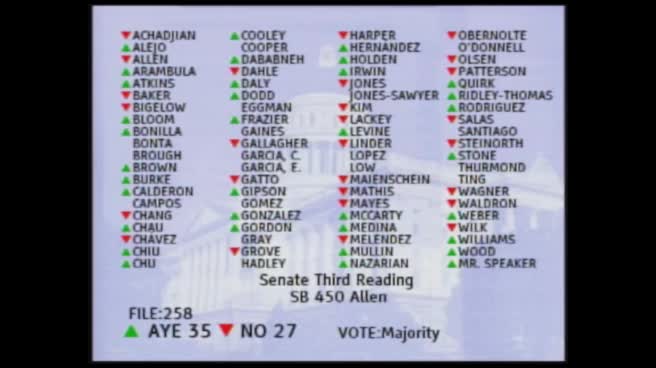 2MIN
Assembly Floor
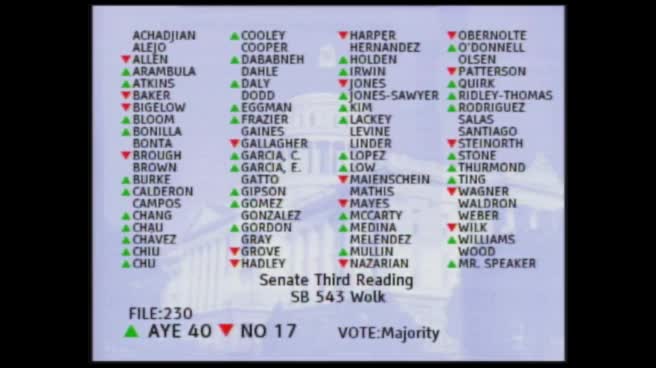 56SEC
Assembly Floor
 2MIN
Senate Floor
 27SEC
Senate Standing Committee on Appropriations
 41SEC
Senate Standing Committee on Appropriations
 5MIN
Senate Standing Committee on Public Employment and Retirement
Bill Author

Bill Co-Author(s):
