SB 243: Medi-Cal: reimbursement: provider rates.
- Session Year: 2015-2016
- House: Senate
- Latest Version Date: 2015-05-12
(1)Existing law establishes the Medi-Cal program, administered by the State Department of Health Care Services, under which health care services are provided to qualified, low-income persons. The Medi-Cal program is, in part, governed and funded by federal Medicaid provisions. Existing law requires the department to develop and implement a Medi-Cal inpatient hospital reimbursement payment methodology based on diagnosis-related groups, subject to federal approval, that reflects the costs and staffing levels associated with quality of care for patients in all general acute care hospitals, as specified. Existing law generally requires the diagnosis-related group-based payments to apply to all claims.
This bill would require claims for payments pursuant to the inpatient hospital reimbursement methodology described above to be increased by 16 percent 16% for the 201516 fiscal year, and would require, commencing July 1, 2016, and annually thereafter, the department to increase each diagnosis-related group payment claim amount based, at a minimum, on increases in the medical component of the California Consumer Price Index. Commencing with the 201516 fiscal year, and annually thereafter, the bill would require managed care rates for Medi-Cal managed care health plans to be increased by a proportionately equal amount for increased payments for hospital services.
(2)Existing law requires, except as otherwise provided, Medi-Cal provider payments to be reduced by 1% or 5%, and provider payments for specified non-Medi-Cal programs to be reduced by 1%, for dates of service on and after March 1, 2009, and until June 1, 2011. Existing law requires, except as otherwise provided, Medi-Cal provider payments and payments for specified non-Medi-Cal programs to be reduced by 10% for dates of service on and after June 1, 2011.
This bill would, instead, prohibit the application of those reductions for payments to providers for dates of service on or after June 1, 2011. The bill would also require payments for managed care health plans for dates of service following the effective date of the bill to be determined without application of some of those reductions. The bill would require the Director of Health Care Services to implement this provision to the maximum extent permitted by federal law and for the maximum time period for which the director obtains federal approval for federal financial participation for those payments.
(3)Prior law required, beginning January 1, 2013, through and including December 31, 2014, that payments for primary care services provided by specified physicians be no less than 100% of the payment rate that applies to those services and physicians as established by the Medicare program, for both fee-for-service and managed care plans.
This bill, commencing January 1, 2016, would require, only to the extent permitted by federal law and that federal financial participation is available, require payments for specified medical care services to not be less than 100% of the payment rate that applies to those services as established by the Medicare program for services rendered by fee-for-service providers, and would require rates paid to Medi-Cal managed care plans to be actuarially equivalent to payment rates established by the Medicare program. The bill, commencing January 1, 2016, would require rates paid to Denti-Cal providers for dental services provided to adults and children to be increased by the equivalent percentage as the percentage increase required for other fee-for-service Medi-Cal providers. The bill would require those provisions to be implemented only to the extent permitted by federal law and that federal financial participation is available. The bill would authorize the department to implement those provisions through provider bulletins without taking regulatory action until regulations are adopted, and would require the department to adopt those regulations by July 1, 2018. The bill would require, commencing July 1, 2016, the department to provide a status report to the Legislature on a semiannual basis until regulations have been adopted.
(4)This bill would declare that it is to take effect immediately as an urgency statute.
(1)Existing law establishes the Medi-Cal program, administered by the State Department of Health Care Services, under which health care services are provided to qualified, low-income persons. The Medi-Cal program is, in part, governed and funded by federal Medicaid provisions. Existing law requires the department to develop and implement a Medi-Cal inpatient hospital reimbursement payment methodology based on diagnosis-related groups, subject to federal approval, that reflects the costs and staffing levels associated with quality of care for patients in all general acute care hospitals, as specified. Existing law generally requires the diagnosis-related group-based payments to apply to all claims.
This bill would require claims for payments pursuant to the inpatient hospital reimbursement methodology described above to be increased by ___ 16 percent for the 201516 fiscal year, and would require, commencing July 1, 2016, and annually thereafter, the department to increase each diagnosis-related group payment claim amount based, at a minimum, on increases in the medical component of the California Consumer Price Index. Commencing with the 201516 fiscal year, and annually thereafter, the bill would require managed care rates for Medi-Cal managed care health plans to be increased by a proportionately equal amount for increased payments for hospital services.
(2)Existing law requires, except as otherwise provided, Medi-Cal provider payments to be reduced by 1% or 5%, and provider payments for specified non-Medi-Cal programs to be reduced by 1%, for dates of service on and after March 1, 2009, and until June 1, 2011. Existing law requires, except as otherwise provided, Medi-Cal provider payments and payments for specified non-Medi-Cal programs to be reduced by 10% for dates of service on and after June 1, 2011.
This bill would, instead, prohibit the application of those reductions for payments to providers for dates of service on or after June 1, 2011. The bill would also require payments for managed care health plans for dates of service following the effective date of the bill to be determined without application of some of those reductions. The bill would require the Director of Health Care Services to implement this provision to the maximum extent permitted by federal law and for the maximum time period for which the director obtains federal approval for federal financial participation for those payments.
(3)Prior law required, beginning January 1, 2013, through and including December 31, 2014, that payments for primary care services provided by specified physicians be no less than 100% of the payment rate that applies to those services and physicians as established by the Medicare Program, program, for both fee-for-service and managed care plans.
This bill, commencing January 1, 2016, would require, only to the extent permitted by federal law and that federal financial participation is available, payments for specified medical care services to not be less than 100% of the payment rate that applies to those services as established by the Medicare Program, for both fee-for-service and managed care plans. program for services rendered by fee-for-service providers, and would require rates paid to Medi-Cal managed care plans to be actuarially equivalent to payment rates established by the Medicare program. The bill would authorize the department to implement those provisions through provider bulletins without taking regulatory action until regulations are adopted, and would require the department to adopt those regulations by July 1, 2018. The bill would require, commencing July 1, 2016, the department to provide a status report to the Legislature on a semiannual basis until regulations have been adopted.
(4)Under existing law, one of the methods by which Medi-Cal services are provided is pursuant to contracts with various types of managed care plans.
This bill would require, to the extent federal financial participation is not jeopardized, the department to pay Medi-Cal managed care plans rate range increases at a minimum level of 100% of the rate range available with respect to all enrollees who are not subject to the rate range payment requirements that are applicable to all enrollees who are newly eligible beneficiaries assigned to county public hospital health systems.
(5)
(4)This bill would declare that it is to take effect immediately as an urgency statute.
(1)Existing law establishes the Medi-Cal program, administered by the State Department of Health Care Services, under which health care services are provided to qualified, low-income persons. The Medi-Cal program is, in part, governed and funded by federal Medicaid provisions. Existing law requires the department to develop and implement a Medi-Cal inpatient hospital reimbursement payment methodology based on diagnosis-related groups, subject to federal approval, that reflects the costs and staffing levels associated with quality of care for patients in all general acute care hospitals, as specified. Existing law generally requires the diagnosis-related group-based payments to apply to all claims.
This bill would require claims for payments pursuant to the inpatient hospital reimbursement methodology described above to be increased by ___ percent for the 201516 fiscal year, and would require, commencing July 1, 2016, and annually thereafter, the department to increase each diagnosis-related group payment claim amount based on increases in the medical component of the California Consumer Price Index.
(2)Existing law requires, except as otherwise provided, Medi-Cal provider payments to be reduced by 1% or 5%, and provider payments for specified non-Medi-Cal programs to be reduced by 1%, for dates of service on and after March 1, 2009, and until June 1, 2011. Existing law requires, except as otherwise provided, Medi-Cal provider payments and payments for specified non-Medi-Cal programs to be reduced by 10% for dates of service on and after June 1, 2011.
This bill would, instead, prohibit the application of those reductions for payments to providers for dates of service on or after June 1, 2011. The bill would also require payments for managed care health plans for dates of service following the effective date of the bill to be determined without application of some of those reductions. The bill would require the Director of Health Care Services to implement this provision to the maximum extent permitted by federal law and for the maximum time period for which the director obtains federal approval for federal financial participation for those payments.
(3)Prior law required, beginning January 1, 2013, through and including December 31, 2014, that payments for primary care services provided by specified physicians be no less than 100% of the payment rate that applies to those services and physicians as established by the Medicare Program, for both fee-for-service and managed care plans.
This bill, commencing January 1, 2016, would require, only to the extent permitted by federal law and that federal financial participation is available, payments for specified medical care services to not be less than 100% of the payment rate that applies to those services as established by the Medicare Program, for both fee-for-service and managed care plans. The bill would authorize the department to implement those provisions through provider bulletins without taking regulatory action until regulations are adopted, and would require the department to adopt those regulations by July 1, 2018. The bill would require, commencing July 1, 2016, the department to provide a status report to the Legislature on a semiannual basis until regulations have been adopted.
(4)Under existing law, one of the methods by which Medi-Cal services are provided is pursuant to contracts with various types of managed care plans.
This bill would require, to the extent federal financial participation is not jeopardized, the department to pay Medi-Cal managed care plans rate range increases at a minimum level of 100% of the rate range available with respect to all enrollees who are not subject to the rate range payment requirements that are applicable to all enrollees who are newly eligible beneficiaries assigned to county public hospital health systems.
(5)This bill would declare that it is to take effect immediately as an urgency statute.
(a)It is the intent of the Legislature to design a new Medi-Cal inpatient hospital reimbursement methodology based on diagnosis-related groups that more effectively ensures all of the following:
(1)Encouragement of access by setting higher payments for patients with more serious conditions.
(2)Rewards for efficiency by allowing hospitals to retain savings from decreased length of stays and decreased costs per day.
(3)Improvement of transparency and understanding by defining the product of a hospital in a way that is understandable to both clinical and financial managers.
(4)Improvement of fairness so that different hospitals receive similar payment for similar care and payments to hospitals are adjusted for significant cost factors that are outside the hospitals control.
(5)Encouragement of administrative efficiency and minimizing administrative burdens on hospitals and the Medi-Cal program.
(6)That payments depend on data that has high consistency and credibility.
(7)Simplification of the process for determining and making payments to the hospitals.
(8)Facilitation of improvement of quality and outcomes.
(9)Facilitation of implementation of state and federal provisions related to hospital acquired conditions.
(10)Support of provider compliance with all applicable state and federal requirements.
(b)(1)(A)(i)The department shall develop and implement a payment methodology based on diagnosis-related groups, subject to federal approval, that reflects the costs and staffing levels associated with quality of care for patients in all general acute care hospitals in state and out of state, including Medicare critical access hospitals, but excluding public hospitals, psychiatric hospitals, and rehabilitation hospitals, which include alcohol and drug rehabilitation hospitals.
(ii)The payment methodology developed pursuant to this section shall be implemented on July 1, 2012, or on the date upon which the director executes a declaration certifying that all necessary federal approvals have been obtained and the methodology is sufficient for formal implementation, whichever is later.
(iii)Claims for payments pursuant to the payment methodology based on diagnosis-related groups established under this section shall be increased by 16 percent for the 201516 fiscal year. Managed care rates to Medi-Cal managed care health plans shall be increased by a proportionately equal amount for increased payments for hospital services for the 201516 fiscal year.
(iv)Commencing July 1, 2016, and annually thereafter, the department shall increase each diagnosis-related group payment claim amount based, at a minimum, on increases in the medical component of the California Consumer Price Index. Commencing July 1, 2016, and annually thereafter, managed care rates to Medi-Cal managed care health plans shall be increased by a proportionately equal amount for increased payments for hospital services.
(B)The diagnosis-related group-based payments shall apply to all claims, except claims for psychiatric inpatient days, rehabilitation inpatient days, managed care inpatient days, and swing bed stays for long-term care services, provided, however, that psychiatric and rehabilitation inpatient days shall be excluded regardless of whether the stay was in a distinct-part unit. The department may exclude or include other claims and services as may be determined during the development of the payment methodology.
(C)Implementation of the new payment methodology shall be coordinated with the development and implementation of the replacement Medicaid Management Information System pursuant to the contract entered into pursuant to Section 14104.3, effective on May 3, 2010.
(2)The department shall evaluate alternative diagnosis-related group algorithms for the new Medi-Cal reimbursement system for the hospitals to which paragraph (1) applies. The evaluation shall include, but not be limited to, consideration of all of the following factors:
(A)The basis for determining diagnosis-related group base price, and whether different base prices should be used taking into account factors such as geographic location, hospital size, teaching status, the local hospital wage area index, and any other variables that may be relevant.
(B)Classification of patients based on appropriate acuity classification systems.
(C)Hospital case mix factors.
(D)Geographic or regional differences in the cost of operating facilities and providing care.
(E)Payment models based on diagnosis-related groups used in other states.
(F)Frequency of grouper group updates for the diagnosis-related groups.
(G)The extent to which the particular grouping algorithm for the diagnosis-related groups accommodates ICD-10 diagnosis and procedure codes, and applicable requirements of the federal Health Insurance Portability and Accountability Act of 1996. 1996 (Public Law 104-191).
(H)The basis for calculating relative weights for the various diagnosis-related groups.
(I)Whether policy adjusters should be used, for which care categories they should be used, and the frequency of updates to the policy adjusters.
(J)The extent to which the payment system is budget neutral and can be expected to result in state budget savings in future years.
(K)Other factors that may be relevant to determining payments, including, but not limited to, add-on payments, outlier payments, capital payments, payments for medical education, payments in the case of early transfers of patients, and payments based on performance and quality of care.
(c)The department shall submit to the Legislature a status report on the implementation of this section on April 1, 2011, April 1, 2012, April 1, 2013, and April 1, 2014.
(d)The alternatives for a new system described in paragraph (2) of subdivision (b) shall be developed in consultation with recognized experts with experience in hospital reimbursement, economists, the federal Centers for Medicare and Medicaid Services, and other interested parties.
(e)In implementing this section, the department may contract, as necessary, on a bid or nonbid basis, for professional consulting services from nationally recognized higher education and research institutions, or other qualified individuals and entities not associated with a particular hospital or hospital group, with demonstrated expertise in hospital reimbursement systems. The rate setting system described in subdivision (b) shall be developed with all possible expediency. This subdivision establishes an accelerated process for issuing contracts pursuant to this section and contracts entered into pursuant to this subdivision shall be exempt from the requirements of Chapter 1 (commencing with Section 10100) and Chapter 2 (commencing with Section 10290) of Part 2 of Division 2 of the Public Contract Code.
(f)(1)The department may adopt emergency regulations to implement the provisions of this section in accordance with rulemaking provisions of the Administrative Procedure Act (Chapter 3.5 (commencing with Section 11340) of Part 1 of Division 3 of Title 2 of the Government Code). The initial adoption of emergency regulations and one readoption of the initial regulations shall be deemed to be an emergency and necessary for the immediate preservation of the public peace, health and safety, or general welfare. Initial emergency regulations and the one readoption of those regulations shall be exempt from review by the Office of Administrative Law. The initial emergency regulations and the one readoption of those regulations authorized by this section shall be submitted to the Office of Administrative Law for filing with the Secretary of State and publication in the California Code of Regulations.
(2)As an alternative to paragraph (1), and notwithstanding the rulemaking provisions of Chapter 3.5 (commencing with Section 11340) of Part 1 of Division 3 of Title 2 of the Government Code, or any other law, the department may implement and administer this section by means of provider bulletins, all-county letters, manuals, or other similar instructions, without taking regulatory action. The department shall notify the fiscal and appropriate policy committees of the Legislature of its intent to issue a provider bulletin, all-county letter, manual, or other similar instruction, at least five days prior to issuance. In addition, the department shall provide a copy of any provider bulletin, all-county letter, manual, or other similar instruction issued under this paragraph to the fiscal and appropriate policy committees of the Legislature.
SEC. 2.Section 14105.194 is added to the Welfare and Institutions Code, to read:14105.194.(a)Notwithstanding Sections 14105.07, 14105.191, 14105.192, and 14105.193, payments to providers for dates of service on or after June 1, 2011, shall be determined without application of the reductions in Sections 14105.07, 14105.191, 14105.192, and 14105.193, except as otherwise provided in this section.
(b)Notwithstanding Sections 14105.07 and 14105.192, and except as otherwise provided in this section, for managed care health plans that contract with the department pursuant to this chapter or Chapter 8 (commencing with Section 14200), payments for dates of service following the effective date of the act adding this section shall be determined without application of the reductions, limitations, and adjustments in Sections 14105.07 and 14105.192.
(c)The director shall implement this section to the maximum extent permitted by federal law and for the maximum time period for which the director obtains federal approval for federal financial participation for the payments provided for in this section.
(d)The director shall promptly seek all necessary federal approvals to implement this section.
SEC. 3.Section 14105.196 is added to the Welfare and Institutions Code, to read:14105.196.(a)It is the intent of the Legislature to:
(1)Maintain the increased reimbursement rates for primary care providers in the Medi-Cal program upon expiration of the temporary increase provided for under Chapter 23 of the Statutes of 2012, as amended by Chapter 438 of the Statutes of 2012, in order to ensure adequate access to these providers.
(2)Increase reimbursement rates for other Medi-Cal providers to the amounts reimbursed by the federal Medicare program in order to ensure access to medically necessary health care services, and to comply with federal Medicaid requirements that care and services are available to Medi-Cal enrollees at least to the extent that care and services are available to the general population in the geographic area.
(3)Increase reimbursement rates for Denti-Cal providers to the equivalent rate of the percentage increase for other Medi-Cal providers to the amounts reimbursed by the federal Medicare program in order to ensure access to medically necessary dental services, and to comply with federal Medicaid requirements that care and services are available to Medi-Cal enrollees at least to the extent that care and services are available to the general population in the geographic area.
(b)(1)(A)Commencing January 1, 2016, payments for medical care services rendered by fee-for-service Medi-Cal providers, including dental providers, providers shall not be less than 100 percent of the payment rate that applies to those services as established by the Medicare program for services rendered by fee-for-service providers.
(B)Commencing January 1, 2016, rates paid to Medi-Cal managed care plans shall be actuarially equivalent to the payment rates established under the Medicare program.
(C)Commencing January 1, 2016, rates paid to Denti-Cal providers for dental services reimbursed under the Denti-Cal program for services provided to adults and children shall be increased by the equivalent percentage as the percentage increase required under subparagraph (A).
(2)This subdivision shall be implemented only to the extent permitted by federal law and regulations.
(c)Notwithstanding any other law, to the extent permitted by federal law and regulations, the payments for medical care services made pursuant to this section shall be exempt from the payment reductions under Sections 14105.191 and 14105.192.
(d)Payment increases made pursuant to this section shall not apply to provider rates of payment described in Section 14105.18 for services provided to individuals not eligible for Medi-Cal or the Family Planning, Access, Care Care, and Treatment (Family PACT) Program.
(e)For purposes of this section, medical care services means the services identified in subdivisions (a), (h), (i), (j), (n), (q), (t), (v), and (w) of Section 14132, and adult dental benefits provided pursuant to Section 14131.10. 14132.
(f)Notwithstanding any other law, the department shall implement the payment increase required by this section to managed care health plans that contract pursuant to Chapter 8.75 (commencing with Section 14591) and to contracts with the Senior Care Action Network and the AIDS Healthcare Foundation in the following manner, to the extent that the services are provided through any of these contracts, payments by the department to managed care health plans shall be increased by the actuarially equivalent amount of the payment increases pursuant to contract amendments or change orders effective on or after January 1, 2016.
(g)Notwithstanding Chapter 3.5 (commencing with Section 11340) of Part 1 of Division 3 of Title 2 of the Government Code, the department shall implement, clarify, make specific, and define the provisions of this section by means of provider bulletins or similar instructions, without taking regulatory action until the time regulations are adopted. The department shall adopt regulations by July 1, 2018, in accordance with the requirements of Chapter 3.5 (commencing with Section 11340) of Part 1 of Division 3 of Title 2 of the Government Code. Beginning July 1, 2016, and notwithstanding Section 10231.5 of the Government Code, the department shall provide a status report to the Legislature on a semiannual basis, in compliance with Section 9795 of the Government Code, until regulations have been adopted.
(h)This section shall be implemented only if and to the extent that federal financial participation is available and any necessary federal approvals have been obtained.
SEC. 4.This act is an urgency statute necessary for the immediate preservation of the public peace, health, or safety within the meaning of Article IV of the Constitution and shall go into immediate effect. The facts constituting the necessity are:
In order to ensure, at the earliest possible time, access to medically necessary care for Medi-Cal beneficiaries, it is necessary that this act take effect immediately.
(a)It is the intent of the Legislature to design a new Medi-Cal inpatient hospital reimbursement methodology based on diagnosis-related groups that more effectively ensures all of the following:
(1)Encouragement of access by setting higher payments for patients with more serious conditions.
(2)Rewards for efficiency by allowing hospitals to retain savings from decreased length of stays and decreased costs per day.
(3)Improvement of transparency and understanding by defining the product of a hospital in a way that is understandable to both clinical and financial managers.
(4)Improvement of fairness so that different hospitals receive similar payment for similar care and payments to hospitals are adjusted for significant cost factors that are outside the hospitals control.
(5)Encouragement of administrative efficiency and minimizing administrative burdens on hospitals and the Medi-Cal program.
(6)That payments depend on data that has high consistency and credibility.
(7)Simplification of the process for determining and making payments to the hospitals.
(8)Facilitation of improvement of quality and outcomes.
(9)Facilitation of implementation of state and federal provisions related to hospital acquired conditions.
(10)Support of provider compliance with all applicable state and federal requirements.
(b)(1)(A)(i)The department shall develop and implement a payment methodology based on diagnosis-related groups, subject to federal approval, that reflects the costs and staffing levels associated with quality of care for patients in all general acute care hospitals in state and out of state, including Medicare critical access hospitals, but excluding public hospitals, psychiatric hospitals, and rehabilitation hospitals, which include alcohol and drug rehabilitation hospitals.
(ii)The payment methodology developed pursuant to this section shall be implemented on July 1, 2012, or on the date upon which the director executes a declaration certifying that all necessary federal approvals have been obtained and the methodology is sufficient for formal implementation, whichever is later.
(iii)Claims for payments pursuant to the payment methodology based on diagnosis-related groups established under this section shall be increased by ___ 16 percent for the 201516 fiscal year. Managed care rates to Medi-Cal managed care health plans shall be increased by a proportionately equal amount for increased payments for hospital services for the 201516 fiscal year.
(iv)Commencing July 1, 2016, and annually thereafter, the department shall increase each diagnosis-related group payment claim amount based, at a minimum, on increases in the medical component of the California Consumer Price Index. Commencing July 1, 2016, and annually thereafter, managed care rates to Medi-Cal managed care health plans shall be increased by a proportionately equal amount for increased payments for hospital services.
(B)The diagnosis-related group-based payments shall apply to all claims, except claims for psychiatric inpatient days, rehabilitation inpatient days, managed care inpatient days, and swing bed stays for long-term care services, provided, however, that psychiatric and rehabilitation inpatient days shall be excluded regardless of whether the stay was in a distinct-part unit. The department may exclude or include other claims and services as may be determined during the development of the payment methodology.
(C)Implementation of the new payment methodology shall be coordinated with the development and implementation of the replacement Medicaid Management Information System pursuant to the contract entered into pursuant to Section 14104.3, effective on May 3, 2010.
(2)The department shall evaluate alternative diagnosis-related group algorithms for the new Medi-Cal reimbursement system for the hospitals to which paragraph (1) applies. The evaluation shall include, but not be limited to, consideration of all of the following factors:
(A)The basis for determining diagnosis-related group base price, and whether different base prices should be used taking into account factors such as geographic location, hospital size, teaching status, the local hospital wage area index, and any other variables that may be relevant.
(B)Classification of patients based on appropriate acuity classification systems.
(C)Hospital case mix factors.
(D)Geographic or regional differences in the cost of operating facilities and providing care.
(E)Payment models based on diagnosis-related groups used in other states.
(F)Frequency of grouper updates for the diagnosis-related groups.
(G)The extent to which the particular grouping algorithm for the diagnosis-related groups accommodates ICD-10 diagnosis and procedure codes, and applicable requirements of the federal Health Insurance Portability and Accountability Act of 1996.
(H)The basis for calculating relative weights for the various diagnosis-related groups.
(I)Whether policy adjusters should be used, for which care categories they should be used, and the frequency of updates to the policy adjusters.
(J)The extent to which the payment system is budget neutral and can be expected to result in state budget savings in future years.
(K)Other factors that may be relevant to determining payments, including, but not limited to, add-on payments, outlier payments, capital payments, payments for medical education, payments in the case of early transfers of patients, and payments based on performance and quality of care.
(c)The department shall submit to the Legislature a status report on the implementation of this section on April 1, 2011, April 1, 2012, April 1, 2013, and April 1, 2014.
(d)The alternatives for a new system described in paragraph (2) of subdivision (b) shall be developed in consultation with recognized experts with experience in hospital reimbursement, economists, the federal Centers for Medicare and Medicaid Services, and other interested parties.
(e)In implementing this section, the department may contract, as necessary, on a bid or nonbid basis, for professional consulting services from nationally recognized higher education and research institutions, or other qualified individuals and entities not associated with a particular hospital or hospital group, with demonstrated expertise in hospital reimbursement systems. The rate setting system described in subdivision (b) shall be developed with all possible expediency. This subdivision establishes an accelerated process for issuing contracts pursuant to this section and contracts entered into pursuant to this subdivision shall be exempt from the requirements of Chapter 1 (commencing with Section 10100) and Chapter 2 (commencing with Section 10290) of Part 2 of Division 2 of the Public Contract Code.
(f)(1)The department may adopt emergency regulations to implement the provisions of this section in accordance with rulemaking provisions of the Administrative Procedure Act (Chapter 3.5 (commencing with Section 11340) of Part 1 of Division 3 of Title 2 of the Government Code). The initial adoption of emergency regulations and one readoption of the initial regulations shall be deemed to be an emergency and necessary for the immediate preservation of the public peace, health and safety, or general welfare. Initial emergency regulations and the one readoption of those regulations shall be exempt from review by the Office of Administrative Law. The initial emergency regulations and the one readoption of those regulations authorized by this section shall be submitted to the Office of Administrative Law for filing with the Secretary of State and publication in the California Code of Regulations.
(2)As an alternative to paragraph (1), and notwithstanding the rulemaking provisions of Chapter 3.5 (commencing with Section 11340) of Part 1 of Division 3 of Title 2 of the Government Code, or any other law, the department may implement and administer this section by means of provider bulletins, all-county letters, manuals, or other similar instructions, without taking regulatory action. The department shall notify the fiscal and appropriate policy committees of the Legislature of its intent to issue a provider bulletin, all-county letter, manual, or other similar instruction, at least five days prior to issuance. In addition, the department shall provide a copy of any provider bulletin, all-county letter, manual, or other similar instruction issued under this paragraph to the fiscal and appropriate policy committees of the Legislature.
SEC. 2.Section 14105.194 is added to the Welfare and Institutions Code, to read:14105.194.(a)Notwithstanding Sections 14105.07, 14105.191, 14105.192, and 14105.193, payments to providers for dates of service on or after June 1, 2011, shall be determined without application of the reductions in Sections 14105.07, 14105.191, 14105.192, and 14105.193, except as otherwise provided in this section.
(b)Notwithstanding Sections 14105.07 and 14105.192, and except as otherwise provided in this section, for managed care health plans that contract with the department pursuant to this chapter or Chapter 8 (commencing with Section 14200), payments for dates of service following the effective date of the act adding this section shall be determined without application of the reductions, limitations, and adjustments in Sections 14105.07 and 14105.192.
(c)The director shall implement this section to the maximum extent permitted by federal law and for the maximum time period for which the director obtains federal approval for federal financial participation for the payments provided for in this section.
(d)The director shall promptly seek all necessary federal approvals to implement this section.
SEC. 3.Section 14105.196 is added to the Welfare and Institutions Code, to read:14105.196.(a)It is the intent of the Legislature to:
(1)Maintain the increased reimbursement rates for primary care providers in the Medi-Cal program upon expiration of the temporary increase provided for under Chapter 23 of the Statutes of 2012, as amended by Chapter 438 of the Statutes of 2012, in order to ensure adequate access to these providers.
(2)To increase Increase reimbursement rates for other Medi-Cal providers to the amounts reimbursed by the federal Medicare program in order to ensure access to medically necessary health care services, and to comply with federal Medicaid requirements that care and services are available to Medi-Cal enrollees at least to the extent that care and services are available to the general population in the geographic area.
(3)Increase reimbursement rates for Denti-Cal providers to the equivalent rate of the percentage increase for other Medi-Cal providers to the amounts reimbursed by the federal Medicare program in order to ensure access to medically necessary dental services, and to comply with federal Medicaid requirements that care and services are available to Medi-Cal enrollees at least to the extent that care and services are available to the general population in the geographic area.
(b)Beginning January 1, 2016, to the extent permitted by federal law and regulations, payments
(b)(1)(A)Commencing January 1, 2016, payments for medical care services rendered by fee-for-service Medi-Cal providers, including dental providers, shall not be less than 100 percent of the payment rate that applies to those services as established by the Medicare program, for both fee-for-service and managed care plans. program for services rendered by fee-for-service providers.
(B)Commencing January 1, 2016, rates paid to Medi-Cal managed care plans shall be actuarially equivalent to the payment rates established under the Medicare program.
(2)This subdivision shall be implemented only to the extent permitted by federal law and regulations.
(c)Notwithstanding any other law, to the extent permitted by federal law and regulations, the payments for medical care services made pursuant to this section shall be exempt from the payment reductions under Sections 14105.191 and 14105.192.
(d)Payment increases made pursuant to this section shall not apply to provider rates of payment described in Section 14105.18 for services provided to individuals not eligible for Medi-Cal or the Family Planning, Access, Care and Treatment (Family PACT) Program.
(e)For purposes of this section, medical care services means the services identified in subdivisions (a), (h), (i), (j), (n), and (q), and (w) of Section 14132. 14132, and adult dental benefits provided pursuant to Section 14131.10.
(f)Notwithstanding any other law, the department shall implement the payment increase implemented pursuant to required by this section shall apply to managed care health plans that contract with the department pursuant to Chapter 8.75 (commencing with Section 14591) and to contracts with the Senior Care Action Network and the AIDS Healthcare Foundation, and Foundation in the following manner, to the extent that the services are provided through any of these contracts, payments by the department to managed care health plans shall be increased by the actuarial actuarially equivalent amount of the payment increases pursuant to contract amendments or change orders effective on or after January 1, 2016.
(g)Notwithstanding Chapter 3.5 (commencing with Section 11340) of Part 1 of Division 3 of Title 2 of the Government Code, the department shall implement, clarify, make specific, and define the provisions of this section by means of provider bulletins or similar instructions, without taking regulatory action until the time regulations are adopted. The department shall adopt regulations by July 1, 2018, in accordance with the requirements of Chapter 3.5 (commencing with Section 11340) of Part 1 of Division 3 of Title 2 of the Government Code. Beginning July 1, 2016, and notwithstanding Section 10231.5 of the Government Code, the department shall provide a status report to the Legislature on a semiannual basis, in compliance with Section 9795 of the Government Code, until regulations have been adopted.
(h)This section shall be implemented only if and to the extent that federal financial participation is available and any necessary federal approvals have been obtained.
SEC. 4.Section 14301.6 is added to the Welfare and Institutions Code, to read:14301.6.To the extent federal financial participation is not jeopardized and consistent with federal law, the department shall pay Medi-Cal managed care plans rate range increases, as defined by paragraph (4) of subdivision (b) of Section 14301.4, at a minimum level of 100 percent of the rate range available with respect to all enrollees who are not subject to the rate range payment requirements described in Section 14301.5.
SEC. 5.SEC. 4.This act is an urgency statute necessary for the immediate preservation of the public peace, health, or safety within the meaning of Article IV of the Constitution and shall go into immediate effect. The facts constituting the necessity are:
In order to ensure, at the earliest possible time, access to medically necessary care for Medi-Cal beneficiaries, it is necessary that this act take effect immediately.
(a)It is the intent of the Legislature to design a new Medi-Cal inpatient hospital reimbursement methodology based on diagnosis-related groups that more effectively ensures all of the following:
(1)Encouragement of access by setting higher payments for patients with more serious conditions.
(2)Rewards for efficiency by allowing hospitals to retain savings from decreased length of stays and decreased costs per day.
(3)Improvement of transparency and understanding by defining the product of a hospital in a way that is understandable to both clinical and financial managers.
(4)Improvement of fairness so that different hospitals receive similar payment for similar care and payments to hospitals are adjusted for significant cost factors that are outside the hospitals control.
(5)Encouragement of administrative efficiency and minimizing administrative burdens on hospitals and the Medi-Cal program.
(6)That payments depend on data that has high consistency and credibility.
(7)Simplification of the process for determining and making payments to the hospitals.
(8)Facilitation of improvement of quality and outcomes.
(9)Facilitation of implementation of state and federal provisions related to hospital acquired conditions.
(10)Support of provider compliance with all applicable state and federal requirements.
(b)(1)(A)(i)The department shall develop and implement a payment methodology based on diagnosis-related groups, subject to federal approval, that reflects the costs and staffing levels associated with quality of care for patients in all general acute care hospitals in state and out of state, including Medicare critical access hospitals, but excluding public hospitals, psychiatric hospitals, and rehabilitation hospitals, which include alcohol and drug rehabilitation hospitals.
(ii)The payment methodology developed pursuant to this section shall be implemented on July 1, 2012, or on the date upon which the director executes a declaration certifying that all necessary federal approvals have been obtained and the methodology is sufficient for formal implementation, whichever is later.
(iii)Claims for payments pursuant to the payment methodology based on diagnosis-related groups established under this section shall be increased by ___ percent for the 201516 fiscal year.
(iv)Commencing July 1, 2016, and annually thereafter, the department shall increase each diagnosis-related group payment claim amount based on increases in the medical component of the California Consumer Price Index.
(B)The diagnosis-related group-based payments shall apply to all claims, except claims for psychiatric inpatient days, rehabilitation inpatient days, managed care inpatient days, and swing bed stays for long-term care services, provided, however, that psychiatric and rehabilitation inpatient days shall be excluded regardless of whether the stay was in a distinct-part unit. The department may exclude or include other claims and services as may be determined during the development of the payment methodology.
(C)Implementation of the new payment methodology shall be coordinated with the development and implementation of the replacement Medicaid Management Information System pursuant to the contract entered into pursuant to Section 14104.3, effective on May 3, 2010.
(2)The department shall evaluate alternative diagnosis-related group algorithms for the new Medi-Cal reimbursement system for the hospitals to which paragraph (1) applies. The evaluation shall include, but not be limited to, consideration of all of the following factors:
(A)The basis for determining diagnosis-related group base price, and whether different base prices should be used taking into account factors such as geographic location, hospital size, teaching status, the local hospital wage area index, and any other variables that may be relevant.
(B)Classification of patients based on appropriate acuity classification systems.
(C)Hospital case mix factors.
(D)Geographic or regional differences in the cost of operating facilities and providing care.
(E)Payment models based on diagnosis-related groups used in other states.
(F)Frequency of grouper updates for the diagnosis-related groups.
(G)The extent to which the particular grouping algorithm for the diagnosis-related groups accommodates ICD-10 diagnosis and procedure codes, and applicable requirements of the federal Health Insurance Portability and Accountability Act of 1996.
(H)The basis for calculating relative weights for the various diagnosis-related groups.
(I)Whether policy adjusters should be used, for which care categories they should be used, and the frequency of updates to the policy adjusters.
(J)The extent to which the payment system is budget neutral and can be expected to result in state budget savings in future years.
(K)Other factors that may be relevant to determining payments, including, but not limited to, add-on payments, outlier payments, capital payments, payments for medical education, payments in the case of early transfers of patients, and payments based on performance and quality of care.
(c)The department shall submit to the Legislature a status report on the implementation of this section on April 1, 2011, April 1, 2012, April 1, 2013, and April 1, 2014.
(d)The alternatives for a new system described in paragraph (2) of subdivision (b) shall be developed in consultation with recognized experts with experience in hospital reimbursement, economists, the federal Centers for Medicare and Medicaid Services, and other interested parties.
(e)In implementing this section, the department may contract, as necessary, on a bid or nonbid basis, for professional consulting services from nationally recognized higher education and research institutions, or other qualified individuals and entities not associated with a particular hospital or hospital group, with demonstrated expertise in hospital reimbursement systems. The rate setting system described in subdivision (b) shall be developed with all possible expediency. This subdivision establishes an accelerated process for issuing contracts pursuant to this section and contracts entered into pursuant to this subdivision shall be exempt from the requirements of Chapter 1 (commencing with Section 10100) and Chapter 2 (commencing with Section 10290) of Part 2 of Division 2 of the Public Contract Code.
(f)(1)The department may adopt emergency regulations to implement the provisions of this section in accordance with rulemaking provisions of the Administrative Procedure Act (Chapter 3.5 (commencing with Section 11340) of Part 1 of Division 3 of Title 2 of the Government Code). The initial adoption of emergency regulations and one readoption of the initial regulations shall be deemed to be an emergency and necessary for the immediate preservation of the public peace, health and safety, or general welfare. Initial emergency regulations and the one readoption of those regulations shall be exempt from review by the Office of Administrative Law. The initial emergency regulations and the one readoption of those regulations authorized by this section shall be submitted to the Office of Administrative Law for filing with the Secretary of State and publication in the California Code of Regulations.
(2)As an alternative to paragraph (1), and notwithstanding the rulemaking provisions of Chapter 3.5 (commencing with Section 11340) of Part 1 of Division 3 of Title 2 of the Government Code, or any other provision of law, the department may implement and administer this section by means of provider bulletins, all-county letters, manuals, or other similar instructions, without taking regulatory action. The department shall notify the fiscal and appropriate policy committees of the Legislature of its intent to issue a provider bulletin, all-county letter, manual, or other similar instruction, at least five days prior to issuance. In addition, the department shall provide a copy of any provider bulletin, all-county letter, manual, or other similar instruction issued under this paragraph to the fiscal and appropriate policy committees of the Legislature.
SEC. 2.Section 14105.194 is added to the Welfare and Institutions Code, to read:14105.194.(a)Notwithstanding Sections 14105.07, 14105.191, 14105.192, and 14105.193, payments to providers for dates of service on or after June 1, 2011, shall be determined without application of the reductions in Sections 14105.07, 14105.191, 14105.192, and 14105.193, except as otherwise provided in this section.
(b)Notwithstanding Sections 14105.07 and 14105.192, and except as otherwise provided in this section, for managed care health plans that contract with the department pursuant to this chapter or Chapter 8 (commencing with Section 14200), payments for dates of service following the effective date of the act adding this section shall be determined without application of the reductions, limitations, and adjustments in Sections 14105.07 and 14105.192.
(c)The director shall implement this section to the maximum extent permitted by federal law and for the maximum time period for which the director obtains federal approval for federal financial participation for the payments provided for in this section.
(d)The director shall promptly seek all necessary federal approvals to implement this section.
SEC. 3.Section 14105.196 is added to the Welfare and Institutions Code, to read:14105.196.(a)It is the intent of the Legislature to:
(1)Maintain the increased reimbursement rates for primary care providers in the Medi-Cal program upon expiration of the temporary increase provided for under Chapter 23 of the Statutes of 2012, as amended by Chapter 438 of the Statutes of 2012, in order to ensure adequate access to these providers.
(2)To increase reimbursement rates for other Medi-Cal providers to the amounts reimbursed by the federal Medicare program in order to ensure access to medically necessary health care services, and to comply with federal Medicaid requirements that care and services are available to Medi-Cal enrollees at least to the extent that care and services are available to the general population in the geographic area.
(b)Beginning January 1, 2016, to the extent permitted by federal law and regulations, payments for medical care services shall not be less than 100 percent of the payment rate that applies to those services as established by the Medicare program, for both fee-for-service and managed care plans.
(c)Notwithstanding any other law, to the extent permitted by federal law and regulations, the payments for medical care services made pursuant to this section shall be exempt from the payment reductions under Sections 14105.191 and 14105.192.
(d)Payment increases made pursuant to this section shall not apply to provider rates of payment described in Section 14105.18 for services provided to individuals not eligible for Medi-Cal or the Family Planning, Access, Care and Treatment (Family PACT) Program.
(e)For purposes of this section, medical care services means the services identified in subdivisions (a), (h), (i), (n), and (q) of Section 14132.
(f)Notwithstanding any other law, the payment increase implemented pursuant to this section shall apply to managed care health plans that contract with the department pursuant to Chapter 8.75 (commencing with Section 14591) and to contracts with the Senior Care Action Network and the AIDS Healthcare Foundation, and to the extent that the services are provided through any of these contracts, payments shall be increased by the actuarial equivalent amount of the payment increases pursuant to contract amendments or change orders effective on or after January 1, 2016.
(g)Notwithstanding Chapter 3.5 (commencing with Section 11340) of Part 1 of Division 3 of Title 2 of the Government Code, the department shall implement, clarify, make specific, and define the provisions of this section by means of provider bulletins or similar instructions, without taking regulatory action until the time regulations are adopted. The department shall adopt regulations by July 1, 2018, in accordance with the requirements of Chapter 3.5 (commencing with Section 11340) of Part 1 of Division 3 of Title 2 of the Government Code. Beginning July 1, 2016, and notwithstanding Section 10231.5 of the Government Code, the department shall provide a status report to the Legislature on a semiannual basis, in compliance with Section 9795 of the Government Code, until regulations have been adopted.
(h)This section shall be implemented only if and to the extent that federal financial participation is available and any necessary federal approvals have been obtained.
SEC. 4.Section 14301.6 is added to the Welfare and Institutions Code, to read:14301.6.To the extent federal financial participation is not jeopardized and consistent with federal law, the department shall pay Medi-Cal managed care plans rate range increases, as defined by paragraph (4) of subdivision (b) of Section 14301.4, at a minimum level of 100 percent of the rate range available with respect to all enrollees who are not subject to the rate range payment requirements described in Section 14301.5.
SEC. 5.This act is an urgency statute necessary for the immediate preservation of the public peace, health, or safety within the meaning of Article IV of the Constitution and shall go into immediate effect. The facts constituting the necessity are:
In order to ensure, at the earliest possible time, access to medically necessary care for Medi-Cal beneficiaries, it is necessary that this act take effect immediately.
|
Date
|
Status
|
|---|---|
| Feb 17, 2015 | Introduced. Read first time. To Com. on RLS. for assignment. To print. |
| Feb 18, 2015 | From printer. May be acted upon on or after March 20. |
| Feb 26, 2015 | Referred to Com. on HEALTH. |
| Mar 18, 2015 | Set for hearing April 22. |
| Apr 13, 2015 | From committee with author's amendments. Read second time and amended. Re-referred to Com. on HEALTH. |
| Apr 23, 2015 | From committee: Do pass and re-refer to Com. on APPR. (Ayes 8. Noes 0. Page 757.) (April 22). Re-referred to Com. on APPR. |
| May 1, 2015 | Set for hearing May 11. |
| May 4, 2015 | May 11 hearing postponed by committee. |
| May 8, 2015 | Set for hearing May 18. |
| May 12, 2015 | From committee with author's amendments. Read second time and amended. Re-referred to Com. on APPR. |
| May 18, 2015 | May 18 hearing: Placed on APPR. suspense file. |
| May 23, 2015 | Set for hearing May 28. |
| May 28, 2015 | May 28 hearing: Held in committee and under submission. |
| Feb 1, 2016 | Returned to Secretary of Senate pursuant to Joint Rule 56. |
|
Date
|
Description
|
Location
|
Votes
|
|
|---|---|---|---|---|
| May 18, 2015 | Placed on suspense file | Senate Standing Committee on Appropriations |
Passed |
|
| Apr 22, 2015 | Do pass, but first be re-referred to the Committee on [Appropriations] | Senate Standing Committee on Health |
Passed |
This list shows positions taken on this bill by organizations on the date displayed, which is linked to the original source.
Positions by individuals are not included.
|
Organization
|
Position
|
Date
|
|---|---|---|
| 34 Rural Counties | * Indeterminate | Apr 22, 2015 |
| Alliance for Catholic Healthcare at Venice Health | * Indeterminate | Apr 22, 2015 |
| American Academy of Pediatrics | * Indeterminate | Apr 22, 2015 |
| American Congress of Obstetricicans and Gynecologists in California | * Indeterminate | Apr 22, 2015 |
| Amn Healthcare Inc. | * Indeterminate | Apr 22, 2015 |
| Association of California Healthcare Districts | ** Support | Apr 22, 2015 |
| Association Of California Healthcare Districts (Achd) | * Indeterminate | Apr 22, 2015 |
| Association Of Northern California Oncologists | * Support | Apr 22, 2015 |
| Association Of Northern California Oncologists | * Indeterminate | Apr 22, 2015 |
| California Academy Of Audiology | ** Support | Apr 22, 2015 |
| California Academy Of Family Physicians | * Support | Apr 22, 2015 |
| California Academy Of Family Physicians | * Indeterminate | Apr 22, 2015 |
| California Ambulance Association | ** Support | Apr 22, 2015 |
| California Association For Health Services At Home | * Indeterminate | Apr 22, 2015 |
| California Association Of Health Facilities | * Indeterminate | Apr 22, 2015 |
| California Association Of Health Facilities | * Support | Apr 22, 2015 |
| California Association Of Oral And Maxillofacial Surgeons | * Indeterminate | Apr 22, 2015 |
| California Chapter of the American College of Emergency Physicians | ** Support | Apr 22, 2015 |
| California Children'S Hospital Association | * Indeterminate | Apr 22, 2015 |
| California Children'S Hospital Association | * Support | Apr 22, 2015 |
| California Commission on Aging | ** Support | Apr 22, 2015 |
| California Coverage and Health Initiatives | ** Support | Apr 22, 2015 |
| California Dental Association | * Support | Apr 22, 2015 |
| California Dental Association | * Indeterminate | Apr 22, 2015 |
| California Healthcare Institute | ** Support | Apr 22, 2015 |
| California Hospital Association | ** Support | Apr 22, 2015 |
| California Labor Federation, Afl-Cio | * Indeterminate | Apr 22, 2015 |
| California Medical Association, Inc. | * Support | Apr 22, 2015 |
| California Medical Association, Inc. | * Indeterminate | Apr 22, 2015 |
| California Medical Transportation Association, Inc. | ** Support | Apr 22, 2015 |
| California Optometric Association | ** Support | Apr 22, 2015 |
| California Pharmacists Association | * Indeterminate | Apr 22, 2015 |
| California Primary Care Association | * Indeterminate | Apr 22, 2015 |
| California Program of All-Inclusive Care for the Elderly | ** Support | Apr 22, 2015 |
| California School Employees Association | ** Support | Apr 22, 2015 |
| California Society Of Anesthesiologists, Inc. | * Support | Apr 22, 2015 |
| California Society Of Anesthesiologists, Inc. | * Indeterminate | Apr 22, 2015 |
| CAPG Physician Groups | * Indeterminate | Apr 22, 2015 |
| Children Now | ** Support | Apr 22, 2015 |
| DaVita Kidney Care | ** Support | Apr 22, 2015 |
| District Hospital Leadership Forum | ** Support | Apr 22, 2015 |
| Health Access California | * Indeterminate | Apr 22, 2015 |
| Health Access California | * Support | Apr 22, 2015 |
| Kaiser Permanante | * Indeterminate | Apr 22, 2015 |
| Kaiser Permanente | * Support | Apr 22, 2015 |
| Loma Linda University Medical Center | * Indeterminate | Apr 22, 2015 |
| Los Angeles Area Chamber Of Commerce | ** Support | Apr 22, 2015 |
| Maxim Healthcare Services, Inc. | ** Support | Apr 22, 2015 |
| Medical Oncology Association Of Southern California | * Indeterminate | Apr 22, 2015 |
| Medical Oncology Association Of Southern California | * Support | Apr 22, 2015 |
| National Association Of Chain Drug Stores | * Indeterminate | Apr 22, 2015 |
| National Association Of Chain Drug Stores | * Support | Apr 22, 2015 |
| National Coalition for Assistive and Rehab Technology | ** Support | Apr 22, 2015 |
| National Coalition of Assistive Rehab Technology | * Indeterminate | Apr 22, 2015 |
| Occupational Therapy Association Of California | ** Support | Apr 22, 2015 |
| Older Women's League | ** Support | Apr 22, 2015 |
| Osteopathic Physicians And Surgeons Of California | * Indeterminate | Apr 22, 2015 |
| Osteopathic Physicians And Surgeons Of California | * Support | Apr 22, 2015 |
| Paramedics Plus | * Indeterminate | Apr 22, 2015 |
| Paramedics Plus | * Support | Apr 22, 2015 |
| PICO California | ** Support | Apr 22, 2015 |
| Planned Parenthood Action Fund of the Pacific Southwest | ** Support | Apr 22, 2015 |
| Planned Parenthood Affiliates Of California | ** Support | Apr 22, 2015 |
| Planned Parenthood Mar Monte | ** Support | Apr 22, 2015 |
| Planned Parenthood Northern California Action Fund | ** Support | Apr 22, 2015 |
| Planned Parenthood Pasadena and San Gabriel Valley | ** Support | Apr 22, 2015 |
| Private Essential Access Community Hospitals | * Indeterminate | Apr 22, 2015 |
| Private Essential Access Community Hospitals | * Support | Apr 22, 2015 |
| Rural County Representatives of California | * Support | Apr 22, 2015 |
| SEIU California State Council | * Indeterminate | Apr 22, 2015 |
| The Children's Partnership | ** Support | Apr 22, 2015 |
| United Ways Of California | ** Support | Apr 22, 2015 |
SB 243 (Hernandez) Page 4 of 4
SENATE COMMITTEE ON APPROPRIATIONS
Senator Ricardo Lara, Chair
2015 - 2016 Regular Session
SB 243 (Hernandez) - Medi-Cal: reimbursement: provider rates
|
|
Version: May 12, 2015 |
Policy Vote: HEALTH 8 - 0 |
Urgency: Yes |
Mandate: No |
Hearing Date: May 18, 2015 |
Consultant: Brendan McCarthy |
This bill meets the criteria for referral to the Suspense File.
Bill Summary:
SB 243 would require the Department of Health Care Services to raise a variety of rates paid to Medi-Cal providers and require the Department to rescind existing rate reductions to specified providers.
Fiscal Impact:
Annual costs of $11.1 billion per year in total funds ($6.6 billion General Fund) due to increased payments to Medi-Cal providers in 2016-17, and growing as specified on an annual basis thereafter. These costs include:
$1.7 billion ($841 million General Fund) per year for increased hospital payments. In future years, hospital payments would automatically increase annually by hundreds of millions of dollars per year, depending on the medical CPI.
$1.2 billion (special fund) decreased hospital quality assurance fee (QAF) revenues. This reduction is associated with the effect that increased state payments to hospitals has on the ability to raise funds through the hospital QAF. This estimate assumes the QAF is extended past its current expiration in December 2016.
$195 million per year (General Fund) relating to the reduction in revenues for children's' health care coverage associated with the hospital QAF and potentially growing in future years.
$538 million ($269 million General Fund) associated with restoring the 10% payment reductions to certain fee-for-service providers and actuarially equivalent reductions in managed care.
$10.9 billion ($5.3 billion General Fund) to increase specified payments in fee-for-service, managed care, and dental rates to the equivalent of Medicare rates.
$616 million ($308 million General Fund) over 2015-16 and 2016-17 in lost savings and repayment related to the bill's repeal of 2011 provider cuts. This includes cuts that have been implemented and some that have not yet been implemented.
Background:
Under state and federal law, the Department of Health Care Services operates the Medi-Cal program, which provides health care coverage to low income individuals, families, and children. Medi-Cal provides coverage to childless adults and parents with household incomes up to 138 percent of the federal poverty level and to children with household incomes up to 266 percent of the federal poverty level. The federal government provides matching funds that vary from 50 percent to 90 percent of expenditures depending on the category of beneficiary.
Over the last several years, there have been a variety of attempts by the state to reduce payment rates to Medi-Cal providers, in an effort to reduce state spending on the program. Many of those rate reductions have been enjoined by the courts or repealed and replaced by different budget actions.
As part of the 2011-12 budget (AB 97, Committee on Budget, Statutes of 2011), the state imposed a 10% reduction in the rates paid to many fee-for-service Medi-Cal providers and required the capitated rates paid to managed care plans to be reduced by an actuarially equivalent amount. In addition, payment rates for distinct part skilled nursing facilities (located on a hospital campus) were “rolled back” to the payment rates in place in 2008-09 and then reduced by 10%. Rate reductions were made retroactive to June 1, 2011 for all fee-for-service providers.
Many of those rate reductions were enjoined by the courts until June 2013. At that point, the state had legal authority to both reduce provider rates going forward and to “claw back” rate reductions for services provided between June 2011 and June 2013. (Providers subject to claw backs include pharmacies, durable medical equipment providers, clinical laboratories, distinct part nursing facilities, and radiology services.) Rate reductions for Medi-Cal managed care providers will be made going forward but the state will not recoup unrealized savings. Since the enactment of the 2013-14 Budget Act, several categories of providers have been exempted from Medi-Cal rate reductions by statute or administrative action of the Department.
Proposed Law:
SB 243 would require the Department of Health Care Services to raise a variety of rates paid to Medi-Cal providers and require the Department to rescind existing rate reductions to specified providers.
Specific provisions of the bill would:
Require payments to providers for services after June 1, 2011 to be determined without the current provider rate reductions. (The Department of Health Care Services indicates that this provision would require both the elimination of rate reductions for services provided after enactment of this bill and eliminate the ability to require claw back payments for services provided between June 2011 and June 2013.);
Require payments to Medi-Cal fee-for-service providers to be equal to the Medicare payment rate for those services;
Require payments for dental services to be increased in proportion to the increase in other fee-for-service payments rates to the Medicare rate level;
Require payments to hospitals under the diagnosis related group payment system to be increased by 16% for the 2015-16 year and subsequently increased each year by the medical component of the Consumer Price Index;
Require capitated payments to Medi-Cal managed care plans to be increased by the actuarially equivalent amount necessary to equal all of the increases in fee-for-service rates included in the bill;
Include an urgency clause.
Related Legislation:
AB 366 (Bonta) is identical to this bill. That bill is in the Assembly Appropriations Committee.
AB 1805 (Skinner and Pan, 2014) would have eliminated the 10% provider rate reduction. That bill was never heard in the Assembly Appropriations Committee.
AB 900 (Alejo, 2013) would have eliminated the rate reductions for distinct part skilled nursing facilities. That bill was held on this committee’s Suspense File.
SB 646 (Nielsen, 2013) was similar to AB 900 (Alejo, 2013). That bill was held on this committee’s Suspense File.
SB 640 (Lara, 2013) would have eliminated the 10% provider rate reduction. That bill was held on this committee’s Suspense File.
Staff Comments:
Concerns have been raised by providers and advocates that low reimbursement rates in the Medi-Cal program result in providers limiting their participation in the program. Providers may accept no Medi-Cal patients, refuse new Medi-Cal patients, or limit the number of Medi-Cal patients in their practice. Surveys of providers performed by the Medical Board of California and the National Centers for Health Statistics Data Brief have found that providers accept new Medi-Cal patients at lower rates than new patients with other sources of health care coverage and at lower rates than providers in other states.
Currently, about 80% of Medi-Cal beneficiaries are enrolled in Medi-Cal managed care plans. Commercial Medi-Cal managed care plans are subject to network adequacy and timely access to care requirements under the Knox-Keene Act and regulations adopted by the Department of Managed Health Care. Non-commercial Medi-Cal managed care plans (such as county organized health systems) are not directly regulated by those requirements. However, the Department of Health Care Services includes substantively similar requirements in its contracts with managed care plans.
According to the Legislative Analyst’s Office, there is little evidence that fee-for-service rates strongly influence the capitated payment rates that the state negotiates with Medi-Cal managed care plans. Given the overwhelming enrollment of Medi-Cal beneficiaries in managed care, the Legislative Analyst’s Office has recommended that the Legislature focus it oversight with regard to Medi-Cal access issues on the process for setting managed care rates and the network adequacy requirements that those plans are required to meet. The Legislative Analyst’s Office has recommended that the Legislature’s oversight of the fee-for-service system should focus on services that are only provided through fee-for-service, such as long-term care and dental services.
The intended purpose of this bill is to ensure that Medi-Cal beneficiaries have access to the necessary medical services they are entitled to, by ensuring that providers are paid at rates sufficient to allow them to continue to accept Medi-Cal patients. It is important to note that this bill would increase provider rates across the board (in effect paying providers more to see the Medi-Cal patients they are going to see anyway), in the hope that doing so will encourage those providers and other providers to see more Medi-Cal patients. The costs for actually increasing access to Medi-Cal services are not included in the cost estimates above and would depend on how providers respond, if at all, to higher reimbursement rates.
It would be more cost effective for the state to develop targeted incentive programs to encourage providers to either increase the share of Medi-Cal patients they are currently accepting or encourage other providers to begin accepting Medi-Cal patients, rather than implementing across-the-board rate increases for services already being provided.
The only costs that may be incurred by a local agency relate to crimes and infractions. Under the California Constitution, such costs are not reimbursable by the state.
-- END --
SB 243 (Hernandez) Page 10 of 10
SENATE COMMITTEE ON HEALTH
Senator Ed Hernandez, O.D., Chair
BILL NO: SB 243
AUTHOR: |
Hernandez |
||
VERSION: |
April 13, 2015 |
||
HEARING DATE: |
April 22, 2015 |
|
|
CONSULTANT: |
Scott Bain |
||
SUBJECT: Medi-Cal: reimbursement: provider rates
SUMMARY:
Repeals prior year Medi-Cal provider and managed care rate reductions. Increases specified fee-for-service Medi-Cal provider rates to Medicare levels. Requires rates paid to Medi-Cal managed care plans to be actuarially equivalent to the payment rates established under the Medicare program. Requires Medi-Cal hospital inpatient claims for diagnosis-related groups to be increased by 16 percent for the 2015–16 fiscal year, and to be increased annually thereafter. Requires Medi-Cal managed care plan rates to be increased by a proportionately equal amount for increased payments for hospital services.
Existing law:
Establishes the Medi-Cal program, administered by the Department of Health Care Services (DHCS), under which qualified low-income patients receive health care benefits.
Requires DHCS to develop and implement a Medi-Cal hospital inpatient payment methodology based on diagnosis-related groups (DRGs), subject to federal approval, but excluding public hospitals, psychiatric hospitals, and rehabilitation hospitals, which include alcohol and drug rehabilitation hospitals.
Requires Medi-Cal provider payments, with specified exceptions, and payments to Medi-Cal managed care plans to be reduced by 10 percent for dates of service on and after June 1, 2011.
This bill:
Requires Medi-Cal payments to providers for dates of service on or after June 1, 2011, to be determined without application of the prior year rate reductions, including the 10 percent rate reduction in AB 97 (Committee on Budget), Chapter 3, Statutes of 2011. Requires Medi-Cal managed care plan rates to be determined without application of the prior year rate reductions, limitations, and adjustments.
Requires payments for medical care services rendered by fee-for-service (FFS) Medi-Cal providers, including dental providers, to be not less than the payment rate that applies to those services as established by the Medicare program for services rendered by fee-for-service providers.
Defines “medical care services” as specified outpatient services (such as physician, hospital or clinic outpatient, psychologist, optometric, podiatric), dental and dental hygiene services (including adult dental), medical transportation, home health services, and hospice services.
Requires, commencing January 1, 2016, rates paid to Medi-Cal managed care plans to be actuarially equivalent to the payment rates established under the Medicare program.
Requires DHCS to implement the payment increase required by 2) through 4) above to managed care health plans that contract with DHCS. Requires payments by DHCS to Medi-Cal managed care health plans to be increased by the actuarially equivalent amount of the payment increases pursuant to contract amendments or change orders effective on or after January 1, 2016.
Permits DHCS to implement the payment increases in 2) through 5) above via provider bulletin or similar instructions, without taking regulatory action until the time regulations are adopted. Requires DHCS to adopt regulations by July 1, 2018, in accordance with the requirements of the Administrative Procedures Act. Requires DHCS to provide a status report to the Legislature on a semiannual basis until regulations have been adopted.
Implements the requirements in 2) through 6) above only if and to the extent that federal financial participation is available and any necessary federal approvals have been obtained.
Requires hospital inpatient claims for payments under DRGs to be increased by 16 percent for the 2015–16 fiscal year, and requires rates to Medi-Cal managed care health plans to be increased by a proportionately equal amount for increased payments for hospital services for the 2015–16 fiscal year.
Requires, commencing July 1, 2016, and annually thereafter, DHCS to increase each DRG-related group payment claim amount based, at a minimum, on increases in the medical component of the California Consumer Price Index. Requires, commencing July 1, 2016, and annually thereafter, Medi-Cal managed care plan rates to be increased by a proportionately equal amount for the increased payments for hospital services.
Contains an urgency clause that will make this bill effective upon enactment.
FISCAL EFFECT:
This bill has not been analyzed by a fiscal committee.
COMMENTS:
Author’s statement. According to the author, this bill would provide critical stability to health care provider networks and ensure access to health care services for people receiving services in the Medi-Cal program. The author notes that with the dramatic expansion of enrollment in California’s Medi-Cal program, it makes no sense to continue Medi-Cal provider rate reductions that limit access to care that were enacted during California’s economic downturn. California already pays its Medi-Cal FFS providers some of the lowest rates in the entire country (for primary care and obstetric care, California ranked 48th among all states in 2012, and overall, Medi-Cal compensated physicians at only 51 percent of Medicare levels). Having expanded Medi-Cal under the Affordable Care Act (ACA), California needs to ensure that Medi-Cal provider rates provide sufficient access to Medi-Cal beneficiaries. In order for the expansion of Medi-Cal program to result in access to care, an adequate number of health care providers must be available to provide care to Medi-Cal patients.
Physician and dentist participation in Medi-Cal. Surveys of physicians and dentists have found lower participation in Medi-Cal and lower reimbursement rates as compared to Medicare and private insurance. A survey of physicians through the Medical Board of California found the percentage of California physicians accepting new patients in 2013 was 62 percent for Medi-Cal, compared to 79 percent for private insurance and 75 percent for Medicare. The percentage of physicians with any Medi-Cal patients in their practice (69 percent) was significantly lower than the percentage with any Medicare patients (77 percent) and much lower than the percentage with any privately insured patients (92 percent). A March 2015 National Centers for Health Statistics Data Brief found 76.6 percent of California physicians were accepting new privately insured patients, 77.2 were accepting new Medicare patients, as compared to 54.2 percent of California physicians who were accepting new Medi-Cal patients. The national average for accepting new Medicaid patients was 68.9 percent.
A December 2012 publication by the Kaiser Commission on Medicaid and the Uninsured (KCMU) showed how states compare in their 2012 Medicaid fee levels, and how Medicaid fees compared to Medicare fees. In California, Medi-Cal fees for all services were 51 percent of Medicare, primary care physician fees were 43 percent of Medicare, obstetrical care services were 54 percent of Medicare, and other services were 67 percent of Medicare. A December 2014 Bureau of State Audits (BSA) review of California’s Denti-Cal Program found that California had similar access to care problems for children needing dental services, as five counties may lack active providers, an additional 11 counties had no providers willing to accept new Medi-Cal patients, and 16 other counties appear to have an insufficient number of providers. The BSA stated a primary reason for low dental provider participation rates is low reimbursement rates compared to national and regional averages and to the reimbursement rates of other states BSA examined.Access to care in Medi-Cal. Surveys of Californians conducted before coverage expansions enacted under the ACA consistently showed a wide gap between Medi-Cal enrollees and other insured populations with respect to access to care. A 2011 survey funded by the California HealthCare Foundation (CHCF) of over 1,500 Medi-Cal beneficiaries identified difficulties in finding health care providers who accept their coverage, as 34 percent of Medi-Cal beneficiaries said it was difficult to find health care providers who accept their insurance, compared to 13 percent for people with other coverage. The survey found a higher percentage of adults with Medi-Cal say they have more difficulty getting appointments with specialists and primary care providers than adults with other health coverage (42 percent v. 24 percent for specialists and 26 percent v. 15 percent for primary care providers).
Similarly, the 2012 California Health Interview Survey asked how access to care in Medi-Cal compares to access to care in employer-sponsored insurance (ESI) for adults with similar health care needs. Medi-Cal had bigger gaps in access to care, including Medi-Cal beneficiaries being less likely to have a usual source of care other than the emergency room as compared to individuals with ESI (21.5 percent v. 8.1 percent, Medi-Cal beneficiaries were more likely to have used the emergency room than individuals with ESI (3.7 percent v. 0.5 percent), and Medi-Cal beneficiaries were either sometimes or never able to get a physician appointment within two days of seeking an appointment compared to individuals with ESI (46 percent v. 20.6 percent).
Primary Care Rate Bump under ACA. The expansion of Medicaid under the ACA has exacerbated concerns about whether the supply of primary care providers would be sufficient to ensure access to care for this new population, particularly given low reimbursement rates offered by many Medicaid programs. For this reason, the ACA included a “primary care bump,” which required states, for 2013 and 2014, to increase their Medicaid primary care rates to those rates provided by Medicare, and provided states federal funds to make up the difference between state rates and Medicare rates. Final federal regulations were released in November 2012, but a state plan amendment California submitted to implement the federal requirement was only approved October 24, 2013, nearly 11 months after the effective date. The increased payments covered the two years the primary care bump was in effect, but the increased payments ended December 31, 2014.
Recent Actions on Medi-Cal Rates. While the number of people receiving health care through Medi-Cal has grown dramatically, beginning in 2008, Medi-Cal payment rates to health plans and providers in the program were reduced to help address state budget deficits. In 2011, the Legislature passed and Governor Brown signed AB 97 into law, which largely replaced prior Medi-Cal rate reductions and which remains in effect today. Major provisions of AB 97 include the following:
Reduced Medi-Cal provider payments, with specified exceptions, by 10 percent for FFS benefits for dates of service on and after June 1, 2011;
Required Medi-Cal managed care plan rates to be reduced by the actuarial equivalent amount of the FFS reduction, effective July 1, 2011;
Froze rates at the 2008-09 rate year and then applied the 10 percent rate reduction for certain types of facility providers;
Required the payment reductions to be applied retroactively to June 1, 2011 or on such other date as may be applicable when federal approval is obtained;
Conditioned the implementation of the payment reductions on the reductions complying with federal Medicaid requirements;
Granted the Director of DHCS the discretion to not implement a particular payment reduction or adjustment, or to adjust the payment as necessary to comply with federal Medicaid requirements, to the extent that the director determines that the payments do not comply with the federal Medicaid requirements or that federal financial participation is not available with respect to any payment that is reduced; and,
Prohibited implementation until federal approval was obtained.
Federal approval of the AB 97 rate reductions was obtained in October 2011, but a court injunction prevented DHCS from implementing many of these reductions. In June 2013, the injunctions were lifted, giving the state authority to (1) apply the reductions to current and future payments to providers on an ongoing basis; and, (2) retroactively recoup the reductions from past payments that were made to providers during the period in which the injunctions were in effect (this is commonly referred to as a “claw back”).
The AB 97 reductions did not apply to certain provider categories, including hospital inpatient and outpatient services, critical access hospitals, federally qualified health centers and hospices, services provided under Family PACT and payments funded by intergovernmental transfers or certified public expenditures. Entities subject to the AB 97 rate reduction include physician services to adults, other health care providers (such as nurse practitioners, psychologists, podiatrists, optometrists, physical therapists), blood banks, adult day care centers, MSSP providers, medical transportation providers, durable medical equipment/supply providers, dental service providers, clinics and pharmacy providers.
Since the 2013-14 budget was enacted, several types of providers and services have been exempted from the ongoing payment reductions through either administrative decisions by DHCS or through subsequently enacted legislation. DHCS administratively exempted from the Medi-Cal managed care plans from the AB 97 retroactive reduction, and the following providers/services were exempted prospectively:
Pediatric health care;
Audiology rates by a particular type of provider;
Residential care facilities for the elderly and care coordinator agencies;
Genetic disease screening program;
Community-based adult services providers located in San Francisco;
Non-profit dental pediatric surgery centers that provide at least 99 percent of their services under general anesthesia to children with severe dental disease under age 21;
For-profit dental pediatric surgery centers that provide services to at least 95 percent of their Medi-Cal beneficiaries under age 21; and,
Certain prescription drugs (or categories of drugs) that are generally high-cost drugs used to treat extremely serious conditions, such as hemophilia, multiple sclerosis, hepatitis.
Providers subject to the
retroactive payment recoveries include pharmacies, durable medical
equipment/supply providers, clinical laboratories/laboratory
services, distinct part skilled nursing facilities, and radiology
service providers. DHCS has indicated these
retroactive payment recoveries will not occur until after the
prospective 10 percent provider payment reductions are implemented,
and DHCS has indicated it will provide at least 60 days advanced
notification of scheduled recoveries.
DHCS assumes total
fund savings from the AB 97 reductions of $550 million ($275 million
General Fund) in 2015-16.
Medi-Cal FFS. Medi-Cal rates and access to care requirements vary by FFS versus managed care, and are governed by a complex mix of state and federal laws and regulations, administrative decisions by DHCS and the federal Centers for Medicare and Medicaid Services (CMS), and court interpretation of federal Medicaid requirements.
Medicaid is a cooperative federal-state program, and in order to qualify for federal funds, states must submit their Medicaid plan and any amendments to CMS. Before approving a Medicaid State Plan Amendments (SPA), CMS conducts a review to determine whether they comply with federal requirements. For the AB 97 FFS rate reductions, the state submitted several SPAs for federal approval. Relevant federal law (Section 1902(a)(30)(A) of the Social Security Act) for the AB 97 SPAs is as follows (emphasis added):
“provide such methods and procedures relating to the utilization of, and the payment for, care and services available under the plan . . . as may be necessary to safeguard against unnecessary utilization of such care and services and to assure that payments are consistent with efficiency, economy, and quality of care and are sufficient to enlist enough providers so that care and services are available under the plan at least to the extent that such care and services are available to the general population in the geographic area;”
As a condition of approval of the AB 97 FFS rate reductions in California’s SPA, CMS required DHCS to monitor health care access. DHCS was required to provide metrics which adequately demonstrated beneficiary access to CMS, and a monitoring plan that would apply to the services where rates were being reduced. DHCS developed a health care access monitoring system to detect if Medi-Cal beneficiaries are experiencing difficulties accessing health care services in FFS Medi-Cal. CMS indicated DHCS would monitor predetermined metrics on a quarterly or annual basis in order to ensure the beneficiary access is comparable to services available to the general population in the geographic area. DHCS indicates it will report on 23 access measures annually and a subset of four access measures quarterly. The four areas reported quarterly are changes in physician supply, Medi-Cal beneficiary participation, service utilization rates per 1,000 member months, and beneficiary feedback.
Medi-Cal Managed Care. Medi-Cal managed care rates are also set under state and federal requirements. State law requires DHCS to pay capitation rates to health plans participating in the Medi-Cal managed care program using actuarial methods under what is commonly referred to as the “Mercer methodology” (Mercer is DHCS’ actuarial consulting firm). Medi-Cal managed care plans must provide DHCS with financial and utilization data to establish rates. DHCS is required to utilize a county- and model-specific rate methodology to develop Medi-Cal managed care capitation rates that includes health plan-specific encounter and claims data, supplemental utilization and cost data submitted by the health plans, FFS data for the underlying county of operation or other appropriate counties as deemed necessary by DHCS.
Federal regulations for Medicaid managed care plans require all payments under risk contracts (such as to Medi-Cal managed care plans) and all risk-sharing mechanisms in contracts to be actuarially sound.
For enrollees of Medi-Cal managed
care plans, DHCS has requirements for network adequacy in existing
law, regulation, contracts with health plans, and through All Plan
Letters issued by DHCS. For example, DHCS contractually requires
Medi-Cal managed care plans to abide by the time and distance
standards in the Knox-Keene Health Care Service Plan Act of 1974
(Knox Keene Act). The Knox-Keene Act is the body of law regulating
health plans, and it requires a primary care physician to be no more
than 15 miles or 30 minutes from the place of residence or work of
the member unless the member chooses a different provider; the
Medi-Cal standard is 10 miles from a member’s residence unless the
plan has a DHCS-approved alternative.
In addition, the
Knox-Keene Act requires Medi-Cal managed care plans (except for
County Organized Health Systems, which are exempt from the Knox-Keene
Act) to make all services be readily available at reasonable times to
each enrollee consistent with good professional practice.
Regulations implementing the Knox-Keene Act require timely access to
care by requiring urgent and non-urgent appointments to be provided
within specified timeframes.
Recent Supreme Court decision on Medicaid rates. In March 2014, the United States Supreme Court issued a decision in Armstrong et al. v. Exceptional Child Center, Inc., et al. In that case, providers of “habilitation services” under Idaho’s Medicaid plan are reimbursed by the Idaho’s Department of Health and Welfare. Section 1902(a)(30)(A) of the federal Medicaid Act requires Idaho’s plan to “assure that payments are consistent with efficiency, economy, and quality of care” while “safeguard[ing] against unnecessary utilization of . . .care and services. The providers of habilitation services sued the Idaho Health and Welfare Department officials, claiming that petitioner Idaho reimbursed them at rates lower than §30(A) permits, and sought to enjoin Idaho to increase these rates. The District Court entered summary judgment for the providers. The Ninth Circuit affirmed, concluding that the Supremacy Clause gave the providers an implied right of action, and that they could sue under this implied right of action to seek an injunction requiring Idaho to comply with §30(a).
The Supreme Court reversed this decision in a 5-4 opinion. The Supreme Court concluded that the Supremacy Clause of the Constitution does not confer a private right of action, and that Medicaid providers cannot sue for an injunction requiring compliance with §30(a). The Supreme Court also stated that the providers of habilitation services suit cannot proceed in equity as the power of federal courts of equity to enjoin unlawful executive action is subject to express and implied statutory limitations. In this case, the express provision of a single remedy for a State’s failure to comply with Medicaid’s requirements—the withholding of Medicaid funds by the federal Secretary of Health and Human Services, and the sheer complexity associated with enforcing §30(A) combine to establish Congress’s “intent to foreclose” equitable relief.Support. Supporters of this bill include labor, health care provider, consumer, and labor groups, who argue this bill is necessary to ensure Medi-Cal recipients have real access to health care. Supporters note that as California's Medi-Cal program as grown to serve over 12 million people, patients throughout the state are experiencing significant hurdles receiving care due to California's low reimbursement rates paid to Medi-Cal provider, one of the lowest reimbursement rates in the country. As a result of the low rates, patients on Medi-Cal frequently express frustration about limited provider availability and delays in accessing care. The supporters note that Californians who rely on Medi-Cal for health insurance are often unable to get medical services and often must turn to hospital emergency rooms for access to health care, demonstrating that the low rates have negatively impacted the health of all Californians. Supporters conclude that although California law promises Medi-Cal beneficiaries access to needed medical care in timely manner, patients and providers know that promise is not being met.
Support if amended. The California Association for Health Services at Home (CAHSAH) writes it would support this bill if it were amended to include a rate increase for home health providers. CAHSAH states Medi-Cal rates for home health service providers have not been increased since 2001, Medi-Cal rates do not reflect the current cost of care which has steadily increased, and linking health home rates to Medicare rates will help to promote access for Medi-Cal beneficiaries.
Related legislation. AB 366 (Bonta), is identical to this bill. AB 366 passed out of the Assembly Health Committee on April 14, 2015 on a 16-0 vote.
Prior legislation.
AB 1805 (Skinner and Pan), would have required DHCS to disregard the 10 percent payment reductions for Medi-Cal providers, to the maximum extent permitted by federal law and for the maximum time period for which federal financial participation is obtained. AB 1805 was set for hearing in the Assembly Appropriations Committee, but the hearing was cancelled at the request of the author.
AB 900 (Alejo), of 2013, would have eliminated scheduled Medi-Cal payment reductions for distinct part skilled nursing facilities. AB 900 was held on the Appropriations Committee suspense file.
SB 646 (Nielsen), of 2013, was similar to AB 900. SB 646 was held in the Senate Appropriations Committee.
SB 640 (Lara), of 2013, would have required scheduled Medi-Cal payment reductions not apply to Medi-Cal provider and managed care health plans for services delivered after June 1, 2011. SB 640 was held on the suspense file of the Senate Appropriations Committee.
SB 640 (Lara), would have required scheduled Medi-Cal payment reductions not apply to Medi-Cal provider and managed care health plans for services delivered after June 1, 2011. SB 640 was held on the suspense file of the Senate Appropriations Committee.
AB 5 X3 (Committee on Budget), Chapter 3, Statutes of 2007-08 Third Extraordinary Session, reduced Medi-Cal provider fee-for-service payments and payments to Medi-Cal managed care plans by 10 percent effective July 1, 2008, and also reduced payments for specified non-Medi-Cal programs in a similar manner and reduced non-contract Medi-Cal hospital payments as specified. AB 5 X3 exempted specified providers from payment reductions.
AB 1183 (Committee on Budget), Chapter 758, Statutes of 2008, rendered inoperative the AB 5 X3 rate reduction provisions on February 28, 2009, and applied various payment reductions to other providers.
AB 5 X4, for specified providers, froze Medi-Cal payment rates for services provided in the 2009-10 rate year and beyond, by prohibiting reimbursement rates from exceeding rates applicable in the 2008-09 rate year after the five percent reduction mandated by AB 1183.
AB 97 requires the rate reductions required by AB 1183 and AB 5 X4 not be instituted for services delivered on or after June 1, 2011 (with specified exceptions). Reduces Medi-Cal provider FFS and managed care payments by 10 percent effective June 1, 2011. Reduces payments for non-Medi-Cal programs for services on and after June 1, 2011, with exceptions. AB 97 was dependent upon federal approval and specified that payment reductions would be collected retroactively to June 1, 2011. Federal approval was obtained October, 2011 and effectively voided the payment reductions mandated in AB 1183 and AB 5 X4.
AB 102 (Committee on Budget), Chapter 29, Statutes of 2011, continued the 1 percent and 5 percent Medi-Cal reductions set to expire effective June 1, 2011, until the reimbursement reductions specified in AB 97 received federal approval, at which time payments were to be collected retroactively back to June 1, 2011.
SUPPORT AND OPPOSITION:
Support:
California Academy of Family Physicians (co-sponsor)
California Hospital Association (co-sponsor)
California Medical Association (co-sponsor)
Association of California Healthcare Districts
Association of Northern California Oncologists
California Academy of Audiology
California Ambulance Association
California Association of Health Facilities
California Chapter of the American College of Emergency Physicians
California Children’s Hospital Association
California Commission on Aging
California Coverage and Health Initiatives
California Dental Association
California Healthcare Institute
California Labor Federation
California Medical Transportation Association
California Optometric Association
California Program of All-Inclusive Care for the Elderly
California School Employees Association
California Society of Anesthesiologists
Children Now
Children’s Defense Fund California
Community Action Fund of Planned Parenthood of Orange and San Bernardino Counties
DaVita Kidney Care
District Hospital Leadership Forum
Health Access California
Kaiser Permanente
Los Angeles Area Chamber of Commerce
Maxim Healthcare Services
Medical Oncology Association of Southern California
National Association of Chain Drug Stores
National Coalition for Assistive and Rehab Technology
Occupational Therapy Association of California
Older Women’s League
Osteopathic Physicians and Surgeons of California
Paramedics Plus
PICO California
Planned Parenthood Action Fund of Santa Barbara, Ventura, and San Luis Obispo Counties
Planned Parenthood Action Fund of the Pacific Southwest
Planned Parenthood Affiliates of California
Planned Parenthood Mar Monte
Planned Parenthood Northern California Action Fund
Planned Parenthood Pasadena and San Gabriel Valley
Private Essential Access Community Hospitals
Rural County Representatives of California
SEIU-UHW
The Children’s Partnership
United Ways of California
114 individuals
Oppose: None received
-- END --
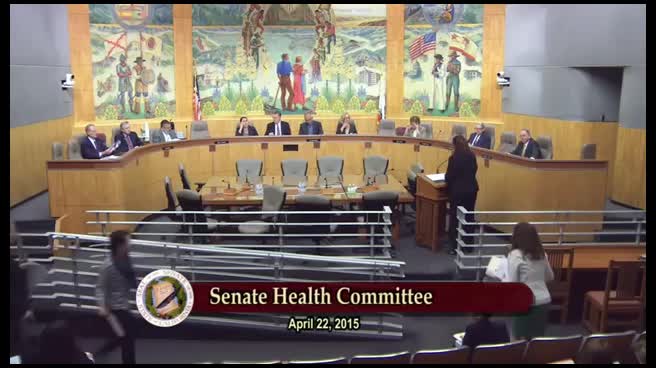
Bill Author
Bill Co-Author(s):