SB 276: Medi-Cal: local educational agencies.
- Session Year: 2015-2016
- House: Senate
- Latest Version Date: 2015-10-08
Existing law provides for the Medi-Cal program, which is administered by the State Department of Health Care Services, under which qualified low-income persons receive health care benefits. The Medi-Cal program is, in part, governed and funded by federal Medicaid program provisions. Existing law provides that specified services, including targeted case management services for children with an individualized education plan (IEP) or an individualized family service plan (IFSP), provided by local educational agencies (LEAs) are covered Medi-Cal benefits, and authorizes an LEA to bill for those services. Existing law requires the department to perform various activities with respect to the billing option for services provided by LEAs. Existing law defines an LEA as the governing body of any school district or community college district, the county office of education, a state special school, a California State University campus, or a University of California campus.
This bill would require the department to seek federal financial participation for covered services that are provided by an LEA to a child who is an eligible Medi-Cal beneficiary regardless of whether the child has an IEP or an IFSP, or whether those same services are provided at no charge to the beneficiary or to the community at large, if the LEA takes all reasonable measures to ascertain and pursue claims for payment of covered services against legally liable 3rd parties. The bill would require a legally liable 3rd party to either reimburse the claim or issue a notice of denial of noncoverage of services or benefits if the legally liable 3rd party receives a claim for payment of covered services submitted by an LEA. The bill would authorize an LEA to bill the Medi-Cal program if there is no response to a claim for payment of covered services submitted to a legally liable 3rd party within 45 days, and would require the LEA to retain a copy of the claim submitted to the legally liable 3rd party for a period of 3 years. The bill would expand the definition of an LEA to include the governing body of a charter school. The bill would provide that these provisions shall not be implemented until the department obtains necessary federal approvals.
This bill would also expand the authority of an LEA to provide targeted case management services.
Existing law provides for the Medi-Cal program, which is administered by the State Department of Health Care Services, under which qualified low-income persons receive health care benefits. The Medi-Cal program is, in part, governed and funded by federal Medicaid Program provisions. Existing law provides that specified services, including targeted case management services for children with an individualized education plan (IEP) or an individualized family service plan (IFSP), provided by local educational agencies (LEAs) are covered Medi-Cal benefits, and authorizes an LEA to bill for those services. Existing law requires the department to perform various activities with respect to the billing option for services provided by LEAs. Existing law defines an LEA as the governing body of any school district or community college district, the county office of education, a state special school, a California State University campus, or a University of California campus.
This bill would require the department to seek federal financial participation for covered services that are provided by an LEA to a child who is an eligible Medi-Cal beneficiary regardless of whether the child has an IEP or an IFSP, or whether those same services are provided at no charge to the beneficiary or to the community at large, if the LEA takes all reasonable measures to ascertain and pursue claims for payment of covered services against legally liable 3rd parties. The bill would require a legally liable 3rd party to either reimburse the claim or issue a notice of denial of noncoverage of services or benefits if the legally liable 3rd party receives a claim for payment of covered services submitted by an LEA. The bill would authorize an LEA to bill the Medi-Cal program if there is no response to a claim for payment of covered services submitted to a legally liable 3rd party within 45 days, and would require the LEA to retain a copy of the claim submitted to the legally liable 3rd party for a period of 3 years. The bill would expand the definition of an LEA to include the governing body of a charter school. The bill would provide that these provisions shall not be implemented until the department obtains necessary federal approvals.
This bill would also expand the authority of an LEA to provide targeted case management services.
Existing law provides for the Medi-Cal program, which is administered by the State Department of Health Care Services, under which qualified low-income persons receive health care benefits. The Medi-Cal program is, in part, governed and funded by federal Medicaid Program provisions. Existing law provides that specified services, including targeted case management services for children with an individual individualized education plan (IEP) or an individualized family service plan (IFSP), provided by local educational agencies (LEAs) are covered Medi-Cal benefits, and authorizes an LEA to bill for those services. Existing law requires the department to perform various activities with respect to the billing option for services provided by LEAs.
This bill would require the department to seek federal financial participation for covered services that are provided by an LEA to a child who is an eligible Medi-Cal beneficiary regardless of whether the child has an individualized education plan IEP or an individualized family service plan, IFSP, or whether those same services are provided at no charge to the beneficiary or to the community at large, if the LEA takes all reasonable measures to ascertain and pursue claims for payment of covered services against legally liable 3rd parties. The bill would require a legally liable 3rd party to either reimburse the claim or issue a notice of denial of noncoverage of services or benefits if the legally liable 3rd party receives a claim for payment of covered services submitted by an LEA. The bill would authorize an LEA to bill the Medi-Cal program if there is no response to a claim for payment of covered services submitted to a legally liable 3rd party within 45 days, and would require the LEA to retain a copy of the claim submitted to the legally liable 3rd party for a period of 3 years. The bill would provide that these provisions shall not be implemented until the department obtains necessary federal approvals.
This bill would also expand the authority of an LEA to provide targeted case management services.
Existing law provides for the Medi-Cal program, which is administered by the State Department of Health Care Services, under which qualified low-income persons receive health care benefits. The Medi-Cal program is, in part, governed and funded by federal Medicaid Program provisions. Existing law provides that specified services, including targeted case management services for children with an individual education plan (IEP) or an individualized family service plan (IFSP), provided by local educational agencies (LEAs) are covered Medi-Cal benefits, and authorizes an LEA to bill for those services. Existing law requires the department to perform various activities with respect to the billing option for services provided by LEAs.
This bill would require the department to seek federal financial participation for covered services that are provided by an LEA to a child who is an eligible Medi-Cal beneficiary regardless of whether the child has an individualized education plan or an individualized family service plan, or whether those same services are provided at no charge to the beneficiary or to the community at large, if the LEA takes all reasonable measures to ascertain and pursue claims for payment of covered services against legally liable 3rd parties. The bill would require a legally liable 3rd party to either reimburse the claim or issue a notice of denial of noncoverage of services or benefits if the legally liable 3rd party denies receives a claim for payment of covered services submitted by an LEA. The bill would authorize an LEA to bill the Medi-Cal program if there is no response to a claim for payment of covered services submitted to a legally liable 3rd party within 45 days, and would require the LEA to retain a copy of the claim submitted to the legally liable 3rd party for a period of 3 years.
This bill would also expand the authority of an LEA to provide targeted case management services.
Existing law provides for the Medi-Cal program, which is administered by the State Department of Health Care Services and Services, under which qualified low-income persons receive health care benefits. The Medi-Cal program is, in part, governed and funded by federal Medicaid Program provisions. Existing law provides that specified services services, including targeted case management services for children with an individual education plan (IEP) or an individualized family service plan (IFSP), provided by local educational agencies (LEAs) are covered Medi-Cal benefits, and authorizes an LEA to bill for those services. Existing law requires the department to perform various activities with respect to the billing option for services provided by LEAs.
This bill would require the department to seek federal financial participation for covered services that are provided by an LEA to a child who is an eligible Medi-Cal beneficiary regardless of whether the child has an individualized education plan or an individualized family service plan, or whether those same services are provided at no charge to the beneficiary or to the community at large, if the LEA takes all reasonable measures to ascertain and pursue claims for payment of covered services against legally liable third 3rd parties. The bill would require a legally liable 3rd party to issue a notice of denial of noncoverage of services or benefits if the legally liable 3rd party denies a claim for payment of covered services submitted by an LEA.
This bill would also expand the authority of an LEA to provide targeted case management services.
Existing law provides for the Medi-Cal program, which is administered by the State Department of Health Care Services and under which qualified low-income persons receive health care benefits. The Medi-Cal program is, in part, governed and funded by federal Medicaid Program provisions. Existing law provides that specified services provided by local educational agencies (LEAs) are covered Medi-Cal benefits, and requires the department to perform various activities with respect to the billing option for services provided by LEAs.
This bill would require the department to seek federal financial participation for covered services that are provided by an LEA to a child who is an eligible Medi-Cal beneficiary regardless of whether the child has an individualized education plan or an individualized family service plan, or whether those same services are provided at no charge to the beneficiary or to the community at large, if the LEA takes all reasonable measures to ascertain and pursue claims for payment of covered services against legally liable third parties.
The Legislature finds and declares all of the following:
(a)Local educational agencies (LEA) must have an approved provider participant agreement with the State Department of Health Care Services through the federal Centers for Medicare and Medicaid Services to be eligible to provide services. To participate in the LEA Medi-Cal billing option program, LEAs must reinvest the federal reimbursement they receive under this program in health and social services for children and families, and develop and maintain a collaborative committee to assist them in decisions regarding the reinvestment of federal reimbursements. The providers and supervisors of staff for the assessment and medically necessary health services are those qualified medical practitioners the LEA employs or contracts with to render certain health services.
(b)The LEA billing option facilitates reinvestment in health and social services for students and their families so that schools can foster access to and provide comprehensive health services to eligible Medi-Cal students.
(c)The funds are reimbursement for services rendered and can be used as matching dollars to draw down federal financial participation. The funds are restricted in their use; they must supplement existing services, not supplant.
(d)It is, therefore, the intent of the Legislature in enacting this act to ensure that a school district or county office of education that is authorized as an LEA Medi-Cal provider is assured that all options for federal financial participation are available. The Legislature encourages LEAs to utilize reimbursed funds to hire credentialed school nurses to supplement, not supplant, existing LEA health services personnel.
SEC. 2.Section 14132.06 of the Welfare and Institutions Code is amended to read:14132.06.(a)Services specified in this section that are provided by a local educational agency are covered Medi-Cal benefits, to the extent federal financial participation is available, and subject to utilization controls and standards adopted by the department, and consistent with Medi-Cal requirements for physician prescription, order, and supervision.
(b)Any provider enrolled on or after January 1, 1993, to provide services pursuant to this section may bill for those services provided on or after January 1, 1993.
(c)Nothing in this section shall be interpreted to expand the current category of professional health care practitioners permitted to directly bill the Medi-Cal program.
(d)Nothing in this section is intended to increase the scope of practice of any health professional providing services under this section or Medi-Cal requirements for physician prescription, order, and supervision.
(e)(1)For the purposes of this section, the local educational agency, as a condition of enrollment to provide services under this section, shall be considered the provider of services. A local educational agency provider, as a condition of enrollment to provide services under this section, shall enter into, and maintain, a contract with the department in accordance with guidelines contained in regulations adopted by the director and published in Title 22 of the California Code of Regulations.
(2)Notwithstanding paragraph (1), a local educational agency providing services pursuant to this section shall utilize current safety net and traditional health care providers, when those providers are accessible to specific schoolsites identified by the local educational agency to participate in this program, rather than adding duplicate capacity.
(f)For the purposes of this section, covered services may include all of the following local educational agency services:
(1)Health and mental health evaluations and health and mental health education.
(2)Medical transportation.
(A)The following provisions shall not apply to medical transportation eligible to be billed under this section:
(i)Section 51323(a)(2)(A) of Title 22 of the California Code of Regulations.
(ii)Section 51323(a)(3)(B) of Title 22 of the California Code of Regulations.
(iii)For students whose medical or physical condition does not require the use of a gurney, Section 51231.1(f) of Title 22 of the California Code of Regulations.
(iv)For students whose medical or physical condition does not require the use of a wheelchair, Section 51231.2(e) of Title 22 of the California Code of Regulations.
(B)(i)Subparagraph (A) shall become inoperative on January 1, 2018, or on the date the director executes a declaration stating that the regulations implementing subparagraph (A) and Section 14118.5 have been updated, whichever is later.
(ii)The department shall post the declaration executed under clause (i) on its Internet Web site and transmit a copy of the declaration to the Assembly Committee on Budget and the Senate Committee on Budget and Fiscal Review and the LEA Ad Hoc Workgroup.
(iii)If subparagraph (A) becomes inoperative on January 1, 2018, subparagraph (A) and this subparagraph shall be inoperative on January 1, 2018, unless a later enacted statute enacted before that date, deletes or extends that date.
(iv)If subparagraph (A) becomes inoperative on the date the director executes a declaration as described in clause (i), subparagraph (A) and this subparagraph shall be inoperative on the January 1 immediately following the date subparagraph (A) becomes inoperative, unless a later enacted statute enacted before that date, deletes or extends that date.
(3)Nursing services.
(4)Occupational therapy.
(5)Physical therapy.
(6)Physician services.
(7)Mental health and counseling services.
(8)School health aide services.
(9)Speech pathology services. These services may be provided by either of the following:
(A)A licensed speech pathologist.
(B)A credentialed speech-language pathologist, to the extent authorized by Chapter 5.3 (commencing with Section 2530) of Division 2 of the Business and Professions Code.
(10)Audiology services.
(11)Targeted case management services for children regardless of whether the child has an individualized education plan (IEP) or an individualized family service plan (IFSP).
(g)Local educational agencies may, but need not, provide any or all of the services specified in subdivision (f).
(h)For the purposes of this section, local educational agency means the governing body of any school district or community college district, the county office of education, a charter school, a state special school, a California State University campus, or a University of California campus.
(i)Notwithstanding any other law, a community college district, a California State University campus, or a University of California campus, consistent with the requirements of this section, may bill for services provided to any student, regardless of age, who is a Medi-Cal recipient.
(j)No later than July 1, 2013, and every year thereafter, the department shall make publicly accessible an annual accounting of all funds collected by the department from federal Medicaid payments allocable to local educational agencies, including, but not limited to, the funds withheld pursuant to subdivision (g) of Section 14115.8. The accounting shall detail amounts withheld from federal Medicaid payments to each participating local educational agency for that year. One-time costs for the development of this accounting shall not exceed two hundred fifty thousand dollars ($250,000).
(k)(1)If the requirements in paragraphs (2) and (4) are satisfied, the department shall seek federal financial participation for covered services that are provided by a local educational agency pursuant to subdivision (a) to a child who is an eligible Medi-Cal beneficiary, regardless of either of the following:
(A)Whether the child has an IEP or an IFSP.
(B)Whether those same services are provided at no charge to the beneficiary or to the community at large.
(2)The local educational agency shall take all reasonable measures to ascertain and pursue claims for payment of covered services specified in this section against legally liable third parties pursuant to Section 1902(a)(25) of the federal Social Security Act (42 U.S.C. Sec. 1396a(a)(25)).
(3)If a legally liable third party receives a claim submitted by a local educational agency pursuant to paragraph (2), the legally liable third party shall either reimburse the claim or issue a notice of denial of noncoverage of services or benefits. If there is no response to a claim submitted to a legally liable third party by a local educational agency within 45 days, the local educational agency may bill the Medi-Cal program pursuant to subdivision (b). The local educational agency shall retain a copy of the claim submitted to the legally liable third party for a period of three years.
(4)This subdivision shall not be implemented until the department obtains any necessary federal approvals.
The Legislature finds and declares all of the following:
(a)Local educational agencies (LEA) must have an approved provider participant agreement with the State Department of Health Care Services through the federal Centers for Medicare and Medicaid Services to be eligible to provide services. To participate in the LEA Medi-Cal billing option program, LEAs must reinvest the federal reimbursement they receive under this program in health and social services for children and families, and develop and maintain a collaborative committee to assist them in decisions regarding the reinvestment of federal reimbursements. The providers and supervisors of staff for the assessment and medically necessary health services are those qualified medical practitioners the LEA employs or contracts with to render certain health services.
(b)The LEA billing option facilitates reinvestment in health and social services for students and their families so that schools can foster access to and provide comprehensive health services to eligible Medi-Cal students.
(c)The funds are reimbursement for services rendered and can be used as matching dollars to draw down federal financial participation. The funds are restricted in their use; they must supplement existing services, not supplant.
(d)It is, therefore, the intent of the Legislature in enacting this act to ensure that a school district or county office of education that is authorized as an LEA Medi-Cal provider is assured that all options for federal financial participation are available. The Legislature encourages LEAs to utilize reimbursed funds to hire credentialed school nurses to supplement, not supplant, existing LEA health services personnel.
SEC. 2.Section 14132.06 of the Welfare and Institutions Code is amended to read:14132.06.(a)Services specified in this section that are provided by a local educational agency are covered Medi-Cal benefits, to the extent federal financial participation is available, and subject to utilization controls and standards adopted by the department, and consistent with Medi-Cal requirements for physician prescription, order, and supervision.
(b)Any provider enrolled on or after January 1, 1993, to provide services pursuant to this section may bill for those services provided on or after January 1, 1993.
(c)Nothing in this section shall be interpreted to expand the current category of professional health care practitioners permitted to directly bill the Medi-Cal program.
(d)Nothing in this section is intended to increase the scope of practice of any health professional providing services under this section or Medi-Cal requirements for physician prescription, order, and supervision.
(e)(1)For the purposes of this section, the local educational agency, as a condition of enrollment to provide services under this section, shall be considered the provider of services. A local educational agency provider, as a condition of enrollment to provide services under this section, shall enter into, and maintain, a contract with the department in accordance with guidelines contained in regulations adopted by the director and published in Title 22 of the California Code of Regulations.
(2)Notwithstanding paragraph (1), a local educational agency providing services pursuant to this section shall utilize current safety net and traditional health care providers, when those providers are accessible to specific schoolsites identified by the local educational agency to participate in this program, rather than adding duplicate capacity.
(f)For the purposes of this section, covered services may include all of the following local educational agency services:
(1)Health and mental health evaluations and health and mental health education.
(2)Medical transportation.
(A)The following provisions shall not apply to medical transportation eligible to be billed under this section:
(i)Section 51323(a)(2)(A) of Title 22 of the California Code of Regulations.
(ii)Section 51323(a)(3)(B) of Title 22 of the California Code of Regulations.
(iii)For students whose medical or physical condition does not require the use of a gurney, Section 51231.1(f) of Title 22 of the California Code of Regulations.
(iv)For students whose medical or physical condition does not require the use of a wheelchair, Section 51231.2(e) of Title 22 of the California Code of Regulations.
(B)(i)Subparagraph (A) shall become inoperative on January 1, 2018, or on the date the director executes a declaration stating that the regulations implementing subparagraph (A) and Section 14118.5 have been updated, whichever is later.
(ii)The department shall post the declaration executed under clause (i) on its Internet Web site and transmit a copy of the declaration to the Assembly Committee on Budget and the Senate Committee on Budget and Fiscal Review and the LEA Ad Hoc Workgroup.
(iii)If subparagraph (A) becomes inoperative on January 1, 2018, subparagraph (A) and this subparagraph shall be inoperative on January 1, 2018, unless a later enacted statute enacted before that date, deletes or extends that date.
(iv)If subparagraph (A) becomes inoperative on the date the director executes a declaration as described in clause (i), subparagraph (A) and this subparagraph shall be inoperative on the January 1 immediately following the date subparagraph (A) becomes inoperative, unless a later enacted statute enacted before that date, deletes or extends that date.
(3)Nursing services.
(4)Occupational therapy.
(5)Physical therapy.
(6)Physician services.
(7)Mental health and counseling services.
(8)School health aide services.
(9)Speech pathology services. These services may be provided by either of the following:
(A)A licensed speech pathologist.
(B)A credentialed speech-language pathologist, to the extent authorized by Chapter 5.3 (commencing with Section 2530) of Division 2 of the Business and Professions Code.
(10)Audiology services.
(11)Targeted case management services for children regardless of whether the child has an individualized education plan (IEP) or an individualized family service plan (IFSP).
(g)Local educational agencies may, but need not, provide any or all of the services specified in subdivision (f).
(h)For the purposes of this section, local educational agency means the governing body of any school district or community college district, the county office of education, a state special school, a California State University campus, or a University of California campus.
(i)Notwithstanding any other law, a community college district, a California State University campus, or a University of California campus, consistent with the requirements of this section, may bill for services provided to any student, regardless of age, who is a Medi-Cal recipient.
(j)No later than July 1, 2013, and every year thereafter, the department shall make publicly accessible an annual accounting of all funds collected by the department from federal Medicaid payments allocable to local educational agencies, including, but not limited to, the funds withheld pursuant to subdivision (g) of Section 14115.8. The accounting shall detail amounts withheld from federal Medicaid payments to each participating local educational agency for that year. One-time costs for the development of this accounting shall not exceed two hundred fifty thousand dollars ($250,000).
(k)(1)If the requirement in paragraph (2) is requirements in paragraphs (2) and (4) are satisfied, the department shall seek federal financial participation for covered services that are provided by a local educational agency pursuant to subdivision (a) to a child who is an eligible Medi-Cal beneficiary, regardless of either of the following:
(A)Whether the child has an IEP or an IFSP.
(B)Whether those same services are provided at no charge to the beneficiary or to the community at large.
(2)The local educational agency shall take all reasonable measures to ascertain and pursue claims for payment of covered services specified in this section against legally liable third parties pursuant to Section 1902(a)(25) of the federal Social Security Act (42 U.S.C. Sec. 1396a(a)(25)).
(3)If a legally liable third party receives a claim submitted by a local educational agency pursuant to paragraph (2), the legally liable third party shall either reimburse the claim or issue a notice of denial of noncoverage of services or benefits. If there is no response to a claim submitted to a legally liable third party by a local educational agency within 45 days, the local educational agency may bill the Medi-Cal program pursuant to subdivision (b). The local educational agency shall retain a copy of the claim submitted to the legally liable third party for a period of three years.
(4)This subdivision shall not be implemented until the department obtains any necessary federal approvals.
The Legislature finds and declares all of the following:
(a)Local educational agencies (LEA) must have an approved provider participant agreement with the State Department of Health Care Services through the federal Centers for Medicare and Medicaid Services to be eligible to provide services. To participate in the LEA Medi-Cal billing option program, LEAs must reinvest the federal reimbursement they receive under this program in health and social services for children and families, and develop and maintain a collaborative committee to assist them in decisions regarding the reinvestment of federal reimbursements. The providers and supervisors of staff for the assessment and medically necessary health services are school nurses. those qualified medical practitioners the LEA employs or contracts with to render certain health services.
(b)The LEA billing option facilitates reinvestment in health and social services for students and their families so that schools can foster access to and provide comprehensive health services to eligible Medi-Cal students.
(c)The funds are reimbursement for services rendered and can be used as matching dollars to draw down federal financial participation. The funds are restricted in their use; they must supplement existing services, not supplant.
(d)It is, therefore, the intent of the Legislature in enacting this act to ensure that a school district or county office of education that is authorized as an LEA Medi-Cal provider is assured that all options for federal financial participation are available. The Legislature encourages LEAs to utilize reimbursed funds to hire credentialed school nurses to supplement, not supplant, existing LEA health services personnel.
SEC. 2.Section 14132.06 of the Welfare and Institutions Code is amended to read:14132.06.(a)Services specified in this section that are provided by a local educational agency are covered Medi-Cal benefits, to the extent federal financial participation is available, and subject to utilization controls and standards adopted by the department, and consistent with Medi-Cal requirements for physician prescription, order, and supervision.
(b)Any provider enrolled on or after January 1, 1993, to provide services pursuant to this section may bill for those services provided on or after January 1, 1993.
(c)Nothing in this section shall be interpreted to expand the current category of professional health care practitioners permitted to directly bill the Medi-Cal program.
(d)Nothing in this section is intended to increase the scope of practice of any health professional providing services under this section or Medi-Cal requirements for physician prescription, order, and supervision.
(e)(1)For the purposes of this section, the local educational agency, as a condition of enrollment to provide services under this section, shall be considered the provider of services. A local educational agency provider, as a condition of enrollment to provide services under this section, shall enter into, and maintain, a contract with the department in accordance with guidelines contained in regulations adopted by the director and published in Title 22 of the California Code of Regulations.
(2)Notwithstanding paragraph (1), a local educational agency providing services pursuant to this section shall utilize current safety net and traditional health care providers, when those providers are accessible to specific schoolsites identified by the local educational agency to participate in this program, rather than adding duplicate capacity.
(f)For the purposes of this section, covered services may include all of the following local educational agency services:
(1)Health and mental health evaluations and health and mental health education.
(2)Medical transportation.
(A)The following provisions shall not apply to medical transportation eligible to be billed under this section:
(i)Section 51323(a)(2)(A) of Title 22 of the California Code of Regulations.
(ii)Section 51323(a)(3)(B) of Title 22 of the California Code of Regulations.
(iii)For students whose medical or physical condition does not require the use of a gurney, Section 51231.1(f) of Title 22 of the California Code of Regulations.
(iv)For students whose medical or physical condition does not require the use of a wheelchair, Section 51231.2(e) of Title 22 of the California Code of Regulations.
(B)(i)Subparagraph (A) shall become inoperative on January 1, 2018, or on the date the director executes a declaration stating that the regulations implementing subparagraph (A) and Section 14118.5 have been updated, whichever is later.
(ii)The department shall post the declaration executed under clause (i) on its Internet Web site and transmit a copy of the declaration to the Assembly Committee on Budget and the Senate Committee on Budget and Fiscal Review and the LEA Ad Hoc Workgroup.
(iii)If subparagraph (A) becomes inoperative on January 1, 2018, subparagraph (A) and this subparagraph shall be inoperative on January 1, 2018, unless a later enacted statute enacted before that date, deletes or extends that date.
(iv)If subparagraph (A) becomes inoperative on the date the director executes a declaration as described in clause (i), subparagraph (A) and this subparagraph shall be inoperative on the January 1 immediately following the date subparagraph (A) becomes inoperative, unless a later enacted statute enacted before that date, deletes or extends that date.
(3)Nursing services.
(4)Occupational therapy.
(5)Physical therapy.
(6)Physician services.
(7)Mental health and counseling services.
(8)School health aide services.
(9)Speech pathology services. These services may be provided by either of the following:
(A)A licensed speech pathologist.
(B)A credentialed speech-language pathologist, to the extent authorized by Chapter 5.3 (commencing with Section 2530) of Division 2 of the Business and Professions Code.
(10)Audiology services.
(11)Targeted case management services for children regardless of whether the child has an individualized education plan (IEP) or an individualized family service plan (IFSP).
(g)Local educational agencies may, but need not, provide any or all of the services specified in subdivision (f).
(h)For the purposes of this section, local educational agency means the governing body of any school district or community college district, the county office of education, a state special school, a California State University campus, or a University of California campus.
(i)Notwithstanding any other law, a community college district, a California State University campus, or a University of California campus, consistent with the requirements of this section, may bill for services provided to any student, regardless of age, who is a Medi-Cal recipient.
(j)No later than July 1, 2013, and every year thereafter, the department shall make publicly accessible an annual accounting of all funds collected by the department from federal Medicaid payments allocable to local educational agencies, including, but not limited to, the funds withheld pursuant to subdivision (g) of Section 14115.8. The accounting shall detail amounts withheld from federal Medicaid payments to each participating local educational agency for that year. One-time costs for the development of this accounting shall not exceed two hundred fifty thousand dollars ($250,000).
(k)(1)If the requirement in paragraph (2) is satisfied, the department shall seek federal financial participation for covered services that are provided by a local educational agency pursuant to subdivision (a) to a child who is an eligible Medi-Cal beneficiary, regardless of either of the following:
(A)Whether the child has an IEP or an IFSP.
(B)Whether those same services are provided at no charge to the beneficiary or to the community at large.
(2)The local educational agency shall take all reasonable measures to ascertain and pursue claims for payment of covered services specified in this section against legally liable third parties pursuant to Section 1902(a)(25) of the federal Social Security Act (42 U.S.C. Sec. 1396a(a)(25)).
(3)If a legally liable third party denies receives a claim submitted by a local educational agency pursuant to paragraph (2), the legally liable third party shall either reimburse the claim or issue a notice of denial of noncoverage of services or benefits. If there is no response to a claim submitted to a legally liable third party by a local educational agency within 45 days, the local educational agency may bill the Medi-Cal program pursuant to subdivision (b). The local educational agency shall retain a copy of the claim submitted to the legally liable third party for a period of three years.
The Legislature finds and declares all of the following:
(a)Local educational agencies (LEA) must have an approved provider participant agreement with the State Department of Health Care Services through the federal Centers for Medicare and Medicaid Services to be eligible to provide services. To participate in the LEA Medi-Cal billing option program, LEAs must reinvest the federal reimbursement they receive under this program in health and social services for children and families, and develop and maintain a collaborative committee to assist them in decisions regarding the reinvestment of federal reimbursements. The providers and supervisors of staff for the assessment and medically necessary health services are school nurses.
(b)The LEA billing option facilitates reinvestment in health and social services for students and their families so that schools can foster access to and provide comprehensive health services to eligible Medi-Cal students.
(c)The funds are reimbursement for services rendered and can be used as matching dollars to draw down federal financial participation. The funds are restricted in their use; they must supplement existing services, not supplant.
(d)It is, therefore, the intent of the Legislature in enacting this act to ensure that a school district or county office of education that is authorized as an LEA Medi-Cal provider is assured that all options for federal financial participation are available. The Legislature encourages LEAs to utilize reimbursed funds to hire credentialed school nurses to supplement, not supplant, existing LEA health services personnel.
SEC. 2.Section 14132.06 of the Welfare and Institutions Code is amended to read:14132.06.(a)Services specified in this section that are provided by a local educational agency are covered Medi-Cal benefits, to the extent federal financial participation is available, and subject to utilization controls and standards adopted by the department, and consistent with Medi-Cal requirements for physician prescription, order, and supervision.
(b)Any provider enrolled on or after January 1, 1993, to provide services pursuant to this section may bill for those services provided on or after January 1, 1993.
(c)Nothing in this section shall be interpreted to expand the current category of professional health care practitioners permitted to directly bill the Medi-Cal program.
(d)Nothing in this section is intended to increase the scope of practice of any health professional providing services under this section or Medi-Cal requirements for physician prescription, order, and supervision.
(e)(1)For the purposes of this section, the local educational agency, as a condition of enrollment to provide services under this section, shall be considered the provider of services. A local educational agency provider, as a condition of enrollment to provide services under this section, shall enter into, and maintain, a contract with the department in accordance with guidelines contained in regulations adopted by the director and published in Title 22 of the California Code of Regulations.
(2)Notwithstanding paragraph (1), a local educational agency providing services pursuant to this section shall utilize current safety net and traditional health care providers, when those providers are accessible to specific schoolsites identified by the local educational agency to participate in this program, rather than adding duplicate capacity.
(f)For the purposes of this section, covered services may include all of the following local educational agency services:
(1)Health and mental health evaluations and health and mental health education.
(2)Medical transportation.
(A)The following provisions shall not apply to medical transportation eligible to be billed under this section:
(i)Section 51323(a)(2)(A) of Title 22 of the California Code of Regulations.
(ii)Section 51323(a)(3)(B) of Title 22 of the California Code of Regulations.
(iii)For students whose medical or physical condition does not require the use of a gurney, Section 51231.1(f) of Title 22 of the California Code of Regulations.
(iv)For students whose medical or physical condition does not require the use of a wheelchair, Section 51231.2(e) of Title 22 of the California Code of Regulations.
(B)(i)Subparagraph (A) shall become inoperative on January 1, 2018, or on the date the director executes a declaration stating that the regulations implementing subparagraph (A) and Section 14118.5 have been updated, whichever is later.
(ii)The department shall post the declaration executed under clause (i) on its Internet Web site and transmit a copy of the declaration to the Assembly Committee on Budget and the Senate Committee on Budget and Fiscal Review and the LEA Ad Hoc Workgroup.
(iii)If subparagraph (A) becomes inoperative on January 1, 2018, subparagraph (A) and this subparagraph shall be inoperative on January 1, 2018, unless a later enacted statute enacted before that date, deletes or extends that date.
(iv)If subparagraph (A) becomes inoperative on the date the director executes a declaration as described in clause (i), subparagraph (A) and this subparagraph shall be inoperative on the January 1 immediately following the date subparagraph (A) becomes inoperative, unless a later enacted statute enacted before that date, deletes or extends that date.
(3)Nursing services.
(4)Occupational therapy.
(5)Physical therapy.
(6)Physician services.
(7)Mental health and counseling services.
(8)School health aide services.
(9)Speech pathology services. These services may be provided by either of the following:
(A)A licensed speech pathologist.
(B)A credentialed speech-language pathologist, to the extent authorized by Chapter 5.3 (commencing with Section 2530) of Division 2 of the Business and Professions Code.
(10)Audiology services.
(11)Targeted case management services for children with an regardless of whether the child has an individualized education plan (IEP) or an individualized family service plan (IFSP).
(g)Local educational agencies may, but need not, provide any or all of the services specified in subdivision (f).
(h)For the purposes of this section, local educational agency means the governing body of any school district or community college district, the county office of education, a state special school, a California State University campus, or a University of California campus.
(i)Any local educational agency provider enrolled to provide service pursuant to this section on January 1, 1995, may bill for targeted case management services for children with an IEP or an IFSP, provided on or after January 1, 1995.
(j)
(i)Notwithstanding any other law, a community college district, a California State University campus, or a University of California campus, consistent with the requirements of this section, may bill for services provided to any student, regardless of age, who is a Medi-Cal recipient.
(k)
(j)No later than July 1, 2013, and every year thereafter, the department shall make publicly accessible an annual accounting of all funds collected by the department from federal Medicaid payments allocable to local educational agencies, including, but not limited to, the funds withheld pursuant to subdivision (g) of Section 14115.8. The accounting shall detail amounts withheld from federal Medicaid payments to each participating local educational agency for that year. One-time costs for the development of this accounting shall not exceed two hundred fifty thousand dollars ($250,000).
(l)
(k)(1)If the requirement in paragraph (2) is satisfied, the department shall seek federal financial participation for covered services that are provided by a local educational agency pursuant to subdivision (a) to a child who is an eligible Medi-Cal beneficiary, regardless of either of the following:
(A)Whether the child has an IEP or an IFSP.
(B)Whether those same services are provided at no charge to the beneficiary or to the community at large.
(2)The local educational agency shall take all reasonable measures to ascertain and pursue claims for payment of covered services specified in this section against legally liable third parties pursuant to Section 1902(a)(25) of the federal Social Security Act (42 U.S.C. Sec. 1396a(a)(25)).
(3)If a legally liable third party denies a claim submitted by a local educational agency pursuant to paragraph (2), the legally liable third party shall issue a notice of denial of noncoverage of services or benefits.
The Legislature finds and declares all of the following:
(a)Local educational agencies (LEA) must have an approved provider participant agreement with the State Department of Health Care Services through the Centers for Medicare and Medicaid Services to be eligible to provide services. To participate in the LEA Medi-Cal billing option program, LEAs must reinvest the federal reimbursement they receive under this program in health and social services for children and families, and develop and maintain a collaborative committee to assist them in decisions regarding the reinvestment of federal reimbursements. The providers and supervisors of staff for the assessment and medically necessary health services are school nurses.
(b)The LEA billing option facilitates reinvestment in health and social services for students and their families so that schools can foster access to and provide comprehensive health services to eligible Medi-Cal students.
(c)The funds are reimbursement for services rendered and can be used as matching dollars to draw down federal financial participation. The funds are restricted in their use; they must supplement existing services, not supplant.
(d)It is, therefore, the intent of the Legislature in enacting this act to ensure that a school district or county office of education that is authorized as an LEA Medi-Cal provider is assured that all options for federal financial participation are available. The Legislature encourages LEAs to utilize reimbursed funds to hire credentialed school nurses to supplement, not supplant, existing LEA health services personnel.
SEC. 2.Section 14132.06 of the Welfare and Institutions Code is amended to read:14132.06.(a)Services specified in this section that are provided by a local educational agency are covered Medi-Cal benefits, to the extent federal financial participation is available, and subject to utilization controls and standards adopted by the department, and consistent with Medi-Cal requirements for physician prescription, order, and supervision.
(b)Any provider enrolled on or after January 1, 1993, to provide services pursuant to this section may bill for those services provided on or after January 1, 1993.
(c)Nothing in this section shall be interpreted to expand the current category of professional health care practitioners permitted to directly bill the Medi-Cal program.
(d)Nothing in this section is intended to increase the scope of practice of any health professional providing services under this section or Medi-Cal requirements for physician prescription, order, and supervision.
(e)(1)For the purposes of this section, the local educational agency, as a condition of enrollment to provide services under this section, shall be considered the provider of services. A local educational agency provider, as a condition of enrollment to provide services under this section, shall enter into, and maintain, a contract with the department in accordance with guidelines contained in regulations adopted by the director and published in Title 22 of the California Code of Regulations.
(2)Notwithstanding paragraph (1), a local educational agency providing services pursuant to this section shall utilize current safety net and traditional health care providers, when those providers are accessible to specific schoolsites identified by the local educational agency to participate in this program, rather than adding duplicate capacity.
(f)For the purposes of this section, covered services may include all of the following local educational agency services:
(1)Health and mental health evaluations and health and mental health education.
(2)Medical transportation.
(A)The following provisions shall not apply to medical transportation eligible to be billed under this section:
(i)Section 51323(a)(2)(A) of Title 22 of the California Code of Regulations.
(ii)Section 51323(a)(3)(B) of Title 22 of the California Code of Regulations.
(iii)For students whose medical or physical condition does not require the use of a gurney, Section 51231.1(f) of Title 22 of the California Code of Regulations.
(iv)For students whose medical or physical condition does not require the use of a wheelchair, Section 51231.2(e) of Title 22 of the California Code of Regulations.
(B)(i)Subparagraph (A) shall become inoperative on January 1, 2018, or on the date the director executes a declaration stating that the regulations implementing subparagraph (A) and Section 14118.5 have been updated, whichever is later.
(ii)The department shall post the declaration executed under clause (i) on its Internet Web site and transmit a copy of the declaration to the Assembly Committee on Budget and the Senate Committee on Budget and Fiscal Review and the LEA Ad Hoc Workgroup.
(iii)If subparagraph (A) becomes inoperative on January 1, 2018, subparagraph (A) and this subparagraph shall be inoperative on January 1, 2018, unless a later enacted statute enacted before that date, deletes or extends that date.
(iv)If subparagraph (A) becomes inoperative on the date the director executes a declaration as described in clause (i), subparagraph (A) and this subparagraph shall be inoperative on the January 1 immediately following the date subparagraph (A) becomes inoperative, unless a later enacted statute enacted before that date, deletes or extends that date.
(3)Nursing services.
(4)Occupational therapy.
(5)Physical therapy.
(6)Physician services.
(7)Mental health and counseling services.
(8)School health aide services.
(9)Speech pathology services. These services may be provided by either of the following:
(A)A licensed speech pathologist.
(B)A credentialed speech-language pathologist, to the extent authorized by Chapter 5.3 (commencing with Section 2530) of Division 2 of the Business and Professions Code.
(10)Audiology services.
(11)Targeted case management services for children with an individualized education plan (IEP) or an individualized family service plan (IFSP).
(g)Local educational agencies may, but need not, provide any or all of the services specified in subdivision (f).
(h)For the purposes of this section, local educational agency means the governing body of any school district or community college district, the county office of education, a state special school, a California State University campus, or a University of California campus.
(i)Any local educational agency provider enrolled to provide service pursuant to this section on January 1, 1995, may bill for targeted case management services for children with an individualized education plan (IEP) IEP or an individualized family service plan (IFSP), IFSP, provided on or after January 1, 1995.
(j)Notwithstanding any other provision of law, a community college district, a California State University campus, or a University of California campus, consistent with the requirements of this section, may bill for services provided to any student, regardless of age, who is a Medi-Cal recipient.
(k)No later than July 1, 2013, and every year thereafter, the department shall make publicly accessible an annual accounting of all funds collected by the department from federal Medicaid payments allocable to local educational agencies, including, but not limited to, the funds withheld pursuant to subdivision (g) of Section 14115.8. The accounting shall detail amounts withheld from federal Medicaid payments to each participating local educational agency for that year. One-time costs for the development of this accounting shall not exceed two hundred fifty thousand dollars ($250,000).
(l)(1)If the requirement in paragraph (2) is satisfied, the department shall seek federal financial participation for covered services that are provided by a local educational agency pursuant to subdivision (a) to a child who is an eligible Medi-Cal beneficiary, regardless of either of the following:
(A)Whether the child has an IEP or an IFSP.
(B)Whether those same services are provided at no charge to the beneficiary or to the community at large.
(2)The local educational agency shall take all reasonable measures to ascertain and pursue claims for payment of covered services specified in this section against legally liable third parties pursuant to Section 1902(a)(25) of the Social Security Act (42 U.S.C. Sec. 1396a(a)(25)).
|
Date
|
Status
|
|---|---|
| Jun 15, 2015 | Referred to Coms. on HEALTH and ED. |
| Oct 8, 2015 | Chaptered by Secretary of State. Chapter 653, Statutes of 2015. |
| Oct 8, 2015 | Approved by the Governor. |
| Sep 3, 2015 | Enrolled and presented to the Governor at 5:45 p.m. |
| Sep 1, 2015 | Assembly amendments concurred in. (Ayes 40. Noes 0.) Ordered to engrossing and enrolling. |
| Sep 1, 2015 | Assembly amendments concurred in. (Ayes 40. Noes 0. Page 2365.) Ordered to engrossing and enrolling. |
| Aug 31, 2015 | Read third time. Passed. (Ayes 78. Noes 0. Page 2694.) Ordered to the Senate. |
| Aug 31, 2015 | Read third time. Passed. Ordered to the Senate. |
| Aug 31, 2015 | In Senate. Concurrence in Assembly amendments pending. |
| Aug 28, 2015 | Read second time. Ordered to third reading. |
| Aug 28, 2015 | From committee: Do pass. (Ayes 17. Noes 0.) (August 27). |
| Aug 19, 2015 | August 19 set for first hearing. Placed on APPR. suspense file. |
| Jul 16, 2015 | From committee: Do pass and re-refer to Com. on APPR. with recommendation: To consent calendar. (Ayes 7. Noes 0.) (July 15). Re-referred to Com. on APPR. |
| Jul 16, 2015 | From committee with author's amendments. Read second time and amended. Re-referred to Com. on APPR. |
| Jul 7, 2015 | From committee with author's amendments. Read second time and amended. Re-referred to Com. on ED. |
| Jun 24, 2015 | From committee: Do pass and re-refer to Com. on ED. with recommendation: To consent calendar. (Ayes 19. Noes 0.) (June 23). Re-referred to Com. on ED. |
| Feb 19, 2015 | Introduced. Read first time. To Com. on RLS. for assignment. To print. |
| Jun 2, 2015 | In Assembly. Read first time. Held at Desk. |
| Jun 1, 2015 | Read third time. Passed. (Ayes 40. Noes 0.) Ordered to the Assembly. |
| Jun 1, 2015 | Read third time. Passed. (Ayes 40. Noes 0. Page 1199.) Ordered to the Assembly. |
| May 28, 2015 | Read second time. Ordered to third reading. |
| May 28, 2015 | From committee: Do pass. (Ayes 7. Noes 0.) (May 28). |
| May 28, 2015 | From committee: Do pass. (Ayes 7. Noes 0. Page 1150.) (May 28). |
| May 23, 2015 | Set for hearing May 28. |
| May 4, 2015 | May 4 hearing: Placed on APPR. suspense file. |
| Apr 24, 2015 | Set for hearing May 4. |
| Apr 20, 2015 | Read second time and amended. Re-referred to Com. on APPR. |
| Apr 16, 2015 | From committee: Do pass as amended and re-refer to Com. on APPR. (Ayes 8. Noes 0. Page 651.) (April 15). |
| Mar 26, 2015 | From committee with author's amendments. Read second time and amended. Re-referred to Com. on HEALTH. |
| Mar 10, 2015 | Set for hearing April 15. |
| Mar 5, 2015 | Referred to Com. on HEALTH. |
| Feb 20, 2015 | From printer. May be acted upon on or after March 22. |
|
Date
|
Description
|
Location
|
Votes
|
|
|---|---|---|---|---|
| Sep 1, 2015 | Unfinished Business SB276 Wolk Concurrence | Senate Floor |
Passed |
|
| Aug 31, 2015 | SB 276 Wolk Senate Third Reading By BAKER | Assembly Floor |
Passed |
|
| Aug 27, 2015 | Do pass. | Assembly Standing Committee on Appropriations |
Passed |
|
| Jul 15, 2015 | Do pass and be re-referred to the Committee on [Appropriations] with recommendation: To Consent Calendar | Assembly Standing Committee on Education |
Passed |
|
| Jun 23, 2015 | Do pass and be re-referred to the Committee on [Education] with recommendation: To Consent Calendar | Assembly Standing Committee on Health |
Passed |
|
| Jun 1, 2015 | Senate 3rd Reading SB276 Wolk | Senate Floor |
Passed |
|
| May 28, 2015 | Do pass | Senate Standing Committee on Appropriations |
Passed |
|
| May 4, 2015 | Placed on suspense file | Senate Standing Committee on Appropriations |
Passed |
|
| Apr 15, 2015 | Do pass as amended, but first amend, and re-refer to the Committee on [Appropriations] | Senate Standing Committee on Health |
Passed |
This list shows positions taken on this bill by organizations on the date displayed, which is linked to the original source.
Positions by individuals are not included.
|
Organization
|
Position
|
Date
|
|---|---|---|
| American Federation of State, County, and Municipal Employees | ** Support | Aug 31, 2015 |
| American Nurses Association | ** Support | Aug 31, 2015 |
| American Nurses Association California | ** Support | Aug 31, 2015 |
| An individual | ** Support | Apr 15, 2015 |
| Anaheim City School District | ** Support | Aug 31, 2015 |
| Association Of California School Administrators | ** Support | Aug 31, 2015 |
| California Black Health Network | ** Support | Aug 31, 2015 |
| California Chapter National Association of Social Workers | ** Support | Aug 31, 2015 |
| California Federation Of Teachers | ** Support | Aug 31, 2015 |
| California School Boards Association | ** Support | Aug 31, 2015 |
| California School Employees Association | ** Support | Aug 31, 2015 |
| California School Nurses Association | * Indeterminate | Apr 15, 2015 |
| California School Nurses Organization | ** Support | Aug 31, 2015 |
| California School-Based Health Alliance | ** Support | Aug 31, 2015 |
| Children Now | ** Support | Aug 31, 2015 |
| Emery Unified School District | ** Support | Aug 31, 2015 |
| Hayward Unified School District | ** Support | Aug 31, 2015 |
| Lawndale Elementary School District | ** Support | Aug 31, 2015 |
| Magnolia School District | ** Support | Aug 31, 2015 |
| Manteca Unified School District | ** Support | Aug 31, 2015 |
| National Association of Social Workers - California Chapter | ** Support | Aug 31, 2015 |
| National Association Of Social Workers, California Chapter | ** Support | Aug 31, 2015 |
| Nevada County Superintendent of Schools Holly Hermansen | ** Support | Aug 31, 2015 |
| Nevada Joint Union High School District | ** Support | Aug 31, 2015 |
| New Hope Elementary, San Joaquin County | * Indeterminate | Apr 15, 2015 |
| One individual | ** Support | Jun 1, 2015 |
| Ripon Unified School District | ** Support | Aug 31, 2015 |
| San Joaquin County Office Of Education | ** Support | Aug 31, 2015 |
| Special Education Local Plan Area Administrators of California | ** Support | Aug 31, 2015 |
| Sulphur Springs School District | ** Support | Aug 31, 2015 |
| Sulphur Springs Unified School District | ** Support | Aug 31, 2015 |
| Sulphur Springs Union School District | ** Support | Aug 31, 2015 |
SB 276
Page 7
|
Office of Senate Floor Analyses (916) 651-1520 Fax: (916) 327-4478 |
UNFINISHED BUSINESS
Bill No: SB 276
Amended: 7/16/15
SENATE HEALTH COMMITTEE: 8-0, 4/15/15
AYES: Hernandez, Nguyen, Hall, Mitchell, Monning, Pan, Roth, Wolk
NO VOTE RECORDED: Nielsen
SENATE APPROPRIATIONS COMMITTEE: 7-0, 5/28/15
AYES: Lara, Bates, Beall, Hill, Leyva, Mendoza, Nielsen
SENATE FLOOR: 40-0, 6/1/15
AYES: Allen, Anderson, Bates, Beall, Berryhill, Block, Cannella, De León, Fuller, Gaines, Galgiani, Glazer, Hall, Hancock, Hernandez, Hertzberg, Hill, Hueso, Huff, Jackson, Lara, Leno, Leyva, Liu, McGuire, Mendoza, Mitchell, Monning, Moorlach, Morrell, Nguyen, Nielsen, Pan, Pavley, Roth, Runner, Stone, Vidak, Wieckowski, Wolk
ASSEMBLY FLOOR: 78-0, 8/31/15 - See last page for vote
SUBJECT: Medi-Cal: local educational agencies
SOURCE: California School Nurses Organization
DIGEST: This bill requires the Department of Health Care Services (DHCS) to seek federal financial participation for covered services that are provided by a local educational agency (LEA) to a child who is an eligible Medi-Cal beneficiary, regardless of whether the child has an individualized education plan (IEP) or an individualized family service plan (IFSP), or whether those same services are provided at no charge to the beneficiary or to the community at large, if the LEA takes all reasonable measures to ascertain and pursue claims for payment of covered services against legally liable third parties.
Assembly Amendments prohibit the Senate-approved changes from being implemented until DHCS obtains any necessary approval, and expand the definition of an LEA to include the governing body of a charter school.
Existing law:
Establishes the Medi-Cal program, administered by DHCS, under which qualified low-income persons receive health care benefits.
Requires that specified services provided by an LEA are covered Medi-Cal benefits, to the extent federal financial participation (FFP) is available, are subject to utilization controls and standards adopted by DHCS, and are consistent with Medi-Cal requirements for physician prescription, order, and supervision.
Defines the scope of covered services that an LEA may provide, which include targeted case management services for children with an IEP or an IFSP.
Defines an LEA as the governing body of any school district or community college district, the county office of education, a state special school, a California State University campus, or a University of California campus.
This bill:
Requires, subject to 2) below, DHCS to seek FFP for covered services that are provided by an LEA to a child who is an eligible Medi-Cal beneficiary, regardless of either of the following:
Whether the child has an IEP or an IFSP; and,
Whether those same services are provided at no charge to the beneficiary or to the community at large.
Implements the requirement in 1) above if the LEA takes all reasonable measures to ascertain and pursue claims for payment of covered services against legally liable third parties pursuant to a specified provision of federal Medicaid law that requires that states take all reasonable measures to ascertain and pursue claims for payment of health care items and services against legally liable third parties.
Requires, if a legally liable third party receives a claim submitted by an LEA pursuant to 2) above, the legally liable third party to either reimburse the claim or issue a notice of denial of non-coverage of services or benefits.
Permits the LEA, if there is no response to a claim submitted to a legally liable third party by an LEA within 45 days, to bill the Medi-Cal program. Requires the LEA to retain a copy of the claim submitted to the legally liable third party for a period of three years.
Prohibits the above-described provisions from being implemented until DHCS obtains any necessary federal approvals.
Expands the definition of an LEA to include the governing body of a charter school.
States legislative intent in enacting this bill to ensure that a school district or county office of education that is authorized as an LEA Medi-Cal provider is assured that all options for FFP are available, and the Legislature encourages LEAs to utilize reimbursed funds to hire credentialed school nurses to supplement, not supplant, existing LEA health services personnel.
Comments
Author’s statement. According to the author, “[T]his bill will allow LEAs to receive reimbursement for qualified services provided for all Medi-Cal eligible students regardless of whether the student has an IEP or IFSP or whether similar services are provided to regular education students at no cost. This bill will allow schools to be reimbursed for all services provided to all Medi-Cal eligible students. This increased funding would enable schools to be more active in managing the conditions affecting all students, may increase the services they provide and may result in the hiring of more school nurses. With school districts and county offices of education having the ability to be reimbursed for all covered services to Medi-Cal eligible students, FFP will increase.”
LEA. The LEA Medi-Cal Billing Option Program was established in 1993 and provides Medicaid FFP to LEAs for health-related services provided by qualified medical practitioners. Reimbursement is based upon a fee-for-service model, and school expenditures for qualified services rendered are reimbursed at 50 percent of cost using federal Medicaid matching funds. There is no state General Fund expense for the program. Under the program, LEAs bill Medi-Cal for the direct medical services they provide to Medi-Cal eligible students. LEAs pay for the services and are reimbursed the FFP rate relative to the cost of each individual service from federal funds. Subject to specified conditions, LEA covered services can include the following:
Health and mental health evaluations and health and mental health education;
Medical transportation;
Nursing services;
Occupational therapy;
Physical therapy;
Physician services;
Mental health and counseling services;
School health aide services;
Speech pathology services;
Audiology services; and,
Targeted case management services for children with an IEP or an IFSP.
Under the state’s Medicaid State Plan, LEA services are limited to a maximum of 24 services per 12-month period for a beneficiary without prior authorization, provided that medical necessity criteria are met. LEAs may obtain authorization for LEA services beyond 24 services per 12-month period from the beneficiary’s:
IEP or IFSP developed for the special education student;
California Children’s Services Program;
Short-Doyle Program;
Medi-Cal field office authorization; and,
Prepaid health plan authorization (including Primary Care Case Management).
Recent federal guidance on Medicaid payments for “free care.” In December 2014, the federal Centers for Medicare & Medicaid Services (CMS) issued a State Medicaid Director Letter regarding Medicaid payment for services covered under a state’s Medicaid plan to an eligible Medicaid beneficiary that are available without charge to the beneficiary, including services that are available without charge to the community at large, or “free care.” Historically, CMS guidance on “free care” was that Medicaid payment was generally not allowable for services that were available without charge to the beneficiary, with some statutory and some policy exceptions (such as services provided as part of an IEP or IFSP.) The free care policy as previously applied effectively prevented the use of Medicaid funds to pay for covered services furnished to Medicaid eligible beneficiaries when the provider did not bill the beneficiary or any other individuals for the services.
Under the new December 2014 guidance, Medicaid reimbursement is available for covered services under the approved state plan that are provided to Medicaid beneficiaries, regardless of whether there is any charge for the service to the beneficiary or the community at large. As a result, FFP is available for Medicaid payments for care provided through providers that do not charge individuals for the service, as long as all other Medicaid requirements are met.
CMS states the goal of its new guidance is to facilitate and improve access to quality healthcare services and improve the health of communities.
Prior to the CMS guidance in 2014, DHCS indicated there are two exceptions to the free care rule: (a) Medicaid covered services provided as part of an IEP or IFSP; and (b) services provided by Title V of the Social Security Act (the Maternal Child Health Services Block Grant). DHCS indicates services provided as part of an IEP/IFSP are exempt from the fee care rule, they are not exempt from the third-party liability (TPL) requirement. If any student has Other Health Coverage, those third party insurers must be billed prior to billing Medi-Cal for the service. The TPL requirement is based on the basic premise under federal Medicaid law and regulation that Medicaid is generally the payor of last resort.
FISCAL EFFECT: Appropriation: No Fiscal Com.: Yes Local: No
According to the Assembly Appropriations Committee:
Unknown, significant ongoing increased expenditures in the Medi-Cal program from non GF-sources (local and federal funds). LEAs also reimburse DHCS's administrative costs. Certain administrative cost reimbursements are subject to a cap.
One-time costs of $250,000 (local/federal) for the fiscal intermediary to adjust information technology systems.
The California Department of Justice notes an unquantifiable, but potentially significant GF impact based on a potential for lawsuits challenging whether DHCS adequately confirmed that the LEA took reasonable measures to ascertain legally liable third parties. These lawsuits would be related to audits by the federal government regarding FFP grants.
California School Nurses Organization (source)
American Federation of State, County, and Municipal Employees
American Nurses Association California
Anaheim City School District
California Black Health Network
California Chapter National Association of Social Workers
California Federation of Teachers
California School-Based Health Alliance
California School Boards Association
Children Now
California School Employees Association
Emery Unified School District
Hayward Unified School District
Lawndale Elementary School District
Magnolia School District
Manteca Unified School District
Nevada County Superintendent of Schools Holly Hermansen
Nevada Joint Union High School District
Ripon Unified School District
Special Education Local Plan Area Administrators of California
San Joaquin County Office of Education
Sulphur Springs Unified School District
OPPOSITION: (Verified 8/31/15)
None received
ARGUMENTS IN SUPPORT: This bill is sponsored by the California School Nurses Organization (CSNO), which writes that schools nurses provide direct health care services that are medically necessary and ordered by the child’s physician for all children in the schools. CSNO states the provision of these services allows the schools to meet the requirements under the federal Individuals with Disabilities Education Act for students who are in the special education category. With the revised guidance from CMS in December 2014, LEAs are now able to seek reimbursement for all health care provided to all Medi-Cal eligible students in both regular and special education. CSNO states it has been well documented that health care delivered in the schools is an economic and efficacious model. With this CMS change and the access to increased reimbursement, CSNO anticipates that LEAs will improve the coordination of students with chronic conditions some which impact their ability to be successful in school. CSNO believes this will be a value added, particularly to those schools with students less likely to have access to comprehensive care, and it believes the increased emphasis on prevention, early intervention and chronic disease management. CSNO concludes enhanced LEA billing will augment the current system while providing care for children who require medical services to function in the least restrictive environment.
ASSEMBLY FLOOR: 78-0, 8/31/15
AYES: Achadjian, Alejo, Travis Allen, Baker, Bigelow, Bloom, Bonilla, Bonta, Brough, Brown, Burke, Calderon, Campos, Chang, Chau, Chávez, Chiu, Chu, Cooley, Cooper, Dababneh, Dahle, Daly, Dodd, Eggman, Frazier, Beth Gaines, Cristina Garcia, Eduardo Garcia, Gatto, Gipson, Gomez, Gonzalez, Gordon, Gray, Grove, Hadley, Harper, Roger Hernández, Irwin, Jones, Jones-Sawyer, Kim, Lackey, Levine, Linder, Lopez, Low, Maienschein, Mathis, Mayes, McCarty, Medina, Melendez, Mullin, Nazarian, Obernolte, O'Donnell, Olsen, Patterson, Perea, Quirk, Rendon, Ridley-Thomas, Rodriguez, Salas, Santiago, Steinorth, Mark Stone, Thurmond, Ting, Wagner, Waldron, Weber, Wilk, Williams, Wood, Atkins
NO VOTE RECORDED: Gallagher, Holden
Prepared by: Scott Bain / HEALTH /
8/31/15 19:58:20
**** END ****
SB 276
Page 2
SENATE THIRD READING
SB 276
(Wolk)
As Amended July 16, 2015
Majority vote
SENATE VOTE: 40-0
Committee |
Votes |
Ayes |
Noes |
Health |
19-0 |
Bonta, Maienschein, Bonilla, Burke, Chávez, Chiu, Gomez, Gonzalez, Roger Hernández, Lackey, Nazarian, Patterson, Ridley-Thomas, Rodriguez, Santiago, Steinorth, Thurmond, Waldron, Wood |
|
Education |
7-0 |
O'Donnell, Chávez, Kim, McCarty, Santiago, Thurmond, Weber |
|
Appropriations |
17-0 |
Gomez, Bigelow, Bloom, Bonta, Calderon, Chang, Nazarian, Eggman, Gallagher, Eduardo Garcia, Holden, Jones, Quirk, Rendon, Wagner, Weber, Wood |
|
SUMMARY: Requires the Department of Health Care Services (DHCS) to seek federal financial participation (FFP) for covered services that are provided by a local education agency (LEA) to a Medi-Cal eligible child regardless of whether the child has an individualized education plan (IEP) or an individualized family service plan (IFSP), or whether those same services are provided at no charge to the child or to the community at large, and authorizes an LEA to bill the Medi-Cal program if there is no response to a claim for payment of covered services submitted to a legally liable third party within 45 days.
EXISTING LAW:
Establishes the Medi-Cal program, administered by DHCS, under which qualified low-income persons receive health care benefits.
Defines an LEA as the governing body of any school district or community college district, the county office of education, a state special school, a California State University campus, or a University of California campus.
Requires that specified services provided by a LEA are covered Medi-Cal benefits, to the extent FFP is available.
Requires that specified services be subject to utilization controls and standards adopted by DHCS, and are consistent with Medi-Cal requirements for physician prescription, order, and supervision.
Defines the scope of covered services that an LEA may provide, which include targeted case management services for children with an IEP or an IFSP.
FISCAL EFFECT: According to the Assembly Appropriations Committee, unknown, significant ongoing increased expenditures in the Medi-Cal program, one-time costs of $250,000 (local/federal) for the fiscal intermediary to adjust information technology systems and potentially significant General Fund impact based on a potential for lawsuits challenging whether DHCS adequately confirmed that the LEA took reasonable measures to ascertain legally liable third parties.
COMMENTS: According to the author, this bill will allow LEAs to receive reimbursement for services provided to Medi-Cal eligible students regardless of whether the student has an IEP or IFSP or whether similar services are provided to regular education students at no cost. The author states that this increased funding would enable schools to be more active in managing the conditions affecting all students, may increase the services they provide and may result in the hiring of more school nurses. The author concludes that with school districts and county offices of education having the ability to be reimbursed for all covered services to Medi-Cal eligible students, FFP will increase.
This bill is sponsored by the California School Nurses Organization (CSNO), which states that schools nurses provide direct health care services that are medically necessary and ordered by the child’s physician for all children in the schools. CSNO states the provision of these services allows the schools to meet the requirements under the federal Individuals with Disabilities Education Act for students who are in the special education category. With the revised guidance from CMS, LEAs are now able to seek reimbursement for all health care provided to all Medi-Cal eligible students in both regular and special education. CSNO states that health care delivered in the schools is an economic and efficacious model. With this CMS change and the access to increased reimbursement, CSNO anticipates that LEAs will improve the coordination of students with chronic conditions some which impact their ability to be successful in school. CSNO believes this will be a value added, particularly to those schools with students less likely to have access to comprehensive care, and it believes the increased emphasis on prevention, early intervention and chronic disease management. CSNO conclude enhanced LEA billing will augment the current system while providing care for children who require medical services to function in the least restrictive environment.
There is no opposition on file.
Analysis Prepared by: Paula Villescaz / HEALTH / (916) 319-2097 FN: 0001659
Date of Hearing: August 19, 2015
ASSEMBLY COMMITTEE ON APPROPRIATIONS
Jimmy Gomez, Chair
SB 276
(Wolk) – As Amended July 16, 2015
Policy Committee: |
Health |
Vote: |
19 - 0 |
|
Education |
|
7 - 0 |
|
|
|
|
Urgency: No State Mandated Local Program: No Reimbursable: No
SUMMARY:
This bill updates code relating to the local educational agency (LEA) Medi-Cal billing program to conform to recent federal guidance that expands the services for which LEAs can bill Medi-Cal. Specifically, this bill:
Requires DHCS to seek federal financial participation (FFP) for covered services that are provided by a local education agency (LEA) to a Medi-Cal eligible child regardless of whether the child has an individualized education plan (IEP) or an individualized family service plan (IFSP), or whether those same services are provided at no charge to the child or to the community at large.
Authorizes an LEA to bill the Medi-Cal program if there is no response to a claim for payment of covered services submitted to a legally liable third party within 45 days.
FISCAL EFFECT:
Unknown, significant ongoing increased expenditures in the Medi-Cal program from non GF-sources (local and federal funds). LEAs also reimburse DHCS's administrative costs. Certain administrative cost reimbursements are subject to a cap.
One-time costs of $250,000 (local/federal) for the fiscal intermediary to adjust information technology systems.
The California Department of Justice notes an unquantifiable, but potentially significant GF impact based on a potential for lawsuits challenging whether DHCS adequately confirmed that the LEA took reasonable measures to ascertain legally liable third parties. These lawsuits would be related to audits by the federal government regarding FFP grants.
COMMENTS:
Purpose. According to the author, this bill will allow LEAs to receive reimbursement for services provided to Medi-Cal eligible students regardless of whether the student has an IEP or IFSP or whether similar services are provided to regular education students at no cost. The author states that this increased funding would enable schools to be more active in managing the conditions affecting all students, may increase the services they provide, and may result in the hiring of more school nurses. The author concludes FFP will increase by allowing school districts and county offices of education to be reimbursed for all covered services to Medi-cal eligible students.
Background. Historically, federal guidance on “free care” stated Medicaid payment was not available for services provided for free to the public, with some limited policy exceptions (such as services provided as part of an IEP or IFSP). The free care policy as previously applied effectively prevented the use of Medicaid funds to pay for covered services furnished to Medicaid eligible beneficiaries when the provider did not bill the beneficiary or any other individuals for the services. Under December 2014 guidance, Medicaid reimbursement is available for covered services under the approved state plan that are provided to Medicaid beneficiaries, regardless of whether there is any charge for the service to the beneficiary or the community at large.
In addition, schools note another barrier to reimbursement occurs when they seek private third-party reimbursement and receive no response. This bill allows LEAs to receive reimbursement based on documentation that they submitted claims for reimbursement by third parties and did not receive a response within 45 days.
Comments. As noted, it is unknown to what extent this bill and new federal guidance will expand school-based health care services. Although likely beneficial overall, staff notes any significant expansion of the LEA billing option program poses some concern about public dollars paying twice for services. School-based services reimbursed through LEA billing are generally services provided in a fee-for-service environment, outside the "management" of managed care. From a school's perspective, it may seem an obvious way to receive more in federal dollars. However, it begs the question of why a school is in a position of providing needed health care services to students, on whose behalf the state is already paying a monthly rate to Medi-Cal managed care plans to comprehensively manage their health care needs. School-based health care has obvious advantages, and perhaps some services are appropriately provided on a population basis at a school site. However, ideally, school-based care should be integrated with the care provided and paid for through managed care plans to prevent duplication of services and payment.
Consider the case of immunization. It may make sense and be convenient for families for schools to offer immunizations to students. However, to do this in an effective way, schools need also to have the ability to communicate with the state's immunization registry and/or providers at a student's medical home, to ensure vaccination status is recorded and to ensure vaccinations are not provided to a student who has already received them. For managed care plans, vaccination status of their enrollees needs to be documented in order for plans to receive quality ratings. One way to ensure no duplication is for managed care plans to contract with schools or school-based providers outside of the LEA billing process, something that has, according to schools, been slow to occur.
Perhaps this bill is not the place for a wholesale reexamination of the relationship between school-based care and managed care. However, if school-based care grows significantly, some additional oversight seems warranted to assess the level of coordination or potential duplication of services and payment.
Finally, DHCS notes certain administrative reimbursements are subject to a cap, specifically audit and contract staff functions. Because the fiscal impact is unknown and this change could result in significantly more utilization of the LEA billing option, reexamination of these caps seem appropriate to ensure the caps can be adjusted based on program growth.
Analysis Prepared by: Lisa Murawski / APPR. / (916) 319-2081
SB 276
Page 5
Date of Hearing: July 15, 2015
ASSEMBLY COMMITTEE ON EDUCATION
Patrick O'Donnell, Chair
SB 276
(Wolk) – As Amended July 7, 2015
[This bill was double referred to the Assembly Health Committee on and was heard as it relates to issues in its jurisdiction.]
SENATE VOTE: 40-0
SUBJECT: Medi-Cal: local educational agencies
SUMMARY: Requires the Department of Health Care Services (DHCS) to seek federal financial participation (FFP) for covered services that are provided by a local education agency (LEA) to a Medi-Cal eligible child regardless of whether the child has an individualized education plan (IEP) or an individualized family service plan (IFSP), or whether those same services are provided at no charge to the child or to the community at large. Specifically, this bill:
Requires DHCS to seek FFP for covered services that are provided by a LEA to a child who is an eligible Medi-Cal beneficiary, regardless of whether 1) the child has an IEP or an IFSP, and 2) whether those same services are provided at no charge to the beneficiary or to the community at large.
Requires LEAs to take all reasonable measures to ascertain and pursue claims for payment of covered services against legally liable third parties pursuant to federal law.
Requires, if a legally liable third party receives a claim submitted by an LEA, requires that party to either reimburse the claim or issue a notice of denial of coverage of services.
States that there is no response to a claim within 45 days, the LEA may bill the Medi-Cal program.
Requires the LEA to retain a copy of the claim for a period of three years.
States that these provisions shall not be implemented until any necessary federal approvals have been obtained by DCHS.
EXISTING LAW:
Establishes the Medi-Cal program, administered by the Department of Health Care Services (DHCS), under which qualified low-income persons receive health care benefits.
Requires that specified services provided by a LEA are covered Medi-Cal benefits, to the extent federal financial participation (FFP) is available, are subject to utilization controls and standards adopted by DHCS, and are consistent with Medi-Cal requirements for physician prescription, order, and supervision.
Defines the scope of covered services that an LEA may provide, which include targeted case management services (TCM) for children with an individualized education plan (IEP) or an individualized family service plan (IFSP).
Defines local educational agency, for the purpose of this option, to include school districts, county offices of education, state special schools, and California State University and a University of California campuses.
FISCAL EFFECT: According to the Senate Appropriations Committee, one-time administrative costs of about $250,000 to develop a state plan amendment and make system changes by DHCS, and unknown additional federal funding to LEAs to pay for services to Medi-Cal beneficiaries.
COMMENTS:
Need for the bill. The author’s office states, “SB 276 will allow Local Educational Agencies (LEA) to receive reimbursement for services provided to Medi-Cal eligible students regardless of whether the student has an Individual Education Plan (IEP) or Individualized Family Service Plan (IFSP) or whether similar services are provided to regular education students at no cost.
This increased funding would enable schools to be more active in managing the conditions affecting all students, may increase the services they provide and may result in the hiring of more school nurses and other qualified health care providers. With school districts and county offices of education having the ability to be reimbursed for all covered services to Medi-cal eligible students, federal financial participation will increase.”
California historically poor at drawing down Medicaid funding through LEA billing. For many years California drawn down a low share of Medicaid funding through the LEA billing option relative to the number of eligible students in the state. A 2000 report by the U.S. General Accounting Office found that California ranked in the bottom quartile of states by funding received through this option. The amount claimed has been increasing in recent years: a 2012 report from the DHCS on the LEA billing option found that statewide reimbursement increased from $60 million in 2000-01 and to $130 million in 2009-10.
But while California receives the largest total share of federal funds, the amount the state receives per eligible student is low relative to other states. In 2009-10, California served 240,000 of its 3.3 million eligible students, resulting in an average of $159 per eligible student. The average among the 32 states surveyed was $544 per eligible student. Nebraska (with 103,000 eligible students) received $796 per eligible student, Vermont received $694 per eligible student, and Rhode Island received $635 per eligible student (all figures include Medicaid administrative funds).
Recent change in federal policy will expand services to many more students. The LEA Medi-Cal Billing Option Program was established in 1993 and has provided Medicaid funds to LEAs for health-related services provided to students who have IEPs or IFSPs. Reimbursement is based upon a fee-for-service model, and school expenditures for qualified services rendered are reimbursed at 50% of cost using federal Medicaid matching funds. Under the program, LEAs bill Medi-Cal for the direct medical services they provide to Medi-Cal eligible students. LEAs pay for the services and are reimbursed the FFP rate relative to the cost of each individual service from federal funds.
In December, 2014, the Centers for Medicare and Medicaid Services (CMS) issued new guidance which will allow LEAs to serve all Medical-eligible students, whether or not they have an IEP or an IFSP. It is anticipated that this will result in higher levels of claiming for services including:
Health and mental health evaluations
Health and mental health education
Medical transportation
Nursing services
Occupational therapy
Physical therapy
Physician services
Mental health and counseling services
School health aide services
Speech pathology services
Audiology services
Targeted case management services for children with an IEP or an IFSP
“Free
Care Rule” eliminated. Under long-standing policy
known as the “free care rule,” LEAs could not receive payment for
services which they made available without charge to Medi-Cal
eligible students or to the community at large unless all students
were billed for the service.
For example, if all
children in a school received hearing evaluations, Medi-Cal
could not be billed for the hearing evaluations
provided to Medi-Cal recipients unless all students,
regardless of insurance status, were billed for the services as well.
This meant that before being able to bill, schools had to bill
a variety of private insurers as well as Medi-Cal. This was an
administrative burden that many LEAs found prohibitive.
In 2004 the state of Oklahoma won a legal challenge to the rule, but the CMS continued to apply the rule to all other states. A subsequent challenge to the rule by San Francisco Unified School District in 2013 was also successful, but the policy did not change until December of 2014.
Under the new December 2014 guidance, Medicaid reimbursement is available for covered services under the approved state plan that are provided to Medicaid beneficiaries, regardless of whether there is any charge for the service to the beneficiary or the community at large. As a result, funding is available for Medicaid payments for care provided through providers that do not charge individuals for the service, as long as all other Medicaid requirements are met.
Denial
by default after 45 days. Under current law, LEAs may bill
the Medi-Cal program for services on behalf of a student who has
other coverage only if that student’s insurance company has denied
the claim. According to the author, LEAs have had difficulty
obtaining “denial of coverage” letters from insurance companies.
In order to prevent LEAs from being unable to bill Medi-Cal due to a
circumstance beyond their control, this bill authorizes an LEA to
bill the Medi-Cal program if there is no response to a claim for
payment of covered services submitted to a legally liable third party
within 45 days. After 45 days the claim is considered denied, and
billing may proceed.
Charter schools and LEA billing option. The current law definition of LEA used for purposes of the LEA billing option includes the governing boards of school districts, county offices of education, state special schools, and CSU and UC campuses. It does not mention charter schools. According to DCHS, some charter schools bill through school districts. It is unclear if any charter schools currently bill independently, though this does occur in other states. With changes in federal guidance expected to result in significant expansion of eligibility and elimination of administrative barriers to LEA billing, and in recognition of the growing number of public school students attending charter schools, staff recommends that this bill be amended to add “a charter school” to the definition of LEA.
Related legislation. SB 123 (Liu) of this Session requires the Legislative Analyst, in consultation with CDE and DHCS, to make recommendations relative to the administration and oversight of the School Medi-Cal Administrative Activities program.
AB 1133 (Achadjian) of this Session would have established a 4-year pilot program, the School-Based Early Mental Health Intervention and Prevention Services Support Program, to provide outreach, free regional training, and technical assistance for local educational agencies in providing mental health services at schoolsites. AB 1133 was approved by this Committee and held in the Assembly Appropriations Committee.
AB 1018 (Cooper) of this Session requires DHCS and CDE to convene a joint task force to examine the delivery of mental health services to children eligible for ESPDT services and for services required by the federal Individuals with Disabilities Education Act. AB 1018 is pending in the Senate Education Committee.
Prior legislation. AB 2608 (Bonilla), Chapter 755, Statutes of 2012, made permanent and expanded provisions relating to program improvement activities in the Medi-Cal Local Billing Option (LBO) program, through which LEAs can draw down federal funding for health care services provided to Medi-Cal-eligible students. AB 2608 also expanded the scope of transportation services for which Medicaid reimbursements can receive reimbursement.
SB 870 (Ducheny), Chapter 712, Statutes of 2010, (the 2010-11 Budget Bill) required DHCS to withhold one percent of LEA reimbursements, not to exceed $650,000, for the purpose of funding the work and related administrative costs associated with the audit resources approved in a specified budget change proposal to ensure fiscal accountability of the LEA Medi-Cal LBO and to comply with the Medi-Cal State Plan.
The Budget Act of 1998 provided $3 million in one-time Proposition 98 funding to support technical assistance to school districts in LEA billing through a consortium of county offices of education. Related supplemental report language required the consortium to report to the JLBC and the appropriate fiscal and policy committees of the Legislature on the amount of Medi-Cal LEA billing generated by this program in each fiscal year of the program and on barriers to LEA billing and recommendations on improving rates of LEA billing in the future.
REGISTERED SUPPORT / OPPOSITION:
Support
California School Nurses Organization (sponsor)
American Federation of State, County, and Municipal Employees
American Nurses Association/California
Anaheim City School District
Association of California School Administrators
California Federation of Teachers
California School Boards Association
California School Employees Association
California School-Based Health Alliance
Children Now
Emery Unified School District
Lawndale Elementary School District
Magnolia School District
National Association of Social Workers – California Chapter
Nevada Joint Union High School District
Special Education Local Plan Area Administrators of California
Sulphur Springs Union School District
Several individuals
Opposition
None on file
Analysis Prepared by: Tanya Lieberman / ED. / (916) 319-2087
SB 276
Page 5
Date of Hearing: June 23, 2015
ASSEMBLY COMMITTEE ON HEALTH
Rob Bonta, Chair
SB 276
(Wolk) – As Amended April 20, 2015
SENATE VOTE: 40-0
SUBJECT: Medi-Cal: local educational agencies.
SUMMARY: Requires DHCS to seek federal financial participation (FFP) for covered services that are provided by a local education agency (LEA) to a Medi-Cal eligible child regardless of whether the child has an individualized education plan (IEP) or an individualized family service plan (IFSP), or whether those same services are provided at no charge to the child or to the community at large, and authorizes an LEA to bill the Medi-Cal program if there is no response to a claim for payment of covered services submitted to a legally liable third party within 45 days.
EXISTING LAW:
Establishes the Medi-Cal program, administered by the Department of Health Care Services (DHCS), under which qualified low-income persons receive health care benefits.
Defines an LEA as the governing body of any school district or community college district, the county office of education, a state special school, a California State University campus, or a University of California campus.
Requires that specified services provided by a LEA are covered Medi-Cal benefits, to the extent FFP is available.
Requires that specified services be subject to utilization controls and standards adopted by DHCS, and are consistent with Medi-Cal requirements for physician prescription, order, and supervision.
Defines the scope of covered services that an LEA may provide, which include targeted case management services (TCM) for children with an IEP or an IFSP.
FISCAL EFFECT: According to the Senate Appropriations Committee, one-time administrative costs of about $250,000 to develop a state plan amendment and make system changes by DHCS and unknown additional federal funding to LEAs to pay for services to Medi-Cal beneficiaries (federal funds).
COMMENTS:
PURPOSE OF THIS BILL. According to the author, this bill will allow LEAs to receive reimbursement for services provided to Medi-Cal eligible students regardless of whether the student has an IEP or IFSP or whether similar services are provided to regular education students at no cost. The author states that this increased funding would enable schools to be more active in managing the conditions affecting all students, may increase the services they provide and may result in the hiring of more school nurses. The author concludes that with school districts and county offices of education having the ability to be reimbursed for all covered services to Medi-cal eligible students, FFP will increase.
BACKGROUND.
LEA. The LEA Medi-Cal Billing Option Program was established in 1993 and provides Medicaid FFP to LEAs for health-related services provided by qualified medical practitioners. Reimbursement is based upon a fee-for-service model, and school expenditures for qualified services rendered are reimbursed at 50% of cost using federal Medicaid matching funds. There is no state General Fund expense for the program. Under the program, LEAs bill Medi-Cal for the direct medical services they provide to Medi-Cal eligible students. LEAs pay for the services and are reimbursed the FFP rate relative to the cost of each individual service from federal funds. Subject to specified conditions, LEA covered services can include the following:
Health and mental health evaluations and health and mental health education;
Medical transportation;
Nursing services;
Occupational therapy;
Physical therapy;
Physician services;
Mental health and counseling services;
School health aide services;
Speech pathology services;
Audiology services; and,
Targeted case management services for children with an IEP or an IFSP.
Under the state’s Medicaid State Plan, LEA services are limited to a maximum of 24 services per 12 month period for a beneficiary without prior authorization, provided that medical necessity criteria are met. LEAs may obtain authorization for LEA services beyond 24 services per 12-month period from the beneficiary’s:
IEP or IFSP developed for the special education student;
California Childrens Services Program;
Short-Doyle Program;
Medi-Cal field office authorization (TAR); and,
Prepaid health plan authorization (including Primary Care Case Management).
"Free Care Rule". Historically, the Centers for Medicare and Medicaid Services (CMS) guidance on “free care” was that Medicaid payment was generally not allowable for services that were available without charge to the beneficiary, with some statutory and some policy exceptions (such as services provided as part of an IEP or IFSP). The free care policy as previously applied effectively prevented the use of Medicaid funds to pay for covered services furnished to Medicaid eligible beneficiaries when the provider did not bill the beneficiary or any other individuals for the services.
Under the new December 2014 guidance, Medicaid reimbursement is available for covered services under the approved state plan that are provided to Medicaid beneficiaries, regardless of whether there is any charge for the service to the beneficiary or the community at large. As a result, FFP is available for Medicaid payments for care provided through providers that do not charge individuals for the service, as long as all other Medicaid requirements are met. As is the case more generally, FFP for Medicaid payments is available only when all of the following elements are satisfied:
The individual is a Medicaid beneficiary;
The service is a covered Medicaid service, provided in accordance with the approved state plan methodologies, including coverage under the Early and Periodic Screening Diagnostic and Treatment (EPSDT) benefit provided to children;
The provider is a Medicaid-participating provider and meets all federal and/or state provider qualification requirements;
The state plan contains a payment methodology for determining rates that are consistent with efficiency, economy and quality of care;
Third party liability (TPL) requirements are met;
Medicaid payment does not duplicate other specific payments for the same service;
The state and provider maintain auditable documentation to support claims for FFP;
The state conducts appropriate financial oversight of provider billing practices; and,
All other program requirements (statutory, regulatory, policy) for the service, payment, and associated claiming are met.
IEPs. Pursuant to the federal Individuals with Disabilities Education Act (IDEA), children with disabilities are guaranteed the right to a free, appropriate public education, including necessary services for a child to benefit from his or her education. An IEP is a legally binding document that determines what special education services a child will receive and why. IEPs include a child's classification, placement, specialized services, academic and behavioral goals, a behavior plan if needed, percentage of time in regular education, and progress reports from teachers and therapists. A child may require any related services in order to benefit from special education, including (but not limited to): speech-language pathology and audiology services, early identification and assessment of disabilities in children, medical services, physical and occupational therapy, orientation and mobility services; and psychological services.
According to the California Department of Education (CDE), over 700,000, or approximately 11% of, California students received Special Education services in the 2013-14 academic year.
SUPPORT. This bill is sponsored by the California School Nurses Organization (CSNO), which states that schools nurses provide direct health care services that are medically necessary and ordered by the child’s physician for all children in the schools. CSNO states the provision of these services allows the schools to meet the requirements under the federal Individuals with Disabilities Education Act for students who are in the special education category. With the revised guidance from CMS, LEAs are now able to seek reimbursement for all health care provided to all Medi-Cal eligible students in both regular and special education. CSNO states that health care delivered in the schools is an economic and efficacious model. With this CMS change and the access to increased reimbursement, CSNO anticipates that LEAs will improve the coordination of students with chronic conditions some which impact their ability to be successful in school. CSNO believes this will be a value added, particularly to those schools with students less likely to have access to comprehensive care, and it believes the increased emphasis on prevention, early intervention and chronic disease management. CSNO conclude enhanced LEA billing will augment the current system while providing care for children who require medical services to function in the least restrictive environment.
RELATED LEGISLATION.
SB 123 (Liu) requires the Legislative Analyst, in consultation with CDE and DHCS, to make recommendations relative to the administration and oversight of the SMAA program. SB 123 is pending in the Assembly Health Committee.
AB 1133 (Achadjian) makes technical changes to existing law regarding grants to LEAs to pay the state share of costs of providing school-based early mental health intervention and prevention services to eligible students. AB 1133 was held in the Assembly Appropriations Committee.
AB 1018 (Cooper) requires DHCS and CDE to convene a joint task force to examine the delivery of mental health services to children eligible for ESPDT services and for services required by the federal Individuals with Disabilities Education Act. AB 1018 is pending in the Senate Education Committee.
PREVIOUS LEGISLATION.
AB 2608 (Bonilla), Chapter 755, Statutes of 2012, made permanent and expanded provisions relating to program improvement activities in the Medi-Cal Local Billing Option (LBO) program, through which LEAs can draw down federal funding for health care services provided to Medi-Cal-eligible students. AB 2608 also expanded the scope of transportation services for which Medicaid reimbursements can receive reimbursement.
SB 870 (Ducheny), Chapter 712, Statutes of 2010, (the 2010-11 Budget Bill) required DHCS to withhold one percent of LEA reimbursements, not to exceed $650,000, for the purpose of funding the work and related administrative costs associated with the audit resources approved in a specified budget change proposal to ensure fiscal accountability of the LEA Medi-Cal LBO and to comply with the Medi-Cal State Plan.
AB 1540 (Committee on Health), Chapter 298, Statutes of 2009, extended the LEA LBO program improvement provision sunset date from January 1, 2010, to January 1, 2013.
DOUBLE REFERRAL. This bill is double referred; upon passage in this Committee, this bill will be referred to the Assembly Education Committee.
REGISTERED SUPPORT / OPPOSITION:
Support
California School Nurses Organization (sponsor)
American Nurses Association California
Association of California School Administrators
California Federation of Teachers
California School Boards Association
California School-Based Health Alliance
California School Employees Association
Children Now
Emery Unified School District
Lawndale Elementary School District
Magnolia School District
Manteca Unified School District
National Association of Social Workers, California Chapter
Nevada County Superintendent of Schools Holly Hermansen
Sulphur Springs School District
Opposition
None on file.
Analysis Prepared by: Paula Villescaz / HEALTH / (916) 319-2097
SB 276
Page 6
|
Office of Senate Floor Analyses (916) 651-1520 Fax: (916) 327-4478 |
THIRD READING
Bill No: SB 276
Amended: 4/20/15
SENATE HEALTH COMMITTEE: 8-0, 4/15/15
AYES: Hernandez, Nguyen, Hall, Mitchell, Monning, Pan, Roth, Wolk
NO VOTE RECORDED: Nielsen
SENATE APPROPRIATIONS COMMITTEE: 7-0, 5/28/15
AYES: Lara, Bates, Beall, Hill, Leyva, Mendoza, Nielsen
SUBJECT: Medi-Cal: local educational agencies
SOURCE: California School Nurses Organization
DIGEST: This bill requires the Department of Health Care Services (DHCS) to seek federal financial participation for covered services that are provided by a local educational agency (LEA) to a child who is an eligible Medi-Cal beneficiary, regardless of whether the child has an individualized education plan (IEP) or an individualized family service plan (IFSP), or whether those same services are provided at no charge to the beneficiary or to the community at large, if the LEA takes all reasonable measures to ascertain and pursue claims for payment of covered services against legally liable third parties.
Existing law:
Establishes the Medi-Cal program, administered by DHCS, under which qualified low-income persons receive health care benefits.
Requires that specified services provided by an LEA are covered Medi-Cal benefits, to the extent federal financial participation (FFP) is available, are subject to utilization controls and standards adopted by DHCS, and are consistent with Medi-Cal requirements for physician prescription, order, and supervision.
Defines the scope of covered services that an LEA may provide, which include targeted case management services for children with an IEP or an IFSP.
Defines an LEA as the governing body of any school district or community college district, the county office of education, a state special school, a California State University campus, or a University of California campus.
This bill:
Requires, subject to 2) below, DHCS to seek FFP for covered services that are provided by an LEA to a child who is an eligible Medi-Cal beneficiary, regardless of either of the following:
Whether the child has an IEP or an IFSP; and,
Whether those same services are provided at no charge to the beneficiary or to the community at large.
Implements the requirement in 1) above if the LEA takes all reasonable measures to ascertain and pursue claims for payment of covered services against legally liable third parties pursuant to a specified provision of federal Medicaid law that requires that states take all reasonable measures to ascertain and pursue claims for payment of health care items and services against legally liable third parties.
Requires, if a legally liable third party receives a claim submitted by an LEA pursuant to 2) above, the legally liable third party to either reimburse the claim or issue a notice of denial of non-coverage of services or benefits.
Permits the LEA, if there is no response to a claim submitted to a legally liable third party by an LEA within 45 days, to bill the Medi-Cal program. Requires the LEA to retain a copy of the claim submitted to the legally liable third party for a period of three years.
States legislative intent in enacting this bill to ensure that a school district or county office of education that is authorized as an LEA Medi-Cal provider is assured that all options for FFP are available, and the Legislature encourages LEAs to utilize reimbursed funds to hire credentialed school nurses to supplement, not supplant, existing LEA health services personnel.
Comments
Author’s statement. According to the author, “[T]his bill will allow LEAs to receive reimbursement for qualified services provided for all Medi-Cal eligible students regardless of whether the student has an IEP or IFSP or whether similar services are provided to regular education students at no cost. This bill will allow schools to be reimbursed for all services provided to all Medi-Cal eligible students. This increased funding would enable schools to be more active in managing the conditions affecting all students, may increase the services they provide and may result in the hiring of more school nurses. With school districts and county offices of education having the ability to be reimbursed for all covered services to Medi-Cal eligible students, FFP will increase.”
LEA. The LEA Medi-Cal Billing Option Program was established in 1993 and provides Medicaid FFP to LEAs for health-related services provided by qualified medical practitioners. Reimbursement is based upon a fee-for-service model, and school expenditures for qualified services rendered are reimbursed at 50 percent of cost using federal Medicaid matching funds. There is no state General Fund expense for the program. Under the program, LEAs bill Medi-Cal for the direct medical services they provide to Medi-Cal eligible students. LEAs pay for the services and are reimbursed the FFP rate relative to the cost of each individual service from federal funds. Subject to specified conditions, LEA covered services can include the following:
Health and mental health evaluations and health and mental health education;
Medical transportation;
Nursing services;
Occupational therapy;
Physical therapy;
Physician services;
Mental health and counseling services;
School health aide services;
Speech pathology services;
Audiology services; and,
Targeted case management services for children with an IEP or an IFSP.
Under the state’s Medicaid State Plan, LEA services are limited to a maximum of 24 services per 12-month period for a beneficiary without prior authorization, provided that medical necessity criteria are met. LEAs may obtain authorization for LEA services beyond 24 services per 12-month period from the beneficiary’s:
IEP or IFSP developed for the special education student;
California Children’s Services Program;
Short-Doyle Program;
Medi-Cal field office authorization; and,
Prepaid health plan authorization (including Primary Care Case Management).
Recent federal guidance on Medicaid payments for “free care.” In December 2014, the federal Centers for Medicare & Medicaid Services (CMS) issued a State Medicaid Director Letter regarding Medicaid payment for services covered under a state’s Medicaid plan to an eligible Medicaid beneficiary that are available without charge to the beneficiary, including services that are available without charge to the community at large, or “free care.” Historically, CMS guidance on “free care” was that Medicaid payment was generally not allowable for services that were available without charge to the beneficiary, with some statutory and some policy exceptions (such as services provided as part of an IEP or IFSP.) The free care policy as previously applied effectively prevented the use of Medicaid funds to pay for covered services furnished to Medicaid eligible beneficiaries when the provider did not bill the beneficiary or any other individuals for the services.
Under the new December 2014 guidance, Medicaid reimbursement is available for covered services under the approved state plan that are provided to Medicaid beneficiaries, regardless of whether there is any charge for the service to the beneficiary or the community at large. As a result, FFP is available for Medicaid payments for care provided through providers that do not charge individuals for the service, as long as all other Medicaid requirements are met.
CMS states the goal of its new guidance is to facilitate and improve access to quality healthcare services and improve the health of communities.
Prior to the CMS guidance in 2014, DHCS indicated there are two exceptions to the free care rule: (a) Medicaid covered services provided as part of an IEP or IFSP; and (b) services provided by Title V of the Social Security Act (the Maternal Child Health Services Block Grant). DHCS indicates services provided as part of an IEP/IFSP are exempt from the fee care rule, they are not exempt from the third-party liability (TPL) requirement. If any student has Other Health Coverage, those third party insurers must be billed prior to billing Medi-Cal for the service. The TPL requirement is based on the basic premise under federal Medicaid law and regulation that Medicaid is generally the payor of last resort.
FISCAL EFFECT: Appropriation: No Fiscal Com.: Yes Local: No
According to the Senate Appropriations Committee:
One-time administrative costs of about $250,000 to develop a state plan amendment and make system changes by DHCS (General Fund and federal funds).
No additional General Fund costs for administering the program. Under current practice, DHCS retains a small portion of the available federal matching funds to pay for state administrative costs.
Unknown additional federal funding to LEAs to pay for services to Medi-Cal beneficiaries (federal funds). Recent federal guidance expands the availability of federal matching funds for health care services provided by LEAs. This bill amends state law to allow LEAs to draw down additional federal funding. Under current law, the non-federal share of costs is provided by LEAs. There is no General Fund contribution to the program.
California School Nurses Organization (source)
American Nurses Association California
California Black Health Network
California Chapter National Association of Social Workers
California Federation of Teachers
California School-Based Health Alliance
California School Boards Association
Children Now
Emery Unified School District
Hayward Unified School District
Lawndale Elementary School District
Manteca Unified School District
Nevada County Superintendent of Schools Holly Hermansen
Nevada Joint Union High School District
Ripon Unified School District
San Joaquin County Office of Education
Sulphur Springs Unified School District
One individual
OPPOSITION: (Verified 05/26/15)
None received
ARGUMENTS IN SUPPORT: This bill is sponsored by the California School Nurses Organization (CSNO), which writes that schools nurses provide direct health care services that are medically necessary and ordered by the child’s physician for all children in the schools. CSNO states the provision of these services allows the schools to meet the requirements under the federal Individuals with Disabilities Education Act for students who are in the special education category. With the revised guidance from CMS in December 2014, LEAs are now able to seek reimbursement for all health care provided to all Medi-Cal eligible students in both regular and special education. CSNO states it has been well documented that health care delivered in the schools is an economic and efficacious model. With this CMS change and the access to increased reimbursement, CSNO anticipates that LEAs will improve the coordination of students with chronic conditions some which impact their ability to be successful in school. CSNO believes this will be a value added, particularly to those schools with students less likely to have access to comprehensive care, and it believes the increased emphasis on prevention, early intervention and chronic disease management. CSNO concludes enhanced LEA billing will augment the current system while providing care for children who require medical services to function in the least restrictive environment.
Prepared by: Scott Bain / HEALTH /
5/30/15 17:49:34
**** END ****
SB 276 (Wolk) Page 2 of 2
SENATE COMMITTEE ON APPROPRIATIONS
Senator Ricardo Lara, Chair
2015 - 2016 Regular Session
SB 276 (Wolk) - Medi-Cal: local educational agencies
|
|
Version: April 20, 2015 |
Policy Vote: HEALTH 8 - 0 |
Urgency: No |
Mandate: No |
Hearing Date: May 4, 2015 |
Consultant: Brendan McCarthy |
This bill meets the criteria for referral to the Suspense File.
Bill Summary:
SB 276 would require the Department of Health Care Services to seek federal funding for additional covered services that are provided to Medi-Cal beneficiaries by local educational agencies.
Fiscal Impact:
One-time administrative costs of about $250,000 to develop a state plan amendment and make system changes by the Department of Health Care Services (General Fund and federal funds).
No additional General Fund costs for administering the program. Under current practice, the Department of Health Care Services retains a small portion of the available federal matching funds to pay for state administrative costs.
Unknown additional federal funding to local educational agencies to pay for services to Medi-Cal beneficiaries (federal funds). Recent federal guidance expands the availability of federal matching funds for health care services provided by local education agencies. This bill would amend state law to allow local education agencies to draw down additional federal funding. Under current law, the non-federal share of costs is provided by local education agencies. There is no General Fund contribution to the program.
Background:
Under current law, local educational agencies who provide covered health care services to certain Medi-Cal beneficiaries can seek federal matching funds (generally 50%) to offset some of their costs.
Federal guidance formerly limited federal matching funds for “free care” – that is services provided to the public without charge. In the case of schools, this meant that local education agencies could only seek federal matching funds for up to 24 services per 12 month period when services are generally available to students. There was an exception for services provided under an Individualized Education Plan or an Individual Family Service Plan (both of which are plans to provide services to students with developmental disabilities).
In December 2014, the federal government released new guidance on “free care”. Under the new guidance, federal matching funds are available for all eligible services provided to Medi-Cal beneficiaries, even if the services are provided without charge. This policy change eliminated the limitation of 24 services per 12 months for all Medi-Cal eligible students. The federal guidance requires Medi-Cal to continue to be the payer of last resort, so that if a Medi-Cal beneficiary also has other health care coverage (for example a student with Medi-Cal coverage who is also covered under a parent’s health care coverage), the local education agency would have to bill the other coverage first.
Proposed Law:
SB 276 would require the Department of Health Care Services to seek federal funding for additional covered services that are provided to Medi-Cal beneficiaries by local educational agencies.
The bill would require local educational agencies to take all reasonable measures to pursue claims against third party coverage. The bill would require a liable third party to either pay the claim from a local educational agency or provide notice that the claim is denied. If there is no response from the legally liable third party within 45 days, the local educational agency could bill Medi-Cal for the service.
Staff Comments:
In 2009-10, local educational agencies received $130 million in federal funding under this program. Since that level of funding was limited by federal policy, the total federal funding that may be available to local educational agencies under this bill could be significantly larger.
-- END --
SB 276 (Wolk) Page 6 of 6
SENATE COMMITTEE ON HEALTH
Senator Ed Hernandez, O.D., Chair
BILL NO: SB 276
AUTHOR: |
Wolk |
||
VERSION: |
March 26, 2015 |
||
HEARING DATE: |
April 15, 2015 |
|
|
CONSULTANT: |
Scott Bain |
||
SUBJECT: Medi-Cal: local educational agencies
SUMMARY:
Requires the Department of Health Care Services to seek federal financial participation for covered services that are provided by a local education agency (LEA) to a child who is an eligible Medi-Cal beneficiary, regardless of whether the child has an individualized education plan or an individualized family service plan, or whether those same services are provided at no charge to the beneficiary or to the community at large, if the LEA takes all reasonable measures to ascertain and pursue claims for payment of covered services against legally liable third parties.
Existing law:
Establishes the Medi-Cal program, administered by the Department of Health Care Services (DHCS), under which qualified low-income persons receive health care benefits.
Requires that specified services provided by a LEA are covered Medi-Cal benefits, to the extent federal financial participation (FFP) is available, are subject to utilization controls and standards adopted by DHCS, and are consistent with Medi-Cal requirements for physician prescription, order, and supervision.
Defines the scope of covered services that an LEA may provide, which include targeted case management services (TCM) for children with an individualized education plan (IEP) or an individualized family service plan (IFSP).
Defines an LEA as the governing body of any school district or community college district, the county office of education, a state special school, a California State University campus, or a University of California campus.
This bill:
Requires, subject to 2) below, DHCS to seek FFP for covered services that are provided by a LEA to a child who is an eligible Medi-Cal beneficiary, regardless of either of the following:
Whether the child has an IEP or an IFSP; and,
Whether those same services are provided at no charge to the beneficiary or to the community at large.
Implements the requirement in 1) above if the LEA takes all reasonable measures to ascertain and pursue claims for payment of covered services against legally liable third parties pursuant to a specified provision of federal Medicaid law that requires that states take all reasonable measures to ascertain and pursue claims for payment of health care items and services against legally liable third parties.
Requires, if a legally liable third party denies a claim submitted by a LEA pursuant to 2) above, the legally liable third party to issue a notice of denial of non-coverage of services or benefits.
Makes legislative findings and declarations regarding this bill, including that:
LEAs must have an approved provider participant agreement with DHCS through the federal Centers for Medicare and Medicaid Services to be eligible to provide services;
To participate in the LEA Medi-Cal billing option program, LEAs must reinvest the federal reimbursement they receive under this program in health and social services for children and families, and develop and maintain a collaborative committee to assist them in decisions regarding the reinvestment of federal reimbursements.
The providers and supervisors of staff for the assessment and medically necessary health services are school nurses;
The LEA billing option facilitates reinvestment in health and social services for students and their families so that schools can foster access to and provide comprehensive health services to eligible Medi-Cal students; and,
The funds are reimbursement for services rendered and can be used as matching dollars to draw down FFP, and the funds are restricted in their use as they must supplement existing services, not supplant.
States legislative intent in enacting this bill to ensure that a school district or county office of education that is authorized as an LEA Medi-Cal provider is assured that all options for FFP are available, and the Legislature encourages LEAs to utilize reimbursed funds to hire credentialed school nurses to supplement, not supplant, existing LEA health services personnel.
FISCAL EFFECT:
This bill has not been analyzed by a fiscal committee.
COMMENTS:
Author’s statement. According to the author, this bill will allow LEAs to receive reimbursement for qualified services provided for all Medi-Cal eligible students regardless of whether the student has an IEP or IFSP or whether similar services are provided to regular education students at no cost. This bill will allow schools to be reimbursed for all services provided to all Medi-Cal eligible students. This increased funding would enable schools to be more active in managing the conditions affecting all students, may increase the services they provide and may result in the hiring of more school nurses. With school districts and county offices of education having the ability to be reimbursed for all covered services to Medi-Cal eligible students, FFP will increase.
LEA. The LEA Medi-Cal Billing Option Program was established in 1993 and provides Medicaid FFP to LEAs for health-related services provided by qualified medical practitioners. Reimbursement is based upon a fee-for-service (FFS) model, and school expenditures for qualified services rendered are reimbursed at 50 percent of cost using federal Medicaid matching funds. There is no state General Fund expense for the program. Under the program, LEAs bill Medi-Cal for the direct medical services they provide to Medi-Cal eligible students. LEAs pay for the services and are reimbursed the FFP rate relative to the cost of each individual service from federal funds. Subject to specified conditions, LEA covered services can include the following:
Health and mental health evaluations and health and mental health education;
Medical transportation;
Nursing services;
Occupational therapy;
Physical therapy;
Physician services;
Mental health and counseling services;
School health aide services;
Speech pathology services;
Audiology services; and,
Targeted case management services for children with an IEP or an IFSP.
Under the state’s Medicaid State Plan, LEA services are limited to a maximum of 24 services per 12 month period for a beneficiary without prior authorization, provided that medical necessity criteria are met. LEAs may obtain authorization for LEA services beyond 24 services per 12-month period from the beneficiary’s:
IEP or IFSP developed for the special education student;
California Childrens Services Program;
Short-Doyle Program;
Medi-Cal field office authorization (TAR); and,
Prepaid health plan authorization (including Primary Care Case Management).
Recent federal guidance on Medicaid payment for “free care.” In December 2014, the federal Centers for Medicare & Medicaid Services (CMS) issued a State Medicaid Director Letter regarding Medicaid payment for services covered under a state’s Medicaid plan to an eligible Medicaid beneficiary that are available without charge to the beneficiary, including services that are available without charge to the community at large, or “free care.” Historically, CMS guidance on “free care” was that Medicaid payment was generally not allowable for services that were available without charge to the beneficiary, with some statutory and some policy exceptions (such as services provided as part of an IEP or IFSP.) The free care policy as previously applied effectively prevented the use of Medicaid funds to pay for covered services furnished to Medicaid eligible beneficiaries when the provider did not bill the beneficiary or any other individuals for the services.
Under the new December 2014
guidance, Medicaid reimbursement is available for covered services
under the approved state plan that are provided to Medicaid
beneficiaries, regardless of whether there is any charge for the
service to the beneficiary or the community at large. As a result,
FFP is available for Medicaid payments for care provided through
providers that do not charge individuals for the service, as long as
all other Medicaid requirements are met. As is the case more
generally, FFP for Medicaid payments is available only when all of
the following elements are satisfied:
The individual is a Medicaid beneficiary;
The service is a covered Medicaid service, provided in accordance with the approved state plan methodologies, including coverage under the Early and Periodic Screening Diagnostic and Treatment (EPSDT) benefit provided to children;
The provider is a Medicaid-participating provider and meets all federal and/or state provider qualification requirements;
The state plan contains a payment methodology for determining rates that are consistent with efficiency, economy and quality of care;
Third party liability (TPL) requirements are met;
Medicaid payment does not duplicate other specific payments for the same service;
The state and provider maintain auditable documentation to support claims for FFP;
The state conducts appropriate financial oversight of provider billing practices; and,
All other program requirements (statutory, regulatory, policy) for the service, payment, and associated claiming are met.
CMS states the goal of its new
guidance is to facilitate and improve access to quality healthcare
services and improve the health of communities.
Prior
to the CMS guidance in 2014, DHCS indicated there are two exceptions
to the free care rule: (a) Medicaid covered services provided as part
of an IEHP or IFSP; and (b) services provided by Title V of the
Social Security Act (the Maternal Child Health Services Block Grant).
DHCS indicates services provided as part of an IEP/IFSP are exempt
from the fee care rule, they are not exempt from the TPL requirement.
If any student has Other Health Coverage, those third party insurers
must be billed prior to billing Medi-Cal for the service. The TPL
requirement is based on the basic premise under federal Medicaid law
and regulation that Medicaid is generally the payor of last resort.
Prior legislation. AB 2608 (Bonilla), Chapter 755, Statutes of 2012, made permanent and expanded provisions relating to program improvement activities in the Medi-Cal Local Billing Option (LBO) program, through which LEAs can draw down federal funding for health care services provided to Medi-Cal-eligible students. AB 2608 also expanded the scope of transportation services for which Medicaid reimbursements can receive reimbursement.
SB 870 (Ducheny), Chapter 712, Statutes of 2010, (the 2010-11 Budget Bill) required DHCS to withhold one percent of LEA reimbursements, not to exceed $650,000, for the purpose of funding the work and related administrative costs associated with the audit resources approved in a specified budget change proposal to ensure fiscal accountability of the LEA Medi-Cal LBO and to comply with the Medi-Cal State Plan.
AB 1540 (Committee on Health), Chapter 298, Statutes of 2009, extended the LEA LBO program improvement provision sunset date from January 1, 2010, to January 1, 2013.
AB 131 (Committee on Budget), Chapter 80, Statutes of 2005, the 2005 health budget trailer bill, sunset the LEA program improvement provisions January 1, 2010.
SB 231 (Ortiz), Chapter 655, Statutes of 2001, enacted the LEA program improvement activities requirements, required DHCS to obtain a state plan amendment to accomplish various goals to enhance reimbursement for Medi-Cal services provided at school sites and student access to those services, and sunset various provisions of that bill January 1, 2006.
SB 256 (Maddy), Chapter 654, Statutes of 1993, established the LEA LBO program by requiring that services provided by a LEA are a Medi-Cal-covered benefit.
Support. This bill is sponsored by the California School Nurses Organization (CSNO), which writes that schools nurses provide direct health care services that are medically necessary and ordered by the child’s physician for all children in the schools. CSNO states the provision of these services allows the schools to meet the requirements under the federal Individuals with Disabilities Education Act (IDEA) for students who are in the special education category. With the revised guidance from CMS in December 2014, LEAs are now able to seek reimbursement for all health care provided to all Medi-Cal eligible students in both regular and special education. CSNO states it has been well documented that health care delivered in the schools is an economic and efficacious model. With this CMS change and the access to increased reimbursement, CSNO anticipates that LEAs will improve the coordination of students with chronic conditions some which impact their ability to be successful in school. CSNO believes this will be a value added, particularly to those schools with students less likely to have access to comprehensive care, and it believes the increased emphasis on prevention, early intervention and chronic disease management. CSNO conclude enhanced LEA billing will augment the current system while providing care for children who require medical services to function in the least restrictive environment.
Amendments.
The findings and declarations in this bill state the providers and supervisors of staff for the assessment and medically necessary health services are school nurses. Staff recommends this language be broadened to include other types of providers who provide health care services in school who are not school nurses.
One of the existing problems an LEA experiences is not receiving a response on a claims submission to a third party. This bill requires, if a legally liable entity denies a claim, that entity to issue a notice of denial. A written denial could be used by the LEA as an attempt to pursue claims for payment from legally liable third parties. However, as drafted, if there is no response from the legally liable third party, the existing language does not solve this problem. Amendments are needed to clarify this provision.
SUPPORT AND OPPOSITION:
Support: California School Nurses Organization (sponsor)
American Nurses Association California
California Black Health Network
California Chapter National Association of Social Workers
California School Boards Association
Children Now
Lawndale Elementary School District
Manteca Unified School District
Nevada County Superintendent of Schools Holly Hermansen
San Joaquin County Office of Education
Sulphur Springs School District
An individual
Oppose: None received
-- END --
Discussed in Hearing
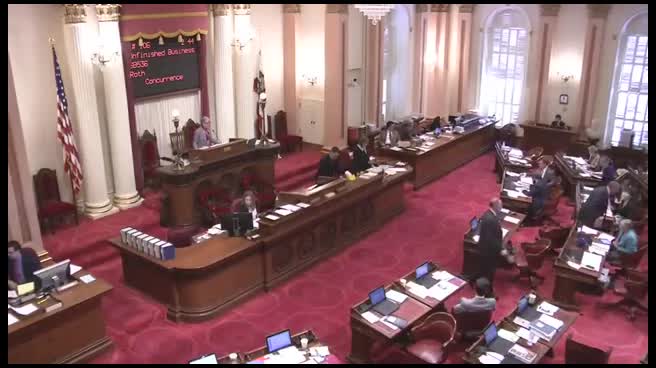 58SEC
Senate Floor
 1MIN
Assembly Floor
 1MIN
Senate Floor
 5MIN
Senate Standing Committee on Health
Bill Author

Bill Co-Author(s):