SB 277: Public health: vaccinations.
- Session Year: 2015-2016
- House: Senate
- Latest Version Date: 2015-06-30
Existing law prohibits the governing authority of a school or other institution from unconditionally admitting any person as a pupil of any public or private elementary or secondary school, child care center, day nursery, nursery school, family day care home, or development center, unless prior to his or her admission to that institution he or she has been fully immunized against various diseases, including measles, mumps, and pertussis, subject to any specific age criteria. Existing law authorizes an exemption from those provisions for medical reasons or because of personal beliefs, if specified forms are submitted to the governing authority. Existing law requires the governing authority of a school or other institution to require documentary proof of each entrants immunization status. Existing law authorizes the governing authority of a school or other institution to temporarily exclude a child from the school or institution if the authority has good cause to believe that the child has been exposed to one of those diseases, as specified.
This bill would eliminate the exemption from existing specified immunization requirements based upon personal beliefs, but would allow exemption from future immunization requirements deemed appropriate by the State Department of Public Health for either medical reasons or personal beliefs. The bill would exempt pupils in a home-based private school and students enrolled in an independent study program and who do not receive classroom-based instruction, pursuant to specified law from the prohibition described above. The bill would allow pupils who, prior to January 1, 2016, have a letter or affidavit on file at a private or public elementary or secondary school, child day care center, day nursery, nursery school, family day care home, or development center stating beliefs opposed to immunization, to be enrolled in any private or public elementary or secondary school, child day care center, day nursery, nursery school, family day care home, or development center within the state until the pupil enrolls in the next grade span, as defined. Except as under the circumstances described above, on and after July 1, 2016, the bill would prohibit a governing authority from unconditionally admitting to any of those institutions for the first time or admitting or advancing any pupil to the 7th grade level, unless the pupil has been immunized as required by the bill. The bill would specify that its provisions do not prohibit a pupil who qualifies for an individualized education program, pursuant to specified laws, from accessing any special education and related services required by his or her individualized education program. The bill would narrow the authorization for temporary exclusion from a school or other institution to make it applicable only to a child who has been exposed to a specified disease and whose documentary proof of immunization status does not show proof of immunization against one of the diseases described above. The bill would make conforming changes to related provisions.
Existing law prohibits the governing authority of a school or other institution from unconditionally admitting any person as a pupil of any public or private elementary or secondary school, child care center, day nursery, nursery school, family day care home, or development center, unless prior to his or her admission to that institution he or she has been fully immunized against various diseases, including measles, mumps, and pertussis, subject to any specific age criteria. Existing law authorizes an exemption from those provisions for medical reasons or because of personal beliefs, if specified forms are submitted to the governing authority. Existing law requires the governing authority of a school or other institution to require documentary proof of each entrants immunization status. Existing law authorizes the governing authority of a school or other institution to temporarily exclude a child from the school or institution if the authority has good cause to believe that the child has been exposed to one of those diseases, as specified.
This bill would eliminate the exemption from existing specified immunization requirements based upon personal beliefs, but would allow exemption from future immunization requirements deemed appropriate by the State Department of Public Health for either medical reasons or personal beliefs. The bill would exempt pupils in a home-based private school and students enrolled in an independent study program and who do not receive classroom-based instruction, pursuant to specified law from the prohibition described above. The bill would allow pupils who, prior to January 1, 2016, have a letter or affidavit on file at a private or public elementary or secondary school, child day care center, day nursery, nursery school, family day care home, or development center stating beliefs opposed to immunization, to be enrolled in any private or public elementary or secondary school, child day care center, day nursery, nursery school, family day care home, or development center within the state until the pupil enrolls in the next grade span, as defined. Except as under the circumstances described above, on and after January July 1, 2016, the bill would prohibit a governing authority from unconditionally admitting to any of those institutions for the first time or admitting or advancing any pupil to the 7th grade level, unless the pupil has been immunized as required by the bill. The bill would specify that its provisions do not prohibit a pupil who qualifies for an individualized education program, pursuant to specified laws, from accessing any special education and related services required by his or her individualized education program. The bill would narrow the authorization for temporary exclusion from a school or other institution to make it applicable only to a child who has been exposed to a specified disease and whose documentary proof of immunization status does not show proof of immunization against one of the diseases described above. The bill would make conforming changes to related provisions.
Existing law prohibits the governing authority of a school or other institution from unconditionally admitting any person as a pupil of any public or private elementary or secondary school, child care center, day nursery, nursery school, family day care home, or development center, unless prior to his or her admission to that institution he or she has been fully immunized against various diseases, including measles, mumps, and pertussis, subject to any specific age criteria. Existing law authorizes an exemption from those provisions for medical reasons or because of personal beliefs, if specified forms are submitted to the governing authority. Existing law requires the governing authority of a school or other institution to require documentary proof of each entrants immunization status. Existing law authorizes the governing authority of a school or other institution to temporarily exclude a child from the school or institution if the authority has good cause to believe that the child has been exposed to one of those diseases, as specified.
This bill would eliminate the exemption from existing specified immunization requirements based upon personal beliefs, but would allow exemption from future immunization requirements deemed appropriate by the State Department of Public Health for either medical reasons or personal beliefs. The bill would exempt pupils in a home-based private school and students enrolled in an independent study program and who do not receive classroom-based instruction, pursuant to specified law from the prohibition described above. The bill would allow pupils who, prior to January 1, 2016, have a letter or affidavit on file at a private or public elementary or secondary school, child day care center, day nursery, nursery school, family day care home, or development center stating beliefs opposed to immunization, to be enrolled in any private or public elementary or secondary school, child day care center, day nursery, nursery school, family day care home, or development center within the state until the pupil enrolls in the next grade span, as defined. Except as under the circumstances described above, on and after January 1, 2016, the bill would prohibit a governing authority from unconditionally admitting to any of those institutions for the first time or admitting or advancing any pupil to the 7th grade level, unless the pupil has been immunized as required by the bill. The bill would specify that its provisions do not prohibit a pupil who qualifies for an individualized education program, pursuant to specified laws, from accessing any special education and related services required by his or her individualized education program. The bill would narrow the authorization for temporary exclusion from a school or other institution to make it applicable only to a child who has been exposed to a specified disease and whose documentary proof of immunization status does not show proof of immunization against one of the diseases described above. The bill would make conforming changes to related provisions.
(1)Existing
Existing law prohibits the governing authority of a school or other institution from unconditionally admitting any person as a pupil of any public or private elementary or secondary school, child care center, day nursery, nursery school, family day care home, or development center, unless prior to his or her admission to that institution he or she has been fully immunized against various diseases, including measles, mumps, and pertussis, subject to any specific age criteria. Existing law authorizes an exemption from those provisions for medical reasons or because of personal beliefs, if specified forms are submitted to the governing authority. Existing law requires the governing authority of a school or other institution to require documentary proof of each entrants immunization status. Existing law authorizes the governing authority of a school or other institution to temporarily exclude a child from the school or institution if the authority has good cause to believe that the child has been exposed to one of those diseases, as specified.
This bill would eliminate the exemption from existing specified immunization requirements based upon personal beliefs, but would allow exemption from future immunization requirements deemed appropriate by the State Department of Public Health for either medical reasons or personal beliefs. This The bill would exempt pupils in a home-based private school and students enrolled in an independent study program pursuant to specified law from the prohibition described above. The bill would narrow the authorization for temporary exclusion from a school or other institution to make it applicable only to a child who has been exposed to a specified disease and whose documentary proof of immunization status does not show proof of immunization against one of the diseases described above. The bill would make conforming changes to related provisions.
(2)Existing law requires the governing board of a school district, at the beginning of the first semester or quarter of the regular school term, to make certain notifications to parents or guardians of minor pupils including, among others, specified rights and responsibilities of a parent or guardian and specified school district policies and procedures.
This bill would require the governing board of a school district to also include in the notifications provided to parents or guardians of minor pupils at the beginning of the regular school term the immunization rates for the school in which a pupil is enrolled for each required immunization. By requiring school districts to notify parents or guardians of school immunization rates, the bill would impose a state-mandated local program.
(3)The California Constitution requires the state to reimburse local agencies and school districts for certain costs mandated by the state. Statutory provisions establish procedures for making that reimbursement.
This bill would provide that, if the Commission on State Mandates determines that the bill contains costs mandated by the state, reimbursement for those costs shall be made pursuant to these statutory provisions.
(1)Existing law prohibits the governing authority of a school or other institution from unconditionally admitting any person as a pupil of any public or private elementary or secondary school, child care center, day nursery, nursery school, family day care home, or development center, unless prior to his or her admission to that institution he or she has been fully immunized against various diseases, including measles, mumps, and pertussis, subject to any specific age criteria. Existing law authorizes an exemption from those provisions for medical reasons or because of personal beliefs, if specified forms are submitted to the governing authority. Existing law requires the governing authority of a school or other institution to require documentary proof of each entrants immunization status. Existing law authorizes the governing authority of a school or other institution to temporarily exclude a child from the school or institution if the authority has good cause to believe that the child has been exposed to one of those diseases, as specified.
This bill would eliminate the exemption from existing specified immunization requirements based upon personal beliefs. beliefs, but would allow exemption from future immunization requirements for either medical reasons or personal beliefs. This bill would except exempt pupils in a home-based private school and students enrolled in an independent study pursuant to specified law from the prohibition described above. The bill would narrow the authorization for temporary exclusion to make it applicable only to a child who has been exposed to a specified disease and whose documentary proof of immunization status does not show proof of immunization against one of the diseases described above. The bill would make conforming changes to related provisions.
(2)Existing law requires the governing board of a school district, at the beginning of the first semester or quarter of the regular school term, to make certain notifications to parents or guardians of minor pupils including, among others, specified rights and responsibilities of a parent or guardian and specified school district policies and procedures.
This bill would require the governing board of a school district to also include in the notifications provided to parents or guardians of minor pupils at the beginning of the regular school term the immunization rates for the school in which a pupil is enrolled for each required immunization. By requiring school districts to notify parents or guardians of school immunization rates, the bill would impose a state-mandated local program.
(3)The California Constitution requires the state to reimburse local agencies and school districts for certain costs mandated by the state. Statutory provisions establish procedures for making that reimbursement.
This bill would provide that, if the Commission on State Mandates determines that the bill contains costs mandated by the state, reimbursement for those costs shall be made pursuant to these statutory provisions.
(1)Existing law prohibits the governing authority of a school or other institution from unconditionally admitting any person as a pupil of any public or private elementary or secondary school, child care center, day nursery, nursery school, family day care home, or development center, unless prior to his or her admission to that institution he or she has been fully immunized against various diseases, including measles, mumps, and pertussis, subject to any specific age criteria. Existing law authorizes an exemption from those provisions for medical reasons or because of personal beliefs, if specified forms are submitted to the governing authority. Existing law requires the governing authority of a school or other institution to require documentary proof of each entrants immunization status. Existing law authorizes the governing authority of a school or other institution to temporarily exclude a child from the school or institution if the authority has good cause to believe that the child has been exposed to one of those diseases, as specified.
This bill would eliminate the exemption from immunization based upon personal beliefs. This bill would except pupils in a home-based private school and students enrolled in an independent study pursuant to specified law from the prohibition described above of all of the schools pupils are residents of the household or are members of a single family. above. The bill would narrow the authorization for temporary exclusion to make it applicable only to a child whose documentary proof of immunization status does not show proof of immunization against one of the diseases described above. The bill would make conforming changes to related provisions.
(2)Existing law requires the governing board of a school district, at the beginning of the first semester or quarter of the regular school term, to make certain notifications to parents or guardians of minor pupils including, among others, specified rights and responsibilities of a parent or guardian and specified school district policies and procedures.
This bill would require the governing board of a school district to also include in the notifications provided to parents or guardians of minor pupils at the beginning of the regular school term the immunization rates for the school in which a pupil is enrolled for each required immunization. By requiring school districts to notify parents or guardians of school immunization rates, the bill would impose a state-mandated local program.
(3)The California Constitution requires the state to reimburse local agencies and school districts for certain costs mandated by the state. Statutory provisions establish procedures for making that reimbursement.
This bill would provide that, if the Commission on State Mandates determines that the bill contains costs mandated by the state, reimbursement for those costs shall be made pursuant to these statutory provisions.
(1)Existing law prohibits the governing authority of a school or other institution from unconditionally admitting any person as a pupil of any public or private elementary or secondary school, child care center, day nursery, nursery school, family day care home, or development center, unless prior to his or her admission to that institution he or she has been fully immunized against various diseases, including measles, mumps, and pertussis, subject to any specific age criteria. Existing law authorizes an exemption from those provisions for medical reasons or because of personal beliefs, if specified forms are submitted to the governing authority. Existing law requires the governing authority of a school or other institution to require documentary proof of each entrants immunization status. Existing law authorizes the governing authority of a school or other institution to temporarily exclude a child from the school or institution if the authority has good cause to believe that the child has been exposed to one of those diseases, as specified.
This bill would eliminate the exemption from immunization based upon personal beliefs. This bill would except a home-based private school from the prohibition described above of all of the schools pupils are residents of the household or are members of a single family. The bill would narrow the authorization for temporary exclusion to make it applicable only to a child whose documentary proof of immunization status does not show proof of immunization against one of the diseases described above. The bill would make conforming changes to related provisions.
(2)Existing law requires the governing board of a school district, at the beginning of the first semester or quarter of the regular school term, to make certain notifications to parents or guardians of minor pupils including, among others, specified rights and responsibilities of a parent or guardian and specified school district policies and procedures.
This bill would require the governing board of a school district to also include in the notifications provided to parents or guardians of minor pupils at the beginning of the regular school term the immunization rates for the school in which a pupil is enrolled for each required immunization. By requiring school districts to notify parents or guardians of school immunization rates, the bill would impose a state-mandated local program.
(3)The California Constitution requires the state to reimburse local agencies and school districts for certain costs mandated by the state. Statutory provisions establish procedures for making that reimbursement.
This bill would provide that, if the Commission on State Mandates determines that the bill contains costs mandated by the state, reimbursement for those costs shall be made pursuant to these statutory provisions.
(1)Existing law prohibits the governing authority of a school or other institution from unconditionally admitting any person as a pupil of any public or private elementary or secondary school, child care center, day nursery, nursery school, family day care home, or development center, unless prior to his or her admission to that institution he or she has been fully immunized against various diseases, including measles, mumps, and pertussis, subject to any specific age criteria. Existing law authorizes an exemption from those provisions for medical reasons or because of personal beliefs, if specified forms are submitted to the governing authority.
This bill would eliminate the exemption from immunization based upon personal beliefs. The bill would make conforming changes to related provisions.
(2)Existing law requires the governing board of a school district, at the beginning of the first semester or quarter of the regular school term, to make certain notifications to parents or guardians of minor pupils including, among others, specified rights and responsibilities of a parent or guardian and specified school district policies and procedures.
This bill would require the governing board of a school district to also include in the notifications provided to parents or guardians of minor pupils at the beginning of the regular school term the immunization rates for the school in which a pupil is enrolled for each required immunization. By requiring school districts to notify parents or guardians of school immunization rates, the bill would impose a state-mandated local program.
(3)The California Constitution requires the state to reimburse local agencies and school districts for certain costs mandated by the state. Statutory provisions establish procedures for making that reimbursement.
This bill would provide that, if the Commission on State Mandates determines that the bill contains costs mandated by the state, reimbursement for those costs shall be made pursuant to these statutory provisions.
In enacting this chapter, but excluding Section 120380, and in enacting Sections 120400, 120405, 120410, and 120415, it is the intent of the Legislature to provide:
(a)A means for the eventual achievement of total immunization of appropriate age groups against the following childhood diseases:
(1)Diphtheria.
(2)Hepatitis B.
(3)Haemophilus influenzae type b.
(4)Measles.
(5)Mumps.
(6)Pertussis (whooping cough).
(7)Poliomyelitis.
(8)Rubella.
(9)Tetanus.
(10)Varicella (chickenpox).
(11)Any other disease deemed appropriate by the department, taking into consideration the recommendations of the Advisory Committee on Immunization Practices of the United States Department of Health and Human Services, the American Academy of Pediatrics, and the American Academy of Family Physicians.
(b)That the persons required to be immunized be allowed to obtain immunizations from whatever medical source they so desire, subject only to the condition that the immunization be performed in accordance with the regulations of the department and that a record of the immunization is made in accordance with the regulations.
(c)Exemptions from immunization for medical reasons.
(d)For the keeping of adequate records of immunization so that health departments, schools, and other institutions, parents or guardians, and the persons immunized will be able to ascertain that a child is fully or only partially immunized, and so that appropriate public agencies will be able to ascertain the immunization needs of groups of children in schools or other institutions.
(e)Incentives to public health authorities to design innovative and creative programs that will promote and achieve full and timely immunization of children.
SEC. 2.Section 120335 of the Health and Safety Code is amended to read:120335.(a)As used in this chapter, governing authority means the governing board of each school district or the authority of each other private or public institution responsible for the operation and control of the institution or the principal or administrator of each school or institution.
(b)The governing authority shall not unconditionally admit any person as a pupil of any private or public elementary or secondary school, child care center, day nursery, nursery school, family day care home, or development center, unless, prior to his or her first admission to that institution, he or she has been fully immunized. The following are the diseases for which immunizations shall be documented:
(1)Diphtheria.
(2)Haemophilus influenzae type b.
(3)Measles.
(4)Mumps.
(5)Pertussis (whooping cough).
(6)Poliomyelitis.
(7)Rubella.
(8)Tetanus.
(9)Hepatitis B.
(10)Varicella (chickenpox).
(11)Any other disease deemed appropriate by the department, taking into consideration the recommendations of the Advisory Committee on Immunization Practices of the United States Department of Health and Human Services, the American Academy of Pediatrics, and the American Academy of Family Physicians.
(c)Notwithstanding subdivision (b), full immunization against hepatitis B shall not be a condition by which the governing authority shall admit or advance any pupil to the 7th grade level of any private or public elementary or secondary school.
(d)The governing authority shall not unconditionally admit or advance any pupil to the 7th grade level of any private or public elementary or secondary school unless the pupil has been fully immunized against pertussis, including all pertussis boosters appropriate for the pupils age.
(e)The department may specify the immunizing agents that may be utilized and the manner in which immunizations are administered.
(f)This section does not apply to a pupil in a home-based private school or a pupil who is enrolled in an independent study program pursuant to Article 5.5 (commencing with Section 51745) of Chapter 5 of Part 28 of the Education Code and does not receive classroom-based instruction.
(g)(1)A pupil who, prior to January 1, 2016, submitted a letter or affidavit on file at a private or public elementary or secondary school, child day care center, day nursery, nursery school, family day care home, or development center stating beliefs opposed to immunization shall be allowed enrollment to any private or public elementary or secondary school, child day care center, day nursery, nursery school, family day care home, or development center within the state until the pupil enrolls in the next grade span.
(2)For purposes of this subdivision, grade span means each of the following:
(A)Birth to preschool.
(B)Kindergarten and grades 1 to 6, inclusive, including transitional kindergarten.
(C)Grades 7 to 12, inclusive.
(3)Except as provided in this subdivision, on and after July 1, 2016, the governing authority shall not unconditionally admit to any of those institutions specified in this subdivision for the first time, or admit or advance any pupil to 7th grade level, unless the pupil has been immunized for his or her age as required by this section.
(h)This section does not prohibit a pupil who qualifies for an individualized education program, pursuant to federal law and Section 56026 of the Education Code, from accessing any special education and related services required by his or her individualized education program.
SEC. 3.Section 120338 is added to the Health and Safety Code, to read:120338.Notwithstanding Sections 120325 and 120335, any immunizations deemed appropriate by the department pursuant to paragraph (11) of subdivision (a) of Section 120325 or paragraph (11) of subdivision (b) of Section 120335, may be mandated before a pupils first admission to any private or public elementary or secondary school, child care center, day nursery, nursery school, family day care home, or development center, only if exemptions are allowed for both medical reasons and personal beliefs.
SEC. 4.Section 120365 of the Health and Safety Code is repealed.SEC. 5.Section 120370 of the Health and Safety Code is amended to read:120370.(a)If the parent or guardian files with the governing authority a written statement by a licensed physician to the effect that the physical condition of the child is such, or medical circumstances relating to the child are such, that immunization is not considered safe, indicating the specific nature and probable duration of the medical condition or circumstances, including, but not limited to, family medical history, for which the physician does not recommend immunization, that child shall be exempt from the requirements of Chapter 1 (commencing with Section 120325, but excluding Section 120380) and Sections 120400, 120405, 120410, and 120415 to the extent indicated by the physicians statement.
(b)If there is good cause to believe that a child has been exposed to a disease listed in subdivision (b) of Section 120335 and his or her documentary proof of immunization status does not show proof of immunization against that disease, that child may be temporarily excluded from the school or institution until the local health officer is satisfied that the child is no longer at risk of developing or transmitting the disease.
SEC. 6.Section 120375 of the Health and Safety Code is amended to read:120375.(a)The governing authority of each school or institution included in Section 120335 shall require documentary proof of each entrants immunization status. The governing authority shall record the immunizations of each new entrant in the entrants permanent enrollment and scholarship record on a form provided by the department. The immunization record of each new entrant admitted conditionally shall be reviewed periodically by the governing authority to ensure that within the time periods designated by regulation of the department he or she has been fully immunized against all of the diseases listed in Section 120335, and immunizations received subsequent to entry shall be added to the pupils immunization record.
(b)The governing authority of each school or institution included in Section 120335 shall prohibit from further attendance any pupil admitted conditionally who failed to obtain the required immunizations within the time limits allowed in the regulations of the department, unless the pupil is exempted under Section 120370, until that pupil has been fully immunized against all of the diseases listed in Section 120335.
(c)The governing authority shall file a written report on the immunization status of new entrants to the school or institution under their jurisdiction with the department and the local health department at times and on forms prescribed by the department. As provided in paragraph (4) of subdivision (a) of Section 49076 of the Education Code, the local health department shall have access to the complete health information as it relates to immunization of each student in the schools or other institutions listed in Section 120335 in order to determine immunization deficiencies.
(d)The governing authority shall cooperate with the county health officer in carrying out programs for the immunization of persons applying for admission to any school or institution under its jurisdiction. The governing board of any school district may use funds, property, and personnel of the district for that purpose. The governing authority of any school or other institution may permit any licensed physician or any qualified registered nurse as provided in Section 2727.3 of the Business and Professions Code to administer immunizing agents to any person seeking admission to any school or institution under its jurisdiction.
In enacting this chapter, but excluding Section 120380, and in enacting Sections 120400, 120405, 120410, and 120415, it is the intent of the Legislature to provide:
(a)A means for the eventual achievement of total immunization of appropriate age groups against the following childhood diseases:
(1)Diphtheria.
(2)Hepatitis B.
(3)Haemophilus influenzae type b.
(4)Measles.
(5)Mumps.
(6)Pertussis (whooping cough).
(7)Poliomyelitis.
(8)Rubella.
(9)Tetanus.
(10)Varicella (chickenpox).
(11)Any other disease deemed appropriate by the department, taking into consideration the recommendations of the Advisory Committee on Immunization Practices of the United States Department of Health and Human Services, the American Academy of Pediatrics, and the American Academy of Family Physicians.
(b)That the persons required to be immunized be allowed to obtain immunizations from whatever medical source they so desire, subject only to the condition that the immunization be performed in accordance with the regulations of the department and that a record of the immunization is made in accordance with the regulations.
(c)Exemptions from immunization for medical reasons.
(d)For the keeping of adequate records of immunization so that health departments, schools, and other institutions, parents or guardians, and the persons immunized will be able to ascertain that a child is fully or only partially immunized, and so that appropriate public agencies will be able to ascertain the immunization needs of groups of children in schools or other institutions.
(e)Incentives to public health authorities to design innovative and creative programs that will promote and achieve full and timely immunization of children.
SEC. 2.Section 120335 of the Health and Safety Code is amended to read:120335.(a)As used in this chapter, governing authority means the governing board of each school district or the authority of each other private or public institution responsible for the operation and control of the institution or the principal or administrator of each school or institution.
(b)The governing authority shall not unconditionally admit any person as a pupil of any private or public elementary or secondary school, child care center, day nursery, nursery school, family day care home, or development center, unless, prior to his or her first admission to that institution, he or she has been fully immunized. The following are the diseases for which immunizations shall be documented:
(1)Diphtheria.
(2)Haemophilus influenzae type b.
(3)Measles.
(4)Mumps.
(5)Pertussis (whooping cough).
(6)Poliomyelitis.
(7)Rubella.
(8)Tetanus.
(9)Hepatitis B.
(10)Varicella (chickenpox).
(11)Any other disease deemed appropriate by the department, taking into consideration the recommendations of the Advisory Committee on Immunization Practices of the United States Department of Health and Human Services, the American Academy of Pediatrics, and the American Academy of Family Physicians.
(c)Notwithstanding subdivision (b), full immunization against hepatitis B shall not be a condition by which the governing authority shall admit or advance any pupil to the 7th grade level of any private or public elementary or secondary school.
(d)The governing authority shall not unconditionally admit or advance any pupil to the 7th grade level of any private or public elementary or secondary school unless the pupil has been fully immunized against pertussis, including all pertussis boosters appropriate for the pupils age.
(e)The department may specify the immunizing agents that may be utilized and the manner in which immunizations are administered.
(f)This section does not apply to a pupil in a home-based private school or a pupil who is enrolled in an independent study program pursuant to Article 5.5 (commencing with Section 51745) of Chapter 5 of Part 28 of the Education Code and does not receive classroom-based instruction.
(g)(1)A pupil who, prior to January 1, 2016, submitted a letter or affidavit on file at a private or public elementary or secondary school, child day care center, day nursery, nursery school, family day care home, or development center stating beliefs opposed to immunization shall be allowed enrollment to any private or public elementary or secondary school, child day care center, day nursery, nursery school, family day care home, or development center within the state until the pupil enrolls in the next grade span.
(2)For purposes of this subdivision, grade span means each of the following:
(A)Birth to preschool.
(B)Kindergarten and grades 1 to 6, inclusive, including transitional kindergarten.
(C)Grades 7 to 12, inclusive.
(3)Except as provided in this subdivision, on and after July 1, 2016, the governing authority shall not unconditionally admit to any of those institutions specified in this subdivision for the first time, or admit or advance any pupil to 7th grade level, unless the pupil has been immunized for his or her age as required by this section.
(h)This section does not prohibit a pupil who qualifies for an individualized education program, pursuant to federal law and Section 56026 of the Education Code, from accessing any special education and related services required by his or her individualized education program.
SEC. 3.Section 120338 is added to the Health and Safety Code, to read:120338.Notwithstanding Sections 120325 and 120335, any immunizations deemed appropriate by the department pursuant to paragraph (11) of subdivision (a) of Section 120325 or paragraph (11) of subdivision (b) of Section 120335, may be mandated before a pupils first admission to any private or public elementary or secondary school, child care center, day nursery, nursery school, family day care home, or development center, only if exemptions are allowed for both medical reasons and personal beliefs.
SEC. 4.Section 120365 of the Health and Safety Code is repealed.SEC. 5.Section 120370 of the Health and Safety Code is amended to read:120370.(a)If the parent or guardian files with the governing authority a written statement by a licensed physician to the effect that the physical condition of the child is such, or medical circumstances relating to the child are such, that immunization is not considered safe, indicating the specific nature and probable duration of the medical condition or circumstances circumstances, including, but not limited to, family medical history, for which the physician does not recommend immunization, that child shall be exempt from the requirements of Chapter 1 (commencing with Section 120325, but excluding Section 120380) and Sections 120400, 120405, 120410, and 120415 to the extent indicated by the physicians statement.
(b)If there is good cause to believe that a child has been exposed to a disease listed in subdivision (b) of Section 120335 and his or her documentary proof of immunization status does not show proof of immunization against that disease, that child may be temporarily excluded from the school or institution until the local health officer is satisfied that the child is no longer at risk of developing or transmitting the disease.
SEC. 6.Section 120375 of the Health and Safety Code is amended to read:120375.(a)The governing authority of each school or institution included in Section 120335 shall require documentary proof of each entrants immunization status. The governing authority shall record the immunizations of each new entrant in the entrants permanent enrollment and scholarship record on a form provided by the department. The immunization record of each new entrant admitted conditionally shall be reviewed periodically by the governing authority to ensure that within the time periods designated by regulation of the department he or she has been fully immunized against all of the diseases listed in Section 120335, and immunizations received subsequent to entry shall be added to the pupils immunization record.
(b)The governing authority of each school or institution included in Section 120335 shall prohibit from further attendance any pupil admitted conditionally who failed to obtain the required immunizations within the time limits allowed in the regulations of the department, unless the pupil is exempted under Section 120370, until that pupil has been fully immunized against all of the diseases listed in Section 120335.
(c)The governing authority shall file a written report on the immunization status of new entrants to the school or institution under their jurisdiction with the department and the local health department at times and on forms prescribed by the department. As provided in paragraph (4) of subdivision (a) of Section 49076 of the Education Code, the local health department shall have access to the complete health information as it relates to immunization of each student in the schools or other institutions listed in Section 120335 in order to determine immunization deficiencies.
(d)The governing authority shall cooperate with the county health officer in carrying out programs for the immunization of persons applying for admission to any school or institution under its jurisdiction. The governing board of any school district may use funds, property, and personnel of the district for that purpose. The governing authority of any school or other institution may permit any licensed physician or any qualified registered nurse as provided in Section 2727.3 of the Business and Professions Code to administer immunizing agents to any person seeking admission to any school or institution under its jurisdiction.
In enacting this chapter, but excluding Section 120380, and in enacting Sections 120400, 120405, 120410, and 120415, it is the intent of the Legislature to provide:
(a)A means for the eventual achievement of total immunization of appropriate age groups against the following childhood diseases:
(1)Diphtheria.
(2)Hepatitis B.
(3)Haemophilus influenzae type b.
(4)Measles.
(5)Mumps.
(6)Pertussis (whooping cough).
(7)Poliomyelitis.
(8)Rubella.
(9)Tetanus.
(10)Varicella (chickenpox).
(11)Any other disease deemed appropriate by the department, taking into consideration the recommendations of the Advisory Committee on Immunization Practices of the United States Department of Health and Human Services, the American Academy of Pediatrics, and the American Academy of Family Physicians.
(b)That the persons required to be immunized be allowed to obtain immunizations from whatever medical source they so desire, subject only to the condition that the immunization be performed in accordance with the regulations of the department and that a record of the immunization is made in accordance with the regulations.
(c)Exemptions from immunization for medical reasons.
(d)For the keeping of adequate records of immunization so that health departments, schools, and other institutions, parents or guardians, and the persons immunized will be able to ascertain that a child is fully or only partially immunized, and so that appropriate public agencies will be able to ascertain the immunization needs of groups of children in schools or other institutions.
(e)Incentives to public health authorities to design innovative and creative programs that will promote and achieve full and timely immunization of children.
SEC. 2.Section 120335 of the Health and Safety Code is amended to read:120335.(a)As used in this chapter, governing authority means the governing board of each school district or the authority of each other private or public institution responsible for the operation and control of the institution or the principal or administrator of each school or institution.
(b)The governing authority shall not unconditionally admit any person as a pupil of any private or public elementary or secondary school, child care center, day nursery, nursery school, family day care home, or development center, unless, prior to his or her first admission to that institution, he or she has been fully immunized. The following are the diseases for which immunizations shall be documented:
(1)Diphtheria.
(2)Haemophilus influenzae type b.
(3)Measles.
(4)Mumps.
(5)Pertussis (whooping cough).
(6)Poliomyelitis.
(7)Rubella.
(8)Tetanus.
(9)Hepatitis B.
(10)Varicella (chickenpox).
(11)Any other disease deemed appropriate by the department, taking into consideration the recommendations of the Advisory Committee on Immunization Practices of the United States Department of Health and Human Services, the American Academy of Pediatrics, and the American Academy of Family Physicians.
(c)Notwithstanding subdivision (b), full immunization against hepatitis B shall not be a condition by which the governing authority shall admit or advance any pupil to the 7th grade level of any private or public elementary or secondary school.
(d)The governing authority shall not unconditionally admit or advance any pupil to the 7th grade level of any private or public elementary or secondary school unless the pupil has been fully immunized against pertussis, including all pertussis boosters appropriate for the pupils age.
(e)The department may specify the immunizing agents that may be utilized and the manner in which immunizations are administered.
(f)This section does not apply to a pupil in a home-based private school or a pupil who is enrolled in an independent study program pursuant to Article 5.5 (commencing with Section 51745) of Chapter 5 of Part 28 of the Education Code. Code and does not receive classroom-based instruction.
(g)(1)A pupil who, prior to January 1, 2016, submitted a letter or affidavit on file at a private or public elementary or secondary school, child day care center, day nursery, nursery school, family day care home, or development center stating beliefs opposed to immunization shall be allowed enrollment to any private or public elementary or secondary school, child day care center, day nursery, nursery school, family day care home, or development center within the state until the pupil enrolls in the next grade span.
(2)For purposes of this subdivision, grade span means each of the following:
(A)Birth to preschool.
(B)Kindergarten and grades 1 to 6, inclusive, including transitional kindergarten.
(C)Grades 7 to 12, inclusive.
(3)Except as provided in this subdivision, on and after July 1, 2016, the governing authority shall not unconditionally admit to any of those institutions specified in this subdivision for the first time, or admit or advance any pupil to 7th grade level, unless the pupil has been immunized for his or her age as required by this section.
(h)This section does not prohibit a pupil who qualifies for an individualized education program, pursuant to federal law and Section 56026 of the Education Code, from accessing any special education and related services required by his or her individualized education program.
SEC. 3.Section 120338 is added to the Health and Safety Code, to read:120338.Notwithstanding Sections 120325 and 120335, any immunizations deemed appropriate by the department pursuant to paragraph (11) of subdivision (a) of Section 120325 or paragraph (11) of subdivision (b) of Section 120335, may be mandated before a pupils first admission to any private or public elementary or secondary school, child care center, day nursery, nursery school, family day care home, or development center, only if exemptions are allowed for both medical reasons and personal beliefs.
SEC. 4.Section 120365 of the Health and Safety Code is repealed.SEC. 5.Section 120370 of the Health and Safety Code is amended to read:120370.(a)If the parent or guardian files with the governing authority a written statement by a licensed physician to the effect that the physical condition of the child is such, or medical circumstances relating to the child are such, that immunization is not considered safe, indicating the specific nature and probable duration of the medical condition or circumstances that contraindicate for which the physician does not recommend immunization, that child shall be exempt from the requirements of Chapter 1 (commencing with Section 120325, but excluding Section 120380) and Sections 120400, 120405, 120410, and 120415 to the extent indicated by the physicians statement.
(b)If there is good cause to believe that a child has been exposed to a disease listed in subdivision (b) of Section 120335 and his or her documentary proof of immunization status does not show proof of immunization against that disease, that child may be temporarily excluded from the school or institution until the local health officer is satisfied that the child is no longer at risk of developing or transmitting the disease.
SEC. 6.Section 120375 of the Health and Safety Code is amended to read:120375.(a)The governing authority of each school or institution included in Section 120335 shall require documentary proof of each entrants immunization status. The governing authority shall record the immunizations of each new entrant in the entrants permanent enrollment and scholarship record on a form provided by the department. The immunization record of each new entrant admitted conditionally shall be reviewed periodically by the governing authority to ensure that within the time periods designated by regulation of the department he or she has been fully immunized against all of the diseases listed in Section 120335, and immunizations received subsequent to entry shall be added to the pupils immunization record.
(b)The governing authority of each school or institution included in Section 120335 shall prohibit from further attendance any pupil admitted conditionally who failed to obtain the required immunizations within the time limits allowed in the regulations of the department, unless the pupil is exempted under Section 120365 or 120370, until that pupil has been fully immunized against all of the diseases listed in Section 120335.
(c)The governing authority shall file a written report on the immunization status of new entrants to the school or institution under their jurisdiction with the department and the local health department at times and on forms prescribed by the department. As provided in paragraph (4) of subdivision (a) of Section 49076 of the Education Code, the local health department shall have access to the complete health information as it relates to immunization of each student in the schools or other institutions listed in Section 120335 in order to determine immunization deficiencies.
(d)The governing authority shall cooperate with the county health officer in carrying out programs for the immunization of persons applying for admission to any school or institution under its jurisdiction. The governing board of any school district may use funds, property, and personnel of the district for that purpose. The governing authority of any school or other institution may permit any licensed physician or any qualified registered nurse as provided in Section 2727.3 of the Business and Professions Code to administer immunizing agents to any person seeking admission to any school or institution under its jurisdiction.
The notification required pursuant to Section 48980 shall also include the immunization rates for the school in which a pupil is enrolled for each of the immunizations required pursuant to Section 120335 of the Health and Safety Code.
SEC. 2.SECTION 1.Section 120325 of the Health and Safety Code is amended to read:120325.In enacting this chapter, but excluding Section 120380, and in enacting Sections 120400, 120405, 120410, and 120415, it is the intent of the Legislature to provide:
(a)A means for the eventual achievement of total immunization of appropriate age groups against the following childhood diseases:
(1)Diphtheria.
(2)Hepatitis B.
(3)Haemophilus influenzae type b.
(4)Measles.
(5)Mumps.
(6)Pertussis (whooping cough).
(7)Poliomyelitis.
(8)Rubella.
(9)Tetanus.
(10)Varicella (chickenpox).
(11)Any other disease deemed appropriate by the department, taking into consideration the recommendations of the Advisory Committee on Immunization Practices of the United States Department of Health and Human Services, the American Academy of Pediatrics, and the American Academy of Family Physicians.
(b)That the persons required to be immunized be allowed to obtain immunizations from whatever medical source they so desire, subject only to the condition that the immunization be performed in accordance with the regulations of the department and that a record of the immunization is made in accordance with the regulations.
(c)Exemptions from immunization for medical reasons.
(d)For the keeping of adequate records of immunization so that health departments, schools, and other institutions, parents or guardians, and the persons immunized will be able to ascertain that a child is fully or only partially immunized, and so that appropriate public agencies will be able to ascertain the immunization needs of groups of children in schools or other institutions.
(e)Incentives to public health authorities to design innovative and creative programs that will promote and achieve full and timely immunization of children.
SEC. 3.SEC. 2.Section 120335 of the Health and Safety Code is amended to read:120335.(a)As used in this chapter, governing authority means the governing board of each school district or the authority of each other private or public institution responsible for the operation and control of the institution or the principal or administrator of each school or institution.
(b)The governing authority shall not unconditionally admit any person as a pupil of any private or public elementary or secondary school, child care center, day nursery, nursery school, family day care home, or development center, unless, prior to his or her first admission to that institution, he or she has been fully immunized. The following are the diseases for which immunizations shall be documented:
(1)Diphtheria.
(2)Haemophilus influenzae type b.
(3)Measles.
(4)Mumps.
(5)Pertussis (whooping cough).
(6)Poliomyelitis.
(7)Rubella.
(8)Tetanus.
(9)Hepatitis B.
(10)Varicella (chickenpox).
(11)Any other disease deemed appropriate by the department, taking into consideration the recommendations of the Advisory Committee on Immunization Practices of the United States Department of Health and Human Services, the American Academy of Pediatrics, and the American Academy of Family Physicians.
(c)Notwithstanding subdivision (b), full immunization against hepatitis B shall not be a condition by which the governing authority shall admit or advance any pupil to the 7th grade level of any private or public elementary or secondary school.
(d)The governing authority shall not unconditionally admit or advance any pupil to the 7th grade level of any private or public elementary or secondary school unless the pupil has been fully immunized against pertussis, including all pertussis boosters appropriate for the pupils age.
(e)The department may specify the immunizing agents that may be utilized and the manner in which immunizations are administered.
(f)This section does not apply to a pupil in a home-based private school or a pupil who is enrolled in an independent study program pursuant to Article 5.5 (commencing with Section 51745) of Chapter 5 of Part 28 of the Education Code.
SEC. 4.SEC. 3.Section 120338 is added to the Health and Safety Code, to read:120338.Notwithstanding Sections 120325 and 120335, any immunizations deemed appropriate by the department pursuant to paragraph 11 (11) of subdivision (a) of Section 120325 or paragraph 11 (11) of subdivision (b) of Section 120335, may be mandated before a pupils first admission to any private or public elementary or secondary school, child care center, day nursery, nursery school, family day care home, or development center, only if exemptions are allowed for both medical reasons and personal beliefs.
SEC. 5.SEC. 4.Section 120365 of the Health and Safety Code is repealed.SEC. 6.SEC. 5.Section 120370 of the Health and Safety Code is amended to read:120370.(a)If the parent or guardian files with the governing authority a written statement by a licensed physician to the effect that the physical condition of the child is such, or medical circumstances relating to the child are such, that immunization is not considered safe, indicating the specific nature and probable duration of the medical condition or circumstances that contraindicate immunization, that child shall be exempt from the requirements of Chapter 1 (commencing with Section 120325, but excluding Section 120380) and Sections 120400, 120405, 120410, and 120415 to the extent indicated by the physicians statement.
(b)If there is good cause to believe that a child has been exposed to a disease listed in subdivision (b) of Section 120335 and his or her documentary proof of immunization status does not show proof of immunization against that disease, that child may be temporarily excluded from the school or institution until the local health officer is satisfied that the child is no longer at risk of developing or transmitting the disease.
SEC. 7.If the Commission on State Mandates determines that this act contains costs mandated by the state, reimbursement to local agencies and school districts for those costs shall be made pursuant to Part 7 (commencing with Section 17500) of Division 4 of Title 2 of the Government Code.
The notification required pursuant to Section 48980 shall also include the immunization rates for the school in which a pupil is enrolled for each of the immunizations required pursuant to Section 120335 of the Health and Safety Code.
SEC. 2.Section 120325 of the Health and Safety Code is amended to read:120325.In enacting this chapter, but excluding Section 120380, and in enacting Sections 120400, 120405, 120410, and 120415, it is the intent of the Legislature to provide:
(a)A means for the eventual achievement of total immunization of appropriate age groups against the following childhood diseases:
(1)Diphtheria.
(2)Hepatitis B.
(3)Haemophilus influenzae type b.
(4)Measles.
(5)Mumps.
(6)Pertussis (whooping cough).
(7)Poliomyelitis.
(8)Rubella.
(9)Tetanus.
(10)Varicella (chickenpox).
(11)Any other disease deemed appropriate by the department, taking into consideration the recommendations of the Advisory Committee on Immunization Practices of the United States Department of Health and Human Services, the American Academy of Pediatrics, and the American Academy of Family Physicians.
(b)That the persons required to be immunized be allowed to obtain immunizations from whatever medical source they so desire, subject only to the condition that the immunization be performed in accordance with the regulations of the department and that a record of the immunization is made in accordance with the regulations.
(c)Exemptions from immunization for medical reasons.
(d)For the keeping of adequate records of immunization so that health departments, schools, and other institutions, parents or guardians, and the persons immunized will be able to ascertain that a child is fully or only partially immunized, and so that appropriate public agencies will be able to ascertain the immunization needs of groups of children in schools or other institutions.
(e)Incentives to public health authorities to design innovative and creative programs that will promote and achieve full and timely immunization of children.
SEC. 3.Section 120335 of the Health and Safety Code is amended to read:120335.(a)As used in this chapter, governing authority means the governing board of each school district or the authority of each other private or public institution responsible for the operation and control of the institution or the principal or administrator of each school or institution.
(b)The governing authority shall not unconditionally admit any person as a pupil of any private or public elementary or secondary school, child care center, day nursery, nursery school, family day care home, or development center, unless, prior to his or her first admission to that institution, he or she has been fully immunized. This subdivision does not apply to a pupil in a home-based private school or a pupil who is enrolled in an independent study pursuant to Article 5.5 (commencing with Section 51745) of Chapter 5 of Part 28 of the Education Code. The following are the diseases for which immunizations shall be documented:
(1)Diphtheria.
(2)Haemophilus influenzae type b.
(3)Measles.
(4)Mumps.
(5)Pertussis (whooping cough).
(6)Poliomyelitis.
(7)Rubella.
(8)Tetanus.
(9)Hepatitis B.
(10)Varicella (chickenpox).
(11)Any other disease deemed appropriate by the department, taking into consideration the recommendations of the Advisory Committee on Immunization Practices of the United States Department of Health and Human Services, the American Academy of Pediatrics, and the American Academy of Family Physicians.
(c)Notwithstanding subdivision (b), full immunization against hepatitis B shall not be a condition by which the governing authority shall admit or advance any pupil to the 7th grade level of any private or public elementary or secondary school.
(d)The governing authority shall not unconditionally admit or advance any pupil to the 7th grade level of any private or public elementary or secondary school unless the pupil has been fully immunized against pertussis, including all pertussis boosters appropriate for the pupils age.
(e)The department may specify the immunizing agents that may be utilized and the manner in which immunizations are administered.
(f)This section does not apply to a pupil in a home-based private school or a pupil who is enrolled in an independent study program pursuant to Article 5.5 (commencing with Section 51745) of Chapter 5 of Part 28 of the Education Code.
SEC. 4.Section 120338 is added to the Health and Safety Code, to read:120338.Notwithstanding Sections 120325 and 120335, any immunizations deemed appropriate by the department pursuant to paragraph 11 of subdivision (a) of Section 120325 or paragraph 11 of subdivision (b) of Section 120335, may be mandated before a pupils first admission to any private or public elementary or secondary school, child care center, day nursery, nursery school, family day care home, or development center, only if exemptions are allowed for both medical reasons and personal beliefs.
SEC. 4.SEC. 5.Section 120365 of the Health and Safety Code is repealed.SEC. 5.SEC. 6.Section 120370 of the Health and Safety Code is amended to read:120370.(a)If the parent or guardian files with the governing authority a written statement by a licensed physician to the effect that the physical condition of the child is such, or medical circumstances relating to the child are such, that immunization is not considered safe, indicating the specific nature and probable duration of the medical condition or circumstances that contraindicate immunization, that child shall be exempt from the requirements of Chapter 1 (commencing with Section 120325, but excluding Section 120380) and Sections 120400, 120405, 120410, and 120415 to the extent indicated by the physicians statement.
(b)When If there is good cause to believe that a child whose documentary proof of immunization status does not show proof of immunization against a communicable disease listed in subdivision (b) of Section 120335 has been exposed to one of those diseases, has been exposed to a disease listed in subdivision (b) of Section 120335 and his or her documentary proof of immunization status does not show proof of immunization against that disease, that child may be temporarily excluded from the school or institution until the local health officer is satisfied that the child is no longer at risk of developing or transmitting the disease.
SEC. 6.SEC. 7.If the Commission on State Mandates determines that this act contains costs mandated by the state, reimbursement to local agencies and school districts for those costs shall be made pursuant to Part 7 (commencing with Section 17500) of Division 4 of Title 2 of the Government Code.
The notification required pursuant to Section 48980 shall also include the immunization rates for the school in which a pupil is enrolled for each of the immunizations required pursuant to Section 120335 of the Health and Safety Code.
SEC. 2.Section 120325 of the Health and Safety Code is amended to read:120325.In enacting this chapter, but excluding Section 120380, and in enacting Sections 120400, 120405, 120410, and 120415, it is the intent of the Legislature to provide:
(a)A means for the eventual achievement of total immunization of appropriate age groups against the following childhood diseases:
(1)Diphtheria.
(2)Hepatitis B.
(3)Haemophilus influenzae type b.
(4)Measles.
(5)Mumps.
(6)Pertussis (whooping cough).
(7)Poliomyelitis.
(8)Rubella.
(9)Tetanus.
(10)Varicella (chickenpox).
(11)Any other disease deemed appropriate by the department, taking into consideration the recommendations of the Advisory Committee on Immunization Practices of the United States Department of Health and Human Services, the American Academy of Pediatrics, and the American Academy of Family Physicians.
(b)That the persons required to be immunized be allowed to obtain immunizations from whatever medical source they so desire, subject only to the condition that the immunization be performed in accordance with the regulations of the department and that a record of the immunization is made in accordance with the regulations.
(c)Exemptions from immunization for medical reasons.
(d)For the keeping of adequate records of immunization so that health departments, schools, and other institutions, parents or guardians, and the persons immunized will be able to ascertain that a child is fully or only partially immunized, and so that appropriate public agencies will be able to ascertain the immunization needs of groups of children in schools or other institutions.
(e)Incentives to public health authorities to design innovative and creative programs that will promote and achieve full and timely immunization of children.
SEC. 3.Section 120335 of the Health and Safety Code is amended to read:120335.(a)As used in this chapter, governing authority means the governing board of each school district or the authority of each other private or public institution responsible for the operation and control of the institution or the principal or administrator of each school or institution.
(b)The governing authority shall not unconditionally admit any person as a pupil of any private or public elementary or secondary school, child care center, day nursery, nursery school, family day care home, or development center, unless, prior to his or her first admission to that institution, he or she has been fully immunized. This subdivision does not apply to a pupil in a home-based private school if all of the pupils are residents of the household or are members of a single family. or a pupil who is enrolled in an independent study pursuant to Article 5.5 (commencing with Section 51745) of Chapter 5 of Part 28 of the Education Code. The following are the diseases for which immunizations shall be documented:
(1)Diphtheria.
(2)Haemophilus influenzae type b.
(3)Measles.
(4)Mumps.
(5)Pertussis (whooping cough).
(6)Poliomyelitis.
(7)Rubella.
(8)Tetanus.
(9)Hepatitis B.
(10)Varicella (chickenpox).
(11)Any other disease deemed appropriate by the department, taking into consideration the recommendations of the Advisory Committee on Immunization Practices of the United States Department of Health and Human Services, the American Academy of Pediatrics, and the American Academy of Family Physicians.
(c)Notwithstanding subdivision (b), full immunization against hepatitis B shall not be a condition by which the governing authority shall admit or advance any pupil to the 7th grade level of any private or public elementary or secondary school.
(d)The governing authority shall not unconditionally admit or advance any pupil to the 7th grade level of any private or public elementary or secondary school unless the pupil has been fully immunized against pertussis, including all pertussis boosters appropriate for the pupils age.
(e)The department may specify the immunizing agents that may be utilized and the manner in which immunizations are administered.
(f)This section shall become operative on July 1, 2012.
SEC. 4.Section 120365 of the Health and Safety Code is repealed.SEC. 5.Section 120370 of the Health and Safety Code is amended to read:120370.(a)If the parent or guardian files with the governing authority a written statement by a licensed physician to the effect that the physical condition of the child is such, or medical circumstances relating to the child are such, that immunization is not considered safe, indicating the specific nature and probable duration of the medical condition or circumstances that contraindicate immunization, that child shall be exempt from the requirements of Chapter 1 (commencing with Section 120325, but excluding Section 120380) and Sections 120400, 120405, 120410, and 120415 to the extent indicated by the physicians statement.
(b)When there is good cause to believe that a child whose documentary proof of immunization status does not show proof of immunization against a communicable disease listed in subdivision (b) of Section 120335 has been exposed to one of those diseases, that child may be temporarily excluded from the school or institution until the local health officer is satisfied that the child is no longer at risk of developing or transmitting the disease.
SEC. 6.If the Commission on State Mandates determines that this act contains costs mandated by the state, reimbursement to local agencies and school districts for those costs shall be made pursuant to Part 7 (commencing with Section 17500) of Division 4 of Title 2 of the Government Code.
The notification required pursuant to Section 48980 shall also include the immunization rates for the school in which a pupil is enrolled for each of the immunizations required pursuant to Section 120335 of the Health and Safety Code.
SEC. 2.Section 120325 of the Health and Safety Code is amended to read:120325.In enacting this chapter, but excluding Section 120380, and in enacting Sections 120400, 120405, 120410, and 120415, it is the intent of the Legislature to provide:
(a)A means for the eventual achievement of total immunization of appropriate age groups against the following childhood diseases:
(1)Diphtheria.
(2)Hepatitis B.
(3)Haemophilus influenzae type b.
(4)Measles.
(5)Mumps.
(6)Pertussis (whooping cough).
(7)Poliomyelitis.
(8)Rubella.
(9)Tetanus.
(10)Varicella (chickenpox).
(11)Any other disease deemed appropriate by the department, taking into consideration the recommendations of the Advisory Committee on Immunization Practices of the United States Department of Health and Human Services, the American Academy of Pediatrics, and the American Academy of Family Physicians.
(b)That the persons required to be immunized be allowed to obtain immunizations from whatever medical source they so desire, subject only to the condition that the immunization be performed in accordance with the regulations of the department and that a record of the immunization is made in accordance with the regulations.
(c)Exemptions from immunization for medical reasons.
(d)For the keeping of adequate records of immunization so that health departments, schools, and other institutions, parents or guardians, and the persons immunized will be able to ascertain that a child is fully or only partially immunized, and so that appropriate public agencies will be able to ascertain the immunization needs of groups of children in schools or other institutions.
(e)Incentives to public health authorities to design innovative and creative programs that will promote and achieve full and timely immunization of children.
SEC. 3.Section 120335 of the Health and Safety Code is amended to read:120335.(a)As used in this chapter, governing authority means the governing board of each school district or the authority of each other private or public institution responsible for the operation and control of the institution or the principal or administrator of each school or institution.
(b)The governing authority shall not unconditionally admit any person as a pupil of any private or public elementary or secondary school, child care center, day nursery, nursery school, family day care home, or development center, unless, prior to his or her first admission to that institution, he or she has been fully immunized. This subdivision does not apply to a home-based private school if all of the pupils are residents of the household or are members of a single family. The following are the diseases for which immunizations shall be documented:
(1)Diphtheria.
(2)Haemophilus influenzae type b.
(3)Measles.
(4)Mumps.
(5)Pertussis (whooping cough).
(6)Poliomyelitis.
(7)Rubella.
(8)Tetanus.
(9)Hepatitis B.
(10)Varicella (chickenpox).
(11)Any other disease deemed appropriate by the department, taking into consideration the recommendations of the Advisory Committee on Immunization Practices of the United States Department of Health and Human Services, the American Academy of Pediatrics, and the American Academy of Family Physicians.
(c)Notwithstanding subdivision (b), full immunization against hepatitis B shall not be a condition by which the governing authority shall admit or advance any pupil to the 7th grade level of any private or public elementary or secondary school.
(d)The governing authority shall not unconditionally admit or advance any pupil to the 7th grade level of any private or public elementary or secondary school unless the pupil has been fully immunized against pertussis, including all pertussis boosters appropriate for the pupils age.
(e)The department may specify the immunizing agents that may be utilized and the manner in which immunizations are administered.
(f)This section shall become operative on July 1, 2012.
SEC. 3. SEC. 4.Section 120365 of the Health and Safety Code is repealed.SEC. 4.Section 120365 is added to the Health and Safety Code, to read:120365.(a)Immunization of a person shall not be required for admission to a school or other institution listed in Section 120335 if the parent or guardian or adult who has assumed responsibility for his or her care and custody in the case of a minor, or the person seeking admission if an emancipated minor, files with the governing authority a letter or affidavit that documents which immunizations required by Section 120355 have been given and which immunizations have not been given pursuant to an exemption from immunization for medical reasons.
(b)When there is good cause to believe that the person has been exposed to one of the communicable diseases listed in subdivision (a) of Section 120325, that person may be temporarily excluded from the school or institution until the local health officer is satisfied that the person is no longer at risk of developing the disease.
SEC. 5.Section 120370 of the Health and Safety Code is amended to read:120370.(a)If the parent or guardian files with the governing authority a written statement by a licensed physician to the effect that the physical condition of the child is such, or medical circumstances relating to the child are such, that immunization is not considered safe, indicating the specific nature and probable duration of the medical condition or circumstances that contraindicate immunization, that person child shall be exempt from the requirements of Chapter 1 (commencing with Section 120325, but excluding Section 120380) and Sections 120400, 120405, 120410, and 120415 to the extent indicated by the physicians statement.
(b)When there is good cause to believe that a child whose documentary proof of immunization status does not show proof of immunization against a communicable disease listed in subdivision (b) of Section 120335 has been exposed to one of those diseases, that child may be temporarily excluded from the school or institution until the local health officer is satisfied that the child is no longer at risk of developing or transmitting the disease.
SEC. 5. SEC. 6.If the Commission on State Mandates determines that this act contains costs mandated by the state, reimbursement to local agencies and school districts for those costs shall be made pursuant to Part 7 (commencing with Section 17500) of Division 4 of Title 2 of the Government Code.
The notification required pursuant to Section 48980 shall also include the immunization rates for the school in which a pupil is enrolled for each of the immunizations required pursuant to Section 120335 of the Health and Safety Code.
SEC. 2.Section 120325 of the Health and Safety Code is amended to read:120325.In enacting this chapter, but excluding Section 120380, and in enacting Sections 120400, 120405, 120410, and 120415, it is the intent of the Legislature to provide:
(a)A means for the eventual achievement of total immunization of appropriate age groups against the following childhood diseases:
(1)Diphtheria.
(2)Hepatitis B.
(3)Haemophilus influenzae type b.
(4)Measles.
(5)Mumps.
(6)Pertussis (whooping cough).
(7)Poliomyelitis.
(8)Rubella.
(9)Tetanus.
(10)Varicella (chickenpox).
(11)Any other disease deemed appropriate by the department, taking into consideration the recommendations of the Advisory Committee on Immunization Practices of the United States Department of Health and Human Services, the American Academy of Pediatrics, and the American Academy of Family Physicians.
(b)That the persons required to be immunized be allowed to obtain immunizations from whatever medical source they so desire, subject only to the condition that the immunization be performed in accordance with the regulations of the department and that a record of the immunization is made in accordance with the regulations.
(c)Exemptions from immunization for medical reasons or because of personal beliefs.
(d)For the keeping of adequate records of immunization so that health departments, schools, and other institutions, parents or guardians, and the persons immunized will be able to ascertain that a child is fully or only partially immunized, and so that appropriate public agencies will be able to ascertain the immunization needs of groups of children in schools or other institutions.
(e)Incentives to public health authorities to design innovative and creative programs that will promote and achieve full and timely immunization of children.
SEC. 3.Section 120365 of the Health and Safety Code is repealed.120365.(a)Immunization of a person shall not be required for admission to a school or other institution listed in Section 120335 if the parent or guardian or adult who has assumed responsibility for his or her care and custody in the case of a minor, or the person seeking admission if an emancipated minor, files with the governing authority a letter or affidavit that documents which immunizations required by Section 120355 have been given and which immunizations have not been given on the basis that they are contrary to his or her beliefs.
(b)On and after January 1, 2014, a form prescribed by the State Department of Public Health shall accompany the letter or affidavit filed pursuant to subdivision (a). The form shall include both of the following:
(1)A signed attestation from the health care practitioner that indicates that the health care practitioner provided the parent or guardian of the person who is subject to the immunization requirements of this chapter, the adult who has assumed responsibility for the care and custody of the person, or the person if an emancipated minor, with information regarding the benefits and risks of the immunization and the health risks of the communicable diseases listed in Section 120335 to the person and to the community. This attestation shall be signed not more than six months before the date when the person first becomes subject to the immunization requirement for which exemption is being sought.
(2)A written statement signed by the parent or guardian of the person who is subject to the immunization requirements of this chapter, the adult who has assumed responsibility for the care and custody of the person, or the person if an emancipated minor, that indicates that the signer has received the information provided by the health care practitioner pursuant to paragraph (1). This statement shall be signed not more than six months before the date when the person first becomes subject to the immunization requirements as a condition of admittance to a school or institution pursuant to Section 120335.
(c)The following shall be accepted in lieu of the original form:
(1)A photocopy of the signed form.
(2)A letter signed by a health care practitioner that includes all information and attestations included on the form.
(d)Issuance and revision of the form shall be exempt from the rulemaking provisions of the Administrative Procedure Act (Chapter 3.5 (commencing with Section 11340) of Part 1 of Division 3 of Title 2 of the Government Code).
(e)When there is good cause to believe that the person has been exposed to one of the communicable diseases listed in subdivision (a) of Section 120325, that person may be temporarily excluded from the school or institution until the local health officer is satisfied that the person is no longer at risk of developing the disease.
(f)For purposes of this section, health care practitioner means any of the following:
(1)A physician and surgeon, licensed pursuant to Section 2050 of the Business and Professions Code.
(2)A nurse practitioner who is authorized to furnish drugs pursuant to Section 2836.1 of the Business and Professions Code.
(3)A physician assistant who is authorized to administer or provide medication pursuant to Section 3502.1 of the Business and Professions Code.
(4)An osteopathic physician and surgeon, as defined in the Osteopathic Initiative Act.
(5)A naturopathic doctor who is authorized to furnish or order drugs under a physician and surgeons supervision pursuant to Section 3640.5 of the Business and Professions Code.
(6)A credentialed school nurse, as described in Section 49426 of the Education Code.
SEC. 4.Section 120365 is added to the Health and Safety Code, to read:120365.(a)Immunization of a person shall not be required for admission to a school or other institution listed in Section 120335 if the parent or guardian or adult who has assumed responsibility for his or her care and custody in the case of a minor, or the person seeking admission if an emancipated minor, files with the governing authority a letter or affidavit that documents which immunizations required by Section 120355 have been given and which immunizations have not been given pursuant to an exemption from immunization for medical reasons.
(b)When there is good cause to believe that the person has been exposed to one of the communicable diseases listed in subdivision (a) of Section 120325, that person may be temporarily excluded from the school or institution until the local health officer is satisfied that the person is no longer at risk of developing the disease.
SEC. 5.If the Commission on State Mandates determines that this act contains costs mandated by the state, reimbursement to local agencies and school districts for those costs shall be made pursuant to Part 7 (commencing with Section 17500) of Division 4 of Title 2 of the Government Code.
HeadingLine 4.|
Date
|
Status
|
|---|---|
| Jun 18, 2015 | Ordered to third reading. |
| May 14, 2015 | Amendments by Senator Morrell tabled on motion of Senator Monning. (Ayes 25. Noes 11. Page 992.) |
| May 14, 2015 | Amendments by Senator Morrell tabled on motion of Senator Monning. (Ayes 25. Noes 11.) |
| May 14, 2015 | In Assembly. Read first time. Held at Desk. |
| May 14, 2015 | Read third time. Passed. (Ayes 25. Noes 11. Page 993.) Ordered to the Assembly. |
| May 28, 2015 | Referred to Com. on HEALTH. |
| Jun 10, 2015 | From committee: Do pass as amended. (Ayes 12. Noes 6.) (June 9). |
| Jun 11, 2015 | Read second time and amended. Ordered to second reading. |
| Jun 11, 2015 | Read second time and amended. Ordered to third reading. |
| Jun 15, 2015 | Read second time. Ordered to third reading. |
| May 14, 2015 | Amendments by Senator Moorlach tabled on motion of Senator Monning. (Ayes 25. Noes 11. Page 993.) |
| Jun 18, 2015 | Read third time and amended. |
| Jun 25, 2015 | In Senate. Concurrence in Assembly amendments pending. |
| Jun 25, 2015 | Read third time. Passed. Ordered to the Senate. |
| Jun 25, 2015 | Read third time. Passed. (Ayes 46. Noes 31. Page 2143.) Ordered to the Senate. |
| Jun 29, 2015 | Assembly amendments concurred in. (Ayes 24. Noes 14. Page 1661.) Ordered to engrossing and enrolling. |
| Jun 29, 2015 | Assembly amendments concurred in. (Ayes 24. Noes 14.) Ordered to engrossing and enrolling. |
| Jun 29, 2015 | Enrolled and presented to the Governor at 1:15 p.m. |
| Jun 30, 2015 | Approved by the Governor. |
| Jun 30, 2015 | Chaptered by Secretary of State. Chapter 35, Statutes of 2015. |
| Apr 22, 2015 | From committee with author's amendments. Read second time and amended. Re-referred to Com. on JUD. |
| Feb 19, 2015 | Introduced. Read first time. To Com. on RLS. for assignment. To print. |
| Feb 20, 2015 | From printer. May be acted upon on or after March 22. |
| Mar 5, 2015 | Referred to Coms. on HEALTH, ED., and JUD. |
| Mar 10, 2015 | Set for hearing April 8. |
| Apr 9, 2015 | From committee with author's amendments. Read second time and amended. Re-referred to Com. on ED. |
| Apr 9, 2015 | From committee: Do pass and re-refer to Com. on ED. (Ayes 6. Noes 2. Page 544.) (April 8). Re-referred to Com. on ED. |
| Apr 10, 2015 | Set for hearing April 15. |
| Apr 16, 2015 | April 15 set for first hearing. Testimony taken. Further hearing to be set. |
| Apr 17, 2015 | Set for hearing April 22. |
| Feb 19, 2015 | (Corrected February 20). |
| Apr 22, 2015 | From committee: Do pass and re-refer to Com. on JUD. (Ayes 7. Noes 2. Page 721.) (April 22). Re-referred to Com. on JUD. |
| Apr 23, 2015 | Set for hearing April 28. |
| May 4, 2015 | From committee: Do pass as amended and re-refer to Com. on APPR. (Ayes 5. Noes 1. Page 818.) (April 28). |
| May 5, 2015 | Read second time and amended. Re-referred to Com. on APPR. |
| May 7, 2015 | From committee with author's amendments. Read second time and amended. Re-referred to Com. on APPR. |
| May 11, 2015 | Ordered to second reading. |
| May 11, 2015 | Withdrawn from committee. |
| May 12, 2015 | Read second time. Ordered to third reading. |
| May 14, 2015 | Amendments by Senator Anderson tabled on motion of Senator Monning. (Ayes 25. Noes 10. Page 993.) |
|
Date
|
Description
|
Location
|
Votes
|
|
|---|---|---|---|---|
| Jun 29, 2015 | Unfinished Business SB277 Pan Concurrence | Senate Floor |
Passed |
|
| Jun 25, 2015 | SB 277 Pan Senate Third Reading By GONZALEZ | Assembly Floor |
Passed |
|
| Jun 9, 2015 | Do pass as amended. | Assembly Standing Committee on Health |
Passed |
|
| May 14, 2015 | Senate 3rd Reading SB277 Pan and Allen | Senate Floor |
Passed |
|
| May 14, 2015 | Senate 3rd Reading SB277 Pan Amend by Anderson Lay on Table | Senate Floor |
Passed |
|
| Apr 28, 2015 | Do pass as amended, but first amend, and re-refer to the Committee on [Appropriations] | Senate Standing Committee on Judiciary |
Passed |
|
| Apr 22, 2015 | Do pass, but first be re-referred to the Committee on [Judiciary] | Senate Standing Committee on Education |
Passed |
|
| Apr 8, 2015 | Do pass, but first be re-referred to the Committee on [Education] | Senate Standing Committee on Health |
Passed |
This list shows positions taken on this bill by organizations on the date displayed, which is linked to the original source.
Positions by individuals are not included.
|
Organization
|
Position
|
Date
|
|---|---|---|
| A Voice for Choice | ** Against | Jun 18, 2015 |
| Adovacacy for Safety in Healthcare | * Against | Apr 15, 2015 |
| Advanced Early Childhood Education | * Against | Jun 9, 2015 |
| Aids Healthcare Foundation | ** Support | Jun 29, 2015 |
| Alameda | * Against | Apr 15, 2015 |
| Alameda County Board of Supervisors | ** Support | Jun 18, 2015 |
| Alameda, California | * Against | Apr 28, 2015 |
| Albany | * Against | Apr 15, 2015 |
| Albany Unified School District | ** Support | Jun 18, 2015 |
| Aliso Viejo resident | * Against | Jun 9, 2015 |
| Alliance of California Autism Organizations | ** Against | Jun 18, 2015 |
| Altadena, California | * Against | Apr 28, 2015 |
| Alternative Mothers Group | * Against | Apr 15, 2015 |
| American Academy of Pediatrics | ** Support | Jun 29, 2015 |
| American Canyon | * Against | Apr 15, 2015 |
| American Criminal Justice Association | * Against | Jun 9, 2015 |
| American Federation of State, County and Municipal Employees | ** Support | Jun 29, 2015 |
| American Lung Association | ** Support | Jun 29, 2015 |
| American Nurses Association | ** Support | Jun 29, 2015 |
| American Red Cross | * Against | Apr 8, 2015 |
| Antelope | * Against | Apr 15, 2015 |
| Antelope, California | * Against | Apr 28, 2015 |
| Antioch | * Against | Apr 15, 2015 |
| Antonidas | * Against | Apr 15, 2015 |
| APLUS+ Network Association | ** Against | Jun 18, 2015 |
| Aptos | * Against | Apr 15, 2015 |
| Aptos, California | * Against | Apr 28, 2015 |
| Association of American Physicians and Surgeons | ** Against | Jun 29, 2015 |
| Association Of California School Administrators | ** Support | Jun 18, 2015 |
| Association Of Northern California Oncologists | ** Support | Jun 29, 2015 |
| Auburn | * Against | Apr 15, 2015 |
| Auburn, California | * Against | Apr 28, 2015 |
| Autism Society | ** Against | Jun 18, 2015 |
| Awake California | ** Against | Jun 29, 2015 |
| Bay Aea | * Against | Apr 28, 2015 |
| Bay Area | * Against | Apr 28, 2015 |
| Bay Point | * Against | Apr 15, 2015 |
| Ben Lomond | * Against | Jun 9, 2015 |
| Ben Lomond, California | * Against | Apr 28, 2015 |
| Benecia | * Against | Apr 15, 2015 |
| Berkeley | * Against | Apr 15, 2015 |
| Berkeley, City Of | ** Support | Jun 29, 2015 |
| Biocom | ** Support | Jun 29, 2015 |
| Board of Supervisors | * Indeterminate | Jun 9, 2015 |
| Boulder Creek | * Against | Apr 15, 2015 |
| Brentwood | * Against | Apr 15, 2015 |
| Brentwood, CA | * Indeterminate | Apr 15, 2015 |
| Burlington, California | * Against | Apr 28, 2015 |
| Business Owner | * Against | Jun 9, 2015 |
| California | * Against | Apr 15, 2015 |
| California Academy Of Family Physicians | ** Support | Jun 29, 2015 |
| California Academy of Physician Assistants | ** Support | Jun 29, 2015 |
| California Association of Nurse Practitioners | ** Support | Jun 29, 2015 |
| California Association Of Physician Groups | ** Support | Jun 29, 2015 |
| California Black Health Network | ** Support | Jun 18, 2015 |
| California Chapter of the American College of Emergency Physicians | ** Support | Jun 29, 2015 |
| California Children'S Hospital Association | ** Support | Jun 29, 2015 |
| California Chiropractic Association | ** Against | Jun 29, 2015 |
| California Coalition for Health Choice | ** Against | Jun 18, 2015 |
| California Coalition for Vaccine Choice | * Against | Apr 15, 2015 |
| California Coverage and Health Initiatives | ** Support | Jun 29, 2015 |
| California Department of Insurance | ** Support | Jun 18, 2015 |
| California Federation Of Teachers | * Indeterminate | Jun 9, 2015 |
| California Fire Marshals Association | * Indeterminate | Apr 28, 2015 |
| California Healthcare Institute | ** Support | Jun 29, 2015 |
| California Hepatitis Alliance | ** Support | Jun 29, 2015 |
| California Hospital Association | ** Support | Jun 29, 2015 |
| California Immunization Coalition | ** Support | Jun 29, 2015 |
| California Legal Forum | * Against | Apr 28, 2015 |
| California Medical Association, Inc. | ** Support | Jun 29, 2015 |
| California Naturopathic Doctors Association | ** Against | Jun 29, 2015 |
| California Naturopathic Doctors Association strike | ** Against | May 14, 2015 |
| California Nurses for Ethical Standards | ** Against | Jun 29, 2015 |
| California Optometric Association | ** Support | Jun 29, 2015 |
| California Pharmacists Association | ** Support | Jun 29, 2015 |
| California Primary Care Association | ** Support | Jun 29, 2015 |
| California Pro Life Council | * Against | Apr 28, 2015 |
| California ProLife Council | ** Against | Jun 29, 2015 |
| California Public Health Association-North | ** Support | Jun 29, 2015 |
| California Right to Life Committee, Inc. | ** Against | Jun 29, 2015 |
| California School Boards Association | ** Support | Jun 29, 2015 |
| California School Employees Association | ** Support | Jun 29, 2015 |
| California School Nurses Organization | ** Support | Jun 29, 2015 |
| California State Association Of Counties | ** Support | Jun 29, 2015 |
| California State Parent-Teacher Association | ** Support | Jun 29, 2015 |
| California State PTA | ** Support | Jun 18, 2015 |
| California Transit Association | * Indeterminate | Jun 9, 2015 |
| Californians for Medical Freedom Tahoe | * Against | Jun 9, 2015 |
| Californians for Vaccine Choice | * Indeterminate | Jun 9, 2015 |
| Califronia | * Against | Apr 15, 2015 |
| Cameron Park | * Against | Apr 15, 2015 |
| Cameron Park, California | * Against | Apr 28, 2015 |
| Campaign for Children and Families | * Against | Apr 15, 2015 |
| Campaign for Liberty | * Against | Jun 9, 2015 |
| Campbell | * Against | Apr 15, 2015 |
| Campbell, California | * Against | Apr 28, 2015 |
| Canary Party | ** Against | Jun 29, 2015 |
| CAPG | * Indeterminate | Jun 9, 2015 |
| Capital Resource Institute | * Indeterminate | Jun 9, 2015 |
| Capitol Resource Institute | ** Against | Jun 29, 2015 |
| Cardiff-by-the-Sea | * Against | Apr 15, 2015 |
| Carlsbad High School Parent-Teacher-Student Association | ** Support | Jun 29, 2015 |
| Carlsbad, California | * Against | Apr 28, 2015 |
| Carmichael | * Against | Apr 15, 2015 |
| Carmichael, California | * Against | Apr 28, 2015 |
| Castro Valley, California | * Against | Apr 28, 2015 |
| Chico | * Against | Apr 15, 2015 |
| Chico, California | * Against | Apr 28, 2015 |
| Child Care Law Center | ** Support | Jun 29, 2015 |
| Children Now | ** Support | Jun 29, 2015 |
| Children's Healthcare Is a Legal Duty, Inc. | ** Support | Jun 29, 2015 |
| Children'S Hospital Oakland | ** Support | Jun 29, 2015 |
| Children'S Specialty Care Coalition | ** Support | Jun 29, 2015 |
| Citrus Heights | * Against | Apr 15, 2015 |
| Citrus Heights Home School | * Against | Apr 15, 2015 |
| Citrus Heights Home School Meet-Up Group | * Against | Apr 15, 2015 |
| Citrus Heights Home Schoolers | * Against | Jun 9, 2015 |
| Citrus Heights, California | * Against | Apr 28, 2015 |
| City and County of San Francisco | ** Support | May 14, 2015 |
| City Of Beverly Hills | ** Support | Jun 29, 2015 |
| Coldwell Banker Real Estate | * Against | Apr 28, 2015 |
| Colfax | * Against | Apr 15, 2015 |
| Colfax, California | * Against | Apr 28, 2015 |
| Columbia | * Against | Jun 9, 2015 |
| Concord, California | * Against | Apr 28, 2015 |
| Consitituent | * Against | Apr 15, 2015 |
| Contra Costa County | ** Support | Jun 18, 2015 |
| Contra Costa, California | * Against Unless Amend | Apr 28, 2015 |
| Costa Mesa | * Against | Apr 15, 2015 |
| Costa Mesa, CA | * Against | Apr 15, 2015 |
| Cotati, California | * Against | Apr 28, 2015 |
| County Health Executives Association Of California | ** Support | Jun 29, 2015 |
| County Of Alameda | ** Support | Jun 29, 2015 |
| County Of Los Angeles | ** Support | Jun 29, 2015 |
| County of Marin | ** Support | Jun 29, 2015 |
| County of Santa Cruz | ** Support | Jun 29, 2015 |
| County of Santa Cruz Democratic Party | ** Support | Jun 29, 2015 |
| County of Tehachapi | ** Support | Jun 18, 2015 |
| County of Yolo | ** Support | Jun 29, 2015 |
| Culver City, CA | * Against | Apr 15, 2015 |
| Cupertino, California | * Against | Apr 28, 2015 |
| Daly City | * Against | Apr 15, 2015 |
| Dana Point | * Against | Apr 15, 2015 |
| Danville, California | * Against | Apr 28, 2015 |
| Data Analyst | * Against | Jun 9, 2015 |
| Davenport | * Against | Apr 15, 2015 |
| Davis | * Against | Jun 9, 2015 |
| Davis, California | * Against | Apr 28, 2015 |
| Democratic Women's Club of Santa Cruz County | ** Support | Jun 29, 2015 |
| Developmental Spectrums Clinic | * Against | Apr 8, 2015 |
| Discovery Bay, CA | * Against | Apr 15, 2015 |
| District 25 | * Against | Apr 15, 2015 |
| Donate Life California | ** Support | Jun 18, 2015 |
| Dr Bob Sears | * Indeterminate | Apr 8, 2015 |
| Dublin | * Against | Apr 15, 2015 |
| Early Autism Treatment | * Against | Apr 15, 2015 |
| East Palo Alto, California | * Against | Apr 28, 2015 |
| Eco Farm | * Against | Jun 9, 2015 |
| Educate. Advocate. | ** Against | Jun 29, 2015 |
| Education First | * Against | Jun 9, 2015 |
| Educational Advocate | * Against | Jun 9, 2015 |
| El Cajon, California | * Against | Apr 28, 2015 |
| El Cerrito, California | * Against | Apr 28, 2015 |
| El Dorado Hills | * Against | Apr 15, 2015 |
| Elk Grove | * Against | Jun 9, 2015 |
| Elk Grove Unified School District | * Support | Apr 8, 2015 |
| Elverta, CA | * Against | Apr 15, 2015 |
| Emerald Hills | * Against | Apr 15, 2015 |
| Emerald Hills, California | * Against | Apr 28, 2015 |
| Emeryville | * Against | Apr 15, 2015 |
| Emperial Valley, California | * Against | Apr 28, 2015 |
| Encinitas, California | * Against | Apr 28, 2015 |
| Fair Oaks | * Against | Apr 15, 2015 |
| Fair Oaks, CA | * Against | Apr 15, 2015 |
| Fairfax | * Against | Jun 9, 2015 |
| Families for Early Autism Treatment | ** Against | Jun 29, 2015 |
| Fathers for Parental Rights | * Against | Jun 9, 2015 |
| Felton | * Against | Jun 9, 2015 |
| First 5 California | ** Support | Jun 29, 2015 |
| Folsom | * Indeterminate | Jun 9, 2015 |
| Forest Hill, California | * Against | Apr 28, 2015 |
| Foundation for Pediatric Health | ** Support | Jun 29, 2015 |
| Fountain Valley, California | * Against | Apr 28, 2015 |
| Freedom Fighter | * Against | Apr 15, 2015 |
| Fremont | * Against | Apr 15, 2015 |
| Fresno | * Indeterminate | Jun 9, 2015 |
| Fresno, California | * Against | Apr 28, 2015 |
| Fullerton, California | * Against | Apr 28, 2015 |
| Galt | * Against | Apr 15, 2015 |
| Gilroy Unified School District | ** Support | Jun 18, 2015 |
| Gilroy, California | * Against | Apr 28, 2015 |
| Gilroy, California Homeschool Moms | * Against | Apr 15, 2015 |
| Glendale, CA | * Against | Apr 15, 2015 |
| Gold River, California | * Against | Apr 28, 2015 |
| Granada Hills | * Against | Jun 9, 2015 |
| Grandmother | * Against | Apr 15, 2015 |
| Granite Bay | * Against | Apr 15, 2015 |
| Granite Bay, California | * Against | Apr 28, 2015 |
| Grass Valley | * Against | Apr 15, 2015 |
| Grass Valley Resident | * Against | Apr 8, 2015 |
| Grass Valley, California | * Against | Apr 28, 2015 |
| Half Moon Bay, California | * Against | Apr 28, 2015 |
| Hayward, California | * Against | Apr 28, 2015 |
| Healer | * Against | Apr 15, 2015 |
| Health Care Provider | * Against | Apr 15, 2015 |
| Health Choice | * Against | Jun 9, 2015 |
| Health Officers Association Of California | ** Support | Jun 29, 2015 |
| Healthcare Provider | * Against | Apr 15, 2015 |
| helathfreedomaction.org | * Against | Jun 9, 2015 |
| Hercules, California | * Against | Apr 28, 2015 |
| Hollister | * Against | Apr 15, 2015 |
| Homeschool Association of California | ** Against | Jun 29, 2015 |
| Indigenous Alliance for Health Freedom | * Against | Jun 9, 2015 |
| Inland Empire Health Choice | * Against | Apr 28, 2015 |
| Innovative Education Management Schools | * Indeterminate | Apr 28, 2015 |
| Insurance Commissioner Dave Jones | ** Support | Jun 29, 2015 |
| Intero Real Estate Services | * Against | Apr 28, 2015 |
| Ione | * Against | Apr 15, 2015 |
| Ione, California | * Against | Apr 28, 2015 |
| Jay Hansen, Sacramento County School Board Member | ** Support | Jun 18, 2015 |
| Julian | * Against | Apr 15, 2015 |
| Julian Charter School in San Diego | * Against | Apr 15, 2015 |
| Junior Leagues of California | ** Support | Jun 29, 2015 |
| Kaiser Permanente | ** Support | Jun 29, 2015 |
| Katie Rice, Supervisor, Marin County | ** Support | Jun 18, 2015 |
| La Crescenta | * Against | Apr 15, 2015 |
| Ladera Ranch | * Against | Apr 15, 2015 |
| Ladies With Babies | * Indeterminate | Jun 9, 2015 |
| Laguna Beach | * Against | Apr 15, 2015 |
| Laguna Niguel | * Against | Jun 9, 2015 |
| Lagunitas | * Against | Apr 15, 2015 |
| Lake Arrow Head Communities Republican Women Federated | * Against | Jun 9, 2015 |
| Lake Elsinore, California | * Against | Apr 28, 2015 |
| Libertarian Party of Sacramento County | * Against | Apr 15, 2015 |
| Life Chiropractic | * Against | Apr 15, 2015 |
| Lincoln, California | * Against | Apr 28, 2015 |
| Livermore | * Against | Apr 15, 2015 |
| Livermore, California | * Against | Apr 28, 2015 |
| Livingston, California | * Against | Apr 28, 2015 |
| Lockwood, California | * Against | Apr 28, 2015 |
| Lodi, California | * Against | Apr 28, 2015 |
| Long Beach, CA | * Against | Apr 15, 2015 |
| Loomis | * Indeterminate | Jun 9, 2015 |
| Loomis, California | * Against | Apr 28, 2015 |
| Los Angeles | * Against | Jun 9, 2015 |
| Los Angeles Community College District | ** Support | Jun 29, 2015 |
| Los Angeles County Board of Supervisors | ** Support | Jun 18, 2015 |
| Los Angeles County Supervisor Sheila Kuehl | ** Support | Jun 29, 2015 |
| Los Angeles Unified School District | ** Support | Jun 29, 2015 |
| Los Angeles, California | * Against | Apr 28, 2015 |
| Los Angelese County | * Against | Apr 28, 2015 |
| Manteca, California | * Against | Apr 28, 2015 |
| March of Dimes California Chapter | ** Support | Jun 29, 2015 |
| Marriage Family Therapist | * Against | Apr 15, 2015 |
| Marrone Bio Innovations | * Support | Apr 8, 2015 |
| McKinleyville | * Against | Jun 9, 2015 |
| Meadow Vista, California | * Against | Apr 28, 2015 |
| Medical Academy of Pediatric Special Needs | * Against | Apr 8, 2015 |
| Medical Board of California | ** Support | Jun 18, 2015 |
| Medical Oncology Association Of Southern California | ** Support | Jun 18, 2015 |
| MemorialCare Health System Physician Society | ** Support | Jun 29, 2015 |
| Mendocino County, CA | * Against | Apr 15, 2015 |
| Menlo Park, California | * Against | Apr 28, 2015 |
| Merck Sales | * Against | Apr 28, 2015 |
| Milano Consultancy | * Against | Jun 9, 2015 |
| Mill Valley | * Against | Apr 15, 2015 |
| Mill Valley, California | * Against | Apr 28, 2015 |
| Million Mamas Movement | * Against | Apr 15, 2015 |
| Mind Institute | * Against | Apr 15, 2015 |
| Mission Viejo | * Against | Apr 15, 2015 |
| Mission Viejo, CA | * Against | Apr 15, 2015 |
| Modesto | * Against | Jun 9, 2015 |
| Moms Across America Organization | * Against | Jun 9, 2015 |
| Moms in Charge | * Against | Jun 9, 2015 |
| Montebello | * Against | Apr 15, 2015 |
| Monterey, California | * Against | Apr 15, 2015 |
| Moraga | * Against | Apr 15, 2015 |
| Morgan Hill, California | * Against | Apr 28, 2015 |
| Mother | * Against | Apr 15, 2015 |
| Mountainview | * Indeterminate | Jun 9, 2015 |
| Napa | * Against | Apr 15, 2015 |
| Napa Residents for Parental Choice | * Against | Jun 9, 2015 |
| Napa Valley | * Indeterminate | Jun 9, 2015 |
| Napa, California | * Against | Apr 28, 2015 |
| National Autism Association | * Against | Jun 9, 2015 |
| National Autism Association of America | * Against | Apr 15, 2015 |
| National Autism Association of California | * Against | Apr 8, 2015 |
| National Coalition of 100 Black Women Sacramento Chapter | ** Support | Jun 29, 2015 |
| National Executive Board of Health Choice | * Against | Apr 28, 2015 |
| National Health Freedom Alliance | * Against | Jun 9, 2015 |
| National Vaccine Information Center | * Indeterminate | Jun 9, 2015 |
| Natomas, Sacramento | * Against | Apr 15, 2015 |
| Navy | * Against | Jun 9, 2015 |
| Nevada City, California | * Against | Apr 28, 2015 |
| New Castle | * Against | Apr 15, 2015 |
| Newcastle, California | * Against | Apr 28, 2015 |
| Newport Resident | * Against | Apr 8, 2015 |
| North Lake Tahoe resident | * Against | Jun 9, 2015 |
| Northern Michigan | * Against | Apr 15, 2015 |
| Nova Cunas Forsadas | * Against | Jun 9, 2015 |
| Novato | * Against | Apr 15, 2015 |
| Novato, CA | * Against | Apr 15, 2015 |
| Numerous Medical Doctors | ** Support | Jun 18, 2015 |
| Numerous Osteopathic Doctors | ** Support | Jun 18, 2015 |
| Nurse | * Against | Jun 9, 2015 |
| Nurse Advocate Associates | * Support | Apr 15, 2015 |
| Nurses Against Mandatory Vaccines | * Against | Jun 9, 2015 |
| Oak Gove, California | * Against | Apr 28, 2015 |
| Oakdale, California | * Against | Apr 28, 2015 |
| Oakland | * Indeterminate | Jun 9, 2015 |
| Oakland resident | * Against | Jun 9, 2015 |
| Oakland, California | * Against | Apr 28, 2015 |
| Oakland, Caliofrnia | * Against | Apr 28, 2015 |
| Oakley | * Against | Apr 15, 2015 |
| Oban, CA | * Against | Apr 15, 2015 |
| Ocampo | * Against | Apr 15, 2015 |
| Oceanside | * Indeterminate | Jun 9, 2015 |
| Oklahomans for Vaccine Choice | * Indeterminate | Jun 9, 2015 |
| Opposition of SB 277 | * Against | Apr 8, 2015 |
| Orange County Community for Human Rights | * Against | Jun 9, 2015 |
| Orange County Of | * Against | Jun 9, 2015 |
| Orange County, CA | * Against | Apr 15, 2015 |
| Orangevale, California | * Against | Apr 28, 2015 |
| Orville | * Indeterminate | Jun 9, 2015 |
| Orville, California | * Against | Apr 28, 2015 |
| Osteopath | * Against | Apr 15, 2015 |
| Osteopathic Physicians And Surgeons Of California | ** Support | Jun 29, 2015 |
| Our Kids Our Choice | * Against | Jun 9, 2015 |
| Oxnard, CA | * Against | Apr 15, 2015 |
| Pacific Grove Resident | * Against | Apr 8, 2015 |
| Pacific Justice Institute Center for Public Policy | ** Against | May 14, 2015 |
| Palo Alto, California | * Against | Apr 28, 2015 |
| Paradise, California | * Against | Apr 28, 2015 |
| Parent | * Against | Apr 15, 2015 |
| Parental Rights Organization | * Against | Apr 8, 2015 |
| ParentalRight.org | * Against | Jun 9, 2015 |
| ParentalRights.org | ** Against | May 14, 2015 |
| Pasadena | * Indeterminate | Jun 9, 2015 |
| Pasadena Department of Health and Pasadena City | * Indeterminate | Apr 28, 2015 |
| Pasadena Public Health Department | ** Support | Jun 18, 2015 |
| Pasadena Resident | * Support | Apr 8, 2015 |
| Pasadena, CA | * Against | Apr 15, 2015 |
| Pasadena, City Of | ** Support | Jun 29, 2015 |
| Pediatric Doctor | * Against | Apr 15, 2015 |
| Petaluma | * Against | Jun 9, 2015 |
| Petaluma, CA | * Against | Apr 15, 2015 |
| Placer County | * Against | Apr 15, 2015 |
| Placerville, California | * Against | Apr 28, 2015 |
| Pleasant Hill | * Against | Apr 15, 2015 |
| Pleasanton, California | * Against | Apr 28, 2015 |
| Pleasanton,California | * Against | Apr 28, 2015 |
| Pollock Pines | * Against | Apr 15, 2015 |
| Pollock Pines, California | * Against | Apr 28, 2015 |
| Portola Valley Resident | * Against | Apr 8, 2015 |
| Preschool Teacher | * Against | Jun 9, 2015 |
| President | * Against | Apr 8, 2015 |
| Private Home Educators of California | * Indeterminate | Apr 15, 2015 |
| Project Inform | ** Support | Jun 29, 2015 |
| Providence Health and Services Southern California | ** Support | Jun 29, 2015 |
| Pta | * Indeterminate | Jun 9, 2015 |
| Public Health Council | * Against | Jun 9, 2015 |
| Public School | * Against | Jun 9, 2015 |
| Quincy, California | * Against | Apr 28, 2015 |
| Rancho Cordova | * Against | Apr 15, 2015 |
| Rancho Cucamonga, CA | * Against | Apr 15, 2015 |
| Rancho Murieta | * Against | Jun 9, 2015 |
| Rancho Murieta, CA | * Against | Apr 15, 2015 |
| Rancho Santa Margarita | * Against | Apr 15, 2015 |
| Redding, CA | * Support | Apr 15, 2015 |
| Redwood City | * Against | Apr 15, 2015 |
| Redwood City, CA | * Against | Apr 15, 2015 |
| Reed Union School District | ** Support | Jun 18, 2015 |
| Resident | * Against | Apr 15, 2015 |
| Resources For Independent Living | * Indeterminate | Jun 9, 2015 |
| Richmond, CA | * Against | Apr 15, 2015 |
| Ripon, California | * Against | Apr 28, 2015 |
| Rockland, California | * Against | Apr 28, 2015 |
| Rocklin, California | * Against | Apr 28, 2015 |
| Roseville | * Indeterminate | Jun 9, 2015 |
| Roseville, California | * Against | Apr 28, 2015 |
| Rosewood | * Against | Apr 15, 2015 |
| Sacramento | * Against | Jun 9, 2015 |
| Sacramento Resident | * Against | Jun 9, 2015 |
| Sacramento, CA | * Against | Apr 15, 2015 |
| Sacramento, California | * Against | Apr 28, 2015 |
| Sacramento, Caliofrnia | * Against | Apr 28, 2015 |
| SafeMinds | ** Against | May 14, 2015 |
| San Anselmo | * Against | Jun 9, 2015 |
| San Bernardino County Republican Women | * Against | Jun 9, 2015 |
| San Carlos, California | * Against | Apr 28, 2015 |
| San Clemente | * Against | Apr 15, 2015 |
| San Diego | * Indeterminate | Jun 9, 2015 |
| San Diego County | * Against | Apr 15, 2015 |
| San Diego, California | * Against | Apr 28, 2015 |
| San Dieguito Union High School District | ** Support | Jun 29, 2015 |
| San Francisco Democratic County Central Committee | ** Support | Jun 18, 2015 |
| San Francisco Fire Department | * Against | Apr 15, 2015 |
| San Francisco resident | * Against | Jun 9, 2015 |
| San Francisco Unified School District | ** Support | Jun 29, 2015 |
| San Francisco, California | * Against | Apr 28, 2015 |
| San Joaquin County Family Childcare Association | * Against | Apr 8, 2015 |
| San Joaquin Sheriff's Deparment | * Against | Jun 9, 2015 |
| San Jose | * Against | Jun 9, 2015 |
| San Jose, California | * Against | Apr 28, 2015 |
| San Leandro, California | * Against | Apr 28, 2015 |
| San Lorenzo, CA | * Against | Apr 15, 2015 |
| San Marcos, California | * Against | Apr 28, 2015 |
| San Mateo | * Against | Apr 15, 2015 |
| San Mateo County | * Against | Apr 15, 2015 |
| San Mateo, California | * Against | Apr 28, 2015 |
| San Rafael | * Against | Apr 15, 2015 |
| San Rafael, California | * Against | Apr 28, 2015 |
| San Ramon | * Against | Jun 9, 2015 |
| Sanderson, California | * Against | Apr 28, 2015 |
| Santa Barbara for Vaccine Choice | * Against | Jun 9, 2015 |
| Santa Barbara, CA | * Against | Apr 15, 2015 |
| Santa Calrita | * Indeterminate | Jun 9, 2015 |
| Santa Clara | * Against | Apr 15, 2015 |
| Santa Clara County Board of Supervisors | ** Support | Jun 18, 2015 |
| Santa Clara, CA | * Indeterminate | Apr 15, 2015 |
| Santa Clara; County Of | ** Support | Jun 29, 2015 |
| Santa Clarita, California | * Against | Apr 28, 2015 |
| Santa Cruz | * Against | Jun 9, 2015 |
| Santa Cruz County Democratic Party | ** Support | Jun 18, 2015 |
| Santa Cruz County Health Choice | * Against | Jun 9, 2015 |
| Santa Cruz Fire Department | * Against | Apr 15, 2015 |
| Santa Cruz resident | * Against | Jun 9, 2015 |
| Santa Cruz, California | * Against | Apr 28, 2015 |
| Santa Maria, CA | * Against | Apr 15, 2015 |
| Santa Monica | * Against | Jun 9, 2015 |
| Santa Monica Malibu Union Unified School District | ** Support | Jun 29, 2015 |
| Santa Monica, California | * Against | Apr 28, 2015 |
| Santa Rosa, California | * Against | Apr 28, 2015 |
| Saucilito Resident | * Against | Apr 8, 2015 |
| Sausalito | * Against | Jun 9, 2015 |
| Sausalito, California | * Against | Apr 28, 2015 |
| SB 277 Berkeley | * Against | Jun 9, 2015 |
| School for Integrated Academics and Technologies, California | ** Support | Jun 18, 2015 |
| Schroeder Family Chiropractic | * Against | Apr 28, 2015 |
| Sears Parenting Library | * Indeterminate | Apr 8, 2015 |
| Sebastopol | * Against | Jun 9, 2015 |
| Sebastopol, CA | * Against | Apr 15, 2015 |
| Secular Coalition for California | ** Support | Jun 29, 2015 |
| Secular Coalition of California | * Indeterminate | Jun 9, 2015 |
| Seventh Day Adventist Reform Church | * Against | Jun 9, 2015 |
| Shingle Springs | * Against | Apr 15, 2015 |
| Sierra College | * Against | Jun 9, 2015 |
| Silicon Valley Leadership Group | ** Support | Jun 29, 2015 |
| Siskiyou County Republican Women | * Against | Jun 9, 2015 |
| Slow No-Vax Moms | * Against | Jun 9, 2015 |
| Social Services Agency | * Against | Jun 9, 2015 |
| Solano Beach School District | ** Support | Jun 29, 2015 |
| Sonoma County Board of Supervisors | ** Support | Jun 18, 2015 |
| Sonoma, California | * Against | Apr 28, 2015 |
| South Lake Tahoe | * Against | Jun 9, 2015 |
| South Lake Tahoe, CA | * Against | Apr 15, 2015 |
| South Park Doctor | * Indeterminate | Apr 28, 2015 |
| Standing Tall Chiropractic | * Against | Jun 9, 2015 |
| Stanford University School of Medicine | * Support | Apr 15, 2015 |
| Stockton Sheriff's Department | * Against | Apr 15, 2015 |
| strike | ** Against | May 14, 2015 |
| Suniva | * Against | Jun 9, 2015 |
| Sunnyvale | * Against | Apr 15, 2015 |
| Sunnyvale, California | * Against | Apr 28, 2015 |
| Teacher | * Against | Jun 9, 2015 |
| The Children's Partnership | ** Support | Jun 29, 2015 |
| The Nation of Islam | * Against | Jun 9, 2015 |
| Thinking Persons Guide to Autism Community | * Indeterminate | Jun 9, 2015 |
| Tom Torlakson, California Superintendent of Public Instruction | ** Support | Jun 18, 2015 |
| Travis Air Force Base | * Against | Jun 9, 2015 |
| Tri-Counties for Vaccine Choice | * Against | Jun 9, 2015 |
| Truckee | * Against | Apr 15, 2015 |
| Truckee, California | * Against | Apr 28, 2015 |
| Tujunga | * Against | Apr 15, 2015 |
| Tuolumne | * Against | Apr 15, 2015 |
| Turlock | * Against | Apr 15, 2015 |
| Turlock, California | * Against | Apr 28, 2015 |
| UAW Local 5810, University of California Postdoctoral Researchers | ** Support | Jun 18, 2015 |
| UC Berkeley | * Against | Apr 15, 2015 |
| UC Davis | * Against | Jun 9, 2015 |
| UC Davis Children's Hospital | * Indeterminate | Jun 9, 2015 |
| UC Davis Health System | * Against | Apr 28, 2015 |
| UC Hastings | * Indeterminate | Apr 28, 2015 |
| Ukiah, California | * Against | Apr 28, 2015 |
| UMS Banking | * Against | Apr 15, 2015 |
| Union City | * Against | Apr 15, 2015 |
| University of California Hastings College of the Law | ** Support | Jun 18, 2015 |
| University of California, Irvine Center for Virus Research | ** Support | Jun 18, 2015 |
| University of California, Irvine School of Medicine | ** Support | Jun 18, 2015 |
| University of the Pacific | * Indeterminate | Apr 28, 2015 |
| US Army | * Against | Jun 9, 2015 |
| Vacaville, California | * Against | Apr 28, 2015 |
| Vaccinate California | ** Support | Jun 29, 2015 |
| Vaccinate California, Napa | * Indeterminate | Jun 9, 2015 |
| Vaccine Injured Petitioners Bar | * Against | Apr 15, 2015 |
| Vaccine Injury Awareness League | * Against | Jun 9, 2015 |
| Vaccine Research Analytics | * Against | Apr 8, 2015 |
| Valencia, California | * Against | Apr 28, 2015 |
| Vallejo | * Against | Apr 15, 2015 |
| Vallejo, CA | * Against | Apr 15, 2015 |
| Valley Center | * Against | Apr 15, 2015 |
| Verity Baptist Church - Sacramento | * Against | Apr 15, 2015 |
| Vice President, Sacramento School Board | * Support | Apr 15, 2015 |
| Waldorf Parents for Medical Choice | * Against | Jun 9, 2015 |
| Walnut Creek | * Against | Jun 9, 2015 |
| Walnut Creek resident | * Against | Jun 9, 2015 |
| Walnut Creek, California | * Against | Apr 28, 2015 |
| Warehouse Worker | * Against | Apr 15, 2015 |
| Watsonville | * Against | Jun 9, 2015 |
| Watsonville Resident | * Against | Apr 8, 2015 |
| Watsonville, California | * Against | Apr 28, 2015 |
| West Sacramento | * Indeterminate | Jun 9, 2015 |
| West Sacramento, California | * Against | Apr 28, 2015 |
| West Valley Baptist Churh | * Against | Apr 28, 2015 |
| Westminister, California | * Against | Apr 28, 2015 |
| Weston A. Price Foundation | * Against | Jun 9, 2015 |
| Weston A. Price Foundation of South Bay | * Against | Apr 15, 2015 |
| Weston Price Foundation | * Against | Jun 9, 2015 |
| Whittier | * Against | Apr 15, 2015 |
| Whittier, CA | * Against | Apr 15, 2015 |
| Wildomar, California | * Against | Apr 28, 2015 |
| Willits, California | * Against | Apr 28, 2015 |
| Wonnacott Strategies LLC | * Support | Apr 8, 2015 |
| Woodisde, California | * Against | Apr 28, 2015 |
| Woodland | * Against | Apr 15, 2015 |
| Woodside, California | * Against | Apr 28, 2015 |
| Yorba Linda, California | * Against | Apr 28, 2015 |
| Yuba City, California | * Against | Apr 28, 2015 |
SB 277
Page 11
|
Office of Senate Floor Analyses (916) 651-1520 Fax: (916) 327-4478 |
UNFINISHED BUSINESS
Bill No: SB 277
Author: Pan (D) and Allen (D), et al.
Amended: 6/18/15
SENATE HEALTH COMMITTEE: 6-2, 4/8/15
AYES: Nguyen, Hall, Mitchell, Monning, Pan, Wolk
NOES: Nielsen, Roth
NO VOTE RECORDED: Hernandez
SENATE EDUCATION COMMITTEE: 7-2, 4/22/15
AYES: Liu, Block, Hancock, Mendoza, Monning, Pan, Vidak
NOES: Runner, Leyva
SENATE JUDICIARY COMMITTEE: 5-1, 4/28/15
AYES: Jackson, Hertzberg, Leno, Monning, Wieckowski
NOES: Anderson
NO VOTE RECORDED: Moorlach
SENATE FLOOR: 25-11, 5/14/15
AYES: Allen, Beall, Block, Cannella, De León, Galgiani, Hall, Hancock, Hernandez, Hertzberg, Hill, Jackson, Lara, Leno, Liu, McGuire, Mendoza, Mitchell, Monning, Pan, Pavley, Stone, Vidak, Wieckowski, Wolk
NOES: Anderson, Bates, Fuller, Gaines, Huff, Leyva, Moorlach, Morrell, Nielsen, Roth, Runner
NO VOTE RECORDED: Berryhill, Hueso, Nguyen
ASSEMBLY FLOOR: 46-31, 6/25/15 - See last page for vote
SUBJECT: Public health: vaccinations
DIGEST: This bill eliminates the personal belief exemption from the requirement that children receive vaccines for certain infectious diseases prior to being admitted to any public or private elementary or secondary school or day care center.
Assembly Amendments:
Require a pupil who, prior to January 1, 2016, submitted a letter or affidavit on file at a private or public elementary or secondary school, child day care center, day nursery, nursery school, family day care home, or development center stating beliefs opposed to immunization to be allowed enrollment to any private or public elementary or secondary school, child day care center, day nursery, nursery school, family day care home, or development center until the pupil enrolls in the next grade span.
Define “grade span” as: a) birth to preschool; b) kindergarten (including transitional kindergarten) to grade 6; or c) grades 7 to 12.
Prohibit a school’s governing authority from otherwise unconditionally admitting to any of those institutions specified in #1 above for the first time, or admit or advance any pupil to 7th grade level, unless the pupil has been immunized for his or her age as required by this bill.
Specify that the above provisions do not prohibit a pupil who qualifies for an individualized education program from accessing any special education and related services required by his or her individualized education program.
Make other technical, clarifying amendments.
Existing law:
Prohibits the governing authority of a school or other institution from unconditionally admitting any person as a pupil of any private or public elementary or secondary school, child care center, day nursery, nursery school, family day care home, or development center, unless, prior to his or her first admission to that institution, he or she has been fully immunized against diphtheria, haemophilus influenzae type b (Hib), measles, mumps, pertussis, poliomyelitis, rubella, tetanus, hepatitis b (except after 7th grade), and chickenpox, as specified.
Permits the Department of Public Health (DPH) to add to this list any other disease deemed appropriate, taking into consideration the recommendations of the Centers for Disease Control and Prevention (CDC) Advisory Committee on Immunization Practices (ACIP) and the American Academy of Pediatrics (AAP) Committee on Infectious Diseases.
Waives the above immunization requirements if the parent or guardian files with the governing authority a written statement by a licensed physician to the effect that the physical condition of the child is such, or medical circumstances relating to the child are such, that immunization is not considered safe, indicating the specific nature and probable duration of the medical condition or circumstances that contraindicate immunization.
Waives the above immunization requirements if the parent or guardian or adult who has assumed responsibility for the child's care and custody, or the person seeking admission, if an emancipated minor, files a letter with the governing authority stating that the immunization is contrary to his or her beliefs.
Requires a separate form prescribed by DPH to accompany a letter or affidavit to exempt a child from immunization requirements on the basis that an immunization is contrary to beliefs of the child’s parent or guardian. Requires the form to include:
A signed attestation from the health care practitioner that indicates that the parent or guardian of the person who is subject to the immunization requirements, the adult who has assumed responsibility for the care and custody of the person, or the person if an emancipated minor, was provided with information regarding the benefits and risks of the immunization and the health risks of the communicable diseases listed above to the person and to the community. Requires the attestation to be signed not more than six months before the date when the person first becomes subject to the immunization requirement for which exemption is being sought.
A written statement signed by the parent or guardian of the person who is subject to the immunization requirements, the adult who has assumed responsibility for the care and custody of the person, or the person if an emancipated minor, that indicates that the signer has received the information provided by the health care practitioner pursuant a) above. Requires the statement to be signed not more than six months before the date when the person first becomes subject to the immunization requirements as a condition of admittance.
Permits a child for whom the requirement has been waived, whenever there is good cause to believe that he or she has been exposed to one of the specified communicable diseases, to be temporarily excluded from the school or institution until the local health officer is satisfied that the child is no longer at risk of developing the disease.
This bill:
Deletes the exemption for personal beliefs (described in #4 of existing law above) from the existing immunization requirement for children in child care and public and private schools. Deletes related law requiring a form (described in #5 of existing law above) to accompany a personal belief exemption (PBE).
Exempts home-based private schools or students enrolled in an independent study program from the existing immunization requirement.
Permits DPH to add diseases to the immunization requirements (described in #2 of existing law above) only if exemptions are allowed for both medical reasons and personal beliefs.
Requires a pupil who, prior to January 1, 2016, submitted a letter or affidavit on file at a private or public elementary or secondary school, child day care center, day nursery, nursery school, family day care home, or development center stating beliefs opposed to immunization to be allowed enrollment to any private or public elementary or secondary school, child day care center, day nursery, nursery school, family day care home, or development center until the pupil enrolls in the next grade span.
Defines “grade span” as: a) birth to preschool; b) kindergarten (including transitional kindergarten) to grade 6; or c) grades 7 to 12.
Prohibits a school’s governing authority from otherwise unconditionally admitting to any of those institutions specified in #4 above for the first time, or admit or advance any pupil to 7th grade level, unless the pupil has been immunized for his or her age as required by this bill.
Specifies that the above provisions do not prohibit a pupil who qualifies for an individualized education program from accessing any special education and related services required by his or her individualized education program.
Makes other technical, clarifying amendments.
Comments
Author’s statement. According to the author, in early 2015, California became the epicenter of a measles outbreak which was the result of unvaccinated individuals infecting vulnerable individuals including children who are unable to receive vaccinations due to health conditions or age requirements. According to the CDC, there were been more cases of measles in January 2015 in the U.S. than in any one month in the past 20 years. Measles has spread through California and the U.S., in large part, because of communities with large numbers of unvaccinated people. Between 2000 and 2012, the number of PBEs from vaccinations required for school entry that were filed rose by 337 percent. In 2000, the PBE rate for kindergartners entering California schools was under one percent. However, as of 2012, that number rose to 2.6 percent. From 2012 to 2014, the number of children entering kindergarten without receiving some or all of their required vaccinations due to their parent’s personal beliefs increased to 3.15 percent (a 25 percent increase over the previous two years). In certain pockets of California, exemption rates are as high as 21 percent which places our communities at risk for preventable diseases. Given the highly contagious nature of diseases such as measles, vaccination rates of up to 95 percent are necessary to preserve herd immunity and prevent future outbreaks.
Immunizations. According to the CDC, vaccines contain the same antigens or parts of antigens that cause diseases, but the antigens in vaccines are either killed or greatly weakened. Vaccine antigens are not strong enough to cause disease, but they are strong enough to make the immune system produce antibodies against them. Memory cells prevent re-infection when they encounter that disease again in the future. Vaccines are responsible for the control of many infectious diseases that were once common around the world, including polio, measles, diphtheria, pertussis (whooping cough), rubella (German measles), mumps, tetanus, and Hib. Vaccine eradicated smallpox, one of the most devastating diseases in history. Over the years, vaccines have prevented countless cases of infectious diseases and saved literally millions of lives. Vaccine-preventable diseases have a costly impact, resulting in doctor's visits, hospitalizations, and premature deaths. Sick children can also cause parents to lose time from work. CDC recommends routine vaccination to prevent 17 vaccine-preventable diseases that occur in infants, children, adolescents, or adults.
ACIP. According to ACIP, it consists of 15 experts who are voting members and are responsible for making vaccine recommendations. The Secretary of the U.S. Department of Health and Human Services selects these members after an application, interview, and nomination process. Fourteen of the members have expertise in vaccinology, immunology, pediatrics, internal medicine, nursing, family medicine, virology, public health, infectious diseases, and/or preventive medicine; one member is a consumer representative who provides perspectives on the social and community aspects of vaccination. ACIP develops written recommendations for the routine administration of vaccines to pediatric and adult populations, along with schedules regarding the appropriate periodicity, dosage, and contraindications applicable to the vaccines and is the only entity within the federal government which makes such recommendations. The overall goals of ACIP are to provide advice to assist in reducing the incidence of vaccine-preventable diseases and to increase the safe usage of vaccines and related biological products.
ACIP, along with AAP, the American Academy of Family Physicians, and the American College of Obstetricians and Gynecologists, approved the 2015 Recommended Immunization Schedules for Persons Aged 0 Through 18 Years. Children under six are recommended to receive vaccines for: hepatitis b; rotavirus; diphtheria, tetanus, and pertussis (DTaP); Hib; pneumococcal; polio; influenza; measles, mumps, rubella (MMR); varicella; hepatitis a; and meningococcal.
School vaccination requirements. States enact laws or regulations that require children to receive certain vaccines before they enter childcare facilities and school, but with some exceptions, including medical, religious, and philosophical objections. School vaccination requirements are thought to serve an important public health function, but can also face resistance. An article published in the 2001-2002 Kentucky Law Journal reviewed historical and modern legal, political, philosophical, and social struggles surrounding vaccination requirements. The authors stated that though school vaccination has been an important component of public health practice for decades, it has had a controversial history in the U.S. and abroad. Historical and modern examples of the real, perceived, and potential harms of vaccination, governmental abuses underlying its widespread practice and strongly held religious beliefs have led to fervent objections among parents and other persons who object to vaccines on legal, ethical, social, and epidemiological grounds. The article states that public health authorities argue that school vaccination requirements have led to a drastic decrease in the incidence of once common childhood diseases. Those who object to vaccines tend to view the consequences of mass vaccination on an individualistic basis, focusing on alleged or actual harms to children from vaccinations. As part of their research, the authors compared childhood immunization rates and rates of vaccine-preventable childhood diseases before and after the introduction of school vaccination requirements. The data suggest that school vaccination requirements have succeeded in increasing vaccination rates and reducing the incidence of childhood disease.
Exemptions to vaccine requirements. There are two types of non-medical exemptions to the requirement that children be vaccinated before entering school: religious exemption and philosophical exemption. Religious exemption means that there is a provision in the statute that allows parents to exempt their children from vaccination if it contradicts their sincere religious beliefs. Philosophical exemption means that the statutory language does not restrict the exemption to purely religious or spiritual beliefs. For example, Maine allows restrictions based on "moral, philosophical or other personal beliefs," and California allows objections based on simply the parent(s) beliefs. According to the National Conference of State Legislatures, as of June 2014, 48 states allow religious exemptions (all but Mississippi and West Virginia), and 20 states (Arizona, California, Colorado, Idaho, Louisiana, Maine, Michigan, Minnesota, Missouri (limited to childcare enrollees), New Mexico, North Dakota, Ohio, Oklahoma, Pennsylvania, Texas, Utah, Vermont, Washington, West Virginia, and Wisconsin) permit philosophic exemptions. As of February, several state legislatures had introduced bills that would address non-medical exemptions.
California vaccination rates. According to an August 2014 DPH fact sheet, vaccination coverage in California is at or near all-time high levels. DPH states that the implementation of current vaccine requirements has been effective in maintaining greater than or equal to 92 percent immunization coverage among children in licensed child care facilities and kindergartens. The DPH Immunization Branch maintains data on its website related to vaccination rates and is searchable statewide and by school (kindergarten and 7th grade rates) and child care facility. For school year 2014-15, DPH reported that 90.4 percent of the 535,332 students enrolled in reporting kindergartens received all required immunizations, which is a 0.2 percent increase from last year. In addition, the percentage of conditional entrants increased by 0.4 percent from last year. The percentage of students with permanent medical exemptions stayed the same at 0.19 percent, and there was a 0.61 percent decrease in students with PBEs compared with last year. Immunization coverage remained above 92 percent for each vaccine for all schools since last year.
California measles outbreak. The authors point to an outbreak of measles that began in December 2014 in Disneyland (Orange County) as one of the reasons for the introduction of this bill. There were 134 confirmed measles cases reported in California residents as part of this outbreak, which DPH now considers over. Of the confirmed cases: 40 cases visited Disneyland between December 17 and 20 where they are presumed to have been exposed to measles; 30 are household or close contacts to a confirmed case; 11 were exposed in a community setting (e.g., emergency room) where a confirmed case was known to be present; 50 have an unknown exposure source but are presumed to be linked to the outbreak based on a combination of descriptive epidemiology or strain type; and, three cases are known to have a different genotype from the outbreak strain. The ages of those infected with the measles during this outbreak varied, with 56 percent being 20 years or older, 18 percent were between the ages of five and 19, 15 percent were ages one to four, and 11 percent were under the age of one. Among measles cases for whom DPH have vaccination documentation, 57 were unvaccinated and 25 had one or more doses of MMR vaccine.
FISCAL EFFECT: Appropriation: No Fiscal Com.: No Local: No
Vaccinate California (source)
Insurance Commissioner Dave Jones
AIDS Healthcare Foundation
American Academy of Pediatrics
American Federation of State, County and Municipal Employees
American Lung Association
American Nurses Association
Association of Northern California Oncologists
Biocom
California Academy of Family Physicians
California Academy of Physician Assistants
California Association of Nurse Practitioners
California Association of Physician Groups
California Chapter of the American College of Emergency Physicians
California Children’s Hospital Association
California Coverage and Health Initiatives
California Disability Rights, Inc.
California HealthCare Institute
California Hepatitis Alliance
California Hospital Association
California Immunization Coalition
California Medical Association
California Optometric Association
California Pharmacists Association
California Primary Care Association
California Public Health Association-North
California School Boards Association
California School Employees Association
California School Nurses Organization
California State Association of Counties
California State Parent-Teacher Association
Carlsbad High School Parent-Teacher-Student Association
Child Care Law Center
Children Now
Children’s Defense Fund California
Children’s Healthcare Is a Legal Duty, Inc.
Children’s Hospital Oakland
Children’s Specialty Care Coalition
City of Berkeley
City of Beverly Hills
City of Pasadena
County Health Executives Association of California
County of Alameda
County of Los Angeles
County of Marin
County of Santa Clara
County of Santa Cruz
County of Santa Cruz Democratic Party
County of Yolo
Democratic Women’s Club of Santa Cruz County
First 5 California
Foundation for Pediatric Health
Health Officers Association of California
Junior Leagues of California
Kaiser Permanente
Los Angeles Community College District
Los Angeles County Supervisor Sheila Kuehl
Los Angeles Unified School District
March of Dimes California Chapter
MemorialCare Health System Physician Society
National Coalition of 100 Black Women Sacramento Chapter
Osteopathic Physicians and Surgeons of California
Project Inform
Providence Health and Services Southern California
San Dieguito Union High School District
San Francisco Unified School District
Santa Monica Malibu Union Unified School District
Secular Coalition for California
Silicon Valley Leadership Group
Solano Beach School District
The Children’s Partnership
UAW Local 5810, Postdoctoral Researchers at the University of California
Hundreds of individuals
OPPOSITION: (Verified 6/23/15)
AWAKE California
Association of American Physicians and Surgeons
California Chiropractic Association
California Naturopathic Doctors Association
California Nurses for Ethical Standards
California ProLife Council
California Right to Life Committee, Inc.
Canary Party
Capitol Resource Institute
Educate. Advocate.
Families for Early Autism Treatment
Homeschool Association of California
National Vaccine Information Center
Pacific Justice Institute Center for Public Policy
ParentalRights.org
SafeMinds
Hundreds of individuals
ASSEMBLY FLOOR: 46-31, 6/25/15
AYES: Alejo, Baker, Bloom, Bonilla, Bonta, Calderon, Campos, Chau, Chiu, Cooper, Dababneh, Daly, Dodd, Eggman, Frazier, Cristina Garcia, Eduardo Garcia, Gipson, Gomez, Gonzalez, Gordon, Gray, Roger Hernández, Holden, Irwin, Jones-Sawyer, Kim, Levine, Low, McCarty, Medina, Mullin, Nazarian, O'Donnell, Quirk, Rendon, Ridley-Thomas, Rodriguez, Salas, Santiago, Mark Stone, Thurmond, Ting, Weber, Wood, Atkins
NOES: Achadjian, Travis Allen, Bigelow, Brough, Brown, Burke, Chang, Chávez, Cooley, Dahle, Beth Gaines, Gallagher, Gatto, Grove, Hadley, Harper, Jones, Lackey, Linder, Lopez, Maienschein, Mathis, Mayes, Melendez, Obernolte, Olsen, Patterson, Steinorth, Wagner, Waldron, Wilk
NO VOTE RECORDED: Chu, Perea, Williams
Prepared by: Melanie Moreno / HEALTH /
6/26/15 13:32:42
SB 277
Page 12
SENATE THIRD READING
SB 277
(Pan and Allen)
As Amended June 18, 2015
Majority vote
SENATE VOTE: 25-11
Committee |
Votes |
Ayes |
Noes |
Health |
12-6 |
Bonta, Bonilla, Chiu, Gomez, Gonzalez, Roger Hernández, Nazarian, Ridley-Thomas, Rodriguez, Santiago, Thurmond, Wood |
Maienschein, Chávez, Lackey, Patterson, Steinorth, Waldron |
SUMMARY: Eliminates non-medical exemptions from the requirement that children receive vaccines for certain infectious diseases prior to being admitted to any public or private elementary or secondary school, or day care center. Specifically, this bill:
Deletes the exemption based on personal beliefs from the existing immunization requirement for children in child care and public and private schools. Deletes related law requiring a form to accompany a personal belief exemption (PBE).
Allows pupils who, prior to January 1, 2016, have a letter or affidavit on file at a private or public elementary or secondary school, child day care center, day nursery, nursery school, family day care home, or development center stating beliefs opposed to immunization, to continue enrollment until the pupil enrolls in the next grade span, as defined. Defines grade span as birth to preschool, kindergarten to grade 6, and grades 7 to 12.
Exempts students enrolled in home-based private schools or in an independent study program that is not classroom-based from the existing immunization requirement.
Specifies that a pupil who qualifies for an individualized education program, pursuant to specified laws, must have access to any special education and related services required by his or her individualized education program.
Clarifies that a student is exempt from vaccination requirements if a written statement by a licensed physician is obtained to the effect that the physical condition of the child is such, or medical circumstances relating to the child are such, that immunization is not considered safe, indicating the specific nature and probable duration of the medical condition or circumstances, including, but not limited to, family medical history, which the physician does not recommend immunization.
Permits the California Department of Public Health (DPH) to add diseases to the immunization requirements only if exemptions are allowed for both medical reasons and personal beliefs.
EXISTING LAW:
Prohibits the governing authority of a school or other institution from unconditionally admitting any person as a pupil of any private or public elementary or secondary school, child care center, day nursery, nursery school, family day care home, or development center, unless, prior to his or her first admission to that institution, he or she has been fully immunized against diphtheria, Haemophilus influenzae type b (Hib meningitis), measles, mumps, pertussis (whooping cough), poliomyelitis, rubella (German measles), tetanus, hepatitis B, and varicella (chickenpox).
Permits DPH to add to this list any other disease deemed appropriate, taking into consideration the recommendations of the Centers for Disease Control and Prevention (CDC), Advisory Committee on Immunization Practices (ACIP), and the American Academy of Pediatrics Committee on Infectious Diseases.
Waives immunization requirements in 1) above, if the parent or guardian files with the governing authority a written statement by a licensed physician to the effect that the physical condition of the child is such, or medical circumstances relating to the child are such, that immunization is not considered safe, indicating the specific nature and probable duration of the medical condition or circumstances that contraindicate immunization.
Waives the above immunization requirements if the parent, guardian, or an emancipated minor, files a letter with the governing authority stating that the immunization is contrary to his or her beliefs.
Requires a separate form prescribed by DPH to accompany a letter or affidavit to exempt a child from immunization requirements on the basis that an immunization is contrary to beliefs of the child's parent or guardian. Requires the form to include:
A signed attestation from the health care practitioner indicating that the parent, guardian, or emancipated minor, was provided with information regarding the benefits and risks of the immunization and the health risks of the specified diseases to the person and to the community. Requires the attestation to be signed not more than six months before the date when the person first becomes subject to the immunization requirement for which exemption is being sought.
A written statement signed by the parent, guardian, or emancipated minor, that indicates that the signer has received the information provided by the health care practitioner pursuant to a) above.
Permits a local health officer to temporarily exclude from the school or institution a child for whom the requirement has been waived, whenever there is good cause to believe that he or she has been exposed to one of the specified communicable diseases, until the local health officer is satisfied that the child is no longer at risk of developing the disease.
FISCAL EFFECT: None
COMMENTS: According to the author, in early 2015, California became the epicenter of a measles outbreak, which spread in large part because of communities with large numbers of unvaccinated people. According to the CDC, there have been more cases of measles in January 2015 than in any one month in the past 20 years. Between 2000 and 2012, the number of PBEs from vaccinations required for school entry that were filed rose by 337%. In 2000, the PBE rate for kindergartners entering California schools was under 1%. However, by 2013, that number rose to 3.15%. In certain geographic pockets of California, exemption rates are 21% or more, placing our communities at risk for the rapid spread of entirely preventable diseases, according to the author. Given the highly contagious nature of diseases such as measles, vaccination rates of up to 95% are necessary to protect the public health of the community and prevent future outbreaks.
The diseases that vaccines prevent can be dangerous, or even deadly. According to the CDC, vaccines reduce the risk of infection by working with the body's natural defenses to help it safely develop immunity to disease. When bacteria or viruses invade the body, they attack and multiply, creating an infection. The immune system then has to fight the illness. Once it fights off the infection, the body is left with a supply of cells that help recognize and fight that disease in the future. Vaccines contain the same antigens or parts of antigens that cause diseases, but the antigens in vaccines are either killed or greatly weakened. This exposure to the antigens teaches the immune system to develop the same response as it does to the real infection so the body can recognize and fight the disease in the future.
Public health experts agree that vaccines represent one of the greatest achievements of science and medicine in the battle against disease. Vaccines are responsible for the control of many infectious diseases that were once common around the world, including polio, measles, diphtheria, pertussis, rubella, mumps, tetanus, and Hib meningitis. Vaccine helped to eradicate smallpox, one of the most devastating diseases in history. Over the years, vaccines have prevented countless cases of infectious diseases and saved literally millions of lives.
Vaccine-preventable diseases have a costly impact, resulting in doctor's visits, hospitalizations, and premature deaths. Sick children can also cause parents to lose time from work. CDC recommends routine vaccination to prevent 17 vaccine-preventable diseases that occur in infants, children, adolescents, or adults.
In the United States (U.S.), the high vaccination rate for routinely recommended immunizations for infant and childhood diseases has brought about dramatic declines in the incidence of polio, measles, mumps, rubella, Haemophilus influenza type b, hepatitis, and chickenpox. In the past decade, recommendations for annual influenza vaccination have been expanded to encompass all children six months to 18 years of age, and new vaccines have been added to the immunization schedule to help protect infants from rotavirus disease and adolescents from meningitis. As a result of the advances in developing vaccines and including them as standard of care, most diseases that are preventable by vaccination are at record low levels in the U.S.
For years many of these diseases were thought to be ordinary childhood experiences and many older adults had these diseases as children. Nevertheless, they are serious deadly diseases for some. For example, measles in children has a mortality rate as high as about one in 500 among healthy children, higher if there are complicating health factors.
In the past couple of decades, controversy has arisen about vaccines and autism, the best number of injections to be administered during a single visit or over the course of the first years of life, and vaccine ingredients which has prompted parents, the media, policy makers, and others to raise concerns about the safety of recommended immunizations as well as the vaccination schedule. Despite their positive impact on health and well-being, vaccines have had a long history of arousing anxiety. The rapid growth of the Internet and social media has made it easier to find and disseminate immunization-related concerns and misperceptions. According to a 2011 study published in the journal Health Affairs, results indicate that although the overwhelming majority of parents surveyed intended to vaccinate their children fully, a majority of parents still had questions or concerns about vaccines.
School immunization requirements. States enact laws or regulations that require children to receive certain vaccines before they enter childcare facilities and school, but with some exceptions, including medical, religious, and philosophical objections. School vaccination requirements are thought to serve an important public health function, but can also face resistance.
Public health authorities argue that school vaccination requirements have led to a drastic decrease in the incidence of once common childhood diseases. Those who object to vaccines tend to view the consequences of mass vaccination on an individualistic basis, focusing on alleged or actual harms to children from vaccinations, while public health officials and policy makers consider the benefits of vaccination to society at-large. As part of their research, the authors compared childhood immunization rates and rates of vaccine-preventable childhood diseases before and after the introduction of school vaccination requirements.
Current state law mandates immunization of school-aged children against 10 specific diseases. Each of the 10 diseases was added to California code through legislative action, after careful consideration of the public health risks of these diseases, cost to the state and health system, communicability, and rates of transmission. The Legislature has a long history of thoughtful consideration for which diseases pose the most serious health risks to the public. The following is a brief summary of activity related to mandated immunizations for children enrolling in school:
1889: School districts first allowed to exclude a student who is not vaccinated against smallpox, and schools were required to maintain a list of unvaccinated children [SB 92 (Briceland), Chapter 24].
1961: Polio immunization added as a requirement, as well as the first appearance of a philosophical exemption [AB 1940 (DeLotto), Chapter 837].
1977: Diphtheria, pertussis, tetanus, and measles were added to immunization requirements for children entering school [SB 942 (Rains), Chapter 1176].
1979: Mumps and rubella were added to the list [AB 805 (Mangers), Chapter 435].
1992: Haemophilus influenzae type b was added [AB 2798 (Floyd), Chapter 1300, and AB 2294 (Alpert), Chapter 1320].
1995 and 1997: Hepatitis B was added [AB 1194 (Takasugi), Chapter 291, Statutes of 1995 and AB 381 (Takasugi), Chapter 882, Statutes of 1997].
1999: The Legislature voted to add hepatitis A to the list, but it was vetoed by Governor Davis [AB 1594 (Florez)].
1999: Varicella was added to the list [SB 741 (Alpert), Chapter 747].
2007: The Legislature voted to add pneumococcus to the list, but it was vetoed by Governor Schwarzenegger [SB 533 (Yee)].
2010: Tetanus, diphtheria and pertussis (TDaP) booster was required for 7th graders [AB 354 (Arambula), Chapter 434].
All of the diseases for which California requires school vaccinations are very serious conditions that pose very real health risks to children. Most of the diseases can be spread by contact with other infected children. Tetanus does not spread from student to student but because it is such a serious potentially fatal disease, and it is easily preventable by vaccine, the vaccination of children is required prior to enrollment in school.
Community immunity. Herd immunity occurs when a significant proportion of the population (or the herd) has been vaccinated, and this provides protection for unprotected individuals. The larger the number of people who are vaccinated in a population, the lower the likelihood that a susceptible (unvaccinated) person will physically come into contact with the infection. It is more difficult for diseases to spread between individuals if large numbers of people are already immune, and the chain of infection is broken. The reduction of herd immunity places unvaccinated persons at risk, including those who cannot receive vaccinations for medical reasons. Those who cannot receive vaccines include those with compromised immune systems, older adults, small children and babies, all depending on the vaccine.
There the protective effect of herd immunity wanes as large numbers of children do not receive some or all of the required vaccinations, resulting in the reemergence of vaccine preventable diseases in the U.S. Statewide statistics indicate that in 2014-15 school year, 90.4% of kindergartens received all required immunizations. The widespread reporting of statewide numbers, however, potentially mask a better understanding of more relevant data, such as town, city, or county vaccination rates. Because students are not interacting with every individual in the entire state, the local vaccination rate is more relevant to the discussion of community immunity.
The vaccination rate in various communities varies widely across the state. Those areas become more susceptible to an outbreak than the state’s overall vaccination levels may suggest. These communities make it difficult to control the spread of disease and make us vulnerable to having the virus re-establish itself.
Studies find that when belief exemptions to vaccination guidelines are permitted, vaccination rates decrease. An analysis by the New York Times found that more than a quarter of schools in California have measles-immunization rates below the 92% to 94% recommended by the CDC. Research shows that people with lower vaccine acceptance tend to group together in communities. A study recently published in the journal Pediatrics found that schools with high PBE rates are clustered in suburbs in the peripheral areas of California cities. The same analysis found that schools with low proportion of white students, or a high proportion of students receiving free or reduced lunch, were more likely to have high vaccination rates (less PBEs).
California measles outbreak. The authors point to an outbreak of measles linked to Disneyland in in December 2014 as one of the reasons for the introduction of this bill. This outbreak led to 131 confirmed measles cases reported in California as part of this outbreak. The outbreak, now declared over by DPH, led to 19% of those infected requiring hospitalization. The outbreak likely started from a traveler who became infected overseas with measles, then visited the amusement park while infectious; however, no source was identified. Analysis by CDC scientists showed that the measles virus type in this outbreak (B3) was identical to the virus type that caused the large measles outbreak in the Philippines in 2014.
According to the CDC, measles is one of the first diseases to reappear when vaccination coverage rates fall. In 2014, there were over 600 cases reported to the CDC, the highest in many years. Between 2000 and 2007, the average number of cases was 63 per year, less than half the number of the Disney outbreak, which is one of five outbreaks so far this year reported by the CDC.
Of the confirmed cases, DPH reported:
Forty-two cases visited Disneyland during December 17-20, 2014 where they are presumed to have been exposed to measles;
Thirty-one are household or close contacts to a confirmed case;
Fourteen were exposed in a community setting (e.g., emergency room) where a confirmed case was known to be present;
Forty-four have unknown exposure source but are presumed to be linked to the outbreak based on a combination of descriptive epidemiology or strain type;
Five cases are known to have a different genotype from the outbreak strain; and,
Among measles cases for whom DPH has vaccination documentation, 57 were unvaccinated and 25 had one or more doses of measles, mumps, and rubella (MMR) vaccine. A number of those unvaccinated had a personal belief exemption and also include many infants too young to be vaccinated.
National Childhood Vaccine Injury Act. During the mid-1970s, there was an increased focus on personal health and more people became concerned about vaccine safety. Several lawsuits were filed against vaccine manufacturers and healthcare providers by people who believed they had been injured by the TDaP vaccine. Damages were awarded despite the lack of scientific evidence to support vaccine injury claims. In 1976, a preemptive attempt to conduct a nationwide influenza vaccination campaign for the swine flu stoked peoples' fears. The predicted epidemic did not occur and there were some who argued this particular influenza vaccine resulted in serious side effects.
As a result, potential liability costs and vaccine prices soared, and several vaccine manufacturers halted production. A vaccine shortage resulted and public health officials became concerned about the return of epidemic disease.
To reduce liability and respond to public health concerns, Congress passed the National Childhood Vaccine Injury Act (NCVIA) in 1986. The NCVIA established the National Vaccine Program Office (NVPO) to coordinate immunization related activities among various federal agencies and requires health care providers who give vaccines to provide an information statement to the patient or guardian that contains a brief description of the disease as well as the risks and benefits of the vaccine. Additionally, the NCVIA requires health care providers to report certain adverse health events following vaccination to the Vaccine Adverse Event Reporting System (VAERS). The VAERS system remains an important source of information for the CDC and others to monitor the vaccine program, but the system allows self-reporting by any citizen or healthcare provider what they believe to be an adverse vaccine-related event, but the event numbers publicly available have not necessarily been medically verified or scientifically studied. The National Vaccine Injury Compensation Program (NVICP) was created to compensate those injured by vaccines on a "no fault" basis. The NVICP has been loudly criticized by some for inefficient operations, and for providing legal immunity to the pharmaceutical industry.
The NCVIA established a committee from the Institute of Medicine (IOM) to review the literature on vaccine reactions. This group concluded that there are limitations in our knowledge of the risks associated with vaccines. The group looked at 76 health problems to see if they were caused by vaccines. Of those, 50 (66%) had no or inadequate research to form a conclusion. The IOM identified several specific problems, such as a limited understanding of biological processes that underlie adverse events, incomplete and inconsistent information from individual reports, poorly constructed research studies (not enough people enrolled for the period of time), inadequate systems to track vaccine side effects, and few experimental studies were published in the medical literature. The CDC states that in the time since the publication of the IOM reports in the 1990s, significant progress has been made to monitor side effects and conduct research relevant to vaccine safety. In 2011 the IOM published Adverse Effects of Vaccines: Evidence and Causality, representing an extensive study of peer-reviewed vaccine related research to date. The IOM Committee reviewed eight vaccines given to children or adults (MMR, varicella, influenza, hepatitis A, hepatitis B, human papillomavirus, meningococcal, and DTP) and again found that vaccines are generally very safe and that serious adverse events are quite rare.
Vaccines and Autism. The idea that autism is caused by vaccination is influencing public policy, even though rigorous studies do not support this hypothesis. The hypothesis is based on the observation that the number of autism cases increased in the 1980s, coinciding with a push for greater childhood vaccinations, which increased above recommended levels children's exposure to mercury in the vaccine preservative thimerosal. However, autism diagnosis continued to rise even after thimerosal was removed from U.S. childhood vaccines in 2001. A review by the IOM of over 200 studies concluded that that there was no causal link between thimerosal-containing vaccines and autism. Other studies have found that autism is no more common among vaccinated than unvaccinated children.
Exemptions to vaccine requirements. There are currently three types of exemptions to the requirement that children be vaccinated before entering school: medical; religious; and, philosophical.
A medical exemption letter can be written by a licensed physician that believes that vaccination is not safe for the medical conditions of the patient, such as those whose immune systems are compromised, who are allergic to vaccines, are ill at the time of vaccination, or have other medical contraindications to vaccines for that individual patient. Every state allows medical exemptions from school vaccination requirements. This determination is entirely up to the professional clinical judgment of the physician. There are no required medical criteria for diagnosing circumstances that contraindicate vaccination. A physician must base that decision on their professional judgment and the standard of practice for their field. According to the Medical Board of California, the "standard of care" (or "standard of practice") for general practitioners is defined as that level of skill, knowledge and care in diagnosis and treatment ordinarily possessed and exercised by other reasonably careful and prudent physicians in the same or similar circumstances at the time in question. Specialists are held to the standard of skill, knowledge and care ordinarily possessed and exercised by other reasonably careful and prudent specialist in the same or similar circumstances.
Religious exemptions allow parents to exempt their children from vaccination if it contradicts their sincere religious beliefs. Many states allow religious exemptions from school vaccination requirements, although states interpret the enforcement of them differently. In some states, a parent may simply attest that vaccinations are against their religious beliefs, while in other states the parent must show membership in a church, and that the church's official policy is opposed to vaccination. According to the National Conference of State Legislatures (NCSL), as of June 2014, 48 states allow religious exemptions (all but Mississippi and West Virginia).
Philosophical exemption, which is defined differently in different states, generally means that the statutory language does not restrict the exemption to purely religious or spiritual beliefs. For example, Maine allows restrictions based on "moral, philosophical or other personal beliefs," and California allows objections based on simply the parent(s) beliefs. According to NCSL, 20 states (Arizona, California, Colorado, Idaho, Louisiana, Maine, Michigan, Minnesota, Missouri (limited to childcare enrollees), New Mexico, North Dakota, Ohio, Oklahoma, Pennsylvania, Texas, Utah, Vermont, Washington, West Virginia, and Wisconsin) permit philosophic exemptions.
As of February, several state legislatures had introduced bills that would address non-medical exemptions. In addition to California, legislators in Oregon, Vermont, and Washington proposed to remove philosophical/personal belief exemption this year. The bills were tabled in Oregon and Washington. On May 25, 2015, the Governor of Vermont signed legislation removing philosophical exemptions, but not religious ones, in that state.
Special education. Pursuant to the federal Individuals with Disabilities Education Act (IDEA), children with disabilities are guaranteed the right to a free, appropriate public education, including necessary services for a child to benefit from his or her education. Between 1976 and 1984, to meet this federal mandate, California schools provided mental health services to special education students who needed the services pursuant to an Individualized Education Program (IEP). An IEP is a legally binding document that determines what special education services a child will receive and why. IEPs include a child's classification, placement, specialized services, academic and behavioral goals, a behavior plan if needed, percentage of time in regular education, and progress reports from teachers and therapists. A child may require any related services in order to benefit from special education, including (but not limited to): speech-language pathology and audiology services, early identification and assessment of disabilities in children, medical services, physical and occupational therapy, orientation and mobility services; and psychological services.
According to the California Department of Education (CDE), over 700,000, or approximately 11% of, California students received Special Education services in the 2013-14 academic year.
Independent study. April 22, 2015, amendments to this bill exclude pupils who are enrolled in an independent study program from the immunization requirements of this bill. Independent study is an optional educational alternative, available to students from kindergarten through high school that is meant to respond to the student's specific educational needs, interests, aptitudes, and abilities. Independent study is an alternative to classroom instruction consistent with a school district's regular course of study and is expected to be equal or superior in quality to classroom instruction. Each school district can develop Independent Study options in its own way. Parents and students may also develop alternative forms of independent study and propose them to the school board. The options are based on the kinds of students being served. The following are some of the ways in which independent study is organized:
School-within-a-school;
District or county alternative in a community location;
School-based independent study offered part-time and full-time;
Countywide home-based independent study offered by the county superintendent of schools;
District dropout prevention centers at selected community sites;
Curricular enrichment options offered to high school students with special abilities and interests, scheduling problems, or individual needs that cannot be met in the regular program;
Alternative school-based independent study, on-or off-site; and,
Some combination of the above.
Independent study can be operated on a traditional school calendar, with a summer school option for eligible students, or on a year-round calendar within a year-round school. Students must have the option of a classroom setting for a full program at the time independent study is made available. This option must be continuously available should the student decide to transfer from independent study. The classroom setting option can be offered by the county office of education if the district and county have a formal agreement that has the effect of providing the student with a program that is equivalent to what is offered in the school of residence.
According to CDE, in 2013-14 there were approximately 122,000 independent study students reported by charter schools and 34,000 reported by school districts. Independent study enrollment was not collected for the 2009-10 and 2010-11 school years. In October 2008, data collected from schools reported that 128,000 students in kindergarten through grade 12 were enrolled in independent study.
Legal considerations. Courts have determined that the family itself is not beyond regulation in the public interest and neither rights of religion nor rights of parenthood are beyond limitation. As discussed at length in the Senate Judiciary Committee analysis, extensive case law establishes that the police powers of the state may restrict the parent's control in many ways, such as requiring school attendance and regulating or prohibiting the child's labor. This authority is not nullified because the parent grounds his claim to control the child's course of conduct on religion or conscience. Thus, a parent cannot claim freedom from compulsory vaccination for their child more than for himself on religious grounds. The right to practice religion freely does not include liberty to expose the community or the child to communicable disease or the latter to ill health or death. For a further discussion of the legal rights and ramifications of this bill, please see the Senate Judiciary Committee analysis as published on April 28, 2015.
Support. The Superintendent of Public Instruction (SPI), Tom Torlakson, supports this bill, stating that school and child care immunization requirements have proven effective in increasing immunization rates, limiting the spread of disease, and providing an overall public health benefit. He further states that California has seen a dramatic increase in the PBE rate for students entering kindergarten over the past 15 years, placing other children, and the overall public health of our citizens, at risk of illness or death from preventable diseases. The SPI concludes that education is a fundamental right in California, and this bill provides education choices for families opting not to vaccinate their children.
The California Medical Association, a co-sponsor of this bill, states that efforts to contain the 2014 measles outbreak resulted in unnecessary mandatory quarantines and the redirection of public health resources to investigations into exposure. The California Immunization Coalition, writing in support of this bill, notes that in the 2013-14 school year more than 16,800 kindergarteners in California started school with either no vaccinations or only some of their required vaccinations because their parent had chosen to exempt them from vaccinations, representing a 25% increase over the previous two school years.
The Medical Board of California states that vaccines have been scientifically proven to be effective in preventing illnesses. Ensuring that children receive the ACIP recommended vaccination schedule is the standard of care, unless there is a medical reason that the child should not receive the vaccine; this bill would still allow for a medical exemption to address these concerns. The Children's Specialty Care Coalition notes that high vaccine coverage, particularly at the community level, is extremely important for people who cannot be vaccinated, including people who have medical contraindications to vaccinations and those who are too young to be vaccinated. Protecting the individual and the community from communicable diseases such as measles, mumps, and pertussis, is important to the public's health.
The Assembly Health Committee notes it has received hundreds of letters in support of this bill. Many letters from individuals in support write to raise similar points regarding reductions in vaccination rates for school children, recent dangerous measles and pertussis outbreaks, concerns for the health of children and medically fragile individuals, and concerns for the safety of communities at large.
Opposition. Opponents state that this bill is an extreme measure that is not necessary at this time. The California Chiropractic Association states that this bill proffers the notion that health officials will be given the power to nullify the doctor-patient relationship, and veto the judgment of any physician who questions the status quo and believes that a patient should not receive a particular vaccine. A Voice for Choice states that the Legislature should look to alternative approaches that will stop the transmission of disease and continue to allow parents to work with their doctors for the best vaccination schedule for their individual children, and allow their children their constitutional right to a free and public education.
The Assembly Health Committee also notes that it received hundreds of letters in opposition to this bill. A letter from Our Kids Our Choice and many other similar letters argue that this bill removes federally mandated rights of services to students with disabilities under the federal IDEA. This group, like many others, points to the National Vaccine Information Center (NVIC) and the fact that the U.S. government "has paid out more than $3 billion to the victims of vaccine injury" as support for why medical choice is appropriate. "If there is risk of injury or death there must be a choice." In contrast, they argue that "vaccination rates of California schoolchildren are high at 98.64%" and cite the success of recent legislation, AB 2109 (Pan), Chapter 821, Statutes of 2012, which they say has resulted in a 19% decrease in exemptions amongst kindergarteners in just one year. They argue the public health concerns are already adequately addressed with current California laws. Many letters from individuals write to raise relatively similar points regarding various constitutional rights, informed consent, vaccine safety/injuries, absence of a health crisis, lack of educational choice, difficulty in obtaining medical exemptions, and the like.
ParentalRights.Org states that "…while we appreciate the intent of the amendment to exempt homeschoolers from the vaccination requirement, it is not sufficient to protect the rights of parents and children in California. While there are many parents with strong convictions that the risks of vaccines to their child (as reflected in lengthy disclaimers which accompany these products) outweigh the potential benefits, many of these same parents are also deeply convinced that the best educational opportunity they can provide their child is in the public schools. These parents should not be forced to give up their rights in one area to exercise their rights in another. No child should have to forego the best available education for the sake of his best health, nor give up his best health for the sake of a better education."
Concerns. American Civil Liberties Union of California (ACLU-CA) states that "while we appreciate that vaccination against childhood diseases is a prudent step that should be promoted for the general welfare, we do not believe there has been a sufficient showing of need at present to warrant conditioning access to education on mandatory vaccination for each of the diseases covered by this bill for every school district in the state." ACLU-CA further states that unlike other states where a vaccination mandate may be more permissible, public education is a fundamental right under the California Constitution. Equal access to education must therefore not be limited or denied unless the State demonstrates that its actions are "necessary to achieve a compelling state interest." The California Association of Private School Organizations states that that association has taken no formal position on the measure, and does not oppose the elimination of the PBEs, they are concerned about the increased administrative burden to which schools will be subjected should this bill become law. The association urges amendments that would create a phase-in period, lengthen the time horizon for compliance as per the existing regulations, or enact such other provisions as may produce a combination of increased compliance and a decreased possibility of mandatory exclusion.
Related legislation. SB 792 (Mendoza) of the current legislative session, prohibits a person from being employed at a day care center or day care home unless he or she has been immunized against influenza, pertussis, and measles. SB 792 was approved by the Senate on May 22, 2015, by a vote of 34-3 and is currently pending committee referral in the Assembly.
Previous legislation. AB 2109, requires, on and after January 1, 2014, a separate form prescribed by DPH to accompany a letter or affidavit to exempt a child from immunization requirements under existing law on the basis that an immunization is contrary to beliefs of the child's parent or guardian. Required the form to include:
A signed attestation from the health care practitioner that indicates that the parent, guardian, or emancipated minor was provided with information regarding the benefits and risks of the immunization and the health risks of the communicable diseases listed above to the person and to the community.
A written statement signed by the parent, guardian, or emancipated minor that indicates that the signer has received the information provided by the health care practitioner pursuant to 1) above.
The Governor included a message with his signature on this bill, which stated, in part:
I will direct (DPH) to allow for a separate religious exemption on the form. In this way, people whose religious beliefs preclude vaccinations will not be required to seek a health care practitioner's signature.
Analysis Prepared by: Dharia McGrew and Paula Villescaz / HEALTH / (916) 319-2097 FN: 0000953
SB 277
Page 12
SENATE THIRD READING
SB 277
(Pan and Allen)
As Amended June 11, 2015
Majority vote
SENATE VOTE: 25-11
Committee |
Votes |
Ayes |
Noes |
Health |
12-6 |
Bonta, Bonilla, Chiu, Gomez, Gonzalez, Roger Hernández, Nazarian, Ridley-Thomas, Rodriguez, Santiago, Thurmond, Wood |
Maienschein, Chávez, Lackey, Patterson, Steinorth, Waldron |
SUMMARY: Eliminates non-medical exemptions from the requirement that children receive vaccines for certain infectious diseases prior to being admitted to any public or private elementary or secondary school, or day care center. Specifically, this bill:
Deletes the exemption based on personal beliefs from the existing immunization requirement for children in child care and public and private schools. Deletes related law requiring a form to accompany a personal belief exemption (PBE).
Allows pupils who, prior to January 1, 2016, have a letter or affidavit on file at a private or public elementary or secondary school, child day care center, day nursery, nursery school, family day care home, or development center stating beliefs opposed to immunization, to continue enrollment until the pupil enrolls in the next grade span, as defined. Defines grade span as birth to preschool, kindergarten to grade 6, and grades 7 to 12.
Exempts students enrolled in home-based private schools or in an independent study program that is not classroom-based from the existing immunization requirement.
Specifies that a pupil who qualifies for an individualized education program, pursuant to specified laws, must have access to any special education and related services required by his or her individualized education program.
Clarifies that a student is exempt from vaccination requirements if a written statement by a licensed physician is obtained to the effect that the physical condition of the child is such, or medical circumstances relating to the child are such, that immunization is not considered safe, indicating the specific nature and probable duration of the medical condition or circumstances, including, but not limited to, family medical history, which the physician does not recommend immunization,
Permits the California Department of Public Health (DPH) to add diseases to the immunization requirements only if exemptions are allowed for both medical reasons and personal beliefs.
EXISTING LAW:
Prohibits the governing authority of a school or other institution from unconditionally admitting any person as a pupil of any private or public elementary or secondary school, child care center, day nursery, nursery school, family day care home, or development center, unless, prior to his or her first admission to that institution, he or she has been fully immunized against diphtheria, Haemophilus influenzae type b (Hib meningitis), measles, mumps, pertussis (whooping cough), poliomyelitis, rubella (German measles), tetanus, hepatitis B, and varicella (chickenpox).
Permits DPH to add to this list any other disease deemed appropriate, taking into consideration the recommendations of the Centers for Disease Control and Prevention (CDC) Advisory Committee on Immunization Practices (ACIP) and the American Academy of Pediatrics Committee on Infectious Diseases.
Waives immunization requirements in 1) above, if the parent or guardian files with the governing authority a written statement by a licensed physician to the effect that the physical condition of the child is such, or medical circumstances relating to the child are such, that immunization is not considered safe, indicating the specific nature and probable duration of the medical condition or circumstances that contraindicate immunization.
Waives the above immunization requirements if the parent, guardian, or an emancipated minor, files a letter with the governing authority stating that the immunization is contrary to his or her beliefs.
Requires a separate form prescribed by DPH to accompany a letter or affidavit to exempt a child from immunization requirements on the basis that an immunization is contrary to beliefs of the child's parent or guardian. Requires the form to include:
A signed attestation from the health care practitioner indicating that the parent, guardian, or emancipated minor, was provided with information regarding the benefits and risks of the immunization and the health risks of the specified diseases to the person and to the community. Requires the attestation to be signed not more than six months before the date when the person first becomes subject to the immunization requirement for which exemption is being sought.
A written statement signed by the parent, guardian, or emancipated minor, that indicates that the signer has received the information provided by the health care practitioner pursuant a) above.
Permits a local health officer to temporarily exclude from the school or institution a child for whom the requirement has been waived, whenever there is good cause to believe that he or she has been exposed to one of the specified communicable diseases, until the local health officer is satisfied that the child is no longer at risk of developing the disease.
FISCAL EFFECT: None
COMMENTS: According to the author, in early 2015, California became the epicenter of a measles outbreak, which spread in large part because of communities with large numbers of unvaccinated people. According to the CDC, there have been more cases of measles in January 2015 than in any one month in the past 20 years. Between 2000 and 2012, the number of PBEs from vaccinations required for school entry that were filed rose by 337%. In 2000, the PBE rate for kindergartners entering California schools was under 1%. However, by 2013, that number rose to 3.15%. In certain geographic pockets of California, exemption rates are 21% or more, placing our communities at risk for the rapid spread of entirely preventable diseases, according to the author. Given the highly contagious nature of diseases such as measles, vaccination rates of up to 95% are necessary to protect the public health of the community and prevent future outbreaks.
The diseases that vaccines prevent can be dangerous, or even deadly. According to the CDC, vaccines reduce the risk of infection by working with the body's natural defenses to help it safely develop immunity to disease. When bacteria or viruses invade the body, they attack and multiply, creating an infection. The immune system then has to fight the illness. Once it fights off the infection, the body is left with a supply of cells that help recognize and fight that disease in the future. Vaccines contain the same antigens or parts of antigens that cause diseases, but the antigens in vaccines are either killed or greatly weakened. This exposure to the antigens teaches the immune system to develop the same response as it does to the real infection so the body can recognize and fight the disease in the future.
Public health experts agree that vaccines represent one of the greatest achievements of science and medicine in the battle against disease. Vaccines are responsible for the control of many infectious diseases that were once common around the world, including polio, measles, diphtheria, pertussis, rubella, mumps, tetanus, and Hib meningitis. Vaccine helped to eradicate smallpox, one of the most devastating diseases in history. Over the years, vaccines have prevented countless cases of infectious diseases and saved literally millions of lives.
Vaccine-preventable diseases have a costly impact, resulting in doctor's visits, hospitalizations, and premature deaths. Sick children can also cause parents to lose time from work. CDC recommends routine vaccination to prevent 17 vaccine-preventable diseases that occur in infants, children, adolescents, or adults.
In the United States (U.S.), the high vaccination rate for routinely recommended immunizations for infant and childhood diseases has brought about dramatic declines in the incidence of polio, measles, mumps, rubella, Haemophilus influenza type b, hepatitis, and chickenpox. In the past decade, recommendations for annual influenza vaccination have been expanded to encompass all children six months to 18 years of age, and new vaccines have been added to the immunization schedule to help protect infants from rotavirus disease and adolescents from meningitis. As a result of the advances in developing vaccines and including them as standard of care, most diseases that are preventable by vaccination are at record low levels in the U.S.
For years many of these diseases were thought to be ordinary childhood experiences and many older adults had these diseases as children. Nevertheless, they are serious deadly diseases for some. For example, measles in children has a mortality rate as high as about one in 500 among healthy children, higher if there are complicating health factors.
In the past couple of decades, controversy has arisen about vaccines and autism, the best number of injections to be administered during a single visit or over the course of the first years of life, and vaccine ingredients which has prompted parents, the media, policy makers, and others to raise concerns about the safety of recommended immunizations as well as the vaccination schedule. Despite their positive impact on health and well-being, vaccines have had a long history of arousing anxiety. The rapid growth of the Internet and social media has made it easier to find and disseminate immunization-related concerns and misperceptions. According to a 2011 study published in the journal Health Affairs, results indicate that although the overwhelming majority of parents surveyed intended to vaccinate their children fully, a majority of parents still had questions or concerns about vaccines.
School immunization requirements. States enact laws or regulations that require children to receive certain vaccines before they enter childcare facilities and school, but with some exceptions, including medical, religious, and philosophical objections. School vaccination requirements are thought to serve an important public health function, but can also face resistance.
Public health authorities argue that school vaccination requirements have led to a drastic decrease in the incidence of once common childhood diseases. Those who object to vaccines tend to view the consequences of mass vaccination on an individualistic basis, focusing on alleged or actual harms to children from vaccinations, while public health officials and policy makers consider the benefits of vaccination to society at-large. As part of their research, the authors compared childhood immunization rates and rates of vaccine-preventable childhood diseases before and after the introduction of school vaccination requirements.
Current state law mandates immunization of school-aged children against 10 specific diseases. Each of the 10 diseases was added to California code through legislative action, after careful consideration of the public health risks of these diseases, cost to the state and health system, communicability, and rates of transmission. The Legislature has a long history of thoughtful consideration for which diseases pose the most serious health risks to the public. Following is a brief summary of activity related to mandated immunizations for children enrolling in school:
1889: School districts first allowed to exclude a student who is not vaccinated against smallpox, and schools were required to maintain a list of unvaccinated children [SB 92 (Briceland), Chapter 24].
1961: Polio immunization added as a requirement, as well as the first appearance of a philosophical exemption [AB 1940 (DeLotto), Chapter 837].
1977: Diphtheria, pertussis, tetanus, and measles were added to immunization requirements for children entering school [SB 942 (Rains), Chapter 1176].
1979: Mumps and rubella were added to the list [AB 805 (Mangers), Chapter 435].
1992: Haemophilus influenzae type b was added [AB 2798 (Floyd), Chapter 1300, and AB 2294 (Alpert), Chapter 1320].
1995 and 1997: Hepatitis B was added [AB 1194 (Takasugi), Chapter 291, Statutes of 1995 and AB 381 (Takasugi), Chapter 882, Statutes of 1997].
1999: The Legislature voted to add hepatitis A to the list, but it was vetoed by Governor Davis [AB 1594 (Florez)].
1999: Varicella was added to the list [SB 741 (Alpert), Chapter 747].
2007: The Legislature voted to add pneumococcus to the list, but it was vetoed by Governor Schwarzenegger [SB 533 (Yee)].
2010: Tetanus, diphtheria and pertussis (TDaP) booster was required for 7th graders [AB 354 (Arambula), Chapter 434].
All of the diseases for which California requires school vaccinations are very serious conditions that pose very real health risks to children. Most of the diseases can be spread by contact with other infected children. Tetanus does not spread from student to student but because it is such a serious potentially fatal disease, and it is easily preventable by vaccine, the vaccination of children is required prior to enrollment in school.
Community immunity. Herd immunity occurs when a significant proportion of the population (or the herd) has been vaccinated, and this provides protection for unprotected individuals. The larger the number of people who are vaccinated in a population, the lower the likelihood that a susceptible (unvaccinated) person will physically come into contact with the infection. It is more difficult for diseases to spread between individuals if large numbers of people are already immune, and the chain of infection is broken. The reduction of herd immunity places unvaccinated persons at risk, including those who cannot receive vaccinations for medical reasons. Those who cannot receive vaccines include those with compromised immune systems, older adults, small children and babies, all depending on the vaccine.
There the protective effect of herd immunity wanes as large numbers of children do not receive some or all of the required vaccinations, resulting in the reemergence of vaccine preventable diseases in the U.S. Statewide statistics indicate that in 2014-15 school year, 90.4% of kindergartens received all required immunizations. The widespread reporting of statewide numbers, however, potentially mask a better understanding of more relevant data, such as town, city, or county vaccination rates. Because students are not interacting with every individual in the entire state, the local vaccination rate is more relevant to the discussion of community immunity.
The vaccination rate in various communities varies widely across the state. Those areas become more susceptible to an outbreak than the state's overall vaccination levels may suggest. These communities make it difficult to control the spread of disease and make us vulnerable to having the virus re-establish itself.
Studies find that when belief exemptions to vaccination guidelines are permitted, vaccination rates decrease. An analysis by the New York Times found that more than a quarter of schools in California have measles-immunization rates below the 92-94% recommended by the CDC. Research shows that people with lower vaccine acceptance tend to group together in communities. A study recently published in the journal Pediatrics found that schools with high PBE rates are clustered in suburbs in the peripheral areas of California cities. The same analysis found that schools with low proportion of white students, or a high proportion of students receiving free or reduced lunch, were more likely to have high vaccination rates (less PBEs).
California measles outbreak. The authors point to an outbreak of measles linked to Disneyland in in December 2014 as one of the reasons for the introduction of this bill. This outbreak led to 131 confirmed measles cases reported in California as part of this outbreak. The outbreak, now declared over by DPH, led to 19% of those infected requiring hospitalization. The outbreak likely started from a traveler who became infected overseas with measles, then visited the amusement park while infectious; however, no source was identified. Analysis by CDC scientists showed that the measles virus type in this outbreak (B3) was identical to the virus type that caused the large measles outbreak in the Philippines in 2014.
According to the CDC, measles is one of the first diseases to reappear when vaccination coverage rates fall. In 2014, there were over 600 cases reported to the CDC, the highest in many years. Between 2000 and 2007, the average number of cases was 63 per year, less than half the number of the Disney outbreak, which is one of five outbreaks so far this year reported by the CDC.
Of the confirmed cases, DPH reported:
Forty-two cases visited Disneyland during December 17-20, 2014 where they are presumed to have been exposed to measles;
Thirty-one are household or close contacts to a confirmed case;
Fourteen were exposed in a community setting (e.g., emergency room) where a confirmed case was known to be present;
Forty-four have unknown exposure source but are presumed to be linked to the outbreak based on a combination of descriptive epidemiology or strain type;
Five cases are known to have a different genotype from the outbreak strain; and,
Among measles cases for whom DPH has vaccination documentation, 57 were unvaccinated and 25 had one or more doses of measles, mumps, and rubella (MMR) vaccine. A number of those unvaccinated had a personal belief exemption and also include many infants too young to be vaccinated.
National Childhood Vaccine Injury Act. During the mid-1970s, there was an increased focus on personal health and more people became concerned about vaccine safety. Several lawsuits were filed against vaccine manufacturers and healthcare providers by people who believed they had been injured by the TDaP vaccine. Damages were awarded despite the lack of scientific evidence to support vaccine injury claims. In 1976, a preemptive attempt to conduct a nationwide influenza vaccination campaign for the swine flu stoked peoples' fears. The predicted epidemic did not occur and there were some who argued this particular influenza vaccine resulted in serious side effects.
As a result, potential liability costs and vaccine prices soared, and several vaccine manufacturers halted production. A vaccine shortage resulted and public health officials became concerned about the return of epidemic disease.
To reduce liability and respond to public health concerns, Congress passed the National Childhood Vaccine Injury Act (NCVIA) in 1986. The NCVIA established the National Vaccine Program Office (NVPO) to coordinate immunization related activities among various federal agencies and requires health care providers who give vaccines to provide an information statement to the patient or guardian that contains a brief description of the disease as well as the risks and benefits of the vaccine. Additionally, the NCVIA requires health care providers to report certain adverse health events following vaccination to the Vaccine Adverse Event Reporting System (VAERS). The VAERS system remains an important source of information for the CDC and others to monitor the vaccine program, but the system allows self-reporting by any citizen or healthcare provider what they believe to be an adverse vaccine-related event, but the event numbers publicly available have not necessarily been medically verified or scientifically studied. The National Vaccine Injury Compensation Program (NVICP) was created to compensate those injured by vaccines on a "no fault" basis. The NVICP has been loudly criticized by some for inefficient operations, and for providing legal immunity to the pharmaceutical industry.
The NCVIA established a committee from the Institute of Medicine (IOM) to review the literature on vaccine reactions. This group concluded that there are limitations in our knowledge of the risks associated with vaccines. The group looked at 76 health problems to see if they were caused by vaccines. Of those, 50 (66%) had no or inadequate research to form a conclusion. The IOM identified several specific problems, such as a limited understanding of biological processes that underlie adverse events, incomplete and inconsistent information from individual reports, poorly constructed research studies (not enough people enrolled for the period of time), inadequate systems to track vaccine side effects, and few experimental studies were published in the medical literature. The CDC states that in the time since the publication of the IOM reports in the 1990s, significant progress has been made to monitor side effects and conduct research relevant to vaccine safety. In 2011, the IOM published Adverse Effects of Vaccines: Evidence and Causality, representing an extensive study of peer-reviewed vaccine related research to date. The IOM Committee reviewed eight vaccines given to children or adults (MMR, varicella, influenza, hepatitis A, hepatitis B, human papillomavirus, meningococcal, and DTP) and again found that vaccines are generally very safe and that serious adverse events are quite rare.
Vaccines and Autism. The idea that autism is caused by vaccination is influencing public policy, even though rigorous studies do not support this hypothesis. The hypothesis is based on the observation that the number of autism cases increased in the 1980s, coinciding with a push for greater childhood vaccinations, which increased above recommended levels children's exposure to mercury in the vaccine preservative thimerosal. However, autism diagnosis continued to rise even after thimerosal was removed from U.S. childhood vaccines in 2001. A review by the IOM of over 200 studies concluded that that there was no causal link between thimerosal-containing vaccines and autism. Other studies have found that autism is no more common among vaccinated than unvaccinated children.
Exemptions to vaccine requirements. There are currently three types of exemptions to the requirement that children be vaccinated before entering school: medical; religious; and, philosophical.
A medical exemption letter can be written by a licensed physician that believes that vaccination is not safe for the medical conditions of the patient, such as those whose immune systems are compromised, who are allergic to vaccines, are ill at the time of vaccination, or have other medical contraindications to vaccines for that individual patient. Every state allows medical exemptions from school vaccination requirements. This determination is entirely up to the professional clinical judgment of the physician. There are no required medical criteria for diagnosing circumstances that contraindicate vaccination. A physician must base that decision on their professional judgment and the standard of practice for their field. According to the Medical Board of California, the "standard of care" (or "standard of practice") for general practitioners is defined as that level of skill, knowledge and care in diagnosis and treatment ordinarily possessed and exercised by other reasonably careful and prudent physicians in the same or similar circumstances at the time in question. Specialists are held to the standard of skill, knowledge and care ordinarily possessed and exercised by other reasonably careful and prudent specialist in the same or similar circumstances.
Religious exemptions allow parents to exempt their children from vaccination if it contradicts their sincere religious beliefs. Many states allow religious exemptions from school vaccination requirements, although states interpret the enforcement of them differently. In some states, a parent may simply attest that vaccinations are against their religious beliefs, while in other states the parent must show membership in a church, and that the church's official policy is opposed to vaccination. According to the National Conference of State Legislatures (NCSL), as of June 2014, 48 states allow religious exemptions (all but Mississippi and West Virginia).
Philosophical exemption, which is defined differently in different states, generally means that the statutory language does not restrict the exemption to purely religious or spiritual beliefs. For example, Maine allows restrictions based on "moral, philosophical or other personal beliefs," and California allows objections based on simply the parent(s) beliefs. According to NCSL, 20 states (Arizona, California, Colorado, Idaho, Louisiana, Maine, Michigan, Minnesota, Missouri (limited to childcare enrollees), New Mexico, North Dakota, Ohio, Oklahoma, Pennsylvania, Texas, Utah, Vermont, Washington, West Virginia, and Wisconsin) permit philosophic exemptions.
As of February, several state legislatures had introduced bills that would address non-medical exemptions. In addition to California, legislators in Oregon, Vermont, and Washington proposed to remove philosophical/personal belief exemption this year. The bills were tabled in Oregon and Washington. On May 25, 2015, the Governor of Vermont signed legislation removing philosophical exemptions, but not religious ones, in that state.
Special education. Pursuant to the federal Individuals with Disabilities Education Act (IDEA), children with disabilities are guaranteed the right to a free, appropriate public education, including necessary services for a child to benefit from his or her education. Between 1976 and 1984, to meet this federal mandate, California schools provided mental health services to special education students who needed the services pursuant to an Individualized Education Program (IEP). An IEP is a legally binding document that determines what special education services a child will receive and why. IEPs include a child's classification, placement, specialized services, academic and behavioral goals, a behavior plan if needed, percentage of time in regular education, and progress reports from teachers and therapists. A child may require any related services in order to benefit from special education, including (but not limited to): speech-language pathology and audiology services, early identification and assessment of disabilities in children, medical services, physical and occupational therapy, orientation and mobility services; and psychological services.
According to the California Department of Education (CDE), over 700,000, or approximately 11% of, California students received Special Education services in the 2013-14 academic year.
Independent study. April 22, 2015, amendments to this bill exclude pupils who are enrolled in an independent study program from the immunization requirements of this bill. Independent study is an optional educational alternative, available to students from kindergarten through high school that is meant to respond to the student's specific educational needs, interests, aptitudes, and abilities. Independent study is an alternative to classroom instruction consistent with a school district's regular course of study and is expected to be equal or superior in quality to classroom instruction. Each school district can develop Independent Study options in its own way. Parents and students may also develop alternative forms of independent study and propose them to the school board. The options are based on the kinds of students being served. The following are some of the ways in which independent study is organized:
School-within-a-school;
District or county alternative in a community location;
School-based independent study offered part-time and full-time;
Countywide home-based independent study offered by the county superintendent of schools;
District dropout prevention centers at selected community sites;
Curricular enrichment options offered to high school students with special abilities and interests, scheduling problems, or individual needs that cannot be met in the regular program;
Alternative school-based independent study, on-or off-site; and,
Some combination of the above.
Independent study can be operated on a traditional school calendar, with a summer school option for eligible students, or on a year-round calendar within a year-round school. Students must have the option of a classroom setting for a full program at the time independent study is made available. This option must be continuously available the student decide to transfer from independent study. The classroom setting option can be offered by the county office of education if the district and county have a formal agreement that has the effect of providing the student with a program that is equivalent to what is offered in the school of residence.
According to CDE, in 2013-14 there were approximately 122,000 independent study students reported by charter schools and 34,000 reported by school districts. Independent study enrollment was not collected for the 2009-10 and 2010-11 school years. In October 2008, data collected from schools reported that 128,000 students in kindergarten through grade twelve were enrolled in independent study.
Legal considerations. Courts have determined that the family itself is not beyond regulation in the public interest and neither rights of religion nor rights of parenthood are beyond limitation. As discussed at length in the Senate Judiciary Committee analysis, extensive case law establishes that the police powers of the state may restrict the parent's control in many ways, such as requiring school attendance and regulating or prohibiting the child's labor. This authority is not nullified because the parent grounds his claim to control the child's course of conduct on religion or conscience. Thus, a parent cannot claim freedom from compulsory vaccination for their child more than for himself on religious grounds. The right to practice religion freely does not include liberty to expose the community or the child to communicable disease or the latter to ill health or death. For a further discussion of the legal rights and ramifications of this bill, please see the Senate Judiciary Committee analysis as published on April 28, 2015.
Support. The Superintendent of Public Instruction (SPI), Tom Torlakson, supports this bill, stating that school and child care immunization requirements have proven effective in increasing immunization rates, limiting the spread of disease, and providing an overall public health benefit. He further states that California has seen a dramatic increase in the PBE rate for students entering kindergarten over the past 15 years, placing other children, and the overall public health of our citizens, at risk of illness or death from preventable diseases. The SPI concludes that education is a fundamental right in California, and this bill provides education choices for families opting not to vaccinate their children.
The California Medical Association, a cosponsor of this bill, states that efforts to contain the 2014 measles outbreak resulted in unnecessary mandatory quarantines and the redirection of public health resources to investigations into exposure. The California Immunization Coalition, writing in support of this bill, notes that in the 2013-14 school year more than 16,800 kindergarteners in California started school with either no vaccinations or only some of their required vaccinations because their parent had chosen to exempt them from vaccinations, representing a 25% increase over the previous two school years.
The Medical Board of California states that vaccines have been scientifically proven to be effective in preventing illnesses. Ensuring that children receive the ACIP recommended vaccination schedule is the standard of care, unless there is a medical reason that the child should not receive the vaccine; this bill would still allow for a medical exemption to address these concerns. The Children's Specialty Care Coalition notes that high vaccine coverage, particularly at the community level, is extremely important for people who cannot be vaccinated, including people who have medical contraindications to vaccinations and those who are too young to be vaccinated. Protecting the individual and the community from communicable diseases such as measles, mumps, and pertussis, is important to the public's health.
The Assembly Health Committee notes it has received hundreds of letters in support of this bill. Many letters from individuals in support write to raise similar points regarding reductions in vaccination rates for school children, recent dangerous measles and pertussis outbreaks, concerns for the health of children and medically fragile individuals, and concerns for the safety of communities at large.
Opposition. Opponents state that this bill is an extreme measure that is not necessary at this time. The California Chiropractic Association states that this bill proffers the notion that health officials will be given the power to nullify the doctor-patient relationship, and veto the judgment of any physician who questions the status quo and believes that a patient should not receive a particular vaccine. A Voice for Choice states that the Legislature should look to alternative approaches that will stop the transmission of disease and continue to allow parents to work with their doctors for the best vaccination schedule for their individual children, and allow their children their constitutional right to a free and public education.
The Assembly Health Committee also notes that it received hundreds of letters in opposition to this bill. A letter from Our Kids Our Choice and many other similar letters argue that this bill removes federally mandated rights of services to students with disabilities under the federal IDEA. This group, like many others, points to the NVIC and the fact that the U.S. government "has paid out more than $3 billion to the victims of vaccine injury" as support for why medical choice is appropriate. "If there is risk of injury or death there must be a choice." In contrast, they argue that "vaccination rates of California schoolchildren are high at 98.64%" and cite the success of recent legislation, AB 2109 (Pan), Chapter 821, Statutes of 2012, which they say has resulted in a 19% decrease in exemptions amongst kindergarteners in just one year. They argue the public health concerns are already adequately addressed with current California laws. Many letters from individuals write to raise relatively similar points regarding various constitutional rights, informed consent, vaccine safety/injuries, absence of a health crisis, lack of educational choice, difficulty in obtaining medical exemptions, and the like.
ParentalRights.Org states that "… while we appreciate the intent of the amendment to exempt homeschoolers from the vaccination requirement, it is not sufficient to protect the rights of parents and children in California. While there are many parents with strong convictions that the risks of vaccines to their child (as reflected in lengthy disclaimers which accompany these products) outweigh the potential benefits, many of these same parents are also deeply convinced that the best educational opportunity they can provide their child is in the public schools. These parents should not be forced to give up their rights in one area to exercise their rights in another. No child should have to forego the best available education for the sake of his best health, nor give up his best health for the sake of a better education."
Concerns. American Civil Liberties Union of California (ACLU-CA) states that "while we appreciate that vaccination against childhood diseases is a prudent step that should be promoted for the general welfare, we do not believe there has been a sufficient showing of need at present to warrant conditioning access to education on mandatory vaccination for each of the diseases covered by this bill for every school district in the state." ACLU-CA further states that unlike other states where a vaccination mandate may be more permissible, public education is a fundamental right under the California Constitution. Equal access to education must therefore not be limited or denied unless the state demonstrates that its actions are "necessary to achieve a compelling state interest." The California Association of Private School Organizations states that that association has taken no formal position on the measure, and does not oppose the elimination of the PBEs, they are concerned about the increased administrative burden to which schools will be subjected should this bill become law. The association urges amendments that would create a phase-in period, lengthen the time horizon for compliance as per the existing regulations, or enact such other provisions as may produce a combination of increased compliance and a decreased possibility of mandatory exclusion.
Related legislation. SB 792 (Mendoza) of the current legislative session, prohibits a person from being employed at a day care center or day care home unless he or she has been immunized against influenza, pertussis, and measles. SB 792 was approved by the Senate on May 22, 2015, by a vote of 34-3 and is currently pending committee referral in the Assembly.
Previous legislation. AB 2109 requires, on and after January 1, 2014, a separate form prescribed by DPH to accompany a letter or affidavit to exempt a child from immunization requirements under existing law on the basis that an immunization is contrary to beliefs of the child's parent or guardian. Requires the form to include:
A signed attestation from the health care practitioner that indicates that the parent, guardian, or emancipated minor was provided with information regarding the benefits and risks of the immunization and the health risks of the communicable diseases listed above to the person and to the community.
A written statement signed by the parent, guardian, or emancipated minor that indicates that the signer has received the information provided by the health care practitioner pursuant to 1) above.
The Governor included a message with his signature on this bill, which stated, in part:
I will direct (DPH) to allow for a separate religious exemption on the form. In this way, people whose religious beliefs preclude vaccinations will not be required to seek a health care practitioner's signature.
Analysis Prepared by: Dharia McGrew and Paula Villescaz / HEALTH / (916) 319-2097 FN: 0000963
SB 277
Page 16
Date of Hearing: June 9, 2015
ASSEMBLY COMMITTEE ON HEALTH
Rob Bonta, Chair
SB 277
(Pan and Allen) – As Amended May 7, 2015
SENATE VOTE: 25-11
SUBJECT: Public health: vaccinations.
SUMMARY: Eliminates non-medical exemptions from the requirement that children receive vaccines for certain infectious diseases prior to being admitted to any public or private elementary or secondary school, or day care center. Specifically, this bill:
Deletes the exemption based on personal beliefs from the existing immunization requirement for children in child care and public and private schools. Deletes related law requiring a form to accompany a personal belief exemption (PBE).
Exempts students enrolled in home-based private schools or in an independent study program from the existing immunization requirement.
Permits the California Department of Public Health (DPH) to add diseases to the immunization requirements only if exemptions are allowed for both medical reasons and personal beliefs.
EXISTING LAW:
Prohibits the governing authority of a school or other institution from unconditionally admitting any person as a pupil of any private or public elementary or secondary school, child care center, day nursery, nursery school, family day care home, or development center, unless, prior to his or her first admission to that institution, he or she has been fully immunized against diphtheria, Haemophilus influenzae type b (Hib meningitis), measles, mumps, pertussis (whooping cough), poliomyelitis, rubella (German measles), tetanus, hepatitis B, and varicella (chickenpox).
Permits DPH to add to this list any other disease deemed appropriate, taking into consideration the recommendations of the Centers for Disease Control and Prevention (CDC) Advisory Committee on Immunization Practices (ACIP) and the American Academy of Pediatrics Committee on Infectious Diseases.
Waives immunization requirements in 1) above, if the parent or guardian files with the governing authority a written statement by a licensed physician to the effect that the physical condition of the child is such, or medical circumstances relating to the child are such, that immunization is not considered safe, indicating the specific nature and probable duration of the medical condition or circumstances that contraindicate immunization.
Waives the above immunization requirements if the parent, guardian, or an emancipated minor, files a letter with the governing authority stating that the immunization is contrary to his or her beliefs.
Requires a separate form prescribed by DPH to accompany a letter or affidavit to exempt a child from immunization requirements on the basis that an immunization is contrary to beliefs of the child's parent or guardian. Requires the form to include:
A signed attestation from the health care practitioner that indicates that the parent, guardian, or emancipated minor, was provided with information regarding the benefits and risks of the immunization and the health risks of the specified diseases to the person and to the community. Requires the attestation to be signed not more than six months before the date when the person first becomes subject to the immunization requirement for which exemption is being sought.
A written statement signed by the parent, guardian, or emancipated minor, that indicates that the signer has received the information provided by the health care practitioner pursuant a) above. Requires the statement to be signed not more than six months before the date when the person first becomes subject to the immunization requirements as a condition of admittance.
Permits a local health officer to temporarily exclude from the school or institution a child for whom the requirement has been waived, whenever there is good cause to believe that he or she has been exposed to one of the specified communicable diseases, until the local health officer is satisfied that the child is no longer at risk of developing the disease.
FISCAL EFFECT: None.
COMMENTS:
PURPOSE OF THIS BILL. According to the author, in early 2015, California became the epicenter of a measles outbreak, which spread in large part because of communities with large numbers of unvaccinated people. According to the CDC, there have been more cases of measles in January 2015 than in any one month in the past 20 years. Between 2000 and 2012, the number of PBEs from vaccinations required for school entry that were filed rose by 337%. In 2000, the PBE rate for kindergartners entering California schools was under 1%. However, by 2013, that number rose to 3.15%. In certain geographic pockets of California, exemption rates are 21% or more, placing our communities at risk for the rapid spread of entirely preventable diseases, according to the author. Given the highly contagious nature of diseases such as measles, vaccination rates of up to 95% are necessary to protect the public health of the community and prevent future outbreaks.
BACKGROUND. The diseases that vaccines prevent can be dangerous, or even deadly. According to the CDC, vaccines reduce the risk of infection by working with the body's natural defenses to help it safely develop immunity to disease. When bacteria or viruses invade the body, they attack and multiply, creating an infection. The immune system then has to fight the illness. Once it fights off the infection, the body is left with a supply of cells that help recognize and fight that disease in the future. Vaccines contain the same antigens or parts of antigens that cause diseases, but the antigens in vaccines are either killed or greatly weakened. This exposure to the antigens teaches the immune system to develop the same response as it does to the real infection so the body can recognize and fight the disease in the future.
Public health experts agree that vaccines represent one of the greatest achievements of science and medicine in the battle against disease. Vaccines are responsible for the control of many infectious diseases that were once common around the world, including polio, measles, diphtheria, pertussis, rubella, mumps, tetanus, and Hib meningitis. Vaccine helped to eradicate smallpox, one of the most devastating diseases in history. Over the years, vaccines have prevented countless cases of infectious diseases and saved literally millions of lives.
Vaccine-preventable diseases have a costly impact, resulting in doctor's visits, hospitalizations, and premature deaths. Sick children can also cause parents to lose time from work. CDC recommends routine vaccination to prevent 17 vaccine-preventable diseases that occur in infants, children, adolescents, or adults.
In the U.S., the high vaccination rate for routinely recommended immunizations for infant and childhood diseases has brought about dramatic declines in the incidence of polio, measles, mumps, rubella, Haemophilus influenza type b, hepatitis, and chickenpox. In the past decade, recommendations for annual influenza vaccination have been expanded to encompass all children six months to eighteen years of age, and new vaccines have been added to the immunization schedule to help protect infants from rotavirus disease and adolescents from meningitis. As a result of the advances in developing vaccines and including them as standard of care, most diseases that are preventable by vaccination are at record low levels in the U.S.
For years many of these diseases were thought to be ordinary childhood experiences and many older adults had these diseases as children. Nevertheless, they are serious deadly diseases for some. For example, measles in children has a mortality rate as high as about one in 500 among healthy children, higher if there are complicating health factors.
In the past couple of decades, controversy has arisen about vaccines and autism, the best number of injections to be administered during a single visit or over the course of the first years of life, and vaccine ingredients which has prompted parents, the media, policy makers, and others to raise concerns about the safety of recommended immunizations as well as the vaccination schedule. Despite their positive impact on health and well-being, vaccines have had a long history of arousing anxiety. The rapid growth of the Internet and social media has made it easier to find and disseminate immunization-related concerns and misperceptions. According to a 2011 study published in the journal Health Affairs, results indicate that although the overwhelming majority of parents surveyed intended to vaccinate their children fully, a majority of parents still had questions or concerns about vaccines.
School IMMUNIZATION requirements. States enact laws or regulations that require children to receive certain vaccines before they enter childcare facilities and school, but with some exceptions, including medical, religious, and philosophical objections. School vaccination requirements are thought to serve an important public health function, but can also face resistance.
An article published in the 2001-02 Kentucky Law Journal reviewed historical and modern legal, political, philosophical, and social struggles surrounding vaccination requirements. The authors stated that though school vaccination has been an important component of public health practice for decades, it has had a controversial history in the U.S. and abroad. Historical and modern examples of the real, perceived, and potential harms of vaccination, governmental abuses underlying its widespread practice and strongly held religious beliefs have led to fervent objections among parents and other persons who object to vaccines on legal, ethical, social, and epidemiological grounds. The article states that public health authorities argue that school vaccination requirements have led to a drastic decrease in the incidence of once common childhood diseases. Those who object to vaccines tend to view the consequences of mass vaccination on an individualistic basis, focusing on alleged or actual harms to children from vaccinations. As part of their research, the authors compared childhood immunization rates and rates of vaccine-preventable childhood diseases before and after the introduction of school vaccination requirements. The data suggest that school vaccination requirements have succeeded in increasing vaccination rates and reducing the incidence of childhood disease
Current state law mandates immunization of school-aged children against 10 specific diseases. Each of the 10 diseases was added to California code through legislative action, after careful consideration of the public health risks of these diseases, cost to the state and health system, communicability, and rates of transmission. The Legislature has a long history of thoughtful consideration for which diseases pose the most serious health risks to the public. Following is a brief summary of activity related to mandated immunizations for children enrolling in school:
1889: School districts first allowed to exclude a student who is not vaccinated against smallpox, and schools were required to maintain a list of unvaccinated children (SB 92, Briceland, Chapter 24).
1961: Polio immunization added as a requirement, as well as the first appearance of a philosophical exemption (AB 1940, DeLotto and Rumford, Chapter 837).
1977: Diphtheria, pertussis, tetanus, and measles were added to immunization requirements for children entering school (SB 942, Rains, Chapter 1176).
1979: Mumps and rubella were added to the list (AB 805, Mangers, Chapter 435).
1992: Haemophilus influenzae type b was added (AB 2798, Floyd, Chapter 1300, and AB 2294, Alpert, Chapter 1320).
1995 and 1997: Hepatitis B was added (AB 1194, Takasugi, Chapter 291, Statutes of 1995 and AB 381, Takasugi, Chapter 882, Statutes of 1997).
1999: The Legislature voted to add Hepatitis A to the list, but it was vetoed by Governor Davis (AB 1594, Florez).
1999: Varicella was added to the list (SB 741, Alpert, Chapter 747).
2007: The Legislature voted to add pneumococcus to the list, but it was vetoed by Governor Schwarzenegger (SB 533, Yee).
2010: Tetanus, diphtheria and pertussis (TDaP) booster was required for 7th graders (AB 354, Arambula, Chapter 434).
All of the diseases for which California requires school vaccinations are very serious conditions that pose very real health risks to children. Most of the diseases can be spread by contact with other infected children. Tetanus does not spread from student to student but because it is such a serious potentially fatal disease, and it is easily preventable by vaccine, the vaccination of children is required prior to enrollment in school.
COMMUNITY IMMUNITY. Herd immunity occurs when a significant proportion of the population (or the herd) has been vaccinated, and this provides protection for unprotected individuals. The larger the number of people who are vaccinated in a population, the lower the likelihood that a susceptible (unvaccinated) person will physically come into contact with the infection. It is more difficult for diseases to spread between individuals if large numbers of people are already immune, and the chain of infection is broken. The reduction of herd immunity places unvaccinated persons at risk, including those who cannot receive vaccinations for medical reasons. Those who cannot receive vaccines include those with compromised immune systems, older adults, small children and babies, all depending on the vaccine.
There the protective effect of herd immunity wanes as large numbers
of children do not receive some or all of the required vaccinations,
resulting in the reemergence of vaccine preventable diseases in the
U.S. Statewide statistics indicate that in 2014-15 school year,
90.4% of kindergartens received all required immunizations. The
widespread reporting of statewide numbers, however, potentially mask
a better understanding of more relevant data, such as town, city, or
county vaccination rates. Because students are not interacting with
every individual in the entire state, the local vaccination rate is
more relevant to the discussion of community immunity.
The vaccination rate in various communities varies widely across the state. Those areas become more susceptible to an outbreak than the state’s overall vaccination levels may suggest. These communities make it difficult to control the spread of disease and make us vulnerable to having the virus re-establish itself.
Studies find that when belief exemptions to vaccination guidelines are permitted, vaccination rates decrease. An analysis by the New York Times found that more than a quarter of schools in California have measles-immunization rates below the 92-94% recommended by the CDC. Research shows that people with lower vaccine acceptance tend to group together in communities. A study recently published in the journal Pediatrics found that schools with high PBE rates are clustered in suburbs in the peripheral areas of California cities. The same analysis found that schools with low proportion of white students, or a high proportion of students receiving free or reduced lunch, were more likely to have high vaccination rates (less PBEs).
California measles outbreak. The authors point to an outbreak of measles linked to Disneyland in in December 2014 as one of the reasons for the introduction of this bill. This outbreak led to 131 confirmed measles cases reported in California as part of this outbreak. The outbreak, now declared over by DPH, led to 19% of those infected requiring hospitalization. The outbreak likely started from a traveler who became infected overseas with measles, then visited the amusement park while infectious; however, no source was identified. Analysis by CDC scientists showed that the measles virus type in this outbreak (B3) was identical to the virus type that caused the large measles outbreak in the Philippines in 2014.
According to the CDC, measles is one of the first diseases to reappear when vaccination coverage rates fall. In 2014, there were over 600 cases reported to the CDC, the highest in many years. Between 2000 and 2007, the average number of cases was 63 per year, less than half the number of the Disney outbreak, which is one of five outbreaks so far this year reported by the CDC.
Of the confirmed cases, DPH reported:
Forty-two cases visited Disneyland during December 17-20, 2014 where they are presumed to have been exposed to measles;
Thirty-one are household or close contacts to a confirmed case;
Fourteen were exposed in a community setting (e.g., emergency room) where a confirmed case was known to be present;
Forty-four have unknown exposure source but are presumed to be linked to the outbreak based on a combination of descriptive epidemiology or strain type;
Five cases are known to have a different genotype from the outbreak strain; and,
Among measles cases for whom DPH has vaccination documentation, 57 were unvaccinated and 25 had 1 or more doses of measles, mumps, and rubella (MMR) vaccine. A number of those unvaccinated had a personal belief exemption and also include many infants too young to be vaccinated.
National Childhood Vaccine Injury Act. During the mid-1970s, there was an increased focus on personal health and more people became concerned about vaccine safety. Several lawsuits were filed against vaccine manufacturers and healthcare providers by people who believed they had been injured by the TDaP vaccine. Damages were awarded despite the lack of scientific evidence to support vaccine injury claims. In 1976, a preemptive attempt to conduct a nationwide influenza vaccination campaign for the swine flu stoked peoples' fears. The predicted epidemic did not occur and there were some who argued this particular influenza vaccine resulted in serious side effects.
As a result, potential liability costs and vaccine prices soared, and several vaccine manufacturers halted production. A vaccine shortage resulted and public health officials became concerned about the return of epidemic disease.
To reduce liability and respond to public health concerns, Congress passed the National Childhood Vaccine Injury Act (NCVIA) in 1986. The NCVIA established the National Vaccine Program Office (NVPO) to coordinate immunization related activities among various federal agencies and requires health care providers who give vaccines to provide an information statement to the patient or guardian that contains a brief description of the disease as well as the risks and benefits of the vaccine. Additionally, the NCVIA requires health care providers to report certain adverse health events following vaccination to the Vaccine Adverse Event Reporting System (VAERS). The VAERS system remains an important source of information for the CDC and others to monitor the vaccine program, but the system allows self-reporting by any citizen or healthcare provider what they believe to be an adverse vaccine-related event, but the event numbers publicly available have not necessarily been medically verified or scientifically studied. The National Vaccine Injury Compensation Program (NVICP) was created to compensate those injured by vaccines on a "no fault" basis. The NVICP has been loudly criticized by some for inefficient operations, and for providing legal immunity to the pharmaceutical industry.
The NCVIA established a committee from the Institute of Medicine (IOM) to review the literature on vaccine reactions. This group concluded that there are limitations in our knowledge of the risks associated with vaccines. The group looked at 76 health problems to see if they were caused by vaccines. Of those, 50 (66%) had no or inadequate research to form a conclusion. The IOM identified several specific problems, such as a limited understanding of biological processes that underlie adverse events, incomplete and inconsistent information from individual reports, poorly constructed research studies (not enough people enrolled for the period of time), inadequate systems to track vaccine side effects, and few experimental studies were published in the medical literature. The CDC states that in the time since the publication of the IOM reports in the 1990s, significant progress has been made to monitor side effects and conduct research relevant to vaccine safety. In 2011 the IOM published Adverse Effects of Vaccines: Evidence and Causality, representing an extensive study of peer-reviewed vaccine related research to date. The IOM Committee reviewed eight vaccines given to children or adults (MMR, varicella, influenza, hepatitis A, hepatitis B, human papillomavirus, meningococcal, and DTP) and again found that vaccines are generally very safe and that serious adverse events are quite rare.
VACCINES AND AUTISM. The idea that autism is caused by vaccination is influencing public policy, even though rigorous studies do not support this hypothesis. The hypothesis is based on the observation that the number of autism cases increased in the 1980s, coinciding with a push for greater childhood vaccinations, which increased above recommended levels children's exposure to mercury in the vaccine preservative thimerosal. However, autism diagnosis continued to rise even after thimerosal was removed from US childhood vaccines in 2001. A review by the IOM of over 200 studies concluded that that there was no causal link between thimerosal-containing vaccines and autism. Other studies have found that autism is no more common among vaccinated than unvaccinated children.
Exemptions to vaccine requirements. There are currently three types of exemptions to the requirement that children be vaccinated before entering school: medical; religious; and, philosophical.
A medical exemption letter can be written by a licensed physician that believes that vaccination is not safe for the medical conditions of the patient, such as those whose immune systems are compromised, who are allergic to vaccines, are ill at the time of vaccination, or have other medical contraindications to vaccines for that individual patient. Every state allows medical exemptions from school vaccination requirements. This determination is entirely up to the professional clinical judgment of the physician. There are no required medical criteria for diagnosing circumstances that contraindicate vaccination. A physician must base that decision on their professional judgment and the standard of practice for their field. According to the Medical Board of California, the "standard of care" (or "standard of practice") for general practitioners is defined as that level of skill, knowledge and care in diagnosis and treatment ordinarily possessed and exercised by other reasonably careful and prudent physicians in the same or similar circumstances at the time in question. Specialists are held to the standard of skill, knowledge and care ordinarily possessed and exercised by other reasonably careful and prudent specialist in the same or similar circumstances.
Religious exemptions allow parents to exempt their children from vaccination if it contradicts their sincere religious beliefs. Many states allow religious exemptions from school vaccination requirements, although states interpret the enforcement of them differently. In some states, a parent may simply attest that vaccinations are against their religious beliefs, while in other states the parent must show membership in a church, and that the church's official policy is opposed to vaccination. According to the National Conference of State Legislatures (NCSL), as of June 2014, 48 states allow religious exemptions (all but Mississippi and West Virginia).
Philosophical exemption, which is defined differently in different states, generally means that the statutory language does not restrict the exemption to purely religious or spiritual beliefs. For example, Maine allows restrictions based on "moral, philosophical or other personal beliefs," and California allows objections based on simply the parent(s) beliefs. According to NCSL, 20 states (Arizona, California, Colorado, Idaho, Louisiana, Maine, Michigan, Minnesota, Missouri (limited to childcare enrollees), New Mexico, North Dakota, Ohio, Oklahoma, Pennsylvania, Texas, Utah, Vermont, Washington, West Virginia, and Wisconsin) permit philosophic exemptions.
As of February, several state legislatures had introduced bills that would address non-medical exemptions. In addition to California, legislators in Oregon, Vermont, and Washington proposed to remove philosophical/personal belief exemption this year. The bills were tabled in Oregon and Washington. On May 25, 2015, the Governor of Vermont signed legislation removing philosophical exemptions, but not religious ones, in that state.
SPECIAL EDUCATION. Pursuant to the federal Individuals with Disabilities Education Act (IDEA), children with disabilities are guaranteed the right to a free, appropriate public education, including necessary services for a child to benefit from his or her education. Between 1976 and 1984, to meet this federal mandate, California schools provided mental health services to special education students who needed the services pursuant to an Individualized Education Program (IEP). An IEP is a legally binding document that determines what special education services a child will receive and why. IEPs include a child's classification, placement, specialized services, academic and behavioral goals, a behavior plan if needed, percentage of time in regular education, and progress reports from teachers and therapists. A child may require any related services in order to benefit from special education, including (but not limited to): speech-language pathology and audiology services, early identification and assessment of disabilities in children, medical services, physical and occupational therapy, orientation and mobility services; and psychological services.
According to the California Department of Education (CDE), over 700,000, or approximately 11% of, California students received Special Education services in the 2013-14 academic year.
Independent Study. April 22, 2015 amendments to this bill exclude pupils who are enrolled in an independent study program from the immunization requirements of the bill. Independent study is an optional educational alternative, available to students from kindergarten through high school that is meant to respond to the student's specific educational needs, interests, aptitudes, and abilities. Independent study is an alternative to classroom instruction consistent with a school district's regular course of study and is expected to be equal or superior in quality to classroom instruction. Each school district can develop Independent Study options in its own way. Parents and students may also develop alternative forms of independent study and propose them to the school board. The options are based on the kinds of students being served. The following are some of the ways in which independent study is organized:
School-within-a-school;
District or county alternative in a community location;
School-based independent study offered part-time and full-time;
Countywide home-based independent study offered by the county superintendent of schools;
District dropout prevention centers at selected community sites;
Curricular enrichment options offered to high school students with special abilities and interests, scheduling problems, or individual needs that cannot be met in the regular program;
Alternative school-based independent study, on-or off-site; and,
Some combination of the above.
Independent study can be operated on a traditional school calendar, with a summer school option for eligible students, or on a year-round calendar within a year-round school. Students must have the option of a classroom setting for a full program at the time independent study is made available. This option must be continuously available the student decide to transfer from independent study. The classroom setting option can be offered by the county office of education if the district and county have a formal agreement that has the effect of providing the student with a program that is equivalent to what is offered in the school of residence.
Seat Time / Average Daily Attendance. Participation in independent study must be voluntary. For students participating in independent study, a contractual agreement is drawn among the certificated teacher, the student, and his or her parent, guardian, or caregiver. Attendance records are based on a student’s work within the terms and conditions of his or her written agreement and not on traditional “seat-time.” In independent study, the student’s performance, measured by the terms in the agreement, is converted by the supervising teacher into school days. The computed school days are reported as if the student were physically in attendance.
Legal Enrollment Restrictions. California education law mandates the following for the administration of independent study programs:
No pupil shall be required to participate in independent study;
Not more than 10% of the students enrolled in an opportunity school or program, or a continuation high school, shall be eligible for independent study. A student who is pregnant or is a parent and primary caregiver for one or more of his or her children shall not be counted within the 10% cap;
No individual with exceptional needs may participate in independent study unless his or her IEP specifically provides for that participation; and,
No temporarily disabled pupil may receive individual instruction. However, if the temporarily disabled pupil’s parents and the district(s) agree, the pupil may receive instruction through independent study instead of the “home and hospital” instruction.
Enrollment History. According to CDE, in 2013-14 there were approximately 122,000 independent study students reported by charter schools and 34,000 reported by school districts. Independent study enrollment was not collected for the 2009–10 and 2010–11 school years. In October 2008, data collected from schools reported that 128,000 students in kindergarten through grade twelve were enrolled in independent study.
Legal Considerations. Courts have determined that the family itself is not beyond regulation in the public interest and neither rights of religion nor rights of parenthood are beyond limitation. As discussed at length in the Senate Judiciary Committee analysis, extensive case law establishes that the police powers of the state may restrict the parent's control in many ways, such as requiring school attendance and regulating or prohibiting the child's labor. This authority is not nullified because the parent grounds his claim to control the child's course of conduct on religion or conscience. Thus, a parent cannot claim freedom from compulsory vaccination for their child more than for himself on religious grounds. The right to practice religion freely does not include liberty to expose the community or the child to communicable disease or the latter to ill health or death. For a further discussion of the legal rights and ramifications of this bill, please see the Senate Judiciary Committee Analysis as published on April 28, 2015.
SUPPORT. The Superintendent of Public Instruction (SPI), Tom Torlakson, supports this bill, stating that school and child care immunization requirements have proven effective in increasing immunization rates, limiting the spread of disease, and providing an overall public health benefit. He further states that California has seen a dramatic increase in the PBE rate for students entering kindergarten over the past fifteen years, placing other children, and the overall public health of our citizens, at risk of illness or death from preventable diseases. The SPI concludes that education is a fundamental right in California, and this bill provides education choices for families opting not to vaccinate their children.
The California Medical Association, a cosponsor of this bill, states that in 2000, the CDC determined that measles had been eradicated in the U.S. However, since December 2014, California has had 136 confirmed cases of measles across fourteen counties. Almost 20% of those cases have required hospitalization. Efforts to contain the outbreak have resulted in mandatory quarantines and the redirection of public health resources to investigations into exposure. The California Immunization Coalition, writing in support of this bill, notes that in the 2013-14 school year more than 16,800 kindergarteners in California started school with either no vaccinations or only some of their required vaccinations because their parent had chosen to exempt them from vaccinations, representing a 25% increase over the previous two school years.
March of Dimes Foundation and the Medical Oncology Association of Southern California, Inc. state that public participation in immunization programs is critical to their effectiveness. Protection is greatly affected by rates of immunization: the more people immunized, the less the risk of exposure to, and illness from, vaccine-preventable infections.
The Medical Board of California states that vaccines have been scientifically proven to be effective in preventing illnesses. Ensuring that children receive the ACIP recommended vaccination schedule is the standard of care, unless there is a medical reason that the child should not receive the vaccine; this bill would still allow for a medical exemption to address these concerns. The Children's Specialty Care Coalition notes that high vaccine coverage, particularly at the community level, is extremely important for people who cannot be vaccinated, including people who have medical contraindications to vaccinations and those who are too young to be vaccinated. Protecting the individual and the community from communicable diseases such as measles, mumps, and pertussis, is important to the public's health.
The Committee notes it has received hundreds of letters in support of this bill. Many letters from individuals in support write to raise similar points regarding reductions in vaccination rates for school children, recent dangerous measles and pertussis outbreaks, concerns for the health of children and medically fragile individuals, and concerns for the safety of communities at large.
OPPOSITION. Opponents state that this bill is an extreme measure that is not necessary at this time. The California Chiropractic Association states that this bill proffers the notion that health officials will be given the power to nullify the doctor-patient relationship, and veto the judgment of any physician who questions the status quo and believes that a patient should not receive a particular vaccine. A Voice for Choice states that the Legislature should look to alternative approaches that will stop the transmission of disease and continue to allow parents to work with their doctors for the best vaccination schedule for their individual children, and allow their children their constitutional right to a free and public education.
The Committee also notes that it received hundreds of letters in opposition to this bill. A letter from Our Kids Our Choice and many other similar letters argue that the bill removes federally mandated rights of services to students with disabilities under the federal IDEA. This group, like many others, points to the NVIC and the fact that the U.S. government “has paid out more than $3 billion to the victims of vaccine injury” as support for why medical choice is appropriate. “If there is risk of injury or death there must be a choice.” In contrast, they argue that “vaccination rates of California schoolchildren are high at 98.64%” and cite the success of recent legislation, AB 2109 (Pan), Chapter 821, Statutes of 2012, which they say has resulted in a 19% decrease in exemptions amongst kindergarteners in just one year. They argue the public health concerns are already adequately addressed with current California laws. Many letters from individuals write to raise relatively similar points regarding various constitutional rights, informed consent, vaccine safety/injuries, absence of a health crisis, lack of educational choice, difficulty in obtaining medical exemptions, and the like.
ParentalRights.Org states that “…while we appreciate the intent of the amendment to exempt homeschoolers from the vaccination requirement, it is not sufficient to protect the rights of parents and children in California. While there are many parents with strong convictions that the risks of vaccines to their child (as reflected in lengthy disclaimers which accompany these products) outweigh the potential benefits, many of these same parents are also deeply convinced that the best educational opportunity they can provide their child is in the public schools. These parents should not be forced to give up their rights in one area to exercise their rights in another. No child should have to forego the best available education for the sake of his best health, nor give up his best health for the sake of a better education.”
CONCERNS. American Civil Liberties Union of California (ACLU-CA) states that "while we appreciate that vaccination against childhood diseases is a prudent step that should be promoted for the general welfare, we do not believe there has been a sufficient showing of need at present to warrant conditioning access to education on mandatory vaccination for each of the diseases covered by this bill for every school district in the state." ACLU-CA further states that unlike other states where a vaccination mandate may be more permissible, public education is a fundamental right under the California Constitution. Equal access to education must therefore not be limited or denied unless the State demonstrates that its actions are “necessary to achieve a compelling state interest.” The California Association of Private School Organizations states that that association has taken no formal position on the measure, and does not oppose the elimination of the PBEs, they are concerned about the increased administrative burden to which schools will be subjected should this bill become law. The association urges amendments that would create a phase-in period, lengthen the time horizon for compliance as per the existing regulations, or enact such other provisions as may produce a combination of increased compliance and a decreased possibility of mandatory exclusion.
RELATED LEGISLATION. SB 792 (Mendoza) prohibits a person from being employed at a day care center or day care home unless he or she has been immunized against influenza, pertussis, and measles. SB 792 was approved by the Senate on May 22, 2015 by a vote of 34-3 and is currently pending committee referral in the Assembly.
PREVIOUS LEGISLATION.
AB 2109 requires, on and after January 1, 2014, a separate form prescribed by DPH to accompany a letter or affidavit to exempt a child from immunization requirements under existing law on the basis that an immunization is contrary to beliefs of the child's parent or guardian. Required the form to include:
A signed attestation from the health care practitioner that indicates that the parent or guardian of the person who is subject to the immunization requirements, the adult who has assumed responsibility for the care and custody of the person, or the person if an emancipated minor, was provided with information regarding the benefits and risks of the immunization and the health risks of the communicable diseases listed above to the person and to the community.
A written statement signed by the parent or guardian of the person who is subject to the immunization requirements, the adult who has assumed responsibility for the care and custody of the person, or the person if an emancipated minor, that indicates that the signer has received the information provided by the health care practitioner pursuant to i) above.
The Governor included a message with his signature on this bill, which stated, in part:
“I
will direct (DPH) to allow for a separate religious exemption on the
form. In this way, people whose religious beliefs preclude
vaccinations will not be required to seek a health care
practitioner's signature.”
SB 614 (Kehoe, Chapter 123, Statutes of 2011) allows a pupil in grades seven through 12, to conditionally attend school for up to 30 calendar days beyond the pupil's first day of attendance, if that pupil has not been fully immunized with all pertussis boosters appropriate for the pupil's age if specified conditions are met.
AB 354 (Arambula, Chapter 434, Statutes of 2010) allowed DPH to update vaccination requirements for children entering schools and child care facilities and added the American Academy of Family Physicians to the list of entities whose recommendations DPH must consider when updating the list of required vaccinations. Requires children entering grades seven through 12 receive a TDaP booster prior to admittance to school.
SB 1179 (Aanestad, 2008) would have deleted DPH's authority to add diseases to the list of those requiring immunizations prior to entry to any private or public elementary or secondary school, child care center, day nursery, nursery school, family day care home, or development center. SB 1179 died in Senate Health Committee.
POLICY COMMENTS.
Collecting complete data will provide an accurate picture of partial vaccination rates throughout the state. To date, we do not have an exact picture of the vaccination status of every student in California. For the 2014-15 school year, less than 95% of schools reported their vaccination numbers to DPH. Of the schools reporting, DPH found that 90.4% of enrolled kindergarteners had received the complete vaccination schedule. Additionally 6.9% of students were conditionally enrolled because they were lacking some immunizations, and were in the process of completing the required vaccination schedule. For the 2014-15 school year, DPH calculated individual antigen vaccination status (such as DTP, Polio, MMR, etc) based only on the number of fully vaccinated students and vaccinations completed by conditionally enrolled students. DPH did not include in this calculation the individual antigen status for partially vaccinated students with PBEs. Therefore, it is likely that individual antigen immunization coverage may be underestimated. Anecdotal evidence suggests that some percentage of students have some, but not all, required immunizations.
DPH is currently developing new regulations that will implement complete data collection for partially vaccinated students holding PBEs and medical exemptions. This will ensure that reported data are a more accurate reflection of the vaccination rate for each immunization.
Identification of partially and non-vaccinated students. Current law requires that parents filing a PBE must provide the school with documentation for "which immunizations have been given and which immunizations have not been given on the basis that they are contrary to his or her beliefs" for the purposes of immediate identification in case of disease outbreak in the community. As drafted, this requirement would be deleted by SB 277. If SB 277 is enacted, schools will still need to know which specific immunizations have or have not been received by all students, including those that are enrolled in independent study. The author may wish to take an amendment to clarify that schools will collect information for all enrolled students, regardless of immunization status.
SUGGESTED AMENDMENTS.
A physician's professional judgment. As previously discussed, it is entirely within the professional judgment of a physician to determine if vaccination is not recommended due to the medical history of the patient. Opponents of this bill have raised concerns that current law regarding the letter of medical exemption does not adequately make clear that the letter may be written based on the best medical judgment of the physician. To that end, the author may wish to consider amending this bill.
Section 120370. (a)If the parent or guardian files with the
governing authority a written statement by a licensed physician to
the effect that the physical condition of the child is such, or
medical circumstances relating to the child are such, that
immunization is not considered safe, indicating the specific nature
and probable duration of the medical condition or circumstances that
contraindicate for which the physician does not
recommend immunization, that child shall be exempt from the
requirements of Chapter 1 (commencing with Section 120325, but
excluding Section 120380) and Sections 120400, 120405, 120410, and
120415 to the extent indicated by the physician’s statement.
Implementation clarification clause. As discussed in the Senate Judiciary Committee analysis, clarification is needed to address the status of students currently enrolled with an existing PBE upon the operative date of this bill.
Section 120335 (g) The governing authority shall allow continued enrollment to pupils who, prior to January 1, 2016, have a letter or affidavit on file in that institution stating beliefs opposed to immunization. On and after July 1, 2016, the governing authority shall not unconditionally admit to that institution for the first time or admit or advance any pupil to the 7th grade level unless the pupil has been immunized as required by this section.
Special education students must have access to services. As previously discussed, under federal and state law disabled children are guaranteed the right to a free, appropriate public education, including necessary services for a child to benefit from his or her education. An amendment should be taken to clarify that students with an IEP will still have access to special education related services as directed by their IEP.
Section 120335 (h) Nothing in this section shall prohibit a pupil that qualifies for an individualized education program, pursuant to federal law and Section 56026 of the Education Code, from accessing any special education and related services required by their individualized education program.
Independent study programs are highly variable. As previously discussed, students enrolled in an independent study program are excluded from the provisions of this bill requiring them to be vaccinated. Independent study courses take many forms and in many places, including both on and off school sites. As currently drafted, there is nothing differentiating classroom based versus non-classroom based independent study instruction. An amendment should be taken to specify that students enrolled in off-campus independent study are not subject to vaccination requirements.
Section 120335 (f): This section does not apply to a pupil in a home-based private school or a pupil who is enrolled in an independent study program pursuant to Article 5.5 (commencing with Section 51745) of Chapter 5 of Part 28 of the Education Code and does not receive classroom-based instruction.
REGISTERED SUPPORT / OPPOSITION:
Support
California Immunization Coalition (cosponsor)
California Medical Association (cosponsor)
Vaccinate California (cosponsor)
Dave Jones, California Insurance Commissioner
Katie Rice, Supervisor, Marin County
Sheila Kuehl, Los Angeles County Supervisor and former State Senator
Tom Torlakson, California Superintendent of Public Instruction
AIDS Healthcare Foundation
Alameda County Board of Supervisors
Albany Unified School District
American Academy of Pediatrics - California
American College of Emergency Physicians California Chapter
American Federation of State, County and Municipal Employees, AFL-CIO
American Lung Association
American Nurses Association\California
Association of California School Administrators
Association of Northern California Oncologists
BIOCOM
California Academy of Family Physicians
California Academy of Physician Assistants
California Association for Nurse Practitioners
California Association of Physician Groups
California Black Health Network
California Children's Hospital Association
California Coverage and Health Initiatives
California Department of Insurance
California Disability Rights, Inc.
California Healthcare Institute
California Hepatitis Alliance
California Hospital Association
California Immunization Coalition
California Optometric Association
California Pharmacists Association
California Primary Care Association
California Public Health Association-North
California School Boards Association
California School Employees Association
California School Nurses Organization
California State Association of Counties
California State PTA
Carlsbad High School Parent-Teacher-Student Association
Child Care Law Center
Children Now
Children's Defense Fund California
Children's Healthcare Is a Legal Duty, Inc.
Children's Hospital Oakland
Children's Specialty Care Coalition
City and County of San Francisco Board of Supervisors
City of Berkeley
City of Beverly Hills
City of Pasadena
Contra Costa County
County Health Executives Association of California
County of Marin
County of Tehachapi
Democratic Women's Club of Santa Cruz County
Donate Life California
First 5 California
Foundation for Pediatric Health
Gilroy Unified School District
Health Officers Association of California
Jay Hansen, Sacramento County School Board Member
Junior Leagues of California
Kaiser Permanente
Los Angeles Community College District
Los Angeles County Board of Supervisors
Los Angeles County Supervisor Sheila Kuehl
Los Angeles Unified School District
March of Dimes California Chapter
Medical Board of California
Medical Oncology Association of Southern California
MemorialCare Health System Physician Society
National Coalition of 100 Black Women Sacramento Chapter
Osteopathic Physicians and Surgeons of California
Pasadena Public Health Department
Project Inform
Providence Health and Services, Southern California
Reed Union School District
San Dieguito Union High School District
San Francisco Democratic County Central Committee
San Francisco Unified School District
Santa Clara County Board of Supervisors
Santa Cruz County
Santa Cruz County Democratic Party
Santa Monica Malibu Union Unified School District
School for Integrated Academics and Technologies, California
Secular Coalition for California
Silicon Valley Leadership Group
Solano Beach School District
Sonoma County Board of Supervisors
The Children's Partnership
UAW Local 5810, University of California Postdoctoral Researchers
University of California Hastings College of the Law
University of California, Irvine Center for Virus Research
University of California, Irvine School of Medicine
Yolo County Board of Supervisors
Numerous Medical Doctors
Numerous Osteopathic Doctors
Numerous health care professionals, including RNs, PAs and NPs
Hundreds of individuals
Opposition
A Voice for Choice
Alliance of California Autism Organizations
Association of American Physicians and Surgeons (Tucson, AZ)
APLUS+ Network Association
Autism Society
AWAKE California
California Chiropractic Association
California Coalition for Health Choice
California Naturopathic Doctors Association
California Nurses for Ethical Standards
California Nurses for Ethical Standards
California ProLife Council
California Right to Life Committee, Inc.
Canary Party
Capitol Resource Institute
Educate. Advocate.
Educate. Advocate.
Faith and Public Policy
Families for Early Autism Treatment
Foundation for Pediatric Health
Gold Mine Natural Food Co.
Homeschool Association of California
HSC Homeschool Association of California
National Autism Association California
National Vaccine Information Center
Our Kids, Our Choice
Pacific Justice Institute
Pacific Justice Institute Center for Public Policy
ParentalRights.Org
Pediatric Alternatives
SafeMinds
Saint Andrew Orthodox Christian Church
Standing Tall Chiropractic: A Creating Wellness Center
Unblind My Mind
Vaccine Choice Canada (Winlaw, British Columbia)
Vaccine-Injury Awareness League
Weston A. Price Foundation
Numerous Chiropractors
Numerous Medical and Osteopathic Doctors
Hundreds of individuals
Analysis Prepared by: Dharia McGrew and Paula Villescaz / HEALTH / (916) 319-2097
SB 277
Page 11
|
Office of Senate Floor Analyses (916) 651-1520 Fax: (916) 327-4478 |
THIRD READING
Bill No: SB 277
Author: Pan (D) and Allen (D), et al.
Amended: 5/7/15
SENATE HEALTH COMMITTEE: 6-2, 4/8/15
AYES: Nguyen, Hall, Mitchell, Monning, Pan, Wolk
NOES: Nielsen, Roth
NO VOTE RECORDED: Hernandez
SENATE EDUCATION COMMITTEE: 7-2, 4/22/15
AYES: Liu, Block, Hancock, Mendoza, Monning, Pan, Vidak
NOES: Runner, Leyva
SENATE JUDICIARY COMMITTEE: 5-1, 4/28/15
AYES: Jackson, Hertzberg, Leno, Monning, Wieckowski
NOES: Anderson
NO VOTE RECORDED: Moorlach
SUBJECT: Public health: vaccinations
DIGEST: This bill eliminates the personal belief exemption from the requirement that children receive vaccines for certain infectious diseases prior to being admitted to any public or private elementary or secondary school or day care center.
Existing law:
Prohibits the governing authority of a school or other institution from unconditionally admitting any person as a pupil of any private or public elementary or secondary school, child care center, day nursery, nursery school, family day care home, or development center, unless, prior to his or her first admission to that institution, he or she has been fully immunized against diphtheria, haemophilus influenzae type b (Hib), measles, mumps, pertussis, poliomyelitis, rubella, tetanus, hepatitis b (except after 7th grade), and chickenpox, as specified.
Permits the Department of Public Health (DPH) to add to this list any other disease deemed appropriate, taking into consideration the recommendations of the Centers for Disease Control and Prevention (CDC) Advisory Committee on Immunization Practices (ACIP) and the American Academy of Pediatrics (AAP) Committee on Infectious Diseases.
Waives the above immunization requirements if the parent or guardian files with the governing authority a written statement by a licensed physician to the effect that the physical condition of the child is such, or medical circumstances relating to the child are such, that immunization is not considered safe, indicating the specific nature and probable duration of the medical condition or circumstances that contraindicate immunization.
Waives the above immunization requirements if the parent or guardian or adult who has assumed responsibility for the child's care and custody, or the person seeking admission, if an emancipated minor, files a letter with the governing authority stating that the immunization is contrary to his or her beliefs.
Requires a separate form prescribed by DPH to accompany a letter or affidavit to exempt a child from immunization requirements on the basis that an immunization is contrary to beliefs of the child’s parent or guardian. Requires the form to include:
A signed attestation from the health care practitioner that indicates that the parent or guardian of the person who is subject to the immunization requirements, the adult who has assumed responsibility for the care and custody of the person, or the person if an emancipated minor, was provided with information regarding the benefits and risks of the immunization and the health risks of the communicable diseases listed above to the person and to the community. Requires the attestation to be signed not more than six months before the date when the person first becomes subject to the immunization requirement for which exemption is being sought.
A written statement signed by the parent or guardian of the person who is subject to the immunization requirements, the adult who has assumed responsibility for the care and custody of the person, or the person if an emancipated minor, that indicates that the signer has received the information provided by the health care practitioner pursuant a) above. Requires the statement to be signed not more than six months before the date when the person first becomes subject to the immunization requirements as a condition of admittance.
Permits a child for whom the requirement has been waived, whenever there is good cause to believe that he or she has been exposed to one of the specified communicable diseases, to be temporarily excluded from the school or institution until the local health officer is satisfied that the child is no longer at risk of developing the disease.
This bill:
Deletes the exemption for personal beliefs (described in #4 of existing law above) from the existing immunization requirement for children in child care and public and private schools. Deletes related law requiring a form (described in #5 of existing law above) to accompany a personal belief exemption (PBE).
Exempts home-based private schools or students enrolled in an independent study program from the existing immunization requirement.
Permits DPH to add diseases to the immunization requirements (described in #2 of existing law above) only if exemptions are allowed for both medical reasons and personal beliefs.
Comments:
Author’s statement. According to the author, in early 2015, California became the epicenter of a measles outbreak which was the result of unvaccinated individuals infecting vulnerable individuals including children who are unable to receive vaccinations due to health conditions or age requirements. According to the CDC, there were been more cases of measles in January 2015 in the U.S. than in any one month in the past 20 years. Measles has spread through California and the U.S., in large part, because of communities with large numbers of unvaccinated people. Between 2000 and 2012, the number of PBEs from vaccinations required for school entry that were filed rose by 337 percent. In 2000, the PBE rate for kindergartners entering California schools was under one percent. However, as of 2012, that number rose to 2.6 percent. From 2012 to 2014, the number of children entering kindergarten without receiving some or all of their required vaccinations due to their parent’s personal beliefs increased to 3.15 percent (a 25 percent increase over the previous two years). In certain pockets of California, exemption rates are as high as 21 percent which places our communities at risk for preventable diseases. Given the highly contagious nature of diseases such as measles, vaccination rates of up to 95 percent are necessary to preserve herd immunity and prevent future outbreaks.
Immunizations. According to the CDC, vaccines contain the same antigens or parts of antigens that cause diseases, but the antigens in vaccines are either killed or greatly weakened. Vaccine antigens are not strong enough to cause disease, but they are strong enough to make the immune system produce antibodies against them. Memory cells prevent re-infection when they encounter that disease again in the future. Vaccines are responsible for the control of many infectious diseases that were once common around the world, including polio, measles, diphtheria, pertussis (whooping cough), rubella (German measles), mumps, tetanus, and Hib. Vaccine eradicated smallpox, one of the most devastating diseases in history. Over the years, vaccines have prevented countless cases of infectious diseases and saved literally millions of lives. Vaccine-preventable diseases have a costly impact, resulting in doctor's visits, hospitalizations, and premature deaths. Sick children can also cause parents to lose time from work. CDC recommends routine vaccination to prevent 17 vaccine-preventable diseases that occur in infants, children, adolescents, or adults.
ACIP. According to ACIP, it consists of 15 experts who are voting members and are responsible for making vaccine recommendations. The Secretary of the U.S. Department of Health and Human Services selects these members after an application, interview, and nomination process. Fourteen of the members have expertise in vaccinology, immunology, pediatrics, internal medicine, nursing, family medicine, virology, public health, infectious diseases, and/or preventive medicine; one member is a consumer representative who provides perspectives on the social and community aspects of vaccination. ACIP develops written recommendations for the routine administration of vaccines to pediatric and adult populations, along with schedules regarding the appropriate periodicity, dosage, and contraindications applicable to the vaccines and is the only entity within the federal government which makes such recommendations. The overall goals of ACIP are to provide advice to assist in reducing the incidence of vaccine-preventable diseases and to increase the safe usage of vaccines and related biological products.
ACIP, along with AAP, the American Academy of Family Physicians, and the American College of Obstetricians and Gynecologists, approved the 2015 Recommended Immunization Schedules for Persons Aged 0 Through 18 Years. Children under six are recommended to receive vaccines for: hepatitis b; rotavirus; diphtheria, tetanus, and pertussis (DTaP); Hib; pneumococcal; polio; influenza; measles, mumps, rubella (MMR); varicella; hepatitis a; and meningococcal.
School vaccination requirements. States enact laws or regulations that require children to receive certain vaccines before they enter childcare facilities and school, but with some exceptions, including medical, religious, and philosophical objections. School vaccination requirements are thought to serve an important public health function, but can also face resistance. An article published in the 2001-2002 Kentucky Law Journal reviewed historical and modern legal, political, philosophical, and social struggles surrounding vaccination requirements. The authors stated that though school vaccination has been an important component of public health practice for decades, it has had a controversial history in the U.S. and abroad. Historical and modern examples of the real, perceived, and potential harms of vaccination, governmental abuses underlying its widespread practice and strongly held religious beliefs have led to fervent objections among parents and other persons who object to vaccines on legal, ethical, social, and epidemiological grounds. The article states that public health authorities argue that school vaccination requirements have led to a drastic decrease in the incidence of once common childhood diseases. Those who object to vaccines tend to view the consequences of mass vaccination on an individualistic basis, focusing on alleged or actual harms to children from vaccinations. As part of their research, the authors compared childhood immunization rates and rates of vaccine-preventable childhood diseases before and after the introduction of school vaccination requirements. The data suggest that school vaccination requirements have succeeded in increasing vaccination rates and reducing the incidence of childhood disease.
Exemptions to vaccine requirements. There are two types of non-medical exemptions to the requirement that children be vaccinated before entering school: religious exemption and philosophical exemption. Religious exemption means that there is a provision in the statute that allows parents to exempt their children from vaccination if it contradicts their sincere religious beliefs. Philosophical exemption means that the statutory language does not restrict the exemption to purely religious or spiritual beliefs. For example, Maine allows restrictions based on "moral, philosophical or other personal beliefs," and California allows objections based on simply the parent(s) beliefs. According to the National Conference of State Legislatures, as of June 2014, 48 states allow religious exemptions (all but Mississippi and West Virginia), and 20 states (Arizona, California, Colorado, Idaho, Louisiana, Maine, Michigan, Minnesota, Missouri (limited to childcare enrollees), New Mexico, North Dakota, Ohio, Oklahoma, Pennsylvania, Texas, Utah, Vermont, Washington, West Virginia and Wisconsin) permit philosophic exemptions. As of February, several state legislatures had introduced bills that would address non-medical exemptions. In addition to California, legislators in Oregon, Vermont, and Washington proposed to remove philosophical/personal belief exemption this year. Those bills were tabled in Oregon and Washington.
California vaccination rates. According to an August 2014 DPH fact sheet, vaccination coverage in California is at or near all-time high levels. DPH states that the implementation of current vaccine requirements has been effective in maintaining greater than or equal to 92 percent immunization coverage among children in licensed child care facilities and kindergartens. The DPH Immunization Branch maintains data on its website related to vaccination rates and is searchable statewide and by school (kindergarten and 7th grade rates) and child care facility. For school year 2014-15, DPH reported that 90.4 percent of the 535,332 students enrolled in reporting kindergartens received all required immunizations, which is a 0.2 percent increase from last year. In addition, the percentage of conditional entrants increased by 0.4 percent from last year. The percentage of students with permanent medical exemptions stayed the same at 0.19 percent, and there was a 0.61 percent decrease in students with PBEs compared with last year. Immunization coverage remained above 92 percent for each vaccine for all schools since last year.
California measles outbreak. The authors point to an outbreak of measles that began in December 2014 in Disneyland (Orange County) as one of the reasons for the introduction of this bill. There have been 134 confirmed measles cases reported in California residents as part of this outbreak. The latest confirmed measles case had rash onset on March 2nd, and DPH will consider the outbreak over when 42 days have elapsed from the end of the infectious period of the last known measles cases that was a not a new importation. As of the most recent DPH Surveillance Update, that date will be April 17, 2015. Of the confirmed cases: 40 cases visited Disneyland between December 17 and 20 where they are presumed to have been exposed to measles; 30 are household or close contacts to a confirmed case; 11 were exposed in a community setting (e.g., emergency room) where a confirmed case was known to be present; 50 have an unknown exposure source but are presumed to be linked to the outbreak based on a combination of descriptive epidemiology or strain type; and, three cases are known to have a different genotype from the outbreak strain. The ages of those infected with the measles during this outbreak varied, with 56 percent being 20 years or older, 18 percent were between the ages of five and 19, 15 percent were ages one to four, and 11 percent were under the age of one. Among measles cases for whom DPH have vaccination documentation, 57 were unvaccinated and 25 had one or more doses of MMR vaccine.
Prior Legislation
AB 2109 (Pan, Chapter 821, Statutes of 2012) required, on and after January 1, 2014, a separate form prescribed by DPH to accompany a letter or affidavit to exempt a child from immunization requirements under existing law on the basis that an immunization is contrary to beliefs of the child’s parent or guardian. Required the form to include:
A signed attestation from the health care practitioner that indicates that the parent or guardian of the person who is subject to the immunization requirements, the adult who has assumed responsibility for the care and custody of the person, or the person if an emancipated minor, was provided with information regarding the benefits and risks of the immunization and the health risks of the communicable diseases listed above to the person and to the community.
A written statement signed by the parent or guardian of the person who is subject to the immunization requirements, the adult who has assumed responsibility for the care and custody of the person, or the person if an emancipated minor, that indicates that the signer has received the information provided by the health care practitioner pursuant to 1) above.
The Governor included a message with his signature on this bill, which stated, in part:
“I will direct (DPH) to allow for a separate religious exemption on the form. In this way, people whose religious beliefs preclude vaccinations will not be required to seek a health care practitioner’s signature.”
AB 2064 (V. Manuel Pérez, 2012) would have required a health care service plan or health insurer that provides coverage for childhood and adolescent immunizations to reimburse a physician or physician group in an amount not less than the actual cost of acquiring the vaccine plus the cost of administration of the vaccine, as specified. AB 2064 was held on the Assembly Appropriations Committee suspense file.
SB
614 (Kehoe, Chapter 123, Statutes of 2011) allowed a
pupil in grades seven through 12, to conditionally attend school for
up to 30 calendar days beyond the pupil’s first day of attendance
for the 2011-12 school year, if that pupil has not been fully
immunized with all pertussis boosters appropriate for the pupil’s
age if specified conditions are met.
AB 354 (Arambula, Chapter 434, Statutes of 2010) allowed DPH to update vaccination requirements for children entering schools and child care facilities and added the American Academy of Family Physicians to the list of entities whose recommendations DPH must consider when updating the list of required vaccinations. Requires children entering grades 7 through 12 receive a TDaP booster prior to admittance to school.
AB 1201 (V. Manuel Pérez, 2009) would have required a health care service plan or health insurer that provides coverage for childhood and adolescent immunizations to reimburse a physician or physician group the entire cost of acquiring and administering the vaccine, and would have prohibited a health plan or insurer from requiring cost-sharing for immunizations. AB 1201 was held on the Assembly Appropriations Committee suspense file.
SB 1179 (Aanestad, 2008) would have deleted DPH’s authority to add diseases to the list of those requiring immunizations prior to entry to any private or public elementary or secondary school, child care center, day nursery, nursery school, family day care home, or development center. SB 1179 died in Senate Health Committee.
AB 2580 (Arambula, 2008) would have required pupils entering the seventh grade to be fully immunized against pertussis by receiving any necessary adolescent booster immunization. AB 2580 was held on the Senate Appropriations Committee suspense file.
SB 676 (Ridley-Thomas, 2007) would have required pupils entering the seventh grade to be fully immunized against pertussis. SB 676 was held on the Assembly Appropriations Committee suspense file.
SB 533 (Yee, 2007) would have added pneumococcus to the list of diseases that pupils are required to be immunized against before entry into any private or public elementary or secondary school, child care center, day nursery, nursery school, family day care home, or development center, except for children who are 24 months of age or older. SB 533 was vetoed by the Governor, who stated that a mandate for this vaccination was not necessary.
FISCAL EFFECT: Appropriation: No Fiscal Com.: No Local: No
Vaccinate California (source)
Insurance Commissioner Dave Jones
AIDS Healthcare Foundation
American Academy of Pediatrics
American Federation of State, County and Municipal Employees
American Lung Association
American Nurses Association
Association of Northern California Oncologists
Biocom
California Academy of Family Physicians
California Academy of Physician Assistants
California Association of Nurse Practitioners
California Association of Physician Groups
California Chapter of the American College of Emergency Physicians
California Children’s Hospital Association
California Coverage and Health Initiatives
California Disability Rights, Inc.
California HealthCare Institute
California Hepatitis Alliance
California Hospital Association
California Immunization Coalition
California Medical Association
California Optometric Association
California Pharmacists Association
California Primary Care Association
California Public Health Association-North
California School Boards Association
California School Employees Association
California School Nurses Organization
California State Association of Counties
California State Parent-Teacher Association
Carlsbad High School Parent-Teacher-Student Association
Child Care Law Center
Children Now
Children’s Defense Fund California
Children’s Healthcare Is a Legal Duty, Inc.
Children’s Hospital Oakland
Children’s Specialty Care Coalition
City and County of San Francisco
City of Berkeley
City of Beverly Hills
City of Pasadena
County Health Executives Association of California
County of Alameda
County of Los Angeles
County of Marin
County of Santa Clara
County of Santa Cruz
County of Santa Cruz Democratic Party
County of Yolo
Democratic Women’s Club of Santa Cruz County
First 5 California
Foundation for Pediatric Health
Health Officers Association of California
Junior Leagues of California
Kaiser Permanente
Los Angeles Community College District
Los Angeles County Supervisor Sheila Kuehl
Los Angeles Unified School District
March of Dimes California Chapter
MemorialCare Health System Physician Society
National Coalition of 100 Black Women Sacramento Chapter
Osteopathic Physicians and Surgeons of California
Project Inform
Providence Health and Services Southern California
San Dieguito Union High School District
San Francisco Unified School District
Santa Monica Malibu Union Unified School District
Secular Coalition for California
Silicon Valley Leadership Group
Solano Beach School District
The Children’s Partnership
UAW Local 5810, Postdoctoral Researchers at the University of California
Hundreds of individuals
OPPOSITION: (Verified 5/12/15)
AWAKE California
Association of American Physicians and Surgeons
California Chiropractic Association
California
Naturopathic Doctors Association
California Nurses for Ethical Standards
California ProLife Council
California Right to Life Committee, Inc.
Canary Party
Capitol Resource Institute
Educate. Advocate.
Families for Early Autism Treatment
Homeschool Association of California
National Vaccine Information Center
Pacific Justice Institute Center for Public Policy
ParentalRights.org
SafeMinds
Hundreds of individuals
Prepared by: Melanie Moreno / HEALTH /
5/13/15 16:37:45
SB 277 (Pan and Allen)
Page 25 of 25
Senator Hannah-Beth Jackson, Chair
2015 - 2016 Regular Session
SB 277 (Pan and Allen)
Version: April 22, 2015
Hearing Date: April 28, 2015
Fiscal: Yes
Urgency: No
RD
SUBJECT
Public health: vaccinations
DESCRIPTION
This bill would eliminate the personal belief exemption from the requirement that children receive specified vaccines for certain infectious diseases (including diphtheria, hepatitis B, haemophilus influenzae type b, measles, mumps, pertussis, poliomyelitis, rubella, tetanus, and chicken pox) prior to being admitted to any public or private elementary or secondary school, child care center, day nursery, nursery schools, family day care home, or developmental centers, and would make other conforming changes. This bill would specify that this mandatory vaccination requirement (for which the bill would only leave a medical exemption) does not apply to a home-based private school or a student enrolled in an independent study program.
This bill would, in certain circumstances, permit a child to be temporarily excluded from the school or institution until the local health officer is satisfied that the child is no longer at risk of developing or transmitting a communicable disease for which immunization is otherwise required by law.
This bill would add to existing notifications that school districts must give to parents, the immunization rates for the school in which a pupil is enrolled for each of the immunizations required.
BACKGROUND
According to the Center for Disease Control and Prevention (CDC), it is always better to prevent a disease than to treat it after it occurs. Immunity is the body’s way of preventing disease. The immune system recognizes germs that enter the body as “foreign invaders” (called antigens) and produces proteins called antibodies to fight them. Vaccines contain the same antigens, or parts thereof, that cause diseases, but the antigens in vaccines are either killed or greatly weakened. As such, vaccine antigens are not strong enough to cause disease but they are strong enough to make the immune system produce antibodies against them. Memory cells prevent re-infection when they encounter that disease again in the future. According to the CDC, “a vaccine is a safer substitute for a child’s first exposure to a disease.” (CDC, Why are Childhood Diseases so Important? <http://www.cdc.gov/vaccines/vac-gen/howvpd.htm> [as of Apr. 19, 2015].) Vaccines are responsible for the control of many infectious diseases that were once common around the world, including polio, measles, diphtheria, pertussis (whooping cough), rubella (German measles), mumps, tetanus, and Hib. In fact, vaccine eradicated smallpox, one of the most devastating diseases in history. Over the years, vaccines have prevented countless cases of infectious diseases and saved literally millions of lives. (Id.) According to the California Department of Public Health (CDPH), implementation of statewide immunization requirements has been effective in maintaining a 92 percent immunization rate among children in child care facilities and kindergartens. (CDPH, 2011-2012 Child Care and School Fact Sheet (Jul. 2012) <http://www.cdph.ca.gov/programs/immunize/Documents/ChildCareAndSchoolFactSheet2011-2012.pdf> [as of Apr. 19, 2015].)
Recently, California witnessed an outbreak of measles, a vaccine-preventable disease. According to CDPH, “[i]n December 2014, a large outbreak of measles started in California when at least 40 people who visited or worked at Disneyland theme park in Orange County contracted measles; the outbreak also spread to at least half a dozen other states. On April 17, 2015, the outbreak was declared over, since at least two 21-day incubation periods (42 days) have elapsed from the end of the infectious period of the last known outbreak-related measles case.” (CDPH, Measles <http://www.cdph.ca.gov/HealthInfo/discond/Pages/Measles.aspx> [as of Apr. 19, 2015].)
Under California law, before being admitted to any private or public elementary or secondary school, child care center, day nursery, nursery school, family day care home, or developmental center, a child must be vaccinated for 10 separate diseases (diphtheria, hepatitis B, haemophilus influenzae type b, measles, mumps, pertussis, poliomyelitis, rubella, tetanus, and chicken pox), as well as any other disease deemed appropriate by the California Department of Public Health, as specified. (Health & Saf. Code Sec. 120335(b).) California law also, however, currently recognizes exemptions from the mandatory immunization law for both medical reasons and because of personal beliefs (personal belief exemptions or PBEs). (See Health & Saf. Code Sec. 120325(c).) In order to exercise a medical reason exemption, the parent or guardian must obtain a written statement by a licensed physician to the effect that the physical condition of the child is such, or medical circumstances relating to the child are such, that immunization is not considered safe, and indicating the specific nature and probable duration of the medical condition or circumstances that contraindicate immunization. Once the physician statement is filed with the governing authority, that person (i.e. child) shall be exempt from specified requirements to the extent indicated by the physician’s statement. (See Health & Saf. Code Sec. 120370.)
In 2012, in response to concerns of increased PBEs, the Legislature passed AB 2109 (Pan, Ch. 821, Stats. 2012) to modify the process for obtaining exemptions to one or more immunizations required for child care or school based on personal beliefs. Under that law, PBEs now require documentation that health care practitioners have informed the parents about vaccines and diseases. Notably, that form requires that the parent check one of two boxes: (1) that he or she has received information from an authorized health care practitioner regarding the benefits and risks of immunizations, as well as the health risks to the student and to the community of the communicable diseases for which immunization is required in California; or (2) that he or she is a member of a religion which prohibits seeking medical advice or treatment from authorized health care practitioners.
This bill would now remove the personal belief exemption, thus, requiring all children entering into private or public elementary or secondary school, child care center, day nursery, nursery school, family day care home, or developmental center to be vaccinated as a condition of entry into those institutions, unless a medical reason exemption applies. This bill would also exempt from mandatory immunization a home-based private school or student enrolled in independent study, as specified.
This bill was triple-referred, with the Senate Health Committee and Senate Education Committee hearing the bill prior to this Committee. Those committees passed out the bill on a vote of 6-2 and 7-2, respectively.
CHANGES TO EXISTING LAW
1. Existing law, the Education Code, requires that certain notifications be made by school districts to parents. (Educ. Code Sec. 48980.)
This bill would require such notification to include immunization rates for the school in which a pupil is enrolled for each of the immunizations mandated by law.
2. Existing law provides that each person between the ages of 6 and 18 years not exempted, as specified, is subject to compulsory full-time education. Existing law provides that each person subject to compulsory full-time education and each person subject to compulsory continuation education not exempted, as specified, must attend the public full-time day school or continuation school or classes and for the full time designated as the length of the schoolday by the governing board of the school district in which the residency of either the parent or legal guardian is located. Existing law requires that each parent, guardian, or other person having control or charge of the pupil send the pupil to the public full-time day school or continuation school or classes and for the full time designated as the length of the schoolday by the governing board of the school district in which the residence of either the parent or legal guardian is located. (Educ. Code Sec. 48200.)
Existing law authorizes the governing board of a school district or a county office of education to offer independent study to meet the educational needs of pupils in accordance with specified requirements. (Educ. Code Sec. 51745 et seq.) Existing law provides that the independent study by each pupil shall be coordinated, evaluated, and, notwithstanding specified law, shall be under the general supervision of an employee of the school district, charter school, or county office of education who possesses a valid certification document or an emergency credential as required by law. (Educ. Code Sec. 51745.7(a).)
Existing law prohibits the unconditional admission of a student to any private or public elementary or secondary school, child care center, day nursery, nursery school, family day care home, or development center, unless, prior to the child’s first admission to that institution, the child has been fully immunized against: diphtheria; haemophilus influenzae type b; measles; mumps; pertussis; poliomyelitis; rubella; tetanus; hepatitis B; varicella; and any other disease deemed appropriate by the California Department of Public Health, taking into consideration the recommendations of the Advisory Committee on Immunization Practices of the U.S. DHHS, the American Academy of Pediatrics, and the American Academy of Family Physicians. (Health & Saf. Code Sec. 120335(b).)
Existing law provides the intent of the Legislature to provide exemptions from immunization for medical reasons or because of personal beliefs. (Health & Saf. Code Sec. 120325(b).)
Existing law provides that if a parent or guardian files with the governing authority a written statement by a licensed physician to the effect that the physical condition of the child is such, or medical circumstances relating to the child are such, that immunization is not considered safe, indicating the specific nature and probable duration of the medical condition or circumstances that contraindicate immunization, that child shall be exempt from the immunization requirements to the extent indicated by the physician’s statement. (Health & Saf. Code Sec. 120370.)
Existing law requires, on and after January 1, 2014, that a separate form prescribed by the California Department of Public Health accompany a letter or affidavit to exempt a child from immunization requirements on the basis that an immunization is contrary to beliefs of the child’s parent or guardian. The form must include:
A signed attestation from a health care practitioner that indicates that the parent or guardian of the person who is subject to the immunization requirements, the adult who has assumed responsibility for the care and custody of the person, or the person if an emancipated minor, was provided with information regarding the benefits and risks of the immunization and the health risks of the communicable diseases listed above to the person and to the community.
A written statement signed by the parent or guardian of the person who is subject to the immunization requirements, the adult who has assumed responsibility for the care and custody of the person, or the person if an emancipated minor, that indicates that the signer has received the information provided by the health care practitioner pursuant to the provision above. (Health & Saf. Code Sec. 120365(b).)
Existing law provides, in relation to children exempted from immunization under the personal belief exemption, when there is good cause to believe that the person (i.e. child) has been exposed to one of the specified communicable diseases, that person may be temporarily excluded from the school or institution until the local health officer is satisfied that the person is no longer at risk of developing the disease. (Health & Saf. Code Sec. 120365(e).)
This bill would repeal the personal belief exemption and provisions relating to the exercise of the personal belief exemption above, leaving only a medical exemption to the immunization requirements above.
This bill would provide that the mandatory immunization provisions above do not apply to a home-based private school or to a student who is enrolled in an independent study program pursuant to the Education Code, as specified.
This bill would provide that when there is good cause to believe that a child whose documentary proof of immunization status does not show proof of immunization against the communicable diseases required has been exposed to one of those diseases, that child may be temporarily excluded from the school or institution until the local health officer is satisfied that the child is no longer at risk of developing or transmitting the disease.
COMMENT
1. Stated need for the bill
According to the authors:
In early 2015, California became the epicenter of a measles outbreak which was the result of unvaccinated individuals infecting vulnerable individuals including children who are unable to receive vaccinations due to health conditions or age requirements. According to the Centers for Disease Control and Prevention, there were more cases of measles in January 2015 in the United States than in any one month in the past 20 years. Measles has spread through California and the United States, in large part, because of communities with large numbers of unvaccinated people. Between 2000 and 2012, the number of Personal Belief Exemptions (PBE) from vaccinations required for school entry that were filed rose by 337 [percent]. In 2000, the PBE rate for Kindergartners entering California schools was under 1 [percent]. However, as of 2012, that number rose to 2.6 [percent]. From 2012 to 2014, the number of children entering Kindergarten without receiving some or all of their required vaccinations due to their parent’s personal beliefs increased to 3.15 [percent]. In certain pockets of California, exemption rates are as high as 21 [percent] which places our communities at risk for preventable diseases. Given the highly contagious nature of diseases such as measles, vaccination rates of up to 95 [percent] are necessary to preserve herd immunity and prevent future outbreaks.
This bill removes the ability for parents to file a personal belief exemption from the requirement that children receive vaccines for specific communicable diseases prior to being admitted to any private or public elementary or secondary school, child care center, day nursery, nursery school, family day care home, or development center. It further provides a home school exemption for students who are of a single household or family.
The sponsor of this bill, Vaccinate California, writes that they believe it is “unfair and unreasonable for a small minority to put the rest of us at risk [ . . . ] Those who can vaccinate their children but refuse are jeopardizing their own children as well as the rest of us. [ . . . ] We ought to be able to send our kids to daycare and school without fear they will come home with measles or whooping cough.”
In support, an individual law professor, writes that “[w]hile California’s courts found that education is a fundamental interest under our constitution, that finding has been used in the wealth and race contexts; it has never been applied to prevent the state from regulating to make schools safer, as SB 277 tries to do. Safe schools are a precondition to education; and it’s well established that the state can act to obtain that goal: there are few interests more compelling than the health and safety of the students entrusted to our system. SB 277 helps protect this compelling interest, and by increasing herd immunity, would also protect the vaccine-deprived children themselves from disease.” This professor adds that the bill does not prevent children from getting an education: the bill “exempts a variety of homeschooling options, some with support from our private schools. If the parents are unwilling to protect children from disease, they have choices—even if those would not be their first choice.” Additionally, she adds that school immunization requirements have been upheld as constitutional, even without religious exemptions, “by every court—federal and state—that ruled on the issue, since the seminal case of Prince v. Massachusetts, 321 U.S. 158, 170 (1944). Most recently, two circuit courts upheld them [in the 4th and 2nd Circuits] [citations omitted]. That’s because religious freedom do[es] not justify putting other states at risk of disease. [. . .]”
Multiple supporters, including the California State Association of Counties (CSAC), write that “California has seen an increase in the number of personal belief exemptions (PBE) from vaccinations. In fact, from 2010 to 2012, the number of children entering Kindergarten without receiving some or all of their required vaccinations rose by 25 percent. Vaccine coverage at the community level is vitally important for people too young to receive immunizations and those unable to receive immunizations due to medical reasons. States that easily permit personal belief exemptions from immunizations have significantly higher rates of exemptions and consequently a larger unimmunized population than states with more complex exemption approvals. However, school and child care immunization requirements have been shown to effectively increase immunization coverage, limit the spread of disease, and provide an overall public health benefit.” California Hepatitis Alliance (CalHEP) shares similar statistics, adding that “[s]ince 2000, the number of California families requesting a [PBE] from vaccinations required for school entry has risen by 337 [percent]. In 2000, the PBE rate for Kindergarteners entering California Schools was under 1 [percent] (0.77 [percent]).” CalHEP writes that “[p]rotecting the individual and the community from communicable diseases such as measles, mumps, and pertussis, is a core function of public health.”
The American Academy of Pediatrics argues that “[i]f there is a single place that children must be kept safe as humanly possible it is at school/child care.” California Academy of Family Physicians writes in support that while AB 2109 (Pan, Ch. 821, Stats 2012) “resulted last year in the first decrease in PBE use in a decade, the recent measles outbreak underscored the need to do more. In 2000, the Centers for Disease Control determined that measles had been eradicated in the United States. However, since December 2014, California has had 134 confirmed cases of measles across [13] counties. Twenty percent of those cases have required hospitalization. Efforts to contain the outbreak have resulted in mandatory quarantines and the redirection of public health resources to investigations into exposure. [ . . . ] Removing the PBE will protect the most vulnerable, babies too young to be immunized, and people who are immunocompromised, from the risks associated with contracting these diseases. It will also protect the community at large from increased outbreaks of vaccine-preventable disease.” The California School Nurses Association also writes in support that they know “certain schools and school districts have high rates of unvaccinated children [ . . .] Having ‘community immunity’ varies by vaccine but it provides protection for those students and staff who for medical reasons are unable to be vaccinated or are immunocompromised.” [Footnote omitted.]
In support, the California Immunization Coalition adds that while AB 2109 “helped to tighten up the [PBE] process—it is not enough. We do not want to see a child die from measles before we take this important step to prevent additional outbreaks and spread of diseases. California needs to take stronger measures to protect children in our schools and in our communities.”
2. Liberty rights and parental rights balanced against the police powers of the state
According to the National Conference of State Legislatures (NCSL), California is one of 20 states that currently provides for a philosophical or personal belief exemption. Almost all states provide a religious exemption. There are also two states, Mississippi and West Virginia, that provide neither a religious, nor a philosophical, exemption. (NCSL, States with Religious and Philosophical Exemptions from School Immunization Requirements (Mar. 3, 2015) <http://www.ncsl.org/research/health/school-immunization-exemption-state-laws.aspx> [as of Apr. 19, 2015].)
This bill seeks to repeal California’s personal belief exemption to the state’s mandatory vaccination law as a condition upon entrance into public and private schools, as well as child care centers, and like institutions, leaving only a medical exemption to the existing immunization requirements. For parents electing to not vaccinate their children, the bill would provide that the mandatory immunization requirement does not apply to a home-based private school or to a student enrolled in an independent study program, as specified. Additionally, where there is good cause to believe that a child whose documentary proof of immunization status does not show proof of immunization against a communicable disease for which immunization is otherwise required by law and that the child has been exposed to the disease, this bill would allow for the child to be temporarily excluded from the school or institution until the local health officer is satisfied that the child is no longer at risk of developing or transmitting that disease.
Committee staff recognizes that there has been significant public debate over the propriety of mandating vaccinations. That debate has been reflected in both the support and opposition to this bill. Moving beyond the health arguments, and into the legal arguments, on the one hand, many people feel very strongly that they have the right, as parents, to make these medical decisions for their children with their children’s doctor, and that any effort to limit their authority to do so would infringe not only upon that right, but the right to education for their children, and potentially even their religious beliefs. On the other hand, many other people believe that parents do not have the right to make choices that place other children and the larger public at risk, particularly when it comes to sending their children to schools where other children are placed at greater risk. This side also tends to believe that the state has both the authority and obligation to ensure the public health and safety against communicable diseases so that their children can safely go to school, as they are required to do. Each side, notably, relies heavily on “rights” and “liberties” in making their arguments against the other side.
As a matter of constitutional law, rights do not exist in a vacuum; in fact, they often clash with other rights, if not the rights of others around them. As such, when assessing whether certain actions are protected as a valid exercise of one’s rights—or alternatively, when assessing the validity of limitations inherent to or placed upon that right by the government—the issue is, in actuality, trifold: does a constitutionally or statutorily cognizable right exist, either under federal or state law? Where does the right begin? And where does it end? Further, if the state does have the authority to place limits upon the exercise of that right, how extensive can those limits be? At what point does the state interest outweigh the right?
At the outset, the rights implicated by this bill include the right of the individual (or his or her parent, in the case of minors) to refuse a specific treatment or to exercise religious beliefs against the treatment—namely, vaccinations. Inversely, the bill also implicates the liberty interests of other students and members of the public to be free of harm that could be avoided by way of vaccination. It also implicates the right to education for all involved. With those issues in mind, this bill arguably seeks to exercise the police power authority of the state, and the state’s parens patriae authority to step in to protect persons legally unable to act on their own behalf in order to prevent the spread of communicable diseases.
Supreme Court has recognized that states’ police powers include the power to stop the spread of communicable diseases
In 1905 the U.S. Supreme Court, in the case of Jacobson v. Massachusetts (197 U.S. 11), upheld a Massachusetts law mandating vaccinations for adults, holding that the police power of a state must be held to embrace, at least, such reasonable regulations established directly by legislative enactment as will protect the public health and safety (such as by stopping the spread of communicable diseases). In that case, the state required in the inhabitants of a city or town to be vaccinated only when, in the opinion of the Board of Health, vaccination was necessary for the public health or safety. There, the Court upheld the Massachusetts compulsory vaccination law despite arguments that such laws violate personal liberty rights protected under the 14th Amendment to the U.S. Constitution and that vaccines can cause injuries or dangerous effects. As expressed by the Court, it is within the police power of a State to enact a compulsory vaccination law, and it is for the legislature, not for the courts, to determine in the first instance whether vaccination is or is not the best mode for the prevention of smallpox and the protection of the public health. “The possibility that the belief may be wrong, and that science may yet show it to be wrong, is not conclusive; for the legislature has the right to pass laws which, according to the common belief of the people, are adapted to prevent the spread of contagious diseases.” (Id. at 35.)
In rendering its decision, the Court recognized the legitimate police power of the state to enact reasonable regulations to protect the public health and public safety in this fashion, but also acknowledged that the regulations cannot contravene the federal Constitution or infringe on rights granted or secured by the Constitution:
The authority of the State to enact this statute is to be referred to what is commonly called the police power—a power which the State did not surrender when becoming a member of the Union under the Constitution. [ . . . ] According to settled principles the police power of a State must be held to embrace, at least, such reasonable regulations established directly by legislative enactment as will protect the public health and the public safety. [ . . . ] The mode or manner in which those results are to be accomplished within the discretion of the State, subject, of course, so far as Federal power is concerned, only to the condition that no rule prescribed by a State, nor any regulation adopted by a local governmental agency acting under the sanction of state legislation, shall contravene the Constitution of the United States or infringe any right granted or secured by that instrument. (Id. at 24-25.)
In Jacobson, the defendant argued that the Massachusetts compulsory vaccination law invaded his liberty rights by subjecting him “to fine or imprisonment for neglecting or refusing to submit to vaccination; that a compulsory vaccination law is unreasonable, arbitrary and oppressive, and, therefore, hostile to the inherent right of every freeman to care for his own body and health in such way as to him seems best; and that the execution of such a law against one who objects to vaccination, no matter for what reason, is nothing short of an assault upon his person.” (Id. at 26.) The Court, however, disagreed, writing that:
The liberty secured by the Constitution of the United States does not import an absolute right to each person to be at all times, and in all circumstances wholly freed from restraint. There are manifold restraints to which every person is necessarily subject for the common good. . . . In Crowley v. Christenson, 137 U.S. 86, 89, we said: “The possession and enjoyment of all rights are subject to such reasonable conditions as may be deemed by the governing authority of the country essential to the safety, health, peace, good order and morals of the community. Even liberty itself, the greatest of all rights, is not unrestricted license to act according to one’s own will. It is only freedom from restraint under conditions essential to the equal enjoyment of the same right by others. It is then liberty regulated by law.” (Id. at 26-27.)
While the Court recognized that there is, of course, “a sphere within which the individual may assert the supremacy of his own will and rightfully dispute the authority of any human government, especially of any free government existing under a written constitution, to interfere with the exercise of that will,” the Court also recognized it is “equally true that in every well-ordered society charged with the duty of serving the safety of its members the rights of the individual in respect of his liberty may at times, under the pressure of great dangers, be subjected to such restraint, to be enforced by reasonable regulations, as the safety of the general public may demand.” (Id. at 29.)
The Court expressed that the power of the judiciary in reviewing legislative action in respect of a matter affecting the general welfare arises when “a statute purporting to have been enacted to protect the public health, the public morals or the public safety, has no real or substantial relation to those objects, or is, beyond all question, a plain, palpable invasion of rights secured by the fundamental law.” (Id. at 31 (internal citations omitted).) The Court held that this was not such a situation where there was no real or substantial relation between the law to the protection of public health and safety, or that the law was, beyond question, in palpable conflict with the Constitution. (Id. at 31-32.) Additionally, the Court declined to hold that “liberty” as secured by the U.S. Constitution dictated that the concerns of one, or of a minority (regarding vaccine safety), could override laws seeking to protect the public health and safety of all others. (Id. at 38.)
Liberty interests of the individual to refuse treatment post-Jacobson
While there is a general right to refuse medical treatment for adults encompassed in the liberty interests protected by the 14th Amendment, that right as noted above, is not absolute and can be regulated by the State. (See Jacobson v. Massachusetts (1905) 197 U.S. 11; see also Cruzan v. Director, Missouri Dept. of Health (1990) 497 U.S. 261, where the Court held that a competent adult has a fundamental right to accept or reject medical treatment, including the right to withdraw or withhold life-sustaining treatment that may cause or hasten death; and Washington v. Harper 494 U.S. 210 (1990) 221-222, 229, recognizing that prisoners have a significant liberty interest under the Due Process Clause of the Fourteenth Amendment to be free of unwanted administration of anti-psychotic medications, but also recognizing that such interests are adequately protected if the inmate has been provided notice and a hearing before a tribunal of medical and prison personnel at which the inmate could challenge the decision to administer the drugs.) Unlike in Jacobson, however, the question implicated by this bill involves not the right of the individual to refuse certain medical treatment, but the right of the parent(s) to refuse that treatment on behalf of the child. Whereas competent adults can make even the most reckless of decisions when it comes to their own health care, the same cannot be said of parents or guardians making health care decisions for children. Accordingly, in many instances, the Supreme Court has recognized the authority of the state to step into the family sphere, under the states’ inherent parens patriae power to protect the health of children and other vulnerable members of society who are legally unable to act on their own behalf. (See discussion below for more.)
Parental rights
It is well established by U.S. Supreme Court precedent that the federal Constitution prohibits any state or local government from “depriving any person of life, liberty, or property without due process of the law.” (U.S. Const., 14th Amend., Sec. 1.) The Supreme Court has interpreted the due process clause as “a promise of the Constitution that there is a realm of personal liberty which the government may not enter,” including the right of parents to direct the upbringing of their children. (Planned Parenthood v. Casey (1992) 505 U.S. 833, 847; see also Truxel v. Granville (2000) 530 U.S. 57, 65: “We have long recognized that the Amendment’s Due Process Clause . . . ‘guarantees more than fair process.’ [Citation omitted.] The Clause also includes a substantive component that ‘provides heightened protection against government interference with certain fundamental rights and liberty interests.’”) As stated by the Court, “the interest of parents in the care, custody, and control of their children . . . is perhaps the oldest of the fundamental liberty interests.” (Truxel, 530 U.S. at 65).)
The Supreme Court first recognized family autonomy and the right of parents to control the upbringing of their children using substantive due process in the 1923 case of Meyer v. Nebraska (1923) 262 U.S. 390. That case declared unconstitutional a state law that prohibited teaching in any language other than English in public schools. Two years later, the Court reaffirmed this principle, holding unconstitutional a state law that required children to attend public schools. (Pierce v. Society of Sisters (1925) 268 U.S. 510; see also Chemerinsky, Constitutional Law Principles and Policies (2011) 4th Edition, p. 829.) And while the Court has given great deference to parents in weighing the competing claims of parents and of the state on behalf of children in other cases such as Wisconsin v. Yoder (1972) 406 U.S. 205 (holding that Amish parents had a constitutional right based on their right to control the upbringing of their children and based on free exercise of religion, to exempt their 14- and 15-year old children from compulsory school attendance law), such deference is not limitless. In fact, some scholars believe that in both Yoder and another case involving the procedural due process rights of children when parents seek to have them committed, the Court undervalued the importance of ensuring the children’s education and protecting against unneeded institutionalism (which is a massive curtailment of liberty). (See Chemerinsky at pp. 830-831.)
Of specific relevance to this bill, in Prince v. Massachusetts (1944) 321 U.S. 158, 166, the Court recognized that this right to make parental decisions regarding the care and upbringing of the child is not absolute, and can be interfered with if necessary to protect a child:
It is cardinal with us that the custody, care and nurture of the child reside first in the parents, whose primary function and freedom include preparation for obligations the state can neither supply nor hinder. Pierce v. Society of Sisters [(1925) 268 U.S. 510]. And it is in recognition of this that these decisions have respected the private realm of family life which the state cannot enter.
But the family itself is not beyond regulation in the public interest, as against a claim of religious liberty. Reynolds v. United States, 98 U.S. 145; Davis v. Beason, 133 U.S. 333. And neither rights of religion nor rights of parenthood are beyond limitation. Acting to guard the general interest in youth’s well being, the state as parens patriae may restrict the parent's control by requiring school attendance, regulating or prohibiting the child's labor, and in many other ways. Its authority is not nullified merely because the parent grounds his claim to control the child's course of conduct on religion or conscience. Thus, he cannot claim freedom from compulsory vaccination for the child more than for himself on religious grounds. The right to practice religion freely does not include liberty to expose the community or the child to communicable disease or the latter to ill health or death. People v. Pierson, 176 N. Y. 201, 68 N. E. 243. (Id. at 166-167, (internal footnotes omitted).) (See Comment 3 below for more discussion on the issue of religious exemptions.)
As reflected in Prince, states have already encroached upon the family sphere by creating compulsory education laws, and child labor laws, which are largely accepted today, despite objections about the rights of parents to make these choices for their children regarding their schooling and work when those laws were first enacted.
Similarly, while this bill may be viewed as an unconstitutional encroachment of parental rights by some, it could arguably be viewed as a valid exercise of its police powers and the power of the state to intervene, under the parens patriae doctrine, on behalf of children to ensure that all children in public and private schools (and similar institutions, such as child care centers) maintain adequately high levels of immunization. Staff notes that without the recent broadening of the homeschooling exemption and the addition of the independent study option, many parents might not have been able to feasibly exercise any choice, due to the combination of financial constraints and compulsory education laws.
Thus, stated in another way, insofar as police powers must still be “reasonable” regulations, in order to be constitutional, this bill must strike a reasonable balance that furthers public health and safety without unduly encroaching on the private family sphere. Again, such balancing is important because even fundamental rights are not absolute; they do not, in other words, operate as “on/off” switches. Nor do state interests, for that matter. Instead, as one slides up, the other slides down; at some point, the right outweighs the state interest and at another point the state interest outweighs the right. Further, if the courts were to apply strict scrutiny to the bill (as it generally does with laws that impinge upon fundamental rights), the bill would survive if it is found to serve a compelling state interest (to ensure that the school and community vaccination levels overall remain sufficiently high) but at the same time is narrowly tailored to that purpose ( it neither requires compulsory vaccination where children might have a medical condition that makes vaccination unsafe for that child, nor when children would otherwise be homeschooled or enrolled in independent study programs).
Fundamental interest in education under state law
While under the federal constitution, the U.S. Supreme Court has declined to find a fundamental right in education (see San Antonio Independent School District v. Rodriguez (1973) 411 U.S. 1), pursuant to a state Supreme Court decision, education is recognized as a fundamental right in California, fully protected and guaranteed under the California Constitution. Accordingly, the state must therefore provide children equal access to education subject to the equal protection clause of the state constitution. That being said, as much as education is a fundamental right under California law, it is also a requirement. California’s compulsory education laws require that children between six and 18 years of age to attend school, with a limited number of specified exceptions. (See Educ. Code Sec. 48200 et seq.; exceptions exist, for example, for children attending private schools; child being tutored by person with state credential for grade being taught; children holding work permits (subject to compulsory part-time classes); among other things).
For individuals on both sides of this larger debate, the bill implicates questions as to the fundamental interests of children, both vaccinated and unvaccinated alike, in education. While parents against vaccination would be forced to choose whether to vaccinate their child and send them to public or private school, or not vaccinate their child and exercise the home school or independent study option, parents who fear their child might be placed at an increased risk of harm as a result of being surrounded by unvaccinated children in a fairly confined environment, five days a week, must make a similar choice under existing law.
The American Civil Liberties Union (ACLU) writes a letter of concern, indicating that while it understands “the legitimate concerns that underlie the bill, and the potential harms of highly contagious diseases that present serious public health risks if ‘herd immunity’ levels are not reached or sustained” and appreciates “that vaccination against childhood diseases is a prudent step that should be promoted for the general welfare,” the ACLU “does not believe there has been a sufficient showing of need at present to warrant conditioning access to education on mandatory vaccination for each of the diseases covered by this bill for every school district in the state.” The ACLU further cautions that “[u]nlike other states, public education is a fundamental right under the California Constitution. (Serrano v. Priest, 5 Cal.3d 584 (1971)[“Serrano I”]; Serrano v. Priest, 18 Cal.3d 728 (1976)[“Serrano II”].) Equal access to education must therefore not be limited or denied unless the State demonstrates that its actions are ‘necessary to achieve a compelling state interest.’ [Serrano, 18 Cal.3d at 768.]” To this end, ACLU recommends that if there is, in fact, a compelling governmental interest in mandating that students in every school be vaccinated against each of the enumerated diseases except for medical reasons, “the bill should be amended to explain specifically what that interest is, where it exists, and under what conditions and circumstances it exists.”
Staff notes, first, that this letter pre-dates the most recent amendments to expand the homeschooling exemption and add an exemption for children enrolled in independent study programs. Second, assuming that the ACLU maintains its concerns with respect to the current version of the bill, while education is indeed recognized as a fundamental interest in California fully protected and guaranteed under the state Constitution pursuant to Serrano,1 and the state must therefore provide access to children equally to education subject to the equal protection clause of the federal and state constitutions, the bill does not facially discriminate against a suspect class. As stated by the Serrano court, in the case of legislation involving “suspect classifications,” or touching on “fundamental interests,” judicial review under the equal protection clause “requires active and critical analysis, subjecting the classification to strict scrutiny.” (Id. at 597.) Specifically, “[u]nder the strict standard applied in such cases, the state bears the burden of establishing not only that it has a compelling interest that justifies the law but also that the distinctions drawn by the law are necessary to further its purpose.” (Id. at 597 (internal citations omitted, emphases in original).)
The intent of the bill for all intents and purposes appears to be to protect the health and safety of the public by preventing the spread of communicable diseases that can have devastating, if not potentially fatal effects. At the same time, the bill seeks to provide children with access to education even if their parents elect to not vaccinate them, by way of homeschooling or independent study programs. Opponents argue (see Comment 5 for more) that most parents neither have the economic resources to leave gainful employment, nor the academic acumen to teach in the home, “rendering the application of SB 277 particularly punitive for all those not in the highest income brackets.” Many of the opponents raise concerns regarding the lack of options that are appropriate for children with exceptional needs or disabilities. To block unvaccinated children from a free, adequate, public education from the viewpoint of the opposition, is discriminatory and in violation of their rights.
As argued by the author, “California public school students have a right to education in California, but also that their schools be clean, safe, and functional. A safe school for many children is a school with a high level of community immunity which would protect them from known diseases. This legislation provides the most comprehensive measure to ensure high vaccination rates- by limiting the presence of those who are not vaccinated from a campus where children mingle and may be at risk of exposure to vaccine-preventable diseases. The students however are not barred from enrolling in a public education, they may do so, with the curriculum and assistance of the school, which allows them this option but strikes the balance of minimizing the exposure of unvaccinated students to a school campus.”
As currently drafted, it should be also noted that this bill raises a question as to what happens come January 1, 2016, to the unvaccinated students who are currently enrolled in a private or public elementary or secondary school or other covered institutions pursuant to an existing PBE, if this bill is signed into law. Potentially, these students can be brought into compliance pursuant to existing law, Section 120340 of the Health and Safety Code, which provides that a person who has not been fully immunized against one or more of the diseases may be admitted by the governing authority on condition that within time periods designated by regulation of the department he or she presents evidence that he or she has been fully immunized against all of these diseases. The author states:
Vaccination requirements under SB 277 should apply to students whose first enrollment in one of the mandated settings or whose 7th grade enrollment is after January 1, 2016. The bill will require some additional clarification, which we are committed to including.
Repeal of statutory personal belief exemption effectively repeals any possible religious exemptions
As noted in Comment 2 above, California is one of 20 states that provide a “philosophical” exemption to its mandatory vaccination law for school age children. All but two states also provide a religious exemption. Most of those states do so separately from the philosophical exemption, whereas some, including California, Minnesota and Louisiana, do not explicitly recognize religion as a reason for claiming an exemption, though it is recognized that, as a practical matter, the non-medical exemption may encompass religious beliefs. (See NCSL, States with Religious and Philosophical Exemptions from School Immunization Requirements (Mar. 3, 2015) <http://www.ncsl.org/research/health/school-immunization-exemption-state-laws.aspx> [as of Apr. 19, 2015].) Accordingly, while California law does not expressly provide for a religious exemption, any possible claim of religious exemption that might be encompassed within the “personal belief” exemption would hereinafter be eliminated by the repeal of the statutory personal belief exemption. While Jacobson v. Massachusetts (see Comment 2a) suggests that it is a valid exercise of police powers to prevent the spread of communicable diseases, that case was decided prior to the application of the First Amendment’s Free Exercise Clause to the states. (See Cantwell v. Connecticut, 310 U.S. 296, 303, 60 S. Ct. 900, 84 L. Ed. 1213 (1940).)
An objection has been raised by many of the opponents to this bill that this bill violates the constitutional right to freedom of religion, relying in part on cases such as Wisconsin v. Yoder. (See Comment 2c above.) The authors point to the case of Phillips v. City of New York (2012) 775 F.3d 538 to illustrate why compulsory vaccination laws are valid, even without a religious exemption. In that case, the Second Circuit Court of Appeal held that New York could constitutionally require that all children be vaccinated to attend public school and that the New York law actually “goes beyond what the Constitution requires by allowing an exemption for parents with genuine and sincere religious beliefs,” citing the U.S. Supreme Court decision in Prince v. Massachusetts, where the Supreme Court held that “the right to practice religion freely does not include liberty to expose the community or the child to communicable disease or the latter to ill health or death.” (Id. at 533.)
Additionally, whereas under pre-1990 Supreme Court precedents, government actions burdening religions would only be upheld if they were necessary to achieve a compelling governmental purpose, in 1990, the Court held in Employment Div., Dept. of Human Resources of Oregon v. Smith (1990) 474 U.S. 772, that the free exercise clause cannot be used to challenge neutral laws of general applicability. In that case, the Oregon law prohibiting the consumption of peyote, a hallucinogenic substance, was deemed neutral because it was not motivated by a desire to interfere with religion and it was a law of general applicability because it applied to everyone. Thus, as interpreted in more recent Supreme Court cases, Smith “largely repudiated the method of analysis used in prior free exercise cases like Wisconsin v. Yoder [internal citation omitted] and Sherbert v. Verner [(1963) 374 U.S. 398]” where the Court “employed a balancing test that considered whether a challenged government action that substantially burdened the exercise of religion was necessary to further a compelling state interest.” (Holt v. Hobbs (2015) 135 S. Ct. 853, 859; see also Burwell v. Hobby Lobby Inc. (2014) 134 S.Ct. 2751, 2760.) While Congress has taken actions to supersede Smith, as reflected in cases such as Hobby Lobby, and thereby ensure that strict scrutiny is applied when the law substantially burdens religion, those later decisions appear based on federal law, the Religious Freedom Restoration Act, to which California has no counterpart.
Staff notes that in Mississippi, one of the two states that does not provide for either a philosophical or religious exemption to its compulsory vaccine law, the Supreme Court of that state has held that, “requiring immunization against certain crippling and deadly diseases particularly dangerous to children before they may be admitted to school serves an override and compelling public interest, and that such interest extends to the exclusion of a child until such immunization has been effected, not only as a protection of that child but as a protection of the large number of other children comprising the school community and with whom he will be in daily close contact in the school room.” (Brown v. Stone (1979) 378 So.2d 218, 222.) In discussing parental rights and duties, the court warned that “[i]t must not be forgotten that a child is indeed himself an individual, although under certain disabilities until majority, with rights in his own person which must be respected and may be enforced. Where its safety, morals, and health are involved, it becomes a legitimate concern of the state. [ . . . ] To the extent that [the compelling public purpose of the state law] may conflict with the religious beliefs of a parent, however sincerely, entertained, the interests of the school children must prevail.” (Id. at 222-223.) Accordingly, the court upheld Mississippi’s statute mandating vaccination before entry into school as a reasonable and constitutional exercise of its police power, but struck down the statute’s religious exemption. The court wrote that to give effect to the religious exception, “which would provide for the exemption of children of parents whose religious beliefs conflict with the immunization requirements, would discriminate against the great majority of children who have no such religious conviction” in violation of the 14th Amendment’s Equal Protection Clause, “in that it would require the great body of school children to be vaccinated and at the same time expose them to the hazard of associating in school with children exempted under the religious exemption who had not been immunized as required by the statute” (Id. at 223.)
Amendment to further narrow the bill to the compelling state interest
As noted above, given the above constitutional issues, it is important that the bill be narrowly tailored to a compelling state interest in the event that reviewing courts apply strict scrutiny in light of the rights that could be potentially impinged upon by this bill. Despite the recent amendments, there is an argument that the bill is too broad with respect to the “catch all” type provision (“paragraph 11”) that would require that the child be immunized against “any other disease deemed appropriate by the California Department of Public Health, taking into consideration the recommendations of the Advisory Committee on Immunization Practices of the U.S. DHHS, the American Academy of Pediatrics, and the American Academy of Family Physicians” before being granted unconditional entry into schools, day care centers, or developmental centers. (Health & Saf. Code Sec. 120335(b)(11).) In other words, paragraph 11 has the potential to dramatically expand the scope of the bill and disrupts the careful balancing of the various rights involved, as discussed above. Accordingly, the following amendment would be suggested to maintain the status quo policy decision made in allowing for this 11th category of vaccines, but limit the bill to only those 10 listed vaccines currently reflected in the Health and Safety Code.
Suggested amendment:
Add a new provision to the Health and Safety Code, following Section 120335, that provides: “Notwithstanding Section 120325 and Section 120335, any immunizations required for diseases added pursuant to paragraph 11 of subdivision (a) of Section 120325 or paragraph 11 of subdivision (b) of Section 120335, may only be mandated prior to a pupil’s first admission to any private or public elementary or secondary school, child care center, day nursery, nursery school, family day care home, or development center, if exemptions are allowed for both medical reasons and personal beliefs.
Some opponents have raised questions as to whether the bill is actually “narrowly tailored” if the issue of public health could be addressed by mandating vaccines on a community by community or school district or school district basis. (See Comment 7 for example). In response, the authors assert that a statewide approach is the correct approach because:
[t]his legislation aims to prevent outbreaks, and pockets of unimmunized individuals may appear at any district at any time. To provide a statewide standard, allows for a consistent policy that can be publicized in a uniform manner, so districts and educational efforts may be enacted with best practices for each district. While pockets cluster in regionalized area, districts may have one school which does not reach community immunity, and therefore should have a policy which they can easily implement. Further in consultation with various health officers, they believe a statewide policy provides them the tools to protect all children equally from an outbreak.
Opposition
Staff notes that the Committee received thousands of letters on this bill. To the extent possible, the following summary seeks to summarize the arguments made in the letters.
Families for Early Autism Treatment (FEAT) writes that “the denial of an effective, appropriate education is damage that cannot be mitigated. The denial of childcare to families will result in economic hardship that will not be overcome by most, and will create segregation based upon a characteristic of an individual’s private health record.” FEAT urges this Committee to consider that: a free public education is a fundamental right provided in the State Constitution; the equal protection clause further upholds a fundamental right to freedom from the threat of bias or discriminatory consequence imposed by government; the right to exercise the free expression of religion and core beliefs is protected by both the State and U.S. Constitutions. FEAT believes that because of these issues, “California Parents are soundly protected to make personal beliefs decisions for vaccinations.”
FEAT argues (and other opponents similarly assert) that the majority of parents do not have economic resources to leave gainful employment nor do they possess the academic acumen to teach in the home rendering the application of SB 277 particularly punitive for all those not in the highest income brackets. FEAT also argues, among other things, that independent study under the direction of the public school is voluntary. Specifically, individuals with exceptional needs (as defined under the Education Code to mean a child with a disability as defined under federal law whose impairment requires instruction and services which cannot be provided with modification of the regular school program in order to ensure that the individual is provided a free appropriate public education, as specified, and who comes within one of specified age categories, including between the ages of five and 18 years, inclusive) may only participate when indicated in the student’s individualized education program.
FEAT raises a host of other arguments that relate to: informed consent and the availability of medical exemptions; religious discrimination; least restrictive environments for those with special needs required under the Education Code and the Federal I.D.E.A. [Individuals with Disabilities Education Act]; the Developmental Disabilities Assistance and Bill of Rights Act of 2000; Welfare and Institutions Code, the Lanterman Act’s maximal participation and choice requirements for medical, community, and education services from agencies receiving state funds; home based education misconceptions; absence of public funding of education for student who is excluded or dis-enrolled from school; and issues surrounding necessary approvals to access home-based education.
Homeschool Association of California (HSC) opposes this bill because it “would negatively impact the freedom to homeschool in the state of California and would make it impossible for many families to choose to homeschool legally.” (Emphasis in original.) HSC comments that while private tutoring is a third legal option, the tutor must hold a currently valid state teaching credential for the grades and subjects taught under California law and hiring such tutors would be very expensive and most parents do not hold such credentials. Thus, “telling families whose children have not been fully vaccinated on schedule that they can homeschool using the tutoring option is not meaningful or realistic.” Additionally, HSC contends that the choice of “vaccinate or homeschool” is not true because the bill “prohibits children from attending any private or public school, even if the child spends most education time in the family home.”
Innumerable letters from individuals write to raise relatively similar points regarding various constitutional rights, inform consent, vaccine safety/injuries, absence of a health crisis, lack of real choice for parents/inadequacy of the current exemptions in the bill, and the like. One such letter reflects the following:
AB 2109 from 2012 is working and that there has already been a 20 percent decline in PBEs, thereby eliminating the need for sweeping legislation that removes a parent’s right to informed consent.
The California Constitution states that a free public education is a right for all children. Even children who are positive for HIV or Hepatitis B are allowed to attend public school. Denying a child this right based upon vaccination status is discriminatory and unconstitutional, adding that there will be social ramifications if vaccinated and under/unvaccinated children are forced to be segregated.
This bill removes freedom of religion as well as parental rights as they cannot afford to homeschool their children and would otherwise be forced to submit their child to medical procedures with risks or leave the state.
California vaccination rates are high—higher than the national average for each disease listed on the CDC schedule.
The U.S. Supreme Court has recognized that vaccines are “unavoidably unsafe,” citing the case of Bruescewitz v. Wyeth LLC (2011) 131 S.Ct. 1068.
Parents should have the right to determine for themselves what substances are injected into their child’s body without giving up their children’s right to a free public education.
Any law that compels the public “to use a pharmaceutical product which carries an unpredictable risk of injury/death for a minority of vulnerable individuals is not humane.”
Californians for Medical Freedom—Tahoe, raises similar points, also arguing that the bill removes federally mandated rights of services to students with disabilities under the federal IDEA. This group, like many others, points to the National Childhood Vaccine Injury Act (NVIC) and the fact that the U.S. government “has paid out more than $3 billion to the victims of vaccine injury” as support for why medical choice is appropriate. “If there is risk of injury or death there must be a choice.” In contrast, they argue that “[v]accination rates of California schoolchildren are high at 98.64 [percent]” and cite the success of recent legislation, AB 2109, which they write has resulted “in a 19 [percent] decrease in exemptions amongst kindergarteners in just one year. The public health concern,” they write, “is already adequately addressed with current California laws.” In other words, as stated by the California Chiropractic Association, “SB 277 is a solution in search of a problem.”
Educate.Advocate. raises many similar points and adds that PBEs “DO NOT represent the number of unvaccinated individuals in the state. A PBE must be obtained for any child who misses one dose of a vaccine or is on a staggered vaccine schedule. The state does not keep track of this information; it treats all PBE’s equally.” Educate.Advocate. writes that the children served by their organization are all in special education and on an individualized education plan. “Many of these children also have pre-existing medical conditions (mitochondrial dysfunction, compromised immune system) making it impossible to vaccinate them without hurting them further. Obtaining a medical exemption is very difficult to receive as the CDC’s pink book guidelines are incredibly narrow and trump patient and doctor reasons. [ . . . ] The only option for these children has been the personal belief exemption. Stripping families such as these of the right to get a personal belief exemption is discriminatory and in violation of the Americans with Disabilities Act.”
ParentalRights.Org writes in opposition that “[w]hile we appreciate the intent of the amendment to exempt homeschoolers from the vaccination requirement, it is not sufficient to protect the rights of parents and children in California. While there are many parents with strong convictions that the risks of vaccines to their child (as reflected in lengthy disclaimers which accompany these products) outweigh the potential benefits, many of these same parents are also deeply convinced that the best educational opportunity they can provide their child is in the public schools. These parents should not be forced to give up their rights in one area to exercise their rights in another. No child should have to forego the best available education for the sake of his best health, nor give up his best health for the sake of a better education.”
Oppose unless amended
The California Naturopathic Doctors Association (CNDA) states that it supports immunization for the prevention of disease and the public health objective of achieving high rates of immunity to infectious disease but opposes this bill unless it is amended to include Naturopathic Doctors as providers who can sign medical waivers for vaccination. CNDA argues that as licensed primary care doctors who can diagnose medical conditions such as anaphylaxis and immunodeficiency, reasons outlined in the CDC’s list of contraindications to common pediatric vaccinations, naturopathic doctors must also be able to sign medical waivers for vaccination, when such medical conditions exist.
Concerns
A San Lorenzo Valley Unified School District (SLVUSD) superintendent writes a letter of concerns, based in large part on points raised in the Senate Health Committee hearing. Noting both the ACLU’s letter of concern and recent successes of AB 2109 (see Background), SLVUSD comments that “[t]here are some geographic pockets in the state where PBE rates are higher than average. We understand the concerns this raises, but alternatives to SB 277, including ‘educate and encourage’ efforts could address those concerns.” These efforts, they note, are the focus of the federal government’s National Adult Immunization Plan, as opposed to mandate. SLVUSD also questions what public health risk these PBE rates represent given that only 0.7 percent of children nationwide are fully vaccinated and that most parents request a PBE to “selectively” vaccinate (for example, choosing to vaccinate against pertussis, tetanus, and measles but opting out of those they consider unnecessary like Hepatitis B.) “PBE rates,” it writes, “do not equate to a public health risk for a specific disease. SLVUSD believes the “educate and encourage” efforts used in conjunction with better data on actual vaccination opt-out by disease in each area would be a better legislative solution than statewide mandates. SLVUSD is concerned about the education options left for children under SB 277 and the fact that the bill allows parents to homeschool on their own (private school affidavit)—not through public or private school satellite programs.
Author’s technical and clarifying amendments
This bill currently provides that when there is good cause to believe that a child whose documentary proof of immunization status does not show proof of immunization against a disease listed in subdivision (b) of Section 120335 has been exposed to one of those diseases, that child may be temporarily excluded from the school or institution until the local health officer is satisfied that the child is no longer at risk of developing or transmitting the disease. The first amendment would clarify that this temporary exclusion authority applies only if there is good cause to believe that a student has been exposed to a disease listed under the mandatory vaccination law and his or her documentary proof of immunization status does not show proof of immunization against that specific disease.
The author is also making a second, technical amendment that would place the homeschooling and independent study exemption within a separate subdivision to ensure that the exemption also applies to seventh grade level checks for pertussis.
Author’s amendments:
On page 5, strike lines 26-29, inclusive and on line 30 strike “disease,” and insert: “(b) When there is good cause to believe that a child has been exposed to a disease listed in subdivision (b) of Section 120335 and the child’s documentary proof of immunization status does not show proof of immunization against that disease,”
On page 4, strike lines 16-20 and on page 5 after line 10, insert: “(f) This section does not apply to a home-based private school or a pupil who is enrolled in an independent study program pursuant to Article 5.5 (commencing with Section 51745) of Chapter 5 of Part 28 of the Education Code.”
Support: Alameda County Board of Supervisors; American Federation of State, County and Municipal Employees (AFSCME) AFL-CIO; American Academy of Pediatrics; American Lung Association; American Nurses Association\California; Biocom; California Academy of Family Physicians (CAFP); California Association of Nurse Practitioners (CANP); CAPG; California Chapter of the American College of Emergency Physicians (California ACEP); California Children’s Hospital Association; California Coverage and Health Initiatives; California Health Care Institute; California Health Executives Association of California (CHEAC); California Hepatitis Alliance (CalHEP); California Immunization Coalition; California Hospital Association; California Medical Association; California School Nurses Association; California Pharmacists Association; California Optometric Association; California Primary Care Association; California School Boards Association (CSBA); California School Employees Association (CSEA); California School Nurses Organization; California State Association of Counties (CSAC); California State PTA; Child Care Law Center; Children Now; Children’s Defense Fund-California; Children’s Specialty Care Coalition; City of Beverly Hills; City of Pasadena; County Health Executives Association of California; County of Los Angeles; County of Santa Clara Board of Supervisors; County of Santa Cruz Board of Supervisors; County of Yolo Board of Supervisors; First 5 Association of California; Health Officers Association of California; Kaiser Permanente; Insurance Commissioner Dave Jones; Kaiser Permanente; Los Angeles County Board of Supervisors; March of Dimes California Chapter; Marin County Board of Supervisors (support if amended); National Coalition of Black Women; Osteopathic Physicians and Surgeons of California (OPSC); Providence Health and Services Southern California; Reed Union School District; San Dieguito Unified School District; San Francisco Unified School District; Secular Coalition for California; Silicon Valley Leadership Group; Solana Beach School District; The Children’s Partnership; UAW Local 5810; numerous individuals
Opposition: Alder Grove Charter School – Director; American Civil Liberties Union (concern); Association of American Physicians & Surgeons; Association of Personalized Learning Schools & Services (APLUS); AWAKE California; California Chiropractic Association; California Coalition for Health Choice; California Coalition for Health Choice, the Central Valley and Central Sierra Chapters; California Naturopathic Doctors Association (oppose unless amended); California Nurses for Ethical Standards; California ProLife Council; California Right to Life Committee, Inc.; Californians for Freedom of Choice; Californians for Medical Freedom- Tahoe; Canary Party; Capitol Resource Institute; Children’s Healthcare is a Legal Duty, Inc. (CHILD); Connecting Waters Charter School; Educate. Advocate.; Families for Early Autism Treatment (FEAT); Homeschool Association of California; Libertarian Party of Sacramento County; National Autism Association of California; National Vaccine Information Center; Our Kids, Our Choice (OKOC); Pacific Justice Institute Center for Public Policy; ParentalRights.Org; Plumas Charter School’s Executive Director; Pro-Parental Rights; Safe Minds; Saint Andrew Orthodox Christian Church – Pastor; San Lorenzo Valley Unified School District – Superintendent (concerns); UnblindMyMind; Vaccine-Injury Awareness League; numerous individuals
HISTORY
Source: Vaccinate California
Related Pending Legislation: SB 792 (Mendoza) would prohibit a person from being employed at a day care center or day care home unless he or she has been immunized against influenza, pertussis, and measles.
Prior Legislation:
AB 2109 (Pan, Ch. 821, Stats. 2012) See Background.
Prior Vote:
Senate Education Committee (Ayes 7, Noes 2)
Senate Health Committee: (Ayes 6, Noes 2)
**************
1 As stated by the Serrano I court: “We are convinced that the distinctive and priceless function of education in our society warrants, indeed compels, our treating it as a ‘fundamental interest.’ In dicta, the court relied in part on the recognition of the California Constitution, which states in Article IX, section 1: "A general diffusion of knowledge and intelligence being essential to the preservation of the rights and liberties of the people, the Legislature shall encourage by all suitable means the promotion of intellectual, scientific, moral, and agricultural improvement.” (Id. at 608.) Note that the Court in “Serrano II” recognized that the majority of the U.S. Supreme Court in cases subsequent to Serrano I, did not find a fundamental right to education protected, either implicitly or explicitly, under the Equal Protection Clause of the 14th Amendment to the U.S. Constitution; instead the “interest of children in education was explicitly and implicitly protected and guaranteed by the terms of California Constitution” – the state constitution’s equal protection provisions under Article IV, sec. 16, and Article I, sec. 7. See Serrano v. Priest 18 Cal.3d. 768, 749-750 (including footnotes 19, 20), citing San Antonio School District v. Rodriguez (1973) 411 U.S. 1.
SB 277 (Pan) Page 10 of 10
SENATE COMMITTEE ON EDUCATION
Senator Carol Liu, Chair
2015 - 2016 Regular
Bill No: SB 277
Author: |
Pan and Allen |
||
Version: |
April 9, 2015 Hearing Date: April 22, 2015 |
||
Urgency: |
No |
Fiscal: |
Yes |
Consultant: |
Lynn Lorber |
||
Subject: Public health: vaccinations
NOTE: This bill has been referred to the
Committees on Health, Education and Judiciary. A "do pass"
motion should include referral to the Committee on Judiciary.
NOTE: This bill was previously heard by this Committee on April 15, 2015. The authors will present proposed amendments to this bill during the April 22 hearing. The proposed amendments are as follows:
Broaden the exemption for home-schools by deleting reference to students being members of the same household or family.
Add an exemption for students who are enrolled in an independent study program that meets existing criteria for independent study programs.
SUMMARY
This bill removes the ability for parents to file a personal belief exemption from the requirement that children receive vaccines for specific communicable diseases prior to being admitted to any private or public elementary or secondary school, child care center, day nursery, nursery school, family day care home, or development center.
BACKGROUND
Current law:
Compulsory education
Provides that each child between the ages of 6 and 18 years is subject to compulsory full-time education, and requires attendance at the public full-time day school or continuation school or classes for the full schoolday.
Requires parents and guardians to send the student to school for the full schoolday. (Education Code § 48200)
Required immunizations
Prohibits the unconditional admission of a student to any private or public elementary or secondary school, child care center, day nursery, nursery school, family day care home, or development center, unless, prior to the child’s first admission to that institution, the child has been fully immunized. The following are the diseases for which immunizations shall be documented:
Diphtheria.
Haemophilus influenzae type b.
Measles.
Mumps.
Pertussis (whooping cough).
Poliomyelitis.
Rubella.
Tetanus.
Hepatitis B.
Varicella (chickenpox).
Any other disease deemed appropriate by the California Department of Public Health, taking into consideration the recommendations of the Advisory Committee on Immunization Practices of the United States Department of Health and Human Services, the American Academy of Pediatrics, and the American Academy of Family Physicians.
(Health
and Safety Code § 120335)
Prohibits schools from unconditionally admitting or advancing any student to grade 7 unless the student has been fully immunized against pertussis, including all pertussis boosters appropriate for the student’s age. Current law provides that full immunization against hepatitis B shall not be a condition by which a school admit or advance a student to the 7th grade. (HSC § 120335)
Authorizes school districts to permit specified licensed health practitioners to administer an immunizing agent to a student whose parent or guardian has consented in writing to the administration of the immunizing agent. (EC § 49403)
Personal belief exemption
Provides that immunization is not required for admission to a school or other institution if the parent or guardian files with the school a letter or affidavit that documents which immunizations have been given and which immunizations have not been given on the basis that they are contrary to his or her beliefs.
Requires, beginning January 1, 2014, a form prescribed by the California Department of Public Health (CDPH) to accompany the letter or affidavit.
Requires the CDPH form to include both of the following:
A signed attestation from the health care practitioner that indicates that the health care practitioner provided the parent or guardian with information
regarding
the benefits and risks of the immunization and the health risks of
the communicable diseases to the child and the community.
A written statement signed by the parent or guardian that indicates that the signer has received the information provided by the health care practitioner.
Authorizes schools or other institutions, when there is good cause to believe that the child has been exposed to one of the communicable diseases, to temporarily exclude the child from attendance until the local health officer is satisfied that the child is no longer at risk of developing the disease. (HSC § 120365)
Medical exemption
Provides that a child is exempt from immunization requirements if the parent or guardian files with the school or other institution a written statement by a licensed physician to the effect that the physical condition of the child is such, or medical circumstances relating to the child are such that immunization is not considered safe, indicating the specific nature and probably duration of the medical condition or circumstances that contraindicate immunization. (HSC § 120370)
Conditional admission
Authorizes a school or other institution to admit a child who has not been fully immunized against one or more of the communicable diseases on condition that the child presents evidence that he or she has been fully immunized against all of these diseases within time periods designated by regulation of the California Department of Public Health (CDPH).
(HSC
§ 120340)
Requires a school or other institution to exclude from further attendance any child who fails to obtain the required immunizations within no more than 10 schooldays following receipt of the notice that the child does not meet immunization requirements, unless the child is exempt for medical reasons or personal beliefs, until the child provides written evidence that he or she has received another dose of each required vaccine due at that time. Regulations require any child so excluded to be reported to the attendance supervisor or to the building administrator. (California Code of Regulations (CCR), Title 17, § 6055)
Temporary exclusion
Authorizes a child for whom the immunization requirement has been waived, whenever there is good cause to believe that he or she has been exposed to one of the communicable diseases, to be temporarily excluded from the school or
other institution until the local health officer is satisfied that the child is no longer at risk of developing the disease. (HSC § 120365)
Requires county offices of education and school districts to exclude any student who has not been immunized as required by the Health and Safety Code, and requires the school to notify the parent or guardian that they have two weeks to
supply
evidence either that the student has been fully immunized, or that
the student is exempted from the immunization requirement. (EC §
48216)
Provides that an already admitted child who is subsequently discovered not to have received all the immunizations which were required before admission or who is subsequently discovered not to have complied with the requirements for conditional admission is to continue in attendance only if he or she receives all vaccine doses for which he or she is currently due and provides documentation of having received such doses no later than 10 school days after he or she or the parent or guardian is notified. Regulations require a school or other institution to notify the child or the parent or guardian of the time period (no longer than 10 school days) within which the doses must be received. (CCR § 6040)
ANALYSIS
This bill removes the ability for parents to file a personal belief exemption from the requirement that children receive vaccines for specific communicable diseases prior to being admitted to any private or public elementary or secondary school, child care center, day nursery, nursery school, family day care home, or development center. Specifically, this bill:
Deletes the exemption from immunization requirements for personal beliefs and requirement that a parent or guardian:
File a letter or affidavit stating which immunizations the child has not been given.
Also provide a form prescribed by the California Department of Public Health including both of the following:
A signed attestation from the health care practitioner indicating that the health care practitioner provided information regarding the benefits and risks of the immunization and the health risks of the communicable diseases to the child and the community.
A written statement signed by the parent or guardian that the signer has received the information provided by the health care practitioner.
Exempts from immunization requirements a home-based private school if all of the students are residents of the household or are members of a single family.
Expands existing annual notification requirements for school districts to include notification to parents or guardians of the immunization rates for each of the required immunizations for the school in which a student is enrolled.
STAFF COMMENTS
Need for the bill. According to the authors, “In early 2015, California became the epicenter of a measles outbreak which was the result of unvaccinated individuals infecting vulnerable individuals including children who are unable to receive vaccinations due to health conditions or age requirements. According to the Centers for Disease Control and Prevention, there were more cases of measles in January 2015 in the United States than in any one month in the past 20 years. Measles has spread through California and the United States, in large part, because of communities with large numbers of unvaccinated people. Between 2000 and 2012, the number of Personal Belief Exemptions (PBE) from vaccinations required for school entry that were filed rose by 337%. In 2000, the PBE rate for Kindergartners entering California schools was under 1%. However, as of 2012, that number rose to 2.6%. From 2012 to 2014, the number of children entering Kindergarten without receiving some or all of their required vaccinations due to their parent’s personal beliefs increased to 3.15%. In certain pockets of California, exemption rates are as high as 21% which places our communities at risk for preventable diseases. Given the highly contagious nature of diseases such as measles, vaccination rates of up to 95% are necessary to preserve herd immunity and prevent future outbreaks.”
Recent amendments. This bill was amended on April 9 to include amendments discussed and informally adopted by the Senate Health Committee during the April 8 hearing. The amendments:
Exempt homeschools if all of the students are residents of the household or are members of a single family.
Reinsert and relocate current law regarding the authority for schools to temporarily exclude a child with a personal belief exemption when there is good cause to believe that child has been exposed to one of the communicable diseases.
Vaccine safety and related issues. This bill was heard by the Senate Health Committee on April 8. Please refer to the Senate Health Committee analysis for information regarding vaccine safety, the entities that recommend vaccines, the measles outbreak, and laws in other states.
Vaccination rates and community immunity. According to the United States Department of Health and Human Services, “when a critical portion of a community is immunized against a contagious disease, most members of the community are protected against that disease because there is little opportunity for an outbreak. Even those who are not eligible for certain vaccines, such as infants, pregnant women, or immunocompromised individuals, get some protection because the spread of contagious disease is contained. This is known as ‘community immunity.’"
According to California Department of Public Health (CDPH’s) 2014-15 Kindergarten Immunization Assessment Results, the statewide immunization coverage remained above 92% for each vaccine for all schools since last year. However, CDPH’s school level data files show that many individual schools have much lower rates of fully immunized students. http://www.cdph.ca.gov/programs/immunize/Pages/ImmunizationLevels.aspx
The authors and proponents express concern about localized vaccination rates, rather than statewide rates. Some opponents of this bill suggest it would be more appropriate to provide additional resources and/or compliance incentives in geographic areas where community immunity levels have not been achieved.
Compulsory education, public health and personal rights. Current law requires each child between the ages of 6 and 18 years to attend school for the full schoolday, and requires parents to compel children to attend school. Truancy laws provide various levels of intervention and punishment for both students and parents.
The United States Supreme Court has ruled that states may use their “police power” to require vaccinations, including vaccinations for children entering schools. http://fas.org/sgp/crs/misc/RS21414.pdf
The American Civil Liberties Union writes with concerns to this bill: “Unlike other states, public education is a fundamental right under the California Constitution. (Serrano v. Priest, 5 Cal.3d 584 (1971); Serrano v. Priest, 18 Cal.3d 728 (1976).) Equal access to education must therefore not be limited or denied unless the State demonstrates that its actions are “necessary to achieve a compelling state interest.”
The issues of police power, compelling state interest, and other legal matters may be more appropriately considered by the Senate Judiciary Committee. Considering the jurisdiction of the Senate Education Committee, this Committee may wish to consider issues specific to the role of schools in providing a safe and appropriate educational opportunity for each student.
What options will parents have? It appears that, if this bill were to become law, parents or guardians who do not vaccinate their children as required by the Health and Safety Code would be limited to homeschooling or risk violating truancy laws.
This bill affects private schools. The State compels each
student to attend school and provides opportunities for attendance at
public schools. Should this bill be limited to public schools to
enable attendance at private schools that may choose to enroll
students who are not fully vaccinated?
Reasonable timeline? This bill will become effective on January 1, 2016, if it becomes law. Will schools immediately require students to be fully vaccinated, or will existing personal belief exemptions be valid for the remainder of this
school year? Will students who have no vaccinations have enough time
to catch-up to full vaccination? The author may wish to consider a
phased-in approach.
Fiscal impact. To the extent that parents remove their children from public schools, this bill could impose significant costs on school districts, as a portion of school funding is based on average daily attendance. However, to the extent that students are not absent due to illnesses, this bill could create cost savings to school districts.
Personal belief exemption. Children with a personal belief exemption are not necessarily without any vaccines, but likely are not fully vaccinated.
According to California Department of Public Health (CDPH’s) 2014-15 Kindergarten Immunization Assessment Results, the statewide percentage of personal belief exemptions had consistently increased annually among all reporting schools until 2014-15, when there was a 19% decrease compared with last year. While public school personal belief exemption rates decreased by 21% (from 2.92% to 2.31%), private school personal belief exemption rates decreased only 9% (from 5.88% to 5.33%). http://www.cdph.ca.gov/programs/immunize/Documents/2014-15%20CA%20Kindergarten%20Immunization%20Assessment.pdf
California’s personal belief exemption covers all beliefs, including religious; there is not a separate exemption specific to religion. Therefore, this bill eliminates the ability of parents or guardians to seek exemption from immunization requirements based on religious beliefs.
Governor Brown included a signing message related to AB 2109 (Pan, Ch. 821, 2012), which reads in part:
I am signing AB 2109 and am directing the Department of Public Health to oversee this policy so parents are not overly burdened in its implementation. Additionally, I will direct the department to allow for a separate religious exemption on the form. In this way, people whose religious beliefs preclude vaccinations will not be required to seek a health care practitioner’s signature.
It is unclear whether California Department of Public Health (CDPH)
is working to develop a separate religious exemption.
Medical exemption. Current law exempts from immunization requirements children whose parent or guardian have filed with the school or other institution a written statement by a licensed physician to the effect that the physical condition or medical circumstances are such that immunization is not considered safe. Some opponents maintain that a medical exemption is very difficult to obtain, especially if the medical concern is not overtly severe. The decision whether to grant a medical
exemption from immunizations is at the discretion of each physician.
It is unclear if guidelines for physicians are available.
Vaccination requirements. The Centers for Disease Control and Prevention recommend a schedule of immunizations for children from birth through age 18.
http://www.cdc.gov/vaccines/schedules/downloads/child/0-18yrs-schedule.pdf
The California Department of Public Health (CDPH) determines which immunizations children must have, and at what age, before being unconditionally admitted to a private or public school or licensed child care program.
For child care: http://www.shotsforschool.org/child-care/
For K-12 schools: http://www.shotsforschool.org/k-12/
Hepatitis B. Some opponents of this bill question the need for the Hepatitis B vaccination, and point to the right of attendance for students who are infected with HIV. According to the Centers for Disease Control and Prevention, children can become infected by contact with blood and body fluids through breaks in the skin such as bites, cuts, or sores; by contact with objects that have blood or body fluids on them such as toothbrushes, razors; by having unprotected sex; and by sharing drug needles. Is there a reasonable analogy between allowing the attendance of a student infected with HIV and allowing the attendance of a student who has not been fully vaccinated against Hepatitis B? Do parents need to worry about students being exposed to Hepatitis B while at school or child care?
Reporting. This bill requires school districts to include in the annual notification to parents at the beginning of the schoolyear the immunization rates for each of the required immunizations for the school in which a student is enrolled.
Schools and licensed child care providers annually submit rates of immunizations to the CDPH. Data submitted includes the rates for each required vaccine, personal belief exemptions, permanent medical exemptions, and conditional entrants. http://www.cdph.ca.gov/programs/immunize/Pages/ImmunizationRatesatCaliforniaSchools.aspx
The authors may wish to consider instead requiring the annual
notification to parents to include a link to the CDPH website and a
date when the current data will be available on CDPH’s website.
Related and prior legislation.
RELATED LEGISLATION
SB 792 (Mendoza, 2015) prohibits a person from being employed at a day care center or family day care home, if that person has not been immunized against
influenza, pertussis, and measles. SB 792 is scheduled to be heard
by the Senate Health Committee on April 15.
PRIOR
LEGISLATION
AB 2109 (Pan, Ch. 821, 2012)
requires, beginning January 1, 2014, a separate form prescribed by
the California Department of Public Health (CDPH) to accompany a
letter or affidavit from a parent or guardian to exempt a child from
immunization requirements on the basis that the immunization is
contrary to beliefs of the child’s parent or guardian.
SB
614 (Kehoe, Ch. 123, 2011) authorizes a student in grades 7- 12 to
conditionally attend school for up to 30 calendar days beyond the
student’s first day of attendance for the 2011-12 school year, if
that student has not been fully immunized with all pertussis boosters
appropriate for the student’s age if specified conditions are
met.
AB 354 (Arambula, Ch. 434, 2010) allows CDPH to
update vaccination requirements for children entering schools and
child care facilities and adds the American Academy of Family
Physicians to the list of entities whose recommendations CDPH must
consider when updating the list of required vaccinations. AB 354
requires students entering grades 7-12 to receive a TDaP booster
prior to admittance to school.
SB 1179 (Aanestad, 2008)
deleted CDPH’s authority to add diseases to the list of those
requiring immunizations prior to entry to any private or public
elementary or secondary school, child care center, day nursery,
nursery school, family day care home, or development center. SB 1179
failed passage in the Senate Health Committee.
AB
2580 (Arambula, 2008) required students entering grade 7 to be fully
immunized against pertussis. AB 2580 was held on the Senate
Appropriations Committee’s suspense file.
SB 676
(Ridley-Thomas, of 2007) required students entering grade 7 to be
fully immunized against pertussis. SB 676 was held on the Assembly
Appropriations Committee’s suspense file.
SB 533 (Yee, 2007) added pneumococcus to the list of required
immunizations for children. SB 533 was vetoed by the Governor, whose
veto message read:
While I am a strong proponent of prevention and support efforts to improve vaccine rates for children, I am unable to sign this bill as California’s public health experts believe it is not needed. The Department of Public Health can already require that young children receive the pneumococcal vaccine. California’s vaccine experts have not established a mandate
as they believe it is not needed. Approximately 86 percent of children are already being vaccinated under a voluntary system.
SUPPORT (As of April 10; most are specific to the prior version of the bill)
California Association for Nurse Practitioners
California Chapter of the American College of Emergency Physicians
California Coverage & Health Initiatives
California Medical Association
California Primary Care Association
California School Boards Association
California School Nurses Organization
CAPG
Children Now
Children’s Defense Fund-California
County Health Executives Association of California
Health Officers Association of California
Kaiser Permanente
Los Angeles County Board of Supervisors
Reed Union School District
The Children’s Partnership
Vaccinate California
Numerous individuals
OPPOSITION (As of April 10; most are specific to the prior version of the bill)
Association of American Physicians and Surgeons
AWAKE California
California Chiropractic Association
California Coalition for Health Choice
California Nurses for Ethical Standards
Californians for Freedom of Choice
Educate Advocate
Homeschool Association of California
National Autism Association of California
Pacific Justice Institute
ParentalRights.Org
Plumas Charter School
Safe Minds
Standing Tall Chiropractic
The Canary Party
Unblind My Mind
Numerous individuals
-- END --
SB 277 (Pan) Page 10 of 10
SENATE COMMITTEE ON EDUCATION
Senator Carol Liu, Chair
2015 - 2016 Regular
Bill No: SB 277
Author: |
Pan and Allen |
||
Version: |
April 9, 2015 Hearing Date: April 15, 2015 |
||
Urgency: |
No |
Fiscal: |
Yes |
Consultant: |
Lynn Lorber |
||
Subject: Public health: vaccinations
NOTE: This bill has been referred to the Committees on
Health, Education and Judiciary. A "do pass" motion should
include referral to the Committee on Judiciary.
SUMMARY
This bill removes the ability for parents to file a personal belief exemption from the requirement that children receive vaccines for specific communicable diseases prior to being admitted to any private or public elementary or secondary school, child care center, day nursery, nursery school, family day care home, or development center.
BACKGROUND
Current law:
Compulsory education
Provides that each child between the ages of 6 and 18 years is subject to compulsory full-time education, and requires attendance at the public full-time day school or continuation school or classes for the full schoolday.
Requires parents and guardians to send the student to school for the full schoolday. (Education Code § 48200)
Required immunizations
Prohibits the unconditional admission of a student to any private or public elementary or secondary school, child care center, day nursery, nursery school, family day care home, or development center, unless, prior to the child’s first admission to that institution, the child has been fully immunized. The following are the diseases for which immunizations shall be documented:
Diphtheria.
Haemophilus influenzae type b.
Measles.
Mumps.
Pertussis (whooping cough).
Poliomyelitis.
Rubella.
Tetanus.
Hepatitis B.
Varicella (chickenpox).
Any other disease deemed appropriate by the California Department of Public Health, taking into consideration the recommendations of the Advisory Committee on Immunization Practices of the United States Department of Health and Human Services, the American Academy of Pediatrics, and the American Academy of Family Physicians.
(Health
and Safety Code § 120335)
Prohibits schools from unconditionally admitting or advancing any student to grade 7 unless the student has been fully immunized against pertussis, including all pertussis boosters appropriate for the student’s age. Current law provides that full immunization against hepatitis B shall not be a condition by which a school admit or advance a student to the 7th grade. (HSC § 120335)
Authorizes school districts to permit specified licensed health practitioners to administer an immunizing agent to a student whose parent or guardian has consented in writing to the administration of the immunizing agent. (EC § 49403)
Personal belief exemption
Provides that immunization is not required for admission to a school or other institution if the parent or guardian files with the school a letter or affidavit that documents which immunizations have been given and which immunizations have not been given on the basis that they are contrary to his or her beliefs.
Requires, beginning January 1, 2014, a form prescribed by the California Department of Public Health (CDPH) to accompany the letter or affidavit.
Requires the CDPH form to include both of the following:
A signed attestation from the health care practitioner that indicates that the health care practitioner provided the parent or guardian with information
regarding
the benefits and risks of the immunization and the health risks of
the communicable diseases to the child and the community.
A written statement signed by the parent or guardian that indicates that the signer has received the information provided by the health care practitioner.
Authorizes schools or other institutions, when there is good cause to believe that the child has been exposed to one of the communicable diseases, to temporarily exclude the child from attendance until the local health officer is satisfied that the child is no longer at risk of developing the disease. (HSC § 120365)
Medical exemption
Provides that a child is exempt from immunization requirements if the parent or guardian files with the school or other institution a written statement by a licensed physician to the effect that the physical condition of the child is such, or medical circumstances relating to the child are such that immunization is not considered safe, indicating the specific nature and probably duration of the medical condition or circumstances that contraindicate immunization. (HSC § 120370)
Conditional admission
Authorizes a school or other institution to admit a child who has not been fully immunized against one or more of the communicable diseases on condition that the child presents evidence that he or she has been fully immunized against all of these diseases within time periods designated by regulation of the California Department of Public Health (CDPH).
(HSC
§ 120340)
Requires a school or other institution to exclude from further attendance any child who fails to obtain the required immunizations within no more than 10 schooldays following receipt of the notice that the child does not meet immunization requirements, unless the child is exempt for medical reasons or personal beliefs, until the child provides written evidence that he or she has received another dose of each required vaccine due at that time. Regulations require any child so excluded to be reported to the attendance supervisor or to the building administrator. (California Code of Regulations (CCR), Title 17, § 6055)
Temporary exclusion
Authorizes a child for whom the immunization requirement has been waived, whenever there is good cause to believe that he or she has been exposed to one of the communicable diseases, to be temporarily excluded from the school or other institution until the local health officer is satisfied that the child is no longer at risk of developing the disease. (HSC § 120365)
Requires county offices of education and school districts to exclude any student who has not been immunized as required by the Health and Safety Code, and requires the school to notify the parent or guardian that they have two weeks to
supply
evidence either that the student has been fully immunized, or that
the student is exempted from the immunization requirement. (EC §
48216)
Provides that an already admitted child who is subsequently discovered not to have received all the immunizations which were required before admission or who is subsequently discovered not to have complied with the requirements for conditional admission is to continue in attendance only if he or she receives all vaccine doses for which he or she is currently due and provides documentation of having received such doses no later than 10 school days after he or she or the parent or guardian is notified. Regulations require a school or other institution to notify the child or the parent or guardian of the time period (no longer than 10 school days) within which the doses must be received. (CCR § 6040)
ANALYSIS
This bill removes the ability for parents to file a personal belief exemption from the requirement that children receive vaccines for specific communicable diseases prior to being admitted to any private or public elementary or secondary school, child care center, day nursery, nursery school, family day care home, or development center. Specifically, this bill:
Deletes the exemption from immunization requirements for personal beliefs and requirement that a parent or guardian:
File a letter or affidavit stating which immunizations the child has not been given.
Also provide a form prescribed by the California Department of Public Health including both of the following:
A signed attestation from the health care practitioner indicating that the health care practitioner provided information regarding the benefits and risks of the immunization and the health risks of the communicable diseases to the child and the community.
A written statement signed by the parent or guardian that the signer has received the information provided by the health care practitioner.
Exempts from immunization requirements a home-based private school if all of the students are residents of the household or are members of a single family.
Expands existing annual notification requirements for school districts to include notification to parents or guardians of the immunization rates for each of the required immunizations for the school in which a student is enrolled.
STAFF COMMENTS
Need for the bill. According to the authors, “In early 2015, California became the epicenter of a measles outbreak which was the result of unvaccinated individuals infecting vulnerable individuals including children who are unable to receive vaccinations due to health conditions or age requirements. According to the Centers for Disease Control and Prevention, there were more cases of measles in January 2015 in the United States than in any one month in the past 20 years. Measles has spread through California and the United States, in large part, because of communities with large numbers of unvaccinated people. Between 2000 and 2012, the number of Personal Belief Exemptions (PBE) from vaccinations required for school entry that were filed rose by 337%. In 2000, the PBE rate for Kindergartners entering California schools was under 1%. However, as of 2012, that number rose to 2.6%. From 2012 to 2014, the number of children entering Kindergarten without receiving some or all of their required vaccinations due to their parent’s personal beliefs increased to 3.15%. In certain pockets of California, exemption rates are as high as 21% which places our communities at risk for preventable diseases. Given the highly contagious nature of diseases such as measles, vaccination rates of up to 95% are necessary to preserve herd immunity and prevent future outbreaks.”
Recent amendments. This bill was amended on April 9 to include amendments discussed and informally adopted by the Senate Health Committee during the April 8 hearing. The amendments:
Exempt homeschools if all of the students are residents of the household or are members of a single family.
Reinsert and relocate current law regarding the authority for schools to temporarily exclude a child with a personal belief exemption when there is good cause to believe that child has been exposed to one of the communicable diseases.
Vaccine safety and related issues. This bill was heard by the Senate Health Committee on April 8. Please refer to the Senate Health Committee analysis for information regarding vaccine safety, the entities that recommend vaccines, the measles outbreak, and laws in other states.
Vaccination rates and community immunity. According to the United States Department of Health and Human Services, “when a critical portion of a community is immunized against a contagious disease, most members of the community are protected against that disease because there is little opportunity for an outbreak. Even those who are not eligible for certain vaccines, such as infants, pregnant women, or immunocompromised individuals, get some protection because the spread of contagious disease is contained. This is known as ‘community immunity.’"
According to California Department of Public Health (CDPH’s) 2014-15 Kindergarten Immunization Assessment Results, the statewide immunization coverage remained above 92% for each vaccine for all schools since last year. However, CDPH’s school level data files show that many individual schools have much lower rates of fully immunized students. http://www.cdph.ca.gov/programs/immunize/Pages/ImmunizationLevels.aspx
The authors and proponents express concern about localized vaccination rates, rather than statewide rates. Some opponents of this bill suggest it would be more appropriate to provide additional resources and/or compliance incentives in geographic areas where community immunity levels have not been achieved.
Compulsory education, public health and personal rights. Current law requires each child between the ages of 6 and 18 years to attend school for the full schoolday, and requires parents to compel children to attend school. Truancy laws provide various levels of intervention and punishment for both students and parents.
The United States Supreme Court has ruled that states may use their “police power” to require vaccinations, including vaccinations for children entering schools. http://fas.org/sgp/crs/misc/RS21414.pdf
The American Civil Liberties Union writes with concerns to this bill: “Unlike other states, public education is a fundamental right under the California Constitution. (Serrano v. Priest, 5 Cal.3d 584 (1971); Serrano v. Priest, 18 Cal.3d 728 (1976).) Equal access to education must therefore not be limited or denied unless the State demonstrates that its actions are “necessary to achieve a compelling state interest.”
The issues of police power, compelling state interest, and other legal matters may be more appropriately considered by the Senate Judiciary Committee. Considering the jurisdiction of the Senate Education Committee, this Committee may wish to consider issues specific to the role of schools in providing a safe and appropriate educational opportunity for each student.
What options will parents have? It appears that, if this bill were to become law, parents or guardians who do not vaccinate their children as required by the Health and Safety Code would be limited to homeschooling or risk violating truancy laws.
This bill affects private schools. The State compels each student to attend school and provides opportunities for attendance at public schools. Should this bill be limited to public schools to enable attendance at private schools that may choose to enroll students who are not fully vaccinated?
Reasonable timeline? This bill will become effective on January 1, 2016, if it becomes law. Will schools immediately require students to be fully vaccinated, or will existing personal belief exemptions be valid for the remainder of this
school year? Will students who have no vaccinations have enough time
to catch-up to full vaccination? The author may wish to consider a
phased-in approach.
Fiscal impact. To the extent that parents remove their children from public schools, this bill could impose significant costs on school districts, as a portion of school funding is based on average daily attendance. However, to the extent that students are not absent due to illnesses, this bill could create cost savings to school districts.
Personal belief exemption. Children with a personal belief exemption are not necessarily without any vaccines, but likely are not fully vaccinated.
According to California Department of Public Health (CDPH’s) 2014-15 Kindergarten Immunization Assessment Results, the statewide percentage of personal belief exemptions had consistently increased annually among all reporting schools until 2014-15, when there was a 19% decrease compared with last year. While public school personal belief exemption rates decreased by 21% (from 2.92% to 2.31%), private school personal belief exemption rates decreased only 9% (from 5.88% to 5.33%). http://www.cdph.ca.gov/programs/immunize/Documents/2014-15%20CA%20Kindergarten%20Immunization%20Assessment.pdf
California’s personal belief exemption covers all beliefs, including religious; there is not a separate exemption specific to religion. Therefore, this bill eliminates the ability of parents or guardians to seek exemption from immunization requirements based on religious beliefs.
Governor Brown included a signing message related to AB 2109 (Pan, Ch. 821, 2012), which reads in part:
I am signing AB 2109 and am directing the Department of Public Health to oversee this policy so parents are not overly burdened in its implementation. Additionally, I will direct the department to allow for a separate religious exemption on the form. In this way, people whose religious beliefs preclude vaccinations will not be required to seek a health care practitioner’s signature.
It is unclear whether California Department of Public Health (CDPH)
is working to develop a separate religious exemption.
Medical exemption. Current law exempts from immunization requirements children whose parent or guardian have filed with the school or other institution a written statement by a licensed physician to the effect that the physical condition or medical circumstances are such that immunization is not considered safe. Some opponents maintain that a medical exemption is very difficult to obtain, especially if the medical concern is not overtly severe. The decision whether to grant a medical
exemption from immunizations is at the discretion of each physician.
It is unclear if guidelines for physicians are available.
Vaccination requirements. The Centers for Disease Control and Prevention recommend a schedule of immunizations for children from birth through age 18.
http://www.cdc.gov/vaccines/schedules/downloads/child/0-18yrs-schedule.pdf
The California Department of Public Health (CDPH) determines which immunizations children must have, and at what age, before being unconditionally admitted to a private or public school or licensed child care program.
For child care: http://www.shotsforschool.org/child-care/
For K-12 schools: http://www.shotsforschool.org/k-12/
Hepatitis B. Some opponents of this bill question the need for the Hepatitis B vaccination, and point to the right of attendance for students who are infected with HIV. According to the Centers for Disease Control and Prevention, children can become infected by contact with blood and body fluids through breaks in the skin such as bites, cuts, or sores; by contact with objects that have blood or body fluids on them such as toothbrushes, razors; by having unprotected sex; and by sharing drug needles. Is there a reasonable analogy between allowing the attendance of a student infected with HIV and allowing the attendance of a student who has not been fully vaccinated against Hepatitis B? Do parents need to worry about students being exposed to Hepatitis B while at school or child care?
Reporting. This bill requires school districts to include in the annual notification to parents at the beginning of the schoolyear the immunization rates for each of the required immunizations for the school in which a student is enrolled.
Schools and licensed child care providers annually submit rates of immunizations to the CDPH. Data submitted includes the rates for each required vaccine, personal belief exemptions, permanent medical exemptions, and conditional entrants. http://www.cdph.ca.gov/programs/immunize/Pages/ImmunizationRatesatCaliforniaSchools.aspx
The authors may wish to consider instead requiring the annual
notification to parents to include a link to the CDPH website and a
date when the current data will be available on CDPH’s website.
Related and prior legislation.
RELATED LEGISLATION
SB 792 (Mendoza, 2015) prohibits a person from being employed at a day care center or family day care home, if that person has not been immunized against
influenza, pertussis, and measles. SB 792 is scheduled to be heard
by the Senate Health Committee on April 15.
PRIOR
LEGISLATION
AB 2109 (Pan, Ch. 821, 2012)
requires, beginning January 1, 2014, a separate form prescribed by
the California Department of Public Health (CDPH) to accompany a
letter or affidavit from a parent or guardian to exempt a child from
immunization requirements on the basis that the immunization is
contrary to beliefs of the child’s parent or guardian.
SB
614 (Kehoe, Ch. 123, 2011) authorizes a student in grades 7- 12 to
conditionally attend school for up to 30 calendar days beyond the
student’s first day of attendance for the 2011-12 school year, if
that student has not been fully immunized with all pertussis boosters
appropriate for the student’s age if specified conditions are
met.
AB 354 (Arambula, Ch. 434, 2010) allows CDPH to
update vaccination requirements for children entering schools and
child care facilities and adds the American Academy of Family
Physicians to the list of entities whose recommendations CDPH must
consider when updating the list of required vaccinations. AB 354
requires students entering grades 7-12 to receive a TDaP booster
prior to admittance to school.
SB 1179 (Aanestad, 2008)
deleted CDPH’s authority to add diseases to the list of those
requiring immunizations prior to entry to any private or public
elementary or secondary school, child care center, day nursery,
nursery school, family day care home, or development center. SB 1179
failed passage in the Senate Health Committee.
AB
2580 (Arambula, 2008) required students entering grade 7 to be fully
immunized against pertussis. AB 2580 was held on the Senate
Appropriations Committee’s suspense file.
SB 676
(Ridley-Thomas, of 2007) required students entering grade 7 to be
fully immunized against pertussis. SB 676 was held on the Assembly
Appropriations Committee’s suspense file.
SB 533 (Yee, 2007) added pneumococcus to the list of required
immunizations for children. SB 533 was vetoed by the Governor, whose
veto message read:
While I am a strong proponent of prevention and support efforts to improve vaccine rates for children, I am unable to sign this bill as California’s public health experts believe it is not needed. The Department of Public Health can already require that young children receive the pneumococcal vaccine. California’s vaccine experts have not established a mandate
as they believe it is not needed. Approximately 86 percent of children are already being vaccinated under a voluntary system.
SUPPORT (most are specific to the prior version of the bill)
California Association for Nurse Practitioners
California Chapter of the American College of Emergency Physicians
California Coverage & Health Initiatives
California Medical Association
California Primary Care Association
California School Boards Association
California School Nurses Organization
CAPG
Children Now
Children’s Defense Fund-California
County Health Executives Association of California
Health Officers Association of California
Kaiser Permanente
Los Angeles County Board of Supervisors
Reed Union School District
The Children’s Partnership
Vaccinate California
Numerous individuals
OPPOSITION (specific to the prior version of the bill)
Association of American Physicians and Surgeons
AWAKE California
California Chiropractic Association
California Coalition for Health Choice
Californians for Freedom of Choice
California Nurses for Ethical Standards
Educate. Advocate.
Homeschool Association of California
National Autism Association of California
Pacific Justice Institute
ParentalRights.Org
Plumas Charter School
Safe Minds
Standing Tall Chiropractic
The Canary Party
Unblind My Mind
Numerous individuals
-- END --
SB 277 (Pan and Allen) Page 10 of 10
SENATE COMMITTEE ON HEALTH
Senator Ed Hernandez, O.D., Chair
BILL NO: SB 277
AUTHOR: |
Pan and Allen |
||
VERSION: |
February 19, 2015 |
||
HEARING DATE: |
April 8, 2015 |
|
|
CONSULTANT: |
Melanie Moreno |
||
SUBJECT: Public health: vaccinations
SUMMARY:
Eliminates the personal belief exemption from the requirement that children receive specified vaccines for certain infectious diseases prior to being admitted to any public or private elementary or secondary school or day care center.
Existing law:
Prohibits the governing authority of a school or other institution from unconditionally admitting any person as a pupil of any private or public elementary or secondary school, child care center, day nursery, nursery school, family day care home, or development center, unless, prior to his or her first admission to that institution, he or she has been fully immunized against diphtheria, haemophilus influenzae type b (Hib), measles, mumps, pertussis, poliomyelitis, rubella, tetanus, hepatitis b (except after 7th grade), and chickenpox, as specified.
Permits the Department of Public Health (DPH) to add to this list any other disease deemed appropriate, taking into consideration the recommendations of the Centers for Disease Control and Prevention (CDC) Advisory Committee on Immunization Practices (ACIP) and the American Academy of Pediatrics (AAP) Committee on Infectious Diseases.
Waives the above immunization requirements if the parent or guardian files with the governing authority a written statement by a licensed physician to the effect that the physical condition of the child is such, or medical circumstances relating to the child are such, that immunization is not considered safe, indicating the specific nature and probable duration of the medical condition or circumstances that contraindicate immunization.
Waives the above immunization requirements if the parent or guardian or adult who has assumed responsibility for the child's care and custody, or the person seeking admission, if an emancipated minor, files a letter with the governing authority stating that the immunization is contrary to his or her beliefs.
Requires a separate form prescribed by DPH to accompany a letter or affidavit to exempt a child from immunization requirements on the basis that an immunization is contrary to beliefs of the child’s parent or guardian. Requires the form to include:
A signed attestation from the health care practitioner that indicates that the parent or guardian of the person who is subject to the immunization requirements, the adult who has assumed responsibility for the care and custody of the person, or the person if an emancipated minor, was provided with information regarding the benefits and risks of the immunization and the health risks of the communicable diseases listed above to the person and to the community. Requires the attestation to be signed not more than six months before the date when the person first becomes subject to the immunization requirement for which exemption is being sought.
A written statement signed by the parent or guardian of the person who is subject to the immunization requirements, the adult who has assumed responsibility for the care and custody of the person, or the person if an emancipated minor, that indicates that the signer has received the information provided by the health care practitioner pursuant a) above. Requires the statement to be signed not more than six months before the date when the person first becomes subject to the immunization requirements as a condition of admittance.
Permits a child for whom the requirement has been waived, whenever there is good cause to believe that he or she has been exposed to one of the specified communicable diseases, to be temporarily excluded from the school or institution until the local health officer is satisfied that the child is no longer at risk of developing the disease.
This bill:
Deletes the exemption for personal beliefs in #4 above and related existing law requiring a specified form to accompany a letter to exempt a child from immunization requirements on the basis that an immunization is contrary to beliefs of the child’s parent or guardian.
Requires school districts, at the beginning of the first semester or quarter of the regular school term, to notify parents or guardians of students of the immunization rates for the school in which a pupil is enrolled, as specified.
FISCAL EFFECT:
This bill has not yet been analyzed by a fiscal committee.
COMMENTS:
Author’s statement. According to the author, in early 2015, California became the epicenter of a measles outbreak which was the result of unvaccinated individuals infecting vulnerable individuals including children who are unable to receive vaccinations due to health conditions or age requirements. According to the CDC, there were been more cases of measles in January 2015 in the U.S. than in any one month in the past 20 years. Measles has spread through California and the U.S., in large part, because of communities with large numbers of unvaccinated people. Between 2000 and 2012, the number of Personal Belief Exemptions (PBE) from vaccinations required for school entry that were filed rose by 337 percent. In 2000, the PBE rate for Kindergartners entering California schools was under one percent. However, as of 2012, that number rose to 2.6 percent. From 2012 to 2014, the number of children entering Kindergarten without receiving some or all of their required vaccinations due to their parent’s personal beliefs increased to 3.15 percent (a 25 percent increase over the previous two years). In certain pockets of California, exemption rates are as high as 21 percent which places our communities at risk for preventable diseases. Given the highly contagious nature of diseases such as measles, vaccination rates of up to 95 percent are necessary to preserve herd immunity and prevent future outbreaks.
Immunizations. According to the CDC, vaccines contain the same antigens or parts of antigens that cause diseases, but the antigens in vaccines are either killed or greatly weakened. Vaccine antigens are not strong enough to cause disease, but they are strong enough to make the immune system produce antibodies against them. Memory cells prevent re-infection when they encounter that disease again in the future. Vaccines are responsible for the control of many infectious diseases that were once common around the world, including polio, measles, diphtheria, pertussis (whooping cough), rubella (German measles), mumps, tetanus, and Hib. Vaccine eradicated smallpox, one of the most devastating diseases in history. Over the years, vaccines have prevented countless cases of infectious diseases and saved literally millions of lives. Vaccine-preventable diseases have a costly impact, resulting in doctor's visits, hospitalizations, and premature deaths. Sick children can also cause parents to lose time from work. CDC recommends routine vaccination to prevent 17 vaccine-preventable diseases that occur in infants, children, adolescents, or adults.
ACIP. According to ACIP, it consists of 15 experts who are voting members and are responsible for making vaccine recommendations. The Secretary of the U.S. Department of Health and Human Services selects these members after an application, interview, and nomination process. Fourteen of the members have expertise in vaccinology, immunology, pediatrics, internal medicine, nursing, family medicine, virology, public health, infectious diseases, and/or preventive medicine; one member is a consumer representative who provides perspectives on the social and community aspects of vaccination. ACIP develops written recommendations for the routine administration of vaccines to pediatric and adult populations, along with schedules regarding the appropriate periodicity, dosage, and contraindications applicable to the vaccines and is the only entity within the federal government which makes such recommendations. The overall goals of ACIP are to provide advice to assist in reducing the incidence of vaccine-preventable diseases and to increase the safe usage of vaccines and related biological products.
ACIP, along with AAP, the American Academy of Family Physicians, and the American College of Obstetricians and Gynecologists, approved the 2015 Recommended Immunization Schedules for Persons Aged 0 Through 18 Years. Children under six are recommended to receive vaccines for: hepatitis b; rotavirus; diphtheria, tetanus, and pertussis (DTaP); Hib; pneumococcal; polio; influenza; measles, mumps, rubella (MMR); varicella; hepatitis a; and meningococcal.
School vaccination requirements. States enact laws or regulations that require children to receive certain vaccines before they enter childcare facilities and school, but with some exceptions, including medical, religious, and philosophical objections. School vaccination requirements are thought to serve an important public health function, but can also face resistance. An article published in the 2001-2002 Kentucky Law Journal reviewed historical and modern legal, political, philosophical, and social struggles surrounding vaccination requirements. The authors stated that though school vaccination has been an important component of public health practice for decades, it has had a controversial history in the United States and abroad. Historical and modern examples of the real, perceived, and potential harms of vaccination, governmental abuses underlying its widespread practice and strongly held religious beliefs have led to fervent objections among parents and other persons who object to vaccines on legal, ethical, social, and epidemiological grounds. The article states that public health authorities argue that school vaccination requirements have led to a drastic decrease in the incidence of once common childhood diseases. Those who object to vaccines tend to view the consequences of mass vaccination on an individualistic basis, focusing on alleged or actual harms to children from vaccinations. As part of their research, the authors compared childhood immunization rates and rates of vaccine-preventable childhood diseases before and after the introduction of school vaccination requirements. The data suggest that school vaccination requirements have succeeded in increasing vaccination rates and reducing the incidence of childhood disease
Exemptions to vaccine requirements. There are two types of non-medical exemptions to the requirement that children be vaccinated before entering school: religious exemption and philosophical exemption. Religious exemption means that there is a provision in the statute that allows parents to exempt their children from vaccination if it contradicts their sincere religious beliefs. Philosophical exemption means that the statutory language does not restrict the exemption to purely religious or spiritual beliefs. For example, Maine allows restrictions based on "moral, philosophical or other personal beliefs," and California allows objections based on simply the parent(s) beliefs. According to the National Conference of State Legislatures, as of June 2014, 48 states allow religious exemptions (all but Mississippi and West Virginia), and 20 states (Arizona, California, Colorado, Idaho, Louisiana, Maine, Michigan, Minnesota, Missouri (limited to childcare enrollees), New Mexico, North Dakota, Ohio, Oklahoma, Pennsylvania, Texas, Utah, Vermont, Washington, West Virginia and Wisconsin) permit philosophic exemptions. As of February, several state legislatures had introduced bills that would address non-medical exemptions. In addition to California, legislators in Oregon, Vermont, and Washington proposed to remove philosophical/personal belief exemption this year. Those bills were tabled in Oregon and Washington.
California vaccination rates. According to an August 2014 DPH fact sheet, vaccination coverage in California is at or near all-time high levels. DPH states that the implementation of current vaccine requirements has been effective in maintaining greater than or equal to 92 percent immunization coverage among children in licensed child care facilities and kindergartens. The DPH Immunization Branch maintains data on its website related to vaccination rates and is searchable statewide and by school (kindergarten and 7th grade rates) and child care facility. For school year 2014-15, DPH reported that 90.4 percent of the 535,332 students enrolled in reporting kindergartens received all required immunizations, which is a 0.2 percent increase from last year. In addition, the percentage of conditional entrants increased by 0.4 percent from last year. The percentage of students with permanent medical exemptions (PMEs) stayed the same at 0.19 percent, and there was a 0.61 percent decrease in students with PBEs compared with last year. Immunization coverage remained above 92 percent for each vaccine for all schools since last year.
California measles outbreak. The authors point to an outbreak of measles that began in December 2014 in Disneyland (Orange County) as one of the reasons for the introduction of this bill. There have been 134 confirmed measles cases reported in California residents as part of this outbreak. The latest confirmed measles case had rash onset on March 2nd, and DPH will consider the outbreak over when 42 days have elapsed from the end of the infectious period of the last known measles cases that was a not a new importation. As of the most recent DPH Surveillance Update, that date will be April 17, 2015. Of the confirmed cases: 40 cases visited Disneyland between December 17 and 20 where they are presumed to have been exposed to measles; 30 are household or close contacts to a confirmed case; 11 were exposed in a community setting (e.g., emergency room) where a confirmed case was known to be present; 50 have an unknown exposure source but are presumed to be linked to the outbreak based on a combination of descriptive epidemiology or strain type; and, three cases are known to have a different genotype from the outbreak strain. The ages of those infected with the measles during this outbreak varied, with 56 percent being 20 years or older, 18 percent were between the ages of five and 19, 15 percent were ages one to four, and 11 percent were under the age of one. Among measles cases for whom DPH have vaccination documentation, 57 were unvaccinated and 25 had one or more doses of MMR vaccine.
Triple referral. This bill has been triple referred to the Committees on Health, Education, and Judiciary. Should it pass out of this Committee, it will be heard in Senate Education Committee next.
Related legislation. SB 792 (Mendoza) would prohibit a person from being employed at a day care center or day care home unless he or she has been immunized against influenza, pertussis, and measles. SB 792 is set to be heard in this Committee on April 15, 2015.
Prior legislation. SB 2109 (Pan), Chapter 821, Statutes of 2012, requires, on and after January 1, 2014, a separate form prescribed by DPH to accompany a letter or affidavit to exempt a child from immunization requirements under existing law on the basis that an immunization is contrary to beliefs of the child’s parent or guardian. Requires the form to include:
A signed attestation from the health care practitioner that indicates that the parent or guardian of the person who is subject to the immunization requirements, the adult who has assumed responsibility for the care and custody of the person, or the person if an emancipated minor, was provided with information regarding the benefits and risks of the immunization and the health risks of the communicable diseases listed above to the person and to the community.
A written statement signed by the parent or guardian of the person who is subject to the immunization requirements, the adult who has assumed responsibility for the care and custody of the person, or the person if an emancipated minor, that indicates that the signer has received the information provided by the health care practitioner pursuant a) above.
The Governor included a message with his signature on this bill, which stated, in part:
“I will direct (DPH) to allow for a separate religious exemption on the form. In this way, people whose religious beliefs preclude vaccinations will not be required to seek a health care practitioner’s signature.”
AB 2064 (V. Manuel Pérez), would have required a health care service plan or health insurer that provides coverage for childhood and adolescent immunizations to reimburse a physician or physician group in an amount not less than the actual cost of acquiring the vaccine plus the cost of administration of the vaccine, as specified. AB 2064 was held on the Assembly Appropriations Committee suspense file.
SB 614 (Kehoe), Chapter 123,
Statutes of 2011, allowed a pupil in grades seven through 12, to
conditionally attend school for up to 30 calendar days beyond the
pupil’s first day of attendance for the 2011-12 school year, if
that pupil has not been fully immunized with all pertussis boosters
appropriate for the pupil’s age if specified conditions are met.
AB 354 (Arambula), Chapter 434,
Statutes of 2010, allows DPH to update vaccination requirements for
children entering schools and child care facilities and adds the
American Academy of Family Physicians to the list of entities whose
recommendations DPH must consider when updating the list of required
vaccinations. Requires children entering grades 7 through 12 receive
a TDaP booster prior to admittance to school.
AB 1201 (V. Manuel Pérez), of
2009, would have required a health care service plan or health
insurer that provides coverage for childhood and adolescent
immunizations to reimburse a physician or physician group the entire
cost of acquiring and administering the vaccine, and prohibits a
health plan or insurer from requiring cost-sharing for immunizations.
AB 1201 was held on the
Assembly Appropriations Committee suspense file.
SB 1179 (Aanestad), of 2008,
would have deleted DPH’s authority to add diseases to the list of
those requiring immunizations prior to entry to any private or public
elementary or secondary school, child care center, day nursery,
nursery school, family day care home, or development center. SB
1179 died in Senate Health Committee.
AB 2580 (Arambula), of 2008,
would have required pupils entering the seventh grade to be fully
immunized against pertussis by receiving any necessary adolescent
booster immunization. AB
2580 was held on the Senate Appropriations Committee suspense file.
SB 676 (Ridley-Thomas), of 2007,
would have required pupils entering the seventh grade to be fully
immunized against pertussis. SB
676 was held on suspense in Assembly Appropriations Committee.
SB 533 (Yee), of 2007, would have added pneumococcus to the list of diseases that pupils are required to be immunized against before entry into any private or public elementary or secondary school, child care center, day nursery, nursery school, family day care home, or development center, except for children who are 24 months of age or older. SB 533 was vetoed by the Governor, who stated that a mandate for this vaccination was not necessary.
Support. Vaccinate California, the sponsor of this bill, writes that there is an overwhelming scientific consensus that vaccines work, and vaccines prevent terrible diseases that kill and maim. Vaccinate California states that when too many people forego vaccines, everyone is put at risk since no vaccine is 100 percent effective, and there are always people too young or too frail to be vaccinated. Vaccinate California asserts that experts can explain the science in detail, but the bottom line is that even though vaccine-refusers are small in number, their impact on the state is huge, and it is scary. The Health Officers Association of California (HOAC) states that despite the effectiveness of vaccines, California’s public health departments have seen a rise in vaccine-preventable diseases such as pertussis and measles largely because many residents are choosing to selectively immunize or opt out of vaccinating their children. HOAC writes that these decisions risk the health of the community and can be particularly detrimental, even fatal, to newborns, infants, toddlers, and those living with immunocompromising health conditions. The Los Angeles County Board of Supervisors states that increased immunizations of school children can avoid preventable illnesses that could result in additional visits to hospital emergency rooms. The California Medical Association states that vaccines have undergone significant rigorous scientific review and continue to have ongoing safety tracking and that this indisputably shows that vaccines are effective and have very low risks. The California School Nurses Organization states that changing the school entry requirement to a medical exemption only will serve the public and schools well as “community immunity” varies by vaccine but it provides protection for those students and staff who, for medical reasons are unable to be vaccinated or are immunocompromised. California Coverage & Health Initiatives, Children NOW, The Children’s Partnership, and Children’s Defense Fund write that benefits of immunizations outweigh costs, and the social and direct economic costs of ensuring each child receives the ACIP recommended schedule of vaccines far outweighs the costs of not providing routine immunizations. This coalition states that it is estimated that for every $1 spent on immunizations, as many as $29 can be saved in direct and indirect costs. The California State PTA recognizes that there are children in our schools who cannot receive vaccines and immunizations due to medical reasons and are therefore susceptible to diseases should an outbreak occur, and it is our duty as a community protect vulnerable children and families by vaccinating those children who can be vaccinated. The California Immunization Coalition writes that although AB 2109 helped tighten up the personal belief exemption process, it is not enough and California needs to take stronger measures to protect children in our schools and in our communities. Insurance Commissioner Dave Jones writes that that the higher number of unvaccinated students is jeopardizing public health not only in schools but in the broader community, and that we need to take steps to keep schools safe and students healthy by preventing serious and potentially life-threatening diseases.
Support if amended. The Marin County Board of Supervisors writes that in order to address concerns of parents who home school their children in their own home, they request that this bill be amended to clarify that it does not apply in a home school setting.
Concerns. The ACLU of California writes that while they appreciate that vaccination against childhood diseases is a prudent step that should be promoted for the general welfare, they do not believe there has been a sufficient showing of need at present to warrant conditioning access to education on mandatory vaccination for each of the diseases covered by this bill. ACLU of California writes that unlike other states, public education is a fundamental right under the California Constitution, and equal access to education must therefore not be limited or denied unless the State demonstrates that its actions are “necessary to achieve a compelling state interest.” ACLU of California writes that this bill does not declare what this interest might be, nor does it explain why denying students access to education is necessary to advance that interest. If there is, in fact, a compelling governmental interest in mandating that all students in every school be vaccinated against each of the enumerated diseases except for medical reasons, the bill should be amended to explain specifically what that interest is, where it exists, and under what conditions and circumstances it arises.
ACLU of California further states that the reforms enacted by AB 2109 had been in effect for only about 12 months before this bill was announced, and that those reforms should be allowed an opportunity to work before they are stricken and replaced by an approach that restricts the fundamental right to education. If AB 2109 is thought not to be working, its effects should be analyzed and any deficiencies should be corrected. If for example herd-immunity levels have not been achieved for certain diseases in geographic areas where school districts may not be not fully complying with the law, those districts should be provided with additional resources and/or compliance incentives. ACLU of California writes that in some cases it appears the deficiencies may reflect a need for better data-keeping and reporting, rather than the actual rate of vaccinations. It has been reported for example that in just one week the Los Angeles Unified School District increased its vaccination rates significantly after the recent measles outbreak by temporarily hiring additional staff to replace nursing and clerical staff that had been laid off. Other media reports indicate that some districts may not be complying with existing law because there is no penalty and no mechanism for enforcement. ACLU of California states that in any event, herd immunity is a concept that applies to the entire population in a geographic area, not simply to public school students.
Opposition. The Association of American Physicians and Surgeons Inc. state that the need for informed consent is a firmly established principal of medical ethics and human rights and that the state has no right to force medical interventions on people without their consent. ParentalRights.Org contends that this measure violates the fundamental right of parents to direct the care and upbringing of their child and that it disenfranchises children whose parents oppose vaccinations from receiving free public education as provided by their parents’ taxes. The California Chiropractic Association mentions that the Mayo Clinic warns against undermining the principle of informed consent in favor of universal vaccination and further states we ought not let a handful of measles cases at Disneyland turn into a full-scale assault on civil and human rights in America. The National Vaccine Information Center argues that it’s particularly disturbing that physicians in the American Medical Association Code of Ethics affirm philosophical and religious exemptions for themselves yet want to remove this right for California parents. The Pacific Justice Institute argues that statewide vaccination rates exceed the threshold for herd immunity and, to the extent that a few communities have fallen below vaccination levels needed for herd immunity, the Legislature could consider approaches that allow greater local decision-making and accountability rather than imposing across-the-board statewide mandates. Families for Early Autism Treatment contend that this bill is contrary to the rights protected by the State and Federal Constitutions as it denies rights to privacy, education, free assembly, religious expression, consensual use of one’s physical body and liberty. Educate. Advocate. writes that every medical intervention has both benefits and risks and that parents, not the State of California, have the right to decide which medical interventions their children receive. The Canary Party maintains that the United States Justice System deems each and every vaccine on the market as “unavoidably unsafe”, which means that even when used as directed, someone will be harmed, or may even die from the vaccine. The Capitol Resource Institute notes that following the passage of AB 2109 the personal belief exemption rate fell from 3.1 percent in 2013 to 2.5 percent in 2014 after only a partial implementation of the law, and that this bill is far reaching and unnecessary. The Homeschool Association of California states this bill will negatively impact the freedom to homeschool and would make it impossible for many families to choose to homeschool legally. They argue that almost all homeschooling families use a legal option that involves attendance at some form of public or private school, either operated by a third party or operated by parents who file a private school affidavit, yet current law requires children admitted to private schools be fully vaccinated in accordance with existing law.
Oppose unless amended. California Naturopathic Doctors Association (CNDA) states that it supports immunization for the prevention of disease and the public health objective of achieving high rates of immunity to infectious disease. CNDA states that as licensed primary care doctors who can diagnose medical conditions such as anaphylaxis and immunodeficiency, reasons outlined in the CDC’s list of contraindications to common pediatric vaccinations, naturopathic doctors must also be able to sign medical waivers for vaccination, when such medical conditions exist. CNDA opposes this bill unless it is amended to include NDs as providers who can sign medical waivers for vaccination.
Amendments. The author requests that the committee approve the following amendments:
On page 5, delete lines 17-25, and move language contained in lines 26-31 to HSC 120370.
On page 5,beginning on line 26:
(b)
When
there
is
good
cause
to
believe
that
the
a
person who
has not filed proof of immunization
has
been
exposed
to
one
of
the
communicable
diseases
listed
in
subdivision
of
Section
120325
Add a new section:
120335 (b) "The governing authority shall not unconditionally admit any person as a pupil of any private or public elementary or secondary school, child care center, day nursery, nursery school, family day care home, or development center, unless, prior to his or her first admission to that institution, he or she has been fully immunized. This section shall not apply to home-based private schools whose students are all members of the household or all members of a single family."
SUPPORT AND OPPOSITION:
Support: Vaccinate California (sponsor)
American Academy of Pediatrics
American Lung Association
Biocom
California Association of Nurse Practitioners
California Chapter of the American College of Emergency Physicians
California Children’s Hospital Association
California Coverage and Health Initiatives
California Immunization Coalition
California Medical Association
California Optometric Association
California School Nurses Organization
California State Parent-Teacher Association
Children Now
Children’s Defense Fund California
Children’s Specialty Care Coalition
County of Los Angeles
County of Santa Cruz
Health Officers Association of California
Insurance Commissioner Dave Jones
Kaiser Permanente
March of Dimes California Chapter
Providence Health and Services Southern California
San Francisco Unified School District
Secular Coalition for California
Silicon Valley Leadership Group
Solano Beach School District
The Children’s Partnership
Hundreds of individuals
Oppose: Association of American Physicians and Surgeons
California Chiropractic Association
California Naturopathic Doctors Association (unless amended)
California Nurses for Ethical Standards
California ProLife Council
California Right to Life Committee, Inc.
Canary Party
Capitol Resource Institute
Educate. Advocate.
Families for Early Autism Treatment
Homeschool Association of California
National Vaccine Information Center
Pacific Justice Institute Center for Public Policy
ParentalRights.org
SafeMinds
Hundreds of individuals
-- END --
Discussed in Hearing
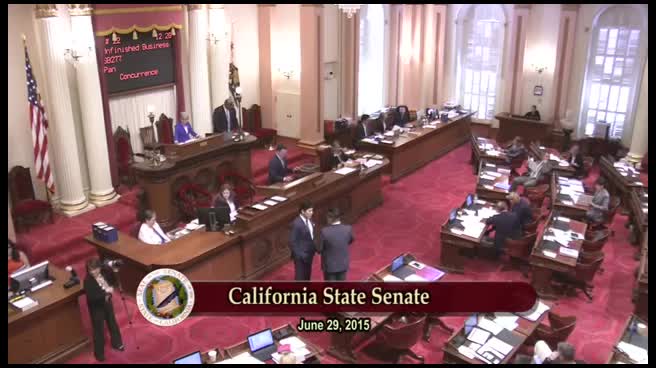 8MIN
Senate Floor
Assembly Floor
 53SEC
Assembly Floor
 4H
Assembly Standing Committee on Health
 53MIN
Senate Floor
 3H
Senate Standing Committee on Judiciary
 17MIN
Senate Standing Committee on Education
 3H
Senate Standing Committee on Education

Bill Co-Author(s):