SB 296: Medi-Cal: specialty mental health services: documentation requirements.
- Session Year: 2015-2016
- House: Senate
- Latest Version Date: 2015-08-28
Existing law provides for the Medi-Cal program, which is administered by the State Department of Health Care Services, under which qualified low-income individuals receive health care services, including specialty mental health services. The Medi-Cal program is, in part, governed and funded by federal Medicaid Program provisions. In order to facilitate the receipt of medically necessary specialty mental health services by a foster child who is placed outside of his or her county of original jurisdiction, existing law requires the department to create a standardized set of documentation standards and forms. The department is responsible for conducting investigations and audits of claims and reimbursements for expenditures for specialty mental health services provided by mental health plans to Medi-Cal eligible individuals.
This bill would require the department, in consultation with specified stakeholders, to develop a single set of service billing documentation requirements for the provision of specialty mental health services by January 1, 2017, for use commencing July 1, 2017, and would require the department to update the billing documentation requirements no less than every 2 years. The bill would generally prohibit counties from requiring additional billing documentation requirements for Medi-Cal specialty mental health services that go beyond the billing documentation requirements developed by the department.
This bill would limit the scope of the service billing documentation requirements the department may apply when conducting an audit of Medi-Cal specialty mental health services to criteria that is clearly and explicitly set forth in specified state regulations, letters, and directives, federal Medicaid terms and conditions, and the Medicaid state plan. The bill would require the department to allow counties and county contract providers of behavioral health services to incorporate by reference any information in a patients existing case record in subsequent documentation and would prohibit the department from requiring any unchanged information in a patients existing case record to be copied or reentered into specified treatment documents, unless required by a federal directive. The bill would require the department to consider further revisions to its service billing documentation requirements, and to prepare, in consultation with counties, providers, and other stakeholders, and submit to the Legislature, a proposal to accomplish those objectives, as specified.
Existing law provides for the Medi-Cal program, which is administered by the State Department of Health Care Services, under which qualified low-income individuals receive health care services, including specialty mental health services. The Medi-Cal program is, in part, governed and funded by federal Medicaid Program provisions. In order to facilitate the receipt of medically necessary specialty mental health services by a foster child who is placed outside of his or her county of original jurisdiction, existing law requires the department to create a standardized set of documentation standards and forms.
This bill would require the department, in consultation with specified stakeholders, to develop a single set of service billing documentation requirements for the provision of specialty mental health services by January 1, 2017, for use commencing July 1, 2017, and would require the department to update the billing documentation requirements no less than every 2 years. The bill would generally prohibit counties from requiring additional billing documentation requirements for Medi-Cal specialty mental health services that go beyond the billing documentation requirements developed by the department.
Existing law provides for the Medi-Cal program, which is administered by the State Department of Health Care Services, under which qualified low-income individuals receive health care services, including specialty mental health services. The Medi-Cal program is, in part, governed and funded by federal Medicaid Program provisions. In order to facilitate the receipt of medically necessary specialty mental health services by a foster child who is placed outside of his or her county of original jurisdiction, existing law requires the department to create a standardized set of documentation standards and forms.
This bill would require the department, in consultation with specified stakeholders, to develop a single set of service billing documentation requirements for the provision of specialty mental health services by January 1, 2017, for use commencing July 1, 2017, and would require the department to update the billing documentation requirements no less than every 2 years. The bill would generally prohibit counties from requiring additional billing documentation requirements for Medi-Cal specialty mental health services that go beyond the billing documentation requirements developed by the department.
Existing law provides for the Medi-Cal program, which is administered by the State Department of Health Care Services, under which qualified low-income individuals receive health care services, including specialty mental health services. The Medi-Cal program is, in part, governed and funded by federal Medicaid Program provisions. In order to facilitate the receipt of medically necessary specialty mental health services by a foster child who is placed outside of his or her county of original jurisdiction, existing law requires the department to create a standardized set of documentation standards and forms.
This bill would require the department, in consultation with specified stakeholders, to develop a single set of service documentation requirements for the provision of specialty mental health services by March 31, 2016, January 1, 2017, for use commencing July 1, 2016, 2017, and would require the department to update the documentation requirements no less than every 2 years. The bill would generally prohibit counties from requiring additional documentation requirements for Medi-Cal specialty mental health services that go beyond the documentation requirements developed by the department.
Existing law provides for the Medi-Cal program, which is administered by the State Department of Health Care Services, under which qualified low-income individuals receive health care services, including specialty mental health services. The Medi-Cal program is, in part, governed and funded by federal Medicaid Program provisions. In order to facilitate the receipt of medically necessary specialty mental health services by a foster child who is placed outside of his or her county of original jurisdiction, existing law requires the department to create a standardized set of documentation standards and forms.
This bill would require the department, in consultation with specified stakeholders, to develop a single set of service documentation requirements for the provision of specialty mental health services by March 31, 2016, for use commencing July 1, 2016, and would require the department to update the documentation requirements no less than every 2 years. The bill would generally prohibit counties from requiring additional documentation requirements for Medi-Cal specialty mental health services that go beyond the documentation requirements developed by the department.
The Legislature finds and declares all of the following:
(a)Counties and private providers that contract for service delivery estimate that over 40 cents out of every dollar spent on Medi-Cal mental health services goes to paperwork to document that the services meet federal billing standards and to avoid potential state audit disallowances.
(b)A national expert reviewed what counties in California were requiring of providers and noted that it took 20 minutes of documentation to prepare progress notes for a single session of psychotherapy, as compared to an estimated five minutes in other states.
(c)State guidelines on billing are not significantly different from the requirements of other states, however, counties have added other documentation requirements based on the fear that interpretations of the guidelines during audits may result in some services being disallowed if the additional documentation is not included.
(d)In order to eliminate this pattern, it is necessary for the State Department of Health Care Services to develop a single set of simplify and clarify documentation requirements, in consultation with counties and providers, that limits and limit audit disallowances to circumstances clearly spelled out in the requirements. advance.
SEC. 2.Section 14728 is added to the Welfare and Institutions Code, to read:14728.(a)The When conducting an audit pursuant to this chapter, the State Department of Health Care Services shall consult with counties, providers, and other stakeholders to develop a single set of service billing documentation requirements for the provision of specialty mental health services. limit the scope of any service billing documentation requirements it applies, to criteria that is clearly and explicitly set forth in any of the following:
(1)Regulations, interpretive letters, and compliance directives sent by the department to counties in a previous fiscal year.
(2)Federal terms and conditions of the Medicaid Program.
(3)The Medicaid state plan.
(b)The billing documentation requirements developed pursuant to this section shall do both of the following:
(1)Minimize time and paperwork required of counties and providers, consistent with federal standards.
(2)Eliminate duplicative or outdated requirements.
(c)The billing documentation requirements shall be completed by January 1, 2017, for use commencing on July 1, 2017, and shall thereafter be updated no less than every two years through a stakeholder process, unless changes in the Medicaid state plan or other federal rules require that the billing requirements be updated more often.
(d)After adoption of the standard billing requirements by the department, a county may not require additional billing documentation for Medi-Cal specialty mental health services that go beyond these requirements unless necessary for funding from other funding sources that are also used to pay for the services, or for purposes other than documentation for billing.
(b)An audit requirement relating to service billing documentation that is not in compliance with subdivision (a) shall be considered an advisory finding only, for which no disallowance may be made, unless and until the department modifies its regulations to make the audit requirement explicit, or provides an interpretive letter or other written clarification to counties that clearly prescribes the requirement, consistent with subdivision (a).
(c)The department shall not require a county or county contract provider of behavioral health services to copy or reenter any unchanged information from a patients existing case record into any subsequent progress note, assessment, or treatment plan for that patient, unless explicitly required by a federal directive. A regulation, interpretive letter, compliance directive, or audit requirement of the department relating to service billing documentation shall allow counties and county contract providers, when documenting a patients treatment, to incorporate by reference any information from the patients entire case record, including, but not limited to, assessments, treatment plans, evaluations, and progress notes.
(d)(1)The department shall consider further revisions to its service billing documentation requirements, to accomplish both of the following objectives:
(A)Minimize the time and paperwork required of counties and providers, consistent with federal standards.
(B)Eliminate duplicative or obsolete requirements.
(2)(A)The department shall submit a proposal to the Legislature to accomplish the objectives described in paragraph (1). The proposal shall be submitted in the same fiscal year in which the department submits to the federal Centers for Medicare and Medicaid Services its proposal to revise the billing method for mental health services from the current practice of billing by the minute to a system that provides for greater documentation streamlining, including, but not limited to, a capitated system.
(B)In preparing the proposal developed pursuant to this paragraph, the department shall consult with counties, providers, and other stakeholders.
(C)A proposal submitted to the Legislature pursuant to this paragraph shall be submitted in compliance with Section 9795 of the Government Code.
The Legislature finds and declares all of the following:
(a)Counties and private providers that contract for service delivery estimate that over 40 cents out of every dollar spent on Medi-Cal mental health services goes to paperwork to document that the services meet federal billing standards and to avoid potential state audit disallowances.
(b)A national expert reviewed what counties in California were requiring of providers and noted that it took 20 minutes of documentation to prepare progress notes for a single session of psychotherapy, as compared to an estimated five minutes in other states.
(c)State guidelines on billing are not significantly different from the requirements of other states, however, counties have added other documentation requirements based on the fear that interpretations of the guidelines during audits may result in some services being disallowed if the additional documentation is not included.
(d)In order to eliminate this pattern, it is necessary for the State Department of Health Care Services to develop a single set of documentation requirements, in consultation with counties and providers, that limits audit disallowances to circumstances clearly spelled out in the requirements.
SEC. 2.Section 14727 14728 is added to the Welfare and Institutions Code, immediately following Section 14726, to read:14727.14728.(a)The State Department of Health Care Services shall consult with counties, providers, and other stakeholders to develop a single set of service billing documentation requirements for the provision of specialty mental health services.
(b)The billing documentation requirements developed pursuant to this section shall do both of the following:
(1)Minimize time and paperwork required of counties and providers, consistent with federal standards.
(2)Eliminate duplicative or outdated requirements.
(c)The billing documentation requirements shall be completed by January 1, 2017, for use commencing on July 1, 2017, and shall thereafter be updated no less than every two years through a stakeholder process, unless changes in the Medicaid state plan or other federal rules require that the billing requirements be updated more often.
(d)After adoption of the standard billing requirements by the department, a county may not require additional billing documentation for Medi-Cal specialty mental health services that go beyond these requirements unless necessary for funding from other funding sources that are also used to pay for the services, or for purposes other than documentation for billing.
The Legislature finds and declares all of the following:
(a)Counties and private providers that contract for service delivery estimate that over 40 cents out of every dollar spent on Medi-Cal mental health services goes to paperwork to document that the services meet federal billing standards and to avoid potential state audit disallowances.
(b)A national expert reviewed what counties in California were requiring of providers and noted that it took 20 minutes of documentation to prepare progress notes for a single session of psychotherapy, as compared to an estimated five minutes in other states.
(c)State guidelines on billing are not significantly different from the requirements of other states, however, counties have added other documentation requirements based on the fear that interpretations of the guidelines during audits may result in some services being disallowed if the additional documentation is not included.
(d)In order to eliminate this pattern, it is necessary for the State Department of Health Care Services to develop a single set of documentation requirements, in consultation with counties and providers, that limits audit disallowances to circumstances clearly spelled out in the requirements.
SEC. 2.Section 14727 is added to the Welfare and Institutions Code, immediately following Section 14726, to read:14727.(a)The State Department of Health Care Services shall consult with counties, providers, national experts, other states, and other stakeholders to develop a single set of service billing documentation requirements for the provision of specialty mental health services.
(b)The billing documentation requirements developed pursuant to this section shall do all both of the following:
(1)Minimize time and paperwork required of counties and providers, consistent with federal standards and practices of other states. standards.
(2)Eliminate duplicative or outdated requirements.
(3)Reflect outcome reporting requirements developed pursuant to the performance outcome system for Early and Periodic Screening, Diagnosis, and Treatment mental health services developed pursuant to Section 14707.5.
(c)The billing documentation requirements shall be completed by January 1, 2017, for use commencing on July 1, 2017, and shall thereafter be updated no less than every two years through a stakeholder process, unless changes in the state Medi-Cal Medicaid state plan or other federal rules require that the billing requirements be updated more often.
(d)After adoption of the standard billing requirements by the department, a county may not require additional billing documentation for Medi-Cal specialty mental health services that go beyond these requirements unless necessary for funding from other funding sources that are also used to pay for the services. services, or for purposes other than documentation for billing.
The Legislature finds and declares all of the following:
(a)Counties and private providers that contract for service delivery estimate that over 40 cents out of every dollar spent on Medi-Cal mental health services goes to paperwork to document that the services meet federal billing standards and to avoid potential state audit disallowances.
(b)A national expert reviewed what counties in California were requiring of providers and noted that it took 20 minutes of documentation to prepare progress notes for a single session of psychotherapy, as compared to an estimated five minutes in other states.
(c)State guidelines on billing are not significantly different from the requirements of other states, however, counties have added other documentation requirements based on the fear that interpretations of the guidelines during audits may result in some services being disallowed if the additional documentation is not included.
(d)In order to eliminate this pattern, it is necessary for the State Department of Health Care Services to develop a single set of documentation requirements, in consultation with counties and providers, that limits audit disallowances to circumstances clearly spelled out in the requirements.
SEC. 2.Section 14727 is added to the Welfare and Institutions Code, immediately following Section 14726, to read:14727.(a)The State Department of Health Care Services shall consult with counties, providers, national experts, other states, and other stakeholders to develop a single set of service documentation requirements for the provision of specialty mental health services.
(b)The documentation requirements developed pursuant to this section shall do all of the following:
(1)Minimize time and paperwork required of counties and providers, consistent with federal standards and practices of other states.
(2)Eliminate duplicative or outdated requirements.
(3)Reflect outcome reporting requirements developed pursuant to the performance outcome system for Early and Periodic Screening, Diagnosis, and Treatment mental health services developed pursuant to Section 14707.5.
(c)The documentation requirements shall be completed by March 31, 2016, January 1, 2017, for use commencing on July 1, 2016, 2017, and shall thereafter be updated no less than every two years through a stakeholder process, unless changes in the state Medi-Cal plan or other federal rules require that the requirements be updated more often.
(d)After adoption of the standard requirements by the department, a county may not require additional documentation for Medi-Cal specialty mental health services that go beyond these requirements unless necessary for funding from other funding sources that are also used to pay for the services.
The Legislature finds and declares all of the following:
(a)Counties and private providers that contract for service delivery estimate that over 40 cents out of every dollar spent on Medi-Cal mental health services goes to paperwork to document that the services meet federal billing standards and to avoid potential state audit disallowances.
(b)A national expert reviewed what counties in California were requiring of providers and noted that it took 20 minutes of documentation to prepare progress notes for a single session of psychotherapy, as compared to an estimated five minutes in other states.
(c)State guidelines on billing are not significantly different from the requirements of other states, however, counties have added other documentation requirements based on the fear that interpretations of the guidelines during audits may result in some services being disallowed if the additional documentation is not included.
(d)In order to eliminate this pattern, it is necessary for the State Department of Health Care Services to develop a single set of documentation requirements, in consultation with counties and providers, that limits audit disallowances to circumstances clearly spelled out in the requirements.
SEC. 2.Section 14727 is added to the Welfare and Institutions Code, immediately following Section 14726, to read:14727.(a)The State Department of Health Care Services shall consult with counties, providers, national experts, other states, and other stakeholders to develop a single set of service documentation requirements for the provision of specialty mental health services.
(b)The documentation requirements developed pursuant to this section shall do all of the following:
(1)Minimize time and paperwork required of counties and providers, consistent with federal standards and practices of other states.
(2)Eliminate duplicative or outdated requirements.
(3)Reflect outcome reporting requirements developed pursuant to the performance outcome system for Early and Periodic Screening, Diagnosis, and Treatment mental health services developed pursuant to Section 14707.5.
(c)The documentation requirements shall be completed by March 31, 2016, for use commencing on July 1, 2016, and shall thereafter be updated no less than every two years through a stakeholder process, unless changes in the state Medi-Cal plan or other federal rules require that the requirements be updated more often.
(d)After adoption of the standard requirements by the department, a county may not require additional documentation for Medi-Cal specialty mental health services that go beyond these requirements unless necessary for funding from other funding sources that are also used to pay for the services.
|
Date
|
Status
|
|---|---|
| Jun 1, 2015 | Read third time. Passed. (Ayes 40. Noes 0. Page 1199.) Ordered to the Assembly. |
| Sep 8, 2015 | Ordered to inactive file on request of Senator Cannella. |
| Sep 2, 2015 | Read third time. Passed. (Ayes 79. Noes 0. Page 2794.) Ordered to the Senate. |
| Sep 2, 2015 | Read third time. Passed. Ordered to the Senate. |
| Sep 2, 2015 | In Senate. Concurrence in Assembly amendments pending. |
| Aug 31, 2015 | Read second time. Ordered to third reading. |
| Aug 28, 2015 | Read second time and amended. Ordered to second reading. |
| Aug 28, 2015 | From committee: Do pass as amended. (Ayes 17. Noes 0.) (August 27). |
| Jul 15, 2015 | July 15 set for first hearing. Placed on APPR. suspense file. |
| Jul 2, 2015 | Read second time and amended. Re-referred to Com. on APPR. |
| Jul 1, 2015 | From committee: Do pass as amended and re-refer to Com. on APPR. with recommendation: To consent calendar. (Ayes 18. Noes 0.) (June 30). |
| Jun 15, 2015 | Referred to Com. on HEALTH. |
| Jun 2, 2015 | In Assembly. Read first time. Held at Desk. |
| Jun 1, 2015 | Read third time. Passed. (Ayes 40. Noes 0.) Ordered to the Assembly. |
| Feb 23, 2015 | Introduced. Read first time. To Com. on RLS. for assignment. To print. |
| May 28, 2015 | Read second time. Ordered to third reading. |
| May 28, 2015 | From committee: Do pass. (Ayes 7. Noes 0.) (May 28). |
| May 28, 2015 | From committee: Do pass. (Ayes 7. Noes 0. Page 1151.) (May 28). |
| May 23, 2015 | Set for hearing May 28. |
| May 4, 2015 | May 4 hearing: Placed on APPR. suspense file. |
| Apr 24, 2015 | Set for hearing May 4. |
| Apr 20, 2015 | Read second time and amended. Re-referred to Com. on APPR. |
| Apr 16, 2015 | From committee: Do pass as amended and re-refer to Com. on APPR. (Ayes 9. Noes 0. Page 651.) (April 15). |
| Apr 7, 2015 | From committee with author's amendments. Read second time and amended. Re-referred to Com. on HEALTH. |
| Mar 27, 2015 | Set for hearing April 15. |
| Mar 5, 2015 | Referred to Com. on HEALTH. |
| Feb 24, 2015 | From printer. May be acted upon on or after March 26. |
|
Date
|
Description
|
Location
|
Votes
|
|
|---|---|---|---|---|
| Sep 2, 2015 | SB 296 Cannella Senate Third Reading By WOOD | Assembly Floor |
Passed |
|
| Aug 27, 2015 | Do pass as amended. | Assembly Standing Committee on Appropriations |
Passed |
|
| Jun 30, 2015 | Do pass as amended, and be re-referred to the Committee on [Appropriations] with recommendation: To Consent Calendar | Assembly Standing Committee on Health |
Passed |
|
| Jun 1, 2015 | Senate 3rd Reading SB296 Cannella | Senate Floor |
Passed |
|
| May 28, 2015 | Do pass | Senate Standing Committee on Appropriations |
Passed |
|
| May 4, 2015 | Placed on suspense file | Senate Standing Committee on Appropriations |
Passed |
|
| Apr 15, 2015 | Do pass as amended, but first amend, and re-refer to the Committee on [Appropriations] | Senate Standing Committee on Health |
Passed |
This list shows positions taken on this bill by organizations on the date displayed, which is linked to the original source.
Positions by individuals are not included.
|
Organization
|
Position
|
Date
|
|---|---|---|
| California Chapter of the American College of Emergency Physicians | ** Support | Sep 2, 2015 |
| California Coalition for Mental Health | ** Support | Sep 2, 2015 |
| California Council Of Community Mental Health Agencies | ** Support | Sep 2, 2015 |
| Department Of Finance | ** Against | Sep 2, 2015 |
| Mental Health America of California | ** Support | Sep 2, 2015 |
| Pacific Clinics | ** Support | Sep 2, 2015 |
| Pacific Clinics Advancing Behavioral Healthcare | ** Support | Sep 2, 2015 |
| Steinberg Institute | ** Support | Sep 2, 2015 |
SB 296
Page 7
|
Office of Senate Floor Analyses (916) 651-1520 Fax: (916) 327-4478 |
UNFINISHED BUSINESS
Bill No: SB 296
Amended: 8/28/15
SENATE HEALTH COMMITTEE: 9-0, 4/15/15
AYES: Hernandez, Nguyen, Hall, Mitchell, Monning, Nielsen, Pan, Roth, Wolk
SENATE APPROPRIATIONS COMMITTEE: 7-0, 5/28/15
AYES: Lara, Bates, Beall, Hill, Leyva, Mendoza, Nielsen
SENATE FLOOR: 40-0, 6/1/15
AYES: Allen, Anderson, Bates, Beall, Berryhill, Block, Cannella, De León, Fuller, Gaines, Galgiani, Glazer, Hall, Hancock, Hernandez, Hertzberg, Hill, Hueso, Huff, Jackson, Lara, Leno, Leyva, Liu, McGuire, Mendoza, Mitchell, Monning, Moorlach, Morrell, Nguyen, Nielsen, Pan, Pavley, Roth, Runner, Stone, Vidak, Wieckowski, Wolk
ASSEMBLY FLOOR: 79-0, 9/2/15 - See last page for vote
SUBJECT: Medi-Cal: specialty mental health services: documentation requirements
SOURCE: California Council of Community Mental Health Agencies
DIGEST: This bill limits the scope of the service billing documentation requirements that the Department of Health Care Services (DHCS) may apply when conducting an audit of Medi-Cal specialty mental health (SMH) services, as specified. This bill also requires DHCS to consider further revisions to its service billing documentation requirements and to prepare, in consultation with counties, providers, and other stakeholders, and to submit to the Legislature a proposal to accomplish specified objectives.
Assembly Amendments delete the requirement for DHCS to develop a single set of service billing documentation requirements, after consulting counties, providers, and other stakeholders, and instead require DHCS to limit the scope of service billing documentation requirements, when auditing Medi-Cal SMH services, to criteria specified in state regulations, letters, and directives; federal Medicaid terms and conditions; and in the state’s Medicaid State Plan.
Existing law:
Establishes the Medi-Cal program, administered by DHCS, under which qualified low-income individuals receive health care services.
Requires DHCS to create a standardized set of documentation standards and forms in order to facilitate the receipt of medically necessary SMH services by a foster child who is placed outside of his or her county of original jurisdiction.
This bill:
Requires DHCS to limit the scope of any service billing documentation requirements to criteria clearly and explicitly set forth in any of the following: a) regulations, interpretive letters, and compliance directives sent by DHCS to counties in a previous fiscal year; b) federal terms and conditions of the Medicaid Program; and c) the Medicaid State Plan.
Requires an audit requirement that does not meet the criteria in 1) above to be considered an advisory finding only for which no disallowance can be made, unless DHCS modifies its regulations to make the audit requirement explicit, or provides an interpretive letter or other written clarification to counties that clearly prescribes the requirement.
Prohibits DHCS from requiring a county or county contract provider to copy or reenter any unchanged information from a patient’s existing care record into any subsequent progress note, assessment, or treatment plan for that patient, unless explicitly required by a federal directive.
Requires a DHCS regulation, interpretive letter, compliance directive, or audit requirement relating to service billing documentation to allow counties and county contract providers, when documenting a patient’s treatment, to incorporate by reference any information from the patient’s entire case record, including, but not limited to, assessments, treatment plans, evaluations, and progress notes.
Requires DHCS to consider further revisions to its service billing documentation requirements to minimize the time and paperwork required of counties and providers, consistent with federal standards, and to eliminate duplicative or obsolete requirements.
Requires DHCS to submit a proposal to the Legislature, to accomplish the requirements in 5) above, in the same fiscal year that DHCS submits to the federal Centers for Medicare and Medicaid Services (CMS) its proposal to revise the billing method for mental health services from the current practice of billing by the minute to a system that provides for greater documentation streamlining, including, but not limited to, a capitated system. Requires DHCS, in preparing the proposal, to consult with counties, providers, and other stakeholders.
Comments
Author’s statement. According to the author, SB 296 is necessary because it would get rid of the concern from mental health officials and the community agencies they contract with that the state’s interpretation of the guidelines in audits might disallow some services if the additional documentation were not included. While the state guidelines on billing are not much different from other states, counties have added so many requirements that it takes up to 20 minutes of documentation to prepare progress notes on things like psychotherapy, while in other states it takes five minutes. This costs manpower and money to the state and counties. SB 296 would end this pattern by creating a single set of documentation requirements developed by the state, in consultation with counties and providers, that limits audit disallowances to circumstances clearly spelled out in the requirements, and is designed to be the minimum documentation requirements necessary to comply with federal law and other applicable state laws.
CMS requirements for reimbursement. Behavioral health services must meet specific requirements for reimbursement. Documented services must:
Meet that state’s Medicaid program rules;
To the extent required under state law, reflect medical necessity and justify the treatment and clinical rationale (each state adopts its own medical necessity definition);
To the extent required under state law, reflect active treatment;
Be complete, concise, and accurate, including the face-to-face time spent with the patient (for example, the time spent to complete a psychosocial assessment, a treatment plan, or a discharge plan);
Be legible, signed, and dated;
Be maintained and available for review; and,
Be coded correctly for billing purposes.
CMS states that a reason for documenting medical services is to comply with federal and state laws, which require proper support for billed claims. In addition, CMS states that documentation done well can help protect a behavioral health practitioner from billing disallowances.
State SMH service reimbursement. In order to receive reimbursement for SMH services, the current contracts that counties have with the state require medical necessity to be met for the service as documented on an assessment with an International Classification of Diseases or Diagnostic and Statistical Manual of Mental Disorders diagnosis, a treatment plan with objectives/interventions and client participation, and progress notes with the intervention and response of the client. According to the County Behavioral Health Directors Association of California (CBHDAC), counties, as the contracting entity with mental health plans (MHPs), need to have the ability to impose greater documentation to meet requirements based on:
The need for authorization or the need for service;
Risk, (e.g. the Los Angeles County Blue Ribbon Commission mandate to assess for self-harm vulnerability risk);
The need for ongoing flex funds for a particular client; or
Documentation-related practice mandates (entering data into the Managing and Adapting Practice [MAP] database dashboard at the end of each MAP session).
If counties have additional documentation requirements, according to CBHDAC, it is usually based on other funding requirements and/or special interests by the boards of supervisors, Blue Ribbon Commissions, courts, or other state departments.
DHCS billing disallowances. In a presentation document DHCS shared at the California Mental Health Directors Association All Directors Meeting on January 9, 2014, DHCS noted that in Fiscal Years (FY) 2007-2013, disallowance rates for outpatient chart reviews of a sampling of MHPs increased, with the most notable increase occurring between FYs 2011-12 (26%) and 2012-2013 (36%). DHCS noted that the increase may have been attributed to the inclusion of children/adolescents data in the sample. Prior to FY 2011-12, the triennial outpatient chart samples consisted of adults only, and there were separate Early and Periodic Screening, Diagnostic, and Treatment chart audits conducted. In addition, with the inclusion of children/adolescents and the resulting Day Treatment Intensive (DTI) and Day Rehabilitation (DR) paid claims in the same sample, DHCS notes that the disallowance rates increased. DHCS’s presentation document also noted that 90% of the DTI and DR claims were disallowed in FY 2011‑12. Primary reasons for disallowances were due to provider documentation error, such as lack of required service components, no documentation of attendance, absence of required progress notes, medical necessity not substantiated, and not meeting program Medi-Cal certification requirements.
Lack of evidence-based/best practice service provision for behavioral health. The Technical Assistance Collaborative/Human Services Research Institute’s final report in February 2012, California Mental Health and Substance Use System Needs Assessment, notes that the percent of individuals reported to be receiving an evidence-based practice service was low: only one percent in 2010, down from two percent in 2009. It also notes that there is a variability among counties in the use and training of staff in state-of-the-art and evidence-based and recovery-oriented treatment; there is a need to address better preparation of physical health providers to engage and treat people with behavioral health needs; and there is still disproportionate access to behavioral health services on the part of certain ethnic populations—compounded by the relative lack of cultural/linguistic capacity among providers and practitioners in the state.
Opposition. The opposition listed below is based upon the previous version.
FISCAL EFFECT: Appropriation: No Fiscal Com.: Yes Local: No
According to the Assembly Appropriations Committee, potential administrative staff costs to DHCS in the range of several hundred thousand dollars in staff costs for at least one to two years.
California Council of Community Mental Health Agencies (source)
American Association for Marriage and Family Therapy California Division
California Chapter of the American College of Emergency Physicians
California Coalition for Mental Health
Mental Health America of California
Pacific Clinics
Steinberg Institute
Department of Finance
ARGUMENTS IN SUPPORT: Supporters of this bill argue that paperwork reduction is one great way of increasing the efficiency of the health care system while helping to improve outcomes. The California Chapter of the American College of Emergency Physicians states that individual counties across the state have their own documentation requirements, adding substantially to the amount of time Medi-Cal providers spend documenting their services. The American Association for Marriage and Family Therapy California Division argues that paperwork overload contributes to workplace fatigue and that this bill will improve the morale of mental health workers.
ASSEMBLY FLOOR: 79-0, 9/2/15
AYES: Achadjian, Alejo, Travis Allen, Baker, Bigelow, Bloom, Bonilla, Bonta, Brough, Brown, Burke, Calderon, Campos, Chang, Chau, Chávez, Chiu, Chu, Cooley, Cooper, Dababneh, Dahle, Daly, Dodd, Eggman, Frazier, Beth Gaines, Gallagher, Cristina Garcia, Eduardo Garcia, Gatto, Gipson, Gomez, Gonzalez, Gordon, Gray, Grove, Hadley, Harper, Roger Hernández, Holden, Irwin, Jones, Kim, Lackey, Levine, Linder, Lopez, Low, Maienschein, Mathis, Mayes, McCarty, Medina, Melendez, Mullin, Nazarian, Obernolte, O'Donnell, Olsen, Patterson, Perea, Quirk, Rendon, Ridley-Thomas, Rodriguez, Salas, Santiago, Steinorth, Mark Stone, Thurmond, Ting, Wagner, Waldron, Weber, Wilk, Williams, Wood, Atkins
NO VOTE RECORDED: Jones-Sawyer
Prepared by: Reyes Diaz / HEALTH /
9/2/15 18:56:24
**** END ****
SB 296
Page 2
SENATE THIRD READING
SB 296
(Cannella)
As Amended August 28, 2015
Majority vote
SENATE VOTE: 40-0
Committee |
Votes |
Ayes |
Noes |
Health |
18-0 |
Bonta, Maienschein, Bonilla, Burke, Chiu, Gomez, Gonzalez, Roger Hernández, Lackey, McCarty, Nazarian, Patterson, Ridley-Thomas, Rodriguez, Steinorth, Thurmond, Waldron, Wood |
|
Appropriations |
17-0 |
Gomez, Bigelow, Bloom, Bonta, Calderon, Chang, Nazarian, Eggman, Gallagher, Eduardo Garcia, Holden, Jones, Quirk, Rendon, Wagner, Weber, Wood |
|
SUMMARY: Requires the Department of Health Care Services (DHCS) to clarify and simplify documentation requirements when conducting an audit of claims and reimbursements for expenditures for specialty mental health services provided by mental health plans to Medi-Cal eligible individuals, with consultation from various entities as specified, for the provision of specialty mental health (SMH) services by January 1, 2017, for use commencing July 1, 2017.
FISCAL EFFECT: According to the Assembly Appropriations Committee, potential administrative staff costs to DHCS in the range of several hundred thousand dollars in staff costs for at least one to two years.
COMMENTS: According to the author, this bill is necessary because it would address concerns of mental health officials and the community agencies they contract with that the state's interpretation of the guidelines in audits might disallow some services if the additional documentation were not included. The author further states that while the state guidelines on billing are not much different from other states, counties have added so many requirements that it takes up to 20 minutes of documentation to prepare progress notes on things like psychotherapy, while in other states it takes five minutes. This costs manpower and money to the state and counties. The author concludes that this bill would end this pattern by creating a single set of documentation requirements developed by the state, in consultation with counties and providers, that should limit audit disallowances and is designed to be the minimum documentation requirements necessary to comply with federal law and other applicable state laws.
Specialty Mental Health 1915(b) waiver. Specialty Medi-Cal mental health services are provided under the terms of the federal Medicaid Medi-Cal Specialty Mental Health Services Consolidation 1915(b) waiver program. The waiver established a managed care program for specialty mental health services separate from the overall Medi-Cal program. Medi-Cal beneficiaries must receive specialty mental health services though county-operated mental health plans (MHPs). County MHPs provide services directly or through contracts in the local community using a combination of county funds, realignment revenues and Mental Health Services Act funds. Counties pay for services locally, incurring certified public expenditures, which the state then uses as the state match to claim federal Medicaid reimbursement and the state, in turn, returns the federal funds to the county MHPs.
During regular monitoring and in ongoing communications, the Centers for Medicare and Medicaid Services (CMS) has asked questions on specific areas of the SMH waiver. CMS reviews MHP triennial and External Quality Review Organization reports and raised concern about the findings and continued noncompliance with specific waiver requirements. CMS believes that significant improvement is needed in identified areas and expects the state to closely monitor, ensure, and provide evidence of compliance. In addition to a number of identified areas of focus, CMS has expressed concern about the ongoing elevated inpatient and outpatient disallowance rates resulting from chart reviews (i.e., disallowed claims under the Medi-Cal program). Due to past deficiencies, CMS is requiring the state to provide oversight to ensure that the Medi-Cal claims submitted by MHPs for SMH services meet medical necessity criteria for reimbursement and that the documentation in the medical records provided contains the required evidence of medical necessity. CMS has requested that DHCS explore establishing a process to enact fines, sanctions and penalties, or corrective actions as a way to ensure compliance.
The sponsors of this bill, California Council of Community Mental Health Agencies, state that paperwork reduction is one great way of increasing the efficiency of our health care system while actually helping to improve outcomes. The sponsors state that this bill achieves that by requiring DHCS to develop a single set of service documentation requirements for the provision of SMH services. The California Chapter of the American College of Emergency Physicians state in support of this bill that individual counties across the state have their own documentation requirements, adding substantially to the amount of time Medi-Cal providers spend documenting their services. The American Association for Marriage and Family Therapy California Division argues that paperwork overload contributes to workplace fatigue and that this bill will improve the morale of mental health workers.
There is no known opposition.
Analysis Prepared by: Paula Villescaz / HEALTH / (916) 319-2097 FN: 0001953
Date of Hearing: July 15, 2015
ASSEMBLY COMMITTEE ON APPROPRIATIONS
Jimmy Gomez, Chair
SB 296
(Cannella) – As Amended July 2, 2015
Policy Committee: |
Health |
Vote: |
18 - 0 |
|
|
|
|
|
|
|
|
Urgency: No State Mandated Local Program: No Reimbursable: No
SUMMARY:
This bill requires the Department of Health Care Services (DHCS) to develop a single set of billing documentation standards, with consultation from various entities as specified, for the provision of Medi-Cal specialty mental health (SMH) services by January 1, 2017, for use commencing July 1, 2017. Specifically, this bill:
Requires standards to minimize time and paperwork required of counties and providers.
Requires DHCS to update the standards every two years through a stakeholder process.
After adoption of standards, prohibits counties from requiring additional billing documentation for SMH services that go beyond these standards, unless the documentation is necessary for funding from other funding sources, or for purposes other than for billing documentation.
FISCAL EFFECT:
This bill is estimated to result in administrative staff costs to DHCS in the range of $850,000 ($320,000 GF/remainder federal) for at least two years, and possibly three years depending on implementation timing. DHCS currently conducts some activities to ensure consistency across counties, but the bill will require a more comprehensive effort, including modifying contracts and promulgating regulations.
COMMENTS:
Purpose. This bill is intended to streamline administrative requirements associated with billing for SMH services in Medi-Cal. This bill will create a single minimum set of documentation requirements developed by the state that is designed to limit audit disallowances. This bill is sponsored by the California Council of Community Mental Health Agencies, a membership organization of non-profit mental health agencies, many of whom contract with counties to provide SMH services.
Background. Pursuant to a federal waiver, SMH services are provided by county-run mental health plans. The state's 2011 realignment made counties fully responsible for funding these services as well. However, DHCS retains oversight over the system as the responsible state agency, and audits and disallows claims as part of that effort. This bill attempts to address high rates of disallowances, and reduce administrative effort, by simplifying billing. Analysis Prepared by: Lisa Murawski / APPR. / (916) 319-2081
SB 296
Page 4
Date of Hearing: June 30, 2015
ASSEMBLY COMMITTEE ON HEALTH
Rob Bonta, Chair
SB 296
(Cannella) – As Amended April 20, 2015
SENATE VOTE: 40-0
SUBJECT: Medi-Cal: specialty mental health services: documentation requirements.
SUMMARY: Requires the Department of Health Care Services (DHCS) to develop a single set of billing documentation requirements, with consultation from various entities as specified, for the provision of specialty mental health (SMH) services by January 1, 2017, for use commencing July 1, 2017. Specifically, this bill:
Requires DHCS to consult with counties, providers, and other stakeholders to develop the billing documentation requirements,
Requires that the billing documentation requirements:
Minimize time and paperwork required of counties and providers
Are consistent with federal law
Eliminate duplicative or outdated requirements
Prohibits a county from requiring additional billing documentation for Medi-Cal SMH services after the standards required by this bill are adopted.
EXISTING LAW:
Establishes the Medi-Cal program, administered by DHCS, under which qualified low-income individuals receive health care services.
Establishes, under the terms of a federal Medicaid waiver, a managed care program providing Medi-Cal SMH services for eligible low-income persons administered through local county mental health plans (MHPs) under contract with the state.
Requires DHCS to create a standardized set of documentation standards and forms in order to facilitate the receipt of medically necessary SMH services by a foster child who is placed outside of his or her county of original jurisdiction.
FISCAL EFFECT: According to the Senate Appropriations Committee, likely one-time costs up to $150,000 to consult with stakeholders, develop the documentation guidelines, and adopt regulations (General Fund and federal funds).
COMMENTS:
PURPOSE OF THIS BILL. According to the author, this bill is necessary because it would address concerns of mental health officials and the community agencies they contract with that the state’s interpretation of the guidelines in audits might disallow some services if the additional documentation were not included. The author further states that while the state guidelines on billing are not much different from other states, counties have added so many requirements that it takes up to 20 minutes of documentation to prepare progress notes on things like psychotherapy, while in other states it takes five minutes. This costs manpower and money to the state and counties. The author concludes that this bill would end this pattern by creating a single set of documentation requirements developed by the state, in consultation with counties and providers, that should limit audit disallowances and is designed to be the minimum documentation requirements necessary to comply with federal law and other applicable state laws.
BACKGROUND.
Specialty Mental Health 1915(b) waiver. Specialty Medi-Cal mental health services are provided under the terms of the federal Medicaid Medi-Cal Specialty Mental Health Services Consolidation 1915(b) waiver program. The waiver established a managed care program for specialty mental health services separate from the overall Medi-Cal program. Medi-Cal beneficiaries must receive specialty mental health services though county-operated MHPs. County MHPs provide services directly or through contracts in the local community using a combination of county funds, realignment revenues and Mental Health Services Act funds. Counties pay for services locally, incurring certified public expenditures, which the state then uses as the state match to claim federal Medicaid reimbursement and the state, in turn, returns the federal funds to the county MHPs. The Medi-Cal Specialty Mental Health Services Consolidation waiver has been in place since the mid-1990s and was just submitted for renewal by DHCS to the Centers for Medicare and Medicaid Services for a new five-year term, from July 1, 2015, through June 30, 2020.
During regular monitoring and in ongoing communications, CMS has asked questions on specific areas of the SMH waiver. CMS reviews MHP triennial and External Quality Review Organization reports and raised concern about the findings and continued noncompliance with specific waiver requirements. CMS believes that significant improvement is needed in identified areas and expects the state to closely monitor, ensure, and provide evidence of compliance. In addition to a number of identified areas of focus, CMS has expressed concern about the ongoing elevated inpatient and outpatient disallowance rates resulting from chart reviews (i.e., disallowed claims under the Medi-Cal program). Due to past deficiencies, CMS is requiring the state to provide oversight to ensure that the Medi-Cal claims submitted by MHPs for SMH services meet medical necessity criteria for reimbursement and that the documentation in the medical records provided contains the required evidence of medical necessity. CMS has requested that DHCS explore establishing a process to enact fines, sanctions and penalties, or corrective actions as a way to ensure compliance.State SMH service reimbursement. In order to receive reimbursement for SMH services, the current contracts that counties have with the state require medical necessity to be met for the service as documented on an assessment with a diagnosis, a treatment plan with objectives/interventions and client participation, and progress notes with the intervention and response of the client. According to the County Behavioral Health Directors Association of California (CBHDAC), counties, as the contracting entity with mental health plans (MHPs), need to have the ability to impose greater documentation to meet requirements based on:
The need for authorization or the need for service;
Risk (e.g. the Los Angeles County Blue Ribbon Commission mandate to assess for self-harm vulnerability risk);
The need for ongoing flex funds for a particular client; or,
Documentation-related practice mandates (entering data into the Managing and Adapting Practice [MAP] database dashboard at the end of each MAP session).
If counties have additional documentation requirements, according to CBHDAC, it is usually based on other funding requirements and/or special interests by the boards of supervisors, Blue Ribbon Commissions, courts, or other state departments.
DHCS billing disallowances. In a presentation document DHCS shared at the California Mental Health Directors Association All Directors Meeting on January 9, 2014, DHCS noted that in fiscal years (FY) 2007-13, disallowance rates for outpatient chart reviews of a sampling of MHPs increased, with the most notable increase occurring between FYs 2011-12 (26%) and 2012-13 (36%). DHCS noted that the increase may have been attributed to the inclusion of children/adolescents data in the sample. Prior to FY 2011-12, the triennial outpatient chart samples consisted of adults only, and there were separate Early and Periodic Screening, Diagnosis, and Treatment (EPSDT) chart audits conducted. In addition, with the inclusion of children/adolescents and the resulting Day Treatment Intensive (DTI) and Day Rehabilitation (DR) paid claims in the same sample, DHCS notes that the disallowance rates increased. DHCS’s presentation document also noted that 90% of the DTI and DR claims were disallowed in FY 2011-12. Primary reasons for disallowances were due to provider documentation error, such as lack of required service components, no documentation of attendance, absence of required progress notes, medical necessity not substantiated, and not meeting program Medi-Cal certification requirements.
SUPPORT. The sponsors of the bill, California Council of Community Mental Health Agencies, state that paperwork reduction is one great way of increasing the efficiency of our health care system while actually helping to improve outcomes. The sponsors state that this bill achieves that by requiring DHCS to develop a single set of service documentation requirements for the provision of SMH services. The California Chapter of the American College of Emergency Physicians state in support of this bill that individual counties across the state have their own documentation requirements, adding substantially to the amount of time Medi-Cal providers spend documenting their services. The American Association for Marriage and Family Therapy California Division argues that paperwork overload contributes to workplace fatigue and that this bill will improve the morale of mental health workers.
RELATED LEGISLATION.
AB 1018 (Cooper) requires DHCS and the California Department of Education to convene a joint task force to examine the delivery of mental health services to children eligible for EPSDT services and for services required by the federal Individuals with Disabilities Education Act. AB 1018 is pending in the Senate Education Committee.
AB 1299 (Ridley-Thomas) transfers responsibility for providing or arranging mental health services for foster youth from the county of original jurisdiction to the foster child’s county of residence. This bill is pending in the Senate Human Services Committee.
AMENDMENTS. The Committee suggests technical amendments to address a code conflict with AB 1018 (Cooper).
REGISTERED SUPPORT / OPPOSITION:
Support
California Council of Community Mental Health Agencies (sponsor)
American Association for Marriage and Family Therapy, California Division
California Chapter of the American College of Emergency Physicians
California Coalition for Mental Health
Mental Health America of California
Pacific Clinics Advancing Behavioral Healthcare
Steinberg Institute
Opposition
None on file.
Analysis Prepared by: Paula Villescaz / HEALTH / (916) 319-2097
SB 296
Page 6
|
Office of Senate Floor Analyses (916) 651-1520 Fax: (916) 327-4478 |
THIRD READING
Bill No: SB 296
Amended: 4/20/15
SENATE HEALTH COMMITTEE: 9-0, 4/15/15
AYES: Hernandez, Nguyen, Hall, Mitchell, Monning, Nielsen, Pan, Roth, Wolk
SENATE APPROPRIATIONS COMMITTEE: 7-0, 5/28/15
AYES: Lara, Bates, Beall, Hill, Leyva, Mendoza, Nielsen
SUBJECT: Medi-Cal: specialty mental health services: documentation requirements
SOURCE: California Council of Community Mental Health Agencies
DIGEST: This bill requires the Department of Health Care Services (DHCS) to develop a single set of billing documentation requirements, with consultation from various entities as specified, for the provision of specialty mental health (SMH) services by January 1, 2017, for use commencing July 1, 2017. Requires DHCS to update the billing documentation requirements no less than every two years, unless more frequent updating is required, as specified. Prohibits counties from requiring additional billing documentation for SMH services, unless required by funding sources.
Existing law:
Establishes the Medi-Cal program, administered by DHCS, under which qualified low-income individuals receive health care services.
Requires DHCS to create a standardized set of documentation standards and forms in order to facilitate the receipt of medically necessary SMH services by a foster child who is placed outside of his or her county of original jurisdiction.
This bill:
Requires DHCS to consult with counties, providers, and other stakeholders to develop a single set of service billing documentation requirements for the provision of SMH services.
Requires the billing documentation requirements to: a) minimize time and paperwork required of counties and providers consistent with federal standards and b) eliminate duplicative or outdated requirements.
Requires DHCS to complete the billing documentation requirements by January 1, 2017, for use commencing July 1, 2017, and to update the billing documentation requirements no less than every two years through a stakeholder process, unless changes in the Medicaid state plan or other federal rules require more frequent updating.
Prohibits a county from requiring additional billing documentation, after DHCS adopts the standard billing requirements, for SMH services that go beyond DHCS’s billing requirements unless necessary for funding from other funding sources that are also used to pay for the services, or for purposes other than documentation for billing.
Makes findings and declarations about the amount of time paperwork documentation takes in the state because counties have added documentation requirements based on the fear that state audits will result in billing disallowances. States the necessity for DHCS to develop a single set of documentation requirements to limit audit disallowances.
Comments:
Author’s statement. According to the author, SB 296 is necessary because it would get rid of the concern from mental health officials and the community agencies they contract with that the state’s interpretation of the guidelines in audits might disallow some services if the additional documentation were not included. While the state guidelines on billing are not much different from other states, counties have added so many requirements that it takes up to 20 minutes of documentation to prepare progress notes on things like psychotherapy, while in other states it takes five minutes. This costs manpower and money to the state and counties. SB 296 would end this pattern by creating a single set of documentation requirements developed by the state, in consultation with counties and providers, that limits audit disallowances to circumstances clearly spelled out in the requirements, and is designed to be the minimum documentation requirements necessary to comply with federal law and other applicable state laws.
The Centers for Medicare and Medicaid Services (CMS) requirements for reimbursement. Behavioral health services must meet specific requirements for reimbursement. Documented services must:
Meet that state’s Medicaid program rules;
To the extent required under state law, reflect medical necessity and justify the treatment and clinical rationale (each state adopts its own medical necessity definition);
To the extent required under state law, reflect active treatment;
Be complete, concise, and accurate, including the face-to-face time spent with the patient (for example, the time spent to complete a psychosocial assessment, a treatment plan, or a discharge plan);
Be legible, signed, and dated;
Be maintained and available for review; and,
Be coded correctly for billing purposes.
CMS states that a reason for documenting medical services is to comply with federal and state laws, which require proper support for billed claims. In addition, CMS states that documentation done well can help protect a behavioral health practitioner from billing disallowances.
State SMH service reimbursement. In order to receive reimbursement for SMH services, the current contracts that counties have with the state require medical necessity to be met for the service as documented on an assessment with an International Classification of Diseases or Diagnostic and Statistical Manual of Mental Disorders diagnosis, a treatment plan with objectives/interventions and client participation, and progress notes with the intervention and response of the client. According to the County Behavioral Health Directors Association of California (CBHDAC), counties, as the contracting entity with mental health plans (MHPs), need to have the ability to impose greater documentation to meet requirements based on:
The need for authorization or the need for service;
Risk, (e.g. the Los Angeles County Blue Ribbon Commission mandate to assess for self-harm vulnerability risk);
The need for ongoing flex funds for a particular client; or
Documentation-related practice mandates (entering data into the Managing and Adapting Practice [MAP] database dashboard at the end of each MAP session).
If counties have additional documentation requirements, according to CBHDAC, it is usually based on other funding requirements and/or special interests by the boards of supervisors, Blue Ribbon Commissions, courts, or other state departments.
DHCS billing disallowances. In a presentation document DHCS shared at the California Mental Health Directors Association All Directors Meeting on January 9, 2014, DHCS noted that in Fiscal Years (FY) 2007-2013, disallowance rates for outpatient chart reviews of a sampling of MHPs increased, with the most notable increase occurring between FYs 2011-12 (26 percent) and 2012-2013 (36 percent). DHCS noted that the increase may have been attributed to the inclusion of children/adolescents data in the sample. Prior to FY 2011-12, the triennial outpatient chart samples consisted of adults only, and there were separate Early and Periodic Screening, Diagnostic, and Treatment chart audits conducted. In addition, with the inclusion of children/adolescents and the resulting Day Treatment Intensive (DTI) and Day Rehabilitation (DR) paid claims in the same sample, DHCS notes that the disallowance rates increased. DHCS’s presentation document also noted that 90 percent of the DTI and DR claims were disallowed in FY 2011‑12. Primary reasons for disallowances were due to provider documentation error, such as lack of required service components, no documentation of attendance, absence of required progress notes, medical necessity not substantiated, and not meeting program Medi-Cal certification requirements.
Concerns with existing SMH 1915(b) waiver. DHCS administers a Section 1915(b) Freedom of Choice federal waiver to provide SMH services using a managed care model of service delivery. The SMH waiver program has been in effect since 1995, with a total of eight waiver terms approved by CMS to date. The eighth waiver term was approved by CMS for two years only (July 1, 2013, through June 30, 2015), instead of the five years initially requested by DHCS. CMS stipulated that DHCS needed to continue with regular monitoring activities with CMS, including monthly calls. During the monthly monitoring calls and in ongoing communications, CMS has asked questions on specific areas of the SMH waiver. CMS reviews MHP triennial and External Quality Review Organization reports and raised concern about the findings and continued noncompliance with specific waiver requirements. CMS believes that significant improvement is needed in identified areas and expects the state to closely monitor, ensure, and provide evidence of compliance. In addition to a number of identified areas of focus, CMS has expressed concern about the ongoing elevated inpatient and outpatient disallowance rates resulting from chart reviews (i.e., disallowed claims under the Medi-Cal program). Due to past deficiencies, CMS is requiring the state to provide oversight to ensure that the Medi-Cal claims submitted by MHPs for SMH services meet medical necessity criteria for reimbursement and that the documentation in the medical records provided contains the required evidence of medical necessity. CMS has requested that DHCS explore establishing a process to enact fines, sanctions and penalties, or corrective actions as a way to ensure compliance.
Lack of evidence-based/best practice service provision for behavioral health. The Technical Assistance Collaborative/Human Services Research Institute’s final report in February 2012, California Mental Health and Substance Use System Needs Assessment, notes that the percent of individuals reported to be receiving an evidence-based practice service was low: only one percent in 2010, down from two percent in 2009. It also notes that there is a variability among counties in the use and training of staff in state-of-the-art and evidence-based and recovery-oriented treatment; there is a need to address better preparation of physical health providers to engage and treat people with behavioral health needs; and there is still disproportionate access to behavioral health services on the part of certain ethnic populations—compounded by the relative lack of cultural/linguistic capacity among providers and practitioners in the state.
FISCAL EFFECT: Appropriation: No Fiscal Com.: Yes Local: No
According to the Senate Appropriations Committee:
Likely one-time costs up to $150,000 to consult with stakeholders, develop the documentation guidelines, and adopt regulations (General Fund and federal funds).
No significant impact on local mental health plans is expected (local funds). Under current law, Medi-Cal specialty mental health services are provided through county mental health plans. Under this bill, those mental health plans would be required to use the documentation requirements developed under the bill. It is not likely that creating uniform documentation requirements will significantly increase local administrative costs or significantly change the utilization of services.
California Council of Community Mental Health Agencies (source)
American Association for Marriage and Family Therapy California Division
California Chapter of the American College of Emergency Physicians
California Coalition for Mental Health
Mental Health America of California
Pacific Clinics
Steinberg Institute
OPPOSITION: (Verified 5/28/15)
None received
ARGUMENTS IN SUPPORT: Supporters of this bill argue that paperwork reduction is one great way of increasing the efficiency of the health care system while helping to improve outcomes. The California Chapter of the American College of Emergency Physicians states that individual counties across the state have their own documentation requirements, adding substantially to the amount of time Medi-Cal providers spend documenting their services. The American Association for Marriage and Family Therapy California Division argues that paperwork overload contributes to workplace fatigue and that this bill will improve the morale of mental health workers.
Prepared by: Reyes Diaz / HEALTH /
5/30/15 15:04:09
**** END ****
SB 296 (Cannella) Page 2 of 2
SENATE COMMITTEE ON APPROPRIATIONS
Senator Ricardo Lara, Chair
2015 - 2016 Regular Session
SB 296 (Cannella) - Medi-Cal: specialty mental health services: documentation requirements
|
|
Version: April 20, 2015 |
Policy Vote: HEALTH 9 - 0 |
Urgency: No |
Mandate: No |
Hearing Date: May 4, 2015 |
Consultant: Brendan McCarthy |
This bill meets the criteria for referral to the Suspense File.
Bill Summary:
SB 296 would require the Department of Health Care Services to develop a single set of billing documentation requirements for use by counties in the provision of specialty mental health services in the Medi-Cal program.
Fiscal Impact:
Likely one-time costs up to $150,000 to consult with stakeholders, develop the documentation guidelines, and adopt regulations (General Fund and federal funds).
No significant impact on local mental health plans is expected (local funds). Under current law, Medi-Cal specialty mental health services are provided through county mental health plans. Under this bill, those mental health plans would be required to use the documentation requirements developed under the bill. It is not likely that creating uniform documentation requirements will significantly increase local administrative costs or significantly change the utilization of services.
Background:
Under state and federal law, the Department of Health Care Services operates the Medi-Cal program, which provides health care coverage to pregnant women, children and their parents with low incomes, as well as blind, disabled, and certain other populations. Generally, the federal government provides a 50 percent federal match for state expenditures.
Pursuant to the federal Affordable Care Act, California has opted to expand eligibility for Medi-Cal up to 138 percent of the federal poverty level and to include childless adults. The Affordable Care Act provides a significantly enhanced federal match for the Medi-Cal expansion. Under the law, the federal government will pay for 100 percent of the cost of the Medi-Cal expansion in 2013-14, declining to a 90 percent federal match in the 2020 federal fiscal year and thereafter.
Under current law and practice, specialty mental health services for Medi-Cal beneficiaries with serious mental illness are provided through county mental health plans. The non-federal share of the costs for those services are paid for with county funds, such as realignment funds.
Proposed Law:
SB 296 would require the Department of Health Care Services to develop a single set of billing documentation requirements for the provision of specialty mental health services in the Medi-Cal program.
The bill requires the Department to develop billing documentation requirements that minimize time and paperwork required of counties and providers and that eliminate duplicative requirements.
The bill requires the billing documentation requirements to be developed by January 1, 2017 for use beginning on July 1, 2017.
Upon adoption of the billing standards, the bill would prohibit counties from requiring additional billing documentation standards for specialty mental health services.
-- END --
SB 296 (Cannella) Page 5 of 5
SENATE COMMITTEE ON HEALTH
Senator Ed Hernandez, O.D., Chair
BILL NO: SB 296
AUTHOR: |
Cannella |
||
VERSION: |
April 7, 2015 |
||
HEARING DATE: |
April 15, 2015 |
|
|
CONSULTANT: |
Reyes Diaz |
||
SUBJECT: Medi-Cal: specialty mental health services: documentation requirements.
SUMMARY:
Requires the Department of Health Care Services (DHCS) to develop a single set of documentation requirements, with consultation from various entities as specified, for the provision of specialty mental health (SMH) services by January 1, 2017, for use commencing July 1, 2017. Requires DHCS to update the documentation requirements no less than every two years, unless more frequent updating is required, as specified. Prohibits counties from requiring additional documentation for SMH services, unless required by funding sources.
Existing law:
Establishes the Medi-Cal program, administered by DHCS, under which qualified low-income individuals receive health care services.
Requires DHCS to create a standardized set of documentation standards and forms in order to facilitate the receipt of medically necessary SMH services by a foster child who is placed outside of his or her county of original jurisdiction.
This bill:
Requires DHCS to consult with counties, providers, national experts, other states, and other stakeholders to develop a single set of service documentation requirements for the provision of SMH services.
Requires the documentation requirements to: a) minimize time and paperwork required of counties and providers, consistent with federal standards and practices of other states; b) eliminate duplicative or outdated requirements; and c) reflect outcome reporting requirements developed pursuant to the performance outcome system for Early and Periodic Screening, Diagnosis, and Treatment (EPSDT) mental health services.
Requires DHCS to complete the documentation requirements by January 1, 2017, for use commencing July 1, 2017, and to update the documentation requirements no less than every two years through a stakeholder process, unless changes in the Medicaid state plan or other federal rules require more frequent updating.
Prohibits a county from requiring additional documentation, after DHCS adopts the standard requirements, for SMH services that go beyond DHCS’s requirements unless it is necessary for counties to comply with requirements from funding sources that are used to pay for the services.
Makes findings and declarations about the amount of time paperwork documentation takes in the state because counties have added documentation requirements based on the fear that state audits will result in billing disallowances. States the necessity for DHCS to develop a single set of documentation requirements to limit audit disallowances.
FISCAL EFFECT:
This bill has not been analyzed by a fiscal committee.
COMMENTS:
Author’s statement. According to the author, SB 296 is necessary because it would get rid of the concern from mental health officials and the community agencies they contract with that the state’s interpretation of the guidelines in audits might disallow some services if the additional documentation were not included. While the state guidelines on billing are not much different from other states, counties have added so many requirements that it takes up to 20 minutes of documentation to prepare progress notes on things like psychotherapy, while in other states it takes five minutes. This costs manpower and money to the state and counties. SB 296 would end this pattern by creating a single set of documentation requirements developed by the state, in consultation with counties and providers, that limits audit disallowances to circumstances clearly spelled out in the requirements, and is designed to be the minimum documentation requirements necessary to comply with federal law and other applicable state laws.
CMS requirements for reimbursement. Behavioral health services must meet specific requirements for reimbursement. Documented services must:
Meet that state’s Medicaid program rules;
To the extent required under state law, reflect medical necessity and justify the treatment and clinical rationale (each state adopts its own medical necessity definition);
To the extent required under state law, reflect active treatment;
Be complete, concise, and accurate, including the face-to-face time spent with the patient (for example, the time spent to complete a psychosocial assessment, a treatment plan, or a discharge plan);
Be legible, signed, and dated;
Be maintained and available for review; and,
Be coded correctly for billing purposes.
Centers for Medicare and Medicaid Services (CMS) states that a reason for documenting medical services is to comply with federal and state laws, which require proper support for billed claims. In addition, CMS states that documentation done well can help protect a behavioral health practitioner from billing disallowances.
State SMH service reimbursement. In order to receive reimbursement for SMH services, the current contracts that counties have with the state require medical necessity to be met for the service as documented on an assessment with an International Classification of Diseases or Diagnostic and Statistical Manual of Mental Disorders diagnosis, a treatment plan with objectives/interventions and client participation, and progress notes with the intervention and response of the client. According to the County Behavioral Health Directors Association of California (CBHDAC), counties, as the contracting entity with mental health plans (MHPs), need to have the ability to impose greater documentation to meet requirements based on:
The need for authorization or the need for service;
Risk, (e.g. the Los Angeles County Blue Ribbon Commission mandate to assess for self-harm vulnerability risk);
The need for ongoing flex funds for a particular client; or
Documentation-related practice mandates (entering data into the Managing and Adapting Practice [MAP] database dashboard at the end of each MAP session).
If counties have additional documentation requirements, according to CBHDAC, it is usually based on other funding requirements and/or special interests by the boards of supervisors, Blue Ribbon Commissions, courts, or other state departments.
DHCS billing disallowances. In a presentation document DHCS shared at the California Mental Health Directors Association All Directors Meeting on January 9, 2014, DHCS noted that in Fiscal Years (FY) 2007-2013, disallowance rates for outpatient chart reviews of a sampling of MHPs increased, with the most notable increase occurring between FYs 2011-12 (26 percent) and 2012-2013 (36 percent). DHCS noted that the increase may have been attributed to the inclusion of children/adolescents data in the sample. Prior to FY 2011-12, the triennial outpatient chart samples consisted of adults only, and there were separate EPSDT chart audits conducted. In addition, with the inclusion of children/adolescents and the resulting Day Treatment Intensive (DTI) and Day Rehabilitation (DR) paid claims in the same sample, DHCS notes that the disallowance rates increased. DHCS’s presentation document also noted that 90 percent of the DTI and DR claims were disallowed in FY 2011‑12. Primary reasons for disallowances were due to provider documentation error, such as lack of required service components, no documentation of attendance, absence of required progress notes, medical necessity not substantiated, and not meeting program Medi-Cal certification requirements.
Concerns with existing SMH 1915(b) waiver. DHCS administers a Section 1915(b) Freedom of Choice federal waiver to provide SMH services using a managed care model of service delivery. The SMH waiver program has been in effect since 1995, with a total of eight waiver terms approved by CMS to date. The eighth waiver term was approved by CMS for two years only (July 1, 2013, through June 30, 2015), instead of the five years initially requested by DHCS. CMS stipulated that DHCS needed to continue with regular monitoring activities with CMS, including monthly calls. During the monthly monitoring calls and in ongoing communications, CMS has asked questions on specific areas of the SMH waiver. CMS reviews MHP triennial and External Quality Review Organization reports and raised concern about the findings and continued noncompliance with specific waiver requirements. CMS believes that significant improvement is needed in identified areas and expects the state to closely monitor, ensure, and provide evidence of compliance. In addition to a number of identified areas of focus, CMS has expressed concern about the ongoing elevated inpatient and outpatient disallowance rates resulting from chart reviews (i.e., disallowed claims under the Medi-Cal program). Due to past deficiencies, CMS is requiring the state to provide oversight to ensure that the Medi-Cal claims submitted by MHPs for SMH services meet medical necessity criteria for reimbursement and that the documentation in the medical records provided contains the required evidence of medical necessity. CMS has requested that DHCS explore establishing a process to enact fines, sanctions and penalties, or corrective actions as a way to ensure compliance.
Lack of evidence-based/best practice service provision for behavioral health. The Technical Assistance Collaborative/Human Services Research Institute’s final report in February 2012, California Mental Health and Substance Use System Needs Assessment, notes that the percent of individuals reported to be receiving an evidence-based practice service was low: only one percent in 2010, down from two percent in 2009. It also notes that there is a variability among counties in the use and training of staff in state-of-the-art and evidence-based and recovery-oriented treatment; there is a need to address better preparation of physical health providers to engage and treat people with behavioral health needs; and there is still disproportionate access to behavioral health services on the part of certain ethnic populations—compounded by the relative lack of cultural/linguistic capacity among providers and practitioners in the state.
Support. Supporters of this bill argue that paperwork reduction is one great way of increasing the efficiency of the health care system while helping to improve outcomes. The California Chapter of the American College of Emergency Physicians states that individual counties across the state have their own documentation requirements, adding substantially to the amount of time Medi-Cal providers spend documenting their services. The American Association for Marriage and Family Therapy California Division argues that paperwork overload contributes to workplace fatigue and that this bill will improve the morale of mental health workers.
Policy comment.
This bill requires DHCS to develop a single set of documentation requirements for the provision of SMH services, which raises questions about a county’s ability to require or collect information related to evidence-based practice implementation or other best practice assessments. The sponsor of this bill states that the intent is to limit county requirements for documentation of compliance with billing rules, which is not indicated in this bill. The author may wish to clarify this intent.
This bill makes findings and declarations about a national expert’s review of counties’ documentation requirements and determination that it takes an average of 20 minutes to prepare progress notes in California compared to an estimated five minutes in other states and, therefore, proposes to limit the amount of documentation a county can require. According to DHCS, disallowances generally occur because of a provider’s inability to accurately document service provision as required, and not because of excessive paperwork requirements. According to counties, all documentation required serves a critical purpose. The author may wish to consider whether relaxing documentation requirements is the right solution at a time when CMS is closely monitoring the state because of concerns about the state’s high disallowance rate, including lack of proper documentation.
SUPPORT AND OPPOSITION:
Support: California Council of Community Mental Health Agencies (sponsor)
American Association for Marriage and Family Therapy California Division
California Chapter of the American College of Emergency Physicians
Mental Health America of California
Steinberg Institute
Oppose: None received.
-- END --
Discussed in Hearing
 2MIN
Assembly Floor
 1MIN
Senate Floor
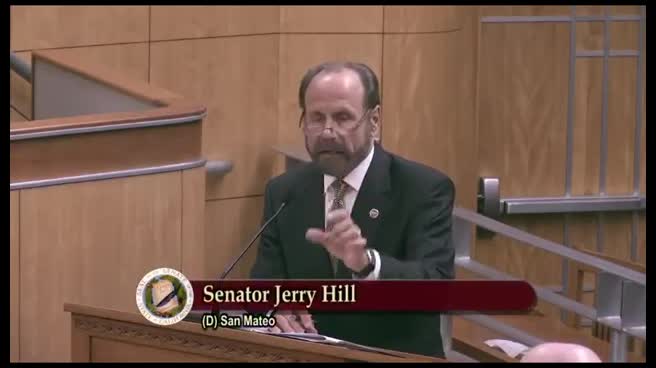 8MIN
Senate Standing Committee on Health
Bill Author

Bill Co-Author(s):