SB 319: Child welfare services: public health nursing.
- Session Year: 2015-2016
- House: Senate
- Latest Version Date: 2015-10-06
Existing law requires the State Department of Social Services to establish a program of public health nursing in the child welfare services program, and requires counties to use the services of the foster care public health nurse under this program. Existing law requires the foster care public health nurse to perform specified duties, including participating in medical care planning and coordinating for a child in foster care.
This bill would authorize a foster care public health nurse, as part of his or her requirement to participate in medical care planning and coordinating for a child, to monitor and oversee the childs use of psychotropic medications. The bill would also require a foster care public health nurse to assist a nonminor dependent to make informed decisions about his or her health care. By imposing this additional duty on foster care public health nurses, this bill would impose a state-mandated local program.
Existing law restricts the disclosure of medical and mental health information by providers of health care and mental health care services, but authorizes disclosure of this information to county social workers, probation officers, or any other person who is legally authorized to have custody and care of a minor who is in temporary custody or subject to the jurisdiction of the juvenile court, for the purpose of coordinating medical treatment and health care, mental health, and developmental disability services for the minor.
This bill would authorize the disclosure of this health care and mental health care information to a foster care public health nurse, as specified.
This bill would incorporate changes to Section 16501.3 of the Welfare and Institutions Code proposed by both this bill and SB 238, which would become operative only if both bills are enacted and become effective on or before January 1, 2016, and this bill is chaptered last.
The California Constitution requires the state to reimburse local agencies and school districts for certain costs mandated by the state. Statutory provisions establish procedures for making that reimbursement.
This bill would provide that no reimbursement is required by this act for a specified reason.
Existing law requires the State Department of Social Services to establish a program of public health nursing in the child welfare services program, and requires counties to use the services of the foster care public health nurse under this program. Existing law requires the foster care public health nurse to perform specified duties, including participating in medical care planning and coordinating for a child in foster care.
This bill would require a county to provide the services of a foster care public health nurse to children in foster care. The bill would require a foster care public health nurse to monitor each child in foster care who is administered one or more psychotropic medications, as specified. authorize a foster care public health nurse, as part of his or her requirement to participate in medical care planning and coordinating for a child, to monitor and oversee the childs use of psychotropic medications. The bill would also require a foster care public health nurse to assist a nonminor dependent to make informed decisions about his or her health care. By imposing these additional duties this additional duty on foster care public health nurses, this bill would impose a state-mandated local program.
Existing law restricts the disclosure of medical and mental health information by providers of health care and mental health care services, but authorizes disclosure of this information to county social workers, probation officers, or any other person who is legally authorized to have custody and care of a minor who is in temporary custody or subject to the jurisdiction of the juvenile court, for the purpose of coordinating medical treatment and health care, mental health, and developmental disability services for the minor.
This bill would authorize the disclosure of this health care and mental health care information to a foster care public health nurse, as specified.
The California Constitution requires the state to reimburse local agencies and school districts for certain costs mandated by the state. Statutory provisions establish procedures for making that reimbursement.
This bill would provide that no reimbursement is required by this act for a specified reason.
Existing law requires the State Department of Social Services to establish a program of public health nursing in the child welfare services program, and requires counties to use the services of the foster care public health nurse under this program. Existing law requires the foster care public health nurse to perform specified duties, including participating in medical care planning and coordinating for a child in foster care.
This bill would require a county to provide the services of a foster care public health nurse to children in foster care. The bill would require a foster care public health nurse to monitor each child in foster care who is administered one or more psychotropic medications, as specified. By imposing these additional duties on foster care public health nurses, this bill would impose a state-mandated local program.
Existing law restricts the disclosure of medical and mental health information by providers of health care and mental health care services, but authorizes disclosure of this information to county social workers, probation officers, or any other person who is legally authorized to have custody and care of a minor who is in temporary custody or subject to the jurisdiction of the juvenile court, for the purpose of coordinating medical treatment and health care, mental health, and developmental disability services for the minor.
This bill would authorize the disclosure of this health care and mental health care information to a foster care public health nurse, as specified.
The California Constitution requires the state to reimburse local agencies and school districts for certain costs mandated by the state. Statutory provisions establish procedures for making that reimbursement.
This bill would provide that no reimbursement is required by this act for a specified reason.
Existing law requires the State Department of Social Services to establish a program of public health nursing in the child welfare services program, and requires counties to use the services of the foster care public health nurse under this program. Existing law requires the foster care public health nurse to perform specified duties, including participating in medical care planning and coordinating for a child in foster care. Existing law also requires a county to establish a community child health and disability prevention program to provide early and periodic assessments of the health status of children in the county.
This bill would require a county to provide the services of a foster care public health nurse to children in foster care by contracting with the community child health and disability prevention program established in that county. care. The bill would require a foster care public health nurse to monitor each child in foster care who is administered one or more psychotropic medications, as specified. By imposing these additional duties on foster care public health nurses, this bill would impose a state-mandated local program.
Existing law restricts the disclosure of medical and mental health information by providers of health care and mental health care services, but authorizes disclosure of this information to county social workers, probation officers, or any other person who is legally authorized to have custody and care of a minor who is in temporary custody or subject to the jurisdiction of the juvenile court, for the purpose of coordinating medical treatment and health care, mental health, and developmental disability services for the minor.
This bill would authorize the disclosure of this health care and mental health care information to a foster care public health nurse, as specified.
The California Constitution requires the state to reimburse local agencies and school districts for certain costs mandated by the state. Statutory provisions establish procedures for making that reimbursement.
This bill would provide that no reimbursement is required by this act for a specified reason.
Existing law requires the State Department of Social Services to establish a program of public health nursing in the child welfare services program, and requires counties to use the services of the foster care public health nurse under this program. Existing law requires the foster care public health nurse to perform specified duties, including participating in medical care planning and coordinating for a child in foster care. Existing law also requires a county to establish a community child health and disability prevention program to provide early and periodic assessments of the health status of children in the county.
This bill would require a county to provide the services of a foster care public health nurse to children in foster care by contracting with the community child health and disability prevention program established in that county. The bill would require a foster care public health nurse to monitor and oversee each child in foster care who is administered one or more psychotropic medications, as specified. The bill would give the foster care public health nurse access to the childs medical, dental, and mental health care information in order to fulfill these duties. By imposing these additional duties on foster care public health nurses, this bill would impose a state-mandated local program.
The California Constitution requires the state to reimburse local agencies and school districts for certain costs mandated by the state. Statutory provisions establish procedures for making that reimbursement.
This bill would provide that, if the Commission on State Mandates determines that the bill contains costs mandated by the state, reimbursement for those costs shall be made pursuant to these statutory provisions.
(a)A provider of health care may disclose medical information to a county social worker, a probation officer, a foster care public health nurse acting pursuant to Section 16501.3 of the Welfare and Institutions Code, or any other person who is legally authorized to have custody or care of a minor for the purpose of coordinating health care services and medical treatment provided to the minor, including, but not limited to, the sharing of information related to screenings, assessments, and laboratory tests necessary to monitor the administration of psychotropic medications.
(b)For purposes of this section, health care services and medical treatment includes one or more providers of health care providing, coordinating, or managing health care and related services, including, but not limited to, a provider of health care coordinating health care with a third party, consultation between providers of health care and medical treatment relating to a minor, or a provider of health care referring a minor for health care services to another provider of health care.
(c)For purposes of this section, a county social worker, a probation officer, foster care public health nurse, or any other person who is legally authorized to have custody or care of a minor shall be considered a third party who may receive any of the following:
(1)Medical information described in Sections 56.05 and 56.10.
(2)Protected health information described in Section 160.103 of Title 45 of the Code of Federal Regulations.
(d)Medical information disclosed to a county social worker, probation officer, foster care public health nurse, or any other person who is legally authorized to have custody or care of a minor shall not be further disclosed by the recipient unless the disclosure is for the purpose of coordinating health care services and medical treatment of the minor and the disclosure is authorized by law. Medical information disclosed pursuant to this section may not be admitted into evidence in any criminal or delinquency proceeding against the minor. Nothing in this subdivision shall prohibit identical evidence from being admissible in a criminal proceeding if that evidence is derived solely from lawful means other than this section and is permitted by law.
(e)(1)Notwithstanding Section 56.104, if a provider of health care determines that the disclosure of medical information concerning the diagnosis and treatment of a mental health condition of a minor is reasonably necessary for the purpose of assisting in coordinating the treatment and care of the minor, that information may be disclosed to a county social worker, probation officer, foster care public health nurse, or any other person who is legally authorized to have custody or care of the minor. The information shall not be further disclosed by the recipient unless the disclosure is for the purpose of coordinating mental health services and treatment of the minor and the disclosure is authorized by law.
(2)As used in this subdivision, medical information does not include psychotherapy notes as defined in Section 164.501 of Title 45 of the Code of Federal Regulations.
(f)The disclosure of information pursuant to this section is not intended to limit the disclosure of information when that disclosure is otherwise required by law.
(g)For purposes of this section, minor means a minor taken into temporary custody or as to whom a petition has been filed with the court, or who has been adjudged to be a dependent child or ward of the juvenile court pursuant to Section 300 or 601 of the Welfare and Institutions Code.
(h)(1)Except as described in paragraph (1) of subdivision (e), nothing in this section shall be construed to limit or otherwise affect existing privacy protections provided for in state or federal law.
(2)Nothing in this section shall be construed to expand the authority of a social worker, probation officer, foster care public health nurse, or custodial caregiver beyond the authority provided under existing law to a parent or a patient representative regarding access to medical information.
SEC. 2.Section 5328.04 of the Welfare and Institutions Code is amended to read:5328.04.(a)Notwithstanding Section 5328, information and records made confidential under that section may be disclosed to a county social worker, a probation officer, a foster care public health nurse acting pursuant to Section 16501.3, or any other person who is legally authorized to have custody or care of a minor, for the purpose of coordinating health care services and medical treatment, as defined in subdivision (b) of Section 56.103 of the Civil Code, mental health services, or services for developmental disabilities, for the minor.
(b)Information disclosed under subdivision (a) shall not be further disclosed by the recipient unless the disclosure is for the purpose of coordinating health care services and medical treatment, or mental health or developmental disability services, for the minor and only to a person who would otherwise be able to obtain the information under subdivision (a) or any other law.
(c)Information disclosed pursuant to this section shall not be admitted into evidence in any criminal or delinquency proceeding against the minor. Nothing in this subdivision shall prohibit identical evidence from being admissible in a criminal proceeding if that evidence is derived solely from lawful means other than this section and is permitted by law.
(d)Nothing in this section shall be construed to compel a physician and surgeon, licensed psychologist, social worker with a masters degree in social work, licensed marriage and family therapist, licensed professional clinical counselor, nurse, attorney, or other professional person to reveal information, including notes, that has been given to him or her in confidence by the minor or members of the minors family.
(e)The disclosure of information pursuant to this section is not intended to limit disclosure of information when that disclosure is otherwise required by law.
(f)Nothing in this section shall be construed to expand the authority of a social worker, probation officer, foster care public health nurse, or custodial caregiver beyond the authority provided under existing law to a parent or a patient representative regarding access to confidential information.
(g)As used in this section, minor means a minor taken into temporary custody or for whom a petition has been filed with the court, or who has been adjudged a dependent child or ward of juvenile court pursuant to Section 300 or 601.
(h)Information and records that may be disclosed pursuant to this section do not include psychotherapy notes, as defined in Section 164.501 of Title 45 of the Code of Federal Regulations.
SEC. 3.Section 16501.3 of the Welfare and Institutions Code is amended to read:16501.3.(a)The State Department of Social Services shall establish and maintain a program of public health nursing in the child welfare services program that meets the federal requirements for the provision of health care to minor and nonminor dependents in foster care consistent with Section 30026.5 of the Government Code. The purpose of the public health nursing program shall be to promote and enhance the physical, mental, dental, and developmental well-being of children in the child welfare system.
(b)Under this program, counties shall use the services of a foster care public health nurse. The foster care public health nurse shall work with the appropriate child welfare services workers to coordinate health care services and serve as a liaison with health care professionals and other providers of health-related services. This shall include coordination with county mental health plans and local health jurisdictions, as appropriate. In order to fulfill these duties, the foster care public health nurse shall have access to the childs medical, dental, and mental health care information, in a manner that is consistent with all relevant privacy requirements.
(c)The duties of a foster care public health nurse shall include, but need not be limited to, the following:
(1)Documenting that each child in foster care receives initial and followup health screenings that meet reasonable standards of medical practice.
(2)Collecting health information and other relevant data on each foster child as available, receiving all collected information to determine appropriate referral and services, and expediting referrals to providers in the community for early intervention services, specialty services, dental care, mental health services, and other health-related services necessary for the child.
(3)Participating in medical care planning and coordinating for the child. This may include, but is not limited to, assisting case workers in arranging for comprehensive health and mental health assessments, interpreting the results of health assessments or evaluations for the purpose of case planning and coordination, facilitating the acquisition of any necessary court authorizations for procedures or medications, monitoring and oversight of psychotropic medications, advocating for the health care needs of the child, and ensuring the creation of linkage among various providers of care.
(4)Providing followup contact to assess the childs progress in meeting treatment goals.
(5)At the request of and under the direction of a nonminor dependent, as described in subdivision (v) of Section 11400, assisting the nonminor dependent in accessing physical health and mental health care, coordinating the delivery of health and mental health care services, advocating for the health and mental health care that meets the needs of the nonminor dependent, assisting the nonminor dependent to make informed decisions about his or her health care by, at a minimum, providing educational materials, and assisting the nonminor dependent to assume responsibility for his or her ongoing physical and mental health care management.
(d)The services provided by foster care public health nurses under this section shall be limited to those for which reimbursement may be claimed under Title XIX of the federal Social Security Act at an enhanced rate for services delivered by skilled professional medical personnel. Notwithstanding any other law, this section shall be implemented only if, and to the extent that, the department determines that federal financial participation, as provided under Title XIX of the federal Social Security Act (42 U.S.C. Sec. 1396 et seq.), is available.
(e)(1)The State Department of Health Care Services shall seek any necessary federal approvals for child welfare agencies to appropriately claim enhanced federal Title XIX funds for services provided pursuant to this section.
(2)Commencing in the fiscal year immediately following the fiscal year in which the necessary federal approval pursuant to paragraph (1) is secured, county child welfare agencies shall provide health care oversight and coordination services pursuant to this section, and may accomplish this through agreements with local public health agencies.
(f)(1)Notwithstanding Section 10101, prior to the 201112 fiscal year, there shall be no required county match of the nonfederal cost of this program.
(2)Commencing in the 201112 fiscal year, and each fiscal year thereafter, funding and expenditures for programs and activities under this section shall be in accordance with the requirements provided in Sections 30025 and 30026.5 of the Government Code.
SEC. 3.5.Section 16501.3 of the Welfare and Institutions Code is amended to read:16501.3.(a)The State Department of Social Services shall establish and maintain a program of public health nursing in the child welfare services program that meets the federal requirements for the provision of health care to minor and nonminor dependents in foster care consistent with Section 30026.5 of the Government Code. The purpose of the public health nursing program shall be to promote and enhance the physical, mental, dental, and developmental well-being of children in the child welfare system.
(b)Under this program, counties shall use the services of a foster care public health nurse. The foster care public health nurse shall work with the appropriate child welfare services workers to coordinate health care services and serve as a liaison with health care professionals and other providers of health-related services. This shall include coordination with county mental health plans and local health jurisdictions, as appropriate. In order to fulfill these duties, the foster care public health nurse shall have access to the childs medical, dental, and mental health care information, in a manner that is consistent with all relevant privacy requirements.
(c)The duties of a foster care public health nurse shall include, but need not be limited to, the following:
(1)Documenting that each child in foster care receives initial and followup health screenings that meet reasonable standards of medical practice.
(2)Collecting health information and other relevant data on each foster child as available, receiving all collected information to determine appropriate referral and services, and expediting referrals to providers in the community for early intervention services, specialty services, dental care, mental health services, and other health-related services necessary for the child.
(3)Participating in medical care planning and coordinating for the child. This may include, but is not limited to, assisting case workers in arranging for comprehensive health and mental health assessments, interpreting the results of health assessments or evaluations for the purpose of case planning and coordination, facilitating the acquisition of any necessary court authorizations for procedures or medications, monitoring and oversight of psychotropic medications, advocating for the health care needs of the child, and ensuring the creation of linkage among various providers of care.
(4)Providing followup contact to assess the childs progress in meeting treatment goals.
(5)At the request of and under the direction of a nonminor dependent, as described in subdivision (v) of Section 11400, assisting the nonminor dependent in accessing physical health and mental health care, coordinating the delivery of health and mental health care services, advocating for the health and mental health care that meets the needs of the nonminor dependent, assisting the nonminor dependent to make informed decisions about his or her health care by, at a minimum, providing educational materials, and assisting the nonminor dependent to assume responsibility for his or her ongoing physical and mental health care management.
(d)The services provided by foster care public health nurses under this section shall be limited to those for which reimbursement may be claimed under Title XIX of the federal Social Security Act at an enhanced rate for services delivered by skilled professional medical personnel. Notwithstanding any other law, this section shall be implemented only if, and to the extent that, the department determines that federal financial participation, as provided under Title XIX of the federal Social Security Act (42 U.S.C. Sec. 1396 et seq.), is available.
(e)(1)The State Department of Health Care Services shall seek any necessary federal approvals for child welfare agencies to appropriately claim enhanced federal Title XIX funds for services provided pursuant to this section.
(2)Commencing in the fiscal year immediately following the fiscal year in which the necessary federal approval pursuant to paragraph (1) is secured, county child welfare agencies shall provide health care oversight and coordination services pursuant to this section, and may accomplish this through agreements with local public health agencies.
(f)(1)Notwithstanding Section 10101, prior to the 201112 fiscal year, there shall be no required county match of the nonfederal cost of this program.
(2)Commencing in the 201112 fiscal year, and each fiscal year thereafter, funding and expenditures for programs and activities under this section shall be in accordance with the requirements provided in Sections 30025 and 30026.5 of the Government Code.
(g)Public health nurses shall receive training developed pursuant to subdivision (d) of Section 16501.4.
SEC. 4.Section 3.5 of this bill incorporates amendments to Section 16501.3 of the Welfare and Institutions Code proposed by both this bill and Senate Bill 238. It shall only become operative if (1) both bills are enacted and become effective on or before January 1, 2016, (2) each bill amends Section 16501.3 of the Welfare and Institutions Code, and (3) this bill is enacted after Senate Bill 238, in which case Section 3 of this bill shall not become operative.
SEC. 5.To the extent that this act has an overall effect of increasing the costs already borne by a local agency for programs or levels of service mandated by the 2011 Realignment Legislation within the meaning of Section 36 of Article XIII of the California Constitution, it shall apply to local agencies only to the extent that the state provides annual funding for the cost increase. Any new program or higher level of service provided by a local agency pursuant to this act above the level for which funding has been provided shall not require a subvention of funds by the state nor otherwise be subject to Section 6 of Article XIIIB of the California Constitution.
(a)A provider of health care may disclose medical information to a county social worker, a probation officer, a foster care public health nurse acting pursuant to Section 16501.3 of the Welfare and Institutions Code, or any other person who is legally authorized to have custody or care of a minor for the purpose of coordinating health care services and medical treatment provided to the minor, including, but not limited to, the sharing of information related to screenings, assessments, and laboratory tests necessary to monitor the administration of psychotropic medications.
(b)For purposes of this section, health care services and medical treatment includes one or more providers of health care providing, coordinating, or managing health care and related services, including, but not limited to, a provider of health care coordinating health care with a third party, consultation between providers of health care and medical treatment relating to a minor, or a provider of health care referring a minor for health care services to another provider of health care.
(c)For purposes of this section, a county social worker, a probation officer, foster care public health nurse, or any other person who is legally authorized to have custody or care of a minor shall be considered a third party who may receive any of the following:
(1)Medical information described in Sections 56.05 and 56.10.
(2)Protected health information described in Section 160.103 of Title 45 of the Code of Federal Regulations.
(d)Medical information disclosed to a county social worker, probation officer, foster care public health nurse, or any other person who is legally authorized to have custody or care of a minor shall not be further disclosed by the recipient unless the disclosure is for the purpose of coordinating health care services and medical treatment of the minor and the disclosure is authorized by law. Medical information disclosed pursuant to this section may not be admitted into evidence in any criminal or delinquency proceeding against the minor. Nothing in this subdivision shall prohibit identical evidence from being admissible in a criminal proceeding if that evidence is derived solely from lawful means other than this section and is permitted by law.
(e)(1)Notwithstanding Section 56.104, if a provider of health care determines that the disclosure of medical information concerning the diagnosis and treatment of a mental health condition of a minor is reasonably necessary for the purpose of assisting in coordinating the treatment and care of the minor, that information may be disclosed to a county social worker, probation officer, foster care public health nurse, or any other person who is legally authorized to have custody or care of the minor. The information shall not be further disclosed by the recipient unless the disclosure is for the purpose of coordinating mental health services and treatment of the minor and the disclosure is authorized by law.
(2)As used in this subdivision, medical information does not include psychotherapy notes as defined in Section 164.501 of Title 45 of the Code of Federal Regulations.
(f)The disclosure of information pursuant to this section is not intended to limit the disclosure of information when that disclosure is otherwise required by law.
(g)For purposes of this section, minor means a minor taken into temporary custody or as to whom a petition has been filed with the court, or who has been adjudged to be a dependent child or ward of the juvenile court pursuant to Section 300 or 601 of the Welfare and Institutions Code.
(h)(1)Except as described in paragraph (1) of subdivision (e), nothing in this section shall be construed to limit or otherwise affect existing privacy protections provided for in state or federal law.
(2)Nothing in this section shall be construed to expand the authority of a social worker, probation officer, foster care public health nurse, or custodial caregiver beyond the authority provided under existing law to a parent or a patient representative regarding access to medical information.
SEC. 2.Section 5328.04 of the Welfare and Institutions Code is amended to read:5328.04.(a)Notwithstanding Section 5328, information and records made confidential under that section may be disclosed to a county social worker, a probation officer, a foster care public health nurse acting pursuant to Section 16501.3, or any other person who is legally authorized to have custody or care of a minor, for the purpose of coordinating health care services and medical treatment, as defined in subdivision (b) of Section 56.103 of the Civil Code, mental health services, or services for developmental disabilities, for the minor.
(b)Information disclosed under subdivision (a) shall not be further disclosed by the recipient unless the disclosure is for the purpose of coordinating health care services and medical treatment, or mental health or developmental disability services, for the minor and only to a person who would otherwise be able to obtain the information under subdivision (a) or any other law.
(c)Information disclosed pursuant to this section shall not be admitted into evidence in any criminal or delinquency proceeding against the minor. Nothing in this subdivision shall prohibit identical evidence from being admissible in a criminal proceeding if that evidence is derived solely from lawful means other than this section and is permitted by law.
(d)Nothing in this section shall be construed to compel a physician and surgeon, licensed psychologist, social worker with a masters degree in social work, licensed marriage and family therapist, licensed professional clinical counselor, nurse, attorney, or other professional person to reveal information, including notes, that has been given to him or her in confidence by the minor or members of the minors family.
(e)The disclosure of information pursuant to this section is not intended to limit disclosure of information when that disclosure is otherwise required by law.
(f)Nothing in this section shall be construed to expand the authority of a social worker, probation officer, foster care public health nurse, or custodial caregiver beyond the authority provided under existing law to a parent or a patient representative regarding access to confidential information.
(g)As used in this section, minor means a minor taken into temporary custody or for whom a petition has been filed with the court, or who has been adjudged a dependent child or ward of juvenile court pursuant to Section 300 or 601.
(h)Information and records that may be disclosed pursuant to this section do not include psychotherapy notes, as defined in Section 164.501 of Title 45 of the Code of Federal Regulations.
SEC. 3.Section 16501.3 of the Welfare and Institutions Code is amended to read:16501.3.(a)The State Department of Social Services shall establish and maintain a program of public health nursing in the child welfare services program that meets the federal requirements for the provision of health care to minor and nonminor dependents in foster care consistent with Section 30026.5 of the Government Code. The purpose of the public health nursing program shall be to promote and enhance the physical, mental, dental, and developmental well-being of children in the child welfare system.
(b)Under this program, counties shall use the services of a foster care public health nurse. The foster care public health nurse shall work with the appropriate child welfare services workers to coordinate health care services and serve as a liaison with health care professionals and other providers of health-related services. This shall include coordination with county mental health plans and local health jurisdictions, as appropriate. In order to fulfill these duties, the foster care public health nurse shall have access to the childs medical, dental, and mental health care information, in a manner that is consistent with all relevant privacy requirements.
(c)The duties of a foster care public health nurse shall include, but need not be limited to, the following:
(1)Documenting that each child in foster care receives initial and followup health screenings that meet reasonable standards of medical practice.
(2)Collecting health information and other relevant data on each foster child as available, receiving all collected information to determine appropriate referral and services, and expediting referrals to providers in the community for early intervention services, specialty services, dental care, mental health services, and other health-related services necessary for the child.
(3)Participating in medical care planning and coordinating for the child. This may include, but is not limited to, assisting case workers in arranging for comprehensive health and mental health assessments, interpreting the results of health assessments or evaluations for the purpose of case planning and coordination, facilitating the acquisition of any necessary court authorizations for procedures or medications, monitoring and oversight of psychotropic medications, advocating for the health care needs of the child, and ensuring the creation of linkage among various providers of care.
(4)Providing followup contact to assess the childs progress in meeting treatment goals.
(5)At the request of and under the direction of a nonminor dependent, as described in subdivision (v) of Section 11400, assisting the nonminor dependent in accessing physical health and mental health care, coordinating the delivery of health and mental health care services, advocating for the health and mental health care that meets the needs of the nonminor dependent, assisting the nonminor dependent to make informed decisions about his or her health care by, at a minimum, providing educational materials, and assisting the nonminor dependent to assume responsibility for his or her ongoing physical and mental health care management.
(d)The services provided by foster care public health nurses under this section shall be limited to those for which reimbursement may be claimed under Title XIX of the federal Social Security Act at an enhanced rate for services delivered by skilled professional medical personnel. Notwithstanding any other law, this section shall be implemented only if, and to the extent that, the department determines that federal financial participation, as provided under Title XIX of the federal Social Security Act (42 U.S.C. Sec. 1396 et seq.), is available.
(e)(1)The State Department of Health Care Services shall seek any necessary federal approvals for child welfare agencies to appropriately claim enhanced federal Title XIX funds for services provided pursuant to this section.
(2)Commencing in the fiscal year immediately following the fiscal year in which the necessary federal approval pursuant to paragraph (1) is secured, county child welfare agencies shall provide health care oversight and coordination services pursuant to this section, and may accomplish this through agreements with local public health agencies.
(f)(1)Notwithstanding Section 10101, prior to the 201112 fiscal year, there shall be no required county match of the nonfederal cost of this program.
(2)Commencing in the 201112 fiscal year, and each fiscal year thereafter, funding and expenditures for programs and activities under this section shall be in accordance with the requirements provided in Sections 30025 and 30026.5 of the Government Code.
SEC. 3.5.Section 16501.3 of the Welfare and Institutions Code is amended to read:16501.3.(a)The State Department of Social Services shall establish and maintain a program of public health nursing in the child welfare services program that meets the federal requirements for the provision of healthcare health care to minor and nonminor dependents in foster care consistent with Section 30026.5 of the Government Code. The purpose of the public health nursing program shall be to identify, respond to, promote and enhance the physical, mental, dental, and developmental well-being of children in the child welfare system.
(b)Under this program, counties shall use the services of a foster care public health nurse. The foster care public health nurse shall work with the appropriate child welfare services workers to coordinate health care services and serve as a liaison with health care professionals and other providers of health-related services. This shall include coordination with county mental health plans and local health jurisdictions, as appropriate. In order to fulfill these duties, the foster care public health nurse shall have access to the childs medical, dental, and mental health care information, in a manner that is consistent with all relevant privacy requirements.
(c)The duties of a foster care public health nurse shall include, but need not be limited to, the following:
(1)Documenting that each child in foster care receives initial and followup health screenings that meet reasonable standards of medical practice.
(2)Collecting health information and other relevant data on each foster child as available, receiving all collected information to determine appropriate referral and services, and expediting referrals to providers in the community for early intervention services, specialty services, dental care, mental health services, and other health-related services necessary for the child.
(3)Participating in medical care planning and coordinating for the child. This may include, but is not limited to, assisting case workers in arranging for comprehensive health and mental health assessments, interpreting the results of health assessments or evaluations for the purpose of case planning and coordination, facilitating the acquisition of any necessary court authorizations for procedures or medications, monitoring and oversight of psychotropic medications, advocating for the health care needs of the child child, and ensuring the creation of linkage among various providers of care.
(4)Providing followup contact to assess the childs progress in meeting treatment goals.
(5)At the request of and under the direction of a nonminor dependent, as described in subdivision (v) of Section 11400, assist assisting the nonminor dependent in accessing physical health and mental health care, coordinating the delivery of health and mental health care services, advocating for the health and mental health care that meets the needs of the nonminor dependent, and to assist assisting the nonminor dependent to make informed decisions about his or her health care by, at a minimum, providing educational materials, and assisting the nonminor dependent to assume responsibility for his or her ongoing physical and mental health care management.
(d)The services provided by foster care public health nurses under this section shall be limited to those for which reimbursement may be claimed under Title XIX of the federal Social Security Act at an enhanced rate for services delivered by skilled professional medical personnel. Notwithstanding any other provision of law, this section shall be implemented only if, and to the extent that, the department determines that federal financial participation, as provided under Title XIX of the federal Social Security Act (42 U.S.C. Sec. 1396 et seq.), is available.
(e)(1)The State Department of Health Care Services shall seek any necessary federal approvals for child welfare agencies to appropriately claim enhanced federal Title XIX funds for services provided pursuant to this section.
(2)Commencing in the fiscal year immediately following the fiscal year in which the necessary federal approval pursuant to paragraph (1) is secured, county child welfare agencies shall provide health care oversight and coordination services pursuant to this section, and may accomplish this through agreements with local public health agencies.
(f)(1)Notwithstanding Section 10101, prior to the 201112 fiscal year, there shall be no required county match of the nonfederal cost of this program.
(2)Commencing in the 201112 fiscal year, and each fiscal year thereafter, funding and expenditures for programs and activities under this section shall be in accordance with the requirements provided in Sections 30025 and 30026.5 of the Government Code.
(g)Public health nurses shall receive training developed pursuant to subdivision (d) of Section 16501.4.
SEC. 4.Section 3.5 of this bill incorporates amendments to Section 16501.3 of the Welfare and Institutions Code proposed by both this bill and Senate Bill 238. It shall only become operative if (1) both bills are enacted and become effective on or before January 1, 2016, (2) each bill amends Section 16501.3 of the Welfare and Institutions Code, and (3) this bill is enacted after Senate Bill 238, in which case Section 3 of this bill shall not become operative.
SEC. 4.SEC. 5.To the extent that this act has an overall effect of increasing the costs already borne by a local agency for programs or levels of service mandated by the 2011 Realignment Legislation within the meaning of Section 36 of Article XIII of the California Constitution, it shall apply to local agencies only to the extent that the state provides annual funding for the cost increase. Any new program or higher level of service provided by a local agency pursuant to this act above the level for which funding has been provided shall not require a subvention of funds by the state nor otherwise be subject to Section 6 of Article XIIIB of the California Constitution.
(a)A provider of health care may disclose medical information to a county social worker, a probation officer, a foster care public health nurse acting pursuant to Section 16501.3 of the Welfare and Institutions Code, or any other person who is legally authorized to have custody or care of a minor for the purpose of coordinating health care services and medical treatment provided to the minor, including, but not limited to, the sharing of information related to screenings, assessments, and laboratory tests necessary to monitor the administration of psychotropic medications.
(b)For purposes of this section, health care services and medical treatment includes one or more providers of health care providing, coordinating, or managing health care and related services, including, but not limited to, a provider of health care coordinating health care with a third party, consultation between providers of health care and medical treatment relating to a minor, or a provider of health care referring a minor for health care services to another provider of health care.
(c)For purposes of this section, a county social worker, a probation officer, foster care public health nurse, or any other person who is legally authorized to have custody or care of a minor shall be considered a third party who may receive any of the following:
(1)Medical information described in Sections 56.05 and 56.10.
(2)Protected health information described in Section 160.103 of Title 45 of the Code of Federal Regulations.
(d)Medical information disclosed to a county social worker, probation officer, foster care public health nurse, or any other person who is legally authorized to have custody or care of a minor shall not be further disclosed by the recipient unless the disclosure is for the purpose of coordinating health care services and medical treatment of the minor and the disclosure is authorized by law. Medical information disclosed pursuant to this section may not be admitted into evidence in any criminal or delinquency proceeding against the minor. Nothing in this subdivision shall prohibit identical evidence from being admissible in a criminal proceeding if that evidence is derived solely from lawful means other than this section and is permitted by law.
(e)(1)Notwithstanding Section 56.104, if a provider of health care determines that the disclosure of medical information concerning the diagnosis and treatment of a mental health condition of a minor is reasonably necessary for the purpose of assisting in coordinating the treatment and care of the minor, that information may be disclosed to a county social worker, probation officer, foster care public health nurse, or any other person who is legally authorized to have custody or care of the minor. The information shall not be further disclosed by the recipient unless the disclosure is for the purpose of coordinating mental health services and treatment of the minor and the disclosure is authorized by law.
(2)As used in this subdivision, medical information does not include psychotherapy notes as defined in Section 164.501 of Title 45 of the Code of Federal Regulations.
(f)The disclosure of information pursuant to this section is not intended to limit the disclosure of information when that disclosure is otherwise required by law.
(g)For purposes of this section, minor means a minor taken into temporary custody or as to whom a petition has been filed with the court, or who has been adjudged to be a dependent child or ward of the juvenile court pursuant to Section 300 or 601 of the Welfare and Institutions Code.
(h)(1)Except as described in paragraph (1) of subdivision (e), nothing in this section shall be construed to limit or otherwise affect existing privacy protections provided for in state or federal law.
(2)Nothing in this section shall be construed to expand the authority of a social worker, probation officer, foster care public health nurse, or custodial caregiver beyond the authority provided under existing law to a parent or a patient representative regarding access to medical information.
SEC. 2.Section 5328.04 of the Welfare and Institutions Code is amended to read:5328.04.(a)Notwithstanding Section 5328, information and records made confidential under that section may be disclosed to a county social worker, a probation officer, a foster care public health nurse acting pursuant to Section 16501.3, or any other person who is legally authorized to have custody or care of a minor, for the purpose of coordinating health care services and medical treatment, as defined in subdivision (b) of Section 56.103 of the Civil Code, mental health services, or services for developmental disabilities, for the minor.
(b)Information disclosed under subdivision (a) shall not be further disclosed by the recipient unless the disclosure is for the purpose of coordinating health care services and medical treatment, or mental health or developmental disability services, for the minor and only to a person who would otherwise be able to obtain the information under subdivision (a) or any other law.
(c)Information disclosed pursuant to this section shall not be admitted into evidence in any criminal or delinquency proceeding against the minor. Nothing in this subdivision shall prohibit identical evidence from being admissible in a criminal proceeding if that evidence is derived solely from lawful means other than this section and is permitted by law.
(d)Nothing in this section shall be construed to compel a physician and surgeon, licensed psychologist, social worker with a masters degree in social work, licensed marriage and family therapist, licensed professional clinical counselor, nurse, attorney, or other professional person to reveal information, including notes, that has been given to him or her in confidence by the minor or members of the minors family.
(e)The disclosure of information pursuant to this section is not intended to limit disclosure of information when that disclosure is otherwise required by law.
(f)Nothing in this section shall be construed to expand the authority of a social worker, probation officer, foster care public health nurse, or custodial caregiver beyond the authority provided under existing law to a parent or a patient representative regarding access to confidential information.
(g)As used in this section, minor means a minor taken into temporary custody or for whom a petition has been filed with the court, or who has been adjudged a dependent child or ward of juvenile court pursuant to Section 300 or 601.
(h)Information and records that may be disclosed pursuant to this section do not include psychotherapy notes, as defined in Section 164.501 of Title 45 of the Code of Federal Regulations.
SEC. 3.Section 16501.3 of the Welfare and Institutions Code is amended to read:16501.3.(a)The State Department of Social Services shall establish and maintain a program of public health nursing in the child welfare services program that meets the federal requirements for the provision of health care to minor and nonminor dependents in foster care consistent with Section 30026.5 of the Government Code. The purpose of the public health nursing program shall be to promote and enhance the physical, mental, dental, and developmental well-being of children in the child welfare system.
(b)Under this program, counties shall provide use the services of a foster care public health nurse. The foster care public health nurse and the childs social worker shall consult, collaborate, and share information in a timely manner to ensure that the childs physical, mental, dental, and developmental needs are met. The foster care public health nurse shall shall work with the appropriate child welfare services workers to coordinate health care services and serve as a liaison with health care professionals and other providers of health-related services. This shall include coordination with county mental health plans and local health jurisdictions, as appropriate. In order to fulfill these duties, the foster care public health nurse shall have access to the childs medical, dental, and mental health care information. information, in a manner that is consistent with all relevant privacy requirements.
(c)The duties of a foster care public health nurse shall include, but need not be limited to, the following:
(1)Documenting that each child in foster care receives initial and followup health screenings that meet reasonable standards of medical practice.
(2)Collecting health information and other relevant data on each foster child as available, receiving all collected information to determine appropriate referral and services, and expediting referrals to providers in the community for early intervention services, specialty services, dental care, mental health services, and other health-related services necessary for the child.
(3)Participating in medical care planning and coordinating for the child. This may include, but is not limited to, assisting case workers in arranging for comprehensive health and mental health assessments, interpreting the results of health assessments or evaluations for the purpose of case planning and coordination, facilitating the acquisition of any necessary court authorizations for procedures or medications, monitoring and oversight of psychotropic medications, advocating for the health care needs of the child child, and ensuring the creation of linkage among various providers of care.
(4)Providing followup contact to assess the childs progress in meeting treatment goals.
(5)At the request of and under the direction of a nonminor dependent, as described in subdivision (v) of Section 11400, assisting the nonminor dependent in accessing physical health and mental health care, coordinating the delivery of health and mental health care services, advocating for the health and mental health care that meets the needs of the nonminor dependent, assisting the nonminor dependent to make informed decisions about his or her health care by, at a minimum, providing educational materials, and assisting the nonminor dependent to assume responsibility for his or her ongoing physical and mental health care management.
(6)Monitoring, in collaboration with the childs county social worker and mental health worker, each child in foster care who is administered one or more psychotropic medications. This monitoring shall include, but is not limited to, all of the following:
(A)Reviewing each request for psychotropic medication filed pursuant to Section 369.5 to verify that all required information is provided in the application to the court.
(B)Reviewing, monitoring, engaging, and documenting in the childs health and education passport, as described in Section 16010, that laboratory tests, other screenings and measurements, evaluations, and assessments required to meet reasonable standards of medical practice have been completed.
(C)Reviewing, monitoring, and confirming that the juvenile court has authorized the psychotropic medication to be administered to the child.
(D)Reviewing, monitoring, engaging with the caregiver, and confirming through submitted medical reports received from the prescribing physician that periodic followup visits, laboratory work, and other measurements are scheduled and completed.
(E)Documenting in the childs health and education passport accurate documentation concerning the psychotropic medications authorized for and administered to the child.
(F)Reviewing and documenting the response of the child to the administration of psychotropic medication through review and interpretation of the laboratory tests, screenings, and reports containing information from the child and received from the caregiver or social worker, and, if necessary, interpreting, for the childs social worker, health information to be included in court reports.
(d)The services provided by foster care public health nurses under this section shall be limited to those for which reimbursement may be claimed under Title XIX of the federal Social Security Act at an enhanced rate for services delivered by skilled professional medical personnel. Notwithstanding any other law, this section shall be implemented only if, and to the extent that, the department determines that federal financial participation, as provided under Title XIX of the federal Social Security Act (42 U.S.C. Sec. 1396 et seq.), is available.
(e)(1)The State Department of Health Care Services shall seek any necessary federal approvals for child welfare agencies to appropriately claim enhanced federal Title XIX funds for services provided pursuant to this section.
(2)Commencing in the fiscal year immediately following the fiscal year in which the necessary federal approval pursuant to paragraph (1) is secured, county child welfare agencies shall provide health care oversight and coordination services pursuant to this section, and may accomplish this through agreements with local public health agencies.
(f)(1)Notwithstanding Section 10101, prior to the 201112 fiscal year, there shall be no required county match of the nonfederal cost of this program.
(2)Commencing in the 201112 fiscal year, and each fiscal year thereafter, funding and expenditures for programs and activities under this section shall be in accordance with the requirements provided in Sections 30025 and 30026.5 of the Government Code.
SEC. 4.To the extent that this act has an overall effect of increasing the costs already borne by a local agency for programs or levels of service mandated by the 2011 Realignment Legislation within the meaning of Section 36 of Article XIII of the California Constitution, it shall apply to local agencies only to the extent that the state provides annual funding for the cost increase. Any new program or higher level of service provided by a local agency pursuant to this act above the level for which funding has been provided shall not require a subvention of funds by the state nor otherwise be subject to Section 6 of Article XIIIB of the California Constitution.
(a)A provider of health care may disclose medical information to a county social worker, a probation officer, a foster care public health nurse acting pursuant to Section 16501.3 of the Welfare and Institutions Code, or any other person who is legally authorized to have custody or care of a minor for the purpose of coordinating health care services and medical treatment provided to the minor, including, but not limited to, the sharing of information related to screenings, assessments, and laboratory tests necessary to monitor the administration of psychotropic medications.
(b)For purposes of this section, health care services and medical treatment includes one or more providers of health care providing, coordinating, or managing health care and related services, including, but not limited to, a provider of health care coordinating health care with a third party, consultation between providers of health care and medical treatment relating to a minor, or a provider of health care referring a minor for health care services to another provider of health care.
(c)For purposes of this section, a county social worker, a probation officer, foster care public health nurse, or any other person who is legally authorized to have custody or care of a minor shall be considered a third party who may receive any of the following:
(1)Medical information described in Sections 56.05 and 56.10.
(2)Protected health information described in Section 160.103 of Title 45 of the Code of Federal Regulations.
(d)Medical information disclosed to a county social worker, probation officer, foster care public health nurse, or any other person who is legally authorized to have custody or care of a minor shall not be further disclosed by the recipient unless the disclosure is for the purpose of coordinating health care services and medical treatment of the minor and the disclosure is authorized by law. Medical information disclosed pursuant to this section may not be admitted into evidence in any criminal or delinquency proceeding against the minor. Nothing in this subdivision shall prohibit identical evidence from being admissible in a criminal proceeding if that evidence is derived solely from lawful means other than this section and is permitted by law.
(e)(1)Notwithstanding Section 56.104, if a provider of health care determines that the disclosure of medical information concerning the diagnosis and treatment of a mental health condition of a minor is reasonably necessary for the purpose of assisting in coordinating the treatment and care of the minor, that information may be disclosed to a county social worker, probation officer, foster care public health nurse, or any other person who is legally authorized to have custody or care of the minor. The information shall not be further disclosed by the recipient unless the disclosure is for the purpose of coordinating mental health services and treatment of the minor and the disclosure is authorized by law.
(2)As used in this subdivision, medical information does not include psychotherapy notes as defined in Section 164.501 of Title 45 of the Code of Federal Regulations.
(f)The disclosure of information pursuant to this section is not intended to limit the disclosure of information when that disclosure is otherwise required by law.
(g)For purposes of this section, minor means a minor taken into temporary custody or as to whom a petition has been filed with the court, or who has been adjudged to be a dependent child or ward of the juvenile court pursuant to Section 300 or 601 of the Welfare and Institutions Code.
(h)(1)Except as described in paragraph (1) of subdivision (e), nothing in this section shall be construed to limit or otherwise affect existing privacy protections provided for in state or federal law.
(2)Nothing in this section shall be construed to expand the authority of a social worker, probation officer, foster care public health nurse, or custodial caregiver beyond the authority provided under existing law to a parent or a patient representative regarding access to medical information.
SEC. 2.Section 5328.04 of the Welfare and Institutions Code is amended to read:5328.04.(a)Notwithstanding Section 5328, information and records made confidential under that section may be disclosed to a county social worker, a probation officer, a foster care public health nurse acting pursuant to Section 16501.3, or any other person who is legally authorized to have custody or care of a minor, for the purpose of coordinating health care services and medical treatment, as defined in subdivision (b) of Section 56.103 of the Civil Code, mental health services, or services for developmental disabilities, for the minor.
(b)Information disclosed under subdivision (a) shall not be further disclosed by the recipient unless the disclosure is for the purpose of coordinating health care services and medical treatment, or mental health or developmental disability services, for the minor and only to a person who would otherwise be able to obtain the information under subdivision (a) or any other law.
(c)Information disclosed pursuant to this section shall not be admitted into evidence in any criminal or delinquency proceeding against the minor. Nothing in this subdivision shall prohibit identical evidence from being admissible in a criminal proceeding if that evidence is derived solely from lawful means other than this section and is permitted by law.
(d)Nothing in this section shall be construed to compel a physician and surgeon, licensed psychologist, social worker with a masters degree in social work, licensed marriage and family therapist, licensed professional clinical counselor, nurse, attorney, or other professional person to reveal information, including notes, that has been given to him or her in confidence by the minor or members of the minors family.
(e)The disclosure of information pursuant to this section is not intended to limit disclosure of information when that disclosure is otherwise required by law.
(f)Nothing in this section shall be construed to expand the authority of a social worker, probation officer, foster care public health nurse, or custodial caregiver beyond the authority provided under existing law to a parent or a patient representative regarding access to confidential information.
(g)As used in this section, minor means a minor taken into temporary custody or for whom a petition has been filed with the court, or who has been adjudged a dependent child or ward of juvenile court pursuant to Section 300 or 601.
(h)Information and records that may be disclosed pursuant to this section do not include psychotherapy notes, as defined in Section 164.501 of Title 45 of the Code of Federal Regulations.
SEC. 3.Section 16501.3 of the Welfare and Institutions Code is amended to read:16501.3.(a)The State Department of Social Services shall establish and maintain a program of public health nursing in the child welfare services program that meets the federal requirements for the provision of health care to minor and nonminor dependents in foster care consistent with Section 30026.5 of the Government Code. The purpose of the public health nursing program shall be to promote and enhance the physical, mental, dental, and developmental well-being of children in the child welfare system.
(b)Under this program, counties shall provide the services of a foster care public health nurse. The foster care public health nurse and the childs social worker shall consult, collaborate, and share information in a timely manner to ensure that the childs physical, mental, dental, and developmental needs are met. The foster care public health nurse shall serve as a liaison with health care professionals and other providers of health-related services. In order to fulfill these duties, the foster care public health nurse shall have access to the childs medical, dental, and mental health care information.
(c)The duties of a foster care public health nurse shall include, but need not be limited to, the following:
(1)Documenting that each child in foster care receives initial and followup health screenings that meet reasonable standards of medical practice.
(2)Collecting health information and other relevant data on each foster child as available, receiving all collected information to determine appropriate referral and services, and expediting referrals to providers in the community for early intervention services, specialty services, dental care, mental health services, and other health-related services necessary for the child.
(3)Participating in medical care planning and coordinating for the child. This may include, but is not limited to, assisting case workers in arranging for comprehensive health and mental health assessments, interpreting the results of health assessments or evaluations for the purpose of case planning and coordination, facilitating the acquisition of any necessary court authorizations for procedures or medications, advocating for the health care needs of the child and ensuring the creation of linkage among various providers of care.
(4)Providing followup contact to assess the childs progress in meeting treatment goals.
(5)At the request of and under the direction of a nonminor dependent, as described in subdivision (v) of Section 11400, assisting the nonminor dependent in accessing physical health and mental health care, coordinating the delivery of health and mental health care services, advocating for the health and mental health care that meets the needs of the nonminor dependent, assisting the nonminor dependent to make informed decisions about his or her health care by, at a minimum, providing educational materials, and assisting the nonminor dependent to assume responsibility for his or her ongoing physical and mental health care management.
(6)Monitoring, in collaboration with the childs county social worker and mental health worker, each child in foster care who is administered one or more psychotropic medications. This monitoring shall include, but is not limited to, all of the following:
(A)Reviewing each request for psychotropic medication filed pursuant to Section 369.5 to verify that all required information is provided in the application to the court.
(B)Reviewing, monitoring, engaging, and documenting in the childs health and education passport, as described in Section 16010, that laboratory tests, other screenings and measurements, evaluations, and assessments required to meet reasonable standards of medical practice have been completed.
(C)Reviewing, monitoring, and confirming that the juvenile court has authorized the psychotropic medication to be administered to the child.
(D)Reviewing, monitoring, engaging with the caregiver, and confirming through submitted medical reports received from the prescribing physician that periodic followup visits with the prescribing physician, visits, laboratory work, and other measurements are scheduled and completed.
(E)Documenting in the childs health and education passport accurate documentation concerning the psychotropic medications authorized for and administered to the child.
(F)Reviewing and documenting the response of the child to the administration of psychotropic medication through review and interpretation of the laboratory tests, screenings, and reports by the child and caregiver, and other screenings, containing information from the child and received from the caregiver or social worker, and, if necessary, providing information to the childs social worker interpreting, for the childs social worker, health information to be included in court reports.
(d)The services provided by foster care public health nurses under this section shall be limited to those for which reimbursement may be claimed under Title XIX of the federal Social Security Act at an enhanced rate for services delivered by skilled professional medical personnel. Notwithstanding any other law, this section shall be implemented only if, and to the extent that, the department determines that federal financial participation, as provided under Title XIX of the federal Social Security Act (42 U.S.C. Sec. 1396 et seq.), is available.
(e)(1)The State Department of Health Care Services shall seek any necessary federal approvals for child welfare agencies to appropriately claim enhanced federal Title XIX funds for services provided pursuant to this section.
(2)Commencing in the fiscal year immediately following the fiscal year in which the necessary federal approval pursuant to paragraph (1) is secured, county child welfare agencies shall provide health care oversight and coordination services pursuant to this section, and may accomplish this through agreements with local public health agencies.
(f)(1)Notwithstanding Section 10101, prior to the 201112 fiscal year, there shall be no required county match of the nonfederal cost of this program.
(2)Commencing in the 201112 fiscal year, and each fiscal year thereafter, funding and expenditures for programs and activities under this section shall be in accordance with the requirements provided in Sections 30025 and 30026.5 of the Government Code.
SEC. 4.To the extent that this act has an overall effect of increasing the costs already borne by a local agency for programs or levels of service mandated by the 2011 Realignment Legislation within the meaning of Section 36 of Article XIII of the California Constitution, it shall apply to local agencies only to the extent that the state provides annual funding for the cost increase. Any new program or higher level of service provided by a local agency pursuant to this act above the level for which funding has been provided shall not require a subvention of funds by the state nor otherwise be subject to Section 6 of Article XIIIB of the California Constitution.
(a)A provider of health care may disclose medical information to a county social worker, a probation officer, a foster care public health nurse acting pursuant to Section 16501.3 of the Welfare and Institutions Code, or any other person who is legally authorized to have custody or care of a minor for the purpose of coordinating health care services and medical treatment provided to the minor, including, but not limited to, the sharing of information related to screenings, assessments, and laboratory tests necessary to monitor the administration of psychotropic medications.
(b)For purposes of this section, health care services and medical treatment includes one or more providers of health care providing, coordinating, or managing health care and related services, including, but not limited to, a provider of health care coordinating health care with a third party, consultation between providers of health care and medical treatment relating to a minor, or a provider of health care referring a minor for health care services to another provider of health care.
(c)For purposes of this section, a county social worker, a probation officer, foster care public health nurse, or any other person who is legally authorized to have custody or care of a minor shall be considered a third party who may receive any of the following:
(1)Medical information described in Sections 56.05 and 56.10.
(2)Protected health information described in Section 160.103 of Title 45 of the Code of Federal Regulations.
(d)Medical information disclosed to a county social worker, probation officer, foster care public health nurse, or any other person who is legally authorized to have custody or care of a minor shall not be further disclosed by the recipient unless the disclosure is for the purpose of coordinating health care services and medical treatment of the minor and the disclosure is authorized by law. Medical information disclosed pursuant to this section may not be admitted into evidence in any criminal or delinquency proceeding against the minor. Nothing in this subdivision shall prohibit identical evidence from being admissible in a criminal proceeding if that evidence is derived solely from lawful means other than this section and is permitted by law.
(e)(1)Notwithstanding Section 56.104, if a provider of health care determines that the disclosure of medical information concerning the diagnosis and treatment of a mental health condition of a minor is reasonably necessary for the purpose of assisting in coordinating the treatment and care of the minor, that information may be disclosed to a county social worker, probation officer, foster care public health nurse, or any other person who is legally authorized to have custody or care of the minor. The information shall not be further disclosed by the recipient unless the disclosure is for the purpose of coordinating mental health services and treatment of the minor and the disclosure is authorized by law.
(2)As used in this subdivision, medical information does not include psychotherapy notes as defined in Section 164.501 of Title 45 of the Code of Federal Regulations.
(f)The disclosure of information pursuant to this section is not intended to limit the disclosure of information when that disclosure is otherwise required by law.
(g)For purposes of this section, minor means a minor taken into temporary custody or as to who whom a petition has been filed with the court, or who has been adjudged to be a dependent child or ward of the juvenile court pursuant to Section 300 or 601 of the Welfare and Institutions Code.
(h)(1)Except as described in paragraph (1) of subdivision (e), nothing in this section shall be construed to limit or otherwise affect existing privacy protections provided for in state or federal law.
(2)Nothing in this section shall be construed to expand the authority of a social worker, probation officer, foster care public health nurse, or custodial caregiver beyond the authority provided under existing law to a parent or a patient representative regarding access to medical information.
SEC. 2.Section 5328.04 of the Welfare and Institutions Code is amended to read:5328.04.(a)Notwithstanding Section 5328, information and records made confidential under that section may be disclosed to a county social worker, a probation officer, a foster care public health nurse acting pursuant to Section 16501.3, or any other person who is legally authorized to have custody or care of a minor, for the purpose of coordinating health care services and medical treatment, as defined in subdivision (b) of Section 56.103 of the Civil Code, mental health services, or services for developmental disabilities, for the minor.
(b)Information disclosed under subdivision (a) shall not be further disclosed by the recipient unless the disclosure is for the purpose of coordinating health care services and medical treatment, or mental health or developmental disability services, for the minor and only to a person who would otherwise be able to obtain the information under subdivision (a) or any other provision of law.
(c)Information disclosed pursuant to this section shall not be admitted into evidence in any criminal or delinquency proceeding against the minor. Nothing in this subdivision shall prohibit identical evidence from being admissible in a criminal proceeding if that evidence is derived solely from lawful means other than this section and is permitted by law.
(d)Nothing in this section shall be construed to compel a physician and surgeon, licensed psychologist, social worker with a masters degree in social work, licensed marriage and family therapist, licensed professional clinical counselor, nurse, attorney, or other professional person to reveal information, including notes, that has been given to him or her in confidence by the minor or members of the minors family.
(e)The disclosure of information pursuant to this section is not intended to limit disclosure of information when that disclosure is otherwise required by law.
(f)Nothing in this section shall be construed to expand the authority of a social worker, probation officer, foster care public health nurse, or custodial caregiver beyond the authority provided under existing law to a parent or a patient representative regarding access to confidential information.
(g)As used in this section, minor means a minor taken into temporary custody or for whom a petition has been filed with the court, or who has been adjudged a dependent child or ward of juvenile court pursuant to Section 300 or 601.
(h)Information and records that may be disclosed pursuant to this section do not include psychotherapy notes, as defined in Section 164.501 of Title 45 of the Code of Federal Regulations.
SEC. 3.Section 16501.3 of the Welfare and Institutions Code is amended to read:16501.3.(a)The State Department of Social Services shall establish and maintain a program of public health nursing in the child welfare services program that meets the federal requirements for the provision of health care to minor and nonminor dependents in foster care consistent with Section 30026.5 of the Government Code. The purpose of the public health nursing program shall be to promote and enhance the physical, mental, dental, and developmental well-being of children in the child welfare system.
(b)Under this program, counties shall provide the services of a foster care public health nurse to children in foster care by contracting with the community child health and disability prevention program established in that county pursuant to Section 124040 of the Health and Safety Code. nurse. The foster care public health nurse and the childs social worker shall consult, collaborate, and share information in a timely manner to ensure that the childs physical, mental, dental, and developmental needs are met. The foster care public health nurse shall serve as a liaison with health care professionals and other providers of health-related services. In order to fulfill these duties, the foster care public health nurse shall have access to the childs medical, dental, and mental health care information.
(c)The duties of a foster care public health nurse shall include, but need not be limited to, the following:
(1)Documenting that each child in foster care receives initial and followup health screenings that meet reasonable standards of medical practice.
(2)Collecting health information and other relevant data on each foster child as available, receiving all collected information to determine appropriate referral and services, and expediting referrals to providers in the community for early intervention services, specialty services, dental care, mental health services, and other health-related services necessary for the child.
(3)Participating in medical care planning and coordinating for the child. This may include, but is not limited to, assisting case workers in arranging for comprehensive health and mental health assessments, interpreting the results of health assessments or evaluations for the purpose of case planning and coordination, facilitating the acquisition of any necessary court authorizations for procedures or medications, advocating for the health care needs of the child and ensuring the creation of linkage among various providers of care.
(4)Providing followup contact to assess the childs progress in meeting treatment goals.
(5)At the request of and under the direction of a nonminor dependent, as described in subdivision (v) of Section 11400, assisting the nonminor dependent in accessing physical health and mental health care, coordinating the delivery of health and mental health care services, advocating for the health and mental health care that meets the needs of the nonminor dependent, assisting the nonminor dependent to make informed decisions about his or her health care by, at a minimum, providing educational materials, and assisting the nonminor dependent to assume responsibility for his or her ongoing physical and mental health care management.
(6)Monitoring Monitoring, in collaboration with the childs county social worker and mental health worker, each child in foster care who is administered one or more psychotropic medications. This monitoring shall include, but is not limited to, all of the following:
(A)The review of Reviewing each request for psychotropic medication filed pursuant to Section 369.5 to ensure verify that all required information is provided in the application to the court.
(B)Ensuring Reviewing, monitoring, engaging, and documenting in the childs health and education passport, as described in Section 16010, that laboratory tests, other screenings and measurements, evaluations, and assessments required to meet reasonable standards of medical practice have been completed.
(C)Ensuring Reviewing, monitoring, and confirming that the juvenile court has authorized the psychotropic medication to be administered to the child.
(D)Ensuring Reviewing, monitoring, engaging with the caregiver, and confirming that periodic followup visits with the prescribing physician, lab laboratory work, and other measurements are scheduled and completed.
(E)Ensuring that Documenting in the childs health and education passport, as described in Section 16010, includes accurate documentation passport accurate documentation concerning the psychotropic medications authorized for and administered to the child.
(F)Assessing, monitoring, and documenting Reviewing and documenting the response of the child to the administration of psychotropic medication through review and interpretation of the laboratory tests, reports by the child and caregiver, and other screenings. screenings, and, if necessary, providing information to the childs social worker to be included in court reports.
(G)Ensuring that any adverse effects of the medication reported by the child or childs caregiver are promptly addressed, and, if necessary, brought to the attention of the court, the childs social worker, or both.
(d)The services provided by foster care public health nurses under this section shall be limited to those for which reimbursement may be claimed under Title XIX of the federal Social Security Act at an enhanced rate for services delivered by skilled professional medical personnel. Notwithstanding any other law, this section shall be implemented only if, and to the extent that, the department determines that federal financial participation, as provided under Title XIX of the federal Social Security Act (42 U.S.C. Sec. 1396 et seq.), is available.
(e)(1)The State Department of Health Care Services shall seek any necessary federal approvals for child welfare agencies to appropriately claim enhanced federal Title XIX funds for services provided pursuant to this section.
(2)Commencing in the fiscal year immediately following the fiscal year in which the necessary federal approval pursuant to paragraph (1) is secured, county child welfare agencies shall provide health care oversight and coordination services pursuant to this section, and may accomplish this through agreements with local public health agencies.
(f)(1)Notwithstanding Section 10101, prior to the 201112 fiscal year, there shall be no required county match of the nonfederal cost of this program.
(2)Commencing in the 201112 fiscal year, and each fiscal year thereafter, funding and expenditures for programs and activities under this section shall be in accordance with the requirements provided in Sections 30025 and 30026.5 of the Government Code.
SEC. 4.To the extent that this act has an overall effect of increasing the costs already borne by a local agency for programs or levels of service mandated by the 2011 Realignment Legislation within the meaning of Section 36 of Article XIII of the California Constitution, it shall apply to local agencies only to the extent that the state provides annual funding for the cost increase. Any new program or higher level of service provided by a local agency pursuant to this act above the level for which funding has been provided shall not require a subvention of funds by the state nor otherwise be subject to Section 6 of Article XIIIB of the California Constitution.
(a)A provider of health care may disclose medical information to a county social worker, a probation officer, a foster care public health nurse acting pursuant to Section 16501.3 of the Welfare and Institutions Code, or any other person who is legally authorized to have custody or care of a minor for the purpose of coordinating health care services and medical treatment provided to the minor, including, but not limited to, the sharing of information related to screenings, assessments, and laboratory tests necessary to monitor the administration of psychotropic medications.
(b)For purposes of this section, health care services and medical treatment includes one or more providers of health care providing, coordinating, or managing health care and related services, including, but not limited to, a provider of health care coordinating health care with a third party, consultation between providers of health care and medical treatment relating to a minor, or a provider of health care referring a minor for health care services to another provider of health care.
(c)For purposes of this section, a county social worker, a probation officer, foster care public health nurse, or any other person who is legally authorized to have custody or care of a minor shall be considered a third party who may receive any of the following:
(1)Medical information described in Sections 56.05 and 56.10.
(2)Protected health information described in Section 160.103 of Title 45 of the Code of Federal Regulations.
(d)Medical information disclosed to a county social worker, probation officer, foster care public health nurse, or any other person who is legally authorized to have custody or care of a minor shall not be further disclosed by the recipient unless the disclosure is for the purpose of coordinating health care services and medical treatment of the minor and the disclosure is authorized by law. Medical information disclosed pursuant to this section may not be admitted into evidence in any criminal or delinquency proceeding against the minor. Nothing in this subdivision shall prohibit identical evidence from being admissible in a criminal proceeding if that evidence is derived solely from lawful means other than this section and is permitted by law.
(e)(1)Notwithstanding Section 56.104, if a provider of health care determines that the disclosure of medical information concerning the diagnosis and treatment of a mental health condition of a minor is reasonably necessary for the purpose of assisting in coordinating the treatment and care of the minor, that information may be disclosed to a county social worker, probation officer, foster care public health nurse, or any other person who is legally authorized to have custody or care of the minor. The information shall not be further disclosed by the recipient unless the disclosure is for the purpose of coordinating mental health services and treatment of the minor and the disclosure is authorized by law.
(2)As used in this subdivision, medical information does not include psychotherapy notes as defined in Section 164.501 of Title 45 of the Code of Federal Regulations.
(f)The disclosure of information pursuant to this section is not intended to limit the disclosure of information when that disclosure is otherwise required by law.
(g)For purposes of this section, minor means a minor taken into temporary custody or as to who a petition has been filed with the court, or who has been adjudged to be a dependent child or ward of the juvenile court pursuant to Section 300 or 601 of the Welfare and Institutions Code.
(h)(1)Except as described in paragraph (1) of subdivision (e), nothing in this section shall be construed to limit or otherwise affect existing privacy protections provided for in state or federal law.
(2)Nothing in this section shall be construed to expand the authority of a social worker, probation officer, foster care public health nurse, or custodial caregiver beyond the authority provided under existing law to a parent or a patient representative regarding access to medical information.
SEC. 2.Section 5328.04 of the Welfare and Institutions Code is amended to read:5328.04.(a)Notwithstanding Section 5328, information and records made confidential under that section may be disclosed to a county social worker, a probation officer, a foster care public health nurse acting pursuant to Section 16501.3, or any other person who is legally authorized to have custody or care of a minor, for the purpose of coordinating health care services and medical treatment, as defined in subdivision (b) of Section 56.103 of the Civil Code, mental health services, or services for developmental disabilities, for the minor.
(b)Information disclosed under subdivision (a) shall not be further disclosed by the recipient unless the disclosure is for the purpose of coordinating health care services and medical treatment, or mental health or developmental disability services, for the minor and only to a person who would otherwise be able to obtain the information under subdivision (a) or any other provision of law.
(c)Information disclosed pursuant to this section shall not be admitted into evidence in any criminal or delinquency proceeding against the minor. Nothing in this subdivision shall prohibit identical evidence from being admissible in a criminal proceeding if that evidence is derived solely from lawful means other than this section and is permitted by law.
(d)Nothing in this section shall be construed to compel a physician and surgeon, licensed psychologist, social worker with a masters degree in social work, licensed marriage and family therapist, licensed professional clinical counselor, nurse, attorney, or other professional person to reveal information, including notes, that has been given to him or her in confidence by the minor or members of the minors family.
(e)The disclosure of information pursuant to this section is not intended to limit disclosure of information when that disclosure is otherwise required by law.
(f)Nothing in this section shall be construed to expand the authority of a social worker, probation officer, foster care public health nurse, or custodial caregiver beyond the authority provided under existing law to a parent or a patient representative regarding access to confidential information.
(g)As used in this section, minor means a minor taken into temporary custody or for whom a petition has been filed with the court, or who has been adjudged a dependent child or ward of juvenile court pursuant to Section 300 or 601.
(h)Information and records that may be disclosed pursuant to this section do not include psychotherapy notes, as defined in Section 164.501 of Title 45 of the Code of Federal Regulations.
SECTION 1.SEC. 3.Section 16501.3 of the Welfare and Institutions Code is amended to read:16501.3.(a)The State Department of Social Services shall establish and maintain a program of public health nursing in the child welfare services program that meets the federal requirements for the provision of healthcare health care to minor and nonminor dependents in foster care consistent with Section 30026.5 of the Government Code. The purpose of the public health nursing program shall be to promote and protect enhance the physical, mental, dental, and developmental well-being of children in the child welfare system.
(b)Under this program, counties shall provide the services of a foster care public health nurse to children in foster care by contracting with the community child health and disability prevention program established in that county pursuant to Section 124040 of the Health and Safety Code. The foster care public health nurse and the childs social worker shall consult and, collaborate, and share information in a timely manner to ensure that the childs physical, mental, dental, and developmental needs are met. The foster care public health nurse shall serve as a liaison with health care professionals and other providers of health-related services. In order to fulfill these duties, the foster care public health nurse shall have access to the childs medical, dental, and mental health care information.
(c)The duties of a foster care public health nurse shall include, but need not be limited to, the following:
(1)Documenting that each child in foster care receives initial and followup health screenings that meet reasonable standards of medical practice.
(2)Collecting health information and other relevant data on each foster child as available, receiving all collected information to determine appropriate referral and services, and expediting referrals to providers in the community for early intervention services, specialty services, dental care, mental health services, and other health-related services necessary for the child.
(3)Participating in medical care planning and coordinating for the child. This may include, but is not limited to, assisting case workers in arranging for comprehensive health and mental health assessments, interpreting the results of health assessments or evaluations for the purpose of case planning and coordination, facilitating the acquisition of any necessary court authorizations for procedures or medications, advocating for the health care needs of the child and ensuring the creation of linkage among various providers of care.
(4)Providing followup contact to assess the childs progress in meeting treatment goals.
(5)At the request of and under the direction of a nonminor dependent, as described in subdivision (v) of Section 11400, assisting the nonminor dependent in accessing physical health and mental health care, coordinating the delivery of health and mental health care services, advocating for the health and mental health care that meets the needs of the nonminor dependent, assisting the nonminor dependent to make an informed decision to begin or continue taking psychotropic medications, decisions about his or her health care by, at a minimum, providing educational materials, and assisting the nonminor dependent to assume responsibility for his or her ongoing physical and mental health care management.
(6)Monitoring and oversight of each child in foster care who is administered one or more psychotropic medications. This oversight monitoring shall include the review, but is not limited to, all of the following:
(A)The review of each request for psychotropic medication filed pursuant to Section 369.5 to ensure that lab tests, all required information is provided in the application to the court.
(B)Ensuring that laboratory tests, other screenings and measurements, evaluations, and assessments required to meet reasonable standards of medical practice have been completed. The foster care public health nurse shall also ensure that all of the following occur:
(A)The
(C)Ensuring that the juvenile court has authorized the psychotropic medication to be administered to the child.
(B)Periodic
(D)Ensuring that periodic followup visits with the prescribing physician, lab work, and other measurements are scheduled and completed.
(C)The
(E)Ensuring that the childs health and education passport, as described in Section 16010, includes accurate documentation concerning the psychotropic medications authorized for and administered to the child.
(D)The medications efficacy in addressing the illness or symptoms for which it was prescribed are documented.
(F)Assessing, monitoring, and documenting the response of the child to the administration of psychotropic medication through review and interpretation of the laboratory tests, reports by the child and caregiver, and other screenings.
(E)Any
(G)Ensuring that any adverse effects of the medication reported by the child or childs caregiver are promptly addressed, and, if necessary, brought to the attention of the court, the childs social worker, or both.
(d)The services provided by foster care public health nurses under this section shall be limited to those for which reimbursement may be claimed under Title XIX of the federal Social Security Act at an enhanced rate for services delivered by skilled professional medical personnel. Notwithstanding any other law, this section shall be implemented only if, and to the extent that, the department determines that federal financial participation, as provided under Title XIX of the federal Social Security Act (42 U.S.C. Sec. 1396 et seq.), is available.
(e)(1)The State Department of Health Care Services shall seek any necessary federal approvals for child welfare agencies to appropriately claim enhanced federal Title XIX funds for services provided pursuant to this section.
(2)Commencing in the fiscal year immediately following the fiscal year in which the necessary federal approval pursuant to paragraph (1) is secured, county child welfare agencies shall provide health care oversight and coordination services pursuant to this section, and may accomplish this through agreements with local public health agencies.
(f)(1)Notwithstanding Section 10101, prior to the 201112 fiscal year, there shall be no required county match of the nonfederal cost of this program.
(2)Commencing in the 201112 fiscal year, and each fiscal year thereafter, funding and expenditures for programs and activities under this section shall be in accordance with the requirements provided in Sections 30025 and 30026.5 of the Government Code.
SEC. 2.If the Commission on State Mandates determines that this act contains costs mandated by the state, reimbursement to local agencies and school districts for those costs shall be made pursuant to Part 7 (commencing with Section 17500) of Division 4 of Title 2 of the Government Code.
SEC. 4.To the extent that this act has an overall effect of increasing the costs already borne by a local agency for programs or levels of service mandated by the 2011 Realignment Legislation within the meaning of Section 36 of Article XIII of the California Constitution, it shall apply to local agencies only to the extent that the state provides annual funding for the cost increase. Any new program or higher level of service provided by a local agency pursuant to this act above the level for which funding has been provided shall not require a subvention of funds by the state nor otherwise be subject to Section 6 of Article XIII B of the California Constitution.
(a)The State Department of Social Services shall establish and maintain a program of public health nursing in the child welfare services program that meets the federal requirements for the provision of healthcare to minor and nonminor dependents in foster care consistent with Section 30026.5 of the Government Code. The purpose of the public health nursing program shall be to identify, respond to, and enhance promote and protect the physical, mental, dental, and developmental well-being of children in the child welfare system.
(b)Under this program, counties shall use provide the services of a foster care public health nurse to children in foster care by contracting with the community child health and disability prevention program established in that county pursuant to Section 124040 of the Health and Safety Code. The foster care public health nurse shall work with the appropriate child welfare services workers to coordinate health care services and the childs social worker shall consult and collaborate to ensure that the childs physical, mental, dental, and developmental needs are met. The foster care public health nurse shall serve as a liaison with health care professionals and other providers of health-related services. This shall include coordination with county mental health plans and local health jurisdictions, as appropriate. In order to fulfill these duties, the foster care public health nurse shall have access to the childs medical, dental, and mental health care information.
(c)The duties of a foster care public health nurse shall include, but need not be limited to, the following:
(1)Documenting that each child in foster care receives initial and followup health screenings that meet reasonable standards of medical practice.
(2)Collecting health information and other relevant data on each foster child as available, receiving all collected information to determine appropriate referral and services, and expediting referrals to providers in the community for early intervention services, specialty services, dental care, mental health services, and other health-related services necessary for the child.
(3)Participating in medical care planning and coordinating for the child. This may include, but is not limited to, assisting case workers in arranging for comprehensive health and mental health assessments, interpreting the results of health assessments or evaluations for the purpose of case planning and coordination, facilitating the acquisition of any necessary court authorizations for procedures or medications, advocating for the health care needs of the child and ensuring the creation of linkage among various providers of care.
(4)Providing followup contact to assess the childs progress in meeting treatment goals.
(5)At the request of and under the direction of a nonminor dependent, as described in subdivision (v) of Section 11400, assist assisting the nonminor dependent in accessing physical health and mental health care, coordinating the delivery of health and mental health care services, advocating for the health and mental health care that meets the needs of the nonminor dependent, and to assist assisting the nonminor dependent to make an informed decision to begin or continue taking psychotropic medications, and assisting the nonminor dependent to assume responsibility for his or her ongoing physical and mental health care management.
(6)Monitoring and oversight of each child in foster care who is administered one or more psychotropic medications. This oversight shall include the review of each request for psychotropic medication filed pursuant to Section 369.5 to ensure that lab tests, other screenings and measurements, evaluations, and assessments required to meet reasonable standards of medical practice have been completed. The foster care public health nurse shall also ensure that all of the following occur:
(A)The juvenile court has authorized the psychotropic medication to be administered to the child.
(B)Periodic followup visits with the prescribing physician, lab work, and other measurements are completed.
(C)The childs health and education passport, as described in Section 16010, includes accurate documentation concerning the psychotropic medications authorized for and administered to the child.
(D)The medications efficacy in addressing the illness or symptoms for which it was prescribed are documented.
(E)Any adverse effects of the medication reported by the childs caregiver are promptly addressed, and, if necessary, brought to the attention of the court.
(d)The services provided by foster care public health nurses under this section shall be limited to those for which reimbursement may be claimed under Title XIX at an enhanced rate for services delivered by skilled professional medical personnel. Notwithstanding any other provision of law, this section shall be implemented only if, and to the extent that, the department determines that federal financial participation, as provided under Title XIX of the federal Social Security Act (42 U.S.C. Sec. 1396 et seq.), is available.
(e)(1)The State Department of Health Care Services shall seek any necessary federal approvals for child welfare agencies to appropriately claim enhanced federal Title XIX funds for services provided pursuant to this section.
(2)Commencing in the fiscal year immediately following the fiscal year in which the necessary federal approval pursuant to paragraph (1) is secured, county child welfare agencies shall provide health care oversight and coordination services pursuant to this section, and may accomplish this through agreements with local public health agencies.
(f)(1)Notwithstanding Section 10101, prior to the 201112 fiscal year, there shall be no required county match of the nonfederal cost of this program.
(2)Commencing in the 201112 fiscal year, and each fiscal year thereafter, funding and expenditures for programs and activities under this section shall be in accordance with the requirements provided in Sections 30025 and 30026.5 of the Government Code.
SEC. 2.If the Commission on State Mandates determines that this act contains costs mandated by the state, reimbursement to local agencies and school districts for those costs shall be made pursuant to Part 7 (commencing with Section 17500) of Division 4 of Title 2 of the Government Code.
|
Date
|
Status
|
|---|---|
| Sep 3, 2015 | Read third time and amended. |
| Jun 4, 2015 | In Assembly. Read first time. Held at Desk. |
| Jun 15, 2015 | Referred to Coms. on HUM. S. and HEALTH. |
| Jul 1, 2015 | From committee: Do pass and re-refer to Com. on HEALTH. (Ayes 7. Noes 0.) (June 30). Re-referred to Com. on HEALTH. |
| Jul 7, 2015 | From committee with author's amendments. Read second time and amended. Re-referred to Com. on HEALTH. |
| Jul 15, 2015 | From committee: Do pass and re-refer to Com. on APPR. with recommendation: To consent calendar. (Ayes 19. Noes 0.) (July 14). Re-referred to Com. on APPR. |
| Aug 19, 2015 | August 19 set for first hearing. Placed on APPR. suspense file. |
| Aug 28, 2015 | From committee: Do pass as amended. (Ayes 17. Noes 0.) (August 27). |
| Aug 28, 2015 | Read second time and amended. Ordered to second reading. |
| Aug 31, 2015 | Read second time. Ordered to third reading. |
| Sep 3, 2015 | Ordered to third reading. |
| Jun 3, 2015 | Read third time. Passed. (Ayes 40. Noes 0.) Ordered to the Assembly. |
| Sep 8, 2015 | In Senate. Concurrence in Assembly amendments pending. |
| Sep 8, 2015 | Read third time. Passed. Ordered to the Senate. |
| Sep 8, 2015 | Read third time. Passed. (Ayes 79. Noes 0. Page 2956.) Ordered to the Senate. |
| Sep 10, 2015 | Assembly amendments concurred in. (Ayes 39. Noes 0.) Ordered to engrossing and enrolling. |
| Sep 10, 2015 | Assembly amendments concurred in. (Ayes 40. Noes 0. Page 2663.) Ordered to engrossing and enrolling. |
| Sep 10, 2015 | Assembly amendments concurred in. (Ayes 40. Noes 0.) Ordered to engrossing and enrolling. |
| Sep 11, 2015 | Enrolled and presented to the Governor at 10:45 p.m. |
| Oct 6, 2015 | Approved by the Governor. |
| Oct 6, 2015 | Chaptered by Secretary of State. Chapter 535, Statutes of 2015. |
| Apr 23, 2015 | Set for hearing April 29. |
| Feb 24, 2015 | From printer. May be acted upon on or after March 26. |
| Mar 5, 2015 | Referred to Coms. on HEALTH and HUMAN S. |
| Mar 10, 2015 | Re-referred to Coms. on HUMAN S. and HEALTH. |
| Mar 10, 2015 | Withdrawn from committee. |
| Mar 13, 2015 | Set for hearing April 14. |
| Mar 26, 2015 | From committee with author's amendments. Read second time and amended. Re-referred to Com. on HUMAN S. |
| Apr 14, 2015 | April 14 hearing postponed by committee. |
| Apr 15, 2015 | Set for hearing April 21. |
| Apr 22, 2015 | From committee: Do pass and re-refer to Com. on HEALTH. (Ayes 5. Noes 0. Page 726.) (April 21). Re-referred to Com. on HEALTH. |
| Feb 23, 2015 | Introduced. Read first time. To Com. on RLS. for assignment. To print. |
| Apr 30, 2015 | From committee: Do pass and re-refer to Com. on APPR. (Ayes 9. Noes 0. Page 860.) (April 29). Re-referred to Com. on APPR. |
| Apr 30, 2015 | From committee: Do pass and re-refer to Com. on APPR. (Ayes 9. Noes 0.) (April 29). Re-referred to Com. on APPR. |
| May 8, 2015 | Set for hearing May 18. |
| May 18, 2015 | May 18 hearing: Placed on APPR. suspense file. |
| May 23, 2015 | Set for hearing May 28. |
| Jun 1, 2015 | From committee: Do pass as amended. (Ayes 7. Noes 0. Page 1151.) (May 28). |
| Jun 1, 2015 | From committee: Do pass as amended. (Ayes 7. Noes 0.) (May 28). |
| Jun 2, 2015 | Read second time and amended. Ordered to third reading. |
| Jun 3, 2015 | Read third time. Passed. (Ayes 40. Noes 0. Page 1295.) Ordered to the Assembly. |
|
Date
|
Description
|
Location
|
Votes
|
|
|---|---|---|---|---|
| Sep 10, 2015 | Unfinished Business SB319 Beall Concurrence | Senate Floor |
Passed |
|
| Sep 8, 2015 | SB 319 Beall Senate Third Reading By CHIU | Assembly Floor |
Passed |
|
| Aug 27, 2015 | Do pass as amended. | Assembly Standing Committee on Appropriations |
Passed |
|
| Jul 14, 2015 | Do pass and be re-referred to the Committee on [Appropriations] with recommendation: To Consent Calendar | Assembly Standing Committee on Health |
Passed |
|
| Jun 30, 2015 | Do pass and be re-referred to the Committee on [Health] | Assembly Standing Committee on Human Services |
Passed |
|
| Jun 3, 2015 | Senate 3rd Reading SB319 Beall | Senate Floor |
Passed |
|
| May 28, 2015 | Do pass as amended | Senate Standing Committee on Appropriations |
Passed |
|
| May 18, 2015 | Placed on suspense file | Senate Standing Committee on Appropriations |
Passed |
|
| Apr 29, 2015 | Do pass, but first be re-referred to the Committee on [Appropriations] | Senate Standing Committee on Health |
Passed |
|
| Apr 21, 2015 | Do pass, but first be re-referred to the Committee on [Health] | Senate Standing Committee on Human Services |
Passed |
This list shows positions taken on this bill by organizations on the date displayed, which is linked to the original source.
Positions by individuals are not included.
|
Organization
|
Position
|
Date
|
|---|---|---|
| Abode Services | ** Support | Aug 19, 2015 |
| AdvoKids | ** Support | Sep 8, 2015 |
| Alameda County Board of Supervisors | ** Support | Sep 8, 2015 |
| Alameda County Foster Youth Alliance | ** Support | Sep 8, 2015 |
| All Saints Church Foster Care Project | ** Support | Sep 8, 2015 |
| All Saints Foster Care Project | ** Support | Apr 29, 2015 |
| Attorney General Kamala D. Harris | * Indeterminate | Jun 30, 2015 |
| California Academy of Child & Adolescent Psychiatry | ** Support | Sep 8, 2015 |
| California Alliance | ** Support | Sep 8, 2015 |
| California Alliance Of Child And Family Services | ** Support | Aug 19, 2015 |
| California Court Appointed Special Advocates | ** Support | Sep 8, 2015 |
| California Department of Justice | ** Support | Sep 8, 2015 |
| California Nurses Association | ** Support | Sep 8, 2015 |
| California Youth Connection | ** Support | Sep 8, 2015 |
| Children Now | ** Support | Sep 8, 2015 |
| Children's Advocacy Institute | ** Support | Sep 8, 2015 |
| Children'S Defense Fund | * Support | Aug 19, 2015 |
| Children's Defense Fund--California | ** Support | Sep 8, 2015 |
| Children'S Law Center Of California | ** Support | Aug 19, 2015 |
| Children's Loss Center of California | * Indeterminate | Jun 30, 2015 |
| Citizens Commission on Human Rights | ** Support | Jun 30, 2015 |
| Consumer Watchdog | ** Support | Sep 8, 2015 |
| County Welfare Directors Association of California | ** Support | Sep 8, 2015 |
| Dependency Legal Group of San Diego | ** Support | Sep 8, 2015 |
| Disability Rights California | ** Support | Sep 8, 2015 |
| Family Voices of California | ** Support | Jun 30, 2015 |
| First Focus Campaign for Children | ** Support | Sep 8, 2015 |
| First Place for Youth | ** Support | Aug 19, 2015 |
| Humboldt County Transition AG's Collaboration | * Indeterminate | Jun 30, 2015 |
| Humboldt County Transition Age You Collaboration | ** Support | Sep 8, 2015 |
| Humboldt County Transitioning Youth Collaboration | * Indeterminate | Jun 30, 2015 |
| John Burton Foundation for Children Without Homes | ** Support | Aug 19, 2015 |
| Kamala Harris, California Attorney General | ** Support | Aug 19, 2015 |
| Legal Advocates for Children and Youth | ** Support | Sep 8, 2015 |
| LIUNA Locals 777 & 792 | ** Support | Sep 8, 2015 |
| Mockingbird Society | ** Support | Aug 19, 2015 |
| National Center for Youth Law | ** Support | Sep 8, 2015 |
| North American Council on Adoptable Children | ** Support | Jun 30, 2015 |
| Peers Envisioning and Engaging in Recovery Services | ** Support | Sep 8, 2015 |
| Public Counsel's Children's Rights Project | ** Support | Sep 8, 2015 |
| Santa Clara County Board of Supervisors | ** Support | Sep 8, 2015 |
| SEIU California State Council | * Indeterminate | Apr 29, 2015 |
| The Children's Partnership | * Support | Jun 30, 2015 |
| The Children's Partnership | * Indeterminate | Jun 30, 2015 |
| Youth Law Center | ** Support | Sep 8, 2015 |
SB 319
Page 7
|
Office of Senate Floor Analyses (916) 651-1520 Fax: (916) 327-4478 |
UNFINISHED BUSINESS
Bill No: SB 319
Amended: 9/3/15
SENATE HUMAN SERVICES COMMITTEE: 5-0, 4/21/15
AYES: McGuire, Berryhill, Hancock, Liu, Nguyen
SENATE HEALTH COMMITTEE: 9-0, 4/29/15
AYES: Hernandez, Nguyen, Hall, Mitchell, Monning, Nielsen, Pan, Roth, Wolk
SENATE APPROPRIATIONS COMMITTEE: 7-0, 5/28/15
AYES: Lara, Bates, Beall, Hill, Leyva, Mendoza, Nielsen
SENATE FLOOR: 40-0, 6/3/15
AYES: Allen, Anderson, Bates, Beall, Berryhill, Block, Cannella, De León, Fuller, Gaines, Galgiani, Glazer, Hall, Hancock, Hernandez, Hertzberg, Hill, Hueso, Huff, Jackson, Lara, Leno, Leyva, Liu, McGuire, Mendoza, Mitchell, Monning, Moorlach, Morrell, Nguyen, Nielsen, Pan, Pavley, Roth, Runner, Stone, Vidak, Wieckowski, Wolk
ASSEMBLY FLOOR: 79-0, 9/8/15 - See last page for vote
SUBJECT: Child welfare services: public health nursing
SOURCE: National Center for Youth Law
DIGEST: This bill expands the duties of the foster care public health nurse to include monitoring and oversight of the administration of psychotropic medication to foster children, as specified.
Assembly Amendments replace requirements that the foster care public health nurse review that specific procedures have been adhered to for children who are prescribed any psychotropic medications with a general requirement that the public health nurse monitor and oversee psychotropic medication usage. Additional amendments require the foster care public health nurse coordinate with mental health and other professionals, adhering to appropriate privacy requirements. Amendments also add chaptering language with SB 238 (Mitchell).
Existing law:
Establishes a program of public health nursing in the child welfare services program that provides health-related case management services from a foster care public health nurse to coordinate with child welfare service workers to provide health care services to children in foster care. (WIC 16501.3)
Specifies, but does not limit, the health related case management duties of the foster care public health nurse to include documenting that each child receives initial and follow-up screenings, collecting health information and other relevant data, expediting referrals, facilitating the acquisition of necessary court authorizations for procedures or medications. (WIC 16501.3)
Limits the scope of services provided by the foster care public health nurse to those reimbursable under Title XIX of the Social Services Act, which provides a 75 % match for health-related case management, but excludes direct provision of health care services. (WIC 16501.3, 42 USC 1396)
Requires counties to establish a community child health and disability prevention program for the purpose of providing early and periodic assessments of the health status of children in the county or counties and provides that counties shall be reimbursed for the amount required in accordance with the approved community child health and disability prevention plan. (HSC 124040 and 124065)
Provides that only a juvenile court judicial officer shall have authority to make orders regarding the administration of psychotropic medications for a minor who has been adjudged a dependent of the court and removed from the physical custody of his or her parent. (WIC 395.5)
This bill:
Authorizes a provider of health care to disclose medical information to a foster care public health nurse, as defined, for the purpose of coordinating health care services and medical treatment for a minor who has either been taken into temporary custody, had a petition filed with the court, or been adjudged a dependent child or ward of the juvenile court, as specified.
Specifies that medical information regarding a minor, as defined, disclosed by a provider of health care to authorized entities includes, but is not limited to, information related to screenings, assessments, and laboratory tests necessary to monitor the administration of psychotropic medications.
Requires that a foster care health nurse have access to a child's medical, dental, and mental health care information in order to allow that nurse to fulfill his or her duties, as specified, and in a manner that is consistent with all relevant privacy requirements.
Includes among the duties of public health nurses the monitoring and oversight of psychotropic medications.
Requires a foster care public health nurse to, among other things at the request of and under the direction of a nonminor dependent, assist the nonminor dependent in making informed decisions about his or her health care by, at a minimum, providing educational materials.
Requires public health nurses to receive training related to psychotropic medications, as specified.
Background
The Health Care Program for Children in Foster Care (HCPCFC). HCPCFC implements California statute establishing a program of public health nursing within the child welfare services system. The program provides public health nurse expertise to meet the medical, dental, mental and developmental needs of children and youth in foster care. Currently, administrative responsibilities for the program are managed by the local Child Health and Disability Prevention (CHDP) program. Under the program, public health nurses, in consultation and collaboration with social workers and probation officers, provide medical and health care case planning, help caregivers obtain timely health and dental exams for children, and expedite referrals for services, among other duties.
Foster care public health nurses. CDSS established a program of public health nursing within the child welfare services program in 1999. This program – the Health Care Program for Children in Foster Care – is located in county child welfare agencies and probation departments and to assist caseworkers and probation officers in meeting the medical, dental, mental health, and developmental needs of foster youth.
Federal funding requirements stipulate that the services provided by foster care public health nurses must be limited to health-related case management and not involve the provision of direct health care services. Under the supervision of supervising public health nurses, foster care public health nurses consult and collaborate with social workers and probation officers to provide services such as medical and health care case planning; expediting referrals for medical, dental, mental health and developmental services; and helping to develop and maintain each child’s Health and Education Passport, which provides a summary of all obtainable health and education information for foster youth that travels with each youth throughout out-of-home placement. According to the County Welfare Directors Association of California, approximately 250 foster care public health nurses are working throughout the state.
Psychotropic Medication Use in Children. Concern over the use of psychotropic medications among children has been well-documented in research journals and the mainstream media for more than a decade. The category of psychotropic medication is fairly broad, intending to treat symptoms of conditions ranging from ADHD to childhood schizophrenia.
Some of the drugs used to treat these conditions are FDA-approved, including stimulants like Ritalin for ADHD, however only about 31 percent of psychotropic medications have been approved by the U.S. Food and Drug Administration (FDA) for use in children or adolescents. It is estimated that more than 75 percent of the prescriptions written for psychiatric illness in this population are “off label” in usage, meaning they have not been approved by the FDA for the prescribed use, though the practice is legal and common across all manner of pharmaceuticals.
Anti-psychotic medications, used to treat more severe mental health conditions, include powerful brand-name drugs such as Haldol, Risperdal, Abilify, Seroquel and Zyprexa. They have very limited approval by the FDA for pediatric use beyond rare and severe conduct problems that are resistant to other forms of treatment, such as Tourette’s syndrome, behavioral symptoms associated with autistic disorder, childhood schizophrenia, and bipolar disorder.
The off-label use of these anti-psychotics among children is high, particularly among foster children. According to a study published in 2011, children who took antipsychotic medications were likely to suffer ill health effects including “cardio metabolic and endocrine side-effects” as well as significant weight gain. The authors recommended that collaboration between child and adolescent psychiatrists, general practitioners and pediatricians is essential to “reduce the likelihood of premature cardiovascular morbidity and mortality.”
Compounding the potential for unintended side effects is the use of combinations of psychotropic medications, which foster youth are particularly likely to be prescribed, despite limited evidence of clinical efficacy. Protecting the health and well-being of children who are taking one or more psychotropic medication requires extensive and ongoing health and metabolic screenings to identify potential adverse effects quickly, however in practice many children many fail to receive ongoing screenings and adverse effects may go undetected causing permanent injury or death.
FISCAL EFFECT: Appropriation: No Fiscal Com.: Yes Local: Yes
According to an analysis by the Assembly Appropriations Committee, this bill may result in unknown, but likely significant, ongoing costs to DCHS for foster care public health nurses to monitor and oversee psychotropic medications, as well as ongoing non-reimbursable costs of approximately $6 million ($4.85 million General Fund (GF)) to CDSS for social workers to work with foster care public health nurses to coordinate health care services. (Proposition 30 exempts the State from mandate reimbursement for realigned programs, however, legislation that has an overall effect of increasing the costs already borne by a local agency for realigned programs, including child welfare services, apply to local agencies only to the extent that the State provides annual funding for the cost increase.) This bill also may incur one-time costs of $45,000 ($22,000 GF) and ongoing costs of $7,000 ($3,500 GF) to DHCS to develop curriculum and train public health nurses.
National Center for Youth Law (source)
Advokids
Alameda County Board of Supervisors
Alameda County Foster Youth Alliance
All Saints Church Foster Care Project
California Academy of Child & Adolescent Psychiatry
California Alliance
California Court Appointed Special Advocates (CASA)
California Department of Justice
California Nurses Association
California Youth Connection
Children’s Advocacy Institute
Children Now
Children’s Defense Fund--California
Children’s Partnership
Consumer Watchdog
County Welfare Directors Association of California
Dependency Legal Group of San Diego
Disability Rights California
First Focus Campaign for Children
Humboldt County Transition Age You Collaboration
Legal Advocates for Children and Youth
LIUNA Locals 777 & 792
Peers Envisioning and Engaging in Recovery Services
Public Counsel’s Children’s Rights Project
Santa Clara County Board of Supervisors
Youth Law Center
9 individuals
None received
ARGUMENTS IN SUPPORT: According to the author, nearly one in four foster children and 56 percent of children in group homes are receiving psychotropic drugs, often without adequate oversight. “It is currently unclear if foster youth are being given these potent drugs as part of a therapeutic regimen or whether these medications are being used solely to control a youth’s behavior. Without adequate oversight, these powerful drugs can cause irreversible damage, and many youth experience long-term side effects, including diabetes, tics, weight gain and drowsiness,” the author writes. “This bill utilizes public health nurses; one of the great resources of our child welfare system, to oversee the medical monitoring of psychotropic drugs to increase oversight and reduce the number of children prescribed these powerful drugs.”
ASSEMBLY FLOOR: 79-0, 9/08/15
AYES: Achadjian, Alejo, Travis Allen, Baker, Bigelow, Bloom, Bonilla, Bonta, Brough, Brown, Burke, Calderon, Campos, Chang, Chau, Chiu, Chu, Cooley, Cooper, Dababneh, Dahle, Daly, Dodd, Eggman, Frazier, Beth Gaines, Gallagher, Cristina Garcia, Eduardo Garcia, Gatto, Gipson, Gomez, Gonzalez, Gordon, Gray, Grove, Hadley, Harper, Roger Hernández, Holden, Irwin, Jones, Jones-Sawyer, Kim, Lackey, Levine, Linder, Lopez, Low, Maienschein, Mathis, Mayes, McCarty, Medina, Melendez, Mullin, Nazarian, Obernolte, O'Donnell, Olsen, Patterson, Perea, Quirk, Rendon, Ridley-Thomas, Rodriguez, Salas, Santiago, Steinorth, Mark Stone, Thurmond, Ting, Wagner, Waldron, Weber, Wilk, Williams, Wood, Atkins
NO VOTE RECORDED: Chávez
Prepared by: Mareva Brown / HUMAN S. / (916) 651-1524
9/8/15 21:18:07
**** END ****
SB 319
Page 4
SENATE THIRD READING
SB 319
(Beall)
As Amended September 3, 2015
Majority vote
SENATE VOTE: 40-0
Committee |
Votes |
Ayes |
Noes |
Human Services |
7-0 |
Chu, Mayes, Calderon, Lopez, Maienschein, Mark Stone, Thurmond |
|
Health |
19-0 |
Bonta, Maienschein, Bonilla, Burke, Chávez, Chiu, Gomez, Gonzalez, Roger Hernández, Lackey, Nazarian, Patterson, Ridley-Thomas, Rodriguez, Santiago, Steinorth, Thurmond, Waldron, Wood |
|
Appropriations |
17-0 |
Gomez, Bigelow, Bloom, Bonta, Calderon, Chang, Nazarian, Eggman, Gallagher, Eduardo Garcia, Holden, Jones, Quirk, Rendon, Wagner, Weber, Wood |
|
SUMMARY: Includes the monitoring and oversight of psychotropic medications among the duties of foster care public health nurses, and ensures these nurses' access to relevant medical information. Specifically, this bill:
Authorizes a provider of health care to disclose medical information to a foster care public health nurse, as defined, for the purpose of coordinating health care services and medical treatment for a minor who has either been taken into temporary custody, had a petition filed with the court, or been adjudged a dependent child or ward of the juvenile court, as specified.
Specifies that medical information regarding a minor, as defined, disclosed by a provider of health care to authorized entities includes, but is not limited to, information related to screenings, assessments, and laboratory tests necessary to monitor the administration of psychotropic medications.
Requires that a foster care health nurse have access to a child's medical, dental, and mental health care information in order to allow that nurse to fulfill his or her duties, as specified, and in a manner that is consistent with all relevant privacy requirements.
Includes among the duties of public health nurses the monitoring and oversight of psychotropic medications.
Requires a foster care public health nurse to, among other things at the request of and under the direction of a nonminor dependent, assist the nonminor dependent in making informed decisions about his or her health care by, at a minimum, providing educational materials.
Requires public health nurses to receive training related to psychotropic medications, as specified.
EXISTING LAW:
Requires the Department of Social Services (DSS) to establish and maintain a public health nursing program in the child welfare services system, as specified, whereby counties are required to use the services of foster care public health nurse. Further states that the purpose of this program is to identify, respond to, and enhance the physical, mental, dental, and developmental well-being of children in the child welfare system. (Welfare and Institutions Code (WIC) Section 16501.3)
Requires foster care public health nurses to work with the appropriate child welfare services workers to coordinate health care services, as specified. Further outlines the duties of foster care public health nurses. (WIC Section 16501.3)
Limits the services a foster care public health nurse can provide to those reimbursable under Title XIX of the federal Social Security Act, which provides enhanced matching funds (75%) for services pertaining to health-related case management, but not for direct health care services. (WIC Section 16501.3 and 42 United States Code Section 1396 et seq.)
Establishes conditions under which confidential information and records regarding a minor who has been taken into temporary custody or adjudged a dependent child or ward of the court may be shared with specified entities for purposes of coordinating health care services and medical treatment. (WIC Section 5328.04)
Defines "psychotropic medication" or "psychotropic drugs" as those medications administered for the purpose of affecting the central nervous system to treat psychiatric disorders or illnesses. Further states that these medications include, but are not limtied to, anxiolytic agents, antidepressants, mood stabilizers, antipsychotic medications, anti-Parkinson agents, hypnotics, medications for dementia, and psychostimulants. (WIC Section 369.5 (d))
FISCAL EFFECT: According to the Assembly Appropriations Committee, this bill may result in the following costs:
Unknown, but likely significant, ongoing costs to DCHS for foster care public health nurses to monitor and oversee psychotropic medications.
Ongoing non-reimbursable costs of approximately $6 million ($4.85 million General Fund (GF)) to DSS for social workers to work with foster care public health nurses to coordinate health care services. (Proposition 30 exempts the State from mandate reimbursement for realigned programs, however, legislation that has an overall effect of increasing the costs already borne by a local agency for realigned programs, including child welfare services, apply to local agencies only to the extent that the State provides annual funding for the cost increase.)
One time costs of $45,000 ($22,000 GF) and ongoing costs of $7,000 ($3,500 GF) to DHCS to develop curriculum and train public health nurses.
COMMENTS:
Foster care public health nurses: AB 1111 (Chesbro), Chapter 147, Statutes of 1999, required DSS to establish a program of public health nursing within the child welfare services program. This program – the Health Care Program for Children in Foster Care – is located in county child welfare agencies and probation departments and serves to assist in meeting the medical, dental, mental health, and developmental needs of foster youth.
Foster care public health nurses work with child welfare caseworkers and probation officers to promote access to comprehensive health services. Federal funding requirements stipulate that the services provided by foster care public health nurses must be limited to health-related case management and not involve the provision of direct health care services. Under the supervision of supervising public health nurses, foster care public health nurses consult and collaborate with social workers and probation officers to provide services such as: medical and health care case planning; expediting referrals for medical, dental, mental health and developmental services; and helping to develop and maintain each child’s Health and Education Passport, which provides a summary of all obtainable health and education information for foster youth that travels with each youth throughout out-of-home placement. According to the County Welfare Directors Association of California, there are approximately 250 foster care public health nurses working throughout the state.
Psychotropic medications and foster youth: Psychotropic medications include drugs prescribed to manage psychiatric and mental health disorders or issues including depression, obsessive-compulsive disorder, attention deficit hyperactivity disorder, bipolar disorder, schizophrenia, and others.
There continues to be significant concern over the use of psychotropic medications for children, due to a vast array of side effects (which can include aggressive behavior, hostility, seizures, significant weight gain, and more) and due to the fact that the long-term effects for children using these drugs are largely unknown. Research has repeatedly indicated that children and youth in foster care face higher levels of inappropriate or excessive medication use, and that those foster youth placed in group home settings are particularly vulnerable to over-prescription and misuse of psychotropic medications. Data shared by the author's office indicate that, in Fiscal Year 2013-14, almost 15% of all foster youth in California ages zero to 20 years old were prescribed at least one psychotropic medication; looking specifically at all foster youth ages 12 through 20, this rate was almost 25% and for youth placed in group homes, it was 50%.
Need for this bill: According to the author, "Nearly one in four children in foster care and 56% of children in group homes are receiving psychotropic drugs, often without adequate oversight. It is currently unclear if foster youth are being given these potent drugs as part of a therapeutic regimen or whether these medications are being used solely to control a youth’s behavior. Without adequate oversight, these powerful drugs can cause irreversible damage, and many youth experience long-term side effects, including diabetes, tics, weight gain, and drowsiness. This bill is grounded in the expertise we’ve developed working with medical experts in the State’s Quality Improvement Project, the federally mandated process for developing protocols and procedures to govern the use of these medications on foster children. The bill utilizes Public Health nurses; one of the great resources of our child welfare system, to oversee the medical monitoring of psychotropic drugs to increase oversight and reduce the number of children prescribed these powerful drugs."
Analysis Prepared by: Daphne Hunt / HUM. S. / (916) 319-2089 FN: 0002025
SB 319
Page 3
SENATE THIRD READING
SB 319
(Beall)
As Amended August 28, 2015
Majority vote
SENATE VOTE: 40-0
Committee |
Votes |
Ayes |
Noes |
Human Services |
7-0 |
Chu, Mayes, Calderon, Lopez, Maienschein, Mark Stone, Thurmond |
|
Health |
19-0 |
Bonta, Maienschein, Bonilla, Burke, Chávez, Chiu, Gomez, Gonzalez, Roger Hernández, Lackey, Nazarian, Patterson, Ridley-Thomas, Rodriguez, Santiago, Steinorth, Thurmond, Waldron, Wood |
|
Appropriations |
17-0 |
Gomez, Bigelow, Bloom, Bonta, Calderon, Chang, Nazarian, Eggman, Gallagher, Eduardo Garcia, Holden, Jones, Quirk, Rendon, Wagner, Weber, Wood |
|
SUMMARY: Includes the monitoring and oversight of psychotropic medications among the duties of foster care public health nurses, and ensures these nurses' access to relevant medical information. Specifically, this bill:
Authorizes a provider of health care to disclose medical information to a foster care public health nurse, as defined, for the purpose of coordinating health care services and medical treatment for a minor who has either been taken into temporary custody, had a petition filed with the court, or been adjudged a dependent child or ward of the juvenile court, as specified.
Specifies that medical information regarding a minor, as defined, disclosed by a provider of health care to authorized entities includes, but is not limited to, information related to screenings, assessments, and laboratory tests necessary to monitor the administration of psychotropic medications.
Requires that a foster care health nurse have access to a child's medical, dental, and mental health care information in order to allow that nurse to fulfill his or her duties, as specified, and in a manner that is consistent with all relevant privacy requirements.
Includes among the duties of public health nurses the monitoring and oversight of psychotropic medications.
Requires a foster care public health nurse to, among other things at the request of and under the direction of a nonminor dependent, assist the nonminor dependent in making informed decisions about his or her health care by, at a minimum, providing educational materials.
EXISTING LAW:
Requires the Department of Social Services (DSS) to establish and maintain a public health nursing program in the child welfare services system, as specified, whereby counties are required to use the services of foster care public health nurse. Further states that the purpose of this program is to identify, respond to, and enhance the physical, mental, dental, and developmental well-being of children in the child welfare system. (Welfare and Institutions Code (WIC) Section 16501.3)
Requires foster care public health nurses to work with the appropriate child welfare services workers to coordinate health care services, as specified. Further outlines the duties of foster care public health nurses. (WIC Section 16501.3)
Limits the services a foster care public health nurse can provide to those reimbursable under Title XIX of the federal Social Security Act, which provides enhanced matching funds (75%) for services pertaining to health-related case management, but not for direct health care services. (WIC Section 16501.3 and 42 United States Code Section 1396 et seq.)
Establishes conditions under which confidential information and records regarding a minor who has been taken into temporary custody or adjudged a dependent child or ward of the court may be shared with specified entities for purposes of coordinating health care services and medical treatment. (WIC Section 5328.04)
Defines "psychotropic medication" or "psychotropic drugs" as those medications administered for the purpose of affecting the central nervous system to treat psychiatric disorders or illnesses. Further states that these medications include, but are not limtied to, anxiolytic agents, antidepressants, mood stabilizers, antipsychotic medications, anti-Parkinson agents, hypnotics, medications for dementia, and psychostimulants. (WIC Section 369.5 (d))
FISCAL EFFECT: According to the Assembly Appropriations Committee, this bill may result in the following costs:
Unknown, but likely significant, ongoing costs to DCHS for foster care public health nurses to monitor and oversee psychotropic medications.
Ongoing non-reimbursable costs of approximately $6 million ($4.85 million General Fund (GF)) to DSS for social workers to work with foster care public health nurses to coordinate health care services. (Proposition 30 exempts the State from mandate reimbursement for realigned programs, however, legislation that has an overall effect of increasing the costs already borne by a local agency for realigned programs, including child welfare services, apply to local agencies only to the extent that the State provides annual funding for the cost increase.)
One time costs of $45,000 ($22,000 GF) and ongoing costs of $7,000 ($3,500 GF) to DHCS to develop curriculum and train public health nurses.
COMMENTS:
Foster care public health nurses: AB 1111 (Chesbro), Chapter 147, Statutes of 1999, required DSS to establish a program of public health nursing within the child welfare services program. This program – the Health Care Program for Children in Foster Care – is located in county child welfare agencies and probation departments and serves to assist in meeting the medical, dental, mental health, and developmental needs of foster youth.
Foster care public health nurses work with child welfare caseworkers and probation officers to promote access to comprehensive health services. Federal funding requirements stipulate that the services provided by foster care public health nurses must be limited to health-related case management and not involve the provision of direct health care services. Under the supervision of supervising public health nurses, foster care public health nurses consult and collaborate with social workers and probation officers to provide services such as: medical and health care case planning; expediting referrals for medical, dental, mental health and developmental services; and helping to develop and maintain each child’s Health and Education Passport, which provides a summary of all obtainable health and education information for foster youth that travels with each youth throughout out-of-home placement. According to the County Welfare Directors Association of California, there are approximately 250 foster care public health nurses working throughout the state.
Psychotropic medications and foster youth: Psychotropic medications include drugs prescribed to manage psychiatric and mental health disorders or issues including depression, obsessive-compulsive disorder, attention deficit hyperactivity disorder, bipolar disorder, schizophrenia, and others.
There continues to be significant concern over the use of psychotropic medications for children, due to a vast array of side effects (which can include aggressive behavior, hostility, seizures, significant weight gain, and more) and due to the fact that the long-term effects for children using these drugs are largely unknown. Research has repeatedly indicated that children and youth in foster care face higher levels of inappropriate or excessive medication use, and that those foster youth placed in group home settings are particularly vulnerable to over-prescription and misuse of psychotropic medications. Data shared by the author's office indicate that, in Fiscal Year 2013-14, almost 15% of all foster youth in California ages zero to 20 years old were prescribed at least one psychotropic medication; looking specifically at all foster youth ages 12 through 20, this rate was almost 25% and for youth placed in group homes, it was 50%.
Need for this bill: According to the author, "Nearly one in four children in foster care and 56% of children in group homes are receiving psychotropic drugs, often without adequate oversight. It is currently unclear if foster youth are being given these potent drugs as part of a therapeutic regimen or whether these medications are being used solely to control a youth’s behavior. Without adequate oversight, these powerful drugs can cause irreversible damage, and many youth experience long-term side effects, including diabetes, tics, weight gain, and drowsiness. This bill is grounded in the expertise we’ve developed working with medical experts in the State’s Quality Improvement Project, the federally mandated process for developing protocols and procedures to govern the use of these medications on foster children. The bill utilizes Public Health nurses; one of the great resources of our child welfare system, to oversee the medical monitoring of psychotropic drugs to increase oversight and reduce the number of children prescribed these powerful drugs."
Analysis Prepared by: Daphne Hunt / HUM. S. / (916) 319-2089 FN: 0001709
Date of Hearing: August 19, 2015
ASSEMBLY COMMITTEE ON APPROPRIATIONS
Jimmy Gomez, Chair
SB 319
(Beall) – As Amended July 7, 2015
Policy Committee: |
Human Services |
Vote: |
7 - 0 |
|
Health |
|
19 - 0 |
|
|
|
|
Urgency: No State Mandated Local Program: Yes Reimbursable: No
SUMMARY: This bill expands the duties of the foster care public health nurses to include monitoring and oversight of the administration of psychotropic medication to foster children, as specified. Specifically, this bill:
Authorizes a provider of health care to disclose medical information to a foster care public health nurse to coordinate health care services and medical treatment for a minor who has either been taken into temporary custody, had a petition filed with the court, or been adjudged a dependent child or ward of the juvenile court, as specified.
Requires the foster care public health nurse and the child’s social worker to consult, collaborate, and share information in a timely manner to ensure that the child’s physical, mental, dental, and developmental needs are met.
Requires that a foster care public health nurse have access to a child’s medical, dental, and mental health care information in order to allow that nurse to fulfill his or her duties.
Requires a foster care public health nurse, at the request of a nonminor dependent, to assist him or her in making informed decisions about his or her health care by, at a minimum, providing educational materials.
Adds to the duties of a foster care public health nurse the monitoring of each child in foster care who is administered one or more psychotropic medications, as specified.
FISCAL EFFECT:
Ongoing costs of approximately $12 million ($3 million GF) to DCHS for public health nurses to collaborate with social workers and to monitor, review and document information related to the administration of psychotropic medications, assuming an average caseload of 1:200.
Ongoing non-reimbursable costs of approximately $6 million ($4.85 million GF) for county social workers to consult, collaborate and share information with foster care public health nurses. (Proposition 30 exempts the State from mandate reimbursement for realigned programs, however, legislation that has an overall effect of increasing the costs already borne by a local agency for realigned programs, including child welfare services, apply to local agencies only to the extent that the State provides annual funding for the cost increase.)
Onetime costs of $45,000 ($22,000 GF) and ongoing costs of $7,000 ($3,500 GF) to DHCS to develop curriculum and train public health nurses.
COMMENTS:
Purpose. This is one of four bills proposing a set of reforms aimed at curbing excessive and inappropriate authorization and administration of psychotropic medications among foster youth. The author states that nearly one in four foster children and 56 percent of children in group homes are receiving psychotropic drugs, often without adequate oversight. The author further states that without adequate oversight, these medications can cause irreversible damage, and many youth experience long-term side effects, including diabetes, heart disease, irreversible tremors, tics, weight gain and drowsiness. This bill utilizes public health nurses to oversee the medical monitoring of psychotropic drugs to increase oversight and reduce the number of children prescribed these drugs.
Background. AB 1111 (Chesbro), Chapter 147, Statutes of 1999, required DSS to establish a program of public health nursing within the child welfare services program. This program – the Health Care Program for Children in Foster Care– is located in county child welfare agencies and probation departments, and serves to assist in meeting the medical, dental, mental health, and developmental needs of foster youth.
Foster care public health nurses work with child welfare caseworkers and probation officers to promote access to comprehensive health services. Federal funding requirements stipulate that the services provided by foster care public health nurses must be limited to health-related case management and not involve the provision of direct health care services. Under the supervision of supervising public health nurses, foster care public health nurses consult and collaborate with social workers and probation officers to provide services such as: medical and health care case planning; expediting referrals for medical, dental, mental health and developmental services; and helping to develop and maintain each child’s Health and Education Passport, which provides a summary of all obtainable health and education information for foster youth that travels with each youth throughout out-of-home placement. According to the County Welfare Directors Association of California, there are approximately 250 foster care public health nurses working throughout the state.
Research has repeatedly indicated that children and youth in foster care face higher levels of inappropriate or excessive medication use, and that those foster youth placed in group home settings are particularly vulnerable to over-prescription and misuse of psychotropic medications. Data provided by the Department of Health Care Services (DHCS) indicate that, in fiscal year 2013-14, almost 15% of all foster youth in California ages 0 to 20 years old were prescribed at least one psychotropic medication; for foster youth ages 12 through 20, this rate was almost 25% and for youth placed in group homes, it was 50%.
Related Legislation. The following bills are part of a four-bill package (including this bill) regarding the use of psychotropic medication for children in foster care. All are before this Committee today.
SB 238 (Mitchell), 2015, requires DSS to develop expanded training for foster parents, social workers, group home administrators, and others involved in the care and oversight of dependent children on issues related to psychotropic medications.
SB 253 (Monning), 2015, modifies juvenile court practices and requirements regarding the authorization of psychotropic medications for foster youth by, among other things, requiring clear and convincing evidence that administration of the medication is in the best interest of the child and, in specified circumstances, prohibiting the authorization of psychotropic medication administration for a child unless a second opinion is obtained from a child psychiatrist or behavioral pediatrician.
SB 484 (Beall), 2015, requires DSS to compile and post on its Internet Web site specified information regarding the administration of psychotropic medications to children placed in group homes and to establish a methodology for identifying group homes with high levels of psychotropic drug use. Further establishes certain requirements for those group homes.
Analysis Prepared by: Jennifer Swenson / APPR. / (916) 319-2081
SB 319
Page 6
Date of Hearing: July 14, 2015
ASSEMBLY COMMITTEE ON HEALTH
Rob Bonta, Chair
SB 319
(Beall) – As Amended July 7, 2015
SENATE VOTE: 40-0
SUBJECT: Child welfare services: public health nursing.
SUMMARY: Requires a foster care public health nurse (FCPHN) to monitor the administration of psychotropic medications to children in foster care and authorizes the disclosure of health care information to FCPHN. Specifically, this bill:
Authorizes a provider of health care to disclose medical information to a FCPHN to coordinate health care services and medical treatment for a minor who has either been taken into temporary custody, had a petition filed with the court, or been adjudged a dependent child or ward of the juvenile court, as specified.
Requires the FCPHN and the child’s social worker to consult, collaborate, and share information in a timely manner to ensure that the child’s physical, mental, dental, and developmental needs are met.
Requires that a FCPHN have access to a child’s medical, dental, and mental health care information in order to allow that nurse to fulfill his or her duties.
Requires a FCPHN, at the request of a nonminor dependent, to assist him or her in making informed decisions about his or her health care by, at a minimum, providing educational materials.
Adds to the duties of a FCPHN the monitoring of each child in foster care who is administered one or more psychotropic medications and requires that monitoring include, but not be limited to, all of the following:
Reviewing each request for psychotropic medication to verify that all required information is provided to the court;
Monitoring and recording the appropriate completion of laboratory tests, other screenings and measurements, evaluations and assessments in a child’s health and education passport;
Reviewing, monitoring, and confirming that the juvenile court has authorized the psychotropic medication to be administered to a child;
Taking steps to confirm that appropriate periodic follow-up health visits and procedures are scheduled and completed;
Completing appropriate documentation concerning psychotropic medications in a child’s health and education passport; and,
Documenting the response of a child to the administration of psychotropic medication through review of the child's lab tests and reports, and providing information to the child’s social worker to be included in court reports if necessary.
EXISTING LAW:
Requires the Department of Social Services (DSS) to establish a program that provides health-related case management services by a FCPHN to coordinate with child welfare service workers regarding the provision of health care services to children in foster care.
Requires that, when a child is placed in foster care, the case plan for each child include a summary of the health and education information or records of the child maintained in the form of a health and education passport, or a comparable format designed by the child protective agency.
Requires FCPHNs to perform health-related case management duties that include, but are not limited to, documenting that each child receives initial and follow-up screenings, collecting health information and other relevant data, expediting referrals, and facilitating the acquisition of necessary court authorizations for procedures or medications.
Limits the scope of services provided by a FCPHN to services reimbursable under Title XIX of the federal Social Services Act, which provides a 75% match for health-related case management but excludes the direct provision of health care services.
Requires counties to establish a community Child Health and Disabilities Prevention (CHDP) program for the purpose of providing early and periodic assessments of the health status of children in the county or counties. Requires counties to be reimbursed for the amount required in accordance with the approved community CHDP plan.
Permits only a juvenile court judicial officer to have authority to make orders regarding the administration of psychotropic medications for a minor who has been adjudged a dependent of the court and removed from the physical custody of his or her parent.
FISCAL EFFECT: According to the Senate Appropriations Committee, annual costs of $4.5 million per year to provide additional services to foster youth who are administered psychotropic drugs (25% General Fund and 75% federal funds).
COMMENTS:
PURPOSE OF THIS BILL. According to the author, nearly one in four children in foster care and 56% of children in group homes are receiving psychotropic drugs, often without adequate oversight. The author states that it is currently unclear if foster youth are being given these potent drugs as part of a therapeutic regimen or whether these medications are being used solely to control a youth’s behavior. Without adequate oversight, these powerful drugs can cause irreversible damage, and many youth experience long-term side effects, including diabetes, tics, weight gain, and drowsiness. The author further states that this bill is grounded in the expertise developed working with medical experts in the State’s Quality Improvement Project, the federally mandated process for developing protocols and procedures to govern the use of these medications on foster children. The author concludes that the bill utilizes public health nurses, one of the great resources of our child welfare system, to oversee the medical monitoring of psychotropic drugs to increase oversight and reduce the number of children prescribed these powerful drugs.
BACKGROUND.
Psychotropic Drugs. Psychotropic medications are any chemical substance that changes brain function and results in alterations in perception, mood, or consciousness. Psychiatric medications are prescribed for the management of mental and emotional disorders, or to aid in overcoming challenging behavior. There are six major classes of psychotropic medications:
Antidepressants, which treat disparate disorders such as clinical depression, dysthymia, anxiety, eating disorders, and borderline personality disorder;
Stimulants, which are used to treat disorders such as attention deficit disorder and narcolepsy and to suppress the appetite;
Antipsychotics, which are used to treat psychotic symptoms, such as those associated with schizophrenia or severe mania;
Mood stabilizers, which are used to treat bipolar disorder and schizoaffective disorder;
Anxiolytics, which are used to treat anxiety disorders; and,
Depressants, which are used as hypnotics, sedatives, and anesthetics, depending upon dosage.
While these drugs have been proven effective for many adults living with mental disorders, the research on their impacts on youth, particularly children under six, is minimal. The National Institute on Mental Health states that while researchers are trying to clarify how early treatment affects a growing body, families and doctors should weigh the benefits and risks of each medication.
Media Attention. A recent series of stories published in the San Jose Mercury News (August, 24, 2014, "Drugging Our Kids") and most recently in the Los Angeles Times (April 7, 2015, "Use of Meds by L.A. County Foster, Delinquent Kids Prompts Reform"), highlighted growing concerns that psychotropic medications have been relied on by California’s child welfare and children’s mental health systems as a means of controlling, instead of treating, youth who suffer from trauma-related behavioral health challenges. The series detailed significant challenges in accessing pharmacy benefits claims data held by the California Department of Health Care Services (DHCS), eventually overcome through a Public Records Act request and lengthy negotiations, and demonstrated that prescribing rates were far higher than had been anticipated by child welfare system experts. The San Jose Mercury News series, “Drugging Our Kids,” noted that nearly one of every four adolescents in California's foster system is receiving psychotropic medications, which is 3 1/2 times the rate for all adolescents nationwide. Over the last decade, almost 15% of the state's foster youth of all ages were receiving the medications. Long-term effects, particularly in children, have received little study, but for some psychotropics, there is evidence of persistent tics, increased risk of suicide, and brain shrinkage.
CHDP & Health Care Program for Children in Foster Care (HCPCFC). HCPCFC implements California statute establishing a program of public health nursing within the child welfare services system. The program provides public health nurse expertise to meet the medical, dental, mental and developmental needs of children and youth in foster care. Currently, administrative responsibilities for the program are managed by the local CHDP program. Under the program, public health nurses provide the following services in consultation and collaboration with social workers and probation officers:
Medical and health care case planning;
Assistance foster caregivers in obtaining timely health assessments and dental examinations for children;
Expediting referrals for medical, dental, mental health and developmental services;
Coordinating health services for children in out-of-county and out-of-state placements;
Providing medical education through the interpretation of medical reports and training; and,
Participating in the creation and updating of the Health and Education Passport
The CHDP program provides complete health assessments for the early detection and prevention of disease and disabilities for low-income children and youth. A health assessment consists of a health history, physical examination, developmental assessment, nutritional assessment, dental assessment, vision and hearing tests, a tuberculin test, laboratory tests, immunizations, health education/anticipatory guidance, and referral for any needed diagnosis and treatment.”
California guidelines. DHCS and DSS have the shared responsibility for the oversight of mental health services provided to children and youth involved with county child welfare and probation agencies. In early April 2015, the California Guidelines for the Use of Psychotropic Medication with Children and Youth in Foster Care were released specific to those children and youth who are: i) involved with child welfare services and/or probation services; and, ii) are placed in foster care. According to DHCS’s Web site, the Guidelines are a statement of best practice for the treatment of children and youth in out-of-home care, who may require psychotropic medications. Depending on the nature, severity, and persistence of their symptoms, medication may be indicated as part of an initial treatment plan (as with Attention Deficit Hyperactivity Disorder, major depression, psychosis and disabling anxiety); may be considered only after appropriate psychosocial interventions are employed (as with moderate anxiety/depression); or, may not be indicated at all (as with learned defiance and predatory aggression). When psychotropic medication is indicated, it should be used in conjunction with psychosocial interventions. The exception is when psychosocial interventions have been effective and are therefore terminated, but continued use of medication is necessary to prevent the recurrence of symptoms.
DHCS notes that the Guidelines represent the first comprehensive effort at the state level to address the use of psychotropic medication in children and youth in out-of-home care being served by the child welfare and/or probation system. DHCS expects that the Guidelines, which will be reviewed annually, will evolve over time in response to updated research and the evolution of best practices, and in response to feedback from youth, families, prescribers, other providers, and additional community stakeholders.
SUPPORT. The sponsors of this bill, National Center for Youth Law (NCYL) writes that psychotropic medications including antipsychotics have debilitating effects on children including crippling sedation, rapid, significant weight gain, diabetes, metabolic disturbance, heart disease, irreversible tremors, and other conditions which impact their health even as adults. NCYL states that since 2004 guidelines issued by the American Diabetes Association, the American Psychiatric Association, and the American Academy of Child and Adolescent Psychiatrists have called for the completion of lab tests and other screenings before a child is started on antipsychotics. NCYL argues that these screenings are completed for few foster children. NCYL concludes that public health nurses’ medical expertise and their existing role in helping to manage health care services for foster children put them in a unique position to fill the gap in overseeing the care of children administered psychotropic medication.
Additional supporters of this bill include the California Alliance of Child and Family Services, California Nurses Association, Children Now, the County Welfare Directors Association of California and others argue that it strengthens HCPCFC by explicitly giving FCPHNs access to information and the authority needed to monitor and oversee thousands of foster youth who are prescribed psychotropic medications. These supporters also note that this bill gives non-minor foster youth access to FCPHNs to help them make informed decisions about beginning or continuing the use of such medications. Supporters state that psychotropic medications have debilitating effects on children and cite that of all foster youth administered the medications 52% are given one or more antipsychotics—a class of drugs with few Food and Drug Administration approved indications for children and adolescents. Supporters further argue that the benefits and risks of such medications must be periodically reevaluated, including follow-up labs and other measures, which this bill provides.
RELATED LEGISLATION.
SB 484 (Beall) requires DSS’s Director to identify group homes that inappropriately administer psychotropic medications to children. SB 484 is pending in the Assembly Human Services Committee.
SB 238 (Mitchell) requires specified certification and training programs for group home administrators, foster parents, child welfare social workers, dependency court judges, and court appointed council to include training on psychotropic medication, trauma, and behavioral health, for children receiving child welfare services. SB 238 is pending in the Assembly Human Services Committee.
SB 253 (Monning) requires an order of the juvenile court authorizing psychotropic medication to require clear and convincing evidence of specified conditions. SB 253 is pending in the Assembly Human Services Committee.
PREVIOUS LEGISLATION. SB 543 (Bowen), Chapter 552, Statutes of 1999, mandates that once a child has been adjudged a dependent of the state, only the court may authorize psychotropic medications for the child, based on a request from a physician.
DOUBLE REFERRAL. This bill was heard by the Assembly Committee on Health and Human Services on June 30, 2015 and passed out of the Committee on a 7-0 vote.
REGISTERED SUPPORT / OPPOSITION:
Support
National Center for Youth Law (sponsor)
Kamala Harris, California Attorney General
Abode Services
Accessing Health Services for California's Children in Foster Care Task Force
Advokids
Alameda County Board of Supervisors
California Academy of Child and Adolescent Psychiatry
California Alliance of Child and Family Services
California Department of Justice
California Youth Connection
Children's Defense Fund California
Children Now
Children's Partnership
Children’s Law Center of California
Consumer Watchdog
County Welfare Directors Association of California
Disability Rights California
First Place for Youth
Humboldt County Transition Age Youth Collaboration
John Burton Foundation for Children without Homes
Laborer's International Union of North America Local 777 and 792
Mockingbird Society
National Center for Youth Law
Santa Clara County Board of Supervisors
Eight individuals
Opposition
None on file.
Analysis Prepared by: Paula Villescaz / HEALTH / (916) 319-2097
SB 319
Page 5
Date of Hearing: June 30, 2015
ASSEMBLY COMMITTEE ON HUMAN SERVICES
Kansen Chu, Chair
SB 319
(Beall) – As Amended June 2, 2015
SENATE VOTE: 40-0
SUBJECT: Child welfare services: public health nursing.
SUMMARY: Adds to the duties of foster care public health nurses, including monitoring each child in foster care who is administered one or more psychotropic medications.
Specifically, this bill:
Authorizes a provider of health care to disclose medical information to a foster care public health nurse, as defined, for the purpose of coordinating health care services and medical treatment for a minor who has either been taken into temporary custody, had a petition filed with the court, or been adjudged a dependent child or ward of the juvenile court, as specified.
Specifies that medical information regarding a minor, as defined, disclosed by a provider of health care to authorized entities includes, but is not limited to, information related to screenings, assessments, and laboratory tests necessary to monitor the administration of psychotropic medications.
Recasts requirements for coordination between a foster care public health nurse and a child’s social worker to include consultation, collaboration, and the sharing of information in a timely manner to ensure that the child’s physical, mental, dental, and developmental needs are met.
Requires that a foster care health nurse have access to a child’s medical, dental, and mental health care information in order to allow that nurse to fulfill his or her duties, as specified.
Requires a foster care public health nurse to, among other things at the request of and under the direction of a nonminor dependent, assist the nonminor dependent in making informed decisions about his or her health care by, at a minimum, providing educational materials.
Adds to the duties of a foster care public health nurse the monitoring of each child in foster care who is administered one or more psychotropic medications and further requires that this monitoring include, but not be limited to, all of the following:
Reviewing each request for psychotropic medication, as specified, to verify that all required information is provided to the court;
Monitoring and recording the appropriate completion of laboratory tests, other screenings and measurements, evaluations and assessments in a child’s health and education passport, as specified;
Reviewing, monitoring, and confirming that the juvenile court has authorized the psychotropic medication to be administered to a child;
Taking steps to confirm that appropriate periodic follow-up health visits and procedures are scheduled and completed, as specified;
Completing appropriate documentation concerning psychotropic medications in a child’s health and education passport, as specified; and
Reviewing and documenting the response of a child to the administration of psychotropic medication, as specified, and providing information to the child’s social worker to be included in court reports if necessary.
EXISTING LAW:
Requires the Department of Social Services (DSS) to establish and maintain a public health nursing program in the child welfare services system, as specified, whereby counties are required to use the services of foster care public health nurse. Further states that the purpose of this program is to identify, respond to, and enhance the physical, mental, dental, and developmental well-being of children in the child welfare system. (WIC 16501.3)
Requires foster care public health nurses to work with the appropriate child welfare services workers to coordinate health care services, as specified. Further outlines the duties of foster care public health nurses. (WIC 16501.3)
Limits the services a foster care public health nurse can provide to those reimbursable under Title XIX of the federal Social Security Act, which provides enhanced matching funds (75%) for services pertaining to health-related case management, but not for direct health care services. (WIC 16501.3 and 42 USC Sec. 1396 et seq.)
Allows for the summary of a foster child’s health and education information to be maintained in the form of a health and education passport, and requires certain information to be contained in that summary, as specified. (WIC 16010)
Establishes conditions under which confidential information and records regarding a minor who has been taken into temporary custody or adjudged a dependent child or ward of the court may be shared with specified entities for purposes of coordinating health care services and medical treatment. (WIC 5328.04)
States that only a juvenile court judicial officer has the authority to make orders for the administration of psychotropic medications for a minor who has been adjudged a dependent or ward of the court. (WIC 369.5 and 739.5)
Defines “psychotropic medication” or “psychotropic drugs” as those medications administered for the purpose of affecting the central nervous system to treat psychiatric disorders or illnesses. Further states that these medications include, but are not limtied to, anxiolytic agents, antidepressants, mood stabilizers, antipsychotic medications, anti-Parkinson agents, hypnotics, medications for dementia, and psychostimulants. (WIC 369.5 (d))
FISCAL EFFECT: According to the May 28, 2015, Senate Appropriations Committee analysis, this bill may result in annual costs of $4.5 million per year to provide additional services to foster youth who are administered psychotropic drugs (25% General Fund and 75% federal funds), and the bill would require additional public health nurse services for foster youth who are administered psychotropic medications.
COMMENTS:
Foster care public health nurses: AB 1111 (Chesbro), Chapter 147, Statutes of 1999, required DSS to establish a program of public health nursing within the child welfare services program. This program – the Health Care Program for Children in Foster Care– is located in county child welfare agencies and probation departments and serves to assist in meeting the medical, dental, mental health, and developmental needs of foster youth.
Foster care public health nurses work with child welfare caseworkers and probation officers to promote access to comprehensive health services. Federal funding requirements stipulate that the services provided by foster care public health nurses must be limited to health-related case management and not involve the provision of direct health care services. Under the supervision of supervising public health nurses, foster care public health nurses consult and collaborate with social workers and probation officers to provide services such as: medical and health care case planning; expediting referrals for medical, dental, mental health and developmental services; and helping to develop and maintain each child’s Health and Education Passport, which provides a summary of all obtainable health and education information for foster youth that travels with each youth throughout out-of-home placement.
According to the County Welfare Directors Association of California, there are approximately 250 foster care public health nurses working throughout the state.
Psychotropic medications and foster youth: Psychotropic medications include drugs prescribed to manage psychiatric and mental health disorders or issues including depression, obsessive-compulsive disorder, attention deficit hyperactivity disorder, bipolar disorder, schizophrenia, and others. These medications include antipsychotics such as Seroquel, antidepressants like Prozac, mood stabilizers including Lithium, and stimulants like Ritalin.
There continues to be significant concern over the use of psychotropic medications for children, due to a vast array of side effects (which can include aggressive behavior, hostility, seizures, significant weight gain, and more) and due to the fact that the long-term effects for children using these drugs are largely unknown. Additionally, many of the psychotropic medications prescribed to children are “off label” – that is, they are used to treat symptoms other than those for which the FDA originally approved each drug. While off-label use is not illegal, there are concerns about how well-understood these medications and their uses are by prescribers and patients. Over 75% of psychotropic drug use in children and adolescents is believed to be off-label. One class of psychotropic medications, antipsychotics, raise particular concern; these are potent drugs with a high potential for side-effects, and there is little known about their impact on growth, development, and children’s neurological systems.
Research has repeatedly indicated that children and youth in foster care face higher levels of inappropriate or excessive medication use, and that those foster youth placed in group home settings are particularly vulnerable to over-prescription and misuse of psychotropic medications. Data shared by the author’s office indicate that, in fiscal year 2013-14, almost 15% of all foster youth in California ages 0 to 20 years old were prescribed at least one psychotropic medication; looking specifically at all foster youth ages 12 through 20, this rate was almost 25% and for youth placed in group homes, it was 50%.
In late 2011, the U.S. Department of Health and Human Services issued a letter to states encouraging them to coordinate with partners who worked with foster youth to address enhanced efforts to appropriately prescribe and monitor psychotropic medication among children placed in out-of-home care. As a result, the Department of Health Care Services (DHCS) and DSS developed the Quality Improvement Project to strengthen the state’s Medicaid and child welfare services system by, among other things, improving safe and appropriate prescribing and monitoring of psychotropic drugs; this project has enabled the state to access the knowledge and perspectives of various experts, and has continued to hold various workgroup meetings and set and accomplish objectives related to its mission. Additionally, this Spring, DHCS and DSS released state guidelines for the use of psychotropic medication with children and youth in foster care.
Need for this bill: Foster care public health nurses can provide an important touch-point within the child welfare services system, offering another layer of review and monitoring regarding the prescription and use of psychotropic medications among foster youth.
According to the author, “Nearly one in four children in foster care and 56% of children in group homes are receiving psychotropic drugs, often without adequate oversight. It is currently unclear if foster youth are being given these potent drugs as part of a therapeutic regimen or whether these medications are being used solely to control a youth’s behavior. Without adequate oversight, these powerful drugs can cause irreversible damage, and many youth experience long-term side effects, including diabetes, tics, weight gain, and drowsiness. This bill is grounded in the expertise we’ve developed working with medical experts in the State’s Quality Improvement Project, the federally mandated process for developing protocols and procedures to govern the use of these medications on foster children. The bill utilizes Public Health nurses; one of the great resources of our child welfare system, to oversee the medical monitoring of psychotropic drugs to increase oversight and reduce the number of children prescribed these powerful drugs.”
RELATED LEGISLATION:
SB 238 (Mitchell), 2015, requires DSS to develop expanded training for foster parents, social workers, group home administrators, and others involved in the care and oversight of dependent children on issues related to psychotropic medications. Further requires Judicial Council to, in consultation with other entities, update court forms related to the authorization of psychotropic medications, and requires DSS to establish an individualized monthly report and other tools for use by county welfare agencies to monitor the administration of psychotropic medications to foster youth.
SB 253 (Monning), 2015, modifies juvenile court practices and requirements regarding the authorization of psychotropic medications for foster youth by, among other things, requiring clear and convincing evidence that administration of the medication is in the best interest of the child and, in specified circumstances, prohibiting the authorization of psychotropic medication administration for a child unless a second opinion is obtained from a child psychiatrist or behavioral pediatrician.
SB 484 (Beall), 2015, requires DSS to compile and post on its Internet Web site specified information regarding the administration of psychotropic medications to children placed in group homes and to establish a methodology for identifying group homes with high levels of psychotropic drug use. Further establishes certain requirements for those group homes.
DOUBLE REFERRAL. This bill has been double-referred. Should this bill pass out of this committee, it will be referred to the Assembly Health Committee.
REGISTERED SUPPORT / OPPOSITION:
Support
Abode Services
Advokids
Alameda County Board of Supervisors
California Alliance of Child and Family Services
California Department of Justice
Children’s Law Center of California (CLC)
Children Now
Citizens Commission on Human Rights (CCHR)
Consumer Watchdog
County Welfare Directors Association of California (CWDA)
Disability Rights California
Family voices of California
Humboldt County Transition Age Youth Collaboration
John Burton Foundation for Children Without Homes
National Center for Youth Law
North American Council on Adoptable Children (NACAC)
The Children’s Partnership
The Mockingbird Society
Santa Clara county Board of Supervisors
5 individuals
Opposition
None on file.
Analysis Prepared by: Daphne Hunt / HUM. S. / (916) 319-2089
SB 319
Page 7
|
Office of Senate Floor Analyses (916) 651-1520 Fax: (916) 327-4478 |
THIRD READING
Bill No: SB 319
Amended: 6/2/15
SENATE HUMAN SERVICES COMMITTEE: 5-0, 4/21/15
AYES: McGuire, Berryhill, Hancock, Liu, Nguyen
SENATE HEALTH COMMITTEE: 9-0, 4/29/15
AYES: Hernandez, Nguyen, Hall, Mitchell, Monning, Nielsen, Pan, Roth, Wolk
SENATE APPROPRIATIONS COMMITTEE: 7-0, 5/28/15
AYES: Lara, Bates, Beall, Hill, Leyva, Mendoza, Nielsen
SUBJECT: Child welfare services: public health nursing
SOURCE: National Center for Youth Law
DIGEST: This bill expands the duties of the foster care public health nurse to include monitoring and oversight of the administration of psychotropic medication to foster children, as specified. This bill also requires counties to provide child welfare public health nursing services by contracting with the community child health and disability prevention program established by the county.
Existing law:
Establishes a program of public health nursing in the child welfare services program that provides health-related case management services from a foster care public health nurse to coordinate with child welfare service workers regarding the provision of health care services to children in foster care. (WIC 16501.3)
Specifies, but does not limit, the health-related case management duties of the foster care public health nurse to include documenting that each child receives initial and follow-up screenings, collecting health information and other relevant data, expediting referrals, facilitating the acquisition of necessary court authorizations for procedures or medications, and others. (WIC 16501.3)
Limits the scope of services provided by the foster care public health nurse to services reimbursable under Title XIX of the federal Social Services Act, which provides a 75 percent match for health-related case management, but which excludes the direct provision of health care services. (WIC 16501.3 and 42 USC Sec. 1396)
Requires counties to establish a community child health and disability prevention program for the purpose of providing early and periodic assessments of the health status of children in the county or counties and provides that counties shall be reimbursed for the amount required in accordance with the approved community child health and disability prevention plan. (HSC 124040 and 124065)
Provides that only a juvenile court judicial officer shall have authority to make orders regarding the administration of psychotropic medications for a minor who has been adjudged a dependent of the court and removed from the physical custody of his or her parent. (WIC 395.5)
This bill:
Recasts the requirement for collaboration between the foster care public health nurse and the child’s social worker, requiring both to consult, collaborate and share information in a timely manner to ensure that the child’s physical, mental, dental and developmental needs are met.
Expands the duties of the foster care public health nurse to include monitoring, in collaboration with the child’s county social worker and mental health worker, each child in foster care who is administered one or more psychotropic medication including:
Reviewing each court request to ensure that all required information is provided in the application to the court, as specified.
Reviewing, monitoring, engaging and documenting the child’s health and education passport to ensure that laboratory tests, and other specified assessments required to meet reasonable standards of medical practice have been completed.
Reviewing, monitoring and confirming that the juvenile court has authorized the psychotropic medication to be administered to the child.
Reviewing, monitoring, and engaging with the caregiver and confirming that periodic follow up visits with the prescribing physician, lab work, and other measurements are completed.
Documenting in the child’s health and education passport information about authorized psychotropic medication.
Reviewing and documenting the response of the child to the administration of psychotropic medication, as specified.
Provides that the foster care public health nurse shall be considered a third party, legally authorized to have access to the child’s medical, dental and mental health care information.
Authorizes a provider of health care to disclose medical information to the foster care public health nurse, as specified.
Authorizes the disclosure of information and records obtained in the course of providing services, as defined, to specified state and county mental health services and providers of services related to developmental disabilities to the foster care public health nurse.
Applies privacy and non-disclosure provisions pertaining to the above authorizations to the foster care public nurse.
Background:
The Health Care Program for Children in Foster Care (HCPCFC). This program operates within the child welfare services system to provide a public health nurse to assist the child welfare system in meeting the medical, dental, mental and developmental needs of children and youth in foster care. Currently, administrative responsibilities for the program are managed by the local Child Health and Disability Prevention (CHDP) program and counties are required to provide foster care public health nursing services. Under the program, foster care public health nurses provide the following services in consultation and collaboration with social workers and probation officers:
Medical and health care case planning;
Assistance foster caregivers in obtaining timely health assessments and dental examinations for children;
Expediting referrals for medical, dental, mental health and developmental services;
Coordinating health services for children in out-of-county and out-of-state placements;
Providing medical education through the interpretation of medical reports and training;
Participating in the creation and updating of the Health and Education Passport.
Services provided by foster care public health nurses are eligible for enhanced federal matching funds of 75 percent and are limited to health-related case management and may not include direct health care services per federal law.
Psychotropic Medication Use in Children. Concern over the use of psychotropic medications among children has been well-documented in research journals and the mainstream media for more than a decade. The category of psychotropic medication is broad, intending to treat symptoms of conditions ranging from ADHD to childhood schizophrenia. Some of the drugs used to treat these conditions are FDA-approved, including stimulants like Ritalin for ADHD, however only about 31 percent of psychotropic medications have been approved by the U.S. Food and Drug Administration (FDA) for use in children or adolescents. It is estimated that more than 75 percent of the prescriptions written for psychiatric illness in this population are “off label” in usage, meaning they have not been approved by the FDA for the prescribed use, though the practice is legal and common across all manner of pharmaceuticals.
Anti-psychotic medications, used to treat more severe mental health conditions, have very limited approval by the FDA for pediatric use beyond rare and severe conduct problems that are resistant to other forms of treatment, such as Tourette’s syndrome, behavioral symptoms associated with autistic disorder, childhood schizophrenia, and bipolar disorder. However, the off-label use of these anti-psychotics among children is high, particularly among foster children.
According to a study published in 2011, children who took antipsychotic medications were likely to suffer ill health effects including “cardiometabolic and endocrine side-effects” as well as significant weight gain. The authors recommended that collaboration between child and adolescent psychiatrists, general practitioners and pediatricians is essential to “reduce the likelihood of premature cardiovascular morbidity and mortality.” Compounding the potential for unintended side effects is the use of combinations of psychotropic medications, which foster youth are particularly likely to be prescribed, despite limited evidence of clinical efficacy. Protecting the health and well-being of children who are taking one or more psychotropic medications requires extensive and ongoing health and metabolic screenings to identify potential adverse effects quickly, however in practice many children many fail to receive ongoing screenings and adverse effects may go undetected, causing permanent injury or death.
Recent media highlighted growing concerns that psychotropic medications have been relied on by California’s child welfare and children’s mental health systems as a means of controlling, instead of treating, youth who suffer from trauma-related behavioral health challenges. A series published in the San Jose Mercury News detailed significant challenges in accessing pharmacy benefits claims data held by the California Department of Health Care Services (DHCS), and demonstrated that prescribing rates, dosages and regimens were far higher and more concerning than had been anticipated by child welfare system experts.
Court oversight mechanisms. SB 543 (Bowen, Chapter 552, Statutes of 1999) mandated that once a child has been adjudged a dependent of the state, only the court may authorize psychotropic medications for the child, based on a request from a physician that includes the following:
The reasons for the request;
A description of the child’s diagnosis and behavior;
The expected results of the medication;
A description of any side effects of the medication.
FISCAL EFFECT: Appropriation: No Fiscal Com.: Yes Local: Yes
According to the Senate Appropriations Committee, it is estimated that this bill would incur annual costs of $4.5 million per year to provide additional services to foster youth who are administered psychotropic drugs (25 percent General Fund and 75 percent federal funds). Their analysis further assumed that counties would need additional public health nurses to provide those additional services, at an average caseload of 1:200.
National Center for Youth Law (source)
Advokids
Alameda County Board of Supervisors
Alameda County Foster Youth Alliance
California Alliance
California Court Appointed Special Advocates (CASA)
California Department of Justice
California Nurses Association
California Youth Connection
Children’s Advocacy Institute
Children’s Law Center of California
Children Now
Children’s Partnership
County Welfare Directors Association of California
Dependency Legal Group of San Diego
First Focus Campaign for Children
Humboldt County Transition Age You Collaboration
John Burton Foundation for Children Without Homes
Legal Advocates for Children and Youth
LIUNA Locals 777 & 792
Peers Envisioning and Engaging in Recovery Services
Public Counsel’s Children’s Rights Project
Youth Law Center
9 individuals
None received
ARGUMENTS IN SUPPORT: The author states that nearly one in four foster children and 56 percent of children in group homes are receiving psychotropic drugs, often without adequate oversight. The author further states that without adequate oversight, these medications can cause irreversible damage, and many youth experience long-term side effects, including diabetes, heart disease, irreversible tremors, tics, weight gain and drowsiness. According to the author, this bill utilizes public health nurses to oversee the medical monitoring of psychotropic drugs to increase oversight and reduce the number of children prescribed these drugs.
Prepared by: Sara Rogers / HUMAN S. / (916) 651-1524
6/2/15 21:03:09
**** END ****
SB 319 (Beall) Page 3 of 3
SENATE COMMITTEE ON APPROPRIATIONS
Senator Ricardo Lara, Chair
2015 - 2016 Regular Session
SB 319 (Beall) - Child welfare services: public health nursing
|
|
Version: March 26, 2015 |
Policy Vote: HUMAN S. 5 - 0, HEALTH 9 - 0 |
Urgency: No |
Mandate: Yes |
Hearing Date: May 28, 2015 |
Consultant: Brendan McCarthy |
SUSPENSE FILE. AS AMENDED.
Bill Summary:
SB 319 would require counties to contract with the local Child Health and Disability Prevention program to provide foster care public health nursing services. The bill would expand the duties required of foster care public health nurses.
Fiscal Impact (as approved on May 28, 2015):
Annual costs of $4.5 million per year to provide additional services to foster youth who are administered psychotropic drugs (25% General Fund and 75% federal funds). The bill would require additional PHN services for foster youth who are administered psychotropic mediations. This analysis assumes that counties would need additional public health nurses to provide those additional services, at an average caseload of 1:200.
Background:
Under current law, counties are required to provide foster care public health nursing services, in order to promote the health and wellbeing of foster youth. Services provided by foster care public health nurses are limited to health-related case management and may not include direct health care services. Services provided by foster care public health nurses are eligible for enhanced federal matching funds of 75%.
Under current law, only a juvenile court judicial officer may order the administration of psychotropic medications for a minor who is a dependent of the court (i.e. a foster youth). Foster youth are categorically eligible for Medi-Cal benefits and hence Medi-Cal provides coverage for those psychotropic medications.
Psychotropic medications are intended to treat a variety of mental health conditions. While many patients benefit from the use of psychotropic medications, there are often serious side effects, particularly when taken in combination. In general, the use of psychotropic medications on children and adolescents is “off label” meaning that those drugs have not been specifically approved for use in children or adolescents. According to the Department of Social Services, about 11% of foster youth under age 17 are authorized to receive psychotropic medications. Concerns have been raised by advocates for foster youth that many foster youth are being prescribed these medications to sedate them, rather than to appropriately address their mental health and behavioral health needs.
The Child Health and Disability Prevention program delivers periodic health assessments and services to low income children and youth. The program provides care coordination to assist with medical appointment scheduling, transportation, and access to diagnostic and treatment services.
In response to concerns about the high rate of psychotropic drugs administered to foster youth, the Department of Health Care Services expanded its existing policy requiring treatment authorization requests for psychotropic drugs for Medi-Cal beneficiaries. Previously, the Department required a prior treatment authorization request before Medi-Cal would authorize psychotropic drugs for Medi-Cal beneficiaries under age six. In October 2014, the Department expanded this requirement for children and adolescents up to age 17. The treatment authorization request process allows for emergency prescriptions while the request is under review. In addition, in April 2015 the Department of Health Care Services and the Department of Social Services released guidelines for the use of psychotropic medications in foster youth.
Proposed Law:
SB 319 would require counties to contract with the local Child Health and Disability Prevention program to provide foster care public health nursing services. The bill would expand the duties required of foster care public health nurses.
Specific provisions of the bill would:
Add foster care public health nurses to the list of officials who can receive and disclose medical information relating to a foster youth;
Require counties to provide the services of a foster care public health nurse by contracting with the local Child Health and Disability Prevention program. (Counties are currently required to provide foster care public health nursing services.);
Require foster care public health nurses and social workers to collaborate to ensure a foster youth’s health needs are met;
Require foster care public health nurses to provide educational materials to nonminor foster youths, upon request;
Expand the existing responsibilities of public health nurses, to require monitoring of each child in foster care who is administered psychotropic medications. Specified monitoring responsibilities include reviewing requests for medication, ensuring that tests and evaluations required to meet standards of medical practice are complete, ensuring that the required court approvals have been granted, assessing the response of the foster youth to the medication, and ensuring that adverse side effects of the medication are addressed.
Related Legislation:
SB 484 (Beall) would require the Department of Social Services to compile information on group homes in the foster care system that inappropriately administer psychotropic medications, to inspect those group homes, and develop plans for those group homes to reduce inappropriate administration of psychotropic drugs. That bill will be heard in this committee.
SB 238 (Mitchell) would require additional training regarding psychotropic drugs and mental health issues for a variety of groups who have responsibility for foster youth. That bill is on this committee’s Suspense File.
SB 253 (Monning) would modify the judicial requirements and practices for authorizing psychotropic drugs for foster youth. That bill will be heard in this committee.
Staff Comments:
Proposition 30, passed by the voters in November 2012, among other provisions, eliminated any potential mandate funding liability for any new program or higher level of service provided by counties related to realigned programs. Although the provisions of this bill are a mandate on local agencies, any increased costs would not be subject to reimbursement by the state. Rather, Proposition 30 specifies that for legislation enacted after September 30, 2012, that has an overall effect of increasing the costs already borne by a local agency for realigned programs such as child welfare services, the provisions shall apply to local agencies only to the extent that the state provides annual funding for the cost increase.
Author’s amendments (as adopted May 28, 2015): clarify the expanded duties of public health nurses.
Committee amendments (as adopted May 28, 2015): delete the requirement that counties contract for public health nurses.
-- END --
SB 319 (Beall) Page 3 of 3
SENATE COMMITTEE ON APPROPRIATIONS
Senator Ricardo Lara, Chair
2015 - 2016 Regular Session
SB 319 (Beall) - Child welfare services: public health nursing
|
|
Version: March 26, 2015 |
Policy Vote: HUMAN S. 5 - 0, HEALTH 9 - 0 |
Urgency: No |
Mandate: Yes |
Hearing Date: May 18, 2015 |
Consultant: Brendan McCarthy |
This bill meets the criteria for referral to the Suspense File.
Bill Summary:
SB 319 would require counties to contract with the local Child Health and Disability Prevention program to provide foster care public health nursing services. The bill would expand the duties required of foster care public health nurses.
Fiscal Impact:
Annual costs of $4.5 million per year to provide additional services to foster youth who are administered psychotropic drugs (25% General Fund and 75% federal funds). The bill would require additional PHN services for foster youth who are administered psychotropic mediations. This analysis assumes that counties would need additional public health nurses to provide those additional services, at an average caseload of 1:200.
Unknown additional costs for counties to contract with local Child Health and Disability Prevention programs (25% General Fund and 75% federal funds). Under current law, counties are already required to provide foster care public health nurses to support the health care needs of foster youth. This bill requires counties to fulfil that requirement by contracting with the local Child Health and Disability Prevention program. It is not known whether fulfilling this obligation through a contract would be more expensive than the current process. If the costs of contracting are higher than current practice, the state would be obligated to pay for the increased cost under realignment (see below).
Background:
Under current law, counties are required to provide foster care public health nursing services, in order to promote the health and wellbeing of foster youth. Services provided by foster care public health nurses are limited to health-related case management and may not include direct health care services. Services provided by foster care public health nurses are eligible for enhanced federal matching funds of 75%.
Under current law, only a juvenile court judicial officer may order the administration of psychotropic medications for a minor who is a dependent of the court (i.e. a foster youth). Foster youth are categorically eligible for Medi-Cal benefits and hence Medi-Cal provides coverage for those psychotropic medications.
Psychotropic medications are intended to treat a variety of mental health conditions. While many patients benefit from the use of psychotropic medications, there are often serious side effects, particularly when taken in combination. In general, the use of psychotropic medications on children and adolescents is “off label” meaning that those drugs have not been specifically approved for use in children or adolescents. According to the Department of Social Services, about 11% of foster youth under age 17 are authorized to receive psychotropic medications. Concerns have been raised by advocates for foster youth that many foster youth are being prescribed these medications to sedate them, rather than to appropriately address their mental health and behavioral health needs.
The Child Health and Disability Prevention program delivers periodic health assessments and services to low income children and youth. The program provides care coordination to assist with medical appointment scheduling, transportation, and access to diagnostic and treatment services.
In response to concerns about the high rate of psychotropic drugs administered to foster youth, the Department of Health Care Services expanded its existing policy requiring treatment authorization requests for psychotropic drugs for Medi-Cal beneficiaries. Previously, the Department required a prior treatment authorization request before Medi-Cal would authorize psychotropic drugs for Medi-Cal beneficiaries under age six. In October 2014, the Department expanded this requirement for children and adolescents up to age 17. The treatment authorization request process allows for emergency prescriptions while the request is under review. In addition, in April 2015 the Department of Health Care Services and the Department of Social Services released guidelines for the use of psychotropic medications in foster youth.
Proposed Law:
SB 319 would require counties to contract with the local Child Health and Disability Prevention program to provide foster care public health nursing services. The bill would expand the duties required of foster care public health nurses.
Specific provisions of the bill would:
Add foster care public health nurses to the list of officials who can receive and disclose medical information relating to a foster youth;
Require counties to provide the services of a foster care public health nurse by contracting with the local Child Health and Disability Prevention program. (Counties are currently required to provide foster care public health nursing services.);
Require foster care public health nurses and social workers to collaborate to ensure a foster youth’s health needs are met;
Require foster care public health nurses to provide educational materials to nonminor foster youths, upon request;
Expand the existing responsibilities of public health nurses, to require monitoring of each child in foster care who is administered psychotropic medications. Specified monitoring responsibilities include reviewing requests for medication, ensuring that tests and evaluations required to meet standards of medical practice are complete, ensuring that the required court approvals have been granted, assessing the response of the foster youth to the medication, and ensuring that adverse side effects of the medication are addressed.
Related Legislation:
SB 484 (Beall) would require the Department of Social Services to compile information on group homes in the foster care system that inappropriately administer psychotropic medications, to inspect those group homes, and develop plans for those group homes to reduce inappropriate administration of psychotropic drugs. That bill will be heard in this committee.
SB 238 (Mitchell) would require additional training regarding psychotropic drugs and mental health issues for a variety of groups who have responsibility for foster youth. That bill is on this committee’s Suspense File.
SB 253 (Monning) would modify the judicial requirements and practices for authorizing psychotropic drugs for foster youth. That bill will be heard in this committee.
Staff Comments:
Proposition 30, passed by the voters in November 2012, among other provisions, eliminated any potential mandate funding liability for any new program or higher level of service provided by counties related to realigned programs. Although the provisions of this bill are a mandate on local agencies, any increased costs would not be subject to reimbursement by the state. Rather, Proposition 30 specifies that for legislation enacted after September 30, 2012, that has an overall effect of increasing the costs already borne by a local agency for realigned programs such as child welfare services, the provisions shall apply to local agencies only to the extent that the state provides annual funding for the cost increase.
-- END --
SB 319 (Beall) Page 6 of 6
SENATE COMMITTEE ON HEALTH
Senator Ed Hernandez, O.D., Chair
BILL NO: SB 319
AUTHOR: |
Beall |
||
VERSION: |
March 26, 2015 |
||
HEARING DATE: |
April 29, 2015 |
|
|
CONSULTANT: |
Reyes Diaz |
||
SUBJECT: Child welfare services: public health nursing
SUMMARY:
Requires counties to contract with the community child health and disability prevention program established in the county to provide services by a foster care public health nurse (PHN). Requires the foster care PHN to consult and collaborate with a child’s social worker, as specified. Expands the duties of a foster care PHN, as specified, related to a foster youth’s prescription for psychotropic medications.
Existing law:
Requires the Department of Social Services (DSS) to establish a program that provides health-related case management services from a foster care PHN to coordinate with child welfare service workers regarding the provision of health care services to children in foster care.
Requires foster care PHNs to perform health-related case management duties that include, but are not limited to, documenting that each child receives initial and follow-up screenings, collecting health information and other relevant data, expediting referrals, and facilitating the acquisition of necessary court authorizations for procedures or medications.
Limits the scope of services provided by a foster care PHN to services reimbursable under Title XIX of the federal Social Services Act, which provides a 75 percent match for health-related case management but excludes the direct provision of health care services.
Requires counties to establish a community child health and disability prevention (CHDP) program for the purpose of providing early and periodic assessments of the health status of children in the county or counties. Requires counties to be reimbursed for the amount required in accordance with the approved community CHDP plan.
Requires only a juvenile court judicial officer to have authority to make orders regarding the administration of psychotropic medications for a minor who has been adjudged a dependent of the court and removed from the physical custody of his or her parent.
This bill:
Requires counties to contract with the community CHDP program established in that county to provide services by the foster care PHN. Requires the foster care PHN and the child’s social worker to consult and collaborate to ensure that the child’s physical, mental, dental, and developmental needs are met.
Requires the foster care PHN to liaise with health care professionals and other providers of health-related services. Gives foster care PHNs access to the child’s medical, dental, and mental health care information.
Expands the duties of foster care PHNs to include:
Assisting a non-minor dependent in making an informed decision to begin or continue taking psychotropic medications;
Monitoring and oversight of each foster care child who is administered one or more psychotropic medications, including the review of each request for psychotropic medication filed with a juvenile court judicial officer to ensure lab tests, other screenings, evaluations, and assessments meet reasonable standards of medical practice;
Ensuring the juvenile court has authorized the psychotropic medication to be administered to the child;
Ensuring periodic follow-up visits with the prescribing physician, lab work, and other measurements are completed;
Ensuring the child’s health and education passport includes accurate documentation concerning psychotropic medications;
Ensuring the medication’s efficacy in addressing the illness or symptoms for which it was prescribed is documented; and,
Ensuring any adverse effects of the medication reported by the child’s caregiver are promptly addressed, and, if necessary, brought to the attention of the court.
FISCAL EFFECT:
This bill has not been analyzed by a fiscal committee.
COMMENTS:
Author’s statement. According to the author, nearly one in four children in foster care and 56 percent of children in group homes are receiving psychotropic medications, often without adequate oversight. It is currently unclear if foster youth are being given these potent drugs as part of a therapeutic regimen or whether these medications are being used solely to control their behavior. Without adequate oversight, these powerful drugs can cause irreversible damage, and many youth experience long-term side effects, including diabetes, tics, weight gain, and drowsiness. SB 319 is grounded in the expertise the state has developed working with medical experts in the Quality Improvement Project, the federally mandated process for developing protocols and procedures to govern the use of these medications on foster youth. SB 319 utilizes PHNs, one of the great resources of our child welfare system, to oversee the medical monitoring of psychotropic medications to increase oversight and reduce the number of children prescribed these powerful drugs.
National Institute of Mental Health (NIMH) on psychotropics. According to NIMH, psychotropic medications are substances that affect brain chemicals related to mood and behavior. In recent years, research has been conducted to understand the benefits and risks of using psychotropic medications in children. More needs to be learned about the effects of psychotropics, especially in children under six years of age. NIMH states that while researchers are trying to clarify how early treatment affects a growing body, families and doctors should weigh the benefits and risks of medication. Each child has individual needs, and each child needs to be monitored closely while taking medications. Psychiatric medications treat mental disorders. Sometimes called psychotropic or psychotherapeutic medications, they have changed the lives of people with mental disorders for the better, according to NIMH. Many people with mental disorders live fulfilling lives with the help of these medications. Without them, people with mental disorders might suffer serious and disabling symptoms.
San Jose Mercury News exposé. In a recent series published in the San Jose Mercury News, “Drugging Our Kids,” an August 24, 2014, report by Karen de Sa noted that nearly one of every four adolescents in California's foster system is receiving psychotropic medications, which is 3 1/2 times the rate for all adolescents nationwide. Over the last decade, almost 15 percent of the state's foster youth of all ages were receiving the medications. Long-term effects, particularly in children, have received little study, but for some psychotropics, there is evidence of persistent tics, increased risk of suicide, and brain shrinkage. The report stated that over the past decade, nearly 60 percent of foster youth received antipsychotic medications, which is a class of psychotropic medications with the highest risk. The federal Food and Drug Administration (FDA) authorizes antipsychotics for children only with the most severe mental health conditions, but evidence showed that doctors were prescribing them to foster youth with behavioral problems. In 2013, 12.2 percent of foster children who were prescribed these medications were on up to four or more medications at the same time, up from 10.1 percent in 2004, with even more cases of foster youth being on up to eight or nine different psychotropic medications at a time. In another case highlighted, a nine-year-old was on a medication dose ten times higher the amount recommended for a psychotic adult. Hundreds of children aged five and younger have also been prescribed psychotropic medications even though federal health officials warn about the safety for use by children, and some states actively discourage it. According to the report, over the last decade, Medi-Cal spent more than $313 million on the ten most expensive drugs for foster youth, of which 72 percent was for psychotropic medications and 50 percent was for antipsychotics. According to the report, California was not the only state with this problem: in 2009, one study showed that some states, including Texas, Colorado, and Missouri, prescribed antipsychotics at a higher rate than California.
Treatment Authorization Request (TAR) policy. Effective October 1, 2014, the Department of Health Care Services (DHCS) implemented a TAR policy for children up to age 17 in order to review the appropriateness and safety of the requested medication for all juvenile beneficiaries. According to DHCS, a TAR for all antipsychotic medications has existed for children from birth through age 5 since 2006 without known reports of detriment to access. Adjudication of TARs is done on a case-by-case basis based on the clinical information included in the TAR and on the compliance with corresponding regulations. Adjudicators review the information to check if the request is for an FDA-approved indication, reflects the age-appropriate dose, avoids duplication of medication in the same therapeutic class and/or adverse interaction with other medications the beneficiary is taking, and falls within reasonable treatment parameters in respect to frequency and duration of therapy.
DHCS states that although it does not provide an official manual of adjudication criteria or a compilation of medical literature for the adjudicating staff, in the case of antipsychotic medications, the Clinical Assurance and Administrative Support staff were provided with an in-service training by DHCS's board certified psychiatric pharmacists prior to implementing the new TAR policy. While some advocates and providers have been critical of DHCS's new TAR policy, claiming long wait times (from weeks to up to a month) for beneficiaries to receive needed medications, DHCS states that, when submitted accurately, TAR adjudication typically takes 24 hours. In addition, DHCS states that there are options to ensure that beneficiaries have access to needed psychotropic medications while a TAR is being adjudicated, such as requesting an emergency 72-hour supply, which can be requested twice for up to six days’ worth of medications.
California guidelines. DHCS and DSS have the shared responsibility for the oversight of mental health services provided to children and youth involved with county child welfare and probation agencies. In early April 2015, the California Guidelines for the Use of Psychotropic Medication with Children and Youth in Foster Care were released specific to those children and youth who are: (a) involved with child welfare services and/or probation services, and (b) are placed in foster care. According to DHCS’s Web site, the Guidelines are a statement of best practice for the treatment of children and youth in out-of-home care, who may require psychotropic medications. Depending on the nature, severity, and persistence of their symptoms, medication may be indicated as part of an initial treatment plan (as with ADHD, major depression, psychosis and disabling anxiety); may be considered only after appropriate psychosocial interventions are employed (as with moderate anxiety/depression); or may not be indicated at all (as with learned defiance and predatory aggression). When psychotropic medication is indicated, it should be used in conjunction with psychosocial interventions. The exception is when psychosocial interventions have been effective and are therefore terminated, but continued use of medication is necessary to prevent the recurrence of symptoms.
DHCS notes that the Guidelines represent the first comprehensive effort at the state level to address the use of psychotropic medication in children and youth in out-of-home care being served by the child welfare and/or probation system. DHCS expects that the Guidelines, which will be reviewed annually, will evolve over time in response to updated research and the evolution of best practices, and in response to feedback from youth, families, prescribers, other providers, and additional community stakeholders.
Double referral. This bill was heard in the Senate Human Services Committee on April 21, 2015, and passed with a vote of 5-0.
Related legislation. SB 484 (Beall), would require DSS’s director to compile specified information, at least annually, using specified data systems, to identify group homes that inappropriately administer psychotropic medications to children. Requires DSS to consult with specified entities to establish a methodology to identify group homes that have disproportionately high levels of psychotropic medication usage. Requires DSS to perform inspections on identified facilities and to require a plan from those facilities to reduce inappropriate prescribing and treatment regimens, as specified. Requires DSS to monitor the implementation plans of identified facilities and to submit reports to specified entities. SB 484 is scheduled for hearing in the Senate Health Committee on April 29, 2015.
SB 238 (Mitchell), would require specified certification and training programs for group home administrators, foster parents, child welfare social workers, dependency court judges and court appointed council to include training on psychotropic medication, trauma, and behavioral health, as specified, for children receiving child welfare services. SB 238 requires the Judicial Council to update court forms pertaining to the authorization of psychotropic medication and requires DSS to develop an individualized monthly report, a form to share information, and an alert system, used by county child welfare agencies, regarding the administration of psychotropic medication for a foster youth. SB 238 is scheduled for hearing in the Senate Judiciary Committee on April 28, 2015.
SB 253 (Monning), would require an order of the juvenile court authorizing psychotropic medication to require clear and convincing evidence of specified conditions. SB 253 also prohibits the authorization of psychotropic medications without a second independent medical opinion under specified circumstances; prohibits the authorization of psychotropic medications unless the court is provided documentation that appropriate lab screenings, measurements, or tests have been completed, as specified; and requires the court, no later than 45 days following an authorization for psychotropic medication, to conduct a review to determine specified information regarding the efficacy of the child’s treatment plan. SB 253 is scheduled for hearing in the Senate Judiciary Committee on April 28, 2015.
Support. Supporters of this bill argue that it strengthens California’s Health Care Program for Children in Foster Care by explicitly giving PHNs access to information and the authority needed to monitor and oversee thousands of foster youth who are prescribed psychotropic medications. They also cite that this bill gives non-minor foster youth access to PHNs to help them make informed decisions about beginning or continuing the use of such medications. Supporters state that psychotropic medications have debilitating effects on children and cite that of all foster youth administered the medications 52 percent are given one or more antipsychotics—a class of drugs with few FDA-approved indications for children and adolescents. Supporters further argue that the benefits and risks of such medications must be periodically reevaluated, including follow-up labs and other measures, which this bill provides.
Support if Amended. The Youth Law Center, which supports this bill if amended, writes that they have concerns because the bill does not provide the necessary structure and supports to ensure that PHNs are able to carry out the services required in this bill. They would like to see the bill clarify, among other things, how PHNs will receive necessary ongoing training on psychotropic medication issues to competently serve foster youth; how assistance in health care decision making will be provided to transition-age foster youth; what documentation will be reviewed in conducting assessments; and ensuring that PHNs have access to information about the youth’s health and general well-being.
SEIU California also supports this bill if it is amended to better align with the administrative role of the foster care PHNs and to include additional training needed to further the policy goals of this bill. Specifically, SEIU California would like to see the word “ensure” throughout the bill amended to say “confirm,” which they believe will make the distinction about direct services versus administrative roles clearer and will better adhere to the foster care PHN’s scope of practice. Additionally, SEIU California would like to see the bill include training for foster care PHNs specific to psychotropic medications.
SUPPORT AND OPPOSITION:
Support: National Center for Youth Law (sponsor)
Advokids
Alameda County Foster Youth Alliance
All Saints Foster Care Project
California Alliance of Child and Family Services
California Court Appointed Special Advocates Association
California Nurses Association
California Youth Connection
Children Now
Children’s Advocacy Institute
Children’s Law Center of California
County Welfare Directors Association of California
Dependency Legal Group of San Diego
First Focus Campaign for Children
Humboldt County Transition Age Youth Collaboration
John Burton Foundation
Legal Advocates for Children and Youth
Peers Envisioning and Engaging in Recovery Services
Public Counsel’s Children’s Rights Project
Eight individuals
Oppose: None received.
-- END --
SB 319 (Beall) Page 6 of 6
SENATE COMMITTEE ON HUMAN SERVICES
Senator McGuire, Chair
2015 - 2016 Regular
Bill No: SB 319
Author: |
Beall |
||
Version: |
March 26, 2015 |
Hearing Date: |
April 21, 2015 |
Urgency: |
No |
Fiscal: |
Yes |
Consultant: |
Sara Rogers |
||
Subject: Child welfare services: public health nursing
SUMMARY
This bill expands the duties of the foster care public health nurse to include monitoring and oversight of the administration of psychotropic medication to foster children, as specified. This bill also requires counties to provide child welfare public health nursing services by contracting with the community child health and disability prevention program established by the county.
ABSTRACT
Existing law:
Establishes a program of public health nursing in the child welfare services program that provides health-related case management services from a foster care public health nurse to coordinate with child welfare service workers regarding the provision of health care services to children in foster care. (WIC 16501.3)
Specifies, but does not limit, the health related case management duties of the foster care public health nurse to include documenting that each child receives initial and follow-up screenings, collecting health information and other relevant data, expediting referrals, facilitating the acquisition of necessary court authorizations for procedures or medications, and others. (WIC 16501.3)
Limits the scope of services provided by the foster care public health nurse to services reimbursable under Title XIX of the federal Social Services Act, which provides a 75% match for health-related case management, but which excludes the direct provision of health care services. (WIC 16501.3 and 42 USC Sec. 1396)
Requires counties to establish a community child health and disability prevention program for the purpose of providing early and periodic assessments of the health status of children in the county or counties and provides that counties shall be reimbursed for the amount required in accordance with the approved community child health and disability prevention plan. (HSC 124040 and 124065)
Provides that only a juvenile court judicial officer shall have authority to make orders regarding the administration of psychotropic medications for a minor who has been adjudged a dependent of the court and removed from the physical custody of his or her parent. (WIC 395.5)
This bill:
Requires counties to provide child welfare public health nursing services by contracting with the community child health and disability prevention program established by the county.
Recasts the requirement for collaboration between the foster care public health nurse and the child’s social worker, requiring both to consult and collaborate to ensure that the child’s physical, mental, dental and developmental needs are met and to and share information in a timely manner
Provides that the foster care public health nurse shall have access to the child’s medical, dental and mental health care information.
Assigns the following additional duties to the foster care public health nurse:
Monitoring and oversight of each child in foster care who is administered one or more psychotropic medications, including the review of each court request pursuant to WIC 395.5, to ensure that lab tests, and other specified assessments required to meet reasonable standards of medical practice have been completed.
Ensuring the juvenile court has authorized the psychotropic medication to be administered to the child.
Ensuring periodic followup visits with the prescribing physician, lab work, and other measurments are completed.
Ensuring the child’s health and education passport includes accurate documentation concerning authorized psychotopic medication.
Assessing, monitoring, and documenting the response of the child to the administration of psychotropic medication through review and interpretation of the laboratory tests, reports by the child and caregiver, and other screenings.
Ensuring that any adverse effects of the medication reported by the child or child’s caregiver are promptly addressed, and, if necessary, brought to the attention of the court, the child’s social worker, or both.
Authorizes a provider of health care to disclose medical information to the foster care public health nurse acting pursuant to scope of the public health nursing program established in statute.
Authorizes the disclosure of information and records obtained in the course of providing services under specified divisions of the Welfare and Institutions Code pertaining to specified state and county mental health services and services related to developmental disabilities to the foster care public health nurse.
FISCAL IMPACT
This bill has not been analyzed by a fiscal committee.
BACKGROUND AND DISCUSSION
Purpose of the bill:
The author states that nearly one in four foster children and 56 percent of children in group homes are receiving psychotropic drugs, often without adequate oversight. The author further states that without adequate oversight, these medications can cause irreversible damage, and many youth experience long-term side effects, including diabetes, heart disease, irreversible tremors, tics, weight gain and drowsiness. According to the author, this bill utilizes public health nurses to oversee the medical monitoring of psychotropic drugs to increase oversight and reduce the number of children prescribed these drugs.
The Health Care Program for Children in Foster Care (HCPCFC)
HCPCFC implements California statute establishing a program of public health nursing within the child welfare services system. According to the Department of Health Care Services, the program provides public health nurse expertise to meet the medical, dental, mental and developmental needs of children and youth in foster care. Currently, administrative responsibilities for the program are managed by the local Child Health and Disability Prevention (CHDP) program. Under the program, public health nurses provide the following services in consultation and collaboration with social workers and probation officers.
Medical and health care case planning
Assistance foster caregivers in obtaining timely health assessments and dental examinations for children
Expediting referrals for medical, dental, mental health and developmental services
Coordinating health services for children in out-of-county and out-of-state placements;
Providing medical education through the interpretation of medical reports and training
Participating in the creation and updating of the Health and Education Passport
Child Health and Disability Prevention Program (CHDP)
According to the Department of Health Care Services which oversees CHDP, this preventive program delivers “periodic health assessments and services to low income children and youth in California including care coordination to assist families with medical appointment scheduling, transportation, and access to diagnostic and treatment services. Health assessments are provided by enrolled private physicians, local health departments, community clinics, managed care plans, and some local school districts. The CHDP program provides complete health assessments for the early detection and prevention of disease and disabilities for low-income children and youth. A health assessment consists of a health history, physical examination, developmental assessment, nutritional assessment, dental assessment, vision and hearing tests, a tuberculin test, laboratory tests, immunizations, health education/anticipatory guidance, and referral for any needed diagnosis and treatment.”1
Psychotropic Medication Use in Children
Concern over the use of psychotropic medications among children has been well-documented in research journals and the mainstream media for more than a decade. The category of psychotropic medication is fairly broad, intending to treat symptoms of conditions ranging from ADHD to childhood schizophrenia. Some of the drugs used to treat these conditions are FDA-approved, including stimulants like Ritalin for ADHD, however only about 31 percent of psychotropic medications have been approved by the U.S. Food and Drug Administration (FDA) for use in children or adolescents. It is estimated that more than 75 percent of the prescriptions written for psychiatric illness in this population are “off label” in usage, meaning they have not been approved by the FDA for the prescribed use, though the practice is legal and common across all manner of pharmaceuticals.2
Anti-psychotic medications, used to treat more severe mental health conditions, include powerful brand-name drugs such as Haldol, Risperdal, Abilify, Seroquel and Zyprexa. They have very limited approval by the FDA for pediatric use beyond rare and severe conduct problems that are resistant to other forms of treatment, such as Tourette’s syndrome, behavioral symptoms associated with autistic disorder, childhood schizophrenia, and bipolar disorder.3 However, the off-label use of these anti-psychotics among children is high, particularly among foster children. According to a study published in 2011, children who took antipsychotic medications were likely to suffer ill health effects including “cardio metabolic and endocrine side-effects” as well as significant weight gain.4 The authors recommended that collaboration between child and adolescent psychiatrists, general practitioners and pediatricians is essential to “reduce the likelihood of premature cardiovascular morbidity and mortality.”
Compounding the potential for unintended side effects is the use of combinations of psychotropic medications, which foster youth are particularly likely to be prescribed, despite limited evidence of clinical efficacy.5 Protecting the health and well-being of children who are taking one or more psychotropic medication requires extensive and ongoing health and metabolic screenings to identify potential adverse effects quickly, however in practice many children many fail to receive ongoing screenings and adverse effects may go undetected causing permanent injury or death.
Drugging our Children Media Series
A recent series of stories published in the San Jose Mercury News6 and most recently in the Los Angeles Times, highlighted growing concerns that psychotropic medications have been relied on by California’s child welfare and children’s mental health systems as a means of controlling, instead of treating, youth who suffer from trauma-related behavioral health challenges. The series detailed significant challenges in accessing pharmacy benefits claims data held by the California Department of Health Care Services (DHCS), eventually overcome through a Public Records Act request and lengthy negotiations, and demonstrated that prescribing rates were far higher than had been anticipated by child welfare system experts.
Court oversight mechanisms
SB 543 (Bowen, Chapter 552, Statutes of 1999) mandated that once a child has been adjudged a dependent of the state, only the court may authorize psychotropic medications for the child, based on a request from a physician that includes the following:7
The reasons for the request;
A description of the child’s diagnosis and behavior;
The expected results of the medication;
A description of any side effects of the medication.
Related legislation:
SB 238 (Mitchell, 2015) requires specified certification and training programs for group home administrators, foster parents, child welfare social workers, dependency court judges and court appointed council to include training on psychotropic medication, trauma, and behavioral health, as specified, for children receiving child welfare services. This bill requires the Judicial Council to update court forms pertaining to the authorization of psychotropic medication, and requires CDSS to develop an individualized monthly report, a form to share information and an alert system, used by county child welfare agencies, regarding the administration of psychotropic medication for a foster youth.
SB 253 (Monning, 2015) provides that an order of the juvenile court authorizing psychotropic medication shall require clear and convincing evidence of specified conditions. This bill also prohibits the authorization of psychotropic medications without a second independent medical opinion under specified circumstances. Furthermore, this bill prohibits the authorization of psychotropic medications unless the court is provided documentation that appropriate lab screenings, measurements, or tests have been completed, as specified. This bill also requires the court, no later than 45 days following an authorization for psychotropic medication, to conduct a review to determine specified information regarding the efficacy of the child’s treatment plan.
SB 484 (Beall, 2015) requires the CDSS to publish and make available to interested persons specified information regarding the administration of psychotropic medication in residential facilities serving dependent children. Additionally, this bill requires CDSS to inspect facilities at least once per year, as specified, if the facility is determined to have a higher than average rate of psychotropic medication authorization rate for children residing in the facility and to monitor corrective action plans, as specified.
POSITIONS
Support:
National Center for Youth Law (Sponsor)
Advokids
Alameda County Board of Supervisors
Alameda County Foster Youth Alliance
California Alliance
California Court Appointed Special Advocates (CASA)
California Nurses Association
California Youth Connection
Children’s Advocacy Institute
Children Now
Children’s Partnership
County Welfare Directors Association of California
Dependency Legal Group of San Diego
First Focus Campaign for Children
Humboldt County Transition Age You Collaboration
John Burton Foundation for Children Without Homes
Legal Advocates for Children and Youth
LIUNA Locals 777 & 792
Peers Envisioning and Engaging in Recovery Services
Public Counsel’s Children’s Rights Project
Youth Law Center
9 individuals
Oppose:
None.
-- END --
2https://www.magellanprovider.com/mhs/mgl/providing_care/clinical_guidelines/clin_monographs/psychotropicdrugsinkids.pdf
3 Harrison, et al, “Antipsychotic Medication Prescribing Trends in Children and Adolescents,” Journal of Pediatric Health care, March 2012.
4 DeHert, Dobbelaere, Sheridan, et al “Metabolic and endocrine adverse effects of second-generation antipsychotics in children and adolescents: A systematic review of randomized, placebo controlled trials and guidelines for clinical practice,” European Psychiatry, April 2011, pgs 144-58.
6 Drugging our Kids. Karen De Sa. San Jose Mercury News.
7 WIC 369.5
Discussed in Hearing
 1MIN
Senate Floor
 1MIN
Assembly Floor
 58SEC
Assembly Floor
 9MIN
Assembly Standing Committee on Appropriations
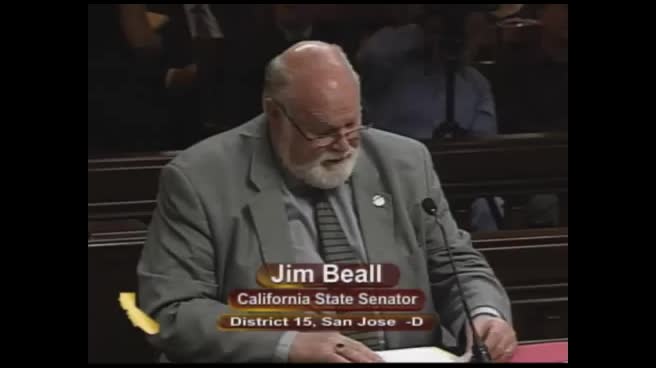 20MIN
Assembly Standing Committee on Human Services
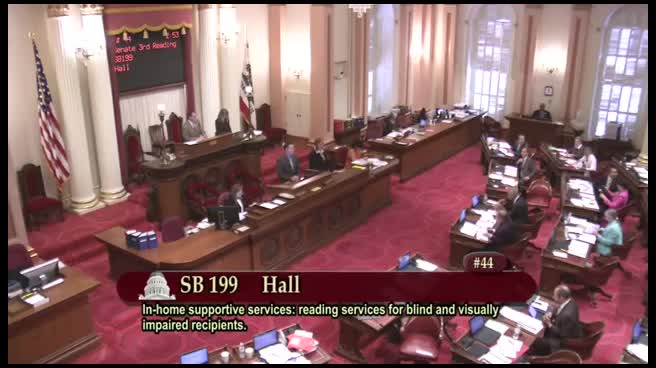 2MIN
Senate Floor
 4MIN
Senate Standing Committee on Appropriations
 9MIN
Senate Standing Committee on Health
Bill Author