SB 326: Courts: penalties: emergency services funding.
- Session Year: 2015-2016
- House: Senate
- Latest Version Date: 2015-10-11
Under existing law, the Emergency Medical Air Transportation Act, a penalty of $4 is imposed upon every conviction for a violation of the Vehicle Code, or a local ordinance adopted pursuant to the Vehicle Code, other than a parking offense. Existing law requires the county or the court that imposed the fine to transfer the moneys collected pursuant to this act to the Emergency Medical Air Transportation Act Fund. Under existing law, the assessment of these penalties will terminate on January 1, 2016, and any moneys unexpended and unencumbered in the Emergency Medical Air Transportation Act Fund on June 30, 2017, will transfer to the General Fund. Existing law repeals the Emergency Medical Air Transportation Act on January 1, 2018.
This bill would extend the dates of the Emergency Medical Air Transportation Act, so that the assessment of the penalties will terminate commencing January 1, 2018, and any moneys unexpended and unencumbered in the Emergency Medical Air Transportation Act Fund on June 30, 2019, will transfer to the General Fund. The bill would extend the operation of the Emergency Medical Air Transportation Act until January 1, 2020.
The bill would also make legislative findings and declarations as to the harmful effects of relying on penalty assessments to fund core state programs and the necessity to identify alternative funding sources for emergency medical air transportation services. The bill would require the State Department of Health Care Services and the Department of Finance to develop, by March 1, 2017, a funding plan that ensures adequate reimbursement to emergency medical air transportation providers following the expiration of the Emergency Medical Air Transportation Act on January 1, 2020.
Under existing law, the Emergency Medical Air Transportation Act, a penalty of $4 is imposed upon every conviction for a violation of the Vehicle Code, or a local ordinance adopted pursuant to the Vehicle Code, other than a parking offense. Existing law requires the county or the court that imposed the fine to transfer the moneys collected pursuant to this act to the Emergency Medical Air Transportation Act Fund. Under existing law, the assessment of these penalties will terminate on January 1, 2016, and any moneys unexpended and unencumbered in the Emergency Medical Air Transportation Act Fund on June 30, 2017, will transfer to the General Fund. Existing law repeals the Emergency Medical Air Transportation Act on January 1, 2018.
This bill would extend the dates of the Emergency Medical Air Transportation Act, so that the assessment of the penalties will terminate commencing January 1, 2018, and any moneys unexpended and unencumbered in the Emergency Medical Air Transportation Act Fund on June 30, 2019, will transfer to the General Fund. The bill would repeal extend the operation of the Emergency Medical Air Transportation Act on until January 1, 2020.
The bill would also make legislative findings and declarations as to the harmful effects of relying on penalty assessments to fund core state programs and the necessity to identify alternative funding sources for emergency medical air transportation services. The bill would require the State Department of Health Care Services and the Department of Finance to develop, by March 1, 2017, a funding plan that ensures adequate reimbursement to emergency medical air transportation providers following the expiration of the Emergency Medical Air Transportation Act on January 1, 2020.
Under existing law, the Emergency Medical Air Transportation Act, a penalty of $4 is imposed upon every conviction for a violation of the Vehicle Code, or a local ordinance adopted pursuant to the Vehicle Code, other than a parking offense. Existing law requires the county or the court that imposed the fine to transfer the moneys collected pursuant to this act to the Emergency Medical Air Transportation Act Fund. Under existing law, the assessment of these penalties will terminate commencing on January 1, 2016, and any moneys unexpended and unencumbered in the Emergency Medical Air Transportation Act Fund on June 30, 2017, will transfer to the General Fund. Existing law repeals the Emergency Medical Air Transportation Act on January 1, 2018.
This bill would delete the repeal of the Emergency Medical Air Transportation Act, thereby extending its operation indefinitely. The bill would make conforming changes to extend the assessment of penalties pursuant to the act, and would delete the provision for transfer of residual moneys to the General Fund.
This bill would extend the dates of the Emergency Medical Air Transportation Act, so that the assessment of the penalties will terminate commencing January 1, 2018, and any moneys unexpended and unencumbered in the Emergency Medical Air Transportation Act Fund on June 30, 2019, will transfer to the General Fund. The bill would repeal the Emergency Medical Air Transportation Act on January 1, 2020.
Under existing law, the Emergency Medical Air Transportation Act, a penalty of $4 is imposed upon every conviction for a violation of the Vehicle Code, or a local ordinance adopted pursuant to the Vehicle Code, other than a parking offense. Existing law requires the county or the court that imposed the fine to transfer the moneys collected pursuant to this act to the Emergency Medical Air Transportation Act Fund. Under existing law, the assessment of these penalties will terminate commencing January 1, 2016, and any moneys unexpended and unencumbered in the Emergency Medical Air Transportation Act Fund on June 30, 2017, will transfer to the General Fund. Existing law repeals the Emergency Medical Air Transportation Act on January 1, 2018.
This bill would delete the repeal of the Emergency Medical Air Transportation Act, thereby extending its operation indefinitely. The bill would make conforming changes to extend the assessment of penalties pursuant to the act, and would delete the provision for transfer of residual moneys to the General Fund.
The Legislature finds and declares all of the following:
(a)Penalty assessments have been used to fund an increasing number of programs that should properly be funded by broad-based financing mechanisms.
(b)The ever-increasing reliance on penalty assessments to fund core state programs is a regressive financing mechanism, and is particularly harmful to individuals who can least afford these assessments. High fines and assessments can perpetuate a cycle of poverty and inequality, given that individuals with lower incomes are more likely to miss payments and suffer the consequences.
(c)It is in the states interest to ensure funding for emergency medical air transportation is sufficient to maintain access to these critical services for Medi-Cal beneficiaries and all individuals in California.
(d)Therefore, it is the intent of the Legislature to identify alternative funding sources for emergency medical air transportation and cease reliance on penalty assessment revenue to fund these services.
(e)Accordingly, it is the intent of the Legislature to cease the collection of penalty assessments on January 1, 2018, pursuant to the Emergency Medical Air Transportation Act.
SEC. 2.Section 76000.10 of the Government Code is amended to read:76000.10.(a)This section shall be known, and may be cited, as the Emergency Medical Air Transportation Act.
(b)For purposes of this section:
(1)Department means the State Department of Health Care Services.
(2)Director means the Director of Health Care Services.
(3)Provider means a provider of emergency medical air transportation services.
(4)Rotary wing means a type of aircraft, commonly referred to as a helicopter, that generates lift through the use of wings, known as rotor blades, that revolve around a mast.
(5)Fixed wing means a type of aircraft, commonly referred to as an airplane, that generates lift through the use of the forward motion of the aircraft and wings that do not revolve around a mast but are fixed in relation to the fuselage of the aircraft.
(6)Air mileage rate means the per-mileage reimbursement rate paid for services rendered by rotary-wing and fixed-wing providers.
(c)(1)For purposes of implementing this section, a penalty of four dollars ($4) shall be imposed upon every conviction for a violation of the Vehicle Code or a local ordinance adopted pursuant to the Vehicle Code, except parking offenses subject to Article 3 (commencing with Section 40200) of Chapter 1 of Division 17 of the Vehicle Code.
(2)The penalty described in this subdivision shall be in addition to the state penalty assessed pursuant to Section 1464 of the Penal Code. However, this penalty shall not be included in the base fine used to calculate the state penalty assessment pursuant to subdivision (a) of Section 1464 of the Penal Code, the state surcharge levied pursuant to Section 1465.7 of the Penal Code, and the state court construction penalty pursuant to Section 70372 of this code, and to calculate the other additional penalties levied pursuant to this chapter.
(d)The county or the court that imposed the fine shall, in accordance with the procedures set out in Section 68101, transfer moneys collected pursuant to this section to the Treasurer for deposit into the Emergency Medical Air Transportation Act Fund, which is hereby established in the State Treasury. Notwithstanding Section 16305.7, the Emergency Medical Air Transportation Act Fund shall include interest and dividends earned on money in the fund.
(e)(1)The Emergency Medical Air Transportation Act Fund shall be administered by the State Department of Health Care Services. Moneys in the Emergency Medical Air Transportation Act Fund shall be made available, upon appropriation by the Legislature, to the department to be used as follows:
(A)For payment of the administrative costs of the department in administering this section.
(B)Twenty percent of the fund remaining after payment of administrative costs pursuant to subparagraph (A) shall be used to offset the state portion of the Medi-Cal reimbursement rate for emergency medical air transportation services.
(C)Eighty percent of the fund remaining after payment of administrative costs pursuant to subparagraph (A) shall be used to augment emergency medical air transportation reimbursement payments made through the Medi-Cal program, as set forth in paragraphs (2) and (3).
(2)(A)The department shall seek to obtain federal matching funds by using the moneys in the Emergency Medical Air Transportation Act Fund for the purpose of augmenting Medi-Cal reimbursement paid to emergency medical air transportation providers.
(B)The director shall do all of the following:
(i)By March 1, 2011, meet with medical air transportation providers to determine the most appropriate methodology to distribute the funds for medical air services.
(ii)Implement the methodology determined most appropriate in a timely manner.
(iii)Develop the methodology in collaboration with the medical air providers.
(iv)Submit any state plan amendments or waiver requests that may be necessary to implement this section.
(v)Submit any state plan amendment or waiver request that may be necessary to implement this section.
(vi)Seek federal approvals or waivers as may be necessary to implement this section and to obtain federal financial participation to the maximum extent possible for the payments under this section. If federal approvals are not received, moneys in the fund may be distributed pursuant to this section until federal approvals are received.
(C)The director may give great weight to the needs of the emergency medical air services providers, as discussed through the development of the methodology.
(3)(A)Upon appropriation by the Legislature, the department shall use moneys in the Emergency Medical Air Transportation Act Fund and any federal matching funds to increase the Medi-Cal reimbursement for emergency medical air transportation services in an amount not to exceed normal and customary charges charged by the providers.
(B)Notwithstanding any other law, and pursuant to this section, the department shall increase the Medi-Cal reimbursement for emergency medical air transportation services if both of the following conditions are met:
(i)Moneys in the Emergency Medical Air Transportation Act Fund will cover the cost of increased payments pursuant to subparagraph (A).
(ii)The state does not incur any General Fund expense to pay for the Medi-Cal emergency medical air transportation services increase.
(f)The assessment of penalties pursuant to this section shall terminate on January 1, 2018. Penalties assessed before January 1, 2018, shall continue to be collected, administered, and distributed pursuant to this section until exhausted or until June 30, 2019, whichever occurs first. On June 30, 2019, moneys remaining unexpended and unencumbered in the Emergency Medical Air Transportation Act Fund shall be transferred to the General Fund, to be available, upon appropriation by the Legislature, for the purposes of augmenting Medi-Cal reimbursement for emergency medical air transportation and related costs, generally.
(g)Notwithstanding the rulemaking provisions of Chapter 3.5 (commencing with Section 11340) of Part 1 of Division 3 of Title 2, the department may implement, interpret, or make specific this section and any applicable federal waivers and state plan amendments by means of all-county letters, plan letters, plan or provider bulletins, or similar instructions without taking regulatory action.
(h)This section shall remain in effect only until January 1, 2020, and as of that date is repealed, unless a later enacted statute, that is enacted before January 1, 2020, deletes or extends that date.
SEC. 3.Section 10752 is added to the Welfare and Institutions Code, to read:10752.The department shall, by March 1, 2017, in coordination with the Department of Finance, develop a funding plan that ensures adequate reimbursement to emergency medical air transportation providers following the termination of penalty assessments pursuant to subdivision (f) of Section 76000.10 of the Government Code on January 1, 2018.
The Legislature finds and declares all of the following:
(a)Penalty assessments have been used to fund an increasing number of programs that should properly be funded by broad-based financing mechanisms.
(b)The ever-increasing reliance on penalty assessments to fund core state programs is a regressive financing mechanism, and is particularly harmful to individuals who can least afford these assessments. High fines and assessments can perpetuate a cycle of poverty and inequality, given that individuals with lower incomes are more likely to miss payments and suffer the consequences.
(c)It is in the states interest to ensure funding for emergency medical air transportation is sufficient to maintain access to these critical services for Medi-Cal beneficiaries and all individuals in California.
(d)Therefore, it is the intent of the Legislature to identify alternative funding sources for emergency medical air transportation and cease reliance on penalty assessment revenue to fund these services.
(e)Accordingly, it is the intent of the Legislature to cease the collection of penalty assessments on January 1, 2018, pursuant to the Emergency Medical Air Transportation Act.
SECTION 1.SEC. 2.Section 76000.10 of the Government Code is amended to read:76000.10.(a)This section shall be known, and may be cited, as the Emergency Medical Air Transportation Act.
(b)For purposes of this section:
(1)Department means the State Department of Health Care Services.
(2)Director means the Director of Health Care Services.
(3)Provider means a provider of emergency medical air transportation services.
(4)Rotary wing means a type of aircraft, commonly referred to as a helicopter, that generates lift through the use of wings, known as rotor blades, that revolve around a mast.
(5)Fixed wing means a type of aircraft, commonly referred to as an airplane, that generates lift through the use of the forward motion of the aircraft and wings that do not revolve around a mast but are fixed in relation to the fuselage of the aircraft.
(6)Air mileage rate means the per-mileage reimbursement rate paid for services rendered by rotary-wing and fixed-wing providers.
(c)(1)For purposes of implementing this section, a penalty of four dollars ($4) shall be imposed upon every conviction for a violation of the Vehicle Code or a local ordinance adopted pursuant to the Vehicle Code, except parking offenses subject to Article 3 (commencing with Section 40200) of Chapter 1 of Division 17 of the Vehicle Code.
(2)The penalty described in this subdivision shall be in addition to the state penalty assessed pursuant to Section 1464 of the Penal Code. However, this penalty shall not be included in the base fine used to calculate the state penalty assessment pursuant to subdivision (a) of Section 1464 of the Penal Code, the state surcharge levied pursuant to Section 1465.7 of the Penal Code, and the state court construction penalty pursuant to Section 70372 of this code, and to calculate the other additional penalties levied pursuant to this chapter.
(d)The county or the court that imposed the fine shall, in accordance with the procedures set out in Section 68101, transfer moneys collected pursuant to this section to the Treasurer for deposit into the Emergency Medical Air Transportation Act Fund, which is hereby established in the State Treasury. Notwithstanding Section 16305.7, the Emergency Medical Air Transportation Act Fund shall include interest and dividends earned on money in the fund.
(e)(1)The Emergency Medical Air Transportation Act Fund shall be administered by the State Department of Health Care Services. Moneys in the Emergency Medical Air Transportation Act Fund shall be made available, upon appropriation by the Legislature, to the department to be used as follows:
(A)For payment of the administrative costs of the department in administering this section.
(B)Twenty percent of the fund remaining after payment of administrative costs pursuant to subparagraph (A) shall be used to offset the state portion of the Medi-Cal reimbursement rate for emergency medical air transportation services.
(C)Eighty percent of the fund remaining after payment of administrative costs pursuant to subparagraph (A) shall be used to augment emergency medical air transportation reimbursement payments made through the Medi-Cal program, as set forth in paragraphs (2) and (3).
(2)(A)The department shall seek to obtain federal matching funds by using the moneys in the Emergency Medical Air Transportation Act Fund for the purpose of augmenting Medi-Cal reimbursement paid to emergency medical air transportation providers.
(B)The director shall do all of the following:
(i)By March 1, 2011, meet with medical air transportation providers to determine the most appropriate methodology to distribute the funds for medical air services.
(ii)Implement the methodology determined most appropriate in a timely manner.
(iii)Develop the methodology in collaboration with the medical air providers.
(iv)Submit any state plan amendments or waiver requests that may be necessary to implement this section.
(v)Submit any state plan amendment or waiver request that may be necessary to implement this section.
(vi)Seek federal approvals or waivers as may be necessary to implement this section and to obtain federal financial participation to the maximum extent possible for the payments under this section. If federal approvals are not received, moneys in the fund may be distributed pursuant to this section until federal approvals are received.
(C)The director may give great weight to the needs of the emergency medical air services providers, as discussed through the development of the methodology.
(3)(A)Upon appropriation by the Legislature, the department shall use moneys in the Emergency Medical Air Transportation Act Fund and any federal matching funds to increase the Medi-Cal reimbursement for emergency medical air transportation services in an amount not to exceed normal and customary charges charged by the providers.
(B)Notwithstanding any other law, and pursuant to this section, the department shall increase the Medi-Cal reimbursement for emergency medical air transportation services provided that if both of the following conditions are met:
(i)Moneys in the Emergency Medical Air Transportation Act Fund will cover the cost of increased payments pursuant to subparagraph (A).
(ii)The state does not incur any General Fund expense to pay for the Medi-Cal emergency medical air transportation services increase.
(f)The assessment of penalties pursuant to this section shall terminate on January 1, 2018. Penalties assessed before January 1, 2018, shall continue to be collected, administered, and distributed pursuant to this section until exhausted or until June 30, 2019, whichever occurs first. On June 30, 2019, moneys remaining unexpended and unencumbered in the Emergency Medical Air Transport Transportation Act Fund shall be transferred to the General Fund, to be available, upon appropriation by the Legislature, for the purposes of augmenting Medi-Cal reimbursement for emergency medical air transportation and related costs, generally.
(g)Notwithstanding the rulemaking provisions of Chapter 3.5 (commencing with Section 11340) of Part 1 of Division 3 of Title 2, the department may implement, interpret, or make specific this section and any applicable federal waivers and state plan amendments by means of all-county letters, plan letters, plan or provider bulletins, or similar instructions without taking regulatory action.
(h)This section shall remain in effect only until January 1, 2020, and as of that date is repealed, unless a later enacted statute, that is enacted before January 1, 2020, deletes or extends that date.
SEC. 3.Section 10752 is added to the Welfare and Institutions Code, to read:10752.The department shall, by March 1, 2017, in coordination with the Department of Finance, develop a funding plan that ensures adequate reimbursement to emergency medical air transportation providers following the termination of penalty assessments pursuant to subdivision (f) of Section 76000.10 of the Government Code on January 1, 2018.
(a)This section shall be known, and may be cited, as the Emergency Medical Air Transportation Act.
(b)For purposes of this section:
(1)Department means the State Department of Health Care Services.
(2)Director means the Director of Health Care Services.
(3)Provider means a provider of emergency medical air transportation services.
(4)Rotary wing means a type of aircraft, commonly referred to as a helicopter, that generates lift through the use of wings, known as rotor blades, that revolve around a mast.
(5)Fixed wing means a type of aircraft, commonly referred to as an airplane, that generates lift through the use of the forward motion of the aircraft and wings that do not revolve around a mast but are fixed in relation to the fuselage of the aircraft.
(6)Air mileage rate means the per-mileage reimbursement rate paid for services rendered by rotary-wing and fixed-wing providers.
(c)(1)For purposes of implementing this section, a penalty of four dollars ($4) shall be imposed upon every conviction for a violation of the Vehicle Code or a local ordinance adopted pursuant to the Vehicle Code, except parking offenses subject to Article 3 (commencing with Section 40200) of Chapter 1 of Division 17 of the Vehicle Code.
(2)The penalty described in this subdivision shall be in addition to the state penalty assessed pursuant to Section 1464 of the Penal Code. However, this penalty shall not be included in the base fine used to calculate the state penalty assessment pursuant to subdivision (a) of Section 1464 of the Penal Code, the state surcharge levied pursuant to Section 1465.7 of the Penal Code, and the state court construction penalty pursuant to Section 70372 of this code, and to calculate the other additional penalties levied pursuant to this chapter.
(d)The county or the court that imposed the fine shall, in accordance with the procedures set out in Section 68101, transfer moneys collected pursuant to this section to the Treasurer for deposit into the Emergency Medical Air Transportation Act Fund, which is hereby established in the State Treasury. Notwithstanding Section 16305.7, the Emergency Medical Air Transportation Act Fund shall include interest and dividends earned on money in the fund.
(e)(1)The Emergency Medical Air Transportation Act Fund shall be administered by the State Department of Health Care Services. Moneys in the Emergency Medical Air Transportation Act Fund shall be made available, upon appropriation by the Legislature, to the department to be used as follows:
(A)For payment of the administrative costs of the department in administering this section.
(B)Twenty percent of the fund remaining after payment of administrative costs pursuant to subparagraph (A) shall be used to offset the state portion of the Medi-Cal reimbursement rate for emergency medical air transportation services.
(C)Eighty percent of the fund remaining after payment of administrative costs pursuant to subparagraph (A) shall be used to augment emergency medical air transportation reimbursement payments made through the Medi-Cal program, as set forth in paragraphs (2) and (3).
(2)(A)The department shall seek to obtain federal matching funds by using the moneys in the Emergency Medical Air Transportation Act Fund for the purpose of augmenting Medi-Cal reimbursement paid to emergency medical air transportation providers.
(B)The director shall do all of the following:
(i)By March 1, 2011, meet with medical air transportation providers to determine the most appropriate methodology to distribute the funds for medical air services.
(ii)Implement the methodology determined most appropriate in a timely manner.
(iii)Develop the methodology in collaboration with the medical air providers.
(iv)Submit any state plan amendments or waiver requests that may be necessary to implement this section.
(v)Submit any state plan amendment or waiver request that may be necessary to implement this section.
(vi)Seek federal approvals or waivers as may be necessary to implement this section and to obtain federal financial participation to the maximum extent possible for the payments under this section. If federal approvals are not received, moneys in the fund may be distributed pursuant to this section until federal approvals are received.
(C)The director may give great weight to the needs of the emergency medical air services providers, as discussed through the development of the methodology.
(3)(A)Upon appropriation by the Legislature, the department shall use moneys in the Emergency Medical Air Transportation Act Fund and any federal matching funds to increase the Medi-Cal reimbursement for emergency medical air transportation services in an amount not to exceed normal and customary charges charged by the providers.
(B)Notwithstanding any other law, and pursuant to this section, the department shall increase the Medi-Cal reimbursement for emergency medical air transportation services provided that both of the following conditions are met:
(i)Moneys in the Emergency Medical Air Transportation Act Fund will cover the cost of increased payments pursuant to subparagraph (A).
(ii)The state does not incur any General Fund expense to pay for the Medi-Cal emergency medical air transportation services increase.
(f)The assessment of penalties pursuant to this section shall terminate on January 1, 2018. Penalties assessed before January 1, 2018, shall continue to be collected, administered, and distributed pursuant to this section until exhausted or until June 30, 2019, whichever occurs first. On June 30, 2019, moneys remaining unexpended and unencumbered in the Emergency Medical Air Transport Act Fund shall be transferred to the General Fund, to be available, upon appropriation by the Legislature, for the purposes of augmenting Medi-Cal reimbursement for emergency medical air transportation and related costs, generally.
(f)
(g)Notwithstanding the rulemaking provisions of Chapter 3.5 (commencing with Section 11340) of Part 1 of Division 3 of Title 2, the department may implement, interpret, or make specific this section and any applicable federal waivers and state plan amendments by means of all-county letters, plan letters, plan or provider bulletins, or similar instructions without taking regulatory action.
(h)This section shall remain in effect only until January 1, 2020, and as of that date is repealed, unless a later enacted statute, that is enacted before January 1, 2020, deletes or extends that date.
(a)This section shall be known, and may be cited, as the Emergency Medical Air Transportation Act.
(b)For purposes of this section:
(1)Department means the State Department of Health Care Services.
(2)Director means the Director of Health Care Services.
(3)Provider means a provider of emergency medical air transportation services.
(4)Rotary wing means a type of aircraft, commonly referred to as a helicopter, that generates lift through the use of wings, known as rotor blades, that revolve around a mast.
(5)Fixed wing means a type of aircraft, commonly referred to as an airplane, that generates lift through the use of the forward motion of the aircraft and wings that do not revolve around a mast but are fixed in relation to the fuselage of the aircraft.
(6)Air mileage rate means the per-mileage reimbursement rate paid for services rendered by rotary-wing and fixed-wing providers.
(c)(1)For purposes of implementing this section, a penalty of four dollars ($4) shall be imposed upon every conviction for a violation of the Vehicle Code or a local ordinance adopted pursuant to the Vehicle Code, except parking offenses subject to Article 3 (commencing with Section 40200) of Chapter 1 of Division 17 of the Vehicle Code.
(2)The penalty described in this subdivision shall be in addition to the state penalty assessed pursuant to Section 1464 of the Penal Code. However, this penalty shall not be included in the base fine used to calculate the state penalty assessment pursuant to subdivision (a) of Section 1464 of the Penal Code, the state surcharge levied pursuant to Section 1465.7 of the Penal Code, and the state court construction penalty pursuant to Section 70372 of this code, and to calculate the other additional penalties levied pursuant to this chapter.
(d)The county or the court that imposed the fine shall, in accordance with the procedures set out in Section 68101, transfer moneys collected pursuant to this section to the Treasurer for deposit into the Emergency Medical Air Transportation Act Fund, which is hereby established in the State Treasury. Notwithstanding Section 16305.7, the Emergency Medical Air Transportation Act Fund shall include interest and dividends earned on money in the fund.
(e)(1)The Emergency Medical Air Transportation Act Fund shall be administered by the State Department of Health Care Services. Moneys in the Emergency Medical Air Transportation Act Fund shall be made available, upon appropriation by the Legislature, to the department to be used as follows:
(A)For payment of the administrative costs of the department in administering this section.
(B)Twenty percent of the fund remaining after payment of administrative costs pursuant to subparagraph (A) shall be used to offset the state portion of the Medi-Cal reimbursement rate for emergency medical air transportation services.
(C)Eighty percent of the fund remaining after payment of administrative costs pursuant to subparagraph (A) shall be used to augment emergency medical air transportation reimbursement payments made through the Medi-Cal program, as set forth in paragraphs (2) and (3).
(2)(A)The department shall seek to obtain federal matching funds by using the moneys in the Emergency Medical Air Transportation Act Fund for the purpose of augmenting Medi-Cal reimbursement paid to emergency medical air transportation providers.
(B)The director shall do all of the following:
(i)By March 1, 2011, meet with medical air transportation providers to determine the most appropriate methodology to distribute the funds for medical air services.
(ii)Implement the methodology determined most appropriate in a timely manner.
(iii)Develop the methodology in collaboration with the medical air providers.
(iv)Submit any state plan amendments or waiver requests that may be necessary to implement this section.
(v)Submit any state plan amendment or waiver request that may be necessary to implement this section.
(vi)Seek federal approvals or waivers as may be necessary to implement this section and to obtain federal financial participation to the maximum extent possible for the payments under this section. If federal approvals are not received, moneys in the fund may be distributed pursuant to this section until federal approvals are received.
(C)The director may give great weight to the needs of the emergency medical air services providers, as discussed through the development of the methodology.
(3)(A)Upon appropriation by the Legislature, the department shall use moneys in the Emergency Medical Air Transportation Act Fund and any federal matching funds to increase the Medi-Cal reimbursement for emergency medical air transportation services in an amount not to exceed normal and customary charges charged by the providers.
(B)Notwithstanding any other provision of law, and pursuant to this section, the department shall increase the Medi-Cal reimbursement for emergency medical air transportation services provided that both of the following conditions are met:
(i)Moneys in the Emergency Medical Air Transportation Act Fund will cover the cost of increased payments pursuant to subparagraph (A).
(ii)The state does not incur any General Fund expense to pay for the Medi-Cal emergency medical air transportation services increase.
(f)The assessment of penalties pursuant to this section shall terminate commencing January 1, 2016. Penalties assessed prior to January 1, 2016, shall continue to be collected, administered, and distributed pursuant to this section until exhausted or until June 30, 2017, whichever occurs first. On June 30, 2017, moneys remaining unexpended and unencumbered in the Emergency Medical Air Transportation Act Fund shall be transferred to the General Fund, to be available, upon appropriation by the Legislature, for the purposes of augmenting Medi-Cal reimbursement for emergency medical air transportation and related costs, generally.
(g)
(f)Notwithstanding the rulemaking provisions of Chapter 3.5 (commencing with Section 11340) of Part 1 of Division 3 of Title 2, the department may implement, interpret, or make specific this section and any applicable federal waivers and state plan amendments by means of all-county letters, plan letters, plan or provider bulletins, or similar instructions without taking regulatory action.
(h)This section shall remain in effect until January 1, 2018, and as of that date is repealed, unless a later enacted statute, that is enacted before January 1, 2018, deletes or extends that date.
|
Date
|
Status
|
|---|---|
| Jun 18, 2015 | Referred to Com. on HEALTH. |
| Oct 11, 2015 | Chaptered by Secretary of State. Chapter 797, Statutes of 2015. |
| Oct 11, 2015 | Approved by the Governor. |
| Sep 16, 2015 | Enrolled and presented to the Governor at 4:45 p.m. |
| Sep 11, 2015 | Assembly amendments concurred in. (Ayes 39. Noes -1.) Ordered to engrossing and enrolling. |
| Sep 11, 2015 | Assembly amendments concurred in. (Ayes 39. Noes 1. Page 2752.) Ordered to engrossing and enrolling. |
| Sep 10, 2015 | Read third time. Passed. (Ayes 74. Noes 0. Page 3097.) Ordered to the Senate. |
| Sep 10, 2015 | Read third time. Passed. Ordered to the Senate. |
| Sep 10, 2015 | In Senate. Concurrence in Assembly amendments pending. |
| Sep 1, 2015 | Read second time. Ordered to third reading. |
| Aug 31, 2015 | Read second time and amended. Ordered to second reading. |
| Aug 31, 2015 | From committee: Do pass as amended. (Ayes 17. Noes 0.) (August 27). |
| Jul 8, 2015 | July 8 set for first hearing. Placed on APPR. suspense file. |
| Jul 8, 2015 | July 8 set for first hearing. Placed on suspense file. |
| Jul 1, 2015 | From committee: Do pass and re-refer to Com. on APPR. (Ayes 18. Noes 0.) (June 30). Re-referred to Com. on APPR. |
| Feb 23, 2015 | Introduced. Read first time. To Com. on RLS. for assignment. To print. |
| Jun 4, 2015 | In Assembly. Read first time. Held at Desk. |
| Jun 3, 2015 | Read third time. Passed. (Ayes 31. Noes 5.) Ordered to the Assembly. |
| Jun 3, 2015 | Read third time. Passed. (Ayes 31. Noes 5. Page 1301.) Ordered to the Assembly. |
| Jun 2, 2015 | Read second time and amended. Ordered to third reading. |
| Jun 1, 2015 | From committee: Do pass as amended. (Ayes 7. Noes 0.) (May 28). |
| Jun 1, 2015 | From committee: Do pass as amended. (Ayes 7. Noes 0. Page 1151.) (May 28). |
| May 23, 2015 | Set for hearing May 28. |
| Apr 20, 2015 | April 20 hearing: Placed on APPR. suspense file. |
| Apr 10, 2015 | Set for hearing April 20. |
| Apr 9, 2015 | From committee: Do pass and re-refer to Com. on APPR. (Ayes 8. Noes 0. Page 545.) (April 8). Re-referred to Com. on APPR. |
| Mar 10, 2015 | Set for hearing April 8. |
| Mar 5, 2015 | Referred to Com. on HEALTH. |
| Feb 24, 2015 | From printer. May be acted upon on or after March 26. |
|
Date
|
Description
|
Location
|
Votes
|
|
|---|---|---|---|---|
| Sep 11, 2015 | Unfinished Business SB326 Beall Concurrence | Senate Floor |
Passed |
|
| Sep 10, 2015 | SB 326 Beall Senate Third Reading By WOOD | Assembly Floor |
Passed |
|
| Aug 27, 2015 | Do pass as amended. | Assembly Standing Committee on Appropriations |
Passed |
|
| Jun 30, 2015 | Do pass and be re-referred to the Committee on [Appropriations] | Assembly Standing Committee on Health |
Passed |
|
| Jun 3, 2015 | Senate 3rd Reading SB326 Beall | Senate Floor |
Passed |
|
| May 28, 2015 | Do pass as amended | Senate Standing Committee on Appropriations |
Passed |
|
| Apr 20, 2015 | Placed on suspense file | Senate Standing Committee on Appropriations |
Passed |
|
| Apr 8, 2015 | Do pass, but first be re-referred to the Committee on [Appropriations] | Senate Standing Committee on Health |
Passed |
This list shows positions taken on this bill by organizations on the date displayed, which is linked to the original source.
Positions by individuals are not included.
|
Organization
|
Position
|
Date
|
|---|---|---|
| Board for Critical Care Transport Paramedic Certification | ** Support | Sep 10, 2015 |
| California Ambulance Association | ** Support | Sep 10, 2015 |
| California Association of Air Medical Services | ** Support | Sep 10, 2015 |
| California Children'S Hospital Association | ** Support | Sep 10, 2015 |
| California Hospital Association | ** Support | Sep 10, 2015 |
| Calstar | ** Support | Sep 10, 2015 |
| Care Flight | ** Support | Sep 10, 2015 |
| Care Flight Critical Care Transport | ** Support | Sep 10, 2015 |
| Childrens Hospital Los Angeles | ** Support | Sep 10, 2015 |
| Emergency Nurse Association | ** Support | Sep 10, 2015 |
| Emergency Nurses Association | ** Support | Sep 10, 2015 |
| Emergency Nurses Association of California | ** Support | Sep 10, 2015 |
| Hall Ambulance Service | ** Support | Sep 10, 2015 |
| Hall Ambulance Service Incorporated | ** Support | Sep 10, 2015 |
| Helinet Aviation Services | ** Support | Sep 10, 2015 |
| Loma Linda Children's Hospital | ** Support | Sep 10, 2015 |
| Manteca District Ambulance Service | ** Support | Sep 10, 2015 |
| Mercy Air Services | ** Support | Sep 10, 2015 |
| Mercy Medical Center Redding | ** Support | Sep 10, 2015 |
| Reach Air Medical Services | ** Support | Sep 10, 2015 |
| Rural County Representatives of California | ** Support | Sep 10, 2015 |
| Sonora Regional Medical Center | ** Support | Sep 10, 2015 |
| Stanford Life Flight | ** Support | Sep 10, 2015 |
SB 326
Page 7
|
Office of Senate Floor Analyses (916) 651-1520 Fax: (916) 327-4478 |
UNFINISHED BUSINESS
Bill No: SB 326
Amended: 8/31/15
SENATE HEALTH COMMITTEE: 8-0, 4/8/15
AYES: Hernandez, Hall, Mitchell, Monning, Nielsen, Pan, Roth, Wolk
NO VOTE RECORDED: Nguyen
SENATE APPROPRIATIONS COMMITTEE: 7-0, 5/28/15
AYES: Lara, Bates, Beall, Hill, Leyva, Mendoza, Nielsen
SENATE FLOOR: 31-5, 6/3/15
AYES: Allen, Bates, Beall, Berryhill, Block, Cannella, De León, Galgiani, Glazer, Hall, Hernandez, Hertzberg, Hill, Hueso, Huff, Jackson, Lara, Leno, Leyva, Liu, McGuire, Mendoza, Mitchell, Monning, Nielsen, Pan, Pavley, Roth, Vidak, Wieckowski, Wolk
NOES: Anderson, Moorlach, Morrell, Nguyen, Stone
NO VOTE RECORDED: Fuller, Gaines, Hancock, Runner
ASSEMBLY FLOOR: 74-0, 9/10/15 - See last page for vote
SUBJECT: Courts: penalties: emergency services funding
SOURCE: California Association of Air Medical Services
DIGEST: This bill extends the sunset date of the $4 penalty assessment for Vehicle Code violations other than parking offenses, until January 1, 2018, with the resulting revenue deposited in the Emergency Medical Air Transportation Act Fund (Fund). Money in that Fund is primarily used to fund Medi-Cal reimbursement for emergency medical air transportation services. Requires the Department of Health Care Services to develop a funding plan that ensures adequate reimbursement to emergency medical air transportation providers following the termination of penalty assessments under this bill on January 1, 2018.
Assembly Amendments require DHCS, by March 1, 2017, in coordination with the Department of Finance, to develop a funding plan that ensures adequate reimbursement to emergency medical air transportation providers following the termination of penalty assessments under this bill on January 1, 2018, and make legislative findings and declarations as to the harmful effects of relying on penalty assessments to fund core state programs and the necessity to identify alternative funding sources for emergency medical air transportation services.
Existing law:
Levies, under the Emergency Medical Air Transportation Act (Act), a penalty of $4 upon every conviction for a violation of the Vehicle Code, or a local ordinance adopted pursuant to the Vehicle Code, other than a parking offense.
Sunsets the assessment of the $4 penalty under the Act commencing January 1, 2016, and transfers any moneys unexpended and unencumbered in the Fund on June 30, 2017, to the General Fund.
Requires the county or the court that imposed the fine to transfer the moneys collected to the Fund.
Requires moneys in the Fund to be made available, upon appropriation by the Legislature, to the Department of Health Care Services (DHCS), to be for payment of DHCS administrative costs, with the remainder being used as follows:
Twenty percent to offset the state portion of the Medi-Cal reimbursement rate for emergency medical air transportation services; and,
Eighty percent to augment emergency medical air transportation reimbursement payments made through the Medi-Cal program.
Requires DHCS to seek to obtain federal matching funds by using the moneys in the Fund for the purpose of augmenting Medi-Cal reimbursement paid to emergency medical air transportation providers.
Repeals the section of law establishing the Act, the Fund, and the Medi-Cal emergency medical air transportation reimbursement provisions on January 1, 2018.
This bill:
Extends the sunset date of the $4 penalty assessment established under the Act, from January 1, 2016 to January 1, 2018.
Extends the January 1, 2018 sunset date of the Act to January 1, 2020, and makes related changes.
Requires DHCS, by March 1, 2017, in coordination with the Department of Finance, to develop a funding plan that ensures adequate reimbursement to emergency medical air transportation providers following the termination of penalty assessments under this bill on January 1, 2018.
Make legislative findings and declarations as to the harmful effects of relying on penalty assessments to fund core state programs and the necessity to identify alternative funding sources for emergency medical air transportation services.
Background
AB 2173 (Beall, Chapter 547, Statutes of 2010), levied a $4 additional penalty on Vehicle Code violations (excluding parking tickets), with the resulting revenue being used as the state match to draw down additional federal Medicaid matching funds to fund Medi-Cal emergency air medical transportation services. Between $11.2 and $13.7 million has been raised annually from the AB 2173 penalty assessment. Of that amount, $2.2 to $2.7 million is used as the state match to fund current emergency air ambulance Medi-Cal provider rates. The remaining $9 to $11 million is used to match with federal dollars to augment Medi-Cal rates to emergency air ambulance providers. The $9 to $11 million augmentation amounts from AB 2173 are provided as supplemental payments to eligible Medi-Cal air medical transportation providers that provide fee-for-service emergency air medical transportation services. Approximately 23 air ambulance providers receive the resulting revenue.
Penalty Assessments. According to the Judicial Council, the calculation for a traffic ticket in California, and determining where the money goes once collected, is complex. The cost of a traffic ticket includes a base fine amount plus penalty assessments and fees to fund specific state and local activities. The base fine is collected for, and distributed to, either the local government or local government and county. The increase in the total cost of a traffic ticket (above the base fine) in California over the last 20 years is primarily the result of the addition of mandatory penalty assessments and fees.
Penalty assessments are typically calculated from the base fine for the traffic ticket and are part of the punishment that is imposed for the violation. The penalties collected are distributed to many different city, county, and state funds established by the local government and Legislature for activities such as DNA collection in criminal cases, emergency medical services, local criminal justice facilities, emergency medical air transportation, and court facility maintenance and construction. The chart below lists three examples of the cost and distribution of a typical traffic ticket, including the base fine, penalties, and fees. The chart below, created by the Judicial Council, provides information on a typical ticket for faulty equipment ($25), a moving violation ($35), and driving more than 25 MPH over the speed limit ($100).
2013 Traffic Infraction Bail Examples |
||||
|
Faulty Equipment |
Moving Violation |
Over Limit 25 MPH |
|
|
|
|
|
|
Base Fine |
$25.00 |
$35.00 |
$100.00 |
|
Penalty Assessment (PA) for every $10 or part of $10 of Base Fine |
State PA ($10) |
30.00 |
40.00 |
100.00 |
County PA (up to $7) |
21.00 |
28.00 |
70.00 |
|
Emergency Medical Services PA ($2) |
6.00 |
8.00 |
20.00 |
|
DNA Fund PA ($5) |
15.00 |
20.00 |
50.00 |
|
Court Facilities PA ($5) |
15.00 |
20.00 |
50.00 |
|
Emergency Medical Air Transportation PA |
4.00 |
4.00 |
4.00 |
|
State Surcharge (20% of Base Fine) |
5.00 |
7.00 |
20.00 |
|
Fine and Penalty Subtotal |
$121.00 |
$162.00 |
$414.00 |
|
Court Operations Fee ($40) |
40.00 |
40.00 |
40.00 |
|
Criminal Conviction Fee ($35) |
35.00 |
35.00 |
35.00 |
|
Night Court Fee |
1.00 |
1.00 |
1.00 |
|
Total |
$197.00 |
$238.00 |
$490.00 |
|
Comments
Author’s statement. According to the author, “[M]any emergency patients transported by air ambulances have no insurance, are not eligible for Medi-Cal, and have no ability to pay for the service, yet these patients are given the same high level of care as those with medical insurance. The Medi-Cal fee schedule pays air ambulance services far below the cost of providing emergency air transportation, and pays nothing if the patient is indigent. Emergency air ambulance services provide coverage to multiple counties within a 100-mile radius of their bases, and as a result often their transports originate in a county other than where they are based. This makes it difficult for them to be funded by local tax support except in the largest of counties. Emergency physicians and air ambulances do not receive additional funding through the Disproportionate Share Hospital (DSH) program, or the county Maddy Emergency Medical Services Fund when they provide treatment to indigent patients. Prior to enactment of the Act, Medi-Cal funding for air ambulances had not increased for nearly 20 years. This bill will continue to provide critical funding to these services and will prevent funding for air ambulances from reverting back to 1993 levels by continuing the $4 penalty to fund air ambulance services.”
FISCAL EFFECT: Appropriation: No Fiscal Com.: Yes Local: No
According to the Assembly Appropriations Committee:
Penalty revenues of around $10 million per year for an additional two years, until 2018 (Emergency Medical Air Transportation Act Fund). Annual revenues will fluctuate depending on the number of Vehicle Code violations that result in convictions, as well as other factors. The numbers below are based on an assumption of $10 million in annual revenue.
Administrative costs, likely in the low hundreds of thousands (Emergency Medical Air Transportation Act Fund).
Reduced GF expenditures of around $2 million per year for Medi-Cal payments, by using penalty revenues to offset GF expenditures for emergency air ambulance services for Medi-Cal beneficiaries.
Annual expenditures of around $16 million per year for supplemental payments to private emergency air medical service providers (Emergency Medical Air Transportation Act Fund and federal funds).
California Association of Air Medical Services (source)
Board for Critical Care Transport Paramedic Certification
California Ambulance Association
California Children’s Hospital Association
California Hospital Association
CALSTAR
Care Flight
Children’s Hospital Los Angeles
Emergency Nurse Association
Hall Ambulance Service, Inc.
Helinet Aviation Services
Loma Linda Children’s Hospital
Manteca District Ambulance Service
Mercy Air Services
Mercy Medical Center Redding
PHI Air Medical
REACH Air Medical Services
Rural County Representatives of California
Sonora Regional Medical Center
Stanford Life Flight
None received
ARGUMENTS
IN SUPPORT: This bill is sponsored by the California Association
of Air Medical Services (Cal-AAMS), which argues this bill will
maintain the current level of Medi-Cal funding of emergency air
ambulance transportation by removing the sunset clause on the Act
created in 2010. Cal-AAMSS states air ambulance services provide
life-saving emergency transportation to the most critical patients
from automobile accident scenes directly to trauma centers. In
addition, emergency helicopter air ambulance providers provide a
critical link between rural areas and urban tertiary care hospitals
(trauma centers, heart/stroke centers, burn units) and are an
essential part of the statewide emergency medical services system.
Prior to the Act, Medi-Cal funding for air ambulances had not
increased for nearly 20 years. This bill will continue to provide
critical funding to this essential life-saving service, and will
prevent funding for air ambulances to revert back to 1993 levels.
Removing the sunset for this penalty will ensure the program
continues to support these critical services.
The Rural
County Representatives of California (RCRC) write in support that air
ambulance service is critical in rural and remote areas of California
and a healthy air ambulance system ensures rural communities have
access to life-saving care for both residents and tourists. RCRC
states its member counties have had no issues in their administrative
role in administering the penalty assessment, and they believe the
Act should be continued in order to promote a vital health care
delivery system that is so important in rural and remote areas.
ASSEMBLY FLOOR: 74-0, 9/10/15
AYES: Achadjian, Alejo, Baker, Bigelow, Bloom, Bonilla, Bonta, Brough, Brown, Burke, Calderon, Campos, Chang, Chau, Chávez, Chiu, Chu, Cooley, Cooper, Dababneh, Dahle, Daly, Dodd, Eggman, Frazier, Beth Gaines, Gallagher, Cristina Garcia, Eduardo Garcia, Gatto, Gipson, Gomez, Gonzalez, Gordon, Gray, Grove, Roger Hernández, Holden, Irwin, Jones, Jones-Sawyer, Kim, Lackey, Levine, Lopez, Low, Maienschein, Mathis, Mayes, McCarty, Medina, Melendez, Mullin, Nazarian, O'Donnell, Olsen, Patterson, Perea, Quirk, Rendon, Ridley-Thomas, Rodriguez, Salas, Santiago, Steinorth, Mark Stone, Thurmond, Ting, Waldron, Weber, Wilk, Williams, Wood, Atkins
NO VOTE RECORDED: Travis Allen, Hadley, Harper, Linder, Obernolte, Wagner
Prepared by: Scott Bain / HEALTH /
9/10/15 23:27:59
**** END ****
SB 326
Page 3
SENATE THIRD READING
SB 326
(Beall)
As Amended August 31, 2015
Majority vote
SENATE VOTE: 31-5
Committee |
Votes |
Ayes |
Noes |
Health |
18-0 |
Bonta, Maienschein, Bonilla, Burke, Chiu, Gomez, Gonzalez, Roger Hernández, Lackey, McCarty, Nazarian, Patterson, Ridley-Thomas, Rodriguez, Steinorth, Thurmond, Waldron, Wood |
|
Appropriations |
17-0 |
Gomez, Bigelow, Bloom, Bonta, Calderon, Chang, Nazarian, Eggman, Gallagher, Eduardo Garcia, Holden, Jones, Quirk, Rendon, Wagner, Weber, Wood |
|
SUMMARY: Extends the sunset date of the $4 penalty assessment for Vehicle Code violations, other than parking offenses, from January 1, 2016, to January 1, 2018, and extends the resulting revenue be deposited in the Emergency Medical Air Transportation Act (EMATA) Fund from June 30, 2017, to June 30, 2019. States it is the intent of the Legislature to cease collection of penalty assessments on January 1, 2018, pursuant to EMATA and that the Legislature identify alternative funding sources for emergency medical air transportation and cease reliance on penalty assessment revenue. Requires the Department of Health Care Services, in coordination with the Department of Finance, to develop a funding plan that ensures adequate reimbursement to emergency medical air transportation providers following the termination of the Vehicle Code penalty assessments.
FISCAL EFFECT: According to the Assembly Appropriations Committee:
Penalty revenues of around $10 million per year for an additional two years, until 2018 (EMATA Fund). Annual revenues will fluctuate depending on the number of vehicle code violations that result in convictions, as well as other factors. The numbers below are based on an assumption of $10 million in annual revenue.
Administrative costs, likely in the low hundreds of thousands (EMATA Fund).
Reduced General Fund (GF) expenditures of around $2 million per year for Medi-Cal payments, by using penalty revenues to offset GF expenditures for emergency air ambulance services for Medi-Cal beneficiaries.
Annual expenditures of around $16 million per year for supplemental payments to private emergency air medical service providers (EMATA Fund and federal funds).
Based on language stating intent to cease collection of assessments for its current purpose and requiring a plan for an alternate funding source for emergency medical air transportation services, potential GF cost pressure to augment GF spending on these services.
COMMENTS: According to the author, many emergency patients transported by air ambulances have no insurance, are not eligible for Medi-Cal, and have no ability to pay for the service, yet these patients are given the same high level of care as those with medical insurance. The Medi-Cal fee schedule pays air ambulance services far below the cost of providing emergency air transportation, and pays nothing if the patient is indigent. Emergency air ambulance services provide coverage to multiple counties within a 100-mile radius of their bases, and as a result often their transports originate in a county other than where they are based. This makes it difficult for them to be funded by local tax support except in the largest of counties. Emergency physicians and air ambulances do not receive additional funding through the Disproportionate Share Hospital program or the county Maddy Emergency Medical Services (EMS) Fund when they provide treatment to indigent patients. Prior to enactment of EMATA, Medi-Cal funding for air ambulances had not increased for nearly 20 years. This bill will continue to provide critical funding to these services and will prevent funding for air ambulances from reverting back to 1993 levels by continuing the $4 penalty to fund air ambulance services.
AB 2173 (Beall), Chapter 547, Statutes of 2010, levied a $4 additional penalty on Vehicle Code violations (excluding parking tickets), with the resulting revenue being used as the state match to draw down additional federal Medicaid matching funds to fund Medi-Cal emergency air medical transportation services. Between $11.2 million and $13.7 million has been raised annually from the AB 2173 penalty assessment. Of that amount, $2.2 million to $2.7 million is used as the state match to fund current emergency air ambulance Medi-Cal provider rates. The remaining $9 million to $11 million is used to match with federal dollars to augment Medi-Cal rates to emergency air ambulance providers.
According to the Judicial Council, the calculation for a traffic ticket in California, and determining where the money goes once collected, is complex. The cost of a traffic ticket includes a base fine amount plus penalty assessments and fees to fund specific state and local activities. The base fine is collected for, and distributed to, either the local government or local government and county. The increase in the total cost of a traffic ticket (above the base fine) in California over the last 20 years is primarily the result of the addition of mandatory penalty assessments and fees.
This bill is sponsored by the California Association of Air Medical Services (Cal-AAMS), which argues this bill will maintain the current level of Medi-Cal funding of emergency air ambulance transportation by extending the sunset clause on the EMATA created in 2010. Cal-AAMSS states air ambulance services provide life-saving emergency transportation to the most critical patients from automobile accident scenes directly to trauma centers.
The Rural County Representatives of California (RCRC) states in support that air ambulance service is critical in rural and remote areas of California and a healthy air ambulance system ensures rural communities have access to life-saving care for both residents and tourists. RCRC states its member counties have had no issues in their administrative role in administering the penalty assessment, and they believe the EMATA should be continued in order to promote a vital health care delivery system that is so important in rural and remote areas.
The California Ambulance Association, also in support, notes that ambulance service, including air ambulance, is critical to the health care safety net, providing desperately needed care immediately to all people without exception. Emergency ambulance service providers are legally and morally bound to provide emergency services regardless of a patient’s ability to pay. The funds collected under EMATA are needed for better state funding of air ambulance activities.
There is no known opposition to this bill.
Analysis Prepared by: Patty Rodgers / HEALTH / (916) 319-2097 FN: 0001744
Date of Hearing: July 8, 2015
ASSEMBLY COMMITTEE ON APPROPRIATIONS
Jimmy Gomez, Chair
SB 326
(Beall) – As Amended June 2, 2015
Policy Committee: |
Health |
Vote: |
18 - 0 |
|
|
|
|
|
|
|
|
Urgency: No State Mandated Local Program: No Reimbursable: No
SUMMARY:
This bill extends the sunset date of the $4 penalty assessment for Vehicle Code violations, other than parking offenses, and related funding provisions, from January 1, 2016 to January 1, 2018, to continue raising revenues to augment funding for emergency medical air transportation Medi-Cal providers.
FISCAL EFFECT:
Penalty revenues of around $10 million per year for an additional two years, until 2018 (Emergency Medical Air Transportation Act Fund). Annual revenues will fluctuate depending on the number of vehicle code violations that result in convictions, as well as other factors. The numbers below are based on an assumption of $10 million in annual revenue.
Administrative costs, likely in the low hundreds of thousands (Emergency Medical Air Transportation Act Fund).
Reduced GF expenditures of around $2 million per year for Medi-Cal payments, by using penalty revenues to offset GF expenditures for emergency air ambulance services for Medi-Cal beneficiaries.
Annual expenditures of around $16 million per year for supplemental payments to private emergency air medical service providers (Emergency Medical Air Transportation Act Fund and federal funds).
COMMENTS:
Purpose. This bill is intended to continue a funding augmentation for emergency medical air transportation that expires January 1, 2016.
Background. AB 2173 (Beall), Chapter 547, Statutes of 2010 (Emergency Medical Air Transportation Act), imposed an additional penalty of $4 upon every conviction involving a vehicle violation, except certain parking offenses, effective January 1, 2011. The bill required the county or court that imposed the fine to transfer the money to the Treasurer for deposit into the Emergency Air Medical Transportation Act (EMATA) Fund. After payment of the Department of Health Care Services’s administrative costs, 20% of the remaining EMATA funds are used to offset the State’s portion of the MediCal reimbursement rate for emergency medical air transportation services. The remaining 80% of the fund is matched with federal funds and used to augment funding for air medical transportation by providing supplemental payments.
Penalty Assessments. In recent years, there has been increasing concern about the ever-growing burden of additional penalties, fines, and assessments applied to criminal and traffic convictions. The $4 penalty assessment that is the subject of this bill is one of numerous penalty assessments placed on traffic fines. Currently, a $100 traffic ticket becomes more than $500 when all the various assessments are included. In their analysis of this bill, the Department of Finance notes their concern with "traffic penalties as a funding mechanism for state programs, because these penalties place a financial burden on a narrow class of citizens for the costs of programs that should be properly borne by the public at large." The Lawyers' Committee for Civil Rights of the San Francisco Bay Area released a report in April 2015 titled "Not Just a Ferguson Problem: How Traffic Courts Drive Inequality in California" that recommends reforms to mitigate the harsh impact of traffic fines on low-income people, including reducing the burden of "exorbitant fines, fees, and assessments." The report points out that these fees perpetuate a cycle of poverty and inequality, given that low-income people are more likely to miss payments. When payments are missed, the report notes it results in a cycle of increasing fines and penalties, often culminating in suspension of drivers' licenses or even jail time for failure to pay, with concomitant poor labor market and social outcomes for these individuals.
Related Legislation.
SB 85 (Committee on Budget and Fiscal Review), the public safety trailer bill of the 2015-16 budget, creates an amnesty program for fines and bail initially due on or before January 1, 2013, to be conducted in accordance with guidelines adopted by the Judicial Council. It also authorizes a low-income amnesty program participant to receive an additional reduction in his or her repayment amount. SB 85 is enrolled and pending action by the Governor.
SB 405 (Hertzberg), in prior versions, contained many of the amnesty provisions that came to be included in SB 85. The amnesty provisions were amended out June 24, 2015, and the bill was amended to address a defendant's right to receive a court hearing or request an assessment be vacated. SB 405 is currently pending in the Assembly Transportation Committee.
Staff Comment. Although the $4 fee in this bill is a small percentage of the total amount of penalty assessments and surcharges, it is worth noting significant unintended consequences of the cumulative effect of these additional financial penalties for traffic and criminal violations.
Analysis Prepared by: Lisa Murawski / APPR. / (916) 319-2081
SB 326
Page 5
Date of Hearing: June 30, 2015
ASSEMBLY COMMITTEE ON HEALTH
Rob Bonta, Chair
SB 326
(Beall) – As Amended June 2, 2015
SENATE VOTE: 31-5
SUBJECT: Courts: penalties: emergency services funding.
SUMMARY: Extends the sunset date of the $4 penalty assessment for Vehicle Code violations, other than parking offenses, from January 1, 2016 to January 1, 2018, and extends the resulting revenue be deposited in the Emergency Medical Air Transportation Act (EMATA) Fund from June 30, 2017 to June 30, 2019. Extends the January 1, 2018 sunset date of the Act to January 1, 2020, and makes related changes. Money in the EMATA Fund is to be primarily used to augment Medi-Cal reimbursement for emergency medical air transportation services.
EXISTING LAW:
Levies, under EMATA, a penalty of $4 on every conviction for a violation of the Vehicle Code, or a local ordinance adopted pursuant to the Vehicle Code, with the exception of a parking offense.
Sunsets assessment of the $4 penalty under EMATA on January 1, 2016, and transfers any monies unexpended and unencumbered in the EMATA Fund on June 30, 2017 to the General Fund.
Requires the county or the court that imposed the fine to transfer the monies collected to the EMATA Fund.
Requires monies in the EMATA Fund to be made available, upon appropriation by the Legislature, to the Department of Health Care Services (DHCS) for administrative costs, with the remainder to be used as follows:
Twenty percent to offset the state portion of the Medi-Cal reimbursement rate for emergency medical air transportation services; and,
Eighty percent to augment emergency medical air transportation reimbursement payments made through the Medi-Cal program.
Requires DHCS to seek to obtain federal matching funds by using the monies in the EMATA Fund for the purpose of augmenting Medi-Cal reimbursement paid to emergency medical air transportation providers.
Repeals the section of law establishing EMATA, the Fund, and the Medi-Cal emergency medical air transportation reimbursement provisions on January 1, 2018.
FISCAL EFFECT: According to the Senate Appropriations Committee:
Penalty revenues of $11 million to $13 million per year (EMATA Fund).
Minor administrative costs to process payments (EMATA Fund).
Reduced General Fund expenditures of $2 million to $3 million per year for Medi-Cal payments, by using penalty revenues to offset General Fund expenditures for emergency air ambulance services for Medi-Cal beneficiaries.
Annual expenditures of $18 million to $22 million per year for supplemental payments to private emergency air medical service providers (EMATA Fund and federal funds).
COMMENTS:
PURPOSE OF THIS BILL. According to the author, many emergency patients transported by air ambulances have no insurance, are not eligible for Medi-Cal, and have no ability to pay for the service, yet these patients are given the same high level of care as those with medical insurance. The Medi-Cal fee schedule pays air ambulance services far below the cost of providing emergency air transportation, and pays nothing if the patient is indigent. Emergency air ambulance services provide coverage to multiple counties within a 100-mile radius of their bases, and as a result often their transports originate in a county other than where they are based. This makes it difficult for them to be funded by local tax support except in the largest of counties. Emergency physicians and air ambulances do not receive additional funding through the Disproportionate Share Hospital program or the county Maddy Emergency Medical Services (EMS) Fund when they provide treatment to indigent patients. Prior to enactment of EMATA, Medi-Cal funding for air ambulances had not increased for nearly 20 years. This bill will continue to provide critical funding to these services and will prevent funding for air ambulances from reverting back to 1993 levels by continuing the $4 penalty to fund air ambulance services.
BACKGROUND. AB 2173 (Beall), Chapter 547, Statutes of 2010, levied a $4 additional penalty on Vehicle Code violations (excluding parking tickets), with the resulting revenue being used as the state match to draw down additional federal Medicaid matching funds to fund Medi-Cal emergency air medical transportation services. To be eligible for the supplemental payments, air medical transportation providers must be:
Actively enrolled as a Medi-Cal air medical transportation provider;
Operate an aircraft that the meets the definition of an “air ambulance;” and,
Be certified by the Federal Aviation Agency to use the aircraft for purposes of being an air medical transportation provider.
As shown in the chart below, between $11.2 and $13.7 million has been raised annually from the AB 2173 penalty assessment. Of that amount, $2.2 to $2.7 million is used as the state match to fund current emergency air ambulance Medi-Cal provider rates. The remaining $9 to $11 million is used to match with federal dollars to augment Medi-Cal rates to emergency air ambulance providers.
-
State Fiscal Year
EMATA Fund
General Fund Offset
Available for Rate
Augmentation
2012-13
$13,750,000
$2,750,000
$11,000,000
2013-14
$11,250,000
$2,250,000
$9,000,000
2014-15
$11,250,000
$2,250,000
$9,000,000
2015-16*
$11,250,000
$2,250,000
$9,000,000
*Projected
The $9 to $11 million augmentation
amounts from AB 2173 are provided as supplemental payments to
eligible Medi-Cal air medical transportation providers that provide
fee-for-service emergency air medical transportation services. The
payment augmentation amounts are in addition to the existing fee
schedule rate for emergency air medical transportation and mileage
services. DHCS’ State Plan Amendment states, the payment
augmentation amount and the existing fee schedule rate must not
exceed a provider’s usual and customary rates charged to the
general public for an emergency air medical transport. Approximately
23 air ambulance providers receive the resulting revenue.
PENALTY ASSESSMENTS. According to the Judicial Council, the calculation for a traffic ticket in California, and determining where the money goes once collected, is complex. The cost of a traffic ticket includes a base fine amount plus penalty assessments and fees to fund specific state and local activities. The base fine is collected for, and distributed to, either the local government or local government and county. The increase in the total cost of a traffic ticket (above the base fine) in California over the last 20 years is primarily the result of the addition of mandatory penalty assessments and fees.
Penalty assessments are typically calculated from the base fine for the traffic ticket and are part of the punishment that is imposed for the violation. The penalties collected are distributed to many different city, county, and state funds established by the local government and Legislature for activities such as DNA collection in criminal cases, EMS, local criminal justice facilities, emergency medical air transportation, and court facility maintenance and construction. The chart below lists three examples of the cost and distribution of a typical traffic ticket, including the base fine, penalties, and fees. The chart below, created by the Judicial Council, provides information on a typical ticket for faulty equipment ($25), a moving violation ($35), and driving more than 25 MPH over the speed limit ($100). The penalty assessment (PA) accrues for every $10 or portion of $10 ($.01 to $9.99) of the base fine. For example, if the violation for faulty equipment is $25; the State PA is $30 (3 x $10); the County PA is $21 (3 x $7); the EMS PA is $6 (3 x $2); the DNA Fund PA $15 (3 x $5); and, the Court Facilities PA is $15 (3 x $5).
2013 Traffic Infraction Bail Examples |
||||
|
Faulty Equipment |
Moving Violation |
Over Limit > 25 MPH |
|
Base Fine |
$25.00 |
$35.00 |
$100.00 |
|
PA for every $10 or part of $10 of Base Fine |
State PA ($10.00) |
30.00 |
40.00 |
100.00 |
County PA (up to $7.00) |
21.00 |
28.00 |
70.00 |
|
EMS PA ($2.00) |
6.00 |
8.00 |
20.00 |
|
DNA Fund PA ($5.00) |
15.00 |
20.00 |
50.00 |
|
Court Facilities PA ($5.00) |
15.00 |
20.00 |
50.00 |
|
Emergency Medical Air Transportation PA |
4.00 |
4.00 |
4.00 |
|
State Surcharge (20% of Base Fine) |
5.00 |
7.00 |
20.00 |
|
Fine and Penalty Subtotal |
$121.00 |
$162.00 |
$414.00 |
|
Court Operations Fee ($40.00) |
40.00 |
40.00 |
40.00 |
|
Criminal Conviction Fee ($35.00) |
35.00 |
35.00 |
35.00 |
|
Night Court Fee |
1.00 |
1.00 |
1.00 |
|
Total |
$197.00 |
$238.00 |
$490.00 |
|
SUPPORT. This bill is sponsored by the California Association of Air Medical Services (Cal-AAMS), which argues this bill will maintain the current level of Medi-Cal funding of emergency air ambulance transportation by extending the sunset clause on the EMATA created in 2010. Cal-AAMSS states air ambulance services provide life-saving emergency transportation to the most critical patients from automobile accident scenes directly to trauma centers. In addition, emergency helicopter air ambulances provide a critical link between rural areas and urban tertiary care hospitals (trauma centers, heart/stroke centers, burn units) and are an essential part of the statewide EMS system. Prior to the EMATA, Medi-Cal funding for air ambulances had not increased for nearly 20 years. This bill will continue to provide critical funding to this essential life-saving service, and will prevent funding for air ambulances to revert back to 1993 levels.
The Rural County Representatives of California (RCRC) states that air ambulance service is critical in rural and remote areas of California and a healthy air ambulance system ensures rural communities have access to life-saving care for both residents and tourists. RCRC states its member counties have had no issues in their administrative role in administering the penalty assessment, and they believe the EMATA should be continued in order to promote a vital health care delivery system that is so important in rural and remote areas.
The California Ambulance Association (CAA) notes that ambulance service, including air ambulance, is critical to the health care safety net, providing desperately needed care immediately to all people without exception. Emergency ambulance service providers are legally and morally bound to provide emergency services regardless of a patient’s ability to pay. The funds collected under EMATA are needed for better state funding of air ambulance activities. CAA explains that Medi-Cal rates cover only one quarter of the cost of service, are not updated annually for inflation and have actually been reduced over the last decade. California provides the fourth lowest reimbursement rates for ambulance services provided to Medicaid recipients of all states.PREVIOUS LEGISLATION.
AB 1153 (Beall) of 2009 would have established the Emergency Air Medical Transportation Act, which would create a $3 penalty assessment on all Vehicle Code violations (except parking offenses) to provide a funding source to augment Medi-Cal reimbursement for air ambulance services. AB 1153 was held on the Assembly Appropriations suspense file.
AB 2173 establishes a $4 fee on every vehicle code violation to be collected by the county and transferred to DHCS for deposit in the EMATA Fund to be used in the Medi-Cal Program to obtain federal funds and to fund supplemental payments for emergency medical air transportation services.
REGISTERED SUPPORT / OPPOSITION:
Support
California Association of Air Medical Services (sponsor)
Board for Critical Care Transport Paramedic Certification
California Ambulance Association
California Children’s Hospital Association
California Hospital Association
CALSTAR
Care Flight Critical Care Transport
Children's Hospital Los Angeles
Emergency Nurses Association
Emergency Nurses Association of California
Hall Ambulance Service Incorporated
Helinet Aviation Services
Loma Linda Children's Hospital
Manteca District Ambulance Service
Mercy Medical Center Redding
PHI Air Medical
REACH Air Medical Services
Rural County Representatives of California
Sonora Regional Medical Center
Stanford Life Flight
Opposition
None on file.
Analysis Prepared by: Patty Rodgers / HEALTH / (916) 319-2097
SB 326
Page 6
|
Office of Senate Floor Analyses (916) 651-1520 Fax: (916) 327-4478 |
THIRD READING
Bill No: SB 326
Amended: 6/2/15
SENATE HEALTH COMMITTEE: 8-0, 4/8/15
AYES: Hernandez, Hall, Mitchell, Monning, Nielsen, Pan, Roth, Wolk
NO VOTE RECORDED: Nguyen
SENATE APPROPRIATIONS COMMITTEE: 7-0, 5/28/15
AYES: Lara, Bates, Beall, Hill, Leyva, Mendoza, Nielsen
SUBJECT: Courts: penalties: emergency services funding
SOURCE: California Association of Air Medical Services
DIGEST: This bill extends the sunset date of the $4 penalty assessment for Vehicle Code violations other than parking offenses, until January 1, 2018, with the resulting revenue deposited in the Emergency Medical Air Transportation Act Fund (Fund). Money in that Fund is primarily used to fund Medi-Cal reimbursement for emergency medical air transportation services.
Existing law:
Levies, under the Emergency Medical Air Transportation Act (Act), a penalty of $4 upon every conviction for a violation of the Vehicle Code, or a local ordinance adopted pursuant to the Vehicle Code, other than a parking offense.
Sunsets the assessment of the $4 penalty under the Act commencing January 1, 2016, and transfers any moneys unexpended and unencumbered in the Fund on June 30, 2017, to the General Fund.
Requires the county or the court that imposed the fine to transfer the moneys collected to the Fund.
Requires moneys in the Fund to be made available, upon appropriation by the Legislature, to the Department of Health Care Services (DHCS), to be for payment of DHCS administrative costs, with the remainder being used as follows:
Twenty percent to offset the state portion of the Medi-Cal reimbursement rate for emergency medical air transportation services; and,
Eighty percent to augment emergency medical air transportation reimbursement payments made through the Medi-Cal program.
Requires DHCS to seek to obtain federal matching funds by using the moneys in the Fund for the purpose of augmenting Medi-Cal reimbursement paid to emergency medical air transportation providers.
Repeals the section of law establishing the Act, the Fund, and the Medi-Cal emergency medical air transportation reimbursement provisions on January 1, 2018.
This bill:
Extends the sunset date of the $4 penalty assessment established under the Act, from January 1, 2016 to January 1, 2018.
Extends the January 1, 2018 sunset date of the Act to January 1, 2020, and makes related changes.
Background
AB 2173 (Beall, Chapter 547, Statutes of 2010), levied a $4 additional penalty on Vehicle Code violations (excluding parking tickets), with the resulting revenue being used as the state match to draw down additional federal Medicaid matching funds to fund Medi-Cal emergency air medical transportation services. Between $11.2 and $13.7 million has been raised annually from the AB 2173 penalty assessment. Of that amount, $2.2 to $2.7 million is used as the state match to fund current emergency air ambulance Medi-Cal provider rates. The remaining $9 to $11 million is used to match with federal dollars to augment Medi-Cal rates to emergency air ambulance providers. The $9 to $11 million augmentation amounts from AB 2173 are provided as supplemental payments to eligible Medi-Cal air medical transportation providers that provide fee-for-service emergency air medical transportation services. Approximately 23 air ambulance providers receive the resulting revenue.
Penalty Assessments. According to the Judicial Council, the calculation for a traffic ticket in California, and determining where the money goes once collected, is complex. The cost of a traffic ticket includes a base fine amount plus penalty assessments and fees to fund specific state and local activities. The base fine is collected for, and distributed to, either the local government or local government and county. The increase in the total cost of a traffic ticket (above the base fine) in California over the last 20 years is primarily the result of the addition of mandatory penalty assessments and fees.
Penalty assessments are typically calculated from the base fine for the traffic ticket and are part of the punishment that is imposed for the violation. The penalties collected are distributed to many different city, county, and state funds established by the local government and Legislature for activities such as DNA collection in criminal cases, emergency medical services, local criminal justice facilities, emergency medical air transportation, and court facility maintenance and construction. The chart below lists three examples of the cost and distribution of a typical traffic ticket, including the base fine, penalties, and fees. The chart below, created by the Judicial Council, provides information on a typical ticket for faulty equipment ($25), a moving violation ($35), and driving more than 25 MPH over the speed limit ($100).
2013 Traffic Infraction Bail Examples |
||||
|
Faulty Equipment |
Moving Violation |
Over Limit > 25 MPH |
|
|
|
|
|
|
Base Fine |
$25.00 |
$35.00 |
$100.00 |
|
Penalty Assessment (PA) for every $10 or part of $10 of Base Fine |
State PA ($10) |
30.00 |
40.00 |
100.00 |
County PA (up to $7) |
21.00 |
28.00 |
70.00 |
|
Emergency Medical Services PA ($2) |
6.00 |
8.00 |
20.00 |
|
DNA Fund PA ($5) |
15.00 |
20.00 |
50.00 |
|
Court Facilities PA ($5) |
15.00 |
20.00 |
50.00 |
|
Emergency Medical Air Transportation PA |
4.00 |
4.00 |
4.00 |
|
State Surcharge (20% of Base Fine) |
5.00 |
7.00 |
20.00 |
|
Fine and Penalty Subtotal |
$121.00 |
$162.00 |
$414.00 |
|
Court Operations Fee ($40) |
40.00 |
40.00 |
40.00 |
|
Criminal Conviction Fee ($35) |
35.00 |
35.00 |
35.00 |
|
Night Court Fee |
1.00 |
1.00 |
1.00 |
|
Total |
$197.00 |
$238.00 |
$490.00 |
|
Comments
Author’s statement. According to the author, “[M]any emergency patients transported by air ambulances have no insurance, are not eligible for Medi-Cal, and have no ability to pay for the service, yet these patients are given the same high level of care as those with medical insurance. The Medi-Cal fee schedule pays air ambulance services far below the cost of providing emergency air transportation, and pays nothing if the patient is indigent. Emergency air ambulance services provide coverage to multiple counties within a 100-mile radius of their bases, and as a result often their transports originate in a county other than where they are based. This makes it difficult for them to be funded by local tax support except in the largest of counties. Emergency physicians and air ambulances do not receive additional funding through the Disproportionate Share Hospital (DSH) program, or the county Maddy Emergency Medical Services Fund when they provide treatment to indigent patients. Prior to enactment of the Act, Medi-Cal funding for air ambulances had not increased for nearly 20 years. This bill will continue to provide critical funding to these services and will prevent funding for air ambulances from reverting back to 1993 levels by continuing the $4 penalty to fund air ambulance services.”
FISCAL EFFECT: Appropriation: No Fiscal Com.: Yes Local: No
According to the Senate Appropriations Committee:
Penalty revenues of $11 million to $13 million per year (Emergency Medical Air Transportation Act Fund).
Minor administrative costs to process payments (Emergency Medical Air Transportation Act Fund).
Reduced General Fund expenditures of $2 million to $3 million per year for Medi-Cal payments, by using penalty revenues to offset General Fund expenditures for emergency air ambulance services for Medi-Cal beneficiaries.
Annual expenditures of $18 million to $22 million per year for supplemental payments to private emergency air medical service providers (Emergency Medical Air Transportation Act Fund and federal funds).
California Association of Air Medical Services (source)
Board for Critical Care Transport Paramedic Certification
California Ambulance Association
California Children’s Hospital Association
California Hospital Association
CALSTAR
Care Flight
Children’s Hospital Los Angeles
Emergency Nurse Association
Hall Ambulance Service, Inc.
Helinet Aviation Services
Loma Linda Children’s Hospital
Manteca District Ambulance Service
Mercy Air Services
Mercy Medical Center Redding
PHI Air Medical
REACH Air Medical Services
Rural County Representatives of California
Sonora Regional Medical Center
Stanford Life Flight
Two individuals
OPPOSITION: (Verified 5/26/15)
None received
ARGUMENTS
IN SUPPORT: This bill is sponsored by the California Association
of Air Medical Services (Cal-AAMS), which argues this bill will
maintain the current level of Medi-Cal funding of emergency air
ambulance transportation by removing the sunset clause on the Act
created in 2010. Cal-AAMSS states air ambulance services provide
life-saving emergency transportation to the most critical patients
from automobile accident scenes directly to trauma centers. In
addition, emergency helicopter air ambulance providers provide a
critical link between rural areas and urban tertiary care hospitals
(trauma centers, heart/stroke centers, burn units) and are an
essential part of the statewide emergency medical services system.
Prior to the Act, Medi-Cal funding for air ambulances had not
increased for nearly 20 years. This bill will continue to provide
critical funding to this essential life-saving service, and will
prevent funding for air ambulances to revert back to 1993 levels.
Removing the sunset for this penalty will ensure the program
continues to support these critical services.
The Rural
County Representatives of California (RCRC) write in support that air
ambulance service is critical in rural and remote areas of California
and a healthy air ambulance system ensures rural communities have
access to life-saving care for both residents and tourists. RCRC
states its member counties have had no issues in their administrative
role in administering the penalty assessment, and they believe the
Act should be continued in order to promote a vital health care
delivery system that is so important in rural and remote areas.
Prepared by: Scott Bain / HEALTH /
6/2/15 22:08:12
**** END ****
SB 326 (Beall) Page 2 of 2
SENATE COMMITTEE ON APPROPRIATIONS
Senator Ricardo Lara, Chair
2015 - 2016 Regular Session
SB 326 (Beall) - Courts: penalties: emergency services funding
|
|
Version: February 23, 2015 |
Policy Vote: HEALTH 8 - 0 |
Urgency: No |
Mandate: No |
Hearing Date: May 28, 2015 |
Consultant: Brendan McCarthy |
SUSPENSE FILE. AS AMENDED.
Bill Summary:
SB 326 would eliminate the sunset on an existing program that levies a $4 penalty assessment for Vehicle Code violations and dedicates the resulting revenues to support emergency air medical transportation services in the Medi-Cal program.
Fiscal Impact (as approved on May 28, 2015):
Penalty revenues of $11 million to $13 million per year (Emergency Medical Air Transportation Act Fund).
Minor administrative costs to process payments (Emergency Medical Air Transportation Act Fund).
Reduced General Fund expenditures of $2 million to $3 million per year for Medi-Cal payments, by using penalty revenues to offset General Fund expenditures for emergency air ambulance services for Medi-Cal beneficiaries.
Annual expenditures of $18 million to $22 million per year for supplemental payments to private emergency air medical service providers (Emergency Medical Air Transportation Act Fund and federal funds).
Background:
Under state and federal law, the Department of Health Care Services operates the Medi-Cal program, which provides health care coverage to low income individuals, families, and children. The federal government provides matching funds that vary from 50 percent to 90 percent of expenditures depending on the category of beneficiary.
Under current practice, when private emergency air ambulance services provide service to Medi-Cal beneficiaries, they are paid through the Medi-Cal fee-for-service system (even if a beneficiary is enrolled in a Medi-Cal managed care plan). The operators of air ambulance services have maintained that the rates paid by Medi-Cal are substantially below their operating costs. Unlike many health care providers, air ambulance providers do not have the option to decide whether or not to accept Medi-Cal patients, given the nature of emergency response situations. (Public agencies operate air ambulances as well. However, because these public agencies generally do not use civilian aircraft that meet federal rules for participation in Medicaid, public agencies have been unable to bill Medi-Cal for emergency air ambulance services provided to Medi-Cal beneficiaries.)
AB 2173 (Beall, Statutes of 2010) levied an additional $4 penalty assessment on Vehicle Code violations (except parking tickets). Under that law, after accounting for administrative costs, the state retains 20 percent of resulting revenues to offset state General Fund expenditures for emergency air ambulance services. The remaining revenues are matched with federal matching funds and then provided to private emergency air ambulance services as supplemental payments, to offset some of the losses incurred in serving Medi-Cal patients. Current law terminates collection of the additional penalty assessment on January 1, 2016. As of June 30, 2017, any unspent funds would be reverted to the General Fund. Current law sunsets the entire program on January 1, 2018.
Proposed Law:
SB 326 would eliminate the sunset on an existing program that levies a $4 penalty assessment for Vehicle Code violations and dedicates the resulting revenues to support emergency air medical transportation services in Medi-Cal.
Staff Comments:
The penalty assessment that would be extended in this bill is only one of many assessments that have been added to Motor Vehicle Code violations over time. In sum, these assessments dramatically increase the cost of a violation. For example, a moving violation penalty that has a base fine of $35 has a total fine, after accounting for all assessments, of $238.
Committee amendments (as adopted May 28, 2015): add a two-year sunset to the bill.
-- END --
SB 326 (Beall) Page 2 of 2
SENATE COMMITTEE ON APPROPRIATIONS
Senator Ricardo Lara, Chair
2015 - 2016 Regular Session
SB 326 (Beall) - Courts: penalties: emergency services funding
|
|
Version: February 23, 2015 |
Policy Vote: HEALTH 8 - 0 |
Urgency: No |
Mandate: No |
Hearing Date: April 20, 2015 |
Consultant: Brendan McCarthy |
This bill meets the criteria for referral to the Suspense File.
Bill Summary:
SB 326 would eliminate the sunset on an existing program that levies a $4 penalty assessment for Vehicle Code violations and dedicates the resulting revenues to support emergency air medical transportation services in the Medi-Cal program.
Fiscal Impact:
Penalty revenues of $11 million to $13 million per year (Emergency Medical Air Transportation Act Fund).
Minor administrative costs to process payments (Emergency Medical Air Transportation Act Fund).
Reduced General Fund expenditures of $2 million to $3 million per year for Medi-Cal payments, by using penalty revenues to offset General Fund expenditures for emergency air ambulance services for Medi-Cal beneficiaries.
Annual expenditures of $18 million to $22 million per year for supplemental payments to private emergency air medical service providers (Emergency Medical Air Transportation Act Fund and federal funds).
Background:
Under state and federal law, the Department of Health Care Services operates the Medi-Cal program, which provides health care coverage to low income individuals, families, and children. The federal government provides matching funds that vary from 50 percent to 90 percent of expenditures depending on the category of beneficiary.
Under current practice, when private emergency air ambulance services provide service to Medi-Cal beneficiaries, they are paid through the Medi-Cal fee-for-service system (even if a beneficiary is enrolled in a Medi-Cal managed care plan). The operators of air ambulance services have maintained that the rates paid by Medi-Cal are substantially below their operating costs. Unlike many health care providers, air ambulance providers do not have the option to decide whether or not to accept Medi-Cal patients, given the nature of emergency response situations. (Public agencies operate air ambulances as well. However, because these public agencies generally do not use civilian aircraft that meet federal rules for participation in Medicaid, public agencies have been unable to bill Medi-Cal for emergency air ambulance services provided to Medi-Cal beneficiaries.)
AB 2173 (Beall, Statutes of 2010) levied an additional $4 penalty assessment on Vehicle Code violations (except parking tickets). Under that law, after accounting for administrative costs, the state retains 20 percent of resulting revenues to offset state General Fund expenditures for emergency air ambulance services. The remaining revenues are matched with federal matching funds and then provided to private emergency air ambulance services as supplemental payments, to offset some of the losses incurred in serving Medi-Cal patients. Current law terminates collection of the additional penalty assessment on January 1, 2016. As of June 30, 2017, any unspent funds would be reverted to the General Fund. Current law sunsets the entire program on January 1, 2018.
Proposed Law:
SB 326 would eliminate the sunset on an existing program that levies a $4 penalty assessment for Vehicle Code violations and dedicates the resulting revenues to support emergency air medical transportation services in Medi-Cal.
Staff Comments:
The penalty assessment that would be extended in this bill is only one of many assessments that have been added to Motor Vehicle Code violations over time. In sum, these assessments dramatically increase the cost of a violation. For example, a moving violation penalty that has a base fine of $35 has a total fine, after accounting for all assessments, of $238.
-- END --
SB 326 (Beall) Page 5 of 5
SENATE COMMITTEE ON HEALTH
Senator Ed Hernandez, O.D., Chair
BILL NO: SB 326
AUTHOR: |
Beall |
||
VERSION: |
February 23, 2015 |
||
HEARING DATE: |
April 8, 2015 |
|
|
CONSULTANT: |
Scott Bain |
||
SUBJECT: Courts: penalties: emergency services funding
SUMMARY:
Makes permanent a $4 penalty assessment for Vehicle Code violations other than parking offenses, with the resulting revenue deposited in the Emergency Medical Air Transportation Act Fund (Fund.) Money in that Fund is primarily used to fund Medi-Cal reimbursement for emergency medical air transportation services.
Existing law:
Levies, under the Emergency Medical Air Transportation Act (the Act), a penalty of $4 upon every conviction for a violation of the Vehicle Code, or a local ordinance adopted pursuant to the Vehicle Code, other than a parking offense.
Sunsets the assessment of the $4 penalty under the Act commencing January 1, 2016, and transfers any moneys unexpended and unencumbered in the Fund on June 30, 2017 to the General Fund.
Requires the county or the court that imposed the fine to transfer the moneys collected to the Emergency Medical Air Transportation Act Fund.
Requires moneys in the Fund to be made available, upon appropriation by the Legislature, to the Department of Health Care Services (DHCS), to be for payment of DHCS administrative costs, with the remainder being used as follows:
Twenty percent to offset the state portion of the Medi-Cal reimbursement rate for emergency medical air transportation services; and,
Eighty percent to augment emergency medical air transportation reimbursement payments made through the Medi-Cal program.
Requires DHCS to seek to obtain federal matching funds by using the moneys in the Fund for the purpose of augmenting Medi-Cal reimbursement paid to emergency medical air transportation providers.
Repeals the section of law establishing the Act, the Fund and the Medi-Cal emergency medical air transportation reimbursement provisions on January 1, 2018.
This bill:
Deletes the January 1, 2016 sunset date of the $4 penalty assessment established under the Act, thereby extending its operation permanently.
Deletes the January 1, 2018 sunset date of the Act, thereby extending its provisions permanently, and makes related changes.
FISCAL EFFECT:
This bill has not been analyzed by a fiscal committee.
COMMENTS:
Author’s statement. According to the author, many emergency patients transported by air ambulances have no insurance, are not eligible for Medi-Cal, and have no ability to pay for the service, yet these patients are given the same high level of care as those with medical insurance. The Medi-Cal fee schedule pays air ambulance services far below the cost of providing emergency air transportation, and pays nothing if the patient is indigent. Emergency air ambulance services provide coverage to multiple counties within a 100-mile radius of their bases, and as a result often their transports originate in a county other than where they are based. This makes it difficult for them to be funded by local tax support except in the largest of counties. Emergency physicians and air ambulances do not receive additional funding through the Disproportionate Share Hospital (DSH) program, or the county Maddy Emergency Medical Services Fund when they provide treatment to indigent patients. Prior to enactment of the Act, Medi-Cal funding for air ambulances had not increased for nearly 20 years. This bill will continue to provide critical funding to these services and will prevent funding for air ambulances from reverting back to 1993 levels by continuing the $4 penalty to fund air ambulance services.
Background. AB 2173 (Beall), Chapter 547, Statutes of 2010, levied a $4 additional penalty on Vehicle Code violations (excluding parking tickets), with the resulting revenue being used as the state match to draw down additional federal Medicaid matching funds to fund Medi-Cal emergency air medical transportation services. To be eligible for the supplemental payments, air medical transportation providers must be
Actively enrolled as a Medi-Cal air medical transportation provider;
Operate an aircraft that the meets the definition of an “air ambulance;” and,
Be certified by the Federal Aviation Agency to use the aircraft for purpose of being an air medical transportation provider.
As
shown in the chart below, between $11.2 and $13.7 million has been
raised annually from the AB 2173 penalty assessment. Of that amount,
$2.2 to $2.7 million is used as the state match to fund current
emergency air ambulance Medi-Cal provider rates. The remaining $9 to
$11 million is used to match with federal dollars to augment Medi-Cal
rates to emergency air ambulance providers.
State Fiscal Year |
Emergency Medical Air Transportation Fund |
General Fund Offset |
Available for Rate Augmentation |
2012-13 |
$13,750,000 |
$2,750,000 |
$11,000,000 |
2013-14 |
$11,250,000 |
$2,250,000 |
$9,000,000 |
2014-15 |
$11,250,000 |
$2,250,000 |
$9,000,000 |
2015-16* |
$11,250,000 |
$2,250,000 |
$9,000,000 |
*Projected
The
$9 to $11 million augmentation amounts from AB 2173 are provided as
supplemental payments to eligible Medi-Cal air medical transportation
providers that provide fee-for-service emergency air medical
transportation services. The payment augmentation amounts are in
addition to the existing fee schedule rate for emergency air medical
transportation and mileage services. Per DHCS’ State Plan
Amendment, the payment augmentation amount and the existing fee
schedule rate must not exceed a provider’s usual and customary
rates charged to the general public for an emergency air medical
transport. Approximately 23 air ambulance providers receive the
resulting revenue.
Penalty Assessments. According to the Judicial Council, the calculation for a traffic ticket in California, and determining where the money goes once collected, is complex. The cost of a traffic ticket includes a base fine amount plus penalty assessments and fees to fund specific state and local activities. The base fine is collected for, and distributed to, either the local government or local government and county. The increase in the total cost of a traffic ticket (above the base fine) in California over the last 20 years is primarily the result of the addition of mandatory penalty assessments and fees.
Penalty assessments are typically calculated from the base fine for the traffic ticket and are part of the punishment that is imposed for the violation. The penalties collected are distributed to many different city, county, and state funds established by the local government and Legislature for activities such as DNA collection in criminal cases, emergency medical services, local criminal justice facilities, emergency medical air transportation, and court facility maintenance and construction. The chart below lists three examples of the cost and distribution of a typical traffic ticket, including the base fine, penalties, and fees. The chart below, created by the Judicial Council, provides information on a typical ticket for faulty equipment ($25), a moving violation ($35), and driving more than 25 MPH over the speed limit ($100).
2013 Traffic Infraction Bail Examples |
||||
|
Faulty Equipment |
Moving Violation |
Over Limit > 25 MPH |
|
|
|
|
|
|
Base Fine |
$25.00 |
$35.00 |
$100.00 |
|
Penalty Assessment (PA) for every $10 or part of $10 of Base Fine |
State PA ($10) |
30.00 |
40.00 |
100.00 |
County PA (up to $7) |
21.00 |
28.00 |
70.00 |
|
Emergency Medical Services PA ($2) |
6.00 |
8.00 |
20.00 |
|
DNA Fund PA ($5) |
15.00 |
20.00 |
50.00 |
|
Court Facilities PA ($5) |
15.00 |
20.00 |
50.00 |
|
Emergency Medical Air Transportation PA |
4.00 |
4.00 |
4.00 |
|
State Surcharge (20% of Base Fine) |
5.00 |
7.00 |
20.00 |
|
Fine and Penalty Subtotal |
$121.00 |
$162.00 |
$414.00 |
|
Court Operations Fee ($40) |
40.00 |
40.00 |
40.00 |
|
Criminal Conviction Fee ($35) |
35.00 |
35.00 |
35.00 |
|
Night Court Fee |
1.00 |
1.00 |
1.00 |
|
Total |
$197.00 |
$238.00 |
$490.00 |
|
Prior legislation. AB 1153 (Beall), of 2009, would have established the Emergency Air Medical Transportation Act, which would create a $3 penalty assessment on all Vehicle Code violations (except parking offenses) to provide a funding source to augment Medi-Cal reimbursement for air ambulance services. AB 1153 was held on the Assembly Appropriations suspense file.
Support. This bill is sponsored by the California Association of Air Medical Services (Cal-AAMS), which argues this bill will maintain the current level of Medi-Cal funding of emergency air ambulance transportation by removing the sunset clause on the Act created in 2010. Cal-AAMSS states air ambulance services provide life-saving emergency transportation to the most critical patients from automobile accident scenes directly to trauma centers. In addition, emergency helicopter air ambulance providers provide a critical link between rural areas and urban tertiary care hospitals (trauma centers, heart/stroke centers, burn units) and are an essential part of the statewide emergency medical services system. Prior to the Act, Medi-Cal funding for air ambulances had not increased for nearly 20 years. This bill will continue to provide critical funding to this essential life-saving service, and will prevent funding for air ambulances to revert back to 1993levels. Removing the sunset for this penalty will ensure the program continues to support these critical services.
The Rural County Representatives of California (RCRC) write in support that air ambulance service is critical in rural and remote areas of California and a healthy air ambulance system ensures rural communities have access to life-saving care for both residents and tourists. RCRC states its member counties have had no issues in their administrative role in administering the penalty assessment, and they believe the Act should be continued in order to promote a vital health care delivery system that is so important in rural and remote areas.
SUPPORT AND OPPOSITION:
Support: California Association of Air Medical Services (sponsor)
Board for Critical Care Transport Paramedic Certification
California Ambulance Association
California Children’s Hospital Association
California Hospital Association
CALSTAR
Care Flight
Children’s Hospital Los Angeles
Emergency Nurse Association
Helinet Aviation Services
Loma Linda Children’s Hospital
Manteca District Ambulance Service
Mercy Air Services
Mercy Medical Center Redding
PHI Air Medical
REACH Air Medical Services
Rural County Representatives of California
Sonora Regional Medical Center
Stanford Life Flight
Two individuals
Oppose: None received
-- END --
Discussed in Hearing
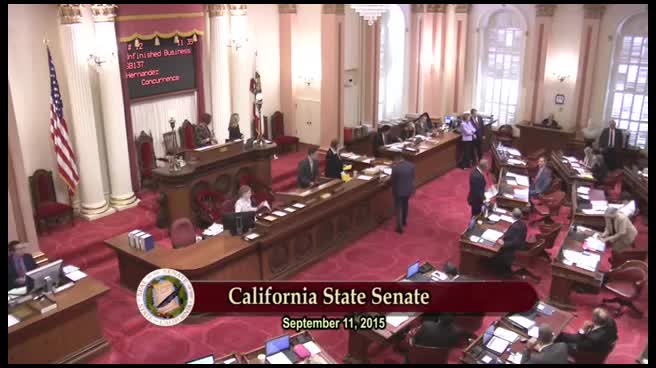 2MIN
Senate Floor
 1MIN
Assembly Floor
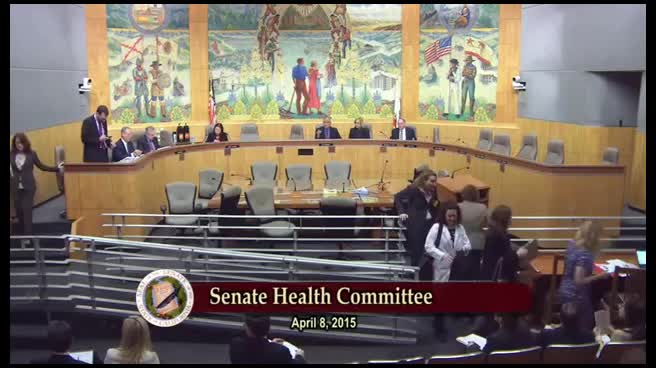 11MIN
Senate Standing Committee on Health
Bill Author

Bill Co-Author(s):







