SB 344: Commercial driver’s license: education.
- Session Year: 2015-2016
- House: Senate
- Latest Version Date: 2015-06-23
Existing law prohibits the Department of Motor Vehicles from issuing a commercial drivers license to any person to operate a commercial motor vehicle unless the person has passed a written and driving test for the operation of a commercial motor vehicle that complies with the minimum standards established by the federal Commercial Motor Vehicle Safety Act of 1986 and specified federal regulations, and has satisfied all other requirements of that act as well as any other requirements imposed by state law.
This bill, commencing January 1, 2018, would also require a person to successfully complete a course of instruction from a commercial driver training institution or program offered by an employer with an approved course of instruction that has been certified by the department before he or she is issued a commercial drivers license, except as specified. The bill would require the course of instruction to include, at a minimum, standards necessary to ensure a driver is proficient in safely operating a commercial vehicle. This bill would also require a commercial drivers license applicant to successfully complete a written and driving test, as specified.
Existing law, the California Private Postsecondary Education Act of 2009, provides for the regulation of private postsecondary educational institutions by the Bureau for Private Postsecondary Education in the Department of Consumer Affairs. The act exempts an institution from its provision if any of a list of specific criteria are met.
This bill, commencing January 1, 2018, would remove the exemption from the provisions of the act for an institution that is certified by the Department of Motor Vehicles to offer a course of instruction to prepare students to obtain a commercial drivers license, thereby making the act applicable to the institution.
Existing law prohibits the Department of Motor Vehicles from issuing a commercial drivers license to any person to operate a commercial motor vehicle unless the person has passed a written and driving test for the operation of a commercial motor vehicle that complies with the minimum standards established by the federal Commercial Motor Vehicle Safety Act of 1986 and specified federal regulations, and has satisfied all other requirements of that act as well as any other requirements imposed by state law.
This bill, commencing January 1, 2017, 2018, would also require a person to successfully complete a course of instruction from a commercial driver training institution or program offered by an employer with an approved training program course of instruction that has been certified by the department before he or she is issued a commercial drivers license, except as specified. The bill would require the program course of instruction to include, at a minimum, standards necessary to ensure a driver is proficient in safely operating a commercial vehicle.
Existing law, the California Private Postsecondary Education Act of 2009, provides for the regulation of private postsecondary educational institutions by the Bureau for Private Postsecondary Education in the Department of Consumer Affairs. The act exempts an institution from its provisions, provision if any of a list of specific criteria are met.
The
This bill, commencing January 1, 2017, 2018, would remove the exemption from its the provisions of the act for an institution that is certified by the Department of Motor Vehicles to offer a course of instruction to prepare students to obtain a commercial drivers license, thereby making the act applicable to the institution.
Existing law prohibits the Department of Motor Vehicles from issuing a commercial drivers license to any person to operate a commercial motor vehicle unless the person has passed a written and driving test for the operation of a commercial motor vehicle that complies with the minimum standards established by the federal Commercial Motor Vehicle Safety Act of 1986 and specified federal regulations, and has satisfied all other requirements of that act as well as any other requirements imposed by state law.
This bill, commencing January 1, 2017, would also require a person to successfully complete a course of instruction from a commercial driver training institution with an approved training program that has been certified by the department before he or she is issued a commercial drivers license, except as specified. The bill would require the program to include, at a minimum, standards necessary to ensure a driver is proficient in safely operating a commercial vehicle.
Existing law, the California Private Postsecondary Education Act of 2009, provides for the regulation of private postsecondary educational institutions by the Bureau for Private Postsecondary Education in the Department of Consumer Affairs. The act exempts an institution from its provisions, if any of a list of specific criteria are met.
The bill, commencing January 1, 2017, would remove the exemption from its provisions for an institution that is certified by the Department of Motor Vehicles to offer a course of instruction to prepare students to obtain a commercial drivers license, thereby making the act applicable to the institution.
Commencing January 1, 2018, an institution that offers a course of instruction to prepare students to obtain a commercial drivers license that is certified by the Department of Motor Vehicles pursuant to Section 15250 of the Vehicle Code, may not claim an exemption from this chapter.
SEC. 2.Section 15250 of the Vehicle Code is amended to read:15250.(a)(1)A person shall not operate a commercial motor vehicle unless that person has in his or her immediate possession a valid commercial drivers license of the appropriate class.
(2)A person shall not operate a commercial motor vehicle while transporting hazardous materials unless that person has in his or her possession a valid commercial drivers license with a hazardous materials endorsement. An instruction permit does not authorize the operation of a vehicle transporting hazardous materials.
(b)(1)Before an application for an original or renewal of a commercial drivers license with a hazardous materials endorsement is submitted to the United States Transportation Security Administration for the processing of a security threat assessment, as required under Part 1572 of Title 49 of the Code of Federal Regulations, the department shall complete a check of the applicants driving record to ensure that the person is not subject to a disqualification under Part 383.51 of Title 49 of the Code of Federal Regulations.
(2)(A)A person shall not be issued a an original commercial drivers license until he or she has satisfied all of the following requirements:
(i)(I)Commencing January 1, 2018, successful completion of a course of instruction from a commercial motor vehicle driver training institution or program offered by an employer that has been certified by the department, except as provided in subclause (II). The department shall not certify a commercial motor vehicle driver training institution or program offered by an employer until the institution or program has submitted an approved course of instruction that meets minimum standards set by the department. The course of instruction shall include, at a minimum, standards necessary to ensure a driver is proficient in safely operating a commercial vehicle. The department shall, as necessary, update the required standards to comply with the guidance or requirements issued by the Federal Motor Carrier Safety Administration.
(II)The following persons are not required to satisfy the requirement described in this clause:
(ia)A commercial motor vehicle driver with military motor vehicle experience who is currently licensed with the United States Armed Forces and who meets the waiver requirements in subparagraph (B).
(ib)A commercial motor vehicle driver who presents a valid certificate of driving skill from an approved employer-testing program that includes, and has submitted to the department, an approved includes a course of instruction that meets the minimum standards set by the department. department, and has been submitted to, and approved by, the department.
(ic)A commercial motor vehicle driver who presents a certificate issued by the Department of the California Highway Patrol pursuant to Section 12517 or a department Transit Driver Training Record DL 260 form signed by an employer trainer certified by the Transportation Safety Institute of the United States Department of Transportations Motor Carrier Training, commonly referred to as the Federal Transit Administrations Train-the-Trainer program.
(id)A commercial motor vehicle driver who has received and documented training in compliance with Chapter 3 (commencing with Section 40080) of Part 23.5 of Division 3 of Title 2 of the Education Code.
(III)In addition to the requirements of subclause (I), issuance of a commercial drivers license shall require the successful completion of a written and driving test, conducted by the department, that complies with clause (ii).
(ii)Successful completion of a written and driving test for the operation of a commercial motor vehicle that complies with the minimum federal standards established by the federal Commercial Motor Vehicle Safety Act of 1986 (Public Law 99-570) and Part 383 of Title 49 of the Code of Federal Regulations.
(iii)Satisfaction of all other requirements of the federal act referenced in clause (ii) as well as any other requirements imposed by this code.
(B)The driving skills test as specified in Section 383.113 of Title 49 of the Code of Federal Regulations may be waived for a commercial motor vehicle driver with military commercial motor vehicle experience who is currently licensed with the United States Armed Forces at the time of his or her application for a commercial drivers license, and whose driving record in combination with his or her driving experience meets, at a minimum, the conditions required by Section 383.77(a) and (b) of Title 49 of the Code of Federal Regulations.
(c)The tests shall be prescribed and conducted by or under the direction of the department. The department may allow a third-party tester to administer the driving test part of the examination required under this section and Section 15275 if all of the following conditions are met:
(1)The tests given by the third party are the same as those that would otherwise be given by the department.
(2)The third party has an agreement with the department that includes, but is not limited to, the following provisions:
(A)Authorization for the United States Secretary of Transportation, or his or her representative, and the department, or its representative, to conduct random examinations, inspections, and audits without prior notice.
(B)Permission for the department, or its representative, to conduct onsite inspections at least annually.
(C)A requirement that all third-party testers meet the same qualification and training standards as the departments examiners, to the extent necessary to conduct the driving skill tests in compliance with the requirements of Part 383 of Title 49 of the Code of Federal Regulations.
(D)The department may cancel, suspend, or revoke the agreement with a third-party tester if the third-party tester fails to comply with the standards for the commercial drivers license testing program, or with any other term of the third-party agreement, upon 15 days prior written notice of the action to cancel, suspend, or revoke the agreement by the department to the third party. Any action to appeal or review any order of the department canceling, suspending, or revoking a third-party testing agreement shall be brought in a court of competent jurisdiction under Section 1085 of the Code of Civil Procedure, or as otherwise permitted by the laws of this state. The action shall be commenced within 90 days from the effective date of the order.
(E)Any third-party tester whose agreement has been canceled pursuant to subparagraph (D) may immediately apply for a third-party testing agreement.
(F)A suspension of a third-party testing agreement pursuant to subparagraph (D) shall be for a term of less than 12 months as determined by the department. After the period of suspension, the agreement shall be reinstated upon request of the third-party tester.
(G)A revocation of a third-party testing agreement pursuant to subparagraph (D) shall be for a term of not less than one year. A third-party tester may apply for a new third-party testing agreement after the period of revocation and upon submission of proof of correction of the circumstances causing the revocation.
(H)Authorization for the department to charge the third-party tester a fee, as determined by the department, that is sufficient to defray the actual costs incurred by the department for administering and evaluating the third-party testing program, and for carrying out any other activities deemed necessary by the department to ensure sufficient training for the drivers participating in the program.
(3)Except as provided in Section 15250.3, the tests given by the third party shall not be accepted in lieu of tests prescribed and conducted by the department for applicants for a passenger vehicle endorsement specified in paragraph (2) of subdivision (a) of Section 15278, if the applicant operates or will operate a tour bus.
(d)Commercial drivers license applicants who take and pass driving tests administered by a third party shall provide the department with certificates of driving skill satisfactory to the department that the applicant has successfully passed the driving tests administered by the third party.
(e)If a driving test is administered to a commercial drivers license applicant who is to be licensed in another state pursuant to Section 383.79 of Subpart E of Part 383 of Title 49 of the Code of Federal Regulations, the department may impose a fee on the applicant that does not exceed the reasonable cost of conducting the tests and reporting the results to the drivers state of record.
(f)Implementation dates for the issuance of a commercial drivers license pursuant to this chapter may be established by the department as it determines is necessary to accomplish an orderly commercial drivers license program.
(g)Active duty members of the United States Armed Forces, members of the military reserves, members of the National Guard who are on active duty, including personnel on full-time National Guard duty, personnel on part-time National Guard training, and National Guard military technicians (civilians who are required to wear military uniforms), and active duty personnel of the United States Coast Guard are exempt from all commercial drivers license requirements and sanctions, as provided in Section 383.3(c) of Subpart A of Part 383 of Title 49 of the Code of Federal Regulations when operating motor vehicles for military purposes. This exception shall not apply to United States Armed Forces reserve technicians.
Commencing January 1, 2017, 2018, an institution that offers a course of instruction to prepare students to obtain a commercial drivers license that is certified by the Department of Motor Vehicles pursuant to Section 15250 of the Vehicle Code, may not claim an exemption from this chapter.
SEC. 2.Section 15250 of the Vehicle Code is amended to read:15250.(a)(1)A person shall not operate a commercial motor vehicle unless that person has in his or her immediate possession a valid commercial drivers license of the appropriate class.
(2)A person shall not operate a commercial motor vehicle while transporting hazardous materials unless that person has in his or her possession a valid commercial drivers license with a hazardous materials endorsement. An instruction permit does not authorize the operation of a vehicle transporting hazardous materials.
(b)(1)Before an application for an original or renewal of a commercial drivers license with a hazardous materials endorsement is submitted to the United States Transportation Security Administration for the processing of a security threat assessment, as required under Part 1572 of Title 49 of the Code of Federal Regulations, the department shall complete a check of the applicants driving record to ensure that the person is not subject to a disqualification under Part 383.51 of Title 49 of the Code of Federal Regulations.
(2)(A)A person shall not be issued a commercial drivers license until he or she has satisfied all of the following requirements:
(i)(I)Commencing January 1, 2017, 2018, successful completion of a course of instruction from a commercial motor vehicle driver training institution or program offered by an employer that has been certified by the department, except as provided in subclauses (I) and subclause (II). The department shall not certify a commercial motor vehicle driver training institution or program offered by an employer until the institution or program has submitted an approved training program course of instruction that meets minimum standards set by the department. The program course of instruction shall include, at a minimum, standards necessary to ensure a driver is proficient in safely operating a commercial vehicle. The department shall, as necessary, update the required standards to comply with the guidance or requirements issued by the federal Motor Carrier Safety Administration.
The
(II)The following persons shall are not be required to satisfy the requirement described in clause (i): this clause:
(I)
(ia)A commercial motor vehicle driver with military motor vehicle experience who is currently licensed with the United States Armed Forces and who meets the waiver requirements in subparagraph (B).
(II)
(ib)A commercial motor vehicle driver who presents a valid certificate of driving skill from an approved employer-testing program that includes, and has submitted to the department, an approved course of instruction that meets the minimum standards set by the department.
(ii)Successful completion of a written and driving test for the operation of a commercial motor vehicle that complies with the minimum federal standards established by the federal Commercial Motor Vehicle Safety Act of 1986 (Public Law 99-570) and Part 383 of Title 49 of the Code of Federal Regulations.
(iii)Satisfaction of all other requirements of that the federal act referenced in clause (ii) as well as any other requirements imposed by this code.
(B)The driving skills test as specified in Section 383.113 of Title 49 of the Code of Federal Regulations may be waived for a commercial motor vehicle driver with military commercial motor vehicle experience who is currently licensed with the United States Armed Forces at the time of his or her application for a commercial drivers license, and whose driving record in combination with his or her driving experience meets, at a minimum, the conditions required by Section 383.77(a) and (b) of Title 49 of the Code of Federal Regulations.
(c)The tests shall be prescribed and conducted by or under the direction of the department. The department may allow a third-party tester to administer the driving test part of the examination required under this section and Section 15275 if all of the following conditions are met:
(1)The tests given by the third party are the same as those that would otherwise be given by the department.
(2)The third party has an agreement with the department that includes, but is not limited to, the following provisions:
(A)Authorization for the United States Secretary of Transportation, or his or her representative, and the department, or its representative, to conduct random examinations, inspections, and audits without prior notice.
(B)Permission for the department, or its representative, to conduct onsite inspections at least annually.
(C)A requirement that all third-party testers meet the same qualification and training standards as the departments examiners, to the extent necessary to conduct the driving skill tests in compliance with the requirements of Part 383 of Title 49 of the Code of Federal Regulations.
(D)The department may cancel, suspend, or revoke the agreement with a third-party tester if the third-party tester fails to comply with the standards for the commercial drivers license testing program, or with any other term of the third-party agreement, upon 15 days prior written notice of the action to cancel, suspend, or revoke the agreement by the department to the third party. Any action to appeal or review any order of the department canceling, suspending, or revoking a third-party testing agreement shall be brought in a court of competent jurisdiction under Section 1085 of the Code of Civil Procedure, or as otherwise permitted by the laws of this state. The action shall be commenced within 90 days from the effective date of the order.
(E)Any third-party tester whose agreement has been canceled pursuant to subparagraph (D) may immediately apply for a third-party testing agreement.
(F)A suspension of a third-party testing agreement pursuant to subparagraph (D) shall be for a term of less than 12 months as determined by the department. After the period of suspension, the agreement shall be reinstated upon request of the third-party tester.
(G)A revocation of a third-party testing agreement pursuant to subparagraph (D) shall be for a term of not less than one year. A third-party tester may apply for a new third-party testing agreement after the period of revocation and upon submission of proof of correction of the circumstances causing the revocation.
(H)Authorization for the department to charge the third-party tester a fee, as determined by the department, that is sufficient to defray the actual costs incurred by the department for administering and evaluating the third-party testing program, and for carrying out any other activities deemed necessary by the department to ensure sufficient training for the drivers participating in the program.
(3)Except as provided in Section 15250.3, the tests given by the third party shall not be accepted in lieu of tests prescribed and conducted by the department for applicants for a passenger vehicle endorsement specified in paragraph (2) of subdivision (a) of Section 15278, if the applicant operates or will operate a tour bus.
(d)Commercial drivers license applicants who take and pass driving tests administered by a third party shall provide the department with certificates of driving skill satisfactory to the department that the applicant has successfully passed the driving tests administered by the third party.
(e)If a driving test is administered to a commercial drivers license applicant who is to be licensed in another state pursuant to Section 383.79 of Subpart E of Part 383 of Title 49 of the Code of Federal Regulations, the department may impose a fee on the applicant that does not exceed the reasonable cost of conducting the tests and reporting the results to the drivers state of record.
(f)Implementation dates for the issuance of a commercial drivers license pursuant to this chapter may be established by the department as it determines is necessary to accomplish an orderly commercial drivers license program.
(g)Active duty members of the United States Armed Forces, members of the military reserves, members of the National Guard who are on active duty, including personnel on full-time National Guard duty, personnel on part-time National Guard training, and National Guard military technicians (civilians who are required to wear military uniforms), and active duty personnel of the United States Coast Guard are exempt from all commercial drivers license requirements and sanctions, as provided in Section 383.3(c) of Subpart A of Part 383 of Title 49 of the Code of Federal Regulations when operating motor vehicles for military purposes. This exception shall not apply to United States Armed Forces reserve technicians.
Commencing January 1, 2017, an institution that offers a course of instruction to prepare students to obtain a commercial drivers license that is certified by the Department of Motor Vehicles pursuant to Section 15250 of the Vehicle Code, may not claim an exemption from this chapter.
SEC. 2.Section 15250 of the Vehicle Code is amended to read:15250.(a)(1)A person shall not operate a commercial motor vehicle unless that person has in his or her immediate possession a valid commercial drivers license of the appropriate class.
(2)A person shall not operate a commercial motor vehicle while transporting hazardous materials unless that person has in his or her possession a valid commercial drivers license with a hazardous materials endorsement. An instruction permit does not authorize the operation of a vehicle transporting hazardous materials.
(b)(1)Before an application for an original or renewal of a commercial drivers license with a hazardous materials endorsement is submitted to the United States Transportation Security Administration for the processing of a security threat assessment, as required under Part 1572 of Title 49 of the Code of Federal Regulations, the department shall complete a check of the applicants driving record to ensure that the person is not subject to a disqualification under Part 383.51 of Title 49 of the Code of Federal Regulations.
(2)(A)A person shall not be issued a commercial drivers license until he or she has passed satisfied all of the following requirements:
(i)Commencing January 1, 2017, successful completion of a course of instruction from a commercial motor vehicle driver training institution that has been certified by the department, except as provided in subclauses (I) and (II). The department shall not certify a commercial motor vehicle driver training institution until the institution has submitted an approved training program that meets minimum standards set by the department. The program shall include, at a minimum, standards necessary to ensure a driver is proficient in safely operating a commercial vehicle. The department shall, as necessary, update the required standards to comply with the guidance or requirements issued by the federal Motor Carrier Safety Administration.
The following persons shall not be required to satisfy the requirement described in clause (i):
(I)A commercial motor vehicle driver with military motor vehicle experience who is currently licensed with the United States Armed Forces and who meets the waiver requirements in subparagraph (B).
(II)A commercial motor vehicle driver who presents a valid certificate of driving skill from an approved employer-testing program.
(ii)Successful completion of a written and driving test for the operation of a commercial motor vehicle that complies with the minimum federal standards established by the federal Commercial Motor Vehicle Safety Act of 1986 (Public Law 99-570) and Part 383 of Title 49 of the Code of Federal Regulations, and has satisfied Regulations.
(iii)Satisfaction of all other requirements of that act as well as any other requirements imposed by this code.
(B)The driving skills test as specified in Section 383.113 of Title 49 of the Code of Federal Regulations may be waived for a commercial motor vehicle driver with military commercial motor vehicle experience who is currently licensed with the United States Armed Forces at the time of his or her application for a commercial drivers license, and whose driving record in combination with his or her driving experience meets, at a minimum, the conditions required by Section 383.77(a) and (b) of Title 49 of the Code of Federal Regulations.
(c)The tests shall be prescribed and conducted by or under the direction of the department. The department may allow a third-party tester to administer the driving test part of the examination required under this section and Section 15275 if all of the following conditions are met:
(1)The tests given by the third party are the same as those that would otherwise be given by the department.
(2)The third party has an agreement with the department that includes, but is not limited to, the following provisions:
(A)Authorization for the United States Secretary of Transportation, or his or her representative, and the department, or its representative, to conduct random examinations, inspections, and audits without prior notice.
(B)Permission for the department, or its representative, to conduct onsite inspections at least annually.
(C)A requirement that all third-party testers meet the same qualification and training standards as the departments examiners, to the extent necessary to conduct the driving skill tests in compliance with the requirements of Part 383 of Title 49 of the Code of Federal Regulations.
(D)The department may cancel, suspend, or revoke the agreement with a third-party tester if the third-party tester fails to comply with the standards for the commercial drivers license testing program, or with any other term of the third-party agreement, upon 15 days prior written notice of the action to cancel, suspend, or revoke the agreement by the department to the third party. Any action to appeal or review any order of the department canceling, suspending, or revoking a third-party testing agreement shall be brought in a court of competent jurisdiction under Section 1085 of the Code of Civil Procedure, or as otherwise permitted by the laws of this state. The action shall be commenced within 90 days from the effective date of the order.
(E)Any third-party tester whose agreement has been canceled pursuant to subparagraph (D) may immediately apply for a third-party testing agreement.
(F)A suspension of a third-party testing agreement pursuant to subparagraph (D) shall be for a term of less than 12 months as determined by the department. After the period of suspension, the agreement shall be reinstated upon request of the third-party tester.
(G)A revocation of a third-party testing agreement pursuant to subparagraph (D) shall be for a term of not less than one year. A third-party tester may apply for a new third-party testing agreement after the period of revocation and upon submission of proof of correction of the circumstances causing the revocation.
(H)Authorization for the department to charge the third-party tester a fee, as determined by the department, that is sufficient to defray the actual costs incurred by the department for administering and evaluating the third-party testing program, and for carrying out any other activities deemed necessary by the department to ensure sufficient training for the drivers participating in the program.
(3)Except as provided in Section 15250.3, the tests given by the third party shall not be accepted in lieu of tests prescribed and conducted by the department for applicants for a passenger vehicle endorsement specified in paragraph (2) of subdivision (a) of Section 15278, if the applicant operates or will operate a tour bus.
(d)Commercial drivers license applicants who take and pass driving tests administered by a third party shall provide the department with certificates of driving skill satisfactory to the department that the applicant has successfully passed the driving tests administered by the third party.
(e)If a driving test is administered to a commercial drivers license applicant who is to be licensed in another state pursuant to Section 383.79 of Subpart E of Part 383 of Title 49 of the Code of Federal Regulations, the department may impose a fee on the applicant that does not exceed the reasonable cost of conducting the tests and reporting the results to the drivers state of record.
(f)Implementation dates for the issuance of a commercial drivers license pursuant to this chapter may be established by the department as it determines is necessary to accomplish an orderly commercial drivers license program.
(g)Active duty members of the United States Armed Forces, members of the military reserves, members of the National Guard who are on active duty, including personnel on full-time National Guard duty, personnel on part-time National Guard training, and National Guard military technicians (civilians who are required to wear military uniforms), and active duty personnel of the United States Coast Guard are exempt from all commercial drivers license requirements and sanctions, as provided in Section 383.3(c) of Subpart A of Part 383 of Title 49 of the Code of Federal Regulations when operating motor vehicles for military purposes. This exception shall not apply to United States Armed Forces reserve technicians.
|
Date
|
Status
|
|---|---|
| Jun 1, 2015 | From committee: Do pass as amended. (Ayes 7. Noes 0.) (May 28). |
| Aug 27, 2015 | August 27 hearing postponed by committee. |
| Jul 15, 2015 | July 15 set for first hearing. Placed on APPR. suspense file. |
| Jul 8, 2015 | From committee: Do pass and re-refer to Com. on APPR. (Ayes 11. Noes 1.) (July 7). Re-referred to Com. on APPR. |
| Jun 30, 2015 | From committee: Do pass and re-refer to Com. on HIGHER ED. (Ayes 16. Noes 0.) (June 29). Re-referred to Com. on HIGHER ED. |
| Jun 23, 2015 | From committee with author's amendments. Read second time and amended. Re-referred to Com. on TRANS. |
| Jun 15, 2015 | Referred to Coms. on TRANS. and HIGHER ED. |
| Jun 4, 2015 | Read third time. Passed. (Ayes 38. Noes 1.) Ordered to the Assembly. |
| Jun 4, 2015 | Read third time. Passed. (Ayes 38. Noes 1. Page 1325.) Ordered to the Assembly. |
| Jun 4, 2015 | In Assembly. Read first time. Held at Desk. |
| Jun 2, 2015 | Read second time and amended. Ordered to third reading. |
| Feb 24, 2015 | Introduced. Read first time. To Com. on RLS. for assignment. To print. |
| Jun 1, 2015 | From committee: Do pass as amended. (Ayes 7. Noes 0. Page 1152.) (May 28). |
| May 23, 2015 | Set for hearing May 28. |
| May 4, 2015 | May 4 hearing: Placed on APPR. suspense file. |
| Apr 24, 2015 | Set for hearing May 4. |
| Apr 23, 2015 | April 27 hearing postponed by committee. |
| Apr 17, 2015 | Set for hearing April 27. |
| Apr 15, 2015 | From committee: Do pass and re-refer to Com. on APPR. (Ayes 11. Noes 0. Page 620.) (April 14). Re-referred to Com. on APPR. |
| Mar 18, 2015 | Set for hearing April 14. |
| Mar 5, 2015 | Referred to Com. on T. & H. |
| Feb 25, 2015 | From printer. May be acted upon on or after March 27. |
|
Date
|
Description
|
Location
|
Votes
|
|
|---|---|---|---|---|
| Jul 7, 2015 | Do pass and be re-referred to the Committee on [Appropriations] | Assembly Standing Committee on Higher Education |
Passed |
|
| Jun 29, 2015 | Do pass and be re-referred to the Committee on [Higher Education] | Assembly Standing Committee on Transportation |
Passed |
|
| Jun 4, 2015 | Senate 3rd Reading SB344 Monning | Senate Floor |
Passed |
|
| May 28, 2015 | Do pass as amended | Senate Standing Committee on Appropriations |
Passed |
|
| May 4, 2015 | Placed on suspense file | Senate Standing Committee on Appropriations |
Passed |
|
| Apr 14, 2015 | Do pass, but first be re-referred to the Committee on [Appropriations] | Senate Standing Committee on Transportation and Housing |
Passed |
This list shows positions taken on this bill by organizations on the date displayed, which is linked to the original source.
Positions by individuals are not included.
|
Organization
|
Position
|
Date
|
|---|---|---|
| American Truck School out of Redding, California. | * Support | Apr 14, 2015 |
| California Association Of Highway Patrolmen | ** Support | Jul 7, 2015 |
| California Beer & Beverage Distributors | * Support | Apr 14, 2015 |
| California Bus Association | ** Support | Jul 7, 2015 |
| California Trucking Association | ** Support | Jul 7, 2015 |
| Capitola City Council | ** Support | Apr 14, 2015 |
| City of Capitola | ** Support | Jul 7, 2015 |
| City of Scotts Valley | ** Support | Jul 7, 2015 |
| Commercial Vehicle Training Association | ** Support | Jul 7, 2015 |
| Consumer Attorneys Of California | ** Support | Jul 7, 2015 |
| County of Santa Clara, District Attorney | ** Support | Jul 7, 2015 |
| County of Santa Cruz | ** Support | Jul 7, 2015 |
| County of Santa Cruz, Board of Supervisors | ** Support | Jul 7, 2015 |
| Daniel's Law | * Support | Apr 14, 2015 |
| Daniel's Law Committee | * Support | Apr 14, 2015 |
| grocery industry, Santa Cruz County | * Support | Apr 14, 2015 |
| Honorable Sam Liccardo, Mayor, City of San Jose | ** Support | Jul 7, 2015 |
| Jeffery F. Rosen, District Attorney, Santa Clara County | ** Support | Jul 7, 2015 |
| Mayor Sam Liccardo | * Support | Apr 14, 2015 |
| Metropolitan Transportation Commission | ** Support | Jul 7, 2015 |
| Peace Officers Research Association Of California | ** Support | Jul 7, 2015 |
| Public Advocates | ** Support | Jul 7, 2015 |
| San Jose, City Of | ** Support | Jul 7, 2015 |
| Santa Clara County District Attorney | ** Support | Jun 4, 2015 |
| Santa Cruz County Regional Transportation Commission | ** Support | Jul 7, 2015 |
| Santa Cruz, City Of | * Support | Apr 14, 2015 |
| Scotts Valley City Council | ** Support | Apr 14, 2015 |
| State Building & Construction Trades Council Of California | * Support | Apr 14, 2015 |
| Teamsters | * Support | Apr 14, 2015 |
| Transdev North America, Inc. | ** Against | Jun 4, 2015 |
| Truck Safety Coalition | ** Support | Jul 7, 2015 |
| University of San Diego | ** Support | Jul 7, 2015 |
| University of San Diego Veterans Legal Clinic | ** Support | Jun 4, 2015 |
| UPS | * Support | Apr 14, 2015 |
| USD, Children's Advocacy Institute | ** Support | Jul 7, 2015 |
| USD, Veterans Legal Clinic | ** Support | Jul 7, 2015 |
| Watsonville, City Of | ** Support | Jul 7, 2015 |
| Western Pacific Truck Schools | * For If Amend | Apr 14, 2015 |
| Young Invincibles | ** Support | Jul 7, 2015 |
Date of Hearing: July 15, 2015
ASSEMBLY COMMITTEE ON APPROPRIATIONS
Jimmy Gomez, Chair
SB 344
(Monning) – As Amended June 23, 2015
Policy Committee: |
Transportation |
Vote: |
16 - 0 |
|
Higher Education |
|
11 - 1 |
|
|
|
|
Urgency: No State Mandated Local Program: No Reimbursable: No
SUMMARY:
This bill requires an individual, in order to obtain a commercial driver's license (CDL), to complete a course of instruction approved by the DMV. Specifically, this bill:
Requires, as of January 1, 2018, an individual seeking a CDL, in addition to existing requirements, to also successfully complete a course of instruction from either a commercial motor vehicle driver training institution or a program offered by an employer that has been certified by DMV.
Provides exemptions from the above training requirements for individuals who meet other specified training requirements.
Requires the institution or employer, in order to receive certification, to submit for DMV approval a course of instruction meeting the department's minimum standards.
Requires the DMV to update its standards, as necessary, to comply with requirements issued by the Federal Motor Carrier Safety Administration (FMCSA).
Prohibits, commencing January 1, 2018, an institution offering a course of instruction to prepare students to obtain a CDL from claiming an exemption from the licensure and oversight by the Bureau for Private Postsecondary Education (BPPE).
FISCAL EFFECT:
To develop regulations establishing commercial driving school curricula and certification procedures, and to review and certify curriculum for the schools, the DMV would incur costs associated with this bill of approximately $2.2 million in 2017-18 and $280,000 ongoing (Motor Vehicle Account), but only to the extent federal regulations that would supersede SB 344 requirements are not adopted prior to the time required to implement this bill.
BPPE estimates costs of approximately $922,000 and nine positions in 2017-18, $1.1 million and 12 positions in 2018-19 and ongoing to license and regulate an estimated 180 schools (150 main locations and 30 branch locations). BPPE costs are expected to be fully covered by initial and ongoing fees charged to training schools. (Private Postsecondary Education Administration Fund)
Assuming 180 schools would be subject to regulation, BPPE estimates licensing fee revenues of $840,000 in 2017-18, $1.8 million in 2018-19, and $1.9 million in 2019-20 and ongoing. Additional annual “institution fee” revenues would be proportional to BPPE costs for regulating these schools. (Private Postsecondary Education Administration Fund)
COMMENTS:
Purpose. In July 2014, an accident on Highway 17 in Santa Cruz County involving a big-rig and up to 10 cars resulted in one fatality and several injuries. On the big-rig, operated by a driver who only had a CDL for three months, the brakes on two trailers failed, resulting in the driver losing control traveling northbound on Highway 17. The author suggests that if the driver had received adequate driver's training, he may have been better equipped to manage the brake failure and avoided the tragic accident.
The author introduced SB 344 in response to this accident in order to establish a set of training standards a person must obtain prior to testing for a CDL. (Currently, a person interested in obtaining a CDL is required to take a written and driving skills test). In addition, according to the author, there has been a proliferation of commercial driver's license "diploma mills" that fail to ensure students are properly trained, and thus place the public at risk.
The Private Postsecondary Education Act of 2009 exempts several types of institutions from state regulation under this Act, including non-degree granting institutions that do not receive public funding and charge less than $2,500 per educational program. The exemption was designed to allow "low-cost and low-risk" institutions to operate without regulation. Under this bill, any institution offering a CDL training program, regardless of program cost, would not be exempt from the Act.
Currently, the BPPE is provided authority to rely on another appropriate state agency for review of program quality. The author intends for DMV to be responsible for educational program review and certification, and for BPPE to be responsible for enforcing consumer protections.
Federal Action. The Moving Ahead for Progress in the 21st Century Act (Map-21) requires the FMCSA to develop regulations on commercial motor vehicle safety and prescribe minimal safety standards for the commercial trucking industry. An advisory committee established by FMCSA is currently discussing and drafting recommendations on minimum training requirements for individuals applying for a commercial driver’s license. It is anticipated that FMCSA will issue its final ruling sometime in late 2016 and provide commercial driving schools and states a period of time to reach compliance with the final rule.
Analysis Prepared by: Chuck Nicol / APPR. / (916) 319-2081
SB 344
Page 4
Date of Hearing: July 7, 2015
ASSEMBLY COMMITTEE ON HIGHER EDUCATION
Jose Medina, Chair
SB 344
(Monning) – As Amended June 23, 2015
SENATE VOTE: 38-1
SUBJECT: Commercial driver’s license: education
SUMMARY: Prohibits, effective January 1, 2018, an institution offering commercial driver's license training courses from claiming an exemption from the licensure and oversight by the Bureau for Private Postsecondary Education (BPPE), and requires, effective January 1, 2018, persons issued a commercial driver's license to have attended a Department of Motor Vehicles (DMV) certified instruction course. Specifically, this bill:
Prohibits, commencing January 1, 2018, an institution that offers a course of instruction to prepare students to obtain a commercial driver's license that is certified by the DMV from claiming an exemption from the BPPE.
Prohibits a person from being issued an original commercial driver's license until he or she has satisfied all of the following requirements:
Commencing January 1, 2018, successful completion of a course of instruction from a commercial motor vehicle driver training institution or program offered by an employer that has been certified by the DMV, except as provided. The DMV is prohibited from certifying a commercial motor vehicle driver training institution or program offered by an employer until the institution or program has submitted an approved course of instruction that meets minimum standards set by the DMV. The course of instruction is required to include, at a minimum, standards necessary to ensure a driver is proficient in safely operating a commercial vehicle. The DMV is required, as necessary, to update the required standards to comply with the guidance or requirements issued by the federal Motor Carrier Safety Administration;
Provides exemptions from the aforementioned training requirements for individuals who meet other outlined requirements;
Successful completion of a written and driving test, conducted by the DMV that complies with the minimum federal standards established by the federal Commercial Motor Vehicle Safety Act (Act); and,
Satisfaction of all other requirements of the federal Act and any other requirements imposed by California law.
EXISTING LAW:
Establishes the BPPE within the Department of Consumer Affairs to provide oversight of private postsecondary educational institutions. Requires BPPE to review, investigate, and approve private postsecondary institutions and authorizes BPPE to take formal action against institutions to ensure compliance and protect students. (Education Code Section 94800 et seq.)
Several types of institutions are exempt from BPPE regulation, including non-degree granting institutions that do not participate in federal or state financial aid programs and provide programs costing less than $2,500. (EDC Section 94874)
FISCAL EFFECT:
COMMENTS: Double-referral. This bill was heard in the Assembly Transportation Committee on Monday, June 29, 2015, relative to the issuance of a commercial driver's license and the responsibilities assigned to the DMV. This analysis focuses on the responsibilities assigned to the BPPE.
Purpose of this bill. According to the author, "there were 5,327 truck collisions reported in 2012, of which 235 were fatal. In July 2014, a double tractor trailer loaded with 50,000 pounds of soil on Highway 17 lost control and crashed into 10 cars, injuring 7 individuals and killing 25-year-old Daniel McGuire of Santa Cruz. The driver had little, if any formal training prior to the crash." The author argues that formal, adequate commercial driver training is recommended by the DMV Commercial Driver Handbook, but is not required. The author notes that a wide variety of training options are available, but the cost and quality varies widely. For example, the author points to the Advanced Career Institute in Fresno that offers a 5-month program for $7,000. The author also points to "diploma mills" that offer inexpensive DVD and internet based training for the sole purpose of passing the DMV commercial driver's license examination.
BPPE exemption. On January 1, 2010, AB 48 (Portantino), Chapter 310, Statutes of 2009, established the BPPE to provide oversight of private postsecondary educational institutions in order to prevent harm to students and the deception of the public that result from fraudulent or substandard educational programs and degrees. Under the law, several types of institutions are exempt from regulation, including non-degree granting institutions that do not receive public funding and charge less than $2500 per educational program. The exemption was designed to allow "low-cost and low-risk" institutions to operate without regulation. However, according to the author, there has been a proliferation of commercial driver's license "diploma mills" that fail to ensure students are properly trained and place the public at risk. This bill will prohibit a commercial driver's license training institution from claiming an exemption from the BPPE.
Oversight provided by the BPPE. The BPPE enforces minimum standards and disclosure requirements for institutions, specifically BPPE:
Licenses approximately 1,200 non-exempt private postsecondary educational institutions, serving over 300,000 students, operating in California. The Licensing process is designed to ensure that institutions meet minimum operating standards. Accredited institutions are provided approval by means of their accreditation (meaning BPPE does not review these institutions at the point of licensure).
Conducts announced and unannounced compliance inspections of licensed/approved institutions. Inspections are designed to ensure institutions are in compliance with minimum operating requirements. If a compliance inspection uncovers a minor violation, the institution is provided a notice and the opportunity to correct. If a compliance inspection uncovers a material (major) violation, the compliance inspector makes a referral for an investigation of the violation.
Investigates complaints received by the general public and internal investigative referrals. Most investigations are handled internally by BPPE staff; however, BPPE does have authority (and has utilized) the DCA Division of Investigations for complaints that require undercover investigations and/or the presence of a sworn peace officer.
Disciplines institutions that have been found in violation of law through citations (handled by BPPE staff) and formal actions (BPPE is represented by the Office of the Attorney General).
Administers the Student Tuition Recovery Fund (STRF) to provide refund to students affected by the closure of an institution.
Collects data through Annual Reports provided by licensed/approved institutions.
How will BPPE work with DMV under this bill? Currently BPPE is provided authority to rely on another appropriate state agency for review of program quality. Committee staff understands that the author intends for DMV to be responsible for educational program review and certification, and for BPPE to be responsible for enforcing consumer protections.
Challenges facing the BPPE. In March 2014, the California State Auditor released an audit report reviewing the effectiveness and efficiency of BPPE operations. The report found that BPPE had consistently failed to meet responsibilities to protect the public's interest. Specifically, the report noted that BPPE failed to conduct compliance inspections, failed to identify and sanction unlicensed institutions, failed to appropriately respond to complaints against institutions, and failed to ensure students were provided with accurate disclosures prior to enrollment. Pursuant to AB 48, the law authorizing the BPPE was scheduled to sunset on January 1, 2015. In 2014, during the Legislative "sunset review" process, BPPE indicated it had sought and obtained additional staff to assist in operations and was working to reduce backlogs and improve oversight activities. SB 1247 (Lieu, Chapter 840) reauthorized the BPPE until January 1, 2017, a shorter timeframe than generally provided in order to allow the Legislature to review BPPE progress during the 2015-16 Legislative Session.
Prohibiting commercial driver's training schools from claiming an exemption from BPPE will only result in improved quality and consumer protection if the BPPE provides adequate oversight and review of the institutions. As previously outlined, the BPPE has struggled to perform oversight functions. Should this bill become law, the author and committee may wish to continue to monitor BPPE performance to ensure the goals of this legislation are accomplished.
REGISTERED SUPPORT / OPPOSITION:
Support
California Association of Highway Patrolmen
California Trucking Association
City of Capitola
City of San Jose
City of Scotts Valley
City of Watsonville
Commercial Vehicle Training Association
Consumer Attorneys of California
County of Santa Clara, District Attorney
County of Santa Cruz, Board of Supervisors
Metropolitan Transportation Commission
Peace Officers Research Association of California
Public Advocates
Santa Cruz County Regional Transportation Commission
Truck Safety Coalition
Young Invincibles
University of San Diego (USD), Center for Public Interest Law
USD, Children's Advocacy Institute
USD, Veterans Legal Clinic
Opposition
None on File
Analysis Prepared by: Laura Metune / HIGHER ED. / (916) 319-3960
SB 344
Page 4
Date of Hearing: June 29, 2015
ASSEMBLY COMMITTEE ON TRANSPORTATION
Jim Frazier, Chair
SB 344
(Monning) – As Amended June 23, 2015
SENATE VOTE: 38-1
SUBJECT: Commercial driver’s license: education.
SUMMARY: Requires an individual to successfully complete a course of instruction that is approved by the Department of Motor Vehicles (DMV), as specified, in order to obtain a commercial driver's license (CDL). Specifically, this bill:
Provides that starting January 1, 2018, in order to obtain a commercial driver’s license, an individual must successfully complete a course of instruction from either a commercial motor vehicle driver training institution or a program offered by an employer that has been certified by DMV, in addition to existing testing requirements.
Prohibits DMV from certifying a commercial motor vehicle training institution or employer-provided program until the institution or program has submitted to DMV an approved course of instruction that meets the minimum standards set by DMV.
Requires DMV to update its commercial driving training safety standards and curriculum as necessary to comply with guidance or requirements established by the Federal Motor Carrier Safety Administration (FMCSA).
Exempts from the course requirement:
A commercial motor vehicle driver with military motor vehicle experience who is currently licensed with the U.S. Armed Forces, provided that his or her driving record and driving experience meet the minimum federal standards.
A commercial motor vehicle driver who presents a valid certificate of driving skill issued through a DMV-approved employer testing program that offers a course of instruction that has been submitted to DMV and meets minimum DMV standards.
School pupil activity bus drivers, school bus drivers, public transit bus drivers, and farm labor vehicle drivers subject to certain training requirements, as specified.
Provides that an institution that is certified by DMV to offer a commercial driver instruction course may not claim an exemption from the Department of Consumer Affairs' Bureau for Private Postsecondary Education (BPPE) regulations.
EXISTING LAW:
Prohibits an individual from operating a commercial motor vehicle unless he or she has in his or her immediate possession a valid commercial driver’s license of the appropriate class.
Requires an individual, in order to obtain a commercial driver’s license, to successfully complete both a written and driving test that complies with the minimum federal standards to operate a commercial motor vehicle.
Requires DMV to prescribe and conduct commercial written and driving tests. Further authorizes DMV to enter into agreements with third-party testers to administer the driving test, otherwise known as the Employer Testing Program.
Authorizes DMV to waive the driving test for an individual with military commercial motor vehicle experience if the individual is currently licensed with the U.S. Armed Forces and his or her driving record and experience meet the minimum federal standards.
Requires the State Department of Education to develop or approve courses for training drivers operating a school pupil bus, school bus, transit bus, and farm labor vehicles in order to obtain an operating certificate issued by DMV, as specified.
Prohibits a person from operating a student pupil activity bus, school bus, transit bus, or a farm labor vehicle unless they obtain the appropriate operating certificate issued by DMV.
At the federal level, the Moving Ahead for Progress in the 21st Century Act (Map-21) requires the FMCSA to develop entry-level testing requirements for drivers of commercial vehicles. Provides that FMCSA's final rulemaking identifying the abovementioned requirements will be completed in 2016.
Establishes BPPE within the Department of Consumer Affairs to protect students and provide regulatory oversight of private postsecondary (post-high school) educational and vocational institutions. Requires BPPE to review, investigate, and approve private postsecondary institutions, programs, and courses of instruction and authorizes BPPE to take formal action against institutions to ensure compliance.
Exempts from BPPE regulation an institution that does not award degrees and that solely provides educational programs for total charges of less than $2,500, provided that no part of the charges is paid from state or federal student financial aid programs.
FISCAL
EFFECT: Unknown
COMMENTS: On July 10, 2014, a fatal accident occurred on Highway 17 involving a big-rig and several cars in Santa Cruz County. The accident resulted in a 25-year-old Santa Cruz resident being fatally injured and several other motorists suffering a range of injuries. Crashing into approximately 10 vehicles, the big-rig was being operated by a truck driver who only had a CDL for three months when the brakes on two trailers failed resulting in the driver losing control traveling northbound on Highway 17. The author suggests that if the driver had received adequate driver's training, he may have been better equipped to manage the brake failure and avoided the tragic accident.
The author introduced SB 344 in response to this accident in order to establish a set of training standards a person must obtain prior to testing for a CDL. Currently, a person interested in obtaining a CDL is required to take a written and driving skills test. While many applicants enroll in some form of commercial driving school at their own expense, enrollment and completion is not a requirement in the process of attaining a CDL.
However, commercial driving schools vary in the type and quality of instruction they provide. For example, training programs may provide hourly training that only provides enough training to pass the driving skills test whereas others offer full courses encompassing several hours of training covering numerous topics. Other differences include: variations in instructor expertise and training equipment used by schools even when the instruction is for the same CDL class or endorsement. Additionally, course curriculum differs in the amount, content, topics that may be provided to commercial driving students. The author claims this deficiency in standardized training increases the risk of additional tragic and fatal commercial vehicle accidents.
The idea of commercial driver training requirements prior to testing and obtaining a CDL has and continues to be discussed and evaluated at the federal level. As far back as 1991 with the enactment of the Intermodal Surface Transportation Efficiency Act, the quality and standardization of commercial driver's training began to be discussed and studied. More recent, enacted in 2012, MAP-21 directed FMCSA to develop regulations on commercial motor vehicle safety and prescribe minimal safety standards for the commercial trucking industry. Ultimately, FMCSA established the Entry-Level Driver Training Advisory Committee (ELDTAC) to conduct a negotiated rulemaking process on entry-level training for drivers of commercial motor vehicles. Currently, ELDTAC is in the process of discussing and drafting recommendations on minimum training requirements for individuals applying for a commercial driver’s license. It is anticipated that FMCSA will issue its final ruling sometime in late 2016 and provide commercial driving schools and states a period of time to reach compliance with the final rule.
SB 344 will, starting January 1, 2018, require a person to complete a commercial driver training course in addition to successfully completing the commercial driving written exam and driving skills test in order to obtain a CDL. SB 344 also requires DMV to set curriculum standards and certify commercial driving schools that will offer commercial driving instruction and will additionally exempt certain drivers that currently receive driver's training under existing requirements. Lastly, SB 344 requires that these certified schools will be subject to oversight by BPPE. The author asserts that the state needs to act now to ensure that new commercial vehicle drivers receive effective training and operate safely on California roads.
It is important to point out that SB 344 may be duplicative of the existing federal rulemaking process and could potentially create implementation issues for DMV. Under SB 344, DMV is to develop and establish curriculum standards and a certification process for commercial driving schools. However, federal requirements ultimately may differ from DMV-issued training standards. For example, DMV-approved training institutions may not be similarly approved by FMCSA, drivers exempted under SB 344 may be required to enroll in commercial driver's training under federal regulations, or curriculum content may conflict based on differing state and federal requirements. As a result, DMV would be required to establish an entire new set of safety and curriculum standards in order to conform with federal regulations.
Double referral: This bill will be referred to the Assembly Higher Education Committee should it pass out of this committee.
REGISTERED SUPPORT / OPPOSITION:
Support
California Association of Highway Patrolman
California Bus Association
City of Capitola
City of Scotts Valley
City of Watsonville
Consumer Attorneys of California
County of Santa Cruz
Honorable Sam Liccardo, Mayor, City of San Jose
Jeffery F. Rosen, District Attorney, Santa Clara County
Metropolitan Transportation Commission
Peace Officers Research Association of California
Public Advocates Inc.
Truck Safety Coalition
University of San Diego
Young Invincibles
Opposition
None on file
Analysis Prepared by: Manny Leon / TRANS. / (916) 319-2093
SB 344
Page 6
|
Office of Senate Floor Analyses (916) 651-1520 Fax: (916) 327-4478 |
THIRD READING
Bill No: SB 344
Amended: 6/2/15
SENATE TRANS. & HOUSING COMMITTEE: 11-0, 4/14/15
AYES: Beall, Cannella, Allen, Bates, Gaines, Galgiani, Leyva, McGuire, Mendoza, Roth, Wieckowski
SENATE APPROPRIATIONS COMMITTEE: 7-0, 5/28/15
AYES: Lara, Bates, Beall, Hill, Leyva, Mendoza, Nielsen
SUBJECT: Commercial driver’s license: education
DIGEST: This bill requires an individual to successfully complete a course of instruction that meets minimum standards established by the Department of Motor Vehicles (DMV) in order to obtain a commercial driver’s license.
Existing law:
Prohibits an individual from operating a commercial motor vehicle unless he or she has in his or her immediate possession a valid commercial driver’s license of the appropriate class. A commercial driver’s license is required for a variety of trucks weighing more than 26,000 lbs., passenger buses, and vehicles carrying hazardous materials.
Requires an individual, in order to obtain a commercial driver’s license, to successfully complete both a written and driving test that comply with the minimum federal standards to operate a commercial motor vehicle.
Authorizes DMV to waive the driving test for an individual with military commercial motor vehicle experience if the individual is currently licensed with the U.S. Armed Forces and his or her driving record and experience meet the minimum federal standards.
Requires DMV to prescribe and conduct commercial written and driving tests, but authorizes DMV to enter into agreements with third-party testers to administer the driving test (the Employer Testing Program).
Exempts members and reservists of the U.S. Armed Forces, National Guard, and U.S. Coast Guard from all commercial driver’s license requirements and sanctions.
Establishes the Bureau for Private Postsecondary Education (BPPE) within the Department of Consumer Affairs to protect students and provide regulatory oversight of private postsecondary (post-high school) educational and vocational institutions. Requires BPPE to review, investigate, and approve private postsecondary institutions, programs, and courses of instruction and authorizes BPPE to take formal action against institutions to ensure compliance.
Exempts from BPPE regulation an institution that does not award degrees and that solely provides educational programs for total charges of less than $2,500, provided that no part of the charges is paid from state or federal student financial aid programs.
This bill:
Provides that in order to obtain a commercial driver’s license, an individual must successfully complete a course of instruction from either a commercial motor vehicle driver training institution or a program offered by an employer, and that has been certified by DMV, in addition to successfully completing a written and driving test.
Prohibits DMV from certifying a commercial motor vehicle training institution or employer-provided program until the institution or program has submitted to DMV an approved course of instruction that meets the minimum standards set by DMV. Requires DMV to update its standards as necessary to comply with guidance or requirements established by the Federal Motor Carrier Safety Administration (FMCSA).
Exempts from the course requirement a commercial motor vehicle driver with military motor vehicle experience who is currently licensed with the U.S. Armed Forces, provided that his or her driving record and driving experience meet the minimum federal standards.
Also exempts from the course requirement a commercial motor vehicle driver who presents a valid certificate of driving skill issued through a DMV-approved employer testing program that offers a course of instruction that has been submitted to DMV and meets minimum DMV standards.
Provides that an institution that is certified by DMV to offer a course of instruction to prepare students to obtain a commercial driver’s license may not claim an exemption from BPPE regulation.
Comments
Purpose. The author states that 5,327 truck collisions, of which 235 involved fatalities, were reported to the California Highway Patrol in 2012. In July 2014, a truck with a double tractor-trailer loaded with 50,000 pounds of soil lost control on Highway 17 and crashed into 10 cars, injuring seven people and killing 25-year-old Daniel McGuire of Santa Cruz. The driver had little, if any, formal training prior to the crash. The author states that by ensuring that commercial truck drivers receive an adequate standard of training, this bill can help reduce the risk of tragic and fatal truck accidents.
Ensuring legitimate training. Last year, the Legislature reauthorized the existence of BPPE (SB 1247, Lieu, Chapter 840, Statutes of 2014). The Senate Floor Analysis for SB 1247 notes that “As the number of students served by private postsecondary institutions has increased, so has the focus on fraudulent practices and low academic standards. There have been numerous high-profile federal investigations into the practices of for-profit institutions in recent years.” According to the author, truck driver training options can range from a $7,000, five-month, intensive training program to a $50 DVD. This bill aims to protect students from fraudulent truck driver training schools by removing the exemption from BPPE regulation for schools that charge less than $2,500 for a course of instruction and by requiring individuals to complete a course of instruction from a DMV-certified institution.
Employer testing program exemption. This bill exempts from the course requirement an individual who presents a valid certificate of driving skill issued through an employer testing program. The DMV’s Employer Testing Program (ETP) allows firms that employ commercial drivers to administer driving tests for their employees (but written tests must be taken through DMV). According to the California Trucking Association, 180 employers in the state currently participate in ETP. In order to participate, employers must apply to DMV, obtain DMV approval for examiners and training, and meet specified record retention requirements. In addition, DMV regularly inspects and audits ETP participants. The author amended this bill in the Appropriations Committee to additionally allow employers who are not in ETP to offer the required training, provided that they submit the course of instruction to DMV.
Federal standards. Federal regulations require an individual to successfully pass written and driving tests that meet federal standards in order to obtain a commercial driver’s license, but do not require an individual to take a course of instruction. The federal Moving Ahead for Progress in the 21st Century Act (P.L. 112-141, commonly known as MAP-21), signed by President Obama in July 2012, directs FMCSA to establish new regulations for minimum training requirements for individuals applying for a commercial driver’s license. FMCSA has established a stakeholder committee, which began conducting public meetings in March 2015 to consider requirements such as length of classroom instruction and behind-the-wheel experience. FMCSA intends to publish proposed regulations late this year. This bill requires DMV to update its standards as necessary to comply with any FMCSA actions. This bill was amended in the Appropriations Committee to delay implementation until January 1, 2018, in order to help ensure that DMV regulations address any new federal regulations.
FISCAL EFFECT: Appropriation: No Fiscal Com.: Yes Local: No
According to the Appropriations Committee:
DMV would incur one-time startup costs of approximately $1.8 million in 2017-18, and approximately $1.12 million annually ongoing (Motor Vehicle Account), but only to the extent federal regulations are not adopted prior to that time that would supersede California requirements.
BPPE estimates costs of approximately $975,000 and 10 PY in 2016-17, $1.1 million and 12 PY in 2017-18, and $1.2 million and 12 PY in 2018-19 and ongoing to license and regulate an estimated 180 schools (150 main locations and 30 branch locations). BPPE costs are expected to be fully covered by initial and ongoing fees charged to training schools. (Private Postsecondary Education Administration Fund)
Using the assumption noted above that 180 schools would be subject to regulation, BPPE estimates licensing fee revenues of $2.1 million in 2016-17 and 2017-18, and $2.2 million in 2018-19 and ongoing. Additional annual “institution fee” revenues would be proportional to BPPE costs for regulating these schools. (Private Postsecondary Education Administration Fund)
California Association of Highway Patrolmen
California Trucking Association
City of Capitola
City of San Jose
City of Scotts Valley
City of Watsonville
Consumer Attorneys of California
Metropolitan Transportation Commission
Peace Officers Research Association of California
Public Advocates, Inc.
Santa Clara County District Attorney
Santa Cruz County Board of Supervisors
Santa Cruz County Regional Transportation Commission
Truck Safety Coalition
University of San Diego Center for Public Interest Law
University of San Diego Children’s Advocacy Institute
University of San Diego Veterans Legal Clinic
Young Invincibles
OPPOSITION: (Verified 5/27/15)
Transdev North America, Inc.
ARGUMENTS IN SUPPORT: The California Trucking Association states that its member companies are heavily invested in promoting safety throughout the state, which starts with training drivers on the best practices for roadway driving. This bill will ensure that new commercial drivers have demonstrated proficiency in the knowledge and skills required to drive a commercial vehicle in California before being granted a commercial driver’s license.
ARGUMENTS IN OPPOSITION: Transdev North America, Inc., writing in opposition to the prior version of this bill, stated that it “mandates overbroad and ineffective training requirements for city bus operators.” Transdev argued that this bill burdens job applicants, doesn’t address public safety, and privatizes a public safety function with no benefit.
Prepared by: Erin Riches / T. & H. / (916) 651-4121
6/2/15 19:42:05
**** END ****
SB 344 (Monning) Page 3 of 3
SENATE COMMITTEE ON APPROPRIATIONS
Senator Ricardo Lara, Chair
2015 - 2016 Regular Session
SB 344 (Monning) - Commercial driver’s license: education
|
|
Version: February 24, 2015 |
Policy Vote: T. & H. 11 - 0 |
Urgency: No |
Mandate: No |
Hearing Date: May 28, 2015 |
Consultant: Mark McKenzie |
SUSPENSE FILE. AS AMENDED.
Bill Summary:
SB 344 would require an individual to successfully complete a course of instruction from a commercial motor vehicle driver training institution that has been certified by the Department of Motor Vehicles (DMV) in order to obtain a commercial driver’s license.
Fiscal Impact (as approved on May 28, 2015):
DMV would incur one-time startup costs of approximately $1.8 million in 2017-18, and approximately $1.12 million annually ongoing (Motor Vehicle Account), but only to the extent federal regulations are not adopted prior to that time that would supersede California requirements. See staff comments.
The Bureau of Private Postsecondary Education (BPPE) estimates costs of approximately $975,000 and 10 PY in 2016-17, $1.1 million and 12 PY in 2017-18, and $1.2 million and 12 PY in 2018-19 and ongoing to license and regulate an estimated 180 schools (150 main locations and 30 branch locations). BPPE costs are expected to be fully covered by initial and ongoing fees charged to training schools. (Private Postsecondary Education Administration Fund)
Using the assumption noted above that 180 schools would be subject to regulation, BPPE estimates licensing fee revenues of $2.1 million in 2016-17, and 2017-18, and $2.2 million in 2018-19 and ongoing. Additional annual “institution fee” revenues would be proportional to BPPE costs for regulating these schools. (Private Postsecondary Education Administration Fund)
Background:
Existing law prohibits an individual from operating a commercial motor vehicle unless he or she has in his or her immediate possession a valid commercial driver’s license of the appropriate class. A person may not be issued a commercial driver’s license until he or she has passed a written and driving test that complies with the minimum federal standards to operate a commercial motor vehicle. DMV may waive the driving test for an individual with military commercial motor vehicle experience if the individual is currently licensed with the U.S. Armed Forces and his or her driving record and experience meet the minimum federal standards. Members and reservists of the U.S. Armed Forces, National Guard, and U.S. Coast Guard are exempt from all commercial driver’s license requirements and sanctions.
Existing law establishes the BPPE within the Department of Consumer Affairs to provide consumer protections for students and provide regulatory oversight of private postsecondary educational and vocational institutions. The BPPE is required to review, investigate, and approve private postsecondary institutions, programs, and courses of instruction, and authorized to take formal action against institutions to ensure compliance. Existing law provides for exemptions from BPPE regulation and oversight for a number of schools and institutions. One exemption is provided for institutions that do not award degrees and that solely provide educational programs for total charges of less than $2,500. Institutions regulated by BPPE must pay the following fees:
A one-time $5,000 application fee for approval to operate; a $3,000 fee for approval to operate a new branch; and a $750 fee for approval to operate by means of accreditation.
An annual $3,500 renewal fee for an institution’s main campus; a $3,000 renewal fee for each branch; and a $500 renewal fee for an institution approved to operate by means of accreditation.
A $500 processing fee for authorization of a substantive change to an approval to operate, or a $250 processing fee for authorization of a substantive change to an approval to operate by means of accreditation.
An annual institution fee of the lesser of $25,000 or an amount equal to 3/4 of a percent of the revenues an institution receives from students in California, and a $1,000 annual branch fee for each branch or campus operating in the state.
Total annual fees must be proportional to the BPPE’s cost of regulating the institution.
Proposed Law:
SB 344 requires a person to successfully complete a course of instruction from a commercial motor vehicle driver training institution that has been certified by DMV in order to obtain a commercial driver’s license, beginning on January 1, 2017. The bill also prohibits DMV from certifying a training institution until it has approved the institution’s training program and requires DMV to update its standards as necessary to comply with guidance or requirements established by the Federal Motor Carrier Safety Administration (FMCSA). Commercial drivers with specified military training and licensure, and drivers certified under an approved employer-testing program are exempt from these requirements.
The bill also prohibits DMV-certified schools from claiming an exemption from licensing and regulation by the BPPE as of January 1, 2017.
Staff Comments:
This bill would require DMV to establish minimum standards for training programs and certify that each training institution’s programs are in compliance with those standards. An institution’s training program must include, at a minimum, standards necessary to ensure that a driver is proficient in safely operating a commercial vehicle, and that comply with federal regulations. To meet these requirements, DMV will be required to develop and adopt comprehensive regulations establishing commercial driving school curricula and certification procedures, and review and certify curriculum for an estimated 250 commercial driving schools prior to implementation. DMV indicates that it would incur one-time costs of approximately $1.79 million in 2016-17 to conduct these activities and any necessary programming. Staff notes that it is highly unlikely that DMV would be able to adopt regulations and certify schools, let alone allow sufficient time for prospective drivers to complete a certified course, prior to the January 1, 2017 implementation date specified in the bill.
DMV anticipates ongoing costs of approximately $1.12 million per year, beginning in 2017-18, for workload related to significant increases in call volumes, certification of additional schools, and modifications to curriculum requiring review.
Federal regulations require an individual to successfully pass written and driving tests that meet federal standards in order to obtain a commercial driver’s license, but do not currently require completion of a course of instruction. The federal Moving Ahead for Progress in the 21st Century Act (MAP-21) directs FMCSA to establish minimum training requirements for individuals seeking a commercial driver’s license. FMCSA has established a stakeholder committee, which is currently examining minimum training requirements, including length of classroom and behind-the-wheel experience, accreditation versus certification of commercial driver training programs and schools, curricula for passenger, property and hazardous materials carriers, instructor qualifications, and other areas of consideration. Draft regulations are expected to be published later this year, and adoption of final regulations is expected in 2016. Typically, states have three years to comply with new federal requirements.
This bill requires DMV to update school training standards as necessary to comply with FMCSA guidance or requirements. In practical application, this bill would require DMV to establish minimum standards for training programs and require schools to develop curriculum to meet those standards (and in the meantime acquire a license to operate from the BPPE) prior to the adoption of final federal regulations. It is likely that DMV would have duplicative workload to update its regulations and minimum instructional standards very soon after the adoption of its initial regulations to meet whatever final federal regulations are adopted, which will then require additional duplicative workload for each school to get curriculum recertified by DMV.
Author amendments (as adopted on May 28, 2015): Author’s amendments would require DMV to certify training programs and the course of instruction offered by employers, and to specify that employers may offer the training.
Committee amendments (as adopted on May 28, 2015): Committee amendments would delay the requirement for DMV to certify programs until January 1, 2018.
-- END --
SB 344 (Monning) Page 3 of 3
SENATE COMMITTEE ON APPROPRIATIONS
Senator Ricardo Lara, Chair
2015 - 2016 Regular Session
SB 344 (Monning) - Commercial driver’s license: education
|
|
Version: February 24, 2015 |
Policy Vote: T. & H. 11 - 0 |
Urgency: No |
Mandate: No |
Hearing Date: May 4, 2015 |
Consultant: Mark McKenzie |
This bill meets the criteria for referral to the Suspense File.
Bill Summary:
SB 344 would require an individual to successfully complete a course of instruction from a commercial motor vehicle driver training institution that has been certified by the Department of Motor Vehicles (DMV) in order to obtain a commercial driver’s license.
Fiscal Impact:
DMV would incur one-time startup costs of approximately $1.8 million in 2016-17, and approximately $1.12 million annually ongoing (Motor Vehicle Account). See staff comments.
Unknown costs to the Bureau of Private Postsecondary Education (BPPE) to license and regulate an estimated 250 schools that are currently exempt from these requirements. BPPE costs are expected to be fully covered by initial and ongoing fees charged to training schools. (Private Postsecondary Education Administration Fund)
Assuming 250 schools would be subject to BPPE regulation, initial application fee revenues would be approximately $1.25 million (or more if a school has multiple branches). Ongoing license renewal revenues would be $875,000 (or more if a school has multiple branches). Additional annual “institution fee” revenues would be proportional to BPPE costs for regulating these schools. (Private Postsecondary Education Administration Fund)
Background:
Existing law prohibits an individual from operating a commercial motor vehicle unless he or she has in his or her immediate possession a valid commercial driver’s license of the appropriate class. A person may not be issued a commercial driver’s license until he or she has passed a written and driving test that complies with the minimum federal standards to operate a commercial motor vehicle. DMV may waive the driving test for an individual with military commercial motor vehicle experience if the individual is currently licensed with the U.S. Armed Forces and his or her driving record and experience meet the minimum federal standards. Members and reservists of the U.S. Armed Forces, National Guard, and U.S. Coast Guard are exempt from all commercial driver’s license requirements and sanctions.
Existing law establishes the BPPE within the Department of Consumer Affairs to provide consumer protections for students and provide regulatory oversight of private postsecondary educational and vocational institutions. The BPPE is required to review, investigate, and approve private postsecondary institutions, programs, and courses of instruction, and authorized to take formal action against institutions to ensure compliance. Existing law provides for exemptions from BPPE regulation and oversight for a number of schools and institutions. One exemption is provided for institutions that do not award degrees and that solely provide educational programs for total charges of less than $2,500. Institutions regulated by BPPE must pay the following fees:
A one-time $5,000 application fee for approval to operate; a $3,000 fee for approval to operate a new branch; and a $750 fee for approval to operate by means of accreditation.
An annual $3,500 renewal fee for an institution’s main campus; a $3,000 renewal fee for each branch; and a $500 renewal fee for an institution approved to operate by means of accreditation.
A $500 processing fee for authorization of a substantive change to an approval to operate, or a $250 processing fee for authorization of a substantive change to an approval to operate by means of accreditation.
An annual institution fee of the lesser of $25,000 or an amount equal to 3/4 of a percent of the revenues an institution receives from students in California, and a $1,000 annual branch fee for each branch or campus operating in the state.
Total annual fees must be proportional to the BPPE’s cost of regulating the institution.
Proposed Law:
SB 344 requires a person to successfully complete a course of instruction from a commercial motor vehicle driver training institution that has been certified by DMV in order to obtain a commercial driver’s license, beginning on January 1, 2017. The bill also prohibits DMV from certifying a training institution until it has approved the institution’s training program and requires DMV to update its standards as necessary to comply with guidance or requirements established by the Federal Motor Carrier Safety Administration (FMCSA). Commercial drivers with specified military training and licensure, and drivers certified under an approved employer-testing program are exempt from these requirements.
The bill also prohibits DMV-certified schools from claiming an exemption from licensing and regulation by the BPPE as of January 1, 2017.
Staff Comments:
This bill would require DMV to establish minimum standards for training programs and certify that each training institution’s programs are in compliance with those standards. An institution’s training program must include, at a minimum, standards necessary to ensure that a driver is proficient in safely operating a commercial vehicle, and that comply with federal regulations. To meet these requirements, DMV will be required to develop and adopt comprehensive regulations establishing commercial driving school curricula and certification procedures, and review and certify curriculum for an estimated 250 commercial driving schools prior to implementation. DMV indicates that it would incur one-time costs of approximately $1.79 million in 2016-17 to conduct these activities and any necessary programming. Staff notes that it is highly unlikely that DMV would be able to adopt regulations and certify schools, let alone allow sufficient time for prospective drivers to complete a certified course, prior to the January 1, 2017 implementation date specified in the bill.
DMV anticipates ongoing costs of approximately $1.12 million per year, beginning in 2017-18, for workload related to significant increases in call volumes, certification of additional schools, and modifications to curriculum requiring review.
Federal regulations require an individual to successfully pass written and driving tests that meet federal standards in order to obtain a commercial driver’s license, but do not currently require completion of a course of instruction. The federal Moving Ahead for Progress in the 21st Century Act (MAP-21) directs FMCSA to establish minimum training requirements for individuals seeking a commercial driver’s license. FMCSA has established a stakeholder committee, which is currently examining minimum training requirements, including length of classroom and behind-the-wheel experience, accreditation versus certification of commercial driver training programs and schools, curricula for passenger, property and hazardous materials carriers, instructor qualifications, and other areas of consideration. Draft regulations are expected to be published later this year, and adoption of final regulations is expected in 2016. Typically, states have three years to comply with new federal requirements.
This bill requires DMV to update school training standards as necessary to comply with FMCSA guidance or requirements. In practical application, this bill would require DMV to establish minimum standards for training programs and require schools to develop curriculum to meet those standards (and in the meantime acquire a license to operate from the BPPE) prior to the adoption of final federal regulations. It is likely that DMV would have duplicative workload to update its regulations and minimum instructional standards very soon after the adoption of its initial regulations to meet whatever final federal regulations are adopted, which will then require additional duplicative workload for each school to get curriculum recertified by DMV.
-- END --
SB 344 (Monning) Page 5 of 5
SENATE COMMITTEE ON TRANSPORTATION AND HOUSING
Senator Jim Beall, Chair
2015 - 2016 Regular
Bill No: SB 344 Hearing Date: 4/14/2015
Author: |
Monning |
||
Version: |
2/24/2015 |
||
Urgency: |
No |
Fiscal: |
Yes |
Consultant: |
Erin Riches |
||
SUBJECT: Commercial driver’s license: education
DIGEST: This bill requires an individual to successfully complete a course of instruction that is approved by the state Department of Motor Vehicles (DMV) in order to obtain a commercial driver’s license.
ANALYSIS:
Existing law:
Prohibits an individual from operating a commercial motor vehicle unless he or she has in his or her immediate possession a valid commercial driver’s license of the appropriate class.
Requires a commercial driver’s license for a variety of trucks weighing more than 26,000 lbs., passenger buses, and vehicles carrying hazardous materials.
Requires an individual, in order to obtain a commercial driver’s license, to successfully complete both a written and driving test that comply with the minimum federal standards to operate a commercial motor vehicle.
Authorizes DMV to waive the driving test for an individual with military commercial motor vehicle experience if the individual is currently licensed with the U.S. Armed Forces and his or her driving record and experience meet the minimum federal standards.
Requires DMV to prescribe and conduct commercial written and driving tests, but authorizes DMV to enter into agreements with third-party testers to administer the driving test (the Employer Testing Program).
Exempts members and reservists of the U.S. Armed Forces, National Guard, and U.S. Coast Guard from all commercial driver’s license requirements and sanctions.
Establishes the Bureau for Private Postsecondary Education (BPPE) within the Department of Consumer Affairs to protect students and provide regulatory oversight of private postsecondary (post-high school) educational and vocational institutions. Requires BPPE to review, investigate, and approve private postsecondary institutions, programs, and courses of instruction and authorizes BPPE to take formal action against institutions to ensure compliance.
Exempts from BPPE regulation an institution that does not award degrees and that solely provides educational programs for total charges of less than $2,500, provided that no part of the charges is paid from state or federal student financial aid programs.
This bill:
Provides that in order to obtain a commercial driver’s license, an individual must successfully complete a course of instruction from a commercial motor vehicle driver training institution that has been certified by DMV, in addition to successfully completing a written and driving test.
Prohibits DMV from certifying a commercial motor vehicle training institution until it has approved the institution’s training program. Requires DMV to update its standards as necessary to comply with guidance or requirements established by the Federal Motor Carrier Safety Administration (FMCSA).
Exempts from the course requirement a commercial motor vehicle driver with military motor vehicle experience who is currently licensed with the U.S. Armed Forces, provided that his or her driving record and driving experience meet the minimum federal standards. Also exempts from the course requirement a commercial motor vehicle driver who presents a valid certificate of driving skill issued through the Employer Testing Program (ETP).
Provides that an institution that is certified by DMV to offer a course of instruction to prepare students to obtain a commercial driver’s license may not claim an exemption from BPPE regulation.
COMMENTS:
Purpose. The author states that 5,327 truck collisions, of which 235 involved fatalities, were reported to the California Highway Patrol in 2012. In July 2014, a truck with a double tractor-trailer loaded with 50,000 pounds of soil lost control on Highway 17 and crashed into 10 cars, injuring seven people and killing 25-year-old Daniel McGuire of Santa Cruz. The driver had little, if any, formal training prior to the crash. The author states that by ensuring that commercial truck drivers receive an adequate standard of training, this bill can help reduce the risk of tragic and fatal truck accidents.
Ensuring legitimate training. Last year, the Legislature reauthorized the existence of BPPE (SB 1247, Lieu, Chapter 840, Statutes of 2014). The Senate Floor Analysis for SB 1247 notes that “As the number of students served by private postsecondary institutions has increased, so has the focus on fraudulent practices and low academic standards. There have been numerous high-profile federal investigations into the practices of for-profit institutions in recent years.” According to the author, truck driver training options can range from a $7,000, five-month, intensive training program to a $50 DVD. This bill aims to protect students from fraudulent truck driver training schools by removing the exemption from BPPE regulation for schools that charge less than $2,500 for a course of instruction and by requiring individuals to complete a course of instruction from a DMV-certified institution.
Employer Testing Program (ETP) exemption. This bill exempts from the course requirement an individual who presents a valid certificate of driving skill issued through ETP. ETP allows firms that employ commercial drivers to administer driving tests for their employees (but written tests must be taken through DMV). According to the California Trucking Association, 180 employers in the state currently participate in ETP. In order to participate, employers must apply to DMV, obtain DMV approval for examiners and training, and meet specified record retention requirements. In addition, DMV regularly inspects and audits ETP participants. The author states that because ETP is highly regulated by DMV, it is appropriate to exempt individuals who have passed an ETP test from the course requirement.
Expand the ETP exemption? The Commercial Vehicle Training Association (CVTA), while supportive of this bill, seeks amendments expanding the ETP exemption to include a certificate issued by any third-party testing facility. CVTA states that commercial driver’s license applicants in California face wait times of 30-45 days to take the test. As a result, despite a shortage of 35,000 drivers in the trucking industry, many students give up because they cannot afford to be unemployed while waiting to take the test.
As noted above, DMV closely regulates ETP to ensure that firms participating in the program adhere to federal standards. While existing law authorizes DMV to include driving schools in a third-party testing agreement, DMV regulations limit the program to employers of drivers. This bill seeks to ensure that students receive training from legitimate institutions that are certified by DMV. Amending this bill to expand the ETP exemption to non-regulated third-party testers would appear to be inconsistent with the intent of this bill.
Federal standards. Federal regulations require an individual to successfully pass written and driving tests that meet federal standards in order to obtain a commercial driver’s license, but do not require an individual to take a course of instruction. The federal Moving Ahead for Progress in the 21st Century Act (P.L. 112-141, commonly known as MAP-21), signed by President Obama in July 2012, directs FMCSA to establish new regulations for minimum training requirements for individuals applying for a commercial driver’s license. FMCSA has established a stakeholder committee, which began conducting public meetings in March 2015 to consider requirements such as length of classroom instruction and behind-the-wheel experience. FMCSA intends to publish proposed regulations late this year. This bill requires DMV to update its standards as necessary to comply with FMCSA guidance or requirements.
What about commercial drivers from other states? Federal law prohibits an individual from holding a license from more than one state. If an individual from another jurisdiction were to apply for a commercial driver’s license in California, he or she would have to surrender his or her current license and meet the requirements of this bill when applying for a California license. Alternatively, if an individual holds a license from another state, the license is recognized in California as long as it is valid.
FISCAL EFFECT: Appropriation: No Fiscal Com.: Yes Local: No
POSITIONS: (Communicated to the committee before noon on Wednesday,
April 8, 2015.)
SUPPORT:
California Association of Highway Patrolmen
California Trucking Association
Capitola City Council
City of San Jose
Consumer Attorneys of California
Peace Officers Research Association of California
Santa Cruz County Board of Supervisors
Santa Cruz County Regional Transportation Commission
Scotts Valley City Council
OPPOSITION:
None received.
-- END –
Discussed in Hearing
 4MIN
Assembly Standing Committee on Appropriations
 7MIN
Assembly Standing Committee on Higher Education
 3MIN
Senate Floor
 4MIN
Senate Standing Committee on Appropriations
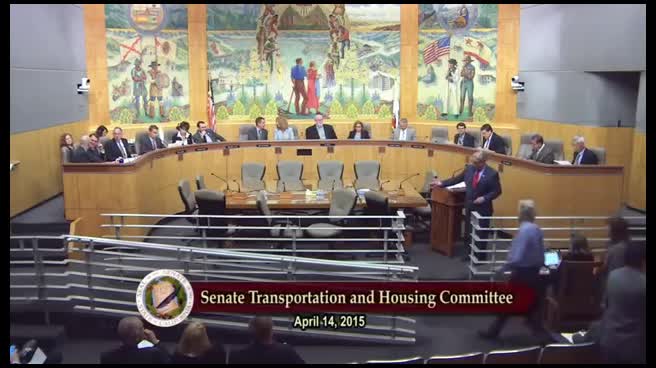 29MIN
Senate Standing Committee on Transportation and Housing
Bill Author


