SB 348: California Environmental Quality Act: exemption: railroad crossings.
- Session Year: 2015-2016
- House: Senate
- Latest Version Date: 2015-08-07
(1)The California Environmental Quality Act (CEQA) requires a lead agency, as defined, to prepare, or cause to be prepared, and certify the completion of, an environmental impact report on a project that it proposes to carry out or approve that may have a significant effect on the environment or to adopt a negative declaration if it finds that the project will not have that effect. CEQA also requires a lead agency to prepare a mitigated negative declaration for a project that may have a significant effect on the environment if revisions in the project would avoid or mitigate that effect and there is no substantial evidence that the project, as revised, would have a significant effect on the environment. CEQA exempts from its requirements railroad grade separation projects that eliminate existing grade crossings or that reconstruct existing grade separations. CEQA authorizes a lead agency, if it determines that a project is exempt from the requirements of CEQA, to file a notice of exemption with specific public entities.
This bill would require a lead agency, if it determines that the above exemption applies to a project that the agency approves or determines to carry out, to file a notice of exemption with the Office of Planning and Research and, in the case of a local agency, with the county clerk in each affected county. Because the bill would impose additional duties on local agencies with regards to the filing of a notice of exemption, this bill would impose a state-mandated local program.
(2)Existing law grants to the Public Utilities Commission (PUC) the authority to regulate railroad crossings, as prescribed. CEQA, until January 1, 2016, exempts from its requirements the closure of a railroad grade crossing by order of the PUC under that authority if the PUC finds the crossing to present a threat to public safety. CEQA requires a state or local agency that determines that this exemption applies to a project that the agency approves or determines to carry out to file a notice of exemption with the Office of Planning and Research and, in the case of a local agency, with the county clerk in each affected county.
This bill would postpone until January 1, 2019, the repeal date for those provisions. Because the bill would impose additional duties on local agencies with regard to the filing of a notice of exemption, the bill would impose a state-mandated local program.
(3)The California Constitution requires the state to reimburse local agencies and school districts for certain costs mandated by the state. Statutory provisions establish procedures for making that reimbursement.
This bill would provide that no reimbursement is required by this act for a specified reason.
The
(1)The California Environmental Quality Act (CEQA) requires a lead agency, as defined, to prepare, or cause to be prepared, and certify the completion of, an environmental impact report (EIR) on a project that it proposes to carry out or approve that may have a significant effect on the environment or to adopt a negative declaration if it finds that the project will not have that effect. CEQA also requires a lead agency to prepare a mitigated negative declaration for a project that may have a significant effect on the environment if revisions in the project would avoid or mitigate that effect and there is no substantial evidence that the project, as revised, would have a significant effect on the environment. CEQA exempts from its requirements railroad grade separation projects that eliminate existing grade crossings or that reconstruct existing grade separations. CEQA authorizes a lead agency, if it determines that a project is exempt from the requirements of CEQA, to file a notice of exemption with specific public entities.
This bill would require a lead agency, if it determines that the above exemption applies to a project that the agency approves or determines to carry out, to file a notice of exemption with the Office of Planning and Research and, in the case of a local agency, with the county clerk in each affected county. Because the bill would impose additional duties on local agencies with regards to the filing of a notice of exemption, this bill would impose a state-mandated local program.
Existing
(2)Existing law grants to the Public Utilities Commission (PUC) the authority to regulate railroad crossings, as prescribed. Existing law, CEQA, until January 1, 2016, exempts from CEQA its requirements the closure of a railroad grade crossing by order of the PUC under that authority if the PUC finds the crossing to present a threat to public safety. Existing law CEQA requires a state or local agency that determines that this exemption applies to a project that the agency approves or determines to carry out to file a specified notice of exemption with the Office of Planning and Research and, in the case of a local agency, with the county clerk in each affected county.
This bill would extend to January 1, 2019 2019, the repeal date for those provisions. Because the bill would impose additional duties on local agencies with regard to providing the filing of a notice of an exemption from CEQA, exemption, the bill would impose a state-mandated local program.
(2) The California Constitution requires the state to reimburse local agencies and school districts for certain costs mandated by the state. Statutory provisions establish procedures for making that reimbursement.
This bill would provide that no reimbursement is required by this act for a specified reason.
(3)The California Constitution requires the state to reimburse local agencies and school districts for certain costs mandated by the state. Statutory provisions establish procedures for making that reimbursement.
This bill would provide that no reimbursement is required by this act for a specified reason.
The California Environmental Quality Act (CEQA) requires a lead agency, as defined, to prepare, or cause to be prepared, and certify the completion of, an environmental impact report (EIR) on a project that it proposes to carry out or approve that may have a significant effect on the environment or to adopt a negative declaration if it finds that the project will not have that effect. CEQA also requires a lead agency to prepare a mitigated negative declaration for a project that may have a significant effect on the environment if revisions in the project would avoid or mitigate that effect and there is no substantial evidence that the project, as revised, would have a significant effect on the environment.
Existing law grants to the Public Utilities Commission (PUC) the authority to regulate railroad crossings, as prescribed. Existing law, until January 1, 2016, exempts from CEQA the closure of a railroad grade crossing by order of the PUC under that authority if the PUC finds the crossing to present a threat to public safety. Existing law requires a state or local agency that determines that this exemption applies to a project that the agency approves or determines to carry out to file a specified notice with the Office of Planning and Research and, in the case of a local agency, with the county clerk in each affected county.
This bill would extend to January 1, 2019 the repeal date for those provisions. Because the bill would impose additional duties on local agencies with regard to providing notice of an exemption from CEQA, the bill would impose a state-mandated local program.
(2) The California Constitution requires the state to reimburse local agencies and school districts for certain costs mandated by the state. Statutory provisions establish procedures for making that reimbursement.
This bill would provide that no reimbursement is required by this act for a specified reason.
(a)This division shall not apply to any railroad grade separation project that eliminates an existing grade crossing or that reconstructs an existing grade separation.
(b)(1)Whenever a state agency determines that a project is not subject to this division pursuant to this section, and it approves or determines to carry out the project, the state agency shall file a notice with the Office of Planning and Research in the manner specified in subdivisions (b) and (c) of Section 21108.
(2)Whenever a local agency determines that a project is not subject to this division pursuant to this section, and it approves or determines to carry out the project, the local agency shall file a notice with the Office of Planning and Research and with the county clerk in each county in which the project will be located in the manner specified in subdivisions (b) and (c) of Section 21152.
SEC. 2.Section 21080.14 of the Public Resources Code is amended to read:21080.14.(a)This division does not apply to the closure of a railroad grade crossing by order of the Public Utilities Commission, pursuant to the commissions authority under Chapter 6 (commencing with Section 1201) of Part 1 of Division 1 of the Public Utilities Code, if the commission finds the crossing to present a threat to public safety.
(b)This section shall not apply to any crossing for high-speed rail, as defined in subdivision (c) of Section 185012 of the Public Utilities Code, or any crossing for any project carried out by the High-Speed Rail Authority, as described in Section 185020 of the Public Utilities Code, or a successor agency.
(c)(1)Whenever a state agency determines that a project is not subject to this division pursuant to this section, and it approves or determines to carry out the project, the state agency shall file a notice with the Office of Planning and Research in the manner specified in subdivisions (b) and (c) of Section 21108.
(2)Whenever a local agency determines that a project is not subject to this division pursuant to this section, and it approves or determines to carry out the project, the local agency shall file a notice with the Office of Planning and Research and with the county clerk in each county in which the project will be located in the manner specified in subdivisions (b) and (c) of Section 21152.
(d)This section shall remain in effect only until January 1, 2019, and as of that date is repealed, unless a later enacted statute, that is enacted before January 1, 2019, deletes or extends that date.
SEC. 3.No reimbursement is required by this act pursuant to Section 6 of Article XIIIB of the California Constitution because a local agency or school district has the authority to levy service charges, fees, or assessments sufficient to pay for the program or level of service mandated by this act, within the meaning of Section 17556 of the Government Code.
(a)This division shall not apply to any railroad grade separation project which that eliminates an existing grade crossing or which that reconstructs an existing grade separation.
(b)(1)Whenever a state agency determines that a project is not subject to this division pursuant to this section, and it approves or determines to carry out the project, the state agency shall file a notice with the Office of Planning and Research in the manner specified in subdivisions (b) and (c) of Section 21108.
(2)Whenever a local agency determines that a project is not subject to this division pursuant to this section, and it approves or determines to carry out the project, the local agency shall file a notice with the Office of Planning and Research and with the county clerk in each county in which the project will be located in the manner specified in subdivisions (b) and (c) of Section 21152.
SECTION 1.SEC. 2.Section 21080.14 of the Public Resources Code is amended to read:21080.14.(a)This division does not apply to the closure of a railroad grade crossing by order of the Public Utilities Commission, pursuant to the commissions authority under Chapter 6 (commencing with Section 1201) of Part 1 of Division 1 of the Public Utilities Code, if the commission finds the crossing to present a threat to public safety.
(b)This section shall not apply to any crossing for high-speed rail, as defined in subdivision (c) of Section 185012 of the Public Utilities Code, or any crossing for any project carried out by the High-Speed Rail Authority, as described in Section 185020 of the Public Utilities Code, or a successor agency.
(c)(1)Whenever a state agency determines that a project is not subject to this division pursuant to this section, and it approves or determines to carry out the project, the state agency shall file a notice with the Office of Planning and Research in the manner specified in subdivisions (b) and (c) of Section 21108.
(2)Whenever a local agency determines that a project is not subject to this division pursuant to this section, and it approves or determines to carry out the project, the local agency shall file a notice with the Office of Planning and Research and with the county clerk in each county in which the project will be located in the manner specified in subdivisions (b) and (c) of Section 21152.
(d)This section shall remain in effect only until January 1, 2019, and as of that date is repealed, unless a later enacted statute, that is enacted before January 1, 2019, deletes or extends that date.
SEC. 2.SEC. 3.No reimbursement is required by this act pursuant to Section 6 of Article XIIIB of the California Constitution because a local agency or school district has the authority to levy service charges, fees, or assessments sufficient to pay for the program or level of service mandated by this act, within the meaning of Section 17556 of the Government Code.
(a)This division does not apply to the closure of a railroad grade crossing by order of the Public Utilities Commission, pursuant to the commissions authority under Chapter 6 (commencing with Section 1201) of Part 1 of Division 1 of the Public Utilities Code, if the commission finds the crossing to present a threat to public safety.
(b)This section shall not apply to any crossing for high-speed rail, as defined in subdivision (c) of Section 185012 of the Public Utilities Code, or any crossing for any project carried out by the High-Speed Rail Authority, as described in Section 185020 of the Public Utilities Code, or a successor agency.
(c)(1)Whenever a state agency determines that a project is not subject to this division pursuant to this section, and it approves or determines to carry out the project, the state agency shall file a notice with the Office of Planning and Research in the manner specified in subdivisions (b) and (c) of Section 21108.
(2)Whenever a local agency determines that a project is not subject to this division pursuant to this section, and it approves or determines to carry out the project, the local agency shall file a notice with the Office of Planning and Research and with the county clerk in each county in which the project will be located in the manner specified in subdivisions (b) and (c) of Section 21152.
(d)This section shall remain in effect only until January 1, 2016, 2019, and as of that date is repealed, unless a later enacted statute, that is enacted before January 1, 2016, 2019, deletes or extends that date.
SEC. 2.No reimbursement is required by this act pursuant to Section 6 of Article XIIIB of the California Constitution because a local agency or school district has the authority to levy service charges, fees, or assessments sufficient to pay for the program or level of service mandated by this act, within the meaning of Section 17556 of the Government Code.
|
Date
|
Status
|
|---|---|
| May 5, 2015 | In Assembly. Read first time. Held at Desk. |
| Aug 7, 2015 | Chaptered by Secretary of State. Chapter 143, Statutes of 2015. |
| Aug 7, 2015 | Approved by the Governor. |
| Jul 30, 2015 | Enrolled and presented to the Governor at 10 a.m. |
| Jul 16, 2015 | Read third time. Passed. (Ayes 73. Noes 0. Page 2429.) Ordered to the Senate. |
| Jul 16, 2015 | Read third time. Passed. Ordered to the Senate. |
| Jul 16, 2015 | In Senate. Ordered to engrossing and enrolling. |
| Jul 9, 2015 | Read second time. Ordered to third reading. |
| Jul 8, 2015 | From committee: Do pass. (Ayes 10. Noes 0.) (July 8). |
| Jun 23, 2015 | From committee: Do pass and re-refer to Com. on APPR. (Ayes 6. Noes 0.) (June 22). Re-referred to Com. on APPR. |
| May 22, 2015 | Referred to Com. on NAT. RES. |
| Feb 24, 2015 | Introduced. Read first time. To Com. on RLS. for assignment. To print. |
| May 4, 2015 | Read third time. Passed. (Ayes 35. Noes 0.) Ordered to the Assembly. |
| May 4, 2015 | Read third time. Passed. (Ayes 35. Noes 0. Page 880.) Ordered to the Assembly. |
| Apr 28, 2015 | Read second time. Ordered to third reading. |
| Apr 27, 2015 | From committee: Be ordered to second reading pursuant to Senate Rule 28.8. |
| Apr 17, 2015 | Set for hearing April 27. |
| Apr 16, 2015 | From committee: Do pass and re-refer to Com. on APPR. with recommendation: To consent calendar. (Ayes 7. Noes 0. Page 649.) (April 15). Re-referred to Com. on APPR. |
| Apr 6, 2015 | From committee with author's amendments. Read second time and amended. Re-referred to Com. on E.Q. |
| Mar 17, 2015 | Set for hearing April 15. |
| Mar 5, 2015 | Referred to Com. on E.Q. |
| Feb 25, 2015 | From printer. May be acted upon on or after March 27. |
|
Date
|
Description
|
Location
|
Votes
|
|
|---|---|---|---|---|
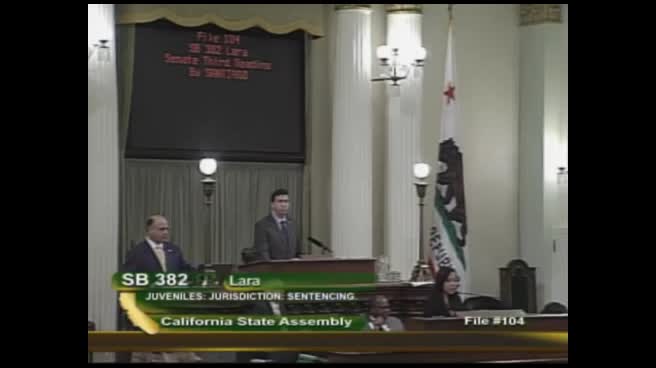
| Jul 16, 2015 | SB 348 Galgiani Senate Third Reading By EGGMAN | Assembly Floor |
Passed |
|
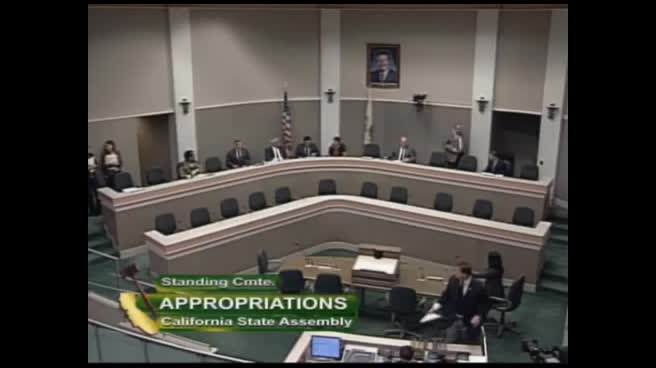
| Jul 8, 2015 | Do pass. | Assembly Standing Committee on Appropriations |
Passed |
|
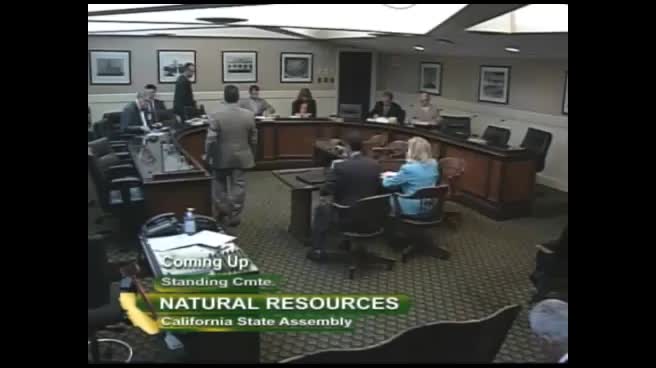
| Jun 22, 2015 | Do pass and be re-referred to the Committee on [Appropriations] | Assembly Standing Committee on Natural Resources |
Passed |
|
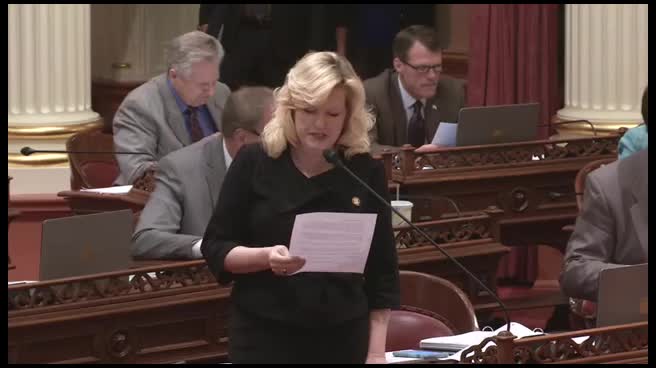
| May 4, 2015 | Senate 3rd Reading SB348 Galgiani | Senate Floor |
Passed |
|
| Apr 15, 2015 | Do pass, but first be re-referred to the Committee on [Appropriations] with the recommendation: To Consent Calendar | Senate Standing Committee on Environmental Quality |
Passed |
This list shows positions taken on this bill by organizations on the date displayed, which is linked to the original source.
Positions by individuals are not included.
|
Organization
|
Position
|
Date
|
|---|---|---|
| BNSF Railway Company | ** Support | Jun 22, 2015 |
| Cal Train | * Indeterminate | Jul 8, 2015 |
| California railroad industry | ** Support | May 4, 2015 |
| California Short Line Railroad Association | ** Support | Jun 22, 2015 |
| California Teamsters Public Affairs Council | ** Support | Jun 22, 2015 |
| Public Utilities Commission | ** Support | Jun 22, 2015 |
| PUC | * Indeterminate | Jul 8, 2015 |
| Union Pacific Railroad Company | ** Support | Jun 22, 2015 |
SB 348
Page 2
SENATE THIRD READING
SB 348
(Galgiani)
As Amended April 6, 2015
Majority vote
SENATE VOTE: 35-0
Committee |
Votes |
Ayes |
Noes |
Natural Resources |
6-0 |
Williams, Cristina Garcia, Hadley, McCarty, Rendon, Mark Stone |
|
Appropriations |
10-0 |
Gomez, Bloom, Bonta, Calderon, Eggman, Eduardo Garcia, Quirk, Rendon, Weber, Wood |
|
SUMMARY: Extends until 2019 the exemption from the California Environmental Quality Act (CEQA) of the closure of a railroad grade crossing by order of the Public Utilities Commission (PUC) when the PUC has found the crossing to present a threat to public safety. Specifically, this bill:
Extends the sunset on the exemption for closure of a railroad grade crossing from January 1, 2016, to January 1, 2019.
Requires a state or local agency claiming the grade separation exemption to file a notice with the Office of Planning and Research (OPR).
EXISTING LAW:
Requires lead agencies with the principal responsibility for carrying out or approving a proposed project which may have a significant effect on the environment to prepare a negative declaration, mitigated negative declaration, or environmental impact report (EIR) for this action, unless the project is exempt from CEQA (CEQA includes various statutory exemptions, as well as categorical exemptions in the CEQA guidelines).
Exempts from CEQA, until January 1, 2016, the closure of a railroad grade crossing by order of the PUC when the PUC has found the crossing to present a threat to public safety. Any crossing for high-speed rail is excluded. A state or local agency claiming the exemption is required to file a notice with OPR.
Exempts from CEQA any railroad grade separation project which eliminates an existing grade crossing or which reconstructs an existing grade separation.
Grants the PUC exclusive authority over railroad crossings, including prescribing the terms of installation, operation, maintenance, use, and protection of each crossing, as well as requiring the closure or separation of grades at any crossing.
FISCAL EFFECT: According to the Assembly Appropriations Committee, negligible state costs.
COMMENTS:
The sponsor of this bill, the PUC, has broad and exclusive power to regulate railroad crossings. According to the PUC, AB 660 (Galgiani), Chapter 315, Statutes of 2008, eliminated a provision from Streets and Highways Code Section 2450 which had described a grade separation project to include removal or relocation of highways or tracks to eliminate existing at-grade crossings. CEQA Section 21080.13 exempts certain grade separation projects, and the PUC combined this exemption with the Streets and Highways definition to justify claiming a CEQA exemption for the closure of an at-grade crossing.
To confirm its ability to claim a CEQA exemption for orders to close at-grade crossing found to be unsafe, the PUC sponsored AB 1665 (Galgiani), Chapter 721, Statutes of 2012, which created the exemption that is the subject of this bill. Since AB 1665 was enacted, the exemption has not been used. However, the exemption may be used for a pending railroad crossing project in Glendale. This bill extends the application of the exemption for three years so that it may be used for the Glendale project, as well as potential future projects. The exemption is limited, non-controversial, and appears appropriate under a circumstance where a railroad crossing must be closed quickly to protect public safety.
Analysis Prepared by: Lawrence Lingbloom / NAT. RES. / (916) 319-2092 FN: 0001193
Date of Hearing: July 8, 2015
ASSEMBLY COMMITTEE ON APPROPRIATIONS
Jimmy Gomez, Chair
SB 348
(Galgiani) – As Amended April 6, 2015
Policy Committee: |
Natural Resources |
Vote: |
6 - 0 |
|
|
|
|
|
|
|
|
Urgency: No State Mandated Local Program: Yes Reimbursable: No
SUMMARY:
This bill extends the California Environmental Quality Act (CEQA) exemption for the closure of a railroad grade crossing found to present a threat to public safety and ordered by the Public Utilities Commission (PUC) from January 1, 2016 to January 1, 2019. Additionally, this bill requires a state or local agency claiming the exemption to file notice with the Office of Planning and Research (OPR).
FISCAL EFFECT:
Negligible state costs.
COMMENT:
Rationale. The PUC has broad and exclusive power to regulate railroad crossings. In 2012, the PUC sponsored AB 1665 (Galgiani, Chapter 721), to establish the existing unsafe grade crossing closure CEQA exemption. To date, this exemption has not been applied. However, a pending railroad crossing project in Glendale may qualify for, and require, the exemption. This bill extends the limited exemption for three years to accommodate the Glendale project as well as other future projects to protect public safety.
Background. CEQA requires lead agencies with the principal responsibility for carrying out or approving a proposed project to prepare a negative declaration, mitigated negative declaration, or environmental impact report (EIR) for this action, unless the project is exempt from CEQA. CEQA includes various statutory exemptions, as well as additional categorical exemptions in the CEQA guidelines.
Analysis Prepared by: Jennifer Galehouse / APPR. / (916) 319-2081
SB 348
Page 2
Date of Hearing: June 22, 2015
ASSEMBLY COMMITTEE ON NATURAL RESOURCES
Das Williams, Chair
SB 348
(Galgiani) – As Amended April 6, 2015
SENATE VOTE: 35-0
SUBJECT: California Environmental Quality Act: exemption: railroad crossings
SUMMARY: Extends until 2019 the exemption from the California Environmental Quality Act (CEQA) of the closure of a railroad grade crossing by order of the Public Utilities Commission (PUC) when the PUC has found the crossing to present a threat to public safety.
EXISTING LAW:
Requires lead agencies with the principal responsibility for carrying out or approving a proposed project which may have a significant effect on the environment to prepare a negative declaration, mitigated negative declaration, or environmental impact report (EIR) for this action, unless the project is exempt from CEQA (CEQA includes various statutory exemptions, as well as categorical exemptions in the CEQA guidelines).
Exempts from CEQA, until January 1, 2016, the closure of a railroad grade crossing by order of the PUC when the PUC has found the crossing to present a threat to public safety. Any crossing for high-speed rail is excluded. A state or local agency claiming the exemption is required to file a notice with the Office of Planning and Research (OPR).
Exempts from CEQA any railroad grade separation project which eliminates an existing grade crossing or which reconstructs an existing grade separation.
Grants the PUC exclusive authority over railroad crossings, including prescribing the terms of installation, operation, maintenance, use, and protection of each crossing, as well as requiring the closure or separation of grades at any crossing.
THIS BILL:
Extends the sunset on the exemption for closure of a railroad grade crossing from January 1, 2016 to January 1, 2019.
Requires a state or local agency claiming the grade separation exemption to file a notice with OPR.
FISCAL EFFECT: According to the Senate Appropriations Committee, pursuant to Senate Rule 28.8, negligible state costs.
COMMENTS:
The sponsor of this bill, the PUC, has broad and exclusive power to regulate railroad crossings. According to the PUC, AB 660 (Galgiani), Chapter 315, Statutes of 2008, eliminated a provision from Section 2450 of the Streets and Highways Code which had described a grade separation project to include removal or relocation of highways or tracks to eliminate existing at-grade crossings. Section 21080.13 of CEQA exempts certain grade separation projects, and the PUC combined this exemption with the Streets and Highways definition to justify claiming a CEQA exemption for the closure of an at-grade crossing.
To confirm its ability to claim a CEQA exemption for orders to close at-grade crossing found to be unsafe, the PUC sponsored AB 1665 (Galgiani), Chapter 721, Statutes of 2012, which created the exemption that is the subject of this bill. Since AB 1665 was enacted, the exemption has not been used. However, the exemption may be used for a pending railroad crossing project in Glendale. This bill extends the application of the exemption for three years so that it may be used for the Glendale project, as well as potential future projects. The exemption is limited, non-controversial, and appears appropriate under a circumstance where a railroad crossing must be closed quickly to protect public safety.
REGISTERED SUPPORT / OPPOSITION:
Support
Public Utilities Commission (sponsor)
BNSF Railway Company
California Short Line Railroad Association
California Teamsters Public Affairs Council
Union Pacific Railroad Company
Opposition
None on file
Analysis Prepared by: Lawrence Lingbloom / NAT. RES. / (916) 319-2092
SB 348
Page 7
|
Office of Senate Floor Analyses (916) 651-1520 Fax: (916) 327-4478 |
THIRD READING
Bill No: SB 348
Amended: 4/6/15
SENATE ENVIRONMENTAL QUALITY COMMITTEE: 7-0, 4/15/15
AYES: Wieckowski, Gaines, Bates, Hill, Jackson, Leno, Pavley
SENATE
APPROPRIATIONS COMMITTEE: Senate Rule 28.8
SUBJECT: California Environmental Quality Act: exemption: railroad crossings
SOURCE: California Public Utilities Commission
DIGEST: This bill extends the sunset from January 1, 2016, to January 1, 2019, for an exemption to the California Environmental Quality Act (CEQA) related to the closure of a railroad grade crossing when the Public Utilities Commission (PUC) finds the crossing to present a threat to public safety.
Existing law:
Under CEQA:
Requires lead agencies with the principal responsibility for carrying out or approving a proposed discretionary project to prepare a negative declaration, mitigated negative declaration, or environmental impact report (EIR) for this action, unless the project is exempt from CEQA (CEQA includes various statutory exemptions, as well as categorical exemptions in the CEQA guidelines). (Public Resources Code (PRC) §21000 et seq.).
Specifies that CEQA does not apply to the closure of a railroad grade crossing by order of the PUC when the PUC has found the crossing to present a threat to public safety. (PRC §21080.14)
Explicitly excludes the application of this exemption from any crossing for high-speed rail.
Requires any state or local agency claiming an exemption pursuant to this section to file a notice with the Office of Planning and Research.
Sunsets this provision January 1, 2016.
Contains other exemptions relating to railroad projects that include, for example:
The institution or increase of passenger or commuter services on rail or highway rights-of-way already in use, including modernization of existing stations and parking facilities. (PRC §21080(b)(10)).
Facility extensions not to exceed four miles in length required to transfer passengers from or to exclusive public mass transit guideway or busway public transit services. (PRC §21080(b)(12)).
Any railroad grade separation project that eliminates an existing grade crossing or reconstructs an existing grade separation. (PRC §21080.13)
Under the Public Utilities Act, provides various powers to the PUC relating to railroad crossings. (Public Utilities Code §1201 et seq.) For example, grants the PUC authority over railroad crossings, including prescribing the terms of installation, operation, maintenance, use, and protection of each crossing, as well as requiring the closure or separation of grades at any crossing.
This
bill:
Extends the sunset date from January 1, 2016, to January 1, 2019, for an exemption to CEQA for the closure of a railroad grade crossing by order of the PUC under the above authority if the PUC finds the crossing to present a threat to public safety.
Requires a public agency to file a Notice of Exemption when a public agency determines that the railroad grade separation exemption, pursuant to PRC §21080.13, applies to a project.
Background
CEQA
provides a process for evaluating the environmental effects of a
project, and includes statutory exemptions as well as categorical
exemptions in the CEQA guidelines. If a project is not exempt from
CEQA, an initial study is prepared to determine whether a project may
have a significant effect on the environment. If the initial study
shows that there would not be a significant effect on the
environment, the lead agency must prepare a negative declaration. If
the initial study shows that the project may have a significant
effect on the environment, then the lead agency must prepare an
EIR.
Generally, an EIR must accurately describe the
proposed project, identify and analyze each significant environmental
impact expected to result from the proposed project, identify
mitigation measures to reduce those impacts to the extent feasible,
and evaluate a range of reasonable alternatives to the proposed
project. Prior to approving any project that has received an
environmental review, an agency must make certain findings. If
mitigation measures are required or incorporated into a project, the
agency must adopt a reporting or monitoring program to ensure
compliance with those measures.
If a mitigation measure
would cause one or more significant effects in addition to those that
would be caused by the proposed project, the effects of the
mitigation measure must be discussed but in less detail than the
significant effects of the proposed project.
Comments
Purpose of bill. According to the sponsor, the PUC, “More fatalities occur across California each year in rail-related accidents than with any other type of public utility. More than 30 individuals lost their lives in rail-related accidents in 2014, and there has already been a major accident in 2015 in the City of Oxnard that has claimed the life of one individual and badly injured several more. It is essential that regulators have all necessary tools at their disposal when assessing the safety of at-grade rail crossings. SB 348 would allow regulators to ensure safe at-grade rail crossings by facilitating closures of unsafe crossings without repetitive and unnecessary reviews. As such, SB 348 will avert future accidents and save lives.”
What is lost with an exemption from CEQA. It is not unusual for some interests to assert that a particular exemption will expedite construction of a particular type of project and reduce costs. This, however, frequently overlooks the benefits of adequate environmental review where lead and responsible agencies are legally accountable for their actions: to inform decisionmakers and the public about project impacts, identify ways to avoid or significantly reduce environmental damage, prevent environmental damage by requiring feasible alternatives or mitigation measures, disclose to the public reasons why an agency approved a project if significant environmental effects are involved, involve public agencies in the process, and increase public participation in the environmental review and the planning processes.
If a project is exempt from CEQA, certain issues should be addressed. For example:
How can decisionmakers and the public be aware of impacts, mitigation measures, and alternatives of a project because of the exemption?
Is it appropriate for the public to live with the consequences when a project is exempt and impacts may not be mitigated and alternatives may not be considered regarding certain matters, such as air quality, water quality, and noise impacts?
Because adverse project impacts do not disappear when they are not identified and mitigated, does an exemption result in a direct transfer of responsibility for mitigating impacts from the applicant to the public (i.e., taxpayers) if impacts are ultimately addressed after completion of the project?
If taxpayers, rather than the project applicant, are ultimately responsible for mitigating certain impacts of such a project after project completion, what assessments or taxes will be increased to fund mitigation or pay for alternatives at a later date?
Such issues may be overlooked or disregarded when a project is exempt
from CEQA, but should be addressed for the benefit of the public
good.
Brief history of this exemption. This bill extends the sunset of an exemption for the closure of a railroad grade crossing when the PUC has found the crossing to present a threat to public safety.
The sponsor of this bill, the PUC, has broad and exclusive power to regulate railroad crossings. The PUC also sponsored AB 1665 (Galgiani, Chapter 721, Statutes of 2012), which enacted the exemption that is the subject of SB 348.
According to the PUC, AB 660 (Galgiani, Chapter 315, Statutes of 2008) eliminated a provision from §2450 of the Streets and Highways Code, which had described a grade separation project to include removal or relocation of highways or tracks to eliminate existing at-grade crossings. §21080.13 of CEQA exempts certain grade separation projects, and the PUC combined this exemption with the Streets and Highways definition to justify claiming a CEQA exemption for the closure of an at-grade crossing. However, §21080.13 did not include the closure of a railroad grade crossing. As a result, the PUC sponsored AB 1665, which exempts a railroad grade crossing when the PUC has found the crossing to present a threat to public safety. SB 348 seeks to extend the sunset of the exemption provided in AB 1665.
Related/Prior Legislation
SB
525 (Galgiani, 2013) would have provided that a project by the San
Joaquin Regional Rail Commission and the High-Speed Rail Authority to
improve the existing tracks, structure, bridges, signaling systems,
and associated appurtenances located on the existing railroad
right-of-way used by the Altamont Commuter Expressway service would
have qualified for the CEQA exemption pursuant to PRC §21080(b)(10).
SB 525 died in the Senate Environmental Quality Committee.
AB
1665 (Galgiani, Chapter 721, Statutes of 2012) exempted the closure
of a railroad crossing by PUC order if the PUC found the crossing
presents a threat to public safety (except for a high speed rail
crossing), and sunsets January 1, 2016.
AB 353 (Carter, 2008) would have authorized the California Transportation Commission (CTC) to allocate $15 million in a fiscal year to the highest five priority projects on the grade separation program funding list; thus allowing four other projects to receive a $15 million allocation during any fiscal year. AB 353 died in the Assembly Appropriations Committee.
AB 660 (Galgiani, Chapter 315, Statutes of
2008), among other things, redefined the terms “grade separation”
and “project” for purposes of the state’s Section 190 Grade
Separation Program.
AB 633 (Galgiani, 2007) would have
required the PUC and the Department of Transportation to jointly
prepare a report by September 1, 2008, to the Legislature on the
railroad-highway at-grade separation program. AB 633 was held in the
Senate Transportation and Housing Committee.
AB 1785 (Bermudez, 2006) would have increased annual funding for the grade separation program from $15 million to $70 million. AB 1785 died in the Senate Appropriations Committee.
AB 1853 (Matthews, 2006) would have revised the Grade Separation Projects program’s prioritization formula. AB 1853 died in the Assembly Transportation Committee.
AB 2630 (Benoit, Chapter 420, Statutes of 2006) removed the restriction placed upon an applicant from receiving funding for grade separation projects if it received funding within the recent 10-year period.
ACR 151 (Matthews, Chapter 133, Statutes of 2006) encouraged the PUC to revise the prioritization formula used to add a factor for delays that disproportionately affect emergency services.
AB 453 (Benoit, Chapter 298, Statutes of 2005) authorized one additional year for local agencies to complete state-funded grade separation projects.
AB 1067 (Frommer, Chapter 716, Statutes of 2005), in addition to the provisions related to violations at rail-highway grade crossings, authorized CTC to allocate up to $15 million to the highest priority project on the PUC priority list.
SB 549 (Johnson, Chapter 58, Statutes of 1982) enacted the current CEQA grade separation exemption.
FISCAL EFFECT: Appropriation: No Fiscal Com.: Yes Local: Yes
SUPPORT: (Per Senate Environmental Quality Committee analysis – unable to reverify)
California Public
Utilities Commission (source)
California Railroad Industry
OPPOSITION: (Per Senate Environmental Quality Committee analysis – unable to reverify)
None received
ARGUMENTS IN SUPPORT: According to the PUC, Railroad crossing accidents account for more deaths each year than all gas, electric, telecom, and water accidents combined. In 2014 alone, 33 fatalities occurred at railroad crossings, and 2015 has already witnessed one tragic railroad crossing accident in Oxnard, California where a Metrolink train derailed after hitting a truck, injuring 29 and killing the engineer.
Prepared by: Joanne Roy / E.Q. / (916) 651-4108
5/1/15 14:36:34
**** END ****
SB 348
Page 7
|
Office of Senate Floor Analyses (916) 651-1520 Fax: (916) 327-4478 |
THIRD READING
Bill No: SB 348
Amended: 4/6/15
SENATE ENVIRONMENTAL QUALITY COMMITTEE: 7-0, 4/15/15
AYES: Wieckowski, Gaines, Bates, Hill, Jackson, Leno, Pavley
SENATE
APPROPRIATIONS COMMITTEE: Senate Rule 28.8
SUBJECT: California Environmental Quality Act: exemption: railroad crossings
SOURCE: California Public Utilities Commission
DIGEST: This bill extends the sunset from January 1, 2016, to January 1, 2019, for an exemption to the California Environmental Quality Act (CEQA) related to the closure of a railroad grade crossing when the Public Utilities Commission (PUC) finds the crossing to present a threat to public safety.
Existing law:
Under CEQA:
Requires lead agencies with the principal responsibility for carrying out or approving a proposed discretionary project to prepare a negative declaration, mitigated negative declaration, or environmental impact report (EIR) for this action, unless the project is exempt from CEQA (CEQA includes various statutory exemptions, as well as categorical exemptions in the CEQA guidelines). (Public Resources Code (PRC) §21000 et seq.).
Specifies that CEQA does not apply to the closure of a railroad grade crossing by order of the PUC when the PUC has found the crossing to present a threat to public safety. (PRC §21080.14)
Explicitly excludes the application of this exemption from any crossing for high-speed rail.
Requires any state or local agency claiming an exemption pursuant to this section to file a notice with the Office of Planning and Research.
Sunsets this provision January 1, 2016.
Contains other exemptions relating to railroad projects that include, for example:
The institution or increase of passenger or commuter services on rail or highway rights-of-way already in use, including modernization of existing stations and parking facilities. (PRC §21080(b)(10)).
Facility extensions not to exceed four miles in length required to transfer passengers from or to exclusive public mass transit guideway or busway public transit services. (PRC §21080(b)(12)).
Any railroad grade separation project that eliminates an existing grade crossing or reconstructs an existing grade separation. (PRC §21080.13)
Under the Public Utilities Act, provides various powers to the PUC relating to railroad crossings. (Public Utilities Code §1201 et seq.) For example, grants the PUC authority over railroad crossings, including prescribing the terms of installation, operation, maintenance, use, and protection of each crossing, as well as requiring the closure or separation of grades at any crossing.
This
bill:
Extends the sunset date from January 1, 2016, to January 1, 2019, for an exemption to CEQA for the closure of a railroad grade crossing by order of the PUC under the above authority if the PUC finds the crossing to present a threat to public safety.
Requires a public agency to file a Notice of Exemption when a public agency determines that the railroad grade separation exemption, pursuant to PRC §21080.13, applies to a project.
Background
CEQA
provides a process for evaluating the environmental effects of a
project, and includes statutory exemptions as well as categorical
exemptions in the CEQA guidelines. If a project is not exempt from
CEQA, an initial study is prepared to determine whether a project may
have a significant effect on the environment. If the initial study
shows that there would not be a significant effect on the
environment, the lead agency must prepare a negative declaration. If
the initial study shows that the project may have a significant
effect on the environment, then the lead agency must prepare an
EIR.
Generally, an EIR must accurately describe the
proposed project, identify and analyze each significant environmental
impact expected to result from the proposed project, identify
mitigation measures to reduce those impacts to the extent feasible,
and evaluate a range of reasonable alternatives to the proposed
project. Prior to approving any project that has received an
environmental review, an agency must make certain findings. If
mitigation measures are required or incorporated into a project, the
agency must adopt a reporting or monitoring program to ensure
compliance with those measures.
If a mitigation measure
would cause one or more significant effects in addition to those that
would be caused by the proposed project, the effects of the
mitigation measure must be discussed but in less detail than the
significant effects of the proposed project.
Comments
Purpose of bill. According to the sponsor, the PUC, “More fatalities occur across California each year in rail-related accidents than with any other type of public utility. More than 30 individuals lost their lives in rail-related accidents in 2014, and there has already been a major accident in 2015 in the City of Oxnard that has claimed the life of one individual and badly injured several more. It is essential that regulators have all necessary tools at their disposal when assessing the safety of at-grade rail crossings. SB 348 would allow regulators to ensure safe at-grade rail crossings by facilitating closures of unsafe crossings without repetitive and unnecessary reviews. As such, SB 348 will avert future accidents and save lives.”
What is lost with an exemption from CEQA. It is not unusual for some interests to assert that a particular exemption will expedite construction of a particular type of project and reduce costs. This, however, frequently overlooks the benefits of adequate environmental review where lead and responsible agencies are legally accountable for their actions: to inform decisionmakers and the public about project impacts, identify ways to avoid or significantly reduce environmental damage, prevent environmental damage by requiring feasible alternatives or mitigation measures, disclose to the public reasons why an agency approved a project if significant environmental effects are involved, involve public agencies in the process, and increase public participation in the environmental review and the planning processes.
If a project is exempt from CEQA, certain issues should be addressed. For example:
How can decisionmakers and the public be aware of impacts, mitigation measures, and alternatives of a project because of the exemption?
Is it appropriate for the public to live with the consequences when a project is exempt and impacts may not be mitigated and alternatives may not be considered regarding certain matters, such as air quality, water quality, and noise impacts?
Because adverse project impacts do not disappear when they are not identified and mitigated, does an exemption result in a direct transfer of responsibility for mitigating impacts from the applicant to the public (i.e., taxpayers) if impacts are ultimately addressed after completion of the project?
If taxpayers, rather than the project applicant, are ultimately responsible for mitigating certain impacts of such a project after project completion, what assessments or taxes will be increased to fund mitigation or pay for alternatives at a later date?
Such issues may be overlooked or disregarded when a project is exempt
from CEQA, but should be addressed for the benefit of the public
good.
Brief history of this exemption. This bill extends the sunset of an exemption for the closure of a railroad grade crossing when the PUC has found the crossing to present a threat to public safety.
The sponsor of this bill, the PUC, has broad and exclusive power to regulate railroad crossings. The PUC also sponsored AB 1665 (Galgiani, Chapter 721, Statutes of 2012), which enacted the exemption that is the subject of SB 348.
According to the PUC, AB 660 (Galgiani, Chapter 315, Statutes of 2008) eliminated a provision from §2450 of the Streets and Highways Code, which had described a grade separation project to include removal or relocation of highways or tracks to eliminate existing at-grade crossings. §21080.13 of CEQA exempts certain grade separation projects, and the PUC combined this exemption with the Streets and Highways definition to justify claiming a CEQA exemption for the closure of an at-grade crossing. However, §21080.13 did not include the closure of a railroad grade crossing. As a result, the PUC sponsored AB 1665, which exempts a railroad grade crossing when the PUC has found the crossing to present a threat to public safety. SB 348 seeks to extend the sunset of the exemption provided in AB 1665.
Related/Prior Legislation
SB
525 (Galgiani, 2013) would have provided that a project by the San
Joaquin Regional Rail Commission and the High-Speed Rail Authority to
improve the existing tracks, structure, bridges, signaling systems,
and associated appurtenances located on the existing railroad
right-of-way used by the Altamont Commuter Expressway service would
have qualified for the CEQA exemption pursuant to PRC §21080(b)(10).
SB 525 died in the Senate Environmental Quality Committee.
AB
1665 (Galgiani, Chapter 721, Statutes of 2012) exempted the closure
of a railroad crossing by PUC order if the PUC found the crossing
presents a threat to public safety (except for a high speed rail
crossing), and sunsets January 1, 2016.
AB 353 (Carter, 2008) would have authorized the California Transportation Commission (CTC) to allocate $15 million in a fiscal year to the highest five priority projects on the grade separation program funding list; thus allowing four other projects to receive a $15 million allocation during any fiscal year. AB 353 died in the Assembly Appropriations Committee.
AB 660 (Galgiani, Chapter 315, Statutes of
2008), among other things, redefined the terms “grade separation”
and “project” for purposes of the state’s Section 190 Grade
Separation Program.
AB 633 (Galgiani, 2007) would have
required the PUC and the Department of Transportation to jointly
prepare a report by September 1, 2008, to the Legislature on the
railroad-highway at-grade separation program. AB 633 was held in the
Senate Transportation and Housing Committee.
AB 1785 (Bermudez, 2006) would have increased annual funding for the grade separation program from $15 million to $70 million. AB 1785 died in the Senate Appropriations Committee.
AB 1853 (Matthews, 2006) would have revised the Grade Separation Projects program’s prioritization formula. AB 1853 died in the Assembly Transportation Committee.
AB 2630 (Benoit, Chapter 420, Statutes of 2006) removed the restriction placed upon an applicant from receiving funding for grade separation projects if it received funding within the recent 10-year period.
ACR 151 (Matthews, Chapter 133, Statutes of 2006) encouraged the PUC to revise the prioritization formula used to add a factor for delays that disproportionately affect emergency services.
AB 453 (Benoit, Chapter 298, Statutes of 2005) authorized one additional year for local agencies to complete state-funded grade separation projects.
AB 1067 (Frommer, Chapter 716, Statutes of 2005), in addition to the provisions related to violations at rail-highway grade crossings, authorized CTC to allocate up to $15 million to the highest priority project on the PUC priority list.
SB 549 (Johnson, Chapter 58, Statutes of 1982) enacted the current CEQA grade separation exemption.
FISCAL EFFECT: Appropriation: No Fiscal Com.: Yes Local: Yes
SUPPORT: (Per Senate Environmental Quality Committee analysis – unable to reverify)
California Public
Utilities Commission (source)
California Railroad Industry
OPPOSITION: (Per Senate Environmental Quality Committee analysis – unable to reverify)
None received
ARGUMENTS IN SUPPORT: According to the PUC, Railroad crossing accidents account for more deaths each year than all gas, electric, telecom, and water accidents combined. In 2014 alone, 33 fatalities occurred at railroad crossings, and 2015 has already witnessed one tragic railroad crossing accident in Oxnard, California where a Metrolink train derailed after hitting a truck, injuring 29 and killing the engineer.
Prepared by: Joanne Roy / E.Q. / (916) 651-4108
4/29/15 16:42:59
**** END ****
SB 348 (Galgiani) Page 6 of 6
SENATE COMMITTEE ON ENVIRONMENTAL QUALITY
Senator Bob Wieckowski, Chair
2015 - 2016 Regular
Bill No: SB 348 Hearing Date: 4/15/2015
Author: |
Galgiani |
||
Version: |
4/6/2015 |
||
Urgency: |
No |
Fiscal: |
Yes |
Consultant: |
Joanne Roy |
||
Subject: California Environmental Quality Act: exemption: railroad crossings
ANALYSIS:
Existing law: Under the California Environmental Quality Act (CEQA):
Requires lead agencies with the principal responsibility for carrying out or approving a proposed discretionary project to prepare a negative declaration, mitigated negative declaration, or environmental impact report (EIR) for this action, unless the project is exempt from CEQA (CEQA includes various statutory exemptions, as well as categorical exemptions in the CEQA guidelines). (Public Resources Code (PRC) §21000 et seq.).
Specifies that CEQA does not apply to the closure of a railroad grade crossing by order of the Public Utilities Commission (PUC) when the PUC has found the crossing to present a threat to public safety. (PRC §21080.14)
Explicitly excludes the application of this exemption from any crossing for high-speed rail.
Requires any state or local agency claiming an exemption pursuant to this secton to file a notice with the Office of Planning and Research.
Sunsets this provision January 1, 2016.
Contains other exemptions relating to railroad projects that include, for example:
The institution or increase of passenger or commuter services on rail or highway rights-of-way already in use, including modernization of existing stations and parking facilities. (PRC §21080(b)(10)).
Facility extensions not to exceed four miles in length required to transfer passengers from or to exclusive public mass transit guideway or busway public transit services. (PRC §21080(b)(12)).
Any railroad grade separation project that eliminates an existing grade crossing or reconstructs an existing grade separation. (PRC §21080.13)
Under the Public Utilities Act, provides various powers to PUC relating to railroad crossings. (Public Utilities Code §1201 et seq.). For example, grants PUC authority over railroad crossings, including prescribing the terms of installation, operation, maintenance, use, and protection of each crossing, as well as requiring the closure or separation of grades at any crossing.
This
bill:
Extends the sunset date from January 1, 2016 to January 1, 2019 for an exemption to CEQA for the closure of a railroad grade crossing by order of the PUC under the above authority if the PUC finds the crossing to present a threat to public safety.
Requires a public agency to file a Notice of Exemption when a public agency determines that the railroad grade separation exemption, pursuant to PRC §21080.13, applies to a project.
Background
CEQA
provides a process for evaluating the environmental effects of a
project, and includes statutory exemptions as well as categorical
exemptions in the CEQA guidelines. If a project is not exempt from
CEQA, an initial study is prepared to determine whether a project may
have a significant effect on the environment. If the initial study
shows that there would not be a significant effect on the
environment, the lead agency must prepare a negative declaration. If
the initial study shows that the project may have a significant
effect on the environment, then the lead agency must prepare an
EIR.
Generally, an EIR must accurately describe the
proposed project, identify and analyze each significant environmental
impact expected to result from the proposed project, identify
mitigation measures to reduce those impacts to the extent feasible,
and evaluate a range of reasonable alternatives to the proposed
project. Prior to approving any project that has received an
environmental review, an agency must make certain findings. If
mitigation measures are required or incorporated into a project, the
agency must adopt a reporting or monitoring program to ensure
compliance with those measures.
If a mitigation measure
would cause one or more significant effects in addition to those that
would be caused by the proposed project, the effects of the
mitigation measure must be discussed but in less detail than the
significant effects of the proposed project.
Comments
Purpose of Bill.
According to the sponsor, PUC, “More fatalities occur across California each year in rail-related accidents than with any other type of public utility. More than 30 individuals lost their lives in rail-related accidents in 2014, and there has already been a major accident in 2015 in the City of Oxnard that has claimed the life of one individual and badly injured several more. It is essential that regulators have all necessary tools at their disposal when assessing the safety of at-grade rail crossings. SB 348 would allow regulators to ensure safe at-grade rail crossings by facilitating closures of unsafe crossings without repetitive and unnecessary reviews. As such, SB 348 will avert future accidents and save lives.”
What is Lost With an Exemption from CEQA.
It is not unusual for some interests to assert that a particular exemption will expedite construction of a particular type of project and reduce costs. This, however, frequently overlooks the benefits of adequate environmental review where lead and responsible agencies are legally accountable for their actions: to inform decisionmakers and the public about project impacts, identify ways to avoid or significantly reduce environmental damage, prevent environmental damage by requiring feasible alternatives or mitigation measures, disclose to the public reasons why an agency approved a project if significant environmental effects are involved, involve public agencies in the process, and increase public participation in the environmental review and the planning processes.
If a project is exempt from CEQA, certain issues should be addressed. For example:
How can decisionmakers and the public be aware of impacts, mitigation measures, and alternatives of a project because of the exemption?
Is it appropriate for the public to live with the consequences when a project is exempt and impacts may not be mitigated and alternatives may not be considered regarding certain matters, such as air quality, water quality, and noise impacts?
Because adverse project impacts do not disappear when they are not identified and mitigated, does an exemption result in a direct transfer of responsibility for mitigating impacts from the applicant to the public (i.e., taxpayers) if impacts are ultimately addressed after completion of the project?
If taxpayers, rather than the project applicant, are ultimately responsible for mitigating certain impacts of such a project after project completion, what assessments or taxes will be increased to fund mitigation or pay for alternatives at a later date?
Such issues may be overlooked or disregarded when a project is exempt
from CEQA, but should be addressed for the benefit of the public
good.
Brief History of This Exemption.
This bill extends the sunset of an exemption for the closure of a railroad grade crossing when the PUC has found the crossing to present a threat to public safety.
The sponsor of this bill, PUC, has broad and exclusive power to regulate railroad crossings. PUC also sponsored AB 1665 (Galgiani), Chapter 721, Statutes of 2012, which enacted the exemption that is the subject of SB 348.
According to the PUC, AB 660 (Galgiani), Chapter 315, Statutes of 2008, eliminated a provision from §2450 of the Streets and Highways Code, which had described a grade separation project to include removal or relocation of highways or tracks to eliminate existing at-grade crossings. §21080.13 of CEQA exempts certain grade separation projects, and PUC combined this exemption with the Streets and Highways definition to justify claiming a CEQA exemption for the closure of an at-grade crossing. However, §21080.13 did not include the closure of a railroad grade crossing. As a result, PUC sponsored AB 1665, which exempts a railroad grade crossing when the PUC has found the crossing to present a threat to public safety. SB 348 seeks to extend the sunset of the exemption provided in AB 1665.
Related/Prior Legislation
SB
525 (Galgiani) (2013), would have provided that a project by the San
Joaquin Regional Rail Commission and the High-Speed Rail Authority to
improve the existing tracks, structure, bridges, signaling systems,
and associated appurtenances located on the existing railroad
right-of-way used by the Altamont Commuter Expressway service would
have qualified for the CEQA exemption pursuant to PRC §21080(b)(10).
SB 525 died in Senate Environmental Quality Committee.
AB
1665 (Galgiani), Chapter 721, Statutes of 2012, exempts the closure
of a railroad crossing by PUC order if the PUC found the crossing
presents a threat to public safety (except for a high speed rail
crossing), and sunsets January 1, 2016.
AB 353 (Carter) (2008) would have authorized CTC to allocate $15 million in a fiscal year to the highest five priority projects on the grade separation program funding list; thus allowing four other projects to receive a $15 million allocation during any fiscal year. AB 353 died in Assembly Appropriations Committee.
AB 660 (Galgiani), Chapter 315, Statutes of
2008, among other things, redefined the terms “grade separation”
and “project” for purposes of the state’s Section 190 Grade
Separation Program.
AB 633 (Galgiani) (2007) would have
required PUC and Caltrans to jointly prepare a report by September 1,
2008, to the Legislature on the railroad-highway at-grade separation
program. AB 633 was held in the Senate Transportation and Housing
Committee.
AB 1785 (Bermudez) (2006) would have increased annual funding for the grade separation program from $15 million to $70 million. AB 1785 died in Senate Appropriations Committee.
AB 1853 (Matthews) (2006) would have revised the Grade Separation Projects program’s prioritization formula. AB 1853 died in the Assembly Transportation Committee.
AB 2630 (Benoit), Chapter 420, Statutes of 2006, removed the restriction placed upon an applicant from receiving funding for grade separation projects if it received funding within the recent ten-year period.
ACR 151 (Matthews), Chapter 133, Statutes of 2006, encouraged PUC to revise the prioritization formula used to add a factor for delays that disproportionately affect emergency services.
AB 453 (Benoit), Chapter 298, Statutes of 2005, authorized one additional year for local agencies to complete state-funded grade separation projects.
AB 1067 (Frommer), Chapter 716, Statutes of 2005, in addition to the provisions related to violations at rail-highway grade crossings, authorized CTC to allocate up to $15 million to the highest priority project on the PUC priority list.
SB 549 (Johnson), Chapter 58, Statutes of 1982, enacted the current CEQA grade separation exemption.
SOURCE:
California Public Utilities Commission
SUPPORT:
None on file
OPPOSITION:
None on file
-- END --
Discussed in Hearing
 50SEC
Assembly Floor
 2MIN
Assembly Standing Committee on Appropriations
 3MIN
Assembly Standing Committee on Natural Resources
 2MIN
Senate Floor
Bill Author

Bill Co-Author(s):