SB 47: Environmental health: artificial turf.
- Session Year: 2015-2016
- House: Senate
- Latest Version Date: 2016-01-04
Existing law regulates certain behavior related to recreational activities and public safety, including, among other things, playgrounds and wooden playground equipment.
The bill would, until January 1, 2020, require a public or private school or local government, before installing, contracting for the installation of, or soliciting bids for a new artificial turf field containing crumb rubber infill, as defined, within the boundaries of a public or private school, or public recreational park to do certain things, including gathering information from companies that offer artificial turf products that do not use crumb rubber infill.
Existing law regulates certain behavior related to recreational activities and public safety, including, among other things, playgrounds and wooden playground equipment.
This bill would require the Office of Environmental Health Hazard Assessment, by July 1, 2017, in consultation with the Department of Resources Recycling and Recovery, the State Department of Public Health, and the Department of Toxic Substances Control, to prepare and provide to the Legislature and post on the offices Internet Web site a study analyzing synthetic turf, as defined, for potential adverse health impacts. The bill would require the study to include certain information, including a hazard analysis of exposure to the chemicals that may be found in synthetic turf, as provided. The bill would prohibit a public or private school or local government, until January 1, 2018, from installing, or contracting for the installation of, a new field or playground surface made from synthetic turf within the boundaries of a public or private school or public recreational park, unless 3 specified conditions are met, including that the public or private school or local government has obtained at least one estimate from a company that does not use crumb rubber in its turf field and playground products, as provided.
The California Tire Recycling Act (act) requires a person who purchases a new tire to pay a California tire fee, for deposit in the California Tire Recycling Management Fund, for expenditure by the department, upon appropriation by the Legislature, for programs related to the disposal of waste tires including the awarding of grants. The act specifies that the activities eligible for funding include the manufacture of specified products made from used tires.
The bill would include the above study as one of the acceptable activities eligible for this funding. The bill would also authorize the awarding of grants to businesses that produce crumb rubber from waste tires for purposes of helping the businesses find alternative markets other than fields and playgrounds for their products. The bill would prohibit the awarding under this program of grants, subsidies, rebates, loans, or any other types of funding to businesses or other enterprises, to public or private schools, or to local governments for purposes of offsetting the cost of manufacturing or installing synthetic turf.
Existing law regulates certain behavior related to recreational activities and public safety, including, among other things, playgrounds and wooden playground equipment.
This bill would require the Office of Environmental Health Hazard Assessment, by July 1, 2017, in consultation with the Department of Resources Recycling and Recovery, the State Department of Public Health, and the Department of Toxic Substances Control, to prepare and provide to the Legislature and post on the offices Internet Web site a study analyzing synthetic turf, as defined, for potential adverse health impacts. The bill would require the study to include certain information, including a hazard analysis of individual, synergistic, and cumulative exposures exposure to the chemicals that may be found in synthetic turf, as provided. The bill would prohibit a public or private school or local government, until January 1, 2018, from installing, or contracting for the installation of, a new field or playground surface made from synthetic turf within the boundaries of a public or private school or public recreational park, as provided unless 3 specified conditions are met, including that the public or private school or local government has obtained at least one estimate from a company that does not use crumb rubber in its turf field and playground products, as provided.
The California Tire Recycling Act (act) requires a person who purchases a new tire to pay a California tire fee, for deposit in the California Tire Recycling Management Fund, for expenditure by the department, upon appropriation by the Legislature, for programs related to the disposal of waste tires including the awarding of grants. The act specifies that the activities eligible for funding include the manufacture of specified products made from used tires.
The bill would include the above study as one of the acceptable activities eligible for this funding. The bill would also authorize the awarding of grants to businesses that produce crumb rubber from waste tires for purposes of helping the businesses find alternative markets other than fields and playgrounds for their products. The bill would prohibit the awarding under this program of grants, subsidies, rebates, loans, or any other types of funding to businesses or other enterprises, to public or private schools, or to local governments for purposes of offsetting the cost of manufacturing or installing synthetic turf.
Existing law regulates certain behavior related to recreational activities and public safety, including, among other things, playgrounds and wooden playground equipment.
This bill would require the Office of Environmental Health Hazard Assessment, by July 1, 2017, in consultation with the Department of Resources Recycling and Recovery, the State Department of Public Health, and the Department of Toxic Substances Control, to prepare and provide to the Legislature and post on the offices Internet Web site a study analyzing synthetic turf, as defined, for potential adverse health impacts. The bill would require the study to include certain information, including a hazard analysis of individual, synergistic, and cumulative exposures to the chemicals that may be found in synthetic turf, as provided. The bill would prohibit a public or private school or local government, until January 1, 2018, from installing, or contracting for the installation of, a new field or playground surface made from synthetic turf within the boundaries of a public or private school or public recreational park, as provided.
The California Tire Recycling Act (act) requires a person who purchases a new tire to pay a California tire fee, for deposit in the California Tire Recycling Management Fund, for expenditure by the department, upon appropriation by the Legislature, for programs related to the disposal of waste tires. The act specifies that the activities eligible for funding include the manufacture of specified products made from used tires.
The bill would include the above study as one of the acceptable activities eligible for this funding.
The Legislature finds and declares all of the following:
(a)Thousands of schools, parks, and local governments have installed artificial turf fields throughout the state. It has allowed them to use fields year round, save water, and save money, among other benefits.
(b)Not all artificial turf fields are made from the same materials. While most artificial turf fields use less expensive crumb rubber infill from groundup used car and truck tires, many companies now offer artificial turf infill alternatives made from coconut fibers, rice husks, cork, sand, or virgin crumb rubber. Organic alternative infills can help reduce synthetic turf field temperatures on hot days by as much as 30 degrees compared to crumb rubber infill from used tires.
(c)The average artificial turf field uses approximately 20,000 groundup used tires to make crumb rubber infill. Tires contain many chemicals including, but not limited to: 4-t-octylphenol, acetone, arsenic, barium, benzene, benzothiazole, butylated hydroxyanisole, cadmium, carbon black, chloroethane, chromium, latex, lead, manganese, mercury, methyl ethyl ketone, methyl isobutyl ketone, n-hexadecane, naphthalene, nickel, nylon, phenol, phthalates, polycyclic aromatic hydrocarbons, and zinc.
(d)In 2008, then Attorney General Jerry Brown sued the nations largest makers and installers of artificial turf fields for excessive lead levels after testing by the Center for Environmental Health found high concentrations of lead in their products.
(e)In 2009, the Los Angeles Unified School District banned turf fields containing infill from waste tire crumb rubber and instead chose alternative infills for their artificial turf fields.
(f)In 2010, then Attorney General Jerry Brown settled the case with the nations largest makers and installers of artificial turf fields requiring them to reformulate their products to reduce lead levels and established the nations first enforceable standards applicable to lead in artificial turf.
(g)The Office of Environmental Health Hazard Assessments 2010 study on used tire crumb rubber in artificial turf fields reviewed chemical concentrations in the air above the fields and found that eight chemicals appear on the California Proposition 65 list of chemicals known to the state to cause cancer. Exposure via inhalation to five of these chemicals (benzene, formaldehyde, naphthalene, nitromethane, and styrene) gave increased lifetime cancer risks that exceeded one in one million. According to the study, the highest risk was from nitromethane, which could cause about nine cancer cases in a hypothetical population of one million soccer players. The study also found that two additional identified chemicals (toluene and benzene) appear on the California Proposition 65 list as developmental/reproductive poisons.
(h)At least 10 studies since 2007, including those by the United States Consumer Product Safety Commission and the United States Environmental Protection Agency, have found potentially harmful lead levels in turf fibers and in rubber crumbs.
(i)A 2011 study titled, An Evaluation of Potential Exposures to Lead and Other Metals as the Result of Aerosolized Particulate Matter from Artificial Turf Playing Fields concluded that artificial turf can deteriorate to form dust containing lead at levels that may pose a risk to children.
(j)A 2012 study published in the scientific journal Chemosphere titled, Hazardous organic chemicals in rubber recycled tire playgrounds and pavers, showed the high content of toxic chemicals in these recycled materials and found that uses of recycled rubber tires, especially those targeting play areas and other facilities for children, should be a matter of regulatory concern.
(k)The Swedish Chemicals Agency found that waste tire crumb rubber contains several particularly hazardous substances and recommended that rubber granules from waste tires not be used in artificial turf.
(l)In 2013, The United States Environmental Protection Agency (EPA) posted a disclaimer on the only limited study on tire crumb risk it had ever conducted. The EPA press release summarizing the study has been stamped with a notice that it was outdated and a new link has been appended to a statement stressing the need for future studies to enable more comprehensive conclusions.
(m)On May 19, 2015, the chair of the United States Consumer Product Safety Commission (CPSC), Elliot Kaye, testified before the United States Congress that he no longer stands behind a 2008 statement from the commission that crumb rubber is safe to play on. His testimony described new federal studies underway. The CPSC also ordered an enforcement review of marketing of artificial turf products for children because the commission found lead levels in artificial sports fields above statutory limits in childrens products.
(n)A June 2015, study conducted at Yale University by Environment and Human Health, Inc., an organization of physicians and public health professionals, found that crumb rubber infill from used tires contain at least 96 chemicals. Of the 96 chemicals detected, a little under one-half had no toxicity assessments done on them for their health effects. Of the one-half that had toxicity assessments, 20 percent were probable carcinogens and 40 percent were irritants. The carcinogens found were 2-Mercaptobenzothiazole, 9,10-Dimethylanthracene, Bis(2-ethylhexyl) phthalate, Fluoranthene, Heptadecane, 2-mercaptobenzothiazole, Phenol, 4-(1,1,3,3-tetramethylbutyl)-, Phenanthrene Carcinogen - polycyclicaromatic hydrocarbons, Phthalimide, Pyrene, 1-methyl-, Tetratriacontane, Pyrene, and Carbon Black. Of the irritants found, 24 percent were respiratory irritants, some causing asthma symptoms, 37 percent were skin irritants, and 27 percent were eye irritants.
(o)In June 2015, The Department of Resources Recycling and Recovery in collaboration with the Office of Environmental Health Hazard Assessment (OEHHA) agreed to spend nearly three million dollars ($3,000,000) to conduct a three-year study of potential health effects associated with the use of recycled waste tires in playground and artificial turf products. Making use of the toxicity criteria, monitoring data, and exposure pattern analysis results obtained in the study, OEHHA will conduct an assessment of potential health impacts associated with use of artificial turf and playground mats.
(p)While the public awaits the results of the OEHHA study and other studies being conducted at the national level and around the country, it is in the publics best interest, especially from a childrens health perspective, that schools and local governments consider the various infill options when choosing to install artificial turf fields.
115810.1.For purposes of this article, crumb rubber infill means any composition material that contains recycled crumb rubber from waste tires and is used to cover or surface an artificial turf field.
115810.2.(a)Before a public or private school or local government may install, contract for the installation of, or solicit bids for a new artificial turf field containing crumb rubber infill within the boundaries of a public or private school or public recreational park, the public or private school or local government shall do all of the following:
(1)(A)Gather information from companies that offer artificial turf products that do not use crumb rubber infill.
(B)For purposes of this paragraph, information shall include, but not be limited to, information obtained from discussions with at least one company that offers artificial turf products that do not contain crumb rubber infill.
(2)Consider the use of material that does not contain crumb rubber infill in its artificial turf field project based on the information gathered pursuant to paragraph (1).
(3)Hold a public meeting that includes as a properly noticed agenda item a discussion of the installation of crumb rubber infill, with an opportunity for public comment. Members of the public wishing to make a comment during the public meeting shall be permitted to do so consistent with the established comment procedure for the meeting.
(b)Subdivision (a) shall not apply to any installation of an artificial turf field containing crumb rubber infill that commenced, or any contract for such an installation entered into, prior to January 1, 2017.
(c)Subdivision (a) shall not apply to any maintenance that is needed on an artificial turf field containing crumb rubber infill in existence as of January 1, 2017, or that is installed consistent with subdivision (b).
115810.3.This article shall remain in effect only until January 1, 2020, and as of that date is repealed, unless a later enacted statute, that is enacted before January 1, 2020, deletes or extends that date.
SECTION 1.Article 3 (commencing with Section 115810) is added to Chapter 4 of Part 10 of Division 104 of the Health and Safety Code, to read:3.The Childrens Safe Playground and Turf Field Act of 2015115810.For purposes of this article, synthetic turf means any composition material that contains recycled crumb rubber from waste tires and is used to cover or surface a field or playground.
115811.(a)By July 1, 2017, the Office of Environmental Health Hazard Assessment, in consultation with the Department of Resources Recycling and Recovery, the State Department of Public Health, and the Department of Toxic Substances Control, shall prepare and provide to the Legislature and post on the offices Internet Web site a study analyzing synthetic turf for potential adverse health impacts.
(b)The study shall include all of the following:
(1)A hazard analysis of exposure to the chemicals that may be found in synthetic turf, such as 4-t-octylphenol, acetone, arsenic, barium, benzene, benzothiazole, butylated hydroxyanisole, cadmium, carbon black, chloroethane, chromium, lead, manganese, matex, mercury, methyl ethyl ketone, methyl isobutyl ketone, n-hexadecane, naphthalene, nickel, nylon, phenol, phthalates, polycyclic aromatic hydrocarbons, and zinc.
(2)An analysis that considers the varying exposure activities, environments, duration of play, ages of different populations who play on synthetic turf, and exposure pathways, including whether chemicals found in tires have negative impacts on human health when used in indoor and outdoor fields and parks with various weather exposures and potentially ingested by children or coming in contact with childrens bodies.
(3)Biomonitoring or other exposure monitoring of children or adults exposed to synthetic turf to be used to assess their exposure to chemicals found in the synthetic turf, to the extent feasible, to determine potential health impacts on children and other age groups.
(4)An examination of the potential for fields and playgrounds containing synthetic turf to cause adverse health impacts, including, but not limited to, non-Hodgkin lymphoma, testicular cancer, prostate cancer, sarcoma cancer, and leukemia. This examination shall include people who have developed these health impacts and played on fields and playgrounds containing used tires, including, but not limited to, soccer goalies.
(5)An examination of the health impacts associated with synthetic turf fields and playgrounds of varying age.
(6)An evaluation of the differences in the manufacturing of synthetic turf and different turf, field, and playground products, including those that do not use recycled tires, and how these differences may affect health impacts. The evaluation shall include, but not be limited to, the types and age of tires used, the tire processing, and the type of plasticizer, backing material, adhesives, and plastic blades of artificial grass used to make the final synthetic turf product.
(7)An evaluation of the differences, in terms of health impacts, between fields and playgrounds covered with synthetic turf and nonsynthetic turf, including, but not limited to, fields made from coconut fibers, rice husks, cork, sand, and used shoes.
(8)A review of current research on the health impacts of synthetic turf done by authoritative bodies from around the country and the world.
(9)Research to fill any data gaps, such as those data gaps identified by the report prepared by the Office of Environmental Health Hazard Assessment on behalf of the Department of Resources Recycling and Recovery titled Safety Study of Artificial Turf Containing Crumb Rubber Infill Made From Recycled Tires: Measurements of Chemicals and Particulates in the Air, Bacteria in the Turf, and Skin Abrasions Caused by Contact with the Surface.
(10)An examination of the health impacts of exposures to many low level volatile organic compounds and polycyclic aromatic hydrocarbons found in synthetic turf fields and playgrounds.
(11)An analysis that compares the temperatures on synthetic turf, nonwaste tire turf, and grass turf during the high-temperature periods in the summer. This analysis shall include a health impact analysis including, but not limited to, heat stress, heat illness, and other heat-related health issues.
(c)A representative sample of synthetic turf fields and playgrounds around the state shall be analyzed for purposes of the study.
(d)(1)A study submitted to the Legislature pursuant to subdivision (a) shall be submitted in compliance with Section 9795 of the Government Code.
(2)The requirement for submitting a study to the Legislature imposed pursuant to subdivision (a) is inoperative on July 1, 2021, pursuant to Section 10231.5 of the Government Code.
115812.(a)(1)A public or private school or local government shall not install, or contract for the installation of, a new field or playground surface made from synthetic turf within the boundaries of a public or private school or public recreational park unless the following three conditions are met:
(A)The bid specification of the public or private school or local government for the turf field or playground surface includes at least one option that does not use crumb rubber from waste tires.
(B)The public or private school or local government has obtained at least one estimate from a company that does not use crumb rubber from waste tires in its turf field and playground products.
(C)The public or private school or local government has held a public meeting regarding the installation of synthetic turf with an opportunity for public comment.
(2)Paragraph (1) shall not apply to any installation of a field or playground surface made from synthetic turf that commenced, or any contract for such installation entered into, prior to January 1, 2016.
(3)Paragraph (1) shall not apply to any maintenance that is needed on a synthetic turf field or playground in existence as of January 1, 2016.
(b)This section shall remain in effect only until January 1, 2018, and as of that date is repealed, unless a later enacted statute, that is enacted before January 1, 2018, deletes or extends that date.
SEC. 2.Section 42872 of the Public Resources Code is amended to read:42872.(a)The tire recycling program may include, but is not limited to, the following:
(1)The awarding of grants, subsidies, rebates, and loans to businesses or other enterprises, and public entities, involved in activities and applications that result in reduced landfill disposal of used whole tires and reduced illegal disposal or stockpiling of used whole tires.
(2)The awarding of grants for research aimed at developing technologies or improving current activities and applications that result in reduced landfill disposal of used whole tires.
(3)The awarding of grants or loans for the evaluation, planning, design, improvement, and implementation of alternative used tire recycling programs in this state.
(4)The awarding of grants, subsidies, rebates, or loans to businesses that shred used tires for purposes of recycling.
(5)Development and implementation of an information and education program, including seminars and conferences, aimed at promoting alternatives to the landfill disposal of used whole tires.
(6)The awarding of grants or loans to tire shredding programs at authorized landfills, solid waste transfer stations, or dedicated tire shredding facilities, including the direct purchase of shredders or financing of shredder contracts.
(7)Development and implementation of a waste tire incentive payment program to promote increased demand for waste tires recycled in this state and to promote higher valued products.
(8)The awarding of grants to businesses that produce crumb rubber from waste tires for purposes of helping the business to find alternative markets other than fields and playgrounds for their products.
(b)The tire recycling program shall not include the awarding of grants, subsidies, rebates, loans, or any other types of funding to businesses or other enterprises, to public or private schools, or to local governments for purposes of offsetting the cost of manufacturing or installing synthetic turf as that term is defined in Section 115810 of the Health and Safety Code.
SEC. 3.Section 42873 of the Public Resources Code is amended to read:42873.(a)Activities eligible for funding under this article, that reduce, or that are designed to reduce or promote the reduction of, landfill disposal of used whole tires, may include the following:
(1)Polymer treatment.
(2)Rubber reclaiming and crumb rubber production.
(3)Retreading.
(4)Shredding.
(5)The manufacture of products made from used tires, including, but not limited to, all of the following:
(A)Rubberized asphalt, asphalt rubber, modified binders, and chip seals.
(B)Playground equipment.
(C)Crash barriers.
(D)Erosion control materials.
(E)Nonslip floor and track surfacing.
(F)Oil spill recovery equipment.
(G)Roofing adhesives.
(H)Tire-derived aggregate applications, including lightweight fill and vibration mitigation.
(I)Molded products.
(J)Products using recycling rubber and other materials, such as plastic.
(K)Paint and coatings.
(6)Other environmentally safe applications or treatments determined to be appropriate by the department.
(7)A study to analyze synthetic turf for potential adverse health impacts, pursuant to Section 115811 of the Health and Safety Code.
(b)(1)The department shall not expend funds for an activity that provides support or research for the incineration of tires. For the purposes of this article, incineration of tires, includes, but is not limited to, fuel feed system development, fuel sizing analysis, and capacity and production optimization.
(2)Paragraph (1) does not affect the permitting or regulation of facilities that engage in the incineration of tires.
For purposes of this article, synthetic turf means any composition material that contains recycled crumb rubber from waste tires and is used to cover or surface a field or playground.
115811.(a)By July 1, 2017, the Office of Environmental Health Hazard Assessment, in consultation with the Department of Resources Recycling and Recovery, the State Department of Public Health, and the Department of Toxic Substances Control, shall prepare and provide to the Legislature and post on the offices Internet Web site a study analyzing synthetic turf for potential adverse health impacts.
(b)The study shall include all of the following:
(1)A hazard analysis of individual, synergistic, and cumulative exposures exposure to the chemicals that may be found in synthetic turf, such as 4-t-octylphenol, acetone, arsenic, barium, benzene, benzothiazole, butylated hydroxyanisole, cadmium, carbon black, chloroethane, chromium, lead, manganese, matex, mercury, methyl ethyl ketone, methyl isobutyl ketone, n-hexadecane, naphthalene, nickel, nylon, phenol, phthalates, polycyclic aromatic hydrocarbons, and zinc.
(2)A specific analysis evaluating An analysis that considers the varying exposure activities, environments, duration of play, ages of different populations who play on synthetic turf, and exposure pathways, including whether chemicals found in tires have negative impacts on human health when used in indoor and outdoor fields and parks with various weather exposures and potentially ingested by children or coming in contact with childrens bodies.
(3)Biomonitoring or other exposure monitoring of children or adults exposed to synthetic turf to be used to assess their exposure to chemicals found in the synthetic turf, to the extent feasible, to determine potential health impacts on children and other age groups.
(4)An examination of the potential for fields and playgrounds containing synthetic turf to cause adverse health impacts, including, but not limited to, non-Hodgkin lymphoma, testicular cancer, prostate cancer, sarcoma cancer, and leukemia. This examination shall include people who have developed these health impacts and played on fields and playgrounds containing used tires, including, but not limited to, soccer goalies.
(5)An examination of the health impacts associated with synthetic turf fields and playgrounds of varying age.
(6)An evaluation of the differences in the manufacturers manufacturing of synthetic turf and different turf, field, and playground products, including those that do not use recycled tires, and how these differences may affect health impacts. The evaluation shall include, but not be limited to, the types and age of tires used, the tire processing, and the type of plasticizer, backing material, adhesives, and plastic blades of artificial grass used to make the final synthetic turf product.
(7)An evaluation of the differences, in terms of health impacts, between crumb rubber and alternative surface materials fields and playgrounds covered with synthetic turf and nonsynthetic turf, including, but not limited to, fields made from coconut fibers, rice husks, cork, sand, and used shoes.
(8)A review of current research on the health impacts of synthetic turf done by authoritative bodies from around the country and the world.
(9)Research to fill any data gaps, such as those data gaps identified by the report prepared by the Office of Environmental Health Hazard Assessment on behalf of the Department of Resources Recycling and Recovery titled Safety Study of Artificial Turf Containing Crumb Rubber Infill Made From Recycled Tires: Measurements of Chemicals and Particulates in the Air, Bacteria in the Turf, and Skin Abrasions Caused by Contact with the Surface.
(10)An examination of the health impacts of exposures to many low level volatile organic compounds and polycyclic aromatic hydrocarbons found in synthetic turf fields and playgrounds.
(11)An analysis that compares the temperatures on synthetic turf, nonwaste tire turf, and grass turf during the high-temperature periods in the summer. This analysis shall include a health impact analysis including, but not limited to, heat stress, heat illness, and other heat-related health issues.
(c)At least 20 A representative sample of synthetic turf fields and playgrounds around the state shall be analyzed for purposes of the study.
(d)(1)A study submitted to the Legislature pursuant to subdivision (a) shall be submitted in compliance with Section 9795 of the Government Code.
(2)The requirement for submitting a study to the Legislature imposed pursuant to subdivision (a) is inoperative on July 1, 2021, pursuant to Section 10231.5 of the Government Code.
115812.(a)(1)A public or private school or local government shall not install, or contract for the installation of, a new field or playground surface made from synthetic turf within the boundaries of a public or private school or public recreational park. park unless the following three conditions are met:
(A)The bid specification of the public or private school or local government for the turf field or playground surface includes at least one option that does not use crumb rubber from waste tires.
(B)The public or private school or local government has obtained at least one estimate from a company that does not use crumb rubber from waste tires in its turf field and playground products.
(C)The public or private school or local government has held a public meeting regarding the installation of synthetic turf with an opportunity for public comment.
(2)Paragraph (1) shall not apply to any installation of a field or playground surface made from synthetic turf that commenced, or any contract for such installation entered into, prior to January 1, 2016.
(3)Paragraph (1) shall not apply to any maintenance that is needed on a synthetic turf field or playground in existence as of January 1, 2016.
(b)This section shall remain in effect only until January 1, 2018, and as of that date is repealed, unless a later enacted statute, that is enacted before January 1, 2018, deletes or extends that date.
SEC. 2.Section 42872 of the Public Resources Code is amended to read:42872.(a)The tire recycling program may include, but is not limited to, the following:
(a)
(1)The awarding of grants, subsidies, rebates, and loans to businesses or other enterprises, and public entities, involved in activities and applications that result in reduced landfill disposal of used whole tires and reduced illegal disposal or stockpiling of used whole tires.
(b)
(2)The awarding of grants for research aimed at developing technologies or improving current activities and applications that result in reduced landfill disposal of used whole tires.
(c)
(3)The awarding of grants or loans for the evaluation, planning, design, improvement, and implementation of alternative used tire recycling programs in this state.
(d)
(4)The awarding of grants, subsidies, rebates, or loans to businesses that shred used tires for purposes of recycling.
(e)
(5)Development and implementation of an information and education program, including seminars and conferences, aimed at promoting alternatives to the landfill disposal of used whole tires.
(f)
(6)The awarding of grants or loans to tire shredding programs at authorized landfills, solid waste transfer stations, or dedicated tire shredding facilities, including the direct purchase of shredders or financing of shredder contracts.
(g)
(7)Development and implementation of a waste tire incentive payment program to promote increased demand for waste tires recycled in this state and to promote higher valued products.
(8)The awarding of grants to businesses that produce crumb rubber from waste tires for purposes of helping the business to find alternative markets other than fields and playgrounds for their products.
(b)The tire recycling program shall not include the awarding of grants, subsidies, rebates, loans, or any other types of funding to businesses or other enterprises, to public or private schools, or to local governments for purposes of offsetting the cost of manufacturing or installing synthetic turf as that term is defined in Section 115810 of the Health and Safety Code.
SEC. 2.SEC. 3.Section 42873 of the Public Resources Code is amended to read:42873.(a)Activities eligible for funding under this article, that reduce, or that are designed to reduce or promote the reduction of, landfill disposal of used whole tires, may include the following:
(1)Polymer treatment.
(2)Rubber reclaiming and crumb rubber production.
(3)Retreading.
(4)Shredding.
(5)The manufacture of products made from used tires, including, but not limited to, all of the following:
(A)Rubberized asphalt, asphalt rubber, modified binders, and chip seals.
(B)Playground equipment.
(C)Crash barriers.
(D)Erosion control materials.
(E)Nonslip floor and track surfacing.
(F)Oilspill Oil spill recovery equipment.
(G)Roofing adhesives.
(H)Tire-derived aggregate applications, including lightweight fill and vibration mitigation.
(I)Molded products.
(J)Products using recycling rubber and other materials, such as plastic.
(K)Paint and coatings.
(6)Other environmentally safe applications or treatments determined to be appropriate by the department.
(7)A study to analyze synthetic turf for potential adverse health impacts, pursuant to Section 115811 of the Health and Safety Code.
(b)(1)The department shall not expend funds for an activity that provides support or research for the incineration of tires. For the purposes of this article, incineration of tires, includes, but is not limited to, fuel feed system development, fuel sizing analysis, and capacity and production optimization.
(2)Paragraph (1) does not affect the permitting or regulation of facilities that engage in the incineration of tires.
For purposes of this article, synthetic turf means any composition material that contains recycled crumb rubber from waste tires and is used to cover or surface a field or playground.
115811.(a)By July 1, 2017, the Office of Environmental Health Hazard Assessment, in consultation with the Department of Resources Recycling and Recovery, the State Department of Public Health, and the Department of Toxic Substances Control, shall prepare and provide to the Legislature and post on the offices Internet Web site a study analyzing synthetic turf for potential adverse health impacts.
(b)The study shall include all of the following:
(1)A hazard analysis of individual, synergistic, and cumulative exposures to the chemicals that may be found in synthetic turf, such as 4-t-octylphenol, acetone, arsenic, barium, benzene, benzothiazole, butylated hydroxyanisole, cadmium, carbon black, chloroethane, chromium, lead, manganese, matex, mercury, methyl ethyl ketone, methyl isobutyl ketone, n-hexadecane, naphthalene, nickel, nylon, phenol, phthalates, polycyclic aromatic hydrocarbons, and zinc.
(2)A specific analysis evaluating varying exposure activities, environments, duration of play, ages of different populations who play on synthetic turf, and exposure pathways, including whether chemicals found in tires have negative impacts on human health when used in indoor and outdoor fields and parks with various weather exposures and potentially ingested by children or coming in contact with childrens bodies.
(3)Biomonitoring or other exposure monitoring of children or adults exposed to synthetic turf to be used to assess their exposure to chemicals found in the synthetic turf, to the extent feasible, to determine potential health impacts on children and other age groups.
(4)An examination of the potential for fields and playgrounds containing synthetic turf to cause adverse health impacts, including, but not limited to, non-Hodgkin lymphoma, testicular cancer, prostate cancer, sarcoma cancer, and leukemia. This examination shall include people who have developed these health impacts and played on fields and playgrounds containing used tires, including, but not limited to, soccer goalies.
(5)An examination of the health impacts associated with synthetic turf fields and playgrounds of varying age.
(6)An evaluation of the differences in the manufacturers of synthetic turf and different turf, field, and playground products, including those that do not use recycled tires, and how these differences may affect health impacts. The evaluation shall include, but not be limited to, the types and age of tires used, the tire processing, and the type of plasticizer, backing material, adhesives, and plastic blades of artificial grass used to make the final synthetic turf product.
(7)An evaluation of the differences, in terms of health impacts, between crumb rubber and alternative surface materials, including coconut fibers, rice husks, cork, and used shoes.
(8)A review of current research on the health impacts of synthetic turf done by authoritative bodies from around the country and the world.
(9)Research to fill any data gaps, such as those data gaps identified by the report prepared by the Office of Environmental Health Hazard Assessment on behalf of the Department of Resources Recycling and Recovery titled Safety Study of Artificial Turf Containing Crumb Rubber Infill Made From Recycled Tires: Measurements of Chemicals and Particulates in the Air, Bacteria in the Turf, and Skin Abrasions Caused by Contact with the Surface.
(10)An examination of the health impacts of exposures to many low level volatile organic compounds and polycyclic aromatic hydrocarbons found in synthetic turf fields and playgrounds.
(c)At least 20 synthetic turf fields and playgrounds around the state shall be analyzed for purposes of the study.
(d)(1)A study submitted to the Legislature pursuant to subdivision (a) shall be submitted in compliance with Section 9795 of the Government Code.
(2)The requirement for submitting a study to the Legislature imposed pursuant to subdivision (a) is inoperative on July 1, 2021, pursuant to Section 10231.5 of the Government Code.
115812.(a)(1)A public or private school or local government shall not install, or contract for the installation of, a new field or playground surface made from synthetic turf within the boundaries of a public or private school or public recreational park.
(2)Paragraph (1) shall not apply to any installation of a field or playground surface made from synthetic turf that commenced, or any contract for such installation entered into, prior to January 1, 2016.
(b)This section shall remain in effect only until January 1, 2018, and as of that date is repealed, unless a later enacted statute, that is enacted before January 1, 2018, deletes or extends that date.
SEC. 2.Section 42873 of the Public Resources Code is amended to read:42873.(a)Activities eligible for funding under this article, that reduce, or that are designed to reduce or promote the reduction of, landfill disposal of used whole tires, may include the following:
(1)Polymer treatment.
(2)Rubber reclaiming and crumb rubber production.
(3)Retreading.
(4)Shredding.
(5)The manufacture of products made from used tires, including, but not limited to, all of the following:
(A)Rubberized asphalt, asphalt rubber, modified binders, and chip seals.
(B)Playground equipment.
(C)Crash barriers.
(D)Erosion control materials.
(E)Nonslip floor and track surfacing.
(F)Oilspill recovery equipment.
(G)Roofing adhesives.
(H)Tire-derived aggregate applications, including lightweight fill and vibration mitigation.
(I)Molded products.
(J)Products using recycling rubber and other materials, such as plastic.
(K)Paint and coatings.
(6)Other environmentally safe applications or treatments determined to be appropriate by the board. department.
(7)A study to analyze synthetic turf for potential adverse health impacts, pursuant to Section 115811 of the Health and Safety Code.
(b)(1)The board may department shall not expend funds for an activity that provides support or research for the incineration of tires. For the purposes of this article, incineration of tires, includes, but is not limited to, fuel feed system development, fuel sizing analysis, and capacity and production optimization.
(2)Paragraph (1) does not affect the permitting or regulation of facilities that engage in the incineration of tires.
TextPage 2.|
Date
|
Status
|
|---|---|
| Apr 13, 2015 | April 13 hearing: Placed on APPR. suspense file. |
| Feb 1, 2016 | Returned to Secretary of Senate pursuant to Joint Rule 62(a). |
| Jan 14, 2016 | January 13 set for first hearing. Failed passage in committee. (Ayes 3. Noes 2. Page 2894.) |
| Jan 7, 2016 | Set for hearing January 13. |
| Jan 6, 2016 | Re-referred to Com. on ED. |
| Jan 4, 2016 | Withdrawn from committee. |
| Jan 4, 2016 | Re-referred to Com. on RLS. |
| Jan 4, 2016 | From committee with author's amendments. Read second time and amended. Re-referred to Com. on APPR. |
| May 28, 2015 | May 28 hearing: Held in committee and under submission. |
| May 23, 2015 | Set for hearing May 28. |
| Dec 17, 2014 | (Corrected January 12). |
| Apr 2, 2015 | Set for hearing April 13. |
| Mar 25, 2015 | Read second time and amended. Re-referred to Com. on APPR. |
| Mar 24, 2015 | From committee: Do pass as amended and re-refer to Com. on APPR. (Ayes 5. Noes 0.) (March 18). |
| Mar 24, 2015 | From committee: Do pass as amended and re-refer to Com. on APPR. (Ayes 5. Noes 0. Page 349.) (March 18). |
| Mar 3, 2015 | Set for hearing March 18. |
| Jan 15, 2015 | Referred to Com. on E.Q. |
| Jan 5, 2015 | Read first time. |
| Dec 18, 2014 | From printer. May be acted upon on or after January 17. |
| Dec 17, 2014 | Introduced. To Com. on RLS. for assignment. To print. |
|
Date
|
Description
|
Location
|
Votes
|
|
|---|---|---|---|---|
| Jan 13, 2016 | Do pass as amended | Senate Standing Committee on Education |
Failed |
|
| Apr 13, 2015 | Placed on suspense file | Senate Standing Committee on Appropriations |
Passed |
|
| Mar 18, 2015 | Do pass as amended, but first amend, and re-refer to the Committee on [Appropriations] | Senate Standing Committee on Environmental Quality |
Passed |
This list shows positions taken on this bill by organizations on the date displayed, which is linked to the original source.
Positions by individuals are not included.
|
Organization
|
Position
|
Date
|
|---|---|---|
| Action for Nature | ** Support | Mar 18, 2015 |
| American Sports Builders Association | ** Against | Mar 18, 2015 |
| Bas Recycling | * Support | Mar 18, 2015 |
| Brock International, LLC | ** Support | Mar 18, 2015 |
| California Association Of School Business Officials | * Against | Mar 18, 2015 |
| California Association Of School Business Officials | * Against Unless Amend | Mar 18, 2015 |
| California Chapters-Institute Of Scrap Recycling Industries | * Against Unless Amend | Mar 18, 2015 |
| California Native Plant Society | ** Support | Mar 18, 2015 |
| California Safe Schools | ** Support | Jan 13, 2016 |
| Californians Against Waste | * Against Unless Amend | Mar 18, 2015 |
| Californians Against Waste | * Against | Mar 18, 2015 |
| Center For Environmental Health | ** Support | Jan 13, 2016 |
| Clean Water Action | ** Support | Mar 18, 2015 |
| Coalition For Adequate School Housing | * Against Unless Amend | Mar 18, 2015 |
| Coalition for San Francisco Neighborhoods | ** Support | Mar 18, 2015 |
| Coalition to Save Ocean Beach | ** Support | Mar 18, 2015 |
| CRM Company of Compton | * Against | Apr 13, 2015 |
| D5 Action | ** Support | Mar 18, 2015 |
| District Council 16 | * Against | Apr 13, 2015 |
| District Council 16 in Northern California | * Against Unless Amend | Mar 18, 2015 |
| District Council 36 in Southern California | * Against Unless Amend | Mar 18, 2015 |
| District L16 | * Against | Apr 13, 2015 |
| Environment and Human Health, Inc. | ** Support | Mar 18, 2015 |
| Environment California | ** Support | Jan 13, 2016 |
| Environmental Working Group | ** Support | Jan 13, 2016 |
| Fieldturf Inc. | * Support | Mar 18, 2015 |
| FieldTurf Usa, Inc. | * Support | Mar 18, 2015 |
| Friends of Sutro Heights Park | ** Support | Mar 18, 2015 |
| GeoTurf | ** Support | Mar 18, 2015 |
| Golden Gate Audubon Society | ** Support | Mar 18, 2015 |
| Golden Gate Park Preservation Alliance | ** Support | Mar 18, 2015 |
| Haight Ashbury Neighborhood Council | ** Support | Mar 18, 2015 |
| Healthy Soccer SF | ** Support | Mar 18, 2015 |
| Hellas Sports Construction | ** Support | Mar 18, 2015 |
| International Union of Painters and Allied Trades, District Council 16 | ** Against | Jan 13, 2016 |
| Liberty Tire Recycling | * Against | Mar 18, 2015 |
| Limonta Sport USA | ** Support | Mar 18, 2015 |
| Los Angeles County Solid Waste Management Committee | ** Against | Mar 18, 2015 |
| Management Task Force | ** Against | Mar 18, 2015 |
| Public Employees for Environmental Responsibility | ** Support | Mar 18, 2015 |
| San Diego Unified School District | * Against Unless Amend | Mar 18, 2015 |
| San Francisco | * Support | Mar 18, 2015 |
| San Francisco Green Party | * Support | Mar 18, 2015 |
| San Francisco Tomorrow | ** Support | Mar 18, 2015 |
| Senator Quentin L. Kopp | ** Support | Mar 18, 2015 |
| SF Ocean Edge | * Support | Mar 18, 2015 |
| SFParks | ** Support | Mar 18, 2015 |
| Sierra Club California | ** Support | Jan 13, 2016 |
| SPEAK Sunset Parkside Education and Action Committee | ** Support | Mar 18, 2015 |
| State Building and Construction Trades Council of California | ** Against | Jan 13, 2016 |
| Synthetic Turf Council | ** Against | Mar 18, 2015 |
| SynTurf.org | ** Support | Mar 18, 2015 |
| The International | * Against Unless Amend | Mar 18, 2015 |
| The Turf Authority | ** Support | Mar 18, 2015 |
| Turf Grass Forum | ** Support | Mar 18, 2015 |
| u California Catholic Conference | ** Against | Jan 13, 2016 |
| Waste | ** Against | Mar 18, 2015 |
| West Coast Rubber Recycling, Inc. | ** Against | Mar 18, 2015 |
SENATE COMMITTEE ON EDUCATION
Senator Carol Liu, Chair
2015 - 2016 Regular
Bill No:
Author: | Hill | ||
Version: | Hearing Date: January 13, 2016 | ||
Urgency: | Fiscal: |
| |
Consultant: | |||
Subject:
NOTE: This bill was previously heard by the Senate Environmental Quality Committee and has since been amended. This is the first time the bill is being heard by this Committee. (See comment #2)
SUMMARY
This bill requires a public or private school, or local government, to take specified steps prior to installing artificial turf that contains crumb rubber.
BACKGROUND
Existing law, the California Tire Recycling Act of 1989, requires the Department of Resources, Recycling and Recovery (CalRecycle) to administer a tire recycling program that promotes and develops alternatives to the disposal of used tires in landfills. A fee is assessed on the sale of new tires, and the revenue is deposited quarterly into the California Tire Recycling Management Fund. The tire recycling program includes, among other things:
- The awarding of grants, subsidies, rebates, and loans to businesses or other enterprises, and public entities, involved in activities and applications that result in reduced landfill disposal of used whole tires and reduced illegal disposal or stockpiling of used whole tires.
- The awarding of grants to cities, counties, and other local governmental agencies for the funding of public works projects that utilize rubberized pavement.
(Public Resources Code § 42870, et seq.)
ANALYSIS
This bill requires a public or private school, or local government, to take specified steps prior to installing artificial turf that contains crumb rubber. Specifically, this bill:
- Requires a public or private school, or local government, to do all of the following prior to installing, contracting for the installation of, or soliciting bids for a new artificial turf field containing crumb rubber infill within the boundaries of the school or public recreational park:
- Gather information from companies that offer artificial turf products that do not use crumb rubber infill. This bill specifies that information must include, but not be limited to, information obtained from discussions with at least one company that offers artificial turf products that do not contain crumb rubber infill.
- Consider the use of material that does not contain crumb rubber infill in its artificial turf field project based on the information gathered.
- Hold a public meeting that includes as a properly noticed agenda item a discussion of the installation of crumb rubber infill, with an opportunity for public comment. This bill requires members of the public be allowed to comment consistent with the established comment procedure for the meeting.
- Gather information from companies that offer artificial turf products that do not use crumb rubber infill. This bill specifies that information must include, but not be limited to, information obtained from discussions with at least one company that offers artificial turf products that do not contain crumb rubber infill.
- Defines “crumb rubber” as any composition material that contains recycled crumb rubber from waste tires and is used to cover or surface an artificial turf field.
- Provides that this bill does not apply to any installation of an artificial turf field containing crumb rubber infill that began, or any contract for such an installation entered into, prior to January 1, 2017.
- Provides that this bill does not apply to any maintenance that is needed on an artificial turf field containing crumb rubber infill in existence as of January 1, 2017, or that is installed prior to January 1, 2017.
- Sunsets on January 1, 2020.
- States legislative findings and declarations relative to existing research and remaining questions regarding the health effects of artificial turf with crumb rubber.
STAFF COMMENTS
- Need for the bill. According to the author, “Thousands of schools, parks and local governments have installed artificial turf fields throughout the state. It has allowed them to use fields year round, save water, and save money, among other benefits. But not all artificial turf fields are made from the same materials. While most artificial turf fields use less expensive crumb rubber infill from ground-up used car and truck tires, many companies now offer artificial turf infill alternatives made from coconut fibers, rice husks, cork, sand, or virgin crumb rubber. The average artificial turf field uses approximately 20,000 ground-up used tires (that contain many chemicals) to make crumb rubber infill.”
- History of the bill. This bill was heard by the Senate Environmental Quality Committee on March 18, 2015. At that time, the bill prohibited schools and local governments from installing artificial turf and required a study analyzing synthetic turf for potential adverse health impacts. The bill was subsequently held in the Senate Appropriations Committee and has since been amended to require
schools and local governments to take specified steps prior to installing artificial turf and to delete reference to the study (thereby removing the fiscal impact). The bill was recently referred to this Committee.
- Safety of crumb rubber. Most synthetic turf is a layered system that includes a drainage layer, a backing system, and “grass blades” that are infilled to resemble natural turf. The filler is a soil-like substance created with sand and/or granulated recycled tire rubber (crumb rubber) or other materials that provide the necessary stability, uniformity, and resiliency.
Over the last decade there have been upward of 50 studies conducted nationally and internationally by academic institutions and federal and state governments examining the potential adverse health impacts associated with synthetic turf, synthetic turf using crumb rubber, and recycled rubber playground materials. These studies range in scope from inhalation risks to bacterial infections associated with exposure to staphylococcus aureus on synthetic fields. Some of the studies asked broad questions about health impacts yet examined a small sample size of fields, examined only one chemical, looked at a limited number of exposure pathways, or did not look at the specific risks to children. http://www.epa.gov/chemical-research/tire-crumb-and-synthetic-turf-field-literature-and-report-list-nov-2015
SB 1277 (Maldonado, Chapter 398, Statutes of 2008) required the California Integrated Waste Management Board (now CalRecycle), in consultation with the Office of Environmental Health Hazard Assessment (OEHHA) (a division within the California Environmental Protection Agency) and the Department of Public Health, to complete a study comparing the effects of synthetic turf and natural turf on the environment and public health with respect to four subjects: skin abrasions, bacteria harbored by the turf, inhalable particulate matter, and volatile organic compounds. Based on OEHHA’s analysis of the data collected for this study, OEHHA “concluded these fields do not pose a serious public health concern, with the possible exception of an increased skin abrasion rate on artificial turf relative to natural turf.” http://www.calrecycle.ca.gov/publications/Documents/Tires%5C2010009.pdf
In 2009, the United States Environmental Protection Agency (US EPA) released results of a limited fields-monitoring study of artificial turf playing fields and playgrounds constructed with recycled tire material or crumb rubber. The study was intended to gain experience conducting field monitoring of recreational surfaces that contain crumb rubber. US EPA states, “The limited data US EPA collected during this study, which do not point to a concern, represent an important addition to the information gathered by various government agencies.” However, given the limited nature of the study (limited number of constituents monitored, sample sites, and samples taken at each site) and wide diversity of tire crumb material, it is not possible without additional data, to extend the results beyond the four study sites to reach more comprehensive conclusions. http://cfpub.epa.gov/si/si_public_record_report.cfm?dirEntryId=215113&simpleSearch=1&searchAll=EPA%2F600%2FR-09%2F135
The Centers for Disease Control and Prevention (CDC) states that information provided by the New Jersey Department of Health and Senior Services (NJDHSS) to CDC indicates that some of the fields tested by NJDHSS were found to have elevated lead in either dust and/or turf fiber samples that were weathered and visibly dusty. Fields that are old, that are used frequently, and that are exposed to the weather break down into dust as the turf fibers are worn or demonstrate progressive signs of weathering, including fibers that are abraded, faded or broken. http://www.cdc.gov/nceh/lead/tips/artificialturf.htm
On October 23, 2015, the Unites States House of Representatives Committee on Energy and Commerce sent several questions related to the safety of crumb rubber to the United States Environmental Protection Agency (US EPA). Among other things, the inquiry asked if the US EPA had conducted additional testing to fully assess the hazards and exposures associated with crumb rubber, as their 2009 study indicated was necessary; if the US EPA had interactions with other federal agencies, such as the Centers for Disease Control and Prevention and the Consumer Product Safety Commission; and, if the US EPA is aware and has access to other scientific studies on the hazards and/or exposures associated with crumb rubber. http://energycommerce.house.gov/sites/republicans.energycommerce.house.gov/files/letters/20151023EPA.pdf
The US EPA responded, “We have information from a number of limited studies and they do not show an elevated health risk from playing on fields with synthetic turf containing tire crumb. However, these studies have various limitations and do not comprehensively address the concerns about children’s health risks from exposure to tire crumb.” http://energycommerce.house.gov/sites/republicans.energycommerce.house.gov/files/114/Letters/20151221EPA.pdf
- Pending study. In June 2015, CalRecycle and California Environmental Protection Agency’s Office of Environmental Health Hazard Assessment agreed to conduct a series of studies to understand how chemicals may be released from recycled tire rubber under various environmental conditions, human exposures, and the associated chemical hazards and risks to humans. The prior version of this bill required this study to be completed, but that provision has since been amended out of the bill.
As amended this bill requires public and private schools, and local governments, to consider options to crumb rubber but no longer prohibits the installation of such materials.
In 2008, the Los Angeles Unified School District (LAUSD) tested synthetic turf fibers and rubber pellets (crumb rubber) at nine schools. The LAUSD found the turf fibers to be absent of lead, but found small traces of lead in the rubber pellets. The LAUSD stated that “there is no evidence of harm to any children at our schools”; however, “in an abundance of caution” and “as a precautionary measure,” the LAUSD removed the rubber pellets from 54 early education centers.
Should the Legislature statutorily require schools and local governments to take specific action prior to completion of the study? Are the questions of safety sufficient to err on the side of caution, while still allowing the installation of artificial turf with crumb rubber? - Clarifying amendment. This bill requires schools and local governments to hold a public meeting to discuss the installation of crumb rubber infill. Staff recommends amendments to clarify that the meeting is to be a regularly scheduled meeting of the governing board. Staff further recommends an amendment to clarify that the discussion is to relate to the installation of artificial turf, rather than crumb rubber, to ensure there is a public discussion if a school chooses to install artificial turf with, or without, crumb rubber.
- Related and prior legislation. SB 1277 (Maldonado, Ch. 398, 2008), required the California Integrated Waste Management Board (now CalRecycle), in consultation with the Office of Environmental Health Hazard Assessment (a division within the California Environmental Protection Agency) and the Department of Public Health, to prepare and make available a study comparing the effects of synthetic turn and natural turf on the environment and public health.
SUPPORT
California Safe Schools
Center for Environmental Health
Environmental Working Group
Environment California
Sierra Club California
OPPOSITION
California Catholic Conference
International Union of Painters and Allied Trades, District Council 16
State Building and Construction Trades Council of California
-- END --
SB 47 (Hill) Page 4 of 4
SENATE COMMITTEE ON APPROPRIATIONS
Senator Ricardo Lara, Chair
2015 - 2016 Regular
SB 47 (Hill) - Environmental health: synthetic turf
|
|
Version: March 25, 2015 |
Policy Vote: E.Q. 5 - 0 |
Urgency: No |
Mandate: No |
Hearing Date: April 13, 2015 |
Consultant: Marie Liu |
This bill meets the criteria for referral to the Suspense File.
Bill Summary:
SB 47 would require the Office of Environmental Health Hazard Assessment (OEHHA) to conduct a study by July 1, 2017 analyzing potential adverse health impacts from synthetic turf made from waste tires. This bill would also prohibit the awarding of grants or other funding assistance for the manufacturing or installation of synthetic turf made from waste tires.
Fiscal Impact:
One-time minimum costs of $6.092 million from the Tire Recycling Management Fund (special/General Fund) OEHHA for the required study.
One-time costs of $81,000 from the fund in FY 2016-17 to DTSC for collaborating with OEHHA for the required study.
Background:
The California Tire Recycling Act requires the Department of Resources Recycling and Recovery (CalRecycle) to manage and regulate waste tires within the state and requires the collection of $1.75 for each new tire purchased in the state. Pursuant to PRC §42889, of the $1.75 per tire collected, $1 is deposited into the Tire Recycling Management Fund for oversight, enforcement, and market development grants related to waste tire management and recycling. One of the grant programs is for Tire-Derived Products (TDP), which provides funding to certain entities for tire-derived products made from 100 percent California generated waste tires. According to CalRecycle’s webpage, the categories generally fall into one of three categories: agricultural/landscape, recreational, or transportation. The recreational category includes fields, playgrounds, and running tracks. CalRecycle is required to have a five-year plan for spending of the fund, which is updated every two years, that establishes goals and priorities for the waste tire program.
On January 1, 2024, the per-tire charge will be reduced to $0.75 and the fund and its uses sunset.
Proposed Law:
This bill would require OEHHA, in consultation with CalRecycle, the state Department of Public Health (DPH), and the Department of Toxic Substances Control (DTSC) to provide to the Legislature by July 1, 2017 an analysis of the potential adverse health impacts from synthetic turf. Specifically the study is required to have the following elements:
A hazard analysis of exposure to specific chemicals that may be found in synthetic turf.
An analysis of whether chemicals found in tires have negative human health impacts when used in indoor and outdoor fields and parks, considering varying exposure pathways and under various weather conditions.
Biomonitoring of children or adults exposed to synthetic turf to determine potential human health impacts.
An examination of the potential for synthetic turf to cause adverse health impacts including non-Hodgkin lymphoma, testicular cancer, prostate cancer, sarcoma cancer, and leukemia.
An examination of the health impacts associated with synthetic turf fields and playgrounds of varying age.
An evaluation of the differences in the manufacturing of synthetic turf and different turf, field, and playground products, including those that don’t use recycled tires and how those differences may affect health impacts.
An evaluation of the different health impacts between fields and playground covered with synthetic turf and non-synthetic turf.
A review of current research on the health impacts of synthetic turf.
Research to fill any data gaps.
An examination of the health impacts of exposures to many low level volatile organic compounds and polycyclic aromatic hydrocarbons found in synthetic turf.
An analysis that compares the temperatures on synthetic turf, non-waste tire turf, and grass turf during high-temperature periods and the impact that those differences may have on health.
This bill would prohibit any public or private school or local government from installing or contracting for the installation of a new field or playground surface made from synthetic turf unless: (1) the bid specifications include at least one option that does not use crumb rubber from waste tires, (2) the entity receives at least one estimate from a company that does not use crumb rubber from waste tires in its synthetic turf, and (3) the entity holds at least one public meeting regarding the installation of synthetic turf to receive public comment.
This bill would prohibit the state from awarding financial assistance to private entities, schools, or local governments that would offset the cost of manufacturing or installing synthetic turf.
This bill would explicitly expand the existing tire recycling program to include grants to businesses that produce crumb rubber from waste tires in order to find alternative markets other than fields and playgrounds for their products.
For the purposes of the grant and study provisions in this bill, synthetic turf is defined to include any material that contains recycled crumb rubber from waste tires and is used to cover or surface a field or playground.
This bill would explicitly specify that a study to analyze the potential health impacts of using waste tires in crumb rubber is an allowable use of the fund.
Related Legislation:
AB 1179 (Bocanegra) Chapter 589, Statutes of 2014 gave CalRecycle specific authority to award grants to public works projects that used tire-derived products, including recycled tire lumber, to create parklets and greenways. AB 1179 required that priority be given to projects in disadvantaged communities.
Staff Comments:
This bill would require a detailed report regarding potential health impacts associated with using crumb rubber from waste tires in fields and playgrounds. This report is estimated to cost at least $6.173 million with $6.092 million needed by OEHHA, the lead of the study, and $81,000 by DTSC. CalRecycle anticipates that any costs to collaborate on the study would be minor and absorbable. There would also be only minor costs to DPH, assuming DPH just acts as a reviewing body (discussed further below).
This cost is for all aspects of the report. However, OEHHA notes that of the 11 required study tasks, only seven could be finished in time for July 1, 2017 report due date. Specifically, the biomonitoring, epidemiological studies, and additional research necessitated by requirements 3, 4, and 9 (as enumerated in the “Proposed Law” of this analysis) would require at least three years to complete. These longer term elements of the report attribute for $4.852 million of the study costs. Thus should this bill be passed, $1.321 million of the costs ($1.24 million to OEHHA and $81,000 to DTSC) would likely be incurred in FY 2016-17. The remaining $4.852 million of the study cost would start to be incurred in FY 2016-17, but would be spread out over at least three years.
Staff notes that the costs of biomonitoring study may vary significantly based on design study, and thus the estimated report costs should be considered a minimum. For just the biomonitoring requirement, OEHHA estimates that a “minimum limited” study would cost $1.155 million over three years if they led the study. However, the state has an existing biomonitoring program, named Biomonitoring California, which is a tri-governmental program led by DPH in collaboration with OEHHA and DTSC. If the required biomonitoring study in this bill was conducted similar to other “minimum effort” studies conducted under Biomonitoring California, the estimated cost would be $3.15 million. It is unclear what are the drivers for this large difference in minimum cost estimates, but it may be in part to different assumptions about access to equipment and other lab resources. For example, in order to conduct the study in three years, DPH estimates $780,000 in equipment and equipment maintenance costs. These costs could potentially be avoided by using existing resources, though it would significantly extend the study’s timeline.
The costs of the study would be borne by the fund, which currently has a projected balance of $51 million. Additionally, in FY 2017-18, the fund is anticipated to receive $27 million from the General Fund as the final repayment for a General Fund loan. Staff notes that while there is a large reserve in this fund, the expenditures from this fund are outpacing revenues by about $11 million per year. The additional costs as a result of this bill would somewhat accelerate the date at which this fund would drop below its prudent reserve.
This bill would prohibit the tire recycling program from issuing grants that would financially assist with the manufacturing and installation of synthetic turf made from waste tires for fields and playgrounds. This prohibition would likely cause a significant change the demand for CalRecycle’s existing TDP grant program as 13 of the 17 grants issued in the 2013-14 grant year included the use of waste tires for a playground or field for at least part of the grant project. However, should demand drop for the TDP grant program, CalRecycle has administrative authority to redirect the unused funds to its other tire recycling grant programs. Thus, the grant prohibition provision of the bill should not have any impact on state costs.
This bill would establish bid requirements for any public or private school or local government seeking to install a new field or playground surface made from synthetic turf from waste tires. As this requirement does not apply to the state nor is it a mandate on local agencies, there are no state costs from this provision of the bill.
-- END --
SB 47 (Hill) Page 8 of 8
SENATE COMMITTEE ON ENVIRONMENTAL QUALITY
Senator Wieckowski, Chair
2015 - 2016 Regular
Bill No: SB 47
Author: |
Hill |
||
Version: |
12/17/2014 |
Hearing Date: |
3/18/2015 |
Urgency: |
No |
Fiscal: |
Yes |
Consultant: |
Rachel Machi Wagoner |
||
Subject: Environmental health: synthetic turf.
ANALYSIS:
Existing law: under the California Tire Recycling Act of 1989, requires the Department of Resources, Recycling and Recovery (CalRecycle) to initiate a tire recycling program that promotes and develops alternatives to the landfill disposal of used tires. A fee is assessed on the sale of new tires, and collected revenue is deposited quarterly into the California Tire Recycling Management Fund. CalRecycle allocates funds annually based on availability and changing program needs.
This bill:
Requires the Office of Environmental Health Hazard Assessment (OEHHA), by July 1, 2017, in consultation with CalRecycle, the State Department of Public Health (DPH), and the Department of Toxic Substances Control (DTSC), to prepare and provide to the Legislature and post on the office’s Internet Web site a study analyzing synthetic turf, as defined, for potential adverse health impacts. The bill would require the study to include certain information, including a hazard analysis of individual, synergistic, and cumulative exposures to the chemicals that may be found in synthetic turf, as provided.
Prohibits a public or private school or local government, until January 1, 2018, from installing, or contracting for the installation of, a new field or playground surface made from synthetic turf within the boundaries of a public or private school or public recreational park, as provided.
Background
What is Synthetic Turf?
Synthetic
turf is the next generation of artificial turf. It more closely
resembles natural turf and is much different than the ‘AstroTurf’
of old. Most synthetic turf installed today is a layered system that
includes a drainage layer, a backing system, and ‘grass blades’
that are in filled to resemble natural turf. The filler is a
soil-like substance created with sand and/or granulated recycled tire
rubber (crumb rubber) or other materials that provide the necessary
stability, uniformity, and resiliency. The popularity of synthetic
turf results from the benefits of providing a consistent year-round,
all-weather playing surface built to withstand extended use without
downtime for poor weather. It is low maintenance; it does not have
to be mowed; nor does it need water for irrigation, pesticides or
fertilizers.
California Tire Recycling Act of 1989.
The California Tire Recycling Act was originally enacted to provide a solution to the ever growing problem of mountains of stockpiled waste tires. The primary objective of the act is to provide alternatives to landfill disposal of waste tires.
According to CalRecycle, California today is faced with the challenge of diverting or safely managing more than 42 million reusable and waste tires generated annually in the state. CalRecycle staff estimates that of the approximately 42 million reusable and waste tires generated in 2013, approximately 36.7 million of the tires (87.3 percent) were diverted through various alternatives, including reuse, retreading, and combustion.
CalRecycle has lead responsibility to stimulate the diversion of reusable and waste tires and to promote alternatives to landfill disposal of this resource. CalRecycle has developed and funded a variety of waste tire management activities to achieve these objectives, including:
Business development assistance to California enterprises.
Research to expand the uses and recyclability of tires.
Assistance to local governments to manage waste tires.
Regulation of waste tire facilities and waste tire haulers, to help ensure the protection of public health, safety and the environment.
Public education.
Currently, the recycling markets in California do not consume all of the waste tires generated. Waste tires need to be stored safely until sufficient markets are in place to increase the consumption of waste tires. CalRecycle provides the proper waste tire management framework by enforcing waste tire facility and waste tire hauler regulations. As the use of tires as feedstock material in commercial applications increases, illegal stockpiling and the need for permitted storage will decrease or cease to exist.
The Waste Tire Enforcement Program’s primary goal is to manage and mitigate the impacts of tires on public health and safety, and the environment, by ensuring that tire businesses comply with tire permitting, storage, and movement laws, regulations, and state minimum standards. Compliance is monitored through integrated and consistent permitting, inspection, and enforcement efforts. CalRecycle works closely with state and local governments to: Inspect tire businesses for compliance with permitting, storage, and movement laws, regulations, and state minimum standards; educate tire businesses and property owners about tire laws and regulations; look for illegal dumping, storage, and movement of tires; and, take enforcement actions as needed to correct violations.
Comments
Purpose of Bill.
The author asks, “Why are so many schools and local governments using turf fields made from waste tires when health concerns are increasing and alternative turf field materials are 30-40 degrees cooler than waste tire fields? Why is California subsidizing waste tire fields and playgrounds given the health concerns?”
The author believes that we have a responsibility to ensure that our children are not being harmed by materials used to make their fields and playground surfaces. SB 47 requires OEHHA, in consultation with CalRecycle, DPH, and DTSC, to submit a report to the Legislature by July 1, 2017, analyzing turf containing waste tires for potential adverse health impacts.
Concerns raised over the use of crumb rubber.
With significant water savings and low maintenance requirements, artificial turf is increasingly promoted as a replacement for natural grass.
However, questions remain as to whether it is an environmentally friendly alternative to natural grass. The major concerns stem from the infill material that is typically derived from scrap tires. Tire rubber crumb contains a range of organic contaminants and heavy metals that can volatilize into the air and/or leach into the percolating rainwater, thereby posing a risk to and in the environment. Questions also arise as to the direct exposure risks associated with contact with the crumb rubber and whether ingestion, inhalation, eye or skin/abrasion contact with the rubber present health risks.
In 2010, then-Attorney General Jerry Brown settled a case with the nation’s largest makers and installers of turf fields requiring them to reduce levels of lead in their products. The settlement required companies to reformulate their products to reduce lead levels to negligible amounts and established the nation’s first enforceable standards applicable to lead in artificial turf. Brown brought the case in 2008 against these companies for excessive lead levels after testing by the Center for Environmental Health found high concentrations of lead in their products. Brown’s office confirmed these findings in independent tests.
In recent years there has been an increased concern about the health impacts on frequent users of turf fields made from waste tires.
In 2014, NBC’s story, “How Safe Is the Artificial Turf Your Child Plays On?” reported on a soccer coach who had noticed an influx of young soccer players (goalies) who had been playing more extensively on synthetic turf fields and had been diagnosed with cancer. The report goes on to state that no research has linked cancer to artificial turf but questions whether the product had been sufficiently tested to determine if there was a link.
Over the last decade there have been upward of 50 studies conducted nationally and internationally by academic institutions and federal and state governments examining the potential adverse health impacts associated with synthetic turf, synthetic turf using crumb rubber, and recycled rubber playground materials. These studies range in scope from inhalation risks to bacterial infections associated with exposure to staphylococcus aureus on synthetic fields. Some of the studies ask broad questions about health impacts, however examine a small sample size of fields, examine only one chemical, look at a limited number of exposure pathways, or do not look at the specific risks to children.
SB 1277 (Maldonado), Chapter 398, Statutes of 2008, required the California Integrated Waste Management Board (now CalRecycle), in consultation with the OEHHA and DPH, to prepare and make available a study comparing the effects of synthetic turf and natural turf on the environment and public health with respect to four subjects: skin abrasions, bacteria harbored by the turf, inhalable particulate matter, and volatile organic compounds. Based on OEHHA’s analysis of the data collected for this study, OEHHA “concluded these fields do not pose a serious public health concern, with the possible exception of an increased skin abrasion rate on artificial turf relative to natural turf.”
In 2009, the United States Environmental Protection Agency (US EPA) released results of a limited fields-monitoring study of artificial turf playing fields and playgrounds constructed with recycled tire material or crumb rubber. The study was intended to gain experience conducting field monitoring of recreational surfaces that contain crumb rubber. US EPA states, “The limited data [US] EPA collected during this study, which do not point to a concern, represent an important addition to the information gathered by various government agencies.” However, given the limited nature of the study (limited number of constituents monitored, sample sites, and samples taken at each site) and wide diversity of tire crumb material, it is not possible without additional data, to extend the results beyond the four study sites to reach more comprehensive conclusions.
The Centers for Disease Control and Prevention (CDC) states that information provided by the New Jersey Department of Health and Senior Services (NJDHSS) to CDC and the Agency for Toxic Substances and Disease Registry (ATSDR) indicates that some of the fields tested by NJDHSS were found to have elevated lead in either dust and/or turf fiber samples that were weathered and visibly dusty. Fields that are old, that are used frequently, and that are exposed to the weather break down into dust as the turf fibers are worn or demonstrate progressive signs of weathering, including fibers that are abraded, faded or broken.
Both CDC and the Consumer Product Safety Commission (CPSC) advise that children always wash their hands after playing on this material.
While, to date, there have been an extensive number of studies done, both the US EPA and CPSC have advised that the studies are not extensive enough to provide adequate data to be conclusive on the potential adverse health impacts and conclude that further study is necessary.
Should California Subsidize the Development of Recycled Markets Without Requiring Safety Testing?
One of the primary directives of the California Used Tire Act is to assist in developing new markets for recycled used tires.
To date, CalRecycle has successfully built a program that is diverting nearly 90% of California’s waste tires. This provides an important service to the state. Without this program millions of waste tires would be stockpiled or filling California landfills.
However, not every product made from recycled waste may be appropriate.
The harmful constituents that are found in tires are a known and accepted environmental risk associated with the tire for that tire’s original purpose -- on a vehicle. The potential health risks associated with potential uses of that tire once it is recycled (such as for playgrounds and fields) were not considered or examined in the design and approved original use of the tire.
When CalRecycle is developing new markets and subsidizing the use of recycled products, should the department require health and safety analysis be done prior to using state funds to subsidize those markets?
Tire recycling and use of crumb rubber in synthetic fields has been encouraged by the State of California for many years. A moratorium on use in California would negatively impact the sale and manufacturer of synthetic turf in California and may place an unfair burden on the businesses that were specifically built for this purpose and encouraged by the state to do so.
For SB 47, since this product is already a developed market in California, removing the moratorium from the bill would prevent California businesses from having to cease operations until the study is complete.
However, because the state does not have the comprehensive data to assert that this product is safe for use by children, the state should not be encouraging the use of the product through subsidies until that study is complete. The bill should be amended to discontinue state subsidies of the product until that comprehensive study is completed and shows that the product is safe for use by children.
Clarifying Amendments.
The bill needs several clarifying amendments to the study to make it clear to OEHHA what type of analysis will be done and under what conditions.
Related/Prior Legislation
SB 1277 (Maldonado), Chapter 398, Statutes of 2008, required the California Integrated Waste Management Board (now CalRecycle), in consultation with OEHHA and DPH, to prepare and make available a study comparing the effects of synthetic turn and natural turf on the environment and public health.
SOURCE:
Senator Hill
SUPPORT:
Action for Nature
Brock International, LLC
California Native Plant Society
California Safe Schools
Center for Environmental Health
Clean Water Action
Coalition for San Francisco Neighborhoods
Coalition to Save Ocean Beach / Friends of Sutro Heights Park
D5 Action
Environment and Human Health, Inc.
Environment California
GeoTurf/Limonta Sport USA
Golden Gate Audubon Society
Golden Gate Park Preservation Alliance
Haight Ashbury Neighborhood Council
Healthy Soccer SF
Hellas Sports Construction
Public Employees for Environmental Responsibility
San Francisco Tomorrow
Senator Quentin L. Kopp
Sierra Club California
SF Ocean Edge
SFPARKS
SPEAK Sunset Parkside Education and Action Committee
SynTurf.org
The Turf Authority
Turf Grass Forum
77 individuals
OPPOSITION:
American Sports Builders Association (ASBA)
California Association of School Business Officials
Californians Against Waste
CRM Company, Inc.
Liberty Tire Recycling
Los Angeles County Solid Waste Management Committee/Integrated Waste
Management Task Force
Synthetic Turf Council
West Coast Rubber Recycling, Inc.
ARGUMENTS IN SUPPORT: Public Employees for Environmental Responsibility (PEER) state that “every year millions of pounds of tires are recycled into ground rubber, sometimes called “tire crumb) and placed onto playgrounds and sports fields. PEER represents public health professionals who are concerned that there has been no adequate risk assessment on the potential toxicity to children from direct contact with tire ingredients, such as arsenic, cadmium, chromium, mercury and a number of dangerous hydrocarbons.
Neither the US EPA nor the CPSC has ever fully investigated its public health and environmental risks. In fact, US EPA scientific reviews or available literature have concluded that the agency lacks the information required to adequately assess the extent of childhood exposure from ingestion or inhalation of an array of toxic chemicals found within tires.”
ARGUMENTS IN OPPOSITION: Californians Against Waste (CAW) strongly opposes SB 47, stating that while CAW “often urges the application of the Precautionary Principal in response to conflicting data,” “in this instance, [CAW] is not aware of any conflicting data that indicates a health risk from the use of recycled crumb rubber. In fact, the use of this product has been studied more extensively than almost any other recycled product that is sold. There have been more than 50 technical studies and several extensive literature reviews analyzing the health concerns of crumb rubber use (including cancer risk). To the best of our [CAW’s] knowledge, none have found an elevated cancer risk.”
Rubber recycling and synthetic turf manufacturers in opposition state that they fear that the moratorium in SB 47 puts at risk dozens of California businesses and jobs that have invested in building a tire recycling infrastructure.
-- END --
Discussed in Hearing
Senate Standing Committee on Education
 26MIN
Senate Standing Committee on Appropriations
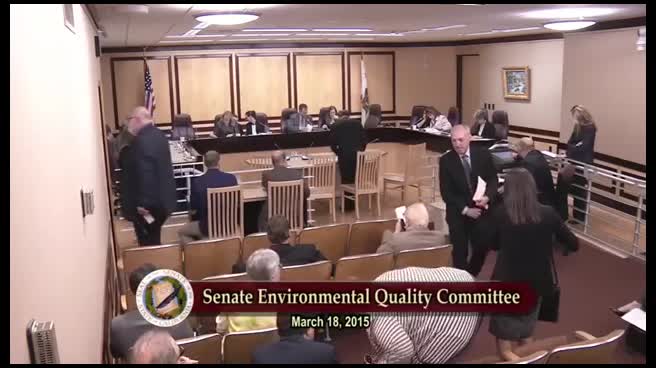 1H
Senate Standing Committee on Environmental Quality
Bill Author

Bill Co-Author(s):