SB 492: Coordinated Care Initiative: consumer educational and informational guide.
- Session Year: 2015-2016
- House: Senate
- Latest Version Date: 2015-08-25
Existing law provides for the Medi-Cal program, which is administered by the State Department of Health Care Services, under which qualified low-income individuals receive health care services. The Medi-Cal program is, in part, governed and funded by federal Medicaid Program provisions. One of the methods by which these services are provided is pursuant to contracts with various types of managed care health plans. Existing federal law provides for the federal Medicare Program, which is a public health insurance program for persons 65 years of age and older and specified persons with disabilities who are under 65 years of age.
Existing law, the Coordinated Care Initiative (CCI), requires the department to seek federal approval pursuant to a Medicare or a Medicaid demonstration project or waiver, or a combination thereof, to establish a demonstration project that enables beneficiaries dually eligible for the Medi-Cal program and the Medicare Program to receive a continuum of services that maximizes access to, and coordination of, benefits between the programs.
This bill would make legislative findings and declarations relating to the CCI and the availability of consumer protections for beneficiaries. The bill would require, no later than July 1, 2016, the department to develop and post on the department’s Internet Web site, an educational and informational guide to assist consumers and patients in understanding the rights afforded to them under the CCI and how to effectively exercise those rights, as specified. The bill would require the department to distribute the educational and informational guide to specified consumer advocacy groups and programs and, upon request, to all other interested persons. The bill would require the department to update the educational and informational guide annually, or as necessary, to keep the information contained in the guide up to date regarding changes to the CCI.
Existing law provides for the Medi-Cal program, which is administered by the State Department of Health Care Services, under which qualified low-income individuals receive health care services. The Medi-Cal program is, in part, governed and funded by federal Medicaid Program provisions. One of the methods by which these services are provided is pursuant to contracts with various types of managed care health plans. Existing federal law provides for the federal Medicare Program, which is a public health insurance program for persons 65 years of age and older and specified persons with disabilities who are under 65 years of age.
Existing law, the Coordinated Care Initiative (CCI), requires the department to seek federal approval pursuant to a Medicare or a Medicaid demonstration project or waiver, or a combination thereof, to establish a demonstration project that enables beneficiaries dually eligible for the Medi-Cal program and the Medicare Program to receive a continuum of services that maximizes access to, and coordination of, benefits between the programs.
This bill would make legislative findings and declarations relating to the CCI and the availability of consumer protections for beneficiaries. The bill would require, no later than July 1, 2016, the department to develop and post on the departments Internet Web site, an educational and informational guide to assist consumers and patients in understanding the rights afforded to them under the CCI and how to effectively exercise those rights, as specified. The bill would require the department to distribute the educational and informational guide to specified consumer advocacy groups and programs and, upon request, to all other interested persons. The bill would require the department to update the educational and informational guide annually, or as necessary, to keep the information contained in the guide up to date regarding changes to the CCI.
Existing law provides for the Medi-Cal program, which is administered by the State Department of Health Care Services, under which qualified low-income individuals receive health care services. The Medi-Cal program is, in part, governed and funded by federal Medicaid Program provisions. One of the methods by which these services are provided is pursuant to contracts with various types of managed care health plans. Existing federal law provides for the federal Medicare Program, which is a public health insurance program for persons 65 years of age and older and specified persons with disabilities who are under 65 years of age.
Existing law, the Coordinated Care Initiative (CCI), requires the department to seek federal approval pursuant to a Medicare or a Medicaid demonstration project or waiver, or a combination thereof, to establish a demonstration project that enables beneficiaries dually eligible for the Medi-Cal program and the Medicare Program to receive a continuum of services that maximizes access to, and coordination of, benefits between the programs.
This bill would make legislative findings and declarations relating to the CCI and the availability of consumer protections for beneficiaries. The bill would establish the Coordinated Care Initiative Consumer Bill of Rights, which would set forth rights to which an individual receiving care under the CCI would be entitled, including, but not limited to, rights to self-direction and choice, quality, flexibility, and accessibility of service, cultural competence, and an appropriate grievance and appeals process, as specified. The bill would require the department to make the information available to providers and the public, as specified. require, no later than July 1, 2016, the department to develop and post on the departments Internet Web site, an educational and informational guide to assist consumers and patients in understanding the rights afforded to them under the CCI and how to effectively exercise those rights, as specified. The bill would require the department to distribute the educational and informational guide to specified consumer advocacy groups and programs and, upon request, to all other interested persons.
Existing law provides for the Medi-Cal program, which is administered by the State Department of Health Care Services, under which qualified low-income individuals receive health care services. The Medi-Cal program is, in part, governed and funded by federal Medicaid Program provisions. One of the methods by which these services are provided is pursuant to contracts with various types of managed care health plans. Existing federal law provides for the federal Medicare Program, which is a public health insurance program for persons 65 years of age and older and specified persons with disabilities who are under 65 years of age.
Existing law, the Coordinated Care Initiative (CCI), requires the department to seek federal approval pursuant to a Medicare or a Medicaid demonstration project or waiver, or a combination thereof, to establish a demonstration project that enables beneficiaries dually eligible for the Medi-Cal program and the Medicare Program to receive a continuum of services that maximizes access to, and coordination of, benefits between the programs.
This bill would make legislative findings and declarations relating to the CCI and the availability of consumer protections for beneficiaries. The bill would establish the Coordinated Care Initiative Consumer Bill of Rights, which would set forth rights to which an individual receiving care under the CCI would be entitled, including, but not limited to, rights to self-direction and choice, quality, flexibility, and accessibility of service, cultural competence, and an appropriate grievance and appeal appeals process, as specified. The bill would require the department to make the information available to providers and the public, as specified.
Existing law provides for the Medi-Cal program, which is administered by the State Department of Health Care Services, under which qualified low-income individuals receive health care services. The Medi-Cal program is, in part, governed and funded by federal Medicaid Program provisions. One of the methods by which these services are provided is pursuant to contracts with various types of managed care health plans. Existing federal law provides for the federal Medicare Program, which is a public health insurance program for persons 65 years of age and older and specified persons with disabilities who are under 65 years of age.
Existing law, the Coordinated Care Initiative (CCI), requires the department to seek federal approval pursuant to a Medicare or a Medicaid demonstration project or waiver, or a combination thereof, to establish a demonstration project that enables beneficiaries dually eligible for the Medi-Cal program and the Medicare Program to receive a continuum of services that maximizes access to, and coordination of, benefits between the programs.
This bill would establish the Coordinated Care Initiative Consumer Bill of Rights, which would set forth rights to which an individual receiving care under the CCI would be entitled, including, but not limited to, rights to self-direction and choice, quality, flexibility, and accessibility of service, cultural competence, and an appropriate grievance and appeal process, as specified. The bill would require the department to make the information available to the public, as specified.
The Legislature finds and declares all of the following:
(a)The Coordinated Care Initiative is an innovative health care service delivery model for Californians who are eligible for services under both the Medi-Cal and Medicare programs.
(b)Individuals eligible for services under the Coordinated Care Initiative represent a diverse group of older adults and persons with disabilities, and include some of the most vulnerable members of our population.
(c)Incorporation of services from two programs required a variety of changes in federal and state law, and complex contractual agreements between the state and the federal Centers for Medicare and Medicaid Services and between health plans and the various administering state agencies.
(d)A key component of the Coordinated Care Initiative is the inclusion of comprehensive beneficiary protections to ensure that eligible individuals receive appropriate, safe, and high-quality care. However, these protections are provided for throughout the various statutes and contractual documents that govern the establishment and operation of the Coordinated Care Initiative.
(e)It is the intent of the Legislature in enacting this act to recognize the diversity of individuals receiving services under the Coordinated Care Initiative, and encourage implementation of an individualized, person-centered service delivery model. The Coordinated Care Initiative Consumer and Patient Educational and Informational Guide is intended to empower beneficiaries to effectively participate in decisions affecting their health care, by providing information regarding the protections afforded to them under the initiative.
SEC. 2.Section 14132.279 is added to the Welfare and Institutions Code, to read:14132.279.(a)This section shall be known, and may be cited, as the Coordinated Care Initiative Consumer and Patient Educational and Informational Guide.
(b)By July 1, 2016, the department shall develop and post on the department’s Internet Web site, an educational and informational guide for consumers and patients about the Coordinated Care Initiative (CCI). In developing the educational and informational guide, the department shall consult with stakeholders. The guide shall describe consumer and patient rights under the CCI, and inform consumers and patients of effective ways to exercise their rights and who to contact for assistance in securing those rights. The guide shall include, but not be limited to, all of the following information:
(1)How to determine whether a health care provider participates in the CCI.
(2)How to file a grievance and appeal.
(3)How to change health plans.
(4)How to switch from Cal MediConnect to original Medicare and a Medi-Cal managed care plan.
(5)How to obtain assistance in alternative languages.
(6)The toll-free telephone numbers for the following programs to assist in problem solving:
(A)Cal MediConnect’s Ombudsperson Program.
(B)Medi-Cal Managed Care Office of the Ombudsperson.
(C)HMO Help Center, operated by the Department of Managed Health Care.
(D)Medicare.
(E)Health Care Options.
(c)(1)The educational and informational guide shall include information for each of the following groups of individuals:
(A)Dual eligibles: those individuals who are dually eligible for Medicare and Medi-Cal.
(B)Seniors and persons with disabilities who are required to receive long-term services and supports through a Medi-Cal managed care plan.
(2)The department may develop a separate educational and informational guide for each of the groups identified in paragraph (1).
(d)(1)Upon publication, the department shall distribute the educational and informational guide developed pursuant to this section to all of the following organizations:
(A)Statewide senior advocacy groups.
(B)Statewide consumer advocacy groups.
(C)State and local ombudspersons.
(D)Health consumer centers.
(E)Health insurance counseling and advocacy programs.
(2)The educational and informational guide shall be made available upon request to all other interested persons.
(e)The department shall make the educational and informational guide easy to read and understand and available in all Medi-Cal threshold languages, using an appropriate literacy level and in a culturally competent manner.
(f)The department shall update the educational and informational guide developed pursuant to this section annually, or as necessary, to keep the information contained in the guide up to date regarding changes to the CCI.
The Legislature finds and declares all of the following:
(a)The Coordinated Care Initiative is an innovative health care service delivery model for Californians who are eligible for services under both the Medi-Cal and Medicare programs.
(b)Individuals eligible for services under the Coordinated Care Initiative represent a diverse group of older adults and persons with disabilities, and include some of the most vulnerable members of our population.
(c)Incorporation of services from two programs required a variety of changes in federal and state law, and complex contractual agreements between the state and the federal Centers for Medicare and Medicaid Services, Services and between health plans and the various administering state agencies.
(d)A key component of the Coordinated Care Initiative is the inclusion of comprehensive beneficiary protections, protections to ensure that eligible individuals receive appropriate, safe, and high-quality care. However, these protections are provided for throughout the various statutes and contractual documents that govern the establishment and operation of the Coordinated Care Initiative.
(e)It is the intent of the Legislature in enacting this act to recognize the diversity of individuals receiving services under the Coordinated Care Initiative, and encourage implementation of an individualized, person-centered service delivery model. The Coordinated Care Initiative Consumer and Patient Educational and Informational Guide is intended to empower beneficiaries to effectively participate in decisions affecting their health care, by providing information regarding the protections afforded to them under the initiative.
SEC. 2.Section 14132.279 is added to the Welfare and Institutions Code, to read:14132.279.(a)This section shall be known, and may be cited, as the Coordinated Care Initiative Consumer and Patient Educational and Informational Guide.
(b)By July 1, 2016, the department shall develop and post on the departments Internet Web site, an educational and informational guide for consumers and patients about the Coordinated Care Initiative (CCI). In developing the educational and informational guide, the department shall consult with stakeholders. The guide shall describe consumer and patient rights under the CCI, and inform consumers and patients of effective ways to exercise their rights and who to contact for assistance in securing those rights. The guide shall include, but not be limited to, all of the following information:
(1)How to determine whether a health care provider participates in the CCI.
(2)How to file a grievance and appeal.
(3)How to change health plans.
(4)How to switch from Cal MediConnect to original Medicare and a Medi-Cal managed care plan.
(5)How to obtain assistance in alternative languages.
(6)The toll-free telephone numbers for the following programs to assist in problem solving:
(A)Cal MediConnects Ombudsperson Program.
(B)Medi-Cal Managed Care Ombudsperson Program. Office of the Ombudsperson.
(C)HMO Help Center, operated by the Department of Managed Health Care.
(D)Medicare.
(E)Health Care Options.
(c)(1)The educational and informational guide shall include information for each of the following groups of individuals:
(A)Dual eligibles: those individuals who are dually eligible for Medicare and Medi-Cal.
(B)Seniors and persons with disabilities who are required to receive long-term services and supports through a Medi-Cal managed care plan.
(2)The department may develop a separate educational and informational guide for each of the groups identified in paragraph (1).
(d)(1)Upon publication, the department shall distribute the educational and informational guide developed pursuant to this section to all of the following organizations:
(A)Statewide senior advocacy groups.
(B)Statewide consumer advocacy groups.
(C)State and local ombudspersons.
(D)Health consumer centers.
(E)Health insurance counseling and advocacy programs.
(2)The educational and informational guide shall be made available upon request to all other interested persons.
(e)The department shall make the educational and informational guide easy to read and understand and available in all Medi-Cal threshold languages, using an appropriate literacy level and in a culturally competent manner.
(f)The department shall update the educational and informational guide developed pursuant to this section annually, or as necessary, to keep the information contained in the guide up to date regarding changes to the CCI.
The Legislature finds and declares all of the following:
(a)The Coordinated Care Initiative is an innovative health care service delivery model for Californians who are eligible for services under both the Medi-Cal and Medicare programs.
(b)Individuals eligible for services under the Coordinated Care Initiative represent a diverse group of older adults and persons with disabilities, and include some of the most vulnerable members of our population.
(c)Incorporation of services from two programs required a variety of changes in federal and state law, and complex contractual agreements between the state and the federal Centers for Medicare and Medicaid Services, and between health plans and the various administering state agencies.
(d)A key component of the Coordinated Care Initiative is the inclusion of comprehensive beneficiary protections, to ensure that eligible individuals receive appropriate, safe, and high-quality care. However, these protections are provided for throughout the various statutes and contractual documents that govern the establishment and operation of the Coordinated Care Initiative.
(e)It is the intent of the Legislature in enacting this act to recognize the diversity of individuals receiving services under the Coordinated Care Initiative, and encourage implementation of an individualized, person-centered service delivery model. The Coordinated Care Initiative Consumer Bill of Rights and Patient Educational and Informational Guide is intended to empower beneficiaries to effectively participate in decisions affecting their health care, by consolidating and clarifying providing information regarding the protections afforded to them under the initiative.
SEC. 2.Section 14132.279 is added to the Welfare and Institutions Code, to read:14132.279.(a)This section shall be known, and may be cited, as the Coordinated Care Initiative Consumer Bill of Rights.
(b)A consumer under the Coordinated Care Initiative shall have all of the following rights:
(1)The right to self-direction. The individual shall have the option to coordinate his or her care and services. If due to cognitive impairment the individual is unable to do so, a statutory option should be made available to allow for a surrogate or informal caregiver chosen by the individual to coordinate care.
(2)The right to choice. Plan networks should ensure that individuals have access to, and choice of, a range of providers and settings across the continuum of care, including health care services, behavioral health services, and long-term services and supports.
(3)The right to coordination. An individual shall have access to care coordination, in accordance with his or her needs and preferences.
(4)The right to integration of services. Services shall be delivered to the individual in an integrated manner, regardless of the source of payment.
(5)The right to flexibility. Services within a plans contracted services shall meet the individuals changing needs and incorporate new modes of service and supports.
(6)The right to quality. All services and supports shall be of high quality and shall be person-centered. Statutory standards should be established to provide a mechanism for enforcement.
(7)The right to cultural competence. Individuals shall have access to threshold language services. Services should be appropriate and responsive to the needs of all populations.
(8)The right to accessibility. Services and information shall be easy to access. In accordance with the federal Americans with Disabilities Act, services shall be delivered in a manner that is physically, cognitively, and programmatically accessible.
(9)The right to personal assistants and caregivers. The system of care shall support the role of quality paid and unpaid caregivers, including family caregivers, and shall recognize the importance of workforce development, caregiver needs assessment, and the availability of training.
(10)The right to independence. Services across the continuum shall support maximum independence, full social integration, and quality of life.
(11)The right to grievances and appeals. Participants shall have access to an independent grievance and appeals process. Access and resolution shall be prompt, without disruption in service delivery.
(12)The right to timeliness. All services and supports shall be delivered in a timely manner, in order to ensure the individuals optimal health and functioning.
(c)The department shall post the Coordinated Care Initiative Consumer Bill of Rights on its Internet Web site, and shall also provide copies to providers and the public upon request. The department shall make the bill of rights available to the public in prevalent languages.
(d)This section shall be implemented only to the extent permitted by all of the following:
(1)Applicable federal Medicare law.
(2)Applicable Medi-Cal law.
(3)The Memorandum of Understanding (MOU) between the Centers for Medicare and Medicaid Services (CMS) and the State of California Regarding A Federal-State Partnership to Test a Capitated Financial Alignment Model for Medicare-Medicaid Enrollees - California Demonstration to Integrate Care for Dual Eligible Beneficiaries.
SEC. 2.Section 14132.279 is added to the Welfare and Institutions Code, to read:14132.279.(a)This section shall be known, and may be cited, as the Coordinated Care Initiative Consumer and Patient Educational and Informational Guide.
(b)By July 1, 2016, the department shall develop and post on the departments Internet Web site, an educational and informational guide for consumers and patients about the Coordinated Care Initiative (CCI). In developing the educational and informational guide, the department shall consult with stakeholders. The guide shall describe consumer and patient rights under the CCI, and inform consumers and patients of effective ways to exercise their rights and who to contact for assistance in securing those rights. The guide shall include, but not be limited to, all of the following information:
(1)How to determine whether a health care provider participates in the CCI.
(2)How to file a grievance and appeal.
(3)How to change health plans.
(4)How to switch from Cal MediConnect to original Medicare and a Medi-Cal managed care plan.
(5)How to obtain assistance in alternative languages.
(6)The toll-free telephone numbers for the following programs to assist in problem solving:
(A)Cal MediConnects Ombudsperson Program.
(B)Medi-Cal Managed Care Ombudsperson Program.
(C)HMO Help Center, operated by the Department of Managed Health Care.
(D)Medicare.
(E)Health Care Options.
(c)(1)The educational and informational guide shall include information for each of the following groups of individuals:
(A)Dual eligibles: those individuals who are dually eligible for Medicare and Medi-Cal.
(B)Seniors and persons with disabilities who are required to receive long-term services and supports through a Medi-Cal managed care plan.
(2)The department may develop a separate educational and informational guide for each of the groups identified in paragraph (1).
(d)(1)Upon publication, the department shall distribute the educational and informational guide developed pursuant to this section to all of the following organizations:
(A)Statewide senior advocacy groups.
(B)Statewide consumer advocacy groups.
(C)State and local ombudspersons.
(D)Health consumer centers.
(E)Health insurance counseling and advocacy programs.
(2)The educational and informational guide shall be made available upon request to all other interested persons.
(e)The department shall make the educational and informational guide easy to read and understand and available in all Medi-Cal threshold languages, using an appropriate literacy level and in a culturally competent manner.
The Legislature finds and declares all of the following:
(a)The Coordinated Care Initiative is an innovative health care service delivery model for Californians who are eligible for services under both the Medi-Cal and Medicare programs.
(b)Individuals eligible for services under the Coordinated Care Initiative represent a diverse group of older adults and persons with disabilities, and include some of the most vulnerable members of our population.
(c)Incorporation of services from two programs required a variety of changes in federal and state law, and complex contractual agreements between the state and the federal Centers for Medicare and Medicaid Services, and between health plans and the various administering state agencies.
(d)A key component of the Coordinated Care Initiative is the inclusion of comprehensive beneficiary protections, to ensure that eligible individuals receive appropriate, safe, and high-quality care. However, these protections are provided for throughout the various statutes and contractual documents that govern the establishment and operation of the Coordinated Care Initiative.
(e)It is the intent of the Legislature in enacting this act to recognize the diversity of individuals receiving services under the Coordinated Care Initiative, and encourage implementation of an individualized, person-centered service delivery model. The Coordinated Care Initiative Consumer Bill of Rights is intended to empower beneficiaries to effectively participate in decisions affecting their health care, by consolidating and clarifying the protections afforded to them under the initiative.
SECTION 1.SEC. 2.Section 14132.279 is added to the Welfare and Institutions Code, to read:14132.279.(a)This section shall be known, and may be cited, as the Coordinated Care Initiative Consumer Bill of Rights.
(b)A consumer under the Coordinated Care Initiative shall have all of the following rights:
(1)The right to self-direction. The individual shall have the option to coordinate his or her care and services. If due to cognitive impairment the individual is unable to do so, a statutory option should be made available to allow for a surrogate or informal caregiver chosen by the individual to coordinate care.
(2)The right to choice. Plan networks should ensure that individuals have access to, and choice of, a range of providers and settings across the continuum of care, including health care services, behavioral health services, and long-term services and supports.
(3)The right to coordination. An individual shall have access to care coordination, in accordance with his or her needs and preferences.
(4)The right to integration of services. Services shall be delivered to the individual in an integrated manner, regardless of the source of payment.
(5)The right to flexibility. Services within a plans contracted services shall meet the individuals changing needs and incorporate new modes of service and supports.
(6)The right to quality. All services and supports shall be of high quality and shall be personcentered. person-centered. Statutory standards should be established should to provide a mechanism for enforcement.
(7)The right to cultural competence. Individuals shall have access to threshold language services. Services should be appropriate and responsive to the needs of all populations.
(8)The right to accessibility. Services and information shall be easy to access. In accordance with the federal Americans with Disabilities Act, services shall be delivered in a manner that is physically, cognitively, and programmatically accessible.
(9)The right to personal assistants and caregivers. The system of care shall support the role of quality paid and unpaid caregivers, including family caregivers, and shall recognize the importance of workforce development, caregiver needs assessment, and the availability of training.
(10)The right to independence. Services across the continuum shall support maximum independence, full social integration, and quality of life.
(11)The right to grievances and appeals. Participants shall have access to an independent grievance and appeals process. Access and resolution shall be prompt, without disruption in service delivery.
(12)The right to timeliness. All services and supports shall be delivered in a timely manner, in order to ensure the individuals optimal health and functioning.
(c)The department shall post the Coordinated Care Initiative Consumer Bill of Rights on its Internet Web site, and shall also provide copies to members or providers and the public upon request. The department shall make the bill of rights available to the public in prevalent languages.
(d)This section shall be implemented only to the extent permitted by all of the following:
(1)Applicable federal Medicare law.
(2)Applicable Medi-Cal law.
(3)The Memorandum of Understanding (MOU) between the Centers for Medicare and Medicaid Services (CMS) and the State of California Regarding A Federal-State Partnership to Test a Capitated Financial Alignment Model for Medicare-Medicaid Enrollees - California Demonstration to Integrate Care for Dual Eligible Beneficiaries.
(a)This section shall be known, and may be cited, as the Coordinated Care Initiative Consumer Bill of Rights.
(b)A consumer under the Coordinated Care Initiative shall have all of the following rights:
(1)The right to self-direction. The individual shall have the option to coordinate his or her care and services. If due to cognitive impairment the individual is unable to do so, a statutory option should be made available to allow for a surrogate or informal caregiver chosen by the individual to coordinate care.
(2)The right to choice. Plan networks should ensure that individuals have access to, and choice of, a range of providers and settings across the continuum of care, including health care services, behavioral health services, and long-term services and supports.
(3)The right to coordination. An individual shall have access to care coordination, in accordance with his or her needs and preferences.
(4)The right to integration of services. Services shall be delivered to the individual in an integrated manner, regardless of the source of payment.
(5)The right to flexibility. Services within a plans contracted services shall meet the individuals changing needs and incorporate new modes of service and supports.
(6)The right to quality. All services and supports shall be of high quality and shall be personcentered. Statutory standards be established should to provide a mechanism for enforcement.
(7)The right to cultural competence. Individuals shall have access to threshold language services. Services should be appropriate and responsive to the needs of all populations.
(8)The right to accessibility. Services and information shall be easy to access. In accordance with the federal Americans with Disabilities Act, services shall be delivered in a manner that is physically, cognitively, and programmatically accessible.
(9)The right to personal assistants and caregivers. The system of care shall support the role of quality paid and unpaid caregivers, including family caregivers, and shall recognize the importance of workforce development, caregiver needs assessment, and the availability of training.
(10)The right to independence. Services across the continuum shall support maximum independence, full social integration, and quality of life.
(11)The right to grievances and appeals. Participants shall have access to an independent grievance and appeals process. Access and resolution shall be prompt, without disruption in service delivery.
(12)The right to timeliness. All services and supports shall be delivered in a timely manner, in order to ensure the individuals optimal health and functioning.
(c)The department shall post the Coordinated Care Initiative Consumer Bill of Rights on its Internet Website, and shall also provide copies to members or the public upon request. The department shall make the bill of rights available to the public in prevalent languages.
|
Date
|
Status
|
|---|---|
| May 22, 2015 | Read third time. Passed. (Ayes 29. Noes 7. Page 1066.) Ordered to the Assembly. |
| Aug 31, 2015 | Returned by the Governor at the request of the Senate. |
| Aug 31, 2015 | Held at desk. |
| Aug 26, 2015 | Enrolled and presented to the Governor at 4:30 p.m. |
| Aug 24, 2015 | Assembly amendments concurred in. (Ayes 30. Noes 8.) Ordered to engrossing and enrolling. |
| Aug 24, 2015 | Assembly amendments concurred in. (Ayes 30. Noes 8. Page 2141.) Ordered to engrossing and enrolling. |
| Aug 17, 2015 | Read third time. Passed. (Ayes 72. Noes 5. Page 2469.) Ordered to the Senate. |
| Aug 17, 2015 | Read third time. Passed. Ordered to the Senate. |
| Aug 17, 2015 | In Senate. Concurrence in Assembly amendments pending. |
| Jul 16, 2015 | Read second time. Ordered to third reading. |
| Jul 15, 2015 | From committee: Do pass. (Ayes 15. Noes 1.) (July 15). |
| Jun 25, 2015 | Read second time and amended. Re-referred to Com. on APPR. |
| Jun 24, 2015 | From committee: Do pass as amended and re-refer to Com. on APPR. (Ayes 17. Noes 2.) (June 23). |
| Jun 11, 2015 | Referred to Com. on HEALTH. |
| May 22, 2015 | Read third time. Passed. (Ayes 29. Noes 7.) Ordered to the Assembly. |
| Feb 26, 2015 | Introduced. Read first time. To Com. on RLS. for assignment. To print. |
| May 22, 2015 | In Assembly. Read first time. Held at Desk. |
| May 19, 2015 | Read second time. Ordered to third reading. |
| May 18, 2015 | From committee: Be ordered to second reading pursuant to Senate Rule 28.8. |
| May 8, 2015 | Set for hearing May 18. |
| May 5, 2015 | Read second time and amended. Re-referred to Com. on APPR. |
| May 4, 2015 | From committee: Do pass as amended and re-refer to Com. on APPR. (Ayes 7. Noes 0.) (April 29). |
| May 4, 2015 | From committee: Do pass as amended and re-refer to Com. on APPR. (Ayes 7. Noes 0. Page 861.) (April 29). |
| Apr 20, 2015 | From committee with author's amendments. Read second time and amended. Re-referred to Com. on HEALTH. |
| Apr 14, 2015 | Set for hearing April 29. |
| Apr 13, 2015 | April 22 set for first hearing canceled at the request of author. |
| Mar 25, 2015 | Set for hearing April 22. |
| Mar 12, 2015 | Referred to Com. on HEALTH. |
| Feb 27, 2015 | From printer. May be acted upon on or after March 29. |
|
Date
|
Description
|
Location
|
Votes
|
|
|---|---|---|---|---|
| Aug 24, 2015 | Unfinished Business SB492 Liu Concurrence | Senate Floor |
Passed |
|
| Aug 17, 2015 | SB 492 Liu Senate Third Reading By BROWN | Assembly Floor |
Passed |
|
| Jul 15, 2015 | Do pass. | Assembly Standing Committee on Appropriations |
Passed |
|
| Jun 23, 2015 | Do pass as amended and be re-referred to the Committee on [Appropriations] | Assembly Standing Committee on Health |
Passed |
|
| May 22, 2015 | Senate 3rd Reading SB492 Liu | Senate Floor |
Passed |
|
| Apr 29, 2015 | Do pass as amended, but first amend, and re-refer to the Committee on [Appropriations] | Senate Standing Committee on Health |
Passed |
This list shows positions taken on this bill by organizations on the date displayed, which is linked to the original source.
Positions by individuals are not included.
|
Organization
|
Position
|
Date
|
|---|---|---|
| ALS Association Golden West Chapter | * Indeterminate | Apr 29, 2015 |
| American Federal of State, | ** Support | Apr 29, 2015 |
| American Federal of State, County and | ** Support | Aug 24, 2015 |
| American Federation of State, County, and Municipal Employees | ** Support | Aug 24, 2015 |
| California Alliance For Retired Americans | ** Support | Aug 24, 2015 |
| California Association For Health Services At Home | ** Support | Apr 29, 2015 |
| California Association Of Health Plans | ** Against | Aug 24, 2015 |
| California Association Of Public Authorities For Ihss | ** Support | Aug 24, 2015 |
| California Commission on Aging | ** Support | Aug 24, 2015 |
| California Primary Care Association | ** Support | Apr 29, 2015 |
| California Program of All-Inclusive Care for the Elderly | ** Support | Apr 29, 2015 |
| California Senior Legislature | ** Support | Apr 29, 2015 |
| Californians for Disability Rights | * Indeterminate | Apr 29, 2015 |
| CalPACE | * Indeterminate | Apr 29, 2015 |
| Community Clinic Association of Los Angeles | ** Support | Jun 23, 2015 |
| Congress of California Seniors | * Indeterminate | Apr 29, 2015 |
| Consumer Federation Of California | * Indeterminate | Jun 23, 2015 |
| Consumer Federation Of California | * Support | Jun 23, 2015 |
| Department Of Finance | ** Against | Aug 24, 2015 |
| Department of Health Care Services | ** Against | Aug 24, 2015 |
| Government Action and Communications Institute | ** Support | Aug 24, 2015 |
| Municipal Employees Local 3930 | ** Support | Aug 24, 2015 |
| National Association Of Social Workers, California Chapter | * Indeterminate | Jun 23, 2015 |
| Sony 7,000 IHSS providers | * Support | Jul 15, 2015 |
| United Domestic Workers | ** Support | Aug 24, 2015 |
| Western Center On Law And Poverty Inc. | ** Support | Jun 23, 2015 |
SB 492
Page 7
|
Office of Senate Floor Analyses (916) 651-1520 Fax: (916) 327-4478 |
UNFINISHED BUSINESS
Bill No: SB 492
Amended: 6/25/15
SENATE HEALTH COMMITTEE: 7-0, 4/29/15
AYES: Hernandez, Hall, Mitchell, Monning, Pan, Roth, Wolk
NO VOTE RECORDED: Nguyen, Nielsen
SENATE APPROPRIATIONS COMMITTEE: Senate Rule 28.8
SENATE FLOOR: 29-7, 5/22/15
AYES: Allen, Beall, Berryhill, Block, Cannella, De León, Galgiani, Hall, Hancock, Hernandez, Hertzberg, Hill, Hueso, Jackson, Lara, Leno, Leyva, Liu, McGuire, Mendoza, Mitchell, Monning, Nguyen, Pan, Pavley, Roth, Vidak, Wieckowski, Wolk
NOES: Anderson, Fuller, Moorlach, Morrell, Nielsen, Runner, Stone
NO VOTE RECORDED: Bates, Gaines, Huff
ASSEMBLY FLOOR: 72-5, 8/17/15 - See last page for vote
SUBJECT: Coordinated Care Initiative: consumer educational and informational guide
DIGEST: This bill enacts the “Coordinated Care Initiative Consumer and Patient Educational and Informational Guide,” which requires the Department of Health Care Services (DHCS) to develop and post on its Internet Web site an educational and informational guide for consumers and patients about the Coordinated Care Initiative (CCI). Requires the guide to describe consumer and patient rights under the CCI, and inform consumers and patients of effective ways to exercise their rights and who to contact for assistance in securing those rights.
Assembly Amendments require DHCS to update the educational and informational guide annually, or as necessary, to keep the information contained in the guide up to date regarding changes to the CCI.
Existing law:
Establishes, under federal law, the Medicare program, which is a public health insurance program for persons 65 years of age and older and specified persons with disabilities who are under the age of 65.
Establishes the Medi-Cal program, administered by the DHCS, under which qualified low-income individuals receive health care services, including home and community-based services (HCBS).
Requires DHCS to seek federal approval to establish a demonstration project under a Medicare or a Medicaid demonstration project or waiver. Authorizes DHCS under a Medicare demonstration, to contract with the federal Centers for Medicare and Medicaid Services (CMS) and demonstration sites to operate the Medicare and Medicaid benefits in a demonstration project that is overseen by the state as a delegated Medicare benefit administrator, and to enter into financing arrangements with CMS to share in any Medicare program savings generated by the demonstration project.
Requires DHCS, after federal approval is obtained, to establish the demonstration project that enables dual eligible beneficiaries to receive a continuum of services that maximizes access to, and coordination of, benefits between the Medi-Cal and Medicare programs and access to the continuum of long-term services and supports and behavioral health services, including mental health and substance use disorder treatment services. The purpose of this demonstration project is to integrate services authorized under Medi-Cal and Medicare.
Requires demonstration sites to be established in up to eight counties, and to include at least one county that provides Medi-Cal services via the two-plan model of Medi-Cal managed care.
Requires DHCS to enroll dual eligible beneficiaries into a demonstration site unless the beneficiary makes an affirmative choice to opt out of enrollment, with specified exceptions.
Requires DHCS to require dual eligibles to be assigned as mandatory enrollees into new or existing Medi-Cal managed care health plans for their Medi-Cal benefits in CCI counties. CCI counties are the Counties of Alameda, Los Angeles, Orange, Riverside, San Bernardino, San Diego, San Mateo, and Santa Clara. Allows individuals to opt out of Medi-Cal managed care for the Medicare portion of their benefits.
Requires all Medi-Cal long-term services and supports (LTSS) to be services that are covered under Medi-Cal managed care health plan contracts and to be available only through managed care health plans to beneficiaries residing in CCI counties, except for specified exemptions.
This bill:
Requires DHCS, by July 1, 2016, to develop and post on DHCS’ Internet Web site, an educational and informational guide for consumers and patients about the CCI. Requires DHCS, in developing the educational and informational guide, to consult with stakeholders.
Requires the guide to describe consumer and patient rights under the CCI, and inform consumers and patients of effective ways to exercise their rights and who to contact for assistance in securing those rights. Requires the guide to include, but not be limited to, all of the following information:
How to determine whether a health care provider participates in the CCI.
How to file a grievance and appeal.
How to change health plans.
How to switch from Cal MediConnect to original Medicare and a Medi-Cal managed care plan.
How to obtain assistance in alternative languages.
Toll-free telephone numbers for the Cal MediConnect’s Ombudsperson Program, the Medi-Cal Managed Care Office of the Ombudsperson, the HMO Help Center, operated by the Department of Managed Health Care, Medicare, and Health Care Options.
Requires the educational and informational guide to include information for individuals who are dually eligible for Medicare and Medi-Cal (dual eligibles), and seniors and persons with disabilities (SPDs) who are required to receive long-term services and supports through a Medi-Cal managed care plan. Permits DHCS to develop a separate educational and informational guide for dual eligibles and SPDs.
Requires DHCS to distribute the educational and informational guide developed to specified consumer advocacy and ombudsperson organizations, and to make it available upon request to all other interested persons.
Requires DHCS to make the educational and informational guide easy to read and understand and available in all Medi-Cal threshold languages, using an appropriate literacy level and in a culturally competent manner.
Require DHCS to update the educational and informational guide annually, or as necessary, to keep the information contained in the guide up to date regarding changes to the CCI.
States legislative intent in enacting this bill that the Coordinated Care Initiative Consumer and Patient Educational and Informational Guide is intended to empower beneficiaries to effectively participate in decisions affecting their health care, by providing information regarding the protections afforded to them under the initiative.
Comments
Author’s statement. According to the author, CCI consumers remain one of the most vulnerable populations in California’s health care system. The recent implementation of CCI has generated great confusion among beneficiaries, both in terms of the enrollment process and of the rights they have under this program. Currently, DHCS publishes a guide with a partial list of rights made applicable to approximately 20 percent of CCI participants in the Cal MediConnect program. This list is incomplete and a similar list of rights needs to be written and distributed for those who receive managed long-term services and supports (MLTSS) under the CCI. This bill requires DHCS to create and distribute a consumer-friendly informational guide that describes beneficiaries’ rights in both Cal MediConnect and MLTSS. This guide must also include information on CCI services and supports and additional resources for filing appeals and grievances. In doing so, this bill increases consumer awareness of the CCI, and places an emphasis on serving the individual with truly integrated care.
CCI. The CCI is a program intended to integrate and coordinate the delivery of health benefits, including behavioral health benefits and LTSS to dual eligibles and SPDs living in seven California counties: Los Angeles, Orange, Riverside, San Bernardino, San Diego, San Mateo and Santa Clara (state law allows for CCI implementation in eight counties, but CCI will not be implemented in Alameda County). Goals for the CCI include coordinating Medi-Cal benefits and Medicare benefits, across health care settings and improving continuity of acute care, long-term care, and home- and community-based services, coordinating access to acute and long-term care services for dual eligibles, maximizing the ability of dual eligibles to remain in their homes and communities with appropriate services and supports in lieu of institutional care, and increasing the availability of and access to home- and community-based alternatives. The three major components of the CCI are as follows:
Cal MediConnect Program: A three-year demonstration project designed to coordinate medical, behavioral health, long-term institutional, and home and community-based services (HCBS) services for dual eligibles by combining Medicare and Medi-Cal benefits into one integrated health plan;
Mandatory enrollment of dual eligibles and Medi-Cal-only seniors and persons with disabilities into Medi-Cal managed care; and,
Managed Long-Term Supports and Services (MLTSS): Integration of nursing facility care, In-Home Supportive Services, Community-Based Adult Services, and Multipurpose Senior Services Program as managed care benefits.
FISCAL EFFECT: Appropriation: No Fiscal Com.: Yes Local: No
According to Assembly Appropriations Committee, cost to DHCS is unlikely to exceed $150,000 (50% GF, 50% federal) for development of the informational guide, translation, and printing and mailing costs.
The number of guides required to be produced and mailed, as well as the size of the brochures, is indeterminate. The bill only requires provision of an unspecified number of guides to specified consumer advocacy groups, not to all beneficiaries
American Federation of State, County, and Municipal Employees
California Alliance for Retired Americans
California Association of Public Authorities for IHSS
California Commission on Aging
Government Action and Communications Institute
SEIU California
United Domestic Workers/American Federal of State, County and Municipal Employees Local 3930
OPPOSITION: (Verified 8/19/15)
California Association of Health Plans
Department of Finance
Department of Health Care Services
ARGUMENTS IN SUPPORT: The Government Action and Communications Institute (GACI) writes in support that DHCS provides a partial list of rights to about 20 percent of the CCI participants (the dual eligible in CalMediConnect). GACI states the CCI shifts nearly 800,000 low-income seniors and persons with disabilities from Medi-Cal fee-for-service into managed care. GACI argues DHCS provides a partial list of rights to about 20 percent of the CCI participants (those who are in CalMediConnect plans). GACI argues this partial list of rights needs work, and a similar list of rights needs to be written and distributed for those who receive managed long term services and supports. GACI argues the extensive nature of the changes the CCI brings to the health and social services of hundreds of thousands of Californians gives weight to its belief that the Legislature should require DHCS to inform consumers of their rights.
ARGUMENTS IN OPPOSITION: The California Association of Health Plans (CAHP) writes in opposition that this bill is unnecessary because DHCS currently publishes an existing guidebook that contains almost identical information to the bill. CAHP states the only difference is that the guidebook refers the reader to the plan's online directory, and this bill requires that the directory be provided. CAHP concludes the development of a new guide is duplicative of current efforts managed by the state.
DHCS argues the information required to be included in the guide is already available to CCI consumers and providers through various informing materials, the costs associated with creating and distributing the guide would be significant, and the goals of the guide are already accomplished through existing materials.
ASSEMBLY FLOOR: 72-5, 8/17/15
AYES: Achadjian, Alejo, Baker, Bigelow, Bloom, Bonilla, Bonta, Brown, Burke, Calderon, Campos, Chang, Chau, Chávez, Chiu, Chu, Cooley, Cooper, Dababneh, Dahle, Daly, Dodd, Eggman, Frazier, Cristina Garcia, Eduardo Garcia, Gatto, Gipson, Gomez, Gonzalez, Gordon, Gray, Grove, Hadley, Roger Hernández, Holden, Irwin, Jones, Jones-Sawyer, Kim, Lackey, Levine, Linder, Lopez, Low, Maienschein, Mathis, Mayes, McCarty, Medina, Mullin, Nazarian, Obernolte, O'Donnell, Olsen, Perea, Quirk, Rendon, Ridley-Thomas, Rodriguez, Salas, Santiago, Steinorth, Mark Stone, Thurmond, Ting, Wagner, Weber, Wilk, Williams, Wood, Atkins
NOES: Brough, Gallagher, Harper, Patterson, Waldron
NO VOTE RECORDED: Travis Allen, Beth Gaines, Melendez
Prepared by: Scott Bain / HEALTH /
8/19/15 21:02:58
**** END ****
SB 492
Page 2
SENATE THIRD READING
SB 492
(Liu)
As Amended June 25, 2015
Majority vote
SENATE VOTE: 29-7
Committee |
Votes |
Ayes |
Noes |
Health |
17-2 |
Bonta, Maienschein, Bonilla, Burke, Chávez, Chiu, Gomez, Gonzalez, Roger Hernández, Lackey, Nazarian, Ridley-Thomas, Rodriguez, Santiago, Steinorth, Thurmond, Wood |
Patterson, Waldron |
Appropriations |
15-1 |
Gomez, Bigelow, Bloom, Bonta, Calderon, Chang, Daly, Eggman, Eduardo Garcia, Jones, Quirk, Rendon, Wagner, Weber, Wood |
Gallagher |
SUMMARY: Requires the Department of Health Care Services (DHCS) to develop, publish, and distribute an educational and informational guide for consumers and patients regarding the Coordinated Care Initiative (CCI), as specified. Specifically, this bill:
Establishes the CCI Consumer and Patient Educational and Informational Guide in existing law.
Requires DHCS to develop an educational and information guide for consumers and patients on the CCI, as specified, and post it on its Web site.
Requires the educational and informational guide to include information about individuals who are dually eligible for Medicare and Medi-Cal, and seniors and persons with disabilities who are required to receive long-term services and supports (LTSS) through a Medi-Cal managed care plan, as specified. LTSS includes nursing facility services, home and community-based services, home health services, and personal care services.
Requires DHCS to distribute the educational and informational guide to organizations throughout the state, as specified.
Requires DHCS to make the educational and informational guide easy to read and understand, and make available in a culturally competent manner in all Medi-Cal threshold languages.
FISCAL EFFECT: According to the Assembly Appropriations Committee, cost to DHCS is unlikely to exceed $150,000 (50% General Fund, 50% federal) for development of the informational guide, translation, and printing and mailing costs.
The number of guides required to be produced and mailed, as well as the size of the brochures, is indeterminate. The bill only requires provision of an unspecified number of guides to specified consumer advocacy groups, not to all beneficiaries.
COMMENTS: In July 2012, California enacted the CCI to better serve the state's low-income seniors and persons with disabilities by integrating the delivery of medical, behavioral, and long-term care services, and providing protocols to integrate Medicare and Medi-Cal for dually eligible individuals. Existing law authorizes eight counties to participate in the CCI, however there are currently only six counties actively participating: Los Angeles, Riverside, San Bernardino, San Diego, San Mateo, and Santa Clara. Participation by Orange County is currently pending readiness reviews by DHCS. Although initially approved to participate, the Medi-Cal manage care plan in Alameda County opted to withdraw from the demonstration project.
The author asserts that CCI consumers remain one of the most vulnerable populations in California's health care system. The author contends the recent implementation of CCI has generated confusion among beneficiaries with regard to the enrollment process and the rights they have under the program. The author references a guide published by DHCS with a partial list of rights made available to only an estimated 34% of CCI participants in the Cal MediConnect program, stating it is incomplete and that a full list of rights should be made available and distributed to all CCI consumers, including those qualifying for Medi-Cal managed LTSS. The author concludes that by requiring a consumer-friendly informational guide containing specific information on services and resources for CCI beneficiaries, this bill increases consumer awareness of the CCI, and places an emphasis on serving individuals with truly integrated care.
The Government Action and Communications Institute is in support of this bill, stating DHCS currently provides a partial list of rights to only Cal MediConnect CCI participants, and contends that DHCS should be required to inform consumers of their rights, given the extensive nature of the changes the CCI brings to the health and social services of hundreds of thousands of Californians. The American Federation of State, County, and Municipal Employees (AFSCME) supports this bill, maintaining that improving quality of care for beneficiaries and maximizing the ability of beneficiaries to remain safely in their homes and communities with appropriate services can only be done if Californians who receive health care services under CCI know and understand their rights. The United Domestic Workers of America – AFSCME Local 3930 / AFL-CIO also supports, writing that this bill is needed to provide CCI consumers with a clear sense of their rights and to improve access to programs and services.
The California Association of Health Plans opposes this bill, stating it is unnecessary because DHCS currently publishes a guide, the "Cal MediConnect Plan Guidebook," for CCI beneficiaries and the development of a new guide is duplicative of current efforts managed by the state.
Analysis Prepared by: An-Chi Tsou / HEALTH / (916) 319-2097 FN: 0001251
Date of Hearing: July 15, 2015
ASSEMBLY COMMITTEE ON APPROPRIATIONS
Jimmy Gomez, Chair
SB 492
(Liu) – As Amended June 25, 2015
Policy Committee: |
Health |
Vote: |
17 - 2 |
|
|
|
|
|
|
|
|
Urgency: No State Mandated Local Program: No Reimbursable: No
SUMMARY:
This bill requires the Department of Health Care Services (DHCS) to develop, publish, and distribute a specified educational and informational guide for consumers and patients regarding the Coordinated Care Initiative (CCI).
FISCAL EFFECT:
Cost to DHCS is unlikely to exceed $150,000 (50% GF, 50% federal) for development of the informational guide, translation, and printing and mailing costs.
The number of guides required to be produced and mailed, as well as the size of the brochures, is indeterminate. The bill only requires provision of an unspecified number of guides to specified consumer advocacy groups, not to all beneficiaries.
COMMENTS:
Purpose. This bill is intended to provide critical information to Medi-Cal beneficiaries on the enrollment process, and the rights they have under the CCI, an initiative which aims to better integrate Medi-Cal, Medicare, and long-term care services and supports.
Background. In July 2012, California enacted the CCI to better serve the state’s low-income seniors and persons with disabilities by integrating the delivery of medical, behavioral, and long-term care services, and providing protocols to integrate Medicare and Medi-Cal for dually eligible individuals. Existing law authorizes eight counties to participate in the CCI, however there are currently only six counties actively participating: Los Angeles, Riverside, San Bernardino, San Diego, San Mateo, and Santa Clara. DHCS produces the "Cal MediConnect Health Plan Guidebook" for those approximately 125,000 individuals enrolled in CalMediConnect, which provides fully integrated Medi-Cal and Medicare benefits. However, there are hundreds of thousands more individuals who are provided integrated long-term care services and supports, and/or health care services through managed care plans that do not appear to have access to a specific guidebook.
Staff Comments. Some of the information required for the guidebook is likely duplicative of existing information produced by DHCS. Is this bill necessary?
Analysis Prepared by: Lisa Murawski / APPR. / (916) 319-2081
SB 492
Page 5
Date of Hearing: June 23, 2015
ASSEMBLY COMMITTEE ON HEALTH
Rob Bonta, Chair
SB 492
(Liu) – As Amended May 5, 2015
SENATE VOTE: 29-7
SUBJECT: Coordinated Care Initiative: consumer educational and informational guide.
SUMMARY:
Requires the Department of Health Care Services (DHCS) to develop,
publish, and distribute an educational and informational guide for
consumers and patients regarding the Coordinated Care Initiative
(CCI), as specified. Specifically, this bill:
Establishes the Coordinated Care Initiative Consumer and Patient Educational and Informational Guide in existing law.
Requires DHCS to develop an educational and information guide for consumers and patients on the CCI, as specified, and post it on its website.
Requires the educational and informational guide to include information about individuals who are dually eligible for Medicare and Medi-Cal, and seniors and persons with disabilities who are required to receive long-term services and supports (LTSS) through a Medi-Cal managed care plan, as specified. LTSS includes nursing facility services, home and community-based services (HCBS), home health services, and personal care services.
Requires DHCS to distribute the educational and informational guide to organizations throughout the state, as specified.
Requires DHCS to make the educational and informational guide easy to read and understand, and make available in a culturally competent manner in all Medi-Cal threshold languages.
EXISTING LAW:
Establishes the Medicare Program under federal law to provide individuals over 65 years of age, individuals under the age of 65 with specific disabilities, and individuals with end stage renal disease, basic protection against the costs of hospital, related post-hospital, home health services, and hospice care.
Establishes the Medi-Cal Program under the direction of DHCS to provide low-income qualifying individuals health care and a uniform schedule of benefits, including HCBS.
Requires DHCS, upon federal approval, to establish a demonstration project that enables dual eligible beneficiaries (individuals who are eligible to receive both Medicare and Medi-Cal) to receive health care services that maximize access to, and coordination of, benefits between the Medi-Cal and Medicare programs and access to LTSS and behavioral health services, including mental health and substance use disorder treatment services. The purpose of the demonstration project is to integrate services authorized under Medi-Cal and Medicare.
Authorizes DHCS to contract with the federal Centers for Medicare and Medicaid Services (CMS) and demonstration sites, which are established in counties, to operate the Medicare and Medicaid benefits in a demonstration project that is overseen by the state as a delegated Medicare benefit administrator, and may enter into financing arrangements with CMS to share in any Medicare program savings generated by the demonstration project.
Requires demonstration sites to be established in up to eight counties, as specified, including at least one county that provides Medi-Cal services using a two-plan model (a model in which the county has both a county-organized plan and a commercial plan, both of which contract with DHCS), and one that provides Medi-Cal services under a county organized health system, in accordance with existing law.
Requires DHCS to enter into a memorandum of understanding (MOU) with CMS when developing the process for selecting, financing, monitoring, and evaluating the health care models for the demonstration project.
Establishes in-home supportive services (IHSS) as a Medi-Cal managed care plan benefit in counties participating in the duals demonstration project with a goal of maximizing access to, and coordination of, long-term services and supports, including IHSS.
Requires all Medi-Cal LTSS to be covered services under managed care health plan contracts and be available only through managed care health plans to beneficiaries residing in CCI counties, except for specified exemptions.
FISCAL EFFECT:
According to the Senate Appropriations Committee, pursuant to Senate
Rule 28.8, negligible state costs.
COMMENTS:
PURPOSE OF THIS BILL. The author asserts that CCI consumers remain one of the most vulnerable populations in California’s health care system. The author contends the recent implementation of CCI has generated confusion among beneficiaries with regard to the enrollment process and the rights they have under the program. The author references a guide published by DHCS with a partial list of rights made available to only an estimated 34% of CCI participants in the Cal MediConnect program, stating it is incomplete and that a full list of rights should be made available and distributed to all CCI consumers, including those qualifying for Medi-Cal managed LTSS.
The author points to an informational hearing held in August 2014 by
the Select Committee on Aging and Long Term Care entitled
“California’s Service Delivery System for Older Adults:
Envisioning the Ideal.” The author states that at the hearing, the
SCAN Foundation presented “California in Comparison to Other
States: A Look at the LTSS Scorecard” which was a framework for
assessing LTSS System Performance among the 50 states and the
District of Columbia. One of the five recommendations in the
presentation was for the state to establish a bill of rights in
statute for dually eligible Californians that outlines the rights of
dual eligible individuals including access to an array of services in
an integrated setting, consumer choice, and empowerment. The author
contends these rights would establish the foundation of system change
efforts, establish accountability for the health plans, and
communicate what people can expect from coordinated services that are
grounded in meeting the needs, desires, and preferences of consumers.
The author concludes that by requiring a consumer-friendly
informational guide containing specific information on services and
resources for CCI beneficiaries, this bill increases consumer
awareness of the CCI, and places an emphasis on serving individuals
with truly integrated care.
BACKGROUND.
CCI. In July 2012, California enacted the CCI to better serve the state’s low-income seniors and persons with disabilities by integrating the delivery of medical, behavioral, and long-term care services, and providing protocols to integrate Medicare and Medi-Cal for dually eligible individuals. Existing law authorizes eight counties to participate in the CCI, however there are currently only six counties actively participating: Los Angeles, Riverside, San Bernardino, San Diego, San Mateo, and Santa Clara. Participation by Orange County is currently pending readiness reviews by DHCS. Although initially approved to participate, the Medi-Cal manage care plan in Alameda County opted to withdraw from the demonstration project.
The
CCI is broken into two components, one of which is Cal MediConnect, a
voluntary three-year demonstration program for Medicare and Medi-Cal
dual eligible beneficiaries which coordinates medical, behavioral
health, long-term institutional, and HCBS through a single health
plan. The CCI provides state authority for Cal MediConnect. As of
May 1, 2015, there were 122,787 active enrollments in Cal
MediConnect. The second component of the CCI is the Medi-Cal LTSS,
which is the integration of HCBS, IHSS, community-based adult
services, multipurpose senior services program services, and skilled
nursing facility services and subacute care services, as specified.
LTSS does not include any category of intermediate care facility for
the developmentally disabled.
Legislative hearing and report. In December 2014, the Senate Select Committee on Aging and Long Term Care released a report entitled “A Shattered System: Reforming Long-Term Care in California: Envisioning and Implementing an IDEAL Long-Term Care System in California.” One of the recommendations in the report was for the Legislature to establish a bill of rights for dually eligible Californians.
SUPPORT. The Government Action and Communications Institute is in support of this bill, stating DHCS currently provides a partial list of rights to only Cal MediConnect CCI participants, and contends that DHCS should be required to inform consumers of their rights, given the extensive nature of the changes the CCI brings to the health and social services of hundreds of thousands of Californians. The American Federation of State, County, and Municipal Employees (AFSCME) supports this bill maintaining that improving quality of care for beneficiaries and maximizing the ability of beneficiaries to remain safely in their homes and communities with appropriate services can only be done if Californians who receive health care services under CCI know and understand their rights. The United Domestic Workers of America – AFSCME Local 3930 / AFL-CIO also supports, writing that this bill is needed to provide CCI consumers with a clear sense of their rights and to improve access to programs and services.
OPPOSITION. The California Association of Health Plans opposes this bill, stating it is unnecessary because DHCS currently publishes a guide, the “Cal MediConnect Plan Guidebook,” for CCI beneficiaries and the development of a new guide is duplicative of current efforts managed by the state.
RELATED LEGISLATION.
AB 211 (Gomez) disconnects implementation of the Statewide Authority for collective bargaining within the IHSS program from the state's CCI and implements it separately, beginning January 1, 2016. AB 211 is currently pending in the Senate Human Services Committee.
AB 461 (Mullin) authorizes a Medi-Cal beneficiary receiving services through a regional center or who is enrolled in a Medi-Cal home- and community-based waiver who resides in San Mateo County to voluntarily enroll in the CalMediConnect demonstration project for individuals dually eligible for Medicare and Medi-Cal under the CCI. AB 461 is currently pending in the Senate Appropriations Committee.
PREVIOUS LEGISLATION.
SB 857 (Committee on Budget and Fiscal Review), Chapter 31, Statutes of 2014, institutes various requirements regarding contracts and enrollment limitations on dual eligible special need plans in the context of the CCI.
SB 1008 (Committee on Budget and Fiscal Review), Chapter 33, Statutes of 2012, implements the main components of the CCI, including the criteria for dual demonstration projects, enrollment for dual beneficiaries into Medi-Cal managed care, long-term services and supports integration, readiness requirements, and medical exemption review.
SB 1036 (Committee on Budget and Fiscal Review), Chapter 45, Statues of 2012, authorizes other components of the CCI, includes provisions that require the development and pilot implementation of a universal assessment tool as well as data-sharing agreements between managed care plans and HCBS administrators.
SB 208 (Steinberg), Chapter 714, Statutes of 2010, authorizes a pilot project in up to four counties, to integrate the full range of Medicare and Medi-Cal services, including LTSS and behavioral health services for dual eligible individuals.
SUGGESTED AMENDMENT. This bill requires DHCS to develop an educational and informational guide for the CCI program; however it is silent as to how often the guide must be updated. As implementation of the CCI pilot programs continue to rollout, there may be additional changes to the program that would be beneficial for CCI beneficiaries to be aware of. As such, the Committee may wish to amend this bill to require DHCS to update the guide on an annual basis, depending on whether or not there are updates to the program.
REGISTERED SUPPORT / OPPOSITION:
Support
American Federation
of State, County and Municipal Employees (AFSCME)
California
Association of Public Authorities for IHSS
Community Clinic
Association of Los Angeles
Consumer Federation of
California
Government Action and Communication Institute
United
Domestic Workers of America – AFSCME Local 3930/ AFL-CIO
Western
Center on Law and Poverty
Opposition
California Association of Health Plans
Analysis Prepared by: An-Chi Tsou / HEALTH / (916) 319-2097
SB 492
Page 6
|
Office of Senate Floor Analyses (916) 651-1520 Fax: (916) 327-4478 |
THIRD READING
Bill No: SB 492
Amended: 5/5/15
SENATE HEALTH COMMITTEE: 7-0, 4/29/15
AYES: Hernandez, Hall, Mitchell, Monning, Pan, Roth, Wolk
NO VOTE RECORDED: Nguyen, Nielsen
SENATE APPROPRIATIONS COMMITTEE: Senate Rule 28.8
SUBJECT: Coordinated Care Initiative: consumer educational and informational guide
DIGEST: This bill enacts the “Coordinated Care Initiative Consumer and Patient Educational and Informational Guide,” which requires the Department of Health Care Services (DHCS) to develop and post on its Internet Web site an educational and informational guide for consumers and patients about the Coordinated Care Initiative (CCI). Requires the guide to describe consumer and patient rights under the CCI, and inform consumers and patients of effective ways to exercise their rights and who to contact for assistance in securing those rights.
Existing law:
Establishes, under federal law, the Medicare program, which is a public health insurance program for persons 65 years of age and older and specified persons with disabilities who are under the age of 65.
Establishes the Medi-Cal program, administered by the DHCS, under which qualified low-income individuals receive health care services, including home and community-based services (HCBS).
Requires DHCS to seek federal approval to establish a demonstration project under a Medicare or a Medicaid demonstration project or waiver. Authorizes DHCS under a Medicare demonstration, to contract with the federal Centers for Medicare and Medicaid Services (CMS) and demonstration sites to operate the Medicare and Medicaid benefits in a demonstration project that is overseen by the state as a delegated Medicare benefit administrator, and to enter into financing arrangements with CMS to share in any Medicare program savings generated by the demonstration project.
Requires DHCS, after federal approval is obtained, to establish the demonstration project that enables dual eligible beneficiaries to receive a continuum of services that maximizes access to, and coordination of, benefits between the Medi-Cal and Medicare programs and access to the continuum of long-term services and supports and behavioral health services, including mental health and substance use disorder treatment services. The purpose of this demonstration project is to integrate services authorized under Medi-Cal and Medicare.
Requires demonstration sites to be established in up to eight counties, and to include at least one county that provides Medi-Cal services via the two-plan model of Medi-Cal managed care.
Requires DHCS to enroll dual eligible beneficiaries into a demonstration site unless the beneficiary makes an affirmative choice to opt out of enrollment, with specified exceptions.
Requires DHCS to require dual eligibles to be assigned as mandatory enrollees into new or existing Medi-Cal managed care health plans for their Medi-Cal benefits in CCI counties. CCI counties are the Counties of Alameda, Los Angeles, Orange, Riverside, San Bernardino, San Diego, San Mateo, and Santa Clara. Allows individuals to opt out of Medi-Cal managed care for the Medicare portion of their benefits.
Requires all Medi-Cal long-term services and supports (LTSS) to be services that are covered under Medi-Cal managed care health plan contracts and to be available only through managed care health plans to beneficiaries residing in CCI counties, except for specified exemptions.
This bill:
Requires DHCS, by July 1, 2016, to develop and post on DHCS’ Internet Web site, an educational and informational guide for consumers and patients about the CCI. Requires DHCS, in developing the educational and informational guide, to consult with stakeholders.
Requires the guide to describe consumer and patient rights under the CCI, and inform consumers and patients of effective ways to exercise their rights and who to contact for assistance in securing those rights. Requires the guide to include, but not be limited to, all of the following information:
How to determine whether a health care provider participates in the CCI.
How to file a grievance and appeal.
How to change health plans.
How to switch from Cal MediConnect to original Medicare and a Medi-Cal managed care plan.
How to obtain assistance in alternative languages.
Toll-free telephone numbers for the Cal MediConnect’s Ombudsperson Program, the Medi-Cal Managed Care Ombudsperson Program, the HMO Help Center, operated by the Department of Managed Health Care, Medicare, and Health Care Options.
Requires the educational and informational guide to include information for individuals who are dually eligible for Medicare and Medi-Cal (dual eligibles), and seniors and persons with disabilities who are required to receive long-term services and supports through a Medi-Cal managed care plan. Permits DHCS to develop a separate educational and informational guide for dual eligibles and seniors and persons with disabilities (SPDs).
Requires DHCS to distribute the educational and informational guide developed to specified consumer advocacy and ombudsperson organizations, and to make it available upon request to all other interested persons.
Requires DHCS to make the educational and informational guide easy to read and understand and available in all Medi-Cal threshold languages, using an appropriate literacy level and in a culturally competent manner.
States legislative intent in enacting this bill that the Coordinated Care Initiative Consumer and Patient Educational and Informational Guide is intended to empower beneficiaries to effectively participate in decisions affecting their health care, by providing information regarding the protections afforded to them under the initiative.
Comments:
Author’s statement. According to the author, CCI consumers remain one of the most vulnerable populations in California’s health care system. The recent implementation of CCI has generated great confusion among beneficiaries, both in terms of the enrollment process and of the rights they have under this program. Currently, DHCS publishes a guide with a partial list of rights made applicable to approximately 20 percent of CCI participants in the Cal MediConnect program. This list is incomplete and a similar list of rights needs to be written and distributed for those who receive managed long-term services and supports (MLTSS) under the CCI. This bill requires DHCS to create and distribute a consumer-friendly informational guide that describes beneficiaries’ rights in both Cal MediConnect and MLTSS. This guide must also include information on CCI services and supports and additional resources for filing appeals and grievances. In doing so, this bill increases consumer awareness of the CCI, and places an emphasis on serving the individual with truly integrated care.
CCI. The CCI is a program intended to integrate and coordinate the delivery of health benefits, including behavioral health benefits and LTSS to dual eligibles and SPDs living in seven California counties: Los Angeles, Orange, Riverside, San Bernardino, San Diego, San Mateo and Santa Clara (state law allows for CCI implementation in eight counties, but CCI will not be implemented in Alameda County). Goals for the CCI include coordinating Medi-Cal benefits and Medicare benefits, across health care settings and improving continuity of acute care, long-term care, and home- and community-based services, coordinating access to acute and long-term care services for dual eligibles, maximizing the ability of dual eligibles to remain in their homes and communities with appropriate services and supports in lieu of institutional care, and increasing the availability of and access to home- and community-based alternatives. The three major components of the CCI are as follows:
Cal MediConnect Program: A three-year demonstration project designed to coordinate medical, behavioral health, long-term institutional, and home and community-based services (HCBS) services for dual eligibles by combining Medicare and Medi-Cal benefits into one integrated health plan;
Mandatory enrollment of dual eligibles and Medi-Cal-only seniors and persons with disabilities into Medi-Cal managed care; and,
MLTSS: Integration of nursing facility care, In-Home Supportive Services, Community-Based Adult Services, and Multipurpose Senior Services Program as managed care benefits.
Select Committee on Aging and Long-Term Care Hearing. In August 2014, the Select Committee on Aging and Long Term Care held an informational hearing entitled “California’s Service Delivery System for Older Adults: Envisioning the Ideal.” At the hearing, one of the presenters from the SCAN Foundation presented “California in Comparison to Other States: A Look at the LTSS Scorecard” which was a framework for assessing LTSS System Performance among the 50 states and the District of Columbia. One of the five recommendations in that presentation was that California establish a “Dual Eligible Bill of Rights” that outlines in statute the rights of dual eligible individuals including access to an array of services in an integrated setting, consumer choice, and empowerment. These rights would establish the foundation of system change efforts, establish accountability for the health plans, and communicate what people can expect from coordinated services that are grounded in meeting the needs, desires, and preferences of consumers.
FISCAL EFFECT: Appropriation: No Fiscal Com.: Yes Local: No
American Federation of State, County, and Municipal Employees
Government Action and Communications Institute
United Domestic Workers/American Federal of State, County and Municipal Employees Local 3930
OPPOSITION: (Verified 5/18/15)
California Association of Health Plans
ARGUMENTS IN SUPPORT: The Government Action and Communications Institute (GACI) writes in support that DHCS provides a partial list of rights to about 20 percent of the CCI participants (the dual eligible in CalMediConnect). GACI states the CCI shifts nearly 800,000 low-income seniors and persons with disabilities from Medi-Cal fee-for-service into managed care. GACI argues DHCS provides a partial list of rights to about 20 percent of the CCI participants (those who are in CalMediConnect plans). GACI argues this partial list of rights needs work, and a similar list of rights needs to be written and distributed for those who receive managed long term services and supports. GACI argues the extensive nature of the changes the CCI brings to the health and social services of hundreds of thousands of Californians gives weight to its belief that the Legislature should require DHCS to inform consumers of their rights.
ARGUMENTS IN OPPOSITION: The California Association of Health Plans (CAHP) writes in opposition that this bill is unnecessary because DHCS currently publishes an existing guidebook that contains almost identical information to the bill. CAHP states the only difference is that the guidebook refers the reader to the plan’s online directory, and this bill requires that the directory be provided. CAHP concludes the development of a new guide is duplicative of current efforts managed by the state.
Prepared by: Scott Bain / HEALTH /
5/21/15 9:36:17
**** END ****
SB 492
Page 6
|
Office of Senate Floor Analyses (916) 651-1520 Fax: (916) 327-4478 |
THIRD READING
Bill No: SB 492
Amended: 5/5/15
SENATE HEALTH COMMITTEE: 7-0, 4/29/15
AYES: Hernandez, Hall, Mitchell, Monning, Pan, Roth, Wolk
NO VOTE RECORDED: Nguyen, Nielsen
SENATE APPROPRIATIONS COMMITTEE: Senate Rule 28.8
SUBJECT: Coordinated Care Initiative: consumer educational and informational guide
DIGEST: This bill enacts the “Coordinated Care Initiative Consumer and Patient Educational and Informational Guide,” which requires the Department of Health Care Services (DHCS) to develop and post on its Internet Web site an educational and informational guide for consumers and patients about the Coordinated Care Initiative (CCI). Requires the guide to describe consumer and patient rights under the CCI, and inform consumers and patients of effective ways to exercise their rights and who to contact for assistance in securing those rights.
Existing law:
Establishes, under federal law, the Medicare program, which is a public health insurance program for persons 65 years of age and older and specified persons with disabilities who are under the age of 65.
Establishes the Medi-Cal program, administered by the DHCS, under which qualified low-income individuals receive health care services, including home and community-based services (HCBS).
Requires DHCS to seek federal approval to establish a demonstration project under a Medicare or a Medicaid demonstration project or waiver. Authorizes DHCS under a Medicare demonstration, to contract with the federal Centers for Medicare and Medicaid Services (CMS) and demonstration sites to operate the Medicare and Medicaid benefits in a demonstration project that is overseen by the state as a delegated Medicare benefit administrator, and to enter into financing arrangements with CMS to share in any Medicare program savings generated by the demonstration project.
Requires DHCS, after federal approval is obtained, to establish the demonstration project that enables dual eligible beneficiaries to receive a continuum of services that maximizes access to, and coordination of, benefits between the Medi-Cal and Medicare programs and access to the continuum of long-term services and supports and behavioral health services, including mental health and substance use disorder treatment services. The purpose of this demonstration project is to integrate services authorized under Medi-Cal and Medicare.
Requires demonstration sites to be established in up to eight counties, and to include at least one county that provides Medi-Cal services via the two-plan model of Medi-Cal managed care.
Requires DHCS to enroll dual eligible beneficiaries into a demonstration site unless the beneficiary makes an affirmative choice to opt out of enrollment, with specified exceptions.
Requires DHCS to require dual eligibles to be assigned as mandatory enrollees into new or existing Medi-Cal managed care health plans for their Medi-Cal benefits in CCI counties. CCI counties are the Counties of Alameda, Los Angeles, Orange, Riverside, San Bernardino, San Diego, San Mateo, and Santa Clara. Allows individuals to opt out of Medi-Cal managed care for the Medicare portion of their benefits.
Requires all Medi-Cal long-term services and supports (LTSS) to be services that are covered under Medi-Cal managed care health plan contracts and to be available only through managed care health plans to beneficiaries residing in CCI counties, except for specified exemptions.
This bill:
Requires DHCS, by July 1, 2016, to develop and post on DHCS’ Internet Web site, an educational and informational guide for consumers and patients about the CCI. Requires DHCS, in developing the educational and informational guide, to consult with stakeholders.
Requires the guide to describe consumer and patient rights under the CCI, and inform consumers and patients of effective ways to exercise their rights and who to contact for assistance in securing those rights. Requires the guide to include, but not be limited to, all of the following information:
How to determine whether a health care provider participates in the CCI.
How to file a grievance and appeal.
How to change health plans.
How to switch from Cal MediConnect to original Medicare and a Medi-Cal managed care plan.
How to obtain assistance in alternative languages.
Toll-free telephone numbers for the Cal MediConnect’s Ombudsperson Program, the Medi-Cal Managed Care Ombudsperson Program, the HMO Help Center, operated by the Department of Managed Health Care, Medicare, and Health Care Options.
Requires the educational and informational guide to include information for individuals who are dually eligible for Medicare and Medi-Cal (dual eligibles), and seniors and persons with disabilities who are required to receive long-term services and supports through a Medi-Cal managed care plan. Permits DHCS to develop a separate educational and informational guide for dual eligibles and seniors and persons with disabilities (SPDs).
Requires DHCS to distribute the educational and informational guide developed to specified consumer advocacy and ombudsperson organizations, and to make it available upon request to all other interested persons.
Requires DHCS to make the educational and informational guide easy to read and understand and available in all Medi-Cal threshold languages, using an appropriate literacy level and in a culturally competent manner.
States legislative intent in enacting this bill that the Coordinated Care Initiative Consumer and Patient Educational and Informational Guide is intended to empower beneficiaries to effectively participate in decisions affecting their health care, by providing information regarding the protections afforded to them under the initiative.
Comments:
Author’s statement. According to the author, CCI consumers remain one of the most vulnerable populations in California’s health care system. The recent implementation of CCI has generated great confusion among beneficiaries, both in terms of the enrollment process and of the rights they have under this program. Currently, DHCS publishes a guide with a partial list of rights made applicable to approximately 20 percent of CCI participants in the Cal MediConnect program. This list is incomplete and a similar list of rights needs to be written and distributed for those who receive managed long-term services and supports (MLTSS) under the CCI. This bill requires DHCS to create and distribute a consumer-friendly informational guide that describes beneficiaries’ rights in both Cal MediConnect and MLTSS. This guide must also include information on CCI services and supports and additional resources for filing appeals and grievances. In doing so, this bill increases consumer awareness of the CCI, and places an emphasis on serving the individual with truly integrated care.
CCI. The CCI is a program intended to integrate and coordinate the delivery of health benefits, including behavioral health benefits and LTSS to dual eligibles and SPDs living in seven California counties: Los Angeles, Orange, Riverside, San Bernardino, San Diego, San Mateo and Santa Clara (state law allows for CCI implementation in eight counties, but CCI will not be implemented in Alameda County). Goals for the CCI include coordinating Medi-Cal benefits and Medicare benefits, across health care settings and improving continuity of acute care, long-term care, and home- and community-based services, coordinating access to acute and long-term care services for dual eligibles, maximizing the ability of dual eligibles to remain in their homes and communities with appropriate services and supports in lieu of institutional care, and increasing the availability of and access to home- and community-based alternatives. The three major components of the CCI are as follows:
Cal MediConnect Program: A three-year demonstration project designed to coordinate medical, behavioral health, long-term institutional, and home and community-based services (HCBS) services for dual eligibles by combining Medicare and Medi-Cal benefits into one integrated health plan;
Mandatory enrollment of dual eligibles and Medi-Cal-only seniors and persons with disabilities into Medi-Cal managed care; and,
MLTSS: Integration of nursing facility care, In-Home Supportive Services, Community-Based Adult Services, and Multipurpose Senior Services Program as managed care benefits.
Select Committee on Aging and Long-Term Care Hearing. In August 2014, the Select Committee on Aging and Long Term Care held an informational hearing entitled “California’s Service Delivery System for Older Adults: Envisioning the Ideal.” At the hearing, one of the presenters from the SCAN Foundation presented “California in Comparison to Other States: A Look at the LTSS Scorecard” which was a framework for assessing LTSS System Performance among the 50 states and the District of Columbia. One of the five recommendations in that presentation was that California establish a “Dual Eligible Bill of Rights” that outlines in statute the rights of dual eligible individuals including access to an array of services in an integrated setting, consumer choice, and empowerment. These rights would establish the foundation of system change efforts, establish accountability for the health plans, and communicate what people can expect from coordinated services that are grounded in meeting the needs, desires, and preferences of consumers.
FISCAL EFFECT: Appropriation: No Fiscal Com.: Yes Local: No
American Federation of State, County, and Municipal Employees
California Association of Public Authorities for IHSS
Government Action and Communications Institute
United Domestic Workers/American Federal of State, County and Municipal Employees Local 3930
OPPOSITION: (Verified 5/18/15)
California Association of Health Plans
ARGUMENTS IN SUPPORT: The Government Action and Communications Institute (GACI) writes in support that DHCS provides a partial list of rights to about 20 percent of the CCI participants (the dual eligible in CalMediConnect). GACI states the CCI shifts nearly 800,000 low-income seniors and persons with disabilities from Medi-Cal fee-for-service into managed care. GACI argues DHCS provides a partial list of rights to about 20 percent of the CCI participants (those who are in CalMediConnect plans). GACI argues this partial list of rights needs work, and a similar list of rights needs to be written and distributed for those who receive managed long term services and supports. GACI argues the extensive nature of the changes the CCI brings to the health and social services of hundreds of thousands of Californians gives weight to its belief that the Legislature should require DHCS to inform consumers of their rights.
ARGUMENTS IN OPPOSITION: The California Association of Health Plans (CAHP) writes in opposition that this bill is unnecessary because DHCS currently publishes an existing guidebook that contains almost identical information to the bill. CAHP states the only difference is that the guidebook refers the reader to the plan’s online directory, and this bill requires that the directory be provided. CAHP concludes the development of a new guide is duplicative of current efforts managed by the state.
Prepared by: Scott Bain / HEALTH /
5/21/15 14:35:08
**** END ****
SB 492 (Liu) Page 7 of 7
SENATE COMMITTEE ON HEALTH
Senator Ed Hernandez, O.D., Chair
BILL NO: SB 492
AUTHOR: |
Liu |
||
VERSION: |
April 20, 2015 |
||
HEARING DATE: |
April 29, 2015 |
|
|
CONSULTANT: |
Scott Bain |
||
SUBJECT: Coordinated Care Initiative: Consumer Bill of Rights.
SUMMARY:
Enacts the “Coordinated Care Initiative Consumer Bill of Rights” which requires a consumer under the Coordinated Care Initiative to specified rights, including the right to self-direction, choice, coordination, integration of services, flexibility, quality, cultural competence, accessibility, personal assistants and caregivers, independence and grievance and appeals, and timeliness. Requires this bill to be implemented only to the extent permitted by applicable federal Medicare law, Medi-Cal law and the “Memorandum of Understanding between the Centers for Medicare and Medicaid Services and the State of California.
Existing law:
Establishes, under federal law, the Medicare program, which is a public health insurance program for persons 65 years of age and older and specified persons with disabilities who are under the age of 65.
Establishes the Medi-Cal program, administered by the Department of Health Care Services (DHCS), under which qualified low-income individuals receive health care services, including home and community-based services (HCBS).
Requires DHCS to seek federal approval to establish the demonstration project under a Medicare or a Medicaid demonstration project or waiver. Authorizes DHCS under a Medicare demonstration, to contract with the federal Centers for Medicare and Medicaid Services (CMS) and demonstration sites to operate the Medicare and Medicaid benefits in a demonstration project that is overseen by the state as a delegated Medicare benefit administrator, and to enter into financing arrangements with CMS to share in any Medicare program savings generated by the demonstration project.
Requires DHCS, after federal approval is obtained, to establish the demonstration project that enables dual eligible beneficiaries to receive a continuum of services that maximizes access to, and coordination of, benefits between the Medi-Cal and Medicare programs and access to the continuum of long-term services and supports and behavioral health services, including mental health and substance use disorder treatment services. The purpose of this demonstration project is to integrate services authorized under Medi-Cal and Medicare.
Requires demonstration sites to be established in up to eight counties, and to include at least one county that provides Medi-Cal services via the two-plan model of Medi-Cal managed care.
Requires DHCS to enroll dual eligible beneficiaries into a demonstration site unless the beneficiary makes an affirmative choice to opt out of enrollment, with specified exceptions.
Requires DHCS to require dual eligibles to be assigned as mandatory enrollees into new or existing Medi-Cal managed care health plans for their Medi-Cal benefits in Coordinated Care Initiative (CCI) counties. CCI counties are the Counties of Alameda, Los Angeles, Orange, Riverside, San Bernardino, San Diego, San Mateo, and Santa Clara. Allows individuals to opt out of Medi-Cal managed care for the Medicare portion of their benefits.
Requires all Medi-Cal long-term services and supports (LTSS) to be services that are covered under Medi-Cal managed care health plan contracts and to be available only through managed care health plans to beneficiaries residing in CCI counties, except for specified exemptions.
This bill:
Requires a consumer under the CCI to have all of the following rights:
The right to self-direction. Requires the individual to have the option to coordinate his or her care and services. Urges a statutory option be made available to allow for a surrogate or informal caregiver chosen by the individual to coordinate care if the individual is unable to do so due to cognitive impairment;
The right to choice. Plan networks should ensure that individuals have access to, and choice of, a range of providers and settings across the continuum of care, including health care services, behavioral health services, and long-term services and supports;
The right to coordination. Requires that an individual have access to care coordination, in accordance with his or her needs and preferences;
The right to integration of services. Requires services to be delivered to the individual in an integrated manner, regardless of the source of payment;
The right to flexibility. Requires services within a plan’s contracted services to meet the individual’s changing needs and incorporate new modes of service and supports;
The right to quality. Requires all services and supports to be of high quality and to be person-centered. Urges statutory standards be established to provide a mechanism for enforcement;
The right to cultural competence. Individuals shall have access to threshold language services. Urges services be appropriate and responsive to the needs of all populations;
The right to accessibility. Requires services and information to be easy to access. Requires, in accordance with the federal Americans with Disabilities Act, services to be delivered in a manner that is physically, cognitively, and programmatically accessible;
The right to personal assistants and caregivers. Requires the system of care to support the role of quality paid and unpaid caregivers, including family caregivers, and shall recognize the importance of workforce development, caregiver needs assessment, and the availability of training;
The right to independence. Requires services across the continuum to support maximum independence, full social integration, and quality of life;
The right to grievances and appeals. Requires participants to have access to an independent grievance and appeals process. Requires access and resolution to be prompt, without disruption in service delivery; and,
The right to timeliness. Requires all services and supports to be delivered in a timely manner, in order to ensure the individual’s optimal health and functioning.
Requires DHCS to post the CCI Consumer Bill of Rights on its Internet Web site, and to also provide copies to providers and the public upon request. Requires DHCS to make the bill of rights available to the public in prevalent languages.
Requires this bill to be implemented only to the extent permitted by all of the following:
Applicable federal Medicare law;
Applicable Medi-Cal law; and,
The Memorandum of understanding (MOU) between CMS and the State of California Regarding A Federal-State Partnership to Test a Capitated Financial Alignment Model for Medicare-Medicaid Enrollees - California Demonstration to Integrate Care for Dual Eligible Beneficiaries.”
Makes legislative findings and declarations that:
The CCI is an innovative health care service delivery model for Californians who are eligible for services under both the Medi-Cal and Medicare programs;
Individuals eligible for services under the CCI represent a diverse group of older adults and persons with disabilities, and include some of the most vulnerable members of our population;
Incorporation of services from two programs requires a variety of changes in federal and state law, and complex contractual agreements between the state and CMS, and between health plans and the various administering state agencies; and,
A key component of the CCI is the inclusion of comprehensive beneficiary protections, to ensure that eligible individuals receive appropriate, safe, and high-quality care. However, these protections are provided for throughout the various statutes and contractual documents that govern the establishment and operation of the CCI.
States legislative intent in enacting this bill:
To recognize the diversity of individuals receiving services under the CCI, and encourage implementation of an individualized, person-centered service delivery model.
The CCI Bill of Rights is intended to empower beneficiaries to effectively participate in decisions affecting their health care, by consolidating and clarifying the protections afforded to them under the CCI.
FISCAL EFFECT:
This bill has not been analyzed by a fiscal committee.
COMMENTS:
Author’s statement. According to the author, fragmentation in access to and delivery of CCI services has generated great confusion among consumers both with respect to enrollment and their rights as qualifying individuals in the program. This bill codifies the rights of CCI individuals. By requiring the Bill of Rights to be posted on the DHCS website and requiring it to be disseminated in multiple languages, the bill aims to increase consumer awareness while also recognizing the ethnic and cultural diversity of the CCI population and promoting cultural and linguistic competency in delivering services.
CCI. The CCI is a program intended to integrate and coordinate the delivery of health benefits, including behavioral health benefits and LTSS to dual eligibles and SPDs living in seven California counties: Los Angeles, Orange, Riverside, San Bernardino, San Diego, San Mateo and Santa Clara (state law allows for CCI implementation in eight counties, but CCI will not be implemented in Alameda County). Goals for the CCI include coordinating Medi-Cal benefits and Medicare benefits, across health care settings and improving continuity of acute care, long-term care, and home- and community-based services, coordinating access to acute and long-term care services for dual eligibles, maximizing the ability of dual eligibles to remain in their homes and communities with appropriate services and supports in lieu of institutional care, and increasing the availability of and access to home- and community-based alternatives. The three major components of the CCI are as follows:
Cal MediConnect Program: A three-year demonstration project designed to coordinate medical, behavioral health, long-term institutional, and home and community-based services (HCBS) services for dual eligibles by combining Medicare and Medi-Cal benefits into one integrated health plan;
Mandatory enrollment of dual eligibles and Medi-Cal-only seniors and persons with disabilities into Medi-Cal managed care; and,
Managed Long-Term Supports and Services (MLTSS): Integration of nursing facility care, In-Home Supportive Services, Community-Based Adult Services, and Multipurpose Senior Services Program as managed care benefits.
Select Committee on Aging and Long Term Care Hearing. In August 2014, the Select Committee on Aging and Long Term Care held an informational hearing entitled “California’s Service Delivery System for Older Adults: Envisioning the Ideal.” At the hearing, one of the presenters from the SCAN Foundation presented “California in Comparison to Other States: A Look at the LTSS Scorecard” which was a framework for assessing LTSS System Performance among the 50 states and the District of Columbia. One of the five recommendations in that presentation was that California establish a “Dual Eligible Bill of Rights” that outlines in statute the rights of dual eligible individuals including access to an array of services in an integrated setting, consumer choice, and empowerment. These rights would establish the foundation of system change efforts, establish accountability for the health plans, and communicate what people can expect from coordinated services that are grounded in meeting the needs, desires, and preferences of consumers.
Related legislation. AB 461 (Mullin), would authorize a beneficiary receiving services through a regional center who resides in the County of San Mateo to voluntarily enroll in the CCI demonstration project, upon receipt of all legal notifications. AB 461 passed out of the Assembly Health Committee on April, 2015 on a vote.
Prior legislation.
SB 857 (Committee on Budget and Fiscal Review), Chapter 31, Statutes of 2014, institutes various requirements regarding contracts and enrollment limitations on D-SNP plans in the context of the CCI.
SB 1008 (Committee on Budget and Fiscal Review), Chapter 33, Statutes of 2012, establishes the main components of the CCI, including the provisions for the Cal MediConnect Program, mandatory Medi-Cal managed care for SPDs, and MLTSS.
SB 1036 (Committee on Budget and Fiscal Review), Chapter 45, Statutes of 2012, authorizes other components of the CCI, includes provisions that require the development and pilot implementation of a universal assessment tool as well as data-sharing agreements between managed care plans and HCBS administrators.
SB 208 (Steinberg), Chapter 714, Statutes of 2010, authorizes a pilot project in up to four counties, to integrate the full range of Medicare and Medi-Cal services, including LTSS and behavioral health services for dual eligible individuals.
Support. The Government Action and Communications Institute (GACI) writes in support that the rules for the CCI are found in federal law, state law, a memorandum of understanding between the federal and state governments, and a three-party contract among CMS, DHCS, and each participating health plans. All of these documents are binding, and each provides protections to consumers. However, GACI states those protections are not easily found, nor are they expressed in plain language. SB 492 puts the fundamental rights of CCI consumers in one place, giving both consumers and providers a clear summary. The United Domestic Workers/American Federal of State, County and Municipal Employees Local 3930 (UDW/AFSCME Local 3930) writes this bill codifies the rights of CCI consumers and requires DHCS to post the Bill of Rights on the DHCS website and to disseminate hard copies upon consumer request. UDW/AFSCME Local 3930 writes this bill is needed to provide CCI consumers with a clear sense of their rights and to improve access to programs and services.
Opposition. The California Association of Health Plans (CAHP) writes in opposition that this bill is unnecessary because enrollees in managed care are already afforded extensive rights in statute, regulations, and in the CCI's MOU between the DHCS and the federal CMS. In addition to mimicking existing rights, the rights contained in this bill are unenforceable because they are extremely vague. CAHP members are concerned that they will be held legally responsible for ensuring the new rights are enforced on matters that are outside of the plans’ control. The goals contained in these rights are dependent upon all parties involved in the program fulfilling their obligations. For example, the list of rights includes cultural competence; however, this phrase is undefined in the bill. This leaves cultural competence open for interpretation with no clear guidelines for enforcement. CAHP concludes that the establishment of rights specifically for consumers in the CCI creates more issues than it resolves.
Policy issues.
Language on Consumer Bill of Rights. This bill establishes broad and generally worded rights in a new code section in several areas where there is existing state law, federal law, a three-way contract, and the MOU. To attempt to address potential conflicts between this bill, existing state law, federal preemption of state law related to Medicare, and the MOU, this bill contains language that implements its provisions only to the extent permitted by applicable federal Medicare law, applicable Medi-Cal law, and the MOU. However, the rights in this bill do not refer back to the underlying source of the right or otherwise define what the right would mean in practice. It is not clear how a consumer seeking to enforce a right under this bill would be informed as to the specific details of that right, or how departments implementing this bill would enforce the rights contained in this bill.
Codification of rights for consumer information. The stated goal of the author and proponents is to codify the existing rights of individuals enrolled in the CCI in order to address the confusion among consumers after CCI rollout and the lack of public awareness of existing rights by consolidating existing rights into a simple one page document with understandable language to consumers. There is currently information on consumer rights and responsibilities for individuals on CalMediConnect, but there does not appear to be a similar document for those individuals who are now required to receive their LTSS in Medi-Cal managed care. Given the stated goal of providing consumers and providers with information about their existing consumer rights in plain language, is adding a new code section to existing state law the best way to meet the stated policy goal of this bill? For example, if the goal of this bill is providing additional information to consumers, would a better way of doing so be to require DHCS to prepare a consumer brochure in areas in where the existing consumer information is inadequate?
SUPPORT AND OPPOSITION:
Support: American Federation of State, County, and Municipal Employees
California Association for Health Services at Home
California Association of Public Authorities for IHSS
California Commission on Aging
California Long-Term Care Ombudsman Association
California Primary Care Association
California Program of All-inclusive Care for the Elderly
California Senior Legislature
Government Action and Communications Institute
Community Clinic Association of Los Angeles County
United Domestic Workers/American Federal of State, County and Municipal Employees Local 3930
Oppose: California Association of Health Plans
-- END --
Discussed in Hearing
 2MIN
Senate Floor
 2MIN
Assembly Floor
 6MIN
Assembly Standing Committee on Appropriations
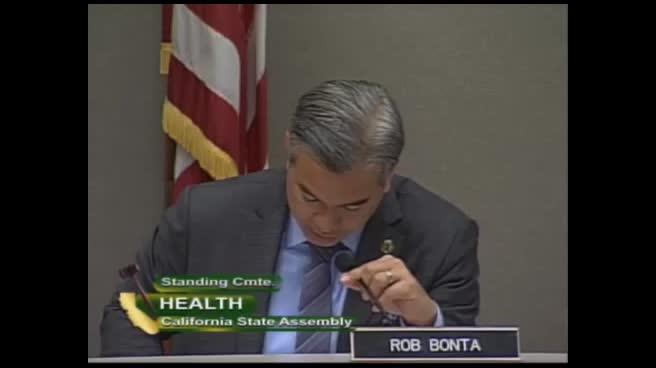 7MIN
Assembly Standing Committee on Health
 2MIN
Senate Floor
 5MIN
Senate Standing Committee on Health
Bill Author