SB 501: Wage garnishment restrictions.
- Session Year: 2015-2016
- House: Senate
- Latest Version Date: 2015-10-11
The Wage Garnishment Law prescribes the procedure for withholding an employees earnings for purposes of paying a debt. The law requires that a levy of execution upon the earnings of an employee be made by service of an earnings withholding order upon the employer. An earnings withholding order is issued by a levying officer upon receiving an application submitted by a judgment creditor, as specified. Existing law prohibits the amount of an individual judgment debtors weekly disposable earnings subject to levy under an earnings withholding order from exceeding the lesser of 25% of the individuals weekly disposable earnings or the amount by which the individuals disposable earnings for the week exceed 40 times the state minimum hourly wage in effect at the time the earnings are payable, as specified, unless an exception applies. An employer is required, except as otherwise provided by statute, to withhold the amounts required by an earnings withholding order from all earnings of the employee payable for any pay period of the employee which ends during the withholding period.
This bill would, commencing July 1, 2016, reduce the prohibited amount of an individual judgment debtors weekly disposable earnings subject to levy under an earnings withholding order from exceeding the lesser of 25% of the individuals weekly disposable earnings or 50% of the amount by which the individuals disposable earnings for the week exceed 40 times the state minimum hourly wage, or applicable local minimum hourly wage, if higher, in effect at the time the earnings are payable.
The Wage Garnishment Law prescribes the procedure for withholding an employees earnings for purposes of paying a debt. The law requires that a levy of execution upon the earnings of an employee be made by service of an earnings withholding order upon the employer. An earnings withholding order is issued by a levying officer upon receiving an application submitted by a judgment creditor, as specified. Existing law prohibits the amount of an individual judgment debtors weekly disposable earnings subject to levy under an earnings withholding order from exceeding the lesser of 25% of the individuals weekly disposable earnings or the amount by which the individuals disposable earnings for the week exceed 40 times the state minimum hourly wage in effect at the time the earnings are payable, as specified, unless an exception applies. An employer is required, except as otherwise provided by statute, to withhold the amounts required by an earnings withholding order from all earnings of the employee payable for any pay period of the employee which ends during the withholding period.
This bill would, commencing July 1, 2016, reduce the prohibited amount of an individual judgment debtors weekly disposable earnings subject to levy under an earnings withholding order from exceeding the lesser of 25% of the individuals weekly disposable earnings or 50% of the amount by which the individuals disposable earnings for the week exceed 40 times the state minimum hourly wage, or applicable local minimum hourly wage, if higher, in effect at the time the earnings are payable.
The Wage Garnishment Law prescribes the procedure for withholding an employees earnings for purposes of paying a debt. The law requires that a levy of execution upon the earnings of an employee be made by service of an earnings withholding order upon the employer. An earnings withholding order is issued by a levying officer upon receiving an application submitted by a judgment creditor, as specified. Existing law prohibits the amount of an individual judgment debtors weekly disposable earnings subject to levy under an earnings withholding order from exceeding the lesser of 25% of the individuals weekly disposable earnings or the amount by which the individuals disposable earnings for the week exceed 40 times the state minimum hourly wage in effect at the time the earnings are payable, as specified, unless an exception applies. An employer is required, except as otherwise provided by statute, to withhold the amounts required by an earnings withholding order from all earnings of the employee payable for any pay period of the employee which ends during the withholding period.
This bill would, commencing July 1, 2016, reduce the prohibited amount of an individual judgment debtors weekly disposable earnings subject to levy under an earnings withholding order from exceeding the lesser of 25% of the individuals weekly disposable earnings or 40% 50% of the amount by which the individuals disposable earnings for the week exceed 40 times the state minimum hourly wage, or applicable local minimum hourly wage, if higher, in effect at the time the earnings are payable.
The Wage Garnishment Law prescribes the procedure for withholding an employees earnings for purposes of paying a debt. The law requires that a levy of execution upon the earnings of an employee be made by service of an earnings withholding order upon the employer. An earnings withholding order is issued by a levying officer upon receiving an application submitted by a judgment creditor, as specified. Existing law prohibits the amount of an individual judgment debtors weekly disposable earnings subject to levy under an earnings withholding order from exceeding the lesser of 25% of the individuals weekly disposable earnings or the amount by which the individuals disposable earnings for the week exceed 40 times the state minimum hourly wage in effect at the time the earnings are payable, as specified, unless an exception applies. An employer is required, except as otherwise provided by statute, to withhold the amounts required by an earnings withholding order from all earnings of the employee payable for any pay period of the employee which ends during the withholding period.
This bill would, commencing July 1, 2016, reduce the prohibited amount of an individual judgment debtors weekly disposable earnings subject to levy under an earnings withholding order from exceeding the lesser of 25% of the individuals weekly disposable earnings or 30% 40% of the amount by which the individuals disposable earnings for the week exceed 40 times the state minimum hourly wage, or applicable local minimum hourly wage, if higher, in effect at the time the earnings are payable.
The Wage Garnishment Law prescribes the procedure for withholding an employees earnings for purposes of paying a debt. The law requires that a levy of execution upon the earnings of an employee be made by service of an earnings withholding order upon the employer. An earnings withholding order is issued by a levying officer upon receiving an application submitted by a judgment creditor, as specified. Existing law prohibits the amount of an individual judgment debtors weekly disposable earnings subject to levy under an earnings withholding order from exceeding the lesser of 25% of the individuals weekly disposable earnings or the amount by which the individuals disposable earnings for the week exceed 40 times the state minimum hourly wage in effect at the time the earnings are payable, as specified, unless an exception applies. An employer is required, except as otherwise provided by statute, to withhold the amounts required by an earnings withholding order from all earnings of the employee payable for any pay period of the employee which ends during the withholding period.
This bill would reduce the prohibited amount of an individual judgment debtors weekly disposable earnings subject to levy under an earnings withholding order from exceeding the lesser of 10% 25% of the individuals weekly disposable earnings or 1/3 30% of the amount by which the individuals disposable earnings for the week exceed 40 times the state minimum hourly wage, or applicable local minimum hourly wage, if higher, in effect at the time the earnings are payable.
The Wage Garnishment Law prescribes the procedure for withholding an employees earnings for purposes of paying a debt. The law requires that a levy of execution upon the earnings of an employee be made by service of an earnings withholding order upon the employer. An earnings withholding order is issued by a levying officer upon receiving an application submitted by a judgment creditor, as specified. Existing law prohibits the amount of an individual judgment debtors weekly disposable earnings subject to levy under an earnings withholding order from exceeding the lesser of 25% of the individuals weekly disposable earnings or the amount by which the individuals disposable earnings for the week exceed 40 times the state minimum hourly wage, or applicable local minimum hourly rate, if higher, wage in effect at the time the earnings are payable, as specified, unless an exception applies. An employer is required, except as otherwise provided by statute, to withhold the amounts required by an earnings withholding order from all earnings of the employee payable for any pay period of the employee which ends during the withholding period.
This bill would provide that an earnings withholding order shall not be used for purposes of enforcing a judgment for the collection of debt that is from a student loan that is not made, insured, or guaranteed by the United States government pursuant to the Federal Family Education Loan Program or the William D. Ford Federal Direct Loan Program. The bill would also reduce the prohibited amount of an individual judgment debtors weekly disposable earnings subject to levy under an earnings withholding order from exceeding the lesser of 10% of the individuals weekly disposable earnings or 1/3 of the amount by which the individuals disposable earnings for the week exceed 40 times the state minimum hourly wage, or applicable local minimum hourly wage, if higher, in effect at the time the earnings are payable. The bill would further require a court to terminate or modify an earnings withholding order issued on or after July 1, 2016, if the court determines, upon a request by the judgment debtor pursuant to specified requirements and procedures, that the withholding order enforces a judgment in violation of these provisions. The bill would provide that a judgment creditor is liable to the judgment debtor for all amounts collected by the judgment creditor in violation of these provisions. The bill also would make conforming changes.
The Wage Garnishment Law prescribes the procedure for withholding an employees earnings for purposes of paying a debt. The law requires that a levy of execution upon the earnings of an employee be made by service of an earnings withholding order upon the employer. An earnings withholding order is issued by a levying officer upon receiving an application submitted by a judgment creditor, as specified. Existing law prohibits the amount of an individual judgment debtors weekly disposable earnings subject to levy under an earnings withholding order from exceeding the lesser of 25% of the individuals weekly disposable earnings or the amount by which the individuals disposable earnings for the week exceed 40 times the state minimum hourly wage, or applicable local minimum hourly rate, if higher, in effect at the time the earnings are payable, as specified, unless an exception applies. An employer is required, except as otherwise provided by statute, to withhold the amounts required by an earnings withholding order from all earnings of the employee payable for any pay period of the employee which ends during the withholding period.
This bill would provide that an earnings withholding order shall not be used for purposes of enforcing a judgment for the collection of debt that is from a student loan that is not made, insured, or guaranteed by the United States government pursuant to the Federal Family Education Loan Program or the William D. Ford Federal Direct Loan Program. The bill would also reduce the prohibited amount of an individual judgment debtors weekly disposable earnings subject to levy under an earnings withholding order from exceeding the lesser of 10% of the individuals weekly disposable earnings or 1/3 of the amount by which the individuals disposable earnings for the week exceed 40 times the state minimum hourly wage in effect at the time the earnings are payable. The bill would further require a court to terminate or modify an earnings withholding order issued on or after July 1, 2016, if the court determines, upon a request by the judgment debtor pursuant to specified requirements and procedures, that the withholding order enforces a judgment in violation of these provisions. The bill would provide that a judgment creditor is liable to the judgment debtor for all amounts collected by the judgment creditor in violation of these provisions. The bill also would make conforming changes.
The Wage Garnishment Law prescribes the procedure for withholding an employees earnings for purposes of paying a debt. The law requires that a levy of execution upon the earnings of an employee be made by service of an earnings withholding order upon the employer. An earnings withholding order is issued by a levying officer upon receiving an application submitted by a judgment creditor, as specified. Existing law prohibits the amount of an individual judgment debtors weekly disposable earnings subject to levy under an earnings withholding order from exceeding the lesser of 25% of the individuals weekly disposable earnings or the amount by which the individuals disposable earnings for the week exceed 40 times the state minimum hourly wage in effect at the time the earnings are payable, unless an exception applies. An employer is required, except as otherwise provided by statute, to withhold the amounts required by an earnings withholding order from all earnings of the employee payable for any pay period of the employee which ends during the withholding period.
This bill would provide that an earnings withholding order shall not be used for purposes of enforcing a judgment for the collection of debt that is from a student loan that is not made, insured, or guaranteed by the United States government pursuant to the Federal Family Education Loan Program or the William D. Ford Federal Direct Loan Program. The bill would also reduce the prohibited amount of an individual judgment debtors weekly disposable earnings subject to levy under an earnings withholding order from exceeding the lesser of 10% of the individuals weekly disposable earnings or 1/3 of the amount by which the individuals disposable earnings for the week exceed 40 times the state minimum hourly wage in effect at the time the earnings are payable. The bill would further require a court to terminate or modify an earnings withholding order issued on or after July 1, 2016, if the court determines, upon a request by the judgment debtor pursuant to specified requirements and procedures, that the withholding order enforces a judgment in violation of these provisions. The bill would provide that a judgment creditor is liable to the judgment debtor for all amounts collected by the judgment creditor in violation of these provisions. The bill also would make conforming changes.
(a)Except as otherwise provided in this chapter, the maximum amount of disposable earnings of an individual judgment debtor for any workweek that is subject to levy under an earnings withholding order shall not exceed the lesser of the following:
(1)Twenty-five percent of the individuals disposable earnings for that week.
(2)The amount by which the individuals disposable earnings for that week exceed 40 times the state minimum hourly wage in effect at the time the earnings are payable.
(b)For any pay period other than weekly, the following multipliers shall be used to determine the maximum amount of disposable earnings subject to levy under an earnings withholding order that is proportional in effect to the calculation described in paragraph (2) of subdivision (a), except as specified in paragraph (1):
(1)For a daily pay period, the amounts shall be identical to the amounts described in subdivision (a).
(2)For a biweekly pay period, multiply the state hourly minimum wage by 80 work hours.
(3)For a semimonthly pay period, multiply the state hourly minimum wage by 862/3 work hours.
(4)For a monthly pay period, multiply the state hourly minimum wage by 1731/3 work hours.
(c)This section shall become inoperative on July 1, 2016, and, as of January 1, 2017, is repealed, unless a later enacted statute, that becomes operative on or before January 1, 2017, deletes or extends the dates on which it becomes inoperative and is repealed.
SEC. 2.Section 706.050 is added to the Code of Civil Procedure, to read:706.050.(a)Except as otherwise provided in this chapter, the maximum amount of disposable earnings of an individual judgment debtor for any workweek that is subject to levy under an earnings withholding order shall not exceed the lesser of the following:
(1)Twenty-five percent of the individuals disposable earnings for that week.
(2)Fifty percent of the amount by which the individuals disposable earnings for that week exceed 40 times the state minimum hourly wage in effect at the time the earnings are payable. If a judgment debtor works in a location where the local minimum hourly wage is greater than the state minimum hourly wage, the local minimum hourly wage in effect at the time the earnings are payable shall be used for the calculation made pursuant to this paragraph.
(b)For any pay period other than weekly, the following multipliers shall be used to determine the maximum amount of disposable earnings subject to levy under an earnings withholding order that is proportional in effect to the calculation described in paragraph (2) of subdivision (a), except as specified in paragraph (1):
(1)For a daily pay period, the amounts shall be identical to the amounts described in subdivision (a).
(2)For a biweekly pay period, multiply the applicable hourly minimum wage by 80 work hours.
(3)For a semimonthly pay period, multiply the applicable hourly minimum wage by 862/3 work hours.
(4)For a monthly pay period, multiply the applicable hourly minimum wage by 1731/3 work hours.
(c)This section shall become operative on July 1, 2016.
(a)Except as otherwise provided in this chapter, the maximum amount of disposable earnings of an individual judgment debtor for any workweek that is subject to levy under an earnings withholding order shall not exceed the lesser of the following:
(1)Twenty-five percent of the individuals disposable earnings for that week.
(2)The amount by which the individuals disposable earnings for that week exceed 40 times the state minimum hourly wage in effect at the time the earnings are payable.
(b)For any pay period other than weekly, the following multipliers shall be used to determine the maximum amount of disposable earnings subject to levy under an earnings withholding order that is proportional in effect to the calculation described in paragraph (2) of subdivision (a), except as specified in paragraph (1):
(1)For a daily pay period, the amounts shall be identical to the amounts described in subdivision (a).
(2)For a biweekly pay period, multiply the state hourly minimum wage by 80 work hours.
(3)For a semimonthly pay period, multiply the state hourly minimum wage by 862/3 work hours.
(4)For a monthly pay period, multiply the state hourly minimum wage by 1731/3 work hours.
(c)This section shall become inoperative on July 1, 2016, and, as of January 1, 2017, is repealed, unless a later enacted statute, that becomes operative on or before January 1, 2017, deletes or extends the dates on which it becomes inoperative and is repealed.
SEC. 2.Section 706.050 is added to the Code of Civil Procedure, to read:706.050.(a)Except as otherwise provided in this chapter, the maximum amount of disposable earnings of an individual judgment debtor for any workweek that is subject to levy under an earnings withholding order shall not exceed the lesser of the following:
(1)Twenty-five percent of the individuals disposable earnings for that week.
(2)Fifty percent of the amount by which the individuals disposable earnings for that week exceed 40 times the state minimum hourly wage in effect at the time the earnings are payable. If a judgment debtor works in a location where the local minimum hourly wage is greater than the state minimum hourly wage, the local minimum hourly wage in effect at the time the earnings are payable shall be used for the calculation made pursuant to this paragraph.
(b)For any pay period other than weekly, the following multipliers shall be used to determine the maximum amount of disposable earnings subject to levy under an earnings withholding order that is proportional in effect to the calculation described in paragraph (2) of subdivision (a), except as specified in paragraph (1):
(1)For a daily pay period, the amounts shall be identical to the amounts described in subdivision (a).
(2)For a biweekly pay period, multiply the applicable hourly minimum wage by 80 work hours.
(3)For a semimonthly pay period, multiply the applicable hourly minimum wage by 862/3 work hours.
(4)For a monthly pay period, multiply the applicable hourly minimum wage by 1731/3 work hours.
(c)This section shall become operative on July 1, 2016.
(a)Except as otherwise provided in this chapter, the maximum amount of disposable earnings of an individual judgment debtor for any workweek that is subject to levy under an earnings withholding order shall not exceed the lesser of the following:
(1)Twenty-five percent of the individuals disposable earnings for that week.
(2)The amount by which the individuals disposable earnings for that week exceed 40 times the state minimum hourly wage in effect at the time the earnings are payable.
(b)For any pay period other than weekly, the following multipliers shall be used to determine the maximum amount of disposable earnings subject to levy under an earnings withholding order that is proportional in effect to the calculation described in paragraph (2) of subdivision (a), except as specified in paragraph (1):
(1)For a daily pay period, the amounts shall be identical to the amounts described in subdivision (a).
(2)For a biweekly pay period, multiply the state hourly minimum wage by 80 work hours.
(3)For a semimonthly pay period, multiply the state hourly minimum wage by 862/3 work hours.
(4)For a monthly pay period, multiply the state hourly minimum wage by 1731/3 work hours.
(c)This section shall become inoperative on July 1, 2016, and, as of January 1, 2017, is repealed, unless a later enacted statute, that becomes operative on or before January 1, 2017, deletes or extends the dates on which it becomes inoperative and is repealed.
SEC. 2.Section 706.050 is added to the Code of Civil Procedure, to read:706.050.(a)Except as otherwise provided in this chapter, the maximum amount of disposable earnings of an individual judgment debtor for any workweek that is subject to levy under an earnings withholding order shall not exceed the lesser of the following:
(1)Twenty-five percent of the individuals disposable earnings for that week.
(2)Forty Fifty percent of the amount by which the individuals disposable earnings for that week exceed 40 times the state minimum hourly wage in effect at the time the earnings are payable. If a judgment debtor works in a location where the local minimum hourly wage is greater than the state minimum hourly wage, the local minimum hourly wage in effect at the time the earnings are payable shall be used for the calculation made pursuant to this paragraph.
(b)For any pay period other than weekly, the following multipliers shall be used to determine the maximum amount of disposable earnings subject to levy under an earnings withholding order that is proportional in effect to the calculation described in paragraph (2) of subdivision (a), except as specified in paragraph (1):
(1)For a daily pay period, the amounts shall be identical to the amounts described in subdivision (a).
(2)For a biweekly pay period, multiply the applicable hourly minimum wage by 80 work hours.
(3)For a semimonthly pay period, multiply the applicable hourly minimum wage by 862/3 work hours.
(4)For a monthly pay period, multiply the applicable hourly minimum wage by 1731/3 work hours.
(c)This section shall become operative on July 1, 2016.
(a)Except as otherwise provided in this chapter, the maximum amount of disposable earnings of an individual judgment debtor for any workweek that is subject to levy under an earnings withholding order shall not exceed the lesser of the following:
(1)Twenty-five percent of the individuals disposable earnings for that week.
(2)Thirty percent of the The amount by which the individuals disposable earnings for that week exceed 40 times the state minimum hourly wage in effect at the time the earnings are payable. If a judgment debtor works in a location where the local minimum hourly wage is greater than the state minimum hourly wage, the local minimum hourly wage in effect at the time the earnings are payable shall be used for the calculation made pursuant to this paragraph.
(b)For any pay period other than weekly, the following multipliers shall be used to determine the maximum amount of disposable earnings subject to levy under an earnings withholding order that is proportional in effect to the calculation described in paragraph (2) of subdivision (a), except as specified in paragraph (1):
(1)For a daily pay period, the amounts shall be identical to the amounts described in subdivision (a).
(2)For a biweekly pay period, multiply the applicable state hourly minimum wage by 80 work hours.
(3)For a semimonthly pay period, multiply the applicable state hourly minimum wage by 862/3 work hours.
(4)For a monthly pay period, multiply the applicable state hourly minimum wage by 1731/3 work hours.
(c)This section shall become inoperative on July 1, 2016, and, as of January 1, 2017, is repealed, unless a later enacted statute, that becomes operative on or before January 1, 2017, deletes or extends the dates on which it becomes inoperative and is repealed.
SEC. 2.Section 706.050 is added to the Code of Civil Procedure, to read:706.050.(a)Except as otherwise provided in this chapter, the maximum amount of disposable earnings of an individual judgment debtor for any workweek that is subject to levy under an earnings withholding order shall not exceed the lesser of the following:
(1)Twenty-five percent of the individuals disposable earnings for that week.
(2)Forty percent of the amount by which the individuals disposable earnings for that week exceed 40 times the state minimum hourly wage in effect at the time the earnings are payable. If a judgment debtor works in a location where the local minimum hourly wage is greater than the state minimum hourly wage, the local minimum hourly wage in effect at the time the earnings are payable shall be used for the calculation made pursuant to this paragraph.
(b)For any pay period other than weekly, the following multipliers shall be used to determine the maximum amount of disposable earnings subject to levy under an earnings withholding order that is proportional in effect to the calculation described in paragraph (2) of subdivision (a), except as specified in paragraph (1):
(1)For a daily pay period, the amounts shall be identical to the amounts described in subdivision (a).
(2)For a biweekly pay period, multiply the applicable hourly minimum wage by 80 work hours.
(3)For a semimonthly pay period, multiply the applicable hourly minimum wage by 862/3 work hours.
(4)For a monthly pay period, multiply the applicable hourly minimum wage by 1731/3 work hours.
(c)This section shall become operative on July 1, 2016.
(a)Except as otherwise provided in this chapter, the maximum amount of disposable earnings of an individual judgment debtor for any workweek that is subject to levy under an earnings withholding order shall not exceed the lesser of the following:
(1)Ten percent Twenty-five percent of the individuals disposable earnings for that week.
(2)One-third Thirty percent of the amount by which the individuals disposable earnings for that week exceed 40 times the state minimum hourly wage in effect at the time the earnings are payable. If a judgment debtor works in a location where the local minimum hourly wage is greater than the state minimum hourly wage, the local minimum hourly wage in effect at the time the earnings are payable shall be used for the calculation made pursuant to this paragraph.
(b)For any pay period other than weekly, the following multipliers shall be used to determine the maximum amount of disposable earnings subject to levy under an earnings withholding order that is proportional in effect to the calculation described in paragraph (2) of subdivision (a), except as specified in paragraph (1):
(1)For a daily pay period, the amounts shall be identical to the amounts described in subdivision (a).
(2)For a biweekly pay period, multiply the applicable hourly minimum wage by 80 work hours.
(3)For a semimonthly pay period, multiply the applicable hourly minimum wage by 862/3 work hours.
(4)For a monthly pay period, multiply the applicable hourly minimum wage by 1731/3 work hours.
(a)Except as otherwise provided in this chapter, the maximum amount of disposable earnings of an individual judgment debtor for any workweek that is subject to levy under an earnings withholding order shall not exceed the lesser of the following:
(1)Ten percent of the individuals disposable earnings for that week.
(2)One-third of the amount by which the individuals disposable earnings for that week exceed 40 times the state minimum hourly wage in effect at the time the earnings are payable. If a judgment debtor works in a location where the local minimum hourly wage is greater than the state minimum hourly wage, the local minimum hourly wage in effect at the time the earnings are payable shall be used for the calculation made pursuant to this paragraph.
(b)For any pay period other than weekly, the following multipliers shall be used to determine the maximum amount of disposable earnings subject to levy under an earnings withholding order that is proportional in effect to the calculation described in paragraph (2) of subdivision (a), except as specified in paragraph (1):
(1)For a daily pay period, the amounts shall be identical to the amounts described in subdivision (a).
(2)For a biweekly pay period, multiply the applicable hourly minimum wage by 80 work hours.
(3)For a semimonthly pay period, multiply the applicable hourly minimum wage by 862/3 work hours.
(4)For a monthly pay period, multiply the applicable hourly minimum wage by 1731/3 work hours.
All matter omitted in this version of the bill appears in the bill as amended in the Senate, April 6, 2015. (JR11)(a)Except as otherwise provided in this chapter, the maximum amount of disposable earnings of an individual judgment debtor for any workweek that is subject to levy under an earnings withholding order shall not exceed the lesser of the following:
(1)Ten percent of the individuals disposable earnings for that week.
(2)One-third of the amount by which the individuals disposable earnings for that week exceed 40 times the state minimum hourly wage in effect at the time the earnings are payable. If a judgment debtor works in a location where the local minimum hourly wage is greater than the state minimum hourly wage, the local minimum hourly wage in effect at the time the earnings are payable shall be used for the calculation made pursuant to this paragraph.
(b)For any pay period other than weekly, the following multipliers shall be used to determine the maximum amount of disposable earnings subject to levy under an earnings withholding order that is proportional in effect to the calculation described in paragraph (2) of subdivision (a), except as specified in paragraph (1):
(1)For a daily pay period, the amounts shall be identical to the amounts described in subdivision (a).
(2)For a biweekly pay period, multiply the state applicable hourly minimum wage by 80 work hours.
(3)For a semimonthly pay period, multiply the state applicable hourly minimum wage by 862/3 work hours.
(4)For a monthly pay period, multiply the state applicable hourly minimum wage by 1731/3 work hours.
SEC. 2.Section 706.053 is added to the Code of Civil Procedure, to read:706.053.(a)An earnings withholding order shall not be used for purposes of enforcing a judgment for the collection of debt that the judgment debtor proves is from a student loan that is not made, insured, or guaranteed by the United States government pursuant to the Federal Family Education Loan Program (20 U.S.C. Sec. 1071 et seq.) or the William D. Ford Federal Direct Loan Program (34 C.F.R. 685.100).
(b)An earnings withholding order issued on or after July 1, 2016, shall be terminated or modified if it enforces a judgment in violation of this section.
(c)A judgment debtor may make a request to terminate an earnings withholding order enforcing a judgment for student loan debt pursuant to Section 706.130.
(d)A judgment creditor is liable to the judgment debtor for all amounts collected by the judgment creditor in violation of this section.
SEC. 3.Section 706.121 of the Code of Civil Procedure is amended to read:706.121.The application for issuance of earnings withholding order shall be executed under oath and shall include all of the following:
(a)The name, the last known address, and, if known, the social security number of the judgment debtor.
(b)The name and address of the judgment creditor.
(c)The court where the judgment was entered and the date the judgment was entered.
(d)Whether the judgment is based in whole or in part on a claim for elder or dependent adult financial abuse and, if in part, how much of the judgment arises from that claim.
(e)Commencing July 1, 2016, whether the judgment is based in whole or in part on a claim for debt from a student loan that is not made, insured, or guaranteed by the United States government pursuant to the Federal Family Education Loan Program (20 U.S.C. Sec. 1071 et seq.) or the William D. Ford Federal Direct Loan Program (34 C.F.R. 685.100).
(f)The date of issuance of a writ of execution to the county where the earnings withholding order is sought.
(g)The total amount required to satisfy the order on the date of issuance (which may not exceed the amount required to satisfy the writ of execution on the date of issuance of the order plus the levying officers statutory fee for service of the order).
(h)The name and address of the employer to whom the order will be directed.
(i)The name and address of the person to whom the withheld money is to be paid by the levying officer.
SEC. 4.Section 706.130 is added to the Code of Civil Procedure, to read:706.130.(a)The request to terminate an earnings withholding order enforcing a judgment for student loan debt shall include all of the following information, if known:
(1)The current mailing address of the judgment debtor.
(2)The name and address of the judgment creditor.
(3)The court in which the judgment was entered and the date the judgment was entered.
(4)A statement, under penalty of perjury, of whether the judgment is based in whole or in part on a claim for a student loan that is not made, insured, or guaranteed by the United States government pursuant to the Federal Family Education Loan Program (20 U.S.C. Sec. 1071 et seq.) or the William D. Ford Federal Direct Loan Program (34 C.F.R. 685.100). Documents supporting the existence of the student loan debt shall be attached to the request.
(5)Whether an earnings withholding order was issued in violation of Section 706.053. A copy of the order shall be attached to the request.
(6)The date of issuance of a writ of execution to the county where the earnings withholding order is sought.
(7)The total amount required to satisfy the earnings withholding order on the date of issuance.
(8)The name and address of the employer to whom the earnings withholding order was directed.
(9)The name and address of the person to whom the order directs the levying officer to pay the money withheld.
(b) A request to terminate an earnings withholding order enforcing a judgment for student loan debt shall be made by filing with the levying officer an original and one copy of the request.
(c)Upon filing of a request, the levying officer shall promptly send to the judgment creditor, at the address stated in the application for the earnings withholding order, by first-class mail, postage prepaid, both of the following:
(1)A copy of the request.
(2)A notice of the request. The notice shall state that the request has been filed and that the earnings withholding order will be terminated or modified to subtract from the amount to be withheld the portion that is based on a judgment to collect a student loan debt in violation of Section 706.053, unless a notice of opposition to the request is filed with the levying officer by the judgment creditor within 10 days after the date of the mailing of the notice of the request.
(d)A judgment creditor who desires to contest a request to terminate an earnings withholding order enforcing a judgment for student loan debt shall, within 10 days after the date of the mailing of the notice of the request, file with the levying officer a notice of opposition to the request.
(e)If a notice of opposition to a request is filed with the levying officer within the 10-day period, the judgment creditor is entitled to a hearing on the request. If the judgment creditor desires a hearing on the request, the judgment creditor shall file a notice of motion for an order determining the request with the court within 10 days after the date the levying officer mailed the notice of claim of exemption. If the notice of motion is so filed, the hearing on the motion shall be held not later than 30 days from the date the notice of motion was filed unless the hearing is continued by the court for good cause. At the time prescribed by subdivision (b) of Section 1005, the judgment creditor shall give written notice of the hearing to the levying officer and shall serve a notice of the hearing and a copy of the notice of opposition to the request on the judgment debtor and, if indicated in the request, on the attorney for the judgment debtor. Service is deemed made when the notice of the hearing and a copy of the notice of opposition to the request are deposited in the mail, postage prepaid, addressed to the judgment debtor at the address stated in the request and, if service on the attorney for the judgment debtor was indicated in the request, to the attorney at the address stated in the request. The judgment creditor shall file proof of the service with the court. After receiving the notice of the hearing and before the date set for the hearing, the levying officer shall file the request and the notice of opposition to the request with the court.
(f)If the levying officer does not receive a notice of opposition to the request within the 10-day period after the date of mailing of the notice of request and a notice of the hearing not later than 10 days after the filing of the notice of opposition to the request, the levying officer shall serve on the employer one of the following:
(1)A notice that the earnings withholding order has been terminated if the entire amount to be withheld under the order is based on a judgment to collect a student loan debt in violation of Section 706.053.
(2)A modified earnings withholding order that reflects the subtraction from the amount to be withheld of the portion that is based on a judgment to collect a student loan debt in violation of Section 706.053.
(g)If, after hearing, the court orders that the earnings withholding order be terminated or modified, the clerk shall promptly transmit a certified copy of the order to the levying officer who shall promptly serve on the employer of the judgment debtor (1) a notice that the earnings withholding order has been terminated, or (2) a copy of the modified earnings withholding order. The court may order that the earnings withholding order be terminated as of a date that precedes the date of hearing. If the court determines that an amount withheld pursuant to the earnings withholding order should be paid to the judgment debtor, the court shall make an order directing the person who holds that amount to pay it promptly to the judgment debtor.
(h)If the earnings withholding order is terminated or modified, the judgment creditor shall not apply for another earnings withholding order to enforce the same judgment or the portion thereof that was determined to be based on a student loan debt in violation of Section 706.053.
(i)If an employer has withheld and paid over amounts pursuant to an earnings withholding order after the date of termination of the order but prior to the receipt of notice of its termination, the judgment debtor may recover those amounts only from the levying officer if the levying officer still holds those amounts or, if those amounts have been paid over to the judgment creditor, from the judgment creditor. If the employer has withheld amounts pursuant to an earnings withholding order after termination of the order but has not paid over those amounts to the levying officer, the employer shall promptly pay those amounts to the judgment debtor.
(j)An appeal lies from any court order under this section granting or denying a request to terminate an earnings withholding order enforcing a judgment for student loan debt. An appeal by the judgment creditor from an order modifying or terminating the earnings withholding order shall not stay the order from which the appeal is taken. Notwithstanding the appeal, until the order modifying or terminating the earnings withholding order is set aside or modified on appeal, the order modifying or terminating the earnings withholding order shall be given the same effect as if the appeal had not been taken.
(k)This section does not apply to a withholding order for support or a withholding order for taxes.
(a)Except as otherwise provided in this chapter, the maximum amount of disposable earnings of an individual judgment debtor for any workweek that is subject to levy under an earnings withholding order shall not exceed the lesser of the following:
(1)Twenty-five Ten percent of the individuals disposable earnings for that week.
(2)The One-third of the amount by which the individuals disposable earnings for that week exceed 40 times the state minimum hourly wage in effect at the time the earnings are payable.
(b)For any pay period other than weekly, the following multipliers shall be used to determine the maximum amount of disposable earnings subject to levy under an earnings withholding order that is proportional in effect to the calculation described in paragraph (2) of subdivision (a), except as specified in paragraph (1):
(1)For a daily pay period, the amounts shall be identical to the amounts described in subdivision (a).
(2)For a biweekly pay period, multiply the state hourly minimum wage by 80 work hours.
(3)For a semimonthly pay period, multiply the state hourly minimum wage by 862/3 work hours.
(4)For a monthly pay period, multiply the state hourly minimum wage by 1731/3 work hours.
SEC. 2.Section 706.053 is added to the Code of Civil Procedure, to read:706.053.(a)An earnings withholding order shall not be used for purposes of enforcing a judgment for the collection of debt that the judgment debtor proves is from a student loan that is not made, insured, or guaranteed by the United States government pursuant to the Federal Family Education Loan Program (20 U.S.C. Sec. 1071 et seq.) or the William D. Ford Federal Direct Loan Program (34 C.F.R. 685.100).
(b)An earnings withholding order issued on or after July 1, 2016, shall be terminated or modified if it enforces a judgment in violation of this section.
(c)A judgment debtor may make a request to terminate an earnings withholding order enforcing a judgment for student loan debt pursuant to Section 706.130.
(d)A judgment creditor is liable to the judgment debtor for all amounts collected by the judgment creditor in violation of this section.
SEC. 3.Section 706.121 of the Code of Civil Procedure is amended to read:706.121.The application for issuance of earnings withholding order shall be executed under oath and shall include all of the following:
(a)The name, the last known address, and, if known, the social security number of the judgment debtor.
(b)The name and address of the judgment creditor.
(c)The court where the judgment was entered and the date the judgment was entered.
(d)Whether the judgment is based in whole or in part on a claim for elder or dependent adult financial abuse and, if in part, how much of the judgment arises from that claim.
(e)Commencing July 1, 2016, whether the judgment is based in whole or in part on a claim for debt from a student loan that is not made, insured, or guaranteed by the United States government pursuant to the Federal Family Education Loan Program (20 U.S.C. Sec. 1071 et seq.) or the William D. Ford Federal Direct Loan Program (34 C.F.R. 685.100).
(e)
(f)The date of issuance of a writ of execution to the county where the earnings withholding order is sought.
(f)
(g)The total amount required to satisfy the order on the date of issuance (which may not exceed the amount required to satisfy the writ of execution on the date of issuance of the order plus the levying officers statutory fee for service of the order).
(g)
(h)The name and address of the employer to whom the order will be directed.
(h)
(i)The name and address of the person to whom the withheld money is to be paid by the levying officer.
SEC. 4.Section 706.130 is added to the Code of Civil Procedure, to read:706.130.(a)The request to terminate an earnings withholding order enforcing a judgment for student loan debt shall include all of the following information, if known:
(1)The current mailing address of the judgment debtor.
(2)The name and address of the judgment creditor.
(3)The court in which the judgment was entered and the date the judgment was entered.
(4)A statement, under penalty of perjury, of whether the judgment is based in whole or in part on a claim for a student loan that is not made, insured, or guaranteed by the United States government pursuant to the Federal Family Education Loan Program (20 U.S.C. Sec. 1071 et seq.) or the William D. Ford Federal Direct Loan Program (34 C.F.R. 685.100). Documents supporting the existence of the student loan debt shall be attached to the request.
(5)Whether an earnings withholding order was issued in violation of Section 706.053. A copy of the order shall be attached to the request.
(6)The date of issuance of a writ of execution to the county where the earnings withholding order is sought.
(7)The total amount required to satisfy the earnings withholding order on the date of issuance.
(8)The name and address of the employer to whom the earnings withholding order was directed.
(9)The name and address of the person to whom the order directs the levying officer to pay the money withheld.
(b) A request to terminate an earnings withholding order enforcing a judgment for student loan debt shall be made by filing with the levying officer an original and one copy of the request.
(c)Upon filing of a request, the levying officer shall promptly send to the judgment creditor, at the address stated in the application for the earnings withholding order, by first-class mail, postage prepaid, both of the following:
(1)A copy of the request.
(2)A notice of the request. The notice shall state that the request has been filed and that the earnings withholding order will be terminated or modified to subtract from the amount to be withheld the portion that is based on a judgment to collect a student loan debt in violation of Section 706.053, unless a notice of opposition to the request is filed with the levying officer by the judgment creditor within 10 days after the date of the mailing of the notice of the request.
(d)A judgment creditor who desires to contest a request to terminate an earnings withholding order enforcing a judgment for student loan debt shall, within 10 days after the date of the mailing of the notice of the request, file with the levying officer a notice of opposition to the request.
(e)If a notice of opposition to a request is filed with the levying officer within the 10-day period, the judgment creditor is entitled to a hearing on the request. If the judgment creditor desires a hearing on the request, the judgment creditor shall file a notice of motion for an order determining the request with the court within 10 days after the date the levying officer mailed the notice of claim of exemption. If the notice of motion is so filed, the hearing on the motion shall be held not later than 30 days from the date the notice of motion was filed unless the hearing is continued by the court for good cause. At the time prescribed by subdivision (b) of Section 1005, the judgment creditor shall give written notice of the hearing to the levying officer and shall serve a notice of the hearing and a copy of the notice of opposition to the request on the judgment debtor and, if indicated in the request, on the attorney for the judgment debtor. Service is deemed made when the notice of the hearing and a copy of the notice of opposition to the request are deposited in the mail, postage prepaid, addressed to the judgment debtor at the address stated in the request and, if service on the attorney for the judgment debtor was indicated in the request, to the attorney at the address stated in the request. The judgment creditor shall file proof of the service with the court. After receiving the notice of the hearing and before the date set for the hearing, the levying officer shall file the request and the notice of opposition to the request with the court.
(f)If the levying officer does not receive a notice of opposition to the request within the 10-day period after the date of mailing of the notice of request and a notice of the hearing not later than 10 days after the filing of the notice of opposition to the request, the levying officer shall serve on the employer one of the following:
(1)A notice that the earnings withholding order has been terminated if the entire amount to be withheld under the order is based on a judgment to collect a student loan debt in violation of Section 706.053.
(2)A modified earnings withholding order that reflects the subtraction from the amount to be withheld of the portion that is based on a judgment to collect a student loan debt in violation of Section 706.053.
(g)If, after hearing, the court orders that the earnings withholding order be terminated or modified, the clerk shall promptly transmit a certified copy of the order to the levying officer who shall promptly serve on the employer of the judgment debtor (1) a notice that the earnings withholding order has been terminated, or (2) a copy of the modified earnings withholding order. The court may order that the earnings withholding order be terminated as of a date that precedes the date of hearing. If the court determines that an amount withheld pursuant to the earnings withholding order should be paid to the judgment debtor, the court shall make an order directing the person who holds that amount to pay it promptly to the judgment debtor.
(h)If the earnings withholding order is terminated or modified, the judgment creditor shall not apply for another earnings withholding order to enforce the same judgment or the portion thereof that was determined to be based on a student loan debt in violation of Section 706.053.
(i)If an employer has withheld and paid over amounts pursuant to an earnings withholding order after the date of termination of the order but prior to the receipt of notice of its termination, the judgment debtor may recover those amounts only from the levying officer if the levying officer still holds those amounts or, if those amounts have been paid over to the judgment creditor, from the judgment creditor. If the employer has withheld amounts pursuant to an earnings withholding order after termination of the order but has not paid over those amounts to the levying officer, the employer shall promptly pay those amounts to the judgment debtor.
(j)An appeal lies from any court order under this section granting or denying a request to terminate an earnings withholding order enforcing a judgment for student loan debt. An appeal by the judgment creditor from an order modifying or terminating the earnings withholding order shall not stay the order from which the appeal is taken. Notwithstanding the appeal, until the order modifying or terminating the earnings withholding order is set aside or modified on appeal, the order modifying or terminating the earnings withholding order shall be given the same effect as if the appeal had not been taken.
(k)This section does not apply to a withholding order for support or a withholding order for taxes.
|
Date
|
Status
|
|---|---|
| Sep 9, 2015 | In Senate. Concurrence in Assembly amendments pending. |
| Jun 30, 2015 | June 30 set for first hearing canceled at the request of author. |
| Jul 8, 2015 | From committee: Do pass as amended. (Ayes 6. Noes 2.) (July 7). |
| Jul 9, 2015 | Read second time and amended. Ordered to second reading. |
| Jul 13, 2015 | Read second time. Ordered to third reading. |
| Aug 27, 2015 | Ordered to third reading. |
| Aug 27, 2015 | Read third time and amended. |
| Sep 4, 2015 | Ordered to third reading. |
| Sep 4, 2015 | Read third time and amended. |
| Jun 18, 2015 | Referred to Com. on JUD. |
| Sep 9, 2015 | Read third time. Passed. Ordered to the Senate. |
| Sep 9, 2015 | Read third time. Passed. (Ayes 62. Noes 16. Page 3026.) Ordered to the Senate. |
| Sep 10, 2015 | Assembly amendments concurred in. (Ayes 26. Noes 11.) Ordered to engrossing and enrolling. |
| Sep 10, 2015 | Assembly amendments concurred in. (Ayes 27. Noes 11. Page 2675.) Ordered to engrossing and enrolling. |
| Sep 10, 2015 | Assembly amendments concurred in. (Ayes 27. Noes 11.) Ordered to engrossing and enrolling. |
| Sep 15, 2015 | Enrolled and presented to the Governor at 9:30 a.m. |
| Oct 11, 2015 | Approved by the Governor. |
| Oct 11, 2015 | Chaptered by Secretary of State. Chapter 800, Statutes of 2015. |
| Apr 29, 2015 | Re-referred to Com. on JUD. |
| Feb 27, 2015 | From printer. May be acted upon on or after March 29. |
| Mar 12, 2015 | Referred to Coms. on B. & F.I. and JUD. |
| Mar 13, 2015 | Set for hearing April 15. |
| Apr 6, 2015 | From committee with author's amendments. Read second time and amended. Re-referred to Com. on B. & F.I. |
| Apr 13, 2015 | April 15 set for first hearing canceled at the request of author. |
| Apr 14, 2015 | Set for hearing April 29. |
| Apr 28, 2015 | April 29 set for second hearing canceled at the request of author. |
| Apr 28, 2015 | From committee with author's amendments. Read second time and amended. Re-referred to Com. on B. & F.I. |
| Feb 26, 2015 | Introduced. Read first time. To Com. on RLS. for assignment. To print. |
| Apr 29, 2015 | Withdrawn from committee. |
| May 1, 2015 | Set for hearing May 12. |
| May 13, 2015 | From committee: Do pass. (Ayes 5. Noes 2. Page 983.) (May 12). |
| May 13, 2015 | From committee: Do pass. (Ayes 5. Noes 2.) (May 12). |
| May 14, 2015 | Read second time. Ordered to third reading. |
| May 22, 2015 | In Assembly. Read first time. Held at Desk. |
| May 22, 2015 | Read third time. Passed. (Ayes 26. Noes 11. Page 1061.) Ordered to the Assembly. |
| May 22, 2015 | Read third time. Passed. (Ayes 26. Noes 11.) Ordered to the Assembly. |
|
Date
|
Description
|
Location
|
Votes
|
|
|---|---|---|---|---|
| Sep 10, 2015 | Unfinished Business SB501 Wieckowski Concurrence | Senate Floor |
Passed |
|
| Sep 9, 2015 | SB 501 Wieckowski Senate Third Reading By GARCIA, C. | Assembly Floor |
Passed |
|
| Jul 7, 2015 | Do pass as amended. | Assembly Standing Committee on Judiciary |
Passed |
|
| May 22, 2015 | Senate 3rd Reading SB501 Wieckowski | Senate Floor |
Passed |
|
| May 12, 2015 | Do pass | Senate Standing Committee on Judiciary |
Passed |
This list shows positions taken on this bill by organizations on the date displayed, which is linked to the original source.
Positions by individuals are not included.
|
Organization
|
Position
|
Date
|
|---|---|---|
| Alliance for Boys & Men of Color | ** Support | Sep 9, 2015 |
| Alliance for Californians for Community Empowerment | ** Support | Sep 9, 2015 |
| Attorney General Kamala Harris | ** Support | Sep 9, 2015 |
| Bay Area Legal Aid | ** Support | Sep 9, 2015 |
| California Association Of Collectors | * Against | Jul 7, 2015 |
| California Bankers Association | * Against | Jul 7, 2015 |
| California Chamber Of Commerce | ** Against | Jul 7, 2015 |
| California Creditors Bar Association | ** Against | Sep 9, 2015 |
| California Employment Lawyers Association | ** Support | Sep 9, 2015 |
| California Faculty Association | * Indeterminate | Jul 7, 2015 |
| California Labor Federation, Afl-Cio | * Indeterminate | Jul 7, 2015 |
| California Partnership | ** Support | Sep 9, 2015 |
| California Professional Firefighters | ** Support | Sep 9, 2015 |
| California Reinvestment Coalition | ** Support | Sep 9, 2015 |
| California Retailers Association | ** Against | Sep 9, 2015 |
| California Rural Legal Assistance Foundation, Inc. | ** Support | Sep 9, 2015 |
| Coalition of California Welfare Rights Organizations | ** Support | Sep 9, 2015 |
| Consumer Federation Of California | ** Support | Sep 9, 2015 |
| Consumers Union | ** Support | Sep 9, 2015 |
| Courage Campaign | ** Support | Sep 9, 2015 |
| Dba International | ** Against | Sep 9, 2015 |
| East Bay Community Law Center | ** Support | Sep 9, 2015 |
| Encore Capital Group | * Against | Jul 7, 2015 |
| Eric Bauman, Chairman of the LA Democratic Party | ** Support | Sep 9, 2015 |
| Law Foundation of Silicon Valley | ** Support | Sep 9, 2015 |
| Law Offices of Antonio Gallo and Associates | ** Support | Sep 9, 2015 |
| National Employment Law Project | ** Support | Sep 9, 2015 |
| One individual | ** Against | May 22, 2015 |
| PRA Group | ** Against | Sep 9, 2015 |
| Public Counsel | ** Support | Sep 9, 2015 |
| Public Law Center | ** Support | Sep 9, 2015 |
| San Diego Regional Chamber Of Commerce | ** Against | Sep 9, 2015 |
| Service Employees International Union California | ** Support | May 22, 2015 |
| Southeast Asia Resource Action Center | ** Support | Sep 9, 2015 |
| State Treasurer John Chiang | ** Support | Sep 9, 2015 |
| UC Berkeley School of Law | * Support | Jul 7, 2015 |
| Unite Here | ** Support | Sep 9, 2015 |
| Western Center On Law And Poverty Inc. | ** Support | Sep 9, 2015 |
| Western Regional Advocacy Project | ** Support | Sep 9, 2015 |
SB 501
Page 7
|
Office of Senate Floor Analyses (916) 651-1520 Fax: (916) 327-4478 |
UNFINISHED BUSINESS
Bill No: SB 501
Amended: 9/4/15
SENATE JUDICIARY COMMITTEE: 5-2, 5/12/15
AYES: Jackson, Hertzberg, Leno, Monning, Wieckowski
NOES: Moorlach, Anderson
SENATE FLOOR: 26-11, 5/22/15
AYES: Allen, Beall, Block, Cannella, De León, Galgiani, Hall, Hancock, Hernandez, Hertzberg, Hill, Hueso, Jackson, Lara, Leno, Leyva, Liu, McGuire, Mendoza, Mitchell, Monning, Pan, Pavley, Roth, Wieckowski, Wolk
NOES: Anderson, Bates, Berryhill, Fuller, Gaines, Moorlach, Morrell, Nielsen, Runner, Stone, Vidak
NO VOTE RECORDED: Huff, Nguyen
ASSEMBLY FLOOR: 62-16, 9/9/15 - See last page for vote
SUBJECT: Wage garnishment restrictions
SOURCE: East Bay Community Law Center
Western Center on Law and Poverty
DIGEST: This bill, as of July 1, 2016, reduces the maximum amount of disposable earnings subject to wage garnishment to the lesser of either 25 percent of the individual’s disposable earnings for that week or 50 percent of the amount by which the individual’s disposable earnings for that week exceed 40 times the state minimum hourly wage. This bill provides that if a judgment debtor works in a location where the local minimum hourly wage is greater than the state minimum hourly wage, the local minimum hourly wage in effect at the time the earnings are payable would be the amount upon which to base the maximum amount of wage garnishment. This bill, for any pay period other than weekly, would base the maximum amount of disposable earnings subject to levy on the applicable hourly minimum wage rather than the state hourly minimum wage.
Assembly Amendments make the bill operative on July 1, 2016, strike the decreased maximum percent of the individual’s disposable earnings for that week from 10 percent to 25 percent, establish the maximum amount of fifty percent of the amount by which the individual’s disposable earnings for that week exceed 40 times the state minimum wage, or applicable local minimum hourly wage, whichever is greater, and apply the applicable hourly minimum wage, instead of the state hourly minimum wage.
Existing law:
Establishes, under the Wage Garnishment Law, procedures regarding the garnishment of a judgment debtor’s wages.
Provides that “disposable earnings” means the portion of an individual’s earnings that remains after deducting all amounts required to be withheld by law.
Provides that “earnings” means compensation payable by an employer to an employee for personal services performed by such employee, whether denominated as wages, salary, commission, bonus, or otherwise.
Restricts the amount of garnishment of a judgment debtor’s disposable earnings for any workweek to the lesser of 25 percent of the individual’s disposable earnings for that week or the amount by which the individual’s disposable earnings for that week exceed 40 times the state minimum hourly wage in effect at the time the earnings are payable.
Requires that for any pay period other than weekly, the following multipliers are to be used to determine the maximum amount of disposable earnings subject to levy under an earnings withholding order that is proportional in effect to the weekly calculation, as specified:
for a daily pay period, the amounts shall be identical to the weekly garnishment amounts;
for a biweekly pay period, multiply the state hourly minimum wage by 80 work hours;
for a semimonthly pay period, multiply the state hourly minimum wage by 862/3 work hours; or
for a monthly pay period, multiply the state hourly minimum wage by 1731/3 work hours.
Requires, on and after July 1, 2014, the minimum wage for all industries to be no less than $9.00 per hour, and on and after January 1, 2016, the minimum wage for all industries to be not less than $10.00 per hour.
This bill:
Reduces the maximum of disposable earnings subject to levy from the lesser of either 25 percent of the individual’s disposable earnings for that week or 50 percent of the amount by which the individual’s disposable earnings for that week exceed 40 times the state minimum hourly wage.
Provides that if a judgment debtor works in a location where the local minimum hourly wage is greater than the state minimum hourly wage, the local minimum hourly wage in effect at the time the earnings are payable shall be used for the above calculation.
Bases, for any pay period other than weekly, the maximum amount of disposable earnings subject to levy on the applicable hourly minimum wage rather than the state hourly minimum wage.
Becomes operative on July 1, 2016.
Background
In California, under the Wage Garnishment Law, a judgment creditor can seek garnishment of a judgment debtor’s wages to satisfy a court judgment. When wages are garnished, the employer withholds money from the debtor employee’s paycheck and sends the money to the creditor. The Wage Garnishment Law provides for exemptions from wage garnishment, such as for necessities for living and child support.
AB 1775 (Wieckowski, Chapter 474, Statutes of 2012) codified the definition under the federal Consumer Credit Protection Act for “disposable earnings” and the maximum amount of weekly wage garnishment of 25 percent of the individual’s disposable earnings. AB 1775 also capped the weekly wage garnishment amount at 40 times the state minimum hourly wage and provided certain multipliers to determine a maximum amount subject to levy for pay periods other than weekly.
This bill further reduces the maximum amount of disposable earnings subject to wage garnishment to the lesser of either 25 percent of the individual’s disposable earnings for that week or 50 percent of the amount by which the individual’s disposable earnings for that week exceed 40 times the state minimum hourly wage, as specified. This bill, for any pay period other than weekly, bases the maximum amount of disposable earnings subject to levy on the applicable local hourly minimum wage rather than the state hourly minimum wage.
Comments
The author writes:
No one should experience poverty, especially people who work. When they do, it is essential we do what we can to prevent hardships for workers and their families. SB 501 will improve the ability of low-wage working families to meet their basic needs by remedying two problems with current wage garnishment law: 1) The disincentive for a worker facing a garnishment to earn more than the local minimum wage, and; 2) The unjustly high percentage of income taken from a worker’s paycheck.
Prior Legislation
AB 1775 (Wieckowski, Chapter 474, Statutes of 2012) - See Background.
AB 1388 (Wieckowski, Chapter 694, Statutes of 2011) deleted the exception from the wage garnishment exemption for common necessaries of life and instead provided an exception for wages necessary for the support of the judgment debtor and his or her family. AB 1388 also added the exception for debt incurred pursuant to an order or award for the payment of attorney’s fees under specified sections of the Family Code.
FISCAL EFFECT: Appropriation: No Fiscal Com.: No Local: No
East Bay Community Law Center (co-source)
Western Center on Law and Poverty (co-source)
Alliance for Californians for Community Empowerment
Alliance for Boys & Men of Color
American Civil Liberties Union
Attorney General Kamala Harris
Bay Area Legal Aid
California Employment Lawyers Association
California Labor Federation
California Partnership
California Professional Firefighters
California Reinvestment Coalition
California Rural Legal Assistance Foundation
Coalition of California Welfare Rights Organizations
Consumer Federation of California
Consumers Union
Courage Campaign
Eric Bauman, Chairman of the LA Democratic Party
Greenlining Institute
Law Foundation of Silicon Valley
Law Offices of Antonio Gallo and Associates
National Employment Law Project
Public Law Center
Public Counsel
Service Employees International Union
Southeast Asia Resource Action Center
State Treasurer John Chiang
Unite Here
Western Regional Advocacy Project
California Creditors Bar Association
California Retailers Association
DBA International
PRA Group
San Diego Regional Chamber of Commerce
ARGUMENTS IN SUPPORT: The East Bay Community Law Center, co-source, states that “[c]urrent wage garnishment laws place immense pressure on low-income individuals. With recent increases in the cost of living in California, it is harder than ever for low-income individuals to get by. Clients who come to our office, even before garnishment, barely have enough to pay for housing, food, transportation to work, and basic utilities. To keep their heads above water, our clients will creatively juggle bills, making payments on the most necessary items. But this is a precarious balancing act that falls apart when a creditor starts taking out 25 percent of a person’s wages. At that point[,] there simply is not enough money to go around. Many people are forced to turn to stopgaps, often taking out more debt from exploitative payday or title lenders.”
The Western Center on Law and Poverty (WCLP), co-source, notes that researchers have found that individuals whose wages are being garnished are living below the California Poverty Measure. WCLP argues that “[b]y allowing wage garnishment for a wider range of debt than other states, California undermines the value of work, especially considering the high cost of living in the state. When low-income workers’ wages are garnished, they often face more severe cutbacks, losing their assets and falling into further debt to credit card companies or predatory lenders. As a result, workers are more likely to remove themselves from the job market or to file for bankruptcy if they are unable to meet their basic needs through working. This undermining of work also reduces the wages earned by low-income workers that is spent in the local community and saved for future emergencies; ironically, increasing the likelihood that they will need to loan again and reducing their ability to pay back old debt.”
The Public Law Center states that “[t]he changes proposed by SB 501 would make a significant difference in the lives of our low-income clients. Our clients will benefit from the added protection of capping the garnishment at 10 [percent] of weekly disposable earnings or one third of the amount the earnings exceed the relevant minimum wage. Instead of having to make choices between food, rent and utilities, or clients may be able to survive by clipping a few extra coupons or creatively reducing utility bills.”
ARGUMENTS IN OPPOSITION: A coalition of creditor stakeholders contends that this bill drastically reduces the ability of judgment creditors to recover on valid, court-issued judgments, and may result in harming the very consumers this bill is trying to protect. The coalition argues that the amount a creditor can garnish is severely limited by law and there are robust exemptions for certain categories of income making this bill unnecessary since California debtors can already file a claim of exemption to reduce the amount withheld in a wage garnishment, and those claims are commonly granted. The coalition asserts that this bill will result in higher administrative costs (a $12 assessment is charged to the debtor for each disbursement under a writ of attachment) the debtors will have to pay, which costs could total $624 over the course of a year, and this bill will have little or no impact on the already declining bankruptcy rate. The coalition also argues that the new layer of complexity to calculate exemptions from wage garnishment will unnecessarily burden employers and sheriffs’ offices that process garnishments.
Further, the coalition states that the proposed rate cap in this bill is substantially more restrictive than the cap in New York because the New York cap is the lesser of 25 percent of disposable income or 10 percent of gross income, not 10 percent of disposable wages as proposed in this bill. The coalition also notes that, although a few states do not allow wage garnishment of any kind, those states provide judgment creditors with other remedies that are less favorable to consumers. The coalition also asserts that this bill will create an imbalance that will be detrimental to the vast majority of consumers who are fiscally responsible by placing more restrictions on the collection of validly owned debt, which, in turn, causes the availability of credit to decrease while increasing the cost of credit. Finally, the coalition notes that the Consumer Financial Protection Bureau (CFPB) is currently engaged in a broad rulemaking of debt collection that will likely cover almost every aspect of the industry, and the coalition requests that the Legislature wait to make significant changes to collectors’ ability to recover on judgments until the CFPB has issued its rules.
ASSEMBLY FLOOR: 62-16, 9/9/15
AYES: Achadjian, Alejo, Baker, Bloom, Bonilla, Bonta, Brown, Burke, Calderon, Campos, Chang, Chau, Chiu, Chu, Cooley, Cooper, Dababneh, Daly, Dodd, Eggman, Frazier, Gallagher, Cristina Garcia, Eduardo Garcia, Gatto, Gipson, Gomez, Gonzalez, Gordon, Gray, Hadley, Roger Hernández, Holden, Irwin, Jones-Sawyer, Lackey, Levine, Linder, Lopez, Low, Maienschein, Mayes, McCarty, Medina, Mullin, Nazarian, O'Donnell, Perea, Quirk, Rendon, Rodriguez, Santiago, Steinorth, Mark Stone, Thurmond, Ting, Wagner, Weber, Wilk, Williams, Wood, Atkins
NOES: Travis Allen, Bigelow, Brough, Dahle, Beth Gaines, Grove, Harper, Jones, Kim, Mathis, Melendez, Obernolte, Olsen, Patterson, Salas, Waldron
NO VOTE RECORDED: Chávez, Ridley-Thomas
Prepared by: Tara Welch / JUD. / (916) 651-4113
9/9/15 19:32:31
**** END ****
SB 501
Page 4
SENATE THIRD READING
SB 501
(Wieckowski)
As Amended September 4, 2015
Majority vote
SENATE VOTE: 26-11
Committee |
Votes |
Ayes |
Noes |
Judiciary |
6-2 |
Mark Stone, Alejo, Chau, Chiu, Cristina Garcia, Holden |
Gallagher, Maienschein |
SUMMARY: Revises the formula for calculating the maximum amount of a person's weekly wage earnings that can be garnished to satisfy a judgment debt. Specifically, this bill:
Reduces the maximum amount of disposable earnings which are subject to wage garnishment to the lesser of the following: a) 25% of the individual's disposable earnings for that week, or b) 50% of the amount by which the individual's disposable earnings for that week exceed 40 times the state minimum hourly wage, or applicable local minimum hourly wage, as specified.
Provides that if a judgment debtor works in a location where the local minimum hourly wage is greater than the state minimum hourly wage, the local minimum hourly wage in effect at the time the earnings are payable shall be used for the above calculation.
Bases the maximum amount of disposable earnings subject to levy on the applicable local hourly minimum wage, rather than the state hourly minimum wage, for any pay period other than weekly.
Provides that implementation of these provisions shall not become operative until July 1, 2016, and makes corresponding technical amendments to provide that the existing wage garnishment formula shall remain operative until July 1, 2016, and, as of January 1, 2017, is repealed, unless a later enacted statute, that becomes operative on or before January 1, 2017, deletes or extends the dates on which it becomes inoperative and is repealed.
FISCAL EFFECT: None
COMMENTS: According to the author, this bill "will improve the ability of low-wage working families to meet their basic needs by remedying two problems with current wage garnishment law, namely the disincentive for a worker facing a garnishment to earn more than the local minimum wage, and the unjustly high percentage of income taken from a worker's paycheck."
High wage garnishment rates in California primarily impact low-wage workers, making it more difficult for them to pay for basic needs. Supporters of this bill contend that low-wage workers in California are those who are most negatively impacted by wage garnishment rates in California, which they also believe are too high, considering California's high cost of living. Supporters also contend that current wage garnishment rates do not allow low-wage workers subject to garnishment the ability to retain enough of their earnings to pay for their essential needs and avoid slipping closer to poverty. They further contend that when the wages of low-wage workers are garnished at high rates, those workers often suffer more severe financial setbacks, including losing their assets and falling deeper into debt, often accruing additional debt to credit card companies or predatory lenders.
Recent data reported by ADP, the largest payroll services provider in the nation, supports the author's contention that wage garnishment is used more often against blue-collar workers than against high-earning white-collar workers. Based on anonymous payroll records for the previous three years in a sample size of 13 million employees, the ADP report found that the income level most likely to be subject to wage garnishment was between $25,000 and $40,000 per year. (ADP Research Institute, Garnishment: The Untold Story, Sept. 2014.) As a result, contends Western Center on Law and Poverty (WCLP), wage garnishment most often affects low-wage workers in households who struggle to make ends meet. WCLP notes that researchers at Stanford have developed the California Poverty Measure (CPM), which factors in receipt of government assistance and typical costs faced by families, such as housing and child care, for the state. Their data indicate that the CPM for the lowest cost county in the state is $29,500 for a family of four, and the highest CPM is $37,400. According to the author, in this context the ADP study suggests that households are having their wage garnished at wages below the California Poverty Measure, that is, below the level at which Stanford researchers believe these households are able to meet their basic needs and financial obligations.
Wage garnishment formula in California creates a disincentive for additional earnings and is high compared to other states. Under existing state law, the maximum amount of earnings allowed to be garnished is the lesser of the following: 1) 25% of the individual's disposable earnings for that week, or 2) the amount by which the individual's disposable earnings for that week exceed 40 times the state's minimum hourly wage in effect at the time when the earnings are payable. This maximum amount applies to most debts, but does not apply to withholdings for child support or tax orders, meaning an even greater percentage of a garnishee's wages could be withheld because of child support orders and unpaid taxes.
According to the author, the seemingly perverse result of this garnishment formula is that a worker who earns $10, $11, or $12 per hour ends up taking home only the current state minimum wage of $9 per hour because the formula provides for garnishment of all income above the minimum to be garnished (up to approximately $12 per hour). This result creates a strong disincentive to earn additional income, contends the author, stating: "Low-income workers wish to honor and pay back their debts like everyone else, but a 100% taking on these earnings contributes to poverty among working families, putting life essentials – food, rent, utilities – out of reach and discouraging work." This disincentive still exists, the author notes, even when the worker lives in a community that has enacted a higher local minimum wage than the state, thus undermining local economic policy and priorities that establish higher minimum wages.
The author notes that California is the fifth most expensive state in the nation in which to live, and more than half of the other states in the nation have greater protections for judgment debtors than those provided under California law. According to the author, some other states provide varying exemptions from garnishment so that judgment debtors do not fall into greater debt when trying to sustain themselves and their families by paying for the judgment. For example, Pennsylvania, Texas, North Carolina, and South Carolina prohibit wage garnishment for all consumer debts, and the following states allow garnishment at rates lower than California: New York permits only 10% garnishment of gross earnings; Delaware, 15%; and Illinois, 15%. Like California, these latter states all have relatively high costs of living compared to other states in the nation.
Proposed revision to wage garnishment formula. This bill seeks to revise the wage garnishment formula to reduce the maximum amount of wages subject to garnishment, allowing primarily low-wage workers to retain more of their earnings and removing the disincentive to earn more than the minimum wage. In order to address opposition concerns that reducing the maximum garnishment rate from 25% to 10% for some individuals would make California's garnishment rate at odds with the federal rate, and one of the lowest rates in the nation, the author amended this bill on July 9, 2015 to retain the 25% garnishment rate in existing law for that component of the formula. Subsequently, the bill has been further amended to revise the component of the formula most applicable to low-wage earners, specifically, to reduce the cap on garnishment to 50% of the amount allowed by current law, rather than 30% of that amount. In summary, this bill now provides that the maximum amount that may be garnished from a worker is the lesser of the following: a) 25% of the individual's disposable earnings for the week, or b) 50% of the amount by which the individual’s disposable earnings for that week exceed 40 times the state minimum wage, or applicable local minimum hourly wage, whichever is greater. Under this bill, any local minimum wage higher than the state wage would be taken into account in calculating the applicable amount under the formula for a worker living in such a jurisdiction.
According to the author, for workers being paid at the state minimum wage rate of $10 per hour (effective 2016), this bill as amended would allow a lower cap on garnishment only for those workers earning $40,000 in adjusted gross income (i.e. $800 in weekly earnings.) A person working full-time at the state minimum wage rate of $10 per hour earns $20,000 per year (i.e. $400 in weekly earnings), so in other words, this bill will not provide any decrease in garnishment to workers who make more than twice the state minimum wage. According to the author, to illustrate operation of the revised formula, a worker living in a city paying the state minimum wage who earns $25,000 per year, a 10% garnishment rate would apply; at $30,000 per year, a 17% rate would apply; and at $35,000 per year, a 21% rate would apply. At $40,000 per year, the formula yields a 25% garnishment rate, which is the highest rate that can be applied to any worker under this bill and under existing law.
Extra fees and interest accrued as a result of more payments. Opponents contend that this bill will harm, rather that help, debtors because they will not be able to quickly resolve their obligations and will accrue higher administrative fees imposed by the county and additional interest because more payments would be necessary. They state that "Existing law authorizes counties to assess a $12 fee to judgment debtors for each disbursement under a writ of attachment, regardless of the amount. By extending the term of the repayment, the bill increases the number of times a judgment debtor has to pay this fee. This is just another expense for judgment debtors that the bill creates."
In response, supporters note that this argument assumes that low-income workers who were financially able to pay off their debts more quickly would not choose to do so, and there is nothing in this bill that prevents, or even discourages, such persons from making higher or additional payments to reduce interest and fees. They state that "A debtor can always choose to pay more if they can afford to, and so SB 501 gives low-income garnished workers more choices, not fewer. When a worker is not undermined by high wage garnishments, they are less likely to file for bankruptcy or to rely on high-cost and predatory payday lending entities. In the long run, preventing financial hardship for workers actually increases their likelihood of being able to pay off debt quicker and eventually exit the debt trap."
Existing exemptions available to debtors. Opponents also contend that this bill is unnecessary because California debtors can already file a Claim of Exemption to reduce the amount withheld in a wage garnishment. They contend that such claims for exemption are "commonly granted under timelines ranging from 10 days to 30 days pursuant to Code of Civil Procedure Section706.105(f)." In response, proponents counter that workers whose wages are subject to garnishment still experience serious financial hardships, notwithstanding the ability to file for a claim of exemption. Western Center writes "While it is true that workers can request a claim of exemption, the relief provided through this process is not immediate and the process is somewhat complicated. Not everyone has the resources or support to apply for the claim and the court forms are not language accessible. Legal services report not having the staff resources to support workers who need to file for a claim of exemption and frequently referring them to the court self-help centers."
Delayed implementation until July 1, 2016. Recent amendments to the bill delay implementation of these provisions until July 1, 2016, which, among other things, will allow the Judicial Council time to revise necessary legal forms used in wage garnishment cases. Specifically, the bill now clarifies that the existing wage garnishment formula shall remain operative until July 1, 2016, and, as of January 1, 2017, is repealed, unless a later enacted statute, that becomes operative on or before January 1, 2017, deletes or extends the dates on which it becomes inoperative and is repealed.
Analysis Prepared by: Anthony Lew / JUD. / (916) 319-2334 FN: 0002114
SB 501
Page 4
SENATE THIRD READING
SB 501
(Wieckowski)
As Amended August 27, 2015
Majority vote
SENATE VOTE: 26-11
Committee |
Votes |
Ayes |
Noes |
Judiciary |
6-2 |
Mark Stone, Alejo, Chau, Chiu, Cristina Garcia, Holden |
Gallagher, Maienschein |
SUMMARY: Revises the formula for calculating the maximum amount of a person's weekly wage earnings that can be garnished to satisfy a judgment debt. Specifically, this bill:
Reduces the maximum amount of disposable earnings which are subject to wage garnishment to the lesser of the following: a) 25% of the individual's disposable earnings for that week, or b) 40% of the amount by which the individual's disposable earnings for that week exceed 40 times the state minimum hourly wage, or applicable local minimum hourly wage, as specified.
Provides that if a judgment debtor works in a location where the local minimum hourly wage is greater than the state minimum hourly wage, the local minimum hourly wage in effect at the time the earnings are payable shall be used for the above calculation.
Bases the maximum amount of disposable earnings subject to levy on the applicable local hourly minimum wage, rather than the state hourly minimum wage, for any pay period other than weekly.
Provides that implementation of these provisions shall not become operative until July 1, 2016, and makes corresponding technical amendments to provide that the existing wage garnishment formula shall remain operative until July 1, 2016, and, as of January 1, 2017, is repealed, unless a later enacted statute, that becomes operative on or before January 1, 2017, deletes or extends the dates on which it becomes inoperative and is repealed.
FISCAL EFFECT: None
COMMENTS: According to the author, this bill "will improve the ability of low-wage working families to meet their basic needs by remedying two problems with current wage garnishment law, namely the disincentive for a worker facing a garnishment to earn more than the local minimum wage, and the unjustly high percentage of income taken from a worker's paycheck."
High wage garnishment rates in California primarily impact low-wage workers, making it more difficult for them to pay for basic needs. Supporters of this bill contend that low-wage workers in California are those who are most negatively impacted by wage garnishment rates in California, which they also believe are too high, considering California's high cost of living. Supporters also contend that current wage garnishment rates do not allow low-wage workers subject to garnishment the ability to retain enough of their earnings to pay for their essential needs and avoid slipping closer to poverty. They further contend that when the wages of low-wage workers are garnished at high rates, those workers often suffer more severe financial setbacks, including losing their assets and falling deeper into debt, often accruing additional debt to credit card companies or predatory lenders.
Recent data reported by ADP, the largest payroll services provider in the nation, supports the author's contention that wage garnishment is used more often against blue-collar workers than against high-earning white-collar workers. Based on anonymous payroll records for the previous three years in a sample size of 13 million employees, the ADP report found that the income level most likely to be subject to wage garnishment was between $25,000 and $40,000 per year. (ADP Research Institute, "Garnishment: The Untold Story," Sept. 2014.) As a result, contends Western Center on Law and Poverty (WCLP), wage garnishment most often affects low-wage workers in households who struggle to make ends meet. WCLP notes that researchers at Stanford have developed the California Poverty Measure (CPM), which factors in receipt of government assistance and typical costs faced by families, such as housing and child care, for the state. Their data indicate that the CPM for the lowest cost county in the state is $29,500 for a family of four, and the highest CPM is $37,400. According to the author, in this context the ADP study suggests that households are having their wage garnished at wages below the California Poverty Measure, that is, below the level at which Stanford researchers believe these households are able to meet their basic needs and financial obligations.
Wage garnishment formula in California creates a disincentive for additional earnings and is high compared to other states. Under existing state law, the maximum amount of earnings allowed to be garnished is the lesser of the following: 1) 25% of the individual's disposable earnings for that week, or 2) the amount by which the individual's disposable earnings for that week exceed 40 times the state's minimum hourly wage in effect at the time when the earnings are payable. This maximum amount applies to most debts, but does not apply to withholdings for child support or tax orders, meaning an even greater percentage of a garnishee's wages could be withheld because of child support orders and unpaid taxes.
According to the author, the seemingly perverse result of this garnishment formula is that a worker who earns $10, $11, or $12 per hour ends up taking home only the current state minimum wage of $9 per hour because the formula provides for garnishment of all income above the minimum to be garnished (up to approximately $12 per hour). This result creates a strong disincentive to earn additional income, contends the author, stating: "Low-income workers wish to honor and pay back their debts like everyone else, but a 100% taking on these earnings contributes to poverty among working families, putting life essentials – food, rent, utilities – out of reach and discouraging work." This disincentive still exists, the author notes, even when the worker lives in a community that has enacted a higher local minimum wage than the state, thus undermining local economic policy and priorities that establish higher minimum wages.
The author notes that California is the fifth most expensive state in the nation in which to live, and more than half of the other states in the nation have greater protections for judgment debtors than those provided under California law. According to the author, some other states provide varying exemptions from garnishment so that judgment debtors do not fall into greater debt when trying to sustain themselves and their families by paying for the judgment. For example, Pennsylvania, Texas, North Carolina, and South Carolina prohibit wage garnishment for all consumer debts, and the following states allow garnishment at rates lower than California: New York permits only 10% garnishment of gross earnings; Delaware, 15%; and Illinois, 15%. Like California, these latter states all have relatively high costs of living compared to other states in the nation.
This bill seeks to help low-wage workers retain more earnings, while maintaining the existing 25% garnishment rate for all other workers. This bill would revise the wage garnishment formula to reduce the maximum amount of wages subject to garnishment, allowing primarily low-wage workers to retain more of their earnings and removing the disincentive to earn more than the minimum wage. In order to address opposition concerns that reducing the maximum garnishment rate from 25% to 10% for some individuals would make California's garnishment rate at odds with the federal rate, and one of the lowest rates in the nation, the author amended this bill to retain the 25% garnishment rate in existing law for that component of the formula. This bill was subsequently amended further to revise the component of the formula most applicable to low-wage earners to reduce the cap on garnishment to 40% of the amount allowed by current law, rather than 30%.
In summary, this bill now provides that the maximum amount that may be garnished from a worker is the lesser of the following: a) 25% of the individual's disposable earnings for the week, or b) 40% of the amount by which the individual’s disposable earnings for that week exceed 40 times the state minimum wage, or applicable local minimum hourly wage, whichever is greater. Under operation of the new formula, the earnings disincentive discussed above would be eliminated, and any local minimum wage higher than the state wage would be taken into account in calculating the applicable amount under the formula for a worker living in such a jurisdiction.
Extra fees and interest accrued as a result of more payments. Opponents contend that this bill will harm, rather that help, debtors because they will not be able to quickly resolve their obligations and will accrue higher administrative fees imposed by the county and additional interest because more payments would be necessary. They explain:
Existing law authorizes counties to assess a $12 fee to judgment debtors for each disbursement under a writ of attachment, regardless of the amount. For wage-earners who are paid weekly, this fee could total $624 over the course of a year. Biweekly wage-earners would pay as much as $324 in 2015. By extending the term of the repayment, the bill increases the number of times a judgment debtor has to pay this fee. This is just another expense for judgment debtors that the bill creates.
In response, supporters note that this argument assumes that low-income workers who were financially able to pay off their debts more quickly would not choose to do so, and there is nothing in this bill that prevents, or even discourages, such persons from making higher or additional payments to reduce interest and fees. They state:
A debtor can always choose to pay more if they can afford to, and so SB 501 gives low-income garnished workers more choices, not fewer. When a worker is not undermined by high wage garnishments, they are less likely to file for bankruptcy or to rely on high-cost and predatory payday lending entities. In the long run, preventing financial hardship for workers actually increases their likelihood of being able to pay off debt quicker and eventually exit the debt trap.
Existing exemptions available to debtors. Opponents also contend that this bill is unnecessary because California debtors can already file a Claim of Exemption to reduce the amount withheld in a wage garnishment. They contend that such claims for exemption are "commonly granted under timelines ranging from 10 days to 30 days pursuant to Code of Civil Procedure Section706.105(f)." In response, proponents counter that workers whose wages are subject to garnishment still experience serious financial hardships, notwithstanding the ability to file for a claim of exemption. Western Center writes "While it is true that workers can request a claim of exemption, the relief provided through this process is not immediate and the process is somewhat complicated. Not everyone has the resources or support to apply for the claim and the court forms are not language accessible. Legal services report not having the staff resources to support workers who need to file for a claim of exemption and frequently referring them to the court self-help centers."
Delayed implementation until July 1, 2016. Recent amendments to the bill delay implementation of these provisions until July 1, 2016, which, among other things, will allow the Judicial Council time to revise necessary legal forms used in wage garnishment cases. Specifically, the bill now clarifies that the existing wage garnishment formula shall remain operative until July 1, 2016, and, as of January 1, 2017, is repealed, unless a later enacted statute, that becomes operative on or before January 1, 2017, deletes or extends the dates on which it becomes inoperative and is repealed.
Analysis Prepared by: Anthony Lew / JUD. / (916) 319-2334 FN: 0001536
SB 501
Page 4
SENATE THIRD READING
SB 501
(Wieckowski)
As Amended July 9, 2015
Majority vote
SENATE VOTE: 26-11
Committee |
Votes |
Ayes |
Noes |
Judiciary |
6-2 |
Mark Stone, Alejo, Chau, Chiu, Cristina Garcia, Holden |
Gallagher, Maienschein |
SUMMARY: Revises the formula for calculating the maximum amount of a person's weekly wage earnings that can be garnished to satisfy a judgment debt. Specifically, this bill:
Reduces the maximum amount of disposable earnings which are subject to wage garnishment to the lesser of the following: a) 25% of the individual's disposable earnings for that week, or b) 30% of the amount by which the individual's disposable earnings for that week exceed 40 times the state minimum hourly wage, or applicable local minimum hourly wage, as specified.
Provides that if a judgment debtor works in a location where the local minimum hourly wage is greater than the state minimum hourly wage, the local minimum hourly wage in effect at the time the earnings are payable shall be used for the above calculation.
Bases the maximum amount of disposable earnings subject to levy on the applicable local hourly minimum wage, rather than the state hourly minimum wage, for any pay period other than weekly.
FISCAL EFFECT: None
COMMENTS: According to the author, this bill "will improve the ability of low-wage working families to meet their basic needs by remedying two problems with current wage garnishment law, namely the disincentive for a worker facing a garnishment to earn more than the local minimum wage, and the unjustly high percentage of income taken from a worker's paycheck."
High wage garnishment rates in California primarily impact low-wage workers, making it more difficult for them to pay for basic needs. Supporters of this bill contend that low-wage workers in California are those who are most negatively impacted by wage garnishment rates in California, which they also believe are too high, considering California's high cost of living. Supporters also contend that current wage garnishment rates do not allow low-wage workers subject to garnishment the ability to retain enough of their earnings to pay for their essential needs and avoid slipping closer to poverty. They further contend that when the wages of low-wage workers are garnished at high rates, those workers often suffer more severe financial setbacks, including losing their assets and falling deeper into debt, often accruing additional debt to credit card companies or predatory lenders.
Recent data reported by ADP, the largest payroll services provider in the nation, supports the author's contention that wage garnishment is used more often against blue-collar workers than against high-earning white-collar workers. Based on anonymous payroll records for the previous three years in a sample size of 13 million employees, the ADP report found that the income level most likely to be subject to wage garnishment was between $25,000 and $40,000 per year. (ADP Research Institute, "Garnishment: The Untold Story," Sept. 2014.) As a result, contends Western Center on Law and Poverty (WCLP), wage garnishment most often affects low-wage workers in households who struggle to make ends meet. WCLP notes that researchers at Stanford have developed the California Poverty Measure (CPM), which factors in receipt of government assistance and typical costs faced by families, such as housing and child care, for the state. Their data indicate that the CPM for the lowest cost county in the state is $29,500 for a family of four, and the highest CPM is $37,400. According to the author, in this context the ADP study suggests that households are having their wage garnished at wages below the California Poverty Measure, that is, below the level at which Stanford researchers believe these households are able to meet their basic needs and financial obligations.
Wage garnishment formula in California creates a disincentive for additional earnings and is high compared to other states. Under existing state law, the maximum amount of earnings allowed to be garnished is the lesser of the following: 1) 25% of the individual's disposable earnings for that week, or 2) the amount by which the individual's disposable earnings for that week exceed 40 times the state's minimum hourly wage in effect at the time when the earnings are payable. This maximum amount applies to most debts, but does not apply to withholdings for child support or tax orders, meaning an even greater percentage of a garnishee's wages could be withheld because of child support orders and unpaid taxes.
According to the author, the seemingly perverse result of this garnishment formula is that a worker who earns $10, $11, or $12 per hour ends up taking home only the state minimum wage of $9 per hour because the formula provides for garnishment of all income above the minimum to be garnished (up to approximately $12 per hour). This result creates a strong disincentive to earn additional income, contends the author, stating: "Low-income workers wish to honor and pay back their debts like everyone else, but a 100% taking on these earnings contributes to poverty among working families, putting life essentials – food, rent, utilities – out of reach and discouraging work." This disincentive still exists, the author notes, even when the worker lives in a community that has enacted a higher local minimum wage than the state, thus undermining local economic policy and priorities that establish higher minimum wages.
The author notes that California is the fifth most expensive state in the nation in which to live, and more than half of the other states in the nation have greater protections for judgment debtors than those provided under California law. According to the author, some other states provide varying exemptions from garnishment so that judgment debtors do not fall into greater debt when trying to sustain themselves and their families by paying for the judgment. For example, Pennsylvania, Texas, North Carolina, and South Carolina prohibit wage garnishment for all consumer debts, and the following states allow garnishment at rates lower than California: New York permits only 10% garnishment of gross earnings; Delaware, 15%; and Illinois, 15%. Like California, these latter states all have relatively high costs of living compared to other states in the nation.
Proposed revision to the garnishment formula seeks to help low-wage workers retain more earnings, while maintaining the existing 25% garnishment rate for all other workers. This bill would revise the wage garnishment formula to reduce the maximum amount of wages subject to garnishment, allowing primarily low-wage workers to retain more of their earnings and removing the disincentive to earn more than the minimum wage.
In opposition to the previous version of this bill, debt collectors, bankers, and the retailers association, among others, contend that this bill drastically reduces the ability of judgment creditors to recover on valid, court-issued judgments, and may result in harming the very debtors the bill is trying to protect. They note that California's existing wage garnishment rate of 25% is consistent with the federal government rate and the 25% rate in the majority of other states. Because more than 40 states allow for wage garnishment at a rate that is higher than the proposed 10%, opponents contend that reduction of the garnishment rate from 25% to 10% would make California's garnishment rate at odds with the federal rate, and one of the lowest rates in the nation. They also contend that such a reduction is not consistent with the author's stated intent to help low-wage working families.
To address these concerns, the author has amended this bill so that it no longer seeks to lower the garnishment rate from 25% to 10% in the part of the formula not applicable to the lowest wage earners; instead, this bill would retain the 25% garnishment rate that is in existing law for this part of the formula. Second, this bill revises the part of the formula most applicable to low-wage earners, reducing the cap on garnishment to 30% of the amount allowed by current law.
In summary, this bill now provides that the maximum amount that may be garnished from a worker is the lesser of the following: a) 25% of the individual's disposable earnings for the week, or b) 30% of the amount by which the individual’s disposable earnings for that week exceed 40 times the state minimum wage, or applicable local minimum hourly wage, whichever is greater. Under operation of the new formula, the earnings disincentive discussed above would be eliminated, and any local minimum wage higher than the state wage would be taken into account in calculating the applicable amount under the formula for a worker living in such a jurisdiction.
Extra fees and interest accrued as a result of more payments. Opponents contend that this bill will harm, rather that help, debtors because they will not be able to quickly resolve their obligations and will accrue higher administrative fees imposed by the county and additional interest because more payments would be necessary. They explain:
Existing law authorizes counties to assess a $12 fee to judgment debtors for each disbursement under a writ of attachment, regardless of the amount. For wage-earners who are paid weekly, this fee could total $624 over the course of a year. Biweekly wage-earners would pay as much as $324 in 2015. By extending the term of the repayment, the bill increases the number of times a judgment debtor has to pay this fee. This is just another expense for judgment debtors that the bill creates.
In response, supporters note that this argument assumes that low-income workers who were financially able to pay off their debts more quickly would not choose to do so, and there is nothing in this bill that prevents, or even discourages, such persons from making higher or additional payments to reduce interest and fees. They state:
A debtor can always choose to pay more if they can afford to, and so SB 501 gives low-income garnished workers more choices, not fewer. When a worker is not undermined by high wage garnishments, they are less likely to file for bankruptcy or to rely on high-cost and predatory payday lending entities. In the long run, preventing financial hardship for workers actually increases their likelihood of being able to pay off debt quicker and eventually exit the debt trap.
Existing exemptions available to debtors. Opponents also contend that this bill is unnecessary because California debtors can already file a Claim of Exemption to reduce the amount withheld in a wage garnishment. They contend that such claims for exemption are commonly granted under timelines ranging from 10 days to 30 days, stating "Under California Code of Civil Procedure Section706.105 (f), if the Claim of Exemption by the debtor is unopposed within 10 days, the sheriff stops withholding wages immediately or reduces the garnishment to the amount requested by the debtor. In practice, if the debtor appears to qualify for the Claim of Exemption, the creditor will not oppose. . . . In addition, creditors are required to provide an employer with the Claim of Exemption and a financial statement form and the employer must provide these forms to the debtor within 10 days, thereby making it easy for the debtor to file the Claim of Exemption."
In response, proponents counter that workers whose wages are subject to garnishment still experience serious financial hardships, notwithstanding the ability to file for a claim of exemption. Western Center writes "While it is true that workers can request a claim of exemption, the relief provided through this process is not immediate and the process is somewhat complicated. Not everyone has the resources or support to apply for the claim and the court forms are not language accessible. Legal services report not having the staff resources to support workers who need to file for a claim of exemption and frequently referring them to the court self-help centers."
Analysis Prepared by: Anthony Lew / JUD. / (916) 319-2334 FN: 0001185
SB 501
Page 8
Date of Hearing: July 7, 2015
ASSEMBLY COMMITTEE ON JUDICIARY
Mark Stone, Chair
SB 501
(Wieckowski) – As Amended April 28, 2015
As Proposed to Be Amended
SENATE VOTE: 26-11
SUBJECT: WAGE GARNISHMENT RESTRICTIONS
KEY ISSUE: IN ORDER TO ENABLE LOW-WAGE WORKERS TO RETAIN SUFFICIENT WAGES EACH WEEK TO PAY FOR ESSENTIAL NEEDS FOR THEMSELVES AND THEIR FAMILIES, SHOULD THE AMOUNT OF MONEY THAT MAY BE GARNISHED FROM THEM TO SATISFY A JUDGMENT DEBT BE CAPPED AT THIRTY PERCENT OF THE AMOUNT OF THEIR WEEKLY WAGES WHICH EXCEEDS THE STATE MINIMUM WEEKLY WAGE?
SYNOPSIS
According to the author, wage garnishment rates in California are so high that they do not allow low-wage workers whose wages are garnished to retain enough of their earnings to pay for their household’s essential needs and avoid slipping closer to poverty. The author also contends that when the wages of low-wage workers are garnished at high rates, those workers often suffer more severe financial setbacks, including losing their assets and falling deeper into debt. Recent research, using three years of payroll records for 13 million workers nationwide, finds that the workers who are most likely to have their wages garnished are those workers who earn between $25,000 and $40,000 per year- bolstering the author's contention that low-wage earners and blue collar workers are the workers who are most impacted by the state’s current wage garnishment laws.
This bill, co-sponsored by the Western Center on Law and Poverty and East Bay Community Law Center, seeks to revise the wage garnishment formula to reduce the maximum amount of garnishment in California, thereby allowing workers to retain more of their earnings to pay for basic life essentials. As proposed to be amended, this bill would lower the formula's cap on the garnishment rate that is most applicable to low-wage earners, as defined, while keeping the current 25% rate applicable for all other wage earners. Specifically, this bill would establish that the maximum amount allowed to be garnished is the lesser of the following: (a) 25% of the individual’s disposable earnings for the week; or (b) thirty percent of the amount by which the individual’s disposable earnings for that week exceed 40 times the state minimum wage, or the applicable local minimum hourly wage, whichever is greater. The bill is strongly supported by legal aid providers, consumer advocates, and organized labor groups, who believe the revised formula will help struggling working families move forward towards financial self-sufficiency, while still allowing lenders to recover legitimate debt.
The previous version of the bill was opposed by debt collectors, bankers, and the California Retailers Association, among others, who argued that the bill drastically reduced the ability of judgment creditors to recover on valid, court-issued judgment, and harms rather than helps, debtors with outstanding debt, as they will accrue a significant amount of additional interest and extra administrative fees imposed by the county because of the greater number of individual payments required to ultimately pay off their debts. At the time of this analysis, it was not known whether these opponents have revised their position on the bill, as it is proposed to be amended.
SUMMARY: Reduces, in some cases primarily affecting low-wage workers, the maximum amount of a person's weekly wage earnings that can be garnished by creditors to satisfy a judgment debt. Specifically, this bill:
Reduces the maximum amount of disposable earnings which are subject to wage garnishment to the lesser of the following: a) twenty-five percent (25%) of the individual’s disposable earnings for that week, or b) thirty percent (30%) of the amount by which the individual’s disposable earnings for that week exceed 40 times the state minimum hourly wage, or applicable local minimum hourly wage, as specified.
Provides that if a judgment debtor works in a location where the local minimum hourly wage is greater than the state minimum hourly wage, the local minimum hourly wage in effect at the time the earnings are payable shall be used for the above calculation.
Bases the maximum amount of disposable earnings subject to levy on the applicable local hourly minimum wage, rather than the state hourly minimum wage, for any pay period other than weekly.
EXISTING LAW:
Restricts the amount of garnishment of a judgment debtor’s disposable earnings for any workweek to the lesser of 25 percent of the individual’s disposable earnings for that week; or the amount by which the individual’s disposable earnings for that week exceed 40 times the state minimum hourly wage in effect at the time when the earnings are payable. (Code of Civil Procedure Section 706.050(a). All further references are to this Code unless otherwise stated.)
Requires that for any pay period other than weekly, the following multipliers are to be used to determine the maximum amount of disposable earnings subject to levy under an earnings withholding order that is proportional in effect to the weekly calculation, as specified:
For a daily pay period, the amounts shall be identical to the weekly garnishment amounts;
For a biweekly pay period, multiply the state hourly minimum wage by 80 work hours;
For a semimonthly pay period, multiply the state hourly minimum wage by 86 2/3 work hours; or
For a monthly pay period, multiply the state hourly minimum wage by 173 1/3 work hours. (Section 706.050(b).)
Provides that, with respect to an earnings assignment order for support, one-half of the disposable earnings (as defined by Section 1672 of Title 15 of the United States Code) of the judgment debtor, plus any amount withheld from the judgment debtor’s earnings pursuant to any earnings assignment order for support, is exempt from levy under this chapter where the earnings withholding order is a withholding order for support. (Section 706.052(b).)
Provides that on and after July 1, 2014, the minimum wage for all industries shall be not less than nine dollars ($9) per hour, and on and after January 1, 2016, the minimum wage for all industries shall be not less than ten dollars ($10) per hour. (Labor Code Section 1182.12.)
FISCAL EFFECT: As currently in print this bill is keyed non-fiscal.
COMMENTS: According to the author:
Approximately 64% of poor Californians live in a home that earns wages. No one should experience poverty, especially people who work. When they do, it is essential we do what we can to prevent hardships for workers and their families. The key issue raised in this bill is modifying wage garnishment law – which is essentially a statutory floor on debt repayment – so that creditors are still 100% repaid but not at a rate at which a debtor and his family cannot survive without incurring more debt, or relying on public assistance.
SB 501 will improve the ability of low-wage working families to meet their basic needs by remedying two problems with current wage garnishment law: 1) The disincentive for a worker facing a garnishment to earn more than the local minimum wage, and; 2) The unjustly high percentage of income taken from a worker’s paycheck.
High wage garnishment rates in California primarily impact low-wage workers, making it more difficult for them to pay for basic needs. Supporters of the bill contend that low-wage workers in California are those who are most negatively impacted by wage garnishment rates in California, which they also believe are too high, considering California’s high cost of living. Supporters also contend that current wage garnishment rates do not allow low-wage workers subject to garnishment the ability to retain enough of their earnings to pay for their essential needs and avoid slipping closer to poverty. They further contend that when the wages of low-wage workers are garnished at high rates, those workers often suffer more severe financial setbacks, including losing their assets and falling deeper into debt, often accruing additional debt to credit card companies or predatory lenders.
Recent data reported by ADP, the largest payroll services provider in the nation, supports the author's contention that wage garnishment is used more often against blue-collar workers than against high-earning white-collar workers. Based on anonymous payroll records for the previous three years in a sample size of 13 million employees, the ADP report found that the income level most likely to be subject to wage garnishment was between $25,000 and $40,000 per year. (ADP Research Institute, "Garnishment: The Untold Story," Sept. 2014.) As a result, contends Western Center, wage garnishment most often affects low-wage workers in households who struggle to make ends meet. Western Center writes:
For perspective of the wages earned by people whose wages are garnished, it is useful to compare these amounts to the California Poverty Measure (CPM). This measure, developed by Stanford University and the Public Policy Institute of California, factors in receipt of government assistance and typical costs faced by families, such as housing and child care, for the state. According to researchers, the CPM for the lowest cost county in the state is $29,500 for a family of four and the highest CPM is $37,400. This suggests that households are having their wage garnished at wages below the California Poverty Measure (emphasis added), that is, below the level at which Stanford researchers believe they are able to meet their basic needs and financial obligations.
Wage garnishment formula in California creates a disincentive for additional earnings and is high compared to other states. Under existing state law, the maximum amount of earnings allowed to be garnished is the lesser of the following: (a) 25% of the individual’s disposable earnings for that week, or (b) the amount by which the individual’s disposable earnings for that week exceed 40 times the state’s minimum hourly wage in effect at the time when the earnings are payable. This maximum amount applies to most debts, but does not apply to withholdings for child support or tax orders, meaning an even greater percentage of a garnishee’s wages could be withheld because of child support orders and unpaid taxes.
According to the author, the seemingly perverse result of this garnishment formula is that a worker who earns $10, $11, or $12 per hour ends up taking home only the state minimum wage of $9 per hour because the formula provides for garnishment of all income above the minimum to be garnished (up to approximately $12 per hour). This result creates a strong disincentive to earn additional income, contends the author, stating: "Low-income workers wish to honor and pay back their debts like everyone else, but a 100% taking on these earnings contributes to poverty among working families, putting life essentials—food, rent, utilities—out of reach and discouraging work." This disincentive still exists, the author notes, even when the worker lives in a community that has enacted a higher local minimum wage than the state, thus undermining local economic policy and priorities that establish higher minimum wages.
The author notes that California is the fifth most expensive state in the nation in which to live, and more than half of the other states in the nation have greater protections for judgment debtors than those provided under California law. According to the author, some other states provide varying exemptions from garnishment so that judgment debtors do not fall into greater debt when trying to sustain themselves and their families by paying for the judgment. For example, Pennsylvania, Texas, North Carolina, and South Carolina prohibit wage garnishment for all consumer debts, and the following states allow garnishment at rates lower than California: New York permits only 10 percent garnishment of gross earnings; Delaware, 15 percent; and Illinois, 15 percent. Like California, these latter states all have relatively high costs of living compared to other states in the nation.
Proposed revision to the garnishment formula seeks to help low-wage workers retain more earnings, while maintaining the existing 25% garnishment rate for all other workers. This bill would revise the wage garnishment formula to reduce the maximum amount of wages subject to garnishment, allowing primarily low-wage workers to retain more of their earnings and removing the disincentive to earn more than the minimum wage. As currently in print, this bill provides that the maximum amount allowed to be garnished is the lesser of the following: (a) 10% of the individual’s disposable earnings for the week, or (b) one-third of the amount by which the individual’s disposable earnings for that week exceed 40 times the state minimum wage, or applicable local minimum hourly wage, whichever is greater.
This version of the bill is opposed by debt collectors, bankers, and the retailers association, among others, who previously submitted a joint letter of opposition to the Committee. These opponents argue that the bill drastically reduces the ability of judgment creditors to recover on valid, court-issued judgments, and may result in harming the very debtors the bill is trying to protect. They note that California’s existing wage garnishment rate of 25 percent is consistent with the federal government rate and the 25 percent rate in the majority of other states. Because more than 40 states allow for wage garnishment at a rate that is higher than the proposed 10 percent, opponents contend that this bill therefore makes California’s garnishment rate at odds with the federal rate, and one of the lowest rates in the nation. They also question why the bill as currently in print reduces the garnishment rate from 25% to 10% in the portion of the formula less applicable to low-wage workers, given the author's stated intent to help low-wage working families.
To address these concerns, the author now proposes to amend the bill as follows. First, the bill no longer seeks to lower the garnishment rate from 25% to 10% in the part of the formula not applicable to the lowest wage earners; instead, the bill would retain the 25% garnishment rate that is in existing law for this part of the formula. Second, the bill revises the part of the formula most applicable to low-wage earners, reducing the cap on garnishment to thirty percent (30%) of the amount allowed by current law.
The table below illustrates how the wage garnishment formula, as proposed to be amended, would apply to a person on a weekly pay schedule, starting with a person making the current state minimum wage of $9 per hour (Row 1 – one times the minimum wage); next, a person making one and a half times the minimum wage (Row 2 – one and a half times the minimum wage); etc. Under the formula, a person working 40 hours per week making the minimum wage of $9 per hour has weekly wage earnings of only $360, and the result of the formula is that none of that person's wages may be garnished. A person with $720 in weekly earnings (i.e. making twice the state minimum wage) has weekly wage earnings of $720, and the result of the formula is that $108 of that $720 (15%) may be garnished.
TABLE 1: California minimum wage: $9.00 per hour
Multiple of Min. Wage |
Weekly Earnings |
(I) Amount under 706.050(a)(1) |
(II) Amount under 706.050(a)(2) |
Amount of Garnishment = Lesser of amounts (I) or (II) |
Garnishment Rate (%) |
1 |
$360 |
$90 |
$0 |
$0 |
0% |
1.5 |
$540 |
$135 |
$54 |
$54 |
10% |
2 |
$720 |
$180 |
$108 |
$108 |
15% |
3 |
$1,080 |
$270 |
$216 |
$216 |
20% |
4 |
$1,440 |
$360 |
$324 |
$324 |
23% |
5 |
$1,800 |
$450 |
$432 |
$432 |
24% |
6 |
$2,160 |
$540 |
$540 |
$540 |
25% |
(I) 25% of
the individual’s disposable earnings for the week (CCP
706.050(a)(1) as proposed to be amended.)
(II) 30% of the
amount by which the individual’s disposable earnings for that week
exceed 40 times the state minimum wage (CCP 706.050(a)(2) as proposed
to be amended.)
In summary, the bill as proposed to be amended, would establish that the maximum amount that may be garnished from a worker is the lesser of the following: (a) 25% of the individual’s disposable earnings for the week, or (b) thirty percent of the amount by which the individual’s disposable earnings for that week exceed 40 times the state minimum wage, or applicable local minimum hourly wage, whichever is greater. Under operation of the new formula, the earnings disincentive discussed above would be eliminated, and any local minimum wage higher than the state wage would be taken into account in calculating the applicable amount under the formula for a worker living in such a jurisdiction.
As discussed above, the amendments proposed by the author are:
On page 2, line 7, strike "Ten percent" and insert "Twenty-five percent"
On page 2, line 9, strike "One-third" and insert "Thirty percent"
Extra fees and interest accrued as a result of more payments. Opponents contend that the bill will harm, rather that help, debtors because they will not be able to quickly resolve their obligations and will accrue higher administrative fees imposed by the county and additional interest because more payments would be necessary. They explain:
Existing law authorizes counties to assess a $12 fee to judgment debtors for each disbursement under a writ of attachment, regardless of the amount. For wage-earners who are paid weekly, this fee could total $624 over the course of a year. Biweekly wage-earners would pay as much as $324 in 2015. By extending the term of the repayment, the bill increases the number of times a judgment debtor has to pay this fee. This is just another expense for judgment debtors that the bill creates.
In response, supporters note that this argument assumes that low-income workers who were financially able to pay off their debts more quickly would not choose to do so, and there is nothing in the bill that prevents, or even discourages, such persons from making higher or additional payments to reduce interest and fees. They state:
A debtor can always choose to pay more if they can afford to, and so SB 501 gives low-income garnished workers more choices, not fewer. When a worker is not undermined by high wage garnishments, they are less likely to file for bankruptcy or to rely on high-cost and predatory payday lending entities. In the long run, preventing financial hardship for workers actually increases their likelihood of being able to pay off debt quicker and eventually exit the debt trap.
Existing exemptions available to debtors. Opponents also contend that the bill is unnecessary because California debtors can already file a Claim of Exemption to reduce the amount withheld in a wage garnishment. They content that such claims for exemption are commonly granted under timelines ranging from 10 to 30 days, stating:
Under California Code of Civil Procedure §706.105 (f), if the Claim of Exemption by the debtor is unopposed within 10 days, the sheriff stops withholding wages immediately or reduces the garnishment to the amount requested by the debtor. In practice, if the debtor appears to qualify for the Claim of Exemption, the creditor will not oppose. If the creditor opposes the Claim of Exemption and requests a hearing, under California Code of Civil Procedure §706.105 (e), the court must set a hearing on the Claim of Exemption within 30 days after the creditor’s opposition was filed with the court unless the court continues the hearing for good cause. During this hearing process, no payments are sent to the creditor and they are instead held by the sheriff, so there is no financial incentive by the creditor to extend the timeline out to six to eight months. In addition, creditors are required to provide an employer with the Claim of Exemption and a financial statement form and the employer must provide these forms to the debtor within 10 days, thereby making it easy for the debtor to file the Claim of Exemption.
In response, proponents counter that workers whose wages are subject to garnishment still experience serious financial hardships, notwithstanding the ability to file for a claim of exemption. Western Center writes:
While it is true that workers can request a claim of exemption, the relief provided through this process is not immediate and the process is somewhat complicated. Not everyone has the resources or support to apply for the claim and the court forms are not language accessible. Legal services report not having the staff resources to support workers who need to file for a claim of exemption and frequently referring them to the court self-help centers.
Previous Related Legislation. AB 1775 (Wieckowski), Chap. 474, Stats. 2012, increased the amount of a judgment debtor's weekly earnings that are exempt from wage garnishment from 30 times the federal minimum wage to 40 times the California minimum wage.
AB 1388 (Wieckowski), Chap. 694, Stats. 2011, allowed the court to grant a judgment debtor's claim of exemption from wage garnishment in cases where the underlying debt was incurred for medical care or hospital services rendered to the judgment debtor or his or her family.
AB 1321 (Wieckowski) of 2011 would have allowed a debtor to obtain a temporary stay on wage garnishment for the period between the filing of a claim of exemption and the hearing date for the court to enter judgment on the claim. That bill died in Assembly Appropriations.
REGISTERED SUPPORT / OPPOSITION:
Support
Western Center on Law and Poverty (co-sponsor)
East Bay Community Law Center (co-sponsor)
American Civil Liberties Union
Bay Area Legal Aid
California Employment Lawyers Association (CELA)
California Labor Federation
California Partnership
California Reinvestment Coalition
California Rural Legal Assistance Foundation
Consumer Federation of California
Consumers Union
Courage Campaign
Law Foundation of Silicon Valley
Law Offices of Antonio Gallo and Associates
National Employment Law Project
Public Law Center
SEIU
Unite Here
Western Regional Advocacy Project
Opposition (to previous version of the bill)
California Association of Collectors
California Bankers Association
California Chamber of Commerce
California Creditors Bar Association
California Retailers Association
DBA International
Encore Capital Group
PRA Group
San Diego Regional Chamber of Commerce
Analysis Prepared by: Anthony Lew / JUD. / (916) 319-2334
SB 501
Page 7
Date of Hearing: June 30, 2015
ASSEMBLY COMMITTEE ON JUDICIARY
Mark Stone, Chair
SB 501
(Wieckowski) – As Amended April 28, 2015
SENATE VOTE: 26-11
SUBJECT: WAGE GARNISHMENT RESTRICTIONS
KEY ISSUE: SHOULD THE MAXIMUM AMOUNT OF A PERSON'S WEEKLY WAGE EARNINGS THAT MAY BE GARNISHED TO SATISFY A JUDGMENT DEBT BE REDUCED, AS SPECIFIED, SO THAT THE WORKER IS MORE LIKELY TO RETAIN SUFFICIENT WAGES EACH WEEK TO PAY FOR BASIC NEEDS AND NOT BE DISINCENTIVIZED FROM EARNING MORE THAN THE MINIMUM WAGE?
SYNOPSIS
According to the author, wage garnishment rates in California are too high and do not allow low-wage workers whose wages are being garnished to retain enough of their earnings to pay for their household’s essential needs and avoid slipping closer into poverty. The author also contends that when the wages of low-wage workers are garnished at high rates, those workers often suffer more severe financial setbacks, including losing their assets and falling deeper into debt. Recent research using three years of payroll records for 13 million workers nationwide finds that the workers who are most likely to have their wages garnished are workers earning between $25,000 and $40,000 per year- bolstering the author's contention that those who are most negatively affected by current state wage garnishment laws are low-wage earners and blue collar workers.
This bill, co-sponsored by the Western Center on Law and Poverty and East Bay Community Law Center, seeks to revise the wage garnishment formula to reduce the maximum amount of garnishment in California, thereby allowing workers to retain more of their earnings to pay for basic life essentials. Specifically, this bill would establish that the maximum amount allowed to be garnished is the lesser of the following: (a) 10% of the individual’s disposable earnings for the week (a decrease from 25%), or (b) one third of the amount by which the individual’s disposable earnings for that week exceed 40 times the state or local minimum hourly wage, whichever is greater (a 67% decrease from the applicable amount). The bill is strongly supported by legal aid providers, consumer advocates, and organized labor groups, who believe the revised formula will help struggling working families move forward towards financial self-sufficiency, while still allowing lenders to recover legitimate debt. The bill is opposed by debt collectors, bankers, and the California Retailers Association, among others, who argue that the bill drastically reduces the ability of judgment creditors to recover on valid, court-issued judgment, and harms rather than helps debtors with outstanding debt, as they will accrue a significant amount of additional interest and extra administrative fees imposed by the county because of the greater number of individual payments required to ultimately pay off their debts. Furthermore, because more than 40 states allow for wage garnishment at a rate that is higher than the proposed 10 percent rate in this bill, opponents contend that the bill puts California’s wage garnishment rate at odds with the federal rate of 25%, which would be one of the lowest rates in the nation.
SUMMARY: Reduces the maximum amount of a person's wages that can be garnished by creditors to satisfy a judgment debt. Specifically, this bill:
Reduces the maximum amount of disposable earnings which are subject to wage garnishment to the lesser of the following: a) 10 percent of the individual’s disposable earnings for that week, or b) one-third of the amount by which the individual’s disposable earnings for that week exceed 40 times the state minimum hourly wage, as specified.
Provides that if a judgment debtor works in a location where the local minimum hourly wage is greater than the state minimum hourly wage, the local minimum hourly wage in effect at the time the earnings are payable shall be used for the above calculation.
Bases the maximum amount of disposable earnings subject to levy on the applicable local hourly minimum wage, rather than the state hourly minimum wage, for any pay period other than weekly.
EXISTING LAW:
Restricts the amount of garnishment of a judgment debtor’s disposable earnings for any workweek to the lesser of 25 percent of the individual’s disposable earnings for that week; or the amount by which the individual’s disposable earnings for that week exceed 40 times the state minimum hourly wage in effect at the time when the earnings are payable. (Code of Civil Procedure Section 706.050(a). All further references are to this Code unless otherwise stated.)
Requires that for any pay period other than weekly, the following multipliers are to be used to determine the maximum amount of disposable earnings subject to levy under an earnings withholding order that is proportional in effect to the weekly calculation, as specified:
For a daily pay period, the amounts shall be identical to the weekly garnishment amounts;
For a biweekly pay period, multiply the state hourly minimum wage by 80 work hours;
For a semimonthly pay period, multiply the state hourly minimum wage by 86 2/3 work hours; or
For a monthly pay period, multiply the state hourly minimum wage by 173 1/3 work hours. (Section 706.050(b).)
Provides that, with respect to an earnings assignment order for support, one-half of the disposable earnings (as defined by Section 1672 of Title 15 of the United States Code) of the judgment debtor, plus any amount withheld from the judgment debtor’s earnings pursuant to any earnings assignment order for support, is exempt from levy under this chapter where the earnings withholding order is a withholding order for support. (Section 706.052(b).)
FISCAL EFFECT: As currently in print this bill is keyed non-fiscal.
COMMENTS: According to the author:
Approximately 64% of poor Californians live in a home that earns wages. No one should experience poverty, especially people who work. When they do, it is essential we do what we can to prevent hardships for workers and their families. The key issue raised in this bill is modifying wage garnishment law – which is essentially a statutory floor on debt repayment – so that creditors are still 100% repaid but not at a rate at which a debtor and his family cannot survive without incurring more debt, or relying on public assistance.
SB 501 will improve the ability of low-wage working families to meet their basic needs by remedying two problems with current wage garnishment law: 1) The disincentive for a worker facing a garnishment to earn more than the local minimum wage, and; 2) The unjustly high percentage of income taken from a worker’s paycheck.
High wage garnishment rates in California primarily impact low-wage workers, making it more difficult for them to pay for basic needs. Supporters of the bill contend that low-wage workers in California are those who are most negatively affected by wage garnishment rates in California, which they also believe are too high, considering California’s high cost of living, and do not allow low-wage workers whose wages are being garnished to retain enough of their earnings to pay for essential needs and avoid slipping closer into poverty. They further contend that when the wages of low-wage workers are garnished at high rates, those workers often suffer more severe financial setbacks, including losing their assets and falling deeper into debt, often accruing additional debt to credit card companies or predatory lenders.
Recent data reported by ADP, the largest payroll services provider in the nation, supports the author's contention that wage garnishment is used more often against blue-collar workers than high-earning white-collar workers. Based on anonymous payroll records for the previous three years in a sample size of 13 million employees, the ADP report found that the income level most likely to be subject to wage garnishment was between $25,000 and $40,000 per year. (ADP Research Institute, "Garnishment: The Untold Story," Sept. 2014.) As a result, contends Western Center, wage garnishment most often affects low-wage workers in households who can barely make ends meet. They write:
For perspective of the wages earned by people whose wages are garnished, it is useful to compare these amounts to the California Poverty Measure (CPM). This measure, developed by Stanford University and the Public Policy Institute of California, factors in receipt of government assistance and typical costs faced by families, such as housing and child care, for the state. According to researchers, the CPM for the lowest cost county in the state is $29,500 for a family of four and the highest CPM is $37,400. This suggests that households are having their wage garnished at wages below the California Poverty Measure (emphasis added), that is, below the level at which Stanford researchers believe they are able to meet their basic needs and financial obligations.
Wage garnishment formula in California creates a disincentive for additional earnings. Under existing state law, the maximum amount of earnings allowed to be garnished is the lesser of the following: (a) 25% of the individual’s disposable earnings for that week, or (b) the amount by which the individual’s disposable earnings for that week exceed 40 times the state’s minimum hourly wage in effect at the time when the earnings are payable. This maximum amount applies to most debts, but does not apply to withholdings to pay child support or tax orders, meaning a greater percentage of a garnishee’s wages could be withheld to pay for child support orders and unpaid taxes.
According to the author, the seemingly perverse result of this garnishment formula is that a worker who earns $10, $11, or $12 per hour ends up taking home only the state minimum wage of $9 per hour because the formula provides for garnishment of all income above the minimum to be garnished (up to approximately $12 per hour). This result creates a strong disincentive to earn additional income, contends the author, stating: "Low-income workers wish to honor and pay back their debts like everyone else, but a 100% taking on these earnings contributes to poverty among working families, putting life essentials—food, rent, utilities—out of reach and discouraging work." This disincentive still exists, the author notes, even when the worker lives in a community that has enacted a higher local minimum wage than the state, thus undermining local economic policy and priorities that establish higher minimum wages.
Proposed revision to the garnishment formula seeks to help workers retain more earnings. This bill would revise the wage garnishment formula to reduce the maximum amount of wages subject to garnishment, allowing workers to retain more of their earnings and removing the disincentive to earn more than the minimum wage. Specifically, the bill would establish that the maximum amount allowed to be garnished is the lesser of the following: (a) 10% of the individual’s disposable earnings for the week (a decrease from 25%), or (b) one third of the amount by which the individual’s disposable earnings for that week exceed 40 times the state or local minimum hourly wage, whichever is greater (a 67% decrease from the applicable amount.) Under operation of the new formula, the earnings disincentive discussed above would be eliminated and any newly enacted local minimum wage would be taken into account in calculating applicable amounts under the formula.
The bill is opposed by debt collectors, bankers, and the retailers association, among others, who have submitted a joint letter of opposition to the Committee. These opponents argue that the bill drastically reduces the ability of judgment creditors to recover on valid, court-issued judgment, and may result in harming the very debtors the bill is trying to protect. They note that California’s existing wage garnishment rate of 25 percent is consistent with the federal government rate and the 25 percent rate in the majority of other states. Because more than 40 states allow for wage garnishment at a rate that is higher than the proposed 10 percent, opponents contend that this bill therefore makes California’s garnishment rate at odds with the federal rate, and one of the lowest rates in the nation.
In response, the author notes that California is the fifth most expensive state in which to live and is the location of four of the top ten most expensive cities in the United States. Furthermore, the author points out that more than half of the other states have greater protections for judgment debtors than provided under California law. According to the author, some other states provide varying exemptions from garnishment so that judgment debtors do not fall into greater debt when trying to sustain themselves and their families by paying for the judgment. For example, Pennsylvania, Texas, North Carolina, and South Carolina prohibit wage garnishment for all consumer debts, and the following states allow garnishment at rates lower than California: New York permits only 10 percent garnishment of gross earnings; Delaware, 15 percent; and Illinois, 15 percent. Like California, these latter states all have relatively high costs of living compared to other states in the nation.
Extra fees and interest accrued as a result of more payments. Opponents contend that the bill will harm, rather that help, debtors because they will not be able to quickly resolve their obligations and will accrue higher administrative fees imposed by the county and additional interest because more payments would be necessary. They explain:
Existing law authorizes counties to assess a $12 fee to judgment debtors for each disbursement under a writ of attachment, regardless of the amount. For wage-earners who are paid weekly, this fee could total $624 over the course of a year. Biweekly wage-earners would pay as much as $324 in 2015. By extending the term of the repayment, the bill increases the number of times a judgment debtor has to pay this fee. This is just another expense for judgment debtors that the bill creates. For example, on a $3,000 judgment balance, solely because of a prolonged wage garnishment period as proposed under SB 501, debtors earning $450 each week would pay $1,817 more in service fees and interest. That is 61 percent in extra fees and interest, caused solely by the extended garnishment period that the bill creates.
In response, supporters note that this argument assumes that low-income workers who were financially able to pay off their debts more quickly would not choose to do so, and there is nothing in the bill that prevents or even discourages such persons from making higher or additional payments to reduce interest and fees. They state:
A debtor can always choose to pay more if they can afford to, and so SB 501 gives low-income garnished workers more choices, not fewer. When a worker is not undermined by high wage garnishments, they are less likely to file for bankruptcy or to rely on high-cost and predatory payday lending entities. In the long run, preventing financial hardship for workers actually increases their likelihood of being able to pay off debt quicker and eventually exit the debt trap.
Existing exemptions available to debtors. Opponents also contend that the bill is unnecessary because California debtors can already file a Claim of Exemption to reduce the amount withheld in a wage garnishment. They content that such claims for exemption are commonly granted under timelines ranging from 10 to 30 days, stating:
Under California Code of Civil Procedure §706.105 (f), if the Claim of Exemption by the debtor is unopposed within 10 days, the sheriff stops withholding wages immediately or reduces the garnishment to the amount requested by the debtor. In practice, if the debtor appears to qualify for the Claim of Exemption, the creditor will not oppose. If the creditor opposes the Claim of Exemption and requests a hearing, under California Code of Civil Procedure §706.105 (e), the court must set a hearing on the Claim of Exemption within 30 days after the creditor’s opposition was filed with the court unless the court continues the hearing for good cause. During this hearing process, no payments are sent to the creditor and they are instead held by the sheriff, so there is no financial incentive by the creditor to extend the timeline out to six to eight months. In addition, creditors are required to provide an employer with the Claim of Exemption and a financial statement form and the employer must provide these forms to the debtor within 10 days, thereby making it easy for the debtor to file the Claim of Exemption.
In response, proponents counter that workers whose wages are subject to garnishment still experience serious financial hardships, notwithstanding the ability to file for a claim of exemption. Western Center writes:
While it is true that workers can request a claim of exemption, the relief provided through this process is not immediate and the process is somewhat complicated. Not everyone has the resources or support to apply for the claim and the court forms are not language accessible. Legal services report not having the staff resources to support workers who need to file for a claim of exemption and frequently referring them to the court self-help centers.
Previous Related Legislation. AB 1775 (Wieckowski), Chap. 474, Stats. 2012, increased the amount of a judgment debtor's weekly earnings that are exempt from wage garnishment from 30 times the federal minimum wage to 40 times the California minimum wage.
AB 1388 (Wieckowski), Chap. 694, Stats. 2011, allowed the court to grant a judgment debtor's claim of exemption from wage garnishment in cases where the underlying debt was incurred for medical care or hospital services rendered to the judgment debtor or his or her family.
AB 1321 (Wieckowski) of 2011 would have allowed a debtor to obtain a temporary stay on wage garnishment for the period between the filing of a claim of exemption and the hearing date for the court to enter judgment on the claim. That bill died in Assembly Appropriations.
REGISTERED SUPPORT / OPPOSITION:
Support
Western Center on Law and Poverty (co-sponsor)
East Bay Community Law Center (co-sponsor)
American Civil Liberties Union
Bay
Area Legal Aid
California Employment Lawyers Association
(CELA)
California Labor Federation
California
Partnership
California Reinvestment Coalition
California
Rural Legal Assistance Foundation
Consumer Federation of
California
Consumers Union
Courage Campaign
Law
Foundation of Silicon Valley
Law Offices of Antonio Gallo and
Associates
National Employment Law Project
Public Law
Center
SEIU
Unite Here
Western Regional Advocacy
Project
Opposition
California Association of Collectors
California Bankers Association
California Chamber of Commerce
California Creditors Bar Association
California Retailers Association
DBA International
Encore Capital Group
PRA Group
San Diego Regional Chamber of Commerce
Analysis Prepared by: Anthony Lew / JUD. / (916) 319-2334
SB 501
Page 6
|
Office of Senate Floor Analyses (916) 651-1520 Fax: (916) 327-4478 |
THIRD READING
Bill No: SB 501
Amended: 4/28/15
SENATE JUDICIARY COMMITTEE: 5-2, 5/12/15
AYES: Jackson, Hertzberg, Leno, Monning, Wieckowski
NOES: Moorlach, Anderson
SUBJECT: Wage garnishment restrictions
SOURCE: East Bay Community Law Center
Western Center on Law and Poverty
DIGEST: This bill reduces the maximum amount of disposable earnings subject to wage garnishment from 25 to 10 percent of the individual’s disposable earnings for that week or one-third of the amount by which the individual’s disposable earnings for that week exceed 40 times the state minimum hourly wage. This bill provides that if a judgment debtor works in a location where the local minimum hourly wage is greater than the state minimum hourly wage, the local minimum hourly wage in effect at the time the earnings are payable would be the amount upon which to base the maximum amount of wage garnishment. This bill, for any pay period other than weekly, bases the maximum amount of disposable earnings subject to levy on the applicable local hourly minimum wage rather than the state hourly minimum wage.
Existing law:
Establishes procedures regarding the garnishment of a judgment debtor’s wages.
Provides that “disposable earnings” means the portion of an individual’s earnings that remains after deducting all amounts required to be withheld by law.
Provides that “earnings” means compensation payable by an employer to an employee for personal services performed by such employee, whether denominated as wages, salary, commission, bonus, or otherwise.
Restricts the amount of garnishment of a judgment debtor’s disposable earnings for any workweek to the lesser of 25 percent of the individual’s disposable earnings for that week or the amount by which the individual’s disposable earnings for that week exceed 40 times the state minimum hourly wage in effect at the time the earnings are payable.
Requires that for any pay period other than weekly, the following multipliers are to be used to determine the maximum amount of disposable earnings subject to levy under an earnings withholding order that is proportional in effect to the weekly calculation, as specified:
for a daily pay period, the amounts shall be identical to the weekly garnishment amounts;
for a biweekly pay period, multiply the state hourly minimum wage by 80 work hours;
for a semimonthly pay period, multiply the state hourly minimum wage by 862/3 work hours; or
for a monthly pay period, multiply the state hourly minimum wage by 1731/3 work hours.
Requires, on and after July 1, 2014, the minimum wage for all industries to be no less than $9.00 per hour, and on and after January 1, 2016, the minimum wage for all industries to be not less than $10.00 per hour.
This bill:
Reduces the maximum of disposable earnings subject to levy from 25 to 10 percent of the individual’s disposable earnings for that week or one-third of the amount by which the individual’s disposable earnings for that week exceed 40 times the state minimum hourly wage.
Provides that if a judgment debtor works in a location where the local minimum hourly wage is greater than the state minimum hourly wage, the local minimum hourly wage in effect at the time the earnings are payable shall be used for the above calculation.
For any pay period other than weekly, bases the maximum amount of disposable earnings subject to levy on the applicable hourly minimum wage rather than the state hourly minimum wage.
Background
In California, under the Wage Garnishment Law, a judgment creditor can seek garnishment of a judgment debtor’s wages to satisfy a court judgment. When wages are garnished, the employer withholds money from the debtor employee’s paycheck and sends the money to the creditor. The Wage Garnishment Law provides for exemptions from wage garnishment, such as for necessities for living and child support.
AB 1775 (Wieckowski, Chapter 474, Statutes of 2012) codified the definition under the federal Consumer Credit Protection Act for “disposable earnings” and the maximum amount of weekly wage garnishment of 25 percent of the individual’s disposable earnings. AB 1775 also capped the weekly wage garnishment amount at 40 times the state minimum hourly wage and provided certain multipliers to determine a maximum amount subject to levy for pay periods other than weekly.
This bill further reduces the maximum amount of disposable earnings subject to wage garnishment from 25 to 10 percent of the individual’s disposable earnings for that week or one-third of the amount by which the individual’s disposable earnings for that week exceed 40 times the state minimum hourly wage, as specified. This bill, for any pay period other than weekly, bases the maximum amount of disposable earnings subject to levy on the applicable local hourly minimum wage rather than the state hourly minimum wage.
Comments
The author writes:
No one should experience poverty, especially people who work. When they do, it is essential we do what we can to prevent hardships for workers and their families. SB 501 will improve the ability of low-wage working families to meet their basic needs by remedying two problems with current wage garnishment law: 1) The disincentive for a worker facing a garnishment to earn more than the local minimum wage, and; 2) The unjustly high percentage of income taken from a worker’s paycheck.
Prior Legislation
AB 1775 (Wieckowski, Chapter 474, Statutes of 2012) - See Background.
AB 1388 (Wieckowski, Chapter 694, Statutes of 2011) deleted the exception from the wage garnishment exemption for common necessaries of life and instead provided an exception for wages necessary for the support of the judgment debtor and his or her family. AB 1388 also added the exception for debt incurred pursuant to an order or award for the payment of attorney’s fees under specified sections of the Family Code.
FISCAL EFFECT: Appropriation: No Fiscal Com.: No Local: No
East Bay Community Law Center (co-source)
Western Center on Law & Poverty (co-source)
Bay Area Legal Aid
California Employment Lawyers Association
California Faculty Association
California Labor Federation, AFL-CIO
California Reinvestment Coalition
California Rural Legal Assistance Foundation
Consumer Federation of California
Consumers Union
Law Foundation of Silicon Valley
Public Law Center
Service Employees International Union California
Unite Here
Western Regional Advocacy Project
OPPOSITION: (Verified 5/14/15)
California Association of Collectors
California Bankers Association
California Chamber of Commerce
California Creditors Bar Association
California Retailers Association
DBA International
Encore Capital Group
PRA Group
San Diego Regional Chamber of Commerce
One individual
ARGUMENTS IN SUPPORT: The East Bay Community Law Center, co-source, states that “[c]urrent wage garnishment laws place immense pressure on low-income individuals. With recent increases in the cost of living in California, it is harder than ever for low-income individuals to get by. Clients who come to our office, even before garnishment, barely have enough to pay for housing, food, transportation to work, and basic utilities. To keep their heads above water, our clients will creatively juggle bills, making payments on the most necessary items. But this is a precarious balancing act that falls apart when a creditor starts taking out 25 percent of a person’s wages. At that point[,] there simply is not enough money to go around. Many people are forced to turn to stopgaps, often taking out more debt from exploitative payday or title lenders.”
The Western Center on Law & Poverty (WCLP), co-source, notes that researchers have found that individuals whose wages are being garnished are living below the California Poverty Measure. WCLP argues that “[b]y allowing wage garnishment for a wider range of debt than other states, California undermines the value of work, especially considering the high cost of living in the state. When low-income workers’ wages are garnished, they often face more severe cutbacks, losing their assets and falling into further debt to credit card companies or predatory lenders. As a result, workers are more likely to remove themselves from the job market or to file for bankruptcy if they are unable to meet their basic needs through working. This undermining of work also reduces the wages earned by low-income workers that is spent in the local community and saved for future emergencies; ironically, increasing the likelihood that they will need to loan again and reducing their ability to pay back old debt.”
The Public Law Center states that “[t]he changes proposed by SB 501 would make a significant difference in the lives of our low-income clients. Our clients will benefit from the added protection of capping the garnishment at 10 [percent] of weekly disposable earnings or one third of the amount the earnings exceed the relevant minimum wage. Instead of having to make choices between food, rent and utilities, or clients may be able to survive by clipping a few extra coupons or creatively reducing utility bills.”
ARGUMENTS IN OPPOSITION: A coalition of creditor stakeholders contends that this bill drastically reduces the ability of judgment creditors to recover on valid, court-issued judgments, and may result in harming the very consumers this bill is trying to protect. The coalition argues that the amount a creditor can garnish is severely limited by law and there are robust exemptions for certain categories of income making this bill unnecessary since California debtors can already file a claim of exemption to reduce the amount withheld in a wage garnishment, and those claims are commonly granted. The coalition asserts that this bill will result in higher administrative costs (a $12 assessment is charged to the debtor for each disbursement under a writ of attachment) the debtors will have to pay, which costs could total $624 over the course of a year, and this bill will have little or no impact on the already declining bankruptcy rate. The coalition also argues that the new layer of complexity to calculate exemptions from wage garnishment will unnecessarily burden employers and sheriffs’ offices that process garnishments.
Further, the coalition states that the proposed rate cap in this bill is substantially more restrictive than the cap in New York because the New York cap is the lesser of 25 percent of disposable income or 10 percent of gross income, not 10 percent of disposable wages as proposed in this bill. The coalition also notes that, although a few states do not allow wage garnishment of any kind, those states provide judgment creditors with other remedies that are less favorable to consumers. The coalition also asserts that this bill will create an imbalance that will be detrimental to the vast majority of consumers who are fiscally responsible by placing more restrictions on the collection of validly owned debt, which, in turn, causes the availability of credit to decrease while increasing the cost of credit. Finally, the coalition notes that the Consumer Financial Protection Bureau (CFPB) is currently engaged in a broad rulemaking of debt collection that will likely cover almost every aspect of the industry, and the coalition requests that the Legislature wait to make significant changes to collectors’ ability to recover on judgments until the CFPB has issued its rules.
One attorney, Harvey R. Wolf, argues this bill should be amended to create a sliding scale (i.e., 10 percent, 15 percent, 20 percent, etc., of disposable incomes) to account for varying levels of income, as well as account for a debtor having multiple jobs.
Prepared by: Tara Welch / JUD. / (916) 651-4113
5/15/15 15:24:31
**** END ****
SB 501 (Wieckowski)
Page 6 of 6
Senator Hannah-Beth Jackson, Chair
2015 - 2016 Regular Session
SB 501 (Wieckowski)
Version: April 28, 2015
Hearing Date: May 12, 2015
Fiscal: No
Urgency: No
TMW
SUBJECT
Wage garnishment restrictions
DESCRIPTION
This bill would reduce the maximum amount of disposable earnings subject to wage garnishment from 25 to 10 percent of the individual’s disposable earnings for that week or one-third of the amount by which the individual’s disposable earnings for that week exceed 40 times the state minimum hourly wage. This bill would provide that if a judgment debtor works in a location where the local minimum hourly wage is greater than the state minimum hourly wage, the local minimum hourly wage in effect at the time the earnings are payable would be the amount upon which to base the maximum amount of wage garnishment. This bill, for any pay period other than weekly, would base the maximum amount of disposable earnings subject to levy on the applicable local hourly minimum wage rather than the state hourly minimum wage.
BACKGROUND
In California, under the Wage Garnishment Law, a judgment creditor can seek garnishment of a judgment debtor’s wages to satisfy a court judgment. When wages are garnished, the employer withholds money from the debtor employee’s paycheck and sends the money to the creditor. The Wage Garnishment Law provides for exemptions from wage garnishment, such as for necessities for living and child support.
AB 1775 (Wieckowski, Chapter 474, Statutes of 2012) codified the definition under the federal Consumer Credit Protection Act for “disposable earnings” and the maximum amount of weekly wage garnishment of 25 percent of the individual’s disposable earnings. AB 1775 also capped the weekly wage garnishment amount at 40 times the state minimum hourly wage and provided certain multipliers to determine a maximum amount subject to levy for pay periods other than weekly.
This bill would further reduce the maximum amount of disposable earnings subject to wage garnishment from 25 to 10 percent of the individual’s disposable earnings for that week or one-third of the amount by which the individual’s disposable earnings for that week exceed 40 times the state minimum hourly wage, as specified. This bill, for any pay period other than weekly, would base the maximum amount of disposable earnings subject to levy on the applicable local hourly minimum wage rather than the state hourly minimum wage.
CHANGES TO EXISTING LAW
Existing law, the Wage Garnishment Law, establishes procedures regarding the garnishment of a judgment debtor’s wages. (Code Civ. Proc. Sec. 706.010 et seq.)
Existing law provides that “disposable earnings” means the portion of an individual’s earnings that remains after deducting all amounts required to be withheld by law. (Code Civ. Proc. Sec. 706.011(a).)
Existing law provides that “earnings” means compensation payable by an employer to an employee for personal services performed by such employee, whether denominated as wages, salary, commission, bonus, or otherwise. (Code Civ. Proc. Sec. 706.011(b).)
Existing law restricts the amount of garnishment of a judgment debtor’s disposable earnings for any workweek to the lesser of 25 percent of the individual’s disposable earnings for that week or the amount by which the individual’s disposable earnings for that week exceed 40 times the state minimum hourly wage in effect at the time the earnings are payable. (Code Civ. Proc. Sec. 706.050(a).)
Existing law requires that for any pay period other than weekly, the following multipliers are to be used to determine the maximum amount of disposable earnings subject to levy under an earnings withholding order that is proportional in effect to the weekly calculation, as specified:
for a daily pay period, the amounts shall be identical to the weekly garnishment amounts;
for a biweekly pay period, multiply the state hourly minimum wage by 80 work hours;
for a semimonthly pay period, multiply the state hourly minimum wage by 862/3 work hours; or
for a monthly pay period, multiply the state hourly minimum wage by 1731/3 work hours. (Code Civ. Proc. Sec. 706.050(b).)
Existing law, on and after July 1, 2014, requires the minimum wage for all industries to be no less than $9.00 per hour, and on and after January 1, 2016, the minimum wage for all industries to be not be less than $10.00 per hour.
This bill would reduce the maximum of disposable earnings subject to levy from 25 to 10 percent of the individual’s disposable earnings for that week or one-third of the amount by which the individual’s disposable earnings for that week exceed 40 times the state minimum hourly wage.
This bill would provide that if a judgment debtor works in a location where the local minimum hourly wage is greater than the state minimum hourly wage, the local minimum hourly wage in effect at the time the earnings are payable shall be used for the above calculation.
This bill for any pay period other than weekly, would base the maximum amount of disposable earnings subject to levy on the applicable hourly minimum wage rather than the state hourly minimum wage.
COMMENT
1. Stated need for the bill
The author writes:
No one should experience poverty, especially people who work. When they do, it is essential we do what we can to prevent hardships for workers and their families. SB 501 will improve the ability of low-wage working families to meet their basic needs by remedying two problems with current wage garnishment law: 1) The disincentive for a worker facing a garnishment to earn more than the local minimum wage, and; 2) The unjustly high percentage of income taken from a worker’s paycheck.
2. Increasing amount of disposable earnings exempt from garnishment
Existing law restricts the amount of disposable earnings of a judgment debtor that may be garnished for any workweek to the lesser of 25 percent of the judgment debtor’s disposable earnings for that week or the amount by which the judgment debtor’s disposable earnings for that week exceed 40 times the state minimum hourly wage, whichever is less. (Code Civ. Proc. Sec. 706.050.) This bill would, instead, cap those amounts at 10 percent of the judgment debtor’s disposable earnings for that week or one third the amount by which the judgment debtor’s disposable earnings for that week exceed 40 times the state minimum hourly wage. This bill would also specify that the local minimum hourly wage, if higher than the state hourly minimum wage, should be used for this calculation.
The author argues that “California law requires the garnishment amount be the lesser of the following: (a) 25 [percent] of the individual’s post-tax earnings, or (b) any income that exceeds the state minimum wage. The perverse result of this formula is that a worker who earns $10, $11, or $12 an hour only takes home the state minimum wage of $9 and the rest of it is garnished – all of it. This is the case even when a worker lives in a community that has voted for and enacted a higher minimum wage, thus undermining local decisions and local economies.”
The East Bay Community Law Center, co-sponsor, states that “[c]urrent wage garnishment laws place immense pressure on low-income individuals. With recent increases in the cost of living in California, it is harder than ever for low-income individuals to get by. Clients who come to our office, even before garnishment, barely have enough to pay for housing, food, transportation to work, and basic utilities. To keep their heads above water, our clients will creatively juggle bills, making payments on the most necessary items. But this is a precarious balancing act that falls apart when a creditor starts taking out 25 percent of a person’s wages. At that point[,] there simply is not enough money to go around. Many people are forced to turn to stopgaps, often taking out more debt from exploitative payday or title lenders.” Further, the Western Center on Law & Poverty (WCLP), co-sponsor, notes that researchers have found that individuals whose wages are being garnished are living below the California Poverty Measure. WCLP argues that “[b]y allowing wage garnishment for a wider range of debt than other states, California undermines the value of work, especially considering the high cost of living in the state. When low-income workers’ wages are garnished, they often face more severe cutbacks, losing their assets and falling into further debt to credit card companies or predatory lenders. As a result, workers are more likely to remove themselves from the job market or to file for bankruptcy if they are unable to meet their basic needs through working. This undermining of work also reduces the wages earned by low-income workers that is spent in the local community and saved for future emergencies; ironically, increasing the likelihood that they will need to loan again and reducing their ability to pay back old debt.”
California is the fifth most expensive state in which to live and is the location of four of the top ten most expensive cities in the United States. Yet, as noted by the author, more than half of other states have greater protections for judgment debtors, and provide varying exemptions from garnishment so that the judgment debtors do not go into greater debt trying to sustain themselves and their families while paying for the judgment. Pennsylvania, Texas, North Carolina, and South Carolina do not allow wage garnishment for consumer debts. The following states permit varying levels of garnishment, which are lower than California: New York permits only 10 percent garnishment of gross earnings; Delaware, 15 percent; and Illinois, 15 percent. Illinois protects earnings up to 45 times the federal minimum wage, which amounts to $326.00 per week protected from garnishment.
The Public Law Center, in support, states that “[t]he changes proposed by SB 501 would make a significant difference in the lives of our low-income clients. Our clients will benefit from the added protection of capping the garnishment at 10 [percent] of weekly disposable earnings or one third of the amount the earnings exceed the relevant minimum wage. Instead of having to make choices between food, rent and utilities, or clients may be able to survive by clipping a few extra coupons or creatively reducing utility bills.” This bill, by raising the amount of disposable income that would be exempt from garnishment, would provide judgment debtors a better chance at sustaining themselves and their families while paying on a judgment.
3. Oppositions’ concerns
A coalition of creditor stakeholders, in opposition, contends that this bill drastically reduces the ability of judgment creditors to recover on valid, court-issued judgments, and may result in harming the very consumers this bill is trying to protect. The coalition argues that the amount a creditor can garnish is severely limited by law and there are robust exemptions for certain categories of income making this bill unnecessary since California debtors can already file a claim of exemption to reduce the amount withheld in a wage garnishment, and those claims are commonly granted. The coalition asserts that this bill will result in higher administrative costs (a $12 assessment is charged to the debtor for each disbursement under a writ of attachment) the debtors will have to pay, which costs could total $624 over the course of a year, and this bill would have little or no impact on the already declining bankruptcy rate. The coalition also argues that the new layer of complexity to calculate exemptions from wage garnishment will unnecessarily burden employers and sheriffs’ offices that process garnishments.
Further, the coalition states that the proposed rate cap in this bill is substantially more restrictive than the cap in New York because the New York cap is the lesser of 25 percent of disposable income or 10 percent of gross income, not 10 percent of disposable wages as proposed in this bill. The coalition also notes that, although a few states do not allow wage garnishment of any kind, those states provide judgment creditors with other remedies that are less favorable to consumers. The coalition also asserts that this bill will create an imbalance that will be detrimental to the vast majority of consumers who are fiscally responsible by placing more restrictions on the collection of validly owned debt, which, in turn, causes the availability of credit to decrease while increasing the cost of credit. Finally, the coalition notes that the Consumer Financial Protection Bureau (CFPB) is currently engaged in a broad rulemaking of debt collection that will likely cover almost every aspect of the industry, and the coalition requests that the Legislature wait to make significant changes to collectors’ ability to recover on judgments until the CFPB has issued its rules.
One attorney, Harvey R. Wolf, in opposition, argues this bill should be amended to create a sliding scale (i.e., 10 percent, 15 percent, 20 percent, etc., of disposable incomes) to account for varying levels of income, as well as account for a debtor having multiple jobs.
Support: Bay Area Legal Aid; California Labor Federation, AFL-CIO; California Reinvestment Coalition; California Rural Legal Assistance Foundation; Consumer Federation of California; Public Law Center; Consumers Union; Service Employees International Union California; Western Regional Advocacy Project
Opposition: California Association of Collectors; California Bankers Association; California Chamber of Commerce; California Creditors Bar Association; California Retailers Association; DBA International; Encore Capital Group; PRA Group; San Diego Regional Chamber of Commerce; one individual
HISTORY
Source: East Bay Community Law Center; Western Center on Law & Poverty
Related Pending Legislation: None Known
Prior Legislation:
AB 1775 (Wieckowski, Chapter 474, Statutes of 2012) See Background.
AB 1388 (Wieckowski, Chapter 694, Statutes of 2011) deleted the exception from the wage garnishment exemption for common necessaries of life and instead provided an exception for wages necessary for the support of the judgment debtor and his or her family. AB 1388 also added the exception for debt incurred pursuant to an order or award for the payment of attorney’s fees under specified sections of the Family Code.
**************
SB 501 (Wieckowski) Page 9 of 9
SENATE COMMITTEE ON
BANKING AND FINANCIAL INSTITUTIONS
Senator Marty Block, Chair
2015 - 2016 Regular
Bill No: SB 501 Hearing Date: April 29, 2015
Author: |
Wieckowski |
||
Version: |
April 6, 2015 |
||
Urgency: |
No |
Fiscal: |
No |
Consultant: |
Eileen Newhall |
||
Subject: Wage garnishment restrictions: student loans
SUMMARY
Reduces the amount of disposable earnings that may be levied from a
judgment debtor under an earnings withholding order; provides that an
earnings withholding order shall not be used to enforce a judgment to
collect on private student loan debt; and stipulates the contents of
an “application for issuance of earnings withholding order” and a
“request to terminate an earnings withholding order enforcing a
judgment for student loan debt.”
DESCRIPTION
Reduces the maximum amount of disposable earnings of an individual judgment debtor for any workweek subject to levy under an earnings withholding order, by providing that the maximum amount shall not exceed the lesser of 10% of the individual’s disposable earnings for that week (down from 25%) or one-third of the amount by which the individual’s disposable earnings for that week exceed 40 times the state minimum hourly wage in effect at the time the earnings are payable (or 40 times the local minimum hourly wage, if the judgment debtor works in a location where the local minimum hourly wage is higher than the state minimum hourly wage; down from the entire amount by which the individual’s weekly earnings exceed 40 times the state minimum hourly wage).
Provides that an earnings withholding order shall not be used to enforce a judgment for the collection of debt that the judgment debtor proves is from a student loan that is not made, insured, or guaranteed by the United States government pursuant to the Federal Family Education Loan Program or the William D. Ford Federal Direct Loan Program.
Provides that an earnings withholding order issued on or after July 1, 2016 shall be terminated or modified if it enforces a judgment in violation of the bill.
Authorizes a judgment debtor to make a request to terminate an earnings withholding order enforcing a judgment for student loan debt, pursuant to rules specified in the bill.
Provides that a judgment creditor is liable to the judgment debtor for all amounts collected by the judgment creditor in violation of this provision of the bill.
Effective July 1, 2016, requires an “application for issuance of earnings withholding order” to include a statement regarding whether the judgment is based in whole or in part on a claim for debt from a student loan that is not made, insured, or guaranteed by the United States government pursuant to the Federal Family Education Loan Program or the William D. Ford Federal Direct Loan Program.
Prescribes the contents and method of filing of a “request to terminate an earnings withholding order enforcing a judgment for student loan debt,” the method by which the judgment creditor must be notified that such a request has been filed with a court, methods by which a judgment creditor may contest such a request, and the way in which the contents of a terminated or modified earnings withholding order shall be transmitted to the employer of the judgment debtor.
EXISTING LAW
Provides for the Wage Garnishment Law, which prescribes the procedure for withholding an employee’s earnings for purposes of paying a debt (Code of Civil Procedure Section 706.010 et seq.). At present, this state law does not provide special treatment related to the collection of unpaid student loan debt.
COMMENTS
Purpose: This bill is sponsored by the author to improve the ability of low-wage working families to meet their basic needs by reforming California’s wage garnishment law. The provision of this bill that is the subject of this analysis is intended to prohibit wage garnishment of private student loan debtors, to create an incentive for private student loan creditors to work constructively with these debtors, and agree to repayment plans that the debtors can afford.
Scope of This Analysis: This bill is double-referred to the Senate Banking and Financial Institutions Committee and the Senate Judiciary Committee. It contains three provisions that are solely within the jurisdiction of the Judiciary Committee and one provision whose jurisdiction is shared by both committees. This analysis will focus only on the provision of this bill that is shared by both committees: the provision that would prohibit the issuance of an earnings withholding order to enforce a judgment to collect private student loan debt. The bill’s other provisions (which propose to reduce the maximum size of earnings withholding orders against judgment debtors, prescribe the content of an “application for issuance of earnings withholding order,” and prescribe the content of a “request to terminate an earnings withholding order enforcing a judgment for student loan debt”) will be analyzed only by the Senate Judiciary Committee.
Background:
Size of the Student Loan Market: Among all types of debt held by U.S. consumers, student loan debt is second in size only to mortgage debt. According to the federal Consumer Financial Protection Bureau (CFPB; the Bureau), there is approximately $1.2 trillion in student loan debt currently outstanding. Although the vast majority of this student loan debt ($1 trillion) is federal and thus outside the scope of this bill, there is a sizeable amount of outstanding private student loan debt.
As of May 2013, the CFPB estimated that total outstanding private student loan debt equaled $165 billion, a 10% increase over 2011. Measure One, a consortium of the nation’s six largest private student loan lenders, estimates the private student loan market to be smaller, but still substantial ($93 billion as of July 2014). Whichever estimate one uses, there is little doubt regarding the importance of this segment of the student loan market. Quoting the CFPB, “While private student loans have a small share of the total outstanding, they are an important part of the market, given their disproportionate use by high-debt borrowers... for borrowers graduating around the time of the financial crisis with over $40,000 in student debt, 81% used private student loans.”
What Types of Education Are Private Student Loans Financing? In a 2012 report issued jointly with the U.S. Department of Education, the CFPB observed that private student loans are used most often among students at for-profit institutions. At two-year schools, 42% of students attending for-profit institutions had private student loans, versus 5% of students at public, two-year institutions and 18% of students at private, not-for-profit two-year institutions. At four-year schools, private student loans were held by 46% of students attending for-profit institutions, 15% of students at public institutions, and 25% of students at private, not-for-profit institutions. The report also makes it clear that virtually all students with private student loans are also federal student loan borrowers. Federal law offers several different types of income-based repayment plans and student loan forgiveness for federal student loans, but does not mandate similar repayment plans or loan forgiveness for private student loans.
How Burdensome Are Student Loans To Repay? Not surprisingly, the burden of student loan debt falls differently on different people. In its 2012 report, the CFPB found that 63% of the students it studied had monthly student loan payments (including both private and federal loans) that were 5% or less of their monthly income; 80% of students had monthly student loan payments (including both private and federal loans) that were 10% or less of their monthly income. Only 5% had student loan payments that exceeded 25% of their monthly income.
Delinquency Rates: Delinquency rates among federal student loans are higher than those for the private student loans that are the subject of this bill. Although data on defaults and delinquencies are reported differently for federal and private student loans, general comparisons are still possible. According to the U.S. Department of Education, 2.4 million out of nearly 30 million total outstanding federal student loan borrowers (8% of the total) are currently in default. An additional 3.3 million borrowers (11% of the total) are in deferment, an option that is available to full- and part-time students and to students who are unemployed or experiencing economic hardship. Another 2.2 million federal student loan borrowers (7% of the total) are in forbearance, an option available to students who are ineligible for a deferment, which can allow students to temporarily stop making payment, make smaller payments, or lengthen the life of the loan without triggering a default.
Delinquency rates among private student loan borrowers are considerably lower. Although delinquency rates rose significantly during the mortgage market-induced recession of 2008, they have since declined to historic levels. According to Measure One, 2.55% of the private student loans made or serviced by lenders in its consortium were 90 days or more delinquent as of the first quarter of 2014, down from a high of 5.72% during the second quarter of 2009. Measure One characterizes the positive trends as resulting from improved underwriting combined with an improving economy.
Concerns About Repayment Options For Private Student Loan Borrowers: As summarized below, SB 501 is similar to a bill carried by its author during the prior Legislative Session. Thus, the concerns this bill is intended to address are not new. There is, however, new evidence to support the author’s contention that some private student loan borrowers are not being offered affordable repayment plans by their lenders or servicers.
A recent report issued by the CFPB suggests that borrowers whose student loan debt payments are burdensome are struggling to obtain loan workouts from their private student lenders and servicers. In October, 2014, the CFPB’s Student Loan Ombudsman issued a report analyzing over 5,300 private student loan complaints received during the 2013-14 federal fiscal year. On the basis of these complaints, the CFPB concluded that many consumers would repay their private student loans, if they could qualify for a repayment plan that reflected their current financial circumstances. Instead, many borrowers reported being driven to default by their lenders, because no viable repayment options were available to them.
Among the complaints received by CFPB: 1) Information about the availability of and eligibility for loan modifications is not readily available; borrowers also reported receiving conflicting or inaccurate information from different customer service representatives at the same lender or servicer. 2) Unlike federal student loan borrowers, who are entitled, by law, to a range of affordable loan modification options, including income-based repayment plans, extended loan terms, and plans that start with a small payment and increase over time, private student loan borrowers are not entitled to any relief. Instead, consumers complained that their private student loan lenders and servicers tell them that they are not eligible for any affordable repayment plans that would allow them to avoid default. 3) Although some private student lenders offer temporary forbearance in lieu of affordable repayment plans, borrowers report that even these temporary forbearance options carry burdensome enrollment fees and processing delays.
In an effort to help borrowers, the CFPB created and has posted online a sample letter that borrowers can use to ask their lenders or servicers to respond with accurate information about alternative repayment plans and loan modification options.
Independently, in November, 2014, Wells Fargo, the nation’s largest private student lender among U.S. banks, announced a new private student loan modification program intended to help students experiencing financial hardships. Through the program, Wells Fargo private student loan customers experiencing a hardship will be reviewed to determine their eligibility for a short- or long-term loan modification. If a borrower is eligible, Wells will lower that borrower’s interest rate to achieve a loan payment determined to be affordable based on the customer’s income level. The program has not been in existence long enough to have generated any useful data regarding its impact.
The Logic Behind This Bill: In 2005, changes to federal bankruptcy law established special treatment for private student loans, making it considerably more difficult for consumers to discharge this debt. The CFPB asserts that these changes to the bankruptcy code created a disincentive for lenders to offer flexible options for borrowers seeking help. In a comprehensive report issued to Congress in 2012, the CFPB and U.S. Department of Education recommended that Congress examine whether the 2005 bankruptcy code changes had met their desired policy goals, and whether changes were needed.
To date, however, Congress has not acted to change the bankruptcy treatment of private student loan debt. Because of this, the debt remains owed until paid. This bill’s author reasons that, because debtors cannot get rid of their private student loan debt through bankruptcy, preventing wage garnishment as a means of collecting that debt will make creditors more inclined to work with debtors to negotiate repayment plans that the debtors can afford. The author points to other states, such as Texas, Pennsylvania, North Carolina, and South Carolina, which prohibit wage garnishment of student loans and other unsecured debt without the negative consequences predicted by this bill’s opponents. Furthermore, by lengthening amount of time in which student loan debtors have to repay their loans, the author reasons that creditors will end up receiving more money in the long run than they do under existing law, because interest will be accruing on the unpaid principal during the period of time the debt remains unpaid.
The opposition counters that removing wage garnishment from their collection toolbox will send the message to debtors that repayment can be delayed indefinitely; student loan borrowers will have no incentive to repay their delinquent, private student loan debt. Although a student loan default will initially tarnish a borrower’s credit score, the negative impact of that default is generally limited to the seven years immediately following default.
Are There Other Enforceable Collection Methods Creditors Could Use In Lieu of Wage Garnishment? The author and this bill’s opponents disagree on this question. The author asserts that this bill would not impact a creditor’s ability to use a bank levy or seizure of personal property to satisfy unpaid student loan debt. Opponents counter that bank levies and personal property seizure are unworkable alternatives to wage garnishment in this context.
Should This Bill Be More Narrowly Focused? This bill treats all private student loan borrowers identically, regardless of their willingness to repay their student loans. It therefore protects strategic defaulters (those who can afford to pay back their loans but choose not to) to the same extent as students who actively try to avoid default, but are unable to, because they cannot qualify for a repayment plan from their lender or servicer. If this Committee wishes to ensure that the beneficiaries of his bill are those who are motivated to pay their loans back, it may wish to ask the author to limit the bill’s protections to student loan borrowers whose annual household incomes fall below a certain threshold. In that way, a highly paid professional with an advanced degree would not receive the bill’s protections, but someone who is un- or underemployed because he/she is unable to find employment in his/her chosen field would be protected from wage garnishment.
Should This Bill Apply Proactively? As drafted, this bill would apply its provisions to earnings withholding orders issued on or after July 1, 2016 rather than to private student loans taken out on or after that date. Because the bill affects contracts entered into prior to the operative date of the bill, some have suggested that the bill may be an unconstitutional violation of the federal Contract Clause. The author contends that this bill does not alter pre-existing contracts; instead, it alters the remedies available to creditors for breach of a contract by the debtor, and is thus not a violation of the Contract Clause.
If this Committee is concerned about the bill’s constitutional implications, it may wish to ask the author to apply the bill proactively to contracts entered into on and after the bill’s effective date, rather than to earnings withholding orders issued on or after a specified date.
Summary of Arguments in Support:
SB 501 is co-sponsored by the East Bay Community Law Center (EBCLP) and the Western Center on Law and Poverty (WCLP). WCLP writes: “About one-fifth (19%) of the college Class of 2013’s debt was comprised of private student loans, which are typically more costly and provide fewer consumer protections and repayment options than safer federal loans. Private loans, which are little more than a line of credit, typically have much higher costs and provide little, if any, relief for struggling borrowers. While there is broad consensus that private loans should be used only as a last resort, 47 percent of undergraduates who took out risky private loans in 2011-12 did not use the maximum available in safer federal student loans. This is because private loan [lenders] market their product to students who don’t have family resources to pay for college and often are the first in their families to attend college...By banning wage garnishment of private student loan debt, SB 501 will encourage creditors to work with financially encumbered graduates to figure out a payment plan that will keep the payments coming in until all the debt is paid off.”
EBCLP works on behalf of low-income consumers who are experiencing problems with debt collectors. Often, those of their clients who are struggling with private student loan debt were unable to obtain jobs in their chosen fields and cannot afford to have 25% of their paychecks taken without other bills going unpaid. SB 501 would help protect some of California’s most vulnerable citizens.
The Public Law Center (PLC), a non-profit organization that offers free legal services to low-income residents of Orange County, regularly works with individuals facing the prospect of paying private student loans. More and more, private student lenders or the collection agencies working on behalf of those lenders are giving student loan borrowers the option of “pay” or “don’t pay.” If the student opts for the latter choice, the lender or its collection agency typically files a lawsuit alleging non-payment of student loans. In many cases, the borrower has few, if any, income prospects to be able to make payments. Eliminating wage garnishment for private student loans would provide at least one form of relief for borrowers with no other options, and will hopefully encourage more payment plans, based on income or otherwise, to allow borrowers to repay their debts.
Western Regional Advocacy Project (WRAP) and the California Rural Legal Assistance Foundation are concerned about the private student loan debt loads of many students who have fallen behind in payments, because jobs they aspired to are not available to them following graduation. Both organizations believe that SB 501 will encourage creditors to work with financial encumbered graduates to figure out workable payment plans.
Consumers Union observes that, in recent years, many for-profit college programs have come under fire with state and federal agencies for steering students into low-quality education programs that do little more than saddle them with debt. A recent lawsuit filed by the CFPB against Corinthian Colleges alleges that the company pushed students into taking out expensive private loans to pay for tuition and expenses, and engaged in abusive collection practices such as pulling students out of classes until they started repaying their loans. SB 501 would provide crucial relief to students and families that have been damaged by these outrageous practices.
Summary of Arguments in Opposition:
The California Bankers Association (CBA), California Association of Collectors (CAC), DBA International, and California Creditors Bar Association believe that SB 501 unnecessarily and unfairly discriminates against private student loan debt. Without the ability to garnish wages as a result of a student loan borrower’s refusal to pay, lenders will have little incentive to or ability to lend to future students. The organizations listed above believe that SB 501 will have at least four negative consequences for the private student loan market and the students that rely on these types of loans. First, the bill will harm future students who need access to private student loans. As it becomes clearer to the already small number of private student lenders that the tool of last resort for collecting on a delinquent private student loan is not available, lenders will be less likely to lend in this space. The ability of responsible students to obtain the money they need to pay for their education will shrink considerably.
Second, there is no public rationale for treating private student loans differently than federal student loans. If what is proposed in SB 501 was applied to federal student loans, the entire student loan system would be endangered.
Third, the bill will protect affluent borrowers and co-signers. Much of private student lending is to professional and graduate students, who have higher incomes and a greater ability to repay their loans. Because this bill does not consider a borrower’s ability to pay, it provides an opportunity for those who want to abuse the system at the expense of those that need financial assistance. It would also let affluent co-signers avoid garnishment, despite their contractual agreement and ability to repay the loan.
Finally, CAC believes that SB 501 is unnecessary. Private student loans require an up-front assessment of a borrower’s ability to repay the loan and have dramatically superior repayment performance, relative to federal student loans. According to the associations in opposition, the default rate on private student loans is approximately 5%, while the federal student loan default rate is above 13%. There is no rational reason to punish a responsible industry that uses garnishment as a tool of last resort.
The San Diego Regional Chamber of Commerce is concerned that the bill would alter a well-established and court-supervised process that could unnecessarily impact the availability of affordable credit.
Encore Capital Group is a publicly traded company that includes debt purchaser and debt collector subsidiaries. Encore shares the concerns of the opponents whose arguments are summarized above. Encore also believes that the bill will create unintended consequences that will harm the very consumers the bill seeks to protect and will be detrimental to the majority of consumers who pay their bills on time. Encore cites a 2013 study by a visiting scholar at the Federal Reserve Bank of Philadelphia, which concluded that placing more restrictions on the collection of validly owed debt causes the availability of credit to decrease, while increasing the cost of credit (Working Paper No. 13-38: Debt Collection Agencies and the Supply of Consumer Credit, by Viktar Fedaseyeu, May 20, 2013).
Finally, Encore notes that the CFPB is currently engaged in a broad rulemaking of debt collection and has indicated that it intends to issue a proposed rulemaking later this year. Based on the nearly 500 questions the CFPB has asked interested parties as part of its rulemaking, Encore expects that many of the rules will impact debt collection litigation and how collectors may recover on judgments. For that reason, Encore asks that the Legislature wait until the CFPB finalizes its debt collection rules before making significant changes to collectors’ ability to recover on judgments.
Prior and Related Legislation:
AB 233 (Wieckowski), 2013-14 Legislative Session: Substantially similar to this bill, although this bill includes one additional provision that was not contained in AB 233 (the provision which proposes to reduce the maximum size of earnings withholding orders). Failed passage on the Senate Floor.
AB 1755 (Wieckowski), Chapter 474, Statutes of 2012): Amended the allowable maximum sizes of earnings withholding orders. SB 501 proposes to further amend this provision by reducing it below the amounts specified in AB 1755.
LIST OF REGISTERED SUPPORT/OPPOSITION
Support
Western Center on Law and Poverty (co-sponsor)
East Bay Community Law Center (co-sponsor)
Bay Area Legal Aid
California Reinvestment Coalition
California Rural Legal Assistance Foundation
Consumers Union
Public Counsel
Public Law Center
Western Regional Advocacy Project
Opposition
California Association of Collectors
California Bankers Association
California Creditors Bar Association
DBA International
Encore Capital Group
PRA Group
San Diego Regional Chamber of Commerce
-- END --
Discussed in Hearing
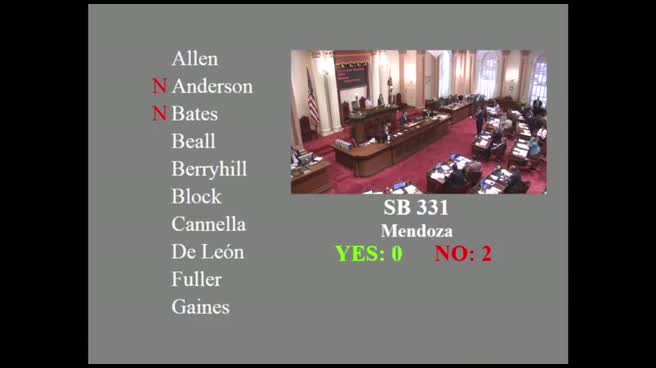 2MIN
Senate Floor
 3MIN
Assembly Floor
 59SEC
Assembly Floor
 45SEC
Assembly Floor
 44MIN
Assembly Standing Committee on Judiciary
 5MIN
Senate Floor
 21MIN
Senate Standing Committee on Judiciary
Bill Author
Bill Co-Author(s):