SB 513: Carl Moyer Memorial Air Quality Standards Attainment Program: fees.
- Session Year: 2015-2016
- House: Senate
- Latest Version Date: 2015-10-08
(1)Existing law authorizes the Sacramento Metropolitan Air Quality Management District to adopt a $6 surcharge on motor vehicle registration fees applicable to motor vehicles registered within the district. Existing law requires the collected fees to be used for specified purposes, including, among others, awarding grants eligible for funding under the Carl Moyer Memorial Air Quality Standards Attainment Program.
This bill would additionally authorize those fees to be used for projects that involve alternative fuel and electric infrastructure, as specified.
(2)Existing law authorizes an air pollution control or air quality management district, except the Sacramento district, that has been designated by the State Air Resources Board as a state nonattainment area for any pollutant emitted by motor vehicles to levy a fee of up to $6 on motor vehicles registered within the air district, subject to specified conditions.
This bill instead would authorize any air district, except the Sacramento district, regardless of its state attainment designation to levy a fee of up to $6 on motor vehicles registered within the air district. The bill also would authorize those fees to be used for the attainment or maintenance of state or federal ambient air quality standards or the reduction of toxic air contaminant emissions from motor vehicles and for alternative fuel and electric infrastructure projects, as specified.
(3)Existing law establishes the Carl Moyer Memorial Air Quality Standards Attainment Program, which is administered by the state board, to provide grants to offset the incremental cost of eligible projects that reduce emissions of air pollutants from vehicular sources in the state and for the funding of a fueling infrastructure demonstration program and technology development efforts.
This bill would revise and recast provisions of the program, including, among others, changing the definition of covered source to include any marine vessel and any other category necessary for the state and air districts to meet air quality goals; authorizing the state board to adjust, rather than just reduce, the values of the maximum grant award criteria to improve the ability of the program to achieve its goals; authorizing the state board to reserve up to 10% of the program moneys available each year to directly fund any project that is a covered source, as defined, or a specified eligible project; removing the prohibition on using specified motor vehicle registration fees as matching funds; requiring the state board, instead of the State Energy Resources Conservation and Development Commission, to publish procedures to monitor and audit infrastructure projects; increasing the authorization for support and outreach costs from not more than 2% to not more than 2.5% of the moneys for use by the program in the Air Pollution Control Fund; removing the repeal date of January 1, 2024, from the provisions on how moneys in the Air Pollution Control Fund are allocated and segregated; removing the repeal date of January 1, 2024, from the provisions regarding the terms and conditions for an allocation of moneys to an air district; and requiring an air district to liquidate, as defined, the moneys by June 30 of the fourth year following the year of allocation and to return, as defined, those moneys that have not been liquidated to the state board within 90 days.
(4)The California Global Warming Solutions Act of 2006 establishes the state board as the state agency responsible for monitoring and regulating sources emitting greenhouse gases. The act authorizes the state board to include the use of market-based compliance mechanisms. Existing law requires all moneys, except for fines and penalties, collected by the state board from the auction or sale of allowances as part of a market-based compliance mechanism to be deposited in the Greenhouse Gas Reduction Fund and to be available upon appropriation by the Legislature.
This bill would authorize the state board to allocate moneys from the Greenhouse Gas Reduction Fund and other specified sources for the Carl Moyer Memorial Air Quality Standards Attainment Program without those other moneys being required to be factored into the criteria emission reduction cost-effectiveness calculations.
(1)Existing law authorizes the Sacramento Metropolitan Air Quality Management District to adopt a $6 surcharge on motor vehicle registration fees applicable to motor vehicles registered within the district. Existing law requires the collected fees to be used for specified purposes, including, among others, awarding grants eligible for funding under the Carl Moyer Memorial Air Quality Standards Attainment Program.
This bill would additionally authorize those fees to be used for projects that involve alternative fuel and electric infrastructure, as specified.
(2)Existing law authorizes an air pollution control or air quality management district, except the Sacramento district, that has been designated by the State Air Resources Board as a state nonattainment area for any pollutant emitted by motor vehicles to levy a fee of up to $6 on motor vehicles registered within the air district, subject to specified conditions.
This bill instead would authorize any air district, except the Sacramento district, regardless of its state attainment designation to levy a fee of up to $6 on motor vehicles registered within the air district. The bill also would authorize those fees to be used for the attainment or maintenance of state or federal ambient air quality standards or the reduction of toxic air contaminant emissions from motor vehicles and for alternative fuel and electric infrastructure projects, as specified.
(3)Existing law establishes the Carl Moyer Memorial Air Quality Standards Attainment Program, which is administered by the state board, to provide grants to offset the incremental cost of eligible projects that reduce emissions of air pollutants from vehicular sources in the state and for the funding of a fueling infrastructure demonstration program and technology development efforts.
This bill would revise and recast provisions of the program, including, among others, changing the definition of covered source to include any marine vessel and any other category necessary for the state and air districts to meet air quality goals; authorizing the state board to adjust, rather than just reduce, the values of the maximum grant award criteria to improve the ability of the program to achieve its goals; authorizing the state board to reserve up to 10% of the program moneys available each year to directly fund any project that is a covered source, as defined, or a specified eligible project; removing the prohibition on using specified motor vehicle registration fees as matching funds; requiring the state board, instead of the State Energy Resources Conservation and Development Commission, to publish procedures to monitor and audit infrastructure projects; increasing the authorization for support and outreach costs from not more than 2% to not more than 2.5% of the moneys for use by the program in the Air Pollution Control Fund; removing the repeal date of January 1, 2024, from the provisions on how moneys in the Air Pollution Control Fund are allocated and segregated; removing the repeal date of January 1, 2024, from the provisions regarding the terms and conditions for an allocation of moneys to an air district; and requiring an air district to liquidate, as defined, the moneys by a specified date 4 years June 30 of the fourth year following the year of allocation and to return, as defined, those moneys that have not been liquidated to the state board within 90 days.
(4)The California Global Warming Solutions Act of 2006 establishes the state board as the state agency responsible for monitoring and regulating sources emitting greenhouse gases. The act authorizes the state board to include the use of market-based compliance mechanisms. Existing law requires all moneys, except for fines and penalties, collected by the state board from the auction or sale of allowances as part of a market-based compliance mechanism to be deposited in the Greenhouse Gas Reduction Fund and to be available upon appropriation by the Legislature.
This bill would authorize the state board to allocate moneys from the Greenhouse Gas Reduction Fund and other specified sources for the Carl Moyer Memorial Air Quality Standards Attainment Program without those other moneys being required to be factored into the criteria emission reduction cost-effectiveness calculations.
(1)Existing law authorizes the Sacramento Metropolitan Air Quality Management District to adopt a $6 surcharge on motor vehicle registration fees applicable to motor vehicles registered within the district. Existing law requires the collected fees to be used for specified purposes, including, among others, awarding grants eligible for funding under the Carl Moyer Memorial Air Quality Standards Attainment Program.
This bill would additionally authorize those fees to be used for projects that involve alternative fuel and electric infrastructure, as specified.
(2)Existing law authorizes an air pollution control or air quality management district, except the Sacramento district, that has been designated by the State Air Resources Board as a state nonattainment area for any pollutant emitted by motor vehicles to levy a fee of up to $6 on motor vehicles registered within the air district, subject to specified conditions.
This bill instead would authorize any air district, except the Sacramento district, regardless of its state attainment designation to levy a fee of up to $6 on motor vehicles registered within the air district. The bill also would authorize those fees to be used for the attainment or maintenance of state or federal ambient air quality standards or the reduction of toxic air contaminant emissions from motor vehicles and for alternative fuel and electric infrastructure projects, as specified.
(3)Existing law establishes the Carl Moyer Memorial Air Quality Standards Attainment Program, which is administered by the state board, to provide grants to offset the incremental cost of eligible projects that reduce emissions of air pollutants from vehicular sources in the state and for the funding of a fueling infrastructure demonstration program and technology development efforts.
This bill would revise and recast provisions of the program, including, among others, changing the definition of covered source to include any marine vessel and any other category necessary for the state and air districts to meet air quality goals; authorizing the state board to adjust, rather than just reduce, the values of the maximum grant award criteria to improve the ability of the program to achieve its goals; authorizing the state board to reserve up to 10% of the program moneys available each year to directly fund any project that is a covered source, as defined, or a specified eligible project; removing the prohibition on using specified motor vehicle registration fees as matching funds; requiring the state board, instead of the State Energy Resources Conservation and Development Commission, to publish procedures to monitor and audit infrastructure projects; increasing the authorization for support and outreach costs from not more than 2% to not more than 2.5% of the moneys for use by the program in the Air Pollution Control Fund; removing the repeal date of January 1, 2024, from the provisions on how moneys in the Air Pollution Control Fund are allocated and segregated; removing the repeal date of January 1, 2024, from the provisions regarding the terms and conditions for an allocation of moneys to an air district; and requiring an air district to liquidate, as defined, the moneys by a specified date 4 years following the year of allocation and to return, as defined, those moneys that have not been liquidated to the state board within 90 days.
(4)The California Global Warming Solutions Act of 2006 establishes the state board as the state agency responsible for monitoring and regulating sources emitting greenhouse gases. The act authorizes the state board to include the use of market-based compliance mechanisms. Existing law requires all moneys, except for fines and penalties, collected by the state board from the auction or sale of allowances as part of a market-based compliance mechanism to be deposited in the Greenhouse Gas Reduction Fund and to be available upon appropriation by the Legislature.
This bill would authorize the state board to allocate moneys from the Greenhouse Gas Reduction Fund and other specified sources for the Carl Moyer Memorial Air Quality Standards Attainment Program without those other moneys being required to be factored into the criteria emission reduction cost-effectiveness calculations.
(1)Existing law authorizes the Sacramento Metropolitan Air Quality Management District to adopt a $6 surcharge on motor vehicle registration fees applicable to motor vehicles registered within the district. Existing law requires the collected fees to be used for specified purposes, including, among others, awarding grants eligible for funding under the Carl Moyer Memorial Air Quality Standards Attainment Program.
This bill would additionally authorize those fees to be used for projects that involve alternative fuel and electric infrastructure, as specified.
(2)Existing law authorizes an air pollution control or air quality management district, except the Sacramento district, that has been designated by the State Air Resources Board as a state nonattainment area for any pollutant emitted by motor vehicles to levy a fee of up to $6 on motor vehicles registered within the air district, subject to specified conditions.
This bill instead would authorize any air district, except the Sacramento district, regardless of its state attainment designation to levy a fee of up to $6 on motor vehicles registered within the air district. The bill also would authorize those fees to be used for the attainment or maintenance of state or federal ambient air quality standards or the reduction of toxic air contaminant emissions from motor vehicles and for alternative fuel and electric infrastructure projects, as specified.
(3)Existing law establishes the Carl Moyer Memorial Air Quality Standards Attainment Program, which is administered by the state board, to provide grants to offset the incremental cost of eligible projects that reduce emissions of air pollutants from vehicular sources in the state and for the funding of a fueling infrastructure demonstration program and technology development efforts.
This bill would revise and recast provisions of the program, including, among others, changing the definition of covered source to include any marine vessel and any other category necessary for the state and air districts to meet air quality goals; authorizing the state board to adjust, rather than just reduce, the values of the maximum grant award criteria to improve the ability of the program to achieve its goals; authorizing the state board to reserve up to 10% of the program moneys available each year to directly fund any project the state board determines contributes toward the achievement of state air quality goals that is a covered source, as defined, or a specified eligible project; removing the prohibition on using specified motor vehicle registration fees as matching funds; requiring the state board, instead of the State Energy Resources Conservation and Development Commission, to publish procedures to monitor and audit infrastructure projects; increasing the authorization for support and outreach costs from not more than 2% to not more than 2.5% of the moneys for use by the program in the Air Pollution Control Fund; removing the repeal date of January 1, 2024, from the provisions on how moneys in the Air Pollution Control Fund are allocated and segregated; removing the repeal date of January 1, 2024, from the provisions regarding the terms and conditions for an allocation of moneys to an air district; and requiring an air district to liquidate, as defined, the moneys by a specified date 4 years following the year of allocation and to return, as defined, those moneys that have not been liquidated to the state board within 90 days.
(4)The California Global Warming Solutions Act of 2006 establishes the state board as the state agency responsible for monitoring and regulating sources emitting greenhouse gases. The act authorizes the state board to include the use of market-based compliance mechanisms. Existing law requires all moneys, except for fines and penalties, collected by the state board from the auction or sale of allowances as part of a market-based compliance mechanism to be deposited in the Greenhouse Gas Reduction Fund and to be available upon appropriation by the Legislature.
This bill would authorize the state board to allocate moneys from the Greenhouse Gas Reduction Fund and other specified sources for the Carl Moyer Memorial Air Quality Standards Attainment Program without those other moneys being required to be factored into the criteria emission reduction cost-effectiveness calculations.
(1)Existing law authorizes the Sacramento Metropolitan Air Quality Management District to adopt a $6 surcharge on motor vehicle registration fees applicable to motor vehicles registered within the district. Existing law requires the collected fees to be used for specified purposes, including, among others, awarding grants eligible for funding under the Carl Moyer Memorial Air Quality Standards Attainment Program.
This bill would additionally authorize those fees to be used for projects that involve alternative fuel and electric infrastructure, as specified.
(2)Existing law authorizes an air pollution control or air quality management district, except the Sacramento district, that has been designated by the State Air Resources Board as a state nonattainment area for any pollutant emitted by motor vehicles to levy a fee of up to $6 on motor vehicles registered within the air district, subject to specified conditions.
This bill instead would authorize any air district, except the Sacramento district, regardless of its state attainment designation to levy a fee of up to $6 on motor vehicles registered within the air district. The bill also would authorize those fees to be used for the attainment or maintenance of state or federal ambient air quality standards or the reduction of toxic air contaminant emissions from motor vehicles and for alternative fuel and electric infrastructure projects, as specified.
(3)Existing law establishes the Carl Moyer Memorial Air Quality Standards Attainment Program, which is administered by the state board, to provide grants to offset the incremental cost of eligible projects that reduce emissions of air pollutants from vehicular sources in the state and for funding a fueling infrastructure demonstration program and technology development efforts.
This bill would revise and recast provisions of the program, including, among others, changing the definition of covered source to include any marine vessel and any other category necessary for the state and air districts to meet air quality goals; authorizing the state board to adjust, rather than just reduce, the values of the maximum grant award criteria to improve the ability of the program to achieve its goals; authorizing the state board to reserve up to 10% of the program moneys available each year to directly fund any project the state board determines contributes toward the achievement of state air quality goals; removing the prohibition on using specified motor vehicle registration fees as matching funds; requiring the state board, instead of the State Energy Resources Conservation and Development Commission, to publish procedures to monitor and audit infrastructure projects; increasing the authorization for support and outreach costs from not more than 2% to not more than 2.5% of the moneys in the Air Pollution Control Fund; removing the repeal date of January 1, 2024, from the provisions on how moneys in the Air Pollution Control Fund are allocated and segregated; removing the repeal date of January 1, 2024, from the provisions regarding the terms and conditions for an allocation of moneys to an air district; and requiring an air district to liquidate the moneys by a specified date 4 years following the year of allocation and to return those moneys that have not been liquidated to the state board within 90 days.
(4)The California Global Warming Solutions Act of 2006 establishes the state board as the state agency responsible for monitoring and regulating sources emitting greenhouse gases. The act authorizes the state board to include the use of market-based compliance mechanisms. Existing law requires all moneys, except for fines and penalties, collected by the state board from the auction or sale of allowances as part of a market-based compliance mechanism to be deposited in the Greenhouse Gas Reduction Fund and to be available upon appropriation by the Legislature.
This bill would authorize the state board to allocate moneys from the Greenhouse Gas Reduction Fund and other specified sources for the Carl Moyer Memorial Air Quality Standards Attainment Program without those other moneys being required to be factored into the criteria emission reduction cost-effectiveness calculations.
Existing law establishes the Carl Moyer Memorial Air Quality Standards Attainment Program, which is administered by the State Air Resources Board, to provide grants to offset the incremental cost of eligible projects that reduce emissions of air pollutants from vehicular sources in the state and for funding a fueling infrastructure demonstration program and technology development efforts.
This bill would state the intent of the Legislature to enact legislation to amend the program to achieve even greater air quality benefits.
(a)Subject to Article 3.7 (commencing with Section 53720) of Chapter 4 of Part 1 of Division 2 of Title 5 of the Government Code, or with the approval of the board of supervisors of each county included, in whole or in part, within the Sacramento district, the Sacramento district board may adopt a surcharge on the motor vehicle registration fees applicable to all motor vehicles registered in those counties within the Sacramento district whose boards of supervisors have adopted a resolution approving the surcharge. The surcharge shall be collected by the Department of Motor Vehicles and, after deducting the departments administrative costs, the remaining funds shall be transferred to the Sacramento district. Prior to the adoption of any surcharge pursuant to this subdivision, the district board shall make a finding that any funds allocated to the district as a result of the adoption of a county transportation sales and use tax are insufficient to carry out the purposes of this chapter.
(b)The surcharge shall not exceed six dollars ($6).
(c)After consulting with the Department of Motor Vehicles on the feasibility thereof, the Sacramento district board may provide, in the surcharge adopted pursuant to subdivision (a), to exempt from all or part of the surcharge any category of low-emission motor vehicle.
(d)Funds received by the Sacramento district pursuant to this section shall be used by that district as follows:
(1)The revenues resulting from the first four dollars ($4) of each surcharge shall be used to implement reductions in emissions from vehicular sources, including, but not limited to, a clean fuels program and motor vehicle use reduction measures.
(2)The revenues resulting from the next two dollars ($2) of each surcharge shall be used to implement the following programs that achieve emission reductions from vehicular sources and off-road engines, to the extent that the district determines the program remediates air pollution harms created by motor vehicles on which the surcharge is imposed:
(A)Projects eligible for grants under the Carl Moyer Memorial Air Quality Standards Attainment Program (Chapter 9 (commencing with Section 44275) of Part 5).
(B)The new purchase, retrofit, repower, or add-on of equipment for previously unregulated agricultural sources of air pollution, as defined in Section 39011.5, within the Sacramento district, for a minimum of three years from the date of adoption of an applicable rule or standard, or until the compliance date of that rule or standard, whichever is later, if the state board has determined that the rule or standard complies with Sections 40913, 40914, and 41503.1, after which period of time, a new purchase, retrofit, repower, or add-on of equipment shall not be funded pursuant to this chapter. The district shall follow any guidelines developed under subdivision (a) of Section 44287 for awarding grants under this program.
(C)The purchase of new schoolbuses or the repower or retrofit of emissions control equipment for existing schoolbuses pursuant to the Lower-Emission School Bus Program adopted by the state board.
(D)An accelerated vehicle retirement or repair program that is adopted by the state board pursuant to authority granted hereafter by the Legislature by statute.
(E)The replacement of onboard natural gas fuel tanks on schoolbuses that are 14 years or older or the enhancement of deteriorating natural gas fueling dispensers of fueling infrastructure, pursuant to the Lower-Emission School Bus Program adopted by the state board.
(F)The funding of alternative fuel and electric infrastructure projects solicited and selected through a competitive bid process.
(e)Not more than 6.25 percent of the funds collected pursuant to this section shall be used by the district for administrative expenses.
(f)A project funded by the program shall not be used for credit under any state or federal emissions averaging, banking, or trading program. An emission reduction generated by the program shall not be used as marketable emission reduction credits or to offset any emission reduction obligation of any person or entity. Projects involving new engines that would otherwise generate marketable credits under state or federal averaging, banking, and trading programs shall include transfer of credits to the engine end user and retirement of those credits toward reducing air emissions in order to qualify for funding under the program. A purchase of a low-emission vehicle or of equipment pursuant to a corporate or a controlling boards policy, but not otherwise required by law, shall generate surplus emissions reductions and may be funded by the program.
(g)This section shall remain in effect only until January 1, 2024, and as of that date is repealed, unless a later enacted statute, that is enacted before January 1, 2024, deletes or extends that date.
SEC. 2.Section 44223 of the Health and Safety Code is amended to read:44223.(a)In addition to any other fees specified in this code, the Vehicle Code, and the Revenue and Taxation Code, a district, except the Sacramento district, may levy a fee of up to two dollars ($2) on motor vehicles registered within the district. A district may impose the fee only if the district board adopts a resolution providing for both the fee and a corresponding program for the reduction of air pollution from motor vehicles pursuant to, and for related planning, monitoring, enforcement, and technical studies necessary for the implementation of, the California Clean Air Act of 1988 (Chapter 1568 of the Statutes of 1988), or for the attainment or maintenance of state or federal ambient air quality standards or the reduction of toxic air contaminant emissions from motor vehicles.
(b)In districts with nonelected officials on their boards, a resolution adopted pursuant to subdivision (a) shall be approved by both a majority of the board and a majority of the board members who are elected officials.
(c)A fee imposed pursuant to this section shall become effective on either April 1 or October 1, as provided in the resolution adopted by the board pursuant to subdivision (a).
SEC. 3.Section 44225 of the Health and Safety Code, as amended by Section 6 of Chapter 401 of the Statutes of 2013, is amended to read:44225.A district may increase the fee established under Section 44223 to up to six dollars ($6). A district may increase the fee only if the following conditions are met:
(a)A resolution providing for both the fee increase and a corresponding program for expenditure of the increased fees for the reduction of air pollution from motor vehicles pursuant to, and for related planning, monitoring, enforcement, and technical studies necessary for the implementation of, the California Clean Air Act of 1988 (Chapter 1568 of the Statutes of 1988), or for the attainment or maintenance of state or federal ambient air quality standards or the reduction of toxic air contaminant emissions from motor vehicles, is adopted and approved by the governing board of the district.
(b)In districts with nonelected officials on their governing boards, the resolution shall be adopted and approved by both a majority of the governing board and a majority of the board members who are elected officials.
(c)An increase in fees established pursuant to this section shall become effective on either April 1 or October 1, as provided in the resolution adopted by the board pursuant to subdivision (a).
(d)This section shall remain in effect only until January 1, 2024, and as of that date is repealed, unless a later enacted statute, that is enacted before January 1, 2024, deletes or extends that date.
SEC. 4.Section 44229 of the Health and Safety Code, as amended by Section 8 of Chapter 401 of the Statutes of 2013, is amended to read:44229.(a)After deducting all administrative costs it incurs through collection of fees pursuant to Section 44227, the Department of Motor Vehicles shall distribute the revenues to districts, which shall use the revenues resulting from the first four dollars ($4) of each fee imposed to reduce air pollution from motor vehicles and to carry out related planning, monitoring, enforcement, and technical studies necessary for implementation of the California Clean Air Act of 1988 (Chapter 1568 of the Statutes of 1988). Fees collected by the Department of Motor Vehicles pursuant to this chapter shall be distributed to districts based upon the amount of fees collected from motor vehicles registered within each district.
(b)Notwithstanding Sections 44241 and 44243, a district shall use the revenues resulting from the next two dollars ($2) of each fee imposed pursuant to Section 44227 to implement the following programs that the district determines remediate air pollution harms created by motor vehicles on which the surcharge is imposed:
(1)Projects eligible for grants under the Carl Moyer Memorial Air Quality Standards Attainment Program (Chapter 9 (commencing with Section 44275) of Part 5).
(2)The new purchase, retrofit, repower, or add-on equipment for previously unregulated agricultural sources of air pollution, as defined in Section 39011.5, for a minimum of three years from the date of adoption of an applicable rule or standard, or until the compliance date of that rule or standard, whichever is later, if the state board has determined that the rule or standard complies with Sections 40913, 40914, and 41503.1, after which period of time, a new purchase, retrofit, repower, or add-on of equipment shall not be funded pursuant to this chapter. The districts shall follow any guidelines developed under subdivision (a) of Section 44287 for awarding grants under this program.
(3)The purchase of new schoolbuses or the repower or retrofit of emissions control equipment for existing schoolbuses pursuant to the Lower-Emission School Bus Program adopted by the state board.
(4)An accelerated vehicle retirement or repair program that is adopted by the state board pursuant to authority granted hereafter by the Legislature by statute.
(5)The replacement of onboard natural gas fuel tanks on schoolbuses that are 14 years or older or the enhancement of deteriorating natural gas fueling dispensers of fueling infrastructure, pursuant to the Lower-Emission School Bus Program adopted by the state board.
(6)The funding of alternative fuel and electric infrastructure projects solicited and selected through a competitive bid process.
(c)The Department of Motor Vehicles may annually expend not more than 1 percent of the fees collected pursuant to Section 44227 on administrative costs.
(d)A project funded by the program shall not be used for credit under any state or federal emissions averaging, banking, or trading program. An emission reduction generated by the program shall not be used as marketable emission reduction credits or to offset any emission reduction obligation of any person or entity. Projects involving new engines that would otherwise generate marketable credits under state or federal averaging, banking, and trading programs shall include transfer of credits to the engine end user and retirement of those credits toward reducing air emissions in order to qualify for funding under the program. A purchase of a low-emission vehicle or of equipment pursuant to a corporate or a controlling boards policy, but not otherwise required by law, shall generate surplus emissions reductions and may be funded by the program.
(e)This section shall remain in effect only until January 1, 2024, and as of that date is repealed, unless a later enacted statute, that is enacted before January 1, 2024, deletes or extends that date.
SEC. 5.Section 44233 of the Health and Safety Code is amended to read:44233.Not more than 6.25 percent of the fees distributed to any district pursuant to Section 44229, or distributed by a district to any other public agency pursuant to this chapter, shall be used by the district or other public agency for administrative costs.
SEC. 6.Section 44275 of the Health and Safety Code, as amended by Section 15 of Chapter 401 of the Statutes of 2013, is amended to read:44275.(a)As used in this chapter, the following terms have the following meanings:
(1)[Reserved]
(2)Btu means British thermal unit.
(3)Commission means the State Energy Resources Conservation and Development Commission.
(4)Cost-effectiveness means dollars provided to a project pursuant to subdivision (d) of Section 44283 for each ton of covered emission reduction attributed to a project or to the program as a whole. In calculating cost-effectiveness, one-time grants of funds made at the beginning of a project shall be annualized using a time value of public funds or discount rate determined for each project by the state board, taking into account the interest rate on bonds, interest earned by state funds, and other factors as determined appropriate by the state board. Cost-effectiveness shall be calculated by dividing annualized costs by average annual emissions reduction. The state board, in consultation with the districts and concerned members of the public, shall establish appropriate cost-effective limits for oxides of nitrogen, particulate matter, and reactive organic gases and a reasonable system for comparing the cost-effectiveness of proposed projects as described in subdivision (a) of Section 44283.
(5)Covered emissions include emissions of oxides of nitrogen, particulate matter, and reactive organic gases from any covered source.
(6)Covered engine includes any internal combustion engine or electric motor and drive powering a covered source.
(7)Covered source includes onroad vehicles, off-road nonrecreational equipment and vehicles, locomotives, marine vessels, agricultural sources of air pollution, as defined in Section 39011.5, and, as determined by the state board, other categories necessary for the state and districts to meet air quality goals.
(8)Covered vehicle includes any vehicle or piece of equipment powered by a covered engine.
(9)District means a county air pollution control district or an air quality management district.
(10)Fund means the Air Pollution Control Fund established pursuant to Section 43015.
(11)Incremental cost means the cost of the project less a baseline cost that would otherwise be incurred by the applicant in the normal course of business. Incremental costs may include added lease, energy, or fuel costs pursuant to Section 44283 as well as incremental capital costs.
(12)Liquidated means that all moneys for a specified fiscal year have been spent by a district to reimburse grantees for valid and eligible project invoices and district administrative costs. Payments withheld from the grantee by a district until all contractual reporting requirements are met may be excluded from these amounts for the purposes of liquidation.
(13)Mobile Source Air Pollution Reduction Review Committee means the Mobile Source Air Pollution Reduction Review Committee created by Section 44244.
(14)New very low emission vehicle means a heavy-duty vehicle that qualifies as a very low emission vehicle when it is a new vehicle, where new vehicle has the same meaning as defined in Section 430 of the Vehicle Code, or that is modified with the approval and warranty of the original equipment manufacturer to qualify as a very low emission vehicle within 12 months of delivery to an owner for private or commercial use.
(15)NOx means oxides of nitrogen.
(16)Program means the Carl Moyer Memorial Air Quality Standards Attainment Program created by subdivision (a) of Section 44280.
(17)Recaptured means those moneys that are returned to a district or the state board by a grantee because that grantee did not meet contractual obligations.
(18)Repower means replacing an engine with a different engine. The term repower, as used in this chapter, generally refers to replacing an older, uncontrolled engine with a new, emissions-certified engine, although replacing an older emissions-certified engine with a newer engine certified to lower emissions standards may be eligible for funding under this program.
(19)Retrofit means making modifications to the engine and fuel system so that the retrofitted engine does not have the same specifications as the original engine.
(20)Returned means those moneys sent by a district to the state board for reallocation because those moneys are not liquidated by a liquidation deadline.
(21)Schoolbus project means the purchase of new schoolbuses or the repower or retrofit of emissions control equipment for existing schoolbuses.
(22)Very low emission vehicle means a heavy-duty vehicle with emissions significantly lower than otherwise applicable baseline emission standards or uncontrolled emission levels pursuant to Section 44282.
(b)This section shall remain in effect only until January 1, 2024, and as of that date is repealed, unless a later enacted statute, that is enacted before January 1, 2024, deletes or extends that date.
SEC. 7.Section 44275 of the Health and Safety Code, as amended by Section 16 of Chapter 401 of the Statutes of 2013, is amended to read:44275.(a)As used in this chapter, the following terms have the following meanings:
(1)[Reserved]
(2)Btu means British thermal unit.
(3)Commission means the State Energy Resources Conservation and Development Commission.
(4)Cost-effectiveness means dollars provided to a project pursuant to subdivision (d) of Section 44283 for each ton of NOx reduction attributed to a project or to the program as a whole. In calculating cost-effectiveness, one-time grants of funds made at the beginning of a project shall be annualized using a time value of public funds or discount rate determined for each project by the state board, taking into account the interest rate on bonds, interest earned by state funds, and other factors as determined appropriate by the state board. Cost-effectiveness shall be calculated by dividing annualized costs by average annual emissions reduction of NOx in this state.
(5)Covered engine includes any internal combustion engine or electric motor and drive powering a covered source.
(6)Covered source includes onroad vehicles of 14,000 pounds gross vehicle weight rating (GVWR) or greater, off-road nonrecreational equipment and vehicles, locomotives, diesel marine vessels, stationary agricultural engines, and, as determined by the state board, other high-emitting diesel engine categories.
(7)Covered vehicle includes any vehicle or piece of equipment powered by a covered engine.
(8)District means a county air pollution control district or an air quality management district.
(9)Fund means the Air Pollution Control Fund established pursuant to Section 43015.
(10)Incremental cost means the cost of the project less a baseline cost that would otherwise be incurred by the applicant in the normal course of business. Incremental costs may include added lease or fuel costs pursuant to Section 44283 as well as incremental capital costs.
(11)Liquidated means that all moneys for a specified fiscal year have been spent by a district to reimburse grantees for valid and eligible project invoices and district administrative costs. Payments withheld from the grantee by a district until all contractual reporting requirements are met may be excluded from these amounts for the purposes of liquidation.
(12)Mobile Source Air Pollution Reduction Review Committee means the Mobile Source Air Pollution Reduction Review Committee created by Section 44244.
(13)New very low emission vehicle means a vehicle that qualifies as a very low emission vehicle when it is a new vehicle, where new vehicle has the same meaning as defined in Section 430 of the Vehicle Code, or that is modified with the approval and warranty of the original equipment manufacturer to qualify as a very low emission vehicle within 12 months of delivery to an owner for private or commercial use.
(14)NOx means oxides of nitrogen.
(15)Program means the Carl Moyer Memorial Air Quality Standards Attainment Program created by subdivision (a) of Section 44280.
(16)Recaptured means those moneys that are returned to a district or the state board by a grantee because that grantee did not meet contractual obligations.
(17)Repower means replacing an engine with a different engine. The term repower, as used in this chapter, generally refers to replacing an older, uncontrolled engine with a new, emissions-certified engine, although replacing an older emissions-certified engine with a newer engine certified to lower emissions standards may be eligible for funding under this program.
(18)Retrofit means making modifications to the engine and fuel system such that the retrofitted engine does not have the same specifications as the original engine.
(19)Returned means those moneys sent by a district to the state board for reallocation because those moneys are not liquidated by a liquidation deadline.
(20)Schoolbus project means the purchase of new schoolbuses or the repower or retrofit of emissions control equipment for existing schoolbuses.
(21)Very low emission vehicle means a vehicle with emissions significantly lower than otherwise applicable baseline emission standards or uncontrolled emission levels pursuant to Section 44282.
(b)This section shall become operative on January 1, 2024.
SEC. 8.Section 44281 of the Health and Safety Code, as amended by Section 19 of Chapter 401 of the Statutes of 2013, is amended to read:44281.(a)Eligible projects include, but are not limited to, any of the following:
(1)Purchase of new very low or zero-emission covered vehicles or covered heavy-duty engines.
(2)Emission-reducing retrofit of covered engines, or replacement of old engines powering covered sources with newer engines certified to more stringent emissions standards than the engine being replaced, or with electric motors or drives.
(3)Purchase and use of emission-reducing add-on equipment that has been verified by the state board for covered vehicles.
(4)Development and demonstration of practical, low-emission retrofit technologies, repower options, and advanced technologies for covered engines and vehicles with very low emissions of NOx.
(5)Light- and medium-duty vehicle projects in compliance with guidelines adopted by the state board pursuant to Title 13 of the California Code of Regulations.
(b)No project shall be funded under this chapter after the compliance date required by any local, state, or federal statute, rule, regulation, memoranda of agreement or understanding, or other legally binding document, except that an otherwise qualified project may be funded even if the state implementation plan assumes that the change in equipment, vehicles, or operations will occur, if the change is not required by the compliance date of a statute, regulation, or other legally binding document in effect as of the date the grant is awarded. No project funded by the program shall be used for credit under any state or federal emissions averaging, banking, or trading program. No covered emission reduction generated by the program shall be used as marketable emission reduction credits or to offset any emission reduction obligation of any person or entity. Projects involving new engines that would otherwise generate marketable credits under state or federal averaging, banking, and trading programs shall include transfer of credits to the engine end user and retirement of those credits toward reducing air emissions in order to qualify for funding under the program. A purchase of a low-emission vehicle or of equipment pursuant to a corporate or a controlling boards policy, but not otherwise required by law, shall generate surplus emissions reductions and may be funded by the program.
(c)The program may also provide funding toward the installation of fueling or energy infrastructure to fuel or power covered sources.
(d)Eligible applicants may be any individual, company, or public agency that owns one or more covered vehicles that operate primarily within California or otherwise contribute substantially to the NOx, particulate matter (PM), or reactive organic gas (ROG) emissions inventory in California.
(e)It is the intent of the Legislature that all emission reductions generated by this chapter shall contribute to public health by reducing, for the life of the vehicle being funded, the total amount of emissions in California.
(f)This section shall remain in effect only until January 1, 2024, and as of that date is repealed, unless a later enacted statute, that is enacted before January 1, 2024, deletes or extends that date.
SEC. 9.Section 44282 of the Health and Safety Code, as amended by Section 21 of Chapter 401 of the Statutes of 2013, is amended to read:44282.The following criteria apply to all projects to be funded through the program except for projects funded through the infrastructure demonstration program and infrastructure projects, pursuant to subdivision (c) of Section 44281 and Section 44284:
(a)The state board may establish project criteria, including minimum project life for source categories, in the guidelines described in Section 44287. For previously unregulated source categories, project criteria shall consider the timing of newly established regulatory requirements.
(b)To be eligible, projects shall meet the cost-effectiveness per ton of covered emissions reduced requirements of Section 44283.
(c)To be eligible, retrofits, repowers, and installation of add-on equipment for covered vehicles shall be performed, or new covered vehicles delivered to the end user, or covered vehicles scrapped on or after the date the program is implemented.
(d)Retrofit technologies, new engines, and new vehicles shall be certified for sale or under experimental permit for operation in California.
(e)Repower projects that replace older, uncontrolled engines with new, emissions-certified engines or that replace emissions-certified engines with new engines certified to a more stringent NOx emissions standard are approvable subject to the other applicable selection criteria. The state board shall determine appropriate baseline emission levels for the uncontrolled engines being replaced.
(f)For heavy-duty-vehicle projects, retrofit and add-on equipment projects shall document a NOx or PM emission reduction of at least 25 percent and no increase in other covered emissions compared to the applicable baseline emissions accepted by the state board for that engine year and application. The state board shall determine appropriate baseline emission levels. Acceptable documentation shall be defined by the state board. After study of available emission reduction technologies and after public notice and comment, the state board may revise the minimum percentage emission reduction criterion for retrofits and add-on equipment provided for in this section to improve the ability of the program to achieve its goals.
(g)(1)For heavy-duty-vehicle projects involving the purchase of new very low or zero-emission vehicles, engines shall be certified to an optional low NOx emissions standard established by the state board, except as provided for in paragraph (2).
(2)For heavy-duty-vehicle projects involving the purchase of new very low or zero-emission covered vehicles for which no optional low NOx emission standards are available, documentation shall be provided showing that the low or zero-emission engine emits not more than 70 percent of the NOx or NOx plus hydrocarbon emissions of a new engine certified to the applicable baseline NOx or NOx plus hydrocarbon emission standard for that engine and meets applicable particulate standards. The state board shall specify the documentation required. If no baseline emission standard exists for new vehicles in a particular category, the state board shall determine an appropriate baseline emission level for comparison.
(h)For projects other than heavy-duty-vehicle projects, the state board shall determine appropriate criteria under the provisions of Section 44287.
(i)This section shall remain in effect only until January 1, 2024, and as of that date is repealed, unless a later enacted statute, that is enacted before January 1, 2024, deletes or extends that date.
SEC. 10.Section 44283 of the Health and Safety Code, as amended by Section 23 of Chapter 401 of the Statutes of 2013, is amended to read:44283.(a)(1)For all projects funded pursuant to this chapter, except for an infrastructure project described in subdivision (c) of Section 44281, the following cost-effectiveness criteria shall apply:
(A)(i)Project grants shall not be made that exceed cost-effectiveness values calculated in accordance with this section.
(ii)The state board, in collaboration with the districts, shall establish cost-effectiveness values in the guidelines issued pursuant to Section 44287, taking into consideration factors, including, but not limited to, the following:
(I)The cost of emission control technologies identified in Section 44281.
(II)The cost-effectiveness values for NOx, particulate matter, or reactive organic gases for any adopted rule or control measure in any districts approved state implementation plan, or rule adopted by the state board.
(iii)A grant for a schoolbus project shall not exceed the cost caps established in the Lower-Emission School Bus Program and consistent with Section 44299.901. The cost-effectiveness value for these projects shall be set forth in the guidelines issued pursuant to Section 44287.
(B)For projects obtaining reactive organic gas and particulate matter reductions, the state board shall determine appropriate adjustment factors to calculate a weighted cost-effectiveness value.
(2)When a district board approves funding for a project or project category, the district board shall include, in its agenda or supporting materials for the meeting approving funding for the project or project category, a brief statement of the rationale for funding that source category, including the basis for selection and the importance of that project type.
(b)Only covered emission reductions occurring in this state shall be included in the cost-effectiveness determination. The extent to which emissions generated at sea contribute to air quality in California nonattainment areas shall be incorporated into these methodologies based on a reasonable assessment of currently available information and modeling assumptions.
(c)The state board shall develop protocols for calculating the surplus covered emission reductions in California from representative project types over the life of the project.
(d)The cost of the covered emission reduction is the amount of the grant from the program, including matching funds provided pursuant to subdivision (e) of Section 44287, or funding provided pursuant to paragraph (2) of subdivision (d) of Section 41081 or subdivision (b) of Section 44229, not including funds described in subdivision (a) of Section 44287.2. The state board shall establish reasonable methodologies for evaluating project cost-effectiveness, consistent with the definition contained in paragraph (4) of subdivision (a) of Section 44275, and with accepted methods, taking into account a fair and reasonable discount rate or time value of public funds.
(e)A grant shall not be made that, net of taxes, provides the applicant with funds in excess of the incremental cost of the project. Incremental lease costs may be capitalized according to guidelines adopted by the state board so that these incremental costs may be offset by a one-time grant award.
(f)Funds under a districts budget authority or fiduciary control may be used to pay for the incremental cost of energy or liquid or gaseous fuel, other than standard gasoline or diesel, which is integral to a covered emission reducing technology that is part of a project receiving grant funding under the program. The fuel shall be approved for sale in the state. The incremental energy or fuel cost over the expected lifetime of the vehicle may be offset by the district if the project as a whole, including the incremental energy or fuel cost, meets all of the requirements of this chapter, including the maximum allowed cost-effectiveness. The state board shall develop an appropriate methodology for converting incremental energy or fuel costs over the vehicle lifetime into an initial cost for the purposes of determining project cost-effectiveness. Incremental energy or fuel costs shall not be included in project costs for fuels dispensed from any facility that was funded, in whole or in part, from the fund.
(g)For the purposes of determining any grant amount pursuant to this chapter, project proponents applying for funding shall be required to state in their application any other public financial assistance to the project.
(h)For projects that would repower off-road equipment by replacing uncontrolled diesel engines with new, certified diesel engines, the state board may establish maximum grant award amounts per repower. A repower project shall also be subject to the incremental cost maximum pursuant to subdivision (e).
(i)After study of available emission reduction technologies and costs and after public notice and comment, the state board may adjust the values of the maximum grant award criteria stated in this section to improve the ability of the program to achieve its goals. Every year the state board shall adjust the maximum cost-effectiveness amount established in subdivision (a) and any per-project maximum set by the state board pursuant to subdivision (h) to account for inflation and other factors as authorized by this section.
(j)This section shall remain in effect only until January 1, 2024, and as of that date is repealed, unless a later enacted statute, that is enacted before January 1, 2024, deletes or extends that date.
SEC. 11.Section 44286 of the Health and Safety Code is amended to read:44286.(a)The responsibilities of the state board include management of program funds and program oversight. The state board is responsible for producing guidelines, protocols, and criteria for covered vehicle projects and developing methodologies for evaluating project cost-effectiveness in accordance with this chapter. The state board shall have primary responsibility for the reporting aspects of the program.
(b)The responsibilities of a district include local administration of project funds, monitoring funded projects, and reporting results to the state board, in accordance with this chapter. Any project funds awarded to a successful applicant shall be disbursed by the district.
(c)Relative to the allocation of funds in the south coast district, for purposes of this program, Mobile Source Air Pollution Reduction Review Committee funds shall only be used as matching funds upon approval, by minute action, of the Mobile Source Air Pollution Reduction Review Committee.
(d)The state board may reserve up to 10 percent of the program funds available each year to directly fund any project that is a covered source and is described in Section 44281. A project that is multidistrict in nature shall be funded by the state board in coordination with the appropriate districts. The state board shall coordinate outreach efforts with a participating district to ensure that any parallel availability of a district grant and a grant from the state board is clear to an eligible applicant. Reserved funds not committed to a project funded directly by the state board by the end of the fiscal year shall be made available to the districts in the following year.
(e)The commission, in consultation with the state board, shall manage the Advanced Technology Account and the Infrastructure Demonstration Program in accordance with this chapter.
(f)The state board shall work closely with the commission and the districts for the duration of this program to maximize the ability of the program to achieve its goals.
(g)The state board and the districts shall take all appropriate and necessary actions to ensure that emissions reductions achieved through the program are credited by the United States Environmental Protection Agency to the appropriate emission reduction objectives in the state implementation plan.
SEC. 12.Section 44287 of the Health and Safety Code, as amended by Section 25 of Chapter 401 of the Statutes of 2013, is amended to read:44287.(a)The state board shall establish or update grant criteria and guidelines consistent with this chapter for covered vehicle and infrastructure projects as soon as practicable, but not later than July 1, 2017. The adoption of guidelines is exempt from the rulemaking provisions of the Administrative Procedure Act (Chapter 3.5 (commencing with Section 11340) of Part 1 of Division 3 of Title 2 of the Government Code). The state board shall solicit input and comment from the districts during the development of the criteria and guidelines and shall make every effort to develop criteria and guidelines that are compatible with existing district programs that are also consistent with this chapter. Guidelines shall include protocols to calculate project cost-effectiveness. The grant criteria and guidelines shall include safeguards to ensure that the project generates surplus emissions reductions. Guidelines shall enable and encourage districts to cofund projects that provide emissions reductions in more than one district. The state board shall make draft criteria and guidelines available to the public 45 days before final adoption, and shall hold at least one public meeting to consider public comments before final adoption. The state board may develop separate guidelines and criteria for the different types of eligible projects described in subdivision (a) of Section 44281.
(b)The state board, in consultation with the participating districts, may propose revisions to the criteria and guidelines established pursuant to subdivision (a) as necessary to improve the ability of the program to achieve its goals. A proposed revision shall be made available to the public 45 days before final adoption of the revision and the state board shall hold at least one public meeting to consider public comments before final adoption of the revision.
(c)The state board shall reserve funds for, and disburse funds to, districts from the fund for administration pursuant to this section and Section 44299.1.
(d)The state board shall develop guidelines for a district to follow in applying for the reservation of funds, in accordance with this chapter. It is the intent of the Legislature that district administration of any reserved funds be in accordance with the project selection criteria specified in Sections 44281, 44282, and 44283 and all other provisions of this chapter. The guidelines shall be established and published by the state board as soon as practicable, but not later than January 1, 2006.
(e)Funds shall be reserved by the state board for administration by a district that adopts an eligible program pursuant to this chapter and offers matching funds at a ratio of one dollar ($1) of matching funds committed by the district or the Mobile Source Air Pollution Reduction Review Committee for every two dollars ($2) committed from the fund. Funds available to the Mobile Source Air Pollution Reduction Review Committee may be counted as matching funds for projects in the South Coast Air Basin only if the committee approves the use of these funds for matching purposes. Matching funds may be any funds under the districts budget authority that are committed to be expended in accordance with the program. Funds committed by a port authority or a local government, in cooperation with a district, to be expended in accordance with the program may also be counted as district matching funds. Matching funds provided by a port authority or a local government shall not exceed 30 percent of the total required matching funds in any district that applies for more than three hundred thousand dollars ($300,000) of the state board funds. Only a district, or a port authority or a local government teamed with a district, may provide matching funds.
(f)The state board may adjust the ratio of matching funds described in subdivision (e), if it determines that an adjustment is necessary in order to maximize the use of, or the air quality benefits provided by, the program, based on a consideration of the financial resources of the district.
(g)Notwithstanding subdivision (e), a district need not provide matching funds for state board funds allocated to the district for program outreach activities pursuant to paragraph (4) of subdivision (a) of Section 44299.1.
(h)A district may include within its matching funds a reasonable estimate of direct or in-kind costs for assistance in providing program outreach and application evaluation. In-kind and direct matching funds shall not exceed 15 percent of the total matching funds offered by a district. A district may also include within its matching funds any money spent on or after February 25, 1999, that would have qualified as matching funds but were not previously claimed as matching funds.
(i)A district desiring a reservation of funds shall apply to the state board following the application guidelines established pursuant to this section. The state board shall approve or disapprove a district application not later than 60 days after receipt. Upon approval of any district application, the state board shall simultaneously approve a reservation of funding for that district to administer. Reserved funds shall be disbursed to the district so that funding of a district-approved project is not impeded.
(j)Any funds reserved for a district by the state board pursuant to this section are available for disbursement to the district for a period of not more than two years from the time of reservation. Funds not liquidated by a district by June 30 of the fourth calendar year following the date of the reservation shall be returned to the state board within 90 days for future allocation pursuant to this chapter. Each reservation of funds shall be accounted for separately, and unused funds from each application shall revert back to the state board for use pursuant to this chapter as specified in this subdivision.
(k)The state board shall specify a date each year when district applications are due. If the eligible applications received in any year oversubscribe the available funds, the state board shall reserve funds on an allocation basis, pursuant to Section 44299.2. The state board may accept a district application after the due date for a period of months specified by the state board. Funds may be reserved in response to those applications, in accordance with this chapter, out of funds remaining after the original reservation of funds for the year.
(l)Guidelines for a district application shall require information from an applicant district to the extent necessary to meet the requirements of this chapter, but shall otherwise minimize the information required of a district.
(m)A district application shall be reviewed by the state board immediately upon receipt. If the state board determines that an application is incomplete, the applicant shall be notified within 10 working days with an explanation of what is missing from the application. A completed application fulfilling the criteria shall be approved as soon as practicable, but not later than 60 working days after receipt.
(n)The commission, in consultation with the districts, shall establish project approval criteria and guidelines for infrastructure projects consistent with Section 44284 as soon as practicable, but not later than February 15, 2000. The commission shall make draft criteria and guidelines available to the public 45 days before final adoption, and shall hold at least one public meeting to consider public comments before final adoption.
(o)The commission, in consultation with the participating districts, may propose revisions to the criteria and guidelines established pursuant to subdivision (n) as necessary to improve the ability of the program to achieve its goals. A revision may be proposed at any time, or may be proposed in response to a finding made in the annual report on the program published by the state board pursuant to Section 44295. A proposed revision shall be made available to the public 45 days before final adoption of the revision and the commission shall hold at least one public meeting to consider public comments before final adoption of the revision.
(p)Unclaimed funds will be allocated by the state board in accordance with Section 44299.2.
(q)This section shall remain in effect only until January 1, 2024, and as of that date is repealed, unless a later enacted statute, that is enacted before January 1, 2024, deletes or extends that date.
SEC. 13.Section 44287.1 of the Health and Safety Code is amended to read:44287.1.(a)The state board shall, at its first opportunity, revise the grant criteria and guidelines adopted pursuant to Section 44287 to incorporate projects in which an applicant turns in nonroad internal combustion technology and equipment that the applicant owns and that still has some useful life, coupled with the purchase of new nonroad zero-emission technology and equipment that is in a similar category or that can perform the same work.
(b)When it evaluates the benefits of a project described in subdivision (a), the state board shall count both of the following emission reduction streams, provided that they are real, enforceable, quantifiable, and surplus emission reductions:
(1)The displacement of the emissions from the older nonroad internal combustion technology and equipment for its remaining life with the new nonroad zero-emission technology and equipment.
(2)After the time period specified in paragraph (1), the displacement of emissions from new nonroad internal combustion technology and equipment meeting the emission standards in place at time of purchase, with the new nonroad zero-emission technology and equipment over its remaining life.
(c)A project described in subdivision (a) shall meet the cost-effectiveness criteria in Section 44283 and all other criteria of the program, including the requirement that the emission reductions be real, enforceable, quantifiable, and surplus.
(d)The incremental cost of a project described in subdivision (a) may include, at the discretion of the applicant, some or all of the reasonable salvage value of the nonroad internal combustion technology and equipment turned in, as determined by the state board. However, an applicant that elects to include these costs shall be required to meet the cost-effectiveness criteria in Section 44283.
SEC. 14.Section 44287.2 of the Health and Safety Code is amended to read:44287.2.(a)By July 1, 2017, the state board shall revise project grant criteria and guidelines pursuant to Section 44287 to allow funds from federal, state, and local programs or other public funding sources to be used for a project also funded under this chapter without those additional public funds being factored into the criteria emission reduction cost-effectiveness calculations, if the projects are eligible under those programs and meet all criteria associated with those funding sources. Those other projects include, but are not limited to, any of the following:
(1)Federal funding from programs designed to reduce greenhouse gas emissions.
(2)State and local funding from programs designed to reduce greenhouse gas emissions, including the Greenhouse Gas Reduction Fund, created pursuant to Section 16428.8 of the Government Code, and the Alternative and Renewable Fuel and Vehicle Technology Program (Article 2 (commencing with Section 44272) of Chapter 8.9).
(3)Funding from programs designed to support energy diversity.
(4)Funding from programs that are intended to provide covered emissions reductions but do not require those reductions to be able to be credited to the state implementation plan.
(b)Nothing in this section authorizes the expenditure of funds for a project that does not meet all of the requirements of this chapter, including requirements that require cost sharing or the matching of funds. The sum of the total grants shall not exceed the project cost. The covered emissions reductions paid for pursuant to this chapter shall not be claimed by the other funding sources.
(c)Subdivision (a) shall not apply to funds used pursuant to paragraph (2) of subdivision (d) of Section 41081 or subdivision (b) of Section 44229.
SEC. 15.Section 44288 of the Health and Safety Code is amended to read:44288.(a)An application for a project grant shall be reviewed by the administering district immediately upon receipt. If the administering district determines that an application is incomplete, the applicant shall be notified within 30 working days with an explanation of what is missing from the application. The date and time of receipt of each application determined to be complete shall be recorded and the completed application shall be evaluated with respect to the appropriate project selection criteria. A district shall make every effort to process an application and grant an award rapidly and to coordinate project approval with any purchase or installation timing constraint on an applicant. Notwithstanding any other provision of this chapter, the administering district may determine that an application is not in good faith, not credible, or not in compliance with this chapter and its objectives.
(b)A participating district may request assistance from the state board on an as-needed basis to clarify project evaluation protocols or to obtain information necessary to properly evaluate an application.
(c)An application for a grant for an infrastructure project shall be reviewed by the commission immediately upon receipt. If the commission determines that an application is incomplete, the applicant shall be notified within five working days with an explanation of what is missing from the application. The date and time of receipt of each application determined to be complete shall be recorded and the completed application shall be evaluated with respect to the appropriate project selection criteria. A complete grant application fulfilling the project selection criteria shall be approved as soon as practicable, but not later than 60 working days after receipt. Notwithstanding any other provision of this chapter, the commission may determine that an application is not in good faith, not credible, or not in compliance with this chapter and its objectives. The commission shall expedite the processing of an application and shall grant an award as rapidly as possible.
(d)Funds shall be awarded in conjunction with the execution of a contract that obligates the state board or a participating district to make the grant and obligates the grantee to take the actions described in the grant application. A contract shall incorporate the recapturing provisions contained in subdivision (c) of Section 44291.
SEC. 16.Section 44291 of the Health and Safety Code is amended to read:44291.(a)The state board shall assist districts with developing procedures to monitor whether the emission reductions projected in successful grant applications are actually achieved. Monitoring procedures may include project audits, and may also include requirements, as part of the contract between the state board or districts and the grant recipients, that each grant recipient provide information about the project on an annual basis. Information required from grant recipients should be minimized and the format for reporting the information should be made simple and convenient.
(b)As soon as practicable, the state board, in consultation with the districts, shall publish procedures to monitor and audit infrastructure projects. These procedures shall ensure that the amount of qualifying fuel dispensed annually is greater than or equal to the amount upon which the grant award is based and that any project qualifying for funding on the basis of public accessibility or limited public accessibility is, in fact, providing that accessibility.
(c)The monitoring and auditing procedures shall be sufficient to allow emission reductions generated to be fully credited to air quality plans. The monitoring procedures shall contain provisions for recapturing grant awards in proportion to any loss of emission reductions or underachievement in dispensing qualifying fuel compared with the reductions and fuel dispensing projected in the grant application. Monitoring and auditing procedures shall be revised as appropriate to enhance program effectiveness.
(d)The state board shall monitor district programs to ensure that participating districts conduct their programs consistent with the criteria and guidelines established by the state board and the commission pursuant to this chapter. The monitoring procedures shall contain provisions for return of funds not yet awarded to approved projects if a district fails to show that they are implementing a program consistent with the approved program. If the state board determines, pursuant to this subdivision, that moneys from the fund allocated to a district should be returned, the state board shall hold at least one public meeting to consider public comments prior to requiring the return of the allocated funds. The state board shall make every effort to assist districts to implement programs in an approved manner and shall only require the return of allocated funds if these efforts fail to address problems adequately. Returned funds shall be deposited in the fund. The state board shall not require the return of funds already awarded to approved projects.
(e)Program funds recaptured as a result of a settlement agreement executed by the state board shall be returned to the district that provided the funds to the grant recipient. A penalty resulting from a settlement agreement executed by the state board with a grant recipient or from a civil action brought by the Attorney General shall be deposited in the fund.
SEC. 17.Section 44299.1 of the Health and Safety Code, as amended by Section 28 of Chapter 401 of the Statutes of 2013, is amended to read:44299.1.(a)To ensure that emission reductions are obtained as needed from pollution sources, any moneys deposited in the fund for use by the program or appropriated to the program shall be segregated and administered as follows:
(1)Not more than 2.5 percent of the moneys in the fund for use by the program shall be allocated to program support and outreach costs incurred by the state board and the commission directly associated with implementing the program pursuant to this chapter. These funds shall be allocated to the state board and the commission in proportion to total program funds administered by the state board and the commission.
(2)Not more than 2.5 percent of the moneys in the fund for use by the program shall be allocated to direct program outreach activities. The state board may use these funds for program outreach contracts or may allocate outreach funds to participating districts in proportion to each districts allocation from the program moneys in the fund. The state board shall report on the use of outreach funds in their reports to the Legislature pursuant to Section 44295.
(3)The balance shall be deposited in the fund to be expended to offset added costs of new very low or zero-emission vehicle technologies, and emission reducing repowers, retrofits, and add-on equipment for covered vehicles and engines, and other projects specified in Section 44281.
(b)Moneys in the fund shall be allocated to a district that submits an eligible application to the state board pursuant to Section 44287. The state board shall determine the maximum amount of annual funding from the fund for use by the program that each district may receive. This determination shall be based on the population in each district as well as the relative importance of obtaining covered emission reductions in each district, specifically through the program.
(c)Not more than 6.25 percent of the moneys allocated pursuant to this chapter to a district with a population of one million or more may be used by the district for indirect costs of implementation of the program, including outreach costs that are subject to the limitation in paragraph (2) of subdivision (a).
(d)Not more than 12.5 percent of the moneys allocated pursuant to this chapter to a district with a population of less than one million may be used by the district for indirect costs of implementation of the program, including outreach costs that are subject to the limitation in paragraph (2) of subdivision (a).
SEC. 18.Section 44299.1 of the Health and Safety Code, as amended by Section 29 of Chapter 401 of the Statutes of 2013, is repealed.SEC. 19.Section 44299.2 of the Health and Safety Code is amended to read:44299.2.Funds shall be allocated to districts, and shall be subject to administrative terms and conditions as follows:
(a)Available funds shall be distributed to districts taking into consideration the population of the area, the severity of the air quality problems experienced by the population, and the historical allocation of the program funds, except that the south coast district shall be allocated a percentage of the total funds available to districts that is proportional to the percentage of the total state population residing within the jurisdictional boundaries of that district. For the purposes of this subdivision, population shall be determined by the state board based on the most recent data provided by the Department of Finance. The allocation to the south coast district shall be subtracted from the total funds available to districts. Each district, except the south coast district, shall be awarded a minimum allocation of two hundred thousand dollars ($200,000), and the remainder, which shall be known as the allocation amount, shall be allocated to all districts as follows:
(1)The state board shall distribute 35 percent of the allocation amount to the districts in proportion to the percentage of the total residual state population that resides within each districts boundaries. For purposes of this paragraph, total residual state population means the total state population, less the total population that resides within the south coast district.
(2)The state board shall distribute 35 percent of the allocation amount to the districts in proportion to the severity of the air quality problems to which each districts population is exposed. The severity of the exposure shall be calculated as follows:
(A)Each district shall be awarded severity points based on the districts attainment designation and classification, as most recently promulgated by the federal Environmental Protection Agency for the National Ambient Air Quality Standard for ozone averaged over eight hours, as follows:
(i)A district that is designated attainment for the federal eight-hour ozone standard shall be awarded one point.
(ii)A district that is designated nonattainment for the federal eight-hour ozone standard shall be awarded severity points based on classification. Two points shall be awarded for transitional, basic, or marginal classifications, three points for moderate classification, four points for serious classification, five points for severe classification, six points for severe-17 classification, and seven points for extreme classification.
(B)Each district shall be awarded severity points based on the annual diesel particulate emissions in the air basin, as determined by the state board. One point shall be awarded to the district, in increments, for each 1,000 tons of diesel particulate emissions. In making this determination, 0 to 999 tons shall be awarded no points, 1,000 to 1,999 tons shall be awarded one point, 2,000 to 2,999 tons shall be awarded two points, and so forth. If a district encompasses more than one air basin, the air basin with the greatest diesel particulate emissions shall be used to determine the points awarded to the district. The San Diego County Air Pollution Control District and the Imperial County Air Pollution Control District shall be awarded one additional point each to account for annual diesel particulate emissions transported from Mexico.
(C)The points awarded under subparagraphs (A) and (B), shall be added together for each district, and the total shall be multiplied by the population residing within the district boundaries, to yield the local air quality exposure index.
(D)The local air quality exposure index for each district shall be summed together to yield a total state exposure index. Funds shall be allocated under this paragraph to each district in proportion to its local air quality exposure index divided by the total state exposure index.
(3)The state board shall distribute 30 percent of the allocation amount to the districts in proportion to the allocation of funds from the program moneys in the fund, as follows:
(A)Because each district is awarded a minimum allocation pursuant to subdivision (a), there shall be no additional minimum allocation from the program historical allocation funds. The total amount allocated in this way shall be subtracted from total funding previously awarded to the district under the program, and the remainder, which shall be known as directed funds, shall be allocated pursuant to subparagraph (B).
(B)Each district with a population that is greater than or equal to 1 percent of the states population shall receive an additional allocation based on the population of the district and the districts relative share of emission reduction commitments in the state implementation plan to attain the National Ambient Air Quality Standard for ozone averaged over one hour. This additional allocation shall be calculated as a percentage share of the directed funds for each district, derived using a ratio of each districts share amount to the base amount, which shall be calculated as follows:
(i)The base amount shall be the total program funds allocated by the state board to the districts in the 200203 fiscal year, less the total of the funds allocated through the minimum allocation to each district in the 200203 fiscal year.
(ii)The share amount shall be the allocation that each district received in the 200203 fiscal year, not including the minimum allocation. There shall be one share amount for each district.
(iii)The percentage share shall be calculated for each district by dividing the districts share amount by the base amount, and multiplying the result by the total directed funds available under this subparagraph.
(b)Funds shall be distributed as expeditiously as reasonably practicable, and a report of the distribution shall be made available to the public.
(c)All funds allocated pursuant to this section shall be liquidated as provided for in the guidelines adopted pursuant to Section 44287 by June 30 of the fourth year following the year of allocation. Funds not liquidated within the four years shall be returned to the state board within 90 days for future allocation pursuant to this chapter.
(a)Subject to Article 3.7 (commencing with Section 53720) of Chapter 4 of Part 1 of Division 2 of Title 5 of the Government Code, or with the approval of the board of supervisors of each county included, in whole or in part, within the Sacramento district, the Sacramento district board may adopt a surcharge on the motor vehicle registration fees applicable to all motor vehicles registered in those counties within the Sacramento district whose boards of supervisors have adopted a resolution approving the surcharge. The surcharge shall be collected by the Department of Motor Vehicles and, after deducting the departments administrative costs, the remaining funds shall be transferred to the Sacramento district. Prior to the adoption of any surcharge pursuant to this subdivision, the district board shall make a finding that any funds allocated to the district as a result of the adoption of a county transportation sales and use tax are insufficient to carry out the purposes of this chapter.
(b)The surcharge shall not exceed six dollars ($6).
(c)After consulting with the Department of Motor Vehicles on the feasibility thereof, the Sacramento district board may provide, in the surcharge adopted pursuant to subdivision (a), to exempt from all or part of the surcharge any category of low-emission motor vehicle.
(d)Funds received by the Sacramento district pursuant to this section shall be used by that district as follows:
(1)The revenues resulting from the first four dollars ($4) of each surcharge shall be used to implement reductions in emissions from vehicular sources, including, but not limited to, a clean fuels program and motor vehicle use reduction measures.
(2)The revenues resulting from the next two dollars ($2) of each surcharge shall be used to implement the following programs that achieve emission reductions from vehicular sources and off-road engines, to the extent that the district determines the program remediates air pollution harms created by motor vehicles on which the surcharge is imposed:
(A)Projects eligible for grants under the Carl Moyer Memorial Air Quality Standards Attainment Program (Chapter 9 (commencing with Section 44275) of Part 5).
(B)The new purchase, retrofit, repower, or add-on of equipment for previously unregulated agricultural sources of air pollution, as defined in Section 39011.5, within the Sacramento district, for a minimum of three years from the date of adoption of an applicable rule or standard, or until the compliance date of that rule or standard, whichever is later, if the state board has determined that the rule or standard complies with Sections 40913, 40914, and 41503.1, after which period of time, a new purchase, retrofit, repower, or add-on of equipment shall not be funded pursuant to this chapter. The district shall follow any guidelines developed under subdivision (a) of Section 44287 for awarding grants under this program.
(C)The purchase of new schoolbuses or the purchase for the repower or retrofit of emissions control equipment for existing schoolbuses pursuant to the Lower-Emission School Bus Program adopted by the state board.
(D)An accelerated vehicle retirement or repair program that is adopted by the state board pursuant to authority granted hereafter by the Legislature by statute.
(E)The replacement of onboard natural gas fuel tanks on schoolbuses that are 14 years or older or the enhancement of deteriorating natural gas fueling dispensers of fueling infrastructure, pursuant to the Lower-Emission School Bus Program adopted by the state board.
(F)The funding of alternative fuel and electric infrastructure projects solicited and selected through a competitive bid process.
(e)Not more than 6.25 percent of the funds collected pursuant to this section shall be used by the district for administrative expenses.
(f)A project funded by the program shall not be used for credit under any state or federal emissions averaging, banking, or trading program. An emission reduction generated by the program shall not be used as marketable emission reduction credits or to offset any emission reduction obligation of any person or entity. Projects involving new engines that would otherwise generate marketable credits under state or federal averaging, banking, and trading programs shall include transfer of credits to the engine end user and retirement of those credits toward reducing air emissions in order to qualify for funding under the program. A purchase of a low-emission vehicle or of equipment pursuant to a corporate or a controlling boards policy, but not otherwise required by law, shall generate surplus emissions reductions and may be funded by the program.
(g)This section shall remain in effect only until January 1, 2024, and as of that date is repealed, unless a later enacted statute, that is enacted before January 1, 2024, deletes or extends that date.
SEC. 2.Section 44223 of the Health and Safety Code is amended to read:44223.(a)In addition to any other fees specified in this code, the Vehicle Code, and the Revenue and Taxation Code, a district, except the Sacramento district, may levy a fee of up to two dollars ($2) on motor vehicles registered within the district. A district may impose the fee only if the district board adopts a resolution providing for both the fee and a corresponding program for the reduction of air pollution from motor vehicles pursuant to, and for related planning, monitoring, enforcement, and technical studies necessary for the implementation of, the California Clean Air Act of 1988 (Chapter 1568 of the Statutes of 1988), or for the attainment or maintenance of state or federal ambient air quality standards or the reduction of toxic air contaminant emissions from motor vehicles.
(b)In districts with nonelected officials on their boards, a resolution adopted pursuant to subdivision (a) shall be approved by both a majority of the board and a majority of the board members who are elected officials.
(c)A fee imposed pursuant to this section shall become effective on either April 1 or October 1, as provided in the resolution adopted by the board pursuant to subdivision (a).
SEC. 3.Section 44225 of the Health and Safety Code, as amended by Section 6 of Chapter 401 of the Statutes of 2013, is amended to read:44225.A district may increase the fee established under Section 44223 to up to six dollars ($6). A district may increase the fee only if the following conditions are met:
(a)A resolution providing for both the fee increase and a corresponding program for expenditure of the increased fees for the reduction of air pollution from motor vehicles pursuant to, and for related planning, monitoring, enforcement, and technical studies necessary for the implementation of, the California Clean Air Act of 1988 (Chapter 1568 of the Statutes of 1988), or for the attainment or maintenance of state or federal ambient air quality standards or the reduction of toxic air contaminant emissions from motor vehicles, is adopted and approved by the governing board of the district.
(b)In districts with nonelected officials on their governing boards, the resolution shall be adopted and approved by both a majority of the governing board and a majority of the board members who are elected officials.
(c)An increase in fees established pursuant to this section shall become effective on either April 1 or October 1, as provided in the resolution adopted by the board pursuant to subdivision (a).
(d)This section shall remain in effect only until January 1, 2024, and as of that date is repealed, unless a later enacted statute, that is enacted before January 1, 2024, deletes or extends that date.
SEC. 4.Section 44229 of the Health and Safety Code, as amended by Section 8 of Chapter 401 of the Statutes of 2013, is amended to read:44229.(a)After deducting all administrative costs it incurs through collection of fees pursuant to Section 44227, the Department of Motor Vehicles shall distribute the revenues to districts, which shall use the revenues resulting from the first four dollars ($4) of each fee imposed to reduce air pollution from motor vehicles and to carry out related planning, monitoring, enforcement, and technical studies necessary for implementation of the California Clean Air Act of 1988 (Chapter 1568 of the Statutes of 1988). Fees collected by the Department of Motor Vehicles pursuant to this chapter shall be distributed to districts based upon the amount of fees collected from motor vehicles registered within each district.
(b)Notwithstanding Sections 44241 and 44243, a district shall use the revenues resulting from the next two dollars ($2) of each fee imposed pursuant to Section 44227 to implement the following programs that the district determines remediate air pollution harms created by motor vehicles on which the surcharge is imposed:
(1)Projects eligible for grants under the Carl Moyer Memorial Air Quality Standards Attainment Program (Chapter 9 (commencing with Section 44275) of Part 5).
(2)The new purchase, retrofit, repower, or add-on equipment for previously unregulated agricultural sources of air pollution, as defined in Section 39011.5, for a minimum of three years from the date of adoption of an applicable rule or standard, or until the compliance date of that rule or standard, whichever is later, if the state board has determined that the rule or standard complies with Sections 40913, 40914, and 41503.1, after which period of time, a new purchase, retrofit, repower, or add-on of equipment shall not be funded pursuant to this chapter. The districts shall follow any guidelines developed under subdivision (a) of Section 44287 for awarding grants under this program.
(3)The purchase of new schoolbuses or the purchase for the repower or retrofit of emissions control equipment for existing schoolbuses pursuant to the Lower-Emission School Bus Program adopted by the state board.
(4)An accelerated vehicle retirement or repair program that is adopted by the state board pursuant to authority granted hereafter by the Legislature by statute.
(5)The replacement of onboard natural gas fuel tanks on schoolbuses that are 14 years or older or the enhancement of deteriorating natural gas fueling dispensers of fueling infrastructure, pursuant to the Lower-Emission School Bus Program adopted by the state board.
(6)The funding of alternative fuel and electric infrastructure projects solicited and selected through a competitive bid process.
(c)The Department of Motor Vehicles may annually expend not more than 1 percent of the fees collected pursuant to Section 44227 on administrative costs.
(d)A project funded by the program shall not be used for credit under any state or federal emissions averaging, banking, or trading program. An emission reduction generated by the program shall not be used as marketable emission reduction credits or to offset any emission reduction obligation of any person or entity. Projects involving new engines that would otherwise generate marketable credits under state or federal averaging, banking, and trading programs shall include transfer of credits to the engine end user and retirement of those credits toward reducing air emissions in order to qualify for funding under the program. A purchase of a low-emission vehicle or of equipment pursuant to a corporate or a controlling boards policy, but not otherwise required by law, shall generate surplus emissions reductions and may be funded by the program.
(e)This section shall remain in effect only until January 1, 2024, and as of that date is repealed, unless a later enacted statute, that is enacted before January 1, 2024, deletes or extends that date.
SEC. 5.Section 44233 of the Health and Safety Code is amended to read:44233.Not more than 6.25 percent of the fees distributed to any district pursuant to Section 44229, or distributed by a district to any other public agency pursuant to this chapter, shall be used by the district or other public agency for administrative costs.
SEC. 6.Section 44275 of the Health and Safety Code, as amended by Section 15 of Chapter 401 of the Statutes of 2013, is amended to read:44275.(a)As used in this chapter, the following terms have the following meanings:
(1)[Reserved]
(2)Btu means British thermal unit.
(3)Commission means the State Energy Resources Conservation and Development Commission.
(4)Cost-effectiveness means dollars provided to a project pursuant to subdivision (d) of Section 44283 for each ton of covered emission reduction attributed to a project or to the program as a whole. In calculating cost-effectiveness, one-time grants of funds made at the beginning of a project shall be annualized using a time value of public funds or discount rate determined for each project by the state board, taking into account the interest rate on bonds, interest earned by state funds, and other factors as determined appropriate by the state board. Cost-effectiveness shall be calculated by dividing annualized costs by average annual emissions reduction. The state board, in consultation with the districts and concerned members of the public, shall establish appropriate cost-effective limits for oxides of nitrogen, particulate matter, and reactive organic gases and a reasonable system for comparing the cost-effectiveness of proposed projects as described in subdivision (a) of Section 44283.
(5)Covered emissions include emissions of oxides of nitrogen, particulate matter, and reactive organic gases from any covered source.
(6)Covered engine includes any internal combustion engine or electric motor and drive powering a covered source.
(7)Covered source includes onroad vehicles, off-road nonrecreational equipment and vehicles, locomotives, marine vessels, agricultural sources of air pollution, as defined in Section 39011.5, and, as determined by the state board, other categories necessary for the state and districts to meet air quality goals.
(8)Covered vehicle includes any vehicle or piece of equipment powered by a covered engine.
(9)District means a county air pollution control district or an air quality management district.
(10)Fund means the Air Pollution Control Fund established pursuant to Section 43015.
(11)Incremental cost means the cost of the project less a baseline cost that would otherwise be incurred by the applicant in the normal course of business. Incremental costs may include added lease, energy, or fuel costs pursuant to Section 44283 as well as incremental capital costs.
(12)Liquidated means that all moneys for a specified fiscal year have been spent by a district to reimburse grantees for valid and eligible project invoices and district administrative costs. Payments withheld from the grantee by a district until all contractual reporting requirements are met may be excluded from these amounts for the purposes of liquidation.
(13)Mobile Source Air Pollution Reduction Review Committee means the Mobile Source Air Pollution Reduction Review Committee created by Section 44244.
(14)New very low emission vehicle means a heavy-duty vehicle that qualifies as a very low emission vehicle when it is a new vehicle, where new vehicle has the same meaning as defined in Section 430 of the Vehicle Code, or that is modified with the approval and warranty of the original equipment manufacturer to qualify as a very low emission vehicle within 12 months of delivery to an owner for private or commercial use.
(15)NOx means oxides of nitrogen.
(16)Program means the Carl Moyer Memorial Air Quality Standards Attainment Program created by subdivision (a) of Section 44280.
(17)Recaptured means those moneys that are returned to a district or the state board by a grantee because that grantee did not meet contractual obligations.
(18)Repower means replacing an engine with a different engine. The term repower, as used in this chapter, generally refers to replacing an older, uncontrolled engine with a new, emissions-certified engine, although replacing an older emissions-certified engine with a newer engine certified to lower emissions standards may be eligible for funding under this program.
(19)Retrofit means making modifications to the engine and fuel system so that the retrofitted engine does not have the same specifications as the original engine.
(20)Returned means those moneys sent by a district to the state board for reallocation because those moneys are not liquidated by a liquidation deadline.
(21)Schoolbus project means the purchase of new schoolbuses or the repower or retrofit of emissions control equipment for existing schoolbuses.
(21)
(22)Very low emission vehicle means a heavy-duty vehicle with emissions significantly lower than otherwise applicable baseline emission standards or uncontrolled emission levels pursuant to Section 44282.
(b)This section shall remain in effect only until January 1, 2024, and as of that date is repealed, unless a later enacted statute, that is enacted before January 1, 2024, deletes or extends that date.
SEC. 7.Section 44275 of the Health and Safety Code, as amended by Section 16 of Chapter 401 of the Statutes of 2013, is amended to read:44275.(a)As used in this chapter, the following terms have the following meanings:
(1)[Reserved]
(2)Btu means British thermal unit.
(3)Commission means the State Energy Resources Conservation and Development Commission.
(4)Cost-effectiveness means dollars provided to a project pursuant to subdivision (d) of Section 44283 for each ton of NOx reduction attributed to a project or to the program as a whole. In calculating cost-effectiveness, one-time grants of funds made at the beginning of a project shall be annualized using a time value of public funds or discount rate determined for each project by the state board, taking into account the interest rate on bonds, interest earned by state funds, and other factors as determined appropriate by the state board. Cost-effectiveness shall be calculated by dividing annualized costs by average annual emissions reduction of NOx in this state.
(5)Covered engine includes any internal combustion engine or electric motor and drive powering a covered source.
(6)Covered source includes onroad vehicles of 14,000 pounds gross vehicle weight rating (GVWR) or greater, off-road nonrecreational equipment and vehicles, locomotives, diesel marine vessels, stationary agricultural engines, and, as determined by the state board, other high-emitting diesel engine categories.
(7)Covered vehicle includes any vehicle or piece of equipment powered by a covered engine.
(8)District means a county air pollution control district or an air quality management district.
(9)Fund means the Air Pollution Control Fund established pursuant to Section 43015.
(10)Incremental cost means the cost of the project less a baseline cost that would otherwise be incurred by the applicant in the normal course of business. Incremental costs may include added lease or fuel costs pursuant to Section 44283 as well as incremental capital costs.
(11)Liquidated means that all moneys for a specified fiscal year have been spent by a district to reimburse grantees for valid and eligible project invoices and district administrative costs. Payments withheld from the grantee by a district until all contractual reporting requirements are met may be excluded from these amounts for the purposes of liquidation.
(12)Mobile Source Air Pollution Reduction Review Committee means the Mobile Source Air Pollution Reduction Review Committee created by Section 44244.
(13)New very low emission vehicle means a vehicle that qualifies as a very low emission vehicle when it is a new vehicle, where new vehicle has the same meaning as defined in Section 430 of the Vehicle Code, or that is modified with the approval and warranty of the original equipment manufacturer to qualify as a very low emission vehicle within 12 months of delivery to an owner for private or commercial use.
(14)NOx means oxides of nitrogen.
(15)Program means the Carl Moyer Memorial Air Quality Standards Attainment Program created by subdivision (a) of Section 44280.
(16)Recaptured means those moneys that are returned to a district or the state board by a grantee because that grantee did not meet contractual obligations.
(17)Repower means replacing an engine with a different engine. The term repower, as used in this chapter, generally refers to replacing an older, uncontrolled engine with a new, emissions-certified engine, although replacing an older emissions-certified engine with a newer engine certified to lower emissions standards may be eligible for funding under this program.
(18)Retrofit means making modifications to the engine and fuel system such that the retrofitted engine does not have the same specifications as the original engine.
(19)Returned means those moneys sent by a district to the state board for reallocation because those moneys are not liquidated by a liquidation deadline.
(20)Schoolbus project means the purchase of new schoolbuses or the repower or retrofit of emissions control equipment for existing schoolbuses.
(20)
(21)Very low emission vehicle means a vehicle with emissions significantly lower than otherwise applicable baseline emission standards or uncontrolled emission levels pursuant to Section 44282.
(b)This section shall become operative on January 1, 2024.
SEC. 8.Section 44281 of the Health and Safety Code, as amended by Section 19 of Chapter 401 of the Statutes of 2013, is amended to read:44281.(a)Eligible projects include, but are not limited to, any of the following:
(1)Purchase of new very low or zero-emission covered vehicles or covered heavy-duty engines.
(2)Emission-reducing retrofit of covered engines, or replacement of old engines powering covered sources with newer engines certified to more stringent emissions standards than the engine being replaced, or with electric motors or drives.
(3)Purchase and use of emission-reducing add-on equipment that has been verified by the state board for covered vehicles.
(4)Development and demonstration of practical, low-emission retrofit technologies, repower options, and advanced technologies for covered engines and vehicles with very low emissions of NOx.
(5)Light- and medium-duty vehicle projects in compliance with guidelines adopted by the state board pursuant to Title 13 of the California Code of Regulations.
(b)No project shall be funded under this chapter after the compliance date required by any local, state, or federal statute, rule, regulation, memoranda of agreement or understanding, or other legally binding document, except that an otherwise qualified project may be funded even if the state implementation plan assumes that the change in equipment, vehicles, or operations will occur, if the change is not required by the compliance date of a statute, regulation, or other legally binding document in effect as of the date the grant is awarded. No project funded by the program shall be used for credit under any state or federal emissions averaging, banking, or trading program. No covered emission reduction generated by the program shall be used as marketable emission reduction credits or to offset any emission reduction obligation of any person or entity. Projects involving new engines that would otherwise generate marketable credits under state or federal averaging, banking, and trading programs shall include transfer of credits to the engine end user and retirement of those credits toward reducing air emissions in order to qualify for funding under the program. A purchase of a low-emission vehicle or of equipment pursuant to a corporate or a controlling boards policy, but not otherwise required by law, shall generate surplus emissions reductions and may be funded by the program.
(c)The program may also provide funding toward the installation of fueling or energy infrastructure to fuel or power covered sources.
(d)Eligible applicants may be any individual, company, or public agency that owns one or more covered vehicles that operate primarily within California or otherwise contribute substantially to the NOx, particulate matter (PM), or reactive organic gas (ROG) emissions inventory in California.
(e)It is the intent of the Legislature that all emission reductions generated by this chapter shall contribute to public health by reducing, for the life of the vehicle being funded, the total amount of emissions in California.
(f)This section shall remain in effect only until January 1, 2024, and as of that date is repealed, unless a later enacted statute, that is enacted before January 1, 2024, deletes or extends that date.
SEC. 9.Section 44282 of the Health and Safety Code, as amended by Section 21 of Chapter 401 of the Statutes of 2013, is amended to read:44282.The following criteria apply to all projects to be funded through the program except for projects funded through the infrastructure demonstration program and infrastructure projects, pursuant to subdivision (c) of Section 44281 and Section 44284:
(a)The state board may establish project criteria, including minimum project life for source categories, in the guidelines described in Section 44287. For previously unregulated source categories, project criteria shall consider the timing of newly established regulatory requirements.
(b)To be eligible, projects shall meet the cost-effectiveness per ton of covered emissions reduced requirements of Section 44283.
(c)To be eligible, retrofits, repowers, and installation of add-on equipment for covered vehicles shall be performed, or new covered vehicles delivered to the end user, or covered vehicles scrapped on or after the date the program is implemented.
(d)Retrofit technologies, new engines, and new vehicles shall be certified for sale or under experimental permit for operation in California.
(e)Repower projects that replace older, uncontrolled engines with new, emissions-certified engines or that replace emissions-certified engines with new engines certified to a more stringent NOx emissions standard are approvable subject to the other applicable selection criteria. The state board shall determine appropriate baseline emission levels for the uncontrolled engines being replaced.
(f)For heavy-duty-vehicle projects, retrofit and add-on equipment projects shall document a NOx or PM emission reduction of at least 25 percent and no increase in other covered emissions compared to the applicable baseline emissions accepted by the state board for that engine year and application. The state board shall determine appropriate baseline emission levels. Acceptable documentation shall be defined by the state board. After study of available emission reduction technologies and after public notice and comment, the state board may revise the minimum percentage emission reduction criterion for retrofits and add-on equipment provided for in this section to improve the ability of the program to achieve its goals.
(g)(1)For heavy-duty-vehicle projects involving the purchase of new very low or zero-emission vehicles, engines shall be certified to an optional low NOx emissions standard established by the state board, except as provided for in paragraph (2).
(2)For heavy-duty-vehicle projects involving the purchase of new very low or zero-emission covered vehicles for which no optional low NOx emission standards are available, documentation shall be provided showing that the low or zero-emission engine emits not more than 70 percent of the NOx or NOx plus hydrocarbon emissions of a new engine certified to the applicable baseline NOx or NOx plus hydrocarbon emission standard for that engine and meets applicable particulate standards. The state board shall specify the documentation required. If no baseline emission standard exists for new vehicles in a particular category, the state board shall determine an appropriate baseline emission level for comparison.
(h)For projects other than heavy-duty-vehicle projects, the state board shall determine appropriate criteria under the provisions of Section 44287.
(i)This section shall remain in effect only until January 1, 2024, and as of that date is repealed, unless a later enacted statute, that is enacted before January 1, 2024, deletes or extends that date.
SEC. 10.Section 44283 of the Health and Safety Code, as amended by Section 23 of Chapter 401 of the Statutes of 2013, is amended to read:44283.(a)(1)For all projects funded pursuant to this chapter, except for an infrastructure project described in subdivision (c) of Section 44281, the following cost-effectiveness criteria shall apply:
(A)(i)Project grants shall not be made that exceed cost-effectiveness values calculated in accordance with this section.
(ii)The state board, in collaboration with the districts, shall establish cost-effectiveness values in the guidelines issued pursuant to Section 44287, taking into consideration factors, including, but not limited to, the following:
(I)The cost of emission control technologies identified in Section 44281.
(II)The cost-effectiveness values for NOx, particulate matter, or reactive organic gases for any adopted rule or control measure in any districts approved state implementation plan, or rule adopted by the state board.
(iii)A grant for a schoolbus project shall not exceed the cost caps established in the Lower-Emission School Bus Program and consistent with Section 44299.901. The cost-effectiveness value for these projects shall be set forth in the guidelines issued pursuant to Section 44287.
(B)For projects obtaining reactive organic gas and particulate matter reductions, the state board shall determine appropriate adjustment factors to calculate a weighted cost-effectiveness value.
(2)When a district board approves funding for a project or project category, the district board shall include, in its agenda or supporting materials for the meeting approving funding for the project or project category, a brief statement of the rationale for funding that source category, including the basis for selection and the importance of that project type.
(b)Only covered emission reductions occurring in this state shall be included in the cost-effectiveness determination. The extent to which emissions generated at sea contribute to air quality in California nonattainment areas shall be incorporated into these methodologies based on a reasonable assessment of currently available information and modeling assumptions.
(c)The state board shall develop protocols for calculating the surplus covered emission reductions in California from representative project types over the life of the project.
(d)The cost of the covered emission reduction is the amount of the grant from the program, including matching funds provided pursuant to subdivision (e) of Section 44287, or funding provided pursuant to paragraph (2) of subdivision (d) of Section 41081 or subdivision (b) of Section 44229, not including funds described in subdivision (a) of Section 44287.2. The state board shall establish reasonable methodologies for evaluating project cost-effectiveness, consistent with the definition contained in paragraph (4) of subdivision (a) of Section 44275, and with accepted methods, taking into account a fair and reasonable discount rate or time value of public funds.
(e)A grant shall not be made that, net of taxes, provides the applicant with funds in excess of the incremental cost of the project. Incremental lease costs may be capitalized according to guidelines adopted by the state board so that these incremental costs may be offset by a one-time grant award.
(f)Funds under a districts budget authority or fiduciary control may be used to pay for the incremental cost of energy or liquid or gaseous fuel, other than standard gasoline or diesel, which is integral to a covered emission reducing technology that is part of a project receiving grant funding under the program. The fuel shall be approved for sale in the state. The incremental energy or fuel cost over the expected lifetime of the vehicle may be offset by the district if the project as a whole, including the incremental energy or fuel cost, meets all of the requirements of this chapter, including the maximum allowed cost-effectiveness. The state board shall develop an appropriate methodology for converting incremental energy or fuel costs over the vehicle lifetime into an initial cost for the purposes of determining project cost-effectiveness. Incremental energy or fuel costs shall not be included in project costs for fuels dispensed from any facility that was funded, in whole or in part, from the fund.
(g)For the purposes of determining any grant amount pursuant to this chapter, project proponents applying for funding shall be required to state in their application any other public financial assistance to the project.
(h)For projects that would repower off-road equipment by replacing uncontrolled diesel engines with new, certified diesel engines, the state board may establish maximum grant award amounts per repower. A repower project shall also be subject to the incremental cost maximum pursuant to subdivision (e).
(i)After study of available emission reduction technologies and costs and after public notice and comment, the state board may adjust the values of the maximum grant award criteria stated in this section to improve the ability of the program to achieve its goals. Every year the state board shall adjust the maximum cost-effectiveness amount established in subdivision (a) and any per-project maximum set by the state board pursuant to subdivision (h) to account for inflation and other factors as authorized by this section.
(j)This section shall remain in effect only until January 1, 2024, and as of that date is repealed, unless a later enacted statute, that is enacted before January 1, 2024, deletes or extends that date.
SEC. 11.Section 44286 of the Health and Safety Code is amended to read:44286.(a)The responsibilities of the state board include management of program funds and program oversight. The state board is responsible for producing guidelines, protocols, and criteria for covered vehicle projects and developing methodologies for evaluating project cost-effectiveness in accordance with this chapter. The state board shall have primary responsibility for the reporting aspects of the program.
(b)The responsibilities of a district include local administration of project funds, monitoring funded projects, and reporting results to the state board, in accordance with this chapter. Any project funds awarded to a successful applicant shall be disbursed by the district.
(c)Relative to the allocation of funds in the south coast district, for purposes of this program, Mobile Source Air Pollution Reduction Review Committee funds shall only be used as matching funds upon approval, by minute action, of the Mobile Source Air Pollution Reduction Review Committee.
(d)The state board may reserve up to 10 percent of the program funds available each year to directly fund any project that is a covered source and is described in Section 44281. A project that is multidistrict in nature shall be funded by the state board in coordination with the appropriate districts. The state board shall coordinate outreach efforts with a participating district to ensure that any parallel availability of a district grant and a grant from the state board is clear to an eligible applicant. Reserved funds not committed to a project funded directly by the state board by the end of the fiscal year shall be made available to the districts in the following year.
(e)The commission, in consultation with the state board, shall manage the Advanced Technology Account and the Infrastructure Demonstration Program in accordance with this chapter.
(f)The state board shall work closely with the commission and the districts for the duration of this program to maximize the ability of the program to achieve its goals.
(g)The state board and the districts shall take all appropriate and necessary actions to ensure that emissions reductions achieved through the program are credited by the United States Environmental Protection Agency to the appropriate emission reduction objectives in the state implementation plan.
SEC. 12.Section 44287 of the Health and Safety Code, as amended by Section 25 of Chapter 401 of the Statutes of 2013, is amended to read:44287.(a)The state board shall establish or update grant criteria and guidelines consistent with this chapter for covered vehicle and infrastructure projects as soon as practicable, but not later than July 1, 2017. The adoption of guidelines is exempt from the rulemaking provisions of the Administrative Procedure Act (Chapter 3.5 (commencing with Section 11340) of Part 1 of Division 3 of Title 2 of the Government Code). The state board shall solicit input and comment from the districts during the development of the criteria and guidelines and shall make every effort to develop criteria and guidelines that are compatible with existing district programs that are also consistent with this chapter. Guidelines shall include protocols to calculate project cost-effectiveness. The grant criteria and guidelines shall include safeguards to ensure that the project generates surplus emissions reductions. Guidelines shall enable and encourage districts to cofund projects that provide emissions reductions in more than one district. The state board shall make draft criteria and guidelines available to the public 45 days before final adoption, and shall hold at least one public meeting to consider public comments before final adoption. The state board may develop separate guidelines and criteria for the different types of eligible projects described in subdivision (a) of Section 44281.
(b)The state board, in consultation with the participating districts, may propose revisions to the criteria and guidelines established pursuant to subdivision (a) as necessary to improve the ability of the program to achieve its goals. A proposed revision shall be made available to the public 45 days before final adoption of the revision and the state board shall hold at least one public meeting to consider public comments before final adoption of the revision.
(c)The state board shall reserve funds for, and disburse funds to, districts from the fund for administration pursuant to this section and Section 44299.1.
(d)The state board shall develop guidelines for a district to follow in applying for the reservation of funds, in accordance with this chapter. It is the intent of the Legislature that district administration of any reserved funds be in accordance with the project selection criteria specified in Sections 44281, 44282, and 44283 and all other provisions of this chapter. The guidelines shall be established and published by the state board as soon as practicable, but not later than January 1, 2006.
(e)Funds shall be reserved by the state board for administration by a district that adopts an eligible program pursuant to this chapter and offers matching funds at a ratio of one dollar ($1) of matching funds committed by the district or the Mobile Source Air Pollution Reduction Review Committee for every two dollars ($2) committed from the fund. Funds available to the Mobile Source Air Pollution Reduction Review Committee may be counted as matching funds for projects in the South Coast Air Basin only if the committee approves the use of these funds for matching purposes. Matching funds may be any funds under the districts budget authority that are committed to be expended in accordance with the program. Funds committed by a port authority or a local government, in cooperation with a district, to be expended in accordance with the program may also be counted as district matching funds. Matching funds provided by a port authority or a local government shall not exceed 30 percent of the total required matching funds in any district that applies for more than three hundred thousand dollars ($300,000) of the state board funds. Only a district, or a port authority or a local government teamed with a district, may provide matching funds.
(f)The state board may adjust the ratio of matching funds described in subdivision (e), if it determines that an adjustment is necessary in order to maximize the use of, or the air quality benefits provided by, the program, based on a consideration of the financial resources of the district.
(g)Notwithstanding subdivision (e), a district need not provide matching funds for state board funds allocated to the district for program outreach activities pursuant to paragraph (4) of subdivision (a) of Section 44299.1.
(h)A district may include within its matching funds a reasonable estimate of direct or in-kind costs for assistance in providing program outreach and application evaluation. In-kind and direct matching funds shall not exceed 15 percent of the total matching funds offered by a district. A district may also include within its matching funds any money spent on or after February 25, 1999, that would have qualified as matching funds but were not previously claimed as matching funds.
(i)A district desiring a reservation of funds shall apply to the state board following the application guidelines established pursuant to this section. The state board shall approve or disapprove a district application not later than 60 days after receipt. Upon approval of any district application, the state board shall simultaneously approve a reservation of funding for that district to administer. Reserved funds shall be disbursed to the district so that funding of a district-approved project is not impeded.
(j)Any funds reserved for a district by the state board pursuant to this section are available for disbursement to the district for a period of not more than two years from the time of reservation. Funds not liquidated by a district by June 30 of the fourth calendar year following the date of the reservation shall be returned to the state board within 90 days for future allocation pursuant to this chapter. Each reservation of funds shall be accounted for separately, and unused funds from each application shall revert back to the state board for use pursuant to this chapter as specified in this subdivision.
(k)The state board shall specify a date each year when district applications are due. If the eligible applications received in any year oversubscribe the available funds, the state board shall reserve funds on an allocation basis, pursuant to Section 44299.2. The state board may accept a district application after the due date for a period of months specified by the state board. Funds may be reserved in response to those applications, in accordance with this chapter, out of funds remaining after the original reservation of funds for the year.
(l)Guidelines for a district application shall require information from an applicant district to the extent necessary to meet the requirements of this chapter, but shall otherwise minimize the information required of a district.
(m)A district application shall be reviewed by the state board immediately upon receipt. If the state board determines that an application is incomplete, the applicant shall be notified within 10 working days with an explanation of what is missing from the application. A completed application fulfilling the criteria shall be approved as soon as practicable, but not later than 60 working days after receipt.
(n)The commission, in consultation with the districts, shall establish project approval criteria and guidelines for infrastructure projects consistent with Section 44284 as soon as practicable, but not later than February 15, 2000. The commission shall make draft criteria and guidelines available to the public 45 days before final adoption, and shall hold at least one public meeting to consider public comments before final adoption.
(o)The commission, in consultation with the participating districts, may propose revisions to the criteria and guidelines established pursuant to subdivision (n) as necessary to improve the ability of the program to achieve its goals. A revision may be proposed at any time, or may be proposed in response to a finding made in the annual report on the program published by the state board pursuant to Section 44295. A proposed revision shall be made available to the public 45 days before final adoption of the revision and the commission shall hold at least one public meeting to consider public comments before final adoption of the revision.
(p)Unclaimed funds will be allocated by the state board in accordance with Section 44299.2.
(q)This section shall remain in effect only until January 1, 2024, and as of that date is repealed, unless a later enacted statute, that is enacted before January 1, 2024, deletes or extends that date.
SEC. 13.Section 44287.1 of the Health and Safety Code is amended to read:44287.1.(a)The state board shall, at its first opportunity, revise the grant criteria and guidelines adopted pursuant to Section 44287 to incorporate projects in which an applicant turns in nonroad internal combustion technology and equipment that the applicant owns and that still has some useful life, coupled with the purchase of new nonroad zero-emission technology and equipment that is in a similar category or that can perform the same work.
(b)When it evaluates the benefits of a project described in subdivision (a), the state board shall count both of the following emission reduction streams, provided that they are real, enforceable, quantifiable, and surplus emission reductions:
(1)The displacement of the emissions from the older nonroad internal combustion technology and equipment for its remaining life with the new nonroad zero-emission technology and equipment.
(2)After the time period specified in paragraph (1), the displacement of emissions from new nonroad internal combustion technology and equipment meeting the emission standards in place at time of purchase, with the new nonroad zero-emission technology and equipment over its remaining life.
(c)A project described in subdivision (a) shall meet the cost-effectiveness criteria in Section 44283 and all other criteria of the program, including the requirement that the emission reductions be real, enforceable, quantifiable, and surplus.
(d)The incremental cost of a project described in subdivision (a) may include, at the discretion of the applicant, some or all of the reasonable salvage value of the nonroad internal combustion technology and equipment turned in, as determined by the state board. However, an applicant that elects to include these costs shall be required to meet the cost-effectiveness criteria in Section 44283.
SEC. 14.Section 44287.2 of the Health and Safety Code is amended to read:44287.2.(a)By July 1, 2017, the state board shall revise project grant criteria and guidelines pursuant to Section 44287 to allow funds from federal, state, and local programs or other public funding sources to be used for a project also funded under this chapter without those additional public funds being factored into the criteria emission reduction cost-effectiveness calculations, if the projects are eligible under those programs and meet all criteria associated with those funding sources. Those other projects include, but are not limited to, any of the following:
(1)Federal funding from programs designed to reduce greenhouse gas emissions.
(2)State and local funding from programs designed to reduce greenhouse gas emissions, including the Greenhouse Gas Reduction Fund, created pursuant to Section 16428.8 of the Government Code, and the Alternative and Renewable Fuel and Vehicle Technology Program (Article 2 (commencing with Section 44272) of Chapter 8.9).
(3)Funding from programs designed to support energy diversity.
(4)Funding from programs that are intended to provide covered emissions reductions but do not require those reductions to be able to be credited to the state implementation plan.
(b)Nothing in this section authorizes the expenditure of funds for a project that does not meet all of the requirements of this chapter, including requirements that require cost sharing or the matching of funds. The sum of the total grants shall not exceed the project cost. The covered emissions reductions paid for pursuant to this chapter shall not be claimed by the other funding sources.
(c)Subdivision (a) shall not apply to funds used pursuant to paragraph (2) of subdivision (d) of Section 41081 or subdivision (b) of Section 44229.
SEC. 15.Section 44288 of the Health and Safety Code is amended to read:44288.(a)An application for a project grant shall be reviewed by the administering district immediately upon receipt. If the administering district determines that an application is incomplete, the applicant shall be notified within 30 working days with an explanation of what is missing from the application. The date and time of receipt of each application determined to be complete shall be recorded and the completed application shall be evaluated with respect to the appropriate project selection criteria. A district shall make every effort to process an application and grant an award rapidly and to coordinate project approval with any purchase or installation timing constraint on an applicant. Notwithstanding any other provision of this chapter, the administering district may determine that an application is not in good faith, not credible, or not in compliance with this chapter and its objectives.
(b)A participating district may request assistance from the state board on an as-needed basis to clarify project evaluation protocols or to obtain information necessary to properly evaluate an application.
(c)An application for a grant for an infrastructure project shall be reviewed by the commission immediately upon receipt. If the commission determines that an application is incomplete, the applicant shall be notified within five working days with an explanation of what is missing from the application. The date and time of receipt of each application determined to be complete shall be recorded and the completed application shall be evaluated with respect to the appropriate project selection criteria. A complete grant application fulfilling the project selection criteria shall be approved as soon as practicable, but not later than 60 working days after receipt. Notwithstanding any other provision of this chapter, the commission may determine that an application is not in good faith, not credible, or not in compliance with this chapter and its objectives. The commission shall expedite the processing of an application and shall grant an award as rapidly as possible.
(d)Funds shall be awarded in conjunction with the execution of a contract that obligates the state board or a participating district to make the grant and obligates the grantee to take the actions described in the grant application. A contract shall incorporate the recapturing provisions contained in subdivision (c) of Section 44291.
SEC. 16.Section 44291 of the Health and Safety Code is amended to read:44291.(a)The state board shall assist districts with developing procedures to monitor whether the emission reductions projected in successful grant applications are actually achieved. Monitoring procedures may include project audits, and may also include requirements, as part of the contract between the state board or districts and the grant recipients, that each grant recipient provide information about the project on an annual basis. Information required from grant recipients should be minimized and the format for reporting the information should be made simple and convenient.
(b)As soon as practicable, the state board, in consultation with the districts, shall publish procedures to monitor and audit infrastructure projects. These procedures shall ensure that the amount of qualifying fuel dispensed annually is greater than or equal to the amount upon which the grant award is based and that any project qualifying for funding on the basis of public accessibility or limited public accessibility is, in fact, providing that accessibility.
(c)The monitoring and auditing procedures shall be sufficient to allow emission reductions generated to be fully credited to air quality plans. The monitoring procedures shall contain provisions for recapturing grant awards in proportion to any loss of emission reductions or underachievement in dispensing qualifying fuel compared with the reductions and fuel dispensing projected in the grant application. Monitoring and auditing procedures shall be revised as appropriate to enhance program effectiveness.
(d)The state board shall monitor district programs to ensure that participating districts conduct their programs consistent with the criteria and guidelines established by the state board and the commission pursuant to this chapter. The monitoring procedures shall contain provisions for return of funds not yet awarded to approved projects if a district fails to show that they are implementing a program consistent with the approved program. If the state board determines, pursuant to this subdivision, that moneys from the fund allocated to a district should be returned, the state board shall hold at least one public meeting to consider public comments prior to requiring the return of the allocated funds. The state board shall make every effort to assist districts to implement programs in an approved manner and shall only require the return of allocated funds if these efforts fail to address problems adequately. Returned funds shall be deposited in the fund. The state board shall not require the return of funds already awarded to approved projects.
(e)Program funds recaptured as a result of a settlement agreement executed by the state board shall be returned to the district that provided the funds to the grant recipient. A penalty resulting from a settlement agreement executed by the state board with a grant recipient or from a civil action brought by the Attorney General shall be deposited in the fund.
SEC. 17.Section 44299.1 of the Health and Safety Code, as amended by Section 28 of Chapter 401 of the Statutes of 2013, is amended to read:44299.1.(a)To ensure that emission reductions are obtained as needed from pollution sources, any moneys deposited in the fund for use by the program or appropriated to the program shall be segregated and administered as follows:
(1)Not more than 2.5 percent of the moneys in the fund for use by the program shall be allocated to program support and outreach costs incurred by the state board and the commission directly associated with implementing the program pursuant to this chapter. These funds shall be allocated to the state board and the commission in proportion to total program funds administered by the state board and the commission.
(2)Not more than 2.5 percent of the moneys in the fund for use by the program shall be allocated to direct program outreach activities. The state board may use these funds for program outreach contracts or may allocate outreach funds to participating districts in proportion to each districts allocation from the program moneys in the fund. The state board shall report on the use of outreach funds in their reports to the Legislature pursuant to Section 44295.
(3)The balance shall be deposited in the fund to be expended to offset added costs of new very low or zero-emission vehicle technologies, and emission reducing repowers, retrofits, and add-on equipment for covered vehicles and engines, and other projects specified in Section 44281.
(b)Moneys in the fund shall be allocated to a district that submits an eligible application to the state board pursuant to Section 44287. The state board shall determine the maximum amount of annual funding from the fund for use by the program that each district may receive. This determination shall be based on the population in each district as well as the relative importance of obtaining covered emission reductions in each district, specifically through the program.
(c)Not more than 6.25 percent of the moneys allocated pursuant to this chapter to a district with a population of one million or more may be used by the district for indirect costs of implementation of the program, including outreach costs that are subject to the limitation in paragraph (2) of subdivision (a).
(d)Not more than 12.5 percent of the moneys allocated pursuant to this chapter to a district with a population of less than one million may be used by the district for indirect costs of implementation of the program, including outreach costs that are subject to the limitation in paragraph (2) of subdivision (a).
SEC. 18.Section 44299.1 of the Health and Safety Code, as amended by Section 29 of Chapter 401 of the Statutes of 2013, is repealed.SEC. 19.Section 44299.2 of the Health and Safety Code is amended to read:44299.2.Funds shall be allocated to districts, and shall be subject to administrative terms and conditions as follows:
(a)Available funds shall be distributed to districts taking into consideration the population of the area, the severity of the air quality problems experienced by the population, and the historical allocation of the program funds, except that the south coast district shall be allocated a percentage of the total funds available to districts that is proportional to the percentage of the total state population residing within the jurisdictional boundaries of that district. For the purposes of this subdivision, population shall be determined by the state board based on the most recent data provided by the Department of Finance. The allocation to the south coast district shall be subtracted from the total funds available to districts. Each district, except the south coast district, shall be awarded a minimum allocation of two hundred thousand dollars ($200,000), and the remainder, which shall be known as the allocation amount, shall be allocated to all districts as follows:
(1)The state board shall distribute 35 percent of the allocation amount to the districts in proportion to the percentage of the total residual state population that resides within each districts boundaries. For purposes of this paragraph, total residual state population means the total state population, less the total population that resides within the south coast district.
(2)The state board shall distribute 35 percent of the allocation amount to the districts in proportion to the severity of the air quality problems to which each districts population is exposed. The severity of the exposure shall be calculated as follows:
(A)Each district shall be awarded severity points based on the districts attainment designation and classification, as most recently promulgated by the federal Environmental Protection Agency for the National Ambient Air Quality Standard for ozone averaged over eight hours, as follows:
(i)A district that is designated attainment for the federal eight-hour ozone standard shall be awarded one point.
(ii)A district that is designated nonattainment for the federal eight-hour ozone standard shall be awarded severity points based on classification. Two points shall be awarded for transitional, basic, or marginal classifications, three points for moderate classification, four points for serious classification, five points for severe classification, six points for severe-17 classification, and seven points for extreme classification.
(B)Each district shall be awarded severity points based on the annual diesel particulate emissions in the air basin, as determined by the state board. One point shall be awarded to the district, in increments, for each 1,000 tons of diesel particulate emissions. In making this determination, 0 to 999 tons shall be awarded no points, 1,000 to 1,999 tons shall be awarded one point, 2,000 to 2,999 tons shall be awarded two points, and so forth. If a district encompasses more than one air basin, the air basin with the greatest diesel particulate emissions shall be used to determine the points awarded to the district. The San Diego County Air Pollution Control District and the Imperial County Air Pollution Control District shall be awarded one additional point each to account for annual diesel particulate emissions transported from Mexico.
(C)The points awarded under subparagraphs (A) and (B), shall be added together for each district, and the total shall be multiplied by the population residing within the district boundaries, to yield the local air quality exposure index.
(D)The local air quality exposure index for each district shall be summed together to yield a total state exposure index. Funds shall be allocated under this paragraph to each district in proportion to its local air quality exposure index divided by the total state exposure index.
(3)The state board shall distribute 30 percent of the allocation amount to the districts in proportion to the allocation of funds from the program moneys in the fund, as follows:
(A)Because each district is awarded a minimum allocation pursuant to subdivision (a), there shall be no additional minimum allocation from the program historical allocation funds. The total amount allocated in this way shall be subtracted from total funding previously awarded to the district under the program, and the remainder, which shall be known as directed funds, shall be allocated pursuant to subparagraph (B).
(B)Each district with a population that is greater than or equal to 1 percent of the states population shall receive an additional allocation based on the population of the district and the districts relative share of emission reduction commitments in the state implementation plan to attain the National Ambient Air Quality Standard for ozone averaged over one hour. This additional allocation shall be calculated as a percentage share of the directed funds for each district, derived using a ratio of each districts share amount to the base amount, which shall be calculated as follows:
(i)The base amount shall be the total program funds allocated by the state board to the districts in the 200203 fiscal year, less the total of the funds allocated through the minimum allocation to each district in the 200203 fiscal year.
(ii)The share amount shall be the allocation that each district received in the 200203 fiscal year, not including the minimum allocation. There shall be one share amount for each district.
(iii)The percentage share shall be calculated for each district by dividing the districts share amount by the base amount, and multiplying the result by the total directed funds available under this subparagraph.
(b)Funds shall be distributed as expeditiously as reasonably practicable, and a report of the distribution shall be made available to the public.
(c)All funds allocated pursuant to this section shall be liquidated as provided for in the guidelines adopted pursuant to Section 44287 by June 30 of the fourth year following the year of allocation. Funds not liquidated within the four years shall be returned to the state board within 90 days for future allocation pursuant to this chapter.
(a)Subject to Article 3.7 (commencing with Section 53720) of Chapter 4 of Part 1 of Division 2 of Title 5 of the Government Code, or with the approval of the board of supervisors of each county included, in whole or in part, within the Sacramento district, the Sacramento district board may adopt a surcharge on the motor vehicle registration fees applicable to all motor vehicles registered in those counties within the Sacramento district whose boards of supervisors have adopted a resolution approving the surcharge. The surcharge shall be collected by the Department of Motor Vehicles and, after deducting the departments administrative costs, the remaining funds shall be transferred to the Sacramento district. Prior to the adoption of any surcharge pursuant to this subdivision, the district board shall make a finding that any funds allocated to the district as a result of the adoption of a county transportation sales and use tax are insufficient to carry out the purposes of this chapter.
(b)The surcharge shall not exceed six dollars ($6).
(c)After consulting with the Department of Motor Vehicles on the feasibility thereof, the Sacramento district board may provide, in the surcharge adopted pursuant to subdivision (a), to exempt from all or part of the surcharge any category of low-emission motor vehicle.
(d)Funds received by the Sacramento district pursuant to this section shall be used by that district as follows:
(1)The revenues resulting from the first four dollars ($4) of each surcharge shall be used to implement reductions in emissions from vehicular sources, including, but not limited to, a clean fuels program and motor vehicle use reduction measures.
(2)The revenues resulting from the next two dollars ($2) of each surcharge shall be used to implement the following programs that achieve emission reductions from vehicular sources and off-road engines, to the extent that the district determines the program remediates air pollution harms created by motor vehicles on which the surcharge is imposed:
(A)Projects eligible for grants under the Carl Moyer Memorial Air Quality Standards Attainment Program (Chapter 9 (commencing with Section 44275) of Part 5).
(B)The new purchase, retrofit, repower, or add-on of equipment for previously unregulated agricultural sources of air pollution, as defined in Section 39011.5, within the Sacramento district, for a minimum of three years from the date of adoption of an applicable rule or standard, or until the compliance date of that rule or standard, whichever is later, if the state board has determined that the rule or standard complies with Sections 40913, 40914, and 41503.1, after which period of time, a new purchase, retrofit, repower, or add-on of equipment shall not be funded pursuant to this chapter. The district shall follow any guidelines developed under subdivision (a) of Section 44287 for awarding grants under this program.
(C)The purchase of new schoolbuses or the purchase for the repower or retrofit of emissions control equipment for existing schoolbuses pursuant to the Lower-Emission School Bus Program adopted by the state board.
(D)An accelerated vehicle retirement or repair program that is adopted by the state board pursuant to authority granted hereafter by the Legislature by statute.
(E)The replacement of onboard natural gas fuel tanks on schoolbuses that are 14 years or older or the enhancement of deteriorating natural gas fueling dispensers of fueling infrastructure, pursuant to the Lower-Emission School Bus Program adopted by the state board.
(F)The funding of alternative fuel and electric infrastructure projects solicited and selected through a competitive bid process.
(e)Not more than 6.25 percent of the funds collected pursuant to this section shall be used by the district for administrative expenses.
(f)A project funded by the program shall not be used for credit under any state or federal emissions averaging, banking, or trading program. An emission reduction generated by the program shall not be used as marketable emission reduction credits or to offset any emission reduction obligation of any person or entity. Projects involving new engines that would otherwise generate marketable credits under state or federal averaging, banking, and trading programs shall include transfer of credits to the engine end user and retirement of those credits toward reducing air emissions in order to qualify for funding under the program. A purchase of a low-emission vehicle or of equipment pursuant to a corporate or a controlling boards policy, but not otherwise required by law, shall generate surplus emissions reductions and may be funded by the program.
(g)This section shall remain in effect only until January 1, 2024, and as of that date is repealed, unless a later enacted statute, that is enacted before January 1, 2024, deletes or extends that date.
SEC. 2.Section 44223 of the Health and Safety Code is amended to read:44223.(a)In addition to any other fees specified in this code, the Vehicle Code, and the Revenue and Taxation Code, a district, except the Sacramento district, may levy a fee of up to two dollars ($2) on motor vehicles registered within the district. A district may impose the fee only if the district board adopts a resolution providing for both the fee and a corresponding program for the reduction of air pollution from motor vehicles pursuant to, and for related planning, monitoring, enforcement, and technical studies necessary for the implementation of, the California Clean Air Act of 1988 (Chapter 1568 of the Statutes of 1988), or for the attainment or maintenance of state or federal ambient air quality standards or the reduction of toxic air contaminant emissions from motor vehicles.
(b)In districts with nonelected officials on their boards, a resolution adopted pursuant to subdivision (a) shall be approved by both a majority of the board and a majority of the board members who are elected officials.
(c)A fee imposed pursuant to this section shall become effective on either April 1 or October 1, as provided in the resolution adopted by the board pursuant to subdivision (a).
SEC. 3.Section 44225 of the Health and Safety Code, as amended by Section 6 of Chapter 401 of the Statutes of 2013, is amended to read:44225.A district may increase the fee established under Section 44223 to up to six dollars ($6). A district may increase the fee only if the following conditions are met:
(a)A resolution providing for both the fee increase and a corresponding program for expenditure of the increased fees for the reduction of air pollution from motor vehicles pursuant to, and for related planning, monitoring, enforcement, and technical studies necessary for the implementation of, the California Clean Air Act of 1988 (Chapter 1568 of the Statutes of 1988), or for the attainment or maintenance of state or federal ambient air quality standards or the reduction of toxic air contaminant emissions from motor vehicles, is adopted and approved by the governing board of the district.
(b)In districts with nonelected officials on their governing boards, the resolution shall be adopted and approved by both a majority of the governing board and a majority of the board members who are elected officials.
(c)An increase in fees established pursuant to this section shall become effective on either April 1 or October 1, as provided in the resolution adopted by the board pursuant to subdivision (a).
(d)This section shall remain in effect only until January 1, 2024, and as of that date is repealed, unless a later enacted statute, that is enacted before January 1, 2024, deletes or extends that date.
SEC. 4.Section 44229 of the Health and Safety Code, as amended by Section 8 of Chapter 401 of the Statutes of 2013, is amended to read:44229.(a)After deducting all administrative costs it incurs through collection of fees pursuant to Section 44227, the Department of Motor Vehicles shall distribute the revenues to districts, which shall use the revenues resulting from the first four dollars ($4) of each fee imposed to reduce air pollution from motor vehicles and to carry out related planning, monitoring, enforcement, and technical studies necessary for implementation of the California Clean Air Act of 1988 (Chapter 1568 of the Statutes of 1988). Fees collected by the Department of Motor Vehicles pursuant to this chapter shall be distributed to districts based upon the amount of fees collected from motor vehicles registered within each district.
(b)Notwithstanding Sections 44241 and 44243, a district shall use the revenues resulting from the next two dollars ($2) of each fee imposed pursuant to Section 44227 to implement the following programs that the district determines remediate air pollution harms created by motor vehicles on which the surcharge is imposed:
(1)Projects eligible for grants under the Carl Moyer Memorial Air Quality Standards Attainment Program (Chapter 9 (commencing with Section 44275) of Part 5).
(2)The new purchase, retrofit, repower, or add-on equipment for previously unregulated agricultural sources of air pollution, as defined in Section 39011.5, for a minimum of three years from the date of adoption of an applicable rule or standard, or until the compliance date of that rule or standard, whichever is later, if the state board has determined that the rule or standard complies with Sections 40913, 40914, and 41503.1, after which period of time, a new purchase, retrofit, repower, or add-on of equipment shall not be funded pursuant to this chapter. The districts shall follow any guidelines developed under subdivision (a) of Section 44287 for awarding grants under this program.
(3)The purchase of new schoolbuses or the purchase for the repower or retrofit of emissions control equipment for existing schoolbuses pursuant to the Lower-Emission School Bus Program adopted by the state board.
(4)An accelerated vehicle retirement or repair program that is adopted by the state board pursuant to authority granted hereafter by the Legislature by statute.
(5)The replacement of onboard natural gas fuel tanks on schoolbuses that are 14 years or older or the enhancement of deteriorating natural gas fueling dispensers of fueling infrastructure, pursuant to the Lower-Emission School Bus Program adopted by the state board.
(6)The funding of alternative fuel and electric infrastructure projects solicited and selected through a competitive bid process.
(c)The Department of Motor Vehicles may annually expend not more than 1 percent of the fees collected pursuant to Section 44227 on administrative costs.
(d)A project funded by the program shall not be used for credit under any state or federal emissions averaging, banking, or trading program. An emission reduction generated by the program shall not be used as marketable emission reduction credits or to offset any emission reduction obligation of any person or entity. Projects involving new engines that would otherwise generate marketable credits under state or federal averaging, banking, and trading programs shall include transfer of credits to the engine end user and retirement of those credits toward reducing air emissions in order to qualify for funding under the program. A purchase of a low-emission vehicle or of equipment pursuant to a corporate or a controlling boards policy, but not otherwise required by law, shall generate surplus emissions reductions and may be funded by the program.
(e)This section shall remain in effect only until January 1, 2024, and as of that date is repealed, unless a later enacted statute, that is enacted before January 1, 2024, deletes or extends that date.
SEC. 5.Section 44233 of the Health and Safety Code is amended to read:44233.Not more than 6.25 percent of the fees distributed to any district pursuant to Section 44229, or distributed by a district to any other public agency pursuant to this chapter, shall be used by the district or other public agency for administrative costs.
SEC. 6.Section 44275 of the Health and Safety Code, as amended by Section 15 of Chapter 401 of the Statutes of 2013, is amended to read:44275.(a)As used in this chapter, the following terms have the following meanings:
(1)[Reserved]
(2)Btu means British thermal unit.
(3)Commission means the State Energy Resources Conservation and Development Commission.
(4)Cost-effectiveness means dollars provided to a project pursuant to subdivision (d) of Section 44283 for each ton of covered emission reduction attributed to a project or to the program as a whole. In calculating cost-effectiveness, one-time grants of funds made at the beginning of a project shall be annualized using a time value of public funds or discount rate determined for each project by the state board, taking into account the interest rate on bonds, interest earned by state funds, and other factors as determined appropriate by the state board. Cost-effectiveness shall be calculated by dividing annualized costs by average annual emissions reduction. The state board, in consultation with the districts and concerned members of the public, shall establish appropriate cost-effective limits for oxides of nitrogen, particulate matter, and reactive organic gases and a reasonable system for comparing the cost-effectiveness of proposed projects as described in subdivision (a) of Section 44283.
(5)Covered emissions include emissions of oxides of nitrogen, particulate matter, and reactive organic gases from any covered source.
(6)Covered engine includes any internal combustion engine or electric motor and drive powering a covered source.
(7)Covered source includes onroad vehicles, off-road nonrecreational equipment and vehicles, locomotives, marine vessels, agricultural sources of air pollution, as defined in Section 39011.5, and, as determined by the state board, other categories necessary for the state and districts to meet air quality goals.
(8)Covered vehicle includes any vehicle or piece of equipment powered by a covered engine.
(9)District means a county air pollution control district or an air quality management district.
(10)Fund means the Air Pollution Control Fund established pursuant to Section 43015.
(11)Incremental cost means the cost of the project less a baseline cost that would otherwise be incurred by the applicant in the normal course of business. Incremental costs may include added lease, energy, or fuel costs pursuant to Section 44283 as well as incremental capital costs.
(12)Liquidated means that all moneys for a specified fiscal year have been spent by a district to reimburse grantees for valid and eligible project invoices and district administrative costs. Payments withheld from the grantee by a district until all contractual reporting requirements are met may be excluded from these amounts for the purposes of liquidation.
(13)Mobile Source Air Pollution Reduction Review Committee means the Mobile Source Air Pollution Reduction Review Committee created by Section 44244.
(14)New very low emission vehicle means a heavy-duty vehicle that qualifies as a very low emission vehicle when it is a new vehicle, where new vehicle has the same meaning as defined in Section 430 of the Vehicle Code, or that is modified with the approval and warranty of the original equipment manufacturer to qualify as a very low emission vehicle within 12 months of delivery to an owner for private or commercial use.
(15)NOx means oxides of nitrogen.
(16)Program means the Carl Moyer Memorial Air Quality Standards Attainment Program created by subdivision (a) of Section 44280.
(17)Recaptured means those moneys that are returned to a district or the state board by a grantee because that grantee did not meet contractual obligations.
(18)Repower means replacing an engine with a different engine. The term repower, as used in this chapter, generally refers to replacing an older, uncontrolled engine with a new, emissions-certified engine, although replacing an older emissions-certified engine with a newer engine certified to lower emissions standards may be eligible for funding under this program.
(19)Retrofit means making modifications to the engine and fuel system so that the retrofitted engine does not have the same specifications as the original engine.
(20)Returned means those moneys sent by a district to the state board for reallocation because those moneys are not liquidated by a liquidation deadline.
(21)Very low emission vehicle means a heavy-duty vehicle with emissions significantly lower than otherwise applicable baseline emission standards or uncontrolled emission levels pursuant to Section 44282.
(b)This section shall remain in effect only until January 1, 2024, and as of that date is repealed, unless a later enacted statute, that is enacted before January 1, 2024, deletes or extends that date.
SEC. 7.Section 44275 of the Health and Safety Code, as amended by Section 16 of Chapter 401 of the Statutes of 2013, is amended to read:44275.(a)As used in this chapter, the following terms have the following meanings:
(1)[Reserved]
(2)Btu means British thermal unit.
(3)Commission means the State Energy Resources Conservation and Development Commission.
(4)Cost-effectiveness means dollars provided to a project pursuant to subdivision (d) of Section 44283 for each ton of NOx reduction attributed to a project or to the program as a whole. In calculating cost-effectiveness, one-time grants of funds made at the beginning of a project shall be annualized using a time value of public funds or discount rate determined for each project by the state board, taking into account the interest rate on bonds, interest earned by state funds, and other factors as determined appropriate by the state board. Cost-effectiveness shall be calculated by dividing annualized costs by average annual emissions reduction of NOx in this state.
(5)Covered engine includes any internal combustion engine or electric motor and drive powering a covered source.
(6)Covered source includes onroad vehicles of 14,000 pounds gross vehicle weight rating (GVWR) or greater, off-road nonrecreational equipment and vehicles, locomotives, diesel marine vessels, stationary agricultural engines, and, as determined by the state board, other high-emitting diesel engine categories.
(7)Covered vehicle includes any vehicle or piece of equipment powered by a covered engine.
(8)District means a county air pollution control district or an air quality management district.
(9)Fund means the Air Pollution Control Fund established pursuant to Section 43015.
(10)Incremental cost means the cost of the project less a baseline cost that would otherwise be incurred by the applicant in the normal course of business. Incremental costs may include added lease or fuel costs pursuant to Section 44283 as well as incremental capital costs.
(11)Liquidated means that all moneys for a specified fiscal year have been spent by a district to reimburse grantees for valid and eligible project invoices and district administrative costs. Payments withheld from the grantee by a district until all contractual reporting requirements are met may be excluded from these amounts for the purposes of liquidation.
(12)Mobile Source Air Pollution Reduction Review Committee means the Mobile Source Air Pollution Reduction Review Committee created by Section 44244.
(13)New very low emission vehicle means a vehicle that qualifies as a very low emission vehicle when it is a new vehicle, where new vehicle has the same meaning as defined in Section 430 of the Vehicle Code, or that is modified with the approval and warranty of the original equipment manufacturer to qualify as a very low emission vehicle within 12 months of delivery to an owner for private or commercial use.
(14)NOx means oxides of nitrogen.
(15)Program means the Carl Moyer Memorial Air Quality Standards Attainment Program created by subdivision (a) of Section 44280.
(16)Recaptured means those moneys that are returned to a district or the state board by a grantee because that grantee did not meet contractual obligations.
(17)Repower means replacing an engine with a different engine. The term repower, as used in this chapter, generally refers to replacing an older, uncontrolled engine with a new, emissions-certified engine, although replacing an older emissions-certified engine with a newer engine certified to lower emissions standards may be eligible for funding under this program.
(18)Retrofit means making modifications to the engine and fuel system such that the retrofitted engine does not have the same specifications as the original engine.
(19)Returned means those moneys sent by a district to the state board for reallocation because those moneys are not liquidated by a liquidation deadline.
(20)Very low emission vehicle means a vehicle with emissions significantly lower than otherwise applicable baseline emission standards or uncontrolled emission levels pursuant to Section 44282.
(b)This section shall become operative on January 1, 2024.
SEC. 8.Section 44281 of the Health and Safety Code, as amended by Section 19 of Chapter 401 of the Statutes of 2013, is amended to read:44281.(a)Eligible projects include, but are not limited to, any of the following:
(1)Purchase of new very low or zero-emission covered vehicles or covered heavy-duty engines.
(2)Emission-reducing retrofit of covered engines, or replacement of old engines powering covered sources with newer engines certified to more stringent emissions standards than the engine being replaced, or with electric motors or drives.
(3)Purchase and use of emission-reducing add-on equipment that has been verified by the state board for covered vehicles.
(4)Development and demonstration of practical, low-emission retrofit technologies, repower options, and advanced technologies for covered engines and vehicles with very low emissions of NOx.
(5)Light- and medium-duty vehicle projects in compliance with guidelines adopted by the state board pursuant to Title 13 of the California Code of Regulations.
(b)No project shall be funded under this chapter after the compliance date required by any local, state, or federal statute, rule, regulation, memoranda of agreement or understanding, or other legally binding document, except that an otherwise qualified project may be funded even if the state implementation plan assumes that the change in equipment, vehicles, or operations will occur, if the change is not required by the compliance date of a statute, regulation, or other legally binding document in effect as of the date the grant is awarded. No project funded by the program shall be used for credit under any state or federal emissions averaging, banking, or trading program. No covered emission reduction generated by the program shall be used as marketable emission reduction credits or to offset any emission reduction obligation of any person or entity. Projects involving new engines that would otherwise generate marketable credits under state or federal averaging, banking, and trading programs shall include transfer of credits to the engine end user and retirement of those credits toward reducing air emissions in order to qualify for funding under the program. A purchase of a low-emission vehicle or of equipment pursuant to a corporate or a controlling boards policy, but not otherwise required by law, shall generate surplus emissions reductions and may be funded by the program.
(c)The program may also provide funding toward the installation of fueling or energy infrastructure to fuel or power covered sources.
(d)Eligible applicants may be any individual, company, or public agency that owns one or more covered vehicles that operate primarily within California or otherwise contribute substantially to the NOx, particulate matter (PM), or reactive organic gas (ROG) emissions inventory in California.
(e)It is the intent of the Legislature that all emission reductions generated by this chapter shall contribute to public health by reducing, for the life of the vehicle being funded, the total amount of emissions in California.
(f)This section shall remain in effect only until January 1, 2024, and as of that date is repealed, unless a later enacted statute, that is enacted before January 1, 2024, deletes or extends that date.
SEC. 9.Section 44282 of the Health and Safety Code, as amended by Section 21 of Chapter 401 of the Statutes of 2013, is amended to read:44282.The following criteria apply to all projects to be funded through the program except for projects funded through the infrastructure demonstration program and infrastructure projects, pursuant to subdivision (c) of Section 44281 and Section 44284:
(a)The state board may establish project criteria, including minimum project life for source categories, in the guidelines described in Section 44287. For previously unregulated source categories, project criteria shall consider the timing of newly established regulatory requirements.
(b)To be eligible, projects shall meet the cost-effectiveness per ton of covered emissions reduced requirements of Section 44283.
(c)To be eligible, retrofits, repowers, and installation of add-on equipment for covered vehicles shall be performed, or new covered vehicles delivered to the end user, or covered vehicles scrapped on or after the date the program is implemented.
(d)Retrofit technologies, new engines, and new vehicles shall be certified for sale or under experimental permit for operation in California.
(e)Repower projects that replace older, uncontrolled engines with new, emissions-certified engines or that replace emissions-certified engines with new engines certified to a more stringent NOx emissions standard are approvable subject to the other applicable selection criteria. The state board shall determine appropriate baseline emission levels for the uncontrolled engines being replaced.
(f)For heavy-duty-vehicle projects, retrofit and add-on equipment projects shall document a NOx or PM emission reduction of at least 25 percent and no increase in other covered emissions compared to the applicable baseline emissions accepted by the state board for that engine year and application. The state board shall determine appropriate baseline emission levels. Acceptable documentation shall be defined by the state board. After study of available emission reduction technologies and after public notice and comment, the state board may revise the minimum percentage emission reduction criterion for retrofits and add-on equipment provided for in this section to improve the ability of the program to achieve its goals.
(g)(1)For heavy-duty-vehicle projects involving the purchase of new very low or zero-emission vehicles, engines shall be certified to an optional low NOx emissions standard established by the state board, except as provided for in paragraph (2).
(2)For heavy-duty-vehicle projects involving the purchase of new very low or zero-emission covered vehicles for which no optional low NOx emission standards are available, documentation shall be provided showing that the low or zero-emission engine emits not more than 70 percent of the NOx or NOx plus hydrocarbon emissions of a new engine certified to the applicable baseline NOx or NOx plus hydrocarbon emission standard for that engine and meets applicable particulate standards. The state board shall specify the documentation required. If no baseline emission standard exists for new vehicles in a particular category, the state board shall determine an appropriate baseline emission level for comparison.
(h)For projects other than heavy-duty-vehicle projects, the state board shall determine appropriate criteria under the provisions of Section 44287.
(i)This section shall remain in effect only until January 1, 2024, and as of that date is repealed, unless a later enacted statute, that is enacted before January 1, 2024, deletes or extends that date.
SEC. 10.Section 44283 of the Health and Safety Code, as amended by Section 23 of Chapter 401 of the Statutes of 2013, is amended to read:44283.(a)(1)For all projects funded pursuant to this chapter, except for an infrastructure project described in subdivision (c) of Section 44281, the following cost-effectiveness criteria shall apply:
(A)(i)Project grants shall not be made that exceed cost-effectiveness values calculated in accordance with this section.
(ii)The state board, in collaboration with the districts, shall establish cost-effectiveness values in the guidelines issued pursuant to Section 44287, taking into consideration factors, including, but not limited to, the following:
(I)The cost of emission control technologies identified in Section 44281.
(II)The cost-effectiveness values for NOx, particulate matter, or reactive organic gases for any adopted rule or control measure in any districts approved state implementation plan, or rule adopted by the state board.
(B)For projects obtaining reactive organic gas and particulate matter reductions, the state board shall determine appropriate adjustment factors to calculate a weighted cost-effectiveness. cost-effectiveness value.
(2)When a district board approves funding for a project or project category, the district board shall include, in its agenda or supporting materials for the meeting approving funding for the project or project category, a brief statement of the rationale for funding that source category, including the basis for selection and the importance of that project type.
(b)Only covered emission reductions occurring in this state shall be included in the cost-effectiveness determination. The extent to which emissions generated at sea contribute to air quality in California nonattainment areas shall be incorporated into these methodologies based on a reasonable assessment of currently available information and modeling assumptions.
(c)The state board shall develop protocols for calculating the surplus covered emission reductions in California from representative project types over the life of the project.
(d)The cost of the covered emission reduction is the amount of the grant from the program, including matching funds provided pursuant to subdivision (e) of Section 44287, or funding provided pursuant to paragraph (2) of subdivision (d) of Section 41081 or subdivision (b) of Section 44229, not including funds described in subdivision (a) of Section 44287.2. The state board shall establish reasonable methodologies for evaluating project cost-effectiveness, consistent with the definition contained in paragraph (4) of subdivision (a) of Section 44275, and with accepted methods, taking into account a fair and reasonable discount rate or time value of public funds.
(e)A grant shall not be made that, net of taxes, provides the applicant with funds in excess of the incremental cost of the project. Incremental lease costs may be capitalized according to guidelines adopted by the state board so that these incremental costs may be offset by a one-time grant award.
(f)Funds under a districts budget authority or fiduciary control may be used to pay for the incremental cost of energy or liquid or gaseous fuel, other than standard gasoline or diesel, which is integral to a covered emission reducing technology that is part of a project receiving grant funding under the program. The fuel shall be approved for sale in the state. The incremental energy or fuel cost over the expected lifetime of the vehicle may be offset by the district if the project as a whole, including the incremental energy or fuel cost, meets all of the requirements of this chapter, including the maximum allowed cost-effectiveness. The state board shall develop an appropriate methodology for converting incremental energy or fuel costs over the vehicle lifetime into an initial cost for the purposes of determining project cost-effectiveness. Incremental energy or fuel costs shall not be included in project costs for fuels dispensed from any facility that was funded, in whole or in part, from the fund.
(g)For the purposes of determining any grant amount pursuant to this chapter, project proponents applying for funding shall be required to state in their application any other public financial assistance to the project.
(h)For projects that would repower off-road equipment by replacing uncontrolled diesel engines with new, certified diesel engines, the state board may establish maximum grant award amounts per repower. A repower project shall also be subject to the incremental cost maximum pursuant to subdivision (e).
(i)After study of available emission reduction technologies and costs and after public notice and comment, the state board may adjust the values of the maximum grant award criteria stated in this section to improve the ability of the program to achieve its goals. Every year the state board shall adjust the maximum cost-effectiveness amount established in subdivision (a) and any per-project maximum set by the state board pursuant to subdivision (h) to account for inflation and other factors as authorized by this section.
(j)This section shall remain in effect only until January 1, 2024, and as of that date is repealed, unless a later enacted statute, that is enacted before January 1, 2024, deletes or extends that date.
SEC. 11.Section 44286 of the Health and Safety Code is amended to read:44286.(a)The responsibilities of the state board include management of program funds and program oversight. The state board is responsible for producing guidelines, protocols, and criteria for covered vehicle projects and developing methodologies for evaluating project cost-effectiveness in accordance with this chapter. The state board shall have primary responsibility for the reporting aspects of the program.
(b)The responsibilities of a district include local administration of project funds, monitoring funded projects, and reporting results to the state board, in accordance with this chapter. Any project funds awarded to a successful applicant shall be disbursed by the district.
(c)Relative to the allocation of funds in the south coast district, for purposes of this program, Mobile Source Air Pollution Reduction Review Committee funds shall only be used as matching funds upon approval, by minute action, of the Mobile Source Air Pollution Reduction Review Committee.
(d)The state board may reserve up to 10 percent of the program funds available each year to directly fund any project that is a covered source and is described in Section 44281. A project that is multidistrict in nature shall be funded by the state board in coordination with the appropriate districts. The state board shall coordinate outreach efforts with a participating district to ensure that any parallel availability of a district grant and a grant from the state board is clear to an eligible applicant. Reserved funds not committed to a project funded directly by the state board by the end of the fiscal year shall be made available to the districts in the following year.
(e)The commission, in consultation with the state board, shall manage the Advanced Technology Account and the Infrastructure Demonstration Program in accordance with this chapter.
(f)The state board shall work closely with the commission and the districts for the duration of this program to maximize the ability of the program to achieve its goals.
(g)The state board and the districts shall take all appropriate and necessary actions to ensure that emissions reductions achieved through the program are credited by the United States Environmental Protection Agency to the appropriate emission reduction objectives in the state implementation plan.
SEC. 12.Section 44287 of the Health and Safety Code, as amended by Section 25 of Chapter 401 of the Statutes of 2013, is amended to read:44287.(a)The state board shall establish or update grant criteria and guidelines consistent with this chapter for covered vehicle and infrastructure projects as soon as practicable, but not later than July 1, 2017. The adoption of guidelines is exempt from the rulemaking provisions of the Administrative Procedure Act (Chapter 3.5 (commencing with Section 11340) of Part 1 of Division 3 of Title 2 of the Government Code). The state board shall solicit input and comment from the districts during the development of the criteria and guidelines and shall make every effort to develop criteria and guidelines that are compatible with existing district programs that are also consistent with this chapter. Guidelines shall include protocols to calculate project cost-effectiveness. The grant criteria and guidelines shall include safeguards to ensure that the project generates surplus emissions reductions. Guidelines shall enable and encourage districts to cofund projects that provide emissions reductions in more than one district. The state board shall make draft criteria and guidelines available to the public 45 days before final adoption, and shall hold at least one public meeting to consider public comments before final adoption. The state board may develop separate guidelines and criteria for the different types of eligible projects described in subdivision (a) of Section 44281.
(b)The state board, in consultation with the participating districts, may propose revisions to the criteria and guidelines established pursuant to subdivision (a) as necessary to improve the ability of the program to achieve its goals. A proposed revision shall be made available to the public 45 days before final adoption of the revision and the state board shall hold at least one public meeting to consider public comments before final adoption of the revision.
(c)The state board shall reserve funds for, and disburse funds to, districts from the fund for administration pursuant to this section and Section 44299.1.
(d)The state board shall develop guidelines for a district to follow in applying for the reservation of funds, in accordance with this chapter. It is the intent of the Legislature that district administration of any reserved funds be in accordance with the project selection criteria specified in Sections 44281, 44282, and 44283 and all other provisions of this chapter. The guidelines shall be established and published by the state board as soon as practicable, but not later than January 1, 2006.
(e)Funds shall be reserved by the state board for administration by a district that adopts an eligible program pursuant to this chapter and offers matching funds at a ratio of one dollar ($1) of matching funds committed by the district or the Mobile Source Air Pollution Reduction Review Committee for every two dollars ($2) committed from the fund. Funds available to the Mobile Source Air Pollution Reduction Review Committee may be counted as matching funds for projects in the South Coast Air Basin only if the committee approves the use of these funds for matching purposes. Matching funds may be any funds under the districts budget authority that are committed to be expended in accordance with the program. Funds committed by a port authority or a local government, in cooperation with a district, to be expended in accordance with the program may also be counted as district matching funds. Matching funds provided by a port authority or a local government shall not exceed 30 percent of the total required matching funds in any district that applies for more than three hundred thousand dollars ($300,000) of the state board funds. Only a district, or a port authority or a local government teamed with a district, may provide matching funds.
(f)The state board may adjust the ratio of matching funds described in subdivision (e), if it determines that an adjustment is necessary in order to maximize the use of, or the air quality benefits provided by, the program, based on a consideration of the financial resources of the district.
(g)Notwithstanding subdivision (e), a district need not provide matching funds for state board funds allocated to the district for program outreach activities pursuant to paragraph (4) of subdivision (a) of Section 44299.1.
(h)A district may include within its matching funds a reasonable estimate of direct or in-kind costs for assistance in providing program outreach and application evaluation. In-kind and direct matching funds shall not exceed 15 percent of the total matching funds offered by a district. A district may also include within its matching funds any money spent on or after February 25, 1999, that would have qualified as matching funds but were not previously claimed as matching funds.
(i)A district desiring a reservation of funds shall apply to the state board following the application guidelines established pursuant to this section. The state board shall approve or disapprove a district application not later than 60 days after receipt. Upon approval of any district application, the state board shall simultaneously approve a reservation of funding for that district to administer. Reserved funds shall be disbursed to the district so that funding of a district-approved project is not impeded.
(j)Any funds reserved for a district by the state board pursuant to this section are available for disbursement to the district for a period of not more than two years from the time of reservation. Funds not liquidated by a district by June 30 of the fourth calendar year following the date of the reservation shall be returned to the state board within 90 days for future allocation pursuant to this chapter. Each reservation of funds shall be accounted for separately, and unused funds from each application shall revert back to the state board for use pursuant to this chapter as specified in this subdivision.
(k)The state board shall specify a date each year when district applications are due. If the eligible applications received in any year oversubscribe the available funds, the state board shall reserve funds on an allocation basis, pursuant to Section 44299.2. The state board may accept a district application after the due date for a period of months specified by the state board. Funds may be reserved in response to those applications, in accordance with this chapter, out of funds remaining after the original reservation of funds for the year.
(l)Guidelines for a district application shall require information from an applicant district to the extent necessary to meet the requirements of this chapter, but shall otherwise minimize the information required of a district.
(m)A district application shall be reviewed by the state board immediately upon receipt. If the state board determines that an application is incomplete, the applicant shall be notified within 10 working days with an explanation of what is missing from the application. A completed application fulfilling the criteria shall be approved as soon as practicable, but not later than 60 working days after receipt.
(n)The commission, in consultation with the districts, shall establish project approval criteria and guidelines for infrastructure projects consistent with Section 44284 as soon as practicable, but not later than February 15, 2000. The commission shall make draft criteria and guidelines available to the public 45 days before final adoption, and shall hold at least one public meeting to consider public comments before final adoption.
(o)The commission, in consultation with the participating districts, may propose revisions to the criteria and guidelines established pursuant to subdivision (n) as necessary to improve the ability of the program to achieve its goals. A revision may be proposed at any time, or may be proposed in response to a finding made in the annual report on the program published by the state board pursuant to Section 44295. A proposed revision shall be made available to the public 45 days before final adoption of the revision and the commission shall hold at least one public meeting to consider public comments before final adoption of the revision.
(p)Unclaimed funds will be allocated by the state board in accordance with Section 44299.2.
(q)This section shall remain in effect only until January 1, 2024, and as of that date is repealed, unless a later enacted statute, that is enacted before January 1, 2024, deletes or extends that date.
SEC. 13.Section 44287.1 of the Health and Safety Code is amended to read:44287.1.(a)The state board shall, at its first opportunity, revise the grant criteria and guidelines adopted pursuant to Section 44287 to incorporate projects in which an applicant turns in nonroad internal combustion technology and equipment that the applicant owns and that still has some useful life, coupled with the purchase of new nonroad zero-emission technology and equipment that is in a similar category or that can perform the same work.
(b)When it evaluates the benefits of a project described in subdivision (a), the state board shall count both of the following emission reduction streams, provided that they are real, enforceable, quantifiable, and surplus emission reductions:
(1)The displacement of the emissions from the older nonroad internal combustion technology and equipment for its remaining life with the new nonroad zero-emission technology and equipment.
(2)After the time period specified in paragraph (1), the displacement of emissions from new nonroad internal combustion technology and equipment meeting the emission standards in place at time of purchase, with the new nonroad zero-emission technology and equipment over its remaining life.
(c)A project described in subdivision (a) shall meet the cost-effectiveness criteria in Section 44283 and all other criteria of the program, including the requirement that the emission reductions be real, enforceable, quantifiable, and surplus.
(d)The incremental cost of a project described in subdivision (a) may include, at the discretion of the applicant, some or all of the reasonable salvage value of the nonroad internal combustion technology and equipment turned in, as determined by the state board. However, an applicant that elects to include these costs shall be required to meet the cost-effectiveness criteria in Section 44283.
SEC. 14.Section 44287.2 of the Health and Safety Code is amended to read:44287.2.(a)By July 1, 2017, the state board shall revise project grant criteria and guidelines pursuant to Section 44287 to allow funds from federal, state, and local programs or other public funding sources to be used for a project also funded under this chapter without those additional public funds being factored into the criteria emission reduction cost-effectiveness calculations, if the projects are eligible under those programs and meet all criteria associated with those funding sources. Those other projects include, but are not limited to, any of the following:
(1)Federal funding from programs designed to reduce greenhouse gas emissions.
(2)State and local funding from programs designed to reduce greenhouse gas emissions, including the Greenhouse Gas Reduction Fund, created pursuant to Section 16428.8 of the Government Code, and the Alternative and Renewable Fuel and Vehicle Technology Program (Article 2 (commencing with Section 44272) of Chapter 8.9).
(3)Funding from programs designed to support energy diversity.
(4)Funding from programs that are intended to provide covered emissions reductions but do not require those reductions to be able to be credited to the state implementation plan.
(b)Nothing in this section authorizes the expenditure of funds for a project that does not meet all of the requirements of this chapter, including requirements that require cost sharing or the matching of funds. The sum of the total grants shall not exceed the project cost. The covered emissions reductions paid for pursuant to this chapter shall not be claimed by the other funding sources.
(c)Subdivision (a) shall not apply to funds used pursuant to paragraph (2) of subdivision (d) of Section 41081 or subdivision (b) of Section 44229.
SEC. 15.Section 44288 of the Health and Safety Code is amended to read:44288.(a)An application for a project grant shall be reviewed by the administering district immediately upon receipt. If the administering district determines that an application is incomplete, the applicant shall be notified within 30 working days with an explanation of what is missing from the application. The date and time of receipt of each application determined to be complete shall be recorded and the completed application shall be evaluated with respect to the appropriate project selection criteria. A district shall make every effort to process an application and grant an award rapidly and to coordinate project approval with any purchase or installation timing constraint on an applicant. Notwithstanding any other provision of this chapter, the administering district may determine that an application is not in good faith, not credible, or not in compliance with this chapter and its objectives.
(b)A participating district may request assistance from the state board on an as-needed basis to clarify project evaluation protocols or to obtain information necessary to properly evaluate an application.
(c)An application for a grant for an infrastructure project shall be reviewed by the commission immediately upon receipt. If the commission determines that an application is incomplete, the applicant shall be notified within five working days with an explanation of what is missing from the application. The date and time of receipt of each application determined to be complete shall be recorded and the completed application shall be evaluated with respect to the appropriate project selection criteria. A complete grant application fulfilling the project selection criteria shall be approved as soon as practicable, but not later than 60 working days after receipt. Notwithstanding any other provision of this chapter, the commission may determine that an application is not in good faith, not credible, or not in compliance with this chapter and its objectives. The commission shall expedite the processing of an application and shall grant an award as rapidly as possible.
(d)Funds shall be awarded in conjunction with the execution of a contract that obligates the state board or a participating district to make the grant and obligates the grantee to take the actions described in the grant application. A contract shall incorporate the recapturing provisions contained in subdivision (c) of Section 44291.
SEC. 16.Section 44291 of the Health and Safety Code is amended to read:44291.(a)The state board shall assist districts with developing procedures to monitor whether the emission reductions projected in successful grant applications are actually achieved. Monitoring procedures may include project audits, and may also include requirements, as part of the contract between the state board or districts and the grant recipients, that each grant recipient provide information about the project on an annual basis. Information required from grant recipients should be minimized and the format for reporting the information should be made simple and convenient.
(b)As soon as practicable, the state board, in consultation with the districts, shall publish procedures to monitor and audit infrastructure projects. These procedures shall ensure that the amount of qualifying fuel dispensed annually is greater than or equal to the amount upon which the grant award is based and that any project qualifying for funding on the basis of public accessibility or limited public accessibility is, in fact, providing that accessibility.
(c)The monitoring and auditing procedures shall be sufficient to allow emission reductions generated to be fully credited to air quality plans. The monitoring procedures shall contain provisions for recapturing grant awards in proportion to any loss of emission reductions or underachievement in dispensing qualifying fuel compared with the reductions and fuel dispensing projected in the grant application. Monitoring and auditing procedures shall be revised as appropriate to enhance program effectiveness.
(d)The state board shall monitor district programs to ensure that participating districts conduct their programs consistent with the criteria and guidelines established by the state board and the commission pursuant to this chapter. The monitoring procedures shall contain provisions for return of funds not yet awarded to approved projects if a district fails to show that they are implementing a program consistent with the approved program. If the state board determines, pursuant to this subdivision, that moneys from the fund allocated to a district should be returned, the state board shall hold at least one public meeting to consider public comments prior to requiring the return of the allocated funds. The state board shall make every effort to assist districts to implement programs in an approved manner and shall only require the return of allocated funds if these efforts fail to address problems adequately. Returned funds shall be deposited in the fund. The state board shall not require the return of funds already awarded to approved projects.
(e)Program funds recaptured as a result of a settlement agreement executed by the state board shall be returned to the district that provided the funds to the grant recipient. A penalty resulting from a settlement agreement executed by the state board with a grant recipient or from a civil action brought by the Attorney General shall be deposited in the fund.
SEC. 17.Section 44299.1 of the Health and Safety Code, as amended by Section 28 of Chapter 401 of the Statutes of 2013, is amended to read:44299.1.(a)To ensure that emission reductions are obtained as needed from pollution sources, any moneys deposited in the fund for use by the program or appropriated to the program shall be segregated and administered as follows:
(1)Not more than 2.5 percent of the moneys in the fund for use by the program shall be allocated to program support and outreach costs incurred by the state board and the commission directly associated with implementing the program pursuant to this chapter. These funds shall be allocated to the state board and the commission in proportion to total program funds administered by the state board and the commission.
(2)Not more than 2.5 percent of the moneys in the fund for use by the program shall be allocated to direct program outreach activities. The state board may use these funds for program outreach contracts or may allocate outreach funds to participating districts in proportion to each districts allocation from the program moneys in the fund. The state board shall report on the use of outreach funds in their reports to the Legislature pursuant to Section 44295.
(3)The balance shall be deposited in the fund to be expended to offset added costs of new very low or zero-emission vehicle technologies, and emission reducing repowers, retrofits, and add-on equipment for covered vehicles and engines, and other projects specified in Section 44281.
(b)Moneys in the fund shall be allocated to a district that submits an eligible application to the state board pursuant to Section 44287. The state board shall determine the maximum amount of annual funding from the fund for use by the program that each district may receive. This determination shall be based on the population in each district as well as the relative importance of obtaining covered emission reductions in each district, specifically through the program.
(c)Not more than 6.25 percent of the moneys allocated pursuant to this chapter to a district with a population of one million or more may be used by the district for indirect costs of implementation of the program, including outreach costs that are subject to the limitation in paragraph (2) of subdivision (a).
(d)Not more than 12.5 percent of the moneys allocated pursuant to this chapter to a district with a population of less than one million may be used by the district for indirect costs of implementation of the program, including outreach costs that are subject to the limitation in paragraph (2) of subdivision (a).
SEC. 18.Section 44299.1 of the Health and Safety Code, as amended by Section 29 of Chapter 401 of the Statutes of 2013, is repealed.SEC. 19.Section 44299.2 of the Health and Safety Code is amended to read:44299.2.Funds shall be allocated to districts, and shall be subject to administrative terms and conditions as follows:
(a)Available funds shall be distributed to districts taking into consideration the population of the area, the severity of the air quality problems experienced by the population, and the historical allocation of the program funds, except that the south coast district shall be allocated a percentage of the total funds available to districts that is proportional to the percentage of the total state population residing within the jurisdictional boundaries of that district. For the purposes of this subdivision, population shall be determined by the state board based on the most recent data provided by the Department of Finance. The allocation to the south coast district shall be subtracted from the total funds available to districts. Each district, except the south coast district, shall be awarded a minimum allocation of two hundred thousand dollars ($200,000), and the remainder, which shall be known as the allocation amount, shall be allocated to all districts as follows:
(1)The state board shall distribute 35 percent of the allocation amount to the districts in proportion to the percentage of the total residual state population that resides within each districts boundaries. For purposes of this paragraph, total residual state population means the total state population, less the total population that resides within the south coast district.
(2)The state board shall distribute 35 percent of the allocation amount to the districts in proportion to the severity of the air quality problems to which each districts population is exposed. The severity of the exposure shall be calculated as follows:
(A)Each district shall be awarded severity points based on the districts attainment designation and classification, as most recently promulgated by the federal Environmental Protection Agency for the National Ambient Air Quality Standard for ozone averaged over eight hours, as follows:
(i)A district that is designated attainment for the federal eight-hour ozone standard shall be awarded one point.
(ii)A district that is designated nonattainment for the federal eight-hour ozone standard shall be awarded severity points based on classification. Two points shall be awarded for transitional, basic, or marginal classifications, three points for moderate classification, four points for serious classification, five points for severe classification, six points for severe-17 classification, and seven points for extreme classification.
(B)Each district shall be awarded severity points based on the annual diesel particulate emissions in the air basin, as determined by the state board. One point shall be awarded to the district, in increments, for each 1,000 tons of diesel particulate emissions. In making this determination, 0 to 999 tons shall be awarded no points, 1,000 to 1,999 tons shall be awarded one point, 2,000 to 2,999 tons shall be awarded two points, and so forth. If a district encompasses more than one air basin, the air basin with the greatest diesel particulate emissions shall be used to determine the points awarded to the district. The San Diego County Air Pollution Control District and the Imperial County Air Pollution Control District shall be awarded one additional point each to account for annual diesel particulate emissions transported from Mexico.
(C)The points awarded under subparagraphs (A) and (B), shall be added together for each district, and the total shall be multiplied by the population residing within the district boundaries, to yield the local air quality exposure index.
(D)The local air quality exposure index for each district shall be summed together to yield a total state exposure index. Funds shall be allocated under this paragraph to each district in proportion to its local air quality exposure index divided by the total state exposure index.
(3)The state board shall distribute 30 percent of the allocation amount to the districts in proportion to the allocation of funds from the program moneys in the fund, as follows:
(A)Because each district is awarded a minimum allocation pursuant to subdivision (a), there shall be no additional minimum allocation from the program historical allocation funds. The total amount allocated in this way shall be subtracted from total funding previously awarded to the district under the program, and the remainder, which shall be known as directed funds, shall be allocated pursuant to subparagraph (B).
(B)Each district with a population that is greater than or equal to 1 percent of the states population shall receive an additional allocation based on the population of the district and the districts relative share of emission reduction commitments in the state implementation plan to attain the National Ambient Air Quality Standard for ozone averaged over one hour. This additional allocation shall be calculated as a percentage share of the directed funds for each district, derived using a ratio of each districts share amount to the base amount, which shall be calculated as follows:
(i)The base amount shall be the total program funds allocated by the state board to the districts in the 200203 fiscal year, less the total of the funds allocated through the minimum allocation to each district in the 200203 fiscal year.
(ii)The share amount shall be the allocation that each district received in the 200203 fiscal year, not including the minimum allocation. There shall be one share amount for each district.
(iii)The percentage share shall be calculated for each district by dividing the districts share amount by the base amount, and multiplying the result by the total directed funds available under this subparagraph.
(b)Funds shall be distributed as expeditiously as reasonably practicable, and a report of the distribution shall be made available to the public.
(c)All funds allocated pursuant to this section shall be liquidated as provided for in the guidelines adopted pursuant to Section 44287 by June 30 four years of the fourth year following the year of allocation. Funds not liquidated within the four years shall be returned to the state board within 90 days for future allocation pursuant to this chapter.
(a)Subject to Article 3.7 (commencing with Section 53720) of Chapter 4 of Part 1 of Division 2 of Title 5 of the Government Code, or with the approval of the board of supervisors of each county included, in whole or in part, within the Sacramento district, the Sacramento district board may adopt a surcharge on the motor vehicle registration fees applicable to all motor vehicles registered in those counties within the Sacramento district whose boards of supervisors have adopted a resolution approving the surcharge. The surcharge shall be collected by the Department of Motor Vehicles and, after deducting the departments administrative costs, the remaining funds shall be transferred to the Sacramento district. Prior to the adoption of any surcharge pursuant to this subdivision, the district board shall make a finding that any funds allocated to the district as a result of the adoption of a county transportation sales and use tax are insufficient to carry out the purposes of this chapter.
(b)The surcharge shall not exceed six dollars ($6).
(c)After consulting with the Department of Motor Vehicles on the feasibility thereof, the Sacramento district board may provide, in the surcharge adopted pursuant to subdivision (a), to exempt from all or part of the surcharge any category of low-emission motor vehicle.
(d)Funds received by the Sacramento district pursuant to this section shall be used by that district as follows:
(1)The revenues resulting from the first four dollars ($4) of each surcharge shall be used to implement reductions in emissions from vehicular sources, including, but not limited to, a clean fuels program and motor vehicle use reduction measures.
(2)The revenues resulting from the next two dollars ($2) of each surcharge shall be used to implement the following programs that achieve emission reductions from vehicular sources and off-road engines, to the extent that the district determines the program remediates air pollution harms created by motor vehicles on which the surcharge is imposed:
(A)Projects eligible for grants under the Carl Moyer Memorial Air Quality Standards Attainment Program (Chapter 9 (commencing with Section 44275) of Part 5).
(B)The new purchase, retrofit, repower, or add-on of equipment for previously unregulated agricultural sources of air pollution, as defined in Section 39011.5, within the Sacramento district, for a minimum of three years from the date of adoption of an applicable rule or standard, or until the compliance date of that rule or standard, whichever is later, if the state board has determined that the rule or standard complies with Sections 40913, 40914, and 41503.1, after which period of time, a new purchase, retrofit, repower, or add-on of equipment shall not be funded pursuant to this chapter. The district shall follow any guidelines developed under subdivision (a) of Section 44287 for awarding grants under this program.
(C)The purchase of new schoolbuses or the purchase for the repower or retrofit of emissions control equipment for existing schoolbuses pursuant to the Lower-Emission School Bus Program adopted by the state board.
(D)An accelerated vehicle retirement or repair program that is adopted by the state board pursuant to authority granted hereafter by the Legislature by statute.
(E)The replacement of onboard natural gas fuel tanks on schoolbuses that are 14 years or older or the enhancement of deteriorating natural gas fueling dispensers of fueling infrastructure, pursuant to the Lower-Emission School Bus Program adopted by the state board.
(F)The funding of alternative fuel and electric infrastructure projects solicited and selected through a competitive bid process.
(e)Not more than 6.25 percent of the funds collected pursuant to this section shall be used by the district for administrative expenses.
(f)A project funded by the program shall not be used for credit under any state or federal emissions averaging, banking, or trading program. An emission reduction generated by the program shall not be used as marketable emission reduction credits or to offset any emission reduction obligation of any person or entity. Projects involving new engines that would otherwise generate marketable credits under state or federal averaging, banking, and trading programs shall include transfer of credits to the engine end user and retirement of those credits toward reducing air emissions in order to qualify for funding under the program. A purchase of a low-emission vehicle or of equipment pursuant to a corporate or a controlling boards policy, but not otherwise required by law, shall generate surplus emissions reductions and may be funded by the program.
(g)This section shall remain in effect only until January 1, 2024, and as of that date is repealed, unless a later enacted statute, that is enacted before January 1, 2024, deletes or extends that date.
SEC. 2.Section 44223 of the Health and Safety Code is amended to read:44223.(a)In addition to any other fees specified in this code, the Vehicle Code, and the Revenue and Taxation Code, a district, except the Sacramento district, may levy a fee of up to two dollars ($2) on motor vehicles registered within the district. A district may impose the fee only if the district board adopts a resolution providing for both the fee and a corresponding program for the reduction of air pollution from motor vehicles pursuant to, and for related planning, monitoring, enforcement, and technical studies necessary for the implementation of, the California Clean Air Act of 1988 (Chapter 1568 of the Statutes of 1988), or for the attainment or maintenance of state or federal ambient air quality standards or the reduction of toxic air contaminant emissions from motor vehicles.
(b)In districts with nonelected officials on their boards, a resolution adopted pursuant to subdivision (a) shall be approved by both a majority of the board and a majority of the board members who are elected officials.
(c)A fee imposed pursuant to this section shall become effective on either April 1 or October 1, as provided in the resolution adopted by the board pursuant to subdivision (a).
SEC. 3.Section 44225 of the Health and Safety Code, as amended by Section 6 of Chapter 401 of the Statutes of 2013, is amended to read:44225.A district may increase the fee established under Section 44223 to up to six dollars ($6). A district may increase the fee only if the following conditions are met:
(a)A resolution providing for both the fee increase and a corresponding program for expenditure of the increased fees for the reduction of air pollution from motor vehicles pursuant to, and for related planning, monitoring, enforcement, and technical studies necessary for the implementation of, the California Clean Air Act of 1988 (Chapter 1568 of the Statutes of 1988), or for the attainment or maintenance of state or federal ambient air quality standards or the reduction of toxic air contaminant emissions from motor vehicles, is adopted and approved by the governing board of the district.
(b)In districts with nonelected officials on their governing boards, the resolution shall be adopted and approved by both a majority of the governing board and a majority of the board members who are elected officials.
(c)An increase in fees established pursuant to this section shall become effective on either April 1 or October 1, as provided in the resolution adopted by the board pursuant to subdivision (a).
(d)This section shall remain in effect only until January 1, 2024, and as of that date is repealed, unless a later enacted statute, that is enacted before January 1, 2024, deletes or extends that date.
SEC. 4.Section 44229 of the Health and Safety Code, as amended by Section 8 of Chapter 401 of the Statutes of 2013, is amended to read:44229.(a)After deducting all administrative costs it incurs through collection of fees pursuant to Section 44227, the Department of Motor Vehicles shall distribute the revenues to districts, which shall use the revenues resulting from the first four dollars ($4) of each fee imposed to reduce air pollution from motor vehicles and to carry out related planning, monitoring, enforcement, and technical studies necessary for implementation of the California Clean Air Act of (1988 1988 (Chapter 1568 of the Statutes of 1988), 1988). Fees collected by the Department of Motor Vehicles pursuant to this chapter shall be distributed to districts based upon the amount of fees collected from motor vehicles registered within each district.
(b)Notwithstanding Sections 44241 and 44243, a district shall use the revenues resulting from the next two dollars ($2) of each fee imposed pursuant to Section 44227 to implement the following programs that the district determines remediate air pollution harms created by motor vehicles on which the surcharge is imposed:
(1)Projects eligible for grants under the Carl Moyer Memorial Air Quality Standards Attainment Program (Chapter 9 (commencing with Section 44275) of Part 5).
(2)The new purchase, retrofit, repower, or add-on equipment for previously unregulated agricultural sources of air pollution, as defined in Section 39011.5, for a minimum of three years from the date of adoption of an applicable rule or standard, or until the compliance date of that rule or standard, whichever is later, if the state board has determined that the rule or standard complies with Sections 40913, 40914, and 41503.1, after which period of time, a new purchase, retrofit, repower, or add-on of equipment shall not be funded pursuant to this chapter. The districts shall follow any guidelines developed under subdivision (a) of Section 44287 for awarding grants under this program.
(3)The purchase of new schoolbuses or the purchase for the repower or retrofit of emissions control equipment for existing schoolbuses pursuant to the Lower-Emission School Bus Program adopted by the state board.
(4)An accelerated vehicle retirement or repair program that is adopted by the state board pursuant to authority granted hereafter by the Legislature by statute.
(5)The replacement of onboard natural gas fuel tanks on schoolbuses that are 14 years or older or the enhancement of deteriorating natural gas fueling dispensers of fueling infrastructure, pursuant to the Lower-Emission School Bus Program adopted by the state board.
(6)The funding of alternative fuel and electric infrastructure projects solicited and selected through a competitive bid process.
(c)The Department of Motor Vehicles may annually expend not more than 1 percent of the fees collected pursuant to Section 44227 on administrative costs.
(d)A project funded by the program shall not be used for credit under any state or federal emissions averaging, banking, or trading program. An emission reduction generated by the program shall not be used as marketable emission reduction credits or to offset any emission reduction obligation of any person or entity. Projects involving new engines that would otherwise generate marketable credits under state or federal averaging, banking, and trading programs shall include transfer of credits to the engine end user and retirement of those credits toward reducing air emissions in order to qualify for funding under the program. A purchase of a low-emission vehicle or of equipment pursuant to a corporate or a controlling boards policy, but not otherwise required by law, shall generate surplus emissions reductions and may be funded by the program.
(e)This section shall remain in effect only until January 1, 2024, and as of that date is repealed, unless a later enacted statute, that is enacted before January 1, 2024, deletes or extends that date.
SEC. 5.Section 44233 of the Health and Safety Code is amended to read:44233.Not more than 6.25 percent of the fees distributed to any district pursuant to Section 44229, or distributed by a district to any other public agency pursuant to this chapter, shall be used by the district or other public agency for administrative costs.
SEC. 6.Section 44275 of the Health and Safety Code, as amended by Section 15 of Chapter 401 of the Statutes of 2013, is amended to read:44275.(a)As used in this chapter, the following terms have the following meanings:
(1)(A)Ancillary benefits means air quality, climate, and public health benefits beyond the reductions in covered emissions. Those benefits may include greenhouse gas reductions, short-lived climate pollutant reductions, benefits to communities described in subdivision (a) of Section 43023.5, fuel-efficiency improvements, or the deployment of advanced technology.
(B)The state board shall identify ancillary benefits pursuant to the process described in Section 44287.
(1)[Reserved]
(2)Btu means British thermal unit.
(3)Commission means the State Energy Resources Conservation and Development Commission.
(4)Cost-effectiveness means dollars provided to a project pursuant to subdivision (d) of Section 44283 for each ton of covered emission reduction attributed to a project or to the program as a whole. In calculating cost-effectiveness, one-time grants of funds made at the beginning of a project shall be annualized using a time value of public funds or discount rate determined for each project by the state board, taking into account the interest rate on bonds, interest earned by state funds, and other factors as determined appropriate by the state board. Cost-effectiveness shall be calculated by dividing annualized costs by average annual emissions reduction. The state board, in consultation with the districts and concerned members of the public, shall establish appropriate cost-effective limits for oxides of nitrogen, particulate matter, and reactive organic gases and a reasonable system for comparing the cost-effectiveness of proposed projects as described in subdivision (a) of Section 44283.
(5)Covered emissions include emissions of oxides of nitrogen, particulate matter, and reactive organic gases from any covered source.
(6)Covered engine includes any internal combustion engine or electric motor and drive powering a covered source.
(7)Covered source includes onroad vehicles, off-road nonrecreational equipment and vehicles, locomotives, marine vessels, agricultural sources of air pollution, as defined in Section 39011.5, and, as determined by the state board, other categories necessary for the state and districts to meet air quality goals.
(8)Covered vehicle includes any vehicle or piece of equipment powered by a covered engine.
(9)District means a county air pollution control district or an air quality management district.
(10)Fund means the Air Pollution Control Fund established pursuant to Section 43015.
(11)Incremental cost means the cost of the project less a baseline cost that would otherwise be incurred by the applicant in the normal course of business. Incremental costs may include added lease, energy, or fuel costs pursuant to Section 44283 as well as incremental capital costs.
(12)Liquidated means that all moneys for a specified fiscal year have been spent by a district to reimburse grantees for valid and eligible project invoices and district administrative costs. Payments withheld from the grantee by a district until all contractual reporting requirements are met may be excluded from these amounts for the purposes of liquidation.
(13)Mobile Source Air Pollution Reduction Review Committee means the Mobile Source Air Pollution Reduction Review Committee created by Section 44244.
(14)New very low emission vehicle means a heavy-duty vehicle that qualifies as a very low emission vehicle when it is a new vehicle, where new vehicle has the same meaning as defined in Section 430 of the Vehicle Code, or that is modified with the approval and warranty of the original equipment manufacturer to qualify as a very low emission vehicle within 12 months of delivery to an owner for private or commercial use.
(15)NOx means oxides of nitrogen.
(16)Program means the Carl Moyer Memorial Air Quality Standards Attainment Program created by subdivision (a) of Section 44280.
(17)Recaptured means those moneys that are returned to a district or the state board by a grantee because that grantee did not meet contractual obligations.
(18)Repower means replacing an engine with a different engine. The term repower, as used in this chapter, generally refers to replacing an older, uncontrolled engine with a new, emissions-certified engine, although replacing an older emissions-certified engine with a newer engine certified to lower emissions standards may be eligible for funding under this program.
(19)Retrofit means making modifications to the engine and fuel system so that the retrofitted engine does not have the same specifications as the original engine.
(20)Returned means those moneys sent by a district to the state board for reallocation because those moneys are not liquidated by a liquidation deadline.
(21)Very low emission vehicle means a heavy-duty vehicle with emissions significantly lower than otherwise applicable baseline emission standards or uncontrolled emission levels pursuant to Section 44282.
(b)This section shall remain in effect only until January 1, 2024, and as of that date is repealed, unless a later enacted statute, that is enacted before January 1, 2024, deletes or extends that date.
SEC. 7.Section 44275 of the Health and Safety Code, as amended by Section 16 of Chapter 401 of the Statutes of 2013, is amended to read:44275.(a)As used in this chapter, the following terms have the following meanings:
(1)Advisory board means the Carl Moyer Program Advisory Board created by Section 44297.
(1)[Reserved]
(2)Btu means British thermal unit.
(3)Commission means the State Energy Resources Conservation and Development Commission.
(4)Cost-effectiveness means dollars provided to a project pursuant to subdivision (d) of Section 44283 for each ton of NOx reduction attributed to a project or to the program as a whole. In calculating cost-effectiveness, one-time grants of funds made at the beginning of a project shall be annualized using a time value of public funds or discount rate determined for each project by the state board, taking into account the interest rate on bonds, interest earned by state funds, and other factors as determined appropriate by the state board. Cost-effectiveness shall be calculated by dividing annualized costs by average annual emissions reduction of NOx in this state.
(5)Covered engine includes any internal combustion engine or electric motor and drive powering a covered source.
(6)Covered source includes onroad vehicles of 14,000 pounds gross vehicle weight rating (GVWR) or greater, off-road nonrecreational equipment and vehicles, locomotives, diesel marine vessels, stationary agricultural engines, and, as determined by the state board, other high-emitting diesel engine categories.
(7)Covered vehicle includes any vehicle or piece of equipment powered by a covered engine.
(8)District means a county air pollution control district or an air quality management district.
(9)Fund means the Air Pollution Control Fund established pursuant to Section 43015.
(10)Incremental cost means the cost of the project less a baseline cost that would otherwise be incurred by the applicant in the normal course of business. Incremental costs may include added lease or fuel costs pursuant to Section 44283 as well as incremental capital costs.
(11)Liquidated means that all moneys for a specified fiscal year have been spent by a district to reimburse grantees for valid and eligible project invoices and district administrative costs. Payments withheld from the grantee by a district until all contractual reporting requirements are met may be excluded from these amounts for the purposes of liquidation.
(12)Mobile Source Air Pollution Reduction Review Committee means the Mobile Source Air Pollution Reduction Review Committee created by Section 44244.
(13)New very low emission vehicle means a vehicle that qualifies as a very low emission vehicle when it is a new vehicle, where new vehicle has the same meaning as defined in Section 430 of the Vehicle Code, or that is modified with the approval and warranty of the original equipment manufacturer to qualify as a very low emission vehicle within 12 months of delivery to an owner for private or commercial use.
(14)NOx means oxides of nitrogen.
(15)Program means the Carl Moyer Memorial Air Quality Standards Attainment Program created by subdivision (a) of Section 44280.
(16)Recaptured means those moneys that are returned to a district or the state board by a grantee because that grantee did not meet contractual obligations.
(17)Repower means replacing an engine with a different engine. The term repower, as used in this chapter, generally refers to replacing an older, uncontrolled engine with a new, emissions-certified engine, although replacing an older emissions-certified engine with a newer engine certified to lower emissions standards may be eligible for funding under this program.
(18)Retrofit means making modifications to the engine and fuel system such that the retrofitted engine does not have the same specifications as the original engine.
(19)Returned means those moneys sent by a district to the state board for reallocation because those moneys are not liquidated by a liquidation deadline.
(20)Very low emission vehicle means a vehicle with emissions significantly lower than otherwise applicable baseline emission standards or uncontrolled emission levels pursuant to Section 44282.
(b)This section shall become operative on January 1, 2024.
SEC. 8.Section 44281 of the Health and Safety Code, as amended by Section 19 of Chapter 401 of the Statutes of 2013, is amended to read:44281.(a)Eligible projects include, but are not limited to, any of the following:
(1)Purchase of new very low or zero-emission covered vehicles or covered heavy-duty engines.
(2)Emission-reducing retrofit of covered engines, or replacement of old engines powering covered sources with newer engines certified to more stringent emissions standards than the engine being replaced, or with electric motors or drives.
(3)Purchase and use of emission-reducing add-on equipment that has been verified by the state board for covered vehicles.
(4)Development and demonstration of practical, low-emission retrofit technologies, repower options, and advanced technologies for covered engines and vehicles with very low emissions of NOx.
(5)Light- and medium-duty vehicle projects in compliance with guidelines adopted by the state board pursuant to Title 13 of the California Code of Regulations.
(b)No project shall be funded under this chapter after the compliance date required by any local, state, or federal statute, rule, regulation, memoranda of agreement or understanding, or other legally binding document, except that an otherwise qualified project may be funded even if the state implementation plan assumes that the change in equipment, vehicles, or operations will occur, if the change is not required by the compliance date of a statute, regulation, or other legally binding document in effect as of the date the grant is awarded. No project funded by the program shall be used for credit under any state or federal emissions averaging, banking, or trading program. No covered emission reduction generated by the program shall be used as marketable emission reduction credits or to offset any emission reduction obligation of any person or entity. Projects involving new engines that would otherwise generate marketable credits under state or federal averaging, banking, and trading programs shall include transfer of credits to the engine end user and retirement of those credits toward reducing air emissions in order to qualify for funding under the program. A purchase of a low-emission vehicle or of equipment pursuant to a corporate or a controlling boards policy, but not otherwise required by law, shall generate surplus emissions reductions and may be funded by the program.
(c)The program may also provide funding toward the installation of fueling or energy infrastructure to fuel or power covered sources.
(d)Eligible applicants may be any individual, company, or public agency that owns one or more covered vehicles that operate primarily within California or otherwise contribute substantially to the NOx, particulate matter (PM), or reactive organic gas (ROG) emissions inventory in California.
(e)It is the intent of the Legislature that all emission reductions generated by this chapter shall contribute to public health by reducing, for the life of the vehicle being funded, the total amount of emissions in California.
(f)This section shall remain in effect only until January 1, 2024, and as of that date is repealed, unless a later enacted statute, that is enacted before January 1, 2024, deletes or extends that date.
SEC. 9.Section 44282 of the Health and Safety Code, as amended by Section 21 of Chapter 401 of the Statutes of 2013, is amended to read:44282.The following criteria apply to all projects to be funded through the program except for projects funded through the infrastructure demonstration program and infrastructure projects, pursuant to subdivision (c) of Section 44281 and Section 44284:
(a)The state board may establish project criteria, including minimum project life for source categories, in the guidelines described in Section 44287. For previously unregulated source categories, project criteria shall consider the timing of newly established regulatory requirements.
(b)To be eligible, projects shall meet the cost-effectiveness per ton of covered emissions reduced requirements of Section 44283.
(c)To be eligible, retrofits, repowers, and installation of add-on equipment for covered vehicles shall be performed, or new covered vehicles delivered to the end user, or covered vehicles scrapped on or after the date the program is implemented.
(d)Retrofit technologies, new engines, and new vehicles shall be certified for sale or under experimental permit for operation in California.
(e)Repower projects that replace older, uncontrolled engines with new, emissions-certified engines or that replace emissions-certified engines with new engines certified to a more stringent NOx emissions standard are approvable subject to the other applicable selection criteria. The state board shall determine appropriate baseline emission levels for the uncontrolled engines being replaced.
(f)For heavy-duty-vehicle projects, retrofit and add-on equipment projects shall document a NOx or PM emission reduction of at least 25 percent and no increase in other covered emissions compared to the applicable baseline emissions accepted by the state board for that engine year and application. The state board shall determine appropriate baseline emission levels. Acceptable documentation shall be defined by the state board. After study of available emission reduction technologies and after public notice and comment, the state board may revise the minimum percentage emission reduction criterion for retrofits and add-on equipment provided for in this section to improve the ability of the program to achieve its goals.
(g)(1)For heavy-duty-vehicle projects involving the purchase of new very low or zero-emission vehicles, engines shall be certified to an optional low NOx emissions standard established by the state board, except as provided for in paragraph (2).
(2)For heavy-duty-vehicle projects involving the purchase of new very low or zero-emission covered vehicles for which no optional low NOx emission standards are available, documentation shall be provided showing that the low or zero-emission engine emits not more than 70 percent of the NOx or NOx plus hydrocarbon emissions of a new engine certified to the applicable baseline NOx or NOx plus hydrocarbon emission standard for that engine and meets applicable particulate standards. The state board shall specify the documentation required. If no baseline emission standard exists for new vehicles in a particular category, the state board shall determine an appropriate baseline emission level for comparison.
(h)For projects other than heavy-duty-vehicle projects, the state board shall determine appropriate criteria under the provisions of Section 44287.
(i)This section shall remain in effect only until January 1, 2024, and as of that date is repealed, unless a later enacted statute, that is enacted before January 1, 2024, deletes or extends that date.
SEC. 10.Section 44283 of the Health and Safety Code, as amended by Section 23 of Chapter 401 of the Statutes of 2013, is amended to read:44283.(a)(1)For all projects funded pursuant to this chapter, except for an infrastructure project described in subdivision (c) of Section 44281, the following cost-effectiveness criteria shall apply:
(A)(i)Project grants shall not be made that exceed cost-effectiveness calculated in accordance with this section.
(ii)The state board, in collaboration with the districts, shall establish cost-effectiveness values in the guidelines issued pursuant to Section 44287, taking into consideration factors, including, but not limited to, the following:
(I)The ability of the project to provide identified ancillary benefits, as defined in paragraph (1) of subdivision (a) of Section 44275.
(II)
(I)The cost of emission control technologies identified in Section 44281.
(III)
(II)The cost-effectiveness values for NOx, particulate matter, or reactive organic gases for any adopted rule or control measure in any districts approved state implementation plan, or rule adopted by the state board.
(B)For projects obtaining reactive organic gas and particulate matter reductions, the state board shall determine appropriate adjustment factors to calculate a weighted cost-effectiveness.
(2)When a district board approves funding for a project or project category, the district board:
(A)May recognize the ancillary benefit, as defined in paragraph (1) of subdivision (a) of Section 44275, when determining the grant amount for a project or project category.
(B) Shall board shall include, in its agenda or supporting materials for the meeting approving funding for the project or project category, in its agenda or supporting materials a brief statement of the rationale for funding that source category, including the basis for selection and the importance of that project type.
(b)Only covered emission reductions occurring in this state shall be included in the cost-effectiveness determination. The extent to which emissions generated at sea contribute to air quality in California nonattainment areas shall be incorporated into these methodologies based on a reasonable assessment of currently available information and modeling assumptions.
(c)The state board shall develop protocols for calculating the surplus covered emission reductions in California from representative project types over the life of the project.
(d)The cost of the covered emission reduction is the amount of the grant from the program, including matching funds provided pursuant to subdivision (e) of Section 44287, or funding provided pursuant to paragraph (2) of subdivision (d) of Section 41081 or subdivision (b) of Section 44229, not including funds described in subdivision (a) of Section 44287.2. The state board shall establish reasonable methodologies for evaluating project cost-effectiveness, consistent with the definition contained in paragraph (4) of subdivision (a) of Section 44275, and with accepted methods, taking into account a fair and reasonable discount rate or time value of public funds.
(e)A grant shall not be made that, net of taxes, provides the applicant with funds in excess of the incremental cost of the project. Incremental lease costs may be capitalized according to guidelines adopted by the state board so that these incremental costs may be offset by a one-time grant award.
(f)Funds under a districts budget authority or fiduciary control may be used to pay for the incremental cost of energy or liquid or gaseous fuel, other than standard gasoline or diesel, which is integral to a covered emission reducing technology that is part of a project receiving grant funding under the program. The fuel shall be approved for sale in the state. The incremental energy or fuel cost over the expected lifetime of the vehicle may be offset by the district if the project as a whole, including the incremental energy or fuel cost, meets all of the requirements of this chapter, including the maximum allowed cost-effectiveness. The state board shall develop an appropriate methodology for converting incremental energy or fuel costs over the vehicle lifetime into an initial cost for the purposes of determining project cost-effectiveness. Incremental energy or fuel costs shall not be included in project costs for fuels dispensed from any facility that was funded, in whole or in part, from the fund.
(g)For the purposes of determining any grant amount pursuant to this chapter, project proponents applying for funding shall be required to state in their application any other public financial assistance to the project.
(h)For projects that would repower off-road equipment by replacing uncontrolled diesel engines with new, certified diesel engines, the state board may establish maximum grant award amounts per repower. A repower project shall also be subject to the incremental cost maximum pursuant to subdivision (e).
(i)After study of available emission reduction technologies and costs and after public notice and comment, the state board may adjust the values of the maximum grant award criteria stated in this section to improve the ability of the program to achieve its goals. Every year the state board shall adjust the maximum cost-effectiveness amount established in subdivision (a) and any per-project maximum set by the state board pursuant to subdivision (h) to account for inflation and other factors as authorized by this section.
(j)This section shall remain in effect only until January 1, 2024, and as of that date is repealed, unless a later enacted statute, that is enacted before January 1, 2024, deletes or extends that date.
SEC. 11.Section 44286 of the Health and Safety Code is amended to read:44286.(a)The responsibilities of the state board include management of program funds and program oversight. The state board is responsible for producing guidelines, protocols, and criteria for covered vehicle projects and developing methodologies for evaluating project cost-effectiveness in accordance with this chapter. The state board shall have primary responsibility for the reporting aspects of the program.
(b)The responsibilities of a district include local administration of project funds, monitoring funded projects, and reporting results to the state board, in accordance with this chapter. Any project funds awarded to a successful applicant shall be disbursed by the district.
(c)Relative to the allocation of funds in the south coast district, for purposes of this program, Mobile Source Air Pollution Reduction Review Committee funds shall only be used as matching funds upon approval, by minute action, of the Mobile Source Air Pollution Reduction Review Committee.
(d)The state board may reserve up to 10 percent of the program funds available each year to directly fund any project described in paragraph (7) of subdivision (a) of Section 44275 that is a covered source and is described in Section 44281. A project that is multidistrict in nature shall be funded by the state board in coordination with the appropriate districts. The state board shall coordinate outreach efforts with a participating district to ensure that any parallel availability of a district grant and a grant from the state board is clear to an eligible applicant. Reserved funds not committed to a project funded directly by the state board by the end of the fiscal year shall be made available to the districts in the following year.
(e)The commission, in consultation with the state board, shall manage the Advanced Technology Account and the Infrastructure Demonstration Program in accordance with this chapter.
(f)The state board shall work closely with the commission and the districts for the duration of this program to maximize the ability of the program to achieve its goals.
(g)The state board and the districts shall take all appropriate and necessary actions to ensure that emissions reductions achieved through the program are credited by the United States Environmental Protection Agency to the appropriate emission reduction objectives in the state implementation plan.
SEC. 12.Section 44287 of the Health and Safety Code, as amended by Section 25 of Chapter 401 of the Statutes of 2013, is amended to read:44287.(a)The state board shall establish or update grant criteria and guidelines consistent with this chapter for covered vehicle and infrastructure projects as soon as practicable, but not later than July 1, 2017. The adoption of guidelines is exempt from the rulemaking provisions of the Administrative Procedure Act (Chapter 3.5 (commencing with Section 11340) of Part 1 of Division 3 of Title 2 of the Government Code). The state board shall solicit input and comment from the districts during the development of the criteria and guidelines and shall make every effort to develop criteria and guidelines that are compatible with existing district programs that are also consistent with this chapter. Guidelines shall include protocols to calculate project cost-effectiveness. The grant criteria and guidelines shall include safeguards to ensure that the project generates surplus emissions reductions. Guidelines shall enable and encourage districts to cofund projects that provide emissions reductions in more than one district. The state board shall make draft criteria and guidelines available to the public 45 days before final adoption, and shall hold at least one public meeting to consider public comments before final adoption. The state board may develop separate guidelines and criteria for the different types of eligible projects described in subdivision (a) of Section 44281.
(b)The state board, in consultation with the participating districts, may propose revisions to the criteria and guidelines established pursuant to subdivision (a) as necessary to improve the ability of the program to achieve its goals. A proposed revision shall be made available to the public 45 days before final adoption of the revision and the state board shall hold at least one public meeting to consider public comments before final adoption of the revision.
(c)The state board shall reserve funds for, and disburse funds to, districts from the fund for administration pursuant to this section and Section 44299.1.
(d)The state board shall develop guidelines for a district to follow in applying for the reservation of funds, in accordance with this chapter. It is the intent of the Legislature that district administration of any reserved funds be in accordance with the project selection criteria specified in Sections 44281, 44282, and 44283 and all other provisions of this chapter. The guidelines shall be established and published by the state board as soon as practicable, but not later than January 1, 2006.
(e)Funds shall be reserved by the state board for administration by a district that adopts an eligible program pursuant to this chapter and offers matching funds at a ratio of one dollar ($1) of matching funds committed by the district or the Mobile Source Air Pollution Reduction Review Committee for every two dollars ($2) committed from the fund. Funds available to the Mobile Source Air Pollution Reduction Review Committee may be counted as matching funds for projects in the South Coast Air Basin only if the committee approves the use of these funds for matching purposes. Matching funds may be any funds under the districts budget authority that are committed to be expended in accordance with the program. Funds committed by a port authority or a local government, in cooperation with a district, to be expended in accordance with the program may also be counted as district matching funds. Matching funds provided by a port authority or a local government shall not exceed 30 percent of the total required matching funds in any district that applies for more than three hundred thousand dollars ($300,000) of the state board funds. Only a district, or a port authority or a local government teamed with a district, may provide matching funds.
(f)The state board may adjust the ratio of matching funds described in subdivision (e), if it determines that an adjustment is necessary in order to maximize the use of, or the air quality benefits provided by, the program, based on a consideration of the financial resources of the district.
(g)Notwithstanding subdivision (e), a district need not provide matching funds for state board funds allocated to the district for program outreach activities pursuant to paragraph (4) of subdivision (a) of Section 44299.1.
(h)A district may include within its matching funds a reasonable estimate of direct or in-kind costs for assistance in providing program outreach and application evaluation. In-kind and direct matching funds shall not exceed 15 percent of the total matching funds offered by a district. A district may also include within its matching funds any money spent on or after February 25, 1999, that would have qualified as matching funds but were not previously claimed as matching funds.
(i)A district desiring a reservation of funds shall apply to the state board following the application guidelines established pursuant to this section. The state board shall approve or disapprove a district application not later than 60 days after receipt. Upon approval of any district application, the state board shall simultaneously approve a reservation of funding for that district to administer. Reserved funds shall be disbursed to the district so that funding of a district-approved project is not impeded.
(j)Any funds reserved for a district by the state board pursuant to this section are available for disbursement to the district for a period of not more than two years from the time of reservation. Funds not liquidated by a district by June 30 of the fourth calendar year following the date of the reservation shall be returned to the state board within 90 days for future allocation pursuant to this chapter. Each reservation of funds shall be accounted for separately, and unused funds from each application shall revert back to the state board for use pursuant to this chapter as specified in this subdivision.
(k)The state board shall specify a date each year when district applications are due. If the eligible applications received in any year oversubscribe the available funds, the state board shall reserve funds on an allocation basis, pursuant to Section 44299.2. The state board may accept a district application after the due date for a period of months specified by the state board. Funds may be reserved in response to those applications, in accordance with this chapter, out of funds remaining after the original reservation of funds for the year.
(l)Guidelines for a district application shall require information from an applicant district to the extent necessary to meet the requirements of this chapter, but shall otherwise minimize the information required of a district.
(m)A district application shall be reviewed by the state board immediately upon receipt. If the state board determines that an application is incomplete, the applicant shall be notified within 10 working days with an explanation of what is missing from the application. A completed application fulfilling the criteria shall be approved as soon as practicable, but not later than 60 working days after receipt.
(n)The commission, in consultation with the districts, shall establish project approval criteria and guidelines for infrastructure projects consistent with Section 44284 as soon as practicable, but not later than February 15, 2000. The commission shall make draft criteria and guidelines available to the public 45 days before final adoption, and shall hold at least one public meeting to consider public comments before final adoption.
(o)The commission, in consultation with the participating districts, may propose revisions to the criteria and guidelines established pursuant to subdivision (n) as necessary to improve the ability of the program to achieve its goals. A revision may be proposed at any time, or may be proposed in response to a finding made in the annual report on the program published by the state board pursuant to Section 44295. A proposed revision shall be made available to the public 45 days before final adoption of the revision and the commission shall hold at least one public meeting to consider public comments before final adoption of the revision.
(p)Unclaimed funds will be allocated by the state board in accordance with Section 44299.2.
(q)This section shall remain in effect only until January 1, 2024, and as of that date is repealed, unless a later enacted statute, that is enacted before January 1, 2024, deletes or extends that date.
SEC. 13.Section 44287.1 of the Health and Safety Code is amended to read:44287.1.(a)The state board shall, at its first opportunity, revise the grant criteria and guidelines adopted pursuant to Section 44287 to incorporate projects in which an applicant turns in nonroad internal combustion technology and equipment that the applicant owns and that still has some useful life, coupled with the purchase of new nonroad zero-emission technology and equipment that is in a similar category or that can perform the same work.
(b)When it evaluates the benefits of a project described in subdivision (a), the state board shall count both of the following emission reduction streams, provided that they are real, enforceable, quantifiable, and surplus emission reductions:
(1)The displacement of the emissions from the older nonroad internal combustion technology and equipment for its remaining life with the new nonroad zero-emission technology and equipment.
(2)After the time period specified in paragraph (1), the displacement of emissions from new nonroad internal combustion technology and equipment meeting the emission standards in place at time of purchase, with the new nonroad zero-emission technology and equipment over its remaining life.
(c)A project described in subdivision (a) shall meet the cost-effectiveness criteria in Section 44283 and all other criteria of the program, including the requirement that the emission reductions be real, enforceable, quantifiable, and surplus.
(d)The incremental cost of a project described in subdivision (a) may include, at the discretion of the applicant, some or all of the reasonable salvage value of the nonroad internal combustion technology and equipment turned in, as determined by the state board. However, an applicant that elects to include these costs shall be required to meet the cost-effectiveness criteria in Section 44283.
SEC. 14.Section 44287.2 of the Health and Safety Code is amended to read:44287.2.(a)By July 1, 2017, the state board shall revise project grant criteria and guidelines pursuant to Section 44287 to allow funds from federal, state, and local programs or other public funding sources to be used for a project also funded under this chapter without those additional public funds being factored into the criteria emission reduction cost-effectiveness calculations, if the projects are eligible under those programs and meet all criteria associated with those funding sources. Those other projects include, but are not limited to, any of the following:
(1)Federal funding from programs designed to reduce greenhouse gas emissions.
(2)State and local funding from programs designed to reduce greenhouse gas emissions, including the Greenhouse Gas Reduction Fund, created pursuant to Section 16428.8 of the Government Code, and the Alternative and Renewable Fuel and Vehicle Technology Program (Article 2 (commencing with Section 44272) of Chapter 8.9).
(3)Funding from programs designed to support energy diversity.
(4)Funding from programs that are intended to provide covered emissions reductions but do not require those reductions to be able to be credited to the state implementation plan.
(b)Nothing in this section authorizes the expenditure of funds for a project that does not meet all of the requirements of this chapter, including requirements that require cost sharing or the matching of funds. The sum of the total grants shall not exceed the project cost. The covered emissions reductions paid for pursuant to this chapter shall not be claimed by the other funding sources.
(c)Subdivision (a) shall not apply to funds used pursuant to paragraph (2) of subdivision (d) of Section 41081 or subdivision (b) of Section 44229.
SEC. 15.Section 44288 of the Health and Safety Code is amended to read:44288.(a)An application for a project grant shall be reviewed by the administering district immediately upon receipt. If the administering district determines that an application is incomplete, the applicant shall be notified within 30 working days with an explanation of what is missing from the application. The date and time of receipt of each application determined to be complete shall be recorded and the completed application shall be evaluated with respect to the appropriate project selection criteria. A district shall make every effort to process an application and grant an award rapidly and to coordinate project approval with any purchase or installation timing constraint on an applicant. Notwithstanding any other provision of this chapter, the administering district may determine that an application is not in good faith, not credible, or not in compliance with this chapter and its objectives.
(b)A participating district may request assistance from the state board on an as-needed basis to clarify project evaluation protocols or to obtain information necessary to properly evaluate an application.
(c)An application for a grant for an infrastructure project shall be reviewed by the commission immediately upon receipt. If the commission determines that an application is incomplete, the applicant shall be notified within five working days with an explanation of what is missing from the application. The date and time of receipt of each application determined to be complete shall be recorded and the completed application shall be evaluated with respect to the appropriate project selection criteria. A complete grant application fulfilling the project selection criteria shall be approved as soon as practicable, but not later than 60 working days after receipt. Notwithstanding any other provision of this chapter, the commission may determine that an application is not in good faith, not credible, or not in compliance with this chapter and its objectives. The commission shall expedite the processing of an application and shall grant an award as rapidly as possible.
(d)Funds shall be awarded in conjunction with the execution of a contract that obligates the state board or a participating district to make the grant and obligates the grantee to take the actions described in the grant application. A contract shall incorporate the recapturing provisions contained in subdivision (c) of Section 44291.
SEC. 16.Section 44291 of the Health and Safety Code is amended to read:44291.(a)The state board shall assist districts with developing procedures to monitor whether the emission reductions projected in successful grant applications are actually achieved. Monitoring procedures may include project audits, and may also include requirements, as part of the contract between the state board or districts and the grant recipients, that each grant recipient provide information about the project on an annual basis. Information required from grant recipients should be minimized and the format for reporting the information should be made simple and convenient.
(b)As soon as practicable, the state board, in consultation with the districts, shall publish procedures to monitor and audit infrastructure projects. These procedures shall ensure that the amount of qualifying fuel dispensed annually is greater than or equal to the amount upon which the grant award is based and that any project qualifying for funding on the basis of public accessibility or limited public accessibility is, in fact, providing that accessibility.
(c)The monitoring and auditing procedures shall be sufficient to allow emission reductions generated to be fully credited to air quality plans. The monitoring procedures shall contain provisions for recapturing grant awards in proportion to any loss of emission reductions or underachievement in dispensing qualifying fuel compared with the reductions and fuel dispensing projected in the grant application. Monitoring and auditing procedures shall be revised as appropriate to enhance program effectiveness.
(d)The state board shall monitor district programs to ensure that participating districts conduct their programs consistent with the criteria and guidelines established by the state board and the commission pursuant to this chapter. The monitoring procedures shall contain provisions for return of funds not yet awarded to approved projects if a district fails to show that they are implementing a program consistent with the approved program. If the state board determines, pursuant to this subdivision, that moneys from the fund allocated to a district should be returned, the state board shall hold at least one public meeting to consider public comments prior to requiring the return of the allocated funds. The state board shall make every effort to assist districts to implement programs in an approved manner and shall only require the return of allocated funds if these efforts fail to address problems adequately. Returned funds shall be deposited in the fund. The state board shall not require the return of funds already awarded to approved projects.
(e)Program funds recaptured as a result of a settlement agreement executed by the state board shall be returned to the district that provided the funds to the grant recipient. A penalty resulting from a settlement agreement executed by the state board with a grant recipient or from a civil action brought by the Attorney General shall be deposited in the fund.
SEC. 17.Section 44299.1 of the Health and Safety Code, as amended by Section 28 of Chapter 401 of the Statutes of 2013, is amended to read:44299.1.(a)To ensure that emission reductions are obtained as needed from pollution sources, any moneys deposited in the fund for use by the program or appropriated to the program shall be segregated and administered as follows:
(1)Not more than 2.5 percent of the moneys in the fund for use by the program shall be allocated to program support and outreach costs incurred by the state board and the commission directly associated with implementing the program pursuant to this chapter. These funds shall be allocated to the state board and the commission in proportion to total program funds administered by the state board and the commission.
(2)Not more than 2.5 percent of the moneys in the fund for use by the program shall be allocated to direct program outreach activities. The state board may use these funds for program outreach contracts or may allocate outreach funds to participating districts in proportion to each districts allocation from the program moneys in the fund. The state board shall report on the use of outreach funds in their reports to the Legislature pursuant to Section 44295.
(3)The balance shall be deposited in the fund to be expended to offset added costs of new very low or zero-emission vehicle technologies, and emission reducing repowers, retrofits, and add-on equipment for covered vehicles and engines, and other projects specified in Section 44281.
(b)Moneys in the fund shall be allocated to a district that submits an eligible application to the state board pursuant to Section 44287. The state board shall determine the maximum amount of annual funding from the fund for use by the program that each district may receive. This determination shall be based on the population in each district as well as the relative importance of obtaining covered emission reductions in each district, specifically through the program.
(c)Not more than 6.25 percent of the moneys allocated pursuant to this chapter to a district with a population of one million or more may be used by the district for indirect costs of implementation of the program, including outreach costs that are subject to the limitation in paragraph (2) of subdivision (a).
(d)Not more than 12.5 percent of the moneys allocated pursuant to this chapter to a district with a population of less than one million may be used by the district for indirect costs of implementation of the program, including outreach costs that are subject to the limitation in paragraph (2) of subdivision (a).
SEC. 18.Section 44299.1 of the Health and Safety Code, as amended by Section 29 of Chapter 401 of the Statutes of 2013, is repealed.SEC. 19.Section 44299.2 of the Health and Safety Code is amended to read:44299.2.Funds shall be allocated to districts, and shall be subject to administrative terms and conditions as follows:
(a)Available funds shall be distributed to districts taking into consideration the population of the area, the severity of the air quality problems experienced by the population, and the historical allocation of the program funds, except that the south coast district shall be allocated a percentage of the total funds available to districts that is proportional to the percentage of the total state population residing within the jurisdictional boundaries of that district. For the purposes of this subdivision, population shall be determined by the state board based on the most recent data provided by the Department of Finance. The allocation to the south coast district shall be subtracted from the total funds available to districts. Each district, except the south coast district, shall be awarded a minimum allocation of two hundred thousand dollars ($200,000), and the remainder, which shall be known as the allocation amount, shall be allocated to all districts as follows:
(1)The state board shall distribute 35 percent of the allocation amount to the districts in proportion to the percentage of the total residual state population that resides within each districts boundaries. For purposes of this paragraph, total residual state population means the total state population, less the total population that resides within the south coast district.
(2)The state board shall distribute 35 percent of the allocation amount to the districts in proportion to the severity of the air quality problems to which each districts population is exposed. The severity of the exposure shall be calculated as follows:
(A)Each district shall be awarded severity points based on the districts attainment designation and classification, as most recently promulgated by the federal Environmental Protection Agency for the National Ambient Air Quality Standard for ozone averaged over eight hours, as follows:
(i)A district that is designated attainment for the federal eight-hour ozone standard shall be awarded one point.
(ii)A district that is designated nonattainment for the federal eight-hour ozone standard shall be awarded severity points based on classification. Two points shall be awarded for transitional, basic, or marginal classifications, three points for moderate classification, four points for serious classification, five points for severe classification, six points for severe-17 classification, and seven points for extreme classification.
(B)Each district shall be awarded severity points based on the annual diesel particulate emissions in the air basin, as determined by the state board. One point shall be awarded to the district, in increments, for each 1,000 tons of diesel particulate emissions. In making this determination, 0 to 999 tons shall be awarded no points, 1,000 to 1,999 tons shall be awarded one point, 2,000 to 2,999 tons shall be awarded two points, and so forth. If a district encompasses more than one air basin, the air basin with the greatest diesel particulate emissions shall be used to determine the points awarded to the district. The San Diego County Air Pollution Control District and the Imperial County Air Pollution Control District shall be awarded one additional point each to account for annual diesel particulate emissions transported from Mexico.
(C)The points awarded under subparagraphs (A) and (B), shall be added together for each district, and the total shall be multiplied by the population residing within the district boundaries, to yield the local air quality exposure index.
(D)The local air quality exposure index for each district shall be summed together to yield a total state exposure index. Funds shall be allocated under this paragraph to each district in proportion to its local air quality exposure index divided by the total state exposure index.
(3)The state board shall distribute 30 percent of the allocation amount to the districts in proportion to the allocation of funds from the program moneys in the fund, as follows:
(A)Because each district is awarded a minimum allocation pursuant to subdivision (a), there shall be no additional minimum allocation from the program historical allocation funds. The total amount allocated in this way shall be subtracted from total funding previously awarded to the district under the program, and the remainder, which shall be known as directed funds, shall be allocated pursuant to subparagraph (B).
(B)Each district with a population that is greater than or equal to 1 percent of the states population shall receive an additional allocation based on the population of the district and the districts relative share of emission reduction commitments in the state implementation plan to attain the National Ambient Air Quality Standard for ozone averaged over one hour. This additional allocation shall be calculated as a percentage share of the directed funds for each district, derived using a ratio of each districts share amount to the base amount, which shall be calculated as follows:
(i)The base amount shall be the total program funds allocated by the state board to the districts in the 200203 fiscal year, less the total of the funds allocated through the minimum allocation to each district in the 200203 fiscal year.
(ii)The share amount shall be the allocation that each district received in the 200203 fiscal year, not including the minimum allocation. There shall be one share amount for each district.
(iii)The percentage share shall be calculated for each district by dividing the districts share amount by the base amount, and multiplying the result by the total directed funds available under this subparagraph.
(b)Funds shall be distributed as expeditiously as reasonably practicable, and a report of the distribution shall be made available to the public.
(c)All funds allocated pursuant to this section shall be liquidated as provided for in the guidelines adopted pursuant to Section 44287 by June 30 four years following the year of allocation. Funds not liquidated within the four years shall be returned to the state board within 90 days for future allocation pursuant to this chapter.
(a)Subject to Article 3.7 (commencing with Section 53720) of Chapter 4 of Part 1 of Division 2 of Title 5 of the Government Code, or with the approval of the board of supervisors of each county included, in whole or in part, within the Sacramento district, the Sacramento district board may adopt a surcharge on the motor vehicle registration fees applicable to all motor vehicles registered in those counties within the Sacramento district whose boards of supervisors have adopted a resolution approving the surcharge. The surcharge shall be collected by the Department of Motor Vehicles and, after deducting the departments administrative costs, the remaining funds shall be transferred to the Sacramento district. Prior to the adoption of any surcharge pursuant to this subdivision, the district board shall make a finding that any funds allocated to the district as a result of the adoption of a county transportation sales and use tax are insufficient to carry out the purposes of this chapter.
(b)The surcharge shall not exceed six dollars ($6).
(c)After consulting with the Department of Motor Vehicles on the feasibility thereof, the Sacramento district board may provide, in the surcharge adopted pursuant to subdivision (a), to exempt from all or part of the surcharge any category of low-emission motor vehicle.
(d)Funds received by the Sacramento district pursuant to this section shall be used by that district as follows:
(1)The revenues resulting from the first four dollars ($4) of each surcharge shall be used to implement reductions in emissions from vehicular sources, including, but not limited to, a clean fuels program and motor vehicle use reduction measures.
(2)The revenues resulting from the next two dollars ($2) of each surcharge shall be used to implement the following programs that achieve emission reductions from vehicular sources and off-road engines, to the extent that the district determines the program remediates air pollution harms created by motor vehicles on which the surcharge is imposed:
(A)Projects eligible for grants under the Carl Moyer Memorial Air Quality Standards Attainment Program (Chapter 9 (commencing with Section 44275) of Part 5).
(B)The new purchase, retrofit, repower, or add-on of equipment for previously unregulated agricultural sources of air pollution, as defined in Section 39011.5, within the Sacramento district, for a minimum of three years from the date of adoption of an applicable rule or standard, or until the compliance date of that rule or standard, whichever is later, if the state board has determined that the rule or standard complies with Sections 40913, 40914, and 41503.1, after which period of time, a new purchase, retrofit, repower, or add-on of equipment shall not be funded pursuant to this chapter. The district shall follow any guidelines developed under subdivision (a) of Section 44287 for awarding grants under this program.
(C)The purchase of new schoolbuses, schoolbuses or the purchase for the repower or retrofit of emissions control equipment for existing schoolbuses pursuant to the Lower-Emission School Bus Program adopted by the state board.
(D)An accelerated vehicle retirement or repair program that is adopted by the state board pursuant to authority granted hereafter by the Legislature by statute.
(E)The replacement of onboard natural gas fuel tanks on schoolbuses that are 14 years or older or the enhancement of deteriorating natural gas fueling dispensers of fueling infrastructure, pursuant to the Lower-Emission School Bus Program adopted by the state board.
(F)The funding of alternative fuel and electric infrastructure projects solicited and selected through a competitive bid process.
(e)Not more than 6.25 percent of the funds collected pursuant to this section shall be used by the district for administrative expenses.
(f)A project funded by the program shall not be used for credit under any state or federal emissions averaging, banking, or trading program. An emission reduction generated by the program shall not be used as marketable emission reduction credits or to offset any emission reduction obligation of any person or entity. Projects involving new engines that would otherwise generate marketable credits under state or federal averaging, banking, and trading programs shall include transfer of credits to the engine end user and retirement of those credits toward reducing air emissions in order to qualify for funding under the program. A purchase of a low-emission vehicle or of equipment pursuant to a corporate or a controlling boards policy, but not otherwise required by law, shall generate surplus emissions reductions and may be funded by the program.
(g)This section shall remain in effect only until January 1, 2024, and as of that date is repealed, unless a later enacted statute, that is enacted before January 1, 2024, deletes or extends that date.
SEC. 2.Section 44223 of the Health and Safety Code is amended to read:44223.(a) In addition to any other fees specified in this code, the Vehicle Code, and the Revenue and Taxation Code, a district, except the Sacramento district, may levy a fee of up to two dollars ($2) on motor vehicles registered within the district. A district may impose the fee only if the district board adopts a resolution providing for both the fee and a corresponding program for the reduction of air pollution from motor vehicles pursuant to, and for related planning, monitoring, enforcement, and technical studies necessary for the implementation of, the California Clean Air Act of 1988 (Chapter 1568 of the Statutes of 1988), or for the attainment or maintenance of state or federal ambient air quality standards or the reduction of toxic air contaminant emissions from motor vehicles.
(b) In districts with nonelected officials on their boards, a resolution adopted pursuant to subdivision (a) shall be approved by both a majority of the board and a majority of the board members who are elected officials.
(c) A fee imposed pursuant to this section shall become effective on either April 1 or October 1, as provided in the resolution adopted by the board pursuant to subdivision (a).
SEC. 3.Section 44225 of the Health and Safety Code, as amended by Section 6 of Chapter 401 of the Statutes of 2013, is amended to read:44225.A district may increase the fee established under Section 44223 to up to six dollars ($6). A district may increase the fee only if the following conditions are met:
(a)A resolution providing for both the fee increase and a corresponding program for expenditure of the increased fees for the reduction of air pollution from motor vehicles pursuant to, and for related planning, monitoring, enforcement, and technical studies necessary for the implementation of, the California Clean Air Act of 1988, 1988 (Chapter 1568 of the Statutes of 1988), or for the attainment or maintenance of state or federal ambient air quality standards or the reduction of toxic air contaminant emissions from motor vehicles, is adopted and approved by the governing board of the district.
(b)In districts with nonelected officials on their governing boards, the resolution shall be adopted and approved by both a majority of the governing board and a majority of the board members who are elected officials.
(c)An increase in fees established pursuant to this section shall become effective on either April 1 or October 1, as provided in the resolution adopted by the board pursuant to subdivision (a).
(d)This section shall remain in effect only until January 1, 2024, and as of that date is repealed, unless a later enacted statute, that is enacted before January 1, 2024, deletes or extends that date.
SEC. 4.Section 44229 of the Health and Safety Code, as amended by Section 8 of Chapter 401 of the Statutes of 2013, is amended to read:44229.(a)After deducting all administrative costs it incurs through collection of fees pursuant to Section 44227, the Department of Motor Vehicles shall distribute the revenues to districts, which shall use the revenues resulting from the first four dollars ($4) of each fee imposed to reduce air pollution from motor vehicles and to carry out related planning, monitoring, enforcement, and technical studies necessary for implementation of the California Clean Air Act of 1988. (1988 (Chapter 1568 of the Statutes of 1988), Fees collected by the Department of Motor Vehicles pursuant to this chapter shall be distributed to districts based upon the amount of fees collected from motor vehicles registered within each district.
(b)Notwithstanding Sections 44241 and 44243, a district shall use the revenues resulting from the next two dollars ($2) of each fee imposed pursuant to Section 44227 to implement the following programs that the district determines remediate air pollution harms created by motor vehicles on which the surcharge is imposed:
(1)Projects eligible for grants under the Carl Moyer Memorial Air Quality Standards Attainment Program (Chapter 9 (commencing with Section 44275) of Part 5).
(2)The new purchase, retrofit, repower, or add-on equipment for previously unregulated agricultural sources of air pollution, as defined in Section 39011.5, for a minimum of three years from the date of adoption of an applicable rule or standard, or until the compliance date of that rule or standard, whichever is later, if the state board has determined that the rule or standard complies with Sections 40913, 40914, and 41503.1, after which period of time, a new purchase, retrofit, repower, or add-on of equipment shall not be funded pursuant to this chapter. The districts shall follow any guidelines developed under subdivision (a) of Section 44287 for awarding grants under this program.
(3)The purchase of new schoolbuses, schoolbuses or the purchase for the repower or retrofit of emissions control equipment for existing schoolbuses pursuant to the Lower-Emission School Bus Program adopted by the state board.
(4)An accelerated vehicle retirement or repair program that is adopted by the state board pursuant to authority granted hereafter by the Legislature by statute.
(5)The replacement of onboard natural gas fuel tanks on schoolbuses that are 14 years or older or the enhancement of deteriorating natural gas fueling dispensers, dispensers of fueling infrastructure, pursuant to the Lower-Emission School Bus Program adopted by the state board.
(6)The funding of alternative fuel and electric infrastructure projects solicited and selected through a competitive bid process.
(c)The Department of Motor Vehicles may annually expend not more than 1 percent of the fees collected pursuant to Section 44227 on administrative costs.
(d)A project funded by the program shall not be used for credit under any state or federal emissions averaging, banking, or trading program. An emission reduction generated by the program shall not be used as marketable emission reduction credits or to offset any emission reduction obligation of any person or entity. Projects involving new engines that would otherwise generate marketable credits under state or federal averaging, banking, and trading programs shall include transfer of credits to the engine end user and retirement of those credits toward reducing air emissions in order to qualify for funding under the program. A purchase of a low-emission vehicle or of equipment pursuant to a corporate or a controlling boards policy, but not otherwise required by law, shall generate surplus emissions reductions and may be funded by the program.
(e)This section shall remain in effect only until January 1, 2024, and as of that date is repealed, unless a later enacted statute, that is enacted before January 1, 2024, deletes or extends that date.
SEC. 5.Section 44233 of the Health and Safety Code is amended to read:44233.Not more than 6.25 percent of the fees distributed to any district pursuant to Section 44229, or distributed by a district to any other public agency pursuant to this chapter, shall be used by the district or other public agency for administrative costs.
SEC. 6.Section 44275 of the Health and Safety Code, as amended by Section 15 of Chapter 401 of the Statutes of 2013, is amended to read:44275.(a)As used in this chapter, the following terms have the following meanings:
(1)(A)Ancillary benefits includes additional project means air quality, climate, and public health benefits beyond the reductions in covered emissions, including reductions in emissions. Those benefits may include greenhouse gases, gas reductions, short-lived climate pollutants, and other benefits, such as pollutant reductions, benefits to communities described in subdivision (a) of Section 43023.5, fuel-efficiency improvements, or the deployment of advanced technology.
(B)The state board shall define identify ancillary benefits pursuant to the process described in Section 44287.
(2)Btu means British thermal unit.
(3)Commission means the State Energy Resources Conservation and Development Commission.
(4)Cost-effectiveness means dollars provided to a project pursuant to subdivision (d) of Section 44283 for each ton of covered emission reduction attributed to a project or to the program as a whole. In calculating cost-effectiveness, one-time grants of funds made at the beginning of a project shall be annualized using a time value of public funds or discount rate determined for each project by the state board, taking into account the interest rate on bonds, interest earned by state funds, and other factors as determined appropriate by the state board. Cost-effectiveness shall be calculated by dividing annualized costs by average annual emissions reduction. The state board, in consultation with the districts and concerned members of the public, shall establish appropriate cost-effective limits for oxides of nitrogen, particulate matter, and reactive organic gases and a reasonable system for comparing the cost-effectiveness of proposed projects as described in subdivision (a) of Section 44283.
(5)Covered emissions include emissions of oxides of nitrogen, particulate matter, and reactive organic gases from any covered source.
(6)Covered engine includes any internal combustion engine or electric motor and drive powering a covered source.
(7)Covered source includes onroad vehicles, off-road nonrecreational equipment and vehicles, locomotives, marine vessels, agricultural sources of air pollution, as defined in Section 39011.5, and, as determined by the state board, other categories necessary for the state and districts to meet air quality goals.
(8)Covered vehicle includes any vehicle or piece of equipment powered by a covered engine.
(9)District means a county air pollution control district or an air quality management district.
(10)Fund means the Air Pollution Control Fund established pursuant to Section 43015.
(11)Incremental cost means the cost of the project less a baseline cost that would otherwise be incurred by the applicant in the normal course of business. Incremental costs may include added lease, energy, or fuel costs pursuant to Section 44283 as well as incremental capital costs.
(12)Liquidated means that all moneys for a specified fiscal year have been spent by a district to reimburse grantees for valid and eligible project invoices and district administrative costs. Payments withheld from the grantee by a district until all contractual reporting requirements are met may be excluded from these amounts for the purposes of liquidation.
(11)
(13)Mobile Source Air Pollution Reduction Review Committee means the Mobile Source Air Pollution Reduction Review Committee created by Section 44244.
(12)Incremental cost means the cost of the project that would not otherwise be incurred by the applicant in the normal course of business. Incremental costs may include added lease, energy, or fuel costs pursuant to Section 44283 as well as incremental capital costs.
(13)
(14)New very low emission vehicle means a heavy-duty vehicle that qualifies as a very low emission vehicle when it is a new vehicle, where new vehicle has the same meaning as defined in Section 430 of the Vehicle Code, or that is modified with the approval and warranty of the original equipment manufacturer to qualify as a very low emission vehicle within 12 months of delivery to an owner for private or commercial use.
(14)
(15)NOx means oxides of nitrogen.
(15)
(16)Program means the Carl Moyer Memorial Air Quality Standards Attainment Program created by subdivision (a) of Section 44280.
(17)Recaptured means those moneys that are returned to a district or the state board by a grantee because that grantee did not meet contractual obligations.
(16)
(18)Repower means replacing an engine with a different engine. The term repower, as used in this chapter, generally refers to replacing an older, uncontrolled engine with a new, emissions-certified engine, although replacing an older emissions-certified engine with a newer engine certified to lower emissions standards may be eligible for funding under this program.
(17)
(19)Retrofit means making modifications to the engine and fuel system so that the retrofitted engine does not have the same specifications as the original engine.
(20)Returned means those moneys sent by a district to the state board for reallocation because those moneys are not liquidated by a liquidation deadline.
(18)
(21)Very low emission vehicle means a heavy-duty vehicle with emissions significantly lower than otherwise applicable baseline emission standards or uncontrolled emission levels pursuant to Section 44282.
(b)This section shall remain in effect only until January 1, 2024, and as of that date is repealed, unless a later enacted statute, that is enacted before January 1, 2024, deletes or extends that date.
SEC. 7.Section 44275 of the Health and Safety Code, as amended by Section 16 of Chapter 401 of the Statutes of 2013, is amended to read:44275.(a)As used in this chapter, the following terms have the following meanings:
(1)Advisory board means the Carl Moyer Program Advisory Board created by Section 44297.
(2)Btu means British thermal unit.
(3)Commission means the State Energy Resources Conservation and Development Commission.
(4)Cost-effectiveness means dollars provided to a project pursuant to subdivision (d) of Section 44283 for each ton of NOx reduction attributed to a project or to the program as a whole. In calculating cost-effectiveness, one-time grants of funds made at the beginning of a project shall be annualized using a time value of public funds or discount rate determined for each project by the state board, taking into account the interest rate on bonds, interest earned by state funds, and other factors as determined appropriate by the state board. Cost-effectiveness shall be calculated by dividing annualized costs by average annual emissions reduction of NOx in this state.
(5)Covered engine includes any internal combustion engine or electric motor and drive powering a covered source.
(6)Covered source includes onroad vehicles of 14,000 pounds gross vehicle weight rating (GVWR) or greater, off-road nonrecreational equipment and vehicles, locomotives, diesel marine vessels, stationary agricultural engines, and, as determined by the state board, other high-emitting diesel engine categories.
(7)Covered vehicle includes any vehicle or piece of equipment powered by a covered engine.
(8)District means a county air pollution control district or an air quality management district.
(9)Fund means the Air Pollution Control Fund established pursuant to Section 43015.
(10)Incremental cost means the cost of the project less a baseline cost that would otherwise be incurred by the applicant in the normal course of business. Incremental costs may include added lease or fuel costs pursuant to Section 44283 as well as incremental capital costs.
(11)Liquidated means that all moneys for a specified fiscal year have been spent by a district to reimburse grantees for valid and eligible project invoices and district administrative costs. Payments withheld from the grantee by a district until all contractual reporting requirements are met may be excluded from these amounts for the purposes of liquidation.
(10)
(12)Mobile Source Air Pollution Reduction Review Committee means the Mobile Source Air Pollution Reduction Review Committee created by Section 44244.
(11)Incremental cost means the cost of the project less a baseline cost that would otherwise be incurred by the applicant in the normal course of business. Incremental costs may include added lease or fuel costs pursuant to Section 44283 as well as incremental capital costs.
(12)
(13)New very low emission vehicle means a vehicle that qualifies as a very low emission vehicle when it is a new vehicle, where new vehicle has the same meaning as defined in Section 430 of the Vehicle Code, or that is modified with the approval and warranty of the original equipment manufacturer to qualify as a very low emission vehicle within 12 months of delivery to an owner for private or commercial use.
(13)
(14)NOx means oxides of nitrogen.
(14)
(15)Program means the Carl Moyer Memorial Air Quality Standards Attainment Program created by subdivision (a) of Section 44280.
(16)Recaptured means those moneys that are returned to a district or the state board by a grantee because that grantee did not meet contractual obligations.
(15)
(17)Repower means replacing an engine with a different engine. The term repower, as used in this chapter, generally refers to replacing an older, uncontrolled engine with a new, emissions-certified engine, although replacing an older emissions-certified engine with a newer engine certified to lower emissions standards may be eligible for funding under this program.
(16)
(18)Retrofit means making modifications to the engine and fuel system such that the retrofitted engine does not have the same specifications as the original engine.
(19)Returned means those moneys sent by a district to the state board for reallocation because those moneys are not liquidated by a liquidation deadline.
(17)
(20)Very low emission vehicle means a vehicle with emissions significantly lower than otherwise applicable baseline emission standards or uncontrolled emission levels pursuant to Section 44282.
(b)This section shall become operative on January 1, 2024.
SEC. 7.SEC. 8.Section 44281 of the Health and Safety Code, as amended by Section 19 of Chapter 401 of the Statutes of 2013, is amended to read:44281.(a)Eligible projects include, but are not limited to, any of the following:
(1)Purchase of new very low or zero-emission covered vehicles or covered heavy-duty engines.
(2)Emission-reducing retrofit of covered engines, or replacement of old engines powering covered sources with newer engines certified to more stringent emissions standards than the engine being replaced, or with electric motors or drives.
(3)Purchase and use of emission-reducing add-on equipment that has been verified by the state board for covered vehicles.
(4)Development and demonstration of practical, low-emission retrofit technologies, repower options, and advanced technologies for covered engines and vehicles with very low emissions of NOx.
(5)Light- and medium-duty vehicle projects in compliance with guidelines adopted by the state board pursuant to Title 13 of the California Code of Regulations.
(b)No project shall be funded under this chapter after the compliance date required by any local, state, or federal statute, rule, regulation, memoranda of agreement or understanding, or other legally binding document, except that an otherwise qualified project may be funded even if the state implementation plan assumes that the change in equipment, vehicles, or operations will occur, if the change is not required by the compliance date of a statute, regulation, or other legally binding document in effect as of the date the grant is awarded. No project funded by the program shall be used for credit under any state or federal emissions averaging, banking, or trading program. No covered emission reduction generated by the program shall be used as marketable emission reduction credits or to offset any emission reduction obligation of any person or entity. Projects involving new engines that would otherwise generate marketable credits under state or federal averaging, banking, and trading programs shall include transfer of credits to the engine end user and retirement of those credits toward reducing air emissions in order to qualify for funding under the program. A purchase of a low-emission vehicle or of equipment pursuant to a corporate or a controlling boards policy, but not otherwise required by law, shall generate surplus emissions reductions and may be funded by the program.
(c)The program may also provide funding toward the installation of fueling or energy infrastructure to fuel or power covered sources.
(d)Eligible applicants may be any individual, company, or public agency that owns one or more covered vehicles that operate primarily within California or otherwise contribute substantially to the NOx, particulate matter (PM), or reactive organic gas (ROG) emissions inventory in California.
(e)It is the intent of the Legislature that all emission reductions generated by this chapter shall contribute to public health by reducing, for the life of the vehicle being funded, the total amount of emissions in California.
(f)This section shall remain in effect only until January 1, 2024, and as of that date is repealed, unless a later enacted statute, that is enacted before January 1, 2024, deletes or extends that date.
SEC. 8.SEC. 9.Section 44282 of the Health and Safety Code, as amended by Section 21 of Chapter 401 of the Statutes of 2013, is amended to read:44282.The following criteria apply to all projects to be funded through the program except for projects funded through the infrastructure demonstration program and infrastructure projects, pursuant to subdivision (c) of Section 44281 and Section 44284:
(a)The state board may establish project criteria, including minimum project life for source categories, in the guidelines described in Section 44287. For previously unregulated source categories, project criteria shall consider the timing of newly established regulatory requirements.
(b)To be eligible, projects shall meet the cost-effectiveness per ton of covered emissions reduced requirements of Section 44283.
(c)To be eligible, retrofits, repowers, and installation of add-on equipment for covered vehicles shall be performed, or new covered vehicles delivered to the end user, or covered vehicles scrapped on or after the date the program is implemented.
(d)Retrofit technologies, new engines, and new vehicles shall be certified for sale or under experimental permit for operation in California.
(e)Repower projects that replace older, uncontrolled engines with new, emissions-certified engines or that replace emissions-certified engines with new engines certified to a more stringent NOx emissions standard are approvable subject to the other applicable selection criteria. The state board shall determine appropriate baseline emission levels for the uncontrolled engines being replaced.
(f)For heavy-duty-vehicle projects, retrofit and add-on equipment projects shall document a NOx or PM emission reduction of at least 25 percent and no increase in other covered emissions compared to the applicable baseline emissions accepted by the state board for that engine year and application. The state board shall determine appropriate baseline emission levels. Acceptable documentation shall be defined by the state board. After study of available emission reduction technologies and after public notice and comment, the state board may revise the minimum percentage emission reduction criterion for retrofits and add-on equipment provided for in this section to improve the ability of the program to achieve its goals.
(g)(1)For heavy-duty-vehicle projects involving the purchase of new very low or zero-emission vehicles, engines shall be certified to an optional low NOx emissions standard established by the state board, except as provided for in paragraph (2).
(2)For heavy-duty-vehicle projects involving the purchase of new very low or zero-emission covered vehicles for which no optional low NOx emission standards are available, documentation shall be provided showing that the low or zero-emission engine emits not more than 70 percent of the NOx or NOx plus hydrocarbon emissions of a new engine certified to the applicable baseline NOx or NOx plus hydrocarbon emission standard for that engine and meets applicable particulate standards. The state board shall specify the documentation required. If no baseline emission standard exists for new vehicles in a particular category, the state board shall determine an appropriate baseline emission level for comparison.
(h)For projects other than heavy-duty-vehicle projects, the state board shall determine appropriate criteria under the provisions of Section 44287.
(i)This section shall remain in effect only until January 1, 2024, and as of that date is repealed, unless a later enacted statute, that is enacted before January 1, 2024, deletes or extends that date.
SEC. 9.SEC. 10.Section 44283 of the Health and Safety Code, as amended by Section 23 of Chapter 401 of the Statutes of 2013, is amended to read:44283.(a)(1)For all projects funded pursuant to this chapter, except for an infrastructure project described in subdivision (c) of Section 44281, the following cost-effectiveness criteria shall apply:
(A)(i)Project grants shall not be made that exceed a cost-effectiveness, cost-effectiveness calculated in accordance with this section.
(ii)The state board, in collaboration with the districts, shall establish cost-effectiveness values in the guidelines issued pursuant to Section 44287, taking into consideration factors, including, but not limited to, the following:
(I)The ability of the project to provide identified ancillary benefits, as defined in paragraph (1) of subdivision (a) of Section 44275, such as reductions in greenhouse gases and short-lived climate pollutants, benefits to communities described in subdivision (a) of Section 43023.5, fuel-efficiency improvements, or the deployment of advanced technology. 44275.
(II)The cost of emission control technologies identified in Section 44281.
(III)The cost-effectiveness values for NOx, particulate matter, or reactive organic gases for any adopted rule or control measure in any districts approved state implementation plan, or rule adopted by the state board.
(B)For projects obtaining reactive organic gas and particulate matter reductions, the state board shall determine appropriate adjustment factors to calculate a weighted cost-effectiveness.
(2)When a district board approves funding for a project or project category, the district board:
(A)May recognize the ancillary benefit, as defined in paragraph (1) of subdivision (a) of Section 44275, when determining the grant amount for a project or project category.
(B)Shall, Shall include, for the meeting approving funding for the project or project category, include in its agenda or supporting materials a brief statement of the rationale for funding that source category, including the basis for selection and the importance of that project type.
(b)Only covered emission reductions occurring in this state shall be included in the cost-effectiveness determination. The extent to which emissions generated at sea contribute to air quality in California nonattainment areas shall be incorporated into these methodologies based on a reasonable assessment of currently available information and modeling assumptions.
(c)The state board shall develop protocols for calculating the surplus covered emission reductions in California from representative project types over the life of the project.
(d)The cost of the covered emission reduction is the amount of the grant from the program, including matching funds provided pursuant to subdivision (e) of Section 44287, or funding provided pursuant to paragraph (2) of subdivision (d) of Section 41081 or subdivision (b) of Section 44229, not including funds described in subdivision (a) of Section 44287.2. The state board shall establish reasonable methodologies for evaluating project cost-effectiveness, consistent with the definition contained in paragraph (4) of subdivision (a) of Section 44275, and with accepted methods, taking into account a fair and reasonable discount rate or time value of public funds.
(e)A grant shall not be made that, net of taxes, provides the applicant with funds in excess of the incremental cost of the project. Incremental lease costs may be capitalized according to guidelines adopted by the state board so that these incremental costs may be offset by a one-time grant award.
(f)Funds under a districts budget authority or fiduciary control may be used to pay for the incremental cost of energy or liquid or gaseous fuel, other than standard gasoline or diesel, which is integral to a covered emission reducing technology that is part of a project receiving grant funding under the program. The fuel shall be approved for sale in the state. The incremental energy or fuel cost over the expected lifetime of the vehicle may be offset by the district if the project as a whole, including the incremental energy or fuel cost, meets all of the requirements of this chapter, including the maximum allowed cost-effectiveness. The state board shall develop an appropriate methodology for converting incremental energy or fuel costs over the vehicle lifetime into an initial cost for the purposes of determining project cost-effectiveness. Incremental energy or fuel costs shall not be included in project costs for fuels dispensed from any facility that was funded, in whole or in part, from the fund.
(g)For the purposes of determining any grant amount pursuant to this chapter, project proponents applying for funding shall be required to state in their application any other public financial assistance to the project.
(h)For projects that would repower off-road equipment by replacing uncontrolled diesel engines with new, certified diesel engines, the state board may establish maximum grant award amounts per repower. A repower project shall also be subject to the incremental cost maximum pursuant to subdivision (e).
(i)After study of available emission reduction technologies and costs and after public notice and comment, the state board may adjust the values of the maximum grant award criteria stated in this section to improve the ability of the program to achieve its goals. Every year the state board shall adjust the maximum cost-effectiveness amount established in subdivision (a) and any per-project maximum set by the state board pursuant to subdivision (h) to account for inflation and other economic factors, as determined by the state board. factors as authorized by this section.
(j)This section shall remain in effect only until January 1, 2024, and as of that date is repealed, unless a later enacted statute, that is enacted before January 1, 2024, deletes or extends that date.
SEC. 10.SEC. 11.Section 44286 of the Health and Safety Code is amended to read:44286.(a)The responsibilities of the state board include management of program funds and program oversight. The state board is responsible for producing guidelines, protocols, and criteria for covered vehicle projects and developing methodologies for evaluating project cost-effectiveness in accordance with this chapter. The state board shall have primary responsibility for the reporting aspects of the program.
(b)The responsibilities of a district include local administration of project funds, monitoring funded projects, and reporting results to the state board, in accordance with this chapter. Any project funds awarded to a successful applicant shall be disbursed by the district.
(c)Relative to the allocation of funds in the south coast district, for purposes of this program, Mobile Source Air Pollution Reduction Review Committee funds shall only be used as matching funds upon approval, by minute action, of the Mobile Source Air Pollution Reduction Review Committee.
(d)The state board may reserve up to 10 percent of the program funds available each year to directly fund any project described in paragraph (7) of subdivision (a) of Section 44275 and Section 44281 that is multidistrict in nature or the state board determines contributes toward the achievement of state air quality goals. 44281. A project that is multidistrict in nature shall be funded by the state board in coordination with the appropriate districts. The state board shall coordinate outreach efforts with a participating district to ensure that any parallel availability of a district grant and a grant from the state board is clear to an eligible applicant. Reserved funds not committed to a project funded directly by the state board by the end of the fiscal year shall be made available to the districts in the following year.
(e)The commission, in consultation with the state board, shall manage the Advanced Technology Account and the Infrastructure Demonstration Program in accordance with this chapter.
(f)The state board shall work closely with the commission and the districts for the duration of this program to maximize the ability of the program to achieve its goals.
(g)The state board and the districts shall take all appropriate and necessary actions to ensure that emissions reductions achieved through the program are credited by the United States Environmental Protection Agency to the appropriate emission reduction objectives in the State Implementation Plan.
SEC. 11.SEC. 12.Section 44287 of the Health and Safety Code, as amended by Section 25 of Chapter 401 of the Statutes of 2013, is amended to read:44287.(a)The state board shall establish or update grant criteria and guidelines consistent with this chapter for covered vehicle and infrastructure projects as soon as practicable, but not later than July 1, 2017. The adoption of guidelines is exempt from the rulemaking provisions of the Administrative Procedure Act, Chapter Act (Chapter 3.5 (commencing with Section 11340) of Part 1 of Division 3 of Title 2 of the Government Code. Code). The state board shall solicit input and comment from the districts during the development of the criteria and guidelines and shall make every effort to develop criteria and guidelines that are compatible with existing district programs that are also consistent with this chapter. Guidelines shall include protocols to calculate project cost-effectiveness. The grant criteria and guidelines shall include safeguards to ensure that the project generates surplus emissions reductions. Guidelines shall enable and encourage districts to cofund projects that provide emissions reductions in more than one district. The state board shall make draft criteria and guidelines available to the public 45 days before final adoption, and shall hold at least one public meeting to consider public comments before final adoption. The state board may develop separate guidelines and criteria for the different types of eligible projects described in subdivision (a) of Section 44281.
(b)The state board, in consultation with the participating districts, may propose revisions to the criteria and guidelines established pursuant to subdivision (a) as necessary to improve the ability of the program to achieve its goals. A proposed revision shall be made available to the public 45 days before final adoption of the revision and the state board shall hold at least one public meeting to consider public comments before final adoption of the revision.
(c)The state board shall reserve funds for, and disburse funds to, districts from the fund for administration pursuant to this section and Section 44299.1.
(d)The state board shall develop guidelines for a district to follow in applying for the reservation of funds, in accordance with this chapter. It is the intent of the Legislature that district administration of any reserved funds be in accordance with the project selection criteria specified in Sections 44281, 44282, and 44283 and all other provisions of this chapter. The guidelines shall be established and published by the state board as soon as practicable, but not later than January 1, 2006.
(e)Funds shall be reserved by the state board for administration by a district that adopts an eligible program pursuant to this chapter and offers matching funds at a ratio of one dollar ($1) of matching funds committed by the district or the Mobile Source Air Pollution Reduction Review Committee for every two dollars ($2) committed from the fund. Funds available to the Mobile Source Air Pollution Reduction Review Committee may be counted as matching funds for projects in the South Coast Air Basin only if the committee approves the use of these funds for matching purposes. Matching funds may be any funds under the districts budget authority that are committed to be expended in accordance with the program. Funds committed by a port authority or a local government, in cooperation with a district, to be expended in accordance with the program may also be counted as district matching funds. Matching funds provided by a port authority or a local government shall not exceed 30 percent of the total required matching funds in any district that applies for more than three hundred thousand dollars ($300,000) of the state board funds. Only a district, or a port authority or a local government teamed with a district, may provide matching funds.
(f)The state board may adjust the ratio of matching funds described in subdivision (e), if it determines that an adjustment is necessary in order to maximize the use of, or the air quality benefits provided by, the program, based on a consideration of the financial resources of the district.
(g)Notwithstanding subdivision (e), a district need not provide matching funds for state board funds allocated to the district for program outreach activities pursuant to paragraph (4) of subdivision (a) of Section 44299.1.
(h)A district may include within its matching funds a reasonable estimate of direct or in-kind costs for assistance in providing program outreach and application evaluation. In-kind and direct matching funds shall not exceed 15 percent of the total matching funds offered by a district. A district may also include within its matching funds any money spent on or after February 25, 1999, that would have qualified as matching funds but were not previously claimed as matching funds.
(i)A district desiring a reservation of funds shall apply to the state board following the application guidelines established pursuant to this section. The state board shall approve or disapprove a district application not later than 60 days after receipt. Upon approval of any district application, the state board shall simultaneously approve a reservation of funding for that district to administer. Reserved funds shall be disbursed to the district so that funding of a district-approved project is not impeded.
(j)Any funds reserved for a district by the state board pursuant to this section are available for disbursement to the district for a period of not more than two years from the time of reservation. Funds not liquidated by a district by June 30 of the fourth calendar year following the date of the reservation shall be returned to the state board within 90 days for future allocation pursuant to this chapter. Each reservation of funds shall be accounted for separately, and unused funds from each application shall revert back to the state board for use pursuant to this chapter as specified in this subdivision.
(k)The state board shall specify a date each year when district applications are due. If the eligible applications received in any year oversubscribe the available funds, the state board shall reserve funds on an allocation basis, pursuant to Section 44299.2. The state board may accept a district application after the due date for a period of months specified by the state board. Funds may be reserved in response to those applications, in accordance with this chapter, out of funds remaining after the original reservation of funds for the year.
(l)Guidelines for a district application shall require information from an applicant district to the extent necessary to meet the requirements of this chapter, but shall otherwise minimize the information required of a district.
(m)A district application shall be reviewed by the state board immediately upon receipt. If the state board determines that an application is incomplete, the applicant shall be notified within 10 working days with an explanation of what is missing from the application. A completed application fulfilling the criteria shall be approved as soon as practicable, but not later than 60 working days after receipt.
(n)The commission, in consultation with the districts, shall establish project approval criteria and guidelines for infrastructure projects consistent with Section 44284 as soon as practicable, but not later than February 15, 2000. The commission shall make draft criteria and guidelines available to the public 45 days before final adoption, and shall hold at least one public meeting to consider public comments before final adoption.
(o)The commission, in consultation with the participating districts, may propose revisions to the criteria and guidelines established pursuant to subdivision (o) (n) as necessary to improve the ability of the program to achieve its goals. A revision may be proposed at any time, or may be proposed in response to a finding made in the annual report on the program published by the state board pursuant to Section 44295. A proposed revision shall be made available to the public 45 days before final adoption of the revision and the commission shall hold at least one public meeting to consider public comments before final adoption of the revision.
(p)Unclaimed funds will be allocated by the state board in accordance with Section 44299.2.
(q)This section shall remain in effect only until January 1, 2024, and as of that date is repealed, unless a later enacted statute, that is enacted before January 1, 2024, deletes or extends that date.
SEC. 12.SEC. 13.Section 44287.1 of the Health and Safety Code is amended to read:44287.1.(a)The state board shall, at its first opportunity, revise the grant criteria and guidelines adopted pursuant to Section 44287 to incorporate projects in which an applicant turns in nonroad internal combustion technology and equipment that the applicant owns and that still has some useful life, coupled with the purchase of new nonroad zero-emission technology and equipment that is in a similar category or that can perform the same work.
(b)When it evaluates the benefits of a project described in subdivision (a), the state board shall count both of the following emission reduction streams, provided that they are real, enforceable, quantifiable, and surplus emission reductions:
(1)The displacement of the emissions from the older nonroad internal combustion technology and equipment for its remaining life with the new nonroad zero-emission technology and equipment.
(2)After the time period specified in paragraph (1), the displacement of emissions from new nonroad internal combustion technology and equipment meeting the emission standards in place at time of purchase, with the new nonroad zero-emission technology and equipment over its remaining life.
(c)A project described in subdivision (a) shall meet the cost-effectiveness criteria in Section 44283 and all other criteria of the program, including the requirement that the emission reductions be real, enforceable, quantifiable, and surplus.
(d)The incremental cost of a project described in subdivision (a) may include, at the discretion of the applicant, some or all of the reasonable salvage value of the nonroad internal combustion technology and equipment turned in, as determined by the state board. However, an applicant that elects to include these costs shall be required to meet the cost-effectiveness criteria in Section 44283.
SEC. 13.SEC. 14.Section 44287.2 of the Health and Safety Code is amended to read:44287.2.(a)By July 1, 2017, the state board shall revise project grant criteria and guidelines pursuant to Section 44287 to allow funds from federal, state, and local programs or other public funding sources to be used for a project also funded under this chapter without those additional public funds being factored into the criteria emission reduction cost-effectiveness calculations, if the projects are eligible under those programs and meet all criteria associated with those funding sources. Those other projects include, but are not limited to, any of the following:
(1)Federal funding from programs designed to reduce greenhouse gas emissions.
(2)State and local funding from programs designed to reduce greenhouse gas emissions, including the Greenhouse Gas Reduction Fund, created pursuant to Section 16428.8 of the Government Code, and the Alternative and Renewable Fuel and Vehicle Technology Program (Article 2 (commencing with Section 44272) of Chapter 8.9).
(3)Funding from programs designed to support energy diversity.
(4)Funding from programs that are intended to provide covered emissions reductions but do not require those reductions to be able to be credited to the state implementation plan.
(b)Nothing in this section authorizes the expenditure of funds for a project that does not meet all of the requirements of this chapter, including requirements that require cost sharing or the matching of funds. The sum of the total grants shall not exceed the project cost. The covered emissions reductions paid for pursuant to this chapter shall not be claimed by the other funding sources.
(c)Subdivision (a) shall not apply to funds used pursuant to paragraph (2) of subdivision (d) of Section 41081 or subdivision (b) of Section 44229.
SEC. 14.SEC. 15.Section 44288 of the Health and Safety Code is amended to read:44288.(a)An application for a project grant shall be reviewed by the administering district immediately upon receipt. If the administering district determines that an application is incomplete, the applicant shall be notified within 30 working days with an explanation of what is missing from the application. The date and time of receipt of each application determined to be complete shall be recorded and the completed application shall be evaluated with respect to the appropriate project selection criteria. A district shall make every effort to process an application and grant an award rapidly and to coordinate project approval with any purchase or installation timing constraint on an applicant. Notwithstanding any other provision of this chapter, the administering district may determine that an application is not in good faith, not credible, or not in compliance with this chapter and its objectives.
(b)A participating district may request assistance from the state board on an as-needed basis to clarify project evaluation protocols or to obtain information necessary to properly evaluate an application.
(c)An application for a grant for an infrastructure project shall be reviewed by the commission immediately upon receipt. If the commission determines that an application is incomplete, the applicant shall be notified within five working days with an explanation of what is missing from the application. The date and time of receipt of each application determined to be complete shall be recorded and the completed application shall be evaluated with respect to the appropriate project selection criteria. A complete grant application fulfilling the project selection criteria shall be approved as soon as practicable, but not later than 60 working days after receipt. Notwithstanding any other provision of this chapter, the commission may determine that an application is not in good faith, not credible, or not in compliance with this chapter and its objectives. The commission shall expedite the processing of an application and shall grant an award as rapidly as possible.
(d)Funds shall be awarded in conjunction with the execution of a contract that obligates the state board or a participating district to make the grant and obligates the grantee to take the actions described in the grant application. A contract shall incorporate the recapturing provisions contained in subdivision (c) of Section 44291.
SEC. 15.SEC. 16.Section 44291 of the Health and Safety Code is amended to read:44291.(a)The state board shall assist districts with developing procedures to monitor whether the emission reductions projected in successful grant applications are actually achieved. Monitoring procedures may include project audits, and may also include requirements, as part of the contract between the state board or districts and the grant recipients, that each grant recipient provide information about the project on an annual basis. Information required from grant recipients should be minimized and the format for reporting the information should be made simple and convenient.
(b)As soon as practicable, the state board, in consultation with the districts, shall publish procedures to monitor and audit infrastructure projects. These procedures shall ensure that the amount of qualifying fuel dispensed annually is greater than or equal to the amount upon which the grant award is based and that any project qualifying for funding on the basis of public accessibility or limited public accessibility is, in fact, providing that accessibility.
(c)The monitoring and auditing procedures shall be sufficient to allow emission reductions generated to be fully credited to air quality plans. The monitoring procedures shall contain provisions for recapturing grant awards in proportion to any loss of emission reductions or underachievement in dispensing qualifying fuel compared with the reductions and fuel dispensing projected in the grant application. Monitoring and auditing procedures shall be revised as appropriate to enhance program effectiveness.
(d)The state board shall monitor district programs to ensure that participating districts conduct their programs consistent with the criteria and guidelines established by the state board and the commission pursuant to this chapter. The monitoring procedures shall contain provisions for return of funds not yet awarded to approved projects if a district fails to show that they are implementing a program consistent with the approved program. If the state board determines, pursuant to this subdivision, that moneys from the fund allocated to a district should be returned, the state board shall hold at least one public meeting to consider public comments prior to requiring the return of the allocated funds. The state board shall make every effort to assist districts to implement programs in an approved manner and shall only require the return of allocated funds if these efforts fail to address problems adequately. Returned funds shall be deposited in the fund. The state board shall not require the return of funds already awarded to approved projects.
(e)Program funds recaptured as a result of a settlement agreement executed by the state board shall be returned to the district that provided the funds to the grant recipient. A penalty resulting from a settlement agreement executed by the state board with a grant recipient or from a civil action brought by the Attorney General shall be deposited in the fund.
SEC. 16.SEC. 17.Section 44299.1 of the Health and Safety Code, as amended by Section 28 of Chapter 401 of the Statutes of 2013, is amended to read:44299.1.(a)To ensure that emission reductions are obtained as needed from pollution sources, any moneys deposited in the fund for use by the program or appropriated to the program shall be segregated and administered as follows:
(1)Not more than 2.5 percent of the moneys in the fund for use by the program shall be allocated to program support and outreach costs incurred by the state board and the commission directly associated with implementing the program pursuant to this chapter. These funds shall be allocated to the state board and the commission in proportion to total program funds administered by the state board and the commission.
(2)Not more than 2.5 percent of the moneys in the fund for use by the program shall be allocated to direct program outreach activities. The state board may use these funds for program outreach contracts or may allocate outreach funds to participating districts in proportion to each districts allocation from the program moneys in the fund. The state board shall report on the use of outreach funds in their reports to the Legislature pursuant to Section 44295.
(3)The balance shall be deposited in the fund to be expended to offset added costs of new very low or zero-emission vehicle technologies, and emission reducing repowers, retrofits, and add-on equipment for covered vehicles and engines, and other projects specified in Section 44281.
(b)Moneys in the fund shall be allocated to a district that submits an eligible application to the state board pursuant to Section 44287. The state board shall determine the maximum amount of annual funding from the fund for use by the program that each district may receive. This determination shall be based on the population in each district as well as the relative importance of obtaining covered emission reductions in each district, specifically through the program.
(c)Not more than 6.25 percent of the moneys allocated pursuant to this chapter to a district with a population of one million or more may be used by the district for indirect costs of implementation of the program, including outreach costs that are subject to the limitation in paragraph (2) of subdivision (a).
(d)Not more than 12.5 percent of the moneys allocated pursuant to this chapter to a district with a population of less than one million may be used by the district for indirect costs of implementation of the program, including outreach costs that are subject to the limitation in paragraph (2) of subdivision (a).
SEC. 17.SEC. 18.Section 44299.1 of the Health and Safety Code, as amended by Section 29 of Chapter 401 of the Statutes of 2013, is repealed.SEC. 18.SEC. 19.Section 44299.2 of the Health and Safety Code is amended to read:44299.2.Funds shall be allocated to districts, and shall be subject to administrative terms and conditions as follows:
(a)Available funds shall be distributed to districts taking into consideration the population of the area, the severity of the air quality problems experienced by the population, and the historical allocation of the program funds, except that the south coast district shall be allocated a percentage of the total funds available to districts that is proportional to the percentage of the total state population residing within the jurisdictional boundaries of that district. For the purposes of this subdivision, population shall be determined by the state board based on the most recent data provided by the Department of Finance. The allocation to the south coast district shall be subtracted from the total funds available to districts. Each district, except the south coast district, shall be awarded a minimum allocation of two hundred thousand dollars ($200,000), and the remainder, which shall be known as the allocation amount, shall be allocated to all districts as follows:
(1)The state board shall distribute 35 percent of the allocation amount to the districts in proportion to the percentage of the total residual state population that resides within each districts boundaries. For purposes of this paragraph, total residual state population means the total state population, less the total population that resides within the south coast district.
(2)The state board shall distribute 35 percent of the allocation amount to the districts in proportion to the severity of the air quality problems to which each districts population is exposed. The severity of the exposure shall be calculated as follows:
(A)Each district shall be awarded severity points based on the districts attainment designation and classification, as most recently promulgated by the federal Environmental Protection Agency for the National Ambient Air Quality Standard for ozone averaged over eight hours, as follows:
(i)A district that is designated attainment for the federal eight-hour ozone standard shall be awarded one point.
(ii)A district that is designated nonattainment for the federal eight-hour ozone standard shall be awarded severity points based on classification. Two points shall be awarded for transitional, basic, or marginal classifications, three points for moderate classification, four points for serious classification, five points for severe classification, six points for severe-17 classification, and seven points for extreme classification.
(B)Each district shall be awarded severity points based on the annual diesel particulate emissions in the air basin, as determined by the state board. One point shall be awarded to the district, in increments, for each 1,000 tons of diesel particulate emissions. In making this determination, 0 to 999 tons shall be awarded no points, 1,000 to 1,999 tons shall be awarded one point, 2,000 to 2,999 tons shall be awarded two points, and so forth. If a district encompasses more than one air basin, the air basin with the greatest diesel particulate emissions shall be used to determine the points awarded to the district. The San Diego County Air Pollution Control District and the Imperial County Air Pollution Control District shall be awarded one additional point each to account for annual diesel particulate emissions transported from Mexico.
(C)The points awarded under subparagraphs (A) and (B), shall be added together for each district, and the total shall be multiplied by the population residing within the district boundaries, to yield the local air quality exposure index.
(D)The local air quality exposure index for each district shall be summed together to yield a total state exposure index. Funds shall be allocated under this paragraph to each district in proportion to its local air quality exposure index divided by the total state exposure index.
(3)The state board shall distribute 30 percent of the allocation amount to the districts in proportion to the allocation of funds from the program moneys in the fund, as follows:
(A)Because each district is awarded a minimum allocation pursuant to subdivision (a), there shall be no additional minimum allocation from the program historical allocation funds. The total amount allocated in this way shall be subtracted from total funding previously awarded to the district under the program, and the remainder, which shall be known as directed funds, shall be allocated pursuant to subparagraph (B).
(B)Each district with a population that is greater than or equal to 1 percent of the states population shall receive an additional allocation based on the population of the district and the districts relative share of emission reduction commitments in the state implementation plan to attain the National Ambient Air Quality Standard for ozone averaged over one hour. This additional allocation shall be calculated as a percentage share of the directed funds for each district, derived using a ratio of each districts share amount to the base amount, which shall be calculated as follows:
(i)The base amount shall be the total program funds allocated by the state board to the districts in the 200203 fiscal year, less the total of the funds allocated through the minimum allocation to each district in the 200203 fiscal year.
(ii)The share amount shall be the allocation that each district received in the 200203 fiscal year, not including the minimum allocation. There shall be one share amount for each district.
(iii)The percentage share shall be calculated for each district by dividing the districts share amount by the base amount, and multiplying the result by the total directed funds available under this subparagraph.
(b)Funds shall be distributed as expeditiously as reasonably practicable, and a report of the distribution shall be made available to the public.
(c)All funds allocated pursuant to this section shall be liquidated as provided for in the guidelines adopted pursuant to Section 44287 by June 30 four years following the year of allocation. Funds not liquidated within the four years shall be returned to the state board within 90 days for future allocation pursuant to this chapter.
(a)Subject to Article 3.7 (commencing with Section 53720) of Chapter 4 of Part 1 of Division 2 of Title 5 of the Government Code, or with the approval of the board of supervisors of each county included, in whole or in part, within the Sacramento district, the Sacramento district board may adopt a surcharge on the motor vehicle registration fees applicable to all motor vehicles registered in those counties within the Sacramento district whose boards of supervisors have adopted a resolution approving the surcharge. The surcharge shall be collected by the Department of Motor Vehicles and, after deducting the departments administrative costs, the remaining funds shall be transferred to the Sacramento district. Prior to the adoption of any surcharge pursuant to this subdivision, the district board shall make a finding that any funds allocated to the district as a result of the adoption of a county transportation sales and use tax are insufficient to carry out the purposes of this chapter.
(b)The surcharge shall not exceed six dollars ($6).
(c)After consulting with the Department of Motor Vehicles on the feasibility thereof, the Sacramento district board may provide, in the surcharge adopted pursuant to subdivision (a), to exempt from all or part of the surcharge any category of low-emission motor vehicle.
(d)Funds received by the Sacramento district pursuant to this section shall be used by that district as follows:
(1)The revenues resulting from the first four dollars ($4) of each surcharge shall be used to implement reductions in emissions from vehicular sources, including, but not limited to, a clean fuels program and motor vehicle use reduction measures.
(2)The revenues resulting from the next two dollars ($2) of each surcharge shall be used to implement the following programs that achieve emission reductions from vehicular sources and off-road engines, to the extent that the district determines the program remediates air pollution harms created by motor vehicles on which the surcharge is imposed:
(A)Projects eligible for grants under the Carl Moyer Memorial Air Quality Standards Attainment Program (Chapter 9 (commencing with Section 44275) of Part 5).
(B)The new purchase, retrofit, repower, or add-on of equipment for previously unregulated agricultural sources of air pollution, as defined in Section 39011.5, within the Sacramento district, for a minimum of three years from the date of adoption of an applicable rule or standard, or until the compliance date of that rule or standard, whichever is later, if the state board has determined that the rule or standard complies with Sections 40913, 40914, and 41503.1, after which period of time, a new purchase, retrofit, repower, or add-on of equipment shall not be funded pursuant to this chapter. The district shall follow any guidelines developed under subdivision (a) of Section 44287 for awarding grants under this program.
(C)The purchase of new, new schoolbuses, or the purchase for the repower or retrofit of emissions control equipment for existing, for existing schoolbuses pursuant to the Lower-Emission School Bus Program adopted by the state board.
(D)An accelerated vehicle retirement or repair program that is adopted by the state board pursuant to authority granted hereafter by the Legislature by statute.
(E)The replacement of onboard natural gas fuel tanks on schoolbuses owned by a school district that are 14 years or older, not to exceed twenty thousand dollars ($20,000) per bus, older or the enhancement of deteriorating natural gas fueling dispensers of fueling infrastructure, pursuant to the Lower-Emission School Bus Program adopted by the state board.
(F)The enhancement of deteriorating natural gas fueling dispensers of fueling infrastructure operated by a school district with a one-time funding amount not to exceed five hundred dollars ($500) per dispenser, pursuant to the Lower-Emission School Bus Program adopted by the state board.
(F)The funding of alternative fuel and electric infrastructure projects solicited and selected through a competitive bid process.
(e)Not more than 5 6.25 percent of the funds collected pursuant to this section shall be used by the district for administrative expenses.
(f)A project funded by the program shall not be used for credit under any state or federal emissions averaging, banking, or trading program. An emission reduction generated by the program shall not be used as marketable emission reduction credits or to offset any emission reduction obligation of any person or entity. Projects involving new engines that would otherwise generate marketable credits under state or federal averaging, banking, and trading programs shall include transfer of credits to the engine end user and retirement of those credits toward reducing air emissions in order to qualify for funding under the program. A purchase of a low-emission vehicle or of equipment pursuant to a corporate or a controlling boards policy, but not otherwise required by law, shall generate surplus emissions reductions and may be funded by the program.
(g)This section shall remain in effect only until January 1, 2024, and as of that date is repealed, unless a later enacted statute, that is enacted before January 1, 2024, deletes or extends that date.
SEC. 2.Section 44223 of the Health and Safety Code is amended to read:44223.(a) In addition to any other fees specified in this code, the Vehicle Code, and the Revenue and Taxation Code, a district, except the Sacramento district, which has been designated by the state board as a state nonattainment area for any pollutant emitted by motor vehicles may levy a fee of up to two dollars ($2) on motor vehicles registered within the district. A district may impose the fee only if the district board adopts a resolution providing for both the fee and a corresponding program for the reduction of air pollution from motor vehicles pursuant to, and for related planning, monitoring, enforcement, and technical studies necessary for the implementation of, the California Clean Air Act of 1988 (Chapter 1568 of the Statutes of 1988), or for the attainment or maintenance of state or federal ambient air quality standards or the reduction of toxic air contaminant emissions from motor vehicles.
(b) In districts with nonelected officials on their boards, a resolution adopted pursuant to subdivision (a) shall be approved by both a majority of the board and a majority of the board members who are elected officials.
(c) A fee imposed pursuant to this section shall become effective on either April 1 or October 1, as provided in the resolution adopted by the board pursuant to subdivision (a).
SEC. 3.Section 44225 of the Health and Safety Code, as amended by Section 6 of Chapter 401 of the Statutes of 2013, is amended to read:44225.A district may increase the fee established under Section 44223 to up to six dollars ($6). A district may increase the fee only if the following conditions are met:
(a)A resolution providing for both the fee increase and a corresponding program for expenditure of the increased fees for the reduction of air pollution from motor vehicles pursuant to, and for related planning, monitoring, enforcement, and technical studies necessary for the implementation of, the California Clean Air Act of 1988, or for the attainment or maintenance of state or federal ambient air quality standards or the reduction of toxic air contaminant emissions from motor vehicles, is adopted and approved by the governing board of the district.
(b)In districts with nonelected officials on their governing boards, the resolution shall be adopted and approved by both a majority of the governing board and a majority of the board members who are elected officials.
(c)An increase in fees established pursuant to this section shall become effective on either April 1 or October 1, as provided in the resolution adopted by the board pursuant to subdivision (a).
(d)This section shall remain in effect only until January 1, 2024, and as of that date is repealed, unless a later enacted statute, that is enacted before January 1, 2024, deletes or extends that date.
SEC. 4.Section 44229 of the Health and Safety Code, as amended by Section 8 of Chapter 401 of the Statutes of 2013, is amended to read:44229.(a)After deducting all administrative costs it incurs through collection of fees pursuant to Section 44227, the Department of Motor Vehicles shall distribute the revenues to districts, which shall use the revenues resulting from the first four dollars ($4) of each fee imposed to reduce air pollution from motor vehicles and to carry out related planning, monitoring, enforcement, and technical studies necessary for implementation of the California Clean Air Act of 1988. Fees collected by the Department of Motor Vehicles pursuant to this chapter shall be distributed to districts based upon the amount of fees collected from motor vehicles registered within each district.
(b)Notwithstanding Sections 44241 and 44243, a district shall use the revenues resulting from the next two dollars ($2) of each fee imposed pursuant to Section 44227 to implement the following programs that the district determines remediate air pollution harms created by motor vehicles on which the surcharge is imposed:
(1)Projects eligible for grants under the Carl Moyer Memorial Air Quality Standards Attainment Program (Chapter 9 (commencing with Section 44275) of Part 5).
(2)The new purchase, retrofit, repower, or add-on equipment for previously unregulated agricultural sources of air pollution, as defined in Section 39011.5, for a minimum of three years from the date of adoption of an applicable rule or standard, or until the compliance date of that rule or standard, whichever is later, if the state board has determined that the rule or standard complies with Sections 40913, 40914, and 41503.1, after which period of time, a new purchase, retrofit, repower, or add-on of equipment shall not be funded pursuant to this chapter. The districts shall follow any guidelines developed under subdivision (a) of Section 44287 for awarding grants under this program.
(3)The purchase of new, new schoolbuses, or the purchase for the repower or retrofit of emissions control equipment for existing, existing schoolbuses pursuant to the Lower-Emission School Bus Program adopted by the state board.
(4)An accelerated vehicle retirement or repair program that is adopted by the state board pursuant to authority granted hereafter by the Legislature by statute.
(5)The replacement of onboard natural gas fuel tanks on schoolbuses owned by a school district that are 14 years or older, not to exceed twenty thousand dollars ($20,000) per bus, older or the enhancement of deteriorating natural gas fueling dispensers, pursuant to the Lower-Emission School Bus Program adopted by the state board.
(6)The enhancement of deteriorating natural gas fueling dispensers of fueling infrastructure operated by a school district with a one-time funding amount not to exceed five hundred dollars ($500) per dispenser, pursuant to the Lower-Emission School Bus Program adopted by the state board.
(6)The funding of alternative fuel and electric infrastructure projects solicited and selected through a competitive bid process.
(c)The Department of Motor Vehicles may annually expend not more than 1 percent of the fees collected pursuant to Section 44227 on administrative costs.
(d)A project funded by the program shall not be used for credit under any state or federal emissions averaging, banking, or trading program. An emission reduction generated by the program shall not be used as marketable emission reduction credits or to offset any emission reduction obligation of any person or entity. Projects involving new engines that would otherwise generate marketable credits under state or federal averaging, banking, and trading programs shall include transfer of credits to the engine end user and retirement of those credits toward reducing air emissions in order to qualify for funding under the program. A purchase of a low-emission vehicle or of equipment pursuant to a corporate or a controlling boards policy, but not otherwise required by law, shall generate surplus emissions reductions and may be funded by the program.
(e)This section shall remain in effect only until January 1, 2024, and as of that date is repealed, unless a later enacted statute, that is enacted before January 1, 2024, deletes or extends that date.
SEC. 5.Section 44233 of the Health and Safety Code is amended to read:44233.Not more than 5 6.25 percent of the fees distributed to any district pursuant to Section 44229, or distributed by a district to any other public agency pursuant to this chapter, shall be used by the district or other public agency for administrative costs.
SEC. 6.Section 44275 of the Health and Safety Code, as amended by Section 15 of Chapter 401 of the Statutes of 2013, is amended to read:44275.(a)As used in this chapter, the following terms have the following meanings:
(1)Advisory board means the Carl Moyer Program Advisory Board created by Section 44297.
(1)(A)Ancillary benefits includes additional project benefits beyond the reductions in covered emissions, including reductions in greenhouse gases, short-lived climate pollutants, and other benefits, such as benefits to communities described in subdivision (a) of Section 43023.5, fuel-efficiency improvements, or the deployment of advanced technology.
(B)The state board shall define ancillary benefits pursuant to the process described in Section 44287.
(2)Btu means British thermal unit.
(3)Commission means the State Energy Resources Conservation and Development Commission.
(4)Cost-effectiveness means dollars provided to a project pursuant to subdivision (d) of Section 44283 for each ton of covered emission reduction attributed to a project or to the program as a whole. In calculating cost-effectiveness, one-time grants of funds made at the beginning of a project shall be annualized using a time value of public funds or discount rate determined for each project by the state board, taking into account the interest rate on bonds, interest earned by state funds, and other factors as determined appropriate by the state board. Cost-effectiveness shall be calculated by dividing annualized costs by average annual emissions reduction. The state board, in consultation with the districts and concerned members of the public, shall establish appropriate cost-effective limits for oxides of nitrogen, particulate matter, and reactive organic gases and a reasonable system for comparing the cost-effectiveness of proposed projects as described in subdivision (a) of Section 44283.
(5)Covered emissions include emissions of oxides of nitrogen, particulate matter, and reactive organic gases from any covered source.
(6)Covered engine includes any internal combustion engine or electric motor and drive powering a covered source.
(7)Covered source includes onroad vehicles, off-road nonrecreational equipment and vehicles, locomotives, diesel marine vessels, agricultural sources of air pollution, as defined in Section 39011.5, and, as determined by the state board, other high-emitting engine categories necessary for the state and districts to meet air quality goals.
(8)Covered vehicle includes any vehicle or piece of equipment powered by a covered engine.
(9)District means a county air pollution control district or an air quality management district.
(10)Fund means the Air Pollution Control Fund established pursuant to Section 43015.
(11)Mobile Source Air Pollution Reduction Review Committee means the Mobile Source Air Pollution Reduction Review Committee created by Section 44244.
(12)Incremental cost means the cost of the project less a baseline cost that would not otherwise be incurred by the applicant in the normal course of business. Incremental costs may include added lease lease, energy, or fuel costs pursuant to Section 44283 as well as incremental capital costs.
(13)New very low emission vehicle means a heavy-duty vehicle that qualifies as a very low emission vehicle when it is a new vehicle, where new vehicle has the same meaning as defined in Section 430 of the Vehicle Code, or that is modified with the approval and warranty of the original equipment manufacturer to qualify as a very low emission vehicle within 12 months of delivery to an owner for private or commercial use.
(14)NOx means oxides of nitrogen.
(15)Program means the Carl Moyer Memorial Air Quality Standards Attainment Program created by subdivision (a) of Section 44280.
(16)Repower means replacing an engine with a different engine. The term repower, as used in this chapter, generally refers to replacing an older, uncontrolled engine with a new, emissions-certified engine, although replacing an older emissions-certified engine with a newer engine certified to lower emissions standards may be eligible for funding under this program.
(17)Retrofit means making modifications to the engine and fuel system such so that the retrofitted engine does not have the same specifications as the original engine.
(18)Very low emission vehicle means a heavy-duty vehicle with emissions significantly lower than otherwise applicable baseline emission standards or uncontrolled emission levels pursuant to Section 44282.
(b)This section shall remain in effect only until January 1, 2024, and as of that date is repealed, unless a later enacted statute, that is enacted before January 1, 2024, deletes or extends that date.
SEC. 7.Section 44281 of the Health and Safety Code, as amended by Section 19 of Chapter 401 of the Statutes of 2013, is amended to read:44281.(a)Eligible projects include, but are not limited to, any of the following:
(1)Purchase of new very low or zero-emission covered vehicles or covered heavy-duty engines.
(2)Emission-reducing retrofit of covered engines, or replacement of old engines powering covered sources with newer engines certified to more stringent emissions standards than the engine being replaced, or with electric motors or drives.
(3)Purchase and use of emission-reducing add-on equipment that has been verified by the state board for covered vehicles.
(4)Development and demonstration of practical, low-emission retrofit technologies, repower options, and advanced technologies for covered engines and vehicles with very low emissions of NOx.
(5)Light- and medium-duty vehicle projects in compliance with guidelines adopted by the state board pursuant to Title 13 of the California Code of Regulations.
(b)No project shall be funded under this chapter after the compliance date required by any local, state, or federal statute, rule, regulation, memoranda of agreement or understanding, or other legally binding document, except that an otherwise qualified project may be funded even if the state implementation plan assumes that the change in equipment, vehicles, or operations will occur, if the change is not required by the compliance date of a statute, regulation, or other legally binding document in effect as of the date the grant is awarded. No project funded by the program shall be used for credit under any state or federal emissions averaging, banking, or trading program. No covered emission reduction generated by the program shall be used as marketable emission reduction credits or to offset any emission reduction obligation of any person or entity. Projects involving new engines that would otherwise generate marketable credits under state or federal averaging, banking, and trading programs shall include transfer of credits to the engine end user and retirement of those credits toward reducing air emissions in order to qualify for funding under the program. A purchase of a low-emission vehicle or of equipment pursuant to a corporate or a controlling boards policy, but not otherwise required by law, shall generate surplus emissions reductions and may be funded by the program.
(c)The program may also provide funding toward the installation of fueling or electrification infrastructure as provided in Section 44284. energy infrastructure to fuel or power covered sources.
(d)Eligible applicants may be any individual, company, or public agency that owns one or more covered vehicles that operate primarily within California or otherwise contribute substantially to the NOx, particulate matter (PM), or reactive organic gas (ROG) emissions inventory in California.
(e)It is the intent of the Legislature that all emission reductions generated by this chapter shall contribute to public health by reducing, for the life of the vehicle being funded, the total amount of emissions in California.
(f)This section shall remain in effect only until January 1, 2024, and as of that date is repealed, unless a later enacted statute, that is enacted before January 1, 2024, deletes or extends that date.
SEC. 8.Section 44282 of the Health and Safety Code, as amended by Section 21 of Chapter 401 of the Statutes of 2013, is amended to read:44282.The following criteria apply to all projects to be funded through the program except for projects funded through the infrastructure demonstration program and infrastructure projects, pursuant to subdivision (c) of Section 44281 and Section 44284:
(a)The state board may establish project criteria, including minimum project life for source categories, in the guidelines described in Section 44287. For previously unregulated source categories, project criteria shall consider the timing of newly established regulatory requirements.
(b)To be eligible, projects shall meet the cost-effectiveness per ton of covered emissions reduced requirements of Section 44283.
(c)To be eligible, retrofits, repowers, and installation of add-on equipment for covered vehicles shall be performed, or new covered vehicles delivered to the end user, or covered vehicles scrapped on or after the date the program is implemented.
(d)Retrofit technologies, new engines, and new vehicles shall be certified for sale or under experimental permit for operation in California.
(e)Repower projects that replace older, uncontrolled engines with new, emissions-certified engines or that replace emissions-certified engines with new engines certified to a more stringent NOx emissions standard are approvable subject to the other applicable selection criteria. The state board shall determine appropriate baseline emission levels for the uncontrolled engines being replaced.
(f)For heavy-duty-vehicle projects, retrofit and add-on equipment projects shall document a NOx or PM emission reduction of at least 25 percent and no increase in other covered emissions compared to the applicable baseline emissions accepted by the state board for that engine year and application. The state board shall determine appropriate baseline emission levels. Acceptable documentation shall be defined by the state board. After study of available emission reduction technologies and after public notice and comment, the state board may revise the minimum percentage emission reduction criterion for retrofits and add-on equipment provided for in this section to improve the ability of the program to achieve its goals.
(g)(1)For heavy-duty-vehicle projects involving the purchase of new very low or zero-emission vehicles, engines shall be certified to an optional low NOx emissions standard established by the state board, except as provided for in paragraph (2).
(2)For heavy-duty-vehicle projects involving the purchase of new very low or zero-emission covered vehicles for which no optional low NOx emission standards are available, documentation shall be provided showing that the low or zero-emission engine emits not more than 70 percent of the NOx or NOx plus hydrocarbon emissions of a new engine certified to the applicable baseline NOx or NOx plus hydrocarbon emission standard for that engine and meets applicable particulate standards. The state board shall specify the documentation required. If no baseline emission standard exists for new vehicles in a particular category, the state board shall determine an appropriate baseline emission level for comparison.
(h)For projects other than heavy-duty-vehicle projects, the state board shall determine appropriate criteria under the provisions of Section 44287.
(i)This section shall remain in effect only until January 1, 2024, and as of that date is repealed, unless a later enacted statute, that is enacted before January 1, 2024, deletes or extends that date.
SEC. 9.Section 44283 of the Health and Safety Code, as amended by Section 23 of Chapter 401 of the Statutes of 2013, is amended to read:44283.(a)Grants shall not be made for projects with a cost-effectiveness, calculated in accordance with this section, of more than thirteen thousand six hundred dollars ($13,600) per ton of NOx reduced in California or a higher value that reflects state consumer price index adjustments on or after January 1, 2006, as determined by the state board. For projects obtaining reactive organic gas and particulate matter reductions, the state board shall determine appropriate adjustment factors to calculate a weighted cost-effectiveness.
44283.(a)(1)For all projects funded pursuant to this chapter, except for an infrastructure project described in subdivision (c) of Section 44281, the following cost-effectiveness criteria shall apply:
(A)(i)Project grants shall not be made that exceed a cost-effectiveness, calculated in accordance with this section.
(ii)The state board, in collaboration with the districts, shall establish cost-effectiveness values in the guidelines issued pursuant to Section 44287, taking into consideration factors, including, but not limited to, the following:
(I)The ability of the project to provide ancillary benefits, as defined in paragraph (1) of subdivision (a) of Section 44275, such as reductions in greenhouse gases and short-lived climate pollutants, benefits to communities described in subdivision (a) of Section 43023.5, fuel-efficiency improvements, or the deployment of advanced technology.
(II)The cost of emission control technologies identified in Section 44281.
(III)The cost-effectiveness values for NOx, particulate matter, or reactive organic gases for any adopted rule or control measure in any districts approved state implementation plan, or rule adopted by the state board.
(B)For projects obtaining reactive organic gas and particulate matter reductions, the state board shall determine appropriate adjustment factors to calculate a weighted cost-effectiveness.
(2)When a district board approves funding for a project or project category, the district board:
(A)May recognize the ancillary benefit, as defined in paragraph (1) of subdivision (a) of Section 44275, when determining the grant amount for a project or project category.
(B)Shall, for the meeting approving funding for the project or project category, include in its agenda or supporting materials a brief statement of the rationale for funding that source category, including the basis for selection and the importance of that project type.
(b)Only covered emission reductions occurring in this state shall be included in the cost-effectiveness determination. The extent to which emissions generated at sea contribute to air quality in California nonattainment areas shall be incorporated into these methodologies based on a reasonable assessment of currently available information and modeling assumptions.
(c)The state board shall develop protocols for calculating the surplus covered emission reductions in California from representative project types over the life of the project.
(d)The cost of the covered emission reduction is the amount of the grant from the program, including matching funds provided pursuant to subdivision (e) of Section 44287, plus any other state funds, or funds under the districts budget authority or fiduciary control, provided toward the project, or funding provided pursuant to paragraph (2) of subdivision (d) of Section 41081 or subdivision (b) of Section 44229, not including funds described in paragraphs (1) and (2) of subdivision (a) of Section 44287.2. The state board shall establish reasonable methodologies for evaluating project cost-effectiveness, consistent with the definition contained in paragraph (4) of subdivision (a) of Section 44275, and with accepted methods, taking into account a fair and reasonable discount rate or time value of public funds.
(e)A grant shall not be made that, net of taxes, provides the applicant with funds in excess of the incremental cost of the project. Incremental lease costs may be capitalized according to guidelines adopted by the state board so that these incremental costs may be offset by a one-time grant award.
(f)Funds under a districts budget authority or fiduciary control may be used to pay for the incremental cost of energy or liquid or gaseous fuel, other than standard gasoline or diesel, which is integral to a covered emission reducing technology that is part of a project receiving grant funding under the program. The fuel shall be approved for sale by the state board. in the state. The incremental energy or fuel cost over the expected lifetime of the vehicle may be offset by the district if the project as a whole, including the incremental energy or fuel cost, meets all of the requirements of this chapter, including the maximum allowed cost-effectiveness. The state board shall develop an appropriate methodology for converting incremental energy or fuel costs over the vehicle lifetime into an initial cost for the purposes of determining project cost-effectiveness. Incremental energy or fuel costs shall not be included in project costs for fuels dispensed from any facility that was funded, in whole or in part, from the fund.
(g)For the purposes of determining any grant amount pursuant to this chapter, the incremental cost of any new purchase, retrofit, repower, or add-on equipment shall be reduced by the value of any current financial incentive that directly reduces the project price, including any tax credits or deductions, grants, or other public financial assistance, not including funds described in paragraphs (1) and (2) of subdivision (a) of Section 44287.2. Project project proponents applying for funding shall be required to state in their application any other public financial assistance to the project.
(h)For projects that would repower off-road equipment by replacing uncontrolled diesel engines with new, certified diesel engines, the state board may establish maximum grant award amounts per repower. A repower project shall also be subject to the incremental cost maximum pursuant to subdivision (e).
(i)After study of available emission reduction technologies and costs and after public notice and comment, the state board may reduce adjust the values of the maximum grant award criteria stated in this section to improve the ability of the program to achieve its goals. Every year the state board shall adjust the maximum cost-effectiveness amount established in subdivision (a) and any per-project maximum set by the state board pursuant to subdivision (h) to account for inflation and other economic factors, as determined by the state board.
(j)This section shall remain in effect only until January 1, 2024, and as of that date is repealed, unless a later enacted statute, that is enacted before January 1, 2024, deletes or extends that date.
SEC. 10.Section 44286 of the Health and Safety Code is amended to read:44286.(a)The responsibilities of the state board include management of program funds and program oversight. The state board is responsible for producing guidelines, protocols, and criteria for covered vehicle projects and developing methodologies for evaluating project cost-effectiveness in accordance with this chapter. The state board shall have primary responsibility for the reporting aspects of the program.
(b)The responsibilities of a district include local administration of project funds, monitoring funded projects, and reporting results to the state board, in accordance with this chapter. Any project funds awarded to a successful applicant shall be disbursed by the district.
(c)Relative to the allocation of funds in the south coast district, for purposes of this program, Mobile Source Air Pollution Reduction Review Committee funds shall only be used as matching funds upon approval, by minute action, of the Mobile Source Air Pollution Reduction Review Committee.
(d)The state board may reserve up to 10 percent of the program funds available each year to directly fund any project described in Section 44281 that is multidistrict in nature or the state board determines contributes toward the achievement of state air quality goals. A project that is multidistrict in nature shall be funded by the state board in coordination with the appropriate districts. The state board shall coordinate outreach efforts with a participating district to ensure that any parallel availability of a district grant and a grant from the state board is clear to an eligible applicant. Reserved funds not committed to a project funded directly by the state board by the end of the fiscal year shall be made available to the districts in the following year.
(e)The commission, in consultation with the state board, shall manage the Advanced Technology Account and the Infrastructure Demonstration Program in accordance with this chapter.
(f)The state board shall work closely with the commission and the districts for the duration of this program to maximize the ability of the program to achieve its goals.
(g)The state board and the districts shall take all appropriate and necessary actions to ensure that emissions reductions achieved through the program are credited by the United States Environmental Protection Agency to the appropriate emission reduction objectives in the State Implementation Plan.
SEC. 11.Section 44287 of the Health and Safety Code, as amended by Section 25 of Chapter 401 of the Statutes of 2013, is amended to read:44287.(a)The state board shall establish or update grant criteria and guidelines consistent with this chapter for covered vehicle and infrastructure projects as soon as practicable, but not later than January 1, 2006. July 1, 2017. The adoption of guidelines is exempt from the rulemaking provisions of the Administrative Procedure Act, Chapter 3.5 (commencing with Section 11340) of Part 1 of Division 3 of Title 2 of the Government Code. The state board shall solicit input and comment from the districts during the development of the criteria and guidelines and shall make every effort to develop criteria and guidelines that are compatible with existing district programs that are also consistent with this chapter. Guidelines shall include protocols to calculate project cost-effectiveness. The grant criteria and guidelines shall include safeguards to ensure that the project generates surplus emissions reductions. Guidelines shall enable and encourage districts to cofund projects that provide emissions reductions in more than one district. The state board shall make draft criteria and guidelines available to the public 45 days before final adoption, and shall hold at least one public meeting to consider public comments before final adoption. The state board may develop separate guidelines and criteria for the different types of eligible projects described in subdivision (a) of Section 44281.
(b)The state board, in consultation with the participating districts, may propose revisions to the criteria and guidelines established pursuant to subdivision (a) as necessary to improve the ability of the program to achieve its goals. A proposed revision shall be made available to the public 45 days before final adoption of the revision and the state board shall hold at least one public meeting to consider public comments before final adoption of the revision.
(c)The state board shall reserve funds for, and disburse funds to, districts from the fund for administration pursuant to this section and Section 44299.1.
(d)The state board shall develop guidelines for a district to follow in applying for the reservation of funds, in accordance with this chapter. It is the intent of the Legislature that district administration of any reserved funds be in accordance with the project selection criteria specified in Sections 44281, 44282, and 44283 and all other provisions of this chapter. The guidelines shall be established and published by the state board as soon as practicable, but not later than January 1, 2006.
(e)Funds shall be reserved by the state board for administration by a district that adopts an eligible program pursuant to this chapter and offers matching funds at a ratio of one dollar ($1) of matching funds committed by the district or the Mobile Source Air Pollution Reduction Review Committee for every two dollars ($2) committed from the fund. Funds available to the Mobile Source Air Pollution Reduction Review Committee may be counted as matching funds for projects in the South Coast Air Basin only if the committee approves the use of these funds for matching purposes. Matching funds may be any funds under the districts budget authority that are committed to be expended in accordance with the program. Funds committed by a port authority or a local government, in cooperation with a district, to be expended in accordance with the program may also be counted as district matching funds. Matching funds provided by a port authority or a local government may shall not exceed 30 percent of the total required matching funds in any district that applies for more than three hundred thousand dollars ($300,000) of the state board funds. Only a district, or a port authority or a local government teamed with a district, may provide matching funds.
(f)The state board may adjust the ratio of matching funds described in subdivision (e), if it determines that an adjustment is necessary in order to maximize the use of, or the air quality benefits provided by, the program, based on a consideration of the financial resources of the district.
(g)Notwithstanding subdivision (e), a district need not provide matching funds for state board funds allocated to the district for program outreach activities pursuant to paragraph (4) of subdivision (a) of Section 44299.1.
(h)A district may include within its matching funds a reasonable estimate of direct or in-kind costs for assistance in providing program outreach and application evaluation. In-kind and direct matching funds shall not exceed 15 percent of the total matching funds offered by a district. A district may also include within its matching funds any money spent on or after February 25, 1999, that would have qualified as matching funds but were not previously claimed as matching funds.
(i)A district desiring a reservation of funds shall apply to the state board following the application guidelines established pursuant to this section. The state board shall approve or disapprove a district application not later than 60 days after receipt. Upon approval of any district application, the state board shall simultaneously approve a reservation of funding for that district to administer. Reserved funds shall be disbursed to the district so that funding of a district-approved project is not impeded.
(j)Notwithstanding any other provision of this chapter, districts and the Mobile Source Air Pollution Reduction Review Committee shall not use funds collected pursuant to Section 41081 or Chapter 7 (commencing with Section 44220), or pursuant to Section 9250.11 of the Vehicle Code, as matching funds to fund a project with stationary or portable engines, locomotives, or marine vessels.
(k)
(j)Any funds reserved for a district by the state board pursuant to this section are available for disbursement to the district for a period of not more than two years from the time of reservation. Funds not expended liquidated by a district by June 30 of the second fourth calendar year following the date of the reservation shall revert back to the state board as of that June 30, and shall be deposited in the fund for use by the program. The funds may then be redirected based on applications to the fund. Regardless of any reversion of funds back to the state board, the district may continue to request other reservations of funds for local administration. be returned to the state board within 90 days for future allocation pursuant to this chapter. Each reservation of funds shall be accounted for separately, and unused funds from each application shall revert back to the state board for use pursuant to this chapter as specified in this subdivision.
(l)
(k)The state board shall specify a date each year when district applications are due. If the eligible applications received in any year oversubscribe the available funds, the state board shall reserve funds on an allocation basis, pursuant to Section 44299.2. The state board may accept a district application after the due date for a period of months specified by the state board. Funds may be reserved in response to those applications, in accordance with this chapter, out of funds remaining after the original reservation of funds for the year.
(m)
(l)Guidelines for a district application shall require information from an applicant district to the extent necessary to meet the requirements of this chapter, but shall otherwise minimize the information required of a district.
(n)
(m)A district application shall be reviewed by the state board immediately upon receipt. If the state board determines that an application is incomplete, the applicant shall be notified within 10 working days with an explanation of what is missing from the application. A completed application fulfilling the criteria shall be approved as soon as practicable, but not later than 60 working days after receipt.
(o)
(n)The commission, in consultation with the districts, shall establish project approval criteria and guidelines for infrastructure projects consistent with Section 44284 as soon as practicable, but not later than February 15, 2000. The commission shall make draft criteria and guidelines available to the public 45 days before final adoption, and shall hold at least one public meeting to consider public comments before final adoption.
(p)
(o)The commission, in consultation with the participating districts, may propose revisions to the criteria and guidelines established pursuant to subdivision (o) as necessary to improve the ability of the program to achieve its goals. A revision may be proposed at any time, or may be proposed in response to a finding made in the annual report on the program published by the state board pursuant to Section 44295. A proposed revision shall be made available to the public 45 days before final adoption of the revision and the commission shall hold at least one public meeting to consider public comments before final adoption of the revision.
(q)
(p)Unclaimed funds will be allocated by the state board in accordance with Section 44299.2.
(r)
(q)This section shall remain in effect only until January 1, 2024, and as of that date is repealed, unless a later enacted statute, that is enacted before January 1, 2024, deletes or extends that date.
SEC. 12.Section 44287.1 of the Health and Safety Code is amended to read:44287.1.(a)The state board shall, at its first opportunity, revise the grant criteria and guidelines adopted pursuant to Section 44287 to incorporate projects in which an applicant turns in nonroad internal combustion technology and equipment that the applicant owns and that still has some useful life, coupled with the purchase of new nonroad zero-emission technology and equipment that is in a similar category or that can perform the same work.
(b)When it evaluates the benefits of a project described in subdivision (a), the state board shall count both of the following emission reduction streams, provided that they are real, enforceable, quantifiable, and surplus emission reductions:
(1)The displacement of the emissions from the older nonroad internal combustion technology and equipment for its remaining life with the new nonroad zero-emission technology and equipment.
(2)After the time period specified in paragraph (1), the displacement of emissions from new nonroad internal combustion technology and equipment meeting the emission standards in place at time of purchase, with the new nonroad zero-emission technology and equipment over its remaining life.
(c)A project described in subdivision (a) shall meet the cost-effectiveness criteria in Section 44283 and all other criteria of the program, including the requirement that the emission reductions be real, enforceable, quantifiable, and surplus.
(d)The incremental cost of a project described in subdivision (a) may include, at the discretion of the applicant, some or all of the reasonable salvage value of the nonroad internal combustion technology and equipment turned in, as determined by the state board, and some or all of any additional costs incurred for necessary recharging equipment or infrastructure as determined by the state board. However, an applicant that elects to include these costs shall be required to meet the cost-effectiveness criteria in Section 44283.
SEC. 13.Section 44287.2 of the Health and Safety Code is amended to read:44287.2.(a)By July 1, 2011, 2017, the state board shall revise project grant criteria and guidelines pursuant to Section 44287, for a project that reduces greenhouse gas emissions, to allow funds from all of the following programs or federal, state, and local programs or other public funding sources to be used for a project also funded under this chapter without those additional public funds being factored into the criteria emission reduction cost-effectiveness calculations: calculations, if the projects are eligible under those programs and meet all criteria associated with those funding sources. Those other projects include, but are not limited to, any of the following:
(1)Federal funding from programs designed to reduce greenhouse gas emissions.
(2)Alternative and Renewable Fuel and Vehicle Technology Program (Article 2 (commencing with Section 44272) of Chapter 8.9).
(2)State and local funding from programs designed to reduce greenhouse gas emissions, including the Greenhouse Gas Reduction Fund, created pursuant to Section 16428.8 of the Government Code, and the Alternative and Renewable Fuel and Vehicle Technology Program (Article 2 (commencing with Section 44272) of Chapter 8.9).
(3)Funding from programs designed to support energy diversity.
(4)Funding from programs that are intended to provide covered emissions reductions but do not require those reductions to be able to be credited to the state implementation plan.
(b)Nothing in this section authorizes the expenditure of funds for a project that does not meet all of the requirements of this chapter, including requirements that require cost sharing or the matching of funds. Subdivision (a) does not apply if the additional expenditure would not provide an incremental greenhouse gas emission reduction benefit greater than what would otherwise be achieved by the program. The state board shall not exclude funds from the cost-effectiveness calculation pursuant to subdivision (a), if excluding those funds would reduce the emission reduction benefits expected to be achieved from this chapter, federal greenhouse gas emission reduction programs, or the Alternative and Renewable Fuel and Vehicle Technology Program. The sum of the total grants shall not exceed the project cost. The covered emissions reductions paid for pursuant to this chapter shall not be claimed by the other funding sources.
(c)Subdivision (a) shall not apply to funds used pursuant to paragraph (2) of subdivision (d) of Section 41081 or subdivision (b) of Section 44229.
SEC. 14.Section 44288 of the Health and Safety Code is amended to read:44288.(a)An application for a project grant shall be reviewed by the administering district immediately upon receipt. If the administering district determines that an application is incomplete, the applicant shall be notified within five 30 working days with an explanation of what is missing from the application. The date and time of receipt of each application determined to be complete shall be recorded and the completed application shall be evaluated with respect to the appropriate project selection criteria. A district shall make every effort to process an application and grant an award rapidly and to coordinate project approval with any purchase or installation timing constraint on an applicant. Notwithstanding any other provision of this chapter, the administering district may determine that an application is not in good faith, not credible, or not in compliance with this chapter and its objectives.
(b)A participating district may request assistance from the state board on an as needed as-needed basis to clarify project evaluation protocols or to obtain information necessary to properly evaluate an application.
(c)An application for a grant for an infrastructure project shall be reviewed by the commission immediately upon receipt. If the commission determines that an application is incomplete, the applicant shall be notified within five working days with an explanation of what is missing from the application. The date and time of receipt of each application determined to be complete shall be recorded and the completed application shall be evaluated with respect to the appropriate project selection criteria. A complete grant application fulfilling the project selection criteria shall be approved as soon as practicable, but not later than 60 working days after receipt. Notwithstanding any other provision of this chapter, the commission may determine that an application is not in good faith, not credible, or not in compliance with this chapter and its objectives. The commission shall expedite the processing of an application and shall grant an award as rapidly as possible.
(d)Funds shall be awarded in conjunction with the execution of a contract that obligates the state board or a participating district to make the grant and obligates the grantee to take the actions described in the grant application. A contract shall incorporate the recapturing provisions contained in subdivision (c) of Section 44291.
SEC. 15.Section 44291 of the Health and Safety Code is amended to read:44291.(a)The state board shall assist districts with developing procedures to monitor whether the emission reductions projected in successful grant applications are actually achieved. Monitoring procedures may include project audits, and may also include requirements, as part of the contract between the state board or districts and the grant recipients, that each grant recipient provide information about the project on an annual basis. Information required from grant recipients should be minimized and the format for reporting the information should be made simple and convenient.
(b)As soon as practicable, the commission, state board, in consultation with the districts, shall publish procedures to monitor and audit infrastructure projects. These procedures shall ensure that the amount of qualifying fuel dispensed annually is greater than or equal to the amount upon which the grant award is based and that any project qualifying for funding on the basis of public accessibility or limited public accessibility is, in fact, providing that accessibility.
(c)The monitoring and auditing procedures shall be sufficient to allow emission reductions generated to be fully credited to air quality plans. The monitoring procedures shall contain provisions for recapturing grant awards in proportion to any loss of emission reductions or underachievement in dispensing qualifying fuel compared with the reductions and fuel dispensing projected in the grant application. Funds recaptured shall be deposited in the accounts from which the funds were originally expended. From time to time, monitoring Monitoring and auditing procedures shall be revised as appropriate to enhance program effectiveness.
(d)The state board shall monitor district programs to ensure that participating districts conduct their programs consistent with the criteria and guidelines established by the state board and the commission pursuant to this chapter. The monitoring procedures shall contain provisions for recapture return of funds not yet awarded to approved projects if a district fails to show that they are implementing a program consistent with the approved program. If the state board determines, pursuant to this subdivision, that moneys from the fund allocated to a district should be recaptured, returned, the state board shall hold at least one public meeting to consider public comments prior to recapturing requiring the return of the allocated funds. The state board shall make every effort to assist districts to implement programs in an approved manner and shall only recapture require the return of allocated funds if these efforts fail to address problems adequately. Recaptured Returned funds shall be deposited in the Covered Vehicle Account. fund. The state board shall not recapture require the return of funds already awarded to approved projects.
(e)Program funds recaptured as a result of a settlement agreement executed by the state board shall be returned to the district that provided the funds to the grant recipient. A penalty resulting from a settlement agreement executed by the state board with a grant recipient or from a civil action brought by the Attorney General shall be deposited in the fund.
SEC. 16.Section 44299.1 of the Health and Safety Code, as amended by Section 28 of Chapter 401 of the Statutes of 2013, is amended to read:44299.1.(a)To ensure that emission reductions are obtained as needed from pollution sources, any moneys deposited in the fund for use by the program or appropriated to the program shall be segregated and administered as follows:
(1)Not more than 2 2.5 percent of the moneys in the fund for use by the program shall be allocated to program support and outreach costs incurred by the state board and the commission directly associated with implementing the program pursuant to this chapter. These funds shall be allocated to the state board and the commission in proportion to total program funds administered by the state board and the commission.
(2)Not more than 2 2.5 percent of the moneys in the fund for use by the program shall be allocated to direct program outreach activities. The state board may use these funds for program outreach contracts or may allocate outreach funds to participating districts in proportion to each districts allocation from the program moneys in the fund. The state board shall report on the use of outreach funds in their reports to the Legislature pursuant to Section 44295.
(3)The balance shall be deposited in the fund to be expended to offset added costs of new very low or zero-emission vehicle technologies, and emission reducing repowers, retrofits, and add-on equipment for covered vehicles and engines, and other projects specified in Section 44281.
(b)Moneys in the fund shall be allocated to a district that submits an eligible application to the state board pursuant to Section 44287. The state board shall determine the maximum amount of annual funding from the fund for use by the program that each district may receive. This determination shall be based on the population in each district as well as the relative importance of obtaining covered emission reductions in each district, specifically through the program.
(c)Not more than 5 6.25 percent of the moneys allocated pursuant to this chapter to a district with a population of one million or more may be used by the district for indirect costs of implementation of the program, including outreach costs that are subject to the limitation in paragraph (2) of subdivision (a).
(d)Not more than 10 12.5 percent of the moneys allocated pursuant to this chapter to a district with a population of less than one million may be used by the district for indirect costs of implementation of the program, including outreach costs that are subject to the limitation in paragraph (2) of subdivision (a).
(e)This section shall remain in effect only until January 1, 2024, and as of that date is repealed, unless a later enacted statute, that is enacted before January 1, 2024, deletes or extends that date.
SEC. 17.Section 44299.1 of the Health and Safety Code, as amended by Section 29 of Chapter 401 of the Statutes of 2013, is repealed.44299.1.(a)To ensure that emission reductions are obtained as needed from pollution sources, any moneys deposited in the fund for use by the program or appropriated to the program shall be segregated and administered as follows:
(1)Ten percent, not to exceed two million dollars ($2,000,000), shall be allocated to the infrastructure demonstration project to be used pursuant to Section 44284.
(2)Ten percent shall be deposited in the fund for use by the program to be used to support research, development, demonstration, and commercialization of advanced low-emission technologies for covered sources that show promise of contributing to the goals of the program.
(3)Not more than 2 percent of the moneys in the fund for use by the program shall be allocated to program support and outreach costs incurred by the state board and the commission directly associated with implementing the program pursuant to this chapter. These funds shall be allocated to the state board and the commission in proportion to total program funds administered by the state board and the commission.
(4)Not more than 2 percent of the moneys in the fund for use by the program shall be allocated to direct program outreach activities. The state board may use these funds for program outreach contracts or may allocate outreach funds to participating districts in proportion to each districts allocation from the fund for use by the program. The state board shall report on the use of outreach funds in their reports to the Legislature pursuant to Section 44295.
(5)The balance shall be deposited in the fund for use by the program to be expended to offset added costs of new very low or zero-emission vehicle technologies, and emission reducing repowers, retrofits, and add-on equipment for covered vehicles and engines.
(b)Moneys in the fund for use by the program shall be allocated to a district that submits an eligible application to the state board pursuant to Section 44287. The state board shall determine the maximum amount of annual funding from the fund for use by the program that each district may receive. This determination shall be based on the population in each district as well as the relative importance of obtaining NOx reductions in each district, specifically through the program.
(c)This section shall become operative on January 1, 2024.
SEC. 18.Section 44299.2 of the Health and Safety Code is amended to read:44299.2.Funds shall be allocated to districts, and shall be subject to administrative terms and conditions as follows:
(a)Available funds shall be distributed to districts taking into consideration the population of the area, the severity of the air quality problems experienced by the population, and the historical allocation of the program funds, except that the south coast district shall be allocated a percentage of the total funds available to districts that is proportional to the percentage of the total state population residing within the jurisdictional boundaries of that district. For the purposes of this subdivision, population shall be determined by the state board based on the most recent data provided by the Department of Finance. The allocation to the south coast district shall be subtracted from the total funds available to districts. Each district, except the south coast district, shall be awarded a minimum allocation of two hundred thousand dollars ($200,000), and the remainder, which shall be known as the allocation amount, shall be allocated to all districts as follows:
(1)The state board shall distribute 35 percent of the allocation amount to the districts in proportion to the percentage of the total residual state population that resides within each districts boundaries. For purposes of this paragraph, total residual state population means the total state population, less the total population that resides within the south coast district.
(2)The state board shall distribute 35 percent of the allocation amount to the districts in proportion to the severity of the air quality problems to which each districts population is exposed. The severity of the exposure shall be calculated as follows:
(A)Each district shall be awarded severity points based on the districts attainment designation and classification, as most recently promulgated by the federal Environmental Protection Agency for the National Ambient Air Quality Standard for ozone averaged over eight hours, as follows:
(i)A district that is designated attainment for the federal eight-hour ozone standard shall be awarded one point.
(ii)A district that is designated nonattainment for the federal eight-hour ozone standard shall be awarded severity points based on classification. Two points shall be awarded for transitional, basic, or marginal classifications, three points for moderate classification, four points for serious classification, five points for severe classification, six points for severe-17 classification, and seven points for extreme classification.
(B)Each district shall be awarded severity points based on the annual diesel particulate emissions in the air basin, as determined by the state board. One point shall be awarded to the district, in increments, for each 1,000 tons of diesel particulate emissions. In making this determination, 0 to 999 tons shall be awarded no points, 1,000 to 1,999 tons shall be awarded one point, 2,000 to 2,999 tons shall be awarded two points, and so forth. If a district encompasses more than one air basin, the air basin with the greatest diesel particulate emissions shall be used to determine the points awarded to the district. The San Diego County Air Pollution Control District and the Imperial County Air Pollution Control District shall be awarded one additional point each to account for annual diesel particulate emissions transported from Mexico.
(C)The points awarded under subparagraphs (A) and (B), shall be added together for each district, and the total shall be multiplied by the population residing within the district boundaries, to yield the local air quality exposure index.
(D)The local air quality exposure index for each district shall be summed together to yield a total state exposure index. Funds shall be allocated under this paragraph to each district in proportion to its local air quality exposure index divided by the total state exposure index.
(3)The state board shall distribute 30 percent of the allocation amount to the districts in proportion to the allocation of funds from the program moneys in the fund, as follows:
(A)Because each district is awarded a minimum allocation pursuant to subdivision (a), there shall be no additional minimum allocation from the program historical allocation funds. The total amount allocated in this way shall be subtracted from total funding previously awarded to the district under the program, and the remainder, which shall be known as directed funds, shall be allocated pursuant to subparagraph (B).
(B)Each district with a population that is greater than or equal to 1 percent of the states population shall receive an additional allocation based on the population of the district and the districts relative share of emission reduction commitments in the state implementation plan to attain the National Ambient Air Quality Standard for ozone averaged over one hour. This additional allocation shall be calculated as a percentage share of the directed funds for each district, derived using a ratio of each districts share amount to the base amount, which shall be calculated as follows:
(i)The base amount shall be the total program funds allocated by the state board to the districts in the 200203 fiscal year, less the total of the funds allocated through the minimum allocation to each district in the 200203 fiscal year.
(ii)The share amount shall be the allocation that each district received in the 200203 fiscal year, not including the minimum allocation. There shall be one share amount for each district.
(iii)The percentage share shall be calculated for each district by dividing the districts share amount by the base amount, and multiplying the result by the total directed funds available under this subparagraph.
(b)Funds shall be distributed as expeditiously as reasonably practicable, and a report of the distribution shall be made available to the public.
(c)All funds allocated pursuant to this section shall be expended as provided in the guidelines adopted pursuant to Section 44287 within two years from the date of allocation. Funds not expended within the two years shall be returned to the program moneys in the fund within 60 days and shall be subject to further allocation as follows:
(1)Within 30 days of the deadline to return funds, the state board shall notify the districts of the total amount of returned funds available for reallocation, and shall list those districts that request supplemental funds from the reallocation and that are able to expend those funds within one year.
(2)Within 90 days of the deadline to return funds, the state board shall allocate the returned funds to the districts listed pursuant to paragraph (1).
(3)All supplemental funds distributed under this subdivision shall be expended consistent with the program within one year of the date of supplemental allocation. Funds not expended within one year shall be returned to the program moneys in the fund and shall be distributed at the discretion of the state board to districts, taking into consideration each districts ability to expeditiously utilize the remaining funds consistent with the program.
(d)This section shall remain in effect only until January 1, 2024, and as of that date is repealed, unless a later enacted statute, that is enacted before January 1, 2024, deletes or extends that date.
(c)All funds allocated pursuant to this section shall be liquidated as provided for in the guidelines adopted pursuant to Section 44287 by June 30 four years following the year of allocation. Funds not liquidated within the four years shall be returned to the state board within 90 days for future allocation pursuant to this chapter.
SECTION 1.It is the intent of the Legislature to enact legislation to amend the Carl Moyer Memorial Air Quality Standards Attainment Program (Chapter 9 (commencing with Section 44275) of Part 5 of Division 26 of the Health and Safety Code) to achieve even greater air quality benefits.
It is the intent of the Legislature to enact legislation to amend the Carl Moyer Memorial Air Quality Standards Attainment Program (Chapter 9 (commencing with Section 44275) of Part 5 of Division 26 of the Health and Safety Code) to achieve even greater air quality benefits.
|
Date
|
Status
|
|---|---|
| Sep 1, 2015 | Read second time. Ordered to third reading. |
| Jun 3, 2015 | Read third time. Passed. (Ayes 40. Noes 0.) Ordered to the Assembly. |
| Jun 4, 2015 | In Assembly. Read first time. Held at Desk. |
| Jun 18, 2015 | Referred to Com. on TRANS. |
| Jul 14, 2015 | From committee: Do pass and re-refer to Com. on APPR. (Ayes 12. Noes 3.) (July 13). Re-referred to Com. on APPR. |
| Aug 17, 2015 | From committee with author's amendments. Read second time and amended. Re-referred to Com. on APPR. |
| Aug 19, 2015 | August 19 set for first hearing. Placed on APPR. suspense file. |
| Aug 28, 2015 | From committee: Do pass as amended. (Ayes 12. Noes 5.) (August 27). |
| Aug 31, 2015 | Read second time and amended. Ordered to second reading. |
| Jun 3, 2015 | Read third time. Passed. (Ayes 40. Noes 0. Page 1303.) Ordered to the Assembly. |
| Sep 2, 2015 | In Senate. Concurrence in Assembly amendments pending. |
| Sep 2, 2015 | Read third time. Passed. Ordered to the Senate. |
| Sep 2, 2015 | Read third time. Passed. (Ayes 54. Noes 26. Page 2787.) Ordered to the Senate. |
| Sep 3, 2015 | Assembly amendments concurred in. (Ayes 37. Noes 0.) Ordered to engrossing and enrolling. |
| Sep 3, 2015 | Assembly amendments concurred in. (Ayes 39. Noes 0. Page 2443.) Ordered to engrossing and enrolling. |
| Sep 9, 2015 | Enrolled and presented to the Governor at 4:30 p.m. |
| Oct 8, 2015 | Approved by the Governor. |
| Oct 8, 2015 | Chaptered by Secretary of State. Chapter 610, Statutes of 2015. |
| Apr 30, 2015 | From committee: Do pass and re-refer to Com. on APPR. (Ayes 7. Noes 0. Page 858.) (April 29). Re-referred to Com. on APPR. |
| Feb 27, 2015 | From printer. May be acted upon on or after March 29. |
| Mar 12, 2015 | Referred to Com. on RLS. |
| Apr 6, 2015 | From committee with author's amendments. Read second time and amended. Re-referred to Com. on RLS. |
| Apr 16, 2015 | Re-referred to Coms. on T. & H. and E.Q. |
| Apr 16, 2015 | Set for hearing April 21 in T. & H. pending receipt. |
| Apr 16, 2015 | Set for hearing April 21 pending receipt. |
| Apr 22, 2015 | From committee: Do pass and re-refer to Com. on E.Q. (Ayes 10. Noes 0. Page 732.) (April 21). Re-referred to Com. on E.Q. |
| Apr 23, 2015 | Set for hearing April 29. |
| Feb 26, 2015 | Introduced. Read first time. To Com. on RLS. for assignment. To print. |
| Apr 30, 2015 | From committee: Do pass and re-refer to Com. on APPR. (Ayes 7. Noes 0.) (April 29). Re-referred to Com. on APPR. |
| May 8, 2015 | Set for hearing May 18. |
| May 12, 2015 | From committee with author's amendments. Read second time and amended. Re-referred to Com. on APPR. |
| May 18, 2015 | May 18 hearing: Placed on APPR. suspense file. |
| May 23, 2015 | Set for hearing May 28. |
| Jun 1, 2015 | From committee: Do pass as amended. (Ayes 7. Noes 0. Page 1155.) (May 28). |
| Jun 1, 2015 | From committee: Do pass as amended. (Ayes 7. Noes 0.) (May 28). |
| Jun 2, 2015 | Read second time and amended. Ordered to third reading. |
|
Date
|
Description
|
Location
|
Votes
|
|
|---|---|---|---|---|
| Sep 3, 2015 | Unfinished Business SB513 Beall Concurrence | Senate Floor |
Passed |
|
| Sep 2, 2015 | SB 513 Beall Senate Third Reading By FRAZIER | Assembly Floor |
Passed |
|
| Aug 27, 2015 | Do pass as amended. | Assembly Standing Committee on Appropriations |
Passed |
|
| Jul 13, 2015 | Do pass and be re-referred to the Committee on [Appropriations] | Assembly Standing Committee on Transportation |
Passed |
|
| Jun 3, 2015 | Senate 3rd Reading SB513 Beall | Senate Floor |
Passed |
|
| May 28, 2015 | Do pass as amended | Senate Standing Committee on Appropriations |
Passed |
|
| May 18, 2015 | Placed on suspense file | Senate Standing Committee on Appropriations |
Passed |
|
| Apr 29, 2015 | Do pass, but first be re-referred to the Committee on [Appropriations] | Senate Standing Committee on Environmental Quality |
Passed |
|
| Apr 21, 2015 | Do pass, but first be re-referred to the Committee on [Environmental Quality] | Senate Standing Committee on Transportation and Housing |
Passed |
This list shows positions taken on this bill by organizations on the date displayed, which is linked to the original source.
Positions by individuals are not included.
|
Organization
|
Position
|
Date
|
|---|---|---|
| Air Resources Board | * Support | Apr 29, 2015 |
| American Lung Association | ** Support | Jun 3, 2015 |
| Antelope Valley Air Quality Management District | ** Support | Sep 2, 2015 |
| Bay Area Air Quality Management District | ** Support | Sep 2, 2015 |
| Butte County Air Quality Management District | ** Support | Sep 2, 2015 |
| California Air Pollution Control Officers' Association | ** Support | Sep 2, 2015 |
| California Electric Transportation Coalition | ** Support | Sep 2, 2015 |
| California Fresh Fruit Association | ** Support | Sep 2, 2015 |
| California Natural Gas Vehicle Coalition | ** Support | Sep 2, 2015 |
| California Trucking Association | ** Support | Sep 2, 2015 |
| Calstart | ** Support | Sep 2, 2015 |
| Center for Transportation and Environment | * Indeterminate | Apr 21, 2015 |
| Clean Energy | ** Support | Sep 2, 2015 |
| Clean Energy and Clean Energy Renewable Fuels | ** Support | Jun 3, 2015 |
| Clean Energy Fuels | * Support | Apr 29, 2015 |
| Coalition For Clean Air | ** Support | Sep 2, 2015 |
| Glen County Board of Supervisors | ** Support | Sep 2, 2015 |
| Green California | ** Support | Sep 2, 2015 |
| Imperial County Air Pollution Control District | ** Support | Sep 2, 2015 |
| Imperial County Board of Supervisors | ** Support | Sep 2, 2015 |
| Northern Sierra Air Quality Management District | ** Support | Sep 2, 2015 |
| Rural County Representatives of California | ** Support | Sep 2, 2015 |
| Sacramento Metropolitan Air Quality Management District | ** Support | Sep 2, 2015 |
| Sacramento Municipal Utility District | ** Support | Sep 2, 2015 |
| San Joaquin Valley Air Pollution Control District | ** Support | Sep 2, 2015 |
| Santa Barbara Air Pollution Control District | ** Support | Apr 29, 2015 |
| Santa Barbara County Air Pollution Control District | ** Support | Sep 2, 2015 |
| South Coast Air Quality Management District | ** Support | Sep 2, 2015 |
| Stop Waste | * Support | Apr 29, 2015 |
| Tehama County Board of Supervisors | ** Support | Jun 3, 2015 |
| Tehema County Board of Supervisors | ** Support | Sep 2, 2015 |
| US Hybrid | ** Support | Sep 2, 2015 |
| Ventura County Air Pollution Control District | ** Support | Sep 2, 2015 |
| Yolo-Solano Air Quality Management District | ** Support | Sep 2, 2015 |
SB 513
Page 4
SENATE THIRD READING
SB 513
(Beall)
As Amended August 31, 2015
Majority vote
SENATE VOTE: 40-0
Committee |
Votes |
Ayes |
Noes |
Transportation |
12-3 |
Frazier, Achadjian, Bloom, Campos, Chu, Daly, Dodd, Eduardo Garcia, Gomez, Medina, Nazarian, O'Donnell |
Baker, Linder, Melendez |
Appropriations |
12-5 |
Gomez, Bloom, Bonta, Calderon, Nazarian, Eggman, Eduardo Garcia, Holden, Quirk, Rendon, Weber, Wood |
Bigelow, Chang, Gallagher, Jones, Wagner |
SUMMARY: Updates the Carl Moyer Air Quality Standards Attainment Program (Moyer Program) and local incentive programs (AB 923 Program). Specifically, this bill:
Clarifies that local air districts can continue to levy program fees, even after they come into compliance with National and California Ambient Air Quality Standards (attainment), in order to maintain compliance with the standards.
Adjusts the cost-effectiveness formula for projects to more effectively incentivize the statewide deployment of cleaner technologies.
Encourages leveraging of other public funding sources to more readily accomplish program goals.
Recognizes greenhouse gas (GHG) reductions so that funded projects can achieve both criteria pollutant and GHG emissions reductions.
Streamlines and updates program administrative requirements.
Deletes references to obsolete and redundant code sections, revises and recasts a number of provisions, defines a variety of terms, and makes related, clarifying amendments.
Defines a variety of terms.
Makes related, clarifying amendments.
EXISTING LAW:
Established the Moyer Program [AB 1571 (Villaraigosa), Chapter 923, Statutes of 1999], administered by the Air Resources Board (ARB) and local air districts, to fund the incremental cost of cleaner-than-required vehicles, engines, and equipment. The primary objective of the program is to achieve air quality improvements that would not otherwise occur through regulations or other legal mandates. The Moyer Program is funded by vehicle registration surcharges adopted by local air districts in non-attainment areas.
Expanded the Moyer Program [AB 923 (Firebaugh), Chapter 707, Statutes of 2004] to cover additional pollutants and engines, imposes a $1 fee on tire sales to fund the Moyer Program and CalRecycle, and established air quality improvement programs through local air districts.
Extended the date for each of the various fees and surcharges that support the Moyer Program and the AB 923 Program [AB 8 (Perea), Chapter 401, Statutes of 2013] until January 1, 2024, and requires ARB to convene a workgroup to evaluate the Moyer and AB 923 Programs and make recommendations for updates.
FISCAL EFFECT: According to the Assembly Appropriations Committee, the ARB indicates that it will not require additional administrative resources to implement the provisions of this bill. The increase in the cap on administrative costs will allow ARB to spend an additional $350,000 on administration and $350,000 on outreach annually from current program revenues. The local districts together would be allowed to spend at least an additional $860,000 from current Moyer Program revenues on administration. For the AB 923 program, local districts together would be allowed to spend an additional $625,000 from current program revenues on administration annually.
COMMENTS: The Moyer Program provides grants through the state's 35 local air districts for deployment of engines, equipment, and emission-reduction technologies that are cleaner-than-required by current laws or regulations. The Moyer Program was expanded upon in 2004 with the passage of AB 923 which authorized, among other things, an increase in the surcharge local air districts are allowed to levy on motor vehicle registrations within their jurisdictions from $4 to $6, expanded the types of emissions covered by the Moyer Program and increased the tire fee by $0.75 to fund programs under ARB and local air districts to mitigate or remediate air pollution caused by tires.
AB 8 included a provision extending the fees to fund the Moyer Program until January 1, 2024, and required ARB to convene a workgroup to evaluate the program. To satisfy this requirement, ARB and the California Air Pollution Control Officers Association, the sponsor of this bill, held two public workgroup meetings to solicit input from stakeholders. Specifically, stakeholders were asked to identify program limitations and identify program improvements.
The workgroup identified a number of program improvements and many were addressed by ARB through updates to the Moyer Program Guidelines in 2014. The remaining recommendations, those that required specific statutory changes, are addressed in this bill. Specifically, this bill addresses a number of issues to make the Moyer Program and AB 923 Program more effective by, among other things, clarifying that local air districts can continue to levy program fees even after they achieve attainment, making adjustments to cost-effectiveness calculations to incentivize the statewide deployment of cleaner technologies, encouraging leveraging of other public funding sources, recognizing GHG reductions so that funded projects can achieve both criteria pollutant and GHG emissions reductions, and streamlining and creating efficiencies in the administration of the program.
Leveraging Funding Sources: One of the primary objectives of the Moyer Program is to obtain cost-effective emission reductions. In order to be eligible for funding, a project must meet a cost-effectiveness test. The air district reviewing the project application calculates the project’s cost-effectiveness by dividing the annualized cost of the potential project (dollars per year) by the annual weighted surplus emission reductions the project will achieve (tons per year). Initially, other public funds had to be deducted from the cost-effectiveness calculation. The intent of this requirement is to help ensure the program does not overpay for projects receiving funds from other sources, as well as to ensure that participants provide a meaningful financial commitment to the project. AB 1507 (Lieu), Chapter 571, Statutes of 2010, required ARB to revise program guidelines to exclude from the calculation, funds from federal GHG emission reduction programs and the California Energy Commission’s Alternative and Renewable Fuel and Vehicle Technology Program. AB 1507 aimed to address the unintended consequence of discouraging projects that accomplish multiple goals. This bill requires ARB, by July 1, 2017, to revise the guidelines to exclude funds from federal, state, and local programs, or other funding sources, from the cost-effectiveness calculation including, but not limited to, the GGRF, energy diversity programs, and programs that are intended to provide emissions reductions but do not require those reductions to count toward federal air quality standards. With this change, multiple project sources can be used cumulatively for projects that achieve multiple goals.
Changing Cost-Effectiveness Calculations: The Moyer Program prohibits grants for projects with a cost-effectiveness of more than $13,600 per ton of nitrogen oxide (NOx) reduced in the state. For projects obtaining reactive organic gas and particulate matter (PM) reductions, ARB determines appropriate adjustment factors to calculate a weighted cost-effectiveness. This bill removes the requirement that grants not be made for projects with a cost-effectiveness calculation of more than $13,600 per ton of NOx and instead requires ARB, in collaboration with air districts, to establish cost-effectiveness values that considers additional factors such as the cost of emission control technologies and the cost-effectiveness values for NOx, PM, or reactive organic gases for any adopted rule or control measure in any district’s approved state implementation plan or ARB rule.
This bill originally included provisions allowing ARB and air districts to consider "ancillary benefits" when calculating the cost-effectiveness of projects and for project selection; however, in response to concerns voiced by the Senate Environmental Quality Committee about the definition of ancillary benefits being too broad, the author amended this bill in the Senate Appropriations Committee to narrow the definition. The Senate Appropriations Committee felt the definition was still too broad and removed the ancillary benefits provisions altogether. The author has indicated his intention to continue to work on the ancillary benefits language and reinsert the language at a later date, pending approval by Senate and Assembly policy committees.
Expanding Project Categories: Under the AB 923 Program, eligible projects include the purchase of new school buses or retrofit of existing school buses; vehicle retirement or repair; replacement of natural gas fuel tanks on school buses owned by a school district that are 14 years or older, not to exceed $20,000 per bus; and enhancement of deteriorating natural gas fueling dispensers of fueling infrastructure operated by a school district with a one-time funding amount of not more than $500 per dispenser. Additionally, air districts are prohibited from using more than 5% of funds collected for administrative expenses. Eligible projects under the Moyer Program include the purchase of new very low or zero-emission vehicles or heavy-duty engines; retrofit of engines or replacement of old engines with engines certified to more stringent emissions standards or with electric motors and drives; purchase and use of emission-reducing add-on equipment; and light- and medium-duty vehicle projects.
This bill would add repowering of school buses as an eligible project and remove the $20,000 cap on replacement of natural gas fuel tanks on school buses. This bill also removes the requirement that the bus be owned by a school district, removes the $500 cap on enhancement of deteriorating natural gas fueling dispensers, adds funding of alternative fuel and electric infrastructure projects solicited and selected through a competitive bid process; and increases the administrative set-aside to 6.25%. Additionally, this bill changes "fueling or electrification infrastructure" to "fueling or energy infrastructure to fuel or power covered sources" to allow funding to go toward a variety of alternative energy fueling programs.
Committee comments: The Moyer and AB 923 Programs have been widely successful and have helped private businesses and public agencies voluntarily clean up older, dirtier engines and improve air quality. The programs have resulted in the retrofit or replacement of an estimated 48,000 engines and reduced 146,000 tons of ozone precursors and 6,000 tons of diesel particulates through the investment of over $980 million in state and local funds.
While the Moyer Program is intended to fund "surplus" improvements, the sponsor correctly notes that for many years, virtually all mobile emission reductions were surplus; however, as the Legislature and ARB have enacted more laws and regulations in this arena, the bar has moved higher for achieving surplus reductions. Also, cleaner technology is more costly – making it more expensive for business owners to clean up their equipment. This bill provides opportunities for ARB and local air districts to take on more sophisticated, advanced technology projects and leverage additional funds, where needed. This bill also broadens the scope of the programs to help them continue to achieve their stated goals.
Analysis Prepared by: Victoria Alvarez / TRANS. / (916) 319-2093 FN: 0001787
SB 513
Page 7
|
Office of Senate Floor Analyses (916) 651-1520 Fax: (916) 327-4478 |
UNFINISHED BUSINESS
Bill No: SB 513
Amended: 8/31/15
SENATE TRANS. & HOUSING COMMITTEE: 10-0, 4/21/15
AYES: Beall, Cannella, Allen, Bates, Galgiani, Leyva, McGuire, Mendoza, Roth, Wieckowski
NO VOTE RECORDED: Gaines
SENATE ENVIRONMENTAL QUALITY COMMITTEE: 7-0, 4/29/15
AYES: Wieckowski, Gaines, Bates, Hill, Jackson, Leno, Pavley
SENATE APPROPRIATIONS COMMITTEE: 7-0, 5/28/15
AYES: Lara, Bates, Beall, Hill, Leyva, Mendoza, Nielsen
SENATE FLOOR: 40-0, 6/3/15
AYES: Allen, Anderson, Bates, Beall, Berryhill, Block, Cannella, De León, Fuller, Gaines, Galgiani, Glazer, Hall, Hancock, Hernandez, Hertzberg, Hill, Hueso, Huff, Jackson, Lara, Leno, Leyva, Liu, McGuire, Mendoza, Mitchell, Monning, Moorlach, Morrell, Nguyen, Nielsen, Pan, Pavley, Roth, Runner, Stone, Vidak, Wieckowski, Wolk
ASSEMBLY FLOOR: 54-26, 9/2/15 - See last page for vote
SUBJECT: Carl Moyer Memorial Air Quality Standards Attainment Program: fees
SOURCE: California Air Pollution Control Officers Association
DIGEST: This bill makes a number of changes to the Carl Moyer Memorial Air Quality Standards Attainment Program (Carl Moyer Program).
Assembly Amendments (1) authorize the Carl Moyer Program to provide grants for school bus projects, including replacement, repower, and retrofits, consistent with the existing Lower Emission School Bus Program; and (2) make other technical and clarifying changes.
Existing law:
Establishes, pursuant to AB 1571 (Villaraigosa, Chapter 923, Statutes of 1999), the Carl Moyer Memorial Air Quality Standards Attainment Program (Carl Moyer Program) under the state Air Resources Board (ARB). This program provides grants through the state’s 35 local air quality management and air pollution control districts (air districts) for deployment of engines, equipment, and emission-reduction technologies that are cleaner than required by current laws or regulations. The Carl Moyer Program provides approximately $60 million for projects each year throughout the state. The Carl Moyer Program was initially funded primarily through General Fund appropriations.
Expands the Carl Moyer Program, pursuant to AB 923 (Firebaugh, Chapter 707, Statutes of 2004), to address particulate matter (PM) and reactive organic gases (ROG) emissions in addition to nitrogen oxide (NOx) emissions. It established ongoing funding by authorizing air districts to collect an additional $2 surcharge on vehicle registration fees to fund emission-reduction projects and by establishing a fee of 75 cents per tire. The AB 923 program funds Carl Moyer Program-eligible projects as well as agricultural equipment, school bus, and vehicle scrap programs.
Includes a provision, pursuant to AB 8 (Perea, Chapter 401, Statutes of 2013), extending the tire fees and the AB 923 program until January 1, 2024. (The vehicle registration surcharge does not have a sunset.) AB 8 also required ARB to convene a workgroup to evaluate the Carl Moyer Program. ARB and the air districts convened two public meetings of the workgroup, in June and October 2014, to solicit input from stakeholders. ARB and the air districts then worked together to develop statutory language to implement the Carl Moyer Program improvements identified by the workgroup.
Requires a project to meet a cost-effectiveness test in order to be eligible for funding. The air district reviewing the project application calculates the project’s cost-effectiveness by dividing the annualized cost of the potential project (dollars per year) by the annual weighted surplus emission reductions the project will achieve (tons per year). Initially, other public funds had to be deducted from the cost-effectiveness calculation, to help ensure the Carl Moyer Program did not overpay for projects receiving funds from other sources. AB 1507 (Lieu, Chapter 571, Statutes of 2010) required ARB to revise program guidelines to exclude from the calculation funds from federal greenhouse gas (GHG) emission-reduction programs and the California Energy Commission’s Alternative and Renewable Fuel and Vehicle Technology Program. AB 1507 aimed to address the unintended consequence of discouraging projects that accomplish multiple goals.
Prohibits the Carl Moyer Program from providing grants to projects with a cost-effectiveness of more than $13,600 per ton of NOx reduced in the state or a higher value that reflects Consumer Price Index adjustments as determined by ARB. For projects obtaining ROG and PM reductions, ARB shall determine appropriate adjustment factors to calculate a weighted cost-effectiveness.
Provides that the Carl Moyer Program shall only fund the “incremental cost” of a project, defined as the cost of the project minus a baseline cost that would otherwise be incurred by the applicant in the normal course of business (e.g., to meet existing federal, state, or local requirements). Existing law also states that incremental cost may include added lease or fuel costs as well as incremental capital costs.
Provides that the following projects are eligible under the AB 923 program: purchase of new school buses or retrofit of existing school buses; vehicle retirement (“scrap”) or repair; replacement of natural gas fuel tanks on school buses owned by a school district that are 14 years or older, not to exceed $20,000 per bus; and enhancement of deteriorating natural gas fueling dispensers of fueling infrastructure operated by a school district with a one-time funding amount of not more than $500 per dispenser. The air district may not use more than 5% of funds collected for administrative expenses.
Provides that the following projects are eligible under the Carl Moyer Program: purchase of new very low- or zero-emission vehicles or heavy-duty engines; retrofit of engines or replacement of old engines with engines certified to more stringent emissions standards or with electric motors and drives; purchase and use of emission-reducing add-on equipment; and light- and medium-duty vehicle projects. The Carl Moyer Program may fund installation of fueling or electrification infrastructure.
Provides that funds not expended by an air district within a two-year period shall revert back to ARB within 60 days for further allocation.
This bill makes multiple changes to the Carl Moyer and AB 923 programs, including the following.
Requires ARB to revise program guidelines to encourage leveraging of other public funding sources.
Requires ARB, in collaboration with air districts, to establish cost-effectiveness values in the program guidelines that account for factors such as the cost of emission control technologies and the cost-effectiveness values for NOx, PM, or ROG for any adopted rule or control measure in any district’s approved state implementation plan or ARB rule.
Expands project eligibility to authorize repower and retrofit school buses with cleaner engines; removes the dollar cap on replacement of natural gas fuel tanks and dispensers on school buses; removes the requirement that the bus be owned by a school district; adds funding of certain alternative fuel and electric infrastructure projects; and increases the administrative set-aside.
Deletes references to obsolete and redundant code sections, revises and recasts a number of provisions, and makes related, clarifying amendments.
Comments
Purpose. The author states that ARB and the state’s local air districts, with public and stakeholder input, have identified several limitations of the Carl Moyer Program. These include the inability to provide meaningful grant amounts to the cleanest, most advanced technologies and the inability to combine Carl Moyer Program funding with other funding sources. This bill addresses these limitations by establishing a process to adjust the cost-effectiveness limit; allowing greater leveraging of funds from multiple sources; expanding eligible project categories; and further streamlining the Carl Moyer Program. The source of this bill is the California Air Pollution Control Officers Association (CAPCOA), which represents the state’s 35 local air districts.
Time for an update. The Carl Moyer Program and the AB 923 program have enjoyed significant success: Since 1998, these programs have cleaned up more than 46,000 engines and eliminated 174,600 tons of ozone precursors and 6,400 tons of PM. CAPCOA notes that the project types originally identified in the Carl Moyer and AB 923 programs were based on technology ideas available at that time. This bill will provide flexibility to better allow for both current and future technology opportunities. CAPCOA also notes that for many years, virtually all mobile emission reductions were surplus; however, as the Legislature and ARB have enacted more laws and regulations, the bar has moved much higher for achieving surplus reductions. In addition, the cleanest technology to achieve air quality standards has gotten more expensive, making it more difficult for business owners to clean up their equipment. This bill updates the Carl Moyer and AB 923 programs to help them more effectively address the state’s air quality concerns.
FISCAL EFFECT: Appropriation: No Fiscal Com.: Yes Local: No
According to the Assembly Appropriations Committee:
The Carl Moyer Program is funded through a portion of the smog abatement fee included in the annual registration of newer vehicles ($6) and through a fee on the sale of new tires ($0.75) that together generate about $69 million annually. ARB disburses these funds to the local air districts, who implement the programs in their local jurisdictions.
The AB 923 program is funded from a $2 surcharge on vehicle registration fees in areas where a local air district’s board has approved the collection of these funds. Currently, 19 of the state’s 35 air districts collect these funds, which total about $50 million annually statewide.
This bill will create unknown but potentially significant cost pressures by expanding eligible uses of the funds generated by both programs. There will also be additional cost pressure on the Greenhouse Gas Reduction Fund (GGRF) for projects that seek funding from both the GGRF and the Carl Moyer Program.
The ARB indicates that it will not require additional administrative resources to implement the provisions of this bill. The increase in the cap on administrative costs will allow ARB to spend an additional $350,000 on administration and $350,000 on outreach annually from current program revenues. The local districts together would be allowed to spend at least an additional $860,000 from current Carl Moyer Program revenues on administration. For the AB 923 program, local districts together would be allowed to spend an additional $625,000 from current program revenues on administration annually.
SUPPORT: (Verified 9/1/15)
California Air Pollution Control Officers Association (source)
American Lung Association
Bay Area Air Quality Management District
Butte County Air Quality Management District
California Electric Transportation Coalition
California Fresh Fruit Association
California Natural Gas Vehicle Coalition
California Trucking Association
CALSTART
Clean Energy
Coalition for Clean Air
Glenn County Board of Supervisors
Green California
Imperial County Air Pollution Control District
Imperial County Board of Supervisors
Rural County Representatives of California
Sacramento Metropolitan Air Quality Management District
San Joaquin Valley Air Pollution Control District
Santa Barbara County Air Pollution Control District
South Coast Air Quality Management District
Tehama County Board of Supervisors
U.S. Hybrid
Yolo-Solano Air Quality Management District
None received
ASSEMBLY FLOOR: 54-26, 9/2/15
AYES: Achadjian, Alejo, Bloom, Bonilla, Bonta, Brown, Burke, Calderon, Campos, Chau, Chiu, Chu, Cooley, Cooper, Dababneh, Daly, Dodd, Eggman, Frazier, Cristina Garcia, Eduardo Garcia, Gatto, Gipson, Gomez, Gonzalez, Gordon, Gray, Roger Hernández, Holden, Jones-Sawyer, Levine, Lopez, Low, Mayes, McCarty, Medina, Mullin, Nazarian, O'Donnell, Olsen, Perea, Quirk, Rendon, Ridley-Thomas, Rodriguez, Salas, Santiago, Mark Stone, Thurmond, Ting, Weber, Williams, Wood, Atkins
NOES: Travis Allen, Baker, Bigelow, Brough, Chang, Chávez, Dahle, Beth Gaines, Gallagher, Grove, Hadley, Harper, Irwin, Jones, Kim, Lackey, Linder, Maienschein, Mathis, Melendez, Obernolte, Patterson, Steinorth, Wagner, Waldron, Wilk
Prepared by: Erin Riches / T. & H. / (916) 651-4121
9/2/15 18:54:17
**** END ****
Date of Hearing: August 19, 2015
ASSEMBLY COMMITTEE ON APPROPRIATIONS
Jimmy Gomez, Chair
SB 513
(Beall) – As Amended August 17, 2015
Policy Committee: |
Transportation |
Vote: |
12 - 3 |
|
|
|
|
|
|
|
|
Urgency: No State Mandated Local Program: No Reimbursable: No
SUMMARY:
This bill makes numerous modifications to the Carl Moyer Memorial Air Quality Standards Attainment Program and local air district AB 923 incentive programs. Specifically, this bill:
Clarifies that local air districts can continue to levy AB 923 program fees, even after they come into compliance with National and California Ambient Air Quality Standards (attainment), in order to maintain compliance with the standards.
Specifies that repowering of school buses and alternative fuel and electric infrastructure are eligible AB 923 projects.
Requires the Air Resources Board (ARB), in collaboration with the air districts, to adjust, as specified, the cost-effectiveness formula used to evaluate project proposals under the Moyer Program.
Allows for leveraging of Moyer Program funds with other public funding sources, including the Greenhouse Gas Reduction Fund (GGRF).
Recognizes greenhouse gas (GHG) reductions, so that funded projects can achieve both criteria pollutant and GHG emissions reductions.
Allows the ARB to determine additional project categories under the Moyer Program as necessary to meet state air quality goals and allows funding for infrastructure projects and certain additional marine projects.
Streamlines and updates program administrative requirements, and increases the statutory cap on administrative and outreach expenditures (as a percentage of total program expenditures) by the ARB and local districts; generally a 0.5% increase for the ARB and increases of 1.25% for larger districts and 2.5% for smaller districts.
FISCAL EFFECT:
The Carl Moyer Program is funded through a portion of the smog abatement fee included in the annual registration of newer vehicles ($6) and through a fee on the sale of new tires ($0.75) that together generate about $69 million annually. ARB disburses these funds to the local air districts, who implement the programs in their local jurisdictions.
The AB 923 program is funded from a $2 surcharge on vehicle registration fees in areas where a local air district’s board has approved the collection of these funds. Currently, 19 of the states 35 air districts collect these funds, which total about $50 million annually statewide.
This bill will create unknown, but potentially significant cost pressures by expanding eligible uses of the funds generated by both programs. There will also be additional cost pressure on the GGRF for projects that seek funding from both the GGRF and the Moyer Program.
The ARB indicates that it will not require additional administrative resources to implement the provisions of this bill. The increase in the cap on administrative costs will allow ARB to spend an additional $350,000 on administration and $350,000 on outreach annually from current program revenues. The local districts together would be allowed to spend at least an additional $860,000 from current Moyer Program revenues on administration. For the AB 923 program, local districts together would be allowed to spend an additional $625,000 from current program revenues on administration annually.
COMMENTS:
Background and Purpose. The Moyer Program, enacted in 1999 and administered by the ARB and local air districts, funds the incremental cost of cleaner-than-required vehicles, engines, and equipment. The primary objective of the program, which provides grants through the state's 35 air districts, is to achieve air quality emission reductions that would not otherwise occur through regulations or other legal mandates. The Moyer Program was expanded by AB 923 (Firebaugh), Chapter 707, Statutes of 2004 which authorized an increase in the surcharge local air districts are allowed to levy on motor vehicle registrations within their jurisdictions from $4 to $6, expanded the types of emissions covered by the Moyer Program and increased the tire fee by $0.75 to fund programs under ARB and local air districts to mitigate or remediate air pollution caused by tires.
AB 8 (Perea) Chapter 401, Statutes of 2013 extended, until January 1, 2024, the assessment of the higher tire fee and the ability of locals to assess the vehicle registration surcharge. AB 8 also required ARB to convene a workgroup to evaluate the program. The workgroup identified a number of program improvements, and many were addressed by ARB in 2014 through updates to the Moyer Program Guidelines. SB 513 encompasses recommendations from the work group that require statutory changes. Specifically, SB 513, in part, clarifies that local air districts can continue to levy program fees even after they achieve attainment, makes adjustments to cost-effectiveness calculations to incentivize the statewide deployment of cleaner technologies, encourages leveraging of other public funding sources, recognizes GHG reductions so that funded projects can achieve both criteria pollutant and GHG emissions reductions, and streamlines program administration.
Analysis Prepared by: Chuck Nicol / APPR. / (916) 319-2081
SB 513
Page 5
Date of Hearing: July 13, 2015
ASSEMBLY COMMITTEE ON TRANSPORTATION
Jim Frazier, Chair
SB 513
(Beall) – As Amended June 2, 2015
SENATE VOTE: 40-0
SUBJECT: Carl Moyer Memorial Air Quality Standards Attainment Program: fees.
SUMMARY: Updates the Carl Moyer Air Quality Standards Attainment Program (Moyer Program) and local incentive programs (AB 923 Program). Specifically, this bill:
Clarifies that local air districts can continue to levy program fees, even after they come into compliance with National and California Ambient Air Quality Standards (attainment), in order to maintain compliance with the standards.
Adjusts the cost-effectiveness formula for projects to more effectively incentivize the statewide deployment of cleaner technologies.
Encourages leveraging of other public funding sources to more readily accomplish program goals.
Recognizes greenhouse gas (GHG) reductions so that funded projects can achieve both criteria pollutant and GHG emissions reductions.
Streamlines and updates program administrative requirements.
Deletes references to obsolete and redundant code sections, revises and recasts a number of provisions, defines a variety of terms, and makes related, clarifying amendments.
EXISTING
LAW:
Established the Moyer Program [AB 1571 (Villaraigosa), Chapter 923, Statutes of 1999], administered by the Air Resources Board (ARB) and local air districts, to fund the incremental cost of cleaner-than-required vehicles, engines, and equipment. The primary objective of the program is to achieve air quality improvements that would not otherwise occur through regulations or other legal mandates. The Moyer Program is funded by vehicle registration surcharges adopted by local air districts in non-attainment areas.
Expanded the Moyer Program [AB 923 (Firebaugh), Chapter 707, Statutes of 2004] to cover additional pollutants and engines, imposes a $1 fee on tire sales to fund the Moyer Program and CalRecycle, and established air quality improvement programs through local air districts.
Extended the date for each of the various fees and surcharges that support the Moyer Program and the AB 923 Program [AB 8 (Perea), Chapter 401, Statutes of 2013] until January 1, 2024, and requires ARB to convene a workgroup to evaluate the Moyer and
AB 923 Programs and make recommendations for updates.
FISCAL EFFECT: According to the Senate Appropriations Committee, this bill would result in:
Minor and absorbable costs to the Air Pollution Control Fund (APCF) for ARB to update regulations;
Unknown cost pressures, at least in the millions of dollars, from the APCF for increased uses of the AB 923 Program; and,
Unknown cost pressures, at least in the millions of dollars to the Greenhouse Gas Reduction Fund (GGRF) for projects that may seek funding from both the GGRF and Moyer Program.
COMMENTS:
The Moyer Program provides grants through the state’s 35 local air
districts for deployment of engines, equipment, and
emission-reduction technologies that are cleaner-than-required by
current laws or regulations. The Moyer Program was expanded upon in
2004 with the passage of AB 923 which authorized, among other things,
an increase in the surcharge local air districts are allowed to levy
on motor vehicle registrations within their jurisdictions from $4 to
$6, expanded the types of emissions covered by the Moyer Program and
increased the tire fee by $0.75 to fund programs under ARB and local
air districts to mitigate or remediate air pollution caused by
tires.
AB 8 (Perea), Chapter 401, Statutes of 2013, included a provision extending the fees to fund the Moyer Program until January 1, 2024, and required ARB to convene a workgroup to evaluate the program. To satisfy this requirement, ARB and the California Air Pollution Control Officers Association, the sponsor of SB 513, held two public workgroup meetings to solicit input from stakeholders. Specifically, stakeholders were asked to identify program limitations and identify program improvements.
The workgroup identified a number of program improvements and many were addressed by ARB through updates to the Moyer Program Guidelines in 2014. The remaining recommendations, those that required specific statutory changes, are addressed in SB 513. Specifically, SB 513 addresses a number of issues to make the Moyer Program and AB 923 Program more effective by, among other things, clarifying that local air districts can continue to levy program fees even after they achieve attainment, making adjustments to cost-effectiveness calculations to incentivize the statewide deployment of cleaner technologies, encouraging leveraging of other public funding sources, recognizing GHG reductions so that funded projects can achieve both criteria pollutant and GHG emissions reductions, and streamlining and creating efficiencies in the administration of the program.
Leveraging Funding Sources: One of the primary objectives of the Moyer Program is to obtain cost-effective emission reductions. In order to be eligible for funding, a project must meet a cost-effectiveness test. The air district reviewing the project application calculates the project’s cost-effectiveness by dividing the annualized cost of the potential project (dollars per year) by the annual weighted surplus emission reductions the project will achieve (tons per year). Initially, other public funds had to be deducted from the cost-effectiveness calculation. The intent of this requirement is to help ensure the program does not overpay for projects receiving funds from other sources, as well as to ensure that participants provide a meaningful financial commitment to the project. AB 1507 (Lieu), Chapter 571, Statutes of 2010, required ARB to revise program guidelines to exclude from the calculation, funds from federal GHG emission reduction programs and the California Energy Commission’s Alternative and Renewable Fuel and Vehicle Technology Program. AB 1507 aimed to address the unintended consequence of discouraging projects that accomplish multiple goals. SB 513 requires ARB, by July 1, 2017, to revise the guidelines to exclude funds from federal, state, and local programs, or other funding sources, from the cost-effectiveness calculation including, but not limited to, the GGRF, energy diversity programs, and programs that are intended to provide emissions reductions but do not require those reductions to count toward federal air quality standards. With this change, multiple project sources can be used cumulatively for projects that achieve multiple goals.
Changing Cost-Effectiveness Calculations: The Moyer Program prohibits grants for projects with a cost-effectiveness of more than $13,600 per ton of nitrogen oxide (NOx) reduced in the state. For projects obtaining reactive organic gas and particulate matter (PM) reductions, ARB determines appropriate adjustment factors to calculate a weighted cost-effectiveness. SB 513 removes the requirement that grants not be made for projects with a cost-effectiveness calculation of more than $13,600 per ton of NOx and instead requires ARB, in collaboration with air districts, to establish cost-effectiveness values that considers additional factors such as the cost of emission control technologies and the cost-effectiveness values for NOx, PM, or reactive organic gases for any adopted rule or control measure in any district’s approved state implementation plan or ARB rule.
SB 513 originally included provisions allowing ARB and air districts to consider “ancillary benefits” when calculating the cost-effectiveness of projects and for project selection; however, in response to concerns voiced by the Senate Environmental Quality Committee about the definition of ancillary benefits being too broad, the author amended SB 513 in the Senate Appropriations Committee to narrow the definition. The Senate Appropriations Committee felt the definition was still too broad and removed the ancillary benefits provisions altogether. The author has indicated his intention to continue to work on the ancillary benefits language and reinsert the language at a later date, pending approval by Senate and Assembly policy committees.
Expanding Project Categories: Under the AB 923 Program, eligible projects include the purchase of new school buses or retrofit of existing school buses; vehicle retirement or repair; replacement of natural gas fuel tanks on school buses owned by a school district that are 14 years or older, not to exceed $20,000 per bus; and enhancement of deteriorating natural gas fueling dispensers of fueling infrastructure operated by a school district with a one-time funding amount of not more than $500 per dispenser. Additionally, air districts are prohibited from using more than 5% of funds collected for administrative expenses. Eligible projects under the Moyer Program include the purchase of new very low or zero-emission vehicles or heavy-duty engines; retrofit of engines or replacement of old engines with engines certified to more stringent emissions standards or with electric motors and drives; purchase and use of emission-reducing add-on equipment; and light- and medium-duty vehicle projects.
SB 513 would add repowering of school buses as an eligible project and remove the $20,000 cap on replacement of natural gas fuel tanks on school buses. SB 513 also removes the requirement that the bus be owned by a school district, removes the $500 cap on enhancement of deteriorating natural gas fueling dispensers, adds funding of alternative fuel and electric infrastructure projects solicited and selected through a competitive bid process; and increases the administrative set-aside to 6.25%. Additionally, SB 513 changes “fueling or electrification infrastructure” to “fueling or energy infrastructure to fuel or power covered sources" to allow funding to go toward a variety of alternative energy fueling programs.
Committee comments: The Moyer and AB 923 Programs have been widely successful and have helped private businesses and public agencies voluntarily clean up older, dirtier engines and improve air quality. The programs have resulted in the retrofit or replacement of an estimated 48,000 engines and reduced 146,000 tons of ozone precursors and 6,000 tons of diesel particulates through the investment of over $980 million in state and local funds.
While the Moyer Program is intended to fund "surplus" improvements, the sponsor correctly notes that for many years, virtually all mobile emission reductions were surplus; however, as the Legislature and ARB have enacted more laws and regulations in this arena, the bar has moved higher for achieving surplus reductions. Also, cleaner technology is more costly-- making it more expensive for business owners to clean up their equipment. SB 513 provides opportunities for ARB and local air districts to take on more sophisticated, advanced technology projects and leverage additional funds, where needed. SB 513 also broadens the scope of the programs to help them continue to achieve their stated goals.
Related legislation: AB 857 (Perea), establishes five-year set aside of 50% or $100 million, whichever is greater, per year of funds from the California Clean Truck, Bus, and Off-Road Vehicle and Equipment Technology Program for commercial deployment of existing zero- and near-zero-emission heavy-duty Class 7 and 8 trucks that meet or exceed ARBs low NOx emission standard. AB 857 is pending in the Senate Appropriations Committee.
Previous legislation: AB 1571 (Villaraigosa), Chapter 923, Statutes of 1999, established the Moyer Program through which ARB provides grants to offset the incremental costs of purchasing or retrofitting engines in order to reduce specified emissions.
AB 923 (Firebaugh), Chapter 707, Statutes of 2004, expanded the Moyer Program to include agricultural sources of air pollution as well as cars and light-duty trucks and to include hydrocarbon and particulate matter pollution. AB 923 also provided additional funding for the Moyer Program from an adjustment to the tire fee, and authorized local air districts to increase motor vehicle registration fees by up to $2 for programs to reduce air pollution.
AB 1507 (Lieu), Chapter 571, Statutes of 2010, required ARB, by July 1, 2011, to revise project guidelines for a project that reduces GHG emissions to allow funds from specified programs and funding sources to be used for a project also funded under the Moyer Program or the goods Movement Emission Reduction Program without those additional public funds being factored into the criteria emission reduction cost-effectiveness calculations under either of those programs.
AB 8 (Perea), Chapter 401, Statutes of 2013, extended programs that accelerate the turnover of older vehicles and equipment and invest in the development and deployment of advanced technologies necessary to achieve the California’s air quality, climate, and energy goals until January 1, 2024.
REGISTERED SUPPORT / OPPOSITION:
Support
California Air Pollution Control Officers Association (Sponsor)
American Lung Association of California
Antelope Valley Air Quality Management District
Bay Area Air Quality Management District
Butte County Air Quality Management District
California Electric Transportation Coalition
California Fresh Fruit Association
California Natural Gas Vehicle Coalition
CALSTART
Clean Energy
California Trucking Association
Coalition for Clean Air
Glen County Board of Supervisors
Green California
Imperial County Air Pollution Control District
Imperial County Board of Supervisors
Northern Sierra Air Quality Management District
Rural County Representatives of California
San Joaquin Valley Air Pollution Control District
Sacramento Municipal Utility District
Sacramento Metropolitan Air Quality Management District
Santa Barbara County Air Pollution Control District
South Coast Air Quality Management District
Tehema County Board of Supervisors
US Hybrid
Ventura County Air Pollution Control District
Yolo-Solano Air Quality Management District
Opposition
None on file
Analysis Prepared by: Victoria Alvarez / TRANS. / (916) 319-2093
SB 513
Page 7
|
Office of Senate Floor Analyses (916) 651-1520 Fax: (916) 327-4478 |
THIRD READING
Bill No: SB 513
Amended: 6/2/15
SENATE TRANS. & HOUSING COMMITTEE: 10-0, 4/21/15
AYES: Beall, Cannella, Allen, Bates, Galgiani, Leyva, McGuire, Mendoza, Roth, Wieckowski
NO VOTE RECORDED: Gaines
SENATE ENVIRONMENTAL QUALITY COMMITTEE: 7-0, 4/29/15
AYES: Wieckowski, Gaines, Bates, Hill, Jackson, Leno, Pavley
SENATE APPROPRIATIONS COMMITTEE: 7-0, 5/28/15
AYES: Lara, Bates, Beall, Hill, Leyva, Mendoza, Nielsen
SUBJECT: Carl Moyer Memorial Air Quality Standards Attainment Program
SOURCE: California Air Pollution Control Officers Association
DIGEST: This bill makes a number of changes to the Carl Moyer Memorial Air Quality Standards Attainment Program.
Existing law:
Establishes, pursuant to AB 1571 (Villaraigosa, Chapter 923, Statutes of 1999), the Carl Moyer Memorial Air Quality Standards Attainment Program (Carl Moyer Program) under the state Air Resources Board (ARB). This program provides grants through the state’s 35 local air quality management and air pollution control districts (air districts) for deployment of engines, equipment, and emission-reduction technologies that are cleaner than required by current laws or regulations. The Program provides approximately $60 million for projects each year throughout the state. The Carl Moyer Program was initially funded primarily through General Fund appropriations.
Expands the Carl Moyer Program, pursuant to AB 923 (Firebaugh, Chapter 707, Statutes of 2004), to address particulate matter (PM) and reactive organic gases (ROG) emissions in addition to nitrogen oxide (NOx) emissions. It established ongoing funding by authorizing air districts to collect an additional $2 surcharge on vehicle registration fees to fund emission reduction projects and by establishing a fee of 75 cents per tire. The AB 923 program funds Carl Moyer Program-eligible projects as well as agricultural equipment, school bus, and vehicle scrap programs.
Includes a provision, pursuant to AB 8 (Perea, Chapter 401, Statutes of 2013), extending the tire fees and the AB 923 program until January 1, 2024. (The vehicle registration surcharge does not have a sunset.) AB 8 also required ARB to convene a workgroup to evaluate the Carl Moyer Program. ARB and the air districts convened two public meetings of the workgroup, in June and October 2014, to solicit input from stakeholders. ARB and the air districts then worked together to develop statutory language to implement the Program improvements identified by the workgroup.
Requires a project to meet a cost-effectiveness test in order to be eligible for funding. The air district reviewing the project application calculates the project’s cost-effectiveness by dividing the annualized cost of the potential project (dollars per year) by the annual weighted surplus emission reductions the project will achieve (tons per year). Initially, other public funds had to be deducted from the cost-effectiveness calculation, to help ensure the Program did not overpay for projects receiving funds from other sources. AB 1507 (Lieu, Chapter 571, Statutes of 2010) required ARB to revise program guidelines to exclude from the calculation, funds from federal greenhouse gas (GHG) emission reduction programs, and the California Energy Commission’s Alternative and Renewable Fuel and Vehicle Technology Program. AB 1507 aimed to address the unintended consequence of discouraging projects that accomplish multiple goals.
Prohibits the Carl Moyer Program from providing grants to projects with a cost-effectiveness of more than $13,600 per ton of NOx reduced in the state or a higher value that reflects Consumer Price Index adjustments as determined by ARB. For projects obtaining ROG and PM reductions, ARB shall determine appropriate adjustment factors to calculate a weighted cost-effectiveness.
Provides that the Carl Moyer Program shall only fund the “incremental cost” of a project, defined as the cost of the project minus a baseline cost that would otherwise be incurred by the applicant in the normal course of business (e.g., to meet existing federal, state, or local requirements). States that incremental cost may include added lease or fuel costs as well as incremental capital costs.
Provides that the following projects are eligible under the AB 923 program: purchase of new school buses or retrofit of existing school buses; vehicle retirement (“scrap”) or repair; replacement of natural gas fuel tanks on school buses owned by a school district that are 14 years or older, not to exceed $20,000 per bus; and enhancement of deteriorating natural gas fueling dispensers of fueling infrastructure operated by a school district with a one-time funding amount of not more than $500 per dispenser. The air district may not use more than 5% of funds collected for administrative expenses.
Provides that the following projects are eligible under the Carl Moyer Program: purchase of new very low or zero-emission vehicles or heavy-duty engines; retrofit of engines or replacement of old engines with engines certified to more stringent emissions standards or with electric motors and drives; purchase and use of emission-reducing add-on equipment; and light- and medium-duty vehicle projects. The Program may fund installation of fueling or electrification infrastructure.
Provides that funds not expended by an air district within a two-year period shall revert back to ARB within 60 days for further allocation.
This bill makes multiple changes to the Carl Moyer and AB 923 programs, including the following.
Requires, relative to leveraging of other funding sources, ARB, by July 1, 2017, to revise the guidelines to exclude funds from federal, state, and local programs, or other public funding sources, from the cost-effectiveness calculation. These public funding sources include, but are not limited to, the Greenhouse Gas Reduction Fund, energy diversity programs, and programs that are intended to provide emissions reductions, but do not require those reductions to count toward federal air quality standards.
Requires, relative to cost-effectiveness calculation, ARB, in collaboration with air districts, to establish cost-effectiveness values that consider factors including, but not limited, to, the cost of emission control technologies and the cost-effectiveness values for NOx, PM, or ROG for any adopted rule or control measure in any district’s approved state implementation plan or ARB rule.
Adds energy costs to the definition of incremental cost.
Adds, relative to expansion of project categories, repowering of school buses as an eligible project; removes the $20,000 cap on replacement of natural gas fuel tanks on school buses; removes the requirement that the bus be owned by a school district; removes the $500 cap on enhancement of deteriorating natural gas fueling dispensers; adds funding of alternative fuel and electric infrastructure projects solicited and selected through a competitive bid process; and increases the administrative set-aside to 6.25%. Also changes “fueling or electrification infrastructure” to “fueling or energy infrastructure to fuel or power covered sources.”
Provides, relative to liquidation, return, and recapture of funds, that funds not liquidated by an air district within a four-year period shall be returned to ARB within 90 days for further allocation and makes provisions for recaptured funds.
Comments
Purpose. The author states that ARB and the state’s local air districts, with public and stakeholder input, have identified several limitations of the Carl Moyer Program. These include the inability to provide meaningful grant amounts to the cleanest, most advanced technologies and the inability to combine Carl Moyer Program funding with other funding sources. This bill addresses these limitations by establishing a process to adjust the cost-effectiveness limit; allowing greater leveraging of funds from multiple sources; expanding eligible project categories; and further streamlining the Program. The sponsor of this bill is the California Air Pollution Control Officers Association (CAPCOA), which represents the state’s 35 local air districts.
Time for an update. The Carl Moyer Program and the AB 923 program have enjoyed significant success: Since 1998, these programs have cleaned up more than 46,000 engines and eliminated 174,600 tons of ozone precursors and 6,400 tons of PM. CAPCOA notes that the project types originally identified in the Carl Moyer and AB 923 programs were based on technology ideas available at that time. This bill will provide flexibility to better allow for both current and future technology opportunities. CAPCOA also notes that for many years, virtually all mobile emission reductions were surplus; however, as the Legislature and ARB have enacted more laws and regulations, the bar has moved much higher for achieving surplus reductions. In addition, the cleanest technology to achieve air quality standards has gotten more expensive, making it more difficult for business owners to clean up their equipment. This bill updates the Carl Moyer and AB 923 programs to help them more effectively address the state’s air quality concerns.
Issues raised in the Senate Environmental Quality Committee. The Senate Environmental Quality Committee (EQ) analysis raised a number of issues with this bill.
Ancillary benefits. Existing law requires the Carl Moyer Program to address reductions in NOx, ROGs, and PM emissions. GHG emissions reductions do not increase the cost-effectiveness calculation, or the amount of funding, for a project. The prior version of this bill allowed air districts to consider “ancillary benefits” in the cost-effectiveness calculation for a project. The EQ analysis noted that the definition of ancillary benefits was overly broad and expressed concerns that ancillary benefits might take precedence over the Program’s primary goals. This bill was amended in the Senate Appropriations Committee to remove the ancillary benefits provision.
Incremental cost. For purposes of determining the amount of funding for a project, existing law defines the incremental cost of a project as the cost of the project minus a baseline cost that would otherwise be incurred by the applicant (e.g., to meet existing federal, state, or local requirements). The prior version of this bill expanded the definition by removing the baseline provision. The EQ analysis noted that “Without a baseline, the defined term is inconsistent with the plain meaning of the term ‘increment.’” The author amended this bill in the Senate Appropriations Committee to re-insert baseline cost.
Other economic factors. Existing law requires ARB to adjust the maximum per-project cost-effectiveness amount to account for inflation. The prior version of this bill authorized ARB to adjust the cost-effectiveness amount to account for inflation and “other economic factors,” a term that the EQ analysis noted was overly broad. The author amended this bill in the Senate Appropriations Committee to replace the term “other economic factors” with “other factors authorized in this section” in order to narrow and clarify the scope of factors that may be considered.
Multidistrict projects. Existing law authorizes ARB to reserve up to 10% of Carl Moyer Program funds each year to directly fund a project that is multidistrict in nature. The prior version of this bill additionally authorized ARB to fund any project that ARB “determines contributes toward the achievement of state air quality goals.” The EQ analysis noted that the term “state air quality goals” was overly broad. The author amended this bill in the Senate Appropriations Committee to remove that language and instead clarify that ARB may fund any project authorized by the Carl Moyer Program statutes.
Liquidation, return, and recapture of funds. The EQ analysis noted that this bill should define the terms “liquidate,” “return,” and “recapture.” The author amended this bill in the Senate Appropriations Committee to define those terms.
FISCAL EFFECT: Appropriation: No Fiscal Com.: Yes Local: No
According to the Senate Appropriations Committee:
Minor and absorbable costs to the Air Pollution Control Fund (special fund) to ARB to update regulations in accordance with this bill.
Unknown cost pressures, at least in the millions of dollars, from the Air Pollution Control Fund for increased uses of the AB 923 program.
Unknown cost pressures, at least in the millions of dollars, to the Greenhouse Gas Reduction Fund (special fund) for projects that may seek funding from both the Greenhouse Gas Reduction Fund and the Carl Moyer Program.
California Air Pollution Control Officers Association (source)
American Lung Association
Bay Area Air Quality Management District
Butte County Air Quality Management District
California Electric Transportation Coalition
California Natural Gas Vehicle Coalition
CALSTART
Clean Energy and Clean Energy Renewable Fuels
Imperial County Air Pollution Control District
Imperial County Board of Supervisors
Rural County Representatives of California
Sacramento Metropolitan Air Quality Management District
San Joaquin Valley Air Pollution Control District
Santa Barbara County Air Pollution Control District
South Coast Air Quality Management District
Tehama County Board of Supervisors
U.S. Hybrid
Yolo-Solano Air Quality Management District
OPPOSITION: (Verified 5/29/15)
None received
Prepared by: Erin Riches / T. & H. / (916) 651-4121
6/2/15 20:15:13
**** END ****
SB 513 (Beall) Page 4 of 4
SENATE COMMITTEE ON APPROPRIATIONS
Senator Ricardo Lara, Chair
2015 - 2016 Regular Session
SB 513 (Beall) - Carl Moyer Memorial Air Quality Standards Attainment Program: fees
|
|
Version: May 12, 2015 |
Policy Vote: T. & H. 10 - 0, E.Q. 7 - 0 |
Urgency: No |
Mandate: No |
Hearing Date: May 28, 2015 |
Consultant: Marie Liu |
SUSPENSE FILE. AS AMENDED.
Bill Summary:
SB 513 would expand the eligible uses of funds raised by local air districts under the Carl Moyer Memorial Air Quality Standards Attainment Program and the local AB 923 incentive programs. This bill would allow all air districts, regardless of their attainment status of state or federal ambient air quality standards.
Fiscal Impact (as approved on May 28, 2015):
Minor and absorbable costs to the Air Pollution Control Fund (special) to the Air Resources Board (ARB) to update regulations in accordance with this bill.
Unknown cost pressures, at least in the millions of dollars, from the Air Pollution Control Fund (special) for increased uses of the AB 923 program.
Unknown costs pressures, at least in the millions of dollars, to the Greenhouse Gas Reduction Fund (special) for projects that may seek funding from both the GGRF and the Moyer Program.
Background:
The Carl Moyer Memorial Air Quality Standards Attainment Program (Moyer Program) (AB 1571 (Villaraigosa), Chapter 923, Statutes of 1999), administered by ARB and local air districts, funds the incremental cost of cleaner-than-required vehicles, engines, and equipment. The primary objective of the program is to achieve air quality emission reductions that would not otherwise occur through regulations or other legal mandates. The Moyer Program was expanded by AB 923 (Firebaugh), Chapter 707, Statutes of 2004 to cover additional pollutants and engines while also increasing funding to the program by increasing the allowable vehicle registration surcharge and increasing the fees paid on tire sales, with a portion of that increase going to the Moyer Program. AB 8 (Perea) Chapter 401, Statutes of 2013 extended the assessment of the higher tire fee and the ability for locals to assess the $6 vehicle registration surcharge until January 1, 2024.
Local Moyer Programs are funded by the motor vehicle registration fees while the statewide Moyer Program is funded by the tire surcharge and fines and penalties from the Air Pollution Control Fund.
AB 8 also required ARB to convene a workgroup to evaluate the program. ARB and the air districts convened two public meetings of the workgroup, in June and October 2014, to solicit input from stakeholders.
Proposed Law:
This bill would make various changes to the Carl Moyer Program. Specifically, this bill would:
Allow all air districts, regardless of its state attainment designation, to levy the vehicle registration surcharge for the Moyer Program. This bill would allow these surcharges to be used for the attainment or maintenance of state and federal ambient air quality standards or the reduction of toxic air contaminant emissions from motor vehicles, in addition to the current purpose of implementing the California Clean Air Act.
Expand eligible uses of the local surcharges under the Lower-Emission School Bus Program to include:
The repowering of schoolbuses (in addition to purchases of new buses and retrofits)
High costs for replacement of onboard natural gas fuel tanks on school busses and deteriorating natural gas fueling dispensers by removing the statutory cap on grant amounts for these purposes.
Alternative fuel and electric infrastructure projects solicited through a competitive bid process.
Expand eligibility in the state’s Moyer Program to include:
Energy infrastructure (rather than just electrification infrastructure) to fuel or power covered sources.
Emissions from all marine vessels (not just diesel ones) and all categories necessary for the state and air districts to meet air quality goals.
Require that all funded projects, except infrastructure projects, follow-cost effective criteria established by the ARB in collaboration with the districts. The cost effective criteria would be required to take into account the ability for the project to provide ancillary benefits, the cost of emission control technologies, and the cost effectiveness values for NOx, particulate matter, or reactive organic gases for any adopted rule or control measure in the district’s implementation plan.
Defines “ancillary benefits” to include air quality, climate and public health benefits beyond the reductions in covered emissions, including reductions in GHG emissions, short-lived climate pollutant reductions, and benefits to disadvantaged communities. The ARB would be required to identify ancillary benefits in its grant criteria.
This requirement would be in place of statutory cost effective limits set currently set in statute.
Change what funding should be considered into the cost of the project.
Allow other funding sources to be used for a project without those other funds being factored into the cost effectiveness calculations, including the Greenhouse Gas Reduction Fund.
Require the ARB to update grant criteria by July 1, 2017.
Require the ARB instead of the California Energy Commission to publish procedures to monitor and audit infrastructure projects.
Make various changes to the spending requirements of grants, including the process for when grants are not spent and liquidation requirements.
Increase the amount of funds that can be used for program support and outreach by the ARB and the air districts.
Change the cost basis to determine incremental cost for the purpose of judging the programs.
Staff Comments:
This bill makes numerous changes to the Moyer Program, including some changes that give ARB additional discretion such as establishing cost effective calculations (which are currently set in statute) and identifying ancillary benefits. ARB is required to update the grant criteria by July 1, 2017 to incorporate these changes. According to the ARB, these costs will be minor and absorbable.
According to the author, the changes in this bill are driven by the continued growing demand for cleaner technologies and the need for emission reductions. By expanding the authorized uses of the Moyer and AB 923 funding, this bill places cost pressures on the funds that support those programs. These cost pressures are at least in the millions of dollars considering the cost of energy infrastructure products.
Existing law gives local air districts the authority to levy a vehicle motor registration surcharge. In order to collect these surcharges, the boards of the local air districts (or the board of supervisors in the case of the Sacramento air district) must adopt a resolution providing for both the fee and the corresponding program for the spending of those fees. By expanding the types of eligible projects that can receive grants from the locally-levied fee, this bill may change the way that the boards of the air districts approve the vehicle registration surcharge in order to be consistent with Proposition 26. Given that the previous authority to levy the registration surcharge was scheduled to sunset in 2015 before that date was extended by AB 8, most of the local air districts are likely to need to adopt a new resolution to collect the fees.
According to the author, the bill aims to enable leveraging of Moyer and AB 923 program funds with outside funding support of emission reduction projects, including the GGRF. By allowing projects to draw down on funds supporting the Moyer and AB 923 programs as well the GGRF, there will be cost pressures to all funds as projects will be able to simultaneously seek funding from multiple sources. These cost pressures are also in the millions of dollars.
Committee amendments (as adopted on May 28, 2015): Amend to delete the ability to consider ancillary benefits in awarding funding.
-- END --
SB 513 (Beall) Page 4 of 4
SENATE COMMITTEE ON APPROPRIATIONS
Senator Ricardo Lara, Chair
2015 - 2016 Regular Session
SB 513 (Beall) - Carl Moyer Memorial Air Quality Standards Attainment Program: fees
|
|
Version: May 12, 2015 |
Policy Vote: T. & H. 10 - 0, E.Q. 7 - 0 |
Urgency: No |
Mandate: No |
Hearing Date: May 18, 2015 |
Consultant: Marie Liu |
This bill meets the criteria for referral to the Suspense File.
Bill Summary:
SB 513 would expand the eligible uses of funds raised by local air districts under the Carl Moyer Memorial Air Quality Standards Attainment Program and the local AB 923 incentive programs. This bill would allow all air districts, regardless of their attainment status of state or federal ambient air quality standards.
Fiscal Impact:
Minor and absorbable costs to the Air Pollution Control Fund (special) to the Air Resources Board (ARB) to update regulations in accordance with this bill.
Unknown cost pressures, at least in the millions of dollars, from the Air Pollution Control Fund (special) for increased uses of the AB 923 program.
Unknown costs pressures, at least in the millions of dollars, to the Greenhouse Gas Reduction Fund (special) for projects that may seek funding from both the GGRF and the Moyer Program.
Background:
The Carl Moyer Memorial Air Quality Standards Attainment Program (Moyer Program) (AB 1571 (Villaraigosa), Chapter 923, Statutes of 1999), administered by ARB and local air districts, funds the incremental cost of cleaner-than-required vehicles, engines, and equipment. The primary objective of the program is to achieve air quality emission reductions that would not otherwise occur through regulations or other legal mandates. The Moyer Program was expanded by AB 923 (Firebaugh), Chapter 707, Statutes of 2004 to cover additional pollutants and engines while also increasing funding to the program by increasing the allowable vehicle registration surcharge and increasing the fees paid on tire sales, with a portion of that increase going to the Moyer Program. AB 8 (Perea) Chapter 401, Statutes of 2013 extended the assessment of the higher tire fee and the ability for locals to assess the $6 vehicle registration surcharge until January 1, 2024.
Local Moyer Programs are funded by the motor vehicle registration fees while the statewide Moyer Program is funded by the tire surcharge and fines and penalties from the Air Pollution Control Fund.
AB 8 also required ARB to convene a workgroup to evaluate the program. ARB and the air districts convened two public meetings of the workgroup, in June and October 2014, to solicit input from stakeholders.
Proposed Law:
This bill would make various changes to the Carl Moyer Program. Specifically, this bill would:
Allow all air districts, regardless of its state attainment designation, to levy the vehicle registration surcharge for the Moyer Program. This bill would allow these surcharges to be used for the attainment or maintenance of state and federal ambient air quality standards or the reduction of toxic air contaminant emissions from motor vehicles, in addition to the current purpose of implementing the California Clean Air Act.
Expand eligible uses of the local surcharges under the Lower-Emission School Bus Program to include:
The repowering of schoolbuses (in addition to purchases of new buses and retrofits)
High costs for replacement of onboard natural gas fuel tanks on school busses and deteriorating natural gas fueling dispensers by removing the statutory cap on grant amounts for these purposes.
Alternative fuel and electric infrastructure projects solicited through a competitive bid process.
Expand eligibility in the state’s Moyer Program to include:
Energy infrastructure (rather than just electrification infrastructure) to fuel or power covered sources.
Emissions from all marine vessels (not just diesel ones) and all categories necessary for the state and air districts to meet air quality goals.
Require that all funded projects, except infrastructure projects, follow-cost effective criteria established by the ARB in collaboration with the districts. The cost effective criteria would be required to take into account the ability for the project to provide ancillary benefits, the cost of emission control technologies, and the cost effectiveness values for NOx, particulate matter, or reactive organic gases for any adopted rule or control measure in the district’s implementation plan.
Defines “ancillary benefits” to include air quality, climate and public health benefits beyond the reductions in covered emissions, including reductions in GHG emissions, short-lived climate pollutant reductions, and benefits to disadvantaged communities. The ARB would be required to identify ancillary benefits in its grant criteria.
This requirement would be in place of statutory cost effective limits set currently set in statute.
Change what funding should be considered into the cost of the project.
Allow other funding sources to be used for a project without those other funds being factored into the cost effectiveness calculations, including the Greenhouse Gas Reduction Fund.
Require the ARB to update grant criteria by July 1, 2017.
Require the ARB instead of the California Energy Commission to publish procedures to monitor and audit infrastructure projects.
Make various changes to the spending requirements of grants, including the process for when grants are not spent and liquidation requirements.
Increase the amount of funds that can be used for program support and outreach by the ARB and the air districts.
Change the cost basis to determine incremental cost for the purpose of judging the programs.
Staff Comments:
This bill makes numerous changes to the Moyer Program, including some changes that give ARB additional discretion such as establishing cost effective calculations (which are currently set in statute) and identifying ancillary benefits. ARB is required to update the grant criteria by July 1, 2017 to incorporate these changes. According to the ARB, these costs will be minor and absorbable.
According to the author, the changes in this bill are driven by the continued growing demand for cleaner technologies and the need for emission reductions. By expanding the authorized uses of the Moyer and AB 923 funding, this bill places cost pressures on the funds that support those programs. These cost pressures are at least in the millions of dollars considering the cost of energy infrastructure products.
Existing law gives local air districts the authority to levy a vehicle motor registration surcharge. In order to collect these surcharges, the boards of the local air districts (or the board of supervisors in the case of the Sacramento air district) must adopt a resolution providing for both the fee and the corresponding program for the spending of those fees. By expanding the types of eligible projects that can receive grants from the locally-levied fee, this bill may change the way that the boards of the air districts approve the vehicle registration surcharge in order to be consistent with Proposition 26. Given that the previous authority to levy the registration surcharge was scheduled to sunset in 2015 before that date was extended by AB 8, most of the local air districts are likely to need to adopt a new resolution to collect the fees.
According to the author, the bill aims to enable leveraging of Moyer and AB 923 program funds with outside funding support of emission reduction projects, including the GGRF. By allowing projects to draw down on funds supporting the Moyer and AB 923 programs as well the GGRF, there will be cost pressures to all funds as projects will be able to simultaneously seek funding from multiple sources. These cost pressures are also in the millions of dollars.
-- END --
SB 513 (Beall) Page 14 of 14
SENATE COMMITTEE ON ENVIRONMENTAL QUALITY
Senator Wieckowski, Chair
2015 - 2016 Regular
Bill No: SB 513
Author: |
Beall |
||
Version: |
April 6, 2015 |
Hearing Date: |
April 29, 2015 |
Urgency: |
No |
Fiscal: |
Yes |
Consultant: |
Joanne Roy |
||
SUBJECT: Carl Moyer Memorial Air Quality Standards Attainment Program: fees.
ANALYSIS:
Existing law:
Pursuant to California Constitution Article XIII C, provides requirements for voter approval for local tax levies. (Also known as Proposition 218 (1996) and amended by Proposition 26 (2010)).
Pursuant to case law, provides the Sinclair Paint test to determine whether a levy is a tax or a fee for charges prior to Proposition 26.
Defines “motor vehicle” as a vehicle that is self-propelled. (Vehicle Code (VC) §415).
Defines “vehicle” as “a device by which any person or property may be propelled, moved, or drawn upon a highway, excepting a device moved exclusively by human power or used exclusively upon stationary rails or tracks.” (VC §670).
Establishes the state Carl Moyer Memorial Air Quality Standards Attainment Program (Carl Moyer Program), which is administered by the California Air Resources Board (ARB), to fund the incremental cost of eligible projects that reduce emissions of air pollutants from vehicular sources in the state and for funding a fueling infrastructure demonstration program and technology development efforts. Authorizes the funding of projects reducing NOx, particulate matter (PM), and reactive organic gasses emissions under the Carl Moyer Program until January 1, 2024. (Health and Safety Code (HSC) §44275 et seq.).
Authorizes a local air district that has been designated as in nonattainment by the state to levy a fee of up to $2 on motor vehicles registered within the air district. Provides that a district may only levy this fee if the district board adopts a resolution providing for both the fee and a corresponding program for the reduction of air pollution from motor vehicles. (HSC §44223).
Authorizes a local air district that has been designated as in nonattainment by the state to increase the fee to a maximum of $6 on motor vehicles under specified conditions including adopting a resolution that the funds will be used for the reduction of air pollution from motor vehicles pursuant to the California Clean Air Act. (HSC §44225).
Requires those local air districts, upon approval by the local district board, to use the revenue from that fee to implement specified programs that the district determines “remediate air pollution harms created by motor vehicles on which the surcharge is imposed.” (HSC §44229).
Pursuant to the California Global Warming Solutions Act of 2006, requires all moneys, except for fines and penalties, collected by ARB from the auction or sale of allowances as part of a market-based compliance mechanism to be deposited in the Greenhouse Gas Reduction Fund and to be available upon appropriation by the Legislature. (Government Code §16428.8).
This
bill:
Authorizes a local air district, regardless of its state attainment designation, to levy a fee up to $6 on motor vehicles registered within the air district and use the fees for the attainment or maintenance of state or federal ambient air quality standards or the reduction of toxic air contaminant emissions from motor vehicles and for alternative fuel and electric infrastructure projects.
For schoolbuses, broadens the pool of potential funding recipients and eligibility requirements.
Adds alternative fuel and electric infrastructure projects to be eligible for funding.
Adds a new term, “ancillary benefits,” which includes “additional project benefits beyond the reductions in covered emissions, including reductions in greenhouse gases, short-lived climate pollutants, and other benefits, such as benefits to communities…, fuel-efficiency improvements, or the deployment of advanced technology” and requires ARB to define “ancillary benefits.”
Expands the definition of “covered source” as follows:
Deletes the requirement that a marine vessel must be diesel, thus expanding a covered source to any marine vessel; and,
Broadens a purpose of funding from “other high-emitting engine categories” to “other categories necessary for the state and districts to meet air quality goals.”
Adds to the provision related to local air districts authorization to increase the fee on motor vehicles, that the funds may also be used for “the attainment or maintenance of state or federal ambient air quality standards or the reduction of toxic air contaminant emissions from motor vehicles…”
Changes the definition of “incremental cost”.
Expands program funding to include installation of fueling or energy infrastructure to fuel or power “covered sources”.
Changes the formula for evaluating and calculating cost-effectiveness.
Authorizes ARB to adjust, rather than just reduce, the values of the maximum grant award criteria to improve the ability of the program to achieve its goals.
Authorizes ARB to reserve up to 10% of the program funds available each year to directly fund any project ARB determines contributes toward the achievement of state air quality goals.
Removes the prohibition on using specified motor vehicle registration fees as matching funds.
Requires ARB, instead of the State Energy Resources Conservation and Development Commission (CEC), to publish procedures to monitor and audit infrastructure projects.
Removes the sunset date of January 1, 2024, from the provisions on how funds in the Air Pollution Control Fund are allocated and segregated.
Removes the sunset date of January 1, 2024, from the provisions regarding the terms and conditions for an allocation of funds to a local air district.
Requires a local air district to liquidate the moneys by a specified date four years following the year of allocation and to return those moneys that have not been liquidated to ARB within 90 days.
Increases the percentage of fee revenue that may be used for administrative costs.
Authorizes ARB to allocate funds from the Greenhouse Gas Reduction Fund and other specified sources for the Carl Moyer Program without those funds being required to be factored into the criteria emission reduction cost-effectiveness calculations.
Background
Carl Moyer Program/AB 923: Brief History.
AB 1571 (Villaraigosa), Chapter 923, Statutes of 1999, established the state Carl Moyer Program through which ARB provides grants to offset the incremental costs of purchasing or retrofitting engines in order to reduce specified air emissions.
AB 923 (Firebaugh), Chapter 707, Statutes of 2004, authorized an increase in the surcharge local air districts may levy on motor vehicle registrations within their jurisdictions from $4 to $6, expanded the types of emissions covered by the Carl Moyer Program to include emissions of particulate matter and reactive organic gases from defined covered sources in the state, prohibited projects funded with Carl Moyer Program grants to be used as credits under emission banking or trading programs, revised how Carl Moyer Program funds are distributed to local air districts, authorized ARB to update and adopt regulations to implement the bill, and increased the California Tire Fee by $0.75 to fund programs under ARB and local air districts to mitigate or remediate air pollution caused by tires.
AB 8 (Perea), Chapter 401, Statutes of 2013, included a provision extending the fees to fund the Carl Moyer Program until January 1, 2024. AB 8 also required ARB to convene a workgroup to evaluate the program. ARB and the local air districts convened two public meetings of the workgroup, in June and October 2014, to solicit input from stakeholders. ARB and the local air districts then worked together to develop statutory language to implement the program improvements identified by the workgroup. This bill is the result of those efforts.
Carl Moyer Program: Overview.
ARB administers the state Carl Moyer Program, which provides grants through the state’s 35 local air quality management and air pollution control districts (local air districts) for deployment of engines, equipment, and emission-reduction technologies that are cleaner than required by current laws or regulations. According to ARB, the Carl Moyer Program provides about $60 million for projects each year statewide. The program pays up to 85% of the cost to repower engines and up to 100% to purchase an ARB-verified retrofit device. Maximum grant amounts vary for purchase of new vehicles and equipment.
Statewide Carl Moyer Program.
Funding sources for the statewide Carl Moyer Program is funded with the tire sale charge and fines and penalties from the Air Pollution Control Fund. These are General Fund moneys; these are not special trust moneys. Special trust moneys are regulatory fees or administrative fees and must have a nexus as to how they are being spent. Because these are General Fund moneys, they may be used for any purpose as appropriated by the Legislature.
Local Carl Moyer Programs.
Funding sources for local Carl Moyer Programs are the motor vehicle registration fee (up to $6). The motor vehicle registration fee is a regulatory fee and has a special trust nexus attached to it. These moneys can only be spent for limited regulatory purposes affecting motor vehicle air pollution.
Comments
Purpose of Bill.
According to the author, “The Carl Moyer and AB 923 programs have enjoyed significant success: since 1998, these programs have cleaned up more than 46,000 engines, reduced 174,600 tons of ozone precursors, and reduced 6,400 tons of particulate matter. However, the time has come to update the program in recognition of changes that have occurred over the past 15 years. ARB and CAPCOA worked with stakeholders last year through a public process to identify program limitations and discuss how best to address those limitations. This bill is the result of those negotiations, and has the support of all 35 of California’s local air districts. This bill will help make the Carl Moyer and AB 923 programs more effective by:
Expanding project categories for both programs and allowing the Carl Moyer Program to adapt quickly to current and emerging clean technologies;
Establishing a process to adjust the cost-effectiveness calculation to recognize both increasing costs of technology and projects that provide co-benefits, such as greenhouse gas reductions, technology advancement, and air quality improvements in the most polluted communities;
Providing air districts the flexibility to recognize co-benefits when funding projects;
Encouraging leveraging with other funding sources to accomplish multiple goals;
Streamlining and updating program administrative requirements.”
Local Air Districts Imposing Motor Vehicle Fee: Pre-Proposition 26: Sinclair Paint Test.
Regulatory fees established prior to 2010 (due to Proposition 26) are subject to the Sinclair Paint test, which helps determine whether a levy is a fee or a tax.
Sinclair Paint Co. v. State Board of Equalization, 15 Cal. 4th 866 (1997), is a case that concerned the Childhood Lead Poisoning Prevention Act, which provided evaluation, screening, and medical follow-up services to children at risk of lead poisoning. The program was entirely supported by fees imposed on former and current manufacturers of lead or products containing lead, based on the manufacturers “market share” responsibility for the contamination. The California Supreme Court in Sinclair Paint found that a levy is a legitimate fee as long as the revenue of the levy does not exceed the costs of the regulatory activity and the levy is not imposed for an unrelated revenue purpose, and the levy allocated to the payer bears a fair or reasonable relationship to the payer’s burdens on or benefits from the regulatory activity. The Sinclair Paint test is a two-part test: 1) nexus and 2) proportionality.
Nexus. The Sinclair Paint nexus test, which is derived from the case above, requires that a clear nexus must exist between an activity for which a fee is used and the adverse effects related to the activity on which that fee is levied. In order to use the locally imposed motor vehicle fees to pay for remediation of air pollution harm created by motor vehicles, it appears that the funds should be used only to decrease the emissions or the harms directly caused by motor vehicles.
Proportionality. The Sinclair Paint test also has a proportionality component, which requires those burdened with the fee proportionally benefit from the fee – if assessing a fee to reduce emissions from motor vehicles and motor vehicles are the only item assessed the fee, then 100% of those funds are from motor vehicles. However, not all of the revenue from the fee is used to fund motor vehicle projects. Some of those funds are used to pay for reducing emissions from non-motor vehicle sources, such as locomotives and stationary agriculture equipment, which are not assessed a motor vehicle fee.
Proponents
contend that this issue has not been raised before by a legislative
committee. However, in 2013, the Senate Environmental Quality
Committee analysis for SB 11 (Pavley), which failed in the Assembly
Transportation Committee, noted opposition’s concern, stating, “The
Automobile Club of Southern California objects to fees and taxes
imposed on gasoline powered on-road vehicles being used to pay for
environmental mitigation stemming from off-road equipment, heavy-duty
vehicles and school buses.” In addition, the issue was raised in
the Assembly floor analysis for AB 923 (Firebaugh), Chapter 707,
Statutes of 2004, which stated that “[t]his bill is also opposed by
the Automotive Repair Coalition and the California Service Station
and Automotive Repair Association. These organizations complain that
the bill raises fees on car owners by $750 million over the next ten
years to pay for the cleanup of diesel emissions caused by other
sources.”
The statute authorizes air districts to charge
the motor vehicle fee and non-motor vehicle projects are being funded
with revenue from this fee. Although this bill does not create
a possible Sinclair
Paint
issue, it could be viewed as exacerbating
one.
Local Air Districts Imposing Motor Vehicle Fee: Post-Proposition 26.
In November 2010, voters statewide approved Proposition 26, which broadened the definition of a local tax by defining a tax to be any fee, charge or exaction of any kind by a local government unless it fits one of seven exceptions. Every local tax is either a general tax (which requires a majority vote) or a special tax (which requires a 2/3 vote). A special purpose district, such as an air district, has no power to levy a general tax, but can levy a special tax if approved by the voters in that district. An issue may be raised as to whether the additional $2 charge after 2010 would fit an exception under Proposition 26.
The statute authorizing the additional $2 motor vehicle fee had a repeal date of January 1, 2015, which was extended by AB 8 (Perea), Chapter 401, Statutes of 2013, to January 1, 2024. It appears that in order for a local air district to extend the additional $2 fee as authorized by AB 8, then the local air district would likely need to pass another resolution to allow them to extend that fee.
Such an extension would likely require a Proposition 26 analysis, and if it is determined that Proposition 26 applies and none of the exemptions apply, then the extension of the additional $2 would be considered a special tax. If this is the case, then the proposal to extend the additional $2 fee would have to go to the voters for approval by a 2/3 vote.
Some may contend that the original resolution imposing the additional $2 fee is enough to allow the fee to continue on past January 1, 2015, the original repeal date. However, when a local district adopts a resolution, how can it lawfully incorporate future legislation that does not exist at the time of adoption?
The authorization for the additional $2 ended in January 1, 2015. Like the Legislature had to extend the authorization to collect the fee by statute (AB 8), so too, does the local air district need to re-adopt a resolution extending the collection of the additional $2 surcharge?
Local Air Districts That Have Yet to Impose Motor Vehicle Fee.
This bill expands to all local air districts, not just ones with a state non-attainment designation, and allows them to levy a fee on motor vehicles. Lake County is the only air district in state attainment currently for all air pollutants. Also, there are some non-attainment local air districts that may have not levied the maximum amount yet.
However, this new fee, or increase of it, is likely subject to Proposition 26, which would then likely require the action of levying a fee be subject to voter approval. As mentioned above, if it does not meet one of the exceptions provided in California Constitution Article XIII C §1, then this fee may be a special tax.
Remediation of Air Pollution Harms Created by Motor Vehicles.
HSC §44229(b) states, “a district shall use the revenues resulting from the next two dollars ($2) of each fee…to implement the following programs that the district determines remediate air pollution harms created by motor vehicles on which the surcharge is imposed…” The dictionary definition of “remediate” is to reverse or stop. In this case, it seems that “remediate” means to reverse or stop the environmental damage caused by motor vehicles on which the fee is levied.
The use of the local motor vehicle fees is constrained by HSC §44229. The district’s resolution adopting the program cannot go beyond the statutory authorization when adopting the program to spend the fee. This is applicable to a fee adopted both prior to and post Proposition 26.
SB 513, as well as existing statute, allows for the additional $2 surcharge to be used for non-motor vehicles such as locomotives and stationary sources like agricultural water pumps. Proponents contend that funding non-motor vehicle projects with revenue from motor vehicle fees is appropriate because the same types of emissions that come from motor vehicles are being addressed.
However, a question arises as to whether using a motor vehicle fee to fund non-motor vehicle projects is constitutional (California Constitution Article XIII C and Sinclair Paint ) and consistent with statute (HSC §§44223, 44225, and 44229).
Resolution for “Reduction of Toxic Air Contamination Emissions from Motor Vehicles.”
HSC §§44223 and 44225 authorize a local air district to levy and increase the fee on motor vehicles under specified conditions including adopting a resolution that the funds will be used for the reduction of air pollution from motor vehicles pursuant to the California Clean Air Act. This bill adds another purpose to the resolution that the fee and corresponding program may also be used for “the attainment or maintenance of state or federal ambient air quality standards or the reduction of toxic air contaminant emissions from motor vehicles…”
Approval of Fee by Resolution of the Local Air District Board.
As mentioned above, a proposal to levy or increase a fee is subject to Proposition 26. Current law and this bill authorize a levy or increase in a fee by a resolution of the district board approving the fee. A resolution by itself would likely be insufficient and such a proposal would likely have to be decided by the voters.
Clarification is needed to show that approval of the fee is not decided solely by a resolution of the local air district board, but also might be subject to the voter requirements of Proposition 26.
Reduction.
HSC §§44223 and 44225 specifically refer to the “reduction” of air pollution and toxic air contaminant emissions “from motor vehicles.” The plain meaning of such wording means that the source from which there needs to be a decrease in pollution/emissions is motor vehicles. However, the fee is used for non-motor vehicle emitters as well.
Clarification is likely needed in the resolution requirement to limit the funding to motor vehicle projects as specified in the statute.
“State or Federal Ambient Air Quality Standards.”
This bill, as well as current law, authorizes a local air district to levy or increase the motor vehicle fee to up to $6 only if the district board adopts a resolution for both the fee and a corresponding program for the reduction of air pollution from motor vehicles. SB 513 adds another purpose, which is for the attainment or maintenance of state or federal ambient air quality standards or the reduction of toxic air contaminant emissions from motor vehicles. However, it is unclear whether the “attainment or maintenance of state or federal ambient air quality standards” must come from motor vehicle sources.
Clarification is needed regarding the attainment or maintenance of state or federal ambient air quality standards and that they are from motor vehicle sources.
“Ancillary Benefits.”
SB 513 adds the term “ancillary benefits,” which includes “additional project benefits beyond the reductions in covered emissions, including reductions in greenhouse gases, short-lived climate pollutants, and other benefits, such as benefits to communities described in subdivision (a) of Section 43023.5, fuel-efficiency improvements, or the deployment of advanced technology” and further requires ARB to “define ancillary benefits.”
This bill provides examples of what is considered an ancillary benefit before ARB is required to establish a definition for the term. This sequence of events seems backwards – would it not be more prudent to define the term first and then include examples of what fits within the parameters of the definition rather than working a definition around already established examples?
Also, “ancillary benefits” includes “other benefits” and provides examples of what may be considered “other benefits,” but is not limited to those examples. Such a term that merely means “additional” without any boundaries is too broad.
ARB and California Air Pollution Control Officers Association contend that “ancillary benefits” will allow more “bang for the buck” with projects under the Carl Moyer Program/AB 923. However, at what point does something considered ancillary become the main benefit?
The issues raised above regarding ancillary benefits need to be addressed.
“Incremental Cost” (HSC §44275(a)(12)).
Current law defines “incremental cost” as the cost of the project less a baseline cost that would otherwise be incurred by the applicant in the normal course of business. SB 513 expands the definition, stating that an incremental cost “means the cost of the project that would not otherwise be incurred by the applicant in the normal course of business.” An “increment” is an addition or an increase and makes sense to require a baseline. It appears that what was once a true increment is proposed in the bill to be an entirely separate, whole cost. Without a baseline, the defined term is inconsistent with the plain meaning of “increment”.
More clarity is needed as to what is meant by “incremental cost” or change the term entirely.
“Cost-effectiveness”: Overlapping definition and criteria. (HSC §44283).
HSC §44275 provides a fairly descriptive definition for “cost-effectiveness.” HSC §44283 provides separate criteria for “cost-effectiveness” that may possibly override the definition and create legal ambiguity.
Clarification is needed to address ambiguity to the term, “cost-effectiveness,” and how the two sections relate to one another.
“Other Economic Factors” (HSC §44283(i)).
HSC §44283(i) requires ARB to “adjust the maximum cost-effectiveness amount established in subdivision (a) and any per-project maximum set by the state board pursuant to subdivision (h) to account for inflation and other economic factors, as determined by the board.” “Other economic factors” is a broad term. Proponents state that “other economic factors” may include the cost of emission controls, technology in vehicles that already are clean or required. Sometimes economic factors may refer to the Consumer Price Index (CPI). The California Department of Industrial Relations determines CPI. If “other economic factors” include CPI, is it appropriate for ARB to determine the CPI?
More specificity to “other economic factors” is needed.
Up to 10% of Carl Moyer Program Funds Reserved for ARB Discretion (HSC §44286(d)).
Existing law authorizes ARB to reserve up to 10% of Carl Moyer Program funds each year to directly fund a project that is multidistrict in nature. SB 513 further specifies that a project that is multidistrict in nature is one that fits within eligible projects listed in HSC §44281 under Carl Moyer Program. This bill also adds that ARB may directly fund any project that ARB “determines contributes toward the achievement of state air quality goals.” The Carl Moyer Program is about achieving air quality attainment standards, which began as a motor vehicle pollution prevention program “State air quality goals” has a broader scope beyond vehicular air pollution control such as greenhouse gas emissions or black carbon. Is it too expansive for one program to use Carl Moyer Program funds for any air quality goal?
The “state air quality goals” provision needs to be deleted or narrowed in scope to be consistent with addressing vehicular air pollution.
“Liquidated” (HSC §44287(j) and HSC §44299.2(c)).
HSC §44287(j) states, “Funds not liquidated by a district by June 30 of the fourth calendar year following the date of the reservation shall be returned to [ARB] within 90 days for future allocation pursuant to this chapter.” The bill replaces “expended” with “liquidated,” which is a nebulous term. Proponents state that “liquidated” refers to the local air district spending or transferring funds to an applicant.
“Liquidated” needs to be defined.
“Return” vs. “Recapture” (HSC §44291(d)(e)).
HSC §44291(d) and (e) use the terms “return” and “recapture”. Proponents of the bill state “return” means a district is sending money back to ARB whereas “recapture” means the money goes back to the district from the grant recipient. However, it is unclear in the bill what these terms mean.
“Return” and “recapture” need to be defined.
Eliminating Sunsets That Were Just Extended.
This bill repeals two sunsets that were just extended in 2013. The two sunsets of January 1, 2024 relate to provisions regarding: 1) how funds in the Air Pollution Control Fund are allocated and segregated; and, 2) terms and conditions for allocation of funds to a local air district.
Sunsets provide a sense of accountability for the subject of the repeal and the opportunity for the Legislature to review the efficacy of provisions or a program before the date of repeal. Such legislative review is transparent and provides the public an opportunity to participate through the legislative process since legislation is required to extend the sunset. A sunset provides the Legislature the opportunity to make changes to the provisions, continue the provisions as is, or let the provisions disappear on the date of repeal. A question arises as to whether it is prudent to let these provisions go on in perpetuity without the benefits that a sunset provides especially considering these sunsets were just less than two years ago.
The sunsets need to be put back into the bill.
Conclusion.
Amendments are needed to address the issues raised in the analysis. The author should work on the amendments with the affected committees, which are the Senate Committees on Transportation & Housing, Environmental Quality, and Appropriations, prior to this bill being heard in Senate Appropriations Committee.
Related/Prior Legislation
AB
8 (Perea), Chapter 401, Statutes of 2013, among other provisions,
extended the sunset for fees to fund the Carl Moyer Program to
January 1, 2024.
AB 923 (Firebaugh), Chapter 707, Statutes
of 2004, expanded the Carl Moyer Program to cover additional
pollutants and engines, imposed a $0.75 fee on tire sales to fund the
Carl Moyer Program, and authorized local air districts to levy a
surcharge on vehicle registrations to fund certain emission
reductions programs, including eligible projects under the Carl Moyer
Program.
AB
1571 (Villaraigosa), Chapter 923, Statutes of 1999, established the
state Carl Moyer Program through which ARB provides grants to offset
the incremental costs of purchasing or retrofitting engines in order
to reduce specified air emissions.
SOURCE:
California Air Pollution Control Officers Association
SUPPORT:
American Lung Association
Bay Area Air Quality Management District
California Electric Transportation Coalition
California Natural Gas Vehicle Coalition
CALSTART
Imperial County Air Pollution Control District
Sacramento Metropolitan Air Quality Management District
San Joaquin Valley Air Pollution Control District
Santa Barbara Air Pollution Control District
US Hybrid
Yolo-Solano Air Quality Management District
OPPOSITION:
None on file
DOUBLE-REFERRAL:
This
measure was heard in Senate Transportation and Housing Committee and
the Senate Environmental Quality Committee on April 21, 2015, and
passed out of the committee with a vote of 10-0.
-- END --
SB 513 (Beall) Page 5 of 5
SENATE COMMITTEE ON TRANSPORTATION AND HOUSING
Senator Jim Beall, Chair
2015 - 2016 Regular
Bill No: SB 513 Hearing Date: 4/21/2015
Author: |
Beall |
||
Version: |
4/6/2015 |
||
Urgency: |
No |
Fiscal: |
Yes |
Consultant: |
Erin Riches |
||
SUBJECT: Carl Moyer Memorial Air Quality Standards Attainment Program
DIGEST: This bill makes a number of changes to the Carl Moyer Memorial Air Quality Standards Attainment Program (Carl Moyer Program).
ANALYSIS:
Existing law establishes the Carl Moyer Memorial Air Quality Standards Attainment Program (Carl Moyer Program) under the state Air Resources Board (ARB). This program provides grants through the state’s 35 local air quality management and air pollution control districts (air districts) for deployment of engines, equipment, and emission-reduction technologies that are cleaner than required by current laws or regulations. AB 923 (Firebaugh), Chapter 707, Statutes of 2004, expanded the Carl Moyer Program and authorized air districts to collect a surcharge on vehicle registration fees to fund emission reduction projects. The AB 923 program funds Carl Moyer Program-eligible projects and agricultural equipment, school bus, and vehicle scrap programs.
AB 8 (Perea), Chapter 401, Statutes of 2013, included a provision extending the fees to fund the Carl Moyer Program until January 1, 2024. AB 8 also required ARB to convene a workgroup to evaluate the program. ARB and the air districts convened two public meetings of the workgroup, in June and October 2014, to solicit input from stakeholders. ARB and the air districts then worked together to develop statutory language to implement the program improvements identified by the workgroup. This bill is the result of those efforts.
This bill makes multiple changes to the Carl Moyer and AB 923 programs, including the following.
Leveraging of other funding sources
One of the primary objectives of the Carl Moyer Program is to obtain cost-effective emission reductions. In order to be eligible for funding, a project must meet a cost-effectiveness test. The air district reviewing the project application calculates the project’s cost-effectiveness by dividing the annualized cost of the potential project (dollars per year) by the annual weighted surplus emission reductions the project will achieve (tons per year). Initially, other public funds had to be deducted from the cost-effectiveness calculation. The intent of this requirement was to help ensure the program did not overpay for projects receiving funds from other sources, as well as to ensure that participants provide a meaningful financial commitment to the project. AB 1507 (Lieu), Chapter 571, Statutes of 2010, required ARB to revise program guidelines to exclude from the calculation, funds from federal greenhouse gas (GHG) emission reduction programs and the California Energy Commission’s Alternative and Renewable Fuel and Vehicle Technology Program (ARFVTP). AB 1507 aimed to address the unintended consequence of discouraging projects that accomplish multiple goals.
This bill requires ARB, by July 1, 2017, to revise the guidelines to exclude funds from federal, state, and local programs, or other funding sources, from the cost-effectiveness calculation. These funding sources include, but are not limited to, the Greenhouse Gas Reduction Fund (commonly known as cap-and-trade), energy diversity programs, and programs that are intended to provide emissions reductions but do not require those reductions to count toward federal air quality standards.
Cost-effectiveness calculation
The Carl Moyer Program prohibits grants for projects with a cost-effectiveness of more than $13,600 per ton of NOx reduced in the state or a higher value that reflects CPI adjustments as determined by ARB. For projects obtaining reactive organic gas and particulate matter (PM) reductions, ARB shall determine appropriate adjustment factors to calculate a weighted cost-effectiveness.
This bill requires ARB, in collaboration with air districts, to establish cost-effectiveness values that consider factors including, but not limited, to: the ability of a project to provide ancillary benefits (see below); the cost of emission control technologies; and the cost-effectiveness values for NOx, PM, or reactive organic gases for any adopted rule or control measure in any district’s approved state implementation plan or ARB rule. This bill also authorizes an air district to recognize the ancillary benefit when determining the grant amount.
Ancillary benefits
Under the Carl Moyer Program, covered emissions include only NOx, reactive organic gases, and PM. GHG emissions reductions do not increase the cost-effectiveness calculation or the amount of funding for a project.
This bill defines ancillary benefits as reductions in GHG and short-lived climate pollutants; benefits to communities with the most significant exposure to pollution, including but not limited to communities of minority populations or low-income populations; fuel efficiency improvements; and the deployment of advanced technology.
Expanding project categories
Under the AB 923 program, the following projects are eligible: purchase of new school buses or retrofit of existing school buses; vehicle retirement (“scrap”) or repair; replacement of natural gas fuel tanks on school buses owned by a school district that are 14 years or older, not to exceed $20,000 per bus; and enhancement of deteriorating natural gas fueling dispensers of fueling infrastructure operated by a school district with a one-time funding amount of not more than $500 per dispenser. The air district may not use more than 5% of funds collected for administrative expenses.
This bill: adds repowering of school buses as an eligible project; removes the $20,000 cap on replacement of natural gas fuel tanks on school buses; removes the requirement that the bus be owned by a school district; removes the $500 cap on enhancement of deteriorating natural gas fueling dispensers; adds funding of alternative fuel and electric infrastructure projects solicited and selected through a competitive bid process; and increases the administrative set-aside to 6.25%.
Under the Carl Moyer Program, the following projects are eligible: purchase of new very low or zero-emission vehicles or heavy-duty engines; retrofit of engines or replacement of old engines with engines certified to more stringent emissions standards or with electric motors and drives; purchase and use of emission-reducing add-on equipment; and light- and medium-duty vehicle projects. The program may fund installation of fueling or electrification infrastructure.
This bill changes “fueling or electrification infrastructure” to “fueling or energy infrastructure to fuel or power covered sources.”
COMMENTS:
Purpose. The author states that ARB and the state’s local air districts, with public and stakeholder input, have identified several limitations of the Carl Moyer Program. These include the inability to provide meaningful grant amounts to the cleanest, most advanced technologies; the inability to recognize GHG emission reductions and other project benefits; and the inability to combine Carl Moyer Program funding with other funding sources. This bill addresses these limitations by establishing a process to adjust the cost-effectiveness limit; acknowledging ancillary benefits such as GHG emission reductions, benefits to environmental justice communities, and fuel efficiency; allowing greater leveraging of funds from multiple sources; expanding eligible project categories; and further streamlining the program. This bill is sponsored by the California Air Pollution Control Officers Association (CAPCOA), which represents the state’s 35 local air districts.
Time for an update. The Carl Moyer Program and the AB 923 program have enjoyed significant success: Since 1998, these programs have cleaned up more than 46,000 engines and eliminated 174,600 tons of ozone precursors and 6,400 tons of PM. CAPCOA notes that the project types originally identified in the Carl Moyer Program and AB 923 program were based on technology ideas available at that time. This bill will update project categories and provide flexibility to better allow for both current and future technology opportunities. CAPCOA also notes that for many years, virtually all mobile emission reductions were surplus; however, as the Legislature and ARB have enacted more laws and regulations, the bar has moved much higher for achieving surplus reductions. In addition, the cleanest technology to achieve air quality standards has gotten more expensive, making it more difficult for business owners to clean up their equipment. This bill provides needed updates to the Carl Moyer and AB 923 programs to help them more effectively address the state’s air quality concerns.
Double referred. This bill has also been referred to the Environmental Quality Committee.
FISCAL EFFECT: Appropriation: No Fiscal Com.: Yes Local: No
POSITIONS: (Communicated to the committee before noon on Wednesday,
April 15, 2015.)
SUPPORT:
California Air Pollution Control Officers Association (sponsor)
American Lung Association
Bay Area Air Quality Management District
California Electric Transportation Coalition
California Natural Gas Vehicle Coalition
CALSTART
Imperial County Air Pollution Control District
Sacramento Metropolitan Air Quality Management District
San Joaquin Valley Air Pollution Control District
Santa Barbara County Air Pollution Control District
South Coast Air Quality Management District
U.S. Hybrid
Yolo-Solano Air Quality Management District
OPPOSITION:
None received.
-- END --
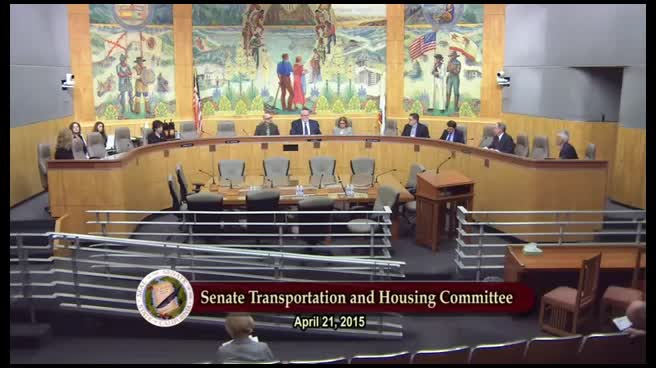
Bill Author

Bill Co-Author(s):