SB 543: Veterans: Veterans' Home of California.
- Session Year: 2015-2016
- House: Senate
- Latest Version Date: 2016-09-21
Existing law requires the administrator of a veterans home to maintain a Morale, Welfare, and Recreation Fund, which is required to be used, at the discretion of the administrator and subject to the approval of the Secretary of Veterans Affairs, to provide for the general welfare of the veterans. Existing law specifies the moneys required to be deposited into the fund, and requires the administrator to prepare an itemized report for the expenditures made out of, and deposits made into, the fund. Under existing law, those reports are required to be submitted to the secretary, the fiscal committees of the Assembly and Senate, the committees of the Assembly and the Senate that have subject matter jurisdiction over veterans affairs, and the Veterans Home Allied Council on or before August 20 of each year.
This bill would create the Veterans Home Morale, Welfare, and Recreation Special Fund (MWR Fund), a continuously appropriated fund, in the State Treasury. The bill would require the administrator of a veterans home to deposit all moneys maintained by the administrator in an existing Morale, Welfare, and Recreation Fund into the statewide MWR Fund. The bill would require the administrator of each home to establish a Morale, Welfare, and Recreation Operating Fund (MWRO Fund) to administer quality of life activities for the general welfare of the residents and receive funds from the MWR Fund, as specified, and to establish an MWR Advisory Committee, as specified. The bill would require the department, in consultation with the MWR Advisory Committee, the Veterans Home Allied Council or the resident council of each home, to adopt regulations related to, among other things, administering the MWR Fund and the MWRO Funds and the process by which the homes submit and receive budget allocations. The bill would authorize the use of funds in the MWR Fund to provide for the general welfare of the residents of a home, as specified, and would specify restrictions on the use of those funds. The bill would require the department to annually determine the total amount for disbursement from the MWR Fund, and for that disbursement to be allocated proportionally to each homes relative share of the total population of the entire veterans home system. The bill would authorize additional allocations to any veterans home if it is appropriate on the basis of factors including, but not limited to, the homes unique age, size, population, and historical significance. The bill would authorize the administrator of a home to enter into an agreement with the Veterans Home Allied Council to operate facilities and activities that are related to authorized expenditures from the MWR Fund, as specified. The bill would require the department to prepare annual reports regarding moneys deposited into the MWR Fund and expenditure of those funds, as specified, and to submit the report on or before December 31 of each year to specified entities. The bill would require the department to maintain a $3,000,000 reserve in the MWR Fund and would authorize the department to invest moneys in the MWR Fund in the Surplus Money Investment Fund or by contracting with a third-party investment broker consistent with laws and regulations regarding selecting prudent, approved investment types.
This bill would clarify that veterans homes include the Veterans Homes of California located in Chula Vista, Fresno, Lancaster, Redding, Ventura, West Los Angeles, and any future Veterans Home of California that is established.
Existing law requires the administrator of a veterans home to maintain a Morale, Welfare, and Recreation Fund, which is required to be used, at the discretion of the administrator and subject to the approval of the Secretary of Veterans Affairs, to provide for the general welfare of the veterans. Existing law specifies the moneys required to be deposited into the fund, and requires the administrator to prepare an itemized report for the expenditures made out of, and deposits made into, the fund. Under existing law, those reports are required to be submitted to the secretary, the fiscal committees of the Assembly and Senate, the committees of the Assembly and the Senate that have subject matter jurisdiction over veterans affairs, and the Veterans Home Allied Council on or before August 20 of each year.
This bill would create the Veterans Home Morale, Welfare, and Recreation Special Fund (MWR Fund), a continuously appropriated fund, in the State Treasury. The bill would require the administrator of a veterans home to deposit all moneys maintained by the administrator in an existing Morale, Welfare, and Recreation Fund into the statewide MWR Fund. The bill would require the administrator of each home to establish a Morale, Welfare, and Recreation Operating Fund (MWRO Fund) to administer quality of life activities for the general welfare of the residents and receive funds from the MWR Fund, as specified, and to establish an MWR Advisory Committee, as specified. The bill would require the department, in consultation with the MWR Advisory Committee, the Veterans Home Allied Council or the resident council of each home, to adopt regulations related to, among other things, administering the MWR Fund and the MWRO Funds and the process by which the homes submit and receive budget allocations. The bill would authorize the use of funds in the MWR Fund to provide for the general welfare of the residents of a home, as specified, and would specify restrictions on the use of those funds. The bill would require the department to annually determine the total amount for disbursement from the MWR Fund, and for that disbursement to be allocated proportionally to each homes relative share of the total population of the entire veterans home system. The bill would authorize additional allocations to any veterans home if it is appropriate on the basis of factors including, but not limited to, the homes unique age, size, population, and historical significance. The bill would authorize the administrator of a home to enter into an agreement with the Veterans Home Allied Council to operate facilities and activities that are related to authorized expenditures from the MWR Fund, as specified. The bill would require the department to prepare annual reports regarding moneys deposited into the MWR Fund and expenditure of those funds, as specified, and to submit the report on or before December 31 of each year to specified entities. The bill would require the department to maintain a $3,000,000 reserve in the MWR Fund and would authorize the department to invest moneys in the MWR Fund in the Surplus Money Investment Fund or by contracting with a third-party investment broker consistent with laws and regulations regarding selecting prudent, approved investment types.
Existing law provides for the establishment and operation of the Veterans Home of California at various sites, including homes in Barstow, Chula Vista, Lancaster, Ventura, and Yountville, and provides for an administrator for each home or homesite. Existing law defines home and administrator for these purposes. Existing law establishes the Veterans Home Fund in the State Treasury, which includes the proceeds of certain bonds. Existing law requires, upon appropriation of the Legislature, the Department of Veterans Affairs to use money in the fund for the purpose of designing and constructing veterans homes in California.
This bill would clarify that veterans homes include the Veterans Homes of California located in Chula Vista, Fresno, Lancaster, Redding, Ventura, West Los Angeles, and any future Veterans Veterans Home of California that is established.
Existing law requires the administrator of a veterans home to maintain a Morale, Welfare, and Recreation Fund, which is required to be used, at the discretion of the administrator and subject to the approval of the Secretary of Veterans Affairs, to provide for the general welfare of the veterans. Existing law specifies the moneys required to be deposited into the fund, and requires the administrator to prepare an itemized report for the expenditures made out of, and deposits made into, the fund. Under existing law, those reports are required to be submitted to the secretary, the fiscal committees of the Assembly and Senate, the committees of the Assembly and the Senate that have subject matter jurisdiction over veterans affairs, and the Veterans Home Allied Council on or before August 20 of each year.
This bill would create the Veterans Home Morale, Welfare, and Recreation Special Fund (MWR Fund), a continuously appropriated fund, in the State Treasury. The bill would require the administrator of a veterans home to deposit all moneys maintained by the administrator in an existing Morale, Welfare, and Recreation Fund into the statewide MWR Fund. The bill would require the administrator of each home to establish a Morale, Welfare, and Recreation Operating Fund (MWRO Fund) to administer quality of life activities for the general welfare of the residents and receive funds from the MWR Fund, as specified, and to establish a separate account for the purpose of receiving donations and would require the department, in consultation with the residents of each home, to adopt regulations for expenditure of those funds. an MWR Advisory Committee, as specified. The bill would require the department, in consultation with the residents of each home, MWR Advisory Committee, the Veterans Home Allied Council, and Council or the resident council of each home, to adopt regulations related to, among other things, administering the MWR Fund and the MWRO Funds, Funds and the process by which the homes submit and receive budget allocations. The bill would authorize the use of funds in the MWR Fund to provide for the general welfare of the residents of a home, as specified, and would specify restrictions on the use of those funds. The bill would require the department to annually determine the total amount for disbursement from the MWR Fund, and for that disbursement to be allocated proportionally to each homes relative share of the total population of the entire veterans home system. The bill would authorize additional allocations to homes for special projects for good cause, and to any veterans home if it is appropriate on the basis of factors including, but not limited to, the homes unique age, size, population, and historical significance. The bill would authorize the administrator of a home to enter into an agreement with the Veterans Home Allied Council to operate facilities and activities that are related to authorized expenditures from the MWR Fund, as specified. The bill would require the department to prepare annual reports regarding moneys deposited into the MWR Fund and expenditure of those funds, as specified, and to submit the report on or before August 20 December 31 of each year to specified entities. The bill would require the department to maintain a $3,000,000 reserve in the MWR Fund and would authorize the department to invest moneys in the MWR Fund in the Surplus Money Investment Fund. Fund or by contracting with a third-party investment broker consistent with laws and regulations regarding selecting prudent, approved investment types.
Existing law provides for the establishment and operation of the Veterans Home of California at various sites, including homes in Barstow, Chula Vista, Lancaster, Ventura, and Yountville, and provides for an administrator for each home or homesite. Existing law defines home and administrator for these purposes. Existing law establishes the Veterans Home Fund in the State Treasury, which includes the proceeds of certain bonds. Existing law requires, upon appropriation of the Legislature, the Department of Veterans Affairs to use money in the fund for the purpose of designing and constructing veterans homes in California.
This bill would clarify that veterans homes include the Veterans Homes of California located in Chula Vista, Fresno, Lancaster, Redding, Ventura, and West Los Angeles. West Los Angeles, and any future Veterans Home of California that is established.
Existing law requires the administrator of a veterans home to maintain a Morale, Welfare, and Recreation Fund, which is required to be used, at the discretion of the administrator and subject to the approval of the Secretary of Veterans Affairs, to provide for the general welfare of the veterans. Existing law specifies the moneys required to be deposited into the fund, and requires the administrator to prepare an itemized report for the expenditures made out of, and deposits made into, the fund. Under existing law, those reports are required to be submitted to the secretary, the fiscal committees of the Assembly and Senate, the committees of the Assembly and the Senate that have subject matter jurisdiction over veterans affairs, and the Veterans Home Allied Council on or before August 20 of each year.
This bill would create the Veterans Home Morale, Welfare, and Recreation Special Fund (MWR Fund), a continuously appropriated fund, in the State Treasury. The bill would require the administrator of a veterans home to deposit all moneys maintained by the administrator in an existing Morale, Welfare, and Recreation Fund into the statewide MWR Fund. The bill would also provide for additional funding for the MWR Fund from specified sources, such as operation of a canteen at a home and funds derived from the estates of deceased residents. The bill would require the administrator of each home to establish a Morale, Welfare, and Recreation Operating Fund (MWRO Fund) to administer quality of life activities for the general welfare of the residents and receive funds from the MWR Fund, as specified, and to establish a separate account for the purpose of receiving donations and would require the department, in consultation with the residents of each home, to adopt regulations for expenditure of those funds. The bill would require the department, in consultation with the residents of each home, the Veterans Home Allied Council, and the resident council of each home, to adopt regulations that govern the process by which each home may request an annual disbursement from the MWR Fund, and by which the secretary approves and acts upon a request. related to, among other things, administering the MWR Fund and the MWRO Funds, and the process by which the homes submit and receive budget allocations. The bill would authorize the use of funds in the MWR Fund to provide for the general welfare of the residents of a home, as specified, and would specify restrictions on the use of those funds. The bill would require the department to annually determine the total amount for disbursement from the MWR Fund, and for that disbursement to be allocated proportionally to each homes relative share of the total population of the entire veterans home system. The bill would authorize additional allocations to homes for special projects for good cause, and to any veterans home if it is appropriate on the basis of factors including, but not limited to, the homes unique age, size, population, and historical significance. The bill would authorize the administrator of a home to enter into an agreement with the Veterans Home Allied Council to operate facilities and activities that are related to authorized expenditures from the MWR Fund, as specified. The bill would require the department to prepare annual reports regarding moneys deposited into the MWR Fund and expenditure of those funds, as specified, and to submit the report on or before August 20 of each year to specified entities. The bill would authorize the department to invest moneys in the MWR Fund in the Surplus Money Investment Fund. The bill would require the administrator of each home to establish a Morale, Welfare, and Recreation Operating Fund (MWRO Fund) to administer quality of life activities for the general welfare of the residents and receive funds from the MWR Fund, as specified, and a separate account for the purpose of receiving donations and would require the department, in consultation with the residents of each home, to adopt regulations for expenditure of those funds.
Existing law provides for the establishment and operation of the Veterans Home of California at various sites, including homes in Barstow, Chula Vista, Lancaster, Ventura, and Yountville, and provides for an administrator for each home or homesite. Existing law defines home and administrator for these purposes. Existing law establishes the Veterans Home Fund in the State Treasury, which includes the proceeds of certain bonds. Existing law requires, upon appropriation of the Legislature, the Department of Veterans Affairs to use money in the fund for the purpose of designing and constructing veterans homes in California.
This bill would clarify that veterans homes include the Veterans Homes of California located in Chula Vista, Fresno, Lancaster, Redding, Ventura, and West Los Angeles.
Existing law requires the administrator of a veterans home to maintain a Morale, Welfare, and Recreation Fund, which is required to be used, at the discretion of the administrator and subject to the approval of the Secretary of Veterans Affairs, to provide for the general welfare of the veterans. Existing law specifies the moneys required to be deposited into the fund, and requires the administrator to prepare an itemized report for the expenditures made out of, and deposits made into, the fund. Under existing law, those reports are required to be submitted to the secretary, the fiscal committees of the Assembly and Senate, the committees of the Assembly and the Senate that have subject matter jurisdiction over veterans affairs, and the Veterans Home Allied Council on or before August 20 of each year.
This bill would create the Veterans Home Morale, Welfare Welfare, and Recreation Fund (MWR Fund), (MWR Fund), a continuously appropriated fund, in the State Treasury. The bill would require the administrator of a veterans home to deposit all moneys maintained by the administrator in an existing Morale, Welfare Welfare, and Recreation Fund into the statewide MWR Fund. The bill would also provide for additional funding for the MWR fund Fund from specified sources, such as operation of a canteen at a home and funds derived from the estates of deceased residents. The bill would require the department, in consultation with the residents of each home, the Veterans Home Allied Council, and the resident council of each home home, to adopt regulations that govern the process by which each home may request an annual disbursement of funds from the MWR Fund, and by which the secretary approves and acts upon a request. The bill would authorize the use of funds in the MWR Fund to provide for the general welfare of the residents of a home, as specified, and would specify restrictions on the use of those funds. The bill would require the department to annually determine the total amount for disbursement from the MWR fund, Fund, and for that disbursement to be allocated proportionally to each homes relative share of the total population of the entire veterans veterans home system. The bill would authorize additional allocations to homes for special projects for good cause, and to the Veterans Home of California, Yountville, any veterans home if it is appropriate on the basis of the homes unique age, size, population, and historical significance. The bill would authorize the administrator of a home to enter into an agreement with the Veterans Home Allied Council to operate facilities and activities that are related to authorized expenditures from the MWR Fund, as specified. The bill would require the department to prepare annual reports regarding moneys deposited into the MWR Fund and expenditure of those funds, as specified, and to submit the report on or before August 20 of each year to specified entities. The bill would authorize the department to invest moneys in the MWR Fund in the Surplus Money Investment Fund. The bill would require the administrator of each home to establish a Morale, Welfare, and Recreation Operating Fund (MWRO Fund) to administer quality of life activities for the general welfare of the residents and receive funds from the MWR Fund, as specified, and a separate account for the purpose of receiving donations and would require the department, in consultation with the residents of each home, to adopt regulations for expenditure of those funds.
Existing law provides for the establishment and operation of the Veterans Home of California at various sites, including homes in Barstow, Chula Vista, Lancaster, Ventura, and Yountville, and provides for an administrator for each home or homesite. Existing law defines home and administrator for these purposes. Existing law establishes the Veterans Home Fund in the State Treasury, which includes the proceeds of certain bonds. Existing law requires, upon appropriation of the Legislature, the Department of Veterans Affairs to use money in the fund for the purpose of designing and constructing veterans homes in California.
This bill would clarify that veterans homes include the Veterans Homes of California located in Chula Vista, Fresno, Lancaster, Redding, Ventura, and West Los Angeles.
Existing law requires the administrator of a veterans home to maintain a Morale, Welfare, and Recreation Fund, which is required to be used, at the discretion of the administrator and subject to the approval of the Secretary of Veterans Affairs, to provide for the general welfare of the veterans. Existing law specifies the moneys required to be deposited into the fund, and requires the administrator to prepare an itemized report for the expenditures made out of, and deposits made into, the fund. Under existing law, those reports are required to be submitted to the secretary, the fiscal committees of the Assembly and Senate, the committees of the Assembly and the Senate that have subject matter jurisdiction over veterans affairs, and the Veterans Home Allied Council on or before August 20 of each year.
This bill would state the intent of the Legislature to enact legislation to create a statewide Veterans Home Morale, Welfare, and Recreation Fund, and to authorize the Department of Veterans Affairs to promulgate rules and regulations related to that fund through a stakeholder process that includes residents of the Veterans Homes of California. The bill would state the Legislatures intent that those rules and regulations include, but not be limited to, a yearly budgeting process for moneys to be expended in each home.
This bill would create the Veterans Home Morale, Welfare and Recreation Fund (MWR Fund), a continuously appropriated fund, in the State Treasury. The bill would require the administrator of a veterans home to deposit all moneys maintained by the administrator in an existing Morale, Welfare and Recreation Fund into the statewide MWR Fund. The bill would also provide for additional funding for the MWR fund from specified sources, such as operation of a canteen at a home and funds derived from the estates of deceased residents. The bill would require the department, in consultation with the residents of each home, the Veterans Home Allied Council, and the resident council of each home to adopt regulations that govern the process by which each home may request an annual disbursement of funds from the MWR Fund, and by which the secretary approves and acts upon a request. The bill would authorize the use of funds in the MWR Fund to provide for the general welfare of the residents of a home, as specified, and would specify restrictions on the use of those funds. The bill would require the department to annually determine the total amount for disbursement from the MWR fund, and for that disbursement to be allocated proportionally to each homes relative share of the total population of the entire veterans home system. The bill would authorize additional allocations to homes for special projects for good cause, and to the Veterans Home of California, Yountville, if it is appropriate on the basis of the homes unique age, size, and historical significance. The bill would authorize the administrator of a home to enter into an agreement with the Veterans Home Allied Council to operate facilities and activities that are related to authorized expenditures from the MWR Fund, as specified. The bill would require the department to prepare annual reports regarding moneys deposited into the MWR Fund and expenditure of those funds, as specified, and to submit the report on or before August 20 of each year to specified entities. The bill would authorize the department to invest moneys in the MWR Fund in the Surplus Money Investment Fund. The bill would authorize require the administrator of each home to establish a separate account for the purpose of receiving donations and require the department, in consultation with the residents of each home, to adopt regulations for expenditure of those funds.
Existing law provides for the establishment and operation of the Veterans Home of California at various sites, including homes in Barstow, Chula Vista, Lancaster, Ventura, and Yountville, and provides for an administrator for each home or homesite. Existing law defines home and administrator for these purposes. Existing law establishes the Veterans Veterans Home Fund in the State Treasury, which includes the proceeds of certain bonds. Existing law requires, upon appropriation of the Legislature, the Department of Veterans Affairs to use money in the fund for the purpose of designing and constructing veterans homes in California.
This bill would clarify that veterans homes include the Veterans Homes of California located in Chula Vista, Fresno, Lancaster, Redding, Ventura, and West Los Angeles.
Existing law requires the administrator of a veterans home to maintain a Morale, Welfare, and Recreation Fund, which is required to be used, at the discretion of the administrator and subject to the approval of the Secretary of Veterans Affairs, to provide for the general welfare of the veterans. Existing law specifies the moneys required to be deposited into the fund, and requires the administrator to prepare an itemized report for the expenditures made out of, and deposits made into, the fund. Under existing law, those reports are required to be submitted to the secretary, the fiscal committees of the Assembly and Senate, the committees of the Assembly and the Senate that have subject matter jurisdiction over veterans veterans affairs, and the Veterans Home Allied Council on or before August 20 of each year.
This bill would state the intent of the Legislature to enact legislation to create a statewide Veterans Home Morale, Welfare, and Recreation Fund, and to authorize the Department of Veterans Affairs to promulgate rules and regulations related to that fund through a stakeholder process that includes residents of the Veterans Homes of California. The bill would state the Legislatures intent that those rules and regulations include, but not be limited to, a yearly budgeting process for moneys to be expended in each home. The bill would also make technical, nonsubstantive changes to the provisions described above relating to Morale, Welfare, and Recreation Funds.
This bill would create the Veterans Home Morale, Welfare and Recreation Fund (MWR Fund), a continuously appropriated fund, in the State Treasury. The bill would require the administrator of a veterans home to deposit all moneys maintained in an existing Morale, Welfare and Recreation Fund into the MWR Fund. The bill would also provide for additional funding for the MWR fund from specified sources, such as operation of a canteen at a home and funds derived from the estates of deceased residents. The bill would require the department, in consultation with the residents of each home, the Veterans Home Allied Council, and the resident council of each home to adopt regulations that govern the process by which each home may request an annual disbursement of funds from the MWR Fund, and by which the secretary approves and acts upon a request. The bill would authorize the use of funds in the MWR Fund to provide for the general welfare of the residents of a home, as specified, and would specify restrictions on the use of those funds. The bill would authorize the administrator of a home to enter into an agreement with the Veterans Home Allied Council to operate facilities and activities that are related to authorized expenditures from the MWR Fund, as specified. The bill would require the department to prepare annual reports regarding moneys deposited into the MWR Fund and expenditure of those funds, as specified, and to submit the report on or before August 20 of each year to specified entities. The bill would authorize the department to invest moneys in the MWR Fund in the Surplus Money Investment Fund. The bill would authorize the administrator of each home to establish a separate account for the purpose of receiving donations and require the department, in consultation with the residents of each home, to adopt regulations for expenditure of those funds.
Existing law provides for the establishment and operation of the Veterans Home of California at various sites, including homes in Barstow, Chula Vista, Lancaster, Ventura, and Yountville, and provides for an administrator for each home or homesite. Existing law defines home and administrator for these purposes. Existing law establishes the Veterans Home Fund in the State Treasury, which includes the proceeds of certain bonds. Existing law requires, upon appropriation of the Legislature, the Department of Veterans Affairs to use money in the fund for the purpose of designing and constructing veterans homes in California.
This bill would clarify that veterans homes include the Veterans Homes of California located in Chula Vista, Fresno, Lancaster, Redding, Ventura, and West Los Angeles.
Existing law requires the administrator of a veterans home to maintain a Morale, Welfare, and Recreation Fund, which is required to be used, at the discretion of the administrator and subject to the approval of the Secretary of Veterans Affairs, to provide for the general welfare of the veterans. Existing law specifies the moneys required to be deposited into the fund, and requires the administrator to prepare an itemized report for the expenditures made out of, and deposits made into, the fund. Under existing law, those reports are required to be submitted to the secretary, the fiscal committees of the Assembly and Senate, the committees of the Assembly and the Senate that have subject matter jurisdiction over veterans affairs, and the Veterans Home Allied Council on or before August 20 of each year.
This bill would state the intent of the Legislature to enact legislation to create a statewide Veterans Home Morale, Welfare, and Recreation Fund, and to authorize the Department of Veterans Affairs to promulgate rules and regulations related to that fund through a stakeholder process that includes residents of the Veterans Homes of California. The bill would state the Legislatures intent that those rules and regulations include, but not be limited to, a yearly budgeting process for moneys to be expended in each home. The bill would also make technical, nonsubstantive changes to the provisions described above relating to Morale, Welfare, and Recreation Funds.
It is the intent of the Legislature to enact legislation that accomplishes all of the following:
(a)Creates a statewide Veterans Home Morale, Welfare, and Recreation Fund.
(b)Creates a Morale, Welfare, and Recreation Operating Fund at each veterans home.
(c)Authorizes and directs the Department of Veterans Affairs to promulgate rules and regulations related to the statewide Veterans Home Morale, Welfare, and Recreation Fund through a stakeholder process that includes members of the Veterans Homes of California. It is further the intent of the Legislature that these rules and regulations include, but not be limited to, a yearly allocation process for moneys to be expended in each home.
(d)Maintains the highest possible degree of transparent administration and resident involvement.
(e)Encourages identical Morale, Welfare, and Recreation Fund policies and procedures to be established, documented, and implemented at each veterans home.
SEC. 2.Section 1047 of the Military and Veterans Code is repealed.SEC. 3.Section 1047 is added to the Military and Veterans Code, to read:1047.(a)(1)The Veterans Home Morale, Welfare, and Recreation Special Fund (MWR Fund) is hereby created in the State Treasury. Notwithstanding Section 13340 of the Government Code, all funds deposited in the MWR Fund as authorized by this section shall be continuously appropriated to the department, without regard to fiscal year. All references in this chapter to the Morale, Welfare, and Recreation Fund or MWR Fund are deemed to refer to the fund created by this paragraph.
(2)The department shall distribute moneys in the MWR Fund to the homes to provide for the general welfare of the members of the homes.
(3)For the purposes of this subdivision, providing for the general welfare of the members of a home includes, but is not limited to, operating a canteen, base exchange, hobby shop, theater, library, or band, and payment for newspapers, chapel expenses, entertainment expenses, sports activities, celebrations, or any other function or activity that is related to the morale, welfare, and recreation of the residents that would not otherwise be paid for by the General Fund.
(4)The administrator of a home shall deposit all moneys maintained by the administrator in a Morale, Welfare, and Recreation Fund pursuant to this section as it read on January 1, 2015, into the Veterans Home Morale, Welfare, and Recreation Special Fund created by paragraph (1).
(5)All future moneys collected as a result of unreimbursed costs of care determinations are special state funds and shall be deposited in the MWR Fund.
(6)Each home shall establish an MWR Advisory Committee to provide ongoing guidance for the MWR Fund processes, including, but not limited to, budgeting, contracts, investments, expenditures, and revenues. The committee shall be comprised of the administrator or a representative and representatives of the Veterans Home Allied Council or resident council.
(7)On or before July 1, 2018, the department, in consultation with the MWR Advisory Committee in each home, the Veterans Home Allied Council, or the resident council at each home, shall adopt regulations that carry out the intent of this section, including, but not limited to, the administration of the MWR Fund and Morale, Welfare, and Recreation Operating Funds (MWRO Funds), the process by which the homes submit annual budgets and receive allocations, the process by which the secretary shall review and act upon the allocation requests and requests for augmentation of those allocations.
(8)Moneys deposited in the MWR Fund are exempt from the requirements of Article 2 (commencing with Section 11270) of Chapter 3 of Part 1 of Division 3 of Title 2 of the Government Code.
(b)(1)The department shall annually determine the amount for disbursement from the MWR Fund to the homes. This amount shall be disbursed proportionally by each homes relative share of the total population of the entire veterans home system. All annual allocation requests and annual allocations, as well as any augmentations to those allocations, shall be made known to the members of the homes. In making allocation decisions, the department shall consider whether there are economies of scale or other savings which may be realized by aggregating home requests or otherwise while still meeting the intent of the homes requests.
(2)The secretary, in consultation with the administrator of the affected home, may augment the allocation from the MWR Fund to any veterans home after making a determination that this action is appropriate on the basis of factors including, but not limited to, the homes unique age, size, population, and historical significance.
(c)Moneys in the MWR Fund shall not be expended for the following:
(1)A medical treatment or medical care of a member of a home.
(2)The maintenance or major capital improvement of the physical plant of a home.
(3)Any function, operation, or activity that is not directly related to the morale, welfare, or recreation of the members of the home.
(d)Appropriations from the General Fund for the purposes described in paragraph (3) of subdivision (b) may not be reduced for the purpose of, or to have the effect of, requiring increased expenditures from the MWR Fund for those described purposes.
(e)The department shall adopt, use, and require the homes to use uniform accounting procedures for the MWR Fund and the MWRO Funds subject to the departments oversight and audit as needed. The department shall prepare an itemized report that is organized by category, including sufficient detail to allow legislative oversight, and accounts for all expenditures from, and all funds deposited into, the MWR Fund and the MWRO Funds for the previous fiscal year. The department shall submit the report on or before December 31, 2018, and annually on or before August 20 thereafter, to the following:
(1)The Department of Finance.
(2)The fiscal committees of the Assembly and Senate.
(3)The committees of the Assembly and the Senate that have subject matter jurisdiction over veterans affairs.
(4)The Veterans Home Allied Council or the resident council of each home.
(5)The administrator of each home.
(f)The department shall maintain a reserve in the MWR Fund of not less than three million dollars ($3,000,000).
(g)The department may transfer funds from the MWR Fund to the Surplus Money Investment Fund for investment pursuant to Article 4 (commencing with Section 16470) of Chapter 3 of Part 2 of Division 4 of Title 2 of the Government Code or may hire a third-party investment broker to invest moneys from the MWR Fund consistent with Section 16480.2 of the Government Code and any regulations regarding selecting prudent, approved investment types. The amount invested and the accrued interest or earnings shall be credited to the MWR Fund for allocation by the department.
(h)The administrator of a home may enter into an agreement with the Veterans Home Allied Council that authorizes the council to operate facilities and engage in activities that are authorized by subdivision (b). The agreement shall be in the form and manner specified by the administrator and in conformity with applicable California law and regulations, including, but not limited to, the state procurement and contracting process.
SEC. 4.Section 1048 of the Military and Veterans Code is repealed.SEC. 5.Section 1048 is added to the Military and Veterans Code, to read:1048.(a)A Morale, Welfare, and Recreation Operating Fund (MWRO Fund) shall be maintained by the administrator of each home to administer quality of life activities for the general welfare of the members, pursuant to the annual allocation, including any augmentation provided by the secretary, from the MWR Fund.
(b)The annual allocations from the MWR Fund, including any augmentations provided by the secretary, and any other quality of life moneys received shall be deposited in a local bank account established for this purpose.
(c)Moneys in the MWRO Fund shall not be expended for the following:
(1)Medical treatment or medical care for a member.
(2)The maintenance or major capital improvement of the Homes physical plant.
(3)A function, operation, or activity that is not directly related to the morale, welfare, or recreation of the members of the home.
SEC. 6.Section 1049 of the Military and Veterans Code is amended to read:1049.(a)Moneys in the Morale, Welfare, and Recreation Fund maintained under subdivision (a) of Section 1047 may be used, subject to approval by the secretary, to establish or operate a canteen and base exchange at each home location. The canteen may sell goods at a profit.
(b)The MWRO Fund of each home shall include proceeds from the operation of a canteen, or base exchange. Any moneys derived from golf course green fees, range ball fees, and operations of activities unique to each Veterans Home of California shall be deposited in the MWRO Fund allocation for that home after appropriate state costs, fees, and rent are deducted from the revenue received for those operations.
It is the intent of the Legislature to enact legislation that accomplishes all of the following:
(a)Creates a statewide Veterans Home Morale, Welfare, and Recreation Fund.
(b)Creates a Morale, Welfare, and Recreation Operating Fund at each veterans home.
(c)Authorizes and directs the Department of Veterans Affairs to promulgate rules and regulations related to the statewide Veterans Home Morale, Welfare, and Recreation Fund through a stakeholder process that includes members of the Veterans Homes of California. It is further the intent of the Legislature that these rules and regulations include, but not be limited to, a yearly allocation process for moneys to be expended in each home.
(d)Maintains the highest possible degree of transparent administration and resident involvement.
(e)Encourages identical Morale, Welfare, and Recreation Fund policies and procedures to be established, documented, and implemented at each veterans home.
SEC. 2.Section 1010 of the Military and Veterans Code is amended to read:1010.As used in this chapter:
(a)Home means the Veterans Home of California System, which includes the Veterans Home of California, Barstow, the Veterans Home of California, Chula Vista, the Veterans Home of California, Fresno, the Veterans Home of California, Lancaster, the Veterans Home of California, Redding, the Veterans Home of California, Ventura, the Veterans Home of California, West Los Angeles, and the Veterans Home of California, Yountville, and any future Veterans Home of California which may be established on and after January 1, 2016.
(b)Administrator means the Administrator of the Veterans Home of California, Barstow, the Administrator of the Veterans Home of California, Chula Vista, the Administrator of the Veterans Home of California, Fresno, the Administrator of the Veterans Home of California, Lancaster, the Administrator of the Veterans Home of California, Redding, the Administrator of the Veterans Home of California, Ventura, the Administrator of the Veterans Home of California, West Los Angeles, and the Administrator of the Veterans Home of California, Yountville, and the administrator of any future Veterans Home of California which may be established on and after January 1, 2016.
(c)Department means the Department of Veterans Affairs.
(d)Secretary means the Secretary of Veterans Affairs.
(e)Veteran means a member of the home.
SEC. 3.SEC. 2.Section 1047 of the Military and Veterans Code is repealed.SEC. 4.SEC. 3.Section 1047 is added to the Military and Veterans Code, to read:1047.(a)(1)The Veterans Home Morale, Welfare, and Recreation Special Fund (MWR Fund) is hereby created in the State Treasury. Notwithstanding Section 13340 of the Government Code, all funds deposited in the MWR Fund as authorized by this section shall be continuously appropriated to the department, without regard to fiscal year. All references in this chapter to the Morale, Welfare, and Recreation Fund or MWR Fund are deemed to refer to the fund created by this paragraph.
(2)The department shall distribute moneys in the MWR Fund to the homes to provide for the general welfare of the members of the homes.
(3)For the purposes of this subdivision, providing for the general welfare of the members of a home includes, but is not limited to, operating a canteen, base exchange, hobby shop, theater, library, or band, and payment for newspapers, chapel expenses, entertainment expenses, sports activities, celebrations, or any other function or activity that is related to the morale, welfare, and recreation of the residents that would not otherwise be paid for by the General Fund.
(4)The administrator of a home shall deposit all moneys maintained by the administrator in a Morale, Welfare, and Recreation Fund pursuant to this section as it read on January 1, 2015, into the Veterans Home Morale, Welfare, and Recreation Special Fund created by paragraph (1).
(5)All future moneys collected as a result of unreimbursed costs of care determinations are special state funds and shall be deposited in the MWR Fund.
(6)Each home shall establish an MWR Advisory Committee to provide ongoing guidance for the MWR Fund processes, including, but not limited to, budgeting, contracts, investments, expenditures, and revenues. The committee shall be comprised of the administrator or a representative and representatives of the Veterans Home Allied Council or resident council.
(7)On or before July 1, 2018, the department, in consultation with the MWR Advisory Committee in each home, the Veterans Home Allied Council, or the resident council at each home, shall adopt regulations that carry out the intent of this section, including, but not limited to, the administration of the MWR Fund and Morale, Welfare, and Recreation Operating Funds (MWRO Funds), the process by which the homes submit annual budgets and receive allocations, the process by which the secretary shall review and act upon the allocation requests and requests for augmentation of those allocations.
(8)Moneys deposited in the MWR Fund are exempt from the requirements of Article 2 (commencing with Section 11270) of Chapter 3 of Part 1 of Division 3 of Title 2 of the Government Code.
(b)(1)The department shall annually determine the amount for disbursement from the MWR Fund to the homes. This amount shall be disbursed proportionally by each homes relative share of the total population of the entire veterans home system. All annual allocation requests and annual allocations, as well as any augmentations to those allocations, shall be made known to the members of the homes. In making allocation decisions, the department shall consider whether there are economies of scale or other savings which may be realized by aggregating home requests or otherwise while still meeting the intent of the homes requests.
(2)The secretary, in consultation with the administrator of the affected home, may augment the allocation from the MWR Fund to any veterans home after making a determination that this action is appropriate on the basis of factors including, but not limited to, the homes unique age, size, population, and historical significance.
(c)Moneys in the MWR Fund shall not be expended for the following:
(1)A medical treatment or medical care of a member of a home.
(2)The maintenance or major capital improvement of the physical plant of a home.
(3)Any function, operation, or activity that is not directly related to the morale, welfare, or recreation of the members of the home.
(d)Appropriations from the General Fund for the purposes described in paragraph (3) of subdivision (b) may not be reduced for the purpose of, or to have the effect of, requiring increased expenditures from the MWR Fund for those described purposes.
(e)The department shall adopt, use, and require the homes to use uniform accounting procedures for the MWR Fund and the MWRO Funds subject to the departments oversight and audit as needed. The department shall prepare an itemized report that is organized by category, including sufficient detail to allow legislative oversight, and accounts for all expenditures from, and all funds deposited into, the MWR Fund and the MWRO Funds for the previous fiscal year. The department shall submit the report on or before December 31, 2018, and annually on or before August 20 thereafter, to the following:
(1)The Department of Finance.
(2)The fiscal committees of the Assembly and Senate.
(3)The committees of the Assembly and the Senate that have subject matter jurisdiction over veterans affairs.
(4)The Veterans Home Allied Council or the resident council of each home.
(5)The administrator of each home.
(f)The department shall maintain a reserve in the MWR Fund of not less than three million dollars ($3,000,000).
(g)The department may transfer funds from the MWR Fund to the Surplus Money Investment Fund for investment pursuant to Article 4 (commencing with Section 16470) of Chapter 3 of Part 2 of Division 4 of Title 2 of the Government Code or may hire a third-party investment broker to invest moneys from the MWR Fund consistent with Section 16480.2 of the Government Code and any regulations regarding selecting prudent, approved investment types. The amount invested and the accrued interest or earnings shall be credited to the MWR Fund for allocation by the department.
(h)The administrator of a home may enter into an agreement with the Veterans Home Allied Council that authorizes the council to operate facilities and engage in activities that are authorized by subdivision (b). The agreement shall be in the form and manner specified by the administrator and in conformity with applicable California law and regulations, including, but not limited to, the state procurement and contracting process.
SEC. 5.SEC. 4.Section 1048 of the Military and Veterans Code is repealed.SEC. 6.SEC. 5.Section 1048 is added to the Military and Veterans Code, to read:1048.(a)A Morale, Welfare, and Recreation Operating Fund (MWRO Fund) shall be maintained by the administrator of each home to administer quality of life activities for the general welfare of the members, pursuant to the annual allocation, including any augmentation provided by the Secretary, from the MWR Fund.
(b)The annual allocations from the MWR Fund, including any augmentations provided by the Secretary, and any other quality of life moneys received shall be deposited in a local bank account established for this purpose.
(c)Moneys in the MWRO Fund shall not be expended for the following:
(1)Medical treatment or medical care for a member.
(2)The maintenance or major capital improvement of the Homes physical plant.
(3)A function, operation, or activity that is not directly related to the morale, welfare, or recreation of the members of the home.
SEC. 7.SEC. 6.Section 1049 of the Military and Veterans Code is amended to read:1049.(a)Moneys in the Morale, Welfare, and Recreation Fund maintained under subdivision (a) of Section 1047 may be used, subject to approval by the secretary, to establish or operate a canteen and base exchange at each home location. The canteen may sell goods at a profit.
(b)The MWRO Fund of each home shall include proceeds from the operation of a canteen, or base exchange. Any moneys derived from golf course green fees, range ball fees, and operations of activities unique to each Veterans Home of California shall be deposited in the MWRO Fund allocation for that home after appropriate state costs, fees, and rent are deducted from the revenue received for those operations.
It is the intent of the Legislature to enact legislation that accomplishes all: all of the following:
(a)Creates a statewide Veterans Home Morale, Welfare, and Recreation Fund.
(b)Creates a Morale, Welfare, and Recreation Operating Fund at each veterans home.
(b)
(c)Authorizes and directs the Department of Veterans Affairs to promulgate rules and regulations related to the statewide Veterans Home Morale, Welfare, and Recreation Fund through a stakeholder process that includes members of the Veterans Homes of California. It is further the intent of the Legislature that these rules and regulations include, but not be limited to, a yearly budgeting allocation process for moneys to be expended in each home.
(c)
(d)Maintains the highest possible degree of transparent administration and resident involvement.
(e)Encourages identical Morale, Welfare, and Recreation Fund policies and procedures to be established, documented, and implemented at each veterans home.
SEC. 2.Section 1010 of the Military and Veterans Code is amended to read:1010.As used in this chapter:
(a)Home means the Veterans Home of California System, which includes the Veterans Home of California, Barstow, the Veterans Home of California, Chula Vista, the Veterans Home of California, Fresno, the Veterans Home of California, Lancaster, the Veterans Home of California, Redding, the Veterans Home of California, Ventura, the Veterans Home of California, West Los Angeles, and the Veterans Home of California, Yountville, and any future Veterans Home of California which may be established on and after January 1, 2016.
(b)Administrator means the Administrator of the Veterans Home of California, Barstow, the Administrator of the Veterans Home of California, Chula Vista, the Administrator of the Veterans Home of California, Fresno, the Administrator of the Veterans Home of California, Lancaster, the Administrator of the Veterans Home of California, Redding, the Administrator of the Veterans Home of California, Ventura, the Administrator of the Veterans Home of California, West Los Angeles, and the Administrator of the Veterans Home of California, Yountville, and the administrator of any future Veterans Home of California which may be established on and after January 1, 2016.
(c)Department means the Department of Veterans Affairs.
(d)Director means the Director Secretary means the Secretary of Veterans Affairs.
(e)Veteran means a member of the home.
SEC. 3.Section 1047 of the Military and Veterans Code is repealed.SEC. 4.Section 1047 is added to the Military and Veterans Code, to read:1047.(a)(1)The Veterans Home Morale, Welfare, and Recreation Special Fund (MWR Fund) is hereby created in the State Treasury. Notwithstanding Section 13340 of the Government Code, all funds deposited in the MWR Fund as authorized by this section shall be continuously appropriated to the department, without regard to fiscal year. All references in this chapter to the Morale, Welfare, and Recreation Fund or MWR Fund are deemed to refer to the fund created by this paragraph.
(2)The department shall distribute moneys in the MWR Fund to the homes to provide for the general welfare of the members of the homes.
(3)For the purposes of this subdivision, providing for the general welfare of the members of a home includes, but is not limited to, operating a canteen, base exchange, hobby shop, theater, library, or band, and payment for newspapers, chapel expenses, entertainment expenses, sports activities, celebrations, capital improvements that directly enhance the quality of life, or any other function or activity that is related to the morale, welfare, and recreation of the residents that would not otherwise be paid for by the General Fund.
(4)The administrator of a home shall deposit all moneys maintained by the administrator in a Morale, Welfare, and Recreation Fund pursuant to this section as it read on January 1, 2015, into the Veterans Home Morale, Welfare, and Recreation Special Fund created by paragraph (1).
(5)All future moneys collected as a result of unreimbursed costs of care determinations are special state funds and shall be deposited in the MWR Fund.
(6)Each home shall establish an MWR Advisory Committee to provide ongoing guidance for the MWR Fund processes, including, but not limited to, budgeting, contracts, investments, expenditures, and revenues. The committee shall be comprised of the administrator or a representative and representatives of the Veterans Home Allied Council or resident council.
(6)
(7)On or before July 1, 2017, 2018, the department, in consultation with the members at MWR Advisory Committee in each home, the Veterans Home Allied Council, and or the resident council at each home, shall adopt regulations that carry out the intent of this section, including, but not limited to, the administration of the MWR Fund and Morale, Welfare, and Recreation Operating Funds (MWRO Funds), the process by which the homes submit annual budgets and receive allocations, the process by which the secretary shall review and act upon the allocation requests and requests for augmentation of those allocations.
(7)
(8)Moneys deposited in the MWR Fund are exempt from the requirements of Article 2 (commencing with Section 11270) of Chapter 3 of Part 1 of Division 3 of Title 2 of the Government Code.
(b)(1)The department, upon the recommendation of the board, department shall annually determine the amount for disbursement from the MWR Fund to the homes. This amount shall be disbursed proportionally by each homes relative share of the total population of the entire veterans home system. All annual allocation requests and annual allocations, as well as any augmentations or additional to those allocations, shall be made known to the members of the homes. In making allocation decisions, the department shall consider whether there are economies of scale or other savings which may be realized by aggregating home requests or otherwise while still meeting the intent of the homes requests.
(2)In addition to the annual disbursement to a home from the MWR Fund, the secretary may, on an annual basis and in his or her discretion, allow for an additional one-time allocation of moneys in an amount no greater than 5 percent of that annual disbursement for a special project if the administrator of the home submits a proposal to the secretary that shows good cause for the allocation. In developing the proposal, the administrator shall consult with the members of the home, the Veterans Home Allied Council, or the resident council at the home.
(3)
(2)The secretary secretary, in consultation with the administrator of the affected home, may augment the allocation from the MWR Fund to any veterans home after making a determination that this action is appropriate on the basis of the factors including, but not limited to, the homes unique age, size, population, and historical significance.
(4)The board shall review any proposed allocation pursuant to paragraph (1), (2), or (3). This review shall include receiving public comment and soliciting comments from the Veterans Home Allied Council or other resident representative body of each home. The board shall consider and adopt its advice at a publicly noticed meeting before providing that advice to the secretary. The secretary may act contrary to the boards advice, but shall provide the board with an explanation of why the advice was not the basis for the secretarys chosen action.
(c)Moneys in the MWR Fund shall not be expended for the following:
(1)A medical treatment or a treatment related to a medical treatment. medical care of a member of a home.
(2)The maintenance or major capital improvement of the physical plant of a home.
(3)A Any function, operation, or activity that is not directly related to the morale, welfare, or recreation of the members of the home.
(d)Appropriations from the General Fund for the purposes described in paragraph (3) of subdivision (b) may not be reduced for the purpose of, or to have the effect of, requiring increased expenditures from the MWR Fund for those described purposes.
(e)The department shall adopt, use, and require the homes to use uniform accounting procedures for the MWR Fund and the MWRO Funds. Funds subject to the departments oversight and audit as needed. The department shall prepare an itemized report that is organized by category, includes a including sufficient detail to allow legislative oversight, and accounts for all expenditures from, and all funds deposited into, the MWR Fund and the MWRO Funds for the previous fiscal year. The department shall submit the report on or before August 20, 2017, December 31, 2018, and annually on or before August 20 thereafter, to the following:
(1)The Department of Finance.
(2)The fiscal committees of the Assembly and Senate.
(3)The committees of the Assembly and the Senate that have subject matter jurisdiction over veterans affairs.
(4)The Veterans Home Allied Council or the resident council of each home.
(5)The administrator of each home.
(f)The department shall maintain a reserve in the MWR Fund of not less than two three million dollars ($2,000,000). ($3,000,000).
(g)The department may transfer funds from the MWR Fund to the Surplus Money Investment Fund for investment pursuant to Article 4 (commencing with Section 16470) of Chapter 3 of Part 2 of Division 4 of Title 2 of the Government Code. Code or may hire a third-party investment broker to invest moneys from the MWR Fund consistent with Section 16480.2 of the Government Code and any regulations regarding selecting prudent, approved investment types. The amount invested and the accrued interest or earnings shall be credited to the MWR Fund for allocation by the department.
(h)The administrator of a home may enter into an agreement with the Veterans Home Allied Council that authorizes the council to operate facilities and engage in activities that are authorized by subdivision (b). The agreement shall be in the form and manner specified by the administrator and in conformity with applicable California law and regulations, including, but not limited to, the state procurement and contracting process.
SEC. 5.Section 1048 of the Military and Veterans Code is repealed.SEC. 6.Section 1048 is added to the Military and Veterans Code, to read:1048.(a)A Morale, Welfare, and Recreation Operating Fund (MWRO Fund) shall be maintained by the administrator of each home to administer quality of life activities for the general welfare of the members, pursuant to the annual allocation allocation, including any augmentation provided by the Secretary, from the MWR Fund.
(b)The annual allocations from the MWR Fund Fund, including any augmentations provided by the Secretary, and any other quality of life moneys received shall be deposited in a local bank account established for this purpose.
(c)Moneys in the MWRO Fund shall not be expended for the following:
(1)Medical treatment or a treatment related to a medical treatment. medical care for a member.
(2)The maintenance or major capital improvement of the Homes physical plant.
(3)A function, operation, or activity that is not directly related to the morale, welfare, or recreation of the members of the home.
SEC. 7.Section 1049 of the Military and Veterans Code is amended to read:1049.(a)Moneys in the Morale, Welfare, and Recreation Fund maintained under subdivision (a) of Section 1047 may be used, subject to approval by the secretary, to establish or operate a canteen and base exchange at each home location. The canteen may sell goods at a profit.
(b)(1)Each home shall establish an account separate from the MWR Fund and the MWRO Fund for the purpose of receiving donations.
(2)On or before July 1, 2017, the department, in consultation with the residents of the home, shall adopt regulations that govern expenditures from the donation account described in paragraph (1).
(c)
(b)The MWRO Fund of each home shall include proceeds from the operation of a canteen, revenue derived from the issuance of prisoner-of-war special license plates pursuant to Section 5101.5 of the Vehicle Code, interest earned on invested funds, funds derived from the estates of deceased residents, and any other moneys or property described in this chapter, including, but not limited to, moneys and properties received by the home from estate assets located outside the home, regardless of amount. or base exchange. Any moneys derived from golf course green fees, range ball fees, and operations of activities specifically at the unique to each Veterans Home of California, Yountville, California shall be credited to deposited in the MWRO Fund allocation for that home. home after appropriate state costs, fees, and rent are deducted from the revenue received for those operations.
It is the intent of the Legislature to enact legislation that accomplishes both all: of the following:
(a)Creates a statewide Veterans Home Morale, Welfare, and Recreation Fund.
(b)Authorizes and directs the Department of Veterans Affairs to promulgate rules and regulations related to the statewide Veterans Home Morale, Welfare, and Recreation Fund through a stakeholder process that includes residents members of the Veterans Homes of California. It is further the intent of the Legislature that these rules and regulations include, but not be limited to, a yearly budgeting process for moneys to be expended in each home.
(c)Maintains the highest possible degree of transparent administration and resident involvement.
SEC. 2.Section 1010 of the Military and Veterans Code is amended to read:1010.As used in this chapter:
(a)Home means the Veterans Home of California, Barstow, the Veterans Home of California, Chula Vista, the Veterans Home of California, Fresno, the Veterans Home of California, Lancaster, the Veterans Home of California, Redding, the Veterans Home of California, Ventura, the Veterans Home of California, West Los Angeles, and the Veterans Home of California, Yountville. Yountville, and any future Veterans Home of California which may be established on and after January 1, 2016.
(b)Administrator means the Administrator of the Veterans Home of California, Barstow, the Administrator of the Veterans Home of California, Chula Vista, the Administrator of the Veterans Home of California, Fresno, the Administrator of the Veterans Home of California, Lancaster, the Administrator of the Veterans Home of California, Redding, the Administrator of the Veterans Home of California, Ventura, the Administrator of the Veterans Home of California, West Los Angeles, and the Administrator of the Veterans Home of California, Yountville. Yountville, and the Administrator of any future Veterans Home of California which may be established on and after January 1, 2016.
(c)Department means the Department of Veterans Affairs.
(d)Director means the Director of Veterans Affairs.
(e)Veteran means a member of the home.
SEC. 3.Section 1047 of the Military and Veterans Code is repealed.SEC. 4.Section 1047 is added to the Military and Veterans Code, to read:1047.(a)(1)The Veterans Home Morale, Welfare, and Recreation Special Fund (MWR Fund) is hereby created in the State Treasury. Notwithstanding Section 13340 of the Government Code, all funds deposited in the MWR Fund as authorized by this section shall be continuously appropriated to the department, without regard to fiscal year. All references in this chapter to the Morale, Welfare, and Recreation Fund or MWR Fund are deemed to refer to the fund created by this paragraph.
(2)The administrator of a home shall deposit all moneys maintained by the administrator in a Morale, Welfare, and Recreation Fund pursuant to this section as it read on January 1, 2015, into the Veterans Home Morale, Welfare, and Recreation Fund created by paragraph (1).
(3)A Morale, Welfare, and Recreation Operating Fund (MWRO Fund) shall be created by the administrator of each home to administer quality of life activities for the general welfare of the residents, pursuant to the annual allocation from the MWR Fund. The annual allocations from the MWR Fund and any other quality of life moneys received shall be deposited in a local bank account established for this purpose.
(2)The department shall distribute moneys in the MWR Fund to the homes to provide for the general welfare of the members of the homes.
(3)For the purposes of this subdivision, providing for the general welfare of the members of a home includes, but is not limited to, operating a canteen, hobby shop, theater, library, or band, and payment for newspapers, chapel expenses, entertainment expenses, sports activities, celebrations, capital improvements that directly enhance the quality of life, or any other function or activity that is related to the morale, welfare, and recreation of the residents that would not otherwise be paid for by the General Fund.
(4)The administrator of a home shall deposit all moneys maintained by the administrator in a Morale, Welfare, and Recreation Fund pursuant to this section as it read on January 1, 2015, into the Veterans Home Morale, Welfare, and Recreation Special Fund created by paragraph (1).
(4)
(5)All future moneys collected as a result of unreimbursed costs of care determinations are special state funds and shall be deposited in the MWR Fund.
(5)The
(6)On or before July 1, 2017, the department, in consultation with the residents members at each home, the Veterans Home Allied Council, and the resident council at each home, shall adopt regulations that govern the process by which a home may make an annual request for a disbursement from the MWR Fund and the process by which the Secretary of Veterans Affairs shall review and act upon the request. carry out the intent of this section, including, but not limited to, the administration of the MWR Fund and Morale, Welfare, and Recreation Operating Funds (MWRO Funds), the process by which the homes submit annual budgets and receive allocations, the process by which the secretary shall review and act upon the allocation requests and requests for augmentation of those allocations.
(6)
(7)Moneys deposited in the MWR Fund are exempt from the requirements of Article 2 (commencing with Section 11270) of Chapter 3 of Part 1 of Division 3 of Title 2 of the Government Code.
(b)(1)The department may distribute moneys in the MWR Fund to the homes to provide for the general welfare of the residents of the homes.
(2)
(b)(1)The department department, upon the recommendation of the board, shall annually determine the total amount for disbursement from the MWR Fund to the homes. This amount shall be disbursed proportionally by each homes relative share of the total population of the entire veterans veterans home system. All annual allocation requests and annual allocations, as well as any augmentations or additional allocations, shall be made known to the members of the homes. In making allocation decisions, the department shall consider whether there are economies of scale or other savings which may be realized by aggregating home requests or otherwise while still meeting the intent of the homes requests.
(3)
(2)In addition to the annual disbursement to a home from the MWR Fund, the Secretary of Veterans Affairs secretary may, on an annual basis and in his or her discretion, allow for an additional one-time allocation of moneys in an amount no greater than 5 percent of that annual disbursement for a special project if the administrator of the home submits a proposal to the secretary that shows good cause for the allocation. In developing the proposal, the administrator shall consult with the residents members of the home, the Veterans Home Allied Council, or the resident council at the home.
(4)
(3)The Secretary of Veterans Affairs secretary may augment the allocation from the MWR Fund to any veterans home after making a determination that this action is appropriate on the basis of the factors including, but not limited to, the homes unique age, size, population, and historical significance.
(5)
(4)The California Veterans Board board shall review any proposed allocation pursuant to paragraph (3) or (4). paragraph (1), (2), or (3). This review shall include receiving public comment and soliciting comments from the Veterans Home Allied Council or other resident representative body of each home. The board shall consider and adopt its advice at a publicly noticed meeting before providing that advice to the secretary. The secretary may act contrary to the boards advice, but must shall provide the board with an explanation of why the advice was not the basis for the secretarys chosen action.
(6)For the purposes of this subdivision, providing for the general welfare of the residents of a home includes, but is not limited to, operating a canteen, hobby shop, theater, library, or band, and payment for newspapers, chapel expenses, entertainment expenses, sports activities, celebrations, capital improvements that directly enhance the quality of life, or any other function or activity that is related to the morale, welfare, and recreation of the residents that would not otherwise be paid for by the General Fund.
(c)Moneys in the MWR Fund shall not be expended for the following:
(1)A medical treatment or a treatment related to a medical treatment.
(2)The maintenance of the physical plant of a home.
(3)A function, operation, or activity that is not directly related to the morale, welfare, or recreation of the residents members of the home.
(d)Appropriations from the General Fund for the purposes described in paragraph (4) (3) of subdivision (b) may not be reduced for the purpose of, or to have the effect of, requiring increased expenditures from the MWR Fund for those described purposes.
(e)The department shall adopt, use, and require the homes to use uniform accounting procedures for the MWR Fund and the MWRO Funds. The department shall prepare an itemized report that is organized by category category, includes a sufficient detail to allow legislative oversight, and accounts for all expenditures from, and all funds deposited into, the MWR Fund for the previous fiscal year, and year. The department shall submit the report on or before August 20, 2016, 2017, and annually on or before August 20 thereafter, to the following:
(1)The Department of Finance.
(2)The fiscal committees of the Assembly and Senate.
(3)The committees of the Assembly and the Senate that have subject matter jurisdiction over veterans affairs.
(4)The Veterans Home Allied Council and or the resident council of each home.
(5)The administrator of each home.
(f)The department shall maintain a reserve in the MWR Fund of not less than two million dollars ($2,000,000).
(g)The department may transfer funds from the MWR Fund to the Surplus Money Investment Fund for investment pursuant to Article 4 (commencing with Section 16470) of Chapter 3 of Part 2 of Division 4 of Title 2 of the Government Code. The amount invested and the accrued interest or earnings shall be credited to the MWR Fund for allocation by the department.
(h)The administrator of a home may enter into an agreement with the Veterans Home Allied Council that authorizes the council to operate facilities and engage in activities that are authorized by subdivision (b). The agreement shall be in the form and manner specified by the administrator. administrator and in conformity with applicable California law and regulations, including, but not limited to, the state procurement and contracting process.
(i)(1)Each home shall establish an account separate from the MWR Fund and the MWRO Fund for the purpose of receiving donations.
(2)The department, in consultation with the residents of the home, shall adopt regulations that govern expenditures from the donation account described in paragraph (1).
SEC. 5.Section 1048 of the Military and Veterans Code is amended to read:1048.The Morale, Welfare, and Recreation Fund shall include proceeds from the operation of a canteen, revenue derived from the issuance of prisoner-of-war special license plates pursuant to Section 5101.5 of the Vehicle Code, interest earned on invested funds, funds derived from the estates of deceased residents, and any other moneys or property described in this chapter, including, but not limited to, moneys and properties received by the home from estate assets located outside the home, regardless of amount. Any moneys derived from golf course green fees, range ball fees, and operations of activities specifically at the Veterans Home of California, Yountville, shall be credited to the MWR Fund allocation for that home.
SEC. 5.Section 1048 of the Military and Veterans Code is repealed.1048.(a)The Morale, Welfare, and Recreation Fund shall include proceeds from the California Veterans Homes Fund, operations of the Veterans Home Exchange, revenue derived from the issuance of prisoner-of-war special license plates pursuant to Section 5101.5 of the Vehicle Code, all funds derived from golf course green fees and range ball fees, all donations to the fund, interest earned on invested funds, funds derived from the estates of deceased members, and any other moneys or property described in this chapter, including, but not limited to, moneys and properties received by the home from estate assets located outside the home, regardless of amount.
(b)The administrator shall prepare an itemized report that is organized by category and accounts for all funds deposited into the Morale, Welfare, and Recreation Fund and transmitted to the Controller under Section 1047 during the previous fiscal year and shall submit the report on or before August 20 of each year to all of the following:
(1)The secretary.
(2)The fiscal committees of the Assembly and the Senate.
(3)The committees of the Assembly and the Senate that have subject matter jurisdiction over veterans affairs.
(4)The Veterans Home Allied Council.
SEC. 6.Section 1048 is added to the Military and Veterans Code, to read:1048.(a)A Morale, Welfare, Recreation Operating Fund (MWRO Fund) shall be maintained by the administrator of each home to administer quality of life activities for the general welfare of the members, pursuant to the annual allocation from the MWR Fund.
(b)The annual allocations from the MWR Fund and any other quality of life moneys received shall be deposited in a local bank account established for this purpose.
(c)Moneys in the MWRO Fund shall not be expended for the following:
(1)Medical treatment or a treatment related to a medical treatment.
(2)The maintenance of the physical plant.
(3)A function, operation, or activity that is not directly related to the morale, welfare, or recreation of the members of the home.
SEC. 6.SEC. 7.Section 1049 of the Military and Veterans Code is amended to read:1049.(a)Moneys in the Morale, Welfare, and Recreation Fund maintained under subdivision (a) of Section 1047 may be used, subject to approval by the Secretary of Veterans Affairs, secretary, to establish or operate a canteen at each home location. The canteen may sell goods at a profit.
(b)(1)Each home shall establish an account separate from the MWR Fund and the MWRO Fund for the purpose of receiving donations.
(2)On or before July 1, 2017, the department, in consultation with the residents of the home, shall adopt regulations that govern expenditures from the donation account described in paragraph (1).
(c)The MWRO Fund of each home shall include proceeds from the operation of a canteen, revenue derived from the issuance of prisoner-of-war special license plates pursuant to Section 5101.5 of the Vehicle Code, interest earned on invested funds, funds derived from the estates of deceased residents, and any other moneys or property described in this chapter, including, but not limited to, moneys and properties received by the home from estate assets located outside the home, regardless of amount. Any moneys derived from golf course green fees, range ball fees, and operations of activities specifically at the Veterans Home of California, Yountville, shall be credited to the MWRO Fund allocation for that home.
It is the intent of the Legislature to enact legislation that accomplishes both of the following:
(a)Creates a statewide Veterans Home Morale, Welfare, and Recreation Fund.
(b)Authorizes the Department of Veterans Affairs to promulgate rules and regulations related to the statewide Veterans Home Morale, Welfare, and Recreation Fund through a stakeholder process that includes residents of the Veterans Homes of California. It is further the intent of the Legislature that these rules and regulations include, but not be limited to, a yearly budgeting process for moneys to be expended in each home.
SEC. 2.Section 1010 of the Military and Veterans Code is amended to read:1010.As used in this chapter:
(a)Home means the Veterans Home of California, Barstow, the Veterans Home of California, Chula Vista, the Veterans Home of California, Fresno, the Veterans Home of California, Lancaster, the Veterans Home of California, Redding, the Veterans Home of California, Ventura, the Veterans Home of California, West Los Angeles, and the Veterans Home of California, Yountville.
(b)Administrator means the Administrator of the Veterans Home of California, Barstow, the Administrator of the Veterans Home of California, Chula Vista, the Administrator of the Veterans Home of California, Fresno, the Administrator of the Veterans Home of California, Lancaster, the Administrator of the Veterans Home of California, Redding, the Administrator of the Veterans Home of California, Ventura, the Administrator of the Veterans Home of California, West Los Angeles, and the Administrator of the Veterans Home of California, Yountville.
(c)Department means the Department of Veterans Affairs.
(d)Director means the Director of Veterans Affairs.
(e)Veteran means a member of the home.
SEC. 3.Section 1047 of the Military and Veterans Code is repealed.SEC. 4.Section 1047 is added to the Military and Veterans Code, to read:1047.(a)(1)The Veterans Home Morale, Welfare, and Recreation Fund (MWR Fund) (MWR Fund) is hereby created in the State Treasury. Notwithstanding Section 13340 of the Government Code, all funds deposited in the MWR Fund as authorized by this section shall be continuously appropriated to the department, without regard to fiscal year. All references in this chapter to the Morale, Welfare, and Recreation Fund or MWR Fund are deemed to refer to the fund created by this paragraph.
(2)The administrator of a home shall deposit all moneys maintained by the administrator in a Morale, Welfare, and Recreation Fund pursuant to this section as it read on January 1, 2015, into the Veterans Home Morale, Welfare, and Recreation Fund created by paragraph (1).
(3)A Morale, Welfare, and Recreation Operating Fund (MWRO Fund) shall be created by the administrator of each home to administer quality of life activities for the general welfare of the residents, pursuant to the annual allocation from the MWR Fund. The annual allocations from the MWR Fund and any other quality of life moneys received shall be deposited in a local bank account established for this purpose.
(3)
(4)All future moneys collected as a result of unreimbursed costs of care determinations are state funds and shall be deposited in the MWR Fund.
(4)
(5)The department, in consultation with the residents at each home, the Veterans Home Allied Council, and the resident council at each home, shall adopt regulations that govern the process by which a home may make an annual request for a disbursement from the MWR Fund and the process by which the Secretary of Veterans Affairs shall review and act upon the request.
(5)
(6)Moneys deposited in the MWR Fund are exempt from the requirements of Article 2 (commencing with Section 11270) of Chapter 3 of Part 1 of Division 3 of Title 2 of the Government Code.
(b)(1)The department may distribute moneys in the MWR Fund to the homes to provide for the general welfare of the residents of the homes.
(2)The department shall annually determine the total amount for disbursement from the MWR Fund to the homes. This amount shall be disbursed proportionally by each homes relative share of the total population of the entire veterans home system.
(3)In addition to the annual disbursement to a home from the MWR Fund, the Secretary of Veterans Affairs may, on an annual basis and in his or her discretion, allow for an additional one-time allocation of moneys in an amount no greater than 5 percent of that annual disbursement for a special project if the administrator of the home submits a proposal to the secretary that shows good cause for the allocation. In developing the proposal, the administrator shall consult with the residents of the home, the Veterans Home Allied Council, or the resident council at the home.
(4)The Secretary of Veterans Affairs may augment the allocation from the MWR Fund to the Veterans Home of California, Yountville, any veterans home after making a determination that this action is appropriate on the basis of the homes unique age, size, population, and historical significance.
(5)The California Veterans Board shall review any proposed allocation pursuant to paragraph (3) or (4). This review shall include receiving public comment and soliciting comments from the Veterans Home Allied Council or other resident representative body of each home. The board shall consider and adopt its advice at a publicly noticed meeting before providing that advice to the secretary. The secretary may act contrary to the boards advice, but must provide the board with an explanation of why the advice was not the basis for the secretarys chosen action.
(6)For the purposes of this subdivision, providing for the general welfare of the residents of a home includes, but is not limited to, operating a canteen, hobby shop, theater, library, or band, and payment for newspapers, chapel expenses, entertainment expenses, sports activities, celebrations, capital improvements that directly enhance the quality of life, or any other function or activity that is related to the morale, welfare welfare, and recreation of the residents that would not otherwise be paid for by the General Fund.
(c)Moneys in the MWR Fund shall not be expended for the following:
(1)A medical treatment or a treatment related to a medical treatment.
(2)The maintenance of the physical plant of a home, except for capital improvements that directly enhance the quality of life and general welfare of the residents of the home.
(3)A function, operation, or activity that is not directly related to the morale, welfare, or recreation of the residents of the home.
(d)Appropriations from the General Fund for the purposes described in paragraph (4) of subdivision (b) may not be reduced for the purpose of, or to have the effect of, requiring increased expenditures from the MWR Fund for those described purposes.
(e)The department shall prepare an itemized report that is organized by category and accounts for all expenditures from, and all funds deposited into, the MWR Fund for the previous fiscal year, and shall submit the report on or before August 20, 2016, and annually on or before August 20 thereafter, to the following:
(1)The Department of Finance.
(2)The fiscal committees of the Assembly and Senate.
(3)The committees of the Assembly and the Senate that have subject matter jurisdiction over veterans affairs.
(4)The Veterans Home Allied Council and the resident council of each home.
(f)The department shall maintain a reserve in the MWR Fund of two million dollars ($2,000,000).
(g)The department may transfer funds from the MWR Fund to the Surplus Money Investment Fund for investment pursuant to Article 4 (commencing with Section 16470) of Chapter 3 of Part 2 of Division 4 of Title 2 of the Government Code. The amount invested and the accrued interest or earnings shall be credited to the MWR Fund for allocation by the department.
(h)The administrator of a home may enter into an agreement with the Veterans Home Allied Council that authorizes the council to operate facilities and engage in activities that are authorized by subdivision (b). The agreement shall be in the form and manner specified by the administrator.
(i)(1)Each home shall establish an account separate from the MWR Fund and the MWRO Fund for the purpose of receiving donations.
(2)The department, in consultation with the residents of the home, shall adopt regulations that govern expenditures from the donation account described in paragraph (1).
SEC. 5.Section 1048 of the Military and Veterans Code is amended to read:1048.The Morale, Welfare, and Recreation Fund shall include proceeds from the operation of a canteen, revenue derived from the issuance of prisoner-of-war special license plates pursuant to Section 5101.5 of the Vehicle Code, interest earned on invested funds, funds derived from the estates of deceased residents, and any other moneys or property described in this chapter, including, but not limited to, moneys and properties received by the home from estate assets located outside the home, regardless of amount. Any moneys derived from golf course green fees, range ball fees, and operations of activities specifically at the Veterans Home of California, Yountville, shall be credited to the MWR Fund allocation for that home.
SEC. 6.Section 1049 of the Military and Veterans Code is amended to read:1049.Moneys in the Morale, Welfare, and Recreation Fund maintained under subdivision (a) of Section 1047 may be used, subject to approval by the Secretary of Veterans Affairs, to establish or operate a canteen at each home location. The canteen may sell goods at a profit.
It is the intent of the Legislature to enact legislation that accomplishes both of the following:
(a)Creates a statewide Veterans Home Morale, Welfare, and Recreation Fund.
(b)Authorizes the Department of Veterans Affairs to promulgate rules and regulations related to the statewide Veterans Home Morale, Welfare, and Recreation Fund through a stakeholder process that includes residents of the Veterans Homes of California. It is further the intent of the Legislature that these rules and regulations include, but not be limited to, a yearly budgeting process for moneys to be expended in each home.
SEC. 2.Section 1010 of the Military and Veterans Code is amended to read:1010.As used in this chapter:
(a)Home means the Veterans Home of California, Barstow, the Veterans Home of California, Chula Vista, the Veterans Home of California, Fresno, the Veterans Home of California, Lancaster, the Veterans Home of California, Redding, the Veterans Home of California, Ventura, the Veterans Home of California, West Los Angeles, and the Veterans Home of California, Yountville.
(b)Administrator means the Administrator of the Veterans Home of California, Barstow, the Administrator of the Veterans Home of California, Chula Vista, the Administrator of the Veterans Home of California, Fresno, the Administrator of the Veterans Home of California, Lancaster, the Administrator of the Veterans Home of California, Redding, the Administrator of the Veterans Home of California, Ventura, the Administrator of the Veterans Home of California, West Los Angeles, and the Administrator of the Veterans Home of California, Yountville.
(c)Department means the Department of Veterans Affairs.
(d)Director means the Director of Veterans Affairs.
(e)Veteran means a member of the home.
SEC. 3.Section 1047 of the Military and Veterans Code is repealed.SEC. 4.Section 1047 is added to the Military and Veterans Code, to read:1047.(a)(1)The Veterans Home Morale, Welfare, and Recreation Fund (MWR Fund) is hereby created in the State Treasury. Notwithstanding Section 13340 of the Government Code, all funds deposited in the MWR Fund as authorized by this section shall be continuously appropriated to the department, without regard to fiscal year. All references in this chapter to the Morale, Welfare, and Recreation Fund or MWR Fund are deemed to refer to the fund created by this paragraph.
(2)The administrator of a home shall deposit all moneys maintained by the administrator in a Morale, Welfare, and Recreation Fund pursuant to this section as it read on January 1, 2015, into the Veterans Home Morale, Welfare, and Recreation Fund created by paragraph (1).
(3)All future moneys collected as a result of unreimbursed costs of care determinations are state funds and shall be deposited in the MWR Fund.
(4)The department, in consultation with the residents at each home, the Veterans Home Allied Council, and the resident council at each home, shall adopt regulations that govern the process by which a home may make an annual request for a disbursement from the MWR Fund and the process by which the Secretary of Veterans Affairs shall review and act upon the request.
(5)Moneys deposited in the MWR Fund are exempt from the requirements of Article 2 (commencing with Section 11270) of Chapter 3 of Part 1 of Division 3 of Title 2 of the Government Code.
(b)(1)The department may distribute moneys in the MWR Fund to the homes to provide for the general welfare of the residents of the homes.
(2)The department shall annually determine the total amount for disbursement from the MWR Fund to the homes. This amount shall be disbursed proportionally by each homes relative share of the total population of the entire veterans home system.
(2)
(3)In addition to the annual disbursement to a home from the MWR Fund, the Secretary of Veterans Affairs may, on an annual basis and in his or her discretion, allow for an additional one-time allocation of moneys in an amount no greater than 5 percent of that annual disbursement for a special project if the administrator of the home submits a proposal to the secretary that shows good cause for the allocation. In developing the proposal, the administrator shall consult with the residents of the home, the Veterans Home Allied Council, or the resident council at the home.
(4)The Secretary of Veterans Affairs may augment the allocation from the MWR to the Veterans Home of California, Yountville, after making a determination that this action is appropriate on the basis of the homes unique age, size, and historical significance.
(5)The California Veterans Board shall review any proposed allocation pursuant to paragraph (3) or (4). This review shall include receiving public comment and soliciting comments from the Veterans Home Allied Council or other resident representative body of each home. The board shall consider and adopt its advice at a publicly noticed meeting before providing that advice to the Secretary. The Secretary may act contrary to the boards advice, but must provide the board with an explanation of why the advice was not the basis for the Secretarys chosen action.
(3)
(6)For the purposes of this subdivision, providing for the general welfare of the residents of a home includes, but is not limited to, operating a canteen, hobby shop, theater, library, or band, and payment for newspapers, chapel expenses, entertainment expenses, sports activities, celebrations, or any other function or activity that is related to the morale, welfare and recreation of the residents that would not otherwise be paid for by the General Fund.
(c)Moneys in the MWR Fund shall not be expended for the following:
(1)A medical treatment or a treatment related to a medical treatment.
(2)The maintenance of the physical plant of a home, except for capital improvements that directly enhance the quality of life and general welfare of the residents of the home.
(3)A function, operation, or activity that is not directly related to the morale, welfare, or recreation of the residents of the home.
(d)Appropriations from the General Fund for the purposes described in paragraph (4) of subdivision (b) may not be reduced for the purpose of, or to have the effect of, requiring increased expenditures from the MWR Fund for those described purposes.
(e)Beginning on August 20, 2016, and annually on August 20 thereafter, the The department shall prepare a an itemized report that is organized by category and accounts for all expenditures from from, and all funds deposited into, the MWR Fund for the previous fiscal year, and shall submit the report on or before August 20, 2016, and annually on or before August 20 thereafter, to the following:
(1)The Department of Finance.
(2)The fiscal committees of the Assembly and Senate.
(3)The committees of the Assembly and the Senate that have subject matter jurisdiction over veterans affairs.
(4)The Veterans Home Allied Council and the resident council of each home.
(f)The department shall maintain a reserve in the MWR Fund of two million dollars ($2,000,000).
(g)The Secretary of Veterans Affairs may augment the allocation from the MWR to the Veterans Home of California, Yountville, after making a determination that this action is appropriate on the basis of the homes unique age, size, and historical significance.
(h)
(g)The department may transfer funds from the MWR Fund to the Surplus Money Investment Fund for investment pursuant to Article 4 (commencing with Section 16470) of Chapter 3 of Part 2 of Division 4 of Title 2 of the Government Code. The amount invested and the accrued interest or earnings shall be credited to the MWR Fund for allocation by the department.
(i)
(h)The administrator of a home may enter into an agreement with the Veterans Home Allied Council that authorizes the council to operate facilities and engage in activities that are authorized by subdivision (b). The agreement shall be in the form and manner specified by the administrator.
(j)
(i)(1)Each home shall establish an account separate from the MWR Fund for the purpose of receiving donations.
(2)The department, in consultation with the residents of the home, shall adopt regulations that govern expenditures from the donation account described in paragraph (1).
SEC. 5.Section 1048 of the Military and Veterans Code is amended to read:1048.(a)The Morale, Welfare, and Recreation Fund shall include proceeds from the operation of a canteen, revenue derived from the issuance of prisoner-of-war special license plates pursuant to Section 5101.5 of the Vehicle Code, interest earned on invested funds, funds derived from the estates of deceased residents, and any other moneys or property described in this chapter, including, but not limited to, moneys and properties received by the home from estate assets located outside the home, regardless of amount. Any moneys derived from golf course green fees, range ball fees, and operations of activities specifically at the Veterans Home of California, Yountville, shall be credited to the MWR Fund allocation for that home.
(b)The department shall prepare an itemized report that is organized by category and accounts for all funds deposited into the Morale, Welfare, and Recreation Fund during the previous fiscal year and shall submit the report on or before August 20 of each year to all of the following:
(1)The Department of Finance.
(2)The fiscal committees of the Assembly and the Senate.
(3)The committees of the Assembly and the Senate that have subject matter jurisdiction over veterans affairs.
(4)The Veterans Home Allied Council and the resident council of each home.
SEC. 6.Section 1049 of the Military and Veterans Code is amended to read:1049.Moneys in the Morale, Welfare, and Recreation Fund maintained under subdivision (a) of Section 1047 may be used, subject to approval by the Secretary of Veterans Affairs, to establish or operate a canteen at each home location. The canteen may sell goods at a profit.
It is the intent of the Legislature to enact legislation that accomplishes both of the following:
(a)Creates a statewide Veterans Home Morale, Welfare, and Recreation Fund.
(b)Authorizes the Department of Veterans Affairs to promulgate rules and regulations related to the statewide Veterans Home Morale, Welfare, and Recreation Fund through a stakeholder process that includes residents of the Veterans Homes of California. It is further the intent of the Legislature that these rules and regulations include, but not be limited to, a yearly budgeting process for moneys to be expended in each home.
SEC. 2.Section 1010 of the Military and Veterans Code is amended to read:1010.As used in this chapter:
(a)Home means the Veterans Home of California, Barstow, the Veterans Home of California, Chula Vista, the Veterans Home of California, Fresno, the Veterans Home of California, Lancaster, the Veterans Home of California, Redding, the Veterans Home of California, Ventura, the Veterans Home of California, West Los Angeles, and the Veterans Home of California, Yountville.
(b)Administrator means the Administrator of the Veterans Home of California California, Barstow, the Administrator of the Veterans Home of California, Chula Vista, the Administrator of the Veterans Home of California, Fresno, the Administrator of the Veterans Home of California, Lancaster, the Administrator of the Veterans Home of California, Redding, the Administrator of the Veterans Home of California, Ventura, the Administrator of the Veterans Home of California, West Los Angeles, and the Administrator of the Veterans Home of California, Yountville.
(c)Department means the Department of Veterans Affairs.
(d)Director means the Director of Veterans Affairs.
(e)Veteran means a member of the home.
SEC. 3.Section 1047 of the Military and Veterans Code is amended to read:1047.(a)The administrator at each home shall maintain a Morale, Welfare, and Recreation Fund that shall be used, at the discretion of the administrator and subject to the approval of the secretary, to provide for the general welfare of the veterans, including, but not limited to, providing for operations of the Veterans Home Exchange, hobby shop, motion picture theater, library, band, and any other function that is operated for the morale, welfare, and recreation of the veterans, and to pay for newspapers, chapel expenses, welfare and entertainment expenses, sport activities, celebrations, and any other activity that is for the morale, welfare, and recreation of the veterans.
(b)Money in the Morale, Welfare, and Recreation Fund may not be expended for any of the following:
(1)Medical treatments or any other related treatment.
(2)Maintenance of the physical plant of the home.
(3)Any function, operation, or activity that is not directly related to the morale, welfare, or recreation of the veterans.
(c)Appropriations from the General Fund for the purposes described in paragraph (3) of subdivision (b) may not be reduced for the purpose of, or to have the effect of, requiring increased expenditures from the Morale, Welfare, and Recreation Fund for those described purposes.
(d)The administrator shall prepare an itemized report that is organized by category and accounts for all expenditures made from the Morale, Welfare, and Recreation Fund during the previous fiscal year and shall submit the report on or before August 20 of each year to all of the following:
(1)The secretary.
(2)The fiscal committees of the Assembly and the Senate.
(3)The committees of the Assembly and the Senate that have subject matter jurisdiction over veterans affairs.
(4)The Veterans Home Allied Council.
(e)The Morale, Welfare, and Recreation Fund for the Veterans Home of California, Yountville, shall maintain a reserve in the amount of two million dollars ($2,000,000). The reserve shall be invested in securities, upon the advice of the Morale, Welfare, and Recreation Fund Advisory Committee and with the approval of the administrator and the secretary.
(f)The administrator may enter into an agreement with an allied council that authorizes that council to operate facilities and activities authorized pursuant to this section. The agreement shall be in the form and manner as specified by the administrator.
SEC. 3.Section 1047 of the Military and Veterans Code is repealed.1047.(a)The administrator shall maintain a Morale, Welfare, and Recreation Fund that shall be used, at the discretion of the administrator and subject to the approval of the secretary, to provide for the general welfare of the veterans, including, but not limited to, providing for operations of the Veterans Home Exchange, hobby shop, motion picture theater, library, band, and any other function that is operated for the morale, welfare, and recreation of the veterans, and to pay for newspapers, chapel expenses, welfare and entertainment expenses, sport activities, celebrations, and any other activity that is for the morale, welfare, and recreation of the veterans.
(b)Money in the Morale, Welfare, and Recreation Fund may not be expended for any of the following:
(1)Medical treatments or any other related treatment.
(2)Maintenance of the physical plant of the home.
(3)Any function, operation, or activity that is not directly related to the morale, welfare, or recreation of the veterans.
(c)Appropriations from the General Fund for the purposes described in paragraph (3) of subdivision (b) may not be reduced for the purpose of, or to have the effect of, requiring increased expenditures from the Morale, Welfare, and Recreation Fund for those described purposes.
(d)The administrator shall prepare an itemized report that is organized by category and accounts for all expenditures made from the Morale, Welfare, and Recreation Fund during the previous fiscal year and shall submit the report on or before August 20 of each year to all of the following:
(1)The secretary.
(2)The fiscal committees of the Assembly and the Senate.
(3)The committees of the Assembly and the Senate that have subject matter jurisdiction over veterans affairs.
(4)The Veterans Home Allied Council.
(e)The Morale, Welfare, and Recreation Fund for the Veterans Home of California, Yountville, shall maintain a reserve in the amount of two million dollars ($2,000,000). The reserve shall be invested in securities, upon the advice of the Morale, Welfare, and Recreation Fund Advisory Committee and with the approval of the administrator and the secretary.
(f)The administrator may enter into an agreement with an allied council that authorizes that council to operate facilities and activities authorized pursuant to this section. The agreement shall be in the form and manner as specified by the administrator.
SEC. 4.Section 1047 is added to the Military and Veterans Code, to read:1047.(a)(1)The Veterans Home Morale, Welfare, and Recreation Fund (MWR Fund) is hereby created in the State Treasury. Notwithstanding Section 13340 of the Government Code, all funds deposited in the MWR Fund as authorized by this section shall be continuously appropriated to the department, without regard to fiscal year. All references in this chapter to the Morale, Welfare, and Recreation Fund or MWR Fund are deemed to refer to the fund created by this paragraph.
(2)The administrator of a home shall deposit all moneys maintained by the administrator in a Morale, Welfare, and Recreation Fund pursuant to this section as it read on January 1, 2015, into the Veterans Home Morale, Welfare, and Recreation Fund created by paragraph (1).
(3)All future moneys collected as a result of unreimbursed costs of care determinations are state funds and shall be deposited in the MWR Fund.
(4)The department, in consultation with the residents at each home, the Veterans Home Allied Council, and the resident council at each home, shall adopt regulations that govern the process by which a home may make an annual request for a disbursement from the MWR Fund and the process by which the Secretary of Veterans Affairs shall review and act upon the request.
(5)Moneys deposited in the MWR Fund are exempt from the requirements of Article 2 (commencing the Section 11270) of Chapter 3 of Part 1 of Division 3 of Title 2 of the Government Code.
(b)(1)The department may distribute moneys in the MWR Fund to the homes to provide for the general welfare of the residents of the homes.
(2)In addition to the annual disbursement to a home from the MWR Fund, the Secretary of Veterans Affairs may, on an annual basis and in his or her discretion, allow for an additional one-time allocation of moneys in an amount no greater than five percent of that annual disbursement for a special project if the administrator of the home submits a proposal to the secretary that shows good cause for the allocation. In developing the proposal, the administrator shall consult with the residents of the home, the Veterans Home Allied Council, or the resident council at the home.
(3)For the purposes of this subdivision, providing for the general welfare of the residents of a home includes, but is not limited to, operating a canteen, hobby shop, theater, library, or band, and payment for newspapers, chapel expenses, entertainment expenses, sports activities, celebrations, or any other function or activity that is related to the morale, welfare and recreation of the residents that would not otherwise be paid for by the General Fund.
(c)Moneys in the MWR Fund shall not be expended for the following:
(1)A medical treatment or a treatment related to a medical treatment.
(2)The maintenance of the physical plant of a home, except for capital improvements that directly enhance the quality of life and general welfare of the residents of the home.
(3)A function, operation, or activity that is not directly related to the morale, welfare, or recreation of the residents of the home.
(d)Appropriations from the General Fund for the purposes described in paragraph (4) of subdivision (b) may not be reduced for the purpose of, or to have the effect of, requiring increased expenditures from the MWR Fund for those described purposes.
(e)Beginning on August 20, 2016, and annually on August 20 thereafter, the department shall prepare a report that is organized by category and accounts for all expenditures from the MWR Fund for the previous fiscal year, and shall submit the report to the following:
(1)The Department of Finance.
(2)The fiscal committees of the Assembly and Senate.
(3)The committees of the Assembly and the Senate that have subject matter jurisdiction over veterans affairs.
(4)The Veterans Home Allied Council and the resident council of each home.
(f)The department shall maintain a reserve in the MWR Fund of two million dollars ($2,000,000).
(g)The Secretary of Veterans Affairs may augment the allocation from the MWR to the Veterans Home of California, Yountville, after making a determination that this action is appropriate on the basis of the homes unique age, size, and historical significance.
(h)The department may transfer funds from the MWR Fund to the Surplus Money Investment Fund for investment pursuant to Article 4 (commencing with Section 16470) of Chapter 3 of Part 2 of Division 4 of Title 2 of the Government Code. The amount invested and the accrued interest or earnings shall be credited to the MWR Fund for allocation by the department.
(i)The administrator of a home may enter into an agreement with the Veterans Home Allied Council that authorizes the council to operate facilities and engage in activities that are authorized by subdivision (b). The agreement shall be in the form and manner specified by the administrator.
(j)(1)Each home shall establish an account separate from the MWR Fund for the purpose of receiving donations.
(2)The department, in consultation with the residents of the home, shall adopt regulations that govern expenditures from the donation account described in paragraph (1).
SEC. 4. SEC. 5.Section 1048 of the Military and Veterans Code is amended to read:1048.(a)The Morale, Welfare, and Recreation Fund shall include proceeds from the California Veterans Homes Fund, operations of the Veterans Home Exchange, operation of a canteen, revenue derived from the issuance of prisoner-of-war special license plates pursuant to Section 5101.5 of the Vehicle Code, all funds derived from golf course green fees and range ball fees, all donations to the fund, interest earned on invested funds, funds derived from the estates of deceased members, residents, and any other moneys or property described in this chapter, including, but not limited to, moneys and properties received by the home from estate assets located outside the home, regardless of amount. Any moneys derived from golf course green fees, range ball fees, and operations of activities specifically at the Veterans Home of California, Yountville, shall be credited to the MWR Fund allocation for that home.
(b)The administrator at each home department shall prepare an itemized report that is organized by category and accounts for all funds deposited into the Morale, Welfare, and Recreation Fund and transmitted to the Controller under Section 1047 during the previous fiscal year and shall submit the report on or before August 20 of each year to all of the following:
(1)The secretary. Department of Finance.
(2)The fiscal committees of the Assembly and the Senate.
(3)The committees of the Assembly and the Senate that have subject matter jurisdiction over veterans veterans affairs.
(4)The Veterans Home Allied Council. Council and the resident council of each home.
SEC. 5. SEC. 6.Section 1049 of the Military and Veterans Code is amended to read:1049.Moneys in the Morale, Welfare, and Recreation Fund maintained under subdivision (a) of Section 1047 may be used used, subject to approval by the Secretary of Veterans Affairs, to establish or operate a Veterans Home Exchange that may conduct any lawful endeavor which, in the judgment of the administrator, will benefit the veterans, except as prohibited under subdivision (b) of Section 1047. The administrator at each home may establish the Veterans Home Exchange to operate at a profit. canteen at each home location. The canteen may sell goods at a profit.
It is the intent of the Legislature to enact legislation that accomplishes both of the following:
(a)Creates a statewide Veterans Home Morale, Welfare, and Recreation Fund.
(b)Authorizes the Department of Veterans Affairs to promulgate rules and regulations related to the statewide Veterans Home Morale, Welfare, and Recreation Fund through a stakeholder process that includes residents of the Veterans Homes of California. It is further the intent of the Legislature that these rules and regulations include, but not be limited to, a yearly budgeting process for moneys to be expended in each home.
SEC. 2.Section 1010 of the Military and Veterans Code is amended to read:1010.As used in this chapter:
(a)Home means the Veterans Home of California, Yountville, and the Veterans Home of California, Barstow. Barstow, the Veterans Home of California, Chula Vista, the Veterans Home of California, Fresno, the Veterans Home of California, Lancaster, the Veterans Home of California, Redding, the Veterans Home of California, Ventura, the Veterans Home of California, West Los Angeles, and the Veterans Home of California, Yountville.
(b)Administrator means the Administrator of the Veterans Home of California, Yountville, and the Administrator of each site of the southern California Veterans Home, including, but not limited to, the Veterans Home of California, Barstow. Barstow, the Administrator of the Veterans Home of California, Chula Vista, the Administrator of the Veterans Home of California, Fresno, the Administrator of the Veterans Home of California, Lancaster, the Administrator of the Veterans Home of California, Redding, the Administrator of the Veterans Home of California, Ventura, the Administrator of the Veterans Home of California, West Los Angeles, and the Administrator of the Veterans Home of California, Yountville.
(c)Department means the Department of Veterans Affairs.
(d)Director means the Director of Veterans Affairs.
(e)Veteran means a member of the home.
SEC. 3.Section 1047 of the Military and Veterans Code is amended to read:1047.(a)The administrator at each home shall maintain a Morale, Welfare, and Recreation Fund that shall be used, at the discretion of the administrator and subject to the approval of the secretary, to provide for the general welfare of the veterans, including, but not limited to, providing for operations of the Veterans Home Exchange, hobby shop, motion picture theater, library, band, and any other function that is operated for the morale, welfare, and recreation of the veterans, and to pay for newspapers, chapel expenses, welfare and entertainment expenses, sport activities, celebrations, and any other activity that is for the morale, welfare, and recreation of the veterans.
(b)Money in the Morale, Welfare, and Recreation Fund may not be expended for any of the following:
(1)Medical treatments or any other related treatment.
(2)Maintenance of the physical plant of the home.
(3)Any function, operation, or activity that is not directly related to the morale, welfare, or recreation of the veterans.
(c)Appropriations from the General Fund for the purposes described in paragraph (3) of subdivision (b) may not be reduced for the purpose of, or to have the effect of, requiring increased expenditures from the Morale, Welfare, and Recreation Fund for those described purposes.
(d)The administrator shall prepare an itemized report that is organized by category and accounts for all expenditures made from the Morale, Welfare, and Recreation Fund during the previous fiscal year and shall submit the report on or before August 20 of each year to all of the following:
(1)The secretary.
(2)The fiscal committees of the Assembly and the Senate.
(3)The committees of the Assembly and the Senate that have subject matter jurisdiction over veterans affairs.
(4)The Veterans Home Allied Council.
(e)The Morale, Welfare, and Recreation Fund for the Veterans Home of California, Yountville, shall maintain a reserve in the amount of two million dollars ($2,000,000). The reserve shall be invested in securities, upon the advice of the Morale, Welfare, and Recreation Fund Advisory Committee and with the approval of the administrator and the secretary.
(f)The administrator may enter into an agreement with an allied council that authorizes that council to operate facilities and activities authorized pursuant to this section. The agreement shall be in the form and manner as specified by the administrator.
SEC. 4.Section 1048 of the Military and Veterans Code is amended to read:1048.(a)The Morale, Welfare, and Recreation Fund shall include proceeds from the California Veterans Homes Fund, operations of the Veterans Home Exchange, revenue derived from the issuance of prisoner-of-war special license plates pursuant to Section 5101.5 of the Vehicle Code, all funds derived from golf course green fees and range ball fees, all donations to the fund, interest earned on invested funds, funds derived from the estates of deceased members, and any other moneys or property described in this chapter, including, but not limited to, moneys and properties received by the home from estate assets located outside the home, regardless of amount.
(b)The administrator at each home shall prepare an itemized report that is organized by category and accounts for all funds deposited into the Morale, Welfare, and Recreation Fund and transmitted to the Controller under Section 1047 during the previous fiscal year and shall submit the report on or before August 20 of each year to all of the following:
(1)The secretary.
(2)The fiscal committees of the Assembly and the Senate.
(3)The committees of the Assembly and the Senate that have subject matter jurisdiction over veterans affairs.
(4)The Veterans Home Allied Council.
SEC. 5.Section 1049 of the Military and Veterans Code is amended to read:1049.Moneys in the Morale, Welfare, and Recreation Fund maintained under subdivision (a) of Section 1047 may be used to establish or operate a Veterans Home Exchange that may conduct any lawful endeavor which, in the judgment of the administrator, will benefit the veterans, except as prohibited under subdivision (b) of Section 1047. The administrator at each home may establish the Veterans Home Exchange to operate at a profit.
|
Date
|
Status
|
|---|---|
| Aug 1, 2016 | From committee with author's amendments. Read second time and amended. Re-referred to Com. on APPR. |
| Jun 2, 2015 | In Assembly. Read first time. Held at Desk. |
| Jun 18, 2015 | From committee with author's amendments. Read second time and amended. Re-referred to Com. on V.A. |
| Jun 18, 2015 | Referred to Com. on V.A. |
| Sep 11, 2015 | From committee with author's amendments. Read second time and amended. Re-referred to Com. on V.A. |
| Jun 8, 2016 | From committee with author's amendments. Read second time and amended. Re-referred to Com. on V.A. |
| Jun 15, 2016 | From committee: Do pass and re-refer to Com. on APPR. (Ayes 8. Noes 0.) (June 14). Re-referred to Com. on APPR. |
| Jun 29, 2016 | June 29 set for first hearing canceled at the request of author. |
| Jun 29, 2016 | June 29 set for first hearing. Placed on APPR. suspense file. |
| Jun 1, 2015 | Read third time. Passed. (Ayes 34. Noes 4.) Ordered to the Assembly. |
| Aug 3, 2016 | From committee: Do pass. (Ayes 14. Noes 4.) (August 3). |
| Aug 4, 2016 | Read second time. Ordered to third reading. |
| Aug 18, 2016 | Read third time. Passed. Ordered to the Senate. |
| Aug 18, 2016 | Read third time. Passed. (Ayes 54. Noes 23. Page 5888.) Ordered to the Senate. |
| Aug 19, 2016 | In Senate. Concurrence in Assembly amendments pending. |
| Aug 24, 2016 | Assembly amendments concurred in. (Ayes 34. Noes 4.) Ordered to engrossing and enrolling. |
| Aug 30, 2016 | Enrolled and presented to the Governor at 1:30 p.m. |
| Feb 26, 2015 | Introduced. Read first time. To Com. on RLS. for assignment. To print. |
| Jun 1, 2015 | Read third time. Passed. (Ayes 34. Noes 4. Page 1205.) Ordered to the Assembly. |
| May 28, 2015 | Read second time. Ordered to third reading. |
| May 28, 2015 | From committee: Do pass. (Ayes 6. Noes 0.) (May 28). |
| May 28, 2015 | From committee: Do pass. (Ayes 6. Noes 0. Page 1156.) (May 28). |
| May 23, 2015 | Set for hearing May 28. |
| May 18, 2015 | May 18 hearing: Placed on APPR. suspense file. |
| May 8, 2015 | Set for hearing May 18. |
| May 5, 2015 | Read second time and amended. Re-referred to Com. on APPR. |
| May 4, 2015 | From committee: Do pass as amended and re-refer to Com. on APPR. (Ayes 5. Noes 0. Page 826.) (April 28). |
| Apr 15, 2015 | From committee with author's amendments. Read second time and amended. Re-referred to Com. on V.A. |
| Apr 8, 2015 | Set for hearing April 28. |
| Apr 8, 2015 | April 14 hearing postponed by committee. |
| Mar 27, 2015 | Set for hearing April 14. |
| Mar 12, 2015 | Referred to Com. on V.A. |
| Feb 27, 2015 | From printer. May be acted upon on or after March 29. |
|
Date
|
Description
|
Location
|
Votes
|
|
|---|---|---|---|---|
| Aug 24, 2016 | Unfinished Business SB543 Wolk Concurrence | Senate Floor |
Passed |
|
| Aug 18, 2016 | SB 543 Wolk Senate Third Reading By IRWIN | Assembly Floor |
Passed |
|
| Aug 3, 2016 | Do pass. | Assembly Standing Committee on Appropriations |
Passed |
|
| Jun 14, 2016 | Do pass and be re-referred to the Committee on [Appropriations] | Assembly Standing Committee on Veterans Affairs |
Passed |
|
| Jun 1, 2015 | Senate 3rd Reading SB543 Wolk | Senate Floor |
Passed |
|
| May 28, 2015 | Do pass | Senate Standing Committee on Appropriations |
Passed |
|
| May 18, 2015 | Placed on suspense file | Senate Standing Committee on Appropriations |
Passed |
|
| Apr 28, 2015 | Do pass as amended, but first amend, and re-refer to the Committee on [Appropriations] | Senate Standing Committee on Veterans Affairs |
Passed |
This list shows positions taken on this bill by organizations on the date displayed, which is linked to the original source.
Positions by individuals are not included.
|
Organization
|
Position
|
Date
|
|---|---|---|
| Allied Council, Yountville Veterans Home | ** Support | Aug 24, 2016 |
| California State Commanders Veterans Council | * Support | Jun 14, 2016 |
| Veteran's Home Allied Council | * Support | Jun 14, 2016 |
| Yountville Veterans Home | ** Support | Jun 1, 2015 |
Office of Senate Floor Analyses (916) 651-1520 Fax: (916) 327-4478 | SB |
UNFINISHED BUSINESS
Bill No: SB 543
:
SENATE VETERANS AFFAIRS COMMITTEE: 5-0, 4/28/15
AYES: Nielsen, Hueso, Allen, Nguyen, Roth
SENATE APPROPRIATIONS COMMITTEE: 6-0, 5/28/15
AYES: Lara, Beall, Hill, Leyva, Mendoza, Nielsen
NO VOTE RECORDED: Bates
SENATE FLOOR: 34-4, 6/1/15
AYES: Allen, Beall, Berryhill, Block, Cannella, De León, Gaines, Galgiani, Glazer, Hall, Hancock, Hernandez, Hertzberg, Hill, Hueso, Huff, Jackson, Lara, Leno, Leyva, Liu, McGuire, Mendoza, Mitchell, Monning, Moorlach, Nguyen, Nielsen, Pan, Pavley, Roth, Stone, Wieckowski, Wolk
NOES: Anderson, Fuller, Morrell, Vidak
NO VOTE RECORDED: Bates, Runner
ASSEMBLY FLOOR: 54-23, 8/18/16 - See last page for vote
DIGEST: This bill creates a centralized, state-level Morale, Welfare, and Recreation Fund (MWR Fund) for the Veterans Home of California (VHC) system of state veterans homes. This bill consolidates within this MWR Fund all existing and future MWR moneys generated by individual homes, and establishes procedures for and places restrictions on the budgeting and expenditure of moneys in the MWR Fund.
Assembly Amendments modify the guidance to the Department of Veterans Affairs (CalVet) in how it distributes moneys from the MWR Fund to the eight home campuses; require each home campus administrator to maintain a local Morale, Welfare, and Recreation Operating Fund (MWRO) to receive distributions from the state MWR Fund; require each home campus to establish an MWR Advisory Committee to provide ongoing guidance for MWR Fund processes; and further clarify what constitutes appropriate use of MWR moneys.
Existing law:
- Provides for establishment of the VHC system, administered by CalVet, at various sites for aged and/or disabled veterans and their nonveteran spouses, who meet certain eligibility requirements.
- Provides for eight home campuses within the system: Barstow, Chula Vista, Fresno, Lancaster, Redding, Ventura, West Los Angeles, and Yountville.
- Requires that the administrator of each local home maintain an MWR Fund that shall be used – at the discretion of the administrator and subject to the approval of the secretary – to provide for the general welfare of the residents.
This bill:
- Creates a centralized MWR Fund as a continuously appropriated fund within the State Treasury.
- Requires the administrator of each local home to deposit all moneys maintained in an existing local MWR account into the centralized MWR Fund.
- Requires the administrator of each local home to establish an MWRO Fund to administer quality of life activities for the general welfare of the residents and receive funds from the centralized MWR Fund, as specified, and to establish an MWR Advisory Committee, as specified.
- Requires CalVet, in consultation with the MWR Advisory Committee, the Veterans' Home Allied Council or resident council of each local home campus, to adopt regulations related to, among other things, administering the centralized MWR Fund and local MWRO Funds, and the process by which the campuses submit budget requests and receive allocations.
- Authorizes the use of MWR funds to provide for the general welfare of the residents, as specified, and specifies restrictions on the use of those funds.
- Requires CalVet to annually determine the total amount for disbursement from the MWR Fund, and for that disbursement to be allocated proportionally to each campus' relative share of the total population of the entire VHC system.
- Authorizes additional allocations to any campus if it is appropriate on the basis of factors including, but not limited to, the campus’ unique age, size, population, and historical significance.
- Authorizes the administrator of a home to enter into an agreement with a local allied council to operate facilities and activities that are related to authorized expenditures from the MWR Fund, as specified.
- Requires CalVet to prepare annual reports regarding moneys deposited into the MWR Fund and expenditure of those funds, as specified, and to submit the report on or before December 31 of each year to specified entities.
- Requires CalVet to maintain a $3 million reserve in the MWR Fund.
- Authorizes CalVet to invest MWR Fund moneys in the Surplus Money Investment Fund – or to contract with a third-party investment broker consistent with laws and regulations regarding selecting prudent, approved investment types.
Background
Morale, Welfare and Recreation Funds. Under existing law, MWR funds may be used for, but not be limited to, the following purposes:
- Operating the local Veterans’ Home Exchange store, hobby shop, motion picture theater, library, and band, and any other function that is operated for the morale, welfare, and recreation of the veterans.
- Paying for newspapers, chapel expenses, welfare and entertainment expenses, sport activities, celebrations, and any other activity that is for the morale, welfare, and recreation of the veterans.
Existing law prohibits MWR funds from being used for: medical or any related treatment; maintenance of the home’s physical plant; or any function, operation, or activity not directly related to the morale, welfare, or recreation of the veterans.
Existing law provides that certain portions of the estates of deceased veteran residents may be recovered by CalVet for obligations owed to CalVet, including costs of a veterans care in excess of the reimbursement for that care made by the United States Department of Veterans Affairs (VA).
Existing law requires that residents, upon admission to the home and monthly thereafter, be informed about these provisions to recover unreimbursed costs of care.
Existing law provides that the recovered funds are not returned to the State General Fund, but, instead, are deposited into the MWR Fund account for the local home at which the veteran resided at death.
The existing local MWR funds obtain funding from several sources, including:
- The estates of deceased residents, who die without heirs or owing money to the home for the cost of their care.
- Revenues from the issuance of prisoner‑of‑war license plates.
- Other donations.
- Interest earned from investments made with MWR Fund moneys.
- Revenues from businesses operated using the MWR Fund.
Over time, a wide disparity in MWR fund balances has developed among the campuses. Per the 2016-17 MWR budgets, the balances were:
Barstow $1,951,956
Chula Vista 2,289,524
Fresno 107,294
Lancaster 161,689
Redding 90,910
West LA 69,450
Ventura 112,992
Yountville 6,290,926
Total $11,074,741
Recent Controversy and Audit. In October 2013 the California State Auditor released an investigative report, which revealed that over a two-year period from January 2010 to December 2011, the Yountville Veterans Home administrator entered into and executed two contracts using MWR funds without consulting CalVet executive office officials, appropriate legal counsel, or residents of the home.
The highly publicized report highlighted controversial deficiencies in the contract process, including that the funds were used for inappropriate purposes. Although the administrator is authorized to use MWR funds with the approval of the CalVet Secretary, home administrators historically have been granted sole authority over decision making regarding the use of fund moneys. Furthermore, each contract was executed with little or no legal oversight, which presumably would have discovered that both contracts violated state law and required review by the Department of General Services. Finally, residents of the Yountville home were unaware of the two contracts being executed involving their local MWR funds.
Comments
SB 543 is not a perfect compromise that pleases all concerns of all parties. A fair description is that the measure represents the author’s effort to harmonize competing perspectives and strike a balance between ensuring proper oversight and accountability of these funds, on one hand, and preserving significant local decision making authority regarding their expenditure, on the other.
During 2015-16, CalVet and the author sponsored several video conference calls to discuss the evolution of this bill. The calls included representatives from the allied/resident councils of all eight home campuses, the Governor’s office, and staff from the Senate and Assembly veterans affairs committees. In addition, CalVet staff visited homes on-site to discuss the bill with local residents.
Prior/Related Legislation
AB 1580 (Yamada, 2014) would have instituted review measures and controls on the expenditure of local MWR funds for proposed expenditures of moneys of more than $5,000; and for proposed contracts of more than $25,000 per year or more than $100,000 total. (Died, inactive file, Senate Third Reading.)
FISCAL EFFECT: Appropriation: Fiscal Com.: Local:
According to the Assembly Appropriations Committee:
- Redirection of approximately $11 million from the veterans homes to the newly created, and continuously-appropriated, MWR Fund (Special Fund).
- First-year costs of approximately $113,000 for implementation and $107,000 on going, which include one position.
Allied Council, Yountville Veterans Home
OPPOSITION: (Verified 8/19/16)
None received
ASSEMBLY FLOOR: 54-23, 8/18/16
AYES: Achadjian, Alejo, Arambula, Atkins, Bloom, Bonilla, Bonta, Brown, Burke, Calderon, Campos, Chang, Chau, Chávez, Chiu, Chu, Cooley, Cooper, Dababneh, Daly, Dodd, Eggman, Frazier, Cristina Garcia, Eduardo Garcia, Gipson, Gomez, Gonzalez, Gordon, Gray, Holden, Irwin, Jones-Sawyer, Kim, Lackey, Levine, Lopez, Low, McCarty, Medina, Mullin, O'Donnell, Quirk, Ridley-Thomas, Rodriguez, Salas, Santiago, Mark Stone, Thurmond, Ting, Weber, Williams, Wood, Rendon
NOES: Travis Allen, Baker, Bigelow, Brough, Dahle, Beth Gaines, Gallagher, Gatto, Grove, Hadley, Harper, Jones, Maienschein, Mathis, Mayes, Melendez, Nazarian, Obernolte, Patterson, Steinorth, Wagner, Waldron, Wilk
NO VOTE RECORDED: Roger Hernández, Linder, Olsen
8/19/16 19:54:05
**** END ****
SENATE THIRD READING
STR Bill Id:SB 543
Author:(Wolk)
As Amended Ver:August 1, 2016
Majority vote
SENATE VOTE: 34-4
Committee | Votes | Ayes | Noes |
Veterans Affairs | 8-0 | Irwin, Chávez, Achadjian, Alejo, Brown, Daly, Frazier, Salas | |
Appropriations | 14-4 | Gonzalez, Bloom, Bonilla, Bonta, Calderon, Daly, Eggman, Eduardo Garcia, Holden, Quirk, Santiago, Weber, Wood, Chau | Bigelow, Jones, Obernolte, Wagner |
SUMMARY: Creates a single system-wide Morale, Welfare, and Recreation Fund (MWR Fund) that consolidates existing and future MWR moneys generated by individual veterans home campuses, and establishes procedures for and restrictions on the budgeting and spending of moneys in the Fund. Specifically, this bill:
- Creates the MWR Fund, a continuously appropriated fund, in the State Treasury.
- Requires the administrator of a veterans' home to deposit all moneys maintained by the administrator in an existing Morale, Welfare, and Recreation Fund into the statewide MWR Fund.
- Requires the administrator of each home to establish a Morale, Welfare, and Recreation Operating Fund (MWRO Fund) to administer quality of life activities for the general welfare of the residents and receive funds from the MWR Fund, as specified, and to establish an MWR Advisory Committee, as specified.
- The bill would require the department, in consultation with the MWR Advisory Committee, the Veterans' Home Allied Council, and Council or the resident council of each home, to adopt regulations related to, among other things, administering the MWR Fund and the MWRO Funds, Funds and the process by which the homes submit and receive budget allocations.
- The bill would authorize the use of funds in the MWR Fund to provide for the general welfare of the residents of a home, as specified, and would specify restrictions on the use of those funds.
- The bill would require the department to annually determine the total amount for disbursement from the MWR Fund, and for that disbursement to be allocated proportionally to each home's relative share of the total population of the entire veterans' home system.
- The bill would authorize additional allocations to any veterans' home if it is appropriate on the basis of factors including, but not limited to, the home's unique age, size, population, and historical significance.
- The bill would authorize the administrator of a home to enter into an agreement with the Veterans' Home Allied Council to operate facilities and activities that are related to authorized expenditures from the MWR Fund, as specified.
- The bill would require the department to prepare annual reports regarding moneys deposited into the MWR Fund and expenditure of those funds, as specified, and to submit the report on or before December 31 of each year to specified entities.
- The bill would require the department to maintain a $3 million reserve in the MWR Fund and would authorize the department to invest moneys in the MWR Fund in the Surplus Money Investment Fund. Fund or by contracting with a third-party investment broker consistent with laws and regulations regarding selecting prudent, approved investment types.
EXISTING LAW:
- Authorizes MWR funds to be used for, but not be limited to, the following:
- Operating the Veterans' Home Exchange store, hobby shop, motion picture theater, library, and band, and any other function that is operated for the morale, welfare, and recreation of the veterans;
- Paying for newspapers, chapel expenses, welfare and entertainment expenses, sport activities, celebrations, and any other activity that is for the morale, welfare, and recreation of the veterans.
- Prohibits MWR funds from being used for: i) medical or any related treatment; ii) maintenance of the home's physical plant; or iii) any function, operation, or activity not directly related to the morale, welfare, or recreation of the veterans.
- Provides that certain portions of the estates of deceased veteran residents may be recovered by CalVet for obligations owed to CalVet, including costs of a veterans care in excess of the reimbursement for that care made by the United States Department of Veterans Affairs (VA).
- Requires that residents, upon admission to the home and monthly thereafter, be informed about these provisions to recover unreimbursed costs of care.
- Provides that the recovered funds are not returned to the State General Fund, but, instead, are deposited into the MWR fund account for the home at which the veteran resided at death.
- The existing local MWR funds obtain funding from several sources, including:
- The estates of deceased residents, who die without heirs or owing money to the home for the cost of their care;
- Donations from taxpayers when filing their state tax returns;
- Revenues from the issuance of prisoner‑of‑war license plates;
- Other donations;
- Interest earned from investments made with MWR Fund moneys; and
- Revenues from businesses operated using the MWR Fund.
- Although Military and Veterans Code Section (MVC) 1047 allows a home administrator to spend MWR moneys for the benefit of the residents of the home, other state laws impose requirements on the manner in which this is done, particularly when it entails leasing state‑owned land.
FISCAL EFFECT:
According to the Assembly Appropriations Committee, the fiscal impact is:
- Redirection of approximately $11 million from the veterans homes to the newly created, and continuously-appropriated, MWR Fund (Special Fund).
- First-year costs of approximately $113,000 for implementation and $107,000 on going, which include one position.
COMMENTS:
This bill fixes many of the challenges posed by the current MWR structure, challenges set forth in greater detail below. The current MWR structure, with substantially the same architecture, has been in place since 1999 when there were only two homes, Yountville and Barstow. The veteran home system in California has since grown to eight homes. At least two unsuccessful similar bills previously have attempted to address the necessary changes to the MWR structure. The content of this bill has been discussed extensively both in the context of the bill before the Committee and in the context of previous bills on this topic.
CalVet's Veterans Homes Division provides rehabilitative, residential medical care and services in a homelike environment for all veterans (and eligible veteran spouses) residing in the State's eight veterans homes, which are located in Barstow, Chula Vista, Fresno, Lancaster, Redding, Ventura, West Los Angeles, Redding, and Yountville.
The Morale Welfare and Recreation (MWR) fund was established in 1999 by SB 281 (Chesbro), Chapter 902. The Legislature intended to provide veteran home administrators with an additional funding tool to provide for the general welfare of residents beyond their medical and housing needs. Each home maintains an individual MWR fund. Monies are deposited into individual funds through a variety of means including proceeds generated from the Veterans' Home Exchange, revenue from prisoner-of-war special license plates, funds from golf course green fees and range ball fees, accrued interest in the account, the recovered cost of care collected from residents' estates, and any donations from the public.
Over time a wide disparity in MWR fund balances has developed. According to the 2016-17 MWR budgets, the Homes had the following balances:
Barstow $1,951,956
Chula Vista $2,289,524
Fresno $107,294
Lancaster $161,689
Redding $90,910
West LA $69,450
Ventura $112,992
Yountville $6,290,926
Total $11,074,741
Home administrators, at the direction of the Secretary of the Department of Veteran Affairs (CalVet), have discretion over how monies within the fund are spent.
In October 2013 the California State Auditor released an investigative report (i2011-0837) entitled, Wastefulness, Failure to Comply With State Contracting Requirements, and Inexcusable Neglect of Duty. The report revealed that over a two-year period from January 2010 to December 2011, the Yountville Veterans Home administrator executed two contracts using MWR funds without consulting CalVet executive office officials, appropriate legal counsel, or residents of the Home.
These contracts included a zip line adventure park for use by the public and residents of the home and a tavern that did not comply with state leasing requirements. In the construction of the adventure park, the contract included provisions which leased over 200 acres of state land for one dollar per year and involved the clearing of untouched natural lands without a California Environmental Quality Act (CEQA) review. Under the contract executed by the administrator, the home would receive 10% of any net income generated from operating the park after subtracting all operating expenses including salaries with no revenue guaranteed if revenues did not exceed expenses. Once the contract was discovered by CalVet officials, it cost the state $228,612 to extricate itself from the contract and to dismantle the nearly completed zip line tour.
When the administrator pursued a second contract leasing the on-site tavern, she failed to initiate a process to solicit competitive bids, eventually resulting in a contract by which the Veterans Home paid an outside management company $75,000 per year to manage the tavern. MWR funds were used to cover all start-up costs for the venture and any monthly expenses not covered by sales for the first year of the contract. Only 25% of the profits generated from the enterprise would be deposited into the MWR fund after all other expenses were covered; however there was no guarantee the venture would be profitable. In exchange for being permitted to establish a business on state property, the vendor was paid and subsidized with state-controlled funds. When the terms of the contract were discovered and terminated by CalVet officials a year and a half later, the home had paid the vendor $424,307.
The report discovered both contracts violated state contracting practices and little or no information had been shared between the administrator of the home and CalVet headquarters prior to the execution of the contracts. Further, the Department of General Services was not consulted in its role as the agency overseeing state leasing requirements. In total, $652,919 were wasted in state-managed funds.
The report highlighted several deficiencies in the administration of MWR funds. Though the administrator is authorized to use MWR funds with the approval of the CalVet Secretary, home administrators have historically been granted sole authority over decision making regarding the use of the fund. Further, each contract was executed with little or no legal oversight, which presumably would have discovered both contracts violated state law and required review by General Services. Finally, residents of the home were unaware of the two contracts being executed involving MWR funds; only discovering the construction of the adventure park, nominally built for their benefit, when helicopters were seen flying overhead with construction material.
As stated above, this bill is not the first attempt to fix the MWR system's challenges and general anachronism. Particularly since the release of the Audit discussed above, it is fair to say that both the members of the homes and CalVet have found themselves in an untenable situation, the members among other issues, are concerned that the MWR system has become more opaque, and slower, and they express concerns about the effect of changes to a system which is at least the familiar "devil they know." CalVet in an effort to be responsive to the issues raised in the Audit and as part of an overall attempt to make the Homes function as a system, has been more cautious and managed the MWR funds more carefully; in some instances resulting in longer times for decisions as to expenditures and plans.
This bill would fix most if not all of the major MWR issues that critically need to be addressed. This bill:
- Fixes the definition of Veterans Home of California, which currently only includes Yountville and Barstow.
- Strikes a balance between CalVet oversight and control of MWR funds and the importance of home member input, consultation, and local control of MWR programming.
- Increases transparency and clarifies the rules and processes applicable to MWR.
- Fixes the arguable inequity of MWR fund balances, but provides authority for the Secretary to meet the special circumstances or unique needs of each Home.
- Requires uniform accounting procedures to be used for MWR funds and reporting thereon at every Home.
- Clarifies the permissible purposes for which MWR funds may be used, but retains and conforms to the Legislative intent on this point.
- Addresses general anachronism and logistical concerns not anticipated by the original language creating the MWR funds.
Analysis Prepared by: John Spangler / V.A. / (916) 319-3550 FN: 0003814
Date of Hearing: August 3, 2016
ASSEMBLY COMMITTEE ON APPROPRIATIONS
Lorena Gonzalez, Chair
SBPCA Bill Id:SB 543
Author:(Wolk) – As Amended Ver:August 1, 2016
Policy Committee: | Veterans Affairs | Vote: | 8 - 0 |
Urgency: No State Mandated Local Program: No Reimbursable: No
SUMMARY:
This bill consolidates the individual Veterans’ Morale, Welfare and Recreation (MWR) Funds at each veterans home into one statewide fund that will be administered by the Department of Veterans’ Affairs (CalVet), but allows each home to establish a separate account for purposes of receiving donations. SB 543 also requires CalVet to:
- Adopt regulations related to, among other things, administer the Funds and the process by which veterans homes submit and receive budget allocations.
- Determine annually the total amount for disbursement from the Fund.
- Report annually to specified entities regarding moneys deposited into the MWR Fund and expenditure of those funds.
FISCAL EFFECT:
- Redirection of approximately $11 million from the veterans homes to the newly created, and continuously-appropriated, MWR Fund (Special Fund).
- First-year costs of approximately $113,000 for implementation and $107,000 on going, which include one position.
COMMENTS:
- Background: Existing law authorizes the creation of a Veterans’ Morale, Welfare and Recreations Fund (MWR) at each of the eight veterans home. The MWR Fund was established in 1999 by SB 281 (Chesbro), when there were only two homes. The Legislature intended to provide veteran home administrators with an additional funding tool to provide for the general welfare of residents beyond their medical and housing needs. Revenue to the MWR Fund is derived from many sources, including proceeds from the California Veterans Homes Fund, operations of a canteen, revenue derived from the issuance of prisoner-of-war special license plates, monies collected from golf course green fees and range ball fees, donations, interest earned on invested funds, and funds derived from the estates of deceased members.
Current law also provides that certain portions of the estates of deceased veteran residents may be recovered by the department for obligations for costs of a veteran’s care that are in excess of the reimbursements received by the U. S. Department of Veterans Affairs. These recovered funds are not currently returned to the state General Fund, but are instead deposited into the MWR account at the home where the veteran resided at death.
Existing law also specifies how funds may be used. Home administrators, at the direction of the Secretary of the Department of Veteran Affairs (CalVet), have discretion over how monies within the fund are spent. However, home administrators have historically been granted sole authority over decision making regarding the use of the fund.
In October 2013, the California State Auditor released an investigative report (i2011-0837) entitled, “Wastefulness, Failure to Comply With State Contracting Requirements, and Inexcusable Neglect of Duty.” The report revealed that over a two-year period from January 2010 to December 2011, the Yountville Veterans Home administrator executed two contracts using MWR funds without consulting CalVet executive office officials, appropriate legal counsel, or residents of the Home.
Also, over time, there has been a great disparity in MWR Fund balances between the homes, with Redding and West Los Angeles having less than $100,000, and Yountville with over $6 million.
- Purpose. SB 543 creates a single system-wide MWR Fund that consolidates existing and future MWR moneys generated by each of the eight veterans home campuses, and establishes procedures for and restrictions on the budgeting and spending of moneys in the Fund.
Analysis Prepared by: Pedro R. Reyes / APPR. / (916) 319-2081
Date of Hearing: June 14, 2016
ASSEMBLY COMMITTEE ON VETERANS AFFAIRS
Jacqui Irwin, Chair
SBPCA Bill Id:SB 543
Author:(Wolk) – As Amended Ver: June 8, 2016
SENATE VOTE: 34-4
SUBJECT: Veterans: Veterans’ Home of California
SUMMARY: Creates a single system-wide Morale, Welfare, and Recreation Fund (MWR Fund) that consolidates existing and future MWR moneys generated by individual veterans home campuses, and establishes procedures for and restrictions on the budgeting and spending of moneys in the Fund.
Specifically, this bill:
- Creates the MWR Fund, a continuously appropriated fund, in the State Treasury.
- Requires the administrator of a veterans’ home to deposit all moneys maintained by the administrator in an existing Morale, Welfare, and Recreation Fund into the statewide MWR Fund.
- Requires the administrator of each home to establish a Morale, Welfare, and Recreation Operating Fund (MWRO Fund) to administer quality of life activities for the general welfare of the residents and receive funds from the MWR Fund, as specified, and to establish an MWR Advisory Committee, as specified.
- The bill would require the department, in consultation with the MWR Advisory Committee, the Veterans’ Home Allied Council, and Council or the resident council of each home, to adopt regulations related to, among other things, administering the MWR Fund and the MWRO Funds, Funds and the process by which the homes submit and receive budget allocations.
- The bill would authorize the use of funds in the MWR Fund to provide for the general welfare of the residents of a home, as specified, and would specify restrictions on the use of those funds.
- The bill would require the department to annually determine the total amount for disbursement from the MWR Fund, and for that disbursement to be allocated proportionally to each home’s relative share of the total population of the entire veterans’ home system.
- The bill would authorize additional allocations to any veterans’ home if it is appropriate on the basis of factors including, but not limited to, the home’s unique age, size, population, and historical significance.
- The bill would authorize the administrator of a home to enter into an agreement with the Veterans’ Home Allied Council to operate facilities and activities that are related to authorized expenditures from the MWR Fund, as specified.
- The bill would require the department to prepare annual reports regarding moneys deposited into the MWR Fund and expenditure of those funds, as specified, and to submit the report on or before December 31 of each year to specified entities.
- The bill would require the department to maintain a $3,000,000 reserve in the MWR Fund and would authorize the department to invest moneys in the MWR Fund in the Surplus Money Investment Fund. Fund or by contracting with a third-party investment broker consistent with laws and regulations regarding selecting prudent, approved investment types.
EXISTING LAW:
- Authorizes MWR funds to be used for, but not be limited to, the following:
- Operating the Veterans’ Home Exchange store, hobby shop, motion picture theater, library, and band, and any other function that is operated for the morale, welfare, and recreation of the veterans;
- Paying for newspapers, chapel expenses, welfare and entertainment expenses, sport activities, celebrations, and any other activity that is for the morale, welfare, and recreation of the veterans.
- Prohibits MWR funds from being used for: (1) medical or any related treatment; (2) maintenance of the home’s physical plant; or (3) any function, operation, or activity not directly related to the morale, welfare, or recreation of the veterans.
- Provides that certain portions of the estates of deceased veteran residents may be recovered by CalVet for obligations owed to CalVet, including costs of a veterans care in excess of the reimbursement for that care made by the United States Department of Veterans Affairs (VA).
- Requires that residents, upon admission to the home and monthly thereafter, be informed about these provisions to recover unreimbursed costs of care.
- Provides that the recovered funds are not returned to the State General Fund, but, instead, are deposited into the MWR fund account for the home at which the veteran resided at death.
- The existing local MWR funds obtain funding from several sources, including:
- The estates of deceased residents, who die without heirs or owing money to the home for the cost of their care;
- Donations from taxpayers when filing their state tax returns;
- Revenues from the issuance of prisoner‑of‑war license plates;
- Other donations;
- Interest earned from investments made with MWR Fund moneys; and
- Revenues from businesses operated using the MWR Fund.
- Although MVC § 1047 allows a home administrator to spend MWR moneys for the benefit of the residents of the home, other state laws impose requirements on the manner in which this is done, particularly when it entails leasing state‑owned land.
FISCAL EFFECT:
According to the Senate Appropriations Committee, the fiscal impact is:
- Redirection of approximately $11.5 million from individual accounts to the newly created state fund (Special Fund)
- First year costs of approximately $418,000, and ongoing of $396,000 annually to the Department of Veterans Affairs (General Fund)
The Department of Veterans’ Affairs estimates the need for four positions: 3 AGPA’s and 1 Business Services Assistant, to promulgate rules and regulations, administer the new fund, and comply with the reporting requirements.
COMMENTS:
This bill fixes many of the challenges posed by the current MWR structure, challenges set forth in greater detail below. The current MWR structure, with substantially the same architecture, has been in place since 1999 when there were only two homes, Yountville and Barstow. The veteran home system in California has since grown to 8 homes. At least two unsuccessful similar bills previously have attempted to address the necessary changes to the MWR structure. The content of this bill has been discussed extensively both in the context of the bill before the Committee and in the context of previous bills on this topic.
CalVet's Veterans Homes Division provides rehabilitative, residential medical care and services in a homelike environment for all veterans (and eligible veteran spouses) residing in the State's eight veterans homes, which are located in Barstow, Chula Vista, Fresno, Lancaster. Redding, Ventura, West Los Angeles, Redding, and Yountville.
The Morale Welfare and Recreation (MWR) fund was established in 1999 by SB 281 (Chesbro). The Legislature intended to provide veteran home administrators with an additional funding tool to provide for the general welfare of residents beyond their medical and housing needs. Each home maintains an individual MWR fund. Monies are deposited into individual funds through a variety of means including proceeds generated from the Veterans’ Home Exchange, revenue from prisoner-of-war special license plates, funds from golf course green fees and range ball fees, accrued interest in the account, the recovered cost of care collected from residents’ estates, and any donations from the public.
Over time a wide disparity in MWR fund balances has developed. According to the 2016-17 MWR budgets, the Homes had the following balances:
Barstow $1,951,956
Chula Vista $2,289,524
Fresno $107,294
Lancaster $161,689
Redding $90,910
West LA $69,450
Ventura $112,992
Yountville $6,290,926
Total $11,074,741
Home administrators, at the direction of the Secretary of the Department of Veteran Affairs (CalVet), have discretion over how monies within the fund are spent.
In October 2013 the California State Auditor released an investigative report (i2011-0837) entitled, Wastefulness, Failure to Comply With State Contracting Requirements, and Inexcusable Neglect of Duty. The report revealed that over a two-year period from January 2010 to December 2011, the Yountville Veterans Home administrator executed two contracts using MWR funds without consulting CalVet executive office officials, appropriate legal counsel, or residents of the Home.
These contracts included a zip line adventure park for use by the public and residents of the home and a tavern that did not comply with state leasing requirements. In the construction of the adventure park, the contract included provisions which leased over 200 acres of state land for one dollar per year and involved the clearing of untouched natural lands without a CEQA review. Under the contract executed by the administrator, the home would receive 10 percent of any net income generated from operating the park after subtracting all operating expenses including salaries with no revenue guaranteed if revenues did not exceed expenses. Once the contract was discovered by CalVet officials, it cost the state $228,612 to extricate itself from the contract and to dismantle the nearly completed zip line tour.
When the administrator pursued a second contract leasing the on-site tavern, she failed to initiate a process to solicit competitive bids, eventually resulting in a contract by which the Veterans Home paid an outside management company $75,000 per year to manage the tavern. MWR funds were used to cover all start-up costs for the venture and any monthly expenses not covered by sales for the first year of the contract. Only 25 percent of the profits generated from the enterprise would be deposited into the MWR fund after all other expenses were covered; however there was no guarantee the venture would be profitable. In exchange for being permitted to establish a business on state property, the vendor was paid and subsidized with state-controlled funds. When the terms of the contract were discovered and terminated by CalVet officials a year and a half later, the home had paid the vendor $424,307.
The report discovered both contracts violated state contracting practices and little or no information had been shared between the administrator of the home and CalVet headquarters prior to the execution of the contracts. Further, the Department of General Services was not consulted in its role as the agency overseeing state leasing requirements. In total, $652,919 were wasted in state-managed funds.
The report highlighted several deficiencies in the administration of MWR funds. Though the administrator is authorized to use MWR funds with the approval of the CalVet Secretary, home administrators have historically been granted sole authority over decision making regarding the use of the fund. Further, each contract was executed with little or no legal oversight, which presumably would have discovered both contracts violated state law and required review by General Services. Finally, residents of the home were unaware of the two contracts being executed involving MWR funds; only discovering the construction of the adventure park, nominally built for their benefit, when helicopters were seen flying overhead with construction material.
As stated above, this bill is not the first attempt to fix the MWR system’s challenges and general anachronism. Particularly since the release of the Audit discussed above, it is fair to say that both the members of the homes and CalVet have found themselves in an untenable situation, the members among other issues, are concerned that the MWR system has become more opaque, and slower, and they express concerns about the effect of changes to a system which is at least the familiar “devil they know.” CalVet in an effort to be responsive to the issues raised in the Audit and as part of an overall attempt to make the Homes function as a system, has been more cautious and managed the MWR funds more carefully; in some instances resulting in longer times for decisions as to expenditures and plans.
The bill would fix most if not all of the major MWR issues that critically need to be addressed. This bill:
- Fixes the definition of Veterans Home of California, which currently only includes Yountville and Barstow.
- Strikes a balance between CalVet oversight and control of MWR funds and the importance of home member input, consultation, and local control of MWR programming.
- Increases transparency and clarifies the rules and processes applicable to MWR.
- Fixes the arguable inequity of MWR fund balances, but provides authority for the Secretary to meet the special circumstances or unique needs of each Home.
- Requires uniform accounting procedures to be used for MWR funds and reporting thereon at every Home.
- Clarifies the permissible purposes for which MWR funds may be used, but retains and conforms to the Legislative intent on this point.
- Addresses general anachronism and logistical concerns not anticipated by the original language creating the MWR funds.
REGISTERED SUPPORT / OPPOSITION:
Support
None on File
Opposition
None on File
Analysis Prepared by: John Spangler / V.A. / (916) 319-3550
SB 543
Page 6
|
Office of Senate Floor Analyses (916) 651-1520 Fax: (916) 327-4478 |
THIRD READING
Bill No: SB 543
Amended: 5/5/15
SENATE VETERANS AFFAIRS COMMITTEE: 5-0, 4/28/15
AYES: Nielsen, Hueso, Allen, Nguyen, Roth
SENATE APPROPRIATIONS COMMITTEE: 6-0, 5/28/15
AYES: Lara, Beall, Hill, Leyva, Mendoza, Nielsen
NO VOTE RECORDED: Bates
SUBJECT: Veterans: Veterans’ Home of California
DIGEST: With regard to the Veterans Home of California system, this bill creates a single system-wide Morale, Welfare, and Recreation Fund (MWR Fund) that consolidates existing and future MWR moneys generated by individual veterans home campuses, and establishes procedures for and restrictions on the budgeting and spending of moneys in the Fund.
Existing law:
Establishes the Veterans Home of California within the Department of Veterans Affairs (CalVet), and provides for its operation at various campuses in order to provide housing for aged and disabled veterans and their nonveteran spouses, who meet eligibility requirements.
Requires that the administrator of each home campus maintain an MWR Fund that shall be used – at the discretion of the administrator and subject to the approval of the secretary – to provide for the general welfare of the resident veterans.
Provides that CalVet may recover, from the estates of deceased veteran residents, certain portions of obligations owed to CalVet, including costs of the veteran’s care in excess of federal reimbursement. Provides that those recovered funds be deposited into the MWR Fund of the deceased veteran’s last home of residence.
Specifies authorizations and restrictions on how MWR Fund moneys may be expended.
This bill:
Requires the administrator of each veterans’ home to deposit the balance of funds (as of January 1, 2015) in each homes’ existing local MWR Fund into the newly created statewide consolidated MWR Fund.
Provides that all future moneys collected as a result of unreimbursed costs of care determinations are state funds and shall be deposited into the consolidated MWR Fund.
Requires CalVet to adopt regulations, in consultation with the resident council at each home, which will govern the process by which a home may make an annual request for a disbursement as well as the process for CalVet to review the request.
Requires CalVet to annually determine the total amount for disbursement from the consolidated MWR Fund to the home proportionally by each home’s relative share of the total population of the entire veterans home system; but states that any moneys derived from golf course green fees, range ball fees, and operations of activities specifically at the Veterans’ Home at Yountville will be credited to the MWR Fund allocation for that home.
Authorizes CalVet to allocate an additional one-time allocation of up to five percent of the home’s annual disbursement for a special project if the home’s administrator shows good cause for the allocation.
Authorizes CalVet to increase the allocation from the consolidated MWR to the Veterans’ Home at Yountville, as specified.
Allows the California Veterans’ Board to review any special allocation as specified.
Authorizes monies in the consolidated MWR Fund to be used to operate a canteen, hobby shop, theater, library, bank, newspapers, chapel expenses, entertainment expenses, sports activities, celebrations, or any other function or activity that is related to the morale, welfare and recreation of the residents that would not otherwise be paid for from the General Fund.
Prohibits the use of MWR funds for medical treatments, maintenance of the home, or any function, operation, or activity that is not directly related to the morale, welfare, or recreation of the residents of the home.
Provides that appropriations from the General Fund may not be decreased due to CalVet’s special disbursement of MWR funds to the Yountville Home.
Requires CalVet to report annually on deposits to, and expenditures from, the consolidated MWR Fund.
Requires CalVet to maintain a reserve in the consolidated MWR Fund of $2 million.
Authorizes CalVet to transfer funds to the Surplus Money Investment Fund as specified.
Authorizes a home administrator to enter into an agreement with the Veterans’ Home Allied Council that authorizes the council to operate facilities and engage in activities for the general welfare of the residents of the home.
Background
CalVet's Veterans Homes Division provides rehabilitative, residential medical care and services in a homelike environment for all veterans (and eligible veteran spouses) residing in the State's eight veterans homes, which are located in Barstow, Chula Vista, Fresno, Lancaster. Redding, Ventura, West Los Angeles, Redding, and Yountville. As of early 2015, nearly 2,000 members resided in these veterans homes.
Morale, Welfare and Recreation Funds
Existing law:
Authorizes MWR funds to be used for, but not be limited to, the following:
Operating the Veterans’ Home Exchange store, hobby shop, motion picture theater, library, and band, and any other function that is operated for the morale, welfare, and recreation of the veterans;
Paying for newspapers, chapel expenses, welfare and entertainment expenses, sport activities, celebrations, and any other activity that is for the morale, welfare, and recreation of the veterans.
Prohibits MWR funds from being used for: (1) medical or any related treatment; (2) maintenance of the home’s physical plant; or (3) any function, operation, or activity not directly related to the morale, welfare, or recreation of the veterans.
Provides that certain portions of the estates of deceased veteran residents may be recovered by CalVet for obligations owed to CalVet, including costs of a veterans care in excess of the reimbursement for that care made by the United States Department of Veterans Affairs (USDVA).
Requires that residents, upon admission to the home and monthly thereafter, be informed about these provisions to recover unreimbursed costs of care.
Provides that the recovered funds are not returned to the State General Fund, but, instead, are deposited into the MWR fund account for the campus at which the veteran resided at the time of death.
The existing local MWR funds obtain funding from several sources, including:
The estates of deceased residents, who die without heirs or owing money to the home for the cost of their care;
Donations from taxpayers when filing their state tax returns;
Revenues from the issuance of prisoner‑of‑war license plates;
Other donations;
Interest earned from investments made with MWR Fund moneys; and
Revenues from businesses operated using the MWR Fund.
Although Military and Veterans Code Section 1047 allows a home administrator to spend MWR moneys for the benefit of the residents of the home, other state laws impose requirements on the manner in which this is done, particularly when it entails leasing state‑owned land.
In October 2013 the California State Auditor released an investigative report (i2011-0837) entitled, Wastefulness, Failure to Comply With State Contracting Requirements, and Inexcusable Neglect of Duty. The report revealed that over a two-year period from January 2010 to December 2011, the Yountville Veterans Home administrator executed two contracts using MWR funds without consulting CalVet executive office officials, appropriate legal counsel, or residents of the Home.
Related/Prior Legislation
AB 1580 (Yamada, 2014) would have created a consolidated statewide MWR Fund and instituted review measures and controls on the expenditure of MWR funds. (Inactive File, Senate Third Reading.)
AB 1739 (Allen, Chapter 95, Statutes of 2012) allows the administrator of a state veterans' home to enter into an agreement with the home’s allied council to authorize the council to operate MWR Fund activities such as a hobby shop, movie theater, library, band, and to pay for such things as newspapers, entertainment, sports activities, celebrations and other activities for the benefit of the veterans.
FISCAL EFFECT: Appropriation: Yes Fiscal Com.: Yes Local: No
According to the Senate Appropriations Committee, the fiscal impact is:
Redirection of approximately $11.5 million from individual accounts to the newly created state fund (Special Fund)
First year costs of approximately $418,000, and ongoing of $396,000 annually to the Department of Veterans Affairs (General Fund)
The Department of Veterans’ Affairs estimates the need for four positions: 3 AGPA’s and 1 Business Services Assistant, to promulgate rules and regulations, administer the new fund, and comply with the reporting requirements.
None received
OPPOSITION: (Verified 5/27/15)
None received
Prepared by: Wade Cooper Teasdale / V.A. / (916) 651-1503
5/31/15 12:16:29
**** END ****
SB 543 (Wolk) Page 4 of 4
SENATE COMMITTEE ON APPROPRIATIONS
Senator Ricardo Lara, Chair
2015 - 2016 Regular Session
SB 543 (Wolk) - Veterans: Veterans’ Home of California
|
|
Version: May 5, 2015 |
Policy Vote: V.A. 5 - 0 |
Urgency: No |
Mandate: No |
Hearing Date: May 28, 2015 |
Consultant: Maureen Ortiz |
SUSPENSE FILE.
Bill Summary:
SB 543 consolidates the individual Veterans’ Morale, Welfare and Recreation Funds at each veterans’ home into one statewide fund that will be administered by the Department of Veterans’ Affairs, but allows each home to establish a separate account for purposes of receiving donations.
Fiscal Impact:
Redirection of approximately $11.5 million from individual accounts to the newly created state fund (Special Fund)
First year costs of approximately $418,000, and ongoing of $396,000 annually to the Department of Veterans Affairs (General Fund)
The Department of Veterans’ Affairs estimates the need for four positions: 3 AGPA’s and 1 Business Services Assistant, to promulgate rules and regulations, administer the new fund, and comply with the reporting requirements.
Background:
Existing law authorizes the creation of a Veterans’ Morale, Welfare and Recreations Fund (MWR) at each veterans home. Revenue to the Veterans’ Morale, Welfare and Recreations Fund is derived from many sources including proceeds from the California Veterans Homes Fund, operations of a canteen, revenue derived from the issuance of prisoner-of-war special license plates, monies collected from gold course green fees and range ball fees, donations, interest earned on invested funds, and funds derived from the estates of deceased members.
Existing law authorizes the MWR funds to be used for the following purposes:
a) Operating the Veterans’ Home Exchange store, hobby shop, motion picture theater, library and band, as well as any other function that is operated for the morale, welfare, and recreation of the members of the homes.
b) Paying for newspapers, chapel expenses, welfare and entertainment expenses, sport activities, celebrations, and any other activity that is for the moral, welfare, and recreation of the veterans.
Existing law prohibits the use of the MWR funds for the following purposes:
a) Medical or any related treatment.
b) Maintenance of the home’s physical plant.
c) Any function, operation, or activity not directly related to the morale, welfare, or recreation of the veterans.
Current law also provides that certain portions of the estates of deceased veteran residents may be recovered by the department for obligations owed for costs of the veterans care that are in excess of the reimbursements made by the USDVA. Any recovered funds are deposited in the MWR account at the home where the veteran had resided.
Proposed Law:
SB 543 creates the Veterans’ Home Morale, Welfare, and Recreation Fund (MWR Fund) and continuously appropriates the money in the fund. Additionally, the bill does the following:
Requires the administrator of each veterans’ home to deposit the balance of funds (as of January 1, 2015) in each homes’ existing MWR Fund into the newly created statewide MWR Fund.
Provides that all future moneys collected as a result of unreimbursed costs of care determinations are state funds and shall be deposited in the MWR Fund.
Requires the Department of Veterans’ Affairs (CDVA) to adopt regulations, in consultation with the resident council at each home, which will govern the process by which a home may make an annual request for a disbursement as well as the process for the CDVA to review the request.
Requires the department to annually determine the total amount for disbursement from the MWR Fund to the home proportionally by each home’s relative share of the total population of the entire veterans home system; but states that any moneys derived from golf course green fees, range ball fees, and operations of activities specifically at the Veterans’ Home at Yountville will be credited to the MWR Fund allocation for that home.
Authorizes the department to allocate an additional one time allocation of up to 5 percent of the home’s annual disbursement for a special project if the home’s administrator shows good cause for the allocation.
Authorizes the department to increase the allocation from the MWR to the Veterans’ Home at Yountville, as specified.
Allows the California Veterans’ Board to review any special allocation as specified.
Authorizes monies in the MWR fund to be used to operate a canteen, hobby shop, theater, library, bank, newspapers, chapel expenses, entertainment expenses, sports activities, celebrations, or any other function or activity that is related to the morale, welfare and recreation of the residents that would not otherwise be paid for from the General Fund.
Prohibits the use of the funds for medical treatments, maintenance of the home, or any function, operation, or activity that is not directly related to the morale, welfare, or recreation of the residents of the home.
Provides that appropriations from the General Fund may not be decreased due to the department’s special disbursement of MWR funds to the Yountville Home.
Requires the CDVA to report annually on deposits to, and expenditures from, the MWR Fund.
Requires the department to maintain a reserve in the MWR Fund of $2 million.
Authorizes the department to transfer funds to the Surplus Money Investment Fund as specified.
Authorizes a home administrator to enter into an agreement with the Veterans’ Home Allied Council that authorizes the council to operate facilities and engage in activities for the general welfare of the residents of the home.
Staff Comments:
There are currently eight state veterans’ homes which are located in Barstow, Chula Vista, Fresno, Lancaster, Redding, Ventura, West Los Angeles, and Yountville with a combined total of nearly 2,000 residents. Certain portions of the estates of deceased veteran residents may be recovered by the department for obligations for costs of a veteran’s care that are in excess of the reimbursements received by the U. S. Department of Veterans Affairs. These recovered funds are not currently returned to the state General Fund, but are instead deposited into the MWR account at the home where the veteran resided at death.
Other sources of revenue include:
The estates of deceased residents, who die without heirs or owing money to the home for the cost of their care;
Donations from taxpayers when filing their state tax returns (this provision ended in 2006);
Revenues from the issuance of prisoner‑of‑war license plates;
Other private donations;
Interest earned from investments made with MWR Fund moneys; and
Revenues from businesses operated using the MWR Fund.
A 2013 report by the State Auditor identified inappropriate use of the MWR funds. SB 543 will provide CDVA oversight over the collection and disbursement of the moneys.
Recommended Amendments:
Staff recommends deleting the continuous appropriation in order to provide the Legislature with continued oversight of the funds through the annual Budget Act.
-- END --
SB 543 (Wolk) Page 4 of 4
SENATE COMMITTEE ON APPROPRIATIONS
Senator Ricardo Lara, Chair
2015 - 2016 Regular Session
SB 543 (Wolk) - Veterans: Veterans’ Home of California
|
|
Version: May 5, 2015 |
Policy Vote: V.A. 5 - 0 |
Urgency: No |
Mandate: No |
Hearing Date: May 18, 2015 |
Consultant: Maureen Ortiz |
This bill meets the criteria for referral to the Suspense File.
Bill Summary:
SB 543 consolidates the individual Veterans’ Morale, Welfare and Recreation Funds at each veterans’ home into one statewide fund that will be administered by the Department of Veterans’ Affairs, but allows each home to establish a separate account for purposes of receiving donations.
Fiscal Impact:
Redirection of approximately $11.5 million from individual accounts to the newly created state fund (Special Fund)
First year costs of approximately $418,000, and ongoing of $396,000 annually to the Department of Veterans Affairs (General Fund)
The Department of Veterans’ Affairs estimates the need for four positions: 3 AGPA’s and 1 Business Services Assistant, to promulgate rules and regulations, administer the new fund, and comply with the reporting requirements.
Background:
Existing law authorizes the creation of a Veterans’ Morale, Welfare and Recreations Fund (MWR) at each veterans home. Revenue to the Veterans’ Morale, Welfare and Recreations Fund is derived from many sources including proceeds from the California Veterans Homes Fund, operations of a canteen, revenue derived from the issuance of prisoner-of-war special license plates, monies collected from gold course green fees and range ball fees, donations, interest earned on invested funds, and funds derived from the estates of deceased members.
Existing law authorizes the MWR funds to be used for the following purposes:
a) Operating the Veterans’ Home Exchange store, hobby shop, motion picture theater, library and band, as well as any other function that is operated for the morale, welfare, and recreation of the members of the homes.
b) Paying for newspapers, chapel expenses, welfare and entertainment expenses, sport activities, celebrations, and any other activity that is for the moral, welfare, and recreation of the veterans.
Existing law prohibits the use of the MWR funds for the following purposes:
a) Medical or any related treatment.
b) Maintenance of the home’s physical plant.
c) Any function, operation, or activity not directly related to the morale, welfare, or recreation of the veterans.
Current law also provides that certain portions of the estates of deceased veteran residents may be recovered by the department for obligations owed for costs of the veterans care that are in excess of the reimbursements made by the USDVA. Any recovered funds are deposited in the MWR account at the home where the veteran had resided.
Proposed Law:
SB 543 creates the Veterans’ Home Morale, Welfare, and Recreation Fund (MWR Fund) and continuously appropriates the money in the fund. Additionally, the bill does the following:
Requires the administrator of each veterans’ home to deposit the balance of funds (as of January 1, 2015) in each homes’ existing MWR Fund into the newly created statewide MWR Fund.
Provides that all future moneys collected as a result of unreimbursed costs of care determinations are state funds and shall be deposited in the MWR Fund.
Requires the Department of Veterans’ Affairs (CDVA) to adopt regulations, in consultation with the resident council at each home, which will govern the process by which a home may make an annual request for a disbursement as well as the process for the CDVA to review the request.
Requires the department to annually determine the total amount for disbursement from the MWR Fund to the home proportionally by each home’s relative share of the total population of the entire veterans home system; but states that any moneys derived from golf course green fees, range ball fees, and operations of activities specifically at the Veterans’ Home at Yountville will be credited to the MWR Fund allocation for that home.
Authorizes the department to allocate an additional one time allocation of up to 5 percent of the home’s annual disbursement for a special project if the home’s administrator shows good cause for the allocation.
Authorizes the department to increase the allocation from the MWR to the Veterans’ Home at Yountville, as specified.
Allows the California Veterans’ Board to review any special allocation as specified.
Authorizes monies in the MWR fund to be used to operate a canteen, hobby shop, theater, library, bank, newspapers, chapel expenses, entertainment expenses, sports activities, celebrations, or any other function or activity that is related to the morale, welfare and recreation of the residents that would not otherwise be paid for from the General Fund.
Prohibits the use of the funds for medical treatments, maintenance of the home, or any function, operation, or activity that is not directly related to the morale, welfare, or recreation of the residents of the home.
Provides that appropriations from the General Fund may not be decreased due to the department’s special disbursement of MWR funds to the Yountville Home.
Requires the CDVA to report annually on deposits to, and expenditures from, the MWR Fund.
Requires the department to maintain a reserve in the MWR Fund of $2 million.
Authorizes the department to transfer funds to the Surplus Money Investment Fund as specified.
Authorizes a home administrator to enter into an agreement with the Veterans’ Home Allied Council that authorizes the council to operate facilities and engage in activities for the general welfare of the residents of the home.
Staff Comments:
There are currently eight state veterans’ homes which are located in Barstow, Chula Vista, Fresno, Lancaster, Redding, Ventura, West Los Angeles, and Yountville with a combined total of nearly 2,000 residents. Certain portions of the estates of deceased veteran residents may be recovered by the department for obligations for costs of a veteran’s care that are in excess of the reimbursements received by the U. S. Department of Veterans Affairs. These recovered funds are not currently returned to the state General Fund, but are instead deposited into the MWR account at the home where the veteran resided at death.
Other sources of revenue include:
The estates of deceased residents, who die without heirs or owing money to the home for the cost of their care;
Donations from taxpayers when filing their state tax returns (this provision ended in 2006);
Revenues from the issuance of prisoner‑of‑war license plates;
Other private donations;
Interest earned from investments made with MWR Fund moneys; and
Revenues from businesses operated using the MWR Fund.
A 2013 report by the State Auditor identified inappropriate use of the MWR funds. SB 543 will provide CDVA oversight over the collection and disbursement of the moneys.
Recommended Amendments:
Staff recommends deleting the continuous appropriation in order to provide the Legislature with continued oversight of the funds through the annual Budget Act.
-- END --
SB 543 (Wolk) Page 7 of 7
SENATE COMMITTEE ON VETERANS AFFAIRS
Senator Jim Nielsen, Chair
2015 - 2016 Regular
Bill No: SB 543 Hearing Date: 4/28/15
Author: |
Wolk |
||
Version: |
4/15/15 |
||
Urgency: |
No |
Fiscal: |
Yes |
Consultant: |
Wade Teasdale |
||
Subject: Veterans: Veterans’ Home of California
DESCRIPTION
Summary:
With regard to the Veterans Home of California system, this bill creates a single system-wide Morale, Welfare, and Recreation Fund (MWR Fund) that consolidates existing and future MWR moneys generated by individual veterans home campuses, and establishes procedures and restrictions on the budgeting and spending of moneys in the Fund.
Existing law:
Provides for establishment and operation of the Veterans Home of California, within the Department of Veterans Affairs (CalVet), at various sites for aged and disabled veterans and their nonveteran spouses, who meet certain eligibility requirements.
Requires that the administrator of each home campus maintain an MWR Fund that shall be used – at the discretion of the administrator and subject to the approval of the secretary – to provide for the general welfare of the veterans.
(More detail on existing MWR law is contained in the Background section.)
This bill:
Clarifies that the collective term “veterans’ homes,” as used in statute, includes the Veterans’ Homes of California located in Chula Vista, Fresno, Lancaster, Redding, Ventura, and West Los Angeles.
Creates a statewide Veterans’ Home MWR Fund as a fund in the State Treasury with continuous appropriations to CalVet without regard to fiscal year.
Requires the administrator of each veterans home to deposit all moneys, which currently are maintained in a local campus-specific MWR account, into the new consolidated MWR Fund.
Provides that all future moneys, which are collected as a result of unreimbursed member costs:
Shall be deposited into the consolidated MWR Fund.
Are considered to be state funds.
Provides that the consolidated MWR Fund shall include proceeds from the same sources as the existing local MWR funds:
Proceeds from operation of a canteen at a home.
Revenue derived from issuance of prisoner-of-war special license plate.
Interest earned on invested funds.
Funds derived from the estates of deceased residents.
Other sources as may be specified.
Requires that green fees and other moneys derived from the Yountville home’s golf course be credited toward the MWR allocation of the Yountville home.
Requires CalVet to promulgate rules and regulations related to the MWR Fund, that:
Are developed in consultation with the residents at each home, the Veterans’ Home Allied Council, and the resident council at each campus of the Veterans’ Homes of California.
Include, but not be limited to, a yearly budgeting process for moneys to be expended in each home.
Authorizes CalVet to disburse funds to the homes.
Annual disbursements to each home.
Provides the CalVet Secretary with discretionary authority to augment a home’s annual MWR Fund allocation with additional funds for a special project under the following conditions:
The augmentation is no greater than five percent of the home’s annual disbursement amount.
That home’s administrator submits a proposal that:
Shows good cause for the allocation.
Is developed by the administrator through consultation with the home’s residents, allied council, or resident council.
Authorizes the CalVet Secretary to make an additional discretionary MWR augmentation to the Yountville veterans home after making a determination that the augmentation is appropriate on the basis of the home’s unique age, size, and historical significance.
Reaffirms existing law’s restrictions on how MWR funds may be expended.
Requires two annual MWR Fund-related reports, one on expenditures from the Fund and one on moneys deposited into the Fund, each of which is to be sent every August 20th to:
Department of Finance.
The Senate and Assembly policy committees with jurisdiction over veterans affairs.
The fiscal committees of the Senate and Assembly.
The allied council/resident council of each veterans home.
Requires CalVet to maintain a reserve of two million dollars in the MWR Fund.
Authorizes CalVet to transfer funds from the MWR Fund into the Surplus Money Investment Fund for investment purposes and requires that the amount invested and accrued interest be credited to the MWR Fund for allocation by CalVet.
Authorizes each home administrator to enter into an agreement with the home’s allied council that authorizes the council to operate specified facilities or engage in specified activities.
Provides for the accounting and management of voluntary donations as follows:
Requires each home to establish an account, which is separate from the MWR Fund account, for purpose of receiving donations
Requires CalVet to adopt regulations for managing such accounts, and to do so in consultation with the home residents.
BACKGROUND
CalVet's Veterans Homes Division provides rehabilitative, residential medical care and services in a homelike environment for all veterans (and eligible veteran spouses) residing in the State's eight veterans homes, which are located in Barstow, Chula Vista, Fresno, Lancaster. Redding, Ventura, West Los Angeles, Redding, and Yountville. As of early 2013, more than 1,700 members resided in these veterans homes.
Morale, Welfare and Recreation Funds
Existing law:
Authorizes MWR funds to be used for, but not be limited to, the following:
Operating the Veterans’ Home Exchange store, hobby shop, motion picture theater, library, and band, and any other function that is operated for the morale, welfare, and recreation of the veterans;
Paying for newspapers, chapel expenses, welfare and entertainment expenses, sport activities, celebrations, and any other activity that is for the morale, welfare, and recreation of the veterans.
Prohibits MWR funds from being used for: (1) medical or any related treatment; (2) maintenance of the home’s physical plant; or (3) any function, operation, or activity not directly related to the morale, welfare, or recreation of the veterans.
Provides that certain portions of the estates of deceased veteran residents may be recovered by CalVet for obligations owed to CalVet, including costs of a veterans care in excess of the reimbursement for that care made by the United States Department of Veterans Affairs (VA).
Requires that residents, upon admission to the home and monthly thereafter, be informed about these provisions to recover unreimbursed costs of care.
Provides that the recovered funds are not returned to the State General Fund, but, instead, are deposited into the MWR fund account for the home at which the veteran resided at death.
The existing local MWR funds obtain funding from several sources, including:
The estates of deceased residents, who die without heirs or owing money to the home for the cost of their care;
Donations from taxpayers when filing their state tax returns;
Revenues from the issuance of prisoner‑of‑war license plates;
Other donations;
Interest earned from investments made with MWR Fund moneys; and
Revenues from businesses operated using the MWR Fund.
Although MVC § 1047 allows a home administrator to spend MWR moneys for the benefit of the residents of the home, other state laws impose requirements on the manner in which this is done, particularly when it entails leasing state‑owned land.
Recent Controversy and Audit
In October 2013 the California State Auditor released an investigative report (i2011-0837) entitled, Wastefulness, Failure to Comply With State Contracting Requirements, and Inexcusable Neglect of Duty. The report revealed that over a two-year period from January 2010 to December 2011, the Yountville Veterans Home administrator executed two contracts using MWR funds without consulting CalVet executive office officials, appropriate legal counsel, or residents of the Home.
These contracts included a zip line adventure park for use by the public and residents of the home and a tavern that did not comply with state leasing requirements. In the construction of the adventure park, the contract included provisions which leased over 200 acres of state land for one dollar per year and involved the clearing of untouched natural lands without a CEQA review. Under the contract executed by the administrator, the home would receive 10 percent of any net income generated from operating the park after subtracting all operating expenses including salaries with no revenue guaranteed if revenues did not exceed expenses. Once the contract was discovered by CalVet officials, it cost the state $228,612 to extricate itself from the contract and to dismantle the nearly completed zip line tour. When the administrator pursued the second contract leasing the on-sight tavern, she failed to initiate a process to solicit competitive bids, eventually resulting in a contract by which the Veterans Home paid an outside management company $75,000 per year to manage the tavern. Included in the deal, MWR funds were used to cover all start-up costs for the venture and any monthly expenses not covered by sales for the first year of the contract. Only 25 percent of the profits generated from the enterprise would be deposited into the MWR fund after all other expenses were covered; however there was no guarantee the venture would be profitable. In exchange for being permitted to establish a business on state property, the vendor was paid and subsidized with state-controlled funds. When the terms of the contract were discovered and terminated by CalVet officials a year and a half later, the home had paid the vendor $424,307.
The report discovered both contracts violated state contracting practices and little or no information had been shared between the administrator of the home and CalVet headquarters prior to the execution of the contracts. Further, the Department of General Services was not consulted in its role as the agency overseeing state leasing requirements. In total, $652,919 were wasted in state-managed funds.
The report highlighted several deficiencies in the administration of MWR funds. Though the administrator is authorized to use MWR funds with the approval of the CalVet Secretary, home administrators have historically been granted sole authority over decision making regarding the use of the fund. Further, each contract was executed with little or no legal oversight, which presumably would have discovered both contracts violated state law and required review by General Services. Finally, residents of the home were unaware of the two contracts being executed involving MWR funds; only discovering the construction of the adventure park, nominally built for their benefit, when helicopters were seen flying overhead with construction material.
COMMENT
Committee Staff Comments
Existing MWR Balances: The Committee was unable to receive an updated report from CalVet regarding the balances of the existing local MWR funds. However, as of June 30, 2012, the amount of money held in the MWR funds maintained by six veterans homes (the new Fresno and Redding homes were not yet operational) totaled more than $8 million. Approximately $5 million was held in the MWR fund of Yountville, the oldest and largest home campus.
Special Consideration for Yountville: This bill establishes a system-wide MWR fund and significantly cross-levels existing funds and takes the discrete needs of individual campuses into account when authorizing disbursements. The bill also attempts to shift the balancing point somewhat toward the Yountville campus by recognizing that home’s unique characteristics and its disproportionate financial contribution to the new consolidated MWR Fund. Committee members may see justification for that shift, but may want to consider for themselves where the balancing point should be placed.
Suggested Amendments:
General Annual Disbursements: This bill authorizes CalVet to make annual general disbursements to the eight individual home campuses, but does not specify criteria. If the author’s intent is that these general disbursements are to be sized in proportion to a campus’ relative resident population, then the bill should be amended to clarify the criteria.
Special Disbursements: The bill provides for the CalVet Secretary to allocate two other special disbursements beyond the regular annual disbursement. One special augmentation could be made to any home in any year, for a justified special project, so long as the total amount would not exceed five percent of that home’s regular annual disbursement. A second potential augmentation is authorized strictly for the Yountville home, based on some special need justified by the home’s “unique age, size, and historical significance.”
The author might consider amending the bill to require the CalVet Board, which now operates as an advisory body to the Secretary, to review proposed special augmentations and to receive comment from home resident councils and individual residents before adopting formal advice to be offered to the Secretary.
Annual Reports: The two reports, which are due on the same day and go to the same recipients, should be consolidated into a single report.
Related Legislation
AB 1580 (Yamada, died on inactive file, Senate Third Reading, 2014) would have instituted review measures and controls on the expenditure of MWR funds For proposed expenditures of MWR Fund moneys of more than $5,000; and proposed contracts of more than $25,000 per year or more than $100,000 total:
The home administrator proposing the expenditure or contract shall submit the proposal to the CalVet secretary for approval. The secretary shall consider the advisory opinion required in (b) below in and any other relevant information.
The proposal shall be reviewed by the CalVet legal counsel or other similarly qualified reviewer designated by the secretary. The reviewer shall issue an advisory opinion to the secretary identifying laws and regulations governing approval or execution of such expenditures or contracts.
Prior to execution of a proposed expenditure or contract:
CalVet shall provide written notification in the form of a draft expenditure proposal to the home’s Allied Council or other body representing the residents of an affected home. The draft expenditure proposal shall include, but is not limited to, a description of the intent of the project that is the subject of the proposed expenditure or contract, estimated costs, and an approximate timeline of execution.
The Allied Council or other body representing residents of the affected home or homes shall have the opportunity to respond to the draft expenditure proposal and CalVet shall consider any responses provided.
Upon execution of the expenditure or contract, CalVet shall provide written notification to the Allied Council or another representative body affected homes. The notification shall identify the purpose of the project, costs, and who is the recipient or recipients of the moneys distributed from the MWR Fund.
AB 1739 (Allen, Chapter 95, Statutes of 2012) allows the administrator of a state veterans' home to enter into an agreement with the home’s allied council to authorize the council to operate MWR Fund activities such as a hobby shop, movie theater, library, band, and to pay for such things as newspapers, entertainment, sports activities, celebrations and other activities for the benefit of the veterans.
SB 10 (Evans, Chapter 265, Statutes of 2011) establishes a Veterans' Home Allied Council for each of California's Veterans Homes and permits each council to represent veterans who reside in the veterans' homes in matters before the Legislature if each council, in the course of providing that representation, complies with certain requirements.
POSITIONS
Sponsor: Author.
Support: Yountville Veterans Home
Oppose: None on file.
-- END --
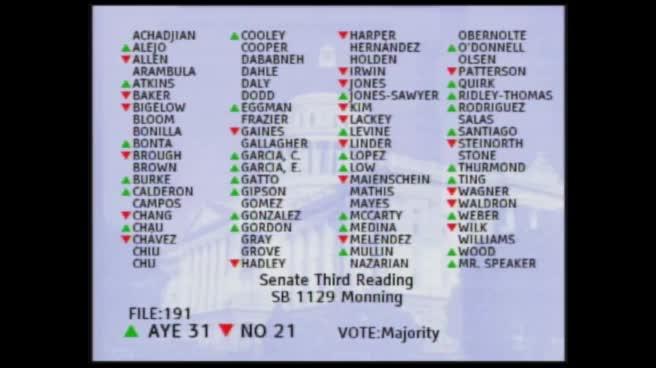
Bill Author

Bill Co-Author(s):