SB 550: Net energy metering.
- Session Year: 2015-2016
- House: Senate
- Latest Version Date: 2015-05-04
Existing law relative to private energy producers requires every electric utility to develop a standard contract or tariff providing for net energy metering and to make this contract or tariff available to eligible customer-generators upon request for generation by a renewable electrical generation facility. Existing law provides that an electric utility that is not a large electrical corporation is not obligated to provide net energy metering when the combined total peak demand of all electricity used by eligible customer-generators in the service area exceeds 5% of the aggregate customer peak demand of the electric utility. Existing law exempts from the net energy metering requirements a local publicly owned electric utility that serves more than 750,000 customers and that also conveys water to its customers.
This bill would delete the exemption for those local publicly owned electric utilities. The bill would define the aggregate customer peak demand for the purposes of calculating the net energy metering program limit for electric utilities that are not large electrical corporations. The bill would require those electric utilities to file with the State Energy Resources Conservation and Development Commission and to make available to the public a quarterly report detailing their progress towards the program limit. By imposing additional requirements on local publicly owned electric utilities, this bill would impose a state-mandated local program. The bill would require the commission to post on its Internet Web site data detailing the progress of those electric utilities towards their program limit.
The California Constitution requires the state to reimburse local agencies and school districts for certain costs mandated by the state. Statutory provisions establish procedures for making that reimbursement.
This bill would provide that no reimbursement is required by this act for a specified reason.
Existing law relative to private energy producers requires every electric utility to develop a standard contract or tariff providing for net energy metering and to make this contract or tariff available to eligible customer-generators upon request for generation by a renewable electrical generation facility. Existing law authorizes a local publicly owned electric utility to elect to instead offer co-energy metering, which uses a generation-to-generation energy and time-of-use credit formula. Existing law provides that an electric utility that is not a large electrical corporation is not obligated to provide net energy metering when the combined total peak demand of all electricity used by eligible customer-generators in the service area exceeds 5% of the aggregate customer peak demand of the electric utility. Existing law exempts from the net energy metering requirements a local publicly owned electric utility that serves more than 750,000 customers and that also conveys water to its customers.
This bill would make a nonsubstantive revision to the net energy metering provisions applicable to a local publicly owned electric utility. delete the exemption for those local publicly owned electric utilities. The bill would define the aggregate customer peak demand for the purposes of calculating the net energy metering program limit for electric utilities that are not large electrical corporations. The bill would require those electric utilities to file with the State Energy Resources Conservation and Development Commission and to make available to the public a quarterly report detailing their progress towards the program limit. By imposing additional requirements on local publicly owned electric utilities, this bill would impose a state-mandated local program. The bill would require the commission to post on its Internet Web site data detailing the progress of those electric utilities towards their program limit.
The California Constitution requires the state to reimburse local agencies and school districts for certain costs mandated by the state. Statutory provisions establish procedures for making that reimbursement.
This bill would provide that no reimbursement is required by this act for a specified reason.
Existing law relative to private energy producers requires every electric utility to develop a standard contract or tariff providing for net energy metering and to make this contract or tariff available to eligible customer-generators upon request for generation by a renewable electrical generation facility. Existing law authorizes a local publicly owned electric utility to elect to instead offer co-energy metering, which uses a generation-to-generation energy and time-of-use credit formula.
This bill would make a nonsubstantive revision to the net energy metering provisions applicable to a local publicly owned electric utility.
(a)The Legislature finds and declares that a program to provide net energy metering combined with net surplus compensation, co-energy metering, and wind energy co-metering for eligible customer-generators is one way to encourage substantial private investment in renewable energy resources, stimulate in-state economic growth, reduce demand for electricity during peak consumption periods, help stabilize Californias energy supply infrastructure, enhance the continued diversification of Californias energy resource mix, reduce interconnection and administrative costs for electricity suppliers, and encourage conservation and efficiency.
(b)As used in this section, the following terms have the following meanings:
(1)Co-energy metering means a program that is the same in all other respects as a net energy metering program, except that the local publicly owned electric utility has elected to apply a generation-to-generation energy and time-of-use credit formula as provided in subdivision (i).
(2)Electrical cooperative means an electrical cooperative as defined in Section 2776.
(3)Electric utility means an electrical corporation, a local publicly owned electric utility, or an electrical cooperative, or any other entity, except an electric service provider, that offers electrical service.
(4)(A)Eligible customer-generator means a residential customer, small commercial customer as defined in subdivision (h) of Section 331, or commercial, industrial, or agricultural customer of an electric utility, who uses a renewable electrical generation facility, or a combination of those facilities, with a total capacity of not more than one megawatt, that is located on the customers owned, leased, or rented premises, and is interconnected and operates in parallel with the electrical grid, and is intended primarily to offset part or all of the customers own electrical requirements.
(B)(i)Notwithstanding subparagraph (A), eligible customer-generator includes the Department of Corrections and Rehabilitation using a renewable electrical generation technology, or a combination of renewable electrical generation technologies, with a total capacity of not more than eight megawatts, that is located on the departments owned, leased, or rented premises, and is interconnected and operates in parallel with the electrical grid, and is intended primarily to offset part or all of the facilitys own electrical requirements. The amount of any wind generation exported to the electrical grid shall not exceed 1.35 megawatt at any time.
(ii)Notwithstanding any other law, an electrical corporation shall be afforded a prudent but necessary time, as determined by the executive director of the commission, to study the impacts of a request for interconnection of a renewable generator with a capacity of greater than one megawatt under this subparagraph. If the study reveals the need for upgrades to the transmission or distribution system arising solely from the interconnection, the electrical corporation shall be afforded the time necessary to complete those upgrades before the interconnection and those costs shall be borne by the customer-generator. Upgrade projects shall comply with applicable state and federal requirements, including requirements of the Federal Energy Regulatory Commission.
(5)Large electrical corporation means an electrical corporation with more than 100,000 service connections in California.
(6)Net energy metering means measuring the difference between the electricity supplied through the electrical grid and the electricity generated by an eligible customer-generator and fed back to the electrical grid over a 12-month period as described in subdivisions (c) and (h).
(7)Net surplus customer-generator means an eligible customer-generator that generates more electricity during a 12-month period than is supplied by the electric utility to the eligible customer-generator during the same 12-month period.
(8)Net surplus electricity means all electricity generated by an eligible customer-generator measured in kilowatthours over a 12-month period that exceeds the amount of electricity consumed by that eligible customer-generator.
(9)Net surplus electricity compensation means a per kilowatthour rate offered by the electric utility to the net surplus customer-generator for net surplus electricity that is set by the ratemaking authority pursuant to subdivision (h).
(10)Ratemaking authority means, for an electrical corporation, the commission, for an electrical cooperative, its ratesetting body selected by its shareholders or members, and for a local publicly owned electric utility, the local elected body responsible for setting the rates of the local publicly owned utility.
(11)Renewable electrical generation facility means a facility that generates electricity from a renewable source listed in paragraph (1) of subdivision (a) of Section 25741 of the Public Resources Code. A small hydroelectric generation facility is not an eligible renewable electrical generation facility if it will cause an adverse impact on instream beneficial uses or cause a change in the volume or timing of streamflow.
(12)Wind energy co-metering means any wind energy project greater than 50 kilowatts, but not exceeding one megawatt, where the difference between the electricity supplied through the electrical grid and the electricity generated by an eligible customer-generator and fed back to the electrical grid over a 12-month period is as described in subdivision (h). Wind energy co-metering shall be accomplished pursuant to Section 2827.8.
(c)(1)Except as provided in paragraph (4) and in Section 2827.1, every electric utility shall develop a standard contract or tariff providing for net energy metering, and shall make this standard contract or tariff available to eligible customer-generators, upon request, on a first-come-first-served basis until the time that the total rated generating capacity used by eligible customer-generators exceeds 5 percent of the electric utilitys aggregate customer peak demand. Net energy metering shall be accomplished using a single meter capable of registering the flow of electricity in two directions. An additional meter or meters to monitor the flow of electricity in each direction may be installed with the consent of the eligible customer-generator, at the expense of the electric utility, and the additional metering shall be used only to provide the information necessary to accurately bill or credit the eligible customer-generator pursuant to subdivision (h), or to collect generating system performance information for research purposes relative to a renewable electrical generation facility. If the existing electrical meter of an eligible customer-generator is not capable of measuring the flow of electricity in two directions, the eligible customer-generator shall be responsible for all expenses involved in purchasing and installing a meter that is able to measure electricity flow in two directions. If an additional meter or meters are installed, the net energy metering calculation shall yield a result identical to that of a single meter. An eligible customer-generator that is receiving service other than through the standard contract or tariff may elect to receive service through the standard contract or tariff until the electric utility reaches the generation limit set forth in this paragraph. Once the generation limit is reached, only eligible customer-generators that had previously elected to receive service pursuant to the standard contract or tariff have a right to continue to receive service pursuant to the standard contract or tariff. Eligibility for net energy metering does not limit an eligible customer-generators eligibility for any other rebate, incentive, or credit provided by the electric utility, or pursuant to any governmental program, including rebates and incentives provided pursuant to the California Solar Initiative.
(2)An electrical corporation shall include a provision in the net energy metering contract or tariff requiring that any customer with an existing electrical generating facility and meter who enters into a new net energy metering contract shall provide an inspection report to the electrical corporation, unless the electrical generating facility and meter have been installed or inspected within the previous three years. The inspection report shall be prepared by a California licensed contractor who is not the owner or operator of the facility and meter. A California licensed electrician shall perform the inspection of the electrical portion of the facility and meter.
(3)(A)On an annual basis, every electric utility shall make available to the ratemaking authority information on the total rated generating capacity used by eligible customer-generators that are customers of that provider in the providers service area and the net surplus electricity purchased by the electric utility pursuant to this section.
(B)An electric service provider operating pursuant to Section 394 shall make available to the ratemaking authority the information required by this paragraph for each eligible customer-generator that is their customer for each service area of an electrical corporation, local publicly owned electric utility, or electrical cooperative, in which the eligible customer-generator has net energy metering.
(C)The ratemaking authority shall develop a process for making the information required by this paragraph available to electric utilities, and for using that information to determine when, pursuant to paragraphs (1) and (4), an electric utility is not obligated to provide net energy metering to additional eligible customer-generators in its service area.
(4)(A)(i)An electric utility that is not a large electrical corporation is not obligated to provide net energy metering to additional eligible customer-generators in its service area when the combined total peak demand of all electricity used by eligible customer-generators served by all the electric utilities in that service area furnishing net energy metering to eligible customer-generators exceeds 5 percent of the aggregate customer peak demand of those electric utilities. An electric utility that is not a large electrical corporation may determine aggregate customer peak demand using an estimation technique that the Energy Commission has determined to be reasonable.
(ii)For the purpose of calculating the program limit of an electric utility that is not a large electrical corporation, the aggregate customer peak demand means the highest sum of the noncoincident peak demands of all the customers of electric utilities in that service area that occurs in any calendar year.
(iii)Every electric utility that is not a large electrical corporation shall file a quarterly report with the Energy Commission detailing its progress toward meeting the program limit established in this subparagraph and shall make the report available to the public for download from its Internet Web site. The report shall include separate calculations on progress toward the limit based on operating solar energy systems and cumulative numbers of interconnection requests for net energy metering eligible systems.
(iv)The Energy Commission shall post on its Internet Web site data detailing the progress of every electric utility that is not a large electrical corporation toward meeting the program limit established in this subparagraph.
(B) The commission shall require every large electrical corporation to make the standard contract or tariff available to eligible customer-generators, continuously and without interruption, until such times as the large electrical corporation reaches its net energy metering program limit or July 1, 2017, whichever is earlier. A large electrical corporation reaches its program limit when the combined total peak demand of all electricity used by eligible customer-generators served by all the electric utilities in the large electrical corporations service area furnishing net energy metering to eligible customer-generators exceeds 5 percent of the aggregate customer peak demand of those electric utilities. For purposes of calculating a large electrical corporations program limit, aggregate customer peak demand means the highest sum of the noncoincident peak demands of all of the large electrical corporations customers that occurs in any calendar year. To determine the aggregate customer peak demand, every large electrical corporation shall use a uniform method approved by the commission. The program limit calculated pursuant to this paragraph shall not be less than the following:
(i)For San Diego Gas and Electric Company, when it has made 607 megawatts of nameplate generating capacity available to eligible customer-generators.
(ii)For Southern California Edison Company, when it has made 2,240 megawatts of nameplate generating capacity available to eligible customer-generators.
(iii)For Pacific Gas and Electric Company, when it has made 2,409 megawatts of nameplate generating capacity available to eligible customer-generators.
(C)Every large electrical corporation shall file a monthly report with the commission detailing the progress toward the net energy metering program limit established in subparagraph (B). The report shall include separate calculations on progress toward the limits based on operating solar energy systems, cumulative numbers of interconnection requests for net energy metering eligible systems, and any other criteria required by the commission.
(D)Beginning July 1, 2017, or upon reaching the net metering program limit of subparagraph (B), whichever is earlier, the obligation of a large electrical corporation to provide service pursuant to a standard contract or tariff shall be pursuant to Section 2827.1 and applicable state and federal requirements.
(d)Every electric utility shall make all necessary forms and contracts for net energy metering and net surplus electricity compensation service available for download from the Internet.
(e)(1)Every electric utility shall ensure that requests for establishment of net energy metering and net surplus electricity compensation are processed in a time period not exceeding that for similarly situated customers requesting new electric service, but not to exceed 30 working days from the date it receives a completed application form for net energy metering service or net surplus electricity compensation, including a signed interconnection agreement from an eligible customer-generator and the electric inspection clearance from the governmental authority having jurisdiction.
(2)Every electric utility shall ensure that requests for an interconnection agreement from an eligible customer-generator are processed in a time period not to exceed 30 working days from the date it receives a completed application form from the eligible customer-generator for an interconnection agreement.
(3)If an electric utility is unable to process a request within the allowable timeframe pursuant to paragraph (1) or (2), it shall notify the eligible customer-generator and the ratemaking authority of the reason for its inability to process the request and the expected completion date.
(f)(1)If a customer participates in direct transactions pursuant to paragraph (1) of subdivision (b) of Section 365, or Section 365.1, with an electric service provider that does not provide distribution service for the direct transactions, the electric utility that provides distribution service for the eligible customer-generator is not obligated to provide net energy metering or net surplus electricity compensation to the customer.
(2)If a customer participates in direct transactions pursuant to paragraph (1) of subdivision (b) of Section 365 or 365.1 with an electric service provider, and the customer is an eligible customer-generator, the electric utility that provides distribution service for the direct transactions may recover from the customers electric service provider the incremental costs of metering and billing service related to net energy metering and net surplus electricity compensation in an amount set by the ratemaking authority.
(g)Except for the time-variant kilowatthour pricing portion of any tariff adopted by the commission pursuant to paragraph (4) of subdivision (a) of Section 2851, each net energy metering contract or tariff shall be identical, with respect to rate structure, all retail rate components, and any monthly charges, to the contract or tariff to which the same customer would be assigned if the customer did not use a renewable electrical generation facility, except that eligible customer-generators shall not be assessed standby charges on the electrical generating capacity or the kilowatthour production of a renewable electrical generation facility. The charges for all retail rate components for eligible customer-generators shall be based exclusively on the customer-generators net kilowatthour consumption over a 12-month period, without regard to the eligible customer-generators choice as to from whom it purchases electricity that is not self-generated. Any new or additional demand charge, standby charge, customer charge, minimum monthly charge, interconnection charge, or any other charge that would increase an eligible customer-generators costs beyond those of other customers who are not eligible customer-generators in the rate class to which the eligible customer-generator would otherwise be assigned if the customer did not own, lease, rent, or otherwise operate a renewable electrical generation facility is contrary to the intent of this section, and shall not form a part of net energy metering contracts or tariffs.
(h)For eligible customer-generators, the net energy metering calculation shall be made by measuring the difference between the electricity supplied to the eligible customer-generator and the electricity generated by the eligible customer-generator and fed back to the electrical grid over a 12-month period. The following rules shall apply to the annualized net metering calculation:
(1)The eligible residential or small commercial customer-generator, at the end of each 12-month period following the date of final interconnection of the eligible customer-generators system with an electric utility, and at each anniversary date thereafter, shall be billed for electricity used during that 12-month period. The electric utility shall determine if the eligible residential or small commercial customer-generator was a net consumer or a net surplus customer-generator during that period.
(2)At the end of each 12-month period, where the electricity supplied during the period by the electric utility exceeds the electricity generated by the eligible residential or small commercial customer-generator during that same period, the eligible residential or small commercial customer-generator is a net electricity consumer and the electric utility shall be owed compensation for the eligible customer-generators net kilowatthour consumption over that 12-month period. The compensation owed for the eligible residential or small commercial customer-generators consumption shall be calculated as follows:
(A)For all eligible customer-generators taking service under contracts or tariffs employing baseline and over baseline rates, any net monthly consumption of electricity shall be calculated according to the terms of the contract or tariff to which the same customer would be assigned to, or be eligible for, if the customer was not an eligible customer-generator. If those same customer-generators are net generators over a billing period, the net kilowatthours generated shall be valued at the same price per kilowatthour as the electric utility would charge for the baseline quantity of electricity during that billing period, and if the number of kilowatthours generated exceeds the baseline quantity, the excess shall be valued at the same price per kilowatthour as the electric utility would charge for electricity over the baseline quantity during that billing period.
(B)For all eligible customer-generators taking service under contracts or tariffs employing time-of-use rates, any net monthly consumption of electricity shall be calculated according to the terms of the contract or tariff to which the same customer would be assigned, or be eligible for, if the customer was not an eligible customer-generator. When those same customer-generators are net generators during any discrete time-of-use period, the net kilowatthours produced shall be valued at the same price per kilowatthour as the electric utility would charge for retail kilowatthour sales during that same time-of-use period. If the eligible customer-generators time-of-use electrical meter is unable to measure the flow of electricity in two directions, paragraph (1) of subdivision (c) shall apply.
(C)For all eligible residential and small commercial customer-generators and for each billing period, the net balance of moneys owed to the electric utility for net consumption of electricity or credits owed to the eligible customer-generator for net generation of electricity shall be carried forward as a monetary value until the end of each 12-month period. For all eligible commercial, industrial, and agricultural customer-generators, the net balance of moneys owed shall be paid in accordance with the electric utilitys normal billing cycle, except that if the eligible commercial, industrial, or agricultural customer-generator is a net electricity producer over a normal billing cycle, any excess kilowatthours generated during the billing cycle shall be carried over to the following billing period as a monetary value, calculated according to the procedures set forth in this section, and appear as a credit on the eligible commercial, industrial, or agricultural customer-generators account, until the end of the annual period when paragraph (3) shall apply.
(3)At the end of each 12-month period, where the electricity generated by the eligible customer-generator during the 12-month period exceeds the electricity supplied by the electric utility during that same period, the eligible customer-generator is a net surplus customer-generator and the electric utility, upon an affirmative election by the net surplus customer-generator, shall either (A) provide net surplus electricity compensation for any net surplus electricity generated during the prior 12-month period, or (B) allow the net surplus customer-generator to apply the net surplus electricity as a credit for kilowatthours subsequently supplied by the electric utility to the net surplus customer-generator. For an eligible customer-generator that does not affirmatively elect to receive service pursuant to net surplus electricity compensation, the electric utility shall retain any excess kilowatthours generated during the prior 12-month period. The eligible customer-generator not affirmatively electing to receive service pursuant to net surplus electricity compensation shall not be owed any compensation for the net surplus electricity unless the electric utility enters into a purchase agreement with the eligible customer-generator for those excess kilowatthours. Every electric utility shall provide notice to eligible customer-generators that they are eligible to receive net surplus electricity compensation for net surplus electricity, that they must elect to receive net surplus electricity compensation, and that the 12-month period commences when the electric utility receives the eligible customer-generators election. For an electric utility that is an electrical corporation or electrical cooperative, the commission may adopt requirements for providing notice and the manner by which eligible customer-generators may elect to receive net surplus electricity compensation.
(4)(A)An eligible customer-generator with multiple meters may elect to aggregate the electrical load of the meters located on the property where the renewable electrical generation facility is located and on all property adjacent or contiguous to the property on which the renewable electrical generation facility is located, if those properties are solely owned, leased, or rented by the eligible customer-generator. If the eligible customer-generator elects to aggregate the electric load pursuant to this paragraph, the electric utility shall use the aggregated load for the purpose of determining whether an eligible customer-generator is a net consumer or a net surplus customer-generator during a 12-month period.
(B)If an eligible customer-generator chooses to aggregate pursuant to subparagraph (A), the eligible customer-generator shall be permanently ineligible to receive net surplus electricity compensation, and the electric utility shall retain any kilowatthours in excess of the eligible customer-generators aggregated electrical load generated during the 12-month period.
(C)If an eligible customer-generator with multiple meters elects to aggregate the electrical load of those meters pursuant to subparagraph (A), and different rate schedules are applicable to service at any of those meters, the electricity generated by the renewable electrical generation facility shall be allocated to each of the meters in proportion to the electrical load served by those meters. For example, if the eligible customer-generator receives electric service through three meters, two meters being at an agricultural rate that each provide service to 25 percent of the customers total load, and a third meter, at a commercial rate, that provides service to 50 percent of the customers total load, then 50 percent of the electrical generation of the eligible renewable generation facility shall be allocated to the third meter that provides service at the commercial rate and 25 percent of the generation shall be allocated to each of the two meters providing service at the agricultural rate. This proportionate allocation shall be computed each billing period.
(D)This paragraph shall not become operative for an electrical corporation unless the commission determines that allowing eligible customer-generators to aggregate their load from multiple meters will not result in an increase in the expected revenue obligations of customers who are not eligible customer-generators. The commission shall make this determination by September 30, 2013. In making this determination, the commission shall determine if there are any public purpose or other noncommodity charges that the eligible customer-generators would pay pursuant to the net energy metering program as it exists prior to aggregation, that the eligible customer-generator would not pay if permitted to aggregate the electrical load of multiple meters pursuant to this paragraph.
(E)A local publicly owned electric utility or electrical cooperative shall only allow eligible customer-generators to aggregate their load if the utilitys ratemaking authority determines that allowing eligible customer-generators to aggregate their load from multiple meters will not result in an increase in the expected revenue obligations of customers that are not eligible customer-generators. The ratemaking authority of a local publicly owned electric utility or electrical cooperative shall make this determination within 180 days of the first request made by an eligible customer-generator to aggregate their load. In making the determination, the ratemaking authority shall determine if there are any public purpose or other noncommodity charges that the eligible customer-generator would pay pursuant to the net energy metering or co-energy metering program of the utility as it exists prior to aggregation, that the eligible customer-generator would not pay if permitted to aggregate the electrical load of multiple meters pursuant to this paragraph. If the ratemaking authority determines that load aggregation will not cause an incremental rate impact on the utilitys customers that are not eligible customer-generators, the local publicly owned electric utility or electrical cooperative shall permit an eligible customer-generator to elect to aggregate the electrical load of multiple meters pursuant to this paragraph. The ratemaking authority may reconsider any determination made pursuant to this subparagraph in a subsequent public proceeding.
(F)For purposes of this paragraph, parcels that are divided by a street, highway, or public thoroughfare are considered contiguous, provided they are otherwise contiguous and under the same ownership.
(G)An eligible customer-generator may only elect to aggregate the electrical load of multiple meters if the renewable electrical generation facility, or a combination of those facilities, has a total generating capacity of not more than one megawatt.
(H)Notwithstanding subdivision (g), an eligible customer-generator electing to aggregate the electrical load of multiple meters pursuant to this subdivision shall remit service charges for the cost of providing billing services to the electric utility that provides service to the meters.
(5)(A)The ratemaking authority shall establish a net surplus electricity compensation valuation to compensate the net surplus customer-generator for the value of net surplus electricity generated by the net surplus customer-generator. The commission shall establish the valuation in a ratemaking proceeding. The ratemaking authority for a local publicly owned electric utility shall establish the valuation in a public proceeding. The net surplus electricity compensation valuation shall be established so as to provide the net surplus customer-generator just and reasonable compensation for the value of net surplus electricity, while leaving other ratepayers unaffected. The ratemaking authority shall determine whether the compensation will include, where appropriate justification exists, either or both of the following components:
(i)The value of the electricity itself.
(ii)The value of the renewable attributes of the electricity.
(B)In establishing the rate pursuant to subparagraph (A), the ratemaking authority shall ensure that the rate does not result in a shifting of costs between eligible customer-generators and other bundled service customers.
(6)(A)Upon adoption of the net surplus electricity compensation rate by the ratemaking authority, any renewable energy credit, as defined in Section 399.12, for net surplus electricity purchased by the electric utility shall belong to the electric utility. Any renewable energy credit associated with electricity generated by the eligible customer-generator that is utilized by the eligible customer-generator shall remain the property of the eligible customer-generator.
(B)Upon adoption of the net surplus electricity compensation rate by the ratemaking authority, the net surplus electricity purchased by the electric utility shall count toward the electric utilitys renewables portfolio standard annual procurement targets for the purposes of paragraph (1) of subdivision (b) of Section 399.15, or for a local publicly owned electric utility, the renewables portfolio standard annual procurement targets established pursuant to Section 399.30.
(7)The electric utility shall provide every eligible residential or small commercial customer-generator with net electricity consumption and net surplus electricity generation information with each regular bill. That information shall include the current monetary balance owed the electric utility for net electricity consumed, or the net surplus electricity generated, since the last 12-month period ended. Notwithstanding this subdivision, an electric utility shall permit that customer to pay monthly for net energy consumed.
(8)If an eligible residential or small commercial customer-generator terminates the customer relationship with the electric utility, the electric utility shall reconcile the eligible customer-generators consumption and production of electricity during any part of a 12-month period following the last reconciliation, according to the requirements set forth in this subdivision, except that those requirements shall apply only to the months since the most recent 12-month bill.
(9)If an electric service provider or electric utility providing net energy metering to a residential or small commercial customer-generator ceases providing that electric service to that customer during any 12-month period, and the customer-generator enters into a new net energy metering contract or tariff with a new electric service provider or electric utility, the 12-month period, with respect to that new electric service provider or electric utility, shall commence on the date on which the new electric service provider or electric utility first supplies electric service to the customer-generator.
(i)Notwithstanding any other provisions of this section, paragraphs (1), (2), and (3) shall apply to an eligible customer-generator with a capacity of more than 10 kilowatts, but not exceeding one megawatt, that receives electric service from a local publicly owned electric utility that has elected to utilize a co-energy metering program unless the local publicly owned electric utility chooses to provide service for eligible customer-generators with a capacity of more than 10 kilowatts in accordance with subdivisions (g) and (h):
(1)The eligible customer-generator shall be required to utilize a meter, or multiple meters, capable of separately measuring electricity flow in both directions. All meters shall provide time-of-use measurements of electricity flow, and the customer shall take service on a time-of-use rate schedule. If the existing meter of the eligible customer-generator is not a time-of-use meter or is not capable of measuring total flow of electricity in both directions, the eligible customer-generator shall be responsible for all expenses involved in purchasing and installing a meter that is both time-of-use and able to measure total electricity flow in both directions. This subdivision shall not restrict the ability of an eligible customer-generator to utilize any economic incentives provided by a governmental agency or an electric utility to reduce its costs for purchasing and installing a time-of-use meter.
(2)The consumption of electricity from the local publicly owned electric utility shall result in a cost to the eligible customer-generator to be priced in accordance with the standard rate charged to the eligible customer-generator in accordance with the rate structure to which the customer would be assigned if the customer did not use a renewable electrical generation facility. The generation of electricity provided to the local publicly owned electric utility shall result in a credit to the eligible customer-generator and shall be priced in accordance with the generation component, established under the applicable structure to which the customer would be assigned if the customer did not use a renewable electrical generation facility.
(3)All costs and credits shall be shown on the eligible customer-generators bill for each billing period. In any months in which the eligible customer-generator has been a net consumer of electricity calculated on the basis of value determined pursuant to paragraph (2), the customer-generator shall owe to the local publicly owned electric utility the balance of electricity costs and credits during that billing period. In any billing period in which the eligible customer-generator has been a net producer of electricity calculated on the basis of value determined pursuant to paragraph (2), the local publicly owned electric utility shall owe to the eligible customer-generator the balance of electricity costs and credits during that billing period. Any net credit to the eligible customer-generator of electricity costs may be carried forward to subsequent billing periods, provided that a local publicly owned electric utility may choose to carry the credit over as a kilowatthour credit consistent with the provisions of any applicable contract or tariff, including any differences attributable to the time of generation of the electricity. At the end of each 12-month period, the local publicly owned electric utility may reduce any net credit due to the eligible customer-generator to zero.
(j)A renewable electrical generation facility used by an eligible customer-generator shall meet all applicable safety and performance standards established by the National Electrical Code, the Institute of Electrical and Electronics Engineers, and accredited testing laboratories, including Underwriters Laboratories Incorporated and, where applicable, rules of the commission regarding safety and reliability. A customer-generator whose renewable electrical generation facility meets those standards and rules shall not be required to install additional controls, perform or pay for additional tests, or purchase additional liability insurance.
(k)If the commission determines that there are cost or revenue obligations for an electrical corporation that may not be recovered from customer-generators acting pursuant to this section, those obligations shall remain within the customer class from which any shortfall occurred and shall not be shifted to any other customer class. Net energy metering and co-energy metering customers shall not be exempt from the public goods charges imposed pursuant to Article 7 (commencing with Section 381), Article 8 (commencing with Section 385), or Article 15 (commencing with Section 399) of Chapter 2.3 of Part 1.
(l)A net energy metering, co-energy metering, or wind energy co-metering customer shall reimburse the Department of Water Resources for all charges that would otherwise be imposed on the customer by the commission to recover bond-related costs pursuant to an agreement between the commission and the Department of Water Resources pursuant to Section 80110 of the Water Code, as well as the costs of the department equal to the share of the departments estimated net unavoidable power purchase contract costs attributable to the customer. The commission shall incorporate the determination into an existing proceeding before the commission, and shall ensure that the charges are nonbypassable. Until the commission has made a determination regarding the nonbypassable charges, net energy metering, co-energy metering, and wind energy co-metering shall continue under the same rules, procedures, terms, and conditions as were applicable on December 31, 2002.
(m)In implementing the requirements of subdivisions (k) and (l), an eligible customer-generator shall not be required to replace its existing meter except as set forth in paragraph (1) of subdivision (c), nor shall the electric utility require additional measurement of usage beyond that which is necessary for customers in the same rate class as the eligible customer-generator.
(n)It is the intent of the Legislature that the Treasurer incorporate net energy metering, including net surplus electricity compensation, co-energy metering, and wind energy co-metering projects undertaken pursuant to this section as sustainable building methods or distributive energy technologies for purposes of evaluating low-income housing projects.
SEC. 2.No reimbursement is required by this act pursuant to Section 6 of Article XIIIB of the California Constitution because a local agency or school district has the authority to levy service charges, fees, or assessments sufficient to pay for the program or level of service mandated by this act, within the meaning of Section 17556 of the Government Code.
(a)The Legislature finds and declares that a program to provide net energy metering combined with net surplus compensation, co-energy metering, and wind energy co-metering for eligible customer-generators is one way to encourage substantial private investment in renewable energy resources, stimulate in-state economic growth, reduce demand for electricity during peak consumption periods, help stabilize Californias energy supply infrastructure, enhance the continued diversification of Californias energy resource mix, reduce interconnection and administrative costs for electricity suppliers, and encourage conservation and efficiency.
(b)As used in this section, the following terms have the following meanings:
(1)Co-energy metering means a program that is the same in all other respects as a net energy metering program, except that the local publicly owned electric utility has elected to apply a generation-to-generation energy and time-of-use credit formula as provided in subdivision (i).
(2)Electrical cooperative means an electrical cooperative as defined in Section 2776.
(3)Electric utility means an electrical corporation, a local publicly owned electric utility, or an electrical cooperative, or any other entity, except an electric service provider, that offers electrical service. This section shall not apply to a local publicly owned electric utility that serves more than 750,000 customers and that also conveys water to its customers.
(4)(A)Eligible customer-generator means a residential customer, small commercial customer as defined in subdivision (h) of Section 331, or commercial, industrial, or agricultural customer of an electric utility, who uses a renewable electrical generation facility, or a combination of those facilities, with a total capacity of not more than one megawatt, that is located on the customers owned, leased, or rented premises, and is interconnected and operates in parallel with the electrical grid, and is intended primarily to offset part or all of the customers own electrical requirements.
(B)(i)Notwithstanding subparagraph (A), eligible customer-generator includes the Department of Corrections and Rehabilitation using a renewable electrical generation technology, or a combination of renewable electrical generation technologies, with a total capacity of not more than eight megawatts, that is located on the departments owned, leased, or rented premises, and is interconnected and operates in parallel with the electrical grid, and is intended primarily to offset part or all of the facilitys own electrical requirements. The amount of any wind generation exported to the electrical grid shall not exceed 1.35 megawatt at any time.
(ii)Notwithstanding any other law, an electrical corporation shall be afforded a prudent but necessary time, as determined by the executive director of the commission, to study the impacts of a request for interconnection of a renewable generator with a capacity of greater than one megawatt under this subparagraph. If the study reveals the need for upgrades to the transmission or distribution system arising solely from the interconnection, the electrical corporation shall be afforded the time necessary to complete those upgrades before the interconnection and those costs shall be borne by the customer-generator. Upgrade projects shall comply with applicable state and federal requirements, including requirements of the Federal Energy Regulatory Commission.
(5)Large electrical corporation means an electrical corporation with more than 100,000 service connections in California.
(6)Net energy metering means measuring the difference between the electricity supplied through the electrical grid and the electricity generated by an eligible customer-generator and fed back to the electrical grid over a 12-month period as described in subdivisions (c) and (h).
(7)Net surplus customer-generator means an eligible customer-generator that generates more electricity during a 12-month period than is supplied by the electric utility to the eligible customer-generator during the same 12-month period.
(8)Net surplus electricity means all electricity generated by an eligible customer-generator measured in kilowatthours over a 12-month period that exceeds the amount of electricity consumed by that eligible customer-generator.
(9)Net surplus electricity compensation means a per kilowatthour rate offered by the electric utility to the net surplus customer-generator for net surplus electricity that is set by the ratemaking authority pursuant to subdivision (h).
(10)Ratemaking authority means, for an electrical corporation, the commission, for an electrical cooperative, its ratesetting body selected by its shareholders or members, and for a local publicly owned electric utility, the local elected body responsible for setting the rates of the local publicly owned utility.
(11)Renewable electrical generation facility means a facility that generates electricity from a renewable source listed in paragraph (1) of subdivision (a) of Section 25741 of the Public Resources Code. A small hydroelectric generation facility is not an eligible renewable electrical generation facility if it will cause an adverse impact on instream beneficial uses or cause a change in the volume or timing of streamflow.
(12)Wind energy co-metering means any wind energy project greater than 50 kilowatts, but not exceeding one megawatt, where the difference between the electricity supplied through the electrical grid and the electricity generated by an eligible customer-generator and fed back to the electrical grid over a 12-month period is as described in subdivision (h). Wind energy co-metering shall be accomplished pursuant to Section 2827.8.
(c)(1)Except as provided in paragraph (4) and in Section 2827.1, every electric utility shall develop a standard contract or tariff providing for net energy metering, and shall make this standard contract or tariff available to eligible customer-generators, upon request, on a first-come-first-served basis until the time that the total rated generating capacity used by eligible customer-generators exceeds 5 percent of the electric utilitys aggregate customer peak demand. Net energy metering shall be accomplished using a single meter capable of registering the flow of electricity in two directions. An additional meter or meters to monitor the flow of electricity in each direction may be installed with the consent of the eligible customer-generator, at the expense of the electric utility, and the additional metering shall be used only to provide the information necessary to accurately bill or credit the eligible customer-generator pursuant to subdivision (h), or to collect generating system performance information for research purposes relative to a renewable electrical generation facility. If the existing electrical meter of an eligible customer-generator is not capable of measuring the flow of electricity in two directions, the eligible customer-generator shall be responsible for all expenses involved in purchasing and installing a meter that is able to measure electricity flow in two directions. If an additional meter or meters are installed, the net energy metering calculation shall yield a result identical to that of a single meter. An eligible customer-generator that is receiving service other than through the standard contract or tariff may elect to receive service through the standard contract or tariff until the electric utility reaches the generation limit set forth in this paragraph. Once the generation limit is reached, only eligible customer-generators that had previously elected to receive service pursuant to the standard contract or tariff have a right to continue to receive service pursuant to the standard contract or tariff. Eligibility for net energy metering does not limit an eligible customer-generators eligibility for any other rebate, incentive, or credit provided by the electric utility, or pursuant to any governmental program, including rebates and incentives provided pursuant to the California Solar Initiative.
(2)An electrical corporation shall include a provision in the net energy metering contract or tariff requiring that any customer with an existing electrical generating facility and meter who enters into a new net energy metering contract shall provide an inspection report to the electrical corporation, unless the electrical generating facility and meter have been installed or inspected within the previous three years. The inspection report shall be prepared by a California licensed contractor who is not the owner or operator of the facility and meter. A California licensed electrician shall perform the inspection of the electrical portion of the facility and meter.
(3)(A)On an annual basis, every electric utility shall make available to the ratemaking authority information on the total rated generating capacity used by eligible customer-generators that are customers of that provider in the providers service area and the net surplus electricity purchased by the electric utility pursuant to this section.
(B)An electric service provider operating pursuant to Section 394 shall make available to the ratemaking authority the information required by this paragraph for each eligible customer-generator that is their customer for each service area of an electrical corporation, local publicly owned electric utility, or electrical cooperative, in which the eligible customer-generator has net energy metering.
(C)The ratemaking authority shall develop a process for making the information required by this paragraph available to electric utilities, and for using that information to determine when, pursuant to paragraphs (1) and (4), an electric utility is not obligated to provide net energy metering to additional eligible customer-generators in its service area.
(4)(A)(i)An electric utility that is not a large electrical corporation is not obligated to provide net energy metering to additional eligible customer-generators in its service area when the combined total peak demand of all electricity used by eligible customer-generators served by all the electric utilities in that service area furnishing net energy metering to eligible customer-generators exceeds 5 percent of the aggregate customer peak demand of those electric utilities.
(ii)For the purpose of calculating the program limit of an electric utility that is not a large electrical corporation, the aggregate customer peak demand means the highest sum of the noncoincident peak demands of all the customers of electric utilities in that service area that occurs in any calendar year.
(iii)Every electric utility that is not a large electrical corporation shall file a quarterly report with the Energy Commission detailing its progress toward meeting the program limit established in this subparagraph and shall make the report available to the public for download from its Internet Web site. The report shall include separate calculations on progress toward the limit based on operating solar energy systems and cumulative numbers of interconnection requests for net energy metering eligible systems.
(iv)The Energy Commission shall post on its Internet Web site data detailing the progress of every electric utility that is not a large electrical corporation toward meeting the program limit established in this subparagraph.
(B) The commission shall require every large electrical corporation to make the standard contract or tariff available to eligible customer-generators, continuously and without interruption, until such times as the large electrical corporation reaches its net energy metering program limit or July 1, 2017, whichever is earlier. A large electrical corporation reaches its program limit when the combined total peak demand of all electricity used by eligible customer-generators served by all the electric utilities in the large electrical corporations service area furnishing net energy metering to eligible customer-generators exceeds 5 percent of the aggregate customer peak demand of those electric utilities. For purposes of calculating a large electrical corporations program limit, aggregate customer peak demand means the highest sum of the noncoincident peak demands of all of the large electrical corporations customers that occurs in any calendar year. To determine the aggregate customer peak demand, every large electrical corporation shall use a uniform method approved by the commission. The program limit calculated pursuant to this paragraph shall not be less than the following:
(i)For San Diego Gas and Electric Company, when it has made 607 megawatts of nameplate generating capacity available to eligible customer-generators.
(ii)For Southern California Edison Company, when it has made 2,240 megawatts of nameplate generating capacity available to eligible customer-generators.
(iii)For Pacific Gas and Electric Company, when it has made 2,409 megawatts of nameplate generating capacity available to eligible customer-generators.
(C)Every large electrical corporation shall file a monthly report with the commission detailing the progress toward the net energy metering program limit established in subparagraph (B). The report shall include separate calculations on progress toward the limits based on operating solar energy systems, cumulative numbers of interconnection requests for net energy metering eligible systems, and any other criteria required by the commission.
(D)Beginning July 1, 2017, or upon reaching the net metering program limit of subparagraph (B), whichever is earlier, the obligation of a large electrical corporation to provide service pursuant to a standard contract or tariff shall be pursuant to Section 2827.1 and applicable state and federal requirements.
(d)Every electric utility shall make all necessary forms and contracts for net energy metering and net surplus electricity compensation service available for download from the Internet.
(e)(1)Every electric utility shall ensure that requests for establishment of net energy metering and net surplus electricity compensation are processed in a time period not exceeding that for similarly situated customers requesting new electric service, but not to exceed 30 working days from the date it receives a completed application form for net energy metering service or net surplus electricity compensation, including a signed interconnection agreement from an eligible customer-generator and the electric inspection clearance from the governmental authority having jurisdiction.
(2)Every electric utility shall ensure that requests for an interconnection agreement from an eligible customer-generator are processed in a time period not to exceed 30 working days from the date it receives a completed application form from the eligible customer-generator for an interconnection agreement.
(3)If an electric utility is unable to process a request within the allowable timeframe pursuant to paragraph (1) or (2), it shall notify the eligible customer-generator and the ratemaking authority of the reason for its inability to process the request and the expected completion date.
(f)(1)If a customer participates in direct transactions pursuant to paragraph (1) of subdivision (b) of Section 365, or Section 365.1, with an electric service provider that does not provide distribution service for the direct transactions, the electric utility that provides distribution service for the eligible customer-generator is not obligated to provide net energy metering or net surplus electricity compensation to the customer.
(2)If a customer participates in direct transactions pursuant to paragraph (1) of subdivision (b) of Section 365 or 365.1 with an electric service provider, and the customer is an eligible customer-generator, the electric utility that provides distribution service for the direct transactions may recover from the customers electric service provider the incremental costs of metering and billing service related to net energy metering and net surplus electricity compensation in an amount set by the ratemaking authority.
(g)Except for the time-variant kilowatthour pricing portion of any tariff adopted by the commission pursuant to paragraph (4) of subdivision (a) of Section 2851, each net energy metering contract or tariff shall be identical, with respect to rate structure, all retail rate components, and any monthly charges, to the contract or tariff to which the same customer would be assigned if the customer did not use a renewable electrical generation facility, except that eligible customer-generators shall not be assessed standby charges on the electrical generating capacity or the kilowatthour production of a renewable electrical generation facility. The charges for all retail rate components for eligible customer-generators shall be based exclusively on the customer-generators net kilowatthour consumption over a 12-month period, without regard to the eligible customer-generators choice as to from whom it purchases electricity that is not self-generated. Any new or additional demand charge, standby charge, customer charge, minimum monthly charge, interconnection charge, or any other charge that would increase an eligible customer-generators costs beyond those of other customers who are not eligible customer-generators in the rate class to which the eligible customer-generator would otherwise be assigned if the customer did not own, lease, rent, or otherwise operate a renewable electrical generation facility is contrary to the intent of this section, and shall not form a part of net energy metering contracts or tariffs.
(h)For eligible customer-generators, the net energy metering calculation shall be made by measuring the difference between the electricity supplied to the eligible customer-generator and the electricity generated by the eligible customer-generator and fed back to the electrical grid over a 12-month period. The following rules shall apply to the annualized net metering calculation:
(1)The eligible residential or small commercial customer-generator, at the end of each 12-month period following the date of final interconnection of the eligible customer-generators system with an electric utility, and at each anniversary date thereafter, shall be billed for electricity used during that 12-month period. The electric utility shall determine if the eligible residential or small commercial customer-generator was a net consumer or a net surplus customer-generator during that period.
(2)At the end of each 12-month period, where the electricity supplied during the period by the electric utility exceeds the electricity generated by the eligible residential or small commercial customer-generator during that same period, the eligible residential or small commercial customer-generator is a net electricity consumer and the electric utility shall be owed compensation for the eligible customer-generators net kilowatthour consumption over that 12-month period. The compensation owed for the eligible residential or small commercial customer-generators consumption shall be calculated as follows:
(A)For all eligible customer-generators taking service under contracts or tariffs employing baseline and over baseline rates, any net monthly consumption of electricity shall be calculated according to the terms of the contract or tariff to which the same customer would be assigned to, or be eligible for, if the customer was not an eligible customer-generator. If those same customer-generators are net generators over a billing period, the net kilowatthours generated shall be valued at the same price per kilowatthour as the electric utility would charge for the baseline quantity of electricity during that billing period, and if the number of kilowatthours generated exceeds the baseline quantity, the excess shall be valued at the same price per kilowatthour as the electric utility would charge for electricity over the baseline quantity during that billing period.
(B)For all eligible customer-generators taking service under contracts or tariffs employing time-of-use rates, any net monthly consumption of electricity shall be calculated according to the terms of the contract or tariff to which the same customer would be assigned, or be eligible for, if the customer was not an eligible customer-generator. When those same customer-generators are net generators during any discrete time-of-use period, the net kilowatthours produced shall be valued at the same price per kilowatthour as the electric utility would charge for retail kilowatthour sales during that same time-of-use period. If the eligible customer-generators time-of-use electrical meter is unable to measure the flow of electricity in two directions, paragraph (1) of subdivision (c) shall apply.
(C)For all eligible residential and small commercial customer-generators and for each billing period, the net balance of moneys owed to the electric utility for net consumption of electricity or credits owed to the eligible customer-generator for net generation of electricity shall be carried forward as a monetary value until the end of each 12-month period. For all eligible commercial, industrial, and agricultural customer-generators, the net balance of moneys owed shall be paid in accordance with the electric utilitys normal billing cycle, except that if the eligible commercial, industrial, or agricultural customer-generator is a net electricity producer over a normal billing cycle, any excess kilowatthours generated during the billing cycle shall be carried over to the following billing period as a monetary value, calculated according to the procedures set forth in this section, and appear as a credit on the eligible commercial, industrial, or agricultural customer-generators account, until the end of the annual period when paragraph (3) shall apply.
(3)At the end of each 12-month period, where the electricity generated by the eligible customer-generator during the 12-month period exceeds the electricity supplied by the electric utility during that same period, the eligible customer-generator is a net surplus customer-generator and the electric utility, upon an affirmative election by the net surplus customer-generator, shall either (A) provide net surplus electricity compensation for any net surplus electricity generated during the prior 12-month period, or (B) allow the net surplus customer-generator to apply the net surplus electricity as a credit for kilowatthours subsequently supplied by the electric utility to the net surplus customer-generator. For an eligible customer-generator that does not affirmatively elect to receive service pursuant to net surplus electricity compensation, the electric utility shall retain any excess kilowatthours generated during the prior 12-month period. The eligible customer-generator not affirmatively electing to receive service pursuant to net surplus electricity compensation shall not be owed any compensation for the net surplus electricity unless the electric utility enters into a purchase agreement with the eligible customer-generator for those excess kilowatthours. Every electric utility shall provide notice to eligible customer-generators that they are eligible to receive net surplus electricity compensation for net surplus electricity, that they must elect to receive net surplus electricity compensation, and that the 12-month period commences when the electric utility receives the eligible customer-generators election. For an electric utility that is an electrical corporation or electrical cooperative, the commission may adopt requirements for providing notice and the manner by which eligible customer-generators may elect to receive net surplus electricity compensation.
(4)(A)An eligible customer-generator with multiple meters may elect to aggregate the electrical load of the meters located on the property where the renewable electrical generation facility is located and on all property adjacent or contiguous to the property on which the renewable electrical generation facility is located, if those properties are solely owned, leased, or rented by the eligible customer-generator. If the eligible customer-generator elects to aggregate the electric load pursuant to this paragraph, the electric utility shall use the aggregated load for the purpose of determining whether an eligible customer-generator is a net consumer or a net surplus customer-generator during a 12-month period.
(B)If an eligible customer-generator chooses to aggregate pursuant to subparagraph (A), the eligible customer-generator shall be permanently ineligible to receive net surplus electricity compensation, and the electric utility shall retain any kilowatthours in excess of the eligible customer-generators aggregated electrical load generated during the 12-month period.
(C)If an eligible customer-generator with multiple meters elects to aggregate the electrical load of those meters pursuant to subparagraph (A), and different rate schedules are applicable to service at any of those meters, the electricity generated by the renewable electrical generation facility shall be allocated to each of the meters in proportion to the electrical load served by those meters. For example, if the eligible customer-generator receives electric service through three meters, two meters being at an agricultural rate that each provide service to 25 percent of the customers total load, and a third meter, at a commercial rate, that provides service to 50 percent of the customers total load, then 50 percent of the electrical generation of the eligible renewable generation facility shall be allocated to the third meter that provides service at the commercial rate and 25 percent of the generation shall be allocated to each of the two meters providing service at the agricultural rate. This proportionate allocation shall be computed each billing period.
(D)This paragraph shall not become operative for an electrical corporation unless the commission determines that allowing eligible customer-generators to aggregate their load from multiple meters will not result in an increase in the expected revenue obligations of customers who are not eligible customer-generators. The commission shall make this determination by September 30, 2013. In making this determination, the commission shall determine if there are any public purpose or other noncommodity charges that the eligible customer-generators would pay pursuant to the net energy metering program as it exists prior to aggregation, that the eligible customer-generator would not pay if permitted to aggregate the electrical load of multiple meters pursuant to this paragraph.
(E)A local publicly owned electric utility or electrical cooperative shall only allow eligible customer-generators to aggregate their load if the utilitys ratemaking authority determines that allowing eligible customer-generators to aggregate their load from multiple meters will not result in an increase in the expected revenue obligations of customers that are not eligible customer-generators. The ratemaking authority of a local publicly owned electric utility or electrical cooperative shall make this determination within 180 days of the first request made by an eligible customer-generator to aggregate their load. In making the determination, the ratemaking authority shall determine if there are any public purpose or other noncommodity charges that the eligible customer-generator would pay pursuant to the net energy metering or co-energy metering program of the utility as it exists prior to aggregation, that the eligible customer-generator would not pay if permitted to aggregate the electrical load of multiple meters pursuant to this paragraph. If the ratemaking authority determines that load aggregation will not cause an incremental rate impact on the utilitys customers that are not eligible customer-generators, the local publicly owned electric utility or electrical cooperative shall permit an eligible customer-generator to elect to aggregate the electrical load of multiple meters pursuant to this paragraph. The ratemaking authority may reconsider any determination made pursuant to this subparagraph in a subsequent public proceeding.
(F)For purposes of this paragraph, parcels that are divided by a street, highway, or public thoroughfare are considered contiguous, provided they are otherwise contiguous and under the same ownership.
(G)An eligible customer-generator may only elect to aggregate the electrical load of multiple meters if the renewable electrical generation facility, or a combination of those facilities, has a total generating capacity of not more than one megawatt.
(H)Notwithstanding subdivision (g), an eligible customer-generator electing to aggregate the electrical load of multiple meters pursuant to this subdivision shall remit service charges for the cost of providing billing services to the electric utility that provides service to the meters.
(5)(A)The ratemaking authority shall establish a net surplus electricity compensation valuation to compensate the net surplus customer-generator for the value of net surplus electricity generated by the net surplus customer-generator. The commission shall establish the valuation in a ratemaking proceeding. The ratemaking authority for a local publicly owned electric utility shall establish the valuation in a public proceeding. The net surplus electricity compensation valuation shall be established so as to provide the net surplus customer-generator just and reasonable compensation for the value of net surplus electricity, while leaving other ratepayers unaffected. The ratemaking authority shall determine whether the compensation will include, where appropriate justification exists, either or both of the following components:
(i)The value of the electricity itself.
(ii)The value of the renewable attributes of the electricity.
(B)In establishing the rate pursuant to subparagraph (A), the ratemaking authority shall ensure that the rate does not result in a shifting of costs between eligible customer-generators and other bundled service customers.
(6)(A)Upon adoption of the net surplus electricity compensation rate by the ratemaking authority, any renewable energy credit, as defined in Section 399.12, for net surplus electricity purchased by the electric utility shall belong to the electric utility. Any renewable energy credit associated with electricity generated by the eligible customer-generator that is utilized by the eligible customer-generator shall remain the property of the eligible customer-generator.
(B)Upon adoption of the net surplus electricity compensation rate by the ratemaking authority, the net surplus electricity purchased by the electric utility shall count toward the electric utilitys renewables portfolio standard annual procurement targets for the purposes of paragraph (1) of subdivision (b) of Section 399.15, or for a local publicly owned electric utility, the renewables portfolio standard annual procurement targets established pursuant to Section 399.30.
(7)The electric utility shall provide every eligible residential or small commercial customer-generator with net electricity consumption and net surplus electricity generation information with each regular bill. That information shall include the current monetary balance owed the electric utility for net electricity consumed, or the net surplus electricity generated, since the last 12-month period ended. Notwithstanding this subdivision, an electric utility shall permit that customer to pay monthly for net energy consumed.
(8)If an eligible residential or small commercial customer-generator terminates the customer relationship with the electric utility, the electric utility shall reconcile the eligible customer-generators consumption and production of electricity during any part of a 12-month period following the last reconciliation, according to the requirements set forth in this subdivision, except that those requirements shall apply only to the months since the most recent 12-month bill.
(9)If an electric service provider or electric utility providing net energy metering to a residential or small commercial customer-generator ceases providing that electric service to that customer during any 12-month period, and the customer-generator enters into a new net energy metering contract or tariff with a new electric service provider or electric utility, the 12-month period, with respect to that new electric service provider or electric utility, shall commence on the date on which the new electric service provider or electric utility first supplies electric service to the customer-generator.
(i)Notwithstanding any other provisions of this section, paragraphs (1), (2), and (3) shall apply to an eligible customer-generator with a capacity of more than 10 kilowatts, but not exceeding one megawatt, that receives electric service from a local publicly owned electric utility that has elected to utilize a co-energy metering program unless the local publicly owned electric utility chooses to provide service for eligible customer-generators with a capacity of more than 10 kilowatts in accordance with subdivisions (g) and (h):
(1)The eligible customer-generator shall be required to utilize a meter, or multiple meters, capable of separately measuring electricity flow in both directions. All meters shall provide time-of-use measurements of electricity flow, and the customer shall take service on a time-of-use rate schedule. If the existing meter of the eligible customer-generator is not a time-of-use meter or is not capable of measuring total flow of electricity in both directions, the eligible customer-generator shall be responsible for all expenses involved in purchasing and installing a meter that is both time-of-use and able to measure total electricity flow in both directions. This subdivision shall not restrict the ability of an eligible customer-generator to utilize any economic incentives provided by a governmental agency or an electric utility to reduce its costs for purchasing and installing a time-of-use meter.
(2)The consumption of electricity from the local publicly owned electric utility shall result in a cost to the eligible customer-generator to be priced in accordance with the standard rate charged to the eligible customer-generator in accordance with the rate structure to which the customer would be assigned if the customer did not use a renewable electrical generation facility. The generation of electricity provided to the local publicly owned electric utility shall result in a credit to the eligible customer-generator and shall be priced in accordance with the generation component, established under the applicable structure to which the customer would be assigned if the customer did not use a renewable electrical generation facility.
(3)All costs and credits shall be shown on the eligible customer-generators bill for each billing period. In any months in which the eligible customer-generator has been a net consumer of electricity calculated on the basis of value determined pursuant to paragraph (2), the customer-generator shall owe to the local publicly owned electric utility the balance of electricity costs and credits during that billing period. In any billing period in which the eligible customer-generator has been a net producer of electricity calculated on the basis of value determined pursuant to paragraph (2), the local publicly owned electric utility shall owe to the eligible customer-generator the balance of electricity costs and credits during that billing period. Any net credit to the eligible customer-generator of electricity costs may be carried forward to subsequent billing periods, provided that a local publicly owned electric utility may choose to carry the credit over as a kilowatthour credit consistent with the provisions of any applicable contract or tariff, including any differences attributable to the time of generation of the electricity. At the end of each 12-month period, the local publicly owned electric utility may reduce any net credit due to the eligible customer-generator to zero.
(j)A renewable electrical generation facility used by an eligible customer-generator shall meet all applicable safety and performance standards established by the National Electrical Code, the Institute of Electrical and Electronics Engineers, and accredited testing laboratories, including Underwriters Laboratories Incorporated and, where applicable, rules of the commission regarding safety and reliability. A customer-generator whose renewable electrical generation facility meets those standards and rules shall not be required to install additional controls, perform or pay for additional tests, or purchase additional liability insurance.
(k)If the commission determines that there are cost or revenue obligations for an electrical corporation that may not be recovered from customer-generators acting pursuant to this section, those obligations shall remain within the customer class from which any shortfall occurred and shall not be shifted to any other customer class. Net energy metering and co-energy metering customers shall not be exempt from the public goods charges imposed pursuant to Article 7 (commencing with Section 381), Article 8 (commencing with Section 385), or Article 15 (commencing with Section 399) of Chapter 2.3 of Part 1.
(l)A net energy metering, co-energy metering, or wind energy co-metering customer shall reimburse the Department of Water Resources for all charges that would otherwise be imposed on the customer by the commission to recover bond-related costs pursuant to an agreement between the commission and the Department of Water Resources pursuant to Section 80110 of the Water Code, as well as the costs of the department equal to the share of the departments estimated net unavoidable power purchase contract costs attributable to the customer. The commission shall incorporate the determination into an existing proceeding before the commission, and shall ensure that the charges are nonbypassable. Until the commission has made a determination regarding the nonbypassable charges, net energy metering, co-energy metering, and wind energy co-metering shall continue under the same rules, procedures, terms, and conditions as were applicable on December 31, 2002.
(m)In implementing the requirements of subdivisions (k) and (l), an eligible customer-generator shall not be required to replace its existing meter except as set forth in paragraph (1) of subdivision (c), nor shall the electric utility require additional measurement of usage beyond that which is necessary for customers in the same rate class as the eligible customer-generator.
(n)It is the intent of the Legislature that the Treasurer incorporate net energy metering, including net surplus electricity compensation, co-energy metering, and wind energy co-metering projects undertaken pursuant to this section as sustainable building methods or distributive energy technologies for purposes of evaluating low-income housing projects.
SEC. 2.No reimbursement is required by this act pursuant to Section 6 of Article XIIIB of the California Constitution because a local agency or school district has the authority to levy service charges, fees, or assessments sufficient to pay for the program or level of service mandated by this act, within the meaning of Section 17556 of the Government Code.
(a)The Legislature finds and declares that a program to provide net energy metering combined with net surplus compensation, co-energy metering, and wind energy co-metering for eligible customer-generators is one way to encourage substantial private investment in renewable energy resources, stimulate in-state economic growth, reduce demand for electricity during peak consumption periods, help stabilize Californias energy supply infrastructure, enhance the continued diversification of Californias energy resource mix, reduce interconnection and administrative costs for electricity suppliers, and encourage conservation and efficiency.
(b)As used in this section, the following terms have the following meanings:
(1)Co-energy metering means a program that is the same in all other respects as a net energy metering program, except that the local publicly owned electric utility has elected to apply a generation-to-generation energy and time-of-use credit formula as provided in subdivision (i).
(2)Electrical cooperative means an electrical cooperative as defined in Section 2776.
(3)Electric utility means an electrical corporation, a local publicly owned electric utility, or an electrical cooperative, or any other entity, except an electric service provider, that offers electrical service. This section shall not apply to a local publicly owned electric utility that serves more than 750,000 customers and that also conveys water to its customers.
(4)(A)Eligible customer-generator means a residential customer, small commercial customer as defined in subdivision (h) of Section 331, or commercial, industrial, or agricultural customer of an electric utility, who uses a renewable electrical generation facility, or a combination of those facilities, with a total capacity of not more than one megawatt, that is located on the customers owned, leased, or rented premises, and is interconnected and operates in parallel with the electrical grid, and is intended primarily to offset part or all of the customers own electrical requirements.
(B)(i)Notwithstanding subparagraph (A), eligible customer-generator includes the Department of Corrections and Rehabilitation using a renewable electrical generation technology, or a combination of renewable electrical generation technologies, with a total capacity of not more than eight megawatts, that is located on the departments owned, leased, or rented premises, and is interconnected and operates in parallel with the electrical grid, and is intended primarily to offset part or all of the facilitys own electrical requirements. The amount of any wind generation exported to the electrical grid shall not exceed 1.35 megawatt at any time.
(ii)Notwithstanding any other law, an electrical corporation shall be afforded a prudent but necessary time, as determined by the executive director of the commission, to study the impacts of a request for interconnection of a renewable generator with a capacity of greater than one megawatt under this subparagraph. If the study reveals the need for upgrades to the transmission or distribution system arising solely from the interconnection, the electrical corporation shall be afforded the time necessary to complete those upgrades before the interconnection and those costs shall be borne by the customer-generator. Upgrade projects shall comply with applicable state and federal requirements, including requirements of the Federal Energy Regulatory Commission.
(5)Large electrical corporation means an electrical corporation with more than 100,000 service connections in California.
(6)Net energy metering means measuring the difference between the electricity supplied through the electrical grid and the electricity generated by an eligible customer-generator and fed back to the electrical grid over a 12-month period as described in subdivisions (c) and (h).
(7)Net surplus customer-generator means an eligible customer-generator that generates more electricity during a 12-month period than is supplied by the electric utility to the eligible customer-generator during the same 12-month period.
(8)Net surplus electricity means all electricity generated by an eligible customer-generator measured in kilowatthours over a 12-month period that exceeds the amount of electricity consumed by that eligible customer-generator.
(9)Net surplus electricity compensation means a per kilowatthour rate offered by the electric utility to the net surplus customer-generator for net surplus electricity that is set by the ratemaking authority pursuant to subdivision (h).
(10)Ratemaking authority means, for an electrical corporation, the commission, for an electrical cooperative, its ratesetting body selected by its shareholders or members, and for a local publicly owned electric utility, the local elected body responsible for setting the rates of the local publicly owned utility.
(11)Renewable electrical generation facility means a facility that generates electricity from a renewable source listed in paragraph (1) of subdivision (a) of Section 25741 of the Public Resources Code. A small hydroelectric generation facility is not an eligible renewable electrical generation facility if it will cause an adverse impact on instream beneficial uses or cause a change in the volume or timing of streamflow.
(12)Wind energy co-metering means any wind energy project greater than 50 kilowatts, but not exceeding one megawatt, where the difference between the electricity supplied through the electrical grid and the electricity generated by an eligible customer-generator and fed back to the electrical grid over a 12-month period is as described in subdivision (h). Wind energy co-metering shall be accomplished pursuant to Section 2827.8.
(c)(1)Except as provided in paragraph (4) and in Section 2827.1, every electric utility shall develop a standard contract or tariff providing for net energy metering, and shall make this standard contract or tariff available to eligible customer-generators, upon request, on a first-come-first-served basis until the time that the total rated generating capacity used by eligible customer-generators exceeds 5 percent of the electric utilitys aggregate customer peak demand. Net energy metering shall be accomplished using a single meter capable of registering the flow of electricity in two directions. An additional meter or meters to monitor the flow of electricity in each direction may be installed with the consent of the eligible customer-generator, at the expense of the electric utility, and the additional metering shall be used only to provide the information necessary to accurately bill or credit the eligible customer-generator pursuant to subdivision (h), or to collect generating system performance information for research purposes relative to a renewable electrical generation facility. If the existing electrical meter of an eligible customer-generator is not capable of measuring the flow of electricity in two directions, the eligible customer-generator shall be responsible for all expenses involved in purchasing and installing a meter that is able to measure electricity flow in two directions. If an additional meter or meters are installed, the net energy metering calculation shall yield a result identical to that of a single meter. An eligible customer-generator that is receiving service other than through the standard contract or tariff may elect to receive service through the standard contract or tariff until the electric utility reaches the generation limit set forth in this paragraph. Once the generation limit is reached, only eligible customer-generators that had previously elected to receive service pursuant to the standard contract or tariff have a right to continue to receive service pursuant to the standard contract or tariff. Eligibility for net energy metering does not limit an eligible customer-generators eligibility for any other rebate, incentive, or credit provided by the electric utility, or pursuant to any governmental program, including rebates and incentives provided pursuant to the California Solar Initiative.
(2)An electrical corporation shall include a provision in the net energy metering contract or tariff requiring that any customer with an existing electrical generating facility and meter who enters into a new net energy metering contract shall provide an inspection report to the electrical corporation, unless the electrical generating facility and meter have been installed or inspected within the previous three years. The inspection report shall be prepared by a California licensed contractor who is not the owner or operator of the facility and meter. A California licensed electrician shall perform the inspection of the electrical portion of the facility and meter.
(3)(A)On an annual basis, every electric utility shall make available to the ratemaking authority information on the total rated generating capacity used by eligible customer-generators that are customers of that provider in the providers service area and the net surplus electricity purchased by the electric utility pursuant to this section.
(B)An electric service provider operating pursuant to Section 394 shall make available to the ratemaking authority the information required by this paragraph for each eligible customer-generator that is their customer for each service area of an electrical corporation, local publicly owned electrical electric utility, or electrical cooperative, in which the eligible customer-generator has net energy metering.
(C)The ratemaking authority shall develop a process for making the information required by this paragraph available to electric utilities, and for using that information to determine when, pursuant to paragraphs (1) and (4), an electric utility is not obligated to provide net energy metering to additional eligible customer-generators in its service area.
(4)(A)An electric utility that is not a large electrical corporation is not obligated to provide net energy metering to additional eligible customer-generators in its service area when the combined total peak demand of all electricity used by eligible customer-generators served by all the electric utilities in that service area furnishing net energy metering to eligible customer-generators exceeds 5 percent of the aggregate customer peak demand of those electric utilities.
(B) The commission shall require every large electrical corporation to make the standard contract or tariff available to eligible customer-generators, continuously and without interruption, until such times as the large electrical corporation reaches its net energy metering program limit or July 1, 2017, whichever is earlier. A large electrical corporation reaches its program limit when the combined total peak demand of all electricity used by eligible customer-generators served by all the electric utilities in the large electrical corporations service area furnishing net energy metering to eligible customer-generators exceeds 5 percent of the aggregate customer peak demand of those electric utilities. For purposes of calculating a large electrical corporations program limit, aggregate customer peak demand means the highest sum of the noncoincident peak demands of all of the large electrical corporations customers that occurs in any calendar year. To determine the aggregate customer peak demand, every large electrical corporation shall use a uniform method approved by the commission. The program limit calculated pursuant to this paragraph shall not be less than the following:
(i)For San Diego Gas and Electric Company, when it has made 607 megawatts of nameplate generating capacity available to eligible customer-generators.
(ii)For Southern California Edison Company, when it has made 2,240 megawatts of nameplate generating capacity available to eligible customer-generators.
(iii)For Pacific Gas and Electric Company, when it has made 2,409 megawatts of nameplate generating capacity available to eligible customer-generators.
(C)Every large electrical corporation shall file a monthly report with the commission detailing the progress toward the net energy metering program limit established in subparagraph (B). The report shall include separate calculations on progress toward the limits based on operating solar energy systems, cumulative numbers of interconnection requests for net energy metering eligible systems, and any other criteria required by the commission.
(D)Beginning July 1, 2017, or upon reaching the net metering program limit of subparagraph (B), whichever is earlier, the obligation of a large electrical corporation to provide service pursuant to a standard contract or tariff shall be pursuant to Section 2827.1 and applicable state and federal requirements.
(d)Every electric utility shall make all necessary forms and contracts for net energy metering and net surplus electricity compensation service available for download from the Internet.
(e)(1)Every electric utility shall ensure that requests for establishment of net energy metering and net surplus electricity compensation are processed in a time period not exceeding that for similarly situated customers requesting new electric service, but not to exceed 30 working days from the date it receives a completed application form for net energy metering service or net surplus electricity compensation, including a signed interconnection agreement from an eligible customer-generator and the electric inspection clearance from the governmental authority having jurisdiction.
(2)Every electric utility shall ensure that requests for an interconnection agreement from an eligible customer-generator are processed in a time period not to exceed 30 working days from the date it receives a completed application form from the eligible customer-generator for an interconnection agreement.
(3)If an electric utility is unable to process a request within the allowable timeframe pursuant to paragraph (1) or (2), it shall notify the eligible customer-generator and the ratemaking authority of the reason for its inability to process the request and the expected completion date.
(f)(1)If a customer participates in direct transactions pursuant to paragraph (1) of subdivision (b) of Section 365, or Section 365.1, with an electric service provider that does not provide distribution service for the direct transactions, the electric utility that provides distribution service for the eligible customer-generator is not obligated to provide net energy metering or net surplus electricity compensation to the customer.
(2)If a customer participates in direct transactions pursuant to paragraph (1) of subdivision (b) of Section 365 or 365.1 with an electric service provider, and the customer is an eligible customer-generator, the electric utility that provides distribution service for the direct transactions may recover from the customers electric service provider the incremental costs of metering and billing service related to net energy metering and net surplus electricity compensation in an amount set by the ratemaking authority.
(g)Except for the time-variant kilowatthour pricing portion of any tariff adopted by the commission pursuant to paragraph (4) of subdivision (a) of Section 2851, each net energy metering contract or tariff shall be identical, with respect to rate structure, all retail rate components, and any monthly charges, to the contract or tariff to which the same customer would be assigned if the customer did not use a renewable electrical generation facility, except that eligible customer-generators shall not be assessed standby charges on the electrical generating capacity or the kilowatthour production of a renewable electrical generation facility. The charges for all retail rate components for eligible customer-generators shall be based exclusively on the customer-generators net kilowatthour consumption over a 12-month period, without regard to the eligible customer-generators choice as to from whom it purchases electricity that is not self-generated. Any new or additional demand charge, standby charge, customer charge, minimum monthly charge, interconnection charge, or any other charge that would increase an eligible customer-generators costs beyond those of other customers who are not eligible customer-generators in the rate class to which the eligible customer-generator would otherwise be assigned if the customer did not own, lease, rent, or otherwise operate a renewable electrical generation facility is contrary to the intent of this section, and shall not form a part of net energy metering contracts or tariffs.
(h)For eligible customer-generators, the net energy metering calculation shall be made by measuring the difference between the electricity supplied to the eligible customer-generator and the electricity generated by the eligible customer-generator and fed back to the electrical grid over a 12-month period. The following rules shall apply to the annualized net metering calculation:
(1)The eligible residential or small commercial customer-generator, at the end of each 12-month period following the date of final interconnection of the eligible customer-generators system with an electric utility, and at each anniversary date thereafter, shall be billed for electricity used during that 12-month period. The electric utility shall determine if the eligible residential or small commercial customer-generator was a net consumer or a net surplus customer-generator during that period.
(2)At the end of each 12-month period, where the electricity supplied during the period by the electric utility exceeds the electricity generated by the eligible residential or small commercial customer-generator during that same period, the eligible residential or small commercial customer-generator is a net electricity consumer and the electric utility shall be owed compensation for the eligible customer-generators net kilowatthour consumption over that 12-month period. The compensation owed for the eligible residential or small commercial customer-generators consumption shall be calculated as follows:
(A)For all eligible customer-generators taking service under contracts or tariffs employing baseline and over baseline rates, any net monthly consumption of electricity shall be calculated according to the terms of the contract or tariff to which the same customer would be assigned to, or be eligible for, if the customer was not an eligible customer-generator. If those same customer-generators are net generators over a billing period, the net kilowatthours generated shall be valued at the same price per kilowatthour as the electric utility would charge for the baseline quantity of electricity during that billing period, and if the number of kilowatthours generated exceeds the baseline quantity, the excess shall be valued at the same price per kilowatthour as the electric utility would charge for electricity over the baseline quantity during that billing period.
(B)For all eligible customer-generators taking service under contracts or tariffs employing time-of-use rates, any net monthly consumption of electricity shall be calculated according to the terms of the contract or tariff to which the same customer would be assigned, or be eligible for, if the customer was not an eligible customer-generator. When those same customer-generators are net generators during any discrete time-of-use period, the net kilowatthours produced shall be valued at the same price per kilowatthour as the electric utility would charge for retail kilowatthour sales during that same time-of-use period. If the eligible customer-generators time-of-use electrical meter is unable to measure the flow of electricity in two directions, paragraph (1) of subdivision (c) shall apply.
(C)For all eligible residential and small commercial customer-generators and for each billing period, the net balance of moneys owed to the electric utility for net consumption of electricity or credits owed to the eligible customer-generator for net generation of electricity shall be carried forward as a monetary value until the end of each 12-month period. For all eligible commercial, industrial, and agricultural customer-generators, the net balance of moneys owed shall be paid in accordance with the electric utilitys normal billing cycle, except that if the eligible commercial, industrial, or agricultural customer-generator is a net electricity producer over a normal billing cycle, any excess kilowatthours generated during the billing cycle shall be carried over to the following billing period as a monetary value, calculated according to the procedures set forth in this section, and appear as a credit on the eligible commercial, industrial, or agricultural customer-generators account, until the end of the annual period when paragraph (3) shall apply.
(3)At the end of each 12-month period, where the electricity generated by the eligible customer-generator during the 12-month period exceeds the electricity supplied by the electric utility during that same period, the eligible customer-generator is a net surplus customer-generator and the electric utility, upon an affirmative election by the net surplus customer-generator, shall either (A) provide net surplus electricity compensation for any net surplus electricity generated during the prior 12-month period, or (B) allow the net surplus customer-generator to apply the net surplus electricity as a credit for kilowatthours subsequently supplied by the electric utility to the net surplus customer-generator. For an eligible customer-generator that does not affirmatively elect to receive service pursuant to net surplus electricity compensation, the electric utility shall retain any excess kilowatthours generated during the prior 12-month period. The eligible customer-generator not affirmatively electing to receive service pursuant to net surplus electricity compensation shall not be owed any compensation for the net surplus electricity unless the electric utility enters into a purchase agreement with the eligible customer-generator for those excess kilowatthours. Every electric utility shall provide notice to eligible customer-generators that they are eligible to receive net surplus electricity compensation for net surplus electricity, that they must elect to receive net surplus electricity compensation, and that the 12-month period commences when the electric utility receives the eligible customer-generators election. For an electric utility that is an electrical corporation or electrical cooperative, the commission may adopt requirements for providing notice and the manner by which eligible customer-generators may elect to receive net surplus electricity compensation.
(4)(A)An eligible customer-generator with multiple meters may elect to aggregate the electrical load of the meters located on the property where the renewable electrical generation facility is located and on all property adjacent or contiguous to the property on which the renewable electrical generation facility is located, if those properties are solely owned, leased, or rented by the eligible customer-generator. If the eligible customer-generator elects to aggregate the electric load pursuant to this paragraph, the electric utility shall use the aggregated load for the purpose of determining whether an eligible customer-generator is a net consumer or a net surplus customer-generator during a 12-month period.
(B)If an eligible customer-generator chooses to aggregate pursuant to subparagraph (A), the eligible customer-generator shall be permanently ineligible to receive net surplus electricity compensation, and the electric utility shall retain any kilowatthours in excess of the eligible customer-generators aggregated electrical load generated during the 12-month period.
(C)If an eligible customer-generator with multiple meters elects to aggregate the electrical load of those meters pursuant to subparagraph (A), and different rate schedules are applicable to service at any of those meters, the electricity generated by the renewable electrical generation facility shall be allocated to each of the meters in proportion to the electrical load served by those meters. For example, if the eligible customer-generator receives electric service through three meters, two meters being at an agricultural rate that each provide service to 25 percent of the customers total load, and a third meter, at a commercial rate, that provides service to 50 percent of the customers total load, then 50 percent of the electrical generation of the eligible renewable generation facility shall be allocated to the third meter that provides service at the commercial rate and 25 percent of the generation shall be allocated to each of the two meters providing service at the agricultural rate. This proportionate allocation shall be computed each billing period.
(D)This paragraph shall not become operative for an electrical corporation unless the commission determines that allowing eligible customer-generators to aggregate their load from multiple meters will not result in an increase in the expected revenue obligations of customers who are not eligible customer-generators. The commission shall make this determination by September 30, 2013. In making this determination, the commission shall determine if there are any public purpose or other noncommodity charges that the eligible customer-generators would pay pursuant to the net energy metering program as it exists prior to aggregation, that the eligible customer-generator would not pay if permitted to aggregate the electrical load of multiple meters pursuant to this paragraph.
(E)A local publicly owned electric utility or electrical cooperative shall only allow eligible customer-generators to aggregate their load if the utilitys ratemaking authority determines that allowing eligible customer-generators to aggregate their load from multiple meters will not result in an increase in the expected revenue obligations of customers that are not eligible customer-generators. The ratemaking authority of a local publicly owned electric utility or electrical cooperative shall make this determination within 180 days of the first request made by an eligible customer-generator to aggregate their load. In making the determination, the ratemaking authority shall determine if there are any public purpose or other noncommodity charges that the eligible customer-generator would pay pursuant to the net energy metering or co-energy metering program of the utility as it exists prior to aggregation, that the eligible customer-generator would not pay if permitted to aggregate the electrical load of multiple meters pursuant to this paragraph. If the ratemaking authority determines that load aggregation will not cause an incremental rate impact on the utilitys customers that are not eligible customer-generators, the local publicly owned electric utility or electrical cooperative shall permit an eligible customer-generator to elect to aggregate the electrical load of multiple meters pursuant to this paragraph. The ratemaking authority may reconsider any determination made pursuant to this subparagraph in a subsequent public proceeding.
(F)For purposes of this paragraph, parcels that are divided by a street, highway, or public thoroughfare are considered contiguous, provided they are otherwise contiguous and under the same ownership.
(G)An eligible customer-generator may only elect to aggregate the electrical load of multiple meters if the renewable electrical generation facility, or a combination of those facilities, has a total generating capacity of not more than one megawatt.
(H)Notwithstanding subdivision (g), an eligible customer-generator electing to aggregate the electrical load of multiple meters pursuant to this subdivision shall remit service charges for the cost of providing billing services to the electric utility that provides service to the meters.
(5)(A)The ratemaking authority shall establish a net surplus electricity compensation valuation to compensate the net surplus customer-generator for the value of net surplus electricity generated by the net surplus customer-generator. The commission shall establish the valuation in a ratemaking proceeding. The ratemaking authority for a local publicly owned electric utility shall establish the valuation in a public proceeding. The net surplus electricity compensation valuation shall be established so as to provide the net surplus customer-generator just and reasonable compensation for the value of net surplus electricity, while leaving other ratepayers unaffected. The ratemaking authority shall determine whether the compensation will include, where appropriate justification exists, either or both of the following components:
(i)The value of the electricity itself.
(ii)The value of the renewable attributes of the electricity.
(B)In establishing the rate pursuant to subparagraph (A), the ratemaking authority shall ensure that the rate does not result in a shifting of costs between eligible customer-generators and other bundled service customers.
(6)(A)Upon adoption of the net surplus electricity compensation rate by the ratemaking authority, any renewable energy credit, as defined in Section 399.12, for net surplus electricity purchased by the electric utility shall belong to the electric utility. Any renewable energy credit associated with electricity generated by the eligible customer-generator that is utilized by the eligible customer-generator shall remain the property of the eligible customer-generator.
(B)Upon adoption of the net surplus electricity compensation rate by the ratemaking authority, the net surplus electricity purchased by the electric utility shall count toward the electric utilitys renewables portfolio standard annual procurement targets for the purposes of paragraph (1) of subdivision (b) of Section 399.15, or for a local publicly owned electric utility, the renewables portfolio standard annual procurement targets established pursuant to Section 399.30.
(7)The electric utility shall provide every eligible residential or small commercial customer-generator with net electricity consumption and net surplus electricity generation information with each regular bill. That information shall include the current monetary balance owed the electric utility for net electricity consumed, or the net surplus electricity generated, since the last 12-month period ended. Notwithstanding this subdivision, an electric utility shall permit that customer to pay monthly for net energy consumed.
(8)If an eligible residential or small commercial customer-generator terminates the customer relationship with the electric utility, the electric utility shall reconcile the eligible customer-generators consumption and production of electricity during any part of a 12-month period following the last reconciliation, according to the requirements set forth in this subdivision, except that those requirements shall apply only to the months since the most recent 12-month bill.
(9)If an electric service provider or electric utility providing net energy metering to a residential or small commercial customer-generator ceases providing that electric service to that customer during any 12-month period, and the customer-generator enters into a new net energy metering contract or tariff with a new electric service provider or electric utility, the 12-month period, with respect to that new electric service provider or electric utility, shall commence on the date on which the new electric service provider or electric utility first supplies electric service to the customer-generator.
(i)Notwithstanding any other provisions of this section, paragraphs (1), (2), and (3) shall apply to an eligible customer-generator with a capacity of more than 10 kilowatts, but not exceeding one megawatt, that receives electric service from a local publicly owned electric utility that has elected to utilize a co-energy metering program unless the local publicly owned electric utility chooses to provide service for eligible customer-generators with a capacity of more than 10 kilowatts in accordance with subdivisions (g) and (h):
(1)The eligible customer-generator shall be required to utilize a meter, or multiple meters, capable of separately measuring electricity flow in both directions. All meters shall provide time-of-use measurements of electricity flow, and the customer shall take service on a time-of-use rate schedule. If the existing meter of the eligible customer-generator is not a time-of-use meter or is not capable of measuring total flow of electricity in both directions, the eligible customer-generator shall be responsible for all expenses involved in purchasing and installing a meter that is both time-of-use and able to measure total electricity flow in both directions. This subdivision shall not restrict the ability of an eligible customer-generator to utilize any economic incentives provided by a governmental agency or an electric utility to reduce its costs for purchasing and installing a time-of-use meter.
(2)The consumption of electricity from the local publicly owned electric utility shall result in a cost to the eligible customer-generator to be priced in accordance with the standard rate charged to the eligible customer-generator in accordance with the rate structure to which the customer would be assigned if the customer did not use a renewable electrical generation facility. The generation of electricity provided to the local publicly owned electric utility shall result in a credit to the eligible customer-generator and shall be priced in accordance with the generation component, established under the applicable structure to which the customer would be assigned if the customer did not use a renewable electrical generation facility.
(3)All costs and credits shall be shown on the eligible customer-generators bill for each billing period. In any months in which the eligible customer-generator has been a net consumer of electricity calculated on the basis of value determined pursuant to paragraph (2), the customer-generator shall owe to the local publicly owned electric utility the balance of electricity costs and credits during that billing period. In any billing period in which the eligible customer-generator has been a net producer of electricity calculated on the basis of value determined pursuant to paragraph (2), the local publicly owned electric utility shall owe to the eligible customer-generator the balance of electricity costs and credits during that billing period. Any net credit to the eligible customer-generator of electricity costs may be carried forward to subsequent billing periods, provided that a local publicly owned electric utility may choose to carry the credit over as a kilowatthour credit consistent with the provisions of any applicable contract or tariff, including any differences attributable to the time of generation of the electricity. At the end of each 12-month period, the local publicly owned electric utility may reduce any net credit due to the eligible customer-generator to zero.
(j)A renewable electrical generation facility used by an eligible customer-generator shall meet all applicable safety and performance standards established by the National Electrical Code, the Institute of Electrical and Electronics Engineers, and accredited testing laboratories, including Underwriters Laboratories Incorporated and, where applicable, rules of the commission regarding safety and reliability. A customer-generator whose renewable electrical generation facility meets those standards and rules shall not be required to install additional controls, perform or pay for additional tests, or purchase additional liability insurance.
(k)If the commission determines that there are cost or revenue obligations for an electrical corporation that may not be recovered from customer-generators acting pursuant to this section, those obligations shall remain within the customer class from which any shortfall occurred and shall not be shifted to any other customer class. Net energy metering and co-energy metering customers shall not be exempt from the public goods charges imposed pursuant to Article 7 (commencing with Section 381), Article 8 (commencing with Section 385), or Article 15 (commencing with Section 399) of Chapter 2.3 of Part 1.
(l)A net energy metering, co-energy metering, or wind energy co-metering customer shall reimburse the Department of Water Resources for all charges that would otherwise be imposed on the customer by the commission to recover bond-related costs pursuant to an agreement between the commission and the Department of Water Resources pursuant to Section 80110 of the Water Code, as well as the costs of the department equal to the share of the departments estimated net unavoidable power purchase contract costs attributable to the customer. The commission shall incorporate the determination into an existing proceeding before the commission, and shall ensure that the charges are nonbypassable. Until the commission has made a determination regarding the nonbypassable charges, net energy metering, co-energy metering, and wind energy co-metering shall continue under the same rules, procedures, terms, and conditions as were applicable on December 31, 2002.
(m)In implementing the requirements of subdivisions (k) and (l), an eligible customer-generator shall not be required to replace its existing meter except as set forth in paragraph (1) of subdivision (c), nor shall the electric utility require additional measurement of usage beyond that which is necessary for customers in the same rate class as the eligible customer-generator.
(n)It is the intent of the Legislature that the Treasurer incorporate net energy metering, including net surplus electricity compensation, co-energy metering, and wind energy co-metering projects undertaken pursuant to this section as sustainable building methods or distributive energy technologies for purposes of evaluating low-income housing projects.
|
Date
|
Status
|
|---|---|
| Feb 26, 2015 | Introduced. Read first time. To Com. on RLS. for assignment. To print. |
| Feb 27, 2015 | From printer. May be acted upon on or after March 29. |
| Mar 12, 2015 | Referred to Com. on RLS. |
| Apr 6, 2015 | From committee with author's amendments. Read second time and amended. Re-referred to Com. on RLS. |
| Apr 16, 2015 | Re-referred to Com. on E., U., & C. |
| Apr 21, 2015 | Set for hearing April 27. |
| Apr 30, 2015 | From committee: Do pass as amended and re-refer to Com. on APPR. (Ayes 6. Noes 3. Page 795.) (April 27). |
| May 4, 2015 | Read second time and amended. Re-referred to Com. on APPR. |
| May 8, 2015 | Set for hearing May 18. |
| May 18, 2015 | May 18 hearing: Placed on APPR. suspense file. |
| May 23, 2015 | Set for hearing May 28. |
| May 28, 2015 | May 28 hearing: Held in committee and under submission. |
| Feb 1, 2016 | Returned to Secretary of Senate pursuant to Joint Rule 56. |
|
Date
|
Description
|
Location
|
Votes
|
|
|---|---|---|---|---|
| May 18, 2015 | Placed on suspense file | Senate Standing Committee on Appropriations |
Passed |
|
| Apr 27, 2015 | Do pass as amended, but first amend, and re-refer to the Committee on [Appropriations] | Senate Standing Committee on Energy, Utilities and Communications |
Passed |
This list shows positions taken on this bill by organizations on the date displayed, which is linked to the original source.
Positions by individuals are not included.
|
Organization
|
Position
|
Date
|
|---|---|---|
| Advanced Energy Economy | * Indeterminate | Apr 27, 2015 |
| Brightline Defense | * Support | Apr 27, 2015 |
| Brightline Defense Project | * Indeterminate | Apr 27, 2015 |
| California Municipal Utilities Association | * Against | Apr 27, 2015 |
| California Municipal Utilities Association | * Indeterminate | Apr 27, 2015 |
| California Solar Energy Industries Association | * Indeterminate | Apr 27, 2015 |
| California Solar Energy Industries Association | * Support | Apr 27, 2015 |
| California Solar Industries Association | * Indeterminate | Apr 27, 2015 |
| City Of Lompoc | * Indeterminate | Apr 27, 2015 |
| City Of Lompoc | * Against | Apr 27, 2015 |
| Coastal Environmental Rights Foundation | ** Support | Apr 27, 2015 |
| Environment California | ** Support | Apr 27, 2015 |
| Northern California Power Agency | ** Against | Apr 27, 2015 |
| Sacramento Municipal Utility District | * Indeterminate | Apr 27, 2015 |
| School Energy Coalition | ** Support | Apr 27, 2015 |
| Sierra Club | * Indeterminate | Apr 27, 2015 |
| Sierra Club California | * Support | Apr 27, 2015 |
| Solar City | * Support | Apr 27, 2015 |
| Solar City Corporation | * Indeterminate | Apr 27, 2015 |
| Solar Energy Industries Association | * Support | Apr 27, 2015 |
| Southern California Public Power Authority | * Against | Apr 27, 2015 |
| Southern California Public Power Authority (Scppa) | * Indeterminate | Apr 27, 2015 |
| Sunrun Inc. | * Indeterminate | Apr 27, 2015 |
| TerraVerde | ** Support | Apr 27, 2015 |
| The Alliance For Solar Choice | * Indeterminate | Apr 27, 2015 |
| The Alliance For Solar Choice | * Support | Apr 27, 2015 |
| The Utility Reform Network (TURN) | * Indeterminate | Apr 27, 2015 |
| Turlock Irrigation District | * Indeterminate | Apr 27, 2015 |
| Turlock Irrigation District | * Against | Apr 27, 2015 |
SB 550 (Hertzberg) Page 2 of 2
SENATE COMMITTEE ON APPROPRIATIONS
Senator Ricardo Lara, Chair
2015 - 2016 Regular Session
SB 550 (Hertzberg) - Net energy metering
|
|
Version: May 4, 2015 |
Policy Vote: E., U., & C. 6 - 3 |
Urgency: No |
Mandate: Yes |
Hearing Date: May 18, 2015 |
Consultant: Marie Liu |
This bill meets the criteria for referral to the Suspense File.
Bill Summary:
SB 550 would specify the methodology by which publically owned electric utilities (POU) are calculate the cap on net energy metering (NEM) programs.
Fiscal Impact:
Ongoing annual costs of $111,000 from the Energy Resources Program Account (General Fund) to the CEC to collect and post information from POUs regarding their NEM subscribership.
Unknown, but potentially minor, costs from the Energy Resources Program Account (General Fund) to the CEC to approve alternative estimation techniques.
Unknown cost shifts to the General Fund and various special funds to the state as a ratepayer.
Background:
Existing law requires that each electric utility offer a NEM program to eligible customer-generators, upon request, on a first-come, first-served basis until the total rated generating capacity used by eligible customer-generators exceeds five percent of the electric utility’s “aggregate customer peak demand.”
How the “aggregate customer peak demand” is calculated has been the subject of discussion by the California Public Utilities Commission (CPUC) in the past few years. In the past, the three large investor-owned utilities (IOUs) calculated peak demand using various methodologies that all relied on a summation of demand happening in the same period of time to determine aggregate customer peak demand. In 2012, the CPUC adopted a controversial decision that require the IOUs to determine the peak demand as the highest noncoincident demand for electricity for each customer, that is, the sum of the highest demand of electricity for each customer regardless of when that individual peak demand occurred. According to the IOUs, the change in calculation of peak demand effectively increased the NEM cap from 5% to 12% based on the old methodology.
Proposed Law:
This bill would require POUs and other non-IOUs to calculate aggregate customer peak demand as a sum of the highest noncoincident demand for electricity for each customer in its jurisdiction.
This bill would allow the non-IOUs to determine aggregate customer peak demand using an estimation technique that has been determined to be reasonable by the California Energy Commission.
The POUs would be required to report quarterly with the CEC detailing its progress toward meeting the program limit. The CEC would be required to post this information on its website.
Related Legislation:
AB 327 (Perea) Chapter 611, Statutes of 2013 codified the requirement for IOUs to calculate aggregate customer peak demand as a sum of each customer’s noncoincident peak demand.
Staff Comments:
In order to collect the quarterly information from the POUs and post it on its website, the CEC estimates that it would need one additional position at the Energy Analyst classification for an annual cost of $111,000.
This bill allows a POU to elect to use an estimation technique that the Energy Commission has determined to be reasonable. It is not clear how this determination would be made. Should the CEC determine that the reasonable estimation technique is the technique that is currently approved for the IOUs by the CPUC, there would be no additional costs to the CEC. However, if this language is interpreted to allow each POU to propose an estimation technique that has to be reviewed and determined reasonable by the CEC, there could be additional costs to the CEC, possibly in the low hundreds of thousands of dollars for a limited period of time.
Staff notes that full-retail NEM involves cost shifts to the non-participating customers as the NEM customer is exempt from paying transmission and distribution costs on the electricity provided by the utility. Instead, these costs must be paid by the non-NEM customers. In addition NEM customers are allowed to use excess bill credit to offset their obligation to contribute to public good programs. As those public good programs have fixed costs, non-NEM customers have to make up the difference. It is uncertain how much the new peak demand calculation in this bill will ultimately increase NEM participation in the POUs. However, staff notes that the state is a customer of the POUs, and as a customer, the state may have additional costs to the extent that the state is a non-NEM customer.
-- END --
SB 550 (Hertzberg) Page 7 of 7
SENATE COMMITTEE ON ENERGY, UTILITIES AND COMMUNICATIONS
Senator Ben Hueso, Chair
2015 - 2016 Regular
Bill No: SB 550 Hearing Date: 4/27/2015
Author: |
Hertzberg |
||
Version: |
4/6/2015 As Amended |
||
Urgency: |
No |
Fiscal: |
Yes |
Consultant: |
Jay Dickenson |
||
SUBJECT: Net energy metering
DIGEST: This bill specifies the methodology by which publicly owned electric utilities (POU) and other electric utilities that are not “large electrical corporations” are to calculate the cap on net energy metering programs.
ANALYSIS:
Existing law:
Requires every electric utility – other than a local POU that serves more than 750,000 customers and that also conveys water to its customers – to offer net energy metering (NEM) to eligible customer-generators, upon request, on a first-come-first-served basis until the total rated generating capacity used by eligible customer-generators exceeds five percent of the electric utility’s aggregate customer peak demand.
Defines an “eligible customer-generator,” for NEM purposes, as a residential customer, small commercial customer, or commercial, industrial, or agricultural customer of an electric utility, who uses a renewable electrical generation facility, or a combination of those facilities, with a total capacity of not more than one megawatt, that is located on the customer’s owned, leased, or rented premises, and is interconnected and operates in parallel with the electrical grid, and is intended primarily to offset part or all of the customer’s own electrical requirements.
Defines “large electrical corporation” as an electrical corporation with more than 100,000 service connections in California.
Defines “aggregate customer peak demand,” for the purposes of the California Public Utilities Commission’s (CPUC) calculation of a large electrical corporation’s NEM program limit, as the highest sum of the noncoincident peak demands of all of the large electrical corporation’s customers that occurs in any calendar year and requires every electrical corporation to use a uniform method, approved by the CPUC, to determine aggregate customer peak demand.
Directs the CPUC to develop a standard tariff or contract, known as the “successor tariff,” for eligible customer-generators with a renewable electrical generation facility no later than December 31, 2015.
Requires, for each large electrical corporation, using the successor tariff, to continue to offer NEM to its customers on July 1, 2017, or upon reaching the five-percent NEM program limit, whichever is earlier.
States that an electric utility that is not a large electrical corporation, such as a POU, is not obligated to provide net energy metering to additional eligible customer-generators once the utility exceeds the five-percent NEM cap, based on aggregate customer peak demand.
(Public Utilities Code §2827 et seq.)
This bill:
Removes the exemption to the NEM program requirements for a local POU that serves more than 750,000 customers and that also conveys water to its customers.
Defines “aggregate customer peak demand,” for purposes of calculating the five-percent NEM program limit of a POU and any other electric utility that is not a large electrical corporation, as the highest sum of the noncoincident peak demands of all the customers of that utility in any calendar year.
Requires each POU and any other electric utility that is not a large electrical corporation to file a quarterly report with the California Energy Commission (CEC) detailing its progress toward meeting the five-percent NEM program limit and to make the report available to the public for download from the utility’s Internet Web site.
Requires the CEC to post on its Internet Web site data detailing the progress of every POU and other electric utility that is not a large electrical corporation toward meeting the five-percent NEM cap.
Background
Net Energy Metering – Net Energy Metering generally refers to a program by which electric utility customers receive a bill credit for the electricity they generate on-site and export to the grid. California has required electric utilities to offer NEM for two decades. California’s NEM program is to encourage substantial private investment in renewable energy resources, among other goals.
California law requires each electric utility to offer a NEM program to its customers on a first-come, first-served basis, until the total rated generating capacity used by eligible customer-generators exceeds five percent of the electric utility’s aggregate customer peak demand. Statute limits the NEM participation to customer-generators who install eligible renewable energy systems of one megawatt (MW) or less on the customer-generator’s premises that is intended to offset part or all of the customer-generator’s electricity use.
The law requires a utility to compensate a NEM participant for any energy the customer exports to the electric grid over a 12-month period that is in excess of the electricity used on site by the NEM participant during that period. The amount of the compensation varies, based upon market prices as determined by the CPUC, and NEM electricity generation is exempt from standby charges – a charge to cover the utility’s cost to supply power, should the distributed generation system fail – and nonbypassable charges that are levied against other electric utility customers. NEM customers own the renewable energy credits associated with the eligible renewable energy they produce.
Current law requires the three large IOUs to continue to offer NEM to their customers on July 1, 2017, or upon reaching the five-percent NEM program limit, whichever is earlier, using a standard successor NEM tariff, as developed by the CPUC. Statute does not require a POU or other electric utility that is not a large electric corporation to offer NEM to its customers after the POU or other utility reaches its five-percent NEM cap.
Aggregate Customer Peak Demand – As described above, statute requires electrical utilities to offer NEM to their customers until the total rated generating capacity used by eligible customer-generators exceeds five percent of the electric utility’s aggregate customer peak demand. This meaning of this term – aggregate customer peak demand – has been debated considerably.
In 2012, the CPUC issued a decision in which it defined the methodology by which the IOUs were to determine aggregate customer peak demand. Until that time, the three major IOUs had calculated aggregate customer peak demand using various methodologies. However, the IOUs had in common a methodology that relied on highest peak demand – a summation of demand happening in the same period of time – to determine aggregate customer peak demand. Conversely, other parties argued that the IOUs should determine aggregate customer peak demand by adding together individual customer peak demand – meaning the sum of the highest demand for electricity for each customer, regardless of when that individual peak demand occurred.
In a controversial decision, the CPUC required the IOUs to determine aggregate customer peak demand by the latter method – the highest noncoincident demand for electricity for each customer. According to the IOUs, the change in methodology had the effect of increasing the NEM cap from five percent to approximately 12 percent, based on the old methodology.
Questions of the merits of the CPUC’s decision are moot, at least as those questions concern the IOUs’ NEM programs. In 2013, the Legislature passed AB 327 (Perea, Chapter 611). That bill codified the CPUC decision. Today, by law, the IOUs must calculate aggregate customer peak demand for purposes of determining their NEM caps by summing each customer’s noncoincident peak demand. Similarly, this bill would require the POUs to determine their NEM cap by using the methodology for aggregate peak demand currently required of the IOUs.
Increasing the NEM Cap – This bill concerns more than mathematical consistency. Proponents argue that the POUs use a different NEM methodology to the detriment of the state’s clean energy and job creation goals. The logic of this argument is that the methodology used by some POUs results in a NEM cap that is lower than it would be, in absolute terms, using the methodology required by this bill.
The proponents’ argument is consistent with the claims of the representatives of the POUs. The POUs contend use of the methodology required by this bill would, in every case, increase the POUs’ NEM caps, in absolute terms. The amount of the increase would vary by POU, but the Northern California Power Association (NCPA) and the California Municipal Utilities Association (CMUA) separately estimate increases to their members ranging from 1 percent, on the low end, to one hundred percent on the high end.
A Foolish Consistency – There are three large electric IOUs in California – Pacific Gas and Electric, Southern California Edison, and San Diego Gas and Electric. Each of the large IOUs represents hundreds of thousands of customers across large service territories. The rates and terms of service of each IOU are regulated, in detail, by the CPUC, a state agency.
The POUs, in contrast, are a disparate group of nearly two dozen utilities. Some POUs serve a few thousand customers sparsely populated across a large service territory. Others, such as the Los Angeles Department of Water and Power – the only local publicly owned electric utility that serves more than 750,000 customers and that also conveys water to its customers and, under existing law, exempt from the NEM requirement – serve millions of customers in densely packed urban regions.
Each POU is regulated by a local governing board. Each governing board of a POU determines the rates and terms of service of its POU to reflect the unique characteristics, preferences and needs of the POU’s customers. State law, generally, recognizes this local expertise and authority by maintaining the governing autonomy of the POUs. However, this is not always the case.
More specifically, the state has increasingly imposed its renewable energy and greenhouse gas reduction policies on the POUs. For example, state law, since 2011, has required the IOUs and POUs alike to meet the renewable energy procurement requirements of the RPS statute; and the IOUs and the POUs are subject to the California Air Resources Board’s cap-and-trade program to reduce the emission of greenhouse gases, to name the most prominent examples. However, each of those programs treats the IOUs and the POUs differently in the specifics. And the statutes governing the NEM program itself differ in regards to the IOUs and the POUs. For example, statute requires the IOUs to continue some form of the NEM program beyond the five-percent NEM cap; yet, statute makes no such requirement of the POUs.
So, it seems that the analysis of this bill cannot rely on a general rule to determine whether state law should make the same requirements of the POUs as it does the IOUs. Rather, the analysis needs to consider whether it is preferable to require all types of utilities to use the same methodology to determine aggregate customer peak demand. The conclusion of this analysis is yes, it is preferable.
Statute, in describing the NEM program cap, uses identical language to describe the conditions that determine the cap as it applies to IOUs and POUs (and utilities): when the combined total peak demand of all electricity used by eligible customer-generators served…exceeds five percent of the aggregate customer peak demand of those electric utilities. It is hard to understand the rationale behind an argument that says aggregate customer peak demand, relative to the state’s NEM program, means one thing in an IOU territory and another in a POU territory. There are no inherent differences between an IOU service territory and a POU service territory that should change the meaning of aggregate customer peak demand.
That said, there are reasons to treat POUs differently in their determination of aggregate customer peak demand. Such demand is most easily determined by the use of smart meters. The large IOUs have deployed smart meters to much of their service territories. The large IOUs also have large, diverse customer bases over which to spread the cost of smart meter installation, which is costly. Yet, even in the case of the large IOUs, the CPUC noted in its 2012 decision that estimation techniques can substitute for customer data in calculating aggregate customer peak demand.
Many of the POUs, especially the smallest ones, do not have large, diverse customer bases over which to spread the costs of smart meters. These POUs should have the opportunity to determine aggregate customer peak demand by a method other than direct collection of customer data. The author and the committee may wish to consider amending the bill to allow an electric utility that is not a large electrical corporation to determine aggregate customer peak demand using a reasonable method, as determined by the CEC, other than direct customer data collection.
This analysis sidesteps the question of whether the state should expand its NEM program. Opponents of this bill express concern that the NEM program costs to nonparticipating customers exceed the benefits those customers receive. Proponents of expansion and this bill contend California’s NEM program provides benefits not usually considered in NEM program evaluations, including avoided emissions, avoided land use, and avoided water use. The arguments on both sides are worth considering. However, the merits of the NEM program itself do not affect the question of whether aggregate customer peak demand has a consistent meaning that should be applied, consistently, statewide. Nonetheless, the members of the committee should be aware enactment of this bill, as currently written, will result in an expansion of the NEM cap, in absolute terms. In some cases this will mean certain POUs – the City of Lompoc and in the Turlock Irrigation District, for example – that had exceeded the NEM cap, as calculated using their existing methodologies for determining aggregate customer peak demand, will be required by law to offer NEM to their customers once again.
Prior/Related Legislation
AB 327 (Perea, Chapter 611, Statutes of 2013) requires the IOUs to calculate aggregate customer peak demand for purposes of determining their NEM caps by summing each customer’s noncoincident peak demand.
FISCAL EFFECT: Appropriation: No Fiscal Com.: Yes Local: Yes
SUPPORT:
Solar City (Sponsor)
The Alliance for Solar Choice (Sponsor)
Brightline Defense
California Solar Energy Industries Association
Coastal Environmental Rights Foundation
Environment California
School Energy Coalition
Sierra Club California
Solar Energy Industries Association
TerraVerde
OPPOSITION:
California Municipal Utilities Association
City of Lompoc
Northern California Power Agency
Southern California Public Power Authority
Turlock Irrigation District
ARGUMENTS IN SUPPORT: Proponents contend the state should use a standard methodology applicable to NEM programs in all jurisdictions, so as to further encourage onsite renewable energy generation and create jobs.
ARGUMENTS IN OPPOSITION: Opponents argue this bill will result in an expansion of NEM, which will exacerbate the cost-shift inherent to the NEM program. Opponents further argue that the bill unfairly changes the rules of the NEM program so that utilities had met the NEM program cap would be obligated to offer NEM once again. Moreover, opponents question whether the NEM program is still needed, given what opponents describe as a mature, competitive market for rooftop solar.
-- END --
Discussed in Hearing
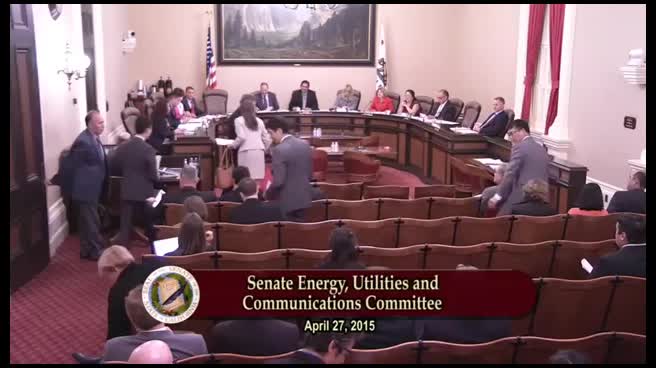 45MIN
Senate Standing Committee on Energy, Utilities and Communications
Bill Author

Bill Co-Author(s):