SB 551: State water policy: water and energy efficiency.
- Session Year: 2015-2016
- House: Senate
- Latest Version Date: 2015-07-06
The California Constitution requires the reasonable and beneficial use of water. Existing law establishes various state water policies, including the policy that the water resources of the state be put to beneficial use to the fullest extent of which they are capable.
Existing law, the Warren-Alquist State Energy Resources Conservation Development Act, declares, among other things, that electrical and natural gas utilities should have as a principal goal of their resource planning and investment to minimize the cost to society of reliable energy services, improve the environment, and encourage the diversity of energy sources. The act also declares that those utilities should seek to exploit all practicable and cost-effective conservation and improvements in the efficiency of energy use and distribution that offer equivalent or better system of reliability.
This bill would declare the policy of the state that water use and water treatment shall be operate in a manner that is as energy efficient as is feasible and energy use and generation shall be operate in a manner that is as water efficient as is feasible. This bill would require all relevant state agencies to consider this state policy when revising, adopting, or establishing policies, regulations, and grant criteria when pertinent to these uses of water and energy.
The California Constitution requires the reasonable and beneficial use of water. Existing law establishes various state water policies, including the policy that the water resources of the state be put to beneficial use to the fullest extent of which they are capable.
Existing law, the Warren-Alquist State Energy Resources Conservation Development Act, declares, among other things, that electrical and natural gas utilities should have as a principal goal of their resource planning and investment to minimize the cost to society of reliable energy services, improve the environment, and encourage the diversity of energy sources. The act also declares that those utilities should seek to exploit all practicable and cost-effective conservation and improvements in the efficiency of energy use and distribution that offer equivalent or better system of reliability.
This bill would declare the policy of the state that water use and water treatment shall be as energy efficient as is feasible and energy use and generation shall be as water efficient as is feasible. This bill would require all relevant state agencies to consider this state policy when revising, adopting, or establishing policies, regulations, and grant criteria when pertinent to these uses of water and energy.
The Legislature finds and declares all of the following:
(a)Water and energy are vital to Californias economy.
(b)Water and energy resources in California are inextricably connected.
(c)Energy generation can be water intensive.
(d)Transportation and treatment of water, treatment and disposal of wastewater, and the energy used to heat and consume water account for nearly 20 percent of the total electricity and 30 percent of the nonpowerplant-related natural gas consumed in California.
(e)Targeted water efficiency measures, therefore, are likely to result in significant energy savings and targeted energy efficiency measures may result in water savings.
SEC. 2.Section 110 is added to the Water Code, to read:110.(a)It is hereby declared to be the established policy of the state that water use and water treatment shall be operate in a manner that is as energy efficient as is feasible and energy use and generation shall be operate in a manner that is as water efficient as is feasible.
(b)All relevant state agencies shall consider this state policy when revising, adopting, or establishing policies, regulations, and grant criteria when those policies, regulations, and criteria are pertinent to the uses of water and energy described in this section.
(c)The implementation of this section shall not infringe on the rights or responsibilities of any public water system or public utility.
(d)For purposes of this section, feasible means capable of being accomplished in a successful manner within a reasonable period of time, taking into account life-cycle analyses, cost-effectiveness, consistency with existing plans, demand forecasts, and environmental, social, public health, and technological factors.
The Legislature finds and declares all of the following:
(a)Water and energy are vital to Californias economy.
(b)Water and energy resources in California are inextricably connected.
(c)Energy generation can be water intensive.
(d)Transportation and treatment of water, treatment and disposal of wastewater, and the energy used to heat and consume water account for nearly 20 percent of the total electricity and 30 percent of the nonpowerplant-related natural gas consumed in California.
(e)Targeted water efficiency measures, therefore, are likely to result in significant energy savings and targeted energy efficiency measures may result in water savings.
SEC. 2.Section 110 is added to the Water Code, to read:110.(a)It is hereby declared to be the established policy of the state that water use and water treatment shall be as energy efficient as is feasible and energy use and generation shall be as water efficient as is feasible.
(b)All relevant state agencies shall consider this state policy when revising, adopting, or establishing policies, regulations, and grant criteria when those policies, regulations, and criteria are pertinent to the uses of water and energy described in this section.
(c)The implementation of this section shall not infringe on the rights or responsibilities of any public water system or public utility.
|
Date
|
Status
|
|---|---|
| May 28, 2015 | From committee: Do pass. (Ayes 5. Noes 2. Page 1156.) (May 28). |
| Aug 27, 2015 | August 27 hearing: Held in committee and under submission. |
| Aug 19, 2015 | August 19 set for first hearing. Placed on APPR. suspense file. |
| Jul 14, 2015 | From committee: Do pass and re-refer to Com. on APPR. (Ayes 9. Noes 4.) (July 14). Re-referred to Com. on APPR. |
| Jul 6, 2015 | From committee with author's amendments. Read second time and amended. Re-referred to Com. on W., P., & W. |
| Jun 18, 2015 | Referred to Com. on W., P., & W. |
| Jun 2, 2015 | In Assembly. Read first time. Held at Desk. |
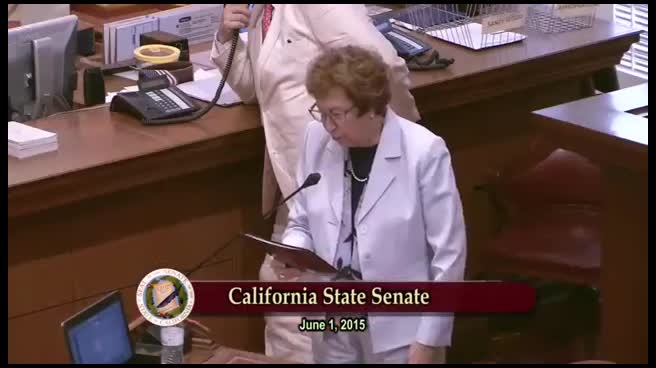
| Jun 1, 2015 | Read third time. Passed. (Ayes 27. Noes 9.) Ordered to the Assembly. |
| Jun 1, 2015 | Read third time. Passed. (Ayes 27. Noes 9. Page 1205.) Ordered to the Assembly. |
| May 28, 2015 | Read second time. Ordered to third reading. |
| May 28, 2015 | From committee: Do pass. (Ayes 5. Noes 2.) (May 28). |
| Feb 26, 2015 | Introduced. Read first time. To Com. on RLS. for assignment. To print. |
| May 23, 2015 | Set for hearing May 28. |
| May 11, 2015 | May 11 hearing: Placed on APPR. suspense file. |
| May 1, 2015 | Set for hearing May 11. |
| Apr 29, 2015 | From committee: Do pass and re-refer to Com. on APPR. (Ayes 8. Noes 0.) (April 28). Re-referred to Com. on APPR. |
| Apr 29, 2015 | From committee: Do pass and re-refer to Com. on APPR. (Ayes 8. Noes 0. Page 821.) (April 28). Re-referred to Com. on APPR. |
| Apr 16, 2015 | Set for hearing April 28. |
| Apr 9, 2015 | Re-referred to Com. on N.R. & W. |
| Mar 12, 2015 | Referred to Com. on RLS. |
| Feb 27, 2015 | From printer. May be acted upon on or after March 29. |
|
Date
|
Description
|
Location
|
Votes
|
|
|---|---|---|---|---|
| Jul 14, 2015 | Do pass and be re-referred to the Committee on [Appropriations] | Assembly Standing Committee on Water, Parks, and Wildlife |
Passed |
|
| Jun 1, 2015 | Senate 3rd Reading SB551 Wolk | Senate Floor |
Passed |
|
| May 28, 2015 | Do pass | Senate Standing Committee on Appropriations |
Passed |
|
| May 11, 2015 | Placed on suspense file | Senate Standing Committee on Appropriations |
Passed |
|
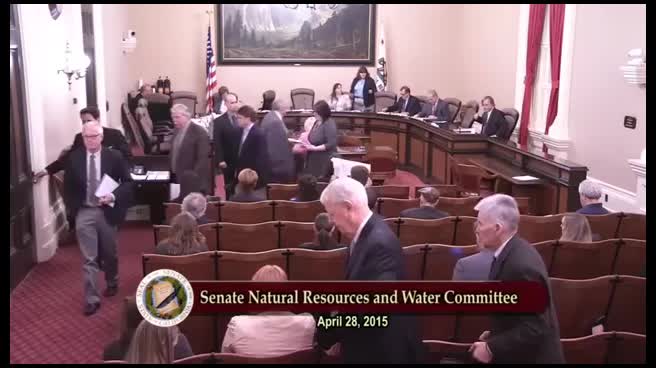
| Apr 28, 2015 | Do pass, but first be re-referred to the Committee on [Appropriations] | Senate Standing Committee on Natural Resources and Water |
Passed |
This list shows positions taken on this bill by organizations on the date displayed, which is linked to the original source.
Positions by individuals are not included.
|
Organization
|
Position
|
Date
|
|---|---|---|
| Sierra Club California | ** Support | Jun 1, 2015 |
Date of Hearing: August 19, 2015
ASSEMBLY COMMITTEE ON APPROPRIATIONS
Jimmy Gomez, Chair
SB 551
(Wolk) – As Amended July 6, 2015
Policy Committee: |
Water, Parks and Wildlife |
Vote: |
9 - 4 |
|
|
|
|
|
|
|
|
Urgency: No State Mandated Local Program: No Reimbursable: No
SUMMARY:
This bill establishes a state policy, as is feasible, that water use and water treatment shall operate in a manner that is as energy efficient and that energy use and generation shall operate in a manner that is as water efficient. Additionally, this bill:
Requires all relevant state agencies to consider the water and energy efficiency policy when revising, adopting, or establishing policies, regulations, and criteria pertinent to the use of energy and water.
Defines feasibility as capable of being accomplished in a successful manner within a reasonable period of time taking into account life-cycle analyses, cost-effectiveness, social, public health, and technological factors.
Prohibits the implementation of this policy from infringing on the rights or responsibilities of any public water system or public utility.
FISCAL EFFECT:
GF and various special fund cost pressures, potentially in the millions of dollars, to increase grant awards, reprioritize programs, and change state operations to increase energy and water efficiency.
COMMENTS:
Purpose. According to the author, California must take every measure to ensure that both water and energy efficiencies are maximized by developing water and energy policies that recognize the nexus between these two vital resources.
By establishing state policy, this bill promotes actions that are both energy and water efficient.
Background. The Warren-Alquist State Energy Resources Conservation and Development Act establishes the state’s policy to promote all feasible means of energy and water conservation and all feasible uses of alternative energy and water supply sources.
The Water Measurement Law contains Legislative findings and declarations that declare the waste or unreasonable use of water imposes unnecessary and wasteful consumption of energy to deliver or furnish the water therefore, water usage should be measured in order to reduce energy consumption.
This bill is consistent with both state policies.
Related Legislation. SB 471 (Pavley) includes the reduction of greenhouse gas emissions (GHG) associated with water treatment as eligible for AB 32 cap and trade revenues and requires various state agencies to study water related energy use and develop a grant program for water projects that reduce GHGs. This bill is pending in this committee.
Analysis Prepared by: Jennifer Galehouse / APPR. / (916) 319-2081
SB 551
Page 3
|
Office of Senate Floor Analyses (916) 651-1520 Fax: (916) 327-4478 |
THIRD READING
Bill No: SB 551
Introduced: 2/26/15
SENATE NATURAL RES. & WATER COMMITTEE: 8-0, 4/28/15
AYES: Pavley, Stone, Allen, Hertzberg, Hueso, Jackson, Monning, Wolk
NO VOTE RECORDED: Vidak
SENATE APPROPRIATIONS COMMITTEE: 5-2, 5/28/15
AYES: Lara, Beall, Hill, Leyva, Mendoza
NOES: Bates, Nielsen
SUBJECT: State water policy: water and energy efficiency
DIGEST: This bill declares the state’s policy that water use and water treatment shall be as energy efficient as is feasible and that energy use and generation shall be as water efficient as is feasible.
Existing law:
Establishes, under the Warren-Alquist State Energy Resources Conservation and Development Act, the state’s policy to promote all feasible means of energy and water conservation and all feasible uses of alternative energy and water supply sources. (PRC §25008)
Contains in the Water Measurement Law similar legislative findings and declarations that state that the waste or unreasonable use of water imposes unnecessary and wasteful consumption of energy to deliver or furnish the water therefore, water usage should be measured in order to reduce energy consumption. (WC §522)
This bill:
Declares the state’s policy that water use and water treatment shall be as energy efficient as is feasible and that energy use and generation shall be as water efficient as is feasible.
Requires the relevant state agencies to consider this policy in their policies, regulations, and grant criteria.
Comments
Water/energy nexus. The link between water and energy resources is known as the water-energy nexus. Advocates for greater recognition of that nexus note that planning for water use is often conducted without consideration of energy use or greenhouse gas emissions. Similarly, planning for energy and reduction of greenhouse gas emissions is often conducted without consideration of water resources. As a result, local and state agencies may not be identifying projects that best serve water and energy investments
What would this bill accomplish? According to the author’s office, their expectation is that under this bill, the water/energy nexus would be taken into considering new projects and programs. For example, grant guidelines for water use efficiency projects would also consider how the grants could also encourage energy efficiency.
Prior/Related Legislation
The Legislature passed a somewhat similar bill in 2012 (AB 685, Eng, Chapter 524), which established as “policy of the state that every human being has the right to safe, clean, affordable, and accessible water adequate for human consumption, cooking, and sanitary purposes.” Proponents of that bill subsequently used that bill to argue for the creation of a special office to focus on improving access to safe drinking water. Partly in response to that effort, the water package enacted earlier this year included a measure that established the Office of Sustainable Water Solutions within the State Water Resources Control Board. That Office was directed to promote permanent and sustainable drinking water and wastewater treatment solutions to ensure effective and efficient provision of safe, clean, affordable, and reliable drinking water and wastewater treatment services. (AB 92, Committee on Budget).
FISCAL EFFECT: Appropriation: No Fiscal Com.: Yes Local: No
According to the Senate Appropriations Committee, this bill creates cost pressures, potentially in the millions of dollars to the General Fund and various special funds to increase grant awards, reprioritize programs, and change state operations to increase electricity and water efficiency
Nexus eWater
Sierra Club California
OPPOSITION: (Verified 5/28/15)
None received
ARGUMENTS IN SUPPORT: According to the author, “Water and energy are inextricably linked. Energy generation requires water in many cases. Transportation and treatment of water, treatment and disposal of wastewater, and the energy used to heat and consume water account for nearly 20 percent of the total electricity and 30 percent of non-power plant related natural gas consumed in California. Demand for water and energy resources is expected to rise due to population growth and also as a result of climate change. California must take every measure to ensure both water and energy efficiencies are maximized by developing water and energy policies that recognize the nexus between these two vital resources.”
Prepared by: Dennis O’Conner / N.R. & W. / (916) 651-4116
5/30/15 10:20:47
**** END ****
SB 551 (Wolk) Page 2 of 2
SENATE COMMITTEE ON APPROPRIATIONS
Senator Ricardo Lara, Chair
2015 - 2016 Regular Session
SB 551 (Wolk) - State water policy: water and energy efficiency.
|
|
Version: February 26, 2015 |
Policy Vote: N.R. & W. 8 - 0 |
Urgency: No |
Mandate: No |
Hearing Date: May 11, 2015 |
Consultant: Marie Liu |
This bill meets the criteria for referral to the Suspense File.
Bill Summary:
SB 551 would declare it the state’s policy that water use and water treatment shall be as energy efficient as is feasible and that energy use and generation shall be as water efficient as is feasible.
Fiscal Impact:
Cost pressures, potentially in the millions of dollars to the General Fund and various special funds to increase grant awards, reprioritize programs, and change state operations to increase electricity and water efficiency.
Background:
The Warren-Alquist State Energy Resources Conservation and Development Act establishes the state’s policy to promote all feasible means of energy and water conservation and all feasible uses of alternative energy and water supply sources. (PRC §25008)
The Water Measurement Law contains Legislative findings and declarations that state that the waste or unreasonable use of water imposes unnecessary and wasteful consumption of energy to deliver or furnish the water therefore, water usage should be measured in order to reduce energy consumption. (WC §522)
Proposed Law:
This bill would declare it the state’s policy that water use and water treatment shall be as energy efficient as is feasible and that energy use and generation shall be as water efficient as is feasible.
Relevant state agencies would be required to consider this policy in their policies, regulations, and grant criteria.
Staff Comments:
This bill sets a state policy regarding water and energy efficiency and directs the state agencies to consider this policy in their various activities. No actual actions are required; however various agencies may see cost pressures to implement the policy. More specifically, the state offers of number of water and energy related financial assistance programs. The policy adopted by this bill could implore the granting agencies to consider more expensive projects. For example, the State Water Resources Control Board offers grants from the Drinking Water State Revolving Fund to assist communities in enhancing and upgrading drinking water supplies. Incorporating additional water and energy efficiencies upgrades into a grant for water treatment and delivery could increase project costs. Staff notes that energy and water efficiency projects can require more upfront costs in order to reduce ongoing operational costs. That said, the State Water Resources Control Board believes there would be no costs to just consider water and energy efficiencies.
The state itself operates water systems that require energy, such as the State Water Project which uses considerable amount of energy to move water resources around the state. This bill would impose cost pressures for energy efficiency upgrades.
This bill is trying to promote actions that are as energy and water efficient “as is feasible.” Staff notes that what is “feasible” could be beyond what is cost effective.
-- END --
SB 551 (Wolk) Page 2 of 2
SENATE COMMITTEE ON NATURAL RESOURCES AND WATER
Senator Fran Pavley, Chair
2015 - 2016 Regular
Bill No: SB 551 Hearing Date: April 28, 2015
Author: |
Wolk |
|
|
Version: |
February 26, 2015 |
||
Urgency: |
No |
Fiscal: |
Yes |
Consultant: |
Dennis O'Connor |
||
Subject: State water policy: water and energy efficiency
BACKGROUND AND EXISTING LAW
The Warren-Alquist State Energy Resources Conservation and Development Act establishes “the policy of the state and the intent of the Legislature to promote all feasible means of energy and water conservation and all feasible uses of alternative energy and water supply sources.” (PRC §25008)
In the Water Measurement Law “The Legislature further finds and declares that waste or unreasonable use of water imposes unnecessary and wasteful consumption of energy to deliver or furnish the water, and it is necessary, therefore, to determine the quantities of water in use throughout the state to the maximum extent that it is reasonable to do so in order to reduce that energy consumption.” (WC §522)
PROPOSED LAW
This bill would declare that it is “the established policy of the state that water use and water treatment shall be as energy efficient as is feasible and energy use and generation shall be as water efficient as is feasible.”
The bill would further direct “all relevant state agencies shall consider this state policy when revising, adopting, or establishing policies, regulations, and grant criteria when those policies, regulations, and criteria are pertinent to the uses of water and energy described in this section.”
The bill also makes findings and declarations regarding the interrelationship between water and energy.
ARGUMENTS IN SUPPORT
According to the author, “Water and energy are inextricably linked. Energy generation requires water in many cases. Transportation and treatment of water, treatment and disposal of wastewater, and the energy used to heat and consume water account for nearly 20 percent of the total electricity and 30 percent of non-power plant related natural gas consumed in California. Demand for water and energy resources is expected to rise due to population growth and also as a result of climate change. California must take every measure to ensure both water and energy efficiencies are maximized by developing water and energy policies that recognize the nexus between these two vital resources.”
ARGUMENTS IN OPPOSITION: None received
COMMENTS
Water/Energy Nexus. The link between water and energy resources is known as the water-energy nexus. Advocates for greater recognition of that nexus note that planning for water use is often conducted without consideration of energy use or greenhouse gas emissions. Similarly, planning for energy and reduction of greenhouse gas emissions is often conducted without consideration of water resources. As a result, local and state agencies may not be identifying projects that best serve water and energy investments
What would this bill accomplish? According to the author’s staff, their expectation is that under this bill, the water/energy nexus would be taken into considering new projects and programs. For example, grant guidelines for water use efficiency projects would also consider how the grants could also encourage energy efficiency.
Prior Similar Bills. The Legislature passed a somewhat similar bill in 2012 (AB 685, Eng), which established as “policy of the state that every human being has the right to safe, clean, affordable, and accessible water adequate for human consumption, cooking, and sanitary purposes.” Proponents of that bill subsequently used that bill to argue for the creation of a special office to focus on improving access to safe drinking water. Partly in response to that effort, the water package enacted earlier this year included a measure that established the Office of Sustainable Water Solutions within the State Water Resources Control Board. That office was directed to promote permanent and sustainable drinking water and wastewater treatment solutions to ensure effective and efficient provision of safe, clean, affordable, and reliable drinking water and wastewater treatment services. (AB 92, Committee on Budget).
SUGGESTED AMENDMENTS: None
SUPPORT
Sierra Club California
OPPOSITION
None Received
-- END --
Discussed in Hearing
 2MIN
Senate Floor
 2MIN
Senate Standing Committee on Natural Resources and Water
Bill Author

Bill Co-Author(s):