SB 573: Statewide open data portal.
- Session Year: 2015-2016
- House: Senate
- Latest Version Date: 2015-07-09
Existing law, the California Public Records Act, requires state and local agencies to make their records available for public inspection, unless an exemption from disclosure applies. The act declares that access to information concerning the conduct of the peoples business is a fundamental and necessary right of every person in this state. Existing law also requires every public agency to comply with the California Public Records Act and with any subsequent statutory enactment amending the act, or enacting or amending any successor act.
This bill would require a Chief Data Officer to be appointed by the Governor, on or before July 1, 2016, subject to Senate confirmation. The Chief Data Officer would report to the Secretary of Government Operations. The bill would require the Chief Data Officer to, among other things, create the statewide open data portal, as defined, to provide public access to data sets from agencies within the state. The bill would require each agency, as defined, to publish a summary listing of all of its available data sets on the portal. The bill would also require state agencies identified by the Chief Data Officer to appoint a data coordinator who would be responsible for compliance with these provisions. The bill would require any data published on the statewide open data portal or other open data portal operated by an agency to comply with all state and federal privacy laws and regulations. The bill would prohibit these provisions from affecting the obligation of an agency to provide notices or information to the public.
Existing law, the California Public Records Act, requires state and local agencies to make their records available for public inspection, unless an exemption from disclosure applies. The act declares that access to information concerning the conduct of the peoples business is a fundamental and necessary right of every person in this state. Existing law also requires every public agency to comply with the California Public Records Act and with any subsequent statutory enactment amending the act, or enacting or amending any successor act.
This bill would require a Chief Data Officer to be appointed by the Governor, on or before July 1, 2016, subject to Senate confirmation. The Chief Data Officer would report to the Secretary of Government Operations. The bill would require the Chief Data Officer to, among other things, create the statewide open data portal, as defined, to provide public access to data sets from agencies within the state. The bill would require each agency, as defined, to publish a summary listing of all of its available data sets on the portal. The bill would also require state agencies identified by the Chief Data Officer to appoint a data coordinator who would be responsible for compliance with these provisions. The bill would require any data published on the statewide open data portal or other open data portal operated by an agency to comply with all state and federal privacy laws and regulations.
Existing law, the California Public Records Act, requires state and local agencies to make their records available for public inspection, unless an exemption from disclosure applies. The act declares that access to information concerning the conduct of the peoples business is a fundamental and necessary right of every person in this state. Existing law also requires every public agency to comply with the California Public Records Act and with any subsequent statutory enactment amending the act, or enacting or amending any successor act.
This bill would require the Governor, on or before July 1, 2016, to appoint a Chief Data Officer, who a Chief Data Officer to be appointed by the Governor, on or before July 1, 2016, subject to Senate confirmation. The Chief Data Officer would report to the Secretary of Government Operations. The bill would require the Chief Data Officer to, among other things, create the statewide open data portal, as defined, to provide public access to data sets from agencies within the state. The bill would require each agency, as defined, to publish a summary listing of all of its available data sets on the portal and portal. The bill would also require state agencies identified by the Chief Data Officer to appoint a data coordinator who would be responsible for compliance with these provisions. The bill would require any data published on the statewide open data portal or other open data portal operated by an agency to comply with all state and federal privacy laws and regulations.
Existing law, the California Public Records Act, requires state and local agencies to make their records available for public inspection, unless an exemption from disclosure applies. The act declares that access to information concerning the conduct of the peoples business is a fundamental and necessary right of every person in this state. Existing law also requires every public agency to comply with the California Public Records Act and with any subsequent statutory enactment amending the act, or enacting or amending any successor act.
This bill would require the Governor, on or before January July 1, 2016, to appoint a Chief Data Officer, who would report to the Secretary of Government Operations. The bill would require the Chief Data Officer to, among other things, create the statewide open data portal, as defined, to provide public access to data sets from agencies within the state. The bill would require each agency, as defined, to publish a summary listing of all of its available data sets on the portal and to appoint a data coordinator, coordinator who would be responsible for compliance with these provisions. The bill would require any data published on the statewide open data portal or other open data portal operated by an agency to comply with all state and federal privacy laws and regulations.
Existing law, the California Public Records Act, requires state and local agencies to make their records available for public inspection, unless an exemption from disclosure applies. The act declares that access to information concerning the conduct of the peoples business is a fundamental and necessary right of every person in this state. Existing law also requires every public agency to comply with the California Public Records Act and with any subsequent statutory enactment amending the act, or enacting or amending any successor act.
This bill would require the Governor, on or before January 1, 2016, to appoint a Chief Data Officer, who would report to the Secretary of Government Operations. The bill would require the Chief Data Officer to, among other things, create the statewide open data portal, as defined, to provide public access to data sets from agencies within the state. The bill would require each agency, as defined, to appoint a data coordinator, who would be responsible for compliance with these provisions. The bill would require any data published on the statewide open data portal or other open data portal operated by an agency to comply with all state and federal privacy laws and regulations.
For purposes of this chapter, the following terms have the following meanings:
(a)Agency means, but is not limited to, a state agency, authority, board, bureau, commission, council, department, division, or office.
(b)Data set means any information comprising a collection of information held in electronic form where all or most of the information in the collection has been obtained or recorded for the purpose of providing an agency with information in connection with the provision of a service by the agency or the carrying out of any other function of the agency, is factual information that is not the product of analysis or interpretation other than calculation, and remains presented in a way that has not been organized, adapted, or otherwise materially altered since it was obtained or recorded.
(c)Inventory means a summary listing of all available data sets within an agency. The listing shall include, but is not limited to, a descriptive title of the data set as well as a brief informative description of what information may be found within the data set.
(d)Open data roadmap means a strategic plan describing the process by which 100 percent of the data held by an agency will be made publicly available, subject to any state or federal law or regulation relating to privacy. The roadmap shall include, but is not limited to, an agencys data inventory, a proposed timeline for the release of data sets on a statewide or agency basis, and a methodology for compliance with any state or federal law or regulation relating to privacy.
(e)Statewide open data portal means a centralized data Internet Web site, with the ability to display and export data published from state agencies. For purposes of this chapter, data.ca.gov may be utilized as the statewide open data portal.
11795.1.(a)There is in state government an executive officer known as the Chief Data Officer, who shall report to the Secretary of Government Operations.
(b)On or before June 1, 2016, a Chief Data Officer shall be appointed by the Governor, subject to Senate confirmation.
(c)(1)On or before October 1, 2016, the Chief Data Officer shall create an inventory of all available data in this state.
(2)(A)On or before January 1, 2017, the Chief Data Officer shall, in cooperation with the Department of Technology, create a statewide open data portal that is accessible to the public. The Chief Data Officer may elect to utilize data.ca.gov to satisfy the requirements of this section.
(B)The Chief Data Officer shall publish a listing of all data that may be provided to the public, subject to any state or federal privacy laws or regulations, including, but not limited to, privacy provisions in the California Public Records Act (Chapter 3.5 (commencing with Section 6250) of Division 7 of Title 1) and the Health Insurance Portability and Accountability Act of 1996 (42 U.S.C. Sec. 300gg).
(C)The Chief Data Officer shall, after each agency assesses its data inventory, create a statewide open data roadmap and shall publish the open data roadmap on the statewide open data portal.
(D)On or before June 1, 2017, the Chief Data Officer shall ensure that at least 150 data sets have been published on the statewide open data portal.
(E)The statewide open data portal shall include a link to the Internet Web site of any agency that publishes its data on that site pursuant to subparagraph (B) of paragraph (3) of subdivision (f), including a link to any existing open data Internet Web site, including, but not limited to, https://bythenumbers.sco.ca.gov/ and https://chhs.data.ca.gov/.
(F)The Chief Data Officer shall make the statewide open data portal available to any city, county, city and county, district, or other local agency interested in using the statewide open data portal to publish its own data. Any data published by a city, county, city and county, district, or other local agency shall comply with all state or federal privacy laws or regulations, including, but not limited to, privacy provisions in the California Public Records Act (Chapter 3.5 (commencing with Section 6250) of Division 7 of Title 1) and the Health Insurance Portability and Accountability Act of 1996 (42 U.S.C. Sec. 300gg).
(3)Notwithstanding Section 10231.5, on or before January 1, 2018, and each year thereafter, the Chief Data Officer shall publish a progress report for open data within the state. The progress report shall include, but is not limited to, an assessment of outcomes from the implementation of this section, innovation of the statewide open data portal, whether there has been any cost savings as a result of implementation of this section, and an assessment of agency collaboration.
(d)On or before January 1, 2017, in consultation with the Attorney General, the Chief Data Officer shall publish a set of guidelines for use by each agency. The guidelines shall include, but are not limited to, definitions and assessments of security, privacy, and legal concerns related to the creation of an inventory and publication of data.
(e)On or before October 1, 2016, the Chief Data Officer shall create an open data working group. The open data working group shall consist of state agencies data coordinators, appointed pursuant to paragraph (1) of subdivision (f), and shall be headed by the Chief Data Officer. The open data working group shall meet at least quarterly, and shall do, but is not limited to, all of the following:
(1)Assess progress on the open data roadmap.
(2)Discuss and recommend statewide policies and guidelines.
(3)Share best practices across agencies.
(4)Coordinate data sharing between agencies.
(f)(1)On or before August 1, 2016, state agencies identified by the Chief Data Officer shall appoint a data coordinator who shall be responsible for compliance with this chapter. The data coordinator may appoint a data steward for each data set the agency intends to publish.
(2)On or before October 1, 2016, each agency shall identify any data set within the agency and shall transmit the inventory to the Chief Data Officer in the form he or she prescribes.
(3)(A)On or before November 1, 2016, each agency shall create a plan for publication of any inventory that may be published.
(B)The agency shall publish its inventory on the statewide open data portal and may additionally publish its inventory on its own Internet Web site. If the agency chooses to publish the inventory on its own Internet Web site, the agency shall include on that site a link to the statewide open data portal site. portal.
(C)Any inventory published by an agency shall comply with all state and federal privacy laws and regulations, including, but not limited to, privacy provisions in the California Public Records Act (Chapter 3.5 (commencing with Section 6250) of Division 7 of Title 1) and the Health Insurance Portability and Accountability Act of 1996 (42 U.S.C. Sec. 300gg).
(g)Agencies are authorized to apply for and accept public, private, and not-for-profit funding for the purpose of developing, implementing, or managing the statewide open data portal infrastructure and software pursuant to this chapter. These funds shall be expended for this purpose upon appropriation by the Legislature.
11795.2.This chapter shall not affect the obligation of an agency to provide any notice or information to the public under any other law.
For purposes of this chapter, the following terms have the following meanings:
(a)Agency means, but is not limited to, a state agency, authority, board, bureau, commission, council, department, division, or office.
(b)Data set means any information comprising a collection of information held in electronic form where all or most of the information in the collection has been obtained or recorded for the purpose of providing an agency with information in connection with the provision of a service by the agency or the carrying out of any other function of the agency, is factual information that is not the product of analysis or interpretation other than calculation, and remains presented in a way that has not been organized, adapted, or otherwise materially altered since it was obtained or recorded.
(c)Inventory means a summary listing of all available data sets within an agency. The listing shall include, but is not limited to, a descriptive title of the data set as well as a brief informative description of what information may be found within the data set.
(d)Open data roadmap means a strategic plan describing the process by which 100 percent of the data held by an agency will be made publicly available, subject to any state or federal law or regulation relating to privacy. The roadmap shall include, but is not limited to, an agencys data inventory, a proposed timeline for the release of data sets on a statewide or agency basis, and a methodology for compliance with any state or federal law or regulation relating to privacy.
(e)Statewide open data portal means a centralized data Internet Web site, with the ability to display and export data published from state agencies. For purposes of this chapter, data.ca.gov may be utilized as the statewide open data portal.
11795.1.(a)There is in state government an executive officer known as the Chief Data Officer, who shall report to the Secretary of Government Operations.
(b)On or before June 1, 2016, a Chief Data Officer shall be appointed by the Governor, subject to Senate confirmation.
(c)(1)On or before October 1, 2016, the Chief Data Officer shall create an inventory of all available data in this state.
(2)(A)On or before January 1, 2017, the Chief Data Officer shall, in cooperation with the Department of Technology, create a statewide open data portal that is accessible to the public. The Chief Data Officer may elect to utilize data.ca.gov to satisfy the requirements of this section.
(B)The Chief Data Officer shall publish a listing of all data that may be provided to the public, subject to any state or federal privacy laws or regulations, including, but not limited to, privacy provisions in the California Public Records Act (Chapter 3.5 (commencing with Section 6250) of Division 7 of Title 1) and the Health Insurance Portability and Accountability Act of 1996 (42 U.S.C. Sec. 300gg).
(C)The Chief Data Officer shall, after each agency assesses its data inventory, create a statewide open data roadmap and shall publish the open data roadmap on the statewide open data portal.
(D)On or before June 1, 2017, the Chief Data Officer shall ensure that at least 150 data sets have been published on the statewide open data portal.
(E)The statewide open data portal shall include a link to the Internet Web site of any agency that publishes its data on that site pursuant to subparagraph (B) of paragraph (3) of subdivision (f), including a link to any existing open data Internet Web site, including, but not limited to to, https://bythenumbers.sco.ca.gov/ and https://chhs.data.ca.gov/.
(F)The Chief Data Officer shall make the statewide open data portal available to any city, county, city and county, district, or other local agency interested in using the statewide open data portal to publish its own data. Any data published by a city, county, city and county, district, or other local agency shall comply with all state or federal privacy laws or regulations, including, but not limited to, privacy provisions in the California Public Records Act (Chapter 3.5 (commencing with Section 6250) of Division 7 of Title 1) and the Health Insurance Portability and Accountability Act of 1996 (42 U.S.C. Sec. 300gg).
(3)Notwithstanding Section 10231.5, on or before January 1, 2018, and each year thereafter, the Chief Data Officer shall publish a progress report for open data within the state. The progress report shall include, but is not limited to, an assessment of outcomes from the implementation of this section, innovation of the statewide open data portal, whether there has been any cost savings as a result of implementation of this section, and an assessment of agency collaboration.
(d)On or before January 1, 2017, in consultation with the Attorney General, the Chief Data Officer shall publish a set of guidelines for use by each agency. The guidelines shall include, but are not limited to, definitions and assessments of security, privacy, and legal concerns related to the creation of an inventory and publication of data.
(e)On or before October 1, 2016, the Chief Data Officer shall create an open data working group. The open data working group shall consist of state agencies data coordinators, appointed pursuant to paragraph (1) of subdivision (f), and shall be headed by the Chief Data Officer. The open data working group shall meet at least quarterly, and shall do, but is not limited to, all of the following:
(1)Assess progress on the open data roadmap.
(2)Discuss and recommend statewide policies and guidelines.
(3)Share best practices across agencies.
(4)Coordinate data sharing between agencies.
(f)(1)On or before August 1, 2016, state agencies identified by the Chief Data Officer shall appoint a data coordinator who shall be responsible for compliance with this chapter. The data coordinator may appoint a data steward for each data set the agency intends to publish.
(2)On or before October 1, 2016, each agency shall identify any data set within the agency and shall transmit the inventory to the Chief Data Officer in the form he or she prescribes.
(3)(A)On or before November 1, 2016, each agency shall create a plan for publication of any inventory that may be published.
(B)The agency shall publish its inventory on the statewide open data portal and may additionally publish its inventory on its own Internet Web site. If the agency chooses to publish the inventory on its own Internet Web site, the agency shall include on that site a link to the statewide open data portal site.
(C)Any inventory published by an agency shall comply with all state and federal privacy laws and regulations, including, but not limited to, privacy provisions in the California Public Records Act (Chapter 3.5 (commencing with Section 6250) of Division 7 of Title 1) and the Health Insurance Portability and Accountability Act of 1996 (42 U.S.C. Sec. 300gg).
(g)Agencies are authorized to apply for and accept public, private, and not-for-profit funding for the purpose of developing, implementing, or managing the statewide open data portal infrastructure and software pursuant to this chapter. These funds shall be expended for this purpose upon appropriation by the Legislature.
For purposes of this chapter, the following terms have the following meanings:
(a)Agency means, but is not limited to, a state agency, authority, board, bureau, commission, council, department, division, or office.
(b)Data set means any information comprising a collection of information held in electronic form where all or most of the information in the collection has been obtained or recorded for the purpose of providing an agency with information in connection with the provision of a service by the agency or the carrying out of any other function of the agency, is factual information that is not the product of analysis or interpretation other than calculation, and remains presented in a way that has not been organized, adapted, or otherwise materially altered since it was obtained or recorded.
(c)Inventory means a summary listing of all available data sets within an agency. The listing shall include, but is not limited to, a descriptive title of the data set as well as a brief informative description of what information may be found within the data set.
(d)Open data roadmap means a strategic plan describing the process by which 100 percent of the data held by an agency will be made publicly available, subject to any state or federal law or regulation relating to privacy. The roadmap shall include, but is not limited to, an agencys data inventory, a concrete proposed timeline for the release of data sets on a statewide or agency basis, and a methodology for compliance with any state or federal law or regulation relating to privacy.
(e)Statewide open data portal means a centralized data Internet Web site, with the ability to display and export data published from state agencies. For purposes of this chapter, data.ca.gov may be utilized as the statewide open data portal.
11795.1.(a)There is in state government an executive officer known as the Chief Data Officer, who shall report to the Secretary of Government Operations.
(b)On or before June 1, 2016, the Governor shall appoint the Chief Data Officer. a Chief Data Officer shall be appointed by the Governor, subject to Senate confirmation.
(c)(1)On or before October 1, 2016, the Chief Data Officer shall create an inventory of all available data in this state.
(2)(A)On or before January 1, 2017, the Chief Data Officer shall, in cooperation with the Department of Technology, create a statewide open data portal that is accessible to the public. The Chief Data Officer may elect to utilize data.ca.gov to satisfy the requirements of this section.
(B)The Chief Data Officer shall publish a listing of all data that may be provided to the public, subject to any state or federal privacy laws or regulations, including, but not limited to, privacy provisions in the California Public Records Act (Chapter 3.5 (commencing with Section 6250) of Division 7 of Title 1) and the Health Insurance Portability and Accountability Act of 1996 (42 U.S.C. Sec. 300gg).
(C)The Chief Data Officer shall, after each agency assesses its data inventory, create a statewide open data roadmap and shall publish the open data roadmap on the statewide open data portal.
(D)On or before June 1, 2017, the Chief Data Officer shall ensure that at least 150 data sets have been published on the statewide open data portal.
(E)The statewide open data portal shall include a link to the Internet Web site of any agency that publishes its data on that site pursuant to subparagraph (B) of paragraph (3) of subdivision (f), including a link to any existing open data Internet Web site, including, but not limited to https://bythenumbers.sco.ca.gov/ and https://chhs.data.ca.gov/.
(F)The Chief Data Officer shall make the statewide open data portal available, at no cost, available to any city, county, city and county, district, or other local agency interested in using the statewide open data portal to publish its own data. Any data published by a city, county, city and county, district, or other local agency shall comply with all state or federal privacy laws or regulations, including, but not limited to, privacy provisions in the California Public Records Act (Chapter 3.5 (commencing with Section 6250) of Division 7 of Title 1) and the Health Insurance Portability and Accountability Act of 1996 (42 U.S.C. Sec. 300gg).
(3)Notwithstanding Section 10231.5, on or before January 1, 2018, and each year thereafter, the Chief Data Officer shall publish a progress report for open data within the state. The progress report shall include, but is not limited to, an assessment of outcomes from the implementation of this section, innovation of the statewide open data portal, whether there has been any cost savings as a result of implementation of this section, and an assessment of agency collaboration.
(d)On or before January 1, 2017, in consultation with the Attorney General, the Chief Data Officer shall publish a set of guidelines for use by each agency. The guidelines shall include, but are not limited to, definitions and assessments of security, privacy, and legal concerns related to the creation of an inventory and publication of data.
(e)On or before October 1, 2016, the Chief Data Officer shall create an open data working group. The open data working group shall consist of each agencys data coordinator, state agencies data coordinators, appointed pursuant to paragraph (1) of subdivision (f), and shall be headed by the Chief Data Officer. The open data working group shall meet at least quarterly, and shall do, but is not limited to, all of the following:
(1)Assess progress on the open data roadmap.
(2)Discuss and recommend statewide policies and guidelines.
(3)Share best practices across agencies.
(4)Coordinate data sharing between agencies.
(f)(1)On or before August 1, 2016, each agency state agencies identified by the Chief Data Officer shall appoint a data coordinator who shall be responsible for compliance with this section. chapter. The data coordinator may appoint a data steward for each data set the agency intends to publish.
(2)On or before October 1, 2016, each agency shall identify any data set within the agency and shall transmit the inventory to the Chief Data Officer in the form he or she prescribes.
(3)(A)On or before November 1, 2016, each agency shall create a plan for publication of any inventory that may be published.
(B)The agency shall publish its inventory on the statewide open data portal and may additionally publish its inventory on its own Internet Web site. If the agency chooses to publish the inventory on its own Internet Web site, the agency shall include on that site a link to the statewide open data portal site.
(C)Any inventory published by an agency shall comply with all state and federal privacy laws and regulations, including, but not limited to, privacy provisions in the California Public Records Act (Chapter 3.5 (commencing with Section 6250) of Division 7 of Title 1) and the Health Insurance Portability and Accountability Act of 1996 (42 U.S.C. Sec. 300gg).
(4)(A)On or before January 1, 2018, each agency shall have published at least 10 percent of its data sets.
(B)On or before January 1, 2019, each agency shall have published at least 35 percent of its data sets.
(C)On or before January 1, 2020, each agency shall have published at least 65 percent of its data sets.
(D)On or before January 1, 2021, each agency shall have published at least 90 percent of its data sets.
(E)On or before January 1, 2022, each agency shall have published 100 percent of its data sets.
(F)Each agency shall update any published data sets as necessary.
(g)Agencies are authorized to apply for and accept public, private, and not-for-profit funding for the purpose of developing, implementing, or managing the statewide open data portal infrastructure and software pursuant to this chapter. These funds shall be expended for this purpose upon appropriation by the Legislature.
For purposes of this chapter, the following terms have the following meanings:
(a)Agency means, but is not limited to, a state agency, authority, board, bureau, commission, council, department, division, or office.
(b)Data set means any information comprising a collection of information held in electronic form where all or most of the information in the collection has been obtained or recorded for the purpose of providing an agency with information in connection with the provision of a service by the agency or the carrying out of any other function of the agency, is factual information that is not the product of analysis or interpretation other than calculation, and remains presented in a way that has not been organized, adapted, or otherwise materially altered since it was obtained or recorded.
(c)Inventory means a summary listing of all available data sets within an agency. The listing shall include, but is not limited to, a descriptive title of the data set as well as a brief informative description of what information may be found within the data set.
(d)Open data roadmap means a strategic plan describing the process by which 100 percent of the data held by an agency will be made publicly available, subject to any state or federal law or regulation relating to privacy. The roadmap shall include, but is not limited to, an agencys data inventory, a concrete timeline for the release of data sets on a statewide or agency basis, and a methodology for compliance with any state or federal law or regulation relating to privacy.
(e)Statewide open data portal means a centralized data Internet Web site, with the ability to display and export data published from state agencies. For purposes of this chapter, data.ca.gov may be utilized as the statewide open data portal.
11795.1.(a)There is in state government an executive officer known as the Chief Data Officer, who shall report to the Secretary of Government Operations.
(b)On or before June 1, 2016, the Governor shall appoint the Chief Data Officer.
(c)(1)On or before October 1, 2016, the Chief Data Officer shall create an inventory of all available data in this state.
(2)(A)On or before January 1, 2017, the Chief Data Officer shall, in cooperation with the Department of Technology, create a statewide open data portal that is accessible to the public. The Chief Data Officer may elect to utilize data.ca.gov to satisfy the requirements of this section.
(B)The Chief Data Officer shall publish a listing of all data that may be provided to the public, subject to any state or federal privacy laws or regulations, including, but not limited to, privacy provisions in the California Public Records Act (Chapter 3.5 (commencing with Section 6250) of Division 7 of Title 1) and the Health Insurance Portability and Accountability Act of 1996 (42 U.S.C. Sec. 300gg).
(C)The Chief Data Officer shall, after each agency assesses its data inventory, create a statewide open data roadmap and shall publish the open data roadmap on the statewide open data portal.
(D)On or before June 1, 2017, the Chief Data Officer shall ensure that at least 150 data sets have been published on the statewide open data portal.
(E)The statewide open data portal shall include a link to the Internet Web site of any agency that publishes its data on that site pursuant to subparagraph (B) of paragraph (3) of subdivision (f), including a link to any existing open data Internet Web site, including, but not limited to https://bythenumbers.sco.ca.gov/ and https://chhs.data.ca.gov/.
(F)The Chief Data Officer shall make the statewide open data portal available, at no cost, to any city, county, city and county, district, or other local agency interested in using the statewide open data portal to publish its own data. Any data published by a city, county, city and county, district, or other local agency shall comply with all state or federal privacy laws or regulations, including, but not limited to, privacy provisions in the California Public Records Act (Chapter 3.5 (commencing with Section 6250) of Division 7 of Title 1) and the Health Insurance Portability and Accountability Act of 1996 (42 U.S.C. Sec. 300gg).
(3)Notwithstanding Section 10231.5, on or before January 1, 2017 2018, and each year thereafter, the Chief Data Officer shall publish a progress report for open data within the state. The progress report shall include, but is not limited to, an assessment of outcomes from the implementation of this section, innovation of the statewide open data portal, whether there has been any cost savings as a result of implementation of this section, and an assessment of agency collaboration.
(d)On or before January 1, 2017, in consultation with the Attorney General, the Chief Data Officer shall publish a set of guidelines for use by each agency. The guidelines shall include, but are not limited to, definitions and assessments of security, privacy, and legal concerns related to the creation of an inventory and publication of data.
(e)On or before October 1, 2016, the Chief Data Officer shall create an open data working group. The open data working group shall consist of each agencys data coordinator, appointed pursuant to paragraph (1) of subdivision (f), and shall be headed by the Chief Data Officer. The open data working group shall meet at least quarterly, and shall do, but is not limited to, all of the following:
(1)Assess progress on the open data roadmap.
(2)Discuss and recommend statewide policies and guidelines.
(3)Share best practices across agencies.
(4)Coordinate data sharing between agencies.
(f)(1)On or before August 1, 2016, each agency shall appoint a data coordinator who shall be responsible for compliance with this section. The data coordinator may appoint a data steward for each data set the agency intends to publish.
(2)On or before October 1, 2016, each agency shall identify any data set within the agency and shall transmit the inventory to the Chief Data Officer in the form he or she prescribes.
(3)(A)On or before November 1, 2016, each agency shall create a plan for publication of any inventory that may be published.
(B)The agency may shall publish its inventory on its own Internet Web site, or may utilize the statewide open data portal and may additionally publish its inventory on its own Internet Web site. If the agency chooses to publish the inventory on its own Internet Web site, the agency shall include on that site a link to the statewide open data portal site.
(C)Any inventory published by an agency shall comply with all state and federal privacy laws and regulations, including, but not limited to, privacy provisions in the California Public Records Act (Chapter 3.5 (commencing with Section 6250) of Division 7 of Title 1) and the Health Insurance Portability and Accountability Act of 1996 (42 U.S.C. Sec. 300gg).
(4)(A)On or before January 1, 2018, each agency shall have published at least 10 percent of its data sets.
(B)On or before January 1, 2019, each agency shall have published at least 35 percent of its data sets.
(C)On or before January 1, 2020, each agency shall have published at least 65 percent of its data sets.
(D)On or before January 1, 2021, each agency shall have published at least 90 percent of its data sets.
(E)On or before January 1, 2022, each agency shall have published at least 100 percent of its data sets.
(F)Each agency shall update any published data sets as necessary.
For purposes of this chapter, the following terms have the following meanings:
(a)Agency means, but is not limited to, a state agency, authority, board, bureau, commission, council, department, division, or office.
(b)Data set means any information comprising a collection of information held in electronic form where all or most of the information in the collection has been obtained or recorded for the purpose of providing an agency with information in connection with the provision of a service by the agency or the carrying out of any other function of the agency, is factual information that is not the product of analysis or interpretation other than calculation, and remains presented in a way that has not been organized, adapted, or otherwise materially altered since it was obtained or recorded.
(c)Inventory means a summary listing of all available data sets within an agency. The listing shall include, but is not limited to, a descriptive title of the data set as well as a brief informative description of what information may be found within the data set.
(d)Open data roadmap means a strategic plan describing the process by which 100 percent of the data held by an agency will be made publicly available, subject to any state or federal law or regulation relating to privacy. The roadmap shall include, but is not limited to, an agencys data inventory, a concrete timeline for the release of data sets on a statewide or agency basis, and a methodology for compliance with any state or federal law or regulation relating to privacy.
(e)Statewide open data portal means a centralized data Internet Web site, with the ability to display and export data published from state agencies.
11795.1.(a)There is in state government an executive officer known as the Chief Data Officer, who shall report to the Secretary of Government Operations.
(b)On or before June 1, 2016, the Governor shall appoint the Chief Data Officer.
(c)(1)On or before October 1, 2016, the Chief Data Officer shall create an inventory of all available data in this state.
(2)(A)On or before January 1, 2017, the Chief Data Officer shall, in cooperation with the Department of Technology, create a statewide open data portal that is accessible to the public.
(B)The Chief Data Officer shall publish a listing of all data that may be provided to the public, subject to any state or federal privacy laws or regulations, including, but not limited to, privacy provisions in the California Public Records Act (Chapter 3.5 (commencing with Section 6250) of Division 7 of Title 1) and the Health Insurance Portability and Accountability Act of 1996 (42 U.S.C. Sec. 300gg).
(C)The Chief Data Officer shall, after each agency assesses its data inventory, create a statewide open data roadmap and shall publish the open data roadmap on the statewide open data portal.
(D)On or before June 1, 2017, the Chief Data Officer shall ensure that at least 150 data sets have been published on the statewide open data portal.
(E)The statewide open data portal shall include a link to the Internet Web site of any agency that publishes its data on that site pursuant to subparagraph (B) of paragraph (3) of subdivision (f), including a link to any existing open data Internet Web site, including, but not limited to https://bythenumbers.sco.ca.gov/ and https://chhs.data.ca.gov/.
(F)The Chief Data Officer shall make the statewide open data portal available, at no cost, to any city, county, city and county, district, or other local agency interested in using the statewide open data portal to publish its own data. Any data published by a city, county, city and county, district, or other local agency shall comply with all state or federal privacy laws or regulations, including, but not limited to, privacy provisions in the California Public Records Act (Chapter 3.5 (commencing with Section 6250) of Division 7 of Title 1) and the Health Insurance Portability and Accountability Act of 1996 (42 U.S.C. Sec. 300gg).
(3)Notwithstanding Section 10231.5, on or before January 1, 2017, and each year thereafter, the Chief Data Officer shall publish a progress report for open data within the state. The progress report shall include, but is not limited to, an assessment of outcomes from the implementation of this section, innovation of the statewide open data portal, whether there has been any cost savings as a result of implementation of this section, and an assessment of agency collaboration.
(d)On or before January 1, 2017, in consultation with the Attorney General, the Chief Data Officer shall publish a set of guidelines for use by each agency. The guidelines shall include, but are not limited to, definitions and assessments of security, privacy, and legal concerns related to the creation of an inventory and publication of data.
(e)On or before October 1, 2016, the Chief Data Officer shall create an open data working group. The open data working group shall consist of each agencys data coordinator, appointed pursuant to paragraph (1) of subdivision (f), and shall be headed by the Chief Data Officer. The open data working group shall meet at least quarterly, and shall do, but is not limited to, all of the following:
(1)Assess progress on the open data roadmap.
(2)Discuss and recommend statewide policies and guidelines.
(3)Share best practices across agencies.
(4)Coordinate data sharing between agencies.
(f)(1)On or before August 1, 2016, each agency shall appoint a data coordinator who shall be responsible for compliance with this section. The data coordinator may appoint a data steward for each data set the agency intends to publish.
(2)On or before October 1, 2016, each agency shall identify any data set within the agency and shall transmit the inventory to the Chief Data Officer in the form he or she prescribes.
(3)(A)On or before November 1, 2016, each agency shall create a plan for publication of any inventory that may be published.
(B)The agency may publish its inventory on its own Internet Web site, or may utilize the statewide open data portal. If the agency chooses to publish the inventory on its own Internet Web site, the agency shall include on that site a link to the statewide open data portal site.
(C)Any inventory published by an agency shall comply with all state and federal privacy laws and regulations, including, but not limited to, privacy provisions in the California Public Records Act (Chapter 3.5 (commencing with Section 6250) of Division 7 of Title 1) and the Health Insurance Portability and Accountability Act of 1996 (42 U.S.C. Sec. 300gg).
(4)(A)On or before January 1, 2018, each agency shall have published at least 10 percent of its data sets.
(B)On or before January 1, 2019, each agency shall have published at least 35 percent of its data sets.
(C)On or before January 1, 2020, each agency shall have published at least 65 percent of its data sets.
(D)On or before January 1, 2021, each agency shall have published at least 90 percent of its data sets.
(E)On or before January 1, 2022, each agency shall have published at least 100 percent of its data sets.
(F)Each agency shall update any published data sets as necessary.
|
Date
|
Status
|
|---|---|
| Jun 2, 2015 | Read second time and amended. Ordered to third reading. |
| Aug 27, 2015 | August 27 hearing: Held in committee and under submission. |
| Aug 19, 2015 | August 19 set for first hearing. Placed on APPR. suspense file. |
| Jul 9, 2015 | Read second time and amended. Re-referred to Com. on APPR. |
| Jul 8, 2015 | From committee: Do pass as amended and re-refer to Com. on APPR. (Ayes 11. Noes 0.) (July 7). |
| Jul 1, 2015 | From committee: Do pass and re-refer to Com. on P. & C.P. (Ayes 9. Noes 0.) (July 1). Re-referred to Com. on P. & C.P. |
| Jun 23, 2015 | From committee with author's amendments. Read second time and amended. Re-referred to Com. on A. & A.R. |
| Jun 18, 2015 | Referred to Coms. on A. & A.R. and P. & C.P. |
| Jun 4, 2015 | Read third time. Passed. (Ayes 28. Noes 11.) Ordered to the Assembly. |
| Jun 4, 2015 | Read third time. Passed. (Ayes 28. Noes 11. Page 1324.) Ordered to the Assembly. |
| Jun 4, 2015 | In Assembly. Read first time. Held at Desk. |
| Feb 26, 2015 | Introduced. Read first time. To Com. on RLS. for assignment. To print. |
| Jun 1, 2015 | From committee: Do pass as amended. (Ayes 5. Noes 2.) (May 28). |
| Jun 1, 2015 | From committee: Do pass as amended. (Ayes 5. Noes 2. Page 1156.) (May 28). |
| May 23, 2015 | Set for hearing May 28. |
| May 18, 2015 | May 18 hearing: Placed on APPR. suspense file. |
| May 8, 2015 | Set for hearing May 18. |
| May 5, 2015 | Read second time and amended. Re-referred to Com. on APPR. |
| May 4, 2015 | From committee: Do pass as amended and re-refer to Com. on APPR. (Ayes 7. Noes 1.) (April 28). |
| Mar 17, 2015 | Set for hearing April 28. |
| Mar 12, 2015 | Referred to Com. on G.O. |
| Feb 27, 2015 | From printer. May be acted upon on or after March 29. |
|
Date
|
Description
|
Location
|
Votes
|
|
|---|---|---|---|---|
| Jul 7, 2015 | Do pass as amended and be re-referred to the Committee on [Appropriations] | Assembly Standing Committee on Privacy and Consumer Protection |
Passed |
|
| Jul 1, 2015 | Do pass and be re-referred to the Committee on [Privacy and Consumer Protection] | Assembly Standing Committee on Accountability and Administrative Review |
Passed |
|
| Jun 4, 2015 | Senate 3rd Reading SB573 Pan | Senate Floor |
Passed |
|
| May 28, 2015 | Do pass as amended | Senate Standing Committee on Appropriations |
Passed |
|
| May 18, 2015 | Placed on suspense file | Senate Standing Committee on Appropriations |
Passed |
|
| Apr 28, 2015 | Do pass as amended, but first amend, and re-refer to the Committee on [Appropriations] | Senate Standing Committee on Governmental Organization |
Passed |
This list shows positions taken on this bill by organizations on the date displayed, which is linked to the original source.
Positions by individuals are not included.
|
Organization
|
Position
|
Date
|
|---|---|---|
| Accela, Inc. | ** Support | Jul 1, 2015 |
| Data Transparency Coalition | * Support | Jul 1, 2015 |
| Green, Renewable, Organic and Water Holdings, LLC | ** Support | Jul 1, 2015 |
| Health Officers Association Of California | * Support | Jul 1, 2015 |
| Los Angeles County Business Federation | ** Support | Jul 1, 2015 |
| Los Angeles, City Of | ** Support | Jul 1, 2015 |
| Milken Institute California Center | ** Support | Jul 1, 2015 |
| Sunlight Foundation | ** Support | Jul 1, 2015 |
| Urban Strategies Council | ** Support | Jul 1, 2015 |
Date of Hearing: August 19, 2015
ASSEMBLY COMMITTEE ON APPROPRIATIONS
Jimmy Gomez, Chair
SB 573
(Pan) – As Amended July 9, 2015
Policy Committee: |
Accountability and Administrative Review |
Vote: |
9 - 0 |
|
Privacy and Consumer Protection |
|
11 - 0 |
|
|
|
|
Urgency: No State Mandated Local Program: No Reimbursable: No
SUMMARY: This bill requires the Governor to appoint a Chief Data Officer (CDO) who will create an inventory of all available data in the state and create a statewide open data portal that is accessible to the public by January 1, 2017. This bill also requires state agencies identified by the CDO to appoint a data coordinator, identify any data sets within the agency, transmit the inventory to the CDO by October 1, 2016, and publish it on the statewide open data portal.
FISCAL EFFECT:
Unknown costs, potentially in the low millions (various funding sources), for yet-to-be-identified state entities to appoint a data coordinator, identify data sets, and create a plan for data publication. Additional cost pressures, potentially in the millions, for these agencies to post available data. Actual costs upon full implementation, would vary among state agencies depending on each entity’s function and inventory of public data.
For illustrative purposes, the Office of Statewide Planning and Development will spend approximately $220,000 this year on its open data project. To comply with the provisions of this bill, the Department of Insurance anticipates costs of $224,000 initially and $183,000 ongoing for a new data coordinator position and to set up the portal. The Air Resources Board anticipates costs of $334,000 for the same purposes. The Franchise Tax Board estimates ongoing costs of $107,000. Smaller state entities with limited public data sets would likely incur expenditures in the tens of thousands annually, while larger agencies are likely to incur costs in the hundreds of thousands annually. (GF/Special Funds).
Ongoing costs for maintenance and hosting likely in the range of $500,000 to $1 million (GF) annually. These operating costs could eventually be spread to participating agencies through the Office of Technology Services rate structure, but would initially be covered by the General Fund.
Annual costs of approximately $293,000 (GF) annually for an appointed Chief Data Officer and one data liaison.
Onetime costs in the range of $125,000 to $235,000 (GF) to create a statewide open data depending on whether the Department of Technology updates the existing Data.CA.gov or creates the portal.
State agency costs may be partially offset in future years to the extent there is a decrease in Public Records Act requests.
COMMENTS:
Purpose. This bill seeks to increase government transparency and efficiency and promote economic development by requiring a CDO, appointed by the Governor, to oversee the establishment of a statewide open data portal for the public to access state agency data sets.
According to the author, "Despite being the home of some of the most innovative technology ideas in the world, California has not established itself as a leader in developing a unified open state-wide data policy. While some entities in the state have developed independent open data projects, California still lacks a cohesive state policy that standardizes this data and makes it readable across multiple platforms. SB 573 would improve California’s goal to be transparent and accountable, increase efficiency and cost-savings, and foster economic development.”
Background. The California Public Records Act declares that “access to information concerning the conduct of the people’s business is a fundamental and necessary right of every person in this state” and generally requires governmental records to be disclosed to the public, upon request, unless an agency is exempted from doing so for a specific reason. Existing law requires a public agency to make non-exempt electronic public records available in any electronic format in which it holds the information or, if requested, in an electronic format used by the agency to create copies for its own or other agencies’ use. Existing law also authorizes a public agency to charge to the requestor the direct cost of producing the electronic public record. The requestor of an electronic public record must also pay the cost of producing a copy of the record, including the cost to construct the record, or the costs of data compilation, extraction, or programming to produce the record under certain conditions.
California has a centralized data portal at Data.CA.gov. The portal
contains state government data from various state agencies, some of
which is in raw, machine-readable formats that can be reformatted and
reused in different ways. According to the Data.CA.gov website, more
than 100 million data records are available through the portal
including: vital statistics such as population, birth, death, and
marriage data; more than 50 million data records on education;
California port import/export data; state highway traffic data; data
on vehicle accidents, fatalities, and injuries; tourism data; water
resource data; and geospatial data. The website has a search function
for several of the datasets, charts, and graphs. Some of the datasets
are available in variety of open formats including CSV, XLS, KML,
TXT, and XML.
Some state entities, including four
departments within the Health and Human Services Agency and the State
Controller’s Office, have created their own open data portals.
Related Legislation. AB 1215 (Ting) would have established the California Open Data Act and required the Governor to appoint a CDO to work with state agencies and experts to formulate a California Open Data Standard and a centralized Internet Web portal for public access to data from state agencies. AB 1215 was held on this Committee's Suspense File.
Prior Legislation. SB 1002 (Yee) of 2012 would have required the State Chief Information Officer to conduct a study to determine the feasibility of providing electronic records in an open format. SB 1002 was vetoed by the Governor.
Analysis Prepared by: Jennifer Swenson / APPR. / (916) 319-2081
SB 573
Page 5
Date of Hearing: July 7, 2015
ASSEMBLY COMMITTEE ON PRIVACY AND CONSUMER PROTECTION
Mike Gatto, Chair
SB 573
(Pan) – As Amended June 23, 2015
SENATE VOTE: 28-11
SUBJECT: Statewide open data portal
SUMMARY: Requires the Governor to appoint a Chief Data Officer (CDO), and requires the CDO to establish by January 1, 2017, a centralized Internet web portal (statewide open data portal) where the public can access public data held by state agencies. Specifically, this bill:
Creates the position of CDO, who will be appointed by the Governor on or before June 1, 2016, and confirmed by the Senate and requires the CDO to report to the Secretary of Government Operations.
Directs the CDO to create an inventory of all available public data in the state by October 1, 2016.
Requires the CDO to work with the Department of Technology (DOT) to set up a publicly-accessible statewide open data portal by January 1, 2017, and authorizes the CDO to use the existing data.ca.gov portal to satisfy this requirement.
Requires the CDO to publish a listing of all data that may be provided to the public, subject to any state or federal privacy laws or regulations, as specified.
Directs the CDO to create a “statewide open data roadmap,” as defined, after each agency assesses its data inventory, and to publish the roadmap on the statewide open data portal.
Requires the CDO to ensure that at least 150 data sets have been published on the statewide open data portal by June 1, 2017.
Requires the statewide open data portal to include a link to the website of any agency that publishes its data on that site, as specified.
Directs the CDO to make the statewide open data portal available to any local agency interested in using the site for publishing its data.
Requires the CDO to publish an annual progress report for open data within the state, beginning on or before January 1, 2018, that includes an assessment of outcomes, innovations, and state agency collaboration, and identifies whether there have been resulting cost-savings.
Directs the CDO, in consultation with the Attorney General, to publish a specified set of guidelines for use by each agency by January 1, 2017.
Requires the CDO to convene an open data working group, comprised of state agencies' data coordinators, by October 1, 2016. Requires the working group to meet at least quarterly to assess progress, discuss and recommend policies and guidelines, share best practices, and coordinate data sharing.
Requires state agencies identified by the CDO to appoint a data coordinator by August 1, 2016.
Directs each agency to identify any data set within the agency and transmit the inventory to the CDO by October 1, 2016.
Directs each agency to create a plan for publishing its inventory by November 1, 2016, and requires the published inventory to comply with all state and federal privacy laws and regulations, as specified.
Authorizes agencies to apply for and accept public, private, and non-profit funding for the purposes of developing, implementing, or managing the statewide open data portal infrastructure and software, and specifies that such funds would be expended upon appropriation by the Legislature.
Defines various terms for purposes of this bill.
EXISTING LAW:
Establishes the DOT within the Government Operations Agency, supervised by the Director, who also serves as the state’s Chief Information Officer (CIO). (Government Code (GC) Section 11545 and 12803.2)
Requires the Director, among other things, to produce an annual IT strategic plan to guide the acquisition, management, and use of information technology (IT). (GC 11545(c))
Requires DOT to approve, monitor and oversee state agency IT projects from start to finish. (Public Contract Code Section 12100 et seq. and GC 11546 et seq.)
Requires, under the California Public Records Act (PRA), state and local agencies to make their records available for public inspection and gives a person the right to inspect any public record, with some exceptions. (GC 6250 et seq.)
FISCAL EFFECT: According to the Senate Appropriations Committee:
Annual staffing costs of approximately $293,000 annually for an appointed CDO and one data liaison. (General Fund)
Costs to create a statewide portal could be as low as $125,000 to update the existing data.ca.gov website, or approximately $234,000 for CalTech to create the portal (General Fund). Ongoing costs for maintenance and hosting could be in the range of $500,000 to $1 million annually. These operating costs could eventually be spread to participating agencies through the Office of Technology Services rate structure, but would initially be from the General Fund.
Unknown costs, potentially in the low millions, for over 200 state entities to appoint a data coordinator, identify data sets, and create a plan for data publication. Additional cost pressures, potentially in the millions, for over 200 agencies to post available data. Actual costs, upon full implementation, would vary among state agencies depending on each entity’s function and inventory of public data. For illustrative purposes, the Office of Statewide Planning and Development will spend approximately $220,000 this year on its open data project. Smaller state entities with limited public data sets would likely incur expenditures in the tens of thousands annually, while larger agencies are likely to incur costs in the hundreds of thousands annually. (General Fund/Special Funds)
COMMENTS:
Purpose of this bill. This bill is designed to increase government transparency and efficiency and promote economic development by requiring a CDO, appointed by the Governor, to oversee the establishment of a statewide open data portal for the public to access state agency data sets, such as weather, traffic, soil, water, geospatial, tourism, population, and other data subject to the PRA. This measure is author-sponsored.
Author’s statement. According to the author, “California currently does not have a Chief Data Officer to effectively manage and establish a uniform state-wide data portal. Currently State agencies SB 573 would establish a Chief Data Officer would work with agencies to help standardize the state’s data policies and index the millions of records that we currently have to access and centralize more data while ensuring security. A CDO ensures accountability in one individual for the massive amounts of data the state has collected.
“As agencies continue to develop their own databases, there is little collaboration on the formatting and structure. Consequently, data sets cannot be merged into a single database until they have been “cleaned.” This creates inefficiency because staff from various agencies must thoroughly comb through their respective data on collaborative projects. To solve this issue, the CDO would create unified data standards that would improve cross-agency data collaboration.
“Furthermore, despite being the home of some of the most innovative technology ideas in the world, California has not established itself as a leader in developing a unified open state-wide data policy. While some entities in the state have developed independent open data projects, California still lacks a cohesive state policy that standardizes this data and makes it readable across multiple platforms. SB 573 would improve California’s goal to be transparent and accountable, increase efficiency and cost-savings, and foster economic development.”
California’s existing open data portal. California has a data portal at Data.CA.gov, which contains some state government data in raw, machine-readable formats that can be reformatted and reused in different ways. According to the author’s office, since 2009 when the state launched its open data initiative, California has lagged behind other states in opening state-level data sets.
According to the Data.CA.gov website, at least 100 million data records are available through the existing portal, including: vital statistics such as population, birth, death, and marriage data; more than 50 million data records on education; California port import/export data; state highway traffic data; data on vehicle accidents, fatalities, and injuries; tourism data; water resource data; and geospatial data. In 2010, Data.CA.gov launched a search function for several of the datasets, charts, and graphs. The Data.CA.gov datasets are available in variety of open formats including CSV, XLS, KML, TXT, and XML.
The California Health and Human Services Agency
and the State Controller’s Office in particular have been leaders
among state agencies in the effort to release data sets to the
public. This bill seeks to require all state agencies to provide
centralized access to all public data in an open data format.
What is the practical effect of this bill? Since the state already has an open data portal, and some state agencies have begun to make data sets available through the portal, the question is whether and how this bill will improve the effort to get all state agencies to participate by sharing public data sets via the portal.
The author contends that the bill will provide needed structure, because the appointed CDO will be responsible for overseeing the portal and helping to bring other state agencies into compliance. While many of the deadlines in the bill’s introduced version have been removed in order to minimize costs, the author contends that bill gives state agencies structure but also the flexibility to accomplish the bill’s goals over time – without the need for an additional appropriation from the General Fund.
Privacy concerns. This bill only applies to data subject to the PRA; however, the CDO and state agencies will need to be careful in establishing the methods of converting agency databases – or database extracts – to an open data standard and posting that data to the statewide open data portal for public use. Many public records are forms or applications that contain personally identifiable information (PII), such as Social Security numbers, health information, credit card information and more. Such documents might be reasonably withheld from disclosure or redacted to remove personally identifiable information under the PRA.
The author and the Committee may wish to consider whether the bill should require state agencies to address in their strategic plans the issue of identifying and redacting PII from the public data before it is made available on the statewide open data portal.
Author’s amendment. The author has agreed to accept the following technical amendment to ensure there is no conflict between this bill and the existing provisions of the PRA.
Add Section 11795.2 to the Government Code to read:
11795.2 Nothing in this Chapter affects the obligations of any agency to provide notices or information to the public under any other provision of law.
Arguments in support. The Data Transparency Coalition states, “A few state agencies have already taken the initiative to establish their own open data portals, including most notably, the California Health and Human Services Agency and the California State Controller’s Office. These agencies understand the potential of their data to be accessed and analyzed by the public at large, while not violating any privacy rights. By having a single portal for all agencies it will reduce redundant systems that the state has purchased from third parties and allow a one-stop shop for all California related data.”
Accela, a California-based government technology company, states in
support that “California is home to a growing number of civic
technology startups that produce websites and mobile apps that rely
on open data. This is a growing economic opportunity. A recent IDC
report estimated that U.S. governments would spend $6.4 billion on
civic technology in 2015. Prioritizing the release of open data will
help position California at the center of this nascent industry.”
Related legislation. AB 1215 (Ting) requires the Governor to appoint a CDO and requires the CDO to work with state agencies and experts to create a California Open Data Standard and a centralized Internet web portal for the public to access public data from state agencies. AB 1215 was held in Assembly Appropriations Committee.
Double-referral. This bill was double-referred to the Assembly Accountability and Administrative Review Committee, where it was heard on July 1, 2015, and passed on a 9-0 vote.
REGISTERED SUPPORT / OPPOSITION:
Support
Accela
City of Los Angeles
Data Transparency Coalition
GROW Holdings
Health Officers Association of California
Internet Association
Los Angeles County Business Federation (BizFed)
Socrata
Sunlight Foundation
3 individuals
Opposition
None on file.
Analysis Prepared by: Jennie Bretschneider / P. & C.P. / (916) 319-2200
SB 573
Page 3
Date of Hearing: July 1, 2015
ASSEMBLY COMMITTEE ON ACCOUNTABILITY AND ADMINISTRATIVE REVIEW
Rudy Salas, Chair
SB 573
(Pan) – As Amended June 23, 2015
SENATE VOTE: 28-11
SUBJECT: Statewide open data portal.
SUMMARY: Establishes the position of Chief Data Officer (CDO) in state government and requires the CDO to create a publically-accessible statewide open data portal (statewide portal) by January 1, 2017. Specifically, this bill:
Creates the CDO to be appointed by the Governor on or before June 1, 2016, and makes the CDO reportable to the Secretary of Government Operations.
Directs the CDO to create an inventory of all available public data in the state by October 1, 2016.
Requires the CDO to work with the Department of Technology (CalTech) to set up a publically-accessible statewide portal by January 1, 2017. Authorizes the CDO to use the existing data.ca.gov. portal to satisfy this requirement.
Requires the CDO to publish a listing of all data that may be provided to the public, subject to any state or federal privacy laws or regulations, as specified.
Directs the CDO to create a “statewide open data roadmap,” as defined, after each agency assesses its data inventory, and to publish the open data roadmap on the statewide portal.
Requires the CDO ensure that at least 150 data sets have been published on the statewide portal by June 1, 2017.
Requires the statewide portal to include a link to the website of any agency that publishes its data on that site, as specified.
Directs the CDO to make the statewide portal available to any local agency interested in using the site for publishing its data.
Requires the CDO to publish an annual progress report for open data within the state, beginning on or before January 1, 2018, that includes an assessment of outcomes, innovations, and state agency collaboration, and identifies whether there have been resulting cost-savings.
Directs the CDO, in consultation with the Attorney General, to publish a specified set of guidelines for use by each agency by January 1, 2017.
Requires the CDO to convene an open data working group, comprised of state agencies' data coordinators, by October 1, 2016. Requires the working group to meet at least quarterly to assess progress, discuss and recommend policies and guidelines, share best practices, and coordinate data sharing.
Requires state agencies identified by the CDO to appoint a data coordinator by August 1, 2016.
Directs each agency to identify any data set within the agency and transmit the inventory to the CDO by October 1, 2016.
Directs each agency to create a plan for published inventory by November 1, 2016, and requires the published inventory to comply with all state and federal privacy laws and regulations, as specified.
Authorizes agencies to apply for and accept public, private, and non-profit funding for the purposes of developing, implementing, or managing the statewide portal infrastructure and software, and specifies that such funds would be expended upon appropriation by the Legislature.
Defines various terms for purposes of this bill.
EXISTING LAW enacts the California Public Records Act which expressly declares that “access to information concerning the conduct of the people’s business is a fundamental and necessary right of every person in this state” and generally requires governmental records to be disclosed to the public, upon request, unless an agency is exempted from doing so for a specific reason.
FISCAL EFFECT:
According to the Senate Appropriations Committee:
Annual staffing costs of approximately $293,000 annually for an appointed Chief Data Officer and one data liaison. (General Fund)
Costs to create a statewide portal could be as low as $125,000 to update the existing data.ca.gov website, or approximately $234,000 for CalTech to create the portal (General Fund). Ongoing costs for maintenance and hosting could be in the range of $500,000 to $1 million annually. These operating costs could eventually be spread to participating agencies through the Office of Technology Services rate structure, but would initially be from the General Fund.
Unknown costs, potentially in the low millions, for over 200 state entities to appoint a data coordinator, identify data sets, and create a plan for data publication. Additional cost pressures, potentially in the millions, for over 200 agencies to post available data. Actual costs, upon full implementation, would vary among state agencies depending on each entity’s function and inventory of public data. For illustrative purposes, the Office of Statewide Planning and Development will spend approximately $220,000 this year on its open data project. Smaller state entities with limited public data sets would likely incur expenditures in the tens of thousands annually, while larger agencies are likely to incur costs in the hundreds of thousands annually. (General Fund/Special Funds)
COMMENTS: According to the author, despite being the home of some of the most innovative technology ideas in the world, California has not established itself as a leader in developing a unified open statewide data policy. While some agencies continue to develop their own databases, the author maintains that California lacks a cohesive state policy that standardizes this data and makes it readable across multiple platforms. The author asserts that a state CDO would make one individual responsible for making massive amounts of state-collected data accessible to the public and that open data from state agencies will ensure that California government is transparent, efficient, and accountable.
California has an existing centralized data portal at data.ca.gov. This portal contains more than 100 million government data records from various state agencies, some of which is in raw formats that can be reformatted and reused in different ways. This bill allows the CDO to use the existing data.ca.gov website as the statewide portal required in the bill.
This bill also specifies various timelines by which the CDO would be required to ensure data sets have been published on the statewide portal, report on annual progress of open data efforts within the state, and publish guidelines for each agency to use when posting data.
A
number of state entities, including four departments within the
Health and Human Services Agency and the State Controller’s Office,
have already created their own open data portals. Agencies
that post their data sets on their own websites would be required to
publish their inventories on the statewide portal and include a link
to the portal on their own web sites.
RELATED
LEGISLATION: SB 1215 (Ting) would have established the
California Open Data Act and would have created the position of the
CDO to work with state agencies and experts to formulate a California
Open Data Standard and a centralized Internet Web portal for public
access to data from state agencies. SB 1215 was held in the Assembly
Appropriations Committee.
DOUBLE-REFERRAL: Should this bill pass this committee, it will be referred to the Assembly Committee on Privacy and Consumer Protection.
REGISTERED SUPPORT / OPPOSITION:
Support
Accela
City of Los Angeles
Data Transparency Coalition
Green, Renewable, Organic and Water Holdings, LLC
Health Officers Association of California
Los Angeles County Business Federation
Milken Institute California Center
Socrata, Inc.
Sunlight Foundation
Urban Strategies Council
Opposition
None on file
Analysis Prepared by: Cassie Royce / A. & A.R. / (916) 319-3600
SB 573
Page 7
|
Office of Senate Floor Analyses (916) 651-1520 Fax: (916) 327-4478 |
THIRD READING
Bill No: SB 573
Amended: 6/2/15
SENATE GOVERNMENTAL ORG. COMMITTEE: 7-1, 4/28/15
AYES: Hall, Block, Hernandez, Hill, Hueso, Lara, McGuire
NOES: Berryhill
NO VOTE RECORDED: Gaines, Galgiani, Vidak
SENATE APPROPRIATIONS COMMITTEE: 5-2, 5/28/15
AYES: Lara, Beall, Hill, Leyva, Mendoza
NOES: Bates, Nielsen
SUBJECT: Statewide open data portal
DIGEST: This bill requires the Governor, on or before January 1, 2016, to appoint a Chief Data Officer (CDO), who would report to the Secretary of Government Operations and requires the CDO, on or before January 1, 2017, to establish a statewide open data portal.
ANALYSIS:
Existing law:
Requires, under the California Public Records Act, for state and local agencies to make their records available for public inspection, unless an exemption from disclosure applies.
Declares that access to information concerning the conduct of people’s business is a fundamental and necessary right of every person in this state.
Requires every public agency to comply with the California Public Records Act and with any subsequent statutory enactment amending the act, or enacting or amending any successor act.
This bill:
Requires the Governor, on or before January 1, 2016, to appoint a CDO, who would report to the Secretary of Government Operations.
Requires the CDO, on or before January 1, 2017, in cooperation with the Department of Technology (Caltech), to create a statewide open data portal that is accessible to the public. The CDO may elect to utilize data.ca.gov to satisfy the requirements of this section.
Requires the CDO to publish a listing of all data that may be provided to the public, subject to any state or federal privacy laws or regulations, including, but not limited to, privacy provisions in the California Public Records Act and the Health Insurance Portability and Accountability Act of 1996.
Requires the CDO, after each agency assesses its data inventory, to create a statewide open data roadmap and shall publish the open data roadmap on the statewide open data portal.
Requires the CDO, on or after June 1, 2017, to ensure that at least 150 data sets have been published on the statewide open data portal.
Specifies that the statewide open data portal shall include a link to the Internet Web site of any agency that publishes its data on that site, including a link to any existing open data Internet Web site, including, but not limited to http://bythenumbers.sco.ca.gov/ and https://chhs.data.ca.gov/.
Requires the CDO to make the statewide open data portal available to any city, county, city and county, district, or other local agency interested in using the statewide open data portal to publish its own data. Any data published by a city, county, city and county, district, or other local agency shall comply with all state or federal privacy laws or regulations, including, but not limited to, privacy provisions in the California Public Records Act and the Health Insurance Portability and Accountability Act of 1996.
Requires the CDO, on or after January 1, 2018, and each year thereafter, to publish a progress report for open data within the state. The progress report shall include, but is not limited to, an assessment of outcomes from the implementation of this bill, innovation of the statewide open data portal, whether there has been any cost savings as a result of the implementation of this bill, and an assessment of agency collaboration.
Requires the CDO, on or after January 1, 2017, in consultation with the Attorney General, to publish a set of guidelines for use by each agency. The guidelines shall include, but are not limited to, definitions and assessments of security, privacy, and legal concerns related to the creation of an inventory and publication of data.
Requires the CDO, on or before October 1, 2016, to create an open data working group. The open data working group shall consist of state agencies’ data coordinators, and shall be headed by the CDO. The open data working group shall meet at least quarterly, and shall do, but is not limited to, all of the following:
Assess progress on the open data roadmap.
Discuss and recommend statewide policies and guidelines.
Share best practices across agencies.
Coordinate data sharing between agencies.
Requires state agencies identified by the CDO, on or before August 1, 2016, to appoint a data coordinator who shall be responsible for compliance with the provisions of this bill. The data coordinator may appoint a data steward for each data set the agency intends to publish.
Specifies that the agency shall publish its inventory on the statewide open data portal and may additionally publish its inventory on its own Internet Web site. If the agency chooses to publish the inventory on its own Internet Web site, the agency shall include on that site a link to the statewide open data portal site.
Specifies that agencies are authorized to apply for and accept public, private, and not-for-profit funding for the purpose of developing, implementing, or managing the statewide open data portal infrastructure and software.
Defines an “Agency” as a state agency, authority, board, bureau, commission, council, department, division, or office.
Defines a “Data set” as any information comprising collection of information held in electronic form where all or most of the information in the collection has been obtained or recorded for the purpose of providing an agency with information in connection with the provision of a service by the agency or the carrying out of any other function of the agency, is factual information that is not the product of analysis of interpretation other than calculation, and remains presented in a way that has not been organized, adapted, or otherwise materially altered since it was obtained or recorded.
Defines “inventory” as a summary listing of all available data sets within an agency. The listing should include, but is not limited to, a descriptive title of the data set as well as a brief informative description of what information may be found within the data set.
Defines “Open Data roadmap” as a strategic plan describing the process by which 100 percent of the data held by an agency will be made publicly available, subject to any state or federal law or regulation relating to privacy. The roadmap shall include, but is not limited to, and agency’s data inventory, a proposed timeline for the release of data sets on a statewide or agency basis, and a methodology for compliance with any state or federal law or regulation relating to privacy.
Defines a “Statewide open data portal” as a centralized data Internet Web site, with the ability to display and export data published from state agencies. The bill specifies that data.ca.gov may be utilized as the statewide open data portal.
Background
Purpose of the bill. According to the author, in 2009 California launched an ambitious initiative, intending to open up over 100 million data records, however, since then, California has lagged behind in opening state-level datasets.
The author further argues that despite being the home of some of the most innovative technology ideas in the world, California has not established itself as a leader in developing a unified open state-wide data policy. While some entities in the state have developed independent open data projects, California still lacks a cohesive state policy that standardizes this data and makes it readable across multiple platforms.
The author concludes that SB 573 would improve California’s goal to be transparent and accountable, increase efficiency and cost-savings, and foster economic development.
Open Data. Open data is the raw data generated or collected by government agencies made freely available for use by the public, subject only to valid privacy, confidentiality, security, and other legal restrictions. In addition, open data is the concept that certain data should be freely available to everyone to use and reuse as individuals see fit without restrictions from copyright, patents, or any other restriction mechanism.
Most often than not, open data is collected by a government entity at a particular Internet Web site. Such a website is available to the public who is free to use all data without restrictions. Most, if not all, of these open data portals are managed by a particular individual and or agency to ensure that the data available does not violate any state and privacy laws.
Currently 10 states have mandated statewide open data portal. In California the cities of San Francisco and Los Angeles have established open data portals. In addition, California currently has the California Health and Human Services Open Data Portal that includes open data by the California Department of Public Health, the Office of Statewide Health Planning and Development and the Department of Health Care Services.
Benefits of a Statewide Open Data Portal in California. A March 2015 report by the Milken Institute California Center titled, “Open Data in California: Why the State Needs a Unified Strategy for Public Information,” stated that California could benefit from the implementation of a statewide open data portal in three major ways.
The first is that such a statewide open data portal would increase government transparency. Currently, the Milken Institute argues, when individuals, such as researchers, journalist, or other interested parties attempt to collect information about government expenditures, they often find vague or outdated information about how their tax dollars are spent. The establishment of a statewide open data portal would encourage citizen engagement and intellectual curiosity.
Secondly, the Milken Institute argues that implementing a statewide open data policy that requires participation by all agencies has the potential to significantly streamline the permitting process and reduce workloads across all agencies. In other words, by having the data publicly available in a centralized location, individuals would no longer be required to call each particular agency and in turn that agency would not need to take time to collect that data.
Finally, the Milken Institute argues that such an open data portal would create economic development by providing huge amounts of data to would-be entrepreneurs. California is perfectly placed to take advantage of an open data portal due to the tech hubs such as Silicon Valley. Entrepreneurs could easily use data that is freely available to create the next great program and/or app.
Prior/Related Legislation
AB 1215 (Ting, 2015) requires the Governor to appoint a CDO and requires the CDO to work with state agencies and experts to create a California Open Data Standard and a centralized Internet web portal for the public to access public data from state agencies. (Held in Assembly Appropriations Committee)
FISCAL EFFECT: Appropriation: No Fiscal Com.: Yes Local: No
According to the Senate Appropriations Committee, annual staffing costs of approximately $293,000 annually for an appointed Chief Data Officer and one data liaison. Costs to create a statewide open data portal could be as low as $125,000 to update the existing data.ca.gov website, or approximately $234,000 for the Department of Technology to create the portal. Ongoing costs for maintenance and hosting could be in the range of $500,000 to $1 million annually. These operating costs could eventually be spread to participating agencies through the Office of Technology Services rate structure, but would initially be from the General Fund.
Unknown costs, potentially in the low millions, for over 200 state entities to appoint a data coordinator, identify data sets, and create a plan for data publication. Additional cost pressures, potentially in the millions, for over 200 agencies to post available data. Actual costs upon full implementation would vary among state agencies depending on each entity’s function and inventory of public data. For illustrative purposes, the Office of Statewide Planning and Development will spend approximately $220,000 this year on its open data project. Smaller state entities with limited public data sets would likely incur expenditures in the tens of thousands annually, while larger agencies are likely to incur costs in the hundreds of thousands annually.
SUPPORT: (Verified 6/2/15)
Accela
City of Los Angeles
GROW Holdings
Health Officers Association of California
Los Angeles County Business Federation
Milken Institute California Center
Sunlight Foundation
Urban Strategies Council
OPPOSITION: (Verified 6/2/15)
None received
ARGUMENTS IN SUPPORT: The Health Officers Association of California (HOAC) states that good data is crucial to good public policy. A CDO in each agency would help standardize the state’s data policies across all departments, making information more accessible to California’s public health leaders. SB 573 would allow state departments to work together to recognize, evaluate, and resolve pressing public health concerns.
The Sunlight Foundation argues that provisions envisioned by SB 573 are essential for moving open data forward at the state level. The Sunlight Foundation further argues that this bill emphasizes the state’s capacity to serve as a platform for open data across the state by ensuring that the state portal can host California’s open municipal, county, and district data as well, magnifying the utility of both the portal and the local data it hosts.
Prepared by: Felipe Lopez / G.O. / (916) 651-1530
6/2/15 21:15:58
**** END ****
SB 573 (Pan) Page 3 of 3
SENATE COMMITTEE ON APPROPRIATIONS
Senator Ricardo Lara, Chair
2015 - 2016 Regular Session
SB 573 (Pan) - Statewide open data portal
|
|
Version: May 5, 2015 |
Policy Vote: G.O. 7 - 1 |
Urgency: No |
Mandate: No |
Hearing Date: May 28, 2015 |
Consultant: Mark McKenzie |
SUSPENSE FILE. AS AMENDED.
Bill Summary:
SB 573 would require the Governor to appoint a Chief Data Officer (CDO), who would create an inventory of all available data in the state and create a statewide open data portal that is accessible to the public. The bill would also require all state agencies to appoint a data coordinator and to identify and publish all available data sets on the statewide open data portal by January 1, 2022, pursuant to a specified schedule.
Fiscal Impact (as approved on May 28, 2015):
CDO: Annual staffing costs of approximately $293,000 annually for an appointed Chief Data Officer and one data liaison. (General Fund)
Open data portal: Costs to create a statewide open data portal could be as low as $125,000 to update the existing data.ca.gov website, or approximately $234,000 for the Department of Technology to create the portal (General Fund). Ongoing costs for maintenance and hosting could be in the range of $500,000 to $1 million annually. These operating costs could eventually be spread to participating agencies through the Office of Technology Services rate structure, but would initially be from the General Fund.
State agencies: Unknown costs, potentially in the low millions, for over 200 state entities to appoint a data coordinator, identify data sets, and create a plan for data publication. Additional cost pressures, potentially in the millions, for over 200 agencies to post available data. Actual costs upon full implementation, would vary among state agencies depending on each entity’s function and inventory of public data. For illustrative purposes, the Office of Statewide Planning and Development will spend approximately $220,000 this year on its open data project. Smaller state entities with limited public data sets would likely incur expenditures in the tens of thousands annually, while larger agencies are likely to incur costs in the hundreds of thousands annually. (General Fund/Special Funds)
Background:
Existing law, the California Public Records Act, declares that “access to information concerning the conduct of the people’s business is a fundamental and necessary right of every person in this state” and generally requires governmental records to be disclosed to the public, upon request, unless an agency is exempted from doing so for a specific reason. Existing law requires a public agency to make non-exempt electronic public records available in any electronic format in which it holds the information or, if requested, in an electronic format used by the agency to create copies for its own or other agencies’ use. Existing law also authorizes a public agency to charge to the requestor the direct cost of producing the electronic public record. The requestor of an electronic public record must also pay the cost of producing a copy of the record, including the cost to construct the record, or the costs of data compilation, extraction, or programming to produce the record if certain conditions apply.
California has a
centralized data portal at Data.CA.gov. The portal contains state
government data from various state agencies, some of which is in raw,
machine-readable formats that can be reformatted and reused in
different ways. According to the Data.CA.gov website, more than 100
million data records are available through the portal including:
vital statistics such as population, birth, death, and marriage data;
more than 50 million data records on education; California port
import/export data; state highway traffic data; data on vehicle
accidents, fatalities, and injuries; tourism data; water resource
data; and geospatial data. The website has a search function for
several of the datasets, charts, and graphs. Some of the datasets
are available in variety of open formats including CSV, XLS, KML,
TXT, and XML.
Some state entities, including four
departments within the Health and Human Services Agency and the State
Controller’s Office, have created their own open data portals.
Proposed Law:
SB 573 would require the Governor to appoint a CDO by June 16, 2016, who reports to the Secretary of Government Operations, and require the CDO to create a statewide open data portal comprised of all state agency data, in cooperation with the Department of Technology. Specifically, this bill would:
Require “agencies,” defined as including state agencies, authorities, boards, bureaus, commissions, councils, departments, divisions, or offices, to:
Appoint a data coordinator by August 1, 2016 who is responsible for compliance with the provisions of the bill. The data coordinator may appoint a data steward for each available data set.
Identify any data set within the agency by October 1, 2016 and transmit the inventory to the CDO.
Create a plan for publication of any inventory by November 1, 2016.
Publish the inventory on the statewide open data portal, in compliance with all state and federal privacy laws and regulations as follows:
At least 10 percent of its data sets by January 1, 2018.
At least 35 percent of its data sets by January 1, 2019.
At least 65 percent of its data sets by January 1, 2020.
At least 90 percent of its data sets by January 1, 2021.
100 percent of its data sets by January 1, 2022.
Require the CDO to create an inventory of all available data in the state by October 1, 2016.
Require the CDO to create an open data working group, comprised of each agency’s data coordinator, by October 1, 2016. The working group would meet at least quarterly to assess progress, discuss and recommend policies and guidelines, share best practices, and coordinate data sharing.
Require the CDO, in cooperation with the Department of Technology, to create a statewide open data portal by January 1, 2017, and authorize the CDO to use the existing data.ca.gov website for these purposes.
Require the CDO, in consultation with the Attorney General, to publish a specified set of guidelines for use by each agency by January 1, 2017.
Require the CDO to create a “statewide open data roadmap,” as defined, after each agency assesses its data inventory, and publish the open data roadmap on the statewide open data portal.
Require the CDO to publish a listing of all data that may be provided to the public, subject to any state or federal privacy laws or regulations, as specified.
Require the statewide open data portal to include links to websites of state agencies that publish data on the open data portal.
Require the CDO to ensure that at least 150 data sets have been published on the statewide open data portal by June 1, 2017.
Require the CDO to make the statewide open data portal available, at no cost, to any local agency interested in using the site for publishing its data.
Require the CDO to publish an annual progress report for open data within the state, beginning on January 1, 2018, that includes an assessment of outcomes, innovations, and state agency collaboration, and whether there have been resulting costs savings.
Related Legislation:
SB 1215 (Ting), the California Open Data Act, would establish the position of Chief Data Officer, who is responsible for working with state agencies and experts to create a California Open Data Standard and centralized internet portal to host public data from state agencies that is accessible to the public. SB 1215 is currently on the Assembly Appropriations Committee’s Suspense File.
Author amendments (as adopted on May 28, 2015): Author’s amendments would do the following:
Require Senate confirmation of the CDO.
Delete the specified prescriptive schedule for state agencies to publish 100 percent of its data sets by 2022, and the requirement that agencies update published data sets as necessary.
Authorize the CDO to determine which agencies will appoint a data coordinator (rather than having all agencies appoint a person to this position).
Authorize agencies to apply for and accept public, private, and non-profit funding for the purposes of developing, implementing, or managing the statewide open date portal infrastructure and software, and specify that such funds would be expended upon appropriation by the Legislature.
Committee amendments (as adopted on May 28, 2015): Committee amendments would specify that the open data roadmap would include a proposed timeline for agencies to release data sets (rather than a concrete timeline). Committee amendments would also authorize the CDO to charge local entities that wish to use the statewide open data portal to publish its own data.
-- END --
SB 573 (Pan) Page 3 of 3
SENATE COMMITTEE ON APPROPRIATIONS
Senator Ricardo Lara, Chair
2015 - 2016 Regular Session
SB 573 (Pan) - Statewide open data portal
|
|
Version: May 5, 2015 |
Policy Vote: G.O. 7 - 1 |
Urgency: No |
Mandate: No |
Hearing Date: May 18, 2015 |
Consultant: Mark McKenzie |
This bill meets the criteria for referral to the Suspense File.
Bill Summary:
SB 573 would require the Governor to appoint a Chief Data Officer (CDO), who would create an inventory of all available data in the state and create a statewide open data portal that is accessible to the public. The bill would also require all state agencies to appoint a data coordinator and to identify and publish all available data sets on the statewide open data portal by January 1, 2022, pursuant to a specified schedule.
Fiscal Impact:
CDO: Annual staffing costs of approximately $293,000 annually for an appointed Chief Data Officer and one data liaison. (General Fund)
Open data portal: Costs to create a statewide open data portal could be as low as $125,000 to update the existing data.ca.gov website, or approximately $234,000 for the Department of Technology to create the portal (General Fund). Ongoing costs for maintenance and hosting could be in the range of $500,000 to $1 million annually. These operating costs could eventually be spread to participating agencies through the Office of Technology Services rate structure, but would initially be from the General Fund.
State agencies: Unknown major costs, potentially over ten million annually in the aggregate, for over 200 state entities to appoint a data coordinator, identify data sets, create a plan for publication, redact confidential information and prepare data for publication, publish data on the open portal, and update data sets as necessary. Costs would vary among state agencies depending on each entity’s function and inventory of public data. For illustrative purposes, the Office of Statewide Planning and Development will spend approximately $220,000 this year on its open data project. Smaller state entities with limited public data sets would likely incur expenditures in the tens of thousands annually, while larger agencies are likely to incur costs in the hundreds of thousands annually. (General Fund/Special Funds)
Background:
Existing law, the California Public Records Act, declares that “access to information concerning the conduct of the people’s business is a fundamental and necessary right of every person in this state” and generally requires governmental records to be disclosed to the public, upon request, unless an agency is exempted from doing so for a specific reason. Existing law requires a public agency to make non-exempt electronic public records available in any electronic format in which it holds the information or, if requested, in an electronic format used by the agency to create copies for its own or other agencies’ use. Existing law also authorizes a public agency to charge to the requestor the direct cost of producing the electronic public record. The requestor of an electronic public record must also pay the cost of producing a copy of the record, including the cost to construct the record, or the costs of data compilation, extraction, or programming to produce the record if certain conditions apply.
California has a
centralized data portal at Data.CA.gov. The portal contains state
government data from various state agencies, some of which is in raw,
machine-readable formats that can be reformatted and reused in
different ways. According to the Data.CA.gov website, more than 100
million data records are available through the portal including:
vital statistics such as population, birth, death, and marriage data;
more than 50 million data records on education; California port
import/export data; state highway traffic data; data on vehicle
accidents, fatalities, and injuries; tourism data; water resource
data; and geospatial data. The website has a search function for
several of the datasets, charts, and graphs. Some of the datasets
are available in variety of open formats including CSV, XLS, KML,
TXT, and XML.
Some state entities, including four
departments within the Health and Human Services Agency and the State
Controller’s Office, have created their own open data portals.
Proposed Law:
SB 573 would require the Governor to appoint a CDO by June 16, 2016, who reports to the Secretary of Government Operations, and require the CDO to create a statewide open data portal comprised of all state agency data, in cooperation with the Department of Technology. Specifically, this bill would:
Require “agencies,” defined as including state agencies, authorities, boards, bureaus, commissions, councils, departments, divisions, or offices, to:
Appoint a data coordinator by August 1, 2016 who is responsible for compliance with the provisions of the bill. The data coordinator may appoint a data steward for each available data set.
Identify any data set within the agency by October 1, 2016 and transmit the inventory to the CDO.
Create a plan for publication of any inventory by November 1, 2016.
Publish the inventory on the statewide open data portal, in compliance with all state and federal privacy laws and regulations as follows:
At least 10 percent of its data sets by January 1, 2018.
At least 35 percent of its data sets by January 1, 2019.
At least 65 percent of its data sets by January 1, 2020.
At least 90 percent of its data sets by January 1, 2021.
100 percent of its data sets by January 1, 2022.
Require the CDO to create an inventory of all available data in the state by October 1, 2016.
Require the CDO to create an open data working group, comprised of each agency’s data coordinator, by October 1, 2016. The working group would meet at least quarterly to assess progress, discuss and recommend policies and guidelines, share best practices, and coordinate data sharing.
Require the CDO, in cooperation with the Department of Technology, to create a statewide open data portal by January 1, 2017, and authorize the CDO to use the existing data.ca.gov website for these purposes.
Require the CDO, in consultation with the Attorney General, to publish a specified set of guidelines for use by each agency by January 1, 2017.
Require the CDO to create a “statewide open data roadmap,” as defined, after each agency assesses its data inventory, and publish the open data roadmap on the statewide open data portal.
Require the CDO to publish a listing of all data that may be provided to the public, subject to any state or federal privacy laws or regulations, as specified.
Require the statewide open data portal to include links to websites of state agencies that publish data on the open data portal.
Require the CDO to ensure that at least 150 data sets have been published on the statewide open data portal by June 1, 2017.
Require the CDO to make the statewide open data portal available, at no cost, to any local agency interested in using the site for publishing its data.
Require the CDO to publish an annual progress report for open data within the state, beginning on January 1, 2018, that includes an assessment of outcomes, innovations, and state agency collaboration, and whether there have been resulting costs savings.
Related Legislation:
SB 1215 (Ting), the California Open Data Act, would establish the position of Chief Data Officer, who is responsible for working with state agencies and experts to create a California Open Data Standard and centralized internet portal to host public data from state agencies that is accessible to the public. SB 1215 is currently on the Assembly Appropriations Committee’s Suspense File.
-- END --
SB 573 (Pan) Page 8 of 8
SENATE COMMITTEE ON GOVERNMENTAL ORGANIZATION
Senator Isadore Hall, III
Chair
2015 - 2016 Regular
Bill No: SB 573 Hearing Date: 4/28/2015
Author: |
Pan |
||
Version: |
2/26/2015 |
||
Urgency: |
No |
Fiscal: |
Yes |
Consultant: |
Felipe Lopez |
||
SUBJECT: Statewide open data portal
DIGEST: This bill requires the Governor, on or before January 1, 2016, to appoint a Chief Data Officer (CDO), who would report to the Secretary of Government Operations and require the CDO, on or before January 1, 2017, to establish a statewide open data portal.
ANALYSIS:
Existing law:
Requires, under the California Public Records Act, for state and local agencies to make their records available for public inspection, unless an exemption from disclosure applies.
Declares that access to information concerning the conduct of people’s business is a fundamental and necessary right of every person in this state.
Requires every public agency to comply with the California Public Records Act and with any subsequent statutory enactment amending the act, or enacting or amending any successor act.
This bill:
Requires the Governor, on or before January 1, 2016, to appoint a CDO, who would report to the Secretary of Government Operations.
Requires the CDO, on or before January 1, 2017, in cooperation with the Department of Technology (CalTech), to create a statewide open data portal that is accessible to the public.
Requires the CDO to publish a listing of all data that may be provided to the public, subject to any state or federal privacy laws or regulations, including, but not limited to, privacy provisions in the California Public Records Act and the Health Insurance Portability and Accountability Act of 1996.
Requires the CDO, after each agency assesses its data inventory, to create a statewide open data roadmap and shall publish the open data roadmap on the statewide open data portal.
Requires the CDO, on or after June 1, 2017, to ensure that at least 150 data sets have been published on the statewide open data portal.
Specifies that the statewide open data portal shall include a link to the Internet Web site of any agency that publishes its data on that site, including a link to any existing open data Internet Web site, including, but not limited to http://bythenumbers.sco.ca.gov/ and https://chhs.data.ca.gov/.
Requires the CDO to make the statewide open data portal available, at no cost, to any city, county, city and county, district, or other local agency interested in using the statewide open data portal to publish its own data. Any data published by a city, county, city and county, district, or other local agency shall comply with all state or federal privacy laws or regulations, including, but not limited to, privacy provisions in the California Public Records Act and the Health Insurance Portability and Accountability Act of 1996.
Requires the CDO, on or after January 1, 2017, and each year thereafter, to publish a progress report for open data within the state. The progress report shall include, but is not limited to, an assessment of outcomes from the implementation of this bill, innovation of the statewide open data portal, whether there has been any cost savings as a result of the implementation of this bill, and an assessment of agency collaboration.
Requires the CDO, on or after January 1, 2017, in consultation with the Attorney General, to publish a set of guidelines for use by each agency. The guidelines shall include, but are not limited to, definitions and assessments of security, privacy, and legal concerns related to the creation of an inventory and publication of data.
Requires the CDO, on or before October 1, 2016, to create an open data working group. The open data working group shall consist of each agency’s data coordinator, and shall be headed by the CDO. The open data working group shall meet at least quarterly, and shall do, but is not limited to, all of the following:
Assess progress on the open data roadmap.
Discuss and recommend statewide policies and guidelines.
Share best practices across agencies.
Coordinate data sharing between agencies.
Requires each agency, on or before August 1, 2016 to appoint a data coordinator who shall be responsible for compliance with the provisions of this bill. The data coordinator may appoint a data steward for each data set the agency intends to publish.
Specifies that the agency may publish its inventory on its own Internet Web site, or may utilize the statewide open data portal. If the agency chooses to publish the inventory on its own Internet Web site, the agency shall include on that site a link to the statewide open data portal site.
Specifies that any inventory published by an agency shall comply with all state and federal privacy laws and regulations, including, but not limited to, privacy provisions in the California Public Records Act and the Health Insurance Portability and Accountability Act of 1996.
Requires an agency, on or before January, 2018, to have published at least 10 percent of its data sets.
Requires an agency, on or before January 1, 2019, to have published at least 35 percent of its data sets.
Requires an agency, on or before January 1, 2020, to have published at least 65 percent of its data sets.
Requires an agency, on or before January 1, 2021, to have published at least 90 percent of its data sets.
Requires an agency, on or before January 1, 2022, to have published at least 100 percent of its data sets.
Requires an agency to update any published data sets as necessary.
Defines an “Agency” as a state agency, authority, board, bureau, commission, council, department, division, or office.
Defines a “Data set” as any information comprising collection of information held in electronic form where all or most of the information in the collection has been obtained or recorded for the purpose of providing an agency with information in connection with the provision of a service by the agency or the carrying out of any other function of the agency, is factual information that is not the product of analysis of interpretation other than calculation, and remains presented in a way that has not been organized, adapted, or otherwise materially altered since it was obtained or recorded.
Defines “inventory” as a summary listing of all available data sets within an agency. The listing should include, but is not limited to, a descriptive title of the data set as well as a brief informative description of what information may be found within the data set.
Defines “Open Data roadmap” as a strategic plan describing the process by which 100 percent of the data held by an agency will be made publicly available, subject to any state or federal law or regulation relating to privacy. The roadmap shall include, but is not limited to, and agency’s data inventory, a concrete timeline for the release of data sets on a statewide or agency basis, and a methodology for compliance with any state or federal law or regulation relating to privacy.
Defines a “Statewide open data portal” as a centralized data Internet Web site, with the ability to display and export data published from state agencies.
Background
Purpose of the bill: According to the author, in 2009 California launched an ambitious initiative, intending to open up over 100 million data records, however, since then, California has lagged behind in opening state-level datasets.
The author further argues that despite being the home of some of the most innovative technology ideas in the world, California has not established itself as a leader in developing a unified open state-wide data policy. While some entities in the state have developed independent open data projects, California still lacks a cohesive state policy that standardizes this data and makes it readable across multiple platforms.
The author concludes that SB 573 would improve California’s goal to be transparent and accountable, increase efficiency and cost-savings, and foster economic development.
Open Data: Open data is the raw data generated or collected by government agencies made freely available for use by the public, subject only to valid privacy, confidentiality, security, and other legal restrictions. In addition, open data is the concept that certain data should be freely available to everyone to use and reuse as individuals see fit without restrictions from copyright, patents, or any other restriction mechanism. Many governments, both statewide and locally, have been working to ensure the data they hold is freely and easily available to the public by embracing the concept of open data.
Most often than not, open data is collected by a government entity at a particular Internet Web site. Such a website is available to the public who is free to use all data without restrictions. Most, if not all, of these open data portals are managed by a particular individual and or agency to ensure that the data available does not violate any state and privacy laws.
Currently 10 states have mandated statewide open data portal. In California the cities of San Francisco and Los Angeles have established open data portals. In addition, California currently has the California Health and Human Services Open Data Portal that includes open data by the California Department of Public Health, the Office of Statewide Health Planning and Development and the Department of Health Care Services.
Benefits of a Statewide Open Data Portal in California: A March 2015 report by the Milken Institute California Center titled, “Open Data in California: Why the State Needs a Unified Strategy for Public Information,” stated that California could benefit from the implementation of a statewide open data portal in three major ways.
The first is that such a statewide open data portal would increase government transparency. Currently, the Milken Institute argues, when individuals, such as researchers, journalist, or other interested parties attempt to collect information about government expenditures, they often find vague or outdated information about how their tax dollars are spent. The establishment of a statewide open data portal would encourage citizen engagement and intellectual curiosity.
Secondly, the Milken Institute argues that implementing a statewide open data policy that requires participation by all agencies has the potential to significantly streamline the permitting process and reduce workloads across all agencies. In other words, by having the data publicly available in a centralized location, individuals would no longer be required to call each particular agency and in turn that agency would not need to take time to collect that data.
Finally, the Milken Institute argues that such an open data portal would create economic development by providing huge amounts of data to would-be entrepreneurs. California is perfectly placed to take advantage of an open data portal due to the tech hubs such as Silicon Valley. Entrepreneurs could easily use data that is freely available to create the next great program and/or app.
California Public Records Act (Act): The Act presumes that all records held by government are accessible to the public unless expressly made exempt from disclosure. It gives members of the public two main rights: the right to inspect records free of charge and the right to obtain a copy of records after paying for the direct costs of duplication or a statutory fee. The law gives agencies time periods for responding to a request; once a request is made, the agency must either produce the records in a reasonable amount of time, as specified, or justify its decision to withhold the record by showing that the record is exempt under an express provision of law or that the public interest in disclosure of the record is clearly outweighed by the public interest in nondisclosure. There are 30 general categories of documents or information that are exempt from disclosure, essentially due to the character of the information. CPRA allows a member of the public to sue to enforce the law and provides that a prevailing plaintiff can recover attorney fees and costs of bringing the suit.
California’s Open Data Portal: Currently California has a centralized data portal at data.ca.gov. Though CalTech has been involved with its application since 2009, there is currently no statutory obligation to maintain or update the web site. According to their website data.ca.gov is designed to provide a single source of raw data in California. Their website currently states that it holds more than 100 million data records available through the portal including statistics on population, birth, death, and marriage data; education; California port import/export data; state highway traffic data; data on vehicle accidents, fatalities, and injuries.
Policy Considerations:
As previously discussed, California already has an open data portal that seems similar to the type of statewide open data portal that this bill is seeking to create. It would seem duplicative to create another initiative designed to do exactly what Data.ca.gov is already seeking to do. Therefore, the committee may wish specify that the CDO could simply use Data.ca.gov as a statewide open data portal rather than create a brand new portal. Currently there is no state agency or official that has statutory obligation to update and maintain Data.ca.gov; this bill could establish that authority.
The bill currently allows an agency to publish its inventory on its own Internet Web site rather than on the statewide open data portal established by this bill. If the goal of this legislation is to create a one stop central location for open data, then it seems that allowing agencies to simply publish its inventory on its own Internet Web site would contradict the stated goal of the legislation. Therefore, the committee may wish to eliminate language in the bill that allows agencies to publish its inventory on its own Internet Web site without publishing that inventory in the state wide open data portal. State agencies should be allowed to publish its own data on its own Internet Web site, if they choose to, but that data should also be published on the statewide open data portal.
Suggested Amendments: The current bill has various drafting errors and timeline problems that the author may wish to correct in the following manner:
The Legislative Counsel’s Digest currently states that the bill would require the Governor, or before January 1, 2016, to appoint a Chief Data Officer, however the actual language of the bill states that that appointment should occur by June 1, 2016. Therefore, the author may wish to amend the bill to correct the Legislative Counsel Digest.
The bill currently requires the CDO, on or after January 1, 2017, and each year thereafter, to publish a progress report on the provisions of this bill. However the bill requires for the statewide open data portal to be established on that same date. Therefore the author may wish to amend the bill to delay the publication of the first report to January 1, 2018 to ensure that the report is able to give a more thorough update.
The bill currently requires that on or before January 1, 2022, each agency shall have published at least 100 percent of its data sets. Since there is no such thing as greater than 100 percent the author may wish to simply delete “at least.”
Prior/Related Legislation
AB 1215 (Ting), 2015-2016 Legislative Session. The bill would require the Governor to appoint a CDO and require the CDO to work with state agencies and experts to create a California Open Data Standard and a centralized Internet web portal for the public to access public data from state agencies. (Pending in Assembly Appropriations Committee)
FISCAL EFFECT: Appropriation: No Fiscal Com.: Yes Local: No
SUPPORT:
City of Los Angeles
GROW Holdings
Health Officers Association of California
Milken Institute California Center
Sunlight Foundation
Urban Strategies Council
OPPOSITION:
None received
ARGUMENTS IN SUPPORT: The Health Officers Association of California (HOAC) states that good data is crucial to good public policy. A CDO in each agency would help standardize the state’s data policies across all departments, making information more accessible to California’s public health leaders. SB 573 would allow state departments to work together to recognize, evaluate, and resolve pressing public health concerns.
The Sunlight Foundation argues that provisions envisioned by SB 573 are essential for moving open data forward at the state level. The Sunlight Foundation further argues that this bill emphasizes the state’s capacity to serve as a platform for open data across the state by ensuring that the state portal can host California’s open municipal, county, and district data as well, magnifying the utility of both the portal and the local data it hosts.
Discussed in Hearing
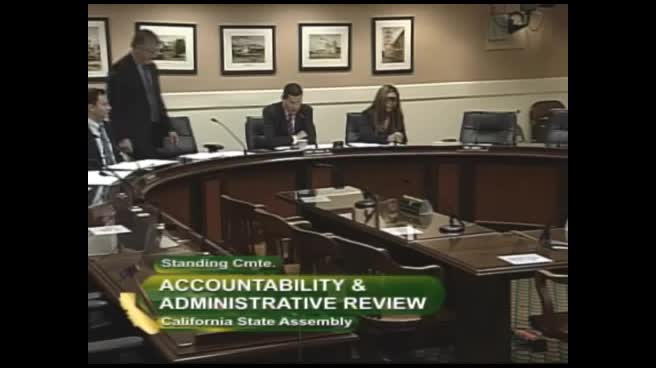 7MIN
Assembly Standing Committee on Accountability and Administrative Review
 7MIN
Senate Floor
 21MIN
Senate Standing Committee on Governmental Organization
Bill Author

Bill Co-Author(s):
