SB 575: Long-term care insurance.
- Session Year: 2015-2016
- House: Senate
- Latest Version Date: 2015-10-06
Existing law provides for the regulation of long-term care insurance by the Insurance Commissioner. Existing law prohibits an insurer from delivering or issuing for delivery a long-term care policy unless the insurer offers at the time of application an option to purchase a shortened benefit period nonforfeiture benefit. Under existing law, the commissioner may require the administration by an insurer of the contingent benefit upon lapse as a condition of approval or acknowledgment of a rate adjustment for a block of business for which the contingent benefit upon lapse is not otherwise available. Under existing law, the insurer is required to notify policyholders and certificate holders of the contingent benefit upon lapse when required by the commissioner, as specified.
This bill, when a shortened benefit period nonforfeiture benefit or contingent benefit upon lapse is conferred, would require the insurer to annually notify the policyholder or certificate holder and, if elected, at least one individual designated by the policyholder or certificate holder of (a) the availability of the shortened benefit period nonforfeiture benefit or contingent benefit upon lapse, (b) the dollar amount of the shortened benefit period nonforfeiture benefit or contingent benefit upon lapse calculated up to 60 days prior to the date of the annual notice, and (c) the name, address, and telephone number of the insurer for questions about the benefit. The bill would also require the insurer to mail to and receive from each policyholder or certificate holder a form that allows the policyholder or certificate holder to submit one of the following: (1) a written designation of the name, address, and telephone number of at least one person, in addition to the policyholder or certificate holder who is to receive the annual notice described above, (2) a confirmation that the policyholder or certificate holder designates the same person previously designated to receive that notice, or (3) a waiver signed and dated by the policyholder or certificate holder electing not to designate additional persons to receive the annual notice.
Existing law provides for the regulation of long-term care insurance by the Insurance Commissioner. Existing law prohibits an insurer from delivering or issuing for delivery a long-term care policy unless the insurer offers at the time of application an option to purchase a shortened benefit period nonforfeiture benefit. Under existing law, the commissioner may require the administration by an insurer of the contingent benefit upon lapse as a condition of approval or acknowledgment of a rate adjustment for a block of business for which the contingent benefit upon lapse is not otherwise available. Under existing law, the insurer is required to notify policyholders and certificate holders of the contingent benefit upon lapse when required by the commissioner, as specified.
This bill, when a shortened benefit period nonforfeiture benefit or contingent benefit upon lapse is conferred, would require the insurer to annually notify the policyholder or certificate holder and, if elected, at least one individual designated by the policyholder or certificate holder of (A) (a) the availability of the shortened benefit period nonforfeiture benefit or contingent benefit upon lapse, (B) (b) the dollar amount of the shortened benefit period nonforfeiture benefit or contingent benefit upon lapse calculated 30 60 days prior to the date of the annual notice, and (C) (c) the name, address, and telephone number of the insurer for questions about the benefit. The bill would also require the insurer to mail to and receive from each policyholder or certificate holder a form that allows the policyholder or certificate holder to submit one of the following: (1) a written designation of the name, address, and telephone number of at least one person, in addition to the policyholder or certificate holder who is to receive the annual notice described above, (2) a confirmation that the policyholder or certificate holder designates the same person previously designated to receive that notice, or (3) a waiver signed and dated by the policyholder or certificate holder electing not to designate additional persons to receive the annual notice.
Existing law provides for the regulation of long-term care insurance by the Insurance Commissioner. Existing law prohibits an insurer from delivering or issuing for delivery a long-term care policy unless the insurer offers at the time of application an option to purchase a shortened benefit period nonforfeiture benefit. Under existing law, the commissioner may require the administration by an insurer of the contingent benefit upon lapse as a condition of approval or acknowledgment of a rate adjustment for a block of business for which the contingent benefit upon lapse is not otherwise available. Under existing law, the insurer is required to notify policyholders and certificate holders of the contingent benefit upon lapse when required by the commissioner, as specified.
This bill, when a shortened benefit period nonforfeiture benefit or the contingent benefit upon lapse is conferred, would require the insurer to annually notify the policyholder or certificate holder and, if elected, at least one individual designated by the policyholder or certificate holder of (1) (A) the availability of the shortened benefit period nonforfeiture benefit or contingent benefit upon lapse, (2) that the insured may request a statement of the current value of the benefit at any time, (B) the dollar amount of the shortened benefit period nonforfeiture benefit or contingent benefit upon lapse calculated 30 days prior to the date of the annual notice, and (3) (C) the name, address, and telephone number of the insurer for questions about the benefit. The bill would also require the insurer to mail to and receive from each policyholder or certificate holder a form that allows the policyholder or certificate holder to submit one of the following: (1) a written designation of the name, address, and telephone number of at least one person, in addition to the policyholder or certificate holder who is to receive the annual notice described above, (2) a confirmation that the policyholder or certificate holder designates the same person previously designated to receive that notice, or (3) a waiver signed and dated by the policyholder or certificate holder electing not to designate additional persons to receive the annual notice.
Existing law provides for the regulation of long-term care insurance by the Insurance Commissioner. Existing law prohibits an insurer from delivering or issuing for delivery a long-term care policy unless the insurer offers at the time of application an option to purchase a shortened benefit period nonforfeiture benefit. Under existing law, the commissioner may require the administration by an insurer of the contingent benefit upon lapse as a condition of approval or acknowledgment of a rate adjustment for a block of business for which the contingent benefit upon lapse is not otherwise available. Under existing law, the insurer must is required to notify policyholders and certificate holders of the contingent benefit upon lapse when required by the commissioner, as specified.
This bill, when a policyholder or certificate holder elects the shortened benefit period nonforfeiture benefit or the contingent benefit upon lapse, lapse is conferred, would require the insurer to annually notify the policyholder or certificate holder and, if elected, at least one individual designated by the policyholder or certificate holder of (1) the availability of the shortened benefit period nonforfeiture benefit or contingent benefit, the dollar amount of the contingent benefit, benefit upon lapse, (2) that the insured may request a statement of the current value of the benefit at any time, and (3) the name, address, and telephone number of the insurer for questions about the contingent benefit. The bill would also require the insurer, within 90 days of receipt of notice that a policyholder or certificate holder elected the contingent benefit upon lapse, insurer to mail to and receive from each policyholder or certificate holder a form that allows the policyholder or certificate holder to submit one of the following: (1) a written designation of the name, address, and telephone number of at least one person, in addition to the policyholder or certificate holder who is to receive the annual notice described above, (2) a confirmation that the policyholder or certificate holder designates the same person previously designated to receive that notice, or (2) (3) a waiver signed and dated by the policyholder or certificate holder electing not to designate additional persons to receive the annual notice.
Existing law provides for the regulation of long-term care insurance by the Insurance Commissioner. Under existing law, the commissioner may require the administration by an insurer of the contingent benefit upon lapse as a condition of approval or acknowledgment of a rate adjustment for a block of business for which the contingent benefit upon lapse is not otherwise available. Under existing law, the insurer must notify policyholders and certificate holders of the contingent benefit upon lapse when required by the commissioner, as specified.
This bill, when a policyholder or certificate holder elects the contingent benefit upon lapse, would require the insurer to annually notify the policyholder or certificate holder and, if elected, at least one individual designated by the policyholder or certificate holder of the availability of the contingent benefit, the dollar amount of the contingent benefit, and the name, address, and telephone number of the insurer for questions about the contingent benefit. The bill would also require the insurer, within 90 days of receipt of notice that a policyholder or certificate holder elected the contingent benefit upon lapse, to mail and receive from each policyholder or certificate holder a form that allows the policyholder or certificate holder to submit one of the following: (1) a written designation of the name, address, and telephone number of at least one person, in addition to the policyholder or certificate holder who is to receive the annual notice described above, or (2) a waiver signed and dated by the policyholder or certificate holder electing not to designate additional persons to receive notice.
(a)When a shortened benefit period nonforfeiture benefit, as described in Section 10235.30, or a contingent benefit upon lapse, as described in Section 10235.35, is conferred, the insurer shall mail to and receive from each policyholder or certificate holder an election form which allows the policyholder or certificate holder to elect one of the following:
(1)A written designation listing the name, address, and telephone number of at least one individual, in addition to the policyholder or certificate holder, who is to receive the annual notice as described in subdivision (c).
(2)A confirmation that the policyholder or certificate holder designates the same person previously designated in Section 10235.40 to receive the annual notice as described in subdivision (c).
(3)A waiver signed and dated by the policyholder or certificate holder electing not to designate additional persons to receive the annual notice as described in subdivision (c). The required waiver shall read as follows:
I understand that I have the right to designate at least one person other than myself to receive annual notification related to the benefit retained under this long-term care insurance policy. I elect not to designate any person other than myself to receive the notice.
___________________________________________________________
Signature of Policyholder or Certificate Holder Date
(b)The insurer shall notify all holders of a shortened benefit period nonforfeiture benefit or a contingent benefit upon lapse at the time of the annual notice as described in subdivision (c), of the right to change the election described in subdivision (a).
(c)At the time a shortened benefit period nonforfeiture benefit or contingent benefit upon lapse is conferred and annually thereafter the insurer shall notify all holders of the benefit and, if elected, at least one individual designated pursuant to paragraph (1) or (2) of subdivision (a) by first-class United States mail, postage prepaid, of all of the following:
(1)The availability of the shortened benefit period nonforfeiture benefit or contingent benefit upon lapse.
(2)The dollar amount of the shortened benefit period nonforfeiture benefit or contingent benefit upon lapse calculated up to 60 days prior to the date of the annual notice. The notice shall state that the amount may have been reduced if benefits were paid in the period subsequent to the date on which that amount was calculated.
(3)The name, address, and telephone number of the insurer for questions about the shortened benefit period nonforfeiture benefit or contingent benefit upon lapse.
(d)For individuals who hold contingent benefits upon lapse as of the effective date of this section, the insurer shall send the election form required in subdivision (a) by July 1, 2016.
(e)If, upon proper mailing by the insurer, the policyholder or certificate holder fails to return the election form described in subdivision (a) within 90 days, the failure will be deemed a waiver as provided in paragraph (3) of subdivision (a).
(a)When a shortened benefit period nonforfeiture benefit, as described in Section 10235.30, or a contingent benefit upon lapse, as described in Section 10235.35, is conferred, the insurer shall mail to and receive from each policyholder or certificate holder an election form which allows the policyholder or certificate holder to elect one of the following:
(1)A written designation listing the name, address, and telephone number of at least one individual, in addition to the policyholder or certificate holder, who is to receive the annual notice as described in subdivision (c).
(2)A confirmation that the policyholder or certificate holder designates the same person previously designated in Section 10235.40 to receive the annual notice as described in subdivision (c).
(3)A waiver signed and dated by the policyholder or certificate holder electing not to designate additional persons to receive the annual notice as described in subdivision (c). The required waiver shall read as follows:
I understand that I have the right to designate at least one person other than myself to receive annual notification related to the benefit retained under this long-term care insurance policy. I elect not to designate any person other than myself to receive the notice.
___________________________________________________________
Signature of Policyholder or Certificate Holder Date
(b)The insurer shall notify all holders of a shortened benefit period nonforfeiture benefit or a contingent benefit upon lapse at the time of the annual notice as described in subdivision (c), of the right to change the election described in subdivision (a).
(c)At the time a shortened benefit period nonforfeiture benefit or contingent benefit upon lapse is conferred and annually thereafter the insurer shall notify all holders of the benefit and, if elected, at least one individual designated pursuant to paragraph (1) or (2) of subdivision (a) by first-class United States mail, postage prepaid, of all of the following:
(1)The availability of the shortened benefit period nonforfeiture benefit or contingent benefit upon lapse.
(2)The dollar amount of the shortened benefit period nonforfeiture benefit or contingent benefit upon lapse calculated 30 60 days prior to the date of the annual notice. The notice shall state that the amount may have been reduced if benefits were paid in the period subsequent to the date on which that amount was calculated.
(3)The name, address, and telephone number of the insurer for questions about the shortened benefit period nonforfeiture benefit or contingent benefit upon lapse.
(d)For individuals who hold contingent benefits upon lapse as of the effective date of this section, the insurer shall send the election form required in subdivision (a) by July 1, 2016.
(e)If, upon proper mailing by the insurer, the policyholder or certificate holder fails to return the election form described in subdivision (a) within 90 days, the failure will be deemed a waiver as provided in paragraph (3) of subdivision (a).
(a)When a shortened benefit period nonforfeiture benefit, as described in Section 10235.30, or a contingent benefit upon lapse, as described in Section 10235.35, is conferred, the insurer shall mail to and receive from each policyholder or certificate holder an election form which allows the policyholder or certificate holder to elect one of the following:
(1)A written designation listing the name, address, and telephone number of at least one individual, in addition to the policyholder or certificate holder, who is to receive the annual notice as described in subdivision (c).
(2)A confirmation that the policyholder or certificate holder designates the same person previously designated in Section 10235.40 to receive the annual notice as described in subdivision (c).
(3)A waiver signed and dated by the policyholder or certificate holder electing not to designate additional persons to receive the annual notice as described in subdivision (c). The required waiver shall read as follows:
I understand that I have the right to designate at least one person other than myself to receive annual notification related to the [shortened benefit period nonforfeiture benefit or contingent benefit upon lapse, as applicable] benefit retained under this long-term care insurance policy. I elect not to designate any person other than myself to receive the notice.
___________________________________________________________
Signature of Policyholder or Certificate Holder Date
(b)The insurer shall notify all holders of a shortened benefit period nonforfeiture benefit or a contingent benefit upon lapse, at least once every two years, or lapse at the time of the annual notice as described in subdivision (c), of the right to change the election described in subdivision (a).
(c)At the time a shortened benefit period nonforfeiture benefit or contingent benefit upon lapse is conferred and annually thereafter the insurer shall notify all holders of the benefit and, if elected, at least one individual designated pursuant to paragraph (1) or (2) of subdivision (a) by first-class United States mail, postage prepaid, of all of the following:
(1)The availability of the shortened benefit period nonforfeiture benefit or contingent benefit upon lapse.
(2)That he or she may request a statement of the current value of the benefit at any time.
(2)The dollar amount of the shortened benefit period nonforfeiture benefit or contingent benefit upon lapse calculated 30 days prior to the date of the annual notice. The notice shall state that the amount may have been reduced if benefits were paid in the period subsequent to the date on which that amount was calculated.
(3)The name, address, and telephone number of the insurer for questions about the shortened benefit period nonforfeiture benefit or contingent benefit upon lapse.
(d)For individuals who hold contingent benefits upon lapse as of the effective date of this section, the insurer shall send the election form required in subdivision (a) by July 1, 2016.
(d)
(e)If, upon proper mailing by the insurer, the policyholder or certificate holder fails to return the election form described in subdivision (a), (a) within 90 days, the failure will be deemed a waiver as provided in paragraph (3) of subdivision (a).
(a)When a shortened benefit period nonforfeiture benefit, as described in Section 10235.30, or a contingent benefit upon lapse, as described in Section 10235.35, is conferred, the insurer shall mail to and receive from each policyholder or certificate holder an election form which allows the policyholder or certificate holder to elect one of the following:
(1)A written designation listing the name, address, and telephone number of at least one individual, in addition to the policyholder or certificate holder, who is to receive the annual notice as described in subdivision (c).
(2)A confirmation that the policyholder or certificate holder designates the same person previously designated in Section 10235.40 to receive the annual notice as described in subdivision (c).
(3)A waiver signed and dated by the policyholder or certificate holder electing not to designate additional persons to receive the annual notice as described in subdivision (c). The required waiver shall read as follows:
I understand that I have the right to designate at least one person other than myself to receive annual notification related to the [shortened benefit period nonforfeiture benefit or contingent benefit upon lapse, as applicable] retained under this long-term care insurance policy. I elect not to designate any person other than myself to receive the notice.
___________________________________________________________
Signature of Policyholder or Certificate Holder Date
(b)The insurer shall notify all holders of a shortened benefit period nonforfeiture benefit or a contingent benefit upon lapse, at least once every two years, or at the time of the annual notice as described in subdivision (c), of the right to change the election described in subdivision (a).
(c)At the time a shortened benefit period nonforfeiture benefit or contingent benefit upon lapse is conferred and annually thereafter the insurer shall notify all holders of the benefit and, if elected, at least one individual designated pursuant to paragraph (1) or (2) of subdivision (a) by first-class United States mail, postage prepaid, of all of the following:
(1)The availability of the shortened benefit period nonforfeiture benefit or contingent benefit upon lapse.
(2)That he or she may request a statement of the current value of the benefit at any time.
(3)The name, address, and telephone number of the insurer for questions about the shortened benefit period nonforfeiture benefit or contingent benefit upon lapse.
(d)If, upon proper mailing by the insurer, the policyholder or certificate holder fails to return the election form described in subdivision (a), the failure will be deemed a waiver as provided in paragraph (3) of subdivision (a).
SECTION 1.Section 10235.36 is added to the Insurance Code, to read:10235.36.(a)In the event a policyholder or certificate holder elects the contingent benefit upon lapse as described in Section 10235.35, the insurer shall annually notify the policyholder or certificate holder and, if elected, at least one individual designated by the policyholder or certificate holder pursuant to paragraph (1) of subdivision (b) by first-class United States mail, postage prepaid, of all of the following:
(1)The availability of the contingent benefit held by the policyholder or certificate holder.
(2)The dollar amount of the contingent benefit.
(3)The name, address, and telephone number of the insurer for questions about the contingent benefit.
(b)Within 90 days of receipt of notice that a policyholder or certificate holder elects the contingent benefit upon lapse as described in Section 10235.35, the insurer shall mail and receive from each policyholder or certificate holder a form that allows the policyholder or certificate holder to submit one of the following:
(1)A written designation listing the name, address, and telephone number of at least one individual, in addition to the policyholder or certificate holder, who is to receive annual notice as described in subdivision (a).
(2)A waiver signed and dated by the policyholder or certificate holder electing not to designate additional persons to receive notice. The required waiver shall read as follows:
I understand that I have the right to designate at least one person other than myself to receive annual notification related to the contingent benefit retained under this long-term care insurance policy. I elect not to designate any person other than myself to receive the notice.
_______________________________________________________
Signature of Policyholder or Certificate Holder Date
(c)The insurer shall notify the policyholder or certificate holder at least once every two years of the right to change the election described in subdivision (b).
(a)In the event a policyholder or certificate holder elects the contingent benefit upon lapse as described in Section 10235.35, the insurer shall annually notify the policyholder or certificate holder and, if elected, at least one individual designated by the policyholder or certificate holder pursuant to paragraph (1) of subdivision (b) by first-class United States mail, postage prepaid, of all of the following:
(1)The availability of the contingent benefit held by the policyholder or certificate holder.
(2)The dollar amount of the contingent benefit.
(3)The name, address, and telephone number of the insurer for questions about the contingent benefit.
(b)Within 90 days of receipt of notice that a policyholder or certificate holder elects the contingent benefit upon lapse as described in Section 10235.35, the insurer shall mail and receive from each policyholder or certificate holder a form that allows the policyholder or certificate holder to submit one of the following:
(1)A written designation listing the name, address, and telephone number of at least one individual, in addition to the policyholder or certificate holder, who is to receive annual notice as described in subdivision (a).
(2)A waiver signed and dated by the policyholder or certificate holder electing not to designate additional persons to receive notice. The required waiver shall read as follows:
I understand that I have the right to designate at least one person other than myself to receive annual notification related to the contingent benefit retained under this long-term care insurance policy. I elect not to designate any person other than myself to receive the notice.
_______________________________________________________
Signature of Policyholder or Certificate Holder Date
(c)The insurer shall notify the policyholder or certificate holder at least once every two years of the right to change the election described in subdivision (b).
|
Date
|
Status
|
|---|---|
| Jun 25, 2015 | From committee: Do pass as amended and re-refer to Com. on AGING & L.T.C. (Ayes 13. Noes 0.) (June 24). |
| Oct 6, 2015 | Chaptered by Secretary of State. Chapter 544, Statutes of 2015. |
| Oct 6, 2015 | Approved by the Governor. |
| Sep 3, 2015 | Enrolled and presented to the Governor at 10 a.m. |
| Sep 1, 2015 | Assembly amendments concurred in. (Ayes 40. Noes 0.) Ordered to engrossing and enrolling. |
| Sep 1, 2015 | Assembly amendments concurred in. (Ayes 40. Noes 0. Page 2378.) Ordered to engrossing and enrolling. |
| Aug 31, 2015 | Ordered to special consent calendar. |
| Aug 27, 2015 | Read third time. Passed. (Ayes 79. Noes 0. Page 2625.) Ordered to the Senate. |
| Aug 27, 2015 | Read third time. Passed. Ordered to the Senate. |
| Aug 27, 2015 | In Senate. Concurrence in Assembly amendments pending. |
| Jul 14, 2015 | Read second time. Ordered to third reading. |
| Jul 13, 2015 | Read second time and amended. Ordered to second reading. |
| Jul 9, 2015 | From committee: Do pass as amended. (Ayes 7. Noes 0.) (July 7). |
| Jun 29, 2015 | Read second time and amended. Re-referred to Com. on AGING & L.T.C. |
| Feb 26, 2015 | Introduced. Read first time. To Com. on RLS. for assignment. To print. |
| Jun 16, 2015 | From committee with author's amendments. Read second time and amended. Re-referred to Com. on INS. |
| May 22, 2015 | Referred to Coms. on INS. and AGING & L.T.C. |
| May 5, 2015 | In Assembly. Read first time. Held at Desk. |
| May 4, 2015 | Read third time. Passed. (Ayes 36. Noes 0.) Ordered to the Assembly. |
| May 4, 2015 | Read third time. Passed. (Ayes 36. Noes 0. Page 882.) Ordered to the Assembly. |
| Apr 30, 2015 | Read second time and amended. Ordered to third reading. |
| Apr 29, 2015 | From committee: Do pass as amended. (Ayes 7. Noes 0. Page 727.) (April 22). |
| Apr 8, 2015 | Set for hearing April 22. |
| Apr 7, 2015 | April 8 set for first hearing canceled at the request of author. |
| Mar 20, 2015 | Set for hearing April 8. |
| Mar 12, 2015 | Referred to Com. on INS. |
| Feb 27, 2015 | From printer. May be acted upon on or after March 29. |
|
Date
|
Description
|
Location
|
Votes
|
|
|---|---|---|---|---|
| Sep 1, 2015 | Special Consent #9 SB575 Liu | Senate Floor |
Passed |
|
| Aug 27, 2015 | SB 575 Liu Senate Third Reading By BROWN | Assembly Floor |
Passed |
|
| Jul 7, 2015 | Do pass as amended. | Assembly Standing Committee on Aging and Long-Term Care |
Passed |
|
| Jun 24, 2015 | Do pass as amended and be re-referred to the Committee on [Aging and Long-Term Care] | Assembly Standing Committee on Insurance |
Passed |
|
| May 4, 2015 | Senate 3rd Reading SB575 Liu | Senate Floor |
Passed |
|
| Apr 22, 2015 | Do pass as amended | Senate Standing Committee on Insurance |
Passed |
This list shows positions taken on this bill by organizations on the date displayed, which is linked to the original source.
Positions by individuals are not included.
|
Organization
|
Position
|
Date
|
|---|---|---|
| American Council Of Life Insurers | ** Against | May 4, 2015 |
| Association Of California Life & Health Insurance Companies | * Indeterminate | Jun 24, 2015 |
| California Advocates for Nursing Home Reform | ** Support | Jun 24, 2015 |
| California Association Of Area Agencies On Aging | ** Support | May 4, 2015 |
| California Cerebral Palsy Association | ** Support | Jun 24, 2015 |
| California Commission on Aging | ** Support | Jun 24, 2015 |
| California Health Advocates | ** Support | Jun 24, 2015 |
| California Retired Teachers Association | ** Support | May 4, 2015 |
| Congress of California Seniors | ** Support | May 4, 2015 |
| Department of Insurance | ** Support | Jun 24, 2015 |
| National Association Of Social Workers, California Chapter | ** Support | Jun 24, 2015 |
| One individual | ** Support | Jun 24, 2015 |
| The Arc and United Cerebral Palsy California Collaboration | ** Support | Jun 24, 2015 |
SB 575
Page 5
|
Office of Senate Floor Analyses (916) 651-1520 Fax: (916) 327-4478 |
UNFINISHED BUSINESS
Bill No: SB 575
Amended: 7/13/15
SENATE INSURANCE COMMITTEE: 7-0, 4/22/15
AYES: Roth, Gaines, Berryhill, Hernandez, Liu, Mitchell, Wieckowski
NO VOTE RECORDED: Hall
SENATE FLOOR: 36-0, 5/4/15
AYES: Allen, Anderson, Bates, Beall, Block, Cannella, De León, Fuller, Gaines, Galgiani, Hall, Hernandez, Hertzberg, Hill, Hueso, Huff, Jackson, Lara, Leno, Leyva, Liu, McGuire, Mendoza, Mitchell, Monning, Moorlach, Morrell, Nguyen, Nielsen, Pan, Roth, Runner, Stone, Vidak, Wieckowski, Wolk
NO VOTE RECORDED: Berryhill, Hancock, Pavley
ASSEMBLY FLOOR: 79-0, 8/27/15 - See last page for vote
SUBJECT: Long-term care insurance
SOURCE: California Department of Insurance
DIGEST: This bill requires long-term care insurance carriers to annually notify policyholders with a vested contingent benefit upon lapse or a shortened benefit period nonforfeiture benefit (“nonforfeiture benefit”), and any designated third-party, that the benefit is available and how they may request more information about the benefit.
Assembly Amendments (1) modify the frequency and effective date of certain notice requirements, as well as clarified the period of time in which a lack of a consumer’s response would be deemed a waiver of the right to designate a third-party recipient; and (2) add a requirement that the insurer notify the consumer of the value of the benefit but permits the insurer to calculate that value up to 60 days prior to the notice.
Existing law:
Requires insurers to offer applicants for long-term care insurance (LTCI) the option to purchase a nonforfeiture benefit that would provide a lifetime maximum benefit that is at least the equivalent value of the greater of the amount of premium paid or the dollar equivalent of three months of care at a nursing facility.
Requires insurers to offer applicants the opportunity to designate at least one individual in addition to the applicant to receive a notice of lapse or termination of a policy for nonpayment of premium and requires insurers to receive from each applicant either: (a) a written designation of at least one third-party recipient, in addition to the applicant, who is to receive a notice of lapse or termination for nonpayment of premium (“designation”) or (b) a waiver signed and dated by the applicant notifying the insurer that the policyholder elects not to make a designation (“waiver”).
Requires insurers to notify policyholders of the right to add or change a designation at least every two years.
Requires approval by the Insurance Commissioner (IC) of any rate or rate adjustment applied to LTCI policies before a policy may be offered, sold, issued, or delivered to a resident of this state.
Permits the IC to require an insurer, as a condition of approval of a rate adjustment that exceeds a specified threshold, to administer a contingent benefit upon lapse that would provide the insured a minimum lifetime benefit that is at least the equivalent value of the greater of the amount of premiums paid or 30 times the daily nursing home benefit at the time of lapse.
This bill:
Requires insurers, when a contingent benefit on lapse or a nonforfeiture benefit is conferred, to notify policyholders and annually thereafter, that the benefit is available, the dollar value of the benefit calculated up to 60 days prior to the notice, and contact information where the consumer may receive more information.
Requires insurers, also when a contingent benefit upon lapse or a nonforfeiture benefit is conferred, to send a form notifying the policyholder that he or she has the right to designate a third-party to receive the annual notice and requires the insurer to receive: (a) a designation; (b) confirmation that the same person previously designated under Insurance Code Section 10235.40 to receive a notice of lapse shall receive the annual notice; or (c) a waiver.
Delays this requirement, until July 1, 2016, for individuals holding a contingent benefit upon lapse when this bill goes into effect.
Deems a failure to return this form within 90 days to be a waiver by the policyholder.
Requires insurers to remind policyholders of the right to add or change a designation at the time of the annual notice.
Background
LTCI covers the costs of long-term care services when insureds are unable to take care of themselves. Unfortunately many of these policies were severely underpriced when they were first sold and have been subject to steep premium increases. Since the 1990s, California has adopted several significant reforms and rates are now regulated by the California Department of Insurance. Some carriers are still requesting approval for rate increases.
Premium increases may be devastating to vulnerable consumers. California law provides consumers with options to help mitigate the impact. At the time of application, insurers must offer applicants the option to purchase a nonforfeiture benefit that provides a paid-up minimum benefit should the policy lapse. When an insurer requests a rate increase that meets a certain threshold, the IC may require an insurer to offer qualifying policyholders a contingent benefit upon lapse that also provides a paid-up minimum benefit instead of maintaining the existing policy at the increased premium level. Because these benefits may vest many years before used, SB 575 requires insurers to send benefit holders an annual reminder providing basic information about the benefit.
Existing law also provides policyholders with the option to designate a third party to receive a notice of lapse for nonpayment of premium. Since contingent and nonforfeiture benefits are considered paid-up and not subject to lapse, the existing designation process does not apply. This bill extends the designation process so that the holder of a contingent or nonforfeiture benefit may confirm, change, or add a designee to receive the annual notice.
The LTCI industry initially expressed concerns over the provision that requires insurers to include the value of the benefit with the annual statement because the value of the benefit might decrease before the notice is received. That provision was amended out of this bill before it left the Senate with the understanding the author would continue to work on that issue. Amendments taken in the Assembly negotiated with the industry representatives added that provision back into this bill but modified so that insurers would not be in the position of having to provide potentially outdated information.
FISCAL EFFECT: Appropriation: No Fiscal Com.: No Local: No
California Department of Insurance (source)
California Advocates for Nursing Home Reform
California Association of Area Agencies on Aging
California Commission on Aging
California Health Advocates
California Retired Teachers Association
Congress of California Seniors
National Association of Social Workers, California Chapter
The Arc and United Cerebral Palsy California Collaboration
OPPOSITION: (Verified 8/27/15)
None received
ARGUMENTS IN SUPPORT: Proponents argue that existing law gives eligible long-term care policyholders facing large rate hikes they could not afford the right to stop paying premiums and bank a benefit amount for potential later use in the amount of premiums they had already paid. Individuals who lapse their LTCI policies and “bank” contingent benefits do not receive periodic notification from the insurer that these benefits are available. Without notification these individuals and their families can easily lose track of the existence of the benefits, especially if the insured suffers from cognitive impairment. These individuals and families likely end up paying for care or doing without when, in fact, benefits are available.
ASSEMBLY FLOOR: 79-0, 8/27/15
AYES: Achadjian, Alejo, Travis Allen, Baker, Bigelow, Bloom, Bonilla, Bonta, Brough, Brown, Burke, Calderon, Campos, Chang, Chau, Chávez, Chiu, Chu, Cooley, Cooper, Dababneh, Dahle, Daly, Dodd, Eggman, Beth Gaines, Gallagher, Cristina Garcia, Eduardo Garcia, Gatto, Gipson, Gomez, Gonzalez, Gordon, Gray, Grove, Hadley, Harper, Roger Hernández, Holden, Irwin, Jones, Jones-Sawyer, Kim, Lackey, Levine, Linder, Lopez, Low, Maienschein, Mathis, Mayes, McCarty, Medina, Melendez, Mullin, Nazarian, Obernolte, O'Donnell, Olsen, Patterson, Perea, Quirk, Rendon, Ridley-Thomas, Rodriguez, Salas, Santiago, Steinorth, Mark Stone, Thurmond, Ting, Wagner, Waldron, Weber, Wilk, Williams, Wood, Atkins
NO VOTE RECORDED: Frazier
Prepared by: Hugh Slayden / INS. / (916) 651-4110
8/28/15 16:07:14
**** END ****
SB 575
Page 3
SENATE THIRD READING
SB 575
(Liu)
As Amended July 13, 2015
Majority vote
SENATE VOTE: 36-0
Committee |
Votes |
Ayes |
Noes |
Insurance |
13-0 |
Daly, Beth Gaines, Travis Allen, Calderon, Cooley, Cooper, Dababneh, Frazier, Gatto, Gonzalez, Grove, Mayes, Rodriguez |
|
Aging |
7-0 |
Brown, Hadley, Gipson, Gray, Levine, Lopez, Mathis |
|
SUMMARY: Requires insurers to provide notice to holders of long-term care (LTC) insurance, and their designees, if contingent benefits or nonforfeiture benefits are triggered. Specifically, this bill:
Requires insurers to notify LTC policyholders when a contingent benefit on lapse or a non-forfeiture benefit is triggered, and annually thereafter, that the benefit is available, including the dollar value of the benefit.
Requires the notice to provide the insured with the opportunity to designate another person to receive a copy of the notice.
Requires the notice to include contact information for the insurer.
EXISTING LAW:
Requires insurers to offer applicants for LTC insurance the option to purchase a nonforfeiture benefit that would provide a fixed benefit equal to the greater of the amount of premium paid or three months of care at a nursing facility should the policy lapse.
Requires insurers to offer applicants the opportunity to designate at least one individual in addition to the applicant to receive notice of lapse or termination of a policy for nonpayment of premium and requires insurers to receive from each applicant either:
A written designation of at least one third-party recipient, in addition to the applicant, who is to receive notice of lapse or termination for nonpayment of premium; or
A waiver signed and dated by the applicant notifying the insurer that the policyholder elects not to make a designation.
Requires insurers to notify policyholders of the right to add or change a designation at least every two years.
Requires approval by the Insurance Commissioner (commissioner) of any rate or rate adjustment applied to LTC policies before a policy may be offered, sold, issued, or delivered to a resident of this state.
Permits the commissioner to require an insurer, as a condition of approval of a rate adjustment that exceeds a specified threshold, to administer a contingent benefit upon lapse that would provide the insured a minimum lifetime benefit that is at least the equivalent value of the greater of the amount of premiums paid or 30 times the daily nursing home benefit at the time of lapse.
FISCAL EFFECT: Undetermined. This bill is keyed non-fiscal by the Legislative Counsel.
COMMENTS:
Purpose. According to the author, existing law gives eligible long-term care policyholders facing large rate hikes they could not afford the right to stop paying premiums and bank a benefit amount for potential later use in the amount of premiums they had already paid. Individuals who lapse their LTC insurance policies and "bank" contingent benefits do not receive periodic notification from the insurer that these benefits are available. Without notification, these individuals and their families can easily lose track of the existence of the benefits, especially if the insured suffers from cognitive impairment. These individuals and families likely end up paying for care or doing without when, in fact, benefits are available.
Long Term Care. LTC services provide individuals who, because of illness or disability, are generally unable to perform activities of daily living, such as bathing, dressing, toileting, and getting around the house, or suffer from cognitive impairments. LTC services are provided in a variety of settings, such as nursing homes, assisted living facilities, and private residences. Only about 20% of the elderly who need LTC services live in an institutional setting. The roughly 80% living in the community primarily live in private homes, but a small number live in residential communities catering to the needs of elderly people. For those living at home, most receive assistance from unpaid family members and friends (referred to as informal care) while some pay for assistance (referred to as formal care) from home health aides. Elderly people with severe functional and cognitive limitations who require around-the clock assistance often live in institutional settings. According to data from the Medicare Current Beneficiary Survey, the elderly nursing home population has declined over the past 10 years as more elderly people are living in residential care facilities, community-based housing with supportive services, and in their homes.
Notices and Forms. California law provides procedural measures designed to help consumers avoid unintentional lapse due to nonpayment of premium. Insurers are required to notify the policyholder that he or she has the right to designate a third-party that will also receive a notice if the policy is about to terminate due to missed premium payments ("notice of lapse"). Prior to issuing or delivering a policy, an insurer must provide and collect from the policyholder either a designation of third-party recipient or a waiver. The insurer must also send a biennial reminder that the policyholder has the right to change the designee.
Contingent Benefit on Lapse. A consumer protection provided for LTC policies is the contingent benefit on lapse. The benefit provides minimum coverage for some policyholders who did not purchase a nonforfeiture benefit and are forced to lapse their policies because of substantial rate increases. If over the life of a policy, the insurer increases premiums beyond a specified threshold, the commissioner may require the insurer to offer the policyholder a contingent benefit, along with other options (such as a shorter coverage period), that the policyholder may elect instead of a rate increase. The policyholder may elect the contingent benefit or will be deemed to have elected the contingent benefit if the policy lapses within 120 days of the due date of the increased premium. The thresholds are based on the age of the policyholder and the premium at the time the policy was issued. The threshold required to trigger this benefit falls as the insured ages. When a contingent benefit is triggered, no more premium payments are due and the policy provides a benefit equal to the greater of all premiums paid or 30 times the daily nursing home benefit amount. The benefit may be used for care and services as provided under the terms of the policy.
Problems With LTC Insurance. The long-term care insurance marketplace is problematic for both insurers and consumers. Many insurers have stopped selling new LTC policies. Insurers have struggled with setting premiums adequate to cover their costs in the absence of sufficient claims data. LTC insurance is a relatively new product that requires years of paying premiums before claims are made. Only in recent years have the insurers begun to receive claims for many of the policies sold early on, and those claims have been much higher than the insurers anticipated. In addition to misjudging the cost of claims, insurers have struggled with anticipating policy lapse rates, LTC inflation, and life span increases. All of those factors, and others, have led to LTC insurance being much more expensive than previously expected. The early mistakes in pricing LTC policies has led to rounds of major premium increases which adds marketing challenges to a product that is already, according to insurance agents, difficult to sell. Unlike some life insurance policies, LTC policies have no independent value. If the policy lapses, the owner will likely lose all benefits unless the owner purchased an optional nonforfeiture benefit that allows the insured to keep a limited benefit based on the premiums already paid.
CalPERS is a recent example of an LTC insurer that underestimated the cost of insuring LTC. It has pushed through multiple premium increases (30% in 2003, 43.8% in 2007, and 85% in 2015) in an attempt to set premiums in line with its costs. While premium increases of this size are difficult to absorb for those who are still working, it can be impossible for retirees on a fixed income to absorb the higher premiums. Genworth is the largest issuer of private LTC insurance and it has suffered massive financial losses on the product in the past year. It has added nearly $1 billion to the loss reserves for its LTC policies and has had its bonds reduced to junk status by multiple rating agencies. These losses are occurring despite Genworth having significantly increased the premiums charged for its existing policies. Losses in LTC insurance previously caused both MetLife and Prudential to exit the market.
Analysis Prepared by: Paul Riches / INS. / (916) 319-2086 FN: 0001231
SB 575
Page 4
Date of Hearing: June 24, 2015
ASSEMBLY COMMITTEE ON INSURANCE
Tom Daly, Chair
SB 575
(Liu) – As Amended June 16, 2015
SENATE VOTE: 36-0
SUBJECT: Long-term care insurance
SUMMARY: Requires insurers to provide notice to holders of long-term care (LTC) insurance, and their designees, if contingent benefits or nonforfeiture benefits are triggered. Specifically, this bill:
Requires insurers to notify LTC policyholders when a contingent benefit on lapse or a non-forfeiture benefit is triggered, and annually thereafter, that the benefit is available, including the dollar value of the benefit.
Requires the notice to provide the insured with the opportunity to designate another person to receive a copy of the notice.
Requires the notice to include contact information for the insurer.
EXISTING LAW:
Requires insurers to offer applicants for LTC insurance the option to purchase a nonforfeiture benefit that would provide a fixed benefit equal to the greater of the amount of premium paid or three months of care at a nursing facility should the policy lapse.
Requires insurers to offer applicants the opportunity to designate at least one individual in addition to the applicant to receive notice of lapse or termination of a policy for nonpayment of premium and requires insurers to receive from each applicant either:
a written designation of at least one third-party recipient, in addition to the applicant, who is to receive notice of lapse or termination for nonpayment of premium; or
a waiver signed and dated by the applicant notifying the insurer that the policyholder elects not to make a designation.
Requires insurers to notify policyholders of the right to add or change a designation at least every two years.
Requires approval by the Insurance Commissioner (commissioner) of any rate or rate adjustment applied to LTC policies before a policy may be offered, sold, issued, or delivered to a resident of this state.
Permits the commissioner to require an insurer, as a condition of approval of a rate adjustment that exceeds a specified threshold, to administer a contingent benefit upon lapse that would provide the insured a minimum lifetime benefit that is at least the equivalent value of the greater of the amount of premiums paid or 30 times the daily nursing home benefit at the time of lapse.
FISCAL EFFECT: Undetermined
COMMENTS:
Purpose. According to the author, existing law gives eligible long-term care policyholders facing large rate hikes they could not afford the right to stop paying premiums and bank a benefit amount for potential later use in the amount of premiums they had already paid. Individuals who lapse their LTC insurance policies and “bank” contingent benefits do not receive periodic notification from the insurer that these benefits are available. Without notification, these individuals and their families can easily lose track of the existence of the benefits, especially if the insured suffers from cognitive impairment. These individuals and families likely end up paying for care or doing without when, in fact, benefits are available.
Long Term Care. LTC services provide individuals who, because of illness or disability, are generally unable to perform activities of daily living, such as bathing, dressing, toileting, and getting around the house, or suffer from cognitive impairments. LTC services are provided in a variety of settings, such as nursing homes, assisted living facilities, and private residences. Only about 20 percent of the elderly who need LTC services live in an institutional setting. The roughly 80 percent living in the community primarily live in private homes, but a small number live in residential communities catering to the needs of elderly people. For those living at home, most receive assistance from unpaid family members and friends (referred to as informal care) while some pay for assistance (referred to as formal care) from home health aides. Elderly people with severe functional and cognitive limitations who require around-the clock assistance often live in institutional settings. According to data from the Medicare Current Beneficiary Survey, the elderly nursing home population has declined over the past 10 years as more elderly people are living in residential care facilities, community-based housing with supportive services, and in their homes.
Notices and Forms. California law provides procedural measures designed to help consumers avoid unintentional lapse due to nonpayment of premium. Insurers are required to notify the policyholder that he or she has the right to designate a third-party that will also receive a notice if the policy is about to terminate due to missed premium payments (“notice of lapse”). Prior to issuing or delivering a policy, an insurer must provide and collect from the policyholder either a designation of third-party recipient or a waiver. The insurer must also send a biennial reminder that the policyholder has the right to change the designee.
Contingent Benefit on Lapse. A consumer protection provided for LTC policies is the contingent benefit on lapse. The benefit provides minimum coverage for some policyholders who did not purchase a nonforfeiture benefit and are forced to lapse their policies because of substantial rate increases. If over the life of a policy, the insurer increases premiums beyond a specified threshold, the commissioner may require the insurer to offer the policyholder a contingent benefit, along with other options (such as a shorter coverage period), that the policyholder may elect instead of a rate increase. The policyholder may elect the contingent benefit or will be deemed to have elected the contingent benefit if the policy lapses within 120 days of the due date of the increased premium. The thresholds are based on the age of the policyholder and the premium at the time the policy was issued. The threshold required to trigger this benefit falls as the insured ages. When a contingent benefit is triggered, no more premium payments are due and the policy provides a benefit equal to the greater of all premiums paid or 30 times the daily nursing home benefit amount. The benefit may be used for care and services as provided under the terms of the policy.
Problems With LTC Insurance. The long-term care insurance marketplace is problematic for both insurers and consumers. Many insurers have stopped selling new LTC policies. Insurers have struggled with setting premiums adequate to cover their costs in the absence of sufficient claims data. LTC insurance is a relatively new product that requires years of paying premiums before claims are made. Only in recent years have the insurers begun to receive claims for many of the policies sold early on, and those claims have been much higher than the insurers anticipated. In addition to misjudging the cost of claims, insurers have struggled with anticipating policy lapse rates, LTC inflation, and life span increases. All of those factors, and others, have led to LTC insurance being much more expensive than previously expected. The early mistakes in pricing LTC policies has led to rounds of major premium increases which adds marketing challenges to a product that is already, according to insurance agents, difficult to sell. Unlike some life insurance policies, LTC policies have no independent value. If the policy lapses, the owner will likely lose all benefits unless the owner purchased an optional nonforfeiture benefit, that allows the insured to keep a limited benefit based on the premiums already paid.
CalPERS is a recent example of an LTC insurer that underestimated the cost of insuring LTC. It has pushed through multiple premium increases (30% in 2003, 43.8% in 2007, and 85% in 2015) in an attempt to set premiums in line with its costs. While premium increases of this size are difficult to absorb for those who are still working, it can be impossible for retirees on a fixed income to absorb the higher premiums. Genworth is the largest issuer of private LTC insurance and it has suffered massive financial losses on the product in the past year. It has added nearly $1 billion to the loss reserves for its LTC policies and has had its bonds reduced to junk status by multiple rating agencies. These losses are occurring despite Genworth having significantly increased the premiums charged for its existing policies. Losses in LTC insurance previously caused both MetLife and Prudential to exit the market.
Suggested Amendment. The bill should be amended to specify that the insurer must provide the dollar value of the benefit as calculated 60 days prior to the mailing of the notice.
REGISTERED SUPPORT / OPPOSITION:
Support
Department of Insurance (sponsor)
American Federation of State, County and Municipal Employees (AFSCME), AFL-CIO
California Advocates for Nursing Home Reform (CANHR)
California Cerebral Palsy Association
California Commission on Aging
California Health Advocates
National Association of Social Workers, California Chapter (NAWS-CA)
One Individual
The Arc and United Cerebral Palsy California Collaboration
Opposition
None received.
Analysis Prepared by: Paul Riches / INS. / (916) 319-2086
SB 575
Page 4
|
Office of Senate Floor Analyses (916) 651-1520 Fax: (916) 327-4478 |
THIRD READING
Bill No: SB 575
Amended: 4/30/15
SENATE INSURANCE COMMITTEE: 7-0, 4/22/15
AYES: Roth, Gaines, Berryhill, Hernandez, Liu, Mitchell, Wieckowski
NO VOTE RECORDED: Hall
SUBJECT: Long-term care insurance
SOURCE: California Department of Insurance
DIGEST: This bill requires long-term care insurance carriers to annually notify policyholders with a vested contingent benefit upon lapse or a nonforfeiture benefit, and any designated third-party, that the benefit is available and how they may request more information about the benefit.
Existing law:
Requires insurers to offer applicants for long-term care insurance (LTCI) the option to purchase a shortened benefit period nonforfeiture benefit that would provide a lifetime maximum benefit that is at least the equivalent value of the greater of the amount of premium paid or the dollar equivalent of three months of care at a nursing facility.
Requires insurers to offer applicants the opportunity to designate at least one individual in addition to the applicant to receive notice of lapse or termination of a policy for nonpayment of premium and requires insurers to receive from each applicant either: (a) a written designation of at least one third-party recipient, in addition to the applicant, who is to receive notice of lapse or termination for nonpayment of premium (“designation”) or (b) a waiver signed and dated by the applicant notifying the insurer that the policyholder elects not to make a designation (“waiver”).
Requires insurers to notify policyholders of the right to add or change a designation at least every two years.
Requires approval by the Insurance Commissioner (IC) of any rate or rate adjustment applied to LTCI policies before a policy may be offered, sold, issued, or delivered to a resident of this state.
Permits the IC to require an insurer, as a condition of approval of a rate adjustment that exceeds a specified threshold, to administer a contingent benefit upon lapse that would provide the insured a minimum lifetime benefit that is at least the equivalent value of the greater of the amount of premiums paid or 30 times the daily nursing home benefit at the time of lapse.
This bill:
Requires insurers to notify policyholders when a contingent benefit on lapse or a nonforfeiture benefit is conferred, and annually thereafter, that the benefit is available, that the insured may request a statement of the current value of the benefit, and how the policyholder may contact the insurer for more information.
Requires insurers, when a contingent benefit upon lapse or a nonforfeiture benefit is conferred, to send a form notifying the policyholder that he or she has the right to designate a third-party to receive the annual notice and requires the insurer to receive: (a) a designation; (b) confirmation that the same person previously designated under Insurance Code Section 10235.40 to receive a notice of lapse shall receive the annual notice; or (c) a waiver.
Deems a failure to return the form to be a waiver by the policyholder.
Requires insurers to remind policyholders of the right to add or change a designation at the time of the annual notice or separately on a biennial basis.
Background
LTCI covers the costs of long-term care services when insureds are unable to take care of themselves. Unfortunately many of these policies were severely underpriced when they were first sold and have been subject to steep premium increases. Since the 1990s, California has adopted several significant reforms and rates are now regulated by the California Department of Insurance. Some carriers are still requesting approval for rate increases.
Premium increases may be devastating to vulnerable consumers. California law provides consumers with options to help mitigate the impact. At the time of application, insurers must offer applicants the option to purchase a shortened benefit period nonforfeiture benefit (“nonforfeiture benefit”). When an insurer requests rate increase that meets a certain threshold, the IC may require an insurer to offer qualifying policyholders a contingent benefit upon lapse.
Both contingent and nonforfeiture benefits provide shorter coverage periods than the underlying policy, but require no further premium payments. Because these benefits may vest many years before used, SB 575 requires insurers to send benefit holders an annual reminder providing basic information about the benefit.
Existing law also provides policyholders with the option to designate a third party to receive a notice of lapse for nonpayment of premium. Since contingent and nonforfeiture benefits are considered paid-up and not subject to lapse, the existing designation process does not apply. This bill extends the designation process so that the holder of a contingent or nonforfeiture benefit may confirm, change, or add a designee to receive the annual notice.
Representatives of the LTCI industry opposed this bill in the Senate Insurance Committee and are still evaluating this bill to identify potential implementation issues. However, they have removed their opposition based on recent amendments and the author’s willingness to work with stakeholders on remaining issues.
FISCAL EFFECT: Appropriation: No Fiscal Com.: No Local: No
California Department of Insurance (source)
California Advocates for Nursing Home Reform
California Association of Area Agencies on Aging
California Commission on Aging
California Health Advocates
California Retired Teachers Association
Congress of California Seniors
National Association of Social Workers, California Chapter
The Arc and United Cerebral Palsy California Collaboration
OPPOSITION: (Verified 4/30/15)
None received
ARGUMENTS IN SUPPORT: Proponents argue that existing law gives eligible long-term care policyholders facing large rate hikes they could not afford the right to stop paying premiums and bank a benefit amount for potential later use in the amount of premiums they had already paid. Individuals who lapse their LTCI policies and “bank” contingent benefits do not receive periodic notification from the insurer that these benefits are available. Without notification these individuals and their families can easily lose track of the existence of the benefits, especially if the insured suffers from cognitive impairment. These individuals and families likely end up paying for care or doing without when, in fact, benefits are available.
Prepared by: Hugh Slayden / INS. / (916) 651-4110
5/1/15 14:05:15
**** END ****
SB 575 (Liu) Page 6 of 6
SENATE COMMITTEE ON INSURANCE
Senator Richard Roth, Chair
2015 - 2016 Regular
Bill No: SB 575 Hearing Date: April 22, 2015
Author: |
Liu |
||
Version: |
February 26, 2015 |
||
Urgency: |
No |
Fiscal: |
No |
Consultant: |
Hugh Slayden |
||
Subject: Long-term care insurance
SUMMARY
Would require long-term care insurers to provide annual notification of the availability and amount of contingent benefits to the insured and, upon the insured’s designation, at least one other individual.
DIGEST
Existing law
Requires approval by the Insurance Commissioner (IC) of any rate or rate adjustment applied to long-term care insurance (LTCI) policies before the policy may be offered, sold, issued, or delivered to a resident of this state.
Permits the IC to require, as a condition of approval of a rate adjustment, that an insurer administer a contingent benefit upon lapse as described in specified subsections of Section 26 of the October 2000 version of the Long-Term Care Insurance Model Regulation promulgated by the National Association of Insurance Commissioners (NAIC).
Prohibits insurers from issuing a LTCI policy or certificate (for group policies) until the applicant has been given the right to designate at least one individual in addition to the applicant (“third-party”) to receive notice of lapse or termination of a policy or certificate for nonpayment of premium and requires insurers to receive from each applicant either:
A written designation of at least one third-party recipient, in addition to the applicant, who is to receive notice of lapse or termination for nonpayment of premium (“designation of a third-party recipient”).
A waiver signed and dated by the applicant (“waiver”).
Requires insurers to notify insureds of the right to change a written designation at least every two years (“biennial reminder”).
Prohibits insurers from terminating an LTCI policy or certificate until 30 days after a notice of lapse has been sent to the policyholder and any designee(s).
This bill
Requires insurers to annually notify a policyholder or certificate holder (referred to collectively as “policyholder”) who elected a contingent benefit on lapse (“contingent benefit”) that the benefit is available, the dollar value, and specified contact information for the insurer (“annual notice”).
Require insurers, 90 days after receiving notice that the policyholder has elected a contingent benefit, to send a form notifying the insured that he or she has the right to designate a third-party to receive an annual notice of the contingent benefit and requires the insurer to receive from each applicant either:
A designation of third-party recipient.
A waiver.
Requires insurers to send biennial reminders to policyholders of the right to change the third-party recipient.
COMMENTS
Purpose of the bill According to the author, existing law gives eligible long-term care policyholders facing large rate hikes they could not afford the right to stop paying premiums and bank a benefit amount for potential later use in the amount of premiums they had already paid.
Individuals who lapse their long-term care insurance (LTCI) policies
and “bank” contingent benefits do not receive periodic
notification from the insurer that these benefits are available.
Without notification these individuals and their families can easily
lose track of the existence of the benefits, especially if the
insured suffers from cognitive impairment. These individuals and
families likely end up paying for care or doing without when, in
fact, benefits are available.
Background LTCI covers the costs of long-term care services when insureds are unable to take care of themselves. Coverage is triggered when an insured develops a “chronic illness” typically defined as an inability to perform a set number of "activities of daily living" such as feeding, dressing, and bathing themselves, or a cognitive impairment (such as Alzheimer’s Disease). A policy may cover facility care or home care or both.
LTCI History and Rate Increases. Insurers first sold LTCI covering nursing homes in the 1970s and expanded coverage in the 1980s to cover other types of facilities and home care. Unfortunately, many insurers failed to accurately estimate future costs and losses. Increasing life expectancies, faulty assumptions on lapse ratios and the cost of care, coupled with the poor performance of insurer investments, drove dramatic increases in LTCI premiums. Attempts to stabilize rates had limited impact and some carriers are still requesting and waiting on approval for additional rate increases.
A rate hike can be a hardship on consumers, particularly retirees or other people on a low, fixed incomes. Nonetheless, policyholders tend to keep their policies. Unlike some life insurance policies, LTCI policies have no independent value; if the policy lapses, the owner will likely lose all benefits unless the owner purchased an optional “nonforfeiture benefit,” governed under Section in Section 10235.30, that provides very limited coverage despite the policy lapse. Because rate increases can be devastating to vulnerable consumers, California law provides additional consumer protections.
Notices and Forms Required by Insurance Code Section 10235.40. California law provides procedural measures designed to help consumers avoid unintentional lapse due to nonpayment of premium. Insurance Code Section 10235.40 requires insurers to notify the policyholder that he or she has the right to designate a third-party that will also receive a notice if the policy is about to terminate due to missed premium payments (“notice of lapse”). Prior to issuing or delivering a policy, an insurer must provide and collect from the policyholder either a designation of third-party recipient or a waiver. The insurer must also send a biennial reminder that the policyholder has the right to change the designee (“biennial reminder”).
Contingent Benefit on Lapse. Another consumer protection, the contingent benefit on lapse (“contingent benefit”), provides minimum coverage for some policyholders who did not purchase a nonforfeiture benefit and are forced to lapse their policies because of a substantial rate increase. If over the life of a policy, the insurer increases premiums beyond a specified threshold, the IC may require the insurer to offer the policyholder a contingent benefit, along with other options (such as a shorter coverage period), that the policyholder may elect instead of a rate increase. The policyholder may elect the contingent benefit or will be deemed to have elected the contingent benefit if the policy lapses within 120 days of the due date of the increased premium. The thresholds are based on the age of the policyholder and the premium at the time the policy was issued; the older the policyholder, the lower the threshold.
When a contingent benefit vests, the policy converts to the
equivalent of a “paid up policy,” i.e. no more premium payments
are due, with a benefit equal to the greater of 100% of all premiums
paid or 30 times the daily nursing home benefit amount (but never any
more than the maximum benefit had the underlying policy remained in
force). The benefit may be used for care and services as provided
under the terms of the policy.
This Bill: The Proposed Notice of Contingent Benefit. This bill would require insurers to send a notice to policyholders who have elected a contingent benefit that provides basic information about the benefit. This bill would also require the insurer to duplicate the process provided in Section 10235.40 regarding the designation of a third-party recipient, including the requirement to collect a response from the policyholder and provide biennial reminders.
Support Several proponents argue that individuals who lapse their LTC policies and “bank” contingent benefits do not receive periodic notification from the insurer that these benefits are available. Without notification these individuals and their families can easily lose track of the existence of the benefits, especially if the insured suffers from cognitive impairment, a not uncommon occurrence. These individuals and families may end up paying for care or doing without when, in fact, benefits are available.
Opposition
The Association of California Life and Health Insurance Companies (ACLHIC) and the American Council of Life Insurers (ACLI) argue that the addition of another third party notice requirement could be confusing to all parties because - with separate designations - a consumer could potentially designate different individuals, one for notice of lapse and a different one for a contingent benefit upon lapse. It would not only be confusing to the consumer but also create the potential for administrative error in tracking all original and updated designees.
They also express concern that the proposal would be challenging to implement, particularly since as the exact amount of the contingent benefit to be provided may not be readily available.
ACLHIC and ACLI further explain that the existing third party designee for nonpayment of premium notice must be designated prior to policy issue (at application), whereas this proposal requires that ‘the insurer shall mail and receive’ the third party designation for contingent benefit within 90 days after the contingent benefit has been elected. They question how an insurer might force a policyholder to respond and, if the consumer does not respond, what the company could do about it.
Question Rather than requiring an insured to confirm or change a designation made under Section 10235.40, should any existing designation automatically apply to the annual notice required under this bill?
Suggested Amendments
Consumers who have purchased nonforfeiture benefits may also lose track of those benefits once they have vested. The committee may wish to consider amendments that expand the bill to cover purchased nonforfeiture benefits described in Section 10235.30.
The committee may wish to consider amendments that provide that failure of an insured to return the election form shall be deemed a waiver described in paragraph (3) of subdivision (a).
Contingent benefits do not lapse and it is unnecessary for an insurer to continue sending biennial reminders or track designation under Section 10235.40 for holders of a contingent benefit. The committee may wish to consider amendments that clarify existing law so that Section 10235.40 will not apply to any policy subject to the provisions of this bill.
Concerns have been raised that alteration of existing systems may require substantial resources to alter the system necessary to provide an automatic calculation of the value of existing benefits. It is unknown how many of these contingent benefits are currently held, but since lapse rates, for all reasons, are very low (.5 to 1.5% per year) there are probably relatively few consumers holding these benefits. Additionally, it would be helpful to know how many policies would ever be likely to reach the contingent benefit threshold since the implementation of rate reforms. Without knowing how many consumers will be impacted and without an estimate of the costs to each insurer and the aggregate costs system wide, the committee may wish to consider amendments that would allow the insurer to notify the insured that he or she may request a statement of the current value of the policy at any time instead of automatically requiring an individualized calculation for every statement.
Rather than requiring a separate document or mailing for the biennial reminder, permit the insurer to consolidate the biennial reminder with the annual notice.
Apply the terms of the bill to policyholders who are deemed to have elected a contingent benefit by operation of law or contract.
Prior and Related Legislation
AB 1804 (Perea) Chapter 380, Statutes of 2014, requires insurers to maintain a process that allows policyholders to designate in writing or electronic transmission at least one third-party recipient to receive a notice of lapse or nonrenewal for nonpayment of premium for private passenger auto, certain residential property, and individual disability income insurance policies.
AB 1747 (Feuer), Chapter 315, Statutes of 2012, requires insurers to permit holders of life insurance policies to designate in writing at least one other person to receive notice of lapse for nonpayment.
SB1810 (Dunn), Chapter 312, Statutes of 2006, authorized the IC to require a LTCI carrier to offer a contingent benefit, as specified, as a condition of approval of a modification to a rate schedule.
SB1052 (Vasconcellos), Chapter 699, Statutes of 1997, requires insurers to permit holders of long-term care policies to designate in writing at least one other person to receive notice of lapse for nonpayment and prohibits termination of a LTCI policy for nonpayment until that notice has been mailed 30 days before termination of the policy.
POSITIONS
Support
California Department of Insurance (Sponsor)
The Arc and United Cerebral Palsy California Collaboration
California Advocates for Nursing Home Reform
California Commission on Aging
California Health Advocates
California Retired Teachers Association
Congress of California Seniors
National Association of Social Workers, California Chapter
Oppose
American Council of Life Insurers
Association of California Life and Health Insurance Companies
-- END --
Discussed in Hearing
View Older Hearings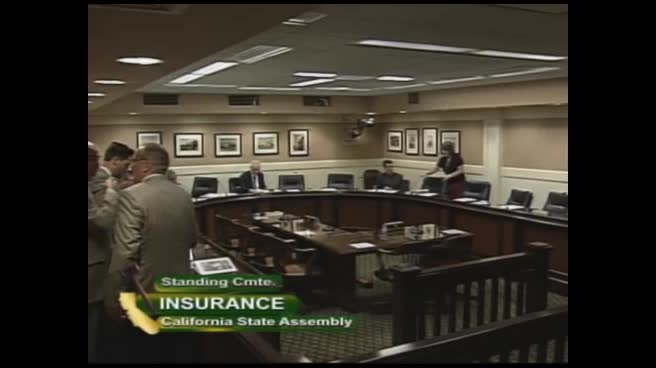

Bill Author

Bill Co-Author(s):