SB 585: Insurance payments: interception.
- Session Year: 2015-2016
- House: Senate
- Latest Version Date: 2015-07-02
Existing law creates the Department of Child Support Services and provides for the interception of funds from state tax refunds, lottery winnings, unemployment compensation benefits, and benefits under the Public Employees Retirement System that otherwise would be paid to a person owing past due child support. Existing law creates the Department of Insurance, headed by the Insurance Commissioner, and prescribes the departments powers and duties.
This bill would, beginning July 1, 2016, create the Insurance Payment Intercept Program within the Department of Insurance. The bill would require the Department of Child Support Services to facilitate a data match system using automated data exchanges through which an insurer or self-insurer would be required to report, no later than 30 days prior to a claim payout, report, prior to the payment of a claim, the name, address, and, if known, date of birth and social security number or other taxpayer identification number for each claimant to match a claimant who owes past due support, as specified.
This bill would authorize the commissioner, in his or her discretion, require the commissioner, if he or she has good cause to believe that an insurer or self-insurer has not complied with the bills requirements, to give written notice of the alleged noncompliance specifying a reasonable time, not less than 30 days, during which the insurer or self-insurer is required to correct the noncompliance. The bill would require the commissioner to impose a fine, not to exceed $1,000, upon for each violation if an insurer or self-insurer who violates the bills requirement to provide claim data. The bill would additionally authorize the commissioner fails to correct the noncompliance within the specified timeframe, and to issue an order requiring the violator to comply with that requirement. The bill would authorize an insurer or self-insurer who disagrees with the commissioners determination of noncompliance to request an administrative hearing within 30 days of receipt of the notice of noncompliance.
Existing constitutional provisions require that a statute that limits the right of access to the meetings of public bodies or the writings of public officials and agencies be adopted with findings demonstrating the interest protected by the limitation and the need for protecting that interest.
This bill would make legislative findings to that effect.
Existing law creates the Department of Child Support Services and provides for the interception of funds from state tax refunds, lottery winnings, unemployment compensation benefits, and benefits under the Public Employees Retirement System that otherwise would be paid to a person owing past due child support. Existing law creates the Department of Insurance, headed by the Insurance Commissioner, and prescribes the departments powers and duties.
This bill would, beginning July 1, 2016, create the Insurance Payment Intercept Program within the Department of Insurance. The bill would require the Department of Child Support Services to facilitate a data match system using automated data exchanges through which an insurer or self-insurer would be required to report, no later than 30 days prior to a claim payout, the name, address, and, if known, date of birth and social security number or other taxpayer identification number for each claimant to match a claimant who owes past due support, as specified.
This bill would authorize the commissioner, in his or her discretion, to impose a fine, not to exceed $1,000, upon an insurer or self-insurer who violates the bills requirement to provide claim data. The bill would additionally authorize the commissioner to issue an order requiring the violator to comply with that requirement.
Existing constitutional provisions require that a statute that limits the right of access to meetings of public bodies or the writings of public officials and agencies be adopted with findings demonstrating the interest protected by that limitation and the need for protecting that interest.
This bill would make a legislative finding and declaration relating to the necessity of treating insurance claims data and any past due support information obtained by the Department of Child Protective Services as confidential in order to protect the privacy of individual claimants and persons owed past due support.
Existing constitutional provisions require that a statute that limits the right of access to the meetings of public bodies or the writings of public officials and agencies be adopted with findings demonstrating the interest protected by the limitation and the need for protecting that interest.
This bill would make legislative findings to that effect.
Existing law creates the Department of Child Support Services and provides for the interception of funds from state tax refunds, lottery winnings, unemployment compensation benefits, and benefits under the Public Employees Retirement System that otherwise would be paid to a person owing past due child support. Existing law creates the Department of Insurance, headed by the Insurance Commissioner, and prescribes the departments powers and duties.
This bill would, beginning July 1, 2016, create the Insurance Payment Intercept Program within the Department of Insurance. The bill would require the Department of Insurance to consult with the Department of Child Support Services to develop a program requiring an insurer or a self-insurer, each as defined, to notify the Department of Child Support Services of a claim owed to a person owing a duty of child, spouse, or family support, defined as an obligor. The bill would also require the Department of Insurance to establish a procedure identifying the types of claims that the commissioner determines to be properly subject to withholding to satisfy a child support obligation, and prescribing the duties of an insurers or self-insurers reporting obligations necessary to implement the bills provisions. Child Support Services to facilitate a data match system using automated data exchanges through which an insurer or self-insurer would be required to report, no later than 30 days prior to a claim payout, the name, address, and, if known, date of birth and social security number or other taxpayer identification number for each claimant to match a claimant who owes past due support, as specified.
This bill would authorize the commissioner, in his or her discretion, to impose a fine, not to exceed $1,000, upon an insurer or self-insurer who violates the bills requirement to provide claim data. The bill would additionally authorize the commissioner to issue an order requiring the violator to comply with that requirement.
Existing constitutional provisions require that a statute that limits the right of access to meetings of public bodies or the writings of public officials and agencies be adopted with findings demonstrating the interest protected by that limitation and the need for protecting that interest.
This bill would make a legislative finding and declaration relating to the necessity of treating insurance claims data and any past due support information obtained by the Department of Child Protective Services as confidential in order to protect the privacy of individual claimants and persons owed past due support.
Existing law creates the Department of Child Support Services and provides for the interception of funds from state tax refunds, lottery winnings, unemployment compensation benefits, and benefits under the Public Employees Retirement System that otherwise would be paid to a person owing past due child support. Existing law creates the Department of Insurance, headed by the Insurance Commissioner, and prescribes the departments powers and duties.
This bill would create the Insurance Payment Intercept Program within the Department of Insurance. The bill would require the Department of Insurance to consult with the Department of Child Support Services to develop a program requiring an insurer or a self-insurer, each as defined, to notify the Department of Child Support Services of a claim owed to a person owing a duty of child, spouse, or family support, defined as an obligor. The bill would also require the Department of Insurance to establish a procedure identifying the types of claims that the commissioner determines to be properly subject to withholding to satisfy a child support obligation, and prescribing the duties of an insurers or self-insurers reporting obligations necessary to implement the bills provisions.
In furtherance of the enforcement of child support obligations in the state, and to enhance efforts to notify the Department of Child Support Services when an obligor is owed an insurance claim payment, this article establishes and authorizes the Insurance Payment Intercept Program. This article is not intended to delay payment of a claim.
13552.(a)The Department of Child Support Services shall facilitate a child support data match system using automated data exchanges to the maximum extent feasible, through which an insurer or self-insurer shall report, no later than 30 days prior to a claim payout, prior to payment of a claim, the name, address, and, if known, date of birth and social security number or other taxpayer identification number for each claimant.
(b)An insurer or self-insurer may provide the claim data required pursuant to subdivision (a) by any of the following methods:
(1)Submitting the required claim data maintained by the insurer or self-insurer directly to the Department of Child Support Services in hard copy or a child support data match program in an electronic medium.
(2)Authorizing an insurance claim data collection organization, to which the insurer or self-insurer subscribes and submits the required claim data, to conduct a data match of all claimants who owe past due support and to submit the required data for each claimant to the Department of Child Support Services. a child support data match program.
(3)Receiving or accessing a data file from an insurance claim data collection organization a child support data match program and conducting a data match of all claimants who owe past due support and submitting the required data for each claimant to the Department of Child Support Services. a child support data match program.
(c)An insurance claim data collection organization acting on behalf of the Department of Child Support Services shall submit the required data for each claimant to the Department of Child Support Services.
(c)With respect to claims involving periodic payments, the insurer or self-insurer shall only report prior to issuing the initial payment of benefits and each 12 months thereafter.
(d)An insurer or self-insurer that provides claim data in accordance with subdivision (b) is in compliance with subdivision (a).
(e)When a child support data match program identifies a match, it shall notify the Department of Child Support Services and the Department of Child Support Services shall send a notice, if appropriate, to the insurer or self-insurer.
(f)Upon receipt by the insurer or self-insurer of notice from the Department of Child Support Services on a reported insurance claim payable to an obligor with a child support delinquency, the insurer or self-insurer shall comply with the requirements of the notice.
(g)(1)If the insurer or self-insurer is in receipt of a notice from the Department of Child Support Services on a reported insurance claim payable to an obligor who has a child support delinquency after a payment on a periodic payment is issued, the insurer or self-insurer shall comply with the notice with respect to subsequent payments.
(2)Except as required by paragraph (1), this section does not require an insurer or self-insurer to comply with a notice from the Department of Child Support Services on a reported insurance claim payable to an obligor with a child support delinquency, if the notice is received after an insurer or self-insurer has issued payment on a claim.
(h)A support obligation shall be inferior to any lien or written notice of assignment of interest of a health care provider or a repair facility, attorneys fees, or another assignment of interest for services and expenses related to a claim.
(i)No requirement of this section shall delay payment of a claim.
13554.For purposes of this article, the following terms have the following meanings:
(a)A child support data match program means an automated data match or interactive lookup program that matches the names of claimants with the names of child support obligors who owe past due child support.
(a)
(b)(1)Claim means any of the following:
(A)Coverage for an open, unresolved, a pending bodily injury claim that is payable by an insurer or self-insurer to an individual, or to a third party for the benefit of the individual, who is a resident of the state for the following types of insurance:
(i)Automobile liability coverage has the meaning set forth in Section 660.
(ii)Homeowners liability coverage means coverage under a policy of residential property insurance for the legal liability of a natural person or persons for loss of, damage to, or injury to, persons or property, bodily injury, but not including policies primarily insuring risks arising from the conduct of a commercial or industrial enterprise. Residential property insurance has the meaning set forth in Section 10087.
(iii)Commercial liability insurance coverage means coverage under a policy of commercial insurance for the legal liability of any person for loss of, damage to, or injury to persons or property, arising from the conduct of a commercial or industrial enterprise. Commercial insurance has the meaning set forth in Section 675.5.
(iv)Liability insurance has the meaning set forth in Section 108.
(v)Workers compensation coverage means the coverage described
(b)Workers compensation coverage described in Sections 3208.3, 4653, 4654, 4655, 4658, 4800, 4800.5, 4804.1, 4806, 4816, and 4850 4850, and 5000 of the Labor Code.
(B)Claims for a beneficiary who is making a claim on a life policy or annuity that was delivered to an individual or a group policyholder.
(C)(i)Payment to the beneficiary of a life insurance policy or annuity contract, including a payment in the form of a structured settlement.
(ii)Payment of benefits resulting from cashing out or accelerating benefits of a life insurance policy or annuity contract.
(iii)Payment of a loan taken against a life insurance policy or annuity contract.
(D)Disability income insurance means the coverage described in paragraph (5) of subdivision (b) of Section 106.
(2)A claim includes a nonrecurring payment of five hundred dollars ($500) or more or cumulative periodic payments of one thousand two hundred dollars ($1,200) or more over a 12-month period prior to deductions allowed by this section.
(2)
(3)A claim does not include a liability policy that does not pay for bodily injury, a claim for property damage or loss of use of property, or a claim made against an accident or a health insurance policy, as defined in Section 106, or an accident policy, whether the policy is an expense incurred policy or an indemnity policy.
(c)An insurance claim data collection organization means an insurance industry service provider that maintains a central database of insurance claims information to assist subscribing insurers in claims processing and in detecting and preventing fraud.
(b)
(d)Insurer means an organization organized for the purpose of assuming the risk of loss under a contract of insurance or reinsurance, and or an entity administering claims on behalf of the organization. Insurer also includes any of the following organizations:
(1)An admitted insurer.
(2)A nonadmitted domestic insurer.
(3)
(2)A nonadmitted foreign insurer. insurer, if the coverage was placed in accordance with Section 1760 or 1763.
(4)
(3)A nonadmitted alien insurer. insurer, if the coverage was placed in accordance with Section 1760 or 1763.
(4)The California Insurance Guarantee Association.
(5)The Uninsured Employers Fund.
(6)The Subsequent Injuries Benefits Trust Fund.
(7)The State Compensation Insurance Fund.
(c)
(e)Obligor means a person owing a duty of support.
(d)
(f)Self-insurer means any entity that is self-insured for its legal responsibility without the benefit of primary insurance, through the use of a self-insured retention. This includes, but is not limited to, any entity that directs handling of its claims through a third party or as a result of a policy-buy-back, cost-sharing agreement, or coverage-in-place agreement.
(e)
(g)Support means a support obligation owing on behalf of a child, spouse, or family, or an amount owing child pursuant to Section 17402 4001 or 17400 of the Family Code, and includes past due support or arrearage child support delinquency, as defined in Section 17500 of the Family Code, when it exists. Support, when used with reference to a minor child or a child described in Section 3901 of the Family Code, includes maintenance and education.
13556.(a)An insurer insurer, self-insurer, child support data match program, insurance claim data collection organization, or insured acting in good faith that complies with this article shall be immune from civil liability to an individual or agency.
(b)Data obtained pursuant to this article may be used only for the purpose of identifying child support obligors. If the Department of Child Support Services does not match data obtained pursuant to this article with a child support obligor, the department Department of Child Support Services shall not maintain that data and shall immediately destroy that data.
(c)An insurance claim data collection organization, child support data match program, insurer or self-insurer that provides, attempts to provide, or in any way accesses data pursuant to this article shall comply with all applicable state and federal laws for the protection of the privacy and the security of that data, including, but not limited to, the Insurance Information and Privacy Protection Act (Chapter 1 (commencing with Section 791.01) of Part 2 of Division 1), the Information Practices Act of 1977 (Chapter 1 (commencing with Section 1798.80) of Part 4 of Division 3 of Title 1.81 of the Civil Code), and the federal Health Insurance Portability and Accountability Act of 1996 (Public Law 104-191).
13560.(a)If the commissioner has good cause to believe that an insurer or self-insurer violates Section 13552, has not complied with this article, the commissioner may, in his or her discretion, shall give written notice of the alleged noncompliance specifying a reasonable timeframe, not less than 30 days, during which the insurer or self-insurer shall correct the noncompliance. If the insurer or self-insurer fails to correct the noncompliance within the specified timeframe, the commissioner shall impose a fine not to exceed one thousand dollars ($1,000) for each violation, and may shall issue an order requiring the violator to comply with Section 13552. this article.(b)If the insurer or self-insurer disagrees with the commissioners determination of noncompliance, the insurer or self-insurer may request a hearing within 30 days of receipt of the commissioners notice of noncompliance. If a hearing is held pursuant to this section, the proceedings shall be conducted in accordance with Chapter 5 (commencing with Section 11500) of Part 1 of Division 3 of Title 2 of the Government Code.
(c)This section does not require an insurer or self-insurer to comply with a notice from the Department of Child Support Services on a reported insurance claim payable to an obligor who has a child support delinquency, if the insurer or self-insurer receives the notice after having issued payment on the claim. If the payment issued is a periodic payment, the insurer or self-insurer shall comply with the notice with respect to subsequent payments.
13561.This article shall become operative July 1, 2016.
SEC. 2.The Legislature finds and declares that Section 1 of this act, which adds Section 13556 to the Insurance Code, imposes a limitation on the publics right of access to the meetings of public bodies or the writings of public officials and agencies within the meaning of Section 3 of Article I of the California Constitution. Pursuant to that constitutional provision, the Legislature makes the following findings to demonstrate the interest protected by this limitation and the need for protecting that interest: In order to protect the privacy of insurance claimants and persons owed past-due support, it is necessary that data obtained by the Department of Child Protective Support Services from insurers, self-insurers, and insurance claim data collection organizations pursuant to this act be confidential.
In furtherance of the enforcement of child support obligations in the state, and to enhance efforts to notify the Department of Child Support Services when an obligor is owed an insurance claim payment, this article establishes and authorizes the Insurance Payment Intercept Program.
13552.(a)The Department of Child Support Services shall facilitate a child support data match system using automated data exchanges to the maximum extent feasible, through which an insurer or self-insurer shall report, no later than 30 days prior to a claim payout, the name, address, and, if known, date of birth and social security number or other taxpayer identification number for each claimant.
(b)An insurer or self-insurer may provide the claim data required pursuant to subdivision (a) by any of the following methods:
(1)Submitting the required claim data maintained by the insurer or self-insurer directly to the Department of Child Support Services in hard copy or in an electronic medium.
(2)Authorizing an insurance claim data collection organization, to which the insurer or self-insurer subscribes and submits the required claim data, to conduct a data match of all claimants who owe past due support and to submit the required data for each claimant to the Department of Child Support Services.
(3)Receiving or accessing a data file from an insurance claim data collection organization and conducting a data match of all claimants who owe past due support and submitting the required data for each claimant to the Department of Child Support Services.
(c)An insurance claim data collection organization acting on behalf of the Department of Child Support Services shall submit the required data for each claimant to the Department of Child Support Services.
13554.For purposes of this article, the following terms have the following meanings:
(a)(1)Claim means any of the following:
(A)Coverage for an open, unresolved, bodily injury claim that is payable by an insurer or self-insurer to an individual, or to a third party for the benefit of the individual, who is a resident of the state for the following types of insurance:
(i)Automobile liability coverage has the meaning set forth in Section 660.
(ii)Homeowners liability coverage means coverage under a policy of residential property insurance for the legal liability of a natural person or persons for loss of, damage to, or injury to, persons or property, but not including policies primarily insuring risks arising from the conduct of a commercial or industrial enterprise. Residential property insurance has the meaning set forth in Section 10087.
(iii)Commercial liability insurance coverage means coverage under a policy of commercial insurance for the legal liability of any person for loss of, damage to, or injury to persons or property, arising from the conduct of a commercial or industrial enterprise. Commercial insurance has the meaning set forth in Section 675.5.
(iv)Liability insurance has the meaning set forth in Section 108.
(v)Workers compensation coverage means the coverage described in Sections 4653, 4654, 4655, 4658, 4800, 4800.5, 4804.1, 4806, 4816, and 4850 of the Labor Code.
(B)Claims for a beneficiary who is making a claim on a life policy or annuity that was delivered to an individual or a group policyholder.
(2)A claim does not include a liability policy that does not pay for bodily injury, a claim for property damage or loss of use of property, or a claim made against an accident or health insurance policy, whether the policy is an expense incurred policy or an indemnity policy.
(b)Insurer means an organization organized for the purpose of assuming the risk of loss under a contract of insurance or reinsurance, and also includes any of the following organizations:
(1)An admitted insurer.
(2)A nonadmitted domestic insurer.
(3)A nonadmitted foreign insurer.
(4)A nonadmitted alien insurer.
(c)Obligor means a person owing a duty of support.
(d)Self-insurer means any entity that is self-insured for its legal responsibility without the benefit of primary insurance, through the use of a self-insured retention. This includes, but is not limited to, any entity that directs handling of its claims through a third party or as a result of a policy-buy-back, cost-sharing agreement, or coverage-in-place agreement.
(e)Support means a support obligation owing on behalf of a child, spouse, or family, or an amount owing pursuant to Section 17402 of the Family Code, and includes past due support or arrearage when it exists. Support, when used with reference to a minor child or a child described in Section 3901 of the Family Code, includes maintenance and education.
13556.(a)An insurer or self-insurer, and its directors, agents, employees, and insureds, and any insurance claim data collection organization, and its agents and employees authorized by an insurer to act on the insurers behalf, that provide or attempt to provide data pursuant to this article are not subject to civil liability under law to any person or entity for alleged or actual damages that occur as a result of providing or attempting to provide data pursuant to this article. acting in good faith that complies with this article shall be immune from civil liability to an individual or agency.
(b)Data obtained pursuant to this article may be used only for the purpose of identifying child support obligors. If the Department of Child Support Services does not match data obtained pursuant to this article with a child support obligor, the department shall not maintain that data and shall immediately destroy that data.
(c)An insurance claim data collection organization, child support data match program, insurer or self-insurer that provides, attempts to provide, or in any way accesses data pursuant to this article shall comply with all applicable state and federal laws for the protection of the privacy and the security of that data, including, but not limited to, the Insurance Information and Privacy Protection Act (Chapter 1 (commencing with Section 791.01) of Part 2 of Division 1), the Information Practices Act of 1977 (Chapter 1 (commencing with Section 1798.80) of Part 4 of Division 3 of Title 1.81 of the Civil Code), and the federal Health Insurance Portability and Accountability Act of 1996 (Public Law 104-191).
13558.Until January 1, 2019, the department may issue guidance to an insurer or self-insurer regarding compliance with this article. This guidance shall be exempt from the rulemaking provisions of the Administrative Procedure Act (Chapter 3.5 (commencing with Section 11340) of Part 1 of Division 3 of Title 2 of the Government Code). Any guidance issued pursuant to this section shall remain effective only until the earlier of January 1, 2019, or the effective date of regulations implementing this article that are adopted by the department pursuant to the Administrative Procedure Act. The department shall consult with the Department of Child Support Services when issuing guidance pursuant to this section.
13560.If an insurer or self-insurer violates Section 13552, the commissioner may, in his or her discretion, impose a fine not to exceed one thousand dollars ($1,000) for each violation, and may issue an order requiring the violator to comply with Section 13552.
13561.This article shall become operative July 1, 2016.
SEC. 2.The Legislature finds and declares that Section 1 of this act, which adds Section 13556 to the Insurance Code, imposes a limitation on the publics right of access to the meetings of public bodies or the writings of public officials and agencies within the meaning of Section 3 of Article I of the California Constitution. Pursuant to that constitutional provision, the Legislature makes the following findings to demonstrate the interest protected by this limitation and the need for protecting that interest: In order to protect the privacy of insurance claimants and persons owed past-due support, it is necessary that data obtained by the Department of Child Protective Services from insurers, self-insurers, and insurance claim data collection organizations pursuant to this act be confidential.
In furtherance of the enforcement of child support obligations in the state, and to enhance efforts to notify the Department of Child Support Services when an obligor is owed an insurance claim payment, this article establishes and authorizes the Insurance Payment Intercept Program.
13552.The department shall consult with the Department of Child Support Services to develop a program requiring an insurer or a self-insurer to notify the Department of Child Support Services of a claim owed to an obligor. The department shall establish a procedure identifying the types of claims that the commissioner, in his or her discretion, determines to be properly subject to withholding to satisfy a child support obligation. That procedure shall prescribe an insurers or self-insurers reporting obligations necessary to implement this article. The department shall incorporate into its written guidance each of the procedures set forth in this section.
13552.(a)The Department of Child Support Services shall facilitate a child support data match system using automated data exchanges to the maximum extent feasible, through which an insurer or self-insurer shall report, no later than 30 days prior to a claim payout, the name, address, and, if known, date of birth and social security number or other taxpayer identification number for each claimant.
(b)An insurer or self-insurer may provide the claim data required pursuant to subdivision (a) by any of the following methods:
(1)Submitting the required claim data maintained by the insurer or self-insurer directly to the Department of Child Support Services in hard copy or in an electronic medium.
(2)Authorizing an insurance claim data collection organization, to which the insurer or self-insurer subscribes and submits the required claim data, to conduct a data match of all claimants who owe past due support and to submit the required data for each claimant to the Department of Child Support Services.
(3)Receiving or accessing a data file from an insurance claim data collection organization and conducting a data match of all claimants who owe past due support and submitting the required data for each claimant to the Department of Child Support Services.
(c)An insurance claim data collection organization acting on behalf of the Department of Child Support Services shall submit the required data for each claimant to the Department of Child Support Services.
13554.For purposes of this article, the following terms have the following meanings:
(a)(1)Claim means any of the following:
(A)Coverage for an open, unresolved, bodily injury claim that is payable by an insurer or self-insurer to an individual, or to a third party for the benefit of the individual, who is a resident of the state for the following types of insurance:
(i)Automobile liability coverage has the meaning set forth in Section 660.
(ii)Homeowners liability coverage means coverage under a policy of residential property insurance for the legal liability of a natural person or persons for loss of, damage to, or injury to, persons or property, but not including policies primarily insuring risks arising from the conduct of a commercial or industrial enterprise. Residential property insurance has the meaning set forth in Section 10087.
(iii)Commercial liability insurance coverage means coverage under a policy of commercial insurance for the legal liability of any person for loss of, damage to, or injury to persons or property, arising from the conduct of a commercial or industrial enterprise. Commercial insurance has the meaning set forth in Section 675.5.
(iv)Liability insurance has the meaning set forth in Section 108.
(v)Workers compensation coverage means the coverage described in Sections 4653, 4654, 4655, 4658, 4800, 4800.5, 4804.1, 4806, 4816, and 4850 of the Labor Code.
(B)Claims for a beneficiary who is making a claim on a life policy or annuity that was delivered to an individual or a group policyholder.
(2)A claim does not include a liability policy that does not pay for bodily injury, a claim for property damage or loss of use of property, or a claim made against an accident or health insurance policy, whether the policy is an expense incurred policy or an indemnity policy.
(a)
(b)Insurer means an organization organized for the purpose of assuming the risk of loss under a contract of insurance or reinsurance, and also includes any of the following organizations:
(1)An admitted insurer.
(2)A nonadmitted domestic insurer.
(3)A nonadmitted foreign insurer.
(4)A nonadmitted alien insurer.
(b)
(c)Obligor means a person owing a duty of support.
(c)Self-insurer means an individual public or private entity that does not meet the definition of insurer in subdivision (a), but that is authorized by this code or any other law to undertake to indemnify itself against loss, damage, or liability arising from a contingent or unknown event.
(d)Self-insurer means any entity that is self-insured for its legal responsibility without the benefit of primary insurance, through the use of a self-insured retention. This includes, but is not limited to, any entity that directs handling of its claims through a third party or as a result of a policy-buy-back, cost-sharing agreement, or coverage-in-place agreement.
(d)
(e)Support means a support obligation owing on behalf of a child, spouse, or family, or an amount owing pursuant to Section 17402 of the Family Code, and includes past due support or arrearage when it exists. Support, when used with reference to a minor child or a child described in Section 3901 of the Family Code, includes maintenance and education.
13556.An insurer or self-insurer that reports information pursuant to this article, or who acts in good faith to comply with the rules or regulations implementing this article, is not liable for those acts under any law to any person.
13556.(a)An insurer or self-insurer, and its directors, agents, employees, and insureds, and any insurance claim data collection organization, and its agents and employees authorized by an insurer to act on the insurers behalf, that provide or attempt to provide data pursuant to this article are not subject to civil liability under law to any person or entity for alleged or actual damages that occur as a result of providing or attempting to provide data pursuant to this article.
(b)Data obtained pursuant to this article may be used only for the purpose of identifying child support obligors. If the Department of Child Support Services does not match data obtained pursuant to this article with a child support obligor, the department shall not maintain that data and shall immediately destroy that data.
(c)An insurance claim data collection organization, child support data match program, insurer or self-insurer that provides, attempts to provide, or in any way accesses data pursuant to this article shall comply with all applicable state and federal laws for the protection of the privacy and the security of that data, including, but not limited to, the Insurance Information and Privacy Protection Act (Chapter 1 (commencing with Section 791.01) of Part 2 of Division 1), the Information Practices Act of 1977 (Chapter 1 (commencing with Section 1798.80) of Part 4 of Division 3 of Title 1.81 of the Civil Code), and the federal Health Insurance Portability and Accountability Act of 1996 (Public Law 104-191).
13558.Until January 1, 2019, the department may issue guidance to an insurer or self-insurer regarding compliance with this article. This guidance shall be exempt from the rulemaking provisions of the Administrative Procedure Act (Chapter 3.5 (commencing with Section 11340) of Part 1 of Division 3 of Title 2 of the Government Code). Any guidance issued pursuant to this section shall remain effective only until the earlier of January 1, 2019, or the effective date of regulations implementing this article that are adopted by the department pursuant to the Administrative Procedure Act. The department shall consult with the Department of Child Support Services when issuing guidance pursuant to this section.
13560.An insurer or self-insurer who violates this article shall be deemed to have failed to carry out its contract in good faith within the meaning of subdivision (b) of Section 704.
13560.If an insurer or self-insurer violates Section 13552, the commissioner may, in his or her discretion, impose a fine not to exceed one thousand dollars ($1,000) for each violation, and may issue an order requiring the violator to comply with Section 13552.
13561.This article shall become operative July 1, 2016.
SEC. 2.The Legislature finds and declares that Section 1 of this act, which adds Section 13556 to the Insurance Code, of public bodies or the writings of public officials and agencies within the meaning of Section 3 of Article I of the California Constitution. Pursuant to that constitutional provision, the Legislature makes the following findings to demonstrate the interest protected by this limitation and the need for protecting that interest: In order to protect the privacy of insurance claimants and persons owed past-due support, it is necessary that data obtained by the Department of Child Protective Services from insurers, self-insurers, and insurance claim data collection organizations pursuant to this act be confidential.
In furtherance of the enforcement of child support obligations in the state, and to enhance efforts to notify the Department of Child Support Services when an obligor is owed an insurance claim payment, this article establishes and authorizes the Insurance Payment Intercept Program.
13552.The department shall consult with the Department of Child Support Services to develop a program requiring an insurer or a self-insurer to notify the Department of Child Support Services of a claim owed to an obligor. The department shall establish a procedure identifying the types of claims that the commissioner, in his or her discretion, determines to be properly subject to withholding to satisfy a child support obligation. That procedure shall prescribe an insurers or self-insurers reporting obligations necessary to implement this article. The department shall incorporate into its written guidance each of the procedures set forth in this section.
13554.For purposes of this article, the following terms have the following meanings:
(a)Insurer means an organization organized for the purpose of assuming the risk of loss under a contract of insurance or reinsurance, and also includes any of the following organizations:
(1)An admitted insurer.
(2)A nonadmitted domestic insurer.
(3)A nonadmitted foreign insurer.
(4)A nonadmitted alien insurer.
(b)Obligor means a person owing a duty of support.
(c)Self-insurer means an individual public or private entity that does not meet the definition of insurer in subdivision (a), but that is authorized by this code or any other law to undertake to indemnify itself against loss, damage, or liability arising from a contingent or unknown event.
(d)Support means a support obligation owing on behalf of a child, spouse, or family, or an amount owing pursuant to Section 17402 of the Family Code, and includes past due support or arrearage when it exists. Support, when used with reference to a minor child or a child described in Section 3901 of the Family Code, includes maintenance and education.
13556.An insurer or self-insurer that reports information pursuant to this article, or who acts in good faith to comply with the rules or regulations implementing this article, is not liable for those acts under any law to any person.
13558.Until January 1, 2019, the department may issue guidance to an insurer or self-insurer regarding compliance with this article. This guidance shall be exempt from the rulemaking provisions of the Administrative Procedure Act (Chapter 3.5 (commencing with Section 11340) of Part 1 of Division 3 of Title 2 of the Government Code). Any guidance issued pursuant to this section shall remain effective only until the earlier of January 1, 2019, or the effective date of regulations implementing this article that are adopted by the department pursuant to the Administrative Procedure Act. The department shall consult with the Department of Child Support Services when issuing guidance pursuant to this section.
13560.An insurer or self-insurer who violates this article shall be deemed to have failed to carry out its contract in good faith within the meaning of subdivision (b) of Section 704.
|
Date
|
Status
|
|---|---|
| May 18, 2015 | May 18 hearing postponed by committee. |
| Jul 8, 2015 | July 8 set for first hearing canceled at the request of author. |
| Jul 2, 2015 | From committee with author's amendments. Read second time and amended. Re-referred to Com. on INS. |
| Jun 11, 2015 | Referred to Com. on INS. |
| May 28, 2015 | Read third time. Passed. (Ayes 29. Noes 4.) Ordered to the Assembly. |
| May 28, 2015 | Read third time. Passed. (Ayes 29. Noes 4. Page 1120.) Ordered to the Assembly. |
| May 28, 2015 | In Assembly. Read first time. Held at Desk. |
| May 27, 2015 | Read second time. Ordered to third reading. |
| May 26, 2015 | From committee: Be ordered to second reading pursuant to Senate Rule 28.8. |
| May 19, 2015 | Set for hearing May 26. |
| Feb 26, 2015 | Introduced. Read first time. To Com. on RLS. for assignment. To print. |
| May 8, 2015 | Set for hearing May 18. |
| May 5, 2015 | Read second time and amended. Re-referred to Com. on APPR. |
| May 4, 2015 | From committee: Do pass as amended and re-refer to Com. on APPR. (Ayes 5. Noes 1. Page 819.) (April 28). |
| Apr 21, 2015 | Set for hearing April 28. |
| Apr 20, 2015 | From committee with author's amendments. Read second time and amended. Re-referred to Com. on JUD. |
| Apr 9, 2015 | From committee: Do pass and re-refer to Com. on JUD. (Ayes 6. Noes 0. Page 525.) (April 8). Re-referred to Com. on JUD. |
| Mar 20, 2015 | Set for hearing April 8. |
| Mar 12, 2015 | Referred to Coms. on INS. and JUD. |
| Feb 27, 2015 | From printer. May be acted upon on or after March 29. |
|
Date
|
Description
|
Location
|
Votes
|
|
|---|---|---|---|---|
| May 28, 2015 | Senate 3rd Reading SB585 Leyva | Senate Floor |
Passed |
|
| Apr 28, 2015 | Do pass as amended, but first amend, and re-refer to the Committee on [Appropriations] | Senate Standing Committee on Judiciary |
Passed |
|
| Apr 8, 2015 | Do pass, but first be re-referred to the Committee on [Judiciary] | Senate Standing Committee on Insurance |
Passed |
This list shows positions taken on this bill by organizations on the date displayed, which is linked to the original source.
Positions by individuals are not included.
|
Organization
|
Position
|
Date
|
|---|---|---|
| Alpha Fund The | ** Against | May 28, 2015 |
| American Insurance Association | * Neutral | Apr 28, 2015 |
| American Insurance Association | * Against | Apr 28, 2015 |
| Association Of California Insurance Companies | * Against | Apr 28, 2015 |
| Association Of California Insurance Companies | * Against Unless Amend | Apr 28, 2015 |
| Association Of California Life & Health Insurance Companies | * Against Unless Amend | Apr 28, 2015 |
| California Association Of Joint Powers Authorities | ** Against | May 28, 2015 |
| California Department of Insurance | ** Support | Apr 28, 2015 |
| California Insurance Wholesalers Association | * Against | Apr 28, 2015 |
| California Insurance Wholesalers Association (Ciwa) | * Against Unless Amend | Apr 28, 2015 |
| Child Support Lien Network | * Support | Apr 28, 2015 |
| Children's Advocacy Institute | ** Support | May 28, 2015 |
| Insurance Commissioner Dave Jones | ** Support | May 28, 2015 |
| insurers, non-admitted alien insurers, and self-insurers; | ** Support | Apr 28, 2015 |
| National Association of Mutual Insurance Companies | ** Against | Apr 28, 2015 |
| Pacific Association Of Domestic Insurance Companies | * Neutral | Apr 28, 2015 |
| Pacific Association Of Domestic Insurance Companies | * Against | Apr 28, 2015 |
| Personal Insurance Federation Of California | ** Against | Apr 28, 2015 |
| POSITIONS | ** Support | Apr 28, 2015 |
| This bill | ** Support | Apr 28, 2015 |
| United Services Automobile Association (Usaa) | * Support | Apr 28, 2015 |
SB 585
Page 5
|
Office of Senate Floor Analyses (916) 651-1520 Fax: (916) 327-4478 |
THIRD READING
Bill No: SB 585
Amended: 5/5/15
SENATE INSURANCE COMMITTEE: 6-0, 4/8/15
AYES: Roth, Gaines, Hall, Liu, Mitchell, Wieckowski
NO VOTE RECORDED: Berryhill, Hernandez
SENATE JUDICIARY COMMITTEE: 5-1, 4/28/15
AYES: Jackson, Hertzberg, Leno, Monning, Wieckowski
NOES: Anderson
NO VOTE RECORDED: Moorlach
SENATE APPROPRIATIONS COMMITTEE: Senate Rule 28.8
SUBJECT: Insurance payments: interception
SOURCE: Insurance Commissioner Dave Jones
DIGEST: This bill creates the Insurance Payment Intercept Program within the California Department of Insurance (CDI), for purposes of identifying insurance claims that are subject to withholding to satisfy a child support obligation; requires all insurers and self-insurers operating in the state to participate in the Program; requires the Department of Child Support Services (DCSS) to facilitate a data match system using automated data exchanges through which an insurer or self-insurer would be required to report, no later than 30 days prior to a claim payout; authorizes the Insurance Commissioner (IC) to impose a fine of not more than $1,000 on an insurer or self-insurer who violates the requirement to provide claim data for a child support obligation match; authorizes the IC to issue an order requiring the violator to comply; and takes effect on July 1, 2016.
Existing federal law:
Creates the federal Office of Child Support Enforcement (OCSE) within the U.S. Department of Health and Human Services.
Authorizes the OCSE to compare information about individuals owing past due child support with information maintained by insurers (or their agents) related to insurance claims, settlements, awards, and payments.
Existing state law:
California law provides that a child’s parents share equal responsibility to support the child in a manner suitable to the child’s circumstances, and establishes the DCSS and other public agencies to establish paternity and enforce liability for child or spousal support.
Requires every employer and labor organization in the state to provide specified information, including earnings information, to the local child support agency or DCSS upon request.
Establishes the California Child Support Automation System to provide timely and accurate payment processing and centralized disbursement from a single location in the state.
Requires the Employment Development Department to withhold from unemployment compensation benefits or unemployment compensation disability benefits of individuals with unmet support obligations.
Provides that a local child support agency may collect a child support delinquency or enforce any lien by levy served on all persons having in their possession, or who will have in their possession or under their control, any credits or personal property belonging to the delinquent support obligor, or who owe any debt to the obligor at the time they receive the notice of levy, including deposit or credits or personal property in the possession or under the control of a bank, savings and loan association, or other financial institution as defined.
This bill:
Creates the Insurance Payment Intercept Program within the CDI, for purposes of identifying insurance claims that are properly subject to withholding to satisfy a child support obligation.
Requires the DCSS to facilitate a child support data match system through which all insurers operating in the state, including admitted insurers, non-admitted foreign insurers, non-admitted alien insurers, and self-insurers are required to report potential claim match data no later than 30 days prior to a claim payout for each claimant, as specified.
Specifies that the requirement applies to auto liability coverage, homeowners’ liability coverage, commercial liability coverage, liability coverage, workers’ compensation coverage, life insurance policies and annuity policies.
Provides that if an insurer acts in good faith to comply with this requirement, it is immune from civil liability to an individual or agency.
Authorizes the IC to impose a fine of not more than $1,000 on an insurer or self-insurer who violates the requirement to provide claim data for a child support obligation match and authorizes the IC to issue an order requiring the violator to comply.
Takes effect July 1, 2016.
Background
Noncustodial parents who do not pay court-ordered child support are subject to enforcement measures to collect regular and past-due payments. California currently uses a variety of tools to encourage compliance with child support orders and ensure payments are made, including income withholding, unemployment insurance and workers’ compensation benefits withholding, tax refund offsets, state disability benefits, bank levies, property liens, asset seizure, driver’s license or professional license suspension or revocation, passport denial, and civil or criminal contempt charges.
OCSE works with
the insurance industry to match insurance claimants (and
beneficiaries) to child support obligors in order to help states in
the collection of child support. OCSE in 2008 began the Insurance
Match Program with insurers, agents or state agencies, receiving
claim information and provides matches to the state child support
agency responsible to collect the child support from the delinquent
obligors. This is a voluntary program for state child
support agencies, the insurance industry (including insurers and
their agents), state workers’ compensation agencies, and the U.S.
Department of Labor. Each state processes the matches according to
its own laws and policy.
Currently, OCSE is matching
individuals delinquent in their child support obligations with 20
state workers’ compensation agencies, over 577 insurance companies
through the Insurance Services Office and the U.S. Department of
Labor. The types of insurance subject to the program include annuity,
disability, life insurance, auto bodily injury liability, directors
and officers liability, errors and omissions liability, policy
surrender, and workers’ compensation. By statute, insurers cannot
be held liable for participating in the match program.
Six states now require mandatory insurer participation—Texas, Pennsylvania, New Jersey, Oklahoma, Rhode Island and Massachusetts. The CDI in 2011 initiated a pilot project in cooperation with the DCSS asking California insurers to voluntarily agree to offset insurance benefit payments against delinquent child support obligations. According to the CDI, currently 309 out of approximately 1,230 insurance companies participate. This bill requires all insurers doing business in the state to participate.
Comments
The Association of California Life and Health Insurance Companies, the Personal Insurance Federation of California, the Association of California Insurance Companies, the American Insurance Association, the Pacific Association of Domestic Insurance Companies, the National Association of Mutual Insurance Companies, and the California Insurance Wholesalers Association have withdrawn their opposition to the bill, and have said they will continue to work with the author to address some remaining implementation concerns.
FISCAL EFFECT: Appropriation: No Fiscal Com.: Yes Local: No
Insurance Commissioner Dave Jones (source)
Children’s Advocacy Institute
OPPOSITION: (Verified 5/26/15)
ALPHA Fund
California Association of Joint Powers Authorities
ARGUMENTS IN SUPPORT: According to the author, child support recipients are not receiving the full amount of financial support they are owed. The most recent census data revealed that only 43% of recipients received full payment. In California alone, the total amount of unpaid child support is nearly $18 billion.
According to the Insurance Commissioner, this bill’s sponsor, since 2011 the CDI and DCSS have worked to help increase voluntary participation of insurance companies to assist in collection past-due child support, but only about one quarter of insurance companies are currently involved. Through this voluntary collaboration, approximately $17 million is currently being collected annually in California. This compares to Texas which made this program mandatory and collected $463 million in fiscal year 2014. Requiring insurance companies to participate in the Insurance Payment Intercept Program will facilitate collection of overdue child support and help improve the quality of life for children in California. The Children’s Advocacy Institute supports SB 585 because it will provide children with the crucial monetary support needed to foster a healthy living environment.
ARGUMENTS IN OPPOSITION: The ALPHA Fund, a self-insurance pool that provides workers’ compensation coverage for Health Care Districts, public and non-profit hospitals, clinics, home health, hospice and nursing facilities, opposes SB 585 because it creates another burdensome and costly reporting mandate, and potential delays and increased legal costs in the resolution of claims. The California Association of Joint Powers Authorities opposes SB 585 because it firmly believes this is a responsibility of the state, not a public and private sector business obligation.
Prepared by: Erin Ryan / INS. / (916) 651-4110
5/26/15 16:36:06
**** END ****
SB 585 (Leyva)
Page 7 of 7
Senator Hannah-Beth Jackson, Chair
2015 - 2016 Regular Session
SB 585 (Leyva)
Version: April 20, 2015
Hearing Date: April 28, 2015
Fiscal: Yes
Urgency: No
NR
SUBJECT
Insurance payments: interception
DESCRIPTION
This bill would create the Insurance Payment Intercept Program within the Department of Insurance (CDI). The bill would require CDI to consult with the Department of Child Support Services (DCSS) to develop a program requiring an insurer or a self-insurer, each as defined, to notify DCSS of a claim owed to a person owing a duty of child support. This bill would also define the types of claims that are subject to withholding to satisfy a child support obligation, and would impose a fine, not to exceed $1,000, for a violation of the bill. This bill would also provide immunity from civil liability for any person or entity with respect to any alleged or actual damages that occur as a result of providing, or attempting to provide, data under the provisions of the bill.
BACKGROUND
Existing law provides that a child’s parents share equal responsibility to support the child in a manner suitable to the child’s circumstances. (Fam. Code Sec. 3900.) Child support is generally awarded when parents do not live together with the child, with the amount based on a number of factors, including the time a child spends with each parent and each parent’s earnings. Child support can either be determined by agreement of the parents or by court order. In California, the child support program is administered by the Department of Child Support Services (DCSS), and carried out at the county level. Recipients of child support may receive payments by check, direct deposit into a bank account, or by the state’s Electronic Pay Card.
Congress passed legislation in 2006 that authorized the Federal Office of Child Support Enforcement (OCSE) to compare information about individuals who owe past-due support with payee information on in-process insurance claims, settlements, and awards. OCSE partners with the insurance industry and state child support agencies to help states collect child support through this voluntary program. All 50 states, the District of Columbia, Guam, Puerto Rico, and the U.S. Virgin Islands participate in the Insurance Match program, although only six states have enacted legislation which makes this program mandatory. By creating the Insurance Payment Intercept Program within the California Department of Insurance, and requiring all insurers and self-insurers operating in the state to participate in the program, this bill would make the program mandatory in California as well.
This bill was heard by the Senate Insurance Committee on April 8, 2015, and passed out on a vote of 6-0 with the understanding that the author would continue to address stakeholder concerns raised before the Insurance Committee. The bill has been subsequently amended in an effort to address those concerns.
CHANGES TO EXISTING LAW
Existing federal law creates the federal Office of Child Support Enforcement (OCSE) within the U.S. Department of Health and Human Services. (45 C.F.R. 301.0 et seq.)
Existing federal law authorizes the OCSE to compare information about individuals owing past due child support with information maintained by insurers (or their agents) related to insurance claims, settlements, awards, and payments. (42 U.S.C. 651 et seq.)
Existing law provides that parents have an equal responsibility to support a minor child. (Fam. Code Sec. 3900 et seq.)
Existing law requires each county to maintain a local child support agency responsible for establishing, modifying, and enforcing child support obligations. (Fam. Code Sec. 17400.)
Existing law establishes the California Child Support Automation System to provide timely and accurate payment processing and centralized disbursement from a single location in the state. (Welf. & Inst. Code Sec. 10080 et seq.)
Existing law provides that the department and a local child support agency shall have the responsibility for promptly and effectively collecting and enforcing child support obligations, and administering wage withholdings for that purpose. (Fam. Code Sec. 17500.)
Existing law requires the local child support agency to submit delinquencies to the department, and allows an agency to collect a child support delinquency or enforce any lien by levy served on all persons having in their possession, or who will have in their possession or under their control, any credits or personal property belonging to the delinquent support obligor, or who owe any debt to the obligor at the time they receive the notice of levy, including deposit or credits or personal property in the possession or under the control of a bank, savings and loan association, or other financial institution. (Fam. Code Secs. 17500, 17522, 17522.5, and 17523.)
Existing law, the Administrative Procedures Act (APA), provides that no state agency shall issue, utilize, enforce, or attempt to enforce any guideline, criterion, bulletin, annual, instruction, order, standard of general application, or other rule which is defined as a regulation, unless it has been adopted pursuant to the APA. (Gov. Code Sec. 11340.5.)
Existing law defines a “regulation” as: every rule, regulation, order, or standard of general application or the amendment, supplement, or revision of any rule, regulation, order, or standard adopted by any state agency to implement, interpret, or make specific the law enforced or administered by it, or to govern its procedure. (Gov. Code Sec. 11342.600.)
This bill would create the Insurance Payment Intercept Program within the Department of Insurance (CDI), for purposes of identifying insurance claims that are properly subject to withholding to satisfy a child support obligation.
This bill would require the Department of Child Support Services (DCSS) to facilitate a child support data match system, through which an insurer or self-insurer shall report specified information for a claimant.
This bill would define a claim as (1) a claim against a life policy or annuity, or (2) as coverage for an open, unresolved, bodily injury claim that is payable by an insurer or self-insurer to an individual for the following types of insurance:
automobile liability coverage;
homeowner’s liability coverage;
commercial liability insurance coverage;
liability insurance; and
workers’ compensation coverage.
This bill would provide that an insurer, as specified, that provides or attempts to provide data pursuant to this bill would not be subject to civil liability that occurred as a result of providing or attempting to provide data.
This bill would provide that data obtained pursuant to this bill may only be used to identify support obligors, and would require CDI to immediately destroy data that does not match that of DCSS.
This bill would require an insurer to comply with applicable state and federal laws for the protection of privacy and security.
This bill would authorize the Insurance Commissioner to impose a fine, up to $1000, for a violation of this bill and would authorize the Commissioner to issue an order requiring compliance.
This bill would allow CDI to issue guidance for compliance with this program to insurers and self-insurers without following the provisions of the Administrative Procedure Act (APA) until January 1, 2019.
This bill would become operative on July 1, 2016.
COMMENT
Stated need for the bill
According to the author:
Child support recipients are not receiving the full amount of financial support they are owed. The most recent census data revealed that only 43 percent of recipients received full payment. Since 2011, the California Department of Insurance (CDI) and the Department of Child Support Services (DCSS) have collaborated on increasing voluntary participation of insurance companies to assist in collecting child support, but only about 1/4 of insurance companies are currently involved.
Currently, 309 out of approximately 1,240 insurance companies participate in a voluntary program with the DCSS and CDI which verifies that insurance payments made to individuals is first used to pay owed child support.
Through this voluntary collaboration, approximately $17 million annually, or $1.4 million per month, is currently being collected to help improve the quality of life for children.
Temporary exemption from the Administrative Procedure Act
The Administrative Procedure Act (APA) establishes rulemaking procedures and standards for state agencies in California. The requirements set forth in the APA are designed to provide the public with a meaningful opportunity to participate in the adoption of state regulations and to ensure that regulations are clear, necessary, and legally valid. In emergency situations, where the adoption (or repeal) of a regulation is necessary for the immediate preservation of the public peace, health, or safety, an agency is not required to comply with all of the public participation requirements of the APA. (See Gov. Code Sec. 11346.1) In those situations, the agency is required to take other action to ensure transparency and subsequent participation by the public.
The APA is particularly important because many state agencies effectively hold legislative, executive, and judicial power over the industries they regulate. Thus, the APA represents the basic level of protection that individuals and entities can expect with respect to rulemaking by state agencies, and, as a matter of public policy, agencies are not exempted from its requirements absent compelling justification. This bill would provide that “guidance” issued by the California Department of Insurance (CDI) to insurers regarding compliance with the Insurance Intercept Program, until January 1, 2019, is exempt from the rulemaking provisions of the APA. The sponsor argues that this provision is necessary because:
Without the guidance, any CDI-issued interpretation, reporting forms or other clarification would need to be performed through a full rulemaking action under the Administrative Procedure Act. This would necessarily delay the implementation of the law by months, or even years, because of the many procedural requirements and layers of review that a full rulemaking would require.
By granting the CDI a limited window to implement these rules through guidance in the beginning, the CDI and DCSS will have the ability to quickly respond to questions and ambiguity in order to maximize the effect of this bill. Through the guidance process, we will hopefully ‘work out the kinks’ early and obtain consensus between CDI, DCSS and reporting insurers and self-insurers. At the same time, because the authority to develop guidance will expire, this structure will allow and CDI to promulgate any subsequent rules after any fundamental questions are already resolved, thereby minimizing controversy or public disagreement.
While the rulemaking process can be lengthy, the process is necessary to ensure adequate public comment and transparency. However, regarding intercepting insurance payments for child support, the author claims that approximately 309 of 1,240 insurance companies in California participate voluntarily in the program operated by DCSS and CDI. Through this collaboration, approximately $17 million is collected every year. Therefore, a program and protocols exist, even if it has only been used on a voluntary basis, which would allow CDI and DCSS to continue collecting support from insurance claims while CDI goes through the rulemaking process under the APA.
The following amendment would remove the provision that CDI is exempt from the rulemaking provisions of the APA.
Suggested amendment:
On page 6, strike lines 6-17.
Immunity for noncompliance in good faith
This bill would provide that any insurer, as specified, that provides or attempts to provide data, is not subject to civil liability for alleged or actual damages that occur as a result of providing or attempting to provide data. As a matter of policy, immunity provisions are generally disfavored because they act to preclude a party from recovering when he or she is injured. Liability acts not only to allow a victim to be made whole, but to encourage appropriate compliance with legal requirements.
This immunity would prohibit an obligor (e.g., the person who owes support) or an obligee (e.g., the recipient of support) from recovering against an insurer who either took out too much money from a claim the obligor is expecting, or gave too little money to an obligee. In either situation, the parties may be relying on receiving a certain amount of funds. Absent an immunity provision, a custodial parent may be able to recover the amount of money owed to her and any costs she incurred because she did not receive the expected funds (e.g., late fees, child care, etc.), and an obligor may be able to recover the inappropriate amount withheld and any costs he or she incurred as a result of the insurer’s mistake. These amounts of money, although perhaps small or insignificant to an insurance company, may mean a lot to a parent struggling to make ends meet. Even more troubling, this immunity would protect an insurer from liability in the event that the company did not comply with state or federal privacy laws, or committed gross negligence.
Alternatively, an insurer who complies with this bill arguably should not be subject to civil liability for following the law in good faith. The following language would revise the existing immunity provision to ensure that insurers are immune from suit if they follow the provisions of this bill in good faith.
Suggested amendment:
On page 5, strike lines 21-28 and insert “An insurer acting in good faith that complies with this Article shall be immune from civil liability to an individual or agency.”
Support: Children’s Advocacy Institute
Opposition: Alpha Fund; Association of California Healthcare Districts; American Insurance Association; Association of California Insurance Companies; Association of California Life and Health Insurance Companies; Pacific Association of Domestic Insurance Companies; Personal Insurance Federation of California; National Association of Mutual Insurance Companies; California Insurance Wholesalers Association; California Association of Joint Powers Authorities
HISTORY
Source: Insurance Commissioner Dave Jones
Related Pending Legislation: None Known
Prior Legislation: None Known
Prior Vote: Senate Insurance Committee (Ayes 6, Noes 0)
**************
SB 585 (Leyva) Page 5 of 5
SENATE COMMITTEE ON INSURANCE
Senator Richard Roth, Chair
2015 - 2016 Regular
Bill No: SB 585 Hearing Date: April 8, 2015
Author: |
Leyva |
||
Version: |
February 26, 2015 |
||
Urgency: |
No |
Fiscal: |
Yes |
Consultant: |
Erin Ryan |
||
Subject: Insurance payments: interception
SUMMARY
Would create the Insurance Payment Intercept Program within the Department of Insurance (CDI), for purposes of identifying insurance claims that are properly subject to withholding to satisfy a child support obligation; would require all insurers and self-insurers operating in the state to participate in the program; would provide that an insurer that reports information pursuant to this article, or who acts in good faith to comply with the rules or regualtions implementing it, is not liable for those acts; would allow the CDI to issue guidance for compliance with this program to insurers and self-insurers without following the provisions of the Administrative Procedure Act (APA) until January 1, 2019; and would provide that an insurer or self insurer who violates this article will be deemed to have failed to carry out its contract in good faith.
DIGEST
Existing law
Federal law creates the federal Office of Child Support Enforcement (OCSE) within the U.S. Department of Health and Human Services;
Federal law authorizes the OCSE to compare information about individuals owing past due child support with information maintained by insurers (or their agents) related to insurance claims, settlements, awards, and payments;
California law provides that a child’s parents share equal responsibility to support the child in a manner suitable to the child’s circumstances, and establishes the Department of Child Support Services (DCSS) and other public agencies to establish paternity and enforce liability for child or spousal support;
Requires every employer and labor organization in the state to provide specified information, including earnings information, to the local child support agency or DCSS upon request;
Requires the Employment Development Department to withhold from the unemployment compensation benefits or unemployment compensation disability benefits of individuals with unmet support obligations;
Provides that a local child support agency may collect a child support delinquency or enforce any lien by levy served on all persons having in their possession, or who will have in their possession or under their control, any credits or personal property belonging to the delinquent support obligor, or who owe any debt to the obligor at the time they receive the notice of levy, including deposit or credits or personal property in the possession or under the control of a bank, savings and loan association, or other financial institution as defined; (Family Code §17500 et seq.)
This bill
Creates the Insurance Payment Intercept Program within the Department of Insurance (CDI), for purposes of identifying insurance claims that are properly subject to withholding to satisfy a child support obligation;
Requires the CDI to consult with the DCSS to develop a program requiring insurers and self-insurers to notify the DCSS of a claim owed to a child support obligor;
Specifies that the new requirement applies to all insurers operating in the state, including admitted insurers, non-admitted domestic insurers, non-admitted foreign (domiciled in a state other than California) insurers, non-admitted alien insurers, and self-insurers;
Provides that an insurer that reports information pursuant to this article, or acts in good faith to comply with the rules or regualtions implementing it, is not liable for those acts;
Allows the CDI to issue guidance for compliance with this program to insurers and self-insurers without following the provisions of the Administrative Procedure Act (APA) until January 1, 2019;
As of January 1, 2019, requires any such guidance to comply with the APA;
Provides that an insurer or self insurer who violates this article will be deemed to have failed to carry out its contract in good faith, subject to a suspension of its certificate of authority for up to one year, as specified.
COMMENTS
Purpose of the bill To require insurance companies to participate in a program that matches individuals who owe past-due child support with insurance claims to verify that insurance payments made are first used to pay owed child support.
Background Noncustodial parents who do not pay court-ordered child support are subject to enforcement measures to collect regular and past-due payments. California currently uses a variety of tools to encourage compliance with child support orders and ensure payments are made, including income withholding, unemployment insurance and workers’ compensation benefits withholding, tax refund offsets, state disability benefits, bank levies, property liens, asset seizure, driver’s license or professional license suspension or revocation, passport denial, and civil or criminal contempt charges.
The federal Office of Child Support Enforcement works with the
insurance industry to match insurance claimants (and beneficiaries)
to child support obligors in order to help states in the collection
of child support. OCSE in 2008 began the Insurance Match Program with
insurers, agents or state agencies, receiving claim information and
provides matches to the state child support agency responsible to
collect the child support from the delinquent obligors. This is a
voluntary program for state child support agencies, the
insurance industry (including insurers and their agents), state
workers’ compensation agencies, and the U.S. Department of Labor.
Each state processes the matches according to its own laws and
policy.
Currently, the federal program is matching
individuals delinquent in their child support obligations with 20
state workers' compensation agencies, over 577 insurance companies
through the Insurance Services Office and the U.S. Department of
Labor. The types of insurance subject to the program include annuity,
disability, life insurance, auto bodily injury liability, directors
and officers liability, errors and omissions liability, policy
surrender, and workers’ compensation. By statute, insurers cannot
be held liable for participating in the match program.
Six states now require mandatory insurer participation—Texas,
Pennsylvania, New Jersey, Oklahoma, Rhode Island and Massachusetts.
In Rhode Island, any insurance company making a settlement of any
claim of $3,000 or more must look up the case on the Rhode Island
Website to determine if the non-custodial parent is on the list of
parents who owe past due support in the amount of $500 or more. In
Massachusetts, insurers must check the database when they have a
non-recurring insurance claim of $500 or more. In Pennsylvania,
overdue support is a lien by operation of law. An insurer must obtain
a lien report to determine if child support arrears are owed prior to
distribution of any monetary award. Net proceeds of an award must be
more than $5,000 before any payment will be deducted for a child
support lien, unless a court has issued a non-disbursement order to
the insurer. Since 2009, Texas has required all insurers to
participate, including self-insurers, and the failure to honor a lien
or levy can result in liability in an amount up to the amount of the
settlement but not to exceed the amount of the arrearage.
The
CDI in 2011 initiated a pilot project in cooperation with the
California Department of Child Support Services asking California
insurers to voluntarily agree to offset insurance benefit payments
against delinquent child support obligations. According to the CDI,
currently 309 out of approximately 1,230 insurance companies
participate.
Support According to the author, child support recipients are not receiving the full amount of financial support they are owed. The most recent census data revealed that on 43 percent of recipients received full payment. In California alone, the total amount of unpaid child support is nearly $18 billion.
According to the Insurance Commissioner, since 2011 the CDI and DCSS have worked to help increase voluntary participation of insurance companies to assist in collection past-due child support, but only about one quarter of insurance companies are currently involved. Through this voluntary collaboration, approximately $17 million is currently being collected annually in California. This compares to Texas which made this program mandatory and collected $463 million in fiscal year 2014. Requiring insurance companies to participate in the Insurance Payment Intercept Program would facilitate collection of overdue child support and help improve the quality of life for children in California. The Children’s Advocacy Institute support SB 585 because it will provide children with the crucial monetary support needed to foster a healthy living environment.
Opposition Several major insurance trade associations oppose SB 585 as drafted. Among their concerns are that the bill lacks detail on how turning a voluntary program into a mandatory one will be effected and insurers have had no meaningful input into the bill. They believe that SB 585 may have the unintended consequence of disrupting the voluntary participation of insurers who currently willingly participate in the permissive federal program. In addition, the mandatory nature of the program could cause significant hardship to smaller companies. Some insurers have raised the need for delayed implementation for six months to a year to allow companies time to come into compliance with the new mandatory requirement.
The California Association of Joint Powers Authorities (CAJPA)
opposes the bill as introduced because it seeks to intercept workers’
compensation benefits paid to injured workers for the purposes of
child support. CAJPA opposes transferring the monitoring of child
support for interception purposes from DCSS to insurance
professionals, third party administrators and self-insured employers
and firmly believes this is a responsibility of the state, not a
public and private sector business obligation.
Questions The bill as drafted does not include any claims threshold amount triggering the duty to search the databases for individuals owing past-due child support before issuing payments. Should there be such a minimum claim amount?
The opposition to the bill by the insurance industry appears to be based on the fact that they had no input into the development of the bill, and that they want to collaboratively develop amendments that allay insurance industry concerns. Their letter offered no specifics or possible amendments to the bill, however. The bill is double-refered. The CDI has now had convesations with the insurance industry and circulated draft amendments (too late for this committee’s deadline) that clarify the scope and implementation of the child support claim match requirement, and is still in the process of consulting with the insurance industry to work out any additional concerns with the bill. Should action on the bill be delayed or should it continue, with the committee reserving the right to pull the bill back if subsequent amendments do not resolve concerns with the bill?
This is a major change in process for many insurance companies.
Should implementation of the bill be delayed until July 1, 2016 to
give companies additional time to come into compliance with the new
requirement? Also, the penalty for non-compliance with this provision
is the possible suspension of a company’s license to operate in the
state for up to one year—a very significant penalty. Should there
be a higher violation standard, such as a willful violation, or at
least a pattern of practice, for a company to be held subject to such
a penalty?
POSITIONS
Support
California Department of Insurance (sponsor)
Children’s Advocacy Institute
Oppose
Association of California Life and Health Insurance Companies
American Insurance Association
Association of California Insurance Companies
Pacific Association of Domestic Insurance Companies
Personal Insurance Federation of California
National Association of Mutual Insurance Companies
California Insurance Wholesalers Association
California Association of Joint Powers Authorities
-- END --
Discussed in Hearing
View Older Hearings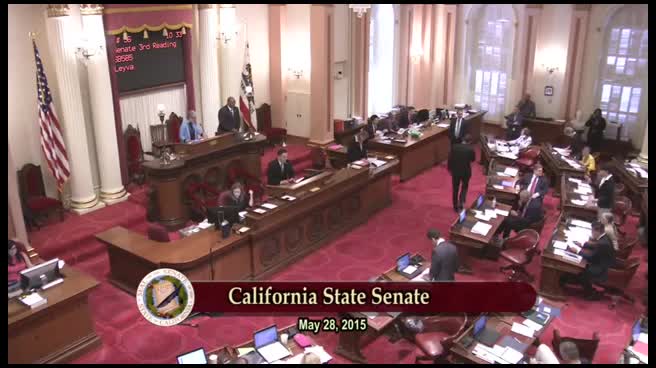
Bill Author

Bill Co-Author(s):