SB 613: State Department of Public Health: dementia guidelines: workgroup.
- Session Year: 2015-2016
- House: Senate
- Latest Version Date: 2015-10-07
Existing law establishes the State Department of Public Health, which oversees various public health programs, including programs relating to genetic diseases such as Alzheimers disease.
This bill would require the department to convene a workgroup to update the Guidelines for Alzheimers Disease Management in California to address changes in the health care system, including changes in the federal Patient Protection and Affordable Care Act, Medicaid, and Medicare. The bill would require the department to submit a report on the updates and recommendations to the Legislature on or before March 1, 2017. The bill would repeal these provisions as of January 1, 2018.
Existing law establishes the State Department of Public Health, which oversees various public health programs, including programs relating to genetic diseases such as Alzheimers Disease. disease.
This bill would require the department to convene a workgroup to update the Guidelines for Alzheimers Disease Management in California to address changes in the health care system, including changes in the federal Patient Protection and Affordable Care Act, Medicaid, and Medicare. The bill would require the department to submit a report on the updates and recommendations to the Legislature on or before March 1, 2017. The bill would repeal these provisions as of January 1, 2018.
Existing law establishes the State Department of Health Care Services, which administers the state Medi-Cal program and the community mental health programs in the state.
Existing law establishes the State Department of Public Health, which oversees various public health programs, including programs relating to genetic diseases such as Alzheimers Disease.
This bill would require the department to convene a workgroup to update the Guidelines for Alzheimers Disease Management in California to address changes in the health care system, including changes in the federal Patient Protection and Affordable Care Act, Medicaid, and Medicare. The bill would require the department to implement the updated guidelines submit a report on the updates and recommendations to the Legislature on or before March 1, 2017. The bill would repeal these provisions as of January 1, 2018.
Existing law establishes the State Department of Health Care Services, which administers the state Medi-Cal program and the community mental health programs in the state.
This bill would require the department to convene a workgroup to create guidelines for dementia care in the Medi-Cal program. update the Guidelines for Alzheimers Disease Management in California to address changes in the health care system, including changes in the federal Patient Protection and Affordable Care Act and Medicare. The bill would require the department to report the recommendations of the workgroup to the Legislature implement the updated guidelines on or before March 1, 2017. The bill would repeal these provisions as of January 1, 2018.
Existing law establishes the State Department of Health Care Services, which administers the state Medi-Cal program and the community mental health programs in the state.
This bill would require the department to convene a workgroup to create guidelines for dementia care in the Medi-Cal program. The bill would require the department to report the recommendations of the workgroup to the Legislature on or before March 1, 2017. The bill would repeal these provisions as of January 1, 2018.
(a)The Legislature finds and declares all of the following:
(1)There are between an estimated 60,000 to 85,000 people with dementia in Californias Coordinated Care Initiative.
(2)Average per person Medicaid spending for seniors dually eligible for Medicare with Alzheimers disease and other dementias is 19 times higher than average per person Medicaid spending for all other seniors.
(3)The triple aim of the federal Patient Protection and Affordable Care Act (Public Law 111-148) and Medicaid expansion is improved population health, better experience of care, and lower per capita health care costs.
(4)Dementia care management has been proven, through peer-reviewed, evidence-based research, to achieve all three aims.
(b)The State Department of Public Health shall convene a workgroup to update the 2008 Guidelines for Alzheimers Disease Management in California to address changes in the health care system, including, but not limited to, changes in the federal Patient Protection and Affordable Care Act (Public Law 111-148), Medicaid, and Medicare. In updating the guidelines, the workgroup may draw on evidence-based, peer-reviewed research and lessons learned from demonstration and pilot projects.
(c)The workgroup shall consist of members determined by the department. It may include multidisciplinary experts in Alzheimers disease detection, diagnosis, treatment, and support.
(d)The department shall submit a report of the updates and recommendations from the working group to the Legislature on or before March 1, 2017. This report shall be submitted in compliance with Section 9795 of the Government Code.
(e)This section shall remain in effect only until January 1, 2018, and as of that date is repealed, unless a later enacted statute, that is enacted before January 1, 2018, deletes or extends that date.
(a)The Legislature finds and declares all of the following:
(1)There are between an estimated 60,000 to 85,000 people with dementia in Californias Coordinated Care Initiative.
(2)Average per person Medicaid spending for seniors dually eligible for Medicare with Alzheimers disease and other dementias is 19 times higher than average per person Medicaid spending for all other seniors.
(3)The triple aim of the federal Patient Protection and Affordable Care Act (Public Law 111-148) and Medicaid expansion is improved population health, better experience of care, and lower per capita health care costs.
(4)Dementia care management has been proven, through peer-reviewed, evidence-based research, to achieve all three aims.
(b)The State Department of Public Health shall convene a workgroup to update the 2008 Guidelines for Alzheimers Disease Management in California to address changes in the health care system, including, but not limited to, changes in the federal Patient Protection and Affordable Care Act (Public Law 111-148), Medicaid, and Medicare. These updates may further In updating the guidelines, the workgroup may draw on evidence-based, peer-reviewed research and lessons learned from demonstration and pilot projects.
(c)The workgroup shall consist of members determined by the department. It may include multidisciplinary experts in Alzheimers disease detection, diagnosis, treatment, and support.
(d)The department shall submit a report of the updates and recommendations from the working group to the Legislature on or before March 1, 2017. This report shall be submitted in compliance with Section 9795 of the Government Code.
(e)This section shall remain in effect only until January 1, 2018, and as of that date is repealed, unless a later enacted statute, that is enacted before January 1, 2018, deletes or extends that date.
(a)The Legislature finds and declares all of the following:
(1)There are between an estimated 60,000 to 85,000 people with dementia in Californias Coordinated Care Initiative.
(2)Average per person Medicaid spending for seniors dually eligible for Medicare with Alzheimers disease and other dementias is 19 times higher than average per person Medicaid spending for all other seniors.
(3)The triple aim of the federal Patient Protection and Affordable Care Act (Public Law 111-148) and Medicaid expansion is improved population health, better experience of care, and lower per capita health care costs.
(4)Dementia care management has proven, through peer-reviewed, evidence-based research, to achieve all three aims.
(b)The State Department of Public Health shall convene a workgroup to update the 2008 Guidelines for Alzheimers Disease Management in California to address changes in the health care system, including, but not limited to, changes in the federal Patient Protection and Affordable Care Act (Public Law 111-148), Medicaid, and Medicare. These updates may further draw on evidence-based, peer-reviewed research and lessons learned from demonstration and pilot projects.
(c)The workgroup shall consist of members determined by the department. It may include multidisciplinary experts in Alzheimers disease detection, diagnosis, treatment, and support.
(d)The department shall submit a report of the updates and recommendations from the working group to the Legislature on or before March 1, 2017. This report shall be submitted in compliance with Section 9795 of the Government Code.
(e)This section shall remain in effect only until January 1, 2018, and as of that date is repealed, unless a later enacted statute, that is enacted before January 1, 2018, deletes or extends that date.
SECTION 1.Section 4034 is added to the Welfare and Institutions Code, to read:4034.(a)The Legislature finds and declares all of the following:
(1)There are an estimated 57,000 people with dementia in Californias Coordinate Care Initiative.
(2)Average per person Medicaid spending for seniors with Alzheimers disease and other dementias is 19 times higher than average per person Medicaid spending for all other seniors.
(3)The triple aim of the federal Patient Protection and Affordable Care Act (Public Law 111-148) and Medicaid expansion is improved population health, better experience of care, and lower per capita health care costs.
(4)Dementia care management has proven, through peer-reviewed, evidence-based research, to achieve all three aims.
(b)The State Department of Health Care Services shall convene a workgroup to update the 2008 Guidelines for Alzheimers Disease Management in California to address changes in the health care system, including, but not limited to, changes in the federal Patient Protection and Affordable Care Act (Public Law 111-148) and Medicare. These updates may further draw on evidence-based, peer-reviewed research and lessons learned from demonstration and pilot projects.
(c)The workgroup shall consist of members determined by the department. It may include multidisciplinary experts in Alzheimers disease detection, diagnosis, treatment, and support.
(d)The department shall implement the updates and recommendations from the working group on or before March 1, 2017. This report shall be submitted in compliance with Section 9795 of the Government Code.
(e)This section shall remain in effect only until January 1, 2018, and as of that date is repealed, unless a later enacted statute, that is enacted before January 1, 2018, deletes or extends that date.
(a)The Legislature finds and declares all of the following:
(1)There are an estimated 57,000 people with dementia in Californias Coordinate Care Initiative.
(2)Average per person Medicaid spending for seniors with Alzheimers disease and other dementias is 19 times higher than average per person Medicaid spending for all other seniors.
(3)The triple aim of the federal Patient Protection and Affordable Care Act (Public Law 111-148) and Medicaid expansion is improved population health, better experience of care, and lower per capita health care costs.
(4)Dementia care management has proven, through peer-reviewed, evidence-based research, to achieve all three aims.
(b)The State Department of Health Care Services shall convene a workgroup to create guidelines for dementia care in the Medi-Cal program. The guidelines shall draw on the experience of the Dementia MediConnect three-year grant awarded to the California Department of Aging and any other relevant literature. update the 2008 Guidelines for Alzheimers Disease Management in California to address changes in the health care system, including, but not limited to, changes in the federal Patient Protection and Affordable Care Act (Public Law 111-148) and Medicare. These updates may further draw on evidence-based, peer-reviewed research and lessons learned from demonstration and pilot projects.
(c)The workgroup shall consist of stakeholders, including nurses, social workers, primary care physicians, advocates for people with dementia, health plans and insurers, and others as the department deems necessary. members determined by the department. It may include multidisciplinary experts in Alzheimers disease detection, diagnosis, treatment, and support.
(d)The department shall report the recommendations of the workgroup to the Legislature implement the updates and recommendations from the working group on or before March 1, 2017. This report shall be submitted in compliance with Section 9795 of the Government Code.
(e)This section shall remain in effect only until January 1, 2018, and as of that date is repealed, unless a later enacted statute, that is enacted before January 1, 2018, deletes or extends that date.
(a)The Legislature finds and declares all of the following:
(1)There are an estimated 57,000 people with dementia in Californias Coordinate Care Initiative.
(2)Average per person Medicaid spending for seniors with Alzheimer's disease and other dementias is 19 times higher than average per person Medicaid spending for all other seniors.
(3)The triple aim of the federal Affordable Care Act and Medicaid expansion is improved population health, better experience of care, and lower per capita health care costs.
(4)Dementia care management has proven, through peer-reviewed, evidence-based research, to achieve all three aims.
(b)The State Department of Health Care Services shall convene a workgroup to create guidelines for dementia care in the Medi-Cal program. The guidelines shall draw on the experience of the Dementia MediConnect three-year grant awarded to the California Department of Aging and any other relevant literature.
(c)The workgroup shall consist of stakeholders, including nurses, social workers, primary care physicians, advocates for people with dementia, health plans and insurers, and others as the department deems necessary.
(d)The department shall report the recommendations of the workgroup to the Legislature on or before March 1, 2017. This report shall be submitted in compliance with Section 9795 of the Government Code.
(e)This section shall remain in effect only until January 1, 2018, and as of that date is repealed, unless a later enacted statute, that is enacted before January 1, 2018, deletes or extends that date.
|
Date
|
Status
|
|---|---|
| Aug 28, 2015 | Read second time. Ordered to third reading. |
| Jun 2, 2015 | In Assembly. Read first time. Held at Desk. |
| Jun 18, 2015 | Referred to Coms. on HEALTH and AGING & L.T.C. |
| Jul 2, 2015 | From committee: Do pass as amended and re-refer to Com. on APPR. (Ayes 18. Noes 0.) (June 30). |
| Jul 6, 2015 | Read second time and amended. Re-referred to Com. on APPR. |
| Jul 9, 2015 | Re-referred to Com. on AGING & L.T.C. pursuant to Assembly Rule 96. |
| Jul 15, 2015 | From committee: Do pass and re-refer to Com. on APPR. with recommendation: To consent calendar. (Ayes 7. Noes 0.) (July 14). Re-referred to Com. on APPR. |
| Aug 19, 2015 | August 19 set for first hearing. Placed on APPR. suspense file. |
| Aug 28, 2015 | From committee: Do pass. (Ayes 17. Noes 0.) (August 27). |
| Jun 1, 2015 | Read third time. Passed. (Ayes 40. Noes 0.) Ordered to the Assembly. |
| Sep 3, 2015 | In Senate. Concurrence in Assembly amendments pending. |
| Sep 3, 2015 | Read third time. Passed. Ordered to the Senate. |
| Sep 3, 2015 | Read third time. Passed. (Ayes 80. Noes 0. Page 2849.) Ordered to the Senate. |
| Sep 4, 2015 | Assembly amendments concurred in. (Ayes 39. Noes 0. Page 2502.) Ordered to engrossing and enrolling. |
| Sep 4, 2015 | Assembly amendments concurred in. (Ayes 39. Noes 0.) Ordered to engrossing and enrolling. |
| Sep 10, 2015 | Enrolled and presented to the Governor at 3:30 p.m. |
| Oct 7, 2015 | Approved by the Governor. |
| Oct 7, 2015 | Chaptered by Secretary of State. Chapter 577, Statutes of 2015. |
| Apr 30, 2015 | From committee: Do pass and re-refer to Com. on APPR. (Ayes 9. Noes 0.) (April 29). Re-referred to Com. on APPR. |
| Mar 2, 2015 | From printer. May be acted upon on or after April 1. |
| Mar 2, 2015 | Read first time. |
| Mar 12, 2015 | Referred to Com. on RLS. |
| Apr 6, 2015 | From committee with author's amendments. Read second time and amended. Re-referred to Com. on RLS. |
| Apr 16, 2015 | Re-referred to Com. on HEALTH. |
| Apr 17, 2015 | Set for hearing April 29. |
| Apr 20, 2015 | From committee with author's amendments. Read second time and amended. Re-referred to Com. on HEALTH. |
| Apr 30, 2015 | From committee: Do pass and re-refer to Com. on APPR. (Ayes 9. Noes 0. Page 861.) (April 29). Re-referred to Com. on APPR. |
| Feb 27, 2015 | Introduced. To Com. on RLS. for assignment. To print. |
| May 5, 2015 | Set for hearing May 11. |
| May 11, 2015 | May 11 hearing: Placed on APPR. suspense file. |
| May 23, 2015 | Set for hearing May 28. |
| May 28, 2015 | From committee: Do pass. (Ayes 7. Noes 0. Page 1157.) (May 28). |
| May 28, 2015 | From committee: Do pass. (Ayes 7. Noes 0.) (May 28). |
| May 28, 2015 | Read second time. Ordered to third reading. |
| Jun 1, 2015 | Read third time. Passed. (Ayes 40. Noes 0. Page 1208.) Ordered to the Assembly. |
|
Date
|
Description
|
Location
|
Votes
|
|
|---|---|---|---|---|
| Sep 4, 2015 | Unfinished Business SB613 Allen Concurrence | Senate Floor |
Passed |
|
| Sep 3, 2015 | SB 613 Allen Senate Third Reading By THURMOND | Assembly Floor |
Passed |
|
| Aug 27, 2015 | Do pass. | Assembly Standing Committee on Appropriations |
Passed |
|
| Jul 14, 2015 | Do pass and be re-referred to the Committee on [Appropriations] with recommendation: To Consent Calendar | Assembly Standing Committee on Aging and Long-Term Care |
Passed |
|
| Jun 30, 2015 | Do pass as amended and be re-referred to the Committee on [Appropriations] | Assembly Standing Committee on Health |
Passed |
|
| Jun 1, 2015 | Senate 3rd Reading SB613 Allen | Senate Floor |
Passed |
|
| May 28, 2015 | Do pass | Senate Standing Committee on Appropriations |
Passed |
|
| May 11, 2015 | Placed on suspense file | Senate Standing Committee on Appropriations |
Passed |
|
| Apr 29, 2015 | Do pass, but first be re-referred to the Committee on [Appropriations] | Senate Standing Committee on Health |
Passed |
This list shows positions taken on this bill by organizations on the date displayed, which is linked to the original source.
Positions by individuals are not included.
|
Organization
|
Position
|
Date
|
|---|---|---|
| Alzheimer's Association | ** Support | Sep 3, 2015 |
| Alzheimer's Association - Sponsor | ** Support | Sep 3, 2015 |
| American Federation Of State, County And Municipal Employees, Afl-Cio | ** Support | Sep 3, 2015 |
| California Assisted Living Association | ** Support | Sep 3, 2015 |
| California Commission on Aging | ** Support | Sep 3, 2015 |
| Department Of Finance | ** Against | Sep 3, 2015 |
| Leading Age California | ** Support | Sep 3, 2015 |
| National Association Of Social Workers, California Chapter | ** Support | Sep 3, 2015 |
| On Lok Senior Health Services | ** Support | Sep 3, 2015 |
SB 613
Page 5
|
Office of Senate Floor Analyses (916) 651-1520 Fax: (916) 327-4478 |
UNFINISHED BUSINESS
Bill No: SB 613
Amended: 7/6/15
SENATE HEALTH COMMITTEE: 9-0, 4/29/15
AYES: Hernandez, Nguyen, Hall, Mitchell, Monning, Nielsen, Pan, Roth, Wolk
SENATE APPROPRIATIONS COMMITTEE: 7-0, 5/28/15
AYES: Lara, Bates, Beall, Hill, Leyva, Mendoza, Nielsen
SENATE FLOOR: 40-0, 6/1/15
AYES: Allen, Anderson, Bates, Beall, Berryhill, Block, Cannella, De León, Fuller, Gaines, Galgiani, Glazer, Hall, Hancock, Hernandez, Hertzberg, Hill, Hueso, Huff, Jackson, Lara, Leno, Leyva, Liu, McGuire, Mendoza, Mitchell, Monning, Moorlach, Morrell, Nguyen, Nielsen, Pan, Pavley, Roth, Runner, Stone, Vidak, Wieckowski, Wolk
ASSEMBLY FLOOR: 80-0, 9/3/15 - See last page for vote
SUBJECT: State Department of Public Health: dementia guidelines: workgroup
SOURCE: Alzheimer’s Association
DIGEST: This bill requires the Department of Public Health (DPH) to convene a workgroup to update the 2008 Guidelines for Alzheimer’s Disease Management in California to address changes in the health care system, and requires DPH to submit a report of the updates and recommendations from the working group to the Legislature on or before March 1, 2017.
Assembly Amendments make a clarifying change.
Existing law:
Requires the California Health and Human Services Agency to establish an Alzheimer’s Disease and Related Disorders Advisory Committee consisting of 14 members, and requires the Committee to:
Provide ongoing advice and assistance to the Administration and the Legislature as to the program needs and priorities of the target population.
Provide planning support to the Administration and the Legislature by updating recommendations of the 1987 California Alzheimer’s Disease Task Force Report and regularly reviewing and updating recommendations as needed.
Requires DPH to provide public and professional education on Alzheimer’s disease to educate consumers, caregivers, and health care providers, and to increase public awareness.
This bill:
Requires DPH to convene a workgroup to update the 2008 Guidelines for Alzheimer’s Disease Management in California to address changes in the health care system, including, but not limited to, changes in the federal Patient Protection and Affordable Care Act, Medicaid, and Medicare.
Permits the workgroups to draw on evidence-based, peer-reviewed research and lessons learned from demonstration and pilot projects in updating the Guidelines.
Requires the workgroup to consist of members determined by the DPH, and permits the workgroup to include multidisciplinary experts in Alzheimer’s disease detection, diagnosis, treatment, and support.
Requires DPH to submit a report of the updates and recommendations from the working group to the Legislature on or before March 1, 2017.
Sunsets on January 1, 2018.
Comments
Author’s statement. According to the author, “Alzheimer’s disease is a public health crisis in California, but unlike other public health concerns there is no known cause, cure or prevention to reduce the impact on individuals, families, communities and our state’s public programs such as Medi-Cal and IHSS. The author states we’ve seen a 42 increase in just the last decade. Experts agree that managing the course of Alzheimer’s disease after a diagnosis is the best public health strategy we have available today. This bill proposes a statewide working group under the leadership of DPH, drawing on the existing resources and expertise of our state’s 10 university-affiliated Alzheimer’s Disease Centers. The state’s own experts will update the physician Guideline for Alzheimer’s Disease Management to systematically improve quality of care, better manage complex patient populations, and lower public costs associated with Medi-Cal-funded hospital stays and nursing home placements. The author concludes that when someone in California learns they have Alzheimer’s, there should be evidence-based, up to date, guidelines for physicians to follow to ensure the patients receive the care and support they need.”
Alzheimer’s disease. According to the federal National Institute on Aging, Alzheimer’s disease is an irreversible, progressive brain disease that slowly destroys memory and thinking skills, and eventually even the ability to carry out the simplest tasks. In most people with Alzheimer’s, symptoms first appear after age 65. Plaques and tangles in the brain are two of the main features of Alzheimer’s disease. The third is the loss of connections between nerve cells (neurons) in the brain. Although treatment can help manage symptoms in some people, currently there is no cure for this disease. Estimates vary, but experts suggest that as many as five million Americans age 65 and older may have Alzheimer’s disease.
Alzheimer’s disease is the most common cause of dementia among older people. Dementia is the loss of cognitive functioning—thinking, remembering, and reasoning—and behavioral abilities, to such an extent that it interferes with a person’s daily life and activities. Dementia ranges in severity from the mildest stage, when it is just beginning to affect a person’s functioning, to the most severe stage, when the person must depend completely on others for basic activities of daily living.
2008 Guidelines for Alzheimer’s Disease Management. The “Guidelines for Alzheimer’s Disease Management - California Workgroup on Guidelines for Alzheimer’s Disease Management Final Report 2008” was published to update and expand previous Guidelines issued in 2002 and 1998. The 1998 effort was paid for through a Health Resources and Services Administration grant. The Guidelines were based upon work begun by the Ad Hoc Standards of Care Committee of the Alzheimer’s Disease Diagnostic and Treatment Centers of California and were supported in part by the State of California, Department of Health Services, and the Alzheimer’s Association, California. Southland Chapter. The California Council of the Alzheimer’s Association sponsored the Alzheimer’s Disease Education Initiative (ADEI) and secured a one-time $2.4 million budget augmentation in FY 2000-01 to launch a public education campaign centered on the Guidelines for Alzheimer’s Disease Management. The funds from the ADEI were used to pay for the 2002 update.
The 2008 Guidelines state that most older adults, including those with Alzheimer’s disease, receive their medical care from Primary Care Practitioners (PCPs) who may lack the information and other resources they need to treat this growing and demanding population. The 2008 Guidelines was intended to provide assistance to PCPs in offering comprehensive care to patients with Alzheimer’s disease and those who care for them over the course of their illness. The Guidelines’ recommendations are organized by major care issues (assessment, treatment, patient and family education and support, and legal considerations). Each section of the Guidelines deals with one of the four care issues and provides an overview of the issue, followed by the care recommendations and a review of the literature supporting them. The language used throughout the report reflects the strength of the supporting evidence, either “strong” (e.g., randomized clinical trial) or “moderate.” In some instances, recommendations that are not evidence-based are nevertheless supported by expert opinion and workgroup consensus, and are labeled as such.
FISCAL EFFECT: Appropriation: No Fiscal Com.: Yes Local: No
According to the Assembly Appropriations Committee, a negligible fiscal impact, including a total estimated cost to update the Guidelines of $120,000.
Alzheimer’s Association (source)
American Federation of State, County and Municipal Employees, AFL-CIO
California Commission on Aging
Leading Age California
Department of Finance
ARGUMENTS
IN SUPPORT: This bill is sponsored by the Alzheimer’s
Association to update California’s physician Guidelines for
Alzheimer’s Disease Management to improve quality of care and
support for individuals diagnosed with dementia, manage complex,
costly populations in the state’s health care delivery system, and
reduce individual, family and government health care costs. The
Alzheimer’s’ Association states this bill draws on the existing
resources and expertise within DPH’s 10 university-affiliated
Alzheimer’s Disease Centers to review and analyze evidence in
support of a state-of-the-art guideline for Alzheimer’s disease
management. The Alzheimer’s Association states that Medi-Cal
beneficiaries with a diagnosis of Alzheimer’s disease have 19 times
higher costs than those without a cognitive impairment. Likewise,
patients with dementia use hospitals and nursing facilities at more
than triple the rate without Alzheimer’s. The Alzheimer’s
Association concludes that the development of a physician Guidelines
for Alzheimer’s Disease Management advances public policy for
patients, physicians and government payors.
ARGUMENTS IN OPPOSITION: The Department of Finance writes in opposition that this bill because it is unnecessary, as DPH is already in the process of updating the 2008 Guidelines.
ASSEMBLY FLOOR: 80-0, 9/3/15
AYES: Achadjian, Alejo, Travis Allen, Baker, Bigelow, Bloom, Bonilla, Bonta, Brough, Brown, Burke, Calderon, Campos, Chang, Chau, Chávez, Chiu, Chu, Cooley, Cooper, Dababneh, Dahle, Daly, Dodd, Eggman, Frazier, Beth Gaines, Gallagher, Cristina Garcia, Eduardo Garcia, Gatto, Gipson, Gomez, Gonzalez, Gordon, Gray, Grove, Hadley, Harper, Roger Hernández, Holden, Irwin, Jones, Jones-Sawyer, Kim, Lackey, Levine, Linder, Lopez, Low, Maienschein, Mathis, Mayes, McCarty, Medina, Melendez, Mullin, Nazarian, Obernolte, O'Donnell, Olsen, Patterson, Perea, Quirk, Rendon, Ridley-Thomas, Rodriguez, Salas, Santiago, Steinorth, Mark Stone, Thurmond, Ting, Wagner, Waldron, Weber, Wilk, Williams, Wood, Atkins
Prepared by: Scott Bain / HEALTH /
9/3/15 19:04:54
SB 613
Page 2
SENATE THIRD READING
SB 613
(Allen)
As Amended July 6, 2015
Majority vote
SENATE VOTE: 40-0
Committee |
Votes |
Ayes |
Noes |
Health |
18-0 |
Bonta, Maienschein, Bonilla, Burke, Chiu, Gomez, Gonzalez, Roger Hernández, Lackey, McCarty, Nazarian, Patterson, Ridley-Thomas, Rodriguez, Steinorth, Thurmond, Waldron, Wood |
|
Aging |
7-0 |
Brown, Hadley, Gipson, Gray, Levine, Lopez, Mathis |
|
Appropriations |
17-0 |
Gomez, Bigelow, Bloom, Bonta, Calderon, Chang, Nazarian, Eggman, Gallagher, Eduardo Garcia, Holden, Jones, Quirk, Rendon, Wagner, Weber, Wood |
|
SUMMARY: Requires the Department of Public Health (DPH) to convene and appoint the members of a workgroup to update the 2008 Guidelines for Alzheimer's Disease Management (Guidelines) in California to address changes in the health care system and requires DPH to submit a report on the workgroup updates and recommendations to the Legislature on or before March 1, 2017.
FISCAL EFFECT: According to the Assembly Appropriations Committee, a negligible fiscal impact, including a total estimated cost to update the Guidelines of $120,000.
COMMENTS: According to the author, Alzheimer's disease is a public health crisis in California, but unlike other public health concerns there is no known cause, cure or prevention to reduce the impact on individuals, families, communities, and our state’s public programs such as Medi-Cal and In-Home Supportive Services. The author states that there has been a 42% increase in Alzheimer's diagnosis in just the last decade.
Alzheimer's disease. California's aging population is growing rapidly and also becoming more racially and culturally diverse. The population of individuals over age 65 will increase by 27% for young retirees (aged 65-74) and 10% for mature retirees (aged 75-84) by the year 2017. Additionally, the number of adults with disabilities in California is expected to grow by approximately 20% in the next 20 years. Alzheimer's disease and other dementias are on the rise and projected to affect an estimated 1.1 million Californians by 2030. According to the federal National Institute on Aging (NIA), Alzheimer's disease is an irreversible, progressive brain disease that slowly destroys memory and thinking skills, and eventually even the ability to carry out the simplest tasks. Estimates vary, but experts suggest that as many as five million Americans age 65 and older may have Alzheimer's disease.
2008 Guidelines for Alzheimer's Disease Management. The "Guideline for Alzheimer’s Disease Management - California Workgroup on Guidelines for Alzheimer's Disease Management Final Report 2008" was published to update and expand previous guidelines issued in 2002 and 1998. The 1998 effort was paid for through a Health Resources and Services Administration grant. The guidelines were based upon work begun by the Ad Hoc Standards of Care Committee of the Alzheimer's Disease Diagnostic and Treatment Centers (ADDTCs) of California and were supported in part by the State of California, Department of Health Services, and the Alzheimer's Association, California. Southland Chapter.
The 2008 Guidelines state that most older adults, including those with Alzheimer's Disease, receive their medical care from primary care practitioners (PCPs) who may lack the information and other resources they need to treat this growing and demanding population. The 2008 Guideline was intended to provide assistance to PCPs in offering comprehensive care to patients with Alzheimer's Disease and those who care for them over the course of their illness. The Guideline's recommendations are organized by major care issues (assessment, treatment, patient and family education and support, and legal considerations). Each section of the guidelines deals with one of the four care issues and provides an overview of the issue, followed by the care recommendations and a review of the literature supporting them. The language used throughout the report reflects the strength of the supporting evidence, either "strong" (e.g., randomized clinical trial) or "moderate." In some instances, recommendations that are not evidence-based are nevertheless supported by expert opinion and workgroup consensus, and are labeled as such.
This bill is sponsored by the Alzheimer's Association to update California's physician Guideline for Alzheimer's Disease Management to improve quality of care and support for individuals diagnosed with dementia, manage complex, costly populations in our health care delivery system, and reduce individual, family, and government health care costs. The Alzheimer's Association states this bill draws on the existing resources and expertise within DPH's 10 university-affiliated Alzheimer's Disease Centers to review and analyze evidence in support of a state-of-the-art guideline for Alzheimer's disease management. The Alzheimer's Association further states that Medi-Cal beneficiaries with a diagnosis of Alzheimer's disease have 19 times higher costs than those without a cognitive impairment. Likewise, patients with dementia use hospitals and nursing facilities at more than triple the rate without Alzheimer's. The Alzheimer's Association concludes that the development of a physician Guideline for Alzheimer's Disease Management advances public policy for patients, physicians and government payors.
The National Association of Social Workers – California Chapter, and the American Federation of State, County and Municipal Employees, AFL-CIO state in support of the bill that currently over 60,000 people with dementia are enrolled in California's Coordinated Care Initiative. Supporters further state that the Medicaid cost of care for seniors with Alzheimer's disease and other dementias is 19 times higher than the average per person spending for all seniors. Supporters conclude that dementia care management has been proven to improve the affected population's health, provide a better experience of care, and lower per capita health care costs.
There is no known opposition on file.
Analysis Prepared by: Paula Villescaz / HEALTH / (916) 319-2097 FN: 0001672
Date of Hearing: August 19, 2015
ASSEMBLY COMMITTEE ON APPROPRIATIONS
Jimmy Gomez, Chair
SB 613
(Allen) – As Amended July 6, 2015
Policy Committee: |
Health |
Vote: |
18 - 0 |
|
Aging and Long Term Care |
|
7 - 0 |
|
|
|
|
Urgency: No State Mandated Local Program: No Reimbursable: No
SUMMARY:
This bill requires the California Department of Public Health (CDPH) to convene a multidisciplinary expert workgroup to update the 2008 Guidelines for Alzheimer’s Disease Management in California to address changes in the health care system.
It also requires CDPH to submit a report from the workgroup to the Legislature on or before March 1, 2017. This bill sunsets on January 1, 2018.
FISCAL EFFECT:
Codifying the requirement for the department to update the 2008 Guidelines for Alzheimer’s Disease Management in California is likely to have a negligible fiscal impact.
According to CDPH, the department is currently in the process of doing this exact activity. The total estimated cost to update the Guidelines is $120,000. CDPH received a grant early this year from the National Association of Chronic Disease Directors (NACDD) in the amount of $50,000 for this purpose and is absorbing the additional $70,000 cost.
COMMENTS:
Purpose. The Alzheimer’s Disease Program within CDPH has a mission is to reduce the human burden and economic cost associated with Alzheimer’s disease and related disorders, and ultimately to assist in discovering the cause and treatment of these diseases. Consistent with this, they are updating the 2008 treatment guidelines based on new research and clinical practice.
Comment. This bill appears duplicative of current activities.
Analysis Prepared by: Lisa Murawski / APPR. / (916) 319-2081
SB 613
Page 5
Date of Hearing: June 30, 2015
ASSEMBLY COMMITTEE ON HEALTH
Rob Bonta, Chair
SB 613
(Allen) – As Amended April 20, 2015
SENATE VOTE: 40-0
SUBJECT: State Department of Public Health: dementia guidelines: workgroup.
SUMMARY: Requires the Department of Public Health (DPH) to convene and appoint the members of a workgroup to update the 2008 Guidelines for Alzheimer’s Disease Management in California to address changes in the health care system. Requires DPH to submit a report on the workgroup updates and recommendations to the Legislature on or before March 1, 2017.
EXISTING LAW:
Establishes DPH, which oversees various public health programs, including programs related to genetic diseases such as Alzheimer's Disease.
Requires the California Health and Human Services Agency to establish an Alzheimer’s Disease and Related Disorders Advisory Committee consisting of 14 members, and requires the Committee to:
Provide ongoing advice and assistance to the Administration and the Legislature as to the program needs and priorities of the target population; and,
Provide planning support to the Administration and the Legislature by updating recommendations of the 1987 California Alzheimer’s Disease Task Force Report and regularly reviewing and updating recommendations as needed.
Requires DPH to provide public and professional education on Alzheimer’s disease to educate consumers, caregivers, and health care providers, and to increase public awareness.
FISCAL EFFECT: According to the Senate Appropriations Committee, minor costs to provide support to the workgroup.
COMMENTS:
PURPOSE OF THIS BILL. According to the author, Alzheimer's disease is a public health crisis in California, but unlike other public health concerns there is no known cause, cure or prevention to reduce the impact on individuals, families, communities, and our state’s public programs such as Medi-Cal and In-Home Supportive Services. The author states that there has been a 42% increase in Alzheimer's diagnosis in just the last decade.
The author further states that experts agree managing the course of Alzheimer’s disease after a diagnosis is the best public health strategy we have available today. This bill proposes a statewide working group under the leadership of the DPH, drawing on the existing resources and expertise of our state’s 10 university-affiliated Alzheimer’s Disease Centers. Experts will update the physician Guideline for Alzheimer’s Disease Management to systematically improve quality of care, better manage complex patient populations, and lower public costs associated with Medi-Cal-funded hospital stays and nursing home placements.
The author concludes that when someone in California learns they have Alzheimer’s, there should be evidence-based, up to date, guidelines for physicians to follow to ensure the patients receive the care and support they need.
BACKGROUND.
Alzheimer’s disease. California’s aging population is growing rapidly and also becoming more racially and culturally diverse. The population of individuals over age 65 will increase by 27% for young retirees (aged 65-74) and 10% for mature retirees (aged 75-84) by the year 2017. Additionally, the number of adults with disabilities in California is expected to grow by approximately 20% in the next 20 years. Alzheimer’s disease and other dementias are on the rise and projected to affect an estimated 1.1 million Californians by 2030. According to the federal National Institute on Aging (NIA), Alzheimer’s disease is an irreversible, progressive brain disease that slowly destroys memory and thinking skills, and eventually even the ability to carry out the simplest tasks. In most people with Alzheimer’s, symptoms first appear after age 65. Plaques and tangles in the brain are two of the main features of Alzheimer’s disease. The third is the loss of connections between nerve cells (neurons) in the brain. Although treatment can help manage symptoms in some people, currently there is no cure for this disease. Estimates vary, but experts suggest that as many as five million Americans age 65 and older may have Alzheimer’s disease.
Alzheimer’s disease is the most common cause of dementia among older people. Dementia is the loss of cognitive functioning—thinking, remembering, and reasoning—and behavioral abilities, to such an extent that it interferes with a person’s daily life and activities. Dementia ranges in severity from the mildest stage, when it is just beginning to affect a person’s functioning, to the most severe stage, when the person must depend completely on others for basic activities of daily living.2008 Guidelines for Alzheimer’s Disease Management. The “Guideline for Alzheimer’s Disease Management - California Workgroup on Guidelines for Alzheimer’s Disease Management Final Report 2008” was published to update and expand previous guidelines issued in 2002 and 1998. The 1998 effort was paid for through a Health Resources and Services Administration grant. The guidelines were based upon work begun by the Ad Hoc Standards of Care Committee of the Alzheimer’s Disease Diagnostic and Treatment Centers (ADDTCs) of California and were supported in part by the State of California, Department of Health Services, and the Alzheimer‘s Association, California. Southland Chapter. The California Council of the Alzheimer’s Association sponsored the Alzheimer’s Disease Education Initiative (ADEI) and secured a one-time $2.4 million budget augmentation in fiscal year 2000-01 to launch a public education campaign centered on the Guidelines for Alzheimer’s Disease Management. The funds from the ADEI were used to pay for the 2002 update.
The 2008 Guidelines state that most older adults, including those with Alzheimer’s Disease, receive their medical care from primary care practitioners (PCPs) who may lack the information and other resources they need to treat this growing and demanding population. The 2008 Guideline was intended to provide assistance to PCPs in offering comprehensive care to patients with Alzheimer’s Disease and those who care for them over the course of their illness. The Guideline’s recommendations are organized by major care issues (assessment, treatment, patient and family education and support, and legal considerations). Each section of the guidelines deals with one of the four care issues and provides an overview of the issue, followed by the care recommendations and a review of the literature supporting them. The language used throughout the report reflects the strength of the supporting evidence, either “strong” (e.g., randomized clinical trial) or “moderate.” In some instances, recommendations that are not evidence-based are nevertheless supported by expert opinion and workgroup consensus, and are labeled as such.
Select Committee on Long-term Care and Aging Report. The Select Committee on Aging and Long Term Care’s published a 2014 report, “A Shattered System: Reforming Long Term Care in California”.
The Patient Protection and Affordable Care Act (ACA): The ACA presents opportunities to improve long term care (LTC), concurrently creating and strengthening linkages between medical care and supportive services. Critical reforms spelled out in the ACA include the establishment of the Center for Medicare and Medicaid Innovation and the Federal Coordinated Health Care Office (informally known as the “Office of the Duals”). These ACA provisions create the space to test ideas that can lead to improvements in coordination across the multiple payment and delivery systems, including mechanisms to break through regulatory barriers and integrate funding sources and mitigate fragmentation in the current system. Efforts to transform payment and delivery system models also offer the promise to expand beyond a narrow Medi-Cal scope of practice toward connecting older adults in need of LTC to supportive services in their community.
The Coordinated Care Initiative (CCI): California’s CCI reflects a new approach to delivering services whereby Medi-Cal managed care entities maintain responsibility for delivering both health and LTC services. This new model of care requires the medical community, supportive service providers, and health plans to change how they do business and develop the skills to deliver person-centered, coordinated services. Through the CCI, the state contracts with Medi-Cal managed care plans to administer an array of services across the medical and LTC systems, with an incentive to avoid institutional care whenever possible. The CCI is being implemented in seven counties, starting with San Mateo, which began on April 1, 2014; other counties include Los Angeles, Orange, Riverside, San Bernardino, San Diego, and Santa Clara.
SUPPORT. This bill is sponsored by the Alzheimer's Association to update California's physician Guideline for Alzheimer's Disease Management to improve quality of care and support for individuals diagnosed with dementia, manage complex, costly populations in our health care delivery system, and reduce individual, family, and government health care costs. The Alzheimer’s’ Association states this bill draws on the existing resources and expertise within DPH’s 10 university-affiliated Alzheimer's Disease Centers to review and analyze evidence in support of a state-of-the-art guideline for Alzheimer's disease management. The Alzheimer’s Association further states that Medi-Cal beneficiaries with a diagnosis of Alzheimer's disease have 19 times higher costs than those without a cognitive impairment. Likewise, patients with dementia use hospitals and nursing facilities at more than triple the rate without Alzheimer's. The Alzheimer’s Association concludes that the development of a physician Guideline for Alzheimer's Disease Management advances public policy for patients, physicians and government payors.
The National Association of Social Workers – California Chapter, and the American Federation of State, County and Municipal Employees, AFL-CIO state in support of the bill that currently over 60,000 people with dementia are enrolled in California's Coordinated Care Initiative. Supporters further state that the Medicaid cost of care for seniors with Alzheimer's disease and other dementias is 19 times higher than the average per person spending for all seniors. Supporters conclude that dementia care management has been proven to improve the affected population's health, provide a better experience of care, and lower per capita health care costs.PREVIOUS LEGISLATION.
AB 1744 (Brown) of 2014 proposed to require, until January 1, 2018, the California Department of Aging to establish a blue-ribbon task force comprised of at least 13 members, as specified, to make legislative recommendations to improve services for unpaid and family caregivers. AB 1744 was vetoed by the Governor, who stated:
“The California State Plan on Aging, the California Plan for Alzheimer's Disease, the significant reports and action plans developed by the 33 Area Agencies on Aging, the Alzheimer's Association, the AARP and so many others have produced ample evidence for knowledgeable and caring people to recommend ways to improve support for family caregivers. Establishing another task force in state law simply isn't necessary.”SB 491 (Alquist), Chapter 339, Statutes of 2008, established California’s State Plan for Alzheimer’s Disease under the CA Health and Human Services Agency. The State Plan called for an update to the 2008 physician Guideline and made physician education a top priority for California.
DOUBLE REFERRAL. This bill is double referred; upon passage in this Committee, this bill will be referred to the Assembly Committee on Aging and Long-Term Care.
REGISTERED SUPPORT / OPPOSITION:
Support
Alzheimer’s Association (sponsor)
American Federation of State, County and Municipal Employees, AFL-CIO
California Commission on Aging
Leading Age California
Opposition
None on file.
Analysis Prepared by: Paula Villescaz / HEALTH / (916) 319-2097
SB 613
Page 5
|
Office of Senate Floor Analyses (916) 651-1520 Fax: (916) 327-4478 |
THIRD READING
Bill No: SB 613
Amended: 4/20/15
SENATE HEALTH COMMITTEE: 9-0, 4/29/15
AYES: Hernandez, Nguyen, Hall, Mitchell, Monning, Nielsen, Pan, Roth, Wolk
SENATE APPROPRIATIONS COMMITTEE: 7-0, 5/28/15
AYES: Lara, Bates, Beall, Hill, Leyva, Mendoza, Nielsen
SUBJECT: State Department of Public Health: dementia guidelines: workgroup
SOURCE: Alzheimer’s Association
DIGEST: This bill requires the Department of Public Health (DPH) to convene a workgroup to update the 2008 Guidelines for Alzheimer’s Disease Management in California to address changes in the health care system, and requires DPH to submit a report of the updates and recommendations from the working group to the Legislature on or before March 1, 2017.
Existing law:
Requires the California Health and Human Services Agency to establish an Alzheimer’s Disease and Related Disorders Advisory Committee consisting of 14 members, and requires the Committee to:
Provide ongoing advice and assistance to the Administration and the Legislature as to the program needs and priorities of the target population.
Provide planning support to the Administration and the Legislature by updating recommendations of the 1987 California Alzheimer’s Disease Task Force Report and regularly reviewing and updating recommendations as needed.
Requires DPH to provide public and professional education on Alzheimer’s disease to educate consumers, caregivers, and health care providers, and to increase public awareness.
This bill:
Requires DPH to convene a workgroup to update the 2008 Guidelines for Alzheimer’s Disease Management in California to address changes in the health care system, including, but not limited to, changes in the federal Patient Protection and Affordable Care Act, Medicaid, and Medicare.
Permits these updates to further draw on evidence-based, peer-reviewed research and lessons learned from demonstration and pilot projects.
Requires the workgroup to consist of members determined by the DPH, and permits the workgroup to include multidisciplinary experts in Alzheimer’s disease detection, diagnosis, treatment, and support.
Requires DPH to submit a report of the updates and recommendations from the working group to the Legislature on or before March 1, 2017.
Sunsets on January 1, 2018.
Comments:
Author’s statement. According to the author, “Alzheimer’s disease is a public health crisis in California, but unlike other public health concerns there is no known cause, cure or prevention to reduce the impact on individuals, families, communities and our state’s public programs such as Medi-Cal and IHSS. The author states we’ve seen a 42 increase increase in just the last decade. Experts agree that managing the course of Alzheimer’s disease after a diagnosis is the best public health strategy we have available today. This bill proposes a statewide working group under the leadership of DPH, drawing on the existing resources and expertise of our state’s 10 university-affiliated Alzheimer’s Disease Centers. The author states the state’s own experts will update the physician Guideline for Alzheimer’s Disease Management to systematically improve quality of care, better manage complex patient populations, and lower public costs associated with Medi-Cal-funded hospital stays and nursing home placements. The author concludes that when someone in California learns they have Alzheimer’s, there should be evidence-based, up to date, guidelines for physicians to follow to ensure the patients receive the care and support they need.”
Alzheimer’s disease. According to the federal National Institute on Aging, Alzheimer’s disease is an irreversible, progressive brain disease that slowly destroys memory and thinking skills, and eventually even the ability to carry out the simplest tasks. In most people with Alzheimer’s, symptoms first appear after age 65. Plaques and tangles in the brain are two of the main features of Alzheimer’s disease. The third is the loss of connections between nerve cells (neurons) in the brain. Although treatment can help manage symptoms in some people, currently there is no cure for this disease. Estimates vary, but experts suggest that as many as five million Americans age 65 and older may have Alzheimer’s disease.
Alzheimer’s disease is the most common cause of dementia among older people. Dementia is the loss of cognitive functioning—thinking, remembering, and reasoning—and behavioral abilities, to such an extent that it interferes with a person’s daily life and activities. Dementia ranges in severity from the mildest stage, when it is just beginning to affect a person’s functioning, to the most severe stage, when the person must depend completely on others for basic activities of daily living.
2008 Guidelines for Alzheimer’s Disease Management. The “Guideline for Alzheimer’s Disease Management - California Workgroup on Guidelines for Alzheimer’s Disease Management Final Report 2008” was published to update and expand previous guidelines issued in 2002 and 1998. The 1998 effort was paid for through a Health Resources and Services Administration grant. The guidelines were based upon work begun by the Ad Hoc Standards of Care Committee of the Alzheimer’s Disease Diagnostic and Treatment Centers of California and were supported in part by the State of California, Department of Health Services, and the Alzheimer’s Association, California. Southland Chapter. The California Council of the Alzheimer’s Association sponsored the Alzheimer’s Disease Education Initiative (ADEI) and secured a one-time $2.4 million budget augmentation in FY 2000-01 to launch a public education campaign centered on the Guidelines for Alzheimer’s Disease Management. The funds from the ADEI were used to pay for the 2002 update.
The 2008 Guidelines state that most older adults, including those with Alzheimer’s disease, receive their medical care from Primary Care Practitioners (PCPs) who may lack the information and other resources they need to treat this growing and demanding population. The 2008 Guidelines was intended to provide assistance to PCPs in offering comprehensive care to patients with Alzheimer’s disease and those who care for them over the course of their illness. The Guidelines’ recommendations are organized by major care issues (assessment, treatment, patient and family education and support, and legal considerations). Each section of the guidelines deals with one of the four care issues and provides an overview of the issue, followed by the care recommendations and a review of the literature supporting them. The language used throughout the report reflects the strength of the supporting evidence, either “strong” (e.g., randomized clinical trial) or “moderate.” In some instances, recommendations that are not evidence-based are nevertheless supported by expert opinion and workgroup consensus, and are labeled as such.
FISCAL EFFECT: Appropriation: No Fiscal Com.: Yes Local: No
According to the Senate Appropriations Committee, minor costs to provide support to the workgroup. The Department of Health Care Services (DHCS) has already begun the process for reviewing the available literature and updating the guidelines using an existing federal grant. The additional responsibilities in this bill should impose minor costs on DHCS.
Alzheimer’s Association (source)
American Federation of State, County and Municipal Employees, AFL-CIO
California Commission on Aging
Leading Age California
OPPOSITION: (Verified 5/27/15)
None received
ARGUMENTS IN SUPPORT: This bill is sponsored by the Alzheimer’s Association to update California’s physician Guideline for Alzheimer’s Disease Management to improve quality of care and support for individuals diagnosed with dementia, manage complex, costly populations in the state’s health care delivery system, and reduce individual, family and government health care costs. The Alzheimer’s’ Association states this bill draws on the existing resources and expertise within DPH’s 10 university-affiliated Alzheimer’s Disease Centers to review and analyze evidence in support of a state-of-the-art guideline for Alzheimer’s disease management. The Alzheimer’s Association states that Medi-Cal beneficiaries with a diagnosis of Alzheimer’s disease have 19 times higher costs than those without a cognitive impairment. Likewise, patients with dementia use hospitals and nursing facilities at more than triple the rate without Alzheimer’s. The Alzheimer’s Association concludes that the development of a physician Guideline for Alzheimer’s Disease Management advances public policy for patients, physicians and government payors.
Prepared by: Scott Bain / HEALTH /
5/29/15 18:09:29
**** END ****
SB 613 (Allen) Page 0 of 1
SENATE COMMITTEE ON APPROPRIATIONS
Senator Ricardo Lara, Chair
2015 - 2016 Regular Session
SB 613 (Allen) - State Department of Public Health: dementia guidelines: workgroup
|
|
Version: April 20, 2015 |
Policy Vote: HEALTH 9 - 0 |
Urgency: No |
Mandate: No |
Hearing Date: May 11, 2015 |
Consultant: Brendan McCarthy |
SUSPENSE FILE.
Bill Summary:
SB 613 would require the Department of Public Health to convene a workgroup to update the 2008 Guidelines for Alzheimer’s Disease Management in California.
Fiscal Impact (as approved on May 28, 2015):
Minor costs to provide support to the workgroup. The Department has already begun the process for reviewing the available literature and updating the guidelines using an existing federal grant. The additional responsibilities in the bill should impose minor costs on the Department.
Background:
Under current law, the Department of Public Health provides education to the public and health care professionals about Alzheimer’s disease. To that end, the Department has developed a series of guidelines for Alzheimer’s disease management, with the most recent update coming in 2008.
The Department has received a federal grant which it will use to improve the state’s health care workforce by improving dementia care capability in primary care physicians. It is possible that some of the work required in this bill could be included in those efforts.
Proposed Law:
SB 613 would require the Department of Public Health to convene a workgroup to update the 2008 Guidelines for Alzheimer’s Disease Management in California.
The bill would require the Department to report the update and recommendations from the workgroup to the Legislature by March 1, 2017.
-- END --
SB 613 (Allen) Page 0 of 1
SENATE COMMITTEE ON APPROPRIATIONS
Senator Ricardo Lara, Chair
2015 - 2016 Regular Session
SB 613 (Allen) - State Department of Public Health: dementia guidelines: workgroup
|
|
Version: April 20, 2015 |
Policy Vote: HEALTH 9 - 0 |
Urgency: No |
Mandate: No |
Hearing Date: May 11, 2015 |
Consultant: Brendan McCarthy |
This bill meets the criteria for referral to the Suspense File.
Bill Summary:
SB 613 would require the Department of Public Health to convene a workgroup to update the 2008 Guidelines for Alzheimer’s Disease Management in California.
Fiscal Impact:
One-time costs of $120,000 to provide support to the workgroup and for contracts for literature reviews and development of clinical best practices (General Fund or federal funds).
Background:
Under current law, the Department of Public Health provides education to the public and health care professionals about Alzheimer’s disease. To that end, the Department has developed a series of guidelines for Alzheimer’s disease management, with the most recent update coming in 2008.
The Department has received a federal grant which it will use to improve the state’s health care workforce by improving dementia care capability in primary care physicians. It is possible that some of the work required in this bill could be included in those efforts.
Proposed Law:
SB 613 would require the Department of Public Health to convene a workgroup to update the 2008 Guidelines for Alzheimer’s Disease Management in California.
The bill would require the Department to report the update and recommendations from the workgroup to the Legislature by March 1, 2017.
-- END --
SB 613 (Allen) Page 4 of 4
SENATE COMMITTEE ON HEALTH
Senator Ed Hernandez, O.D., Chair
BILL NO: SB 613
AUTHOR: |
Allen |
||
VERSION: |
April 20, 2015 |
||
HEARING DATE: |
April 29, 2015 |
|
|
CONSULTANT: |
Scott Bain |
||
SUBJECT: Department of Public Health: dementia guidelines: workgroup.
SUMMARY: Requires the Department of Public Health (DPH) to convene a workgroup to update the 2008 Guidelines for Alzheimer's Disease Management in California to address changes in the health care system, and requires DPH to submit a report of the updates and recommendations from the working group to the Legislature on or before March 1, 2017.
Existing law:
Requires the California Health and Human Services Agency to establish an Alzheimer’s Disease and Related Disorders Advisory Committee consisting of 14 members, and requires the Committee to:
Provide ongoing advice and assistance to the Administration and the Legislature as to the program needs and priorities of the target population.
Provide planning support to the Administration and the Legislature by updating recommendations of the 1987 California Alzheimer’s Disease Task Force Report and regularly reviewing and updating recommendations as needed.
Requires DPH to provide public and professional education on Alzheimer’s disease to educate consumers, caregivers, and health care providers, and to increase public awareness.
This bill:
Requires DPH to convene a workgroup to update the 2008 Guidelines for Alzheimer's Disease Management in California to address changes in the health care system, including, but not limited to, changes in the federal Patient Protection and Affordable Care Act (ACA), Medicaid, and Medicare.
Permits these updates to further draw on evidence-based, peer-reviewed research and lessons learned from demonstration and pilot projects.
Requires the workgroup to consist of members determined by the DPH, and permits the workgroup to include multidisciplinary experts in Alzheimer's disease detection, diagnosis, treatment, and support.
Requires DPH to submit a report of the updates and recommendations from the working group to the Legislature on or before March 1, 2017.
Makes legislative findings and declarations that:
There are between an estimated 60,000 to 85,000 people with dementia in California's Coordinated Care Initiative;
The average per person Medicaid spending for seniors dually eligible for Medicare with Alzheimer's disease and other dementias is 19 times higher than average per person Medicaid spending for all other seniors;
The triple aim of the federal ACA and Medicaid expansion is improved population health, better experience of care, and lower per capita health care costs; and,
Dementia care management has proven, through peer-reviewed, evidence-based research, to achieve all three aims.
Sunsets this bill on January 1, 2018.
FISCAL EFFECT: This bill has not been analyzed by a fiscal committee.
COMMENTS:
Author’s statement. According to the author, Alzheimer’s disease is a public health crisis in California, but unlike other public health concerns there is no known cause, cure or prevention to reduce the impact on individuals, families, communities and our state’s public programs such as Medi-Cal and IHSS. The author states we’ve seen a 42 increase increase in just the last decade. Experts agree that managing the course of Alzheimer’s disease after a diagnosis is the best public health strategy we have available today. This bill proposes a statewide working group under the leadership of DPH, drawing on the existing resources and expertise of our state’s 10 university-affiliated Alzheimer’s Disease Centers. The author states the state’s own experts will update the physician Guideline for Alzheimer’s Disease Management to systematically improve quality of care, better manage complex patient populations, and lower public costs associated with Medi-Cal-funded hospital stays and nursing home placements. The author concludes that when someone in California learns they have Alzheimer’s, there should be evidence-based, up to date, guidelines for physicians to follow to ensure the patients receive the care and support they need.
Alzheimer’s disease. According to the federal National Institute on Aging (NIA), Alzheimer’s disease is an irreversible, progressive brain disease that slowly destroys memory and thinking skills, and eventually even the ability to carry out the simplest tasks. In most people with Alzheimer’s, symptoms first appear after age 65. Plaques and tangles in the brain are two of the main features of Alzheimer’s disease. The third is the loss of connections between nerve cells (neurons) in the brain. Although treatment can help manage symptoms in some people, currently there is no cure for this disease. Estimates vary, but experts suggest that as many as five million Americans age 65 and older may have Alzheimer’s disease.
Alzheimer’s disease is the most common cause of dementia among older people. Dementia is the loss of cognitive functioning—thinking, remembering, and reasoning—and behavioral abilities, to such an extent that it interferes with a person’s daily life and activities. Dementia ranges in severity from the mildest stage, when it is just beginning to affect a person’s functioning, to the most severe stage, when the person must depend completely on others for basic activities of daily living.
2008 Guidelines for Alzheimer’s Disease Management. The “Guideline for Alzheimer’s Disease Management - California Workgroup on Guidelines for Alzheimer’s Disease Management Final Report 2008” was published to update and expand previous guidelines issued in 2002 and 1998. The 1998 effort was paid for through a Health Resources and Services Administration grant. The guidelines were based upon work begun by the Ad Hoc Standards of Care Committee of the Alzheimer’s Disease Diagnostic and Treatment Centers (ADDTCs) of California and were supported in part by the State of California, Department of Health Services, and the Alzheimer‘s Association, California. Southland Chapter. The California Council of the Alzheimer’s Association sponsored the Alzheimer’s Disease Education Initiative (ADEI) and secured a one-time $2.4 million budget augmentation in FY 2000-01 to launch a public education campaign centered on the Guidelines for Alzheimer’s Disease Management. The funds from the ADEI were used to pay for the 2002 update.
The 2008 Guidelines state that most older adults, including those with Alzheimer’s Disease, receive their medical care from Primary Care Practitioners (PCPs) who may lack the information and other resources they need to treat this growing and demanding population. The 2008 Guideline was s intended to provide assistance to PCPs in offering comprehensive care to patients with Alzheimer’s Disease and those who care for them over the course of their illness. The Guideline’s recommendations are organized by major care issues (assessment, treatment, patient and family education and support, and legal considerations). Each section of the guidelines deals with one of the four care issues and provides an overview of the issue, followed by the care recommendations and a review of the literature supporting them. The language used throughout the report reflects the strength of the supporting evidence, either “strong” (e.g., randomized clinical trial) or “moderate.” In some instances, recommendations that are not evidence-based are nevertheless supported by expert opinion and workgroup consensus, and are labeled as such.
Support. This bill is sponsored by the Alzheimer's Association to update California's physician Guideline for Alzheimer's Disease Management to improve quality of care and support for individuals diagnosed with dementia, manage complex, costly populations in our health care delivery system, and reduce individual, family and government health care costs. The Alzheimer’s’ Association states this bill draws on the existing resources and expertise within DPH’s ten university-affiliated Alzheimer's Disease Centers to review and analyze evidence in support of a state-of-the-art guideline for Alzheimer's disease management.
Under this bill, DPH will convene a statewide workgroup to make recommendations in the areas of assessment, treatment, patient and family education, and legal considerations such as advanced care planning. Physicians and key stakeholders will develop a 2016 guideline for release to the Legislature and for dissemination to PCP, medical groups, health plans and hospitals for voluntary adoption. The Alzheimer’s Association states that Medi-Cal beneficiaries with a diagnosis of Alzheimer's disease have 19 times higher costs than those without a cognitive impairment. Likewise, patients with dementia use hospitals and nursing facilities at more than triple the rate without Alzheimer's. The Alzheimer’s Association writes that the development of a physician Guideline for Alzheimer's Disease Management advances public policy for patients, physicians and government payors.
SUPPORT AND OPPOSITION:
Support: Alzheimer’s Association (sponsor)
California Commission on Aging
Leading Age California
Oppose: None received
-- END --
Discussed in Hearing
 1MIN
Senate Floor
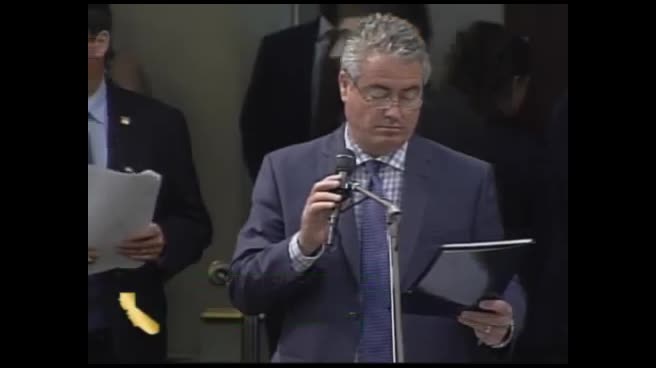 1MIN
Assembly Floor
 1MIN
Senate Floor
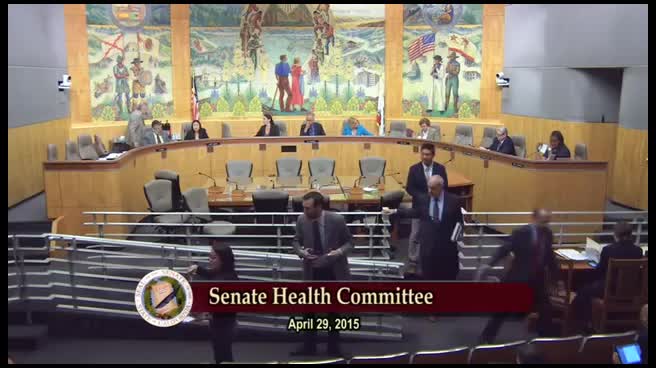 8MIN
Senate Standing Committee on Health
Bill Author

Bill Co-Author(s):