SB 620: Board of Behavioral Sciences: licensure requirements.
- Session Year: 2015-2016
- House: Senate
- Latest Version Date: 2015-09-03
Existing law provides for the licensure and regulation of marriage and family therapists, clinical social workers, and professional clinical counselors by the Board of Behavioral Sciences. Existing law requires applicants for licensure in those professions to comply with specified educational and experience requirements, including, but not limited to, hours of supervised experience, and sets forth terms, conditions, and limitations for those hours of experience, as specified.
This bill would revise those experience requirements and provide that individuals who submit applications for examination eligibility between January 1, 2016, and December 31, 2020, may alternatively qualify under the current requirements. The bill would also make other technical and conforming changes.
This bill would incorporate additional changes to Section 4980.43 of the Business and Professions Code made by this bill and AB 250 to take effect if both bills are chaptered and this bill is chaptered last.
Existing law provides for the licensure and regulation of marriage and family therapists, clinical social workers, and professional clinical counselors by the Board of Behavioral Sciences. Existing law requires applicants for licensure in those professions to comply with specified educational and experience requirements, including, but not limited to, hours of supervised experience, and sets forth terms, conditions, and limitations for those hours of experience, as specified.
This bill would revise those experience requirements and provide that individuals who submit applications for examination eligibility between January 1, 2016, and December 31, 2020, may alternately alternatively qualify under the current requirements. The bill would also make other technical and conforming changes.
Existing law provides for the licensure and regulation of marriage and family therapists, clinical social workers, and professional clinical counselors by the Board of Behavioral Sciences. Existing law requires applicants for licensure in those professions to comply with specified educational and experience requirements, including, but not limited to, hours of supervised experience, and sets forth terms, conditions, and limitations for those hours of experience, as specified.
This bill would revise those experience requirements and provide that individuals who submit applications for examination eligibility between January 1, 2016, and December 31, 2020, may alternately qualify under the current requirements. The bill would also make other technical and conforming changes.
Existing law provides for the licensure and regulation of marriage and family therapists, clinical social workers, and professional clinical counselors by the Board of Behavioral Sciences. Existing law requires applicants for licensure in those professions to comply with specified educational and experience requirements, including, but not limited to, hours of supervised experience, and sets forth terms, conditions, and limitations for those hours of experience, as specified.
This bill would revise those experience requirements and provide that individuals who submit applications for examination eligibility between January 1, 2016, and December 31, 2017, 2020, may alternately qualify under the current requirements. The bill would also make other technical and conforming changes.
Existing law provides for the licensure and regulation of marriage and family therapists, clinical social workers, and professional clinical counselors by the Board of Behavioral Sciences. Existing law requires applicants for licensure in those professions to comply with specified educational and experience requirements, including, but not limited to, hours of supervised experience, and sets forth terms, conditions, and limitations for those hours of experience, as specified.
This bill would revise those experience requirements and provide that individuals who submit applications for examination eligibility between January 1, 2016, and December 31, 2017, may alternately qualify under the current requirements. The bill would also make other technical and conforming changes.
(a)Board, as used in this chapter, means the Board of Behavioral Sciences.
(b)Intern, as used in this chapter, means an unlicensed person who has earned his or her masters or doctoral degree qualifying him or her for licensure and is registered with the board.
(c)Trainee, as used in this chapter, means an unlicensed person who is currently enrolled in a masters or doctoral degree program, as specified in Sections 4980.36 and 4980.37, that is designed to qualify him or her for licensure under this chapter, and who has completed no less than 12 semester units or 18 quarter units of coursework in any qualifying degree program.
(d)Applicant, as used in this chapter, means an unlicensed person who has completed a masters or doctoral degree program, as specified in Sections 4980.36 and 4980.37, and whose application for registration as an intern is pending, or an unlicensed person who has completed the requirements for licensure as specified in this chapter, is no longer registered with the board as an intern, and is currently in the examination process.
(e)Advertise, as used in this chapter, includes, but is not limited to, any public communication, as defined in subdivision (a) of Section 651, the issuance of any card, sign, or device to any person, or the causing, permitting, or allowing of any sign or marking on, or in, any building or structure, or in any newspaper or magazine or in any directory, or any printed matter whatsoever, with or without any limiting qualification. Signs within religious buildings or notices in church bulletins mailed to a congregation shall not be construed as advertising within the meaning of this chapter.
(f)Experience, as used in this chapter, means experience in interpersonal relationships, psychotherapy, marriage and family therapy, direct counseling, and nonclinical practice that satisfies the requirements for licensure as a marriage and family therapist pursuant to Section 4980.40.
(g)Supervisor, as used in this chapter, means an individual who meets all of the following requirements:
(1)Has been licensed by a state regulatory agency for at least two years as a marriage and family therapist, licensed clinical social worker, licensed professional clinical counselor, licensed psychologist, or licensed physician certified in psychiatry by the American Board of Psychiatry and Neurology.
(2)If a licensed professional clinical counselor, the individual shall meet the additional training and education requirements specified in paragraph (3) of subdivision (a) of Section 4999.20.
(3)Has not provided therapeutic services to the trainee or intern.
(4)Has a current and valid license that is not under suspension or probation.
(5)Complies with supervision requirements established by this chapter and by board regulations.
(h)Client centered advocacy, as used in this chapter, includes, but is not limited to, researching, identifying, and accessing resources, or other activities, related to obtaining or providing services and supports for clients or groups of clients receiving psychotherapy or counseling services.
SEC. 2.Section 4980.42 of the Business and Professions Code is amended to read:4980.42.(a)Trainees performing services in any work setting specified in subdivision (e) of Section 4980.43 may perform those activities and services as a trainee, provided that the activities and services constitute part of the trainees supervised course of study and that the person is designated by the title trainee.
(b)Trainees subject to Section 4980.37 may gain hours of experience and counsel clients outside of the required practicum. This subdivision shall apply to hours of experience gained and client counseling provided on and after January 1, 2012.
(c)Trainees subject to Section 4980.36 may gain hours of experience outside of the required practicum but must be enrolled in a practicum course to counsel clients. Trainees subject to Section 4980.36 may counsel clients while not enrolled in a practicum course if the period of lapsed enrollment is less than 90 calendar days, and if that period is immediately preceded by enrollment in a practicum course and immediately followed by enrollment in a practicum course or completion of the degree program.
(d)All hours of experience gained pursuant to subdivisions (b) and (c) shall be subject to the other requirements of this chapter.
(e)All hours of experience gained as a trainee shall be coordinated between the school and the site where the hours are being accrued. The school shall approve each site and shall have a written agreement with each site that details each partys responsibilities, including the methods by which supervision shall be provided. The agreement shall provide for regular progress reports and evaluations of the students performance at the site. If an applicant has gained hours of experience while enrolled in an institution other than the one that confers the qualifying degree, it shall be the applicants responsibility to provide to the board satisfactory evidence that those hours of trainee experience were gained in compliance with this section.
SEC. 3.Section 4980.43 of the Business and Professions Code is amended to read:4980.43.(a)To qualify for licensure as specified in Section 4980.40, each applicant shall complete experience related to the practice of marriage and family therapy under a supervisor who meets the qualifications set forth in Section 4980.03. The experience shall comply with the following:
(1)A minimum of 3,000 hours of supervised experience completed during a period of at least 104 weeks.
(2)A maximum of 40 hours in any seven consecutive days.
(3)A minimum of 1,700 hours obtained after the qualifying masters or doctoral degree was awarded.
(4)A maximum of 1,300 hours obtained prior to the award date of the qualifying masters or doctoral degree.
(5)A maximum of 750 hours of counseling and direct supervisor contact prior to the award date of the qualifying masters or doctoral degree.
(6)No hours of experience may be gained prior to completing either 12 semester units or 18 quarter units of graduate instruction.
(7)No hours of experience may be gained more than six years prior to the date the application for examination eligibility was filed, except that up to 500 hours of clinical experience gained in the supervised practicum required by subdivision (c) of Section 4980.37 and subparagraph (B) of paragraph (1) of subdivision (d) of Section 4980.36 shall be exempt from this six-year requirement.
(8)A minimum of 1,750 hours of direct counseling with individuals, groups, couples, or families, that includes not less than 500 total hours of experience in diagnosing and treating couples, families, and children.
(9)A maximum of 1,250 hours of nonclinical practice, consisting of direct supervisor contact, administering and evaluating psychological tests, writing clinical reports, writing progress or process notes, client centered advocacy, and workshops, seminars, training sessions, or conferences directly related to marriage and family therapy that have been approved by the applicants supervisor.
(10)It is anticipated and encouraged that hours of experience will include working with elders and dependent adults who have physical or mental limitations that restrict their ability to carry out normal activities or protect their rights.
This subdivision shall only apply to hours gained on and after January 1, 2010.
(b)An individual who submits an application for examination eligibility between January 1, 2016, and December 31, 2020, may alternatively qualify under the experience requirements that were in place on January 1, 2015.
(c)All applicants, trainees, and registrants shall be at all times under the supervision of a supervisor who shall be responsible for ensuring that the extent, kind, and quality of counseling performed is consistent with the training and experience of the person being supervised, and who shall be responsible to the board for compliance with all laws, rules, and regulations governing the practice of marriage and family therapy. Supervised experience shall be gained by an intern or trainee only as an employee or as a volunteer. The requirements of this chapter regarding gaining hours of experience and supervision are applicable equally to employees and volunteers. Experience shall not be gained by an intern or trainee as an independent contractor.
(1)If employed, an intern shall provide the board with copies of the corresponding W-2 tax forms for each year of experience claimed upon application for licensure.
(2)If volunteering, an intern shall provide the board with a letter from his or her employer verifying the interns employment as a volunteer upon application for licensure.
(d)Except for experience gained by attending workshops, seminars, training sessions, or conferences as described in paragraph (9) of subdivision (a), supervision shall include at least one hour of direct supervisor contact in each week for which experience is credited in each work setting, as specified:
(1)A trainee shall receive an average of at least one hour of direct supervisor contact for every five hours of client contact in each setting. No more than six hours of supervision, whether individual or group, shall be credited during any single week.
(2)An individual supervised after being granted a qualifying degree shall receive at least one additional hour of direct supervisor contact for every week in which more than 10 hours of client contact is gained in each setting. No more than six hours of supervision, whether individual or group, shall be credited during any single week.
(3)For purposes of this section, one hour of direct supervisor contact means one hour per week of face-to-face contact on an individual basis or two hours per week of face-to-face contact in a group.
(4)Direct supervisor contact shall occur within the same week as the hours claimed.
(5)Direct supervisor contact provided in a group shall be provided in a group of not more than eight supervisees and in segments lasting no less than one continuous hour.
(6)Notwithstanding paragraph (3), an intern working in a governmental entity, a school, a college, or a university, or an institution that is both nonprofit and charitable may obtain the required weekly direct supervisor contact via two-way, real-time videoconferencing. The supervisor shall be responsible for ensuring that client confidentiality is upheld.
(7)All experience gained by a trainee shall be monitored by the supervisor as specified by regulation.
(8)The six hours of supervision that may be credited during any single week pursuant to paragraphs (1) and (2) shall apply to supervision hours gained on or after January 1, 2009.
(e)(1)A trainee may be credited with supervised experience completed in any setting that meets all of the following:
(A)Lawfully and regularly provides mental health counseling or psychotherapy.
(B)Provides oversight to ensure that the trainees work at the setting meets the experience and supervision requirements set forth in this chapter and is within the scope of practice for the profession as defined in Section 4980.02.
(C)Is not a private practice owned by a licensed marriage and family therapist, a licensed professional clinical counselor, a licensed psychologist, a licensed clinical social worker, a licensed physician and surgeon, or a professional corporation of any of those licensed professions.
(2)Experience may be gained by the trainee solely as part of the position for which the trainee volunteers or is employed.
(f)(1)An intern may be credited with supervised experience completed in any setting that meets both of the following:
(A)Lawfully and regularly provides mental health counseling or psychotherapy.
(B)Provides oversight to ensure that the interns work at the setting meets the experience and supervision requirements set forth in this chapter and is within the scope of practice for the profession as defined in Section 4980.02.
(2)An applicant shall not be employed or volunteer in a private practice, as defined in subparagraph (C) of paragraph (1) of subdivision (e), until registered as an intern.
(3)While an intern may be either a paid employee or a volunteer, employers are encouraged to provide fair remuneration to interns.
(4)Except for periods of time during a supervisors vacation or sick leave, an intern who is employed or volunteering in private practice shall be under the direct supervision of a licensee that has satisfied the requirements of subdivision (g) of Section 4980.03. The supervising licensee shall either be employed by and practice at the same site as the interns employer, or shall be an owner or shareholder of the private practice. Alternative supervision may be arranged during a supervisors vacation or sick leave if the supervision meets the requirements of this section.
(5)Experience may be gained by the intern solely as part of the position for which the intern volunteers or is employed.
(g)Except as provided in subdivision (h), all persons shall register with the board as an intern in order to be credited for postdegree hours of supervised experience gained toward licensure.
(h)Except when employed in a private practice setting, all postdegree hours of experience shall be credited toward licensure so long as the applicant applies for the intern registration within 90 days of the granting of the qualifying masters or doctoral degree and is thereafter granted the intern registration by the board.
(i)Trainees, interns, and applicants shall not receive any remuneration from patients or clients, and shall only be paid by their employers.
(j)Trainees, interns, and applicants shall only perform services at the place where their employers regularly conduct business, which may include performing services at other locations, so long as the services are performed under the direction and control of their employer and supervisor, and in compliance with the laws and regulations pertaining to supervision. Trainees and interns shall have no proprietary interest in their employers businesses and shall not lease or rent space, pay for furnishings, equipment, or supplies, or in any other way pay for the obligations of their employers.
(k)Trainees, interns, or applicants who provide volunteered services or other services, and who receive no more than a total, from all work settings, of five hundred dollars ($500) per month as reimbursement for expenses actually incurred by those trainees, interns, or applicants for services rendered in any lawful work setting other than a private practice shall be considered employees and not independent contractors. The board may audit applicants who receive reimbursement for expenses, and the applicants shall have the burden of demonstrating that the payments received were for reimbursement of expenses actually incurred.
(l)Each educational institution preparing applicants for licensure pursuant to this chapter shall consider requiring, and shall encourage, its students to undergo individual, marital or conjoint, family, or group counseling or psychotherapy, as appropriate. Each supervisor shall consider, advise, and encourage his or her interns and trainees regarding the advisability of undertaking individual, marital or conjoint, family, or group counseling or psychotherapy, as appropriate. Insofar as it is deemed appropriate and is desired by the applicant, the educational institution and supervisors are encouraged to assist the applicant in locating that counseling or psychotherapy at a reasonable cost.
SEC. 3.5.Section 4980.43 of the Business and Professions Code is amended to read:4980.43.(a)To qualify for licensure as specified in Section 4980.40, each applicant shall complete experience related to the practice of marriage and family therapy under a supervisor who meets the qualifications set forth in Section 4980.03. The experience shall comply with the following:
(1)A minimum of 3,000 hours of supervised experience completed during a period of at least 104 weeks.
(2)A maximum of 40 hours in any seven consecutive days.
(3)A minimum of 1,700 hours obtained after the qualifying masters or doctoral degree was awarded.
(4)A maximum of 1,300 hours obtained prior to the award date of the qualifying masters or doctoral degree.
(5)A maximum of 750 hours of counseling and direct supervisor contact prior to the award date of the qualifying masters or doctoral degree.
(6)No hours of experience may be gained prior to completing either 12 semester units or 18 quarter units of graduate instruction.
(7)No hours of experience may be gained more than six years prior to the date the application for examination eligibility was filed, except that up to 500 hours of clinical experience gained in the supervised practicum required by subdivision (c) of Section 4980.37 and subparagraph (B) of paragraph (1) of subdivision (d) of Section 4980.36 shall be exempt from this six-year requirement.
(8)A minimum of 1,750 hours of direct counseling with individuals, groups, couples, or families, that includes not less than 500 total hours of experience in diagnosing and treating couples, families, and children.
(9)A maximum of 1,250 hours of nonclinical practice, consisting of direct supervisor contact, administering and evaluating psychological tests, writing clinical reports, writing progress or process notes, client centered advocacy, and workshops, seminars, training sessions, or conferences directly related to marriage and family therapy that have been approved by the applicants supervisor.
(10)It is anticipated and encouraged that hours of experience will include working with elders and dependent adults who have physical or mental limitations that restrict their ability to carry out normal activities or protect their rights.
This subdivision shall only apply to hours gained on and after January 1, 2010.
(b)An individual who submits an application for examination eligibility between January 1, 2016, and December 31, 2020, may alternatively qualify under the experience requirements that were in place on January 1, 2015.
(c)All applicants, trainees, and registrants shall be at all times under the supervision of a supervisor who shall be responsible for ensuring that the extent, kind, and quality of counseling performed is consistent with the training and experience of the person being supervised, and who shall be responsible to the board for compliance with all laws, rules, and regulations governing the practice of marriage and family therapy. Supervised experience shall be gained by an intern or trainee only as an employee or as a volunteer. The requirements of this chapter regarding gaining hours of experience and supervision are applicable equally to employees and volunteers. Experience shall not be gained by an intern or trainee as an independent contractor.
(1)If employed, an intern shall provide the board with copies of the corresponding W-2 tax forms for each year of experience claimed upon application for licensure.
(2)If volunteering, an intern shall provide the board with a letter from his or her employer verifying the interns employment as a volunteer upon application for licensure.
(d)Except for experience gained by attending workshops, seminars, training sessions, or conferences as described in paragraph (9) of subdivision (a), supervision shall include at least one hour of direct supervisor contact in each week for which experience is credited in each work setting, as specified:
(1)A trainee shall receive an average of at least one hour of direct supervisor contact for every five hours of client contact in each setting. No more than six hours of supervision, whether individual or group, shall be credited during any single week.
(2)An individual supervised after being granted a qualifying degree shall receive at least one additional hour of direct supervisor contact for every week in which more than 10 hours of client contact is gained in each setting. No more than six hours of supervision, whether individual or group, shall be credited during any single week.
(3)For purposes of this section, one hour of direct supervisor contact means one hour per week of face-to-face contact on an individual basis or two hours per week of face-to-face contact in a group.
(4)Direct supervisor contact shall occur within the same week as the hours claimed.
(5)Direct supervisor contact provided in a group shall be provided in a group of not more than eight supervisees and in segments lasting no less than one continuous hour.
(6)Notwithstanding paragraph (3), an intern working in a governmental entity, a school, a college, or a university, or an institution that is both nonprofit and charitable may obtain the required weekly direct supervisor contact via two-way, real-time videoconferencing. The supervisor shall be responsible for ensuring that client confidentiality is upheld.
(7)All experience gained by a trainee shall be monitored by the supervisor as specified by regulation.
(8)The six hours of supervision that may be credited during any single week pursuant to paragraphs (1) and (2) shall apply to supervision hours gained on or after January 1, 2009.
(e)(1)A trainee may be credited with supervised experience completed in any setting that meets all of the following:
(A)Lawfully and regularly provides mental health counseling or psychotherapy.
(B)Provides oversight to ensure that the trainees work at the setting meets the experience and supervision requirements set forth in this chapter and is within the scope of practice for the profession as defined in Section 4980.02.
(C)Is not a private practice owned by a licensed marriage and family therapist, a licensed professional clinical counselor, a licensed psychologist, a licensed clinical social worker, a licensed physician and surgeon, or a professional corporation of any of those licensed professions.
(2)Experience may be gained by the trainee solely as part of the position for which the trainee volunteers or is employed.
(f)(1)An intern may be credited with supervised experience completed in any setting that meets both of the following:
(A)Lawfully and regularly provides mental health counseling or psychotherapy.
(B)Provides oversight to ensure that the interns work at the setting meets the experience and supervision requirements set forth in this chapter and is within the scope of practice for the profession as defined in Section 4980.02.
(2)An applicant shall not be employed or volunteer in a private practice, as defined in subparagraph (C) of paragraph (1) of subdivision (e) until registered as an intern.
(3)While an intern may be either a paid employee or a volunteer, employers are encouraged to provide fair remuneration to interns.
(4)Except for periods of time during a supervisors vacation or sick leave, an intern who is employed or volunteering in private practice shall be under the direct supervision of a licensee that has satisfied the requirements of subdivision (g) of Section 4980.03. The supervising licensee shall either be employed by and practice at the same site as the interns employer, or shall be an owner or shareholder of the private practice. Alternative supervision may be arranged during a supervisors vacation or sick leave if the supervision meets the requirements of this section.
(5)Experience may be gained by the intern solely as part of the position for which the intern volunteers or is employed.
(g)Except as provided in subdivision (h), all persons shall register with the board as an intern in order to be credited for postdegree hours of supervised experience gained toward licensure.
(h)Except when employed in a private practice setting, all postdegree hours of experience shall be credited toward licensure so long as the applicant applies for the intern registration within 90 days of the granting of the qualifying masters or doctoral degree and is thereafter granted the intern registration by the board.
(i)Trainees, interns, and applicants shall not receive any remuneration from patients or clients, and shall only be paid by their employers.
(j)Trainees, interns, and applicants shall only perform services at the place where their employers regularly conduct business, which may include performing services at other locations, so long as the services are performed under the direction and control of their employer and supervisor, and in compliance with the laws and regulations pertaining to supervision. For purposes of paragraph (3) of subdivision (a) of Section 2290.5, interns and trainees working under licensed supervision, consistent with subdivision (b), may provide services via telehealth within the scope authorized by this chapter and in accordance with any regulations governing the use of telehealth promulgated by the board. Trainees and interns shall have no proprietary interest in their employers businesses and shall not lease or rent space, pay for furnishings, equipment, or supplies, or in any other way pay for the obligations of their employers.
(k)Trainees, interns, or applicants who provide volunteered services or other services, and who receive no more than a total, from all work settings, of five hundred dollars ($500) per month as reimbursement for expenses actually incurred by those trainees, interns, or applicants for services rendered in any lawful work setting other than a private practice shall be considered employees and not independent contractors. The board may audit applicants who receive reimbursement for expenses, and the applicants shall have the burden of demonstrating that the payments received were for reimbursement of expenses actually incurred.
(l)Each educational institution preparing applicants for licensure pursuant to this chapter shall consider requiring, and shall encourage, its students to undergo individual, marital or conjoint, family, or group counseling or psychotherapy, as appropriate. Each supervisor shall consider, advise, and encourage his or her interns and trainees regarding the advisability of undertaking individual, marital or conjoint, family, or group counseling or psychotherapy, as appropriate. Insofar as it is deemed appropriate and is desired by the applicant, the educational institution and supervisors are encouraged to assist the applicant in locating that counseling or psychotherapy at a reasonable cost.
SEC. 4.Section 4980.44 of the Business and Professions Code is amended to read:4980.44.An unlicensed marriage and family therapist intern employed under this chapter shall comply with the following requirements:
(a)Possess, at a minimum, a masters degree as specified in Section 4980.36 or 4980.37, as applicable.
(b)Register with the board prior to performing any duties, except as otherwise provided in subdivision (h) of Section 4980.43.
(c)Prior to performing any professional services, inform each client or patient that he or she is an unlicensed marriage and family therapist registered intern, provide his or her registration number and the name of his or her employer, and indicate whether he or she is under the supervision of a licensed marriage and family therapist, licensed clinical social worker, licensed professional clinical counselor, licensed psychologist, or a licensed physician and surgeon certified in psychiatry by the American Board of Psychiatry and Neurology.
(d)(1)Any advertisement by or on behalf of a marriage and family therapist registered intern shall include, at a minimum, all of the following information:
(A)That he or she is a marriage and family therapist registered intern.
(B)The interns registration number.
(C)The name of his or her employer.
(D)That he or she is supervised by a licensed person.
(2)The abbreviation MFTI shall not be used in an advertisement unless the title marriage and family therapist registered intern appears in the advertisement.
SEC. 5.Section 4996.23 of the Business and Professions Code is amended to read:4996.23.(a)To qualify for licensure as specified in Section 4996.2, each applicant shall complete 3,200 hours of post-masters degree supervised experience related to the practice of clinical social work. The experience shall comply with the following:
(1)At least 1,700 hours shall be gained under the supervision of a licensed clinical social worker. The remaining required supervised experience may be gained under the supervision of a licensed mental health professional acceptable to the board as defined by a regulation adopted by the board.
(2)A minimum of 2,000 hours in clinical psychosocial diagnosis, assessment, and treatment, including psychotherapy or counseling.
(3)A maximum of 1,200 hours in client centered advocacy, consultation, evaluation, research, direct supervisor contact, and workshops, seminars, training sessions, or conferences directly related to clinical social work that have been approved by the applicants supervisor.
(4)Of the 2,000 clinical hours required in paragraph (2), no less than 750 hours shall be face-to-face individual or group psychotherapy provided to clients in the context of clinical social work services.
(5)A minimum of two years of supervised experience is required to be obtained over a period of not less than 104 weeks and shall have been gained within the six years immediately preceding the date on which the application for licensure was filed.
(6)Experience shall not be credited for more than 40 hours in any week.
(b)An individual who submits an application for examination eligibility between January 1, 2016, and December 31, 2020, may alternatively qualify under the experience requirements that were in place on January 1, 2015.
(c)Supervision means responsibility for, and control of, the quality of clinical social work services being provided. Consultation or peer discussion shall not be considered to be supervision.
(d)(1)Prior to the commencement of supervision, a supervisor shall comply with all requirements enumerated in Section 1870 of Title 16 of the California Code of Regulations and shall sign under penalty of perjury the Responsibility Statement for Supervisors of an Associate Clinical Social Worker form.
(2)Supervised experience shall include at least one hour of direct supervisor contact for a minimum of 104 weeks. For purposes of this subdivision, one hour of direct supervisor contact means one hour per week of face-to-face contact on an individual basis or two hours of face-to-face contact in a group conducted within the same week as the hours claimed.
(3)An associate shall receive at least one additional hour of direct supervisor contact for every week in which more than 10 hours of face-to-face psychotherapy is performed in each setting in which experience is gained. No more than six hours of supervision, whether individual or group, shall be credited during any single week.
(4)Supervision shall include at least one hour of direct supervisor contact during each week for which experience is gained in each work setting. Supervision is not required for experience gained attending workshops, seminars, training sessions, or conferences as described in paragraph (3) of subdivision (a).
(5)The six hours of supervision that may be credited during any single week pursuant to paragraph (3) shall apply only to supervision hours gained on or after January 1, 2010.
(6)Group supervision shall be provided in a group of not more than eight supervisees and shall be provided in segments lasting no less than one continuous hour.
(7)Of the 104 weeks of required supervision, 52 weeks shall be individual supervision, and of the 52 weeks of required individual supervision, not less than 13 weeks shall be supervised by a licensed clinical social worker.
(8)Notwithstanding paragraph (2), an associate clinical social worker working for a governmental entity, school, college, or university, or an institution that is both a nonprofit and charitable institution, may obtain the required weekly direct supervisor contact via live two-way videoconferencing. The supervisor shall be responsible for ensuring that client confidentiality is preserved.
(e)The supervisor and the associate shall develop a supervisory plan that describes the goals and objectives of supervision. These goals shall include the ongoing assessment of strengths and limitations and the assurance of practice in accordance with the laws and regulations. The associate shall submit to the board the initial original supervisory plan upon application for licensure.
(f)Experience shall only be gained in a setting that meets both of the following:
(1)Lawfully and regularly provides clinical social work, mental health counseling, or psychotherapy.
(2)Provides oversight to ensure that the associates work at the setting meets the experience and supervision requirements set forth in this chapter and is within the scope of practice for the profession as defined in Section 4996.9.
(g)Experience shall not be gained until the applicant has been registered as an associate clinical social worker.
(h)Employment in a private practice as defined in subdivision (i) shall not commence until the applicant has been registered as an associate clinical social worker.
(i)A private practice setting is a setting that is owned by a licensed clinical social worker, a licensed marriage and family therapist, a licensed psychologist, a licensed professional clinical counselor, a licensed physician and surgeon, or a professional corporation of any of those licensed professions.
(j)If volunteering, the associate shall provide the board with a letter from his or her employer verifying his or her voluntary status upon application for licensure.
(k)If employed, the associate shall provide the board with copies of his or her W-2 tax forms for each year of experience claimed upon application for licensure.
(l)While an associate may be either a paid employee or volunteer, employers are encouraged to provide fair remuneration to associates.
(m)An associate shall not do the following:
(1)Receive any remuneration from patients or clients and shall only be paid by his or her employer.
(2)Have any proprietary interest in the employers business.
(3)Lease or rent space, pay for furnishings, equipment, or supplies, or in any other way pay for the obligations of his or her employer.
(n)An associate, whether employed or volunteering, may obtain supervision from a person not employed by the associates employer if that person has signed a written agreement with the employer to take supervisory responsibility for the associates social work services.
(o)Notwithstanding any other provision of law, associates and applicants for examination shall receive a minimum of one hour of supervision per week for each setting in which he or she is working.
SEC. 6.Section 4999.46 of the Business and Professions Code, as amended by Section 3 of Chapter 435 of the Statutes of 2014, is amended to read:4999.46.(a)To qualify for licensure as specified in Section 4999.50, applicants shall complete experience related to the practice of professional clinical counseling under an approved supervisor. The experience shall comply with the following:
(1)A minimum of 3,000 postdegree hours of supervised experience performed over a period of not less than two years (104 weeks).
(2)Not more than 40 hours in any seven consecutive days.
(3)Not less than 1,750 hours of direct counseling with individuals, groups, couples, or families in a setting described in Section 4999.44 using a variety of psychotherapeutic techniques and recognized counseling interventions within the scope of practice of licensed professional clinical counselors.
(4)Not less than 150 hours of clinical experience in a hospital or community mental health setting, as defined in Section 1820 of Title 16 of the California Code of Regulations.
(5)A maximum of 1,250 hours of nonclinical practice, consisting of direct supervisor contact, administering and evaluating psychological tests, writing clinical reports, writing progress or process notes, client centered advocacy, and workshops, seminars, training sessions, or conferences directly related to professional clinical counseling that have been approved by the applicants supervisor.
(b)An individual who submits an application for examination eligibility between January 1, 2016, and December 31, 2020, may alternatively qualify under the experience requirements that were in place on January 1, 2015.
(c)No hours of clinical mental health experience may be gained more than six years prior to the date the application for examination eligibility was filed.
(d)An applicant shall register with the board as an intern in order to be credited for postdegree hours of experience toward licensure. Postdegree hours of experience shall be credited toward licensure, provided that the applicant applies for intern registration within 90 days of the granting of the qualifying degree and is registered as an intern by the board.
(e)All applicants and interns shall be at all times under the supervision of a supervisor who shall be responsible for ensuring that the extent, kind, and quality of counseling performed is consistent with the training and experience of the person being supervised, and who shall be responsible to the board for compliance with all laws, rules, and regulations governing the practice of professional clinical counseling.
(f)Experience obtained under the supervision of a spouse or relative by blood or marriage shall not be credited toward the required hours of supervised experience. Experience obtained under the supervision of a supervisor with whom the applicant has had or currently has a personal, professional, or business relationship that undermines the authority or effectiveness of the supervision shall not be credited toward the required hours of supervised experience.
(g)Except for experience gained by attending workshops, seminars, training sessions, or conferences as described in paragraph (5) of subdivision (a), supervision shall include at least one hour of direct supervisor contact in each week for which experience is credited in each work setting.
(1)No more than six hours of supervision, whether individual or group, shall be credited during any single week. This paragraph shall apply to supervision hours gained on or after January 1, 2009.
(2)An intern shall receive at least one additional hour of direct supervisor contact for every week in which more than 10 hours of face-to-face psychotherapy is performed in each setting in which experience is gained.
(3)For purposes of this section, one hour of direct supervisor contact means one hour of face-to-face contact on an individual basis or two hours of face-to-face contact in a group of not more than eight persons in segments lasting no less than one continuous hour.
(4)Notwithstanding paragraph (3), an intern working in a governmental entity, a school, a college, or a university, or an institution that is both nonprofit and charitable, may obtain the required weekly direct supervisor contact via two-way, real-time videoconferencing. The supervisor shall be responsible for ensuring that client confidentiality is upheld.
(h)This section shall become operative on January 1, 2016.
SEC. 7.Section 3.5 of this bill incorporates amendments to Section 4980.43 of the Business and Professions Code proposed by both this bill and Assembly Bill 250. It shall only become operative if (1) both bills are enacted and become effective on or before January 1, 2016, (2) each bill amends Section 4980.43 of the Business and Professions Code, and (3) this bill is enacted after Assembly Bill 250, in which case Section 3 of this bill shall not become operative.
(a)Board, as used in this chapter, means the Board of Behavioral Sciences.
(b)Intern, as used in this chapter, means an unlicensed person who has earned his or her masters or doctoral degree qualifying him or her for licensure and is registered with the board.
(c)Trainee, as used in this chapter, means an unlicensed person who is currently enrolled in a masters or doctoral degree program, as specified in Sections 4980.36 and 4980.37, that is designed to qualify him or her for licensure under this chapter, and who has completed no less than 12 semester units or 18 quarter units of coursework in any qualifying degree program.
(d)Applicant, as used in this chapter, means an unlicensed person who has completed a masters or doctoral degree program, as specified in Sections 4980.36 and 4980.37, and whose application for registration as an intern is pending, or an unlicensed person who has completed the requirements for licensure as specified in this chapter, is no longer registered with the board as an intern, and is currently in the examination process.
(e)Advertise, as used in this chapter, includes, but is not limited to, any public communication, as defined in subdivision (a) of Section 651, the issuance of any card, sign, or device to any person, or the causing, permitting, or allowing of any sign or marking on, or in, any building or structure, or in any newspaper or magazine or in any directory, or any printed matter whatsoever, with or without any limiting qualification. Signs within religious buildings or notices in church bulletins mailed to a congregation shall not be construed as advertising within the meaning of this chapter.
(f)Experience, as used in this chapter, means experience in interpersonal relationships, psychotherapy, marriage and family therapy, direct counseling, and nonclinical practice that satisfies the requirements for licensure as a marriage and family therapist pursuant to Section 4980.40.
(g)Supervisor, as used in this chapter, means an individual who meets all of the following requirements:
(1)Has been licensed by a state regulatory agency for at least two years as a marriage and family therapist, licensed clinical social worker, licensed professional clinical counselor, licensed psychologist, or licensed physician certified in psychiatry by the American Board of Psychiatry and Neurology.
(2)If a licensed professional clinical counselor, the individual shall meet the additional training and education requirements specified in paragraph (3) of subdivision (a) of Section 4999.20.
(3)Has not provided therapeutic services to the trainee or intern.
(4)Has a current and valid license that is not under suspension or probation.
(5)Complies with supervision requirements established by this chapter and by board regulations.
(h)Client centered advocacy, as used in this chapter, includes, but is not limited to, researching, identifying, and accessing resources, or other activities, related to obtaining or providing services and supports for clients or groups of clients receiving psychotherapy or counseling services.
SEC. 2.Section 4980.42 of the Business and Professions Code is amended to read:4980.42.(a)Trainees performing services in any work setting specified in subdivision (e) of Section 4980.43 may perform those activities and services as a trainee, provided that the activities and services constitute part of the trainees supervised course of study and that the person is designated by the title trainee.
(b)Trainees subject to Section 4980.37 may gain hours of experience and counsel clients outside of the required practicum. This subdivision shall apply to hours of experience gained and client counseling provided on and after January 1, 2012.
(c)Trainees subject to Section 4980.36 may gain hours of experience outside of the required practicum but must be enrolled in a practicum course to counsel clients. Trainees subject to Section 4980.36 may counsel clients while not enrolled in a practicum course if the period of lapsed enrollment is less than 90 calendar days, and if that period is immediately preceded by enrollment in a practicum course and immediately followed by enrollment in a practicum course or completion of the degree program.
(d)All hours of experience gained pursuant to subdivisions (b) and (c) shall be subject to the other requirements of this chapter.
(e)All hours of experience gained as a trainee shall be coordinated between the school and the site where the hours are being accrued. The school shall approve each site and shall have a written agreement with each site that details each partys responsibilities, including the methods by which supervision shall be provided. The agreement shall provide for regular progress reports and evaluations of the students performance at the site. If an applicant has gained hours of experience while enrolled in an institution other than the one that confers the qualifying degree, it shall be the applicants responsibility to provide to the board satisfactory evidence that those hours of trainee experience were gained in compliance with this section.
SEC. 3.Section 4980.43 of the Business and Professions Code is amended to read:4980.43.(a)To qualify for licensure as specified in Section 4980.40, each applicant shall complete experience related to the practice of marriage and family therapy under a supervisor who meets the qualifications set forth in Section 4980.03. The experience shall comply with the following:
(1)A minimum of 3,000 hours of supervised experience completed during a period of at least 104 weeks.
(2)A maximum of 40 hours in any seven consecutive days.
(3)A minimum of 1,700 hours obtained after the qualifying masters or doctoral degree was awarded.
(4)A maximum of 1,300 hours obtained prior to the award date of the qualifying masters or doctoral degree.
(5)A maximum of 750 hours of counseling and direct supervisor contact prior to the award date of the qualifying masters or doctoral degree.
(6)No hours of experience may be gained prior to completing either 12 semester units or 18 quarter units of graduate instruction.
(7)No hours of experience may be gained more than six years prior to the date the application for examination eligibility was filed, except that up to 500 hours of clinical experience gained in the supervised practicum required by subdivision (c) of Section 4980.37 and subparagraph (B) of paragraph (1) of subdivision (d) of Section 4980.36 shall be exempt from this six-year requirement.
(8)A minimum of 1,750 hours of direct counseling with individuals, groups, couples, or families, that includes not less than 500 total hours of experience in diagnosing and treating couples, families, and children.
(9)A maximum of 1,250 hours of nonclinical practice, consisting of direct supervisor contact, administering and evaluating psychological tests, writing clinical reports, writing progress or process notes, client-centered advocacy, and workshops, seminars, training sessions, or conferences directly related to marriage and family therapy that have been approved by the applicants supervisor.
(10)It is anticipated and encouraged that hours of experience will include working with elders and dependent adults who have physical or mental limitations that restrict their ability to carry out normal activities or protect their rights.
This subdivision shall only apply to hours gained on and after January 1, 2010.
(b)An individual who submits an application for examination eligibility between January 1, 2016, and December 31, 2020, may alternately alternatively qualify under the experience requirements that were in place on January 1, 2015.
(c)All applicants, trainees, and registrants shall be at all times under the supervision of a supervisor who shall be responsible for ensuring that the extent, kind, and quality of counseling performed is consistent with the training and experience of the person being supervised, and who shall be responsible to the board for compliance with all laws, rules, and regulations governing the practice of marriage and family therapy. Supervised experience shall be gained by an intern or trainee only as an employee or as a volunteer. The requirements of this chapter regarding gaining hours of experience and supervision are applicable equally to employees and volunteers. Experience shall not be gained by an intern or trainee as an independent contractor.
(1)If employed, an intern shall provide the board with copies of the corresponding W-2 tax forms for each year of experience claimed upon application for licensure.
(2)If volunteering, an intern shall provide the board with a letter from his or her employer verifying the interns employment as a volunteer upon application for licensure.
(d)Except for experience gained by attending workshops, seminars, training sessions, or conferences as described in paragraph (9) of subdivision (a), supervision shall include at least one hour of direct supervisor contact in each week for which experience is credited in each work setting, as specified:
(1)A trainee shall receive an average of at least one hour of direct supervisor contact for every five hours of client contact in each setting. No more than six hours of supervision, whether individual or group, shall be credited during any single week.
(2)An individual supervised after being granted a qualifying degree shall receive at least one additional hour of direct supervisor contact for every week in which more than 10 hours of client contact is gained in each setting. No more than six hours of supervision, whether individual or group, shall be credited during any single week.
(3)For purposes of this section, one hour of direct supervisor contact means one hour per week of face-to-face contact on an individual basis or two hours per week of face-to-face contact in a group.
(4)Direct supervisor contact shall occur within the same week as the hours claimed.
(5)Direct supervisor contact provided in a group shall be provided in a group of not more than eight supervisees and in segments lasting no less than one continuous hour.
(6)Notwithstanding paragraph (3), an intern working in a governmental entity, a school, a college, or a university, or an institution that is both nonprofit and charitable may obtain the required weekly direct supervisor contact via two-way, real-time videoconferencing. The supervisor shall be responsible for ensuring that client confidentiality is upheld.
(7)All experience gained by a trainee shall be monitored by the supervisor as specified by regulation.
(8)The six hours of supervision that may be credited during any single week pursuant to paragraphs (1) and (2) shall apply to supervision hours gained on or after January 1, 2009.
(e)(1)A trainee may be credited with supervised experience completed in any setting that meets all of the following:
(A)Lawfully and regularly provides mental health counseling or psychotherapy.
(B)Provides oversight to ensure that the trainees work at the setting meets the experience and supervision requirements set forth in this chapter and is within the scope of practice for the profession as defined in Section 4980.02.
(C)Is not a private practice owned by a licensed marriage and family therapist, a licensed professional clinical counselor, a licensed psychologist, a licensed clinical social worker, a licensed physician and surgeon, or a professional corporation of any of those licensed professions.
(2)Experience may be gained by the trainee solely as part of the position for which the trainee volunteers or is employed.
(f)(1)An intern may be credited with supervised experience completed in any setting that meets both of the following:
(A)Lawfully and regularly provides mental health counseling or psychotherapy.
(B)Provides oversight to ensure that the interns work at the setting meets the experience and supervision requirements set forth in this chapter and is within the scope of practice for the profession as defined in Section 4980.02.
(2)An applicant shall not be employed or volunteer in a private practice, as defined in subparagraph (C) of paragraph (1) of subdivision (e), until registered as an intern.
(3)While an intern may be either a paid employee or a volunteer, employers are encouraged to provide fair remuneration to interns.
(4)Except for periods of time during a supervisors vacation or sick leave, an intern who is employed or volunteering in private practice shall be under the direct supervision of a licensee that has satisfied the requirements of subdivision (g) of Section 4980.03. The supervising licensee shall either be employed by and practice at the same site as the interns employer, or shall be an owner or shareholder of the private practice. Alternative supervision may be arranged during a supervisors vacation or sick leave if the supervision meets the requirements of this section.
(5)Experience may be gained by the intern solely as part of the position for which the intern volunteers or is employed.
(g)Except as provided in subdivision (h), all persons shall register with the board as an intern in order to be credited for postdegree hours of supervised experience gained toward licensure.
(h)Except when employed in a private practice setting, all postdegree hours of experience shall be credited toward licensure so long as the applicant applies for the intern registration within 90 days of the granting of the qualifying masters or doctoral degree and is thereafter granted the intern registration by the board.
(i)Trainees, interns, and applicants shall not receive any remuneration from patients or clients, and shall only be paid by their employers.
(j)Trainees, interns, and applicants shall only perform services at the place where their employers regularly conduct business, which may include performing services at other locations, so long as the services are performed under the direction and control of their employer and supervisor, and in compliance with the laws and regulations pertaining to supervision. Trainees and interns shall have no proprietary interest in their employers businesses and shall not lease or rent space, pay for furnishings, equipment, or supplies, or in any other way pay for the obligations of their employers.
(k)Trainees, interns, or applicants who provide volunteered services or other services, and who receive no more than a total, from all work settings, of five hundred dollars ($500) per month as reimbursement for expenses actually incurred by those trainees, interns, or applicants for services rendered in any lawful work setting other than a private practice shall be considered employees and not independent contractors. The board may audit applicants who receive reimbursement for expenses, and the applicants shall have the burden of demonstrating that the payments received were for reimbursement of expenses actually incurred.
(l)Each educational institution preparing applicants for licensure pursuant to this chapter shall consider requiring, and shall encourage, its students to undergo individual, marital or conjoint, family, or group counseling or psychotherapy, as appropriate. Each supervisor shall consider, advise, and encourage his or her interns and trainees regarding the advisability of undertaking individual, marital or conjoint, family, or group counseling or psychotherapy, as appropriate. Insofar as it is deemed appropriate and is desired by the applicant, the educational institution and supervisors are encouraged to assist the applicant in locating that counseling or psychotherapy at a reasonable cost.
SEC. 3.5.Section 4980.43 of the Business and Professions Code is amended to read:4980.43.(a)Prior to applying for licensure examinations, To qualify for licensure as specified in Section 4980.40, each applicant shall complete experience that related to the practice of marriage and family therapy under a supervisor who meets the qualifications set forth in Section 4980.03. The experience shall comply with the following:
(1)A minimum of 3,000 hours of supervised experience completed during a period of at least 104 weeks.
(2)Not more than A maximum of 40 hours in any seven consecutive days.
(3)Not less than 1,700 hours of supervised experience completed subsequent to the granting of the A minimum of 1,700 hours obtained after the qualifying masters or doctoral degree. degree was awarded.
(4)Not more than A maximum of 1,300 hours of supervised experience obtained prior to completing a the award date of the qualifying masters or doctoral degree.
The applicant shall not be credited with more than
(5)A maximum of 750 hours of counseling and direct supervisor contact prior to completing the award date of the qualifying masters or doctoral degree.
(5)
(6)No hours of experience may be gained prior to completing either 12 semester units or 18 quarter units of graduate instruction and becoming a trainee except for personal psychotherapy. instruction.
(6)
(7)No hours of experience may be gained more than six years prior to the date the application for examination eligibility was filed, except that up to 500 hours of clinical experience gained in the supervised practicum required by subdivision (c) of Section 4980.37 and subparagraph (B) of paragraph (1) of subdivision (d) of Section 4980.36 shall be exempt from this six-year requirement.
(7)Not more than a combined total of 1,000 hours of experience in the following:
(A)Direct supervisor contact.
(B)Professional enrichment activities. For purposes of this chapter, professional enrichment activities include the following:
(i)Workshops, seminars, training sessions, or conferences directly related to marriage and family therapy attended by the applicant that are approved by the applicants supervisor. An applicant shall have no more than 250 hours of verified attendance at these workshops, seminars, training sessions, or conferences.
(ii)Participation by the applicant in personal psychotherapy, which includes group, marital or conjoint, family, or individual psychotherapy by an appropriately licensed professional. An applicant shall have no more than 100 hours of participation in personal psychotherapy. The applicant shall be credited with three hours of experience for each hour of personal psychotherapy.
(8)Not more than 500 hours of experience providing group therapy or group counseling.
(9)For all hours gained on or after January 1, 2012, not more than 500 hours of experience in the following:
(A)Experience administering and evaluating psychological tests, writing clinical reports, writing progress notes, or writing process notes.
(B)Client centered advocacy.
(10)Not less than 500 total hours of experience in diagnosing and treating couples, families, and children. For up to 150 hours of treating couples and families in conjoint therapy, the applicant shall be credited with two hours of experience for each hour of therapy provided.
(11)Not more than 375 hours of experience providing personal psychotherapy, crisis counseling, or other counseling services via telehealth in accordance with Section 2290.5.
(8)A minimum of 1,750 hours of direct counseling with individuals, groups, couples, or families, that includes not less than 500 total hours of experience in diagnosing and treating couples, families, and children.
(9)A maximum of 1,250 hours of nonclinical practice, consisting of direct supervisor contact, administering and evaluating psychological tests, writing clinical reports, writing progress or process notes, client-centered advocacy, and workshops, seminars, training sessions, or conferences directly related to marriage and family therapy that have been approved by the applicants supervisor.
(12)
(10)It is anticipated and encouraged that hours of experience will include working with elders and dependent adults who have physical or mental limitations that restrict their ability to carry out normal activities or protect their rights.
This subdivision shall only apply to hours gained on and after January 1, 2010.
(b)An individual who submits an application for examination eligibility between January 1, 2016, and December 31, 2020, may alternatively qualify under the experience requirements that were in place on January 1, 2015.
(b)
(c)All applicants, trainees, and registrants shall be at all times under the supervision of a supervisor who shall be responsible for ensuring that the extent, kind, and quality of counseling performed is consistent with the training and experience of the person being supervised, and who shall be responsible to the board for compliance with all laws, rules, and regulations governing the practice of marriage and family therapy. Supervised experience shall be gained by interns and trainees an intern or trainee only as an employee or as a volunteer. The requirements of this chapter regarding gaining hours of experience and supervision are applicable equally to employees and volunteers. Experience shall not be gained by interns or trainees an intern or trainee as an independent contractor.
(1)If employed, an intern shall provide the board with copies of the corresponding W-2 tax forms for each year of experience claimed upon application for licensure.
(2)If volunteering, an intern shall provide the board with a letter from his or her employer verifying the interns employment as a volunteer upon application for licensure.
(c)
(d)Except for experience gained pursuant to subparagraph (B) of paragraph (7) by attending workshops, seminars, training sessions, or conferences as described in paragraph (9) of subdivision (a), supervision shall include at least one hour of direct supervisor contact in each week for which experience is credited in each work setting, as specified:
(1)A trainee shall receive an average of at least one hour of direct supervisor contact for every five hours of client contact in each setting. No more than six hours of supervision, whether individual or group, shall be credited during any single week.
(2)An individual supervised after being granted a qualifying degree shall receive at least one additional hour of direct supervisor contact for every week in which more than 10 hours of client contact is gained in each setting. No more than six hours of supervision, whether individual or group, shall be credited during any single week.
(3)For purposes of this section, one hour of direct supervisor contact means one hour per week of face-to-face contact on an individual basis or two hours per week of face-to-face contact in a group.
(4)Direct supervisor contact shall occur within the same week as the hours claimed.
(5)Direct supervisor contact provided in a group shall be provided in a group of not more than eight supervisees and in segments lasting no less than one continuous hour.
(6)Notwithstanding paragraph (3), an intern working in a governmental entity, a school, a college, or a university, or an institution that is both nonprofit and charitable may obtain the required weekly direct supervisor contact via two-way, real-time videoconferencing. The supervisor shall be responsible for ensuring that client confidentiality is upheld.
(7)All experience gained by a trainee shall be monitored by the supervisor as specified by regulation.
(8)The six hours of supervision that may be credited during any single week pursuant to paragraphs (1) and (2) shall apply to supervision hours gained on or after January 1, 2009.
(d)
(e)(1)A trainee may be credited with supervised experience completed in any setting that meets all of the following:
(A)Lawfully and regularly provides mental health counseling or psychotherapy.
(B)Provides oversight to ensure that the trainees work at the setting meets the experience and supervision requirements set forth in this chapter and is within the scope of practice for the profession as defined in Section 4980.02.
(C)Is not a private practice owned by a licensed marriage and family therapist, a licensed professional clinical counselor, a licensed psychologist, a licensed clinical social worker, a licensed physician and surgeon, or a professional corporation of any of those licensed professions.
(2)Experience may be gained by the trainee solely as part of the position for which the trainee volunteers or is employed.
(e)
(f)(1)An intern may be credited with supervised experience completed in any setting that meets both of the following:
(A)Lawfully and regularly provides mental health counseling or psychotherapy.
(B)Provides oversight to ensure that the interns work at the setting meets the experience and supervision requirements set forth in this chapter and is within the scope of practice for the profession as defined in Section 4980.02.
(2)An applicant shall not be employed or volunteer in a private practice, as defined in subparagraph (C) of paragraph (1) of subdivision (d), (e) until registered as an intern.
(3)While an intern may be either a paid employee or a volunteer, employers are encouraged to provide fair remuneration to interns.
(4)Except for periods of time during a supervisors vacation or sick leave, an intern who is employed or volunteering in private practice shall be under the direct supervision of a licensee that has satisfied the requirements of subdivision (g) of Section 4980.03. The supervising licensee shall either be employed by and practice at the same site as the interns employer, or shall be an owner or shareholder of the private practice. Alternative supervision may be arranged during a supervisors vacation or sick leave if the supervision meets the requirements of this section.
(5)Experience may be gained by the intern solely as part of the position for which the intern volunteers or is employed.
(f)
(g)Except as provided in subdivision (g), (h), all persons shall register with the board as an intern in order to be credited for postdegree hours of supervised experience gained toward licensure.
(g)
(h)Except when employed in a private practice setting, all postdegree hours of experience shall be credited toward licensure so long as the applicant applies for the intern registration within 90 days of the granting of the qualifying masters or doctoral degree and is thereafter granted the intern registration by the board.
(h)
(i)Trainees, interns, and applicants shall not receive any remuneration from patients or clients, and shall only be paid by their employers.
(i)
(j)Trainees, interns, and applicants shall only perform services at the place where their employers regularly conduct business, which may include performing services at other locations, so long as the services are performed under the direction and control of their employer and supervisor, and in compliance with the laws and regulations pertaining to supervision. For purposes of paragraph (3) of subdivision (a) of Section 2290.5, interns and trainees working under licensed supervision, consistent with subdivision (b), may provide services via telehealth within the scope authorized by this chapter and in accordance with any regulations governing the use of telehealth promulgated by the board. Trainees and interns shall have no proprietary interest in their employers businesses and shall not lease or rent space, pay for furnishings, equipment, or supplies, or in any other way pay for the obligations of their employers.
(j)
(k)Trainees, interns, or applicants who provide volunteered services or other services, and who receive no more than a total, from all work settings, of five hundred dollars ($500) per month as reimbursement for expenses actually incurred by those trainees, interns, or applicants for services rendered in any lawful work setting other than a private practice shall be considered an employee and not an independent contractor. employees and not independent contractors. The board may audit applicants who receive reimbursement for expenses, and the applicants shall have the burden of demonstrating that the payments received were for reimbursement of expenses actually incurred.
(k)
(l)Each educational institution preparing applicants for licensure pursuant to this chapter shall consider requiring, and shall encourage, its students to undergo individual, marital or conjoint, family, or group counseling or psychotherapy, as appropriate. Each supervisor shall consider, advise, and encourage his or her interns and trainees regarding the advisability of undertaking individual, marital or conjoint, family, or group counseling or psychotherapy, as appropriate. Insofar as it is deemed appropriate and is desired by the applicant, the educational institution and supervisors are encouraged to assist the applicant in locating that counseling or psychotherapy at a reasonable cost.
SEC. 4.Section 4980.44 of the Business and Professions Code is amended to read:4980.44.An unlicensed marriage and family therapist intern employed under this chapter shall comply with the following requirements:
(a)Possess, at a minimum, a masters degree as specified in Section 4980.36 or 4980.37, as applicable.
(b)Register with the board prior to performing any duties, except as otherwise provided in subdivision (h) of Section 4980.43.
(c)Prior to performing any professional services, inform each client or patient that he or she is an unlicensed marriage and family therapist registered intern, provide his or her registration number and the name of his or her employer, and indicate whether he or she is under the supervision of a licensed marriage and family therapist, licensed clinical social worker, licensed professional clinical counselor, licensed psychologist, or a licensed physician and surgeon certified in psychiatry by the American Board of Psychiatry and Neurology.
(d)(1)Any advertisement by or on behalf of a marriage and family therapist registered intern shall include, at a minimum, all of the following information:
(A)That he or she is a marriage and family therapist registered intern.
(B)The interns registration number.
(C)The name of his or her employer.
(D)That he or she is supervised by a licensed person.
(2)The abbreviation MFTI shall not be used in an advertisement unless the title marriage and family therapist registered intern appears in the advertisement.
SEC. 5.Section 4996.23 of the Business and Professions Code is amended to read:4996.23.(a)To qualify for licensure as specified in Section 4996.2, each applicant shall complete 3,200 hours of post-masters degree supervised experience related to the practice of clinical social work. The experience shall comply with the following:
(1)At least 1,700 hours shall be gained under the supervision of a licensed clinical social worker. The remaining required supervised experience may be gained under the supervision of a licensed mental health professional acceptable to the board as defined by a regulation adopted by the board.
(2)A minimum of 2,000 hours in clinical psychosocial diagnosis, assessment, and treatment, including psychotherapy or counseling.
(3)A maximum of 1,200 hours in client-centered advocacy, consultation, evaluation, research, direct supervisor contact, and workshops, seminars, training sessions, or conferences directly related to clinical social work that have been approved by the applicants supervisor.
(4)Of the 2,000 clinical hours required in paragraph (2), no less than 750 hours shall be face-to-face individual or group psychotherapy provided to clients in the context of clinical social work services.
(5)A minimum of two years of supervised experience is required to be obtained over a period of not less than 104 weeks and shall have been gained within the six years immediately preceding the date on which the application for licensure was filed.
(6)Experience shall not be credited for more than 40 hours in any week.
(b)An individual who submits an application for examination eligibility between January 1, 2016, and December 31, 2020, may alternatively qualify under the experience requirements that were in place on January 1, 2015.
(c)Supervision means responsibility for, and control of, the quality of clinical social work services being provided. Consultation or peer discussion shall not be considered to be supervision.
(d)(1)Prior to the commencement of supervision, a supervisor shall comply with all requirements enumerated in Section 1870 of Title 16 of the California Code of Regulations and shall sign under penalty of perjury the Responsibility Statement for Supervisors of an Associate Clinical Social Worker form.
(2)Supervised experience shall include at least one hour of direct supervisor contact for a minimum of 104 weeks. For purposes of this subdivision, one hour of direct supervisor contact means one hour per week of face-to-face contact on an individual basis or two hours of face-to-face contact in a group conducted within the same week as the hours claimed.
(3)An associate shall receive at least one additional hour of direct supervisor contact for every week in which more than 10 hours of face-to-face psychotherapy is performed in each setting in which experience is gained. No more than six hours of supervision, whether individual or group, shall be credited during any single week.
(4)Supervision shall include at least one hour of direct supervisor contact during each week for which experience is gained in each work setting. Supervision is not required for experience gained attending workshops, seminars, training sessions, or conferences as described in paragraph (3) of subdivision (a).
(5)The six hours of supervision that may be credited during any single week pursuant to paragraph (3) shall apply only to supervision hours gained on or after January 1, 2010.
(6)Group supervision shall be provided in a group of not more than eight supervisees and shall be provided in segments lasting no less than one continuous hour.
(7)Of the 104 weeks of required supervision, 52 weeks shall be individual supervision, and of the 52 weeks of required individual supervision, not less than 13 weeks shall be supervised by a licensed clinical social worker.
(8)Notwithstanding paragraph (2), an associate clinical social worker working for a governmental entity, school, college, or university, or an institution that is both a nonprofit and charitable institution, may obtain the required weekly direct supervisor contact via live two-way videoconferencing. The supervisor shall be responsible for ensuring that client confidentiality is preserved.
(e)The supervisor and the associate shall develop a supervisory plan that describes the goals and objectives of supervision. These goals shall include the ongoing assessment of strengths and limitations and the assurance of practice in accordance with the laws and regulations. The associate shall submit to the board the initial original supervisory plan upon application for licensure.
(f)Experience shall only be gained in a setting that meets both of the following:
(1)Lawfully and regularly provides clinical social work, mental health counseling, or psychotherapy.
(2)Provides oversight to ensure that the associates work at the setting meets the experience and supervision requirements set forth in this chapter and is within the scope of practice for the profession as defined in Section 4996.9.
(g)Experience shall not be gained until the applicant has been registered as an associate clinical social worker.
(h)Employment in a private practice as defined in subdivision (i) shall not commence until the applicant has been registered as an associate clinical social worker.
(i)A private practice setting is a setting that is owned by a licensed clinical social worker, a licensed marriage and family therapist, a licensed psychologist, a licensed professional clinical counselor, a licensed physician and surgeon, or a professional corporation of any of those licensed professions.
(j)If volunteering, the associate shall provide the board with a letter from his or her employer verifying his or her voluntary status upon application for licensure.
(k)If employed, the associate shall provide the board with copies of his or her W-2 tax forms for each year of experience claimed upon application for licensure.
(l)While an associate may be either a paid employee or volunteer, employers are encouraged to provide fair remuneration to associates.
(m)An associate shall not do the following:
(1)Receive any remuneration from patients or clients and shall only be paid by his or her employer.
(2)Have any proprietary interest in the employers business.
(3)Lease or rent space, pay for furnishings, equipment, or supplies, or in any other way pay for the obligations of his or her employer.
(n)An associate, whether employed or volunteering, may obtain supervision from a person not employed by the associates employer if that person has signed a written agreement with the employer to take supervisory responsibility for the associates social work services.
(o)Notwithstanding any other provision of law, associates and applicants for examination shall receive a minimum of one hour of supervision per week for each setting in which he or she is working.
SEC. 6.Section 4999.46 of the Business and Professions Code, as amended by Section 3 of Chapter 435 of the Statutes of 2014, is amended to read:4999.46.(a)To qualify for licensure as specified in Section 4999.50, applicants shall complete experience related to the practice of professional clinical counseling under an approved supervisor. The experience shall comply with the following:
(1)A minimum of 3,000 postdegree hours of supervised experience performed over a period of not less than two years (104 weeks).
(2)Not more than 40 hours in any seven consecutive days.
(3)Not less than 1,750 hours of direct counseling with individuals, groups, couples, or families in a setting described in Section 4999.44 using a variety of psychotherapeutic techniques and recognized counseling interventions within the scope of practice of licensed professional clinical counselors.
(4)Not less than 150 hours of clinical experience in a hospital or community mental health setting, as defined in Section 1820 of Title 16 of the California Code of Regulations.
(5)A maximum of 1,250 hours of nonclinical practice, consisting of direct supervisor contact, administering and evaluating psychological tests, writing clinical reports, writing progress or process notes, client-centered advocacy, and workshops, seminars, training sessions, or conferences directly related to professional clinical counseling that have been approved by the applicants supervisor.
(b)An individual who submits an application for examination eligibility between January 1, 2016, and December 31, 2020, may alternatively qualify under the experience requirements that were in place on January 1, 2015.
(c)No hours of clinical mental health experience may be gained more than six years prior to the date the application for examination eligibility was filed.
(d)An applicant shall register with the board as an intern in order to be credited for postdegree hours of experience toward licensure. Postdegree hours of experience shall be credited toward licensure, provided that the applicant applies for intern registration within 90 days of the granting of the qualifying degree and is registered as an intern by the board.
(e)All applicants and interns shall be at all times under the supervision of a supervisor who shall be responsible for ensuring that the extent, kind, and quality of counseling performed is consistent with the training and experience of the person being supervised, and who shall be responsible to the board for compliance with all laws, rules, and regulations governing the practice of professional clinical counseling.
(f)Experience obtained under the supervision of a spouse or relative by blood or marriage shall not be credited toward the required hours of supervised experience. Experience obtained under the supervision of a supervisor with whom the applicant has had or currently has a personal, professional, or business relationship that undermines the authority or effectiveness of the supervision shall not be credited toward the required hours of supervised experience.
(g)Except for experience gained by attending workshops, seminars, training sessions, or conferences as described in paragraph (5) of subdivision (a), supervision shall include at least one hour of direct supervisor contact in each week for which experience is credited in each work setting.
(1)No more than six hours of supervision, whether individual or group, shall be credited during any single week. This paragraph shall apply to supervision hours gained on or after January 1, 2009.
(2)An intern shall receive at least one additional hour of direct supervisor contact for every week in which more than 10 hours of face-to-face psychotherapy is performed in each setting in which experience is gained.
(3)For purposes of this section, one hour of direct supervisor contact means one hour of face-to-face contact on an individual basis or two hours of face-to-face contact in a group of not more than eight persons in segments lasting no less than one continuous hour.
(4)Notwithstanding paragraph (3), an intern working in a governmental entity, a school, a college, or a university, or an institution that is both nonprofit and charitable, may obtain the required weekly direct supervisor contact via two-way, real-time videoconferencing. The supervisor shall be responsible for ensuring that client confidentiality is upheld.
(h)This section shall become operative on January 1, 2016.
SEC. 7.Section 3.5 of this bill incorporates amendments to Section 4980.43 of the Business and Professions Code proposed by both this bill and Assembly Bill 250. It shall only become operative if (1) both bills are enacted and become effective on or before January 1, 2016, (2) each bill amends Section 4980.43 of the Business and Professions Code, and (3) this bill is enacted after Assembly Bill 250, in which case Section 3 of this bill shall not become operative.
(a)Board, as used in this chapter, means the Board of Behavioral Sciences.
(b)Intern, as used in this chapter, means an unlicensed person who has earned his or her masters or doctoral degree qualifying him or her for licensure and is registered with the board.
(c)Trainee, as used in this chapter, means an unlicensed person who is currently enrolled in a masters or doctoral degree program, as specified in Sections 4980.36 and 4980.37, that is designed to qualify him or her for licensure under this chapter, and who has completed no less than 12 semester units or 18 quarter units of coursework in any qualifying degree program.
(d)Applicant, as used in this chapter, means an unlicensed person who has completed a masters or doctoral degree program, as specified in Sections 4980.36 and 4980.37, and whose application for registration as an intern is pending, or an unlicensed person who has completed the requirements for licensure as specified in this chapter, is no longer registered with the board as an intern, and is currently in the examination process.
(e)Advertise, as used in this chapter, includes, but is not limited to, any public communication, as defined in subdivision (a) of Section 651, the issuance of any card, sign, or device to any person, or the causing, permitting, or allowing of any sign or marking on, or in, any building or structure, or in any newspaper or magazine or in any directory, or any printed matter whatsoever, with or without any limiting qualification. Signs within religious buildings or notices in church bulletins mailed to a congregation shall not be construed as advertising within the meaning of this chapter.
(f)Experience, as used in this chapter, means experience in interpersonal relationships, psychotherapy, marriage and family therapy, direct counseling, and nonclinical practice that satisfies the requirements for licensure as a marriage and family therapist pursuant to Section 4980.40.
(g)Supervisor, as used in this chapter, means an individual who meets all of the following requirements:
(1)Has been licensed by a state regulatory agency for at least two years as a marriage and family therapist, licensed clinical social worker, licensed professional clinical counselor, licensed psychologist, or licensed physician certified in psychiatry by the American Board of Psychiatry and Neurology.
(2)If a licensed professional clinical counselor, the individual shall meet the additional training and education requirements specified in paragraph (3) of subdivision (a) of Section 4999.20.
(3)Has not provided therapeutic services to the trainee or intern.
(4)Has a current and valid license that is not under suspension or probation.
(5)Complies with supervision requirements established by this chapter and by board regulations.
(h)Client centered advocacy, as used in this chapter, includes, but is not limited to, researching, identifying, and accessing resources, or other activities, related to obtaining or providing services and supports for clients or groups of clients receiving psychotherapy or counseling services.
SEC. 2.Section 4980.42 of the Business and Professions Code is amended to read:4980.42.(a)Trainees performing services in any work setting specified in subdivision (e) of Section 4980.43 may perform those activities and services as a trainee, provided that the activities and services constitute part of the trainees supervised course of study and that the person is designated by the title trainee.
(b)Trainees subject to Section 4980.37 may gain hours of experience and counsel clients outside of the required practicum. This subdivision shall apply to hours of experience gained and client counseling provided on and after January 1, 2012.
(c)Trainees subject to Section 4980.36 may gain hours of experience outside of the required practicum but must be enrolled in a practicum course to counsel clients. Trainees subject to Section 4980.36 may counsel clients while not enrolled in a practicum course if the period of lapsed enrollment is less than 90 calendar days, and if that period is immediately preceded by enrollment in a practicum course and immediately followed by enrollment in a practicum course or completion of the degree program.
(d)All hours of experience gained pursuant to subdivisions (b) and (c) shall be subject to the other requirements of this chapter.
(e)All hours of experience gained as a trainee shall be coordinated between the school and the site where the hours are being accrued. The school shall approve each site and shall have a written agreement with each site that details each partys responsibilities, including the methods by which supervision shall be provided. The agreement shall provide for regular progress reports and evaluations of the students performance at the site. If an applicant has gained hours of experience while enrolled in an institution other than the one that confers the qualifying degree, it shall be the applicants responsibility to provide to the board satisfactory evidence that those hours of trainee experience were gained in compliance with this section.
SEC. 3.Section 4980.43 of the Business and Professions Code is amended to read:4980.43.(a)To qualify for licensure as specified in Section 4980.40, each applicant shall complete experience related to the practice of marriage and family therapy under a supervisor who meets the qualifications set forth in Section 4980.03. The experience shall comply with the following:
(1)A minimum of 3,000 hours of supervised experience completed during a period of at least 104 weeks.
(2)A maximum of 40 hours in any seven consecutive days.
(3)A minimum of 1,700 hours obtained after the qualifying masters or doctoral degree was awarded.
(4)A maximum of 1,300 hours obtained prior to the award date of the qualifying masters or doctoral degree.
(5)A maximum of 750 hours of counseling and direct supervisor contact prior to the award date of the qualifying masters or doctoral degree.
(6)No hours of experience may be gained prior to completing either 12 semester units or 18 quarter units of graduate instruction.
(7)No hours of experience may be gained more than six years prior to the date the application for examination eligibility was filed, except that up to 500 hours of clinical experience gained in the supervised practicum required by subdivision (c) of Section 4980.37 and subparagraph (B) of paragraph (1) of subdivision (d) of Section 4980.36 shall be exempt from this six-year requirement.
(8)A minimum of 1,750 hours of direct counseling with individuals, groups, couples, or families, that includes not less than 500 total hours of experience in diagnosing and treating couples, families, and children.
(9)A maximum of 1,250 hours of nonclinical practice, consisting of direct supervisor contact, administering and evaluating psychological tests, writing clinical reports, writing progress or process notes, client-centered advocacy, and workshops, seminars, training sessions, or conferences directly related to marriage and family therapy that have been approved by the applicants supervisor.
(10)It is anticipated and encouraged that hours of experience will include working with elders and dependent adults who have physical or mental limitations that restrict their ability to carry out normal activities or protect their rights.
This subdivision shall only apply to hours gained on and after January 1, 2010.
(b)An individual who submits an application for examination eligibility between January 1, 2016, and December 31, 2020, may alternately qualify under the experience requirements that were in place on January 1, 2015.
(c)All applicants, trainees, and registrants shall be at all times under the supervision of a supervisor who shall be responsible for ensuring that the extent, kind, and quality of counseling performed is consistent with the training and experience of the person being supervised, and who shall be responsible to the board for compliance with all laws, rules, and regulations governing the practice of marriage and family therapy. Supervised experience shall be gained by an intern or trainee only as an employee or as a volunteer. The requirements of this chapter regarding gaining hours of experience and supervision are applicable equally to employees and volunteers. Experience shall not be gained by an intern or trainee as an independent contractor.
(1)If employed, an intern shall provide the board with copies of the corresponding W-2 tax forms for each year of experience claimed upon application for licensure.
(2)If volunteering, an intern shall provide the board with a letter from his or her employer verifying the interns employment as a volunteer upon application for licensure.
(d)Except for experience gained by attending workshops, seminars, training sessions, or conferences as described in paragraph (9) of subdivision (a), supervision shall include at least one hour of direct supervisor contact in each week for which experience is credited in each work setting, as specified:
(1)A trainee shall receive an average of at least one hour of direct supervisor contact for every five hours of client contact in each setting. No more than six hours of supervision, whether individual or group, shall be credited during any single week.
(2)An individual supervised after being granted a qualifying degree shall receive at least one additional hour of direct supervisor contact for every week in which more than 10 hours of client contact is gained in each setting. No more than six hours of supervision, whether individual or group, shall be credited during any single week.
(3)For purposes of this section, one hour of direct supervisor contact means one hour per week of face-to-face contact on an individual basis or two hours per week of face-to-face contact in a group.
(4)Direct supervisor contact shall occur within the same week as the hours claimed.
(5)Direct supervisor contact provided in a group shall be provided in a group of not more than eight supervisees and in segments lasting no less than one continuous hour.
(6)Notwithstanding paragraph (3), an intern working in a governmental entity, a school, a college, or a university, or an institution that is both nonprofit and charitable may obtain the required weekly direct supervisor contact via two-way, real-time videoconferencing. The supervisor shall be responsible for ensuring that client confidentiality is upheld.
(7)All experience gained by a trainee shall be monitored by the supervisor as specified by regulation.
(8)The six hours of supervision that may be credited during any single week pursuant to paragraphs (1) and (2) shall apply to supervision hours gained on or after January 1, 2009.
(e)(1)A trainee may be credited with supervised experience completed in any setting that meets all of the following:
(A)Lawfully and regularly provides mental health counseling or psychotherapy.
(B)Provides oversight to ensure that the trainees work at the setting meets the experience and supervision requirements set forth in this chapter and is within the scope of practice for the profession as defined in Section 4980.02.
(C)Is not a private practice owned by a licensed marriage and family therapist, a licensed professional clinical counselor, a licensed psychologist, a licensed clinical social worker, a licensed physician and surgeon, or a professional corporation of any of those licensed professions.
(2)Experience may be gained by the trainee solely as part of the position for which the trainee volunteers or is employed.
(f)(1)An intern may be credited with supervised experience completed in any setting that meets both of the following:
(A)Lawfully and regularly provides mental health counseling or psychotherapy.
(B)Provides oversight to ensure that the interns work at the setting meets the experience and supervision requirements set forth in this chapter and is within the scope of practice for the profession as defined in Section 4980.02.
(2)An applicant shall not be employed or volunteer in a private practice, as defined in subparagraph (C) of paragraph (1) of subdivision (e), until registered as an intern.
(3)While an intern may be either a paid employee or a volunteer, employers are encouraged to provide fair remuneration to interns.
(4)Except for periods of time during a supervisors vacation or sick leave, an intern who is employed or volunteering in private practice shall be under the direct supervision of a licensee that has satisfied the requirements of subdivision (g) of Section 4980.03. The supervising licensee shall either be employed by and practice at the same site as the interns employer, or shall be an owner or shareholder of the private practice. Alternative supervision may be arranged during a supervisors vacation or sick leave if the supervision meets the requirements of this section.
(5)Experience may be gained by the intern solely as part of the position for which the intern volunteers or is employed.
(g)Except as provided in subdivision (h), all persons shall register with the board as an intern in order to be credited for postdegree hours of supervised experience gained toward licensure.
(h)Except when employed in a private practice setting, all postdegree hours of experience shall be credited toward licensure so long as the applicant applies for the intern registration within 90 days of the granting of the qualifying masters or doctoral degree and is thereafter granted the intern registration by the board.
(i)Trainees, interns, and applicants shall not receive any remuneration from patients or clients, and shall only be paid by their employers.
(j)Trainees, interns, and applicants shall only perform services at the place where their employers regularly conduct business, which may include performing services at other locations, so long as the services are performed under the direction and control of their employer and supervisor, and in compliance with the laws and regulations pertaining to supervision. Trainees and interns shall have no proprietary interest in their employers businesses and shall not lease or rent space, pay for furnishings, equipment, or supplies, or in any other way pay for the obligations of their employers.
(k)Trainees, interns, or applicants who provide volunteered services or other services, and who receive no more than a total, from all work settings, of five hundred dollars ($500) per month as reimbursement for expenses actually incurred by those trainees, interns, or applicants for services rendered in any lawful work setting other than a private practice shall be considered employees and not independent contractors. The board may audit applicants who receive reimbursement for expenses, and the applicants shall have the burden of demonstrating that the payments received were for reimbursement of expenses actually incurred.
(l)Each educational institution preparing applicants for licensure pursuant to this chapter shall consider requiring, and shall encourage, its students to undergo individual, marital or conjoint, family, or group counseling or psychotherapy, as appropriate. Each supervisor shall consider, advise, and encourage his or her interns and trainees regarding the advisability of undertaking individual, marital or conjoint, family, or group counseling or psychotherapy, as appropriate. Insofar as it is deemed appropriate and is desired by the applicant, the educational institution and supervisors are encouraged to assist the applicant in locating that counseling or psychotherapy at a reasonable cost.
SEC. 4.Section 4980.44 of the Business and Professions Code is amended to read:4980.44.An unlicensed marriage and family therapist intern employed under this chapter shall comply with the following requirements:
(a)Possess, at a minimum, a masters degree as specified in Section 4980.36 or 4980.37, as applicable.
(b)Register with the board prior to performing any duties, except as otherwise provided in subdivision (h) of Section 4980.43.
(c)Prior to performing any professional services, inform each client or patient that he or she is an unlicensed marriage and family therapist registered intern, provide his or her registration number and the name of his or her employer, and indicate whether he or she is under the supervision of a licensed marriage and family therapist, licensed clinical social worker, licensed professional clinical counselor, licensed psychologist, or a licensed physician and surgeon certified in psychiatry by the American Board of Psychiatry and Neurology.
(d)(1)Any advertisement by or on behalf of a marriage and family therapist registered intern shall include, at a minimum, all of the following information:
(A)That he or she is a marriage and family therapist registered intern.
(B)The interns registration number.
(C)The name of his or her employer.
(D)That he or she is supervised by a licensed person.
(2)The abbreviation MFTI shall not be used in an advertisement unless the title marriage and family therapist registered intern appears in the advertisement.
SEC. 5.Section 4996.23 of the Business and Professions Code is amended to read:4996.23.(a)To qualify for licensure as specified in Section 4996.2, each applicant shall complete 3,200 hours of post-masters degree supervised experience related to the practice of clinical social work, under a supervisor. The experience shall comply with the following:
(1)At least 1,700 hours shall be gained under the supervision of a licensed clinical social worker. The remaining required supervised experience may be gained under the supervision of a licensed mental health professional acceptable to the board as defined by a regulation adopted by the board.
(2)A minimum of 2,000 hours in clinical psychosocial diagnosis, assessment, and treatment, including psychotherapy or counseling.
(3)A maximum of 1,200 hours in client-centered advocacy, consultation, evaluation, research, direct supervisor contact, and workshops, seminars, training sessions, or conferences directly related to clinical social work that have been approved by the applicants supervisor.
(4)Of the 2,000 clinical hours required in paragraph (2), no less than 750 hours shall be face-to-face individual or group psychotherapy provided to clients in the context of clinical social work services.
(5)A minimum of two years of supervised experience is required to be obtained over a period of not less than 104 weeks and shall have been gained within the six years immediately preceding the date on which the application for licensure was filed.
(6)Experience shall not be credited for more than 40 hours in any week.
(b)An individual who submits an application for examination eligibility between January 1, 2016, and December 31, 2020, may alternately alternatively qualify under the experience requirements that were in place on January 1, 2015.
(c)Supervision means responsibility for, and control of, the quality of clinical social work services being provided. Consultation or peer discussion shall not be considered to be supervision.
(d)(1)Prior to the commencement of supervision, a supervisor shall comply with all requirements enumerated in Section 1870 of Title 16 of the California Code of Regulations and shall sign under penalty of perjury the Responsibility Statement for Supervisors of an Associate Clinical Social Worker form.
(2)Supervised experience shall include at least one hour of direct supervisor contact for a minimum of 104 weeks. For purposes of this subdivision, one hour of direct supervisor contact means one hour per week of face-to-face contact on an individual basis or two hours of face-to-face contact in a group conducted within the same week as the hours claimed.
(3)An associate shall receive at least one additional hour of direct supervisor contact for every week in which more than 10 hours of face-to-face psychotherapy is performed in each setting in which experience is gained. No more than six hours of supervision, whether individual or group, shall be credited during any single week.
(4)Supervision shall include at least one hour of direct supervisor contact during each week for which experience is gained in each work setting. Supervision is not required for experience gained attending workshops, seminars, training sessions, or conferences as described in paragraph (3) of subdivision (a).
(5)The six hours of supervision that may be credited during any single week pursuant to paragraph (3) shall apply only to supervision hours gained on or after January 1, 2010.
(6)Group supervision shall be provided in a group of not more than eight supervisees and shall be provided in segments lasting no less than one continuous hour.
(7)Of the 104 weeks of required supervision, 52 weeks shall be individual supervision, and of the 52 weeks of required individual supervision, not less than 13 weeks shall be supervised by a licensed clinical social worker.
(8)Notwithstanding paragraph (2), an associate clinical social worker working for a governmental entity, school, college, or university, or an institution that is both a nonprofit and charitable institution, may obtain the required weekly direct supervisor contact via live two-way videoconferencing. The supervisor shall be responsible for ensuring that client confidentiality is preserved.
(e)The supervisor and the associate shall develop a supervisory plan that describes the goals and objectives of supervision. These goals shall include the ongoing assessment of strengths and limitations and the assurance of practice in accordance with the laws and regulations. The associate shall submit to the board the initial original supervisory plan upon application for licensure.
(f)Experience shall only be gained in a setting that meets both of the following:
(1)Lawfully and regularly provides clinical social work, mental health counseling, or psychotherapy.
(2)Provides oversight to ensure that the associates work at the setting meets the experience and supervision requirements set forth in this chapter and is within the scope of practice for the profession as defined in Section 4996.9.
(g)Experience shall not be gained until the applicant has been registered as an associate clinical social worker.
(h)Employment in a private practice as defined in subdivision (i) shall not commence until the applicant has been registered as an associate clinical social worker.
(i)A private practice setting is a setting that is owned by a licensed clinical social worker, a licensed marriage and family therapist, a licensed psychologist, a licensed professional clinical counselor, a licensed physician and surgeon, or a professional corporation of any of those licensed professions.
(j)If volunteering, the associate shall provide the board with a letter from his or her employer verifying his or her voluntary status upon application for licensure.
(k)If employed, the associate shall provide the board with copies of his or her W-2 tax forms for each year of experience claimed upon application for licensure.
(l)While an associate may be either a paid employee or volunteer, employers are encouraged to provide fair remuneration to associates.
(m)An associate shall not do the following:
(1)Receive any remuneration from patients or clients and shall only be paid by his or her employer.
(2)Have any proprietary interest in the employers business.
(3)Lease or rent space, pay for furnishings, equipment, or supplies, or in any other way pay for the obligations of his or her employer.
(n)An associate, whether employed or volunteering, may obtain supervision from a person not employed by the associates employer if that person has signed a written agreement with the employer to take supervisory responsibility for the associates social work services.
(o)Notwithstanding any other provision of law, associates and applicants for examination shall receive a minimum of one hour of supervision per week for each setting in which he or she is working.
SEC. 6.Section 4999.46 of the Business and Professions Code, as amended by Section 3 of Chapter 435 of the Statutes of 2014, is amended to read:4999.46.(a)To qualify for licensure as specified in Section 4999.50, applicants shall complete experience related to the practice of professional clinical counseling under an approved supervisor. The experience shall comply with the following:
(1)A minimum of 3,000 postdegree hours of supervised experience performed over a period of not less than two years (104 weeks).
(2)Not more than 40 hours in any seven consecutive days.
(3)Not less than 1,750 hours of direct counseling with individuals, groups, couples, or families in a setting described in Section 4999.44 using a variety of psychotherapeutic techniques and recognized counseling interventions within the scope of practice of licensed professional clinical counselors.
(4)Not less than 150 hours of clinical experience in a hospital or community mental health setting, as defined in Section 1820 of Title 16 of the California Code of Regulations.
(5)A maximum of 1,250 hours of nonclinical practice, consisting of direct supervisor contact, administering and evaluating psychological tests, writing clinical reports, writing progress or process notes, client-centered advocacy, and workshops, seminars, training sessions, or conferences directly related to professional clinical counseling that have been approved by the applicants supervisor.
(b)An individual who submits an application for examination eligibility between January 1, 2016, and December 31, 2020, may alternately alternatively qualify under the experience requirements that were in place on January 1, 2015.
(c)No hours of clinical mental health experience may be gained more than six years prior to the date the application for examination eligibility was filed.
(d)An applicant shall register with the board as an intern in order to be credited for postdegree hours of experience toward licensure. Postdegree hours of experience shall be credited toward licensure, provided that the applicant applies for intern registration within 90 days of the granting of the qualifying degree and is registered as an intern by the board.
(e)All applicants and interns shall be at all times under the supervision of a supervisor who shall be responsible for ensuring that the extent, kind, and quality of counseling performed is consistent with the training and experience of the person being supervised, and who shall be responsible to the board for compliance with all laws, rules, and regulations governing the practice of professional clinical counseling.
(f)Experience obtained under the supervision of a spouse or relative by blood or marriage shall not be credited toward the required hours of supervised experience. Experience obtained under the supervision of a supervisor with whom the applicant has had or currently has a personal, professional, or business relationship that undermines the authority or effectiveness of the supervision shall not be credited toward the required hours of supervised experience.
(g)Except for experience gained by attending workshops, seminars, training sessions, or conferences as described in paragraph (5) of subdivision (a), supervision shall include at least one hour of direct supervisor contact in each week for which experience is credited in each work setting.
(1)No more than six hours of supervision, whether individual or group, shall be credited during any single week. This paragraph shall apply to supervision hours gained on or after January 1, 2009.
(2)An intern shall receive at least one additional hour of direct supervisor contact for every week in which more than 10 hours of face-to-face psychotherapy is performed in each setting in which experience is gained.
(3)For purposes of this section, one hour of direct supervisor contact means one hour of face-to-face contact on an individual basis or two hours of face-to-face contact in a group of not more than eight persons in segments lasting no less than one continuous hour.
(4)Notwithstanding paragraph (3), an intern working in a governmental entity, a school, a college, or a university, or an institution that is both nonprofit and charitable, may obtain the required weekly direct supervisor contact via two-way, real-time videoconferencing. The supervisor shall be responsible for ensuring that client confidentiality is upheld.
(h)This section shall become operative on January 1, 2016.
(a)Board, as used in this chapter, means the Board of Behavioral Sciences.
(b)Intern, as used in this chapter, means an unlicensed person who has earned his or her masters or doctors doctoral degree qualifying him or her for licensure and is registered with the board.
(c)Trainee, as used in this chapter, means an unlicensed person who is currently enrolled in a masters or doctors doctoral degree program, as specified in Sections 4980.36 and 4980.37, that is designed to qualify him or her for licensure under this chapter, and who has completed no less than 12 semester units or 18 quarter units of coursework in any qualifying degree program.
(d)Applicant, as used in this chapter, means an unlicensed person who has completed a masters or doctoral degree program, as specified in Sections 4980.36 and 4980.37, and whose application for registration as an intern is pending, or an unlicensed person who has completed the requirements for licensure as specified in this chapter, is no longer registered with the board as an intern, and is currently in the examination process.
(e)Advertise, as used in this chapter, includes, but is not limited to, any public communication, as defined in subdivision (a) of Section 651, the issuance of any card, sign, or device to any person, or the causing, permitting, or allowing of any sign or marking on, or in, any building or structure, or in any newspaper or magazine or in any directory, or any printed matter whatsoever, with or without any limiting qualification. Signs within religious buildings or notices in church bulletins mailed to a congregation shall not be construed as advertising within the meaning of this chapter.
(f)Experience, as used in this chapter, means experience in interpersonal relationships, psychotherapy, marriage and family therapy, direct counseling, and nonclinical practice that satisfies the requirements for licensure as a marriage and family therapist pursuant to Section 4980.40.
(g)Supervisor, as used in this chapter, means an individual who meets all of the following requirements:
(1)Has been licensed by a state regulatory agency for at least two years as a marriage and family therapist, licensed clinical social worker, licensed professional clinical counselor, licensed psychologist, or licensed physician certified in psychiatry by the American Board of Psychiatry and Neurology.
(2)If a licensed professional clinical counselor, the individual shall meet the additional training and education requirements specified in paragraph (3) of subdivision (a) of Section 4999.20.
(3)Has not provided therapeutic services to the trainee or intern.
(4)Has a current and valid license that is not under suspension or probation.
(5)Complies with supervision requirements established by this chapter and by board regulations.
(h)Client centered advocacy, as used in this chapter, includes, but is not limited to, researching, identifying, and accessing resources, or other activities, related to obtaining or providing services and supports for clients or groups of clients receiving psychotherapy or counseling services.
SEC. 2.Section 4980.42 of the Business and Professions Code is amended to read:4980.42.(a)Trainees performing services in any work setting specified in subdivision (e) of Section 4980.43 may perform those activities and services as a trainee, provided that the activities and services constitute part of the trainees supervised course of study and that the person is designated by the title trainee.
(b)Trainees subject to Section 4980.37 may gain hours of experience and counsel clients outside of the required practicum. This subdivision shall apply to hours of experience gained and client counseling provided on and after January 1, 2012.
(c)Trainees subject to Section 4980.36 may gain hours of experience outside of the required practicum but must be enrolled in a practicum course to counsel clients. Trainees subject to Section 4980.36 may counsel clients while not enrolled in a practicum course if the period of lapsed enrollment is less than 90 calendar days, and if that period is immediately preceded by enrollment in a practicum course and immediately followed by enrollment in a practicum course or completion of the degree program.
(d)All hours of experience gained pursuant to subdivisions (b) and (c) shall be subject to the other requirements of this chapter.
(e)All hours of experience gained as a trainee shall be coordinated between the school and the site where the hours are being accrued. The school shall approve each site and shall have a written agreement with each site that details each partys responsibilities, including the methods by which supervision shall be provided. The agreement shall provide for regular progress reports and evaluations of the students performance at the site. If an applicant has gained hours of experience while enrolled in an institution other than the one that confers the qualifying degree, it shall be the applicants responsibility to provide to the board satisfactory evidence that those hours of trainee experience were gained in compliance with this section.
SEC. 3.Section 4980.43 of the Business and Professions Code is amended to read:4980.43.(a)To qualify for licensure as specified in Section 4980.40, each applicant shall complete experience related to the practice of marriage and family therapy under a qualified supervisor. supervisor who meets the qualifications set forth in Section 4980.03. The experience shall comply with the following:
(1)A minimum of 3,000 hours of supervised experience completed during a period of at least 104 weeks.
(2)A maximum of 40 hours in any seven consecutive days.
(3)A minimum of 1,700 hours obtained after the qualifying masters or doctoral degree was awarded.
(4)A maximum of 1,300 hours obtained prior to the award date of the qualifying masters or doctoral degree.
(5)A maximum of 750 hours of counseling and direct supervisor contact prior to the award date of the qualifying masters or doctoral degree.
(6)No hours of experience may be gained prior to completing either 12 semester units or 18 quarter units of graduate instruction.
(7)No hours of experience may be gained more than six years prior to the date the application for examination eligibility was filed, except that up to 500 hours of clinical experience gained in the supervised practicum required by subdivision (c) of Section 4980.37 and subparagraph (B) of paragraph (1) of subdivision (d) of Section 4980.36 shall be exempt from this six-year requirement.
(8)A minimum of 1,750 hours of direct counseling with individuals, groups, couples, or families, that includes not less than 500 total hours of experience in diagnosing and treating couples, families, and children.
(9)A maximum of 1,250 hours of nonclinical practice, including consisting of direct supervisor contact, administering and evaluating psychological tests, writing clinical reports, writing progress or process notes, client-centered advocacy, and workshops, seminars, training sessions, or conferences directly related to marriage and family therapy that have been approved by the applicants supervisor.
(10)It is anticipated and encouraged that hours of experience will include working with elders and dependent adults who have physical or mental limitations that restrict their ability to carry out normal activities or protect their rights.
This subdivision shall only apply to hours gained on and after January 1, 2010.
(b)An individual who submits an application for examination eligibility between January 1, 2016, and December 31, 2020, may alternately qualify under the experience requirements that were in place on January 1, 2015.
(c)All applicants, trainees, and registrants shall be at all times under the supervision of a supervisor who shall be responsible for ensuring that the extent, kind, and quality of counseling performed is consistent with the training and experience of the person being supervised, and who shall be responsible to the board for compliance with all laws, rules, and regulations governing the practice of marriage and family therapy. Supervised experience shall be gained by interns and trainees an intern or trainee only as an employee or as a volunteer. The requirements of this chapter regarding gaining hours of experience and supervision are applicable equally to employees and volunteers. Experience shall not be gained by interns or trainees an intern or trainee as an independent contractor.
(1)If employed, an intern shall provide the board with copies of the corresponding W-2 tax forms for each year of experience claimed upon application for licensure.
(2)If volunteering, an intern shall provide the board with a letter from his or her employer verifying the interns employment as a volunteer upon application for licensure.
(d)Except for experience gained by attending workshops, seminars, training sessions, or conferences as described in paragraph (9) of subdivision (a), supervision shall include at least one hour of direct supervisor contact in each week for which experience is credited in each work setting, as specified:
(1)A trainee shall receive an average of at least one hour of direct supervisor contact for every five hours of client contact in each setting. No more than six hours of supervision, whether individual or group, shall be credited during any single week.
(2)An individual supervised after being granted a qualifying degree shall receive at least one additional hour of direct supervisor contact for every week in which more than 10 hours of client contact is gained in each setting. No more than six hours of supervision, whether individual or group, shall be credited during any single week.
(3)For purposes of this section, one hour of direct supervisor contact means one hour per week of face-to-face contact on an individual basis or two hours per week of face-to-face contact in a group.
(4)Direct supervisor contact shall occur within the same week as the hours claimed.
(5)Direct supervisor contact provided in a group shall be provided in a group of not more than eight supervisees and in segments lasting no less than one continuous hour.
(6)Notwithstanding paragraph (3), an intern working in a governmental entity, a school, a college, or a university, or an institution that is both nonprofit and charitable may obtain the required weekly direct supervisor contact via two-way, real-time videoconferencing. The supervisor shall be responsible for ensuring that client confidentiality is upheld.
(7)All experience gained by a trainee shall be monitored by the supervisor as specified by regulation.
(8)The six hours of supervision that may be credited during any single week pursuant to paragraphs (1) and (2) shall apply to supervision hours gained on or after January 1, 2009.
(e)(1)A trainee may be credited with supervised experience completed in any setting that meets all of the following:
(A)Lawfully and regularly provides mental health counseling or psychotherapy.
(B)Provides oversight to ensure that the trainees work at the setting meets the experience and supervision requirements set forth in this chapter and is within the scope of practice for the profession as defined in Section 4980.02.
(C)Is not a private practice owned by a licensed marriage and family therapist, a licensed professional clinical counselor, a licensed psychologist, a licensed clinical social worker, a licensed physician and surgeon, or a professional corporation of any of those licensed professions.
(2)Experience may be gained by the trainee solely as part of the position for which the trainee volunteers or is employed.
(f)(1)An intern may be credited with supervised experience completed in any setting that meets both of the following:
(A)Lawfully and regularly provides mental health counseling or psychotherapy.
(B)Provides oversight to ensure that the interns work at the setting meets the experience and supervision requirements set forth in this chapter and is within the scope of practice for the profession as defined in Section 4980.02.
(2)An applicant shall not be employed or volunteer in a private practice, as defined in subparagraph (C) of paragraph (1) of subdivision (e), until registered as an intern.
(3)While an intern may be either a paid employee or a volunteer, employers are encouraged to provide fair remuneration to interns.
(4)Except for periods of time during a supervisors vacation or sick leave, an intern who is employed or volunteering in private practice shall be under the direct supervision of a licensee that has satisfied the requirements of subdivision (g) of Section 4980.03. The supervising licensee shall either be employed by and practice at the same site as the interns employer, or shall be an owner or shareholder of the private practice. Alternative supervision may be arranged during a supervisors vacation or sick leave if the supervision meets the requirements of this section.
(5)Experience may be gained by the intern solely as part of the position for which the intern volunteers or is employed.
(g)Except as provided in subdivision (h), all persons shall register with the board as an intern in order to be credited for postdegree hours of supervised experience gained toward licensure.
(h)Except when employed in a private practice setting, all postdegree hours of experience shall be credited toward licensure so long as the applicant applies for the intern registration within 90 days of the granting of the qualifying masters or doctoral degree and is thereafter granted the intern registration by the board.
(i)Trainees, interns, and applicants shall not receive any remuneration from patients or clients, and shall only be paid by their employers.
(j)Trainees, interns, and applicants shall only perform services at the place where their employers regularly conduct business, which may include performing services at other locations, so long as the services are performed under the direction and control of their employer and supervisor, and in compliance with the laws and regulations pertaining to supervision. Trainees and interns shall have no proprietary interest in their employers businesses and shall not lease or rent space, pay for furnishings, equipment, or supplies, or in any other way pay for the obligations of their employers.
(k)Trainees, interns, or applicants who provide volunteered services or other services, and who receive no more than a total, from all work settings, of five hundred dollars ($500) per month as reimbursement for expenses actually incurred by those trainees, interns, or applicants for services rendered in any lawful work setting other than a private practice shall be considered an employee employees and not an independent contractor. contractors. The board may audit applicants who receive reimbursement for expenses, and the applicants shall have the burden of demonstrating that the payments received were for reimbursement of expenses actually incurred.
(l)Each educational institution preparing applicants for licensure pursuant to this chapter shall consider requiring, and shall encourage, its students to undergo individual, marital or conjoint, family, or group counseling or psychotherapy, as appropriate. Each supervisor shall consider, advise, and encourage his or her interns and trainees regarding the advisability of undertaking individual, marital or conjoint, family, or group counseling or psychotherapy, as appropriate. Insofar as it is deemed appropriate and is desired by the applicant, the educational institution and supervisors are encouraged to assist the applicant in locating that counseling or psychotherapy at a reasonable cost.
SEC. 4.Section 4980.44 of the Business and Professions Code is amended to read:4980.44.An unlicensed marriage and family therapist intern employed under this chapter shall comply with the following requirements:
(a)Possess, at a minimum, a masters degree as specified in Section 4980.36 or 4980.37, as applicable.
(b)Register with the board prior to performing any duties, except as otherwise provided in subdivision (h) of Section 4980.43.
(c)Prior to performing any professional services, inform each client or patient that he or she is an unlicensed marriage and family therapist registered intern, provide his or her registration number and the name of his or her employer, and indicate whether he or she is under the supervision of a licensed marriage and family therapist, licensed clinical social worker, licensed professional clinical counselor, licensed psychologist, or a licensed physician and surgeon certified in psychiatry by the American Board of Psychiatry and Neurology.
(d)(1)Any advertisement by or on behalf of a marriage and family therapist registered intern shall include, at a minimum, all of the following information:
(A)That he or she is a marriage and family therapist registered intern.
(B)The interns registration number.
(C)The name of his or her employer.
(D)That he or she is supervised by a licensed person.
(2)The abbreviation MFTI shall not be used in an advertisement unless the title marriage and family therapist registered intern appears in the advertisement.
SEC. 5.Section 4996.23 of the Business and Professions Code is amended to read:4996.23.(a)To qualify for licensure as specified in Section 4996.2, each applicant shall complete 3,200 hours of post-masters degree supervised experience related to the practice of clinical social work, under a qualified supervisor. The experience shall comply with the following:
(1)At least 1,700 hours shall be gained under the supervision of a licensed clinical social worker. The remaining required supervised experience may be gained under the supervision of a licensed mental health professional acceptable to the board as defined by a regulation adopted by the board.
(2)A minimum of 2,000 hours in clinical psychosocial diagnosis, assessment, and treatment, including psychotherapy or counseling.
(3)A maximum of 1,200 hours in client-centered advocacy, consultation, evaluation, research, direct supervisor contact, and workshops, seminars, training sessions, or conferences directly related to clinical social work that have been approved by the applicants supervisor.
(4)Of the 2,000 clinical hours required in paragraph (2), no less than 750 hours shall be face-to-face individual or group psychotherapy provided to clients in the context of clinical social work services.
(5)A minimum of two years of supervised experience is required to be obtained over a period of not less than 104 weeks and shall have been gained within the six years immediately preceding the date on which the application for licensure was filed.
(6)Experience shall not be credited for more than 40 hours in any week.
(b)An individual who submits an application for examination eligibility between January 1, 2016, and December 31, 2020, may alternately qualify under the experience requirements that were in place on January 1, 2015.
(c)Supervision means responsibility for, and control of, the quality of clinical social work services being provided. Consultation or peer discussion shall not be considered to be supervision.
(d)(1)Prior to the commencement of supervision, a supervisor shall comply with all requirements enumerated in Section 1870 of Title 16 of the California Code of Regulations and shall sign under penalty of perjury the Responsibility Statement for Supervisors of an Associate Clinical Social Worker form.
(2)Supervised experience shall include at least one hour of direct supervisor contact for a minimum of 104 weeks. For purposes of this subdivision, one hour of direct supervisor contact means one hour per week of face-to-face contact on an individual basis or two hours of face-to-face contact in a group conducted within the same week as the hours claimed.
(3)An associate shall receive at least one additional hour of direct supervisor contact for every week in which more than 10 hours of face-to-face psychotherapy is performed in each setting in which experience is gained. No more than six hours of supervision, whether individual or group, shall be credited during any single week.
(4)Supervision shall include at least one hour of direct supervisor contact during each week for which experience is gained in each work setting. Supervision is not required for experience gained attending workshops, seminars, training sessions, or conferences as described in paragraph (3) of subdivision (a).
(5)The six hours of supervision that may be credited during any single week pursuant to paragraph (3) shall apply only to supervision hours gained on or after January 1, 2010.
(6)Group supervision shall be provided in a group of not more than eight supervisees and shall be provided in segments lasting no less than one continuous hour.
(7)Of the 104 weeks of required supervision, 52 weeks shall be individual supervision, and of the 52 weeks of required individual supervision, not less than 13 weeks shall be supervised by a licensed clinical social worker.
(8)Notwithstanding paragraph (2), an associate clinical social worker working for a governmental entity, school, college, or university, or an institution that is both a nonprofit and charitable institution, may obtain the required weekly direct supervisor contact via live two-way videoconferencing. The supervisor shall be responsible for ensuring that client confidentiality is preserved.
(e)The supervisor and the associate shall develop a supervisory plan that describes the goals and objectives of supervision. These goals shall include the ongoing assessment of strengths and limitations and the assurance of practice in accordance with the laws and regulations. The associate shall submit to the board the initial original supervisory plan upon application for licensure.
(f)Experience shall only be gained in a setting that meets both of the following:
(1)Lawfully and regularly provides clinical social work, mental health counseling, or psychotherapy.
(2)Provides oversight to ensure that the associates work at the setting meets the experience and supervision requirements set forth in this chapter and is within the scope of practice for the profession as defined in Section 4996.9.
(g)Experience shall not be gained until the applicant has been registered as an associate clinical social worker.
(h)Employment in a private practice as defined in subdivision (i) shall not commence until the applicant has been registered as an associate clinical social worker.
(i)A private practice setting is a setting that is owned by a licensed clinical social worker, a licensed marriage and family therapist, a licensed psychologist, a licensed professional clinical counselor, a licensed physician and surgeon, or a professional corporation of any of those licensed professions.
(j)If volunteering, the associate shall provide the board with a letter from his or her employer verifying his or her voluntary status upon application for licensure.
(k)If employed, the associate shall provide the board with copies of his or her W-2 tax forms for each year of experience claimed upon application for licensure.
(l)While an associate may be either a paid employee or volunteer, employers are encouraged to provide fair remuneration to associates.
(m)An associate shall not do the following:
(1)Receive any remuneration from patients or clients and shall only be paid by his or her employer.
(2)Have any proprietary interest in the employers business.
(3)Lease or rent space, pay for furnishings, equipment, or supplies, or in any other way pay for the obligations of his or her employer.
(n)An associate, whether employed or volunteering, may obtain supervision from a person not employed by the associates employer if that person has signed a written agreement with the employer to take supervisory responsibility for the associates social work services.
(o)Notwithstanding any other provision of law, associates and applicants for examination shall receive a minimum of one hour of supervision per week for each setting in which he or she is working.
SEC. 6.Section 4999.46 of the Business and Professions Code, as amended by Section 3 of Chapter 435 of the Statutes of 2014, is amended to read:4999.46.(a)To qualify for licensure as specified in Section 4999.50, applicants shall complete experience related to the practice of professional clinical counseling under a qualified an approved supervisor. The experience shall comply with the following:
(1)A minimum of 3,000 postdegree hours of supervised experience performed over a period of not less than two years (104 weeks).
(2)Not more than 40 hours in any seven consecutive days.
(3)Not less than 1,750 hours of direct counseling with individuals, groups, couples, or families in a setting described in Section 4999.44 using a variety of psychotherapeutic techniques and recognized counseling interventions within the scope of practice of licensed professional clinical counselors.
(4)Not less than 150 hours of clinical experience in a hospital or community mental health setting, as defined in Section 1820 of Title 16 of the California Code of Regulations.
(5)A maximum of 1,250 hours of nonclinical practice, including consisting of direct supervisor contact, administering and evaluating psychological tests, writing clinical reports, writing progress or process notes, client-centered advocacy, and workshops, seminars, training sessions, or conferences directly related to professional clinical counseling that have been approved by the applicants supervisor.
(b)An individual who submits an application for examination eligibility between January 1, 2016, and December 31, 2020, may alternately qualify under the experience requirements that were in place on January 1, 2015.
(c)No hours of clinical mental health experience may be gained more than six years prior to the date the application for examination eligibility was filed.
(d)An applicant shall register with the board as an intern in order to be credited for postdegree hours of experience toward licensure. Postdegree hours of experience shall be credited toward licensure, provided that the applicant applies for intern registration within 90 days of the granting of the qualifying degree and is registered as an intern by the board.
(e)All applicants and interns shall be at all times under the supervision of a supervisor who shall be responsible for ensuring that the extent, kind, and quality of counseling performed is consistent with the training and experience of the person being supervised, and who shall be responsible to the board for compliance with all laws, rules, and regulations governing the practice of professional clinical counseling.
(f)Experience obtained under the supervision of a spouse or relative by blood or marriage shall not be credited toward the required hours of supervised experience. Experience obtained under the supervision of a supervisor with whom the applicant has had or currently has a personal, professional, or business relationship that undermines the authority or effectiveness of the supervision shall not be credited toward the required hours of supervised experience.
(g)Except for experience gained by attending workshops, seminars, training sessions, or conferences as described in paragraph (5) of subdivision (a), supervision shall include at least one hour of direct supervisor contact in each week for which experience is credited in each work setting.
(1)No more than six hours of supervision, whether individual or group, shall be credited during any single week. This paragraph shall apply to supervision hours gained on or after January 1, 2009.
(2)An intern shall receive at least one additional hour of direct supervisor contact for every week in which more than 10 hours of face-to-face psychotherapy is performed in each setting in which experience is gained.
(3)For purposes of this section, one hour of direct supervisor contact means one hour of face-to-face contact on an individual basis or two hours of face-to-face contact in a group of not more than eight persons in segments lasting no less than one continuous hour.
(4)Notwithstanding paragraph (3), an intern working in a governmental entity, a school, a college, or a university, or an institution that is both nonprofit and charitable, may obtain the required weekly direct supervisor contact via two-way, real-time videoconferencing. The supervisor shall be responsible for ensuring that client confidentiality is upheld.
(h)This section shall become operative on January 1, 2016.
(a)Board, as used in this chapter, means the Board of Behavioral Sciences.
(b)Intern, as used in this chapter, means an unlicensed person who has earned his or her masters or doctors degree qualifying him or her for licensure and is registered with the board.
(c)Trainee, as used in this chapter, means an unlicensed person who is currently enrolled in a masters or doctors degree program, as specified in Sections 4980.36 and 4980.37, that is designed to qualify him or her for licensure under this chapter, and who has completed no less than 12 semester units or 18 quarter units of coursework in any qualifying degree program.
(d)Applicant, as used in this chapter, means an unlicensed person who has completed a masters or doctoral degree program, as specified in Sections 4980.36 and 4980.37, and whose application for registration as an intern is pending, or an unlicensed person who has completed the requirements for licensure as specified in this chapter, is no longer registered with the board as an intern, and is currently in the examination process.
(e)Advertise, as used in this chapter, includes, but is not limited to, any public communication, as defined in subdivision (a) of Section 651, the issuance of any card, sign, or device to any person, or the causing, permitting, or allowing of any sign or marking on, or in, any building or structure, or in any newspaper or magazine or in any directory, or any printed matter whatsoever, with or without any limiting qualification. Signs within religious buildings or notices in church bulletins mailed to a congregation shall not be construed as advertising within the meaning of this chapter.
(f)Experience, as used in this chapter, means experience in interpersonal relationships, psychotherapy, marriage and family therapy, direct counseling, and nonclinical practice that satisfies the requirements for licensure as a marriage and family therapist pursuant to Section 4980.40.
(g)Supervisor, as used in this chapter, means an individual who meets all of the following requirements:
(1)Has been licensed by a state regulatory agency for at least two years as a marriage and family therapist, licensed clinical social worker, licensed professional clinical counselor, licensed psychologist, or licensed physician certified in psychiatry by the American Board of Psychiatry and Neurology.
(2)If a licensed professional clinical counselor, the individual shall meet the additional training and education requirements specified in paragraph (3) of subdivision (a) of Section 4999.20.
(3)Has not provided therapeutic services to the trainee or intern.
(4)Has a current and valid license that is not under suspension or probation.
(5)Complies with supervision requirements established by this chapter and by board regulations.
(h)Client centered advocacy, as used in this chapter, includes, but is not limited to, researching, identifying, and accessing resources, or other activities, related to obtaining or providing services and supports for clients or groups of clients receiving psychotherapy or counseling services.
SEC. 2.Section 4980.42 of the Business and Professions Code is amended to read:4980.42.(a)Trainees performing services in any work setting specified in subdivision (e) of Section 4980.43 may perform those activities and services as a trainee, provided that the activities and services constitute part of the trainees supervised course of study and that the person is designated by the title trainee.
(b)Trainees subject to Section 4980.37 may gain hours of experience and counsel clients outside of the required practicum. This subdivision shall apply to hours of experience gained and client counseling provided on and after January 1, 2012.
(c)Trainees subject to Section 4980.36 may gain hours of experience outside of the required practicum but must be enrolled in a practicum course to counsel clients. Trainees subject to Section 4980.36 may counsel clients while not enrolled in a practicum course if the period of lapsed enrollment is less than 90 calendar days, and if that period is immediately preceded by enrollment in a practicum course and immediately followed by enrollment in a practicum course or completion of the degree program.
(d)All hours of experience gained pursuant to subdivisions (b) and (c) shall be subject to the other requirements of this chapter.
(e)All hours of experience gained as a trainee shall be coordinated between the school and the site where the hours are being accrued. The school shall approve each site and shall have a written agreement with each site that details each partys responsibilities, including the methods by which supervision shall be provided. The agreement shall provide for regular progress reports and evaluations of the students performance at the site. If an applicant has gained hours of experience while enrolled in an institution other than the one that confers the qualifying degree, it shall be the applicants responsibility to provide to the board satisfactory evidence that those hours of trainee experience were gained in compliance with this section.
SEC. 3.Section 4980.43 of the Business and Professions Code is amended to read:4980.43.(a)To qualify for licensure as specified in Section 4980.40, each applicant shall complete experience related to the practice of marriage and family therapy under a qualified supervisor. The experience shall comply with the following:
(1)A minimum of 3,000 hours of supervised experience completed during a period of at least 104 weeks.
(2)A maximum of 40 hours in any seven consecutive days.
(3)A minimum of 1,700 hours obtained after the qualifying masters or doctoral degree was awarded.
(4)A maximum of 1,300 hours obtained prior to the award date of the qualifying masters or doctoral degree.
(5)A maximum of 750 hours of counseling and direct supervisor contact prior to the award date of the qualifying masters or doctoral degree.
(6)No hours of experience may be gained prior to completing either 12 semester units or 18 quarter units of graduate instruction.
(7)No hours of experience may be gained more than six years prior to the date the application for examination eligibility was filed, except that up to 500 hours of clinical experience gained in the supervised practicum required by subdivision (c) of Section 4980.37 and subparagraph (B) of paragraph (1) of subdivision (d) of Section 4980.36 shall be exempt from this six-year requirement.
(8)A minimum of 1,750 hours of direct counseling with individuals, groups, couples, or families, that includes not less than 500 total hours of experience in diagnosing and treating couples, families, and children.
(9)A maximum of 1,250 hours of nonclinical practice, including direct supervisor contact, administering and evaluating psychological tests, writing clinical reports, writing progress or process notes, client-centered advocacy, and workshops, seminars, training sessions, or conferences directly related to marriage and family therapy that have been approved by the applicants supervisor.
(10)It is anticipated and encouraged that hours of experience will include working with elders and dependent adults who have physical or mental limitations that restrict their ability to carry out normal activities or protect their rights.
This subdivision shall only apply to hours gained on and after January 1, 2010.
(b)An individual who submits an application for examination eligibility between January 1, 2016, and December 31, 2017, 2020, may alternately qualify under the experience requirements that were in place on January 1, 2015.
(c)All applicants, trainees, and registrants shall be at all times under the supervision of a supervisor who shall be responsible for ensuring that the extent, kind, and quality of counseling performed is consistent with the training and experience of the person being supervised, and who shall be responsible to the board for compliance with all laws, rules, and regulations governing the practice of marriage and family therapy. Supervised experience shall be gained by interns and trainees only as an employee or as a volunteer. The requirements of this chapter regarding gaining hours of experience and supervision are applicable equally to employees and volunteers. Experience shall not be gained by interns or trainees as an independent contractor.
(1)If employed, an intern shall provide the board with copies of the corresponding W-2 tax forms for each year of experience claimed upon application for licensure.
(2)If volunteering, an intern shall provide the board with a letter from his or her employer verifying the interns employment as a volunteer upon application for licensure.
(d)Except for experience gained by attending workshops, seminars, training sessions, or conferences as described in paragraph (9) of subdivision (a), supervision shall include at least one hour of direct supervisor contact in each week for which experience is credited in each work setting, as specified:
(1)A trainee shall receive an average of at least one hour of direct supervisor contact for every five hours of client contact in each setting. No more than six hours of supervision, whether individual or group, shall be credited during any single week.
(2)An individual supervised after being granted a qualifying degree shall receive at least one additional hour of direct supervisor contact for every week in which more than 10 hours of client contact is gained in each setting. No more than six hours of supervision, whether individual or group, shall be credited during any single week.
(3)For purposes of this section, one hour of direct supervisor contact means one hour per week of face-to-face contact on an individual basis or two hours per week of face-to-face contact in a group.
(4)Direct supervisor contact shall occur within the same week as the hours claimed.
(5)Direct supervisor contact provided in a group shall be provided in a group of not more than eight supervisees and in segments lasting no less than one continuous hour.
(6)Notwithstanding paragraph (3), an intern working in a governmental entity, a school, a college, or a university, or an institution that is both nonprofit and charitable may obtain the required weekly direct supervisor contact via two-way, real-time videoconferencing. The supervisor shall be responsible for ensuring that client confidentiality is upheld.
(7)All experience gained by a trainee shall be monitored by the supervisor as specified by regulation.
(8)The six hours of supervision that may be credited during any single week pursuant to paragraphs (1) and (2) shall apply to supervision hours gained on or after January 1, 2009.
(e)(1)A trainee may be credited with supervised experience completed in any setting that meets all of the following:
(A)Lawfully and regularly provides mental health counseling or psychotherapy.
(B)Provides oversight to ensure that the trainees work at the setting meets the experience and supervision requirements set forth in this chapter and is within the scope of practice for the profession as defined in Section 4980.02.
(C)Is not a private practice owned by a licensed marriage and family therapist, a licensed professional clinical counselor, a licensed psychologist, a licensed clinical social worker, a licensed physician and surgeon, or a professional corporation of any of those licensed professions.
(2)Experience may be gained by the trainee solely as part of the position for which the trainee volunteers or is employed.
(f)(1)An intern may be credited with supervised experience completed in any setting that meets both of the following:
(A)Lawfully and regularly provides mental health counseling or psychotherapy.
(B)Provides oversight to ensure that the interns work at the setting meets the experience and supervision requirements set forth in this chapter and is within the scope of practice for the profession as defined in Section 4980.02.
(2)An applicant shall not be employed or volunteer in a private practice, as defined in subparagraph (C) of paragraph (1) of subdivision (e), until registered as an intern.
(3)While an intern may be either a paid employee or a volunteer, employers are encouraged to provide fair remuneration to interns.
(4)Except for periods of time during a supervisors vacation or sick leave, an intern who is employed or volunteering in private practice shall be under the direct supervision of a licensee that has satisfied the requirements of subdivision (g) of Section 4980.03. The supervising licensee shall either be employed by and practice at the same site as the interns employer, or shall be an owner or shareholder of the private practice. Alternative supervision may be arranged during a supervisors vacation or sick leave if the supervision meets the requirements of this section.
(5)Experience may be gained by the intern solely as part of the position for which the intern volunteers or is employed.
(g)Except as provided in subdivision (h), all persons shall register with the board as an intern in order to be credited for postdegree hours of supervised experience gained toward licensure.
(h)Except when employed in a private practice setting, all postdegree hours of experience shall be credited toward licensure so long as the applicant applies for the intern registration within 90 days of the granting of the qualifying masters or doctoral degree and is thereafter granted the intern registration by the board.
(i)Trainees, interns, and applicants shall not receive any remuneration from patients or clients, and shall only be paid by their employers.
(j)Trainees, interns, and applicants shall only perform services at the place where their employers regularly conduct business, which may include performing services at other locations, so long as the services are performed under the direction and control of their employer and supervisor, and in compliance with the laws and regulations pertaining to supervision. Trainees and interns shall have no proprietary interest in their employers businesses and shall not lease or rent space, pay for furnishings, equipment, or supplies, or in any other way pay for the obligations of their employers.
(k)Trainees, interns, or applicants who provide volunteered services or other services, and who receive no more than a total, from all work settings, of five hundred dollars ($500) per month as reimbursement for expenses actually incurred by those trainees, interns, or applicants for services rendered in any lawful work setting other than a private practice shall be considered an employee and not an independent contractor. The board may audit applicants who receive reimbursement for expenses, and the applicants shall have the burden of demonstrating that the payments received were for reimbursement of expenses actually incurred.
(l)Each educational institution preparing applicants for licensure pursuant to this chapter shall consider requiring, and shall encourage, its students to undergo individual, marital or conjoint, family, or group counseling or psychotherapy, as appropriate. Each supervisor shall consider, advise, and encourage his or her interns and trainees regarding the advisability of undertaking individual, marital or conjoint, family, or group counseling or psychotherapy, as appropriate. Insofar as it is deemed appropriate and is desired by the applicant, the educational institution and supervisors are encouraged to assist the applicant in locating that counseling or psychotherapy at a reasonable cost.
SEC. 4.Section 4980.44 of the Business and Professions Code is amended to read:4980.44.An unlicensed marriage and family therapist intern employed under this chapter shall comply with the following requirements:
(a)Possess, at a minimum, a masters degree as specified in Section 4980.36 or 4980.37, as applicable.
(b)Register with the board prior to performing any duties, except as otherwise provided in subdivision (h) of Section 4980.43.
(c)Prior to performing any professional services, inform each client or patient that he or she is an unlicensed marriage and family therapist registered intern, provide his or her registration number and the name of his or her employer, and indicate whether he or she is under the supervision of a licensed marriage and family therapist, licensed clinical social worker, licensed professional clinical counselor, licensed psychologist, or a licensed physician and surgeon certified in psychiatry by the American Board of Psychiatry and Neurology.
(d)(1)Any advertisement by or on behalf of a marriage and family therapist registered intern shall include, at a minimum, all of the following information:
(A)That he or she is a marriage and family therapist registered intern.
(B)The interns registration number.
(C)The name of his or her employer.
(D)That he or she is supervised by a licensed person.
(2)The abbreviation MFTI shall not be used in an advertisement unless the title marriage and family therapist registered intern appears in the advertisement.
SEC. 5.Section 4996.23 of the Business and Professions Code is amended to read:4996.23.(a)To qualify for licensure as specified in Section 4996.2, each applicant shall complete 3,200 hours of post-masters degree experience related to the practice of clinical social work, under a qualified supervisor. The experience shall comply with the following:
(1)At least 1,700 hours shall be gained under the supervision of a licensed clinical social worker. The remaining required supervised experience may be gained under the supervision of a licensed mental health professional acceptable to the board as defined by a regulation adopted by the board.
(2)A minimum of 2,000 hours in clinical psychosocial diagnosis, assessment, and treatment, including psychotherapy or counseling.
(3)A maximum of 1,200 hours in client-centered advocacy, consultation, evaluation, research, direct supervisor contact, and workshops, seminars, training sessions, or conferences directly related to clinical social work that have been approved by the applicants supervisor.
(4)Of the 2,000 clinical hours required in paragraph (2), no less than 750 hours shall be face-to-face individual or group psychotherapy provided to clients in the context of clinical social work services.
(5)A minimum of two years of supervised experience is required to be obtained over a period of not less than 104 weeks and shall have been gained within the six years immediately preceding the date on which the application for licensure was filed.
(6)Experience shall not be credited for more than 40 hours in any week.
(b)An individual who submits an application for examination eligibility between January 1, 2016, and December 31, 2017, 2020, may alternately qualify under the experience requirements that were in place on January 1, 2015.
(c)Supervision means responsibility for, and control of, the quality of clinical social work services being provided. Consultation or peer discussion shall not be considered to be supervision.
(d)(1)Prior to the commencement of supervision, a supervisor shall comply with all requirements enumerated in Section 1870 of Title 16 of the California Code of Regulations and shall sign under penalty of perjury the Responsibility Statement for Supervisors of an Associate Clinical Social Worker form.
(2)Supervised experience shall include at least one hour of direct supervisor contact for a minimum of 104 weeks. For purposes of this subdivision, one hour of direct supervisor contact means one hour per week of face-to-face contact on an individual basis or two hours of face-to-face contact in a group conducted within the same week as the hours claimed.
(3)An associate shall receive at least one additional hour of direct supervisor contact for every week in which more than 10 hours of face-to-face psychotherapy is performed in each setting in which experience is gained. No more than six hours of supervision, whether individual or group, shall be credited during any single week.
(4)Supervision shall include at least one hour of direct supervisor contact during each week for which experience is gained in each work setting. Supervision is not required for experience gained attending workshops, seminars, training sessions, or conferences as described in paragraph (3) of subdivision (a).
(5)The six hours of supervision that may be credited during any single week pursuant to paragraph (3) shall apply only to supervision hours gained on or after January 1, 2010.
(6)Group supervision shall be provided in a group of not more than eight supervisees and shall be provided in segments lasting no less than one continuous hour.
(7)Of the 104 weeks of required supervision, 52 weeks shall be individual supervision, and of the 52 weeks of required individual supervision, not less than 13 weeks shall be supervised by a licensed clinical social worker.
(8)Notwithstanding paragraph (2), an associate clinical social worker working for a governmental entity, school, college, or university, or an institution that is both a nonprofit and charitable institution, may obtain the required weekly direct supervisor contact via live two-way videoconferencing. The supervisor shall be responsible for ensuring that client confidentiality is preserved.
(e)The supervisor and the associate shall develop a supervisory plan that describes the goals and objectives of supervision. These goals shall include the ongoing assessment of strengths and limitations and the assurance of practice in accordance with the laws and regulations. The associate shall submit to the board the initial original supervisory plan upon application for licensure.
(f)Experience shall only be gained in a setting that meets both of the following:
(1)Lawfully and regularly provides clinical social work, mental health counseling, or psychotherapy.
(2)Provides oversight to ensure that the associates work at the setting meets the experience and supervision requirements set forth in this chapter and is within the scope of practice for the profession as defined in Section 4996.9.
(g)Experience shall not be gained until the applicant has been registered as an associate clinical social worker.
(h)Employment in a private practice as defined in subdivision (i) shall not commence until the applicant has been registered as an associate clinical social worker.
(i)A private practice setting is a setting that is owned by a licensed clinical social worker, a licensed marriage and family therapist, a licensed psychologist, a licensed professional clinical counselor, a licensed physician and surgeon, or a professional corporation of any of those licensed professions.
(j)If volunteering, the associate shall provide the board with a letter from his or her employer verifying his or her voluntary status upon application for licensure.
(k)If employed, the associate shall provide the board with copies of his or her W-2 tax forms for each year of experience claimed upon application for licensure.
(l)While an associate may be either a paid employee or volunteer, employers are encouraged to provide fair remuneration to associates.
(m)An associate shall not do the following:
(1)Receive any remuneration from patients or clients and shall only be paid by his or her employer.
(2)Have any proprietary interest in the employers business.
(3)Lease or rent space, pay for furnishings, equipment, or supplies, or in any other way pay for the obligations of his or her employer.
(n)An associate, whether employed or volunteering, may obtain supervision from a person not employed by the associates employer if that person has signed a written agreement with the employer to take supervisory responsibility for the associates social work services.
(o)Notwithstanding any other provision of law, associates and applicants for examination shall receive a minimum of one hour of supervision per week for each setting in which he or she is working.
SEC. 6.Section 4999.46 of the Business and Professions Code, as amended by Section 3 of Chapter 435 of the Statutes of 2014, is amended to read:4999.46.(a)To qualify for licensure as specified in Section 4999.50, applicants shall complete experience related to the practice of professional clinical counseling under a qualified supervisor. The experience shall comply with the following:
(1)A minimum of 3,000 postdegree hours of supervised experience performed over a period of not less than two years (104 weeks).
(2)Not more than 40 hours in any seven consecutive days.
(3)Not less than 1,750 hours of direct counseling with individuals, groups, couples, or families in a setting described in Section 4999.44 using a variety of psychotherapeutic techniques and recognized counseling interventions within the scope of practice of licensed professional clinical counselors.
(4)Not less than 150 hours of clinical experience in a hospital or community mental health setting, as defined in Section 1820 of Title 16 of the California Code of Regulations.
(5)A maximum of 1,250 hours of nonclinical practice, including direct supervisor contact, administering and evaluating psychological tests, writing clinical reports, writing progress or process notes, client-centered advocacy, and workshops, seminars, training sessions, or conferences directly related to professional clinical counseling that have been approved by the applicants supervisor.
(b)An individual who submits an application for examination eligibility between January 1, 2016, and December 31, 2017, 2020, may alternately qualify under the experience requirements that were in place on January 1, 2015.
(c)No hours of clinical mental health experience may be gained more than six years prior to the date the application for examination eligibility was filed.
(d)An applicant shall register with the board as an intern in order to be credited for postdegree hours of experience toward licensure. Postdegree hours of experience shall be credited toward licensure, provided that the applicant applies for intern registration within 90 days of the granting of the qualifying degree and is registered as an intern by the board.
(e)All applicants and interns shall be at all times under the supervision of a supervisor who shall be responsible for ensuring that the extent, kind, and quality of counseling performed is consistent with the training and experience of the person being supervised, and who shall be responsible to the board for compliance with all laws, rules, and regulations governing the practice of professional clinical counseling.
(f)Experience obtained under the supervision of a spouse or relative by blood or marriage shall not be credited toward the required hours of supervised experience. Experience obtained under the supervision of a supervisor with whom the applicant has had or currently has a personal, professional, or business relationship that undermines the authority or effectiveness of the supervision shall not be credited toward the required hours of supervised experience.
(g)Except for experience gained by attending workshops, seminars, training sessions, or conferences as described in paragraph (5) of subdivision (a), supervision shall include at least one hour of direct supervisor contact in each week for which experience is credited in each work setting.
(1)No more than six hours of supervision, whether individual or group, shall be credited during any single week. This paragraph shall apply to supervision hours gained on or after January 1, 2009.
(2)An intern shall receive at least one additional hour of direct supervisor contact for every week in which more than 10 hours of face-to-face psychotherapy is performed in each setting in which experience is gained.
(3)For purposes of this section, one hour of direct supervisor contact means one hour of face-to-face contact on an individual basis or two hours of face-to-face contact in a group of not more than eight persons in segments lasting no less than one continuous hour.
(4)Notwithstanding paragraph (3), an intern working in a governmental entity, a school, a college, or a university, or an institution that is both nonprofit and charitable, may obtain the required weekly direct supervisor contact via two-way, real-time videoconferencing. The supervisor shall be responsible for ensuring that client confidentiality is upheld.
(h)This section shall become operative on January 1, 2016.
(a)Board, as used in this chapter, means the Board of Behavioral Sciences.
(b)Intern, as used in this chapter, means an unlicensed person who has earned his or her masters or doctors degree qualifying him or her for licensure and is registered with the board.
(c)Trainee, as used in this chapter, means an unlicensed person who is currently enrolled in a masters or doctors degree program, as specified in Sections 4980.36 and 4980.37, that is designed to qualify him or her for licensure under this chapter, and who has completed no less than 12 semester units or 18 quarter units of coursework in any qualifying degree program.
(d)Applicant, as used in this chapter, means an unlicensed person who has completed a masters or doctoral degree program, as specified in Sections 4980.36 and 4980.37, and whose application for registration as an intern is pending, or an unlicensed person who has completed the requirements for licensure as specified in this chapter, is no longer registered with the board as an intern, and is currently in the examination process.
(e)Advertise, as used in this chapter, includes, but is not limited to, any public communication, as defined in subdivision (a) of Section 651, the issuance of any card, sign, or device to any person, or the causing, permitting, or allowing of any sign or marking on, or in, any building or structure, or in any newspaper or magazine or in any directory, or any printed matter whatsoever, with or without any limiting qualification. Signs within religious buildings or notices in church bulletins mailed to a congregation shall not be construed as advertising within the meaning of this chapter.
(f)Experience, as used in this chapter, means experience in interpersonal relationships, psychotherapy, marriage and family therapy, and professional enrichment activities direct counseling, and nonclinical practice that satisfies the requirement requirements for licensure as a marriage and family therapist pursuant to Section 4980.40.
(g)Supervisor, as used in this chapter, means an individual who meets all of the following requirements:
(1)Has been licensed by a state regulatory agency for at least two years as a marriage and family therapist, licensed clinical social worker, licensed professional clinical counselor, licensed psychologist, or licensed physician certified in psychiatry by the American Board of Psychiatry and Neurology.
(2)If a licensed professional clinical counselor, the individual shall meet the additional training and education requirements specified in paragraph (3) of subdivision (a) of Section 4999.20.
(3)Has not provided therapeutic services to the trainee or intern.
(4)Has a current and valid license that is not under suspension or probation.
(5)Complies with supervision requirements established by this chapter and by board regulations.
(h)Client centered advocacy, as used in this chapter, includes, but is not limited to, researching, identifying, and accessing resources, or other activities, related to obtaining or providing services and supports for clients or groups of clients receiving psychotherapy or counseling services.
SEC. 2.Section 4980.42 of the Business and Professions Code is amended to read:4980.42.(a)Trainees performing services in any work setting specified in subdivision (d) (e) of Section 4980.43 may perform those activities and services as a trainee, provided that the activities and services constitute part of the trainees supervised course of study and that the person is designated by the title trainee.
(b)Trainees subject to Section 4980.37 may gain hours of experience and counsel clients outside of the required practicum. This subdivision shall apply to hours of experience gained and client counseling provided on and after January 1, 2012.
(c)Trainees subject to Section 4980.36 may gain hours of experience outside of the required practicum but must be enrolled in a practicum course to counsel clients. Trainees subject to Section 4980.36 may counsel clients while not enrolled in a practicum course if the period of lapsed enrollment is less than 90 calendar days, and if that period is immediately preceded by enrollment in a practicum course and immediately followed by enrollment in a practicum course or completion of the degree program.
(d)All hours of experience gained pursuant to subdivisions (b) and (c) shall be subject to the other requirements of this chapter.
(e)All hours of experience gained as a trainee shall be coordinated between the school and the site where the hours are being accrued. The school shall approve each site and shall have a written agreement with each site that details each partys responsibilities, including the methods by which supervision shall be provided. The agreement shall provide for regular progress reports and evaluations of the students performance at the site. If an applicant has gained hours of experience while enrolled in an institution other than the one that confers the qualifying degree, it shall be the applicants responsibility to provide to the board satisfactory evidence that those hours of trainee experience were gained in compliance with this section.
SEC. 3.Section 4980.43 of the Business and Professions Code is amended to read:4980.43.(a)Prior to applying To qualify for licensure examinations, as specified in Section 4980.40, each applicant shall complete experience that related to the practice of marriage and family therapy under a qualified supervisor. The experience shall comply with the following:
(1)A minimum of 3,000 hours of supervised experience completed during a period of at least 104 weeks.
(2)Not more than A maximum of 40 hours in any seven consecutive days.
(3)Not less than A minimum of 1,700 hours of supervised experience completed subsequent to the granting of obtained after the qualifying masters or doctoral degree. degree was awarded.
(4)Not more than A maximum of 1,300 hours of supervised experience obtained prior to completing a the award date of the qualifying masters or doctoral degree.
The applicant shall not be credited with more than
(5)A maximum of 750 hours of counseling and direct supervisor contact prior to completing the award date of the qualifying masters or doctoral degree.
(5)
(6)No hours of experience may be gained prior to completing either 12 semester units or 18 quarter units of graduate instruction and becoming a trainee except for personal psychotherapy instruction.
(6)
(7)No hours of experience may be gained more than six years prior to the date the application for examination eligibility was filed, except that up to 500 hours of clinical experience gained in the supervised practicum required by subdivision (c) of Section 4980.37 and subparagraph (B) of paragraph (1) of subdivision (d) of Section 4980.36 shall be exempt from this six-year requirement.
(7)Not more than a combined total of 1,000 hours of experience in the following:
(A)Direct supervisor contact.
(B)Professional enrichment activities. For purposes of this chapter, professional enrichment activities include the following:
(i)Workshops, seminars, training sessions, or conferences directly related to marriage and family therapy attended by the applicant that are approved by the applicants supervisor. An applicant shall have no more than 250 hours of verified attendance at these workshops, seminars, training sessions, or conferences.
(ii)Participation by the applicant in personal psychotherapy, which includes group, marital or conjoint, family, or individual psychotherapy by an appropriately licensed professional. An applicant shall have no more than 100 hours of participation in personal psychotherapy. The applicant shall be credited with three hours of experience for each hour of personal psychotherapy.
(8)Not more than 500 hours of experience providing group therapy or group counseling.
(9)For all hours gained on or after January 1, 2012, not more than 500 hours of experience in the following:
(A)Experience administering and evaluating psychological tests, writing clinical reports, writing progress notes, or writing process notes.
(B)Client centered advocacy.
(10)Not less than
(8)A minimum of 1,750 hours of direct counseling with individuals, groups, couples, or families, that includes not less than 500 total hours of experience in diagnosing and treating couples, families, and children. For up to 150 hours of treating couples and families in conjoint therapy, the applicant shall be credited with two hours of experience for each hour of therapy provided.
(11)Not more than 375 hours of experience providing personal psychotherapy, crisis counseling, or other counseling services via telehealth in accordance with Section 2290.5.
(9)A maximum of 1,250 hours of nonclinical practice, including direct supervisor contact, administering and evaluating psychological tests, writing clinical reports, writing progress or process notes, client-centered advocacy, and workshops, seminars, training sessions, or conferences directly related to marriage and family therapy that have been approved by the applicants supervisor.
(12)
(10)It is anticipated and encouraged that hours of experience will include working with elders and dependent adults who have physical or mental limitations that restrict their ability to carry out normal activities or protect their rights.
This subdivision shall only apply to hours gained on and after January 1, 2010.
(b)An individual who submits an application for examination eligibility between January 1, 2016, and December 31, 2017, may alternately qualify under the experience requirements that were in place on January 1, 2015.
(b)
(c)All applicants, trainees, and registrants shall be at all times under the supervision of a supervisor who shall be responsible for ensuring that the extent, kind, and quality of counseling performed is consistent with the training and experience of the person being supervised, and who shall be responsible to the board for compliance with all laws, rules, and regulations governing the practice of marriage and family therapy. Supervised experience shall be gained by interns and trainees only as an employee or as a volunteer. The requirements of this chapter regarding gaining hours of experience and supervision are applicable equally to employees and volunteers. Experience shall not be gained by interns or trainees as an independent contractor.
(1)If employed, an intern shall provide the board with copies of the corresponding W-2 tax forms for each year of experience claimed upon application for licensure.
(2)If volunteering, an intern shall provide the board with a letter from his or her employer verifying the interns employment as a volunteer upon application for licensure.
(c)
(d)Except for experience gained pursuant to subparagraph (B) of paragraph (7) of subdivision (a), by attending workshops, seminars, training sessions, or conferences as described in paragraph (9) of subdivision (a), supervision shall include at least one hour of direct supervisor contact in each week for which experience is credited in each work setting, as specified:
(1)A trainee shall receive an average of at least one hour of direct supervisor contact for every five hours of client contact in each setting. No more than six hours of supervision, whether individual or group, shall be credited during any single week.
(2)An individual supervised after being granted a qualifying degree shall receive at least one additional hour of direct supervisor contact for every week in which more than 10 hours of client contact is gained in each setting. No more than six hours of supervision, whether individual or group, shall be credited during any single week.
(3)For purposes of this section, one hour of direct supervisor contact means one hour per week of face-to-face contact on an individual basis or two hours per week of face-to-face contact in a group.
(4)Direct supervisor contact shall occur within the same week as the hours claimed.
(5)Direct supervisor contact provided in a group shall be provided in a group of not more than eight supervisees and in segments lasting no less than one continuous hour.
(6)Notwithstanding paragraph (3), an intern working in a governmental entity, a school, a college, or a university, or an institution that is both nonprofit and charitable may obtain the required weekly direct supervisor contact via two-way, real-time videoconferencing. The supervisor shall be responsible for ensuring that client confidentiality is upheld.
(7)All experience gained by a trainee shall be monitored by the supervisor as specified by regulation.
(8)The six hours of supervision that may be credited during any single week pursuant to paragraphs (1) and (2) shall apply to supervision hours gained on or after January 1, 2009.
(d)
(e)(1)A trainee may be credited with supervised experience completed in any setting that meets all of the following:
(A)Lawfully and regularly provides mental health counseling or psychotherapy.
(B)Provides oversight to ensure that the trainees work at the setting meets the experience and supervision requirements set forth in this chapter and is within the scope of practice for the profession as defined in Section 4980.02.
(C)Is not a private practice owned by a licensed marriage and family therapist, a licensed professional clinical counselor, a licensed psychologist, a licensed clinical social worker, a licensed physician and surgeon, or a professional corporation of any of those licensed professions.
(2)Experience may be gained by the trainee solely as part of the position for which the trainee volunteers or is employed.
(e)
(f)(1)An intern may be credited with supervised experience completed in any setting that meets both of the following:
(A)Lawfully and regularly provides mental health counseling or psychotherapy.
(B)Provides oversight to ensure that the interns work at the setting meets the experience and supervision requirements set forth in this chapter and is within the scope of practice for the profession as defined in Section 4980.02.
(2)An applicant shall not be employed or volunteer in a private practice, as defined in subparagraph (C) of paragraph (1) of subdivision (d), (e), until registered as an intern.
(3)While an intern may be either a paid employee or a volunteer, employers are encouraged to provide fair remuneration to interns.
(4)Except for periods of time during a supervisors vacation or sick leave, an intern who is employed or volunteering in private practice shall be under the direct supervision of a licensee that has satisfied the requirements of subdivision (g) of Section 4980.03. The supervising licensee shall either be employed by and practice at the same site as the interns employer, or shall be an owner or shareholder of the private practice. Alternative supervision may be arranged during a supervisors vacation or sick leave if the supervision meets the requirements of this section.
(5)Experience may be gained by the intern solely as part of the position for which the intern volunteers or is employed.
(f)
(g)Except as provided in subdivision (g), (h), all persons shall register with the board as an intern in order to be credited for postdegree hours of supervised experience gained toward licensure.
(g)
(h)Except when employed in a private practice setting, all postdegree hours of experience shall be credited toward licensure so long as the applicant applies for the intern registration within 90 days of the granting of the qualifying masters or doctoral degree and is thereafter granted the intern registration by the board.
(h)
(i)Trainees, interns, and applicants shall not receive any remuneration from patients or clients, and shall only be paid by their employers.
(i)
(j)Trainees, interns, and applicants shall only perform services at the place where their employers regularly conduct business, which may include performing services at other locations, so long as the services are performed under the direction and control of their employer and supervisor, and in compliance with the laws and regulations pertaining to supervision. Trainees and interns shall have no proprietary interest in their employers businesses and shall not lease or rent space, pay for furnishings, equipment, or supplies, or in any other way pay for the obligations of their employers.
(j)
(k)Trainees, interns, or applicants who provide volunteered services or other services, and who receive no more than a total, from all work settings, of five hundred dollars ($500) per month as reimbursement for expenses actually incurred by those trainees, interns, or applicants for services rendered in any lawful work setting other than a private practice shall be considered an employee and not an independent contractor. The board may audit applicants who receive reimbursement for expenses, and the applicants shall have the burden of demonstrating that the payments received were for reimbursement of expenses actually incurred.
(k)
(l)Each educational institution preparing applicants for licensure pursuant to this chapter shall consider requiring, and shall encourage, its students to undergo individual, marital or conjoint, family, or group counseling or psychotherapy, as appropriate. Each supervisor shall consider, advise, and encourage his or her interns and trainees regarding the advisability of undertaking individual, marital or conjoint, family, or group counseling or psychotherapy, as appropriate. Insofar as it is deemed appropriate and is desired by the applicant, the educational institution and supervisors are encouraged to assist the applicant in locating that counseling or psychotherapy at a reasonable cost.
SEC. 4.Section 4980.44 of the Business and Professions Code is amended to read:4980.44.An unlicensed marriage and family therapist intern employed under this chapter shall comply with the following requirements:
(a)Possess, at a minimum, a masters degree as specified in Section 4980.36 or 4980.37, as applicable.
(b)Register with the board prior to performing any duties, except as otherwise provided in subdivision (g) (h) of Section 4980.43.
(c)Prior to performing any professional services, inform each client or patient that he or she is an unlicensed marriage and family therapist registered intern, provide his or her registration number and the name of his or her employer, and indicate whether he or she is under the supervision of a licensed marriage and family therapist, licensed clinical social worker, licensed professional clinical counselor, licensed psychologist, or a licensed physician and surgeon certified in psychiatry by the American Board of Psychiatry and Neurology.
(d)(1)Any advertisement by or on behalf of a marriage and family therapist registered intern shall include, at a minimum, all of the following information:
(A)That he or she is a marriage and family therapist registered intern.
(B)The interns registration number.
(C)The name of his or her employer.
(D)That he or she is supervised by a licensed person.
(2)The abbreviation MFTI shall not be used in an advertisement unless the title marriage and family therapist registered intern appears in the advertisement.
SEC. 5.Section 4996.23 of the Business and Professions Code is amended to read:4996.23.The experience required by subdivision (c) of Section 4996.2 shall meet the following criteria:
(a)All persons registered with the board on and after January 1, 2002, shall have at least 3,200 hours of post-masters degree supervised experience providing clinical social work services as permitted by Section 4996.9. At
4996.23.(a)To qualify for licensure as specified in Section 4996.2, each applicant shall complete 3,200 hours of post-masters degree experience related to the practice of clinical social work, under a qualified supervisor. The experience shall comply with the following:
(1)At least 1,700 hours shall be gained under the supervision of a licensed clinical social worker. The remaining required supervised experience may be gained under the supervision of a licensed mental health professional acceptable to the board as defined by a regulation adopted by the board. This experience shall consist of the following:
(1)
(2)A minimum of 2,000 hours in clinical psychosocial diagnosis, assessment, and treatment, including psychotherapy or counseling.
(2)
(3)A maximum of 1,200 hours in client-centered advocacy, consultation, evaluation, and research. research, direct supervisor contact, and workshops, seminars, training sessions, or conferences directly related to clinical social work that have been approved by the applicants supervisor.
(3)
(4)Of the 2,000 clinical hours required in paragraph (1), (2), no less than 750 hours shall be face-to-face individual or group psychotherapy provided to clients in the context of clinical social work services.
(4)
(5)A minimum of two years of supervised experience is required to be obtained over a period of not less than 104 weeks and shall have been gained within the six years immediately preceding the date on which the application for licensure was filed.
(5)
(6)Experience shall not be credited for more than 40 hours in any week.
(b)An individual who submits an application for examination eligibility between January 1, 2016, and December 31, 2017, may alternately qualify under the experience requirements that were in place on January 1, 2015.
(b)
(c)Supervision means responsibility for, and control of, the quality of clinical social work services being provided. Consultation or peer discussion shall not be considered to be supervision.
(c)
(d)(1)Prior to the commencement of supervision, a supervisor shall comply with all requirements enumerated in Section 1870 of Title 16 of the California Code of Regulations and shall sign under penalty of perjury the Responsibility Statement for Supervisors of an Associate Clinical Social Worker form.
(2)Supervised experience shall include at least one hour of direct supervisor contact for a minimum of 104 weeks. For purposes of this subdivision, one hour of direct supervisor contact means one hour per week of face-to-face contact on an individual basis or two hours of face-to-face contact in a group conducted within the same week as the hours claimed.
(3)An associate shall receive at least one additional hour of direct supervisor contact for every week in which more than 10 hours of face-to-face psychotherapy is performed in each setting in which experience is gained. No more than five six hours of supervision, whether individual or group, shall be credited during any single week.
(4)Supervision shall include at least one hour of direct supervisor contact during each week for which experience is gained in each work setting. Supervision is not required for experience gained attending workshops, seminars, training sessions, or conferences as described in paragraph (3) of subdivision (a).
(5)The six hours of supervision that may be credited during any single week pursuant to paragraph (3) shall apply only to supervision hours gained on or after January 1, 2010.
(6)Group supervision shall be provided in a group of not more than eight supervisees and shall be provided in segments lasting no less than one continuous hour.
(5)
(7)Of the 104 weeks of required supervision, 52 weeks shall be individual supervision, and of the 52 weeks of required individual supervision, not less than 13 weeks shall be supervised by a licensed clinical social worker.
(6)
(8)Notwithstanding paragraph (2), an associate clinical social worker working for a governmental entity, school, college, or university, or an institution that is both a nonprofit and charitable institution, may obtain the required weekly direct supervisor contact via live two-way videoconferencing. The supervisor shall be responsible for ensuring that client confidentiality is preserved.
(d)
(e)The supervisor and the associate shall develop a supervisory plan that describes the goals and objectives of supervision. These goals shall include the ongoing assessment of strengths and limitations and the assurance of practice in accordance with the laws and regulations. The associate shall submit to the board the initial original supervisory plan upon application for licensure.
(e)
(f)Experience shall only be gained in a setting that meets both of the following:
(1)Lawfully and regularly provides clinical social work, mental health counseling, or psychotherapy.
(2)Provides oversight to ensure that the associates work at the setting meets the experience and supervision requirements set forth in this chapter and is within the scope of practice for the profession as defined in Section 4996.9.
(f)
(g)Experience shall not be gained until the applicant has been registered as an associate clinical social worker.
(g)
(h)Employment in a private practice as defined in subdivision (h) (i) shall not commence until the applicant has been registered as an associate clinical social worker.
(h)
(i)A private practice setting is a setting that is owned by a licensed clinical social worker, a licensed marriage and family therapist, a licensed psychologist, a licensed professional clinical counselor, a licensed physician and surgeon, or a professional corporation of any of those licensed professions.
(i)
(j)If volunteering, the associate shall provide the board with a letter from his or her employer verifying his or her voluntary status upon application for licensure.
(j)
(k)If employed, the associate shall provide the board with copies of his or her W-2 tax forms for each year of experience claimed upon application for licensure.
(k)
(l)While an associate may be either a paid employee or volunteer, employers are encouraged to provide fair remuneration to associates.
(l)
(m)An associate shall not do the following:
(1)Receive any remuneration from patients or clients and shall only be paid by his or her employer.
(2)Have any proprietary interest in the employers business.
(3)Lease or rent space, pay for furnishings, equipment, or supplies, or in any other way pay for the obligations of his or her employer.
(m)
(n)An associate, whether employed or volunteering, may obtain supervision from a person not employed by the associates employer if that person has signed a written agreement with the employer to take supervisory responsibility for the associates social work services.
(n)
(o)Notwithstanding any other provision of law, associates and applicants for examination shall receive a minimum of one hour of supervision per week for each setting in which he or she is working.
SEC. 6.Section 4999.46 of the Business and Professions Code, as amended by Section 3 of Chapter 435 of the Statutes of 2014, is amended to read:4999.46.(a)To qualify for the licensure examination as specified by paragraph (2) of subdivision (a) of Section 4999.53, in Section 4999.50, applicants shall complete clinical mental health experience related to the practice of professional clinical counseling under the general supervision of an approved supervisor as defined in Section 4999.12. a qualified supervisor. The experience shall comply with the following:
(b)The experience shall include a
(1)A minimum of 3,000 postdegree hours of supervised clinical mental health experience related to the practice of professional clinical counseling, performed over a period of not less than two years (104 weeks), which shall include: weeks).
(1)
(2)Not more than 40 hours in any seven consecutive days.
(2)
(3)Not less than 1,750 hours of direct counseling with individuals, groups, couples, or families in a setting described in Section 4999.44 using a variety of psychotherapeutic techniques and recognized counseling interventions within the scope of practice of licensed professional clinical counselors.
(3)Not more than 500 hours of experience providing group therapy or group counseling.
(4)Not more than 375 hours of experience providing personal psychotherapy, crisis counseling, or other counseling services via telehealth in accordance with Section 2290.5.
(5)
(4)Not less than 150 hours of clinical experience in a hospital or community mental health setting, as defined in Section 1820 of Title 16 of the California Code of Regulations.
(6)Not more than a combined total of 1,250 hours of experience in the following related activities:
(A)Direct supervisor contact.
(B)Client centered advocacy.
(C)Not more than 250 hours of experience administering tests and evaluating psychological tests of clients, writing clinical reports, writing progress notes, or writing process notes.
(D)Not more than 250 hours of verified attendance at workshops, seminars, training sessions, or conferences directly related to professional clinical counseling that are approved by the applicants supervisor.
(5)A maximum of 1,250 hours of nonclinical practice, including direct supervisor contact, administering and evaluating psychological tests, writing clinical reports, writing progress or process notes, client-centered advocacy, and workshops, seminars, training sessions, or conferences directly related to professional clinical counseling that have been approved by the applicants supervisor.
(b)An individual who submits an application for examination eligibility between January 1, 2016, and December 31, 2017, may alternately qualify under the experience requirements that were in place on January 1, 2015.
(c)No hours of clinical mental health experience may be gained more than six years prior to the date the application for examination eligibility was filed.
(d)An applicant shall register with the board as an intern in order to be credited for postdegree hours of experience toward licensure. Postdegree hours of experience shall be credited toward licensure, provided that the applicant applies for intern registration within 90 days of the granting of the qualifying degree and is registered as an intern by the board.
(e)All applicants and interns shall be at all times under the supervision of a supervisor who shall be responsible for ensuring that the extent, kind, and quality of counseling performed is consistent with the training and experience of the person being supervised, and who shall be responsible to the board for compliance with all laws, rules, and regulations governing the practice of professional clinical counseling.
(f)Experience obtained under the supervision of a spouse or relative by blood or marriage shall not be credited toward the required hours of supervised experience. Experience obtained under the supervision of a supervisor with whom the applicant has had or currently has a personal, professional, or business relationship that undermines the authority or effectiveness of the supervision shall not be credited toward the required hours of supervised experience.
(g)Except for experience gained pursuant to subparagraph (D) of paragraph (6) of subdivision (b), by attending workshops, seminars, training sessions, or conferences as described in paragraph (5) of subdivision (a), supervision shall include at least one hour of direct supervisor contact in each week for which experience is credited in each work setting.
(1)No more than six hours of supervision, whether individual or group, shall be credited during any single week. This paragraph shall apply to supervision hours gained on or after January 1, 2009.
(2)An intern shall receive at least one additional hour of direct supervisor contact for every week in which more than 10 hours of face-to-face psychotherapy is performed in each setting in which experience is gained.
(3)For purposes of this section, one hour of direct supervisor contact means one hour of face-to-face contact on an individual basis or two hours of face-to-face contact in a group of not more than eight persons in segments lasting no less than one continuous hour.
(4)Notwithstanding paragraph (3), an intern working in a governmental entity, a school, a college, or a university, or an institution that is both nonprofit and charitable, may obtain the required weekly direct supervisor contact via two-way, real-time videoconferencing. The supervisor shall be responsible for ensuring that client confidentiality is upheld.
(h)This section shall become operative on January 1, 2016.
|
Date
|
Status
|
|---|---|
| May 18, 2015 | Read third time. Passed. (Ayes 36. Noes 0. Page 1019.) Ordered to the Assembly. |
| Sep 3, 2015 | Chaptered by Secretary of State. Chapter 262, Statutes of 2015. |
| Sep 3, 2015 | Approved by the Governor. |
| Aug 26, 2015 | Enrolled and presented to the Governor at 4:30 p.m. |
| Aug 20, 2015 | Assembly amendments concurred in. (Ayes 38. Noes 0.) Ordered to engrossing and enrolling. |
| Aug 19, 2015 | Ordered to special consent calendar. |
| Jul 16, 2015 | Read third time. Passed. (Ayes 79. Noes 0. Page 2434.) Ordered to the Senate. |
| Jul 16, 2015 | Read third time. Passed. Ordered to the Senate. |
| Jul 16, 2015 | In Senate. Concurrence in Assembly amendments pending. |
| Jul 9, 2015 | Read second time. Ordered to consent calendar. |
| Jul 8, 2015 | From committee: Do pass. Ordered to consent calendar. (Ayes 14. Noes 0.) (July 8). |
| Jul 2, 2015 | From committee with author's amendments. Read second time and amended. Re-referred to Com. on APPR. |
| Jun 23, 2015 | From committee: Do pass and re-refer to Com. on APPR. with recommendation: To consent calendar. (Ayes 14. Noes 0.) (June 23). Re-referred to Com. on APPR. |
| Jun 15, 2015 | June 16 hearing postponed by committee. |
| May 28, 2015 | Referred to Com. on B. & P. |
| May 18, 2015 | Read third time. Passed. (Ayes 36. Noes 0.) Ordered to the Assembly. |
| Feb 27, 2015 | Introduced. To Com. on RLS. for assignment. To print. |
| May 18, 2015 | In Assembly. Read first time. Held at Desk. |
| May 11, 2015 | Read second time. Ordered to third reading. |
| May 7, 2015 | Read third time and amended. |
| May 7, 2015 | Ordered to second reading. |
| Apr 28, 2015 | Read second time. Ordered to third reading. |
| Apr 27, 2015 | From committee: Be ordered to second reading pursuant to Senate Rule 28.8. |
| Apr 17, 2015 | Set for hearing April 27. |
| Apr 15, 2015 | Read second time and amended. Re-referred to Com. on APPR. |
| Apr 14, 2015 | From committee: Do pass as amended and re-refer to Com. on APPR. (Ayes 9. Noes 0. Page 591.) (April 13). |
| Apr 6, 2015 | From committee with author's amendments. Read second time and amended. Re-referred to Com. on B., P. & E.D. |
| Mar 18, 2015 | Set for hearing April 13. |
| Mar 12, 2015 | Referred to Com. on B., P. & E.D. |
| Mar 2, 2015 | Read first time. |
| Mar 2, 2015 | From printer. May be acted upon on or after April 1. |
|
Date
|
Description
|
Location
|
Votes
|
|
|---|---|---|---|---|
| Aug 20, 2015 | Special Consent #6 SB620 Block | Senate Floor |
Passed |
|
| Jul 16, 2015 | SB 620 Block Consent Calendar Second Day Regular Session | Assembly Floor |
Passed |
|
| Jul 8, 2015 | Do pass. To Consent Calendar. | Assembly Standing Committee on Appropriations |
Passed |
|
| Jun 23, 2015 | Do pass and be re-referred to the Committee on [Appropriations] with recommendation: To Consent Calendar | Assembly Standing Committee on Business and Professions |
Passed |
|
| May 18, 2015 | Senate 3rd Reading SB620 Block | Senate Floor |
Passed |
|
| Apr 13, 2015 | Do pass as amended, but first amend, and re-refer to the Committee on [Appropriations] | Senate Standing Committee on Business, Professions and Economic Development |
Passed |
This list shows positions taken on this bill by organizations on the date displayed, which is linked to the original source.
Positions by individuals are not included.
|
Organization
|
Position
|
Date
|
|---|---|---|
| Board of Behavioral Sciences | ** Support | May 18, 2015 |
| California Association for Licensed Professional Clinical Counselors | ** Support | May 18, 2015 |
| California Association Of Marriage And Family Therapists | * Indeterminate | Apr 13, 2015 |
| National Association Of Social Workers, California Chapter | ** Support | May 18, 2015 |
SB 620
Page 6
|
Office of Senate Floor Analyses (916) 651-1520 Fax: (916) 327-4478 |
UNFINISHED BUSINESS
Bill No: SB 620
Amended: 7/2/15
SENATE BUS, PROF. & ECON. DEV. COMMITTEE: 9-0, 4/13/15
AYES: Hill, Bates, Berryhill, Block, Galgiani, Hernandez, Jackson, Mendoza, Wieckowski
SENATE APPROPRIATIONS COMMITTEE: Senate Rule 28.8
SENATE FLOOR: 36-0, 5/18/15
AYES: Allen, Anderson, Bates, Beall, Block, Cannella, De León, Fuller, Gaines, Galgiani, Hancock, Hernandez, Hertzberg, Hill, Hueso, Huff, Jackson, Lara, Leno, Leyva, Liu, McGuire, Mendoza, Mitchell, Monning, Moorlach, Morrell, Nguyen, Nielsen, Pan, Roth, Runner, Stone, Vidak, Wieckowski, Wolk
NO VOTE RECORDED: Berryhill, Hall, Pavley
ASSEMBLY FLOOR: 79-0, 7/16/15 - See last page for vote
SUBJECT: Board of Behavioral Sciences: licensure requirements
SOURCE: Board of Behavioral Sciences
DIGEST: This bill streamlines the supervised experience hour requirements for licensed marriage and family therapists and licensed professional clinical counselors, and revises certain experience hour requirements for licensed clinical social workers for consistency.
Assembly Amendments add double jointing language to incorporate amendments proposed by both this bill and AB 250 (Obernolte).
Existing law:
Establishes the Board of Behavioral Sciences (Board) to employ its resources for each and all of the following functions:
The licensure of marriage and family therapists, clinical social workers, professional clinical counselors, and educational psychologists.
The development and administration of licensure examinations and examination procedures consistent with prevailing standards for the validation and use of licensing and certification tests.
Enforcement of laws designed to protect the public from incompetent, unethical, or unprofessional practitioners.
Consumer education. (Business and Professions Code (BPC) §§ 4990 and 4990.18)
Establishes requirements for the licensure of marriage and family therapists, clinical social workers, and professional clinical counselors. (BPC §§ 4980 – 4989, 4990.10 – 4998.7, 4999.10 – 4999.129)
This
bill:
Licensed Marriage and Family Therapist (LMFT)
Expands the definition of “experience” by replacing “professional enrichment activities” with “direct counseling and nonclinical practice.”
Prohibits a student from gaining experience hours through personal psychotherapy prior to completing either 12 semester units or 18 quarter units of graduate instruction.
Eliminates the ability for one hour of personal psychotherapy to qualify for three experience hours.
Eliminates the ability for one hour of treating couples and families in conjoint therapy to qualify for two experience hours.
Replaces specified hour restrictions with the requirement of a minimum of 1,750 experience hours of direct counseling with individuals, groups, couples, or families.
Replaces specified hour restrictions with the requirement of a maximum of 1,250 experience hours be in nonclinical practice, which may include direct supervisor contact, administering and evaluating psychological tests, writing clinical reports, writing progress or process notes, client-centered advocacy, and workshops, seminars, training sessions, or conferences directly related to marriage and family therapy that have been approved by the applicant’s supervisor.
Permits an individual who submits an application for examination eligibility between January 1, 2016, and December 31, 2020, to alternately qualify under the LMFT experience requirements that were in place on January 1, 2015.
Licensed Clinical Social Workers (LCSW)
Permits a clinical social worker student to count direct supervisor contact, workshops, seminars, training sessions, and conferences directly related to clinical social work towards the 1,200 experience hours requirement.
Permits an individual who submits an application for examination eligibility between January 1, 2016, and December 31, 2020, to alternately qualify under the LCSW experience requirements that were in place on January 1, 2015.
Increases from five to six the number of supervision hours, whether individual or group, that may be credited to an associate during any single week. This applies only to supervision hours gained on or after January 1, 2010.
Requires supervision to include at least one hour of direct supervisor contact during each week for which experience is gained in each work setting. Supervision is not required for experience gained attending workshops, seminars, training sessions, or conferences.
Licensed Professional Clinical Counselors (LPCC)
Replaces “clinical mental health experience related to the practice of professional clinical counseling” with “experience,” relative to the type of training necessary to achieve the minimum 3,000 post-degree supervised experience hours.
Deletes specified hour restrictions and requires instead a maximum of 1,250 hours of nonclinical practice, which may include direct supervisor contact, administering and evaluating psychological tests, writing clinical reports, writing progress or process notes, client-centered advocacy, and workshops, seminars, training sessions, or conferences directly related to professional clinical counseling that have been approved by the applicant’s supervisor.
Permits an individual who submits an application for examination eligibility between January 1, 2016, and December 31, 2020, to alternately qualify under the experience requirements that were in place on January 1, 2015.
Background
SB 620 streamlines the supervised experience hour requirements for LMFT and LPCC applicants by requiring 3,000 total experience hours, 1,750 of which must consist of direct counseling with individuals, groups, couples, or families, and the remaining 1,250 hours may be non-clinical experience including direct supervisor contact, writing clinical reports, or attending workshops or conferences. For consistency, SB 620 also allows LCSW applicants to apply direct supervisor contact, workshops, seminars, training, and conferences toward their experience hours. SB 620 will also provide a five year transition period during which applicants can choose to apply under this simplified process or current requirements.
The Board regulates the practice of LMFTs, LCSWs, and LPCCs. These individuals have different training that focuses on particular aspects of human interaction.
LMFT. The practice of marriage and family therapy means a service performed with individuals, couples, or groups wherein interpersonal relationships are examined for the purpose of achieving more adequate, satisfying, and productive marriage and family adjustments. This practice includes relationship and pre-marriage counseling.
LCSW. The practice of clinical social work is defined as a service in which a special knowledge of social resources, human capabilities, and unconscious motivations is directed at helping people to achieve more adequate, satisfying, and productive social adjustments. The application of social work principles and methods includes, but is not restricted to, counseling and using applied psychotherapy of a nonmedical nature with individuals, families, or groups; providing information and referral services; providing or arranging for the provision of social services; explaining or interpreting the psychosocial aspects in the situations of individuals, families, or groups; helping communities to organize, to provide, or to improve social or health services; or doing research related to social work.
LPCC. Professional clinical counseling is the application of counseling interventions and psychotherapeutic techniques to identify and remediate cognitive, mental, and emotional issues, including personal growth, adjustment to disability, crisis intervention, and psychosocial and environmental problems, and the use, application, and integration of the required coursework and training. It also includes conducting assessments for the purpose of establishing counseling goals and objectives to empower individuals to deal adequately with life situations, reduce stress, experience growth, change behavior, and make well-informed and rational decisions.
FISCAL EFFECT: Appropriation: No Fiscal Com.: Yes Local: No
California Board of Behavioral Sciences (source)
American Association for Marriage and Family Therapy, California Division
California Association for Licensed Professional Clinical Counselors
National Association of Social Workers- California Chapter
None received
ARGUMENTS IN SUPPORT: Supporters write that the current required hours for becoming licensed as an MFT are broken into no less than nine different categories with confusing and arbitrary minimums and maximums, in stark contrast to similar graduate level licenses issued by the Board and believe that the current structure has created unnecessary obstacles in the path to licensure for hundreds of potential MFTs. Supporters cite information from the Board that applications for exam eligibility are significantly more difficult to evaluate than those for LCSW exam eligibility due to the complexity created by so many different categories with equally abstruse minimums, maximums, incentives, and combinations and believe that this bill is a necessary and welcome simplification of existing law.
ASSEMBLY FLOOR: 79-0, 7/16/15
AYES: Achadjian, Alejo, Travis Allen, Baker, Bigelow, Bloom, Bonilla, Bonta, Brough, Brown, Burke, Calderon, Campos, Chang, Chau, Chávez, Chiu, Chu, Cooley, Cooper, Dababneh, Dahle, Daly, Dodd, Eggman, Frazier, Beth Gaines, Gallagher, Cristina Garcia, Eduardo Garcia, Gatto, Gipson, Gomez, Gonzalez, Gray, Grove, Hadley, Harper, Roger Hernández, Holden, Irwin, Jones, Jones-Sawyer, Kim, Lackey, Levine, Linder, Lopez, Low, Maienschein, Mathis, Mayes, McCarty, Medina, Melendez, Mullin, Nazarian, Obernolte, O'Donnell, Olsen, Patterson, Perea, Quirk, Rendon, Ridley-Thomas, Rodriguez, Salas, Santiago, Steinorth, Mark Stone, Thurmond, Ting, Wagner, Waldron, Weber, Wilk, Williams, Wood, Atkins]
NO VOTE RECORDED: Gordon
Prepared by: Sarah Huchel / B., P. & E.D. / (916) 651-4104
8/13/15 13:20:48
**** END ****
Date of Hearing: July 8, 2015
ASSEMBLY COMMITTEE ON APPROPRIATIONS
Jimmy Gomez, Chair
SB 620
(Block) – As Amended July 2, 2015
Policy Committee: |
Business and Professions |
Vote: |
14 - 0 |
|
|
|
|
|
|
|
|
Urgency: No State Mandated Local Program: No Reimbursable: No
SUMMARY:
This bill revises the supervised experience hour requirements for licensed marriage and family therapists (LMFTs) and Licensed Professional Clinical Counselors (LPCCs), and also revises experience hour requirements for licensed clinical social workers (LCSWs).
It also contains chaptering-out language.
FISCAL EFFECT:
Minor and absorbable costs to the Board of Behavioral Sciences (BBS) (Behavioral Science Examiners Fund).
COMMENTS:
Purpose. This bill streamlines experience hour requirements for licensed mental health professionals so that they are simple for applicants to track and obtain, and more straightforward for board evaluators to analyze. It implements recommendations based on stakeholder analysis of the number of hours that should be required in different categories.
Chaptering language. This bill contains language to avoid chaptering out AB 250 (Obernolte), which is enrolled and awaiting action by the Governor. AB 250 addressed the ability of interns and trainees working towards BBS licensure to use telehealth, and amends code section BPC 4980.43. SB 800 (Committee on Business and Professions) also amends code section BPC 4980.43 by requiring an applicant to register as an intern before being employed or volunteering in private practice.
Analysis Prepared by: Lisa Murawski / APPR. / (916) 319-2081
SB 620
Page 6
Date of Hearing: June 23, 2015
ASSEMBLY COMMITTEE ON BUSINESS AND PROFESSIONS
Susan Bonilla, Chair
SB 620
(Block) – As Amended May 7, 2015
SENATE VOTE: 36-0
SUBJECT: Board of Behavioral Sciences: licensure requirements.
SUMMARY: Revises the supervised experience hour requirements for licensed marriage and family therapists (LMFTs) and Licensed Professional Clinical Counselors (LPCCs), and also revises experience hour requirements for licensed clinical social workers (LCSWs), as specified.
EXISTING LAW:
Establishes the Board of Behavioral Sciences (BBS) within the Department of Consumer Affairs (DCA), to license and regulate the practice of LMFTs, LPCCs, LCSWs, and Licensed educational psychologists (LEPs). (Business and Professions Code (BPC) Section 4990 et seq.)
States it is the intent of the Legislature that the BBS employ its resources for all of the following functions: (BPC Section 4989.18)
The licensure of marriage and family therapists, clinical social workers, professional clinical counselors, and educational psychologists;
The development and administration of licensure examinations and examination procedures consistent with prevailing standards for the validation and use of licensing and certification tests, as specified;
Enforcement of laws designed to protect the public from incompetent, unethical, or unprofessional practitioners; and,
Consumer education.
Defines "experience" for LMFTs to mean experience in interpersonal relationships, psychotherapy, marriage and family therapy, and professional enrichment activities that satisfies the requirement for licensure as a marriage and family therapist, as specified. (BPC Section 4980.03(f))
Requires an applicant for licensure as a marriage and family therapist to complete a minimum of 3,000 hours of specified supervised experience. (BPC Section 4980.43)
Requires an applicant for the professional clinical counselor licensure examination to complete clinical mental health experience under the general supervision of an approved supervisor, as specified, and requires the experience to contain a minimum of 3,000 post-degree hours of supervised clinical mental health experience related to the practice of professional clinical counseling, performed over a period of not less than two years. (BPC Section 4999.46(a),(b))
Requires an applicant for licensure as a clinical social worker to obtain two-years of supervised post-master's degree experience which must include at least 3,200 hours of post-master's degree supervised experience by providing clinical social work services, as specified. (BPC Sections 4996.2(c), 4996.23)
THIS BILL:
Licensed Marriage and Family Therapists
Revises the definition of "experience" by replacing "professional enrichment activities" with "direct counseling and nonclinical practice.
Revises the supervised experience hour requirements by replacing specified hour restrictions with the requirement for a minimum of 1,750 supervised experience hours of direct counseling with individuals, groups, couples, or families, which includes not less than 500 total hours of experience in diagnosing and treating couples, families, and children.
Revises specified hour requirements by replacing supervised hour restrictions with the requirement for a maximum of 1,250 hours of nonclinical practice, consisting of direct supervisor contact, administering and evaluating psychological tests, writing clinical reports, writing progress or process notes, client centered advocacy, and workshops, seminars, training sessions, or conferences directly related to marriage and family therapy that have been approved by the applicant's supervisor.
Eliminates the option for experience to be gained from personal psychotherapy, as specified.
Permits an individual, who submits an application for examination eligibility between January 1, 2016, and December 31, 2020, to alternately qualify under the experience requirements that were in place on January 1, 2015.
Licensed Professional Clinical Counselors
Replaces the supervised experience requirement of "clinical mental health" with "experience related to the practice of professional clinical counseling under an approved supervisor," as specified.
Revises specified hour requirements by replacing specified hour restrictions with a maximum of 1,250 hours of nonclinical practice, consisting of direct supervisor contact administering and evaluating psychological tests, writing clinical reports, writing progress or process notes, client-centered advocacy, and workshops.
Permits an individual who submits an application for examination eligibility between January 1, 2016, and December 31, 2020, to alternatively qualify under the experience requirements that were in place on January 1, 2015.
Licensed Clinical Social Workers
Revises the 1,200 hour requirement in client-centered advocacy, consultation, evaluation and research to include direct supervisor contact, and workshops, seminars, training sessions, or conferences directly related to clinical social work that have been approved by the applicant's supervisor.
Permits an applicant who submits an application for eligibility between January 1, 2016, and December 31, 2020, to alternatively qualify under the experience requirements that were in place on January 1, 2015.
Requires "supervision" to include at least one hour of direct supervisor contact during each week for which experience is gained in each work setting. Supervision is not required for experience gained attending workshops, seminars, training sessions, or conferences, as specified.
Increases from five to six, the hours of supervision, whether individual or group, which can be credited during a single week. This applies only to supervised hours gained on or after January 1, 2010.
Makes numerous other technical and clarifying amendments.
FISCAL EFFECT: According to the Senate Appropriations Committee, pursuant to Senate Rule 28.8, negligible state costs.
COMMENTS:
Purpose. This bill is sponsored by the BBS. According to the author, "Due to increasing application backlogs at the [BBS] and increased difficulty for applicants seeking to satisfy requirements, the board formed a special supervision committee to conduct a review of the supervised work experience requirements for applicants seeking LMFT, LPCC, or LCSW licenses. The board held stakeholder meetings to analyze the assortment of minimum and maximum number of hours in different categories, also known as “buckets”…[This bill] streamlines these requirements so that they are simple for applicants to track and obtain, and more straightforward for board evaluators to analyze. A total of 3,000 hours of supervised experience will still be required. Under the new proposal, 1,750 hours must consist of direct counseling with individuals, groups, couples, or families. The remaining 1,250 hours may be non-clinical experience including direct supervisor contact, writing clinical reports, or attending workshops or conferences. These hours are subject to approval from a supervisor. For consistency, [this bill] also allows LCSW applicants to apply direct supervisor contact, workshops, seminars, training, and conferences, toward their experience hours. [This bill] provides a five year period where applicants can apply under this simplified process or current requirements."
Background. The BBS regulates four categories of professionals who perform counseling services including: LMFTs, LCSWs, LPCCs, and LEPs. In addition to providing licensure to qualified candidates, the BBS also registers marriage and family therapist interns, associate clinical social workers, professional clinical counselor interns and continuing education providers. The BBS is tasked with developing and administering the written examination for its licensure categories along with administering the continuing education program to ensure professional competency. Currently, the BBS regulates approximately one-hundred thousand licensees, registrants, and interns.
Under current law, the path to licensure for LMFTs and LPCCs is complex. In order to qualify for licensure, applicants for both license types must obtain at a minimum, a master's degree, and two years of supervised work experience consisting of at least 3,000 hours. Within the 3,000 hour requirement for supervised experience, there are limitations on the types of hours that can be counted towards the supervision requirement.
The different types of supervised experience requirements consist of an array of required minimum and maximum types of experience in different categories, and have become more and more complex, which potentially results in applicants facing difficulty in accumulating the appropriate number of hours in each category. In addition, in order to verify that an applicant has met the supervised hour requirement for each category, the verification process is both resource and time consuming for the BBS licensing evaluators, leading to backlogs at the BBS for processing licensing applications. This bill aims to streamline this process by revising the supervised experience hour requirements. Further, as some of the applicants for licensure may have already accumulated the complex supervised experience in different categories, this bill includes a provision to allow an applicant for LMFT, LPCC, or LCSW to count supervised experience hours for licensure under the existing requirements as of January 1, 2015.
Licensure Requirements: LMFTs.
LMFTs are employed at mental health agencies, counseling centers, and private practice. In order to qualify for licensure, LMFTs must possess a master's degree in a designated field including marriage, family, and child counseling, marriage and family therapy, couple and family therapy, psychology or clinical psychology. In addition to meeting the specified degree requirements, applicants for licensure must also obtain 3,000 hours of supervised work experience. Of those 3,000 supervised hours, not more than 1,300 may be obtained prior to completing a master's or doctoral degree program and not less than 1,700 hours of experience may be completed subsequent to the granting of the qualified master's or doctoral degree.
Currently, the supervised experience requirements for LMFT dictate what types of supervised experience an individual may gain in each of the 1,300 and 1,700 hour requirements. For example, BPC Section 4980.43 states that an individual may not have more than 1,000 hours of supervised experience in specified areas including "direct supervisor contact," workshops, seminars, training sessions, or conferences (of which the individual cannot count more than 250 hours), and "group therapy or group counseling" (of which the individual cannot count more than 500 hours). This bill aims to streamline the supervised experience requirements for LMFTs by eliminating the hour caps for certain types of supervised experience and instead require an applicant for licensure as an LMFT to have a minimum of 1,750 hours of direct counseling and a maximum of 1,250 hours of nonclinical practice. This bill will also eliminate an applicant counting personal psychotherapy hours as supervised experience.
Licensure Requirements: LPCCs
LPCCs are employed in a variety of settings including hospitals, community-based mental health organizations, and private practice. LPCCs apply counseling interventions and psychotherapeutic techniques to identify and remediate cognitive, mental and emotional issues, including personal growth, adjustment to disability, crisis intervention and psychological and environmental problems. In order to be licensed as an LPCC, a person must possess a master's degree in psychotherapy or counseling and have at least 3,000 hours of supervised work experience under a licensed mental health professional. This bill makes similar supervised experience requirements for LPCC applicants as for LMFT applicants. LPCC applicants will be required to obtain a minimum of 1,750 hours of direct counseling. Part of that 1,750 supervised experience hour requirement must include the current 150 hours of clinical experience in a hospital or community mental health setting. In addition, an LPCC applicant may obtain a maximum of 1,250 hours of nonclinical practice, as specified.
Licensure Requirements: LCSWs
LCSWs are employed in settings such as health facilities, private practice, and state and county mental health agencies. LCSWs use counseling and therapeutic techniques to assist individuals, couples, families, and groups. In order to qualify for licensure as an LCSW, an individual must obtain a master's degree in social work and obtain 3,200 hours of supervised work experience. 2,000 of those hours must be gained in direct counseling, while the remaining 1,200 may obtained in client-centered advocacy, consultation, evaluation, and research. This bill will expand the types of supervised experience which can be counted towards the 1,200 hour maximum, including workshops, seminars, training sessions or conferences directly related to clinical social work.
Prior Related Legislation AB 2213 (Eggman) Chapter 387, Statutes of 2014, revised the current education and curriculum requirements for licensure as a marriage and family therapist and professional clinical counselor for out-of-state applicants who are applying for licensure on or after January 1, 2016.
SB 704 (Negrete McLeod), Chapter 387, Statutes of 2011, revised and recasted examination requirements for persons seeking licensure as a marriage and family therapist, clinical social worker, or professional clinical counselor.
SB 33 (Correa), Chapter 26, Statutes of 2009, updated the educational curriculum requirements for marriage and family therapists to require persons who begin graduate study after August 1, 2012, to meet increased total unit requirements and practicum hours for face-to-face counseling. Additionally, it added new elements to the curriculum, including public mental health practices, revised the requirements for applicants licensed or educated outside of California, and repeals the current educational requirements on January 1, 2019.
SB 1218 (Correa) of 2008, attempted to update and recast the educational curriculum requirements for marriage and family therapists. NOTE: Vetoed by the Governor, stating that due to the 2008-2009 State Budget delay, only bills of the highest priority for California would be signed.
AB 234 (Eng), Chapter 586, Statutes of 2007, revised the LMFT licensing law pertaining to the number of hours of experience required for licensure.
ARGUMENTS IN SUPPORT:
The BBS writes in support, "The [BBS] is pleased to sponsor [this bill which would] streamline the hours of experience required for licensure as LMFT and LPCC. Currently, LMFT and LPCC applicants seeking licensure must complete 3,000 hours of supervised experience. This required experience consists of a complex assortment of maximum and minimum number of hours in different categories. There has been an increasing concern that the various categories of hours has grown too complex, contributing to application backlogs….[T]his bill also allows LCSWs applicants to apply hours of direct supervisor contact , workshops, seminars, training and conferences toward their experience hours, just as LMFT and LPCC applicants are permitted to do."
ARGUMENTS IN OPPOSITION:
None on file.
REGISTERED SUPPORT:
Board of Behavioral Sciences (sponsor)
National Association of Social Workers-California Chapter
American Association for Marriage and Family Therapy, California Division
California Association for Licensed Professional Clinical Counselors
REGISTERED OPPOSITION:
None on file.
Analysis Prepared by: Elissa Silva / B. & P. / (916) 319-3301
SB 620
Page 5
|
Office of Senate Floor Analyses (916) 651-1520 Fax: (916) 327-4478 |
THIRD READING
Bill No: SB 620
Amended: 5/7/15
SENATE BUS, PROF. & ECON. DEV. COMMITTEE: 9-0, 4/13/15
AYES: Hill, Bates, Berryhill, Block, Galgiani, Hernandez, Jackson, Mendoza, Wieckowski
SENATE APPROPRIATIONS COMMITTEE: Senate Rule 28.8
SUBJECT: Board of Behavioral Sciences: licensure requirements
DIGEST: This bill streamlines the supervised experience hour requirements for licensed marriage and family therapists and licensed professional clinical counselors, and revises certain experience hour requirements for licensed clinical social workers for consistency.
Senate Floor Amendments of 5/7/15 make technical and nonsubstantive changes.
Establishes the Board of Behavioral Sciences (Board) to employ its resources for each and all of the following functions:
The licensure of marriage and family therapists, clinical social workers, professional clinical counselors, and educational psychologists.
The development and administration of licensure examinations and examination procedures consistent with prevailing standards for the validation and use of licensing and certification tests.
Enforcement of laws designed to protect the public from incompetent, unethical, or unprofessional practitioners.
Consumer education.
(Business and Professions Code (BPC) §§ 4990 and 4990.18)
Establishes requirements for the licensure of marriage and family therapists, clinical social workers, and professional clinical counselors.
(BPC §§ 4980 – 4989, 4990.10 – 4998.7, 4999.10 – 4999.129)
This
bill:
Licensed Marriage and Family Therapist (LMFT)
Expands the definition of “experience” by replacing “professional enrichment activities” with “direct counseling and nonclinical practice.”
Prohibits a student from gaining experience hours through personal psychotherapy prior to completing either 12 semester units or 18 quarter units of graduate instruction.
Eliminates the ability for one hour of personal psychotherapy to qualify for three experience hours.
Eliminates the ability for one hour of treating couples and families in conjoint therapy to qualify for two experience hours.
Replaces specified hour restrictions with the requirement of a minimum of 1,750 experience hours of direct counseling with individuals, groups, couples, or families.
Replaces specified hour restrictions with the requirement of a maximum of 1,250 experience hours be in nonclinical practice, which may include direct supervisor contact, administering and evaluating psychological tests, writing clinical reports, writing progress or process notes, client-centered advocacy, and workshops, seminars, training sessions, or conferences directly related to marriage and family therapy that have been approved by the applicant’s supervisor.
Permits an individual who submits an application for examination eligibility between January 1, 2016, and December 31, 2020, to alternatively qualify under the LMFT experience requirements that were in place on January 1, 2015.
Licensed Clinical Social Workers (LCSW)
Permits a clinical social worker student to count direct supervisor contact, workshops, seminars, training sessions, and conferences directly related to clinical social work towards the 1,200 experience hours requirement.
Permits an individual who submits an application for examination eligibility between January 1, 2016, and December 31, 2020, to alternately qualify under the LCSW experience requirements that were in place on January 1, 2015.
Increases from five to six the number of supervision hours, whether individual or group, that may be credited to an associate during any single week. This applies only to supervision hours gained on or after January 1, 2010.
Requires supervision to include at least one hour of direct supervisor contact during each week for which experience is gained in each work setting. Supervision is not required for experience gained attending workshops, seminars, training sessions, or conferences.
Licensed Professional Clinical Counselors (LPCC)
Replaces “clinical mental health experience related to the practice of professional clinical counseling” with “experience,” relative to the type of training necessary to achieve the minimum 3,000 post-degree supervised experience hours.
Deletes specified hour restrictions and requires instead a maximum of 1,250 hours of nonclinical practice, which may include direct supervisor contact, administering and evaluating psychological tests, writing clinical reports, writing progress or process notes, client-centered advocacy, and workshops, seminars, training sessions, or conferences directly related to professional clinical counseling that have been approved by the applicant’s supervisor.
Permits an individual who submits an application for examination eligibility between January 1, 2016, and December 31, 2020, to alternatively qualify under the experience requirements that were in place on January 1, 2015.
Background
According to the author, SB 620 streamlines the supervised experience hour requirements for LMFT and LPCC applicants by requiring 3,000 total experience hours, 1,750 of which must consist of direct counseling and the remaining 1,250 hours may be non-clinical experience. For consistency, SB 620 also allows LCSW applicants to apply direct supervisor contact, workshops, seminars, training, and conferences toward their experience hours. SB 620 will also provide a five year transition period during which applicants can choose to apply under this simplified process or current requirements.
The Board regulates the practice of LMFTs, LCSWs, and LPCCs. These individuals have different training that focuses on particular aspects of human interaction.
LMFT. The practice of marriage and family therapy means a service performed with individuals, couples, or groups wherein interpersonal relationships are examined for the purpose of achieving more adequate, satisfying, and productive marriage and family adjustments. This practice includes relationship and pre-marriage counseling.
LCSW. The practice of clinical social work is defined as a service in which a special knowledge of social resources, human capabilities, and unconscious motivations is directed at helping people to achieve more adequate, satisfying, and productive social adjustments. The application of social work principles and methods includes, but is not restricted to, counseling and using applied psychotherapy of a nonmedical nature with individuals, families, or groups; providing information and referral services; providing or arranging for the provision of social services; explaining or interpreting the psychosocial aspects in the situations of individuals, families, or groups; helping communities to organize, to provide, or to improve social or health services; or doing research related to social work.
LPCC. Professional clinical counseling is the application of counseling interventions and psychotherapeutic techniques to identify and remediate cognitive, mental, and emotional issues, including personal growth, adjustment to disability, crisis intervention, and psychosocial and environmental problems, and the use, application, and integration of the required coursework and training. It also includes conducting assessments for the purpose of establishing counseling goals and objectives to empower individuals to deal adequately with life situations, reduce stress, experience growth, change behavior, and make well-informed and rational decisions.
FISCAL EFFECT: Appropriation: No Fiscal Com.: Yes Local: No
Board of Behavioral Sciences (source)
American Association for Marriage and Family Therapy, California Division
California Association for Licensed Professional Clinical Counselors
National Association of Social Workers, California Chapter
None received
ARGUMENTS IN SUPPORT: The American Association for Marriage and Family Therapy, California Division writes, “The current required hours for becoming licensed as an MFT are broken into no less than nine different categories with confusing and arbitrary minimums and maximums, in stark contrast to similar graduate level licenses issued by the [Board]….
“The current structure has created unnecessary obstacles in the path to licensure for hundreds of potential MFTs. The [Board] reports that applications for exam eligibility are significantly more difficult to evaluate than those for LCSW exam eligibility due to the complexity created by so many different categories with equally abstruse minimums, maximums, incentives, and combinations. Even tracking these hours is so complex that it has given rise to a successful for-profit business, whose process is essentially a complicated spreadsheet that keeps track of all the different requirements in all the different categories.
“[SB 620] is a necessary and welcome simplification of existing law.”
Prepared by: Sarah Huchel / B., P. & E.D. / (916) 651-4104
5/14/15 11:49:18
**** END ****
SB 620
Page 5
|
Office of Senate Floor Analyses (916) 651-1520 Fax: (916) 327-4478 |
THIRD READING
Bill No: SB 620
Amended: 5/7/15
SENATE BUS, PROF. & ECON. DEV. COMMITTEE: 9-0, 4/13/15
AYES: Hill, Bates, Berryhill, Block, Galgiani, Hernandez, Jackson, Mendoza, Wieckowski
SENATE APPROPRIATIONS COMMITTEE: Senate Rule 28.8
SUBJECT: Board of Behavioral Sciences: licensure requirements
SOURCE: Board of Behavioral Sciences
DIGEST: This bill streamlines the supervised experience hour requirements for licensed marriage and family therapists and licensed professional clinical counselors, and revises certain experience hour requirements for licensed clinical social workers for consistency.
Senate Floor Amendments of 5/7/15 make technical and nonsubstantive changes.
Existing law:
Establishes the Board of Behavioral Sciences (Board) to employ its resources for each and all of the following functions:
The licensure of marriage and family therapists, clinical social workers, professional clinical counselors, and educational psychologists.
The development and administration of licensure examinations and examination procedures consistent with prevailing standards for the validation and use of licensing and certification tests.
Enforcement of laws designed to protect the public from incompetent, unethical, or unprofessional practitioners.
Consumer education.
(Business and Professions Code (BPC) §§ 4990 and 4990.18)
Establishes requirements for the licensure of marriage and family therapists, clinical social workers, and professional clinical counselors.
(BPC §§ 4980 – 4989, 4990.10 – 4998.7, 4999.10 – 4999.129)
This
bill:
Licensed Marriage and Family Therapist (LMFT)
Expands the definition of “experience” by replacing “professional enrichment activities” with “direct counseling and nonclinical practice.”
Prohibits a student from gaining experience hours through personal psychotherapy prior to completing either 12 semester units or 18 quarter units of graduate instruction.
Eliminates the ability for one hour of personal psychotherapy to qualify for three experience hours.
Eliminates the ability for one hour of treating couples and families in conjoint therapy to qualify for two experience hours.
Replaces specified hour restrictions with the requirement of a minimum of 1,750 experience hours of direct counseling with individuals, groups, couples, or families.
Replaces specified hour restrictions with the requirement of a maximum of 1,250 experience hours be in nonclinical practice, which may include direct supervisor contact, administering and evaluating psychological tests, writing clinical reports, writing progress or process notes, client-centered advocacy, and workshops, seminars, training sessions, or conferences directly related to marriage and family therapy that have been approved by the applicant’s supervisor.
Permits an individual who submits an application for examination eligibility between January 1, 2016, and December 31, 2020, to alternatively qualify under the LMFT experience requirements that were in place on January 1, 2015.
Licensed Clinical Social Workers (LCSW)
Permits a clinical social worker student to count direct supervisor contact, workshops, seminars, training sessions, and conferences directly related to clinical social work towards the 1,200 experience hours requirement.
Permits an individual who submits an application for examination eligibility between January 1, 2016, and December 31, 2020, to alternately qualify under the LCSW experience requirements that were in place on January 1, 2015.
Increases from five to six the number of supervision hours, whether individual or group, that may be credited to an associate during any single week. This applies only to supervision hours gained on or after January 1, 2010.
Requires supervision to include at least one hour of direct supervisor contact during each week for which experience is gained in each work setting. Supervision is not required for experience gained attending workshops, seminars, training sessions, or conferences.
Licensed Professional Clinical Counselors (LPCC)
Replaces “clinical mental health experience related to the practice of professional clinical counseling” with “experience,” relative to the type of training necessary to achieve the minimum 3,000 post-degree supervised experience hours.
Deletes specified hour restrictions and requires instead a maximum of 1,250 hours of nonclinical practice, which may include direct supervisor contact, administering and evaluating psychological tests, writing clinical reports, writing progress or process notes, client-centered advocacy, and workshops, seminars, training sessions, or conferences directly related to professional clinical counseling that have been approved by the applicant’s supervisor.
Permits an individual who submits an application for examination eligibility between January 1, 2016, and December 31, 2020, to alternatively qualify under the experience requirements that were in place on January 1, 2015.
Background
According to the author, SB 620 streamlines the supervised experience hour requirements for LMFT and LPCC applicants by requiring 3,000 total experience hours, 1,750 of which must consist of direct counseling and the remaining 1,250 hours may be non-clinical experience. For consistency, SB 620 also allows LCSW applicants to apply direct supervisor contact, workshops, seminars, training, and conferences toward their experience hours. SB 620 will also provide a five year transition period during which applicants can choose to apply under this simplified process or current requirements.
The Board regulates the practice of LMFTs, LCSWs, and LPCCs. These individuals have different training that focuses on particular aspects of human interaction.
LMFT. The practice of marriage and family therapy means a service performed with individuals, couples, or groups wherein interpersonal relationships are examined for the purpose of achieving more adequate, satisfying, and productive marriage and family adjustments. This practice includes relationship and pre-marriage counseling.
LCSW. The practice of clinical social work is defined as a service in which a special knowledge of social resources, human capabilities, and unconscious motivations is directed at helping people to achieve more adequate, satisfying, and productive social adjustments. The application of social work principles and methods includes, but is not restricted to, counseling and using applied psychotherapy of a nonmedical nature with individuals, families, or groups; providing information and referral services; providing or arranging for the provision of social services; explaining or interpreting the psychosocial aspects in the situations of individuals, families, or groups; helping communities to organize, to provide, or to improve social or health services; or doing research related to social work.
LPCC. Professional clinical counseling is the application of counseling interventions and psychotherapeutic techniques to identify and remediate cognitive, mental, and emotional issues, including personal growth, adjustment to disability, crisis intervention, and psychosocial and environmental problems, and the use, application, and integration of the required coursework and training. It also includes conducting assessments for the purpose of establishing counseling goals and objectives to empower individuals to deal adequately with life situations, reduce stress, experience growth, change behavior, and make well-informed and rational decisions.
FISCAL EFFECT: Appropriation: No Fiscal Com.: Yes Local: No
Board of Behavioral Sciences (source)
American Association for Marriage and Family Therapy, California Division
California Association for Licensed Professional Clinical Counselors
National Association of Social Workers, California Chapter
None received
ARGUMENTS IN SUPPORT: The American Association for Marriage and Family Therapy, California Division writes, “The current required hours for becoming licensed as an MFT are broken into no less than nine different categories with confusing and arbitrary minimums and maximums, in stark contrast to similar graduate level licenses issued by the [Board]….
“The current structure has created unnecessary obstacles in the path to licensure for hundreds of potential MFTs. The [Board] reports that applications for exam eligibility are significantly more difficult to evaluate than those for LCSW exam eligibility due to the complexity created by so many different categories with equally abstruse minimums, maximums, incentives, and combinations. Even tracking these hours is so complex that it has given rise to a successful for-profit business, whose process is essentially a complicated spreadsheet that keeps track of all the different requirements in all the different categories.
“[SB 620] is a necessary and welcome simplification of existing law.”
Prepared by: Sarah Huchel / B., P. & E.D. / (916) 651-4104
5/13/15 17:17:48
SB 620
Page 5
|
Office of Senate Floor Analyses (916) 651-1520 Fax: (916) 327-4478 |
THIRD READING
Bill No: SB 620
Amended: 4/15/15
SENATE BUS, PROF. & ECON. DEV. COMMITTEE: 9-0, 4/13/15
AYES: Hill, Bates, Berryhill, Block, Galgiani, Hernandez, Jackson, Mendoza, Wieckowski
SENATE APPROPRIATIONS COMMITTEE: Senate Rule 28.8
SUBJECT: Board of Behavioral Sciences: licensure requirements
SOURCE: Board of Behavioral Sciences
DIGEST: This bill streamlines the supervised experience hour requirements for licensed marriage and family therapists and licensed professional clinical counselors, and revises certain experience hour requirements for licensed clinical social workers for consistency.
Existing law:
Establishes the Board of Behavioral Sciences (Board) to employ its resources for each and all of the following functions:
The licensure of marriage and family therapists, clinical social workers, professional clinical counselors, and educational psychologists.
The development and administration of licensure examinations and examination procedures consistent with prevailing standards for the validation and use of licensing and certification tests.
Enforcement of laws designed to protect the public from incompetent, unethical, or unprofessional practitioners.
Consumer education.
(Business and Professions Code (BPC) §§ 4990 and 4990.18)
Establishes requirements for the licensure of marriage and family therapists, clinical social workers, and professional clinical counselors.
(BPC §§ 4980 – 4989, 4990.10 – 4998.7, 4999.10 – 4999.129)
This bill:
Licensed Marriage and Family Therapist (LMFT)
Expands the definition of “experience” by replacing “professional enrichment activities” with “direct counseling and nonclinical practice.”
Prohibits a student from gaining experience hours through personal psychotherapy prior to completing either 12 semester units or 18 quarter units of graduate instruction.
Eliminates the ability for one hour of personal psychotherapy to qualify for three experience hours.
Eliminates the ability for one hour of treating couples and families in conjoint therapy to qualify for two experience hours.
Replaces specified hour restrictions with the requirement of a minimum of 1,750 experience hours of direct counseling with individuals, groups, couples, or families.
Replaces specified hour restrictions with the requirement of a maximum of 1,250 experience hours be in nonclinical practice, which may include direct supervisor contact, administering and evaluating psychological tests, writing clinical reports, writing progress or process notes, client-centered advocacy, and workshops, seminars, training sessions, or conferences directly related to marriage and family therapy that have been approved by the applicant’s supervisor.
Permits an individual who submits an application for examination eligibility between January 1, 2016, and December 31, 2020, to alternately qualify under the LMFT experience requirements that were in place on January 1, 2015.
Licensed Clinical Social Workers (LCSW)
Permits a clinical social worker student to count direct supervisor contact, workshops, seminars, training sessions, and conferences directly related to clinical social work towards the 1,200 experience hours requirement.
Permits an individual who submits an application for examination eligibility between January 1, 2016, and December 31, 2020, to alternately qualify under the LCSW experience requirements that were in place on January 1, 2015.
Increases from five to six the number of supervision hours, whether individual or group, that may be credited to an associate during any single week. This applies only to supervision hours gained on or after January 1, 2010.
Requires supervision to include at least one hour of direct supervisor contact during each week for which experience is gained in each work setting. Supervision is not required for experience gained attending workshops, seminars, training sessions, or conferences.
Licensed Professional Clinical Counselors (LPCC)
Replaces “clinical mental health experience related to the practice of professional clinical counseling” with “experience,” relative to the type of training necessary to achieve the minimum 3,000 post-degree supervised experience hours.
Deletes specified hour restrictions and requires instead a maximum of 1,250 hours of nonclinical practice, which may include direct supervisor contact, administering and evaluating psychological tests, writing clinical reports, writing progress or process notes, client-centered advocacy, and workshops, seminars, training sessions, or conferences directly related to professional clinical counseling that have been approved by the applicant’s supervisor.
Permits an individual who submits an application for examination eligibility between January 1, 2016, and December 31, 2020, to alternately qualify under the experience requirements that were in place on January 1, 2015.
Background
According to the Author, SB 620 streamlines the supervised experience hour requirements for LMFT and LPCC applicants by requiring 3,000 total experience hours, 1,750 of which must consist of direct counseling and the remaining 1,250 hours may be non-clinical experience. For consistency, SB 620 also allows LCSW applicants to apply direct supervisor contact, workshops, seminars, training, and conferences toward their experience hours. SB 620 will also provide a five year transition period during which applicants can choose to apply under this simplified process or current requirements.
The Board regulates the practice of LMFTs, LCSWs, and LPCCs. These individuals have different training that focuses on particular aspects of human interaction.
LMFT. The practice of marriage and family therapy means a service performed with individuals, couples, or groups wherein interpersonal relationships are examined for the purpose of achieving more adequate, satisfying, and productive marriage and family adjustments. This practice includes relationship and pre-marriage counseling.
LCSW. The practice of clinical social work is defined as a service in which a special knowledge of social resources, human capabilities, and unconscious motivations is directed at helping people to achieve more adequate, satisfying, and productive social adjustments. The application of social work principles and methods includes, but is not restricted to, counseling and using applied psychotherapy of a nonmedical nature with individuals, families, or groups; providing information and referral services; providing or arranging for the provision of social services; explaining or interpreting the psychosocial aspects in the situations of individuals, families, or groups; helping communities to organize, to provide, or to improve social or health services; or doing research related to social work.
LPCC. Professional clinical counseling is the application of counseling interventions and psychotherapeutic techniques to identify and remediate cognitive, mental, and emotional issues, including personal growth, adjustment to disability, crisis intervention, and psychosocial and environmental problems, and the use, application, and integration of the required coursework and training. It also includes conducting assessments for the purpose of establishing counseling goals and objectives to empower individuals to deal adequately with life situations, reduce stress, experience growth, change behavior, and make well-informed and rational decisions.
FISCAL EFFECT: Appropriation: No Fiscal Com.: Yes Local: No
Board of Behavioral Sciences (Sponsor)
American Association for Marriage and Family Therapy, California Division
California Association for Licensed Professional Clinical Counselors
National Association of Social Workers, California Chapter
OPPOSITION: (Verified 4/28/15)
None received
ARGUMENTS IN SUPPORT: The American Association for Marriage and Family Therapy, California Division writes, “The current required hours for becoming licensed as an MFT are broken into no less than nine different categories with confusing and arbitrary minimums and maximums, in stark contrast to similar graduate level licenses issued by the [Board]….
“The current structure has created unnecessary obstacles in the path to licensure for hundreds of potential MFTs. The [Board] reports that applications for exam eligibility are significantly more difficult to evaluate than those for LCSW exam eligibility due to the complexity created by so many different categories with equally abstruse minimums, maximums, incentives, and combinations. Even tracking these hours is so complex that it has given rise to a successful for-profit business, whose process is essentially a complicated spreadsheet that keeps track of all the different requirements in all the different categories.
“[SB 620] is a necessary and welcome simplification of existing law.”
Prepared by: Sarah Huchel / B., P. & E.D. / (916) 651-4104
5/1/15 14:45:04
**** END ****
SB 620
Page 5
|
Office of Senate Floor Analyses (916) 651-1520 Fax: (916) 327-4478 |
THIRD READING
Bill No: SB 620
Amended: 4/15/15
SENATE BUS, PROF. & ECON. DEV. COMMITTEE: 9-0, 4/13/15
AYES: Hill, Bates, Berryhill, Block, Galgiani, Hernandez, Jackson, Mendoza, Wieckowski
SENATE APPROPRIATIONS COMMITTEE: Senate Rule 28.8
SUBJECT: Board of Behavioral Sciences: licensure requirements
SOURCE: Board of Behavioral Sciences
DIGEST: This bill streamlines the supervised experience hour requirements for licensed marriage and family therapists and licensed professional clinical counselors, and revises certain experience hour requirements for licensed clinical social workers for consistency.
Existing law:
Establishes the Board of Behavioral Sciences (Board) to employ its resources for each and all of the following functions:
The licensure of marriage and family therapists, clinical social workers, professional clinical counselors, and educational psychologists.
The development and administration of licensure examinations and examination procedures consistent with prevailing standards for the validation and use of licensing and certification tests.
Enforcement of laws designed to protect the public from incompetent, unethical, or unprofessional practitioners.
Consumer education.
(Business and Professions Code (BPC) §§ 4990 and 4990.18)
Establishes requirements for the licensure of marriage and family therapists, clinical social workers, and professional clinical counselors.
(BPC §§ 4980 – 4989, 4990.10 – 4998.7, 4999.10 – 4999.129)
This
bill:
Licensed Marriage and Family Therapist (LMFT)
Expands the definition of “experience” by replacing “professional enrichment activities” with “direct counseling and nonclinical practice.”
Prohibits a student from gaining experience hours through personal psychotherapy prior to completing either 12 semester units or 18 quarter units of graduate instruction.
Eliminates the ability for one hour of personal psychotherapy to qualify for three experience hours.
Eliminates the ability for one hour of treating couples and families in conjoint therapy to qualify for two experience hours.
Replaces specified hour restrictions with the requirement of a minimum of 1,750 experience hours of direct counseling with individuals, groups, couples, or families.
Replaces specified hour restrictions with the requirement of a maximum of 1,250 experience hours be in nonclinical practice, which may include direct supervisor contact, administering and evaluating psychological tests, writing clinical reports, writing progress or process notes, client-centered advocacy, and workshops, seminars, training sessions, or conferences directly related to marriage and family therapy that have been approved by the applicant’s supervisor.
Permits an individual who submits an application for examination eligibility between January 1, 2016, and December 31, 2020, to alternately qualify under the LMFT experience requirements that were in place on January 1, 2015.
Licensed Clinical Social Workers (LCSW)
Permits a clinical social worker student to count direct supervisor contact, workshops, seminars, training sessions, and conferences directly related to clinical social work towards the 1,200 experience hours requirement.
Permits an individual who submits an application for examination eligibility between January 1, 2016, and December 31, 2020, to alternately qualify under the LCSW experience requirements that were in place on January 1, 2015.
Increases from five to six the number of supervision hours, whether individual or group, that may be credited to an associate during any single week. This applies only to supervision hours gained on or after January 1, 2010.
Requires supervision to include at least one hour of direct supervisor contact during each week for which experience is gained in each work setting. Supervision is not required for experience gained attending workshops, seminars, training sessions, or conferences.
Licensed Professional Clinical Counselors (LPCC)
Replaces “clinical mental health experience related to the practice of professional clinical counseling” with “experience,” relative to the type of training necessary to achieve the minimum 3,000 post-degree supervised experience hours.
Deletes specified hour restrictions and requires instead a maximum of 1,250 hours of nonclinical practice, which may include direct supervisor contact, administering and evaluating psychological tests, writing clinical reports, writing progress or process notes, client-centered advocacy, and workshops, seminars, training sessions, or conferences directly related to professional clinical counseling that have been approved by the applicant’s supervisor.
Permits an individual who submits an application for examination eligibility between January 1, 2016, and December 31, 2020, to alternately qualify under the experience requirements that were in place on January 1, 2015.
Background
According to the Author, SB 620 streamlines the supervised experience hour requirements for LMFT and LPCC applicants by requiring 3,000 total experience hours, 1,750 of which must consist of direct counseling and the remaining 1,250 hours may be non-clinical experience. For consistency, SB 620 also allows LCSW applicants to apply direct supervisor contact, workshops, seminars, training, and conferences toward their experience hours. SB 620 will also provide a five year transition period during which applicants can choose to apply under this simplified process or current requirements.
The Board regulates the practice of LMFTs, LCSWs, and LPCCs. These individuals have different training that focuses on particular aspects of human interaction.
LMFT. The practice of marriage and family therapy means a service performed with individuals, couples, or groups wherein interpersonal relationships are examined for the purpose of achieving more adequate, satisfying, and productive marriage and family adjustments. This practice includes relationship and pre-marriage counseling.
LCSW. The practice of clinical social work is defined as a service in which a special knowledge of social resources, human capabilities, and unconscious motivations is directed at helping people to achieve more adequate, satisfying, and productive social adjustments. The application of social work principles and methods includes, but is not restricted to, counseling and using applied psychotherapy of a nonmedical nature with individuals, families, or groups; providing information and referral services; providing or arranging for the provision of social services; explaining or interpreting the psychosocial aspects in the situations of individuals, families, or groups; helping communities to organize, to provide, or to improve social or health services; or doing research related to social work.
LPCC. Professional clinical counseling is the application of counseling interventions and psychotherapeutic techniques to identify and remediate cognitive, mental, and emotional issues, including personal growth, adjustment to disability, crisis intervention, and psychosocial and environmental problems, and the use, application, and integration of the required coursework and training. It also includes conducting assessments for the purpose of establishing counseling goals and objectives to empower individuals to deal adequately with life situations, reduce stress, experience growth, change behavior, and make well-informed and rational decisions.
FISCAL EFFECT: Appropriation: No Fiscal Com.: Yes Local: No
Board of Behavioral Sciences (Sponsor)
American Association for Marriage and Family Therapy, California Division
California Association for Licensed Professional Clinical Counselors
National Association of Social Workers, California Chapter
OPPOSITION: (Verified 4/28/15)
None received
ARGUMENTS IN SUPPORT: The American Association for Marriage and Family Therapy, California Division writes, “The current required hours for becoming licensed as an MFT are broken into no less than nine different categories with confusing and arbitrary minimums and maximums, in stark contrast to similar graduate level licenses issued by the [Board]….
“The current structure has created unnecessary obstacles in the path to licensure for hundreds of potential MFTs. The [Board] reports that applications for exam eligibility are significantly more difficult to evaluate than those for LCSW exam eligibility due to the complexity created by so many different categories with equally abstruse minimums, maximums, incentives, and combinations. Even tracking these hours is so complex that it has given rise to a successful for-profit business, whose process is essentially a complicated spreadsheet that keeps track of all the different requirements in all the different categories.
“[SB 620] is a necessary and welcome simplification of existing law.”
Prepared by: Sarah Huchel / B., P. & E.D. / (916) 651-4104
4/29/15 16:07:40
**** END ****
SB 620 (Block) Page 5 of 5
SENATE COMMITTEE ON
BUSINESS, PROFESSIONS AND ECONOMIC DEVELOPMENT
Senator Jerry Hill, Chair
2015 - 2016 Regular
Bill No: SB 620 Hearing Date: April 13, 2015
Author: |
Block |
||
Version: |
April 6, 2015 |
||
Urgency: |
No |
Fiscal: |
Yes |
Consultant: |
Sarah Huchel |
||
Subject: Board of Behavioral Sciences: licensure requirements.
SUMMARY:
Streamlines the supervised experience hour requirements for licensed marriage and family therapists and licensed professional clinical counselors, and revises certain experience hour requirements for licensed clinical social workers for consistency.
Existing law:
Establishes the Board of Behavioral Sciences (Board) to employ its resources for each and all of the following functions:
The licensure of marriage and family therapists, clinical social workers, professional clinical counselors, and educational psychologists.
The development and administration of licensure examinations and examination procedures consistent with prevailing standards for the validation and use of licensing and certification tests.
Enforcement of laws designed to protect the public from incompetent, unethical, or unprofessional practitioners.
Consumer education. (Business and Professions Code (BPC) §§ 4990 and 4990.18)
Establishes requirements for the licensure of marriage and family therapists, clinical social workers, and professional clinical counselors. (BPC §§ 4980 – 4989, 4990.10 – 4998.7, 4999.10 – 4999.129)
This
bill:
Licensed Marriage and Family Therapist (LMFT)
Expands the definition of “experience” by replacing “professional enrichment activities” with “direct counseling and nonclinical practice.”
Prohibits a student from gaining experience hours through personal psychotherapy prior to completing either 12 semester units or 18 quarter units of graduate instruction.
Eliminates the ability for one hour of personal psychotherapy to qualify for three experience hours.
Eliminates the ability for one hour of treating couples and families in conjoint therapy to qualify for two experience hours.
Replaces specified hour restrictions with the requirement of a minimum of 1,750 experience hours of direct counseling with individuals, groups, couples, or families.
Replaces specified hour restrictions with the requirement of a maximum of 1,250 experience hours be in nonclinical practice, which may include direct supervisor contact, administering and evaluating psychological tests, writing clinical reports, writing progress or process notes, client-centered advocacy, and workshops, seminars, training sessions, or conferences directly related to marriage and family therapy that have been approved by the applicant’s supervisor.
Permits an individual who submits an application for examination eligibility between January 1, 2016, and December 31, 2020, to alternately qualify under the LMFT experience requirements that were in place on January 1, 2015.
Licensed Clinical Social Workers (LCSW)
Permits a clinical social worker student to count direct supervisor contact, workshops, seminars, training sessions, and conferences directly related to clinical social work towards the 1,200 experience hours requirement.
Permits an individual who submits an application for examination eligibility between January 1, 2016, and December 31, 2020, to alternately qualify under the LCSW experience requirements that were in place on January 1, 2015.
Increases from five to six the number of supervision hours, whether individual or group, that may be credited to an associate during any single week. This applies only to supervision hours gained on or after January 1, 2010.
Requires supervision to include at least one hour of direct supervisor contact during each week for which experience is gained in each work setting. Supervision is not required for experience gained attending workshops, seminars, training sessions, or conferences.
Licensed Professional Clinical Counselors (LPCC)
Replaces “clinical mental health experience related to the practice of professional clinical counseling” with “experience,” relative to the type of training necessary to achieve the minimum 3,000 post-degree supervised experience hours.
Deletes specified hour restrictions and requires instead a maximum of 1,250 hours of nonclinical practice, which may include direct supervisor contact, administering and evaluating psychological tests, writing clinical reports, writing progress or process notes, client-centered advocacy, and workshops, seminars, training sessions, or conferences directly related to professional clinical counseling that have been approved by the applicant’s supervisor.
Permits an individual who submits an application for examination eligibility between January 1, 2016, and December 31, 2020, to alternately qualify under the experience requirements that were in place on January 1, 2015.
FISCAL EFFECT:
Unknown. This bill has been keyed “fiscal” by Legislative Counsel.
COMMENTS:
Purpose. This bill is sponsored by the Board of Behavioral Sciences. According to the Author, SB 620 streamlines the supervised experience hour requirements for LMFT and LPCC applicants by requiring 3,000 total experience hours, 1,750 of which must consist of direct counseling with individuals, groups, couples, or families, and the remaining 1,250 hours may be non-clinical experience including direct supervisor contact, writing clinical reports, or attending workshops or conferences. For consistency, SB 620 also allows LCSW applicants to apply direct supervisor contact, workshops, seminars, training, and conferences toward their experience hours. SB 620 will also provide a five year transition period during which applicants can choose to apply under this simplified process or current requirements.
Background. The Board regulates the practice of LMFTs, LCSWs, and LPCCs. These individuals have different training that focuses on particular aspects of human interaction.
LMFT. The practice of marriage and family therapy means a service performed with individuals, couples, or groups wherein interpersonal relationships are examined for the purpose of achieving more adequate, satisfying, and productive marriage and family adjustments. This practice includes relationship and pre-marriage counseling.
LCSW. The practice of clinical social work is defined as a service in which a special knowledge of social resources, human capabilities, and unconscious motivations is directed at helping people to achieve more adequate, satisfying, and productive social adjustments. The application of social work principles and methods includes, but is not restricted to, counseling and using applied psychotherapy of a nonmedical nature with individuals, families, or groups; providing information and referral services; providing or arranging for the provision of social services; explaining or interpreting the psychosocial aspects in the situations of individuals, families, or groups; helping communities to organize, to provide, or to improve social or health services; or doing research related to social work.
LPCC. Professional clinical counseling is the application of counseling interventions and psychotherapeutic techniques to identify and remediate cognitive, mental, and emotional issues, including personal growth, adjustment to disability, crisis intervention, and psychosocial and environmental problems, and the use, application, and integration of the required coursework and training. It also includes conducting assessments for the purpose of establishing counseling goals and objectives to empower individuals to deal adequately with life situations, reduce stress, experience growth, change behavior, and make well-informed and rational decisions.
Arguments in Support. The American Association for Marriage and Family Therapy, California Division writes, “The current required hours for becoming licensed as an MFT are broken into no less than nine different categories with confusing and arbitrary minimums and maximums, in stark contrast to similar graduate level licenses issued by the [Board]….
“The current structure has created unnecessary obstacles in the path to licensure for hundreds of potential MFTs. The [Board] reports that applications for exam eligibility are significantly more difficult to evaluate than those for LCSW exam eligibility due to the complexity created by so many different categories with equally abstruse minimums, maximums, incentives, and combinations. Even tracking these hours is so complex that it has given rise to a successful for-profit business, whose process is essentially a complicated spreadsheet that keeps track of all the different requirements in all the different categories.
“[SB 620] is a necessary and welcome simplification of existing
law.”
Recommended Author’s Amendments.
The terms “supervisor” and “approved supervisor” are defined in code, but “qualified supervisor” is not. Committee staff suggests the following technical amendments to provide code consistency and clarity:
Page 4, line 17, delete “qualified” and in line 18 after “supervisor,” insert “that meets the qualifications as defined in Section 4980.03”
Page 9, line 29, insert “supervised” before “experience,” and in line 30, delete “qualified.”
Page 12, line 36, replace “a qualified” with “an approved.”
The Author’s office has agreed to clarify the parameters of the term “nonclinical practice” to ensure certainty. While the bill states that “nonclinical practice includes direct supervisor contact, administering and evaluating psychological tests, writing clinical reports, writing progress or process notes, client-centered advocacy, and workshops, seminars, training sessions, or conferences directly related to marriage and family therapy that have been approved by the applicant’s supervisor,” it is not exhaustive. The Board has expressed a willingness to ensure license portability in another context, and defining this term could exclude any practices that may not be considered qualifying experience elsewhere.
Page 5, line 1, delete “including” and insert “consisting of”
Page 13, line 10, delete “including” and insert “consisting of”
SUPPORT AND OPPOSITION:
Support:
Board of Behavioral Sciences (Sponsor)
California Association for Licensed Professional Clinical Counselors
American Association for Marriage and Family Therapy, California Division
Opposition:
None received as of April 7, 2015.
-- END --
Discussed in Hearing
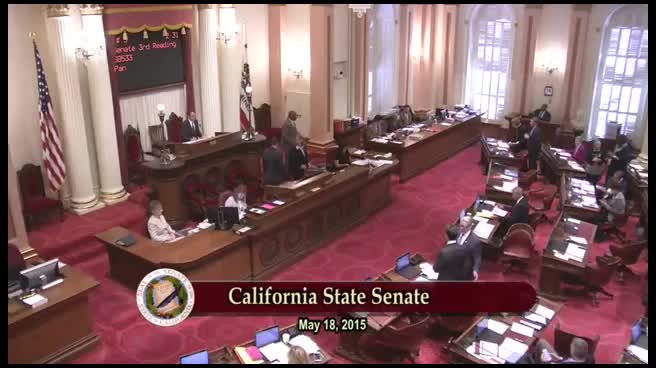 1MIN
Senate Floor
 4MIN
Senate Standing Committee on Business, Professions and Economic Development
Bill Author

Bill Co-Author(s):