SB 622: Optometry.
- Session Year: 2015-2016
- House: Senate
- Latest Version Date: 2016-06-22
The Optometry Practice Act provides for the licensure and regulation of the practice of optometry by the State Board of Optometry, and defines the practice of optometry to include, among other things, the prevention and diagnosis of disorders and dysfunctions of the visual system, and the treatment and management of certain disorders and dysfunctions of the visual system, as well as the provision of rehabilitative optometric services, and doing certain things, including, but not limited to, the examination of the human eyes, the determination of the powers or range of human vision, and the prescribing of contact and spectacle lenses. Existing law authorizes an optometrist certified to use therapeutic pharmaceutical agents to diagnose and treat specified conditions, use specified pharmaceutical agents, and order specified diagnostic tests. The act requires optometrists treating or diagnosing eye disease, as specified, to be held to the same standard of care to which physicians and surgeons and osteopathic physician and surgeons are held. The act requires an optometrist, in certain circumstances, to refer a patient to an ophthalmologist or a physician and surgeon, including when a patient has been diagnosed with a central corneal ulcer and the central corneal ulcer has not improved within 48 hours of the diagnosis. The act makes a violation of any of its provisions a crime. All moneys collected pursuant to the act, except where otherwise provided, are deposited in the Optometry Fund and continuously appropriated to the board to carry out the act.
This bill would revise and recast those provisions. The bill would delete certain requirements that an optometrist refer a patient to an ophthalmologist or a physician and surgeon, including when a patient has been diagnosed with a central corneal ulcer and the central corneal ulcer has not improved within 48 hours of the diagnosis. The bill would additionally define the practice of optometry as the provision of habilitative optometric services, and would authorize the board to allow optometrists to use nonsurgical technology to treat any authorized condition under the act. The bill would additionally authorize an optometrist certified to use therapeutic pharmaceutical agents to collect blood by skin puncture or venipuncture, to perform skin tests, as specified, to diagnose ocular allergies, and to use mechanical lipid extraction of meibomian glands and nonsurgical techniques. The bill would require the board to grant an optometrist certified to treat glaucoma a certificate for the use of specified immunizations if certain conditions are met, including, among others, that the optometrist is certified in basic life support. The bill would additionally authorize an optometrist certified to use therapeutic pharmaceutical agents to, among other things, be certified to use anterior segment lasers, as specified, and to be certified to perform specified minor procedures, as specified, if certain requirements are met.
The bill would require the board to charge a fee of not more than $150 to cover the reasonable regulatory cost of certifying an optometrist to use anterior segment lasers, a fee of not more than $150 to cover the reasonable regulatory cost of certifying an optometrist to use minor procedures, and a fee of not more than $100 to cover the reasonable regulatory cost of certifying an optometrist to use immunizations. Because this bill would increase those moneys deposited in a continuously appropriated fund, it would make an appropriation.
Existing law establishes the Office of Statewide Health Planning and Development, which is vested with all the duties, powers, responsibilities, and jurisdiction of the State Department of Public Health relating to health planning and research development.
This bill would declare the intent of the Legislature that the Office of Statewide Health Planning and Development designate a pilot project to test, demonstrate, and evaluate expanded roles for optometrists in the performance of management and treatment of diabetes mellitus, hypertension, and hypercholesterolemia.
Because a violation of the act is a crime, this bill would expand the scope of an existing crime and would, therefore, result in a state-mandated local program.
The California Constitution requires the state to reimburse local agencies and school districts for certain costs mandated by the state. Statutory provisions establish procedures for making that reimbursement.
This bill would provide that no reimbursement is required by this act for a specified reason.
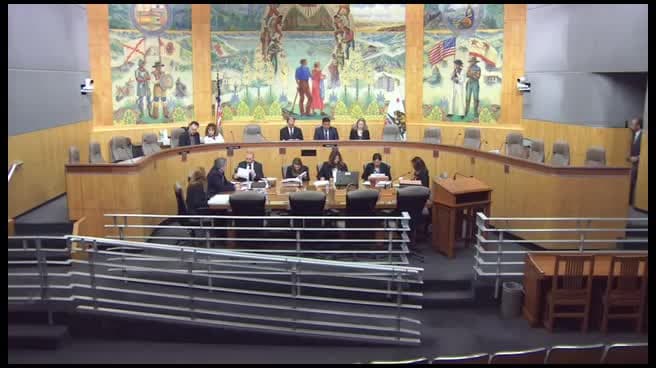
Discussed in Hearing
View Older Hearings