SB 633: Consumer protection: “Made in U.S.A.” label.
- Session Year: 2015-2016
- House: Senate
- Latest Version Date: 2015-09-01
Existing law prohibits the sale or offering of sale in the state of any merchandise on which merchandise or on its container appears the words, Made in U.S.A., Made in America, U.S.A., or similar words when the merchandise or any article, unit, or part thereof, has been entirely or substantially made, manufactured, or produced outside of the United States.
This bill would exempt from the prohibition merchandise made, manufactured, or produced in the United States if either the merchandise has one or more articles, units, or parts from outside the United States if they do not constitute more than 5% of the final wholesale value of the product or the manufacturer makes a specified showing regarding the articles, units, or parts from outside the United States and they do not constitute more than 10% of the final wholesale value of the product. The bill would also not apply to merchandise sold for resale to consumers outside of the state. Merchandise offered or sold outside the state would not be deemed mislabeled if the label conforms to the law of that state or country.
Existing law prohibits the sale or offering of sale in the state of any merchandise on which merchandise or on its container appears the words, Made in U.S.A., Made in America, U.S.A., or similar words when the merchandise or any article, unit, or part thereof, has been entirely or substantially made, manufactured, or produced outside of the United States.
This bill would exempt from the prohibition merchandise made, manufactured, or produced in the United States if either the merchandise has one or more articles, units, or parts from outside the United States if they do not constitute more than 5% of the final wholesale value of the product or the manufacturer makes a specified showing regarding the articles, units, or parts from outside the United States and they do not constitute more than 10% of the final wholesale value of the product. The bill would also exempt merchandise sold for resale to consumers outside of the state.
Existing law prohibits the sale or offering of sale in the state of any merchandise on which merchandise or on its container appears the words, Made in U.S.A., Made in America, U.S.A., or similar words when the merchandise or any article, unit, or part thereof, has been entirely or substantially made, manufactured, or produced outside of the United States.
This bill would exempt from the prohibition merchandise made, manufactured, or produced in the United States if either the merchandise has an article, unit, or part that does one or more articles, units, or parts from outside the United States if they do not constitute more than 5% of the final product or the manufacturer makes a specified showing regarding the articles, units, or parts from outside the United States and the article, unit, or part does they do not constitute more than 10% of the final product. The bill would also exempt merchandise sold for resale to consumers outside of the state.
Existing law prohibits the sale or offering of sale in the state of any merchandise on which merchandise or on its container appears the words, Made in U.S.A., Made in America, U.S.A., or similar words when the merchandise or any article, unit, or part thereof, has been entirely or substantially made, manufactured, or produced outside of the United States.
This bill, instead, bill would make it unlawful for any person, firm, corporation, or association to sell, or offer for sale, merchandise that advertises itself as being made or manufactured in the United States unless the merchandise has been all or virtually all made in the United States, and provides that all or virtually all has the same meaning as in a specified policy statement of the Federal Trade Commission exempt from the prohibition merchandise made, manufactured, or produced in the United States if either the merchandise has an article, unit, or part that does not constitute more than 5% of the final product or the manufacturer makes a specified showing and the article, unit, or part does not constitute more than 10% of the final product. The bill would also exempt merchandise sold for resale to consumers outside of the state.
Existing law prohibits the sale or offering of sale in the state of any merchandise on which merchandise or on its container appears the words, Made in U.S.A., Made in America, U.S.A., or similar words when the merchandise or any article, unit, or part thereof, has been entirely or substantially made, manufactured, or produced outside of the United States.
This bill would declare the intent of the Legislature to enact legislation that would update the Made in U.S.A. labeling standard to allow California based companies that manufacture their products within the state while employing state residents to utilize this label even if their products contain insignificant components not available in the United States.
This bill, instead, would make it unlawful for any person, firm, corporation, or association to sell, or offer for sale, merchandise that advertises itself as being made or manufactured in the United States unless the merchandise has been all or virtually all made in the United States, and provides that all or virtually all has the same meaning as in a specified policy statement of the Federal Trade Commission.
Existing law prohibits the sale or offering of sale in the state of any merchandise on which merchandise or on its container appears the words, Made in U.S.A., Made in America, U.S.A., or similar words when the merchandise or any article, unit, or part thereof, has been entirely or substantially made, manufactured, or produced outside of the United States.
This bill would declare the intent of the Legislature to enact legislation that would update the Made in U.S.A. labeling standard to allow California based companies that manufacture their products within the state while employing state residents to utilize this label even if their products contain insignificant components not available in the United States.
(a)It is unlawful for any person, firm, corporation, or association to sell or offer for sale in this state any merchandise on which merchandise or on its container there appears the words Made in U.S.A., Made in America, U.S.A., or similar words if the merchandise or any article, unit, or part thereof, has been entirely or substantially made, manufactured, or produced outside of the United States.
(b)This section shall not apply to merchandise made, manufactured, or produced in the United States that has one or more articles, units, or parts from outside of the United States, if all of the articles, units, or parts of the merchandise obtained from outside the United States constitute not more than 5 percent of the final wholesale value of the manufactured product.
(c)(1)This section shall not apply to merchandise made, manufactured, or produced in the United States that has one or more articles, units, or parts from outside of the United States, if both of the following apply:
(A)The manufacturer of the merchandise shows that it can neither produce the article, unit, or part within the United States nor obtain the article, unit, or part of the merchandise from a domestic source.
(B)All of the articles, units, or parts of the merchandise obtained from outside the United States constitute not more than 10 percent of the final wholesale value of the manufactured product.
(2)The determination that the article, unit, or part of the merchandise cannot be made, manufactured, produced, or obtained within the United States from a domestic source shall not be based on the cost of the article, unit, or part.
(d)This section shall not apply to merchandise sold for resale to consumers outside of California.
(e)For purposes of this section, merchandise sold or offered for sale outside of California shall not be deemed mislabeled if the label conforms to the law of the forum state or country within which they are sold or offered for sale.
(a)It is unlawful for any person, firm, corporation, or association to sell or offer for sale in this state any merchandise on which merchandise or on its container there appears the words Made in U.S.A., Made in America, U.S.A., or similar words if the merchandise or any article, unit, or part thereof, has been entirely or substantially made, manufactured, or produced outside of the United States.
(b)This section shall not apply to merchandise made, manufactured, or produced in the United States that has one or more articles, units, or parts from outside of the United States, if all of the articles, units, or parts of the merchandise obtained from outside the United States constitute not more than 5 percent of the final wholesale value of the manufactured product.
(c)(1)This section shall not apply to merchandise made, manufactured, or produced in the United States that has one or more articles, units, or parts from outside of the United States, if both of the following apply:
(A)The manufacturer of the merchandise shows that it can neither produce the article, unit, or part within the United States nor obtain the article, unit, or part of the merchandise from a domestic source.
(B)All of the articles, units, or parts of the merchandise obtained from outside the United States constitute not more than 10 percent of the final wholesale value of the manufactured product.
(2)The determination that the article, unit, or part of the merchandise cannot be made, manufactured, produced, or obtained within the United States from a domestic source shall not be based on the cost of the article, unit, or part.
(d)This section shall not apply to merchandise sold for resale to consumers outside of California.
(e)For purposes of this section, goods merchandise sold or offered for sale outside of California shall not be deemed mislabeled if the label conforms to the law of the forum state or country within which they are sold or offered for sale.
(a)It is unlawful for any person, firm, corporation corporation, or association to sell or offer for sale in this state any merchandise on which merchandise or on its container there appears the words Made in U.S.A., Made in America, U.S.A., or similar words if the merchandise or any article, unit, or part thereof, has been entirely or substantially made, manufactured, or produced outside of the United States.
(b)This section shall not apply to merchandise made, manufactured, or produced in the United States that has an article, unit, or part one or more articles, units, or parts from outside of the United States, if the article, unit, or part all of the articles, units, or parts of the merchandise obtained from outside the United States constitutes constitute not more than 5 percent of the final manufactured product.
(c)(1)This section shall not apply to merchandise made, manufactured, or produced in the United States that has an article, unit, or part one or more articles, units, or parts from outside of the United States, if both of the following apply:
(A)The manufacturer of the merchandise shows that it can neither produce the article, unit, or part within the United States nor obtain the article, unit, or part of the merchandise from a domestic source.
(B)The article, unit, or part All of the articles, units, or parts of the merchandise obtained from outside the United States constitutes constitute not more than 10 percent of the final manufactured product.
(2)The determination that the article, unit, or part of the merchandise cannot be made, manufactured, produced, or obtained within the United States from a domestic source shall not be based on the cost of the article, unit, or part.
(d)This section shall not apply to merchandise sold for resale to consumers outside of California.
(e)For purposes of this section, goods sold or offered for sale outside of California shall not be deemed mislabeled if the label conforms to the law of the forum state or country within which they are sold or offered for sale.
(a)It is unlawful for any person, firm, corporation or association to sell or offer for sale in this state any merchandise on which merchandise or on its container there appears the words Made in U.S.A., Made in America, U.S.A., or similar words unless the merchandise has been all or virtually all made in if the merchandise or any article, unit, or part thereof, has been entirely or substantially made, manufactured, or produced outside of the United States.
(b)For purposes of subdivision (a), merchandise that is all or virtually all made in the United States has the same meaning as in the Enforcement Policy Statement on U.S. Origin Claims issued by the Federal Trade Commission (62 Fed. Reg. 63756 (Dec. 2, 1997)).
(b)This section shall not apply to merchandise made, manufactured, or produced in the United States that has an article, unit, or part from outside of the United States, if the article, unit, or part of the merchandise obtained from outside the United States constitutes not more than 5 percent of the final manufactured product.
(c)(1)This section shall not apply to merchandise made, manufactured, or produced in the United States that has an article, unit, or part from outside of the United States, if both of the following apply:
(A)The manufacturer of the merchandise shows that it can neither produce the article, unit, or part within the United States nor obtain the article, unit, or part of the merchandise from a domestic source.
(B)The article, unit, or part of the merchandise obtained from outside the United States constitutes not more than 10 percent of the final manufactured product.
(2)The determination that the article, unit, or part of the merchandise cannot be made, manufactured, produced, or obtained within the United States from a domestic source shall not be based on the cost of the article, unit, or part.
(d)This section shall not apply to merchandise sold for resale to consumers outside of California.
(e)For purposes of this section, goods sold or offered for sale outside of California shall not be deemed mislabeled if the label conforms to the law of the forum state or country within which they are sold or offered for sale.
(a)It is unlawful for any person, firm, corporation or association to sell or offer for sale in this State state any merchandise on which merchandise or on its container there appears the words Made in U.S.A. U.S.A., Made in America, U. S.A., or similar words when unless the merchandise or any article, unit, or part thereof, has been entirely or substantially made, manufactured, or produced outside of all or virtually all made in the United States.
(b)For purposes of subdivision (a), merchandise that is all or virtually all made in the United States has the same meaning as in the Enforcement Policy Statement on U.S. Origin Claims issued by the Federal Trade Commission (62 Fed. Reg. 63756 (Dec. 2, 1997)).
SECTION 1.It is the intent of the Legislature to enact legislation that would update Californias Made in U.S.A. labeling standard, which was enacted in 1961, to allow California based companies that manufacture their products within the state while employing state residents to utilize the Made in the U.S.A. label even if their products contain insignificant components that are not available in the United States.
It is the intent of the Legislature to enact legislation that would update Californias Made in U.S.A. labeling standard, which was enacted in 1961, to allow California based companies that manufacture their products within the state while employing state residents to utilize the Made in the U.S.A. label even if their products contain insignificant components that are not available in the United States.
|
Date
|
Status
|
|---|---|
| Jun 11, 2015 | Referred to Com. on P. & C.P. |
| Sep 1, 2015 | Chaptered by Secretary of State. Chapter 238, Statutes of 2015. |
| Sep 1, 2015 | Approved by the Governor. |
| Aug 20, 2015 | Enrolled and presented to the Governor at 4:15 p.m. |
| Aug 17, 2015 | Assembly amendments concurred in. (Ayes 37. Noes 0.) Ordered to engrossing and enrolling. |
| Aug 17, 2015 | Assembly amendments concurred in. (Ayes 37. Noes 0. Page 2048.) Ordered to engrossing and enrolling. |
| Jul 16, 2015 | Read third time. Passed. (Ayes 77. Noes 0. Page 2430.) Ordered to the Senate. |
| Jul 16, 2015 | Read third time. Passed. Ordered to the Senate. |
| Jul 16, 2015 | In Senate. Concurrence in Assembly amendments pending. |
| Jul 14, 2015 | Read second time. Ordered to third reading. |
| Jul 13, 2015 | Read second time and amended. Ordered to second reading. |
| Jul 9, 2015 | From committee: Do pass as amended. (Ayes 11. Noes 0.) (July 7). |
| Jul 2, 2015 | From committee with author's amendments. Read second time and amended. Re-referred to Com. on P. & C.P. |
| Feb 27, 2015 | Introduced. To Com. on RLS. for assignment. To print. |
| May 22, 2015 | Read third time. Passed. (Ayes 39. Noes 0.) Ordered to the Assembly. |
| May 22, 2015 | Read third time. Passed. (Ayes 39. Noes 0. Page 1062.) Ordered to the Assembly. |
| May 22, 2015 | In Assembly. Read first time. Held at Desk. |
| May 19, 2015 | Read second time and amended. Ordered to third reading. |
| May 18, 2015 | From committee: Do pass as amended. (Ayes 7. Noes 0. Page 984.) (May 12). |
| May 5, 2015 | Set for hearing May 12. |
| Apr 16, 2015 | Re-referred to Com. on JUD. |
| Apr 14, 2015 | From committee with author's amendments. Read second time and amended. Re-referred to Com. on RLS. |
| Mar 12, 2015 | Referred to Com. on RLS. |
| Mar 2, 2015 | Read first time. |
| Mar 2, 2015 | From printer. May be acted upon on or after April 1. |
|
Date
|
Description
|
Location
|
Votes
|
|
|---|---|---|---|---|
| Aug 17, 2015 | Unfinished Business SB633 Hill Concurrence | Senate Floor |
Passed |
|
| Jul 16, 2015 | SB 633 Hill Senate Third Reading By JONES | Assembly Floor |
Passed |
|
| Jul 7, 2015 | Do pass as amended. | Assembly Standing Committee on Privacy and Consumer Protection |
Passed |
|
| May 22, 2015 | Senate 3rd Reading SB633 Hill | Senate Floor |
Passed |
|
| May 12, 2015 | Do pass as amended | Senate Standing Committee on Judiciary |
Passed |
This list shows positions taken on this bill by organizations on the date displayed, which is linked to the original source.
Positions by individuals are not included.
|
Organization
|
Position
|
Date
|
|---|---|---|
| American Coatings Association | ** Support | Aug 17, 2015 |
| American Codings Association | * Indeterminate | Jul 7, 2015 |
| California Conference Board Of The Amalgamated Transit Union | ** Against | May 22, 2015 |
| California Conference Of Machinists | ** Against | May 22, 2015 |
| California Manufacturers And Technology Association | * Support | May 12, 2015 |
| California Paint Council | ** Support | Aug 17, 2015 |
| California Retailers Association | ** Support | Aug 17, 2015 |
| California Teamsters Public Affairs Council | ** Against | May 22, 2015 |
| Chamber of Commerce of the Santa Barbara Region | ** Support | May 22, 2015 |
| Consumer Federation Of California | * Indeterminate | Jul 7, 2015 |
| Consumer Federation Of California | * Against | Jul 7, 2015 |
| Consumer Specialty Products Association | ** Support | Aug 17, 2015 |
| Del Mar Law Group, LLP | ** Against | May 22, 2015 |
| Engineers and Scientists of California | ** Against | May 22, 2015 |
| International Federation of Professional and Technical Engineers | ** Against | May 22, 2015 |
| International Longshore and Warehouse Union | ** Against | May 22, 2015 |
| Lifetime Products | * Support | May 12, 2015 |
| Made in USA Foundation | * Support | May 12, 2015 |
| Mag Instrument | * Support | May 12, 2015 |
| National Federation Of Independent Business | ** Support | Aug 17, 2015 |
| Oxnard Chamber of Commerce | ** Support | Aug 17, 2015 |
| San Francisco Chamber of Commerce | ** Support | Aug 17, 2015 |
| Silicon Valley Leadership Group | ** Support | Aug 17, 2015 |
| Small Business California | ** Support | Aug 17, 2015 |
| Specialty Equipment Market Association | ** Support | Aug 17, 2015 |
| UNITE-HERE, AFL-CIO | ** Against | May 22, 2015 |
| Utility Workers Union of America | ** Against | May 22, 2015 |
SB 633
Page 7
|
Office of Senate Floor Analyses (916) 651-1520 Fax: (916) 327-4478 |
UNFINISHED BUSINESS
Bill No: SB 633
Amended: 7/13/15
SENATE JUDICIARY COMMITTEE: 7-0, 5/12/15
AYES: Jackson, Moorlach, Anderson, Hertzberg, Leno, Monning, Wieckowski
SENATE FLOOR: 39-0, 5/22/15
AYES: Allen, Anderson, Bates, Beall, Berryhill, Block, Cannella, De León, Fuller, Gaines, Galgiani, Hall, Hancock, Hernandez, Hertzberg, Hill, Hueso, Huff, Jackson, Lara, Leno, Leyva, Liu, McGuire, Mendoza, Mitchell, Monning, Moorlach, Morrell, Nguyen, Nielsen, Pan, Pavley, Roth, Runner, Stone, Vidak, Wieckowski, Wolk
ASSEMBLY FLOOR: 77-0, 7/16/15 - See last page for vote
SUBJECT: Consumer protection: “Made in U.S.A.” label
DIGEST: This bill prohibits the sale of merchandise labeled “Made in U.S.A.,” “Made in America,” “U.S.A.,” or similar words if the merchandise or any article, unit, or part thereof, has been entirely or substantially made, manufactured, or produced outside of the United States, unless: (1) the articles, units, or parts of the merchandise obtained from outside the United States constitute not more than five percent of the final manufactured product; or (2) the articles, units, or parts of the merchandise obtained from outside the United States constitute not more than 10 percent of the final manufactured product and the manufacturer of the merchandise shows that it can neither produce the articles, units, or parts within the United States nor obtain the articles, units, or parts from a domestic source, as specified.
Assembly Amendments clarify that the exemptions for merchandise with content obtained from outside the United States apply to products with one or more articles, units, or parts from a foreign source, and that the exemptions are measured based on the final wholesale value of the manufactured product.
Existing federal law:
Authorizes the Federal Trade Commission to regulate country of origin claims pursuant to authority granted to it under the Federal Trade Commission Act, which prohibits “unfair or deceptive acts or practices.” (15 U.S.C. Sec. 45.)
Requires that a “Made in U.S.A.” label be consistent with orders and decisions of the Federal Trade Commission. (15 U.S.C. Sec. 45a.)
Existing state law:
Protects consumers and competitors against unlawful, unfair or fraudulent business acts or practices and unfair, deceptive, untrue, or misleading advertising. (Bus. & Prof. Code Sec. 17200 et seq.)
Makes it unlawful for any person, firm, corporation or association, or any employee thereof, to make or disseminate before the public in this state, in any newspaper or other publication or in any other manner or means whatever, any statement concerning personal property which is untrue or misleading, and which is known, or which by the exercise of reasonable care should be known, to be untrue or misleading. (Bus. & Prof. Code Sec. 17500 et seq.)
Provides that the following are unfair methods of competition and unfair or deceptive acts or practices: (a) using deceptive representations or designations of geographic origin in connection with goods or services; and (b) misrepresenting the source of goods or services. (Civ. Code Sec. 1770.)
Makes it unlawful for any person, firm, corporation or association to sell or offer for sale in this state any merchandise on which merchandise or on its container there appears the words “Made in U.S.A.,” “Made in America,” “U.S.A.,” or similar words when the merchandise or any article, unit, or part thereof, has been entirely or substantially made, manufactured, or produced outside of the United States. (Bus. & Prof. Code Sec. 17533.7.)
This bill:
Provides that merchandise made, manufactured, or produced in the United States that has one or more articles, units, or parts from outside of the United States may be labeled “Made in U.S.A.,” “Made in America,” “U.S.A.,” or similar words if all of the articles, units, or parts of the merchandise obtained from outside the United States constitute not more than five percent of the final wholesale value of the manufactured product.
Provides that merchandise made, manufactured, or produced in the United States that has one or more articles, units, or parts from outside of the United States may be labeled “Made in U.S.A.,” “Made in America,” “U.S.A.,” or similar words if both of the following apply:
The manufacturer of the merchandise shows that it can neither produce the article, unit, or part within the United States nor obtain the article, unit, or part of the merchandise from a domestic source; and
All of the articles, units, or parts of the merchandise obtained from outside the United States constitute not more than 10 percent of the final wholesale value of the manufactured product.
Specifies that, for purposes of the above provision, a determination that an article, unit, or part of the merchandise cannot be made, manufactured, produced, or obtained within the United States from a domestic source shall not be based on the cost of the article, unit, or part.
Provides that California’s domestic origin labeling law shall not apply to merchandise sold for resale to consumers outside of the State of California.
States that merchandise sold or offered for sale outside of the State of California shall not be deemed mislabeled if the label conforms to the law of the forum state or country within which they are sold or offered for sale.
Background
The Legislature has long considered consumer protection to be a matter of high public importance. State law is replete with statutes aimed at protecting California consumers from unfair, dishonest, or harmful market practices. The Consumer Legal Remedies Act (Civ. Code Sec. 1750 et seq.), for example, was enacted “to protect the statute’s beneficiaries from deceptive and unfair business practices,” and to provide aggrieved consumers with “strong remedial provisions for violations of the statute.” (Am. Online, Inc. v. Superior Court (2001) 90 Cal.App.4th 1, 11.) Similarly, California’s Unfair Practices Act (Bus. & Prof. Code Sec. 17000 et seq.) has protected California consumers from “unlawful, unfair or fraudulent business act[s] or practice[s]” for over 70 years. (Bus. & Prof. Code Sec. 17200.)
Consumer protection regarding country of origin labeling is no less a matter of fundamental public policy. Since 1961, California has expressly required that businesses meet certain standards before they can claim that their products are “Made in U.S.A.” California law prohibits a product from being labeled and sold in California as “Made in U.S.A.” or “Made in America” when the product, or any article, unit, or part of the product, has been entirely or substantially made outside of the United States. California courts have observed that “[this law] does not state . . . that a product may be represented as ‘Made in U.S.A.’ if a substantial number or a majority of its parts are made in the United States,” but rather that “merchandise cannot be represented as ‘Made in U.S.A.’ if the merchandise, or any article, unit, or part of that merchandise, was entirely or substantially made, manufactured, or produced outside of the United States.” (See e.g. Colgan v. Leatherman Tool Group, Inc. (2006) 135 Cal.App.4th 663, 684 [emphasis added].) Because the law prohibits the use of the label if any component part of a product is entirely or substantially made outside the United States, California law essentially requires a product to be entirely made in the United States in order to be labeled as such.
This bill modifies California’s domestic content threshold for labeling a product as “Made in the U.S.A.” by making it lawful to sell merchandise with this label, provided either no more than five percent of the merchandise is obtained from outside the United States, or no more than 10 percent of the merchandise is obtained from outside the United States and the manufacturer shows that it can neither produce the foreign article, unit, or part within the United States nor obtain the foreign article, unit, or part of the merchandise from a domestic source, as specified.
Comments
According to the author:
Under existing California law (Section 17533.7 of the Business and Professions Code), a product may not be sold in California as “Made in U.S.A.” or “Made in America” if the product, or any article, unit, or part of the product, has been entirely or substantially made, manufactured, or produced outside of the United States.
California’s “Made in USA” labeling standard was created in 1961 to “prevent foreign firms from taking advantage of ‘buy American’ promotions.” This was a different era, when the global economy was nascent. The statute establishes a 100 percent domestic requirement, meaning that all products used in a manufactured product must come from domestic sources. In today’s complex and global economy this is an unrealistic threshold for many modern companies that manufacture products with many different components, some of which may not be available domestically.
California is the only state in the country that establishes a 100 percent domestic requirement. All 49 other states and the federal government use the more flexible “all or virtually all” standard for determining when a product is eligible to be labeled as “Made in USA.” This standard requires that the significant parts of a final manufactured product come from domestic sources. But, the standard also allows a product to contain a negligible amount of foreign sourced material. As an example, New Balance sneakers are made from roughly 70 percent domestic sources and the Federal Trade Commission allows them to advertise as “Made in USA.”
Even if a company goes out of their way to meet California’s 100 percent “Made in USA” labeling threshold, it is not always possible due to the nature of our global economy. Certain components are simply not available in the U.S.
Related/Prior Legislation
AB 312 (Jones, 2015) provides that a product may be advertised as being made or manufactured in the United States if the merchandise has been all or virtually all made in the United States. The bill is pending in the Senate Judiciary Committee.
AB 2624 (Medina, 2014) would have made it unlawful to sell any product that contains the words “Made in North America,” “North American Made,” or similar words on the product or its container unless all or virtually all of the product was made in the United States, Canada, or Mexico. The bill would have also added misrepresenting a product as made in North America to the list of unfair methods of competition and unfair or deceptive acts or practices actionable under the Consumers Legal Remedies Act. The bill died on the Senate Inactive File.
SB 661 (Hill, 2014) would have provided that merchandise made, manufactured, or produced in the United States that has an article, unit, or part from outside of the United States may be labeled and sold in California as “Made in U.S.A.” or “Made in America” if the following requirements are met: (1) the manufacturer of the merchandise certifies that it can neither produce the article, unit, or part within the United States nor obtain the article, unit, or part of the merchandise from a domestic source; (2) the manufacturer’s determination that the article, unit, or part cannot be produced or obtained within the United States from a domestic source is not based on the cost of the article, unit, or part; and (3) the article, unit, or part of the merchandise obtained from outside the United States constitutes only a negligible part of the final manufactured product. The bill failed passage in the Senate Judiciary Committee on a 2-5 vote.
AB 890 (Jones, 2013) would have provided that a product sold in California could carry the label “Made in U.S.A.” if it was substantially made, manufactured, or produced in the United States as measured by the following criteria: at least 90 percent of the components, parts, articles, or units of the merchandise were manufactured in the United States; United States manufacturing costs constitute at least 90 percent of the total manufacturing costs for the merchandise; and the merchandise was last substantially transformed or assembled in the United States. The bill failed passage in the Senate Judiciary Committee on a 2-5 vote.
AB 858 (Jones, 2012) was substantially similar to AB 312 (Jones, 2015). The bill failed passage in the Senate Judiciary Committee on a 2-3 vote.
ABX6-8 (Beall, 2010), which was identical to AB 858 (Jones, 2012), was introduced in the Sixth Extraordinary Session but was never referred to a policy committee.
SB 1004 (Holmdahl, Chapter 676, Statutes of 1961) codified California’s “Made in the U.S.A.” law, making it unlawful for any person, firm, corporation, or association to sell or offer for sale any merchandise that advertises itself as being made or manufactured in the United States when any article, unit, or part of the merchandise has been entirely or substantially made, manufactured, or produced outside of the United States.
FISCAL EFFECT: Appropriation: No Fiscal Com.: No Local: No
American Coatings Association
California Manufacturers & Technology Association
California Paint Council
California Retailers Association
Consumer Specialty Products Association
National Federation of Independent Business
Oxnard Chamber of Commerce
San Francisco Chamber of Commerce
Silicon Valley Leadership Group
Small Business California
Specialty Equipment Market Association
OPPOSITION: (Verified 8/10/15)
California Conference Board of the Amalgamated Transit Union
California Conference of Machinists
California Teamsters Public Affairs Council
Consumer Federation of California
Del Mar Law Group, LLP
Engineers and Scientists of California
International Federation of Professional and Technical Engineers
International Longshore and Warehouse Union
Unite-Here, AFL-CIO
Utility Workers Union of America
ASSEMBLY FLOOR: 77-0, 7/16/15
AYES: Achadjian, Alejo, Travis Allen, Baker, Bigelow, Bloom, Bonilla, Bonta, Brough, Brown, Burke, Calderon, Campos, Chang, Chau, Chávez, Chiu, Chu, Cooley, Cooper, Dababneh, Dahle, Daly, Dodd, Eggman, Frazier, Beth Gaines, Gallagher, Cristina Garcia, Eduardo Garcia, Gatto, Gipson, Gomez, Gray, Grove, Hadley, Harper, Roger Hernández, Holden, Irwin, Jones, Jones-Sawyer, Kim, Lackey, Levine, Linder, Lopez, Low, Maienschein, Mathis, Mayes, McCarty, Medina, Melendez, Mullin, Nazarian, Obernolte, O'Donnell, Olsen, Patterson, Perea, Quirk, Ridley-Thomas, Rodriguez, Salas, Santiago, Steinorth, Mark Stone, Thurmond, Ting, Wagner, Waldron, Weber, Wilk, Williams, Wood, Atkins
NO VOTE RECORDED: Gonzalez, Gordon, Rendon
Prepared by: Tobias Halvarson / JUD. / (916) 651-4113
8/13/15 13:04:26
**** END ****
SB 633
Page 2
SENATE THIRD READING
SB 633
(Hill)
As Amended July 13, 2015
Majority vote
SENATE VOTE: 39-0
Committee |
Votes |
Ayes |
Noes |
Privacy |
11-0 |
Gatto, Wilk, Baker, Calderon, Chang, Chau, Cooper, Dababneh, Dahle, Gordon, Low |
|
SUMMARY: Permits merchandise with the words "Made in U.S.A." to be offered for sale if no more than 5% of the final wholesale value of the product is foreign-made, or no more than 10% is foreign-made if the content could not be produced or obtained domestically, regardless of cost. Specifically, this bill:
Permits merchandise with the words "Made in U.S.A." or similar words to be sold or offered for sale in California if not more than 5% of the final wholesale value of the manufactured product consists of articles, units or parts obtained from outside the United States (US).
Permits merchandise with the words "Made in U.S.A." or similar words to be sold or offered for sale in California if not more than 10% of the final wholesale value of the manufactured product consists of articles, units or parts obtained from outside the US, and the manufacturer cannot produce or obtain the articles, units or parts domestically, regardless of cost.
Declares that the prohibitions and exceptions for use of the "Made in U.S.A." label shall not apply to merchandise sold for resale to consumers outside of California.
Clarifies that merchandise sold or offered for sale outside of California shall not be deemed mislabeled if the label conforms to the law of the forum state or country within which they are sold or offered for sale.
Makes other technical or nonsubstantive changes.
EXISTING LAW:
Generally protects consumers and competitors against false or misleading advertising. (Business and Professions Code (BPC) Section 17500, et seq.)
Makes it unlawful for any person, firm, corporation, or association to sell, or offer for sale, merchandise that advertises itself as being made or manufactured in the US when any article, unit, or part of the merchandise has been entirely or substantially made, manufactured, or produced outside of the US. (BPC Section 17533.7)
Authorizes the Federal Trade Commission (FTC) to regulate claims of US origin pursuant to authority granted to it under the FTC Act, which prohibits "unfair or deceptive acts or practices." (15 United States Code (USC) Section 45)
Requires that a "Made in U.S.A." label be consistent with orders and decisions of the FTC. (15 USC Section 45 (a))
Provides, in the form of a policy statement, that a product may be labeled as "Made in U.S.A." if the product is all or virtually all made in the US; however, a product using such a label may contain – in a negligible amount – components made outside of the US. ("Enforcement Policy Statement on U.S. Origin Claims," FTC, 62 Federal Regulations Section 63756 (December 2, 1997))
FISCAL EFFECT: None. This bill has been keyed non-fiscal by the Legislative Counsel.
COMMENTS: This bill is intended to permit a domestically produced product to bear a "Made in USA" label even if up to 5% of the final wholesale value of the product contains foreign-produced content, or up to 10% foreign content if the article, unit or part could not be obtained in the US. This bill is author-sponsored.
California is unique within the US for having its own statutory standard for use of the term "Made in U.S.A." California's law is different from – and, in practice, stricter than – the federal standard laid out in the FTC's December 1997 Enforcement Policy Statement on US Origin Claims (the "FTC Standard").
The FTC is charged with preventing deception and unfairness in the marketplace. Federal law gives the FTC power to bring enforcement actions against false or misleading claims that a product is of US origin. The FTC's standard requires that for any unqualified "Made in U.S.A." claim, the product must be "all or virtually all" made in the US. According to the FTC, "all or virtually all" means that "all significant parts and processing that go into the product must be of US origin. That is, the product should contain no – or negligible – foreign content." The precise meaning of "negligible" is not provided, meaning that it will be understood and applied on a case-by-case basis. Any unqualified claim must have a reasonable basis in fact.
Conversely, California's Business and Professions Code states that it is unlawful to sell or offer merchandise in California with the words "Made in U.S.A." or similar wording when the merchandise or any part thereof has been entirely or substantially made, manufactured, or produced outside of the United States. This provision was added to the BPC in 1961.
Courts have interpreted this requirement strictly, holding that any merchandise containing even one part that is foreign made or assembled may not be marketed as "Made in U.S.A." (Colgan v. Leatherman Tool Group, Inc. (2006) 135 Cal.App.4th 663). As such, California's domestic production standard for use of the "Made in USA" designation is effectively 100%.
Analysis Prepared by: Hank Dempsey / P. & C.P. / (916) 319-2200 FN: 0001242
SB 633
Page 8
Date of Hearing: July 7, 2015
ASSEMBLY COMMITTEE ON PRIVACY AND CONSUMER PROTECTION
Mike Gatto, Chair
SB 633
(Hill) – As Amended July 2, 2015
SENATE VOTE: 39-0
SUBJECT: Consumer protection: “Made in U.S.A.” label.
SUMMARY: Permits merchandise with the words "Made in U.S.A." to be offered for sale if no more than 5% of the product is foreign made, or no more than 10% foreign made if the content could not be produced or obtained domestically, regardless of cost. Specifically, this bill:
Permits merchandise with the words "Made in U.S.A." to be sold or offered for sale in California if not more than 5% of the final manufactured product consists of articles, units or parts obtained from outside the United States (US).
Permits merchandise with the words "Made in U.S.A." to be sold or offered for sale in California if not more than 10% t of the final manufactured product consists of articles, units or parts obtained from outside the US, and the manufacturer shows that it cannot produce or obtain the article, unit or part domestically, regardless of cost.
Declares that the prohibitions and exceptions for use of the "Made in U.S.A." label shall not apply to merchandise sold for resale to consumers outside of California.
Clarifies that goods sold or offered for sale outside of California shall not be deemed mislabeled if the label conforms to the law of the forum state or country within which they are sold or offered for sale.
Makes other technical or nonsubstantive changes.
EXISTING LAW:
Generally protects consumers from unlawful, unfair and fraudulent business practices. (Business and Professions Code (BPC) Section 17200, et seq.)
Generally protects consumers and competitors against false or misleading advertising. (BPC 17500, et seq.)
Makes it unlawful for any person, firm, corporation, or association to sell, or offer for sale, merchandise that advertises itself as being made or manufactured in the US when any article, unit, or part of the merchandise has been entirely or substantially made, manufactured, or produced outside of the US. (BPC 17533.7)
Provides that the following are unfair methods of competition and unfair or deceptive acts or practices:
Using deceptive representations or designations of geographic origin in connection with goods or services; and,
Misrepresenting the source of goods or services. (Civil Code Section 1770)
Authorizes the FTC to regulate claims of US origin pursuant to authority granted to it under the FTC Act, which prohibits "unfair or deceptive acts or practices." (15 United States Code (USC) Section 45)
Requires that a “Made in U.S.A.” label be consistent with orders and decisions of the FTC. (15 U.S.C. 45 (a))
Provides, in the form of a policy statement, that a product may be labeled as “Made in U.S.A.” if the product is all or virtually all made in the US; however, a product using such a label may contain—in a negligible amount—components made outside of the US. ("Enforcement Policy Statement on U.S. Origin Claims," FTC, 62 Federal Regulations Section 63756 (Dec. 2, 1997))
Prohibits the use of a brand name of viticultural significance on wine produced, bottled, labeled, offered for sale or sold in California unless that wine meets the appellation requirements of federal regulation, as specified. (BPC 25242)
Provides, pursuant to federal regulation, that an American wine is entitled to use an appellation of origin if at least 75% of the wine is derived from fruit or agricultural products grown in the appellation area indicated, as specified. (27 U.S.C. 4.25(b)(1))
For purposes of inclusion in the Made in California Program, deems a product to be substantially made in California if at least 51% of the final product's wholesale value was manufactured, assembled, fabricated or made in the state to create a final, recognizable product. (Government Code Section 12098.10)
FISCAL EFFECT: None. This bill has been tagged nonfiscal by the Legislative Counsel.
COMMENTS:
Purpose of this bill. This bill is intended to permit a domestically produced product to bear a "Made in USA" label even if up to 5% of the product contains foreign-produced content, or up to 10% foreign content if the article, unit or part could not be obtained in the US. SB 633 is author-sponsored.
Author's statement. According to the author, "California’s 'Made in USA' labeling standard was created in 1961 to 'prevent foreign firms from taking advantage of ‘buy American’ promotions.' This was a different era, when the global economy was nascent. The statute establishes a 100% domestic requirement, meaning that all products used in a manufactured product must come from domestic sources. In today’s complex and global economy this is an unrealistic threshold for many modern companies that manufacture products with many different components, some of which may not be available domestically."
"Even if a company goes out of their way to meet California’s 100% 'Made in USA' labeling threshold, it is not always possible due to the nature of our global economy. Certain components are simply not available in the U.S. Bulldog-Lighting in Senator Hill’s district has experienced this issue. They make LED lights for vehicles and have done everything possible to manufacture their product domestically, creating jobs in California…However, some of the components for their printed circuit board are not made in the USA. They have tried to find them, but they don't exist so they can’t legally label their product as 'Made in USA' under the current standard.
"The real world impact of this is if Bulldog-Lighting wants to sell their products in any other state, they can label the products as 'Made in America.' If Bulldog-Lighting wants to sell their products here in California they cannot advertise them as 'Made in America.' Bulldog-Lighting, or any other California company in a similar situation, has to have two product packing lines with two separate labels – one for California and one for the rest of the country. By creating a realistic level of flexibility to California’s 'Made in USA' labeling…California companies like Bulldog Lighting would be able to utilize the 'Made in USA' label."
The Federal Trade Commission’s (FTC) "all or virtually all" standard. California is unique within the US for having its own statutory standard for use of the term "Made in U.S.A." California's law is different from – and, in practice, stricter than – the federal standard laid out in the FTC's December 1997 Enforcement Policy Statement on US Origin Claims (the "FTC Standard").
The FTC is charged with preventing deception and unfairness in the marketplace. Federal law gives the FTC power to bring enforcement actions against false or misleading claims that a product is of US origin. The FTC's standard requires that for any unqualified "Made in U.S.A." claim, the product must be "all or virtually all" made in the US. According to the FTC, "all or virtually all" means that "all significant parts and processing that go into the product must be of US origin. That is, the product should contain no – or negligible – foreign content." The precise meaning of "negligible" is not provided, meaning that it will be understood and applied on a case-by-case basis. Any unqualified claim must have a reasonable basis in fact.
The FTC's "all or virtually all" standard does require that the product's final assembly or processing take place in the US. The FTC also considers other factors as well, including how much of the product's total manufacturing costs can be assigned to US parts and processing, and how far removed any foreign content is from the finished product. Costs should be calculated based on the cost of goods sold or the inventory costs of the finished goods. Costs generally are limited to the total cost of all manufacturing materials, direct manufacturing labor, and manufacturing overhead.
The FTC offers two illustrative examples of its standard: First, a propane barbeque grill's major components are made in the US, but the knobs and tubing are made in Mexico. According to the FTC, a "Made in U.S.A." claim "is not likely to be deceptive because the knobs and tubing make up a negligible portion of the product's total manufacturing costs and are insignificant parts of the final product."
Second, a table lamp may be assembled in the US from American-made brass, with an American-made lampshade but an imported base. The base accounts for a small percent of the total cost of making the lamp. Nevertheless, the FTC writes that "[a]n unqualified 'Made in U.S.A.' claim is deceptive for two reasons: The base is not far enough removed in the manufacturing process from the finished product to be of little consequence and it is a significant part of the final product."
California's domestic sourcing standard. Conversely, California's Business and Professions Code states that it is unlawful to sell or offer merchandise in California with the words "Made in U.S.A." or similar wording when the merchandise or any part thereof has been entirely or substantially made, manufactured, or produced outside of the United States." This provision was added to the BPC in 1961.
Courts have interpreted this requirement strictly, holding that any merchandise containing even one part that is foreign made or assembled may not be marketed as "Made in U.S.A." (Colgan v. Leatherman Tool Group, Inc. (2006) 135 Cal.App.4th 663). As such, California's domestic production standard for use of the "Made in USA" designation is effectively 100%.
The Kwikset decision and enforcement of false advertising law. In January 2011, the California Supreme Court issued its decision in Kwikset Corp v. Super. Ct. (51 Cal.4th 310), in which the court held that four California consumers had standing to bring an action against Kwikset for falsely labeling its locks as “Made in U.S.A.” in California. While the decision largely addressed a separate legal question, the Court also discussed the importance of truthful claims of origin, stating:
"In particular, to some consumers, the 'Made in U.S.A.' label matters. A range of motivations may fuel this preference, from the desire to support domestic jobs, to beliefs about quality, to concerns about overseas environmental or labor conditions, to simple patriotism. The Legislature has recognized the materiality of this representation by specifically outlawing deceptive and fraudulent 'Made in America' representations… The object of section 17533.7 'is to protect consumers from being misled when they purchase products in the belief that they are advancing the interests of the United States and its industries and workers… The Legislature evidently recognized some companies were using or might be tempted to use inaccurate 'Made in America' labeling, that some consumers might be deceived by and rely on it, and that consumers and competitors who honestly made their wares in the United States and marketed them as such were being or would be harmed." (citations omitted) (Kwikset Corp. v. Super. Ct. (Jan. 27, 2011) 51 Cal.4th 310, 329.)
The practical import of the Kwikset case is that it made clear that consumers "who can truthfully allege they were deceived by a product's ['Made in America'] label into spending money to purchase the product, and would not have purchased it otherwise" have a right to bring suit under the Unfair Competition Law for violations of BPC 17533.7.
The author points out that in the earlier, preceding opinion from the
California Court of Appeal (Fourth District) in Benson v. Kwikset
from June 2007, which upheld the trial court's narrow reading of the
statute, the majority raised the possibility of a legislative
solution:
"We also share our dissenting colleague's angst about both the effect of this law, particularly in an age of global trade, and the potential for abuse that may arise under the unfair competition law. If we had the power to do so, we would rewrite the statute to address those concerns. But our Supreme Court has cautioned 'the judicial role in a democratic society is fundamentally to interpret laws, not to write them. The latter power belongs primarily to the people and the political branches of government. [Citation] It cannot be too often repeated that due respect for the political branches of our government requires us to interpret the laws in accordance with the expressed intention of the Legislature. This court has no power to rewrite the statute so as to make it conform to a presumed intention which is not expressed."
Other labeling standards used in California. Other types of labeling requirements for California products are more flexible than those for manufactured products. For example, California law for the labeling of wine defers to a federal regulatory standard that requires on 75% of a wine's grapes to come from the county of origin. California's own "Made in California" marketing program requires that only 51% of a product be made in the state in order to qualify.
The author also cites similar examples of less-than-100% labeling standards in California: "Under the California Organic Products Act of 2003 (Food and Agricultural Code §46000-46029) a food product can be labeled organic even if it contains up to 5% non-organic ingredients. Under CFR, Title 21, §101.61, a food product can be labeled as "sodium free" even if it contains up to 5mg of sodium per serving. The California Organic Products Act of 2003 allows a cosmetic product to be labeled as ‘organic’ if at least 70% of the ingredients are organic. In other words, to be labeled as organic, a cosmetic product only has to be 70% organic (Health and Safety Code §110838). Current California law bans the use of trans-fats in certain foods and, yet, allows a product to have up to .5 grams of trans-fat per serving and still be labeled as containing 0g of trans-fat pursuant to federal labeling laws (Health and Safety Code §114377)."
“Made in America” products currently sold in California. According to the Consumer Federation of California (CFC), it has compiled a list of 28 products or brands that carry a Made in USA label and are sold in California under existing law. According to CFC, "[t]hese are a few examples of California-based companies who succeed in bringing manufacturing jobs to California and the US by meeting the higher labeling standards in our state".
Those products or brands are: American Apparel; Blue Canoe clothing; Chippewa boots; Carhartt clothing; Loggerhead Apparel; Occidental Leather; Rag and Bone apparel; Slainte Bags; Stetson hats; True Religion jeans; Vermont flannel; Wigwam socks; 9b Apparel; Kiehl’s beauty products; California North beauty products; Lodge cookware; Nordic Ware cookware; Kirby vacuum cleaners; Pyrex glass; Tide detergent; Channellock hand tools; Duraflame logs; Aspen Fishing Reels; Crayola crayons; Louisville Slugger wooden bats; Mead envelopes; Kong dog toys; and Post-It notes.
CFC also notes that the label itself is valuable, writing that "[a]
2013 Gallup poll indicated that 60% of Americans are willing to pay
more for a 'Made in the USA' product. Recent, nationally
representative Consumer Reports
research further demonstrates the
value of a 'Made in the USA' label, as two out of three of those
surveyed said they were more likely to shop in a store that sells
American products."
The problem of measurement. One important question left unaddressed by this bill is how the amount of permissible foreign content would be measured: is 5% or 10% of the final product to be determined by wholesale value, retail value, production cost, weight, volume, surface area, number of parts, some combination thereof, or some other unknown metric? The available precedents (federal and California) suggest that manufacturing cost or wholesale value would be the most logical metrics to apply in the absence of specific direction.
For example, the FTC's "Complying with the MADE IN USA STANDARD" FAQ notes that the FTC uses a variety of factors to measure the foreign contribution to a product, including cost: "What factors does the Commission consider to determine whether a product is 'all or virtually all' made in the U.S.? The product’s final assembly or processing must take place in the U.S. The [FTC] then considers other factors, including how much of the product’s total manufacturing costs can be assigned to U.S. parts and processing, and how far removed any foreign content is from the finished product."
The most comparable state statute is the Made in California Program, which exists to promote California-manufactured products (and uses the Made in U.S.A. label authorization as a predicate). The Made in California Program requires eligible products to have been "substantially made" in the state, and defines that term as meaning "completing an act that adds at least 51 percent of a final product’s wholesale value by manufacture, assembly, fabrication, or production to create a final, recognizable product. 'Substantially made' does not include the act of packaging a product."
Given that wholesale value appears to be the most analogous precedent for measurement of manufactured content, the Committee and author may wish to consider amending the bill to clarify that the 5% and 10% standards are measured by wholesale value. A technical amendment is also needed to fix a drafting error.
Page 2, line 20, after the word "final" add "wholesale value of the"
Page 2, line 27, strike the words "article, unit, or
part" and add "articles, units, or parts"
Page 2, line 32, after the word "final" add "wholesale value of the"
Arguments in support. According to a coalition of supporters led by the California Manufacturers and Technology Association, "Existing law prevents products sold in California from having a 'Made in USA' label applied unless 100 percent of the product content is domestically produced. SB 633 permits a very limited amount of non-domestic content in a product labeled as Made in USA. Under this bill, five percent of product content could be from non-domestic sources."
"This bill also promotes California manufacturers by ensuring that the Made in USA label be applied in accordance with labeling laws of the jurisdiction where the product would be sold at retail. This will ensure that California products destined for other markets continue to enjoy the Made in USA label advantage as compared to other products that may be produced under lower environmental quality or labor protection standards. SB 633 also provides some additional flexibility, up to 10 percent nondomestic content, for products that contain components not domestically produced. Some well-known US brands contain a single part that is simply not available from a domestic manufacturer, but otherwise are composed of domestically sourced and manufactured."
Arguments in opposition. According to the CFC, "[m]any companies make extraordinary efforts to ensure that their supply chains are exclusively American. SB 633, if passed, would allow companies that do not share that same commitment to American-made products and jobs to sell their products at a premium, as many polls have shown that Americans will pay more for the Made in USA label. A company could offshore its manufacturing or parts to save money, and then sell their product at a higher price to consumers who rely on the Made in USA label to inform their purchasing…"
"California’s labeling law creates a level playing field for all domestic manufacturers, and creates no disadvantage to manufacturers located in our state. The law applies to every product 'offered for sale' in our state, regardless of the location where the product was manufactured. A business manufacturing products in Nevada, Mississippi or another state that does not have a comparable labeling law gains no labeling advantage over a California-based manufacturer, should that out-of-state manufacturer offer its products for sale in California. Similarly, a California manufacturer has no labeling disadvantage if it is manufacturing products that will be offered for sale only outside our state.…Americans’ spending habits are significantly influenced by the 'Made in the USA' label and SB 633 would mislead California consumers who care about truthful labels to suffer an economic loss when they purchase a product they would not otherwise have purchased, had not the label accurately stated the product’s origins."
Related legislation. AB 312 (Jones) aligns California with the federal domestic content standard for use of the terms "Made in U.S.A.," "Made in America," "U.S.A." or similar words on merchandise, by requiring merchandise to have been 'all or virtually all' made in the US. AB 312 is currently pending in the Senate Judiciary Committee.
Previous legislation. SB 661 (Hill) of 2014 would have allowed merchandise made, manufactured or produced in the US that has an article, unit, or part from outside of the US may be sold in California as “Made in U.S.A.” or “Made in America” if the manufacturer certifies that article, unit or part cannot be produced or sourced domestically for reasons other than cost, and the article, unit, or part is only a negligible part of the final product. SB 661 failed passage in the Senate Judiciary Committee.
AB 890 Jones of 2013 would have set the domestic production standard for use of the "Made in U.S.A." label in California at 90% of total manufacturing cost with no more than 10% sourced from outside the US because of problems with availability, and with the last substantial transformation occurring in the US. AB 890 failed passage in the Senate Judiciary Committee.
AB 858 (Jones) of 2012 would have provided that a product which is made all or virtually all in the US within the meaning of the federal policy statement shall be deemed to have been entirely or substantially made in the US. AB 858 was held in the Senate Judiciary Committee.
REGISTERED SUPPORT / OPPOSITION:
Support
American Coatings Association
California Manufacturers & Technology Association
California Paint Council
California Retailers Association
Consumer Specialty Products Association
National Federation of Independent Business
Oxnard Chamber of Commerce
San Francisco Chamber of Commerce
Silicon Valley Leadership Group
Small Business California
Specialty Equipment Market Association
Opposition
Consumer Federation of California
Analysis Prepared by: Hank Dempsey / P. & C.P. / (916) 319-2200
SB 633
Page 7
|
Office of Senate Floor Analyses (916) 651-1520 Fax: (916) 327-4478 |
THIRD READING
Bill No: SB 633
Amended: 5/19/15
SENATE JUDICIARY COMMITTEE: 7-0, 5/12/15
AYES: Jackson, Moorlach, Anderson, Hertzberg, Leno, Monning, Wieckowski
SUBJECT: Consumer protection: “Made in U.S.A.” label
DIGEST: This bill prohibits the sale of merchandise labeled “Made in U.S.A.,” “Made in America,” “U.S.A.,” or similar words if the merchandise or any article, unit, or part thereof, has been entirely or substantially made, manufactured, or produced outside of the United States, unless: (1) the article, unit, or part of the merchandise obtained from outside the United States constitutes not more than five percent of the final manufactured product; or (2) the article, unit, or part of the merchandise obtained from outside the United States constitutes not more than 10 percent of the final manufactured product and the manufacturer of the merchandise shows that it can neither produce the article, unit, or part within the United States nor obtain the article, unit, or part of the merchandise from a domestic source, as specified.
Existing federal law:
Authorizes the Federal Trade Commission to regulate country of origin claims pursuant to authority granted to it under the Federal Trade Commission Act, which prohibits “unfair or deceptive acts or practices.” (15 U.S.C. Sec. 45.)
Requires that a “Made in U.S.A.” label be consistent with orders and decisions of the Federal Trade Commission. (15 U.S.C. Sec. 45a.)
Existing state law:
Protects consumers and competitors against unlawful, unfair or fraudulent business acts or practices and unfair, deceptive, untrue, or misleading advertising. (Bus. & Prof. Code Sec. 17200 et seq.)
Makes it unlawful for any person, firm, corporation or association, or any employee thereof, to make or disseminate before the public in this state, in any newspaper or other publication or in any other manner or means whatever, any statement concerning personal property which is untrue or misleading, and which is known, or which by the exercise of reasonable care should be known, to be untrue or misleading. (Bus. & Prof. Code Sec. 17500 et seq.)
Provides that the following are unfair methods of competition and unfair or deceptive acts or practices: (a) using deceptive representations or designations of geographic origin in connection with goods or services; and (b) misrepresenting the source of goods or services. (Civ. Code Sec. 1770.)
Makes it unlawful for any person, firm, corporation or association to sell or offer for sale in this state any merchandise on which merchandise or on its container there appears the words “Made in U.S.A.,” “Made in America,” “U.S.A.,” or similar words when the merchandise or any article, unit, or part thereof, has been entirely or substantially made, manufactured, or produced outside of the United States. (Bus. & Prof. Code Sec. 17533.7.)
This bill:
Provides that merchandise made, manufactured, or produced in the United States that has an article, unit, or part from outside of the United States may be labeled “Made in U.S.A.,” “Made in America,” “U.S.A.,” or similar words if the article, unit, or part of the merchandise obtained from outside the United States constitutes not more than five percent of the final manufactured product.
Provides that merchandise made, manufactured, or produced in the United States that has an article, unit, or part from outside of the United States may be labeled “Made in U.S.A.,” “Made in America,” “U.S.A.,” or similar words if both of the following apply:
The manufacturer of the merchandise shows that it can neither produce the article, unit, or part within the United States nor obtain the article, unit, or part of the merchandise from a domestic source; and
The article, unit, or part of the merchandise obtained from outside the United States constitutes not more than 10 percent of the final manufactured product.
Specifies that, for purposes of the above provision, a determination that an article, unit, or part of the merchandise cannot be made, manufactured, produced, or obtained within the United States from a domestic source shall not be based on the cost of the article, unit, or part.
Provides that California’s domestic origin labeling law shall not apply to merchandise sold for resale to consumers outside of the State of California.
States that goods sold or offered for sale outside of the State of California shall not be deemed mislabeled if the label conforms to the law of the forum state or country within which they are sold or offered for sale.
Background
The Legislature has long considered consumer protection to be a matter of high public importance. State law is replete with statutes aimed at protecting California consumers from unfair, dishonest, or harmful market practices. The Consumer Legal Remedies Act (Civ. Code Sec. 1750 et seq.), for example, was enacted “to protect the statute’s beneficiaries from deceptive and unfair business practices,” and to provide aggrieved consumers with “strong remedial provisions for violations of the statute.” (Am. Online, Inc. v. Superior Court (2001) 90 Cal.App.4th 1, 11.) Similarly, California’s Unfair Practices Act (Bus. & Prof. Code Sec. 17000 et seq.) has protected California consumers from “unlawful, unfair or fraudulent business act[s] or practice[s]” for over 70 years. (Bus. & Prof. Code Sec. 17200.)
Consumer protection regarding country of origin labeling is no less a matter of fundamental public policy. Since 1961, California has expressly required that businesses meet certain standards before they can claim that their products are “Made in U.S.A.” California law prohibits a product from being labeled and sold in California as “Made in U.S.A.” or “Made in America” when the product, or any article, unit, or part of the product, has been entirely or substantially made outside of the United States. California courts have observed that “[this law] does not state . . . that a product may be represented as “Made in U.S.A.” if a substantial number or a majority of its parts are made in the United States,” but rather that “merchandise cannot be represented as “Made in U.S.A.” if the merchandise, or any article, unit, or part of that merchandise, was entirely or substantially made, manufactured, or produced outside of the United States.” (See e.g. Colgan v. Leatherman Tool Group, Inc. (2006) 135 Cal.App.4th 663, 684 [emphasis added].) Because the law prohibits the use of the label if any component part of a product is entirely or substantially made outside the United States, California law essentially requires a product to be entirely made in the United States in order to be labeled as such.
This bill modifies California’s domestic content threshold for labeling a product as “Made in the U.S.A.” by making it lawful to sell merchandise with this label, provided either no more than five percent of the merchandise is obtained from outside the United States, or no more than ten percent of the merchandise is obtained from outside the United States and the manufacturer shows that it can neither produce the foreign article, unit, or part within the United States nor obtain the foreign article, unit, or part of the merchandise from a domestic source.
Comments
According to the author:
Under existing California law (Section 17533.7 of the Business and Professions Code), a product may not be sold in California as “Made in U.S.A.” or “Made in America” if the product, or any article, unit, or part of the product, has been entirely or substantially made, manufactured, or produced outside of the United States.
California’s “Made in USA” labeling standard was created in 1961 to “prevent foreign firms from taking advantage of ‘buy American’ promotions.” This was a different era, when the global economy was nascent. The statute establishes a 100 percent domestic requirement, meaning that all products used in a manufactured product must come from domestic sources. In today’s complex and global economy this is an unrealistic threshold for many modern companies that manufacture products with many different components, some of which may not be available domestically.
California is the only state in the country that establishes a 100 percent domestic requirement. All 49 other states and the federal government use the more flexible “all or virtually all” standard for determining when a product is eligible to be labeled as “Made in USA.” This standard requires that the significant parts of a final manufactured product come from domestic sources. But, the standard also allows a product to contain a negligible amount of foreign sourced material. As an example, New Balance sneakers are made from roughly 70 percent domestic sources and the Federal Trade Commission allows them to advertise as “Made in USA.”
Even if a company goes out of their way to meet California’s 100 percent “Made in USA” labeling threshold, it is not always possible due to the nature of our global economy. Certain components are simply not available in the U.S.
Related/Pending Legislation
AB 312 (Jones, 2015) provides that a product may be advertised as being made or manufactured in the United States if the merchandise has been all or virtually all made in the United States. The bill is pending on the Assembly Floor.
AB 2624 (Medina, 2014) would have made it unlawful to sell any product that contains the words “Made in North America,” “North American Made,” or similar words on the product or its container unless all or virtually all of the product was made in the United States, Canada, or Mexico. The bill would have also added misrepresenting a product as made in North America to the list of unfair methods of competition and unfair or deceptive acts or practices actionable under the Consumers Legal Remedies Act. The bill died on the Senate Inactive File.
SB 661 (Hill, 2014) would have provided that merchandise made, manufactured, or produced in the United States that has an article, unit, or part from outside of the United States may be labeled and sold in California as “Made in U.S.A.” or “Made in America” if the following requirements are met: (1) the manufacturer of the merchandise certifies that it can neither produce the article, unit, or part within the United States nor obtain the article, unit, or part of the merchandise from a domestic source; (2) the manufacturer’s determination that the article, unit, or part cannot be produced or obtained within the United States from a domestic source is not based on the cost of the article, unit, or part; and (3) the article, unit, or part of the merchandise obtained from outside the United States constitutes only a negligible part of the final manufactured product. The bill failed passage out of the Senate Judiciary Committee on a 2-5 vote.
AB 890 (Jones, 2013) would have provided that a product sold in California could carry the label “Made in U.S.A.” if it was substantially made, manufactured, or produced in the United States as measured by the following criteria: at least 90 percent of the components, parts, articles, or units of the merchandise were manufactured in the United States; United States manufacturing costs constitute at least 90 percent of the total manufacturing costs for the merchandise; and the merchandise was last substantially transformed or assembled in the United States. The bill failed passage out of the Senate Judiciary Committee on a 2-5 vote.
AB 858 (Jones, 2012) was substantially similar to AB 312 (Jones, 2015). The bill failed passage out of the Senate Judiciary Committee on a 2-3 vote.
ABX6-8 (Beall, 2010) which was identical to AB 858 (Jones, 2012), was introduced in the Sixth Extraordinary Session but was never referred to a policy committee.
SB 1004 (Holmdahl, Chapter 676, Statutes of 1961) codified California’s “Made in the U.S.A.” law, making it unlawful for any person, firm, corporation, or association to sell or offer for sale any merchandise that advertises itself as being made or manufactured in the United States when any article, unit, or part of the merchandise has been entirely or substantially made, manufactured, or produced outside of the United States.
FISCAL EFFECT: Appropriation: No Fiscal Com.: No Local: No
California Association of Independent Business
California Manufacturers & Technology Association
California Retailers Association
Chamber of Commerce of the Santa Barbara Region
Consumer Specialty Products Association
National Federation of Independent Businesses
Oxnard Chamber of Commerce
San Francisco Chamber of Commerce
Silicon Valley Leadership Group
Small Business California
Specialty Equipment Market Association
OPPOSITION: (Verified 5/21/15)
California Conference Board of the Amalgamated Transit Union
California Conference of Machinists
California Teamsters Public Affairs Council
Consumer Federation of California
Del Mar Law Group, LLP
Engineers and Scientists of California
International Federation of Professional and Technical Engineers
International Longshore and Warehouse Union
Unite-Here, AFL-CIO
Utility Workers Union of America
Prepared by: Tobias Halvarson / JUD. / (916) 651-4113
5/21/15 11:25:22
**** END ****
SB 633 (Hill)
Page 10 of 10
Senator Hannah-Beth Jackson, Chair
2015 - 2016 Regular Session
SB 633 (Hill)
Version: April 14, 2015
Hearing Date: May 12, 2015
Fiscal: No
Urgency: No
TH
SUBJECT
Consumer Protection: “Made in U.S.A.” Label
DESCRIPTION
Existing law prohibits the sale of any merchandise labeled “Made in U.S.A.,” “Made in America,” “U.S.A.,” or similar words if the merchandise or any article, unit, or part thereof, has been entirely or substantially made, manufactured, or produced outside of the United States. This bill would instead make it unlawful to sell merchandise that advertises itself as being made or manufactured in the United States unless the merchandise has been all or virtually all made in the United States.
BACKGROUND
The Legislature has long considered consumer protection to be a matter of high public importance. State law is replete with statutes aimed at protecting California consumers from unfair, dishonest, or harmful market practices. The Consumer Legal Remedies Act (Civ. Code Sec. 1750 et seq.), for example, was enacted “to protect the statute’s beneficiaries from deceptive and unfair business practices,” and to provide aggrieved consumers with “strong remedial provisions for violations of the statute.” (Am. Online, Inc. v. Superior Court (2001) 90 Cal.App.4th 1, 11.) Similarly, California’s Unfair Practices Act (Bus. & Prof. Code Sec. 17000 et seq.) has protected California consumers from “unlawful, unfair or fraudulent business act[s] or practice[s]” for over 70 years. (Bus. & Prof. Code Sec. 17200.)
Consumer protection regarding country of origin labeling is no less a matter of fundamental public policy. Since 1961, California has expressly required that businesses meet certain standards before they can claim that their products are “Made in U.S.A.” California law prohibits a product from being labeled and sold in California as “Made in U.S.A.” or “Made in America” when the product, or any article, unit, or part of the product, has been entirely or substantially made outside of the United States. California courts have observed that “[this law] does not state . . . that a product may be represented as “Made in U.S.A.” if a substantial number or a majority of its parts are made in the United States,” but rather that “merchandise cannot be represented as “Made in U.S.A.” if the merchandise, or any article, unit, or part of that merchandise, was entirely or substantially made, manufactured, or produced outside of the United States.” (See e.g. Colgan v. Leatherman Tool Group, Inc. (2006) 135 Cal.App.4th 663, 684 [emphasis added].) Because the law prohibits the use of the label if any component part of a product is entirely or substantially made outside the United States, California law essentially requires a product to be entirely made in the United States in order to be labeled as such.
This bill would lower California’s domestic content threshold for labeling a product as “Made in the U.S.A.” by making it lawful to sell merchandise with this label so long as all or virtually all of the product was made in the United States. This bill would specify that the “all or virtually all” standard has the same meaning as in the Enforcement Policy Statement on U.S. Origin Claims issued by the Federal Trade Commission.
This bill is substantially similar to SB 661 (Hill, 2014), AB 890 (Jones, 2013), and AB 858 (Jones, 2013), all of which failed passage in this Committee.
CHANGES TO EXISTING LAW
Existing law protects consumers and competitors against unlawful, unfair or fraudulent business acts or practices and unfair, deceptive, untrue, or misleading advertising. (Bus. & Prof. Code Sec. 17200 et seq.)
Existing law makes it unlawful for any person, firm, corporation or association, or any employee thereof, to make or disseminate before the public in this state, in any newspaper or other publication or in any other manner or means whatever, any statement concerning personal property which is untrue or misleading, and which is known, or which by the exercise of reasonable care should be known, to be untrue or misleading. (Bus. & Prof. Code Sec. 17500 et seq.)
Existing law provides that the following are unfair methods of competition and unfair or deceptive acts or practices: (1) using deceptive representations or designations of geographic origin in connection with goods or services; and (2) misrepresenting the source of goods or services. (Civ. Code Sec. 1770.)
Existing law makes it unlawful for any person, firm, corporation or association to sell or offer for sale in this state any merchandise on which merchandise or on its container there appears the words “Made in U.S.A.,” “Made in America,” “U.S.A.,” or similar words when the merchandise or any article, unit, or part thereof, has been entirely or substantially made, manufactured, or produced outside of the United States. (Bus. & Prof. Code Sec. 17533.7.)
Existing federal law authorizes the Federal Trade Commission to regulate country of origin claims pursuant to authority granted to it under the Federal Trade Commission Act, which prohibits “unfair or deceptive acts or practices.” (15 U.S.C. Sec. 45.) Existing federal law requires that a “Made in U.S.A.” label be consistent with orders and decisions of the Federal Trade Commission. (15 U.S.C. Sec. 45a.)
Existing federal policy provides that a product may be labeled as “Made in U.S.A.” if the product is all or virtually all made in the United States, however a product using such a label may contain—in a negligible amount—components made outside of the United States. (Federal Trade Commission, Enforcement Policy Statement on U.S. Origin Claims, 62 Fed. Reg. 63756, 63765 (Dec. 2, 1997).)
This bill would make it unlawful for any person, firm, corporation or association to sell or offer for sale in this state any merchandise on which merchandise or on its container there appears the words “Made in U.S.A.,” “Made in America,” “U.S.A.,” or similar words unless the merchandise has been all or virtually all made in the United States.
This bill would specify that merchandise that is “all or virtually all” made in the United States has the same meaning as in the Enforcement Policy Statement on U.S. Origin Claims issued by the Federal Trade Commission (62 Fed. Reg. 63756 (Dec. 2, 1997)).
COMMENT
Stated need for the bill
The author writes:
Under existing California law (Section 17533.7 of the Business and Professions Code), a product may not be sold in California as “Made in U.S.A.” or “Made in America” if the product, or any article, unit, or part of the product, has been entirely or substantially made, manufactured, or produced outside of the United States.
California’s “Made in USA” labeling standard was created in 1961 to “prevent foreign firms from taking advantage of ‘buy American’ promotions.” This was a different era, when the global economy was nascent. The statute establishes a 100 [percent] domestic requirement, meaning that all products used in a manufactured product must come from domestic sources. In today’s complex and global economy this is an unrealistic threshold for many modern companies that manufacture products with many different components, some of which may not be available domestically.
California is the only state in the country that establishes a 100 [percent] domestic requirement. All 49 other states and the federal government use the more flexible “all or virtually all” standard for determining when a product is eligible to be labeled as “Made in USA.” This standard requires that the significant parts of a final manufactured product come from domestic sources. But, the standard also allows a product to contain a negligible amount of foreign sourced material. As an example, New Balance sneakers are made from roughly 70 [percent] domestic sources and the Federal Trade Commission allows them to advertise as “Made in USA.”
Even if a company goes out of their way to meet California’s 100 [percent] “Made in USA” labeling threshold, it is not always possible due to the nature of our global economy. Certain components are simply not available in the U.S. . . .
To help promote manufacturing in California, to encourage the establishment of small businesses, and to help create jobs in the state, SB 633 amends Section 17533.7 of the Business and Professions Code to make the “Made in USA” labeling standard consistent with the “all or virtually all” standard used by all 49 other states and the federal government. By making this change, SB 633 will also eliminate the burden on California companies of having to create two separate product packing lines for their products.
Bill would adopt a misleading standard for “Made in America” claims
Since 1961, California law has prohibited products from being sold as “Made in U.S.A.” or “Made in America” when the product, or any article, unit, or part of the product, has been entirely or substantially made outside of the United States. This bill would lower the standard for labeling a product as “Made in America” by instead requiring that all or virtually all of the product be made in the United States in order to bear this label. The bill’s proposed “all or virtually all” standard is drawn from the Federal Trade Commission’s (FTC) current federal standard for labeling products as “Made in U.S.A.” Under federal law, it is permissible to label a product with an unqualified “Made in U.S.A.” label if the product is all or virtually all made in the United States. In its guidance on interpreting the “all or virtually all” standard, the FTC has stated that a product may still employ an unqualified “Made in U.S.A.” label even though it contains a “de minimis, or negligible, amount of foreign content.” (Federal Trade Commission, Enforcement Policy Statement on U.S. Origin Claims, 62 Fed. Reg. 63756 (Dec. 2, 1997.)) The FTC has rejected a percentage benchmark approach to determining whether a product is all or virtually all made in the United States, and has declined to craft any specific “bright-line” standard for evaluating U.S. origin claims, stating instead that “[g]iven the complex and varied factual scenarios that present themselves in this area, and the wide range of product for which U.S. origin claims may be made, there are necessarily issues that will continue to be more appropriately resolved on a case-by-case basis.” (Id., 62 Fed. Reg. 63756, 63765.)
As noted in Comment 1, the FTC’s “all or virtually all” standard has been satisfied in cases where products contained only 70 percent domestically manufactured components. Consequently, this bill’s “all or virtually all” standard would implement a labeling requirement that allows manufacturers to claim American origin for goods containing, in some cases, up to 30 percent foreign content. Put another way, this bill would permit products sold in California to be labeled as “Made in America” when, in fact, that statement is not entirely true.
The policy question raised by this bill is whether it is appropriate to adopt a standard for labeling products as “Made in America” that permits manufacturers whose products contain overseas content to enjoy the economic benefits of the label, but which could result in less truthful and less accurate product labels. In general, the legislative preference has been to ensure that California laws are strong and sufficiently protect consumers, in this case, against unfair and deceptive business practices, including false or misleading advertising.
Ensuring consumers get the benefit of their bargain and assuring consumer confidence
California’s “Made in U.S.A.” law, along with California’s other strong statutes on false advertising and misrepresentation, are intended to protect both consumers and competitors in the marketplace. Collectively, these statutes promote fair competition and help to ensure that consumers have the information that they need to make informed purchasing decisions. The key to ensuring that consumers are able to make informed purchasing decisions and get the benefit of their bargain—i.e. get what they pay for—is to make sure that product labels are accurate and truthful, including labels stating that a product is “Made in America.”
Many consumers have indicated that whether or not a product is American-made is important to them, and market research indicates that they are willing to pay more for a product if they know that it is made in the United States. These consumer sentiments came to light when, in 1997, the FTC considered revising its “Guides for the Use of U.S. Origin Claims” in a way that would have weakened the federal standard. Overwhelmingly, consumers opposed the proposed revisions and “generally supported an ‘all or virtually all’ standard or advocated a specific percentage, usually 90 percent or, more often, 100 percent.” (Federal Trade Commission, Enforcement Policy Statement on U.S. Origin Claims, 62 Fed. Reg. 63756, 63758 (Dec. 2, 1997).) The FTC noted that “[s]everal commenters asserted that changing the current standard would confuse consumers who wish to buy American products, leaving them unable to determine whether a product was truly made in the United States.” (Ibid.) One commenter noted:
If a product is only partially made in our Country, I want to know. I do not wish to purchase items made in other countries and falsely labeled “Made in America.” I want the entire truth on the label. I don’t want to be tricked into buying an item I think is made here when in fact it is not. (Ibid.)
Another commenter wrote:
The concept of “Made in the U.S.A.” has been specific and definite for the last 50 years. Please leave it as it is. If manufacturers want to say an item is “Made in the U.S.A.” then make sure it is exactly that. “Made in the U.S.A.” should mean that an item is 100 [percent] manufactured in the United States of America and not in another country. (Ibid.)
In January 2011, the California Supreme Court further described the importance of truthful and accurate claims of domestic origin, stating:
In particular, to some consumers, the “Made in U.S.A.” label matters. A range of motivations may fuel this preference, from the desire to support domestic jobs, to beliefs about quality, to concerns about overseas environmental or labor conditions, to simple patriotism. The Legislature has recognized the materiality of this representation by specifically outlawing deceptive and fraudulent “Made in America” representations. . . . The object of section 17533.7 “is to protect consumers from being misled when they purchase products in the belief that they are advancing the interests of the United States and its industries and workers.” (Sen. Holmdahl, sponsor … letter to Governor Brown, May 23, 1961) [‘There are many Americans who feel that American-made articles are of higher quality, and who rely on the “Made in U.S.A.” label’].) . . .” The Legislature evidently recognized some companies were using or might be tempted to use inaccurate “Made in America” labeling, that some consumers might be deceived by and rely on it, and that consumers and competitors who honestly made their wares in the United States and marketed them as such were being or would be harmed. (Kwikset Corp. v. Benson (2011) 51 Cal.4th 310, 329 [citations omitted].)
Bill could have the effect of increasing the percentage of overseas labor or overseas materials in goods and products that have the “Made in America” label
Some proponents of SB 633 argue that existing California law disincentivizes companies from making their products in California because California’s labeling standards are so strict. For example, the San Francisco Chamber of Commerce writes:
This update of California’s labeling standard reflects today’s complex global economy in which many companies manufacture products with components supplied from countries around the world. The “all or virtually all” standard still requires that significant parts of a final manufactured product come from domestic sources while allowing for a negligible amount of foreign sourced material . . . This flexibility in labeling will promote manufacturing in California while encouraging the growth of small manufacturing businesses.
However, staff notes that because the “Made in America” label has such marketing significance, a more accurate labeling standard than the one proposed would arguably provide more incentive for companies to make their products here in America, thus creating domestic jobs. As the California Supreme Court noted in the Kwikset case, “[s]imply stated: labels matter:”
The marketing industry is based on the premise that labels matter, that consumers will choose one product over another similar product based on its label and various tangible and intangible qualities they may come to associate with a particular source. An entire body of law, trademark law (see, e.g., 15 U.S.C. [Sec.] 1051 et seq. [Lanham Act]), exists to protect commercial and consumer interests in accurate label representations as to source, because consumers rely on the accuracy of those representations in making their buying decisions. (Kwikset Corp. v. Benson (2011) 51 Cal.4th 310, 328; citations omitted.)
Given that this bill would permit companies who sell their goods in California to use a certain quantity of overseas components in their products and still derive the potential benefits of a “Made in America” label, this bill arguably reduces current market incentives for manufacturers to find ways to source all of their components in the United States. By reducing these existing market incentives through the use of less stringent labeling standards, this bill could bring about an overall increase in the percentage of overseas labor or overseas material contained in products labeled “Made in America.”
Existing unfair competition laws protect businesses as well
California’s laws against false and deceptive advertising also protect businesses by ensuring that unfair and deceptive business practices do not take hold in the marketplace. As a result, the laws incentivize businesses to engage in truthful and accurate advertising, which is critical to ensuring that businesses play on a level playing field. This bill would potentially upend that playing field, placing businesses that have found ways to make 100 percent of a product in America at a competitive disadvantage with a competitor who outsources a certain quantity of their product’s components to overseas suppliers.
Additionally, it should be noted that this bill would not give California businesses any more of a competitive advantage or disadvantage based on product labeling than they currently receive under existing law. California’s labeling laws create a level playing field for all manufacturers who sell goods in this state, and impose no more of a burden on manufacturers who choose to locate in California than on those who choose to locate in another state, country, or continent. As the Consumer Federation of California, in opposition, states:
[The law] applies to every product “offered for sale” in our state, regardless of the location where the product was manufactured. A business manufacturing products in Nevada, Mississippi or another state that does not have a comparable labeling law gains no labeling advantage over a California-based manufacturer, should that out-of-state manufacturer offer its products for sale in California. Similarly, a California manufacturer has no labeling disadvantage if it is manufacturing products that will be offered for sale only outside our state.
Existing law already permits businesses to label their products with a qualified country of origin claims
It is important to note that there is nothing in existing law that would preclude businesses and manufacturers from employing truthful qualified claims for products that contain overseas contents and are not truly “Made in America.” For example, labels that truthfully state “90 percent Made in America,” “Assembled in the U.S.A.,” “Assembled in California,” “Designed in California,” or “Assembled in California with 85 percent U.S.A. content” would all be permissible under existing California law. California’s existing product labeling statutes only prohibit the use of the pure “Made in America” label when the product at issue is not truly made in the United States.
Qualified country of origin claims accurately inform consumers that, although a product was mostly made in one country, parts of the product were made in another. A manufacturer that labels their product with a qualified claim is able to gain the advantage of advertising the degree to which their product was truly “Made in America” without deceiving consumers. Further, a qualified country of origin claim would arguably satisfy existing California and federal law, allowing manufacturers who use them to uniformly label products offered for sale in all 50 states.
Support: California Association of Independent Business; California Chamber of Commerce; California Manufacturers and Technology Association; California Retailers Association; Chamber of Commerce of the Santa Barbara Region; National Federation of Independent Businesses; Oxnard Chamber of Commerce; San Francisco Chamber of Commerce; Silicon Valley Leadership Group; Small Business California
Opposition: Consumer Federation of California; Del Mar Law Group, LLP
HISTORY
Source: Author
Related Pending Legislation: AB 312 (Jones, 2015) is substantially similar to SB 663 (Hill, 2015). This bill is pending on the Assembly Floor.
Prior Legislation:
AB 2624 (Medina, 2014) would have made it unlawful to sell any product that contains the words “Made in North America,” “North American Made,” or similar words on the product or its container unless all or virtually all of the product was made in the United States, Canada, or Mexico. This bill would have also added misrepresenting a product as made in North America to the list of unfair methods of competition and unfair or deceptive acts or practices actionable under the Consumers Legal Remedies Act. This bill died on the Senate Inactive File.
SB 661 (Hill, 2014) would have provided that merchandise made, manufactured, or produced in the United States that has an article, unit, or part from outside of the United States may be labeled and sold in California as “Made in U.S.A.” or “Made in America” if the following requirements are met: (1) the manufacturer of the merchandise certifies that it can neither produce the article, unit, or part within the United States nor obtain the article, unit, or part of the merchandise from a domestic source; (2) the manufacturer’s determination that the article, unit, or part cannot be produced or obtained within the United States from a domestic source is not based on the cost of the article, unit, or part; and (3) the article, unit, or part of the merchandise obtained from outside the United States constitutes only a negligible part of the final manufactured product. This bill failed passage out of the Senate Judiciary Committee on a 2-5 vote.
AB 890 (Jones, 2013) would have provided that a product sold in California could carry the label “Made in U.S.A.” if it was substantially made, manufactured, or produced in the United States as measured by the following criteria: at least 90 percent of the components, parts, articles, or units of the merchandise were manufactured in the United States; United States manufacturing costs constitute at least 90 percent of the total manufacturing costs for the merchandise; and the merchandise was last substantially transformed or assembled in the United States. This bill failed passage out of the Senate Judiciary Committee on a 2-5 vote.
AB 858 (Jones, 2012) was substantially similar to SB 663 (Hill, 2015). This bill failed passage out of the Senate Judiciary Committee on a 2-3 vote.
ABX6 8 (Beall, 2010) which was identical to AB 858, was introduced in the Sixth Extraordinary Session but was never referred to a policy committee.
SB 1004 (Holmdahl, Ch. 676, Stats. 1961) codified California’s “Made in the U.S.A.” law, making it unlawful for any person, firm, corporation, or association to sell or offer for sale any merchandise that advertises itself as being made or manufactured in the United States when any article, unit, or part of the merchandise has been entirely or substantially made, manufactured, or produced outside of the United States.
**************
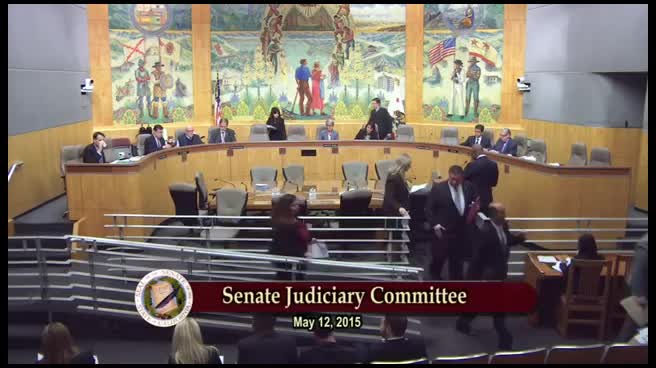
Bill Author