SB 661: Protection of subsurface installations.
- Session Year: 2015-2016
- House: Senate
- Latest Version Date: 2016-09-29
Existing law requires every operator of a subsurface installation, except the Department of Transportation, to become a member of, participate in, and share in the costs of, a regional notification center. Existing law requires any person who plans to conduct any excavation to contact the appropriate regional notification center before commencing that excavation, as specified. Existing law defines a subsurface installation as any underground pipeline, conduit, duct, wire, or other structure. Existing law requires an operator of a subsurface installation, who receives notification of proposed excavation work, within 2 working days of that notification, excluding weekends and holidays, to mark the approximate location and number of subsurface installations that may be affected by the excavation or to advise that no subsurface installations operated by him or her would be affected. Existing law requires an operator of a subsurface installation that has failed to comply with these provisions to be liable to the excavator for damages, costs, and expenses.
This bill, the Dig Safe Act of 2016, would define terms for its purposes, including, among others, defining working day for purposes of determining excavation start date and time.
This bill would require an excavator planning to conduct an excavation to delineate the area to be excavated before notifying the appropriate regional notification center of the planned excavation, as provided. The bill would require an operator, before the legal start date and time of the excavation, to locate and field mark, within the area delineated for excavation, its subsurface installations. The bill would require an operator to maintain and preserve all plans and records for any subsurface installation owned by that operator as that information becomes known, as specified. The bill would, commencing November 1, 2017, establish a process for an excavator to request and obtain a continual excavation ticket for an area of continual excavation that is required to be valid for one year from the date of issuance and eligible for renewal.
This bill would amend the Natural Gas Pipeline Safety Act of 2011 to exclude from its provisions specific kinds of marking and locating of subsurface installations performed in compliance with this act.
This bill would prohibit an excavator that damages a subsurface installation due to an inaccurate field mark, as defined, by an operator from being liable for damages, replacement costs, or other expenses arising from damage to the subsurface installation, provided that the excavator complied with the provisions described above.
This bill would also require the Public Utilities Commission and the Office of the State Fire Marshal to enforce the requirement to locate and field mark subsurface installations and lines against operators of gas corporations, electrical corporations, water corporations, and operators of hazardous liquid pipeline facilities, as specified. The bill would also authorize a local governing board to enforce these provisions on local agencies under its jurisdiction.
This bill would create the California Underground Facilities Safe Excavation Board under, and assisted by the staff of, the Office of the State Fire Marshal. The bill would require the board to coordinate education and outreach activities, develop standards, and enforce, as specified, the provisions described above. The bill would also authorize the board to prescribe rules and regulations as may be necessary or proper to carry out the purposes of these provisions and to exercise the power and duties conferred upon it. The board would be composed of 9 members who would serve 4-year terms, and 2 nonvoting ex officio members who may be invited by the appointed members of the board. The bill, commencing July 1, 2018, would require the board to investigate possible violations of the provisions described above, and would authorize the board to transmit the investigation results and any recommended penalty to the state or local agency with jurisdiction over the activity or business undertaken in the commission of the violation, as specified. The bill would require the board to convene an annual meeting and, on or before February 1, 2018, and each year thereafter, to report to the Governor and the Legislature on its activities and any recommendations.
The bill would create the Safe Energy Infrastructure and Excavation Fund in the State Treasury and would provide that moneys deposited into the fund are to be used, upon appropriation by the Legislature, to cover the operational expenses of the board and for educational and outreach purposes, except as specified.
Discussed in Hearing
 1MIN
1MINAssembly Floor
 2MIN
2MINSenate Floor
 5MIN
5MINAssembly Standing Committee on Utilities and Commerce
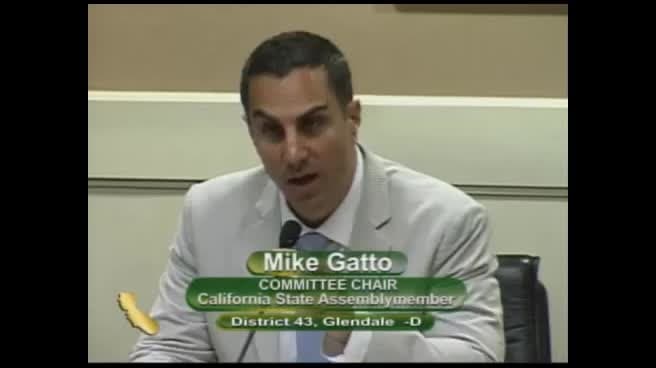 19MIN
19MINAssembly Standing Committee on Utilities and Commerce
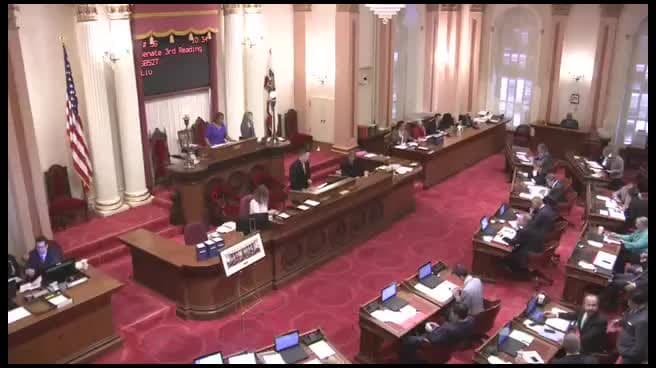 2MIN
2MINSenate Floor
 26SEC
26SECSenate Standing Committee on Appropriations
 11SEC
11SECSenate Standing Committee on Appropriations
 7MIN
7MIN