SB 680: State real property: surplus: City of Santa Clara.
- Session Year: 2015-2016
- House: Senate
- Latest Version Date: 2016-09-26
Existing law provides that the Director of General Services may acquire and dispose of surplus state real property where that property is not needed by another state agency and the Legislature has authorized disposal of the property. Existing law also specifies the manner in which the Department of General Services is to dispose of surplus state real property. Existing law authorizes the director, subject to certain conditions, to sell, lease, or exchange a specified parcel of real property in the City of Santa Clara upon terms and conditions and subject to reservations and exceptions that the director determines are in the best interests of the state.
This bill would authorize the director to modify the existing terms and conditions of the transfer to the Housing Authority of the City of Santa Clara of a specified parcel of real property within the City of Santa Clara to allow for residential development of that parcel, as provided. The bill would, as a condition of modifying the terms and conditions of the transfer, require the City of Santa Clara to indemnify, defend, and hold harmless the state from any and all claims, damages, or liabilities arising out of, in connection with, or directly or indirectly resulting from the exercise of the rights authorized by these provisions by the City of Santa Clara, the Housing Authority of the City of Santa Clara, and any subsequent purchaser or transferee of the property. The bill would also require the state to select counsel in any action arising out of, in connection with, or directly or indirectly resulting from the exercise of these rights. The bill would also require that the City of Santa Clara be solely responsible for compliance with the California Environmental Quality Act for purposes of these provisions.
The California Constitution requires that the proceeds from the sale of surplus state property be used to pay the principal and interest on bonds issued pursuant to the Economic Recovery Bond Act until the principal and interest on those bonds are fully paid, after which these proceeds are required to be deposited into the Special Fund for Economic Uncertainties, a continuously appropriated fund.
This bill would, if the property described above is used for a residential development, require the department to determine the difference between the actual price paid by the local agency for the property and the fair market value of the property and require the Housing Authority of the City of Santa Clara to pay that difference to the department. By increasing the amount transferred into a continuously appropriated fund, this bill would make an appropriation.
This bill would declare that it is to take effect immediately as an urgency statute.
Existing law provides that the Director of General Services may acquire and dispose of surplus state real property where that property is not needed by another state agency and the Legislature has authorized disposal of the property. Existing law also specifies the manner in which the Department of General Services is to dispose of surplus state real property. Existing law authorizes the director, subject to certain conditions, to sell, lease, or exchange a specified parcel of real property in the City of Santa Clara upon terms and conditions and subject to reservations and exceptions that the director determines are in the best interests of the state.
This bill would authorize the director to modify the existing terms and conditions of the transfer to the Housing Authority of the City of Santa Clara of a specified parcel of real property within the City of Santa Clara to allow for residential development of that parcel, as provided. The bill would, as a condition of modifying the terms and conditions of the transfer, require the City of Santa Clara to indemnify, defend, and hold harmless the state from any and all claims, damages, or liabilities arising out of, in connection with, or directly or indirectly resulting from the exercise of the rights authorized by these provisions by the City of Santa Clara, the Housing Authority of the City of Santa Clara, and any subsequent purchaser or transferee of the property. The bill would also require the state to select counsel in any action arising out of, in connection with, or directly or indirectly resulting from the exercise of these rights. The bill would also require that the City of Santa Clara be solely responsible for compliance with the California Environmental Quality Act for purposes of these provisions.
The California Constitution requires that the proceeds from the sale of surplus state property be used to pay the principal and interest on bonds issued pursuant to the Economic Recovery Bond Act until the principal and interest on those bonds are fully paid, after which these proceeds are required to be deposited into the Special Fund for Economic Uncertainties, a continuously appropriated fund.
This bill would, if the property described above is used for a residential development, require the department to determine the difference between the actual price paid by the local agency for the property and the fair market value of the property and require the Housing Authority of the City of Santa Clara to pay that difference to the department. By increasing the amount transferred into continuously appropriated funds, this bill would make an appropriation.
This bill would declare that it is to take effect immediately as an urgency statute.
Existing law provides that the Director of General Services may acquire and dispose of surplus state real property where that property is not needed by another state agency and the Legislature has authorized disposal of the property. Existing law also specifies the manner in which the Department of General Services is to dispose of surplus state real property. Existing law authorizes the director, subject to certain conditions, to sell, lease, or exchange a specified parcel of real property in the City of Santa Clara upon terms and conditions and subject to reservations and exceptions that the director determines are in the best interests of the state.
This bill would authorize the director to modify the existing terms and conditions of the transfer to the Housing Authority of the City of Santa Clara of a specified parcel of real property within the City of Santa Clara to allow for residential development of that parcel, as provided. The bill would, as a condition of modifying the terms and conditions of the transfer, require the City of Santa Clara to indemnify, defend, and hold harmless the state from any and all claims, damages, or liabilities arising out of, in connection with, or directly or indirectly resulting from the exercise of the rights authorized by these provisions by the City of Santa Clara, the Housing Authority of the City of Santa Clara, and any subsequent purchaser or transferee of the property. The bill would also require the state to select counsel in any action arising out of, in connection with, or directly or indirectly resulting from the exercise of these rights.
The California Constitution requires that the proceeds from the sale of surplus state property be used to pay the principal and interest on bonds issued pursuant to the Economic Recovery Bond Act until the principal and interest on those bonds are fully paid, after which these proceeds are required to be deposited into the Special Fund for Economic Uncertainties, a continuously appropriated fund.
This bill would, if the property described above is used for a residential development, require the department to determine the difference between the actual price paid by the local agency for the property and the fair market value of the property and require the Housing Authority of the City of Santa Clara to pay that difference to the department. By increasing the amount transferred into continuously appropriated funds, this bill would make an appropriation.
This bill would declare that it is to take effect immediately as an urgency statute.
Existing law provides that the Director of General Services may acquire and dispose of surplus state real property where that property is not needed by another state agency and the Legislature has authorized disposal of the property. Existing law also specifies the manner in which the Department of General Services is to dispose of surplus state real property. Existing law authorizes the director, subject to certain conditions, to sell, lease, or exchange a specified parcel of real property in the City of Santa Clara upon terms and conditions and subject to reservations and exceptions that the director determines are in the best interests of the state.
This bill would authorize the director to modify the existing terms and conditions of the transfer to the Housing Authority of the City of Santa Clara of a specified parcel of real property within the City of Santa Clara to allow for residential development of that parcel, as provided. The bill would exempt related state activities from certain provisions of the California Environmental Quality Act. The bill would, as a condition of modifying the terms and conditions of the transfer, require the City of Santa Clara to indemnify, defend, and hold harmless the state from any and all claims, damages, or liabilities arising out of, in connection with, or directly or indirectly resulting from the exercise of the rights authorized by these provisions by the City of Santa Clara, the Housing Authority of the City of Santa Clara, and any subsequent purchaser or transferee of the property. The bill would also require the state to select counsel in any action arising out of, in connection with, or directly or indirectly resulting from the exercise of these rights.
The California Constitution requires that the proceeds from the sale of surplus state property be used to pay the principal and interest on bonds issued pursuant to the Economic Recovery Bond Act until the principal and interest on those bonds are fully paid, after which these proceeds are required to be deposited into the Special Fund for Economic Uncertainties, a continuously appropriated fund.
This bill would, if the property described above is used for a residential development, require the department to determine the difference between the actual price paid by the local agency for the property and the fair market value of the property and require the Housing Authority of the City of Santa Clara to pay that difference to the department. By increasing the amount transferred into continuously appropriated funds, this bill would make an appropriation.
Existing sales and use tax laws impose a tax on retailers measured by the gross receipts from the sale of tangible personal property sold at retail in this state, or on the storage, use, or other consumption in this state of tangible personal property purchased from a retailer for the storage, use, or other consumption in this state, and provides various exemptions from those taxes.
This bill, until January 1, 2020, would exempt those taxes, the gross receipts from the sale in this state of, and the storage, use, or other consumption in this state of, a qualified new passenger vehicle, as defined, and qualified accessories, as defined, that are purchased in California for permanent use outside this state, as provided. The bill would provide that a qualified new passenger vehicle sold or purchased without payment of tax pursuant to this exemption would be ineligible for any electric vehicle incentive offered by the State of California, as specified.
The Bradley-Burns Uniform Local Sales and Use Tax Law authorizes counties and cities to impose local sales and use taxes in conformity with the Sales and Use Tax Law, and existing law authorizes districts, as specified, to impose transactions and use taxes in accordance with the Transactions and Use Tax Law, which conforms to the Sales and Use Tax Law. Amendments to state sales and use taxes are incorporated into the local tax laws.
Existing law requires the state to reimburse counties and cities for revenue losses caused by the enactment of sales and use tax exemptions.
This bill would provide that notwithstanding those provisions, no appropriation is made and the state shall not reimburse local agencies for sales and use tax revenues lost by them pursuant to this bill.
This bill would take effect immediately as a tax levy.
Existing sales and use tax laws impose a tax on retailers measured by the gross receipts from the sale of tangible personal property sold at retail in this state, or on the storage, use, or other consumption in this state of tangible personal property purchased from a retailer for the storage, use, or other consumption in this state, and provides various exemptions from those taxes.
This bill bill, until January 1, 2020, would provide an exemption from the sales tax for exempt those taxes, the gross receipts from the sale in this state of, and the storage, use, or other consumption in this state of, a qualified new motor vehicles, passenger vehicle, as defined, and qualified accessories, as defined, that are purchased in California for permanent use outside this state, as provided. The bill would provide that a qualified new passenger vehicle sold or purchased without payment of tax pursuant to this exemption would be ineligible for any electric vehicle incentive offered by the State of California, as specified.
The Bradley-Burns Uniform Local Sales and Use Tax Law authorizes counties and cities to impose local sales and use taxes in conformity with the Sales and Use Tax Law, and existing law authorizes districts, as specified, to impose transactions and use taxes in accordance with the Transactions and Use Tax Law, which conforms to the Sales and Use Tax Law. Amendments to state sales and use taxes are incorporated into these the local tax laws.
Section 2230 of the Revenue and Taxation Code provides that
Existing law requires the state will to reimburse counties and cities for revenue losses caused by the enactment of sales and use tax exemptions.
This bill would provide that, notwithstanding Section 2230 of the Revenue and Taxation Code, that notwithstanding those provisions, no appropriation is made and the state shall not reimburse any local agencies for sales and use tax revenues lost by them pursuant to this bill.
This bill would take effect immediately as a tax levy.
Existing sales and use tax laws impose a tax on retailers measured by the gross receipts from the sale of tangible personal property sold at retail in this state, or on the storage, use, or other consumption in this state of tangible personal property purchased from a retailer for the storage, use, or other consumption in this state, and provides various exemptions from those taxes.
This bill would provide an exemption from the sales tax for qualified new motor vehicles, as defined, and qualified accessories, as defined, that are purchased in California for permanent use outside this state, as provided.
The Bradley-Burns Uniform Local Sales and Use Tax Law authorizes counties and cities to impose local sales and use taxes in conformity with the Sales and Use Tax Law, and existing law authorizes districts, as specified, to impose transactions and use taxes in accordance with the Transactions and Use Tax Law, which conforms to the Sales and Use Tax Law. Amendments to state sales and use taxes are incorporated into these laws.
Section 2230 of the Revenue and Taxation Code provides that the state will reimburse counties and cities for revenue losses caused by the enactment of sales and use tax exemptions.
This bill would provide that, notwithstanding Section 2230 of the Revenue and Taxation Code, no appropriation is made and the state shall not reimburse any local agencies for sales and use tax revenues lost by them pursuant to this bill.
This bill would take effect immediately as a tax levy.
(a)The Director of General Services may modify the existing terms and conditions, including, but not limited to, the existing purchase and sale agreement, as amended, the grant deed, the commencement date for development, and any other applicable transaction documents, of the transfer to the Housing Authority of the City of Santa Clara of an approximately six-acre parcel of real property within the City of Santa Clara, Assessors Parcel Number 303-17-053, for the purposes set forth in subdivision (b). The director is authorized to make any modifications pursuant to this subdivision on terms and conditions and subject to any reservations and exceptions that the director determines are in the best interests of the state.
(b)(1)The property described in subdivision (a) may be used for a residential development including both residential units that are affordable to persons of extremely low, very low, or low or moderate income and residential units at market rate. As a result of any proposed modification to the original entitlements, the Department of General Services shall determine the difference between the actual price paid by the local agency for the property and the fair market value of the property, which shall be paid by the Housing Authority of the City of Santa Clara to the department.
(2)The City of Santa Clara may, subject to the consent of the other parties to the agreement, amend the development agreement applicable to the property described in subdivision (a) in order to remove that property from the agreement.
SEC. 2.(a)As a condition of modifying the terms and conditions as provided in subdivision (a) of Section 1 of this act, the City of Santa Clara shall indemnify, defend, and hold harmless the state from any and all claims, damages, or liabilities arising out of, in connection with, or directly or indirectly resulting from the exercise of the rights authorized by this act by the City of Santa Clara, the Housing Authority of the City of Santa Clara, and any subsequent purchaser or transferee. In any action arising out of, in connection with, or directly or indirectly resulting from the exercise of these rights, the state shall select counsel to defend the state.
(b)For purposes of this act, the City of Santa Clara shall be solely responsible for compliance with the California Environmental Quality Act (Division 13 (commencing with Section 21000) of the Public Resources Code).
SEC. 3.This act is an urgency statute necessary for the immediate preservation of the public peace, health, or safety within the meaning of Article IV of the Constitution and shall go into immediate effect. The facts constituting the necessity are:
The San Francisco Bay area is experiencing an historic affordable housing crisis. Additional housing units are urgently needed to improve the quality of life for all San Francisco Bay area residents. A development project to build additional affordable housing units that will benefit the communities in the City of Santa Clara, especially low-income persons, senior citizens, veterans, and persons with disabilities, is urgently needed.
(a)The Director of General Services may modify the existing terms and conditions, including, but not limited to, the existing purchase and sale agreement, as amended, the grant deed, the commencement date for development, and any other applicable transaction documents, of the transfer to the Housing Authority of the City of Santa Clara of an approximately six-acre parcel of real property within the City of Santa Clara, Assessors Parcel Number 303-17-053, for the purposes set forth in subdivision (b). The director is authorized to make any modifications pursuant to this subdivision on terms and conditions and subject to any reservations and exceptions that the director determines are in the best interests of the state.
(b)(1)The property described in subdivision (a) may be used for a residential development including both residential units that are affordable to persons of extremely low, very low, or low or moderate income and residential units at market rate. As a result of any proposed modification to the original entitlements, the Department of General Services shall determine the difference between the actual price paid by the local agency for the property and the fair market value of the property, which shall be paid by the Housing Authority of the City of Santa Clara to the department.
(2)The City of Santa Clara may, subject to the consent of the other parties to the agreement, amend the development agreement applicable to the property described in subdivision (a) in order to remove that property from the agreement.
SEC. 2.As a condition of modifying the terms and conditions as provided in subdivision (a) of Section 1 of this act, the City of Santa Clara shall indemnify, defend, and hold harmless the state from any and all claims, damages, or liabilities arising out of, in connection with, or directly or indirectly resulting from the exercise of the rights authorized by this act by the City of Santa Clara, the Housing Authority of the City of Santa Clara, and any subsequent purchaser or transferee. In any action arising out of, in connection with, or directly or indirectly resulting from the exercise of these rights, the state shall select counsel to defend the state.
SEC. 3.This act is an urgency statute necessary for the immediate preservation of the public peace, health, or safety within the meaning of Article IV of the Constitution and shall go into immediate effect. The facts constituting the necessity are:
The San Francisco Bay area is experiencing an historic affordable housing crisis. Additional housing units are urgently needed to improve the quality of life for all San Francisco Bay area residents. A development project to build additional affordable housing units that will benefit the communities in the City of Santa Clara, especially low-income persons, senior citizens, veterans, and persons with disabilities, is urgently needed.
(a)The Director of General Services may modify the existing terms and conditions, including, but not limited to, the existing purchase and sale agreement, as amended, the grant deed, and any other applicable transaction documents, of the transfer to the Housing Authority of the City of Santa Clara of an approximately six-acre parcel of real property within the City of Santa Clara, Assessors Parcel Number 303-17-053, for the purposes set forth in subdivision (b). The director is authorized to make any modifications pursuant to this subdivision on terms and conditions and subject to any reservations and exceptions that the director determines are in the best interests of the state.
(b)(1)The property described in subdivision (a) may be used for a residential development including both residential units that are affordable to persons of extremely low, very low, or low or moderate income and residential units at market rate. As a result of any property proposed modification to the original entitlements, the Department of General Services shall determine the difference between the actual price paid by the local agency for the property and the fair market value of the property, which shall be paid by the Housing Authority of the City of Santa Clara to the department.
(2)The City of Santa Clara may, subject to the consent of the other parties to the agreement, amend the development agreement applicable to the property described in subdivision (a) in order to remove that property from the agreement.
(c)Any action by the Department of General Services or any other state agency necessary to implement this act is exempt from Chapter 3 (commencing with Section 21100) to Chapter 6 (commencing with Section 21165), inclusive, of Division 13 of the Public Resources Code, as permitted by paragraph (2) of subdivision (k) of Section 11011 of the Government Code. However, the City of Santa Clara, the Housing Authority of the City of Santa Clara, and any subsequent purchaser or transferee of the property described in subdivision (a) shall be subject to any local government land use entitlement approval requirements and to Chapter 3 (commencing with Section 21100) to Chapter 6 (commencing with Section 21165), inclusive, of Division 13 of the Public Resources Code.
SEC. 2.As a condition of modifying the terms and conditions as provided in subdivision (a) of Section 1 of this act, the City of Santa Clara shall indemnify, defend, and hold harmless the state from any and all claims, damages, or liabilities arising out of, in connection with, or directly or indirectly resulting from the exercise of the rights authorized by this act by the City of Santa Clara, the Housing Authority of the City of Santa Clara, and any subsequent purchaser or transferee. In any action arising out of, in connection with, or directly or indirectly resulting from the exercise of these rights, the state shall select counsel to defend the state.
(a)The Director of General Services may modify the existing terms and conditions, including, but not limited to, the existing purchase and sale agreement, as amended, the grant deed, and any other applicable transaction documents, of the transfer to the Housing Authority of the City of Santa Clara of an approximately six-acre parcel of real property within the City of Santa Clara, Assessors Parcel Number 303-17-053, for the purposes set forth in subdivision (b). The director is authorized to make any modifications pursuant to this subdivision on terms and conditions and subject to any reservations and exceptions that the director determines are in the best interests of the state.
(b)(1)The property described in subdivision (a) may be used for a residential development including both residential units that are affordable to persons of extremely low, very low, or low or moderate income and residential units at market rate. As a result of any property modification to the original entitlements, the Department of General Services shall determine the difference between the actual price paid by the local agency for the property and the fair market value of the property, which shall be paid by the Housing Authority of the City of Santa Clara to the department.
(2)The City of Santa Clara may, subject to the consent of the other parties to the agreement, amend the development agreement applicable to the property described in subdivision (a) in order to remove that property from the agreement.
(c)Any action by the Department of General Services or any other state agency necessary to implement this act is exempt from Chapter 3 (commencing with Section 21100) to Chapter 6 (commencing with Section 21165), inclusive, of Division 13 of the Public Resources Code, as permitted by paragraph (2) of subdivision (k) of Section 11011 of the Government Code. However, the City of Santa Clara, the Housing Authority of the City of Santa Clara, and any subsequent purchaser or transferee of the property described in subdivision (a) shall be subject to any local government land use entitlement approval requirements and to Chapter 3 (commencing with Section 21100) to Chapter 6 (commencing with Section 21165), inclusive, of Division 13 of the Public Resources Code.
SEC. 2.As a condition of modifying the terms and conditions as provided in subdivision (a) of Section 1 of this act, the City of Santa Clara shall indemnify, defend, and hold harmless the state from any and all claims, damages, or liabilities arising out of, in connection with, or directly or indirectly resulting from the exercise of the rights authorized by this act by the City of Santa Clara, the Housing Authority of the City of Santa Clara, and any subsequent purchaser or transferee. In any action arising out of, in connection with, or directly or indirectly resulting from the exercise of these rights, the state shall select counsel to defend the state.
SECTION 1.Section 6388.6 is added to the Revenue and Taxation Code, to read:6388.6.(a)There are exempted from the taxes imposed by this part, the gross receipts from the sale in this state of, and the storage, use, or other consumption in this state of, any qualified new passenger vehicle and qualified accessories sold to a person for permanent use outside this state, provided all of the following conditions are met:
(1)The qualified new passenger vehicle is moved to a point outside of this state within 30 days from the date of purchase.
(2)A one-trip permit for driving or moving the qualified new passenger vehicle to a point outside of this state pursuant to Section 4003 of the Vehicle Code is obtained by a person who presented an out-of-state drivers license at the time he or she obtained the permit.
(3)The purchaser provides the retailer at time of purchase with an exemption certificate as provided in Section 6421.
(4)The purchaser is not a California resident, as defined in Section 516 of the Vehicle Code.
(b)The exemption certificate shall identify the vehicle, seller, purchaser, and purchasers out-of-state drivers license or permit number, state that the vehicle will be removed from this state within 30 days of the date of purchase, and state that the vehicle will be licensed and registered outside this state for permanent use outside this state.
(c)Notwithstanding any other law, the purchaser of any qualified new passenger vehicle pursuant to this section is ineligible for all of the following:
(1)A rebate administered by the State Air Resources Board or offered by the Clean Vehicle Rebate Project.
(2)Any incentive or exemption provided under the Clean Air Vehicle decal program.
(3)Any other electric vehicle incentive offered by the State of California.
(d)For purposes of this section:
(1)Permanent use outside this state means that the qualified new passenger vehicle is licensed, registered, and used outside this state and the qualified new passenger vehicle and qualified accessories do not return to this state within 12 months from the date of purchase.
(2)Qualified accessories means tangible personal property that is affixed or attached to, or sold with, the qualified new passenger vehicle, a power source for the qualified new passenger vehicle, or other accessories commonly sold with a new passenger vehicle that are sold together with the qualified new passenger vehicle.
(3)Qualified new passenger vehicle means a passenger vehicle, as defined in Section 465 of the Vehicle Code, that has not previously been sold, except any of the following motor vehicles:
(A)Motorcycles.
(B)Housecars.
(C)Motor vehicles constructed on truck chassis.
(e)This section shall remain in effect only until January 1, 2020, and as of that date is repealed.
SEC. 2.Notwithstanding Section 2230 of the Revenue and Taxation Code, no appropriation is made by this act and the state shall not reimburse any local agency for any sales and use tax revenues lost by it under this act.
SEC. 3.This act provides for a tax levy within the meaning of Article IV of the Constitution and shall go into immediate effect.
(a)There are exempted from the computation of the amount of sales tax taxes imposed by this part, the gross receipts from the sale of in this state of, and the storage, use, or other consumption in this state of, any qualified new motor passenger vehicle and qualified accessories sold to a person for permanent use outside this state, provided all of the following conditions are met:
(1)The qualified new motor passenger vehicle is moved to a point outside of this state within 30 days from the date of purchase.
(2)A one-trip permit for driving or moving the qualified new motor passenger vehicle to a point outside of this state pursuant to Section 4003 of the Vehicle Code is obtained by a person who presented an out-of-state drivers license at the time he or she obtained the permit.
(3)The purchaser provides the retailer at time of purchase with an exemption certificate as provided in Section 6421.
(4)The purchaser is not a California resident, as defined in Section 516 of the Vehicle Code.
(b)The exemption certificate shall identify the vehicle, seller, and purchaser, and purchasers out-of-state drivers license or permit number, state that the vehicle will be removed from this state within 30 days of the date of purchase, and state that the vehicle will be licensed and registered outside this state for permanent use outside this state.
(c)Notwithstanding any other law, the purchaser of any qualified new passenger vehicle pursuant to this section is ineligible for all of the following:
(1)A rebate administered by the State Air Resources Board or offered by the Clean Vehicle Rebate Project.
(2)Any incentive or exemption provided under the Clean Air Vehicle decal program.
(3)Any other electric vehicle incentive offered by the State of California.
(c)
(d)For purposes of this section:
(1)Permanent use outside this state means that the qualified new motor passenger vehicle is licensed, registered, and used outside this state and the qualified new motor passenger vehicle and qualified accessories do not return to this state within 12 months from the date of purchase.
(2)Qualified accessories means tangible personal property that is affixed or attached to, or sold with, the qualified new motor passenger vehicle, a power source for the qualified new motor passenger vehicle, or other accessories commonly sold with a new motor passenger vehicle that are sold together with the qualified new motor passenger vehicle.
(3)Qualified new motor passenger vehicle means a motor vehicle passenger vehicle, as described defined in subdivision (a) of Section 415 465 of the Vehicle Code Code, that has not previously been sold. sold, except any of the following motor vehicles:
(A)Motorcycles.
(B)Housecars.
(C)Motor vehicles constructed on truck chassis.
(e)This section shall remain in effect only until January 1, 2020, and as of that date is repealed.
SEC. 2.Notwithstanding Section 2230 of the Revenue and Taxation Code, no appropriation is made by this act and the state shall not reimburse any local agency for any sales and use tax revenues lost by it under this act.
SEC. 3.This act provides for a tax levy within the meaning of Article IV of the Constitution and shall go into immediate effect.
(a)There are exempted from the computation of the amount of sales tax the gross receipts from the sale of any qualified new motor vehicle and qualified accessories sold to a person for permanent use outside this state, provided all of the following conditions are met:
(1)The qualified new motor vehicle is moved to a point outside of this state within 30 days from the date of purchase.
(2)A one-trip permit for driving or moving the qualified new motor vehicle to a point outside of this state pursuant to Section 4003 of the Vehicle Code is obtained. obtained by a person who presented an out-of-state drivers license at the time he or she obtained the permit.
(3)The purchaser provides the retailer at time of purchase with an exemption certificate as provided in Section 6421.
(b)The exemption certificate shall identify the vehicle, seller, and purchaser, state that the vehicle will be removed from this state within 30 days of the date of purchase, and state that the vehicle will be licensed and registered outside this state for permanent use outside this state.
(c)For purposes of this section:
(1)Permanent use outside this state means that the qualified new motor vehicle is licensed, registered, and used outside this state and the qualified new motor vehicle and qualified accessories do not return to this state within 12 months from the date of purchase.
(2)Qualified accessories means tangible personal property that is affixed or attached to, or sold with, the qualified new motor vehicle, a power source for the qualified new motor vehicle, or other accessories commonly sold with a new motor vehicle that are sold together with the qualified new motor vehicle.
(3)Qualified new motor vehicle means a motor vehicle as described in subdivision (a) of Section 415 of the Vehicle Code that has not previously been sold.
SEC. 2.Notwithstanding Section 2230 of the Revenue and Taxation Code, no appropriation is made by this act and the state shall not reimburse any local agency for any sales and use tax revenues lost by it under this act.
SEC. 3.This act provides for a tax levy within the meaning of Article IV of the Constitution and shall go into immediate effect.
(a)There are exempted from the computation of the amount of sales tax the gross receipts from the sale of any qualified new motor vehicle and qualified accessories sold to a person for permanent use outside this state, provided all of the following conditions are met:
(1)The qualified new motor vehicle is moved to a point outside of this state within 30 days from the date of purchase.
(2)A one-trip permit for driving or moving the qualified new motor vehicle to a point outside of this state pursuant to Section 4003 of the Vehicle Code is obtained.
(3)The purchaser provides the retailer at time of purchase with an exemption certificate as provided in Section 6421.
(b)The exemption certificate shall identify the vehicle, seller, and purchaser, state that the vehicle will be removed from this state within 30 days of the date of purchase, and state that the vehicle will be licensed and registered outside this state for permanent use outside this state.
(c)For purposes of this section:
(1)Permanent use outside this state means that the qualified new motor vehicle is licensed, registered, and used outside this state and the qualified new motor vehicle and qualified accessories do not return to this state within 12 months from the date of purchase.
(2)Qualified accessories means tangible personal property that is affixed or attached to, or sold with, the qualified new motor vehicle, a power source for the qualified new vehicle, or other accessories commonly sold with a new motor vehicle that are sold together with the qualified new motor vehicle.
(3)Qualified new motor vehicle means a motor vehicle as described in subdivision (a) of Section 415 of the Vehicle Code that has not previously been sold.
SEC. 2.Notwithstanding Section 2230 of the Revenue and Taxation Code, no appropriation is made by this act and the state shall not reimburse any local agency for any sales and use tax revenues lost by it under this act.
SEC. 3.This act provides for a tax levy within the meaning of Article IV of the Constitution and shall go into immediate effect.
|
Date
|
Status
|
|---|---|
| Aug 24, 2016 | Read third time. Urgency clause adopted. Passed. Ordered to the Senate. |
| Jun 9, 2016 | From committee with author's amendments. Read second time and amended. Re-referred to Com. on RLS. |
| Jun 9, 2016 | Re-referred to Com. on RLS. pursuant to Assembly Rule 96. |
| Jun 13, 2016 | From committee: Be re-referred to Com. on A. & A.R. (Ayes 11. Noes 0.) (June 13). Re-referred to Com. on A. & A.R. |
| Jun 29, 2016 | From committee: Do pass as amended and re-refer to Com. on APPR. (Ayes 7. Noes 0.) (June 29). |
| Jun 30, 2016 | Read second time and amended. Re-referred to Com. on APPR. |
| Aug 3, 2016 | From committee: Do pass. Ordered to consent calendar. (Ayes 20. Noes 0.) (August 3). |
| Aug 4, 2016 | Read second time. Ordered to consent calendar. |
| Aug 8, 2016 | From consent calendar on motion of Assembly Member Calderon. |
| Aug 8, 2016 | Ordered to third reading. |
| Aug 19, 2016 | Ordered to third reading. |
| Aug 19, 2016 | Read third time and amended. |
| Aug 19, 2016 | Read third time and amended. (Ayes 73. Noes 0. Page 5952.) |
| Jun 8, 2016 | From committee with author's amendments. Read second time and amended. Re-referred to Com. on REV. & TAX. |
| Aug 25, 2016 | From committee: Be re-referred to Com. on G.O. pursuant to Senate Rule 29.10(d). (Ayes 5. Noes 0. Page 5387.) Re-referred to Com. on G.O. |
| Aug 25, 2016 | From committee: Be re-referred to Com. on G.O. pursuant to Senate Rule 29.10(d). (Ayes 5. Noes 0.) Re-referred to Com. on G.O. |
| Aug 25, 2016 | In Senate. Concurrence in Assembly amendments pending. |
| Aug 25, 2016 | Re-referred to Com. on RLS. pursuant to Senate Rule 29.10(d). |
| Aug 26, 2016 | From committee: That the Assembly amendments be concurred in. (Ayes 12. Noes 0. Page 5456.) |
| Aug 26, 2016 | From committee: That the Assembly amendments be concurred in. (Ayes 12. Noes 0.) |
| Aug 26, 2016 | Set for hearing August 26. |
| Aug 29, 2016 | Assembly amendments concurred in. (Ayes 38. Noes 1. Page 5493.) Ordered to engrossing and enrolling. |
| Aug 29, 2016 | Assembly amendments concurred in. (Ayes 38. Noes 1.) Ordered to engrossing and enrolling. |
| Aug 29, 2016 | Urgency clause adopted. |
| Sep 8, 2016 | Enrolled and presented to the Governor at 5 p.m. |
| May 19, 2015 | Set for hearing May 26. |
| Mar 2, 2015 | From printer. May be acted upon on or after April 1. |
| Mar 2, 2015 | Read first time. |
| Mar 19, 2015 | Referred to Coms. on T. & H. and GOV. & F. |
| Apr 7, 2015 | April 14 set for first hearing canceled at the request of author. |
| Apr 7, 2015 | Set for hearing April 14. |
| Apr 8, 2015 | Set for hearing April 21. |
| Apr 22, 2015 | From committee: Do pass and re-refer to Com. on GOV. & F. (Ayes 9. Noes 0. Page 732.) (April 21). Re-referred to Com. on GOV. & F. |
| Apr 29, 2015 | Set for hearing May 6. |
| May 13, 2015 | From committee: Do pass as amended and re-refer to Com. on APPR. (Ayes 5. Noes 2. Page 920.) (May 6). |
| May 13, 2015 | From committee: Do pass as amended and re-refer to Com. on APPR. (Ayes 5. Noes 2.) (May 6). |
| May 14, 2015 | Read second time and amended. Re-referred to Com. on APPR. |
| Feb 27, 2015 | Introduced. To Com. on RLS. for assignment. To print. |
| May 22, 2015 | Joint Rule 62(a) suspended. |
| May 26, 2015 | May 26 hearing: Placed on APPR. suspense file. |
| May 27, 2015 | Set for hearing May 28. |
| May 28, 2015 | May 28 hearing: Held in committee and under submission. |
| Jan 16, 2016 | Set for hearing January 21. |
| Jan 25, 2016 | From committee: Do pass as amended. (Ayes 6. Noes 1. Page 2935.) (January 21). |
| Jan 26, 2016 | Read second time and amended. Ordered to third reading. |
| Jan 27, 2016 | In Assembly. Read first time. Held at Desk. |
| Jan 27, 2016 | Read third time. Passed. (Ayes 33. Noes 2. Page 2962.) Ordered to the Assembly. |
| Apr 28, 2016 | Referred to Com. on REV. & TAX. |
| May 25, 2016 | June 6 set for first hearing canceled at the request of author. |
|
Date
|
Description
|
Location
|
Votes
|
|
|---|---|---|---|---|
| Aug 29, 2016 | Unfinished Business SB680 Wieckowski Urgency Clause Concurrence | Senate Floor |
Passed |
|
| Aug 26, 2016 | That the Assembly amendments be concurred in | Senate Standing Committee on Governmental Organization |
Passed |
|
| Aug 24, 2016 | SB 680 Wieckowski Third Reading Urgency By CHU | Assembly Floor |
Passed |
|
| Aug 19, 2016 | SB 680 Wieckowski Third Reading Urgency By APPR. Amendment Set #1 | Assembly Floor |
Passed |
|
| Aug 3, 2016 | Do pass. To Consent Calendar. | Assembly Standing Committee on Appropriations |
Passed |
|
| Jun 29, 2016 | Do pass as amended and be re-referred to the Committee on [Appropriations] | Assembly Standing Committee on Accountability and Administrative Review |
Passed |
|
| Jun 13, 2016 | Be re-referred to the Committee on [Accountability and Administrative Review] | Assembly Standing Committee on Rules |
Passed |
|
| Jan 27, 2016 | Senate 3rd Reading SB680 Wieckowski | Senate Floor |
Passed |
|
| Jan 21, 2016 | Do pass as amended | Senate Standing Committee on Appropriations |
Passed |
|
| May 26, 2015 | Placed on suspense file | Senate Standing Committee on Appropriations |
Passed |
|
| May 6, 2015 | Do pass as amended, but first amend, and re-refer to the Committee on [Appropriations] | Senate Standing Committee on Governance and Finance |
Passed |
|
| Apr 21, 2015 | Do pass, but first be re-referred to the Committee on [Governance and Finance] | Senate Standing Committee on Transportation and Housing |
Passed |
This list shows positions taken on this bill by organizations on the date displayed, which is linked to the original source.
Positions by individuals are not included.
|
Organization
|
Position
|
Date
|
|---|---|---|
| California Travel Association | * Indeterminate | May 6, 2015 |
| Tesla | ** Support | Jan 27, 2016 |
Office of Senate Floor Analyses (916) 651-1520 Fax: (916) 327-4478 | SB |
UNFINISHED BUSINESS
Bill No: SB 680
: 8/19/16
PRIOR VOTES NOT RELEVANT
SENATE GOVERNMENTAL ORG. COMMITTEE: 12-0, 8/26/16 (pursuant to Senate Rule 29.10)
AYES: Hall, Berryhill, Bates, Block, Gaines, Galgiani, Glazer, Hill, Hueso, Lara, McGuire, Vidak
NO VOTE RECORDED: Hernandez
ASSEMBLY FLOOR: 78-0, 8/24/16 - See last page for vote
DIGEST: This bill authorizes the Department of General Services (DGS) to modify the existing terms and conditions governing the sale and transfer of a parcel of state surplus property within the City of Santa Clara to the Santa Clara Housing Authority (SCHA).
Assembly Amendments (1) gut and amend the bill, (2) authorize DGS to modify the existing terms and conditions governing the sale and transfer of a parcel of state surplus property within the City of Santa Clara to the SCHA, as specified.
Existing law:
- Requires DGS to perform various functions with respect to state property and provides for the sale, lease, or transfer of surplus state property.
- Requires each state agency to annually review and determine if any lands under their jurisdiction are in excess of programmatic need and report that information to DGS.
- Requires DGS to annually report state surplus lands to the Legislature, and request legislative authorization to dispose of the land by sale or otherwise, subject to specified conditions.
- Authorizes DGS to sell, lease, or exchange a specified parcel of real property in the City of Santa Clara upon terms and conditions and subject to reservations and exceptions that DGS determines are in the best interest of the state.
This bill:
- Authorizes DGS to modify the existing terms and conditions governing the sale and transfer of a parcel of state surplus property within the City of Santa Clara to the SCHA.
- Specifies that the parcel may be used for a residential development that includes both affordable and market rate units.
- Requires DGS to determine, as a result of any modification to the terms and conditions, the difference between the actual price paid by the local agency for the property and the fair market value of the parcel and directs the SCHA to pay the difference to DGS.
- Permits the City of Santa Clara to amend the development agreements, as specified, with the consent of DGS and the SCHA.
- Makes the City of Santa Clara solely responsible for compliance with the California Environmental Quality Act for purposes of this bill.
- Holds harmless and indemnifies the state from any legal action resulting from the residential development proposed for the property.
- Contains an urgency clause.
Background
Previous authorization. This bill seeks to modify the terms and conditions of part of a 17-acre property in Santa Clara that was declared surplus by the state by SB 2099 (Vasconcellos, Chapter 631, Statutes of 2002). The author states that this bill is needed to allow the sale and purchase agreement of an estimated six-acre parcel to be revised so that the City of Santa Clara can move forward with a new residential development plan for the parcel.
Originally, the entire 17-acre site was proposed for development of a mixture of single family, senior, and affordable housing. In July 2005, the City of Santa Clara’s Redevelopment Agency (RDA) agreed to purchase the parcel from the state to develop up to 165 affordable senior housing units. When RDAs were dissolved as part of the 2011 State Budget Act, ownership of the parcel was transferred to the SCHA, the RDA successor agency, in January 2012.
According to the author, the City of Santa Clara wishes to move forward with a new development plan for the parcel. This bill allows the sale and purchase agreement of the parcel to be amended to accommodate the new plan. DGS indicates that it currently lacks the authority to modify the terms of the agreement to reflect the changes that the City of Santa Clara is requesting. The original agreement only allows up to 165 units of affordable senior housing to be developed.
The current developer of the parcel, The Core Companies, proposes a plan that would consist of 359 total units on the parcel, with 181 units of affordable housing. Of those, 165 would be designated for seniors and senior veterans and the remaining 16 would be designated for low to moderate-income families. The other 178 units would be offered at market rate.
The author states that this bill is intended to facilitate development of a critically important housing project by authorizing the state to revise the terms of the agreement and include a provision that protects the state from any liability in the event of any legal action that could result from the project.
Prior Legislation
SB 2099 (Vasconcellos, Chapter 631, Statutes of 2002) authorized DGS to sell, lease, or exchange a specified parcel of real property in the City of Santa Clara upon terms and conditions and subject to reservations and exceptions that DGS determines are in the best interest of the state.
FISCAL EFFECT: Appropriation: Fiscal Com.: Local:
According to the Assembly Appropriations Committee, costs to DGS will be minor and absorbable. Modifying the terms of the lease, which will allow development of the property to include market rate housing, will result in one-time General Fund revenues of up to several million dollars as the sale price of the property is adjusted to market rate.
City of Santa Clara
OPPOSITION: (Verified 8/24/16)
None received
ARGUMENTS IN SUPPORT: According to the City of Santa Clara, “the Silicon Valley is in the midst of a housing crisis. The lack of supply, robust demand and high area median income drastically inflates the market rates of homes and rental units in the region. While many members of the community can absorb these high housing costs, others are not so fortunate. In particular, seniors remain extremely vulnerable to the volatile housing market as a population with relatively low median incomes and higher medical expenses on average. SB 680 will provide authority to amend the January 5, 2017 deadline and allow the City of Santa Clara to negotiate with DGS to include market rate units on site, increase the City’s housing supply, create a funding mechanism to finance the project and potentially reduce the income eligibility threshold for seniors seeking housing.”
ASSEMBLY FLOOR: 78-0, 8/24/16
AYES: Achadjian, Alejo, Travis Allen, Arambula, Atkins, Baker, Bigelow, Bloom, Bonilla, Bonta, Brown, Burke, Calderon, Campos, Chang, Chau, Chávez, Chiu, Chu, Cooley, Cooper, Dababneh, Dahle, Daly, Dodd, Eggman, Frazier, Gallagher, Cristina Garcia, Eduardo Garcia, Gatto, Gipson, Gomez, Gonzalez, Gordon, Gray, Grove, Hadley, Harper, Roger Hernández, Holden, Irwin, Jones, Jones-Sawyer, Kim, Lackey, Levine, Linder, Lopez, Low, Maienschein, Mathis, Mayes, McCarty, Medina, Melendez, Mullin, Nazarian, Obernolte, O'Donnell, Olsen, Patterson, Quirk, Ridley-Thomas, Rodriguez, Salas, Santiago, Steinorth, Mark Stone, Thurmond, Ting, Wagner, Waldron, Weber, Wilk, Williams, Wood, Rendon
NO VOTE RECORDED: Brough, Beth Gaines
8/26/16 14:26:49
**** END ****
SENATE THIRD READING
STR Bill Id:SB 680
Author:(Wieckowski)
As Amended Ver:August 19, 2016
2/3 vote. Urgency
SENATE VOTE: 33-2
Committee | Votes | Ayes | Noes |
Accountability | 7-0 | Cristina Garcia, Lackey, Burke, Frazier, Irwin, Medina, Rodriguez | |
Appropriations | 20-0 | Gonzalez, Bigelow, Bloom, Bonilla, Bonta, Calderon, Chang, Daly, Eggman, Gallagher, Eduardo Garcia, Holden, Jones, Obernolte, Quirk, Santiago, Wagner, Weber, Wood, Chau |
SUMMARY: Authorizes the Director of the Department of General Services (DGS) to modify the existing terms and conditions governing the sale and transfer of a parcel of state surplus property within the City of Santa Clara (City) to the Santa Clara Housing Authority (SCHA). Specifically, this bill:
- Allows the Director of DGS to modify the existing terms and conditions, including, but not limited to, the existing purchase and sale agreement, the grant deed, the commencement date for development, and any other applicable transaction documents (transaction documents), governing the transfer of an approximately six-acre parcel of state surplus property (parcel) within the City to the SCHA.
- Specifies that the parcel may be used for a residential development that includes both affordable and market rate units.
- Requires DGS to determine, as a result of any modification to the terms and conditions of the transaction documents, the difference between the actual price paid by the local agency for the parcel and the fair market value of the parcel. Directs the SCHA to pay that difference to DGS.
- Permits the City to amend the transaction documents, as specified, with the consent of DGS and the SCHA.
- Makes the City solely responsible for compliance with the California Environmental Quality Act for purposes of this bill.
- Holds harmless and indemnifies the state from any legal action resulting from the residential development proposed for the parcel.
EXISTING LAW:
- Requires the Director of DGS to perform various functions with respect to state property and provides for the sale, lease, or transfer of surplus state property.
- Requires each state agency to annually review and determine if any lands under their jurisdiction are in excess of programmatic need and report that information to DGS.
- Requires DGS to annually report state surplus land to the Legislature, and request legislative authorization to dispose of the land by sale or otherwise, subject to specified conditions.
- Establishes processes for DGS to dispose of state surplus property. Generally, local governmental agencies have first right of refusal of state surplus property, and may acquire such property below fair market value under certain circumstances, including when the intended use of the property is for a qualifying purpose, such as low or moderate income housing, local schools, parks and recreation, and open space.
- Declares a 17-acre site, which includes the estimated six-acre parcel that is the subject of this bill, within the City, surplus land pursuant to SB 2099 (Vasconcellos), Chapter 631, Statutes of 2002.
FISCAL EFFECT: According to the Assembly Appropriations Committee, costs to DGS will be minor and absorbable. Modifying the terms of the lease, which will allow development of the property to include market rate housing, will result in one-time General Fund revenues of up to several million dollars as the sale price of the property is adjusted to market rate. (Since the original sale was related solely to development of affordable housing, the sale price was discounted by $8.1 million from market rate.)
COMMENTS: This bill seeks to modify the terms and conditions of part of a 17-acre property in Santa Clara that was declared surplus by the state via SB 2099 in 2002. The author states that this bill is needed to allow the sale and purchase agreement of an estimated six-acre parcel to be revised so that the City can move forward with a new residential development plan for the parcel.
Originally, the entire 17-acre site was proposed for development of a mixture of single family, senior, and affordable housing. In July 2005, the City's Redevelopment Agency (RDA) agreed to purchase the parcel from the state to develop up to 165 affordable senior housing units. When RDAs were dissolved as part of the 2011 State Budget Act, ownership of the parcel was transferred to the SCHA, the RDA successor agency, in January 2012.
According to the author, the City wishes to move forward with a new development plan for the parcel. This bill would allow the sale and purchase agreement of the parcel to be amended to accommodate the new plan. DGS indicates that it currently lacks the authority to modify the terms of the agreement to reflect the changes that the City is requesting with regard to the new number and type (i.e. affordable and market rate housing) of units to be developed on the land. The original agreement only allows up to 165 units of affordable senior housing to be developed.
The current developer of the parcel, The Core Companies, proposes a plan that would consist of 359 total units on the parcel, with 181 units of affordable housing. Of those units, 165 would be designated for seniors and senior veterans and the remaining 16 would be designated for low to moderate-income families. The other 178 units would be offered at market rate.
The author states that this bill is intended to facilitate development of a critically important housing project by authorizing the state to revise the terms of the agreement and include a provision that protects the state from any liability in the event of any legal action that could result from the project.
This bill contains an urgency clause, which means it would go into effect immediately.
PRIOR LEGISLATION: SB 472 (Alquist) of 2005 would have authorized the Director of DGS to sell, lease, or exchange the six-acre parcel in this bill under specified conditions. SB 472 was subsequently amended to address a different subject matter.
Analysis Prepared by: Cassie Royce / A. & A.R. / (916) 319-3600 FN: 0004647
SENATE THIRD READING
STR Bill Id:SB 680
Author:(Wieckowski)
As Amended Ver:June 30, 2016
2/3 vote. Urgency
SENATE VOTE: 33-2
Committee | Votes | Ayes | Noes |
Accountability | 7-0 | Cristina Garcia, Lackey, Burke, Frazier, Irwin, Medina, Rodriguez | |
Appropriations | 20-0 | Gonzalez, Bigelow, Bloom, Bonilla, Bonta, Calderon, Chang, Daly, Eggman, Gallagher, Eduardo Garcia, Holden, Jones, Obernolte, Quirk, Santiago, Wagner, Weber, Wood, Chau |
SUMMARY: Authorizes the Director of the Department of General Services (DGS) to modify the existing terms and conditions governing the sale and transfer of a parcel of state surplus property within the City of Santa Clara (City) to the Santa Clara Housing Authority (SCHA). Specifically, this bill:
- Allows the Director of DGS to modify the existing terms and conditions, including, but not limited to, the existing purchase and sale agreement, the grant deed, the commencement date for development, and any other applicable transaction documents (transaction documents), governing the transfer of an approximately six-acre parcel of state surplus property (parcel) within the City to the SCHA.
- Specifies that the parcel may be used for a residential development that includes both affordable and market rate units.
- Requires DGS to determine, as a result of any modification to the terms and conditions of the transaction documents, the difference between the actual price paid by the local agency for the parcel and the fair market value of the parcel. Directs the SCHA to pay that difference to DGS.
- Permits the City to amend the transaction documents, as specified, with the consent of DGS and the SCHA.
- Holds harmless and indemnifies the state from any legal action resulting from the residential development proposed for the parcel.
EXISTING LAW:
- Requires the Director of DGS to perform various functions with respect to state property and provides for the sale, lease, or transfer of surplus state property.
- Requires each state agency to annually review and determine if any lands under their jurisdiction are in excess of programmatic need and report that information to DGS.
- Requires DGS to annually report state surplus land to the Legislature, and request legislative authorization to dispose of the land by sale or otherwise, subject to specified conditions.
- Establishes processes for DGS to dispose of state surplus property. Generally, local governmental agencies have first right of refusal of state surplus property, and may acquire such property below fair market value under certain circumstances, including when the intended use of the property is for a qualifying purpose, such as low or moderate income housing, local schools, parks and recreation, and open space.
- Declares a 17-acre site, which includes the estimated six-acre parcel that is the subject of this bill, within the City, surplus land pursuant to SB 2099 (Vasconcellos), Chapter 631, Statutes of 2002.
FISCAL EFFECT: According to the Assembly Appropriations Committee, costs to DGS will be minor and absorbable. Modifying the terms of the lease, which will allow development of the property to include market rate housing, will result in one-time General Fund revenues of up to several million dollars as the sale price of the property is adjusted to market rate. (Since the original sale was related solely to development of affordable housing, the sale price was discounted by $8.1 million from market rate.)
COMMENTS: This bill seeks to modify the terms and conditions of part of a 17-acre property in Santa Clara that was declared surplus by the state via SB 2099 in 2002. The author states that this bill is needed to allow the sale and purchase agreement of an estimated six-acre parcel to be revised so that the City can move forward with a new residential development plan for the parcel.
Originally, the entire 17-acre site was proposed for development of a mixture of single family, senior, and affordable housing. In July 2005, the City's Redevelopment Agency (RDA) agreed to purchase the parcel from the state to develop up to 165 affordable senior housing units. When RDAs were dissolved as part of the 2011 State Budget Act, ownership of the parcel was transferred to the SCHA, the RDA successor agency, in January 2012.
According to the author, the City wishes to move forward with a new development plan for the parcel. This bill would allow the sale and purchase agreement of the parcel to be amended to accommodate the new plan. DGS indicates that it currently lacks the authority to modify the terms of the agreement to reflect the changes that the City is requesting with regard to the new number and type (i.e. affordable and market rate housing) of units to be developed on the land. The original agreement only allows up to 165 units of affordable senior housing to be developed.
The current developer of the parcel, The Core Companies, proposes a plan that would consist of 359 total units on the parcel, with 181 units of affordable housing. Of those units, 165 would be designated for seniors and senior veterans and the remaining 16 would be designated for low to moderate-income families. The other 178 units would be offered at market rate.
The author states that this bill is intended to facilitate development of a critically important housing project by authorizing the state to revise the terms of the agreement and include a provision that protects the state from any liability in the event of any legal action that could result from the project.
This bill contains an urgency clause, which means it would go into effect immediately.
PRIOR LEGISLATION: SB 472 (Alquist), Chapter 524, Statutes of 2006, originally would have authorized the Director of DGS to sell, lease, or exchange the six-acre parcel in this bill under specified conditions. SB 472 was subsequently amended to address a different subject matter.
Analysis Prepared by: Scott Herbstman / A. & A.R. / (916) 319-3600 FN: 0003878
Date of Hearing: August 3, 2016
ASSEMBLY COMMITTEE ON APPROPRIATIONS
Lorena Gonzalez, Chair
SBPCA Bill Id:SB 680
Author:(Wieckowski) – As Amended Ver:June 30, 2016
Policy Committee: | Rules | Vote: | 11 - 0 |
Accountability and Administrative Review | 7 - 0 |
Urgency: Yes State Mandated Local Program: No Reimbursable: No
SUMMARY:
This bill modifies the terms of an agreement for the sale of a surplus state property. Specifically, this bill:
- Authorizes the Director of the Department of General Services (DGS) to modify, as specified, the existing terms and conditions governing the sale and transfer of a six-acre parcel of state surplus property within the City of Santa Clara to the Santa Clara Housing Authority (SCHA).
- Requires DGS to determine the difference between the price paid by the SCHA for the property and the fair market value, which shall be paid by the SCHA to DGS.
- Holds harmless and indemnifies the state from any legal action resulting from the residential development proposed for the parcel.
FISCAL EFFECT:
Costs to DGS will be minor and absorbable. Modifying the terms of the lease, which will allow development of the property to include market rate housing, will result in one-time General Fund revenues of up to several million dollars as the sale price of the property is adjusted to market rate. (Since the original sale was related solely to development of affordable housing, the sale price was discounted by $8.1 million from market rate.)
COMMENTS:
- Background. Current law requires each state agency to annually review and determine if any lands under their jurisdiction are in excess of programmatic need, and to report that information to DGS, which in turn reports state surplus properties to the Legislature, and request legislative authorization to dispose of these properties by sale or otherwise, subject to specified conditions and processes. Generally, local governmental agencies have first right of refusal of state surplus property, and may acquire such property below fair market value under certain circumstances, including when the intended use of the property is for a qualifying purpose, such as low-or moderate-income housing, local schools, parks and recreation, and open space.
The parcel that is the subject of this bill is part of a 17-acre property that would declared surplus by the state and authorized for disposition pursuant to SB 2099 (Vasconcellos), Chapter 631, Statutes of 2002. Originally, the entire 17-acre site was proposed for development of a mixture of single family, senior, and affordable housing. In July 2005, the City's Redevelopment Agency (RDA) agreed to purchase the six-acre portion of the property from the state to develop up to 165 affordable senior housing units. When RDAs were dissolved as part of the 2011 State Budget Act, ownership of the parcel was transferred to the SCHA, the RDA successor agency, in January 2012.
- Purpose. According to the author, the City wishes to move forward with a new development plan for the six-acre parcel. The current developer of the parcel, The Core Companies, proposes a plan that would consist of 359 total units on the parcel, with 181 units of affordable housing. Of those units, 165 would be designated for seniors and senior veterans and the remaining 16 would be designated for low-to moderate-income families. The other 178 units would be offered at market rate.
DGS indicates that it currently lacks the authority to modify the terms of the agreement to reflect the changes that the City is requesting with regard to the increased number of units and the inclusion of market rate housing. This bill would allow the sale and purchase agreement of the parcel to be amended to accommodate the new plan.
Analysis Prepared by: Chuck Nicol / APPR. / (916) 319-2081
Date of Hearing: June 29, 2016
ASSEMBLY COMMITTEE ON ACCOUNTABILITY AND ADMINISTRATIVE REVIEW
Cristina Garcia, Chair
SBPCA Bill Id:SB 680
Author:(Wieckowski) – As Amended Ver:June 9, 2016
SENATE VOTE: vote not relevant
SUBJECT: State real property: surplus: City of Santa Clara
SUMMARY: Authorizes the Director of the Department of General Services (DGS) to modify the existing terms and conditions governing the sale and transfer of a parcel of state surplus property within the City of Santa Clara (City) to the Santa Clara Housing Authority (SCHA). Specifically, this bill:
- Allows the Director of DGS to modify the existing terms and conditions, including, but not limited to, the existing purchase and sale agreement, the grant deed, and any other applicable transaction documents (transaction documents), governing the transfer of an approximately six-acre parcel of state surplus property (parcel) within the City to the SCHA.
- Specifies that the parcel may be used for a residential development that includes both affordable and market rate units.
- Requires DGS to determine, as a result of any modification to the terms and conditions of the transaction documents, the difference between the actual price paid by the local agency for the parcel and the fair market value of the parcel. Directs the SCHA to pay that difference to DGS.
- Permits the City to amend the transaction documents, as specified, with the consent of DGS and the SCHA.
- Holds harmless and indemnifies the state from any legal action resulting from the residential development proposed for the parcel.
EXISTING LAW:
- Requires the Director of DGS to perform various functions with respect to state property and provides for the sale, lease, or transfer of surplus state property.
- Requires each state agency to annually review and determine if any lands under their jurisdiction are in excess of programmatic need and report that information to DGS.
- Requires DGS to annually report state surplus land to the Legislature, and request legislative authorization to dispose of the land by sale or otherwise, subject to specified conditions.
- Establishes processes for DGS to dispose of state surplus property. Generally, local governmental agencies have first right of refusal of state surplus property, and may acquire such property below fair market value under certain circumstances, including when the intended use of the property is for a qualifying purpose, such as low or moderate income housing, local schools, parks and recreation, and open space.
- Declares a 17-acre site, which includes the estimated six-acre parcel that is the subject of this bill, within the City, surplus land pursuant to SB 2099 (Vasconcellos), Chapter 631, Statutes of 2002.
FISCAL EFFECT: Unknown
COMMENTS: This bill seeks to modify the terms and conditions of part of a 17-acre property in Santa Clara that was declared surplus by the state via SB 2099 in 2002. The author states that this bill is needed to allow the sale and purchase agreement of an estimated six-acre parcel to be revised so that the City can move forward with a new residential development plan for the parcel.
Originally, the entire 17-acre site was proposed for development of a mixture of single family, senior, and affordable housing. In July 2005, the City's Redevelopment Agency (RDA) agreed to purchase the parcel from the state to develop up to 165 affordable senior housing units. When RDAs were dissolved as part of the 2011 State Budget Act, ownership of the parcel was transferred to the SCHA, the RDA successor agency, in January 2012.
According to the author, the City wishes to move forward with a new development plan for the parcel. This bill would allow the sale and purchase agreement of the parcel to be amended to accommodate the new plan. DGS indicates that it currently lacks the authority to modify the terms of the agreement to reflect the changes that the City is requesting with regard to the new number and type (i.e. affordable and market rate housing) of units to be developed on the land. The original agreement only allows up to 165 units of affordable senior housing to be developed.
The current developer of the parcel, The Core Companies, proposes a plan that would consist of 359 total units on the parcel, with 181 units of affordable housing. Of those units, 165 would be designated for seniors and senior veterans and the remaining 16 would be designated for low to moderate-income families. The other 178 units would be offered at market rate.
The author states that this bill is intended to facilitate development of a critically important housing project by authorizing the state to revise the terms of the agreement and include a provision that protects the state from any liability in the event of any legal action that could result from the project.
PRIOR LEGISLATION: SB 472 (Alquist) of 2005 would have authorized the Director of DGS to sell, lease, or exchange the six-acre parcel in this bill under specified conditions. SB 472 was subsequently amended to address a different subject matter.
PROPOSED AMENDMENTS: Amendments will be taken by the author in committee to do the following:
- Specify that DGS can revise the commencement date of the residential development project proposed for the parcel. The original agreement includes a requirement to initiate site development by January 5, 2017.
- Add an urgency clause.
REGISTERED SUPPORT / OPPOSITION:
Support
City of Santa Clara
Opposition
None on file.
Analysis Prepared by: Cassie Royce / A. & A.R. / (916) 319-3600
Office of Senate Floor Analyses (916) 651-1520 Fax: (916) 327-4478 | SB |
THIRD READING
Bill No: SB 680
: 1/26/16
SENATE TRANS. & HOUSING COMMITTEE: 9-0, 4/21/15
AYES: Beall, Cannella, Allen, Bates, Galgiani, Leyva, McGuire, Roth, Wieckowski
NO VOTE RECORDED: Gaines, Mendoza
SENATE GOVERNANCE & FIN. COMMITTEE: 5-2, 5/6/15
AYES: Hertzberg, Beall, Hernandez, Moorlach, Pavley
NOES: Nguyen, Lara
SENATE APPROPRIATIONS COMMITTEE: 6-1, 1/21/16
AYES: Lara, Bates, Beall, Hill, Mendoza, Nielsen
NOES: Leyva
DIGEST: This bill exempts from sales taxes any new car bought in California by a non-resident which is permanently moved and used outside of California within 30 days. These provisions sunset on January 1, 2020.
ANALYSIS: Existing law subjects a vehicle purchase in California to California sales tax at the location at which the transaction takes place, regardless of whether the purchaser moves the vehicle outside the state.
This bill exempts from sales tax the purchase of a new vehicle by a non-resident if the purchaser moves the vehicle out of state within 30 days, receives a one-trip permit from the Department of Motor Vehicles (DMV), and receives an exemption certificate from the Board of Equalization.
Comments
- Purpose. According to the author, this bill is necessary to eliminate a disincentive for purchasing a car in California. Under current law, a non-resident who purchases a vehicle in California has to pay California sales tax on the purchase even though the car is being used and registered in the state where the purchaser resides. The purchaser would also owe sales tax to the state where the new car was registered. While this would be offset by the California sales tax, there is some risk that the offset wouldn’t be sufficient to cover the California tax, according to the author.
In addition, several states, such as Texas, have prohibited Tesla from selling its cars directly to customers. Tesla’s Texas customers then have to buy their cars out of state and drive or ship them in. The author is hoping that some of those customers will come to tour the Tesla factory in Fremont to complete their purchase and then spend some time visiting other parts of the state. Customers of some high-end vehicles do just that in Europe.
- Non-California users ineligible for California incentives. California has a number of programs to encourage the purchase of low- and zero-emission vehicles which are funded by Californians. This bill makes vehicles which qualify for this sales tax exemption ineligible for the California Clean Vehicle Rebate Program, the carpool lane decal program, and any other electric vehicle incentive program offered by the state.
- Cars only. This bill is intended to deal only with automobiles. Other vehicles, such as motorcycles and motorhomes, are excluded.
- Sunset. The provisions of this bill sunset on January 1, 2020.
- Immediate effect. As a tax levy, this bill is effective immediately.
FISCAL EFFECT: Appropriation: Fiscal Com.: Local:
According to the Senate Appropriations Committee, this bill’s revenue impact relative to current law is completely dependent upon future taxpayer behavior, and is thus unknown. However, based on historical experience, this bill could reduce annual sales tax revenue by up to $25,000 annually ($12,000 General Fund). Implementation costs to the Board of Equalization would be minor and absorbable.
Tesla
OPPOSITION: (Verified 1/25/16)
None received
1/26/16 16:39:28
**** END ****
SENATE COMMITTEE ON APPROPRIATIONS
Senator Ricardo Lara, Chair
2015 - 2016 Regular Session
SB 680 (Wieckowski) - Sales taxes: exemption: motor vehicles
Version: May 14, 2015 | Policy Vote: |
Urgency: No | Mandate: No |
Hearing Date: May 28, 2015 | Consultant: Robert Ingenito |
*********** ANALYSIS ADDENDUM – SUSPENSE FILE ***********
The following information is revised to reflect amendments
adopted by the committee on May 28, 2015
Bill Summary:
SB 680 would exempt from sales tax (1) any qualified new motor vehicle, and (2) qualified accessories sold to a person for permanent use outside the State, under specified conditions.
Fiscal Impact:
This bill’s revenue impact relative to current law is completely dependent upon future taxpayer behavior, and is thus unknown. However, based on historical experience, this bill could reduce annual sales tax revenue by up to $25,000 annually ($12,000 General Fund). Implementation costs to the Board of Equalization (BOE) would be minor and absorbable.
Author Amendments:
Author amendments make clarifying changes related to (1) eligibility, and (2) the definition of “motor vehicle.”
Committee Amendments:
Committee amendments provides for a January 1, 2020 sunset.
-- END --
SB 680 (Wieckowski) Page 2 of 2
SENATE COMMITTEE ON APPROPRIATIONS
Senator Ricardo Lara, Chair
2015 - 2016 Regular Session
SB 680 (Wieckowski) - Sales taxes: exemption: motor vehicles
|
|
Version: May 14, 2015 |
Policy Vote: T. & H. 9 - 0, GOV. & F. 5 - 2 |
Urgency: No |
Mandate: No |
Hearing Date: May 26, 2015 |
Consultant: Robert Ingenito |
This bill does not meet the criteria for referral to the Suspense File.
Bill Summary:
SB 680 would exempt from sales tax (1) any qualified new motor vehicle, and (2) qualified accessories sold to a person for permanent use outside the State, under specified conditions.
Fiscal Impact:
This bill’s revenue impact relative to current law is completely dependent upon future taxpayer behavior, and is thus unknown. However, based on historical experience, this bill could reduce annual sales tax revenue by up to $25,000 annually ($12,000 General Fund). Implementation costs to the Board of Equalization (BOE) would be minor and absorbable.
Background:
State law imposes the sales tax on every state retailer engaged in business that sells tangible personal property, and requires them to collect the appropriate tax from the consumer at purchase. Sales tax applies whenever a retail sale is made, unless it is (1) a resale in the regular course of business, or (2) otherwise exempt. The largest exempt categories are (1) food consumed at home, and (2) prescription medicine.
When a taxable sale occurs in California, the sales tax applies regardless of whether the taxpayer lives in California, or subsequently moves the property outside the State, with limited exceptions. Sales tax also applies when the seller delivers the property in California, regardless of whether the purchaser transports it outside this state, and whether it’s actually transported.
The sales tax does not apply when an in-state retailer sells an item which is subsequently shipped and used outside the State, because federal and state law considers the taxpayer’s use of the item interstate commerce; however, the use tax in the destination state may apply. Taxpayers must ship the product directly to the purchaser through its own delivery vehicle, another means it owns, or through a common carrier to enjoy the exemption.
Proposed Law:
This bill would exempt from the sales tax (both the state and local portions) purchases of new automobiles and accessories for permanent use outside the State. To be eligible, the purchaser must (1) move the vehicle out-of-state within 30 days, (2) obtain from the Department of Motor Vehicles a one-trip permit for driving or moving the vehicle to a point outside the State, and (3) provide the purchaser with an exemption certificate.
The measure requires the exemption certificate to (1) identify the vehicle, seller, and purchaser, (2) state that the vehicle will be removed from the State within 30 days of the date of purchase, and (3) provide that the vehicle will be licensed and registered outside the State for permanent use there.
The bill would take effect immediately as a tax levy.
Staff Comments:
Included in the bill’s definitions is that “qualified motor vehicle” applies solely to vehicles previously sold. Consequently, the bill’s proposed exemption generally would not apply to new car dealers, because such dealers first purchase their cars from manufacturers. Thus, the bill only would apply to manufacturers who also sell at retail. Tesla Motors is the only automobile manufacturer currently doing so.
Anecdotal evidence indicates that in 2014, one taxpayer from out-of-state purchased and took delivery of a Tesla automobile in California (Alameda County). This taxpayer reportedly paid a total of about $8,500 in sales tax; based on Alameda’s current sales tax rate of 9.5 percent, this suggests the retail price of the car was about $90,000. Taxpayer behavior is such that it is unlikely to expect that many out-of-state buyers will take delivery of a Tesla automobile inside the State (and thus pay the sales tax per current law) when they instead have the option to ship the car outside the State for pickup, thereby avoiding California sales tax. Thus, the number of taxpayers taking delivery inside the State and paying the related sales tax is likely to be very small. Staff assumes the number to be a maximum of three per year. Based on this assumption, and (1) further assuming that the average price of a Tesla automobile will increase in line with the growth in the new car component of the Consumer Price Index over the next three years, and (2) using the expected average statewide sales tax rate of 8.17 percent, the annual sales tax loss from this bill beginning in 2017-18 relative to current law would be about $24,000. Of this amount, about $12,000 would be General Fund.
Vehicle Code Section 415(a) defines “motor vehicle” to mean any self-propelled vehicle, and includes such items as bulldozers, tractors, buses, go-carts, dune-buggies, all-terrain vehicles, snowmobiles and recreational vehicles. By referencing this section, an estimate of the potential revenue losses resulting from the bill must also consider the extent to which these manufacturers/retailers make sales to out-of-state purchasers who take delivery of the products in California. Specifically, to the extent that out-of-state purchasers take possession of these non-automobile types of motor vehicles in California from in-state manufacturers, a further sales tax revenue loss would occur. The magnitude is unknown, but likely to be very small.
-- END --
SB 680 (Wieckowski) 2/27/15 Page 4 of 4
SENATE COMMITTEE ON GOVERNANCE AND FINANCE
Senator Robert M. Hertzberg, Chair
2015 - 2016 Regular
Bill No: |
SB 680 |
Hearing Date: |
5/6/15 |
Author: |
Wieckowski |
Tax Levy: |
Yes |
Version: |
2/27/15 |
Fiscal: |
Yes |
Consultant: |
Grinnell |
||
SALES TAXES: EXEMPTIONS: MOTOR VEHICLES
Enacts a sales tax exemption for the sale of qualified vehicles to out-of-state residents.
Background and Existing Law
State law imposes the sales tax on every retailer engaged in business in this state that sells tangible personal property, and requires them to collect the appropriate tax from the consumer at purchase. Sales tax applies whenever a retail sale is made, unless it is a resale in the regular course of business, or otherwise exempt.
When a sale of taxable property occurs in California, the sales tax applies regardless of whether the taxpayer lives in California, or subsequently moves the property out of state, with some exceptions, like sales of property to members of the military or sales of airplanes to common carriers. Sales tax also applies when the seller delivers the property in California, regardless of whether the purchaser transports it outside this state, and whether it’s actually transported.
The sales tax doesn’t apply when an in-state retailer sells an item which is subsequently shipped and used outside the state because federal and state law considers the taxpayer’s use of the item interstate commerce; however, the use tax in the destination state may apply. Taxpayers must ship the product directly to the purchaser through its own delivery vehicle, another means it owns, or through a common carrier to enjoy the exemption. Additionally, California does not impose the sales tax if title to the property sold passes to the purchaser at a point outside this state, regardless of the extent of the retailer's participation in California.
Proposed Law
Senate Bill 680 exempts from both state and local shares of the sales tax purchases of new automobiles and accessories for permanent use outside the state. To be eligible, the purchaser must:
Move the vehicle out-of-state within 30 days,
Obtain from the Department of Motor Vehicles a one-trip permit for driving or moving the vehicle to a point outside the state,
Provide the purchaser with an exemption certificate,
The measure requires the exemption certificate to:
Identify the vehicle, seller, and purchaser,
State that the vehicle will be removed from the state within 30 days of the date of purchase,
Provide that the vehicle will be licensed and registered outside the state for permanent use there.
The measure defines its terms, including “qualified motor vehicle” to apply solely to vehicles never before sold, which would exclude most vehicles because dealers purchase them first from manufacturers. The bill would take effect immediately as a tax levy.
State Revenue Impact
Pending.
Comments
1. Purpose of the bill. According to the author, “SB 680 encourages tourism and stimulates local economies in California by providing an incentive to out-of-state purchasers of vehicles produced in California. The bill exempts from sales tax the purchase of a new vehicle purchased in the state by an out-of-state purchaser if the purchaser moves the vehicle to a permanent location outside of the state within 30 days, receives a one-trip permit from the Department of Motor Vehicles, and receives an exemption certificate from the Board of Equalization. It is expected that that the addition of a non-resident sales tax exemption would be revenue neutral to the state. By implementing the exemption, the state could receive an increase in revenue due to an increase in the number of non-residents now willing to take delivery of their vehicles in California, with those non-residents spending money on hotels, restaurants, tourism, and other complementary goods.”
2. Who benefits? Any purchaser of a new automobile must pay the sales tax regardless of where they live unless they take delivery outside the state. State and local agencies use sales tax revenues for general purposes, with at least 0.25 dedicated to transportation purposes. Under SB 680, purchasers entering a state to purchase a vehicle could do so tax-free, so long as they supply information that states that the vehicle will be moved out of state, and then licensed and registered in another state. As such, a California resident would pay a tax on the same transaction that a nonresident would not. While the measure may draw additional sales to the state, it would result in a revenue loss to the extent that nonresidents are currently entering California to make these purchases. Additionally, Tesla is the only company that’s currently known to directly sell vehicles it manufactures, and likely the only sales that will qualify for the bill’s exemption, so the tax benefit will accrue to individuals who have sufficient income to purchase one of their vehicles. However, SB 680 may be an appropriate tax exemption to the extent that the purchaser doesn’t use the vehicle in California, and therefore doesn’t create demands on its transportation infrastructure.
3. Enforcement. A taxpayer purchasing a $60,000 automobile in California would normally pay a sales tax between $4,350 and $6,150, depending on the local jurisdiction where the sales tax takes place, plus registration fees. This amount is sufficiently large to for taxpayers to want to avoid it, although the measure requires the purchaser to supply documents stating that the vehicle will be used and registered somewhere else at the time of sale, the measure doesn’t have any tangible enforcement mechanisms to ensure that the purchaser doesn’t subsequently move the car back into California. Current law requires individuals who accept employment in the state or establish residency here to register their vehicles with DMV within 20 days, and current law also requires anyone who doesn’t comply with the terms of an exemption certificate to pay the tax as if they were the retailer; however, these requirements aren’t robustly enforced, and DMV may not tell BOE when they detect an unregistered vehicle in California which SB 680 exempts from the sales tax. The Committee may wish to consider additional mechanisms to ensure SB 680 doesn’t inadvertently lead to tax evasion, with some options easy to implement, while others are harder. A simple option would be to require purchasers to provide an out-of-state driver’s license. More difficult but more robust options could limit certificates solely to non-California residents who haven’t filed a resident tax return in the past year, either for the year the purchaser buys the vehicle or annually by directing BOE to compare the names on SB 680 exemption certificates with resident tax returns filed with the Franchise Tax Board. However, such a cross-checking requirement would likely trigger implementation costs.
4. Generous. California has increased its tax incentives in recent years in the hopes of increasing employment and economic activity in the state. This measure’s sponsor, Tesla, has been the intended recipient of several other efforts, including:
In 2008, Governor Arnold Schwarzenegger and State Treasurer Bill Lockyer announced that the California Alternative Energy and Advanced Transportation Financing Authority would use its existing authority to grant sales and use tax exemption for normally taxable manufacturing equipment purchased by Tesla Motors under a sale-leaseback agreement.
The Legislature expanded the Capital Investment Incentive Program to include North American Industrial Classification System Codes that would have included a potential Tesla battery factory (AB 2389, Fox, 2014).
SB 1309 (Steinberg, 2014) contained legislative intent for tax and other incentives for a Tesla battery factory, but was not enacted. Tesla eventually chose Nevada for the factory after the state offered $1.3 billion in incentives.
Additionally, the Legislature enacted two other tax measures that will benefit firms chaired by Tesla CEO Elon Musk:
SB 871 (Committee on Budget and Fiscal Review) extended the exemption from property tax for solar generation technology until 2024-25, and
AB 777 (Muratsuchi) enacted a personal property tax exemption for property used in space flight, which resulted from the Los Angeles County Assessor’s audit of SpaceX.
While SB 680 wouldn’t directly reduce taxes for Tesla, it would provide a significant tax benefit for its potential customers, which could potentially increase sales for the firm.
5. Sales, not use. State law imposes the sales tax on every retailer engaged in business in this state that sells tangible personal property, but also applies the use tax whenever taxpayers buy taxable property outside the state, but use it in California. The Legislature added the use tax in 1935 in response to complaints from in-state retailers that California residents would evade the sales tax it enacted in 1933 by purchasing property out-of-state. The use tax has the same rate and applies to the same property as the sales tax. While SB 680 only affects the sales tax, the Legislature has tightened use tax provisions in recent years:
Extending the period from three months to one year after purchase that a taxpayer must keep a yacht, plane, or automobile outside the state use tax free (SBx3 8, Committee on Budget and Fiscal Review, 2008).
Required businesses and persons with more than $100,000 and not otherwise registered with BOE to do so, and pay any outstanding use tax (ABx4 18, Committee on Budget, 2009).
Compelled specified retailers to collect the use tax when making sales to California residents, the so-called “Amazon” bill (AB 155, Calderon, 2012).
Support and Opposition 4/30/15
Support: Tesla.
Opposition: Unknown.
-- END --
SB 680 (Wieckowski) Page 3 of 3
SENATE COMMITTEE ON TRANSPORTATION AND HOUSING
Senator Jim Beall, Chair
2015 - 2016 Regular
Bill No: SB 680 Hearing Date: 4/21/2015
Author: |
Wieckowski |
||
Version: |
2/27/2015 |
||
Urgency: |
Yes |
Fiscal: |
Yes |
Consultant: |
Randy Chinn |
||
SUBJECT: Sales taxes: exemption: motor vehicles (Tax Levy)
DIGEST: This bill exempts from sales taxes any new car bought in California which is permanently used and moved outside of California.
ANALYSIS:
Existing law subjects a vehicle purchase in California to California sales tax at the location at which the transaction takes place, regardless of whether the purchaser moves the vehicle outside the state.
This urgency bill exempts the purchase of a new vehicle purchased in California by a non-resident if the purchaser moves the vehicle out of state within 30 days, receives a one-trip permit from the Department of Motor Vehicles (DMV), and receives an exemption certificate from the Board of Equalization.
COMMENTS:
Purpose. According to the author, this bill is necessary to eliminate a disincentive for purchasing a car in California. Under current law, a non-resident who purchases a vehicle in California has to pay California sales tax on the purchase even though the car is being used and registered in the state where the purchaser resides. The purchaser would also owe sales tax to the state where the new car was registered. While this would be offset by the California sales tax, there is some risk that the offset wouldn’t be sufficient to cover the California tax, according to the author.
It may be hard to imagine when someone would purchase a car in California to take back to another state, but Tesla is hoping to create just such a circumstance. That’s because several states, such as Texas, have prohibited Tesla from selling its cars directly to customers. Tesla customers then have to buy their cars out of state and drive or ship them in. Some of those customers may come to tour the Tesla factory in Fremont to complete their purchase, just as customers of some high-end European vehicles do.
California incentive eligibility for non-California uses. California has a number of programs to encourage the purchase of low- and zero-emission vehicles. It seems reasonable that these incentives should be inapplicable if these vehicles are purchased in California and taken out of state. The Clean Vehicle Rebate Program (CVRP) is the most significant of those incentives. While the California Air Resources Board regulations provide that only new vehicles are eligible for the CVRP there are some loopholes that could allow other vehicles to obtain the CVRP rebate. California’s green/white HOV sticker program does not require that the car be purchased in California. The author and committee may wish to consider prohibiting the owners of vehicles obtained under the provisions of this bill from applying for these programs.
Mechanical flaw. The DMV does not have a formal position on this bill. When contacted by the committee, the DMV suggested the current language may create an inadvertent loophole in the bill whereby a purchaser could buy the car, take it out of state for a month, and then bring the car back into California without paying the sales tax. This is because the DMV would have no way to track the movement of the vehicle. The author and committee may wish to work with the DMV to develop a mechanism to close this loophole.
Double referral. This bill has been double-referred to the Government and Finance Committee. Because of the fiscal bill deadlines, any amendments agreed to in this committee will be incorporated into the bill in that committee.
Related Legislation:
None.
FISCAL EFFECT: Appropriation: No Fiscal Com.: Yes Local: No
POSITIONS: (Communicated to the committee before noon on Wednesday,
April 15, 2015.)
SUPPORT:
Tesla
OPPOSITION:
None received.
-- END --
Discussed in Hearing
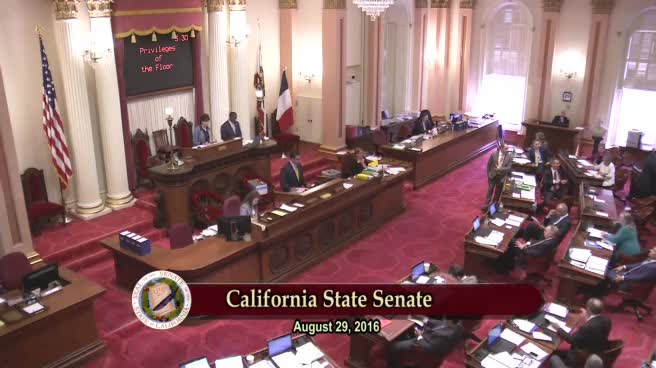 2MIN
Senate Floor
 7MIN
Senate Standing Committee on Governmental Organization
 1MIN
Assembly Floor
 6MIN
Assembly Standing Committee on Accountability and Administrative Review
 3MIN
Senate Floor
 34SEC
Senate Standing Committee on Appropriations
 9MIN
Senate Standing Committee on Appropriations
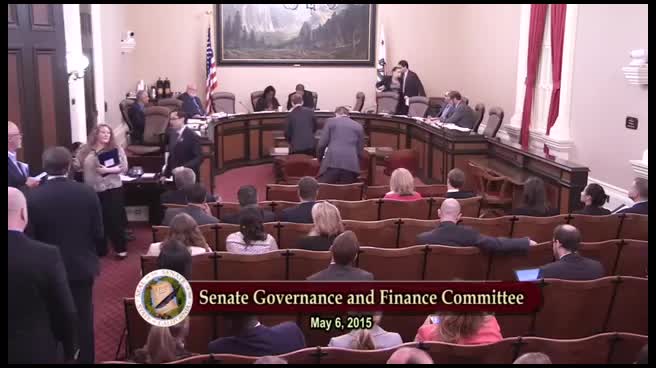 19MIN
Senate Standing Committee on Governance and Finance
Bill Author


