SB 705: Transactions and use taxes: County of San Mateo: Transportation Agency for Monterey County.
- Session Year: 2015-2016
- House: Senate
- Latest Version Date: 2015-10-07
Existing law authorizes various local governmental entities, subject to certain limitations and approval requirements, to levy a transactions and use tax for general purposes, in accordance with the procedures and requirements set forth in the Transactions and Use Tax Law, including a requirement that the combined rate of all taxes that may be imposed in accordance with that law in the county not exceed 2%. Existing law, the Bay Area County Traffic and Transportation Funding Act, authorizes nine specified counties in the San Francisco Bay Area, including the County of San Mateo, to establish a county transportation authority and levy a retail transactions and use tax of either 0.5% or 1% for specified transportation purposes if certain requirements are met, including that the ordinance levying the tax meets the requirements of the Transactions and Use Tax Law and is approved by 2/3 of the electors voting on the measure.
This bill would authorize the County of San Mateo to, in accordance with the Bay Area County Traffic and Transportation Funding Act, impose a transactions and use tax for countywide transportation programs at a rate of no more than 0.5% that, in combination with other specified taxes, would exceed the combined rate limit. The bill would also authorize the Transportation Agency for Monterey County to impose a transactions and use tax for the support of countywide transportation programs at a rate of no more than 0.375% that, in combination with other specified taxes, would exceed the combined rate limit.
These provisions would be repealed by their own terms on January 1, 2026, if an ordinance is not approved, as specified.
This bill would make legislative findings and declarations as to the necessity of a special statute for the County of San Mateo and the Transportation Agency for Monterey County.
Existing law authorizes various local governmental entities, subject to certain limitations and approval requirements, to levy a transactions and use tax for general purposes, in accordance with the procedures and requirements set forth in the Transactions and Use Tax Law, including a requirement that the combined rate of all taxes that may be imposed in accordance with that law in the county not exceed 2%. Existing law, the Bay Area County Traffic and Transportation Funding Act, authorizes nine specified counties in the San Francisco Bay Area, including the County of San Mateo, to establish a county transportation authority and levy a retail transactions and use tax of either 0.5% or 1% for specified transportation purposes if certain requirements are met, including that the ordinance levying the tax meets the requirements of the Transactions and Use Tax Law and is approved by 2/3 of the electors voting on the measure.
This bill would authorize the County of San Mateo to, in accordance with the Bay Area Traffic and Transportation Funding Act, impose a transactions and use tax for countywide transportation programs at a rate of no more than 0.5% that, in combination with other specified taxes, would exceed the combined rate limit. The bill would also authorize the Transportation Agency for Monterey County to impose a transactions and use tax for the support of countywide transportation programs at a rate of no more than 0.375% that, in combination with other specified taxes, would exceed the combined rate limit.
These provisions would be repealed by their own terms on January 1, 2026, if an ordinance is not approved, as specified.
This bill would make legislative findings and declarations as to the necessity of a special statute for the County of San Mateo and the Transportation Agency for Monterey County.
Existing law requires each school district to make available to each charter school operating in the school district facilities sufficient for the charter school to accommodate all of the charter schools in-district pupils in conditions reasonably equivalent to those in which the pupils would be accommodated if they were attending other public schools of the district. Existing law requires a charter school desiring facilities from a school district in which it is operating to provide the school district with a reasonable projection of the charter schools average daily classroom attendance by in-district students for the following year and requires the school district to allocate facilities to the charter school based on that projection. Existing law requires the State Department of Education to propose, and for the State Board of Education to adopt, regulations to implement those provisions.
This bill would require a school district, within 10 days of receiving a facilities request from a charter school or making a preliminary or final offer of facilities to a charter school to post that information on the school districts Internet Web site. To the extent the bill imposes additional duties on school districts, the bill would impose a state-mandated local program.
The California Constitution requires the state to reimburse local agencies and school districts for certain costs mandated by the state. Statutory provisions establish procedures for making that reimbursement.
This bill would provide that, if the Commission on State Mandates determines that the bill contains costs mandated by the state, reimbursement for those costs shall be made pursuant to these statutory provisions.
Existing law requires each school district to make available to each charter school operating in the school district facilities sufficient for the charter school to accommodate all of the charter schools in-district pupils in conditions reasonably equivalent to those in which the pupils would be accommodated if they were attending other public schools of the district. Existing law requires a charter school desiring facilities from a school district in which it is operating to provide the school district with a reasonable projection of the charter schools average daily classroom attendance by in-district students for the following year and requires the school district to allocate facilities to the charter school based on that projection. Existing law requires the State Department of Education to propose, and for the State Board of Education to adopt, regulations to implement those provisions.
This bill would require a school district to notify, in writing, a district-operated school and the parents or guardians of pupils attending that district-operated school if the school district reasonably anticipates that a public school facility located in that district-operated school will be allocated to a charter school, as specified. district, within 10 days of receiving a facilities request from a charter school or making a preliminary or final offer of facilities to a charter school to post that information on the school districts Internet Web site. To the extent the bill imposes additional duties on school districts, the bill would impose a state-mandated local program.
The California Constitution requires the state to reimburse local agencies and school districts for certain costs mandated by the state. Statutory provisions establish procedures for making that reimbursement.
This bill would provide that, if the Commission on State Mandates determines that the bill contains costs mandated by the state, reimbursement for those costs shall be made pursuant to these statutory provisions.
Existing law requires each school district to make available to each charter school operating in the school district facilities sufficient for the charter school to accommodate all of the charter schools in-district pupils in conditions reasonably equivalent to those in which the pupils would be accommodated if they were attending other public schools of the district. Existing law requires a charter school desiring facilities from a school district in which it is operating to provide the school district with a reasonable projection of the charter schools average daily classroom attendance by in-district students for the following year and requires the school district to allocate facilities to the charter school based on that projection. Existing law requires the State Department of Education to propose, and for the State Board of Education to adopt, regulations to implement those provisions.
This bill would require a school districts preliminary proposal regarding the space to be allocated to a charter school to be disclosed at a public hearing that is conducted at a properly noticed and regularly scheduled meeting of the governing board of the school district. district to notify, in writing, a district-operated school and the parents or guardians of pupils attending that district-operated school if the school district reasonably anticipates that a public school facility located in that district-operated school will be allocated to a charter school, as specified. To the extent the bill imposes additional duties on school districts, the bill would impose a state-mandated local program.
The California Constitution requires the state to reimburse local agencies and school districts for certain costs mandated by the state. Statutory provisions establish procedures for making that reimbursement.
This bill would provide that, if the Commission on State Mandates determines that the bill contains costs mandated by the state, reimbursement for those costs shall be made pursuant to these statutory provisions.
Existing law requires each school district to make available to each charter school operating in the school district facilities sufficient for the charter school to accommodate all of the charter schools in-district pupils in conditions reasonably equivalent to those in which the pupils would be accommodated if they were attending other public schools of the district. Existing law requires the State Department of Education to propose, and for the State Board of Education to adopt, regulations to implement those provisions.
This bill would require a school districts preliminary proposal regarding the space to be allocated to a charter school to be disclosed at a public hearing that is conducted at a properly noticed and regularly scheduled meeting of the governing board of the school district. To the extent the bill imposes additional duties on school districts, the bill would impose a state-mandated local program.
The California Constitution requires the state to reimburse local agencies and school districts for certain costs mandated by the state. Statutory provisions establish procedures for making that reimbursement.
This bill would provide that, if the Commission on State Mandates determines that the bill contains costs mandated by the state, reimbursement for those costs shall be made pursuant to these statutory provisions.
Notwithstanding any other law, the County of San Mateo may, in accordance with the requirements of the Bay Area County Traffic and Transportation Funding Act (Division 12.5 (commencing with Section 131000) of the Public Utilities Code) relating to the imposition of transactions and use taxes, impose a transactions and use tax for the support of countywide transportation programs at a rate of no more than 0.5 percent that would, in combination with all taxes imposed in accordance with Part 1.6 (commencing with Section 7251), exceed the limit established in Section 7251.1.
7296.If the ordinance proposing the transactions and use tax is not approved as required by Section 7295, this chapter shall be repealed as of January 1, 2026.
SEC. 2.Chapter 3.91 (commencing with Section 7297) is added to Part 1.7 of Division 2 of the Revenue and Taxation Code, to read:3.91.Local Government Finance in the County of Monterey7297.Notwithstanding any other law, the Transportation Agency for Monterey County may impose a transactions and use tax for the support of countywide transportation programs at a rate of no more than 0.375 percent that would, in combination with all taxes imposed in accordance with Part 1.6 (commencing with Section 7251), exceed the limit established in Section 7251.1, if all of the following requirements are met:
(a)The Transportation Agency for Monterey County adopts an ordinance proposing the transactions and use tax by any applicable voting approval requirement.
(b)The ordinance proposing the transactions and use tax is submitted to the electorate and is approved by the voters voting on the ordinance in accordance with Article XIII C of the California Constitution.
(c)The transactions and use tax conforms to the Transactions and Use Tax Law, Part 1.6 (commencing with Section 7251), other than Section 7251.1.
7298.If the ordinance proposing the transactions and use tax is not approved as required by subdivision (b) of Section 7297, this chapter shall be repealed as of January 1, 2026.
SEC. 3.(a)The Legislature finds and declares that the special law contained in Section 1 of this measure is necessary and that a general law cannot be made applicable within the meaning of Section 16 of Article IV of the California Constitution because of the unique fiscal pressures experienced by the San Mateo County Transportation Authority in providing essential transportation programs.
(b)The Legislature finds and declares that the special law contained in Section 2 of this measure is necessary and that a general law cannot be made applicable within the meaning of Section 16 of Article IV of the California Constitution because of the unique fiscal pressures experienced by the Transportation Agency for Monterey County in providing essential transportation programs.
SECTION 1.Section 47614.2 is added to the Education Code, to read:47614.2.(a)Within 10 days of receipt of a facilities request from a charter school or of the school district making a preliminary offer or final offer of facilities to a charter school, a school district shall post the fact that a request was received or that a preliminary or final offer was made, as applicable, on the school districts Internet Web site.
(b)For purposes of this section, preliminary offer includes situations in which the school district reasonably anticipates that a public school facility located in a district-operated school will be allocated to a charter school.
SEC. 2.If the Commission on State Mandates determines that this act contains costs mandated by the state, reimbursement to local agencies and school districts for those costs shall be made pursuant to Part 7 (commencing with Section 17500) of Division 4 of Title 2 of the Government Code.
(a)Within 10 days of receipt of a facilities request from a charter school or of the school district making a preliminary offer or final offer of facilities to a charter school, a school district shall post the fact that a request was received or that a preliminary or final offer was made, as applicable, on the school districts Internet Web site.
(b)For purposes of this section, preliminary offer includes situations in which the school district reasonably anticipates that a public school facility located in a district-operated school will be allocated to a charter school.
SECTION 1.Section 47614.2 is added to the Education Code, to read:47614.2.If a school district, upon receipt of a charter schools reasonable projection of average daily classroom attendance by in-district students for the following year, as provided in paragraph (2) of subdivision (b) of Section 47614, reasonably anticipates that a public school facility located in a district-operated school will be allocated to a charter school pursuant to paragraph (2) of subdivision (b) of Section 47614, the school district shall, before allocating that facility, notify, in writing, the district-operated school and the parents or guardians of the pupils attending that district-operated school.
SEC. 2.If the Commission on State Mandates determines that this act contains costs mandated by the state, reimbursement to local agencies and school districts for those costs shall be made pursuant to Part 7 (commencing with Section 17500) of Division 4 of Title 2 of the Government Code.
A school districts preliminary proposal regarding the space to be allocated to a charter school shall be disclosed at a public hearing that includes opportunity for public comment and that is conducted at a properly noticed and regularly scheduled meeting of the governing board of the school district.
47614.2.If a school district, upon receipt of a charter schools reasonable projection of average daily classroom attendance by in-district students for the following year, as provided in paragraph (2) of subdivision (b) of Section 47614, reasonably anticipates that a public school facility located in a district-operated school will be allocated to a charter school pursuant to paragraph (2) of subdivision (b) of Section 47614, the school district shall, before allocating that facility, notify, in writing, the district-operated school and the parents or guardians of the pupils attending that district-operated school.
SEC. 2.If the Commission on State Mandates determines that this act contains costs mandated by the state, reimbursement to local agencies and school districts for those costs shall be made pursuant to Part 7 (commencing with Section 17500) of Division 4 of Title 2 of the Government Code.
A school districts preliminary proposal regarding the space to be allocated to a charter school shall be disclosed at a public hearing that includes opportunity for public review and comment that comment and that is conducted at a properly noticed and regularly scheduled meeting of the governing board of the school district.
SEC. 2.If the Commission on State Mandates determines that this act contains costs mandated by the state, reimbursement to local agencies and school districts for those costs shall be made pursuant to Part 7 (commencing with Section 17500) of Division 4 of Title 2 of the Government Code.
A school districts preliminary proposal regarding the space to be allocated to a charter school shall be disclosed at a public hearing that includes opportunity for public review and comment that is conducted at a properly noticed and regularly scheduled meeting of the governing board of the school district.
SEC. 2.If the Commission on State Mandates determines that this act contains costs mandated by the state, reimbursement to local agencies and school districts for those costs shall be made pursuant to Part 7 (commencing with Section 17500) of Division 4 of Title 2 of the Government Code.
|
Date
|
Status
|
|---|---|
| Sep 10, 2015 | Read third time. Passed. (Ayes 51. Noes 29. Page 3087.) Ordered to the Senate. |
| Sep 3, 2015 | Read third time and amended. |
| Sep 3, 2015 | Read third time and amended. (Ayes 50. Noes 28. Page 2857.) |
| Sep 4, 2015 | Re-referred to Com. on L. GOV. pursuant to Assembly Rule 77.2. |
| Sep 8, 2015 | From committee: Do pass. (Ayes 5. Noes 3.) (September 8). |
| Sep 9, 2015 | Read second time. Ordered to third reading. |
| Sep 10, 2015 | From committee: Be re-referred to Com. on T. & H. pursuant to Senate Rule 29.10(d). (Ayes 5. Noes 0.) Re-referred to Com. on T. & H. |
| Sep 10, 2015 | In Senate. Concurrence in Assembly amendments pending. |
| Sep 10, 2015 | Re-referred to Com. on RLS. pursuant to Senate Rule 29.10(d). |
| Sep 10, 2015 | Read third time. Passed. Ordered to the Senate. |
| Sep 3, 2015 | Ordered to third reading. |
| Sep 11, 2015 | Assembly amendments concurred in. (Ayes 25. Noes 14. Page 2763.) Ordered to engrossing and enrolling. |
| Sep 11, 2015 | Assembly amendments concurred in. (Ayes 25. Noes 14.) Ordered to engrossing and enrolling. |
| Sep 11, 2015 | From committee: That the Assembly amendments be concurred in. (Ayes 7. Noes 2. Page 2787.) |
| Sep 11, 2015 | From committee: That the Assembly amendments be concurred in. (Ayes 7. Noes 2.) |
| Sep 11, 2015 | Set for hearing September 11. |
| Sep 16, 2015 | Enrolled and presented to the Governor at 4:45 p.m. |
| Oct 7, 2015 | Approved by the Governor. |
| Oct 7, 2015 | Chaptered by Secretary of State. Chapter 579, Statutes of 2015. |
| May 12, 2015 | Read second time. Ordered to third reading. |
| Mar 2, 2015 | From printer. May be acted upon on or after April 1. |
| Mar 2, 2015 | Read first time. |
| Mar 19, 2015 | Referred to Com. on ED. |
| Mar 20, 2015 | Set for hearing April 8. |
| Apr 16, 2015 | From committee: Do pass as amended and re-refer to Com. on APPR. (Ayes 6. Noes 2. Page 522.) (April 8). |
| Apr 20, 2015 | Read second time and amended. Re-referred to Com. on APPR. |
| May 1, 2015 | Set for hearing May 11. |
| May 5, 2015 | From committee with author's amendments. Read second time and amended. Re-referred to Com. on APPR. |
| May 11, 2015 | From committee: Be ordered to second reading pursuant to Senate Rule 28.8. |
| Feb 27, 2015 | Introduced. To Com. on RLS. for assignment. To print. |
| May 18, 2015 | In Assembly. Read first time. Held at Desk. |
| May 18, 2015 | Read third time. Passed. (Ayes 21. Noes 13. Page 1022.) Ordered to the Assembly. |
| May 18, 2015 | Read third time. Passed. (Ayes 24. Noes 13.) Ordered to the Assembly. |
| Jun 1, 2015 | Referred to Com. on ED. |
| Jun 18, 2015 | From committee: Do pass and re-refer to Com. on APPR. (Ayes 5. Noes 2.) (June 17). Re-referred to Com. on APPR. |
| Jul 9, 2015 | From committee with author's amendments. Read second time and amended. Re-referred to Com. on APPR. |
| Aug 19, 2015 | From committee: Do pass. (Ayes 12. Noes 5.) (August 19). |
| Aug 20, 2015 | Read second time. Ordered to third reading. |
|
Date
|
Description
|
Location
|
Votes
|
|
|---|---|---|---|---|
| Sep 11, 2015 | Unfinished Business (Supplemental File 1) SB705 Hill Concurrence | Senate Floor |
Passed |
|
| Sep 11, 2015 | That the Assembly amendments be concurred in | Senate Standing Committee on Transportation and Housing |
Passed |
|
| Sep 10, 2015 | SB 705 Hill Senate Third Reading By MULLIN | Assembly Floor |
Passed |
|
| Sep 8, 2015 | Do pass. | Assembly Standing Committee on Local Government |
Passed |
|
| Sep 3, 2015 | SB 705 Hill Senate Third Reading Amend By MULLIN Set #1 | Assembly Floor |
Passed |
|
| Aug 19, 2015 | Do pass. | Assembly Standing Committee on Appropriations |
Passed |
|
| Jun 17, 2015 | Do pass and be re-referred to the Committee on [Appropriations] | Assembly Standing Committee on Education |
Passed |
|
| May 18, 2015 | Senate 3rd Reading SB705 Hill | Senate Floor |
Passed |
|
| Apr 8, 2015 | Do pass as amended, but first amend, and re-refer to the Committee on [Appropriations] | Senate Standing Committee on Education |
Passed |
This list shows positions taken on this bill by organizations on the date displayed, which is linked to the original source.
Positions by individuals are not included.
|
Organization
|
Position
|
Date
|
|---|---|---|
| California Afterschool Coalition | * Against | Apr 8, 2015 |
| California Charter Schools Association Advocates | ** Against | Aug 19, 2015 |
| California Federation Of Teachers | ** Support | Aug 19, 2015 |
| California School Employees Association | ** Support | Aug 19, 2015 |
| California State Association Of Counties | ** Support | Sep 11, 2015 |
| California Teachers Association | ** Support | Aug 19, 2015 |
| CalTrain | * Support | Sep 11, 2015 |
| City | ** Support | Sep 10, 2015 |
| City of Carmel-by-the-Sea | ** Support | Sep 11, 2015 |
| City of Del Rey Oaks | ** Support | Sep 11, 2015 |
| City of Gonzales | ** Support | Sep 11, 2015 |
| City Of Greenfield | ** Support | Sep 11, 2015 |
| City of King | ** Support | Sep 11, 2015 |
| City of Marina | ** Support | Sep 11, 2015 |
| City of Pacific Grove | ** Support | Sep 11, 2015 |
| City of Sand City | ** Support | Sep 11, 2015 |
| City Of Seaside | ** Support | Sep 11, 2015 |
| Friends of CalTrain | ** Support | Sep 10, 2015 |
| Howard Jarvis Taxpayers Association | ** Against | Sep 10, 2015 |
| Monterey County | ** Support | Sep 11, 2015 |
| Monterey-Salinas Transit District | ** Support | Sep 10, 2015 |
| Peninsula Corridor Joint Powers Board | ** Support | Sep 11, 2015 |
| Salinas, City Of | ** Support | Sep 11, 2015 |
| San Mateo County Association of Governments | * Support | Sep 11, 2015 |
| San Mateo County Economic Development Association | ** Support | Sep 10, 2015 |
| San Mateo County Transit District | * Support | Sep 11, 2015 |
| San Mateo County Transportation Authority | * Support | Sep 11, 2015 |
| Santa Cruz County Regional Transportation Commission | ** Support | Sep 11, 2015 |
| Self-Help Counties Coaltion | * Support | Sep 11, 2015 |
| State Building & Construction Trades Council Of California | * Support | Sep 11, 2015 |
| Transportation Agency For Monterey County | * Support | Sep 11, 2015 |
| Westlake Charter School | * Against | Apr 8, 2015 |
| Young, Minney, and Corr, LLP | * Against | Apr 8, 2015 |
SB 705 (Hill) Page 5 of 5
SENATE COMMITTEE ON TRANSPORTATION AND HOUSING
Senator Jim Beall, Chair
2015 - 2016 Regular
Bill No: SB 705 Hearing Date: 9/11/2015
Author: |
Hill |
||
Version: |
9/3/2015 |
||
Urgency: |
No |
Fiscal: |
No |
Consultant: |
Eric Thronson |
||
SUBJECT: Transactions and use taxes: County of San Mateo: Transportation Agency for Monterey County
DIGEST: This bill authorizes Monterey and San Mateo counties to impose a countywide sales tax for transportation purposes that would, in combination with all other locally-imposed sales tax, exceed the 2% tax rate cap if certain requirements are met.
ANALYSIS:
Existing law:
Authorizes cities and counties to impose transactions and use taxes in 0.125% increments in addition to the state’s 7.5% sales tax, provided that the combined rate in the county does not exceed 2%.
Exempts the counties of Los Angeles, Alameda, and Contra Costa from the 2% combined tax rate cap for countywide transportation programs.
Contains the Bay Area County Traffic and Transportation Funding Act, which authorizes the nine Bay Area counties, including San Mateo County, to establish a 0.5 or 1% sales tax for specified transportation purposes if the ordinance levying the tax meets the state’s sales tax laws and is approved by a two-thirds vote.
This bill:
Authorizes San Mateo County to impose a countywide sales tax at a rate of no more than 0.5% for transportation purposes that would, in combination with all other locally imposed sales tax, exceed the 2% tax rate cap as long as it otherwise conforms to the Bay Area County Traffic and Transportation Funding Act.
Authorizes Monterey County to impose a countywide sales tax at a rate of no more than 0.375% for transportation purposes that would, in combination with all other locally-imposed sales tax, exceed the 2% tax rate cap if all of the following requirements are met:
The Transportation Agency for Monterey County adopts an ordinance proposing the transactions and use tax by an applicable voting approval requirement;
The ordinance proposing the transactions and use tax is submitted to the electorate and is approved by the voters voting on the ordinance in accordance with California Constitution Article XIII C; and
The transactions and use tax conforms to the Transactions and Use Tax Law, as specified.
Repeals either provision of this bill if voters of either county do not approve a proposed tax increase authorized by this bill before January 1, 2026.
COMMENTS:
Purpose. According to the author, the 2% cap is particularly problematic for counties because if one city within a county reaches the cap, then the county is precluded from seeking voter approval to self-impose additional countywide taxes. Both San Mateo and Monterey counties have significant transportation needs that cannot be addressed without more local revenue, but both suffer under the 2% ceiling. This bill provides affords each county the flexibility to place items before the voters to fund local transportation programs.
Transactions and use taxes. As stated earlier, existing law authorizes cities and counties to impose transactions and use taxes (generally called sales taxes) in 0.125% increments in addition to the state’s 7.5% sales tax, provided that the combined rate in the county does not exceed 2%. These types of taxes may be levied as general taxes (majority vote required), which are unrestricted, or special taxes (two-thirds vote required), which are restricted for a specified use. The Transactions and Use Tax law authorizes the adoption of local add-on rates to the combined state and local sales tax rate. The law has been amended multiple times to authorize specific cities, counties, special districts, and county transportation authorities to impose a sales tax upon voter approval.
Prior to 2003, cities lacked the ability to place sales tax measures before their voters without first obtaining approval by the Legislature to bring an ordinance before the city council, and, if approved at the council level, to the voters. This was remedied by SB 566 (Scott, Chapter 709, Statutes of 2003). SB 566 also contained provisions to increase a county’s sales tax cap because of the possibility that certain counties were going to run out of room under their caps, if cities within those counties approved additional sales taxes.
Because of the interaction between city-imposed and county-imposed sales taxes, the concern that counties will run into the 2% cap still applies today. Currently, the counties of Alameda, Contra Costa, Los Angeles, and San Mateo have reached the 2% limit, and the counties of Marin, San Diego, and Sonoma are near the 2% limit.
Exemptions to the 2% cap. The Legislature has previously granted exemptions to the 2% statutory cap for sales taxes to support countywide transportation programs for Los Angeles, Alameda, and Contra Costa counties.
AB 1086 (Wieckowski, Chapter 327, Statutes of 2011) allowed a one-time exemption for Alameda County from the 2% sales tax combined rate cap. AB 210 (Wieckowski, Chapter 194, Statutes of 2013) extended the authority for Alameda County to adopt an ordinance imposing a sales tax for transportation purposes from January 1, 2014, to December 31, 2020, and allowed Contra Costa County to adopt an ordinance imposing a sales tax in the same manner as Alameda County.
SB 314 (Murray, Chapter 785, Statutes of 2003) originally enacted provisions that authorized the Los Angeles County Metropolitan Transportation Authority (MTA) to impose a 0.5% sales tax, not subject to the 2% cap for no more than six and one-half years, for specific transportation projects and programs. The authority to put a tax measure on the ballot was never used. AB 2321 (Feuer, Chapter 302, Statutes of 2008) modified those provisions to allow MTA to impose a sales tax for 30 years. SB 767 (De León), pending on the Senate Floor, and AB 338 (Hernández), pending in the Senate Transportation and Housing Committee, would both authorize MTA to impose an additional countywide 0.5% sales tax.
Additionally, AB 1324 (Skinner, Chapter 795, Statutes of 2014) allowed the City of El Cerrito to adopt an ordinance to impose a transactions and use tax not to exceed 0.5% for general purposes that would, in combination with other taxes, exceed the statutory limit of 2%.
Governor’s veto. Instead of doing individual bills for each county in California, this year’s AB 464 (Mullin) would have increased the countywide sales tax combined rate cap from 2% to 3% statewide. On August 17, the Governor vetoed AB 464. In his veto message, the Governor remarked, “Although I have approved raising the limit for individual counties, I am reluctant to approve this measure in view of all the taxes being discussed and proposed for the 2016 ballot.”
Concurrence hearing. When this bill passed off the Senate Floor in May, it related to charter school facilities. The bill was amended on the Assembly Floor to its current form. Because of these amendments, the Senate Rules Committee referred this bill back to this committee for a hearing under Senate Rule 29.10(d). At today’s hearing, the committee may not amend the bill further and may only, with a majority vote, (1) hold the bill or (2) return the bill as approved by the committee to the Senate Floor.
FISCAL EFFECT: Appropriation: No Fiscal Com.: No Local: No
POSITIONS: (Communicated to the committee before noon on Thursday,
September 10, 2015.)
SUPPORT:
California State Association of Counties
City of Carmel-by-the-Sea
City of Del Rey Oaks
City of Gonzales
City of Greenfield
City of King
City of Marina
City of Monterey
City of Pacific Grove
City of Salinas
City of Sand City
City of Seaside
City of Soledad
Monterey County
Peninsula Corridor Joint Powers Board
San Mateo County Transit District
San Mateo County Transportation Authority
Santa Cruz County Regional Transportation Commission
Transportation Agency for Monterey County
OPPOSITION:
None received
-- END --
SB 705
Page 5
|
Office of Senate Floor Analyses (916) 651-1520 Fax: (916) 327-4478 |
UNFINISHED BUSINESS
Bill No: SB 705
Amended: 9/3/15
SENATE TRANS. & HOUSING COMMITTEE: 7-2, 9/11/15 (pursuant to Senate Rules 29.10)
AYES: Beall, Cannella, Allen, Leyva, McGuire, Mendoza, Wieckowski
NOES: Bates, Gaines
NO VOTE RECORDED: Galgiani, Roth
ASSEMBLY FLOOR: 51-29, 9/10/15 - See last page for vote
SUBJECT: Transactions and use taxes: County of San Mateo: Transportation Agency for Monterey County
DIGEST: This bill authorizes Monterey and San Mateo Counties to impose a countywide sales tax for transportation purposes that would, in combination with all other locally imposed sales tax, exceed the 2% tax rate cap if certain requirements are met.
Assembly Amendments remove the original contents of the bill related to charter school facilities and replace it with the current language.
Existing law:
Authorizes cities and counties to impose transactions and use taxes in 0.125% increments in addition to the state’s 7.5% sales tax, provided that the combined rate in the county does not exceed 2%.
Exempts the Counties of Los Angeles, Alameda, and Contra Costa from the 2% combined tax rate cap for countywide transportation programs.
Contains the Bay Area County Traffic and Transportation Funding Act, which authorizes the nine Bay Area counties, including San Mateo County, to establish a 0.5 or 1% sales tax for specified transportation purposes if the ordinance levying the tax meets the state’s sales tax laws and is approved by a two-thirds vote.
This bill:
Authorizes San Mateo County to impose a countywide sales tax at a rate of no more than 0.5% for transportation purposes that will, in combination with all other locally imposed sales tax, exceed the 2% tax rate cap as long as it otherwise conforms to the Bay Area County Traffic and Transportation Funding Act.
Authorizes Monterey County to impose a countywide sales tax at a rate of no more than 0.375% for transportation purposes that would, in combination with all other locally-imposed sales tax, exceed the 2% tax rate cap if all of the following requirements are met:
The Transportation Agency for Monterey County adopts an ordinance proposing the transactions and use tax by an applicable voting approval requirement;
The ordinance proposing the transactions and use tax is submitted to the electorate and is approved by the voters voting on the ordinance in accordance with California Constitution Article XIII C; and
The transactions and use tax conforms to the Transactions and Use Tax Law, as specified.
Repeals either provision of this bill if voters of either county do not approve a proposed tax increase authorized by this bill before January 1, 2026.
Comments
Purpose. According to the author, the 2% cap is particularly problematic for counties because if one city within a county reaches the cap, then the county is precluded from seeking voter approval to self-impose additional countywide taxes. Both San Mateo and Monterey Counties have significant transportation needs that cannot be addressed without more local revenue, but both suffer under the 2% ceiling. This bill affords each county the flexibility to place items before the voters to fund local transportation programs.
Transactions and use taxes. As stated earlier, existing law authorizes cities and counties to impose transactions and use taxes (generally called sales taxes) in 0.125% increments in addition to the state’s 7.5% sales tax, provided that the combined rate in the county does not exceed 2%. These types of taxes may be levied as general taxes (majority vote required), which are unrestricted, or special taxes (two-thirds vote required), which are restricted for a specified use. The Transactions and Use Tax law authorizes the adoption of local add-on rates to the combined state and local sales tax rate. The law has been amended multiple times to authorize specific cities, counties, special districts, and county transportation authorities to impose a sales tax upon voter approval.
Prior to 2003, cities lacked the ability to place sales tax measures before their voters without first obtaining approval by the Legislature to bring an ordinance before the city council, and, if approved at the council level, to the voters. This was remedied by SB 566 (Scott, Chapter 709, Statutes of 2003). SB 566 also contained provisions to increase a county’s sales tax cap because of the possibility that certain counties were going to run out of room under their caps, if cities within those counties approved additional sales taxes.
Because of the interaction between city-imposed and county-imposed sales taxes, the concern that counties will run into the 2% cap still applies today. Currently, the Counties of Alameda, Contra Costa, Los Angeles, and San Mateo have reached the 2% limit, and the counties of Marin, San Diego, and Sonoma are near the 2% limit.
Exemptions to the 2% cap. The Legislature has previously granted exemptions to the 2% statutory cap for sales taxes to support countywide transportation programs for Los Angeles, Alameda, and Contra Costa Counties.
AB 1086 (Wieckowski, Chapter 327, Statutes of 2011) allowed a one-time exemption for Alameda County from the 2% sales tax combined rate cap. AB 210 (Wieckowski, Chapter 194, Statutes of 2013) extended the authority for Alameda County to adopt an ordinance imposing a sales tax for transportation purposes from January 1, 2014, to December 31, 2020, and allowed Contra Costa County to adopt an ordinance imposing a sales tax in the same manner as Alameda County.
SB 314 (Murray, Chapter 785, Statutes of 2003) originally enacted provisions that authorized the Los Angeles County Metropolitan Transportation Authority (MTA) to impose a 0.5% sales tax, not subject to the 2% cap for no more than six and one-half years, for specific transportation projects and programs. The authority to put a tax measure on the ballot was never used. AB 2321 (Feuer, Chapter 302, Statutes of 2008) modified those provisions to allow MTA to impose a sales tax for 30 years. SB 767 (De León), pending on the Assembly Floor, and AB 338 (Hernández), pending in the Senate Transportation and Housing Committee, would both authorize MTA to impose an additional countywide 0.5% sales tax.
Additionally, AB 1324 (Skinner, Chapter 795, Statutes of 2014) allowed the City of El Cerrito to adopt an ordinance to impose a transactions and use tax not to exceed 0.5% for general purposes that would, in combination with other taxes, exceed the statutory limit of 2%.
Governor’s veto. Instead of doing individual bills for each county in California, this year’s AB 464 (Mullin) would have increased the countywide sales tax combined rate cap from 2% to 3% statewide. On August 17, the Governor vetoed AB 464. In his veto message, the Governor remarked, “Although I have approved raising the limit for individual counties, I am reluctant to approve this measure in view of all the taxes being discussed and proposed for the 2016 ballot.”
FISCAL EFFECT: Appropriation: No Fiscal Com.: No Local: No
California State Association of Counties
City of Carmel-by-the-Sea
City of Del Rey Oaks
City of Gonzales
City of Greenfield
City of King
City of Marina
City of Monterey
City of Pacific Grove
City of Salinas
City of Sand City
City of Seaside
City of Soledad
Monterey County
Peninsula Corridor Joint Powers Board
San Mateo County Transit District
San Mateo County Transportation Authority
Santa Cruz County Regional Transportation Commission
Transportation Agency for Monterey County
OPPOSITION: (Verified 9/11/15)
California Taxpayers Association
ASSEMBLY FLOOR: 51-29, 9/10/15
AYES: Alejo, Bloom, Bonilla, Bonta, Brown, Burke, Calderon, Campos, Chau, Chiu, Chu, Cooley, Cooper, Dababneh, Daly, Dodd, Eggman, Frazier, Cristina Garcia, Eduardo Garcia, Gatto, Gipson, Gomez, Gonzalez, Gordon, Gray, Roger Hernández, Holden, Jones-Sawyer, Levine, Lopez, Low, McCarty, Medina, Mullin, Nazarian, O'Donnell, Perea, Quirk, Rendon, Ridley-Thomas, Rodriguez, Salas, Santiago, Mark Stone, Thurmond, Ting, Weber, Williams, Wood, Atkins
NOES: Achadjian, Travis Allen, Baker, Bigelow, Brough, Chang, Chávez, Dahle, Beth Gaines, Gallagher, Grove, Hadley, Harper, Irwin, Jones, Kim, Lackey, Linder, Maienschein, Mathis, Mayes, Melendez, Obernolte, Olsen, Patterson, Steinorth, Wagner, Waldron, Wilk
Prepared by: Eric Thronson / T. & H. / (916) 651-4121
9/11/15 14:29:01
**** END ****
SB 705
Page 3
SENATE THIRD READING
SB 705
(Hill)
As Amended September 3, 2015
Majority vote
SENATE VOTE: Vote not relevant
Committee |
Votes |
Ayes |
Noes |
EDUCATION (vote not relevant) |
|
|
|
APPROPRIATIONS (vote not relevant) |
|
|
|
Local Government |
5-3 |
Gonzalez, Chiu, Cooley, Gordon, Holden |
Maienschein, Linder, Waldron |
SUMMARY: Allows San Mateo and Monterey County to impose a transactions and use tax at a specified amount for the support of countywide transportation programs that would, in combination with other taxes, exceed the statutory limit of 2%. Specifically, this bill:
Allows San Mateo County, in accordance with the requirements of the Bay Area County Traffic and Transportation Fund Act, to impose a transactions and use tax for the support of countywide transportation programs at a rate of no more than 0.5% that would, in combination with all other transactions and use taxes, exceed the 2% limit established in existing law.
Provides, if the ordinance in San Mateo County proposing the transactions and use tax is not approved, that the provisions of the bill shall be repealed as of January 1, 2026.
Allows Monterey County to impose a transactions and use tax for the support of countywide transportation programs at a rate of no more than 0.375% that would, in combination with all other transactions and use taxes, exceed the 2% limit established in existing law, if all of the following conditions are met:
The Transportation Agency for Monterey County adopts an ordinance proposing the transactions and use tax by an applicable voting approval requirement;
The ordinance proposing the transactions and use tax is submitted to the electorate and is approved by the voters voting on the ordinance in accordance with California Constitution Article XIII C; and,
The transactions and use tax conforms to the Transactions and Use Tax Law, as specified.
Provides, if the ordinance in Monterey County proposing the transactions and use tax is not approved, that the provisions of the bill shall be repealed as of January 1, 2026.
Finds and declares that a special law is necessary and that a general law cannot be made applicable because of the unique fiscal pressures experienced by the San Mateo County Transportation Authority and by the Transportation Agency for Monterey County in providing essential transportation programs.
FISCAL EFFECT: None
COMMENTS:
Bill Summary. This bill provides an exemption to San Mateo and Monterey Counties from the 2% transactions and use tax combined rate cap that is currently in statute. This bill authorizes San Mateo County to impose of a transactions and use tax to support countywide transportation programs at a rate of no more than 0.5% in accordance with the requirements of the Bay Area County Traffic and Transportation Funding Act. Additionally this bill authorizes Monterey County to impose a transactions and use tax to support countywide transportation programs at a rate of no more than 0.375%, and with the appropriate voter approval pursuant to the California Constitution. If the ordinance proposing the transactions and use tax is not approved by voters by January 1, 2026, the provisions of this bill would be repealed as of that same date.
Author's Statement. According to the author, this bill "will provide for much needed capacity to allow the local transportation agencies within the respective counties to consider placing a measure before voters to consider, in order to alleviate traffic congestion and infrastructure needs."
Transactions and Use Taxes. Existing law authorizes cities and counties to impose transactions and use taxes in 0.125% increments in addition to the state’s 7.5% sales tax, provided that the combined rate in the county does not exceed 2%. Transactions and use taxes are taxes imposed on the total retail price of any tangible personal property and the use or storage of such property when sales tax is not paid. These types of taxes may be levied as general taxes (majority-vote required), which are unrestricted, or special taxes (two-thirds vote required), which are restricted for a specified use. The Transactions and Use Tax law authorizes the adoption of local add-on rates to the combined state and local sales tax rate. The law has been amended multiple times to authorize specific cities, counties, special districts and county transportation authorities to impose a transactions and use tax, if voters approve the tax.
Prior to 2003, cities lacked the ability to place transactions and use taxes before their voters without first obtaining approval by the Legislature to bring an ordinance before the city council, and, if approved at the council level, to the voters. This was remedied by SB 566 (Scott), Chapter 709, Statutes of 2003. SB 566 also contained provisions to increase a county's transactions and use tax cap because of the possibility that certain counties were going to run out of room under their caps, if cities within those counties approved transactions and use taxes.
Because of the interaction between city-imposed and county-imposed transactions and use taxes, the concern that counties will run into the 2% cap still applies today. Currently, the Counties of Alameda, Contra Costa, Los Angeles, and San Mateo have reached the 2% limit, and the Counties of Marin, San Diego, and Sonoma are near the 2% limit.
According to the Board of Equalization, as of April 1, 2015, there are 202 local jurisdictions (city, county, and special purpose entity) imposing a transactions and use tax for general or specific purposes. Of the 202 jurisdictions, 48 are county-imposed taxes and 154 are city-imposed taxes. Of the 48 county-imposed taxes, 44 are imposed for special purposes. Of the 154 city-imposed taxes, 124 are general purpose taxes and 30 are special purpose taxes.
Exemptions to the 2% Cap. The Legislature has previously granted exemptions to the 2% statutory cap for transactions and use taxes to support countywide transportation programs for Los Angeles, Alameda, and Contra Costa Counties.
AB 1086 (Wieckowski), Chapter 327, Statutes of 2011, allowed a one-time exemption for Alameda County from the 2% transactions and use tax combined rate cap. AB 210 (Wieckowski), Chapter 194, Statutes of 2013, extended the authority for Alameda County to adopt an ordinance imposing a transactions and use tax from January 1, 2014, to December 31, 2020, and allowed Contra Costa County to adopt an ordinance imposing a transactions and use tax in the same manner as Alameda County.
SB 314 (Murray), Chapter 785, Statutes of 2003, originally enacted provisions that authorized the Los Angeles County Metropolitan Transportation Authority (MTA) to impose a 0.5% transactions and use tax, not subject to the 2% cap for no more than six and one-half years, for specific transportation projects and programs. The authority to put a tax measure on the ballot was never used. AB 2321 (Feuer), Chapter 302, Statutes of 2008, modified those provisions to allow MTA to impose a transactions and use tax for 30 years. SB 767 (De León), pending in the Senate Appropriations Committee, and AB 338 (Hernández), pending in the Transportation Committee, would both authorize MTA to impose an additional countywide 0.5% transactions and use tax.
Additionally, AB 1324 (Skinner), Chapter 795, Statutes of 2014, allowed the City of El Cerrito to adopt an ordinance to impose a transactions and use tax not to exceed 0.5% for general purposes that would, in combination with other taxes, exceed the statutory limit of 2%.
AB 464 (Mullin) of 2015, would have increased the countywide transactions and use tax combined rate cap from 2% to 3% statewide. AB 464 was vetoed by the Governor. In his veto message, the Governor remarked, "Although I have approved raising the limit for individual counties, I am reluctant to approve this measure in view of all the taxes being discussed and proposed for the 2016 ballot."
Arguments in Support. Supporters argue that this bill will provide the capacity to allow for local decision makers to weigh their options in addressing transportation needs locally.
Arguments in Opposition. Opposition argues that this bill continues to authorize a deeply regressive sales tax and that the length of time the bill provides to allow voters to approve the tax is unwarranted.
Analysis Prepared by: Misa Lennox / L. GOV. / (916) 319-3958 FN: 0002279
SB 705
Page 4
Date of Hearing: September 8, 2015
ASSEMBLY COMMITTEE ON LOCAL GOVERNMENT
Brian Maienschein, Chair
SB 705
(Hill) – As Amended September 3, 2015
SENATE VOTE: Vote not relevant
SUBJECT: Transactions and use taxes: County of San Mateo: Transportation Agency for Monterey County.
SUMMARY: Allows San Mateo and Monterey County to impose a transactions and use tax at a specified amount for the support of countywide transportation programs that would, in combination with other taxes, exceed the statutory limit of 2%. Specifically, this bill:
Allows San Mateo County, in accordance with the requirements of the Bay Area County Traffic and Transportation Fund Act, to impose a transactions and use tax for the support of countywide transportation programs at a rate of no more than 0.5% that would, in combination with all other transactions and use taxes, exceed the 2% limit established in existing law.
Provides, if the ordinance in San Mateo County proposing the transactions and use tax is not approved, that the provisions of the bill shall be repealed as of January 1, 2026.
Allows Monterey County to impose a transactions and use tax for the support of countywide transportation programs at a rate of no more than 0.375% that would, in combination with all other transactions and use taxes, exceed the 2% limit established in existing law, if all of the following conditions are met:
The Transportation Agency for Monterey County adopts an ordinance proposing the transactions and use tax by an applicable voting approval requirement;
The ordinance proposing the transactions and use tax is submitted to the electorate and is approved by the voters voting on the ordinance in accordance with California Constitution Article XIII C; and,
The transactions and use tax conforms to the Transactions and Use Tax Law, as specified.
Provides, if the ordinance in Monterey County proposing the transactions and use tax is not approved, that the provisions of the bill shall be repealed as of January 1, 2026.
Finds and declares that a special law is necessary and that a general law cannot be made applicable because of the unique fiscal pressures experienced by the San Mateo County Transportation Authority and by the Transportation Agency for Monterey County in providing essential transportation programs.
FISCAL EFFECT: None.
COMMENTS:
Bill Summary. This bill provides an exemption to San Mateo and Monterey Counties from the 2% transactions and use tax combined rate cap that is currently in statute. This bill authorizes San Mateo County to impose of a transactions and use tax to support countywide transportation programs at a rate of no more than 0.5% in accordance with the requirements of the Bay Area County Traffic and Transportation Funding Act. Additionally this bill authorizes Monterey County to impose a transactions and use tax to support countywide transportation programs at a rate of no more than 0.375%, and with the appropriate voter approval pursuant to the California Constitution. If the ordinance proposing the transactions and use tax is not approved by voters by January 1, 2026, the provisions of the bill would be repealed as of that same date.
Author's Statement. According to the author, this bill "will provide for much needed capacity to allow the local transportation agencies within the respective counties to consider placing a measure before voters to consider, in order to alleviate traffic congestion and infrastructure needs."
Transactions and Use Taxes. Existing law authorizes cities and counties to impose transactions and use taxes in 0.125% increments in addition to the state’s 7.5% sales tax, provided that the combined rate in the county does not exceed 2%. Transactions and use taxes are taxes imposed on the total retail price of any tangible personal property and the use or storage of such property when sales tax is not paid. These types of taxes may be levied as general taxes (majority-vote required), which are unrestricted, or special taxes (two-thirds vote required), which are restricted for a specified use. The Transactions and Use Tax law authorizes the adoption of local add-on rates to the combined state and local sales tax rate. The law has been amended multiple times to authorize specific cities, counties, special districts and county transportation authorities to impose a transactions and use tax, if voters approve the tax.
Prior to 2003, cities lacked the ability to place transactions and use taxes before their voters without first obtaining approval by the Legislature to bring an ordinance before the city council, and, if approved at the council level, to the voters. This was remedied by SB 566 (Scott), Chapter 709, Statutes of 2003. SB 566 also contained provisions to increase a county's transactions and use tax cap because of the possibility that certain counties were going to run out of room under their caps, if cities within those counties approved transactions and use taxes.
Because of the interaction between city-imposed and county-imposed transactions and use taxes, the concern that counties will run into the 2% cap still applies today. Currently, the Counties of Alameda, Contra Costa, Los Angeles, and San Mateo have reached the 2% limit, and the Counties of Marin, San Diego, and Sonoma are near the 2% limit.
According to the Board of Equalization, as of April 1, 2015, there are 202 local jurisdictions (city, county, and special purpose entity) imposing a transactions and use tax for general or specific purposes. Of the 202 jurisdictions, 48 are county-imposed taxes and 154 are city-imposed taxes. Of the 48 county-imposed taxes, 44 are imposed for special purposes. Of the 154 city-imposed taxes, 124 are general purpose taxes and 30 are special purpose taxes.
Exemptions to the 2% Cap. The Legislature has previously granted exemptions to the 2% statutory cap for transactions and use taxes to support countywide transportation programs for Los Angeles, Alameda, and Contra Costa counties.
AB 1086 (Wieckowski), Chapter 327, Statutes of 2011, allowed a one-time exemption for Alameda County from the 2% transactions and use tax combined rate cap. AB 210 (Wieckowski), Chapter 194, Statutes of 2013, extended the authority for Alameda County to adopt an ordinance imposing a transactions and use tax from January 1, 2014, to December 31, 2020, and allowed Contra Costa County to adopt an ordinance imposing a transactions and use tax in the same manner as Alameda County.
SB 314 (Murray), Chapter 785, Statutes of 2003, originally enacted provisions that authorized the Los Angeles County Metropolitan Transportation Authority (MTA) to impose a 0.5% transactions and use tax, not subject to the 2% cap for no more than six and one-half years, for specific transportation projects and programs. The authority to put a tax measure on the ballot was never used. AB 2321 (Feuer), Chapter 302, Statutes of 2008, modified those provisions to allow MTA to impose a transactions and use tax for 30 years. SB 767 (De León), pending in the Senate Appropriations Committee, and AB 338 (Hernández), pending in the Transportation Committee, would both authorize MTA to impose an additional countywide 0.5% transactions and use tax.
Additionally, AB 1324 (Skinner), Chapter 795, Statutes of 2014, allowed the City of El Cerrito to adopt an ordinance to impose a transactions and use tax not to exceed 0.5% for general purposes that would, in combination with other taxes, exceed the statutory limit of 2%.
AB 464 (Mullin) of 2015, would have increased the countywide transactions and use tax combined rate cap from 2% to 3% statewide. AB 464 was vetoed by the Governor. In his veto message, the Governor remarked, "Although I have approved raising the limit for individual counties, I am reluctant to approve this measure in view of all the taxes being discussed and proposed for the 2016 ballot."
Arguments in Support. Supporters argue that this bill will provide the capacity to allow for local decision makers to weigh their options in addressing transportation needs locally.
Arguments in Opposition. Opposition argues that this bill continues to authorize a deeply regressive sales tax and that the length of time the bill provides to allow voters to approve the tax is unwarranted.
REGISTERED SUPPORT / OPPOSITION:
Support
California State Association of Counties
Cities of Carmel-by-the-Sea, Del Rey Oaks, Gonzales, Greenfield, King City, Marina, Monterey, Pacific Grove, Salinas, Sand City, Seaside, Soledad
City/County Association of Governments of San Mateo County
Friends of CalTrain
Monterey County Board of Supervisors
Monterey-Salinas Transit District
San Mateo County Economic Development Association
Santa Cruz County Regional Transportation Commission
Opposition
Howard Jarvis Taxpayers Association
Analysis Prepared by: Misa Lennox / L. GOV. / (916) 319-3958
SB 705
Page 3
SENATE THIRD READING
SB 705
(Hill)
As Amended September 3, 2015
Majority vote
SENATE VOTE: Vote not relevant
Committee |
Votes |
Ayes |
Noes |
Education (vote not relevant) |
|
|
|
Appropriations (vote not relevant) |
|
|
|
SUMMARY: Allows San Mateo and Marin County to impose a transactions and use tax at a specified amount for the support of countywide transportation programs that would, in combination with other taxes, exceed the statutory limit of 2%. Specifically, this bill:
Allows San Mateo County, in accordance with the requirements of the Bay Area County Traffic and Transportation Fund Act, to impose a transactions and use tax for the support of countywide transportation programs at a rate of no more than 0.5% that would, in combination with all other transactions and use taxes, exceed the 2% limit established in existing law.
Provides, if the ordinance in San Mateo County proposing the transactions and use tax is not approved, that the provisions of this bill shall be repealed as of January 1, 2026.
Allows Monterey County to impose a transactions and use tax for the support of countywide transportation programs at a rate of no more than 0.375% that would, in combination with all other transactions and use taxes, exceed the 2% limit established in existing law, if all of the following conditions are met:
The Transportation Agency for Monterey County adopts an ordinance proposing the transactions and use tax by an applicable voting approval requirement;
The ordinance proposing the transactions and use tax is submitted to the electorate and is approved by the voters voting on the ordinance in accordance with California Constitution Article XIII C; and,
The transactions and use tax conforms to the Transactions and Use Tax Law, as specified.
Provides, if the ordinance in Monterey County proposing the transactions and use tax is not approved, that the provisions of the bill shall be repealed as of January 1, 2026.
Finds and declares that a special law is necessary and that a general law cannot be made applicable because of the unique fiscal pressures experienced by the San Mateo County Transportation Authority and by the Transportation Agency for Monterey County in providing essential transportation programs.
FISCAL EFFECT: None
COMMENTS:
Bill Summary. This bill provides an exemption to San Mateo and Monterey Counties from the 2% transactions and use tax combined rate cap that is currently in statute. This bill authorizes San Mateo County to impose of a transactions and use tax to support countywide transportation programs at a rate of no more than 0.5% in accordance with the requirements of the Bay Area County Traffic and Transportation Funding Act. Additionally this bill authorizes Monterey County to impose a transactions and use tax to support countywide transportation programs at a rate of no more than 0.375%, and with the appropriate voter approval pursuant to the California Constitution. If the ordinance proposing the transactions and use tax is not approved by voters by January 1, 2026, the provisions of this bill would be repealed as of that same date.
Author's Statement. According to the author, "[This bill] will provide for much needed capacity to allow the local transportation agencies within the respective counties to consider placing a measure before voters to consider, in order to alleviate traffic congestion and infrastructure needs."
Transactions and Use Taxes. Existing law authorizes cities and counties to impose transactions and use taxes in 0.125% increments in addition to the state's 7.5% sales tax, provided that the combined rate in the county does not exceed 2%. Transactions and use taxes are taxes imposed on the total retail price of any tangible personal property and the use or storage of such property when sales tax is not paid. These types of taxes may be levied as general taxes (majority-vote required), which are unrestricted, or special taxes (two-thirds vote required), which are restricted for a specified use. The Transactions and Use Tax law authorizes the adoption of local add-on rates to the combined state and local sales tax rate. The law has been amended multiple times to authorize specific cities, counties, special districts and county transportation authorities to impose a transactions and use tax, if voters approve the tax.
Prior to 2003, cities lacked the ability to place transactions and use taxes before their voters without first obtaining approval by the Legislature to bring an ordinance before the city council, and, if approved at the council level, to the voters. This was remedied by SB 566 (Scott), Chapter 709, Statutes of 2003. SB 566 also contained provisions to increase a county's transactions and use tax cap because of the possibility that certain counties were going to run out of room under their caps, if cities within those counties approved transactions and use taxes.
Because of the interaction between city-imposed and county-imposed transactions and use taxes, the concern that counties will run into the 2% cap still applies today. Currently, the Counties of Alameda, Contra Costa, Los Angeles, and San Mateo have reached the 2% limit, and the Counties of Marin, San Diego, and Sonoma are near the 2% limit.
According to the Board of Equalization, as of April 1, 2015, there are 202 local jurisdictions (city, county, and special purpose entity) imposing a transactions and use tax for general or specific purposes. Of the 202 jurisdictions, 48 are county-imposed taxes and 154 are city-imposed taxes. Of the 48 county-imposed taxes, 44 are imposed for special purposes. Of the 154 city-imposed taxes, 124 are general purpose taxes and 30 are special purpose taxes.
Exemptions to the 2% Cap. The Legislature has previously granted exemptions to the 2% statutory cap for transactions and use taxes to support countywide transportation programs for Los Angeles, Alameda, and Contra Costa Counties.
AB 1086 (Wieckowski), Chapter 327, Statutes of 2011, allowed a one-time exemption for Alameda County from the 2% transactions and use tax combined rate cap. AB 210 (Wieckowski), Chapter 194, Statutes of 2013, extended the authority for Alameda County to adopt an ordinance imposing a transactions and use tax from January 1, 2014, to December 31, 2020, and allowed Contra Costa County to adopt an ordinance imposing a transactions and use tax in the same manner as Alameda County.
SB 314 (Murray), Chapter 785, Statutes of 2003, originally enacted provisions that authorized the Los Angeles County Metropolitan Transportation Authority (MTA) to impose a 0.5% transactions and use tax, not subject to the 2% cap for no more than six and one-half years, for specific transportation projects and programs. The authority to put a tax measure on the ballot was never used. AB 2321 (Feuer), Chapter 302, Statutes of 2008, modified those provisions to allow MTA to impose a transactions and use tax for 30 years. SB 767 (De León), pending in the Senate Appropriations Committee, and AB 338 (Hernández), pending in the Transportation Committee, would both authorize MTA to impose an additional countywide 0.5% transactions and use tax.
Additionally, AB 1324 (Skinner), Chapter 795, Statutes of 2014, allowed the City of El Cerrito to adopt an ordinance to impose a transactions and use tax not to exceed 0.5% for general purposes that would, in combination with other taxes, exceed the statutory limit of 2%.
AB 464 (Mullin) of 2015, would have increased the countywide transactions and use tax combined rate cap from 2% to 3% statewide. AB 464 was vetoed by the Governor. In his veto message, the Governor remarked, "Although I have approved raising the limit for individual counties, I am reluctant to approve this measure in view of all the taxes being discussed and proposed for the 2016 ballot."
Analysis Prepared by: Misa Lennox / L. GOV. / (916) 319-3958 FN: 0002119
SB 705
Page 2
SENATE THIRD READING
SB 705
(Hill)
As Amended July 9, 2015
Majority vote
SENATE VOTE: 21-13
Committee |
Votes |
Ayes |
Noes |
Education |
5-2 |
O'Donnell, McCarty, Santiago, Thurmond, Weber |
Chávez, Kim |
Appropriations |
12-5 |
Gomez, Bloom, Bonta, Calderon, Daly, Eggman, Eduardo Garcia, Holden, Quirk, Rendon, Weber, Wood |
Bigelow, Chang, Gallagher, Jones, Wagner |
SUMMARY: Requires a school district, within 10 days of receipt of a facilities request from a charter school or making a preliminary offer or final offer of facilities to a charter school, to post the information on the school district's Internet Web site. Specifies that "preliminary offer" includes situations in which the school district reasonably anticipates that a public school facility located in a district-operated school will be allocated to a charter school.
FISCAL EFFECT: According to the Assembly Appropriations Committee, Proposition 98 (1988)/General Fund state mandated costs, likely in the low tens of thousands, for school districts to post facility proposals or requests on their Web site.
COMMENTS: In 2000, voters passed Proposition 39 (2000), which gave districts the opportunity to seek approval of a local education bond based on a 55% vote rather than a two-thirds vote under specified conditions. The initiative also enacted provisions in the Education Code to require school districts to make school facilities available to charter schools with at least 80 units of average daily attendance operating in the district. Facilities are required to be reasonably equivalent to facilities pupils would receive if the pupils were to attend district schools. School districts are required to make reasonable efforts to provide the charter school with facilities near where the charter school wishes to be located. Facilities provided by the district shall be contiguous, furnished, and equipped. School districts are allowed to charge a pro rata share of any facilities costs the school district pays for with general fund revenues.
Under regulations specified in California Code of Regulations Title 5, charter schools and school districts are required to comply with the following timeline:
On or before November 1, a charter school is required to submit a written facilities request for facilities for the following school year including a projection of the number of in-district pupils who will be attending the charter school.
On or before December 1, the school district is required to express any disagreement with the projected number of pupils and provide a projection the district considers reasonable.
On or before January 2, the charter school responds to the district's objections and either reaffirms or modifies its previous projections.
On or before February 1, the school district provides a written preliminary proposal regarding the space to be allocated to the charter school.
On or before March 1, the charter school is required to respond in writing to the school district's preliminary proposal.
On or before April 1, the school district is required to submit in writing a final notification of space offered to the charter school.
What does this bill do? This bill requires a school district, within 10 days of receiving a facilities request from a charter school or making a preliminary offer or final offer of facilities to a charter school, to post the information on the school district's Internet Web site.
The author introduced this bill in response to parent and community concerns following the San Mateo Union High School District's decision to co-locate a charter school with an existing high school, Mills High School, in Millbrae. According to the author's office, members of the community expressed concerns about the lack of community engagement and transparency in the process and raised concerns about potential traffic, scheduling and overcrowding problems at the schoolsite.
According to the California Department of Education (CDE), Mills High School had an enrollment of 1,232 in 2013-14. According to the author's office, the capacity at the schoolsite is 1,454. The charter school opened with 140 9th graders in the 2014-15 school year, but is expected to grow to about 600 when all four grade levels are reached. The charter school was given six classrooms, resulting in nine Mills High School teachers having to share classrooms. Common areas such as the library and the gym are shared by the two schools. The district ultimately formed a task force to help the two schools determine how best to share the facility for the 2014-15 school year and found that keeping the charter school at that schoolsite is not feasible long-term and will impact the educational programs of both schools. The local newspaper, The Daily Journal, reported teachers' concerns that sharing classrooms will impact their ability to do prep work and keep a classroom organized, which could potentially impact the education of students.
Proposition 39 requirement. The premise behind the Proposition 39 requirement was to give charter schools access to district facilities. Implementation has been challenging for some districts, with lawsuits filed in several areas. Not all districts have surplus property, and if they do, the property may not be located where the charters wish to reside. Co-locating charters with existing schools is not uncommon, although logistically and administratively challenging. This bill simply requires a district to post information on the school district's Internet Web site within 10 days of receiving a request by a charter school or upon making a preliminary or final offer to a charter school. The prior version of this bill would have required a school district to provide written notification to a school and parents and guardians of students of the school of a potential co-location. According to the CDE, as of 2013-14, there were 1,125 charter schools enrolling approximately 514,000 of the state's 6.2 million students.
Analysis Prepared by: Sophia Kwong Kim / ED. / (916) 319-2087 FN: 0001437
Date of Hearing: August 19, 2015
ASSEMBLY COMMITTEE ON APPROPRIATIONS
Jimmy Gomez, Chair
SB 705
(Hill) – As Amended July 9, 2015
Policy Committee: |
Education |
Vote: |
5 - 2 |
|
|
|
|
|
|
|
|
Urgency: No State Mandated Local Program: Yes Reimbursable: Yes
SUMMARY:
This bill requires a school district, within 10 days of receiving a facilities request from a charter school or making a preliminary or final offer of facilities to a charter school, to post that information on the school district’s Internet Web site.
FISCAL EFFECT:
Proposition 98/GF state mandated costs, likely in the low tens of thousands, for school districts to post facility proposals or requests on their website. As of 2013-14, there were 1,125 charter schools enrolling approximately 514,000 of the state's 6.2 million students.
COMMENTS:
Purpose. Current law requires school districts make available, to all charter schools operating in their school district with projections of at least 80 units of average daily attendance (ADA), facilities that will sufficiently accommodate all of the charter’s in-district students. It also requires that the facilities be reasonably equivalent to other classrooms, buildings, or facilities of the district. Facilities provided are required to be contiguous, furnished, and equipped, and are to remain the property of the school district. Additionally, the school district is required to make reasonable efforts to provide the charter school with facilities near to where the charter school wishes to locate, and may not move the charter school unnecessarily.
The author introduced this bill in response to parent and community concerns following the San Mateo Union High School District's decision to co-locate a charter school with an existing high school, Mills High School, in Millbrae. According to the author, members of the community expressed concerns about the lack of community engagement and transparency in the process and raised concerns about potential traffic, scheduling, and overcrowding problems at the schoolsite. Ultimately, it was determined that co-location of these schools was not feasible in the long-term.
This bill seeks to provide a transparent process for any facility requests, including potential co-location of facilities.
Analysis Prepared by: Misty Feusahrens / APPR. / (916) 319-2081
SB 705
Page 4
Date of Hearing: June 17, 2015
ASSEMBLY COMMITTEE ON EDUCATION
Patrick O'Donnell, Chair
SB 705
(Hill) – As Amended May 5, 2015
SENATE VOTE: 21-13
SUBJECT: Charter school facilities: notification.
SUMMARY: Specifies that if a school district, upon receipt of a charter school's reasonable projection of average daily classroom attendance by in-district students for the following year, reasonably anticipates that a public school facility located in a district-operated school will be allocated to a charter school, the school district shall, before allocating that facility, notify, in writing, the district-operated school and the parents or guardians of the pupils attending that district-operated school.
EXISTING LAW:
Expresses the intent of the people that public school facilities should be shared fairly among all public school pupils, including those in charter schools. (Education Code (EC) Section 47614)
Requires each school district to make available, to each charter school operating in the school district, facilities sufficient for the charter school to accommodate all of the charter school's in-district students in conditions reasonably equivalent to those in which the students would be accommodated if they were attending other public schools of the district. Facilities provided shall be contiguous, furnished, and equipped, and shall remain the property of the school district. The school district shall make reasonable efforts to provide the charter school with facilities near to where the charter school wishes to locate, and shall not move the charter school unnecessarily. (EC 47614)
Specifies that each year each charter school desiring facilities from a school district in which it is operating shall provide the school district with a reasonable projection of the charter school's average daily classroom attendance by in-district students for the following year. The district shall allocate facilities to the charter school for that following year based upon this projection. If the charter school, during that following year, generates less average daily classroom attendance by in-district students than it projected, the charter school shall reimburse the district for the over-allocated space at rates to be set by the State Board of Education. (EC 47614)
Provides that facilities requests based upon projections of fewer than 80 units of average daily classroom attendance for the year may be denied by the school district. (EC 47614)
FISCAL EFFECT: According to the Senate Appropriations Committee, pursuant to Senate Rule 28.8, negligible state costs.
COMMENTS: In 2000, voters passed Proposition 39, which gave districts the opportunity to seek approval of a local education bond based on a 55% vote rather than a 2/3 vote under specified conditions. The initiative also enacted provisions in the Education Code to require school districts to make school facilities available to charter schools operating in the district. Facilities are required to be reasonably equivalent to facilities pupils would receive if the pupils were to attend district schools. School districts are required to make reasonable efforts to provide the charter school with facilities near where the charter school wishes to be located. Facilities provided by the district shall be contiguous, furnished, and equipped. School districts are allowed to charge a pro rata share of any facilities costs the school district pays for with general fund revenues.
Under regulations specified in Title 5 of the California Code of Regulations, charter schools and school districts are required to comply with the following timeline:
On or before November 1, a charter school is required to submit a written facilities request for facilities for the following school year including a projection of the number of in-district pupils who will be attending the charter school.
On or before December 1, the school district is required to express any disagreement with the projected number of pupils and provide a projection the district considers reasonable.
On or before January 2, the charter school responds to the district's objections and either reaffirms or modifies its previous projections.
On or before February 1, the school district provides a written preliminary proposal regarding the space to be allocated to the charter school.
On or before March 1, the charter school is required to respond in writing to the school district's preliminary proposal.
On or before April 1, the school district is required to submit in writing a final notification of space offered to the charter school.
What
does this bill do? This bill requires a school district to,
prior to allocating a facility to a charter school, notify, in
writing, a district-operated school and the parents or guardians of
the pupils attending the district-operated school, that the school
district reasonably anticipates allocating that facility to a charter
school.
The author introduced the bill in response to parent and community concerns following the San Mateo Union High School District's decision to co-locate a charter school with an existing high school, Mills High School, in Millbrae. According to the author's office, members of the community expressed concerns about the lack of community engagement and transparency in the process and raised concerns about potential traffic, scheduling and overcrowding problems at the schoolsite.
According to the California Department of Education (CDE), Mills High School had an enrollment of 1,232 in 2013-14. According to the author's office, the capacity at the schoolsite is 1,454. The charter school opened with 140 ninth graders in the 2014-15 school year, but is expected to grow to about 600 when all four grade levels are reached. The charter school was given six classrooms, resulting in nine Mills High School teachers having to share classrooms. Common areas such as the library and the gym is also shared. The district ultimately formed a task force to help the two schools determine how best to share the facility for the 2014-15 school year. The task force found that keeping the charter school at that schoolsite is not feasible long-term and will impact the educational programs of both schools. The local newspaper, The Daily Journal, reported teachers' concerns that sharing classrooms will impact their ability to do prep work and keep a classroom organized, which could potentially impact the education of students.
Proposition 39 requirement. The premise behind the Proposition 39 requirement was to give charter schools access to district facilities. Implementation has been challenging for some districts, with lawsuits filed in several areas. Not all districts have surplus property, and if they do, the property may not be located where the charters wish to reside. Co-locating charters with existing schools is not uncommon, although logistically and administratively challenging. This bill simply requires a district to notify a district school and the parents and guardians of students at the school prior to allocating the facility to a charter school. While it is unclear the extent to which the lack of communication exemplified in this situation is a problem on a statewide level, ensuring that school district staff are communicating with principals at existing schoolsites makes sense. It would not only help with planning, but would enable school district staff to better understand the impact of placing another school at the same schoolsite and ease the co-location process. The author may wish to consider strengthening the bill by requiring school district staff to consult with a principal of a school where a potential co-location may occur.
Los Angeles Unified School District (LAUSD) has allocated over a hundred district facilities to charter schools and has a standard practice of providing written notification to a school community of a possible co-location. LAUSD provides, and this bill is intended to require, the notice to be sent out following the November 1 notification by a charter school.
Other charter school facilities funding. In addition to district facilities, charter schools have access to state bond funds through the Charter School Facilities Program for the construction of new schools or rehabilitation of existing district schoolsites. Charter schools also have access to almost $100 million from the general fund for the Charter School Facilities Grant Program that pay the leases of charter schools located in areas with high percentages of low-income students. The Governor has proposed a $50 million increase the program in the 2015-16 budget. There are also state and federal programs that provide loans or grants.
According to the CDE, as of 2013-14, there were 1,125 charter schools enrolling approximately 514,000 of the state's 6.2 million students.
Arguments in support. The author states, "Current law requires school districts to provide reasonably equivalent facilities to charter school. But existing law does not explicitly require that schools and parents be notified when a charter school may be co-located at an existing school. The bill does not change the statutory obligation school districts have to provide facilities to charter schools. The bill simply clarifies that community members are notified at the beginning of the facility allocation process, when a charter school may be co-located at an existing school, before the final decision has been made."
Arguments in opposition. The California Charter Schools Association Advocates states, "The voters placed very clear limits on what kind of facility a school district must offer. There is an explicit methodology to meet the parameters of the law and select a Proposition 39 facility as well as legal parameters concerning the location the school district must offer. As a result, the allocation of space to a charter school has become an administrative function that either is completely vested in the district superintendent or is prepared by the superintendent with validation by the school board. Requiring early notification about the possible siting of a charter school suggests that there is discretion afforded to the district as to the facility offered that the law does not allow. Public discussion about a location being considered for a charter school would not constitute a legal basis to influence a decision about a location that complies with Proposition 39."
Prior related legislation. AB 1032 (Gordon), held in the Assembly Appropriations Committee suspense file in 2013, would have made a number of changes to the procedures for allocating Proposition 39 charter school facilities.
REGISTERED SUPPORT / OPPOSITION:
Support
California Federation of Teachers (prior version)
California School Employees Association
California Teachers Association
Opposition
California Charter Schools Association Advocates
Analysis Prepared by: Sophia Kwong Kim / ED. / (916) 319-2087
SB 705
Page 4
|
Office of Senate Floor Analyses (916) 651-1520 Fax: (916) 327-4478 |
THIRD READING
Bill No: SB 705
Amended: 5/5/15
SENATE EDUCATION COMMITTEE: 6-2, 4/8/15
AYES: Liu, Block, Hancock, Leyva, Mendoza, Pan
NOES: Huff, Vidak
SENATE APPROPRIATIONS COMMITTEE: Senate Rule 28.8
SUBJECT: Charter school facilities: notification
DIGEST: This bill requires a school district to provide written notification if it anticipates it will allocate facilities to a charter school.
Existing law:
Provides for the establishment of charter schools in California for the purpose, among other things, to improve student learning and expand learning experiences for pupils who are identified as academically low achieving, by a school district, a county board of education, or the State Board of Education.
Exempts charter schools from many of the statutes and regulations that apply to schools and school districts, except where specifically noted otherwise.
Requires that charter schools:
Are nonsectarian in their programs, admission policies, employment practices, and all other operations;
Not charge tuition; and
Not discriminate against any pupil on the basis of the characteristics, as specified.
Provides that admission to a charter school may not be determined according to the place of residence of the pupil, or of his or her parent or legal guardian, within the state, except that an existing public school converting to a charter school must adopt and maintain a policy giving admissions preference to pupils who reside within the former attendance area of that public school.
Authorizes a charter school that is unable to locate within the jurisdiction of the authorizing school district to establish one site outside the boundaries of the school district, but within the same county, if the following conditions are satisfied:
The school district in which the charter school proposes to operate is notified in advance of the charter petition approval;
The county superintendent of schools and the Superintendent of Public Instruction are notified of the location of the charter school before it commences operations; and either of the following circumstances exists:
The charter school has attempted to locate a single site or facility to house the entire program, but a site or facility is unavailable in the area in which the charter school chooses to locate.
The site is needed for temporary use during a construction or expansion project.
Requires school districts to make available to all charter schools operating in their school district with projections of at least 80 units of average daily attendance, facilities that will sufficiently accommodate all of the charter’s in-district students.
Requires that the facilities be reasonably equivalent to other classrooms, buildings, or facilities of the district, and be contiguous, furnished, and equipped.
Requires a school district to make reasonable efforts to provide the charter school with facilities near to where the charter school wishes to locate, and not move the charter school unnecessarily.
Allows a school district to charge a charter school a pro-rata share of the facilities costs which the school district pays for with unrestricted general fund revenues. The pro-rata share is based on the ratio of space allocated by the school district to the charter school divided by the total space of the district.
This bill requires that if a school district, upon receipt of a charter school’s reasonable projection of average daily classroom attendance by in-district students for the following year, reasonably anticipates that a public school facility located in a district-operated school will be allocated to a charter school, to notify, in writing and before allocating that facility, the district-operated school and the parent or guardians of the pupils attending that district-operated school.
Background
According to the California Department of Education, there were over 1,100 charter schools with an enrollment of approximately 514,000 pupils operating in the state in 2013-14. Parents, teachers, or community members may initiate a charter petition, which is typically presented to and approved by a local school district governing board. Existing law also allows, under certain circumstances, for county boards of education and the State Board of Education to authorize charter schools. The specific goals for a charter school are detailed in the agreement between the authorizing entity and the charter developer. The charter petition is also required to include a description of the educational program of the school and several other policies and procedures relating to employees, pupils, and finances. Existing law establishes procedures for the renewal of charter schools, not to exceed five years.
Charter schools are exempt from most laws governing school districts and schools in order to allow the charter school the flexibility to innovate and be responsive to the educational needs of the student population served. Charter schools are required however, to have credentialed teachers in core and college preparatory courses, meet statewide standards, and consult with parents, guardians, and teachers regarding the school’s programs.
Proposition 39. This ballot initiative was passed by California voters in November 2000 and amended existing law with the intent that public school facilities constructed with state dollars be shared fairly among all public school students, including those in charter schools. This coincided with another provision included in Proposition 39 which reduced the threshold for the state or a local school district to pass a facilities bond from two-thirds to 55%, a considerably easier standard to meet. Prior to the passage of Proposition 39, charter school law permitted charter schools to use, at no cost, school district facilities which the school district was not using for instructional or administrative purposes or which were historically used as rental properties.
FISCAL EFFECT: Appropriation: No Fiscal Com.: Yes Local: Yes
California Federation of Teachers
California Teachers Association
OPPOSITION: (Verified 5/11/15)
California Charter Schools Association
Prepared by: Lenin Del Castillo / ED. / (916) 651-4105
5/13/15 17:17:50
**** END ****
SB 705 (Hill) Page 3 of 3
SENATE COMMITTEE ON EDUCATION
Senator Carol Liu, Chair
2015 - 2016 Regular
Bill No: SB 705
Author: |
Hill |
||
Version: |
February 27, 2015 Hearing Date: April 8, 2015 |
||
Urgency: |
No |
Fiscal: |
Yes |
Consultant: |
Lenin Del Castillo |
||
Subject: Charter school facilities: preliminary proposal: public hearing
SUMMARY
This bill would require a school district to disclose at a public hearing its preliminary proposal to offer facilities for a charter school.
BACKGROUND
Charter schools
Under existing law, the Charter Schools Act of 1992 provides for the establishment of charter schools in California for the purpose, among other things, to improve student learning and expand learning experiences for pupils who are identified as academically low achieving. A charter school may be authorized by a school district, a county board of education, or the State Board of Education, as specified. Some charter schools are new while others are conversions from existing schools. Except where specifically noted otherwise, California law exempts charter schools from many of the statutes and regulations that apply to schools and school districts.
Current law requires that charter schools: 1) are nonsectarian in their programs, admission policies, employment practices, and all other operations; 2) not charge tuition; and 3) not discriminate against any pupil on the basis of the characteristics, as specified. Admission to a charter school may not be determined according to the place of residence of the pupil, or of his or her parent or legal guardian, within the state, except that an existing public school converting to a charter school must adopt and maintain a policy giving admissions preference to pupils who reside within the former attendance area of that public school. (Education Code § 47605, et. seq.)
According to the State Department of Education, there were over 1,100 charter schools with an enrollment of approximately 514,000 pupils operating in the state in 2013-14.
School district provision of facilities to charter schools under Proposition 39
Existing law requires that school districts make available, to all charter schools operating in their school district with projections of at least 80 units of average daily attendance (ADA), facilities that will sufficiently accommodate all of the charter’s in-district students. It also requires that the facilities be reasonably equivalent to other classrooms, buildings, or facilities of the district. Facilities provided shall be contiguous, furnished, and equipped, and shall remain the property of the school district. Additionally, the school district is required to make reasonable efforts to provide the charter school with facilities near to where the charter school wishes to locate, and shall not move the charter school unnecessarily.
Existing law states that school districts may charge a charter school a pro-rata share of the facilities costs which the school district pays for with unrestricted general fund revenues. The pro-rata share is based on the ratio of space allocated by the school district to the charter school divided by the total space of the district. Charter schools shall not be otherwise charged for use of the facilities. (Education Code § 47614)
ANALYSIS
This bill would require a school district’s preliminary proposal regarding the space to be allocated to a charter school to be disclosed at a public hearing that includes the opportunity for public review and comment that is conducted at a properly noticed and regularly scheduled meeting of the governing board of the school district.
STAFF
COMMENTS
Need for the bill. According to the author’s office, existing law does not explicitly require community input at the beginning of the allocation process for school districts in providing reasonably equivalent facilities to charter schools. This makes it almost impossible for community input to be considered in the decision. Specifically, in March 2014, a San Mateo based school district approved, without sufficient time for community input, the allocation of facilities for a charter school on the campus of an existing high school. There are two schools on one campus and due to the co-location, twelve teachers at the existing high school have to share classrooms. The author’s office indicates that other locations could have potentially housed the school without the possibility of displacing present or future students. This bill is intended to ensure that community input is received in a timely manner.
How big is the problem? It is not clear whether this is an isolated incident or if it is prevalent statewide. It is also unclear how common it is for local school district governing boards to weigh in on school facility requests from charter schools. Absent this data, the Committee may wish to consider whether this measure is necessary. However, the bill could promote greater transparency in the consideration of these Proposition 39 facility requests. Staff recommends an amendment to remove the provision allowing the public “review” of a school district’s proposal to allocate facilities to a charter school.
Proposition 39. This ballot initiative was passed by California voters in November 2000 and amended current law with the intent that public school facilities constructed with state dollars be shared fairly among all public school students, including those in charter schools. This coincided with another provision included in Proposition 39 which reduced the threshold for the state or a local school district to pass a facilities bond from two-thirds to fifty-five percent, a considerably easier standard to meet. Prior to the passage of Proposition 39, charter school law permitted charter schools to use, at no cost, school district facilities which the school district was not using for instructional or administrative purposes or which were historically used as rental properties.
State-reimbursable mandate? By requiring a school district’s governing board to hold a public hearing for any preliminary proposal of facilities to a charter school under Proposition 39, this bill could potentially impose a state-reimbursable mandate resulting in unknown Proposition 98 General Fund costs.
SUPPORT
California Federation of Teachers
OPPOSITION
California Charter Schools Association
-- END --
Discussed in Hearing
 6MIN
Senate Standing Committee on Transportation and Housing
 2MIN
Senate Floor
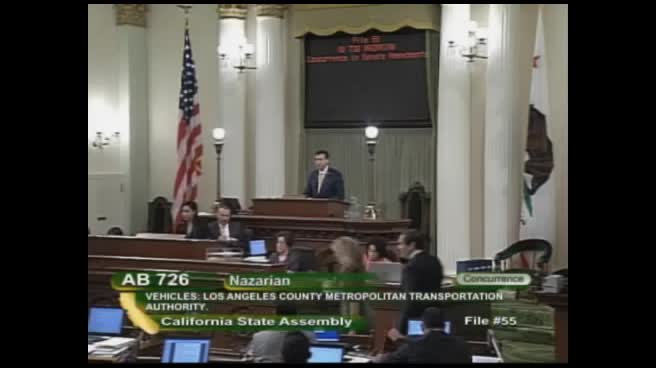 1MIN
Assembly Floor
 1MIN
Assembly Floor
 1MIN
Assembly Standing Committee on Appropriations
 2MIN
Senate Floor
 18MIN
Senate Standing Committee on Education
Bill Author