SB 758: Atmospheric Rivers: Research, Mitigation, and Climate Forecasting Program.
- Session Year: 2015-2016
- House: Senate
- Latest Version Date: 2015-10-09
Existing law establishes the Department of Water Resources and requires the department to implement various water conservation and flood control programs and projects in the state.
This bill would establish the Atmospheric Rivers: Research, Mitigation, and Climate Forecasting Program in the department to, upon appropriation of special fund moneys, research climate forecasting and the causes and impacts that climate change has on atmospheric rivers, to operate reservoirs in a manner that improves flood protection in the state, and to reoperate flood control and water storage facilities to capture water generated by atmospheric rivers.
Existing law establishes the Department of Water Resources and requires the department to implement various water conservation and flood control programs and projects in the state.
This bill would establish the Atmospheric Rivers Research and Mitigation Rivers: Research, Mitigation, and Climate Forecasting Program in the department to, upon appropriation of special fund moneys, research climate forecasting and the causes and effects of impacts that climate change has on atmospheric rivers, and to take actions to capture water generated by atmospheric rivers to increase the water supply and reliability of water resources in the state and to operate reservoirs in a manner that improves flood protection in the state. state, and to reoperate flood control and water storage facilities to capture water generated by atmospheric rivers.
Existing law establishes the Department of Water Resources and requires the department to implement various water conservation and flood control programs and projects in the state.
This bill would establish the Atmospheric Rivers Research and Mitigation Program in the department to to, upon appropriation of special fund moneys, research the causes and effects of atmospheric rivers, and to take actions to capture water generated by atmospheric rivers to increase the water supply and reliability of water resources in the state and to operate reservoirs in a manner that improves flood protection in the state. The bill would establish the Atmospheric Rivers Research and Mitigation Fund in the State Treasury for the purposes of funding the program.
Existing law establishes the Natural Resources Agency, comprised of departments, boards, conservancies, and commissions responsible for the restoration, protection, and management of the states natural and cultural resources. Department of Water Resources and requires the department to implement various water conservation and flood control programs and projects in the state.
This bill would establish the Atmospheric Rivers Research and Mitigation Program in the Natural Resources Agency department to research the causes and effects of atmospheric rivers, and to take actions to capture water generated by atmospheric rivers to increase the water supply and reliability of water resources in the state and to operate reservoirs in a manner that improves flood protection in the state. The bill would establish the Atmospheric Rivers Research and Mitigation Fund in the State Treasury for the purposes of funding the program.
Existing law establishes the Natural Resources Agency, comprised of departments, boards, conservancies, and commissions responsible for the restoration, protection, and management of the states natural and cultural resources.
This bill would establish the Atmospheric Rivers Research and Mitigation Program in the Natural Resources Agency to research the causes and effects of atmospheric rivers, and to take actions to capture water generated by atmospheric rivers to increase the water supply and reliability of water resources resources in the state and to operate reservoirs in a manner that improves flood protection in the state. The bill would establish the Atmospheric Rivers Research and Mitigation Fund in the State Treasury for the purposes of funding the program.
Existing law requires the State Energy Resources Conservation and Development Commission to implement and administer various energy research, demonstration, development, and conservation programs in the state. Existing law also requires specified state agencies to prepare and submit to the Secretary for Environmental Protection, specified information relating to the states greenhouse gas emissions.
Existing law establishes the Natural Resources Agency, comprised of departments, boards, conservancies, and commissions responsible for the restoration, protection, and management of the states natural and cultural resources.
This bill would establish the Atmospheric Rivers Research and Mitigation Program in the Natural Resources Agency to research the causes and effects of atmospheric rivers, and to take actions to capture water generated by atmospheric rivers to increase the water supply and reliability of water resources in the state. The bill would establish the Atmospheric Rivers Research and Mitigation Fund in the State Treasury for the purposes of funding research, demonstration, and development of an atmospheric rivers program to mitigate the effects of climate change associated with atmospheric rivers. the program.
Existing law requires the State Energy Resources Conservation and Development Commission to implement and administer various energy research, demonstration, development, and conservation programs in the state. Existing law also requires specified state agencies to prepare and submit to the Secretary for Environmental Protection, specified information relating to the states greenhouse gas emissions.
This bill would establish the Atmospheric Rivers Research and Mitigation Fund in the State Treasury for the purposes of funding research, demonstration, and development of an atmospheric rivers program to mitigate the effects of climate change associated with atmospheric rivers.
(a)The Atmospheric Rivers: Research, Mitigation, and Climate Forecasting Program is hereby established in the Department of Water Resources.
(b)Upon appropriation of special fund moneys, including, but not limited to, private funds, for these purposes, the department shall conduct research relating to climate forecasting and the causes and impacts that climate change has on atmospheric rivers, and shall take all actions within its existing authority to operate reservoirs in a manner that improves flood protection in the state and to reoperate flood control and water storage facilities to capture water generated by atmospheric rivers, thereby increasing water supply, hydropower availability, and the reliability of water resources in the state.
(a)The Atmospheric Rivers Research and Mitigation Rivers: Research, Mitigation, and Climate Forecasting Program is hereby established in the Department of Water Resources.
(b)Upon appropriation of special fund moneys, including, but not limited to, private funds, for these purposes, the department shall conduct research relating to climate forecasting and the causes and effects of impacts that climate change has on atmospheric rivers, and shall take all actions within its existing authority to capture water generated by atmospheric rivers in order to increase the water supply and reliability of water resources in the state and to operate reservoirs in a manner that improves flood protection in the state. state and to reoperate flood control and water storage facilities to capture water generated by atmospheric rivers, thereby increasing water supply, hydropower availability, and the reliability of water resources in the state.
(a)The Atmospheric Rivers Research and Mitigation Program is hereby established in the Department of Water Resources.
(b)Under the program, Upon appropriation of special fund moneys, including, but not limited to, private funds, for these purposes, the department shall research the causes and effects of atmospheric rivers, and shall take all actions within its existing authority to capture water generated by atmospheric rivers in order to increase the water supply and reliability of water resources in the state and to operate reservoirs in a manner that improves flood protection in the state.
(c)The Atmospheric Rivers Research and Mitigation Fund is hereby established in the State Treasury for the deposit of moneys to be expended by the department for the program.
(a)The Atmospheric Rivers Research and Mitigation Program is hereby established in the Natural Resources Agency. Department of Water Resources.
(b)Under the program, the agency department shall research the causes and effects of atmospheric rivers, and shall take all actions within its existing authority to capture water generated by atmospheric rivers in order to increase the water supply and reliability of water resources in the state and to operate reservoirs in a manner that improves flood protection in the state.
(c)The Atmospheric Rivers Research and Mitigation Fund is hereby established in the State Treasury for the deposit of moneys to be expended by the agency department for the program.
(a)The Atmospheric Rivers Research and Mitigation Program is hereby established in the Natural Resources Agency.
(b)Under the program, the agency shall research the causes and effects of atmospheric rivers, and shall take all actions within its existing authority to capture water generated by atmospheric rivers in order to increase the water supply and reliability of water resources resources in the state and to operate reservoirs in a manner that improves flood protection in the state.
(c)The Atmospheric Rivers Research and Mitigation Fund is hereby established in the State Treasury for the deposit of moneys to be expended by the agency for the program.
(a)The Atmospheric Rivers Research and Mitigation Program is hereby established in the Natural Resources Agency.
(b)Under the program, the agency shall research the causes and effects of atmospheric rivers, and shall take all actions within its existing authority to capture water generated by atmospheric rivers in order to increase the water supply and reliability of water resources in the state.
(c)The Atmospheric Rivers Research and Mitigation Fund is hereby established in the State Treasury for the deposit of moneys to be expended by the agency for the program.
SECTION 1.Chapter 7.2 (commencing with Section 25621) is added to Division 15 of the Public Resources Code, to read:7.2.Atmospheric Rivers Research and Mitigation Fund25621.There is hereby established in the State Treasury, the Atmospheric Rivers Research and Mitigation Fund, for the purposes of funding research, demonstration, and development of an atmospheric rivers program to mitigate the effects of climate change associated with atmospheric rivers.
There is hereby established in the State Treasury, the Atmospheric Rivers Research and Mitigation Fund, for the purposes of funding research, demonstration, and development of an atmospheric rivers program to mitigate the effects of climate change associated with atmospheric rivers.
|
Date
|
Status
|
|---|---|
| Aug 28, 2015 | Read second time. Ordered to third reading. |
| Jun 2, 2015 | Read second time and amended. Ordered to third reading. |
| Jun 3, 2015 | Read third time. Passed. (Ayes 38. Noes 0. Page 1288.) Ordered to the Assembly. |
| Jun 3, 2015 | Read third time. Passed. (Ayes 38. Noes 0.) Ordered to the Assembly. |
| Jun 4, 2015 | In Assembly. Read first time. Held at Desk. |
| Jun 18, 2015 | Referred to Com. on W., P., & W. |
| Jul 14, 2015 | From committee: Do pass and re-refer to Com. on APPR. with recommendation: To consent calendar. (Ayes 12. Noes 0.) (July 14). Re-referred to Com. on APPR. |
| Aug 17, 2015 | From committee with author's amendments. Read second time and amended. Re-referred to Com. on APPR. |
| Aug 19, 2015 | August 19 set for first hearing. Placed on APPR. suspense file. |
| Aug 28, 2015 | From committee: Do pass. (Ayes 17. Noes 0.) (August 27). |
| Jun 1, 2015 | From committee: Do pass as amended. (Ayes 7. Noes 0.) (May 28). |
| Sep 4, 2015 | In Senate. Concurrence in Assembly amendments pending. |
| Sep 4, 2015 | Read third time. Passed. Ordered to the Senate. |
| Sep 4, 2015 | Read third time. Passed. (Ayes 73. Noes 0. Page 2926.) Ordered to the Senate. |
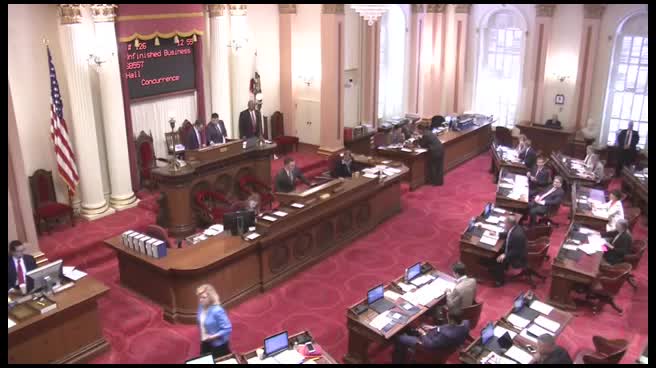
| Sep 8, 2015 | Assembly amendments concurred in. (Ayes 35. Noes 5. Page 2565.) Ordered to engrossing and enrolling. |
| Sep 8, 2015 | Assembly amendments concurred in. (Ayes 35. Noes 5.) Ordered to engrossing and enrolling. |
| Sep 11, 2015 | Enrolled and presented to the Governor at 5 p.m. |
| Oct 9, 2015 | Approved by the Governor. |
| Oct 9, 2015 | Chaptered by Secretary of State. Chapter 682, Statutes of 2015. |
| Apr 21, 2015 | From committee with author's amendments. Read second time and amended. Re-referred to Com. on N.R. & W. |
| Mar 2, 2015 | From printer. May be acted upon on or after April 1. |
| Mar 2, 2015 | Read first time. |
| Mar 19, 2015 | Referred to Com. on E.Q. |
| Mar 27, 2015 | Set for hearing April 15. |
| Apr 6, 2015 | April 15 set for first hearing canceled at the request of author. |
| Apr 8, 2015 | From committee with author's amendments. Read second time and amended. Re-referred to Com. on E.Q. |
| Apr 9, 2015 | Re-referred to Com. on RLS. |
| Apr 9, 2015 | Withdrawn from committee. |
| Apr 16, 2015 | Re-referred to Com. on N.R. & W. |
| Feb 27, 2015 | Introduced. To Com. on RLS. for assignment. To print. |
| Apr 21, 2015 | Set for hearing April 28. |
| Apr 29, 2015 | From committee: Do pass as amended and re-refer to Com. on APPR. (Ayes 8. Noes 0. Page 821.) (April 28). |
| Apr 29, 2015 | From committee: Do pass as amended and re-refer to Com. on APPR. (Ayes 8. Noes 0.) (April 28). |
| Apr 30, 2015 | Read second time and amended. Re-referred to Com. on APPR. |
| May 5, 2015 | Set for hearing May 11. |
| May 11, 2015 | May 11 hearing: Placed on APPR. suspense file. |
| May 23, 2015 | Set for hearing May 28. |
| Jun 1, 2015 | From committee: Do pass as amended. (Ayes 7. Noes 0. Page 1159.) (May 28). |
|
Date
|
Description
|
Location
|
Votes
|
|
|---|---|---|---|---|
| Sep 8, 2015 | Unfinished Business SB758 Block Concurrence | Senate Floor |
Passed |
|
| Sep 4, 2015 | SB 758 Block Senate Third Reading By WILLIAMS | Assembly Floor |
Passed |
|
| Aug 27, 2015 | Do pass. | Assembly Standing Committee on Appropriations |
Passed |
|
| Jul 14, 2015 | Do pass and be re-referred to the Committee on [Appropriations] with recommendation: To Consent Calendar | Assembly Standing Committee on Water, Parks, and Wildlife |
Passed |
|
| Jun 3, 2015 | Senate 3rd Reading SB758 Block | Senate Floor |
Passed |
|
| May 28, 2015 | Do pass as amended | Senate Standing Committee on Appropriations |
Passed |
|
| May 11, 2015 | Placed on suspense file | Senate Standing Committee on Appropriations |
Passed |
|
| Apr 28, 2015 | Do pass as amended, but first amend, and re-refer to the Committee on [Appropriations] | Senate Standing Committee on Natural Resources and Water |
Passed |
This list shows positions taken on this bill by organizations on the date displayed, which is linked to the original source.
Positions by individuals are not included.
|
Organization
|
Position
|
Date
|
|---|---|---|
| Bay Area Flood Protection Agencies Association | ** Support | Sep 4, 2015 |
| Bay Area Flood Protection Agency Association | * Support | Apr 28, 2015 |
| Contra Costa County Flood Control District | * Support | Apr 28, 2015 |
| Orange County Water District | ** Support | Sep 4, 2015 |
| San Diego County Water Authority | ** Support | Sep 4, 2015 |
| Santa Clara Valley Water District | ** Support | Sep 4, 2015 |
| Sonoma County Water Agency | ** Support | Sep 4, 2015 |
SB 758
Page 4
|
Office of Senate Floor Analyses (916) 651-1520 Fax: (916) 327-4478 |
UNFINISHED BUSINESS
Bill No: SB 758
Amended: 8/17/15
SENATE NATURAL RES. & WATER COMMITTEE: 8-0, 4/28/15
AYES: Pavley, Stone, Allen, Hertzberg, Hueso, Jackson, Monning, Wolk
NO VOTE RECORDED: Vidak
SENATE APPROPRIATIONS COMMITTEE: 7-0, 5/28/15
AYES: Lara, Bates, Beall, Hill, Leyva, Mendoza, Nielsen
SENATE FLOOR: 38-0, 6/3/15
AYES: Allen, Anderson, Bates, Beall, Berryhill, Block, Cannella, De León, Gaines, Galgiani, Glazer, Hall, Hancock, Hernandez, Hertzberg, Hill, Hueso, Huff, Jackson, Lara, Leno, Leyva, Liu, McGuire, Mendoza, Mitchell, Monning, Moorlach, Morrell, Nguyen, Nielsen, Pan, Pavley, Roth, Stone, Vidak, Wieckowski, Wolk
NO VOTE RECORDED: Fuller, Runner
ASSEMBLY FLOOR: 73-0, 9/4/15 - See last page for vote
SUBJECT: Atmospheric Rivers: Research, Mitigation, and Climate Forecasting Program
DIGEST: This bill establishes the Atmospheric Rivers: Research, Mitigation and Climate Forecasting Program at the Department of Water Resources (DWR) in order to, contingent on appropriation of special fund monies, conduct research relating to climate forecasting and the causes and impacts that climate change has on atmospheric rivers.
Assembly Amendments expand the authorized program to include climate forecasting.
ANALYSIS: Existing law establishes DWR to manage the state’s water resources. Within DWR is the Hydrology and Flood Operations Office that is responsible for directing DWR’s flood and water supply forecasting operations, hydrology and climatology studies, emergency flood operations, and flood control project inspections and encroachment permitting. The Office also includes the California State Climatologist.
This bill:
Establishes the Atmospheric Rivers: Research, Mitigation and Climate Forecasting Program.
Requires DWR, upon appropriation of special fund moneys, including private funds, to study climate forecasting and the causes and impacts that climate change has on atmospheric rivers.
Requires DWR to take actions, including through reservoir management, to increase water supply and reliability of water resources by capturing water generated by atmospheric rivers.
Comments
What are atmospheric rivers? According to the National Oceanic and Atmospheric Administration, atmospheric rivers are relatively narrow regions in the atmosphere that are responsible for most of the horizontal transport of water vapor outside of the tropics. On the west coast, 30-50% of the annual precipitation on average comes from a few atmospheric river events.
FISCAL EFFECT: Appropriation: No Fiscal Com.: Yes Local: No
According to the Assembly Appropriations Committee, this bill creates the following special fund or private fund cost pressures:
Approximately $3.5 million for additional sensors to help monitor the formation of the Sierra Barrier Jet and the dynamics of moisture flow up the Central Valley and into the Burney Gap (includes operation and maintenance costs of $500,000 per year).
Approximately $750,000 per year to continue operations of the expanded extreme precipitation network.
Approximately $500,000 to improve predictability of the formation and strength of atmospheric rivers.
Bay Area Flood Protection Agencies Association
Orange County Water District
San Diego County Water Authority
Santa Clara Valley Water District
Sonoma County Water Agency
OPPOSITION: (Verified 9/4/15)
None received
ARGUMENTS IN SUPPORT: According to the author, “California has the most variable precipitation annually of any location in the U.S., ranging from severe drought to major floods. Research has shown that this variability is largely due to a weather condition known as ‘atmospheric rivers’ (AR). AR are responsible for 30-50% of California’s precipitation and water supply in just a handful of days each year. Pineapple Express Storms are a common example of AR. Better forecasting of ARs (from hours, to days, weeks and seasons) has the potential to enable new levels of both water supply and flood protection through the use of ‘Forecast-Informed Reservoir Operations’ (FIRO). A pilot project to test the feasibility of FIRO is being planned by an expert committee on a vital reservoir on the Russian River, Lake Mendocino. It is led by researchers at the Center for Western Weather and Water Extremes at the University of California San Diego and the Sonoma County Water Agency. This pilot project has the potential to predict AR patterns to make intelligent water management decisions in order to both collect additional water supply and protect against floods. Seasonal AR outlooks are another promising direction that could help water managers and emergency preparedness officials anticipate and prepare for drought and/or flood. Developing such outlooks is on the cutting edge of science today and SB 758 ensures the state develops a program to study AR.”
ASSEMBLY FLOOR: 73-0, 9/4/15
AYES: Achadjian, Alejo, Travis Allen, Baker, Bloom, Bonilla, Bonta, Brown, Burke, Calderon, Campos, Chang, Chau, Chávez, Chiu, Chu, Cooley, Cooper, Dababneh, Dahle, Daly, Dodd, Eggman, Frazier, Beth Gaines, Cristina Garcia, Eduardo Garcia, Gatto, Gipson, Gonzalez, Gordon, Gray, Grove, Hadley, Harper, Roger Hernández, Holden, Irwin, Jones, Kim, Lackey, Levine, Linder, Lopez, Low, Maienschein, Mathis, Mayes, McCarty, Medina, Melendez, Mullin, Nazarian, Obernolte, O'Donnell, Olsen, Patterson, Perea, Quirk, Rendon, Rodriguez, Salas, Santiago, Steinorth, Mark Stone, Thurmond, Ting, Wagner, Waldron, Wilk, Williams, Wood, Atkins
NO VOTE RECORDED: Bigelow, Brough, Gallagher, Gomez, Jones-Sawyer, Ridley-Thomas, Weber
Prepared by: Dennis O'Connor / N.R. & W. / (916) 651-4116
9/4/15 18:02:48
**** END ****
SB 758
Page 2
SENATE THIRD READING
SB 758
(Block)
As Amended August 17, 2015
Majority vote
SENATE VOTE: 38-0
Committee |
Votes |
Ayes |
Noes |
Water |
12-0 |
Levine, Dahle, Dodd, Beth Gaines, Cristina Garcia, Gomez, Harper, Lopez, Mathis, Rendon, Salas, Williams |
|
Appropriations |
17-0 |
Gomez, Bigelow, Bloom, Bonta, Calderon, Chang, Nazarian, Eggman, Gallagher, Eduardo Garcia, Holden, Jones, Quirk, Rendon, Wagner, Weber, Wood |
|
SUMMARY: Establishes the Atmospheric Rivers: Research, Mitigation and Climate Forecasting Program (AR Program) at the Department of Water Resources (DWR) in order to, contingent on appropriation of special fund monies, conduct research relating to climate forecasting and the causes and impacts that climate change has on atmospheric rivers (ARs). Directs DWR to take all actions within its existing authority to operate reservoirs in a manner that improves flood control and increases water supply, hydropower, and water reliability.
EXISTING LAW:
Requires DWR to plan for the orderly and coordinated control, protection, conservation, development, and utilization of the resources of the state through the California Water Plan.
Requires, as part of the California Water Plan, that DWR study the amount of water needed to meet the state's future needs and recommend programs, policies, and facilities to meet those needs.
Establishes within DWR the Hydrology and Flood Operations Office, which is responsible for directing DWR’s flood and water supply forecasting operations, hydrology and climatology studies, emergency flood operations, and flood control project inspections and encroachment permitting. The Flood Operations Office also includes the California State Climatologist.
FISCAL EFFECT: According to the Assembly Appropriations Committee, this bill creates the following special fund or private fund cost pressures:
Approximately $3.5 million for additional sensors to help monitor the formation of the Sierra Barrier Jet and the dynamics of moisture flow up the Central Valley and into the Burney Gap (includes operation and maintenance costs of $500,000 per year).
Approximately $750,000 per year to continue operations of the expanded extreme precipitation network.
Approximately $500,000 to improve predictability of the formation and strength of ARs.
COMMENTS: This bill would, if special funds can be identified, establish an AR Program at DWR in order to study the newly-recognized phenomenon that storm-driven water vapor can concentrate in the atmosphere in relative narrow bands and that understanding and predicting the behavior of these so-called rivers and their subsequent rainfall can lead to better water supply management, including reservoir operations.
As the National Oceanic and Atmospheric Agency (NOAA) Earth System Research Laboratory explains, better satellite imagery has enabled us to document that storm-associated winds can draw together water vapor into distinct long narrow bands that travel through the atmosphere like a river. One such event, documented by researchers in 2006, concluded that an AR produced roughly 10 inches of rain in two days and caused a flood on the Russian River in northern California. NOAA advises that it is now recognized that the well-known Pineapple express storms (a term that was used on the United States West Coast for many years) correspond to a subset of ARs, i.e. those that have a connection to the tropics near Hawaii. In some of the most extreme ARs, the water vapor transport is enhanced by the fact that they entrain (draw in) water vapor directly from the tropics. According to NOAA, the community of flood control, water supply and reservoir operators on the West Coast see understanding, monitoring, and predicting ARs as key to mitigating the risk of major flood events, while maintaining adequate water supply.
The author states that California has the most variable annual precipitation of any state in the United States, ranging from severe drought to major floods. The author adds that better forecasting of ARs has the potential to enable new levels of both water supply and flood protection through the use of Forecast-Informed Reservoir Operations (FIRO). The author states that due to California's continued drought, now is the time for this critical research to ensure California accurately forecasts ARs and has the information needed to impact water management decisions.
Other supporters state that only in recent years have scientists come to recognize that between 30% and 50% of annual precipitation in California and more than 90% of the major floods come from a very small number of storms known as ARs. Supporters advise that this bill lays out the foundation for developing a program to analyze and accurately predict precipitation from these AR events. Supporters add that California experiences, on average, $300 million per year in flood damages and billions of dollars in economic and societal disruption during drought events. Supporters maintain that implementation of this bill would lead to more accurate and quantitative prediction of precipitation from ARs, thus enabling reservoir operators to safely store additional water for use in drought periods.
There is no known opposition to this bill.
Analysis Prepared by: Tina Leahy / W., P., & W. / (916) 319-2096 FN: 0001678
Date of Hearing: August 19, 2015
ASSEMBLY COMMITTEE ON APPROPRIATIONS
Jimmy Gomez, Chair
SB 758
(Block) – As Amended August 17, 2015
Policy Committee: |
Water, Parks and Wildlife |
Vote: |
12 - 0 |
|
|
|
|
|
|
|
|
Urgency: No State Mandated Local Program: No Reimbursable: No
SUMMARY:
This bill establishes the Atmospheric Rivers Research, Mitigation, and Climate Forecasting program at the Department of Water Resources (DWR). Specifically, contingent upon special or private funding, this bill requires DWR to:
Conduct research relating to climate forecasting and the causes and impacts of climate change has on atmospheric rivers.
Take all actions within its existing authority to operate reservoirs in a manner that improves flood protection.
Re-operate flood control and water storage facilities to capture water generated by atmospheric rivers to increase water supply and reliability and hydropower availability.
FISCAL EFFECT:
This bill creates the following special fund or private fund cost pressures:
Approximately $3.5 million for additional sensors to help monitor the formation of the Sierra Barrier Jet and the dynamics of moisture flow up the Central Valley and into the Burney Gap (includes operation and maintenance costs of $500,000 per year).
Approximately $750,000 per year to continue operations of the expanded extreme precipitation network.
Approximately $500,000 to improve predictability of the formation and strength of atmospheric rivers.
COMMENTS:
Purpose. According to the author, California has the most variable annual precipitation of any state ranging from severe drought to major floods. This bill requires critical research to ensure California accurately forecasts climate change impacts to provide information to impact water management decisions.
Background. According to the National Oceanic and Atmospheric Administration (NOAA), atmospheric rivers are relatively narrow regions in the atmosphere that are responsible for most of the horizontal transport of water vapor outside of the tropics. On the west coast, 30-50% of the annual precipitation on average comes from a few atmospheric river events.
Under existing law, DWR is responsible for managing the state’s water resources. Within DWR is the Hydrology and Flood Operations Office that is responsible for directing DWR’s flood and water supply forecasting operations, hydrology and climatology studies, emergency flood operations, and flood control project inspections and encroachment permitting. DWR Research investments in atmospheric rivers over the last decade include:
$11.5 million in the extreme precipitation monitoring network.
$3 million in projects with the Center for Western Weather and Water Extremes for decision support tools.
$4 million over five years with NOAA’s Earth Systems Research laboratory for work on a maintenance plan for the extreme precipitation network.
Three-year study to evaluate the current flood systems/flows/capabilities based on an atmospheric river storm.
DWR indicates, with sufficient funding, the Hydrology and Flood Operations Office could accomplish the requirements of this bill through existing programs.
Analysis Prepared by: Jennifer Galehouse / APPR. / (916) 319-2081
SB 758
Page 3
|
Office of Senate Floor Analyses (916) 651-1520 Fax: (916) 327-4478 |
THIRD READING
Bill No: SB 758
Amended: 6/2/15
SENATE NATURAL RES. & WATER COMMITTEE: 8-0, 4/28/15
AYES: Pavley, Stone, Allen, Hertzberg, Hueso, Jackson, Monning, Wolk
NO VOTE RECORDED: Vidak
SENATE APPROPRIATIONS COMMITTEE: 7-0, 5/28/15
AYES: Lara, Bates, Beall, Hill, Leyva, Mendoza, Nielsen
SUBJECT: Atmospheric Rivers Research and Mitigation Program
DIGEST: This bill requires the Department of Water Resources (DWR) to research the cause and effects of atmospheric rivers and to take all actions to capture water generated by atmospheric rivers.
ANALYSIS: Existing law establishes DWR to manage the state’s water resources. Within DWR is the Hydrology and Flood Operations Office that is responsible for directing DWR’s flood and water supply forecasting operations, hydrology and climatology studies, emergency flood operations, and flood control project inspections and encroachment permitting. The Office also includes the California State Climatologist.
This bill:
Establishes the Atmospheric Rivers and Research and Mitigation Program.
Requires DWR, upon appropriation of special fund moneys, including private funds, to study the causes and effects of atmospheric rivers.
Requires DWR to take actions, including through reservoir management, to increase water supply and reliability of water resources by capturing water generated by atmospheric rivers.
Comments
What are atmospheric rivers? According to the National Oceanic and Atmospheric Administration, atmospheric rivers are relatively narrow regions in the atmosphere that are responsible for most of the horizontal transport of water vapor outside of the tropics. On the west coast, 30-50% of the annual precipitation on average comes from a few atmospheric river events.
Current operation of flood control dams. When dams are built for flood control, a flood operations curve is developed to govern flood operations throughout the year. Also known as “rule curves,” these curves define how full a reservoir can be for each day of the year, versus how much space must be reserved for potential flood flows. Rule curves are determined based on an analysis of historic weather and runoff patterns and the potential economic loss due to flooding.
Because most of California’s dams were built in the mid-1900s, the historical record used to create rule curves includes only the first half of the 20th century. While our knowledge of and ability to forecast weather has improved, and land use patterns have changed significantly since the initial rule curves were calculated, the rule curves have not typically been updated. Indeed, one common complaint about rule curves is that they do not take into consideration weather forecasts.
FISCAL EFFECT: Appropriation: No Fiscal Com.: Yes Local: No
According to the Senate Appropriations Committee:
One-time costs of $2.5 million to unspecified special funds and private funds to DWR to expand its extreme precipitation network.
Ongoing costs of $1.25 million to unspecified special funds and private funds to operate and analyze the expanded extreme precipitation network.
One-time costs of $500,000 to unspecified special funds and private funds to DWR for a study to improve predictability of the formation and strength of atmospheric rivers.
Bay Area Flood Protection Agencies Association
Orange County Water District
Sonoma County Water Agency
OPPOSITION: (Verified 5/29/15)
None received
ARGUMENTS IN SUPPORT: According to the author, “California has the most variable precipitation annually of any location in the U.S., ranging from severe drought to major floods. Research has shown that this variability is largely due to a weather condition known as ‘atmospheric rivers’ (AR). AR are responsible for 30-50% of California’s precipitation and water supply in just a handful of days each year. Pineapple Express Storms are a common example of AR. Better forecasting of ARs (from hours, to days, weeks and seasons) has the potential to enable new levels of both water supply and flood protection through the use of ‘Forecast-Informed Reservoir Operations’ (FIRO). A pilot project to test the feasibility of FIRO is being planned by an expert committee on a vital reservoir on the Russian River, Lake Mendocino. It is led by researchers at the Center for Western Weather and Water Extremes at the University of California San Diego and the Sonoma County Water Agency. This pilot project has the potential to predict AR patterns to make intelligent water management decisions in order to both collect additional water supply and protect against floods. Seasonal AR outlooks are another promising direction that could help water managers and emergency preparedness officials anticipate and prepare for drought and/or flood. Developing such outlooks is on the cutting edge of science today and SB 758 ensures the state develops a program to study AR.”
Prepared by: Dennis O'Connor / N.R. & W. / (916) 651-4116
6/2/15 16:00:07
**** END ****
SB 758 (Block) Page 2 of 2
SENATE COMMITTEE ON APPROPRIATIONS
Senator Ricardo Lara, Chair
2015 - 2016 Regular Session
SB 758 (Block) - Atmospheric Rivers Research and Mitigation Program.
|
|
Version: April 30, 2015 |
Policy Vote: N.R. & W. 8 - 0 |
Urgency: No |
Mandate: No |
Hearing Date: May 28, 2015 |
Consultant: Marie Liu |
SUSPENSE FILE. AS AMENDED.
Bill Summary:
SB 785 would require the Department of Water Resources (DWR) to research the cause and effects of atmospheric rivers and to take all actions to capture water generated by atmospheric rivers.
Fiscal Impact (as approved on May 28, 2015):
One-time costs of $2.5 million to unspecified special funds and private funds to DWR to expand its extreme precipitation network.
Ongoing costs of $1.25 million to unspecified special funds and private funds to operate and analyze the expanded extreme precipitation network.
One-time costs of $500,000 to unspecified special funds and private funds to DWR for a study to improve predictability of the formation and strength of atmospheric rivers.
Background:
According to the National Oceanic and Atmospheric Administration (NOAA), atmospheric rivers are relatively narrow regions in the atmosphere that are responsible for most of the horizontal transport of water vapor outside of the tropics. On the west coast, 30-50% of the annual precipitation on average comes from a few atmospheric river events.
Under existing law, DWR is responsible for managing the state’s water resources. Within DWR is the Hydrology and Flood Operations Office that is responsible for directing DWR’s flood and water supply forecasting operations, hydrology and climatology studies, emergency flood operations, and flood control project inspections and encroachment permitting.
Proposed Law:
This bill would establish the Atmospheric Rivers and Research and Mitigation Program. Under this program, DWR would be required to study the causes and effects of atmospheric rivers. DWR would also be required to take actions, including through reservoir management, to increase water supply and reliability of water resources by capturing water generated by atmospheric rivers.
This bill would also create the Atmospheric Rivers Research and Mitigation Fund in the State Treasury to fund this program.
Staff Comments:
DWR currently has invested into research regarding atmospheric rivers including an extreme precipitation monitoring network and improving forecasting of extreme precipitation. According to DWR, this bill would necessitate an expansion of these efforts to include items such as monitoring for flood producing conditions, monitoring and forecasting reservoir and river levels, and providing extreme hydrologic condition response conditions for the state.
To accomplish this additional work, DWR would be required to continue its extreme precipitation monitoring network. Currently the network is being funded by the NOAA Office of Atmospheric Research through 2019. However, according to DWR, if this network becomes an operational network rather than a research network, federal funds may end before 2019. The network currently costs $750,000 annually to operate.
To accomplish this bill, DWR would need to expand the existing network at a one-time cost of $2.5 million for additional sensors. The expanded network would also require an additional $500,000 in annual operation costs, for a total of $1.25 million in ongoing costs.
DWR would also anticipate needing an additional $500,000 in one-time funding to study the formation zones of atmospheric rivers to improve the predictability of this phenomenon.
This bill would create a new special fund in the State Treasury but does not specific a funding source. Staff notes that establishing a new account increases administrative costs. While these costs are likely minor, it is unclear why a special fund would be necessary in order to fund this program. Staff recommends the author delete the creation of the special fund.
Committee amendments (as adopted on May 28, 2015): Amend to specify that the program is contingent upon appropriation by the Legislature from special and private funds and to delete the creation of the Atmospheric Rivers Research and Mitigation Fund.
-- END --
SB 758 (Block) Page 2 of 2
SENATE COMMITTEE ON APPROPRIATIONS
Senator Ricardo Lara, Chair
2015 - 2016 Regular Session
SB 758 (Block) - Atmospheric Rivers Research and Mitigation Program.
|
|
Version: April 30, 2015 |
Policy Vote: N.R. & W. 8 - 0 |
Urgency: No |
Mandate: No |
Hearing Date: May 11, 2015 |
Consultant: Marie Liu |
This bill meets the criteria for referral to the Suspense File.
Bill Summary:
SB 785 would require the Department of Water Resources (DWR) to research the cause and effects of atmospheric rivers and to take all actions to capture water generated by atmospheric rivers.
Fiscal Impact:
One-time costs of $2.5 million from the General Fund to DWR to expand its extreme precipitation network.
Ongoing costs of $1.25 million from the General Fund to DWR to operate and analyze the expanded extreme precipitation network.
One-time costs of $500,000 from the General Fund to DWR for a study to improve predictability of the formation and strength of atmospheric rivers.
Background:
According to the National Oceanic and Atmospheric Administration (NOAA), atmospheric rivers are relatively narrow regions in the atmosphere that are responsible for most of the horizontal transport of water vapor outside of the tropics. On the west coast, 30-50% of the annual precipitation on average comes from a few atmospheric river events.
Under existing law, DWR is responsible for managing the state’s water resources. Within DWR is the Hydrology and Flood Operations Office that is responsible for directing DWR’s flood and water supply forecasting operations, hydrology and climatology studies, emergency flood operations, and flood control project inspections and encroachment permitting.
Proposed Law:
This bill would establish the Atmospheric Rivers and Research and Mitigation Program. Under this program, DWR would be required to study the causes and effects of atmospheric rivers. DWR would also be required to take actions, including through reservoir management, to increase water supply and reliability of water resources by capturing water generated by atmospheric rivers.
This bill would also create the Atmospheric Rivers Research and Mitigation Fund in the State Treasury to fund this program.
Staff Comments:
DWR currently has invested into research regarding atmospheric rivers including an extreme precipitation monitoring network and improving forecasting of extreme precipitation. According to DWR, this bill would necessitate an expansion of these efforts to include items such as monitoring for flood producing conditions, monitoring and forecasting reservoir and river levels, and providing extreme hydrologic condition response conditions for the state.
To accomplish this additional work, DWR would be required to continue its extreme precipitation monitoring network. Currently the network is being funded by the NOAA Office of Atmospheric Research through 2019. However, according to DWR, if this network becomes an operational network rather than a research network, federal funds may end before 2019. The network currently costs $750,000 annually to operate.
To accomplish this bill, DWR would need to expand the existing network at a one-time cost of $2.5 million for additional sensors. The expanded network would also require an additional $500,000 in annual operation costs, for a total of $1.25 million in ongoing costs.
DWR would also anticipate needing an additional $500,000 in one-time funding to study the formation zones of atmospheric rivers to improve the predictability of this phenomenon.
This bill would create a new special fund in the State Treasury but does not specific a funding source. Staff notes that establishing a new account increases administrative costs. While these costs are likely minor, it is unclear why a special fund would be necessary in order to fund this program. Staff recommends the author delete the creation of the special fund.
-- END --
SB 758 (Block) Page 3 of 3
SENATE COMMITTEE ON NATURAL RESOURCES AND WATER
Senator Fran Pavley, Chair
2015 - 2016 Regular
Bill No: SB 758 Hearing Date: April 28, 2015
Author: |
Block |
|
|
Version: |
April 21, 2015 Amended |
||
Urgency: |
No |
Fiscal: |
Yes |
Consultant: |
Dennis O'Connor |
||
Subject: Atmospheric Rivers Research and Mitigation Program.
BACKGROUND AND EXISTING LAW
The Natural Resources Agency’s (NRA’s) mission is to “restore, protect and manage the state's natural, historical and cultural resources for current and future generations using creative approaches and solutions based on science, collaboration and respect for all the communities and interests involved.” It does this largely through the 7 departments, 2 museums, 17 boards and commissions, and 9 conservancies organized under it.
One of the departments under the NRA is the Department of Water Resources (DWR). DWR’s mission is "to manage the water resources of California in cooperation with other agencies, to benefit the State's people, and to protect, restore, and enhance the natural and human environments.” Among the various divisions and offices with DWR is the Hydrology and Flood Operations Office. That office is responsible for directing the DWR’s flood and water supply forecasting operations, hydrology and climatology studies, emergency flood operations, and flood control project inspections and encroachment permitting. The Office also includes the California State Climatologist.
PROPOSED LAW
This bill would establish within the NRA the Atmospheric Rivers Research and Mitigation Program (program). Under the program, the NRA would be required to research the causes and effects of atmospheric rivers, and take all actions within its existing authority to capture water generated by atmospheric rivers in order to increase the water supply and reliability of water resources in the state and to operate reservoirs in a manner that improves flood protection in the state.
The bill would also create the Atmospheric Rivers Research and Mitigation Fund for the deposit of moneys to be expended by the NRA for the program.
ARGUMENTS IN SUPPORT
According to the author, “California has the most variable precipitation annually of any location in the U.S., ranging from severe drought to major floods. Research has shown that this variability is largely due to a weather condition known as “atmospheric rivers” (AR). AR are responsible for 30-50% of California’s precipitation and water supply in just a handful of days each year. Pineapple Express Storms are a common example of AR.”
“Better forecasting of ARs (from hours, to days, weeks and seasons) has the potential to enable new levels of both water supply and flood protection through the use of “Forecast-Informed Reservoir Operations” (FIRO). A pilot project to test the feasibility of FIRO is being planned by an expert committee on a vital reservoir on the Russian River, Lake Mendocino. It is led by researchers at the Center for Western Weather and Water Extremes at the University of California San Diego and the Sonoma County Water Agency. This pilot project has the potential to predict AR patterns to make intelligent water management decisions in order to both collect additional water supply and protect against floods. Seasonal AR outlooks are another promising direction that could help water managers and emergency preparedness officials anticipate and prepare for drought and/or flood. Developing such outlooks is on the cutting edge of science today and SB 758 ensures the state develops a program to study AR.”
ARGUMENTS IN OPPOSITION: None received
COMMENTS
Current Operation Of Flood Control Dams. When dams are built for flood control, a flood operations curve is developed to govern flood operations throughout the year. Also known as “rule curves,” these curves define how full a reservoir can be for each day of the year, versus how much space must be reserved for potential flood flows. Rule curves are determined based on an analysis of historic weather and runoff patterns and the potential economic loss due to flooding.
Because most of California’s dams were built in the mid-1900s, the historical record used to create rule curves includes only the first half of the 20th century. While our knowledge of and ability to forecast weather has improved, and land use patterns have changed significantly since the initial rule curves were calculated, the rule curves have not typically been updated. Indeed, one common complaint about rule curves is that they do not take into consideration weather forecasts.
Why The Natural Resources Agency Instead Of DWR? It is not clear why the program should be housed in the NRA instead of DWR. As noted in the background, DWR is home for the Hydrology and Flood Operations Office, which is responsible for directing the DWR’s flood and water supply forecasting operations, hydrology and climatology studies. The program proposed by this bill would seem like a natural fit within that office. (See suggested amendment)
What Type Of Program Is Envisioned? The language of the bill is rather broad in its direction. It is not clear from the language whether the program would be some sort of research grant program, a staff driven research program, or something else.
The supporting materials provided by the bill’s proponents suggest something else – an autonomous program ostensibly run by or through University of California San Diego/Scripps Institution of Oceanography. Specifically, they are proposing a Lake Mendocino FIRO study, which would include identifying, assessing and enhancing the best science available to improve operations to maximize food control, water supply and ecosystem benefits.
(Lake Mendocino is located on the East Fork of the Russian River in Mendocino County. The reservoir provides both flood control on the Russian River and water supply to Sonoma County Water Agency.)
Carve-Out For Scripps? The Scripps Institute includes many of the top researchers in atmospheric science. But, they are far from the only California based institution investigating the climate in general or AR specifically. Such institutions include a number of the UCs, such as UC Irvine, UCLA, and UC Berkeley, as well as private institutions such as Stanford, CalTech, and JPL. If this is to be a state program, perhaps a more open directed research program would be more appropriate.
Where Is The Funding Coming From? The bill creates the Atmospheric Rivers Research and Mitigation Fund to fund the program. The appropriations committee will likely explore the potential sources for funding the program as well as the amount of funds requested.
SUGGESTED AMENDMENT
Move the program to DWR, amend the current language into the Water Code as a new article within Chapter 2.5 Miscellaneous Powers of the Department (WC §§200 et seq.) to be titled Article 8. Atmospheric Rivers Research and Mitigation, and make other conforming changes.
SUPPORT
Bay Area Flood Protection Agencies Association
Orange County Water District
Sonoma County Water Agency
OPPOSITION
None Received
-- END --
Discussed in Hearing
 2MIN
Senate Floor
 2MIN
Assembly Floor
 5MIN
Senate Floor
 12MIN
Senate Standing Committee on Natural Resources and Water
Bill Author

Bill Co-Author(s):