SB 759: Prisoners: segregation housing.
- Session Year: 2015-2016
- House: Senate
- Latest Version Date: 2016-08-25
Existing law establishes the Department of Corrections and Rehabilitation to oversee the state prison system. Existing law authorizes Security Housing Units for segregation of certain prisoners for disciplinary or security purposes, and because of gang membership or association. Existing law requires a prisoner of the Department of Corrections and Rehabilitation to be awarded credit reductions from his or her term of confinement of 6 months for every 6 months of continuous confinement, as specified. Existing law provides for up to 6 weeks of additional credit in a 12-month period for the successful completion of certain rehabilitative programs, for certain inmates, as specified. Existing law makes a person who is placed in a Security Housing Unit, Psychiatric Services Unit, Behavioral Management Unit, or an Administrative Segregation Unit for specified misconduct, or upon validation as a prison gang member or associate, ineligible to earn credits pursuant to these provisions.
This bill would repeal those provisions regarding ineligibility to earn credits and instead require the department, no later than July 1, 2017, to establish regulations to allow specified inmates placed in segregation housing to earn credits during the time he or she is in segregation housing.
Existing law establishes the Department of Corrections and Rehabilitation to oversee the state prison system. Existing law authorizes Security Housing Units for segregation of certain prisoners for disciplinary or security purposes, and because of gang membership or association. Existing law requires a prisoner of the Department of Corrections and Rehabilitation to be awarded credit reductions from his or her term of confinement of 6 months for every 6 months of continuous confinement, as specified. Existing law provides for up to 6 weeks of additional credit in a 12-month period for the successful completion of certain rehabilitative programs, for certain inmates, as specified. Existing law makes a person who is placed in a Security Housing Unit, Psychiatric Services Unit, Behavioral Management Unit, or an Administrative Segregation Unit for specified misconduct, or upon validation as a prison gang member or associate, ineligible to earn credits pursuant to these provisions.
This bill would repeal those provisions regarding ineligibility to earn credits and instead require the department, no later than July 1, 2017, to establish regulations to allow specified inmates placed in a Security Housing Unit, Psychiatric Services Unit, Behavioral Management Unit, or an Administrative Segregation Unit segregation housing to earn credits during the time he or she is in the Security Housing Unit, Psychiatric Services Unit, Behavioral Management Unit, or the Administrative Segregation Unit. segregation housing.
Existing law establishes the Department of Corrections and Rehabilitation to oversee the state prison system. Existing law authorizes Security Housing Units for segregation of certain prisoners for disciplinary or security purposes, and because of gang membership or association.
The bill would require the department, commencing July 1, 2016, to collect specified data regarding inmates subject to a term in a Security Housing Unit. The bill would require the Inspector General, commencing January 1, 2018, and biennially thereafter, to use the data to prepare reports for the Legislature on specified criteria pertaining to inmates in a Security Housing Unit and a Psychiatric Services Unit.
Existing association. Existing law requires a prisoner of the Department of Corrections and Rehabilitation to be awarded credit reductions from his or her term of confinement of 6 months for every 6 months of continuous confinement, as specified. Existing law provides for up to 6 weeks of additional credit in a 12-month period for the successful completion of certain rehabilitative programs, for certain inmates, as specified. Existing law makes a person who is placed in a Security Housing Unit, Psychiatric Services Unit, Behavioral Management Unit, or an Administrative Segregation Unit for specified misconduct, or upon validation as a prison gang member or associate, ineligible to earn credits pursuant to these provisions.
This bill would repeal those provisions regarding ineligibility to earn credits and instead require the department department, no later than July 1, 2017, to establish regulations to allow specified inmates placed in a Security Housing Unit, Psychiatric Services Unit, Behavioral Management Unit, or an Administrative Segregation Unit to earn credits during the time he or she is in the Security Housing Unit, Psychiatric Services Unit, Behavioral Management Unit, or the Administrative Segregation Unit.
Existing law establishes the Department of Corrections and Rehabilitation to oversee the state prison system. Existing law authorizes Security Housing Units for segregation of certain prisoners for disciplinary or security purposes, and because of gang membership or association.
The bill would require the department, commencing July 1, 2016, to collect specified data regarding inmates subject to a term in a Security Housing Unit. The bill would require the Inspector General, commencing January 1, 2018, and biennially thereafter, to use the data to prepare reports for the Legislature on specified criteria pertaining to inmates in a Security Housing Unit and a Psychiatric Services Unit.
Existing law requires a prisoner of the Department of Corrections and Rehabilitation to be awarded credit reductions from his or her term of confinement of 6 months for every 6 months of continuous confinement, as specified. Existing law provides for up to 6 weeks of additional credit in a 12-month period for the successful completion of certain rehabilitative programs, for certain inmates, as specified. Existing law makes a person who is placed in a Security Housing Unit, Psychiatric Services Unit, Behavioral Management Unit, or an Administrative Segregation Unit for specified misconduct, or upon validation as a prison gang member or associate, ineligible to earn credits pursuant to these provisions.
This bill would repeal those provisions and instead authorize require the department to establish regulations to allow specified inmates placed in a Security Housing Unit, Psychiatric Services Unit, Behavioral Management Unit, or an Administrative Segregation Unit to earn credits during the time he or she is in the Security Housing Unit, Psychiatric Services Unit, Behavioral Management Unit, or the Administrative Segregation Unit.
Existing law establishes the Department of Corrections and Rehabilitation to oversee the state prison system. Existing law authorizes Security Housing Units for segregation of certain prisoners for disciplinary or security purposes, and because of gang membership or association.
The bill would require the department, commencing July 1, 2016, to collect specified data regarding inmates subject to a term in a Security Housing Unit. The bill would require the Inspector General, commencing January 1, 2018, and biennially thereafter, to use the data to prepare reports for the Legislature on specified criteria pertaining to inmates in a Security Housing Unit and a Psychiatric Services Unit.
Existing law requires a prisoner of the Department of Corrections and Rehabilitation to be awarded credit reductions from his or her term of confinement of 6 months for every 6 months of continuous confinement, as specified. Existing law provides for up to 6 weeks of additional credit in a 12-month period for the successful completion of certain rehabilitative programs, for certain inmates, as specified. Existing law makes a person who is placed in a Security Housing Unit, Psychiatric Services Unit, Behavioral Management Unit, or an Administrative Segregation Unit for specified misconduct, or upon validation as a prison gang member or associate, ineligible to earn credits pursuant to these provisions.
This bill would repeal those provisions and instead authorize the department to establish regulations to allow specified inmates placed in a Security Housing Unit, Psychiatric Services Unit, Behavioral Management Unit, or an Administrative Segregation Unit to earn credits during the time he or she is in the Security Housing Unit, Psychiatric Services Unit, Behavioral Management Unit, or the Administrative Segregation Unit.
Existing law establishes the Department of Corrections and Rehabilitation to oversee the state prison system. Existing law authorizes Security Housing Units for segregation of certain prisoners for disciplinary or security purposes, and because of gang membership or association.
The bill would require the department, commencing July 1, 2016, to collect specified data regarding inmates subject to a term in a Security Housing Unit. The bill would require the Inspector General, commencing January 1, 2018, and biennially thereafter, to use the data to prepare reports for the Legislature on specified criteria pertaining to inmates in a Security Housing Unit and a Psychiatric Services Unit.
The Department of Corrections and Rehabilitation shall, no later than July 1, 2017, establish regulations to allow specified inmates placed in segregation housing to earn credits pursuant to Section 2933 or 2933.05, or credits as otherwise specified in regulation, during the time he or she is in segregation housing. The regulations may establish separate classifications of serious disciplinary infractions to determine the rate of restoration of credits, the time period required before forfeited credits or a portion thereof may be restored, and the percentage of forfeited credits that may be restored for those time periods, not to exceed those percentages authorized for general population inmates. The regulations shall provide for credit earning for inmates who successfully complete specific program performance objectives.
The Department of Corrections and Rehabilitation shall, no later than July 1, 2017, establish regulations to allow specified inmates placed in segregation housing to earn credits pursuant to Section 2933 or 2933.05, or credits as otherwise specified in regulation, during the time he or she is in segregation housing. The regulations may establish separate classifications of serious disciplinary infractions to determine the rate of restoration of credits, the time period required before forfeited credits or a portion thereof may be restored, and the percentage of forfeited credits that may be restored for those time periods, not to exceed those percentages authorized for general population inmates. The regulations shall provide for credit earning for inmates who successfully complete specific program performance objectives.
The Department of Corrections and Rehabilitation shall, no later than July 1, 2017, establish regulations to allow specified inmates placed in a Security Housing Unit, Psychiatric Services Unit, Behavioral Management Unit, or an Administrative Segregation Unit segregation housing to earn credits pursuant to Section 2933 or 2933.05, or credits as otherwise specified in regulation, during the time he or she is in the Security Housing Unit, Psychiatric Services Unit, Behavioral Management Unit, or the Administrative Segregation Unit. segregation housing. The regulations may establish separate classifications of serious disciplinary infractions to determine the rate of restoration of credits, the time period required before forfeited credits or a portion thereof may be restored, and the percentage of forfeited credits that may be restored for those time periods, not to exceed those percentages authorized for general population inmates. The regulations shall provide for credit earning for inmates who successfully complete specific program performance objectives.
(a)Commencing July 1, 2016, the department shall collect the following data:
(1)Information relating to each offender who is going through, or has gone through, the validation process for determining a security threat group affiliate, including the following:
(A)The offenders gender, age, mental health status, and race.
(B)The outcome at every step of the validation process.
(C)If the offender was validated, the date of validation.
(D)If the offender was validated, the level of validation that the offender was assigned, and the name of the security threat group with which the offender was identified.
(2)Information relating to all offenders being housed in the Security Housing Unit or Psychiatric Services Unit, including the following:
(A)The offenders gender, age, mental health status, and race.
(B)The date the offender was placed in the Security Housing Unit or Psychiatric Services Unit and the date of release.
(C)The reason the offender is serving a Security Housing Unit term.
(D)If the offender is serving an indeterminate Security Housing Unit term, the progress the offender has made in the Step Down Program, as defined in Section 3378.3 of Title 15 of the California Code of Regulations.
(E)For offenders in the Step Down Program, the time spent in each step of the program.
(F)The number of visits from persons other than staff that the offender was provided while serving a term in the Security Housing Unit or Psychiatric Services Unit.
(G)The number of phone calls the offender was provided while serving a term in the Security Housing Unit.
(H)Whether the offender attempted to commit or committed suicide.
(I)Any disciplinary action taken against the offender, and the result of that action.
(J)Whether the offender was paroled directly out of the Security Housing Unit or the Psychiatric Services Unit into the community.
(3)The number of administrative appeals filed by offenders in the Security Housing Unit or Psychiatric Services Unit, the subject matter of the appeals, and the outcome of the appeals.
(b)Commencing January 1, 2018, and biennially thereafter, the Office of the Inspector General shall use the data described in subdivision (a) to prepare a report to the Legislature that includes, but is not limited to, the following information:
(1)The number of offenders investigated for security threat group validation.
(2)The number of cases in which the Office of Correctional Safety recommended against validation and the outcome of those cases.
(3)The number of cases in which the security threat group committee decided not to validate the offender.
(4)The number of offenders who were not initially placed in the Security Housing Unit or Psychiatric Services Unit but were sent to the Security Housing Unit or Psychiatric Services Unit within six months of validation.
(5)The number of offenders placed for an indeterminate Security Housing Unit term or in the Psychiatric Services Unit.
(6)The number of offenders placed for a determinate Security Housing Unit term or in the Psychiatric Services Unit.
(7)The average length of time offenders serving an indeterminate Security Housing Unit term spent in the Security Housing Unit or the Psychiatric Services Unit, or both.
(8)The number of suicide attempts made by offenders in the Security Housing Unit and the Psychiatric Services Unit.
(9)The number of suicides by offenders in the Security Housing Unit and the Psychiatric Services Unit.
(10)The number of offenders in the Security Housing Unit and the Psychiatric Services Unit who were paroled directly out of the Security Housing Unit and the Psychiatric Services Unit into the community.
(11)The number of disciplinary actions taken against offenders in the Security Housing Unit and the Psychiatric Services Unit, the type of actions, and the outcomes of the disciplinary actions.
(12)The number of visits by persons other than staff to offenders in the Security Housing Unit and the Psychiatric Services Unit.
(13)The number of phone calls provided to offenders in the Security Housing Unit and the Psychiatric Services Unit.
(14)The number of administrative appeals filed by offenders in the Security Housing Unit or the Psychiatric Services Unit, the subject matter of the appeals, and the outcomes of those appeals.
(c)The report required by subdivision (b) shall be submitted in compliance with Section 9795 of the Government Code.
SEC. 2.SECTION 1.Section 2933.6 of the Penal Code is repealed.SEC. 3.SEC. 2.Section 2933.6 is added to the Penal Code, to read:2933.6.(a)The Department of Corrections and Rehabilitation shall shall, no later than July 1, 2017, establish regulations to allow specified inmates placed in a Security Housing Unit, Psychiatric Services Unit, Behavioral Management Unit, or an Administrative Segregation Unit to earn credits pursuant to Section 2933 or 2933.05, or credits as otherwise specified in regulation, during the time he or she is in the Security Housing Unit, Psychiatric Services Unit, Behavioral Management Unit, or the Administrative Segregation Unit. The regulations may establish separate classifications of serious disciplinary infractions to determine the rate of restoration of credits, the time period required before forfeited credits or a portion thereof may be restored, and the percentage of forfeited credits that may be restored for those time periods, not to exceed those percentages authorized for general population inmates. The regulations shall provide for credit earning for inmates who successfully complete specific program performance objectives.
(b)No credits shall be awarded to those inmates pursuant to this section until the department has adopted regulations pursuant to subdivision (a).
(a)Commencing July 1, 2016, the department shall collect the following data:
(1)Information relating to each offender who is going through, or has gone through, the validation process for determining a security threat group affiliate, including the following:
(A)The offenders gender, age, mental health status, and race.
(B)The outcome at every step of the validation process.
(C)If the offender was validated, the date of validation.
(D)If the offender was validated, the level of validation that the offender assigned. was assigned, and the name of the security threat group with which the offender was identified.
(2)Information relating to the offender all offenders being housed in the Security Housing Unit or Psychiatric Services Unit, including the following:
(A)The offenders gender, age, mental health status, and race.
(B)The date the offender was placed in the Security Housing Unit or Psychiatric Services Unit and the date of release.
(C)The reason the offender is serving a Security Housing Unit term.
(D)If the offender is serving an indeterminate Security Housing Unit term, the progress the offender has made in the Step Down Program, as defined in Section 3378.3 of Title 15 of the California Code of Regulations.
(E)For offenders in the Step Down Program, the time spent in each step of the program.
(D)
(F)The number of visits from persons other than staff that the offender was provided while serving a term in the Security Housing Unit or Psychiatric Services Unit.
(E)
(G)The number of phone calls the offender was provided while serving a term in the Security Housing Unit.
(F)
(H)Whether the offender attempted to commit or committed suicide.
(G)
(I)Any disciplinary action taken against the offender, and the result of that action.
(H)
(J)Whether the offender was paroled directly out of the Security Housing Unit or the Psychiatric Services Unit into the community.
(3)The number of administrative appeals filed by offenders in the Security Housing Unit or Psychiatric Services Unit, the subject matter of the appeals, and the outcome of the appeals.
(b)Commencing January 1, 2018, and biennially thereafter, the Office of the Inspector General shall use the data described in subdivision (a) to prepare a report to the Legislature that includes, but is not limited to, the following information:
(1)The number of offenders investigated for security threat group validation.
(2)The number of cases in which the Office of Correctional Safety recommended against validation and the outcome of those cases.
(3)The number of cases in which the security threat group committee decided not to validate the offender.
(4)The number of offenders who were not initially placed in the Security Housing Unit or Psychiatric Services Unit but were sent to the Security Housing Unit or Psychiatric Services Unit within six months of validation.
(5)The number of offenders placed for an indeterminate Security Housing Unit term or in the Psychiatric Services Unit.
(6)The number of offenders placed for a determinate Security Housing Unit term or in the Psychiatric Services Unit.
(7)The average length of time offenders serving an indeterminate Security Housing Unit term spent in the Security Housing Unit or the Psychiatric Services Unit, or both.
(8)The number of suicide attempts made by offenders in the Security Housing Unit and the Psychiatric Services Unit.
(9)The number of suicides by offenders in the Security Housing Unit and the Psychiatric Services Unit.
(10)The number of offenders in the Security Housing Unit and the Psychiatric Services Unit who were paroled directly out of the Security Housing Unit and the Psychiatric Services Unit into the community.
(11)The number of disciplinary actions taken against offenders in the Security Housing Unit and the Psychiatric Services Unit, the type of actions, and the outcomes of the disciplinary actions.
(12)The number of visits by persons other than staff to offenders in the Security Housing Unit and the Psychiatric Services Unit.
(13)The number of phone calls provided to offenders in the Security Housing Unit and the Psychiatric Services Unit.
(14)The number of administrative appeals filed by offenders in the Security Housing Unit or the Psychiatric Services Unit, the subject matter of the appeals, and the outcomes of those appeals.
(c)The report required by subdivision (b) shall be submitted in compliance with Section 9795 of the Government Code.
SEC. 2.Section 2933.6 of the Penal Code is repealed.SEC. 3.Section 2933.6 is added to the Penal Code, to read:2933.6.(a)The Department of Corrections and Rehabilitation may shall establish regulations to allow specified inmates placed in a Security Housing Unit, Psychiatric Services Unit, Behavioral Management Unit, or an Administrative Segregation Unit to earn credits pursuant to Section 2933 or 2933.05, or credits as otherwise specified in regulation, during the time he or she is in the Security Housing Unit, Psychiatric Services Unit, Behavioral Management Unit, or the Administrative Segregation Unit. The regulations shall may establish separate classifications of serious disciplinary infractions to determine the rate of restoration of credits, the time period required before forfeited credits or a portion thereof may be restored, and the percentage of forfeited credits that may be restored for those time periods, not to exceed those percentages authorized for general population inmates. The regulations shall provide for credit earning for inmates who successfully complete specific program performance objectives.
(b)No credits shall be awarded to those inmates pursuant to this section until the department has adopted regulations pursuant to subdivision (a).
(a)Commencing July 1, 2016, the department shall collect the following data:
(1)Information relating to each offender who is going through, or has gone through, the validation process for determining a security threat group affiliate, including the following:
(A)The offenders gender, age, mental health status, and race.
(B)The outcome at every step of the validation process.
(C)If the offender was validated, the date of validation.
(D)If the offender was validated, the level of validation that the offender assigned.
(2)Information relating to the offender being housed in the Security Housing Unit or Psychiatric Services Unit, including the following:
(A)The offenders gender, age, mental health status, and race.
(B)The date the offender was placed in the Security Housing Unit or Psychiatric Services Unit and the date of release.
(C)The reason the offender is serving a Security Housing Unit term.
(D)The number of visits from persons other than staff that the offender was provided while serving a term in the Security Housing Unit or Psychiatric Services Unit.
(E)The number of phone calls the offender was provided while serving a term in the Security Housing Unit.
(F)Whether the offender attempted to commit or committed suicide.
(G)Any disciplinary action taken against the offender, and the result of that action.
(H)Whether the offender was paroled directly out of the Security Housing Unit or the Psychiatric Services Unit into the community.
(3)The number of administrative appeals filed by offenders in the Security Housing Unit or Psychiatric Services Unit, the subject matter of the appeals, and the outcome of the appeals.
(b)Commencing January 1, 2018, and biennially thereafter, the Office of the Inspector General shall use the data described in subdivision (a) to prepare a report to the Legislature that includes, but is not limited to, the following information:
(1)The number of offenders investigated for security threat group validation.
(2)The number of cases in which the Office of Correctional Safety recommended against validation and the outcome of those cases.
(3)The number of cases in which the security threat group committee decided not to validate the offender.
(4)The number of offenders who were not initially placed in the Security Housing Unit or Psychiatric Services Unit but were sent to the Security Housing Unit or Psychiatric Services Unit within six months of validation.
(5)The number of offenders placed for an indeterminate Security Housing Unit term or in the Psychiatric Services Unit.
(6)The number of offenders placed for a determinate Security Housing Unit term or in the Psychiatric Services Unit.
(7)The average length of time offenders serving an indeterminate Security Housing Unit term spent in the Security Housing Unit or the Psychiatric Services Unit, or both.
(8)The number of suicide attempts made by offenders in the Security Housing Unit and the Psychiatric Services Unit.
(9)The number of suicides by offenders in the Security Housing Unit and the Psychiatric Services Unit.
(10)The number of offenders in the Security Housing Unit and the Psychiatric Services Unit who were paroled directly out of the Security Housing Unit and the Psychiatric Services Unit into the community.
(11)The number of disciplinary actions taken against offenders in the Security Housing Unit and the Psychiatric Services Unit, the type of actions, and the outcomes of the disciplinary actions.
(12)The number of visits by persons other than staff to offenders in the Security Housing Unit and the Psychiatric Services Unit.
(13)The number of phone calls provided to offenders in the Security Housing Unit and the Psychiatric Services Unit.
(14)The number of administrative appeals filed by offenders in the Security Housing Unit or the Psychiatric Services Unit, the subject matter of the appeals, and the outcomes of those appeals.
(c)The report required by subdivision (b) shall be submitted in compliance with Section 9795 of the Government Code.
SEC. 2.Section 2933.6 of the Penal Code is repealed.2933.6.(a)Notwithstanding any other law, a person who is placed in a Security Housing Unit, Psychiatric Services Unit, Behavioral Management Unit, or an Administrative Segregation Unit for misconduct described in subdivision (b) or upon validation as a prison gang member or associate is ineligible to earn credits pursuant to Section 2933 or 2933.05 during the time he or she is in the Security Housing Unit, Psychiatric Services Unit, Behavioral Management Unit, or the Administrative Segregation Unit for that misconduct.
(b)This section applies to the following offenses:
(1)Murder, attempted murder, and solicitation of murder. For purposes of this paragraph, solicitation of murder shall be proven by the testimony of two witnesses, or of one witness and corroborating circumstances.
(2)Manslaughter.
(3)Assault or battery causing serious bodily injury.
(4)Assault or battery on a peace officer or other nonprisoner which results in physical injury.
(5)Assault with a deadly weapon or caustic substance.
(6)Rape, attempted rape, sodomy, attempted sodomy, oral copulation, or attempted oral copulation accomplished against the victims will.
(7)Taking a hostage.
(8)Escape or attempted escape with force or violence.
(9)Escape from any departmental prison or institution other than a camp or reentry facility.
(10)Possession or manufacture of a deadly weapon or explosive device.
(11)Arson involving damage to a structure.
(12)Possession of flammable, explosive material with intent to burn any structure or property.
(13)Solicitation of assault with a deadly weapon or assault by means of force likely to produce great bodily injury, arson, or a forcible sex act.
(14)Intentional destruction of state property in excess of four hundred dollars ($400) during a riot or disturbance.
(c)This section does not apply if the administrative finding of the misconduct is overturned or if the person is criminally prosecuted for the misconduct and is found not guilty.
SEC. 3.Section 2933.6 is added to the Penal Code, to read:2933.6.(a)The Department of Corrections and Rehabilitation may establish regulations to allow specified inmates placed in a Security Housing Unit, Psychiatric Services Unit, Behavioral Management Unit, or an Administrative Segregation Unit to earn credits pursuant to Section 2933 or 2933.05, or credits as otherwise specified in regulation, during the time he or she is in the Security Housing Unit, Psychiatric Services Unit, Behavioral Management Unit, or the Administrative Segregation Unit. The regulations shall establish separate classifications of serious disciplinary infractions to determine the rate of restoration of credits, the time period required before forfeited credits or a portion thereof may be restored, and the percentage of forfeited credits that may be restored for those time periods, not to exceed those percentages authorized for general population inmates. The regulations shall provide for credit earning for inmates who successfully complete specific program performance objectives.
(b)No credits shall be awarded to those inmates pursuant to this section until the department has adopted regulations pursuant to subdivision (a).
(a)Commencing July 1, 2016, the department shall collect the following data:
(1)Information relating to each offender who is going through, or has gone through, the validation process for determining a security threat group affiliate, including the following:
(A)The offenders gender, age, mental health status, and race.
(B)The outcome at every step of the validation process.
(C)If the offender was validated, the date of validation.
(D)If the offender was validated, the level of validation that the offender assigned.
(2)Information relating to the offender being housed in the Security Housing Unit or Psychiatric Services Unit, including the following:
(A)The offenders gender, age, mental health status, and race.
(B)The date the offender was placed in the Security Housing Unit or Psychiatric Services Unit and the date of release.
(C)The reason the offender is serving a Security Housing Unit term.
(D)The number of visits from persons other than staff that the offender was provided while serving a term in the Security Housing Unit or Psychiatric Services Unit.
(E)The number of phone calls the offender was provided while serving a term in the Security Housing Unit.
(F)Whether the offender attempted to commit or committed suicide.
(G)Any disciplinary action taken against the offender, and the result of that action.
(H)Whether the offender was paroled directly out of the Security Housing Unit or the Psychiatric Services Unit into the community.
(3)The number of administrative appeals filed by offenders in the Security Housing Unit or Psychiatric Services Unit, the subject matter of the appeals, and the outcome of the appeals.
(b)Commencing January 1, 2018, and biennially thereafter, the Office of the Inspector General shall use the data described in subdivision (a) to prepare a report to the Legislature that includes, but is not limited to, the following information:
(1)The number of offenders investigated for security threat group validation.
(2)The number of cases in which the Office of Correctional Safety recommended against validation and the outcome of those cases.
(3)The number of cases in which the security threat group committee decided not to validate the offender.
(4)The number of offenders who were not initially placed in the Security Housing Unit or Psychiatric Services Unit but were sent to the Security Housing Unit or Psychiatric Services Unit within six months of validation.
(5)The number of offenders placed for an indeterminate Security Housing Unit term or in the Psychiatric Services Unit.
(6)The number of offenders placed for a determinate Security Housing Unit term or in the Psychiatric Services Unit.
(7)The average length of time offenders serving an indeterminate Security Housing Unit term spent in the Security Housing Unit or the Psychiatric Services Unit, or both.
(8)The number of suicide attempts made by offenders in the Security Housing Unit and the Psychiatric Services Unit.
(9)The number of suicides by offenders in the Security Housing Unit and the Psychiatric Services Unit.
(10)The number of offenders in the Security Housing Unit and the Psychiatric Services Unit who were paroled directly out of the Security Housing Unit and the Psychiatric Services Unit into the community.
(11)The number of disciplinary actions taken against offenders in the Security Housing Unit and the Psychiatric Services Unit, the type of actions, and the outcomes of the disciplinary actions.
(12)The number of visits by persons other than staff to offenders in the Security Housing Unit and the Psychiatric Services Unit.
(13)The number of phone calls provided to offenders in the Security Housing Unit and the Psychiatric Services Unit.
(14)The number of administrative appeals filed by offenders in the Security Housing Unit or the Psychiatric Services Unit, the subject matter of the appeals, and the outcomes of those appeals.
(c)The report required by subdivision (b) shall be submitted in compliance with Section 9795 of the Government Code.
|
Date
|
Status
|
|---|---|
| Aug 4, 2016 | In Senate. Concurrence in Assembly amendments pending. |
| Jun 4, 2015 | In Assembly. Read first time. Held at Desk. |
| Jun 18, 2015 | Referred to Com. on PUB. S. |
| Jul 14, 2015 | July 14 set for first hearing canceled at the request of author. |
| Jun 22, 2016 | From committee: Do pass and re-refer to Com. on APPR. (Ayes 5. Noes 2.) (June 21). Re-referred to Com. on APPR. |
| Jun 29, 2016 | From committee: Do pass. (Ayes 12. Noes 6.) (June 29). |
| Jun 30, 2016 | Read second time. Ordered to third reading. |
| Aug 1, 2016 | Ordered to third reading. |
| Aug 1, 2016 | Read third time and amended. |
| Jun 3, 2015 | Read third time. Passed. (Ayes 29. Noes 7.) Ordered to the Assembly. |
| Aug 4, 2016 | Read third time. Passed. Ordered to the Senate. |
| Aug 4, 2016 | Read third time. Passed. (Ayes 41. Noes 31. Page 5717.) Ordered to the Senate. |
| Aug 11, 2016 | Assembly amendments concurred in. (Ayes 31. Noes 2.) Ordered to engrossing and enrolling. |
| Aug 11, 2016 | Assembly amendments concurred in. (Ayes 32. Noes 2. Page 4862.) Ordered to engrossing and enrolling. |
| Aug 16, 2016 | Enrolled and presented to the Governor at 11:30 a.m. |
| Aug 25, 2016 | Approved by the Governor. |
| Aug 25, 2016 | Chaptered by Secretary of State. Chapter 191, Statutes of 2016. |
| Feb 27, 2015 | Introduced. To Com. on RLS. for assignment. To print. |
| Jun 3, 2015 | Read third time. Passed. (Ayes 29. Noes 7. Page 1306.) Ordered to the Assembly. |
| Jun 2, 2015 | Read second time and amended. Ordered to third reading. |
| Jun 1, 2015 | From committee: Do pass as amended. (Ayes 5. Noes 1.) (May 28). |
| Jun 1, 2015 | From committee: Do pass as amended. (Ayes 5. Noes 1. Page 1159.) (May 28). |
| May 23, 2015 | Set for hearing May 28. |
| May 18, 2015 | May 18 hearing: Placed on APPR. suspense file. |
| May 8, 2015 | Set for hearing May 18. |
| May 5, 2015 | Read second time and amended. Re-referred to Com. on APPR. |
| May 4, 2015 | From committee: Do pass as amended and re-refer to Com. on APPR. (Ayes 6. Noes 1. Page 824.) (April 28). |
| Apr 17, 2015 | Set for hearing April 28. |
| Apr 16, 2015 | Re-referred to Com. on PUB. S. |
| Apr 14, 2015 | From committee with author's amendments. Read second time and amended. Re-referred to Com. on RLS. |
| Mar 19, 2015 | Referred to Com. on RLS. |
| Mar 2, 2015 | Read first time. |
| Mar 2, 2015 | From printer. May be acted upon on or after April 1. |
|
Date
|
Description
|
Location
|
Votes
|
|
|---|---|---|---|---|
| Aug 11, 2016 | Unfinished Business SB759 Anderson Concurrence | Senate Floor |
Passed |
|
| Aug 4, 2016 | SB 759 Anderson Senate Third Reading By QUIRK | Assembly Floor |
Passed |
|
| Jun 29, 2016 | Do pass. | Assembly Standing Committee on Appropriations |
Passed |
|
| Jun 21, 2016 | Do pass and be re-referred to the Committee on [Appropriations] | Assembly Standing Committee on Public Safety |
Passed |
|
| Jun 3, 2015 | Senate 3rd Reading SB759 Anderson | Senate Floor |
Passed |
|
| May 28, 2015 | Do pass as amended | Senate Standing Committee on Appropriations |
Passed |
|
| May 18, 2015 | Placed on suspense file | Senate Standing Committee on Appropriations |
Passed |
|
| Apr 28, 2015 | Do pass as amended, but first amend, and re-refer to the Committee on [Appropriations] | Senate Standing Committee on Public Safety |
Passed |
This list shows positions taken on this bill by organizations on the date displayed, which is linked to the original source.
Positions by individuals are not included.
|
Organization
|
Position
|
Date
|
|---|---|---|
| ACLU California | * Support | Jun 27, 2018 |
| Alex Padilla, Secretary of State | * Support | Jun 27, 2018 |
| American Friends Service Committee | ** Support | Aug 11, 2016 |
| California Attorneys For Criminal Justice | ** Support | Aug 11, 2016 |
| California Catholic Conference | ** Support | Jun 29, 2016 |
| California Public Defenders Association | ** Support | Aug 11, 2016 |
| Californians United for a Responsible Budget | ** Support | Aug 11, 2016 |
| Drug Policy Alliance | ** Support | Jun 29, 2016 |
| Ella Baker Center For Human Rights | ** Support | Aug 11, 2016 |
| Friends Committee On Legislation Of California | ** Support | Aug 11, 2016 |
| League of Woman Voters of California | * Support | Jun 27, 2018 |
| Legal Services for Prisoners with Children | ** Support | Aug 11, 2016 |
| National Religious Campaign Against Torture | ** Support | Aug 11, 2016 |
| One private individual | ** Support | Jun 29, 2016 |
| Prison Law Office | ** Support | Jun 29, 2016 |
| Youth Justice Coalition | ** Support | Aug 11, 2016 |
Office of Senate Floor Analyses (916) 651-1520 Fax: (916) 327-4478 | SB |
UNFINISHED BUSINESS
Bill No: SB 759
:
SENATE PUBLIC SAFETY COMMITTEE: 6-1, 4/28/15
AYES: Hancock, Anderson, Leno, Liu, McGuire, Monning
NOES: Stone
SENATE APPROPRIATIONS COMMITTEE: 5-1, 5/28/15
AYES: Lara, Beall, Hill, Leyva, Mendoza
NOES: Nielsen
NO VOTE RECORDED: Bates
SENATE FLOOR: 29-7, 6/3/15
AYES: Allen, Anderson, Bates, Beall, Berryhill, Block, De León, Gaines, Galgiani, Glazer, Hall, Hancock, Hernandez, Hertzberg, Hill, Jackson, Lara, Leno, Leyva, Liu, McGuire, Mendoza, Monning, Moorlach, Pan, Pavley, Roth, Wieckowski, Wolk
NOES: Fuller, Huff, Morrell, Nguyen, Nielsen, Stone, Vidak
NO VOTE RECORDED: Cannella, Hueso, Mitchell, Runner
ASSEMBLY FLOOR: 41-31, 8/4/16 - See last page for vote
SOURCE: Friends Committee on Legislation of California
DIGEST: This bill requires the California Department of Corrections and Rehabilitation (CDCR) to establish regulations to allow specified inmates placed in segregated housing to earn credits, as specified.
Assembly Amendments deleted reference to “Security Housing Unit, Psychiatric Services Unit, Behavioral Management Unit, or an Administrative Segregation Unit” and, instead refers to the units as “segregation housing”.
ANALYSIS:
Existing law:
- Creates in state government the California Department of Corrections and Rehabilitation (CDCR), to be headed by a secretary, who shall be appointed by the Governor, subject to Senate confirmation, and shall serve at the pleasure of the Governor. (Government Code § 12838.) CDCR shall consist of Adult Operations, Adult Programs, Health Care Services, Juvenile Justice, the Board of Parole Hearings, the State Commission on Juvenile Justice, the Prison Industry Authority, and the Prison Industry Board. (Id.)
- Allows CDCR to place an inmate in the Security Housing Unit (SHU) if the inmate has been deemed a threat to the safety of others or the security of the institution. (15 CCR 3341.5.) Under existing regulations, inmates can be assigned to the SHU for a determinate or indeterminate term. (Id.) An inmate who has been validated as a gang member can be placed in the SHU for an indeterminate term. (Id.)
- States that a person who is placed in a SHU, Psychiatric Services Unit (PSU), Behavioral Management Unit (BMU), or an Administrative Segregation Unit for specified misconduct or upon validation as a prison gang member or associate is ineligible to earn credits pursuant to Section 2933 or 2933.05 during the time he or she is in the SHU, Psychiatric Services Unit, Behavioral Management Unit, or the Administrative Segregation Unit for that misconduct, as specified. (Penal Code § 2933.6.)
This bill repeals the existing credit provisions and instead authorizes CDCR to establish regulations to allow specified inmates placed in segregation housing to earn credits during the time he or she is in segregation housing.
Background
On October 9, 2013, the Assembly and Senate Public Safety Committees held an informational hearing on California’s prison segregation policies. The committees heard from representatives from CDCR and the Office of the Inspector General, experts, advocates and even individuals who had been housed in the SHU. Among the experts was Margaret Winter, the head of the American Civil Liberties Union prison project, she:
[T]old lawmakers the tide is turning nationally when it comes to use of isolation in prisons.
“Every reputable study has found negative effects,” Winter said, noting that when she helped the Mississippi Department of Corrections reduce its use of isolation, prison violence actually went down.
Asked for alternative methods for dealing with inmates who pose a danger to other inmates or staff, Winter said segregation can be an effective short-term tool, if paired with incentives to change behavior. Most prison systems simply let inmates languish in isolation without even determining if they're still a threat, Winter said.
(Legislators Hear Testimony on California Prison Conditions in Isolation, Rina Palta, Southern California Public Radio, October 9, 2013. http://www.scpr.org/ news/2013/10/09/39735/ca-legislature-to-hold-hearing-on-conditions-in-pr/.)
On February 11, 2014, another joint informational hearing was held to discuss CDCR’s new policies and the impact that the policy has had on the SHU population. Committee members heard from CDCR representatives, experts and attorneys who represent SHU inmates. Hope Metcalf, Associate Research Scholar in Law, Director of Arthur Liman Program, and Lecturer in Law, Yale Law School, stated in the hearing:
[T]he basic bottom line is that staff and inmates must feel safe and prisons do need tools to shape behavior. I don’t think that there’s much dispute about that. And in fact, some forms of short-term segregation may be necessary and there may indeed be some portions of the population for whom placement in the general population is not appropriate. However, that does not translate in any sense to the fact that long-term isolation of the ilk that we see at Pelican Bay is in fact serving sound, public policy.
So given the overreliance on isolation, many prisons are at best delaying problems, and, in fact, may be aggravating them. So I do not wish to say that most people released from long-term isolation are dangerous. I have many, many clients who have left isolation and they have gone on to do well. However, I do think that if we’re talking about public safety, thinking about outcomes, including recidivism is important. Equally important of course in terms of outcomes is not just whether or not someone is violent, but whether they are able to flourish and become independent once they leave. So the fear is—one fear I’ve had—is even where outcomes don’t show for example violence, is that person able to hold a job or are they now so debilitated that they are reduced to relying on state support once they leave prison?
(California Department of Corrections and Rehabilitation’s Proposed New Policies on Inmate Segregation: The Promise and Imperative of Real Reform, Hearing Transcript, Assembly and Senate Public Safety Committees Joint Informational Hearing, February 11, 2014. http://spsf.senate.ca.gov/sites /spsf.senate.ca.gov/files/Jt.%20Hearing%20Transcript%202-11-14.pdf.)
In summary, this hearing highlighted the widely held principle that while short term segregation is an important tool, long term segregation can have a detrimental impact not only on inmates but also on overall public safety.
Under existing law, a person who is placed in segregation housing is ineligible to earn credits. This bill seeks to allow these inmates to earn good time credits.
FISCAL EFFECT: Appropriation: Fiscal Com.: Local:
According to the Assembly Appropriations Committee analysis, the fiscal impact includes:
- One-time costs to CDCR in the $100,000 (GF) range to promulgate regulations.
- Unknown GF savings to the extent earned credits reduce time served by individuals formerly unable to earn credits.
Friends Committee on Legislation of California (source)
American Civil Liberties Union of California
American Friends Service Committee
California Attorneys for Criminal Justice
California Public Defenders Association
Californians United for a Responsible Budget
Ella Baker Center for Human Rights
Legal Services for Prisoners with Children
National Religious Campaign Against Torture
Youth Justice Coalition
1 Individual
None received
ASSEMBLY FLOOR: 41-31, 8/4/16
AYES: Achadjian, Atkins, Bloom, Bonilla, Bonta, Brown, Burke, Calderon, Campos, Chau, Chiu, Chu, Dababneh, Dodd, Eggman, Cristina Garcia, Eduardo Garcia, Gatto, Gipson, Gomez, Gonzalez, Gordon, Holden, Irwin, Jones-Sawyer, Levine, Lopez, Low, McCarty, Mullin, Nazarian, O'Donnell, Quirk, Ridley-Thomas, Santiago, Mark Stone, Thurmond, Ting, Weber, Wood, Rendon
NOES: Travis Allen, Arambula, Baker, Bigelow, Brough, Chang, Cooper, Dahle, Frazier, Beth Gaines, Gallagher, Gray, Grove, Hadley, Harper, Kim, Lackey, Linder, Maienschein, Mathis, Mayes, Medina, Melendez, Obernolte, Patterson, Salas, Steinorth, Wagner, Waldron, Wilk, Williams
NO VOTE RECORDED: Alejo, Chávez, Cooley, Daly, Roger Hernández, Jones, Olsen, Rodriguez
Prepared by: Jessica Devencenzi / PUB. S. /
8/5/16 10:20:14
**** END ****
SENATE THIRD READING
STR Bill Id:SB 759
Author:(Anderson and Hancock)
As Amended Ver:August 1, 2016
Majority vote
SENATE VOTE: 29-7
Committee | Votes | Ayes | Noes |
Public Safety | 5-2 | Jones-Sawyer, Lopez, Low, Quirk, Santiago | Melendez, Lackey |
Appropriations | 12-6 | Gonzalez, Bloom, Bonta, Calderon, Daly, Eggman, Roger Hernández, Holden, Quirk, Santiago, Weber, Wood | Bigelow, Chang, Gallagher, Jones, Obernolte, Wagner |
SUMMARY: Repeals the provision of law that makes inmates placed in a Security Housing Unit (SHU), or other specified segregation units ineligible to earn credits and instead requires the California Department of Corrections and Rehabilitation (CDCR) to establish regulations to allow those inmates to earn credits. Specifically, this bill:
- Requires CDCR, no later than July 1, 2017, to establish regulations to allow specified inmates placed in a SHU, Psychiatric Services Unit (PSU), Behavioral Management Unit (BMU), or an Administrative Segregation Unit (ASU) to earn credits during the time he or she is in the SHU, PSU, BMU, or ASU.
- Allows for regulations to establish separate classifications of serious disciplinary infractions to determine the rate of restoration of credits, the time period required before forfeited credits or a portion thereof may be restored, and the percentage of forfeited credits that may be restored for those time periods, not to exceed those percentages authorized for general population inmates.
- States that the regulations shall provide for credit earning for inmates who successfully complete specific program performance objectives.
EXISTING LAW:
- States that a person who is placed in a SHU, PSU, BMU, or an ASU for specified misconduct, or upon validation as a prison gang member or associate, is ineligible to earn custody credits during the time he or she is in the SHU, PSU, BMU, or the ASU for that misconduct, as specified.
- Specifies the offenses for which an inmate, if placed in a SHU, PSU, BMU, or an ASU due to a violation of one of the offenses, is not eligible to receive credits.
- Provides that the loss of credits prescribed above does not apply if the administrative finding of the misconduct is overturned or if the person is criminally prosecuted for the misconduct and is found not guilty.
FISCAL EFFECT: According the Assembly Appropriations Committee, the fiscal effect of this bill will include:
- One-time costs to CDCR in the $100,000 General Fund (GF) range to promulgate regulations.
- Unknown GF savings to the extent earned credits reduce time served by individuals formerly unable to earn credits.
COMMENTS: According to the author, "California's prison system has five Security Housing Units (SHUs) managed by the California Department of Corrections and Rehabilitation (CDCR). These 'supermax' facilities are used for the long-term isolation of prisoners because of rules violations or because of their perceived status as gang members or associates. Housing prisoners in long-term isolation has been widely condemned by human rights advocates. A 2011 report by the United Nations Special Rapporteur called on all countries to ban the practice except in very limited circumstances and only for very short durations.
"Prisoners are housed in cells averaging 2' x 10' for 23-24 hours per day, released only for showers and exercise in an enclosed cage. Both the large number of prisoners confined in these units and the length of time they spend there (the average length of a SHU term has been six years), demonstrate that our policies are much harsher than other states.
"In July 2011, prisoners housed in SHUs went on hunger strike to protest their conditions of confinement. This strike lasted 30 days. In the fall of 2011, prisoners again went on hunger strike for another 30 days. The CDCR subsequently initiated broad policy changes concerning gang validations and introduced a new Step Down Program to provide isolated prisoners with specific steps to earn their way out of the SHU. At the same time, prisoners who had been held in SHU for more than 10 years filed a class action lawsuit, supported by the Center for Constitutional Rights, Legal Services for Prisoners with Children and others, challenging practices related to long term isolation.
"The case, Asker v. Brown, was settled in September 2015 and is now in the process of being implemented. Under terms of the agreement, prisoners will no longer serve SHU terms for perceived gang affiliation. The settlement requires the CDCR to conduct hearings on everyone assigned to SHU because of gang affiliation to determine whether they should remain in solitary. So far over 1,000 hearings have been held and 80% of the prisoners housed in isolation have been cleared for transfer to general population. It is important to add that no significant incidents have resulted from these transfers."
Analysis Prepared by: Stella Choe / PUB. S. / (916) 319-3744 FN: 0003658
SENATE THIRD READING
STR Bill Id:SB 759
Author:(Anderson and Hancock)
As Amended Ver:June 2, 2015
Majority vote
SENATE VOTE: 29-7
Committee | Votes | Ayes | Noes |
Public Safety | 5-2 | Jones-Sawyer, Lopez, Low, Quirk, Santiago | Melendez, Lackey |
Appropriations | 12-6 | Gonzalez, Bloom, Bonta, Calderon, Daly, Eggman, Roger Hernández, Holden, Quirk, Santiago, Weber, Wood | Bigelow, Chang, Gallagher, Jones, Obernolte, Wagner |
SUMMARY: Repeals the provision of law that makes inmates placed in a Security Housing Unit (SHU), or other specified segregation units ineligible to earn credits and instead requires the California Department of Corrections and Rehabilitation (CDCR) to establish regulations to allow those inmates to earn credits. Specifically, this bill:
- Requires CDCR, no later than July 1, 2017, to establish regulations to allow specified inmates placed in a SHU, Psychiatric Services Unit (PSU), Behavioral Management Unit (BMU), or an Administrative Segregation Unit (ASU) to earn credits during the time he or she is in the SHU, PSU, BMU, or ASU.
- Allows for regulations to establish separate classifications of serious disciplinary infractions to determine the rate of restoration of credits, the time period required before forfeited credits or a portion thereof may be restored, and the percentage of forfeited credits that may be restored for those time periods, not to exceed those percentages authorized for general population inmates.
- States that the regulations shall provide for credit earning for inmates who successfully complete specific program performance objectives.
EXISTING LAW:
- States that a person who is placed in a SHU, PSU, BMU, or an ASU for specified misconduct, or upon validation as a prison gang member or associate, is ineligible to earn custody credits during the time he or she is in the SHU, PSU, BMU, or the ASU for that misconduct, as specified.
- Specifies the offenses for which an inmate, if placed in a SHU, PSU, BMU, or an ASU due to a violation of one of the offenses, is not eligible to receive credits.
- Provides that the loss of credits prescribed above does not apply if the administrative finding of the misconduct is overturned or if the person is criminally prosecuted for the misconduct and is found not guilty.
FISCAL EFFECT: According the Assembly Appropriations Committee, the fiscal effect of this bill will include:
- One-time costs to CDCR in the $100,000 (General Fund (GF)) range to promulgate regulations.
- Unknown GF savings to the extent earned credits reduce time served by individuals formerly unable to earn credits.
COMMENTS: According to the author, "California's prison system has five Security Housing Units (SHUs) managed by the California Department of Corrections and Rehabilitation (CDCR). These "supermax" facilities are used for the long-term isolation of prisoners because of rules violations or because of their perceived status as gang members or associates. Housing prisoners in long-term isolation has been widely condemned by human rights advocates. A 2011 report by the United Nations Special Rapporteur called on all countries to ban the practice except in very limited circumstances and only for very short durations.
"Prisoners are housed in cells averaging 2' x 10' for 23-24 hours per day, released only for showers and exercise in an enclosed cage. Both the large number of prisoners confined in these units and the length of time they spend there (the average length of a SHU term has been six years), demonstrate that our policies are much harsher than other states.
"In July 2011, prisoners housed in SHUs went on hunger strike to protest their conditions of confinement. This strike lasted 30 days. In the fall of 2011, prisoners again went on hunger strike for another 30 days. The CDCR subsequently initiated broad policy changes concerning gang validations and introduced a new Step Down Program to provide isolated prisoners with specific steps to earn their way out of the SHU. At the same time, prisoners who had been held in SHU for more than 10 years filed a class action lawsuit, supported by the Center for Constitutional Rights, Legal Services for Prisoners with Children and others, challenging practices related to long term isolation.
"The case, Asker v. Brown, was settled in September 2015 and is now in the process of being implemented. Under terms of the agreement, prisoners will no longer serve SHU terms for perceived gang affiliation. The settlement requires the CDCR to conduct hearings on everyone assigned to SHU because of gang affiliation to determine whether they should remain in solitary. So far over 1,000 hearings have been held and 80% of the prisoners housed in isolation have been cleared for transfer to general population. It is important to add that no significant incidents have resulted from these transfers."
Analysis Prepared by: Stella Choe / PUB. S. / (916) 319-3744 FN: 0003594
Date of Hearing: June 29, 2016
ASSEMBLY COMMITTEE ON APPROPRIATIONS
Lorena Gonzalez, Chair
SBPCA Bill Id:SB 759
Author:(Anderson) – As Amended Ver:June 2, 2015
Policy Committee: | Public Safety | Vote: | 5 - 2 |
|
| ||
|
|
Urgency: No State Mandated Local Program: No Reimbursable: No
SUMMARY:
This bill repeals the provision of law that makes inmates placed in a Security Housing Unit (SHU), or other specified segregation units ineligible to earn credits and instead requires the California Department of Corrections and Rehabilitation (CDCR) to establish regulations, by July 1, 2017, to allow those inmates to earn credits.
FISCAL EFFECT:
- One-time costs to CDCR in the $100,000 (GF) range to promulgate regulations.
- Unknown GF savings to the extent earned credits reduce time served by individuals formerly unable to earn credits.
COMMENTS:
- Background. Under current law, an inmate placed in a SHU, Psychiatric Services Unit (PSU), Behavioral Management Unit (BMU), or an Administrative Segregation Unit (ASU) for specified misconduct, or upon validation as a prison gang member or associate, is ineligible to earn custody credits during the time he or she is in the SHU, PSU, BMU, or the ASU for that misconduct.
CDCR has SHUs in five of its institutions - Pelican Bay State Prison, California State Prison in Corcoran, California Correctional Institution in Tehachapi, California State Prison in Sacramento, and California Institution for Women.
Until recently, inmates were assigned to the SHU for two reasons: for a determinate time period as punishment for violating the rules or regulations of the prison, or for an indeterminate period of time if the inmate is validated as a member or associate of one of the designated prison gangs.
According to the author, "The case, Asker v. Brown, was settled in September 2015 and is now in the process of being implemented. Under terms of the agreement, prisoners will no longer serve SHU terms for perceived gang affiliation. The settlement requires the CDCR to conduct hearings on everyone assigned to SHU because of gang affiliation to determine whether they should remain in solitary. So far over 1,000 hearings have been held and 80% of the prisoners housed in isolation have been cleared for transfer to general population. It is important to add that no significant incidents have resulted from these transfers."
- Purpose. According to American Friends Service Committee, the sponsor of this bill, "SB 759 is needed because prisoners in isolation have had no opportunity to earn credits towards release since these credits were removed in budget language in 2010 – without any legislative hearings or opportunities to question whether the policy made sense. One thing we do know is that it took away hope from many people whose sentences should have been shortened because they were not receiving disciplinary write-ups. It also costs the taxpayers a great deal of money for every extra year a person spends behind bars. Earned credits are a way to provide incentives to people inside to program and prepare for release, while also providing structural ways to keep the population down.”
Analysis Prepared by: Pedro Reyes / APPR. / (916) 319-2081
Date of Hearing: June 21, 2016
Counsel: Stella Choe
ASSEMBLY COMMITTEE ON PUBLIC SAFETY
Reginald Byron Jones-Sawyer, Sr., Chair
SBPCA Bill Id:SB 759
Author:(Anderson) – As Amended Ver:June 2, 2015
SUMMARY: Repeals the provision of law that makes inmates placed in a Security Housing Unit (SHU), or other specified segregation units ineligible to earn credits and instead requires the California Department of Corrections and Rehabilitation (CDCR) to establish regulations to allow those inmates to earn credits. Specifically, this bill:
- Requires CDCR, no later than July 1, 2017, to establish regulations to allow specified inmates placed in a SHU, Psychiatric Services Unit (PSU), Behavioral Management Unit (BMU), or an Administrative Segregation Unit (ASU) to earn credits during the time he or she is in the SHU, PSU, BMU, or ASU.
- Allows for regulations to establish separate classifications of serious disciplinary infractions to determine the rate of restoration of credits, the time period required before forfeited credits or a portion thereof may be restored, and the percentage of forfeited credits that may be restored for those time periods, not to exceed those percentages authorized for general population inmates.
- States that the regulations shall provide for credit earning for inmates who successfully complete specific program performance objectives.
EXISTING LAW:
- States that a person who is placed in a SHU, PSU, BMU, or an ASU for specified misconduct, or upon validation as a prison gang member or associate, is ineligible to earn custody credits during the time he or she is in the SHU, PSU, BMU, or the ASU for that misconduct, as specified. (Pen. Code, § 2933.6, subd. (a).)
- Specifies the offenses for which an inmate, if placed in a SHU, PSU, BMU, or an ASU due to a violation of one of the offenses, is not eligible to receive credits. (Pen. Code, § 2933.6, subd. (b).)
- Provides that the loss of credits prescribed above does not apply if the administrative finding of the misconduct is overturned or if the person is criminally prosecuted for the misconduct and is found not guilty. (Pen. Code, § 2933.6, subd. (c).)
FISCAL EFFECT: Unknown.
COMMENTS:
- Author's Statement: According to the author, "California’s prison system has five Security Housing Units (SHUs) managed by the California Department of Corrections and Rehabilitation (CDCR). These “supermax” facilities are used for the long-term isolation of prisoners because of rules violations or because of their perceived status as gang members or associates. Housing prisoners in long-term isolation has been widely condemned by human rights advocates. A 2011 report by the United Nations Special Rapporteur called on all countries to ban the practice except in very limited circumstances and only for very short durations.
"Prisoners are housed in cells averaging 2’ x 10’ for 23-24 hours per day, released only for showers and exercise in an enclosed cage. Both the large number of prisoners confined in these units and the length of time they spend there (the average length of a SHU term has been six years), demonstrate that our policies are much harsher than other states.
"In July 2011, prisoners housed in SHUs went on hunger strike to protest their conditions of confinement. This strike lasted 30 days. In the fall of 2011, prisoners again went on hunger strike for another 30 days. The CDCR subsequently initiated broad policy changes concerning gang validations and introduced a new Step Down Program to provide isolated prisoners with specific steps to earn their way out of the SHU. At the same time, prisoners who had been held in SHU for more than 10 years filed a class action lawsuit, supported by the Center for Constitutional Rights, Legal Services for Prisoners with Children and others, challenging practices related to long term isolation.
"The case, Asker v. Brown, was settled in September 2015 and is now in the process of being implemented. Under terms of the agreement, prisoners will no longer serve SHU terms for perceived gang affiliation. The settlement requires the CDCR to conduct hearings on everyone assigned to SHU because of gang affiliation to determine whether they should remain in solitary. So far over 1,000 hearings have been held and 80% of the prisoners housed in isolation have been cleared for transfer to general population. It is important to add that no significant incidents have resulted from these transfers."
- History of CDCR's Security Housing Units: CDCR has SHUs in five of its institutions - Pelican Bay State Prison, California State Prison in Corcoran, California Correctional Institution in Tehachapi, California State Prison in Sacramento, and California Institution for Women.
Until recently, inmates were assigned to the SHU for two reasons. First, an inmate could be sent to the SHU for a determinate time period as punishment for violating the rules or regulations of the prison. Second, an inmate could be placed in the SHU for an indeterminate period of time if the inmate is validated as a member or associate of one of the designated prison gangs.
Historically, an inmate who was placed in the SHU as a validated gang member or associate would serve the remainder of his or her sentence in the SHU, unless the Institutional Gang Investigator determined that the inmate has had no gang activity for six years, or the inmate agrees to debrief. Debriefing requires the inmate to provide gang investigators with detailed information on alleged gang members and associates. Most SHU inmates would choose not to debrief for fear of their personal safety or fear of retribution against their families. The six-year inactive standard was also very difficult to meet because any innocuous art work or communication could be interpreted as gang activity.
On July 1, 2011, approximately 5,300 inmates in nine CDCR institutions began refusing meals; the number of inmates peaked to more than 6,500 two days later. The number of inmates gradually decreased until the hunger strike ended on July 20, 2011. The hunger strike led by inmates housed in the Pelican Bay State Prison's SHU to protest the conditions of the SHU. The inmates had five core demands: (1) Individual accountability, rather than group punishment, indefinite SHU status, and restricted privileges; (2) Abolish debriefing policy and modify active/inactive gang status criteria; (3) Comply with U.S. Commission 2006 Recommendations regarding an end to long-term solitary confinement; (4) Provide adequate food; and, (5) Expand and provide constructive programming and privileges for indefinite SHU status inmates.
At the end of the hunger strike, CDCR officials agreed to do the following: authorize watchcaps for purchase and state issue; authorize wall calendars for purchase in canteen; authorization of exercise equipment in SHU yards; authorize annual photographs for disciplinary free inmates; approve proctors for college examinations; use CDCR ombudsman to monitor and audit food services; authorize sweatpants for purchase/annual package; authorize hobby items; and, allow one photo to family per year. CDCR also agreed to conduct comprehensive reviews of the SHU policies that include behavior-based components, increased privileges based on disciplinary-free behavior, a step-down process for SHU inmates, and a system that better defines and weighs necessary points in the validation process. (Office of the Inspector General, Immediate and Expedited Review and Assessment of CDCR's Response to the Issues Raised by the Hunger Strike (Oct. 17, 2011) pp. 1-2.)
Following the first hunger strike, CDCR implemented a 24-month pilot program entitled "Security Threat Group (STG) Identification, Prevention, and Management Instructional Memorandum" in October 2012. Under the STG Plan, gang members and affiliates were placed in a step-down program that provides for graduated housing, privileges, and personal interaction with the goal of integrating participants back into the general population of the prisons. There are five steps in the Step Down Program. An inmate must remain in Steps One and Two for a minimum of six months each. An inmate must remain in Steps Three and Four for minimum of one year each. Steps One through Four are completed in the SHU. Step Five is in the general population, but the inmate is monitored for gang activity. While there are recommended time frames for each step, there is no limitation on how long an inmate may remain in each step. Debriefing is still available for inmates who do not wish to participate or complete the step-down program.
The STG plan also changed how an inmate can be placed in the SHU. Under the previous rules, a validated gang member or associate can be placed in the SHU upon validation. Under the STG Plan, a validated associate must also have a rules violation in order to be placed in the SHU. However, a validated gang member may still be placed in the SHU upon validation. Additionally, the STG plan includes both prison gangs and street gangs, potentially allowing a more expansive group of inmates to be placed in the SHU.
On July 8, 2013, approximately 30,000 inmates joined in on a second hunger strike led by Pelican Bay State Prison SHU inmates. The inmates wanted more substantive changes to CDCR's policy for validating inmates as gang leaders or accomplices. Under the STG Plan, gang members were still being placed in the SHU without requiring any rules violations and there was still no time limitation to how long a person may remain in the SHU based on gang affiliation. The hunger strike ended on September 5, 2013, with the promise of legislative hearings on the use and conditions of solitary confinement in California’s prisons. (<http://articles.latimes.com/2013/sep/05/local/la-me-ff-prison-strike-20130906> (as of June 16, 2016.)
On October 9, 2013, the Legislature held a joint Assembly and Senate hearing on CDCR's STG pilot program. At the hearing, CDCR officials stated that there were about 4,000 inmates are held in the SHUs and over half were there for alleged gang connections. There CDCR officials also discussed the implementation of the STG pilot program which involved conducting reviews of inmates in the SHU to determine whether their continued placement in the SHU was appropriate. CDCR expected that many inmates would be released to general population after those reviews took place. However, advocates noted that the STG program still did not provide a limit on the length of time a person could be placed in the SHU and still did not provide a meaningful review of the person's placement in the SHU by an entity outside of CDCR.
On June 2, 2014, a federal judge authorized hundreds of SHU inmates to join litigation filed on behalf of 10 inmates who had been in the SHU for more than 10 years challenging the state's use of solitary confinement on a prolonged basis as a violation of the Eighth Amendment's prohibition against cruel and unusual punishment. On September 1, 2015, CDCR settled the lawsuit. The terms of the settlement include moving to an offense-based system rather than prisoners being sent to solitary based solely on gang affiliation; there will be limits on how long an inmate can be placed in the SHU (although some inmates may still be placed in restricted housing which is not subject to the same limits); and prisoner representatives will be able to monitor the implementation of the settlement terms and meet with CDCR officials when to ensure compliance with the settlement terms. (See Settlement Terms, No. C 09-05796 CW, Ashker v. Governor of the State of California, et al. (9-1-15).)
- Argument in Support: According to the American Friends Service Committee, the sponsor of this bill, "SB 759 is needed because prisoners in isolation have had no opportunity to earn credits towards release since these credits were removed in budget language in 2010 – without any legislative hearings or opportunities to question whether the policy made sense. One thing we do know is that it took away hope from many people whose sentences should have been shortened because they were not receiving disciplinary write-ups. It also costs the taxpayers a great deal of money for every extra year a person spends behind bars.
"As you know, California is under court order to reduce its prison population and to put in place permanent solutions to the overcrowding problem. In other words, a one time reduction will not satisfy the court. Earned credits are a way to provide incentives to people inside to program and prepare for release, while also providing structural ways to keep the population down.
"When the Department began to hold case by case reviews of everyone in SHU for other-than-disciplinary reasons, over 70% of the people receiving hearings have been approved for transfer to the general population. Since the court settlement in the Ashker case, in September 2015, such hearings have accelerated and 80% of people reviewed are being transferred to general population. There have been no significant incidents as a result of these transfers. . . ."
- Prior Legislation:
- AB 1652 (Ammiano), of the 2013-2014 Legislative Session, would have deleted the provision of law making a person who is placed in a SHU upon validation as a gang member or associate ineligible to earn custody credits. AB 1652 failed passage on the Assembly Floor.
- SB 892 (Hancock), of the 2013-2014 Legislative Session, would have placed additional due process procedures for determining if an inmate is a member of or an associate of a gang, and subject to placement in a SHU. SB 892 died on Assembly Floor.
- AB 1652 (Ammiano), of the 2013-2014 Legislative Session, would have deleted the provision of law making a person who is placed in a SHU upon validation as a gang member or associate ineligible to earn custody credits. AB 1652 failed passage on the Assembly Floor.
REGISTERED SUPPORT / OPPOSITION:
Support
American Friends Service Committee (Sponsor)
Friends Committee on Legislation of California (Co-sponsor)
American Civil Liberties Union of California
California Attorneys for Criminal Justice
California Catholic Conference
Californians United for a Responsible Budget
Drug Policy Alliance
Ella Baker Center for Human Rights
Legal Services for Prisoners with Children
Prison Law Office
One private individual
Opposition
None
Analysis Prepared by: Stella Choe / PUB. S. / (916) 319-3744
SB 759
Page 5
|
Office of Senate Floor Analyses (916) 651-1520 Fax: (916) 327-4478 |
THIRD READING
Bill No: SB 759
Author: Anderson (R) and Hancock (D)
Amended: 6/2/15
SENATE PUBLIC SAFETY COMMITTEE: 6-1, 4/28/15
AYES: Hancock, Anderson, Leno, Liu, McGuire, Monning
NOES: Stone
SENATE APPROPRIATIONS COMMITTEE: 5-1, 5/28/15
AYES: Lara, Beall, Hill, Leyva, Mendoza
NOES: Nielsen
NO VOTE RECORDED: Bates
SUBJECT: Prisoners: Secured Housing Units
SOURCE: Friends Committee on Legislation of California
DIGEST: This bill requires the California Department of Corrections and Rehabilitation (CDCR) to establish regulations to allow specified inmates placed in a Secured Housing Unit (SHU), or other similar units, to earn credits, as specified.
Existing law:
Creates in state government the CDCR, to be headed by a secretary, who shall be appointed by the Governor, subject to Senate confirmation, and shall serve at the pleasure of the Governor. (Government Code § 12838.) CDCR shall consist of Adult Operations, Adult Programs, Health Care Services, Juvenile Justice, the Board of Parole Hearings, the State Commission on Juvenile Justice, the Prison Industry Authority, and the Prison Industry Board. (Id.)
Allows CDCR to place an inmate in the SHU if the inmate has been deemed a threat to the safety of others or the security of the institution. (15 CCR 3341.5.) Under existing regulations, inmates can be assigned to the SHU for a determinate or indeterminate term. (Id.) An inmate who has been validated as a gang member can be placed in the SHU for an indeterminate term. (Id.)
States that a person who is placed in a SHU, Psychiatric Services Unit (PSU), Behavioral Management Unit (BMU), or an Administrative Segregation Unit for specified misconduct or upon validation as a prison gang member or associate is ineligible to earn credits pursuant to Section 2933 or 2933.05 during the time he or she is in the SHU, PSU, BMU, or the Administrative Segregation Unit for that misconduct, as specified. (Penal Code § 2933.6.)
This bill repeals the existing credit provisions and instead authorizes CDCR to establish regulations to allow specified inmates placed in a SHU, PSU, BMU, or an Administrative Segregation Unit to earn credits during the time he or she is in the SHU, PSU, BMU, or the Administrative Segregation Unit.
Background
On October 9, 2013, the Assembly and Senate Public Safety Committees held an informational hearing on California’s prison segregation policies. The committees heard from representatives from CDCR and the Office of the Inspector General , experts, advocates and even individuals who had been housed in the SHU. Among the experts was Margaret Winter, the head of the American Civil Liberties Union prison project, she:
[T]old lawmakers the tide is turning nationally when it comes to use of isolation in prisons.
“Every reputable study has found negative effects,” Winter said, noting that when she helped the Mississippi Department of Corrections reduce its use of isolation, prison violence actually went down.
Asked for alternative methods for dealing with inmates who pose a danger to other inmates or staff, Winter said segregation can be an effective short-term tool, if paired with incentives to change behavior. Most prison systems simply let inmates languish in isolation without even determining if they're still a threat, Winter said.
(Legislators Hear Testimony on California Prison Conditions in Isolation, Rina Palta, Southern California Public Radio, October 9, 2013. http://www.scpr.org/ news/2013/10/09/39735/ca-legislature-to-hold-hearing-on-conditions-in-pr/.)
On February 11, 2014, another joint informational hearing was held to discuss CDCR’s new policies and the impact that the policy has had on the SHU population. Committee members heard from CDCR representatives, experts and attorneys who represent SHU inmates. Hope Metcalf, Associate Research Scholar in Law, Director of Arthur Liman Program, and Lecturer in Law, Yale Law School, stated in the hearing:
[T]he basic bottom line is that staff and inmates must feel safe and prisons do need tools to shape behavior. I don’t think that there’s much dispute about that. And in fact, some forms of short-term segregation may be necessary and there may indeed be some portions of the population for whom placement in the general population is not appropriate. However, that does not translate in any sense to the fact that long-term isolation of the ilk that we see at Pelican Bay is in fact serving sound, public policy.
So given the overreliance on isolation, many prisons are at best delaying problems, and, in fact, may be aggravating them. So I do not wish to say that most people released from long-term isolation are dangerous. I have many, many clients who have left isolation and they have gone on to do well. However, I do think that if we’re talking about public safety, thinking about outcomes, including recidivism is important. Equally important of course in terms of outcomes is not just whether or not someone is violent, but whether they are able to flourish and become independent once they leave. So the fear is—one fear I’ve had—is even where outcomes don’t show for example violence, is that person able to hold a job or are they now so debilitated that they are reduced to relying on state support once they leave prison?
(California Department of Corrections and Rehabilitation’s Proposed New Policies on Inmate Segregation: The Promise and Imperative of Real Reform, Hearing Transcript, Assembly and Senate Public Safety Committees Joint Informational Hearing, February 11, 2014. http://spsf.senate.ca.gov/sites /spsf.senate.ca.gov/files/Jt.%20Hearing%20Transcript%202-11-14.pdf.)
In summary, this hearing highlighted the widely held principle that while short term segregation is an important tool, long term segregation can have a detrimental impact not only on inmates but also on overall public safety.
Under existing law, a person who is placed in a SHU, PSU, BMU, or an Administrative Segregation Unit for specified misconduct or upon validation as a prison gang member or associate is ineligible to earn credits during the time he or she is in the SHU, PSU, BMU, or the Administrative Segregation Unit for that misconduct. This bill seeks to allow inmates placed in the SHU, PSU, BMU, or Administrative Segregation Unit to earn good time credits.
FISCAL EFFECT: Appropriation: No Fiscal Com.: Yes Local: No
According to the Senate Appropriations Committee, the fiscal impact includes:
CDCR regulations: One-time costs of $100,000 (General Fund) to promulgate regulations.
SHU credits: Potentially significant future cost savings (General Fund) to the extent the regulations are implemented and the provision of good time credits to inmates while in the SHU results in shorter prison sentences.
Friends Committee on Legislation of California (source)
American Civil Liberties Union of California
American Friends Service Committee
California Attorneys for Criminal Justice
California Public Defenders Association
Californians United for a Responsible Budget
Ella Baker Center for Human Rights
Legal Services for Prisoners with Children
National Religious Campaign Against Torture
Youth Justice Coalition
1 Individual
OPPOSITION: (Verified 5/29/15)
None received
ARGUMENTS IN SUPPORT:
According to the American Civil Liberties Union of California,
Under current law, specified prisoners housed in SHUs are unable to earn credit reductions. SB 759 would repeal those provisions and would instead authorize the CDCR to establish regulations to allow specified prisoners house in SHUs to earn credits. The opportunity to earn goodtime credits promotes good behavior and promotes institutional safety for prisoners and staff alike. Under SB 759, those who are not otherwise excluded by law would also become eligible for milestone credits when completing rehabilitative programming. Completing rehabilitative programming reduces recidivism and enhances public safety.
Prepared by: Jessica Devencenzi / PUB. S. /
6/2/15 10:12:50
**** END ****
SB 759 (Anderson) Page 3 of 3
SENATE COMMITTEE ON APPROPRIATIONS
Senator Ricardo Lara, Chair
2015 - 2016 Regular Session
SB 759 (Anderson) - Prisoners: Secured Housing Units
|
|
Version: May 5, 2015 |
Policy Vote: PUB. S. 6 - 1 |
Urgency: No |
Mandate: No |
Hearing Date: May 28, 2015 |
Consultant: Jolie Onodera |
SUSPENSE FILE. AS AMENDED.
Bill Summary:
SB 759 would provide for the following activities to increase accountability and transparency in the use of solitary confinement in state prisons:
Requires the Department of Corrections and Rehabilitation (CDCR) to collect specified data regarding inmates subject to a term in a Secured Housing Unit (SHU).
Requires the Inspector General (OIG), commencing January 1, 2018, and biennially thereafter, to use the data collected by CDCR to prepare reports to the Legislature pertaining to inmates in a SHU, as specified.
Requires the CDCR to establish regulations to allow specified inmates placed in a SHU, or other similar units, to earn credits, as specified.
Fiscal Impact (as approved May 28, 2015):
CDCR regulations: One-time costs of $100,000 (General Fund) to promulgate regulations.
SHU credits: Potentially significant future cost savings (General Fund) to the extent the regulations are implemented and the provision of good time credits to inmates while in the SHU results in shorter prison sentences.
Background:
On October 9, 2013, the Assembly and Senate Committees on Public Safety held a joint informational hearing on California’s prison segregation policies. One of the panelists, Margaret Winter, Associate Director of the National Prison Project for the American Civil Liberties Union, reported on the status of the national dialogue of scrutiny, analysis, and reform of the policy and practice of segregated housing in prisons. An article published online by the American Correctional Association noted in part:
According to Winter, segregation should only be used for those who pose a serious violent threat to others, and only for as short a time as possible. “We can agree that corrections professionals must have the option, in extreme situations, to separate inmates in order to maintain security,” she said. “But even when there is compelling need for physical separation for security reasons, that is not justification for extreme social isolation, sensory deprivation or enforced idleness.” …Winter also said that it is crucial for inmates to be able to earn their way out of segregation for good behavior, and that juveniles should never be housed in segregation long term… She indicated that several recent court rulings have deemed the segregation of inmates with disabilities or serious mental illnesses to be a violation of the eighth amendment. “We can expect to see more and more of these cases challenging segregation, not just for the mentally ill, but for anyone.”
In summary, this hearing highlighted the widely held principle that while short term segregation is an important tool, long term segregation can have a detrimental impact not only on inmates but also on overall public safety.
Under existing law, a person who is placed in a SHU, Psychiatric Services Unit (PSU), Behavioral Management Unit (BMU), or an Administrative Segregation Unit for specified misconduct or upon validation as a prison gang member or associate is ineligible to earn credits during the time he or she is in the SHU, PSU, BMU, or the Administrative Segregation Unit for that misconduct.
This bill seeks to increase accountability and transparency of the placement of offenders in the SHU through increased data collection, additional review and reporting responsibilities for the OIG. This bill also seeks to allow inmates placed in the SHU, PSU, BMU, or Administrative Segregation Unit to earn good time credits.
Proposed Law:
This bill:
Requires the CDCR, commencing July 1, 2016, to collect the following data regarding inmates subject to a term in a SHU:
Information relating to each offender who is going through, or has gone through, the validation process for determining a security threat group affiliate.
Information relating to all offenders being housed in a SHU or Psychiatric Services Unit (PSU), as specified.
The number of administrative appeals filed by offenders in the SHU or PSU, the subject matter of the appeals, and the outcome of the appeals.
Requires the OIG, commencing January 1, 2018, and biennially thereafter, to use the data to prepare reports to the Legislature that include data including but not limited to:
The number of offenders investigated for security threat group validation.
The number of cases in which the Office of Correctional Safety recommended against validation and the outcome of those cases.
The number of cases in which the security threat group committee decided not to validate the offender.
The number of offenders who were not initially placed in the SHU or PSU but were sent to the SHU or PSU within six months of validation.
The number of offenders placed for an indeterminate SHU term or PSU, or both.
The number of offenders placed for a determinate SHU term or in the PSU.
The average length of time offenders serving an indeterminate SHU term spent in the SHU or the PSU, or both.
The number of offenders in the SHU and PSU who were paroled directly out of the SHU and PSU into the community.
The number of visits by persons other than staff to offenders in the SHU or PSU.
The number of phone calls provided to offenders in the SHU or PSU.
Deletes existing statute prohibiting inmates in the SHU, PSU, BMU, and the Administrative Segregation Unit from earning credits.
Requires the CDCR to establish regulations to allow specified inmates placed in a SHU, or other similar units, to earn credits, as specified.
Provides that the regulations may establish separate classifications of serious disciplinary infractions to determine the rate of restoration of credits, the time period required before forfeited credits may be restored, and the percentage of forfeited credits that may be restored, as specified.
Requires the regulations to provide for credit earning for inmates who successfully complete specific program performance objectives.
Specifies no credits shall be awarded to those inmates until the CDCR has adopted regulations, as specified.
Prior Legislation:
SB 892 (Hancock) 2014 would have placed additional due process procedures for determining whether a prison inmate is a member of, or an associate of, a gang, for purposes of placing the inmate in a SHU. This bill was ordered to the inactive file on the Assembly Floor.
Staff Comments:
The CDCR has indicated the provisions of this measure will result in new workload that cannot be absorbed within existing resources. Because specified data points required in the bill are not currently being collected in CDCR’s electronic tracking systems, the information will require manual file reviews. While some information is recorded in electronic files, the data points are not specifically available in reports generated by the current electronic systems. The CDCR estimates that additional personnel would be needed to collect the data that is not currently being collected in any of its electronic tracking systems, to do file reviews to compile additional information, and to conduct comparisons of data from different tracking systems and manual files. The CDCR has indicated one additional position at each of the five SHU facilities and one additional staff at CDCR headquarters would cost in excess of $550,000 (General Fund) annually.
To the extent these designated positions could complete the ongoing required workload on a half-time basis would result in annual costs of about $250,000.
Author amendments (as adopted May 28, 2015): Require the CDCR to establish regulations no later than July, 1, 2017, and delete the provision stating no credits shall be awarded to the specified inmates until CDCR adopts regulations.
Committee amendments (as adopted May 28, 2015): Delete Section 1 of the bill that imposes new data collection and reporting requirements on the CDCR and the OIG.
-- END --
SB 759 (Anderson) Page 3 of 3
SENATE COMMITTEE ON APPROPRIATIONS
Senator Ricardo Lara, Chair
2015 - 2016 Regular Session
SB 759 (Anderson) - Prisoners: Secured Housing Units
|
|
Version: May 5, 2015 |
Policy Vote: PUB. S. 6 - 1 |
Urgency: No |
Mandate: No |
Hearing Date: May 18, 2015 |
Consultant: Jolie Onodera |
This bill meets the criteria for referral to the Suspense File.
Bill Summary:
SB 759 would provide for the following activities to increase accountability and transparency in the use of solitary confinement in state prisons:
Requires the Department of Corrections and Rehabilitation (CDCR) to collect specified data regarding inmates subject to a term in a Secured Housing Unit (SHU).
Requires the Inspector General (OIG), commencing January 1, 2018, and biennially thereafter, to use the data collected by CDCR to prepare reports to the Legislature pertaining to inmates in a SHU, as specified.
Requires the CDCR to establish regulations to allow specified inmates placed in a SHU, or other similar units, to earn credits, as specified.
Fiscal Impact:
CDCR data collection: Annual costs potentially in excess of $250,000 (General Fund) for workload associated with data collection and file reviews at the five facilities that have SHUs.
OIG biennial reports: Annual costs commencing in 2018 of $42,000 (General Fund) for new workload associated with compiling and preparing the biennial report.
CDCR regulations: One-time costs of $100,000 (General Fund) to promulgate regulations.
SHU credits: Potentially significant future cost savings (General Fund) to the extent the regulations are implemented and the provision of good time credits to inmates while in the SHU results in shorter prison sentences.
Background:
On October 9, 2013, the Assembly and Senate Committees on Public Safety held a joint informational hearing on California’s prison segregation policies. One of the panelists, Margaret Winter, Associate Director of the National Prison Project for the American Civil Liberties Union, reported on the status of the national dialogue of scrutiny, analysis, and reform of the policy and practice of segregated housing in prisons. An article published online by the American Correctional Association noted in part:
According to Winter, segregation should only be used for those who pose a serious violent threat to others, and only for as short a time as possible. “We can agree that corrections professionals must have the option, in extreme situations, to separate inmates in order to maintain security,” she said. “But even when there is compelling need for physical separation for security reasons, that is not justification for extreme social isolation, sensory deprivation or enforced idleness.” …Winter also said that it is crucial for inmates to be able to earn their way out of segregation for good behavior, and that juveniles should never be housed in segregation long term… She indicated that several recent court rulings have deemed the segregation of inmates with disabilities or serious mental illnesses to be a violation of the eighth amendment. “We can expect to see more and more of these cases challenging segregation, not just for the mentally ill, but for anyone.”
In summary, this hearing highlighted the widely held principle that while short term segregation is an important tool, long term segregation can have a detrimental impact not only on inmates but also on overall public safety.
Under existing law, a person who is placed in a SHU, Psychiatric Services Unit (PSU), Behavioral Management Unit (BMU), or an Administrative Segregation Unit for specified misconduct or upon validation as a prison gang member or associate is ineligible to earn credits during the time he or she is in the SHU, PSU, BMU, or the Administrative Segregation Unit for that misconduct.
This bill seeks to increase accountability and transparency of the placement of offenders in the SHU through increased data collection, additional review and reporting responsibilities for the OIG. This bill also seeks to allow inmates placed in the SHU, PSU, BMU, or Administrative Segregation Unit to earn good time credits.
Proposed Law:
This bill:
Requires the CDCR, commencing July 1, 2016, to collect the following data regarding inmates subject to a term in a SHU:
Information relating to each offender who is going through, or has gone through, the validation process for determining a security threat group affiliate.
Information relating to all offenders being housed in a SHU or Psychiatric Services Unit (PSU), as specified.
The number of administrative appeals filed by offenders in the SHU or PSU, the subject matter of the appeals, and the outcome of the appeals.
Requires the OIG, commencing January 1, 2018, and biennially thereafter, to use the data to prepare reports to the Legislature that include data including but not limited to:
The number of offenders investigated for security threat group validation.
The number of cases in which the Office of Correctional Safety recommended against validation and the outcome of those cases.
The number of cases in which the security threat group committee decided not to validate the offender.
The number of offenders who were not initially placed in the SHU or PSU but were sent to the SHU or PSU within six months of validation.
The number of offenders placed for an indeterminate SHU term or PSU, or both.
The number of offenders placed for a determinate SHU term or in the PSU.
The average length of time offenders serving an indeterminate SHU term spent in the SHU or the PSU, or both.
The number of offenders in the SHU and PSU who were paroled directly out of the SHU and PSU into the community.
The number of visits by persons other than staff to offenders in the SHU or PSU.
The number of phone calls provided to offenders in the SHU or PSU.
Deletes existing statute prohibiting inmates in the SHU, PSU, BMU, and the Administrative Segregation Unit from earning credits.
Requires the CDCR to establish regulations to allow specified inmates placed in a SHU, or other similar units, to earn credits, as specified.
Provides that the regulations may establish separate classifications of serious disciplinary infractions to determine the rate of restoration of credits, the time period required before forfeited credits may be restored, and the percentage of forfeited credits that may be restored, as specified.
Requires the regulations to provide for credit earning for inmates who successfully complete specific program performance objectives.
Specifies no credits shall be awarded to those inmates until the CDCR has adopted regulations, as specified.
Prior Legislation:
SB 892 (Hancock) 2014 would have placed additional due process procedures for determining whether a prison inmate is a member of, or an associate of, a gang, for purposes of placing the inmate in a SHU. This bill was ordered to the inactive file on the Assembly Floor.
Staff Comments:
The CDCR has indicated the provisions of this measure will result in new workload that cannot be absorbed within existing resources. Because specified data points required in the bill are not currently being collected in CDCR’s electronic tracking systems, the information will require manual file reviews. While some information is recorded in electronic files, the data points are not specifically available in reports generated by the current electronic systems. The CDCR estimates that additional personnel would be needed to collect the data that is not currently being collected in any of its electronic tracking systems, to do file reviews to compile additional information, and to conduct comparisons of data from different tracking systems and manual files. The CDCR has indicated one additional position at each of the five SHU facilities and one additional staff at CDCR headquarters would cost in excess of $550,000 (General Fund) annually.
To the extent these designated positions could complete the ongoing required workload on a half-time basis would result in annual costs of about $250,000.
-- END --
SB 759 (Anderson ) Page 10 of 10
SENATE COMMITTEE ON PUBLIC SAFETY
Senator Loni Hancock, Chair
2015 - 2016 Regular
Bill No: SB 759 Hearing Date: April 28, 2015
Author: |
Anderson |
||
Version: |
April 14, 2015 |
||
Urgency: |
No |
Fiscal: |
Yes |
Consultant: |
JRD |
||
Subject: Prisoners: Secured Housing Units
HISTORY
Source: Friends Committee on Legislation of California
Prior Legislation: SB 892 (Hancock)—2014, died on Assembly Floor
Support: American Friends Service Committee; California Attorneys for Criminal Justice; California Public Defenders Association; Californians United for a Responsible Budget; Ella Baker Center for Human Rights; Legal Services for Prisoners with Children; National Religious Campaign Against Torture; Youth Justice Coalition
Opposition: None known
PURPOSE
The purpose of this legislation is to ensure accountability and transparency in the use of solitary confinement in California, as specified.
Current law creates in state government the California Department of Corrections and Rehabilitation (CDCR), to be headed by a secretary, who shall be appointed by the Governor, subject to Senate confirmation, and shall serve at the pleasure of the Governor. (Government Code § 12838.) CDCR shall consist of Adult Operations, Adult Programs, Health Care Services, Juvenile Justice, the Board of Parole Hearings, the State Commission on Juvenile Justice, the Prison Industry Authority, and the Prison Industry Board. (Id.) As explained in the Legislative Analyst's Office Analysis of the Governor’s 2015-16 Proposed Budget:
The CDCR is responsible for the incarceration of adult felons, including the provision of training, education, and health care services. As of February 4, 2015, CDCR housed about 132,000 adult inmates in the state’s prison system. Most of these inmates are housed in the state’s 34 prisons and 43 conservation camps. About 15,000 inmates are housed in either in–state or out–of–state contracted prisons. The department also supervises and treats about 44,000 adult parolees and is responsible for the apprehension of those parolees who commit new offenses or parole violations. In addition, about 700 juvenile offenders are housed in facilities operated by CDCR’s Division of Juvenile Justice, which includes three facilities and one conservation camp.
The Governor’s budget proposes total expenditures of $10.3 billion ($10 billion General Fund) for CDCR operations in 2015–16.
Current regulations allow CDCR to place an inmate in the SHU if the inmate has been deemed a threat to the safety of others or the security of the institution. (15 CCR 3341.5.) Under existing regulations, inmates can be assigned to the Security Housing Unit (SHU) for a determinate or indeterminate term. (Id.) An inmate who has been validated as a gang member can be placed in the SHU for an indeterminate term. (Id.)
Data Collection
Current law creates the independent Office of the Inspector General (OIG). (Penal Code § 6125.) The Inspector General is responsible for contemporaneous oversight of internal affairs investigations and the disciplinary process of the Department of Corrections and Rehabilitation. (Penal Code § 6126.)
This bill would require CDCR to collect a variety of data relating to the security threat group validation process and the SHU, as specified.
This bill would require, beginning January 1, 2018, the OIG to prepare a biennial report utilizing the information collected by CDCR, as specified.
Credit Earning
Under existing law a person who is placed in a Security Housing Unit, Psychiatric Services Unit, Behavioral Management Unit, or an Administrative Segregation Unit for misconduct described in subdivision (b) or upon validation as a prison gang member or associate is ineligible to earn credits pursuant to Section 2933 or 2933.05 during the time he or she is in the Security Housing Unit, Psychiatric Services Unit, Behavioral Management Unit, or the Administrative Segregation Unit for that misconduct, as specified. (Penal Code § 2933.6.)
This bill would repeal those provisions and instead authorize CDCR to establish regulations to allow specified inmates placed in a Security Housing Unit, Psychiatric Services Unit, Behavioral Management Unit, or an Administrative Segregation Unit to earn credits during the time he or she is in the Security Housing Unit, Psychiatric Services Unit, Behavioral Management Unit, or the Administrative Segregation Unit.
RECEIVERSHIP/OVERCROWDING CRISIS AGGRAVATION
For the past eight years, this Committee has scrutinized legislation referred to its jurisdiction for any potential impact on prison overcrowding. Mindful of the United States Supreme Court ruling and federal court orders relating to the state’s ability to provide a constitutional level of health care to its inmate population and the related issue of prison overcrowding, this Committee has applied its “ROCA” policy as a content-neutral, provisional measure necessary to ensure that the Legislature does not erode progress in reducing prison overcrowding.
On February 10, 2014, the federal court ordered California to reduce its in-state adult institution population to 137.5% of design capacity by February 28, 2016, as follows:
143% of design bed capacity by June 30, 2014;
141.5% of design bed capacity by February 28, 2015; and,
137.5% of design bed capacity by February 28, 2016.
In February of this year the administration reported that as “of February 11, 2015, 112,993 inmates were housed in the State’s 34 adult institutions, which amounts to 136.6% of design bed capacity, and 8,828 inmates were housed in out-of-state facilities. This current population is now below the court-ordered reduction to 137.5% of design bed capacity.”( Defendants’ February 2015 Status Report In Response To February 10, 2014 Order, 2:90-cv-00520 KJM DAD PC, 3-Judge Court, Coleman v. Brown, Plata v. Brown (fn. omitted).
While significant gains have been made in reducing the prison population, the state now must stabilize these advances and demonstrate to the federal court that California has in place the “durable solution” to prison overcrowding “consistently demanded” by the court. (Opinion Re: Order Granting in Part and Denying in Part Defendants’ Request For Extension of December 31, 2013 Deadline, NO. 2:90-cv-0520 LKK DAD (PC), 3-Judge Court, Coleman v. Brown, Plata v. Brown (2-10-14). The Committee’s consideration of bills that may impact the prison population therefore will be informed by the following questions:
Whether a proposal erodes a measure which has contributed to reducing the prison population;
Whether a proposal addresses a major area of public safety or criminal activity for which there is no other reasonable, appropriate remedy;
Whether a proposal addresses a crime which is directly dangerous to the physical safety of others for which there is no other reasonably appropriate sanction;
Whether a proposal corrects a constitutional problem or legislative drafting error; and
Whether a proposal proposes penalties which are proportionate, and cannot be achieved through any other reasonably appropriate remedy.
COMMENTS
Need for This Legislation
According to the Author:
Good government starts with good information. Governor Brown is requesting over $10 billion for corrections in 2015-2016. Lawmakers can only make prudent budget decisions when they have the necessary information. SB 759 is a modest step toward accountability and transparency that will give the Legislature the data it needs to exercise sound oversight over CDCR.
2. Solitary Confinement: The National Discussion
In recent years, solitary confinement practices in the United States have come under increased scrutiny, which has resulted in a movement to significantly limit its use.
On June 19, 2012, Senator Dick Durbin chaired the first Congressional hearing on solitary confinement. (First Congressional Hearing on Solitary Confinement to Be Held June 19, James
Ridgeway and Jean Casella, June 8, 2012. http://solitarywatch.com/2012/06/08/first-congressional-hearing-on-solitary-confinement-to-be-held-june-19/) The hearing focused on the human rights, fiscal and public safety consequences of solitary confinement in U.S. prisons, jails, and detention centers. (Id.) The hearing also explored the psychological and psychiatric impact on inmates during and after their imprisonment, the higher costs of running solitary housing units, the human rights issues surrounding the use of isolation, and successful state reforms in this area. (Id.)
In February of last year, these psychological effects were experienced firsthand by the Executive Director of Colorado’s Department of Corrections, Rick Raemisch. Raemisch recounts:
I was delivered to a Colorado state penitentiary, where I was issued an inmate uniform and a mesh bag with my toiletries and bedding. My arms were handcuffed behind my back, my legs were shackled and I was deposited in Administrative Segregation — solitary confinement.
I hadn’t committed a crime. Instead, as the new head of the state’s corrections department, I wanted to learn more about what we call Ad Seg.
Most states now agree that solitary confinement is overused, and many — like New York, which just agreed to a powerful set of reforms this week — are beginning to act. When I was appointed, Gov. John Hickenlooper charged me with three goals: limiting or eliminating the use of solitary confinement for mentally ill inmates; addressing the needs of those who have been in solitary for long periods; and reducing the number of offenders released directly from solitary back into their communities. If I was going to accomplish these, I needed a better sense of what solitary confinement was like, and what it did to the prisoners who were housed there, sometimes for years.
My cell, No. 22, was on the second floor, at the end of what seemed like a very long walk. At the cell, the officers removed my shackles. The door closed and the feed tray door opened. I was told to put my hands through it so the cuffs could be removed. And then I was alone — classified as an R.F.P., or “Removed From Population.”
In regular Ad Seg, inmates can have books or TVs. But in R.F.P. Ad Seg, no personal property is allowed. The room is about 7 by 13 feet. What little there is inside — bed, toilet, sink — is steel and screwed to the floor.
First thing you notice is that it’s anything but quiet. You’re immersed in a drone of garbled noise — other inmates’ blaring TVs, distant conversations, shouted arguments. I couldn’t make sense of any of it, and was left feeling twitchy and paranoid. I kept waiting for the lights to turn off, to signal the end of the day. But the lights did not shut off. I began to count the small holes carved in the walls. Tiny grooves made by inmates who’d chipped away at the cell as the cell chipped away at them.
For a sound mind, those are daunting circumstances. But every prison in America has become a dumping ground for the mentally ill, and often the “worst of the worst” — some of society’s most unsound minds — are dumped in Ad Seg.
If an inmate acts up, we slam a steel door on him. Ad Seg allows a prison to run more efficiently for a period of time, but by placing a difficult offender in isolation you have not solved the problem — only delayed or more likely exacerbated it, not only for the prison, but ultimately for the public. Our job in corrections is to protect the community, not to release people who are worse than they were when they came in.
(My Night in Solitary, Rick Raemisch, New York Times, February 20, 2014. http://www.nytimes.com/2014/02/21/opinion/my-night-in-solitary.html)
David Brooks, New York Times Op-Ed columnist, echoed the notion that the use of solitary confinement should be reduced. He wrote, in part:
We don’t flog people in our prison system, or put them in thumbscrews or stretch them on the rack. We do, however, lock prisoners away in social isolation for 23 hours a day, often for months, years or decades at a time.
We prohibit the former and permit the latter because we make a distinction between physical and social pain. But, at the level of the brain where pain really resides, this is a distinction without a difference. Matthew Lieberman of the University of California, Los Angeles, compared the brain activities of people suffering physical pain with people suffering from social pain. As he writes in his book, “Social,” “Looking at the screens side by side ... you wouldn’t have been able to tell the difference.”
The brain processes both kinds of pain in similar ways. Moreover, at the level of human experience, social pain is, if anything, more traumatic, more destabilizing and inflicts more cruel and long-lasting effects than physical pain. What we’re doing to prisoners in extreme isolation, in other words, is arguably more inhumane than flogging.
Yet inflicting extreme social pain is more or less standard procedure in America’s prisons. Something like 80,000 prisoners are put in solitary confinement every year. Prisoners isolated in super maximum facilities are often locked away in a 6-by-9-foot or 8-by-10-foot barren room. They may be completely isolated in that room for two days a week. For the remaining five, they may be locked away for 23 hours a day and permitted an hour of solitary exercise in a fenced-in area.
(The Archipelago of Pain, David Brooks, New York Times, March 6, 2014. http://www.nytimes.com/2014/03/07/opinion/brooks-the-archipelago-of-pain.html?_r=0)
On March 23, 2015, Supreme Court Justice Anthony Kennedy stated during a budget hearing:
California, my home state, had 187,000 people in jail at a cost of over $30,000 a prisoner. Compare the amount they gave to school children; it was about 3500 a year. Now, this is 24-hour care and so this is apples and oranges in a way. And this idea of total incarceration just isn't working. And it's not humane. The federal government built -- what do they call them -- super max prisons with isolation cells. Prisoners, we had a case come before our court a few weeks ago. The
prisoner had been in an isolation cell, according to the attorney. I haven’t checked it out. For 25 years. Solitary confinement literally drives men mad. Even Dr. Minett had his cobbler's tools and he lost his mind. We have to simply look at the system we have. The Europeans have systems for difficult rekal strant prisoners in which they have them in a group of three or four. And they can stay together for three and four. And they have human contact. And it seems to work -- it seems to work much better.
(http://www.c-span.org/video/?324970-1/supreme-court-budget-fiscal-year-2016; the transcript for this program was compiled from uncorrected Closed Captioning.)
3. California Legislature’s Joint Informational Hearings on Solitary Confinement
On October 9, 2013, the Assembly and Senate Public Safety Committees held an informational hearing on California’s prison segregation policies. The committees heard from representatives from CDCR and the OIG, experts, advocates and even individuals who had been housed in the SHU. Among the experts was Margaret Winter, the head of the ACLU prison project, she:
[T]old lawmakers the tide is turning nationally when it comes to use of isolation in prisons.
“Every reputable study has found negative effects,” Winter said, noting that when she helped the Mississippi Department of Corrections reduce its use of isolation, prison violence actually went down.
Asked for alternative methods for dealing with inmates who pose a danger to other inmates or staff, Winter said segregation can be an effective short-term tool, if paired with incentives to change behavior. Most prison systems simply let inmates languish in isolation without even determining if they're still a threat, Winter said.
(Legislators Hear Testimony on California Prison Conditions in Isolation, Rina Palta, Southern California Public Radio, October 9, 2013. http://www.scpr.org/news/2013/10/09/39735/ca-legislature-to-hold-hearing-on-conditions-in-pr/.)
On February 11, 2014, another joint informational hearing was held to discuss CDCR’s new Security Threat Group Policy (discussed below) and the impact that the policy has had on the SHU population. Committee members heard from CDCR representatives, experts and attorneys who represent SHU inmates. Hope Metcalf, Associate Research Scholar in Law, Director of Arthur Liman Program, and Lecturer in Law, Yale Law School, stated in the hearing:
[T]he basic bottom line is that staff and inmates must feel safe and prisons do need tools to shape behavior. I don’t think that there’s much dispute about that. And in fact, some forms of short-term segregation may be necessary and there may indeed be some portions of the population for whom placement in the general population is not appropriate. However, that does not translate in any sense to the fact that long-term isolation of the ilk that we see at Pelican Bay is in fact serving sound, public policy.
So given the overreliance on isolation, many prisons are at best delaying problems, and, in fact, may be aggravating them. So I do not wish to say that most people released from long-term isolation are dangerous. I have many, many clients who have left isolation and they have gone on to do well. However, I do think that if we’re talking about public safety, thinking about outcomes, including recidivism is important. Equally important of course in terms of outcomes is not just whether or not someone is violent, but whether they are able to flourish and become independent once they leave. So the fear is—one fear I’ve had—is even where outcomes don’t show for example violence, is that person able to hold a job or are they now so debilitated that they are reduced to relying on state support once they leave prison?
(California Department of Corrections and Rehabilitation’s Proposed New Policies on Inmate Segregation: The Promise and Imperative of Real Reform, Hearing Transcript, Assembly and Senate Public Safety Committees Joint Informational Hearing, February 11, 2014. http://spsf.senate.ca.gov/sites/spsf.senate.ca.gov/files/Jt.%20Hearing%20Transcript%202-11-14.pdf.)
These hearings highlighted the fact that, while short term segregation is an important tool, long term segregation can have a detrimental impact on not only the inmates but also on public safety.
4. CDCR Security Threat Group Policies
On July 1, 2011, inmates in the Pelican Bay State Prison’s Security Housing Unit initiated a hunger strike. (Background: Hunger Strike in California Prisons, California Department of Corrections and Rehabilitation, October 2013. http://cdcr.ca.gov/stg/docs/Fact%20Sheet-hunger%20strikes%20in%20CA%20prisons.pdf). Approximately 5,300 inmates began refusing state-issued meals. The number of inmates peaked at more than 6,500 two days later and then gradually decreased until the strike concluded on July 20, 2011. (Id.)
In September 2011, a second hunger strike began. After three days, 4,252 inmates had missed nine consecutive meals.1 By October 13, 2011, the number of inmates participating had dropped to 580. CDCR officials in Sacramento were contacted by Pelican Bay State Prison inmates by letter and agreed to meet with inmate representatives to discuss CDCR’s ongoing review of and revisions to its SHU policies. All inmates had resumed eating by Sunday, October 16, 2011. (Id.)
A third hunger strike began on July 8, 2013, when more than 30,000 inmates refused to eat state-issued food until the SHU polices were changed. By July 11, 2013, 12,421 inmates had missed nine consecutive meals. By September 4, 2013, there were 100 inmates on a hunger strike; 40 of them had been on a hunger strike continuously since July 8. All inmates resumed eating on September 5, 2013. (Id.)
Last year CDCR updated its Security Threat Group policies. (http://www.cdcr.ca.gov/ Regulations/Adult_Operations/Pending_Rules_Page.html#STG.) These policies include, in part:
Security Threat Groups
The new policy replaces the word “gang” with the more nationally accepted term “security threat group.” The Security Threat Group (STG) program does not take a “one size fits all approach,” but better identifies, assesses and prioritizes security threat groups (prison gangs, street gangs, disruptive groups) based on behavior and on the level of threat the group and its affiliates present to the safety and security of prisons and the public.
CDCR categorizes criminal gangs into STGs based on a threat assessment conducted by the department’s Office of Correctional Safety. STG behavior is defined as documented behavior that promotes, furthers or assists a security threat group.
An STG-I designation is used for criminal gangs that pose a greater threat. It includes traditional prison gangs and disruptive groups with a history of violence or influence over subservient groups. These STG groups include, but may not be limited to, traditional prison gangs like the Aryan Brotherhood, the Black Guerilla Family, the Mexican Mafia, the Nazi Low Riders, the Northern Structure, and the Nuestra Familia. An STG-I
designation may also include a gang with a history and propensity for violence and/or influence over subservient STGs. CDCR will review STG-I designations at least every two years.
An STG-II designation may be used for traditional disruptive groups and street gangs. These can include the Crips, the Bloods, the 2-5s, the Northern Riders, MS 13, the Norteños, the Sureños, Florencia 13 and white supremacist groups.
Validation
The validation process is a strategy for identifying and documenting criminal gang member, associates and suspects.
STG associates – the majority of inmates housed in SHUs – are no longer placed in a SHU based solely upon their validation to an STG unless there is a nexus to confirmed gang activity.
CDCR added an objective point-based component in the offender validation process and enhanced considerations of due process. Each source item is now given a weighted point value between two and seven points, and individual validation must include three independent sources with a cumulative total of 10 points or more.
Unsubstantiated confidential information from a single source will not establish a foundation for confirming the existence of STG-related behavior.
Step-Down Program
The Step-Down Program enables an inmate serving an indeterminate SHU term to ultimately earn his way back to a general population or sensitive needs yard. The revised policy reduces the six-year inactive review policy for release to a general population to a four-year program. Additionally, inmates demonstrating positive behavior and participation may have their length of participation further reduced to three years.
The Step-Down Program is an incentive-based, multi-step process for STG offenders who choose to discontinue criminal and/or gang activity. Offenders can always choose to drop out of a gang; however, in the Step-Down Program, inmates are not required to drop out of their gang.
The five-step program supports, educates and increases privileges for SHU inmates who refrain from gang behavior and are disciplinary-free. Each step is progressive and requires the willingness of the inmate to participate. Each offender is responsible for demonstrating he can be released to a less restrictive environment while abstaining from criminal behavior.
In the fifth step, inmates are observed and monitored in a general population facility.
(Security Threat Group Prevention, Identification and Management Strategy, California Department of Corrections and Rehabilitation, October 2013. http://www.cdcr.ca.gov/stg/ docs/Fact-Sheet-STG-reforms.pdf)
The Office of the Inspector General recently reviewed CDCR’s Step-Down Program:
The new gang management policy requires an offender in step 1 through 4 to participate in inmate programming or journaling before progressing to the next step. Inmates placed in steps 1 and 2 are to have program assessments initiated, such as TABE (Test of Adult Basic Education) and COMPAS assessments. Inmates placed in step 3 can participate in self-directed journals that are intended to develop a system of values and strategies leading to responsible thinking and behavior. Step 4 inmates may have programming that includes education, violence prevention programs, and gang diversion programs. If an inmate refuses to participate in the SDP, including inmate programming or journaling, the inmate will return to a previous step or regress further.
The OIG’s fieldwork reviewed the current status of 65 inmates who were assigned to the SDP (steps 1 through 4) for at least 12 months to identify the result of the ICC review.20,21. As summarized on the next page, the OIG found that 31 of the 65 inmates (48 percent) successfully progressed to the next step; 27 inmates (41 percent) were retained in their current step; and 7 inmates (11 percent) had regressed to a prior step.
The percentage of inmates who progressed (48 percent) based on active participation in the SDP remained stable; it decreased by only 1 percent since the last OIG report. The inmates retained in their current step increased by 14 percent, while the inmates who regressed decreased by 11 percent from the last OIG report. As shown in the preceding diagram, the OIG found that 27 of the 34 inmates (79 percent) from the “retain” and “regress” categories refused to participate in the SDP. For the inmates who were unable to progress, it was due to “refusing to participate” (27 inmates), “other reasons” (four inmates), and “will not participate in journaling” (three inmates, one each from steps 1, 2, and 3). The “other reasons” typically involved inmates who were indecisive on choosing to participate, which caused more assessment time before an ICC decision was made. . .
. . .[T]he OIG’s fieldwork noted an increasing percentage of inmates progressing (or transitioning) to the next step as they move closer to being released to general population (step 5). The OIG found seven of the eight inmates reviewed were initially assigned to step 4 at California Correctional Institution and all progressed to the next step. Also, over half (54 percent) of the inmates assigned to step 3 were able to progress to step 4. Each inmate in the SDP is assigned ratings in various categories during the annual program review or ICC reviews (at 90 or 180 days). Most inmates who progressed received the highest rating of “exceptional” in the following categories: “attitude toward staff,” “attitude toward fellow inmates and workers,” and “teamwork and participation.” This confirms that inmates demonstrating a willingness and commitment to discontinue gang activity may progress through the SDP to their eventual release from the SHU.
(Fifth Report on the California Department of Corrections and Rehabilitation’s Progress Implementing its Future of California Corrections Blueprint, Office of the Inspector General, March 2015; http://oig.ca.gov/media/reports/BPMR/ Fifth_Report_on_the_CDCRs_Progress_ Implementing_its_Future_of_California_Corrections_Blueprint.pdf)
5. Effect of This Legislation
According to the author, transparency is a key feature of Senate Bill 759. Specifically, the legislation would increase accountability by requiring CDCR to collect a variety of data and the OIG to utilize that data to prepare a biennial report to the legislature. This legislation, additionally, would allow CDCR to promulgate regulations to provide inmates in segregated housing the opportunity to earn credits.
-- END –
1 CDCR considers an inmate to be on hunger strike if he or she misses nine consecutive meals.
Discussed in Hearing
 13MIN
Assembly Standing Committee on Elections and Redistricting
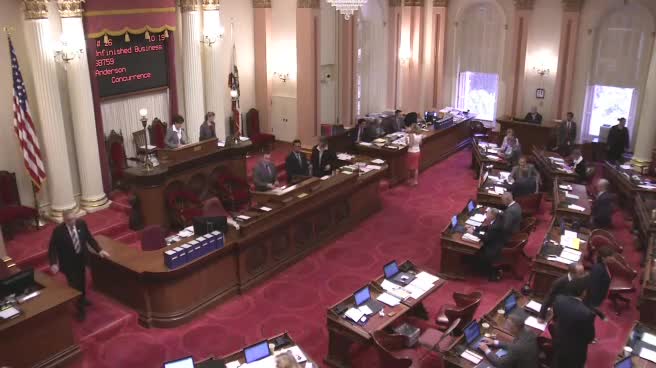 2MIN
Senate Floor
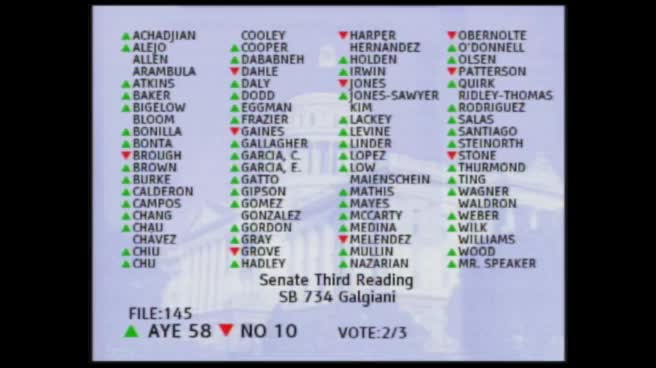 4MIN
Assembly Floor
 1MIN
Assembly Floor
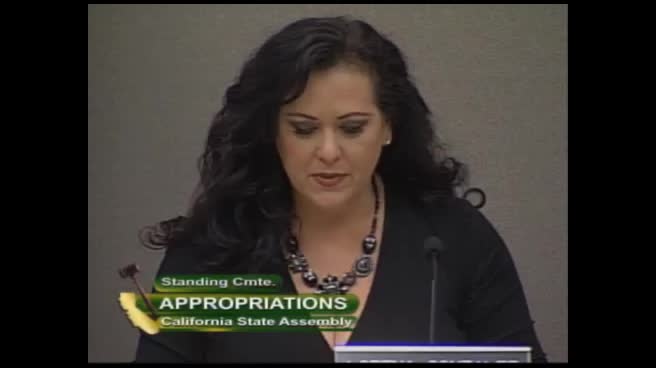 3MIN
Assembly Standing Committee on Appropriations
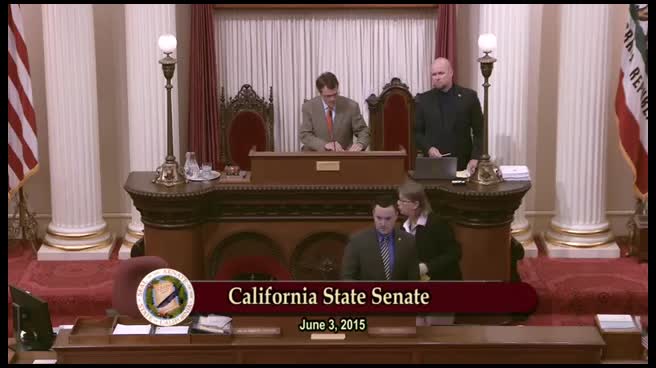 14MIN