SB 760: Distressed watershed: urban greening.
- Session Year: 2015-2016
- House: Senate
- Latest Version Date: 2015-05-11
The Water Quality, Supply, and Infrastructure Improvement Act of 2014, approved by the voters as Proposition 1 at the November 4, 2014, statewide general election, authorizes the issuance of general obligation bonds in the amount of $7,545,000,000 to finance a water quality, supply, and infrastructure improvement program. Proposition 1 makes available $100,000,000 of the bond proceeds, upon appropriation by the Legislature, for projects to protect and enhance an urban creek and its tributaries that meets certain requirements.
This bill would require a public agency receiving an appropriation from the $100,000,000 to give priority to projects that are located in, or directly adjacent to, a disadvantaged community within a distressed watershed and that may also provide greenspace or other venues for physical activities.
Existing law establishes the Strategic Growth Council consisting of specified members and requires the council to, among other things, develop and administer the Affordable Housing and Sustainable Communities Program to reduce greenhouse gas emissions through projects that implement land use, housing, transportation, and agricultural land preservation practices to support infill and compact development and that support other related and coordinated public policy objectives.
This bill would require the council to develop and implement the Disadvantaged Community Enhancement Program to award grants to disadvantaged communities, as defined, to facilitate projects for community enhancement improvements that provide to eligible applicants multiple environmental benefits.
The California Global Warming Solutions Act of 2006 designates the State Air Resources Board as the state agency charged with monitoring and regulating sources of emissions of greenhouse gases. The act authorizes the state board to include the use of market-based compliance mechanisms. Existing law requires all moneys, except for fines and penalties, collected by the state board from the auction or sale of allowances as part of a market-based compliance mechanism to be deposited in the Greenhouse Gas Reduction Fund and to be available upon appropriation by the Legislature.
Existing law establishes the Strategic Growth Council consisting of specified members and requires the council to, among other things, develop and administer the Affordable Housing and Sustainable Communities Program to reduce greenhouse gas emissions through projects that implement land use, housing, transportation, and agricultural land preservation practices to support infill and compact development and that support other related and coordinated public policy objectives.
This bill would require the council to develop and implement the Disadvantaged Community Enhancement Program to award grants to disadvantaged communities, as defined, to facilitate projects for community enhancement improvements that reduce greenhouse gas emissions in furtherance of the goals of the California Global Warming Solutions Act of 2006 and that provide to eligible applicants multiple environmental benefits. The bill would authorize the council, upon appropriation by the Legislature, to expend moneys in the fund to implement the program. The bill would require the State Air Resources Board to determine a methodology for quantifying carbon reduction benefits of proposed projects and the community enhancement improvements.
The California Global Warming Solutions Act of 2006 designates the State Air Resources Board as the state agency charged with monitoring and regulating sources of emissions of greenhouse gases. The act authorizes the state board to include the use of market-based compliance mechanisms. Existing law requires all moneys, except for fines and penalties, collected by the state board from the auction or sale of allowances as part of a market-based compliance mechanism to be deposited in the Greenhouse Gas Reduction Fund and to be available upon appropriation by the Legislature.
Existing law establishes the Strategic Growth Council consisting of specified members and requires the council to, among other things, develop and administer the Affordable Housing and Sustainable Communities Program to reduce greenhouse gas emissions through projects that implement land use, housing, transportation, and agricultural land preservation practices to support infill and compact development and that support other related and coordinated public policy objectives.
This bill would require the council to develop and implement the Disadvantaged Community Enhancement Program to award grants to disadvantaged communities, as defined, to facilitate projects for community enhancement improvements that reduce greenhouse gas emissions in furtherance of the goals of the California Global Warming Solutions Act of 2006 and that provide to disadvantaged communities eligible applicants multiple environmental benefits. The bill would authorize the council, upon appropriation by the Legislature, to expend moneys in the fund to implement the program. The bill would require the State Air Resources Board to determine a methodology for quantifying carbon reduction benefits of proposed projects and the community enhancement improvements.
The California Global Warming Solutions Act of 2006 designates the State Air Resources Board as the state agency charged with monitoring and regulating sources of emissions of greenhouse gases. The act authorizes the state board to include the use of market-based compliance mechanisms. Existing law requires all moneys, except for fines and penalties, collected by the state board from the auction or sale of allowances as part of a market-based compliance mechanism to be deposited in the Greenhouse Gas Reduction Fund and to be available upon appropriation by the Legislature.
Existing law establishes the Strategic Growth Council consisting of specified members and requires the council to, among other things, develop and administer the Affordable Housing and Sustainable Communities Program to reduce greenhouse gas emissions through projects that implement land use, housing, transportation, and agricultural land preservation practices to support infill and compact development and that support other related and coordinated public policy objectives.
This bill would require the council to develop and implement the Disadvantaged Community Enhancement Program to award grants to disadvantaged communities, as defined, to facilitate projects for community enhancement improvements that reduce greenhouse gas emissions in furtherance of the goals of the California Global Warming Solutions Act of 2006 and that provide to disadvantaged communities multiple environmental benefits. The bill would authorize the council, upon appropriation by the Legislature, to expend moneys in the fund to implement the program.
(a)(1)It is the intent of the Legislature to provide additional funding opportunities, in a more consolidated manner, to address watershed-related infrastructure challenges in Californias most disadvantaged communities and promote projects that provide cobenefits that address physical blight and deficiencies.
(2)It is further the intent of the Legislature to fund urban greening projects independent of other programs.
(b)For purposes of this section, the following terms mean the following:
(1)Disadvantaged community means a community identified as a disadvantaged community pursuant to Section 39711 of the Health and Safety Code with significant population densities, significant concentrations of industrial facilities, and trade corridor activity.
(2)Distressed watershed means a watershed with blighted or contaminated properties located in incorporated or unincorporated areas.
(c)A public agency receiving an appropriation from moneys made available pursuant to subdivision (a) of Section 79735 shall give priority to projects to enhance an urban creek and its tributaries that are located in, or directly adjacent to, a disadvantaged community within a distressed watershed and that may also provide greenspace or other venues for physical activities, such as walking, hiking, and cycling.
SECTION 1.Division 45 (commencing with Section 75500) is added to the Public Resources Code, to read:45.Disadvantaged Community Enhancement1.General Provisions and Definitions75500.This division shall be known, and may be cited as, the Disadvantaged Community Enhancement Act of 2015.
75501.It is the intent of the Legislature, in enacting this division, to provide additional funding opportunities to address infrastructure challenges in Californias most disadvantaged communities and promote projects that provide for cobenefits that address physical blight and deficiencies.
75502.For purposes of this division, the following terms mean the following:
(a)Active transportation program means the program established pursuant to Section 2380 of the Streets and Highway Code.
(b)Council means the Strategic Growth Council established pursuant to Section 75121.
(c)Disadvantaged community means a community identified as a disadvantaged community pursuant to Section 39711 of the Health and Safety Code.
(d)Eligible applicant means a city, county, city and county, special district, Native American tribe, state conservancy, or a qualified nonprofit organization.
(e)Program means the Disadvantaged Community Enhancement Program established pursuant to Section 75510.
2.Disadvantaged Community Enhancement Program75510.The council shall develop and implement the Disadvantaged Community Enhancement Program to award grants to disadvantaged communities to facilitate projects for community enhancement improvements that provide to disadvantaged communities multiple environmental benefits.
75511.Eligible community enhancement improvements include, but are not limited to, any of the following:
(a)Land acquisitions in urban settings of blighted or contaminated properties serving little sequestration benefit for greenspace conversion.
(b)Urban greening projects including urban forestry and landscaping.
(c)Park development and land protection for passive or active recreation.
(d)Hardscape conversions and repurposing of lands to serve greenspace benefits.
(e)Nonmotorized trail and other active transportation projects.
(f)Heat island mitigation.
(g)Planning of a sustainable community.
75512.(a)The council shall award grants to eligible applicants through a competitive process. In prioritizing the award, the council shall consider both of the following:
(1)Factors of the community benefiting from the award, including all of the following:
(A)The poverty rate.
(B)The unemployment rate.
(C)The childhood obesity rate and incidents of asthma.
(D)The availability of greenspace and venues for physical activity.
(E)The lack of nonmotorized infrastructure supporting an active transportation program.
(F)The levels of air pollution.
(G)The drinking water quality.
(H)The groundwater quality, if applicable.
(2)The environmental benefits resulting from the project, including, but not limited to, the following:
(A)Water quality improvement.
(B)Groundwater, storage, recharge, or remediation.
(C)Storm water capture.
(b)The council shall give priority to eligible applicants and projects that are located wholly within distressed watershed areas with significant populations and heavy concentrations of industrial facilities and trade corridor activity.
75513.(a)To receive a grant for a project pursuant to the program, an eligible applicant shall submit an application, as prescribed by the council, that contains information regarding the factors and environmental benefits described in Section 75512.
(b)In addition to subdivision (a), the applicant shall also include in the application the following information:
(1)A clear articulation on how the grant would be used to address the factors and provide the environmental benefits described in Section 75512.
(2)The leveraging of other sources of funds to facilitate and maximize the benefits from the proposed community enhancement improvements.
75514.Awards made pursuant to this division shall not supplant other sources of funding designed to benefit disadvantaged communities.
This division shall be known, and may be cited as, the Disadvantaged Community Enhancement Act of 2015.
75501.It is the intent of the Legislature, in enacting this division, to provide additional funding opportunities to address infrastructure challenges in Californias most disadvantaged communities and promote projects that provide for cobenefits that address physical blight and deficiencies while addressing climate change. deficiencies.
75502.For purposes of this division, the following terms mean the following:
(a)Active transportation program means the program established pursuant to Section 2380 of the Streets and Highway Code.
(b)Council means the Strategic Growth Council established pursuant to Section 75121.
(c)Disadvantaged community means a community identified as a disadvantaged community pursuant to Section 39711 of the Health and Safety Code.
(d)Eligible applicant means a city, county, city and county, special district, Native American tribe, state conservancy, or a qualified nonprofit organization.
(e)Program means the Disadvantaged Community Enhancement Program established pursuant to Section 75510.
2.Disadvantaged Community Enhancement Program75510.The council shall develop and implement the Disadvantaged Community Enhancement Program to award grants to disadvantaged communities to facilitate projects for community enhancement improvements that reduce greenhouse gas emissions in furtherance of the goals of the California Global Warming Solutions Act of 2006 (Division 25.5 (commencing with Section 38500) of the Health and Safety Code) and that provide to disadvantaged communities multiple environmental benefits.
75511.Eligible community enhancement improvements include, but are not limited to, any of the following:
(a)Land acquisitions in urban settings of blighted or contaminated properties serving little sequestration benefit for greenspace conversion.
(b)Urban greening projects including urban forestry and landscaping.
(c)Park development and land protection for passive or active recreation.
(d)Hardscape conversions and repurposing of lands to serve greenspace benefits.
(e)Nonmotorized trail and other active transportation projects.
(f)Heat island mitigation.
(g)Planning of a sustainable community.
75512.(a)The council shall award grants to eligible applicants through a competitive process. In prioritizing the award, the council shall consider both of the following:
(1)Factors of the community benefiting from the award, including all of the following:
(A)The poverty rate.
(B)The unemployment rate.
(C)The childhood obesity rate and incidents of asthma.
(D)The availability of greenspace and venues for physical activity.
(E)The lack of nonmotorized infrastructure supporting an active transportation program.
(F)The levels of air pollution.
(G)The drinking water quality.
(H)The groundwater quality, if applicable.
(2)The environmental benefits resulting from the project, including, but not limited to, the following:
(A)Water quality improvement.
(B)Groundwater, storage, recharge, or remediation.
(C)Storm water capture.
(b)The council shall give priority to eligible applicants and projects that are located wholly within distressed watershed areas with significant populations and heavy concentrations of industrial facilities and trade corridor activity.
75513.(a)To receive a grant for a project pursuant to the program, an eligible applicant shall submit an application, as prescribed by the council, that contains information regarding the factors and environmental benefits described in Section 75512.
(b)In addition to subdivision (a), the applicant shall also include in the application the following information:
(1)A clear articulation on how the grant would be used to address the factors and provide the environmental benefits described in Section 75512.
(2)The leveraging of other sources of funds to facilitate and maximize the benefits from the proposed community enhancement improvements.
(3)A demonstration on how the community enhancement improvements would assist the state in meeting the greenhouse gas emissions reduction goals established pursuant to the California Global Warming Solutions Act of 2006 (Division 25.5 (commencing with Section 38500) of the Health and Safety Code.
75514.Awards made pursuant to this division shall not supplant other sources of funding designed to benefit disadvantaged communities.
75515.For purposes of verifying carbon reduction benefits resulting from the implementation of eligible projects, the State Air Resources Board shall perform a study to determine a methodology for quantifying carbon reduction benefits of proposed projects and the community enhancement improvements specified in Section 75511.
3.Fiscal Provision75520.The council may, upon appropriation by the Legislature, expend moneys from the Greenhouse Gas Reduction Fund established pursuant to Section 16428.8 of the Government Code to implement the program.
This division shall be known, and may be cited as, the Disadvantaged Community Enhancement Act of 2015.
75501.It is the intent of the Legislature, in enacting this division, to provide additional funding opportunities to address infrastructure challenges in Californias most disadvantaged communities and promote projects that provide for cobenefits that address physical blight and decencies deficiencies while addressing climate change.
75502.For purposes of this division, the following terms mean the following:
(a)Active transportation program means the program established pursuant to Section 2380 of the Streets and Highway Code.
(a)
(b)Council means the Strategic Growth Council established pursuant to Section 75121.
(b)
(c)Disadvantaged community means a community identified as a disadvantaged community pursuant to Section 39711 of the Health and Safety Code.
(d)Eligible applicant means a city, county, city and county, special district, Native American tribe, state conservancy, or a qualified nonprofit organization.
(c)
(e)Program means the Disadvantaged Community Enhancement Program established pursuant to Section 75510.
2.Disadvantaged Community Enhancement Program75510.The council shall develop and implement the Disadvantaged Community Enhancement Program to award grants to disadvantaged communities to facilitate projects for community enhancement improvements that reduce greenhouse gas emissions in furtherance of the goals of the California Global Warming Solutions Act of 2006 (Division 25.5 (commencing with Section 38500) of the Health and Safety Code) and that provide to disadvantaged communities multiple environmental benefits.
75511.Eligible community enhancement improvements include, but are not limited to, any of the following:
(a)Water quality improvement.
(b)Groundwater, storage, recharge, or remediation.
(c)Storm water capture.
(a)Land acquisitions in urban settings of blighted or contaminated properties serving little sequestration benefit for greenspace conversion.
(d)
(b)Urban greening projects including urban forestry and landscaping.
(e)
(c)Park development and land protection for passive or active recreation.
(f)
(d)Hardscape conversions. conversions and repurposing of lands to serve greenspace benefits.
(g)
(e)Nonmotorized trail and other active transportation projects.
(h)
(f)Heat island mitigation.
(i)
(g)Planning of a sustainable community.
75512.(a)The council shall award grants to eligible applicants through a competitive process. In prioritizing the award, the council shall consider all both of the following factors following:
(1)Factors of the community benefiting from the award: award, including all of the following:
(a)
(A)The poverty rate.
(b)
(B)The unemployment rate.
(c)
(C)The childhood obesity rate and incidents of asthma.
(d)
(D)The availability of greenspace and venues for physical activity.
(e)
(E)The lack of nonmotorized infrastructure. infrastructure supporting an active transportation program.
(f)
(F)The levels of air pollution.
(g)
(G)The drinking water quality.
(h)
(H)The groundwater quality, if applicable.
(2)The environmental benefits resulting from the project, including, but not limited to, the following:
(A)Water quality improvement.
(B)Groundwater, storage, recharge, or remediation.
(C)Storm water capture.
(b)The council shall give priority to eligible applicants and projects that are located wholly within distressed watershed areas with significant populations and heavy concentrations of industrial facilities and trade corridor activity.
75513.(a)To receive a grant for a project pursuant to the program, a disadvantaged community an eligible applicant shall submit an application, as prescribed by the council, that contains information regarding the factors and environmental benefits described in Section 75512.
(b)In addition to subdivision (a), the applicant shall also include in the application the following information:
(1)A clear articulation on how the grant would be used to address the factors and provide the environmental benefits described in Section 75512.
(2)The leveraging of other sources of funds to facilitate and maximize the benefits from the proposed community enhancement improvements.
(3)A demonstration on how the community enhancement improvements would assist the state in meeting the greenhouse gas emissions reduction goals established pursuant to the California Global Warming Solutions Act of 2006 (Division 25.5 (commencing with Section 38500) of the Health and Safety Code.
75514.Awards made pursuant to this division shall not supplant other sources of funding designed to benefit disadvantaged communities.
75515.For purposes of verifying carbon reduction benefits resulting from the implementation of eligible projects, the State Air Resources Board shall perform a study to determine a methodology for quantifying carbon reduction benefits of proposed projects and the community enhancement improvements specified in Section 75511.
3.Fiscal Provision75520.The council may, upon appropriation by the Legislature, expend moneys from the Greenhouse Gas Reduction Fund established pursuant to Section 16428.8 of the Government Code to implement the program.
This division shall be known, and may be cited as, the Disadvantaged Community Enhancement Act of 2015.
75501.It is the intent of the Legislature, in enacting this division, to provide additional funding opportunities to address infrastructure challenges in Californias most disadvantaged communities and promote projects that provide for cobenefits that address physical blight and decencies while addressing climate change.
75502.For purposes of this division, the following terms mean the following:
(a)Council means the Strategic Growth Council established pursuant to Section 75121.
(b)Disadvantaged community means a community identified as a disadvantaged community pursuant to Section 39711 of the Health and Safety Code.
(c)Program means the Disadvantaged Community Enhancement Program established pursuant to Section 75510.
2.Disadvantaged Community Enhancement Program75510.The council shall develop and implement the Disadvantaged Community Enhancement Program to award grants to disadvantaged communities to facilitate projects for community enhancement improvements that reduce greenhouse gas emissions in furtherance of the goals of the California Global Warming Solutions Act of 2006 (Division 25.5 (commencing with Section 38500) of the Health and Safety Code) and that provide to disadvantaged communities multiple environmental benefits.
75511.Eligible community enhancement improvements include, but are not limited to, any of the following:
(a)Water quality improvement.
(b)Groundwater, storage, recharge, or remediation.
(c)Storm water capture.
(d)Urban greening projects including urban forestry and landscaping.
(e)Park development and land protection for passive or active recreation.
(f)Hardscape conversions.
(g)Nonmotorized trail and other active transportation projects.
(h)Heat island mitigation.
(i)Planning of a sustainable community.
75512.The council shall award grants to applicants through a competitive process. In prioritizing the award, the council shall consider all of the following factors of the community benefiting from the award:
(a)The poverty rate.
(b)The unemployment rate.
(c)The childhood obesity rate and incidents of asthma.
(d)The availability of greenspace and venues for physical activity.
(e)The lack of nonmotorized infrastructure.
(f)The levels of air pollution.
(g)The drinking water quality.
(h)The groundwater quality, if applicable.
75513.(a)To receive a grant for a project pursuant to the program, a disadvantaged community shall submit an application, as prescribed by the council, that contains information regarding the factors described in Section 75512.
(b)In addition to subdivision (a), the applicant shall also include in the application the following information:
(1)A clear articulation on how the grant would be used to address the factors described in Section 75512.
(2)The leveraging of other sources of funds to facilitate and maximize the benefits from the proposed community enhancement improvements.
(3)A demonstration on how the community enhancement improvements would assist the state in meeting the greenhouse gas emissions reduction goals established pursuant to the California Global Warming Solutions Act of 2006 (Division 25.5 (commencing with Section 38500) of the Health and Safety Code.
75514.Awards made pursuant to this division shall not supplant other sources of funding designed to benefit disadvantaged communities.
3.Fiscal Provision75520.The council may, upon appropriation by the Legislature, expend moneys from the Greenhouse Gas Reduction Fund established pursuant to Section 16428.8 of the Government Code to implement the program.
|
Date
|
Status
|
|---|---|
| May 4, 2015 | From committee: Do pass as amended and re-refer to Com. on APPR. (Ayes 5. Noes 0.) (April 29). |
| Feb 1, 2016 | Returned to Secretary of Senate pursuant to Joint Rule 56. |
| Jan 21, 2016 | January 21 hearing: Held in committee and under submission. |
| Jan 16, 2016 | Set for hearing January 21. |
| May 28, 2015 | May 28 hearing: Held in committee and under submission. |
| May 23, 2015 | Set for hearing May 28. |
| May 18, 2015 | May 18 hearing: Placed on APPR. suspense file. |
| May 11, 2015 | From committee with author's amendments. Read second time and amended. Re-referred to Com. on APPR. |
| May 8, 2015 | Set for hearing May 18. |
| May 5, 2015 | Read second time and amended. Re-referred to Com. on APPR. |
| Feb 27, 2015 | Introduced. To Com. on RLS. for assignment. To print. |
| May 4, 2015 | From committee: Do pass as amended and re-refer to Com. on APPR. (Ayes 5. Noes 0. Page 859.) (April 29). |
| Apr 17, 2015 | Set for hearing April 29. |
| Apr 15, 2015 | From committee: Do pass and re-refer to Com. on E.Q. (Ayes 10. Noes 1. Page 621.) (April 14). Re-referred to Com. on E.Q. |
| Apr 6, 2015 | From committee with author's amendments. Read second time and amended. Re-referred to Com. on T. & H. |
| Mar 24, 2015 | Set for hearing April 14. |
| Mar 19, 2015 | Referred to Coms. on T. & H. and E.Q. |
| Mar 2, 2015 | Read first time. |
| Mar 2, 2015 | From printer. May be acted upon on or after April 1. |
|
Date
|
Description
|
Location
|
Votes
|
|
|---|---|---|---|---|
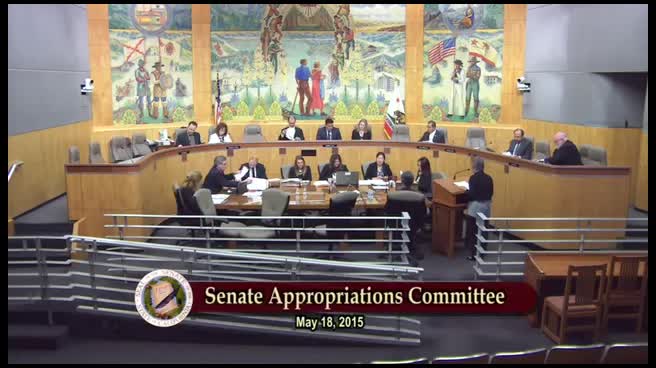
| May 18, 2015 | Placed on suspense file | Senate Standing Committee on Appropriations |
Passed |
|
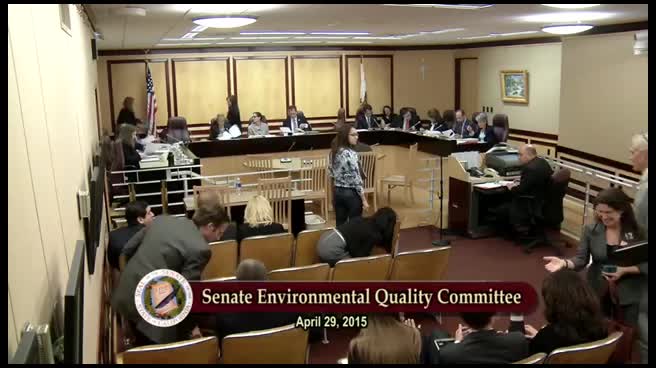
| Apr 29, 2015 | Do pass as amended, but first amend, and re-refer to the Committee on [Appropriations] | Senate Standing Committee on Environmental Quality |
Passed |
|
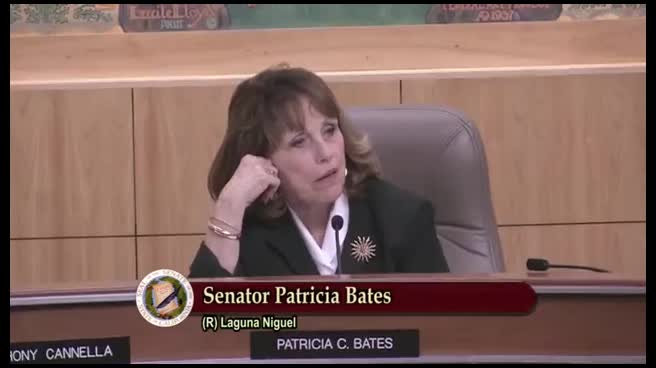
| Apr 14, 2015 | Do pass, but first be re-referred to the Committee on [Environmental Quality] | Senate Standing Committee on Transportation and Housing |
Passed |
This list shows positions taken on this bill by organizations on the date displayed, which is linked to the original source.
Positions by individuals are not included.
|
Organization
|
Position
|
Date
|
|---|---|---|
| Safe Routes to School National Partnership | ** Support | Apr 29, 2015 |
| Sierra Club | * Support | Apr 29, 2015 |
| Sierra Club California | * Support | Apr 29, 2015 |
| Sonoma County Water Agency | * Support | Apr 29, 2015 |
| Watershed Conservation Authority | * Support | Apr 14, 2015 |
SB 760 (Mendoza) Page 2 of 2
SENATE COMMITTEE ON APPROPRIATIONS
Senator Ricardo Lara, Chair
2015 - 2016 Regular Session
SB 760 (Mendoza) - Distressed watershed: urban greening.
|
|
Version: May 11, 2015 |
Policy Vote: not relevant |
Urgency: No |
Mandate: No |
Hearing Date: May 18, 2015 |
Consultant: Marie Liu |
This bill meets the criteria for referral to the Suspense File.
Bill Summary:
SB 760 would require that a public agency that receives an appropriation of monies from Proposition 1 to enhance an urban creek or its tributaries, prioritize its spending as specified.
Fiscal Impact:
Unknown, but potential costs to the General Fund (bond monies) for a public agency that receives monies from §79735(a) to develop regulations to implement the priorities established in this bill.
Background:
Proposition 1, which was approved by the voters in November of 2014, included the authorization for $100 million for projects that protect and enhance an urban create and its tributaries (WAT §79735(a)). Proposition 1, similar to various previous bonds, defined a “disadvantaged community” as a community with an annual median household income that is less than 80% of the statewide annual median household income. (WAT §79505.5)
Under the California Global Warming Act of 2006, the California Air Resources Board (ARB) is required to establish a statewide greenhouse gas (GHG) emissions limit such that by 2020 California reduces its GHG emissions to the level they were in 1990. The act authorizes the ARB to include the use of market-based mechanisms to comply with these regulations. Under that authority, the ARB established the Cap-and-Trade Program in which ARB establishes an overall limit — or “cap” — on GHG emissions from specified industries. As part of the Cap-and-Trade Program, ARB auctions off GHG emission allowances as mitigation fees. To date, ARB has completed 10 auctions, taking in a total of $1.6 billion in proceeds. Existing law requires that at least 25% of the revenues are to be available for projects that provide benefits to disadvantaged communities. For the purposes of this requirement, the secretary of the Environmental Protection Agency is required to identify disadvantaged communities based on geographic, socioeconomic, public health, and environmental hazard criteria (HSC §39711). The secretary has provided this identification through CalEnviroScreen.
Proposed Law:
This bill would require that a public agency, which receives funds from Proposition 1 to enhance an urban creek and its tributary, give priority to projects that are located directly in, or directly adjacent to, a disadvantaged community within a distressed watershed and provide greenspace or other venues for physical activities.
This bill would define “disadvantaged communities” as a community that is considered disadvantaged under CalEnviroScreen and has significant population densities, significant concentrations of industrial facilities, and trade corridor activity.
Staff Comments:
The definition of “disadvantaged communities” in this bill is substantially different than the definition of “disadvantaged communities” used under Proposition 1. Staff notes that if the definition used under this bill identifies communities that would not also be considered disadvantaged under the Proposition 1 definition, this bill could conflict with a voter-passed measure. However, if this definition only identifies a subset of the “disadvantaged communities” as defined by Proposition 1, the language under this bill is permissible. Whether this is the situation is unclear.
Staff notes that no public agency has received funds from Section 79730 so it is unclear what agency might be affected by this bill at this time. Furthermore, it is unclear whether a public agency that receives this category of Proposition 1 money would receive those monies in order for it to administer grants to other agencies or whether that public agency would receive the these bond funds for a specific project. In the case of the former, the public agency would potentially be required to develop guidelines for the distribution of grants for several purposes, including to provide additional specifics for the definition of disadvantaged communities. For example, the definition of disadvantaged communities under this bill is one that is identified on CalEnviroScreen, and has “significant population densities, significant concentrations of industrial facilities, and trade corridor activity. It is not clear what would constitute “significant” for the purposes of this definition. “Industrial facilities” and “trade corridor activity” may also need to be defined to ensure transparent spending of the bond funds. The guideline or regulatory process would also need to assure that the definition of disadvantaged communities does not include communities that would be identified under Proposition 1, as discussed above. Staff notes that grant program guidelines are frequently exempted from the Administrative Procedures Act, which would minimize but not eliminate regulatory costs.
There is the possibility that the agency would need to develop regulations to interpret the bills requirements even outside of a grant program.
Because it has not yet been determined how this section of Proposition 1 monies will be administered, or by which agency, it is unknown whether that public agency might have costs to develop regulations to implement the language in this bill.
-- END --
SB 760 (Mendoza) Page 11 of 11
SENATE COMMITTEE ON ENVIRONMENTAL QUALITY
Senator Wieckowski, Chair
2015 - 2016 Regular
Bill No: SB 760
Author: |
Mendoza |
||
Version: |
4/6/2015 |
Hearing Date: |
4/29/2015 |
Urgency: |
No |
Fiscal: |
Yes |
Consultant: |
Rebecca Newhouse |
||
SUBJECT: Disadvantaged Community Enhancement Act of 2015
ANALYSIS:
Existing law:
Under the California Global Warming Solutions Act of 2006 (also known as AB 32), requires the California Air Resources Board (ARB) to determine the 1990 statewide greenhouse gas (GHG) emissions level and approve a statewide GHG emissions limit that is equivalent to that level, to be achieved by 2020, and to adopt GHG emissions reductions measures by regulation. ARB is authorized to include the use of market-based mechanisms to comply with these regulations. (Health and Safety Code §38500 et seq.)
Establishes the Greenhouse Gas Reduction Fund (GGRF) in the State Treasury, requires all moneys, except for fines and penalties, collected pursuant to a market-based mechanism be deposited in the fund and requires the Department of Finance, in consultation with the state board and any other relevant state agency, to develop, as specified, a three-year investment plan for the moneys deposited in the GGRF. (Government Code §16428.8)
Prohibits the state from approving allocations for a measure or program using GGRF moneys except after determining that the use of those moneys furthers the regulatory purposes of AB 32, and requires moneys from the GGRF be used to facilitate the achievement of reductions of GHG emissions in California. (HSC §39712)
Requires the Department of Finance, in the investment plan, to allocate at least 25% of available moneys in the GGRF to projects that provide benefits to disadvantaged communities, and at least 10% to projects located within disadvantaged communities. (HSC §39713 )
Continuously appropriates 60% of GGRF moneys to transit, affordable housing and sustainable communities, including 20% continuously appropriated to the Strategic Growth Council (SGC) for the Affordable Housing and Sustainable Communities Program. (HSC §39719)
Requires 50% of AHSC Program expenditures be for projects benefitting
disadvantaged communities. (Public Resources Code §75214)
Establishes the SGC, consisting of the Director of State Planning and Research, several agency secretaries, and one member of the public, and tasks the Council with managing and awarding grants and loans to support the planning and development of sustainable communities (PRC §75120).
This bill:
Requires SGC to develop and implement a Disadvantaged Community Enhancement Program.
Provides that this program shall award grants to disadvantaged communities for “community enhancement improvement projects” to reduce GHG emissions in, and provide multiple environmental benefits to, disadvantaged communities.
Provides that eligible projects shall include, but are not limited to:
Land acquisitions in urban settings of blighted or contaminated properties serving little sequestration benefit for greenspace conversion.
Urban greening projects, including urban forestry and landscaping.
Park development and land protection for passive or active recreation.
Hardscape conversions and repurposing of lands to serve greenspace benefits.
Non-motorized trail and other active transportation projects.
Heat island mitigation.
Planning of a sustainable community.
Requires SGC to award grants through a competitive process.
Requires SGC to consider all of the following factors in prioritizing awards: poverty rate, unemployment rate, childhood obesity rate and incidents of asthma, availability of greenspace and venues for physical activity, lack of non-motorized infrastructure supporting an active transportation program, levels of air pollution, drinking water quality, and groundwater quality (if applicable).
Requires SGC to also consider the environmental benefits resulting from the project, including, but not limited to, water quality improvement; groundwater storage, recharge, or remediation; and storm water capture.
Requires SGC to prioritize eligible applicants and projects located wholly within distressed watershed areas with significant populations and heavy concentrations of industrial facilities and trade corridor activity.
Requires an applicant to articulate how the grant would be used to address the factors described above; explain what other funding sources the applicant will leverage for the project; and demonstrate how the project would help the state meet its AB 32 goals.
Provides that funds awarded under this program shall not supplant other sources of funding designed to benefit disadvantaged communities.
Requires ARB to determine a methodology to quantify the carbon reduction benefits of applicant projects.
Background
The Strategic Growth Council.
The SGC was established in 2008 by SB 732 (Steinberg), Chapter 729, Statutes of 2008. The Council is comprised of eight members representing six state agencies, the Office of Planning and Research and a public member appointed by the Governor.
The Council is responsible for coordinating a variety of state programs and activities related to sustainable communities and the environment, such as the implementation of SB 375 (Steinberg), Chapter 728, Statutes of 2008, which incorporates sustainable community development into transportation planning. SB 375 requires each of the state’s 17 metropolitan planning organizations to prepare a sustainable communities strategy as part of its regional transportation plan, to help the region meet its GHG emissions reduction target. The Sustainable Communities Planning Grants and Incentives Program, authorized under Safe Drinking Water, Water Quality and Supply, Flood Control, River and Coastal Protection Bond Act of 2006 (Proposition 84) and administered by the SGC, assists local governments in developing sustainable communities strategies in order to meet the requirements of SB 375. At its June 3, 2014 meeting, SGC approved the final $16 million in Round 3 Proposition 84 Sustainable Communities Planning Grants.
In addition, Proposition 84 also authorized the Legislature to appropriate $70 million for urban greening projects and plans that reduce energy consumption, conserve water, improve air and water quality, and provide other community benefits. SGC administers these funds for the Urban Greening Program. In the last round of funding for the program approved by SGC in June of last year, 40 urban greening grants were awarded, totaling almost $24 million. Of those projects, all but five were for disadvantaged communities.
Affordable Housing and Sustainable Communities Program.
The Budget Act of 2014 appropriates $130 million from the GGRF to develop and implement the Affordable Housing and Sustainable Communities Program (AHSC). SB 862 (Committee on Budget and Fiscal Review), Chapter 36, Statutes of 2014, continuously appropriates 20% of GGRF annual proceeds to the AHSC beginning in FY 2015-16. The Governor’s proposed 2015-16 Budget appropriates $200 million for the AHSC.
The AHSC, administered by the Strategic Growth Council, is tasked with reducing GHG emissions through projects that implement land use, housing, transportation, and agricultural land preservation practices to support infill and compact development. Additionally, the statute specifies that project objectives include reducing air pollution, improving connectivity and accessibility to jobs, housing and services, and increasing options for mobility, including implementation of the Active Transportation Program.
Statute establishing the AHSC program establishes the goal of 50% of AHSC Program expenditures be directed to projects benefitting disadvantaged communities.
Full applications are due in late April for the first round of funding, with the SGC considering and approving awards for selected applications in late June.
Use of Cap and Trade Auction Revenue.
ARB has conducted ten cap-and-trade auctions, generating almost $1.6 billion in proceeds to the state.
Several bills in 2012, and one in 2014, provide legislative direction for the expenditure of auction proceeds including SB 535 (de León) Chapter 830, Statutes of 2012, AB 1532 (J. Pérez) Chapter 807, Statutes of 2012, SB 1018 (Budget Committee) Chapter 39, Statutes 2012, and SB 862 (Budget Committee) Chapter 36, Statutes of 2014.
SB 535 (De León), Chapter 830, Statutes of 2012, requires that 25% of auction revenue be used to benefit disadvantaged communities and requires that 10% of auction revenue be invested in disadvantaged communities.
AB 1532 (J. Pérez), Chapter 807, Statutes of 2012, directs the Department of Finance to develop and periodically update a three-year investment plan that identifies feasible and cost-effective GHG emission reduction investments to be funded with cap-and-trade auction revenues. AB 1532 requires that SB 1018 (Budget Committee), Chapter 39, Statutes of 2012, created the GGRF, into which all auction revenue is to be deposited. The legislation requires that before departments can spend moneys from the GGRF, they must prepare a record specifying: (1) how the expenditures will be used, (2) how the expenditures will further the purposes of AB 32 (Nuñez, Pavley), Chapter 488, Statutes of 2006, (3) how the expenditures will achieve GHG emission reductions, (4) how the department considered other non-GHG-related objectives, and (5) how the department will document the results of the expenditures.
SB 862 (Budget Committee) Chapter 36, Statutes of 2014, requires the ARB to develop guidelines on maximizing benefits for disadvantaged communities by agencies administering GGRF funds, and guidance for administering agencies on GHG emission reduction reporting and quantification methods.
Legal consideration of cap-and-trade auction revenues.
The 2012-13 budget analysis of cap-and-trade auction revenue by the Legislative Analyst’s Office noted that, based on an opinion from the Office of Legislative Counsel, the auction revenues should be considered mitigation fee revenues, and their use requires that a clear nexus exist between an activity for which a mitigation fee is used and the adverse effects related to the activity on which that fee is levied. Therefore, in order for their use to be valid as mitigation fees, revenues from the cap-and-trade auction must be used to mitigate GHG emissions or the harms caused by GHG emissions.
In 2012, the California Chamber of Commerce filed a lawsuit against the ARB claiming that cap-and-trade auction revenues constitute illegal tax revenue. In November 2013, the superior court ruling declined to hold the auction a tax, concluding that it is more akin to a regulatory fee.
GGRF moneys for Urban Forestry.
The Department of Forestry and Fire Protection implements the Urban & Community Forestry Program pursuant to the Urban Forestry Act, and works to expand and improve the management of trees and related vegetation in communities throughout California.
According to the Department’s website, “The mission of the Urban Forestry Program is to lead the effort to advance the development of sustainable urban and community forests in California.”
The 2014-15 budget appropriated $17 million for Sustainable Forests and Urban forestry to the Department of Forestry and Fire Protection from the GGRF. The 2015-16 budget proposal appropriates $18 million for urban forestry, and the Department of Finance is requiring all of these moneys go toward disadvantaged communities.
The Department has established several urban forestry project types, all of which require applicants to demonstrate GHG emissions reductions. Some of these eligible projects include planting of trees to optimize the multiple benefits of urban forests in environmental justice communities; establishing a new tree inventory, and urban forest mapping, and long-term management plan; and projects to assist local entities to purchase and improve unused, vacant urban neighborhood properties in environmental justice communities to repurpose it for a use consistent with the CA Urban Forestry Act and with a positive GHG benefit.
The Program’s Request for Proposal states that all grant projects must track their GHG reductions and emissions. The Department notes that they have worked with ARB, USDA Forest Service, and other partners to develop a methodology and tools to assist grantees with the GHG emission reporting requirements.
Disadvantaged Communities.
State law requires the Department of Finance, in the investment plan, to allocate at least 25% of available moneys in the GGRF to projects that provide benefits to disadvantaged communities, and at least 10% to projects located within disadvantaged communities. This requirement is commonly referred to as the SB 535 requirement (SB 535, De León, Chapter 830, Statutes of 2012).
To meet the SB 535 mandate, the California Environmental Protection Agency (CalEPA) is developing options to identify disadvantaged communities for investment based on a tool called CalEnviroScreen. The Office of Environmental Health Hazard Assessment (OEHHA) developed this tool under CalEPA’s guidance to assess census tracts across the state that are disproportionately affected by multiple types of pollution and areas with vulnerable populations. The latest version of the tool, CalEnviroScreen version 2.0, is based on19 indicators for pollution burden and population characteristic. The indicator scores were combined to determine an overall CalEnviroScreen score. The higher the score, the greater the impact. For the first round of GGRF allocations, CalEPA has designated the top 25% of census tracts in California as disadvantaged communities for the purpose of investing cap-and-trade proceeds.
SB 862 (Committee on Budget and Fiscal Review, Chapter 36, Statutes of 2014) requires ARB to develop guidelines on maximizing benefits for disadvantaged communities by agencies administering GGRF funds, and guidance for administering agencies on GHG emissions reduction reporting and quantification methods.
ARB staff released preliminary guidance in the fall of last year on approaches that agencies can use to maximize the benefits of investments to disadvantaged communities and how agencies can determine whether their GGRF investments are located within, or provide benefits to, disadvantaged communities.
The guidance establishes screening criteria to determine whether a specific project qualifies toward the 25% target of funds providing benefits to a disadvantaged community, or the 10% target of investments spent within a disadvantaged community. The guidelines specify that benefits must be “direct, meaningful, and assured.”
The interim guidance also recommends that agencies expending GGRF moneys maximize the percentage of those funds that are allocated for projects that benefit disadvantaged communities, preferably in a way that exceeds the minimum 10% and 25% investment targets.
The guidelines also suggest that agencies give priority to those projects that maximize benefits to disadvantaged communities when selecting projects for a given investment by scoring criteria that favors projects which provide multiple benefits or the most significant benefits.
Comments
Purpose of Bill.
According
to the author, “California’s most distressed communities face
unique challenges in their efforts to improve infrastructure and
environmental sustainability. A recent UCLA Luskin study,
Envisioning a Greener LA 2014, found that certain areas in close
proximity to freeways, goods movement corridors and industrial
facilities suffer from higher rates of asthma, heart disease and
other harmful health impacts, especially for children and the
elderly. This bill seeks to establish and implement a more targeted
method to the allocation of Greenhouse Gas Reduction Fund revenues to
California’s most challenged communities and amplifies previous
expenditure plans in the area of ‘natural resources related’
investment by providing funding for specified park improvements and
other transformative co-benefit type projects that demonstrate GHG
benefits.”
Why is a New Program Needed?
SB 760 specifies a number of project categories that would be eligible under the new program. It appears that most of these project categories are already included in other programs.
For example:
This bill would fund “planning of a sustainable community,” but SGC already administers sustainable communities programs.
This bill would also provide funds to non-motorized trail and other active transportation projects, but the state Department of Transportation already administers an Active Transportation Program.
This bill specifies urban greening projects including urban forestry and landscaping and park development and land protection, but the SGC already implements an urban greening program that administered $23 million of Proposition 84 funds in June 2014, primarily to disadvantaged communities.
Additionally CALFIRE was just awarded $17 million from the GGRF in 2014-15 and may receive $18 million in 2015-16, for urban forestry projects in disadvantaged communities.
Why is another new program needed when many of the eligible projects specified by this bill are already being funded through existing programs and targeting disadvantaged communities?
Disadvantaged Communities.
This bill aims to target funds to disadvantaged communities. As noted above, SB 535 (De León) established the requirement in 2012 that 25% of GGRF moneys go toward projects that provide benefits to disadvantaged communities, and allocates a minimum of 10% of GGRF moneys to projects located within disadvantaged communities. Existing law has also established a process for identifying these communities through a comprehensive screening tool designed by OEHHA based on 19 indicators for pollution burden and population characteristics.
The program proposed by this bill specifies grants be awarded to disadvantaged communities, as defined through the SB 535 process, but then requires that SGC prioritize awards to those disadvantaged communities based on poverty rate, unemployment rate, childhood obesity rate and incidents of asthma, availability of greenspace and venues for physical activity, lack of nonmotorized infrastructure supporting active transportation, levels of air pollution, drinking water quality and other factors. Additionally, the bill requires priority for funding be given to projects located wholly within distressed watershed areas with significant populations and heavy concentration of industrial facilities and trade corridor activity.
The SB 535 process of identifying these communities has gone through a comprehensive, scientific and public process.
SB 760 layers a subjective determination of which communities are the most disadvantaged on the SB 535 process and adds criteria for GGRF moneys that do not have a direct nexus with GHG emission reductions. How will SGC prioritize one disadvantaged community over another where one has a higher incidence of asthma, and the other a higher poverty rate, or where one has higher levels of air pollution and another one has worse drinking water quality? How are “distressed watershed areas with significant populations and heavy concentration of industrial facilities and trade corridor activity” defined?
This bill sets up a confusing, and potentially conflicting process with SB 535 for determining which communities are considered disadvantaged in order to be eligible for funding from the GGRF. Additionally, some of these criteria do not have a clear nexus to GHG emission reductions.
Contaminated Property.
SB 760 specifies that land acquisitions in urban settings of blighted or contaminated properties serving little sequestration benefit for greenspace conversion are eligible community enhancement improvements.
Does the bill intend, and would the program use, GGRF moneys for the remediation of contamination after the purchase of the contaminated property in order to be able to utilize the property for greenspace conversion? Any remediation to clean up contaminated properties would undoubtedly increase GHG emissions, due to the energy intensive nature of certain technologies used for remediation.
Are
GGRF moneys an appropriate source of revenue for purchasing
contaminated properties?
Related/Prior Legislation
AB 156 (Perea), pending hearing in the Assembly Natural Resources Committee, requires ARB to establish a comprehensive technical assistance program, and a three-year investment plan, to assist disadvantaged community applicants.
AB 1336 (Salas), currently on the Assembly floor, requires a minimum of 40% of cap-and-trade funds to be allocated to projects that provide benefits to disadvantaged communities.
SOURCE:
Watershed Conservation Authority
SUPPORT:
Safe Routes to School National Partnership
Sierra Club California
OPPOSITION:
None on file
DOUBLE REFERRAL:
This measure was heard in the Senate Transportation and Housing Committee on April 14, 2015, and passed out of committee with a vote of 10-1.
-- END --
SB 760 (Mendoza) Page 5 of 5
SENATE COMMITTEE ON TRANSPORTATION AND HOUSING
Senator Jim Beall, Chair
2015 - 2016 Regular
Bill No: SB 760 Hearing Date: 4/14/2015
Author: |
Mendoza |
||
Version: |
4/6/2015 Amended |
||
Urgency: |
No |
Fiscal: |
Yes |
Consultant: |
Erin Riches |
||
SUBJECT: Disadvantaged Community Enhancement Act of 2015.
DIGEST: This bill establishes a new program under the Strategic Growth Council (SGC) to direct cap-and-trade spending to certain projects in disadvantaged communities.
ANALYSIS:
AB 32: California Global Warming Solutions Act of 2006
AB 32 (Núñez), Chapter 488, Statutes of 2006, requires the state Air Resources Board (ARB) to develop a plan to reduce emissions to 1990 levels by 2020. It also requires ARB to ensure that programs to reduce greenhouse gas (GHG) emissions are targeted, to the extent feasible, to the most disadvantaged communities (DACs) in the state. AB 32 authorizes ARB to deposit any fees paid by GHG emission sources into the Greenhouse Gas Reduction Fund (commonly known as cap-and-trade).
The 2014-15 budget agreement allocates $832 million in cap-and-trade revenues to a variety of GHG emission reduction programs. Beginning in 2015-16, the budget agreement appropriates 25% for the state’s high-speed rail project, 20% for affordable housing and sustainable communities grants, 10% to intercity capital rail projects, and 5% to low-carbon transit projects. The remaining 40% is available for annual appropriation by the Legislature.
SB 535 (De León), Chapter 830, Statutes of 2012, requires the Department of Finance, when developing the three-year investment plan for cap-and-trade monies, to allocate 25% of these funds to projects that provide benefits to DACs, and at least 10% to projects located within DACs. To meet the SB 535 mandate, the California Environmental Protection Agency is developing options to identify DACs based on a tool called CalEnviroScreen. This tool assesses census tracts with vulnerable populations that are disproportionately affected by pollution. In addition, the 2014-15 budget agreement requires ARB to develop guidelines for agencies administering cap-and-trade funds relating to maximization of benefits for DACs, as well as GHG emissions reduction reporting and quantification methods.
Sustainable Communities
Pursuant to SB 375 (Steinberg), Chapter 728, Statutes of 2008, ARB sets regional targets for GHG emission reductions from passenger vehicle use. SB 375 requires each of the state’s 17 metropolitan planning organizations to prepare a sustainable communities strategy as part of its regional transportation plan, to help the region meet its GHG emissions reduction target. The Sustainable Communities Planning Grants and Incentives Program, authorized under Proposition 84 of 2006 and administered by the SGC, assists local governments in developing sustainable communities strategies. (Proposition 84 provides $5.4 billion in general obligation bonds for water and parks projects.)
SGC was created in 2008 to help make California’s communities more sustainable. In addition to the sustainable communities program, SGC administers the Sustainable Agricultural Lands Conservation Program. This program reduces GHG emissions by limiting expansive, vehicle-dependent forms of development in favor of compact, transit-oriented development. SGC’s Urban Greening Grant Program, also authorized under Proposition 84, funds urban greening projects to reduce energy consumption, conserve water, and improve water and air quality.
In addition, the 2014-15 budget agreement established the Affordable Housing and Sustainable Communities Program (AHSC) under SGC. AHSC provides grants to local agencies for projects to reduce GHG emissions through land use, housing, transportation, and agricultural land preservation. Eligible projects include infill housing development, transit projects to support ridership, and active transportation projects. As noted above, the 2014-15 budget agreement allocates 20% of cap-and-trade funds to AHSC beginning in 2015-16.
This bill:
Requires SGC to develop and implement a Disadvantaged Community Enhancement Program.
Provides that this program shall award grants to DACs for “community enhancement improvement projects” to reduce GHG emissions in, and provide multiple environmental benefits to, DACs.
Provides that eligible projects shall include, but are not limited to:
Land acquisitions in urban settings of blighted or contaminated properties serving little sequestration benefit for greenspace conversion
Urban greening projects, including urban forestry and landscaping
Park development and land protection for passive or active recreation
Hardscape conversions and repurposing of lands to serve greenspace benefits
Non-motorized trail and other active transportation projects
Heat island mitigation
Planning of a sustainable community
Requires SGC to award grants through a competitive process. Requires SGC to consider all of the following factors in prioritizing awards: poverty rate, unemployment rate, childhood obesity rate and incidents of asthma, availability of greenspace and venues for physical activity, lack of non-motorized infrastructure supporting an active transportation program, levels of air pollution, drinking water quality, and groundwater quality (if applicable).
Requires SGC to also consider the environmental benefits resulting from the project, including, but not limited to, water quality improvement; groundwater storage, recharge, or remediation; and storm water capture.
Requires SGC to prioritize eligible applicants and projects located wholly within distressed watershed areas with significant populations and heavy concentrations of industrial facilities and trade corridor activity.
Requires an applicant to articulate how the grant would be used to address the factors described above; explain what other funding sources the applicant will leverage for the project; and demonstrate how the project would help the state meet its AB 32 goals.
Provides that funds awarded under this program shall not supplant other sources of funding designed to benefit DACs.
Requires ARB to determine a methodology to quantify the carbon reduction benefits of applicant projects.
COMMENTS:
Purpose. The author states that for expediency’s sake, the first year of cap-and-trade funding was routed through existing programs; however, DAC funding was “shoehorned” into these programs without attempting to tackle the historic underinvestment in these communities in a targeted manner. The author states that the Governor’s three-year investment plan for cap-and-trade monies includes no specific mention of investments in park improvements, despite the relative dearth of park space in many DACs. This bill calls for a leveraging of local resources and encourages a “cross-media” approach (air, water, toxics, park space) to enable utilization of other funding sources such as Proposition 1. (Proposition 1, approved by voters in November 2014, authorizes $7.5 billion in general obligation bonds for state water supply infrastructure projects.)
Why a new program? This bill specifies a number of project categories that would be eligible under the new program. It appears that most, if not all, of these project categories are already included in other programs. For example, this bill would fund “planning of a sustainable community,” but SGC already administers two sustainable communities programs. This bill would also provide funds to non-motorized trail and other active transportation projects; the state Department of Transportation already administers an Active Transportation Program. This bill requires SGC to prioritize eligible applicants and projects in distressed watershed areas with significant populations and heavy concentrations of industrial facilities and trade corridor activity. Last year’s budget agreement allocates $25 million in cap-and-trade funds to the Department of Fish and Wildlife for wetlands and watershed restoration.
The author states that this bill seeks to establish and implement a more targeted method to allocate cap-and-trade revenues to California’s DACs. The Watershed Conservation Authority, sponsor of this bill, states that it will establish a mechanism for lasting and targeted funding of greening and urban park and open space opportunities, including alternative transportation improvements, in DACs.
Effective use of cap-and-trade funds? Existing law (AB 1532, Pérez, Chapter 807, Statutes of 2012) specifies that cap-and-trade auction revenues must be used to facilitate the achievement of GHG emissions reductions and outlines various categories of eligible expenditures. Several new programs have already been created to distribute cap-and-trade funds, including the Low Carbon Transit Operations Program and the Transit and Intercity Capital Rail Program under the California State Transportation Agency; AHSC under SGC; and the California Clean Truck, Bus, and Off-Road Vehicle and Equipment Technology Program under ARB. Although a new program can target funds in a new way, it can also slow down fund allocation because existing law requires agencies to undergo a public process in order to implement a new program.
Assisting DACs. This bill aims to target funds to DACs. As noted above, existing law already requires a 25% set-aside of cap-and-trade funds to projects that provide benefits to DACs, and allocates a minimum of 10% of cap-and-trade funds to projects located within DACs. Existing law has also established a process for identifying DACs and for providing guidance to agencies administering cap-and-trade funds to maximize benefits for DACs. The program proposed by this bill may be inconsistent with the SB 535 requirements and process.
Double referral. This bill has also been referred to the Environmental Quality Committee.
Related Legislation:
AB 156 (Perea), pending hearing in the Assembly Natural Resources Committee, requires ARB to establish a comprehensive technical assistance program, and a three-year investment plan, to assist DAC applicants.
AB 1336 (Salas), also in the Assembly Natural Resources Committee, requires a minimum of 40% of cap-and-trade funds to be allocated to projects that provide benefits to DACs.
FISCAL EFFECT: Appropriation: No Fiscal Com.: Yes Local: No
POSITIONS: (Communicated to the committee before noon on Wednesday,
April 8, 2015.)
SUPPORT:
Watershed Conservation Authority (sponsor)
Safe Routes to Schools National Partnership
OPPOSITION:
None received.
-- END --
Discussed in Hearing
 48SEC
Senate Standing Committee on Appropriations
 3MIN
Senate Standing Committee on Environmental Quality
 11MIN
Senate Standing Committee on Transportation and Housing
Bill Author
Bill Co-Author(s):