SB 835: State government.
- Session Year: 2015-2016
- House: Senate
- Latest Version Date: 2016-09-13
Existing law with respect to claims against public entities authorizes the board, as defined, to assess a surcharge to the state entity against which an approved claim was filed in an amount not to exceed 15% of the claim. Existing law requires the surcharge to be deposited into the General Fund and provides that it may be appropriated in support of the board in the annual Budget Act.
This bill would specify that the Department of General Services may assess this surcharge, would require the surcharge to be deposited into the Service Revolving Fund, and would specify that the surcharge may be appropriated to the department in the annual Budget Act.
Existing law defines a human trafficking caseworker to mean a human trafficking caseworker as defined by the Evidence Code.
This bill would expand that definition to include a human trafficking caseworker who is employed by a homeless services provider that serves homeless children or youth and has completed a minimum of 8 hours of training focused on victims of human trafficking from the Runaway and Homeless Youth Training and Technical Assistance Center.
Existing law authorizes the State Public Works Board to issue up to $270,000,000 in revenue bonds, notes, or bond anticipation notes to finance the acquisition, design, and construction of approved adult local criminal justice facilities, setting aside $20,000,000 to be awarded to the County of Napa.
This bill would require that $20,000,000 of the amount issued by the board in revenue bonds, notes, or bond anticipation notes be set aside and awarded to the County of Napa without the submission of any further adult local criminal justice facility proposal. The bill would also authorize those funds to be utilized in conjunction with a partial award made to the County of Napa pursuant to other specified provisions.
Article XXXIV of the California Constitution, among other things, prohibits any state public body from developing, constructing, or acquiring a low-rent housing project before a majority of the qualified electors vote upon and approve the project. Existing law provides that the words develop, construct, or acquire for the purposes of that constitutional provision shall not be interpreted to include specified activities of a state public body.
This bill would include in those specified activities the financing for a specified low-rent housing project by a state public body, as provided.
Senate Bill 839 of the 201516 Regular Session (SB 839) would authorize the State Air Resources Board to enter into agreements with private entities and receive, on behalf of the state, contributions from private sources in the form of equipment or money in order to expedite the processing of applications, resolutions, and executive orders pertaining to a specified exception to the requirement that vehicles be equipped with pollution control devices or systems and the authorization to sell and install aftermarket and performance parts with a valid executive order. SB 839 would require all moneys received to be separately accounted for, be deposited into the Air Pollution Control Fund, and available to the state board for these purposes upon appropriation of the Legislature.
This bill would repeal that authorization for the state board to enter into those agreements and the requirement for the deposit of those moneys received, if Section 43011.3 of the Health and Safety Code is added by Section 24 of SB 839 and SB 839 becomes effective on or before January 1, 2017, and this bill is enacted after SB 839.
This bill would appropriate $3,000,000 from the Gambling Control Fund to the Department of Justice for the purposes of addressing the backlog in investigations related to card room licensing.
This bill would declare that it is to take effect immediately as a bill providing for appropriations related to the Budget Bill.
Existing law with respect to claims against public entities authorizes the board, as defined, to assess a surcharge to the state entity against which an approved claim was filed in an amount not to exceed 15% of the claim. Existing law requires the surcharge to be deposited into the General Fund and provides that it may be appropriated in support of the board in the annual Budget Act.
This bill would specify that the Department of General Services may assess this surcharge, would require the surcharge to be deposited into the Service Revolving Fund, and would specify that the surcharge may be appropriated to the department in the annual Budget Act.
Existing law defines a human trafficking caseworker to mean a human trafficking caseworker as defined by the Evidence Code.
This bill would expand that definition to include a human trafficking caseworker who is employed by a homeless services provider that serves homeless children or youth and has completed a minimum of 8 hours of training focused on victims of human trafficking from the Runaway and Homeless Youth Training and Technical Assistance Center.
Existing law authorizes the State Public Works Board to issue up to $270,000,000 in revenue bonds, notes, or bond anticipation notes to finance the acquisition, design, and construction of approved adult local criminal justice facilities, setting aside $20,000,000 to be awarded to the County of Napa.
Article XXXIV of the California Constitution, among other things, prohibits any state public body from developing, constructing, or acquiring a low-rent housing project before a majority of the qualified electors vote upon and approve the project. Existing law provides that the words develop, construct, or acquire for the purposes of that constitutional provision shall not be interpreted to include specified activities of a state public body.
This bill would include in those specified activities the financing for a specified low-rent housing project by a state public body, as provided.
Existing law requires the State Air Resources Board to establish criteria for the evaluation of the effectiveness of motor vehicle pollution control devices and, after establishment of those criteria, requires the state board to evaluate motor vehicle pollution control devices that have been submitted to it for testing.
Existing law requires vehicles in this state to be equipped with correctly installed, operational motor vehicle pollution control devices or systems, with specified exceptions, including an alteration, modification, or modifying device, apparatus, or mechanism found by resolution of the state board to either not reduce the effectiveness of a required motor vehicle pollution control device or to result in emissions from the modified or altered vehicle that are at levels that comply with existing state or federal standards for that model-year of the vehicle being modified or converted. Existing law authorizes aftermarket and performance parts with valid state board executive orders to be sold and installed concurrent with a motorcycles transfer to an ultimate purchaser.
This bill
Senate Bill 839 of the 201516 Regular Session (SB 839) would authorize the state board State Air Resources Board to enter into agreements with private entities and receive, on behalf of the state, contributions from private sources in the form of equipment or money in order to expedite the processing of applications, resolutions, and executive orders pertaining to the above a specified exception to the requirement that vehicles be equipped with pollution control devices or systems and the authorization to sell and install aftermarket and performance parts with a valid executive order. The bill SB 839 would require all moneys received to be separately accounted for, be deposited into the Air Pollution Control Fund, and available to the state board for these purposes upon appropriation of the Legislature.
This bill would repeal that authorization for the state board to enter into those agreements and the requirement for the deposit of those moneys received, if Section 43011.3 of the Health and Safety Code is added by Section 24 of SB 839 and SB 839 becomes effective on or before January 1, 2017, and this bill is enacted after SB 839.
This bill would appropriate $3,000,000 from the Gambling Control Fund to the Department of Justice for the purposes of addressing the backlog in investigations related to card room licensing.
This bill would declare that it is to take effect immediately as a bill providing for appropriations related to the Budget Bill.
Existing law with respect to claims against public entities authorizes the board, as defined, to assess a surcharge to the state entity against which an approved claim was filed in an amount not to exceed 15% of the claim. Existing law requires the surcharge to be deposited into the General Fund and provides that it may be appropriated in support of the board in the annual Budget Act.
This bill would specify that the Department of General Services may assess this surcharge, would require the surcharge to be deposited into the Service Revolving Fund, and would specify that the surcharge may be appropriated to the department in the annual Budget Act.
Existing law defines a human trafficking caseworker to mean a human trafficking caseworker as defined by the Evidence Code.
This bill would expand that definition to include a human trafficking caseworker who is employed by a homeless services provider that serves homeless children or youth and has completed a minimum of 8 hours of training focused on victims of human trafficking from the Runaway and Homeless Youth Training and Technical Assistance Center.
Existing law authorizes the State Public Works Board to issue up to $270,000,000 in revenue bonds, notes, or bond anticipation notes to finance the acquisition, design, and construction of approved adult local criminal justice facilities, setting aside $20,000,000 to be awarded to the County of Napa.
Article XXXIV of the California Constitution, among other things, prohibits any state public body from developing, constructing, or acquiring a low-rent housing project before a majority of the qualified electors vote upon and approve the project. Existing law provides that the words develop, construct, or acquire for the purposes of that constitutional provision shall not be interpreted to include specified activities of a state public body.
This bill would include in those specified activities the financing for a specified low-rent housing project by a state public body, as provided.
Existing law requires the State Air Resources Board to establish criteria for the evaluation of the effectiveness of motor vehicle pollution control devices and, after establishment of those criteria, requires the state board to evaluate motor vehicle pollution control devices that have been submitted to it for testing.
Existing law requires vehicles in this state to be equipped with correctly installed, operational motor vehicle pollution control devices or systems, with specified exceptions, including an alteration, modification, or modifying device, apparatus, or mechanism found by resolution of the state board to either not reduce the effectiveness of a required motor vehicle pollution control device or to result in emissions from the modified or altered vehicle that are at levels that comply with existing state or federal standards for that model-year of the vehicle being modified or converted. Existing law authorizes aftermarket and performance parts with valid state board executive orders to be sold and installed concurrent with a motorcycles transfer to an ultimate purchaser.
This bill would authorize the state board to enter into agreements with private entities and receive, on behalf of the state, contributions from private sources in the form of equipment or money in order to expedite the processing of applications, resolutions, and executive orders pertaining to the above exception to the requirement that vehicles be equipped with pollution control devices or systems and the authorization to sell and install aftermarket and performance parts with a valid executive order. The bill would require all moneys received to be separately accounted for, be deposited into the Air Pollution Control Fund, and available to the state board for these purposes upon appropriation of the Legislature.
This bill would appropriate $3,000,000 from the Gambling Control Fund to the Department of Justice for the purposes of addressing the backlog in investigations related to card room licensing.
This bill would declare that it is to take effect immediately as a bill providing for appropriations related to the Budget Bill.
Existing law provides for the Medi-Cal program, which is administered by the State Department of Health Care Services, under which qualified low-income individuals receive health care services. The Medi-Cal program is, in part, governed and funded by federal Medicaid program provisions. Existing law, subject to federal approval, imposes a hospital quality assurance fee, as specified, on certain general acute care hospitals to be deposited into the Hospital Quality Assurance Revenue Fund. Existing law provides that moneys in the Hospital Quality Assurance Revenue Fund are continuously appropriated during the first program period of January 1, 2014, to December 31, 2016, inclusive, and available only for certain purposes, including paying for health care coverage for children, as specified, and making supplemental payments for certain services to private hospitals and increased capitation payments to Medi-Cal managed care plans. For subsequent program periods, existing law requires that the moneys in the Hospital Quality Assurance Revenue Fund be used for the above-described purposes upon appropriation by the Legislature in the annual Budget Act. Existing law provides that these provisions are inoperative on January 1, 2017, and that a hospital is not required to pay the hospital quality assurance fee after that date, as specified.
This bill would extend the operation of these provisions to January 1, 2018. The bill would instead, for the second program period and subsequent program periods, require moneys in the Hospital Quality Assurance Revenue Fund to be continuously appropriated, thereby making an appropriation, for the above-described purposes.
This bill would declare that it is to take effect immediately as a bill providing for appropriations related to the Budget Bill.
This bill would declare that it is to take effect immediately as an urgency statute.
This bill would express the intent of the Legislature to enact statutory changes relating to the Budget Act of 2016.
This bill would express the intent of the Legislature to enact statutory changes relating to the Budget Act of 2016.
This bill would express the intent of the Legislature to enact statutory changes relating to the Budget Act of 2016.
(a)This section shall apply to claims against the state filed with the Department of General Services except as provided in subparagraph (B) of paragraph (2) of subdivision (b).
(b)There shall be presented in accordance with this chapter and Chapter 2 (commencing with Section 910) all claims for money or damages against the state:
(1)For which no appropriation has been made or for which no fund is available but the settlement of which has been provided for by statute or constitutional provision.
(2)(A)For which the appropriation made or fund designated is exhausted.
(B)Claims for reissuance of stale, dated, or replacement warrants shall be filed with the state entity that originally issued the warrant and, if allowed, shall be paid from the issuing entitys current appropriation.
(3)For money or damages on express contract, or for an injury for which the state is liable.
(4)For which settlement is not otherwise provided for by statute or constitutional provision.
(c)Claimants shall pay a filing fee of twenty-five dollars ($25) for filing a claim described in subdivision (b), except for claims for reissuance of stale, dated, or replacement warrants as described in subparagraph (B) of paragraph (2) of subdivision (b). This fee shall be deposited into the Service Revolving Fund and shall only be available for the support of the Department of General Services upon appropriation by the Legislature.
(1)The fee shall not apply to the following persons:
(A)Persons who are receiving benefits pursuant to the Supplemental Security Income (SSI) and State Supplementary Payment (SSP) programs (Article 5 (commencing with Section 12200) of Chapter 3 of Part 3 of Division 9 of the Welfare and Institutions Code), the California Work Opportunity and Responsibility to Kids Act (CalWORKs) program (Chapter 2 (commencing with Section 11200) of Part 3 of Division 9 of the Welfare and Institutions Code), the federal Supplemental Nutrition Assistance Program (SNAP; 7 U.S.C. Sec. 2011 et seq.), or Section 17000 of the Welfare and Institutions Code.
(B)Persons whose monthly income is 125 percent or less of the current monthly poverty line annually established by the Secretary of California Health and Human Services pursuant to the federal Omnibus Budget Reconciliation Act of 1981 (Public Law 97-35), as amended.
(C)Persons who are sentenced to imprisonment in a state prison or confined in a county jail, or who are residents in a state institution and, within 90 days prior to the date the claim is filed, have a balance of one hundred dollars ($100) or less credited to the inmates or residents trust account. A certified copy of the statement of the account shall be submitted.
(2)Any claimant who requests a fee waiver shall attach to the application a signed affidavit requesting the waiver and verification of benefits or income and any other required financial information in support of the request for the waiver.
(3)Notwithstanding any other law, an applicant shall not be entitled to a hearing regarding the denial of a request for a fee waiver.
(d)The time for the Department of General Services to determine the sufficiency, timeliness, or any other aspect of the claim shall begin when any of the following occur:
(1)The claim is submitted with the filing fee.
(2)The fee waiver is granted.
(3)The filing fee is paid to the department upon the departments denial of the fee waiver request, so long as payment is received within 10 calendar days of the mailing of the notice of the denial.
(e)Upon approval of the claim by the Department of General Services, the fee shall be reimbursed to the claimant, except that no fee shall be reimbursed if the approved claim was for the payment of an expired warrant. Reimbursement of the filing fee shall be paid by the state entity against which the approved claim was filed. If the claimant was granted a fee waiver pursuant to this section, the amount of the fee shall be paid by the state entity to the department. The reimbursement to the claimant or the payment to the department shall be made at the time the claim is paid by the state entity, or shall be added to the amount appropriated for the claim in an equity claims bill.
(f)The Department of General Services may assess a surcharge to the state entity against which the approved claim was filed in an amount not to exceed 15 percent of the total approved claim. The department shall not include the refunded filing fee in the surcharge calculation. This surcharge shall be deposited into the Service Revolving Fund and may be appropriated in support of the department in the annual Budget Act.
(1)The surcharge shall not apply to approved claims to reissue expired warrants.
(2)Upon the request of the department in a form prescribed by the Controller, the Controller shall transfer the fees from the state entitys appropriation to the appropriation for the support of the department. However, the department shall not request an amount that shall be submitted for legislative approval pursuant to Section 14659.10.
(g)The filing fee required by subdivision (c) shall apply to all claims filed after June 30, 2004, or the effective date of this statute. The surcharge authorized by subdivision (f) may be calculated and included in claims paid after June 30, 2004, or the effective date of the statute adding this subdivision.
(h)This section shall not apply to claims made for a violation of the California Whistleblower Protection Act (Article 3 (commencing with Section 8547) of Chapter 6.5 of Division 1 of Title 2).
SEC. 2.Section 8590.6 of the Government Code is amended to read:8590.6.For the purposes of this article:
(a)Comprehensive services means primary services that include all of the following:
(1)Shelter or established referral services for shelter on a 24 hours a day, seven days a week, basis.
(2)A 24 hours a day, seven days a week, telephone hotline for crisis calls.
(3)Temporary housing and food facilities.
(4)Psychological support and peer counseling provided in accordance with Section 1038.2 of the Evidence Code.
(5)Referrals to existing services in the community.
(6)Emergency transportation, as feasible.
(b)Director means the Director of the Office of Emergency Services.
(c)Fund means the Human Trafficking Victims Assistance Fund.
(d)Human trafficking caseworker means a human trafficking caseworker as defined in Section 1038.2 of the Evidence Code, or a human trafficking caseworker who is employed by a homeless services provider that serves homeless children or youth and has completed a minimum of eight hours of training focused on victims of human trafficking from the Runaway and Homeless Youth Training and Technical Assistance Center.
(e)Office means the Office of Emergency Services.
(f)Qualified nonprofit organization means a nongovernmental, nonprofit organization that does both of the following:
(1)Employs a minimum of one individual who is a human trafficking caseworker.
(2)Provides services to victims of human trafficking, including, but not limited to, housing assistance, counseling services, and social services to victims of human trafficking.
(g)Victim of human trafficking means any person who is a trafficking victim as described in Section 236.1 of the Penal Code and satisfies either of the following conditions:
(1)Was trafficked in the state.
(2)Fled his or her trafficker to the state.
SEC. 3.Section 15820.946 of the Government Code is amended to read:15820.946.(a)The participating county contribution for adult local criminal justice facilities financed under this chapter shall be a minimum of 10 percent of the total project costs. The BSCC may reduce contribution requirements for participating counties with a general population below 200,000 upon petition by a participating county to the BSCC requesting a lower level of contribution.
(b)The BSCC shall determine the funding and scoring criteria consistent with the requirements of this chapter. Financing shall be awarded only to those counties that have previously received only a partial award or have never received an award from the state within the financing programs authorized in Chapters 3.11 (commencing with Section 15820.90) to 3.131 (commencing with Section 15820.93), inclusive. The funding criteria shall include, as a mandatory criterion, documentation of the percentage of pretrial inmates in the county jail from January 1, 2015, to December 31, 2015, inclusive, and a description of the countys current risk assessment based pretrial release program. Funding preference shall also be given to counties that are most prepared to proceed successfully with this financing in a timely manner. The determination of preparedness to proceed shall include the following:
(1)Counties providing a board of supervisors resolution authorizing an adequate amount of available matching funds to satisfy the counties contribution and approving the forms of the project documents deemed necessary, as identified by the board to the BSCC, to effectuate the financing authorized by this chapter, and authorizing the appropriate signatory or signatories to execute those documents at the appropriate times. The identified matching funds in the resolution shall be compatible with the states lease-revenue bond financing.
(2)Counties providing documentation evidencing CEQA compliance has been completed. Documentation of CEQA compliance shall be either a final Notice of Determination or a final Notice of Exemption, as appropriate, and a letter from county counsel certifying the associated statute of limitations has expired and either no challenges were filed or identifying any challenges filed and explaining how they have been resolved in a manner that allows the project to proceed as proposed.
(c)Funding consideration shall be given to counties that are seeking to replace compacted, outdated, or unsafe housing capacity that will also add treatment space or counties that are seeking to renovate existing or build new facilities that provide adequate space for the provision of treatment and rehabilitation services, including mental health treatment.
(d)A participating county may replace existing housing capacity, realizing only a minimal increase of capacity, using this financing authority if the requesting county clearly documents an existing housing capacity deficiency.
(e)A participating county with a request resulting in any increase in capacity using this financing authority shall be required to certify and covenant in writing that the county is not, and will not be, leasing housing capacity to any other public or private entity for a period of 10 years beyond the completion date of the adult local criminal justice facility.
(f)Any locked facility constructed or renovated with state funding awarded under this program shall include space to provide onsite, in-person visitation capable of meeting or surpassing the minimum number of weekly visits required by state regulations for persons detained in the facility.
(g)Any county applying for financing authority under this program shall include a description of efforts to address sexual abuse in its adult local criminal justice facility constructed or renovated pursuant to this chapter.
SEC. 4.Section 15820.947 is added to the Government Code, to read:15820.947.Notwithstanding the award restriction in subdivision (b) of Section 15820.946, twenty million dollars ($20,000,000) of the amount authorized in Section 15820.942 shall be set aside and awarded to the County of Napa without the submission of any further adult local criminal justice facility proposal. This amount may be utilized in conjunction with a partial award made to the County of Napa pursuant to Chapter 3.131 (commencing with Section 15820.93). These awards represent the maximum state contribution for the adult local criminal justice facility in the County of Napa.
SEC. 5.Section 37001.5 of the Health and Safety Code is amended to read:37001.5.The words develop, construct, or acquire, as used in Section 1 of Article XXXIV of the State Constitution, shall not be interpreted to apply to activities of a state public body when that body does any of the following:
(a)Provides financing, secured by a deed of trust or other security instrument to a private owner of existing housing; or acquires a development, for which financing previously has been provided, as a temporary measure to protect its security and with an intention to change the ownership so that it will not continue to be the owner of a low-rent housing project.
(b)Acquires or makes improvements to land which is anticipated to be sold, ground leased, or otherwise transferred to a private owner prior to its development as a low-rent housing project, provided (1) the land and improvements thereon are not subject to an exemption from property taxation by reason of public ownership for more than five years following acquisition or improvement by the state public body, or (2) such an exemption from property taxation persists beyond the five-year period and no alternative use is designated for the land or improvements, but any property tax revenues lost by affected taxing agencies on account of the exemption of land or improvements from property taxes by reason of public ownership of the property, or any interest in the property after the five-year period, are fully reimbursed by payments in lieu of taxes following the expiration of the five-year period.
(c)Leases existing dwelling units from the private owner of such units, provided the lease or a subtenancy thereunder does not result in a decrease of property tax revenues with respect to the dwelling units leased.
(d)Provides assistance to the private owner or occupant of existing housing which enables an occupant to live in decent, safe, and sanitary housing at a rent he or she can afford to pay.
(e)Provides assistance to a low-rent housing project and monitors construction or rehabilitation of that project and compliance with conditions of that assistance to the extent of:
(1)Carrying out routine governmental functions.
(2)Performing conventional activities of a lender.
(3)Imposing constitutionally mandated or statutorily authorized conditions accepted by a grantee of assistance.
(f)Provides assistance to a development prior to its becoming a low-rent housing project without intending or expecting that the development will become a low-rent housing project, as defined.
(g)Provides financing for a low-rent housing project pursuant to Chapter 6.7 (commencing with Section 51325) of Part 3 of Division 31.
(h)Provides financing for a low-rent housing project pursuant to Article 3.2 (commencing with Section 987.001) and Article 5y (commencing with Section 998.540) of Chapter 6 of Division 4 of the Military and Veterans Code. This subdivision shall apply to all low-rent housing projects that convert the projects financing to permanent financing after January 1, 2017.
SEC. 6.Section 43011.3 of the Health and Safety Code, as added by Section 24 of Senate Bill 839 of the 201516 Regular Session, is repealed.SEC. 7.Section 6 of this act, which repeals Section 43011.3 of the Health and Safety Code as added by Section 24 of Senate Bill 839 of the 201516 Regular Session (SB 839), shall only become operative if Section 43011.3 of the Health and Safety Code is added by Section 24 of Senate Bill 839 and Senate Bill 839 becomes effective on or before January 1, 2017, and this bill is enacted after Senate Bill 839.
SEC. 8.The sum of three million dollars ($3,000,000) is hereby appropriated from the Gambling Control Fund to the Department of Justice for the purposes of Schedule (2) of Item 0820-001-0567 of Section 2.00 of the Budget Act of 2016 in order to address the backlog in investigations related to card room licensing.
SEC. 9.This act is a bill providing for appropriations related to the Budget Bill within the meaning of subdivision (e) of Section 12 of Article IV of the California Constitution, has been identified as related to the budget in the Budget Bill, and shall take effect immediately.
(a)This section shall apply to claims against the state filed with the Department of General Services except as provided in subparagraph (B) of paragraph (2) of subdivision (b).
(b)There shall be presented in accordance with this chapter and Chapter 2 (commencing with Section 910) all claims for money or damages against the state:
(1)For which no appropriation has been made or for which no fund is available but the settlement of which has been provided for by statute or constitutional provision.
(2)(A)For which the appropriation made or fund designated is exhausted.
(B)Claims for reissuance of stale, dated, or replacement warrants shall be filed with the state entity that originally issued the warrant and, if allowed, shall be paid from the issuing entitys current appropriation.
(3)For money or damages on express contract, or for an injury for which the state is liable.
(4)For which settlement is not otherwise provided for by statute or constitutional provision.
(c)Claimants shall pay a filing fee of twenty-five dollars ($25) for filing a claim described in subdivision (b), except for claims for reissuance of stale, dated, or replacement warrants as described in subparagraph (B) of paragraph (2) of subdivision (b). This fee shall be deposited into the Service Revolving Fund and shall only be available for the support of the Department of General Services upon appropriation by the Legislature.
(1)The fee shall not apply to the following persons:
(A)Persons who are receiving benefits pursuant to the Supplemental Security Income (SSI) and State Supplementary Payment (SSP) programs (Article 5 (commencing with Section 12200) of Chapter 3 of Part 3 of Division 9 of the Welfare and Institutions Code), the California Work Opportunity and Responsibility to Kids Act (CalWORKs) program (Chapter 2 (commencing with Section 11200) of Part 3 of Division 9 of the Welfare and Institutions Code), the federal Supplemental Nutrition Assistance Program (SNAP; 7 U.S.C. Sec. 2011 et seq.), or Section 17000 of the Welfare and Institutions Code.
(B)Persons whose monthly income is 125 percent or less of the current monthly poverty line annually established by the Secretary of California Health and Human Services pursuant to the federal Omnibus Budget Reconciliation Act of 1981 (Public Law 97-35), as amended.
(C)Persons who are sentenced to imprisonment in a state prison or confined in a county jail, or who are residents in a state institution and, within 90 days prior to the date the claim is filed, have a balance of one hundred dollars ($100) or less credited to the inmates or residents trust account. A certified copy of the statement of the account shall be submitted.
(2)Any claimant who requests a fee waiver shall attach to the application a signed affidavit requesting the waiver and verification of benefits or income and any other required financial information in support of the request for the waiver.
(3)Notwithstanding any other law, an applicant shall not be entitled to a hearing regarding the denial of a request for a fee waiver.
(d)The time for the Department of General Services to determine the sufficiency, timeliness, or any other aspect of the claim shall begin when any of the following occur:
(1)The claim is submitted with the filing fee.
(2)The fee waiver is granted.
(3)The filing fee is paid to the department upon the departments denial of the fee waiver request, so long as payment is received within 10 calendar days of the mailing of the notice of the denial.
(e)Upon approval of the claim by the Department of General Services, the fee shall be reimbursed to the claimant, except that no fee shall be reimbursed if the approved claim was for the payment of an expired warrant. Reimbursement of the filing fee shall be paid by the state entity against which the approved claim was filed. If the claimant was granted a fee waiver pursuant to this section, the amount of the fee shall be paid by the state entity to the department. The reimbursement to the claimant or the payment to the department shall be made at the time the claim is paid by the state entity, or shall be added to the amount appropriated for the claim in an equity claims bill.
(f)The Department of General Services may assess a surcharge to the state entity against which the approved claim was filed in an amount not to exceed 15 percent of the total approved claim. The department shall not include the refunded filing fee in the surcharge calculation. This surcharge shall be deposited into the Service Revolving Fund and may be appropriated in support of the department in the annual Budget Act.
(1)The surcharge shall not apply to approved claims to reissue expired warrants.
(2)Upon the request of the department in a form prescribed by the Controller, the Controller shall transfer the fees from the state entitys appropriation to the appropriation for the support of the department. However, the department shall not request an amount that shall be submitted for legislative approval pursuant to Section 14659.10.
(g)The filing fee required by subdivision (c) shall apply to all claims filed after June 30, 2004, or the effective date of this statute. The surcharge authorized by subdivision (f) may be calculated and included in claims paid after June 30, 2004, or the effective date of the statute adding this subdivision.
(h)This section shall not apply to claims made for a violation of the California Whistleblower Protection Act (Article 3 (commencing with Section 8547) of Chapter 6.5 of Division 1 of Title 2).
SEC. 2.Section 8590.6 of the Government Code is amended to read:8590.6.For the purposes of this article:
(a)Comprehensive services means primary services that include all of the following:
(1)Shelter or established referral services for shelter on a 24 hours a day, seven days a week, basis.
(2)A 24 hours a day, seven days a week, telephone hotline for crisis calls.
(3)Temporary housing and food facilities.
(4)Psychological support and peer counseling provided in accordance with Section 1038.2 of the Evidence Code.
(5)Referrals to existing services in the community.
(6)Emergency transportation, as feasible.
(b)Director means the Director of the Office of Emergency Services.
(c)Fund means the Human Trafficking Victims Assistance Fund.
(d)Human trafficking caseworker means a human trafficking caseworker as defined in Section 1038.2 of the Evidence Code, or a human trafficking caseworker who is employed by a homeless services provider that serves homeless children or youth and has completed a minimum of eight hours of training focused on victims of human trafficking from the Runaway and Homeless Youth Training and Technical Assistance Center.
(e)Office means the Office of Emergency Services.
(f)Qualified nonprofit organization means a nongovernmental, nonprofit organization that does both of the following:
(1)Employs a minimum of one individual who is a human trafficking caseworker.
(2)Provides services to victims of human trafficking, including, but not limited to, housing assistance, counseling services, and social services to victims of human trafficking.
(g)Victim of human trafficking means any person who is a trafficking victim as described in Section 236.1 of the Penal Code and satisfies either of the following conditions:
(1)Was trafficked in the state.
(2)Fled his or her trafficker to the state.
SEC. 3.Section 15820.946 of the Government Code is amended to read:15820.946.(a)The participating county contribution for adult local criminal justice facilities financed under this chapter shall be a minimum of 10 percent of the total project costs. The BSCC may reduce contribution requirements for participating counties with a general population below 200,000 upon petition by a participating county to the BSCC requesting a lower level of contribution.
(b)The BSCC shall determine the funding and scoring criteria consistent with the requirements of this chapter. Financing shall be awarded only to those counties that have previously received only a partial award or have never received an award from the state within the financing programs authorized in Chapters 3.11 (commencing with Section 15820.90) to 3.131 (commencing with Section 15820.93), inclusive. The funding criteria shall include, as a mandatory criterion, documentation of the percentage of pretrial inmates in the county jail from January 1, 2015, to December 31, 2015, inclusive, and a description of the countys current risk assessment based pretrial release program. Funding preference shall also be given to counties that are most prepared to proceed successfully with this financing in a timely manner. The determination of preparedness to proceed shall include the following:
(1)Counties providing a board of supervisors resolution authorizing an adequate amount of available matching funds to satisfy the counties contribution and approving the forms of the project documents deemed necessary, as identified by the board to the BSCC, to effectuate the financing authorized by this chapter, and authorizing the appropriate signatory or signatories to execute those documents at the appropriate times. The identified matching funds in the resolution shall be compatible with the states lease-revenue bond financing.
(2)Counties providing documentation evidencing CEQA compliance has been completed. Documentation of CEQA compliance shall be either a final Notice of Determination or a final Notice of Exemption, as appropriate, and a letter from county counsel certifying the associated statute of limitations has expired and either no challenges were filed or identifying any challenges filed and explaining how they have been resolved in a manner that allows the project to proceed as proposed.
(c)Funding consideration shall be given to counties that are seeking to replace compacted, outdated, or unsafe housing capacity that will also add treatment space or counties that are seeking to renovate existing or build new facilities that provide adequate space for the provision of treatment and rehabilitation services, including mental health treatment.
(d)A participating county may replace existing housing capacity, realizing only a minimal increase of capacity, using this financing authority if the requesting county clearly documents an existing housing capacity deficiency.
(e)A participating county with a request resulting in any increase in capacity using this financing authority shall be required to certify and covenant in writing that the county is not, and will not be, leasing housing capacity to any other public or private entity for a period of 10 years beyond the completion date of the adult local criminal justice facility.
(f)Any locked facility constructed or renovated with state funding awarded under this program shall include space to provide onsite, in-person visitation capable of meeting or surpassing the minimum number of weekly visits required by state regulations for persons detained in the facility.
(g)Any county applying for financing authority under this program shall include a description of efforts to address sexual abuse in its adult local criminal justice facility constructed or renovated pursuant to this chapter.
SEC. 4.Section 15820.947 is added to the Government Code, to read:15820.947.Notwithstanding the award restriction in subdivision (b) of Section 15820.946, twenty million dollars ($20,000,000) of the amount authorized in Section 15820.942 shall be set aside and awarded to the County of Napa without the submission of any further adult local criminal justice facility proposal. This amount may be utilized in conjunction with a partial award made to the County of Napa pursuant to Chapter 3.131 (commencing with Section 15820.93). These awards represent the maximum state contribution for the adult local criminal justice facility in the County of Napa.
SEC. 5.Section 37001.5 of the Health and Safety Code is amended to read:37001.5.The words develop, construct, or acquire, as used in Section 1 of Article XXXIV of the State Constitution, shall not be interpreted to apply to activities of a state public body when that body does any of the following:
(a)Provides financing, secured by a deed of trust or other security instrument to a private owner of existing housing; or acquires a development, for which financing previously has been provided, as a temporary measure to protect its security and with an intention to change the ownership so that it will not continue to be the owner of a low-rent housing project.
(b)Acquires or makes improvements to land which is anticipated to be sold, ground leased, or otherwise transferred to a private owner prior to its development as a low-rent housing project, provided (1) the land and improvements thereon are not subject to an exemption from property taxation by reason of public ownership for more than five years following acquisition or improvement by the state public body, or (2) such an exemption from property taxation persists beyond the five-year period and no alternative use is designated for the land or improvements, but any property tax revenues lost by affected taxing agencies on account of the exemption of land or improvements from property taxes by reason of public ownership of the property, or any interest in the property after the five-year period, are fully reimbursed by payments in lieu of taxes following the expiration of the five-year period.
(c)Leases existing dwelling units from the private owner of such units, provided the lease or a subtenancy thereunder does not result in a decrease of property tax revenues with respect to the dwelling units leased.
(d)Provides assistance to the private owner or occupant of existing housing which enables an occupant to live in decent, safe, and sanitary housing at a rent he or she can afford to pay.
(e)Provides assistance to a low-rent housing project and monitors construction or rehabilitation of that project and compliance with conditions of that assistance to the extent of:
(1)Carrying out routine governmental functions.
(2)Performing conventional activities of a lender.
(3)Imposing constitutionally mandated or statutorily authorized conditions accepted by a grantee of assistance.
(f)Provides assistance to a development prior to its becoming a low-rent housing project without intending or expecting that the development will become a low-rent housing project, as defined.
(g)Provides financing for a low-rent housing project pursuant to Chapter 6.7 (commencing with Section 51325) of Part 3 of Division 31.
(h)Provides financing for a low-rent housing project pursuant to Article 3.2 (commencing with Section 987.001) and Article 5y (commencing with Section 998.540) of Chapter 6 of Division 4 of the Military and Veterans Code. This subdivision shall apply to all low-rent housing projects that convert the projects financing to permanent financing after January 1, 2017.
SEC. 6.Section 43011.3 is added to the Health and Safety Code, to read:43011.3.The state board may enter into agreements with private entities and receive, on behalf of the state, contributions from private sources in the form of equipment or money in order to expedite the processing of applications, resolutions, and executive orders pertaining to subdivisions (h) and (i) of Section 27156 of the Vehicle Code. All moneys received pursuant to this section shall be separately accounted for and deposited in the Air Pollution Control Fund and shall be available, upon appropriation, to the state board for purposes of this section.
SEC. 6.Section 43011.3 of the Health and Safety Code, as added by Section 24 of Senate Bill 839 of the 2015-16 Regular Session, is repealed.43011.3.The state board may enter into agreements with private entities and receive, on behalf of the state, contributions from private sources in the form of equipment or money in order to expedite the processing of applications, resolutions, and executive orders pertaining to subdivisions (h) and (i) of Section 27156 of the Vehicle Code. All moneys received pursuant to this section shall be separately accounted for and deposited in the Air Pollution Control Fund and shall be available, upon appropriation, to the state board for purposes of this section.
SEC. 7.Section 6 of this act, which repeals Section 43011.3 of the Health and Safety Code as added by Section 24 of Senate Bill 839 of the 201516 Regular Session (SB 839), shall only become operative if Section 43011.3 of the Health and Safety Code is added by Section 24 of SB 839 and SB 839 becomes effective on or before January 1, 2017, and this bill is enacted after SB 839.
SEC. 7.SEC. 8.The sum of three million dollars ($3,000,000) is hereby appropriated from the Gambling Control Fund to the Department of Justice for the purposes of Schedule (2) of Item 0820-001-0567 of Section 2.00 of the Budget Act of 2016 in order to address the backlog in investigations related to card room licensing
SEC. 8.SEC. 9.This act is a bill providing for appropriations related to the Budget Bill within the meaning of subdivision (e) of Section 12 of Article IV of the California Constitution, has been identified as related to the budget in the Budget Bill, and shall take effect immediately.
(a)This section shall apply to claims against the state filed with the Department of General Services except as provided in subparagraph (B) of paragraph (2) of subdivision (b).
(b)There shall be presented in accordance with this chapter and Chapter 2 (commencing with Section 910) all claims for money or damages against the state:
(1)For which no appropriation has been made or for which no fund is available but the settlement of which has been provided for by statute or constitutional provision.
(2)(A)For which the appropriation made or fund designated is exhausted.
(B)Claims for reissuance of stale, dated, or replacement warrants shall be filed with the state entity that originally issued the warrant and, if allowed, shall be paid from the issuing entitys current appropriation.
(3)For money or damages on express contract, or for an injury for which the state is liable.
(4)For which settlement is not otherwise provided for by statute or constitutional provision.
(c)Claimants shall pay a filing fee of twenty-five dollars ($25) for filing a claim described in subdivision (b), except for claims for reissuance of stale, dated, or replacement warrants as described in subparagraph (B) of paragraph (2) of subdivision (b). This fee shall be deposited into the Service Revolving Fund and shall only be available for the support of the Department of General Services upon appropriation by the Legislature.
(1)The fee shall not apply to the following persons:
(A)Persons who are receiving benefits pursuant to the Supplemental Security Income (SSI) and State Supplementary Payment (SSP) programs (Article 5 (commencing with Section 12200) of Chapter 3 of Part 3 of Division 9 of the Welfare and Institutions Code), the California Work Opportunity and Responsibility to Kids Act (CalWORKs) program (Chapter 2 (commencing with Section 11200) of Part 3 of Division 9 of the Welfare and Institutions Code), the federal Supplemental Nutrition Assistance Program (SNAP; 7 U.S.C. Sec. 2011 et seq.), or Section 17000 of the Welfare and Institutions Code.
(B)Persons whose monthly income is 125 percent or less of the current monthly poverty line annually established by the Secretary of California Health and Human Services pursuant to the federal Omnibus Budget Reconciliation Act of 1981 (Public Law 97-35), as amended.
(C)Persons who are sentenced to imprisonment in a state prison or confined in a county jail, or who are residents in a state institution and, within 90 days prior to the date the claim is filed, have a balance of one hundred dollars ($100) or less credited to the inmates or residents trust account. A certified copy of the statement of the account shall be submitted.
(2)Any claimant who requests a fee waiver shall attach to the application a signed affidavit requesting the waiver and verification of benefits or income and any other required financial information in support of the request for the waiver.
(3)Notwithstanding any other law, an applicant shall not be entitled to a hearing regarding the denial of a request for a fee waiver.
(d)The time for the Department of General Services to determine the sufficiency, timeliness, or any other aspect of the claim shall begin when any of the following occur:
(1)The claim is submitted with the filing fee.
(2)The fee waiver is granted.
(3)The filing fee is paid to the department upon the departments denial of the fee waiver request, so long as payment is received within 10 calendar days of the mailing of the notice of the denial.
(e)Upon approval of the claim by the Department of General Services, the fee shall be reimbursed to the claimant, except that no fee shall be reimbursed if the approved claim was for the payment of an expired warrant. Reimbursement of the filing fee shall be paid by the state entity against which the approved claim was filed. If the claimant was granted a fee waiver pursuant to this section, the amount of the fee shall be paid by the state entity to the department. The reimbursement to the claimant or the payment to the department shall be made at the time the claim is paid by the state entity, or shall be added to the amount appropriated for the claim in an equity claims bill.
(f)The board Department of General Services may assess a surcharge to the state entity against which the approved claim was filed in an amount not to exceed 15 percent of the total approved claim. The board department shall not include the refunded filing fee in the surcharge calculation. This surcharge shall be deposited into the General Service Revolving Fund and may be appropriated in support of the board as reimbursements to Item 7870-001-0001 of Section 2.00 of department in the annual Budget Act.
(1)The surcharge shall not apply to approved claims to reissue expired warrants.
(2)Upon the request of the department in a form prescribed by the Controller, the Controller shall transfer the fees from the state entitys appropriation to the appropriation for the support of the department. However, the department shall not request an amount that shall be submitted for legislative approval pursuant to Section 13928. 14659.10.
(g)The filing fee required by subdivision (c) shall apply to all claims filed after June 30, 2004, or the effective date of this statute. The surcharge authorized by subdivision (f) may be calculated and included in claims paid after June 30, 2004, or the effective date of the statute adding this subdivision.
(h)This section shall not apply to claims made for a violation of the California Whistleblower Protection Act (Article 3 (commencing with Section 8547) of Chapter 6.5 of Division 1 of Title 2).
SEC. 2.Section 8590.6 of the Government Code is amended to read:8590.6.For the purposes of this article:
(a)Comprehensive services means primary services that include all of the following:
(1)Shelter or established referral services for shelter on a 24 hours a day, seven days a week, basis.
(2)A 24 hours a day, seven days a week, telephone hotline for crisis calls.
(3)Temporary housing and food facilities.
(4)Psychological support and peer counseling provided in accordance with Section 1038.2 of the Evidence Code.
(5)Referrals to existing services in the community.
(6)Emergency transportation, as feasible.
(b)Director means the Director of the Office of Emergency Services.
(c)Fund means the Human Trafficking Victims Assistance Fund.
(d)Human trafficking caseworker means a human trafficking caseworker as defined in Section 1038.2 of the Evidence Code. Code, or a human trafficking caseworker who is employed by a homeless services provider that serves homeless children or youth and has completed a minimum of eight hours of training focused on victims of human trafficking from the Runaway and Homeless Youth Training and Technical Assistance Center.
(e)Office means the Office of Emergency Services.
(f)Qualified nonprofit organization means a nongovernmental, nonprofit organization that does both of the following:
(1)Employs a minimum of one individual who is a human trafficking caseworker.
(2)Provides services to victims of human trafficking, including, but not limited to, housing assistance, counseling services, and social services to victims of human trafficking.
(g)Victim of human trafficking means any person who is a trafficking victim as described in Section 236.1 of the Penal Code and satisfies either of the following conditions:
(1)Was trafficked in the state.
(2)Fled his or her trafficker to the state.
SEC. 3.Section 15820.946 of the Government Code is amended to read:15820.946.(a)The participating county contribution for adult local criminal justice facilities financed under this chapter shall be a minimum of 10 percent of the total project costs. The BSCC may reduce contribution requirements for participating counties with a general population below 200,000 upon petition by a participating county to the BSCC requesting a lower level of contribution.
(b)The BSCC shall determine the funding and scoring criteria consistent with the requirements of this chapter. Financing shall be awarded only to those counties that have previously received only a partial award or have never received an award from the state within the financing programs authorized in Chapters 3.11 (commencing with Section 15820.90) to 3.131 (commencing with Section 15820.93), inclusive. Notwithstanding this restriction, twenty million dollars ($20,000,000) of the amount authorized in Section 15820.942 shall be set aside and awarded to Napa County. The funding criteria shall include, as a mandatory criterion, documentation of the percentage of pretrial inmates in the county jail from January 1, 2015, to December 31, 2015, inclusive, and a description of the countys current risk assessment based pretrial release program. Funding preference shall also be given to counties that are most prepared to proceed successfully with this financing in a timely manner. The determination of preparedness to proceed shall include the following:
(1)Counties providing a board of supervisors resolution authorizing an adequate amount of available matching funds to satisfy the counties contribution and approving the forms of the project documents deemed necessary, as identified by the board to the BSCC, to effectuate the financing authorized by this chapter, and authorizing the appropriate signatory or signatories to execute those documents at the appropriate times. The identified matching funds in the resolution shall be compatible with the states lease-revenue bond financing.
(2)Counties providing documentation evidencing CEQA compliance has been completed. Documentation of CEQA compliance shall be either a final Notice of Determination or a final Notice of Exemption, as appropriate, and a letter from county counsel certifying the associated statute of limitations has expired and either no challenges were filed or identifying any challenges filed and explaining how they have been resolved in a manner that allows the project to proceed as proposed.
(c)Funding consideration shall be given to counties that are seeking to replace compacted, outdated, or unsafe housing capacity that will also add treatment space or counties that are seeking to renovate existing or build new facilities that provide adequate space for the provision of treatment and rehabilitation services, including mental health treatment.
(d)A participating county may replace existing housing capacity, realizing only a minimal increase of capacity, using this financing authority if the requesting county clearly documents an existing housing capacity deficiency.
(e)A participating county with a request resulting in any increase in capacity using this financing authority shall be required to certify and covenant in writing that the county is not, and will not be, leasing housing capacity to any other public or private entity for a period of 10 years beyond the completion date of the adult local criminal justice facility.
(f)Any locked facility constructed or renovated with state funding awarded under this program shall include space to provide onsite, in-person visitation capable of meeting or surpassing the minimum number of weekly visits required by state regulations for persons detained in the facility.
(g)Any county applying for financing authority under this program shall include a description of efforts to address sexual abuse in its adult local criminal justice facility constructed or renovated pursuant to this chapter.
SEC. 4.Section 15820.947 is added to the Government Code, to read:15820.947.Notwithstanding the award restriction in subdivision (b) of Section 15820.946, twenty million dollars ($20,000,000) of the amount authorized in Section 15820.942 shall be set aside and awarded to the County of Napa without the submission of any further adult local criminal justice facility proposal. This amount may be utilized in conjunction with a partial award made to the County of Napa pursuant to Chapter 3.131 (commencing with Section 15820.93). These awards represent the maximum state contribution for the adult local criminal justice facility in the County of Napa.
SEC. 5.Section 37001.5 of the Health and Safety Code is amended to read:37001.5.The words develop, construct, or acquire, as used in Section 1 of Article XXXIV of the State Constitution, shall not be interpreted to apply to activities of a state public body when such that body does any of the following:
(a)Provides financing, secured by a deed of trust or other security instrument to a private owner of existing housing; or acquires a development, for which financing previously has been provided, as a temporary measure to protect its security and with an intention to change the ownership so that it will not continue to be the owner of a low-rent housing project.
(b)Acquires or makes improvements to land which is anticipated to be sold, ground leased, or otherwise transferred to a private owner prior to its development as a low-rent housing project, provided (1) the land and improvements thereon are not subject to an exemption from property taxation by reason of public ownership for more than five years following acquisition or improvement by the state public body, or (2) such an exemption from property taxation persists beyond the five-year period and no alternative use is designated for the land or improvements, but any property tax revenues lost by affected taxing agencies on account of the exemption of land or improvements from property taxes by reason of public ownership of the property, or any interest in the property after the five-year period, are fully reimbursed by payments in lieu of taxes following the expiration of the five-year period.
(c)Leases existing dwelling units from the private owner of such units, provided the lease or a subtenancy thereunder does not result in a decrease of property tax revenues with respect to the dwelling units leased.
(d)Provides assistance to the private owner or occupant of existing housing which enables an occupant to live in decent, safe, and sanitary housing at a rent he or she can afford to pay.
(e)Provides assistance to a low-rent housing project and monitors construction or rehabilitation of such that project and compliance with conditions of such that assistance to the extent of:
(1)Carrying out routine governmental functions.
(2)Performing conventional activities of a lender.
(3)Imposing constitutionally mandated or statutorily authorized conditions accepted by a grantee of assistance.
(f)Provides assistance to a development prior to its becoming a low-rent housing project without intending or expecting that the development will become a low-rent housing project, as defined.
(g)Provides financing for a low-rent housing project pursuant to Chapter 6.7 (commencing with Section 51325) of Part 3 of Division 31.
(h)Provides financing for a low-rent housing project pursuant to Article 3.2 (commencing with Section 987.001) and Article 5y (commencing with Section 998.540) of Chapter 6 of Division 4 of the Military and Veterans Code. This subdivision shall apply to all low-rent housing projects that convert the projects financing to permanent financing after January 1, 2017.
SEC. 6.Section 43011.3 is added to the Health and Safety Code, to read:43011.3.The state board may enter into agreements with private entities and receive, on behalf of the state, contributions from private sources in the form of equipment or money in order to expedite the processing of applications, resolutions, and executive orders pertaining to subdivisions (h) and (i) of Section 27156 of the Vehicle Code. All moneys received pursuant to this section shall be separately accounted for and deposited in the Air Pollution Control Fund and shall be available, upon appropriation, to the state board for purposes of this section.
SEC. 7.The sum of three million dollars ($3,000,000) is hereby appropriated from the Gambling Control Fund to the Department of Justice for the purposes of Schedule (2) of Item 0820-001-0567 of Section 2.00 of the Budget Act of 2016 in order to address the backlog in investigations related to card room licensing
SEC. 8.This act is a bill providing for appropriations related to the Budget Bill within the meaning of subdivision (e) of Section 12 of Article IV of the California Constitution, has been identified as related to the budget in the Budget Bill, and shall take effect immediately.
SECTION 1.Section 14169.53 of the Welfare and Institutions Code is amended to read:14169.53.(a)(1)All fees required to be paid to the state pursuant to this article shall be paid in the form of remittances payable to the department.
(2)The department shall directly transmit the fee payments to the Treasurer to be deposited in the fund. Notwithstanding Section 16305.7 of the Government Code, any interest and dividends earned on deposits in the fund from the proceeds of the fee assessed pursuant to this article shall be retained in the fund for purposes specified in subdivision (b).
(b)(1)Notwithstanding subdivision (c) of Section 14167.35, subdivision (b) of Section 14168.33, and subdivision (b) of Section 14169.33, all funds from the proceeds of the fee assessed pursuant to this article in the fund, together with any interest and dividends earned on money in the fund, shall continue to be used exclusively to enhance federal financial participation for hospital services under the Medi-Cal program, to provide additional reimbursement to, and to support quality improvement efforts of, hospitals, and to minimize uncompensated care provided by hospitals to uninsured patients, as well as to pay for the states administrative costs and to provide funding for childrens health coverage, in the following order of priority:
(A)To pay for the departments staffing and administrative costs directly attributable to implementing this article, not to exceed two hundred fifty thousand dollars ($250,000) for each subject fiscal quarter, exclusive of any federal matching funds.
(B)To pay for the health care coverage, as described in subdivision (g), except that for the two subject fiscal quarters in the 201314 fiscal year, the amount for childrens health care coverage shall be one hundred fifty-five million dollars ($155,000,000) for each subject fiscal quarter, exclusive of any federal matching funds.
(C)To make increased capitation payments to managed health care plans pursuant to this article and Section 14169.82, including the nonfederal share of capitation payments to managed health care plans pursuant to this article and Section 14169.82 for services provided to individuals who meet the eligibility requirements in Section 1902(a)(10)(A)(i)(VIII) of Title XIX of the federal Social Security Act (42 U.S.C. Sec. 1396a(a)(10)(A)(i)(VIII)), and who meet the conditions described in Section 1905(y) of the federal Social Security Act (42 U.S.C. Sec. 1396d(y)).
(D)To make increased payments and direct grants to hospitals pursuant to this article and Section 14169.83, including the nonfederal share of payments to hospitals under this article and Section 14169.83 for services provided to individuals who meet the eligibility requirements in Section 1902(a)(10)(A)(i)(VIII) of Title XIX of the federal Social Security Act (42 U.S.C. Sec. 1396a(a)(10)(A)(i)(VIII)), and who meet the conditions described in Section 1905(y) of the federal Social Security Act (42 U.S.C. Sec. 1396d(y)).
(2)Notwithstanding subdivision (c) of Section 14167.35, subdivision (b) of Section 14168.33, and subdivision (b) of Section 14169.33, and notwithstanding Section 13340 of the Government Code, the moneys in the fund shall be continuously appropriated during the first program period only, without regard to fiscal year, for the purposes of this article, Article 5.229 (commencing with Section 14169.31), Article 5.228 (commencing with Section 14169.1), Article 5.227 (commencing with Section 14168.31), former Article 5.226 (commencing with Section 14168.1), former Article 5.22 (commencing with Section 14167.31), and former Article 5.21 (commencing with Section 14167.1).
(3) Notwithstanding any other law, for the second program period and subsequent program periods, the moneys in the fund shall be continuously appropriated, without regard to fiscal year, for the purposes of this article and Sections 14169.82 and 14169.83.
(c)Any amounts of the quality assurance fee collected in excess of the funds required to implement subdivision (b), including any funds recovered under subdivision (d) of Section 14169.61, shall be refunded to general acute care hospitals, pro rata with the amount of quality assurance fee paid by the hospital, subject to the limitations of federal law. If federal rules prohibit the refund described in this subdivision, the excess funds shall be used as quality assurance fees for the next program period for general acute care hospitals, pro rata with the amount of quality assurance fees paid by the hospital for the program period.
(d)Any methodology or other provision specified in this article may be modified by the department, in consultation with the hospital community, to the extent necessary to meet the requirements of federal law or regulations to obtain federal approval or to enhance the probability that federal approval can be obtained, provided the modifications do not violate the spirit, purposes, and intent of this article and are not inconsistent with the conditions of implementation set forth in Section 14169.72. The department shall notify the Joint Legislative Budget Committee and the fiscal and appropriate policy committees of the Legislature 30 days prior to implementation of a modification pursuant to this subdivision.
(e)The department, in consultation with the hospital community, shall make adjustments, as necessary, to the amounts calculated pursuant to Section 14169.52 in order to ensure compliance with the federal requirements set forth in Section 433.68 of Title 42 of the Code of Federal Regulations or elsewhere in federal law.
(f)The department shall request approval from the federal Centers for Medicare and Medicaid Services for the implementation of this article. In making this request, the department shall seek specific approval from the federal Centers for Medicare and Medicaid Services to exempt providers identified in this article as exempt from the fees specified, including the submission, as may be necessary, of a request for waiver of the broad-based requirement, waiver of the uniform fee requirement, or both, pursuant to paragraphs (1) and (2) of subdivision (e) of Section 433.68 of Title 42 of the Code of Federal Regulations.
(g)(1)For purposes of this subdivision, the following definitions shall apply:
(A)Actual net benefit means the net benefit determined by the department for a net benefit period after the conclusion of the net benefit period using payments and grants actually made, and fees actually collected, for the net benefit period.
(B)Aggregate fees means the aggregate fees collected from hospitals under this article.
(C)Aggregate payments means the aggregate payments and grants made directly or indirectly to hospitals under this article, including payments and grants described in Sections 14169.54, 14169.55, 14169.57, and 14169.58, and subdivision (b) of Section 14169.82.
(D)Net benefit means the aggregate payments for a net benefit period minus the aggregate fees for the net benefit period.
(E)Net benefit period means a subject fiscal year or portion thereof that is in a program period and begins on or after July 1, 2014.
(F)Preliminary net benefit means the net benefit determined by the department for a net benefit period prior to the beginning of that net benefit period using estimated or projected data.
(2)The amount of funding provided for childrens health care coverage under subdivision (b) for a net benefit period shall be equal to 24 percent of the net benefit for that net benefit period.
(3)The department shall determine the preliminary net benefit for all net benefit periods in the first program period before July 1, 2014. The department shall determine the preliminary net benefit for all net benefit periods in a subsequent program period before the beginning of the program period.
(4)The department shall determine the actual net benefit and make the reconciliation described in paragraph (5) for each net benefit period within six months after the date determined by the department pursuant to subdivision (h).
(5)For each net benefit period, the department shall reconcile the amount of moneys in the fund used for childrens health coverage based on the preliminary net benefit with the amount of the fund that may be used for childrens health coverage under this subdivision based on the actual net benefit. For each net benefit period, any amounts that were in the fund and used for childrens health coverage in excess of the 24 percent of the actual net benefit shall be returned to the fund, and the amount, if any, by which 24 percent of the actual net benefit exceeds 24 percent of the preliminary net benefit shall be available from the fund to the department for childrens health coverage. The department shall notify the Joint Legislative Budget Committee and the fiscal and appropriate policy committees of the Legislature of the results of the reconciliation for each net benefit period pursuant to this paragraph within five working days of performing the reconciliation.
(6)The department shall make all calculations and reconciliations required by this subdivision in consultation with the hospital community using data that the department determines is the best data reasonably available.
(h)After consultation with the hospital community, the department shall determine a date upon which substantially all fees have been paid and substantially all supplemental payments, grants, and rate range increases have been made for a program period, which date shall be no later than two years after the end of a program period. After the date determined by the department pursuant to this subdivision, no further supplemental payments shall be made under the program period, and any fees collected with respect to the program period shall be used for a subsequent program period consistent with this section. Nothing in this subdivision shall affect the departments authority to collect quality assurance fees for a program period after the end of the program period or after the date determined by the department pursuant to this subdivision. The department shall notify the Joint Legislative Budget Committee and fiscal and appropriate policy committees of that date within five working days of the determination.
(i)Use of the fee proceeds to enhance federal financial participation pursuant to subdivision (b) shall include use of the proceeds to supply the nonfederal share, if any, of payments to hospitals under this article for services provided to individuals who meet the eligibility requirements in Section 1902(a)(10)(A)(i)(VIII) of Title XIX of the federal Social Security Act (42 U.S.C. Sec. 1396a(a)(10)(A)(i)(VIII)), and who meet the conditions described in Section 1905(y) of the federal Social Security Act (42 U.S.C. Sec. 1396d(y)) such that expenditures for services provided to the individual are eligible for the enhanced federal medical assistance percentage described in that section.
SEC. 2.Section 14169.75 of the Welfare and Institutions Code is amended to read:14169.75.Notwithstanding Section 14169.72, this article shall become inoperative on January 1, 2018. A hospital shall not be required to pay the fee after that date unless the fee was owed during the period in which the article was operative, and payments authorized under Section 14169.53 shall not be made unless the payments were owed during the period in which the article was operative.
SEC. 3.This act is a bill providing for appropriations related to the Budget Bill within the meaning of subdivision (e) of Section 12 of Article IV of the California Constitution, has been identified as related to the budget in the Budget Bill, and shall take effect immediately.
SEC. 4.This act is an urgency statute necessary for the immediate preservation of the public peace, health, or safety within the meaning of Article IV of the Constitution and shall go into immediate effect. The facts constituting the necessity are:
In order to provide continued health care coverage for Californians at the earliest possible time, it is necessary that this bill take effect immediately.
(a)(1)All fees required to be paid to the state pursuant to this article shall be paid in the form of remittances payable to the department.
(2)The department shall directly transmit the fee payments to the Treasurer to be deposited in the fund. Notwithstanding Section 16305.7 of the Government Code, any interest and dividends earned on deposits in the fund from the proceeds of the fee assessed pursuant to this article shall be retained in the fund for purposes specified in subdivision (b).
(b)(1)Notwithstanding subdivision (c) of Section 14167.35, subdivision (b) of Section 14168.33, and subdivision (b) of Section 14169.33, all funds from the proceeds of the fee assessed pursuant to this article in the fund, together with any interest and dividends earned on money in the fund, shall continue to be used exclusively to enhance federal financial participation for hospital services under the Medi-Cal program, to provide additional reimbursement to, and to support quality improvement efforts of, hospitals, and to minimize uncompensated care provided by hospitals to uninsured patients, as well as to pay for the states administrative costs and to provide funding for childrens health coverage, in the following order of priority:
(A)To pay for the departments staffing and administrative costs directly attributable to implementing this article, not to exceed two hundred fifty thousand dollars ($250,000) for each subject fiscal quarter, exclusive of any federal matching funds.
(B)To pay for the health care coverage, as described in subdivision (g), except that for the two subject fiscal quarters in the 201314 fiscal year, the amount for childrens health care coverage shall be one hundred fifty-five million dollars ($155,000,000) for each subject fiscal quarter, exclusive of any federal matching funds.
(C)To make increased capitation payments to managed health care plans pursuant to this article and Section 14169.82, including the nonfederal share of capitation payments to managed health care plans pursuant to this article and Section 14169.82 for services provided to individuals who meet the eligibility requirements in Section 1902(a)(10)(A)(i)(VIII) of Title XIX of the federal Social Security Act (42 U.S.C. Sec. 1396a(a)(10)(A)(i)(VIII)), and who meet the conditions described in Section 1905(y) of the federal Social Security Act (42 U.S.C. Sec. 1396d(y)).
(D)To make increased payments and direct grants to hospitals pursuant to this article and Section 14169.83, including the nonfederal share of payments to hospitals under this article and Section 14169.83 for services provided to individuals who meet the eligibility requirements in Section 1902(a)(10)(A)(i)(VIII) of Title XIX of the federal Social Security Act (42 U.S.C. Sec. 1396a(a)(10)(A)(i)(VIII)), and who meet the conditions described in Section 1905(y) of the federal Social Security Act (42 U.S.C. Sec. 1396d(y)).
(2)Notwithstanding subdivision (c) of Section 14167.35, subdivision (b) of Section 14168.33, and subdivision (b) of Section 14169.33, and notwithstanding Section 13340 of the Government Code, the moneys in the fund shall be continuously appropriated during the first program period only, without regard to fiscal year, for the purposes of this article, Article 5.229 (commencing with Section 14169.31), Article 5.228 (commencing with Section 14169.1), Article 5.227 (commencing with Section 14168.31), former Article 5.226 (commencing with Section 14168.1), former Article 5.22 (commencing with Section 14167.31), and former Article 5.21 (commencing with Section 14167.1).
(3) For Notwithstanding any other law, for the second program period and subsequent program periods, the moneys in the fund shall be used, upon appropriation by the Legislature in the annual Budget Act, continuously appropriated, without regard to fiscal year, for the purposes of this article and Sections 14169.82 and 14169.83.
(c)Any amounts of the quality assurance fee collected in excess of the funds required to implement subdivision (b), including any funds recovered under subdivision (d) of Section 14169.61, shall be refunded to general acute care hospitals, pro rata with the amount of quality assurance fee paid by the hospital, subject to the limitations of federal law. If federal rules prohibit the refund described in this subdivision, the excess funds shall be used as quality assurance fees for the next program period for general acute care hospitals, pro rata with the amount of quality assurance fees paid by the hospital for the program period.
(d)Any methodology or other provision specified in this article may be modified by the department, in consultation with the hospital community, to the extent necessary to meet the requirements of federal law or regulations to obtain federal approval or to enhance the probability that federal approval can be obtained, provided the modifications do not violate the spirit, purposes, and intent of this article and are not inconsistent with the conditions of implementation set forth in Section 14169.72. The department shall notify the Joint Legislative Budget Committee and the fiscal and appropriate policy committees of the Legislature 30 days prior to implementation of a modification pursuant to this subdivision.
(e)The department, in consultation with the hospital community, shall make adjustments, as necessary, to the amounts calculated pursuant to Section 14169.52 in order to ensure compliance with the federal requirements set forth in Section 433.68 of Title 42 of the Code of Federal Regulations or elsewhere in federal law.
(f)The department shall request approval from the federal Centers for Medicare and Medicaid Services for the implementation of this article. In making this request, the department shall seek specific approval from the federal Centers for Medicare and Medicaid Services to exempt providers identified in this article as exempt from the fees specified, including the submission, as may be necessary, of a request for waiver of the broad-based requirement, waiver of the uniform fee requirement, or both, pursuant to paragraphs (1) and (2) of subdivision (e) of Section 433.68 of Title 42 of the Code of Federal Regulations.
(g)(1)For purposes of this subdivision, the following definitions shall apply:
(A)Actual net benefit means the net benefit determined by the department for a net benefit period after the conclusion of the net benefit period using payments and grants actually made, and fees actually collected, for the net benefit period.
(B)Aggregate fees means the aggregate fees collected from hospitals under this article.
(C)Aggregate payments means the aggregate payments and grants made directly or indirectly to hospitals under this article, including payments and grants described in Sections 14169.54, 14169.55, 14169.57, and 14169.58, and subdivision (b) of Section 14169.82.
(D)Net benefit means the aggregate payments for a net benefit period minus the aggregate fees for the net benefit period.
(E)Net benefit period means a subject fiscal year or portion thereof that is in a program period and begins on or after July 1, 2014.
(F)Preliminary net benefit means the net benefit determined by the department for a net benefit period prior to the beginning of that net benefit period using estimated or projected data.
(2)The amount of funding provided for childrens health care coverage under subdivision (b) for a net benefit period shall be equal to 24 percent of the net benefit for that net benefit period.
(3)The department shall determine the preliminary net benefit for all net benefit periods in the first program period before July 1, 2014. The department shall determine the preliminary net benefit for all net benefit periods in a subsequent program period before the beginning of the program period.
(4)The department shall determine the actual net benefit and make the reconciliation described in paragraph (5) for each net benefit period within six months after the date determined by the department pursuant to subdivision (h).
(5)For each net benefit period, the department shall reconcile the amount of moneys in the fund used for childrens health coverage based on the preliminary net benefit with the amount of the fund that may be used for childrens health coverage under this subdivision based on the actual net benefit. For each net benefit period, any amounts that were in the fund and used for childrens health coverage in excess of the 24 percent of the actual net benefit shall be returned to the fund, and the amount, if any, by which 24 percent of the actual net benefit exceeds 24 percent of the preliminary net benefit shall be available from the fund to the department for childrens health coverage. The department shall notify the Joint Legislative Budget Committee and the fiscal and appropriate policy committees of the Legislature of the results of the reconciliation for each net benefit period pursuant to this paragraph within five working days of performing the reconciliation.
(6)The department shall make all calculations and reconciliations required by this subdivision in consultation with the hospital community using data that the department determines is the best data reasonably available.
(h)After consultation with the hospital community, the department shall determine a date upon which substantially all fees have been paid and substantially all supplemental payments, grants, and rate range increases have been made for a program period, which date shall be no later than two years after the end of a program period. After the date determined by the department pursuant to this subdivision, no further supplemental payments shall be made under the program period, and any fees collected with respect to the program period shall be used for a subsequent program period consistent with this section. Nothing in this subdivision shall affect the departments authority to collect quality assurance fees for a program period after the end of the program period or after the date determined by the department pursuant to this subdivision. The department shall notify the Joint Legislative Budget Committee and fiscal and appropriate policy committees of that date within five working days of the determination.
(i)Use of the fee proceeds to enhance federal financial participation pursuant to subdivision (b) shall include use of the proceeds to supply the nonfederal share, if any, of payments to hospitals under this article for services provided to individuals who meet the eligibility requirements in Section 1902(a)(10)(A)(i)(VIII) of Title XIX of the federal Social Security Act (42 U.S.C. Sec. 1396a(a)(10)(A)(i)(VIII)), and who meet the conditions described in Section 1905(y) of the federal Social Security Act (42 U.S.C. Sec. 1396d(y)) such that expenditures for services provided to the individual are eligible for the enhanced federal medical assistance percentage described in that section.
SEC. 2.Section 14169.75 of the Welfare and Institutions Code is amended to read:14169.75.Notwithstanding Section 14169.72, this article shall become inoperative on January 1, 2017. No 2018. A hospital shall not be required to pay the fee after that date unless the fee was owed during the period in which the article was operative, and no payments authorized under Section 14169.53 shall not be made unless the payments were owed during the period in which the article was operative.
SEC. 3.This act is a bill providing for appropriations related to the Budget Bill within the meaning of subdivision (e) of Section 12 of Article IV of the California Constitution, has been identified as related to the budget in the Budget Bill, and shall take effect immediately.
SEC. 4.This act is an urgency statute necessary for the immediate preservation of the public peace, health, or safety within the meaning of Article IV of the Constitution and shall go into immediate effect. The facts constituting the necessity are:
In order to provide continued health care coverage for Californians at the earliest possible time, it is necessary that this bill take effect immediately.
SECTION 1.It is the intent of the Legislature to enact statutory changes, relating to the Budget Act of 2016.
It is the intent of the Legislature to enact statutory changes, relating to the Budget Act of 2016.
It is the intent of the Legislature to enact statutory changes relating to the Budget Act of 2016.
|
Date
|
Status
|
|---|---|
| Aug 25, 2016 | In Senate. Concurrence in Assembly amendments pending. |
| Aug 19, 2016 | Read third time and amended. (Ayes 50. Noes 20. Page 5983.) |
| Aug 23, 2016 | From committee with author's amendments. Read second time and amended. Re-referred to Com. on BUDGET. |
| Aug 23, 2016 | Re-referred to Com. on BUDGET pursuant to Assembly Rule 77.2. |
| Aug 24, 2016 | Assembly Rule 96 suspended. |
| Aug 24, 2016 | Ordered to third reading. |
| Aug 24, 2016 | Withdrawn from committee. |
| Aug 25, 2016 | From committee: Be re-referred to Com. on B. & F.R. pursuant to Senate Rule 29.10(d). (Ayes 5. Noes 0. Page 5413.) Re-referred to Com. on B. & F.R. |
| Aug 25, 2016 | From committee: That the Assembly amendments be concurred in. (Ayes 17. Noes 0. Page 5436.) |
| Aug 25, 2016 | From committee: That the Assembly amendments be concurred in. (Ayes 17. Noes 0.) |
| Aug 19, 2016 | Read third time and amended. |
| Aug 25, 2016 | Re-referred to Com. on B. & F.R. pursuant to Senate Rule 29.10(d). |
| Aug 25, 2016 | Re-referred to Com. on RLS. pursuant to Senate Rule 29.10(d). |
| Aug 25, 2016 | Read third time. Passed. Ordered to the Senate. |
| Aug 25, 2016 | Read third time. Passed. (Ayes 79. Noes 0. Page 6277.) Ordered to the Senate. |
| Aug 26, 2016 | Assembly amendments concurred in. (Ayes 38. Noes 0.) Ordered to engrossing and enrolling. |
| Aug 26, 2016 | Assembly amendments concurred in. (Ayes 39. Noes 0. Page 5441.) Ordered to engrossing and enrolling. |
| Sep 1, 2016 | Enrolled and presented to the Governor at 5 p.m. |
| Sep 13, 2016 | Approved by the Governor. |
| Sep 13, 2016 | Chaptered by Secretary of State. Chapter 344, Statutes of 2016. |
| May 25, 2016 | From committee with author's amendments. Read second time and amended. Re-referred to Com. on BUDGET. |
| Jan 8, 2016 | From printer. May be acted upon on or after February 7. |
| Jan 11, 2016 | Referred to Com. on B. & F.R. |
| Apr 11, 2016 | Ordered to second reading. |
| Apr 11, 2016 | Withdrawn from committee. |
| Apr 12, 2016 | Read second time. Ordered to third reading. |
| Apr 14, 2016 | In Assembly. Read first time. Held at Desk. |
| Apr 14, 2016 | Read third time. Passed. (Ayes 25. Noes 11. Page 3539.) Ordered to the Assembly. |
| Apr 14, 2016 | Read third time. Passed. (Ayes 25. Noes 11.) Ordered to the Assembly. |
| May 2, 2016 | Referred to Com. on BUDGET. |
| Jan 7, 2016 | Introduced. Read first time. To Com. on RLS. for assignment. To print. |
| Jun 10, 2016 | From committee with author's amendments. Read second time and amended. Re-referred to Com. on BUDGET. |
| Jun 15, 2016 | Assembly Rule 63 suspended. (Ayes 46. Noes 24.) |
| Jun 15, 2016 | Assembly Rule 63 suspended. (Ayes 50. Noes 25. Page 5358.) |
| Jun 15, 2016 | Assembly Rule 96 suspended. |
| Jun 15, 2016 | Assembly Rule 96 suspended. (Ayes 50. Noes 25. Page 5358.) |
| Jun 15, 2016 | Ordered to third reading. |
| Jun 15, 2016 | Withdrawn from committee. |
| Aug 19, 2016 | Ordered to third reading. |
|
Date
|
Description
|
Location
|
Votes
|
|
|---|---|---|---|---|
| Aug 26, 2016 | Unfinished Business SB835 Committee On B. & F.R. (Leno) Concurrence | Senate Floor |
Passed |
|
| Aug 25, 2016 | SB 835 B. & F. R. Senate Third Reading By TING | Assembly Floor |
Passed |
|
| Aug 25, 2016 | That the Assembly amendments be concurred in | Senate Standing Committee on Budget and Fiscal Review |
Passed |
|
| Aug 19, 2016 | SB 835 B. & F. R. Third Reading Urgency Amend By TING Set #1 | Assembly Floor |
Passed |
|
| Apr 14, 2016 | Senate 3rd Reading SB835 Committee On B. & F.R. (Leno) | Senate Floor |
Passed |
This list shows positions taken on this bill by organizations on the date displayed, which is linked to the original source.
Positions by individuals are not included.
|
Organization
|
Position
|
Date
|
|---|---|---|
| Special Market Association | * For If Amend | Aug 25, 2016 |
Office of Senate Floor Analyses (916) 651-1520 Fax: (916) 327-4478 | SB |
UNFINISHED BUSINESS
Bill No: SB 835
:
SENATE FLOOR: 25-11, 4/14/16
AYES: Allen, Beall, Block, De León, Galgiani, Glazer, Hall, Hancock, Hernandez, Hertzberg, Hill, Hueso, Jackson, Lara, Leno, Leyva, Liu, Mendoza, Mitchell, Monning, Pan, Pavley, Roth, Wieckowski, Wolk
NOES: Anderson, Bates, Berryhill, Fuller, Gaines, Moorlach, Morrell, Nguyen, Nielsen, Stone, Vidak
NO VOTE RECORDED: Cannella, Huff, McGuire, Runner
SENATE BUDGET & FISCAL REVIEW COMMITTEE: 17-0, 8/25/16 (Pursuant to Senate Rule 29.10)
AYES: Leno, Nielsen, Allen, Anderson, Beall, Block, Glazer, Hancock, Mitchell, Monning, Moorlach, Nguyen, Pan, Pavley, Roth, Stone, Wolk
ASSEMBLY FLOOR: 79-0, 8/25/16 - See last page for vote
DIGEST: This bill provides statutory changes and clean-up necessary to enact state administration and general government related provisions of the Budget Act of 2016.
Assembly Amendments (1) expand the definition of “human trafficking caseworker” to include an individual who is employed by a homeless service provider that serve children or youth who are homeless, and has completed specified training; (2) specify that the constitutional prohibition against state public bodies from developing, constructing, or acquiring low-rent housing projects without a vote of qualified electors, does not include certain affordable housing developments undertaken for the benefit of low-income veterans; (3) clarify that Napa County will receive $20 million in lease-revenue bond financing to make necessary repairs for the county jail, notwithstanding existing law; (4) make other technical and conforming changes to implement the shift of the government claims program from the Victims Compensation Board to the Department of General Services; and (5) provide technical chaptering out language related to after-market motor vehicle equipment.
- Human Trafficking Victims Assistance. SB 84 (Budget and Fiscal Review Committee, Chapter 25, Statutes of 2015) establishes the Human Trafficking Victim Assistance Fund and requires the Office of Emergency Services (OES) to administer these funds in the form of grants. OES distributes grants to eligible non-profit organizations to serve victims of human trafficking and for reimbursement of administrative department costs. Existing law defines a “human trafficking caseworker” as an individual who provides advice or assistance to victims of human trafficking, and has received specialized training in counseling, as specified.
This bill expands the definition of “human trafficking caseworker” to include an individual who is employed by a homeless service provider that services homeless children or youth, and has completed a minimum of eight hours of training focused on victims of human trafficking.
- After Market Motor Vehicle Equipment. Existing law requires the Air Resources Board (ARB) to establish evaluation criteria that measures the efficacy of motor vehicle pollution control devices and, to evaluate specified vehicle pollution control devices. In addition, vehicles in California must be equipped with correctly installed, operational motor vehicle pollution control devices or systems, with specified exceptions. Existing law authorizes aftermarket and performance parts with valid state board executive orders to be sold and installed concurrent with a motorcycle’s transfer to an ultimate purchaser.
This bill includes a technical chaptering out amendment to remove the provision authorizing the ARB to enter into agreements with private entities to expedite the processing of aftermarket and performance parts sold on specific motor vehicles.
- Affordable Housing for Veterans. Article XXXIV of the California Constitution requires voter approval of the local jurisdiction before any low rent housing project may be developed, constructed or acquired by any state public body. This requirement applies to certain housing funded by the Veterans Housing and Homelessness Prevention Program (VHHP). Specifically, this vote requirement applies to VHHP-funded privately-owned housing in which more than 49 percent of the units are occupied by households with low income. Some VHHP projects that have received funding exceed this 49 percent safe-harbor and thus would be excluded from all or a portion of such funding absent a popular vote approval. This could result in a significant reduction in the number of affordable units that would otherwise be provided. The proposed statutory change would exclude such affordable housing units for veterans from the specified constitutional requirements.
- Napa County Jail. SB 844 (Budget and Fiscal Review Committee, Chapter 34, Statutes of 2016) authorizes the Board of State and Community Corrections (BSCC) to issue up to $270 million in revenue bonds, notes, or bond anticipation notes to finance the acquisition, design, or construction of local facilities. Of the $270 million, $20 million must be awarded to Napa County to address damages sustained during the 2014 earthquake.
This bill clarifies that Napa County will receive $20 million in lease-revenue bond financing to make necessary repairs for the county jail, regardless of previous construction grant awards and without the need to submit a proposal to the BSCC.
- Technical. Existing law authorizes the Victims Compensation Board to (a) impose a $25 filing fee to the individual or company submitting each claim against the state, and to (b) charge state departments for all claims the Board approves, applying a charge of up to 15 percent of the dollar value on all approved claims. SB 836 (Budget and Fiscal Review Committee, Chapter 31, Statutes of 2016) renamed the Victims Compensation Government Claims Board (VCGCB) to the Victims Compensation Board, and shifted the Government Claims Program to the Department of General Services (DGS).
This bill makes technical, conforming changes in the implementation of the general claims program shift from the Victim Compensation Board to the DGS, and shifts the authority to administer the filing fee and ability to charge a surcharge on an approved claim from the Victims Compensation Board to the DGS.
FISCAL EFFECT: Appropriation: Fiscal Com.: Local:
According to the Senate Budget and Fiscal Review Committee, $3 million from the Gambling Control Fund to the Department of Justice to address the backlog in investigations related to card room licensing.
None received
OPPOSITION: (Verified 8/23/16)
None received
ASSEMBLY FLOOR: 79-0, 8/25/16
AYES: Achadjian, Alejo, Travis Allen, Arambula, Atkins, Baker, Bigelow, Bloom, Bonilla, Bonta, Brough, Brown, Calderon, Campos, Chang, Chau, Chávez, Chiu, Chu, Cooley, Cooper, Dababneh, Dahle, Daly, Dodd, Eggman, Frazier, Beth Gaines, Gallagher, Cristina Garcia, Eduardo Garcia, Gatto, Gipson, Gomez, Gonzalez, Gordon, Gray, Grove, Hadley, Harper, Roger Hernández, Holden, Irwin, Jones, Jones-Sawyer, Kim, Lackey, Levine, Linder, Lopez, Low, Maienschein, Mathis, Mayes, McCarty, Medina, Melendez, Mullin, Nazarian, Obernolte, O'Donnell, Olsen, Patterson, Quirk, Ridley-Thomas, Rodriguez, Salas, Santiago, Steinorth, Mark Stone, Thurmond, Ting, Wagner, Waldron, Weber, Wilk, Williams, Wood, Rendon
NO VOTE RECORDED: Burke
8/25/16 18:02:22
**** END ****
SENATE THIRD READING
STR Bill Id:SB 835
Author:(Committee on Budget and Fiscal Review)
As Amended Ver:August 23, 2016
Majority vote. Budget Bill Appropriation Takes Effect Immediately
SENATE VOTE: vote not relevant
SUMMARY: Deletes the previous version of this bill, and makes necessary statutory and technical changes to implement changes to the Budget Act of 2016 related to general government and public safety facilities. Specifically, this bill:
- Expands the definition of a "human trafficking caseworker" to include an individual who is employed by a homeless service provider that services homeless children or youth, and has completed a minimum of eight hours of training focused on victims of human trafficking.
- Makes technical, conforming changes to implement the shift of government claims programs out of the Victims Compensation Board to the Department of General Services.
- Expands the definition of specified activities, to include the financing for a specified low-rent housing project by a state public body; Existing law provides that the words "develop, construct, or acquire" for the purpose of the California Constitution Article XXXIV shall not be interpreted to include specified activities for a public body.
FISCAL EFFECT: Appropriates $3 million from the Gambling Control Fund to the Department of Justice in order to address the backlog in investigations related to card room licensing, but does not increase the overall funding included in the 2016-17 budget.
COMMENTS: This bill ensures Napa County will retain all past public safety facility construction awards in addition to the award made pursuant to the 2016 Budget Act.
Analysis Prepared by: Genevieve Morelos / BUDGET / (916) 319-2099 FN: 0004891
SENATE THIRD READING
STR Bill Id:SB 835
Author:(Committee on Budget and Fiscal Review)
As Amended Ver:August 19, 2016
2/3 vote. Budget Bill Appropriation Takes Effect Immediately
SENATE VOTE: 25-11
SUMMARY: Deletes the previous version of this bill, and makes necessary statutory and technical changes to implement changes to the Budget Act of 2016 related to general government and public safety facilities. Specifically, this bill:
- Expands the definition of a "human trafficking caseworker" to include an individual who is employed by a homeless service provider that services homeless children or youth, and has completed a minimum of eight hours of training focused on victims of human trafficking.
- Makes technical, conforming changes to implement the shift of government claims programs out of the Victims Compensation Board to the Department of General Services.
- Expands the definition of specified activities, to include the financing for a specified low-rent housing project by a state public body; Existing law provides that the words "develop, construct, or acquire" for the purpose of the Article XXXIV State Constitution shall not be interpreted to include specified activities for a public body.
- Authorizes the California Air Resources Board to enter into agreements with private entities to expedite the processing of aftermarket and performance parts sold on specific motor vehicles.
FISCAL EFFECT: Appropriates $3 million from the Gambling Control Fund to the Department of Justice in order to address the backlog in investigations related to card room licensing, but does not increase the overall funding included in the 2016-17 budget.
COMMENTS:
This bill ensures Napa County will retain all past public safety facility construction awards in addition to the award made pursuant to the 2016 Budget Act.
Analysis Prepared by: Genevieve Morelos / BUDGET / (916) 319-2099 FN: 0004472
Office of Senate Floor Analyses (916) 651-1520 Fax: (916) 327-4478 | SB 835 |
UNFINISHED BUSINESS
Bill No: SB 835
Author: Committee on Budget and Fiscal Review
Amended: 6/10/16
ASSEMBLY FLOOR: Not available
SUBJECT: Medi-Cal: hospitals: quality assurance fee
DIGEST: This bill extends the hospital quality assurance fee to January 1, 2018 (it currently sunsets on January 1, 2017). This results in estimated $845 million General Fund savings in 2017-18.
Assembly Amendments delete the Senate version of the bill and insert the current language.
delete the Senate version of the bill and insert the current language.
ANALYSIS: This bill extends the hospital quality assurance fee to January 1, 2018 (it currently sunsets on January 1, 2017). This results in estimated $845 million General Fund savings in 2017-18.
Related/Prior Legislation
SB 239 (Hernandez, Chapter 657, Statutes of 2013) established the hospital quality assurance fee.
FISCAL EFFECT: Appropriation: Fiscal Com.: Local:
According to the Senate Budget and Fiscal Review Committee, this bill continuously appropriates the Hospital Quality Assurance Revenue Fund.
None received
OPPOSITION: (Verified 6/14/16)
None received
Prepared by: Michelle Baass / B. & F.R. / (916) 651-4103
6/17/16 15:10:19
**** END ****
SENATE THIRD READING
STR Bill Id:SB 835
Author:(Committee on Budget and Fiscal Review)
As Amended Ver:June 10, 2016
2/3 vote. Budget Bill Appropriation Takes Effect Immediately. Urgency
SENATE VOTE: Vote not relevant
SUMMARY: This is the Hospital Quality Assurance Fee Extension Trailer Bill for 2016-17. It contains necessary changes related to the Budget Act of 2016. Specifically, this bill:
- Extends the existing Hospital Quality Assurance Fee by moving the sunset date from January 1, 2017 to January 1, 2018.
- Requires that moneys in the Hospital Quality Assurance Revenue Fund be continuously appropriated for the purposes of the Act that establishes and authorizes the Hospital Quality Assurance Fee.
- Is expected to result in approximately $845 million in General Fund savings in the 2017-18 Fiscal Year.
COMMENT: This bill is a budget trailer bill within the overall 2016-17 budget package to implement actions taken affecting the Department of Health Care Services.
Analysis Prepared by: Andrea Margolis / BUDGET / (916) 319-2099 FN: 0003423
Office of Senate Floor Analyses (916) 651-1520 Fax: (916) 327-4478 | SB 835 |
THIRD READING
Bill No: SB 835
Author: Committee on Budget and Fiscal Review
Introduced: 1/7/16
DIGEST:
This bill expresses the intent of the Legislature to enact statutory changes relating to the Budget Act of 2016.
ANALYSIS: Senate Bills 826 through 860, inclusive, are to be considered as vehicles for the 2016-17 Budget Trailer Bills.
FISCAL EFFECT: Appropriation: No Fiscal Com.: No Local: No
None received
OPPOSITION: (Verified 4/12/16)
None received
Prepared by: Karen Chow / SFA / (916) 651-1520
4/13/16 15:42:33
**** END ****
Discussed in Hearing
 3MIN
Senate Floor
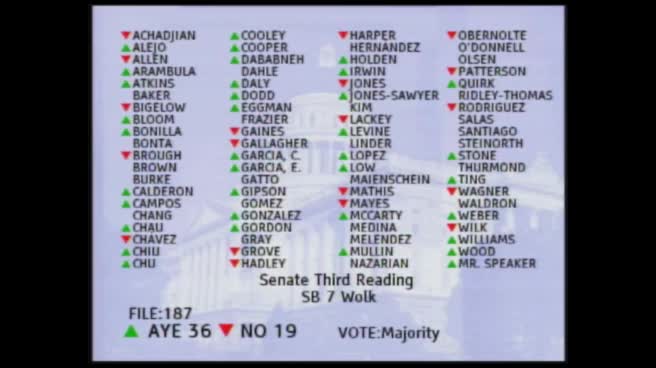 3MIN
Assembly Floor
 12MIN
Senate Standing Committee on Budget and Fiscal Review
 1MIN
Assembly Floor
Bill Author
Bill Co-Author(s):