SB 882: Crimes: public transportation: minors.
- Session Year: 2015-2016
- House: Senate
- Latest Version Date: 2016-08-22
Existing law makes it an infraction or a misdemeanor to evade the payment of a fare on a public transit system, to misuse a transfer, pass, ticket, or token with the intent to evade the payment of a fare, or to use a discount ticket without authorization or fail to present, upon request from a transit system representative, acceptable proof of eligibility to use a discount ticket.
This bill would prohibit a minor from being charged with an infraction or a misdemeanor for those acts.
Existing law makes it an infraction or a misdemeanor to evade the payment of a fare on a public transit system, to misuse a transfer, pass, ticket, or token with the intent to evade the payment of a fare, or to use a discount ticket without authorization or fail to present, upon request from a transit system representative, acceptable proof of eligibility to use a discount ticket.
This bill would prohibit the a minor from being charged with an infraction or a misdemeanor for those acts.
Existing law makes it an infraction or a misdemeanor to evade the payment of a fare on a public transit system, to misuse a transfer, pass, ticket, or token with the intent to evade the payment of a fare, or to use a discount ticket without authorization or fail to present, upon request from a transit system representative, acceptable proof of eligibility to use a discount ticket.
This bill would prohibit the minor from being charged with an infraction or a misdemeanor for those acts.
(a)(1)Any of the acts described in paragraphs (1) to (6), inclusive, of subdivision (b) is an infraction punishable by a fine not to exceed two hundred fifty dollars ($250) and by community service for a total time not to exceed 48 hours over a period not to exceed 30 days, during a time other than during the violators hours of school attendance or employment. Except as provided in subdivision (g), any of the acts described in paragraphs (1) to (3), inclusive, of subdivision (c), upon a first or second violation, is an infraction punishable by a fine not to exceed two hundred fifty dollars ($250) and by community service for a total time not to exceed 48 hours over a period not to exceed 30 days, during a time other than during the violators hours of school attendance or employment. Except as provided in subdivision (g), a third or subsequent violation of any of the acts described in paragraphs (1) to (3), inclusive, of subdivision (c) is a misdemeanor punishable by a fine of not more than four hundred dollars ($400) or by imprisonment in a county jail for a period of not more than 90 days, or by both that fine and imprisonment. Any of the acts described in subdivision (d) shall be punishable by a fine of not more than four hundred dollars ($400), by imprisonment in a county jail for a period of not more than 90 days, or by both that fine and imprisonment.
(2)This section shall apply only to acts committed on or in a facility or vehicle of a public transportation system.
(b)(1)Eating or drinking in or on a system facility or vehicle in areas where those activities are prohibited by that system.
(2)Playing unreasonably loud sound equipment on or in a system facility or vehicle, or failing to comply with the warning of a transit official related to disturbing another person by loud or unreasonable noise.
(3)Smoking in or on a system facility or vehicle in areas where those activities are prohibited by that system.
(4)Expectorating upon a system facility or vehicle.
(5)Skateboarding, roller skating, bicycle riding, roller blading, or operating a motorized scooter or similar device, as defined in Section 407.5 of the Vehicle Code, in a system facility, vehicle, or parking structure. This paragraph does not apply to an activity that is necessary for utilization of the transit facility by a bicyclist, including, but not limited to, an activity that is necessary for parking a bicycle or transporting a bicycle aboard a transit vehicle, if that activity is conducted with the permission of the transit agency in a manner that does not interfere with the safety of the bicyclist or other patrons of the transit facility.
(6)Selling or peddling any goods, merchandise, property, or services of any kind whatsoever on the facilities, vehicles, or property of the public transportation system if the public transportation system has prohibited those acts and neither the public transportation system nor its duly authorized representatives have granted written consent to engage in those acts.
(c)(1)Evasion of the payment of a fare of the system. For purposes of this section, fare evasion includes entering an enclosed area of a public transit facility beyond posted signs prohibiting entrance without obtaining valid fare, in addition to entering a transit vehicle without valid fare.
(2)Misuse of a transfer, pass, ticket, or token with the intent to evade the payment of a fare.
(3)(A)Unauthorized use of a discount ticket or failure to present, upon request from a transit system representative, acceptable proof of eligibility to use a discount ticket, in accordance with Section 99155 of the Public Utilities Code and posted system identification policies when entering or exiting a transit station or vehicle. Acceptable proof of eligibility must be clearly defined in the posting.
(B)If an eligible discount ticket user is not in possession of acceptable proof at the time of request, a citation issued shall be held for a period of 72 hours to allow the user to produce acceptable proof. If the proof is provided, the citation shall be voided. If the proof is not produced within that time period, the citation shall be processed.
(d)(1)Willfully disturbing others on or in a system facility or vehicle by engaging in boisterous or unruly behavior.
(2)Carrying an explosive, acid, or flammable liquid in a public transit facility or vehicle.
(3)Urinating or defecating in a system facility or vehicle, except in a lavatory. However, this paragraph shall not apply to a person who cannot comply with this paragraph as a result of a disability, age, or a medical condition.
(4)Willfully blocking the free movement of another person in a system facility or vehicle. This paragraph shall not be interpreted to affect any lawful activities permitted or First Amendment rights protected under the laws of this state or applicable federal law, including, but not limited to, laws related to collective bargaining, labor relations, or labor disputes.
(5)Willfully tampering with, removing, displacing, injuring, or destroying any part of a facility or vehicle of a public transportation system.
(e)Notwithstanding subdivision (a) or (g), a public transportation agency, as defined in paragraph (4) of subdivision (c) of Section 99580 of the Public Utilities Code, may do either of the following:
(1)Enact and enforce an ordinance providing that a person who is the subject of a citation for any of the acts described in subdivision (b) of Section 99580 of the Public Utilities Code on or in a facility or vehicle described in subdivision (a) for which the public transportation agency has jurisdiction shall, under the circumstances set forth by the ordinance, be afforded an opportunity to complete an administrative process that imposes only an administrative penalty enforced in a civil proceeding. The ordinance for imposing and enforcing the administrative penalty shall be governed by Chapter 8 (commencing with Section 99580) of Part 11 of Division 10 of the Public Utilities Code.
(2)Enforce as an infraction pursuant to subdivision (b) the act of failing to yield seating reserved for an elderly or disabled person in a facility or vehicle for which the public transportation agency has jurisdiction, provided that the governing board of the public transportation agency enacts an ordinance to that effect after a public hearing on the issue.
(f)For purposes of this section, facility or vehicle of a public transportation system means any of the following:
(1)A facility or vehicle of a public transportation system as defined by Section 99211 of the Public Utilities Code.
(2)A facility of, or vehicle operated by, an entity subsidized by, the Department of Transportation.
(3)A facility or vehicle of a rail authority, whether owned or leased, including, but not limited to, any part of a railroad, or track of a railroad, or any branch or branchway, switch, turnout, bridge, viaduct, culvert, embankment, station house, or other structure or fixture, or any part thereof, attached or connected to a railroad.
(4)A leased or rented facility or vehicle for which any of the entities described in paragraph (1), (2), or (3) incurs costs of cleanup, repair, or replacement as a result of any of those acts.
(g)A minor shall not be charged with an infraction or a misdemeanor for violation of paragraphs (1) to (3), inclusive, of subdivision (c). Nothing in this subdivision shall limit the ability of a public transportation agency to assess an administrative penalty as established in paragraph (1) of subdivision (e) and in Section 99580 of the Public Utilities Code, not to exceed two hundred fifty dollars ($250) upon a first or second violation and not to exceed four hundred dollars ($400) upon a third or subsequent violation.
(a)(1)Any of the acts described in paragraphs (1) to (6), inclusive, of subdivision (b) is an infraction punishable by a fine not to exceed two hundred fifty dollars ($250) and by community service for a total time not to exceed 48 hours over a period not to exceed 30 days, during a time other than during the violators hours of school attendance or employment. Except as provided in subdivision (g), any of the acts described in paragraphs (1) to (3), inclusive, of subdivision (c), upon a first or second violation, is an infraction punishable by a fine not to exceed two hundred fifty dollars ($250) and by community service for a total time not to exceed 48 hours over a period not to exceed 30 days, during a time other than during the violators hours of school attendance or employment. Except as provided in subdivision (g), a third or subsequent violation of any of the acts described in paragraphs (1) to (3), inclusive, of subdivision (c) is a misdemeanor punishable by a fine of not more than four hundred dollars ($400) or by imprisonment in a county jail for a period of not more than 90 days, or by both that fine and imprisonment. Any of the acts described in subdivision (d) shall be punishable by a fine of not more than four hundred dollars ($400), by imprisonment in a county jail for a period of not more than 90 days, or by both that fine and imprisonment.
(2)This section shall apply only to acts committed on or in a facility or vehicle of a public transportation system.
(b)(1)Eating or drinking in or on a system facility or vehicle in areas where those activities are prohibited by that system.
(2)Playing unreasonably loud sound equipment on or in a system facility or vehicle, or failing to comply with the warning of a transit official related to disturbing another person by loud or unreasonable noise.
(3)Smoking in or on a system facility or vehicle in areas where those activities are prohibited by that system.
(4)Expectorating upon a system facility or vehicle.
(5)Skateboarding, roller skating, bicycle riding, roller blading, or operating a motorized scooter or similar device, as defined in Section 407.5 of the Vehicle Code, in a system facility, vehicle, or parking structure. This paragraph does not apply to an activity that is necessary for utilization of the transit facility by a bicyclist, including, but not limited to, an activity that is necessary for parking a bicycle or transporting a bicycle aboard a transit vehicle, if that activity is conducted with the permission of the transit agency in a manner that does not interfere with the safety of the bicyclist or other patrons of the transit facility.
(6)Selling or peddling any goods, merchandise, property, or services of any kind whatsoever on the facilities, vehicles, or property of the public transportation system if the public transportation system has prohibited those acts and neither the public transportation system nor its duly authorized representatives have granted written consent to engage in those acts.
(c)(1)Evasion of the payment of a fare of the system. For purposes of this section, fare evasion includes entering an enclosed area of a public transit facility beyond posted signs prohibiting entrance without obtaining valid fare, in addition to entering a transit vehicle without valid fare.
(2)Misuse of a transfer, pass, ticket, or token with the intent to evade the payment of a fare.
(3)(A)Unauthorized use of a discount ticket or failure to present, upon request from a transit system representative, acceptable proof of eligibility to use a discount ticket, in accordance with Section 99155 of the Public Utilities Code and posted system identification policies when entering or exiting a transit station or vehicle. Acceptable proof of eligibility must be clearly defined in the posting.
(B)If an eligible discount ticket user is not in possession of acceptable proof at the time of request, a citation issued shall be held for a period of 72 hours to allow the user to produce acceptable proof. If the proof is provided, the citation shall be voided. If the proof is not produced within that time period, the citation shall be processed.
(d)(1)Willfully disturbing others on or in a system facility or vehicle by engaging in boisterous or unruly behavior.
(2)Carrying an explosive, acid, or flammable liquid in a public transit facility or vehicle.
(3)Urinating or defecating in a system facility or vehicle, except in a lavatory. However, this paragraph shall not apply to a person who cannot comply with this paragraph as a result of a disability, age, or a medical condition.
(4)Willfully blocking the free movement of another person in a system facility or vehicle. This paragraph shall not be interpreted to affect any lawful activities permitted or First Amendment rights protected under the laws of this state or applicable federal law, including, but not limited to, laws related to collective bargaining, labor relations, or labor disputes.
(5)Willfully tampering with, removing, displacing, injuring, or destroying any part of a facility or vehicle of a public transportation system.
(e)Notwithstanding subdivision (a), (a) or (g), a public transportation agency, as defined in paragraph (4) of subdivision (c) of Section 99580 of the Public Utilities Code, may do either of the following:
(1)Enact and enforce an ordinance providing that a person who is the subject of a citation for any of the acts described in subdivision (b) of Section 99580 of the Public Utilities Code on or in a facility or vehicle described in subdivision (a) for which the public transportation agency has jurisdiction shall, under the circumstances set forth by the ordinance, be afforded an opportunity to complete an administrative process that imposes only an administrative penalty enforced in a civil proceeding. The ordinance for imposing and enforcing the administrative penalty shall be governed by Chapter 8 (commencing with Section 99580) of Part 11 of Division 10 of the Public Utilities Code.
(2)Enforce as an infraction pursuant to subdivision (b) the act of failing to yield seating reserved for an elderly or disabled person in a facility or vehicle for which the public transportation agency has jurisdiction, provided that the governing board of the public transportation agency enacts an ordinance to that effect after a public hearing on the issue.
(f)For purposes of this section, a facility or vehicle of a public transportation system means any of the following:
(1)A facility or vehicle of a public transportation system as defined by Section 99211 of the Public Utilities Code.
(2)A facility of, or vehicle operated by, an entity subsidized by, the Department of Transportation.
(3)A facility or vehicle of a rail authority, whether owned or leased, including, but not limited to, any part of a railroad, or track of a railroad, or any branch or branchway, switch, turnout, bridge, viaduct, culvert, embankment, station house, or other structure or fixture, or any part thereof, attached or connected to a railroad.
(4)A leased or rented facility or vehicle for which any of the entities described in paragraph (1), (2), or (3) incurs costs of cleanup, repair, or replacement as a result of any of those acts.
(g)A minor shall not be charged with an infraction or a misdemeanor for violation of paragraphs (1) to (3), inclusive, of subdivision (c). Nothing in this subdivision shall limit the ability of a public transportation agency to assess an administrative penalty as established in paragraph (1) of subdivision (e) and in Section 99580 of the Public Utilities Code, not to exceed two hundred fifty dollars ($250) upon a first or second violation and not to exceed four hundred dollars ($400) upon a third or subsequent violation.
(a)(1)Any of the acts described in paragraphs (1) to (6), inclusive, of subdivision (b) is an infraction punishable by a fine not to exceed two hundred fifty dollars ($250) and by community service for a total time not to exceed 48 hours over a period not to exceed 30 days, during a time other than during the violators hours of school attendance or employment. Any Except as provided in subdivision (g), any of the acts described in paragraphs (1) to (3), inclusive, of subdivision (c), upon a first or second violation, is an infraction punishable by a fine not to exceed two hundred fifty dollars ($250) and by community service for a total time not to exceed 48 hours over a period not to exceed 30 days, during a time other than during the violators hours of school attendance or employment. A Except as provided in subdivision (g), a third or subsequent violation of any of the acts described in paragraphs (1) to (3), inclusive, of subdivision (c) is a misdemeanor punishable by a fine of not more than four hundred dollars ($400) or by imprisonment in a county jail for a period of not more than 90 days, or by both that fine and imprisonment. Any of the acts described in subdivision (d) shall be punishable by a fine of not more than four hundred dollars ($400), by imprisonment in a county jail for a period of not more than 90 days, or by both that fine and imprisonment.
(2)This section shall apply only to acts committed on or in a facility or vehicle of a public transportation system.
(b)(1)Eating or drinking in or on a system facility or vehicle in areas where those activities are prohibited by that system.
(2)Playing unreasonably loud sound equipment on or in a system facility or vehicle, or failing to comply with the warning of a transit official related to disturbing another person by loud or unreasonable noise.
(3)Smoking in or on a system facility or vehicle in areas where those activities are prohibited by that system.
(4)Expectorating upon a system facility or vehicle.
(5)Skateboarding, roller skating, bicycle riding, roller blading, or operating a motorized scooter or similar device, as defined in Section 407.5 of the Vehicle Code Code, in a system facility, vehicle, or parking structure. This paragraph does not apply to an activity that is necessary for utilization of the transit facility by a bicyclist, including, but not limited to, an activity that is necessary for parking a bicycle or transporting a bicycle aboard a transit vehicle, if that activity is conducted with the permission of the transit agency in a manner that does not interfere with the safety of the bicyclist or other patrons of the transit facility.
(6)Selling or peddling any goods, merchandise, property, or services of any kind whatsoever on the facilities, vehicles, or property of the public transportation system, system if the public transportation system has prohibited those acts and neither the public transportation system nor its duly authorized representatives have granted written consent to engage in those acts.
(c)(1)Evasion of the payment of a fare of the system. For purposes of this section, fare evasion includes entering an enclosed area of a public transit facility beyond posted signs prohibiting entrance without obtaining valid fare, in addition to entering a transit vehicle without valid fare.
(2)Misuse of a transfer, pass, ticket, or token with the intent to evade the payment of a fare.
(3)(A)Unauthorized use of a discount ticket or failure to present, upon request from a transit system representative, acceptable proof of eligibility to use a discount ticket, in accordance with Section 99155 of the Public Utilities Code and posted system identification policies when entering or exiting a transit station or vehicle. Acceptable proof of eligibility must be clearly defined in the posting.
(B)If an eligible discount ticket user is not in possession of acceptable proof at the time of request, any a citation issued shall be held for a period of 72 hours to allow the user to produce acceptable proof. If the proof is provided, the citation shall be voided. If the proof is not produced within that time period, the citation shall be processed.
(d)(1)Willfully disturbing others on or in a system facility or vehicle by engaging in boisterous or unruly behavior.
(2)Carrying an explosive, acid, or flammable liquid in a public transit facility or vehicle.
(3)Urinating or defecating in a system facility or vehicle, except in a lavatory. However, this paragraph shall not apply to a person who cannot comply with this paragraph as a result of a disability, age, or a medical condition.
(4)Willfully blocking the free movement of another person in a system facility or vehicle. This paragraph shall not be interpreted to affect any lawful activities permitted or First Amendment rights protected under the laws of this state or applicable federal law, including, but not limited to, laws related to collective bargaining, labor relations, or labor disputes.
(5)Willfully tampering with, removing, displacing, injuring, or destroying any part of any a facility or vehicle of a public transportation system.
(e)Notwithstanding subdivision (a), a public transportation agency, as defined in paragraph (4) of subdivision (c) of Section 99580 of the Public Utilities Code, may do either of the following:
(1)Enact and enforce an ordinance providing that a person who is the subject of a citation for any of the acts described in subdivision (b) of Section 99580 of the Public Utilities Code on or in a facility or vehicle described in subdivision (a) for which the public transportation agency has jurisdiction shall, under the circumstances set forth by the ordinance, be afforded an opportunity to complete an administrative process that imposes only an administrative penalty enforced in a civil proceeding. The ordinance for imposing and enforcing the administrative penalty shall be governed by Chapter 8 (commencing with Section 99580) of Part 11 of Division 10 of the Public Utilities Code.
(2)Enforce as an infraction pursuant to subdivision (b) the act of failing to yield seating reserved for an elderly or disabled person in a facility or vehicle for which the public transportation agency has jurisdiction, provided that the governing board of the public transportation agency enacts an ordinance to that effect after a public hearing on the issue.
(f)For purposes of this section, a facility or vehicle of a public transportation system means any of the following:
(1)A facility or vehicle of a public transportation system as defined by Section 99211 of the Public Utilities Code.
(2)A facility of, or vehicle operated by any by, an entity subsidized by, the Department of Transportation.
(3)A facility or vehicle of a rail authority, whether owned or leased, including, but not limited to, any part of a railroad, or track of a railroad, or any branch or branchway, switch, turnout, bridge, viaduct, culvert, embankment, station house, or other structure or fixture, or any part thereof, attached or connected to a railroad.
(4)A leased or rented facility or vehicle for which any of the entities described in paragraph (1), (2), or (3) incurs costs of cleanup, repair, or replacement as a result of any of those acts.
(g)A minor shall not be charged with an infraction or a misdemeanor for violation of paragraphs (1) to (3), inclusive, of subdivision (c).
|
Date
|
Status
|
|---|---|
| Jun 2, 2016 | In Assembly. Read first time. Held at Desk. |
| Aug 22, 2016 | Chaptered by Secretary of State. Chapter 167, Statutes of 2016. |
| Aug 22, 2016 | Approved by the Governor. |
| Aug 10, 2016 | Enrolled and presented to the Governor at 10 a.m. |
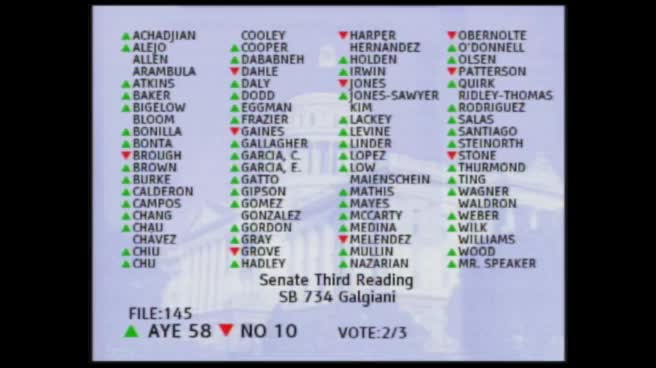
| Aug 4, 2016 | Read third time. Passed. (Ayes 45. Noes 29. Page 5717.) Ordered to the Senate. |
| Aug 4, 2016 | Read third time. Passed. Ordered to the Senate. |
| Aug 4, 2016 | In Senate. Ordered to engrossing and enrolling. |
| Jun 29, 2016 | Read second time. Ordered to third reading. |
| Jun 28, 2016 | From committee: Do pass. (Ayes 5. Noes 2.) (June 28). |
| Jun 13, 2016 | Referred to Com. on PUB. S. |
| Jun 2, 2016 | Read third time. Passed. (Ayes 23. Noes 14.) Ordered to the Assembly. |
| Jun 2, 2016 | Read third time. Passed. (Ayes 23. Noes 14. Page 4127.) Ordered to the Assembly. |
| Jan 15, 2016 | Introduced. Read first time. To Com. on RLS. for assignment. To print. |
| May 31, 2016 | Read second time and amended. Ordered to third reading. |
| May 27, 2016 | From committee: Do pass as amended. (Ayes 5. Noes 2.) (May 27). |
| May 27, 2016 | From committee: Do pass as amended. (Ayes 5. Noes 2. Page 3998.) (May 27). |
| May 20, 2016 | Set for hearing May 27. |
| Apr 25, 2016 | April 25 hearing: Placed on APPR. suspense file. |
| Apr 15, 2016 | Set for hearing April 25. |
| Apr 13, 2016 | From committee: Do pass and re-refer to Com. on APPR. (Ayes 5. Noes 1.) (April 12). Re-referred to Com. on APPR. |
| Apr 13, 2016 | From committee: Do pass and re-refer to Com. on APPR. (Ayes 5. Noes 1. Page 3521.) (April 12). Re-referred to Com. on APPR. |
| Mar 16, 2016 | Set for hearing April 12. |
| Jan 28, 2016 | Referred to Coms. on PUB. S. and APPR. |
| Jan 19, 2016 | From printer. May be acted upon on or after February 18. |
|
Date
|
Description
|
Location
|
Votes
|
|
|---|---|---|---|---|
| Aug 4, 2016 | SB 882 Hertzberg Senate Third Reading By JONES-SAWYER | Assembly Floor |
Passed |
|
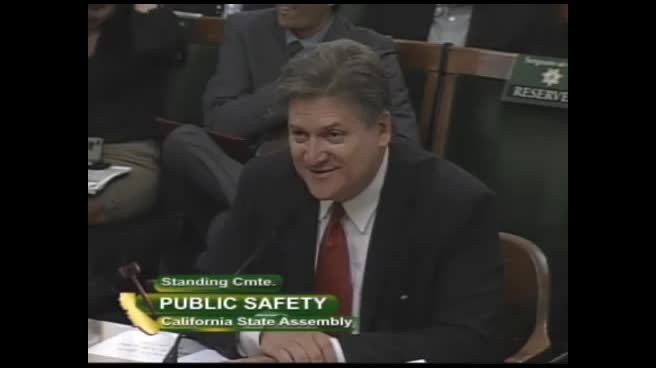
| Jun 28, 2016 | Do pass. | Assembly Standing Committee on Public Safety |
Passed |
|
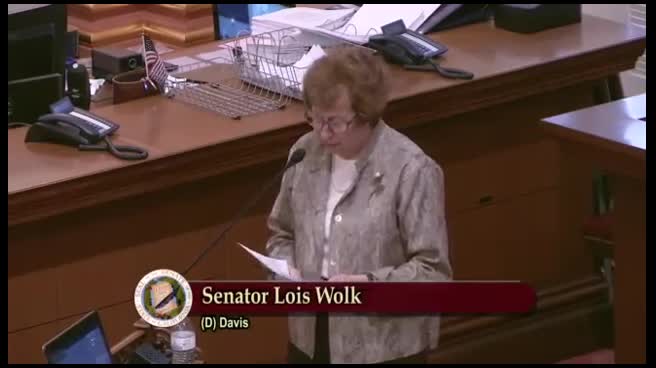
| Jun 2, 2016 | Senate 3rd Reading SB882 Hertzberg | Senate Floor |
Passed |
|
| May 27, 2016 | Do pass as amended | Senate Standing Committee on Appropriations |
Passed |
|
| Apr 25, 2016 | Placed on suspense file | Senate Standing Committee on Appropriations |
Passed |
|
| Apr 12, 2016 | Do pass, but first be re-referred to the Committee on [Appropriations] | Senate Standing Committee on Public Safety |
Passed |
This list shows positions taken on this bill by organizations on the date displayed, which is linked to the original source.
Positions by individuals are not included.
|
Organization
|
Position
|
Date
|
|---|---|---|
| A New Way of Life Reentry Project | ** Support | Jun 28, 2016 |
| Alliance for Boys and Men of Color | ** Support | Jun 28, 2016 |
| Alternatives to Violence | * Support | Jun 28, 2016 |
| ASPIRANET | ** Support | Jun 28, 2016 |
| California Association Of Local Conservation Corps | * Support | Jun 28, 2016 |
| California Attorneys For Criminal Justice | ** Support | Jun 2, 2016 |
| California Coalition For Youth | * Support | Jun 28, 2016 |
| California Equity Leaders Network | ** Support | Jun 28, 2016 |
| California Pan-Ethnic Health Network | ** Support | Jun 28, 2016 |
| California Police Chiefs Association | ** Against | Jun 28, 2016 |
| California Public Defenders Association | ** Support | Jun 28, 2016 |
| California School-Based Health Alliance | ** Support | Jun 28, 2016 |
| California State Sheriffs' Association | * Against | Jun 28, 2016 |
| California Transit Association | * Against | Jun 28, 2016 |
| Californians United for a Responsible Budget | ** Support | Jun 28, 2016 |
| Children Now | * Support | Jun 28, 2016 |
| Children's Advocacy Institute | ** Support | Jun 2, 2016 |
| Children'S Defense Fund | ** Support | Jun 2, 2016 |
| Children's Defense Fund of California | ** Support | Jun 28, 2016 |
| Comite Civico Del Valle | ** Support | Jun 28, 2016 |
| Community Asset Development Redefining Education | ** Support | Jun 28, 2016 |
| Courage Campaign | ** Support | Jun 28, 2016 |
| East Bay Community Law Center | * Support | Jun 28, 2016 |
| El Rancho Unified School District | ** Support | Jun 28, 2016 |
| Ella Baker Center For Human Rights | * Support | Jun 28, 2016 |
| First Place for Youth | ** Support | Jun 28, 2016 |
| Friends Committee of Legislation in California | * Support | Jun 28, 2016 |
| Laborers Local 777 and 792 | * Support | Jun 28, 2016 |
| Larkin Street Youth Services | ** Support | Jun 28, 2016 |
| Legal Services for Prisoners and Children | * Support | Jun 28, 2016 |
| Legal Services for Prisoners with Children | * Support | Jun 28, 2016 |
| Los Angeles Conservation Corps | ** Support | Jun 2, 2016 |
| National Association of Social Workers | ** Support | Jun 2, 2016 |
| National Association Of Social Workers, California Chapter | * Support | Jun 28, 2016 |
| National Center for Youth Law | ** Support | Jun 28, 2016 |
| National Senate for Youth Law | * Support | Jun 28, 2016 |
| One private individual | ** Support | Jun 28, 2016 |
| Orange County Transportation Authority | * Against | Jun 28, 2016 |
| Pacific Juvenile Defender Center | * Support | Jun 28, 2016 |
| Pacific Juvenile Defenders Center | * Support | Jun 28, 2016 |
| Policy Link | * Support | Jun 28, 2016 |
| PUB. S. | ** Against | Jun 28, 2016 |
| Public Counsel | ** Support | Jun 28, 2016 |
| Public Counsel Children's Rights Project | ** Support | Jun 2, 2016 |
| Riverside Transit Agency | ** Against | Jun 28, 2016 |
| Root and Rebound | ** Support | Jun 28, 2016 |
| Rubicon Programs | ** Support | Jun 28, 2016 |
| Sacramento Regional Transit District | ** Against | Jun 28, 2016 |
| Silicon Valley Debug | * Support | Jun 28, 2016 |
| Spiranet | * Support | Jun 28, 2016 |
| Western Center On Law And Poverty Inc. | * Support | Jun 28, 2016 |
| Youth Justice Coalition | * Support | Jun 28, 2016 |
SENATE THIRD READING
STR Bill Id:SB 882
Author:(Hertzberg)
As Amended Ver:May 31, 2016
Majority vote
SENATE VOTE: 24-14
Committee | Votes | Ayes | Noes |
Public Safety | 5-2 | Jones-Sawyer, Lopez, Low, Quirk, Santiago | Melendez, Lackey |
SUMMARY: Provides that minors shall not be subject to criminal penalties for evading a transit fare.
EXISTING LAW:
- Makes it a criminal infraction, punishable by a fine not to exceed $250 and by specified community service, for a person to engage in any of the following activities in a transit vehicle or facility:
- Fare evasion, as specified;
- Misuse of a transfer, pass, ticket, or token with the intent to evade the payment of a fare;
- Unauthorized use of a discount ticket or failure to present, upon request from a transit system representative, acceptable proof of eligibility to use a discount ticket.
- Provides for misdemeanor penalties for third or subsequent offenses for engaging in various forms of fare evasion.
- Allows transit operators to levy administrative penalties against persons who have committed certain violations on their systems, including fare evasion.
- Allows the transit agency to contract with a private vendor or government agency for the processing of notices of fare evasion.
- States that a notice of fare evasion must contain specified information including the violation, the administrative penalty, the date, time, and place where the violation occurred, and the procedure for contesting the violation.
- Prohibits a transit agency from setting administrative penalties at an amount that exceeds the maximum fine set forth in the Penal Code.
- Sets forth a process for an initial review, as well as a subsequent administrative review, of a fare-evasion violation.
- Allows a person to appeal an administrative review of a notice of fare evasion in the superior court, as specified.
FISCAL EFFECT: Unknown. This bill is keyed non-fiscal by the Legislative Counsel.
COMMENTS: According to the author, "SB 882 prevents minors from being charged with a penal code violation when they fail to pay the fare on public transit.
"Failure to pay is the number one citation for youth in several counties. Once a child appears in court, the likelihood that they will drop out of school and receive another court appearance greatly increases. It is too easy for a child who enters the criminal justice system, to never come out.
"SB 882 does not impact the ability of transit authorities to charge and collect a financial penalty. It does not remove the ability for authorities to cite a person for smoking, selling goods, vandalizing or any other violation.
"SB 882 simply ensures that a child is not made a criminal when they have failed to pay a fare."
Analysis Prepared by: Sandy Uribe / PUB. S. / (916) 319-3744 FN: 0003549
Date of Hearing: June 28, 2016
Counsel: Sandy Uribe
ASSEMBLY COMMITTEE ON PUBLIC SAFETY
Reginald Byron Jones-Sawyer, Sr., Chair
SBPCA Bill Id:SB 882
Author:(Hertzberg) – As Amended Ver:May 31, 2016
SUMMARY: Provides that minors shall not be subject to criminal penalties for evading a transit fare.
EXISTING LAW:
- Makes it a criminal infraction, punishable by a fine not to exceed $250 and by specified community service, for a person to engage in any of the following activities in a transit vehicle or facility:
- Fare evasion, as specified;
- Misuse of a transfer, pass, ticket, or token with the intent to evade the payment of a fare;
- Unauthorized use of a discount ticket or failure to present, upon request from a transit system representative, acceptable proof of eligibility to use a discount ticket. (Pen. Code, § 640.)
- Fare evasion, as specified;
- Provides for misdemeanor penalties for third or subsequent offenses for engaging in various forms of fare evasion. (Pen. Code, § 640.)
- Allows transit operators to levy administrative penalties against persons who have committed certain violations on their systems, including fare evasion. (Pub. Util. Code, § 99580, subd. (a).)
- Allows the transit agency to contract with a private vendor or government agency for the processing of notices of fare evasion. (Pub. Util. Code, § 99580, subd. (c)(1).)
- States that a notice of fare evasion must contain specified information including the violation, the administrative penalty, the date, time, and place where the violation occurred, and the procedure for contesting the violation. (Pub. Util. Code, § 99580, subd. (d)(1).)
- Prohibits a transit agency from setting administrative penalties at an amount that exceeds the maximum fine set forth in the Penal Code. (Pub. Util. Code, § 99580, subd. (e).)
- Sets forth a process for an initial review, as well as a subsequent administrative review, of a fare-evasion violation. (Pub. Util. Code, § 99581.)
- Allows a person to appeal an administrative review of a notice of fare evasion in the superior court, as specified. (Pub. Util. Code, § 99582.)
FISCAL EFFECT: Unknown
COMMENTS:
- Author's Statement: According to the author, "SB 882 prevents minors from being charged with a penal code violation when they fail to pay the fare on public transit.
"Failure to pay is the number one citation for youth in several counties. Once a child appears in court, the likelihood that they will drop out of school and receive another court appearance greatly increases. It is too easy for a child who enters the criminal justice system, to never come out.
"SB 882 does not impact the ability of transit authorities to charge and collect a financial penalty. It does not remove the ability for authorities to cite a person for smoking, selling goods, vandalizing or any other violation.
"SB 882 simply ensures that a child is not made a criminal when they have failed to pay a fare." - Administrative Adjudication of Transit Penalties: Since the enactment of SB 1749 (Migden), Chapter 258, Statutes of 2006, the state law allows for an alternative civil infraction process in San Francisco and Los Angeles Counties. Under these provisions, the City and County of San Francisco (the overseer of the city’s transit system) and the Los Angeles County Metropolitan Transportation Authority may adopt and impose an administrative penalty and adjudication process for these same violations committed by adults. This process was subsequently authorized for other transit agencies. (See e.g. SB 1320 (Hancock), Chapter 493, Statutes of 2010.)
Last year, SB 413 (Wieckowski), Chapter 765, allowed transit operators to levy administrative penalties against minors for specified transit violations. Despite this authority, most transit agencies in the state have not adopted an administrative process for addressing fare evasion.
Administrative adjudication of transit violations is similar to the process for issuing and enforcing parking tickets. The issuing officer serves the alleged violator with a "notice of fare evasion or passenger misconduct violation," which includes the date, time, location, and nature of the violation, the administrative penalty amount, the date by which the penalty must be paid, and the process for contesting the citation. If the alleged violator contests the citation, then the issuing agency or its contracted processing agency must provide an initial review. If the citation is not dismissed after the initial review, then the issuing agency or its contracted processing agency must provide an impartial administrative hearing at which the citing officer is not required to appear. If the alleged violator is unsatisfied with the results of the administrative hearing, then he or she may file an appeal in superior court, which hears the case de novo.
This bill decriminalizes fare evasion by minors, thereby making the administrative review process the only option for collecting penalties from minors.
- Argument in Support: According to the Youth Justice Coalition, a co-sponsor of this bill, "Nearly all of us at the Youth Justice Coalition (YJC) have been directly impacted by the high costs –both personal and financial- of transit evasion, including the extreme fines, lost time at school and work for court, a burdensome and confusing diversion project here in our County, and even warrants for unpaid fines resulting in detention. Three years ago, we began to organize for decriminalizing fare evasion, and we discovered that the number one cause of juvenile citations in L.A. County – as many as 10,000 tickets a year as reported through data we received through a Public Records Act request to the L.A. County Probation Department- was for fare evasion. We won a diversion process in L.A, but have still struggled to make the process clear and accessible. Based on these experiences, SB 882 is so important and personal to us.
"California law allows young people to have charges brought against them for a fare evasion ticket, which may result in court appearances, suspended driver's licenses, and even time in juvenile detention. As fare evasion is almost always committed by people who don't have adequate funds needed to access public transportation, addressing fare evasion through the penal code essentially criminalizes youth for poverty.
"SB 882 does not eliminate the ability of youth to be cited and fined for fare evasion. It simply ends the practice of punishing children and young people for fare evasion in our penal code and in our detention and probation systems. By ending criminalization of youth who ride public transit without paying the fare, we can reduce the likelihood that they will enter the criminal justice system, reduce the expense of trying and detaining youth, and eliminate the life-altering impacts that court and detention have on a young person's life chances." - Argument in Opposition: According to the California Transit Association, "Transit fare evasion, whether by minors or adults, is a financial and operational challenge for public transit agencies across California, including those in Los Angeles County. As such, California law has long-authorized public transit agencies to process these common, and sometimes recurring, violations through Penal Code §640. Individuals found guilty of transit fare evasion may face a fine of $250 and/or community service, and in cases of a repeat offenders, a fine of $400. In the most extreme cases, individuals may face imprisonment in a county prison for no more than 90 days.
"In 2015, the Association worked with the Legislature to create an additional tool for deterring and enforcing fare evasion by minors by sponsoring SB 413 (Wieckowski) [Chapter 765, Statutes of 2015], which addressed a deficiency in then-current law, to allow public transit agencies to exercise an administrative process for deterring fare evasion and collecting penalties from minors. As a result of this law and with the support of their county governments, the Los Angeles County Metropolitan Transportation Authority and the San Francisco Municipal Transportation Agency, the public transit agencies with the highest ridership in California, were able to decriminalize transit fare evasion on their systems. Despite interest, no other public transit agency in the state has been able to establish similar administrative processes for addressing fare evasion. Asked why they have yet to establish an administrative process for handling fare evasion, our members resoundingly point to the high costs of developing and maintaining the infrastructure necessary to meet the notice and hearing requirements for an administrative process; waning federal, state and local financial support; and, requirements in current law that direct revenue generated from transit enforcement to the general fund of the county in which the citation is administered, and not to the transit agency for the maintenance of this costly system of enforcement.
"The Association and its members remain sympathetic to the needs of low-income minors, some of whom lack the resources to fully pay for transit fares. To that end, a majority of the transit agencies that comprise our membership offer special reduced fares (e.g. college/vocational, student, and/or youth) that aim to alleviate the financial burden associated with mobility, while still allowing transit agencies to meet the farebox recovery requirements established by law. We oppose this bill because, rather than address the root cause of transit fare evasion, which is transit affordability, or the key impediments to the adoption of an administrative process for transit fare evasion citations, this bill would simply bar cash-strapped transit agencies from utilizing a cost-effective tool that helps ensure that nominal fares are paid by minors.
"In addition, we oppose this bill because, if it were to become law, it would necessitate the overhaul of transit fare enforcement at virtually every transit agency in the state – at great cost to taxpayers– in order to mitigate the impacts of a minor infraction with a historically low-incidence. For context, at the transit agencies with the highest ridership in the state and no administrative process for administering citations, youth fare evasion citations as a percentage of total annual ridership break down as follows: Orange County Transportation Authority – .0000046% (2 fare evasion citations/approx. 43,400,000 annual riders); Santa Clara Valley Transportation Authority – .00056% (246 citations/43,944,096 annual riders); and, San Diego Metropolitan Transit System – .00041% (401/approx. 97,000,000 annual riders).
"Finally, we oppose this bill because, if resources for this overhaul do not follow, and transit agencies are unable to establish an administrative process, fare payment by minors would become merely a suggestion. For the Orange County Transportation Authority, the Sacramento Regional Transit District, the San Diego Metropolitan Transit System and the Santa Clara Valley Transportation Authority, this change could potentially lead to a loss in youth fare revenue of $6 million, $2.1 million, $12 million and $4.2 million, respectively." - Related Legislation:
- SB 413 (Wieckowski), Chapter 765, Statutes of 2015, in pertinent part, allows transit operators to levy administrative penalties against minors for specified transit violations.
- AB 869 (Cooper) authorizes a public transit district with a civil adjudication procedure for minor transit-related offenses committed by adults to instead pursue criminal penalties if a person fails to pay the administrative penalty or successfully complete the civil administrative process. AB 869 has been moved to the inactive file on the Senate Floor.
- SB 413 (Wieckowski), Chapter 765, Statutes of 2015, in pertinent part, allows transit operators to levy administrative penalties against minors for specified transit violations.
- Prior Legislation:
- SB 1320 (Hancock), Chapter 493, Statutes of 2010, provides authority to specified local transit agencies allowing them to administratively adjudicate transit violations.
- SB 1749 (Migden), Chapter 258, Statutes of 2006, allowed for administrative enforcement of transit-related violations in the City and County of San Francisco and the Los Angeles County Metropolitan Transportation Authority.
- SB 1320 (Hancock), Chapter 493, Statutes of 2010, provides authority to specified local transit agencies allowing them to administratively adjudicate transit violations.
REGISTERED SUPPORT / OPPOSITION:
Support
Children's Defense Fund of California (Co-Sponsor)
Western Center on Law and Poverty (Co-Sponsor)
Youth Justice Coalition (Co-Sponsor)
Alliance for Boys and Men of Color
A New Way of Life Reentry Project
Aspiranet
California Association of Local Conservation Corps
California Coalition for Youth
California Equity Leaders Network
California Pan-Ethnic Health Network
California Public Defenders Association
California School-Based Health Alliance
Californians United for a Responsible Budget
Center for Juvenile Law and Policy, Loyola Law School
Children Now
Children's Advocacy Institute, University of San Diego Law School
Coalition of California Welfare Rights Organizations, Inc.
Comite Civico del Valle
Community Asset Development Redefining Education
Courage Campaign
Ella Baker Center for Human Rights
El Rancho Unified School District
First Place for Youth
Larkin Street Youth Services
Laborers' International Union of North America Locals 777 & 792
Lawyers Committee for Civil Rights of San Francisco Bay Area
Legal Services for Prisoners with Children
National Association of Social Workers, California Chapter
National Center for Youth Law
Pacific Juvenile Defender Center
Policy Link
Public Counsel
Root and Rebound
Rubicon Programs
One Private Individual
Opposition
California Police Chiefs Association
California State Sheriffs Association
California Transit Association
Riverside Transit Agency
Sacramento Regional Transit District
Analysis Prepared by: Sandy Uribe / PUB. S. / (916) 319-3744
Office of Senate Floor Analyses (916) 651-1520 Fax: (916) 327-4478 | SB |
THIRD READING
Bill No: SB 882
Amended:
SENATE PUBLIC SAFETY COMMITTEE: 5-1, 4/12/16
AYES: Hancock, Glazer, Leno, Liu, Monning
NOES: Stone
NO VOTE RECORDED: Anderson
SENATE APPROPRIATIONS COMMITTEE: 5-2, 5/27/16
AYES: Lara, Beall, Hill, McGuire, Mendoza
NOES: Bates, Nielsen
SOURCE: Children’s Defense Fund
Western Center on Law and Poverty
Youth Justice Coalition
DIGEST: This bill provides that minors shall not be subject to an infraction or misdemeanor for evading a transit fare.
ANALYSIS: Existing law states that every person who avoids fare payment on a public transit system, including the misuse of transfer passes, tickets and tokens when a transit system representative asks for proof of fare payment, shall be punished by an infraction or misdemeanor. (Penal Code § 640.)
This bill states that a minor shall not be charged with an infraction or a misdemeanor for evading a transit fee, as specified. However, this bill does not limit the ability of public transportation agencies to charge youth evading transit fares up to $250 upon a first or second violation and up to $400 upon a third or subsequent violation.
Background
The inability to afford transportation to and from school is one of the most frequently cited barriers that low-income youth face in attending school, which equates to about tens of thousands of youth each year across California, particularly those who usually do not have the few dollars requisite to ride transportation, receive fare citations and experience the hardships of heavy fines (up to $250) and/or court appearances. SB 882 prevents youth under 18 from being charged with a penal code infraction for a fare evasion citation and reduces the likelihood that they will enter the criminal justice system alongside reducing the expenses of both trying and detaining them. This bill will not impact the ability of transit authorities to charge and collect a financial penalty.
In San Francisco, the criminal penalty for juveniles costs up to $123.97 in fare evasion fines, including court fees. The fare evasion fine for youth escalates with each offense. It is also useful to look at the effects of the San Francisco Municipal Transportation Agency’s (SFMTA) decriminalization of fare evasion for adults in February 2008 in order to reduce fare evasion citations on traffic court dockets and to increase SFMTA fine revenue collections. Prior to the transition, the adult fine, with court fees, totaled $123.97, and the bulk of the fine was kept by the court. By instituting a $50 administrative fine in its place, the SFMTA keeps 100 percent of all citation revenue. The change also effectively lowered the penalty for adult fare evasion by up to 60 percent. The same report recommended that in order to dissuade fare evasion and decrease the gap between an adult and juvenile penalty, the Board of Supervisors should either revert fare evasion a criminal citation (only because of the current law criminalizing youth fare evasion) or increase the base fine for adult fare evasion to be closer to the city’s juvenile fine and also create an escalating penalty for repeat offenders.
FISCAL EFFECT: Appropriation: Fiscal Com.: Local:
According to the Senate Appropriations Committee:
- Criminal fine/fee/surcharge revenues: Unknown, potentially significant reduction in criminal penalty collections statewide (General/Special/Local Funds) to the extent local agencies continue to issue criminal citations in lieu of levying administrative penalties upon minors as recently authorized pursuant to SB 413 (Chapter 765/2015). The magnitude of the impact on the state and local jurisdictions would be dependent on various factors including but not limited to the number of minors who would have been cited for the offense, the number of counties imposing administrative penalties in lieu of criminal fines, the level of enforcement by local entities, and the collection efforts in each jurisdiction.
- Criminal justice system: Potentially significant future cost savings resulting from reduced involvement with the courts, local law enforcement agencies including county probation departments, and child welfare services.
Children’s Defense Fund (co-source)
Western Center on Law and Poverty (co-source)
Youth Justice Coalition (co-source)
Aspiranet HQ
California Assocation of Local Conservation Corps
California Attorneys for Criminal Justice
California Coalition for Youth
California PAN-Ethnic Health Network
California Public Defenders Association
Californians United for a Responsible Budget
Children’s Advocacy Institute
Children Now
Coalition of California Welfare Rights Organizations, Inc.
Comite Civico del Valle
Community Asset Development Redefining Education
Courage Campaign
El Rancho Unified School District
Ella Baker Center for Human Rights
First Place for Youth
Larkin Street Youth Services
Lawyers’ Committee for Civil Rights of the San Francisco Bay Area
Legal Services for Prisoners with Children
Los Angeles Conservation Corps
National Association of Social Workers
National Center for Youth Law
A New Way of Life Re-entry Project
PolicyLink
Public Counsel Children’s Rights Project
Root & Rebound
Rubicon Programs
OPPOSITION: (Verified 5/31/16)
California Police Chiefs Association Inc.
California State Sheriffs’ Association
ARGUMENTS IN SUPPORT: The sponsors of this bill, Children’s Defense Fund, Western Center on Law & Poverty, and Youth Justice Coalition, state in part:
According to data from the L.A. County Probation Department, riding transit without fare is the number one reason why youth are cited in L.A. County, and youth of color receive a disproportionate number of citations in L.A. County. These citations can result in heavy fines or count appearances, which can require students, take time out of school to attend court and can create stress for students and families. First-time count appearance during high school quadruples a student’s odds of dropping out. Ending criminal prosecution for riding transit without fare will greatly reduce the criminalization of young people and give them a better shot at success in life…A survey of Oakland youth found that 61% of students reported they sometimes use their lunch money to ride the bus, and nearly half of low-income students reported that it was harder to get to school, to jobs, or to after-school programs without a free transit pass.
Unlike California, many states guarantee transportation to and from school for public school students who live beyond a certain distance from their school and a diverse array of cities and communities provide free transit passes – including San Francisco - to children and youth. Until California ensures access to transportation for every child, criminally charging children for not paying the fare on transit is unfair and undermines opportunity for our poorest youth.
ARGUMENTS IN OPPOSITION: The California State Sheriffs’ Association opposes this bill, stating in part:
We understand the desire to eliminate the impacts that unlawful fare evasion can have on minors. That said, we do not agree that simply saying that a minor cannot be held accountable for an act still deemed to be illegal is the appropriate way to achieve this goal.
Perhaps transit agencies could be encouraged or compelled not to charge a fare to riders under a certain age. Schools could contract with transit providers to cover the costs of transporting school-bound children. However, simply allowing one cohort of individuals to escape liability for something that remains illegal will frustrate law enforcement and encourage bad behavior
6/2/16 8:38:40
**** END ****
SENATE COMMITTEE ON
Senator Ricardo Lara, Chair
2015 - 2016 Regular Session
SB 882 (Hertzberg) - Crimes: public transportation: minors
Version: | Policy Vote: |
Urgency: | Mandate: |
Hearing Date: | Consultant: |
Bill Summary:
SB 882 would prohibit a minor from being charged with an infraction or misdemeanor for evading a transit fare.
*********** ANALYSIS ADDENDUM – SUSPENSE FILE ***********
The following information is revised to reflect amendments
adopted by the committee on May 27, 2016
Fiscal Impact:
- Criminal fine/fee/surcharge revenues: Unknown, potentially significant reduction in criminal penalty collections statewide (General/Special/Local Funds) to the extent local agencies continue to issue criminal citations in lieu of levying administrative penalties upon minors as recently authorized pursuant to SB 413 (Chapter 765/2015). The magnitude of the impact on the state and local jurisdictions would be dependent on various factors including but not limited to the number of minors who would have been cited for the offense, the number of counties imposing administrative penalties in lieu of criminal fines, the level of enforcement by local entities, and the collection efforts in each jurisdiction.
- Criminal justice system: Potentially significant future cost savings resulting from reduced involvement with the courts, local law enforcement agencies including county probation departments, and child welfare services.
Author Amendments:
- Add coauthors.
- Provide that public transportation agencies retain the authority to assess an administrative fiscal penalty, pursuant to Penal Code § 640, as specified.
-- END --
SENATE COMMITTEE ON
Senator Ricardo Lara, Chair
2015 - 2016 Regular Session
SB 882 (Hertzberg) - Crimes: public transportation: minors
Version: | Policy Vote: |
Urgency: | Mandate: |
Hearing Date: | Consultant: |
This bill meets the criteria for referral to the Suspense File.
Bill Summary:
SB 882 would prohibit a minor from being charged with an infraction or misdemeanor for evading a transit fare.
Fiscal Impact:
- Criminal fine/fee/surcharge revenues: Unknown, potentially significant reduction in criminal penalty collections statewide (General/Special/Local Funds) to the extent local agencies continue to issue criminal citations in lieu of levying administrative penalties upon minors as recently authorized pursuant to SB 413 (Chapter 765/2015). The magnitude of the impact on the state and local jurisdictions would be dependent on various factors including but not limited to the number of minors who would have been cited for the offense, the number of counties imposing administrative penalties in lieu of criminal fines, the level of enforcement by local entities, and the collection efforts in each jurisdiction.
- Public transportation agencies: Potentially significant ongoing administrative penalty revenue losses (Local Funds) to agencies that have enacted ordinances imposing administrative penalties in lieu of criminal fines for fare evasion, to the extent prohibiting the charging of a minor under the Penal Code also precludes transit operators from imposing a penalty that exceeds the fine amounts established in the Penal Code, which could potentially be interpreted to be a fine amount of $0 imposed on minors for fare evasion.
- Criminal justice system: Potentially significant future cost savings resulting from reduced involvement with the courts, local law enforcement agencies including county probation departments, and child welfare services.
Background:
Existing law provides that a person who evades the payment of a fare on a public transit system, including the misuse of a transfer, pass, ticket, or token, or providing unacceptable proof of payment upon request of a transit system representative, is guilty of an offense subject to the following penalties:
- Upon a first or second violation, an infraction punishable by a fine not to exceed $250 and by community service for a total time not to exceed 48 hours over a period not to exceed 30 days, during a time other than the violator’s hours of school attendance or employment.
- A third or subsequent violation is a misdemeanor punishable by a fine of not more than $400 or by imprisonment in a county jail for a period of not more than 90 days, or by both that fine and imprisonment.
Under existing law pursuant to PC § 640(e), public transportation agencies may enact and enforce an ordinance to impose and enforce an administrative penalty for specified acts, including the evasion of the payment of a fare of the system. (PUC § 99580(a).)
In setting the amounts of administrative penalties for the specified violations, including fare evasion, public transportation agencies are prohibited from establishing penalty amounts that exceed the maximum fine amount set forth in PC § 640. (PUC § 99580(e).)
Prior to January 1, 2016, transportation agencies were prohibited from imposing administrative penalties for transit violations on minors, and instead were required to pursue transit violations by minors through criminal charges if the agency chose to pursue the matter. The provisions of SB 413 (Wieckowski) Chapter 765/2015, which became effective January 1, 2016, provided transportation agencies with the authority to extend the enforcement and imposition of administrative penalties for transit violations to include minors.
Related Legislation: AB 891 (Campos) 2016 would provide students who are eligible for free or reduced-price meals with free transportation to and from school, and would require each local education agency to designate a liaison to address transportation issues. This bill is pending on the Suspense File of the Assembly Appropriations Committee.
Prior Legislation: SB 413 (Wieckowski) Chapter 765/2015 added violations to the list of activities that are infractions related to transit operators, as well as authorized transit operators to levy administrative penalties against minors as potential violators of all existing infractions.
AB 426 (Lowenthal) Chapter 100/2011 permits specified transit authorities to create ordinances that allow a person cited for a violation be afforded an opportunity to complete an administrative process that imposes only a civil penalty. Requires that penalties be deposited in the respective general fund of the county in which the citation is administered.
SB 1749 (Migden) Chapter 258/2006 authorized certain transit operators to enforce administrative penalties for transit violations. While SB 1749 provided this administrative process for adults, it specifically excluded minors from the administrative penalty process.
Proposed Law:
This bill would prohibit a minor from being charged with an infraction or misdemeanor for evading a transit fare.
Staff Comments:
By prohibiting minors from being charged with an infraction or misdemeanor offense for transit fare evasion, the provisions of this bill will have a fiscal impact on various local agencies and the courts.
To the extent local transit agencies would have issued criminal citations in lieu of levying administrative penalties upon minors, the provisions of this bill could result in a significant reduction in fee, fine, and penalty revenues to the state and counties. Statewide data on the number of criminal fines assessed is unavailable, and the magnitude of the impact on the state and local jurisdictions would be dependent on various factors including but not limited to the number of minors who would have been cited for the offense, the number of counties imposing administrative penalties in lieu of criminal fines, the level of enforcement by local entities, and the collection efforts in each jurisdiction.
As drafted, it is unclear whether local transit operators would retain the authority to levy a fiscal penalty on minors for fare evasion. Although the provisions of PUC § 99580(a) allow a local agency to enact an ordinance to impose and enforce an administrative penalty for fare evasion, pursuant to PUC § 99580(e), transit agencies are prohibited from establishing penalty amounts that exceed the maximum fine amount set forth in the Penal Code, which could be interpreted to be a fine amount of $0 imposed on minors for fare evasion. Such an interpretation could result in unknown, but potentially significant reductions in ongoing fiscal penalty revenues to local transit operators.
-- END --
SENATE COMMITTEE ON PUBLIC SAFETY
Senator Loni Hancock, Chair
2015 - 2016 Regular
Bill No: SB 882 Hearing Date: April 12, 2016
Author: | Hertzberg | ||
Version: | January 15, 2016 | ||
Urgency: | No | Fiscal: | No |
Consultant: | ML | ||
Subject: Crimes: Public Transportation: Minors
HISTORY
Source: Children’s Defense Fund; Western Center on Law & Poverty; Youth Justice Coalition
Prior Legislation: None
Support: California Attorneys for Criminal Justice; California Public Defenders Association; Californians United for a Responsible Budget; California Association of Local Conservation Corps.; Children’s Defense Fund; Western Center on Law & Poverty; California PAN-Ethnic Health Network; California Association of Local Conservation Corps; Comite Civico del Valle; Community Asset Development Redefining Education; Children’s Advocacy Institute; Children Now; Coalition of California Welfare Rights Organizations, Inc.; Courage Campaign; El Rancho Unified School District; Ella Baker Center for Human Rights; First Place for Youth; L.A. Conservation Corps; Larkin Street Youth Services; Lawyers’ Committee for Civil Rights of the San Francisco Bay Area; Legal Services for Prisoners with Children; A New Way of Life Re-entry Project; National Center for Youth Law; PolicyLink; Public Counsel Children’s Rights Project; Root & Rebound; Rubicon Programs
Opposition: California State Sheriffs’ Association; California Police Chiefs Association
PURPOSE
The purpose of this bill is to provide that minors shall not be subject to an infraction or misdemeanor for evading a transit fare.
Existing law states that every person who avoids fare payment on a public transit system, including the misuse of transfer passes, tickets and tokens when a transit system representative asks for proof of fare payment, shall be punished by an infraction or misdemeanor. (Penal Code § 640.)
This bill would provide that a minor shall not be charged with an infraction or a misdemeanor for evading a transit fee, as specified.
RECEIVERSHIP/OVERCROWDING CRISIS AGGRAVATION
For the past several years this Committee has scrutinized legislation referred to its jurisdiction for any potential impact on prison overcrowding. Mindful of the United States Supreme Court ruling and federal court orders relating to the state’s ability to provide a constitutional level of health care to its inmate population and the related issue of prison overcrowding, this Committee has applied its “ROCA” policy as a content-neutral, provisional measure necessary to ensure that the Legislature does not erode progress in reducing prison overcrowding.
On February 10, 2014, the federal court ordered California to reduce its in-state adult institution population to 137.5% of design capacity by February 28, 2016, as follows:
- 143% of design bed capacity by June 30, 2014;
- 141.5% of design bed capacity by February 28, 2015; and,
- 137.5% of design bed capacity by February 28, 2016.
In December of 2015 the administration reported that as “of December 9, 2015, 112,510 inmates were housed in the State’s 34 adult institutions, which amounts to 136.0% of design bed capacity, and 5,264 inmates were housed in out-of-state facilities. The current population is 1,212 inmates below the final court-ordered population benchmark of 137.5% of design bed capacity, and has been under that benchmark since February 2015.” (Defendants’ December 2015 Status Report in Response to February 10, 2014 Order, 2:90-cv-00520 KJM DAD PC, 3-Judge Court, Coleman v. Brown, Plata v. Brown (fn. omitted).) One year ago, 115,826 inmates were housed in the State’s 34 adult institutions, which amounted to 140.0% of design bed capacity, and 8,864 inmates were housed in out-of-state facilities. (Defendants’ December 2014 Status Report in Response to February 10, 2014 Order, 2:90-cv-00520 KJM DAD PC, 3-Judge Court, Coleman v. Brown, Plata v. Brown (fn. omitted).)
While significant gains have been made in reducing the prison population, the state must stabilize these advances and demonstrate to the federal court that California has in place the “durable solution” to prison overcrowding “consistently demanded” by the court. (Opinion Re: Order Granting in Part and Denying in Part Defendants’ Request For Extension of December 31, 2013 Deadline, NO. 2:90-cv-0520 LKK DAD (PC), 3-Judge Court, Coleman v. Brown, Plata v. Brown (2-10-14). The Committee’s consideration of bills that may impact the prison population therefore will be informed by the following questions:
- Whether a proposal erodes a measure which has contributed to reducing the prison population;
- Whether a proposal addresses a major area of public safety or criminal activity for which there is no other reasonable, appropriate remedy;
- Whether a proposal addresses a crime which is directly dangerous to the physical safety of others for which there is no other reasonably appropriate sanction;
- Whether a proposal corrects a constitutional problem or legislative drafting error; and
- Whether a proposal proposes penalties which are proportionate, and cannot be achieved through any other reasonably appropriate remedy.
COMMENTS
- Need for This Bill
According to the author:
According to data from the L.A. County Probation Department, riding transit without fare is the number one reason why youth are cited in L.A. County, and youth of color receive a disproportionate number of citations in L.A. County.[1] These citations can result in heavy fines or count appearances, which can require students, take time out of school to attend court and can create stress for students and families.[2] First-time court appearance during high school quadruples a student’s odds of dropping out.[3] Ending criminal prosecution for riding transit without fare will greatly reduce the criminalization of young people and give them a better shot at success in life. Furthermore, prosecution for fare evasion unnecessarily burdens public safety systems while undermining a youth’s future. In contrast, increasing access to public transportation is crucial to vulnerable populations, and helps reduce traffic congestion.
2. Effect of Legislation; Background
The inability to afford transportation to and from school is one of the most frequently cited barriers that low-income youth face in attending school, which equates to about tens of thousands of youth each year across California, particularly those who usually do not have the few dollars requisite to ride transportation, receive fare citations and experience the hardships of heavy fines (up to $250) and/or court appearances.[4] SB 882 prevents youth under 18 from being charged with a penal code infraction for a fare evasion citation and reduces the likelihood that they will enter the criminal justice system alongside reducing the expenses of both trying and detaining them. The legislation will not impact the ability of transit authorities to charge and collect a financial penalty.
In San Francisco, the criminal penalty for juveniles costs up to $123.97 in fare evasion fines, including court fees. The fare evasion fine for youth escalates with each offense. It is also useful to look at the effects of the San Francisco Municipal Transportation Agency’s (SFMTA) decriminalization of fare evasion for adults in February 2008 in order to reduce fare evasion citations on traffic court dockets and to increase SFMTA fine revenue collections. Prior to the transition, the adult fine, with court fees, totaled $123.97, and the bulk of the fine was kept by the court. By instituting a $50 administrative fine in its place, the SFMTA keeps 100 percent of all citation revenue. The change also effectively lowered the penalty for adult fare evasion by up to 60 percent.[5] The same report recommended that in order to dissuade fare evasion and decrease the gap between an adult and juvenile penalty, the Board of Supervisors should either revert fare evasion a criminal citation (only because of the current law criminalizing youth fare evasion) or increase the base fine for adult fare evasion to be closer to the city’s juvenile fine and also create an escalating penalty for repeat offenders.[6]
3. Support
The sponsors, Children’s Defense Fund, Western Center on Law & Poverty, and Youth Justice Coalition, state:
Tickets Resulting from Riding Transit without Fare Have Significant Negative Impacts on Children
According to data from the L.A. County Probation Department, riding transit without fare is the number one reason why youth are cited in L.A. County, and youth of color receive a disproportionate number of citations in L.A. County.[7] These citations can result in heavy fines or count appearances, which can require students, take time out of school to attend court and can create stress for students and families.[8] First-time count appearance during high school quadruples a student’s odds of dropping out.[9] Ending criminal prosecution for riding transit without fare will greatly reduce the criminalization of young people and give them a better shot at success in life…
California only transports one in eight students to school, down from one in four in the late 1970s. According to the Legislative Analyst’s Office, state funding for transportation is locked at early 1980s reimbursement rates, and some districts charge parents fees for bus service, including the San Diego Unified School District, which charges $500 per school year for one student, $250 for a sibling and no additional charge for other siblings. Other districts have decided to no longer offer bus service except for students with disabilities.[10]
According to a recent report by California Attorney General Kamala Harris, poverty and financial instability is a significant cause of absenteeism and truancy in the state.[11] …A survey of Oakland youth found that 61% of students reported they sometimes use their lunch money to ride the bus, and nearly half of low-income students reported that it was harder to get to school, to jobs, or to after-school programs without a free transit pass.
Unlike California, many states guarantee transportation to and from school for public school students who live beyond a certain distance from their school and a diverse array of cities and communities provide free transit passes – including San Francisco - to children and youth.[12] Until California ensures access to transportation for every child, criminally charging children for not paying the fare on transit is unfair and undermines opportunity for our poorest youth.
Minor Financial Crimes Should Be Treated As Such
Given most children who ride a bus without the proper fare do so because they don’t have the few dollars requisite to ride public transportation, addressing fare evasion through the penal code essentially criminalizes youth for poverty. SB 882 does not condone the practice of youth riding transit without fare or eliminate financial penalties for fare evasion. It simply ends the practice of punishing children for failure to pay a transit fare through our penal code and in our youth detention and probation systems. By ending the criminalization of youth who ride transit without paying the fare, we can reduce the likelihood that they will enter the criminal justice system and reduce the expense of trying and detaining them.
4. Opposition
The California State Sheriffs’ Association opposes this bill, stating in part:
We understand the desire to eliminate the impacts that unlawful fare evasion can have on minors. That said, we do not agree that simply saying that a minor cannot be held accountable for an act still deemed to be illegal is the appropriate way to achieve this goal.
Perhaps transit agencies could be encouraged or compelled not to charge a fare to riders under a certain age. Schools could contract with transit providers to cover the costs of transporting school-bound children. However, simply allowing one cohort of individuals to escape liability for something that remains illegal will frustrate law enforcement and encourage bad behavior.
-- END –
Data from the Los Angeles County Probation Department, as presented to the School Attendance Taskforce on March 5, 2015. ↑
Los Angeles County Department of Public Health ↑
Sweeten G. Who will graduate? Disruption of high school education by arrest and court involvement. Justice Quarterly 2006;23(4):462-80 ↑
http://www.reimaginerpe.org/node/328 ↑
http://www.sfbos.org/Modules/ShowDocument.aspx?documentid=19123 ↑
Ibid. ↑
Data from the Los Angeles County Probation Department, as presented to the School Attendance Taskforce on March 5, 2015. ↑
Los Angeles County Department of Public Health. ↑
Sweeten G. Who will graduate? Disruption of high school education by arrest and court
involvement. Justice Quarterly 2006;23(4):462-80. ↑
Review of School Transportation in California, Mac Taylor, Legislative Analyst’s Office (LAO), February 25, 2014
http://www.lao.ca.gov/reports/2014/education/school-transportation/school-transportation-022514.pdf ↑
https://oag.ca.gov/truancy ↑
Youth Justice Coalition: Metro Pass Campaign Survey Results. February 2015. And Iny, Julie and Lila Hussain. Free Transportation to Get Our Education. Race, Poverty and the Environment, Winter 2005/2006. ↑
Discussed in Hearing
 1MIN
Assembly Floor
 16MIN
Assembly Standing Committee on Public Safety
 8MIN
Senate Floor
Bill Author



