SB 885: Contracts: design professionals: indemnity.
- Session Year: 2015-2016
- House: Senate
- Latest Version Date: 2016-06-16
Existing law makes specified provisions in construction contracts void and unenforceable, including provisions that purport to indemnify the promisee against liability for damages for death or bodily injury to persons, injury to property, or any other loss arising from the sole negligence or willful misconduct of the promisee or the promisees agents who are directly responsible to the promisee, or for defects in design furnished by those persons.
This bill would specify, with certain exceptions, for construction contracts and amendments to them entered into on or after January 1, 2017, that a design professional, as defined, only has the duty to defend himself or herself from claims or lawsuits that arise out of, or pertain or relate to, negligence, recklessness, or willful misconduct of the design professional. The bill would prohibit these provisions from being construed to affect any duty of a design professional to pay a reasonable allocated share of defense fees and costs with respect to claims and lawsuits alleging negligence, recklessness, or willful misconduct of the design professional, as specified. defend any claims brought against him or her on an ongoing basis during their pendency or the design professionals obligation to reimburse reasonable defense costs incurred by other persons or entities, limited to the design professionals degree of fault, as determined by a court, arbitration, or negotiated settlement. The bill would provide that contracts and solicitation documents are deemed to incorporate its provisions by reference and would define claim to include a demand for money or services, lawsuit, or demand for arbitration. The bill would prohibit waiver of these provisions and would provide that any clause, covenant, or agreement contained in, collateral to, or affecting a contract that requires a design professional to defend claims or lawsuits against other persons or entities is void and unenforceable. The bill would provide legislative findings and declarations in support of these provisions.
Existing law makes specified provisions in construction contracts void and unenforceable, including provisions that purport to indemnify the promisee against liability for damages for death or bodily injury to persons, injury to property, or any other loss arising from the sole negligence or willful misconduct of the promisee or the promisees agents who are directly responsible to the promisee, or for defects in design furnished by those persons.
This bill would specify, with certain exceptions, for construction contracts entered into on or after January 1, 2017, that a design professional, as defined, only has the duty to defend himself or herself from claims or lawsuits that arise out of, or pertain or relate to, negligence, recklessness, or willful misconduct of the design professional. Under the bill, a design professional would not have a duty to defend claims or lawsuits against any other person or entity arising from a construction project, except that persons or entitys reasonable defense costs arising out of the design professionals degree of fault, The bill would prohibit these provisions from being construed to affect any duty of a design professional to pay a reasonable allocated share of defense fees and costs with respect to claims and lawsuits alleging negligence, recklessness, or willful misconduct of the design professional, as specified. The bill would prohibit waiver of these provisions and would provide that any clause in clause, covenant, or agreement contained in, collateral to, or affecting a contract that requires a design professional to defend claims or lawsuits against other persons or entities is void and unenforceable. The bill would provide legislative findings and declarations in support of these provisions.
Existing law makes specified provisions in construction contracts void and unenforceable, including provisions that purport to indemnify the promisee against liability for damages for death or bodily injury to persons, injury to property, or any other loss arising from the sole negligence or willful misconduct of the promisee or the promisees agents who are directly responsible to the promisee, or for defects in design furnished by those persons.
This bill would specify, with certain exceptions, for construction contracts entered into on or after January 1, 2017, that a design professional, as defined, only has the duty to defend himself or herself from claims or lawsuits that arise out of, or pertain or relate to, negligence, recklessness, or willful misconduct of the design professional. Under the bill, a design professional would not have a duty to defend claims or lawsuits against any other person or entity arising from a construction project, except that person persons or entitys reasonable defense costs arising out of the design professionals degree of fault, as specified. The bill would prohibit waiver of these provisions and would provide that any clause in a contract that requires a design professional to defend claims or lawsuits against other persons or entities is void and unenforceable. The bill would provide Legislative legislative findings and declarations in support of these provisions.
Existing law makes specified provisions in construction contracts void and unenforceable, including provisions that purport to indemnify the promisee against liability for damages for death or bodily injury to persons, injury to property, or any other loss arising from the sole negligence or willful misconduct of the promisee or the promisees agents who are directly responsible to the promisee, or for defects in design furnished by those persons.
This bill would specify, for construction contracts entered into on or after January 1, 2017, that a design professional, as defined, only has the duty to defend claims that arise out of, or pertain or relate to, negligence, recklessness, or willful misconduct of the design professional. Under the bill, a design professional would not have a duty to defend claims against any other person or entity arising from a construction project, except that person or entitys reasonable defense costs arising out of the design professionals degree of fault, as specified. The bill would prohibit waiver of these provisions and would provide that any clause in a contract that requires a design professional to defend claims against other persons or entities is void and unenforceable. The bill would provide Legislative findings and declarations in support of these provisions.
The Legislature finds and declares all of the following:
(a)Errors and omissions insurance for design professionals does not provide coverage for the defense of claims against other persons and other entities involved in construction projects.
(b)Requiring design professionals to defend claims against other persons or other entities involved in construction projects when insurance coverage is not available is unfair and contrary to sound public policy.
(c)It is sound public policy for all persons and entities in projects to defend themselves against claims of negligence or error.
(d)It is the intent of the Legislature in enacting this act to prohibit indemnity agreements that require design professionals to defend claims made against other persons or other entities involved in construction projects.
SEC. 2.Section 2782 of the Civil Code is amended to read:2782.(a)Except as provided in Sections 2782.1, 2782.2, 2782.5, and 2782.6, provisions, clauses, covenants, or agreements contained in, collateral to, or affecting any construction contract and that purport to indemnify the promisee against liability for damages for death or bodily injury to persons, injury to property, or any other loss, damage or expense arising from the sole negligence or willful misconduct of the promisee or the promisees agents, servants, or independent contractors who are directly responsible to the promisee, or for defects in design furnished by those persons, are against public policy and are void and unenforceable; provided, however, that this section shall not affect the validity of any insurance contract, workers compensation, or agreement issued by an admitted insurer as defined by the Insurance Code.
(b)(1)Except as provided in Sections 2782.1, 2782.2, and 2782.5, provisions, clauses, covenants, or agreements contained in, collateral to, or affecting any construction contract with a public agency entered into before January 1, 2013, that purport to impose on the contractor, or relieve the public agency from, liability for the active negligence of the public agency are void and unenforceable.
(2)Except as provided in Sections 2782.1, 2782.2, and 2782.5, provisions, clauses, covenants, or agreements contained in, collateral to, or affecting any construction contract with a public agency entered into on or after January 1, 2013, that purport to impose on any contractor, subcontractor, or supplier of goods or services, or relieve the public agency from, liability for the active negligence of the public agency are void and unenforceable.
(c)(1)Except as provided in subdivision (d) and Sections 2782.1, 2782.2, and 2782.5, provisions, clauses, covenants, or agreements contained in, collateral to, or affecting any construction contract entered into on or after January 1, 2013, with the owner of privately owned real property to be improved and as to which the owner is not acting as a contractor or supplier of materials or equipment to the work, that purport to impose on any contractor, subcontractor, or supplier of goods or services, or relieve the owner from, liability are unenforceable to the extent of the active negligence of the owner, including that of its employees.
(2)For purposes of this subdivision, an owner of privately owned real property to be improved includes the owner of any interest therein, other than a mortgage or other interest that is held solely as security for performance of an obligation.
(3)This subdivision shall not apply to a homeowner performing a home improvement project on his or her own single family dwelling.
(d)For all construction contracts, and amendments thereto, entered into after January 1, 2009, for residential construction, as used in Title 7 (commencing with Section 895) of Part 2 of Division 2, all provisions, clauses, covenants, and agreements contained in, collateral to, or affecting any construction contract, and amendments thereto, that purport to insure or indemnify, including the cost to defend, the builder, as defined in Section 911, or the general contractor or contractor not affiliated with the builder, as described in subdivision (b) of Section 911, by a subcontractor against liability for claims of construction defects are unenforceable to the extent the claims arise out of, pertain to, or relate to the negligence of the builder or contractor or the builders or contractors other agents, other servants, or other independent contractors who are directly responsible to the builder, or for defects in design furnished by those persons, or to the extent the claims do not arise out of, pertain to, or relate to the scope of work in the written agreement between the parties. This section shall not be waived or modified by contractual agreement, act, or omission of the parties. Contractual provisions, clauses, covenants, or agreements not expressly prohibited herein are reserved to the agreement of the parties. Nothing in this subdivision shall prevent any party from exercising its rights under subdivision (a) of Section 910. This subdivision shall not affect the obligations of an insurance carrier under the holding of Presley Homes, Inc. v. American States Insurance Company (2001) 90 Cal.App.4th 571. Nor shall this subdivision affect the obligations of a builder or subcontractor pursuant to Title 7 (commencing with Section 895) of Part 2 of Division 2.
(e)Subdivision (d) does not prohibit a subcontractor and builder or general contractor from mutually agreeing to the timing or immediacy of the defense and provisions for reimbursement of defense fees and costs, so long as that agreement does not waive or modify the provisions of subdivision (d) subject, however, to paragraphs (1) and (2). A subcontractor shall owe no defense or indemnity obligation to a builder or general contractor for a construction defect claim unless and until the builder or general contractor provides a written tender of the claim, or portion thereof, to the subcontractor which includes all of the information provided to the builder or general contractor by the claimant or claimants, including, but not limited to, information provided pursuant to subdivision (a) of Section 910, relating to claims caused by that subcontractors scope of work. This written tender shall have the same force and effect as a notice of commencement of a legal proceeding. If a builder or general contractor tenders a claim for construction defects, or a portion thereof, to a subcontractor in the manner specified by this provision, the subcontractor shall elect to perform either of the following, the performance of which shall be deemed to satisfy the subcontractors defense obligation to the builder or general contractor:
(1)Defend the claim with counsel of its choice, and the subcontractor shall maintain control of the defense for any claim or portion of claim to which the defense obligation applies. If a subcontractor elects to defend under this paragraph, the subcontractor shall provide written notice of the election to the builder or general contractor within a reasonable time period following receipt of the written tender, and in no event later than 90 days following that receipt. Consistent with subdivision (d), the defense by the subcontractor shall be a complete defense of the builder or general contractor of all claims or portions thereof to the extent alleged to be caused by the subcontractor, including any vicarious liability claims against the builder or general contractor resulting from the subcontractors scope of work, but not including claims resulting from the scope of work, actions, or omissions of the builder, general contractor, or any other party. Any vicarious liability imposed upon a builder or general contractor for claims caused by the subcontractor electing to defend under this paragraph shall be directly enforceable against the subcontractor by the builder, general contractor, or claimant.
(2)Pay, within 30 days of receipt of an invoice from the builder or general contractor, no more than a reasonable allocated share of the builders or general contractors defense fees and costs, on an ongoing basis during the pendency of the claim, subject to reallocation consistent with subdivision (d), and including any amounts reallocated upon final resolution of the claim, either by settlement or judgment. The builder or general contractor shall allocate a share to itself to the extent a claim or claims are alleged to be caused by its work, actions, or omissions, and a share to each subcontractor to the extent a claim or claims are alleged to be caused by the subcontractors work, actions, or omissions, regardless of whether the builder or general contractor actually tenders the claim to any particular subcontractor, and regardless of whether that subcontractor is participating in the defense. Any amounts not collected from any particular subcontractor may not be collected from any other subcontractor.
(f)Notwithstanding any other provision of law, if a subcontractor fails to timely and adequately perform its obligations under paragraph (1) of subdivision (e), the builder or general contractor shall have the right to pursue a claim against the subcontractor for any resulting compensatory damages, consequential damages, and reasonable attorneys fees. If a subcontractor fails to timely perform its obligations under paragraph (2) of subdivision (e), the builder or general contractor shall have the right to pursue a claim against the subcontractor for any resulting compensatory and consequential damages, as well as for interest on defense and indemnity costs, from the date incurred, at the rate set forth in subdivision (g) of Section 3260, and for the builders or general contractors reasonable attorneys fees incurred to recover these amounts. The builder or general contractor shall bear the burden of proof to establish both the subcontractors failure to perform under either paragraph (1) or (2) of subdivision (e) and any resulting damages. If, upon request by a subcontractor, a builder or general contractor does not reallocate defense fees to subcontractors within 30 days following final resolution of the claim as described above, the subcontractor shall have the right to pursue a claim against the builder or general contractor for any resulting compensatory and consequential damages, as well as for interest on the fees, from the date of final resolution of the claim, at the rate set forth in subdivision (g) of Section 3260, and the subcontractors reasonable attorneys fees incurred in connection therewith. The subcontractor shall bear the burden of proof to establish both the failure to reallocate the fees and any resulting damages. Nothing in this section shall prohibit the parties from mutually agreeing to reasonable contractual provisions for damages if any party fails to elect for or perform its obligations as stated in this section.
(g)A builder, general contractor, or subcontractor shall have the right to seek equitable indemnity for any claim governed by this section.
(h)Nothing in this section limits, restricts, or prohibits the right of a builder, general contractor, or subcontractor to seek equitable indemnity against any supplier, design professional, or product manufacturer.
(i)As used in this section, construction defect means a violation of the standards set forth in Sections 896 and 897.
(j)(1)Commencing with contracts all contracts, and amendments thereto, entered into on or after January 1, 2017, a design professional, as defined in paragraph (2) of subdivision (c) of Section 2782.8, shall only have the duty to defend himself or herself from claims that arise out of, pertain to, or relate to the negligence, recklessness, or willful misconduct of the design professional. All provisions, clauses, covenants, and agreements contained in, collateral to, or affecting any such contract that purport to require a design professional to defend claims against another party shall be unenforceable.
(2)Paragraph (1) does not prohibit a design professional from mutually agreeing with another party to the timing or immediacy of a defense and provisions for reimbursement of defense fees and costs, if so long as that subsequent agreement after a claim is made does not waive or modify the provisions of paragraph (1).
(3)Paragraph (1) shall not be construed to affect any affect:
(A)Any duty of a design professional to pay a reasonable allocated share of the defense fees and costs with respect to claims and lawsuits alleging negligence, recklessness, or willful misconduct of the design professional defend any claims brought against him or her on an ongoing basis during their pendency, including any amounts reallocated upon final resolution of a claim or lawsuit, either by settlement or judgment. pendency.
(B)The design professionals obligation to reimburse reasonable defense costs incurred by other persons or entities, limited to the design professionals degree of fault, as determined by a court, arbitration, or negotiated settlement.
(4)All contracts and all solicitation documents, including requests for proposal, invitations for bid, and other solicitation documents, are deemed to incorporate by reference the provisions of this subdivision.
(5)For purposes of this subdivision, claim means a claim, demand for money or services, lawsuit, or demand for arbitration.
(4)
(6)The provisions of this subdivision shall not apply to either of the following:
(A)A claim, lawsuit, or arbitration demand where a project-specific general liability policy insures all project participants for general liability exposures on a primary basis and also covers all design professionals for their legal liability arising out of their professional services on a primary basis.
(B)A design professional who is a party to a written design-build joint venture agreement.
(5)
(7)The provisions of this subdivision shall not be waived or modified by contract. Contract provisions in violation of this subdivision are void and unenforceable. The duty of a design professional to defend is limited as provided in this subdivision.
SEC. 3.Section 2782.8 of the Civil Code is amended to read:2782.8.(a)For all contracts, and amendments thereto, entered into on or after January 1, 2007, with a public agency for design professional services, all provisions, clauses, covenants, and agreements contained in, collateral to, or affecting any such contract, and amendments thereto, that purport to indemnify, including the duty and the cost to defend, indemnify the public agency by a design professional against liability for claims against the public agency, are unenforceable, except for claims that arise out of, pertain to, or relate to the negligence, recklessness, or willful misconduct of the design professional. The duty to indemnify, including the duty and the cost to defend, indemnify is limited as provided in this section. This section shall not be waived or modified by contractual agreement, act, or omission of the parties. Contractual provisions, clauses, covenants, or agreements not expressly prohibited herein are reserved to the agreement of the parties.
(b)All contracts and all solicitation documents, including requests for proposal, invitations for bid, and other solicitation documents, between a public agency and a design professional, are deemed to incorporate by reference the provisions of this section.
(c)For purposes of this section, the following definitions apply:
(1)Public agency includes any county, city, city and county, district, school district, public authority, municipal corporation, or other political subdivision, joint powers authority, or public corporation in the state. Public agency does not include the State of California.
(2)Design professional includes all of the following:
(A)An individual licensed as an architect pursuant to Chapter 3 (commencing with Section 5500) of Division 3 of the Business and Professions Code, and a business entity offering architectural services in accordance with that chapter.
(B)An individual licensed as a landscape architect pursuant to Chapter 3.5 (commencing with Section 5615) of Division 3 of the Business and Professions Code, and a business entity offering landscape architectural services in accordance with that chapter.
(C)An individual registered as a professional engineer pursuant to Chapter 7 (commencing with Section 6700) of Division 3 of the Business and Professions Code, and a business entity offering professional engineering services in accordance with that chapter.
(D)An individual licensed as a professional land surveyor pursuant to Chapter 15 (commencing with Section 8700) of Division 3 of the Business and Professions Code, and a business entity offering professional land surveying services in accordance with that chapter.
(d)This section shall only apply to a professional service contract, or any amendment thereto, entered into on or after January 1, 2007.
(e)The amendments made to this section by the act adding this subdivision shall apply to services offered pursuant to a design professional contract, or any amendment thereto, entered into on or after January 1, 2011.
(f)Nothing in this section shall abrogate the provisions of Section 1104 of the Public Contract Code.
The Legislature finds and declares all of the following:
(a)Errors and omissions insurance for design professionals does not provide coverage for the defense of claims against other persons and other entities involved in construction projects.
(b)Requiring design professionals to defend claims against other persons or other entities involved in construction projects when insurance coverage is not available is unfair and contrary to sound public policy.
(c)It is sound public policy for all persons and entities in projects to defend themselves against claims of negligence or error.
(d)It is the intent of the Legislature in enacting this act to prohibit indemnity agreements that require design professionals to defend claims made against other persons or other entities involved in construction projects.
SEC. 2.Section 2782 of the Civil Code is amended to read:2782.(a)Except as provided in Sections 2782.1, 2782.2, 2782.5, and 2782.6, provisions, clauses, covenants, or agreements contained in, collateral to, or affecting any construction contract and that purport to indemnify the promisee against liability for damages for death or bodily injury to persons, injury to property, or any other loss, damage or expense arising from the sole negligence or willful misconduct of the promisee or the promisees agents, servants, or independent contractors who are directly responsible to the promisee, or for defects in design furnished by those persons, are against public policy and are void and unenforceable; provided, however, that this section shall not affect the validity of any insurance contract, workers compensation, or agreement issued by an admitted insurer as defined by the Insurance Code.
(b)(1)Except as provided in Sections 2782.1, 2782.2, and 2782.5, provisions, clauses, covenants, or agreements contained in, collateral to, or affecting any construction contract with a public agency entered into before January 1, 2013, that purport to impose on the contractor, or relieve the public agency from, liability for the active negligence of the public agency are void and unenforceable.
(2)Except as provided in Sections 2782.1, 2782.2, and 2782.5, provisions, clauses, covenants, or agreements contained in, collateral to, or affecting any construction contract with a public agency entered into on or after January 1, 2013, that purport to impose on any contractor, subcontractor, or supplier of goods or services, or relieve the public agency from, liability for the active negligence of the public agency are void and unenforceable.
(c)(1)Except as provided in subdivision (d) and Sections 2782.1, 2782.2, and 2782.5, provisions, clauses, covenants, or agreements contained in, collateral to, or affecting any construction contract entered into on or after January 1, 2013, with the owner of privately owned real property to be improved and as to which the owner is not acting as a contractor or supplier of materials or equipment to the work, that purport to impose on any contractor, subcontractor, or supplier of goods or services, or relieve the owner from, liability are unenforceable to the extent of the active negligence of the owner, including that of its employees.
(2)For purposes of this subdivision, an owner of privately owned real property to be improved includes the owner of any interest therein, other than a mortgage or other interest that is held solely as security for performance of an obligation.
(3)This subdivision shall not apply to a homeowner performing a home improvement project on his or her own single family dwelling.
(d)For all construction contracts, and amendments thereto, entered into after January 1, 2009, for residential construction, as used in Title 7 (commencing with Section 895) of Part 2 of Division 2, all provisions, clauses, covenants, and agreements contained in, collateral to, or affecting any construction contract, and amendments thereto, that purport to insure or indemnify, including the cost to defend, the builder, as defined in Section 911, or the general contractor or contractor not affiliated with the builder, as described in subdivision (b) of Section 911, by a subcontractor against liability for claims of construction defects are unenforceable to the extent the claims arise out of, pertain to, or relate to the negligence of the builder or contractor or the builders or contractors other agents, other servants, or other independent contractors who are directly responsible to the builder, or for defects in design furnished by those persons, or to the extent the claims do not arise out of, pertain to, or relate to the scope of work in the written agreement between the parties. This section shall not be waived or modified by contractual agreement, act, or omission of the parties. Contractual provisions, clauses, covenants, or agreements not expressly prohibited herein are reserved to the agreement of the parties. Nothing in this subdivision shall prevent any party from exercising its rights under subdivision (a) of Section 910. This subdivision shall not affect the obligations of an insurance carrier under the holding of Presley Homes, Inc. v. American States Insurance Company (2001) 90 Cal.App.4th 571. Nor shall this subdivision affect the obligations of a builder or subcontractor pursuant to Title 7 (commencing with Section 895) of Part 2 of Division 2.
(e)Subdivision (d) does not prohibit a subcontractor and builder or general contractor from mutually agreeing to the timing or immediacy of the defense and provisions for reimbursement of defense fees and costs, so long as that agreement does not waive or modify the provisions of subdivision (d) subject, however, to paragraphs (1) and (2). A subcontractor shall owe no defense or indemnity obligation to a builder or general contractor for a construction defect claim unless and until the builder or general contractor provides a written tender of the claim, or portion thereof, to the subcontractor which includes all of the information provided to the builder or general contractor by the claimant or claimants, including, but not limited to, information provided pursuant to subdivision (a) of Section 910, relating to claims caused by that subcontractors scope of work. This written tender shall have the same force and effect as a notice of commencement of a legal proceeding. If a builder or general contractor tenders a claim for construction defects, or a portion thereof, to a subcontractor in the manner specified by this provision, the subcontractor shall elect to perform either of the following, the performance of which shall be deemed to satisfy the subcontractors defense obligation to the builder or general contractor:
(1)Defend the claim with counsel of its choice, and the subcontractor shall maintain control of the defense for any claim or portion of claim to which the defense obligation applies. If a subcontractor elects to defend under this paragraph, the subcontractor shall provide written notice of the election to the builder or general contractor within a reasonable time period following receipt of the written tender, and in no event later than 90 days following that receipt. Consistent with subdivision (d), the defense by the subcontractor shall be a complete defense of the builder or general contractor of all claims or portions thereof to the extent alleged to be caused by the subcontractor, including any vicarious liability claims against the builder or general contractor resulting from the subcontractors scope of work, but not including claims resulting from the scope of work, actions, or omissions of the builder, general contractor, or any other party. Any vicarious liability imposed upon a builder or general contractor for claims caused by the subcontractor electing to defend under this paragraph shall be directly enforceable against the subcontractor by the builder, general contractor, or claimant.
(2)Pay, within 30 days of receipt of an invoice from the builder or general contractor, no more than a reasonable allocated share of the builders or general contractors defense fees and costs, on an ongoing basis during the pendency of the claim, subject to reallocation consistent with subdivision (d), and including any amounts reallocated upon final resolution of the claim, either by settlement or judgment. The builder or general contractor shall allocate a share to itself to the extent a claim or claims are alleged to be caused by its work, actions, or omissions, and a share to each subcontractor to the extent a claim or claims are alleged to be caused by the subcontractors work, actions, or omissions, regardless of whether the builder or general contractor actually tenders the claim to any particular subcontractor, and regardless of whether that subcontractor is participating in the defense. Any amounts not collected from any particular subcontractor may not be collected from any other subcontractor.
(f)Notwithstanding any other provision of law, if a subcontractor fails to timely and adequately perform its obligations under paragraph (1) of subdivision (e), the builder or general contractor shall have the right to pursue a claim against the subcontractor for any resulting compensatory damages, consequential damages, and reasonable attorneys fees. If a subcontractor fails to timely perform its obligations under paragraph (2) of subdivision (e), the builder or general contractor shall have the right to pursue a claim against the subcontractor for any resulting compensatory and consequential damages, as well as for interest on defense and indemnity costs, from the date incurred, at the rate set forth in subdivision (g) of Section 3260, and for the builders or general contractors reasonable attorneys fees incurred to recover these amounts. The builder or general contractor shall bear the burden of proof to establish both the subcontractors failure to perform under either paragraph (1) or (2) of subdivision (e) and any resulting damages. If, upon request by a subcontractor, a builder or general contractor does not reallocate defense fees to subcontractors within 30 days following final resolution of the claim as described above, the subcontractor shall have the right to pursue a claim against the builder or general contractor for any resulting compensatory and consequential damages, as well as for interest on the fees, from the date of final resolution of the claim, at the rate set forth in subdivision (g) of Section 3260, and the subcontractors reasonable attorneys fees incurred in connection therewith. The subcontractor shall bear the burden of proof to establish both the failure to reallocate the fees and any resulting damages. Nothing in this section shall prohibit the parties from mutually agreeing to reasonable contractual provisions for damages if any party fails to elect for or perform its obligations as stated in this section.
(g)A builder, general contractor, or subcontractor shall have the right to seek equitable indemnity for any claim governed by this section.
(h)Nothing in this section limits, restricts, or prohibits the right of a builder, general contractor, or subcontractor to seek equitable indemnity against any supplier, design professional, or product manufacturer.
(i)As used in this section, construction defect means a violation of the standards set forth in Sections 896 and 897.
(j)(1)Commencing with contracts entered into on or after January 1, 2017, a design professional, as defined in paragraph (2) of subdivision (c) of Section 2782.8, shall only have the duty to defend himself or herself from claims and lawsuits that arise out of, pertain to, or relate to, the negligence, recklessness, or willful misconduct of the design professional. A design professional shall have no duty to defend claims and lawsuits against other persons or entities. A design professional shall be obligated to reimburse reasonable defense costs incurred by other persons or entities, limited to the design professionals degree of fault, as determined by a court, arbitration, or negotiated settlement.
(j)(1)Commencing with contracts entered into on or after January 1, 2017, a design professional, as defined in paragraph (2) of subdivision (c) of Section 2782.8, shall only have the duty to defend himself or herself from claims that arise out of, pertain to, or relate to the negligence, recklessness, or willful misconduct of the design professional. All provisions, clauses, covenants, and agreements contained in, collateral to, or affecting any such contract that purport to require a design professional to defend claims against another party shall be unenforceable.
(2)Paragraph (1) does not prohibit a design professional from mutually agreeing with another party to the timing or immediacy of a defense and provisions for reimbursement of defense fees and costs, if that agreement does not waive or modify the provisions of paragraph (1).
(3)Paragraph (1) shall not be construed to affect any duty of a design professional to pay a reasonable allocated share of the defense fees and costs with respect to claims and lawsuits alleging negligence, recklessness, or willful misconduct of the design professional on an ongoing basis during their pendency, including any amounts reallocated upon final resolution of a claim or lawsuit, either by settlement or judgment.
(2)
(4)The provisions of this subdivision shall not apply to either of the following:
(A)A claim, lawsuit, or arbitration demand where a project-specific general liability policy insures all project participants for general liability exposures on a primary basis and also covers all design professionals for their legal liability arising out of their professional services on a primary basis.
(B)A design professional who is a party to a written design-build joint venture agreement.
(3)
(5)The provisions of this subdivision shall not be waived or modified by contract. Contract provisions in violation of this subdivision are void and unenforceable. The duty of a design professional to defend is limited as provided in this subdivision.
The Legislature finds and declares all of the following:
(a)Errors and omissions insurance for design professionals does not provide coverage for the defense of claims against other persons and other entities involved in construction projects.
(b)Requiring design professionals to defend claims against other persons or other entities involved in construction projects when insurance coverage is not available is unfair and contrary to sound public policy.
(c)It is sound public policy for all persons and entities in projects to defend themselves against claims of negligence or error.
(d)It is the intent of the Legislature in enacting this act to prohibit indemnity agreements that require design professionals to defend claims made against other persons or other entities involved in construction projects.
SEC. 2.Section 2782 of the Civil Code is amended to read:2782.(a)Except as provided in Sections 2782.1, 2782.2, 2782.5, and 2782.6, provisions, clauses, covenants, or agreements contained in, collateral to, or affecting any construction contract and that purport to indemnify the promisee against liability for damages for death or bodily injury to persons, injury to property, or any other loss, damage or expense arising from the sole negligence or willful misconduct of the promisee or the promisees agents, servants, or independent contractors who are directly responsible to the promisee, or for defects in design furnished by those persons, are against public policy and are void and unenforceable; provided, however, that this section shall not affect the validity of any insurance contract, workers compensation, or agreement issued by an admitted insurer as defined by the Insurance Code.
(b)(1)Except as provided in Sections 2782.1, 2782.2, and 2782.5, provisions, clauses, covenants, or agreements contained in, collateral to, or affecting any construction contract with a public agency entered into before January 1, 2013, that purport to impose on the contractor, or relieve the public agency from, liability for the active negligence of the public agency are void and unenforceable.
(2)Except as provided in Sections 2782.1, 2782.2, and 2782.5, provisions, clauses, covenants, or agreements contained in, collateral to, or affecting any construction contract with a public agency entered into on or after January 1, 2013, that purport to impose on any contractor, subcontractor, or supplier of goods or services, or relieve the public agency from, liability for the active negligence of the public agency are void and unenforceable.
(c)(1)Except as provided in subdivision (d) and Sections 2782.1, 2782.2, and 2782.5, provisions, clauses, covenants, or agreements contained in, collateral to, or affecting any construction contract entered into on or after January 1, 2013, with the owner of privately owned real property to be improved and as to which the owner is not acting as a contractor or supplier of materials or equipment to the work, that purport to impose on any contractor, subcontractor, or supplier of goods or services, or relieve the owner from, liability are unenforceable to the extent of the active negligence of the owner, including that of its employees.
(2)For purposes of this subdivision, an owner of privately owned real property to be improved includes the owner of any interest therein, other than a mortgage or other interest that is held solely as security for performance of an obligation.
(3)This subdivision shall not apply to a homeowner performing a home improvement project on his or her own single family dwelling.
(d)For all construction contracts, and amendments thereto, entered into after January 1, 2009, for residential construction, as used in Title 7 (commencing with Section 895) of Part 2 of Division 2, all provisions, clauses, covenants, and agreements contained in, collateral to, or affecting any construction contract, and amendments thereto, that purport to insure or indemnify, including the cost to defend, the builder, as defined in Section 911, or the general contractor or contractor not affiliated with the builder, as described in subdivision (b) of Section 911, by a subcontractor against liability for claims of construction defects are unenforceable to the extent the claims arise out of, pertain to, or relate to the negligence of the builder or contractor or the builders or contractors other agents, other servants, or other independent contractors who are directly responsible to the builder, or for defects in design furnished by those persons, or to the extent the claims do not arise out of, pertain to, or relate to the scope of work in the written agreement between the parties. This section shall not be waived or modified by contractual agreement, act, or omission of the parties. Contractual provisions, clauses, covenants, or agreements not expressly prohibited herein are reserved to the agreement of the parties. Nothing in this subdivision shall prevent any party from exercising its rights under subdivision (a) of Section 910. This subdivision shall not affect the obligations of an insurance carrier under the holding of Presley Homes, Inc. v. American States Insurance Company (2001) 90 Cal.App.4th 571. Nor shall this subdivision affect the obligations of a builder or subcontractor pursuant to Title 7 (commencing with Section 895) of Part 2 of Division 2.
(e)Subdivision (d) does not prohibit a subcontractor and builder or general contractor from mutually agreeing to the timing or immediacy of the defense and provisions for reimbursement of defense fees and costs, so long as that agreement does not waive or modify the provisions of subdivision (d) subject, however, to paragraphs (1) and (2). A subcontractor shall owe no defense or indemnity obligation to a builder or general contractor for a construction defect claim unless and until the builder or general contractor provides a written tender of the claim, or portion thereof, to the subcontractor which includes all of the information provided to the builder or general contractor by the claimant or claimants, including, but not limited to, information provided pursuant to subdivision (a) of Section 910, relating to claims caused by that subcontractors scope of work. This written tender shall have the same force and effect as a notice of commencement of a legal proceeding. If a builder or general contractor tenders a claim for construction defects, or a portion thereof, to a subcontractor in the manner specified by this provision, the subcontractor shall elect to perform either of the following, the performance of which shall be deemed to satisfy the subcontractors defense obligation to the builder or general contractor:
(1)Defend the claim with counsel of its choice, and the subcontractor shall maintain control of the defense for any claim or portion of claim to which the defense obligation applies. If a subcontractor elects to defend under this paragraph, the subcontractor shall provide written notice of the election to the builder or general contractor within a reasonable time period following receipt of the written tender, and in no event later than 90 days following that receipt. Consistent with subdivision (d), the defense by the subcontractor shall be a complete defense of the builder or general contractor of all claims or portions thereof to the extent alleged to be caused by the subcontractor, including any vicarious liability claims against the builder or general contractor resulting from the subcontractors scope of work, but not including claims resulting from the scope of work, actions, or omissions of the builder, general contractor, or any other party. Any vicarious liability imposed upon a builder or general contractor for claims caused by the subcontractor electing to defend under this paragraph shall be directly enforceable against the subcontractor by the builder, general contractor, or claimant.
(2)Pay, within 30 days of receipt of an invoice from the builder or general contractor, no more than a reasonable allocated share of the builders or general contractors defense fees and costs, on an ongoing basis during the pendency of the claim, subject to reallocation consistent with subdivision (d), and including any amounts reallocated upon final resolution of the claim, either by settlement or judgment. The builder or general contractor shall allocate a share to itself to the extent a claim or claims are alleged to be caused by its work, actions, or omissions, and a share to each subcontractor to the extent a claim or claims are alleged to be caused by the subcontractors work, actions, or omissions, regardless of whether the builder or general contractor actually tenders the claim to any particular subcontractor, and regardless of whether that subcontractor is participating in the defense. Any amounts not collected from any particular subcontractor may not be collected from any other subcontractor.
(f)Notwithstanding any other provision of law, if a subcontractor fails to timely and adequately perform its obligations under paragraph (1) of subdivision (e), the builder or general contractor shall have the right to pursue a claim against the subcontractor for any resulting compensatory damages, consequential damages, and reasonable attorneys fees. If a subcontractor fails to timely perform its obligations under paragraph (2) of subdivision (e), the builder or general contractor shall have the right to pursue a claim against the subcontractor for any resulting compensatory and consequential damages, as well as for interest on defense and indemnity costs, from the date incurred, at the rate set forth in subdivision (g) of Section 3260, and for the builders or general contractors reasonable attorneys fees incurred to recover these amounts. The builder or general contractor shall bear the burden of proof to establish both the subcontractors failure to perform under either paragraph (1) or (2) of subdivision (e) and any resulting damages. If, upon request by a subcontractor, a builder or general contractor does not reallocate defense fees to subcontractors within 30 days following final resolution of the claim as described above, the subcontractor shall have the right to pursue a claim against the builder or general contractor for any resulting compensatory and consequential damages, as well as for interest on the fees, from the date of final resolution of the claim, at the rate set forth in subdivision (g) of Section 3260, and the subcontractors reasonable attorneys fees incurred in connection therewith. The subcontractor shall bear the burden of proof to establish both the failure to reallocate the fees and any resulting damages. Nothing in this section shall prohibit the parties from mutually agreeing to reasonable contractual provisions for damages if any party fails to elect for or perform its obligations as stated in this section.
(g)A builder, general contractor, or subcontractor shall have the right to seek equitable indemnity for any claim governed by this section.
(h)Nothing in this section limits, restricts, or prohibits the right of a builder, general contractor, or subcontractor to seek equitable indemnity against any supplier, design professional, or product manufacturer.
(i)As used in this section, construction defect means a violation of the standards set forth in Sections 896 and 897.
(j)(1)Commencing with contracts entered into on or after January 1, 2017, a design professional, as defined in paragraph (2) of subdivision (c) of Section 2782.8, shall only have the duty to defend himself or herself from claims and lawsuits that arise out of, pertain to, or relate to, the negligence, recklessness, or willful misconduct of the design professional. A design professional shall have no duty to defend claims and lawsuits against other persons or entities. A design professional shall be obligated to reimburse reasonable defense costs incurred by other persons or entities, limited to the design professionals degree of fault, as determined by a court or arbitration. court, arbitration, or negotiated settlement.
(2)The provisions of this subdivision shall not apply to either of the following:
(A)A claim, lawsuit, or arbitration demand where a project-specific general liability policy insures all project participants for general liability exposures on a primary basis and also covers all design professionals for their legal liability arising out of their professional services on a primary basis.
(B)A design professional who is a party to a written design-build joint venture agreement.
(2)
(3)The provisions of this subdivision shall not be waived or modified by contract. Contract provisions in violation of this subdivision are void and unenforceable. The duty of a design professional to defend is limited as provided in this subdivision.
The Legislature finds and declares all of the following:
(a)Errors and omissions insurance for design professionals does not provide coverage for the defense of claims against other persons and other entities involved in construction projects.
(b)Requiring design professionals to defend claims against other persons or other entities involved in construction projects when insurance coverage is not available is unfair and contrary to sound public policy.
(c)It is sound public policy for all persons and entities in projects to defend themselves against claims of negligence or error.
(d)It is the intent of the Legislature in enacting this act to prohibit indemnity agreements that require design professionals to defend claims made against other persons or other entities involved in construction projects.
SEC. 2.Section 2782 of the Civil Code is amended to read:2782.(a)Except as provided in Sections 2782.1, 2782.2, 2782.5, and 2782.6, provisions, clauses, covenants, or agreements contained in, collateral to, or affecting any construction contract and that purport to indemnify the promisee against liability for damages for death or bodily injury to persons, injury to property, or any other loss, damage or expense arising from the sole negligence or willful misconduct of the promisee or the promisees agents, servants, or independent contractors who are directly responsible to the promisee, or for defects in design furnished by those persons, are against public policy and are void and unenforceable; provided, however, that this section shall not affect the validity of any insurance contract, workers compensation, or agreement issued by an admitted insurer as defined by the Insurance Code.
(b)(1)Except as provided in Sections 2782.1, 2782.2, and 2782.5, provisions, clauses, covenants, or agreements contained in, collateral to, or affecting any construction contract with a public agency entered into before January 1, 2013, that purport to impose on the contractor, or relieve the public agency from, liability for the active negligence of the public agency are void and unenforceable.
(2)Except as provided in Sections 2782.1, 2782.2, and 2782.5, provisions, clauses, covenants, or agreements contained in, collateral to, or affecting any construction contract with a public agency entered into on or after January 1, 2013, that purport to impose on any contractor, subcontractor, or supplier of goods or services, or relieve the public agency from, liability for the active negligence of the public agency are void and unenforceable.
(c)(1)Except as provided in subdivision (d) and Sections 2782.1, 2782.2, and 2782.5, provisions, clauses, covenants, or agreements contained in, collateral to, or affecting any construction contract entered into on or after January 1, 2013, with the owner of privately owned real property to be improved and as to which the owner is not acting as a contractor or supplier of materials or equipment to the work, that purport to impose on any contractor, subcontractor, or supplier of goods or services, or relieve the owner from, liability are unenforceable to the extent of the active negligence of the owner, including that of its employees.
(2)For purposes of this subdivision, an owner of privately owned real property to be improved includes the owner of any interest therein, other than a mortgage or other interest that is held solely as security for performance of an obligation.
(3)This subdivision shall not apply to a homeowner performing a home improvement project on his or her own single family dwelling.
(d)For all construction contracts, and amendments thereto, entered into after January 1, 2009, for residential construction, as used in Title 7 (commencing with Section 895) of Part 2 of Division 2, all provisions, clauses, covenants, and agreements contained in, collateral to, or affecting any construction contract, and amendments thereto, that purport to insure or indemnify, including the cost to defend, the builder, as defined in Section 911, or the general contractor or contractor not affiliated with the builder, as described in subdivision (b) of Section 911, by a subcontractor against liability for claims of construction defects are unenforceable to the extent the claims arise out of, pertain to, or relate to the negligence of the builder or contractor or the builders or contractors other agents, other servants, or other independent contractors who are directly responsible to the builder, or for defects in design furnished by those persons, or to the extent the claims do not arise out of, pertain to, or relate to the scope of work in the written agreement between the parties. This section shall not be waived or modified by contractual agreement, act, or omission of the parties. Contractual provisions, clauses, covenants, or agreements not expressly prohibited herein are reserved to the agreement of the parties. Nothing in this subdivision shall prevent any party from exercising its rights under subdivision (a) of Section 910. This subdivision shall not affect the obligations of an insurance carrier under the holding of Presley Homes, Inc. v. American States Insurance Company (2001) 90 Cal.App.4th 571. Nor shall this subdivision affect the obligations of a builder or subcontractor pursuant to Title 7 (commencing with Section 895) of Part 2 of Division 2.
(e)Subdivision (d) does not prohibit a subcontractor and builder or general contractor from mutually agreeing to the timing or immediacy of the defense and provisions for reimbursement of defense fees and costs, so long as that agreement does not waive or modify the provisions of subdivision (d) subject, however, to paragraphs (1) and (2). A subcontractor shall owe no defense or indemnity obligation to a builder or general contractor for a construction defect claim unless and until the builder or general contractor provides a written tender of the claim, or portion thereof, to the subcontractor which includes all of the information provided to the builder or general contractor by the claimant or claimants, including, but not limited to, information provided pursuant to subdivision (a) of Section 910, relating to claims caused by that subcontractors scope of work. This written tender shall have the same force and effect as a notice of commencement of a legal proceeding. If a builder or general contractor tenders a claim for construction defects, or a portion thereof, to a subcontractor in the manner specified by this provision, the subcontractor shall elect to perform either of the following, the performance of which shall be deemed to satisfy the subcontractors defense obligation to the builder or general contractor:
(1)Defend the claim with counsel of its choice, and the subcontractor shall maintain control of the defense for any claim or portion of claim to which the defense obligation applies. If a subcontractor elects to defend under this paragraph, the subcontractor shall provide written notice of the election to the builder or general contractor within a reasonable time period following receipt of the written tender, and in no event later than 90 days following that receipt. Consistent with subdivision (d), the defense by the subcontractor shall be a complete defense of the builder or general contractor of all claims or portions thereof to the extent alleged to be caused by the subcontractor, including any vicarious liability claims against the builder or general contractor resulting from the subcontractors scope of work, but not including claims resulting from the scope of work, actions, or omissions of the builder, general contractor, or any other party. Any vicarious liability imposed upon a builder or general contractor for claims caused by the subcontractor electing to defend under this paragraph shall be directly enforceable against the subcontractor by the builder, general contractor, or claimant.
(2)Pay, within 30 days of receipt of an invoice from the builder or general contractor, no more than a reasonable allocated share of the builders or general contractors defense fees and costs, on an ongoing basis during the pendency of the claim, subject to reallocation consistent with subdivision (d), and including any amounts reallocated upon final resolution of the claim, either by settlement or judgment. The builder or general contractor shall allocate a share to itself to the extent a claim or claims are alleged to be caused by its work, actions, or omissions, and a share to each subcontractor to the extent a claim or claims are alleged to be caused by the subcontractors work, actions, or omissions, regardless of whether the builder or general contractor actually tenders the claim to any particular subcontractor, and regardless of whether that subcontractor is participating in the defense. Any amounts not collected from any particular subcontractor may not be collected from any other subcontractor.
(f)Notwithstanding any other provision of law, if a subcontractor fails to timely and adequately perform its obligations under paragraph (1) of subdivision (e), the builder or general contractor shall have the right to pursue a claim against the subcontractor for any resulting compensatory damages, consequential damages, and reasonable attorneys fees. If a subcontractor fails to timely perform its obligations under paragraph (2) of subdivision (e), the builder or general contractor shall have the right to pursue a claim against the subcontractor for any resulting compensatory and consequential damages, as well as for interest on defense and indemnity costs, from the date incurred, at the rate set forth in subdivision (g) of Section 3260, and for the builders or general contractors reasonable attorneys fees incurred to recover these amounts. The builder or general contractor shall bear the burden of proof to establish both the subcontractors failure to perform under either paragraph (1) or (2) of subdivision (e) and any resulting damages. If, upon request by a subcontractor, a builder or general contractor does not reallocate defense fees to subcontractors within 30 days following final resolution of the claim as described above, the subcontractor shall have the right to pursue a claim against the builder or general contractor for any resulting compensatory and consequential damages, as well as for interest on the fees, from the date of final resolution of the claim, at the rate set forth in subdivision (g) of Section 3260, and the subcontractors reasonable attorneys fees incurred in connection therewith. The subcontractor shall bear the burden of proof to establish both the failure to reallocate the fees and any resulting damages. Nothing in this section shall prohibit the parties from mutually agreeing to reasonable contractual provisions for damages if any party fails to elect for or perform its obligations as stated in this section.
(g)A builder, general contractor, or subcontractor shall have the right to seek equitable indemnity for any claim governed by this section.
(h)Nothing in this section limits, restricts, or prohibits the right of a builder, general contractor, or subcontractor to seek equitable indemnity against any supplier, design professional, or product manufacturer.
(i)As used in this section, construction defect means a violation of the standards set forth in Sections 896 and 897.
(j)(1)Commencing with contracts entered into on or after January 1, 2017, a design professional, as defined in paragraph (2) of subdivision (c) of Section 2782.8, shall only have the duty to defend claims that arise out of, pertain to, or relate to, the negligence, recklessness, or willful misconduct of the design professional. A design professional shall have no duty to defend claims against other persons or entities. A design professional shall be obligated to reimburse reasonable defense costs incurred by other persons or entities, limited to the design professionals degree of fault, as determined by a court or arbitration.
(2)The provisions of this subdivision shall not be waived or modified by contract. Contract provisions in violation of this subdivision are void and unenforceable. The duty of a design professional to defend is limited as provided in this subdivision.
|
Date
|
Status
|
|---|---|
| Jan 19, 2016 | Introduced. Read first time. To Com. on RLS. for assignment. To print. |
| Jan 20, 2016 | From printer. May be acted upon on or after February 19. |
| Jan 28, 2016 | Referred to Com. on JUD. |
| Apr 18, 2016 | From committee with author's amendments. Read second time and amended. Re-referred to Com. on JUD. |
| Apr 21, 2016 | Set for hearing May 3. |
| May 9, 2016 | From committee: Do pass as amended. (Ayes 6. Noes 0. Page 3766.) (May 3). |
| May 9, 2016 | From committee: Do pass as amended. (Ayes 6. Noes 0.) (May 3). |
| May 10, 2016 | Read second time and amended. Ordered to third reading. |
| Jun 1, 2016 | Read third time. Passed. (Ayes 26. Noes 4. Page 4076.) Ordered to the Assembly. |
| Jun 1, 2016 | Read third time. Passed. (Ayes 26. Noes 4.) Ordered to the Assembly. |
| Jun 2, 2016 | In Assembly. Read first time. Held at Desk. |
| Jun 9, 2016 | Referred to Com. on JUD. |
| Jun 16, 2016 | From committee with author's amendments. Read second time and amended. Re-referred to Com. on JUD. |
| Jul 12, 2016 | June 28 set for first hearing canceled at the request of author. |
|
Date
|
Description
|
Location
|
Votes
|
|
|---|---|---|---|---|
| Jun 1, 2016 | Senate 3rd Reading SB885 Wolk | Senate Floor |
Passed |
|
| May 3, 2016 | Do pass as amended | Senate Standing Committee on Judiciary |
Passed |
This list shows positions taken on this bill by organizations on the date displayed, which is linked to the original source.
Positions by individuals are not included.
|
Organization
|
Position
|
Date
|
|---|---|---|
| 16 for a complete list.) | ** Support | Jun 1, 2016 |
| 16 for a complete list.) | ** Against | Jun 1, 2016 |
| Aecom | * Support | May 3, 2016 |
| American Council of Engineering Companies of California | ** Support | Jun 1, 2016 |
| American Counsel of Engineering Companies | * Support | May 3, 2016 |
| American Society of Landscape Architects, California Council | ** Support | Jun 1, 2016 |
| Andregg Geomatics | * Support | May 3, 2016 |
| Associated General Contractors Of California | ** Against | Jun 1, 2016 |
| Associated Transportation Engineers | ** Support | Jun 1, 2016 |
| Association of California Healthcare Districts | ** Against | Jun 1, 2016 |
| Association Of California School Administrators | ** Against | Jun 1, 2016 |
| Baker Williams Engineering Group | * Support | May 3, 2016 |
| Barrish Pelham Associates | * Support | May 3, 2016 |
| Blackburn Consulting | * Support | May 3, 2016 |
| Buehler & Buehler | * Support | May 3, 2016 |
| California Association Of Joint Powers Authorities | ** Against | Jun 1, 2016 |
| California Association Of School Business Officials | ** Against | Jun 1, 2016 |
| California Building Industry Association | ** Against | Jun 1, 2016 |
| California Council of the American Society of Landscape Architects | * Support | May 3, 2016 |
| California Department of Insurance | ** Support | Jun 1, 2016 |
| California Geotechnical Engineers Association | * Support | May 3, 2016 |
| California Land Surveyors Association | ** Support | Jun 1, 2016 |
| California Professional Association Of Specialty Contractors | ** Support | Jun 1, 2016 |
| California School Boards Association | ** Against | Jun 1, 2016 |
| California Society of Professional Engineers | ** Support | Jun 1, 2016 |
| California Special Districts Association | ** Against | Jun 1, 2016 |
| California State Association Of Counties | ** Against | Jun 1, 2016 |
| California State Council Of Laborers | ** Against | Jun 1, 2016 |
| California State University | ** Against | Jun 1, 2016 |
| California Technical Engineers Association | * Support | May 3, 2016 |
| California Transit Association | ** Against | Jun 1, 2016 |
| California-Nevada Conference Of Operating Engineers | ** Against | Jun 1, 2016 |
| CEI Engineering | * Support | May 3, 2016 |
| Chaudhary Associates | * Support | May 3, 2016 |
| Coalition For Adequate School Housing | ** Against | Jun 1, 2016 |
| Coleman Engineering | * Support | May 3, 2016 |
| Collins Collins Muir + Stewart | * Support | May 3, 2016 |
| Community College Facility Coalition | ** Against | Jun 1, 2016 |
| Construction Employers' Association | ** Against | Jun 1, 2016 |
| Cunningham Engineering | * Support | May 3, 2016 |
| CYS Structural Engineers | * Support | May 3, 2016 |
| Enercon Environmental Services | * Support | May 3, 2016 |
| Filopine Engineering | * Support | May 3, 2016 |
| Geoprofessional Business Association | ** Support | Jun 1, 2016 |
| HMH Engineers | * Support | May 3, 2016 |
| Holdrege and Kull | * Support | May 3, 2016 |
| Infrastructure Engineering Co | * Support | May 3, 2016 |
| K&A Consulting Engineers | * Support | May 3, 2016 |
| Kimberly Horn | * Support | May 3, 2016 |
| Kleinfelder | * Support | May 3, 2016 |
| League Of California Cities | ** Against | Jun 1, 2016 |
| Lexington Insurance Company | ** Support | Jun 1, 2016 |
| Los Angeles Unified School District | ** Against | Jun 1, 2016 |
| LPA Design Firm | * Indeterminate | May 3, 2016 |
| Mark McDonald | * Support | May 3, 2016 |
| Monterey Peninsula Chamber of Commerce | ** Support | Jun 1, 2016 |
| Morton and Pitalo | * Support | May 3, 2016 |
| Muff Nickel Engineers | * Support | May 3, 2016 |
| National Electrical Contractors Association | ** Against | Jun 1, 2016 |
| Ninyo and Moore Consulting Engineers | * Support | May 3, 2016 |
| Northern California Allied Trades | ** Against | Jun 1, 2016 |
| Northern California Power Agency | ** Against | Jun 1, 2016 |
| P2S Engineering Offices | * Support | May 3, 2016 |
| Parry Consultants | * Support | May 3, 2016 |
| Riverside County Superintendent of Schools | * Against | May 3, 2016 |
| Sacremento Municipal Utility District | * Against | May 3, 2016 |
| Salinas Valley Chamber of Commerce | ** Support | Jun 1, 2016 |
| San Diego Association Of Governments | ** Against | Jun 1, 2016 |
| San Mateo County Transportation Authority | * Against | May 3, 2016 |
| Santa Barbara County Association Of Governments | * Against | May 3, 2016 |
| Santa Clara Valley Water District | * Against | May 3, 2016 |
| Self-Help Counties Coalition | ** Against | Jun 1, 2016 |
| Shannon Wilson | * Support | May 3, 2016 |
| Southern California Contractors' Association | ** Against | Jun 1, 2016 |
| Structural Engineers Association of California | ** Support | Jun 1, 2016 |
| TeraCon | * Support | May 3, 2016 |
| Travelers | ** Support | Jun 1, 2016 |
| Urban Counties of California | ** Against | Jun 1, 2016 |
| West Yost Associates | * Support | May 3, 2016 |
| Wood Rogers Consulting Firm | * Support | May 3, 2016 |
Date of Hearing: June 28, 2016
ASSEMBLY COMMITTEE ON JUDICIARY
Mark Stone, Chair
SBPCA Bill Id:SB 885
Author:(Wolk) – As Amended Ver:June 16, 2016
SENATE VOTE: 26-4
SUBJECT: DESIGN PROFESSIONALS: INDEMNITY AND DUTY TO DEFEND
KEY ISSUE: SHOULD DEFENSE COSTS ASSOCIATED TO DEFEND BE SHIFTED TO OWNERS?
SYNOPSIS
Over the last decade, the Legislature has enacted a number of measures aimed at addressing the issue of liability-shifting in residential and commercial construction contracts. [See SB 972 (Wolk, Chap. 510, Stats. 2010); AB 2738 (Jones, Chap. 467, Stats. 2008); SB 138 (Calderon, Chap. 32, Stats. 2007); AB 573 (Wolk, Chap. 455, Stats. 2006); AB 758 (Calderon, Chap. 394, Stats. 2005).] It seems safe to say that the general intent behind all of these bills was to prevent a party to a construction contract from being held liable for harms caused by a third party. The author and sponsors of this bill assert that this bill falls into the same category as those previous indemnity bills. Proponents contend that this bill prevents parties, such as public agencies and contractors, from shifting unfair legal defense costs onto design professions (e.g. architect, landscape architect, professional engineer, or professional land surveyor) where the design professional may not be at fault. Additionally, proponents argue that since design professionals cannot obtain insurance coverage to cover the claims of third parties (unlike general contractors), design professionals should be treated differently from those other construction-contract-parties who are also required in construction contracts to defend the owner.
Although the Committee is sympathetic to the concerns raised by the proponents of this bill, it is unclear whether this bill—which simply appears to shift costs away from design professional to other parties, including public agencies and ultimately taxpayers—is the correct solution. Additionally, should this bill become law, it is safe to assume that the costs and insurance premiums of other parties—particularly, public agencies—will increase. Furthermore, it is easy to predict the kinds of legislative efforts that will come next should this bill become law: other construction-contract-parties will ask the Legislature for the same burden-relieving measure provided under this bill. Of course, whether this parade of horribles ever comes to pass remains to be seen; however, we do know that this bill and that ugly parade will force public entities to bear additional legal defense and insurance costs at the expense of taxpayers and future projects. Besides, even if the worst-case scenarios do not materialize, this bill might deter the arrival of a true solution to the problem posed by this bill: the availability of insurance.
As this Committee is well-aware, the nature of construction projects creates litigation exposure. The availability of insurance allows parties to a construction project – the owner, the contractor, the subcontractor, the builder, the manager, the design professional – to collectively share and offset the risks associated with a project. Indeed, the purpose of insurance is to “transfer the risk of loss from entities that do not want, or cannot afford, to absorb the financial losses that arise from natural and unnatural events to well-capitalized insurers that are able to spread the risk of loss across large pools of policyholders.” (French, The Role of the Profit Imperative in Risk Management (2015) 17 U. Pa. J. Bus. L. 1081, 1084.) Additionally, when we consider traditional tort principles of deterrence, compensation, economic productivity, and efficiency, we understand that insurance facilitates these principles by allowing one party to spread the risk of loss to other parties in the community.
Instead of shifting cost burdens from one [potentially not-at-fault] party to another [potentially not-at-fault] party to resolve a policy problem in a complex high-risk business transaction where fault may not be easily determined, this bill should focus on finding a solution that fairly spreads the risk of loss. This Committee has offered the author a possible solution by allowing a design professional to be able to name a public entity as an additional named insured on a design professional’s insurance. Additionally, this solution also requires public entities–during the bidding process for public works projects–to require the design professional to have an insurance policy that names the public entity as an additional named insured. Although this Committee acknowledges the market difficulties associated with this approach, this proposal tackles the problem head-on, rather than veering around it for the time being. Indeed, this Committee has learned that the proposed solution removes significant opposition, and would even garner support from general contractors, subcontractors, and some local public entities if the bill were to be amended.
With all that being said, this bill provides that in all contracts entered into on or after January 1, 2017, a design professional shall only have the duty to defend himself or herself from claims that arise out of, pertain to, or relate to the negligence, recklessness, or willful misconduct of the design professional; any contract that purports to require a design professional to defend claims against another party shall be unenforceable. The bill is sponsored by the American Council of Engineering Companies of California, and supported by countless design professionals across the state and by the Department of Insurance. Opponents include local public entities, general contractors, builders, and subcontractors, including the State Building and Construction Trades Council.
SUMMARY: Provides that in all contracts entered into on or after January 1, 2017, a design professional shall only have the duty to defend himself or herself from claims that arise out of, pertain to, or relate to the negligence, recklessness, or willful misconduct of the design professional. Specifically, this bill:
- Provides that commencing with all contracts, and amendments thereto, entered into on or after January 1, 2017, a design professional shall only have the duty to defend himself or herself from claims that arise out of, pertain to, or relate to the negligence, recklessness, or willful misconduct of the design professional.
- Provides that all provisions, clauses, covenants, and agreements contained in, collateral to, or affecting any such contract that purport to require a design professional to defend claims against another party shall be unenforceable.
- Establishes that the act does not prohibit a design professional from mutually agreeing with another party to the timing or immediacy of a defense and provisions for reimbursement of defense fees and costs, so long as that subsequent agreement after a claim is made does not waive or modify the provisions of this act.
- States that the act shall not be construed to affect any duty of a design professional to defend any claims brought against him or her on an ongoing basis during their pendency.
- States that the act shall not be construed to affect the design professional’s obligation to reimburse reasonable defense costs incurred by other persons or entities, limited to the design professional’s degree of fault, as determined by a court, arbitration, or negotiated settlement.
- Provides that all contracts and all solicitation documents, including requests for proposal, invitations for bid, and other solicitation documents, are deemed to incorporate by reference the provisions of the act.
- Excludes the following from the act:
- A claim, lawsuit, or arbitration demand where a project-specific general liability policy insures all project participants for general liability exposures on a primary basis and also covers all design professionals for their legal liability arising out of their professional services on a primary basis.
- A design professional who is a party to a written design-build joint venture agreement.
- Provides that the provisions of this act shall not be waived or modified by contract. Contract provisions in violation of this subdivision are void and unenforceable.
- Removes the duty and the cost to defend from provisions of law that provide that contracts that purport to indemnify the public agency by a design professional against liability for claims against the public agency, are unenforceable, except for claims that arise out of, pertain to, or relate to the negligence, recklessness, or willful misconduct of the design professional.
- Makes various legislative findings and declarations.
EXISTING LAW:
- Defines indemnity as a contract by which one engages to save another from a legal consequence of the conduct of one of the parties, or of some other person. (Civil Code Section 2772. Unless otherwise stated, all further statutory references are to the Civil Code.)
- Establishes that, among other things, in the interpretation of a contract of indemnity, the following rules are to be applied unless a contrary intention appears:
- An indemnity against claims, or demands, or liability, expressly, or in other equivalent terms, embraces the costs of defense against such claims, demands, or liability incurred in good faith, and in the exercise of a reasonable discretion. (Section 2778.)
- The person indemnifying is bound, on request of the person indemnified, to defend actions or proceedings brought against the latter in respect to the matters embraced by the indemnity, but the person indemnified has the right to conduct such defenses, if he chooses to do so. (Ibid.)
- If, after request, the person indemnifying neglects to defend the person indemnified, a recovery against the latter suffered by him in good faith, is conclusive in his favor against the former. (Ibid.)
- Interprets the above-described provisions to provide that, unless otherwise provided, a duty to defend arises out of an indemnity obligation as soon as the litigation commences, and regardless of whether the indemnitor (the person indemnifying) is ultimately found negligent. (Crawford v. Weather Shield (2008) 44 Cal.4th 541.)
- Provides, except as specified, that provisions, clauses, covenants, or agreements contained in, collateral to, or affecting any construction contract and that purport to indemnify the promisee against liability for damages for death or bodily injury to persons, injury to property, or any other loss, damage or expense arising from the sole negligence or willful misconduct of the promisee or the promisee’s agents, servants, or independent contractors who are directly responsible to the promisee, or for defects in design furnished by those persons, are against public policy and are void and unenforceable. Existing law provides that this section does not affect the validity of any insurance contract, workers’ compensation, or agreement issued by an admitted insurer as defined by the Insurance Code. (Section 2782 (a).)
- Provides, except as specified, that provisions, clauses, covenants, or agreements contained in, collateral to, or affecting any construction contract with a public agency that purport to impose on the contractor, or relieve the public agency from, liability for the active negligence of the public agency are void and unenforceable. (Section 2782 (b).)
- Provides separate indemnity and duty to defend restrictions and requirements regarding residential construction contracts. (Section 2782 (c)-(e).)
- Provides that for all contracts, and amendments thereto, entered into on or after January 1, 2007, with a public agency for design professional services, all provisions, clauses, covenants, and agreements contained in, collateral to, or affecting any such contract, and amendments thereto, that purport to indemnify, including the duty and the cost to defend, the public agency by a design professional against liability for claims against the public agency, are unenforceable, except for claims that arise out of, pertain to, or relate to the negligence, recklessness, or willful misconduct of the design professional. Further provides that these provisions shall not be waived or modified by contractual agreement, act, or omission of the parties. (Section 2782.8.)
- Defines public agency, under 7) to include any county, city, city and county, district, school district, public authority, municipal corporation, or other political subdivision, joint powers authority, or public corporation in the state. Public agency does not include the State of California. (Ibid.)
- Defines design profession, under 7), to include an individual licensed or registered as an architect, landscape architect, professiona engineer, or professional land surveyor, as provided. (Ibid.)
FISCAL EFFECT: As currently in print this bill is keyed non-fiscal.
COMMENTS: Over the last decade, the Legislature has enacted a number of measures aimed at addressing the issue of liability-shifting in residential and commercial construction contracts. [See SB 972 (Wolk, Chap. 510, Stats. 2010); AB 2738 (Jones, Chap. 467, Stats. 2008); SB 138 (Calderon, Chap. 32, Stats. 2007); AB 573 (Wolk, Chap. 455, Stats. 2006); AB 758 (Calderon, Chap. 394, Stats. 2005).] It seems safe to say that the general intent behind all of these bills was to prevent a party to a construction contract from being forced to be held liable for harms caused by another third party. The author and sponsors of this bill assert that this bill falls in the same category as those previous indemnity bills. Proponents contend that this bill prevents parties (like public agencies and contractors) from shifting unfair legal defense costs onto design professions (e.g. architect, landscape architect, professional engineer, or professional land surveyor) where the design professional may not be at fault. Additionally, proponents argue that since design professional professionals cannot obtain insurance coverage to cover the claims of third parties (unlike general contractors), design professionals should be treated differently from those other construction-contract-parties who are also required in construction contracts to defend the owner.
Although the Committee is sympathetic to the concerns raised by the proponents of this bill, it is unclear whether this bill—which simply appears to shift costs away from design professional to other parties—is the correct solution. Additionally, should this bill become law, it is safe to assume that the costs and insurance premiums of other parties—particularly, public agencies—will increase. Furthermore, it is easy to predict the kinds of legislative efforts that will come next should this bill become law: other construction-contract-parties will ask the Legislature for the same burden-relieving measure provided under this bill. Of course, whether this parade of horribles ever comes to pass remains to be seen; however, we do know that this bill and that ugly parade will force public entities to bear additional legal defense and insurance costs at the expense of taxpayers and future projects. Besides, even if the worst-case scenarios do not materialize, this bill might deter the arrival of a true solution to the problem posed by this bill: the availability of insurance.
With all that being said, this bill provides that in all contracts entered into on or after January 1, 2017, a design professional shall only have the duty to defend himself or herself from claims that arise out of, pertain to, or relate to the negligence, recklessness, or willful misconduct of the design professional; any contract the purports to require a design professional to defend claims against another party shall be unenforceable. Additionally, this bill states that the above provisions shall not be construed to affect (1) any duty of a design professional to defend claims brought against the design professional on an ongoing basis during their pendency; and (2) the design professional’s obligation to reimburse reasonable defense costs incurred by other persons or entities, limited to the design professional’s degree of fault, as determined by a court, arbitration, or negotiated settlement.
The problem this bill seeks to resolve: According to the author:
Senate Bill 885 prohibits contracts that require state licensed design professionals, including engineers, land surveyors, architects, and landscape architects, to defend claims made against other persons or entities involved in construction projects. A design professional’s Errors & Omissions professional liability insurance does not provide coverage for the defense of claims against other persons and entities involved in construction projects. It only covers claims related to the negligent acts of the design professional. A first-dollar expense obligation essentially converts the design professional’s firm into the functional equivalent of an unlicensed insurance company. It is in the public’s best interest for all persons and entities in projects to defend themselves against claims of negligence or error. Design professionals will pay their proportional share of defense costs. However, when insurance coverage is not available, it is unfair to obligate them to defend lawsuits against other persons or entities. (Senate Judiciary Committee analysis of SB 885; May 3, 2016.)
How did we get here? Generally, indemnity is when one party (the indemnitor) agrees to be held liable for damages caused by the party, or another third person. As previously mentioned, the Legislature has enacted a number of measures aimed at addressing the issue of liability-shifting in residential and commercial construction contracts. [See SB 972 (Wolk, Chap. 510, Stats. 2010); AB 2738 (Jones, Chap. 467, Stats. 2008); SB 138 (Calderon, Chap. 32, Stats. 2007); AB 573 (Wolk, Chap. 455, Stats. 2006); AB 758 (Calderon, Chap. 394, Stats. 2005).] It seems safe to say that the general intent behind all of these bills was to prevent a party to a construction contract from being held liable for harms caused by a third party.
Of those measures that was most recently enacted, SB 972 provided that contracts that require a design professional to indemnify, including the duty and cost to defend, a public agency for claims against the public agency are unenforceable, except for claims that arise out of, pertain to, or relate to the negligence, recklessness, or willful misconduct of the design professional. SB 972 was sponsored by the American Council of Engineering Companies—who are the sponsors of this bill. According to this Committee’s analysis of SB 972, the bill was responding to Crawford v. Weather Shield (2008) 44 Cal.4th 541, a 2008 California Supreme Court decision. (Assembly Judiciary Committee analysis of SB 972; August 25, 2010.)
Crawford v. Weather Shield. In Crawford v. Weather Shield, the California Supreme Court generally held that in every indemnity contract (unless provided otherwise), the duty to defend does not depend on the outcome of the litigation, as long as the defense claim that has been tendered falls into claims embraced by the indemnity. (Id. at 558.) In other words, as long as the indemnitee (e.g., the party seeking reimbursement) tenders a defense claim that is embraced by the indemnity agreement, the indemnitor (e.g., the party providing reimbursement) bears the duty to defend the claim even if the indemnitor is not found to be liable. (Id. at 563.) Accordingly, if SB 972 was a response to Crawford, it appears that the intent behind SB 972 was to limit a design professional’s indemnity to only certain types of claims arising out of the negligence of the design professional.
The sponsors of this bill–who sponsored SB 972–believe that SB 972 has failed, even though it appears the law is operating the way it was written. The sponsor asserts that public agencies continue to force design professionals to defend claims made against the public agency for the negligence of either the public entity or other third parties (like general contractors or subcontractors). This is because design professionals who bid on public works contracts must sign contractual terms that “trigger an immediate duty to defend claims against other parties, particularly in complex, multi-party actions.” However, it is unclear whether public entities are doing anything wrong. From the public entity’s perspective, SB 972 allows the public entity to tender a claim to a design professional for claims that “arise out of, pertain to, or relate to the negligence…of the design professional” when there is an indemnity agreement between the public entity and the design professional. Accordingly, the public entity is (or at least should be) only tendering claims where there are factual allegations that the design professional might be at fault.
The crux of this bill is about who must pay the defense costs for claims that arise from the work of one of the parties to a construction contract. Given the complexity of the issue, a concrete example is instructive. Imagine the following fictional scenario:
On a sunny day, Paul Plaintiff has gone to the roof top of a school building, located in ABC School District, to observe the skyline. While Paul is standing there, the floor gives way, and Paul falls through the floor and suffers multiple injuries. ABC School District obtained the design plans from Artie Architect, and had the building built according to design specifications by Connie Contractor. Who does Paul sue? Did the School fail to maintain the building? Did Artie Architect draw bad plans? Did Connie Contractor construct the roof poorly? Obviously, the answer is unclear. In regular civil practice, Paul will name ABC School District on the civil complaint, and will make various allegations about who was negligent in order to capture all of the possible defendants.
In the scenario described above, we will assume that the architect and the general contractor, when bidding and entering into a contract with a local public entity to design and build the building, have both signed indemnity clauses agreeing to indemnify the local public entity for claims arising out of their negligence. Currently, general contractors are able to purchase general liability insurance, and are usually able to name a local public entity as an additional insured (for an additional premium). Thus, when a local entity is served with a lawsuit, the local entity will tender the defense to the general contractor, whose insurer will hire independent counsel to separately represent the local public entity. The same is not true for design professionals. Currently, design professionals cannot obtain the same kind of insurance available to general contractors. Rather, design professionals purchase errors and omissions (E&O) policies that only cover the professional negligence of the design professional, not the negligence of third parties. Thus, under current practice, when ABC School District tenders the defense to Artie Architect, Artie’s insurance will not cover the costs of either (1) hiring independent counsel for ABC School District; or (2) contributing to the defense costs of ABC School District. Accordingly, because of the duty to defend under existing law, design professionals must contribute to the local entity’s defense costs, and pay for it out of pocket.
This bill would change this scenario. Essentially, this bill provides that a design professional shall only have the duty to defend himself or herself – and not third party claims – for claims that arise out of, pertain to, or relate to the negligence, recklessness, or willful misconduct of the design professional. Accordingly, under this scenario, Artie Architect would only have to defend himself – and not contribute to the defense of the school district (who was originally sued). This bill would require Artie to reimburse “reasonable defense costs incurred by other persons or entities, limited to the design professional’s degree of fault, as determined by a court, arbitration, or negotiated settlement.” At issue is whether this bill is fair. Well, it depends.
The issue of fairness depends on who is at fault, which usually cannot be determined until the end of the litigation. As the imaginary scenario described above indicates, it is unclear who is at fault. Indeed, it is possible that (1) only one of the parties is completely at fault, (2) none of the parties are at fault, or even (3) all of the parties are comparatively at fault. The following analysis looks at how this bill would apply, depending on who is at fault.
First: what if Artie was completely at fault? If Artie was completely at fault, it seems reasonable to say that we would have less sympathy for him, and we would expect him to pay ABC School District’s defense costs. Although this bill would require Artie to reimburse ABC School District, it is unclear whether the reference to “reasonable” defense costs would allow Artie to challenge ABC School District’s legal fees if they were interpreted to be unreasonable. If Artie can challenge the defense costs as being “unreasonable,” this would expose ABC School District and Connie Contractor to additional litigation (since Connie Contractor’s insurer paid for the ABC’s counsel). Moreover, what happens if Artie is not brought into the lawsuit (nothing in this bill requires it), and the court later determines that Artie’s bad designs caused the injury? Could Artie challenge the defense costs, arguing that he was not brought into the lawsuit and should not have to pay for the judgment? Coalition for Adequate School Housing (C.A.S.H.) raises the following argument:
No design professional or its insurer will pay the back-end defense costs without a fight, creating a second legal challenge for the public entity…to extricate the “reimbursement” of public funds spend defending the design professional’s deficient design. [Additionally] other partners on the project, such as contractors, shoulder a larger burden of the up-front defense costs but are ultimately not found liable for some or all of those costs.
If Artie cannot challenge the defense costs, the C.A.S.H. raises the following argument:
In this scenario, the design professionals and their insurance companies sit on the sidelines and wait, while schools shoulder the costs. Fronting public money for private costs is not an appropriate use of taxpayer dollars, tying up funds that would otherwise be spent to construct, renovate, and repair schools.
Second: what if none of the parties are at fault? If none of the parties are at fault (because Paul was comparatively negligent), this bill allows Artie to avoid all defense costs. While this does seem fair on the surface, it is not very equitable. First, one must remember that in complex construction cases, litigation will go on for a long time before a court issues a judgment. Thus, there will inevitably be some defense costs that would have been incurred, even if no one is found to be at fault. Under this bill, those legal defense costs would be borne by the general contractor (and the insurer) and/or the local public entity because this bill only requires the design professional to reimburse the other parties if the design professional bears a sufficient degree of fault. Furthermore, this bill would seem to increase costs (aside from the legal defense costs). This is true because in order for ABC School District to have independent counsel, a general contractor pays a higher insurance premium to be able to name ABC School District as an additional named insured. Additionally, it seems likely that Connie Contractor passes off some of these costs onto ABC School District during the procurement or bidding process. If this bill becomes law, not only would legal defense costs be disproportionally-placed on the local entity and the general contractor, but would likely increase costs for general contractors and for public works projects.
Third: what if all of the parties are partially at fault? If all of the parties are at fault, the concerns seem less heightened, but remain. Although this bill does not prevent a public entity from filing a cross-complaint to bring the design professional into the lawsuit, there is still the issue over the cost-sharing of defense costs described above. An interesting issue also arises when only the design professional and the general contractor are at fault. Given that the public entity still needs independent counsel (since they are the named defendant), is it fair to require the public entity or the general contractor to pay for the entire defense cost of the public entity’s independent counsel from the start, when the design professional doesn’t and who could also challenge those defense costs?
The trouble with not knowing who is at fault. Under the various outcomes of fault outlined above, one common thread runs through them all: we do not know who is at fault until the end of the case. It must be remembered that existing law allows a public entity to seek indemnity (and the duty to defend) for claims that “arise out of, pertain to, or relate to the negligence, recklessness, or willful misconduct of the design professional.” As illustrated above, it is easy to imagine a scenario where fault is unclear, and where all the parties therefore need to come together to resolve the suit. Surely, it would be unfair for a local public entity to tender a defense claim for a standard slip-and-fall case over to a design professional merely because the plaintiff alleged design defect (unless there was a factual scenario where a design defect led to the pooling of water, for example, which caused the slip-and-fall). However, this doesn't appear to be the problem. The problem lies in the fact that there will be claims that arise that could be the fault of the design professional, but ultimately, it turns out they are not. But is this really a problem, given that this premise is also true for all of the other parties involved? And even if this Committee determines that this is indeed the problem, the question remains: is this bill the solution? The complexity behind the problem presented is not resolved by extracting parties from it – it is resolved by forcing parties to come together to share the burden collectively.
This Committee has offered the author a possible solution that tackles the problem head-on. If there is any agreement between the proponents and the opponents of the bill, it is that the market lacks an insurance product for design professionals to defend third party claims. As this Committee is well-aware, the nature of construction projects creates litigation exposure. The availability of insurance allows parties to a construction project – the owner, the contractor, the subcontractor, the builder, the manager, the design professional – to collectively share and offset the risks associated with a project. Indeed, the purpose of insurance is to “transfer the risk of loss from entities that do not want, or cannot afford, to absorb the financial losses that arise from natural and unnatural events to well-capitalized insurers that are able to spread the risk of loss across large pools of policyholders.” (French, The Role of the Profit Imperative in Risk Management (2015) 17 U. Pa. J. Bus. L. 1081, 1084.) Additionally, when we consider traditional tort principles of deterrence, compensation, economic productivity, and efficiency, we understand that insurance facilitates these principles by allowing one party to spread the risk of loss to other parties in the community.
Instead of shifting cost burdens from one [potentially not-at-fault] party to another [potentially not-at-fault] party to resolve a policy problem in a complex, high-risk, business transaction where fault may not be easily determined, this bill should focus on finding a solution that fairly spreads the risk of loss – which means insurance. Indeed, insurance is often viewed as a kind of safety net:
“As originally conceived and implemented in America in the mid-1700s, insurance functioned as a social safety net through which a community or group as a whole acted for the benefit of the unlucky few who suffered losses…To address the problem of insurers refusing to cover the most common types of catastrophic risks…legislation could be passed that prevents insurers from excluding coverage for such risks.” (Id. at 1086-87.)
This Committee has offered the author a possible solution by allowing a design professional to be able to name a public entity as an additional named insured on a design professional’s insurance. Additionally, this solution also requires public entities–during the bidding process for public works projects–to require the design professional to have an insurance policy that names the public entity as an additional named insured. Although this Committee acknowledges the market difficulties associated with this approach, this proposal tackles the problem head-on, rather than veering around it for the time being.
The Committee’s proposed solution will remove opposition, and garner support for the bill. This Committee has learned that the proposed solution removes significant opposition, and even garners support by general contractors, subcontractors, and some local public entities were the bill to be amended.
The Construction Employers Association (CEA), which represents commercial and industrial building contractors, and opposes the bill in print, will support the bill if it is amended to include the Committee’s suggested amendments. CEA writes:
[If amended], SB 885 effectively addresses the underlying insurance deficiency for design professionals that prompted Senator Wolk to introduce the measure in the first place. Rather than simply shift liability onto other parties, which is what the measure does in its current form, the bill as proposed to be amended directs the insurance industry to create a more comprehensive product for design professionals that will enable them to provide additional insured endorsements to project owners that will cover their defense obligations. This is a reasonable and effective solution.
Additionally, the State Building and Construction Trades Council of California, AFL-CIO agrees with CEA, and will support the bill if amended. It writes:
SB 885 as currently written would upend the decades old first dollar defense process that is followed when a construction defect is found at a construction project by removing design professionals from that adjudicatory process. This would lead to unnecessary costs and delay for public agencies, contractors, and subcontractors by requiring them to bear an unreasonable amount of new risk. This will inevitably lead to new projects being delayed while issues with past projects are dealt with in the new and inefficient model that SB 885 would create. [The Committee’s] proposed amendments would ensure that those issues would not arise and would keep intact the current first dollar defense process that has worked so well for so many years.
Parade of Horribles? Notwithstanding the initial concerns that have been raised about this bill, concededly, it is easy to feel sympathy for design professionals who lack the ability to obtain insurance and must pay third party defense costs out-of-pocket. Indeed, this Committee has received hundreds of letters from design professionals across the State informing the Committee about a design professional’s inability to obtain a professional liability policy that “covers an agreement to defend a third party, and does not afford additional insured status to a design professional’s client.” Be that as it may, this bill raises several questions about what will happen should this bill become law.
First and foremost, the enactment of the bill would deter the insurance market from producing an insurance product that would fix this problem–which is the best solution to tackle this policy issue. Next, will this bill significantly increase insurance premiums for general contractors, who will likely pass on the costs onto local public entities? Based on this Committee’s analysis, this seems likely. Furthermore, will this bill force local public entities to obtain additional insurance coverage, or trigger other parties in the construction industry to seek burden-relieving bills, similar to this bill, which would force public entities to obtain insurance coverage to the detriment of taxpayers? Although this bill may provide some relief to design professionals, the consequences (both short-term and long-term) result in additional burdens on all parties in a construction contract.
ARGUMENTS IN SUPPORT: The American Council of Engineering Companies, California, the sponsor of this bill, writes that this bill is supported by numerous individual architects, engineers, and other design professions. ACEC writes:
Requiring a design professional to provide an immediate defense to a third party creates an uninsured exposure that places the public at risk, and the individual’s personal assets at risk, and it sets a false expectation for a public agency or private developer that it will be defended in a lawsuit. Frequently, parties who are afforded a free defense have little incentive to settle a case, which further drives up the skyrocketing cost of litigation in California, and has a chilling effect on business overall. In addition, parties who benefit from a free defense to a lawsuit may have little incentive to minimize mistakes in the future. This in turn can lead to shortcuts by developers and compromise public health and safety.
If the status quo continues, design professionals may seek to charge higher fees to cover their exposure, driving up the cost of public and private projects, and whittling down the number of design firms willing to take the risk. All of this creates a poor business environment in a state that already poses significant challenges to small businesses. Over time, this will result in a loss of jobs and tax revenue and an increased cost of projects that will be borne by taxpayers. The uninsured exposure places regular working class people at an unnecessary risk of bankruptcy, and serves to undermine small, minority and disadvantage businesses. This risk is not the same for construction contractors.
SB 885 seeks to create less risk for the public through a more balanced contractual landscape, albeit one in which the design professional still faces personal liability and still has to be responsible for its mistakes. By eliminating the immediate defense obligations, and instead creating an obligation to reimburse defense costs based on the design professional’s proportionate share of liability, the immediate uninsurable burden is mitigated, and in some cases brings the reimbursement obligation within the coverage parameters of professional liability insurance…SB 885 is not an effort to seek immunity or avoid liability. It’s really about putting design professionals on an even footing with construction trades who have access to insurance that the design professional does not have.
ARGUMENTS IN OPPOSITION: A coalition of opponents of public agencies, including the California Special Districts Association, the League of California Cities, and California State Association of Counties, asserts that this bill creates an exception to long-standing and wide-reaching California indemnity law for one specific industry that happens to have an unsecured risk. In opposition, they write:
The sponsors argue that their errors and omissions insurance policies do not provide coverage for the defense of claims against other entities involved in construction projects. This bill is not the appropriate response to that purported issue, nor do we believe that it solves that problem. Case law has well established that the duty to defend is inherent in the obligation to indemnify. SB 885 forces taxpayers and ratepayers to front the legal costs for the private sector, even for claims where the design professional is ultimately deemed to be 100 percent at fault. Requiring the public agency to defend the actions of the design professional creates a “reimbursement only” process that results in the public agency defending the actions of the design professional and shouldering upfront all of the associated costs. The public agency would then have to seek reimbursement from the design professional, to the extent the design professional is found negligent, once a settlement is reached or the claim is fully litigated and a court or arbitrator renders a final decision. This process not only requires a public entity to front the costs for a private entity, it also creates conflict within the public-private partnership, effectually eliminating the incentive to work together towards a swift settlement. SB 885 stipulates a “one-size fits all” solution to contractual negotiations by establishing a reimbursement-only system, with public entities paying defense costs until a final determination of degree of fault is determined by a court, arbitration or settlement. The bill specifies that these provisions may not be waived or modified by contract. This precludes public entities and their design professional partners from negotiating other contractual arrangements that may better suit the particulars of a project.
Author’s Technical Amendment: At the Committee’s suggestion, the author wishes to take the following amendment to ensure that the bill in print does not interfere with existing contracts:
On page 9, line 25, after the period, insert: “(f) The amendments made to this section by the act adding this subdivision shall apply to services offered pursuant to a design professional contract entered into on or after January 1, 2017.”
On page 9, line 26, strike (f), and insert (g).
REGISTERED SUPPORT / OPPOSITION:
Support
American Council of Engineering Companies (sponsor)
AD Architects, Inc.
Adobe Associates, Inc.
AECOM
Alan Burr, Murphy Burr Curry Inc.
Albert Costa, Costa Brown Architecture
Alex Kiam, National Engineering & Consulting, Inc.
Align Architecture, LLP
Allied Geotechnical Engineers, Inc.
AllWest Environmental, Inc.
Alta Vista
AMA Inc.
American Institute of Architects California Council
American Society of Landscape Architects
Amor Architectural Corporation
Anderson Penna
Anissa Wong, CSDA Design Group
Archetype International
Archi|Logix
ARCSL Architecture Inc.
Associated Transportation Engineers
Athalye Consulting engineering Services, Inc.
Atkins
Avila and Associates
Axiom Engineers
Baker Nowicki Design Studio
Baker-Williams Engineering Group
Beazley Group
Bedrock Engineering
Benner and Caprenter, Inc.
Bennett Engineering Services
BergerABAM
BFK Engineers Surveyors Planners
Bhatia Associates, Inc.
Biggs Cardosa Associates Inc.
Bisbee Architecture + Design
Blackbird Designs
Blackburn Consulting
Blair, Church & Flynn
Blitz Design
Brian Foust Architecture
Brian J. Brown, architect
Britt Lindberg, AIA
Bror Monberg Architects
Buehler & Buehler Structural Engineers, Inc.
Burns McDonnell
Burohappold Engineering
Calhoun + Associates, Inc.
California Department of Insurance
California Geotechnical Engineering Association
California Professional Association of Specialty Contractors
California Society of Professional Engineers
Callas Architects
Calpo, Hom & Dong Architects
CALTROP
CASC Engineering & Consulting
CBC Geospatial Consulting, Inc.
CEI Engineering Associates, Inc.
Cesar A. Sifuentes, P.E.
Charles M Salter & Associates
Chaudhary & Associates, Inc.
Christensen Engineering & Surveying
Christian Wheeler Engineering
Civil Design Consultants
Civil Engineering Associates
Clark, Richardson and Biskup Consulting Engineers, Inc.
CNC Engineering
Coast Surveying, Inc.
Coffman Engineers
Coleman Engineering
Converse Consultants
Cornerstone Earth Group
Cornerstone Structural Engineering Group
Costa Brown Architecture, Inc.
CPC Architects
Craig Atkinson, IBI Group
Craig Hiett, Advanced Structural Design, Inc.
Crane Architectural Group
Creegan + D’Angelo
CSDA Design Group
CSW/Stuber-Stroeh Engineering Group, Inc.
Cullen-Sherry & Associates, Inc.
CYS Structural Engineers
D. Woolley & Associates
Dahlin Group
Dale Jendsbee, Mesiti-Miller Engineering Inc.
Dane Hansen, BWE Structural Engineering
Daniel D. White, architect
Danielian Associates
Danville Councilmember Newell Arnerich
Darden Architects
David Cocke, Structural Focus
David Goldstien Architect, Inc.
David H. Lee & Associates, Inc.
DC Architects
Dealey, Renton & Associates
Degenkolb Engineers
Derek Leavitt, AIA
DES Architects + Engineers, Inc.
DGA Planning Architecture Interiors
Diaz, Yourman & Associates
DL Smith Design Studio
DLR Group
Donald Shintani & Co.
Dorothy Howard, AIA
Drake Haglan and Associates
Earth Systems, Inc.
EC Moore, architect
Edwin Bruce Associates
EFS Engineering, Inc.
EHDD
Element Structural Engineers, Inc.
ENGEO Incorporated
Environmental Science Associates
ESA Associates
FOG Studios
Fougeron Architecture
Francis Lo, Miyamoto International
FTF Engineering, Inc.
Gang Chen, architect
Gast Architects
GEI Consultants
Gekko Engineering, Inc.
GEOCON Incorporated
Geoprofessional Business Association (GBA)
Geotechnical Professionals, Inc. (GPI)
Gereard M. Nieblas, S.E.
Ghirardelli Associates
Glenn T. Fearon, architect
Gouvela Engineering, Inc.
Greenbank Associates
Gregory P. Luth & Associates
Group Delta
Guida Surveying, Inc.
Gwynne Pugh Urban Studio
Haney Station, Inc.
Harris & Associates
Harris & Sloan Consulting Engineers, Inc.
Harris Design
Hartzog & Crabill, Inc.
Hatch Mott MacDonald
Hayes Group Architects
HDR
Henry Liang-AECOM
Hermann Design Group
Heston Chau Architect
Higginson Architects Inc.
HMC Architects
HMH
HNTB
Hogan Land Services
Hope Amundson, Inc.
Huitt-Zollars
Huntsman Architectural Group
IBI Group
In Studio Architecture
IFLAND Engineers, INC.
Infrastructural Engineering Corporation
Inland Foundation Engineering, Inc.
Insight Structural Engineers
IOA Insurance Services
Island Architects
Izor & Associates, Inc.
J. Peter Devereaux, HED Design
Jack Brewer, Advanced Structural Design, Inc.
James A. Adams, S.E.
James C. Corcoran
James Hill Architect
Jason Horwedel
Jeff Sultan, P.E.
Jeffery M. Fuller, CSDA Design Group
Jerry Penrose, IBI Group
John Corless, Nichols Melburg & Rossetto
John Valle Architecture
Jon P. Anderson, DLR Group
Joseph C. Truxaw and Associates, Inc.
Joseph P. Paoluccio
Josephson Werdowatz & Associates
Kal Krishnan Consulting Services, Inc.
Kalban Architects
Keary Gregg & Associates
Keir & Wright
Ken Okamoto & Associates, Inc.
Kennedy and Associates
Kennedy/Jenks Consults
Kenneth Luttrell, CYS Structural Engineers Inc.
Kevin Perry, Pacific Cornerstone Architects
KFA, LLP
Kimley Horn
Kirk Shimazu, IBI Group
Kister, Savio & REI, Inc.
Kjedlsen, Sinnock & Neudeck, Inc.
Kleinfelder
Klopf Architecture
KMA Architecture
KNA Consulting Engineers, Inc.
KOA Corporation
Konet Architecture
Koning Eizenberg Architecture, Inc.
KPF
KPFF Consulting Engineers, Inc.
Krong Design Inc.
KSA Design Studio
L & L Bridges
L.A. Paul & Associates
Land Concern
Lane Engineers, Inc.
Latitude 33 Planning & Engineering
Laugenour and Keikle
LCC Engineering & Survey, Inc.
Lee & Pierce, Inc.
Lee Engelmeier, Smith Structural Group, LLP
Lehrer Architects
Leighton Consulting, Inc.
Leppert Engineering Corporation
Lescure Engineers, Inc.
Lexington Insurance Company
Liftech Consultancts Inc.
Lopez Engineering, Inc.
Lucinda Tay, architect
Lynn Capouya, Inc.
Madrone
Marguerite Bello, S.E.
Mark Bozzo, Advanced Structural Design, Inc.
Mark Davis Design
Mark English Architects
Mark Froemsdorf, AIA
Mark Melzer, Melzer Deckert & Ruder Architects Inc.
Mark Thomas & Company
Martin & Libby Structural engineers
Mason Architects
Matthew Knusten, Peoples Associates Structural engineers
Max Moheb, S.E.
Melineh Zamorrodian, Structural Focus
Melissa Sanchez, Structural Focus
Mesiti-Miller Engineering, Inc.
Meyer & Allen Associates
Michael Baker International
Michael Caley, architect
Michael Parolini, Smith Structural Group, LLP
Michael Schoen, CSDA Design Group
Michael Smith, Smith Structural Group, LLP
Michael Woods, P.E.
Mike Kaszpurenko, S.E.
Miller Pacific Engineering Group
MNS
Monterey Bay Engineers, Inc.
Monterey Peninsula Chamber of Commerce
Morton Pitalo
Murtaugh, Meyer, Nelson & Treglia, LLP
Naslund
Naslund Engineering
Neil H. Perimutter, architect
Neil Rinella, AIA
Neri Landscape Architecture
Ninyo & Moore
Northwest Hydraulic Consultants
NV5
O’Day Consultants, Inc.
OLMM Consulting Engineers
One Option Consulting Engineers
Ordiz Melby Architects, Inc.
Pacific Cornerstone Architects
Palmer & Company
Pam Touschner, DLR Group
Parikh
Patel Burica & Associates Inc.
Paul Merdoch Architects
Peter Carlson, Miyamoto International
Peterson Brustad Engineering Consulting
Philip Overbaugh, architect
Praxis
Precision Civil Engineering, Inc.
Professional Liability Agents Network
Project Design Consultants
Provost & Pritchard Consulting Group
Prunuske Chatham, Inc.
Psomas
PZSE, Inc.
Quad Knopf, Inc.
Quattrocchi Kwak Architects
Quincy Engineering
R.E.D. Architectural Group
R2H Engineering, Inc.
Rainforth Grau Architects
Ralph Stone and Company, Inc.
Randall B. Devoto, CSDA Design Group
Randall Lamb
Rania Alomar – Design and Architecture
Raymond Fox & Associates
ReSquare Architecture and Construction
RFD
Richard McKenzie, AIA
Rick Engineering Company
Riggs Architecture
RJM Design Group
RMW Architecture & Interiors
Robert Dack, Advanced Structural Design, Inc.
Robert Gravano, Advanced Structural Design, Inc.
Ross Yamamoto, P.E.
Rossington Architecture
RRM Design Group
RSA+ Consulting Civil Engineers & Surveyors
RSPE Inc.
RT Engineering & Associates, Inc.
Rutherford + Chekene
S Design Group
SA Associates
Sage engineers
Salinas Valley Chamber of Commerce
Saunders + Wiant Architects
Sauter Architecture
Schaaf & Wheeler
Scott P. Bartley, AIA
Scott Wallace Structural Engineers
Sean Tracy, Pacific Cornerstone Architects
SESOL, Inc.
SGPA Architecture and Planning
Shannon & Wilson, Inc.
Skidmore, Owings & Merrill LLP
Smith Architects
Smith Structural Group, LLP
Snipes-Dye Associates
Sprotte Watson Architecture + Planning
Standard
Stephen Gonsalves, Nichols Melburg & Rossetto
Stephen L. Ball Architect, Inc.
Steve H. Nakashima Consulting Civil Engineer
Stevens Cresto Engineering, Inc.
Stoney-Meyer consultants, Inc.
Stover Engineering
Stratos Form
Strening Architects
Structural Engineers Association of California
Stuart Engineering
Studio Carver
Studio Robbins Cortina
Sukow Engineering
Sven Lavine Architecture
SW Structural, Inc.
Syska Hennessy
T.Y. Lin International
Taylor Design
Terra Insurance Company
TerraCosta Consulting Group, Inc.
The Covello Group
The Hold Group, Inc.
Tim Schulze, Pacific Cornerstone Architects
Tipping Structural Engineers
Tory R. Walker Engineering
Towill, Inc.
Transpedia Consulting Engineers
Transpogroup
Travelers
TSAC Engineering
Tuan and Robinson Structural Engineers, Inc.
Turpin & Rattan Engineering, Inc.
Twining
Utility Specialists
Vali Cooper & Associates, Inc.
Van Meter Williams Pollack LLP
Vasilis Papadatos, AIA
VER Consultants
Verdon Architects
Victor D. Schinnerer & Company, Inc.
Victor Garcia-Delgado
Victor O. Schinnerer & company
Wagner Engineering & Survey, Inc.
Wallace Group
Walter P Moore
Weatherby-Reynolds-Fritson
Weil & Drage
West Consultants, Inc.
Whitson Engineers
William Fisher Architecture, Inc.
William Gilmore Architect
Wood Rogers
XL Catlin
Yagade Consulting, Inc.
Yamabe & Horn engineering, Inc.
Yeh and Associates, Inc.
YEI Engineers, Inc.
ZFA Structural Engineers
Zurich
Opposition
Air Conditioning Sheet Metal Association
Alpine Village-Sequoia Crest Community Services District
American Canyon Fire Protection District
Apple Valley Fire Protection District
Associated General Contractors
Associated General Contractors of America
Association of California Healthcare Districts
Association of California School Administrators
Big Bear Area Regional Wastewater Agency
Big Bear Community Services District
Bighorn-Desert View Water Agency
Buckingham Park Water District
California Association of Joint Powers Authorities
California Association of School Business Officials
California Association of Sheet Metal and Air Conditioning Contractors
California Building Industry Association
California Chapters of National Electrical Contractors Association
California Legislative Conference of the Plumbing, Heating and Piping Industry
California Special Districts Association
California State Association of Electrical Workers
California State Council of Laborers
California State Pipe Trades Council
California State University
California-Nevada Conference of Operating Engineers
Calleguas Municipal Water District
Carpinteria Sanitary District
Chino Valley Fire District
City of American Canyon
City of Burbank
City of Camarillo
City of Glendale
City of Murrieta
City of San Bruno
City of Tulelake
City/County Association of Governments of San Mateo County
Coachella Valley Water District
Coalition for Adequate School Housing
Community College Facility Coalition
Construction Employers Association
Consumnes Community Services District
Contra Costa Water District
County School Facilities Consortium
California School Boards Association
Cucumonga Valley Water District
Dublin San Ramon Services District
Eastern Municipal Water District
Eastside Rural County Fire Protection District
El Dorado Irrigation District
Fallbrook Public Utility District
Fresno Metropolitan Flood Control District
Fulton-El Camino Recreation & Park District
Garberville Sanitary District
Georgetown Divide Recreation District
Goleta Sanitary District
Goleta West Sanitary District
Granada Community Services District
Greater Vallejo Recreation District
Grizzly Flats community Services District
Grossmont Healthcare District
Hayward Area Recreation and Park District
High Valleys Water District
Hilmar County Water District
Independent Special Districts of Orange County
Indian Valley Community Services District
Indian Wells Valley Water District
Inland Empire Utilities Agency
International Brotherhood of Electrical Workers
International Union of Operating Engineers
Irvine Ranch Water District
Kern County Cemetery District No. 1
Lake Arrowhead Community Services District
Las Gallinas Valley Sanitary District
League of California Cities
Los Angeles Unified School District Board of Education
Los Rios Community College District
Lower Lake County Waterworks District No. 1
Malaga County Water District
Manila Community Services District
Mckinleyville Community Services District
Merced County
Metropolitan Transportation Commission
Midpeninsula Regional Open Space District
Midway City Sanitary District
Mission Resource Conservation District
Modesto Irrigation District
Mojave Water Agency
Monterey County Business Council
Monterey Regional Airport
Monterey-Salinas Transit
Mt. View Sanitary District
Murphys Sanitary District
National Electrical Contractors Association
North County Fire Protection District
North of the River Recreation & Park District
Northern California Allied Trades
Novato Sanitary District
Oakdale Irrigation District
Oceano Community Services District
Olivehain Municipal Water District
Orange County Cemetery District
Orange County Transportation Authority
Palos Verdes Library District
Phelan Piñon Hills Community Services District
Placer County Water Agency
Pleasant Hill Recreation & Park District
Rincon del Diablo Municipal Water District
Riverside County Office of Education
Riverside county Transportation Commission
Rosamond Community Services District
Rowland Water District
Rural County Representatives of California
Sacramento Municipal Utility District
San Diego Assocation of Governments
San Francisco Transportation Authority
San Juan Water District
San Lorenzo Valley Water District
San Ramon Valley Fire Protection District
Santa Barbara County Association of Governments
Santa Clara Board of Supervisors
Santa Clara County Board of Supervisors
Santa Clara Valley Water District
Santa Margarita Water District
Self-Help Counties Coalition
Sheet Metal Workers International Association
Silver Creek Valley Country Club, Geologic Hazard Abatement District
Silverado-Modjeska Recreation and Park District
Sacramento Municipal Utility District
South Orange County Wastewater Authority
South San Joaquin Irrigation District
South Tahoe Public Utilities District
Southern California Contractors Association
Squaw Valley Public Service District
State Building and Construction Trades Council of California
Stege Sanitary District
Stockton East Water District
Sutter Community Services District
Tahoe City Public utility district
The California State University
Three Valleys Municipal Water District
Town of Discovery Bay
Tuolumne Fire District
Tuolumne Utilities District
Union Sanitary District
United Contractors
Urban Counties of California
Vallecitos Water District
Vista Irrigation District
Wall and Ceiling Alliance
West County Wastewater District
West Valley Sanitation District
Western States Council of Sheet Metal Worker
Yuima Municipal Water District
Analysis Prepared by: Eric Dang / JUD. / (916) 319-2334
Office of Senate Floor Analyses (916) 651-1520 Fax: (916) 327-4478 | SB |
THIRD READING
Bill No: SB 885
:
SENATE JUDICIARY COMMITTEE: 6-0, 5/3/16
AYES: Jackson, Moorlach, Anderson, Leno, Monning, Wieckowski
NO VOTE RECORDED: Hertzberg
SOURCE: American Council of Engineering Companies of California
DIGEST: This bill provides that a design professional shall only have the duty to defend himself or herself from claims that arise out of, pertain to, or relate to, the negligence, recklessness, or willful misconduct of the design professional, as specified. This bill states that all provisions, clauses, covenants, and agreements contained in, collateral to, or affecting any such contract that purport to require a design professional to defend claims against another party shall be unenforceable. This bill specifies that it does not prohibit a design professional from mutually agreeing with another party to the timing or immediacy of a defense and provisions for reimbursement of defense fees and costs, and specifies that it shall not be construed to affect any duty of a design professional to pay a reasonable allocated share of defense fees and costs with respect to claims and lawsuits alleging negligence, recklessness, or willful misconduct of the design professional, as specified.
Existing law:
- Provides that specified rules are to be applied in the interpretation of a contract of indemnity, unless a contrary intention appears. Pursuant to these rules, an indemnity against claims, or demands, or liability, embraces the costs of defense against such claims, demands, or liability. (Civ. Code Sec. 2778.)
- Provides that the person indemnifying is bound, on request of the person indemnified, to defend actions or proceedings brought against the latter in respect to the matters embraced by the indemnity. However, the person indemnified has the right to conduct those defenses, if he or she chooses to do so. (Civ. Code Sec. 2778.)
- States that, unless otherwise provided, a duty to defend under the above provisions arises out of an indemnity obligation as soon as the litigation commences, and regardless of whether the indemnitor (the person indemnifying) is ultimately found negligent. (Crawford v. Weather Shield (2008) 44 Cal.4th 541; see also UDC-Universal Development, L.P. v. CH2M Hill (2010) 181 Cal.App.4th 10.)
- States, for all contracts, and amendments thereto, entered into on or after January 1, 2007, with a public agency for design professional services, all provisions, clauses, covenants, and agreements contained in, collateral to, or affecting any such contract, and amendments thereto, that purport to indemnify, including the duty and the cost to defend, the public agency by a design professional against liability for claims against the public agency, are unenforceable, except for claims that arise out of, pertain to, or relate to the negligence, recklessness, or willful misconduct of the design professional. (Civ. Code Sec. 2782.8.)
- Specifies, for purposes of the above provision, that “design professional” includes all of the following:
- An individual licensed as an architect, and a business entity offering architectural services, as specified;
- An individual licensed as a landscape architect, and a business entity offering landscape architectural services, as specified;
- An individual registered as a professional engineer, and a business entity offering professional engineering services as specified; and
- An individual licensed as a professional land surveyor, and a business entity offering professional land surveying services, as specified.
This bill:
- Provides that, commencing with contracts entered into on or after January 1, 2017, a design professional, as specified, shall only have the duty to defend himself or herself from claims that arise out of, pertain to, or relate to, the negligence, recklessness, or willful misconduct of the design professional. All provisions, clauses, covenants, and agreements contained in, collateral to, or affecting any such contract that purport to require a design professional to defend claims against another party shall be unenforceable.
- States that the above provision does not prohibit a design professional from mutually agreeing with another party to the timing or immediacy of a defense and provisions for reimbursement of defense fees and costs, so long as that agreement does not waive or modify the above provision.
- States that the above provision shall not be construed to affect any duty of a design professional to pay a reasonable allocated share of the defense fees and costs with respect to claims and lawsuits alleging negligence, recklessness, or willful misconduct of the design professional on an ongoing basis during their pendency, including any amounts reallocated upon final resolution of a claim or lawsuit, either by settlement or judgment.
- Specifies that its provisions do not apply to either of the following:
- A claim, lawsuit, or arbitration demand where a project-specific general liability policy insures all project participants for general liability exposures on a primary basis and also covers all design professionals for their legal liability arising out of their professional services on a primary basis; or
- A design professional who is a party to a written design-build joint venture agreement.
- Specifies that its provisions shall not be waived or modified by contract, that contract provisions in violation these provisions are void and unenforceable, and that the duty of a design professional to defend is limited as provided in the above provisions.
- Makes related findings and declarations.
Background
During the past several years, the Legislature has enacted a number of measures intended to address the use of certain types of risk shifting in indemnity agreements, particularly those that appear in contracts for residential construction and public works. In 2005, AB 758 (Calderon, Chapter 394, Statutes of 2005) was enacted to address alleged abuses of “Type I” indemnification clauses in contracts imposed on subcontractors by builders. These clauses typically required the subcontractor to assume liability for the builder’s negligence and misconduct, beyond what the subcontractor would be obligated to pay under tort law in the absence of the Type I agreement. Under AB 758, all provisions contained in residential construction contracts entered into after January 1, 2006, that purport to indemnify the builder by a subcontractor against liability for claims of construction defects are unenforceable to the extent the claims pertain to, or relate to the negligence of the builder or his or her agents. These provisions of existing law may not be waived or modified by contractual agreement, act, or omission of the parties.
The following year, the Legislature built upon AB 758 by enacting AB 573 (Wolk, Chapter 455, Statutes of 2006) in response to concerns that local public agencies were requiring broad indemnity agreements in contracts with design professionals. Those agreements were generally requiring the design professional to hold the public agency harmless against the conduct of the public agency or other third parties in a public works project. AB 573 provided that, for contracts entered into on or after January 1, 2007, with a public agency for design professional services, all provisions that purport to indemnify the public agency against liability for claims against the public agency, are unenforceable, except for claims that arise out of, pertain to, or relate to the negligence, recklessness, or willful misconduct of the design professional.
That same year, the Legislature enacted SB 138 (Calderon, Chapter 32, Statutes of 2007), which provided that in residential construction contracts, provisions that purported to require subcontractors to indemnify a general contractor or contractor not affiliated with the builder would be unenforceable to the extent they related to the negligence of the non-affiliated general contractor or contractor. SB 138 sought to end a practice in residential construction contracting where existing laws limiting risk shifting agreements were being circumvented through hiring an unaffiliated general contractor or contractor to act in the builder’s stead in contracting with subcontractors.
Subsequently, AB 2738 (Jones, Chapter 467, Statutes of 2008) was enacted as a follow up to AB 758 due to concerns that builders had been circumventing the intent of AB 758 by requiring subcontractors to pay for the builder’s defense costs that had no relation to the contractor’s work. AB 2738, among other things, provided that a subcontractor would have no defense or indemnity obligation to a builder or general contractor for a construction defect claim unless, and until, the builder or general contractor provides a written tender of the claim to the subcontractor which includes all of the information provided to the builder or general contractor by the claimant or claimants relating to claims caused by that subcontractor’s scope of work.
Finally, SB 972 (Wolk, Chapter 510, Statutes of 2010) was enacted to address issues left unresolved by prior legislation with respect to a design professional’s exposure to liability for defense costs in indemnity agreements contained in contracts with public agencies. SB 972 provided, with respect to contracts and solicitation documents between design professionals and public agencies, that all provisions which purport to require the design professional to defend the public agency under an indemnity agreement, including the duty and the cost to defend, are unenforceable, except for claims that arise out of, pertain to, or relate to the negligence, recklessness, or willful misconduct of the design professional.
This bill extends liability protections for design professionals beyond those enacted in SB 972. Specifically, this bill provides that design professionals shall only have the duty to defend themselves from claims that arise out of, pertain to, or relate to, their negligence, recklessness, or willful misconduct, and that any contract term purporting to require a design professional to defend claims against another party shall be unenforceable.
Comments
The author writes:
Senate Bill 885 prohibits contracts that require state licensed design professionals, including engineers, land surveyors, architects, and landscape architects, to defend claims made against other persons or entities involved in construction projects. A design professional’s Errors & Omissions professional liability insurance does not provide coverage for the defense of claims against other persons and entities involved in construction projects. It only covers claims related to the negligent acts of the design professional. A first-dollar expense obligation essentially converts the design professional’s firm into the functional equivalent of an unlicensed insurance company. It is in the public’s best interest for all persons and entities in projects to defend themselves against claims of negligence or error. Design professionals will pay their proportional share of defense costs. However, when insurance coverage is not available, it is unfair to obligate them to defend lawsuits against other persons or entities.
This bill maintains the current requirement that design professionals have the duty to defend claims that are the result of their misconduct, but specifies that design professionals do not have an immediate and uninsurable duty to defend claims against other persons or entities with whom they contract.
FISCAL EFFECT: Appropriation: Fiscal Com.: Local:
American Council of Engineering Companies of California (source)
American Institute of Architects, California Council
American Society of Landscape Architects, California Council
Associated Transportation Engineers
California Department of Insurance
California Land Surveyors Association
California Professional Association of Specialty Contractors
California Society of Professional Engineers
Geoprofessional Business Association
Lexington Insurance Company
Monterey Peninsula Chamber of Commerce
Salinas Valley Chamber of Commerce
Structural Engineers Association of California
Travelers
274 engineering and architectural firms (See Senate Judiciary Committee analysis of 5/3/16 for a complete list.)
OPPOSITION: (Verified 5/16/16)
Associated General Contractors of California
Association of California Healthcare Districts
Association of California School Administrators
California Association of Joint Powers Authorities
California Association of School Business Officials
California Building Industry Association
California Legislative Conference of the Plumbing, Heating and Piping Industry
California School Boards Association
California Special Districts Association
California State Association of Counties
California State Council of Laborers
California State University
California Transit Association
California-Nevada Conference of Operating Engineers
Coalition for Adequate School Housing
Community College Facility Coalition
Construction Employers’ Association
League of California Cities
Los Angeles Unified School District
National Electrical Contractors Association
Northern California Allied Trades
Northern California Power Agency
San Diego Association of Governments
Self-Help Counties Coalition
Southern California Contractors Association
State Building and Construction Trades Council
Urban Counties of California
121 local Agencies and Special Districts (See Senate Judiciary Committee analysis of 5/3/16 for a complete list.)
5/16/16 9:46:32
**** END ****
Office of Senate Floor Analyses (916) 651-1520 Fax: (916) 327-4478 | SB |
THIRD READING
Bill No: SB 885
:
SENATE JUDICIARY COMMITTEE: 6-0, 5/3/16
AYES: Jackson, Moorlach, Anderson, Leno, Monning, Wieckowski
NO VOTE RECORDED: Hertzberg
SOURCE: American Council of Engineering Companies of California
DIGEST: This bill provides that a design professional shall only have the duty to defend himself or herself from claims that arise out of, pertain to, or relate to, the negligence, recklessness, or willful misconduct of the design professional, as specified. This bill states that all provisions, clauses, covenants, and agreements contained in, collateral to, or affecting any such contract that purport to require a design professional to defend claims against another party shall be unenforceable. This bill specifies that it does not prohibit a design professional from mutually agreeing with another party to the timing or immediacy of a defense and provisions for reimbursement of defense fees and costs, and specifies that it shall not be construed to affect any duty of a design professional to pay a reasonable allocated share of defense fees and costs with respect to claims and lawsuits alleging negligence, recklessness, or willful misconduct of the design professional, as specified.
Existing law:
- Provides that specified rules are to be applied in the interpretation of a contract of indemnity, unless a contrary intention appears. Pursuant to these rules, an indemnity against claims, or demands, or liability, embraces the costs of defense against such claims, demands, or liability. (Civ. Code Sec. 2778.)
- Provides that the person indemnifying is bound, on request of the person indemnified, to defend actions or proceedings brought against the latter in respect to the matters embraced by the indemnity. However, the person indemnified has the right to conduct those defenses, if he or she chooses to do so. (Civ. Code Sec. 2778.)
- States that, unless otherwise provided, a duty to defend under the above provisions arises out of an indemnity obligation as soon as the litigation commences, and regardless of whether the indemnitor (the person indemnifying) is ultimately found negligent. (Crawford v. Weather Shield (2008) 44 Cal.4th 541; see also UDC-Universal Development, L.P. v. CH2M Hill (2010) 181 Cal.App.4th 10.)
- States, for all contracts, and amendments thereto, entered into on or after January 1, 2007, with a public agency for design professional services, all provisions, clauses, covenants, and agreements contained in, collateral to, or affecting any such contract, and amendments thereto, that purport to indemnify, including the duty and the cost to defend, the public agency by a design professional against liability for claims against the public agency, are unenforceable, except for claims that arise out of, pertain to, or relate to the negligence, recklessness, or willful misconduct of the design professional. (Civ. Code Sec. 2782.8.)
- Specifies, for purposes of the above provision, that “design professional” includes all of the following:
- An individual licensed as an architect, and a business entity offering architectural services, as specified;
- An individual licensed as a landscape architect, and a business entity offering landscape architectural services, as specified;
- An individual registered as a professional engineer, and a business entity offering professional engineering services as specified; and
- An individual licensed as a professional land surveyor, and a business entity offering professional land surveying services, as specified.
This bill:
- Provides that, commencing with contracts entered into on or after January 1, 2017, a design professional, as specified, shall only have the duty to defend himself or herself from claims that arise out of, pertain to, or relate to, the negligence, recklessness, or willful misconduct of the design professional. All provisions, clauses, covenants, and agreements contained in, collateral to, or affecting any such contract that purport to require a design professional to defend claims against another party shall be unenforceable.
- States that the above provision does not prohibit a design professional from mutually agreeing with another party to the timing or immediacy of a defense and provisions for reimbursement of defense fees and costs, so long as that agreement does not waive or modify the above provision.
- States that the above provision shall not be construed to affect any duty of a design professional to pay a reasonable allocated share of the defense fees and costs with respect to claims and lawsuits alleging negligence, recklessness, or willful misconduct of the design professional on an ongoing basis during their pendency, including any amounts reallocated upon final resolution of a claim or lawsuit, either by settlement or judgment.
- Specifies that its provisions do not apply to either of the following:
- A claim, lawsuit, or arbitration demand where a project-specific general liability policy insures all project participants for general liability exposures on a primary basis and also covers all design professionals for their legal liability arising out of their professional services on a primary basis; or
- A design professional who is a party to a written design-build joint venture agreement.
- Specifies that its provisions shall not be waived or modified by contract, that contract provisions in violation these provisions are void and unenforceable, and that the duty of a design professional to defend is limited as provided in the above provisions.
- Makes related findings and declarations.
Background
During the past several years, the Legislature has enacted a number of measures intended to address the use of certain types of risk shifting in indemnity agreements, particularly those that appear in contracts for residential construction and public works. In 2005, AB 758 (Calderon, Chapter 394, Statutes of 2005) was enacted to address alleged abuses of “Type I” indemnification clauses in contracts imposed on subcontractors by builders. These clauses typically required the subcontractor to assume liability for the builder’s negligence and misconduct, beyond what the subcontractor would be obligated to pay under tort law in the absence of the Type I agreement. Under AB 758, all provisions contained in residential construction contracts entered into after January 1, 2006, that purport to indemnify the builder by a subcontractor against liability for claims of construction defects are unenforceable to the extent the claims pertain to, or relate to the negligence of the builder or his or her agents. These provisions of existing law may not be waived or modified by contractual agreement, act, or omission of the parties.
The following year, the Legislature built upon AB 758 by enacting AB 573 (Wolk, Chapter 455, Statutes of 2006) in response to concerns that local public agencies were requiring broad indemnity agreements in contracts with design professionals. Those agreements were generally requiring the design professional to hold the public agency harmless against the conduct of the public agency or other third parties in a public works project. AB 573 provided that, for contracts entered into on or after January 1, 2007, with a public agency for design professional services, all provisions that purport to indemnify the public agency against liability for claims against the public agency, are unenforceable, except for claims that arise out of, pertain to, or relate to the negligence, recklessness, or willful misconduct of the design professional.
That same year, the Legislature enacted SB 138 (Calderon, Chapter 32, Statutes of 2007), which provided that in residential construction contracts, provisions that purported to require subcontractors to indemnify a general contractor or contractor not affiliated with the builder would be unenforceable to the extent they related to the negligence of the non-affiliated general contractor or contractor. SB 138 sought to end a practice in residential construction contracting where existing laws limiting risk shifting agreements were being circumvented through hiring an unaffiliated general contractor or contractor to act in the builder’s stead in contracting with subcontractors.
Subsequently, AB 2738 (Jones, Chapter 467, Statutes of 2008) was enacted as a follow up to AB 758 due to concerns that builders had been circumventing the intent of AB 758 by requiring subcontractors to pay for the builder’s defense costs that had no relation to the contractor’s work. AB 2738, among other things, provided that a subcontractor would have no defense or indemnity obligation to a builder or general contractor for a construction defect claim unless, and until, the builder or general contractor provides a written tender of the claim to the subcontractor which includes all of the information provided to the builder or general contractor by the claimant or claimants relating to claims caused by that subcontractor’s scope of work.
Finally, SB 972 (Wolk, Chapter 510, Statutes of 2010) was enacted to address issues left unresolved by prior legislation with respect to a design professional’s exposure to liability for defense costs in indemnity agreements contained in contracts with public agencies. SB 972 provided, with respect to contracts and solicitation documents between design professionals and public agencies, that all provisions which purport to require the design professional to defend the public agency under an indemnity agreement, including the duty and the cost to defend, are unenforceable, except for claims that arise out of, pertain to, or relate to the negligence, recklessness, or willful misconduct of the design professional.
This bill extends liability protections for design professionals beyond those enacted in SB 972. Specifically, this bill provides that design professionals shall only have the duty to defend themselves from claims that arise out of, pertain to, or relate to, their negligence, recklessness, or willful misconduct, and that any contract term purporting to require a design professional to defend claims against another party shall be unenforceable.
Comments
The author writes:
Senate Bill 885 prohibits contracts that require state licensed design professionals, including engineers, land surveyors, architects, and landscape architects, to defend claims made against other persons or entities involved in construction projects. A design professional’s Errors & Omissions professional liability insurance does not provide coverage for the defense of claims against other persons and entities involved in construction projects. It only covers claims related to the negligent acts of the design professional. A first-dollar expense obligation essentially converts the design professional’s firm into the functional equivalent of an unlicensed insurance company. It is in the public’s best interest for all persons and entities in projects to defend themselves against claims of negligence or error. Design professionals will pay their proportional share of defense costs. However, when insurance coverage is not available, it is unfair to obligate them to defend lawsuits against other persons or entities.
This bill maintains the current requirement that design professionals have the duty to defend claims that are the result of their misconduct, but specifies that design professionals do not have an immediate and uninsurable duty to defend claims against other persons or entities with whom they contract.
FISCAL EFFECT: Appropriation: Fiscal Com.: Local:
American Council of Engineering Companies of California (source)
American Institute of Architects, California Council
American Society of Landscape Architects, California Council
Associated Transportation Engineers
California Department of Insurance
California Land Surveyors Association
California Professional Association of Specialty Contractors
California Society of Professional Engineers
Geoprofessional Business Association
Lexington Insurance Company
Monterey Peninsula Chamber of Commerce
Salinas Valley Chamber of Commerce
Structural Engineers Association of California
Travelers
274 engineering and architectural firms (See Senate Judiciary Committee analysis of 5/3/16 for a complete list.)
OPPOSITION: (Verified 5/10/16)
Associated General Contractors of California
Association of California Healthcare Districts
Association of California School Administrators
California Association of Joint Powers Authorities
California Association of School Business Officials
California Building Industry Association
California Legislative Conference of the Plumbing, Heating and Piping Industry
California School Boards Association
California Special Districts Association
California State Association of Counties
California State Council of Laborers
California State University
California Transit Association
California-Nevada Conference of Operating Engineers
Coalition for Adequate School Housing
Community College Facility Coalition
Construction Employers’ Association
League of California Cities
Los Angeles Unified School District
National Electrical Contractors Association
Northern California Allied Trades
Northern California Power Agency
Self-Help Counties Coalition
Southern California Contractors Association
State Building and Construction Trades Council
Urban Counties of California
121 local Agencies and Special Districts (See Senate Judiciary Committee analysis of 5/3/16 for a complete list.)
5/11/16 15:52:46
**** END ****
Senator Hannah-Beth Jackson, Chair
2015-2016 Regular Session
Bill No: SB 885 (Author:Wolk)
Version: April 18, 2016
Hearing Date: May 3, 2016
Fiscal: No
Urgency: No
Consultant: TH
SUBJECT
Construction Contracts: Indemnity
DESCRIPTION
This bill provides that a design professional, as defined, shall only have the duty to defend himself or herself from claims and lawsuits that arise out of, pertain to, or relate to, the negligence, recklessness, or willful misconduct of the design professional, as specified. This bill provides that a design professional shall have no duty to defend claims and lawsuits against other persons or entities, and that a design professional shall be obligated to reimburse reasonable defense costs incurred by other persons or entities, limited to the design professional’s degree of fault, as determined by a court, arbitration, or negotiated settlement. This bill would apply to contracts entered into on or after January 1, 2017.
BACKGROUND
During the past several years, the Legislature has enacted a number of measures intended to address the use of certain types of risk shifting in indemnity agreements, particularly those that appear in contracts for residential construction and public works.
In 2005, AB 758 (Calderon, Ch. 394, Stats. 2005) was enacted to address alleged abuses of “Type I” indemnification clauses in contracts imposed on subcontractors by builders. These clauses typically required the subcontractor to assume liability for the builder’s negligence and misconduct, beyond what the subcontractor would be obligated to pay under tort law in the absence of the Type I agreement. Under AB 758, all provisions contained in residential construction contracts entered into after January 1, 2006, that purport to indemnify the builder by a subcontractor against liability for claims of construction defects are unenforceable to the extent the claims pertain to, or relate to the negligence of the builder or his or her agents. These provisions of existing law may not be waived or modified by contractual agreement, act, or omission of the parties.
The following year, the Legislature built upon AB 758 by enacting AB 573 (Wolk, Ch. 455, Stats. 2006) in response to concerns that local public agencies were requiring broad indemnity agreements in contracts with design professionals. Those agreements were generally requiring the design professional to hold the public agency harmless against the conduct of the public agency or other third parties in a public works project. AB 573 provided that, for contracts entered into on or after January 1, 2007, with a public agency for design professional services, all provisions that purport to indemnify the public agency against liability for claims against the public agency, are unenforceable, except for claims that arise out of, pertain to, or relate to the negligence, recklessness, or willful misconduct of the design professional.
That same year, the Legislature enacted SB 138 (Calderon, Ch. 32, Stats. 2007), which provided that in residential construction contracts, provisions that purported to require subcontractors to indemnify a general contractor or contractor not affiliated with the builder would be unenforceable to the extent they related to the negligence of the non-affiliated general contractor or contractor. SB 138 sought to end a practice in residential construction contracting where existing laws limiting risk shifting agreements were being circumvented through hiring an unaffiliated general contractor or contractor to act in the builder’s stead in contracting with subcontractors.
Subsequently, AB 2738 (Jones, Ch. 467, Stats. 2008) was enacted as a follow up to AB 758 due to concerns that builders had been circumventing the intent of AB 758 by requiring subcontractors to pay for the builder’s defense costs that had no relation to the contractor’s work. AB 2738, among other things, provided that a subcontractor would have no defense or indemnity obligation to a builder or general contractor for a construction defect claim unless, and until, the builder or general contractor provides a written tender of the claim to the subcontractor which includes all of the information provided to the builder or general contractor by the claimant or claimants relating to claims caused by that subcontractor’s scope of work.
Finally, SB 972 (Wolk, Ch. 510, Stats. 2010) was enacted to address issues left unresolved by prior legislation with respect to a design professional’s exposure to liability for defense costs in indemnity agreements contained in contracts with public agencies. SB 972 provided, with respect to contracts and solicitation documents between design professionals and public agencies, that all provisions which purport to require the design professional to defend the public agency under an indemnity agreement, including the duty and the cost to defend, are unenforceable, except for claims that arise out of, pertain to, or relate to the negligence, recklessness, or willful misconduct of the design professional.
This bill would extend the protections for design professionals that were enacted in SB 972. Specifically, the bill would state that a design professional shall only have the duty to defend himself or herself from claims and lawsuits that arise out of, pertain to, or relate to, the negligence, recklessness, or willful misconduct of the design professional, commencing with contracts entered into on or after January 1, 2017, whether with a public agency or with another party. The bill would state that design professionals have no duty to defend claims and lawsuits against other persons or entities, and that design professionals are obligated to reimburse reasonable defense costs incurred by other persons or entities, limited to the design professional’s degree of fault, as determined by a court, arbitration, or negotiated settlement. This bill would not apply to contracts where a project-specific general liability policy insures all project participants for general liability exposure on a primary basis, or to design professionals who are party to a written design-build joint venture agreement.
CHANGES TO EXISTING LAW
Existing law provides that specified rules are to be applied in the interpretation of a contract of indemnity, unless a contrary intention appears. Pursuant to these rules, an indemnity against claims, or demands, or liability, embraces the costs of defense against such claims, demands, or liability. (Civ. Code Sec. 2778.)
Existing law provides that the person indemnifying is bound, on request of the person indemnified, to defend actions or proceedings brought against the latter in respect to the matters embraced by the indemnity. However, the person indemnified has the right to conduct those defenses, if he or she chooses to do so. (Civ. Code Sec. 2778.)
Existing case law states that, unless otherwise provided, a duty to defend under the above provisions arises out of an indemnity obligation as soon as the litigation commences, and regardless of whether the indemnitor (the person indemnifying) is ultimately found negligent. (Crawford v. Weather Shield (2008) 44 Cal.4th 541; see also UDC-Universal Development, L.P. v. CH2M Hill (2010) 181 Cal.App.4th 10.)
Existing law states, for all contracts, and amendments thereto, entered into on or after January 1, 2007, with a public agency for design professional services, all provisions, clauses, covenants, and agreements contained in, collateral to, or affecting any such contract, and amendments thereto, that purport to indemnify, including the duty and the cost to defend, the public agency by a design professional against liability for claims against the public agency, are unenforceable, except for claims that arise out of, pertain to, or relate to the negligence, recklessness, or willful misconduct of the design professional. (Civ. Code Sec. 2782.8.)
Existing law specifies, for purposes of the above provision, that “design professional” includes all of the following:
- an individual licensed as an architect, and a business entity offering architectural services, as specified;
- an individual licensed as a landscape architect, and a business entity offering landscape architectural services, as specified;
- an individual registered as a professional engineer, and a business entity offering professional engineering services as specified; and
- an individual licensed as a professional land surveyor, and a business entity offering professional land surveying services, as specified.
This bill states that commencing with contracts entered into on or after January 1, 2017, a design professional shall only have the duty to defend himself or herself from claims and lawsuits that arise out of, pertain to, or relate to, the negligence, recklessness, or willful misconduct of the design professional.
This bill states that a design professional shall have no duty to defend claims and lawsuits against other persons or entities.
This bill states that a design professional shall be obligated to reimburse reasonable defense costs incurred by other persons or entities, limited to the design professional’s degree of fault, as determined by a court, arbitration, or negotiated settlement.
This bill specifies that its provisions do not apply to either of the following:
- a claim, lawsuit, or arbitration demand where a project-specific general liability policy insures all project participants for general liability exposures on a primary basis and also covers all design professionals for their legal liability arising out of their professional services on a primary basis; or
- a design professional who is a party to a written design-build joint venture agreement.
This bill specifies that its provisions shall not be waived or modified by contract, that contract provisions in violation these provisions are void and unenforceable, and that the duty of a design professional to defend is limited as provided in the above provisions.
This bill makes related findings and declarations.
COMMENT
- Stated need for the bill
According to the author:
Senate Bill 885 prohibits contracts that require state licensed design professionals, including engineers, land surveyors, architects, and landscape architects, to defend claims made against other persons or entities involved in construction projects. A design professional’s Errors & Omissions professional liability insurance does not provide coverage for the defense of claims against other persons and entities involved in construction projects. It only covers claims related to the negligent acts of the design professional. A first-dollar expense obligation essentially converts the design professional’s firm into the functional equivalent of an unlicensed insurance company. It is in the public’s best interest for all persons and entities in projects to defend themselves against claims of negligence or error. Design professionals will pay their proportional share of defense costs. However, when insurance coverage is not available, it is unfair to obligate them to defend lawsuits against other persons or entities.
This bill:
- Maintains the current requirement that design professionals have the duty to defend claims that are the result of their misconduct.
- Specifies that design professionals do not have an immediate and uninsurable duty to defend claims against other persons or entities with whom they contract.
- Requires that design professionals reimburse reasonable defense costs incurred by other persons or entities with whom they contract, tied directly to the design professional's degree of fault.
- Crawford v. Weather Shield
In Crawford v. Weather Shield (2008) 44 Cal.4th 541, the California Supreme Court considered whether, by their particular terms, the provisions of a pre-2006 residential construction subcontract obliged a subcontractor to defend its indemnitee, the developer-builder of the project, in lawsuits brought against both parties, even though (1) a jury ultimately found that the subcontractor was not negligent, and (2) the parties had accepted an interpretation of the subcontract that gave the builder no right of indemnity unless the subcontractor was negligent. In the contract at issue, Weather Shield (the subcontractor) promised to (1) “indemnify and save [contractor] harmless against all claims for damages … losses, … and/or theft growing out of the execution of [Weather Shield’s] work,” and (2) “at [its] own expense to defend any suit or action brought against [the contractor] founded upon the claim of such damage[,] loss, … or theft.” (Id. at 547-548.)
The Court held that the terms of the agreement, even if strictly construed in Weather Shield’s favor, obligated Weather Shield to defend, from the outset, any suit against the general contractor insofar that the suit was founded upon claims alleging damage or loss arising from the Weather Shield’s negligence. The Court interpreted Civil Code Section 2778(d), as placing in every indemnity contract, unless otherwise provided, a separate duty to assume the indemnitee’s defense if tendered against all claims embraced by the indemnity. The Court further held that this duty does not depend on the outcome of the litigation, and the subcontractor thus had a contractual duty to defend the suit even thought it was later found not to be negligent.
In reaching this decision, the Court noted that, in noninsurance contexts, the indemnitee often has superior bargaining power, which it may utilize to unfairly shift a disproportionate share of the financial consequences of its own legal fault onto someone else. (Id. at 552.) The Court further noted that these policy reasons have been the basis for statutory limits on the enforceability of noninsurance indemnity agreements in the construction industry. (Id.) However, focusing on the specific language of the contract, the Court found that Weather Shield had a contractual obligation to defend claims alleging damage or loss arising from Weather Shield’s negligent role in the residential project.
Two years later, the California Court of Appeal, Sixth Appellate District, applied the Crawford holding in UDC-Universal Development, L.P. v. CH2M Hill (2010) 181 Cal.App.4th 10. The court held that, pursuant to the specific terms of the contract at issue, a design professional had a duty to defend a developer of a condominium project independent from the duty to indemnify, even though a jury ultimately found that the design professional had not been negligent. The court further held that the duty to defend arose when the homeowners association alleged harm resulting from deficient work that was within the scope of the services for which the developer had retained the consultant. The court found that the clause under scrutiny was comparable to the one in Crawford in that it was broadly worded to apply to claims connected in any way to any negligent act or omission by the design professional. (Id. at 21.) The court thus rejected the design professional’s assertion that the underlying plaintiff must have alleged negligence by the design professional in order for the defense obligation. The court noted that such a requirement would contravene Civil Code Section 2778 and the Supreme Court’s admonition that a duty to defend arises out of an indemnity obligation as soon as litigation commences and regardless of whether the indemnitor is ultimately found negligent. (Id. at 21-22.)
- Response to Crawford and subsequent decisions
The Legislature enacted SB 972 (Wolk, Ch. 510, Stats. 2010) largely in response to the Crawford ruling that a duty to defend is a separate obligation that arises out of an indemnity agreement which commences at the outset of litigation, irrespective of whether the indemnitor is found negligent. SB 972 provided, with respect to contracts and solicitation documents between design professionals and public agencies, that all provisions which purport to require the design professional to defend the public agency under an indemnity agreement, including the duty and the cost to defend, are unenforceable, except for claims that arise out of, pertain to, or relate to the negligence, recklessness, or willful misconduct of the design professional.
Despite the enactment of SB 972, a broad range of stakeholders have represented that contracts entered into with design professionals continue to include terms that would trigger an immediate duty to defend claims against other parties, particularly in complex, multi-party actions. According to the sponsor, American Council of Engineering Companies, California (ACEC):
[These obligations] are particularly risky to the public and onerous because design professionals are distinguishable from contractors in two ways:
- No Insurance: The insurance products that (1) provide coverage to a contractor who contractually agrees to defend its client and (2) allows a contractor to name its client as an additional insured do not exist for design professionals. A designer’s professional liability policy does not cover an agreement to defend a third party and does not afford additional insured status to a design professional’s client.
- Personal liability: Licensed design professionals are required to seal construction drawings by stamping them, which creates personal liability for the design professional, regardless of the corporate or business entity formation of the firm.
ACEC asserts that “[r]equiring a design professional to provide an immediate defense to a third party creates an uninsured exposure that places the public at risk, [the] individual’s personal assets at risk, [and] sets a false expectation for a public agency or private developer that it will be defended in a lawsuit.”
This bill responds to those concerns by explicitly stating that a design professional shall have no duty to defend claims and lawsuits against other persons or entities, and that a design professional shall only be obligated to reimburse reasonable defense costs incurred by other persons or entities, limited to the design professional’s degree of fault, as determined by a court, arbitration, or negotiated settlement. The bill would continue to require a design professional to defend himself or herself from claims and lawsuits that arise out of, pertain to, or relate to, the negligence, recklessness, or willful misconduct of the design professional.
- Shifting defense cost burdens
This bill would potentially allow design professionals to avoid defense costs in certain types of lawsuits involving mixed claims against multiple parties. By its terms, the bill would likely exclude design professionals from participating in the defense of lawsuits against “other persons or entities,” even if such a suit involved claims relating to the design professional’s work or conduct. For such claims, the bill would instead require a design professional to reimburse reasonable defense costs incurred by those other persons or entities, “limited to the design professional’s degree of fault, as determined by a court, arbitration, or negotiated settlement.” Design professionals, unlike other litigants, would apparently have no duty to contribute toward defense costs while such a suit is pending, and no duty to reimburse would apparently attach if the conclusion of the suit resulted in a defense verdict.
Generally, in the United States, the “American rule” is that parties are to bear their own costs in civil litigation. Indemnity agreements entered into by parties, such as those affected by this bill, shift the responsibility of a party to bear their litigation costs in some fashion. As discussed above in the Background, the Legislature has considered several bills in the last few years addressing various abuses that parties in the construction industry have engaged in with regard to indemnity agreements. According to the California Special Districts Association (CSDA), whose views are representative of a large segment of opposition stakeholders, this bill would unfairly shift the costs of defending lawsuits involving design professionals to public sector agencies. CSDA writes:
SB 885 forces taxpayers and ratepayers to front the legal costs for the private sector, even for claims where the design professional is ultimately deemed to be 100 percent at fault. Requiring the public agency to defend the actions of the design professional creates a “reimbursement only” process that results in the public agency defending the actions of the design professional and shouldering upfront all of the associated costs. The public agency would then have to seek reimbursement from the design professional, to the extent the design professional is found negligent, once a settlement is reached or the claim is fully litigated and a court or arbitrator renders a final decision. This process not only requires a public entity to front the costs for a private entity, it also creates conflict within the public-private partnership, effectually eliminating the incentive to work together towards a swift settlement.
SB 885 stipulates a “one-size fits all” solution to contractual negotiations by establishing a reimbursement-only system, with public entities paying defense costs until a final determination of degree of fault is determined by a court, arbitration or settlement. The bill specifies that these provisions may not be waived or modified by contract. This precludes public entities and their design professional partners from negotiating other contractual arrangements that may better suit the particulars of a project.
CSDA also states that “defense costs are not necessarily reflective of an entity’s finally determined liability.” It is not unusual for a party to successfully defend against a lawsuit, yet bear responsibility for paying the costs of its defense. CSDA states that “[a]s such, it does not make sense to limit the design professional’s defense obligation strictly to the percentage of determined liability in a judicial system without that direct correlation.”
To more fairly apportion defense costs among design professionals and other parties in complex, multi-party litigation, while simultaneously ensuring that design professionals are not held financially responsible for the full cost of defending such suits, the Committee may wish to consider the following set of amendments. These amendments would nullify clauses in indemnity agreements that require design professionals to defend claims against other parties, but would still allow other parties to bring design professionals into lawsuits involving claims related to their performance through a cross-complaint or other procedural mechanism to expand the scope of a suit. By eliminating these clauses in indemnity agreements, the amendments would also require parties to bear their own costs in litigation in-line with the “American rule.”
Suggested Amendments:
On page 6, strike lines 31 through 40, on page 7, strike lines 1 through 2, and insert:
(j) (1) Commencing with contracts entered into on or after January 1, 2017, a design professional, as defined in paragraph (2) of subdivision (c) of Section 2782.8, shall only have the duty to defend himself or herself from claims that arise out of, pertain to, or relate to, the negligence, recklessness, or willful misconduct of the design professional. All provisions, clauses, covenants, and agreements contained in, collateral to, or affecting any such contract that purport to require a design professional to defend claims against another party shall be unenforceable.
(2) Paragraph (1) does not prohibit a design professional from mutually agreeing with another party to the timing or immediacy of a defense and provisions for reimbursement of defense fees and costs, so long as that agreement does not waive or modify the provisions of paragraph (1).
(3) Paragraph (1) shall not be construed to affect any duty of a design professional to pay a reasonable allocated share of the defense fees and costs with respect to claims and lawsuits alleging negligence, recklessness, or willful misconduct of the design professional on an ongoing basis during their pendency, including any amounts reallocated upon final resolution of a claim or lawsuit, either by settlement or judgment.
Support: Adobe Associates, Inc.; AECOM; Alan Burr, Murphy Burr Curry Inc.; Alex Kiam, National Engineering & Consulting, Inc.; Allied Geotechnical Engineers, Inc.; AllWest Environmental, Inc.; Alta Vista; AMA Inc.; American Institute of Architects, California Council; American Society of Landscape Architects; American Society of Landscape Architects, San Diego Chapter; Anderson Penna; Ashley & Vance Engineering, Inc.; Associated Transportation Engineers; Atkins North America, Inc.; ATM Engineering; Avila and Associates; Axiom Engineers; Baker-Williams Engineering Group; Bedrock Engineering; Benner and Caprenter, Inc.; BergerABAM; Bhatia Associates, Inc.; Biggs Cardosa Associates, Inc.; Blackburn Consulting; Blair, Church, & Flynn Consulting Engineers; BKF Engineers; Brian Foust Architecture; Buehler & Buehler Structural Engineers, Inc.; Burns McDonnell; Calhoun + Associates, Inc.; Bryant Surveys, Inc.; California Department of Insurance; California Land Surveyors Association; California Professional Association of Specialty Contractors; California Society of Professional Engineers; Callas Architects; CALTROP; CASC Engineering & Consulting; CBC Geospatial Consulting, Inc.; CDM Smith, Inc.; CEI Engineering Associates, Inc.; Cesar A. Sifuentes, P.E.; CHJ Consultants; CH2MHILL; Charles M Salter & Associates; Chaudhary & Associates, Inc.; Christensen Engineering & Surveying; Christian Wheeler Engineering; Civil Design Consultants, Inc.; Clark & Green Associates; Clark, Richardson and Biskup Consulting Engineers, Inc.; Cleary Consultants, Inc.; CNC Engineering; Coast Surveying, Inc.; Coleman Engineering; Converse Consultants; Cornerstone Earth Group; Cornerstone Structural Engineering Group, Inc.; Covello Group; CPC Architects; Craig Hiett, Advanced Structural Design, Inc.; Creegan & D’Angelo Engineers; CSW/Stuber-Stroeh Engineering Group, Inc.; CTS Inc.; Cullen-Sherry & Associates, Inc.; CYS Structural Engineers; Dahlin Group; Dale Hendsbee, Mesiti-Miller Engineering Inc.; Dane Hansen, BWE Structural Engineering; David Cocke, Structural Focus; David H. Lee & Associates, Inc.; Dealy, Renton & Associates; Degenkolb Engineers; DES Architects + Engineers, Inc.; Design Group; DGA Planning Architecture Interiors; Diaz, Yourman & Associates; DMHA Architecture & Interior Design; Drake Haglan and Associates; D. Wooley & Associates; Earth Systems, Inc.; EFS Engineering, Inc.; EHDD; ENGEO Incorporated; ESA Associates; Evergreen Landscape Architects, Inc.; FOG Studios; Fougeron Architecture; Francis Lo, Miyamoto International; FTF Engineering, Inc.; Gast Architects; GEI Consultants; Gekko Engineering, Inc.; GEOCON Incorporated; Geoprofessional Business Association; Geotechnical Professionals, Inc.; Gerard M. Nieblas, S.E.; Ghirardelli Associates; Gouveia Engineering, Inc.; Gregory P. Luth & Associates; Group Delta Consultants, Inc.; Guida Surveying, Inc.; Haney Station, Inc.; Harris & Associates; Harris & Sloan Consulting Engineers, Inc.; Harris Design; Hatch Mott MacDonald; HDR; Henry Liang-AECOM; Hermann Design Group; Heston Chau Architect; HMH Engineers; HNTB; Hogan Land Services; Hope-Amundson Structural Engineers; Huitt-Zollars; Huntsman Architectural Group; Infrastructure Engineering Corporation; Inland Foundation Engineering, Inc.; Insight Structural Engineers; Insurance Office of America; Island Architects; Jack Brewer, Advanced Structural Design, Inc.; James A. Adams, S.E.; James Hill Architect; Jason Horwedel; Jeff Sultan, P.E.; John Corless, Nichols Melburg & Rossetto; Joseph P. Paoluccio; Joseph C. Truxaw & Associates, Inc.; Josephson Werdowatz & Associates; Kennedy and Associates; Kennedy/Jenks Consults; Kenneth Luttrell, CYS Structural Engineers Inc.; Kier & Wright, Civil Engineers & Surveyors, Inc.; Kimley Horn; Kister, Savio & Rei, Inc.; Kjeldsen, Sinnock & Neudeck, Inc.; KKCS World, Inc.; Kleinfelder; KMA Architecture; KNA Consulting Engineers, Inc.; KOA Corporation; Konet Architecture; KPFF Consulting Engineers, Inc.; KSA Design Studio; L & L Bridges; L.A. Paul & Associates; Land Concern; Lane Engineers, Inc.; Laugenour and Meikle; LCC Engineering & Survey, Inc.; Lee Engelmeier, Smith Structural Group, LLP; Lee & Pierce, Inc.; Leighton Consulting, Inc.; Leppert Engineering Corporation; Lescure Engineers, Inc.; Lexington Insurance Company; Liftech Consultants, Inc.; Lopez Engineering, Inc.; Lynn Capouya, Inc.; Marguerite Bello, S.E.; Mark Bozzo, Advanced Structural Design, Inc.; Mark Davis Design; Mark English Architects; Martin & Libby Structural Engineers; Matthew Knusten, Peoples Associates Structural Engineers; Madrone Engineering; Max Moheb, S.E.; Melineh Zamorrodian, Structural Focus; Melissa Sanchez, Structural Focus; Mesiti-Miller Engineering, Inc.; Michael Baker International; Michael Parolini, Smith Structural Group, LLP; Michael Smith, Smith Structural Group, LLP; Michael Woods, P.E.; Mike Kaszpurenko, S.E.; MK Engineering Group, Inc.; MKN & Associates; MNS Engineers, Inc.; Moffat & Nichol; Monterey Bay Engineers, Inc.; Monterey Peninsula Chamber of Commerce; Morton & Pitalo, Inc.; Murtaugh, Meyer, Nelson & Treglia, LLP; Nasland Engineering; Neri Landscape Architecture; Ninyo & Moore; Northwest Hydraulic Consultants, Inc.; NV5; O’Day Consultants, Inc.; OLMM Consulting Engineers; Option One Consulting Engineers; Parikh; Patel Burica & Associates Inc.; Peter Carlson, Miyamoto International; Philip Overbaugh, Architect; Praxis Consolidated International, Inc.; Precision Civil Engineering, Inc.; Provost & Pritchard Consulting Group; Psomas; PZSE, Inc.; Quad Knopf, Inc.; Quattrocchi Kwak Architects; Quincy Engineering; R2H Engineering, Inc.; Ralph Stone and Company, Inc.; Randall Lamb; Ratcliff; Raymond Fox & Associates; RED Architectural Group; RFD; Rick Engineering Company; Riggs Architecture; RJM Design Group; RMW Architecture & Interiors; Robert Dack, Advanced Structural Design, Inc.; Robert Gravano, Advanced Structural Design, Inc.; Ross Yamamoto, P.E.; Rossington Architecture; RRM Design Group; RSA Consulting Civil Engineers and Surveyors; RT Engineering & Associates, Inc.; Rutherford + Chekene; SA Associates; Sage Engineers; Salinas Valley Chamber of Commerce; Sandis; Schaaf & Wheeler; Scott Wallace Structural Engineers; SESOL, Inc.; Shannon & Wilson, Inc.; Snipes-Dye Associates; Sprotte Watson Architecture + Planning; Standard; Stephen Gonsalves, Nichols Melburg & Rossetto; Steve H. Nakashima Consulting Civil Engineer; Stevens Cresto Engineering, Inc.; Stover Engineering; Structural Engineers Association of California; Stuart Engineering; Studio Robbins Cortina; Sukow Engineering; Sven Lavine Architecture; SW Structural, Inc.; Syska Hennessy; T.Y. Lin International; Taylor Design; TerraCosta Consulting Group, Inc.; Terra Insurance Company; The Holt Group, Inc.; Tipping Structural Engineers; Towill, Inc.; Transpedia Consulting Engineers; TranSystems; Travelers; TSAC Engineering; Tuan and Robinson Structural Engineers, Inc.; Turpin & Rattan Engineering, Inc.; Twining; Utility Specialists; Vali Cooper & Associates, Inc.; Vasilis Papadatos, AIA; VER Consultants; Verdon Architects; Victor D. Schinnerer & Company, Inc.; Victor Garcia-Delgado; Victor O. Schinnerer & Company; Viriditas Design; Wagner Engineering & Survey, Inc.; Wallace Group; Walter P Moore; Weatherby-Reynolds-Fritson Engineering and Design; Weil & Drage; West Consultants, Inc.; Whitson Engineers; Wood Rodgers; XL Catlin; Yagade Consulting, Inc.; Yeh and Associates, Inc.; YEI Engineers, Inc.; Zurich
Opposition: Alpine Village-Sequoia Crest Community Services District; Ambrose Recreation and Park District; American Canyon Fire Protection District; Apple Valley Fire Protection District; Association of California Healthcare Districts; Association of California School Administrators; Auburn Area Recreation and Park District; Barstow Heights Community Services District; Board of Harbor Commissioners, Moss Landing Harbor District; Buckingham Park Water District; CAL SMACNA; California Association of Joint Powers Authorities; California Association of School Business Officials; California Building Industry Association; California Legislative Conference of the Plumbing, Heating and Piping Industry; California-Nevada Conference of Operating Engineers; California School Boards Association; California Special Districts Association; California State Association of Counties; California State Council of Laborers; The California State University; Calleguas Municipal Water District; Carpinteria Sanitary District; Chino Valley Fire District; City of American Canyon; City of Burbank – Office of the Mayor; City of Morgan Hill; City of Tulelake; Coachella Valley Water District; Coalition for Adequate School Housing; Community College Facility Coalition; Construction Employers’ Association; Consumnes Community Services District; County School Facilities Consortium; Cucumonga Valley Water District; Dublin San Ramon Services District; Eastern Municipal Water District; Eastside Rural County Fire Protection District; El Dorado Irrigation District; Elk Grove Water District; Fresno Metropolitan Flood Control District; Fulton-El Camino Recreation & Park District; Garberville Sanitary District; Goleta Sanitary District; Goleta West Sanitary District; Granada Community Services District; Greater Vallejo Recreation District; Grizzly Flats Community Services District; Hayward Area Recreation and Parks District; Hesperia Recreation and Park District; Hilmar County Water District; Independent Special Districts of Orange County; Indian Wells Valley Water District; Inland Empire Utilities Agency; Irvine Ranch Water District; Kern County Cemetery District No. 1; Lake Arrowhead Community Services District; Las Gallinas Valley Sanitary District; League of California Cities; Livermore-Amador Valley Zone 7 Water Agency; Los Alamos Community Services District; Los Angeles Unified School District; Los Rios Community College District; Lower Lake County Waterworks District No. 1; Malaga County Water District; McCloud Community Services District; McKinleyville Community Services District; Menlo Park Fire Protection District; Midpeninsula Regional Open Space District; Midway City Sanitary District; Modesto Irrigation District; Monte Vista Water District; Monterey County Regional Fire District; Mountain House Community Services District; Mt. View Sanitary District; Municipal Water District of Orange County; Murphys Sanitary District; National Electrical Contractors Association; North County Fire Protection District; North of the River Recreation & Park District; Northern California Allied Trades; Novato Sanitary District; Oakdale Irrigation District; Oceano Community Services District; Olivenhain Municipal Water District; Orange County Cemetery District; Otay Water District; Palos Verdes Library District; Peninsula Corridor Joint Powers Board; Phelan Piñon Hills Community Services District; Placer County Water Agency; Pleasant Hill Recreation & Park District; Rincon del Diablo Municipal Water District; Riverside County Superintendent of Schools; Rosamond Community Services District; Rossmoor Community Services District; Rowland Water District; Rural County Representatives of California; Sacramento Municipal Utility District; Salinas Valley Chamber of Commerce; Sanitary District No. 5 of Marin County; San Juan Water District; San Lorenzo Valley Water District; San Mateo County Transportation Authority; San Mateo County Transit District; San Ramon Valley Fire Protection District; Santa Clara Valley Water District; Sausalito-Marin City Sanitary District; Self-Help Counties Coalition; Silver Creek Valley Country Club, Geologic Hazard Abatement District; Silverado-Modjeska Recreation and Park District; Spalding Community Services District; South Orange County Wastewater Authority; South San Joaquin Irrigation District; South Tahoe Public Utilities District; Southern California Contractors Association; State Building and Construction Trades Council; Stege Sanitary District; Stockton East Water District; Squaw Valley Public Service District; Summerland Sanitary District; Three Valleys Municipal Water District; Town of Discovery Bay; Tuolumne Utilities District; United Contractors; Union Sanitary District; Urban Counties of California; Vallecitos Water District; Visalia Public Cemetery District; Vista Irrigation District; Wall and Ceiling Alliance; West County Wastewater District; West Valley Sanitation District
HISTORY
Source: American Council of Engineering Companies of California
Related Pending Legislation: None Known
Prior Legislation: See Background
**************
Discussed in Hearing
 10MIN
Senate Floor
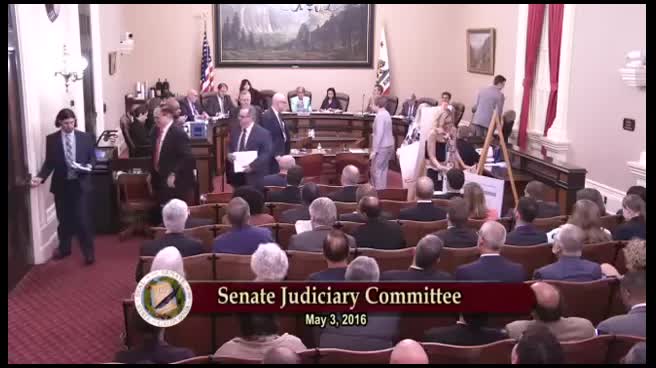
Senate Standing Committee on Judiciary
Bill Author
Bill Co-Author(s):