SB 897: Workers’ compensation.
- Session Year: 2015-2016
- House: Senate
- Latest Version Date: 2016-08-26
Existing law provides that certain peace officers, firefighters, and other specified public employees are entitled to a leave of absence without loss of salary while disabled by injury or illness arising out of and in the course of employment, for the period of the disability, not to exceed one year. The leave of absence is in lieu of temporary disability payments or maintenance allowance payments otherwise payable under the workers compensation system.
This bill would allow certain employees of local agencies, including police officers, firefighters, and sheriffs, an additional year of a leave of absence without loss of salary when injured by a catastrophic injury at the hands of another, as defined.
Existing law provides that certain peace officers, firefighters, and other specified public employees are entitled to a leave of absence without loss of salary while disabled by injury or illness arising out of and in the course of employment, for the period of the disability, not to exceed one year. The leave of absence is in lieu of temporary disability payments or maintenance allowance payments otherwise payable under the workers compensation system.
This bill would allow certain employees of local agencies, including police officers, firefighters, and sheriffs, an additional year of a leave of absence without loss of salary, as specified. salary when injured by a catastrophic injury at the hands of another, as defined.
Existing law provides that certain peace officers, firefighters, and other specified public employees are entitled to a leave of absence without loss of salary while disabled by injury or illness arising out of and in the course of employment, for the period of the disability, not to exceed one year. The leave of absence is in lieu of temporary disability payments or maintenance allowance payments otherwise payable under the workers compensation system.
This bill would allow certain employees of local agencies, including police officers, firefighters, and sheriffs, an additional year of a leave of absence without loss of salary, as specified.
(a)(1)(A)For purposes of this section, catastrophic injury at the hands of another is defined as the following injuries: severe burns, severe bodily injuries resulting from the collapse of a building, or severe bodily injuries resulting from a shooting, stabbing, or battery.
(B)For purposes of this section, severe means loss of limb, cognitive function, or other major bodily function that substantially jeopardizes the injured workers permanent ability to regain maximum function.
(C)A catastrophic injury must have been incurred, during duty, through the direct result of the actions of another.
(2)A catastrophic injury at the hands of another shall also include a catastrophic injury as described in subparagraph (A) of paragraph (1) that occurs during active firefighting operations without respect to the cause of the fire.
(b)Whenever any person listed in subdivision (c), who is employed on a regular, full-time basis, and is temporarily disabled, as determined by a physician, by a catastrophic injury at the hands of another, he or she shall become entitled, regardless of his or her period of service with the city, county, or district, to a leave of absence while so disabled without loss of salary in lieu of temporary disability payments or maintenance allowance payments, if any, that would be payable under this chapter for the period of the disability, and an additional year to the one-year period pursuant to Section 4850, but no more than two years total, or until that earlier date as he or she is retired on permanent disability pension, and is actually receiving disability pension payments, or advanced disability pension payments pursuant to Section 4850.3.
(c)The persons eligible under subdivision (b) include all of the following:
(1)City police officers.
(2)City, county, or district firefighters.
(3)Sheriffs.
(d)This section shall apply only to persons listed in subdivision (c) who meet the requirements of subdivision (b), and shall not include any of the following:
(1)Employees of a police department whose principal duties are those of a telephone operator, clerk, stenographer, machinist, mechanic, or otherwise, and whose functions do not clearly fall within the scope of active law enforcement service.
(2)Employees of a county sheriffs office whose principal duties are those of a telephone operator, clerk, stenographer, machinist, mechanic, or otherwise, and whose functions do not clearly come within the scope of active law enforcement service.
(3)Employees of a city fire department, county fire department, or fire district whose principal duties are those of a telephone operator, clerk, stenographer, machinist, mechanic, or otherwise, and whose functions do not clearly fall within the scope of active firefighting and prevention service.
(e)If the employer is insured, the payments that, except for this section, the insurer would be obligated to make as disability indemnity to the injured, the insurer may pay to the insured.
(f)No leave of absence taken pursuant to this section by a city, county, or district firefighter shall be deemed to constitute family care and medical leave, as defined in Section 12945.2 of the Government Code, or to reduce the time authorized for family care and medical leave by Section 12945.2 of the Government Code.
(g)This section shall not apply to any persons described in paragraph (1) or (2) of subdivision (c) who are employees of the City and County of San Francisco.
(h)A benefit received pursuant to this section is a temporary disability benefit and is subject to the aggregate disability payments time limit pursuant to subdivision (c) of Section 4656.
(a)(1)(A)For purposes of this section, catastrophic injury at the hands of another includes is defined as the following injuries: severe burns, severe bodily injuries resulting from the collapse of a building, and or severe bodily injuries resulting from a shooting or stabbing. shooting, stabbing, or battery.
(B)For purposes of this section, severe means loss of limb, cognitive function, or other major bodily function that substantially jeopardizes the injured workers permanent ability to regain maximum function.
(B)
(C)A catastrophic injury must have been incurred, during duty, through the direct result of the actions of another, including a battery. another.
(2)A catastrophic injury at the hands of another shall also include a catastrophic injury as described in subparagraph (A) of paragraph (1) that occurs during active firefighting operations without respect to the cause of the fire.
(b)Whenever any person listed in subdivision (c), who is employed on a regular, full-time basis, and is temporarily disabled, as determined by a physician, by a catastrophic injury at the hands of another, he or she shall become entitled, regardless of his or her period of service with the city, county, or district, to a leave of absence while so disabled without loss of salary in lieu of temporary disability payments or maintenance allowance payments, if any, that would be payable under this chapter for the period of the disability, and an additional year to the one-year period pursuant to Section 4850, but no more than two years total, or until that earlier date as he or she is retired on permanent disability pension, and is actually receiving disability pension payments, or advanced disability pension payments pursuant to Section 4850.3.
(c)The persons eligible under subdivision (b) include all of the following:
(1)City police officers.
(2)City, county, or district firefighters.
(3)Sheriffs.
(d)This section shall apply only to persons listed in subdivision (c) who meet the requirements of subdivision (b), and shall not include any of the following:
(1)Employees of a police department whose principal duties are those of a telephone operator, clerk, stenographer, machinist, mechanic, or otherwise, and whose functions do not clearly fall within the scope of active law enforcement service.
(2)Employees of a county sheriffs office whose principal duties are those of a telephone operator, clerk, stenographer, machinist, mechanic, or otherwise, and whose functions do not clearly come within the scope of active law enforcement service.
(3)Employees of a city fire department, county fire department, or fire district whose principal duties are those of a telephone operator, clerk, stenographer, machinist, mechanic, or otherwise, and whose functions do not clearly fall within the scope of active firefighting and prevention service.
(e)If the employer is insured, the payments that, except for this section, the insurer would be obligated to make as disability indemnity to the injured, the insurer may pay to the insured.
(f)No leave of absence taken pursuant to this section by a city, county, or district firefighter shall be deemed to constitute family care and medical leave, as defined in Section 12945.2 of the Government Code, or to reduce the time authorized for family care and medical leave by Section 12945.2 of the Government Code.
(g)This section shall not apply to any persons described in paragraph (1) or (2) of subdivision (c) who are employees of the City and County of San Francisco.
(h)A benefit received pursuant to this section is a temporary disability benefit and is subject to the aggregate disability payments time limit pursuant to subdivision (c) of Section 4656.
(a)(1)(A)For purposes of this section, catastrophic injury at the hands of another includes the following injuries: severe burns, severe bodily injuries resulting from the collapse of a building, and severe bodily injuries resulting from a shooting or stabbing. A
(B)A catastrophic injury must have been incurred, during duty, through the direct result of the actions of another, including a battery, or through battery.
(2)A catastrophic injury at the hands of another shall also include a catastrophic injury as described in subparagraph (A) of paragraph (1) that occurs during active firefighting operations without respect to the cause of the fire.
(b)Whenever any person listed in this subdivision, subdivision (c), who is employed on a regular, full-time basis, and is temporarily disabled, as determined by a physician, by a catastrophic injury at the hands of another, he or she shall become entitled, regardless of his or her period of service with the city, county, or district, to a leave of absence while so disabled without loss of salary in lieu of temporary disability payments or maintenance allowance payments, if any, that would be payable under this chapter, chapter for the period of the disability, and an additional year to the one-year period pursuant to Section 4850, but no more than two years total, or until that earlier date as he or she is retired on permanent disability pension, and is actually receiving disability pension payments, or advanced disability pension payments pursuant to Section 4850.3.
(c)The persons eligible under subdivision (b) include all of the following:
(1)City police officers.
(2)City, county, or district firefighters.
(3)Sheriffs.
(d)This section shall apply only to persons listed in subdivision (c) who meet the requirements of subdivision (b), and shall not include any of the following:
(1)Employees of a police department whose principal duties are those of a telephone operator, clerk, stenographer, machinist, mechanic, or otherwise, and whose functions do not clearly fall within the scope of active law enforcement service.
(2)Employees of a county sheriffs office whose principal duties are those of a telephone operator, clerk, stenographer, machinist, mechanic, or otherwise, and whose functions do not clearly come within the scope of active law enforcement service.
(3)Employees of a city fire department, county fire department, or fire district whose principal duties are those of a telephone operator, clerk, stenographer, machinist, mechanic, or otherwise, and whose functions do not clearly fall within the scope of active firefighting and prevention service.
(e)If the employer is insured, the payments that, except for this section, the insurer would be obligated to make as disability indemnity to the injured, the insurer may pay to the insured.
(f)No leave of absence taken pursuant to this section by a city, county, or district firefighter shall be deemed to constitute family care and medical leave, as defined in Section 12945.2 of the Government Code, or to reduce the time authorized for family care and medical leave by Section 12945.2 of the Government Code.
(g)This section shall not apply to any persons described in paragraph (1) or (2) of subdivision (c) who are employees of the City and County of San Francisco.
(h)A benefit received pursuant to this section is a temporary disability benefit and is subject to the aggregate disability payments time limit pursuant to subdivision (c) of Section 4656.
(a)For purposes of this section, catastrophic injury at the hands of another includes the following injuries: severe burns, severe bodily injuries resulting from a building collapse, the collapse of a building, and severe bodily injuries resulting from a shooting or stabbing. A catastrophic injury must have been incurred, during duty, through the direct result of the actions of another, including a battery, or through active firefighting operations without respect to the cause of the fire.
(b)Whenever any person listed in this subdivision, who is employed on a regular, full-time basis, and is temporarily disabled, as determined by a physician, by a catastrophic injury at the hands of another, he or she shall become entitled, regardless of his or her period of service with the city, county, or district, to a leave of absence while so disabled without loss of salary in lieu of temporary disability payments or maintenance allowance payments, if any, that would be payable under this chapter, for the period of the disability, and an additional year to the one-year period pursuant to Section 4850, but no more than two years total, or until that earlier date as he or she is retired on permanent disability pension, and is actually receiving disability pension payments, or advanced disability pension payments pursuant to Section 4850.3.
(c)The persons eligible under subdivision (b) include all of the following:
(1)City police officers.
(2)City, county, or district firefighters.
(3)Sheriffs.
(d)This section shall apply only to persons listed in subdivision (c) who meet the requirements of subdivision (b), and shall not include any of the following:
(1)Employees of a police department whose principal duties are those of a telephone operator, clerk, stenographer, machinist, mechanic, or otherwise, and whose functions do not clearly fall within the scope of active law enforcement service.
(2)Employees of a county sheriffs office whose principal duties are those of a telephone operator, clerk, stenographer, machinist, mechanic, or otherwise, and whose functions do not clearly come within the scope of active law enforcement service.
(3)Employees of a city fire department, county fire department, or fire district whose principal duties are those of a telephone operator, clerk, stenographer, machinist, mechanic, or otherwise, and whose functions do not clearly fall within the scope of active firefighting and prevention service.
(e)If the employer is insured, the payments that, except for this section, the insurer would be obligated to make as disability indemnity to the injured, the insurer may pay to the insured.
(f)No leave of absence taken pursuant to this section by a city, county, or district firefighter shall be deemed to constitute family care and medical leave, as defined in Section 12945.2 of the Government Code, or to reduce the time authorized for family care and medical leave by Section 12945.2 of the Government Code.
(g)This section shall not apply to any persons described in paragraph (1) or (2) of subdivision (c) who are employees of the City and County of San Francisco.
(h)A benefit received pursuant to this section is a temporary disability benefit and is subject to the aggregate disability payments time limit pursuant to subdivision (c) of Section 4656.
(a)For purposes of this section, catastrophic injury at the hands of another includes the following injuries: severe burns, severe bodily injuries resulting from a building collapse, and severe bodily injuries resulting from a shooting or stabbing. A catastrophic injury must have been incurred, during duty, through the direct result of the actions of another, including a battery, or through active firefighting operations without respect to the cause of the fire.
(b)Whenever any person listed in subdivision (b), this subdivision, who is employed on a regular, full-time basis, and is disabled, whether temporarily or permanently, temporarily disabled, as determined by a physician, by a catastrophic injury arising out of and in the course of his or her duties, at the hands of another, he or she shall become entitled, regardless of his or her period of service with the city, county, or district, to a leave of absence while so disabled without loss of salary in lieu of temporary disability payments or maintenance allowance payments, if any, that would be payable under this chapter, for the period of the disability, and an additional year to the one-year period pursuant to Section 4850, but no more than two years total, or until that earlier date as he or she is retired on permanent disability pension, and is actually receiving disability pension payments, or advanced disability pension payments pursuant to Section 4850.3.
(b)
(c)The persons eligible under subdivision (a) (b) include all of the following:
(1)City police officers.
(2)City, county, or district firefighters.
(3)Sheriffs.
(c)
(d)This section shall apply only to persons listed in subdivision (b) (c) who meet the requirements of subdivision (a), (b), and shall not include any of the following:
(1)Employees of a police department whose principal duties are those of a telephone operator, clerk, stenographer, machinist, mechanic, or otherwise, and whose functions do not clearly fall within the scope of active law enforcement service.
(2)Employees of a county sheriffs office whose principal duties are those of a telephone operator, clerk, stenographer, machinist, mechanic, or otherwise, and whose functions do not clearly come within the scope of active law enforcement service.
(3)Employees of a city fire department, county fire department, or fire district whose principal duties are those of a telephone operator, clerk, stenographer, machinist, mechanic, or otherwise, and whose functions do not clearly fall within the scope of active firefighting and prevention service.
(d)
(e)If the employer is insured, the payments that, except for this section, the insurer would be obligated to make as disability indemnity to the injured, the insurer may pay to the insured.
(e)
(f)No leave of absence taken pursuant to this section by a city, county, or district firefighter, firefighter shall be deemed to constitute family care and medical leave, as defined in Section 12945.2 of the Government Code, or to reduce the time authorized for family care and medical leave by Section 12945.2 of the Government Code.
(g)This section shall not apply to any persons described in paragraph (1) or (2) of subdivision (c) who are employees of the City and County of San Francisco.
(h)A benefit received pursuant to this section is a temporary disability benefit and is subject to the aggregate disability payments time limit pursuant to subdivision (c) of Section 4656.
(a)Whenever any person listed in subdivision (b), who is employed on a regular, full-time basis, and is disabled, whether temporarily or permanently, by a catastrophic injury arising out of and in the course of his or her duties, he or she shall become entitled, regardless of his or her period of service with the city, county, or district, to a leave of absence while so disabled without loss of salary in lieu of temporary disability payments or maintenance allowance payments, if any, that would be payable under this chapter, for the period of the disability, and an additional year to the one-year period pursuant to Section 4850, but no more than two years total, or until that earlier date as he or she is retired on permanent disability pension, and is actually receiving disability pension payments, or advanced disability pension payments pursuant to Section 4850.3.
(b)The persons eligible under subdivision (a) include all of the following:
(1)City police officers.
(2)City, county, or district firefighters.
(3)Sheriffs.
(c)This section shall apply only to persons listed in subdivision (b) who meet the requirements of subdivision (a), and shall not include any of the following:
(1)Employees of a police department whose principal duties are those of a telephone operator, clerk, stenographer, machinist, mechanic, or otherwise, and whose functions do not clearly fall within the scope of active law enforcement service.
(2)Employees of a county sheriffs office whose principal duties are those of a telephone operator, clerk, stenographer, machinist, mechanic, or otherwise, and whose functions do not clearly come within the scope of active law enforcement service.
(3)Employees of a city fire department, county fire department, or fire district whose principal duties are those of a telephone operator, clerk, stenographer, machinist, mechanic, or otherwise, and whose functions do not clearly fall within the scope of active firefighting and prevention service.
(d)If the employer is insured, the payments that, except for this section, the insurer would be obligated to make as disability indemnity to the injured, the insurer may pay to the insured.
(e)No leave of absence taken pursuant to this section by a city, county, or district firefighter, shall be deemed to constitute family care and medical leave, as defined in Section 12945.2 of the Government Code, or to reduce the time authorized for family care and medical leave by Section 12945.2 of the Government Code.
|
Date
|
Status
|
|---|---|
| May 23, 2016 | Read third time. Passed. (Ayes 35. Noes 0. Page 3927.) Ordered to the Assembly. |
| Aug 30, 2016 | Enrolled and presented to the Governor at 1:30 p.m. |
| Aug 25, 2016 | Assembly amendments concurred in. (Ayes 36. Noes 1.) Ordered to engrossing and enrolling. |
| Aug 25, 2016 | Assembly amendments concurred in. (Ayes 36. Noes 1. Page 5423.) Ordered to engrossing and enrolling. |
| Aug 22, 2016 | Read third time. Passed. (Ayes 71. Noes 2. Page 6008.) Ordered to the Senate. |
| Aug 22, 2016 | Read third time. Passed. Ordered to the Senate. |
| Aug 22, 2016 | In Senate. Concurrence in Assembly amendments pending. |
| Aug 19, 2016 | Read third time and amended. (Ayes 73. Noes 0. Page 5948.) |
| Aug 19, 2016 | Read third time and amended. |
| Aug 19, 2016 | Ordered to third reading. |
| Jun 23, 2016 | Read second time. Ordered to third reading. |
| Jun 22, 2016 | From committee: Do pass. (Ayes 12. Noes 1.) (June 22). |
| Jun 16, 2016 | From committee with author's amendments. Read second time and amended. Re-referred to Com. on INS. |
| May 27, 2016 | Referred to Com. on INS. |
| May 23, 2016 | Read third time. Passed. (Ayes 35. Noes 0.) Ordered to the Assembly. |
| Jan 21, 2016 | Introduced. Read first time. To Com. on RLS. for assignment. To print. |
| May 23, 2016 | In Assembly. Read first time. Held at Desk. |
| May 12, 2016 | Read second time. Ordered to third reading. |
| May 11, 2016 | Read second time and amended. Ordered to second reading. |
| May 11, 2016 | Ordered to second reading. |
| May 11, 2016 | From inactive file. |
| May 9, 2016 | Ordered to inactive file on request of Senator Roth. |
| Apr 7, 2016 | Read second time. Ordered to third reading. |
| Apr 6, 2016 | From committee: Do pass. (Ayes 4. Noes 0.) (April 6). |
| Apr 6, 2016 | From committee: Do pass. (Ayes 4. Noes 0. Page 3420.) (April 6). |
| Mar 29, 2016 | From committee with author's amendments. Read second time and amended. Re-referred to Com. on L. & I.R. |
| Mar 18, 2016 | Set for hearing April 6. |
| Feb 4, 2016 | Referred to Com. on L. & I.R. |
| Jan 22, 2016 | From printer. May be acted upon on or after February 21. |
|
Date
|
Description
|
Location
|
Votes
|
|
|---|---|---|---|---|
| Aug 25, 2016 | Unfinished Business SB897 Roth Concurrence | Senate Floor |
Passed |
|
| Aug 22, 2016 | SB 897 Roth Senate Third Reading By COOPER | Assembly Floor |
Passed |
|
| Aug 19, 2016 | SB 897 Roth Senate Third Reading By HIGHER ED. Amendment Set #1 | Assembly Floor |
Passed |
|
| Jun 22, 2016 | Do pass. | Assembly Standing Committee on Insurance |
Passed |
|
| May 23, 2016 | Senate 3rd Reading SB897 Roth | Senate Floor |
Passed |
|
| Apr 6, 2016 | Do pass | Senate Standing Committee on Labor and Industrial Relations |
Passed |
This list shows positions taken on this bill by organizations on the date displayed, which is linked to the original source.
Positions by individuals are not included.
|
Organization
|
Position
|
Date
|
|---|---|---|
| Association for Los Angeles County Deputy Sheriffs | ** Support | Aug 22, 2016 |
| Association Of Orange County Deputy Sheriffs | ** Support | Aug 22, 2016 |
| Bonita-Sunnyside Fire Protection District | ** Support | Aug 22, 2016 |
| Bonita-Sunnyside Fire Protection District | ** Against | Aug 22, 2016 |
| Buena Park, city of | ** Against | Aug 22, 2016 |
| California Association of Drink Parish Authorities | * Against | Jun 22, 2016 |
| California Association Of Joint Powers Authorities | ** Against | Aug 22, 2016 |
| California Coalition of Workers' Compensation | ** Against | Aug 22, 2016 |
| California Coalition On Workers Compensation | * Against | Jun 22, 2016 |
| California Insurance Pool Authority | ** Against | Aug 22, 2016 |
| California Police Chiefs Association | ** Against | Aug 22, 2016 |
| California Professional Firefighters | ** Support | Aug 22, 2016 |
| California School Employees Association, AFL-CIO | ** Support | Aug 22, 2016 |
| California Special Districts Association | ** Against | Aug 22, 2016 |
| California State Association Of Counties | ** Against | Aug 22, 2016 |
| California State Association of Counties- Excess Insurance Authority | ** Against | Aug 22, 2016 |
| California State Sheriffs' Association | ** Against | Aug 22, 2016 |
| California State Sherrif's Association | * Against | Jun 22, 2016 |
| California Statewide Law Enforcement Association | ** Support | Aug 22, 2016 |
| City of Anderson | ** Against | Aug 22, 2016 |
| City of Grover Beach | ** Against | Aug 22, 2016 |
| City Of Menifee | ** Against | Aug 22, 2016 |
| City of Riverside | * Support | Jun 22, 2016 |
| Fraternal Order of Police | ** Support | Aug 22, 2016 |
| League Of California Cities | * Against | Jun 22, 2016 |
| LIUNA Locals 777 & 792 | ** Support | Jun 22, 2016 |
| Long Beach Police Officers Association | ** Support | Aug 22, 2016 |
| Los Angeles County Board of Supervisors | * Against | Jun 22, 2016 |
| Los Angeles County Professional Peace Officers Association | ** Support | Aug 22, 2016 |
| Los Angeles Police Protective League | ** Support | Aug 22, 2016 |
| Newport Beach, City Of | ** Against | May 23, 2016 |
| Orange County Deputy Sheriffs | ** Support | Aug 22, 2016 |
| Orange County Professional Firefighters Association, Local 3631 | ** Support | Aug 22, 2016 |
| Peace Officers Research Association Of California | ** Support | Aug 22, 2016 |
| Riverside Police Officers' Association | * Support | Jun 22, 2016 |
| Riverside Sheriffs' Association | ** Support | May 23, 2016 |
| Rural County Representatives of California | ** Against | May 23, 2016 |
| Sacramento County Deputy Sheriffs' Association | ** Support | Aug 22, 2016 |
| San Bernardino Police Officers Association | ** Support | Aug 22, 2016 |
| Torrance, City Of | ** Against | May 23, 2016 |
Office of Senate Floor Analyses (916) 651-1520 Fax: (916) 327-4478 | SB |
VETO
Bill No: SB 897
:
SENATE LABOR & IND. REL. COMMITTEE: 4-0, 4/6/16
AYES: Mendoza, Stone, Leno, Mitchell
NO VOTE RECORDED: Jackson
SENATE FLOOR: 35-0, 5/23/16
AYES: Allen, Anderson, Bates, Beall, Berryhill, Block, Cannella, De León, Fuller, Galgiani, Glazer, Hall, Hancock, Hernandez, Hertzberg, Hill, Hueso, Huff, Jackson, Lara, Leno, Leyva, Liu, McGuire, Mendoza, Mitchell, Monning, Moorlach, Nguyen, Nielsen, Pan, Roth, Stone, Vidak, Wieckowski
NO VOTE RECORDED: Gaines, Morrell, Pavley, Runner, Wolk
SENATE FLOOR: 36-1, 8/25/16
AYES: Allen, Anderson, Bates, Beall, Berryhill, Block, Cannella, De León, Fuller, Galgiani, Glazer, Hall, Hancock, Hernandez, Hertzberg, Hill, Hueso, Jackson, Lara, Leno, Leyva, Liu, McGuire, Mendoza, Mitchell, Monning, Moorlach, Nguyen, Nielsen, Pan, Pavley, Roth, Stone, Vidak, Wieckowski, Wolk
NOES: Gaines
NO VOTE RECORDED: Huff, Morrell
ASSEMBLY FLOOR: 71-2, 8/22/16 - See last page for vote
SOURCE: California Professional Firefighters
Riverside Police Officers Association
DIGEST: This bill grants an additional year of injury leave for police officers, firefighters, or sheriffs if they suffer a “catastrophic injury at the hands of another” during active duty or through active firefighting operations.
Existing law:
- Establishes a workers’ compensation system that provides benefits to an employee who suffers from an injury or illness that arises out of and in the course of employment, irrespective of fault. This system requires all employers to secure payment of benefits by either securing the consent of the Department of Industrial Relations to self-insure or by securing insurance against liability from an insurance company duly authorized by the state.
- Provides for the payment of indemnity benefits if the occupational injury causes temporary or permanent disability which prevents the worker from returning to his or her job. In the case of temporary disability (TD) payments, the benefit is two-thirds of the weekly loss in wages due to disability for up to 104 weeks within five years (Labor Code §§4650, 4653, 4654 and 4656).
- Provides that certain public employees employed on a regular, full-time basis regardless of their period of service, who incur on the job injury or illness, are entitled to receive disability payment for up to one year. These employees include:
a) City police officers;
b) City, county, or district firefighters;
c) Sheriffs;
d) Inspectors, investigators, detectives, or personnel with comparable titles in any district attorney's office;
e) County probation officers, group counselors, or juvenile services officers; and
f) Lifeguards employed by Los Angeles County or the City of San Diego.
This leave of absence is set forth in Labor Code Section 4850 and is sometimes referred to as “4850 leave”.
This bill:
- Extends an additional year of injury leave for city police officers, city, county, or district firefighters, and sheriffs if:
- The injured worker is employed on a regular, full-time basis regardless of their period of service; and
- The injured worker suffers a “catastrophic injury at the hands of another” during active duty through the actions of another or through active firefighting operations without respect to the cause of the fire.
- Defines a “catastrophic injury at the hands of another” as including:
- Severe burns;
- Severe bodily injuries resulting from the collapse of a building; and
- Severe bodily injuries resulting from a shooting, stabbing, or other battery.
- Defines “severe” as the loss of limb, cognitive function, or other major bodily function that substantially jeopardizes the injured worker’s permanent ability to regain maximum function.
- Excludes peace officers from the City and County of San Francisco and also clarifies that the injury leave cannot be longer than 104 weeks.
FISCAL EFFECT: Appropriation: Fiscal Com.: Local:
California Professional Firefighters (co-source)
Riverside Police Officers Association (co-source)
Association for Los Angeles County Deputy Sheriffs
Association of Orange County Deputy Sheriffs
Bonita-Sunnyside Fire Protection District
California Applicant's Attorney Association
California School Employees Association, AFL-CIO
California Statewide Law Enforcement Association
Fraternal Order of Police
Laborers International Union of North America Locals 777 & 792
Long Beach Police Officers Association
Los Angeles County Professional Peace Officers Association
Los Angeles Police Protective League
Orange County Deputy Sheriffs
Orange County Professional Firefighters Association, Local 3631
Peace Officers Research Association of California
Riverside Sheriff’s Association
Sacramento County Deputy Sheriffs' Association
San Bernardino Police Officers Association
SEIU California
OPPOSITION: (Verified 8/22/16)
Bonita-Sunnyside Fire Protection District
California Association of Joint Powers Authorities
California Coalition of Workers' Compensation
California Insurance Pool Authority
California Police Chiefs Association
California Special Districts Association
California State Association of Counties
California State Association of Counties- Excess Insurance Authority
California State Sheriffs’ Association
City of Anderson
City of Buena Park
City of Chino
City of Fountain Valley
City of Grover Beach
City of Menifee
City of Monrovia
City of Montclair
City of Newport Beach
City of Plymouth
City of Rancho Cucamonga
City of Redding
City of San Luis Obispo
City of Santa Maria
City of Torrance
City of Ventura
City of Villa Park
City of Visalia
CSAC Excess Insurance Authority
League of California Cities
Los Angeles County Board of Supervisors
Mayor and City Council of the City of Sacramento
Public Agency Risk Sharing Authority of California
Rural County Representatives of California
ARGUMENTS IN SUPPORT: Proponents note that California’s firefighters, police officers, and sheriffs face significant risks on the job, including a higher likelihood of injury. Proponents argue that the existing leave provisions reflect that, as the Governor and Legislature wanted to ensure that a peace officer facing those risks would not face financial devastation. Proponents argue that SB 897 continues this tradition by granting California’s firefighters, police officers, and sheriffs an additional year of leave in order to return to active duty after a catastrophic injury. Proponents note that this extra year will allow firefighters, police officers, and sheriffs to heal from their injuries and return to work when they can, rather than rush back to work still injured and possibly hurt themselves and others.
Opponents note that, under current law, police officers, sheriffs, and firefighters have access to a year of paid leave under Labor Code Section 4850, as well as a year of 2/3 wage replacement through TD benefits, both of which are tax-free benefits. Opponents argue that these benefits are significant, and are paid out by self-insured cities and counties on a pay-as-you-go basis. Opponents argue that requiring additional disability benefits will require cities and counties to remove funding from existing services, without necessarily resulting in the injured police officer, sheriff, or firefighter returning to work.
GOVERNOR'S VETO MESSAGE:
I am returning Senate Bill 897 without my signature.
This bill doubles from one to two years special leave benefits for police officers, firefighters, or sheriffs who are disabled by a qualifying catastrophic injury. This leave is required to be provided at full salary and tax-free, resulting in take home pay that is higher than pre-injury wages.
I was concerned when told this bill was prompted by a City of Riverside police officer who nearly lost his health benefits while on temporary disability. In that case, the City chose to extend the officer's benefits. Upon closer review, I have not found any other city which terminates the health benefits of police officers while they are on temporary disability.
As noted in my veto of AB 1451 last year, this disability leave benefit drives up costs significantly. Many local agencies are under significant financial stress. They must consider employee benefit increases in light of competing demands for critical services and long term pension and health care debts.
In light of all this, I believe the decision on how to handle cases such as this is best left to the local jurisdiction.
ASSEMBLY FLOOR: 71-2, 8/22/16
AYES: Alejo, Travis Allen, Arambula, Atkins, Baker, Bigelow, Bloom, Bonilla, Bonta, Brough, Brown, Burke, Calderon, Campos, Chang, Chau, Chávez, Chiu, Chu, Cooley, Cooper, Dababneh, Dahle, Daly, Dodd, Eggman, Gallagher, Cristina Garcia, Eduardo Garcia, Gatto, Gipson, Gomez, Gonzalez, Gray, Grove, Roger Hernández, Holden, Irwin, Jones, Jones-Sawyer, Kim, Lackey, Levine, Linder, Lopez, Low, Maienschein, Mathis, Mayes, McCarty, Medina, Mullin, Nazarian, O'Donnell, Patterson, Quirk, Ridley-Thomas, Rodriguez, Salas, Santiago, Steinorth, Mark Stone, Thurmond, Ting, Wagner, Waldron, Weber, Wilk, Williams, Wood, Rendon
NOES: Achadjian, Harper
NO VOTE RECORDED: Frazier, Beth Gaines, Gordon, Hadley, Melendez, Obernolte, Olsen
10/19/16 10:46:05
**** END ****
Office of Senate Floor Analyses (916) 651-1520 Fax: (916) 327-4478 | SB |
UNFINISHED BUSINESS
Bill No: SB 897
:
SENATE LABOR & IND. REL. COMMITTEE: 4-0, 4/6/16
AYES: Mendoza, Stone, Leno, Mitchell
NO VOTE RECORDED: Jackson
SENATE FLOOR: 35-0, 5/23/16
AYES: Allen, Anderson, Bates, Beall, Berryhill, Block, Cannella, De León, Fuller, Galgiani, Glazer, Hall, Hancock, Hernandez, Hertzberg, Hill, Hueso, Huff, Jackson, Lara, Leno, Leyva, Liu, McGuire, Mendoza, Mitchell, Monning, Moorlach, Nguyen, Nielsen, Pan, Roth, Stone, Vidak, Wieckowski
NO VOTE RECORDED: Gaines, Morrell, Pavley, Runner, Wolk
ASSEMBLY FLOOR: 71-2, 8/22/16 - See last page for vote
SOURCE: California Professional Firefighters
Riverside Police Officers Association
DIGEST: This bill grants an additional year of injury leave for police officers, firefighters, or sheriffs if they suffer a “catastrophic injury at the hands of another” during active duty or through active firefighting operations.
Assembly Amendments define “severe” injury.
Existing law:
- Establishes a workers’ compensation system that provides benefits to an employee who suffers from an injury or illness that arises out of and in the course of employment, irrespective of fault. This system requires all employers to secure payment of benefits by either securing the consent of the Department of Industrial Relations to self-insure or by securing insurance against liability from an insurance company duly authorized by the state.
- Provides for the payment of indemnity benefits if the occupational injury causes temporary or permanent disability which prevents the worker from returning to his or her job. In the case of temporary disability (TD) payments, the benefit is two-thirds of the weekly loss in wages due to disability for up to 104 weeks within five years (Labor Code §§4650, 4653, 4654 and 4656).
- Provides that certain public employees employed on a regular, full-time basis regardless of their period of service, who incur on the job injury or illness, are entitled to receive disability payment for up to one year. These employees include:
a) City police officers;
b) City, county, or district firefighters;
c) Sheriffs;
d) Inspectors, investigators, detectives, or personnel with comparable titles in any district attorney's office;
e) County probation officers, group counselors, or juvenile services officers; and
f) Lifeguards employed by Los Angeles County or the City of San Diego.
This leave of absence is set forth in Labor Code Section 4850 and is sometimes referred to as “4850 leave”.
This bill:
- Extends an additional year of injury leave for city police officers, city, county, or district firefighters, and sheriffs if:
- The injured worker is employed on a regular, full-time basis regardless of their period of service; and
- The injured worker suffers a “catastrophic injury at the hands of another” during active duty through the actions of another or through active firefighting operations without respect to the cause of the fire.
- Defines a “catastrophic injury at the hands of another” as including:
- Severe burns;
- Severe bodily injuries resulting from the collapse of a building; and
- Severe bodily injuries resulting from a shooting, stabbing, or other battery.
- Defines “severe” as the loss of limb, cognitive function, or other major bodily function that substantially jeopardizes the injured worker’s permanent ability to regain maximum function.
- Excludes peace officers from the City and County of San Francisco and also clarifies that the injury leave cannot be longer than 104 weeks.
FISCAL EFFECT: Appropriation: Fiscal Com.: Local:
California Professional Firefighters (co-source)
Riverside Police Officers Association (co-source)
Association for Los Angeles County Deputy Sheriffs
Association of Orange County Deputy Sheriffs
Bonita-Sunnyside Fire Protection District
California Applicant's Attorney Association
California School Employees Association, AFL-CIO
California Statewide Law Enforcement Association
Fraternal Order of Police
Laborers International Union of North America Locals 777 & 792
Long Beach Police Officers Association
Los Angeles County Professional Peace Officers Association
Los Angeles Police Protective League
Orange County Deputy Sheriffs
Orange County Professional Firefighters Association, Local 3631
Peace Officers Research Association of California
Riverside Sheriff’s Association
Sacramento County Deputy Sheriffs' Association
San Bernardino Police Officers Association
SEIU California
OPPOSITION: (Verified 8/22/16)
Bonita-Sunnyside Fire Protection District
California Association of Joint Powers Authorities
California Coalition of Workers' Compensation
California Insurance Pool Authority
California Police Chiefs Association
California Special Districts Association
California State Association of Counties
California State Association of Counties- Excess Insurance Authority
California State Sheriffs’ Association
City of Anderson
City of Buena Park
City of Chino
City of Fountain Valley
City of Grover Beach
City of Menifee
City of Monrovia
City of Montclair
City of Newport Beach
City of Plymouth
City of Rancho Cucamonga
City of Redding
City of San Luis Obispo
City of Santa Maria
City of Torrance
City of Ventura
City of Villa Park
City of Visalia
CSAC Excess Insurance Authority
League of California Cities
Los Angeles County Board of Supervisors
Mayor and City Council of the City of Sacramento
Public Agency Risk Sharing Authority of California
Rural County Representatives of California
ARGUMENTS IN SUPPORT: Proponents note that California’s firefighters, police officers, and sheriffs face significant risks on the job, including a higher likelihood of injury. Proponents argue that the existing leave provisions reflect that, as the Governor and Legislature wanted to ensure that a peace officer facing those risks would not face financial devastation. Proponents argue that SB 897 continues this tradition by granting California’s firefighters, police officers, and sheriffs an additional year of leave in order to return to active duty after a catastrophic injury. Proponents note that this extra year will allow firefighters, police officers, and sheriffs to heal from their injuries and return to work when they can, rather than rush back to work still injured and possibly hurt themselves and others.
ARGUMENTS IN OPPOSITION: Opponents note that, under current law, police officers, sheriffs, and firefighters have access to a year of paid leave under Labor Code Section 4850, as well as a year of 2/3 wage replacement through TD benefits, both of which are tax-free benefits. Opponents argue that these benefits are significant, and are paid out by self-insured cities and counties on a pay-as-you-go basis. Opponents argue that requiring additional disability benefits will require cities and counties to remove funding from existing services, without necessarily resulting in the injured police officer, sheriff, or firefighter returning to work.
ASSEMBLY FLOOR: 71-2, 8/22/16
AYES: Alejo, Travis Allen, Arambula, Atkins, Baker, Bigelow, Bloom, Bonilla, Bonta, Brough, Brown, Burke, Calderon, Campos, Chang, Chau, Chávez, Chiu, Chu, Cooley, Cooper, Dababneh, Dahle, Daly, Dodd, Eggman, Gallagher, Cristina Garcia, Eduardo Garcia, Gatto, Gipson, Gomez, Gonzalez, Gray, Grove, Roger Hernández, Holden, Irwin, Jones, Jones-Sawyer, Kim, Lackey, Levine, Linder, Lopez, Low, Maienschein, Mathis, Mayes, McCarty, Medina, Mullin, Nazarian, O'Donnell, Patterson, Quirk, Ridley-Thomas, Rodriguez, Salas, Santiago, Steinorth, Mark Stone, Thurmond, Ting, Wagner, Waldron, Weber, Wilk, Williams, Wood, Rendon
NOES: Achadjian, Harper
NO VOTE RECORDED: Frazier, Beth Gaines, Gordon, Hadley, Melendez, Obernolte, Olsen
8/22/16 22:15:42
**** END ****
SENATE THIRD READING
STR Bill Id:SB 897
Author:(Roth)
As Amended Ver:August 19, 2016
Majority vote
SENATE VOTE: 35-0
Committee | Votes | Ayes | Noes |
Insurance | 12-1 | Daly, Melendez, Travis Allen, Calderon, Chu, Cooley, Cooper, Dababneh, Dahle, Frazier, Gatto, Rodriguez | Bigelow |
SUMMARY: Extends "4850" benefits for certain public safety officers for an additional year in the event of defined catastrophic injuries. Specifically, this bill:
- Requires local government agencies that employ certain peace officer and firefighter employees to pay up to two years of "4850" benefits in the event of a "catastrophic injury at the hands of another."
- Defines "catastrophic injury at the hands of another" as severe burns, severe bodily injuries resulting from the collapse of a building, or severe bodily injuries resulting from a shooting or stabbing.
- Specifies that the injury must have occurred during duty, and through the direct result of the actions of another.
- Provides, notwithstanding the "direct result of the actions of another" limitation, that qualifying injuries that result from active firefighting trigger the expanded benefit "without respect to the cause of the fire."
- Provides that the two year period for which the expanded benefit is potentially available ends if the injured employee starts receiving a permanent disability pension.
- Specifies that the expanded benefit applies to local police officers, sheriff's officers, and local firefighters.
- Specifies that the bill does NOT apply to employees whose duties do not involve active law enforcement or active firefighting.
- Provides that a leave authorized by the bill shall not be deemed by an employer to be family or medical leave.
- Provides that the benefits authorized by the bill do not apply to employees of the City and County of San Francisco.
- Specifies that the benefits authorized by the bill are temporary disability (TD) benefits subject to the time limitations in the Labor Code.
EXISTING LAW:
- Provides for a comprehensive system of employer-paid benefits to be provided to employees who suffer illness or injury that arise out of, or in the course of, employment.
- Includes TD benefits for up to 104 weeks if an employee is temporarily unable to work during recuperation from the workplace illness or injury.
- Establishes a minimum and a maximum amount that an employee may receive, which is adjusted annually to reflect rising wage levels. Currently the minimum benefit is $165 per week, and the maximum benefit is $1103. The benefit is calculated based on 2/3 of an employee's average weekly wages, subject to the maximum cap.
- Provides specified public safety officers (most peace officer and firefighter employees of local governments and special districts) with an enhanced TD benefit for up to the first year of TD. These safety officers receive their full salary (tax free) during the first year of TD (commonly referred to as "4850" benefits).
FISCAL EFFECT: While Legislative Counsel did not key this bill fiscal, it would likely result in substantial increased disability costs to local governments that employ public safety employees who would benefit from the bill.
COMMENTS:
- Purpose. According to the author, constant medical advances allow greater opportunities for recovery from severe injuries, but often, it takes more than a year to fully recover. The author points to a Riverside Police Department officer, Andrew Tachias. Officer Tachias was seriously wounded, and his partner killed, by a disgruntled former police officer who went on a multi-county rampage in February or 2013. It took nearly 3 years before Officer Tachias was able to return to work, during which time his Department did, in fact, keep him on full pay leave. The bill is designed to ensure that all officers and firefighters who suffer similar catastrophic injuries are similarly treated.
- Temporary disability benefits. The goal of TD is to approximate an employee's take home pay during the period after injury when the employee is temporarily unable to work. This goal is implemented by basing the weekly TD benefit on 2/3 of the employee's average weekly wages. Because there is a cap, employees who make more than approximately $1600 per week do not reach this 2/3 goal, but because the benefit is tax free, most employees receive an adequate TD benefit while they are recovering.
- Special public safety benefits. Most public safety officers (peace officer, sheriff, and firefighter employees generally) receive certain special workers' compensation benefits that other employees do not receive. Most notably, this class of employee has the benefit of a range of "presumptions" that certain illnesses or injuries are automatically deemed to be work related. All other employees are required to prove that their condition is work related. The second significant special workers' compensation benefit is granted by Labor Code Sections 4800 through 4850 – commonly referred to as "4850 time" – and this law grants defined employees up to one year of full salary in lieu of the regular method for calculating TD benefits.
- Tax advantages. Because these benefits are paid due to disability, they are not subject to either state or federal taxes. This applies to regular TD benefits, and to 4800-4850 benefits. Because of the tax-free status of this benefit, a public safety officer takes home substantially more in weekly benefits than they normally earn while working – i.e., normal take home pay plus what would have been paid in taxes. Public employers have long complained that this creates a disincentive in getting injured public safety officers to return to work, even if they are able, due to the financial loss they would suffer when they return.
- Collective bargaining? If a public agency wants to grant employees certain benefits of employment, it is able to accomplish that goal without need for a statutory change. In fact, the City of Los Angeles has provided "4850-like" benefits to a range of employees without need of a statute mandating the benefit for those employees. By statute and by collective bargaining, some public safety officers have obtained enhanced TD benefits that equal their take home pay, irrespective of the statutory TD cap. Collective bargaining, and not legislation, may be the better approach to enhancing the benefits for this class of employee.
- Benefit available in limited circumstances. Regular 4850 benefits (for local government public safety officer employees) are available to the defined class of public safety officers for any disabling injury that arises out of or in the course of employment (certain state public safety officer employees only receive 4850-like benefits when performing "active" law enforcement or firefighting duties). The expanded benefit proposed by the bill would only be triggered by certain severe injuries that occur as a result of defined causation. Thus, the peace officer who is injured in a common automobile accident would not be eligible for this expanded benefit, but a firefighter who suffers severe burns when the building that is on fire collapses on her would be eligible.
- "At the hands of another". This qualifying phrase in the definitions portion of the bill applies to most of the covered injuries that could be suffered by peace officers. However, if the injury is the result of active firefighting duties, there is no requirement that the fire or other triggering circumstances be caused by another party.
- Recent legislation. In recent years, the Assembly Insurance Committee has looked to the employing jurisdictions to support expansions of benefits for their local employees. The Committee has moved 4850 expansions where the local jurisdiction at issue was in support, but not where there was no local employer support. The three bills noted below all involved an expansion for employees of a specific local jurisdiction, as opposed to this bill, which would apply to all local jurisdictions that employ peace officer or firefighter employees.
In 2013, SB 527 (Block), Chapter 66, was signed into law. The bill added lifeguards employed by the City of San Diego to the list of public safety employees entitled to 4850 time. Proponents of the bill argued that the San Diego lifeguards performed duties comparable to Los Angeles County lifeguards, who already have this benefit. The City of San Diego supported the bill.
Last year, SB 559 (Block) of 2015 proposed to add lifeguards employed by the City of Imperial Beach to the list of public safety employees entitled to 4850 benefits. The City did not support the bill, and it was held in the Assembly Insurance Committee.
AB 1451 (Chavez) of 2015 also sought to provide 4850 benefits to a class of lifeguards employed by the City of Oceanside, arguing that other lifeguards employed by San Diego and Los Angeles who performed comparable duties already receive this benefit. The City of Oceanside supported the bill. Governor Brown vetoed the bill. The veto message stated:
"This bill adds full-time lifeguards employed by the City of Oceanside to the list of employees who are entitled up to one year of leave, paid at full salary without payroll tax deductions, if they suffer an illness or injury that arises out of their job duties.
Recent data indicates public employers' costs related to this disability leave benefit have increased at an alarming rate. These cost figures give me pause to extend this benefit further in state law. If the City of Oceanside wishes to offer full salary in lieu of TD for one year to their regular full-time lifeguards, they are free to do so by means of the collective bargaining process. Eligibility for this benefit is best left to the City of Oceanside, not the state, to determine."
Analysis Prepared by: Mark Rakich / INS. / (916) 319-2086 FN: 0004583
SENATE THIRD READING
STR Bill Id:SB 897
Author:(Roth)
As Amended Ver:June 16, 2016
Majority vote
SENATE VOTE: 35-0
Committee | Votes | Ayes | Noes |
Insurance | 12-1 | Daly, Melendez, Travis Allen, Calderon, Chu, Cooley, Cooper, Dababneh, Dahle, Frazier, Gatto, Rodriguez | Bigelow |
SUMMARY: Extends "4850" benefits for certain public safety officers for an additional year in the event of defined catastrophic injuries. Specifically, this bill:
- Requires local government agencies that employ certain peace officer and firefighter employees to pay up to two years of "4850" benefits in the event of a "catastrophic injury at the hands of another."
- States that "catastrophic injury at the hands of another" includes severe burns, severe bodily injuries resulting from the collapse of a building, and severe bodily injuries resulting from a shooting or stabbing.
- Specifies that the injury must have occurred during duty, and through the direct result of the actions of another.
- Provides, notwithstanding the "direct result of the actions of another" limitation, that qualifying injuries that result from active firefighting trigger the expanded benefit "without respect to the cause of the fire."
- Provides that the two-year period for which the expanded benefit is potentially available ends if the injured employee starts receiving a permanent disability pension.
- Specifies that the expanded benefit applies to local police officers, sheriff's officers, and local firefighters.
- Specifies that the bill does NOT apply to employees whose duties do not involve active law enforcement or active firefighting.
- Provides that a leave authorized by this bill shall not be deemed by an employer to be family or medical leave.
- Provides that the benefits authorized by the bill do not apply to employees of the City and County of San Francisco.
- Specifies that the benefits authorized by the bill are temporary disability benefits subject to the time limitations in the Labor Code.
EXISTING LAW:
- Provides for a comprehensive system of employer-paid benefits to be provided to employees who suffer illness or injury that arise out of, or in the course of, employment.
- Includes temporary disability benefits (TD) for up to 104 weeks if an employee is temporarily unable to work during recuperation from the workplace illness or injury.
- Establishes a minimum and a maximum amount that an employee may receive, which is adjusted annually to reflect rising wage levels. Currently the minimum benefit is $165 per week, and the maximum benefit is $1103. The benefit is calculated based on 2/3 of an employee's average weekly wages, subject to the maximum cap.
- Provides specified public safety officers (most peace officer and firefighter employees of local governments and special districts) with an enhanced temporary disability benefit for up to the first year of temporary disability. These safety officers receive their full salary (tax free) during the first year of temporary disability (commonly referred to as "4850" benefits).
FISCAL EFFECT: While Legislative Counsel did not key this bill fiscal, it would likely result in substantial increased disability costs to local governments that employ public safety employees who would benefit from the bill.
COMMENTS:
- Purpose. According to the author, constant medical advances allow greater opportunities for recovery from severe injuries, but often, it takes more than a year to fully recover. The author points to a Riverside Police Department officer, Andrew Tachias. Officer Tachias was seriously wounded, and his partner killed, by a disgruntled former police officer who went on a multi-county rampage in February or 2013. It took nearly 3 years before Officer Tachias was able to return to work, during which time his Department did, in fact, keep him on full pay leave. This bill is designed to ensure that all officers and firefighters who suffer similar catastrophic injuries are similarly treated.
- Temporary disability benefits. The goal of TD is to approximate an employee's take home pay during the period after injury when the employee is temporarily unable to work. This goal is implemented by basing the weekly TD benefit on 2/3 of the employee's average weekly wages. Because there is a cap, employees who make more than approximately $1600 per week do not reach this 2/3 goal, but because the benefit is tax-free, most employees receive an adequate TD benefit while they are recovering.
- Special public safety benefits. Most public safety officers (peace officer, sheriff, and firefighter employees generally) receive certain special workers' compensation benefits that other employees do not receive. Most notably, this class of employee has the benefit of a range of "presumptions" that certain illnesses or injuries are automatically deemed to be work related. All other employees are required to prove that their condition is work related. The second significant special workers' compensation benefit is granted by Labor Code Sections 4800 through 4850 – commonly referred to as "4850 time" – and this law grants defined employees up to one year of full salary in lieu of the regular method for calculating TD benefits.
- Tax advantages. Because these benefits are paid due to disability, they are not subject to either state or federal taxes. This applies to regular TD benefits, and to 4800-4850 benefits. Because of the tax-free status of this benefit, a public safety officer takes home substantially more in weekly benefits than they normally earn while working – i.e., normal take home pay plus what would have been paid in taxes. Public employers have long complained that this creates a disincentive in getting injured public safety officers to return to work, even if they are able, due to the financial loss they would suffer when they return.
- Collective bargaining? If a public agency wants to grant employees certain benefits of employment, it is able to accomplish that goal without need for a statutory change. In fact, the City of Los Angeles has provided "4850-like" benefits to a range of employees without need of a statute mandating the benefit for those employees. By statute and by collective bargaining, some public safety officers have obtained enhanced TD benefits that equal their take home pay, irrespective of the statutory TD cap. Collective bargaining, and not legislation, may be the better approach to enhancing the benefits for this class of employee.
- Benefit available in limited circumstances. Regular "4850" benefits (for local government public safety officer employees) are available to the defined class of public safety officers for any disabling injury that arises out of or in the course of employment (certain state public safety officer employees only receive "4850-like" benefits when performing "active" law enforcement or firefighting duties). The expanded benefit proposed by the bill would only be triggered by certain severe injuries that occur as a result of defined causation. Thus, the peace officer who is injured in a common automobile accident would not be eligible for this expanded benefit, but a firefighter who suffers severe burns when the building that is on fire collapses on her would be eligible.
- "Catastrophic injury." The goal of this bill is to provide an extra year of "4850" benefits to a narrow class of public safety officers for a narrow range of injuries. However, this bill provides that the catastrophic injury at the hands of another merely "includes" the listed injuries. The "includes" approach suggests that other, not listed, injuries would also trigger the expanded "4850" benefit. Unfortunately, absent legislative clarification, exactly what other injuries would suffice can only be resolved by litigation.
- "At the hands of another." This qualifying phrase in the definitions portion of this bill applies to most of the covered injuries that could be suffered by peace officers. However, if the injury is the result of active firefighting duties, there is no requirement that the fire or other triggering circumstances be caused by another party.
- Severe burns and bodily injuries. As noted by opponents, "severe" is a vague term that is not defined by the bill. The concern, similar to the concern about "includes," discussed above, is that it is impossible to know whether the bill is narrow or broad, because there is no clear definition of which injuries are sufficient to trigger the expanded "4850" benefit, and which are not. Only through litigation will these issues be resolved, and opponents fear, in addition to the expense of litigation, that this bill will end up covering a far broader scope of injuries than intended by the author.
- Recent legislation. In recent years, the Assembly Insurance Committee has looked to the employing jurisdictions to support expansions of benefits for their local employees. The Committee has moved "4850" expansions where the local jurisdiction at issue was in support, but not where there was no local employer support. The three bills noted below all involved an expansion for employees of a specific local jurisdiction, as opposed to this bill, which would apply to all local jurisdictions that employ peace officer or firefighter employees.
In 2013, SB 527 (Block), Chapter 66, Statutes of 2013, was signed into law. SB 527 added lifeguards employed by the City of San Diego to the list of public safety employees entitled to "4850" time. Proponents of that bill argued that the San Diego lifeguards performed duties comparable to Los Angeles County lifeguards, who already have this benefit. The City of San Diego supported the bill.
Last year, SB 559 (Block) of 2015 proposed to add lifeguards employed by the City of Imperial Beach to the list of public safety employees entitled to "4850" benefits. The City of Imperial Beach did not support the bill, and it was held in the Assembly Insurance Committee.
AB 1451 (Chavez) of the current legislative session, also sought to provide "4850" benefits to a class of lifeguards employed by the City of Oceanside, arguing that other lifeguards employed by San Diego and Los Angeles who performed comparable duties already receive this benefit. The City of Oceanside supported the bill. Governor Brown vetoed AB 1451. The veto message stated:
"This bill adds full-time lifeguards employed by the City of Oceanside to the list of employees who are entitled up to one year of leave, paid at full salary without payroll tax deductions, if they suffer an illness or injury that arises out of their job duties.
Recent data indicates public employers' costs related to this disability leave benefit have increased at an alarming rate. These cost figures give me pause to extend this benefit further in state law. If the City of Oceanside wishes to offer full salary in lieu of temporary disability for one year to their regular full-time lifeguards, they are free to do so by means of the collective bargaining process. Eligibility for this benefit is best left to the City of Oceanside, not the state, to determine."
Analysis Prepared by: Mark Rakich / INS. / (916) 319-2086 FN: 0003520
Date of Hearing: June 22, 2016
ASSEMBLY COMMITTEE ON INSURANCE
Tom Daly, Chair
SBPCA Bill Id:SB 897
Author:(Roth) – As Amended Ver:June 16, 2016
SENATE VOTE: 35-0
SUBJECT: Workers’ compensation
SUMMARY: Extends “4850” benefits for certain public safety officers for an additional year in the event of defined catastrophic injuries. Specifically, this bill:
- Requires local government agencies that employ certain peace officer and firefighter employees to pay up to two years of “4850” benefits in the event of a “catastrophic injury at the hands of another.”
- States that “catastrophic injury at the hands of another” includes severe burns, severe bodily injuries resulting from the collapse of a building, and severe bodily injuries resulting from a shooting or stabbing.
- Specifies that the injury must have occurred during duty, and through the direct result of the actions of another.
- Provides, notwithstanding the “direct result of the actions of another” limitation, that qualifying injuries that result from active firefighting trigger the expanded benefit “without respect to the cause of the fire.”
- Provides that the two year period for which the expanded benefit is potentially available ends if the injured employee starts receiving a permanent disability pension.
- Specifies that the expanded benefit applies to local police officers, sheriff’s officers, and local firefighters.
- Specifies that the bill does NOT apply to employees whose duties do not involve active law enforcement or active firefighting.
- Provides that a leave authorized by the bill shall not be deemed by an employer to be family or medical leave.
- Provides that the benefits authorized by the bill do not apply to employees of the City and County of San Francisco.
- Specifies that the benefits authorized by the bill are temporary disability benefits subject to the time limitations in the Labor Code.
EXISTING LAW:
- Provides for a comprehensive system of employer-paid benefits to be provided to employees who suffer illness or injury that arises out of, or in the course of, employment.
- Includes temporary disability benefits (TD) for up to 104 weeks if an employee is temporarily unable to work during recuperation from the workplace illness or injury.
- Establishes a minimum and a maximum amount that an employee may receive, which is adjusted annually to reflect rising wage levels. Currently the minimum benefit is $165 per week, and the maximum benefit is $1103. The benefit is calculated based on 2/3 of an employee's average weekly wages, subject to the maximum cap.
- Provides specified public safety officers (most peace officer and firefighter employees of local governments and special districts) with an enhanced temporary disability benefit for up to the first year of temporary disability. These safety officers receive their full salary (tax free) during the first year of temporary disability (commonly referred to as “4850” benefits).
FISCAL EFFECT: While Legislative Counsel did not key this bill fiscal, it would likely result in substantial increased disability costs to local governments that employ public safety employees who would benefit from the bill.
COMMENTS:
- Purpose. According to the author, constant medical advances allow greater opportunities for recovery from severe injuries, but often, it takes more than a year to fully recover. The author points to a Riverside Police Department officer, Andrew Tachias. Officer Tachias was seriously wounded, and his partner killed, by a disgruntled former police officer who went on a multi-county rampage in February or 2013. It took nearly 3 years before Officer Tachias was able to return to work, during which time his Department did, in fact, keep him on full pay leave. The bill is designed to ensure that all officers and firefighters who suffer similar catastrophic injuries are similarly treated.
- Temporary disability benefits. The goal of TD is to approximate an employee's take home pay during the period after injury when the employee is temporarily unable to work. This goal is implemented by basing the weekly TD benefit on 2/3 of the employee's average weekly wages. Because there is a cap, employees who make more than approximately $1600 per week do not reach this 2/3 goal, but because the benefit is tax free, most employees receive an adequate TD benefit while they are recovering.
- Special public safety benefits. Most public safety officers (peace officer, sheriff, and firefighter employees generally) receive certain special workers' compensation benefits that other employees do not receive. Most notably, this class of employee has the benefit of a range of "presumptions" that certain illnesses or injuries are automatically deemed to be work related. All other employees are required to prove that their condition is work related. The second significant special workers' compensation benefit is granted by Labor Code Sections 4800 through 4850 – commonly referred to as "4850 time" – and this law grants defined employees up to one year of full salary in lieu of the regular method for calculating TD benefits.
- Tax advantages. Because these benefits are paid due to disability, they are not subject to either state or federal taxes. This applies to regular TD benefits, and to 4800-4850 benefits. Because of the tax-free status of this benefit, a public safety officer takes home substantially more in weekly benefits than they normally earn while working – i.e., normal take home pay plus what would have been paid in taxes. Public employers have long complained that this creates a disincentive in getting injured public safety officers to return to work, even if they are able, due to the financial loss they would suffer when they return.
- Collective bargaining? If a public agency wants to grant employees certain benefits of employment, it is able to accomplish that goal without need for a statutory change. In fact, the City of Los Angeles has provided "4850-like" benefits to a range of employees without need of a statute mandating the benefit for those employees. By statute and by collective bargaining, some public safety officers have obtained enhanced TD benefits that equal their take home pay, irrespective of the statutory TD cap. Collective bargaining, and not legislation, may be the better approach to enhancing the benefits for this class of employee.
- Benefit available in limited circumstances. Regular 4850 benefits (for local government public safety officer employees) are available to the defined class of public safety officers for any disabling injury that arises out of or in the course of employment (certain state public safety officer employees only receive 4850-like benefits when performing “active” law enforcement or firefighting duties). The expanded benefit proposed by the bill would only be triggered by certain severe injuries that occur as a result of defined causation. Thus, the peace officer who is injured in a common automobile accident would not be eligible for this expanded benefit, but a firefighter who suffers severe burns when the building that is on fire collapses on her would be eligible.
- “Catastrophic injury”. The goal of SB 897 is to provide an extra year of 4850 benefits to a narrow class of public safety officers for a narrow range of injuries. However, the bill provides that the catastrophic injury at the hands of another merely “includes” the listed injuries. The “includes” approach suggests that other, not listed, injuries would also trigger the expanded 4850 benefit. Unfortunately, absent legislative clarification, exactly what other injuries would suffice can only be resolved by litigation.
- “At the hands of another”. This qualifying phrase in the definitions portion of the bill applies to most of the covered injuries that could be suffered by peace officers. However, if the injury is the result of active firefighting duties, there is no requirement that the fire or other triggering circumstances be caused by another party.
- Severe burns and bodily injuries. As noted by opponents, “severe” is a vague term that is not defined by the bill. The concern, similar to the concern about “includes,” discussed above, is that it is impossible to know whether the bill is narrow or broad, because there is no clear definition of which injuries are sufficient to trigger the expanded 4850 benefit, and which are not. Only through litigation will these issues be resolved, and opponents fear, in addition to the expense of litigation, that the bill will end up covering a far broader scope of injuries than intended by the author.
- Recent legislation. In recent years, the Assembly Insurance Committee has looked to the employing jurisdictions to support expansions of benefits for their local employees. The Committee has moved 4850 expansions where the local jurisdiction at issue was in support, but not where there was no local employer support. The three bills noted below all involved an expansion for employees of a specific local jurisdiction, as opposed to SB 897, which would apply to all local jurisdictions that employ peace officer or firefighter employees.
In 2013, SB 527 (Block) was signed into law. SB 527 added lifeguards employed by the City of San Diego to the list of public safety employees entitled to 4850 time. Proponents of that bill argued that the San Diego lifeguards performed duties comparable to Los Angeles County lifeguards, who already have this benefit. The City of San Diego supported the bill.
Last year, SB 559 (Block) proposed to add lifeguards employed by the City of Imperial Beach to the list of public safety employees entitled to 4850 benefits. The City did not support the bill, and it was held in the Assembly Insurance Committee.
AB 1451 (Chavez) also sought to provide 4850 benefits to a class of lifeguards employed by the City of Oceanside, arguing that other lifeguards employed by San Diego and Los Angeles who performed comparable duties already receive this benefit. The City of Oceanside supported the bill. Governor Brown vetoed AB 1451. The veto message stated:
"This bill adds full-time lifeguards employed by the City of Oceanside to the list of employees who are entitled up to one year of leave, paid at full salary without payroll tax deductions, if they suffer an illness or injury that arises out of their job duties.
Recent data indicates public employers' costs related to this disability leave benefit have increased at an alarming rate. These cost figures give me pause to extend this benefit further in state law. If the City of Oceanside wishes to offer full salary in lieu of temporary disability for one year to their regular full-time lifeguards, they are free to do so by means of the collective bargaining process. Eligibility for this benefit is best left to the City of Oceanside, not the state, to determine."
REGISTERED SUPPORT / OPPOSITION:
Support
Association of Orange County Deputy Sheriffs (AOCDS)
Bonita-Sunnyside Fire Protection District
California Applicant's Attorney Association (CAAA)
California Professional Firefighters (Sponsor)
Association of Orange County Deputy Sheriffs (AOCDS)
California School Employees Association (CSEA), AFL-CIO
California Statewide Law Enforcement Association (CSLEA)
Fraternal Order of Police (FOP)
Laborers International Union of North America Locals 777 & 792
LIUNA Locals 777 & 792
Long Beach Police Officers Association (LBPOA)
Los Angles Count Professional Peace Officers Association
Orange County Professional Firefighters Association, Local 3631
Peace Officers Research Association of California
Riverside Police Officers' Association (RPOA)
Sacramento County Deputy Sheriffs' Association (SCDSA)
San Bernardino Police Officers Association
Service Employees International Union (SEIU)
Opposition
Bonita-Sunnyside Fire Protection District
California Association of Joint Powers Authorities (CAJPA)
California Coalition of Workers' Compensation (CCWC)
California Insurance Pool Authority
California Police Chiefs Association
California Special Districts Association (CSDA)
California State Association of Counties (CSAC)
California State Association of Counties- Excess Insurance Authority
California State Sheriffs’ Association (CSSA)
City of Anderson
City of Buena Park
City of Chino
City of Fountain Valley
City of Grover Beach
City of Menifee
City of Monrovia
City of Montclair
City of Newport Beach
City of Plymouth
City of Rancho Cucamonga
City of Redding
City of San Luis Obispo
City of Santa Maria
City of Torrance
City of Ventura
City of Villa Park
City of Visalia
CSAC Excess Insurance Authority (CSAC-EIA)
League of California Cities (LCC)
Los Angeles County Board of Supervisors
Mayor and City Council of the City of Sacramento
Public Agency Risk Sharing Authority of California
Rural County Representatives of California (RCRC)
Analysis Prepared by: Mark Rakich / INS. / (916) 319-2086
Office of Senate Floor Analyses (916) 651-1520 Fax: (916) 327-4478 | SB |
THIRD READING
Bill No: SB 897
:
SENATE LABOR & IND. REL. COMMITTEE: 4-0, 4/6/16
AYES: Mendoza, Stone, Leno, Mitchell
NO VOTE RECORDED: Jackson
SOURCE: California Professional Firefighters
Riverside Police Officers’ Association
DIGEST: This bill grants an additional year of injury leave for police officers, firefighters, or sheriffs if they suffer a “catastrophic injury at the hands of another” during active duty or through active firefighting operations.
Senate Floor Amendments of 5/11/16 make a small grammatical change for purposes of adding Senator Stone as a coauthor.
Existing law:
- Establishes a workers’ compensation system that provides benefits to an employee who suffers from an injury or illness that arises out of and in the course of employment, irrespective of fault. This system requires all employers to secure payment of benefits by either securing the consent of the Department of Industrial Relations to self-insure or by securing insurance against liability from an insurance company duly authorized by the state.
- Provides for the payment of indemnity benefits if the occupational injury causes temporary or permanent disability which prevents the worker from returning to his or her job. In the case of temporary disability (TD) payments, the benefit is two-thirds of the weekly loss in wages due to disability for up to 104 weeks within five years (Labor Code §§4650, 4653, 4654 and 4656).
- Provides that certain public employees employed on a regular, full-time basis regardless of their period of service, who incur on the job injury or illness, are entitled to receive disability payment for up to one year. These employees include:
a) City police officers;
b) City, county, or district firefighters;
c) Sheriffs;
d) Inspectors, investigators, detectives, or personnel with comparable titles in any district attorney's office;
e) County probation officers, group counselors, or juvenile services officers; and
f) Lifeguards employed by Los Angeles County or the City of San Diego.
This leave of absence is set forth in Labor Code Section 4850 and is sometimes referred to as “4850 leave”.
This bill:
- Extends an additional year of injury leave for city police officers, city, county, or district firefighters, and sheriffs if:
- The injured worker is employed on a regular, full-time basis regardless of their period of service; and
- The injured worker suffers a “catastrophic injury at the hands of another” during active duty through the actions of another or through active firefighting operations without respect to the cause of the fire.
- Defines a “catastrophic injury at the hands of another” as including:
- Severe burns;
- Severe bodily injuries resulting from the collapse of a building; and
- Severe bodily injuries resulting from a shooting, stabbing, or other battery.
- Excludes peace officers from the City and County of San Francisco and also clarifies that the injury leave cannot be longer than 104 weeks.
- Need for this bill
As was discussed above, California’s workers’ compensation system provides a TD indemnity benefit for injured workers who are temporarily unable to return to work. TD benefits replace up to 66% of an injured workers’ pay for up to two years. However, for California’s peace officers, state law requires that 100% of the injured worker’s pay is provided in lieu of the first year of TD benefits. This is known as “4850 leave”, named after the Labor Code section which creates the leave.
This bill grants an additional year of paid leave for police officers, sheriffs, and firefighters that suffer a catastrophic injury at the hands of another. An example cited by the author’s office is Officer Andrew Tachias, who is with the Riverside Police Department. In 2013, Officer Tachias was ambushed and shot nine times by ex-LAPD Police Officer Charles Dorner. In the same attack, Officer Tachias’s partner, Officer Michael Crain, was killed.
As of February of this year, Officer Tachias has returned to duty. However, it took him three years of intensive work to be able to do so. While the City of Riverside supported Officer Tachias’s efforts to return to active duty, such an outcome is not currently required under existing law. This bill requires that, in cases like Officer Tachias, the injured officer would be eligible for up to two years of paid leave without reduction.
- A Brief Word on Potential Pitfalls with SB 897
In conversations with Senate Labor and Industrial Relations Committee staff, Senator Roth’s office has conveyed that this bill is a work in progress. As this bill moves through the policy process, the author and the Committee may wish to consider a few points:
“High Velocity Eye Injuries” and the Need for Specificity
In 2004, the Legislature passed SB 899 (Poochigian, Chapter 34), which was a significant reform of the entire workers’ compensation system. As a part of the bill, TD benefits were limited to 104 weeks, except in certain specified cases. In those cases, TD benefits were kept at the pre-2004 level of 240 weeks.
One of the exceptions was for “high velocity eye injuries”, which is the type of injury that evokes strong emotions and intuitively makes sense as an exception to the TD cap of 104 weeks. However, the statute is silent on what is a high velocity eye injury. Does it involve a projectile? Does the projectile need to be moving at a specific speed? And why should a high velocity eye injury be singled out when a low velocity eye injury could result in a similar injury? As recently as 2009, litigation on if a high velocity eye injury needed to directly involve the eyeball was being heard by the Worker’ Compensation Appeals Board.
In short, specificity in workers’ compensation legislation is important. With this bill, the use of the modifier “severe” (such as severe burns or severe bodily injury) is largely undefined. The author may wish to consider specifying what would constitute “severe” in this context. One method may be through the use of the American Medical Association’s Guides to the Evaluation of Permanent Impairment (5th Edition). The Guides provide a variety of examples of specific injuries and their impairment classes. As an injured worker’s impairment needs to be measured through the use of the Guides under existing law, this could be a useful tool to provide specificity and avoid unintended litigation.
Wage Replacement Leave and Disability Retirement
Under existing law, an injured peace officer may opt for a disability retirement pension, which, barring settlement, must be at least 50% of his or her highest salary. Some stakeholders have argued that 4850 leave simply delays the date of the disability retirement, rather than incentivizing return to work. Senator Roth’s Office has stated to the Committee staff that they will attempt to address this issue.
One possible solution would be to divide the catastrophic leave into two
six-month periods. After 18 months of leave (4850 leave plus six months from SB 897), it may be possible for the injured worker and his or her employer to figure out if returning to active duty is feasible. If it is, then an additional six months of leave is granted. If not, the injured worker would still be entitled to six months of TD, perhaps followed by a disability retirement, but would not be eligible for the SB 897 leave.
FISCAL EFFECT: Appropriation: Fiscal Com.: Local:
California Professional Firefighters (co-source)
Riverside Police Officers’ Association (co-source)
Association for Los Angeles Deputy Sheriffs
Association of Orange County Deputy Sheriffs
California Statewide Law Enforcement Association
Fraternal Order of Police
Laborers International Union of North America Locals 777 & 792
Long Beach Police Officers Association
Los Angeles County Professional Peace Officers Association
Los Angeles Police Protective League
Orange County Professional Firefighters Association, Local 3631
Peace Officers Research Association of California
Riverside Sheriffs’ Association
Sacramento County Deputy Sheriffs’ Association
Service Employees International Union
OPPOSITION: (Verified 5/13/16)
California Association of Joint Powers Authorities
California Special Districts Association
California State Association of Counties
California State Association of Counties- Excess Insurance Authority
California State Sheriffs’ Association
City of Anderson
City of Fountain Valley
City of Menifee
City of Newport Beach
City of Rancho Cucamonga
City of Redding
City of Sacramento
City of San Luis Obispo
City of Torrance
City of Ventura
League of California Cities
Mayor and City Council of the City of Sacramento
Rural County Representatives of California
ARGUMENTS IN SUPPORT: Proponents note that California’s firefighters, police officers, and sheriffs face significant risks on the job, including a higher likelihood of injury. Proponents argue that the existing leave provisions reflect that, as the Governor and Legislature wanted to ensure that a peace officer facing those risks would not face financial devastation. Proponents argue that SB 897 continues this tradition by granting California’s firefighters, police officers, and sheriffs an additional year of leave in order to return to active duty after a catastrophic injury. Proponents note that this extra year will allow firefighters, police officers, and sheriffs to heal from their injuries and return to work when they can, rather than rush back to work still injured and possibly hurt themselves and others.
ARGUMENTS IN OPPOSITION: Opponents note that, under current law, police officers, sheriffs, and firefighters have access to a year of paid leave under Labor Code Section 4850, as well as a year of 2/3 wage replacement through TD benefits, both of which are tax-free benefits. Opponents argue that these benefits are significant, and are paid out by self-insured cities and counties on a pay-as-you-go basis. Opponents argue that requiring additional disability benefits will require cities and counties to remove funding from existing services, without necessarily resulting in the injured police officer, sheriff, or firefighter returning to work.
5/13/16 13:47:47
**** END ****
Office of Senate Floor Analyses (916) 651-1520 Fax: (916) 327-4478 | SB |
THIRD READING
Bill No: SB 897
:
SENATE LABOR & IND. REL. COMMITTEE: 4-0, 4/6/16
AYES: Mendoza, Stone, Leno, Mitchell
NO VOTE RECORDED: Jackson
SOURCE: California Professional Firefighters
Riverside Police Officers’ Association
DIGEST: This bill grants an additional year of injury leave for police officers, firefighters, or sheriffs if they suffer a “catastrophic injury at the hands of another” during active duty or through active firefighting operations.
Existing law:
- Establishes a workers’ compensation system that provides benefits to an employee who suffers from an injury or illness that arises out of and in the course of employment, irrespective of fault. This system requires all employers to secure payment of benefits by either securing the consent of the Department of Industrial Relations to self-insure or by securing insurance against liability from an insurance company duly authorized by the state.
- Provides for the payment of indemnity benefits if the occupational injury causes temporary or permanent disability which prevents the worker from returning to his or her job. In the case of temporary disability (TD) payments, the benefit is two-thirds of the weekly loss in wages due to disability for up to 104 weeks within five years (Labor Code §§4650, 4653, 4654 and 4656).
- Provides that certain public employees employed on a regular, full-time basis regardless of their period of service, who incur on the job injury or illness, are entitled to receive disability payment for up to one year. These employees include:
a) City police officers;
b) City, county, or district firefighters;
c) Sheriffs;
d) Inspectors, investigators, detectives, or personnel with comparable titles in any district attorney's office;
e) County probation officers, group counselors, or juvenile services officers; and
f) Lifeguards employed by Los Angeles County or the City of San Diego.
This leave of absence is set forth in Labor Code Section 4850 and is sometimes referred to as “4850 leave”.
This bill:
- Extends an additional year of injury leave for city police officers, city, county, or district firefighters, and sheriffs if:
- The injured worker is employed on a regular, full-time basis regardless of their period of service; and
- The injured worker suffers a “catastrophic injury at the hands of another” during active duty through the actions of another or through active firefighting operations without respect to the cause of the fire.
- Defines a “catastrophic injury at the hands of another” as including:
- Severe burns;
- Severe bodily injuries resulting from a building collapse; and
- Severe bodily injuries resulting from a shooting, stabbing, or other battery.
- Excludes peace officers from the City and County of San Francisco and also clarifies that the injury leave cannot be longer than 104 weeks.
- Need for this bill
As was discussed above, California’s workers’ compensation system provides a TD indemnity benefit for injured workers who are temporarily unable to return to work. TD benefits replace up to 66% of an injured workers’ pay for up to two years. However, for California’s peace officers, state law requires that 100% of the injured worker’s pay is provided in lieu of the first year of TD benefits. This is known as “4850 leave”, named after the Labor Code section which creates the leave.
This bill grants an additional year of paid leave for police officers, sheriffs, and firefighters that suffer a catastrophic injury at the hands of another. An example cited by the author’s office is Officer Andrew Tachias, who is with the Riverside Police Department. In 2013, Officer Tachias was ambushed and shot nine times by ex-LAPD Police Officer Charles Dorner. In the same attack, Officer Tachias’s partner, Officer Michael Crain, was killed.
As of February of this year, Officer Tachias has returned to duty. However, it took him three years of intensive work to be able to do so. While the City of Riverside supported Officer Tachias’s efforts to return to active duty, such an outcome is not currently required under existing law. This bill requires that, in cases like Officer Tachias, the injured officer would be eligible for up to two years of paid leave without reduction.
- A Brief Word on Potential Pitfalls with SB 897
In conversations with Senate Labor and Industrial Relations Committee staff, Senator Roth’s office has conveyed that this bill is a work in progress. As this bill moves through the policy process, the author and the Committee may wish to consider a few points:
“High Velocity Eye Injuries” and the Need for Specificity
In 2004, the Legislature passed SB 899 (Poochigian, Chapter 34), which was a significant reform of the entire workers’ compensation system. As a part of the bill, TD benefits were limited to 104 weeks, except in certain specified cases. In those cases, TD benefits were kept at the pre-2004 level of 240 weeks.
One of the exceptions was for “high velocity eye injuries”, which is the type of injury that evokes strong emotions and intuitively makes sense as an exception to the TD cap of 104 weeks. However, the statute is silent on what is a high velocity eye injury. Does it involve a projectile? Does the projectile need to be moving at a specific speed? And why should a high velocity eye injury be singled out when a low velocity eye injury could result in a similar injury? As recently as 2009, litigation on if a high velocity eye injury needed to directly involve the eyeball was being heard by the Worker’ Compensation Appeals Board.
In short, specificity in workers’ compensation legislation is important. With this bill, the use of the modifier “severe” (such as severe burns or severe bodily injury) is largely undefined. The author may wish to consider specifying what would constitute “severe” in this context. One method may be through the use of the American Medical Association’s Guides to the Evaluation of Permanent Impairment (5th Edition). The Guides provide a variety of examples of specific injuries and their impairment classes. As an injured worker’s impairment needs to be measured through the use of the Guides under existing law, this could be a useful tool to provide specificity and avoid unintended litigation.
Wage Replacement Leave and Disability Retirement
Under existing law, an injured peace officer may opt for a disability retirement pension, which, barring settlement, must be at least 50% of his or her highest salary. Some stakeholders have argued that 4850 leave simply delays the date of the disability retirement, rather than incentivizing return to work. Senator Roth’s Office has stated to the Committee staff that they will attempt to address this issue.
One possible solution would be to divide the catastrophic leave into two
six-month periods. After 18 months of leave (4850 leave plus six months from SB 897), it may be possible for the injured worker and his or her employer to figure out if returning to active duty is feasible. If it is, then an additional six months of leave is granted. If not, the injured worker would still be entitled to six months of TD, perhaps followed by a disability retirement, but would not be eligible for the SB 897 leave.
FISCAL EFFECT: Appropriation: Fiscal Com.: Local:
California Professional Firefighters (co-source)
Riverside Police Officers’ Association (co-source)
Association for Los Angeles Deputy Sheriffs
Association of Orange County Deputy Sheriffs
California Statewide Law Enforcement Association
Fraternal Order of Police
Laborers International Union of North America Locals 777 & 792
Long Beach Police Officers Association
Los Angeles County Professional Peace Officers Association
Los Angeles Police Protective League
Orange County Professional Firefighters Association, Local 3631
Peace Officers Research Association of California
Riverside Sheriffs’ Association
Sacramento County Deputy Sheriffs’ Association
Service Employees International Union
California Association of Joint Powers Authorities
California Special Districts Association
California State Association of Counties
California State Association of Counties- Excess Insurance Authority
California State Sheriffs’ Association
City of Anderson
City of Fountain Valley
City of Menifee
City of Newport Beach
City of Rancho Cucamonga
City of Redding
City of Sacramento
City of San Luis Obispo
City of Torrance
City of Ventura
League of California Cities
Mayor and City Council of the City of Sacramento
Rural County Representatives of California
ARGUMENTS IN SUPPORT: Proponents note that California’s firefighters, police officers, and sheriffs face significant risks on the job, including a higher likelihood of injury. Proponents argue that the existing leave provisions reflect that, as the Governor and Legislature wanted to ensure that a peace officer facing those risks would not face financial devastation. Proponents argue that SB 897 continues this tradition by granting California’s firefighters, police officers, and sheriffs an additional year of leave in order to return to active duty after a catastrophic injury. Proponents note that this extra year will allow firefighters, police officers, and sheriffs to heal from their injuries and return to work when they can, rather than rush back to work still injured and possibly hurt themselves and others.
ARGUMENTS IN OPPOSITION: Opponents note that, under current law, police officers, sheriffs, and firefighters have access to a year of paid leave under Labor Code Section 4850, as well as a year of 2/3 wage replacement through TD benefits, both of which are tax-free benefits. Opponents argue that these benefits are significant, and are paid out by self-insured cities and counties on a pay-as-you-go basis. Opponents argue that requiring additional disability benefits will require cities and counties to remove funding from existing services, without necessarily resulting in the injured police officer, sheriff, or firefighter returning to work.
5/2/16 9:56:47
**** END ****
Office of Senate Floor Analyses (916) 651-1520 Fax: (916) 327-4478 | SB |
THIRD READING
Bill No: SB 897
:
SENATE LABOR & IND. REL. COMMITTEE: 4-0, 4/6/16
AYES: Mendoza, Stone, Leno, Mitchell
NO VOTE RECORDED: Jackson
SOURCE: California Professional Firefighters
Riverside Police Officers’ Association
DIGEST: This bill grants an additional year of injury leave for police officers, firefighters, or sheriffs if they suffer a “catastrophic injury at the hands of another” during active duty or through active firefighting operations.
Existing law:
- Establishes a workers’ compensation system that provides benefits to an employee who suffers from an injury or illness that arises out of and in the course of employment, irrespective of fault. This system requires all employers to secure payment of benefits by either securing the consent of the Department of Industrial Relations to self-insure or by securing insurance against liability from an insurance company duly authorized by the state.
- Provides for the payment of indemnity benefits if the occupational injury causes temporary or permanent disability which prevents the worker from returning to his or her job. In the case of temporary disability (TD) payments, the benefit is two-thirds of the weekly loss in wages due to disability for up to 104 weeks within five years (Labor Code §§4650, 4653, 4654 and 4656).
- Provides that certain public employees employed on a regular, full-time basis regardless of their period of service, who incur on the job injury or illness, are entitled to receive disability payment for up to one year. These employees include:
a) City police officers;
b) City, county, or district firefighters;
c) Sheriffs;
d) Inspectors, investigators, detectives, or personnel with comparable titles in any district attorney's office;
e) County probation officers, group counselors, or juvenile services officers; and
f) Lifeguards employed by Los Angeles County or the City of San Diego.
This leave of absence is set forth in Labor Code Section 4850 and is sometimes referred to as “4850 leave”.
This bill:
- Extends an additional year of injury leave for city police officers, city, county, or district firefighters, and sheriffs if:
- The injured worker is employed on a regular, full-time basis regardless of their period of service; and
- The injured worker suffers a “catastrophic injury at the hands of another” during active duty through the actions of another or through active firefighting operations without respect to the cause of the fire.
- Defines a “catastrophic injury at the hands of another” as including:
- Severe burns;
- Severe bodily injuries resulting from a building collapse; and
- Severe bodily injuries resulting from a shooting, stabbing, or other battery.
- Excludes peace officers from the City and County of San Francisco and also clarifies that the injury leave cannot be longer than 104 weeks.
- Need for this bill
As was discussed above, California’s workers’ compensation system provides a TD indemnity benefit for injured workers who are temporarily unable to return to work. TD benefits replace up to 66% of an injured workers’ pay for up to two years. However, for California’s peace officers, state law requires that 100% of the injured worker’s pay is provided in lieu of the first year of TD benefits. This is known as “4850 leave”, named after the Labor Code section which creates the leave.
This bill grants an additional year of paid leave for police officers, sheriffs, and firefighters that suffer a catastrophic injury at the hands of another. An example cited by the author’s office is Officer Andrew Tachias, who is with the Riverside Police Department. In 2013, Officer Tachias was ambushed and shot nine times by ex-LAPD Police Officer Charles Dorner. In the same attack, Officer Tachias’s partner, Officer Michael Crain, was killed.
As of February of this year, Officer Tachias has returned to duty. However, it took him three years of intensive work to be able to do so. While the City of Riverside supported Officer Tachias’s efforts to return to active duty, such an outcome is not currently required under existing law. This bill requires that, in cases like Officer Tachias, the injured officer would be eligible for up to two years of paid leave without reduction.
- A Brief Word on Potential Pitfalls with SB 897
In conversations with Senate Labor and Industrial Relations Committee staff, Senator Roth’s office has conveyed that this bill is a work in progress. As this bill moves through the policy process, the author and the Committee may wish to consider a few points:
“High Velocity Eye Injuries” and the Need for Specificity
In 2004, the Legislature passed SB 899 (Poochigian, Chapter 34), which was a significant reform of the entire workers’ compensation system. As a part of the bill, TD benefits were limited to 104 weeks, except in certain specified cases. In those cases, TD benefits were kept at the pre-2004 level of 240 weeks.
One of the exceptions was for “high velocity eye injuries”, which is the type of injury that evokes strong emotions and intuitively makes sense as an exception to the TD cap of 104 weeks. However, the statute is silent on what is a high velocity eye injury. Does it involve a projectile? Does the projectile need to be moving at a specific speed? And why should a high velocity eye injury be singled out when a low velocity eye injury could result in a similar injury? As recently as 2009, litigation on if a high velocity eye injury needed to directly involve the eyeball was being heard by the Worker’ Compensation Appeals Board.
In short, specificity in workers’ compensation legislation is important. With this bill, the use of the modifier “severe” (such as severe burns or severe bodily injury) is largely undefined. The author may wish to consider specifying what would constitute “severe” in this context. One method may be through the use of the American Medical Association’s Guides to the Evaluation of Permanent Impairment (5th Edition). The Guides provide a variety of examples of specific injuries and their impairment classes. As an injured worker’s impairment needs to be measured through the use of the Guides under existing law, this could be a useful tool to provide specificity and avoid unintended litigation.
Wage Replacement Leave and Disability Retirement
Under existing law, an injured peace officer may opt for a disability retirement pension, which, barring settlement, must be at least 50% of his or her highest salary. Some stakeholders have argued that 4850 leave simply delays the date of the disability retirement, rather than incentivizing return to work. Senator Roth’s Office has stated to the Committee staff that they will attempt to address this issue.
One possible solution would be to divide the catastrophic leave into two
six-month periods. After 18 months of leave (4850 leave plus six months from SB 897), it may be possible for the injured worker and his or her employer to figure out if returning to active duty is feasible. If it is, then an additional six months of leave is granted. If not, the injured worker would still be entitled to six months of TD, perhaps followed by a disability retirement, but would not be eligible for the SB 897 leave.
FISCAL EFFECT: Appropriation: Fiscal Com.: Local:
California Professional Firefighters (co-source)
Riverside Police Officers’ Association (co-source)
Association for Los Angeles Deputy Sheriffs
Association of Orange County Deputy Sheriffs
California Statewide Law Enforcement Association
Fraternal Order of Police
Laborers International Union of North America Locals 777 & 792
Long Beach Police Officers Association
Los Angeles County Professional Peace Officers Association
Los Angeles Police Protective League
Peace Officers Research Association of California
Riverside Sheriffs’ Association
Sacramento County Deputy Sheriffs’ Association
Service Employees International Union
California Association of Joint Powers Authorities
California Special Districts Association
California State Association of Counties
California State Association of Counties- Excess Insurance Authority
California State Sheriffs’ Association
City of Anderson
City of Fountain Valley
City of Menifee
City of Newport Beach
City of Rancho Cucamonga
City of Redding
City of Sacramento
City of San Luis Obispo
City of Torrance
City of Ventura
League of California Cities
Mayor and City Council of the City of Sacramento
Rural County Representatives of California
ARGUMENTS IN SUPPORT: Proponents note that California’s firefighters, police officers, and sheriffs face significant risks on the job, including a higher likelihood of injury. Proponents argue that the existing leave provisions reflect that, as the Governor and Legislature wanted to ensure that a peace officer facing those risks would not face financial devastation. Proponents argue that SB 897 continues this tradition by granting California’s firefighters, police officers, and sheriffs an additional year of leave in order to return to active duty after a catastrophic injury. Proponents note that this extra year will allow firefighters, police officers, and sheriffs to heal from their injuries and return to work when they can, rather than rush back to work still injured and possibly hurt themselves and others.
ARGUMENTS IN OPPOSITION: Opponents note that, under current law, police officers, sheriffs, and firefighters have access to a year of paid leave under Labor Code Section 4850, as well as a year of 2/3 wage replacement through TD benefits, both of which are tax-free benefits. Opponents argue that these benefits are significant, and are paid out by self-insured cities and counties on a pay-as-you-go basis. Opponents argue that requiring additional disability benefits will require cities and counties to remove funding from existing services, without necessarily resulting in the injured police officer, sheriff, or firefighter returning to work.
4/8/16 14:09:27
**** END ****
SENATE COMMITTEE ON LABOR AND INDUSTRIAL RELATIONS
Senator Tony Mendoza, Chair
2015 - 2016 Regular
Bill No: SB 897 Hearing Date: April 6, 2016
Author: | Roth | ||
Version: | March 29, 2016 | ||
Urgency: | No | Fiscal: | No |
Consultant: | Gideon Baum | ||
Subject: Workers’ compensation
KEY ISSUE
Should the Legislature grant an additional year of injury leave for police officers, firefighters, or sheriffs if they suffer a “catastrophic injury at the hands of another” during active duty or through active firefighting operations?
ANALYSIS
Existing law establishes a workers’ compensation system that provides benefits to an employee who suffers from an injury or illness that arises out of and in the course of employment, irrespective of fault. This system requires all employers to secure payment of benefits by either securing the consent of the Department of Industrial Relations to self-insure or by securing insurance against liability from an insurance company duly authorized by the state.
Existing law provides for the payment of indemnity benefits if the occupational injury causes temporary or permanent disability which prevents the worker from returning to his or her job. In the case of temporary disability payments, the benefit is two-thirds of the weekly loss in wages due to disability for up to 104 weeks within 5 years (Labor Code §§4650, 4653, 4654 and 4656).
Existing law provides that certain public employees employed on a regular, full-time basis regardless of their period of service, who incur on the job injury or illness, are entitled to receive disability payment for up to one year. These employees include:
- City police officers;
- City, county, or district firefighters;
- Sheriffs;
- Inspectors, investigators, detectives, or personnel with comparable titles in any district attorney's office;
- County probation officers, group counselors, or juvenile services officers; and
- Lifeguards employed by Los Angeles County or the City of San Diego.
This leave of absence is set forth in Labor Code Section 4850 and is sometimes referred to as “4850 leave”.
This bill would extend an additional year of injury leave for city police officers, city, county, or district firefighters, and sheriffs if:
- The injured worker is employed on a regular, full-time basis regardless of their period of service;
- The injured worker suffers a “catastrophic injury at the hands of another” during active duty through the actions of another or through active firefighting operations without respect to the cause of the fire.
A catastrophic injury at the hands of another is defined by SB 897 as including:
- Severe burns;
- Severe bodily injuries resulting from a building collapse; and
- Severe bodily injuries resulting from a shooting, stabbing, or other battery.
This bill also excludes peace officers from the City and County of San Francisco and also clarifies that the injury leave cannot be longer than 104 weeks.
COMMENTS
1. Need for this bill?
As was discussed above, California’s workers’ compensation system provides a temporary disability (TD) indemnity benefit for injured workers who are temporarily unable to return to work. TD benefits replace up to 66% of an injured workers’ pay for up to 2 years. However, for California’s peace officers, state law requires that 100% of the injured worker’s pay is provided in lieu of the first year of TD benefits. This is known as “4850 leave”, named after the Labor Code section which creates the leave.
SB 897 would grant an additional year of paid leave for police officers, sheriffs, and firefighters that suffer a catastrophic injury at the hands of another. An example cited by the author’s office is Officer Andrew Tachias, who is with the Riverside Police Department. In 2013, Officer Tachias was ambushed and shot 9 times by ex-LAPD Police Officer Charles Dorner. In the same attack, Officer Tachias’s partner, Officer Michael Crain, was killed.
As of February of this year, Officer Tachias has returned to duty. However, it took him 3 years of intensive work to be able to do so. While the City of Riverside supported Officer Tachias’s efforts to return to active duty, such an outcome is not currently required under existing law. SB 897 would require that, in cases like Officer Tachias, the injured officer would be eligible for up to two years of paid leave without reduction.
2. A Brief Word on Potential Pitfalls with SB 897:
In conversations with Committee Staff, Senator Roth’s office has conveyed that SB 897 is a work in progress. As SB 897 moves through the policy process, the author and the Committee may wish to consider a few points:
“High Velocity Eye Injuries” and the Need for Specificity
In 2004, the Legislature passed SB 899 (Poochigian), which was a significant reform of the entire workers’ compensation system. As a part of the bill, TD benefits were limited to 104 weeks, except in certain specified cases. In those cases, TD benefits were kept at the pre-2004 level of 240 weeks.
One of the exceptions was for “high velocity eye injuries”, which is the type of injury that evokes strong emotions and intuitively makes sense as an exception to the TD cap of 104 weeks. However, the statute is silent on what is a high velocity eye injury. Does it involve a projectile? Does the projectile need to be moving at a specific speed? And why should a high velocity eye injury be singled out when a low velocity eye injury could result in a similar injury? As recently as 2009, litigation on if a high velocity eye injury needed to directly involve the eyeball was being heard by the Worker’ Compensation Appeals Board.
In short, specificity in workers’ compensation legislation is important. With SB 897, the use of the modifier “severe” (such as severe burns or severe bodily injury) is largely undefined. The author may wish to consider specifying what would constitute “severe” in this context. One method may be through the use of the American Medical Association’s Guides to the Evaluation of Permanent Impairment (5th Edition). The Guides provide a variety of examples of specific injuries and their impairment classes. As an injured worker’s impairment needs to be measured through the use of the Guides under existing law, this could be a useful tool to provide specificity and avoid unintended litigation.
Wage Replacement Leave and Disability Retirement
Under existing law, an injured peace officer may opt for a disability retirement pension, which, barring settlement, must be at least 50% of his or her highest salary. Some stakeholders have argued that 4850 leave simply delays the date of the disability retirement, rather than incentivizing return to work. Senator Roth’s Office has stated to the Committee staff that they will attempt to address this issue.
One possible solution would be to divide the catastrophic leave into two 6 month periods. After 18 months of leave (4850 leave plus 6 months from SB 897), it may be possible for the injured worker and his or her employer to figure out if returning to active duty is feasible. If it is, then an additional 6 months of leave is granted. If not, the injured worker would still be entitled to 6 months of TD, perhaps followed by a disability retirement, but would not be eligible for the SB 897 leave.
3. Proponent Arguments:
Proponents note that California’s firefighters, police officers, and sheriffs face significant risks on the job, including a higher likelihood of injury. Proponents argue that the existing leave provisions reflect that, as the Governor and Legislature wanted to ensure that a peace officer facing those risks would not face financial devastation. Proponents argue that AB 897 continues this tradition by granting California’s firefighters, police officers, and sheriffs an additional year of leave in order to return to active duty after a catastrophic injury. Proponents note that this extra year will allow firefighters, police officers, and sheriffs to heal from their injuries and return to work when they can, rather than rush back to work still injured and possibly hurt themselves and others.
4. Opponent Arguments:
Opponents note that, under current law, police officers, sheriffs, and firefighters have access to a year of paid leave under Labor Code Section 4850, as well as a year of 2/3 wage replacement through TD benefits, both of which are tax-free benefits. Opponents argue that these benefits are significant, and are paid out by self-insured cities and counties on a pay-as-you-go basis. Opponents argue that requiring additional disability benefits will require cities and counties to remove funding from existing services, without necessarily resulting in the injured police officer, sheriff, or fire fighter returning to work.
5. Prior Legislation:
SB 527 (Block), Chapter 66, Statutes of 2013, extended “4850 leave” to lifeguards employed by the City of San Diego.
SUPPORT
California Professional Firefighters (Sponsor)
Association of Orange County Deputy Sheriffs
California Statewide Law Enforcement Association
Laborers International Union of North America Locals 777 & 792
Long Beach Police Officers Association
Peace Officers Research Association of California
Sacramento County Deputy Sheriffs’ Association
OPPOSITION
California Association of Joint Powers Authorities
California Special Districts Association
California State Association of Counties
California State Association of Counties- Excess Insurance Authority
California State Sheriffs’ Association
City of Anderson
City of Fountain Valley
City of Menifee
City of Rancho Cucamonga
City of Redding
City of San Luis Obispo
City of Torrance
City of Ventura
League of California Cities
Mayor and City Council of the City of Sacramento
Rural County Representatives of California
-- END --
Discussed in Hearing
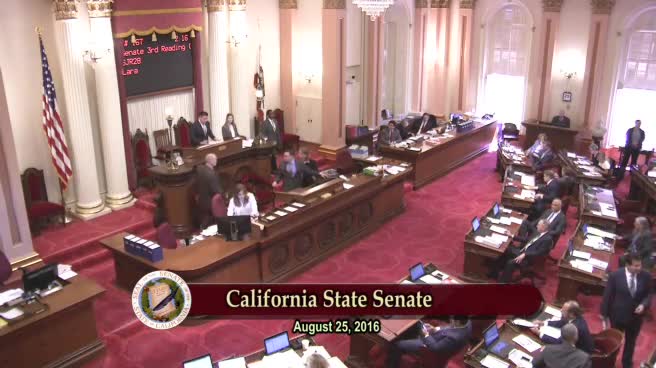 1MIN
Senate Floor
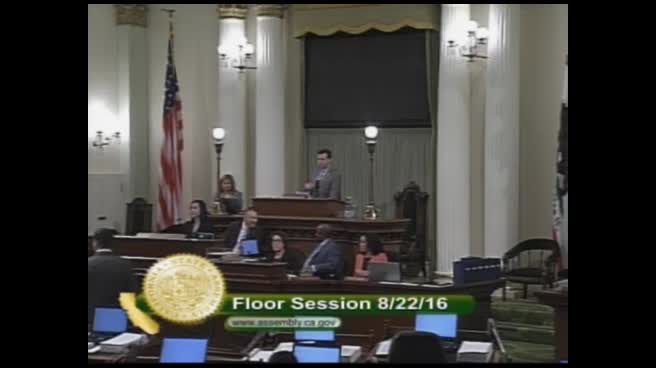 3MIN
Assembly Floor
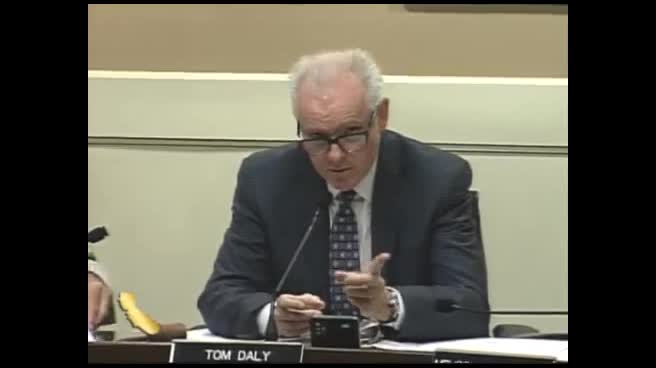 33MIN
Assembly Standing Committee on Insurance
 4MIN
Senate Floor
Bill Author

Bill Co-Author(s):
