SB 947: Public assistance: personal interviews.
- Session Year: 2015-2016
- House: Senate
- Latest Version Date: 2016-09-29
Existing law provides for protection, care, and assistance for people of the state by providing appropriate aid and services to the needy and distressed. Programs established for this purpose include the California Work Opportunity and Responsibility to Kids program (CalWORKs), which provides cash assistance and other social services to needy families, using federal Temporary Assistance for Needy Families (TANF) block grant program, state, and county funds. Existing law prohibits an applicant from being granted public assistance under CalWORKs until he or she is personally interviewed by the county human services agency or state hospital staff. Existing law also requires the county department to verify if an applicant is incapable of acting on his or her own behalf by personal contact with the applicant before aid is authorized.
This bill would authorize the county human services agency to conduct this personal interview telephonically or through electronic means, as specified. The bill would require a county, if that county elects to conduct the personal interview telephonically or through other electronic means, to conduct an in-person personal interview if requested by an applicant.
Existing law provides for protection, care, and assistance for people of the state by providing appropriate aid and services to the needy and distressed. Programs established for this purpose include the California Work Opportunity and Responsibility to Kids program (CalWORKs), which provides cash assistance and other social services to needy families, using federal Temporary Assistance for Needy Families (TANF) block grant program, state, and county funds. Existing law prohibits an applicant from being granted public assistance under CalWORKs until he or she is personally interviewed by the county human services agency or state hospital staff. Existing law also requires the county department to verify if an applicant is incapable of acting on his or her own behalf by personal contact with the applicant before aid is authorized.
This bill would authorize the county human services agency to conduct this personal interview telephonically or through electronic means. means, as specified. The bill would require a county, if that county elects to conduct the personal interview telephonically or through other electronic means, to conduct an in-person personal interview if requested by an applicant.
Existing law provides for protection, care, and assistance for people of the state by providing appropriate aid and services to the needy and distressed. Programs established for this purpose include the California Work Opportunity and Responsibility to Kids program (CalWORKs), which provides cash assistance and other social services to needy families, using federal Temporary Assistance for Needy Families (TANF) block grant program, state, and county funds. Existing law prohibits an applicant from being granted public assistance under CalWORKs until he or she is personally interviewed by the county human services agency or state hospital staff. Existing law also requires the county department to verify if an applicant is incapable of acting on his or her own behalf by personal contact with the applicant before aid is authorized.
This bill would authorize the county human services agency to conduct this personal interview telephonically or through electronic means. The bill would require a county, if that county elects to conduct the personal interview telephonically or through other electronic means, to conduct an in-person personal interview if requested by an applicant.
Existing law provides for protection, care, and assistance for people of the state by providing appropriate aid and services to the needy and distressed. Programs established for this purpose include the California Work Opportunity and Responsibility to Kids program (CalWORKs), which provides cash assistance and other social services to needy families, using federal Temporary Assistance for Needy Families (TANF) block grant program, state, and county funds. Existing law prohibits an applicant from being granted public assistance under CalWORKs until he or she is personally interviewed by the county human services agency or state hospital staff. Existing law also requires the county department to verify if an applicant is incapable of acting on his or her own behalf by personal contact with the applicant before aid is authorized.
This bill would authorize the county human services agency to conduct this personal interview telephonically or through electronic means. The bill would require an in-person personal interview to be conducted if requested by an applicant or recipient. By imposing a higher level of service on county human services agencies administering the CalWORKs program, this bill would impose a state-mandated local program. a county, if that county elects to conduct the personal interview telephonically or through other electronic means, to conduct an in-person personal interview if requested by an applicant.
The California Constitution requires the state to reimburse local agencies and school districts for certain costs mandated by the state. Statutory provisions establish procedures for making that reimbursement.
This bill would provide that, if the Commission on State Mandates determines that the bill contains costs mandated by the state, reimbursement for those costs shall be made pursuant to these statutory provisions.
Existing law provides for protection, care, and assistance for people of the state by providing appropriate aid and services to the needy and distressed. Programs established for this purpose include the California Work Opportunity and Responsibility to Kids program (CalWORKs), which provides cash assistance and other social services to needy families, using federal Temporary Assistance for Needy Families (TANF) block grant program, state, and county funds. Existing law prohibits an applicant from being granted public assistance under CalWORKs until he or she is personally interviewed by the county human services agency or state hospital staff. Existing law also requires the county department to verify if an applicant is incapable of acting on his or her own behalf by personal contact with the applicant before aid is authorized.
This bill would authorize the county human services agency to conduct this personal interview telephonically or through electronic means. The bill would require a an in-person personal interview to be conducted if requested by an applicant or recipient. The bill would delete the requirement that the county department verify an applicant is incapable of acting on his or her own behalf. By imposing a higher level of service on county human services agencies administering the CalWORKs program, this bill would impose a state-mandated local program.
The California Constitution requires the state to reimburse local agencies and school districts for certain costs mandated by the state. Statutory provisions establish procedures for making that reimbursement.
This bill would provide that, if the Commission on State Mandates determines that the bill contains costs mandated by the state, reimbursement for those costs shall be made pursuant to these statutory provisions.
Existing law provides for protection, care, and assistance for people of the state by providing appropriate aid and services to the needy and distressed. Programs established for this purpose include the California Work Opportunity and Responsibility to Kids program (CalWORKs), which provides cash assistance and other social services to needy families, using federal Temporary Assistance for Needy Families (TANF) block grant program, state, and county funds. Existing law prohibits an applicant from being granted public assistance under CalWORKs until he or she is personally interviewed by the county human services agency or state hospital staff. Existing law also requires the county department to verify if an applicant is incapable of acting on his or her own behalf by personal contact with the applicant before aid is authorized.
This bill would authorize the county human services agency to conduct this personal interview telephonically or through electronic means. The bill would require a personal interview to be conducted if requested by an applicant or recipient. The bill would delete the requirement that the county department verify an applicant is incapable of acting on his or her own behalf.
This act shall be known, and may be cited, as the County Option of Efficient Interviewing of CalWORKs Applicants Act of 2016.
SEC. 2.Section 11052.5 of the Welfare and Institutions Code is amended to read:11052.5.(a)An applicant shall not be granted public assistance under Chapter 2 (commencing with Section 11200) and Chapter 5.1 (commencing with Section 13000) until he or she is first personally interviewed by the office of the county human services agency or state staff for patients in state hospitals.
(b)(1)In determining eligibility for public assistance under Chapter 2 (commencing with Section 11200), in lieu of an in-person personal interview as required under subdivision (a), the county may elect to conduct the interview required by this section telephonically or through other electronic means.
(2)A county that elects to conduct the interview telephonically or through other electronic means shall include a set of procedures in its county plan for conducting interviews in that manner that ensure that clients whose interviews are conducted telephonically or through other electronic means are provided with the same information that is provided to individuals who have their interviews conducted in person.
(c)If an applicant is incapable of acting on his or her own behalf, the county department shall verify this fact by personal contact with the applicant before aid is authorized.
(d)The interview conducted pursuant to this section shall occur within seven days after the time of application unless there are extenuating circumstances that justify further delay.
(e)If a county elects to conduct the personal interview to determine eligibility for public assistance under Chapter 2 (commencing with Section 11200) required under subdivision (a) telephonically or through other electronic means, pursuant to subdivision (b), the county shall conduct an in-person personal interview in lieu of an interview through telephonic or other electronic means if requested by an applicant.
(f)For purposes of this section, public assistance does not include health care as provided pursuant to Chapter 7 (commencing with Section 14000).
This act shall be known, and may be cited, as the County Option of Efficient Interviewing of CalWORKs Applicants Act of 2016.
SEC. 2.Section 11052.5 of the Welfare and Institutions Code is amended to read:11052.5.(a)An applicant shall not be granted public assistance under Chapter 2 (commencing with Section 11200) and Chapter 5.1 (commencing with Section 13000) until he or she is first personally interviewed by the office of the county human services agency or state staff for patients in state hospitals.
(b)(1)In determining eligibility for public assistance under Chapter 2 (commencing with Section 11200), in lieu of an in-person personal interview as required under subdivision (a), the county may elect to conduct the interview required by this section telephonically or through other electronic means.
(2)A county that elects to conduct the interview telephonically or through other electronic means shall include a set of procedures in its county plan for conducting interviews in that manner that ensure that clients whose interviews are conducted telephonically or through other electronic means are provided with the same information that is provided to individuals who have their interviews conducted in person.
(c)If an applicant is incapable of acting in on his or her own behalf, the county department shall verify this fact by personal contact with the applicant before aid is authorized. As used in this section, the term public assistance does not include health care as provided by Chapter 7 (commencing with Section 14000).
(d)The interview conducted pursuant to this section shall occur within seven days after the time of application unless there are extenuating circumstances that justify further delay.
(e)If a county elects to conduct the personal interview to determine eligibility for public assistance under Chapter 2 (commencing with Section 11200) required under subdivision (a) telephonically or through other electronic means, pursuant to subdivision (b), the county shall conduct an in-person personal interview in lieu of an interview through telephonic or other electronic means if requested by an applicant.
(f)For purposes of this section, public assistance does not include health care as provided pursuant to Chapter 7 (commencing with Section 14000).
This act shall be known, and may be cited, as the County Option of Efficient Interviewing of CalWORKs Applicants Act of 2016.
SEC. 2.Section 11052.5 of the Welfare and Institutions Code is amended to read:11052.5.(a)An applicant shall not be granted public assistance under Chapter 2 (commencing with Section 11200) and Chapter 5.1 (commencing with Section 13000) until he or she is first personally interviewed by the office of the county human services agency or state staff for patients in state hospitals.
(b)In determining eligibility for public assistance under Chapter 2 (commencing with Section 11200), in lieu of an in-person personal interview as required under subdivision (a), the county may elect to conduct the interview required by this section telephonically or through other electronic means. If
(c)If an applicant is incapable of acting in his or her own behalf, the county department shall verify this fact by personal contact with the applicant before aid is authorized. As used in this section, the term public assistance does not include health care as provided by Chapter 7 (commencing with Section 14000).
(c)
(d)The interview conducted pursuant to this section shall occur within seven days after the time of application unless there are extenuating circumstances that justify further delay.
(d)
(e)If a county elects to conduct the personal interview to determine eligibility for public assistance under Chapter 2 (commencing with Section 11200) required under subdivision (a) telephonically or through other electronic means, pursuant to subdivision (b), the county shall conduct an in-person personal interview in lieu of an interview through telephonic or other electronic means if requested by an applicant.
This act shall be known, and may be cited, as the County Option of Efficient Interviewing of CalWORKs Applicants Act of 2016.
SEC. 2.Section 11052.5 of the Welfare and Institutions Code is amended to read:11052.5.(a)An applicant shall not be granted public assistance under Chapter 2 (commencing with Section 11200) and Chapter 5.1 (commencing with Section 13000) until he or she is first personally interviewed by the office of the county human services agency or state staff for patients in state hospitals.
(b)In lieu of an in-person personal interview as required under subdivision (a), the county may elect to conduct the interview required by this section telephonically or through other electronic means. If an applicant is incapable of acting in his or her own behalf, the county department shall verify this fact by personal contact with the applicant before aid is authorized. As used in this section, the term public assistance does not include health care as provided by Chapter 7 (commencing with Section 14000).
(c)The interview conducted pursuant to this section shall occur within seven days after the time of application unless there are extenuating circumstances that justify further delay.
(d)An in-person personal interview shall be conducted if requested by an applicant.
(d)If a county elects to conduct the personal interview required under subdivision (a) telephonically or through other electronic means, the county shall conduct an in-person personal interview in lieu of an interview through telephonic or other electronic means if requested by an applicant.
SEC. 3.If the Commission on State Mandates determines that this act contains costs mandated by the state, reimbursement to local agencies and school districts for those costs shall be made pursuant to Part 7 (commencing with Section 17500) of Division 4 of Title 2 of the Government Code.
This act shall be known, and may be cited, as the County Option of Efficient Interviewing of CalWORKs Applicants Act of 2016.
SEC. 2.Section 11052.5 of the Welfare and Institutions Code is amended to read:11052.5.(a)An applicant shall not be granted public assistance under Chapter 2 (commencing with Section 11200) and Chapter 5.1 (commencing with Section 13000) until he or she is first personally interviewed by the office of the county human services agency or state staff for patients in state hospitals.
(b)In lieu of an in-person personal interview as required under subdivision (a), the county may elect to conduct the interview required by this section telephonically or through other electronic means. The interview shall be conducted promptly following the application for assistance. If an applicant is incapable of acting in his or her own behalf, the county department shall verify this fact with the applicant before aid is authorized. As used in this section, the term public assistance does not include health care as provided by Chapter 7 (commencing with Section 14000).
(c)The interview conducted pursuant to this section shall occur within seven days after the time of application unless there are extenuating circumstances that justify further delay.
(d)A An in-person personal interview shall be conducted if requested by an applicant.
SEC. 3.If the Commission on State Mandates determines that this act contains costs mandated by the state, reimbursement to local agencies and school districts for those costs shall be made pursuant to Part 7 (commencing with Section 17500) of Division 4 of Title 2 of the Government Code.
This act shall be known, and may be cited, as the County Option of Efficient Interviewing of CalWORKs Applicants Act of 2016.
SEC. 2.Section 11052.5 of the Welfare and Institutions Code is amended to read:11052.5.No (a)An applicant shall not be granted public assistance under Chapters 2 Chapter 2 (commencing with Section 11200) and 5 (commencing with Section 13000) of this part until he or she is first personally interviewed by the office of the county department human services agency or state staff for patients in state hospitals. The personal
(b)In lieu of an in-person personal interview as required under subdivision (a), the county may elect to conduct the interview required by this section telephonically or through other electronic means. The interview shall be conducted promptly following the application for assistance. If an applicant is incapable of acting in his or her own behalf, the county department shall verify this fact by personal contact with the applicant before aid is authorized. As used in this section, the term public assistance does not include health care as provided by Chapter 7 (commencing with Section 14000).
The
(c)The interview conducted pursuant to this section shall occur within seven days after the time of application unless there are extenuating circumstances that justify further delay.
(d)A personal interview shall be conducted if requested by an applicant.
|
Date
|
Status
|
|---|---|
| Jun 1, 2016 | Read third time. Passed. (Ayes 29. Noes 9.) Ordered to the Assembly. |
| Aug 30, 2016 | Enrolled and presented to the Governor at 1:30 p.m. |
| Aug 24, 2016 | Assembly amendments concurred in. (Ayes 31. Noes 8.) Ordered to engrossing and enrolling. |
| Aug 22, 2016 | Read third time. Passed. (Ayes 61. Noes 17. Page 6012.) Ordered to the Senate. |
| Aug 22, 2016 | Read third time. Passed. Ordered to the Senate. |
| Aug 22, 2016 | In Senate. Concurrence in Assembly amendments pending. |
| Aug 18, 2016 | Read third time and amended. (Ayes 52. Noes 26. Page 5858.) |
| Aug 18, 2016 | Read third time and amended. |
| Aug 18, 2016 | Ordered to third reading. |
| Aug 3, 2016 | Read second time. Ordered to third reading. |
| Aug 2, 2016 | Read second time and amended. Ordered to second reading. |
| Aug 1, 2016 | From committee: Do pass as amended. (Ayes 6. Noes 1.) (June 28). |
| Jun 9, 2016 | Referred to Com. on HUM. S. |
| Jun 2, 2016 | In Assembly. Read first time. Held at Desk. |
| Feb 3, 2016 | Introduced. Read first time. To Com. on RLS. for assignment. To print. |
| Jun 1, 2016 | Read third time. Passed. (Ayes 29. Noes 9. Page 4094.) Ordered to the Assembly. |
| May 31, 2016 | Read second time and amended. Ordered to third reading. |
| May 27, 2016 | From committee: Do pass as amended. (Ayes 5. Noes 2.) (May 27). |
| May 27, 2016 | From committee: Do pass as amended. (Ayes 5. Noes 2. Page 4000.) (May 27). |
| May 20, 2016 | Set for hearing May 27. |
| Apr 18, 2016 | April 18 hearing: Placed on APPR. suspense file. |
| Apr 8, 2016 | Set for hearing April 18. |
| Mar 31, 2016 | Read second time and amended. Re-referred to Com. on APPR. |
| Mar 30, 2016 | From committee: Do pass as amended and re-refer to Com. on APPR. (Ayes 3. Noes 0.) (March 29). |
| Mar 30, 2016 | From committee: Do pass as amended and re-refer to Com. on APPR. (Ayes 3. Noes 0. Page 3311.) (March 29). |
| Mar 9, 2016 | Set for hearing March 29. |
| Feb 18, 2016 | Referred to Coms. on HUMAN S. and APPR. |
| Feb 4, 2016 | From printer. May be acted upon on or after March 5. |
|
Date
|
Description
|
Location
|
Votes
|
|
|---|---|---|---|---|
| Aug 24, 2016 | Unfinished Business SB947 Pan Concurrence | Senate Floor |
Passed |
|
| Aug 22, 2016 | SB 947 Pan Senate Third Reading By ARAMBULA | Assembly Floor |
Passed |
|
| Aug 18, 2016 | SB 947 Pan Senate Third Reading By ARAMBULA Amendment Set #1 | Assembly Floor |
Passed |
|
| Jun 28, 2016 | Do pass as amended. | Assembly Standing Committee on Human Services |
Passed |
|
| Jun 1, 2016 | Senate 3rd Reading SB947 Pan | Senate Floor |
Passed |
|
| May 27, 2016 | Do pass as amended | Senate Standing Committee on Appropriations |
Passed |
|
| Apr 18, 2016 | Placed on suspense file | Senate Standing Committee on Appropriations |
Passed |
|
| Mar 29, 2016 | Do pass as amended, but first amend, and re-refer to the Committee on [Appropriations] | Senate Standing Committee on Human Services |
Passed |
This list shows positions taken on this bill by organizations on the date displayed, which is linked to the original source.
Positions by individuals are not included.
|
Organization
|
Position
|
Date
|
|---|---|---|
| California Association Of Food Banks | ** Support | Aug 24, 2016 |
| California Food Policy Advocates | ** Support | Aug 24, 2016 |
| California State Association Of Counties | ** Support | Aug 24, 2016 |
| Children'S Defense Fund - California | ** Support | Aug 24, 2016 |
| Coalition of California Welfare Rights Organizations | ** Support | Aug 24, 2016 |
| Community Action Partnership of Orange County | ** Support | Jun 28, 2016 |
| County Board of Supervisors | * Support | Jun 28, 2016 |
| County Welfare Directors Association of California | ** Support | Aug 24, 2016 |
| Courage Campaign | ** Support | Aug 24, 2016 |
| National Association of Social Workers | ** Support | Aug 24, 2016 |
| Santa Clara County Board of Supervisors | ** Support | Aug 24, 2016 |
| Solano County Board of Supervisors | ** Support | Jun 28, 2016 |
| St Anthony's Foundation | ** Support | Aug 22, 2016 |
| United Ways Of California | * Support | Mar 29, 2016 |
| Western Center On Law And Poverty Inc. | ** Support | Aug 24, 2016 |
Office of Senate Floor Analyses (916) 651-1520 Fax: (916) 327-4478 | SB |
UNFINISHED BUSINESS
Bill No: SB 947
:
SENATE HUMAN SERVICES COMMITTEE: 3-0, 3/29/16
AYES: McGuire, Hancock, Liu
NO VOTE RECORDED: Berryhill, Nguyen
SENATE APPROPRIATIONS COMMITTEE: 5-2, 5/27/16
AYES: Lara, Beall, Hill, McGuire, Mendoza
NOES: Bates, Nielsen
SENATE FLOOR: 29-9, 6/1/16
AYES: Allen, Beall, Block, Cannella, De León, Glazer, Hall, Hancock, Hernandez, Hertzberg, Hill, Hueso, Jackson, Lara, Leno, Leyva, Liu, McGuire, Mendoza, Mitchell, Monning, Moorlach, Nguyen, Pan, Pavley, Roth, Vidak, Wieckowski, Wolk
NOES: Anderson, Bates, Berryhill, Fuller, Gaines, Huff, Morrell, Nielsen, Stone
NO VOTE RECORDED: Galgiani, Runner
ASSEMBLY FLOOR: 61-17, 8/22/16 - See last page for vote
SOURCE: Coalition of California Welfare Rights Organizations
County Welfare Directors Association of California
Western Center on Law and Poverty
DIGEST: This bill establishes the County Option of Efficient Interviewing of California Work Opportunity and Responsibility to Kids (CalWORKs) Applicants Act of 2016 and authorizes a county to conduct the interview of an applicant for CalWORKs via telephone or other electronic means in lieu of an in-person interview, unless otherwise requested by the applicant.
Assembly Amendments require that the a county that elects to conduct the interview telephonically or through other electronic means shall include a set of procedures in its county plan that ensure that clients whose interviews are conducted telephonically or through other electronic means are provided with the same information that is provided to individuals who have their interviews conducted in person; and make other technical changes.
Existing law:
- Establishes the federal Temporary Assistance for Needy Families (TANF) program, which permits states to implement the program under a state plan. (42 USC § 601 et seq.)
- Establishes in state law the CalWORKs program to provide cash assistance and other social services for low-income families through the TANF program. Under CalWORKs, each county provides assistance through a combination of state, county and federal TANF funds. (WIC 10530)
- Prohibits an applicant from being granted public assistance under CalWORKs until he or she is personally interviewed by the county human services agency or state hospital staff. (WIC 11052.5)
- Requires the personal interview to be conducted promptly following the application for CalWORKs assistance. If an applicant is incapable of acting in his or her own behalf, the county department shall verify this fact by personal contact with the applicant before aid is authorized. (WIC 11052.5)
- Establishes under federal law the Supplemental Nutrition Assistance Program (SNAP) within the US Department of Agriculture (USDA) to promote the general welfare and to safeguard the health and wellbeing of the nation’s population by raising the levels of nutrition among low-income households. It establishes SNAP eligibility requirements. (7 CFR 271.1; 7 CFR 273.9)
- Establishes in California statute the CalFresh program to administer the provision of federal SNAP benefits to families and individuals meeting specified criteria. (WIC 18900 et seq.)
This bill:
- Names this bill the County Option of Efficient Interviewing of CalWORKs Applicants Act of 2016.
- Authorizes a county to conduct the interview of an applicant for CalWORKs via telephone or other electronic means in lieu of an in-person interview, unless otherwise requested by the applicant.
- Requires a county that elects to conduct interviews telephonically or through other electronic means to include in its county plan a set of procedures for conducting interviews in that manner that ensure that interviewed clients are provided with the same information as clients interviewed in person.
- Makes technical changes.
Background
According to the author, the counties that have set up the infrastructure to do telephone interviews for CalFresh applicants should have the option to do the same for CalWORKs applicants if it would achieve administrative efficiency. The author also states the cost of transportation can be very burdensome, especially for families living in rural California.
As noted by one of the bill’s sponsors, the Coalition of California Welfare Rights Organization, current law was “enacted before the advent of modern tools that allow for interviews to be completed and, recorded and stored electronically in the case file. Today, these interviews can be completed telephonically, by video or electronically in ways that are more efficient without compromising the integrity of the program.”
According to the California Department of Social Services (CDSS), if SB 947 were signed into law, CalWORKs applicants will still be required to sign their application forms and submit fingerprints and photographs to the county human services agencies.
CalWORKs
CalWORKs implements the federal TANF program in California. In addition to temporary cash assistance to meet basic family needs, CalWORKs provides education, employment and training programs. CDSS is the designated state agency responsibility for program supervision at the state level. The counties are responsible for administering the caseloads at the local level. The CalWORKs program is funded with a mix of federal, state, and county funds.
State law provides for a cumulative 48-month lifetime limit on cash aid for adults. During those 48 months, adults may receive a total of 24 months of Welfare-to-Work (WTW) services and activities. WTW activities include subsidized and unsubsidized employment, community service, adult basic education, job skills, training, mental health counseling, substance abuse treatment and other activities necessary to assist recipients in obtaining employment. Once the 24 months of WTW activities have been exhausted, adults must meet the stricter federal work participation requirements (20, 30, or 35 hours weekly, depending on family composition) unless they are exempt or receive an extension. Children of adults who exhaust the 48-month lifetime limit may continue to receive cash aid, if otherwise eligible, up to age 18.
CalFresh
CalFresh provides monthly benefits to assist low-income households in purchasing food or food product intended for human consumption. CalFresh benefits are 100% federally funded and national eligibility standards and benefit levels are established by the federal government. To participate in CalFresh, households must meet certain income-eligibility standards. The average monthly benefit for a CalFresh recipient in federal fiscal year 2015 was $126.83 per month, or $4.23 per day, according to the USDA. Households who receive or are eligible to receive cash assistance under CalWORKs or General Assistance/General Relief programs are categorically eligible for CalFresh.
CalFresh currently serves approximately 4.4 million people, according to USDA data. Nonetheless, California’s participation rate has been ranked last or near last in the country for years, prompting concerns from the USDA, stories in the state’s newspapers and two Legislative hearings in 2014.
Use of telephone interviews for CalFresh
Under USDA Food and Nutrition Services Waiver #2130007 and state and federal regulations (US 7 CFR 273.2(e)(3) and California Manual of Policies and Procedures (Section 63-300.46) California’s county human services agencies have the option to allow CalFresh applicants to satisfy the interview requirement over the telephone rather than mandating a face-to-face interview.
In 2009, CDSS informed county welfare departments via All County Letter (ACL) #09-62 that they had the option of waiving the face-to-face interview for CalFresh applicants and recipients at initial application, recertification, or both.
In 2012, CDSS issued ACL #12-26 stating, “As an element of program simplification and as part of CDSS commitment to improving access, offering the option of a telephone interview in lieu of a face-to-face interview will now be required at intake and recertification.” The same ACL reported that waiving the requirement for a face-to-face interview “has not negatively affected payment error rates, is beneficial for CalFresh applicants and recipients, and provides administrative relief for county staff.
In 2013, the USDA granted California an extension of its waiver of the face-to-face interview requirement through May 31, 2017.
Online application for Medi-Cal
California’s version of the federal Medicaid program, Medi-Cal, services low-income individuals, including but not limited to: families, seniors, persons with disabilities, children in foster care, pregnant women, and childless adults with incomes below 138% of federal poverty level. Applications for Medi-Cal benefits may be filed online, in person or by mail. All applicants are required to submit some signed documents, so there is still paperwork component of the Medi-Cal application process.
Related/Prior Legislation
SB 297 (McGuire, 2015) would have facilitated electronic verification of eligibility for certain means-tested public benefits programs; clarified when an eligibility worker should conduct a telephone interview; required CDSS to develop technology to store telephonic and electronic signatures and to issue guidance for recording and storing electronic and telephonic signatures. The bill was held in Senate Appropriations Committee.
SB 312 (Pan, 2015) would have authorized the county human services agency or state hospital staff to conduct a personal interview of CalWORKs applicants telephonically or through electronic means. The bill would have required a face-to-face interview to be conducted if requested by an applicant or recipient. This bill was held in the Senate Appropriations Committee.
AB 1970 (Skinner, 2012) sought to modernize and streamline the administration of, and remove barriers to participation in, social services programs, including removing the face-to-face interview requirement for CalWORKs and CalFresh as a condition of receipt of aid. AB 1970 was held in the Senate Appropriations Committee.
AB 6 (Fuentes, Chapter 501, Statutes of 2011) removed the CalFresh fingerprinting requirement, modified reporting requirements from quarterly to semi-annually, and made other changes.
AB 231 (Steinberg, Chapter 743, Statutes of 2003) permitted counties to exempt a household from complying with the face-to-face interview required by a CalFresh applicant, in addition to other policy changes.
FISCAL EFFECT: Appropriation: Fiscal Com.: No Local: No
According to the Senate Appropriations Committee:
- Interviews via telephonic/electronic means: Potentially significant one-time and near-term non-reimbursable local costs for equipment, staffing, and/or training to implement new processes. To the extent conducting interviews by telephone or electronic means results in administrative efficiencies could result in significant ongoing future cost savings.
- CalWORKs benefits/administration: Potential increases or decreases in CalWORKs benefits and administration costs (General Fund) to the extent conducting interviews by telephone or electronic means results in a greater or lesser number of applications for aid granted. To the extent this bill removes barriers and/or delays in applying for and being granted aid, CalWORKs program costs could increase. However, to the extent reduced utilization of in-person interviews prevents or delays the receipt of verification and/or clarification, applications that otherwise may have been approved could potentially be delayed or denied.
Coalition of California Welfare Rights Organizations (co-source)
County Welfare Directors Association of California (co-source)
Western Center on Law and Poverty (co-source)
California Association of Food Banks
California Food Policy Advocates
California State Association of Counties
Children’s Defense Fund – California
Courage Campaign
National Association of Social Workers
Santa Clara County Board of Supervisors
OPPOSITION: (Verified 8/22/16)
None received
ASSEMBLY FLOOR: 61-17, 8/22/16
AYES: Achadjian, Alejo, Arambula, Atkins, Baker, Bloom, Bonilla, Bonta, Brown, Burke, Calderon, Campos, Chau, Chávez, Chiu, Chu, Cooley, Cooper, Dababneh, Daly, Dodd, Eggman, Frazier, Cristina Garcia, Eduardo Garcia, Gipson, Gomez, Gonzalez, Gordon, Gray, Roger Hernández, Holden, Irwin, Jones-Sawyer, Kim, Lackey, Levine, Linder, Lopez, Low, Maienschein, Mayes, McCarty, Medina, Mullin, Nazarian, O'Donnell, Olsen, Quirk, Ridley-Thomas, Rodriguez, Salas, Santiago, Mark Stone, Thurmond, Ting, Weber, Wilk, Williams, Wood, Rendon
NOES: Travis Allen, Bigelow, Brough, Chang, Dahle, Beth Gaines, Gallagher, Gatto, Grove, Hadley, Jones, Mathis, Obernolte, Patterson, Steinorth, Wagner, Waldron
NO VOTE RECORDED: Harper, Melendez
8/23/16 9:18:47
**** END ****
SENATE COMMITTEE ON HUMAN SERVICES
Senator Mike McGuire, Chair
2015 - 2016 Regular
Bill No: SB 947 Hearing Date: March 29, 2016
Author: | Pan | ||
Version: | February 3, 2016 | ||
Urgency: | No | Fiscal: | No |
Consultant: | Taryn Smith | ||
Subject: Public assistance: personal interviews
SUMMARY
This bill authorizes county human services agencies to conduct a personal interview of CalWORKs applicants telephonically or through electronic means. The bill requires a personal interview to be conducted if requested by an applicant or recipient. It deletes the requirement that the county department verify an applicant is incapable of acting on his or her own behalf.
ABSTRACT
Existing law:
- Establishes the federal Temporary Assistance for Needy Families (TANF) program, which permits states to implement the program under a state plan. (42 USC § 601 et seq.)
- Establishes in state law the California Work Opportunity and Responsibility to Kids (CalWORKs) program to provide cash assistance and other social services for low-income families through the federal Temporary Assistance for Needy Families (TANF) program. Under CalWORKs, each county provides assistance through a combination of state, county and federal TANF funds. (WIC 10530)
- Prohibits an applicant from being granted public assistance under CalWORKs until he or she is personally interviewed by the county human services agency or state hospital staff. (WIC 11052.5)
- Requires the personal interview to be conducted promptly following the application for CalWORKs assistance. If an applicant is incapable of acting in his or her own behalf, the county department shall verify this fact by personal contact with the applicant before aid is authorized. (WIC 11052.5)
- Establishes under federal law the Supplemental Nutrition Assistance Program (SNAP) within the US Department of Agriculture (USDA) to promote the general welfare and to safeguard the health and wellbeing of the nation’s population by raising the levels of nutrition among low-income households. It establishes SNAP eligibility requirements, including income that is at or below 130 percent of the federal poverty level and is determined to be a substantial limiting factor in permitting a recipient to obtain a more nutritious diet. (7 CFR 271.1; 7 CFR 273.9)
- Establishes in California statute the CalFresh program to administer the provision of federal SNAP benefits to families and individuals meeting specified criteria. (WIC 18900 et seq.)
This bill:
- Names this bill the County Option of Efficient Interviewing of CalWORKs Applicants Act of 2016.
- Deletes the requirement that applicants for some social services, including child welfare, adult protective and in home support services, shall not be granted those services until he or she is first personally interviewed by the county human services agency or state staff for patients in state hospitals.
- Permits that, in lieu of an in-person personal interview, county human services agencies, or state staff or patients in state hospitals, may elect to conduct an interview of CalWORKs applicants telephonically or through other electronic means.
- Deletes the requirement that, if an applicant is incapable of acting in his or her own behalf, the county department shall verify this fact by personal contact with the applicant before aid is authorized.
- Requires a personal interview to be conducted if requested by an applicant.
FISCAL IMPACT
This bill has not been analyzed by a fiscal committee.
BACKGROUND AND DISCUSSION
According to the author, the counties that have set up the infrastructure to do telephone interviews for CalFresh applicants should have the option to do the same for CalWORKs applicants if it would achieve administrative efficiency. The author also states the cost of transportation can be very burdensome, especially for families living in rural California.
As noted by one of the bill’s sponsors, the Coalition of California Welfare Rights Organization, current law was “enacted before the advent of modern tools that allow for interviews to be completed and, recorded and stored electronically in the case file. Today, these interviews can be completed telephonically, by video or electronically in ways that are more efficient without compromising the integrity of the program.”
According to CDSS, if SB 947 were signed into law, CalWORKs applicants will still be required to sign their application forms and submit fingerprints and photographs to the county human services agencies.
CalWORKs
According to California Public Policy Institute, 21% of Californians were living in poverty and 23.9% of California’s children were living in poverty in 2013. During and after the Great Recession, California saw growing rates of childhood deep poverty – those living below 50 percent of the federal poverty line. One of California’s most essential anti-poverty strategies is the CalWORKs program, which provides cash assistance to approximately 540,000 families – including more than 1 million children, according to 2014 federal data.
CalWORKs implements the federal TANF program in California. In addition to temporary cash assistance to meet basic family needs, CalWORKs provides education, employment and training programs. CDSS is the designated state agency responsibility for program supervision at the state level. The counties are responsible for administering the caseloads at the local level. The CalWORKs program is funded with a mix of federal, state, and county funds.
State law provides for a cumulative 48-month lifetime limit on cash aid for adults. During those 48 months, adults may receive a total of 24 months of Welfare-to-Work (WTW) services and activities. WTW activities include subsidized and unsubsidized employment, community service, adult basic education, job skills, training, mental health counseling, substance abuse treatment and other activities necessary to assist recipients in obtaining employment. Once the 24 months of WTW activities have been exhausted, adults must meet the stricter federal work participation requirements (20, 30, or 35 hours weekly, depending on family composition) unless they are exempt or receive an extension. Children of adults who exhaust the 48-month lifetime limit may continue to receive cash aid, if otherwise eligible, up to age 18.
Use of telephone Interviews for CalFresh
Under a federal USDA waiver,[1] and under current regulatory requirements,[2] California’s county human services agencies have the option to allow CalFresh applicants to satisfy the interview requirement over the telephone rather than mandating a face-to-face interview.
In 2009, CDSS informed county welfare departments that they had the option of waiving the face-to-face interview for CalFresh applicants and recipients at initial application, recertification, or both.[3] In 2012, CDSS issued an All County Letter stating, “As an element of program simplification and as part of CDSS commitment to improving access, offering the option of a telephone interview in lieu of a face-to-face interview will now be required at intake and recertification.” The same ACL reported that waiving the requirement for a face-to-face interview “has not negatively affected payment error rates, is beneficial for CalFresh applicants and recipients, and provides administrative relief for county staff.[4]
According to data from USDA, overpayments to Cal Fresh recipients in California have not shown significant increase since telephone interviews were initiated in 2009:
Year | CalFresh Overpayment Rate |
2009 | 3.07 % |
2010 | 3.56% |
2011 | 2.65 % |
2012 | 3.06% |
2013 | 2.82% |
2014 | 4.14% |
Online Application for Medi-Cal
California’s version of the federal Medicaid program, Medi-Cal, services low-income individuals, including but not limited to: families, seniors, persons with disabilities, children in foster care, pregnant women, and childless adults with incomes below 138% of federal poverty level. Applications for Medi-Cal benefits may be filed online, in person or by mail. All applicants are required to submit some signed documents, so there is still paperwork component of the Medi-Cal application process.
Related legislation:
Senate Bill 297 (McGuire, 2015) had provisions that would have facilitated electronic verification of eligibility for certain means-tested public benefits programs; clarified when an eligibility worker should conduct a telephone interview; required the CDSS to issue guidance for recording and storing electronic and telephonic signatures; and required CDSS to coordinate with county human services agencies to make available standard technological solutions with the capacity to store telephonic and electronic signatures. The bill was held in Senate Appropriations Committee.
Senate Bill 312 (Pan, 2014) would have authorized the county human services agency or state hospital staff to conduct a personal interview of CalWORKs applicants telephonically or through electronic means. The bill would have required a face-to-face interview to be conducted if requested by an applicant or recipient. This bill was held in the Senate Appropriations Committee.
Assembly Bill 1970 (Skinner, 2012) sought to modernize and streamline the administration of, and remove barriers to participation in, social services programs, including removing the face-to-face interview requirement for CalWORKs and CalFresh as a condition of receipt of aid. AB 1970 was held in the Senate Appropriations Committee.
AB 6 (Fuentes, Chapter 501, Statutes of 2011) removed the CalFresh fingerprinting requirement, modified reporting requirements from quarterly to semi-annually, and made other changes.
AB 231 (Steinberg, Chapter 743, Statutes of 2003) permitted counties to exempt a household from complying with the face-to-face interview required by a CalFresh applicant, in addition to other policy changes.
COMMENTS
There is precedence for allowing telephone interviews in lieu of face-to-face interviews to determine eligibility for other social services. Expanding the option for CalWORKs applicants to be interviewed over the phone would take advantage of modern communication systems. It would also be consistent with other efforts to modernize statewide services, such as telephone interviews for CalFresh and online applications for Medi-Cal services.
For reasons listed below, the committee recommends the following amendments to the bill.
Amendment #1
The bill proposes to delete reference to “Chapter 5 (commencing with Welfare and Institutions Code Section 13000),” which would remove the requirement for county human services agencies to interview applicants for some social services, including child welfare, adult protective and in home support services. The author states that he never intended to delete that requirement. It appears deleting reference to Chapter 5 (commencing with Section 13000) was a drafting error.
The committee recommends the following amendment to WIC Section 11052.5 (a):
An applicant shall not be granted public assistance under Chapters 2 (commencing with Section 11200) and 5.1 (commencing with Section 13000) until he or she is first personally interviewed by the office of the county human services agency or state staff for patients in state hospitals.
Amendment #2
Current law, WIC Section 11052.5(b) requires an interview to be conducted “promptly” following the application for assistance. Similarly, Section 11052.5(c) states that the interview “shall occur within seven days” after the application is received. For purposes of clarity, it may be beneficial to delete the language in section (b), as shown below. Additionally, as currently drafted, SB 947 deletes the requirement that if an applicant is incapable of acting in her or her own behalf, the county human services agency must verify this fact by personal contact with the applicant before aid is authorized. Conducting the verification by personal contact may not be necessary, but it could be performed via telephone or other electronic means.
The committee recommends the following amendment to WIC 11052.5(b):
In lieu of an in-person personal interview as required under subdivision (a), the county may elect to conduct the interview required by this section telephonically or through other electronic means. The interview shall be conducted promptly following the application for assistance. If an applicant is incapable of acting in his or her own behalf, the county department shall verify this fact with the applicant before aid is authorized. As used in this section, the term public assistance does not include health care as provided by Chapter 7 (commencing with Section 14000).
Amendment #3
WIC Section 11052.5(d) requires a personal interview to be conducted, if requested by an applicant. The committee recommends clarifying that an “in-person” interview may be requested by an applicant.
The committee recommends the following amendment to WIC 11052.5(d):
(d) An in-person personal interview shall be conducted if requested by an applicant.
POSITIONS
Support:
Coalition of California Welfare Rights Organizations (Sponsor)
County Welfare Directors Association of California (Co-sponsor)
California Association of Food Banks
California Food Policy Advocates
Children’s defense Fund - California
Courage Campaign
National Association of Social Workers
Santa Clara County Board of Supervisors
St Anthony’s Foundation
Oppose:
None received.
-- END --
SENATE THIRD READING
STR Bill Id:SB 947
Author:(Pan)
As Amended Ver:August 18, 2016
Majority vote
SENATE VOTE: 29-9
Committee | Votes | Ayes | Noes |
Human Services | 6-1 | Bonilla, Arambula, Lopez, Maienschein, Mark Stone, Thurmond | Grove |
SUMMARY: Establishes the County Option of Efficient Interviewing of California Work Opportunity and Responsibility to Kids (CalWORKs) Applicants Act of 2016. Specifically, this bill:
- Authorizes a county to conduct the interview of an applicant for CalWORKs via telephone or other electronic means in lieu of an in-person interview, unless otherwise requested by the applicant.
- Requires a county that elects to conduct interviews telephonically or through other electronic means to include in its county plan a set of procedures for conducting interviews in that manner that ensure that interviewed clients are provided with the same information as clients interviewed in person.
- Makes technical changes.
EXISTING LAW:
- Establishes in federal law the Temporary Assistance for Needy Families (TANF) program, which provides block grants to states to develop and implement their own state welfare-to-work programs designed to provide cash assistance and other supports and services to low-income families. (42 United States Code Section (USC) 601 et seq.)
- Establishes the state's TANF program, the CalWORKs program. CalWORKs provides cash assistance and other supports and services to low-income families and is administered by the counties. (California Welfare and Institutions Code Section (WIC) 11200 et seq.)
- Prohibits applicants for CalWORKs and certain other social service programs from being granted public assistance prior to being personally interviewed by the county department or state staff for patients in state hospitals, as specified. (WIC 11052.5)
- Establishes in federal law the Supplemental Nutrition Assistance Program (SNAP), formerly known as the Food Stamp Program, to permit low-income households to obtain a more nutritious diet by increasing food purchasing power for all eligible households. (7 USC 2011 et seq.)
- Establishes, in state law, the CalFresh program to administer the provision of federal SNAP benefits to low-income families and individuals meeting specified criteria. (WIC 18900 et seq.)
- Requires each county welfare department to, if appropriate and to the extent permissible by federal law, exempt a household from complying with face-to-face interview requirements in order to initially apply or seek recertification for CalFresh benefits, if certain conditions are met, as specified. (WIC 18901.1)
FISCAL EFFECT: According to the Senate Appropriations Committee, on May 27, 2016:
- Interviews via telephonic/electronic means: Potentially significant one-time and near-term non-reimbursable local costs for equipment, staffing, and/or training to implement new processes. To the extent conducting interviews by telephone or electronic means results in administrative efficiencies could result in significant ongoing future cost savings.
- CalWORKs benefits/administration: Potential increases or decreases in CalWORKs benefits and administration costs (General Fund) to the extent conducting interviews by telephone or electronic means results in a greater or lesser number of applications for aid granted. To the extent the bill removes barriers and/or delays in applying for and being granted aid, CalWORKs program costs could increase. However, to the extent reduced utilization of in-person interviews prevents or delays the receipt of verification and/or clarification, applications that otherwise may have been approved could potentially be delayed or denied.
COMMENTS:
CalWORKs: The CalWORKs program provides monthly income assistance and employment-related services aimed at moving children out of poverty and helping families meet basic needs. Federal funding for CalWORKs comes from the TANF block grant. The average 2016-17 monthly cash grant for a family of three on CalWORKs (one parent and two children) is $497.35, and the maximum monthly grant amount for a family of three, if the family has no other income and lives in a high-cost county, is $704. According to recent data from the California Department of Social Services (DSS), around 497,000 families rely on CalWORKs, including over one million children. Nearly 60% of cases include children under 6 years old.
Maximum grant amounts in high-cost counties of $704 per month for a family of three, with no other income, means $23.46 per day, per family, or $7.82 per family member, per day to meet basic needs, including rent, clothing, utility bills, food, and anything else a family needs to ensure children can be cared for at home and safely remain with their families. This grant amount puts the annual household income at $8,448 per year, or 42% of poverty. Federal Poverty Guidelines for 2016 show that 100% of poverty for a family of three is $20,160 per year.
CalFresh: CalFresh benefits are funded entirely by the federal government through the Supplemental Nutrition Assistance Program (SNAP), and the United States Department of Agriculture (USDA) sets specific eligibility requirements for SNAP programs across the United States, including a gross and net income test, work requirements, and other documentation requirements. The maximum allowable gross income is typically 200% of the Federal Poverty Level (FPL). Households with elderly or disabled members are not subject to gross income criteria but must have a net monthly income at or below 100% of the FPL. Other households must meet both gross and net monthly income tests. CalFresh is administered locally by county human services agencies, and the federal, state, and county governments share in the cost of administration of the program.
Benefits are made available on a monthly basis for food purchase through an automated teller machine (ATM)-like electronic benefits transfer (EBT) card. However, unlike other types of benefits that may be accessed through an EBT card, CalFresh benefits cannot be withdrawn in cash at point-of-sale terminals or at ATMs. CalFresh benefits can only be used to purchase food items to be prepared and consumed at home, as well as seeds and plants that can be grown at home and produce food. The average monthly benefit for a CalFresh recipient is $144.35 per month, or $4.81 per person per day.
CalFresh interviews: States have been required, in certain instances, to waive the face-to-face interview for food stamp eligibility determination and redetermination for some time; federal Food Stamp Program (now "SNAP" as of 2008) regulations (7 Code of Federal Regulations Section (CFR) 273.14(e)(2)) state that:
The State agency must notify the applicant that it will waive the face-to-face interview in favor of a telephone interview on a case-by-case basis because of household hardship situations as determined by the State agency. These hardship conditions include, but are not limited to: illness, transportation difficulties, care of a household member, hardships due to residency in a rural area, prolonged severe weather, or work or training hours which prevent the household from participating in an in-office interview. The State agency must document the case file to show when a waiver was granted because of a hardship. The State agency may opt to waive the face-to-face interview in favor of a telephone interview for all households which have no earned income and all members of the household are elderly or disabled. Regardless of any approved waivers, the State agency must grant a face-to-face interview to any household which requests one.
AB 231 (Steinberg), Chapter 743, Statutes of 2003, required counties to screen applicants for food stamps for the need to have a face-to-face application or recertification interview and to grant an exemption from face-to-face interviews when appropriate. State regulations at the time required the face-to-face interview to be waived, and a telephone interview conducted in its place, for initial application and recertification for any household in which all members were 60 years old or older or had disabilities. State regulations also permitted counties to waive face-to-face interviews, and instead conduct telephone interviews, in instances where no household member was able to come to the interview due to transportation difficulties or other hardships determined by the county to warrant waiving the face-to-face interview.
In 2009, the United States Department of Agriculture (USDA) approved a waiver request from California, giving counties the option to waive the face-to-face interview requirement, and to instead conduct telephone interviews, for all food stamp households without the need to show hardship. DSS All-County Letter Number 09-62 stated that:
Implementing this waiver will reduce the application process burden for the household, increase timeliness, increase program access, decrease the volume of activity in the local offices, and remove barriers that prevent households from completing an interview. The waiver will allow the household to complete the eligibility process without being required to arrange for transportation and child care, possibly numerous times.
In 2012, DSS required (versus permitted) counties to offer telephone interviews in lieu of face-to-face interviews. DSS All-County Letter Number 12-26 stated that:
According to the United States Department of Agriculture Food and Nutrition Services, waiving the requirement for a face-to-face interview has not negatively affected payment error rates, is beneficial for CalFresh applicants and recipients, and provides administrative relief for county staff. The majority of counties are utilizing this waiver at both intake and recertification. As an element of program simplification and as part of California Department of Social Services commitment to improving access, offering the option of a telephone interview in lieu of a face-to-face interview will now be required at intake and recertification. Counties not currently taking full advantage of the waiver are encouraged to do so beginning as soon as possible, but no later than July 1, 2012. However, current county practices (including conducting a face-to-face interview on the first day if the applicant is in the office) may be maintained at the option of the applicant if such practice expedites the determination of eligibility and issuance of benefits.
In 2013, the USDA granted California an extension of its waiver of the face-to-face interview requirement through May 31, 2017.
Need for this bill: According to the author:
Currently, CalWORKs requires a face-to-face interview even though today 21st century tools make it possible to do interviews telephonically, video or electronically that is more efficient.
For the past 5 years California has been conducting telephone interviews for the CalFresh program. This effort started when California was in deep recession and the CalFresh caseload ballooned without the administrative resources to process the applications the old fashion way – face-to-face interviews. Today all counties offer the applicant the choice of in-person face-to-face interview or a telephone interview. Some counties have even adopted telephonic signature to make the process more efficient.
California CalFresh error rate did not go up, in fact it went down, when CalFresh face-to-face interviews were mostly eliminated statewide five years ago.
This bill would give the county the option to do telephone interviews just like they do for CalFresh.
PRIOR LEGISLATION:
SB 312 (Pan), of 2015, was substantially similar to this bill. It died in the Senate Appropriations Committee.
AB 1970 (Skinner) of 2012, would have established the Social Services Modernization and Efficiency Act of 2012 to, among other things, require all application and recertification interviews for specified public social service programs to be conducted in person, by telephone, or through other electronic means. It died in the Senate Appropriations Committee.
AB 231 (Steinberg), Chapter 743, Statutes of 2003, among other things, required each county welfare department to, if appropriate and to the extent permissible by federal law, exempt a household from complying with face-to-face interview requirements in order to initially apply or seek recertification for CalFresh benefits, if certain conditions are met.
Analysis Prepared by: Daphne Hunt / HUM. S. / (916) 319-2089 FN: 0004350
SENATE THIRD READING
STR Bill Id:SB 947
Author:(Pan)
As Amended Ver:August 2, 2016
Majority vote
SENATE VOTE: 29-9
Committee | Votes | Ayes | Noes |
Human Services | 6-1 | Bonilla, Arambula, Lopez, Maienschein, Mark Stone, Thurmond | Grove |
SUMMARY: Establishes the County Option of Efficient Interviewing of California Work Opportunity and Responsibility to Kids (CalWORKs) Applicants Act of 2016, authorizing a county to conduct the interview of an applicant for CalWORKs via telephone or other electronic means in lieu of an in-person interview, unless otherwise requested by the applicant.
EXISTING LAW:
- Establishes in federal law the Temporary Assistance for Needy Families (TANF) program, which provides block grants to states to develop and implement their own state welfare-to-work programs designed to provide cash assistance and other supports and services to low-income families. (42 United States Code Section (USC) 601 et seq.)
- Establishes the state's TANF program, the CalWORKs program. CalWORKs provides cash assistance and other supports and services to low-income families and is administered by the counties. (California Welfare and Institutions Code Section (WIC) 11200 et seq.)
- Prohibits applicants for CalWORKs and certain other social service programs from being granted public assistance prior to being personally interviewed by the county department or state staff for patients in state hospitals, as specified. (WIC 11052.5)
- Establishes in federal law the Supplemental Nutrition Assistance Program (SNAP), formerly known as the Food Stamp Program, to permit low-income households to obtain a more nutritious diet by increasing food purchasing power for all eligible households. (7 USC 2011 et seq.)
- Establishes, in state law, the CalFresh program to administer the provision of federal SNAP benefits to low-income families and individuals meeting specified criteria. (WIC 18900 et seq.)
- Requires each county welfare department to, if appropriate and to the extent permissible by federal law, exempt a household from complying with face-to-face interview requirements in order to initially apply or seek recertification for CalFresh benefits, if certain conditions are met, as specified. (WIC 18901.1)
FISCAL EFFECT: According to the Senate Appropriations Committee, on May 27, 2016:
- Interviews via telephonic/electronic means: Potentially significant one-time and near-term non-reimbursable local costs for equipment, staffing, and/or training to implement new processes. To the extent conducting interviews by telephone or electronic means results in administrative efficiencies could result in significant ongoing future cost savings.
- CalWORKs benefits/administration: Potential increases or decreases in CalWORKs benefits and administration costs (General Fund) to the extent conducting interviews by telephone or electronic means results in a greater or lesser number of applications for aid granted. To the extent the bill removes barriers and/or delays in applying for and being granted aid, CalWORKs program costs could increase. However, to the extent reduced utilization of in-person interviews prevents or delays the receipt of verification and/or clarification, applications that otherwise may have been approved could potentially be delayed or denied.
COMMENTS:
CalWORKs: The CalWORKs program provides monthly income assistance and employment-related services aimed at moving children out of poverty and helping families meet basic needs. Federal funding for CalWORKs comes from the TANF block grant. The average 2016-17 monthly cash grant for a family of three on CalWORKs (one parent and two children) is $497.35, and the maximum monthly grant amount for a family of three, if the family has no other income and lives in a high-cost county, is $704. According to recent data from the California Department of Social Services (DSS), around 497,000 families rely on CalWORKs, including over one million children. Nearly 60% of cases include children under 6 years old.
Maximum grant amounts in high-cost counties of $704 per month for a family of three, with no other income, means $23.46 per day, per family, or $7.82 per family member, per day to meet basic needs, including rent, clothing, utility bills, food, and anything else a family needs to ensure children can be cared for at home and safely remain with their families. This grant amount puts the annual household income at $8,448 per year, or 42% of poverty. Federal Poverty Guidelines for 2016 show that 100% of poverty for a family of three is $20,160 per year.
CalFresh: CalFresh benefits are funded entirely by the federal government through the Supplemental Nutrition Assistance Program (SNAP), and the United States Department of Agriculture (USDA) sets specific eligibility requirements for SNAP programs across the United States, including a gross and net income test, work requirements, and other documentation requirements. The maximum allowable gross income is typically 200% of the Federal Poverty Level (FPL). Households with elderly or disabled members are not subject to gross income criteria but must have a net monthly income at or below 100% of the FPL. Other households must meet both gross and net monthly income tests. CalFresh is administered locally by county human services agencies, and the federal, state, and county governments share in the cost of administration of the program.
Benefits are made available on a monthly basis for food purchase through an automated teller machine (ATM)-like electronic benefits transfer (EBT) card. However, unlike other types of benefits that may be accessed through an EBT card, CalFresh benefits cannot be withdrawn in cash at point-of-sale terminals or at ATMs. CalFresh benefits can only be used to purchase food items to be prepared and consumed at home, as well as seeds and plants that can be grown at home and produce food. The average monthly benefit for a CalFresh recipient is $144.35 per month, or $4.81 per person per day.
CalFresh interviews: States have been required, in certain instances, to waive the face-to-face interview for food stamp eligibility determination and redetermination for some time; federal Food Stamp Program (now "SNAP" as of 2008) regulations (7 Code of Federal Regulations Section (CFR) 273.14(e)(2)) state that:
"The State agency must notify the applicant that it will waive the face-to-face interview in favor of a telephone interview on a case-by-case basis because of household hardship situations as determined by the State agency. These hardship conditions include, but are not limited to: illness, transportation difficulties, care of a household member, hardships due to residency in a rural area, prolonged severe weather, or work or training hours which prevent the household from participating in an in-office interview. The State agency must document the case file to show when a waiver was granted because of a hardship. The State agency may opt to waive the face-to-face interview in favor of a telephone interview for all households which have no earned income and all members of the household are elderly or disabled. Regardless of any approved waivers, the State agency must grant a face-to-face interview to any household which requests one."
AB 231 (Steinberg), Chapter 743, Statutes of 2003, required counties to screen applicants for food stamps for the need to have a face-to-face application or recertification interview and to grant an exemption from face-to-face interviews when appropriate. State regulations at the time required the face-to-face interview to be waived, and a telephone interview conducted in its place, for initial application and recertification for any household in which all members were 60 years old or older or had disabilities. State regulations also permitted counties to waive face-to-face interviews, and instead conduct telephone interviews, in instances where no household member was able to come to the interview due to transportation difficulties or other hardships determined by the county to warrant waiving the face-to-face interview.
In 2009, the United States Department of Agriculture (USDA) approved a waiver request from California, giving counties the option to waive the face-to-face interview requirement, and to instead conduct telephone interviews, for all food stamp households without the need to show hardship. DSS All-County Letter Number 09-62 stated that:
"Implementing this waiver will reduce the application process burden for the household, increase timeliness, increase program access, decrease the volume of activity in the local offices, and remove barriers that prevent households from completing an interview. The waiver will allow the household to complete the eligibility process without being required to arrange for transportation and child care, possibly numerous times."
In 2012, DSS required (versus permitted) counties to offer telephone interviews in lieu of face-to-face interviews. DSS All-County Letter Number 12-26 stated that:
"According to the United States Department of Agriculture Food and Nutrition Services, waiving the requirement for a face-to-face interview has not negatively affected payment error rates, is beneficial for CalFresh applicants and recipients, and provides administrative relief for county staff. The majority of counties are utilizing this waiver at both intake and recertification. As an element of program simplification and as part of California Department of Social Services commitment to improving access, offering the option of a telephone interview in lieu of a face-to-face interview will now be required at intake and recertification. Counties not currently taking full advantage of the waiver are encouraged to do so beginning as soon as possible, but no later than July 1, 2012. However, current county practices (including conducting a face-to-face interview on the first day if the applicant is in the office) may be maintained at the option of the applicant if such practice expedites the determination of eligibility and issuance of benefits."
In 2013, the USDA granted California an extension of its waiver of the face-to-face interview requirement through May 31, 2017.
Need for this bill: According to the author:
"Currently, CalWORKs requires a face-to-face interview even though today 21st century tools make it possible to do interviews telephonically, video or electronically that is more efficient.
For the past 5 years California has been conducting telephone interviews for the CalFresh program. This effort started when California was in deep recession and the CalFresh caseload ballooned without the administrative resources to process the applications the old fashion way – face-to-face interviews. Today all counties offer the applicant the choice of in-person face-to-face interview or a telephone interview. Some counties have even adopted telephonic signature to make the process more efficient.
California CalFresh error rate did not go up, in fact it went down, when CalFresh face-to-face interviews were mostly eliminated statewide five years ago.
This bill would give the county the option to do telephone interviews just like they do for CalFresh."
PRIOR LEGISLATION:
SB 312 (Pan), 2015, was substantially similar to this bill. It died in the Senate Appropriations Committee.
AB 1970 (Skinner) of 2012, would have established the Social Services Modernization and Efficiency Act of 2012 to, among other things, require all application and recertification interviews for specified public social service programs to be conducted in person, by telephone, or through other electronic means. It died in the Senate Appropriations Committee.
AB 231 (Steinberg), Chapter 743, Statutes of 2003, among other things, required each county welfare department to, if appropriate and to the extent permissible by federal law, exempt a household from complying with face-to-face interview requirements in order to initially apply or seek recertification for CalFresh benefits, if certain conditions are met.
Analysis Prepared by: Daphne Hunt / HUM. S. / (916) 319-2089 FN: 0003605
Date of Hearing: June 28, 2016
ASSEMBLY COMMITTEE ON HUMAN SERVICES
Susan Bonilla, Chair
SBPCA Bill Id:SB 947
Author:(Pan) – As Amended Ver:May 31, 2016
SENATE VOTE: 29-9
SUBJECT: Public assistance: personal interviews
SUMMARY: Establishes the County Option of Efficient Interviewing of CalWORKs Applicants Act of 2016, authorizing a county to conduct the interview of an applicant for CalWORKs and other specified social services via telephone or other electronic means in lieu of an in-person interview, unless otherwise requested by the applicant.
EXISTING LAW:
- Establishes in federal law the Temporary Assistance for Needy Families (TANF) program, which provides block grants to states to develop and implement their own state welfare-to-work programs designed to provide cash assistance and other supports and services to low-income families. (42 USC § 601 et seq.)
- Establishes the state’s TANF program, the California Work Opportunity and Responsibility to Kids (CalWORKs) program. CalWORKs provides cash assistance and other supports and services to low-income families and is administered by the counties. (WIC 11200 et seq.)
- Sets forth policies and procedures regarding certain social service programs receiving specified federal funds, including child welfare services, adult protective services, refugee services, and in-home supportive services (IHSS). (WIC 13000)
- Prohibits applicants for CalWORKs and certain other social service programs from being granted public assistance prior to being personally interviewed by the county department or state staff for patients in state hospitals, as specified. (WIC 11052.5)
- Establishes in federal law the Supplemental Nutrition Assistance Program (SNAP), formerly known as the Food Stamp Program, to permit low-income households to obtain a more nutritious diet by increasing food purchasing power for all eligible households. (7 USC § 2011 et seq.)
- Establishes, in state law, the CalFresh program to administer the provision of federal SNAP benefits to low-income families and individuals meeting specified criteria. (WIC 18900 et seq.)
- Requires each county welfare department to, if appropriate and to the extent permissible by federal law, exempt a household from complying with face-to-face interview requirements in order to initially apply or seek recertification for CalFresh benefits, if certain conditions are met, as specified. (WIC 18901.1)
FISCAL EFFECT: Unknown.
COMMENTS:
CalWORKs: The CalWORKs program provides monthly income assistance and employment-related services aimed at moving children out of poverty and helping families meet basic needs. Federal funding for CalWORKs comes from the TANF block grant. The average 2016-17 monthly cash grant for a family of three on CalWORKs (one parent and two children) is $497.35, and the maximum monthly grant amount for a family of three, if the family has no other income and lives in a high-cost county, is $704. According to recent data from the California Department of Social Services (DSS), around 497,000 families rely on CalWORKs, including over one million children. Nearly 60% of cases include children under 6 years old.
Maximum grant amounts in high-cost counties of $704 per month for a family of three, with no other income, means $23.46 per day, per family, or $7.82 per family member, per day to meet basic needs, including rent, clothing, utility bills, food, and anything else a family needs to ensure children can be cared for at home and safely remain with their families. This grant amount puts the annual household income at $8,448 per year, or 42% of poverty. Federal Poverty Guidelines for 2016 show that 100% of poverty for a family of three is $20,160 per year.
CalFresh: CalFresh benefits are funded entirely by the federal government through the Supplemental Nutrition Assistance Program (SNAP), and the United States Department of Agriculture (USDA) sets specific eligibility requirements for SNAP programs across the United States, including a gross and net income test, work requirements, and other documentation requirements. The maximum allowable gross income is typically 200% of the Federal Poverty Level (FPL). Households with elderly or disabled members are not subject to gross income criteria but must have a net monthly income at or below 100% of the FPL. Other households must meet both gross and net monthly income tests. CalFresh is administered locally by county human services agencies, and the federal, state, and county governments share in the cost of administration of the program.
Benefits are made available on a monthly basis for food purchase through an ATM-like electronic benefits transfer (EBT) card. However, unlike other types of benefits that may be accessed through an EBT card, CalFresh benefits cannot be withdrawn in cash at point-of-sale terminals or at ATM machines. CalFresh benefits can only be used to purchase food items to be prepared and consumed at home, as well as seeds and plants that can be grown at home and produce food. The average monthly benefit for a CalFresh recipient is $144.35 per month, or $4.81 per person per day.
CalFresh interviews: States have been required, in certain instances, to waive the face-to-face interview for food stamp eligibility determination and redetermination for some time; federal Food Stamp Program (now “SNAP” as of 2008) regulations (7 CFR 273.14(e)(2)) state that:
“The State agency must notify the applicant that it will waive the face-to-face interview… in favor of a telephone interview on a case-by-case basis because of household hardship situations as determined by the State agency. These hardship conditions include, but are not limited to: illness, transportation difficulties, care of a household member, hardships due to residency in a rural area, prolonged severe weather, or work or training hours which prevent the household from participating in an in-office interview. The State agency must document the case file to show when a waiver was granted because of a hardship. The State agency may opt to waive the face-to-face interview in favor of a telephone interview for all households which have no earned income and all members of the household are elderly or disabled. Regardless of any approved waivers, the State agency must grant a face-to-face interview to any household which requests one.”
AB 231 (Steinberg), Chapter 743, Statutes of 2003, required counties to screen applicants for food stamps for the need to have a face-to-face application or recertification interview and to grant an exemption from face-to-face interviews when appropriate. State regulations at the time required the face-to-face interview to be waived, and a telephone interview conducted in its place, for initial application and recertification for any household in which all members were 60 years old or older or had disabilities. State regulations also permitted counties to waive face-to-face interviews, and instead conduct telephone interviews, in instances where no household member was able to come to the interview due to transportation difficulties or other hardships determined by the county to warrant waiving the face-to-face interview.
In 2009, the U.S. Department of Agriculture (USDA) approved a waiver request from California, giving counties the option to waive the face-to-face interview requirement, and to instead conduct telephone interviews, for all food stamp households without the need to show hardship. DSS All-County Letter Number 09-62 stated that:
“Implementing this waiver will reduce the application process burden for the household, increase timeliness, increase program access, decrease the volume of activity in the local offices, and remove barriers that prevent households from completing an interview. The waiver will allow the household to complete the eligibility process without being required to arrange for transportation and child care, possibly numerous times.”
In 2012, DSS required (versus permitted) counties to offer telephone interviews in lieu of face-to-face interviews. DSS All-County Letter Number 12-26 stated that:
“According to the United States Department of Agriculture Food and Nutrition Services, waiving the requirement for a face-to-face interview has not negatively affected payment error rates, is beneficial for CalFresh applicants and recipients, and provides administrative relief for county staff. The majority of counties are utilizing this waiver at both intake and recertification. As an element of program simplification and as part of California Department of Social Services commitment to improving access, offering the option of a telephone interview in lieu of a face-to-face interview will now be required at intake and recertification. Counties not currently taking full advantage of the waiver are encouraged to do so beginning as soon as possible, but no later than July 1, 2012. However, current county practices (including conducting a face-to-face interview on the first day if the applicant is in the office) may be maintained at the option of the applicant if such practice expedites the determination of eligibility and issuance of benefits.”
In 2013, the USDA granted California an extension of its waiver of the face-to-face interview requirement through May 31, 2017.
Need for this bill: According to the author:
“Currently, CalWORKs requires a face-to-face interview even though today 21st century tools make it possible to do interviews telephonically, video or electronically that is more efficient.
For the past 5 years California has been conducting telephone interviews for the CalFresh program. This effort started when California was in deep recession and the CalFresh caseload ballooned without the administrative resources to process the applications the old fashion way – face-to-face interviews. Today all counties offer the applicant the choice of in-person face-to-face interview or a telephone interview. Some counties have even adopted telephonic signature to make the process more efficient.
California CalFresh error rate did not go up, in fact it went down, when CalFresh face-to-face interviews were mostly eliminated statewide five years ago.
This bill would give the county the option to do telephone interviews just like they do for CalFresh.”
According to the Western Center on Law and Poverty, one of the sponsors of this bill:
“The CalWORKs program serves approximately 560,000 poor families and assists approximately 30,000 - 40,000 applications monthly. Current law requires the personal interview of a CalWORKs application to be conducted face-to-face, which not only disadvantages families who reside in rural areas and program administrators serving them.
This rule also makes it more difficult for working families to comply with this requirement.
This law was enacted before the advent of modern tools that allow for interviews to be completed, recorded and stored electronically in the case file. Today, these interviews can be completed telephonically, by video or electronically in ways that are more efficient without compromising the integrity of the program. In fact, CalFresh and Medi-Cal programs are required to provide interviews to be conducted telephonically unless otherwise requested by the applicant or the county determines that a face-to-face is necessary. [This bill] would give counties the option to improve alignment and streamlining of these programs for families applying for CalWORKs. In doing so, county programs become more efficient and children and their families are better served.”
Recommended amendments: In order to make clear that the changes proposed by this bill apply specifically to CalWORKs, committee staff recommends the following amendments beginning on line 11 of page 2 of the bill:
11
(b) In determining eligibility for public assistance under Chapter 2 (commencing with Section 11200), in lieu of an in-person personal interview as required under
12
subdivision (a), the county may elect to conduct the interview
13
required by this section telephonically or through other electronic
14
means.
(c) If an applicant is incapable of acting in his or her own
15
behalf, the county department shall verify this fact by personal
16
contact with the applicant before aid is authorized. As used in this
17
section, the term public assistance does not include health care as
18
provided by Chapter 7 (commencing with Section 14000).
19
(c) (d) The interview conducted pursuant to this section shall occur
20
within seven days after the time of application unless there are
21
extenuating circumstances that justify further delay.
22
(d) An in-person personal interview shall be conducted if
23
requested by an applicant.
24
(d) (e) If a county elects to conduct the personal interview to determine eligibility for public assistance under Chapter 2 (commencing with Section 11200) required
25
under subdivision (a) telephonically or through other electronic
P3 1
means, pursuant to subdivision (b), the county shall conduct an in-person personal interview
2
in lieu of an interview through telephonic or other electronic means
3
if requested by an applicant.
4
SEC. 3. If the Commission on State Mandates determines that
5
this act contains costs mandated by the state, reimbursement to
6
local agencies and school districts for those costs shall be made
7
pursuant to Part 7 (commencing with Section 17500) of Division
8
4 of Title 2 of the Government Code.
PRIOR LEGISLATION:
SB 312 (Pan), 2015, was substantially similar to this bill. It died in the Senate Appropriations Committee.
AB 1970 (Skinner), 2012, would have established the Social Services Modernization and Efficiency Act of 2012 to, among other things, require all application and recertification interviews for specified public social service programs to be conducted in person, by telephone, or through other electronic means. It died in the Senate Appropriations Committee.
AB 231 (Steinberg), Chapter 743, Statutes of 2003, among other things, required each county welfare department to, if appropriate and to the extent permissible by federal law, exempt a household from complying with face-to-face interview requirements in order to initially apply or seek recertification for CalFresh benefits, if certain conditions are met.
REGISTERED SUPPORT / OPPOSITION:
Support
California Food Policy Advocates
California State Association of Counties
Children’s Defense Fund
Community Action Partnership of Orange County
County Welfare Directors Association of CA co-sponsor
National Association of Social Workers
Santa Clara County Board of Supervisors
Solano County Board of Supervisors
St. Anthony’s Foundation
United Way of California
Western Center on Law and Poverty - sponsor
Opposition
None on file.
Analysis Prepared by: Daphne Hunt / HUM. S. / (916) 319-2089
Office of Senate Floor Analyses (916) 651-1520 Fax: (916) 327-4478 | SB |
THIRD READING
Bill No: SB 947
:
SENATE HUMAN SERVICES COMMITTEE: 3-0, 3/29/16
AYES: McGuire, Hancock, Liu
NO VOTE RECORDED: Berryhill, Nguyen
SENATE APPROPRIATIONS COMMITTEE: 5-2, 5/27/16
AYES: Lara, Beall, Hill, McGuire, Mendoza
NOES: Bates, Nielsen
SOURCE: Coalition of California Welfare Rights Organization
County Welfare Directors
Western Center on Law and Poverty
DIGEST: This bill authorizes county human services agencies to conduct a personal interview of California Work Opportunity and Responsibility to Kids (CalWORKs) applicants telephonically or through electronic means. This bill requires a personal interview to be conducted if requested by an applicant or recipient.
Existing law:
- Establishes the federal Temporary Assistance for Needy Families (TANF) program, which permits states to implement the program under a state plan. (42 USC § 601 et seq.)
- Establishes in state law the CalWORKs program to provide cash assistance and other social services for low-income families through the TANF program. Under CalWORKs, each county provides assistance through a combination of state, county and federal TANF funds. (WIC 10530)
- Prohibits an applicant from being granted public assistance under CalWORKs until he or she is personally interviewed by the county human services agency or state hospital staff. (WIC 11052.5)
- Requires the personal interview to be conducted promptly following the application for CalWORKs assistance. If an applicant is incapable of acting in his or her own behalf, the county department shall verify this fact by personal contact with the applicant before aid is authorized. (WIC 11052.5)
- Establishes under federal law the Supplemental Nutrition Assistance Program (SNAP) within the US Department of Agriculture (USDA) to promote the general welfare and to safeguard the health and wellbeing of the nation’s population by raising the levels of nutrition among low-income households. It establishes SNAP eligibility requirements. (7 CFR 271.1; 7 CFR 273.9)
- Establishes in California statute the CalFresh program to administer the provision of federal SNAP benefits to families and individuals meeting specified criteria. (WIC 18900 et seq.)
This bill:
- Names this bill the County Option of Efficient Interviewing of CalWORKs Applicants Act of 2016.
- Permits that, in lieu of an in-person personal interview, county human services agencies may elect to conduct an interview of CalWORKs applicants telephonically or through other electronic means.
- Requires an in-person personal interview in lieu of an interview through telephonic or other electronic means to be conducted if it is requested by an applicant.
Background
According to the author, the counties that have set up the infrastructure to do telephone interviews for CalFresh applicants should have the option to do the same for CalWORKs applicants if it would achieve administrative efficiency. The author also states the cost of transportation can be very burdensome, especially for families living in rural California.
As noted by one of the bill’s sponsors, the Coalition of California Welfare Rights Organization, current law was “enacted before the advent of modern tools that allow for interviews to be completed and, recorded and stored electronically in the case file. Today, these interviews can be completed telephonically, by video or electronically in ways that are more efficient without compromising the integrity of the program.”
According to the California Department of Social Services (CDSS), if SB 947 were signed into law, CalWORKs applicants will still be required to sign their application forms and submit fingerprints and photographs to the county human services agencies.
CalWORKs
CalWORKs implements the federal TANF program in California. In addition to temporary cash assistance to meet basic family needs, CalWORKs provides education, employment and training programs. CDSS is the designated state agency responsibility for program supervision at the state level. The counties are responsible for administering the caseloads at the local level. The CalWORKs program is funded with a mix of federal, state, and county funds.
State law provides for a cumulative 48-month lifetime limit on cash aid for adults. During those 48 months, adults may receive a total of 24 months of Welfare-to-Work (WTW) services and activities. WTW activities include subsidized and unsubsidized employment, community service, adult basic education, job skills, training, mental health counseling, substance abuse treatment and other activities necessary to assist recipients in obtaining employment. Once the 24 months of WTW activities have been exhausted, adults must meet the stricter federal work participation requirements (20, 30, or 35 hours weekly, depending on family composition) unless they are exempt or receive an extension. Children of adults who exhaust the 48-month lifetime limit may continue to receive cash aid, if otherwise eligible, up to age 18.
Use of telephone interviews for CalFresh
Under USDA Food and Nutrition Services Waiver #2130007 and state and federal regulations (US 7 CFR 273.2(e)(3) and California Manual of Policies and Procedures (Section 63-300.46) California’s county human services agencies have the option to allow CalFresh applicants to satisfy the interview requirement over the telephone rather than mandating a face-to-face interview.
In 2009, CDSS informed county welfare departments via All County Letter (ACL) #09-62 that they had the option of waiving the face-to-face interview for CalFresh applicants and recipients at initial application, recertification, or both. In 2014, CDSS issued ACL #14-24 stating, “As an element of program simplification and as part of CDSS commitment to improving access, offering the option of a telephone interview in lieu of a face-to-face interview will now be required at intake and recertification.” The same ACL reported that waiving the requirement for a face-to-face interview “has not negatively affected payment error rates, is beneficial for CalFresh applicants and recipients, and provides administrative relief for county staff.
Online application for Medi-Cal
California’s version of the federal Medicaid program, Medi-Cal, services low-income individuals, including but not limited to: families, seniors, persons with disabilities, children in foster care, pregnant women, and childless adults with incomes below 138% of federal poverty level. Applications for Medi-Cal benefits may be filed online, in person or by mail. All applicants are required to submit some signed documents, so there is still paperwork component of the Medi-Cal application process.
Related/Prior Legislation
SB 297 (McGuire, 2015) would have facilitated electronic verification of eligibility for certain means-tested public benefits programs; clarified when an eligibility worker should conduct a telephone interview; required CDSS to develop technology to store telephonic and electronic signatures and to issue guidance for recording and storing electronic and telephonic signatures. The bill was held in Senate Appropriations Committee.
SB 312 (Pan, 2014) would have authorized the county human services agency or state hospital staff to conduct a personal interview of CalWORKs applicants telephonically or through electronic means. The bill would have required a face-to-face interview to be conducted if requested by an applicant or recipient. This bill was held in the Senate Appropriations Committee.
AB 1970 (Skinner, 2012) sought to modernize and streamline the administration of, and remove barriers to participation in, social services programs, including removing the face-to-face interview requirement for CalWORKs and CalFresh as a condition of receipt of aid. AB 1970 was held in the Senate Appropriations Committee.
AB 6 (Fuentes, Chapter 501, Statutes of 2011) removed the CalFresh fingerprinting requirement, modified reporting requirements from quarterly to semi-annually, and made other changes.
AB 231 (Steinberg, Chapter 743, Statutes of 2003) permitted counties to exempt a household from complying with the face-to-face interview required by a CalFresh applicant, in addition to other policy changes.
FISCAL EFFECT: Appropriation: Fiscal Com.: No Local: No
According to the Senate Appropriations Committee:
- Interviews via telephonic/electronic means: Potentially significant one-time and near-term non-reimbursable local costs for equipment, staffing, and/or training to implement new processes. To the extent conducting interviews by telephone or electronic means results in administrative efficiencies could result in significant ongoing future cost savings.
- CalWORKs benefits/administration: Potential increases or decreases in CalWORKs benefits and administration costs (General Fund) to the extent conducting interviews by telephone or electronic means results in a greater or lesser number of applications for aid granted. To the extent this bill removes barriers and/or delays in applying for and being granted aid, CalWORKs program costs could increase. However, to the extent reduced utilization of in-person interviews prevents or delays the receipt of verification and/or clarification, applications that otherwise may have been approved could potentially be delayed or denied.
Coalition of California Welfare Rights Organizations (co-source)
County Welfare Directors Association of California (co-source)
Western Center on Law and Poverty (co-source)
California Association of Food Banks
California Food Policy Advocates
California State Association of Counties
Children’s Defense Fund - California
Courage Campaign
National Association of Social Workers
Santa Clara County Board of Supervisors
OPPOSITION: (Verified 5/31/16)
None received
5/31/16 22:24:24
**** END ****
SENATE COMMITTEE ON APPROPRIATIONS
Senator Ricardo Lara, Chair
2015 - 2016 Regular Session
SB 947 (Pan) - Public assistance: personal interviews
Version: March 31, 2016 | Policy Vote: HUMAN S. 3 - 0 |
Urgency: No | Mandate: Yes |
Hearing Date: May 27, 2016 | Consultant: Jolie Onodera |
Bill Summary:
SB 947 would authorize county human services agencies to conduct personal interviews for CalWORKs eligibility applicants telephonically or through electronic means. This bill would provide that an in-person personal interview shall be conducted if requested by an applicant, and would remove the requirement for a county to verify “by personal contact” that an applicant is incapable of acting on his or her own behalf before CalWORKs aid is authorized.
*********** ANALYSIS ADDENDUM – SUSPENSE FILE ***********
The following information is revised to reflect amendments
adopted by the committee on May 27, 2016
Fiscal Impact:
- Interviews via telephonic/electronic means: Potentially significant one-time and near-term non-reimbursable local costs for equipment, staffing, and/or training to implement new processes. To the extent conducting interviews by telephone or electronic means results in administrative efficiencies could result in significant ongoing future cost savings.
- CalWORKs benefits/administration: Potential increases or decreases in CalWORKs benefits and administration costs (General Fund) to the extent conducting interviews by telephone or electronic means results in a greater or lesser number of applications for aid granted. To the extent the bill removes barriers and/or delays in applying for and being granted aid, CalWORKs program costs could increase. However, to the extent reduced utilization of in-person interviews prevents or delays the receipt of verification and/or clarification, applications that otherwise may have been approved could potentially be delayed or denied.
Author Amendments:
- Remove the potential state-reimbursable mandate created by requiring a county to provide an in-person personal interview at the request of an applicant:
On page 2, strike out lines 23-24 and insert:
WIC 11052.5 (d) If a county elects to conduct the personal interview required under subdivision (a) telephonically or through other electronic means, the county shall conduct an in-person personal interview in lieu of an interview through telephonic or electronic means if requested by an applicant.
- Re-inserts the requirement that verification be made by personal contact with an applicant incapable of acting in his or her own behalf, as follows:
On page 2, in line 17 after “fact” insert:
WIC 11052.5 (b) In lieu of an in-person personal interview as required under subdivision (a), the county may elect to conduct the interview required by this section telephonically or through other electronic means. If an applicant is incapable of acting in his or her own behalf, the county department shall verify this fact by personal contact with the applicant before aid is authorized. As used in this section, the term public assistance does not include health care as provided in Chapter 7.
-- END --
SENATE COMMITTEE ON
Senator Ricardo Lara, Chair
2015 - 2016 Regular Session
SB 947 (Pan) - Public assistance: personal interviews
Version: | Policy Vote: Human Services 3-0 |
Urgency: | Mandate: Yes |
Hearing Date: April 18, 2016 | Consultant: |
This bill meets the criteria for referral to the Suspense File.
Bill Summary:
SB 947 would authorize county human services agencies to conduct personal interviews for CalWORKs eligibility applicants telephonically or through electronic means. This bill would provide that an in-person personal interview shall be conducted if requested by an applicant, and would remove the requirement for a county to verify “by personal contact” that an applicant is incapable of acting on his or her own behalf before CalWORKs aid is authorized.
Fiscal Impact:
- Interviews via telephonic/electronic means: Potentially significant one-time and near-term non-reimbursable local costs for equipment, staffing, and/or training to implement new processes. To the extent conducting interviews by telephone or electronic means results in administrative efficiencies could result in significant ongoing future cost savings.
- CalWORKs benefits/administration: Potential increases or decreases in CalWORKs benefits and administration costs (General Fund) to the extent conducting interviews by telephone or electronic means, including removing the verification requirement by personal contact for persons unable to act on their own behalf, results in a greater or lesser number of applications for aid granted. To the extent the bill removes barriers and/or delays in applying for and being granted aid, CalWORKs program costs could increase. However, to the extent reduced utilization of in-person interviews prevents or delays the receipt of verification and/or clarification, applications that otherwise may have been approved could potentially be delayed or denied.
Background:
Existing law provides that no applicant shall be granted CalWORKs benefits until he or she is first personally interviewed by the office of the county department or state staff for patients in state hospitals. Under existing law, if an applicant is incapable of acting in his or her own behalf, the county department is required to verify this fact by personal contact with the applicant before aid is authorized. (Welfare and Institutions Code (WIC) § 11052.5.)
Existing state regulations require a face-to-face interview with a CalWORKs applicant prior to the granting of aid. (DSS Manual of Policy and Procedures 40-131.11.)
Proposed Law:
This bill would enact the “County Option of Efficient Interviewing of CalWORKs Applicants Act of 2016,” as follows:
- Provides that in lieu of an in-person personal interview, a county may elect to conduct the personal interviews for CalWORKs applicants telephonically or through other electronic means.
- Specifies that an in-person personal interview shall be conducted if requested by an applicant.
- For a CalWORKs applicant incapable of acting in his or her own behalf, removes the requirement for a county to verify that fact by “personal contact” with the applicant before authorizing CalWORKs aid, but retains the requirement to verify the fact with the applicant.
Prior Legislation:
SB 312 (Pan) 2015 was similar to this measure but mandated that counties conduct personal interviews through telephonic or electronic means. This bill was held on the Suspense File of this Committee.
SB 297 (McGuire) 2015 required the DSS to establish an electronic signature storage hub to enable counties to record telephonic and electronic signatures during a CalFresh interview. This bill additionally required county eligibility workers to conduct a CalFresh application interview by telephone. This bill was held on the Suspense File of this Committee, and was subsequently amended to address an unrelated issue.
AB 1970 (Skinner) 2012 would have required counties to use electronic methods of communication for the application and recertification process in CalWORKs and CalFresh upon applicant or recipient request, and would have established alternatives to in-person interviews for applications and redeterminations. This bill was held on the Suspense File of this Committee.
Staff Comments:
By authorizing county human services agencies to conduct “personal interviews” for CalWORKs applicants by telephonic or other electronic means, this bill could result in increased non-reimbursable local costs to the extent county agencies incur up-front costs for equipment, staffing, and/or training to implement the process of conducting interviews via telephone or electronic means, which is undefined. Staff notes that to the extent conducting interviews by telephone or electronic means results in administrative efficiencies, counties could realize significant future cost savings.
The net impact of this bill on the CalWORKs program is unquantifiable, as it would be dependent on numerous factors including but not limited to the decisions and actions of 58 counties, the current level of efficiency and effectiveness of the application/interview process in each county, and the behavior of CalWORKs applicants in each county. This bill could result in increases and/or decreases in the provision of CalWORKs aid of an unknown, but potentially significant amount.
Current state regulations require a face-to-face interview with a CalWORKs applicant prior to granting aid. To the extent conducting interviews by telephone or electronic means results in applicants receiving benefits sooner than they otherwise would have under existing law due to the removal of existing barriers to application, CalWORKs program costs could increase. However, to the extent the bill results in fewer face-to-face interviews that result in failure or delays in verifying or clarifying a condition of eligibility, additional applications that otherwise may have been approved could potentially be denied.
Recommended amendments:
- To remove the potential state-reimbursable mandate created by requiring a county to provide an in-person personal interview at the request of an applicant, staff recommends the following amendment:
On page 2, strike out lines 23-24 and insert:
WIC 11052.5 (d) If a county elects to conduct the personal interview as required under subdivision (a) telephonically or through other electronic means, the county shall conduct an in-person personal interview in lieu of an interview through telephonic or electronic means if requested by an applicant.
- Staff additionally recommends re-inserting the requirement that verification be made by personal contact with an applicant incapable of acting in his or her own behalf, as follows:
On page 2, in line 17 after “fact” insert:
WIC 11052.5 (b) In lieu of an in-person personal interview as required under subdivision (a), the county may elect to conduct the interview required by this section telephonically or through other electronic means. If an applicant is incapable of acting in his or her own behalf, the county department shall verify this fact by personal contact with the applicant before aid is authorized. As used in this section, the term public assistance does not include health care as provided in Chapter 7.
-- END --
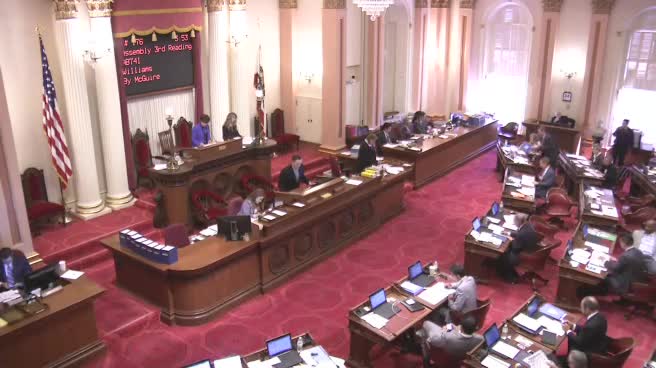
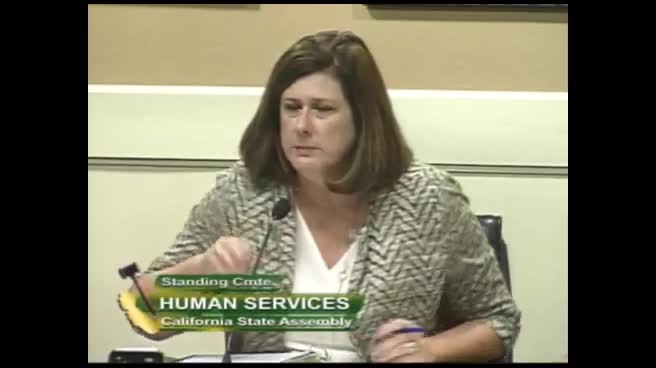
Bill Author

Bill Co-Author(s):