SB 977: Tobacco: youth sports events.
- Session Year: 2015-2016
- House: Senate
- Latest Version Date: 2016-09-23
Existing law prohibits the smoking of a cigarette, cigar, or other tobacco product, and the disposal of tobacco-related waste, within 25 feet of any playground or tot lot sandbox area, as defined. Existing law prohibits a person from intimidating or retaliating against another person seeking compliance with these prohibitions. These prohibitions do not apply to the use of tobacco on private property. A violation of these prohibitions is an infraction, punishable by a fine of $250 for each violation. Existing law expressly does not preempt the authority of any county, city, or city and county to regulate smoking around playgrounds or tot lot sandbox areas.
This bill would prohibit a person located in the same park or facility where a youth sports event is taking place from using a tobacco product, as defined, within 250 feet of the youth sports event, as defined, and make a violation an infraction punishable by a fine of $250 for each violation. The bill would make the use of tobacco on private property subject to those prohibitions. The bill would state that its provisions do not preempt the authority of any county, city, or city and county to regulate the use of tobacco products around a youth sports event. By establishing a new crime, this bill would create a state-mandated local program.
The California Constitution requires the state to reimburse local agencies and school districts for certain costs mandated by the state. Statutory provisions establish procedures for making that reimbursement.
This bill would provide that no reimbursement is required by this act for a specified reason.
Existing law prohibits the smoking of a cigarette, cigar, or other tobacco-related tobacco product, and the disposal of tobacco-related waste, within 25 feet of any playground or tot lot sandbox area, as defined. Existing law prohibits a person from intimidating or retaliating against another person seeking compliance with these prohibitions. These prohibitions do not apply to the use of tobacco on private property. A violation of these prohibitions is an infraction, punishable by a fine of $250 for each violation. Existing law expressly does not preempt the authority of any county, city, or city and county to regulate smoking around playgrounds or tot lot sandbox areas.
This bill would prohibit the use of a person located in the same park or facility where a youth sports event is taking place from using a tobacco product, as defined, within 250 feet of a the youth sports event, as defined, and make a violation an infraction punishable by a fine of $250 for each violation. The bill would make the use of tobacco on private property subject to those prohibitions. The bill would state that its provisions do not preempt the authority of any county, city, or city and county to regulate the use of tobacco products around a youth sports event. By establishing a new crime, this bill would create a state-mandated local program.
The California Constitution requires the state to reimburse local agencies and school districts for certain costs mandated by the state. Statutory provisions establish procedures for making that reimbursement.
This bill would provide that no reimbursement is required by this act for a specified reason.
Existing law prohibits the smoking of a cigarette, cigar, or other tobacco-related product, and the disposal of tobacco-related waste, within 25 feet of any playground or tot lot sandbox area, as defined. Existing law prohibits a person from intimidating or retaliating against another person seeking compliance with these prohibitions. A violation of these prohibitions is an infraction, punishable by a fine of $250 for each violation. Existing law expressly does not preempt the authority of any county, city, or city and county to regulate smoking around playgrounds or tot lot sandbox areas.
This bill would prohibit the use of a tobacco product, as defined, within 250 feet of a youth sports event, as defined, and make a violation an infraction punishable by a fine of $250 for each violation. The bill would state that its provisions do not preempt the authority of any county, city, or city and county to regulate the use of tobacco products around a youth sports event. By establishing a new crime, this bill would create a state-mandated local program.
The California Constitution requires the state to reimburse local agencies and school districts for certain costs mandated by the state. Statutory provisions establish procedures for making that reimbursement.
This bill would provide that no reimbursement is required by this act for a specified reason.
Existing law prohibits the smoking of a cigarette, cigar, or other tobacco-related product, and the disposal of tobacco-related waste, within 25 feet of any playground or tot lot sandbox area, as defined. Existing law prohibits a person from intimidating or retaliating against another person seeking compliance with these prohibitions. A violation of these prohibitions is an infraction, punishable by a fine of $250 for each violation. Existing law expressly does not preempt the authority of any county, city, or city and county to regulate smoking around playgrounds or tot lot sandbox areas.
This bill would prohibit the use of a tobacco product, as defined, within 250 feet of a youth sports event, and make a violation an infraction punishable by a fine of $250 for each violation. The bill would state that its provisions do not preempt the authority of any county, city, or city and county to regulate the use of tobacco products around a youth sports event. By establishing a new crime, this bill would create a state-mandated local program.
The California Constitution requires the state to reimburse local agencies and school districts for certain costs mandated by the state. Statutory provisions establish procedures for making that reimbursement.
This bill would provide that no reimbursement is required by this act for a specified reason.
Existing law generally prohibits the smoking of tobacco in the workplace and in public buildings, except in specified areas.
This bill would prohibit the use of a tobacco product, as defined, within 250 feet of a youth sports event, as defined. The bill would make a violation of this provision a crime punishable by a $100 fine. By establishing a new crime, this bill would create a state-mandated local program.
The California Constitution requires the state to reimburse local agencies and school districts for certain costs mandated by the state. Statutory provisions establish procedures for making that reimbursement.
This bill would provide that no reimbursement is required by this act for a specified reason.
(a)For the purposes of this section, the following definitions shall govern:
(1)Playground means any park or recreational area specifically designed to be used by children that has play equipment installed, or any similar facility located on public or private school grounds, or on city, county, or state park grounds.
(2)Tot lot sandbox area means a designated play area within a public park for the use by children under five years of age. Where the area is not contained by a fence, the boundary of a tot lot sandbox area shall be defined by the edge of the resilient surface of safety material, such as concrete or wood, or any other material surrounding the tot lot sandbox area.
(3)Public park includes a park operated by a public agency.
(4)Youth sports event means any practice, game, or related activity organized by any entity at which athletes up to 18 years of age are present.
(5)Smoke or smoking means inhaling, exhaling, burning, or carrying any lighted or heated cigar, cigarette, or pipe, or any other lighted or heated tobacco or plant product intended for inhalation, whether natural or synthetic, in any manner or in any form. Smoking includes the use of an electronic smoking device that creates an aerosol or vapor, in any manner or in any form, or the use of any oral smoking device for the purpose of circumventing the prohibition of smoking.
(6)Cigarette means the same as defined in Section 104556.
(7)Cigar means the same as defined in Section 104550.
(8)(A)Tobacco product means any of the following:
(i)A product containing, made, or derived from tobacco or nicotine that is intended for human consumption, whether smoked, heated, chewed, absorbed, dissolved, inhaled, snorted, sniffed, or ingested by any other means, including, but not limited to, cigarettes, cigars, little cigars, chewing tobacco, pipe tobacco, or snuff.
(ii)An electronic device that delivers nicotine or other vaporized liquids to the person inhaling from the device, including, but not limited to, an electronic cigarette, cigar, pipe, or hookah.
(iii)Any component, part, or accessory of a tobacco product, whether or not sold separately.
(B)Notwithstanding subparagraph (A), tobacco product does not include a nicotine replacement product approved by the United States Food and Drug Administration.
(b)A person shall not smoke a cigarette, cigar, or other tobacco product within 25 feet of any playground or tot lot sandbox area.
(c)A person shall not dispose of cigarette butts, cigar butts, or any other tobacco-related waste within 25 feet of a playground or a tot lot sandbox area.
(d)A person located in the same park or facility where a youth sports event is taking place shall not use a tobacco product within 250 feet of the youth sports event.
(e)A person shall not intimidate, threaten any reprisal, or effect any reprisal, for the purpose of retaliating against another person who seeks to attain compliance with this section.
(f)Any person who violates this section is guilty of an infraction and shall be punished by a fine of two hundred fifty dollars ($250) for each violation of this section. Punishment under this section shall not preclude punishment pursuant to Section 13002, Section 374.4 of the Penal Code, or any other law proscribing the act of littering.
(g)The prohibitions contained in subdivisions (b) and (c) shall not apply to a public sidewalk located within 25 feet of a playground or a tot lot sandbox area.
(h)This section shall not preempt the authority of any county, city, or city and county to regulate smoking around playgrounds or tot lot sandbox areas. Any county, city, or city and county may enforce any ordinance adopted prior to January 1, 2002, or may adopt and enforce new regulations that are more restrictive than this section, on and after January 1, 2002.
(i)This section shall not preempt the authority of any county, city, or city and county to regulate the use of a tobacco product around a youth sports event. Any county, city, or city and county may enforce any ordinance adopted before January 1, 2017, or may adopt and enforce a new regulation that is more restrictive than this section, on and after January 1, 2017.
SEC. 2.No reimbursement is required by this act pursuant to Section 6 of Article XIIIB of the California Constitution because the only costs that may be incurred by a local agency or school district will be incurred because this act creates a new crime or infraction, eliminates a crime or infraction, or changes the penalty for a crime or infraction, within the meaning of Section 17556 of the Government Code, or changes the definition of a crime within the meaning of Section 6 of Article XIIIB of the California Constitution.
(a)For the purposes of this section, the following definitions shall govern:
(1)Playground means any park or recreational area specifically designed to be used by children that has play equipment installed, or any similar facility located on public or private school grounds, or on city, county, or state park grounds.
(2)Tot lot sandbox area means a designated play area within a public park for the use by children under five years of age. Where the area is not contained by a fence, the boundary of a tot lot sandbox area shall be defined by the edge of the resilient surface of safety material, such as concrete or wood, or any other material surrounding the tot lot sandbox area.
(3)Public park includes a park operated by a public agency.
(4)Smoke and smoking have the same meaning as in subdivision (c) of Section 22950.5 of the Business and Professions Code.
(4)Youth sports event means any practice, game, or related activity organized by any entity at which athletes up to 18 years of age are present.
(5)Smoke or smoking means inhaling, exhaling, burning, or carrying any lighted or heated cigar, cigarette, or pipe, or any other lighted or heated tobacco or plant product intended for inhalation, whether natural or synthetic, in any manner or in any form. Smoking includes the use of an electronic smoking device that creates an aerosol or vapor, in any manner or in any form, or the use of any oral smoking device for the purpose of circumventing the prohibition of smoking.
(5)
(6)Cigarette means the same as defined in Section 104556.
(6)
(7)Cigar means the same as defined in Section 104550.
(7)Tobacco product means a product or device as defined in subdivision (d) of Section 22950.5 of the Business and Professions Code.
(8)(A)Tobacco product means any of the following:
(i)A product containing, made, or derived from tobacco or nicotine that is intended for human consumption, whether smoked, heated, chewed, absorbed, dissolved, inhaled, snorted, sniffed, or ingested by any other means, including, but not limited to, cigarettes, cigars, little cigars, chewing tobacco, pipe tobacco, or snuff.
(ii)An electronic device that delivers nicotine or other vaporized liquids to the person inhaling from the device, including, but not limited to, an electronic cigarette, cigar, pipe, or hookah.
(iii)Any component, part, or accessory of a tobacco product, whether or not sold separately.
(B)Notwithstanding subparagraph (A), tobacco product does not include a nicotine replacement product approved by the United States Food and Drug Administration.
(b)No A person shall not smoke a cigarette, cigar, or other tobacco product within 25 feet of any playground or tot lot sandbox area.
(c)No A person shall not dispose of cigarette butts, cigar butts, or any other tobacco-related waste within 25 feet of a playground or a tot lot sandbox area.
(d)A person located in the same park or facility where a youth sports event is taking place shall not use a tobacco product within 250 feet of the youth sports event.
(d)No
(e)A person shall not intimidate, threaten any reprisal, or effect any reprisal, for the purpose of retaliating against another person who seeks to attain compliance with this section.
(e)
(f)Any person who violates this section is guilty of an infraction and shall be punished by a fine of two hundred fifty dollars ($250) for each violation of this section. Punishment under this section shall not preclude punishment pursuant to Section 13002, Section 374.4 of the Penal Code, or any other provision of law proscribing the act of littering.
(f)The prohibitions contained in subdivisions (b), (c), and (d) shall not apply to private property.
(g)The prohibitions contained in subdivisions (b) and (c) shall not apply to a public sidewalk located within 25 feet of a playground or a tot lot sandbox area.
(h)This section shall not preempt the authority of any county, city, or city and county to regulate smoking around playgrounds or tot lot sandbox areas. Any county, city, or city and county may enforce any ordinance adopted prior to January 1, 2002, or may adopt and enforce new regulations that are more restrictive than this section, on and after January 1, 2002.
(i)This section shall not preempt the authority of any county, city, or city and county to regulate the use of a tobacco product around a youth sports event. Any county, city, or city and county may enforce any ordinance adopted before January 1, 2017, or may adopt and enforce a new regulation that is more restrictive than this section, on and after January 1, 2017.
SEC. 2.No reimbursement is required by this act pursuant to Section 6 of Article XIIIB of the California Constitution because the only costs that may be incurred by a local agency or school district will be incurred because this act creates a new crime or infraction, eliminates a crime or infraction, or changes the penalty for a crime or infraction, within the meaning of Section 17556 of the Government Code, or changes the definition of a crime within the meaning of Section 6 of Article XIIIB of the California Constitution.
SECTION 1.Section 104495 of the Health and Safety Code is amended to read:104495.(a)For the purposes of this section, the following definitions shall govern:
(1)Playground means any park or recreational area specifically designed to be used by children that has play equipment installed, or any similar facility located on public or private school grounds, or on city, county, or state park grounds.
(2)Tot lot sandbox area means a designated play area within a public park for the use by children under five years of age. Where the area is not contained by a fence, the boundary of a tot lot sandbox area shall be defined by the edge of the resilient surface of safety material, such as concrete or wood, or any other material surrounding the tot lot sandbox area.
(3)Public park includes a park operated by a public agency.
(4)Youth sports event means any practice, game, or related activity organized by any entity at which athletes up to 18 years of age are present.
(5)Smoke or smoking means inhaling, exhaling, burning, or carrying any lighted or heated cigar, cigarette, or pipe, or any other lighted or heated tobacco or plant product intended for inhalation, whether natural or synthetic, in any manner or in any form. Smoking includes the use of an electronic smoking device that creates an aerosol or vapor, in any manner or in any form, or the use of any oral smoking device for the purpose of circumventing the prohibition of smoking.
(6)Cigarette means the same as defined in Section 104556.
(7)Cigar means the same as defined in Section 104550.
(8)Tobacco product means any of the following:
(A)A product containing, made, or derived from tobacco or nicotine that is intended for human consumption, whether smoked, heated, chewed, absorbed, dissolved, inhaled, snorted, sniffed, or ingested by any other means, including, but not limited to, cigarettes, cigars, little cigars, chewing tobacco, pipe tobacco, or snuff.
(B)An electronic device that delivers nicotine or other vaporized liquids to the person inhaling from the device, including, but not limited to, an electronic cigarette, cigar, pipe, or hookah.
(C)Any component, part, or accessory of a tobacco product, whether or not sold separately.
(b)A person shall not smoke a cigarette, cigar, or other tobacco-related product within 25 feet of any playground or tot lot sandbox area.
(c)A person shall not dispose of cigarette butts, cigar butts, or any other tobacco-related waste within 25 feet of a playground or a tot lot sandbox area.
(d)A person shall not use a tobacco product within 250 feet of a youth sports event.
(e)A person shall not intimidate, threaten any reprisal, or effect any reprisal, for the purpose of retaliating against another person who seeks to attain compliance with this section.
(f)Any person who violates this section is guilty of an infraction and shall be punished by a fine of two hundred fifty dollars ($250) for each violation of this section. Punishment under this section shall not preclude punishment pursuant to Section 13002, Section 374.4 of the Penal Code, or any other law proscribing the act of littering.
(g)The prohibitions contained in subdivisions (b), (c), (d), and (e) shall not apply to private property.
(h)The prohibitions contained in subdivisions (b) and (c) shall not apply to a public sidewalk located within 25 feet of a playground or a tot lot sandbox area.
(i)This section shall not preempt the authority of any county, city, or city and county to regulate smoking around playgrounds or tot lot sandbox areas. Any county, city, or city and county may enforce any ordinance adopted prior to January 1, 2002, or may adopt and enforce new regulations that are more restrictive than this section, on and after January 1, 2002.
(j)This section shall not preempt the authority of any county, city, or city and county to regulate the use of tobacco products around a youth sports event. Any county, city, or city and county may enforce any ordinance adopted before January 1, 2017, or may adopt and enforce a new regulation that is more restrictive than this section, on and after January 1, 2017.
SEC. 2.No reimbursement is required by this act pursuant to Section 6 of Article XIIIB of the California Constitution because the only costs that may be incurred by a local agency or school district will be incurred because this act creates a new crime or infraction, eliminates a crime or infraction, or changes the penalty for a crime or infraction, within the meaning of Section 17556 of the Government Code, or changes the definition of a crime within the meaning of Section 6 of Article XIIIB of the California Constitution.
(a)For the purposes of this section, the following definitions shall govern:
(1)Playground means any park or recreational area specifically designed to be used by children that has play equipment installed, or any similar facility located on public or private school grounds, or on city, county, or state park grounds.
(2)Tot lot sandbox area means a designated play area within a public park for the use by children under five years of age. Where the area is not contained by a fence, the boundary of a tot lot sandbox area shall be defined by the edge of the resilient surface of safety material, such as concrete or wood, or any other material surrounding the tot lot sandbox area.
(3)Public park includes a park operated by a public agency.
(4)Youth sports event means any practice, game, or related activity organized by a nonprofit youth sports organization any entity at which athletes up to 18 years of age are present.
(5)Smoke or smoking means inhaling, exhaling, burning, or carrying any lighted or heated cigar, cigarette, or pipe, or any other lighted or heated tobacco or plant product intended for inhalation, whether natural or synthetic, in any manner or in any form. Smoking includes the use of an electronic smoking device that creates an aerosol or vapor, in any manner or in any form, or the use of any oral smoking device for the purpose of circumventing the prohibition of smoking.
(6)Cigarette means the same as defined in Section 104556.
(7)Cigar means the same as defined in Section 104550.
(8)Tobacco product means any of the following:
(A)A product containing, made, or derived from tobacco or nicotine that is intended for human consumption, whether smoked, heated, chewed, absorbed, dissolved, inhaled, snorted, sniffed, or ingested by any other means, including, but not limited to, cigarettes, cigars, little cigars, chewing tobacco, pipe tobacco, or snuff.
(B)An electronic device that delivers nicotine or other vaporized liquids to the person inhaling from the device, including, but not limited to, an electronic cigarette, cigar, pipe, or hookah.
(C)Any component, part, or accessory of a tobacco product, whether or not sold separately.
(b)A person shall not smoke a cigarette, cigar, or other tobacco-related product within 25 feet of any playground or tot lot sandbox area.
(c)A person shall not dispose of cigarette butts, cigar butts, or any other tobacco-related waste within 25 feet of a playground or a tot lot sandbox area.
(d)A person shall not use a tobacco product within 250 feet of a youth sports event.
(e)A person shall not intimidate, threaten any reprisal, or effect any reprisal, for the purpose of retaliating against another person who seeks to attain compliance with this section.
(f)Any person who violates this section is guilty of an infraction and shall be punished by a fine of two hundred fifty dollars ($250) for each violation of this section. Punishment under this section shall not preclude punishment pursuant to Section 13002, Section 374.4 of the Penal Code, or any other law proscribing the act of littering.
(g)The prohibitions contained in subdivisions (b), (c), (d), and (e) shall not apply to private property.
(h)The prohibitions contained in subdivisions (b) and (c) shall not apply to a public sidewalk located within 25 feet of a playground or a tot lot sandbox area.
(i)This section shall not preempt the authority of any county, city, or city and county to regulate smoking around playgrounds or tot lot sandbox areas. Any county, city, or city and county may enforce any ordinance adopted prior to January 1, 2002, or may adopt and enforce new regulations that are more restrictive than this section, on and after January 1, 2002.
(j)This section shall not preempt the authority of any county, city, or city and county to regulate the use of tobacco products around a youth sports event. Any county, city, or city and county may enforce any ordinance adopted before January 1, 2017, or may adopt and enforce a new regulation that is more restrictive than this section, on and after January 1, 2017.
SEC. 2.No reimbursement is required by this act pursuant to Section 6 of Article XIIIB of the California Constitution because the only costs that may be incurred by a local agency or school district will be incurred because this act creates a new crime or infraction, eliminates a crime or infraction, or changes the penalty for a crime or infraction, within the meaning of Section 17556 of the Government Code, or changes the definition of a crime within the meaning of Section 6 of Article XIIIB of the California Constitution.
(a) For the purposes of this section, the following definitions shall govern:
(1) Playground means any park or recreational area specifically designed to be used by children that has play equipment installed, or any similar facility located on public or private school grounds, or on city, county, or state park grounds.
(2) Tot lot sandbox area means a designated play area within a public park for the use by children under five years of age. Where the area is not contained by a fence, the boundary of a tot lot sandbox area shall be defined by the edge of the resilient surface of safety material, such as concrete or wood, or any other material surrounding the tot lot sandbox area.
(3) Public park includes a park operated by a public agency.
(4) Smoke or smoking means the carrying of a lighted pipe, lighted cigar, or lighted cigarette of any kind, or the lighting of a pipe, cigar, or cigarette of any kind, including, but not limited to, tobacco, or any other weed or plant.
(4)Youth sports event means any practice, game, or related activity organized by a nonprofit youth sports organization at which athletes up to 18 years of age are present.
(5)Smoke or smoking means inhaling, exhaling, burning, or carrying any lighted or heated cigar, cigarette, or pipe, or any other lighted or heated tobacco or plant product intended for inhalation, whether natural or synthetic, in any manner or in any form. Smoking includes the use of an electronic smoking device that creates an aerosol or vapor, in any manner or in any form, or the use of any oral smoking device for the purpose of circumventing the prohibition of smoking.
(5)
(6) Cigarette means the same as defined in Section 104556.
(6)
(7) Cigar means the same as defined in Section 104550.
(8)Tobacco product means any of the following:
(A)A product containing, made, or derived from tobacco or nicotine that is intended for human consumption, whether smoked, heated, chewed, absorbed, dissolved, inhaled, snorted, sniffed, or ingested by any other means, including, but not limited to, cigarettes, cigars, little cigars, chewing tobacco, pipe tobacco, or snuff.
(B)An electronic device that delivers nicotine or other vaporized liquids to the person inhaling from the device, including, but not limited to, an electronic cigarette, cigar, pipe, or hookah.
(C)Any component, part, or accessory of a tobacco product, whether or not sold separately.
(b) No A person shall not smoke a cigarette, cigar, or other tobacco-related product within 25 feet of any playground or tot lot sandbox area.
(c) No A person shall not dispose of cigarette butts, cigar butts, or any other tobacco-related waste within 25 feet of a playground or a tot lot sandbox area.
(d)A person shall not use a tobacco product within 250 feet of a youth sports event.
(d)No
(e)A person shall not intimidate, threaten any reprisal, or effect any reprisal, for the purpose of retaliating against another person who seeks to attain compliance with this section.
(e)
(f)Any person who violates this section is guilty of an infraction and shall be punished by a fine of two hundred fifty dollars ($250) for each violation of this section. Punishment under this section shall not preclude punishment pursuant to Section 13002, Section 374.4 of the Penal Code, or any other provision of law proscribing the act of littering.
(f)
(g)The prohibitions contained in subdivisions (b), (c), and (d) (d), and (e) shall not apply to private property.
(g)
(h)The prohibitions contained in subdivisions (b) and (c) shall not apply to a public sidewalk located within 25 feet of a playground or a tot lot sandbox area.
(h)
(i)This section shall not preempt the authority of any county, city, or city and county to regulate smoking around playgrounds or tot lot sandbox areas. Any county, city, or city and county may enforce any ordinance adopted prior to January 1, 2002, or may adopt and enforce new regulations that are more restrictive than this section, on and after January 1, 2002.
(j)This section shall not preempt the authority of any county, city, or city and county to regulate the use of tobacco products around a youth sports event. Any county, city, or city and county may enforce any ordinance adopted before January 1, 2017, or may adopt and enforce a new regulation that is more restrictive than this section, on and after January 1, 2017.
SEC. 2.No reimbursement is required by this act pursuant to Section 6 of Article XIIIB of the California Constitution because the only costs that may be incurred by a local agency or school district will be incurred because this act creates a new crime or infraction, eliminates a crime or infraction, or changes the penalty for a crime or infraction, within the meaning of Section 17556 of the Government Code, or changes the definition of a crime within the meaning of Section 6 of Article XIIIB of the California Constitution.
SECTION 1.Article 1.6 (commencing with Section 118917) is added to Chapter 4 of Part 15 of Division 104 of the Health and Safety Code, to read:1.6.Tobacco Products at Youth Sports Events118917.(a)A person shall not use a tobacco product within 250 feet of a youth sports event.
(b)A person who violates this section is guilty of an infraction, punishable by a fine of not more than one hundred dollars ($100).
(c)For purposes of this section, youth sports event means any practice, game, or other related activity organized by a nonprofit youth sports organization where athletes up to 18 years of age are present.
(d)For purposes of this section, tobacco product means any of the following:
(1)A product containing, made, or derived from tobacco or nicotine that is intended for human consumption, whether smoked, heated, chewed, absorbed, dissolved, inhaled, snorted, sniffed, or ingested by any other means, including, but not limited to, cigarettes, cigars, little cigars, chewing tobacco, pipe tobacco, or snuff.
(2)An electronic device that delivers nicotine or other vaporized liquids to the person inhaling from the device, including, but not limited to, an electronic cigarette, cigar, pipe, or hookah.
(3)Any component, part, or accessory of a product described in paragraph (1) or (2), whether or not sold separately.
SEC. 2.No reimbursement is required by this act pursuant to Section 6 of Article XIIIB of the California Constitution because the only costs that may be incurred by a local agency or school district will be incurred because this act creates a new crime or infraction, eliminates a crime or infraction, or changes the penalty for a crime or infraction, within the meaning of Section 17556 of the Government Code, or changes the definition of a crime within the meaning of Section 6 of Article XIIIB of the California Constitution.
(a)A person shall not use a tobacco product within 250 feet of a youth sports event.
(b)A person who violates this section is guilty of an infraction, punishable by a fine of not more than one hundred dollars ($100).
(c)For purposes of this section, youth sports event means any practice, game, or other related activity organized by a nonprofit youth sports organization where athletes up to 18 years of age are present.
(d)For purposes of this section, tobacco product means any of the following:
(1)A product containing, made, or derived from tobacco or nicotine that is intended for human consumption, whether smoked, heated, chewed, absorbed, dissolved, inhaled, snorted, sniffed, or ingested by any other means, including, but not limited to, cigarettes, cigars, little cigars, chewing tobacco, pipe tobacco, or snuff.
(2)An electronic device that delivers nicotine or other vaporized liquids to the person inhaling from the device, including, but not limited to, an electronic cigarette, cigar, pipe, or hookah.
(3)Any component, part, or accessory of a product described in paragraph (1) or (2), whether or not sold separately.
SEC. 2.No reimbursement is required by this act pursuant to Section 6 of Article XIIIB of the California Constitution because the only costs that may be incurred by a local agency or school district will be incurred because this act creates a new crime or infraction, eliminates a crime or infraction, or changes the penalty for a crime or infraction, within the meaning of Section 17556 of the Government Code, or changes the definition of a crime within the meaning of Section 6 of Article XIIIB of the California Constitution.
|
Date
|
Status
|
|---|---|
| May 26, 2016 | Read third time. Passed. (Ayes 33. Noes 5. Page 3954.) Ordered to the Assembly. |
| Aug 30, 2016 | Enrolled and presented to the Governor at 1:30 p.m. |
| Aug 25, 2016 | Assembly amendments concurred in. (Ayes 32. Noes 6.) Ordered to engrossing and enrolling. |
| Aug 25, 2016 | Assembly amendments concurred in. (Ayes 32. Noes 6. Page 5422.) Ordered to engrossing and enrolling. |
| Aug 19, 2016 | In Senate. Concurrence in Assembly amendments pending. |
| Aug 18, 2016 | Read third time. Passed. (Ayes 61. Noes 18. Page 5881.) Ordered to the Senate. |
| Aug 18, 2016 | Read third time. Passed. Ordered to the Senate. |
| Jun 30, 2016 | Read second time. Ordered to third reading. |
| Jun 29, 2016 | From committee: Do pass. (Ayes 13. Noes 5.) (June 29). |
| Jun 21, 2016 | From committee: Do pass and re-refer to Com. on APPR. (Ayes 6. Noes 1.) (June 21). Re-referred to Com. on APPR. |
| Jun 15, 2016 | From committee with author's amendments. Read second time and amended. Re-referred to Com. on A.,E.,S.,T., & I.M. |
| Jun 13, 2016 | Referred to Com. on A.,E.,S.,T., & I.M. |
| May 26, 2016 | Read third time. Passed. (Ayes 33. Noes 5.) Ordered to the Assembly. |
| Feb 10, 2016 | Introduced. Read first time. To Com. on RLS. for assignment. To print. |
| May 26, 2016 | In Assembly. Read first time. Held at Desk. |
| May 17, 2016 | Read second time. Ordered to third reading. |
| May 16, 2016 | From committee: Be ordered to second reading pursuant to Senate Rule 28.8. |
| May 6, 2016 | Set for hearing May 16. |
| Apr 19, 2016 | Read second time and amended. Re-referred to Com. on APPR. |
| Apr 18, 2016 | From committee: Do pass as amended and re-refer to Com. on APPR. (Ayes 9. Noes 0.) (April 13). |
| Apr 18, 2016 | From committee: Do pass as amended and re-refer to Com. on APPR. (Ayes 9. Noes 0. Page 3558.) (April 13). |
| Apr 4, 2016 | From committee with author's amendments. Read second time and amended. Re-referred to Com. on HEALTH. |
| Mar 29, 2016 | Set for hearing April 13. |
| Feb 18, 2016 | Referred to Com. on HEALTH. |
| Feb 11, 2016 | From printer. May be acted upon on or after March 12. |
|
Date
|
Description
|
Location
|
Votes
|
|
|---|---|---|---|---|
| Aug 25, 2016 | Unfinished Business SB977 Pan Concurrence | Senate Floor |
Passed |
|
| Aug 18, 2016 | SB 977 Pan Senate Third Reading By COOPER | Assembly Floor |
Passed |
|
| Jun 29, 2016 | Do pass. | Assembly Standing Committee on Appropriations |
Passed |
|
| Jun 21, 2016 | Do pass and be re-referred to the Committee on [Appropriations] | Assembly Standing Committee on Arts, Entertainment, Sports, Tourism, and Internet Media |
Passed |
|
| May 26, 2016 | Senate 3rd Reading SB977 Pan | Senate Floor |
Passed |
|
| Apr 13, 2016 | Do pass as amended, but first amend, and re-refer to the Committee on [Appropriations] | Senate Standing Committee on Health |
Passed |
This list shows positions taken on this bill by organizations on the date displayed, which is linked to the original source.
Positions by individuals are not included.
|
Organization
|
Position
|
Date
|
|---|---|---|
| American Cancer Society Cancer Action Network Inc. | ** Support | Aug 25, 2016 |
| American Heart Association | ** Support | Aug 25, 2016 |
| American Lung Association in California | ** Support | Aug 25, 2016 |
| American Stroke Association | ** Support | Aug 25, 2016 |
| Association of California Healthcare Districts | ** Support | Aug 25, 2016 |
| Cal State Long Beach | * Support | Apr 13, 2016 |
| California American College of Emergency Physicians | ** Support | Aug 25, 2016 |
| California Association of Recreation and Park Districts | ** Support | Aug 25, 2016 |
| California Catholic Conference | ** Support | Aug 25, 2016 |
| California Dental Association | ** Support | Aug 25, 2016 |
| California Optometric Association | ** Support | Aug 25, 2016 |
| California Park & Recreation Society | ** Support | Aug 25, 2016 |
| California Pharmacists Association | ** Support | Aug 25, 2016 |
| California State PTA | ** Support | Aug 25, 2016 |
| Common Sense Kids Action | ** Support | Aug 25, 2016 |
| County Health Executives Association Of California | ** Support | Aug 25, 2016 |
| Elizabeth Anne Seton School | * Support | Apr 13, 2016 |
| Elizabeth Anne Seton School | * N/A | Apr 13, 2016 |
| First 5 Association Of California | ** Support | Aug 25, 2016 |
| Junior Leagues of California | ** Support | Aug 25, 2016 |
| March of Dimes of California | ** Support | Aug 25, 2016 |
| Molina Healthcare of California | ** Support | Aug 25, 2016 |
| Riverside Independent Private Practice | * Support | Apr 13, 2016 |
Office of Senate Floor Analyses (916) 651-1520 Fax: (916) 327-4478 | SB |
UNFINISHED BUSINESS
Bill No: SB 977
:
SENATE HEALTH COMMITTEE: 9-0, 4/13/16
AYES: Hernandez, Nguyen, Hall, Mitchell, Monning, Nielsen, Pan, Roth, Wolk
SENATE APPROPRIATIONS COMMITTEE: Senate Rule 28.8
SENATE FLOOR: 33-5, 5/26/16
AYES: Allen, Beall, Berryhill, Block, Cannella, De León, Galgiani, Glazer, Hall, Hancock, Hernandez, Hertzberg, Hill, Hueso, Jackson, Lara, Leno, Leyva, Liu, McGuire, Mendoza, Mitchell, Monning, Moorlach, Nguyen, Nielsen, Pan, Pavley, Roth, Stone, Vidak, Wieckowski, Wolk
NOES: Anderson, Bates, Fuller, Gaines, Huff
NO VOTE RECORDED: Morrell, Runner
ASSEMBLY FLOOR: 61-18, 8/18/16 - See last page for vote
SOURCE: St. Elizabeth Ann Seton Catholic School 8th Grade Class
DIGEST: This bill prohibits a person from smoking a tobacco product, as defined, within 250 feet of a youth sports event, as defined. Broadens the definition of “smoke or smoking” in existing law.
Assembly Amendments (1) specify that the prohibition of smoking a tobacco product within 250 feet of a youth sports event applies to a person at the same park or facility where the event is taking place; and (2) delete the provision in existing law that prohibits the application of the provisions in this bill and existing law to tobacco use on private property.
Existing law:
- Prohibits the smoking of a cigarette, cigar, or other tobacco-related product, and the disposal of cigarette butts, cigar butts, or any other tobacco-related waste, within 25 feet of any playground or tot lot sandbox, as defined. Defines “smoke or smoking” to mean the carrying of a lighted pipe, cigar, or cigarette of any kind, or the lighting of a pipe, cigar, or cigarette of any kind, including, but not limited to, tobacco, or any other weed or plant.
- Prohibits the intimidation, threat of any reprisal, or effect of any reprisal, for the purpose of retaliating against another person who seeks to attain compliance with existing law.
- Provides that any person who violates the law is guilty of an infraction punishable by a fine of two hundred fifty dollars ($250) for each violation. Prohibits existing law from being applied to tobacco use on private property.
This bill:
- Prohibits a person located in the same park or facility where a youth sports event is taking place from smoking a tobacco product within 250 feet of the youth sports event. Defines “youth sports event” as any practice, game, or related activity organized by any entity at which athletes up to 18 years of age are present.
- Deletes the existing definition of “smoke or smoking” and recasts to define “smoke or smoking” as inhaling, exhaling, burning, or carrying any lighted or heated cigar, cigarette, or pipe, or any other lighted or heated tobacco or plant product intended for inhalation, whether natural or synthetic, in any manner or in any form. Provides that “smoking” includes the use of an electronic smoking device that creates an aerosol or vapor, in any manner or in any form, or the use of any oral smoking device for the purpose of circumventing the prohibition of smoking.
- Provides that “tobacco product” means any of the following:
- A product containing, made, or derived from tobacco or nicotine that is intended for human consumption, whether smoked, heated, chewed, absorbed, dissolved, inhaled, snorted, sniffed, or ingested by any other means, including, but not limited to, cigarettes, cigars, little cigars, chewing tobacco, pipe tobacco, or snuff;
- An electronic device that delivers nicotine or other vaporized liquids to the person inhaling from the device, including, but not limited to, an electronic cigarette, cigar, pipe, or hookah; and,
- Any component, part, or accessory of a tobacco product, whether or not sold separately.
- Deletes the provision in existing law that prohibits the application of the provisions in this bill and existing law to tobacco use on private property.
- Prohibits the preemption of the authority of any county, city, or city and county to regulate the use of tobacco products around a youth sports event. Allows a county, city, or city and county to enforce any ordinance adopted before January 1, 2017, or to adopt and enforce a new regulation that is more restrictive than the provisions in this bill, on and after January 1, 2017.
Comments
- Author’s statement. According to the author, youth sports events should promote healthy habits for children, but current law doesn’t ensure a healthy, tobacco-free environment for our young athletes. SB 977 would protect our state’s youth and promote public health by prohibiting the use of tobacco products within 250 feet of a sporting event. Youth sports should encourage young people to develop healthy habits that will help them for the rest of their lives—not expose them to the many health risks associated with secondhand smoke or encourage them to take up tobacco products themselves. Secondhand smoke increases the risk of asthma, lung infection and ear disease, among other serious health conditions—and children are more sensitive to these negative health effects. Ninety percent of adult smokers begin while in their teens, or earlier; and two-thirds become regular, daily smokers before they reach the age of 19. Studies have shown that starting to smoke at an early age increases the number of cigarettes smoked per day in adult life, compounding the risk of tobacco-related diseases. We have no reason to promote such dangerous, long-lasting habits at our youth sports events.
- Smoking prevalence. According to the 2012 Surgeon General’s Report, nearly 90% of smokers in the U.S. started smoking by the age of 18, and 99% started by age 26. In California, 64% of smokers start by the age of 18, and 96% start by age 26. According to the California Department of Public Health (DPH), in 2010, 36.8% of high school students had smoked a whole cigarette by age 13 or 14, and in 2012, illegal tobacco sales to minors rose to 8.7% from 5.6% in 2011. According to DPH, in 2010, 11.9% of the state’s adults smoked, down from 13.1% in 2009, making California one of only two states to reach the federal Healthy People 2020 target of reducing the adult smoking prevalence rate to 12%. However, research highlights that the burdens of smoking do not fall evenly across the state. According to the American Lung Association (ALA), African-American men and women have the highest smoking usage rate at 21.3% and 17.1% respectively, followed by white men at 17.2% and Latino men at 16%. The ALA reports that Korean men have an unusually high tobacco usage rate at 27.9%, as do Lesbian, Gay, Bisexual, and Transgender women who smoke at almost triple the rate of women in general.
- Tobacco-related diseases. Every year, an estimated 443,000 people in the U.S. die from tobacco and smoking-related illnesses or exposure to secondhand smoke, according to the federal Centers for Disease Control and Prevention (CDC). The CDC also reports that another 8.6 million people suffer from serious smoking-related illnesses. According to DPH, smoking causes ischemic heart disease, cancer, stroke, and chronic lower respiratory diseases, which are the leading causes of death and disability among adults in California. Smoking-attributed diseases are an economic burden due not only to health care expenses but also productivity losses related to disability or early death. DPH asserts, since the passage of Proposition 99, adult smoking rates declined by more than 40% from 22.7% to 13.3% in 2008. As smoking rates declined, mortality and morbidity rates for diseases related to smoking also declined. This parallel trend, according to DPH, supports causal association between these conditions and smoking.
- Alternative tobacco products. According to DPH, prevalence of smokeless and other tobacco products have increased among high school students, which often do not have the same regulations placed upon them as cigarettes. In recent years, sales of smokeless tobacco and nicotine products, like snus, have risen dramatically. Hookah, popular with teens and young adults, has been shown to contain the same cancer-causing chemicals as secondhand smoke. Smokeless tobacco has been linked to oral cancer, pancreatic cancer, and gum disease. DPH recently released a report on electronic cigarettes, which stated that teen use of electronic cigarettes has surpassed the use of traditional cigarettes and marketing of these products has increased 1200% in the last three years. Electronic cigarettes deliver nicotine to the user, which, research from the Institute of Medicine shows, can be harmful to brain development in adolescents. The DPH report asserts that the aerosol emitted from electronic cigarettes is toxic and contains at least 10 chemicals known to cause cancer, birth defects, and other poor health outcomes.
Related/Prior Legislation
SBX2 5 (Leno, Chapter 7, Statutes of 2016, Second Extraordinary Session), recast and broadened the definition of “tobacco product” in current law to include electronic cigarettes as specified; extends current restrictions and prohibitions against the use of tobacco products to electronic cigarettes; extends current licensing requirements for manufacturers, importers, distributors, wholesalers, and retailers of tobacco products to electronic cigarettes; requires electronic cigarette cartridges to be child-resistant; and exempts active duty military personnel, as specified, from the requirement of being 21 years of age or older to purchase tobacco products.
SBX2 7 (Hernandez, Chapter 8, Statutes of 2016, Second Extraordinary Session), increased the minimum legal age to purchase or consume tobacco from 18 to 21. The bill also removed penalty provisions for those under 21 in possession of tobacco and exempts military personnel from the age increase.
ABX2 7 (Stone, Chapter 4, Statutes of 2016, Second Extraordinary Session), removed many (but not all) exemptions in existing law that allow tobacco smoking in certain indoor workplaces and expands the prohibition on smoking in a place of employment to include owner-operated businesses.
AB 768 (Thurmond, Chapter 779, Statutes of 2015), prohibited, commencing December 1, 2016, the use or possession of smokeless tobacco products, as defined, on the playing field of a baseball stadium during a professional baseball game or practice.
SB 648 (Corbett, of 2013), would have extended the restrictions and prohibitions against the smoking of tobacco products to include restrictions or prohibitions against e-cigarette in various places, including, but not limited to, places of employment, school campuses, public buildings, day care facilities, retail food facilities, and health facilities. SB 648 failed passage in the Assembly Appropriations Committee.
FISCAL EFFECT: Appropriation: Fiscal Com.: Local:
According to the Assembly Appropriations Committee, there will be minor non-reimbursable costs to cities and counties for enforcement. Costs will be offset to some extent by revenues from fines.
St. Elizabeth Ann Seton Catholic School 8th Grade Class (source)
American Cancer Society Cancer Action Network
American Lung Association in California
American Heart Association/American Stroke Association
Association of California Healthcare Districts
California American College of Emergency Physicians
California Association of Recreation and Park Districts
California Dental Association
California Park & Recreation Society
California Pharmacists Association
California Optometric Association
California State PTA
California Catholic Conference
Common Sense Kids Action
County Health Executives Association of California
First 5 Association of California
Junior Leagues of California
March of Dimes of California
Molina Healthcare of California
OPPOSITION: (Verified 8/17/16)
None received
ARGUMENTS IN SUPPORT: Supporters argue that according to the U.S. Surgeon General there is no risk-free level of exposure to secondhand smoke, and in 2006, the California Air Resources Board classified secondhand smoke as a toxic air contaminant, akin to asbestos, cyanide, and arsenic—all of which can lead to serious illness and death. Supporters state that children, pregnant women, the elderly, and those with chronic illnesses are especially vulnerable to harmful effects of secondhand smoke, which can cause asthma in children who have previously not shown symptoms. Supporters state that this bill will protect participating youth and their families from secondhand smoke, as well as prevent the encouragement of youth to take up smoking, which is the number one cause of preventable death in the U.S.
ASSEMBLY FLOOR: 61-18, 8/18/16
AYES: Achadjian, Alejo, Arambula, Atkins, Baker, Bloom, Bonilla, Bonta, Brown, Burke, Calderon, Campos, Chang, Chau, Chiu, Chu, Cooley, Cooper, Dababneh, Daly, Dodd, Eggman, Frazier, Cristina Garcia, Eduardo Garcia, Gatto, Gipson, Gomez, Gonzalez, Gordon, Gray, Grove, Hadley, Holden, Irwin, Jones-Sawyer, Lackey, Levine, Linder, Lopez, Low, Maienschein, McCarty, Medina, Mullin, Nazarian, O'Donnell, Olsen, Quirk, Ridley-Thomas, Rodriguez, Salas, Santiago, Mark Stone, Thurmond, Ting, Weber, Wilk, Williams, Wood, Rendon
NOES: Travis Allen, Bigelow, Brough, Chávez, Dahle, Beth Gaines, Gallagher, Harper, Jones, Kim, Mathis, Mayes, Melendez, Obernolte, Patterson, Steinorth, Wagner, Waldron
NO VOTE RECORDED: Roger Hernández
8/19/16 20:05:03
**** END ****
SENATE THIRD READING
STR Bill Id:SB 977
Author:(Pan)
As Amended Ver:June 15, 2016
Majority vote
SENATE VOTE: 33-5
Committee | Votes | Ayes | Noes |
Arts | 6-1 | Chu, Hadley, Levine, Low, Medina, Nazarian | Obernolte |
Appropriations | 13-5 | Gonzalez, Bloom, Bonta, Calderon, Chang, Daly, Eggman, Roger Hernández, Holden, Quirk, Santiago, Weber, Wood | Bigelow, Gallagher, Jones, Obernolte, Wagner |
SUMMARY: This bill would prohibit a person from smoking a tobacco product, as defined, within 250 feet of a youth sports event, as defined, and broaden the definition of "smoke or smoking" in existing law. Specifically, this bill:
- Declares that a person shall not smoke a cigarette, cigar, or other tobacco-related product or dispose of cigarette butts, cigar butts, or any other tobacco-related waste within 25 feet of a playground or a tot lot sandbox area.
- Prohibits any person located in the same park or facility where a youth sports event is taking place from using a tobacco product within 250 feet of the youth sports event.
- Contains the following definitions:
- "Youth sports event" means any practice, game, or related activity organized by any entity at which athletes up to 18 years of age are present.
- "Smoke or smoking" is redefined to mean inhaling, exhaling, burning, or carrying any lighted or heated cigar, cigarette, or pipe, or any other lighted or heated tobacco or plant product intended for inhalation, whether natural or synthetic, in any manner or in any form. "Smoking" includes the use of an electronic smoking device that creates an aerosol or vapor, in any manner or in any form, or the use of any oral smoking device for the purpose of circumventing the prohibition of smoking.
- "Tobacco product" means any of the following:
- A product containing, made, or derived from tobacco or nicotine that is intended for human consumption, whether smoked, heated, chewed, absorbed, dissolved, inhaled, snorted, sniffed, or ingested by any other means, including, but not limited to, cigarettes, cigars, little cigars, chewing tobacco, pipe tobacco, or snuff.
- An electronic device that delivers nicotine or other vaporized liquids to the person inhaling from the device, including, but not limited to, an electronic cigarette, cigar, pipe, or hookah.
- Any component, part, or accessory of a tobacco product, whether or not sold separately.
- Excludes a nicotine replacement product approved by the United States Food and Drug Administration from the definition of prohibited tobacco product.
- Prohibits the preemption of the authority of any county, city, or city and county to regulate the use of tobacco products around a youth sports event. Allows a county, city, or city and county to enforce any ordinance adopted before January 1, 2017, or to adopt and enforce a new regulation that is more restrictive than this bill, on and after January 1, 2017.
FISCAL EFFECT: According to the Assembly Appropriations Committee, there will be minor nonreimbursable costs to cities and counties for enforcement, costs will be offset to some extent by revenues from fines.
COMMENTS: According to the author, "youth sports events should promote healthy habits for children, but current law doesn't ensure a healthy, tobacco-free environment for our young athletes. SB 977 would protect our state's youth and promote public health by prohibiting the use of tobacco products within 250 feet of a sporting event. Youth sports should encourage young people to develop healthy habits that will help them for the rest of their lives—not expose them to the many health risks associated with secondhand smoke or encourage them to take up tobacco products themselves. Secondhand smoke increases the risk of asthma, lung infection and ear disease, among other serious health conditions—and children are more sensitive to these negative health effects. Ninety percent of adult smokers begin while in their teens, or earlier; and two-thirds become regular, daily smokers before they reach the age of 19. Studies have shown that starting to smoke at an early age increases the number of cigarettes smoked per day in adult life, compounding the risk of tobacco-related diseases. We have no reason to promote such dangerous, long-lasting habits at our youth sports events." The children of the 8th grade class at St. Elizabeth Ann Seton Catholic School, who brought the bill idea to Senator Pan, state that, "Children do what they see. Limiting exposure to all forms of smoking, vaping and e cigarettes will lessen the chance of their starting. …A healthy youth ensures the future."
Recent amendments clarify that the bill's provisions only apply to persons in the same park or facility where the youth sports events is taking place.
Please see Assembly Arts, Entertainment, Sports, Tourism, and Internet Media analysis for a full discussion of the measure.
Analysis Prepared by: Dana Mitchell / A.,E.,S.,T., & I.M. / (916) 319-3450 FN: 0003580
Date of Hearing: June 29, 2016
ASSEMBLY COMMITTEE ON APPROPRIATIONS
Lorena Gonzalez, Chair
SBPCA Bill Id:SB 977
Author:(Pan) – As Amended Ver:June 15, 2016
Policy Committee: | Arts, Entertainment, Sports, Tourism, and Internet Media | Vote: | 6 - 1 |
|
| ||
|
|
Urgency: No State Mandated Local Program: Yes Reimbursable: No
SUMMARY:
This bill prohibits any person from smoking a tobacco product within 250 feet of a youth sports event, as defined, and makes a violation an infraction punishable by a fine of $250 for per violation.
The bill also stipulates that it does not preempt the authority of a city or county to regulate the use of tobacco products around youth sports events and that any city or county may enforce a related ordinance in place before January 1, 2017, or may adopt a more restrictive ordinance after that date.
FISCAL EFFECT:
Minor nonreimbursable costs to cities and counties for enforcement, offset to some extent by revenues from fines.
COMMENTS:
Purpose. According to the author, "youth sports events should promote healthy habits for children, but current law doesn't ensure a healthy, tobacco-free environment for our young athletes. SB 977 would protect our state's youth and promote public health by prohibiting the use of tobacco products within 250 of a sporting event. Youth sports should encourage young people to develop healthy habits that will help them for the rest of their lives—not expose them to the many health risks associated with secondhand smoke or encourage them to take up tobacco products themselves."
Current law prohibits smoking a tobacco product within 25 feet of any playground or tot lot sandbox area.
Analysis Prepared by: Chuck Nicol / APPR. / (916) 319-2081
Date of Hearing: June 21, 2016
ASSEMBLY COMMITTEE ON ARTS, ENTERTAINMENT, SPORTS, TOURISM, AND INTERNET MEDIA
Kansen Chu, Chair
SBPCA Bill Id:SB 977
Author:(Pan) – As Amended Ver:June 15, 2016
SENATE VOTE: 33-5
SUBJECT: Tobacco: youth sports events.
SUMMARY: This bill would prohibit a person from smoking a tobacco product, as defined, within 250 feet of a youth sports event, as defined, and broaden the definition of “smoke or smoking” in existing law. Specifically, this bill:
- Declares that a person shall not smoke a cigarette, cigar, or other tobacco-related product or dispose of cigarette butts, cigar butts, or any other tobacco-related waste within 25 feet of a playground or a tot lot sandbox area.
- Prohibits any person located in the same park or facility where a youth sports event is taking place from using a tobacco product within 250 feet of the youth sports event.
- Contains the following definitions:
- “Youth sports event” means any practice, game, or related activity organized by any entity at which athletes up to 18 years of age are present.
- “Smoke or smoking” is redefined to mean inhaling, exhaling, burning, or carrying any lighted or heated cigar, cigarette, or pipe, or any other lighted or heated tobacco or plant product intended for inhalation, whether natural or synthetic, in any manner or in any form. “Smoking” includes the use of an electronic smoking device that creates an aerosol or vapor, in any manner or in any form, or the use of any oral smoking device for the purpose of circumventing the prohibition of smoking.
- “Tobacco product” means any of the following:
- A product containing, made, or derived from tobacco or nicotine that is intended for human consumption, whether smoked, heated, chewed, absorbed, dissolved, inhaled, snorted, sniffed, or ingested by any other means, including, but not limited to, cigarettes, cigars, little cigars, chewing tobacco, pipe tobacco, or snuff.
- An electronic device that delivers nicotine or other vaporized liquids to the person inhaling from the device, including, but not limited to, an electronic cigarette, cigar, pipe, or hookah.
- Any component, part, or accessory of a tobacco product, whether or not sold separately.
- Excludes a nicotine replacement product approved by the United States Food and Drug Administration from the definition of prohibited tobacco product.
- Prohibits the preemption of the authority of any county, city, or city and county to regulate the use of tobacco products around a youth sports event. Allows a county, city, or city and county to enforce any ordinance adopted before January 1, 2017, or to adopt and enforce a new regulation that is more restrictive than this bill, on and after January 1, 2017.
EXISTING LAW:
- Prohibits the smoking of a cigarette, cigar, or other tobacco-related product, and the disposal of cigarette butts, cigar butts, or any other tobacco-related waste, within 25 feet of any playground or tot lot sandbox, as defined.
- Defines “smoke or smoking” to mean the carrying of a lighted pipe, cigar, or cigarette of any kind, or the lighting of a pipe, cigar, or cigarette of any kind, including, but not limited to, tobacco, or any other weed or plant.
- Prohibits the intimidation, threat of any reprisal, or effect of any reprisal, for the purpose of retaliating against another person who seeks to attain compliance with existing law.
- Provides that any person who violates the law is guilty of an infraction punishable by a fine of two hundred fifty dollars ($250) for each violation. Prohibits existing law from being applied to private property.
FISCAL EFFECT: This bill was passed out of the Senate Appropriations Committee pursuant to Rule 28.8.
COMMENTS:
- Author and supporters statement of need for legislation: to provide healthy spaces for children. According to the author, "youth sports events should promote healthy habits for children, but current law doesn’t ensure a healthy, tobacco-free environment for our young athletes. SB 977 would protect our state’s youth and promote public health by prohibiting the use of tobacco products within 250 feet of a sporting event. Youth sports should encourage young people to develop healthy habits that will help them for the rest of their lives—not expose them to the many health risks associated with secondhand smoke or encourage them to take up tobacco products themselves. Secondhand smoke increases the risk of asthma, lung infection and ear disease, among other serious health conditions—and children are more sensitive to these negative health effects. Ninety percent of adult smokers begin while in their teens, or earlier; and two-thirds become regular, daily smokers before they reach the age of 19. Studies have shown that starting to smoke at an early age increases the number of cigarettes smoked per day in adult life, compounding the risk of tobacco-related diseases. We have no reason to promote such dangerous, long-lasting habits at our youth sports events."
"SB 977 recognizes that coaches, parents, and peers can play a critical role in influencing California's youth, especially when they can be observed by youth participating in sporting events. The overt use of tobacco products by these influential figures on and around the field promotes the use of these products to players and spectators," claims the California Dental Association. According to the American Lung Association, "children, pregnant women, the elderly, and those with chronic illnesses are especially vulnerable to harmful effects of secondhand smoke, which can cause asthma in children who have previously not shown symptoms." Other supporters such as PTA and March of Dimes state that this bill will "protect participating youth and their families from secondhand smoke, as well as prevent the encouragement of youth to take up smoking, which is the number one cause of preventable death in the U.S." The children of the 8th grade class at St. Elizabeth Ann Seton Catholic School, who brought the bill idea to Senator Pan, state that, "Children do what they see. Limiting exposure to all forms of smoking, vaping and e cigarettes will lessen the chance of their starting…A healthy youth ensures the future."
- Background: Tobacco use and its effects on public health.
(The following is taken from information provided by the author and supporters as summarized in the Senate Health Committee analysis).
- Smoking prevalence. According to the 2012 Surgeon General’s Report, nearly 90% of smokers in the U.S. started smoking by the age of 18, and 99% started by age 26. In California, 64% of smokers start by the age of 18, and 96% start by age 26. According to the California Department of Public Health (DPH), in 2010, 36.8% of high school students had smoked a whole cigarette by age 13 or 14, and in 2012, illegal tobacco sales to minors rose to 8.7% from 5.6% in 2011. According to DPH, in 2010, 11.9% of the state’s adults smoked, down from 13.1% in 2009, making California one of only two states to reach the federal Healthy People 2020 target of reducing the adult smoking prevalence rate to 12%. However, research highlights that the burdens of smoking do not fall evenly across the state. According to the American Lung Association (ALA), African-American men and women have the highest smoking usage rate at 21.3% and 17.1% respectively, followed by white men at 17.2% and Latino men at 16%. The ALA reports that Korean men have an unusually high tobacco usage rate at 27.9%, as do Lesbian, Gay, Bisexual, and Transgender women who smoke at almost triple the rate of women in general.
- Tobacco-related diseases. Every year, an estimated 443,000 people in the U.S. die from tobacco and smoking-related illnesses or exposure to secondhand smoke, according to the federal Centers for Disease Control and Prevention (CDC). The CDC also reports that another 8.6 million people suffer from serious smoking-related illnesses. According to DPH, smoking causes ischemic heart disease, cancer, stroke, and chronic lower respiratory diseases, which are the leading causes of death and disability among adults in California. Smoking-attributed diseases are an economic burden due not only to health care expenses but also productivity losses related to disability or early death. DPH asserts, since the passage of Proposition 99, adult smoking rates declined by more than 40% from 22.7% to 13.3% in 2008. As smoking rates declined, mortality and morbidity rates for diseases related to smoking also declined. This parallel trend, according to DPH, supports causal association between these conditions and smoking.
- Alternative tobacco products. According to DPH, prevalence of smokeless and other tobacco products have increased among high school students, which often do not have the same regulations placed upon them as cigarettes. In recent years, sales of smokeless tobacco and nicotine products, like snus, have risen dramatically. Hookah, popular with teens and young adults, has been shown to contain the same cancer-causing chemicals as secondhand smoke. Smokeless tobacco has been linked to oral cancer, pancreatic cancer, and gum disease. DPH recently released a report on electronic cigarettes, which stated that teen use of electronic cigarettes has surpassed the use of traditional cigarettes and marketing of these products has increased 1200% in the last three years. Electronic cigarettes deliver nicotine to the user, which, research from the Institute of Medicine shows, can be harmful to brain development in adolescents. The DPH report asserts that the aerosol emitted from electronic cigarettes is toxic and contains at least 10 chemicals known to cause cancer, birth defects, and other poor health outcomes.
- Prior and related Legislation
- SBX2 5 (Leno), Chapter 7, Statutes of 2016, Second Extraordinary Session, recast and broadened the definition of “tobacco product” in current law to include electronic cigarettes as specified; extends current restrictions and prohibitions against the use of tobacco products to electronic cigarettes; extends current licensing requirements for manufacturers, importers, distributors, wholesalers, and retailers of tobacco products to electronic cigarettes; requires electronic cigarette cartridges to be child-resistant; and exempts active duty military personnel, as specified, from the requirement of being 21 years of age or older to purchase tobacco products.
- SBX2 7 (Hernández), Chapter 8, Statutes of 2016, Second Extraordinary Session, increased the minimum legal age to purchase or consume tobacco from 18 to 21. The bill also removed penalty provisions for those under 21 in possession of tobacco and exempts military personnel from the age increase.
- ABX2 7 (Stone), Chapter 4, Statutes of 2016, Second Extraordinary Session, removed many (but not all) exemptions in existing law that allow tobacco smoking in certain indoor workplaces and expands the prohibition on smoking in a place of employment to include owner-operated businesses.
- AB 768 (Thurmond), Chapter 779, Statutes of 2015, prohibits, commencing December 1, 2016, the use or possession of smokeless tobacco products, as defined, on the playing field of a baseball stadium during a professional baseball game or practice.
- SB 648 (Corbett), Legis. of 2013, would have extended the restrictions and prohibitions against the smoking of tobacco products to include restrictions or prohibitions against e-cigarette in various places, including, but not limited to, places of employment, school campuses, public buildings, day care facilities, retail food facilities, and health facilities. SB 648 failed passage in the Assembly Appropriations Committee.
REGISTERED SUPPORT / OPPOSITION:
Support
St. Elizabeth Ann Seton Catholic School 8th Grade Class (source)
American Cancer Society Cancer Action Network
American Lung Association in California
American Heart Association/American Stroke Association
Association of California Healthcare Districts
California American College of Emergency Physicians
California Association of Recreation and Park Districts
California Dental Association
California Park & Recreation Society
California Pharmacists Association
California Optometric Association
California State PTA
California Catholic Conference
Common Sense Kids Action
County Health Executives Association of California
First 5 Association of California
Junior Leagues of California
March of Dimes of California
Molina Healthcare of California
Opposition
There is no opposition on file.
Analysis Prepared by: Dana Mitchell / A.,E.,S.,T., & I.M. / (916) 319-3450
Office of Senate Floor Analyses (916) 651-1520 Fax: (916) 327-4478 | SB |
THIRD READING
Bill No: SB 977
:
SENATE HEALTH COMMITTEE: 9-0, 4/13/16
AYES: Hernandez, Nguyen, Hall, Mitchell, Monning, Nielsen, Pan, Roth, Wolk
SENATE APPROPRIATIONS COMMITTEE: Senate Rule 28.8
SOURCE: St. Elizabeth Ann Seton Catholic School 8th Grade Class
DIGEST: This bill prohibits a person from smoking a tobacco product, as defined, within 250 feet of a youth sports event, as defined. Broadens the definition of “smoke or smoking” in existing law.
Existing law:
- Prohibits the smoking of a cigarette, cigar, or other tobacco-related product, and the disposal of cigarette butts, cigar butts, or any other tobacco-related waste, within 25 feet of any playground or tot lot sandbox, as defined. Defines “smoke or smoking” to mean the carrying of a lighted pipe, cigar, or cigarette of any kind, or the lighting of a pipe, cigar, or cigarette of any kind, including, but not limited to, tobacco, or any other weed or plant.
- Prohibits the intimidation, threat of any reprisal, or effect of any reprisal, for the purpose of retaliating against another person who seeks to attain compliance with existing law.
- Provides that any person who violates the law is guilty of an infraction punishable by a fine of two hundred fifty dollars ($250) for each violation. Prohibits existing law from being applied to private property.
This bill:
- Prohibits a person from smoking a tobacco product within 250 feet of a youth sports event. Defines “youth sports event” as any practice, game, or related activity organized by any entity at which athletes up to 18 years of age are present. Prohibits the provisions of this bill from being applied to private property.
- Deletes the existing definition of “smoke or smoking” and recasts to define “smoke or smoking” as inhaling, exhaling, burning, or carrying any lighted or heated cigar, cigarette, or pipe, or any other lighted or heated tobacco or plant product intended for inhalation, whether natural or synthetic, in any manner or in any form. Provides that “smoking” includes the use of an electronic smoking device that creates an aerosol or vapor, in any manner or in any form, or the use of any oral smoking device for the purpose of circumventing the prohibition of smoking.
- Provides that “tobacco product” means any of the following:
- A product containing, made, or derived from tobacco or nicotine that is intended for human consumption, whether smoked, heated, chewed, absorbed, dissolved, inhaled, snorted, sniffed, or ingested by any other means, including, but not limited to, cigarettes, cigars, little cigars, chewing tobacco, pipe tobacco, or snuff;
- An electronic device that delivers nicotine or other vaporized liquids to the person inhaling from the device, including, but not limited to, an electronic cigarette, cigar, pipe, or hookah; and,
- Any component, part, or accessory of a tobacco product, whether or not sold separately.
- Prohibits the preemption of the authority of any county, city, or city and county to regulate the use of tobacco products around a youth sports event. Allows a county, city, or city and county to enforce any ordinance adopted before January 1, 2017, or to adopt and enforce a new regulation that is more restrictive than the provisions in this bill, on and after January 1, 2017.
Comments
- Author’s statement. According to the author, youth sports events should promote healthy habits for children, but current law doesn’t ensure a healthy, tobacco-free environment for our young athletes. SB 977 would protect our state’s youth and promote public health by prohibiting the use of tobacco products within 250 feet of a sporting event. Youth sports should encourage young people to develop healthy habits that will help them for the rest of their lives—not expose them to the many health risks associated with secondhand smoke or encourage them to take up tobacco products themselves. Secondhand smoke increases the risk of asthma, lung infection and ear disease, among other serious health conditions—and children are more sensitive to these negative health effects. Ninety percent of adult smokers begin while in their teens, or earlier; and two-thirds become regular, daily smokers before they reach the age of 19. Studies have shown that starting to smoke at an early age increases the number of cigarettes smoked per day in adult life, compounding the risk of tobacco-related diseases. We have no reason to promote such dangerous, long-lasting habits at our youth sports events.
- Smoking prevalence. According to the 2012 Surgeon General’s Report, nearly 90% of smokers in the U.S. started smoking by the age of 18, and 99% started by age 26. In California, 64% of smokers start by the age of 18, and 96% start by age 26. According to the California Department of Public Health (DPH), in 2010, 36.8% of high school students had smoked a whole cigarette by age 13 or 14, and in 2012, illegal tobacco sales to minors rose to 8.7% from 5.6% in 2011. According to DPH, in 2010, 11.9% of the state’s adults smoked, down from 13.1% in 2009, making California one of only two states to reach the federal Healthy People 2020 target of reducing the adult smoking prevalence rate to 12%. However, research highlights that the burdens of smoking do not fall evenly across the state. According to the American Lung Association (ALA), African-American men and women have the highest smoking usage rate at 21.3% and 17.1% respectively, followed by white men at 17.2% and Latino men at 16%. The ALA reports that Korean men have an unusually high tobacco usage rate at 27.9%, as do Lesbian, Gay, Bisexual, and Transgender women who smoke at almost triple the rate of women in general.
- Tobacco-related diseases. Every year, an estimated 443,000 people in the U.S. die from tobacco and smoking-related illnesses or exposure to secondhand smoke, according to the federal Centers for Disease Control and Prevention (CDC). The CDC also reports that another 8.6 million people suffer from serious smoking-related illnesses. According to DPH, smoking causes ischemic heart disease, cancer, stroke, and chronic lower respiratory diseases, which are the leading causes of death and disability among adults in California. Smoking-attributed diseases are an economic burden due not only to health care expenses but also productivity losses related to disability or early death. DPH asserts, since the passage of Proposition 99, adult smoking rates declined by more than 40% from 22.7% to 13.3% in 2008. As smoking rates declined, mortality and morbidity rates for diseases related to smoking also declined. This parallel trend, according to DPH, supports causal association between these conditions and smoking.
- Alternative tobacco products. According to DPH, prevalence of smokeless and other tobacco products have increased among high school students, which often do not have the same regulations placed upon them as cigarettes. In recent years, sales of smokeless tobacco and nicotine products, like snus, have risen dramatically. Hookah, popular with teens and young adults, has been shown to contain the same cancer-causing chemicals as secondhand smoke. Smokeless tobacco has been linked to oral cancer, pancreatic cancer, and gum disease. DPH recently released a report on electronic cigarettes, which stated that teen use of electronic cigarettes has surpassed the use of traditional cigarettes and marketing of these products has increased 1200% in the last three years. Electronic cigarettes deliver nicotine to the user, which, research from the Institute of Medicine shows, can be harmful to brain development in adolescents. The DPH report asserts that the aerosol emitted from electronic cigarettes is toxic and contains at least 10 chemicals known to cause cancer, birth defects, and other poor health outcomes.
Prior/Related Legislation
SBX2 5 (Leno, Chapter 7, Statutes of 2016, Second Extraordinary Session), recast and broadened the definition of “tobacco product” in current law to include electronic cigarettes as specified; extends current restrictions and prohibitions against the use of tobacco products to electronic cigarettes; extends current licensing requirements for manufacturers, importers, distributors, wholesalers, and retailers of tobacco products to electronic cigarettes; requires electronic cigarette cartridges to be child-resistant; and exempts active duty military personnel, as specified, from the requirement of being 21 years of age or older to purchase tobacco products.
SBX2 7 (Hernandez, Chapter 8, Statutes of 2016, Second Extraordinary Session), increased the minimum legal age to purchase or consume tobacco from 18 to 21. The bill also removed penalty provisions for those under 21 in possession of tobacco and exempts military personnel from the age increase.
ABX2 7 (Stone, Chapter 4, Statutes of 2016, Second Extraordinary Session), removed many (but not all) exemptions in existing law that allow tobacco smoking in certain indoor workplaces and expands the prohibition on smoking in a place of employment to include owner-operated businesses.
AB 768 (Thurmond, Chapter 779, Statutes of 2015), prohibits, commencing December 1, 2016, the use or possession of smokeless tobacco products, as defined, on the playing field of a baseball stadium during a professional baseball game or practice.
SB 648 (Corbett, of 2013), would have extended the restrictions and prohibitions against the smoking of tobacco products to include restrictions or prohibitions against e-cigarette in various places, including, but not limited to, places of employment, school campuses, public buildings, day care facilities, retail food facilities, and health facilities. SB 648 failed passage in the Assembly Appropriations Committee.
FISCAL EFFECT: Appropriation: Fiscal Com.: Local:
St. Elizabeth Ann Seton Catholic School 8th Grade Class (source)
American Cancer Society Cancer Action Network
American Lung Association in California
American Heart Association/American Stroke Association
Association of California Healthcare Districts
California Association of Recreation and Park Districts
California Optometric Association
California State PTA
California Catholic Conference
County Health Executives Association of California
OPPOSITION: (Verified 5/18/16)
None received
ARGUMENTS IN SUPPORT: Supporters argue that according to the U.S. Surgeon General there is no risk-free level of exposure to secondhand smoke, and in 2006, the California Air Resources Board classified secondhand smoke as a toxic air contaminant, akin to asbestos, cyanide, and arsenic—all of which can lead to serious illness and death. Supporters state that children, pregnant women, the elderly, and those with chronic illnesses are especially vulnerable to harmful effects of secondhand smoke, which can cause asthma in children who have previously not shown symptoms. Supporters state that this bill will protect participating youth and their families from secondhand smoke, as well as prevent the encouragement of youth to take up smoking, which is the number one cause of preventable death in the U.S.
5/18/16 16:27:52
**** END ****
SENATE COMMITTEE ON HEALTH
Senator Ed Hernandez, O.D., Chair
BILL NO: SB 977
AUTHOR: | Pan | ||
VERSION: | April 4, 2016 | ||
HEARING DATE: | April 13, 2016 | ||
CONSULTANT: | Reyes Diaz | ||
SUBJECT: Tobacco: youth sports events
SUMMARY:
Prohibits a person from smoking a tobacco product, as defined, within 250 feet of a youth sports event, as defined. Broadens the definition of “smoke or smoking” in existing law.
Existing law:
- Prohibits the smoking of a cigarette, cigar, or other tobacco-related product, and the disposal of cigarette butts, cigar butts, or any other tobacco-related waste, within 25 feet of any playground or tot lot sandbox, as defined. Defines “smoke or smoking” to mean the carrying of a lighted pipe, cigar, or cigarette of any kind, or the lighting of a pipe, cigar, or cigarette of any kind, including, but not limited to, tobacco, or any other weed or plant.
- Prohibits the intimidation, threat of any reprisal, or effect of any reprisal, for the purpose of retaliating against another person who seeks to attain compliance with existing law.
- Provides that any person who violates the law is guilty of an infraction punishable by a fine of two hundred fifty dollars ($250) for each violation. Prohibits existing law from being applied to private property.
This bill:
- Prohibits a person from smoking a tobacco product within 250 feet of a youth sports event. Defines “youth sports event” as any practice, game, or related activity organized by a nonprofit youth sports organization at which athletes up to 18 years of age are present. Prohibits the provisions of this bill from being applied to private property.
- Deletes the existing definition of “smoke or smoking” and recasts to define “smoke or smoking” as inhaling, exhaling, burning, or carrying any lighted or heated cigar, cigarette, or pipe, or any other lighted or heated tobacco or plant product intended for inhalation, whether natural or synthetic, in any manner or in any form. Provides that “smoking” includes the use of an electronic smoking device that creates an aerosol or vapor, in any manner or in any form, or the use of any oral smoking device for the purpose of circumventing the prohibition of smoking.
- Provides that “tobacco product” means any of the following:
- A product containing, made, or derived from tobacco or nicotine that is intended for human consumption, whether smoked, heated, chewed, absorbed, dissolved, inhaled, snorted, sniffed, or ingested by any other means, including, but not limited to, cigarettes, cigars, little cigars, chewing tobacco, pipe tobacco, or snuff;
- An electronic device that delivers nicotine or other vaporized liquids to the person inhaling from the device, including, but not limited to, an electronic cigarette, cigar, pipe, or hookah; and,
- Any component, part, or accessory of a tobacco product, whether or not sold separately.
- Prohibits the preemption of the authority of any county, city, or city and county to regulate the use of tobacco products around a youth sports event. Allows a county, city, or city and county to enforce any ordinance adopted before January 1, 2017, or to adopt and enforce a new regulation that is more restrictive than the provisions in this bill, on and after January 1, 2017.
FISCAL EFFECT:
This bill has not been analyzed by a fiscal committee.
COMMENTS:
- Author’s statement. According to the author, youth sports events should promote healthy habits for children, but current law doesn’t ensure a healthy, tobacco-free environment for our young athletes. SB 977 would protect our state’s youth and promote public health by prohibiting the use of tobacco products within 250 feet of a sporting event. Youth sports should encourage young people to develop healthy habits that will help them for the rest of their lives—not expose them to the many health risks associated with secondhand smoke or encourage them to take up tobacco products themselves. Secondhand smoke increases the risk of asthma, lung infection and ear disease, among other serious health conditions—and children are more sensitive to these negative health effects. Ninety percent of adult smokers begin while in their teens, or earlier; and two-thirds become regular, daily smokers before they reach the age of 19. Studies have shown that starting to smoke at an early age increases the number of cigarettes smoked per day in adult life, compounding the risk of tobacco-related diseases. We have no reason to promote such dangerous, long-lasting habits at our youth sports events.
- Smoking prevalence. According to the 2012 Surgeon General’s Report, nearly 90% of smokers in the U.S. started smoking by the age of 18, and 99% started by age 26. In California, 64% of smokers start by the age of 18, and 96% start by age 26. According to the California Department of Public Health (DPH), in 2010, 36.8% of high school students had smoked a whole cigarette by age 13 or 14, and in 2012, illegal tobacco sales to minors rose to 8.7% from 5.6% in 2011. According to DPH, in 2010, 11.9% of the state’s adults smoked, down from 13.1% in 2009, making California one of only two states to reach the federal Healthy People 2020 target of reducing the adult smoking prevalence rate to 12%. However, research highlights that the burdens of smoking do not fall evenly across the state. According to the American Lung Association (ALA), African-American men and women have the highest smoking usage rate at 21.3% and 17.1% respectively, followed by white men at 17.2% and Latino men at 16%. The ALA reports that Korean men have an unusually high tobacco usage rate at 27.9%, as do Lesbian, Gay, Bisexual, and Transgender women who smoke at almost triple the rate of women in general.
- Tobacco-related diseases. Every year, an estimated 443,000 people in the U.S. die from tobacco and smoking-related illnesses or exposure to secondhand smoke, according to the federal Centers for Disease Control and Prevention (CDC). The CDC also reports that another 8.6 million people suffer from serious smoking-related illnesses. According to DPH, smoking causes ischemic heart disease, cancer, stroke, and chronic lower respiratory diseases, which are the leading causes of death and disability among adults in California. Smoking-attributed diseases are an economic burden due not only to health care expenses but also productivity losses related to disability or early death. DPH asserts, since the passage of Proposition 99, adult smoking rates declined by more than 40% from 22.7% to 13.3% in 2008. As smoking rates declined, mortality and morbidity rates for diseases related to smoking also declined. This parallel trend, according to DPH, supports causal association between these conditions and smoking.
- Alternative tobacco products. According to DPH, prevalence of smokeless and other tobacco products have increased among high school students, which often do not have the same regulations placed upon them as cigarettes. In recent years, sales of smokeless tobacco and nicotine products, like snus, have risen dramatically. Hookah, popular with teens and young adults, has been shown to contain the same cancer-causing chemicals as secondhand smoke. Smokeless tobacco has been linked to oral cancer, pancreatic cancer, and gum disease. DPH recently released a report on electronic cigarettes, which stated that teen use of electronic cigarettes has surpassed the use of traditional cigarettes and marketing of these products has increased 1200% in the last three years. Electronic cigarettes deliver nicotine to the user, which, research from the Institute of Medicine shows, can be harmful to brain development in adolescents. The DPH report asserts that the aerosol emitted from electronic cigarettes is toxic and contains at least 10 chemicals known to cause cancer, birth defects, and other poor health outcomes.
- Related legislation. SBX2 5 (Leno) recasts and broadens the definition of “tobacco product” in current law to include electronic cigarettes as specified; extends current restrictions and prohibitions against the use of tobacco products to electronic cigarettes; extends current licensing requirements for manufacturers, importers, distributors, wholesalers, and retailers of tobacco products to electronic cigarettes; requires electronic cigarette cartridges to be child-resistant; and exempts active duty military personnel, as specified, from the requirement of being 21 years of age or older to purchase tobacco products. SBX2 5 is ordered to engrossing and enrolling.
SBX2 7 (Hernandez) increases the minimum legal age to purchase or consume tobacco from 18 to 21. The bill also removes penalty provisions for those under 21 in possession of tobacco and exempts military personnel from the age increase. SB X2 7 is ordered to engrossing and enrolling
ABX2 7 (Stone) removes many (but not all) exemptions in existing law that allow tobacco smoking in certain indoor workplaces and expands the prohibition on smoking in a place of employment to include owner-operated businesses. ABX2 7 is ordered to engrossing and enrolling.
AB 768 (Thurmond, Chapter 779, Statutes of 2015), prohibits, commencing December 1, 2016, the use or possession of smokeless tobacco products, as defined, on the playing field of a baseball stadium during a professional baseball game or practice.
- Prior legislation. SB 648 (Corbett, of 2013), would have extended the restrictions and prohibitions against the smoking of tobacco products to include restrictions or prohibitions against e-cigarette in various places, including, but not limited to, places of employment, school campuses, public buildings, day care facilities, retail food facilities, and health facilities. SB 648 failed passage in the Assembly Appropriations Committee.
- Support. Supporters argue that according to the U.S. Surgeon General there is no risk-free level of exposure to secondhand smoke, and in 2006, the California Air Resources Board classified secondhand smoke as a toxic air contaminant, akin to asbestos, cyanide, and arsenic—all of which can lead to serious illness and death. Supporters state that children, pregnant women, the elderly, and those with chronic illnesses are especially vulnerable to harmful effects of secondhand smoke, which can cause asthma in children who have previously not shown symptoms. Supporters state that this bill will protect participating youth and their families from secondhand smoke, as well as prevent the encouragement of youth to take up smoking, which is the number one cause of preventable death in the U.S.
- Policy comment. This bill defines “youth sports event” as any practice, game, or related activity organized by a nonprofit youth sports organization. However, the bill does not address instances in which a school’s sports team, a for-profit youth sports organization, or any other entity organizes a sports-related activity in a public outdoor space at which youth athletes, or any youth, are present and participating in the sports event. The author may wish to clarify if the intent of the bill is to protect all youth at youth sports events from the effects of tobacco-related products, regardless of what type of entity organizes the event.
SUPPORT AND OPPOSITION:
Support: St. Elizabeth Ann Seton Catholic School 8th Grade Class (sponsor)
American Cancer Society Cancer Action Network
American Lung Association in California
American Heart Association/American Stroke Association
Association of California Healthcare Districts
California Association of Recreation and Park Districts
California Optometric Association
California State PTA
California Catholic Conference
County Health Executives Association of California
Oppose: None received
-- END --
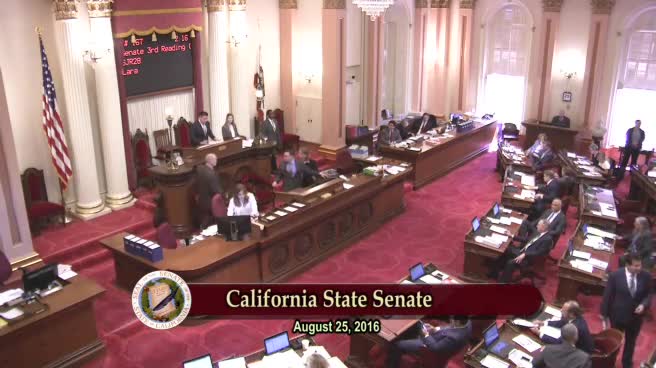
Bill Author

Bill Co-Author(s):
