SB 985: Employment: work hours.
- Session Year: 2015-2016
- House: Senate
- Latest Version Date: 2016-04-14
Existing law, with certain exceptions, establishes 8 hours as a days work and a 40-hour workweek and requires payment of prescribed overtime compensation for additional hours worked. Existing law authorizes the adoption by 2/3 of employees in a work unit of alternative workweek schedules providing for workdays no longer than 10 hours within a 40-hour workweek.
This bill would enact the California Workplace Flexibility Act of 2016. The bill, until January 1, 2022, would establish an overtime exemption for an employee-selected flexible work schedule. The exemption would allow, at the written request of an individual nonexempt employee on a form provided by the Division of Labor Standards Enforcement, and upon employer approval, an employee-selected flexible work schedule providing for workdays up to 10 hours per day within a 40-hour workweek. The employer would be obligated to pay overtime based on the employees regular rate of pay, as prescribed, for all hours worked over 40 hours in a workweek or over 10 hours in a workday, whichever is greater. The bill would establish requirements for the termination of an agreed-upon schedule. The bill would require the employer to maintain in its files a signed statement of voluntary participation for all approved voluntary work schedules and to submit a copy of the signed request form to the division. The bill would except from its provisions employees covered by collective bargaining and specific public employees. The bill would require the division to enforce its provisions and adopt or revise regulations as necessary to implement its provisions. The bill would also require the division, by January 1, 2021, to prepare and submit a report to the Legislature evaluating the act.
This bill would declare that it is to take effect immediately as an urgency statute.
Existing law authorizes an employer to propose a regularly scheduled alternative workweek, as specified, that will be adopted if it receives approval in a secret ballot election by at least 2/3 of affected employees in a work unit.
This bill would make nonsubstantive changes to those provisions.
Existing law authorizes an employer to propose a regularly scheduled alternative workweek, as specified, that will be adopted if it receives approval in a secret ballot election by at least 2/3 of affected employees in a work unit.
This bill would make nonsubstantive changes to those provisions.
This act shall be known and may be cited as the California Workplace Flexibility Act of 2016.
SEC. 2.The Legislature finds and declares all of the following:
(a)California employees are increasingly requesting flexibility in terms of their work schedules to help balance their work-life commitments, and many prefer such increased flexibility over additional compensation. As a result, many employers and human resource professionals are attempting to enact flexible workplace programs and policies to enhance employee engagement, recruit and retain top talent, reduce turnover costs, and increase productivity.
(b)While California is often a pioneer in enacting laws that permit employees time away from the workplace, these laws generally provide only unpaid leave. Therefore, many employees are hesitant to take advantage of these laws because they want to avoid reducing their overall work schedule. Accordingly, full-time but hourly employees often request adjusting their schedules to allow them to both take the time off in any given week but without reducing their overall work schedule. While California does authorize so-called make up time or compensatory time off, these are often very limited in their application or stop-gap in nature, and provide no meaningful assistance to most hourly employees who have recurring nonwork obligations.
(c)Moreover, California overtime laws, which are unique in the country, make it difficult for most employers to reach an agreement with an individual worker that would allow a flexible work schedule.
(d)Existing law does not permit a California employer to allow an individual worker to choose a flexible work schedule of four 10-hour days per week without overtime being paid.
(e)As a consequence, large, small, and micro-employers do not have the flexibility to offer their employees the opportunity to take advantage of a flexible work schedule that would benefit the workers and their families.
(f)Permitting employees to elect to work four 10-hour days per week without the payment of overtime would allow those employees to spend much-needed time with their families, lessen traffic congestion on our crowded roads and highways, allow workers to spend one day a week on personal matters, such as volunteering at a childs school, scheduling medical appointments, and attending to other important family matters that often are difficult to schedule with a five-days-per-week, eight-hours-per-day schedule.
(g)It is the intent of the Legislature in enacting the California Workplace Flexibility Act of 2016 to protect workers as follows:
(1)An employee shall not be forced to work more than eight hours in a day without receiving overtime, but, instead, he or she may request a flexible work schedule of up to four 10-hour days per week and the employer may agree to this schedule without having to pay overtime for the 9th and 10th hours worked per day in that schedule.
(2)The employer will be required to pay overtime rates after 10 work hours in a day for workers who have chosen a flexible schedule pursuant to this act.
(3)The employer will be required to pay double normal pay after 12 work hours in a day for a worker who has chosen a flexible schedule under this act.
(4)The worker, including one who chooses a flexible schedule under this act, will receive overtime for any hours worked over 40 hours in a single week.
(h)Workplaces that are unionized already allow workers to choose to work four 10-hour days; however, it is virtually impossible for workers of nonunionized workplaces to enjoy this benefit.
SEC. 3.Section 510 of the Labor Code is amended to read:510.(a)Eight hours of labor constitutes a days work. Any work in excess of eight hours in one workday and any work in excess of 40 hours in any one workweek and the first eight hours worked on the seventh day of work in any one workweek shall be compensated at the rate of no less than one and one-half times the regular rate of pay for an employee. Any work in excess of 12 hours in one day shall be compensated at the rate of no less than twice the regular rate of pay for an employee. In addition, any work in excess of eight hours on any seventh day of a workweek shall be compensated at the rate of no less than twice the regular rate of pay of an employee. Nothing in this section requires an employer to combine more than one rate of overtime compensation in order to calculate the amount to be paid to an employee for any hour of overtime work. The requirements of this section do not apply to the payment of overtime compensation to an employee working pursuant to any of the following:
(1)An alternative workweek schedule adopted pursuant to Section 511.
(2)(A)An employee-selected flexible work schedule adopted pursuant to Section 511.5.
(B)This paragraph shall become inoperative on January 1, 2022.
(2)
(3)An alternative workweek schedule adopted pursuant to a collective bargaining agreement pursuant to Section 514.
(3)
(4)An alternative workweek schedule to which this chapter is inapplicable pursuant to Section 554.
(b)Time spent commuting to and from the first place at which an employees presence is required by the employer shall not be considered to be a part of a days work, when the employee commutes in a vehicle that is owned, leased, or subsidized by the employer and is used for the purpose of ridesharing, as defined in Section 522 of the Vehicle Code.
(c)This section does not affect, change, or limit an employers liability under the workers compensation law.
SEC. 4.Section 511.5 is added to the Labor Code, to read:511.5.(a)Notwithstanding Section 511 or any other law or order of the Industrial Welfare Commission, an individual nonexempt employee may work up to 10 hours per workday without any obligation on the part of the employer to pay an overtime rate of compensation, except as provided in subdivision (b), if the employee requests this schedule in writing and the employer approves the request. The request by an employee shall be referred to as an overtime exemption for an employee-selected flexible work schedule. The request shall be in writing on a form provided by the Division of Labor Standards Enforcement and shall include all of the following:
(1)A statement that the employer and employee participating in the flexible work schedule understand that work performed in excess of 10 hours in a day or in excess of 40 hours in a week must be compensated at one and one-half times the employees regular rate of pay.
(2)A description of the daily and weekly hours to be worked under the flexible work schedule.
(3)A statement that the flexible work hour schedule has not been made a condition of employment and that participation in the plan is voluntary.
(4)The signature of the employer or authorized representative.
(b)If an employee-selected flexible work schedule is adopted pursuant to subdivision (a), the employer shall pay overtime at one and one-half times the employees regular rate of pay for all hours worked over 40 hours in a workweek or over 10 hours in a workday, whichever is the greater number of hours. All work performed in excess of 12 hours per workday and in excess of eight hours on a fifth, sixth, or seventh day in the workweek shall be paid at double the employees regular rate of pay.
(c)The employer may inform its employees that it is willing to consider an employee request to work an employee-selected flexible work schedule, but shall not induce a request by promising an employment benefit or threatening an employment detriment.
(d)The employee or employer may discontinue the employee-selected flexible work schedule at any time by giving written notice to the other party. The request shall be effective the first day of the next pay period or the fifth day after notice is given if there are fewer than five days before the start of the next pay period, unless otherwise agreed to by the employer and the employee.
(e)For each employee participating in an approved voluntary flexible work schedule, the employer shall maintain a signed statement of voluntary participation in the employees personnel file or in a single file for all approved voluntary work schedules.
(f)The employer shall submit a copy of the signed employee-selected flexible work schedule form to the Division of Labor Standards Enforcement.
(g)This section does not apply to any employee covered by a valid collective bargaining agreement or employed by the state, a city, county, city and county, district, municipality, or other public, quasi-public, or municipal corporation, or any political subdivision of this state.
(h)This section shall be liberally construed to accomplish its purposes.
(i)This section shall prevail over any inconsistent provisions in any wage order of the Industrial Welfare Commission.
(j)(1)The Division of Labor Standards Enforcement shall enforce this section and shall adopt or revise regulations as necessary to conform and implement this section.
(2)Not later than January 1, 2021, the Division of Labor Standards Enforcement shall prepare and submit to the Legislature a report, in accordance with Section 9795 of the Government Code, evaluating the California Workplace Flexibility Act of 2016, including, but not limited to, all of the following:
(A)The number of employee complaints regarding employer delay in approving a flexible work schedule.
(B)The number of employees who have complained of being coerced to sign the employee-selected flexible work schedule form referenced in this section.
(C)The total number of employer approved flexible work schedules received by the Division of Labor Standards Enforcement pursuant to subdivision (f).
(k)This section shall remain in effect only until January 1, 2022, and as of that date is repealed, unless a later enacted statute, that is enacted before January 1, 2022, deletes or extends that date.
SEC. 5.This act is an urgency statute necessary for the immediate preservation of the public peace, health, or safety within the meaning of Article IV of the Constitution and shall go into immediate effect. The facts constituting the necessity are:
In order to adjust to the changing demographics of Californias workforce, economic challenges, volatile fuel prices, and transportation challenges for employees, and to timely provide working Californians with a beneficial work schedule that facilitates greater balance of work and life demands, it is necessary that this act take effect immediately.
SECTION 1.Section 511 of the Labor Code is amended to read:511.(a)Upon the proposal of an employer, the employees of an employer may adopt a regularly scheduled alternative workweek that authorizes work by the affected employees for no longer than 10 hours per day within a 40-hour workweek without the payment to the affected employees of an overtime rate of compensation pursuant to this section. A proposal to adopt an alternative workweek schedule shall be deemed adopted only if it receives approval in a secret ballot election by at least two-thirds of affected employees in a readily identifiable work unit. The regularly scheduled alternative workweek proposed by an employer for adoption by employees may be a single work schedule that would become the standard schedule for workers in the work unit, or a menu of work schedule options, from which each employee in the unit would be entitled to choose. Notwithstanding subdivision (c) of Section 500, the menu of work schedule options may include a regular schedule of eight-hour days that are compensated in accordance with subdivision (a) of Section 510. Employees who adopt a menu of work schedule options may, with employer consent, move from one schedule option to another on a weekly basis.
(b)An affected employee working longer than eight hours, but not more than 12 hours in a day, pursuant to an alternative workweek schedule adopted pursuant to this section shall be paid an overtime rate of compensation of no less than one and one-half times the regular rate of pay of the employee for any work in excess of the regularly scheduled hours established by the alternative workweek agreement and for any work in excess of 40 hours per week. An overtime rate of compensation of no less than double the regular rate of pay of the employee shall be paid for any work in excess of 12 hours per day and for any work in excess of eight hours on those days worked beyond the regularly scheduled workdays established by the alternative workweek agreement. Nothing in this section requires an employer to combine more than one rate of overtime compensation in order to calculate the amount to be paid to an employee for any hour of overtime work.
(c)An employer shall not reduce an employees regular rate of hourly pay as a result of the adoption, repeal, or nullification of an alternative workweek schedule.
(d)An employer shall make a reasonable effort to find a work schedule not to exceed eight hours in a workday, in order to accommodate any affected employee who was eligible to vote in an election authorized by this section and is unable to work the alternative schedule hours established as the result of that election. An employer shall be permitted to provide a work schedule not to exceed eight hours in a workday to accommodate any employee who was hired after the date of the election and who is unable to work the alternative schedule established as the result of that election. An employer shall explore any available reasonable alternative means of accommodating the religious belief or observance of an affected employee that conflicts with an adopted alternative workweek schedule, in the manner provided by subdivision (j) of Section 12940 of the Government Code.
(e)The results of any election conducted pursuant to this section shall be reported by an employer to the Division of Labor Standards Enforcement within 30 days after the results are final.
(f)Any type of alternative workweek schedule that is authorized by this code and that was in effect on January 1, 2000, may be repealed by the affected employees pursuant to this section. Any alternative workweek schedule that was adopted pursuant to Wage Order Number 1, 4, 5, 7, or 9 of the Industrial Welfare Commission is null and void, except for an alternative workweek providing for a regular schedule of no more than 10 hours work in a workday that was adopted by a two-thirds vote of affected employees in a secret ballot election pursuant to wage orders of the Industrial Welfare Commission in effect prior to 1998. This subdivision does not apply to exemptions authorized pursuant to Section 515.
(g)Notwithstanding subdivision (f), an alternative workweek schedule in the health care industry adopted by a two-thirds vote of affected employees in a secret ballot election pursuant to Wage Order Numbers 4 and 5 in effect prior to 1998, that provided for workdays exceeding 10 hours but not exceeding 12 hours in a day without the payment of overtime compensation, shall be valid until July 1, 2000. An employer in the health care industry shall make a reasonable effort to accommodate any employee in the health care industry who is unable to work the alternative schedule established as the result of a valid election held in accordance with provisions of Wage Order Number 4 or 5 that were in effect prior to 1998.
(h)Notwithstanding subdivision (f), if an employee is voluntarily working an alternative workweek schedule providing for a regular work schedule of not more than 10 hours work in a workday as of July 1, 1999, an employee may continue to work that alternative workweek schedule without the entitlement of the payment of daily overtime compensation for the hours provided in that schedule if the employer approves a written request of the employee to work that schedule.
(i)For purposes of this section, work unit includes a division, a department, a job classification, a shift, a separate physical location, or a recognized subdivision thereof. A work unit may consist of an individual employee as long as the criteria for an identifiable work unit in this section is met.
(a)Upon the proposal of an employer, the employees of an employer may adopt a regularly scheduled alternative workweek that authorizes work by the affected employees for no longer than 10 hours per day within a 40-hour workweek without the payment to the affected employees of an overtime rate of compensation pursuant to this section. A proposal to adopt an alternative workweek schedule shall be deemed adopted only if it receives approval in a secret ballot election by at least two-thirds of affected employees in a readily identifiable work unit. The regularly scheduled alternative workweek proposed by an employer for adoption by employees may be a single work schedule that would become the standard schedule for workers in the work unit, or a menu of work schedule options, from which each employee in the unit would be entitled to choose. Notwithstanding subdivision (c) of Section 500, the menu of work schedule options may include a regular schedule of eight-hour days that are compensated in accordance with subdivision (a) of Section 510. Employees who adopt a menu of work schedule options may, with employer consent, move from one schedule option to another on a weekly basis.
(b)An affected employee working longer than eight hours hours, but not more than 12 hours in a day day, pursuant to an alternative workweek schedule adopted pursuant to this section shall be paid an overtime rate of compensation of no less than one and one-half times the regular rate of pay of the employee for any work in excess of the regularly scheduled hours established by the alternative workweek agreement and for any work in excess of 40 hours per week. An overtime rate of compensation of no less than double the regular rate of pay of the employee shall be paid for any work in excess of 12 hours per day and for any work in excess of eight hours on those days worked beyond the regularly scheduled workdays established by the alternative workweek agreement. Nothing in this section requires an employer to combine more than one rate of overtime compensation in order to calculate the amount to be paid to an employee for any hour of overtime work.
(c)An employer shall not reduce an employees regular rate of hourly pay as a result of the adoption, repeal, or nullification of an alternative workweek schedule.
(d)An employer shall make a reasonable effort to find a work schedule not to exceed eight hours in a workday, in order to accommodate any affected employee who was eligible to vote in an election authorized by this section and who is unable to work the alternative schedule hours established as the result of that election. An employer shall be permitted to provide a work schedule not to exceed eight hours in a workday to accommodate any employee who was hired after the date of the election and who is unable to work the alternative schedule established as the result of that election. An employer shall explore any available reasonable alternative means of accommodating the religious belief or observance of an affected employee that conflicts with an adopted alternative workweek schedule, in the manner provided by subdivision (j) of Section 12940 of the Government Code.
(e)The results of any election conducted pursuant to this section shall be reported by an employer to the Division of Labor Standards Enforcement within 30 days after the results are final.
(f)Any type of alternative workweek schedule that is authorized by this code and that was in effect on January 1, 2000, may be repealed by the affected employees pursuant to this section. Any alternative workweek schedule that was adopted pursuant to Wage Order Number 1, 4, 5, 7, or 9 of the Industrial Welfare Commission is null and void, except for an alternative workweek providing for a regular schedule of no more than 10 hours work in a workday that was adopted by a two-thirds vote of affected employees in a secret ballot election pursuant to wage orders of the Industrial Welfare Commission in effect prior to 1998. This subdivision does not apply to exemptions authorized pursuant to Section 515.
(g)Notwithstanding subdivision (f), an alternative workweek schedule in the health care industry adopted by a two-thirds vote of affected employees in a secret ballot election pursuant to Wage Order Numbers 4 and 5 in effect prior to 1998 1998, that provided for workdays exceeding 10 hours but not exceeding 12 hours in a day without the payment of overtime compensation compensation, shall be valid until July 1, 2000. An employer in the health care industry shall make a reasonable effort to accommodate any employee in the health care industry who is unable to work the alternative schedule established as the result of a valid election held in accordance with provisions of Wage Order Number 4 or 5 that were in effect prior to 1998.
(h)Notwithstanding subdivision (f), if an employee is voluntarily working an alternative workweek schedule providing for a regular work schedule of not more than 10 hours work in a workday as of July 1, 1999, an employee may continue to work that alternative workweek schedule without the entitlement of the payment of daily overtime compensation for the hours provided in that schedule if the employer approves a written request of the employee to work that schedule.
(i)For purposes of this section, work unit includes a division, a department, a job classification, a shift, a separate physical location, or a recognized subdivision thereof. A work unit may consist of an individual employee as long as the criteria for an identifiable work unit in this section is met.
|
Date
|
Status
|
|---|---|
| Feb 10, 2016 | Introduced. Read first time. To Com. on RLS. for assignment. To print. |
| Feb 11, 2016 | From printer. May be acted upon on or after March 12. |
| Feb 18, 2016 | Referred to Com. on RLS. |
| Apr 14, 2016 | From committee with author's amendments. Read second time and amended. Re-referred to Com. on RLS. |
| Apr 28, 2016 | Re-referred to Com. on L. & I.R. |
| May 28, 2016 | Set for hearing June 22. |
| Jun 22, 2016 | June 22 set for first hearing. Failed passage in committee. (Ayes 1. Noes 4. Page 4490.) Reconsideration granted. |
| Jun 22, 2016 | June 22 set for first hearing. Failed passage in committee. (Ayes 1. Noes 4.) Reconsideration granted. |
|
Date
|
Description
|
Location
|
Votes
|
|
|---|---|---|---|---|
| Jun 22, 2016 | Do pass, but first be re-referred to the Committee on [Appropriations] | Senate Standing Committee on Labor and Industrial Relations |
Failed |
|
| Jun 22, 2016 | [First] hearing set for [06-22-2016]: Failed passage in Committee. Reconsideration granted | Senate Standing Committee on Labor and Industrial Relations |
Failed |
This list shows positions taken on this bill by organizations on the date displayed, which is linked to the original source.
Positions by individuals are not included.
|
Organization
|
Position
|
Date
|
|---|---|---|
| Acclamation Insurance Management Services | ** Support | Jun 22, 2016 |
| Allied Managed Care | ** Support | Jun 22, 2016 |
| American Insurance Association | ** Support | Jun 22, 2016 |
| Associated General Contractors | ** Support | Jun 22, 2016 |
| Association Of California Insurance Companies | ** Support | Jun 22, 2016 |
| Bay Area HR Executives Council | ** Support | Jun 22, 2016 |
| Building And Construction Trades Council | * Indeterminate | Jun 22, 2016 |
| California Ambulance Association | * Support | Jun 22, 2016 |
| California Association For Health Services At Home | ** Support | Jun 22, 2016 |
| California Association Of Joint Powers Authorities | ** Support | Jun 22, 2016 |
| California Chamber Of Commerce | * Indeterminate | Jun 22, 2016 |
| California Chamber Of Commerce | * Support | Jun 22, 2016 |
| California Delivery Association | ** Support | Jun 22, 2016 |
| California Farm Bureau | * Support | Jun 22, 2016 |
| California Grocers Association | ** Support | Jun 22, 2016 |
| California Hotel & Lodging Association | ** Support | Jun 22, 2016 |
| California Labor Federation, Afl-Cio | * Against | Jun 22, 2016 |
| California League of Food Processors | ** Support | Jun 22, 2016 |
| California Manufacturers And Technology Association | * Support | Jun 22, 2016 |
| California Newspaper Publishers Association | * Support | Jun 22, 2016 |
| California Retailers Association | ** Support | Jun 22, 2016 |
| California Rural Legal Assistance Foundation, Inc. | * Indeterminate | Jun 22, 2016 |
| California School Boards Association | ** Support | Jun 22, 2016 |
| California Special Districts Association | ** Support | Jun 22, 2016 |
| California State Association Of Counties | ** Support | Jun 22, 2016 |
| California State Council of SHRM | ** Support | Jun 22, 2016 |
| CALSHRM | * Support | Jun 22, 2016 |
| CAWA - Representing the Automotive Parts Industry | ** Support | Jun 22, 2016 |
| Central California SHRM | * Support | Jun 22, 2016 |
| Central Coast HR Association | ** Support | Jun 22, 2016 |
| Central Valley HR Management Association | ** Support | Jun 22, 2016 |
| Csac Excess Insurance Authority | ** Support | Jun 22, 2016 |
| Culver City Chamber of Commerce | ** Support | Jun 22, 2016 |
| HR Association of Central California | ** Support | Jun 22, 2016 |
| Inland Empire Society for HR Association Management | ** Support | Jun 22, 2016 |
| Kern County Society for Human Resource Management | * Support | Jun 22, 2016 |
| Kings County | ** Support | Jun 22, 2016 |
| League Of California Cities | ** Support | Jun 22, 2016 |
| National Association of Mutual Insurance Companies | ** Support | Jun 22, 2016 |
| National Federation Of Independent Business | ** Support | Jun 22, 2016 |
| Northstate SHRM | * Support | Jun 22, 2016 |
| Professionals in Human Resources Association | ** Support | Jun 22, 2016 |
| Property Casualty Insurers Association of America | ** Support | Jun 22, 2016 |
| Rural County Representatives of California | ** Support | Jun 22, 2016 |
| Sacramento Area HR Association | ** Support | Jun 22, 2016 |
| San Diego Society of Human Resource Management | * Support | Jun 22, 2016 |
| San Joaquin Human Resource Association | ** Support | Jun 22, 2016 |
| Santa Barbara HR Association | ** Support | Jun 22, 2016 |
| SHRM of Tulare | * Support | Jun 22, 2016 |
| Sierra Human Resources Association | ** Support | Jun 22, 2016 |
| Southern California Wine Country SHRM | * Support | Jun 22, 2016 |
SENATE COMMITTEE ON LABOR AND INDUSTRIAL RELATIONS
Senator Tony Mendoza, Chair
2015 - 2016 Regular
Bill No: SB 985 Hearing Date: June 22, 2016
Author: | Berryhill | ||
Version: | April 14, 2016 | ||
Urgency: | Yes | Fiscal: | Yes |
Consultant: | Brandon Seto | ||
Subject: Employment: work hours
KEY ISSUES
Should individual employees, on a one-on-one basis, be allowed to request an alternative workweek schedule from their employer?
Should the Legislature require the Division of Labor Standards Enforcement (DLSE) to develop an alternative workweek schedule request form to be utilized by employees and kept on file by employers and the DLSE?
Should the Legislature require a report from the DLSE which describes employee experiences relating to alternative workweek schedules, including the total number requested by employees?
ANALYSIS
Existing law
- Defines a full workday as 8 hours, and 40 hours as a workweek. Overtime wage rates must be paid for any time worked beyond those previously mentioned definitions (Labor Code §510).
- Requires overtime to be paid at the rate of no less than one and one-half times an employee’s regular rate of pay for work performed beyond 8 hours in a day or 40 hours in a week. Furthermore, work performed beyond 12 hours in a day is to be compensated at twice the regular rate of pay (Labor Code §510).
- Utilizes regulations created by the Industrial Welfare Commission (IWC) in the form of “wage orders” to determine the wages, hours, conditions, and scheduling options of labor and employment in the various occupations, trades, and industries in California (Labor Code §1173 and §517).
- Defines a “work unit” as a division, a department, a job classification, a shift, a separate physical location, or a recognized subdivision thereof. A work unit may consist of an individual employee as long as the aforementioned criteria for an identifiable work unit is met (Labor Code §511).
- Authorizes the adoption of alternative workweek schedules for work units, provided 2/3 of employees in a work unit vote by secret ballot to approve an alternative workweek schedule which allows employees to work up to 10 hours a day within a 40-hour workweek without the payment of overtime (Labor Code §511).
- Under these existing alternative workweek schedule options, employers pay their employees at overtime rates of one and one-half times their regular rate of pay for time worked beyond 10 hours a day or for any work in excess of 40 hours in a week. Also, any work beyond 12 hours in a day must be compensated at twice the employee’s regular rate of pay (Labor Code §511).
This Bill
Would enact the California Workplace Flexibility Act of 2016 which would allow employees to request a flexible work schedule of up to four 10-hour days per week without the obligation on the employer to pay overtime for the 9th and 10th hours worked per day in that schedule.
Specifically, this bill would:
- Require employers to pay overtime rates after 10 hours of work in a day or 40 hours in a week for workers who have chosen a flexible work schedule pursuant to this act. After 12 work hours in a day, the worker would have to be paid double the regular rate of pay by their employer.
- Allow individual employees, using a form provided by the DLSE, to make written requests for flexible work schedules from their employers without the requirement of a secret ballot decision by 2/3 of the work unit.
- Specify that this form, in addition to the provisions mentioned above, includes a statement indicating that the flexible work schedule was not a condition of employment, and that employee participation is voluntary.
- Require employers to retain these signed request forms in their records and to send a copy to the DLSE.
- Enable employers to consider employee requests for flexible work schedules, but not to induce such requests through promises of detriment or benefit to the employee.
- Allow either employer or employee to terminate the flexible work schedule through written notice.
- Exclude public employees or those covered by a collective bargaining agreement.
- Specify that its scheduling provisions will replace the scheduling provisions in any Industrial Welfare Commission wage order, thus making it the standard practice for flexible scheduling options.
- Require the DLSE to prepare and submit a report to the Legislature no later than January 1, 2021evaluating the provisions of this bill including, but not limited to, the following:
- The number of employee complaints regarding employer delay in approving a flexible work schedule.
- The number of employees who have complained of being coerced to sign the employee-selected flexible work schedule form.
- The total number of employer-approved flexible work schedules received by the DLSE.
- State that its provisions will be repealed on January 1, 2022, unless a statute enacted before January 1, 2022, deletes or extends that date.
- Be considered as an urgency statute.
COMMENTS
1. Need for this bill?
This bill’s stated intent is to provide flexibility to employers and employees in terms of work schedules. It contends that California’s overtime and alternative work schedule laws are prohibitive, which is detrimental both to employers and their employees. According to the author, this bill would create greater efficiency for employers and greater work-life balance for employees.
2. Proponent Arguments:
Proponents state that California is presently the only state that requires daily overtime but offers no mechanism for individual employees to request, or for private employers to provide flexible schedules. While Labor Code § 511 authorizes so-called "alternative workweek schedules" if approved by a “work unit”, it presently applies only to “proposal[s] of an employer," not individual employees. In this regard, the Labor Code provides a mechanism for employers to request an alternative workweek schedule, but does not provide a mechanism in the scenario where an employee is seeking an alternative schedule.
Proponents state that this bill would resolve the conflict and complexity of California’s current overtime premium pay requirements by permitting the 4-day workweek to be paid at straight time rates, if the employee requests the flexible work schedule. Proponents further argue that flexible work schedules benefit both employees and employers. Workers benefit by having an extra day to spend with family, complete household chores, volunteer at their children’s school and more. Flexible work schedules benefit employers by improved employee morale, increased productivity and as a helpful recruitment aid. In addition, proponents say that SB 985 would result in both traffic and environmental benefits for California due to reduced commuting.
3. Opponent Arguments:
The California Labor Federation opposes SB 985, which they believe would undermine the fundamental right to an 8-hour day. The vast majority of California’s workers are “at will” and will agree to virtually any waiver of rights if it is communicated directly or indirectly that the waiver is supported by the employer. This puts many workers at risk of waiving a core labor protection to avoid angering their boss. Eliminating overtime can result in significant savings to an employer. This reality makes it even more important that workers be protected from suggestion or coercion to waive this right.
Opponents state that significant flexibility already exists under state law. Workers can request “make-up time” so they can leave early one day and work late the next without accruing overtime. In addition, Labor-Management negotiations created the pre-existing alternative workweek process. This process allows the adoption of an alternative schedule with safeguards to protect workers from employer pressure. Opponents argue that they have yet to see evidence that this model is not working and thus see no reason to change the rules and jeopardize vulnerable workers.
Opponents claim that employers already have the right to be as flexible or as inflexible as they want when it comes to shifts and scheduling, so long as they pay for overtime hours. If the problem is workers sitting in traffic at peak hours, employers can adjust start times or stagger shifts. They can give workers as many or as few hours as they like, avoiding any overtime obligations. Finally, opponents state that nothing in this bill guarantees workers any additional flexibility. While they can request an alternate schedule, the employer has the power to allow or deny. This opens the door to favoritism, where only certain employees get schedule changes approved. In short, opponents believe that this bill provides no real benefit to workers.
4. Prior Legislation:
Although this bill has added, among other things, a sunset date and a reporting requirement, there have been many previous bills that were similar to this one, and all failed passage in the first policy committees in their respective houses of origin. They include:
- SB 368 (Berryhill) of 2016
- AB 2448 (Jones) of 2014
- AB 907 (Conway) of 2014
- SB 607 (Berryhill) of 2013
- SB 1115 (Dutton) of 2012
- SB 367 (Dutton) of 2011
- AB 830 (Olsen) of 2011
- SB 1335 (Cox and Dutton) of 2010
- SB 187 (Benoit) of 2009
- AB 2127 (Benoit) of 2008
- AB 510 (Benoit) of 2007
- AB 2217 (Villines) of 2006
- SB 1254 (Ackerman) of 2006
- AB 640 (Tran) of 2005
SUPPORT
Acclamation Insurance Management Services
Allied Managed Care
American Insurance Association
Associated General Contractors
Association of California Insurance Companies
Bay Area HR Executives Council
California Association for Health Services at Home
California Association of Joint Powers Authorities
California Chamber of Commerce
California Coalition on Workers’ Compensation
California Delivery Association
California Grocers Association
California Hotel & Lodging Association
California League of Food Processors
California Manufacturers & Technology Association
California Retailers Association
California School Boards Association
California Special Districts Association
California State Association of Counties
California State Council of SHRM (CalSHRM)
CAWA – Representing the Automotive Parts Industry
Central California SHRM
Central Coast HR Association
Central Valley HR Management Association
CSAC Excess Insurance Authority
Culver City Chamber of Commerce
HR Association of Central California
Inland Empire Society for HR Association Management
Kern County Society for Human Resource Management
League of California Cities
National Association of Mutual Insurance Companies
National Federation of Independent Business
Northstate SHRM
Professionals in Human Resources Association
Property Casualty Insurers Association of America
Rural County Representatives of California
Sacramento Area HR Association
San Diego Society of Human Resource Management
San Joaquin Human Resource Association
Santa Barbara HR Association
SHRM of Tulare/Kings County
Sierra Human Resources Association
Southern California Wine Country SHRM
OPPOSITION
California Labor Federation
-- END --
Discussed in Hearing
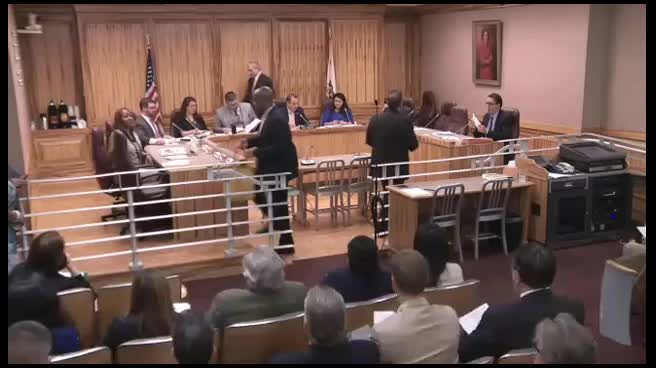 42MIN
Senate Standing Committee on Labor and Industrial Relations


Bill Co-Author(s):