SB 997: Notaries public.
- Session Year: 2015-2016
- House: Senate
- Latest Version Date: 2016-09-22
Existing law prohibits the acknowledgment of an instrument from being taken unless the officer taking it has satisfactory evidence that the person making the acknowledgment is the individual who is described in and who executed the instrument. Under existing law, satisfactory evidence means the absence of information, evidence, or other circumstances that would lead a reasonable person to believe that the person making the acknowledgment is not the individual he or she claims to be and, among other things, he or she presents a specified document that is either current or issued within 5 years that contains a photograph and description of the person named on it, the signature of the person, and a serial or other identifying number, as provided.
This bill would add an identification card issued by a federally recognized tribal government to the list of documents acceptable for identification purposes.
This bill would also incorporate changes to Section 1185 of the Civil Code proposed by both this bill and AB 2566, which would become operative only if both bills are enacted and this bill is enacted last.
Existing law prohibits the acknowledgment of an instrument from being taken unless the officer taking it has satisfactory evidence that the person making the acknowledgment is the individual who is described in and who executed the instrument. Under existing law, satisfactory evidence means the absence of information, evidence, or other circumstances that would lead a reasonable person to believe that the person making the acknowledgment is not the individual he or she claims to be and, among other things, he or she presents a specified document that is either current or issued within 5 years that contains a photograph and description of the person named on it, the signature of the person, and a serial or other identifying number, as provided.
This bill would add an identification card issued by a federally recognized tribal government to the list of documents acceptable for identification purposes.
Existing law provides for the Medi-Cal program, which is administered by the State Department of Health Care Services, under which qualified low-income individuals receive health care services. The Medi-Cal program is, in part, governed and funded by federal Medicaid program provisions. Existing law extends eligibility for full-scope Medi-Cal benefits to individuals under 19 years of age who do not have, or are unable to establish, satisfactory immigration status, commencing after the Director of Health Care Services determines that systems have been programmed for implementation of this extension, but in no case sooner than May 1, 2016.
Existing law requires individuals under 19 years of age enrolled in restricted-scope Medi-Cal at the time the director makes the above-described determination to be enrolled in the full scope of Medi-Cal benefits, if otherwise eligible, pursuant to an eligibility and enrollment plan, as specified. Existing law requires an individual who is eligible pursuant to these provisions to enroll in a Medi-Cal managed care health plan, where available, but does not preclude a beneficiary from being enrolled in any other childrens Medi-Cal specialty program that he or she would otherwise be eligible for.
This bill, until January 1, 2019, would authorize the enrollment of eligible children who, as of May 1, 2016, were enrolled in comprehensive, low-cost coverage provided by a health care service plan with a total enrollment in excess of 5 million lives, in full-scope Medi-Cal with the same health care service plan, notwithstanding any other law. The bill would provide that this authorization is applicable only in a county in which a health care service plan with a total enrollment in excess of 5 million lives has a contract or a subcontract for Medi-Cal managed care. The bill would also, until January 1, 2019, authorize the enrollment of eligible children who, as of May 1, 2016, were enrolled in a comprehensive, low-cost coverage program provided by a Medi-Cal managed care health plan, in full-scope Medi-Cal with the same Medi-Cal managed care health plan, notwithstanding any other law. The bill would require the department to provide notice to the childs representative of the childs enrollment into Medi-Cal and health plan options, and would require this notice to contain specified information. The bill would require the department, using information provided to it by health care service plans, to determine whether prior to May 1, 2016, an eligible child was enrolled in coverage with a health care service plan with a total enrollment in excess of 5 million lives. The bill would require a Medi-Cal managed care health plan and its designees to work with the department and its designees to facilitate continuity of care and data sharing for the purpose of implementing these provisions.
This bill would require the department to adopt necessary regulations to implement these provisions, and until those regulations are adopted, would authorize the department to implement these provisions by means of all-county letters, provider bulletins, or other similar instructions without taking regulatory action. The bill would require the department to provide a semiannual status report to the Legislature on the implementation of these provisions, as specified.
Existing law provides for the Medi-Cal program, which is administered by the State Department of Health Care Services, under which qualified low-income individuals receive health care services. The Medi-Cal program is, in part, governed and funded by federal Medicaid program provisions. Existing law extends eligibility for full-scope Medi-Cal benefits to individuals under 19 years of age who do not have, or are unable to establish, satisfactory immigration status, commencing after the Director of Health Care Services determines that systems have been programmed for implementation of this extension, but in no case sooner than May 1, 2016.
Existing law requires individuals under 19 years of age enrolled in restricted-scope Medi-Cal at the time the director makes the above-described determination to be enrolled in the full scope of Medi-Cal benefits, if otherwise eligible, pursuant to an eligibility and enrollment plan, as specified. Existing law requires an individual who is eligible pursuant to these provisions to enroll in a Medi-Cal managed care health plan, where available, but does not preclude a beneficiary from being enrolled in any other childrens Medi-Cal specialty program that he or she would otherwise be eligible for.
This bill, until January 1, 2019, would authorize the enrollment of eligible children who, as of May 1, 2016, were enrolled in comprehensive, low-cost coverage provided by a health care service plan with a total enrollment in excess of 5 million lives, in full-scope Medi-Cal with the same health care service plan, notwithstanding any other law. The bill would provide that this authorization is applicable only in a county in which a health care service plan with a total enrollment in excess of 5 million lives has a contract or a subcontract for Medi-Cal managed care. The bill would also, until January 1, 2019, authorize the enrollment of eligible children who, as of May 1, 2016, were enrolled in a comprehensive, low-cost coverage program provided by a Medi-Cal managed care health plan, in full-scope Medi-Cal with the same Medi-Cal managed care health plan, notwithstanding any other law. The bill would require a health care service plan or Medi-Cal managed care health plan described above to provide specified information, subject to approval by the department, to the childs representative regarding the childs transition into the Medi-Cal program. The bill would require the department to provide notice to the childs representative before the childs transition to full-scope Medi-Cal, of the childs enrollment into Medi-Cal and health plan options, and would require this notice to contain specified information. The bill would require the department, using information provided to it by health care service plans, to determine whether prior to May 1, 2016, an eligible child was enrolled in coverage with a health care service plan with a total enrollment in excess of 5 million lives. The bill would require a Medi-Cal managed care health plan and its designees to work with the department and its designees to facilitate continuity of care and data sharing for the purpose of implementing these provisions.
This bill would require the department to adopt necessary regulations to implement these provisions, and until those regulations are adopted, would authorize the department to implement these provisions by means of all-county letters, provider bulletins, or other similar instructions without taking regulatory action. The bill would require the department to provide a semiannual status report to the Legislature on the implementation of these provisions, as specified.
Existing law provides for the Medi-Cal program, which is administered by the State Department of Health Care Services, under which qualified low-income individuals receive health care services. The Medi-Cal program is, in part, governed and funded by federal Medicaid program provisions. Existing law extends eligibility for full-scope Medi-Cal benefits to individuals under 19 years of age who do not have, or are unable to establish, satisfactory immigration status, commencing after the Director of Health Care Services determines that systems have been programmed for implementation of this extension, but in no case sooner than May 1, 2016.
Existing law requires individuals under 19 years of age enrolled in restricted-scope Medi-Cal at the time the director makes the above-described determination to be enrolled in the full scope of Medi-Cal benefits, if otherwise eligible, pursuant to an eligibility and enrollment plan, as specified. Existing law requires an individual who is eligible pursuant to these provisions to enroll in a Medi-Cal managed care health plan, where available, but does not preclude a beneficiary from being enrolled in any other childrens Medi-Cal specialty program that he or she would otherwise be eligible for.
This bill, until January 1, 2019, would authorize the enrollment of eligible children who, as of May 1, 2016, were enrolled in comprehensive, low-cost coverage provided by a health care service plan with a total enrollment in excess of 5 million lives, in full-scope Medi-Cal with the same health care service plan, notwithstanding any other law or existing Medi-Cal managed care contract. law. The bill would provide that this authorization is applicable only in a county in which a health care service plan with a total enrollment in excess of 5 million lives has a contract or a subcontract for Medi-Cal managed care. The bill would also, until January 1, 2019, authorize the enrollment of eligible children who, as of May 1, 2016, were enrolled in comprehensive, low-cost coverage provided by a Medi-Cal managed care health plan, in full-scope Medi-Cal with the same Medi-Cal managed care health plan, notwithstanding any other law. The bill would require a health care service plan or Medi-Cal managed care health plan described above to provide specified information information, subject to approval by the department, to the childs representative regarding the childs transition into the Medi-Cal program. The bill would require the department to provide notice to the childs representative before the childs transition to full-scope Medi-Cal, and would require this notice to contain specified information, including that the child may choose not to transition into the Medi-Cal program, and what this choice will mean for his or her health care coverage and access to health care services. information. The bill would require the department, using its third-party liability database, information provided to it by health care service plans, to determine whether prior to May 1, 2016, an eligible child was enrolled in coverage with a health care service plan with a total enrollment in excess of 5 million lives. The bill would require a Medi-Cal managed care health plan and its designees to work with the department and its designees to facilitate continuity of care and data sharing for the purpose of implementing these provisions.
This bill would require the department to adopt necessary regulations to implement these provisions, and until those regulations are adopted, would authorize the department to implement these provisions by means of all-county letters, provider bulletins, or other similar instructions without taking regulatory action. The bill would require the department to provide a semiannual status report to the Legislature on the implementation of these provisions, as specified.
Existing law provides for the Medi-Cal program, which is administered by the State Department of Health Care Services, under which qualified low-income individuals receive health care services. The Medi-Cal program is, in part, governed and funded by federal Medicaid program provisions. Existing law extends eligibility for full-scope Medi-Cal benefits to individuals under 19 years of age who do not have, or are unable to establish, satisfactory immigration status, commencing after the Director of Health Care Services determines that systems have been programmed for implementation of this extension, but in no case sooner than May 1, 2016.
Existing law requires individuals under 19 years of age enrolled in restricted-scope Medi-Cal at the time the director makes the above-described determination to be enrolled in the full scope of Medi-Cal benefits, if otherwise eligible, pursuant to an eligibility and enrollment plan, as specified. Existing law requires an individual who is eligible pursuant to these provisions to enroll in a Medi-Cal managed care health plan, where available, but does not preclude a beneficiary from being enrolled in any other childrens Medi-Cal specialty program that he or she would otherwise be eligible for.
This bill, until January 1, 2019, authorizes would authorize the enrollment of eligible children who, as of May 1, 2016, were enrolled in comprehensive, low-cost coverage provided by a health care service plan with a total enrollment in excess of five 5 million lives, in full-scope Medi-Cal with the same health care service plan, notwithstanding any other law or existing Medi-Cal managed care contract. The bill would prohibit the child from being enrolled in fee-for-service Medi-Cal or another Medi-Cal managed care plan unless a responsible adult seeks enrollment in fee-for-service Medi-Cal or another Medi-Cal managed care plan after the child obtains full-scope Medi-Cal benefits. The bill would require a health care service plan described above to provide specified information to the childs representative regarding the childs transition into the Medi-Cal program. The bill would require the department to provide notice to the family childs representative before the childs transition to full-scope Medi-Cal, as specified. Medi-Cal, and would require this notice to contain specified information, including that the child may choose not to transition into the Medi-Cal program, and what this choice will mean for his or her health care coverage and access to health care services. The bill would require the department, using its third-party liability database, to determine whether prior to May 1, 2016, an eligible child was enrolled in coverage with a health care service plan with a total enrollment in excess of 5 million lives.
Existing law provides for the Medi-Cal program, which is administered by the State Department of Health Care Services, under which qualified low-income individuals receive health care services. The Medi-Cal program is, in part, governed and funded by federal Medicaid program provisions. Existing law extends eligibility for full-scope Medi-Cal benefits to individuals under 19 years of age who do not have, or are unable to establish, satisfactory immigration status, commencing after the Director of Health Care Services determines that systems have been programmed for implementation of this extension, but in no case sooner than May 1, 2016.
Existing law requires individuals under 19 years of age enrolled in restricted-scope Medi-Cal at the time the director makes the above-described determination to be enrolled in the full scope of Medi-Cal benefits, if otherwise eligible, pursuant to an eligibility and enrollment plan, as specified. Existing law requires an individual who is eligible pursuant to these provisions to enroll in a Medi-Cal managed care health plan, where available, but does not preclude a beneficiary from being enrolled in any other childrens Medi-Cal specialty program that he or she would otherwise be eligible for.
This bill, until January 1, 2019, authorizes the enrollment of eligible children who, as of May 1, 2016, were enrolled in comprehensive, low-cost coverage provided by a health care service plan with a total enrollment in excess of five million lives, in full-scope Medi-Cal with the same health care service plan, notwithstanding any other law or existing Medi-Cal managed care contract. The bill would prohibit the child from being enrolled in fee-for-service Medi-Cal or another Medi-Cal managed care plan unless a responsible adult seeks enrollment in fee-for-service Medi-Cal or another Medi-Cal managed care plan after the child obtains full-scope Medi-Cal benefits. The bill would require the department to provide notice to the family before the childs transition to full-scope Medi-Cal, as specified.
(a)The acknowledgment of an instrument shall not be taken unless the officer taking it has satisfactory evidence that the person making the acknowledgment is the individual who is described in and who executed the instrument.
(b)For purposes of this section, satisfactory evidence means the absence of information, evidence, or other circumstances that would lead a reasonable person to believe that the person making the acknowledgment is not the individual he or she claims to be and any one of the following:
(1)(A)The oath or affirmation of a credible witness personally known to the officer, whose identity is proven to the officer upon presentation of a document satisfying the requirements of paragraph (3) or (4), that the person making the acknowledgment is personally known to the witness and that each of the following are true:
(i)The person making the acknowledgment is the person named in the document.
(ii)The person making the acknowledgment is personally known to the witness.
(iii)That it is the reasonable belief of the witness that the circumstances of the person making the acknowledgment are such that it would be very difficult or impossible for that person to obtain another form of identification.
(iv)The person making the acknowledgment does not possess any of the identification documents named in paragraphs (3) and (4).
(v)The witness does not have a financial interest in the document being acknowledged and is not named in the document.
(B)A notary public who violates this section by failing to obtain the satisfactory evidence required by subparagraph (A) shall be subject to a civil penalty not exceeding ten thousand dollars ($10,000). An action to impose this civil penalty may be brought by the Secretary of State in an administrative proceeding or a public prosecutor in superior court, and shall be enforced as a civil judgment. A public prosecutor shall inform the secretary of any civil penalty imposed under this subparagraph.
(2)The oath or affirmation under penalty of perjury of two credible witnesses, whose identities are proven to the officer upon the presentation of a document satisfying the requirements of paragraph (3) or (4), that each statement in paragraph (1) is true.
(3)Reasonable reliance on the presentation to the officer of any one of the following, if the document or other form of identification is current or has been issued within five years:
(A)An identification card or drivers license issued by the Department of Motor Vehicles.
(B)A passport issued by the Department of State of the United States.
(C)An inmate identification card issued by the Department of Corrections and Rehabilitation, if the inmate is in custody in prison.
(D)Any form of inmate identification issued by a sheriffs department, if the inmate is in custody in a local detention facility.
(4)Reasonable reliance on the presentation of any one of the following, provided that a document specified in subparagraphs (A) to (F), inclusive, shall either be current or have been issued within five years and shall contain a photograph and description of the person named on it, shall be signed by the person, shall bear a serial or other identifying number, and, in the event that the document is a passport, shall have been stamped by the United States Citizenship and Immigration Services of the Department of Homeland Security:
(A)A passport issued by a foreign government.
(B)A drivers license issued by a state other than California or by a Canadian or Mexican public agency authorized to issue drivers licenses.
(C)An identification card issued by a state other than California.
(D)An identification card issued by any branch of the Armed Forces of the United States.
(E)An employee identification card issued by an agency or office of the State of California, or by an agency or office of a city, county, or city and county in this state.
(F)An identification card issued by a federally recognized tribal government.
(c)An officer who has taken an acknowledgment pursuant to this section shall be presumed to have operated in accordance with the provisions of law.
(d)A party who files an action for damages based on the failure of the officer to establish the proper identity of the person making the acknowledgment shall have the burden of proof in establishing the negligence or misconduct of the officer.
(e)A person convicted of perjury under this section shall forfeit any financial interest in the document.
SEC. 1.5.Section 1185 of the Civil Code is amended to read:1185.(a)The acknowledgment of an instrument shall not be taken unless the officer taking it has satisfactory evidence that the person making the acknowledgment is the individual who is described in and who executed the instrument.
(b)For purposes of this section, satisfactory evidence means the absence of information, evidence, or other circumstances that would lead a reasonable person to believe that the person making the acknowledgment is not the individual he or she claims to be and any one of the following:
(1)(A)The oath or affirmation of a credible witness personally known to the officer, whose identity is proven to the officer upon presentation of a document satisfying the requirements of paragraph (3) or (4), that the person making the acknowledgment is personally known to the witness and that each of the following are true:
(i)The person making the acknowledgment is the person named in the document.
(ii)The person making the acknowledgment is personally known to the witness.
(iii)That it is the reasonable belief of the witness that the circumstances of the person making the acknowledgment are such that it would be very difficult or impossible for that person to obtain another form of identification.
(iv)The person making the acknowledgment does not possess any of the identification documents named in paragraphs (3) and (4).
(v)The witness does not have a financial interest in the document being acknowledged and is not named in the document.
(B)A notary public who violates this section by failing to obtain the satisfactory evidence required by subparagraph (A) shall be subject to a civil penalty not exceeding ten thousand dollars ($10,000). An action to impose this civil penalty may be brought by the Secretary of State in an administrative proceeding or a public prosecutor in superior court, and shall be enforced as a civil judgment. A public prosecutor shall inform the secretary of any civil penalty imposed under this subparagraph.
(2)The oath or affirmation under penalty of perjury of two credible witnesses, whose identities are proven to the officer upon the presentation of a document satisfying the requirements of paragraph (3) or (4), that each statement in paragraph (1) is true.
(3)Reasonable reliance on the presentation to the officer of any one of the following, if the document or other form of identification is current or has been issued within five years:
(A)An identification card or drivers license issued by the Department of Motor Vehicles.
(B)A passport issued by the Department of State of the United States.
(C)An inmate identification card issued by the Department of Corrections and Rehabilitation, if the inmate is in custody in prison.
(D)Any form of inmate identification issued by a sheriffs department, if the inmate is in custody in a local detention facility.
(4)Reasonable reliance on the presentation of any one of the following, provided that a document specified in subparagraphs (A) to (F), inclusive, shall either be current or have been issued within five years and shall contain a photograph and description of the person named on it, shall be signed by the person, and shall bear a serial or other identifying number:
(A)A valid consular identification document issued by a consulate from the applicants country of citizenship, or a valid passport from the applicants country of citizenship.
(B)A drivers license issued by a state other than California or by a Canadian or Mexican public agency authorized to issue drivers licenses.
(C)An identification card issued by a state other than California.
(D)An identification card issued by any branch of the Armed Forces of the United States.
(E)An employee identification card issued by an agency or office of the State of California, or by an agency or office of a city, county, or city and county in this state.
(F)An identification card issued by a federally recognized tribal government.
(c)An officer who has taken an acknowledgment pursuant to this section shall be presumed to have operated in accordance with the provisions of law.
(d)A party who files an action for damages based on the failure of the officer to establish the proper identity of the person making the acknowledgment shall have the burden of proof in establishing the negligence or misconduct of the officer.
(e)A person convicted of perjury under this section shall forfeit any financial interest in the document.
SEC. 2.Section 1.5 of this bill incorporates amendments to Section 1185 of the Civil Code proposed by both this bill and Assembly Bill 2566. It shall only become operative if (1) both bills are enacted and become effective on or before January 1, 2017, (2) each bill amends Section 1185 of the Civil Code, and (3) this bill is enacted after Assembly Bill 2566, in which case Section 1 of this bill shall not become operative.
(a)The acknowledgment of an instrument shall not be taken unless the officer taking it has satisfactory evidence that the person making the acknowledgment is the individual who is described in and who executed the instrument.
(b)For purposes of this section, satisfactory evidence means the absence of information, evidence, or other circumstances that would lead a reasonable person to believe that the person making the acknowledgment is not the individual he or she claims to be and any one of the following:
(1)(A)The oath or affirmation of a credible witness personally known to the officer, whose identity is proven to the officer upon presentation of a document satisfying the requirements of paragraph (3) or (4), that the person making the acknowledgment is personally known to the witness and that each of the following are true:
(i)The person making the acknowledgment is the person named in the document.
(ii)The person making the acknowledgment is personally known to the witness.
(iii)That it is the reasonable belief of the witness that the circumstances of the person making the acknowledgment are such that it would be very difficult or impossible for that person to obtain another form of identification.
(iv)The person making the acknowledgment does not possess any of the identification documents named in paragraphs (3) and (4).
(v)The witness does not have a financial interest in the document being acknowledged and is not named in the document.
(B)A notary public who violates this section by failing to obtain the satisfactory evidence required by subparagraph (A) shall be subject to a civil penalty not exceeding ten thousand dollars ($10,000). An action to impose this civil penalty may be brought by the Secretary of State in an administrative proceeding or a public prosecutor in superior court, and shall be enforced as a civil judgment. A public prosecutor shall inform the secretary of any civil penalty imposed under this subparagraph.
(2)The oath or affirmation under penalty of perjury of two credible witnesses, whose identities are proven to the officer upon the presentation of a document satisfying the requirements of paragraph (3) or (4), that each statement in paragraph (1) is true.
(3)Reasonable reliance on the presentation to the officer of any one of the following, if the document or other form of identification is current or has been issued within five years:
(A)An identification card or drivers license issued by the Department of Motor Vehicles.
(B)A passport issued by the Department of State of the United States.
(C)An inmate identification card issued by the Department of Corrections and Rehabilitation, if the inmate is in custody in prison.
(D)Any form of inmate identification issued by a sheriffs department, if the inmate is in custody in a local detention facility.
(4)Reasonable reliance on the presentation of any one of the following, provided that a document specified in subparagraphs (A) to (F), inclusive, shall either be current or have been issued within five years and shall contain a photograph and description of the person named on it, shall be signed by the person, shall bear a serial or other identifying number, and, in the event that the document is a passport, shall have been stamped by the United States Citizenship and Immigration Services of the Department of Homeland Security:
(A)A passport issued by a foreign government.
(B)A drivers license issued by a state other than California or by a Canadian or Mexican public agency authorized to issue drivers licenses.
(C)An identification card issued by a state other than California.
(D)An identification card issued by any branch of the Armed Forces of the United States.
(E)An employee identification card issued by an agency or office of the State of California, or by an agency or office of a city, county, or city and county in this state.
(F)An identification card issued by a federally recognized tribal government.
(c)An officer who has taken an acknowledgment pursuant to this section shall be presumed to have operated in accordance with the provisions of law.
(d)A party who files an action for damages based on the failure of the officer to establish the proper identity of the person making the acknowledgment shall have the burden of proof in establishing the negligence or misconduct of the officer.
(e)A person convicted of perjury under this section shall forfeit any financial interest in the document.
SEC. 1.5.Section 1185 of the Civil Code is amended to read:1185.(a)The acknowledgment of an instrument shall not be taken unless the officer taking it has satisfactory evidence that the person making the acknowledgment is the individual who is described in and who executed the instrument.
(b)For purposes of this section, satisfactory evidence means the absence of information, evidence, or other circumstances that would lead a reasonable person to believe that the person making the acknowledgment is not the individual he or she claims to be and any one of the following:
(1)(A)The oath or affirmation of a credible witness personally known to the officer, whose identity is proven to the officer upon presentation of a document satisfying the requirements of paragraph (3) or (4), that the person making the acknowledgment is personally known to the witness and that each of the following are true:
(i)The person making the acknowledgment is the person named in the document.
(ii)The person making the acknowledgment is personally known to the witness.
(iii)That it is the reasonable belief of the witness that the circumstances of the person making the acknowledgment are such that it would be very difficult or impossible for that person to obtain another form of identification.
(iv)The person making the acknowledgment does not possess any of the identification documents named in paragraphs (3) and (4).
(v)The witness does not have a financial interest in the document being acknowledged and is not named in the document.
(B)A notary public who violates this section by failing to obtain the satisfactory evidence required by subparagraph (A) shall be subject to a civil penalty not exceeding ten thousand dollars ($10,000). An action to impose this civil penalty may be brought by the Secretary of State in an administrative proceeding or a public prosecutor in superior court, and shall be enforced as a civil judgment. A public prosecutor shall inform the secretary of any civil penalty imposed under this subparagraph.
(2)The oath or affirmation under penalty of perjury of two credible witnesses, whose identities are proven to the officer upon the presentation of a document satisfying the requirements of paragraph (3) or (4), that each statement in paragraph (1) is true.
(3)Reasonable reliance on the presentation to the officer of any one of the following, if the document or other form of identification is current or has been issued within five years:
(A)An identification card or drivers license issued by the Department of Motor Vehicles.
(B)A passport issued by the Department of State of the United States.
(C)An inmate identification card issued by the Department of Corrections and Rehabilitation, if the inmate is in custody in prison.
(D)Any form of inmate identification issued by a sheriffs department, if the inmate is in custody in a local detention facility.
(4)Reasonable reliance on the presentation of any one of the following, provided that a document specified in subparagraphs (A) to (E), (F), inclusive, shall either be current or have been issued within five years and shall contain a photograph and description of the person named on it, shall be signed by the person, and shall bear a serial or other identifying number, and, in the event that the document is a passport, shall have been stamped by the United States Citizenship and Immigration Services of the Department of Homeland Security: number:
(A)A passport valid consular identification document issued by a foreign government. consulate from the applicants country of citizenship, or a valid passport from the applicants country of citizenship.
(B)A drivers license issued by a state other than California or by a Canadian or Mexican public agency authorized to issue drivers licenses.
(C)An identification card issued by a state other than California.
(D)An identification card issued by any branch of the Armed Forces of the United States.
(E)An employee identification card issued by an agency or office of the State of California, or by an agency or office of a city, county, or city and county in this state.
(F)An identification card issued by a federally recognized tribal government.
(c)An officer who has taken an acknowledgment pursuant to this section shall be presumed to have operated in accordance with the provisions of law.
(d)A party who files an action for damages based on the failure of the officer to establish the proper identity of the person making the acknowledgment shall have the burden of proof in establishing the negligence or misconduct of the officer.
(e)A person convicted of perjury under this section shall forfeit any financial interest in the document.
SEC. 2.Section 1.5 of this bill incorporates amendments to Section 1185 of the Civil Code proposed by both this bill and Assembly Bill 2566. It shall only become operative if (1) both bills are enacted and become effective on or before January 1, 2017, (2) each bill amends Section 1185 of the Civil Code, and (3) this bill is enacted after Assembly Bill 2566, in which case Section 1 of this bill shall not become operative.
(a)The acknowledgment of an instrument shall not be taken unless the officer taking it has satisfactory evidence that the person making the acknowledgment is the individual who is described in and who executed the instrument.
(b)For purposes of this section, satisfactory evidence means the absence of information, evidence, or other circumstances that would lead a reasonable person to believe that the person making the acknowledgment is not the individual he or she claims to be and any one of the following:
(1)(A)The oath or affirmation of a credible witness personally known to the officer, whose identity is proven to the officer upon presentation of a document satisfying the requirements of paragraph (3) or (4), that the person making the acknowledgment is personally known to the witness and that each of the following are true:
(i)The person making the acknowledgment is the person named in the document.
(ii)The person making the acknowledgment is personally known to the witness.
(iii)That it is the reasonable belief of the witness that the circumstances of the person making the acknowledgment are such that it would be very difficult or impossible for that person to obtain another form of identification.
(iv)The person making the acknowledgment does not possess any of the identification documents named in paragraphs (3) and (4).
(v)The witness does not have a financial interest in the document being acknowledged and is not named in the document.
(B)A notary public who violates this section by failing to obtain the satisfactory evidence required by subparagraph (A) shall be subject to a civil penalty not exceeding ten thousand dollars ($10,000). An action to impose this civil penalty may be brought by the Secretary of State in an administrative proceeding or a public prosecutor in superior court, and shall be enforced as a civil judgment. A public prosecutor shall inform the secretary of any civil penalty imposed under this subparagraph.
(2)The oath or affirmation under penalty of perjury of two credible witnesses, whose identities are proven to the officer upon the presentation of a document satisfying the requirements of paragraph (3) or (4), that each statement in paragraph (1) is true.
(3)Reasonable reliance on the presentation to the officer of any one of the following, if the document or other form of identification is current or has been issued within five years:
(A)An identification card or drivers license issued by the Department of Motor Vehicles.
(B)A passport issued by the Department of State of the United States.
(C)An inmate identification card issued by the Department of Corrections and Rehabilitation, if the inmate is in custody in prison.
(D)Any form of inmate identification issued by a sheriffs department, if the inmate is in custody in a local detention facility.
(4)Reasonable reliance on the presentation of any one of the following, provided that a document specified in subparagraphs (A) to (E), (F), inclusive, shall either be current or have been issued within five years and shall contain a photograph and description of the person named on it, shall be signed by the person, shall bear a serial or other identifying number, and, in the event that the document is a passport, shall have been stamped by the United States Citizenship and Immigration Services of the Department of Homeland Security:
(A)A passport issued by a foreign government.
(B)A drivers license issued by a state other than California or by a Canadian or Mexican public agency authorized to issue drivers licenses.
(C)An identification card issued by a state other than California.
(D)An identification card issued by any branch of the Armed Forces of the United States.
(E)An employee identification card issued by an agency or office of the State of California, or by an agency or office of a city, county, or city and county in this state.
(F)An identification card issued by a federally recognized tribal government.
(c)An officer who has taken an acknowledgment pursuant to this section shall be presumed to have operated in accordance with the provisions of law.
(d)A party who files an action for damages based on the failure of the officer to establish the proper identity of the person making the acknowledgment shall have the burden of proof in establishing the negligence or misconduct of the officer.
(e)A person convicted of perjury under this section shall forfeit any financial interest in the document.
SECTION 1.The Legislature finds and declares all of the following:
(a)No child in California should endure suffering and pain due to a lack of access to health care services.
(b)Expanding access and increasing enrollment in comprehensive health care coverage benefits the health and welfare of all Californians.
(c)Through the enactment of Senate Bill 75, the California Legislature has extended eligibility for full-scope Medi-Cal benefits to all children in California, regardless of immigration status.
(d)Prior to the enactment of Senate Bill 75, some children who otherwise would have been ineligible for full-scope Medi-Cal benefits as a result of their immigration status obtained comprehensive, low-cost coverage as a result of the community benefit program of a health care service plan with an enrollment of more than 5,000,000 Californians, as well as coverage offered by other health plans. It is the intent of the Legislature in enacting this act to provide for continuity of care for these children, while allowing them to be enrolled in full-scope Medi-Cal.
SEC. 2.Section 14007.81 is added to the Welfare and Institutions Code, immediately following Section 14007.8, to read:14007.81.(a)In order to maximize continuity of care and coverage, children eligible for full-scope Medi-Cal benefits pursuant to Section 14007.8 who, as of May 1, 2016, were enrolled in comprehensive, low-cost coverage provided by a health care service plan with a total enrollment in excess of five million lives, shall be enrolled in full-scope Medi-Cal with the same health care service plan if he or she is determined eligible for full-scope Medi-Cal benefits under this chapter, notwithstanding any other law. This requirement shall apply only in a county in which a health care service plan with a total enrollment in excess of five million lives has a contract or a subcontract for Medi-Cal managed care.
(b)In order to facilitate continuity of care and coverage, the department shall, using information provided to it by health care service plans consistent with Section 14124.90, determine whether prior to May 1, 2016, a child who is eligible for full-scope Medi-Cal benefits pursuant to Section 14007.8 was enrolled in coverage with a health care service plan with a total enrollment in excess of five million lives.
(c)The department shall provide the childs representative with timely, linguistically appropriate notice of the childs enrollment into Medi-Cal and health plan options. This notice shall contain all of the following information:
(1)Which Medi-Cal managed care health plan or plans contain the childs existing primary care provider, including those instances in which the health care service plan does not directly contract as a Medi-Cal managed care health plan with the department under this chapter or Chapter 8 (commencing with Section 14200).
(2)That the child, subject to his or her ability to change his or her health plan as described in paragraph (4), will be assigned to his or her existing health care service plan if enrolled in full-scope Medi-Cal benefits after May 1, 2016. If the child wants to keep his or her primary care provider, no additional action will be required.
(3)That if the childs existing primary care provider is not contracted with any Medi-Cal managed care health plan in the enrollees county of residence or if the enrollees existing health care service plan is not an available Medi-Cal managed care health plan in the childs county of residence, he or she will receive all provider and health plan information required to be sent to new enrollees. If the child does not affirmatively select one of the available Medi-Cal managed care health plans within 30 days of receipt of the notice, he or she will automatically be assigned a plan through the department-prescribed auto-assignment process.
(4)That the child may choose any available Medi-Cal managed care health plan and primary care provider in his or her county of residence, if more than one Medi-Cal managed care health plan is available in the county where he or she resides, and he or she will receive all provider and health plan information required to be sent to new enrollees and instructions on how to choose or change his or her health plan and primary care provider.
(5)That the child does not need to take any action to retain his or her health plan and primary care provider if he or she is enrolled in full-scope Medi-Cal benefits pursuant to subdivision (a).
(d)The health care service plan described in subdivision (a) and its designees shall work with the department and its designees to facilitate continuity of care and data sharing for the purposes of delivering Medi-Cal services.
(e)This section shall apply only to an enrollee in a service area of the health care service plan approved as of the effective date of this section.
(f)(1)Notwithstanding Chapter 3.5 (commencing with Section 11340) of Part 1 of Division 3 of Title 2 of the Government Code, the department, without taking any further regulatory action, shall implement, interpret, or make specific this section by means of all-county letters, plan letters, plan or provider bulletins, or similar instructions until the time any necessary regulations are adopted. Thereafter, the department shall adopt regulations in accordance with the requirements of Chapter 3.5 (commencing with Section 11340) of Part 1 of Division 3 of Title 2 of the Government Code.
(2)Commencing six months after the effective date of this section, and notwithstanding Section 10231.5 of the Government Code, the department shall provide a report on the status of the implementation of this section to the Legislature on a semiannual basis. The submission of the report shall comply with Section 9795 of the Government Code.
(g)This section shall remain in effect only until January 1, 2019, and as of that date is repealed, unless a later enacted statute, that is enacted before January 1, 2019, deletes or extends that date.
SEC. 3.Section 14007.82 is added to the Welfare and Institutions Code, to read:14007.82.(a)In order to maximize continuity of care and coverage, children eligible for full-scope Medi-Cal benefits pursuant to Section 14007.8 who, as of May 1, 2016, were enrolled in a comprehensive, low-cost coverage program provided by a Medi-Cal managed care health plan shall be enrolled in full-scope Medi-Cal with the same Medi-Cal managed care health plan pursuant to the requirements of this subdivision, notwithstanding any other law.
(b)A Medi-Cal managed care health plan described in subdivision (a) and its designees shall work with the department and its designees to facilitate continuity of care and data sharing to the extent permissible by state and federal law for the purposes of implementing this section.
(c)The department shall provide the childs representative with timely, linguistically appropriate notice of the childs enrollment into Medi-Cal and of health plan options consistent with the applicable provisions of subdivision (d) of Section 14007.81. The notice shall contain all of the following information:
(1)Which Medi-Cal managed care health plan or plans contain the childs existing primary care provider, including those instances in which the health care service plan does not directly contract as a Medi-Cal managed care health plan with the department under this chapter or Chapter 8 (commencing with Section 14200).
(2)That the child, subject to his or her ability to change his or her health plan as described in paragraph (3), will be assigned to his or her existing health care service plan if enrolled in full-scope Medi-Cal benefits after May 1, 2016. If the child wants to keep his or her primary care provider, no additional action will be required.
(3)That the child may choose any available Medi-Cal managed care health plan and primary care provider in his or her county of residence, if more than one Medi-Cal managed care health plan is available in the county where he or she resides, and he or she will receive all provider and health plan information required to be sent to new enrollees and instructions on how to choose or change his or her health plan and primary care provider.
(4)That the child does not need to take any action to retain his or her health plan and primary care provider if he or she is enrolled in full-scope Medi-Cal benefits pursuant to subdivision (a).
(d)(1)Notwithstanding Chapter 3.5 (commencing with Section 11340) of Part 1 of Division 3 of Title 2 of the Government Code, the department, without taking any further regulatory action, shall implement, interpret, or make specific this section by means of all-county letters, plan letters, plan or provider bulletins, or similar instructions until the time any necessary regulations are adopted. Thereafter, the department shall adopt regulations in accordance with the requirements of Chapter 3.5 (commencing with Section 11340) of Part 1 of Division 3 of Title 2 of the Government Code.
(2)Commencing six months after the effective date of this section, and notwithstanding Section 10231.5 of the Government Code, the department shall provide a report on the status of the implementation of this section to the Legislature on a semiannual basis. The submission of the report shall comply with Section 9795 of the Government Code.
(e)This section shall remain in effect only until January 1, 2019, and as of that date is repealed, unless a later enacted statute, that is enacted before January 1, 2019, deletes or extends that date.
The Legislature finds and declares all of the following:
(a)No child in California should endure suffering and pain due to a lack of access to health care services.
(b)Expanding access and increasing enrollment in comprehensive health care coverage benefits the health and welfare of all Californians.
(c)Through the enactment of Senate Bill 75, the California Legislature has extended eligibility for full-scope Medi-Cal benefits to all children in California, regardless of immigration status.
(d)Prior to the enactment of Senate Bill 75, some children who otherwise would have been ineligible for full-scope Medi-Cal benefits as a result of their immigration status obtained comprehensive, low-cost coverage as a result of the community benefit program of a health care service plan with an enrollment of more than 5,000,000 Californians. Californians, as well as coverage offered by other health plans. It is the intent of the Legislature in enacting this act to provide for continuity of care for these children, while allowing them to be enrolled in full-scope Medi-Cal.
SEC. 2.Section 14007.81 is added to the Welfare and Institutions Code, immediately following Section 14007.8, to read:14007.81.(a)In order to maximize continuity of care and coverage, children eligible for full-scope Medi-Cal benefits pursuant to Section 14007.8 who, as of May 1, 2016, were enrolled in comprehensive, low-cost coverage provided by a health care service plan with a total enrollment in excess of five million lives, shall be enrolled in full-scope Medi-Cal with the same health care service plan if he or she is determined eligible for full-scope Medi-Cal benefits under this chapter, notwithstanding any other law. This requirement shall apply only in a county in which a health care service plan with a total enrollment in excess of five million lives has a contract or a subcontract for Medi-Cal managed care.
(b)(1)The health care service plan described in subdivision (a) shall provide the following information to the childs representative:
(A)How the child may be determined eligible for full-scope Medi-Cal benefits under this chapter.
(B)How the child may remain enrolled with the health care service plan from which the child obtained health care coverage as of May 1, 2016, if the childs representative chooses.
(C)How the child may obtain coverage from another Medi-Cal managed care health plan contracting with the department under this chapter or Chapter 8 (commencing with Section 14200) or through fee-for-service Medi-Cal, consistent with the law.
(2)The information provided pursuant to this subdivision shall be subject to approval by the department and shall be provided in a fair and accurate manner that informs the childs representative of the availability of other Medi-Cal managed care health plans and how to contact the department to obtain coverage.
(c)
(b)In order to facilitate continuity of care and coverage, the department shall, using information provided to it by health care service plans consistent with Section 14124.90, determine whether prior to May 1, 2016, a child who is eligible for full-scope Medi-Cal benefits pursuant to Section 14007.8 was enrolled in coverage with a health care service plan with a total enrollment in excess of five million lives.
(d)
(c)The department shall provide the childs representative with timely, linguistically appropriate notice of the childs enrollment into Medi-Cal and health plan options. This notice shall contain all of the following information:
(1)Which Medi-Cal managed care health plan or plans contain the childs existing primary care provider, including those instances in which the health care service plan does not directly contract as a Medi-Cal managed care health plan with the department under this chapter or Chapter 8 (commencing with Section 14200).
(2)That the child, subject to his or her ability to change his or her health plan as described in paragraph (4), will be assigned to his or her existing health care service plan if enrolled in full-scope Medi-Cal benefits after May 1, 2016. If the child wants to keep his or her primary care provider, no additional action will be required.
(3)That if the childs existing primary care provider is not contracted with any Medi-Cal managed care health plan in the enrollees county of residence or if the enrollees existing health care service plan is not an available Medi-Cal managed care health plan in the childs county of residence, he or she will receive all provider and health plan information required to be sent to new enrollees. If the child does not affirmatively select one of the available Medi-Cal managed care health plans within 30 days of receipt of the notice, he or she will automatically be assigned a plan through the department-prescribed auto-assignment process.
(4)That the child may choose any available Medi-Cal managed care health plan and primary care provider in his or her county of residence, if more than one Medi-Cal managed care health plan is available in the county where he or she resides, and he or she will receive all provider and health plan information required to be sent to new enrollees and instructions on how to choose or change his or her health plan and primary care provider.
(5)That the child does not need to take any action to retain his or her health plan and primary care provider if he or she is enrolled in full-scope Medi-Cal benefits pursuant to subdivision (a).
(e)
(d)The health care service plan described in subdivision (a) and its designees shall work with the department and its designees to facilitate continuity of care and data sharing for the purposes of delivering Medi-Cal services.
(f)
(e)This section shall apply only to an enrollee in a service area of the health care service plan approved as of the effective date of this section.
(g)
(f)(1)Notwithstanding Chapter 3.5 (commencing with Section 11340) of Part 1 of Division 3 of Title 2 of the Government Code, the department, without taking any further regulatory action, shall implement, interpret, or make specific this section by means of all-county letters, plan letters, plan or provider bulletins, or similar instructions until the time any necessary regulations are adopted. Thereafter, the department shall adopt regulations in accordance with the requirements of Chapter 3.5 (commencing with Section 11340) of Part 1 of Division 3 of Title 2 of the Government Code.
(2)Commencing six months after the effective date of this section, and notwithstanding Section 10231.5 of the Government Code, the department shall provide a report on the status of the implementation of this section to the Legislature on a semiannual basis. The submission of the report shall comply with Section 9795 of the Government Code.
(h)
(g)This section shall remain in effect only until January 1, 2019, and as of that date is repealed, unless a later enacted statute, that is enacted before January 1, 2019, deletes or extends that date.
SEC. 3.Section 14007.82 is added to the Welfare and Institutions Code, to read:14007.82.(a)In order to maximize continuity of care and coverage, children eligible for full-scope Medi-Cal benefits pursuant to Section 14007.8 who, as of May 1, 2016, were enrolled in a comprehensive, low-cost coverage program provided by a Medi-Cal managed care health plan shall be enrolled in full-scope Medi-Cal with the same Medi-Cal managed care health plan pursuant to the requirements of this subdivision, notwithstanding any other law.
(b)(1)The health care service plan described in subdivision (a) shall provide the following information to the childs representative:
(A)How the child may be determined eligible for and obtain full-scope Medi-Cal benefits under this chapter.
(B) How the child may obtain coverage from another Medi-Cal managed care health plan contracting with the department under this chapter or Chapter 8 (commencing with Section 14200) for the childs county of residence, or through fee-for-service Medi-Cal, consistent with the law.
(C)That, if the child is determined eligible for full-scope Medi-Cal and does not take any action pursuant to subparagraph (B), the child will be enrolled in the Medi-Cal managed care health plan described in subdivision (a).
(2)The information provided pursuant to this subdivision shall be subject to approval by the department and provided in a fair and accurate manner that informs the childs representative of the availability of other Medi-Cal managed care health plans and how to contact the department to obtain coverage.
(c)
(b)A Medi-Cal managed care health plan described in subdivision (a) and its designees shall work with the department and its designees to facilitate continuity of care and data sharing to the extent permissible by state and federal law for the purposes of implementing this section and delivering full-scope Medi-Cal services. section.
(d)
(c)The department shall provide the childs representative with timely, linguistically appropriate notice of the childs enrollment into Medi-Cal and of health plan options consistent with the applicable provisions of subdivision (d) of Section 14007.81. The notice shall contain all of the following information:
(1)Which Medi-Cal managed care health plan or plans contain the childs existing primary care provider, including those instances in which the health care service plan does not directly contract as a Medi-Cal managed care health plan with the department under this chapter or Chapter 8 (commencing with Section 14200).
(2)That the child, subject to his or her ability to change his or her health plan as described in paragraph (3), will be assigned to his or her existing health care service plan if enrolled in full-scope Medi-Cal benefits after May 1, 2016. If the child wants to keep his or her primary care provider, no additional action will be required.
(3)That the child may choose any available Medi-Cal managed care health plan and primary care provider in his or her county of residence, if more than one Medi-Cal managed care health plan is available in the county where he or she resides, and he or she will receive all provider and health plan information required to be sent to new enrollees and instructions on how to choose or change his or her health plan and primary care provider.
(4)That the child does not need to take any action to retain his or her health plan and primary care provider if he or she is enrolled in full-scope Medi-Cal benefits pursuant to subdivision (a).
(e)
(d)(1)Notwithstanding Chapter 3.5 (commencing with Section 11340) of Part 1 of Division 3 of Title 2 of the Government Code, the department, without taking any further regulatory action, shall implement, interpret, or make specific this section by means of all-county letters, plan letters, plan or provider bulletins, or similar instructions until the time any necessary regulations are adopted. Thereafter, the department shall adopt regulations in accordance with the requirements of Chapter 3.5 (commencing with Section 11340) of Part 1 of Division 3 of Title 2 of the Government Code.
(2)Commencing six months after the effective date of this section, and notwithstanding Section 10231.5 of the Government Code, the department shall provide a report on the status of the implementation of this section to the Legislature on a semiannual basis. The submission of the report shall comply with Section 9795 of the Government Code.
(f)
(e)This section shall remain in effect only until January 1, 2019, and as of that date is repealed, unless a later enacted statute, that is enacted before January 1, 2019, deletes or extends that date.
The Legislature finds and declares all of the following:
(a)No child in California should endure suffering and pain due to a lack of access to health care services.
(b)Expanding access and increasing enrollment in comprehensive health care coverage benefits the health and welfare of all Californians.
(c)Through the enactment of Senate Bill 75, the California Legislature has extended eligibility for full-scope Medi-Cal benefits to all children in California, regardless of immigration status.
(d)Prior to the enactment of Senate Bill 75, some children who otherwise would have been ineligible for full-scope Medi-Cal benefits as a result of their immigration status obtained comprehensive, low-cost coverage as a result of the community benefit program of a health care service plan with an enrollment of more than 5,000,000 Californians. It is the intent of the Legislature in enacting this act to provide for continuity of care for these children, while allowing them to be enrolled in full-scope Medi-Cal.
SEC. 2.Section 14007.81 is added to the Welfare and Institutions Code, immediately following Section 14007.8, to read:14007.81.(a)In order to maximize continuity of care and coverage, children eligible for full-scope Medi-Cal benefits pursuant to Section 14007.8 who, as of May 1, 2016, were enrolled in comprehensive, low-cost coverage provided by a health care service plan with a total enrollment in excess of five million lives, shall be enrolled in full-scope Medi-Cal with the same health care service plan if he or she is determined eligible for full-scope Medi-Cal benefits under this chapter, notwithstanding any other law or existing Medi-Cal managed care contract. law. This requirement shall apply only in a county in which a health care service plan with a total enrollment in excess of five million lives has a contract or a subcontract for Medi-Cal managed care.
(b)(1)The health care service plan described in subdivision (a) shall provide the following information to the childs representative:
(A)How the child may be determined eligible for full-scope Medi-Cal benefits under this chapter.
(B)How the child may remain enrolled with the health care service plan from which the child obtained health care coverage as of May 1, 2016, if the childs representative chooses.
(C)How the child may obtain coverage from another Medi-Cal managed care health plan contracting with the department under this chapter or Chapter 8 (commencing with Section 14200) or through fee-for-service Medi-Cal, consistent with the law.
(2)The information provided pursuant to this subdivision shall be subject to approval by the department and shall be provided in a fair and accurate manner consistent with the regulations adopted by the board of the California Health Benefit Exchange for the regulation of certified plan-based enrollers pursuant to Section 100503 of the Government Code. that informs the childs representative of the availability of other Medi-Cal managed care health plans and how to contact the department to obtain coverage.
(c)In order to facilitate continuity of care and coverage, the department shall, using its third-party liability database, information provided to it by health care service plans consistent with Section 14124.90, determine whether prior to May 1, 2016, a child who is eligible for full-scope Medi-Cal benefits pursuant to Section 14007.8 was enrolled in coverage with a health care service plan with a total enrollment in excess of five million lives.
(d)Before the childs transition to full-scope Medi-Cal pursuant to subdivision (a), the The department shall provide the childs representative with timely, linguistically appropriate notice of the transition. the childs enrollment into Medi-Cal and health plan options. This notice shall contain all of the following information:
(1)Which Medi-Cal managed care health plan or plans contain the childs existing primary care provider in those counties provider, including those instances in which the health care service plan does not directly contract as a Medi-Cal managed care health plan with the department under this chapter or Chapter 8 (commencing with Section 14200).
(2)That the child, subject to his or her ability to change his or her health plan as described in paragraph (4), will be assigned to his or her existing health care service plan if enrolled in full-scope Medi-Cal benefits after May 1, 2016. If the child wants to keep his or her primary care provider, no additional action will be required.
(3)That if the childs existing primary care provider is not contracted with any Medi-Cal managed care health plan in the enrollees county of residence or if the enrollees existing health care service plan is not an available Medi-Cal managed care health plan in the childs county of residence, he or she will receive all provider and health plan information required to be sent to new enrollees. If the child does not affirmatively select one of the available Medi-Cal managed care health plans within 30 days of receipt of the notice, he or she will automatically be assigned a plan through the department-prescribed auto-assignment process.
(4)That the child may choose any available Medi-Cal managed care health plan and primary care provider in his or her county of residence, if more than one such Medi-Cal managed care health plan is available in the county where he or she resides, and he or she will receive all provider and health plan information required to be sent to new enrollees and instructions on how to choose or change his or her health plan and primary care provider.
(5)That the child does not need to take any action to retain his or her health plan and primary care provider if he or she is enrolled in full-scope Medi-Cal benefits pursuant to subdivision (a).
(6)That the child may choose not to transition into the Medi-Cal program, and what this choice will mean for his or her health care coverage and access to health care services.
(7)That in counties where no Medi-Cal managed care health plans are available, the child will be transitioned into fee-for-service Medi-Cal, and provided with all information that is required to be sent to new Medi-Cal enrollees, including the assistance telephone number for fee-for-service beneficiaries, and that, if a Medi-Cal managed care health plan becomes available in the residence county, he or she will be enrolled in a Medi-Cal managed care health plan according to the enrollment procedures in place at that time.
(e)The health care service plan described in subdivision (a) and its designees shall work with the department and its designees to facilitate continuity of care and data sharing for the purposes of delivering Medi-Cal services.
(f)This section shall apply only to an enrollee in a service area of the health care service plan approved as of January 1, 2017. the effective date of this section.
(g)(1)Notwithstanding Chapter 3.5 (commencing with Section 11340) of Part 1 of Division 3 of Title 2 of the Government Code, the department, without taking any further regulatory action, shall implement, interpret, or make specific this section by means of all-county letters, plan letters, plan or provider bulletins, or similar instructions until the time any necessary regulations are adopted. Thereafter, the department shall adopt regulations in accordance with the requirements of Chapter 3.5 (commencing with Section 11340) of Part 1 of Division 3 of Title 2 of the Government Code.
(2)Commencing six months after the effective date of this section, and notwithstanding Section 10231.5 of the Government Code, the department shall provide a report on the status of the implementation of this section to the Legislature on a semiannual basis. The submission of the report shall comply with Section 9795 of the Government Code.
(g)
(h)This section shall remain in effect only until January 1, 2019, and as of that date is repealed, unless a later enacted statute, that is enacted before January 1, 2019, deletes or extends that date.
SEC. 3.Section 14007.82 is added to the Welfare and Institutions Code, to read:14007.82.(a)In order to maximize continuity of care and coverage, children eligible for full-scope Medi-Cal benefits pursuant to Section 14007.8 who, as of May 1, 2016, were enrolled in comprehensive, low-cost coverage provided by a Medi-Cal managed care health plan shall be enrolled in full-scope Medi-Cal with the same Medi-Cal managed care health plan pursuant to the requirements of this subdivision, notwithstanding any other law.
(b)(1)The health care service plan described in subdivision (a) shall provide the following information to the childs representative:
(A)How the child may be determined eligible for and obtain full-scope Medi-Cal benefits under this chapter.
(B) How the child may obtain coverage from another Medi-Cal managed care health plan contracting with the department under this chapter or Chapter 8 (commencing with Section 14200) for the childs county of residence, or through fee-for-service Medi-Cal, consistent with the law.
(C)That, if the child is determined eligible for full-scope Medi-Cal and does not take any action pursuant to subparagraph (B), the child will be enrolled in the Medi-Cal managed care health plan described in subdivision (a).
(2)The information provided pursuant to this subdivision shall be subject to approval by the department and provided in a fair and accurate manner that informs the childs representative of the availability of other Medi-Cal managed care health plans and how to contact the department to obtain coverage.
(c)A Medi-Cal managed care health plan described in subdivision (a) and its designees shall work with the department and its designees to facilitate continuity of care and data sharing to the extent permissible for the purposes of implementing this section and delivering full-scope Medi-Cal services.
(d)The department shall provide the childs representative with timely, linguistically appropriate notice of the childs enrollment into Medi-Cal and of health plan options consistent with the applicable provisions of subdivision (d) of Section 14007.81. The notice shall contain all of the following information:
(1)Which Medi-Cal managed care health plan or plans contain the childs existing primary care provider, including those instances in which the health care service plan does not directly contract as a Medi-Cal managed care health plan with the department under this chapter or Chapter 8 (commencing with Section 14200).
(2)That the child, subject to his or her ability to change his or her health plan as described in paragraph (3), will be assigned to his or her existing health care service plan if enrolled in full-scope Medi-Cal benefits after May 1, 2016. If the child wants to keep his or her primary care provider, no additional action will be required.
(3)That the child may choose any available Medi-Cal managed care health plan and primary care provider in his or her county of residence, if more than one Medi-Cal managed care health plan is available in the county where he or she resides, and he or she will receive all provider and health plan information required to be sent to new enrollees and instructions on how to choose or change his or her health plan and primary care provider.
(4)That the child does not need to take any action to retain his or her health plan and primary care provider if he or she is enrolled in full-scope Medi-Cal benefits pursuant to subdivision (a).
(e)(1)Notwithstanding Chapter 3.5 (commencing with Section 11340) of Part 1 of Division 3 of Title 2 of the Government Code, the department, without taking any further regulatory action, shall implement, interpret, or make specific this section by means of all-county letters, plan letters, plan or provider bulletins, or similar instructions until the time any necessary regulations are adopted. Thereafter, the department shall adopt regulations in accordance with the requirements of Chapter 3.5 (commencing with Section 11340) of Part 1 of Division 3 of Title 2 of the Government Code.
(2)Commencing six months after the effective date of this section, and notwithstanding Section 10231.5 of the Government Code, the department shall provide a report on the status of the implementation of this section to the Legislature on a semiannual basis. The submission of the report shall comply with Section 9795 of the Government Code.
(f)This section shall remain in effect only until January 1, 2019, and as of that date is repealed, unless a later enacted statute, that is enacted before January 1, 2019, deletes or extends that date.
The Legislature finds and declares all of the following:
(a)No child in California should endure suffering and pain due to a lack of access to health care services.
(b)Expanding access and increasing enrollment in comprehensive health care coverage benefits the health and welfare of all Californians.
(c)Through the enactment of Senate Bill 75, the California Legislature has extended eligibility for full-scope Medi-Cal benefits to all children in California, regardless of immigration status.
(d)Prior to the enactment of Senate Bill 75, some children who otherwise would have been ineligible for full-scope Medi-Cal benefits as a result of their immigration status obtained comprehensive, low-cost coverage as a result of the community benefit program of a health care service plan with an enrollment of more than 5,000,000 Californians. It is the intent of the Legislature in enacting this act to provide for continuity of care for these children, while allowing them to be enrolled in full-scope Medi-Cal.
SEC. 2.Section 14007.8 of the Welfare and Institutions Code is amended to read:14007.8.(a)(1)After the director determines, and communicates that determination in writing to the Department of Finance, that systems have been programmed for implementation of this section, but no sooner than May 1, 2016, an individual who is under 19 years of age and who does not have satisfactory immigration status or is unable to establish satisfactory immigration status as required by Section 14011.2 shall be eligible for the full scope of Medi-Cal benefits, if he or she is otherwise eligible for benefits under this chapter.
(2)(A)Individuals under 19 years of age enrolled in Medi-Cal pursuant to subdivision (d) of Section 14007.5 at the time the director makes the determination described in paragraph (1) shall be enrolled in the full scope of Medi-Cal benefits, if otherwise eligible, pursuant to an eligibility and enrollment plan. This plan shall include outreach strategies developed by the department in consultation with interested stakeholders, including, but not limited to, counties, health care service plans, consumer advocates, and the Legislature. Individuals subject to this subparagraph shall not be required to file a new application for Medi-Cal.
(B)The effective date of enrollment into Medi-Cal for individuals described in subparagraph (A) shall be on the same day on which the systems are operational to begin processing new applications pursuant to the directors determination described in paragraph (1).
(C)Beginning January 31, 2016, and until the director makes the determination described in paragraph (1), the department shall provide monthly updates to the appropriate policy and fiscal committees of the Legislature on the status of the implementation of this section.
(b)To the extent permitted by state and federal law, an individual eligible under this section shall be required to enroll in a Medi-Cal managed care health plan. Enrollment in a Medi-Cal managed care health plan shall not preclude a beneficiary from being enrolled in any other childrens Medi-Cal specialty program that he or she would otherwise be eligible for.
(c)The department shall seek any necessary federal approvals to obtain federal financial participation in implementing this section. Benefits for services under this section shall be provided with state-only funds only if federal financial participation is not available for those services.
(d)The department shall maximize federal financial participation in implementing this section to the extent allowable.
(e)This section shall be implemented only to the extent it is in compliance with Section 1621(d) of Title 8 of the United States Code.
(f)(1)Notwithstanding Chapter 3.5 (commencing with Section 11340) of Part 1 of Division 3 of Title 2 of the Government Code, the department, without taking any further regulatory action, shall implement, interpret, or make specific this section by means of all-county letters, plan letters, plan or provider bulletins, or similar instructions until the time any necessary regulations are adopted. Thereafter, the department shall adopt regulations in accordance with the requirements of Chapter 3.5 (commencing with Section 11340) of Part 1 of Division 3 of Title 2 of the Government Code.
(2)Commencing six months after the effective date of this section, and notwithstanding Section 10231.5 of the Government Code, the department shall provide a status report to the Legislature on a semiannual basis, in compliance with Section 9795 of the Government Code, until regulations have been adopted.
(g)In implementing this section, the department may contract, as necessary, on a bid or nonbid basis. This subdivision establishes an accelerated process for issuing contracts pursuant to this section. Those contracts, and any other contracts entered into pursuant to this subdivision, may be on a noncompetitive bid basis and shall be exempt from the following:
(1)Part 2 (commencing with Section 10100) of Division 2 of the Public Contract Code and any policies, procedures, or regulations authorized by that part.
(2)Article 4 (commencing with Section 19130) of Chapter 5 of Part 2 of Division 5 of Title 2 of the Government Code.
(3)Review or approval of contracts by the Department of General Services.
(h)(1)In order to maximize continuity of care and coverage, children eligible for full-scope Medi-Cal pursuant to this section who, as of May 1, 2016, were enrolled in comprehensive, low-cost coverage provided by a health care service plan with a total enrollment in excess of five million lives, shall be enrolled in full-scope Medi-Cal with the same health care service plan, notwithstanding any other law or existing Medi-Cal managed care contract.
(2) A child subject to this subdivision shall not be enrolled in fee-for-service Medi-Cal or another Medi-Cal managed care plan unless, after the child obtains full-scope Medi-Cal benefits, a responsible adult seeks enrollment in fee-for-service Medi-Cal or another Medi-Cal managed care plan consistent with law.
(3)Before the childs transition to full-scope Medi-Cal pursuant to paragraph (1), the department shall provide the family with timely, linguistically appropriate notice of the transition.
(4)This subdivision shall be implemented only until January 1, 2019.
SEC. 2.Section 14007.81 is added to the Welfare and Institutions Code, immediately following Section 14007.8, to read:14007.81.(a)In order to maximize continuity of care and coverage, children eligible for full-scope Medi-Cal benefits pursuant to Section 14007.8 who, as of May 1, 2016, were enrolled in comprehensive, low-cost coverage provided by a health care service plan with a total enrollment in excess of five million lives, shall be enrolled in full-scope Medi-Cal with the same health care service plan if he or she is determined eligible for full-scope Medi-Cal benefits under this chapter, notwithstanding any other law or existing Medi-Cal managed care contract.
(b)(1)The health care service plan described in subdivision (a) shall provide the following information to the childs representative:
(A)How the child may be determined eligible for full-scope Medi-Cal benefits under this chapter.
(B)How the child may remain enrolled with the health care service plan from which the child obtained health care coverage as of May 1, 2016, if the childs representative chooses.
(C)How the child may obtain coverage from another Medi-Cal managed care health plan contracting with the department under this chapter or Chapter 8 (commencing with Section 14200) or through fee-for-service Medi-Cal, consistent with law.
(2)The information provided pursuant to this subdivision shall be provided in a fair and accurate manner consistent with the regulations adopted by the board of the California Health Benefit Exchange for the regulation of certified plan-based enrollers pursuant to Section 100503 of the Government Code.
(c)In order to facilitate continuity of care and coverage, the department shall, using its third-party liability database, determine whether prior to May 1, 2016, a child who is eligible for full-scope Medi-Cal benefits pursuant to Section 14007.8 was enrolled in coverage with a health care service plan with a total enrollment in excess of five million lives.
(d)Before the childs transition to full-scope Medi-Cal pursuant to subdivision (a), the department shall provide the childs representative with timely, linguistically appropriate notice of the transition. This notice shall contain all of the following information:
(1)Which Medi-Cal managed care health plan or plans contain the childs existing primary care provider in those counties in which the health care service plan does not directly contract as a Medi-Cal managed care health plan with the department under this chapter or Chapter 8 (commencing with Section 14200).
(2)That the child, subject to his or her ability to change his or her health plan as described in paragraph (4), will be assigned to his or her existing health care service plan if enrolled in full-scope Medi-Cal benefits after May 1, 2016. If the child wants to keep his or her primary care provider, no additional action will be required.
(3)That if the childs existing primary care provider is not contracted with any Medi-Cal managed care health plan in the enrollees county of residence or if the enrollees existing health care service plan is not an available Medi-Cal managed care health plan in the childs county of residence, he or she will receive all provider and health plan information required to be sent to new enrollees. If the child does not affirmatively select one of the available Medi-Cal managed care health plans within 30 days of receipt of the notice, he or she will automatically be assigned a plan through the department-prescribed auto-assignment process.
(4)That the child may choose any available Medi-Cal managed care health plan and primary care provider in his or her county of residence, if more than one such plan is available in the county where he or she resides, and he or she will receive all provider and health plan information required to be sent to new enrollees and instructions on how to choose or change his or her health plan and primary care provider.
(5)That the child does not need to take any action to retain his or her health plan and primary care provider if he or she is enrolled in full-scope Medi-Cal benefits pursuant to subdivision (a).
(6)That the child may choose not to transition into the Medi-Cal program, and what this choice will mean for his or her health care coverage and access to health care services.
(7)That in counties where no Medi-Cal managed care health plans are available, the child will be transitioned into fee-for-service Medi-Cal, and provided with all information that is required to be sent to new Medi-Cal enrollees, including the assistance telephone number for fee-for-service beneficiaries, and that, if a Medi-Cal managed care health plan becomes available in the residence county, he or she will be enrolled in a Medi-Cal managed care health plan according to the enrollment procedures in place at that time.
(e)The health care service plan described in subdivision (a) and its designees shall work with the department and its designees to facilitate continuity of care and data sharing for the purposes of delivering Medi-Cal services.
(f)This section shall apply only to an enrollee in a service area of the health care service plan approved as of January 1, 2017.
(g)This section shall remain in effect only until January 1, 2019, and as of that date is repealed, unless a later enacted statute, that is enacted before January 1, 2019, deletes or extends that date.
The Legislature finds and declares all of the following:
(a)No child in California should endure suffering and pain due to a lack of access to health care services.
(b)Expanding access and increasing enrollment in comprehensive health care coverage benefits the health and welfare of all Californians.
(c)Through the enactment of Senate Bill 75, the California Legislature has extended eligibility for full-scope Medi-Cal benefits to all children in California, regardless of immigration status.
(d)Prior to the enactment of Senate Bill 75, some children who otherwise would have been ineligible for full-scope Medi-Cal benefits as a result of their immigration status obtained comprehensive, low-cost coverage as a result of the community benefit program of a health care service plan with an enrollment of more than 5,000,000 Californians. It is the intent of the Legislature in enacting this act to provide for continuity of care for these children, while allowing them to be enrolled in full-scope Medi-Cal.
SEC. 2.Section 14007.8 of the Welfare and Institutions Code is amended to read:14007.8.(a)(1)After the director determines, and communicates that determination in writing to the Department of Finance, that systems have been programmed for implementation of this section, but no sooner than May 1, 2016, an individual who is under 19 years of age and who does not have satisfactory immigration status or is unable to establish satisfactory immigration status as required by Section 14011.2 shall be eligible for the full scope of Medi-Cal benefits, if he or she is otherwise eligible for benefits under this chapter.
(2)(A)Individuals under 19 years of age enrolled in Medi-Cal pursuant to subdivision (d) of Section 14007.5 at the time the director makes the determination described in paragraph (1) shall be enrolled in the full scope of Medi-Cal benefits, if otherwise eligible, pursuant to an eligibility and enrollment plan. This plan shall include outreach strategies developed by the department in consultation with interested stakeholders, including, but not limited to, counties, health care service plans, consumer advocates, and the Legislature. Individuals subject to this subparagraph shall not be required to file a new application for Medi-Cal.
(B)The effective date of enrollment into Medi-Cal for individuals described in subparagraph (A) shall be on the same day on which the systems are operational to begin processing new applications pursuant to the directors determination described in paragraph (1).
(C)Beginning January 31, 2016, and until the director makes the determination described in paragraph (1), the department shall provide monthly updates to the appropriate policy and fiscal committees of the Legislature on the status of the implementation of this section.
(b)To the extent permitted by state and federal law, an individual eligible under this section shall be required to enroll in a Medi-Cal managed care health plan. Enrollment in a Medi-Cal managed care health plan shall not preclude a beneficiary from being enrolled in any other childrens Medi-Cal specialty program that he or she would otherwise be eligible for.
(c)The department shall seek any necessary federal approvals to obtain federal financial participation in implementing this section. Benefits for services under this section shall be provided with state-only funds only if federal financial participation is not available for those services.
(d)The department shall maximize federal financial participation in implementing this section to the extent allowable.
(e)This section shall be implemented only to the extent it is in compliance with Section 1621(d) of Title 8 of the United States Code.
(f)(1)Notwithstanding Chapter 3.5 (commencing with Section 11340) of Part 1 of Division 3 of Title 2 of the Government Code, the department, without taking any further regulatory action, shall implement, interpret, or make specific this section by means of all-county letters, plan letters, plan or provider bulletins, or similar instructions until the time any necessary regulations are adopted. Thereafter, the department shall adopt regulations in accordance with the requirements of Chapter 3.5 (commencing with Section 11340) of Part 1 of Division 3 of Title 2 of the Government Code.
(2)Commencing six months after the effective date of this section, and notwithstanding Section 10231.5 of the Government Code, the department shall provide a status report to the Legislature on a semiannual basis, in compliance with Section 9795 of the Government Code, until regulations have been adopted.
(g)In implementing this section, the department may contract, as necessary, on a bid or nonbid basis. This subdivision establishes an accelerated process for issuing contracts pursuant to this section. Those contracts, and any other contracts entered into pursuant to this subdivision, may be on a noncompetitive bid basis and shall be exempt from the following:
(1)Part 2 (commencing with Section 10100) of Division 2 of the Public Contract Code and any policies, procedures, or regulations authorized by that part.
(2)Article 4 (commencing with Section 19130) of Chapter 5 of Part 2 of Division 5 of Title 2 of the Government Code.
(3)Review or approval of contracts by the Department of General Services.
(h)(1)In order to maximize continuity of care and coverage, children eligible for full-scope Medi-Cal pursuant to this section who, as of May 1, 2016, were enrolled in comprehensive, low-cost coverage provided by a health care service plan with a total enrollment in excess of five million lives, shall be enrolled in full-scope Medi-Cal with the same health care service plan, notwithstanding any other law or existing Medi-Cal managed care contract.
(2) A child subject to this subdivision shall not be enrolled in fee-for-service Medi-Cal or another Medi-Cal managed care plan unless, after the child obtains full-scope Medi-Cal benefits, a responsible adult seeks enrollment in fee-for-service Medi-Cal or another Medi-Cal managed care plan consistent with law.
(3)Before the childs transition to full-scope Medi-Cal pursuant to paragraph (1), the department shall provide the family with timely, linguistically appropriate notice of the transition.
(4)This subdivision shall be implemented only until January 1, 2019.
|
Date
|
Status
|
|---|---|
| Aug 24, 2016 | In Senate. Concurrence in Assembly amendments pending. |
| Jun 21, 2016 | June 21 set for first hearing canceled at the request of author. |
| Jun 23, 2016 | From committee: Be re-referred to Com. on JUD. (Ayes 11. Noes 0.) (June 23). Re-referred to Com. on JUD. |
| Jun 23, 2016 | Re-referred to Com. on RLS. pursuant to Assembly Rule 96. |
| Jun 28, 2016 | From committee: Do pass. (Ayes 10. Noes 0.) (June 28). |
| Jun 29, 2016 | Read second time. Ordered to third reading. |
| Aug 11, 2016 | Ordered to third reading. |
| Aug 11, 2016 | Read third time and amended. |
| Aug 18, 2016 | Read third time. Passed. Ordered to the Senate. |
| Aug 18, 2016 | Read third time. Passed. (Ayes 79. Noes 0. Page 5880.) Ordered to the Senate. |
| Jun 14, 2016 | From committee with author's amendments. Read second time and amended. Re-referred to Com. on HEALTH. |
| Aug 25, 2016 | From committee: Be re-referred to Com. on JUD. pursuant to Senate Rule 29.10(d). (Ayes 5. Noes 0. Page 5387.) Re-referred to Com. on JUD. |
| Aug 25, 2016 | From committee: Be re-referred to Com. on JUD. pursuant to Senate Rule 29.10(d). (Ayes 5. Noes 0.) Re-referred to Com. on JUD. |
| Aug 25, 2016 | Re-referred to Com. on RLS. pursuant to Senate Rule 29.10(d). |
| Aug 26, 2016 | Set for hearing August 29. |
| Aug 29, 2016 | From committee: That the Assembly amendments be concurred in. (Ayes 7. Noes 0. Page 5501.) |
| Aug 29, 2016 | From committee: That the Assembly amendments be concurred in. (Ayes 7. Noes 0.) |
| Aug 30, 2016 | Assembly amendments concurred in. (Ayes 39. Noes 0. Page 5532.) Ordered to engrossing and enrolling. |
| Aug 30, 2016 | Assembly amendments concurred in. (Ayes 39. Noes 0.) Ordered to engrossing and enrolling. |
| Sep 8, 2016 | Enrolled and presented to the Governor at 5 p.m. |
| Apr 29, 2016 | Set for hearing May 9. |
| Feb 11, 2016 | From printer. May be acted upon on or after March 12. |
| Feb 18, 2016 | Referred to Com. on HEALTH. |
| Mar 15, 2016 | Set for hearing April 6. |
| Mar 31, 2016 | April 6 set for first hearing canceled at the request of author. |
| Apr 5, 2016 | Set for hearing April 13. |
| Apr 6, 2016 | From committee with author's amendments. Read second time and amended. Re-referred to Com. on HEALTH. |
| Apr 19, 2016 | From committee: Do pass as amended and re-refer to Com. on APPR. (Ayes 7. Noes 1. Page 3558.) (April 13). |
| Apr 19, 2016 | From committee: Do pass as amended and re-refer to Com. on APPR. (Ayes 7. Noes 1.) (April 13). |
| Apr 20, 2016 | Read second time and amended. Re-referred to Com. on APPR. |
| Feb 10, 2016 | Introduced. Read first time. To Com. on RLS. for assignment. To print. |
| May 9, 2016 | May 9 hearing: Placed on APPR. suspense file. |
| May 20, 2016 | Set for hearing May 27. |
| May 27, 2016 | From committee: Do pass as amended. (Ayes 5. Noes 2. Page 4001.) (May 27). |
| May 27, 2016 | From committee: Do pass as amended. (Ayes 5. Noes 2.) (May 27). |
| May 31, 2016 | Read second time and amended. Ordered to third reading. |
| Jun 1, 2016 | Read third time. Passed. (Ayes 28. Noes 9. Page 4087.) Ordered to the Assembly. |
| Jun 1, 2016 | Read third time. Passed. (Ayes 28. Noes 9.) Ordered to the Assembly. |
| Jun 2, 2016 | In Assembly. Read first time. Held at Desk. |
| Jun 13, 2016 | Referred to Com. on HEALTH. |
|
Date
|
Description
|
Location
|
Votes
|
|
|---|---|---|---|---|
| Aug 30, 2016 | Unfinished Business SB997 Lara Concurrence | Senate Floor |
Passed |
|
| Aug 29, 2016 | That the Assembly amendments be concurred in | Senate Standing Committee on Judiciary |
Passed |
|
| Aug 18, 2016 | SB 997 Lara Senate Third Reading By GARCIA, E. | Assembly Floor |
Passed |
|
| Jun 28, 2016 | Do pass. | Assembly Standing Committee on Judiciary |
Passed |
|
| Jun 23, 2016 | Be re-referred to the Committee on [Judiciary] | Assembly Standing Committee on Rules |
Passed |
|
| Jun 1, 2016 | Senate 3rd Reading SB997 Lara | Senate Floor |
Passed |
|
| May 27, 2016 | Do pass as amended | Senate Standing Committee on Appropriations |
Passed |
|
| May 9, 2016 | Placed on suspense file | Senate Standing Committee on Appropriations |
Passed |
|
| Apr 13, 2016 | Do pass as amended, but first amend, and re-refer to the Committee on [Appropriations] | Senate Standing Committee on Health |
Passed |
This list shows positions taken on this bill by organizations on the date displayed, which is linked to the original source.
Positions by individuals are not included.
|
Organization
|
Position
|
Date
|
|---|---|---|
| Advancement Project | * Indeterminate | Apr 13, 2016 |
| America First Latinos | * Indeterminate | Apr 13, 2016 |
| American Federation Of State, County And Municipal Employees, Afl-Cio | ** Support | Aug 11, 2016 |
| Bear River Band of Rohnerville Rancheria | ** Support | Aug 29, 2016 |
| California Association Of Health Plans | ** Against | Aug 11, 2016 |
| California Black Health Network | ** Support | Aug 11, 2016 |
| California Chapter of the American College of Emergency Physicians | ** Support | Aug 11, 2016 |
| California Coverage & Health Initiatives | ** Against | Aug 11, 2016 |
| California Immigrant Policy Collaborative | ** Support | Aug 11, 2016 |
| California Indian Legal Services | * Support | Aug 29, 2016 |
| California Indian Manpower Consortium, Inc. | ** Support | Aug 29, 2016 |
| California Labor Federation, Afl-Cio | * Indeterminate | Apr 13, 2016 |
| California Latinas for Reproductive Justice | ** Support | Aug 11, 2016 |
| California State University Long Beach | * Indeterminate | Apr 13, 2016 |
| Community Health Initiative Napa County | ** Against | Apr 13, 2016 |
| Community Health Initiative of Orange County | ** Against | Apr 13, 2016 |
| Concerned Citizens of Riverside County | * Indeterminate | Apr 13, 2016 |
| Enterprise Rancheria Estom Yumeka Maidu | ** Support | Aug 29, 2016 |
| Give for a Smile | ** Against | Apr 13, 2016 |
| Having Our Say Coalition | * Indeterminate | Apr 13, 2016 |
| Health Access California | ** Support | Aug 11, 2016 |
| Jamul Indian Village A Kumeyaay Nation | ** Support | Aug 29, 2016 |
| Maldev | * Indeterminate | Apr 13, 2016 |
| Mooretown Rancheria | ** Support | Aug 29, 2016 |
| National Coalition for Immigration Reform Action | * Indeterminate | Apr 13, 2016 |
| National Immigration Law Center | ** Support | Aug 11, 2016 |
| Northern California Tribal Court Coalition | ** Support | Aug 29, 2016 |
| Pre-Health Dreamers | ** Support | Aug 11, 2016 |
| Remembrance Project | * Indeterminate | Apr 13, 2016 |
| riverside area | * Indeterminate | Apr 13, 2016 |
| Santa Rosa band of Cahuilla Indians | ** Support | Aug 29, 2016 |
| Service Employees International Union of California | ** Support | Aug 11, 2016 |
| Single Local Health Plans. | * Indeterminate | Apr 13, 2016 |
| The Greenlining Institute | * Indeterminate | Apr 13, 2016 |
| Vision y Compromiso | ** Support | Aug 11, 2016 |
| We the People Rising | * Indeterminate | Apr 13, 2016 |
| Yurok Tribe | ** Support | Aug 29, 2016 |
Office of Senate Floor Analyses (916) 651-1520 Fax: (916) 327-4478 | SB |
UNFINISHED BUSINESS
Bill No: SB 997
:
PRIOR VOTES NOT RELEVANT
SENATE JUDICIARY COMMITTEE: 7-0, 8/29/16 (Pursuant to Senate Rule 29.10)
AYES: Jackson, Moorlach, Anderson, Hertzberg, Leno, Monning, Wieckowski
ASSEMBLY FLOOR: 79-0, 8/18/16 - See last page for vote
SOURCE: California Indian Legal Services
DIGEST: This bill allows the identity of the signer of an acknowledgement to be established by a notary public’s reasonable reliance on an identification card issued by a federally recognized tribal government.
Assembly Amendments delete the Senate version of the bill and amend in the current contents of the bill that allow the identity of the signer of an acknowledgement to be established by a notary public’s reasonable reliance on an identification card issued by a federally recognized tribal government.
Existing law:
- Authorizes the proof or acknowledgment of written instruments before specified officers of the state, including notaries public.
- Provides that the acknowledgment of an instrument may not be taken unless the officer (notary public) taking it has satisfactory evidence that the person making the acknowledgment is the individual who is described in and who executed the instrument.
- Provides that “satisfactory evidence” means the absence of any information, evidence, or other circumstances that would lead a reasonable person to believe that the person making the acknowledgment is not the individual he or she claims to be plus the use of any one of various specified ways of establishing the proper identity of the person making the acknowledgment (such as the oath or affirmation of a credible witness or the presentation of a specified identifying document).
- Provides that the officer (notary public) may reasonably rely on the presentation of any one of the following, provided that the document is current or has been issued within five years:
- An identification card or driver’s license issued by the California Department of Motor Vehicles (DMV);
- A passport issued by the Department of State of the United States;
- An inmate identification card issued by the Department of Corrections and Rehabilitation (CDCR), if the inmate is in custody in prison; or
- Any form of inmate identification issued by a sheriff’s department, if the inmate is in custody in a local detention facility.
- Provides that the officer (notary public) may reasonably rely on the presentation of any one of the following, provided that the document is current or has been issued within five years and contains a photograph and description of the person named on it, is signed by the person, and bears a serial or other identifying number, and, in the event that the document is a passport, has been stamped by the United States Citizenship and Immigration Services of the Department of Homeland Security:
- A passport issued by a foreign government;
- A driver’s license issued by a state other than California, or by a Canadian or Mexican public agency authorized to issue driver’s licenses;
- An identification card issued by a state other than California;
- An identification card issued by any branch of the Armed Forces of the United States; or
- An employee ID card issued by an agency or office of the State of California, or by an agency or office of a city, county, or city and county in this state.
- Provides that an Indian tribe may become federally recognized by an Act of Congress, administrative procedures under 25 C.F.R. Part 83, or a decision of a United States court. A tribe which has been recognized in one of these three manners may not be terminated except by an act of Congress.
- Provides an administrative procedure by which an American Indian group can establish itself as a federally recognized Indian tribe. (25 C.F.R. Part 83.)
This bill provides that the officer (notary public) may reasonably rely on the presentation of an identification card issued by a federally recognized tribal government, provided that the identification card is current or has been issued within five years and contains a photograph and description of the person named on it, is signed by the person, and bears a serial or other identifying number.
Background
A notary public is a public officer appointed and commissioned by the Secretary of State to serve the public in non-contentious matters generally concerning estates, deeds, powers of attorney, foreign and international business, and other written instruments. Occasionally, an individual who is party to a more sensitive formal agreement, such as a child custody agreement, a confidential marriage license, or an advance healthcare directive, must have the agreement notarized before it can enter into force. A notary’s main functions are to take acknowledgements of various written instruments, administer oaths and affirmations, take depositions and affidavits, certify copies of powers of attorney under the Probate Code, demand acceptance and payment of foreign and inland bills of exchange or promissory notes, and to protest nonpayment and nonacceptance of bills and notes. (Gov. Code Sec. 8205.)
A certificate of acknowledgment is the form most frequently completed by a notary. In the certificate of acknowledgment, the notary certifies: 1) that the signer personally appeared before the notary public on the date indicated in the county indicated; 2) the identity of the signer; and 3) that the signer acknowledged executing the document.
Under current law, the identity of the signer of an acknowledgment may be established by a notary public’s reasonable reliance on any one of a number of specified documents. (Civ. Code Sec. 1185.) Certain government documents that are current or have been issued within five years, such as a California driver’s license or identification card, or a United States passport, provide sufficient proof of identity without having to meet separately specified criteria. Other documents, including a foreign passport stamped by the United States Citizenship and Immigration Services, a government employee identification card, and a driver’s license issued by another state, or a Canadian or Mexican public agency authorized to issue driver’s licenses, must meet certain threshold criteria before a notary can reasonably rely on them to establish identity. Documents within this latter category must contain a photograph, description of the person, signature of the person, and an identifying number, in order to constitute a valid proof of identity for obtaining notarization of an instrument.
A federally recognized tribe is an American Indian or Alaska Native tribal entity that is recognized as having a government-to-government relationship with the United States, with the responsibilities, powers, limitations, and obligations attached to that designation, and is eligible for funding and services from the Bureau of Indian Affairs. (Bureau of Indian Affairs, Frequently Asked Questions <http://www.bia.gov/FAQs/index.htm [as of Aug. 21, 2016].) Of note, California has the highest population of any state of residents identifying as Native American, and the second-highest number of federally-recognized tribes. (U.S. Census Bureau, (ST-99-46) States Ranked by American Indian and Alaska Native Population, July 1, 1999 (August 30, 2000) 81 Fed. Reg. 26826 (May 4, 2016).)
Under current law, the identity of the signer of an acknowledgment cannot be established by a notary public’s reasonable reliance on an identification card issued by a federally recognized tribal government. This bill provides that the officer (notary public) may reasonably rely on the presentation of an identification card issued by a federally recognized tribal government, provided that the identification card is current or has been issued within five years and contains a photograph and description of the person named on it, is signed by the person, and bears a serial or other identifying number. This bill also contains double-jointing language to address a chaptering-out issue with AB 2566 (Nazarian).
Comments
The author writes:
SB 997 would allow tribal identification cards to be accepted for notary public services. Tribal identification cards must meet the same criteria as documents issued by foreign governments, other states, the Armed Forces, and city, county, and state offices and agencies.
[ . . . ]
In addition to the many situations in which all California residents must obtain notarizations, Native Americans often require notarizations relating to business with the Bureau of Indian Affairs (BIA) and Office of the Special Trustee (OST), both sub-agencies under the Department of the Interior.
[ . . . ]
[California Indian Legal Services, sponsor of this bill,] has been providing legal services to low-income Native Americans since 1967. On many occasions, they have seen elderly or impoverished Native Americans living in rural areas prevented from, or delayed in, executing . . . documents, due to having only a tribally-issued identification card rather than a driver’s license or other currently-accepted form of identification. For such individuals, the burden of obtaining such identification is not inconsiderable, given the financial and/or travel requirements involved. A delay in executing one’s will or in obtaining housing or income assistance benefits [ . . . ] is a problem easily remedied by a minor change to the Civil Code.
Accepting the identification issued by federally recognized tribal governments respects their nationhood status and inherent powers of self-government.
A federally recognized tribe is an American Indian or Alaska Native tribal entity that is recognized as having a government-to-government relationship with the United States, with the responsibilities, powers, limitations, and obligations attached to that designation, and is eligible for funding and services from the Bureau of Indian Affairs. (Bureau of Indian Affairs, Frequently Asked Questions <http://www.bia.gov/FAQs/index.htm [as of Aug. 21, 2016].) Federally recognized tribes are recognized as possessing certain inherent rights of self-government (i.e., tribal sovereignty) and are entitled to receive certain federal benefits, services, and protections because of their special relationship with the United States. (Id.) There are currently 567 federally recognized American Indian and Alaska Native tribes and villages. Tribal sovereignty ensures that any decisions about the tribes with regard to their property and citizens are made with their participation and consent. (Id.)
In 1994, Congress enacted Public Law 103-454, the Federally Recognized Indian Tribe List Act (108 Stat. 4791, 4792), which formally established that an Indian group may become federally recognized by an Act of Congress, administrative procedures under 25 C.F.R. Part 83, or a decision of a United States court. The Act further articulated that a tribe which has been recognized in one of these three manners may not be terminated except by an act of Congress. (Pub. L. No. 103-454 Sec. 103(4) (Nov. 2, 1994.) The mandatory criteria an Indian Group must establish in order to administratively become a federally recognized tribe is extensive and difficult to meet. (See 25 C.F.R. Part 83, Sec. 83.7 (a)-(g).)
Existing law allows a notary to confirm identity by relying on the presentation of a passport issued by a foreign government, a driver’s license issued by an authorized Canadian or Mexican public agency, or a number of other state or locally issued employee identification cards. Given the extensive process required in order for a tribe to become federally recognized, and that federally recognized tribes possess nationhood status with powers of self-government, it is consistent with existing law that a notary would also be able to rely on an identification card issued by these federally recognized governments.
Related/Prior Legislation
AB 2566 (Nazarian, 2016) allows the identity of the signer of an acknowledgement to be established by a notary public’s reasonable reliance on a valid consular identification document issued by a consulate from the signer’s country of citizenship or a valid passport from the signer’s country of citizenship. The bill passed both houses of the Legislature and is in engrossing and enrolling.
AB 1036 (Quirk, Chapter 42, Statutes of 2015) amended Civil Code Section 1185 to add inmate identification issued by a sheriff’s department to the list of documents presumed to prove the identity of an individual in custody in a local detention facility who executes a written instrument.
AB 625 (Quirk, Chapter 159, Statutes of 2013) amended Civil Code Section 1185 to add inmate identification cards issued by the CDCR to the list of documents presumed to prove the identity of an incarcerated individual who executes a written instrument.
AB 60 (Alejo, Chapter 524, Statutes of 2013) required the DMV to issue a driver’s license to an undocumented Californian if he or she provides satisfactory proof of his or her identity and California residency. Required the DMV to accept a valid, unexpired consular identification document issued by a consulate from the applicant’s country of citizenship, or a valid, unexpired passport from the applicant’s country of citizenship to prove identity.
SB 461 (Correa, 2009) would have amended Civil Code Section 1185 to add a matrícula consular, issued through a consulate office of the Mexican Government, as an allowable form of identification to prove the identity of an individual who executes a written instrument. SB 461 died in the Senate Judiciary Committee.
AB 442 (Arambula, 2009) would have amended Civil Code Section 1185 to add a Matricula Consular, issued through a consulate office of the Mexican Government, as an allowable form of identification to prove the identity of an individual who executes a written instrument. The bill was vetoed by Governor Schwarzenegger.
AB 2452 (Davis, Chapter 67, Statutes of 2008) added specified government employee identification cards as an allowable form of identification to prove the identity of an individual who executes a written instrument before a notary public. The bill also deleted a provision allowing a witness to an individual’s identification who is personally known to the notary to serve as evidence for an acknowledgment by a notary public.
AB 886 (Runner, Chapter 399, Statutes of 2007) required, among other things, notaries public to determine by satisfactory evidence only that a person acknowledging an instrument is the individual who is described in and who signed the instrument, and to certify the document under penalty of perjury. The bill also required notaries to obtain the thumbprint of a party signing a document where the document to be notarized is a deed, quitclaim deed, deed of trust affecting real property, or a power of attorney.
AB 2062 (Nakano, Chapter 539, Statutes of 2004) required a notary public to use a jurat (i.e., an official declaration similar to an affidavit) form to certify the identity of persons signing documents.
AB 1090 (Tucker, Chapter 1044, Statutes of 1993), among other things, revised the criteria for determining whether an individual has presented satisfactory evidence of identity for a notary public to take an acknowledgment of an instrument.
FISCAL EFFECT: Appropriation: No Fiscal Com.: No Local: No
California Indian Legal Services (source)
Bear River Band of Rohnerville Rancheria
California Indian Manpower Consortium, Inc.
Enterprise Rancheria Estom Yumeka Maidu
Jamul Indian Village A Kumeyaay Nation
Mooretown Rancheria
Northern California Tribal Court Coalition
Santa Rosa Band of Cahuilla Indians
Yurok Tribe
OPPOSITION: (Verified 8/29/16)
None received
ASSEMBLY FLOOR: 79-0, 8/18/16
AYES: Achadjian, Alejo, Travis Allen, Arambula, Atkins, Baker, Bigelow, Bloom, Bonilla, Bonta, Brough, Brown, Burke, Calderon, Campos, Chang, Chau, Chávez, Chiu, Chu, Cooley, Cooper, Dababneh, Dahle, Daly, Dodd, Eggman, Frazier, Beth Gaines, Gallagher, Cristina Garcia, Eduardo Garcia, Gatto, Gipson, Gomez, Gonzalez, Gordon, Gray, Grove, Hadley, Harper, Holden, Irwin, Jones, Jones-Sawyer, Kim, Lackey, Levine, Linder, Lopez, Low, Maienschein, Mathis, Mayes, McCarty, Medina, Melendez, Mullin, Nazarian, Obernolte, O'Donnell, Olsen, Patterson, Quirk, Ridley-Thomas, Rodriguez, Salas, Santiago, Steinorth, Mark Stone, Thurmond, Ting, Wagner, Waldron, Weber, Wilk, Williams, Wood, Rendon
NO VOTE RECORDED: Roger Hernández
8/29/16 18:49:51
**** END ****
Senator Hannah-Beth Jackson, Chair
2015-2016 Regular Session
Bill No: SB 997 (Author:Lara)
Version: August 11, 2016
Hearing Date: August 29, 2016
Fiscal: No
Urgency: No
Consultant: ME
PURSUANT TO SENATE RULE 29.10
SUBJECT
Notaries public
DESCRIPTION
This bill would allow the identity of the signer of an acknowledgement to be established by a notary public’s reasonable reliance on an identification card issued by a federally recognized tribal government.
BACKGROUND
A notary public is a public officer appointed and commissioned by the Secretary of State to serve the public in non-contentious matters generally concerning estates, deeds, powers of attorney, foreign and international business, and other written instruments. Occasionally, an individual who is party to a more sensitive formal agreement, such as a child custody agreement, a confidential marriage license, or an advance healthcare directive, must have the agreement notarized before it can enter into force. A notary’s main functions are to take acknowledgements of various written instruments, administer oaths and affirmations, take depositions and affidavits, certify copies of powers of attorney under the Probate Code, demand acceptance and payment of foreign and inland bills of exchange or promissory notes, and to protest nonpayment and nonacceptance of bills and notes. (Gov. Code Sec. 8205.)
A certificate of acknowledgment is the form most frequently completed by a notary. In the certificate of acknowledgment, the notary certifies: 1) that the signer personally appeared before the notary public on the date indicated in the county indicated; 2) the identity of the signer; and 3) that the signer acknowledged executing the document.
Under current law, the identity of the signer of an acknowledgment may be established by a notary public’s reasonable reliance on any one of a number of specified documents. (Civ. Code Sec. 1185.) Certain government documents that are current or have been issued within five years, such as a California driver’s license or identification card, or a U.S. passport, provide sufficient proof of identity without having to meet separately specified criteria. Other documents, including a foreign passport stamped by the United States Citizenship and Immigration Services, a government employee identification card, and a driver’s license issued by another state, or a Canadian or Mexican public agency authorized to issue driver’s licenses, must meet certain threshold criteria before a notary can reasonably rely on them to establish identity. Documents within this latter category must contain a photograph, description of the person, signature of the person, and an identifying number, in order to constitute a valid proof of identity for obtaining notarization of an instrument.
A federally recognized tribe is an American Indian or Alaska Native tribal entity that is recognized as having a government-to-government relationship with the United States, with the responsibilities, powers, limitations, and obligations attached to that designation, and is eligible for funding and services from the Bureau of Indian Affairs. (Bureau of Indian Affairs, Frequently Asked Questions <http://www.bia.gov/FAQs/index.htm> [as of Aug. 21, 2016].) Of note, California has the highest population of any state of residents identifying as Native American, and the second-highest number of federally-recognized tribes. (U.S. Census Bureau, (ST-99-46) States Ranked by American Indian and Alaska Native Population, July 1, 1999 (August 30, 2000) 81 Fed. Reg. 26826 (May 4, 2016).)
Under current law, the identity of the signer of an acknowledgment cannot be established by a notary public’s reasonable reliance on an identification card issued by a federally recognized tribal government. This bill would provide that the officer (notary public) may reasonably rely on the presentation of an identification card issued by a federally recognized tribal government, provided that the identification card is current or has been issued within five years and contains a photograph and description of the person named on it, is signed by the person, and bears a serial or other identifying number. This bill also contains double-jointing language to address a chaptering-out issue with AB 2566 (Nazarian).
CHANGES TO EXISTING LAW
Existing law authorizes the proof or acknowledgment of written instruments before specified officers of the state, including notaries public. (Civ. Code Secs. 1180-1183.)
Existing law provides that the acknowledgment of an instrument may not be taken unless the officer (notary public) taking it has satisfactory evidence that the person making the acknowledgment is the individual who is described in and who executed the instrument. (Civ. Code Sec. 1185(a).)
Existing law provides that “satisfactory evidence” means the absence of any information, evidence, or other circumstances that would lead a reasonable person to believe that the person making the acknowledgment is not the individual he or she claims to be plus the use of any one of various specified ways of establishing the proper identity of the person making the acknowledgment (such as the oath or affirmation of a credible witness or the presentation of a specified identifying document). (Civ. Code Sec. 1185(b).)
Existing law provides that the officer (notary public) may reasonably rely on the presentation of any one of the following, provided that the document is current or has been issued within five years:
- an identification card or driver’s license issued by the California Department of Motor Vehicles;
- a passport issued by the Department of State of the United States;
- an inmate identification card issued by the Department of Corrections and Rehabilitation, if the inmate is in custody in prison; or
- any form of inmate identification issued by a sheriff’s department, if the inmate is in custody in a local detention facility. (Civ. Code Sec. 1185(b)(3).)
Existing law provides that the officer (notary public) may reasonably rely on the presentation of any one of the following, provided that the document is current or has been issued within five years and contains a photograph and description of the person named on it, is signed by the person, and bears a serial or other identifying number, and, in the event that the document is a passport, has been stamped by the United States Citizenship and Immigration Services of the Department of Homeland Security:
- a passport issued by a foreign government;
- a driver’s license issued by a state other than California, or by a Canadian or Mexican public agency authorized to issue driver’s licenses;
- an ID card issued by a state other than California;
- an ID card issued by any branch of the Armed Forces of the United States; or
- an employee ID card issued by an agency or office of the State of California, or by an agency or office of a city, county, or city and county in this state. (Civ. Code Sec. 1185(b)(4).)
Existing federal law provides that an Indian tribe may become federally recognized by an Act of Congress, administrative procedures under 25 C.F.R. Part 83, or a decision of a United States court. A tribe which has been recognized in one of these three manners may not be terminated except by an act of Congress. (Pub. L. No. 103-454 Sec. 103(4) (Nov. 2, 1994).)
Existing federal law provides an administrative procedure by which an American Indian group can establish itself as a federally recognized Indian tribe. (25 C.F.R. Part 83.)
This bill would provide that the officer (notary public) may reasonably rely on the presentation of an identification card issued by a federally recognized tribal government, provided that the identification card is current or has been issued within five years and contains a photograph and description of the person named on it, is signed by the person, and bears a serial or other identifying number.
COMMENT
1. Stated need for the bill
The author writes:
SB 997 would allow tribal identification cards to be accepted for notary public services. Tribal identification cards must meet the same criteria as documents issued by foreign governments, other states, the Armed Forces, and city, county, and state offices and agencies.
[ . . . ]
In addition to the many situations in which all California residents must obtain notarizations, Native Americans often require notarizations relating to business with the Bureau of Indian Affairs (BIA) and Office of the Special Trustee (OST), both sub-agencies under the Department of the Interior.
[ . . . ]
[California Indian Legal Services, sponsor of this bill,] has been providing legal services to low-income Native Americans since 1967. On many occasions, they have seen elderly or impoverished Native Americans living in rural areas prevented from, or delayed in, executing . . . documents, due to having only a tribally-issued identification card rather than a driver’s license or other currently-accepted form of identification. For such individuals, the burden of obtaining such identification is not inconsiderable, given the financial and/or travel requirements involved. A delay in executing one’s will or in obtaining housing or income assistance benefits [ . . . ] is a problem easily remedied by a minor change to the Civil Code.
2. Accepting the identification issued by federally recognized tribal governments respects their nationhood status and inherent powers of self-government
A federally recognized tribe is an American Indian or Alaska Native tribal entity that is recognized as having a government-to-government relationship with the United States, with the responsibilities, powers, limitations, and obligations attached to that designation, and is eligible for funding and services from the Bureau of Indian Affairs (BIA). (Bureau of Indian Affairs, Frequently Asked Questions <http://www.bia.gov/FAQs/index.htm> [as of Aug. 21, 2016].) Federally recognized tribes are recognized as possessing certain inherent rights of self-government (i.e., tribal sovereignty) and are entitled to receive certain federal benefits, services, and protections because of their special relationship with the United States. (Id.) There are currently 567 federally recognized American Indian and Alaska Native tribes and villages. Tribal sovereignty ensures that any decisions about the tribes with regard to their property and citizens are made with their participation and consent. (Id.)
In 1994, Congress enacted Public Law 103-454, the Federally Recognized Indian Tribe List Act (108 Stat. 4791, 4792), which formally established that an Indian group may become federally recognized by an Act of Congress, administrative procedures under 25 C.F.R. Part 83, or a decision of a United States court. The Act further articulated that a tribe which has been recognized in one of these three manners may not be terminated except by an act of Congress. (Pub. L. No. 103-454 Sec. 103(4) (Nov. 2, 1994.) The mandatory criteria an Indian Group must establish in order to administratively become a federally recognized tribe is extensive and difficult to meet. (See 25 C.F.R. Part 83, Sec. 83.7 (a)-(g).)
Existing law allows a notary to confirm identity by relying on the presentation of a passport issued by a foreign government, a driver’s license issued by an authorized Canadian or Mexican public agency, or a number of other state or locally issued employee identification cards. Given the extensive process required in order for a tribe to become federally recognized, and that federally recognized tribes possess nationhood status with powers of self-government, it is consistent with existing law that a notary would also be able to rely on an identification card issued by these federally recognized governments.
3. Accepting the identification issued by federally recognized tribal governments helps tribal members, especially the elderly and poor
The California Indian Legal Services (CILS), sponsors of this bill, note that they have seen elderly or impoverished Native Americans living in rural areas prevented from, or delayed in, executing documents that require a notary’s acknowledgement because they only possess tribal identification cards rather than driver’s licenses or other currently accepted forms of identification. CILS highlights that other states, such as Washington and Oregon, already allow tribal identifications cards for all notarial purposes and urges California to follow their lead.
CILS notes that Native Americans often require notarizations relating to business with the Bureau of Indian Affairs and Office of Special Trustee. According to CILS:
Aside from the many situations in which all California residents must obtain notarizations, Native Americans often require notarizations relating to business with the Bureau of Indian Affairs and Office of the Special Trustee, both sub-agencies under the Department of the Interior. One common example is when a Native American executes a last will and testament for disposition of property held in trust for his or her benefit by the federal government. Special federal laws and regulations govern the validity of such wills. (25 U.S.C. § 2201 et seq.; 25 C.F.R. Part 15.) The federal Office of Hearing and Appeals (OHA), also under Interior, follows these laws and regulations when conducting the probate of a deceased Native American’s estate. For many years there has been a sizeable backlog of such probates, leading to uncertainty as to land ownership, disputes between co-owners, and frequently resulting in the unavailability of the land for productive use until a probate is complete.
The OHA process for such probates is hastened when a testator executes a self-proving affidavit in order to confirm the identity of the witnesses to the will, to confirm his or her own testamentary capacity, and to verify that the testator was not under duress or other undue influence. (25 C.F.R. § 15.9.) The affidavit, which must be notarized in order to be valid, often can speed up the probate process by eliminating the need for the OHA to hear testimony from the witnesses as to the above, and by reducing the ability of disgruntled relatives or heirs to challenge the will’s validity.
Other examples of situations in which a Native American requires a notarial act include establishing eligibility for tribally-administered welfare programs or housing assistance. Clients of these programs are often indigent.
Accordingly, this bill would be particularly helpful to poor and elderly members of federally recognized tribal governments who may need to have documents notarized but only possess an identification issued by a federally recognized tribal government.
Support: Bear River Band of Rohnerville Rancheria; California Indian Manpower Consortium, Inc.; Enterprise Rancheria Estom Yumeka Maidu; Jamul Indian Village A Kumeyaay Nation; Mooretown Rancheria; Northern California Tribal Court Coalition; Santa Rosa Band of Cahuilla Indians; Yurok Tribe
Opposition: None Known
HISTORY
Source: California Indian Legal Services
Related Pending Legislation:
AB 2566 (Nazarian) would allow the identity of the signer of an acknowledgement to be established by a notary public’s reasonable reliance on a valid consular identification document issued by a consulate from the signer’s country of citizenship or a valid passport from the signer’s country of citizenship. This bill is currently in the Assembly awaiting concurrence in Senate Amendments.
Prior Legislation:
AB 1036 (Quirk, Ch. 42, Stats. of 2015) amended Civil Code Section 1185 to add inmate identification issued by a sheriff’s department to the list of documents presumed to prove the identity of an individual in custody in a local detention facility who executes a written instrument.
AB 625 (Quirk, Ch. 159, Stats. 2013) amended Civil Code Section 1185 to add inmate identification cards issued by the California Department of Corrections and Rehabilitation (CDCR) to the list of documents presumed to prove the identity of an incarcerated individual who executes a written instrument.
AB 60 (Alejo, Ch. 524, Stats. 2013) requires the Department of Motor Vehicles (DMV) to issue a driver’s license to an undocumented Californian if he or she provides satisfactory proof of his or her identity and California residency. Requires the DMV to accept a valid, unexpired consular identification document issued by a consulate from the applicant’s country of citizenship, or a valid, unexpired passport from the applicant’s country of citizenship to prove identity.
SB 461 (Correa, 2009) would have amended Civil Code Section 1185 to add a matrícula consular, issued through a consulate office of the Mexican Government, as an allowable form of identification to prove the identity of an individual who executes a written instrument. SB 461 died in the Senate Judiciary Committee.
AB 442 (Arambula, 2009) would have amended Civil Code Section 1185 to add a Matricula Consular, issued through a consulate office of the Mexican Government, as an allowable form of identification to prove the identity of an individual who executes a written instrument. This bill was vetoed by Governor Schwarzenegger.
AB 2452 (Davis, Chapter 67, Statutes of 2008) added specified government employee identification cards as an allowable form of identification to prove the identity of an individual who executes a written instrument before a notary public. This bill also deleted a provision allowing a witness to an individual’s identification who is personally known to the notary to serve as evidence for an acknowledgment by a notary public.
AB 886 (Runner, Chapter 399, Statutes of 2007) requires, among other things, notaries public to determine by satisfactory evidence only that a person acknowledging an instrument is the individual who is described in and who signed the instrument, and to certify the document under penalty of perjury. This bill also requires notaries to obtain the thumbprint of a party signing a document where the document to be notarized is a deed, quitclaim deed, deed of trust affecting real property, or a power of attorney.
AB 2062 (Nakano, Chapter 539, Statutes of 2004) requires a notary public to use a jurat (i.e., an official declaration similar to an affidavit) form to certify the identity of persons signing documents.
AB 1090 (Tucker, Chapter 1044, Statutes of 1993), among other things, revised the criteria for determining whether an individual has presented satisfactory evidence of identity for a notary public to take an acknowledgment of an instrument.
Prior Vote:
Assembly Floor (Ayes 79, Noes 0)
Assembly Judiciary Committee (Ayes 10, Noes 0)
Assembly Rules Committee (Ayes 11, Noes 0)
Prior votes not relevant.
**************
SENATE THIRD READING
STR Bill Id:SB 997
Author:(Lara)
As Amended Ver:August 11, 2016
Majority vote
SENATE VOTE: 28-9
Committee | Votes | Ayes | Noes |
Judiciary | 10-0 | Mark Stone, Wagner, Alejo, Chau, Chiu, Gallagher, Cristina Garcia, Holden, Maienschein, Ting |
|
SUMMARY: Revises the list of acceptable non-state and foreign-issued documents that notaries public may reasonably rely upon as evidence to prove a person's identity when acknowledging a written instrument. Specifically, this bill authorizes a notary public to take acknowledgement of a written instrument in reasonable reliance upon the presentation of the following document as satisfactory evidence that the person is the same individual described in and executing the instrument: An identification card issued by a federally recognized tribal government. This bill also addresses chaptering conflicts between this bill and AB 2566 of the current legislative session by adding double-jointing language.
FISCAL EFFECT: None
COMMENTS: When an individual is looking to obtain services that require a formal written instrument (such as an advance health care directive, a mortgage, a deed, a property transfer, a guardianship letter, or powers of attorney), the individual must obtain the acknowledgment of a notary public on that written instrument. It is well established that "the purpose of a certificate of acknowledgment is to establish, under oath, the identity of the person making the acknowledgment and the genuineness of the signature subscribed to the instrument. As otherwise stated, the purpose of statutes requiring acknowledgment is to… give notice to those examining the record that the execution has been made with due care and circumspection." (1 Cal.Jur.3d (2014) Acknowledgments, Section 2, p. 749-50.)
Current law prohibits a notary public from acknowledging a written instrument unless the notary has satisfactory evidence that the person making the acknowledgement is the person he or she claims to be. (Civil Code Section 1185.) As it stands, there are several ways for the person to establish his or her identity. First and foremost, there must be no evidence or other circumstances that would lead a reasonable person to believe that the person is not the individual he or she claims to be. (Ibid.) Then, the notary can either rely on oaths made by credible witnesses, or – far more commonly—on some form of identification.
For sake of simplicity, the forms of identification can be grouped into two categories: 1) identification documents issued by the State of California or by the United States; or 2) documents issued outside of California, including foreign countries.
Need for Notarization is Especially Acute on Tribal Lands and for Tribal Members. According to the author:
Native Americans often require notarizations relating to business with the Bureau of Indian Affairs (BIA) and Office of the Special Trustee (OST), both sub-agencies under the Department of the Interior. One common example is when a Native American executes a last will and testament for disposition of property held in trust for his or her benefit by the federal government. Special federal laws and regulations govern the validity of such wills. (See 25 [United States Code] U.S.C. section 2201 et seq. and 25 [Code of Federal Regulations] C.F.R. Part 15.) The federal Office of Hearings and Appeals (OHA), also under the Department of the Interior, follows these laws and regulations when conducting the probate of a deceased Native American's estate. ...The OHA process for such probates is hastened when a testator executes a self-proving affidavit in order to confirm the identity of the witnesses to the will, to confirm his or her own testamentary capacity, and to verify that the testator was not under duress or other undue influence. (25 C.F.R. 15.9.) The affidavit, which must be notarized in order to be valid, often may speed up the probate process by eliminating the need for the OHA to hear testimony from the witnesses as to the above, and by reducing the ability of disgruntled relatives or heirs to challenge the will's validity. Other examples of situations in which a Native American requires a notarial act include establishing eligibility for tribally-administered welfare programs or housing assistance. Clients of these programs are often indigent.
The need for additional identification options for tribal members is particularly acute in California, according to the author, because our state has the highest population of residents identifying as Native American, and the second-highest number of federally-recognized tribes, of any state in the nation. (U.S. Census Bureau, (ST-99-46) States Ranked by American Indian and Alaska Native Population, July 1, 1999 (August 30, 2000); 81 Fed. Reg. 26826 (May 4, 2016).)
This Bill Appropriately Allows Reliance on a Federally Recognized Tribal Government-Issued Identification. Existing state law does not specifically authorize tribal identification cards to be accepted as a valid form of personal identification that is necessary to obtain notary services and such identification cards do not fit within the existing categories of documents that are acceptable to prove the bearer's identity. A federally recognized tribe is considered a "sovereign nation," but not a "foreign" one and certainly not a "state other than California."
In Worcester v. Georgia (31 United States (U.S.) (6 Pet.) 515 (1832)), the United States Supreme Court addressed the issue of whether the state of Georgia could impose criminal penalties on a number of missionaries who were residing in Cherokee territory, without having obtained licenses from the governor of Georgia. Ruling that the laws of Georgia could have no effect in Cherokee territory, the Court said, "[t]he Cherokee nation...is a distinct community, occupying its own territory, with boundaries accurately described, in which the laws of Georgia can have no force, and which the citizens of Georgia have no right to enter, but with the assent of the Cherokees themselves, or in conformity with treaties, and with the acts of Congress[.]"
According to the author, a growing number of other states have specifically authorized tribal identification cards to be used. For example, Washington and Oregon allow tribal identification cards for all notarial purposes, and Colorado, Montana, Minnesota, Nevada, Arizona, and South Dakota allow tribal identification cards for a number of other purposes such as voter identification/registration, banking, age verification, motor vehicle title registrations, and alcohol/tobacco purchases.
This bill would allow a notary public to reasonably rely on an identification card issued by a federally recognized tribal government to establish the identity of the person seeking the acknowledgment of the notary public.
Security Measures In Existing Law Would Apply to Tribal Identification, Ensuring Authenticity. This bill would allow, as "satisfactory evidence" that the person making the acknowledgment is the individual who is described in a document, reasonable reliance upon "an identification card issued by a federally recognized tribal government." But it would require that such an identification card meet the following criteria, consistent with other types of identification issued by governments outside of California.
This bill sensibly applies these requirements to an identification card issued by a federally recognized tribal government, ensuring their security and authenticity in a similar manner to other government-issued identification. According to the author, "Tribal identification cards must meet the same criteria as documents issued by foreign governments, other states, the Armed Forces, and city, county, and state offices and agencies."
Analysis Prepared by: Alison Merrilees / JUD. / (916) 319-2334 FN: 0003832
SENATE THIRD READING
STR Bill Id:SB 997
Author:(Lara)
As Amended Ver:June 14, 2016
Majority vote
SENATE VOTE: 28-9
Committee | Votes | Ayes | Noes |
Judiciary | 10-0 | Mark Stone, Wagner, Alejo, Chau, Chiu, Gallagher, Cristina Garcia, Holden, Maienschein, Ting |
SUMMARY: Revises the list of acceptable non-state and foreign-issued documents that notaries public may reasonably rely upon as evidence to prove a person's identity when acknowledging a written instrument. Specifically, this bill authorizes a notary public to take acknowledgement of a written instrument in reasonable reliance upon the presentation of the following document as satisfactory evidence that the person is the same individual described in and executing the instrument: An identification card issued by a federally recognized tribal government.
FISCAL EFFECT: None.
COMMENTS: When an individual is looking to obtain services that require a formal written instrument (such as an advance health care directive, a mortgage, a deed, a property transfer, a guardianship letter, or powers of attorney), the individual must obtain the acknowledgment of a notary public on that written instrument. It is well established that "the purpose of a certificate of acknowledgment is to establish, under oath, the identity of the person making the acknowledgment and the genuineness of the signature subscribed to the instrument. As otherwise stated, the purpose of statutes requiring acknowledgment is to… give notice to those examining the record that the execution has been made with due care and circumspection." (1 Cal.Jur.3d (2014) Acknowledgments, Section 2, p. 749-50.)
Current law prohibits a notary public from acknowledging a written instrument unless the notary has satisfactory evidence that the person making the acknowledgement is the person he or she claims to be. (Civil Code Section 1185.) As it stands, there are several ways for the person to establish his or her identity. First and foremost, there must be no evidence or other circumstances that would lead a reasonable person to believe that the person is not the individual he or she claims to be. (Ibid.) Then, the notary can either rely on oaths made by credible witnesses, or – far more commonly—on some form of identification.
For sake of simplicity, the forms of identification can be grouped into two categories: 1) identification documents issued by the State of California or by the United States; or 2) documents issued outside of California, including foreign countries.
Need for Notarization is Especially Acute on Tribal Lands and for Tribal Members. According to the author:
Native Americans often require notarizations relating to business with the Bureau of Indian Affairs (BIA) and Office of the Special Trustee (OST), both sub-agencies under the Department of the Interior. One common example is when a Native American executes a last will and testament for disposition of property held in trust for his or her benefit by the federal government. Special federal laws and regulations govern the validity of such wills. (See 25 [United States Code] U.S.C. section 2201 et seq. and 25 [Code of Federal Regulations] C.F.R. Part 15.) The federal Office of Hearings and Appeals (OHA), also under the Department of the Interior, follows these laws and regulations when conducting the probate of a deceased Native American's estate. ...The OHA process for such probates is hastened when a testator executes a self-proving affidavit in order to confirm the identity of the witnesses to the will, to confirm his or her own testamentary capacity, and to verify that the testator was not under duress or other undue influence. (25 C.F.R. 15.9.) The affidavit, which must be notarized in order to be valid, often may speed up the probate process by eliminating the need for the OHA to hear testimony from the witnesses as to the above, and by reducing the ability of disgruntled relatives or heirs to challenge the will's validity. Other examples of situations in which a Native American requires a notarial act include establishing eligibility for tribally-administered welfare programs or housing assistance. Clients of these programs are often indigent.
The need for additional identification options for tribal members is particularly acute in California, according to the author, because our state has the highest population of residents identifying as Native American, and the second-highest number of federally-recognized tribes, of any state in the nation. (U.S. Census Bureau, (ST-99-46) States Ranked by American Indian and Alaska Native Population, July 1, 1999 (August 30, 2000); 81 Fed. Reg. 26826 (May 4, 2016).)
This Bill Appropriately Allows Reliance on a Federally Recognized Tribal Government-Issued Identification. Existing state law does not specifically authorize tribal identification cards to be accepted as a valid form of personal identification that is necessary to obtain notary services and such identification cards do not fit within the existing categories of documents that are acceptable to prove the bearer's identity. A federally recognized tribe is considered a "sovereign nation," but not a "foreign" one and certainly not a "state other than California."
In Worcester v. Georgia (31 United States (U.S.) (6 Pet.) 515 (1832)), the United States Supreme Court addressed the issue of whether the state of Georgia could impose criminal penalties on a number of missionaries who were residing in Cherokee territory, without having obtained licenses from the governor of Georgia. Ruling that the laws of Georgia could have no effect in Cherokee territory, the Court said, "[t]he Cherokee nation...is a distinct community, occupying its own territory, with boundaries accurately described, in which the laws of Georgia can have no force, and which the citizens of Georgia have no right to enter, but with the assent of the Cherokees themselves, or in conformity with treaties, and with the acts of Congress[.]"
According to the author, a growing number of other states have specifically authorized tribal identification cards to be used. For example, Washington and Oregon allow tribal identification cards for all notarial purposes, and Colorado, Montana, Minnesota, Nevada, Arizona, and South Dakota allow tribal identification cards for a number of other purposes such as voter identification/registration, banking, age verification, motor vehicle title registrations, and alcohol/tobacco purchases.
This bill would allow a notary public to reasonably rely on an identification card issued by a federally recognized tribal government to establish the identity of the person seeking the acknowledgment of the notary public.
Security Measures In Existing Law Would Apply to Tribal Identification, Ensuring Authenticity. This bill would allow, as "satisfactory evidence" that the person making the acknowledgment is the individual who is described in a document, reasonable reliance upon "an identification card issued by a federally recognized tribal government." But it would require that such an identification card meet the following criteria, consistent with other types of identification issued by governments outside of California.
The bill sensibly applies these requirements to an identification card issued by a federally recognized tribal government, ensuring their security and authenticity in a similar manner to other government-issued identification. According to the author, "Tribal identification cards must meet the same criteria as documents issued by foreign governments, other states, the Armed Forces, and city, county, and state offices and agencies."
Previous or Related Legislation: AB 2566 (Nazarian), of the current legislative session, authorizes a notary public to reasonably rely upon a valid consular identification document issued by a consulate from the applicant's county of citizenship, or a valid passport from the applicant's country of citizenship. AB 2566 is pending on the Senate Floor.
AB 442 (Arambula) of 2009, sought to authorize notaries public to reasonably rely on presentation of a Matricular Consular, an identification card issued by the Mexican government, to establish the identity of a person attempting to have a document notarized. AB 442 was vetoed.
Analysis Prepared by: Alison Merrilees / JUD. / (916) 319-2334 FN: 0003543
Date of Hearing: June 28, 2016
ASSEMBLY COMMITTEE ON JUDICIARY
Mark Stone, Chair
SBPCA Bill Id:SB 997
Author:(Lara) – As Amended Ver:June 14, 2016
SENATE VOTE: NOT RELEVANT
SUBJECT: NOTARIES PUBLIC: ACCEPTED IDENTIFICATION
KEY ISSUE: SHOULD A NOTARY PUBLIC BE AUTHORIZED TO RELY ON THE PRESENTATION OF AN IDENTIFICATION CARD ISSUED BY A FEDERALLY RECOGNIZED TRIBAL GOVERNMENT TO ESTABLISH THE IDENTITY OF A PERSON WHO EXECUTES A WRITTEN INSTRUMENT?
SYNOPSIS
When an individual is looking to obtain services that require a formal written instrument (such as an advance health care directive, a mortgage, a deed, a property transfer, a guardianship letter, or powers of attorney), the individual must obtain the acknowledgment of a notary public on that written instrument. Native Americans often require notarizations relating to business with the Bureau of Indian Affairs (BIA) and Office of the Special Trustee (OST), both sub-agencies under the Department of the Interior. Unfortunately, existing state law does not authorize Identification cards issued by federally recognized tribal governments to be accepted as a valid form of personal identification that is necessary to obtain notary services. This issue is particularly problematic in California, according to the author, because our state has the highest population of any state of residents who identify as Native American, and the second-highest number of federally-recognized tribes in the United States. According to the author, a growing number of other states have specifically authorized tribal identification cards to be used for notarial purposes. This bill would allow a notary public to reasonably rely upon an identification card issued by a federally recognized tribal government to establish the identity of the person seeking a notary’s acknowledgment. It is sponsored by California Indian Legal Services, supported by a number of Native American tribes, business groups, and organizations, and has no opposition.
SUMMARY: Revises the list of acceptable non-state and foreign-issued documents that notaries public may reasonably rely upon as evidence to prove a person’s identity when acknowledging a written instrument. Specifically, this bill authorizes a notary public to take acknowledgement of a written instrument in reasonable reliance upon the presentation of the following document as satisfactory evidence that the person is the same individual described in and executing the instrument: An identification card issued by a federally recognized tribal government.
EXISTING LAW:
- Authorizes a notary public to take acknowledgement for advance health care directives, powers of attorney, mortgages, deeds, grants, transfers, and other instruments of writing executed by any person. (Government Code Section 8205.)
- Requires a notary, when executing a jurat to administer an oath or affirmation to the affiant and to determine, from satisfactory evidence, as specified, that the affiant is the person executing the document. In addition, the affiant must sign the document in the presence of the notary. (Government Code Section 8202.)
- Prohibits notary publics from acknowledging a written instrument unless the notary has satisfactory evidence that the person making the acknowledgement is the individual who is described in and who executed the instrument. (Civil Code Section 1185.)
- Defines “satisfactory evidence” to mean the absence of any information, evidence, or other circumstances that would lead a reasonable person to believe that the person making the acknowledgement is not the individual he or she claims to be, and there is any one of the following:
- An oath or affirmation of a credible witness personally known to the notary as provided;
- An oath or affirmation under penalty of perjury of two credible witnesses as provided;
- A reasonable reliance on the presentation to the notary on certain California-issued or United States-issued identification documents; or
- A reasonable reliance on the presentation to the notary on certain non-State- or foreign-issued documents that contains a photograph and description of the person named on it, a signature by the person, and a serial or identifying number. (Civil Code Section 1185.)
- Allows a notary public to reasonably rely on the presentation of non-State and foreign-issued documents, provided that the documents are either current or have been issued within five years, and the documents are any of the following:
- A passport issued by a foreign government;
- A driver’s license issued by a state other than California or by a Canadian or Mexican public agency authorized to issue driver’s licenses;
- An identification card issued by a state other than California;
- An identification card issued by any branch of the Armed Forces of the United States;
- An employee identification card issued by an agency or office of the State of California, or by an agency or office of a city, county, or city and county in this state. (Civil Code Section 1185.)
- Requires every person appointed as a notary public to, among other things, complete a six-hour course of study approved by the Secretary of State as provided, concerning the functions and duties of a notary public. Also requires the person to complete a written examination prescribed by the Secretary of State to determine the fitness of the person to exercise the functions and duties of the office of notary public. (Government Code Section 8201.)
- Requires a person applying for reappointment as a notary public to complete a three-hour refresher course of study. (Government Code Section 8201.)
FISCAL EFFECT: As currently in print this bill is keyed non-fiscal.
COMMENTS: When an individual is looking to obtain services that require a formal written instrument (such as an advance health care directive, a mortgage, a deed, a property transfer, a guardianship letter, or powers of attorney), the individual must obtain the acknowledgment of a notary public on that written instrument. It is well established that “the purpose of a certificate of acknowledgment is to establish, under oath, the identity of the person making the acknowledgment and the genuineness of the signature subscribed to the instrument. As otherwise stated, the purpose of statutes requiring acknowledgment is to… give notice to those examining the record that the execution has been made with due care and circumspection.” (1 Cal.Jur.3d (2014) Acknowledgments, § 2, p. 749-50.)
Current law prohibits a notary public from acknowledging a written instrument unless the notary has satisfactory evidence that the person making the acknowledgement is the person he or she claims to be. (Civil Code Section 1185.) As it stands, there are several ways for the person to establish his or her identity. First and foremost, there must be no evidence or other circumstances that would lead a reasonable person to believe that the person is not the individual he or she claims to be. (Ibid.) Then, the notary can either rely on oaths made by credible witnesses, or – far more commonly—on some form of identification.
For sake of simplicity, the forms of identification can be grouped into two categories: (1) identification documents issued by the State of California or by the United States; or (2) documents issued outside of California, including foreign countries.
In the case of the former category, the identification must be current or issued within five years. (Civil Code Section 1185.) These documents include:
- An identification card or driver’s license issued by the Department of Motor Vehicles;
- A passport issued by the Department of State of the United States;
- An inmate identification card issued by the Department of Corrections and Rehabilitation, if the inmate is in custody in prison; or
- Any form of inmate identification issued by a sheriff’s department, if the inmate is in custody in a local detention facility. (Ibid.)
In the case of identification issued outside of the state or the United States, the identification must be current or issued within five years, AND contain a photograph, a description of the person named on it, the signature of that person, and a serial or other identifying number. (Civil Code Section 1185.) These documents include:
- A passport issued by a foreign government;
- A driver’s license issued by a state other than California or by a Canadian or Mexican public agency authorized to issue driver’s licenses;
- An identification card issued by a state other than California;
- An identification card issued by any branch of the Armed Forces of the United States; or
- An employee identification card issued by an agency or office of the State of California, or by an agency or office of a city, county, or city and county in this state. (Civil Code Section 1185.)
If the document is a passport issued by a foreign government, Civil Code Section 1185 requires the passport to bear a stamp issued by the United States Citizenship and Immigration Services of the Department of Homeland Security.
Need for Notarization is Especially Acute on Tribal Lands and for Tribal Members. According to the author:
Native Americans often require notarizations relating to business with the Bureau of Indian Affairs (BIA) and Office of the Special Trustee (OST), both sub-agencies under the Department of the Interior. One common example is when a Native American executes a last will and testament for disposition of property held in trust for his or her benefit by the federal government. Special federal laws and regulations govern the validity of such wills. (See 25 U.S.C. section 2201 et seq. and 25 C.F.R. Part 15.) The federal Office of Hearings and Appeals (OHA), also under the Department of the Interior, follows these laws and regulations when conducting the probate of a deceased Native American’s estate. . . . The OHA process for such probates is hastened when a testator executes a self-proving affidavit in order to confirm the identity of the witnesses to the will, to confirm his or her own testamentary capacity, and to verify that the testator was not under duress or other undue influence. (25 C.F.R. 15.9.) The affidavit, which must be notarized in order to be valid, often may speed up the probate process by eliminating the need for the OHA to hear testimony from the witnesses as to the above, and by reducing the ability of disgruntled relatives or heirs to challenge the will’s validity. Other examples of situations in which a Native American requires a notarial act include establishing eligibility for tribally-administered welfare programs or housing assistance. Clients of these programs are often indigent.
According to the sponsor, California Indian Legal Services (CILS):
CILS has been providing legal services to low-income Native Americans since 1967. On many occasions, we have seen elderly or impoverished Native Americans living in rural areas prevented from, or delayed in, executing the above or similar documents, due to having only a tribally-issued identification card rather than a driver’s license or other currently-accepted form of identification. For such individuals, the burden of obtaining such identification is not inconsiderable, given the financial and/or travel requirements involved. A delay in executing one’s will or in obtaining housing or income assistance benefits no one, and it is a problem easily remedied by a minor change to the Civil Code.
The need for additional identification options for tribal members is particularly acute in California, according to the author, because our state has the highest population of residents identifying as Native American, and the second-highest number of federally-recognized tribes, of any state in the nation. (U.S. Census Bureau, (ST-99-46) States Ranked by American Indian and Alaska Native Population, July 1, 1999 (August 30, 2000); 81 Fed. Reg. 26826 (May 4, 2016).)
This Bill Appropriately Allows Reliance on a Federally Recognized Tribal Government-Issued Identification. Existing state law does not specifically authorize tribal identification cards to be accepted as a valid form of personal identification that is necessary to obtain notary services and such identification cards do not fit within the existing categories of documents that are acceptable to prove the bearer’s identity. A federally recognized tribe is considered a “sovereign nation,” but not a “foreign” one and certainly not a “state other than California.”
In Worcester v. Georgia (31 U.S. (6 Pet.) 515 (1832)), the United States Supreme Court addressed the issue of whether the state of Georgia could impose criminal penalties on a number of missionaries who were residing in Cherokee territory, without having obtained licenses from the governor of Georgia. Ruling that the laws of Georgia could have no effect in Cherokee territory, the Court said, "[t]he Cherokee nation...is a distinct community, occupying its own territory, with boundaries accurately described, in which the laws of Georgia can have no force, and which the citizens of Georgia have no right to enter, but with the assent of the Cherokees themselves, or in conformity with treaties, and with the acts of Congress[.]"
According to the author, a growing number of other states have specifically authorized tribal identification cards to be used. For example, Washington and Oregon allow tribal identification cards for all notarial purposes, and Colorado, Montana, Minnesota, Nevada, Arizona, and South Dakota allow tribal identification cards for a number of other purposes such as voter identification/registration, banking, age verification, motor vehicle title registrations, and alcohol/tobacco purchases.
This bill would allow a notary public to reasonably rely on an identification card issued by a federally recognized tribal government to establish the identity of the person seeking the acknowledgment of the notary public.
Security Measures In Existing Law Would Apply to Tribal Identification, Ensuring Authenticity. This bill would allow, as “satisfactory evidence” that the person making the acknowledgment is the individual who is described in a document, reasonable reliance upon “a identification card issued by a federally recognized tribal government.” But it would require that such an identification card meet the following criteria, consistent with other types of identification issued by governments outside of California:
- Either be current or have been issued within five years;
- Contain a photograph;
- Contain a description of the person named on it;
- Be signed by the person; and
- Bear a serial or other identifying number.
The bill sensibly applies these requirements to an identification card issued by a federally recognized tribal government, ensuring their security and authenticity in a similar manner to other government-issued identification. According to the author, “Tribal identification cards must meet the same criteria as documents issued by foreign governments, other states, the Armed Forces, and city, county, and state offices and agencies.”
Statement of the Author. In support of the bill, the author writes:
There is an increasing number of elderly or impoverished Native Americans living in rural areas, with limited access to accepted forms of identification. As a result, many Native Americans use tribally-issued identification cards rather than a driver’s license or other currently-accepted forms of identification. For such individuals, the burden of obtaining accepted forms of identification is not an option, given the financial and travel requirements involved. Native Americans rely heavily on notarial services when requesting services from the Bureau of Indian Affairs, executing a last will and testament for property held in trust, land ownership disputes, and to request tribally-administered welfare programs or housing assistance. SB 997 would allow tribal identification cards to be accepted for notary public services. . . . This measure increases accessibility to vital services for Native Americans that can only afford to possess tribal identifications cards as a form of identification to have documents notarized. Increased access to notarial services will give families living in poverty the opportunity to apply for welfare and housing assistance programs.
Previous or Related Legislation: AB 2566 (Nazarian, 2016) authorizes a notary public to reasonably rely upon a valid consular identification document issued by a consulate from the applicant’s county of citizenship, or a valid passport from the applicant’s country of citizenship. AB 2566 is pending on the Senate Floor.
AB 442 (Arambula) of 2009, sought to authorize notaries public to reasonably rely on presentation of a Matricular Consular, an identification card issued by the Mexican government, to establish the identity of a person attempting to have a document notarized. AB 442 was vetoed.
REGISTERED SUPPORT / OPPOSITION:
Support
California Indian Legal Services (sponsor)
Yurok Tribe
California Indian Manpower Consortium, Inc.
Northern California Tribal Court Coalition
Mooretown Rancheria
Bear River Band of Rohnerville Rancheria
Santa Rosa band of Cahuilla Indians
Jamul Indian Village A Kumeyaay Nation
Enterprise Rancheria
Opposition
None on file
Analysis Prepared by: Alison Merrilees / JUD. / (916) 319-2334
Office of Senate Floor Analyses (916) 651-1520 Fax: (916) 327-4478 | SB |
THIRD READING
Bill No: SB 997
:
SENATE HEALTH COMMITTEE: 7-1, 4/13/16
AYES: Hernandez, Hall, Mitchell, Monning, Pan, Roth, Wolk
NOES: Nielsen
NO VOTE RECORDED: Nguyen
SENATE APPROPRIATIONS COMMITTEE: 5-2, 5/27/16
AYES: Lara, Beall, Hill, McGuire, Mendoza
NOES: Bates, Nielsen
SOURCE: Health Access California
DIGEST: This bill requires undocumented children eligible for full-scope Medi-Cal benefits who were enrolled in a comprehensive, low-cost coverage provided by Kaiser Permanente (Kaiser) or a Medi-Cal managed care plan as of May 1, 2016 to be enrolled in full-scope Medi-Cal with Kaiser or their Medi-Cal managed care plan if the undocumented child is determined eligible for full-scope Medi-Cal benefits.
Existing law:
- Establishes the Medi-Cal program, which is administered by the Department of Health Care Services (DHCS), under which qualified low-income individuals receive health care services. Medi-Cal provides coverage to children in families with incomes up to 266% of the federal poverty level (FPL (266% of the FPL is at or below $53,626 for a family of 3 in 2016).
- Extends eligibility for full-scope Medi-Cal benefits to individuals under 19 years of age who do not have, or are unable to establish, satisfactory immigration status, commencing after the DHCS director determines that systems have been programmed for implementation, but in no case sooner than May 1, 2016. (Full scope Medi-Cal coverage for undocumented children began in May 2016.)
- Requires that individuals under 19 years of age enrolled in limited scope Medi-Cal at the time the DHCS director makes the determination to be enrolled in the full scope of Medi-Cal benefits, if otherwise eligible, pursuant to an eligibility and enrollment plan. Prohibits these individuals from being required to file a new application for Medi-Cal.
- Requires an undocumented child eligible for full scope coverage to enroll in a Medi-Cal managed care health plan to the extent permitted by state and federal law. Prohibits enrollment in a Medi-Cal managed care health plan from precluding a beneficiary from being enrolled in any other children’s Medi-Cal specialty program for which he or she would otherwise be eligible.
- Requires, at the time of determining or redetermining the eligibility of a Medi-Cal program applicant or beneficiary who resides in an area served by a managed health care plan or pilot program in which beneficiaries may enroll, each applicant or beneficiary to be informed of the managed care and fee-for-service options available regarding methods of receiving Medi-Cal benefits. This is referred to as the “health care options” process.
This bill:
- Requires, in order to maximize continuity of care and coverage, undocumented children eligible for full-scope Medi-Cal benefits who were enrolled in comprehensive, low-cost coverage provided by Kaiser or a Medi-Cal managed care plan as of May 1, 2016 to be enrolled in full-scope Medi-Cal with Kaiser or their Medi-Cal managed care if the undocumented child is determined eligible for full-scope Medi-Cal benefits, notwithstanding any other law.
- Requires DHCS, using information provided to it by health plans, to determine whether prior to May 1, 2016, an undocumented child who is eligible for full-scope Medi-Cal benefits was enrolled in Kaiser coverage.
- Requires DHCS, before the child's transition to full-scope Medi-Cal, to provide the child's representative with timely, linguistically appropriate notice of the transition. Requires the notice to contain all of the following information:
- Which Medi-Cal managed care plan or plans contain the child's existing primary care provider in those counties in which the health plan does not directly contract as a Medi-Cal managed care health plan with DHCS;
- That the child, subject to his or her ability to change his or her health plan (as described below), will be assigned to his or her existing health plan if enrolled in full-scope Medi-Cal benefits after May 1, 2016, and that if the child wants to keep his or her primary care provider, no additional action will be required;
- That if the child's existing primary care provider in Kaiser is not contracted with any Medi-Cal managed care plan in the enrollee's county of residence or if the enrollee's existing health plan is not an available Medi-Cal managed care plan in the child's county of residence, he or she will receive all provider and health plan information required to be sent to new enrollees. If the child does not affirmatively select one of the available Medi-Cal managed care plans within 30 days of receipt of the notice, he or she will automatically be assigned a plan through the DHCS-prescribed auto-assignment process;
- That the child may choose any available Medi-Cal managed care plan and primary care provider in his or her county of residence, if more than one such plan is available in the county where he or she resides, and he or she will receive all provider and health plan information required to be sent to new enrollees and instructions on how to choose or change his or her health plan and primary care provider; and,
- That the child does not need to take any action to retain his or her health plan and primary care provider if he or she is enrolled in full-scope Medi-Cal benefits.
- Requires Kaiser, Medi-Cal managed care plans, and their designees to work with DHCS and its designees to facilitate continuity of care and data sharing to the extent permissible by state and federal law for purposes of implementing this bill.
- Limits the application of this bill only to an enrollee in a service area of Kaiser or the Medi-Cal managed care as of the effective date of this bill.
- Sunsets the provisions of this bill on January 1, 2019.
Comments
- Author’s statement. According to the author, last year’s historic enactment of Health4All Kids, allows all low-income California children, regardless of immigration status, to enroll in Medi-Cal. Starting in May, all income-eligible children will have access to comprehensive, zero-cost or low-cost Medi-Cal benefits, including dental and mental health coverage as well as the full array of health benefits (doctors, hospitals, prescription drugs, and more). Currently, over 120,000 undocumented children are enrolled in restricted scope, emergency-only Medi-Cal and an additional 64,000 undocumented children have comprehensive health coverage through Kaiser Permanente. That coverage was provided well before the passage of Health4All Kids, when families with undocumented children had very limited options for health care. The children on restricted scope Medi-Cal will be automatically shifted to full-scope Medi-Cal when Health4All Kids is implemented in May 2016. Families will have an option to select a health plan, or transition directly into a default coverage option. This bill will ensure a seamless transition to full-scope Medi-Cal coverage for eligible children who were already enrolled in a comprehensive, low-cost health plan prior to the enactment of Health4All Kids.
- Local coverage program for uninsured children. Kaiser Permanente's Child Health Program (CHP) offers health coverage to children under 19 who do not have access to health insurance. CHP members are enrolled in the Kaiser Permanente Platinum 90 HMO plan. Eligibility for CHP is for uninsured children regardless of immigration status if they meet the following criteria:
- Live in a Kaiser Permanente service area;
- Are under the age of 19;
- Live in a household with incomes up to 300% of the FPL (for example: $60,270 for a family of 3, $72,900 for a family of 4 per 2016 guidelines);
- Do not have access to any other public or private health coverage including, but not limited to, Medi-Cal, Medicare, a job-based health plan or coverage through Covered California; and,
- Kaiser’s CHP has an enrollment of approximately 64,000 children statewide, and Kaiser believes approximately 95% of them will meet the income requirements for full scope Medi-Cal under SB 75 (Committee on Budget and Fiscal Review, Chapter 18, Statutes of 2015).
In addition to the 64,000 children enrolled in Kaiser’s CHP, a 2015 publication of the California HealthCare Foundation identified an additional 13,111 children enrolled in local Healthy Kids programs in 10 counties (Los Angeles, Riverside, San Francisco, San Mateo, Santa Barbara, Santa Clara, Santa Cruz, Solano, Ventura, and Yolo).
- Medi-Cal Managed Care Models and Health Care Options Process. When an individual applies for and initially qualifies for Medi-Cal, they are initially covered under Medi-Cal FFS. However, most individuals (including most children) must mandatorily enroll in a Medi-Cal managed care plan. Beneficiaries receive information on their plan choices through what is known as the Health Care Option process, which is administered by a vendor (Maximus) that contracts with DHCS. Medi-Cal beneficiaries must choose a health plan within 30 days, and if they do not choose a plan within 30 days, a plan is selected for them.
Under Medi-Cal managed care, Medi-Cal beneficiaries generally have a choice of at least two Medi-Cal managed care plans in each county (except in COHS counties, which have one plan for all beneficiaries). However, within the two-plan model and COHS counties, Medi-Cal managed care plans subcontract with other plans (including Kaiser). Outside of the geographic managed care model, 79% of Kaiser’s Medi-Cal enrollment (515,911 individuals) are in Kaiser through sub-contracting arrangements, where beneficiaries enrolled in the subcontracting plan are considered to be enrollees of the main contracting plan.
FISCAL EFFECT: Appropriation: Fiscal Com.: Local:
According to the Senate Appropriations Committee:
- Likely one-time administrative costs of about $1 million for DHCS to coordinate with health plans and determine Medi-Cal eligibility for current low-cost coverage enrollees (General Fund [GF]). DHCS will need to collect information from health plans about their current low-cost coverage enrollees who are likely to gain full-scope Medi-Cal eligibility, determine eligibility for those individuals, and set up a special process for those individuals to be directly enrolled with the same health plan under full scope Medi-Cal. Because this is not the normal process for determining Medi-Cal eligibility and assigning enrollees to a Medi-Cal managed health plan, there will be additional workload for DHCS. (Because undocumented immigrants are generally not eligible for federal financial participation, all costs will be GF costs.)
- Likely increased Medi-Cal costs in the millions per year due to increased enrollment in Medi-Cal under the bill (General Fund). Under current law, undocumented immigrants under 19 years of age will be eligible for full-scope Medi-Cal on or after May 1, 2016. The undocumented children who are the subject of this bill will soon become eligible for full scope Medi-Cal. However, without the bill, those children’s’ parents will need to enroll them in Medi-Cal through the normal application process. Given that these children are already enrolled in health care coverage (often with a modest monthly fee per child), it is likely that a high percentage of these children’s’ parents will enroll them in Medi-Cal. However, there is likely to be a small share of the current population that will not enroll in Medi-Cal through the normal enrollment process. Under the bill, the streamlined enrollment into Medi-Cal is likely to reduce the number of individuals who would lose coverage during the transition. For example, if 10% of current program participants would not have transitioned to Medi-Cal coverage without the bill and the bill reduces that share to 5% losing coverage, the state cost for that additional Medi-Cal coverage would be about $7 million per year.
Health Access California (source)
American Federation of State, County and Municipal Employees, AFL-CIO
California Chapter of the American College of Emergency Physicians
California Black Health Network
California Immigrant Policy Collaborative
California Latinas for Reproductive Justice
California Pan Ethnic Health Network
Coalition of California Welfare Rights Organizations, Inc.
Pre-Health Dreamers
National Immigration Law Center
Service Employees International Union of California
Vision y Compromiso
OPPOSITION: (Verified 5/31/16)
California Association of Health Plans
California Coverage & Health Initiatives
Community Health Initiative Napa County
Give for a Smile
Community Health Initiative of Orange County
ARGUMENTS IN SUPPORT: This bill is sponsored by Health Access California (HAC) so that undocumented children who currently have coverage through the Kaiser’s CHP or a Medi-Cal managed care plan can more easily stay with their current plan if they chose to. This bill will help make it easier for children to remain with Kaiser or their Medi-Cal managed care plan when they transition to full-scope Medi-Cal. HAC argues these families should not face unnecessary barriers to keep their children with their current plan, if they choose to do so. While moving the kids currently in Kaiser to Medi-Cal seems like it should be an easy thing to do, HAC states there are a number of statutory, administrative and logistical barriers. One of the major barriers is that Kaiser is a subcontractor of another Medi-Cal managed care plan in most counties, making it confusing for families to figure out how to stay with Kaiser. Ensuring the undocumented children covered by Kaiser can maintain their Kaiser coverage is made easier for the families if there is an exception to the current rules that govern Medi-Cal managed care will help minimize unnecessary barriers so that the undocumented children covered by Kaiser can more easily stay with Kaiser, if they choose to.
ARGUMENTS IN OPPOSITION: The California Association of Health Plans (CAHP) writes in opposition to the previous version of this bill that that this bill will move undocumented children from a privately funded health insurance program into full-scope Medi-Cal, using an approach that does not give these families the opportunity to choose a different Medi-Cal Managed Care Plan. CAHP believes that these kids should follow the normal eligibility, enrollment and default process for Medi-Cal managed care which allows for a health plan choice to be made. CAHP concludes that one of the unintended consequences of designating one plan for enrollment is that it appears to be giving an exclusive direct contract for this population, which circumvents the current procurement process.
The California Coverages & Health Initiatives (CCHI) writes in opposition to the previous version of this bill that many families may opt to receive their health care services from a provider that is closer to their home, which in many cases will not be a Kaiser facility. CCHI states that Kaiser is not a Medi-Cal plan in 13 of the counties where Kaiser CHP enrollees reside, meaning these children will have to travel outside their county to reach a Kaiser Medi-Cal provider. CCHI states that many children enrolled in CHP will already be enrolled in restricted scope Medi-Cal by the time this bill takes effect, or will have chosen a plan other than Kaiser Medi-Cal, which will create confusion as children will have to switch back. CCHI concludes that the majority of children enrolled in CHP have a sibling or parent in a Medi-Cal managed care plan, and it would be best for families to add the child to their family’s Medi-Cal case and allow them to choose which health plan best meets their needs.
5/31/16 20:45:32
SENATE COMMITTEE ON APPROPRIATIONS
Senator Ricardo Lara, Chair
2015 - 2016 Regular Session
SB 997 (Lara) - Health care coverage: immigration status
Version: April 20, 2016 | Policy Vote: HEALTH 7 - 1 |
Urgency: No | Mandate: No |
Hearing Date: May 27, 2016 | Consultant: Brendan McCarthy |
Bill Summary:
SB 997 requires undocumented children who are eligible for full-scope Medi-Cal coverage and who are enrolled in low-cost coverage provided by Kaiser Permanente or another Medi-Cal managed care plan to be enrolled in full-scope Medi-Cal with the same health plan.
*********** ANALYSIS ADDENDUM – SUSPENSE FILE ***********
The following information is revised to reflect amendments
adopted by the committee on May 27, 2016
Fiscal Impact:
- Likely one-time administrative costs of about $1 million for the Department of Health Care Services to coordinate with health plans and determine Medi-Cal eligibility for current low-cost coverage enrollees (General Fund). The Department will need to collect information from health plans about their current low-cost coverage enrollees who are likely to gain full-scope Medi-Cal eligibility, determine eligibility for those individuals, and set up a special process for those individuals to be directly enrolled with the same health plan under full scope Medi-Cal. Because this is not the normal process for determining Medi-Cal eligibility and assigning enrollees to a Medi-Cal managed health plan, there will be additional workload for the Department. (Because undocumented immigrants are generally not eligible for federal financial participation, all costs will be General Fund costs.)
- Likely increased Medi-Cal costs in the millions per year due to increased enrollment in Medi-Cal under the bill (General Fund). Under current law, undocumented immigrants under 19 years of age will be eligible for full-scope Medi-Cal on or after May 1, 2016. The undocumented children who are the subject of this bill will soon become eligible for full scope Medi-Cal. However, without the bill, those children’s’ parents will need to enroll them in Medi-Cal through the normal application process. Given that these children are already enrolled in health care coverage (often with a modest monthly fee per child), it is likely that a high percentage of these children’s’ parents will enroll them in Medi-Cal. However, there is likely to be a small share of the current population that will not enroll in Medi-Cal through the normal enrollment process. Under the bill, the streamlined enrollment into Medi-Cal is likely to reduce the number of individuals who would lose coverage during the transition. For example, if 10% of current program participants would not have transitioned to Medi-Cal coverage without the bill and the bill reduces that share to 5% losing coverage, the state cost for that additional Medi-Cal coverage would be about $7 million per year.
Author Amendments:
Clarify how information would be provided to the families of enrollees, authorize the Department to implement the bill without taking regulatory action, and require a report from the Department.
-- END --
SENATE COMMITTEE ON
Senator Ricardo Lara, Chair
2015 - 2016 Regular Session
SB 997 (Lara) - Health care coverage: immigration status
Version: | Policy Vote: |
Urgency: | Mandate: |
Hearing Date: | Consultant: |
This bill meets the criteria for referral to the Suspense File.
Bill Summary:
SB 997 requires undocumented children who are eligible for full-scope Medi-Cal coverage and who are enrolled in low-cost coverage provided by Kaiser Permanente or another Medi-Cal managed care plan to be enrolled in full-scope Medi-Cal with the same health plan.
Fiscal Impact:
- Likely one-time administrative costs of about $1 million for the Department of Health Care Services to coordinate with health plans and determine Medi-Cal eligibility for current low-cost coverage enrollees (General Fund). The Department will need to collect information from health plans about their current low-cost coverage enrollees who are likely to gain full-scope Medi-Cal eligibility, determine eligibility for those individuals, and set up a special process for those individuals to be directly enrolled with the same health plan under full scope Medi-Cal. Because this is not the normal process for determining Medi-Cal eligibility and assigning enrollees to a Medi-Cal managed health plan, there will be additional workload for the Department. (Because undocumented immigrants are generally not eligible for federal financial participation, all costs will be General Fund costs.)
- Likely increased Medi-Cal costs in the millions per year due to increased enrollment in Medi-Cal under the bill (General Fund). Under current law, undocumented immigrants under 19 years of age will be eligible for full-scope Medi-Cal on or after May 1, 2016. The undocumented children who are the subject of this bill will soon become eligible for full scope Medi-Cal. However, without the bill, those children’s’ parents will need to enroll them in Medi-Cal through the normal application process. Given that these children are already enrolled in health care coverage (often with a modest monthly fee per child), it is likely that a high percentage of these children’s’ parents will enroll them in Medi-Cal. However, there is likely to be a small share of the current population that will not enroll in Medi-Cal through the normal enrollment process. Under the bill, the streamlined enrollment into Medi-Cal is likely to reduce the number of individuals who would lose coverage during the transition. For example, if 10% of current program participants would not have transitioned to Medi-Cal coverage without the bill and the bill reduces that share to 5% losing coverage, the state cost for that additional Medi-Cal coverage would be about $7 million per year.
Background:
Under state and federal law, the Department of Health Care Services operates the Medi-Cal program, which provides health care coverage to low income individuals, families, and children. Medi-Cal provides coverage to childless adults and parents with household income up to 138% of the federal poverty level and to children with household income up to 266% of the federal poverty level. The federal government provides matching funds that vary from 50% to 90% of expenditures depending on the category of beneficiary.
Under current law (SB 75, Committee on Budget and Fiscal Review, Statutes of 2015) the state will expand eligibility for full-scope Medi-Cal to undocumented immigrants under 19 years of age on or after May 1, 2016. The Department of Health Care Services indicates that coverage should begin about May 16, 2016. The cost of providing full-scope Medi-Cal benefits to undocumented immigrants is not eligible for federal financial participation (although federal financial participation is available for emergency and pregnancy-related services for undocumented immigrants).
Currently, Kaiser Permanente and eight other Medi-Cal managed care plans (including both local initiatives and county organized health plans) offer low- or no-cost coverage to low-income undocumented children. Kaiser covers about 64,000 children and the other plans cover a combined 13,000 children. Most of those children are income-eligible for Medi-Cal.
Under current practice in Medi-Cal, when an applicant is determined to be eligible, he or she is enrolled into fee-for-service Medi-Cal and given information to select a Medi-Cal managed care plan (in counties where there is more than one plan). This system is referred to as the Health Care Options process. If an enrollee does not select a plan, there is a process for assigning enrollees to a Medi-Cal managed care plan. Medi-Cal managed care enrollees are allowed to change health plans monthly (when there is a coverage option). Current regulation limits the ability of Medi-Cal managed care plans to contact their enrollees with information that could be interpreted as marketing material.
Proposed Law:
SB 997 requires undocumented children who are eligible for full-scope Medi-Cal coverage and who are enrolled in low-cost coverage provided by Kaiser Permanente or other Medi-Cal managed care plans to be enrolled in full-scope Medi-Cal with the same health plan.
Specific provisions of the bill would:
- Require that children who are eligible for full-scope Medi-Cal and were enrolled in low-cost coverage with Kaiser Permanente or a Medi-Cal managed care plan shall be enrolled in full-scope Medi-Cal with the same managed care plan;
- Require disclosure of specified information on Medi-Cal eligibility and managed care plan options to the child’s representative;
- Require the Department of Health Care Services, using information that is provided by health plans through an existing process, to determine the Medi-Cal eligibility of children enrolled in low-cost coverage;
- Require the Department to provide specified information to the child’s representative;
- Include a sunset date of January 1, 2019.
Related Legislation:
SB 10 (Lara) would extend full-scope Medi-Cal eligibility to adults who would be eligible, except for their immigration status. That bill is pending in the Assembly Health Committee.
Staff comments: Once undocumented children are able to enroll in Medi-Cal, it is likely that some of the children currently provided coverage through Kaiser Permanente and other Medi-Cal managed care plans will apply for and enroll in Medi-Cal. Since enrolling these children to Medi-Cal will shift the cost of providing their care from the managed care plans to the state, it is likely that the managed care plans will take steps to facilitate enrollment. However, current prohibitions on marketing to members by Medi-Cal managed care plans will limit the ability of plans that are currently providing coverage to assist currently enrolled undocumented children with selecting the same plan (when there is a choice). Therefore, there are likely to be children who will not ultimately enroll with the same health plan when they are enrolled in Medi-Cal managed care. This is particularly true for the children currently covered by Kaiser Permanente. That health plan not a primary Medi-Cal managed care plan in most counties, although it is a subcontracting Medi-Cal managed care plan in many more counties. Applicants who would like to remain with Kaiser Permanente may have difficulty navigating the Health Care Options process to enroll back with Kaiser.
It is important to note that this bill is not an urgency measure and so would not go into effect until January 1, 2016. It is not known to what extent the health plans that are currently providing free or low cost coverage to undocumented children will still be offering such coverage by that date.
-- END --
SENATE COMMITTEE ON HEALTH
Senator Ed Hernandez, O.D., Chair
BILL NO: SB 997
AUTHOR: | Lara | ||
VERSION: | April 6, 2016 | ||
HEARING DATE: | April 13, 2016 | ||
CONSULTANT: | Scott Bain | ||
SUBJECT: Health care coverage: immigration status
SUMMARY:
- Requires undocumented children eligible for full-scope Medi-Cal benefits who were enrolled in comprehensive, low-cost coverage provided by a Kaiser Permanente (Kaiser) as of May 1, 2016 to be enrolled in full-scope Medi-Cal with Kaiser if the undocumented child is determined eligible for full-scope Medi-Cal benefits, in order to maximize continuity of care and coverage.
Existing law:
- Establishes the Medi-Cal program, which is administered by the Department of Health Care Services (DHCS), under which qualified low-income individuals receive health care services. Medi-Cal provides coverage to children in families with incomes up to 266% of the federal poverty level (FPL (266% of the FPL is at or below $53,626 for a family of 3 in 2016).
- Extends eligibility for full-scope Medi-Cal benefits to individuals under 19 years of age who do not have, or are unable to establish, satisfactory immigration status, commencing after the DHCS director determines that systems have been programmed for implementation, but in no case sooner than May 1, 2016.
- Requires that individuals under 19 years of age enrolled in limited scope Medi-Cal at the time the DHCS director makes the determination to be enrolled in the full scope of Medi-Cal benefits, if otherwise eligible, pursuant to an eligibility and enrollment plan. Prohibits these individuals from being required to file a new application for Medi-Cal.
- Requires an undocumented child eligible for full scope coverage to enroll in a Medi-Cal managed care health plan to the extent permitted by state and federal law. Prohibits enrollment in a Medi-Cal managed care health plan from precluding a beneficiary from being enrolled in any other children’s Medi-Cal specialty program for which he or she would otherwise be eligible.
- Prohibits, through regulation, Medi-Cal managed care plan representatives from contacting prospective members for the purposes of marketing, except in cases where the contact is initiated by the prospective member, unless that contact is approved in writing by and coordinated through DHCS.
- Requires, at the time of determining or redetermining the eligibility of a Medi-Cal program applicant or beneficiary who resides in an area served by a managed health care plan or pilot program in which beneficiaries may enroll, each applicant or beneficiary to be informed of the managed care and fee-for-service options available regarding methods of receiving Medi-Cal benefits. This is referred to as the “health care options” process.
This bill:
- Requires, in order to maximize continuity of care and coverage, undocumented children eligible for full-scope Medi-Cal benefits who were enrolled in comprehensive, low-cost coverage provided by Kaiser as of May 1, 2016 to be enrolled in full-scope Medi-Cal with Kaiser if the undocumented child is determined eligible for full-scope Medi-Cal benefits, notwithstanding any other law or existing Medi-Cal managed care contract.
- Requires Kaiser to provide the following information to the child's representative:
- How the child may be determined eligible for full-scope Medi-Cal benefits;
- How the child enrolled in Kaiser as of May 1, 2016 may remain enrolled with Kaiser, if the child's representative chooses; and,
- How the child may obtain coverage from another Medi- Cal managed care health plan contracting with DHCS, or through fee-for-service Medi-Cal, consistent with law.
- Requires the information in 2) to be provided to be provided in a fair and accurate manner consistent with the regulations adopted by the California Health Benefit Exchange for the regulation of certified plan-based enrollers (these regulations establish requirements for plan employees enrolling people in Covered California, and require the plan-based enroller to provide a choice of plans).
- Requires DHCS, using its third-party liability database, to determine whether prior to May 1, 2016, an undocumented child who is eligible for full-scope Medi-Cal benefits was enrolled in Kaiser coverage.
- Requires DHCS, before the child's transition to full-scope Medi-Cal, to provide the child's representative with timely, linguistically appropriate notice of the transition. Requires the notice to contain all of the following information:
- Which Medi-Cal managed care plan or plans contain the child's existing primary care provider in those counties in which the health plan does not directly contract as a Medi-Cal managed care health plan with DHCS;
- That the child, subject to his or her ability to change his or her health plan (as described below), will be assigned to his or her existing health plan if enrolled in full-scope Medi-Cal benefits after May 1, 2016, and that if the child wants to keep his or her primary care provider, no additional action will be required;
- That if the child's existing primary care provider is not contracted with any Medi-Cal managed care plan in the enrollee's county of residence or if the enrollee's existing health plan is not an available Medi-Cal managed care plan in the child's county of residence, he or she will receive all provider and health plan information required to be sent to new enrollees. If the child does not affirmatively select one of the available Medi-Cal managed care plans within 30 days of receipt of the notice, he or she will automatically be assigned a plan through the department-prescribed auto-assignment process;
- That the child may choose any available Medi-Cal managed care plan and primary care provider in his or her county of residence, if more than one such plan is available in the county where he or she resides, and he or she will receive all provider and health plan information required to be sent to new enrollees and instructions on how to choose or change his or her health plan and primary care provider;
- That the child does not need to take any action to retain his or her health plan and primary care provider if he or she is enrolled in full-scope Medi-Cal benefits;
- That the child may choose not to transition into the Medi-Cal program, and what this choice will mean for his or her health care coverage and access to health care services; and,
- That in counties where no Medi-Cal managed care health plans are available, the child will be transitioned into fee-for-service Medi-Cal, and provided with all information that is required to be sent to new Medi-Cal enrollees, including the assistance telephone number for fee-for-service beneficiaries, and that, if a Medi-Cal managed care health plan becomes available in the residence county, he or she will be enrolled in a Medi-Cal managed care health plan according to the enrollment procedures in place at that time.
- Requires Kaiser and its designees to work with DHCS and its designees to facilitate continuity of care and data sharing for the purposes of delivering Medi-Cal services.
- Limits the application of this bill only to an enrollee in a service area of Kaiser approved as of January 1, 2017.
- Sunsets the provisions of this bill on January 1, 2019.
FISCAL EFFECT:
This bill has not been analyzed by a fiscal committee.
COMMENTS:
- Author’s statement. According to the author, last year’s historic enactment of Health4All Kids, allows all low-income California children, regardless of immigration status, to enroll in Medi-Cal. Starting in May, all income-eligible children will have access to comprehensive, zero-cost or low-cost Medi-Cal benefits, including dental and mental health coverage as well as the full array of health benefits (doctors, hospitals, prescription drugs, and more). Currently, over 120,000 undocumented children are enrolled in restricted scope, emergency-only Medi-Cal and an additional 64,000 undocumented children have comprehensive health coverage through Kaiser Permanente. That coverage was provided well before the passage of Health4All Kids, when families with undocumented children had very limited options for health care. The children on restricted scope Medi-Cal will be automatically shifted to full-scope Medi-Cal when Health4All Kids is implemented in May 2016. Families will have an option to select a health plan, or transition directly into a default coverage option. This bill will ensure a seamless transition to full-scope Medi-Cal coverage for eligible children who were already enrolled in a comprehensive, low-cost health plan prior to the enactment of Health4All Kids.
- Change in scope of Medi-Cal coverage for undocumented children. In order to be Medi-Cal eligible, an individual must be a state resident and generally must be low-income. Recent legal immigrants and undocumented immigrants who meet income and residency requirements are Medi-Cal eligible, but the scope of that coverage depends on the immigration status of the immigrant. Last year, SB 4 (Lara) was introduced to extend eligibility for full-scope Medi-Cal benefits to adults and children who are otherwise eligible for those benefits but for their immigration status. The health budget trailer bill of 2015, SB 75 (Committee on Budget and Fiscal Review, Chapter 18, Statutes of 2015), extended full scope Medi-Cal eligibility to all children who meet income eligibility requirements, regardless of immigration status.
The Governor’s proposed 2016-17 budget assumes implementation of full scope coverage begins March 1, 2016, and that there are 170,000 undocumented children under the age of 19 who are eligible for Medi-Cal, of whom 114,981 are currently enrolled in restricted scope Medi-Cal. DHCS estimates the restricted scope Medi-Cal children will transition to full-scope coverage in May 2016, and 50% of the remaining 55,019 undocumented children will take up coverage over 12 months. The Governor’s Budget assumes costs of $26.2 million ($20.4 million General Fund) in 2015-16 and $177.2 million ($142.8 million GF) in 2016-17. - Kaiser local coverage program for uninsured children. Kaiser Permanente's Child Health Program (CHP) offers health coverage to children under 19 who do not have access to health insurance. CHP members are enrolled in the Kaiser Permanente Platinum 90 HMO plan and receive financial help in two ways:
- Help paying the monthly health plan payment (depending on family size and income, monthly payments are $0, $10, or $20 per child, for up to 3 children, with additional children are covered at no extra charge); and,
- Coverage of out-of-pocket costs for most covered services at Kaiser Permanente facilities.
Eligibility for CHP is for uninsured children regardless of immigration status if they meet the following criteria:
- Live in a Kaiser Permanente service area;
- Are under the age of 19;
- Live in a household with incomes up to 300% of the FPL (for example: $60,270 for a family of 3, $72,900 for a family of 4 per 2016 guidelines), and,
- Do not have access to any other public or private health coverage including, but not limited to, Medi-Cal, Medicare, a job-based health plan or coverage through Covered California.
Kaiser’s CHP has an enrollment of approximately 64,000 children statewide, and Kaiser believes approximately 95% of them will meet the income requirements for full scope Medi-Cal under SB 75.
- Medi-Cal Managed Care Models and Health Care Options Process. When an individual applies for and initially qualifies for Medi-Cal, they are initially covered under Medi-Cal FFS. However, most individuals (including most children) must mandatorily enroll in a Medi-Cal managed care plan. Beneficiaries receive information on their plan choices through what is known as the Health Care Option process, which is administered by a vendor (Maximus) that contracts with DHCS. Medi-Cal beneficiaries must choose a health plan within 30 days, and if they do not choose a plan within 30 days, a plan is selected for them.
Under Medi-Cal managed care, Medi-Cal beneficiaries generally have a choice of at least two Medi-Cal managed care plans in each county (except in COHS counties, which have one plan for all beneficiaries). However, within the two-plan model and COHS counties, Medi-Cal managed care plans subcontract with other plans (including Kaiser). Outside of the geographic managed care model, 79% of Kaiser’s enrollment (515,911 individuals) are in Kaiser through sub-contracting arrangements, where beneficiaries enrolled in the subcontracting plan are considered to be enrollees of the main contracting plan. As drafted, this bill establishes a narrow exception to the COHS and two plan Medi-Cal managed care contracting models that would keep undocumented children currently enrolled with Kaiser in their current coverage so they can maintain continuity of care and coverage.
- Kaiser Participation in Medi-Cal Managed Care. Kaiser has total Medi-Cal enrollment of approximately 651,000, either as a direct contracting plan or as a subcontracting health plan. Kaiser participates in Medi-Cal managed care as a direct contractor in the geographic managed care model (in San Diego, Sacramento, Placer, Amador and El Dorado counties). Kaiser also participates in Medi-Cal by subcontracts with the following Medi-Cal managed care plan partners (entities who have a direct Medi-Cal managed care contract with DHCS) as a Medi-Cal managed care provider:
- Alameda Alliance for Health (Alameda);
- CalOptima (Orange);
- CalViva (Fresno, Kings, Madera)
- Contra Costa Health Plan (Contra Costa);
- Gold Coast Health Plan (Ventura);
- Inland Empire Health Plan (San Bernardino and Riverside);
- Kern Family Health Plan (Kern);
- LA Care Health Plan (Los Angeles);
- Partnership Health Plan (Marin, Napa, Solano, Sonoma, Yolo)
- San Francisco Health Plan (San Francisco);
- Health Plan of San Joaquin (San Joaquin)
- San Mateo Health Plan (San Mateo); and,
- Santa Clara Family Health Plan (Santa Clara)
- State implementation plan for SB 75. DHCS has published an “SB 75 Eligibility and Enrollment Plan” for implementation of the expansion of full scope benefits to undocumented children. For the new enrollee population (undocumented children not currently in limited scope Medi-Cal), DHCS does not propose bypassing the Health Care Options process for eligible children who already have coverage through a local children’s coverage program. For the new enrollees living in a non-county organized health system (COHS) county, DHCS’ plans to send a Health Care Options choice packet, which provides information about Medi-Cal Managed Care Plans in the county and their providers. Eligible children will have 30 days to choose a plan, and if no plan choice is made, DHCS will assign them to a plan in their county.
Because the Medi-Cal eligibility determination process can take up to 45 days, and the Health Care Options process follows a determination of full scope Medi-Cal eligibility, children transitioning from other local coverage programs (such as Kaiser’s CHP) will move from their current plan coverage to FFS Medi-Cal and then to a Medi-Cal managed care plan (which may be the plan they were originally in if Kaiser is an option in their area). In areas where Kaiser is a Medi-Cal subcontracting plan, Kaiser is not clearly identified as a plan option. For example, in San Francisco, Kaiser is identified as “KP,” which families may not identify as Kaiser. DHCS’ stated reason for this approach is children in local coverage programs are not known to the state (they are not in the Medi-Cal eligibility system) and they have do not know of their eligibility for Medi-Cal or their health coverage until they are enrolled in the program. - Related legislation. SB 10 (Lara) would extend full scope Medi-Cal benefits to adults who would otherwise be eligible, except for their immigration status. SB 10 would also create a new health benefit exchange, to provide subsidized health care coverage to individuals who cannot purchase health care coverage through Covered California due to their immigration status. SB 10 is awaiting hearing in the Assembly Health Committee.
- Prior legislation. SB 4 (Lara, Chapter 709 Statutes of 2015) requires undocumented individuals who are under 19 years of age enrolled in Medi-Cal at the time the DHCS director makes the determination to be enrolled in full scope of Medi-Cal benefits, if otherwise eligible, pursuant to an eligibility and enrollment plan.
SB 75 (Committee on Budget and Fiscal Review, Chapter 18, Statutes of 2015), the health budget trailer bill, extended Medi-Cal eligibility to all children who meet income eligibility requirements, regardless of immigration status, among other provisions.
SB 1005 (Lara of 2014) would have extended full scope Medi-Cal benefits to individuals who would otherwise be eligible, except for their immigration status. The bill would also have created a new health benefit exchange, to provide subsidized health care coverage to individuals who cannot purchase health care coverage through Covered California due to their immigration status. SB 1005 was held on the Senate Appropriations suspense file.
- Support. This bill is sponsored by Health Access California (HAC) so that undocumented children who currently have coverage through the Kaiser’s CHP can more easily stay with Kaiser if they chose to. HAC writes that over 60,000 undocumented children have comprehensive health coverage through Kaiser. This bill will help make it easier for them to remain with Kaiser when they transition to full-scope Medi-Cal. HAC argues these families should not face unnecessary barriers to keep their children with Kaiser, if they choose to do so. While moving the kids currently in Kaiser to Medi-Cal seems like it should be an easy thing to do, HAC states there are a number of statutory, administrative and logistical barriers. One of the major barriers is that Kaiser is a direct Medi-Cal managed care contractor in the geographic managed care model counties, while in other counties, Kaiser is a subcontractor of another Medi-Cal managed care plan, making it confusing for families to figure out how to stay with Kaiser. Ensuring the undocumented children covered by Kaiser can maintain their Kaiser coverage is made easier for the families if there is an exception to the current rules that govern Medi-Cal managed care will help minimize unnecessary barriers so that the undocumented children covered by Kaiser can more easily stay with Kaiser, if they choose to.
- Opposition. The California Association of Health Plans (CAHP) writes in opposition to the previous version of this bill that that this bill will move undocumented children from a privately funded health insurance program into full-scope Medi-Cal, using an approach that does not give these families the opportunity to choose a different Medi-Cal Managed Care Plan. CAHP believes that these kids should follow the normal eligibility, enrollment and default process for Medi-Cal managed care which allows for a health plan choice to be made. CAHP concludes that one of the unintended consequences of designating one plan for enrollment is that it appears to be giving an exclusive direct contract for this population, which circumvents the current procurement process.
The California Coverages & Health Initiatives (CCHI) writes in opposition to the previous version of this bill that many families may opt to receive their health care services from a provider that is closer to their home, which in many cases will not be a Kaiser facility. CCHI states that Kaiser is not a Medi-Cal plan in 13 of the counties where Kaiser CHP enrollees reside, meaning these children will have to travel outside their county to reach a Kaiser Medi-Cal provider. CCHI states that many children enrolled in CHP will already be enrolled in restricted scope Medi-Cal by the time this bill takes effect, or will have chosen a plan other than Kaiser Medi-Cal, which will create confusion as children will have to switch back. CCHI concludes that the majority of children enrolled in CHP have a sibling or parent in a Medi-Cal managed care plan, and it would be best for families to add the child to their family’s Medi-Cal case and allow them to choose which health plan best meets their needs. - Policy issues.
- Other local children’s coverage programs. In addition to the 64,000 children enrolled in Kaiser’s CHP, a 2015 publication of the California HealthCare Foundation identified an additional 13,111 children enrolled in local Healthy Kids programs in 10 counties (Los Angeles, Riverside, San Francisco, San Mateo, Santa Barbara, Santa Clara, Santa Cruz, Solano, Ventura, and Yolo). More recent information from the Local Health Plans of California regarding eight of their local initiative or county organized health system plans is approximately 12,620 children are enrolled in their member plans local children’s coverage programs. In addition to LHPC plans, there are additional children enrolled in a local coverage program in Los Angeles County. The author intends to amend this bill to include other local coverage options in this bill.
- How to keep children in current coverage. One of the logistical issues in implementing this bill is how to keep undocumented children who are currently enrolled in Kaiser in Kaiser once these children apply for and are determined eligible for full scope Medi-Cal coverage. The information hurdle to overcome is these children are not currently enrolled in Medi-Cal and their health coverage status is not known to the state or the Health Care Options vendor at the time of application. Under current law, when these children apply and are determined eligible for full-scope Medi-Cal, they would be enrolled in fee-for-service Medi-Cal and receive a choice package from Health Care Options telling them to pick a plan.
This bill seeks to use information about coverage in DHCS’ Third-Party Liability (TPL) database, to determine whether prior to May 1, 2016, an undocumented child who is eligible for full-scope Medi-Cal benefits was enrolled in Kaiser coverage. DHCS’Third Party Liability and Recovery Division (TPLRD) is responsible for ensuring that the Medi-Cal program complies with state and federal laws and regulations relating to the legal liability of third parties for health care services to beneficiaries, and of taking all reasonable measures to ensure that the Medi-Cal program is the payer of last resort. Under existing law, health plans, health insurer and self-insured plans among other entities are required to maintain a centralized file of the subscribers’, policyholders’, or enrollees’ names, mailing addresses, and social security numbers or date of birth, and where available, for all other covered persons, the names and social security numbers or date of birth. These entities are required to make this information available to DHCS upon reasonable request. DHCS uses this information to compare to Medi-Cal beneficiaries enrolled in its MEDS eligibility system for purposes of cost avoidance and third party billing.
It is not clear whether having TPLRD furnish information on children enrolled in Kaiser is a viable option for DHCS to identify undocumented children enrolled in Kaiser as of May 1, 2016 who are now full-scope Medi-Cal eligible so that these children’s Kaiser coverage is continued (instead of going to FFS Medi-Cal). Another option to using the TPL to provide this information is to require Kaiser (and other local health coverage programs) to furnish information on their undocumented children enrollees to DHCS so that they could be “flagged” to remain with their current coverage. - Kaiser required to contact its undocumented children CHP enrollees directly. Current Medi-Cal regulations prohibit Medi-Cal managed care plan representatives from contacting prospective members for the purposes of marketing, except in cases where the contact is initiated by the prospective member, unless that contact is approved in writing by and coordinated through DHCS. These regulations require all marketing materials, including but not limited to, all printed materials, illustrated materials, videotaped and media scripts to be approved in writing by DHCS prior to distribution to members or prospective members. This bill requires the information provided by Kaiser to include how the child may be determined eligible for full-scope Medi-Cal benefits, how the child may remain enrolled with Kaiser and how the child can obtain coverage from another plan. This bill does not affirmatively require the information provided by Kaiser to be approved by DHCS prior to its use. To provide a consumer protection, this bill requires this information be provided in a fair and accurate manner consistent with the Covered California regulation of certified plan-based enrollees. These regulations apply to the conduct of individuals in Covered California (not Medi-Cal), and require informing applicants about the availability of other qualified health plan products or dental plans available through Covered California.
- Notice language modeled on Low Income Health Program transition. The Low Income Health Program (LIHP) provided, at county option, federal Medicaid funding under the state’s Section 1115 Medicaid for coverage for low-income adults without minor children who were ineligible for Medi-Cal prior to the implementation of the expansion of coverage under the Affordable Care Act in January 1, 2014. AB X1 1 (Perez, Chapter 3, Statutes of 2013) contained notice language on the LIHP transition as adults moved from LIHP coverage to Medi-Cal coverage on January 1, 2014. However, the LIHP transition notices were aimed at keeping LIHP beneficiaries with the Medi-Cal managed care plan that contained their LIHP primary care physician (PCP). If their PCP did not contract with a Medi-Cal managed care plan, the transition notice informed beneficiaries of their options, and the default process if the beneficiary did not pick a plan. These latter scenarios are not applicable to the transition in this bill. Amendments are needed to tailor the DHCS transition notice to the specific circumstances of this transition.
- Timing of bill. The Administration has indicated that the expansion to full scope coverage for undocumented children will begin May 2016. Kaiser has indicated it will continue its CHP until the fall of this year. In order for the change proposed by this bill to take effect, an urgency clause is needed.
SUPPORT AND OPPOSITION:
Support: Health Access California (sponsor)
American Federation of State, County and Municipal Employees, AFL-CIO
California Chapter of the American College of Emergency Physicians
California Black Health Network
California Immigrant Policy Collaborative
California Latinas for Reproductive Justice
California Pan Ethnic Health Network
Coalition of California Welfare Rights Organizations, Inc.
Pre-Health Dreamers
National Immigration Law Center
Service Employees International Union of California
Vision y Compromiso
Oppose: California Association of Health Plans
California Coverage & Health Initiatives
Community Health Initiative Napa County
Give for a Smile
Community Health Initiative of Orange County
-- END --
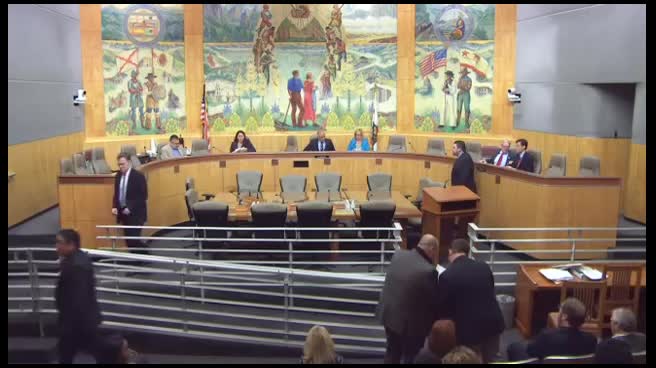
Bill Author

Bill Co-Author(s):